
Start up: more PC slowdowns, Apple Pay goes big, Facebook gets AI, Uber’s early days, and more

2012 Keynote
Big touchscreens: what are they good for? Photo by Microsoft Ignite NZ on Flickr.

A selection of 9 links for you. Use them wisely. I’m charlesarthur on Twitter. Observations and links welcome.

A compilation of robots falling down at the DARPA Robotics Challenge » YouTube

I for one welcome our new robotic ove.. AH, NOT SO SMART NOW, ARE YOU?


Siri’s search power grows, as Apple accelerates machine learning » Mobile Forward

Hristo Daniel Ushev:

I’m changing my mind about Google’s data-volume-based advantage. I believe Apple sees a volume of (anonymized) user data that’s on the same order of magnitude as Google (on mobile). Google Now may provide Google with more question/intent data, but Apple sees the bigger picture of what consumers (in aggregate) do/need throughout the day. I base my belief on iOS’s huge installed base, high app downloads and usage, and Apple’s full-stack access to iOS devices.

With so many dots to connect – Mac, iPhone, iPad, Apple Watch, Apple TV, Siri, Maps, News, HealthKit, HomeKit, and CarPlay – Apple will have great opportunities to add value to consumers’ daily life.

Machine learning is to 21st century devices as the graphical user interface was to 20th century computers. I don’t mean that as a user interface metaphor, but as a way to express how critical it will be to a high-performance product.

At a machine learning conference the other day, someone said to me: “a really smart AI wouldn’t need a ton of data. It would figure out what lions look like from just one picture of a lion, not hundreds. Maybe Google’s aren’t that good if they need so much data.” Well, perhaps..


Samsung’s new smartwatch to offer mobile payments: Electronic Times » Reuters

Tech giant Samsung Electronics Co Ltd plans to offer a mobile payments function in a smartwatch to be launched in the second half of the year, South Korea’s Electronic Times newspaper reported on Monday citing unnamed sources.

Samsung would use near-field communication (NFC) technology to support mobile payments on the smartwatch, the report said. This is the same technology Apple Inc uses for the Apple Pay function supported by its smartwatches.

How about that.


The future of computers is the mind of a toddler » Bloomberg Business

Jack Clark:

On June 9, Facebook plans to publish a research paper detailing a system that can chew through several million pieces of data, remember the key points, and answer complicated questions about them. A system like this might let a person one day ask Facebook to find photos of themselves wearing pink at a friend’s birthday party, or ask broader, fuzzier questions, like whether they seemed happier than usual last year, or appeared to spend more time with friends.

While AI has long been an area of interest for Hollywood and novelists, companies hadn’t paid much attention to it until about five years ago. That’s when research institutions and academics, aided by new techniques for crunching reams of data, started breaking records in speech recognition and image analysis at an unexpected rate. Venture capitalists took notice and invested $309.2 million in AI startups last year, a twentyfold increase from 2010, according to research firm CB Insights. Some of these startups are helping to break new ground. One in Silicon Valley, called MetaMind, has developed improvements to computers’ understanding of everyday speech. Clarifai, an AI startup in New York, is doing complex video analysis and selling the service to businesses.

Facebook’s office for this is in France. British companies are big in this too. Cannot emphasis enough how important this field is. (Can’t find the research paper, though.)


Apple Pay UK: some retailers to ditch £20 contactless limit » Pocket-lint

Stuart Miles:

As is the case with Apple Pay in the US, Apple has convinced retailers and banks to remove the limit because they can prove the customer is present thanks to the use of the Touch ID fingerprint scanner on the iPhone.

MasterCard have confirmed similar options for Apple Pay retailers in the UK too:

“Currently the vast majority of payment terminals here in the UK are set to accept contactless transactions up to the £20 spending limit, but that will rise to £30 in September (for cards as well),” a spokesman for MasterCard told Pocket-lint when we asked about clarification on the limit thresholds.

“As more digital services like Apple Pay come to market, we’re [MasterCard] supporting retailers and banks as they update the terminals so that they can accept authenticated transactions above that limit from digital devices.”


Uber: An oral history » Fortune

Some fascinating interviews by Adam Lashinsky (with Uber’s cooperation, of course), which are all worth reading; including this by Conrad Whelan, who was its first engineer:

When I joined the company, you couldn’t actually sign up for the product. It was just a way to order the car. So I built the sign-up flows that would take a credit card and make user accounts. So as soon as we did that, we could officially launch, which was June 1st, 2010, two months after I started.

I think the next thing I did, which I really enjoyed, was optimize the dispatch algorithms to take into account drivers that might miss a dispatch. That lasted like three years, or something like that, which is pretty cool.

Sounds throwaway, but gives a hint of the huge complexity involved.


Large touchscreens: what’s different? » Nielsen-Norman Group

Amy Schade tried out a 24in tablet with her children (because children don’t know what they’re not supposed to not do):

While the large screen was completely enthralling to my 2 year olds, the size of the touchscreen was a drawback for my daughter. She leaned on the screen with one hand in order to reach another part of the screen. As a result, the puzzle pieces that she was trying to move jumped from one hand to the other, if they moved at all.

Using the large screen was particularly hard for her, based on her size relative to the device —most of us aren’t using devices that are nearly as big as we are. However, her attempts to use it also illustrate a problem far more likely to be encountered with large touchscreens: that of unintended two-handed touches and other accidental touches.

We see this play out in our testing of mobile devices. We witness more accidental touches or brushes of the screen as people maneuver standard sized tablets than we do when watching people use their phones.

Designs need to anticipate and accommodate accidental touches and consider ways to incorporate larger gestures, hand presses versus finger touches, and multi-hand interactions.


PC inventory issues growing serious in Europe; retailers boycotting vendors dumping inventory » Digitimes

Monica Chen and Joseph Tsai:

First-tier PC vendors reportedly are seeing serious inventory issues in Europe and may try to digest stocks by offering price cuts. At the same time, some channel retailers are reacting to the news by boycotting the vendors to avoid having inventory dumped on them, according to sources from the upstream supply chain.

The PC supply chain was originally optimistic about demand for PCs in the second quarter, but component suppliers have seen their orders from brand vendors weakening during the quarter as most vendors have high inventory levels on hand, which they are struggling to clear as most consumers have halted their notebook purchasing to wait for the release of Windows 10, which is scheduled for the end of July…

…In addition, Windows 10’s free upgrade strategy is also expected to weaken consumers’ demand for buying new PCs.

“First-tier PC vendors” is probably code, here, for Asus and Acer.


Facing the music » All this

Dr Drang on the longest half-hour ever, at the end of the Apple keynote in which Eddy Cue introduced Apple Music:

nothing justifies the dancing. I’m sure Eddy thought it was funny and self-deprecating, but it was just annoying and a waste of our time. I often think Craig Federighi overdoes the jokes, but he knows when to pull it back and doesn’t let his presentation get derailed. Eddy doesn’t have that sense.

As to whether Apple Music is really good, we’ll have to wait and see, but the signs aren’t pointing in that direction. The elevator pitch is that “Apple Music is three things” – an attempt to tie it to the 2007 introduction to the iPhone. (And someone should have explained that to Iovine before sending him onstage. He clearly didn’t understand the audience’s reaction to the “three things” line.) But while the advantages of a multifunction device are obvious, the advantages of a multifunction app aren’t. The App Store’s success is largely based on tightly focused apps, not sprawling suites.



Start up: who’ll buy HERE?, Loon gets ready, Vermeer and the Apple Watch, web v native redux, and more


A Project Loon balloon. Photo by theglobalpanorama on Flickr.

A selection of 8 links for you. Links as in, you know, links. I’m charlesarthur on Twitter. Observations and links welcome.

Microsoft’s Q3 2015: Surface and Lumia up, but profit down » The Verge

Tom Warren:

Microsoft sold 8.6m Lumia devices in the most recent quarter, and the company says that’s an 18% increase over the prior year. Microsoft completed its acquisition of Nokia around this time last year, and neither company revealed Lumia sales at the time, but it’s safe to say they’re rising again. Either way, Windows Phone revenue has dropped by 16%.

While Microsoft is heading towards finalizing Windows 10 in the coming months, the PC market is still fragile. OEM revenue for Windows decreased by a massive 22% this quarter, following an equally bad quarter over the holiday period. Part of this decline is related to less business PC sales, and the general PC market as a whole. Office appears to be a mixed bag for Microsoft. While it’s helping drive commercial revenues, Office consumer revenues declined 41% due to the transition to Office 365 and weaknesses in Japan where Office is popular on PCs. However, Office 365 Consumer subscriptions have grown to 12.4m, so Microsoft is continuing to convince consumers that the cloud is the future.

If 8.6m is an 18% increase, a total of 7.3m were sold (well, shipped) in Q1 2014. The fall in revenue maybe isn’t surprising as the Lumia line has all been focussed on the lower end.

Surface revenue was up 44% year-on-year to $713m. As usual, no news on how many sold.


How Uber surge pricing really works » The Washington Post

Nicholas Diakopoulos:

is Uber’s surge pricing algorithm really doing what they claim? Do surge prices really get more cars on the road?

My analysis suggests that rather than motivating a fresh supply of drivers, surge pricing instead re-distributes drivers already on the road.

I collected four weeks worth of Uber’s dynamic pricing information from their own publicly available data for five locations in Washington, DC. Every 15 seconds between March 15 and April 11, I pinged their servers and collected the surge price and estimated waiting time for an UberX car at those locations. Though only a tiny sliver of all of Uber’s data, it provided an initial window into how their algorithms are working

…So, why don’t surge prices work to get new drivers on the road? It might simply be that surge prices jump around too much.

Reverse-engineering these algorithms seems to be the way forward.


Nokia targeting Apple, Alibaba and Amazon in maps-unit sale » Bloomberg Business

Nokia Oyj, the Finnish company selling its money-losing maps business, is trying to drum up interest from some of the biggest names in technology including Apple Inc., Alibaba Group Holding Ltd. and Amazon.com Inc., people with knowledge of the matter said.
Those companies as well as Facebook Inc., a group of German carmakers, and private-equity firms are among the companies looking at Nokia’s maps operations, known as HERE, highlighting the ubiquity and utility of location-based services. Nokia is seeking more than €3bn ($3.2bn) from a sale of the unit, said one of the people, who asked not to be identified discussing private information.

Bought it for €8.1bn in 2008; valued at €2bn in the accounts last year. Big lossmaker; the question is how any company that bought HERE would be able to make the purchase worthwhile in monetary terms.


Google’s Project Loon close to launching thousands of balloons » Computerworld

Martyn Williams:

Google says its Project Loon is close to being able to produce and launch thousands of balloons to provide Internet access from the sky.

Such a number would be required to provide reliable Internet access to users in remote areas that are currently unserved by terrestrial networks, said Mike Cassidy, the Google engineer in charge of the project, in a video posted Friday.

The ambitious project has been under way for a couple of years and involves beaming down LTE cellular signals to handsets on the ground from balloons thousands of feet in the air, well above the altitude that passenger jets fly.

“At first it would take us 3 or 4 days to tape together a balloon,” Cassidy says in the video. “Today, through our own manufacturing facility, the automated systems can get a balloon produced in just a few hours. We’re getting close to the point where we can roll out thousands of balloons.”


Why Apple Watch margins should set a new record for Apple » carlhowe.com/blog

Carl Howe with a new thought experiment:

Last week, I asked readers to imagine how they’d manufacture a million Origami lobsters out of paper. I’m going to continue that though experiment theme this week with a different question. If you’re not interested in such context, skip ahead to the next section where we’ll dive into revisions to the model I posted last week.

Meanwhile, this week’s thought experiment question is this:

What were the parts cost and gross margin of a Johannes Vermeer painting in his day?

Johannes Vermeer, of course, was a modestly successful 17th century Dutch painter, known for such paintings as Girl with a Pearl Earring and The Music Lesson. Art historians the world over praise his works for their subtle portrayal of light and his use of brilliant and lifelike color. Today, historians attribute 34 surviving paintings to undoubtedly be Vermeer’s work. While priceless due to their rarity, owners who have sold Vermeer paintings have invariably seen prices in the tens of millions of dollars.

But what did they cost to paint?

In other words, why do we think it’s OK for art to have high added value, but not technology? The whole post is wonderful.


In Google case, do what’s best for consumers » TheHill

Thomas Lenard:

Since the FTC closed its [antitrust investigation] case in 2013, the search space has become, if anything, more competitive. In addition to competition from general search engines such as Bing, Google faces competition from Facebook, Apple (Siri) and Amazon — all of which perform search functions. There is vigorous competition in shopping sites in Europe with Amazon and eBay being the major players. Numerous local shopping sites provide additional competition. In fact, Google is a minor player with a very small share of this (online shopping) market. And there is a whole new world of apps through which consumers search for a variety of information, including product information.

Thus, despite the fact that Google’s share of general search is higher in Europe than in the U.S., it is unlikely the European authorities will now find harm to consumers or to competition where the U.S. authorities didn’t.

Lenard is a senior fellow at the Technology Policy Institute, whose “supporters” include Amazon, Facebook, Intel, the MPAA, Motorola, Yahoo and – hey! – Google. I include this to show the way that one can distort reality by chucking some names in: look at all the alternative search engines! Bing, Yahoo, DuckDuckGo, er, Yandex.. but the reality is that none has more than a tiny fraction of the market in Europe. It’s like Microsoft suggesting that there are loads of desktop OSs – MacOS, Ubuntu, FreeBSD, umm..

And while Google might be a minor player in the local shopping market, the EC data (and to some extent Google itself) suggests it would be nowhere if Google Shopping had to compete in the same way as all the other shopping sites – and hadn’t penalised the search ranking and access to AdWords of rivals (who then complained).

And, finally, “harm to consumers” isn’t the EC test for antitrust. It’s the US test.


Skipping the web » Remains of the Day

Eugene Wei:

Having grown up in the U.S., the web was one of the first and still longest-running touchpoint to the internet. My first was using newsgroups in college, and the web came about towards the end of my undergrad days. I can understand why so many in the U.S. are nostalgic and defensive of the web as a medium. Seeing so much content and online interaction move behind the walls of social networks seems like an epic tragedy to many, and I empathize.

Many people in India, China, and other parts of the world, where bandwidth is low and slow, and where mobile phones are their one and only computer, have no room for such sentimentality. They may never have experienced the same heyday of the web, so they feel no analogous nostalgia for it as a medium. Path dependence matters here, as it does in lots of areas of tech, and one of the best ways to detect it is to widen your geographic scope of study outside the U.S. Asia is a wonderful comparison group, especially for me because I have so many friends and relatives there and because I still interact with them online at a decent frequency.

In the U.S., many tech companies were lauded as pioneers for going mobile first when in Asia companies are already going mobile only.


Mobile malware is like Ebola – an overhyped threat » Net Security

Reporting from the RSA Conference 2015:

In 2012, monitoring 33% of US Mobile Data Traffic, Damballa saw 3,492 out of a total of 23M mobile devices – 0.015% – contacting a domain on the mobile blacklist (MBL). In Q4 2014, monitoring nearly 50% of US Mobile Data Traffic, only 9,688 out of a total of 151M mobile devices contacted mobile black list domains (.0064%). The National Weather Services says the odds of being struck by lightning in a lifetime are 0.01%.

“This research shows that mobile malware in the Unites States is very much like Ebola – harmful, but greatly over exaggerated, and contained to a limited percentage of the population that are engaging in behavior that puts them at risk for infection,” said Charles Lever, senior scientific researcher at Damballa. “Ask yourself, ‘How many of you have been infected by mobile malware? How many of you know someone infected by mobile malware?’”


Start up: cracking iPhone passcodes, why .sucks sucks, Superfish away!, Lyft and Uber face key court case


Superfish! Photo by noodlepie on Flickr.

A selection of 13 links for you. Helps you work, rest and play. I’m charlesarthur on Twitter. Observations and links welcome.

The SSD endurance experiment: they’re all dead » The Tech Report

Geoff Gasior:

I never thought this whole tech journalism gig would turn me into a mass murderer. Yet here I am, with the blood of six SSDs on my hands, and that’s not even the half of it. You see, these were not crimes of passion or rage, nor were they products of accident. More than 18 months ago, I vowed to push all six drives to their bitter ends. I didn’t do so in the name of god or country or even self-defense, either. I did it just to watch them die.

Technically, I’m also a torturer—or at least an enhanced interrogator. Instead of offering a quick and painless death, I slowly squeezed out every last drop of life with a relentless stream of writes far more demanding than anything the SSDs would face in a typical PC. To make matters worse, I exploited their suffering by chronicling the entire process online.

Brilliant idea for an article, spread over nearly two years, which also provides truly useful info. Those things really last ages.


Uber, Lyft cases could help clarify drivers’ legal status » WSJ

Rachel Emma Silverman:

Two San Francisco judges separately ruled last week that suits filed by drivers of the ride-sharing services should go before juries. At issue in both cases is whether drivers, who are employed as independent contractors, should be considered employees of those firms, and thus entitled to the protections afforded most full-time workers.

A verdict that required Lyft or Uber to reclassify their drivers as employees would throw a wrench in business models that have commanded large investments and valuations. Last week, Japanese e-commerce giant Rakuten led a $530m round of funding for Lyft, helping to boost its valuation to more than $2.5bn. Uber, which is much larger, has raised more than $5bn in funding and is valued at more than $41bn.

Should the cases proceed to trial, the resulting verdicts could also set a legal precedent about how many workers should be classified in the so-called on-demand economy. That could come as welcome news for employment lawyers and others charged with figuring out whether the workers who fulfill Instacart orders, drive UberX passengers, clean homes for Handy clients and perform other tasks assigned by apps should be considered independent contractors or actual employees.

Watch these ones. Though whichever way the verdicts go they probably won’t be the last.


A new, simple way to log in » Yahoo

Chris Stoner is director of product management at Yahoo:

We’ve made the steps easy to follow – check them out below.

1)    Sign in to your Yahoo.com account.
2)    Click on your name at the top right corner to go to your account information page.
3)    Select “Account Security” in the left bar.
4)    Click on the slider for “On-demand passwords” to opt-in.
5)    Enter your phone number and Yahoo will send you a verification code.
6)    Enter the code and voila!

And the next time you sign-in, we’ll send a password to your phone when you need it to log in. On-demand passwords is now available for U.S. users. Try it out today!

What if I lose my phone? Or I’m abroad? Do normal passwords not work any more? Not clear and not answered anywhere I can find.


Apple will offer Android switchers gift cards to trade-in rival smartphones for iPhones » 9to5Mac

Mark Gurman:

Apple is preparing to launch another program to boost iPhone sales in its stores, a stated goal of CEO Tim Cook.

According to sources, Apple will soon introduce a new recycling and trade-in program that will accept non-Apple smartphones, notably including Android devices, in exchange for gift cards to be used toward the purchase of new iPhones. In continuing to court Android switchers, Apple will use a similar system to the one it uses to repurchase iPhones, whereby Apple Retail Store employees determine trade-in values for devices by considering their cosmetic and functional condition.

The new program will begin in the coming weeks, following extensive training programs for retail store employees that will begin later this week. Apple employees will be able to transfer address book contacts from the rival smartphones to the iPhones, but other data will have to be moved by customers.

Two points: 1) we’ve pretty much arrived at “in Gurman we trust”, right? 2) trying to grab rival platforms’ users is the mark of a saturated market – which the US smartphone market increasingly resembles.


People who use Firefox or Chrome are better employees » The Atlantic

Joe Pinsker:

in the world of Big Data, everything means something. Cornerstone OnDemand, a company that sells software that helps employers recruit and retain workers, analyzed data on about 50,000 people who took its 45-minute online job assessment (which is like a thorough personality test) and then were successfully hired at a firm using its software. These candidates ended up working customer-service and sales jobs for companies in industries such as telecommunications, retail, and hospitality.

Cornerstone’s researchers found that people who took the test on a non-default browser, such as Firefox or Chrome, ended up staying at their jobs about 15 percent longer than those who stuck with Safari or Internet Explorer. They performed better on the job as well. (These statistics were roughly the same for both Mac and PC users.)

Why? Perhaps, the company hazards, because it means they’re “non-default”, and so are an “informed consumer”. (Other datum: “people who use “boozy” or “sexy” in their email addresses make for worse employees.”)


Joint effort guts Superfish » Computerworld

In a blog post announcing the addition of another Superfish clean-up tool, Microsoft’s security team said that the number of infected PCs detected by its software peaked at around 60,000 on Feb. 21, slumped slightly over the next two days before falling precipitously. By Feb. 25, the daily number of infected PCs encountered by Microsoft’s tools had dropped to around 3,000, sliding further over the next several days to what appeared to be less than 1,000 each day.

All told, Microsoft implied that about a quarter of a million Lenovo PCs were cleansed of Superfish between Feb. 20 and March 4.

Useful to know how many “consumer” PCs Lenovo sold over the course of three months or so, which this in effect is.


Apple iOS hardware assisted screenlock bruteforce crack » MDSec blog

Dominic Chell:

We recently became aware of a device known as an IP Box that was being used in the phone repair markets to bruteforce the iOS screenlock. This obviously has huge security implications and naturally it was something we wanted to investigate and validate. For as little as £200 we were able to acquire one of these devices and put it to work.

Although we’re still analyzing the device it appears to be relatively simple in that it simulates the PIN entry over the USB connection and sequentially bruteforces every possible PIN combination. That in itself is not unsurprising and has been known for some time. What is surprising however is that this still works even with the “Erase data after 10 attempts” configuration setting enabled.

Our initial analysis indicates that the IP Box is able to bypass this restriction by connecting directly to the iPhone’s power source and aggressively cutting the power after each failed PIN attempt, but before the attempt has been synchronized to flash memory. As such, each PIN entry takes approximately 40 seconds, meaning that it would take up to ~111 hours to bruteforce a 4 digit PIN.

Multiply by 10 for each extra digit on your PIN; use a password instead. (Clever, cutting the power before the write-to-memory.)


“.sucks” registrations begin soon — at up to $2,500 per domain » Ars Technica

Lee Hutchinson:

The number of generic top-level domains (gTLDs) available for use has climbed into the hundreds, and “.sucks” will soon be added to the list. However, angry customers eager to get their hands on brand-specific domains like “bestbuy.sucks” or “comcast.sucks” shouldn’t get their hopes up; according to MarketingLand, the domains will cost far more than most consumers will want to pay.

The pricing situation around .sucks domain names is complicated. Companies with registered trademarks will have to pay an astounding $2,499 to register their trademarked names in .sucks. Registration of non-trademarked names during the “sunrise” period (March 30 until June 1) before .sucks goes live will cost at least $199 per name, while the standard registration fee after June 1 rises to $249 per name.

Companies are typically hyper-sensitive about brand usage, and few will want their .sucks domains under someone else’s control. The .sucks pricing scheme has led to outrage from many quarters, with MarketingLand’s writeup quoting several industry figures who use words like “extortion” and “predatory.”

The words of Seth Finkelstein from 2007 on the topic of “.xxx” remain just as relevant: these TLDs are just money-making schemes for registrars (and for Icann).

In a world with any more than zero working search engines, TLDs are next to pointless, and the exotic ones like .sucks amount to nothing more than legitimised extortion schemes against companies worried about attacks on their brand.


Samsung to beat forecast on S6 » Korea Times

Kim Yoo-chul:

Bernstein Research and Deutsche Bank expect [the] S6 to boost the company’s bottom line.

“For our thesis on Samsung Electronics, the S6 does not need to be a mega-success; even a further decline to 27% market share in the premium segment would be more than enough,” Mark Newman at Bernstein Research said.

“We believe the unveiled phone is sufficient to deliver and has the potential to beat that modest expectation. Furthermore, we think the components side of the S6 is more positive for Samsung’s earnings direction with the processor moving internal (saving potentially $28 per phone), significantly more memory (DRAM and particularly NAND) and the display showing off their technology lead in flexible OLED.”

Han Seung-hoon at Deutsche Bank said Samsung’s strategies for diversified pricing on the S6 according to memory storage capacity like Apple will help its semiconductor division see a big divisional increase.

Apple seems to be having a strong quarter – analyst expectations are for well over 50m sales (compared to 43.7 in Q1 2014). Last year Samsung shipped 85m smartphones.


June 2007: Apple iPhone debut to flop, product to crash in flames » Suckbusters

David Platt in June 2007:

the iPhone is going to fail because its design is fundamentally flawed. The designers and technophiles who encouraged development of the iPhone have fallen into the trap of all overreaching hardware and software designers; thinking that their users are like themselves. As I expound in great detail in my book Why Software Sucks (Addison-Wesley, 2006, http://www.whysoftwaresucks.com) your user is not you. The iPhone’s designers have forgotten this fundamental law of the universe. The market will severely punish them for doing so.

I have three specific reasons why the iPhone’s design will cause it to crash in flames the way Apple’s late and unlamented Newton did, only much more loudly and publicly because of all the hype it’s gotten.

None of them is its price. Platt seems to have a line writing for Microsoft’s Developer Network magazine and admitted his mistake in 2012.


Microsoft X-box and a family problem » Medium

Jeremy Hillman’s son ran up thousands of dollars on Xbox Live buying “players” for FIFA at a hundred dollars a pop:

So these are my questions to Microsoft on behalf of the thousands and thousands of parents who have fallen into this same situation (you can see online that this isn’t a rare occurrence and Microsoft employs its many escalation analysts for a reason).

With all the brilliance of your engineers and sophisticated systems to protect data how hard could it be to put a realistic ceiling on what can be spent on in-app purchases before the credit card details and security code need to be re-entered? Most Apple iTunes purchases need a password to be re-entered for each new purchase.

How many users legitimately spend thousands of dollars on in-app purchases and just how much usage would it actually take for you to flag this as unusual behaviour and require confirmation that the purchase is legitimate? Banks and credit card companies regularly do this — there can’t be many reasons you don’t.

Might just want to check your credit card statement, parents.


Behind Apple’s openness is desire for data centre help » The Information

Steve Nellis and Amir Efrati:

Both Google and Amazon long have designed their own racks, servers and switches in their data centers, contracting with Asian manufacturers for production. They see their hardware designs as a competitive advantage, keeping them under wraps. Neither are in the Open Compute Project [which Apple has joined].

Facebook also designs its own data center equipment but started much later than Amazon and Google. By helping found the Open Compute Project, it has a chance to catch up. In the group, Facebook released its designs for servers and switches publicly and invited others to do the same. Microsoft, Intel, IBM and others eventually joined. The idea was that lots of companies working together can build better data centers cheaper.

“There’s this industry pattern I’ve come to observe: Open when you’re behind, closed when you’re ahead,” said Christopher Nguyen, CEO of Adatao and former engineering director of Google Apps.

That last point is so insightful, and worth bearing in mind. The article meanwhile confirms that Apple outsources some of iCloud’s services to Microsoft (Azure) and Amazon (S3).


New YouTube interface rolling out to some users ditches the hamburger menu » Android Police

Liam Spradin:

Just in case you were getting comfortable with the YouTube app’s latest design, it looks like there may be more changes in store. It seems a number of users are encountering a new YouTube interface, apparently triggered server-side without an app update.

The change sees YouTube’s hamburger menu flipping right out of the interface, going the way of Google+ in discarding the left-side navigation drawer. Instead, users are given four primary tabs – Home, Trending, Subscriptions, and your profile. Interestingly, a couple of these tabs seem to have bars underneath to switch from, say, all videos to music on the home tab, or from uploads to channels on the subscription tab. Besides these changes, things are ostensibly working just like before.

Apple doesn’t like hamburger menus (those three lines at the top left or right of a screen where “other options” are available): here’s a summary of a WWDC 2014 talk about it – from which they key extract is

Remember, the three key things about an intuitive navigation system is that they tell you where you are, and they show you where else you can go.

Hamburger menus are terrible at both of those things, because the menu is not on the screen. It’s not visible. Only the button to display the menu is. And in practice, talking to developers, they found this out themselves.


Samsung tablets made spy-proof by BlackBerry using IBM software » Bloomberg Business

Cornelius Rahn:

BlackBerry introduced a modified Samsung Electronics Co. tablet computer that lets government and corporate users access consumer applications such as YouTube and WhatsApp while keeping confidential work-related information away from spies and crooks.

The €2,250 ($2,360) SecuTABLET will be available by the third quarter, Hans-Christoph Quelle, head of BlackBerry’s Secusmart unit, said in an interview Sunday. More than 10,000 units will be shipped annually in Germany alone by next year, with a higher number sold by IBM, which is handling sales to companies worldwide, he said.

The SecuTABLET combines Samsung Electronics’s Tab S 10.5 with Secusmart’s microSD card and IBM software to wrap applications that hold sensitive data into a virtual container where they can’t be harmed by malware. Germany’s computer-security watchdog is evaluating the device for classified government communication and will probably give its approval before the end of the year, Quelle said.

I’m not sure in what sense BlackBerry “introduced” this. Its tieup with Samsung seems to be as an MDM (mobile device management) vendor. Samsung makes the hardware, IBM does the virtualisation, BlackBerry does the..?


Start up: Samsung ChatON going off, USB apps for iPad, the ‘uncanny valley’ for algorithms, Sony hack history, and more


Bitcoin mining: significantly lower health and safety risk than other forms.

A selection of 10 links for you. Wipe off excess. I’m charlesarthur on Twitter. Observations and links welcome.

Apple, is USB allowed now? >> Medium

Matt Ronge, pointing to Duet Display, which lets you use an iPad (via Lightning) as an extra screen for a Mac running 10.9 or better:

For the past year, we’ve been working on an app (launching early 2015) that turns your iPad into a graphic tablet for your Mac (like a Wacom tablet). Our app at its core also streams video content from the Mac to the iPad, so we were very interested in USB connectivity early on in our project.

We knew that using USB instead of Wifi was a decision we had to make early on, as it would completely change our direction of development. USB offers a reliable, low latency connection which is 100x better than any wireless technology (especially with Yosemite experiencing serious Wifi reliability issues).

We were also very hesitant to build a business around a decision Apple may change on a whim. So we submitted an app to test the waters, would Apple allow an app that requires USB? An Apple representative called us and informed us USB connectivity was not allowed.

Duet Display looks like it could be fun, though one usually wants a bigger display – but if you had an 11in Macbook Air, a full-size iPad would almost double your screen size, and improve the resolution a lot.


Our tactics for Gamergate are outdated >> Space Channel 6

Brianna Wu:

For me, personally, I intend to keep lessening the amount I’m posting and writing about Gamergate. Everyone knows they are very sexist, very unhealthy individuals. Thanks to my Patreon, GSX’s full time staffer will document this behavior for law enforcement leaving me free to speak out for change in the industry and make inclusive games.

My suggestion to people rightly outraged about this movement, is to ask yourself what you currently want to accomplish. It’s my suggestion that it would be most helpful to shift the conversation back to representation in the industry. I think the gains in raising awareness of Gamergate have diminished, while the threat of giving the lunatic fringe the attention they desire has stayed the same.

To be blunt, I’m not sure endlessly talking about Gamergate does anything anymore.

I’m not sure it did past the second month. Idiots enjoy being idiots, and won’t be dissuaded from that track.

Topsy suggests a gradual dimunition in the number of tweets on this topic from 50,000 to 20,000 over the past month (and bear in mind that the obsessives tweet many, many times per day).


BuildZoom office burglary – $5000 reward – update!! >> BuildZoom

David Petersen of BuildZoom, from which equipment was stolen:

After our story was covered on ABC 7 News, we were contacted by a nearby startup that was burglarized on July 6th and July 13th. Comparing footage, it’s clear that the same person broke into both offices.

Update 2: It appears that this woman is breaking into SF startups with a Doorking / DKS code entry system. She has obtained a master key and is able to enter any office with this system.

Update 3: We believe we have identified the burglar. It’s a local San Francisco woman who has been convicted of similar crimes in the past. An acquaintance of hers emailed with photographs and additional information. It certainly looks like her.

Someone with a master key for office doors in SF? That’s a problem.


Facebook’s popularity among teens dips again >> Bloomberg

A report yesterday by Frank N. Magid Associates Inc. found that the portion of 13- to 17-year-old social-media users in the U.S. on Facebook slipped to 88% this year from 94% in 2013 and 95% in 2012. In the same period, Twitter and messaging applications rose in popularity in that age group, the study showed.

The Menlo Park, California-based company first warned a year ago that teens weren’t using its website as often as before. Facebook stopped discussing teen usage on its earnings calls after last year’s disclosure alarmed investors. While the issue was all but forgotten as the company’s advertising revenue reached new highs, it’s a bigger concern now, according to Tero Kuittinen, a managing director at Magid in New York.

“You look at Facebook and you say, ‘Wow, something really changed in 2014,’” Kuittinen said. “If kids are starting to use so much of their daily time on messaging apps, surely it’s going to hurt somebody.”

Among 13- to 17 year-olds, Twitter usage climbed 2 percentage points to 48%, according to the report. While more people use Facebook and its messaging app than any competitor, its user base tends to be older, with 55% of Facebook Messenger users being 37 or younger. By the same measure, 86% of Snapchat Inc.’s users and 83% of Kik Interactive Inc.’s users are under 37.

Seems reasonable to think that messaging apps are pulling teens away from Facebook.


2015: the year we get creeped out by algorithms >> Nieman Journalism Lab

Zeynep Tufekci:

It turns out computers have a built-in “uncanny valley” (that creepy feeling android robots generate when they kind of look human). Just like we don’t want robots too human-shaped — we want them to know their place — it turns out we aren’t too happy when our computers go from “smart” (as in automating things and connecting us to each other or information) to “smart” (as in “let me make that decision for you”).

Algorithmic judgment is the uncanny valley of computing.

Algorithms (basically computer programs, but here I’m talking about the complex subset that is being used to calculate results of some consequence, which then shape our experience) have become more visible in 2014, and it turns out we’re creeped out.

Tufekci is super-smart, and always ahead of the curve.


htmlwidgets: JavaScript data visualization for R >> RStudio Blog

Today we’re excited to announce htmlwidgets, a new framework that brings the best of JavaScript data visualization libraries to R. There are already several packages that take advantage of the framework (leaflet, dygraphs, networkD3, DataTables, and rthreejs) with hopefully many more to come.

An htmlwidget works just like an R plot except it produces an interactive web visualization. A line or two of R code is all it takes to produce a D3 graphic or Leaflet map. Widgets can be used at the R console as well as embedded in R Markdown reports and Shiny web applications.

This looks terrific (if you’re into R.)


Bitcoin’s collapse is worse than the ruble’s >> Quartz

Matt Phillips & Melvin Backman:

Why the collapse in bitcoin?  One of the clearest answers seems to be that it’s gotten harder to use bitcoin for some of its less savory uses, such as dodging taxes and buying drugs. Governments increasingly are trying to clamp down on the “dark web” sites where bitcoin quickly was the cryptocurrency of choice. Collapses of large, unregulated bitcoin exchanges — such as Mt. Gox — have done little to instill confidence in the currency either.

Mt Gox was a key reason for the start of the collapse. Yet the nearer Bitcoin gets to its 2011/12 levels, and the more people are using it (thus ironing out the speculative element), the more it looks like a really useful product. The implications of the blockchain are fascinating.


Absolute Sownage >> Attrition.org

Over the last two months, the multi-national Sony Corporation has come under a wide range of attacks from an even wider range of attackers. The backstory about what event prompted who to attack and why will make a mediocre made-for-TV movie someday. This article is not going to cover the brief history of hacks; readers can find details elsewhere. Instead, the following only serves to create an accurate and comprehensive timeline regarding the recent breaches, a cliff notes summary for easy reference.

Starts in April 2011, by the end of which we were up to 21. Current count: 24.


Why the sharing economy could be the internet’s most divisive revolution yet >> The Guardian

By me, on the “sharing economy” companies such as Uber and AirBnB:

what would happen if an Airbnb guest was harmed by fire, or a carbon monoxide leak – a constant concern for hotels. Airbnb’s site says owners “should” make sure they have a functioning CO detector and are following gas safety regulations. But although the money for any stay is paid via Airbnb, Robinson says he doesn’t know who would be responsible if someone were injured that way.

“I’m not a lawyer,” says [Patrick] Robinson [AirBnbB’s public policy director in Europe]. It seems surprising that the eventuality hasn’t come up in business meetings, but Robinson declines to discuss it.

It’s a scenario that has exercised insurance companies, which are wrestling with the question of who is liable in a collision involving a car being driven on an Uber journey, or one of the other car rental services, or a complaint involving Airbnb clients. Premiums might rise, or need extra tweaking.

I still find it surprising if AirBnB hasn’t discussed – and even worked out a plan – for the eventuality of poisoning or death at one of its lets, given that it receives the payments for them.


Samsung says ‘cya’ to ChatON smartphone messaging app >> WSJ

Samsung is closing ChatON, for which it claims a “user base” of over 200m users. To which everyone else says: O RLY? And they used it so much you’re closing it?

“Samsung’s failure in messaging apps is endemic of a broader struggle for the company in software and services,” said Rajeev Chand, managing director at Rutberg & Co., a San Francisco-based investment bank that focuses on the mobile industry.

Mr. Chand said he was puzzled by Samsung’s inability to parlay its massive handset sales into at least some traction in software and services, calling it “the defining issue for the company’s long-term success.”

“If they don’t succeed in apps and software, Samsung has a very large risk of being relegated to an increasingly shrinking-margin company,” he said, referring to the recent gains that low-cost Chinese and Indian competitors have made in handset sales in recent months.

Add in this from April:

Strategy Analytics, a Newton, Mass.-based research firm, said in a report Tuesday that U.S. users of Samsung’s devices spend little time on its own messaging, music and voice-activated applications including apps like ChatON, the South Korean company’s answer to services like WhatsApp, Line and Viber.

The report said that U.S. users of Samsung’s Galaxy S3 and S4 smartphones logged an average of six seconds per month using ChatON, compared to more than 11 hours per month on Facebook and about two hours per month on Instagram.

Six. Seconds. This is Samsung’s problem, writ large (or small). By contrast, Apple failed with Ping – but that was a social media app built on top of iTunes, itself a successful Apple-owned platform; iTunes remained. Samsung is left with nothing.

And it was always reluctant to give any hard numbers about ChatON. The irony is that ChatON is going to remain open for slightly longer in the US – apparently that’s one of the busier places.

Even more fun: at the end of November, Samsung categorically denied that it was going to close ChatON. Denials, eh?


Corrected: the author of the Gamergate post is Brianna Wu, not Anita Sarkeesian. Apologies, and thanks to Ron Hayter.

Start up: smartphone epochs, UK buyers slow on tablets, OnePlus faces India patent suit, Uber redux, and more


Ahh – a Nokia smartphone. Photo by David Roessli on Flickr.

A selection of 8 links for you. Slippery when wet. I’m charlesarthur on Twitter. Observations and links welcome.

The Innovator’s Stopwatch. Part 2 >> Asymco

Horace Dediu:

As diffusion proceeds through each adopter category, the product is re-positioned to address each group’s presumed behavior. Innovators (first 2.5% of the population) are offered novelty, a chance to experiment and uniqueness of experience; early adopters are offered a chance to create or enhance their position of social leadership; the early majority build imitate the leadership of the early adopters and justify it with productivity gains; the late majority are skeptics but, given a set of specific benefits, join the earlier adopters. Finally the laggards reluctantly agree to adopt as their preferred alternative of not adopting disappears.

The theory suggests that a firm can be successful if they modify their marketing and perhaps product mix to accommodate these adopter categories in a timely manner.

If this is the case however, why is it that those who have access to these data (i.e. who is buying and when) not to do the right thing?

Really you have to read it for the graphs, showing the rise and fall of Palm/WinMob, Nokia, Samsung (projected), and the rise of China and India. But what about Apple?


Mobile Innovation: we need to get past the App Store duopoly >> Continuations

Albert Wenger, of VC firm Union Square Ventures:

Many people have pointed to the amazing commerce integrations in WeChat in China as an example of what can be done. What fewer have said though is that China does not have an app store duopoly. So WeChat has been free to innovate on commerce without having to live in the confines of what Apple or Google deem appropriate (and hence not in conflict with their own ambitions). As far as I can tell Chinese smartphones work just fine and any claim that centralized app stores are required for security or quality control is simply a pretense for wanting to extract more economics. The price of Chinese phones also does away with the claim that cross subsidization is required for adoption or phone innovation.

I thought USV was sure that Android was going to be the only app store anyone would need. Now it isn’t? Also, why not just go HTML5, as some of the commenters suggest?


Huawei, with 30,000 patents in China, is preparing to sue Xiaomi >> Patently Apple

local first-generation smartphone manufacturer rivals in China such as Huawei and ZTE are now going after Xiaomi where they know they’re weak: Patents. With Ericsson’s success against Xiaomi in India, both Chinese rivals are now racing to file lawsuits. 

A Korean report tapping into industry sources stated that earlier this week Huawei and ZTE were known to be preparing to sue Xiaomi, OPPO, and Bubugao for infringement of their patent rights.

Earlier, Huawei and ZTE sent out a warning letter to these companies asking them to stop infringing on their patents and pay legitimate royalties. However, as they did not respond, Huawei and ZTE decided to take legal action against them.

An industry source added that “It was confirmed that China’s second-generation smartphone manufacturers had been violating four to five patents related to communications technology, including WCDMA, which is used in 3G mobile communications.”

Huawei and ZTE are strong patent holders, collecting more than 70 percent of relevant royalties in China’s mobile phone market. Huawei has nearly 30,000 of the 39,000 mobile phone patents in China. It has also registered 7,000 patents this year alone.

Oh dear, it’s all fun and games until someone loses an eye.


OnePlus has been ordered to stop selling the OnePlus One in India after legal action by Micromax >> Android Police

Ryan Whitwan:

Micromax—which plans to launch its YU brand with Cyanogen soon—has gone to the Delhi High Court to allege OnePlus is infringing on its exclusive licensing of Cyanogen OS. The court agreed, and now OnePlus is barred from selling, marketing, or even importing its devices in India. Additionally, the company is not permitted to ship any device in India that bears the Cyanogen logo or branding even after it gets the OS situation worked out.

As we recently discussed, OnePlus says it was only notified of the exclusive agreement between Micromax and Cyanogen two weeks before the OPO was to launch in India. It plans to have a custom ROM of its own ready by February, with a beta release sooner. However, the devices shipping in India right now still have CyanogenMod installed. They won’t get official support or updates, but apparently that’s not good enough for Micromax.


Dixons Carphone shines but we’re not taking the tablets >> London Evening Standard

Computer tablets have failed to capture the [UK] consumer’s imagination this Christmas — they were tipped to be the biggest festival seller but sales have actually fallen, according to the boss of Dixons Carphone.

Seb James, chief executive of the newly merged phone and electricals retailer, suggested most people already had one and a technology shift was needed before people buy new versions.

His comments come as the company, created from a merger of the Currys, PC World parent and Carphone Warehouse, reported its first set of half-year results since the deal this year.

Sales rose 5% to £5.02bn in the six months to beginning of November. However, the company made a £20m loss before tax, thanks to the £100m spent on the merger — lawyer and banker fees alone amounted to about £11m.

Wonder what form a “technology shift” would need to take to get people buying a new round of tablets.


Uber: Exec accessed reporter’s private trip info because she was late >> Naked Security

Lisa Vaas:

In a letter to Senator Al Franken, Uber says it accessed a reporter’s account because “She was 30 minutes late” to a meeting and an executive wanted to know when she’d show up so he could meet her in the lobby.

And flash his iPhone at her. And tell her that he was tracking her, according to a report from The Guardian.

In fact, Uber New York General Manager Josh Mohrer reportedly poked at BuzzFeed reporter Johana Bhuiyan’s personal data twice, on both occasions tracking her movements without her permission.

As an excuse, it’s lame. As a reason, it’s also lame. That hasn’t stopped Uber’s general counsel saying in the letter that it has a “strong culture of protecting [passenger] information.” Except when it doesn’t, clearly.

And as Franken pointed out in response, the letter doesn’t answer his questions – viz, what “legitimate” business purposes are for accessing customer data inside Uber.


Smartphone Comparison Chart >>Gnod

Interactive, and covering pretty much everything available in the US. Helpful if you are a specification freak; otherwise, more of a curio, though one on which you could waste an easy half an hour.


Shifting Freebase over to Wikidata >> Freebase on Google+

When we publicly launched Freebase back in 2007, we thought of it as a “Wikipedia for structured data.” So it shouldn’t be surprising that we’ve been closely watching the Wikimedia Foundation’s project Wikidata[1] since it launched about two years ago. We believe strongly in a robust community-driven effort to collect and curate structured knowledge about the world, but we now think we can serve that goal best by supporting Wikidata – they’re growing fast, have an active community, and are better-suited to lead an open collaborative knowledge base.

So we’ve decided to help transfer the data in Freebase to Wikidata, and in mid-2015 we’ll wind down the Freebase service as a standalone project. Freebase has also supported developer access to the data, so before we retire it, we’ll launch a new API for entity search powered by Google’s Knowledge Graph.

Google bought MetaWeb in 2010; this move, giving the responsibility to the crowd, suggests either that upkeep was too expensive, or that Google has found better ways to do it internally.


Start up: pace of change, Anonymous’s guitarist, how first-time users view smartphones, Uber defended and more


Stereo texting, by Peronimo on Flickr.

A selection of 12 links for you. Use them wisely. I’m charlesarthur on Twitter. Observations and links welcome.

Is the pace of change really such a shock? >> plasticbag.org

Tom Coates, musing on his post-BBC repose (where there were warnings of the “sheer pace of change” in technology):

five years from now there will clearly be more bottom-up media, just as there are more weblogs now than five years ago, but I’d be surprised if it had really eradicated any major media outlets. These changes are happening, they’re definitely happening, but they’re happening at a reasonable, comprehendible pace. There are opportunities, of course, and you have to be fast to be the first mover, but you don’t die if you’re not the first mover – you only die if you don’t adapt.

Written in April… 2006. Worth reading now because it’s still completely true (and doesn’t apply only to the BBC, of course).


66-year-old rock guitarist sentenced to 10 days in jail for role in Anonymous attack >> The Verge

Russell Brandom:

Geoffrey Commander doesn’t fit the standard Anonymous profile. He’s a successful musician, earning his living by playing guitar for ELO and Elton John. At 66, he’s also a good deal older than your average hacktivist. But according to the indictment handed down last October, Commander was one of a group of 13 defendants who disrupted the websites of Bank of America, Mastercard, and a number of anti-piracy groups as part of Anonymous’s Operation Payback. Commander and his 12 co-defendants haven’t had as high a profile as the PayPal 13, who were brought before court around the same time, but they’re charged with the same crime: using a freely available web tool called the Low Orbit Ion Cannon to perform a denial-of-service attack.

Mr Low Orbit Ion Cannon Sky.. Really proving that Anonymous is much more diverse than it seems.


Peering into the minds of the 4.3 billion unconnected >> TechCrunch

Hassan Baig of ClubInternet, which tries to “connect the unconnected”:

The test subject in the GIF above was tasked with moving between various pages of the app launcher. Easy right? In multiple trials, she always attempted a mix of tapping and swiping to move between the pages, never definitively settling on swiping (which is the correct action for the said task). Her mental model for gesture control on mobile devices remained suspect throughout the usability test.

Overall, we’ve found that almost all of the unconnected muddle through when given a mobile device to use, struggling with understanding when to swipe, tap, double tap or pinch. A possible reason could be that feature phones, TV and radio — the three most widely used technologies among the unconnected — do not exactly nurture a mental model for gesture control in any meaningful way.

We’ve also found that repetitive smartphone use does alleviate this problem somewhat, but very gradually. Overall, in no way is using a smartphone as intuitive for the unconnected as it felt for us — the connected — back in 2007 when we experienced our first such device.


In defense of Uber in India >> Medium

Sriram Krishnan:

India has had a string of similar tragic incidents [to the one where an Uber driver is accused of rape, and had a past sexual assault record] for many years. When I was at Microsoft Hyderabad in 2005, we started having security guards accompany women home late at night after a string of incidents where women in tech companies were assaulted by their shuttle drivers. As I was writing this post, I found more incidents as recent as 2013. This has been happening for a long time now and India has been grappling with some hard social/cultural questions on why it has been unable to stop this. This is why a lot of us tell women traveling to India to be much more aware of their surroundings — the social calculus you employ when you do something as trivial as jumping into a cab or asking a stranger for a favor isn’t the same in every part of the world.

The idea of Uber doing background checks and “filtering out” this driver with an arrest record is laughable for anyone who has dealt with government records in India. First, there is no reliable way to run a check on someone in most parts of the world and second, even if they did, a small bribe in the right place will fix most records.

A side anecdote on how such records work. Most of my school friends didn’t have to go to the Indian equivalent of the DMV to get a license when they hit the right age — they just got a “friend” to get it for them for around $10. I remember being grumpy with my dad when he made me actually take the test. Not because my dad had some moral high ground but more because he didn’t want to spend the money on a bribe.


Despite its problems, Uber is still the safest way to order a taxi >> Business Insider

James Cook:

There’s also no cash involved with Uber, as payments take place through the app. And unlike taxis, you can’t hail an Uber off the street. While hailing a taxi is convenient, it opens up passengers to unlicensed taxis operating illegally. And of course, even if you get a taxi from an official rank, you don’t know who the person is at the wheel.

Uber also has a system where passengers and drivers can rate and — if need be — identify each other. The company is notoriously vigilant when it comes to its driver ratings. It has been speculated that any driver that dips below a 4.7 rating out of 5 are deactivated by the company.

In the normal course of business, drivers and riders only know each others’ first names. Riders get to know the cars, photos and license plates of their drivers, too. It’s all automatically recorded in the app. If a dispute arises (or an assault) Uber has a complete record of who was in the car, where the car went, and how long the journey was. That’s much more identifying info than a taxi ride generates.

He acknowledges that in the Delhi case “something there obviously went wrong”. But his general point is well-made.


YouTube offering its stars bonuses >> WSJ

Rolfe Winkler:

Three people who have been approached by Vessel [a startup intending to launch a subscription video service, with $75m of venture backing] say the company wants artists to post videos exclusively on its service for up to three days, part of its plan to offer subscribers an advance look at popular short-form video. One of those people said Vessel offered to pay an advance based on how well the creator’s videos have performed on YouTube.

Vessel also has told creators that its subscription service will provide a nicer neighborhood for their videos than YouTube, where videos may run next to edgy or low-budget fare, according to people who have heard the company’s pitch.

The moves show how emerging competitors are forcing Google to rethink YouTube’s traditional positioning as a “platform” where video creators can upload what they like. They still do, but YouTube now must put more skin in the game, investing to keep top stars on the site. Creators and agents say the service is acting with rare urgency.

The internet is full of niches, but some of those niches are gigantic.


Galaxy S6 rumors: Cat. 10 LTE data speed detailed in new report >> BGR

Tero Kuittinen:

a new report from South Korean online publication Naver says that Samsung is also working on a faster LTE chip of its own, which could be used in one version of next year’s Galaxy S6.

According to the report, Samsung is developing a tri-band LTE Cat. 10 modem for its Exynos chips that would support theoretical data speeds of up to 450Mbps, or significantly higher than the maximum 300Mbps speed of the current LTE Cat. 6 standard.

Apparently, Samsung is interested in making its own LTE modem chips, rather than relying on competing products. Qualcomm also has a similar modem for the Snapdragon 810 System on Chip that could be used in a different flavor of the Galaxy S6.

On the other hand, no matter how fast these LTE modem might be, they’re still useless as long as carriers don’t also support the faster data transfers.

Like any general, Samsung is still fighting the last war – in this case, the specs war – with the same weapons. Remember Smart Scroll, Air Gesture, and the like?


Qualcomm shoots down rumors of Snapdragon 810 delays >> Android Beat

Turns out that it was just a baseless rumor, which has now been shot down by Qualcomm’s Senior Director of Public Relations, Jon Carvill. While Carvill refused to comment on the delay or the rumor, he did say that the development on the Snapdragon 810 chip is going as per schedule.

“I can tell you that everything with Snapdragon 810 remains on track and we expect commercial devices to be available in 1H 2015,” said Carvill.

Okey-doke.


Android Police holiday gift guide 2014 >> Android Police

By far the best Android news site I’ve come across (for its ability to get exclusives, write interesting reviews and dig into new software). This year’s gift guide has that extra something; see if you can spot it.


By 2018, more than 50% of users will use a tablet or smartphone first for all online activities >> Gartner

Mobile devices are increasingly becoming the first go-to device for communications and content consumption, according to Gartner, Inc. In the emerging economies, users are adopting smartphones as their exclusive mobile devices while in developed economies, multi-device households are becoming the norm, with tablets growing at the fastest rate of any computing device. As such, Gartner predicts that, by 2018, more than 50% of users will go to a tablet or smartphone first for all online activities. 

“The use pattern that has emerged for nearly all consumers, based on device accessibility, is the smartphone first as a device that is carried when mobile, followed by the tablet that is used for longer sessions, with the PC increasingly reserved for more complex tasks,” said Van Baker, research vice president. “This behaviour will adapt to incorporate wearables as they become widely available for users. As voice, gesture and other modalities grow in popularity with consumers, and as content consumption tasks outweigh content creation tasks, this will further move users away from the PC.” 

Let’s hope they’re doing better than the first-time users above.


Monument Valley is Apple’s iPad Game of the Year >> Monument Valley by ustwo™ games

The thing to really pay attention to in this justifiedly celebratory blogpost is the email from the boss of UsTwo (which built the game) exhorting the team, and setting out clear goals – all starting “must…” – to achieve. All achievable, but all challenging. Great leadership and great teamwork.


Corrupt Apple exec sentenced to 1 year in prison >> Associated Press

A former Apple executive who sold some of the iPhone maker’s secrets to suppliers will serve a year in prison and repay $4.5m for his crimes.

Paul S. Devine was sentenced in San Jose federal court earlier this week, more than three years after he pleaded guilty to wire fraud, conspiracy and money laundering. The US Attorney’s office announced Devine’s penalty Friday, but declined to explain the reason for the lengthy delay in his sentencing.

Devine faced up to 20 years in prison.

The scheme funnelled millions in kickbacks to Devine for passing along confidential information to Apple suppliers and manufacturers who used the secrets to negotiate more favourable deals.

Considering this. The suppliers got better deals – so they were paid more by Apple? So either Apple’s profit was reduced, or it had to push up prices. Devine was a global supply manager at Apple between 2005 and 2010.


Start up: Google kills Pirate Bay apps, Uber in the spotlight, Secret to pivot?, Microsoft Band five weeks on, and more


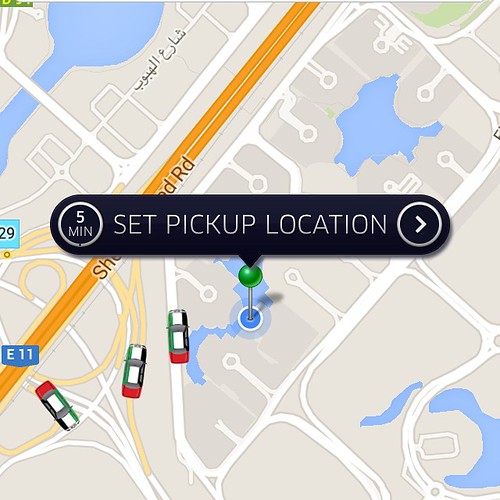
Uber in Dubai. Photo by khawaja on Flickr.

A selection of 9 links for you. (Only one post today.) Not for sale in Delaware. I’m charlesarthur on Twitter. Observations and links welcome.

Exclusive: upcoming version of Google Translate will include WordLens image translation and auto-detection for conversation mode >> Android Police

Michael Crider:

A few months ago Google purchased the developer of the impressive WordLens app, which translates text and signs from another language into your own simply by pointing your camera at it. The text appears in your language through the lens, as if you had super-powered Translate-O-Vision. As with Waze and Google Maps, it looks like Google’s own Translate app will soon see the benefit of that acquisition. Check out the screenshots below, taken from an upcoming version of Google Translate.

Logical purchase for Google; translation looks very impressive.


Google removes Pirate Bay apps from Play Store >> TorrentFreak

A few weeks ago the company implemented a major change to its search algorithm, aimed at downranking sites that often link to copyright infringing material.

Another drastic move came today when Google began removing many Pirate Bay related apps from its Play store. The apps in question include “The Pirate Bay Proxy,” “The Pirate Bay Premium,” “The Pirate Bay Mirror” and “PirateApp.”

The apps targeted by Google offer mobile optimized web-browsers for The Pirate Bay. In addition, many of them used proxy sites so users could easily circumvent local ISP blockades.

The apps appear to have been removed proactively as there is no mention of a DMCA takedown notice.

Reason for removal: “violation of the intellectual property… provisions of the Content Policy.” The Pirate Bay Proxy had had 900,000 downloads and 45,000 active users per day.


We can’t trust Uber >> NYTimes.com

Zeynep Tufekci and Brayden King:

We use these apps and websites [such as Uber, Facebook, Pandora, etc] because of their benefits. We discover new music, restaurants and movies; we meet new friends and reconnect with old ones; we trade goods and services. The paradox of this situation is that while we gain from digital connectivity, the accompanying invasion into our private lives makes our personal data ripe for abuse — revealing things we thought we had not even disclosed.


Pro tip: don’t tell Google Wallet you sell crack >> Daily Dot

Reddit user kag0 may not have actually been pushing the white stuff, but Google was watching nonetheless: 

So sometimes when I show friends or people how you can request money over Google Wallet, I’ll send a request for a few thousand bucks to close friends with a note saying something like “for my ransom” or “need crack”. They know whats up, they read it, chuckle and reject the request, it’s all good. 

 The tutorial went awry when Google caught kag0’s payment, complete with annotation that it was for “Drugs, Crack,” and shut things down. Apparently selling more than $20K worth of crack via Google’s e-payments platform is a no-go, violating two sections of the Google Wallet Terms of Service. 

Fool. Shoulda used Apple Pay.


With bullying app Secret on life support, investors learn the risk of investing in assholes >> PandoDaily

Paul Carr, after enumerating the many ways Secret (that’s the app that’s not Whisper) is in trouble:

there’s one major difference between Uber and Secret: For all its flaws, Uber is a genuinely useful service, and one that promises to give work to 1m new drivers next year alone. It just so happens to be operated by a deeply unpleasant company. That’s a hugely risky state of affairs, but clearly survivable.

Secret, by contrast, is an unpleasant company offering an inherently unpleasant service. As the company’s amoral investors have learned to their cost, that combination is nearly always going to be fatal.

(Disclosure: I know and like Paul Carr.) I tried Secret for a while, screwed up on a story because of it, and then generally found it like the scaly brown underside of Twitter – info I can’t use, people I didn’t like. (Even though they were meant to be “friends” or “friends of friends”.) I deleted it ages ago, and I don’t think there’s any pivot that would make me reinstall it.

Equally, I deleted Uber ages ago too.


Living with the Microsoft Band >> Tirias Research

Kevin Krewell has been wearing a Microsoft Band (on and off) for five weeks:

The biggest failing I see with the Band application is that it doesn’t directly connect you with the data in a meaningful way without significant work by the user. I preferred if the data was automatically charted and provided me with insightful health information about trends or other health related information. Today it requires research by the user to find any useful information from the tracking software. Certainly more automated information would be helpful. I’m hopeful that as the software evolves, there will be additional health tracking benefits to wearing the Band.

To this day I find the band is still clunky to wear – it catches on the lining of my sports jacket. Sometimes it feels like it’s a home detention bracelet on my wrist, but I grow more used to the bulk. I’ve had continuous trouble keeping the ban in sync with my iPhone application. Initially it would say that it could not sync now sometimes it says it is syching but no data appears on the application. There’s definitely room for improvement here. I’ve also found I had multiple BT connections listed in iPhone Setup for the Band.


Uber launches in Portland without city’s approval >> KGW Portland

Mayor Charlie Hales said the launch was illegal. The mayor’s office did not receive any advance notice from Uber about the Dec. 5 launch.

City Commissioner Steve Novick said Uber is choosing to break the law and the city is prepared to issue civil and criminal penalties against drivers and the company. Drivers could get hit with up to $3,750 for first-time offenses.

“There’s nothing sharing about this so-called ‘sharing economy’ company,” Novick said. “They want to profit in Portland without playing by the same rules as existing cab companies.”

What’s unclear here is what being registered with the city adds to the system. The point on the “sharing” economy is completely true, though. And if the cab registration helps pay for road upkeep, is that not useful? Does Uber pay that too?


Mark Zuckerberg and Facebook’s plan to wire the world >> Time

Lev Grossman:

[Zuckerberg says] “Our mission is to connect every person in the world. You don’t do that by having a service people pay for.” I suggest that Facebook’s users are paying, just with their attention and their personal information instead of with cash. A publicist changes the subject.

But before that happens Zuckerberg also notes — and it was the only time I saw him display irritation — that Apple CEO Tim Cook wrote something similar in September in a statement spelling out Apple’s privacy policy: “When an online service is free, you’re not the customer. You’re the product.” The shot was probably meant for Google, but Facebook was definitely in the blast radius. “A frustration I have is that a lot of people increasingly seem to equate an advertising business model with somehow being out of alignment with your customers,” Zuckerberg says. “I think it’s the most ridiculous concept. What, you think because you’re paying Apple that you’re somehow in alignment with them? If you were in alignment with them, then they’d make their products a lot cheaper!”

Zuckerberg’s frustration might be understandable – as I understand it, Facebook was definitely in the blast radius, because unlike some companies (plural) but in common with some companies (plural), it didn’t think the NSA’s Prism program was any reason to collect less data about users.

He’s certainly overlooking the fact that if you’re ad-funded, you have customers – the ones who pay you, who are called advertisers – and users, who you connect to the advertisers. It’s exactly the same model as news organisations have used for ages. But news organisations weren’t able to profile you exactly, or collect huge amounts of data about you. Having customers who aren’t users, and users who aren’t customers, creates huge potential for conflict. Noticed how Google’s ads take up more of the desktop results page? Noticed Google+? Noticed those autoplay video ads on Facebook?

Apple, on the other hand, tends to focus only on having users who are customers, and vice-versa. There’s no split; that’s the alignment. As to lower prices: that’s simply not how Apple rolls. Never has. Probably never will. But its users are absolutely its customers. At Pando Daily, Nathaniel Mott takes much the same position – with more examples.


When data gets creepy: the secrets we don’t realise we’re giving away >> The Guardian

Ben Goldacre:

I recently found myself in the quiet coach on a train, near a stranger shouting into her phone. Between London and York she shared her (unusual) name, her plan to move jobs, her plan to steal a client list, and her wish that she’d snogged her boss. Her entire sense of privacy was predicated on an outdated model: none of what she said had any special interest to the people in coach H. One tweet with her name in would have changed that, and been searchable for ever.

Just think of what that one tweet would have set in chain. Terrific piece from Goldacre which delves into how data affects privacy in medicine, shopping and so much more.


Start up: Android bloatware, did vinyl really sell?, Samsung shakes up, and more


Bloated Santa is here for you! Image by Lynn Friedman on Flickr.

A selection of 10 links for you. Slippery when wet. I’m @charlesarthur on Twitter. Observations and links welcome.

Carriers can now install apps on Android handsets without customers’ permission >> Forbes

Matt Hickey:

The fact that bloatware was a notorious failure doesn’t mean that everyone’s been paying attention, of course. A company called Digital Turbine has a new service – called Ignite — for Android handsets that allows a carrier to install apps on customers’ smartphones “for more advertising revenue” whenever it wishes. In other words, carriers can now push garbage apps onto their users handsets to make a few bucks here and there whether the user wants it or not, and it seems as if the practice is perfectly legal.

Digital Turbine claims Verizon and T-Mobile as customers (among others), but that doesn’t necessarily mean that those carriers are currently using the service to push apps, but it does mean that they could if they wished. That said, some users have as recently as this week claimed that they were pushed updates called “DT_Ignite” for “performance enhancements”. The update apparently asks for permission to access almost any part of the phone’s system, making it not just annoying but also potentially dangerous.

So it’s not quite “without permission”, but it’s certainly “without transparency”. Users who noticed it find it annoying.


Google Glass deal thrusts Intel deeper into wearable devices >> WSJ

An Intel chip will replace a processor from Texas Instruments Inc. included in the first version of Glass, the people said.

Intel plans to promote Glass to companies such as hospital networks and manufacturers, while developing new workplace uses for the device, according to one of the people.

Google launched the Internet-connected eyewear in 2012 as a consumer gadget, but it was criticized by privacy advocates and widely regarded as nerdy. But Glass shows early signs of catching on as a workplace-computing device.

Through a program it calls Glass at Work, Google is working with software developers including Augmedix Inc. and APX Labs LLC to encourage use of Glass in industries such as health care, construction and manufacturing where employees work with their hands but need information.

Smart; no doubt Intel will subsidise it, as part of its desperate ongoing efforts to get into mobile. However Google still seems to think consumers will want Glass: 300 staff work on Glass, but only 5% (that’s 15) focus on “Glass at Work”.


Huawei Technologies has big plans, faces big questions >> The Seattle Times

One area Huawei is unlikely to return to, unless the market changes: Windows Phone.

Huawei produced two models running Microsoft’s smartphone OS before it said it was putting its plans for future Windows Phones on hold.

“We didn’t make any money in Windows Phone,” Kelly said. “Nobody made any money in Windows Phone.”

Huawei is also facing stiff competition in the smartphone market from Beijing-based Xiaomi, which in the third quarter of this year bypassed Huawei to become the world’s third biggest smartphone vendor, according to IDC.

Xiaomi, founded just four years ago, has ascended quickly due mainly to a strategy of offering high-end features for low prices, resulting in high-volume sales figures, especially in its home country.

Huawei says it isn’t looking to compete in the low-margin arena, and is instead concentrating on high-end phones.

“We will lose volume in that shift,” Kelly acknowledged.


Why Eric Schmidt doesn’t know how Google works >> VentureBeat

Darius Lahoutifard is an entrepreneur with a withering critique of Schmidt and Jonathan Rosenberg’s new book “How Google Works”:

the authors are confusing causation and correlation. Schmidt points out a series of characteristics of Google as a company and presents them as the reasons for Google’s success, but in my opinion, they are all consequences of Google’s success.

For example the authors write: “Their plan for creating that great search engine, and all the other great services was equally simple: Hire as many talented software engineers as possible, and give them freedom.” Well, this worked because the search was already successful enough to fund that freedom. I would love to see one single company that isn’t dominating a market with no cash cow in-flow that can succeed without strict discipline, sharp focus, hard work, and hands-on management.

If this management style is the reason for Google’s success, then why have the majority of initiatives at Google either failed or been financially inefficient and unprofitable? If they were standalone startups, they would have most likely already been dead.

Another special characteristic of Google is its sales force. When interacting with sales people at Google, I am shocked to see how untrained and inefficient they are.

No punches pulled. At all. (Google was very, very focussed as a startup. The post-IPO moonshot stuff has been a bit hit-and-miss. Well, miss, apart from Android and Maps.)


Small Data: Is lots of vinyl being sold? >> BBC News

Anthony Reuben:

This year is the first time that more than a million vinyl albums have been sold [in the UK] since 1996. This was based on Official Charts data released by the British Phonographic Industry (BPI), going back to 1994, which was when they started keeping count.

There was nothing particularly wrong with the figures, except that 1994 is quite a bad year to start looking at vinyl, as the graph above shows.

Look at the graph, and you suddenly realise what a non-story this was.


Samsung mobile chief survives shakeup >> Korea Times

“We expect the mobile business will get better under Shin’s leadership,” Lee Joon, head of communications at Samsung’s Future Strategy Office, told reporters in a briefing.
He explained its critical consumer electronics business affiliate had no option but to pursue “stability” rather than radical changes as Chairman Lee, who makes key decisions, was still recuperating.

Now, Samsung is seeing a transition of power to Samsung Electronics Vice Chairman Lee Jae-yong.

“When the junior Lee takes over completely, then Samsung will see real changes in management,” said a senior executive at a components affiliate by telephone.

Samsung Electronics only promoted three presidents, the lowest number since 2008.

“This year, the performance of Samsung Electronics and other affiliates wasn’t that good,” Lee Joon said.


Is Uber’s rider database a sitting duck for hackers? >> The Washington Post

A person who had a job interview in Uber’s Washington office in 2013 said he got the kind of access enjoyed by actual employees for an entire day, even for several hours after the job interview ended. He happily crawled through the database looking up the records of people he knew – including a family member of a prominent politician – before the seemingly magical power disappeared.

“What an Uber employee would have is everything, complete,” said this person, who spoke on the condition of anonymity for fear of retribution from the company.

A more sophisticated – and malicious – person with that access could have scraped data on a massive scale, then used powerful analytical software to learn things that Uber users might want to keep private, for professional or personal reasons.

So for once, the headline doesn’t conform to Betteridge’s Law.


Rohinni produces the ‘world’s thinnest’ LED lights using 3D printing, and it adds light anywhere >> 3ders.org

The paper-thin Lightpaper is made by mixing ink and tiny LEDs together and then printing the mixture out on a conductive layer. This layer is then sealed between two additional layers. The tiny diodes are about the size of a red blood cell. When a current runs through the paper, the tiny, randomly-dispersed diodes will light up.

Rohinni’s LightPaper is much thinner than current lighting technology OLED, which has been used in flat screen televisions and allowed TV screens thinner than tenth of an inch to be manufactured. But it seems that the company is more interested in using LightPaper in the automotive industry, as a new means for make excellent taillights, or branding.

Its application potential was endless, said Nick Smoot, chief marketing officer. He said they were thinking about printing lamp shades, so lamps would not need light bulbs. “Anywhere there is a light, this could replace that.” He also said that eventually people will be able to print their own at home. “You will be able to design and print you own light,” he said. “Right now we are printing the light, but we are going to be putting that back in the hands of the people.”


An easily repairable and upgradeable mobile phone >> Puzzlephone

Another modular smartphone, like the Google Ara, but more limited: you can replace the battery, screen and OS. (It’s not clear what else.) Designed and built in Finland, and aims to start shipping in 2015.


Steve Jobs’ testimony expected to play major role in iPod antitrust lawsuit >> Mac Rumors

The complaint focuses on Apple’s older iPod models, which only supported music purchased on iTunes and songs downloaded from CDs. Also being disputed is Apple’s FairPlay system of encoding purchased music, which limited music playback to the iPod and not competing MP3 players. In the suit, consumers claim Apple violated antitrust law by deliberately limiting interoperability with competitors, while exclusively promoting its products and services.

The email testimony is expected to paint Steve Jobs as an aggressive businessman who worked hard to ensure the success of the iPod and iTunes. This success often came at the expense of smaller competitors, which were not allowed to connect to Apple’s popular iPod ecosystem. In one already released email, Jobs addresses Apple’s lack of support for the-then upcoming MusicMatch music store.

“We need to make sure that when Music Match launches their download music store they cannot use iPod,” he wrote. “Is this going to be an issue?”

This relates to 2004 and 2005. Apple will argue that the purpose was to improve the platform for the consumer. (Side note: in January 2013 the US FTC decided that Google’s manipulation of search results to the disfavour of competitors was not an antitrust matter, because it benefited consumers.)


Start up: Chromebooks beat iPads, Netscape’s growing pains, OnePlus’s India problem, Nexus 9 before and after, and more


The inside of Peter Morgan’s eye.

A selection of 12 links for you. Clean regularly. I’m charlesarthur on Twitter – observations and links welcome. (Note: I’ve tweaked – I hope – the font size on each link entry. If the spacing seems off, suggest a better CSS for it. I’m all ears, having twiddled with it to little satisfaction.)

Google overtakes Apple in the US classroom >> FT.com


Apple has lost its longstanding lead over Google in US schools, with Chromebook laptop computers overtaking iPads for the first time as the most popular new device for education authorities purchasing in bulk for students.

Google shipped 715,500 of the low-cost laptops into US schools in the third quarter, compared with 702,000 iPads, according to IDC, the market research firm. Chromebooks, which sell for as little as $199, have gone from a standing start two years ago to more than a quarter of the market.

It marks the first time Google has outsold its rival and consolidates a lead it opened up over Apple this year in the broader education market, which includes higher education establishments, as it closes in on Microsoft Windows, the market leader.

The multibillion-dollar education market has become a battleground for hardware makers trying to win the loyalties of the next generation of consumers. It has traditionally been dominated by Windows devices, which have a decades-long head start on iPads and Chromebooks, but schools are increasingly turning to lower-cost alternatives.

A $500m schools contract in Los Angeles was going to be all-iPad – and then the deal hit the rocks, and LA went for Chromebooks instead.


Peek Retina >> Indiegogo

What is Peek Retina?
It’s a clip-on camera adapter that gives high quality images of the back of the eye and the retina. This helps us to diagnose cataracts, glaucoma and many other eye diseases, ready for treatment.

It has been developed by an award-winning team of experts in eye care, engineering and technology.

Peek Retina combines both a traditional ophthalmoscope and a retinal camera in a mobile phone, providing a portable, affordable and easy way to carry out comprehensive examinations.

It sits neatly over the top of the device allowing a healthcare worker to easily take high-quality images of the back of the eye. It feels much less intrusive for the patient too.

The aim is to bring it to the millions of people who need affordable eye care in poorer regions. A donation would make a great Christmas gift. Or buy one for yourself.


A letter to our Indian users >> OnePlus Blog

This week, we announced that the OnePlus One will finally launch in India on December 2, 2014. This has been a long time coming both for our Indian fans, who have been incredibly patient, and everyone behind the scenes who have been working towards this moment since June.

OnePlus and all of our partners, including Cyanogen, have put countless hours of work into making this launch a success. Just last month, on October 7, Cyanogen released the 38R OTA update which included SAR values inside phone settings to comply with Indian regulations. Therefore, it was surprising and disappointing to hear from Cyanogen on November 26 that they had granted exclusive rights in India over the Cyanogen system to another company. Prior to this, OnePlus and Cyanogen have successfully cooperated to release the OnePlus One or carry out commercial operations in 17 countries and regions (including India). It is truly unfortunate that a commitment we both made to our Indian users will now not be upheld.

Cyanogen’s exclusive partner in India: home-grown Micromax. OnePlus’s solution: set up physical places where it will flash peoples’ OnePlus phones to the newest system. That’s going to be expensive.


Smartphones to commoditise like PCs; margins to contract >> Fitch Ratings

The margins of Asian smartphone makers are likely to contract in the medium term amid heightened competition and product commoditisation, says Fitch Ratings. The slowing pace of hardware development, and more manufacturers achieving a threshold level of build quality and functionality, means that the rapid growth of lower-cost smartphone producers will challenge market-leading incumbents and reduce profitability.

The smartphone industry runs the risk of following the cycle seen in PCs, where device-makers’ share of the value chain was squeezed by competition and where operating systems and applications software have become more important to consumers than hardware from a specific manufacturer. The dominance of Microsoft’s operating systems and applications enabled this trend in PCs. In smartphones, this trend may be facilitated by the Android operating system and the open environment for third-party application developers…

…Fitch expects that Samsung’s credit profile will remain solid, given its technology leadership, integrated structure and wider product range. Apple too is relatively well positioned owing to its strong brand value and ecosystem. Outside the big two, established brands such as LG Electronics, Sony, HTC and Nokia, will face stiffer competition from low-cost Chinese vendors.

It’s the value trap all over again.


Uber Josh Mohrer: New York’s general manager is facing disciplinary action over privacy violations >> Slate

Uber said Friday that it has concluded an investigation of New York City general manager Josh Mohrer for alleged privacy violations and has “taken disciplinary actions” against him.

Uber began looking into Mohrer 10 days ago after BuzzFeed’s Johana Bhuiyan reported that Mohrer had accessed her Uber travel data without her permission on multiple occasions. In one instance earlier this month, Bhuiyan arrived for a meeting with Mohrer at Uber’s New York headquarters in Long Island City to find him waiting for her. “There you are,” she recalled him telling her. “I was tracking you.”

Reached Friday afternoon, a spokeswoman for Uber declined to comment on any specifics of the “disciplinary actions” or discuss what might have prompted them other than the BuzzFeed report.

Somehow unsurprising that Uber would go for undisclosed self-regulation on this.


The best travel gear of 2014 >> Co.Design

If you need an unusual present for someone who’s always in and out of airports, or rides a bike, or needs an umbrella, here you go. Some great ideas in here.


Is Monument Valley overpriced? Yes. >> Terence Eden’s Blog

We live in times of desperate austerity. When you say “well, it’s only the price of a cup of coffee!” you utterly fail to realise that for many people Starbucks represents an unobtainable level of decadent spending.
People have hard lives. After working two jobs, slumped on an endless night bus home, they want relief from the pain and tedium of the working day. Pulling out an old phone – perhaps a hand-me-down, or one bought in happier times – they want to spend what little disposable income they have wisely. Something that gives them bang for their buck.

Renting a movie, like Transformers, works out at £1.30 per hour of enjoyment. Twice as cheap as Monument Valley.

Reading a book, knitting, chatting on the phone with a friend – all cheaper.

As the reviewer [quoted earlier in the post] said – there are many games which are just as good looking as Monument Valley, with far longer play times. Often for free.

This is a classic “functional pricing” argument, which I find is much more widely made (especially over PCs and smartphones and tablets, where “measurement” seems superficially easy – x GHz processor, y RAM, z hard drive storage). It’s also meaningless. I wouldn’t rent Transformers; you could offer it to me free and I wouldn’t watch it. Why? Because in my view it’s crap. Therefore no (non-negative) price is sufficiently low for me.

By contrast, I find Monument Valley to be fascinating, clever, unexpected, memorable – all those things that for me Transformers is not. As for other games that have longer play times and are free – sure, but is Doodle Jump or Angry Birds as memorable as Monument Valley?

I don’t often disagree with Eden, but this seems to me a classic case of mistaking price and value. Equally, it’s one that lots of people make when it comes to apps – which is the problem app makers face.


An Interactive Scale of the Universe Tool

From the teeny tiny to the gianty–… anyway. Terrific way to feel small. (Via Jake Davis.)


The BlackBerry Passport enigma: TCOB-machine or “worst designed thing, ever” >> Ars Technica

Sean Gallagher:

When viewed in the right light, the Passport ends up looking pretty. It was unexpectedly the best smartphone we’ve ever used from the perspective of taking care of business. Yes, it benchmarks somewhat below phones in its price range on the tests that would run in the BlackBerry 10 OS. And there’s still a significant “app gap” between the Passport and competing devices. But that’s all background noise when you use the Passport as it’s intended—as an information and communications machine, designed for people who still live and die by the e-mail inbox rather than iMessages and Hangouts and Snapchats.

Unlike this one, most reviews of the Passport miss its point – it’s not a general-purpose smartphone. It’s a BlackBerry.


The baffling and beautiful wormhole between branches of math >> WIRED

Lee Simmons, capitalising on the fact that “wormhole” is a key phrase at the moment (because of Interstellar) and hey, maybe this is new! But it isn’t. If you don’t know Euler’s identity equation, you’re in for a treat though:

the weirdest thing about Euler’s formula — given that it relies on imaginary numbers — is that it’s so immensely useful in the real world. By translating one type of motion into another, it lets engineers convert messy trig problems (you know, sines, secants, and so on) into more tractable algebra—like a wormhole between separate branches of math. It’s the secret sauce in Fourier transforms used to digitize music, and it tames all manner of wavy things in quantum mechanics, electron ics, and signal processing; without it, computers might not exist.


Nexus 9 made on Thursday vs before launch buttons comparison >> Nexus9

Poster “Sebianoti” posted a picture of his old and new Nexus 9 tablets, and commented:

Today my new Nexus 9 arrived, it was manufactured last week, it was shipped to me on Friday from Taiwan and it arrived today. It’s my replacement to my faulty one with extreme light bleed and buttons that are almost impossible to press, as you can see that’s one issue that’s been fixed. This may be the first Nexus 9 in white that has the buttons fixed, at least that’s what HTC’s AVP told me. Light bleed is still present however it’s nowhere near as bad as before.

Seems like damning with faint praise. The LTE version has apparently been delayed. HTC isn’t covering the Nexus name with glory here (and replacements aren’t going to help its bottom line).


Excerpts from my diary of early days at Netscape >> Jamie Zawinski

Here are some excerpts from my diary during the first few months of the existence of Netscape Communications (All Praise the Company), back when we were still called Mosaic. Back when there were only 20 or 30 of us, instead of however-many thousands of people there are today. Back before we had any middle managers.

This is the time period that is traditionally referred to as “the good old days”, but time always softens the pain and makes things look like more fun than they really were. But who said everything has to be fun? Pain builds character. (Sometimes it builds products, too.)

So you want to go work for a startup? Perhaps this will serve as a cautionary tale…

The first one starts at 4am. SGI hardware, Irix 5.3… but the same frustration that will be recognisable to many startups. It starts in July. By September:

We’re doomed.

We’ve finally announced a public beta to the net, and there are loads of bugs, and they’re hard bugs, sucky, hardware-dependent ones. Some of our private beta testers crash at startup on some SunOS 4.1.3 systems, and I’ve got what seems like an identical system here and it doesn’t crash. And scrolling text doesn’t work with the OpenWindows X server, though it works fine elsewhere.

(Via Steve Werby.)


Start up: Uber debated, iPhone ruining Christmas?, Amazon Echo reviewed, (more) Android clipboard malware


Uber driver parked in the bike lane. Photo from Flickr.

A selection of 11 links for you. Use them wisely.

How to get away with Uber >> Matter on Medium

Bobbie Johnson (with whom I used to work, long ago, at The Guardian):

Raw, pure, unbridled ambition is an uncomfortable thing to look at. It’s not that it’s ugly, necessarily. It’s just brutally, shockingly honest. Uber does not pretend to have a glorious philosophy—it wants to make transport easy, but there is no aspiration as lofty as “organize the world’s information” or “make the world more open and connected.” And perhaps that’s the way it should be. After all, would it be more offensive if Uber had a mission beyond itself? It certainly feels like less of a betrayal to know that it just wants to be as big, as powerful, as necessary, as it can be.

He argues that Uber is as greedy to have everything as Amazon – which feels right. (Worth noting: Johnson’s success came from Matter, a Kickstarter-ed project, which was then bought by Medium. So he has experience of being a startup.)


Nothing found for Rides Of Glory >> Uber

Oh, how interesting. Uber has removed the blogpost about tracking peoples’ one-night stands and categorising them by city. Concerned that it revealed invasion of privacy? Concerned about bad publicity?

It’s still in the Wayback Machine if you want it though. Originally put up in August; removed, abruptly, some time after 18 November.


Will Apple’s iPhone 6 ruin Christmas for retailers? >> MarketWatch

Brett Arends:

“We estimate iPhone 6 upgrades and purchases will equate to $4 billion in retail sales in November and December,” warns Canaccord analyst Camilo Lyon in a new research paper. That, he says, equates to “approximately 16% of the $24.3 billion in incremental dollar growth expected this holiday season.”

Or, to put it another way, while Apple is likely to see a sales boom, the rest of the mall will be left with a much more modest increase in sales of around 3.3%, says Canaccord.

Different analysts may play with different numbers for sales of iPhone 6s. And the amount consumers spend will depend to some extent on whether they get subsidized iPhones now, and pay higher mobile fees each month over the next two years, or pay the full cost of the iPhone upfront and then shop around for a cheaper mobile deal.

But even though different people will quibble about the numbers, the analysis is surely “directionally correct,” as we used to say at McKinsey & Co.


Don’t buy a Chromebook just for the 1TB Google Drive storage offer >> Forbes

Tony Bradley:

when Microsoft raised the amount of OneDrive storage it provides for free accounts earlier this year, it also shared an interesting factoid about the data storage habits of the average user. “Our data tells us that 3 out of 4 people have less than 15 GB of files stored on their PC. Factoring in what they may also have stored on other devices, we believe providing 15 GB for free right out of the gate – with no hoops to jump through – will make it much easier for people to have their documents, videos, and photos available in one place.”

Both Google Drive and Microsoft’s OneDrive provide users with 15GB of storage for free. Even if you’re part of the 1 out of 4 users that exceeds 15GB, unless you’re an uber power user with an archive of HD movies to store in the cloud, you most likely won’t exceed 100GB. Both Google and Microsoft offer a 100GB plan for $2 per month. All of this works out to mean that 75% of the users have less than 15GB of data and will get no value out of the Chromebook promotion, while most of the remaining 25% could get by with 100GB of Drive storage, so the actual value of the Chromebook deal is more like $48.

Also, if you do need that much storage, the free offer will run out – and then you’ll be paying $10 per month.


Amazon Echo review: a perfect 10 >> ZDNet

James Kendrick:

I set the Echo on my desk which is toward the middle of my loft apartment. This room is big (approximately 40 x 30 feet) and has poor acoustics due to the concrete celings, hardwood floors, and exposed ventwork.

Having long worked with speech recognition and voice input, I am extremely impressed with how accurately it works on the Echo. The Echo can hear voice commands from over 30 feet away and it does so even with music playing. The microphone array is very, very good.

Alexa handles multiple speakers well. I invited some friends over to see what they thought of the Amazon Echo and had them all give Alexa commands or ask questions from all over the apartment. My friends were as impressed as I was, as Alexa heard each one without fail, and did the bidding of each. I suspect most, if not all, of them will buy an Echo when they are readily available.

Well well – Amazon knocks it out of the park.


Using a password manager on Android? It may be wide open to sniffing attacks >> Ars Technica

Dan Goodin:

In early 2013, researchers exposed some unsettling risks stemming from Android-based password managers. In a paper titled “Hey, You, Get Off of My Clipboard,” they documented how passwords managed by 21 of the most popular such apps could be accessed by any other app on an Android device, even those with extremely low-level privileges. They suggested several measures to help fix the problem.

Almost two years later, the threat remains viable in at least some, if not all, of the apps originally analyzed. An app recently made available on Google Play, for instance, has no trouble divining the passwords managed by LastPass, one of the leading managers on the market, as well as the lesser-known KeePassDroid. With additional work, it’s likely that the proof-of-concept ClipCaster app would work seamlessly against many other managers, too, said Xiao Bao Clark, the Australia-based programmer who developed it.

Password manager companies blame Android’s clipboard function, which is available to any app and has no interface securing it.


Keep an eye on what matters >> CamioCam

Turn any tablet, computer, or smartphone into a home monitoring camera that lets you see what’s happening at home when you’re away… CamioCam records and uploads to the cloud only when motion is detected. Then image analysis and machine learning algorithms identify the most important events that were recorded. CamioCam learns what you care about from the way you use it, so it gets smarter over time.

One device for monitoring is free; each extra one is $9 per month. It’s encrypted (“No one, including CamioCam engineers, can ever see what you’ve recorded unless you choose to share it explicitly”) and claims to use very little upstream bandwidth – 33.3kbps.

Worth trying? For iOS and Android. (I’ve downloaded it, but haven’t yet tried it.)


How to make streaming royalties fair(er) >> Medium

Sharky Laguna:

It sounds perfectly fair and reasonable: if an artist wants to make more money all they need to do is get more plays. But there’s a major disconnect in this economic model that has not been discussed widely: Spotify doesn’t make money from plays. They make money from subscriptions*.

So how is that a disconnect?

Let’s say I am a huge fan of death metal*. And nothing pumps me up more than listening to my favorite death metal band Butchers Of The Final Frontier. So I sign up for Spotify in order to listen to their track “Mung Party”. I listen to the track once, and then I decide Spotify isn’t for me. OK, So who got the benefit of the $10 I paid in subscription fees?

Suggested solution: pay royalties in proportion to the amount that artists are played by subscribers. Interesting idea – it’s almost like paying the artists directly. As if you were buying their content. Uh..


OpenBR >> Openbiometrics

A communal biometrics framework supporting the development of open algorithms and reproducible evaluations.

In other words, face detection and matching, in open source. This stuff is now becoming available to anyone, not just governments. How soon before it’s in apps on phones? Why isn’t it already in apps on phones?


App-pocalypse Now >> Coding Horror

Jeff Atwood:

Nothing terrifies me more than an app with no moral conscience in the desperate pursuit of revenue that has full access to everything on my phone: contacts, address book, pictures, email, auth tokens, you name it. I’m not excited by the prospect of installing an app on my phone these days. It’s more like a vague sense of impending dread, with my finger shakily hovering over the uninstall button the whole time. All I can think is what shitty thing is this “free” app going to do to me so they can satisfy their investors?

His argument is that the low price of apps is inevitable, and that you’re paying with your time. Also, apps are in a mess.


Initiating coverage of SanDisk with Buy and $123 target >> BTIG Research

Part of our bullish thesis on SanDisk is based on the assumption that the NAND industry will behave differently than it has in the past when it comes to increasing supply, whether it be from technological change or the investment decisions of the key participants. This view will likely result in derision from those who have far longer experience than us in evaluating the historical volatility in the memory market, which may prove to be well deserved. However, we think our outlook has merit based on five key factors;

• Moore’s Law is over. The densification of memory cells has reached its limit
• New technologies like 3D [transistors] are costlier and taking longer to deploy
• The drop in price per bit calls into question the value of investing in more capacity
• NAND competitors have different strategic and investment priorities
• There is a sustained strong level of demand

As newcomers to this sector of the ecosystem, we will have to continue to test our thesis but we think investors should, at a minimum, be second-guessing their established views on how the industry works.

Basically, BTIG sees a decline so continuous in pricing that it thinks it’s uneconomic to invest in new capacity. This hasn’t happened in the past, so let’s see how that pans out.