Start up: Intel stutters, Google goes retail, why Apple Watch?, what people really want in news apps, and more


The view for too many small businesses, in Intel’s opinion. Photo by Ella’s Dad on Flickr.

A selection of 7 links for you. To read. I’m charlesarthur on Twitter. Observations and links welcome.

Why is Apple making a gold watch? » Benedict Evans

Apple stores are huge rich-media billboards on every major shopping street in the developed world: I can’t think of any other company that has shops as big as that in such premium locations in as many places. Apple retail is a self-funding marketing operation. So too, perhaps, is the gold watch. Apple might only sell a few tens of thousands, but what impression does it create around the $1,000 watch, or the $350 watch? After all, the luxury goods market is full of companies whose most visible products are extremely expensive, but whose revenue really comes from makeup, perfume and accessories. You sell the $50k (or more) couture dress (which may be worn once), but you also sell a lot of lipsticks with the brand halo (and if you think Apple’s margins are high, have a look at the gross margins on perfume). 

Meanwhile, though other companies are already making metal smart watches, I struggle to imagine Samsung making solid gold watches. Apple’s brand might or might not work there, but no other CE company’s does. That is, if this is marketing, and if it works, it’s marketing that no-one else can do. 

On another tack, perhaps the biggest message that this sends is that the Apple watch is not a technology product. It’s a post-‘feeds and speeds’ product. Today we have prices and release dates for the watch but no tech specs at all – because they’re irrelevant to the user experience.

Perfume margins are amazing. And yes, consider how sales of a Samsung gold smartwatch would go.


An incredibly shrinking Firefox faces endangered species status » Computerworld

Gregg Keizer:

Mozilla’s Firefox is in danger of making the endangered species list for browsers.

Just two weeks after Mozilla’s top Firefox executive said that rumors of its demise were “dead wrong,” the iconic browser dropped another three-tenths of a percentage point in analytics firm Net Applications’ tracking, ending February with 11.6%.

That was Firefox’s lowest share since July 2006, when the browser had been in the market for less than two years…

…In the last 12 months, Firefox’s user share – an estimate of the portion of all those who reach the Internet via a desktop browser – has plummeted by 34%. Since Firefox crested at 25.1% in April 2010, Firefox has lost 13.5 percentage points, or 54% of its peak share.

“Hello? It’s Marissa. Now, about that refund clause..”


Intel lowers first-quarter revenue outlook » Intel Newsroom

Intel Corporation today announced that first-quarter revenue is expected to be below the company’s previous outlook. The company now expects first-quarter revenue to be $12.8bn, plus or minus $300m, compared to the previous expectation of $13.7bn, plus or minus $500m.
 
The change in revenue outlook is a result of weaker than expected demand for business desktop PCs and lower than expected inventory levels across the PC supply chain. The company believes the changes to demand and inventory patterns are caused by lower than expected Windows XP refresh in small and medium business and increasingly challenging macroeconomic and currency conditions, particularly in Europe.

The XP refresh is/was still going on? Amazing. (During the same period last year, Intel’s revenue was $12.7bn. So it might be very close to zero growth.)


What do people want from a news experience? » Tales of a Developer Advocate

Paul Kinlan was building a news app:

I posited that users want (in order of priority):

• Notifications of important news as it happens
• An icon on the launcher so it can be loaded like an app
• News available to them offline (i.e, when they are in the tube)
• A fast site

My own intuition of an industry I am not too heavily involved in probably can’t be trusted as much as I think it can, so I sent out a terribly worded tweet.

What happened next will inform and entertain you. (No really, it will.) It did him.


Thousands have already signed up for Apple’s ResearchKit » Bloomberg Business

Michelle Fay Cortez and Caroline Chen:

Stanford University researchers were stunned when they awoke Tuesday to find that 11,000 people had signed up for a cardiovascular study using Apple Inc.’s ResearchKit, less than 24 hours after the iPhone tool was introduced.

“To get 10,000 people enrolled in a medical study normally, it would take a year and 50 medical centers around the country,” said Alan Yeung, medical director of Stanford Cardiovascular Health. “That’s the power of the phone.”

That’s people who would have had to download the update and opt in. Some fret about the quality of data (biased selection) but:

The data may not be perfect, but many concerns about ResearchKit – such as whether the patient sample is representative – are issues with traditional clinical trials as well, said Todd Sherer, CEO of the Michael J. Fox Foundation for Parkinson’s Research, which has collaborated with nonprofit group Sage Bionetworks on one of the apps.


Forking hell! Baidu gives up on its Android-based OS » Tech In Asia

Steven Millward:

No news means bad news when it comes to tech companies. If they’ve nothing to boast about, the ensuing silence looks suspicious. That’s been the case with Baidu’s version of Android (pictured above), which launched in late 2011.

Despite a high-profile and promising start as Dell made use of Baidu’s Android-based Yun OS for a new China-only phone, the Chinese search giant’s OS thereafter didn’t show any signs of finding favor with the nation’s smartphone shoppers. Yesterday, Baidu confirmed in its Yun OS forums that the Android skin will not get any more updates. The project is now suspended.

Had its own product suite, but missed the boat for this. However, has 500m monthly active users for its mobile search and 200m MAUs for its maps product. Might struggle by.


Google opens its first Google-branded store-in-a-store, in London » WSJ

Saabira Chaudhuri:

Google has opened in London its first Google-branded store-in-a-store selling space.

Housed within Dixons Carphone DC.LN -0.41%’s Currys PC World store on Tottenham Court Road, the Google Shop will give Google the opportunity to show off its range of Android phones and tablets, Chromebook laptops and Chromecasts.

“The pace of innovation of the devices we all use is incredible, yet the way we buy them has remained the same for years. With the Google Shop, we want to offer people a place where they can play, experiment and learn about all of what Google has to offer,” said James Elias, the U.K. marketing director for Google.

In some ways, the Google Shop is more of a branding exercise than an approximation of a standalone store. All sales from the store go to Dixons Carphone.

So it’s to sell.. Chromebooks? Chromecast? And – Google needs branding? Seriously?


Start up: how Brin/Page handle email, smartwatch disruption and use, from $500k to zero on Kickstarter, and more


The Google founders’ approach to triaging email. Photo by M@XONGS on Flickr.

A selection of 8 links for you. May contain the word “smartwatch”. I’m charlesarthur on Twitter. Observations and links welcome.

Use cases for smart watches » Action at a Distance

Richard Gaywood:

I have been using an Android Wear smartwatch for the last three months, exploring different software options and possibilities. What follows is a list of the roles I have found it playing in my life — my use cases, in software engineer jargon. I’m not going to pretend this isn’t a very personal list; perhaps none of these things appeal to you, would be a reason for you to desire a smartwatch. But then again, there are surely more use cases I don’t care about or haven’t found that you do. This is by no means an exhaustive list.

However, note that there are a couple of well-discussed banner features people associate with smartwatches that I’m going to skip over purely because they have already been thoroughly discussed elsewhere: fitness (not only through step counters and heart rate tracking, but also utilities like interval trainers and performance recording like Strava and Runkeeper) and notification triage. What I’m trying to do with this post is point out some less commonly thought of use cases than these.

Good to hear from someone who has actually been using this for longer than a few minutes.


David Shin’s answer to ‘How do Bill Gates, Larry Page, Mark Zuckerberg and Jack Dorsey manage their email?’ » Quora

Shin’s response:

When I worked at Google in 2006/2007, Larry and Sergey held a Q&A session, and this exact question was asked of them. One of them answered (I don’t remember which) with the following humorous response (paraphrased):

“When I open up my email, I start at the top and work my way down, and go as far as I feel like. Anything I don’t get to will never be read. Some people end up amazed that they get an email response from a founder of Google in just 5 minutes. Others simply get what they expected (no reply).”

Seems pretty sensible to me. That’s roughly how I work. Which is why I haven’t responded to your email, and probably never will.


Syncthing

Interesting product which

replaces proprietary sync and cloud services with something open, trustworthy and decentralized. Your data is your data alone and you deserve to choose where it is stored, if it is shared with some third party and how it’s transmitted over the Internet.

Selling points (if you can have that on something that’s free):

• Private. None of your data is ever stored anywhere else than on your computers. There is no central server that might be compromised, legally or illegally.
• Encrypted. All communication is secured using TLS. The encryption used includes perfect forward secrecy to prevent any eavesdropper from ever gaining access to your data.
• Authenticated. Every node is identified by a strong cryptographic certificate. Only nodes you have explicitly allowed can connect to your cluster.


Apple Watch isn’t good enough (that’s great news), and overlooked jobs » Valuing Disruption

Bill Esbenshade looks at Apple’s Watch as a low-end disruptor:

A lot of people are looking at the Watch and saying “it’s not good enough” because of a range of issues related to functionality/reliability: battery life too short, watch too thick or clunky looking, too tethered to the iPhone, not enough health sensors, etc.

The irony is that these shortcomings should be good news for the Watch’s future. That’s because under disruption theory, when a product isn’t good enough on a range of performance dimensions, then the vendor has lots of things to improve — through new product versions — before the product starts overserving. See Concepts page and discussion of Clayton Christensen. This means there’s lots of room for Apple — as an integrated manufacturer — to making sustaining leaps ahead of more modular smartwatch competitors relying on Android. See post titled Apple’s Long Term Advantages. Apple has plenty of room to improve the user experience and move up the improvement trajectory without overserving.

(Esbenshade owns Apple stock.) My own query is – shouldn’t this sort of disruption be coming in from the high end or the low end? The Watch seems to approach from somewhere around the middle.


No, the CIA isn’t stealing Apple’s secrets » Errata Security

Robert Graham on The Intercept’s story on the matter:

The Intercept doesn’t quote people who actually know what they are talking about. As I repeat over and over, for every Snowden document, there’s some expert who has presented on that topic at BlackHat, DefCon, or similar hacking/cybersec conference. There’s no excuse for writing a story on these topics and quoting only activists like Soghoian rather than technical experts from these conferences. For example, a quick search of “BlackHat reverse engineering chips” quickly lead to this presentation.

I point this out because another subject of that Intercept article was about trojaning XCode, the Apple development tool used to compile iOS apps. A quick search would have come up with a BlackHat presentation by Errata Security’s own David Maynor where he trojaned Microsoft’s compiler, GCC, and a lesser known compiler called LCC. There’s no excuse for writing this story without reaching out to Maynor, or even Ken Thompson, the co-creator of C/Unix who inspired compiler-trojaning.

Again with compilers, there’s context that is carefully hidden by the Intercept story.

Complex topic, though, which has got everyone looking over their shoulders, and quizzically at their compiler errors, saying “But is it a REAL error, or..?”


How a half-million dollar Kickstarter project can crash and burn » Medium

Haje Jan Kamps has the scars to prove it:

the legal costs were only step one of the battle. The electronics and software design for Triggertrap Ada ended up costing vastly more than we had originally budgeted, in part because it turned out that we couldn’t use the microprocessor we wanted to (the electronics agency claimed that the original microprocessor didn’t have enough memory), and had to do several more design iterations than we had anticipated. Compared to our original project budget, we spent 9.4x more on this phase than we planned to.

In part because of the additional design iterations, we ended up having to spend two and a half times what we had budgeted on our prototyping costs — high-quality 3D printing and subsequent hand-finishing of prototype plastics is hideously expensive — and our industrial and plastics design went significantly over budget.

(Via Matt Baxter-Reynolds.)


Quick take on disruptive potential of smartwatches » Naofumi Kagami

Kagami is a student of disruption theory and practice, and has an interesting take: that it’s the existing watch brands that will thrive in the newly created smartwatch space:

Without going into detail, this is what I expect the smartwatch landscape to look like after the dust has settled;

• Apple will be the undisputed number 1. They will aggressively innovate on the Apple Watch, even to the extent that it cannibalises the iPhone. The Apple Watch will gradually become more and more independent of the iPhone.

• The current Android smartphone OEMs will initially play in the smartwatch market, but they will fail to make profits due to their lack of brand power. Eventually most will retreat from the smartwatch market and focus on making big and powerful smartphones. The few that remain will only get the scraps from the very low-end of the market. The exception might be Samsung. If their Tizen operating system enables them to innovate faster than Android Wear, there is the possibility that Samsung will be able to profit from smartwatches (due to the lock-in they get).

• Current watchmakers will be the major Android Wear players in the smartwatch space, especially in profits. The electronics will be provided by the Shenzhen ecosystem or a chipset provider (maybe Intel). Depending on how well Google can monetise from Android Wear, we might see some rapid innovation.

But read all of it for what that then implies for those smartphone OEMs…


Microsoft has its ‘groove back,’ say some CIOs » WSJ

Clint Boulton:

Michael Sajor, CIO of Apollo Education Group, stopped meeting with Microsoft sales executives a few years ago because they tried to sell him software without bothering to learn about it would help him run his business. “They were, all-around, just a pretty ugly company to deal with,” Mr. Sajor said.

But Mr. Sajor said the company is showing “signs of life” improving its focus under Mr. Nadella. Now Microsoft representatives ask how they can better support the 250,000 University of Phoenix students for whom Mr. Sajor provides technology. Two months ago, Apollo converted from the on-premises Office software to Microsoft’s Office 365 productivity software, which includes the version of Office for iPad. He said the company still has some work to do to solidify customers’ trust in the company, but he’s optimistic in his experience with the company under Mr. Nadella. “If they stay on track, they’ll win our hearts and minds like other companies have done by becoming real partners,” Mr. Sajor said.

Mobile-first, cloud-first. Nadella is a smart strategist.


Start up: harassment claims against Google, android dog funerals, self-destructing handset makers? and more


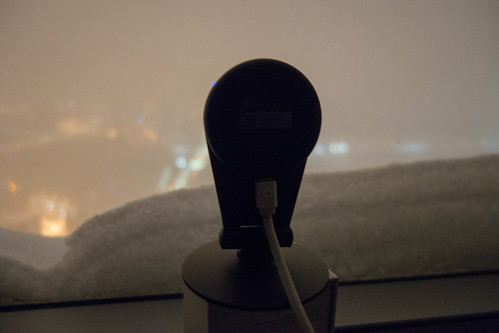
A Dropcam watches the snow fall, pretending to ignore you. Photo by Scott Beale on Flickr.

A selection of 10 links for you. Contains minimal Watch content. I’m charlesarthur on Twitter. Observations and links welcome.

Dropcam’s slow slide into Nest — and therefore Google — begins » PandoDaily

Nathaniel Mott:

Dropcam users are being asked to create Nest accounts — regardless of whether or not they own a Nest product — so they can use “new features and improvements” to their cameras.

The Verge reports that the new accounts will be used to support some of the integrations Nest promised when it acquired Dropcam for around $555 million in cash June 2014. It will also ensure that Dropcam customers have agreed to Nest’s updated terms of service.

Anyone who wasn’t worried before about Google acquiring these companies (it acquired Nest in January 2014; Nest then acquired Dropcam in June) before should be worried now.

But of course, you’ve already got a Dropcam (which looks pretty useful). So setting up an account, well..


Google hit with sexual harassment complaint from ex-employee » Betanews

Mark Wilson on Kelly Ellis’s allegations – which are serious, and go up as far as behaviour by Vic Gundotra – made over the weekend:

Google would much prefer to be seen encouraging women into technology but Ellis – who worked on the Google+ team – dismisses this as nothing more than “PR bullshit”. She also says that she was let down by co-workers who failed to back her up.

Ellis spent a good deal of time on Saturday tweeting a series of snippets about her time at Google where she worked from 2010 to 2014. The tweets started with a very blunt statement: “At Google I was sexually harassed by someone who was later promoted to director”. Dozens of tweets then followed giving more details about what had happened.

Now working as a software engineer at Medium, Ellis says that the harassment was the main reason she left the company back in July. She says “I don’t care if people believe me or not”, but, we have to refer to what she says as allegations. She says that Roderick Chavez, another Google engineer, harassed her:

Google hasn’t responded to the allegations at the time of this being collated.


The privacy and security questions we must ask about the Apple Watch » Fusion

Kashmir Hill:

Apple wants to be your iDoctor. Even if its devices aren’t actually FDA-approved, the apps it makes available that could offer up diagnoses and treatment will be.

Now that our iDevices are going to be collecting even more information from us, what privacy and security concerns do we need to be freaking out about?

“Freaking out about”? Asking about, perhaps. It seems there’s nothing to freak out about.


Imaginary ISIS attack on Louisiana and the twitterbots who loved it » Boing Boing

Cory Doctorow:

On September 11, 2014, [Gilad] Lotan, a data scientist, started researching a massive, coordinated, and failed hoax to create panic over an imaginary ISIS attack on a chemical plant in Centerville, Louisiana. The hoax included Twitter, Facebook and Wikipedia identities (some apparently human piloted, others clearly automated) that had painstakingly established themselves over more than a month. Also included: fake news stories, an imaginary media outlet called “Louisiana News,” and some fascinating hashtag trickery whereby a generic hashtag was built up in Russian Twitter by one set of bots, then, once trending, was handed over to a different set of English-language bots that used it to promote the hoax.

More interesting is the fact that the hoax failed. Lotan shows that Facebook’s Edgerank proved to be resistant to gaming using the process employed by the hoax’s creator(s); that Twitter clusters can be trumped by real news sources; and that Wikipedia’s vigilance was adequate to catching fakesters who create hoax pages.

One feels it’s important to add the proviso: “this time”. There’s more from John Borthwick on Medium. And speaking of Twitter bots…


This is what a graph of 8,000 fake Twitter accounts looks like » Terence Eden’s Blog

Like this:

Eden spent a weekend digging into the nests of fake accounts:

There appears to be several “loops” – that is bots which are in an almost closed network with each other. I see at least half a dozen circles – the rest appear to be following other fake accounts at random.

The centre of those circles appear to be real people. I can’t say why they have lots of fake followers – it’s possible that they – or someone else – has just bought them to make it look like they’re more popular than they really are. There’s no suggestion that they control the fake accounts.

One of the central nodes has 650,000 followers. It’s not possible to know quite how many of those are fake – I’m guessing the majority are.

It seems that there’s a nasty nest of these bots. In the last few weeks I’ve reported a dozen or so for spam – but with literately tens of thousands in the network it’s impossible for any individual to make a meaningful impact.


Avoidable Contact: the watery Big Bang, the 32-step power steering fluid check, disposable faux-ury » The Truth About Cars

Jack Baruth starts with racing cars, then veers into watches…

Hublot and other watchmakers are busy CAD-creating their own “manufacture movements” to replace the generic ETA/Sellita/Valjoux movements found in their products. In this, the Cretaceous period of watch enthusiasm, the ability to engineer and manufacture one’s own mechanical watch movement is essential for “credibility”. Not that the genuine prestige watchmakers all used their own movements anyways, but there’s a certain amount of Cadillac-at-the-Nurburgring idiocy going on: Rolex makes their own movements, and they are a respected brand, so we need to have our own movements as well, even more complicated and feature-packed, and then we will be more respected than Rolex.

There’s just one little problem with that strategy. The proliferation of quick-bake “manufacture” movements is creating an entire generation of hugely expensive, amazingly complicated, completely “bespoke” watches which will be impossible to fix.

…and then he comes out the other side and goes into Porsches, and 993s v Boxsters, but it’s really about durability and inheritability. Very appropriate in light of you-know-what.


Chart: Samsung leads the smartwatch market » Statista

Who are the main players in the smartwatch market? Like the smartphone market, Samsung is going to be Apple’s main competitor. The South Korean technology behemoth sold approximately 1.2 million units in 2014, ahead of second placed Pebble with 700,000. The top three was rounded off by Fitbit who sold 600,000 smartwatches.

Fitbit does a smartwatch? Also, Motorola seems to have been subsumed into Lenovo, so that the Moto 360 looks like it did 500,000 units.

My one problem with these numbers is that they don’t fit with the number of Android Wear devices sold and activated, which we know is 720,000 (give or take a few).


The global handset industry is set for self-destruct » Digits To Dollars

Jay Goldberg isn’t happy:

Let’s say you make a product, and you have a lot of competitors, dozens, hundreds. Prices are falling. More people are piling into the market. Now it is time for you to design a new product. Do you experiment with a radically new form factor? Let a single designer attempt to craft a finely honed product that stands out for its quality? Or do you come out with a product that is just a modest upgrade of last year’s product, with no distinguishing design or features?

Well, when you put it like that…..

Really, I am kinda dumbfounded. That handset OEMs seem to be on a path of self-destruction. I visited every major OEM’s booth and dozens of smaller vendors. I am sure I missed one or two interesting devices with some novel feature, but at some point, I can only stare at identical black, plastic slabs for so long. There is nothing new or differentiated out there, and this cannot last.

I have to admit, at one point, I almost lost my temper. A couple times actually. The industry seems to be in some very complicated form of denial. And there seem to be a couple common threads to their excuses.

His idea of a QWERTY Android phone to sweep up the disenfranchised BlackBerry users is one that keeps being put forward, but nobody is brave enough to do. Point is it would have to be enormously tall, and what happens when you turn the phone sideways? Should it be a slide-phone like the G1?


If an algorithm wrote this, how would you even know? » NYTimes.com

Shelley Podolny (well, perhaps):

The multitude of digital avenues now available to us demand content with an appetite that human effort can no longer satisfy. This demand, paired with ever more sophisticated technology, is spawning an industry of “automated narrative generation.”

Companies in this business aim to relieve humans from the burden of the writing process by using algorithms and natural language generators to create written content. Feed their platforms some data — financial earnings statistics, let’s say — and poof! In seconds, out comes a narrative that tells whatever story needs to be told.

These robo-writers don’t just regurgitate data, either; they create human-sounding stories in whatever voice — from staid to sassy — befits the intended audience. Or different audiences. They’re that smart. And when you read the output, you’d never guess the writer doesn’t have a heartbeat.

Consider the opening sentences of these two sports pieces:

“Things looked bleak for the Angels when they trailed by two runs in the ninth inning, but Los Angeles recovered thanks to a key single from Vladimir Guerrero to pull out a 7-6 victory over the Boston Red Sox at Fenway Park on Sunday.”

“The University of Michigan baseball team used a four-run fifth inning to salvage the final game in its three-game weekend series with Iowa, winning 7-5 on Saturday afternoon (April 24) at the Wilpon Baseball Complex, home of historic Ray Fisher Stadium.”

If you can’t tell which was written by a human, you’re not alone.

Cue observation about how many US news reports have read like they’re written by machines for years anyway.


Japan’s robot dogs get funerals as Sony looks away » Newsweek

Lauren Walker:

“I can’t imagine how quiet our living room would have been if Ai-chan wasn’t here,” Sumie Maekawa, a longtime Aibo owner, told The Wall Street Journal, using an honorific suffix applied to girls’ names.

Tatsuo Matsui, who owns two digital dogs with his wife, added, “I can’t risk my precious dogs because they are important members of our family.”

Despite the loyal fanbase, Sony decided to discontinue the bot in 2006, after selling around 150,000 units.

“Our core businesses are electronics, games and entertainment, but the focus is going to be on profitability and strategic growth,” a Sony spokeswoman said at the time. “In light of that, we’ve decided to cancel the Aibo line.”

For years following the announcement, Sony would repair Aibos that experienced technical difficulties. But in July 2014, those repairs stopped and owners were left to look elsewhere for help.

Do androids dream of electric dog funerals?


Start up: virtual reality gets real, our AI friends, Oracle’s junk bundle, Google’s Wiki love, games with molten lead, and more

A selection of 8 links for you. Do not try the first at home. Or anywhere. I’m charlesarthur on Twitter. Observations and links welcome.

Dr. Jearl Walker sticks his hand into molten lead » YouTube

Yes. Honestly. He’s demonstrating the Leidenfrost effect. DO NOT TRY THIS.

The dangerous stuff happens at about 4 minutes in when he does it the first time. Then he keeps on doing it.

If you want to read about the Leidenfrost effect, Walker explains it in full (PDF).


Forget Oculus Rift, the incredible HTC Vive experience will blow your mind (hands-on) » Pocket-lint

Chris Hall tried it, and he’s sold:

HTC Vive has been born out of HTC’s partnership with Valve. Announced at Mobile World Congress, HTC Vive and Steam VR is taking virtual reality from a static seated or standing experience where you wiggle your head, to one that plays out like Star Trek’s Holodeck, or virtual worlds imagined in The Matrix or Tron.

The lasers mounted on the walls transect the whole space. The Vive headset and controllers are covered with detection points, so they know exactly where they are within that space. That sort of 3D motion mapping isn’t a new technology – it’s similar to how Hollywood captures movement that then underpins CGI models in blockbuster movies.

But here it’s used to let you roam in Vive’s Full Room Scale virtual reality, meaning you have more freedoms than before. You can sit, stand, kneel, walk, jump, duck, dive, bob, weave, punch, skip, spin and probably stand on your head, and Vive knows what you’re doing and where you’re doing it.

Moore’s Law means VR is rapidly hitting the point where it’s going to work fantastically well. Games are the obvious first use; but selling travel experiences seems like a promising one too. Could VR be the saviour of the high street travel agent?

Promising for HTC as well if it can get this right.


Google, Wal-Mart part ways over local shopping ads » WSJ

Alistair Barr and Rolfe Winkler:

The relationship between Google, the world’s largest Internet search provider, and Wal-Mart Stores, the biggest retailer, has frayed over the data used to lure shoppers into stores.

Last summer, Wal-Mart signed up for a Google advertising service that shows shoppers where specific products are available at nearby stores. Less than a month later, the retailer pulled out over concerns about sharing store inventory and pricing data with Google, according to two people familiar with the situation.

Google requires retailers using its Local Inventory Ads to share prices and product availability by location; it recommends they specify inventory levels. Wal-Mart has about 5,000 U.S. stores, most housing more than 100,000 products, so the company was sending Google more than one billion lines of data daily, one of the people familiar with the matter said. Wal-Mart was particularly worried about exposing prices, which can vary from store to store, another person familiar with the matter said.

Frankly, I’m amazed Wal-Mart ever shared that information. Google will have vacuumed it up and stored and analysed it in so many ways.


Teen clothing retail trumped by gadgets and food as status symbol » IB Times

Nadine DeNinno:

Clothes may make the man, but an iPhone makes a teenager.

Apparel brands like Aeropostale, American Eagle Outfitters and Abercrombie & Fitch have fallen out of favour with teens. The mall-based retailers are reporting low earnings for the first quarter. But the problem goes deeper than a harsh winter that hurt retail sales across the board: Young shoppers simply don’t care about clothes as much as they used to…

…When they do shop, young consumers are looking for gadgets rather than clothes. “Fashion apparel for the teenager is not the first considered purchase,” [Piper Jaffray senior research analyst Stephanie] Wissink said. Teens see electronics as “popularity devices, not utilities.”


Would you buy a ‘smart band’ for an Apple Watch? » TechCrunch

Matthew Panzarino, with a great scoop:

the Apple Watch has a port that the company has yet to show off. It’s being used for diagnostics and direct access to the Watch operating system, but it’s feasible that could be used to connect accessories in the future.

The port has a 6-dot brass contact array inside the groove for the ‘bottom’ strap connector slot. Several sources have confirmed its existence and placement to me. It is very similar to the connector for the Lightning connector in iPhones, as that connector currently only uses 6 of its 8 available pins. Apple recently began opening up the Lightning port for use by third parties. A source says that this port is currently for diagnostic purposes only — but that there is nothing preventing it from being a connection port for future accessories.

Let’s get this out of the way: As far as I know, smart bands will not be a part of the first Apple Watch version.


Will A.I. destroy us? » Medium

Prener Gupta and Parag Chordia, founders of Telepathic (“a company that uses AI to enhance human creativity”):

we believe superhuman machine intelligence is our best chance of long-term survival as a species.

It’s not that artificial intelligence won’t someday become superhuman. It almost certainly will.

But we think the doomsday predictions about A.I. wiping out our species, thought-provoking as they are, fall into the same trap that renders most futurist predictions wrong: they assume everything else will remain constant.

Unconvinced. At least, bt this argument.


Oracle extends its adware bundling to include Java for Macs » ZDNet

Ed Bott commits journalism:

For several years, Oracle has been bundling the Ask toolbar with its Java software for Windows PCs, often using deceptive methods to convince customers to install the unwanted add-on.

With the latest release of Java for the Mac, Oracle has begun bundling the Ask adware with default installations as well, changing homepages in the process.

The unwelcome Ask extension shows up as part of the installer if a Mac user downloads Java 8 Update 40 for the Mac. In my tests on a Mac running that latest release of OS X, the installer added an app to the current browser, Chrome version 41. (In a separate test, I installed Java using the latest version of Safari, where it behaved in a similar fashion.)

As with its Windows counterpart, the Java installer selects the option to install the Ask app by default. A casual Mac user who simply clicks through the dialog boxes to complete the installation will find the app installed and enabled in their browser, with the New Tab page changed to one with an Ask search box.

Do tactics like this belong to companies from a particular generation (my initial feeling)? Then again, the number of hijacks on mobile pages is growing, so perhaps not. It’s just scummy behaviour, which seems to afflict lots of companies.


Google and Wikipedia: Best Friends Forever » Newslines

Mark Devlin points out something important:

The Knowledge Graph is just the most obvious part of the co-dependent relationship between Google and Wikipedia. The relationship most obviously benefits Wikipedia by giving it traffic. Jimmy Wales, Wikipedia’s co-founder, said in 2010 that the site received 60-70% of its traffic from Google. Wikipedia is almost always in Google’s top three results, and more often than not it’s the top result. The top result is clicked 36.4% of the time and one of the top three results is clicked 58.4% of the time. I pointed out in my last article that there is practically no need for the second page of results as 94% of readers click on a link on the first page of results.

This means that Google is giving Wikipedia around one third of its traffic. But how is this good for Google? Surely Google would rather keep people in Google than let them go to Wikipedia? Well firstly, the Knowledge Graph does keep people in Google longer. For example, instead of going to IMDb for movie data, owned by competitor Amazon, the Wikipedia snippet is right there on the page as well as the list of movie roles. The searcher stays in Google’s system.

A more important reason is that the Wikipedia link keeps Google’s competitors off of the top result. For example, the fight between IMDb and Wikipedia for the top spot for movies benefits Google immensely. If Google can shift IMDb from first to second place then IMDb gets 66% less clickthroughs, an enormous number of potential customers lost. Google can then defend itself by saying that Wikipedia has a “better” ranking, but that’s self-serving.

Excellent post, and one to think about.


Start up: neural nets explained, Google’s spiralling spend, adieu Nest!, men and their comments, and more


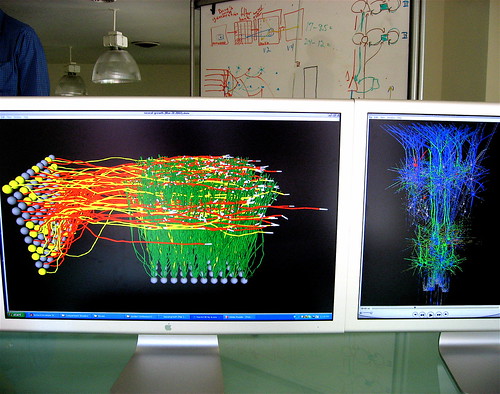
Probably a neural network, but you might need one to look at it to be sure. Photo by jurvetson on Flickr.

A selection of 8 links for you. Slippery when wet. I’m charlesarthur on Twitter. Observations and links welcome.

Emotional design fail: divorcing my Nest thermostat » Nielsen-Norman Group

Kara Pernice of the NN/G user interface design company:

A learning device implies that it will not only pick up on what you usually do, but it will also: 1) allow you to change, and 2) absorb those changes. My Nest learned quite well, but then stopped learning. It remembered but it didn’t look for variations or adapt. It was the equivalent of a printed textbook: Facts, correct or not, become law if written in there and thus will be taught that way until the school chooses a different textbook.

When I turned the dial to increase the heat to 66 degrees, rather than responding by making the house warmer, or by informing me that it is now working toward this, it read, “in 1 hour and 20 minutes 66 degrees until 10:00PM.” The next day the house temperature plummeted to a punishing 50 degrees (I realize I may be spoiled) for no reason I was privy to. Here, by the way, is another usability heuristic not heeded: visibility of system status.

Try as I might, it won’t listen. So I pull on another sweater (a la Jimmy Carter) and mittens and a hat. Indoors. In my home. I am serious. And I wait until my thermostat decides that I am worthy of radiant warmth.

Temperatures in Fahrenheit, obviously. Given Pernice’s provenance, maybe Nest should call. (This is the second heavily critical article about Nest in the past few days; the other was about its smoke alarm, from a Google employee.)


The believers » The Chronicle of Higher Education

Fantastic article on how neural networks have swung in and out of fashion, profiling Geoff Hinton, of the University of Toronto and Google:

Before [the researchers] won over the world, however, the world came back to them. That same year, a different type of computer chip, the graphics processing unit, became more powerful, and Hinton’s students found it to be perfect for the punishing demands of deep learning. Neural nets got 30 times faster overnight. Google and Facebook began to pile up hoards of data about their users, and it became easier to run programs across a huge web of computers. One of Hinton’s students interned at Google and imported Hinton’s speech recognition into its system. It was an instant success, outperforming voice-recognition algorithms that had been tweaked for decades. Google began moving all its Android phones over to Hinton’s software.

It was a stunning result. These neural nets were little different from what existed in the 1980s. This was simple supervised learning. It didn’t even require Hinton’s 2006 breakthrough. It just turned out that no other algorithm scaled up like these nets. “Retrospectively, it was a just a question of the amount of data and the amount of computations,” Hinton says.


Google buys Softcard tech, strikes deal with wireless carriers » Re/code

Jason Del Rey:

The deal will see Verizon Wireless, T-Mobile and AT&T pre-install Google Wallet on their Android phones in the U.S. later this year. Google Wallet allows shoppers to tap their phones to pay at checkout in some brick-and-mortar stores in much the same way Apple Pay does. The move also involves Google buying some intellectual property from Softcard, formerly known as ISIS. It doesn’t appear that any Softcard employees are joining Google as part of the deal.

In a blog post, Softcard said its users can use their mobile payments app for now. But I can’t imagine the wireless carriers behind the Softcard joint venture would agree to this deal if they planned to continue to invest in their own app. Sounds like game over for Softcard, a very expensive multi-year initiative that was essentially a flop for the wireless companies involved.

The purchase of Softcard (if not the abandonment of its staff) had been expected, but the preinstallation on Android phones is a smart deal.


What your online comments say about you » NYTimes.com

Anna North:

Commenters [the researchers at Skidmore College] identified as male were more likely to post negative comments than were those they identified as female; they were also much less likely to post comments acknowledging that gender bias exists.

Dr. Moss-Racusin said that her team was surprised by how split the commenters were: “The same sort of objective evidence really struck people quite differently.” She and her team are now studying the reasons behind such differences: “what factors might lead certain people under certain situations to be more swayed by scientific evidence, particularly evidence that points to some inequities between different social groups.” One theory, she said, is that when people feel threatened by evidence, “they may be a little bit less receptive to it than when it already fits into their existing worldview, their way of thinking about social relations.”

“Threatened by evidence”. There’s a phrase to conjure with. (Via Mary Hamilton.)


The best Apple Watch apps: Developers reveal upcoming titles » Wareable

With the world counting down to April 2015 for Apple Watch launch, attention turns to the best apps that will make or break this landmark device.

I think the launch will actually be in March, with shipping – as Tim Cook said – in April. (The delay lets Apple take preorders, evaluate demand, and, ah, also helps those camera-magnet queues.) I wrote about what developers aim to do with apps on Apple Watch for The Guardian.


Server and protect: predictive policing firm PredPol promises to map crime before it happens » Forbes

Ellen Huet:

Two or three times a day in almost 60 cities across America, thousands of police officers line up for roll call at the beginning of their shifts. They’re handed a marked-up map of their beat and told: Between calls, go to the little red boxes, each about half the size of a city block. The department’s crime analysts didn’t make these maps. They’re produced by PredPol, a “predictive policing” software program that shovels historical crime data through a proprietary algorithm and spits out the 10 to 20 spots most likely to see crime over the next shift. If patrol officers spend only 5% to 15% of their shift in those boxes, PredPol says, they’ll stop more crime than they would using their own knowledge.

Less Minority Report than quick primer for newbie cops, it seems. Even so…


Google layoffs inevitable » assertTrue( ):

Kas Thomas has been having a look at Google’s General & Administrative [G&A] spending:

With ad revenues levelling off and expenses skyrocketing (G&A has quadrupled in 5 years), Google is headed for a financial meltdown, and when it happens, the company will need to shave $2bn a year off its $16bn/yr in R&D and G&A costs, which means, if we count the fully burdened cost of a Google employee at $200K per year, it needs to shave 10,000 jobs.

Google has $100bn in the bank, so the situation is hardly dire, but Wall St. likes to see expenses cut by some other method than hauling money out of the bank. They like to see a sound Income Statement, and very soon, Google’s Income Statement will be anything but sound.

On a percent-of-income basis, Google outspends Apple on R&D six-to-one. Where is that money going? Driverless cars, Google Glass, body odour patents. Stuff that doesn’t have a chance in hell of generating revenue any time soon. On the one hand, Google is to be credited with thinking long-term, something American companies don’t tend to do very well, but on the other hand, Google needs to execute well on the revenue side. Right now, most of its revenue is tied to search ads, which are receding in relevance. It competes, in the cloud space, with Amazon (which no one should have to do). Will that save the company? No. It would have, already, if it were going to.

This is hard to argue against, though Google could just ignore Wall St and report lower profits.


Worldwide market for refurbished smartphones to reach 120m units by 2017 » Gartner

“With consumers in mature markets upgrading their smartphones every 18 to 20 months the inevitable question is what happens to the old device?” said Meike Escherich, principal research analyst at Gartner. “While only 7% of smartphones end up in official recycling programs, 64% get a second lease of life with 23% being handed down to other users and 41% being traded in or sold privately.
 
“This rise in smartphone reuse will impact not only the sales of new units, but also the revenue streams of all those involved in the smartphone supply chain,” continued Ms. Escherich. “Stakeholders that are already participating in take-back or trade-in programs need to have a strategy for turning used devices into a positive asset. Others — particularly high-end phone original equipment manufacturers (OEMs) — need to take a closer look at this market in order to evaluate the impact these secondhand devices will have on their market positions and revenue streams.” 

With nearly two-thirds of replaced smartphones being reused, continued demand for high-end used devices will increasingly impact primary-unit sales, and motivate phone providers to look into the secondhand market. In North America and Western Europe, the market for refurbished phones is forecast to be worth around $3bn in 2015 and growing to $5bn in 2017. Many users are attracted to used high-end devices that they would not have been able to purchase at the original selling price.

Next question is whether there’s any difference between platforms over hand-me-downs, and life cycle length.


Start up: Azure’s machine learning, explaining Apple’s taxes, Sony v Samsung, EC v Google redux, and more


Image recognition reckons this could be a cardigan. Photo by jdlasica on Flickr.

A selection of 8 links for you. Spread liberally. I’m charlesarthur on Twitter. Observations and links welcome.

Announcing the general availability of Azure Machine Learning » Microsoft TechNet Blogs

Joseph Sirosh:

We built Azure Machine Learning to democratize machine learning. We wanted to eliminate the heavy lifting involved in building and deploying machine learning technology and make it accessible to everybody. Supporting open source innovation and enabling breakthrough learning capabilities with big data were important. So were supporting community-driven development and the ability for developers to easily create and monetize cloud-hosted APIs and applications. Most importantly, we wanted our customers to easily leverage future advancements in data science. 

And now that future is taking shape. Today, at Strata + Hadoop World, we are announcing the general availability release of Azure Machine Learning, a fully-managed, fully-supported service in the cloud. No software to download, no servers to manage – all you need to start doing data science is a browser and internet connectivity.

Smart – and also clever: I bet it will be difficult to export the “learning”. Already has some big-name customers. Machine learning is going to be a boom area in a couple of years – and this will help.


YouTube and its alternatives » Beyond Devices

Jan Dawson sees a threat to YouTube by its own hand:

YouTube, with moves such as those Digiday covered today, is actually making it tougher for content creators to monetize on YouTube in the way they see fit. Videos on YouTube generate tiny amounts of money per view for content creators, and one of the ways they’ve overcome this challenge is through sponsorships. That’ll now be banned under YouTube’s new terms of service regarding advertising. At the same time, Vessel, AOL and others are targeting YouTube content creators with an emphasis on better monetization of their viewership. I’ve been skeptical of these efforts, but YouTube is playing right into their hands with some of these moves, which makes me more open to the idea that it might actually start to suffer as a result of competitive inroads from Facebook but also these smaller platforms.


EU probe into Apple’s taxes: It’s NOT to do with double-Dutch-Irish anything sandwiches • The Register

From June 2014, Tim Worstall digs in on all the rows about Apple’s giant cash hoard in Ireland:

Stripped of all of the legal complexity and jargon, the way that Apple operates outside the US is this: the main company is an Irish subsidiary of Apple. This buys all of the parts for all iKit, makes the contracts with the factories that assembles it, ships it all on (there’s all sorts of fun stages in Singapore and so on but they’re irrelevant for our purposes) and then sells it to the various Apple country operating companies. To Apple UK, Apple AG, Apple Oz and so on.

Clearly, the price at which Apple Ireland (recall, the company with all those lovely deals like the Double Dutch and so on) sells to those Apple country companies is going to determine where the profits get booked. Sell at a low price and Apple UK will, heaven forfend, make a good profit to be taxed by Osborne. Sell at a high price and the profit will be in Apple.ie where no one seems to think very much about taxing it. And the price at which such sales take place, the entire subject of those prices, is called “transfer pricing”…

…In practice, Apple tends to sell from Apple.ie into the other national subsidiaries at a price where those national companies just about scrape a profit but not very much. They can cover their retail and wholesale, their marketing costs, wages and so on, but leave only a lean slice of extra cash that gets taxed. Almost all of the profits end up in Ireland.

This isn’t, however cute we might think it is, illegal nor even naughty in a tax sense.

This is remarkably (and valuably) clear explanation of what transfer pricing is all about. Recommended, even (especially?) if you hate what Apple and others do with their profits.


Sony’s Challenges and the Future of Samsung » Tech.pinions

Ben Bajarin after Sony’s announcement that it’s going to organise itself into silos, some profitable (making things like camera sensors, Playstations and financing things), some less so (TVs and mobile):

Sony is still an innovative company. However, it may be their future is in empowering others to commercialize their innovations rather than their own product brands.

All of this makes me wonder if Sony’s struggles foreshadow a fate for Samsung. Many of the same fundamental issues surrounding Sony also surround Samsung. Their branded products are facing rapid commoditization. Samsung has been able to fend off issues that hit Sony thanks to a massive marketing budget. They are mostly out of selling PCs for similar reasons as Sony. Their mobile unit continues to see steep declines as competing with smartphones with similar specs and lower prices becomes extremely difficult. Their TV business remains a top seller but you have to wonder how long that can last, particularly if the Chinese enter the US market with good quality 4k and then 8k, and then 4k and 8k OLED TVs at extremely low cost.

The emptiness at the heart of both Samsung and Sony – both control their hardware design language, but not the software that runs it – is surprisingly similar.


EU competition chief Vestager speaks on Gazprom, Google and tax » WSJ

The EC has asked complainants in the Google antitrust case to reiterate their points to its new competition chief, explain Tom Fairless and Stephen Fidler:

WSJ: What is the second round of questions about in the Google case? Why would you need more information?

Margrethe Vestager: When you discuss commitments for a time then the case information gets outdated. And therefore I found that for me to take the case forward, I needed an updated file. And what we see is that we sent out requests for information just before Christmas with a deadline at the end of January. And people have been very forthcoming in the information that we get. But that of course sometimes raises new questions, and therefore we just had a second round in order to get the full picture… I would like to take some of the mystery out of meeting complainants. Because they do not come here with flying [flags], they come here very calmly, stating their case, trying to underpin it with the facts of the world as they see it. So even though there is a lot going on about the case as such, when we do the casework here, it is very much boiled down to the facts that can support your views, how things are being seen. I think that is very important. Talking about speed, the stronger a case you have, the less risk it will end up in endless court proceedings. And that in any case time is an issue. Any business involved in an antitrust investigation would like us to be as fast as possible.

WSJ: Any sense how long it will take to come to a decision on Google?

MV: It’s too early to say.

Here’s a putative timetable: statement of objections by summer, some sort of settlement in autumn. Might get more complicated if Android gets rolled in; Vestager’s team is also investigating whether Google’s conditions there are anticompetitive, and has demanded a lot of information from Android phone OEMs, slightly to their discomfort.


We asked some of the smartest computers to identify this picture » Bloomberg Business

Jack Clark:

Within the past half-decade, AI research and development has been supercharged, thanks partly to academics at Stanford University, New York University, and the University of Toronto, and researchers at Google, IBM, and various startups. They’ve accomplished things in computer vision that were unimaginable years ago, but the results of our computer eye exam show that, although machines are getting very good at some things, they still come up with strange or nonsensical answers every now and again.

Where these systems fail tells us a lot about why computers won’t be replacing us for general image recognition tasks anytime soon.

Identifying Mark Zuckerberg as “cardigan” does seem obtuse.


Mainstream use of bitcoin may be plateauing at a low level » MIT Technology Review

Mike Orcutt:

The design of Bitcoin and the blockchain, its public transaction ledger, make it challenging to distinguish specific types of transactions. Nonetheless, researchers from the U.S. Federal Reserve determined in a recent analysis that the currency is “still barely used for payments for goods and services.” Last week, nearly 200,000 bitcoins changed hands each day, on average. But fewer than 5,000 bitcoins per day (worth roughly $1.2m) are being used for retail transactions, according to estimates by Tim Swanson, head of business development at Melotic, a Hong Kong-based cryptocurrency technology company. After some growth in 2013, retail volume in 2014 was mostly flat, says Swanson.

If only 2.5% of activity is in retail (or at least, legal retail) that’s still not a currency – it’s a speculative item. The blockchain still seems like the innovation with the most promise, not bitcoin itself.


How a single email can badly break your Android email app » Graham Cluley

Graham Cluley explains how Hector Marco has discovered a problem affecting the Email app on Android (potentially, only on Samsung devices – though that’s quite a lot of devices) which makes them crash continually due to a malformed email header:

Fortunately, there is an easy solution. The most obvious is to log into the web version of your email and delete the offending email there. Your Android mail app will no longer attempt to download the email (because it has been zapped) and so won’t see any offending email headers that might cause it to trip over itself.

Of course, that’s quite a nuisance if someone keeps emailing you malicious emails designed to crash your mail app.

But the permanent solution should be even simpler. If you can, update your email app to version 4.2.2.0400 or higher.

Unfortunately, as Marco explains, that may not be possible for everybody because of the hairy nature of software updates on the Android platform.


Start up: Google eases Project Zero, Xiaomi’s patent woe, Microsoft’s big Office vision, driving helium, and more


“Flash, I love you – but we only have 90 days excluding public holidays and weekends to issue a fix for CVE-2013-6629!” Photo via Tom Simpson on Flickr

A selection of 8 links for you. Use them wisely. I’m charlesarthur on Twitter. Observations and links welcome.

Google amends bug disclosure policy following Apple and Microsoft scuffle » V3

Project Zero courted controversy when it publicly disclosed flaws in Microsoft’s Windows 8.1 and Apple’s Mac OS X operating systems.

Google moved to address these concerns, arguing that it may have applied the policy too rigorously but that public disclosure is effective.

“For example, the Adobe Flash team probably has the largest install base and number of build combinations of any of the products we’ve researched so far,” read the [Google] blog post.

“To date, they have fixed 37 Project Zero vulnerabilities (or 100 percent) within the 90-day deadline. More generally, of 154 Project Zero bugs fixed so far, 85% were fixed within 90 days.

“Furthermore, recent well-discussed deadline misses were typically fixed very quickly after 90 days. Looking ahead, we’re not going to have any deadline misses for at least the rest of February.

I fixed all of my Adobe Flash vulnerabilities in five minutes by removing Flash from my computer. However, Google’s position of playing private security guard to the internet remains discomforting, and I can’t help feeling that it’s going to prove embarrassing in some horrible way – a sort of schadenfreude-in-waiting.


Qualcomm deal sparks China smartphone patent skirmishes » Reuters

From last Friday (I didn’t link to it then), but as Ben Thompson points out, this element of the deal could have big implications – given that Xiaomi became China’s biggest smartphone vendor in 2014:

The settlement has allowed wireless patent holders like ZTE and Huawei Technologies to seek royalties, while introducing a new risk of litigation to China’s younger handset industry at a time when domestic patent law is gaining traction.

“For the first time, the settlement is forcing domestic manufacturers to recognize the value of IP (intellectual property) and consider how to use it strategically, which companies do in the West,” said Wang Yanhui, secretary general of the Mobile China Alliance, an industry consortium. “That’s the real significance of the (Qualcomm) settlement.”

The competitive dynamics are particularly complex in China, the world’s biggest smartphone manufacturer and consumer, as large Chinese telecom equipment makers that hold many essential patents for wireless technology also compete in the phone market against younger, nimbler manufacturers.

The settlement could prove tricky for companies like Xiaomi Inc, a four-year-old Beijing-based smartphone maker whose weak patent position has proved a major vulnerability. In December, a court in India temporarily halted its shipments there after Swedish telecom firm Ericsson complained Xiaomi had not been paying its royalties.

Although Xiaomi has been reported by Chinese media to be one of the handset makers now targeted by ZTE’s lawyers, both companies declined to discuss the issue.

But in response to questions from Reuters, Bin Lin, Xiaomi’s president, said he expects Xiaomi to only attract more patent threats and litigation from rivals in the future, as does any young firm that enjoys explosive growth.


Rembrandt Technologies wins $15.7m jury verdict in patent infringement case against Samsung » PRNewswire

A Texas federal jury has awarded $15.7 million to Rembrandt Wireless Technologies LP after finding that Korean electronics giant Samsung Electronics Co. Ltd. infringed on two Rembrandt patents covering Bluetooth technology.

Jurors deliberated only one hour before issuing the Feb. 13 verdict. The five-day trial focused on two Rembrandt patents, U.S. Patent Nos. 8,023,580 and 8,457,228. In addition to the $15.7 million award, Rembrandt also will receive royalty payments on all Samsung Bluetooth sales for the life of the patents.

Rembrandt, a Pennsylvania-based business technology company, sued Samsung and Blackberry Ltd. in 2013. Blackberry settled before the trial. Rembrandt argued that its patents for Bluetooth “enhanced data rate” inventions were infringed by Samsung in its Galaxy S phones.

That’s a brief deliberation, and a brief trial.


New cloud storage integration for Office » Microsoft Office Blogs

Kirk Koenigsbauer, corporate VP of Office:

We want Office to be the preferred way to work with documents no matter where they’re stored.  In November we announced a special partnership with Dropbox to make it easy to access, edit and share Dropbox files from the Office apps.  And today, in addition to the existing Dropbox integrations, we’re pleased to announce two new integration features for an even broader set of cloud services: First, file picker integration for the iPad and iPhone; and second, Office Online integration for viewing and editing.  While these may seem like small enhancements, these new features represent a big step forward for Office integration into the apps and services that are important to our customers.

This is huge. It’s actually all in that first sentence, which is all you need: “We want Office to be the preferred way to work with documents no matter where they’re stored.” Microsoft wants Office – its most lucrative monopoly – to endure. This is part of how it does that.


May 2012: once deemed evil, Google now embraces “paid inclusion”

Danny Sullivan, in May 2012, noting changes in how Google represented and collated its Flight Search, Hotel Search and Shopping categories so that they became pay-to-play for companies to appear – a reversal of Google’s previous stance:

paid inclusion isn’t necessarily bad, especially if it’s used to solve an otherwise difficult challenge in search, rather than being an excuse to generate revenue. However, it it still feels odd watching Google, having previously attacked the objectivity of its competitors over the practice, quietly adopt paid inclusion now that it’s the search market leader. That doesn’t sit right. At the very least, I kind of want someone at Google to acknowledge that it was wrong those years ago.

Postscript (7:30pm ET): Google, after seeing this article, sent along this statement about paid inclusion:

Paid inclusion has historically been used to describe results that the website owner paid to place, but which were not labelled differently from organic search results.  We are making it very clear to users that there is a difference between these results for which Google may be compensated by the providers, and our organic search results.

I have to disagree.

The reason I’m linking to this now is that it’s pertinent to all the antitrust discussion that’s reopening in Europe over Google and particularly vertical search. Google presents its results as untouched by human hand, but there’s a whole lotta touching really going on. (One point on the headline: Sullivan means that paid inclusion used to be deemed evil, not Google.)


November 2013: Western Digital adds helium to enterprise hard drives » AllThingsD

Arik Hesseldahl:

It turns out that the insides of hard drives are pretty violent places. There’s a lot of high-speed motion, what with the disk platters spinning at several thousand rotations per minute, and the head moving back and forth across its surface. If you’ve ever held your arm out the window of a fast-moving car, you get some sense of the problem…

…The secret sauce to all this is that the drives are built to be hermetically sealed, which means they’re both perfectly airtight and leakproof. While the science behind doing all this has been well understood for a while, Cordan says that Western Digital is the first to figure how to do it in a repeatable manufacturing process. It adds an extra step or two to the manufacturing process, and thus some cost.

It gets more interesting: Hermetically sealed drives don’t let the helium out, but they also don’t let anything else in, including liquid. That makes them good for use in immersion-cooled data centers. These are small, dense collections of IT gear packed into a box the size of a shipping container and filled to the top with nonconductive liquid that keeps everything running at a constant temperature. (If you didn’t know that this was a thing, you’re not alone, because I didn’t, either.)

This came (via @jearle) after I happened across a Digitimes report about helium-filled drives. Presumably vacuum is next, since if a drive can survive being immersed then it must have tough joints.


Intel reportedly to delay launch of 14nm Skylake desktop CPUs » Digitimes

Monica Chen:

Intel reportedly has informed its motherboard partners that it will delay the release of its 14nm Skylake desktop CPUs and corresponding 100-series chipsets to the end of August, compared to its original schedule set for the second quarter of 2015, according to sources in Taiwan’s motherboard industry.

The delay will affect PC makers’ production and shipment plans for Haswell Refresh and Broadwell-U series products and may also delay the development of Broadwell models with a TDP of 65W, the sources noted.

PC makers will also not be able to unveil Skylake-based models during the upcoming Computex 2015 to be held in June in Taipei, thereby affecting PC sales in the second haft of 2015, said motherboard makers.

Intel is saying that it always planned to release Skylake in the second half of the year. For reference, the Pentium 4, introduced in 2000, had transistor sizes of 0.18 micron – or 180nm.


$1.75m in bitcoin stolen from Chinese exchange Bter » The Next Web

Abhimanyu Ghoshal:

Even as Bitcoin is starting to shake things up in the US, all is not well in the cryptocurrency world. China-based Bitcoin exchange Bter was hacked on Valentine’s Day and $1.75m worth of Bitcoin was stolen.

The company hasn’t revealed much about the breach, except that 7,170 BTC was taken from its cold (offline) wallet on February 14 via a single transaction (link) and that the platform is suspending operations until further notice.

I feel like we’re getting so used to this that $1.75m is like “yeah, sure”.


Start up: Snapchat discovers media, Google v privacy, that Jony Ive interview, Russia’s phone market and more


OK, not all mobile phones in Russia are smartphones. Photo by thejamo on Flickr.

A selection of 8 links for you. Do not use as sunscreen. I’m charlesarthur on Twitter. Observations and links welcome.

Snapchat Discover could be the biggest thing in news since Twitter » Fusion

Kevin Roose:

A few weeks ago, Snapchat updated its app. The new version had a little purple dot in the upper-right corner of the app’s Stories screen. If you’re a normal, casual Snapchat user who uses the app to send goofy selfies to your friends, you might not have noticed the dot at all. Or you might have tapped it, seen an unfamiliar menu with a panoply of weird logos on it, and gone back to your selfie-taking.

But if you’re a media executive, that little purple dot — the gateway to Snapchat’s new Discover platform — might represent a big shift in your thinking.

There’s a ton of chatter in the media world about Snapchat’s foray into news. And the media is right to gossip: Snapchat Discover is huge. I’m not privy to Fusion’s Snapchat metrics (and even if I were, they wouldn’t be representative of the platform as a whole, since we’re only on the non-US, non-UK versions of Discover) and Snapchat isn’t giving out any specifics. But from speaking to people at several other news organizations, I can tell you secondhand that the numbers, at least for the initial launch period, were enormous. We’re talking millions of views per day, per publisher.

Social starts to make an impact on mobile.


China Internet a really big grid with 649m users, majority on mobile » Mobile Marketing Watch

J Barton:

Recent data from The China Internet Network Information Center, the number of Internet users grew 5% in 2014 to about 649m. That means nearly half of China’s population (47.9%) is now firmly on the grid.

“More Chinese now access the Internet on their mobile phones than PC desktops,” notes a blog post by financial publisher Barron’s. “The mobile penetration rate is now at 85.8%, up from 81% a year ago, to 557m users. Meanwhile, the desktop PC penetration is only 70.8%.”

Well, it means that most people who are online have both PC and mobile access, but some don’t.


Google’s lip service to privacy cannot conceal that its profits rely on your data » The Conversation

Eerke Bolten, who is senior lecturer of computing and director of the Interdisciplinary Cyber Security Centre at the University of Kent:

The [ECJ] court ruling demonstrated the law catching up with privacy ethics: an ethical approach would be to implement it according to the spirit rather than the letter of the law. But in many places in this report [from Google’s handpicked advisory council on how to implement the ruling], privacy ethics wins out only where it has the law on its side – where it doesn’t, Google’s business interests (bolstered by appeals to freedom of expression) prevail. In doing so Google invents bizarre new “freedoms”, such as the right to use different national versions of Google search…

…What if the politicians get wind of another form of cyberbullying, namely “doxing” – the publishing online of someone’s personal information (and specifically their address) in order to harass and annoy?

Any attempt to legislate against that would run into a certain large internet company through whose website such information is inevitably found. Interesting times ahead, that is certain.

Bolten points out that the report never examines how Google actually goes about delisting, even though it was recommended to by people on and off the council. Something feels odd about this report. But that final situation might be the collision point for Google and governments.


Jonathan Ive and the future of Apple » The New Yorker

A terrific (long) piece by Ian Parker, who was given access to Apple’s holy of holies, its design studio:

Each table serves a single product, or product part, or product concept; some of these objects are scheduled for manufacture; others might come to market in three or five years, or never. “A table can get crowded with a lot of different ideas, maybe problem-solving for one particular feature,” Hönig, the former Lamborghini designer, later told me. Then, one day, all the clutter is gone. He laughed: “It’s just the winner, basically. What we collectively decided is the best.” The designers spend much of their time handling models and materials, sometimes alongside visiting Apple engineers. Jobs used to come by almost every day. Had I somehow intruded an hour earlier, I would have seen an exhibition of the likely future. Now all but a few tables were covered in sheets of gray silk, and I knew only that that future would be no taller than an electric kettle.

The cloth covering the table nearest the door was curiously flat. “This is actually complicated,” Ive said, feeling through the material. “This will make sense later. I’m not messing with you at all, I promise.”

By my analysis of the piece Parker had four fairly short meetings with Ive, and one with Tim Cook. What’s not obvious (but I can see, with my journalist’s hat on) is that he must have done dozens of other interviews, of unknown length, with other people inside and outside Apple, some of which result in just a single throwaway line in the piece. That’s thoroughness. He also has a deliciously ironic touch – see his comment about how Tim Cook is alerted to the progress of a meeting.

(Of course it’s been published just as everyone is thinking APPLE IS MAKING CARS OMG. No hint of that in the design studio, it seems.)


Russia smartphone sales to stall on iPhone slowdown, IDC says » Bloomberg Business

Ilya Khrennikov:

Apple doubled iPhone shipments to Russia to 3.25m last year, garnering $2.14bn in sales, according to the researcher’s Worldwide Mobile Phone Tracker.

While Samsung Electronics Co. remained the market leader, shipping more than 6m smartphones last year, its revenue share was overtaken by Cupertino, California-based Apple.
In the fourth quarter, when Russians rushed to spend their tumbling rubles on big-ticket items including premium handsets, iPhone sales reached $827m, or a record 46% share in the Russian smartphone market, versus Samsung’s 18% slice, according to IDC.

There’s a table of data, with shipments and revenues for the top seven companies (Samsung, Apple, LG, Lenovo, HTC, Sony, Nokia). The fascinating details: Samsung and HTC sales fell; Apple, LG, Lenovo (x4!) and Nokia grew. But of all of them, only LG grew its ASP (average selling price) from 2013 to 2014, though even that (at US$224) was below the ASP of US$230. (I calculated the ASPs; they aren’t on the sheet.)


HTC and other vendors to launch non-Android Wear smart devices » Digitimes

Although Sony Mobile Communications, LG Electronics, Motorola Mobility and Asustek Computer have launched Android Wear-based smartwatches, Samsung Electronics, HTC and some China-based makers are likely to release comparable models running on their own platforms initially, according to industry sources.

A lack of efficient ecosystem and supporting environment for Chinese such as a Chinese-language interface, are the main reasons HTC and China’s handset makers are developing wearable devices based on in-house platforms, said the sources.

Surprising omission if Android Wear doesn’t have Chinese character support.


Why is my smart home so fucking dumb? » Gizmodo

Adam Clark Estes:

I unlocked my phone. I found the right home screen. I opened the Wink app. I navigated to the Lights section. I toggled over to the sets of light bulbs that I’d painstakingly grouped and labeled. I tapped “Living Room”—this was it—and the icon went from bright to dark. (Okay, so that was like six taps.)

Nothing happened.

I tapped “Living Room.” The icon—not the lights—went from dark to bright. I tapped “Living Room,” and the icon went from bright to dark. The lights seemed brighter than ever.

“How many gadget bloggers does it take to turn off a light?” said the friend, smirking. “I thought this was supposed to be a smart home.”

This is where voice control (Siri, Google, Cortana) would be ideal. Always assuming it dims the lights in the correct room. This experience also points to why “smart control” isn’t necessarily what you want; smart feedback (what lights etc are on) could be more useful. Still requires installing stuff, though.


Why science is so hard to believe » The Washington Post

Joel Achenbach:

In the United States, climate change has become a litmus test that identifies you as belonging to one or the other of these two antagonistic tribes. When we argue about it, Kahan says, we’re actually arguing about who we are, what our crowd is. We’re thinking: People like us believe this. People like that do not believe this.

Science appeals to our rational brain, but our beliefs are motivated largely by emotion, and the biggest motivation is remaining tight with our peers. “We’re all in high school. We’ve never left high school,” says Marcia McNutt. “People still have a need to fit in, and that need to fit in is so strong that local values and local opinions are always trumping science. And they will continue to trump science, especially when there is no clear downside to ignoring science.”

That’s the key point: you can be an idiot, and it doesn’t have any effect. Well, apart from vaccination, and if you’re in charge of the country. (With luck, most of the commenters on the article will never be in a position where they can make any difference to anything.)


Start up: Zane Lowe joins Apple, Windows Phone five years on, Google closing Helpouts, and more


Oh yeah? Well I would say it’s a terrible rating. Photo by rynsms on Flickr.

A selection of 10 links for you. Yes, I’ve tweaked the CSS for blockquote. I’m charlesarthur on Twitter. Observations and links welcome.

Zane Lowe to leave BBC Radio 1 for Apple » The Guardian

Vanessa Thorpe:

Zane Lowe, the BBC Radio 1 DJ , is leaving the network for Apple’s new iTunes radio service.

New Zealander Lowe, credited with helping to make the name of British music stars such as Arctic Monkeys, Adele and Ed Sheeran, is moving to America with his wife and two sons to work at Apple.

His final show in the prestigious evening slot will go out on 5 March. Lowe, who joined the station from XFM in 2003, said: “I want to thank everyone at Radio 1 for their support and friendship.

“The station has allowed me to share incredible music with the country’s best music fans – I’ve loved every minute of it. Exciting times lie ahead.”

This is fascinating. US readers probably won’t have any idea how influential Lowe is, but those few famous names are just an indicator – and he has continued his enthusiasm for decades. (I was listening to him when he was on London’s XFM 15 years ago, when he presented a nightly chart of new music.) Obviously, he’s going to be something to do with Beats Music as it gets rebranded.

That Apple is hiring him suggests it’s getting really serious about music content; and I hear it’s getting serious about expanding its public presence in other forms of content too.


Five years later, a full-on retreat from what made Windows Phone special » Thurrott.com

Paul Thurrott:

Microsoft CEO Steve Ballmer announced Windows Phone 7 Series at Mobile World Congress on February 15, 2010. “This is really about the phones and how the consumer will react to these devices,” he said during his introductory speech, setting the stage for the first big change: Microsoft was focusing Windows Phone 7 Series on the same high-end consumer smart phone market as the iPhone, and not on the traditional business market.

“We design for life maximizers,” a Microsoft representative told me at the time. “Windows Phone 7 Series is not about information workers.”

What’s a life maximizer, you ask?

“They’re 38 years old, 76 percent of them are employed, and 73 percent are in partnered relationships,” I was told. “They do care about work email. But what’s important to this audience is not feeling overwhelmed, balancing priorities, growing personally and professionally, and living life to the fullest.”

Yes. Really. And to spare Microsoft further embarrassment, I won’t get into the “personas” they created to show how Windows Phone was going to make everyone’s life better.

An object lesson in how you should not design your product to a tightly imagined demographic. It’s a fascinating article, full of reminders of things Windows Phone used to do but has now largely given up on. I still wonder what Microsoft gets out of Windows Phone, the platform, since it’s effectively the only company making handsets for it.


Privacy error “Your connection is not private” Google chrome » YouTube

Unintentionally (on the part of the video maker) hilarious, but also depressing: he’s being told by Google Chrome that OKCupid’s SSL certificate isn’t entirely valid, and it blocks him from going there. So what does he do? He sees the problem as “my browser is mispelling it ‘https’ instead of ‘http'”, and why won’t it let him to go the site when Firefox will?

Point to bear in mind: it’s not the user who’s stupid here, it’s the people writing the error messages and associated jargon. (Though you can also make a separate determination about the user based on his videos.)


MIT uses patent from 1997 to sue Apple over chips » Gigaom

Jeff John Roberts:

The Massachusetts Institute of Technology filed a patent lawsuit against Apple and its suppliers this week, claiming that semiconductor wafers found in the company’s computers and mobile devices infringe on a patent obtained by two academics more than 15 years ago.

The lawsuit, filed Thursday in Boston federal court, claims that Idaho-based Micron Technology knew about a laser-cutting method described in the patent, but used it all the same when supplying DRAM semiconductor devices for products like iPhones, iPads and MacBook Airs.

The patent itself was issued to Joseph Bernstein, who is now an engineering professor in Israel, and a co-inventor, Zhihui Duan. MIT claims it controls the right to the patent, which has a 1997 filing date and was issued in 2000. The school says it’s entitled to damages and to royalties on all Apple products that contain chips using the laser method in question.

Seems that this is a lawsuit for Micron, not Apple, though MIT claims Apple commits contributory infringement by importing and selling equipment containing specific Micron products.


Apple’s Titan Car Project to Challenge Tesla » WSJ

Daisuke Wakabayashi and Mike Ramsey, following up on the FT report by Tim Bradshaw and Andy Sharman:

Apple may decide not to proceed with a car. In addition, many technologies used in an electric car, such as advanced batteries and in-car electronics, would be useful to other Apple products, including the iPhone and iPad. Apple often investigates technologies and potential products, going as far as building multiple prototypes for some things that it won’t ever sell. Any product would take several years to complete and obtain safety certifications.

But the size of the project team and some of the people assigned to it indicate that the company is serious, these people said. Apple executives have flown to Austria to meet with contract manufacturers for high-end cars including the Magna Steyr unit of Canadian auto supplier Magna International Inc.

What needs to be improved in cars? What can be improved in cars? This sets up a fascinating scenario, given Google’s semi-position in this game.


How Apple keeps the competition whipped » Tech.pinions

Steve Wildstrom (who is, happily, recovered from brain surgery):

Apple has an interest in autos, but that certainly is for developing systems for cars–support for the iPhone is already common and is likely to be expanded–but not designing or building cars. Although cars are increasingly wheeled computers, everything about their manufacture — their regulation, their sales, their ownership — is dramatically different from anything Apple knows.

The car business also violates Apple’s core move that new products should quickly be profitable. Tesla is in its fifth year and its losses are growing at about the same rate as its sales. CEO Elon Musk admits profits are still quite a distance away. Apple could afford to buy Tesla in the extremely unlikely chance Musk was interested in selling it but it simply does not fit its approach to business. Starting a new car company would be even more complex, more expensive, and less practical.

Even with the report over the weekend of Apple hiring a team with car expertise, his point about buying Tesla is an excellent one. Apple doesn’t buy lossmaking established businesses – with one exception: NeXT Computer in 1996.


Google is shutting down Google Helpouts, its expert video chat service » TechCrunch

Sarah Perez:

The idea with Helpouts has been to leverage Google’s identity tools, payment technologies and online video service in order to provide web users with both free and paid advice and support sessions covering a range of topics. Today, the Helpouts website continues to work, offering sessions on topics like Photography, Parenting, Fashion and Beauty, Cooking and much more. Unfortunately for Google, much of this sort of advice is already available for free on its other video site, YouTube. While YouTube videos may not connect you with a live person in real-time, they can often give you the answers you’re looking for, and YouTube’s advertisements help the videos’ creators generate additional income.

Google’s Helpouts service has not been without its challenges on the monetization front, either. A couple of months ago, Google had to shut down paid Helpouts in the EU thanks to changing tax laws. Today, the website advises providers from the U.K. and Ireland that they may only offer free Helpouts, and EU customers may only take free Helpouts. That’s likely been a blow to the service’s ability to attract providers and consumers in these markets.

Survival: 531 days. “It hasn’t grown at the pace we expected,” Google says. Note also the first comment on Hacker News from when it launched.


October 2014: Google’s product strategy: Make two of everything » Ars Technica

Ron Amadeo in a piece from October 2014 that is very relevant in that light:

Judging by Google’s messy and often-confusing product line, it’s something the company takes to heart. Google likes to have multiple, competing products that go after the same user base. That way, if one product doesn’t work out, hopefully the other one will.

The most extreme case of this has been Google’s instant messaging solutions. At one point there were four different ways to send a text message on Android: Google Talk, Google+ Messenger, Messaging (Android’s SMS app), and Google Voice. Google Hangouts came along and eventually merged everything into a single instant messaging platform.

Mercifully, Google has a single, unified instant messaging program now, and all further IM efforts will be poured into this, right? Wrong. A report from The Economic Times of India says that Google is working on a fifth instant messaging program. This one reportedly won’t require a Google account and will be aimed at Whatsapp. In KitKat Google removed the stock SMS app and used Hangouts for SMSes, but in Lollipop it is adding back an SMS client, so soon we could potentially be back up to three texting clients. The unified Hangouts update also added a second dialer app to Android, so now there is the main Google Dialer that was introduced in KitKat and a new Hangouts Dialer that makes VOIP calls. Users went from needing IM unity, having it, then chaotically clamoring for dialer unity.

At the price of annoying and/or confusing the users, of course. Notable that it has never felt the need to A/B its front search page.


Samsung’s Microsoft deal and Cyanogen » Beyond Devices

After the rumours of that Microsoft-Samsung app deal, Jan Dawson comments:

I wouldn’t be at all surprised if at least some flavor of Cyanogen devices in future come with Microsoft apps and services where the Google ones would normally be. We won’t see Microsoft launching another Android-based line of devices, but rather an Android-based line of devices that puts Microsoft’s services and apps front and center. That, after all, is the real goal here: getting Microsoft’s services in front of as many customers as possible, integrated into the platform in a way that makes them the default options for key tasks, and which provides benefits across the platform. Windows Phone has been the only platform where that’s been true, but Cyanogen could easily become a second. Quite what Cyanogen’s current customer base would make of that is unclear, but then Cyanogen’s future depends on broadening its appeal way beyond the hackers and tinkerers who flash alternative ROMs on their Android devices, and Microsoft could be a great fit there.

Yes. Absolutely. This is a terrific solution for both Cyanogen and for Microsoft – but a looming problem for Google if Microsoft can begin to impose its services on millions of phones.


Steam Review Watch » Tumblr

” Just don’t,don’t even,just please no…DON’T BUY IT ! 🙂 ” – 999.8 hours played.

” *****DONT LET MY HOURS FOOL YOU!!**** This is probably the most terrible game of all time. ” – 239.7 hours played.

And many more reviews from the toughest (and most entitled?) audience ever. (Via @daveverwer of iOS Dev Weekly.)


Start up: damn smart TVs, peak Google?, acting on gators, no Apple car, blue bubble discrimination and more


Samsung’s Smart TV ads opt-in. No, wait, opt-out. Photo by user on Ars Technica.

A selection of 9 links for you. Can be used as floor wax. I’m charlesarthur on Twitter. Observations and links welcome.

Google’s time at the top may be nearing its end » NYTimes.com

Farhad Manjoo, riffing on an idea set out by (and credited here to) Ben Thompson:

The problem for Google, though, is that its efforts aren’t impossible to replicate. In less than five years, Facebook has also built an enviable ad-technology infrastructure, a huge sales team that aims to persuade marketers of the benefits of Facebook ads over TV ads, and new ways for brands to measure how well their ads are doing. These efforts have paid off quickly: In 2014 Facebook sold $11.5bn in ads, most of them on mobile devices. That was up 65% over 2013.

Any number of up-and-coming social services, including Pinterest and Snapchat, could also do well. So even if YouTube does very well, it will be only one of several services where marketers want to spend their money.

“The movement of brand advertising into digital will probably not be winner-take-all, like it was in search,” said Ari Paparo, a former advertising product director at Google who is now the chief executive of an ad technology company called Beeswax. “And if it were to be winner-takes-all, it’s much more likely to be Facebook that takes all than it would be Google.”

Google would still make a lot of money if it doesn’t dominate online ads the way it does now. But it would need to find other businesses to keep growing.

Notable, by the way, how many ideas in big papers start out with Thompson. You should subscribe to his Stratechery blog.


Smart TVs are a great idea. Too bad TV makers are ruining them » WIRED

David Pierce (in his new post-Verge writing gig):

We should be rooting for smart TVs that don’t suck. We could ditch our Rokus and Fire TVs and do everything on our TVs themselves. It would mean fewer boxes, cables, and remotes to worry about. It’s just that smart TVs right now exist only on the spectrum between irritating and dangerous. It’s time for someone to do better.

Someday, if and when manufacturers figure it out, smart TVs will have lots of uses. One will be as a hub for our entire home—imagine a universal remote that doesn’t just control your programming, but light switches, the microwave, and the margarita machine. The other will be as a launching pad into a massively segmented world of content: your TV could make it easy to search for what you want to watch, no matter where it is, and could help you find something great even when you don’t know what you’re looking for.

I used a TiVo back in 2000, and it was terrific. But that level of intelligence vanished from UK TV (though Virgin reintroduced a sort of TiVo). It’s sorely needed.


I’m Brianna Wu, and I’m risking my life standing up to Gamergate » Bustle

I have a folder on my hard drive with letters from dozens and dozens of women who’ve abandoned their dream of becoming game developers due to Gamergate, some as young as 12. 

You’d hope that the gaming press would provide some sort of check on the unrelenting sexism in the game business, but the truth is, they’re complicit in creating our Gamebro culture. One of our largest gaming sites, IGN, has written one single, weak article addressing Gamergate where they don’t even mention it by name. I wish I could say I was surprised, but this is the site that advertises itself as “broverload.”

All this horror begs the question — what can be done? 

Fortunately, this isn’t something that requires us to boil the ocean to solve. Here are four easily achievable things that can be done immediately.

Her four points of action for Reddit, the FBI, Twitter and US law administration all seem sensible. One wonders which will get acted on first. One hopes they all will.


Is Apple making a car? In your dreams! » Tech.pinions

Tim Bajarin on the latest rumour mill output:

For the car, I believe Apple is interested in creating a whole in-car digital experience that spans navigation, voice search, communications, media, and safety and wants to learn from what Tesla has done so far. That is why they poached so many Tesla employees. Ultimately they want to revolutionize the in-car navigation, audio/video, communication and safety features experience and work to get them integrated into future automobiles.

For Apple TV, it makes no sense for them to create their own given the TV market competition and the rapid change in TV hardware itself. However, Jobs had a major vision on how to revolutionize the TV navigation and user interface and deliver live and streaming content with integrated apps and services. That is most likely going to be delivered through a brand new Apple TV box I believe will be released later this year.

You can never rule out Apple doing something brand new in hardware and even in a new category of devices but doing an Apple branded car or TV is just not in the cards.


New tech brings era of sub-nanometre semiconductors closer » Business Korea

Cho Jin-young:

A Korean research team has successfully developed a technology to manufacture semiconductors smaller than 1 nanometre within a large area. 

A research team headed by Ahn Jong-ryeol and Dr. Song In-kyung, professors in the Department of Physics at Sungkyunkwan University, announced on Feb. 9 that they have succeeded in arranging metal wires smaller than 1 nm with different characteristics on a silicon substrate. 

As a result, it may be possible to make silicon semiconductors at not only the nanometer but also angstrom (one ten-billionth of one meter) level. In the past, it was unclear whether or not the phenomena possible at the nanometer size could also be feasible at an atomic size.

Once you get down to that size, quantum physical effects are going to make behaviour wild, surely. This just seems to be (laborious) fabrication, rather than any actual testing of behaviour. But one to note, even so.


Hear that sound? It’s the Windows XP PC bubble popping » The Register

Paul Kunert:

The XP bubble has well and truly burst, leaving the UK [PC wholesale] channel awash with unwanted commercial PCs and vendors facing a costly write-down to clear a mountain of misery.

Microsoft ending support for the creaking operating system last April revived the industry in 2014, but it seems vendors forgot the sales cycle and that their products have a shelf life.

Distributors told El Chan that up to £50m of excess stock is lodged in warehouses, with all of the major players, including Lenovo, HP, Dell, Toshiba and Fujitsu blamed.

“The market was driven really hard last year,” said one, “but since November there was an awareness the channel was over-stocked. There’s been a correction in sales-out and now we are having tough conversations with vendors about resetting quotas.”

Another agreed it took three months for PC makers to realise that boxes were being pushed out of the door more slowly, and “they were buying in for the XP bubble”.

Could be some fun when Q1 PC figures are announced in April, followed by profit data in the succeeding weeks.


As Apple’s payments strategy takes shape, Google and Square respond » The Information

Amir Efrati and Jessica Lessin, with a generous definition of “respond”, which in Google’s case includes a being-tested service called “Plaso”:

A manager at a store that accepts Plaso payments said Google had “hooked up” Plaso directly to the store’s payment system and “all the data feeds back to Google.” In a different store that accepts Plaso, a manager said it runs as an app on Android phones that Google provided to the store. The manager said the app can “see” other Plaso users via the phones’ Bluetooth technology when they enter the store, allowing employees to identify those people just by their initials.

Plaso is currently being used only by Google employees, and its technical underpinnings are unclear…

…How Plaso would integrate with Google Wallet, which has yet to gain much traction as an in-store payment product, couldn’t be learned. While Google found a technical solution to bypass the wireless carriers that once blocked Google Wallet, the new method is costlier to Google, which is believed to lose money on in-store transactions done through Google Wallet.

Wow. Google loses money on in-store Wallet transactions – whereas Apple makes a per-transaction profit? This highlights the importance of “bizdev” – business development, aka getting everyone involved in a new technology in line before you unveil it, rather than hoping some mysterious consumer “pull” will lead to widespread adoption (as pretty much happened with Wallet).


It’s kind of cheesy being green » Medium

Paul Ford on the effect that Apple using white-on-blue for iMessages, v white-on-lurid green for text messages (ie anything to a non-iPhone, generally) has on users – and he has the tweets culled from Twitter to prove it:

This spontaneous anti-green-bubble brigade is an interesting example of how sometimes very subtle product decisions in technology influence the way culture works. Apple uses a soothing, on-brand blue for messages in its own texting platform, and a green akin to that of the Android robot logo for people tweeting from outside its ecosystem (as people have pointed out on Twitter, iPhone texts were default green in days before iMessage—but it was shaded and more pleasant to the eye; somewhere along the line things got flat and mean).

There are all sorts of reasons for them to use different colors. (iMessage texts are seen as data, not charged on a per-text basis, and so the different colors allow people to register how much a given conversation will cost—useful!). However, one result of that decision is that a goofy class war is playing out over digital bubble colors. Their decision has observable social consequences.


January 2014: Samsung appears to be stuffing pop-up ads for Yahoo in its Smart TVs » Business Insider

Steve Kovach, in January 2014 (that’s over a year ago):

Samsung’s Web-connected Smart TVs appear to be more than just a way to stream stuff from Netflix and Pandora. It looks like the company is also experimenting with ways to show you ads on your set, just like you’d see when browsing the Internet.

David Chartier, a tech writer and commentator, posted a photo of a pop-up ad for a “Yahoo Broadcast Interactivity” app that randomly appeared on his Samsung Smart TV last week. But the pop-up ad itself wasn’t the strangest part. It turns out the ad showed up while Chartier was watching his Apple TV, which was on a separate input. Whether it was a glitch or not, this clearly isn’t an optimal experience.

So that’s over a year ago; now this, in Australia – where you have to opt out:

Although GigaOm suggests the ad placement in third-party apps may have been a mistake on Samsung’s part, the business model is certainly intentional. As one redditor explained, the ads can be disabled: “To disable: press Menu on your Samsung Remote and scroll to Smart Hub > Terms & Policy > Yahoo Privacy Policy. Scroll to ‘I disagree with the Yahoo Privacy Notice’ and you can toggle the option on to opt-out.”

Bad week for Samsung: first always-listening TVs, now this.