Start up: yet another UK broadband pledge, what is mobile?, hacking Samsung’s theft protection, and more


A Huawei-made Nexus 6P: no breakage of the camera visor panel here. Photo by TechStage on Flickr.

You can now sign up to receive each day’s Start Up post by email. You’ll need to click a confirmation link, so no spam.

A selection of 12 links for you. Use them wisely. I’m charlesarthur on Twitter. Observations and links welcome.

Fast broadband for all by 2020 pledged by David Cameron » BBC News

All UK homes and businesses will have access to “fast broadband” [of at least 10 megabits per second] by 2020, David Cameron has pledged.

The PM is to introduce a “universal service obligation” (USO) for broadband, giving the public a legal right to request an “affordable” connection.

It would put broadband on a similar footing to other basic services such as water and electricity.
In 2010, the coalition government promised the UK would have the best superfast broadband in Europe by 2015.

Then, in 2012, a pledge was made by then-Culture Secretary Jeremy Hunt that the UK would have “the fastest broadband of any major European country” by 2015.

He defined high-speed broadband as offering a download speed of greater than 24 megabits per second (Mbps). Communications regulator Ofcom defines it as 30Mbps.

That final sentence completely shows how weak this “pledge” really is: from 30Mpbs down to 24 down to 10. I suspect BT, as the dominant operator which also now owns a 4G network, will aim to fulfil this revised USO via 4G.
link to this extract


Some Nexus 6P owners are reporting spontaneously broken rear glass panels » Android Police

Michael Crider:

The early reaction to the Nexus 6P from both critics and owners has been mostly positive, but a few new owners seem to be encountering serious problems. Specifically, the glass panel on the rear of the phone, which covers the camera, LED flash, and laser autofocus module, is reportedly cracking and breaking on its own. A user on the Android subreddit reported the rear panel cracking, and at least two others have reported similar results, with the panel splitting into multiple cracks with no particular rough handling or impact.

That subreddit is getting pretty big, and there isn’t a lot of joy for the 6P. One person has had two in a row go wrong. Problem for Huawei?
link to this extract


How uBeam transmits energy wirelessly using ultrasound » uBeam

Meredith Perry, uBeam’s founder, has a big explainer about how it works, because people have been saying that either it doesn’t work, or it’s dangerous:

The uBeam system is composed of two parts: a transmitter that emits energy, and a receiver that receives energy. The transmitter is like a sound speaker, but instead of emitting audible sound, uBeam’s transmitter emits high frequency sound. This sound can’t be heard by humans or dogs; it’s called ultrasound. The receiver, like a microphone, picks up the sound and converts it into usable energy. Sound, like light and wind, is a form of energy that can be converted into electrical energy with our proprietary energy harvesting technology. The receiver then sends this electrical power to charge or power an electronic device.

link to this extract


Mobile, ecosystems and the death of PCs » Benedict Evans

Evans wrestles with the question of “what is ‘mobile’?” in the face of competing devices like the SurfaceBook, the Surface Pro, iPad Pro and so on:

Each generation of technology goes through an S-curve of development – slow improvement of an impractical product, then explosively fast improvement once fundamental barriers are solved, and then slowing iteration and refinement as you solve every last issue and the curve flattens out. PCs are on that flattening part of the curve, just as the [fastest ever piston-powered aircraft developed at the end of WW2, soon surpassed by jets, the Republic] Rainbow was.

They get perfect because you’re debugging the big things you invented in the past, and now your innovation is in the extra little things (such as the Rainbow using exhaust for extra thrust), and there are no big new innovations to debug. But meanwhile, the new ecosystem is catching up, and the curve of development and innovation for that generation will flatten out way out of reach. The new curve is crossing the old one. This is why they look simliar – this is why a Surface Pro and an iPad Pro look similar. They both exist right at the point that those development curves cross. The iPad might still be a little below, but its curve is heading up.

That is, the point that you can start to do old ecosystem things on what look like new ecosystem devices is also the point that the new ecosystem can do those things too – but the new ecosystem has 10x the scale, and the new ecosystem is just starting down the innovation track where the old one is at its end.

The really tricky part is knowing where on the S-curve something is, and whether there’s still money to be made from it. As Evans points out,

No-one is going to found a new company to make Win32 applications (though enterprise Windows apps will be worked on for a long time, just as mainframe apps were [after the IBM PC arrived]).

link to this extract


It’s incredibly easy to bypass Factory Reset Protection on a Samsung phone [with video] » 9to5 Google

Stephen Hall:

Factory Reset Protection was introduced with Android Lollipop, and, like Apple’s iCloud Activation Lock, it’s supposed to make it really hard to resell a stolen Android phone. The gist is that when you use Android recovery menu to reset a phone to factory settings, the phone will require upon reboot that you sign in using a Google account you previously used on the device before resetting it. If someone steals your phone and wipes it, they need your Google account for it to be anything but a brick.

Well, it appears that a flaw in Samsung’s phones lets potential thieves around this security measure, and it looks like the workaround takes just about five minutes to pull off…
Obviously a thief wouldn’t be able to get around a password-secured phone, so a factory reset would require going to Android’s recovery menu after a reboot (as opposed to going into the Settings app and doing a factory reset from there).

But since Samsung’s phones automatically pull up a file manager when you plug in an external storage device (even in the set up process), all you have to do is load an app file that lets you open up the stock Settings app. Press a couple buttons to do what the phone thinks is a legitimate/authorized reset, and the phone reboots without tripping Factory Reset Protection.

D’oh.
link to this extract


Google annual search Statistics » Statistic Brain

The number of annual searches conducted by Google, according to ComScore and the “Statistic Brain Research Institute” (sounds grand).

Compare the numbers in the top two lines of the table. It suggests that in 2014 the total number of Google searches fell, for the first time ever. Even within margins of error, that suggests search growth has stopped.
link to this extract


XcodeGhost S: a new breed hits the US » FireEye Threat Research

Yong Kang, Zhaofeng Chen, and Raymond Wei:

Through continuous monitoring of our customers’ networks, FireEye researchers have found that, despite the quick response, the threat of XcodeGhost has maintained persistence and been modified.

More specifically, we found that:

• XcodeGhost has entered into U.S. enterprises and is a persistent security risk
• Its botnet is still partially active
• A variant we call XcodeGhost S reveals more advanced samples went undetected

After monitoring XcodeGhost related activity for four weeks, we observed 210 enterprises with XcodeGhost-infected applications running inside their networks, generating more than 28,000 attempts to connect to the XcodeGhost Command and Control (CnC) servers – which, while not under attacker control, are vulnerable to hijacking by threat actors.

Pretty dramatic. And it can affect apps via third-party frameworks, as Possible Mobile discovered. Meanwhile, on Android…
link to this extract


Lookout discovers new trojanized adware; 20K popular apps caught in the crossfire » Lookout Blog

Michael Bentley of the anti-malware company:

Auto-rooting adware is a worrying development in the Android ecosystem in which malware roots the device automatically after the user installs it, embeds itself as a system application, and becomes nearly impossible to remove. Adware, which has traditionally been used to aggressively push ads, is now becoming trojanized and sophisticated. This is a new trend for adware and an alarming one at that.

Lookout has detected over 20,000 samples of this type of trojanized adware masquerading as legitimate top applications, including Candy Crush, Facebook, GoogleNow, NYTimes, Okta, Snapchat, Twitter, WhatsApp, and many others.

Malicious actors behind these families repackage and inject malicious code into thousands of popular applications found in Google Play, and then later publish them to third-party app stores. Indeed, we believe many of these apps are actually fully-functional, providing their usual services, in addition to the malicious code that roots the device.

Oh, and also: if you get infected you probably won’t be able to uninstall it; you’ll either need a pro or a trip to buy a new one. (Factory reset won’t do it.)
link to this extract


BlackBerry Priv review: good, but probably only for keyboard junkies » Android Police

David Ruddock is befuddled by those little things with letters on:

But time for some real talk about those keys, in respect to my particular tapping of them. I am awful at these tiny little keyboards. Like, your grandpa trying to use an ATM when 6 other people are in line behind him and all of them are clearly in a rush awful. It’s just not my thing, it never has been, and it never will be. To me, this is mind-bendingly unintuitive and would take me months to master in anything approaching a respectable way. I’m not going to be using the Priv for months. I cannot give you a good evaluation of the keyboard on the merits. Sorry. I can show you what it looks like, though! Also, it’s backlit.

My thoughts without getting into the related software bits are as follows: the keys are really small. They depress and feel clicky. They are keys. Again, I am sorry. I really, really, can’t get into this keyboard-for-ants thing, even as I have forced myself to use it on the Priv.

This is the reason why anyone who began using a smartphone after 2010 is going to find the Priv completely weird. It’s like introducing typewriters to schools that have used iPads.
link to this extract


HTC One A9 review » AndroidAuthority

Joshua Vergara:

Remember the Sensor Suite originally announced in the HTC One M8? It allowed for the phone to go straight into specific areas with taps and swipes after the phone knew it was brought up for usage. Now, because the fingerprint reader is there, it is the wall that prevents all of these extra unlocking methods from being used. That also doesn’t include the fact that it can be a home button, without any capacitive keys accompanying it. Soft keys are still used, so using the reader as a home button takes some getting used to – and fiddling between the two, we’ve found to be really common.

Of course, there is also the omission of BoomSound speakers due to the addition of the fingerprint reader. This is a pretty bold move for the company, as one of its most-recognized features isn’t here anymore. Sound, thus, gets a big downgrade with the bottom-mounted unit. It certainly doesn’t get very loud at all, and it’s safe to say that we miss the stereo audio found in past One devices.

Storage options with the A9 are pretty standard, with the option to choose between 16 or 32GB variants. It should be noted that the 16GB model comes with just 2GB of RAM, while the 32GB variant comes with 3GB. We’ve been testing the 32GB model with 3GB of RAM, and we’ve noticed that it gets a little slow at times.

Jeepers – it’s sometimes slow with 3GB of RAM? None of this is really a vote of confidence.
link to this extract


HTC pushes US One A9 pre-order shipments back by up to several weeks, delays Verizon compatibility indefinitely » Android Police

David Ruddock:

While the A9 is indeed a pretty good phone, there’s no doubt HTC’s bungled the launch of the device a bit. First, the whole promotional pricing thing (and the 2GB/16GB variant abroad being so damn expensive), and now? A pre-order shipment delay for those who did choose to buy one. We’re hearing from US readers that HTC has sent out the following email, pushing back shipment of the initially available colors until next Tuesday, November 10th, at the earliest. Some customers, though, will be waiting much longer than that – especially if you ordered a Sprint variant.

In addition, HTC has now delayed Verizon network compatibility for the One A9 indefinitely. They had promised compatibility shortly after the November launch, then in December, and now have no ETA for the feature.

And it gets worse; certain colour variants are going to take weeks and weeks to ship. Dead on non-arrival?
link to this extract


Who the f*** is that advertiser? » Medium

Rob Leathern on the problem of validating who is advertising (which amounts to “running random Javascript on your system); the Interactive Advertising Bureau wants to charge $10,000 per company for this. Leathern laughs:

Google Adwords probably has over 2.5 million advertisers by this estimate. The top 100 to 1,000 advertisers (likely to be cost-insensitive enough to sign up for a program like this) aren’t the problem for online and mobile advertisers. The problem area is distinguishing between tens of thousands of large but legitimate advertisers, and those with money who are not legitimate or who are fronts for malware, botnets, and schlocky affiliate offers.

The goal shouldn’t be to register the top few thousands advertisers, but make the barriers low enough that we can validate every single advertiser consistently, and then do the kinds of auditing, checks and follow-up necessary to stop problem advertisers from being banned and then popping back up right away under another name or identity. Once you can accurately identify advertisers and have every part of the value chain understand this information, both publishers and consumers should be able to decide what kinds of advertisers they want to block.

If I had to guess, it’s a $10/year fee (ten dollars) and not $10,000, that will be a better incentive to get companies to participate and to create the infrastructure needed to validate this information at enormous scale.

Even at that level, it wouldn’t happen. And malware generators would still find ways to get around it.
link to this extract


Errata, corrigenda and ai no corrida: none notified. But the week is still young.
Start up: Adblock Plus v Axel Springer, Apple’s Wi-Fi problem, Xiaomi’s shortfall, sell that Priv!, and more


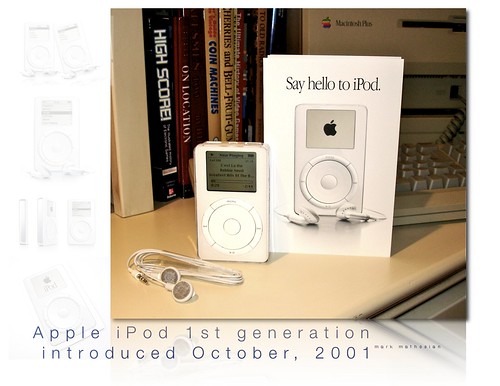
(Just over) 14 years ago… evolution, revolution or just another MP3 player? Photo by MarkGregory007 on Flickr.

You can now sign up to receive each day’s Start Up post by email. You’ll need to click a confirmation link, so no spam.

A selection of 9 links for you. Yes, I know if you’re reading this in the US it’s an hour earlier than usual – that’s because we’ve finished British Summer Time before you. I’m charlesarthur on Twitter. Observations and links welcome.

Adblock Plus and (a little) more: Smells like censorship, Big Brother » AdBlock Plus

Eyeo, which runs Adblock Plus, has been accused of behaviour tantamount to blackmail by saying it will allow “acceptable ads” from some sites that pay it money. Axel Springer in Germany, meanwhile, decided to institute an “non-paywall” which would prevent people using an adblocker from seeing its content on Bild.de etc. Then:

One of the independent moderators of our free and open forum discussed a workaround to the Bild.de blockade, because they still wanted to access the site. Basically, they just talked about how to write a specific filter that users could add to their ad blocker to get around “Axel’s Wall.”

Last week, Axel Springer demanded that we take down those forum posts, in effect demanding that we censor what people had written on our own forum. Our response basically channeled former basketball player/current journalist Jalen Rose: Nah … not gonna be able to do it.

Just a few minutes ago, a court in Hamburg served us with papers FORCING us to remove these specific forum posts. Apparently Axel Springer felt so strongly that they went to a court to get people to stop saying things they didn’t like. This is not without precedent: this week they sent a YouTuber a similar order after he decided to make a video describing how to circumvent …. the Wall.

Damn you, Internet Archive.
link to this extract


October 2001: Apple’s New Thing (iPod) » MacRumors Forums

Fabulous comment thread from Macrumors, including those calling it “Cube 2.0” (the Cube computer was killed after a year), and this from “WeezerX80”:

This isn’t revoltionary!

I still can’t believe this! All this hype for something so ridiculous! Who cares about an MP3 player? I want something new! I want them to think differently!

Why oh why would they do this?! It’s so wrong! It’s so stupid!

Tons more fun to be had. Sadly, Weezerx80 stopped posting there the same day, so we’ll never be able to ask him what he thought of the outcome. (Via Greg Koenig.)
link to this extract


Wi-Fi Assist: a $5 million mess » Medium

Alf Watt, developer of iStumbler, worked on the Mac OS Wi-Fi client user experience at Apple from 2007-12:

During my last few years I spent a lot of time working closely with AppleCare on customer Wi-Fi and networking issues: poring over user trouble reports, sitting down at call centers and listening in on calls, and generally doing everything I could to improve the user experience of Wi-Fi for Apple users.

I failed. It may have been possible to succeed, but the structure of the various teams working on Wi-Fi and networking at the time made it a seemingly insurmountable challenge. This current situation makes it clear to me that there are still forces inside of Apple which prevent any kind of real, comprehensive solution from being implemented. Balkanization, poor management and some uninformed decisions by executives contributed to the problem; and as I’m all to human, my own limitations and personal struggles played a large part. But it didn’t have to happen this way, and it doesn’t have to continue.

Lots of fascinating nuggets in this, including

“when a user calls the vendor of their Wi-Fi access point, nearly the entire profit margin for that box is destroyed by the end of the call.”

link to this extract


Xiaomi won’t hit its smartphone sales targets this year » TechInAsia

Charles Custer:

Last year, Xiaomi gave itself the goal of selling 100m phones in 2015. That seemed ambitious, but not outside the realm of possibility, especially after the fast-growing company finished 2014 having shipped more than 60m units after having originally projected only 40m sales.

2015 has not gone nearly as well, though. By March, Xiaomi CEO Lei Jun had revised this year’s goal to 80m to 100m units. In July, the company announced that it had sold 34.7m smartphones in the first half of the year, putting it on track to possibly miss even the lower end of Lei Jun’s revised target.

Now, there are additional signs that even 80m might be optimistic. Taiwan-based research firm Trendforce just released a report suggesting that Xiaomi is on track to sell around 70m smartphones this year. Meanwhile, research firm Canalys is saying that Xiaomi’s sales in the third quarter of this year actually dropped year-on-year, the first time that has happened.

What’s disrupting Xiaomi? Probably just the slowdown in the Chinese market, which is happening faster than its ability to expand into new markets. Hence it offering products such as a cheap 4K TV (China only, sadly).
link to this extract


We applied to Google’s €150m journalism fund – here’s what we sent in » The Register

The Register’s Kieren McCarthy filled out the form, which has questions such as:

Q Please provide a brief overview of the project. (max 1200 characters)

The project would use a combination of traditional news gathering skills and modern communication tools to gather data around a range of practices performed by internet search engine giant Google, in an effort to expose potential wrongdoing or abuse of market power.

In particular, the project would focus on:

• The skewing of search results.
• The tracking of right-to-be-forgotten requests performed by Google.
• The size, breadth, and impact of Google’s news service on online news sites, looking in particular at the phenomenon of stories written specifically to gather Google News traffic and any possible negative impact on quality journalism due to biases in the Google News algorithm.
• A logging and policy-tracking service to discern the impact of Google lobbying activities on policies and laws developed in Washington DC.
• An open source complaints system focused on gathering early warning signs of abuse of market power by Google.
• A “revolving door” service that specifically tracks current and former Google employees to identify how informal social networks may be used to influence public policy.

Looking to fund three staff. One to watch for sure.
link to this extract


Should we trust the young Turkers? » Tim Harford

The FT’s ‘undercover economist’:

“The majority of papers presented at the conferences I go to now use [Amazon’s Mechanical] Turk [which lets you hire people online to complete tasks],” says Dan Goldstein, a cognitive psychologist at Microsoft Research. Goldstein, an academic who has also worked at London Business School and Columbia University, has used MTurk in his own research, for instance, into the impact of distracting online display ads.

This stampede to MTurk has made some researchers uneasy. Dan Kahan of Yale Law School studies “motivated reasoning” — the way our goals or political opinions can influence the way we process conflicting evidence. He has written a number of pieces warning about the careless use of the Amazon Turk platform.

The most obvious objection is that Turkers aren’t representative of any particular population one might wish to examine. As an illustration of this, two political scientists hired more than 500 Turkers to complete a very brief survey on the day of the 2012 US presidential election. (Tellingly, the entire survey cost the researchers just $28 and the results arrived within four hours.) The researchers, Sean Richey and Ben Taylor, found that 73% of their Turkers said they had voted for Barack Obama; 12% had voted for “other” — compared with 1.6% of all voters. Mitt Romney polled vastly worse with the Turkers than the US public as a whole. Relative to the general population, Turkers were also more likely to vote and be young, male, poor but highly educated. Or so they claimed; it is hard to be sure.

There are all sorts of reasons not to trust Turk-sourced studies, and only a few in favour of them.
link to this extract


Microsoft’s quarter looks worse this way » Business Insider

Julie Bort:

Microsoft rolled out a new way to report earnings with its first quarter, 2016 earnings on Thursday.

This new reporting structure consolidated Microsoft’s businesses into three new units.

The previous structure had two major units (commercial and consumer) and broke out a few different businesses in each of those.

As you can see, under the old scheme, all business units shrunk except two:

Phone hardware down 54% to $1.1bn, computing and gaming hardware (Xbox, essentially) down 13% to $2bn; only “Device and Consumer Other” (Bing, MSN, Office 365, video games, app store) and “Commercial Other” (cloud services) showed growth. The puzzling thing is how Microsoft’s shares would move up on something like this.
link to this extract


Android, iPhone divergence: mid-price smartphones disappearing from Korean market » BusinessKorea

Jung Suk-yee:

The polarization between high-end and mass market products in the Korean smartphone market is expected to accelerate with the iPhone 6S’s local debut.

At present, few smartphones ranging from 400,000 to 700,000 won (US$353 to $617) in price are available in the domestic market, except for the recently-released Samsung Galaxy Note 5 and LG V10. This is because the prices of existing high-end handsets have been reduced to 400,000 won or less by a cut in factory price and an upward adjustment of the subsidies. The prices of the Galaxy Note 5 and the V10 are predicted to be lowered in the near future, too.

This is certainly a trend – most Android phones are getting cheaper and cheaper, but Apple and a few others, are holding on to top-end pricing. South Korea is the sort of “end state” of the smartphone business; it’s super-saturated.
link to this extract


Shop BlackBerry Priv Stock good or bad Sales? » CrackBerry forums

“So this was interesting. I started entering 999 QTY for the Priv at 10am today, and it told me they only have 965 available.

checking right now (12:25p), it says 840. so is that good or bad? what do you guys think..”

Later they figure out that it has sold 206 in six hours. Guys, is that good or bad?
link to this extract


Start up: Surface Book v MacBook Pro, Microsoft’s cloud boost, HP’s cloudburst, BlackBerry’s last stand?, and more


Facebook has noticed that your battery is dying and thinks it might be its fault. Photo by Poster Boy NYC on Flickr.

You can now sign up to receive each day’s Start Up post by email. You’ll need to click a confirmation link, so no spam.

A selection of 8 links for you. Use them wisely. I’m charlesarthur on Twitter. Observations and links welcome.

Surface Book vs. MacBook Pro: It isn’t twice as fast. It’s three times as fast » PCWorld

Gordon Mah Ung:

Rather than rely on a synthetic game benchmark, I also decided to throw a real game at it. Square Enix’s Tomb Raider is available on Steam on both platforms. It’s a fairly recent game and came out for PC and consoles in 2013. Feral Interactive ported the game to OSX the same year.

One caveat here: As a port there’s clearly a lot of things that could be different between the PC version and the Mac version. For my test, I ran it at 1400×900, which was the default resolution on the Mac, and selected the “Normal” quality setting on both. I also poked around the game’s graphics settings to see if there was any variance between them that got lost in translation.

The result is a bone-crushing blow for the MacBook Pro 13: Tomb Raider ran at a pathetic sub-24 fps, while the Surface Book whizzes along at 74 fps.

If Microsoft based its marketing statements on this test alone, it could have safely said “triple the performance of a MacBook Pro.”

To be fair, if you’ve read this far, you know the Surface Book isn’t  twice as fast or three times as fast as the MacBook Pro 13 in all things.

Benchmarks – especially skewed ones like this (is the game optimised for Windows? Bet it is) – really bore me. They capture nothing of the general experience of using a device. But hey, there’s the headline that will be used.
link to this extract


Facebook app: we recently heard reports of some people… » Ari Grant on Facebook

Grant is a Facebook developer:

We recently heard reports of some people experiencing battery issues with the Facebook iOS app and have been looking into the causes of these problems. We found a few key issues and have identified additional improvements, some of which are in the version of the app that was released today.

The first issue we found was a “CPU spin” in our network code. A CPU spin is like a child in a car asking, “Are we there yet? Are we there yet? Are we there yet?”with the question not resulting in any progress to reaching the destination. This repeated processing causes our app to use more battery than intended. The version released today has some improvements that should start making this better.

The second issue is with how we manage audio sessions. If you leave the Facebook app after watching a video, the audio session sometimes stays open as if the app was playing audio silently. This is similar to when you close a music app and want to keep listening to the music while you do other things, except in this case it was unintentional and nothing kept playing.

Still ain’t going to reinstall. Note that it’s not *all* of the identified improvements in the new app.
link to this extract


Microsoft quarterly revenue beats as cloud demand rises » Reuters

The company said Office 365, another key cloud-based offering, had about 18.2m consumer subscribers at the end of its first quarter, an increase of about 3m from the end of the preceding quarter.

Microsoft launched Windows 10, its first new operating system in almost three years, in July. The system, seen as critical for the company, won positive reviews for its user-friendly and feature-packed interface.

The company launched a number of new devices earlier this month, including its first ever laptop and a new Surface Pro tablet, all running on Windows 10.

Revenue in the company’s “More Personal Computing” business, which includes the Windows operating system, fell 17% to $9.4bn.

Excluding the impact of the strong dollar, revenue in the business fell 13%.

Sharp observation by Stefan Constantine: there are more people paying for Spotify than for Office 365. That’s likely to be reversed in a couple of quarters, though.

Phone revenue dropped 54%.
link to this extract


HP shutting down HP Helion public cloud » Business Insider

Matt Weiberger:

Cloud computing is a hot market, letting customers swipe a credit card and get access to essentially unlimited supercomputing power. Developers at startups and large enterpries alike love it because it gives them the ability to get really big, really quickly. 

But while Amazon, Google, and Microsoft have all found great success in the public cloud market, simply buying and maintaining all the servers required to get up to the massive economies of scale necessary to compete in this kind of low-margin business is really hard.

That’s something HP has found out the hard way, with the HP Helion public cloud [which will be shut down from January] constantly coming under fire for being too small and too unfocused on the market to seriously make a dent. 

And so, HP is going to shut down the HP Helion public cloud to stick with what its good at: Helping customers run their own data centers with hardware, software, and services to run at cloud levels of efficiency.

HP’s blogpost announcing this move is a masterful piece of corporate doublespeak: it makes it sound as though everything’s going so well they just have to shut down the public cloud offering.
link to this extract


Force Touch patent: will pressure input be possible in Samsung’s Galaxy S7? » BusinessKorea

Marie Kim:

Samsung Electro-Mechanics filed a patent application with the Korea Intellectual Property Office (KIPO) for Force Touch, which is virtually the same as 3D Touch used in the iPhone 6S. This technology offers different types of functions based on the strength of a push on the screen.

According to the patent information retrieval system of KIPO on Oct. 20, Samsung Electro-Mechanics filed a patent named “touch input equipment and electronics device with touch input” with KIPO on April 9, 2014. Considering that the Korean company supplies core components for Samsung Electronics’ smartphones, the patent is likely to be used in the Galaxy S7.

Would be surprised if it wasn’t. But Samsung’s problem is that pretty much every third-party developer will ignore it; it will have to wait for Google to implement it in Android. Will Apple trouble to sue, though? (At a guess, not.)
link to this extract


The dominance of Alphabet » Global Web Index

Felim McGrath:

With Alphabet set to post healthy financial results later today and  hot on the heels of the announcement of YouTube Red, Thursday’s Chart of the Day looks at just how important this company has become.

Among the hundreds of websites tracked by GlobalWebIndex, Alphabet has the two most popular properties among online adults outside of China. Close to 9 in 10 visit Google each month, while 82% visit YouTube. These figures place Alphabet’s sites above Facebook – which three quarters visited last month – and give it a healthy lead over rival search giant Yahoo (half visit this site monthly). 

This vast user base underlines just how central Alphabet remains to internet users’ online activities despite the ongoing shift to mobile.

link to this extract


Dell may sell assets to pay for EMC deal » Re/code

Arik Hesseldahl from a Q+A with Marius Haas, chief commercial officer of Dell:

Q: It looks like after the close Dell will essentially absorb the EMC federation, but will adapt that structure for its own purposes by making it bigger with pieces like Secureworks, Virtustream and Pivotal. Is that how we should think about it? And if so, how does that complicate or enhance your mission here?

If you dissect what has already been published, you will see there is a strong commitment to de-leveraging or paying down the debt very quickly. There are different angles and different levers we can pull to do that. This is why we have such high confidence in what we’re doing.

Q: That implies that paying down the debt won’t just come by way of cash from operations. Does that mean you might consider selling some assets? Is there anything within Dell that doesn’t stay?

We’re not prepared to talk about that yet, but it’s probably not a bad train of thought.

What’s it going to sell, though? The PC business?
link to this extract


BlackBerry might have leaked the Priv’s specs and release date (update: confirmed) » Engadget

Daniel Cooper:

we know that the Priv is packing a fair bit of power beneath the hood, but has a listed price of $749. There’s no indication if that figure is for the US or Canada — but the page does reference the (GSM) handset not working on American CDMA networks like Verizon and Sprint. You’ll also spot that the device is marked for release on November 16th, so we won’t have long to find out if all of this is true or not.

Performance-wise, the Priv is packing a 1.8Ghz Qualcomm Snapdragon 808 with 3GB RAM, 32GB storage and a microSD card slot that’ll take up to 2TB. Much was made of the Priv’s curved screen, and we know that it’s a 5.4-inch plastic AMOLED with a 2,560 x 1,440 resolution (540 DPI) that can handle styluses and gloves. The physical keyboard measures 37mm high by 77.2mm wide, and there’s a 3,410mAh battery that’s rated for 22.5 hours of use tucked inside.

Price in the UK: £580, against £539 for an iPhone 6S with 16GB and £450 for a Samsung Galaxy S6. At that price, BlackBerry will have positive gross margins on the device (it’s not selling it for less than it costs to make), but so few will sell that you can start the timer now on how soon John Chen announces that the hardware division just isn’t making money because of the costs involved in R+D, distribution, marketing and administration – which feed through to operating profit, or loss. Remember, last financial quarter BB sold 0.8m phones, and made an operating loss on those.
link to this extract


Start up: Apple Music for Android enters beta, how many Ubuntu phones?, Samsung’s dead Milk, and more


If only it were as simple as this for phones. Photo by Bradford Timeline on Flickr.

You can now sign up to receive each day’s Start Up post by email. You’ll need to click a confirmation link, so no spam.

A selection of 11 links for you. Use them wisely. I’m charlesarthur on Twitter. Observations and links welcome.

Google brings you closer to your customers in the moments that matter » Inside AdWords blog

Sridhar Ramaswamy, Senior Vice President, Ads and Commerce:

Customer Match allows you to upload a list of email addresses, which can be matched to signed-in users on Google in a secure and privacy-safe way. From there, you can build campaigns and ads specifically designed to reach your audience.

Let’s say you’re a travel brand. You can now reach people who have joined your rewards program as they plan their next trip. For example, when these rewards members search for “non-stop flights to new york” on Google.com, you can show relevant ads at the top of their search results on any device right when they’re looking to fly to New York. And when those members are watching their favorite videos on YouTube or catching up on Gmail, you can show ads that inspire them to plan their next trip.

Using Customer Match, you can also generate Similar Audiences to reach new customers on YouTube and Gmail who are likely to be interested in your products and services. For example, you can drive awareness on YouTube for new non-stop flights by showing TrueView ads to prospective customers who have similar interests and characteristics to your rewards members.

The quest for “relevant ads” must be pursued continuously. (Facebook already has a similar system.)
link to this extract


Bringing the Internet to more Indians—starting with 10 million rail passengers a day » Official Google Blog

Sundar Pichai, Google CEO:

on the occasion of Indian Prime Minister Narendra Modi’s visit to our U.S. headquarters, and in line with his Digital India initiative, we announced a new project to provide high-speed public Wi-Fi in 400 train stations across India.
 
Working with Indian Railways, which operates one of the world’s largest railway networks, and RailTel, which provides Internet services as RailWire via its extensive fiber network along many of these railway lines, our Access & Energy team plans to bring the first stations online in the coming months. The network will expand quickly to cover 100 of the busiest stations in India before the end of 2016, with the remaining stations following in quick succession.

Even with just the first 100 stations online, this project will make Wi-Fi available for the more than 10 million people who pass through every day.

link to this extract


Microsoft announces changes to financial reporting structure » Yahoo Finance

Beginning in fiscal year 2016, the company will report revenue and operating income based on three operating segments: Productivity and Business Processes, Intelligent Cloud, and More Personal Computing.   

The Productivity and Business Processes segment includes results from Office and Office 365 for commercial and consumer customers, as well as Dynamics and Dynamics CRM Online. 

The Intelligent Cloud segment includes results from public, private and hybrid server products and services such as Windows Server, SQL Server, System Center, Azure, and Enterprise Services. 

The More Personal Computing segment includes results from licensing of the Windows operating system, devices such as Surface and phones, gaming including Xbox consoles, and search.

This is surely going to obfuscate things more than ever; the latest scheme, which had seven reporting segments, had only been in place for three years – replacing one with six segments. The fewer reporting buckets, the less help it is trying to understand what is and isn’t working at the company.
link to this extract


Apple Music for Android beta invites spotted in the wild » Techaeris

Justin Jelinek:

The e-mail comes from a service called Betabound, a site that allows users to request access to different varieties of beta programs. In this instance though, it’s a doozy. The notice — in its entirety below — simply states:

We’re excited to invite you to come test Apple Music for Android. If you’re a current Android user that would like to join the beta for the new music streaming service, you won’t want to miss this opportunity. To learn more and apply, click the link below. Best of luck! The Betabound team.

Once you follow the link, you’ll be hit with a series of music related questions, some of which are real head-scratchers.  For example:

If you could only listen to 5 albums for the rest of your life, what would they be and why?

How do you even answer that? I’d be hard pressed to come up with an answer, though if the successful completion would get me into the Apple Music for Android beta I’m sure I could come up with something.

If you want to try your luck and see if you can get into the beta, you can sign up on Betabound’s website.

Yup, it’s really there. Big questions:
• will it follow Android’s Material design, or look like an iOS app?
• Will it try to integrate iTunes content, or just offer streaming/DRM downloads?
• How will it avoid the relentless one-star trolling of Android fans that greeted the “Move to iOS” app?

And now…
link to this extract


Apple Music’s functionality failure » Lefsetz Letter

Bob Lefsetz is an acerbic viewer of what’s happening in the music business, and he doesn’t like how Apple is handling its own shift:

this is death in tech. If you’re not willing to destroy the old business model on the way to the new, you’re gonna lose in the long run.

Yes, Apple has zillions of credit card numbers. Yes, Apple is the world’s most valuable company, a juggernaut. But IBM is a shadow of what it once was, as is Microsoft. Nothing is forever. When the great disruption comes you’ve got to sacrifice what once was, however profitable it might be, or you will die in the future.

The problem with streaming in the United States is that most people just don’t see the need to subscribe. Furthermore, they don’t see the need to experiment. Getting someone to try something is the hardest part. And when they do try something and they get less functionality than before, they’re out.

This is what’s happening with Apple Music, and this hurts not only Apple, but the music business at large.

It’d be like having a CD player that spins vinyl. Actually, they tried this. Needless to say, it failed.

As for streaming sound quality, Clayton Christensen went on to say that the new solution may not equal the quality of the old, but it’s good enough and it’s cheap. If you’re an iTunes customer you’re going to go to streaming, you just don’t know it yet. Because streaming is cheaper if you’re a heavy buyer, and owning nothing you can gain improvement along the way.

His argument that you want different apps for music you “own” and for “streams” feels right. Apple’s problem though would be how do you make people start to use the “streams” one? There must have been big fights over this internally. The present system feels like a compromise that hasn’t quite worked.
link to this extract


Samsung’s Milk Video to be shut down November 20 » Variety

Janko Roettgers:

Samsung is shuttering its Milk Video service in November. The company announced the shut-down on Google Play Monday, writing: “While we remain committed to providing premium entertainment services, we have decided to end support for the Samsung Milk Video app as of November 20, 2015.”

A Samsung spokesperson declined to comment on how the closure will affect Milk Video staff.

The closure comes almost to the day a year after Samsung launched Milk Video as a mobile-focused service focusing on short-form video content. Samsung at one point envisioned Milk Video as part of a larger suite of content-focused apps for mobile devices, which also includes the company’s Pandora-like Milk Music service.

Samsung struck some deals with Vice, Funny or Die and others for exclusive short-form content, and complemented these clips with aggregated videos from YouTube, Vevo and other sources.

Roettgers wrote about layoffs in those units back in May. Is this the end of Samsung’s content strategy?
link to this extract


The Apple Watch is perfect. On paper. » getwired.com

Wes Miller (who generally likes his Apple stuff) is taking his Apple Watch back, after a week, because he can’t find anything really relevant that it does for him:

The former product manager (and former development manager) in me sees how we arrived at this point. The Apple Watch team was established long ago, and started on their project. At one point, pressure from above, from outside, from investors, who knows… forced Apple to push up a launch date. The hardware was reasonably ready. But the software was a hot mess.

Traditionally, Apple excelled when they discarded features that weren’t ready, even if competitors already did them in a half-assed way – winning over consumers by delivering those features later when they’re actually ready. Unfortunately, you often get a product manager in the mix that pushes for a feature, even if it can’t really be implemented well or reliably. The Apple Watch feels like this. It offers a mix of checkbox features that, yes, you can argue, kind of work. But they don’t have the finish that they should. The software doesn’t respect the hardware. In fact, it’s giving a middle finger to the hardware. Even WatchOS 2 fails to deliver adequate finish. The list of features that the Watch promises sound nifty. But actually living with the Watch is disappointing.

link to this extract


Apple iPhone 6s vs iPhone 6s Plus Water Test! Is it secretly waterproof? A waterproof review » YouTube

If you don’t want to watch – he dunks the new phones in some bowls of water for an hour. They keep working. Apple has said nothing about the waterproofiness of the new iPhones.

Moving on…
link to this extract


Sony changes stance on waterproof phones: do not use underwater » Xperia Blog

Sony Mobile has made a hugely controversial change to its advice around Xperia waterproof devices. Despite most recent Sony Xperia waterproof devices achieving an Ingress Protection rating of IP68 for water resistance, the highest possible, Sony now says that they should not be used underwater.

If you head over to Sony Mobile’s support page on water and dust protection, you will find several statements on Sony’s new policy including: “Remember not to use the device underwater” and “The IP rating of your device was achieved in laboratory conditions in standby mode, so you should not use the device underwater, such as taking pictures.”

Specifically: don’t put it in seawater or chlorinated water such as swimming pools. Or in juice. Distilled water might be OK. It’s not quite the selling point it used to be, is it? Especially as it had promotional campaigns showing the phones being used to take photos underwater. And people *do* use them to take photos underwater – and like them for that.

Kudos to the Xperia blog, which has pulled together a slew of ads where Sony has shown the phones in water to push that “waterproof” idea. Over to you, Sony.
link to this extract


How many Ubuntu Phones are there? » RPadovani

Padovani, an Ubuntu contributor, does some maths:

As app developer, and mainly as big supporter of the project, it’s a question I ask myself often.

I don’t have the answer, but I can try to make a guess using a useful statistic I have: the number of times the Calculator App has been updated.

The statistic I have access is the number of unique users that have updated the calculator app at least once. The last update of calculator is from 8 Jun ‘15. So phones that have been sold later probably already included the update. Let’s say then the number of users I guess is updated to end of July ‘15.

This means the only market we consider is Europe. Russia, India, China and the rest of the world have started to have available the phones later this year.

His conclusion: probably about 25,000 by the end of September. Yes, twenty-five thousand. Remember when Ubuntu/Linux/Firefox OS was going to be the future third/fourth mobile ecosystem?
link to this extract


CEO John Chen shows off the BlackBerry Priv, gets lost » SlashGear

JC Torres:

Just because BlackBerry has finally admitted that it does have an Android smartphone doesn’t mean everyone might be on board with the plan. And “not everyone” might even include CEO John Chen. The chief executive gave the Business News Network an exclusive glimpse at a working BlackBerry Priv, the company’s first “true” Android smartphone. But in trying to demo the smartphone that “runs Google”, Chen is visibly seen struggling to figure out how to actually use the device, as well as probably some hints of unresponsiveness with the touch screen.

In his defense, Chen is, after all, the CEO of BlackBerry, not of Samsung, of LG, or Motorola, or any other Android device maker.

That’s not a defence. Can you imagine any tech CEO struggling so badly as this with the device they hope to make money on? They haven’t even sorted out the naming: Chen pronounces it “Priv”, with a short “i” (as in “privet hedge”), and then talks about it offering “pryvacy” (with a long “i” as in “prying”). Can’t operate the phone, isn’t on top of the marketing. That’s bad. BBN took the original video down and offered it in a non-embeddable view on its site, hence this link to a YouTube re-upload.


link to this extract


Start up: ad traffic fraud, adblocking goes paid and free, US v Google?, BlackBerry to Android, and more


Perhaps this one isn’t better as a Live Photo, but parents will like capturing “moments”. Photo by Meigs O’Toole on Flickr.

You can now sign up to receive each day’s Start Up post by email. You’ll need to click a confirmation link, so no spam.

A selection of 11 links for you. Use them wisely. I’m charlesarthur on Twitter. Observations and links welcome.

The fake traffic schemes that are rotting the internet » Bloomberg Business

Ben Elgin, Michael Riley, David Kocieniewski, and Joshua Brustein:

[Ron] Amram is at Heineken USA now, where the annual ad budget is in the $150m range. In 2013 the company replaced its old stubby bottles with a fashionably long-necked version that supposedly keeps the beer cold longer. “We had a healthy investment in TV, local media, and digital,” he says. “We thought digital would come close and compete with television in terms of effectiveness.”

Late that year he and a half-dozen or so colleagues gathered in a New York conference room for a presentation on the performance of the online ads. They were stunned. Digital’s return on investment was around 2 to 1, a $2 increase in revenue for every $1 of ad spending, compared with at least 6 to 1 for TV. The most startling finding: Only 20% of the campaign’s “ad impressions”—ads that appear on a computer or smartphone screen—were even seen by actual people.

“The room basically stopped,” Amram recalls. The team was concerned about their jobs; someone asked, “Can they do that? Is it legal?” But mostly it was disbelief and outrage. “It was like we’d been throwing our money to the mob,” Amram says. “As an advertiser we were paying for eyeballs and thought that we were buying views. But in the digital world, you’re just paying for the ad to be served, and there’s no guarantee who will see it, or whether a human will see it at all.”

Stunning journalism, and a must-read (allow some time). The team finds people who have set up junk sites which attract huge amounts of machine “traffic” which is monetised through ads set up by more-or-less honest ad networks. It’s a house of cards.
link to this extract


On Acceptable Ads » Murphy Apps

Dean Murphy, author of the Crystal content blocker:

There has been a lot of confusion and mis-reporting going on today regarding Crystal allowing advertising. I’m hoping this post will clarify the information.

-What will be changing? 

In my first update (6-10 weeks time?) there will be two new features. A user managed whitelist, where you the user can specify a list of domains that you would like to support and an option to enable/disable Acceptable Ads on the websites you visit.

You are totally free to use all/any/none of these features as you see fit.

-What are acceptable ads? 

Acceptable Ads is an initiative, supported by 3 of my favourite websites  (Reddit, DuckDuckGo, Stack Exchange), that encourages and promotes the use of better advertising on the web. They have 5 rules for publishers and advertisers to stick to: 

• Acceptable Ads are not annoying.
• Acceptable Ads do not disrupt or distort the page content we’re trying to read.
• Acceptable Ads are transparent with us about being an ad.
• Acceptable Ads are effective without shouting at us.
• Acceptable Ads are appropriate to the site that we are on.

His reasoning: as a lone developer, he can’t keep up; Eyeo, maker of Adblock Plus, can. Eyeo will pay him an ongoing fee.
link to this extract


Live Photos are a gimmick — says nobody who has young kids, ever » Medium

Jeremy Olson:

Sometimes hiding behind a bad photo is a beautiful moment. These moments are elusive. They happen too fast to catch on video. You can’t catch them intentionally. The only possible way to catch them is … accidentally.

Sure, I might have been able to record a video of my daughter playing peek-a-boo with me but that is not the point. I’ve only had Live Photos for a day and they are already surfacing the hidden treasures behind both good and bad photos. If I keep Live Photos turned on, I am inevitably going to capture precious moments of my daughter growing up that I would have never captured intentionally.

link to this extract


Wait, what? Mobile browser traffic is 2x bigger than app traffic, and growing faster » VentureBeat | Mobile | by John Koetsier

John Koetsier unpicks a not-quite-apples-with-apples comparison from Morgan Stanley:

Mobile users spend massive numbers of hours in Subway Surfer or Game of War, blowing 80% of their time in just five favorite apps, while they might also visit 10 or 15 mobile web sites of companies that they’re checking out, and spend just a few moments on each. Mobile “traffic” — read unique visitors — are up on mobile web, but mobile time is also up on apps.

The questions proliferate: Why is this happening, what’s best, and what matters most? And, what should brands, companies, and media properties do?

The answer is pretty simple: Deepest engagement for the longest period of time happens in apps, so apps matter, and they matter desperately for brands who want to connect to customers. But since, as we’ve seen in our research, apps-per-smartphone users is maxxing out at an average of 50-60, and no-one besides Robert Scoble is going to install an app for each company, service, or site he or she interacts with, your mobile web experience has to be good, and it has to be strong.

link to this extract


FBI wants better automated image analysis for tattoos » IEEE Spectrum

Tam Harbert:

In June, the six groups [chosen by the US National Institute of Standards and Technology] reported on how well their algorithms performed in five different types of searches. The algorithms did well in three of these searches, achieving success rates of 90% and above in detecting whether a given image contained a tattoo; identifying the same tattoo on the same person, over a span of time; and identifying a small segment of a larger tattoo.

The algorithms performed poorly — with hit rates as low as 15% — at two tasks: identifying visually similar tattoos on different people, and searching for similar tattoos across a variety of media, including sketches, scanned prints, and computer graphics.

Tattoos are hard – much harder than faces.
link to this extract


Native advertising is a bad solution » The Brooks Review

Ben Brooks:

here’s another scenario I see playing out all over the web: a small app is reviewed with great gusto and praise by a site, and a few weeks (or months) later that app is paying for a sponsorship on the site. Now, those are likely two unrelated events — perhaps the app didn’t know about the site before the review, but now they know about the site and the exposure was great, so why not get more by paying for advertisement?

But now the site publisher is in a hairy situation. They know the review was genuine because they wrote it long before they were ever contacted by that developer, but will people still believe it was genuine if they accept this sponsorship? Or will everyone just yell “conspiracy” and find another review site? Will the people who read the review long before the sponsorship rethink that review? Will new readers finding that review disregard the objectivity of the entire site because of this one ad?

There’s no easy solution, unless you don’t ever want to write about products or companies.

Brooks evidently hasn’t ever written for a major online publication: writing about anything and offering a positive or negative view will instantly bring accusations of bias. It happens all the time to every writer. Native advertising, in that sense, is like Churchill’s view of democracy as a form of government: the worst – apart from every other one.
link to this extract


Avi Cieplinski: “This morning I received…” » Twitter

This morning I received the end product of 5 years of work at Apple. Can’t believe I’m really 3D Touching it. 🙂

Cieplinski’s Twitter bio says he’s “co-inventor of Apple’s Force Touch and Taptic Engine”. He’s now at Twitter. The “co-” would have been with lots of others. But it’s the timescale that makes you think: that means this started in 2010, when everyone was excited about the iPhone 4.

What other interaction is five years away now?
link to this extract


Adblock Fast » App Store

Adblock Fast is a free, open-source ad blocker!

Just as webpages grew bloated with ads, so too have ad blockers grown bloated with little-used filtering rules and features that sap their speed and hog your device’s disk space, CPU cycles, and memory. Adblock Fast runs an optimized ruleset to accelerate pages more but consume less system resources than other ad blockers do.

Well that was pretty rapid price deflation.
link to this extract


Google said to be under US antitrust scrutiny over Android » Bloomberg Business

The Federal Trade Commission reached an agreement with the Justice Department to spearhead an investigation of Google’s Android business, the people said. FTC officials have met with technology company representatives who say Google gives priority to its own services on the Android platform, while restricting others, added the people, who asked for anonymity because the matter is confidential.

The inquiry is in its early stages, and it could end without a case against the company. Regardless, it shows the FTC is again turning its attention to one of America’s biggest companies, two years after it closed a separate investigation into Google’s Internet search business. The FTC’s handling of the earlier probe left some technology companies skeptical of the agency’s willingness to bring a case, according to the people.

Spokesmen for the FTC and Google declined to comment.

I thought that a similar case (or class action) had already been tried and failed in the US. I have trouble seeing how the FTC would make the US’s required triumvirate of antitrust proof – dominant position, annexing of adjacent market, harm to consumers – stick. The first two might be true, but the third feels like a hell of a stretch.
link to this extract


Ad-supported is 56% of US streaming revenue » Music Industry Blog

Mark Mulligan:

According to the IFPI ad supported streaming accounted for just 19% of all US streaming revenues in 2014, down from a high of 30% in 2011.  Which points to the success of subscriptions.  Except that those numbers ignore a major part of the equation: Pandora (and other semi-interactive radio services).  The IFPI has Pandora hidden away with cloud locker services, SiriusXM and a mixture of other revenues in ‘Other Digital’.  Extracting the semi-interactive radio revenues that count as label trade revenues wasn’t the most straight forward of tasks but it was worth the effort.  Once Pandora is added into the mix it emerges that 56% of US streaming revenues are from free, ad supported services.  While that share is down from a high of 66% in 2012 it remained flat in 2013 and 2014.  Which means that however fast subscriptions grew Pandora, Slacker, Rhapsody UnRadio and co grew even faster in order to offset the decline in on demand ad supported income.

Sneaky of the IFPI. Pandora is a listed company in the US – can hardly call it core. And this is before you include YouTube, which many teens use to stream entire albums while not actually watching the screen.
link to this extract


BlackBerry’s Android move may be too late » Jackdaw Research

Jan Dawson:

being an Android OEM is a pretty uncomfortable place to be right now. Competition is intensifying, the biggest players are struggling, and small lower-priced vendors are taking increasing share. The big question is whether BlackBerry can really turn handsets around at this point, or whether it’s simply too late for the brand, which has been tarnished by all that has happened over the last few years. My sense is that many users have moved on at this point, and that even if enterprises like the BlackBerry platform, employees won’t. The reality is that there are still some industries where BlackBerry devices are the only option, and therefore I think it’s likely that BlackBerry will continue to make devices for some time to come, but the question is whether that can ever be a profitable business for them again.

Ooh, I know this one! It’s “no”: by my calculations BlackBerry’s handset business has lost money (quite a lot in some cases) for 15 quarters in a row. Android won’t solve that.
link to this extract


Start up: adblockers v retailers, robot nail technicians, who killed Nokia?, the SKU wars, and more


Apple Watch owners might get left behind with new phones unless they back up. Photo by Ian Muttoo on Flickr.

You can now sign up to receive each day’s Start Up post by email. You’ll need to click a confirmation link, so no spam.

(Apologies if yesterday’s didn’t arrive: WordPress’s RSS feed is co-written by Volkswagen, it seems.)

A selection of 9 links for you. Use them wisely. I’m charlesarthur on Twitter. Observations and links welcome.

Symantec employees fired for issuing rogue HTTPS certificate for Google » Ars Technica

Dan Goodin:

Symantec has fired an undisclosed number of employees after they were caught issuing unauthorized cryptographic certificates that made it possible to impersonate HTTPS-protected Google webpages.

“We learned on Wednesday that a small number of test certificates were inappropriately issued internally this week for three domains during product testing,” Symantec officials wrote in a blog post published Friday. “All of these test certificates and keys were always within our control and were immediately revoked when we discovered the issue. There was no direct impact to any of the domains and never any danger to the Internet.”

The post went on to say that the unnamed employees were terminated for failing to follow Symantec policies. Symantec officials didn’t identify the three domains the test certificates covered, but in a http://googleonlinesecurity.blogspot.com/2015/09/improved-digital-certificate-security.html, Google researchers said Symantec’s Thawte-branded certificate authority service issued an Extended Validation pre-certificate for the domains google.com and http://www.google.com.

“This pre-certificate was neither requested nor authorized by Google,” they wrote.

link to this extract


How to swap iPhones and not lose Apple Watch data » Finer Things in Tech

David Chartier:

When you unpair an Apple Watch from an iPhone, your iPhone creates a backup of your Watch data and configuration, then wipes the Watch. Since so many people will be getting a new iPhone 6S [from Friday], I wanted to see if there was an easy way to pair an Apple Watch to a new phone and restore all important data.

According to this Apple document (thanks to Rob Wensing), iPhone includes your Watch backups when it runs an iCloud backup. So, in theory, and supported by a few of my Twitter followers, here is the easiest way to switch your Apple Watch to a new iPhone and keep all your data. I don’t know what your schedule is like, but it might be best to start this the night before you get your new iPhone.

It’s a five-step process but it could take a while; crucial to it is making iCloud/iTunes backups.
link to this extract


Apple’s ad-blocking move is hurting retailers like Walmart » Fortune

Dan Primack points out that the Crystal adblocker doesn’t play nicely with some US retail sites:

Walgreens.com had a similar problem to Sears, when using Crystal. The homepage worked, but the Safari browser went blank after clicking the “Shop Products” link.

And, as Mason said, this issue goes far beyond just image rendering. For example, everything (mostly) loaded just fine on the mobile sites for Lululemon and Walmart with Crystal enabled. But it was impossible to add any products to the shopping cart. So if you just went to browse the pretty pictures, then there’s no problem. If you want to actually buy something, however…

Even for mobile websites that are working properly from a customer perspective, such ad-blocking technology also can strip out back-end code like Google Analytics or Adobe’s Omniture, which provide retailers with real-time insights into customer behavior. And then there is the whole matter of how retailers generate around 60% of their mobile web traffic inorganically, via online ads that Crystal and other ad-blockers are designed to eliminate.

“Retailers can work around it on the consumer side by doing a lot of recoding, but a lot of them freeze their codes on November 1, ahead of the holiday shopping season,” Branding Brand’s Mason says. “So that gives them just over a month or so to get it done. On the back-end they could use different sources of information for sales — kind of like checking the cash register instead of receipts — but it is a different process and also depends, in part, on if the sites are hosted on servers in-house or not.”

Do these retailers have any of the world’s smallest violins in stock? I feel I need one. A few things: Crystal isn’t the only adblocking app; Dean Murphy, Crystal’s developer, is looking at the problem; and as for “real-time insights into customer behaviour”, well, tough. Looks like it might be back to interpreting logs.
link to this extract


Preemadonna turns your smartphone into a nail salon » TechCrunch

Megan Rose Dickey:

Preemadonna just unveiled the Lacey Nailbot, a nail decorating robot, at TechCrunch Disrupt SF 2015.

The Lacey, which will retail for $199, uses your smartphone’s back camera and prints full color art on nails in just a few seconds. The only thing you have to do before putting your finger under the Nailbot is prime your nail with white polish.

The Nailbot uses inkjet, and will eventually use actual nail polish, that is controlled through its system over wireless connection (BLE) to decorate the nail with a swipe or through a motorized solution. The Nailbot utilizes Hewlett Packard’s thermal technology, your phone’s camera, machine vision, computer vision and other technologies. In addition to the Nailbot itself, users can create, design, modify and share their art with the accompanying app.

Wow. If there were a job I would have thought was safe from robots, it would be nail salon worker. Side note: how great to see a story about something involving a service for women.
link to this extract


Who killed Nokia? Nokia did » INSEAD Knowledge

Quy Huy, INSEAD Professor of Strategy and Timo Vuori, Assistant Professor of Strategy, Aalto University:

Nokia’s fall from the top of the smartphone pyramid is typically put down to three factors by executives who attempt to explain it: 1) that Nokia was technically inferior to Apple, 2) that the company was complacent and 3) that its leaders didn’t see the disruptive iPhone coming.

We argue that it was none of the above. As we have previously asserted, Nokia lost the smartphone battle because of divergent shared fears among the company’s middle and top managers led to company-wide inertia that left it powerless to respond to Apple’s game changing device.

In a recent paper, we dug deeper into why such fear was so prevalent. Based on the findings of an in-depth investigation and 76 interviews with top and middle managers, engineers and external experts, we find that this organisational fear was grounded in a culture of temperamental leaders and frightened middle managers, scared of telling the truth.

Ex-Nokia people on Twitter disagree pretty strongly. And it’s hardly as if Apple was led by a gentle consensus-seeking always-relaxed paragon. (We don’t know how frightened its middle managers are/were, either.)
link to this extract


More BlackBerry layoffs: 200 Venice devs binned amid Android shift » The Register

Reuters reports that around 200 hardware and design staff have been laid off, following the completion of work on an Android device codenamed “Venice”. It’s the latest in a succession of “resource reallocations”.

BlackBerry has struggled to achieve significant volumes since BB10 launched in January 2013, with only 1.1 million units shipped last quarter. The total number is shipped is probably lower than 10 million.

BlackBerry’s CEO John Chen has repeatedly said that BlackBerry will only continue to develop handsets if it’s profitable to do so, and that the break-even point hadn’t yet been reached. Chen has shied away from committing to enhancing BlackBerry’s own BB10 platform, and various indicators suggest it’s now Android or bust for BlackBerry phones, with BB10 placed in maintenance mode while continuing to receive critical security updates.

BlackBerry continues to hire in its QNX embedded systems division, but hasn’t advertised for BB10 developers for some time. While the company released a redesigned Passport in August, it hasn’t revealed any significant enhancements to BB10 this year. Its BB10 developer program is gathering cobwebs.

Chen has also qualified a commitment he made at MWC in March to produce four phones this year. It may just be one annually.

BlackBerry announces its second-quarter results at 0800EST (1300BST). Analysts reckon its revenues will be $611m, down a third from a year ago – its lowest figure since the same period in 2006.
link to this extract


Mail Online digital advertising slows down to 16% annual growth » The Guardian

Mark Sweney:

Stephen Daintith, finance director at DMGT [which owns the Daily Mail and Mail Online], said the company expects Mail Online to “comfortably” pass £70m for its full financial year to the end of September.

The company has previously said that it was aiming to make £80m in revenue this year, although it has said this is not a “hard target”.

The slowdown prompted analysts at Exane to publish a note to investors earlier this month warning that Mail Online was likely to miss its stated revenue target of £100m by the end of next year.

“We see the recent revenue slowdown of Mail Online (despite strong audience growth) as more structural than cyclical, with mobile, ad blocking and social media all bringing new challenges to monetisation,” said William Packer, analyst at Exane. “We now expect Mail Online to miss their £100m revenue target.”

Daintith admitted that given the slowdown, hitting £100m next year was now a “big goal”.

Never seen adblocking mentioned before in an analyst note, but this is quite a slowdown; previously it was 50%.
link to this extract


Note to readers » Toronto Sun

James Wallace, vp editorial, Toronto Sun:

As a paper, we pride ourselves both on dishing out and taking criticism – especially when the latter comes from our readers.

And part of that conversation has taken place on our online comment boards.

However, the increasing use of Sun comment boards for anonymous, negative, even malicious personal attacks, albeit by a minority, has led us to conclude our current commenting system is not serving the interests of the majority of our readers.

Therefore we have decided, for the time being, to no longer allow commenting on most online articles until we sort out a better and more accountable way for our readers to interact with us and each other.

Like a growing number of news organizations, we are also moving away from anonymous commenting because there are other options that encourage respectful, civil debate.

Much of that debate already takes place on social media.

Should we call this “reader-blocking”? “Comment-blocking”?
link to this extract


Why aren’t some smartphone makers simplifying SKU count to increase profitability? » Forbes

Patrick Moorhead:

many OEMs who never thought they could compete on the global market are now directly competing with Samsung Electronics and Apple for market share and consumers’ mind share. To compete with Samsung Electronics and Apple, many upcoming OEMs are wasting millions of dollars creating too many SKUs that they may eventually never sell. We created an economic model that shows that through SKU consolidation, one could see an 8% margin improvement through aggressive SKU management. This column is a flyover, but you can find more information here.

Apple has 6 SKUs, globally (different models; memory capacity and colour aren’t counted as SKUs) while Samsung’s SKU count is 14 for the Galaxy S6, 13 for the S6 Edge, 6 for the Edge Plus and 1 for the S6 active. That’s 34 SKUs, even before you look at the Note 5 and all the others.

Too many SKUs are an obvious problem because you have to match production, distribution, demand and sales – else you’re left with inventory or other writeoffs.
link to this extract


Start up: Firefox attacked, iPhone’s “3D Touch Display”?, ad folks fret on blockers, Note 5/Edge+ reviewed, and more


A drinks machine in the Soviet arcade museum. OK, back to work! Photo (and many more) by jasoneppink on Flickr.

A selection of 9 links for you. Do not feed. I’m charlesarthur on Twitter. Observations and links welcome.

Mozilla: data stolen from hacked bug database was used to attack Firefox » Ars Technica

Megan Geuss:

An attacker stole security-sensitive vulnerability information from the Mozilla’s Bugzilla bug tracking system and probably used it to attack Firefox users, the maker of the open-source Firefox browser warned Friday.

In an FAQ published (PDF) alongside Mozilla’s blog post about the attack, the company added that the loss of information appeared to stem from a privileged user’s compromised account. The user appeared to have re-used their Bugzilla account password on another website, which suffered a data breach. The attacker then allegedly gained access to the sensitive Bugzilla account and was able to “download security-sensitive information about flaws in Firefox and other Mozilla products.”

Mozilla added that the attacker accessed 185 non-public Firefox bugs, of which 53 involved “severe vulnerabilities.” Ten of the vulnerabilities were unpatched at the time, while the remainder had been fixed in the most recent version of Firefox at the time.

Publishing the FAQ as a PDF is a bit crummy – makes it harder to process. Reuse of passwords is a big problem but you wouldn’t expect someone with high-level access to Bugzilla to do it.
link to this extract


iPhone 6s to have ‘3D Touch’ three-level, next-gen Force Touch interface » 9to5Mac

Mark Gurman, so we should trust it, right?

One of the cornerstone features of the iPhone 6s and iPhone 6s Plus, to be announced next Wednesday, is a screen based on the Force Touch technology from the latest MacBook trackpads and the Apple Watch. However, as we noted in previous articles such as our event expectations roundup from yesterday, the Force Touch feature in the new iPhones will actually be a next-generation version of the technology. According to sources familiar with the new iPhones, the new pressure-sensitive screen will likely be called the “3D Touch Display”…

Sounds like a bit of a clunky name?
link to this extract


The alternate universe of Soviet arcade games » Atlas Obscura

Kristin Winet:

When you walk into the Museum of Soviet Arcade Games in St. Petersburg, the first thing you’ll see is a series of gray, hard-edged soda machines from the early 1980s. If you choose the one in the middle, it will dispense a tarragon-flavored and slightly fermented soda whose recipe relies on a syrup that has not been mass produced since the fall of the Soviet Union. It tastes not unlike a mix of molasses and breath mints.

All around us are beeps, pings, and shot blasts coming from rickety old machines that seem like they’ve time-traveled from the golden era of American arcade games. And yet, everything’s in Russian, we’re using kopecks as currency, and there is no Donkey Kong here.

This is not your typical museum. For one thing, everything is not only touchable, but playable. Designed to look like a 1980s USSR video game arcade, the museum is filled with restored games carefully modeled after those in Japan and the West and manufactured to the approval of the Cold War-era Soviet leader, Nikita Khrushchev…

…“The fact that some of these products are in danger of disappearing is why they are beloved,” says Dr. Steven Norris, a Professor of History at Miami University in Ohio who specializes in Russian and post-Soviet studies. “Nostalgia for the video games of the 1970s and 1980s is part of a larger nostalgia for Soviet consumer products of late socialism.”

Fabulous journalism bringing us a view of the world we’d not otherwise get. And of course in Soviet Russia, arcade games play you.
link to this extract


DirectLinks » Canisbos

This [Safari] extension circumvents certain techniques used by Google and Facebook to track link clicks.

When you click a link in Google search results, Google uses JavaScript to replace the actual link with an indirect one, which they use for click tracking. Google then redirects the browser to the actual destination after logging the click. DirectLinks disables the JavaScript that replaces real links with indirect ones, so that when you click a search result link, Safari goes straight to the destination.

The extension does something similar for links in Facebook posts: it removes JavaScript that Facebook uses to track clicks on these links.

Probably won’t be long before this is incorporated into content blockers for iOS 9. It’s super-annoying to try to copy a link off Google and get a bunch of obfuscated Javascript.
link to this extract


IAB surveys options to fight ad blockers, including lawsuits » Advertising Age

Tim Peterson:

To catch up with the growing issue, the IAB [Interactive Advertising Bureau] hosted a member leadership summit on July 9 at the IAB Ad Lab in New York City that convened the IAB and IAB Tech Lab boards as well as a number of sales and technology executives to discuss ad blocking. “It was more of an educational [meeting] to get the options on the table,” [Scott] Cunningham [senior VP at IAB and general manager of its Technology Lab] said.

Some of the options put on the table were a lot stronger than some of the more Pollyanna-ish calls for better ads or publisher appeals asking people to turn off their ad blockers as ways to fight ad blockers.

“I advocated for the top 100 websites to, beginning on the same day, not let anybody with ad blockers turned on [to view their content],” said Mr. Moore. He said that the other IAB members in attendance considered it “a good idea but the possibility of pulling it off slim.”

That might not even be the most drastic option the IAB and its members are considering. The possibility of suing the ad-blocking companies is being explored.

The ad blockers “are interfering with websites’ ability to display all the pixels that are part of that website, arguably there’s some sort of law that prohibits that,” Mr. Moore said. “I’m not by any means a lawyer, but there is work being done to explore whether in fact that may be the case.”

“interfering with websites’ ability to display all the pixels that are part of that website”. I’m not going to laug…HAHAHAHAHA.

Denial, anger, bargaining, depression, acceptance. I think we’re on No.2. Progress still to be made.

Still, there is good news: the IAB officially adopted HTML5 as the new standard for display ads, replacing Flash.
link to this extract


How to write a great error message » Medium

Thomas Fuchs:

Imagine being in an office. In your cubicle. You’ve worked long hours this week for an upcoming product introduction. You’re tired and cranky, and you just want the weekend to finally arrive.

But first you have to try if the homepage for the new product works fine on Windows 10. No problem, you think, your trusty Mac laptop has software installed that allows you to run Windows.

You fire up the software, and when Windows politely asks you to update with several intrusive notifications, you say, sure, go ahead.

And then you see this.

That would be almost amusing, if it wasn’t for the deadline for the product.

Terrific article. (Via Dave Verwer’s iOS Dev Weekly. You should try it.)
link to this extract


Samsung Galaxy Note 5 and S6 edge+ review: pretty much exactly what you’d expect » Android Police

David Ruddock, who has been doing some terrific work at Android Police, has a great review with this conclusion:

So, should you buy these phones? I mean, that really comes down to the criteria they don’t meet for you, not what they do. Because these devices really are the technical pinnacle of the smartphones currently out there, a given person’s lack of interest in them is going to almost certainly come down to price, philosophy, or a particular missing feature or other perceived weakness (such as the absent microSD slot or a lack of stock Android). Make no mistake: these are excellent phones. But is excellence worth this much money, especially when the pitfalls (subpar battery life, slow updates, and performance hiccups) mirror or sometimes even exceed those of devices costing potentially much less? That’s for you, the consumer, to decide. If you’re asking me, the flash isn’t worth the cash – Samsung’s premium phones today are much more about brand image and fashion than they are user empowerment or choice.

The comments also show that Samsung users are… animated about the absence of SD cards/removable batteries, battery life, price, the “why upgrade?” question and app performance.
link to this extract


HTC: from riches to rags » Counterpoint Technology Market Research

Neil Shah analyses HTC’s position, where its August revenues were the lowest for 10 years – and there’s no sign of improvement:

Being a pure hardware only vendor won’t take HTC far enough. HTC should learn from another Taiwanese company Asus how it is making a comeback and scaling up with cutting edge specs at highly affordable price-points.

Similarly, Motorola as well following Xiaomi’s footsteps selling online in many markets its highly attractive offering in form of Moto X/G/E at affordable price-points and charting phenomenal comeback.

If this doesn’t work, a potential merger or getting acquired is the only way the company can return value to its shareholders and think about growing with other company.

However, for that HTC at least for short- to mid-term will need to raise its game, make itself attractive to others.

HTC should focus on building an IP portfolio over the next couple of years and eventually maximize its valuation. Merging with other Taiwanese companies such as Acer or Asus to justify scale could also be a possible strategy.

HTC’s Cher Wang seems unwilling to countenance a takeover, but she might have to consider it seriously pretty soon.
link to this extract


BlackBerry to acquire Good Technology: executive point of view » Inside BlackBerry

BlackBerry is spending $425m of its not-growing cash pile to buy Good, which has been a bitter rival for more than a decade. Inside BlackBerry lobbed some soft questions at BlackBerry COO Marty Beard and Good CEO Christy Wyatt, but not all the answers were quite that gentle:

IBB: Speaking of customers, how does this impact each of your existing customers and what new areas will come of it?

MB: Our acquisition of Good will mean the end of compromise for customers. We will be able to provide even stronger cross-platform capabilities – ensuring customers won’t have to make any sacrifices in operating systems, deployment models, or any level of privacy and security in their mobile environments. I truly believe that combined, BlackBerry and Good will raise the bar in the enterprise mobility market, enabling our customers to be more productive and protecting their sensitive data across all of their mobile end points.

CW: Historically, when a customer chooses their enterprise mobility platform, they have been asked to make tough choices: do they want deep management, deep security, a great user experience or enterprise scalability? The truth is that customers should not have to choose. They will need different tools to solve different mobility challenges. With this combination, customers can have the best in security, management, ecosystem and experiences all on a common platform.

I love how they’re both needling about each others’ products, but now saying that ach, it’s all good. This is a smart acquisition by BlackBerry; now it needs to make it work.
link to this extract


Start up: Android Wear on iOS, will Slack kill Dropbox?, India v Google, after the adblockers, and more


One other piece of technology – besides the lifejackets and boat – probably kept them alive. Photo by Irish Defence Forces on Flickr.

A selection of 9 links for you. Blimey, it’s September (here at least). I’m charlesarthur on Twitter. Observations and links welcome.

Android Wear now works with iPhones » Official Google Blog

David Singleton, director of engineering for Android Wear:

When you wear something every day, you want to be sure it really works for you. That’s why Android Wear offers countless design choices, so you can find the watch that fits your style. Want a round watch with a more classic look? Feel like a new watch band? How about changing things up every day with watch faces from artists and designers? With Android Wear you can do all of that. And now, Android Wear watches work with iPhones.

Android Wear for iOS is rolling out today. Just pair your iPhone (iPhone 5, 5c, 5s, 6, or 6 Plus running iOS 8.2+) with an Android Wear watch to bring simple and helpful information right to your wrist.

Key problem – and I think it will be a problem – is that it won’t be able to show reply to iMessages on the Wear watch. And iMessage is a huge part of using an iPhone (demonstrated by the volume sent each day), and, in my experience, the Apple Watch. The picture in the blogpost shows Google Hangouts; if you’re that dedicated to Hangouts, you’ll be on Android. Also: no third-party (Android Wear, nor, obviously, iOS) apps. Harry McCracken has a useful rundown – mostly of what it doesn’t do on iOS – at Fast Company.

So this might goose Android Wear watch sales a little, but I don’t see it lasting.
link to this extract


Dropbox: the first dead decacorn » Thoughts from Alex Danco

Slack (the workplace collaboration tool) is going to kill it, Danco reckons:

The problem for Dropbox is that our work habits are evolving to make better use of what’s available; specifically, the awesome power of the internet. And on the internet, the concept of a ‘file’ is a little weird if you stop and think about it. Files seem woefully old-fashioned when you consider organization tools like Evernote, task management tools like Trello, and communication channels like Slack. Files are discrete objects that exist in a physical place; the internet is … pretty much the opposite of that. And while it made sense that the birth and early growth of information and the internet would contain familiar, old-school ideas and organizing systems, and some point the other shoe was bound to drop. To me, Slack feels like the first truly internet and mobile-native productivity platform – especially as it expands beyond messaging and into workflow automation, helper bots, and who knows what else. Dropbox might be the pinnacle of file management, but Slack is the beginning of what comes next.
  
I don’t think files are going to completely disappear; not anytime soon, anyway. They’ll certainly still exist as data structures, deep inside our servers and our phones, for a very long time – and yet most people will be indifferent to their existence. I’m pretty sure Dropbox’s multi-billion dollar valuation isn’t an anticipation of this new reality – it’s simply a projection of our current world, played in fast-forward. This is gravely shortsighted. Dropbox may not be the first Unicorn to slide slowly and then quickly towards irrelevance and death – but it’ll happen.

Having used Slack, I can believe a lot of that. If you haven’t used Slack, you’ll be harrumphing at this. (People who still put music and video files onto SD cards to slot into their phones will be incredulous.) It’s just a matter of time.
link to this extract


India’s competition authority charges Google with rigging search results; Flipkart, Facebook corroborate complaints » The Economic Times

Deepali Gupta:

Flipkart, Facebook, Nokia’s maps division, MakeMy-Trip.com and several other companies have corroborated complaints that US Internet giant Google abused its dominant market position, in their response to queries raised by the Competition Commission of India.

Based on the responses from 30 businesses spanning search, social networks, ecommerce, travel and content sites, the CCI director-general last week filed a report that accuses Google of abusing its dominant position to rig search outcomes, both the actual search result as well as sponsored links. This marks the first case globally where an antitrust body is formally raising such charges against Google.

Flipkart’s complaint – that its position in organic results varied on how much it spent on ads with Google – is an eye-opener; often whispered, never made part of a complaint.

The list is comprehensive; if anything, Google faces more fires here than in Europe. What’s not clear is how determined, and meticulous, the CCI is. Anyone know? Google has to respond by September 10.
link to this extract


Adobe aims to bring Photoshop to mobile masses with upcoming app » CNET

Stephen Shankland:

“Project Rigel is designed and built in a way that serves the needs of professionals familiar with retouching tools on the desktop, but more so for people not familiar with Photoshop tools like content-aware fill or spot healing,” Manu Anand, Adobe’s senior product manager for digital imaging, said in an interview at Adobe’s offices here. “It democratizes them and makes them easier to use.”

The app itself has a touchscreen interface, with a menu of editing options across the bottom, pop-out tool adjustments on the left side and a strong zoom ability to offer precision when selecting areas of an image with fat fingertips. It’s even got face recognition technology that Photoshop for PC lacks, a feature that identifies facial features then lets people enlarge or tilt eyes or raise the corners of a subject’s mouth to emphasize a smile.

Bringing Photoshop to the mobile masses is crucial for Adobe as it tries to adapt its business to modern computing trends. The company has no desire to suffer Microsoft’s fate, being largely left behind by the meteoric rise of Apple’s iOS and Google’s Android, the software that powers nearly all smartphones and tablets.

Not sure Adobe gets a choice there. It has clung on to the desktop with Flash, and it’s hard to see how Photoshop is really that relevant for mobile; it feels like overkill. (Adobe has a large, unseen-by-consumers business in web measurement too.)
link to this extract


A 21st-century migrant’s essentials: food, shelter, smartphone » The New York Times

Matthew Brunwasser:

The tens of thousands of migrants who have flooded into the Balkans in recent weeks need food, water and shelter, just like the millions displaced by war the world over. But there is also one other thing they swear they cannot live without: a smartphone charging station.

“Every time I go to a new country, I buy a SIM card and activate the Internet and download the map to locate myself,” Osama Aljasem, a 32-year-old music teacher from Deir al-Zour, Syria, explained as he sat on a broken park bench in Belgrade, staring at his smartphone and plotting his next move into northern Europe.

“I would never have been able to arrive at my destination without my smartphone,” he added. “I get stressed out when the battery even starts to get low.”

Not a thing one would have been likely to forecast even five years ago. GPS and WhatsApp are now essential.
link to this extract


Apple iPhone 6 Plus vs. Samsung Galaxy Note 5 » Business Insider

Lisa Eadicicco:

After spending a week switching between the two, here’s what I came away with. 

• Both phones are gorgeous, but with the Note 5 you get a slightly larger screen packed into a phone that’s the same size as the iPhone 6 Plus.
• The Note 5’s screen displays colors more vibrantly than the iPhone, but it’s not any sharper than the iPhone’s screen even though it’s a higher spec.
• The iPhone is still much more simple to use than Samsung’s phone.
• The Note 5’s S Pen feels natural and the multiwindow feature is useful, but Samsung’s version of Android is still too cluttered for me.
• Both phones take excellent photos. It’s a win-win here, but, as is the case with the Note 5’s display, its camera also sometimes exaggerates color. 

She also liked the Note’s split screen, and found the pen useful too.
link to this extract


The mobile video ad lie » Medium

Rob Leathern found a page apparently with no video ads on the NY Post was loading 10MB. But how?

The large JPG files I referenced earlier make up the majority of the payload of this page — and are coming from the images.fusevid.com domain. Here again are those example1 and example2 of the image files.

Remember, I didn’t see any video content nor any video ads at all. If there is not willful fraud here, loading ads in the background that are impossible to see, then at the very least it is ‘user-hating’ irresponsible behavior to have a 10+mb payload with hundreds of http calls in a mobile browser.

Many publishers simply must have a sense that something nasty is going on — when their users complain about slow page loads on mobile web — but they either don’t have the tech savvy and/or more likely, they won’t ask questions about how their site could possibly be monetizing as well as it is when simple math indicates that their users aren’t watching that many video streams. Many simply turn a blind eye.

Ad industry insiders talk about “improving viewability” — but make no mistake, these are likely not mistakes made by inexperienced workers — just as mobile ads that pop up iTunes Store pages for mobile app installs are not casual errors — this is an industry that persists by helping already-fraught businesses like newspapers and online publishers survive at the expense of the advertisers who supposedly help us users have free content.

Is it any wonder desktop ad blocking has been on the rise, and many iOS users are excited at the prospect of using content blocking in iOS9 to get rid of mobile ads? The industry has only itself to blame.

I find these stories – which are growing in volume – fascinating. This is a boil that the internet community is looking to lance with vigour.
link to this extract


Life after content blocking » Monday Note

Jean-Louis Gassee:

What are the smaller publishers to do?

Displaying their outrage by posting “Access Denied” when reached by an “offending” browser won’t work.

Some very specialized sites, such as Ben Thompson’s Stratechery and Ben Bajarin’s TechPinions, are able to generate membership revenue because the quality of their content — sober analysis versus mere reporting — makes it worth the price of subscription.

But these are exceptions. Too many sites are just echo chambers, they rewrite news releases, add strong adjectives and adverbs, and a bit of spin. Competition for attention, pageviews, and advertising dollars drives them to shout from the rooftops. If they don’t want to disappear or be rolled up into a larger entity to “optimize expenses”, they’ll have to get us to pay for their content.

This is much easier said than done. It’s difficult to conjure up a picture in which we’ll have subscriptions to most of the sites we graze today in their ad-supported form.

An alternative to subscriptions for content we may or may not actually “consume” is pay-as-you-go. In principle, this isn’t very different from what we do when we buy an episode of Breaking Bad. We gladly pay $2.99 to watch what we want, when we want, and without ads.

This works well for TV shows, but it doesn’t easily translate to websites.

I do foresee a number of those middling sites selling up to others which reckon they can make a go of it.
link to this extract


We have no interest in competing with Apple: John Sculley of Obi Worldphone » Business Today

Interviewed by Manu Kaushik:

[Inflexionpoint chief executive] Neeraj [Chauhan] and I sat down. I asked him why he thought there’s an opportunity for us to go into this industry. He said that we have skills of distribution and supply chains, we know how to negotiate with various vendors, and we can run on a different business model.

At the same time, we were looking at the opportunity of buying BlackBerry. We were approached by the Canadian government. We have big operations in Toronto with another one of our companies. They said that we would like to keep BlackBerry a Canadian company and would you consider acquiring it. We studied BlackBerry’s business practices. We realised that they had 7,000 people in their handsets division at that time. That was incredible number of people. There’s no way you can make money with that. Eventually, BlackBerry pulled the auction [down]. They brought a talented CEO to run the company John Chen. They should have brought him in three years earlier.

But it opened our eyes. I asked Neeraj how many people you would need to run BlackBerry’s handset business. He said that he could do it with hundreds of people.

Via Charles Knight, who adds: “You have to wonder who else in Canada they approached.” It’s probably a long list.
link to this extract


Start up: adblocking animus, Amazon’s aims, Ubuntu phone reviewed, the iPod Watch, and more


“They say this replacement can’t be hacked remotely!” Photo by Hugo90 on Flickr.

A selection of 10 links for you. Use them wisely. I’m charlesarthur on Twitter. Observations and links welcome.

New iPhone apps will include ad blockers for the mobile web » MIT Technology Review

Tom Simonite:

Some [iOS developers] are now testing ad blocking apps they intend to release when iOS9 becomes available. Their results suggest these apps could be popular. For example, when Dean Murphy, an app developer based in the U.K., hacked together an ad blocker in about an hour earlier this month, he found it slashed the time taken to load the popular Apple blog iMore from 11 seconds to just two seconds.

He is now working to release a fully polished ad blocker called Crystal, and expects there will be many others when iOS9 launches. “Apple has laid a solid foundation for quality ad blocking applications,” he says.

One of Murphy’s competitors will be an app called Purify, created by Chris Aljoudi, who leads development of the desktop ad blocker uBlock, which he says has over one million active users. A video of Purify in action shows how it makes a news site load faster and strips pre-roll video ads from YouTube. Aljoudi says his tests have showed that Purify cuts Web browsing data usage by about a quarter—which could cut some people’s data bills and extend battery life. Both Aljoudi and Murphy intend to make their apps cheap, but not free.

I think they’re going to make good money. Advertisers (and sites) have a problem coming their way. Here’s Purify at work:

link to this extract


The Verge’s web sucks » blog.lmorchard.com

Les Orchard tried examining The Verge’s desktop site, and found it linked him to 47 third-party trackers:

I feel like someone just set up the entire vendor hall from an awful tech conference in my living room. Seriously, could you folks just not pick one or two or ten? Did you hit every booth and say “Yeah, cool, sign us up!” I feel thoroughly spindled & folded & researched, here.

As a webdev at Mozilla, I’ve been in hour-long meetings where we’ve agonized over whether it’s copacetic to include just one little Google Analytics snippet without notifying users and updating the privacy policy. But, I know we’re crazy in our own very special ways.

In former lives, I’ve worked at ad agencies and digital marketing companies. I’m no stranger to conversations that revolve around partners & bizdev & analytics & media buys. I can only imagine things have intensified & evolved since I’ve been out of those trenches.

Still – and maybe this is the Mozilla brain-damage talking – I can’t imagine a sane conversation that resulted in The Verge extending an invitation to over 20 companies to set up shop on my computer with every page visit.

The reckoning is moving just that bit closer each day. Once a significant number of people start getting faster, better experiences from using adblockers (or tracker-blockers), they won’t care that the ads aren’t targeted. Newspaper and magazine ads didn’t use to follow you around the room, and they were quite a good business.
link to this extract


I got my music back. At least most of it » Loop Insight

Jim Dalrymple, after the debacle of last week:

So now I have the iTunes Match service that I pay for separately, and Apple Music, both of which use iCloud Music Library. There is really no way to get away from them if you want to use the latest and greatest from Apple.

I’ll admit, I’m still trying to get my head around how this works.

Some of the songs I own were incorrectly tagged as Apple Music, but that’s been fixed too, which means they show up correctly in iTunes. That is great news.

However, I’m still missing a couple of hundred songs. Apple’s theory is that I deleted them—that when I was trying to fix Apple Music, I mistakenly deleted my own files. While I concede that it is within the realm of possibility that I deleted my own files, it doesn’t make sense to me.

Apple is clearly struggling with Apple Music – a colossal effort launched in a huge number of territories – which is why my advice would be not to get worked up about precisely what seems to be working or not at present. And especially not to delete anything that you think you might own.
link to this extract


Ubuntu Phone review: years in the making, but still not consumer-ready » Engadget

Jamie Rigg:

I get the idea of Scopes [which are like Live Tiles in Windows], kind of. They are supposed to give the user a personal experience, remove their reliance on walled apps and bring content to the forefront. I just don’t think Scopes deliver, or maybe I’m just so used to the app-first experience that I’m having trouble adapting to the Scope way of doing things. And if that’s the case, then most people will be in the same boat. My main problem with Scopes is that I feel I’m being bombarded with content. If I want to check out upcoming concerts on an iOS/Android device, I’d load up the Songkick app. But when that’s not what I’m looking for, I don’t really want to see Songkick listings permanently displayed on my phone, like I’m being advertised to. You could argue the solution is to remove the Songkick feed from the Scopes it populates. But, if I was constantly adding and removing sources from Scopes when they are or aren’t relevant, I don’t see how that’s preferable to having dedicated apps that offer a better experience.

It seems like there’s just no way to create a new user interface at present, certainly on a mobile screen. The gigantic gravitational field of the app-driven iOS/Android system precludes it.

Also, this sounds like crap.
link to this extract


Toshiba’s woes show how PC sales slump is squeezing big tech firms » The Guardian

I wrote about the Others:

It is whispered among some analysts that only the preinstallation of third-party antivirus programs – which try to get users to sign up to subscriptions – keeps some PC makers afloat at all, owing to the fees they receive from antivirus software firms.

It was the PC business that triggered the current turmoil at the Japanese giant [Toshiba], after an internal auditor asked in late January to look at the accounts for the company’s laptop business. That eventually concluded with an examination by an external panel, whose 294-page report noted “inappropriate accounting” in various business segments, including those “relating to component transactions” in the PC business.

In a statement on 21 July it said that 111bn yen (£580m) of assets in the PC business in the past six financial years were “under consideration” for re-evaluation. That could affect its financial results, which will be finalised by 31 August. But even in its most recent quarterly report, before any restatement, Toshiba said that its PC business recorded restructuring costs of 46bn yen in the previous three quarters, and that otherwise it “would have recorded positive operating income over three consecutive quarters”.

46bn yen is $370m. Is Toshiba really saying it made an average operating profit of $123m per quarter in the PC business? That’s as much as Asus, which is one of the biggest makers. Seems unlikely.
link to this extract


Twitter is deleting stolen jokes on copyright grounds » The Verge

Dante D’Orazio:

some people just copy good tweets from other people and act like they came up with the 140-character witticism on their own. This has been going on since the beginning of Twitter.

It now appears Twitter is using its legal authority to crack down on these tweet-stealers. A number of tweets have been deleted on copyright grounds for apparently stealing a bad joke.

As first spotted by @PlagiarismBad, at least five separate tweets have been deleted by Twitter for copying this joke:

saw someone spill their high end juice cleanse all over the sidewalk and now I know god is on my side
— uh (@runolgarun) July 9, 2015
Olga Lexell, who, according to her Twitter bio, is a freelance writer in LA, appears to be the first person to publish the joke on Twitter. In a tweet posted this afternoon, she confirmed that she did file a request to have the tweets removed.

I simply explained to Twitter that as a freelance writer I make my living writing jokes (and I use some of my tweets to test out jokes in my other writing). I then explained that as such, the jokes are my intellectual property, and that the users in question did not have my permission to repost them without giving me credit.

She added that most of the accounts that were reusing her tweets without accreditation were “spam accounts that repost tons of other people’s jokes every day.” This also isn’t the first time Twitter has complied with a request like this: Lexell tells The Verge that she’s filed similar requests for other jokes. Twitter staffers typically remove the offending tweets “within a few days” without asking Lexell any follow-up questions.

Couldn’t she, you know, just not tweet them but try them on other people? Or try them from a protected account? This is quite weird.
link to this extract


Pakistan to shut down BlackBerry services by December for “security reasons” » Reuters

Syed Raza Hassan:

Pakistan, a nuclear-armed nation of 180 million people, is plagued by militancy, criminal gangs and drug traffickers.

“PTA has issued directions to local mobile phone operators to close BlackBerry Enterprise Services from Nov. 30 on security reasons,” an official with the Pakistan Telecommunications Authority said in a text message.

He asked not to be named due to the sensitivity of discussing communications and intelligence.

BlackBerry was not immediately available to comment.

A report released this week by British-based watchdog Privacy International said Pakistan’s powerful military intelligence agency, the Inter-Services Intelligence (ISI), was seeking to dramatically expand its ability to intercept communications.

BlackBerry encrypts data such as emails and its BlackBerry Messenger messages sent between a user’s phone and public networks, ensuring greater privacy for users but making life harder for police and intelligence agencies.

link to this extract


Fiat Chrysler recalls 1.4 million vehicles to defend against hacks » Bloomberg Business

Mark Clothier:

Fiat Chrysler Automobiles NV is recalling about 1.4 million cars and trucks equipped with radios that are vulnerable to hacking.

The company was already distributing software to insulate connected vehicles from illegal remote manipulation after Wired magazine published a story about software programmers who were able to take over a Jeep Cherokee being driven on a Missouri highway. Fiat Chrysler reiterated that it’s not aware of any real-world unauthorized remote hack into any of its vehicles.

It stressed that no defect was found and that it’s conducting the campaign out of “an abundance of caution.”

Fiat Chrysler said it has blocked unauthorized remote access to certain vehicles systems via an over-the-air update on Thursday.

link to this extract


Amazon and the “profitless business model” fallacy » Remains of the Day

Eugene Wei (who used to work at Amazon):

There are very few people in technology and business who are what I’d call apex predators. Jeff [Bezos] is one of them, the most patient and intelligent one I’ve met in my life. An apex predator doesn’t wake up one day and decide it is done hunting. Right now I envision only one throttle to Jeff’s ambitions and it is human mortality, but I would not be surprised if one day he announced he’d started another side project with Peter Thiel to work on a method of achieving immortality.

One popular thesis among Amazon profitability skeptics is that Amazon can’t “flip a switch” and become profitable. The most common guess as to how Amazon flips the switch is that it will wait until it is the last retailer standing and then raise prices across the board, so Amazon skeptics argue against that narrative possibility.

But “flipping a switch” is the wrong analogy because Amazon’s core business model does generate a profit with most every transaction at its current price level.

In that light, it’s wrong to look at the AWS “profits” as a proportion of revenue and say “wow”. The profit number is meaningless. Amazon can make any part of the business look as profitable or unprofitable as it likes.
link to this extract


The future of Apple Watch will be more like the iPod’s than the iPhone’s » Beyond Devices

Aaron Miller (in a guest post on Jan Dawson’s site):

First, and most importantly, the Apple Watch is an ecosystem product. Right now, the Watch only works as an extension of the iPhone. Its upper boundary is the total number of iPhones in the world.

This makes the Watch much more like the iPod than the iPhone. From the time the iPod first launched, it was a product tied to a computer, first to Macs then eventually to Windows computers as well. (Remember the Digital Hub strategy?) Just as the iPod existed to enhance the Personal Computer + iTunes ecosystem, the Watch exists to enhance the iPhone ecosystem. The iPhone, even if tied to iTunes early on, was never merely an ecosystem enhancement—nor designed to be one, like the iPod or Apple Watch have been.

Naturally, we expect the Watch’s reliance on iPhones to change over time. LTE and GPS seem like inevitable Apple Watch additions, for example, as does a Watch-native App Store. With true third-party apps coming soon, reliance on the iPhone will diminish even more. But there’s one limitation that may always tie Apple Watches to iPhones: the screen…

…the Apple Watch category is not just smartwatches. The correct category is wearables, and wearables right now, at the birth of the Apple Watch, are very similar to the early MP3-player market. Some are huge and multi-functional. Some are svelte and limited. Some are banking on unique features trying to find a niche.

Wonder what other wearables Apple might have in mind. What’s the iPod shuffle version of a Watch?
link to this extract


Start up: life as an “Invisible”, why use adblocking?, how Spotify’s eating your drive, and more


BlackBerry has been a loser as smartphones have taken off in Africa. Photo by shizhao on Flickr.

A selection of 9 links for you. Surprise your friend by tweeting an inline link. Follow The Overspill on Twitter to get updates on what’s posted here. I’m charlesarthur on Twitter. Observations and links welcome.

I was an Invisible Girlfriend for a month » Fusion

Kashmir Hill tried being one of the workers who texts (but never, never sexts) with people who want not-really-just-virtual-but-real boyfriends or girlfriends:

Over all, the number of users who seemed to really want companionship outnumbered the skeptics. The founders say one user told them she was going through chemotherapy and that her real-life boyfriend had dumped her. So her invisible boyfriend had become a serious emotional support while she fought cancer.

I didn’t encounter anyone like that. Instead, I met a guy in his late 20s who wanted to have an extended conversation with his “lovingly nerdy, best-friend-turned-girlfriend” about taxidermy. He said that if he were a taxidermist, he would sew a cat to a dog. I texted, “Would you put a cat head on a dog body or a dog head on a cat body?” But I didn’t get to see his response, nor find out if the conversation was about to go to a darker place that might warrant alerting authorities.

It’s hard to put a price on love. But Crowdsource did. It’s worth a whopping five cents. That’s how much I got paid to write each of these texts.

If I spent an hour answering texts, and took the full five minutes to write each one, I’d be making 60 cents an hour, far below the minimum wage. This is legal because all the workers on the platform are classified as independent contractors rather than employees.

But of course. She’d get $5 for answering 100 texts; the service charged $15-$25 for the same.

Also, this is frighteningly reminiscent of Her, whose central character’s job is writing cards for people too busy to write cards.
link to this


Why I’ve started using an adblocker » Three Dot Lounge

Chuq von Rospach:

The problem for me is not actually the ads. I understand sites need to pay the bills and that advertising is how many sites do that. But so many of the ads today have gotten so aggressive about hiding content from me or blaring unrelated crap into my eyes or in my ears that I have finally had it.

Beyond that, an even bigger problem for me is that more and more networks are using these advertising inclusions to install trackers and beacons to watch me as I wander around the net, and these trackers and beacons are in almost all cases things I have no way to opt out of, have never agreed to use and cannot see what’s being collected and sold about me along the way.

That is why I have finally installed an ad blocker. The ads are in many cases intrusive and annoying, but the growing trend of tracking without my permission and without any way to opt out of the tracking is abusive of me, my privacy and my online experience. And because of that, I’m now blocking the trackers and beacons that do this, and as a side effect the ads have gone away as well. This may hurt the sites that depends on the advertising, and I’m sort of sorry for that — but they are also the sites that have allowed these networks to install these tracker systems onto them, and so they are indirectly complicit in that way.

I don’t see this ending well for small or medium sites reliant on ads; the word about adblocking is going to spread relentlessly, and if it makes sites more pleasant to read then it’s going to snowball. Large sites may be able to shrug off the lure of the crud ads. Smaller ones won’t; you’re already seeing (elsewhere) the effects of the race to the bottom.
link to this


Spotify’s swallowing your disk space – and you can’t stop it » Expert Reviews

Barry Collins:

The streaming service stores a local cache of music on users’ PCs, normally containing their most recently played tracks or music they’ve requested to be stored offline (a feature only available to Premium subscribers).

An update to Spotify earlier this year removed the option to determine where this cache was stored and to limit its size, leaving users who run the software on laptops or tablets with limited capacity SSDs fuming. “I’ve unsubbed yesterday because of this,” wrote one user on the Spotify forums. “I can’t believe how incompetent your software engineers or whoever thought of this idea to take away KEY functionaliites like cache variability and installation paths.”

“Like everyone, I have an SSD as my primary drive and [it] has a very limited space in it,” writes another customer. “With all my music save [sic] offline, Spotify is eating up almost 30% of my SSD space without my knowledge!”

An update to Spotify last week returned the feature that allowed people to select an external drive as the location for the cache. But the option to limit the size of the cache remains missing in action.

Slightly wonkish, but one to properly annoy the wonks.
link to this


Artist arrested on suspicion of ‘abstracting electricity’ to charge iPhone on London Overground train » London Evening Standard

Tom Marshall and Laura Proto:

An artist has criticised transport police after he was arrested for using a plug on a London Overground train to charge his iPhone.

Robin Lee was handcuffed and put into a police van after using the power socket on a train from Hackney Wick to Camden Road on Friday, July 10.

The 45-year-old, who lives in Islington, said the whole episode was “ridiculous” and was first confronted on the train by a police community support officer who said he was taking the electricity illegally.

He was arrested on the platform after getting off at Camden Road. “She said I’m abstracting electricity,” he said. “She kept saying it’s a crime. We were just coming into the station, and there happened to be about four police officers on the platform. She called to them and said ‘This guy’s been abstracting electricity, he needs to be arrested’.”

The plugs say “Cleaners’ use only”. Maybe he should have said he was a cleaner. (He was arrested, and then “de-arrested”.)
link to this


Middle East and Africa smartphone market to top 155m units in 2015 as sub-$200 segment surges » IDC

Featurephone sales fell 20%, smartphone sales grew 66% to hit 36m, or 63% of total regional phone shipments in Q1, driven by cheap Android phones:

almost half of all the smartphones shipped across Africa (45.1%) in Q1 2015 were priced below $100, while almost 75% fall under $200. Low-priced smartphones are also having a considerable impact in the Middle East, with the $100–200 price band accounting for the market’s biggest share. 

“This price bracket seems to be the sweet point for most vendors launching in the region, as well as for established vendors looking to increase their shares by targeting the lower end of the market,” says Nabila Popal, research manager for IDC’s Mobile Phone Tracker in the Middle East, Africa, and Turkey. “This has resulted in phones priced under $200 accounting for about 36% of the Middle East smartphone market, while at the other end of the spectrum the $450+ price band has seen its share fall from 25% in Africa and 48% in the Middle East a year ago, to 14% and 34% today.”

Nigeria and South Africa contributed significantly to the overall growth seen in Africa, with the countries experiencing year-on-year growth of 135% and 56%, respectively. Nigeria accounted for 14% of all smartphone shipments across the continent during Q1 2015, while South Africa was responsible for 12%.  Samsung, Tecno, and Apple were the leading smartphone vendors in Africa during the quarter, with Huawei being ousted from the top three. The three leading vendors accounted for a combined 55% share of Africa’s smartphone shipments in Q1 2015.

Losers in this: BlackBerry (hit by BYOD) and Microsoft (both the Nokia and Lumia models).
link to this


Nintendo president Satoru Iwata dies of cancer » FT.com

Leo Lewis makes an important point:

however dismally its successor has fared, the original Wii console, released in 2006 as the defining management feat of Mr Iwata, was revolutionary.

Even as Nintendo’s celebrated games designer, Shigeru Miyamoto, was receiving the plaudits for the Wii’s groundbreaking controllers and gameplay, the management hand of Mr Iwata was evident.

Three titles of which Mr Iwata was executive producer — Wii Sports, Wii Fit and Wii Play — were games that sold more than 130m units between them and changed not only the physical way that games were played, but the demographic universe of gaming.

In the global list of best selling video games, Nintendo reigns supreme. Of the top 40 games that have sold or been downloaded more than 15m times, 12 were released under the presidency of Mr Iwata.

One has to hope Nintendo had a really solid succession plan in place.
link to this


Satoru Iwata was Nintendo » The Verge

Sam Byford on Nintendo’s chief executive, a skilled programmer who has died of cancer at 55:

everything Iwata did was driven by an unshakeable belief in what Nintendo is and what it stands for. Nintendo is sometimes late to certain parties, but when it does do things that people have long clamored for, like mobile games or an online service, it does so on its own terms. Iwata passionately stood against the devaluation of games, for example, which is why you won’t see ports of existing Nintendo titles on phones. And his forward-thinking perspective extended to how he ran the company on an operational level. “If we reduce the number of employees for better short-term financial results, employee morale will decrease,” he told an investor who was calling for heads to roll in 2013. “I sincerely doubt employees who fear that they may be laid off will be able to develop software titles that could impress people around the world.” The exchange sums up Iwata’s leadership — empathetic on a human level, yet grounded in a firm perspective that it was the right thing to do for business…

…”Trust your passion, believe in your dream,” Iwata said in an inspiring speech at the 2011 Game Developers Conference. “For 25 years, game developers have made the impossible possible. So I ask you, why would we stop now?”

link to this


Facebook’s security chief calls for Adobe Flash to be killed off » HOTforSecurity

Graham Cluley:

Amongst those who would be happy to see the back of Adobe Flash is Alex Stamos, Facebook’s newly-appointed security chief.

In a tweet this weekend, Stamos – who is a respected member of the security community who is credited for improving the security stance of Yahoo at his previous job – said that it was time for Adobe to announce when Flash would be killed off, and for browsers to assist by dropping support at the same time.

“It is time for Adobe to announce the end-of-life date for Flash and to ask the browsers to set killbits on the same day.”

In a followup tweet, Stamos said that Adobe’s death date didn’t have to be today or tomorrow – but a date had to be set in stone for systems to be made more secure:

“Even if 18 months from now, one set date is the only way to disentangle the dependencies and upgrade the whole ecosystem at once.”

Yup. Stake through the heart. Only way.
link to this


Apple’s share of smartphone industry’s profits soars to 92% » WSJ

Shira Ovide and Daisuke Wakabayashi, quoting a Canaccord Genuity report:

One key to Apple’s profit dominance: higher prices. Apple’s iPhone last year sold for a global average of $624, compared with $185 for smartphones running Android, according to Strategy Analytics. In its fiscal quarter ended March 28, Apple sold 43% more iPhones than a year earlier, at a higher price. The average iPhone price in the quarter rose by more than $60 to $659, on the strength of the larger-screen iPhone 6 and 6 Plus models.

As the smartphone market matures and growth slows, it is starting to resemble the personal-computer business in some ways. Average PC prices have plunged, and most manufacturers struggle to eke out profits. But Apple captured more than half of industry profits last year, even though its Mac line accounted for only about six of every 100 computers sold, according to Bernstein Research.

Despite the changing leader boards of the past decade, some industry veterans say Apple’s profit crown looks more secure.

“The dominance of Apple is something that is very hard to overcome,” said Denny Strigl, former chief operating officer of Verizon Communications Inc. “Apple has to stumble somehow or another, and I don’t think that’s going to happen.”

That’s pretty much how I showed it in my latest examination of the PC industry. However, that “92%” figure is misleading; the negative amounts by Microsoft, BlackBerry and others shouldn’t really be included. Otherwise, with Microsoft’s giant $7bn+ writedown on Nokia negating all Samsung’s profit and a chunk of Apple’s, you’ll have a situation in Q2 where Apple makes 150% of industry profits. Clearly not realistic.
link to this