
Start up: a Microsoft BlackBerry bid?, Firefox’s dead mobile dream, Montblanc’s smart watchband, and more


Fitness lies within. Photo by cactusbeetroot on Flickr.

A selection of 9 links for you. Counted by computer. I’m charlesarthur on Twitter. Observations and links welcome.

Mozilla overhauls Firefox smartphone plan to focus on quality, not cost » CNET

Scoop by Stephen Shankland:

Mozilla has revamped its Firefox OS mobile software project after concluding that ultra-affordable $25 handsets aren’t enough to take on the biggest powers of the smartphone world, CNET has learned.

The nonprofit organization rose to prominence with the success of its Firefox Web browser a decade ago, but it’s having trouble achieving the same success with its Firefox operating system for smartphones. According to a Thursday email from new Chief Executive Chris Beard, Mozilla has changed its strategy to a new “Ignite” initiative that emphasizes phones with compelling features, not just with lower price tags. It’s also considering letting its operating system run apps written for its top rival, Google’s Android.

The idea that Firefox OS could undercut Android was always ridiculous, because Android volumes brought prices down so quickly. This won’t work either though – there’s no “quality gap” in the middle, and certainly not in the high end. Firefox may be destined for obscurity by the world’s move to mobile.


Montblanc to Apple: our Swiss smartwatch will outlast yours » Bloomberg Business

Corinne Gretler on Montblanc’s “e-strap”, which attaches to the strap, rather than replacing the watch itself:

The device is the first luxury Swiss product to directly compete with the Apple Watch, which costs $349 for the most basic version and $17,000 for an 18-karat gold model. The e-Strap and compatible timepieces will appear in Montblanc boutiques and retailers such as Bloomingdale’s in the U.S.

“The pricing is reasonable,” said Patrik Schwendimann, an analyst at Zuercher Kantonalbank. “If it turns out to be just a fad, at least the consumer still has a nice, normal watch they can continue to wear.”

The e-Strap consists of a stainless steel display attached via a leather strap and designed to be on the backside of the wrist when the watch is on the front. A two-line touchscreen displays e-mails when they arrive.

When connected to a smartphone, Montblanc’s device can select songs and jump through playlists. It has an activity tracker that allows users to set targets for calories burned and steps taken. The e-Strap can also trigger the phone’s camera, facilitating easier “selfie” shots and group photos.

The e-strap is amazingly ugly; I can’t imagine anyone who would buy a Montblanc buying one, let alone using one, to go with their watches which cost (deep breath) $3,700 to $5,800.

One begins to see why Jonathan Ive considered that Switzerland might be screwed.


Samsung layoffs at Milk Music, Milk Video Unit; Kevin Swint exits » Variety

Janko Roettgers:

Samsung’s Media Solutions Center America, which is responsible for the company’s Milk Music and Milk Video services, has been hit by layoffs and a key exec departure over the last couple of weeks, Variety has learned. These events have occurred as Samsung executives take a closer look at many of its business units, which could spell trouble for the company’s content plans going forward.

Media Solutions Center America saw dozens of staffers laid off earlier this month, according to multiple sources. Exact numbers are hard to come by, but one source estimated that as much as 15% of the staff may have been affected. I’ve been told that MSCA employed around 250 people total before the cuts went into effect.

Samsung said it remains committed to delivering “engaging, connected entertainment experiences through its Milk platform.”

Flashback on Samsung denials:
November 2014: Samsung denies ChatOn to close
December 2014: ChatOn to close by March 2015.


Filling the green circle » Marco.org

Marco Arment:

Ever since getting the Apple Watch, not only have I been getting more consistent exercise, but I’m pushing myself further. I take more walks, and I walk faster and further than ever before. I’ve been walking hops around the same streets for four years, but now I’ve been discovering new streets and paths just to extend our walking distance and try to beat my previous walks.

I’ve never cared before, but now, I care.

Apple Watch: a Skinner box in a smartwatch’s clothing.


The new Google Photos app will automatically group your images by faces and recognized objects like cars, skylines, and food » Android Police

Ryan Whitwam:

Google’s current Photos app uses some image processing smarts to piece together auto-awesome compilations and Stories, but the new Photos experience pushes the limits of computer vision. Not only does it pick out and identify faces, it recognizes objects like cars and food. It’s not perfect, but it’s sometimes creepily accurate.

Hmm. Is this one of those “because we can!” features, or something that’s actually really useful? Apple has had a “faces” feature in iPhoto and now Photos (only on desktop), so that is certainly helpful. But “objects”?


DxOMark reviews the HTC One M9, ranks it 22nd best mobile camera on the market » Android Police

Jeff Beck:

DxOMark just released their review of the HTC One M9’s camera. I’m not going to beat around the bush, the results aren’t great (not that any of us here at AP are all that surprised). The HTC One M9 scored a rather abysmal cumulative score of 69, placing the Taiwanese manufacturer’s latest flagship in 22nd place on DxOMark’s top mobile camera list.

Also behind the iPhone 4S (yes, the 2011 device), GoPro Hero3 and Amazon Fire Phone, as well as pretty much everything else. Hard to know to what extent DxOMark’s marks are objective, but this isn’t promising for HTC if it was hoping to pull in new users who care about this stuff.


Edward Snowden comments on ‘Just days left to kill mass surveillance under Section 215 of the Patriot Act’ » Reddit AMA

Edward Snowden in a thread in his reddit AMA, about the recently discovered weakness in SSL caused by 1990s crypto regulations, on what you’d do if you saw some encrypted traffic that looked like it needed investigation:

You then flag those comms and task them to CES [the NSA’s Cryptographic Exploitation Service] for processing. If they’ve got a capability against it and consider your target is worth using it against, they’ll return the plaintext decrypt. They might even set up a processor to automate decryption for that data flow going forward as matching traffic gets ingested as they pass the mass surveillance sensors out at the telecom companies and landing sites. If you don’t meet CES’s justifications for the capability use or they lack a capability, you get nothing back. In my experience NSA rarely uses meaningful decryption capabilities against terrorists, firstly because most of those who actually work in intelligence consider terrorism to be a nuisance rather than a national security threat, and secondly because terrorists are so fantastically inept that they can be countered through far less costly means.

Terrorists: a nuisance rather than a national security threat, and in general fantastically inept. That actually sounds about right. It’s just that sometimes they aren’t, and they aren’t.


‘Buy Buy’ BlackBerry? Microsoft could make offer for sleeping phone giant, rumors say » Somedroid

Rumors have been circulating recently that companies are lining up to acquire Blackberry. The shortlist includes Microsoft, Xiaomi, Huawei and Lenovo for now —  last month, Samsung was reportedly also on the list but backed out after getting a $7.5bn asking price.

As of now, Microsoft seems to be preparing a $7bn offer for the company — that’s a 26% premium for the stock.

If Microsoft does buy it, that would be the second failing phone company it has bought. Personally, I don’t see the point.


BlackBerry laying off workers in handset unit » Re/code

Ina Fried:

BlackBerry confirmed on Saturday that it plans to cut jobs in the unit responsible for its smartphones as it seeks to make that shrinking business profitable.

The company said it has “made the decision to consolidate (the) device software, hardware and applications business, impacting a number of employees around the world.”

BlackBerry did not quantify the number of workers that would be affected.

Fried’s piece has the full statement from BlackBerry, which includes the quote

“One of our priorities is making our device business profitable. At the same time, we must grow software and licensing revenues. You will see in the coming months a significant ramping up in our customer-facing activities in sales and marketing.”

The device business isn’t profitable and would need huge changes – principally cuts in running costs, or a huge leap in handset ASPs – to become so.


Start up: explaining BlackBerry’s demise, Samsung S6 sales concerns, Apple Watch shipments, and more


Remember? Photo by BitchBuzz on Flickr.

A selection of 9 links for you. Use them wisely. I’m charlesarthur on Twitter. Observations and links welcome.

Samsung silent on disastrous Galaxy S6 sales » Forbes

Gordon Kelly:

70 million.

Earlier this year that was the number of Galaxy S6 and Galaxy S6 Edge smartphones Samsung claimed it would sell in 2015. Samsung also claimed to have taken 20m pre-orders prior to both phones’ release. Sadly one month on the reality looks disastrously different…

Korean news agency Yonhap reports that it has taken a month for sales of the Galaxy S6 and Galaxy S6 Edge to reach 10m. Speaking to Yonhap a ‘high-ranking Samsung official’ confirmed this figure for the first time.

Trying to put a positive spin on it the official said: “The sales of the Galaxy S6 series have already surpassed 10 million.”…

…Consequently for combined sales of the Galaxy S6 and Galaxy S6 Edge to only pass 10m in a similar timeframe to the S5 and S4 represents a disastrous return. This is particularly true for the cheaper Galaxy S6 given Samsung has already confirmed demand for the Edge variant has been unexpectedly high.

All of which poses the obvious question: if Galaxy S6 Edge sales are performing above expectations, just how bad are Galaxy S6 sales?

Determined to get to the bottom of this I delayed this post in order to get official comment from Samsung. The company asked for 24 hours to respond, but eventually chose not to dispel any of the negative connotations or correct Yonhap’s figures. Instead its formal statement to me today was simply: “No Comment”.

Disastrous? Disappointing? Samsung supporters say the S5 was launched in 125 countries, the S6 in just 20 – so this 10m figure is “better” than last year’s. However that doesn’t explain how it could make such huge claims for preorders which then don’t seem to have been backed up by newer data.

There’s a growing suspicion in the tech world that the S6 isn’t succeeding as Samsung needs it to – because the business challenge is different from three years ago when the S3 was such a hit.


Apple Watch orders fell sharply after the first day and haven’t grown since, a shopping data firm says » Quartz

Dan Frommer:

Apple has taken orders for almost 2.5m watches in the US through Monday, May 18, according to Slice’s projections, which are based on more than 14,000 online shoppers. More than half of those orders were placed on April 10, the first day Apple accepted watch pre-orders in the US and eight other countries, according to Slice.

Since the first day—which we’ve excluded from this next chart to focus on detail—US orders have generally remained under 30,000 per day, according to Slice’s projections. Note the spike on April 24, the day US pre-orders started arriving—and when people started posting their initial Apple Watch experiences and real-life photos.

…One Wall Street analyst, Morgan Stanley’s Katy Huberty, recently increased her projection of first-year global Apple Watch shipments to 36m, based on survey results showing increased purchase intentions among US consumers. A second firm, however, just reportedly decreased its estimates to less than 15m watches, based on weak demand. To reach 36m shipments, Apple would need to average almost 100,000 per day worldwide.

30,000 in the US alone (if we assume the data is correct). Could the rest of the world triple that? Even if not, it means Apple has taken over the smartwatch market at a stroke.


Tracking protection for Firefox at Web 2.0 Security and Privacy 2015 » Monica Chew

My paper with Georgios Kontaxis got best paper award at the Web 2.0 Security and Privacy workshop today! Georgios re-ran the performance evaluations on top news sites and the decrease in page load time with tracking protection enabled is even higher (44%!) than in our Air Mozilla talk last August, due to prevalence of embedded third party content on news sites. You can read the paper here.

That 44% figure shows how the desire to know more about the audience in order to monetise the audience better is hurting the audience’s experience. That’s the sort of thing that drives adblocking.


The peak of ‘free’ on the Internet » Mashable

Jason Abbruzzese:

maybe we’ll look back at this point in time wistfully, telling tales of freely streaming music and viral videos. Perhaps the best days of the internet are behind us and its now just a platform on which mega-conglomerates can make money.

Or maybe this will come to be seen as a point where the internet’s initial promise of democratized distribution began to be fully realized. There’s a certain shabby charm in the weird old web with its terrible banner ads and dark humour. You can still find it, mostly on reddit.

The bottom line is that just about everything is online these days in every medium and almost all of it is free. As subscription services grow in number and popularity, that’s going to inevitably form a smaller part of the overall internet. The bottom line is that just about everything is online these days in every medium and almost all of it is free. As subscription services grow in number and popularity, that’s going to inevitably form a smaller part of the overall internet.

I think smartphones’ essentially closed nature – that they tend to be endpoints for app content – makes subscription models easier, for those which can charge for them. (A point Abbruzzese makes.) But there are still 750m or so PCs in the hands of consumers. That’s a lot of computing power able to crack DRM.


Analyzing the iPhone user base » Above Avalon Premium Recap

Neil Cybart, in a post that would normally be via premium access only:

Running basic arithmetic with that 48m number [of iPhone 6/6 Plus sold in January-March] and Tim Cook’s comments about the installed base, I get an iPhone installed base of approximately 475 million users. Is this an exact number? No. Is this a good estimate of roughly the number of people with an iPhone (all models)? Yes.  

With this estimate in hand, we can start to break out the iPhone base by model. iPhone 6 has been outselling 6 Plus by approximately 2.5x, while both have been outselling the iPhone 5s and 5c by nearly 4-to-1. Taking into account these ratios, I suspect the current iPhone user base breakout looks something like:

iPhone 6: 85 million users
iPhone 6 Plus: 35 million users
Older (5s, 5c, 5, 4s): 355 million users
Total: 475 million users

He then breaks it down further; turns out the bulge in ownership is of the 5S, at 125m users. (You can sign up for Cybart’s premium analysis on his website. Also: is there any equivalent premium analysis for Android?)


NSA planned to hijack Google App Store to hack smartphones » The Intercept

Ryan Gallagher:

The document outlines a series of tactics that the NSA and its counterparts in the Five Eyes were working on during workshops held in Australia and Canada between November 2011 and February 2012.

The main purpose of the workshops was to find new ways to exploit smartphone technology for surveillance. The agencies used the Internet spying system XKEYSCORE to identify smartphone traffic flowing across Internet cables and then to track down smartphone connections to app marketplace servers operated by Samsung and Google. (Google declined to comment for this story. Samsung said it would not be commenting “at this time.”)

As part of a pilot project codenamed IRRITANT HORN, the agencies were developing a method to hack and hijack phone users’ connections to app stores so that they would be able to send malicious “implants” to targeted devices. The implants could then be used to collect data from the phones without their users noticing.

Irritant horn. Such fabulous names the random two-word generator throws up. Wonder what the scheme that must have existed to do the same to iOS apps was called?


The inside story of how the iPhone crippled BlackBerry » WSJ

Extract from “Losing the Signal”, a book by Jacquie McNish and Sean Silcoff:

If the iPhone gained traction, RIM’s senior executives believed, it would be with consumers who cared more about YouTube and other Internet escapes than efficiency and security. RIM’s core business customers valued BlackBerry’s secure and efficient communication systems. Offering mobile access to broader Internet content, says Mr. Conlee, “was not a space where we parked our business.”

The iPhone’s popularity with consumers was illogical to rivals such as RIM, Nokia Corp. and Motorola Inc. The phone’s battery lasted less than eight hours, it operated on an older, slower second-generation network, and, as Mr. Lazaridis predicted, music, video and other downloads strained AT&T’s network. RIM now faced an adversary it didn’t understand.

“By all rights the product should have failed, but it did not,” said David Yach, RIM’s chief technology officer. To Mr. Yach and other senior RIM executives, Apple changed the competitive landscape by shifting the raison d’être of smartphones from something that was functional to a product that was beautiful.

As Horace Dediu pointed out on Twitter, Yach simply misunderstood the new basis of competition. It wasn’t “functional v beautiful”; it was a new axis of functionality, such as the web browser that BlackBerry didn’t offer.

One nitpick: the writers call mid-2007 RIM (as it was) “the world’s largest smartphone maker”. Nokia was shipping more smartphones, and its smartphone revenue was larger too.

BlackBerry, it’s revealed, didn’t have the flexibility of thinking to adjust to the changed world; the awful Storm (1m sold, 1m needing replacement) was perhaps its nadir.


The lesson of “don’t forget all the parts move” » Learning by Shipping

Steve Sinofsky on the BlackBerry excerpt:

While hindsight is always 20/20, when you are faced with a potentially disruptive situation you have to take a step back and revisit nearly all of your assumptions, foundational or peripheral, because whether you see it or not, they are all going to face intense reinvention.

In disruptive theory we always talk about the core concept that disruptive products are better in some things but worse in many of the things (tasks, use cases, features) that are currently in use by the incumbent product. This is the basis of the disruption itself. In reading the excerpt it is clear that out of the gate this reality was how the RIM executives chose to view the iPhone as introduced as targeting a different market segment or different use cases…

…There’s a natural business reaction to want to see a new entrant through the lens of a subset of your existing market. Once you can do that you get more comfortable doing battle in a small way rather than head-on.  You feel your market size will trump a “niche” player.

Sinofsky also wrote usefully on this topic in 2013. Read both posts along with the WSJ’s BlackBerry one.


Google seeking Taiwan partners to promote Chromebook, say makers » Digitimes

Google recently launched an education-use Chromebook for sale at US$99, the sources noted. In a bid to market inexpensive Chromebooks in emerging markets, Google has adopted chip solutions developed by China-based Fuzhou Rockchip Electronics and won support to launch models from China-based vendors Haier and Hisense as well as India-based Xolo and Indonesia-based Nexian, the sources indicated.

Google shipped 6.5m Chromebooks in 2014, mostly for educational use in the North America market, and expects to ship 8m units in 2015, the sources said.

Also talking to Acer and Asus. Trouble for PC makers is that Chromebooks are an even greater example of the “value trap” than Windows. If you’re selling stuff for $99 and the margin is low, you need huge scale to make any profit at all. And the scale so far is tiny.


Start up (May 21): Cisco in Russia, more Google Maps malarkey, a Watch forecast cut, and more

Somehow this didn’t publish on May 21 as it should have. Bah.


Android Wear lets you do all sorts of watchfaces. Photo by leolambertini on Flickr.

A selection of 10 links for you. Use them wisely. I’m charlesarthur on Twitter. Observations and links welcome.

After sanctions, Cisco altered sales records in Russia » BuzzFeed News

Aram Roston and Max Seddon, with a blockbuster piece:

After Western sanctions began shutting down sales of high-tech internet equipment to Russia’s military and security forces, employees at technology giant Cisco Systems Inc. altered sales records and booked deals under a false customer name, according to internal company documents. The intent, according to a confidential source with deep knowledge of Cisco’s Moscow operations, was to dodge the sanctions by masking the true customers behind more innocuous-sounding straw buyers.

Nonononononotatall we were just correcting some errors, says Cisco.
Remind me again about how Buzzfeed is just cat pictures and listicles?


Sex, monsters and outrage » Public Address

Joshua Drummond on the outrage (overhyped) about students in a sex education class being handed literature that, um, outraged some people:

By analogy, it’s a lot like students studying World War Two. Some knowledge of the Nazis’ peculiar, perverted ideology and the conditions in which it flourished is necessary to understand how the war got going. But no-one’s being taught that Nazis are rad, any more than they’re being taught that unmarried women are sluts in this particular case. The lesson was – and why not have some fun with paraphrasing – intended to point out the unfortunate truth that there are a lot of dicks in the world and some of them try to force their dickery on others. I’d have thought this was a pretty important lesson, especially when it comes to sexual health, and where better to experience it than in the (relatively) safe space of a health education class?

No! said Labour education spokesperson Chris Hipkins, who thundered mildly: “It’s fine for schools to be using stuff to provoke kids into thinking but there’s a fine line between provoking critical thought and something that’s offensive. That, I think, crosses the line.”

Well, I suppose that’s up for debate. Should students be privy to the extremist views of nutcases?

What’s most worrying is that, as always happens, the initial distortion gets far more broadly distributed than the correction.

Think about that: the wrong stuff always gets the broader distribution.


Facebook’s Internet.org comes under fire for being a walled garden » Fortune

Mathew Ingram:

In effect, says the EFF, the structure of Internet.org means that Facebook has set itself up as a gatekeeper when it comes to accessing the Internet, and this means that it has “issued an open invitation for governments and special interest groups to lobby, cajole or threaten them to withhold particular content from their service.” Until the social network truly opens up the project to anyone and everyone, Internet.org will “not be living up to its promise or its name,” the foundation says.


Today’s solar panels are fine for tomorrow » Solar Love

Steve Hanley:

An interdisciplinary MIT study led by the MIT Energy Initiative has led to a 332-page report entitled The Future of Solar Energy. Among its key findings are that today’s solar panels are all that is needed to supply the world with many terawatts of clean solar power by 2050 (a terawatt is equivalent to 1,000,000 megawatts). The other main point the study makes is that it will take political will to finally wean the world off of fossil fuels.

I was pointed to this on Twitter by Leonardo DiCaprio. Yup, him. Not personally, you understand.


KGI lowers Apple Watch forecast to 15 million » WatchAware

Abdel Ibrahim, commenting on 9to5Mac reporting on KGI research lowering its estimat for the lead from 20-30m to “just” 15m:

As with any new product, it takes time for things to get going. New features, functions, and even new versions are what will be the most important test for Apple Watch in the coming years. Most V1 products are usually adopted by the comparatively small minority of Apple fans who are interested in the company’s latest gadgets.

15m feels astonishing. For a v1 product? And as Ibrahim points out, that’s a lot more than Android Wear seems to be doing (downloads passed 1m in late February, now around 1.2m).


Proper Google Maps app appears on Android Wear via latest phone app update » Android Central

Andrew Martonik:

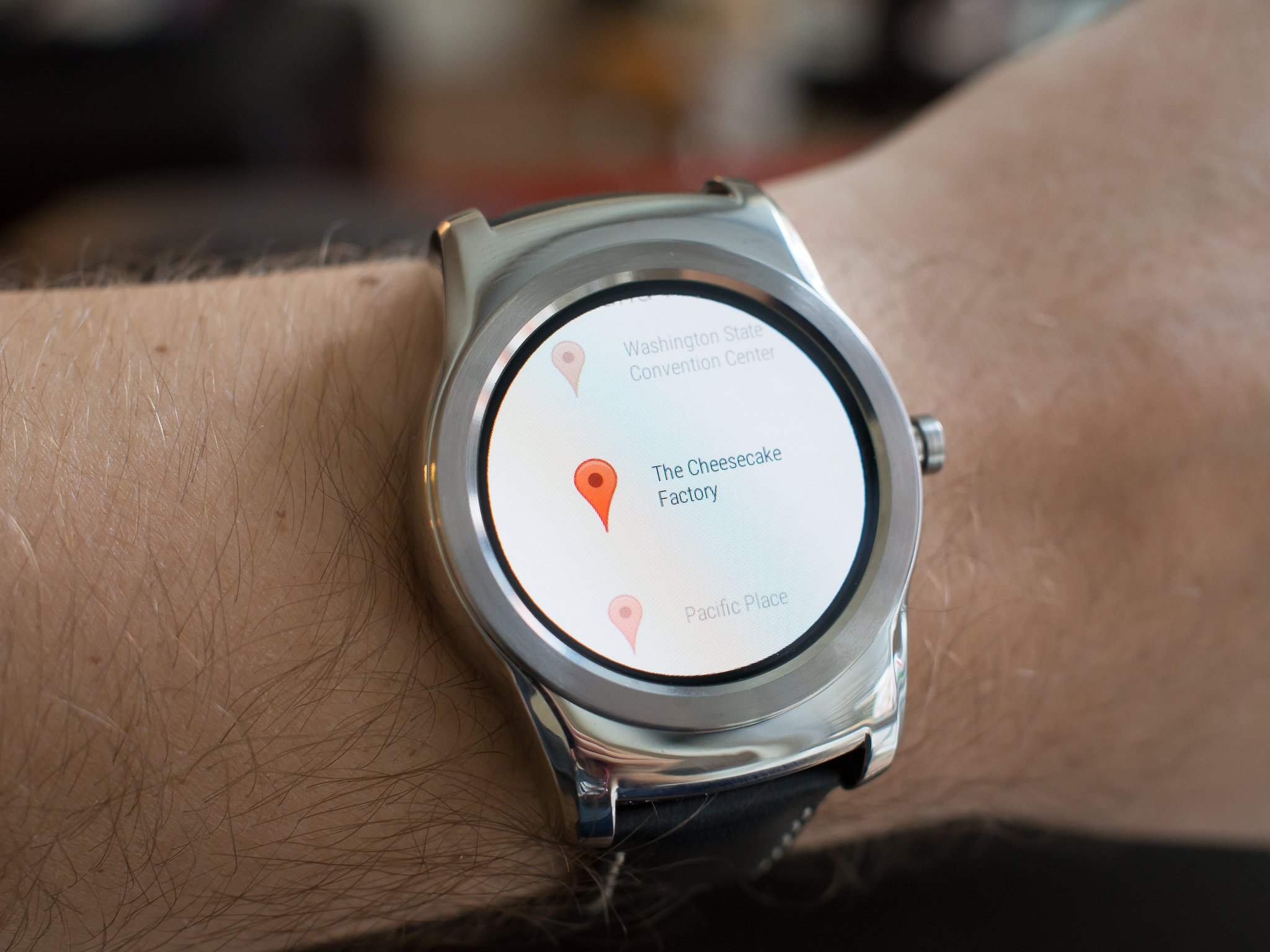
The app can be launched from the app launcher or by voice with an “open Maps” command, and when opened you get a full screen top-down map experience. You can scroll around, pinch-to-zoom (barely) and even switch between true North and device direction views. Zoom in/out buttons appear on the top of the screen when you tap it, which is much better than pinching, and you also get a small pin button that lets you quickly scroll through nearby places and navigate to them — though when you fire up navigation from the Maps app on the watch it still corresponds with launching Maps on your phone.

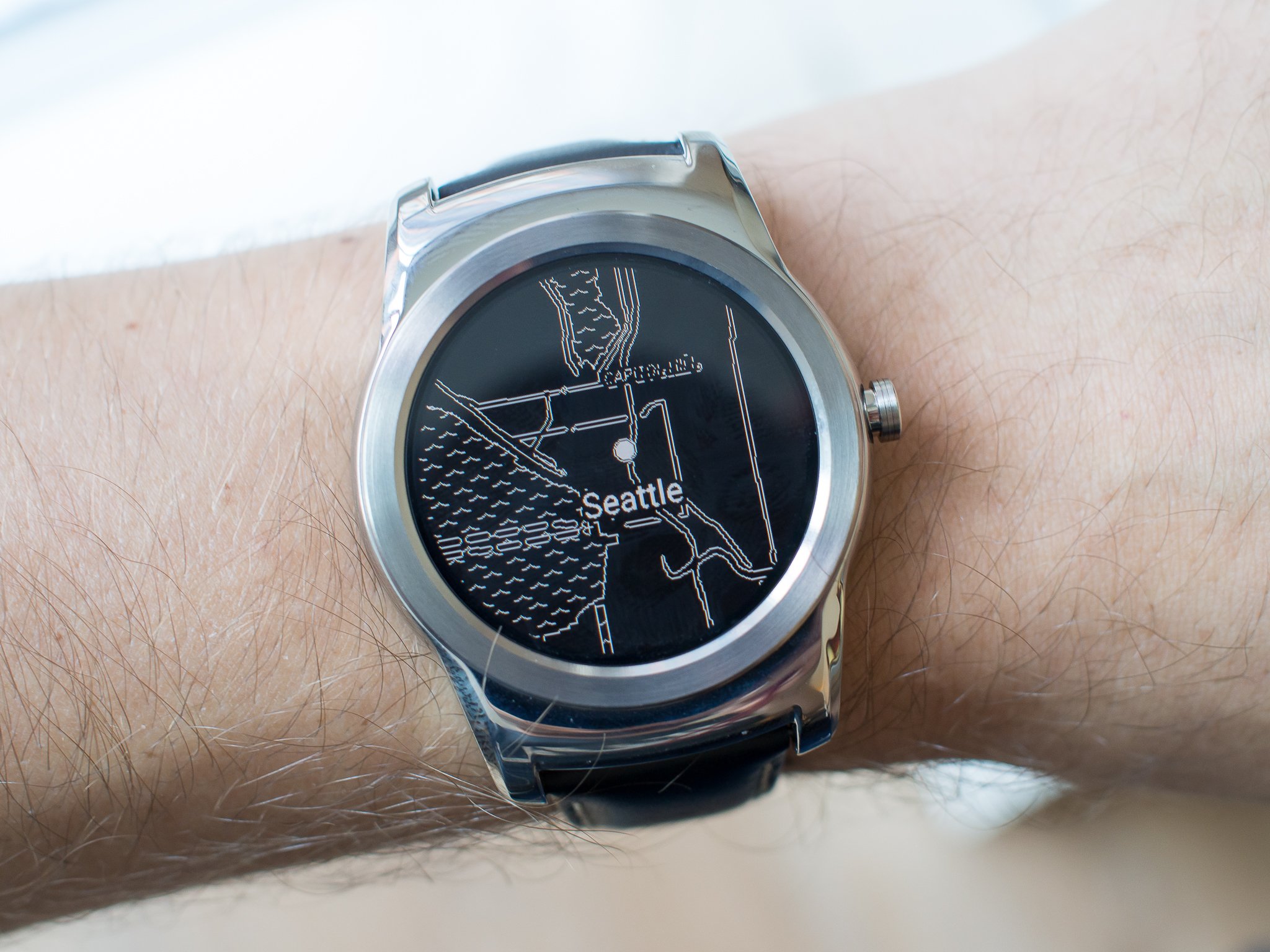
There’s even a neat feature that gives you a simple black and white outline map when the watch doesn’t receive interaction for while, just like the ambient watch faces do.

Aside from the handful of reboots of our phone and watch that were necessary just to get it to run, the app still seems rather unstable. Several times in just a few minutes of playing with the app it has failed to respond or open up navigation properly — we have a feeling that this isn’t quite ready without a new version of Google Play Services or potentially a new version of Android Wear on the watch.

Options for resizing: pinch-to-zoom or prodding a plus/minus onscreen tab. Neither seems ideal. The black/white outline map is horrible. The “list of pins” looks smart.


How do I get rid of the “Try the New Drive” banner? » Google Product Forums

Q: It is super annoying and it won’t go away. I’ve tried going to the new drive and then coming back, but it’s still there. I like the old drive a lot better than the new one and I want to stay on it. This banner is basically trying to force me to use the new drive which I *don’t want to do*. Anyone know if there’s a way to get rid of it??

And wouldn’t you know, there’s a Googler ready with an answer. However…


Apple Watch and Continuous Computing » Stratechery

Ben Thompson has a fantastic examination of the Watch’s potentials, and limits, as well as Apple’s advantages and strategic disadvantage:

it’s clear that what the mouse was to the Mac and multi-touch was to the iPhone, Siri is to the Watch. The concern for Apple is that, unlike the others, the success or failure of Siri doesn’t come down to hardware or low-level software optimizations, which Apple excels at, and which ensures that Apple products have the best user interfaces. Rather, it depends on the cloud, and as much as Apple has improved, an examination of their core competencies and incentives argues that the company will never be as good as Google. That was acceptable on the phone, but is a much more problematic issue when the cloud is so central to the most important means of interacting with the Watch.

A key advantage: lots of people who will buy it and use it, creating a virtuous circle for developers who write for it. (Yes, a calculator for the Watch.)


Breaking News: Howard University shows up as ‘N***er University’ on Google Maps » Seely Security

Bryan Seely:

A few hours ago, Bomani X @AceBoonCoon  updated his twitter feed with yet another one of his shocking discoveries on Google Maps.  Yesterday the world took notice when he posted an image of his Google Maps results where he found that when he searched for the keyword ‘nigga’ or ‘nigger’ , the White House would come up. Unfortunately, President Obama and his family are not the only targets of this deplorable prank. When you run a Google Maps search for ‘nigger university’ you get search results for ‘Howard University,’ a private university in Washington, D.C.

Beginning to look like we’re discovering the limits of useful crowdsourcing. (Though of course the Google search for “miserable failure” of a few years ago was already showing the dangers.)


Driverless cars may cut US auto sales by 40%, Barclays says » Bloomberg Business

Keith Naughton:

US auto sales may drop about 40% in the next 25 years because of shared driverless cars, forcing mass-market producers such as General Motors Co. and Ford Motor Co. to slash output, a Barclays Plc analyst said.

Vehicle ownership rates may fall by almost half as families move to having just one car, according to a report published Tuesday by the analyst, Brian Johnson. Driverless cars will travel twice as many miles as current autos because they will transport each family member during the day, he wrote.

Large-volume automakers “would need to shrink dramatically to survive,” Johnson wrote. “GM and Ford would need to reduce North American production by up to 68% and 58%, respectively.”…

…When most vehicles are driverless, annual U.S. auto sales will fall about 40% to 9.5%, while the number of cars on American roads declines by 60% to fewer than 100m, he estimated.

“While extreme, a historical precedent exists,” Johnson wrote. “Horses once filled the many roles that cars fill today, but as the automobile came along, the population of horses dropped sharply.”

Hard to argue against that one.


Start up: Apple Watch’s big security hole, iPhone rumours!, fight for your right to be forgotten, and more


Forgetful sign. Photo by mikecogh on Flickr.

A selection of 8 links for you. Go on, click them. I’m charlesarthur on Twitter. Observations and links welcome.

Watch OS 1.0 lacks the necessary security features to dissuade thieves » iDownloadblog

Jeff Benjamin:

The Apple Watch contains security measures to prevent thieves from accessing your data, but it doesn’t include the necessary features to dissuade thieves from trying to steal your device to begin with.

The problem stems from the lack of an Activation Lock-like feature on Watch OS 1.0.

Unlike the iPhone, if someone steals your Apple Watch, they can easily reset the device (bypass the passcode), and pair it with a new iPhone logged in to a different iCloud account. In other words, it’s totally feasible to steal an Apple Watch and set it up on a different device as if you just purchased it from an Apple Store.

What a colossal security oversight. Bad, bad, bad.


Maybe Samsung is starting to think wearables through more carefully » ReadWrite

Brian Rubin:

Samsung’s new software development kit for its homegrown mobile OS Tizen offers a few hints about its upcoming Gear A smartwatch (codenamed Orbis)—namely, that it will probably sport a round display and a rotating bezel for taking a spin through the interface.

More important, though, the SDK also suggests that Samsung is taking a more measured approach to its new wearable—one that bodes well for its future efforts in the area.

Rotating bezel sounds a clever idea… until you try to think what you’d control with it. OK, it was a great idea on the iPod for scrolling through a long list. But on a watchface, you’d be obscuring part of the list at least once every revolution.


Introducing Windows 10 Editions » Microsoft

There’s Home, Pro, Enterprise, Education, and…

Windows 10 Mobile is designed to deliver the best user experience on smaller, mobile, touch-centric devices like smartphones and small tablets. It boasts the same, new universal Windows apps that are included in Windows 10 Home, as well as the new touch-optimized version of Office. Windows 10 Mobile offers great productivity, security and management capabilities for customers who use their personal devices at work. In addition, Windows 10 Mobile will enable some new devices to take advantage of Continuum for phone, so people can use their phone like a PC when connected to a larger screen.

Windows 10, a break from the past of confusing SKUs. Also: Windows Mobile. We have always been at war with Eurasia. (There’s a Mobile Enterprise version too.)


Next A9-based iPhone predicted to have 12MP camera, 2GB RAM, rose gold and more, mass production in August » Mac Rumors

As it’s never too early for “next iPhone” rumours, Joe Rossignol channels KGI Securities’ Ming-Chi Kuo (who has done OK on this stuff before):

The main selling point of the so-called “iPhone 6s” and “iPhone 6s Plus” will be Force Touch, the pressure-sensitive display technology built into Apple Watch and new MacBook trackpads. Other predicted features for Apple’s next iPhone, many of which have already been rumored, include an A9 processor with 2GB of RAM, improved 12-megapixel camera, a new Rose Gold colour option, possible sapphire cover lenses and more.

2GM of RAM is overdue. Unsure about the Force Touch thing: would that make the phone thicker? Would it work all over the screen? It might get rid of a moving part that’s probably prone to break (the home button) which could still have a sapphire lens for the fingerprint unlock. Might.

The most surprising forecast is that there won’t be a refashioned 4in model. Will the 5S remain on sale, but ageing? Or are the larger screens the only future?


Fitbit IPO rides on persuading you to dust off your wristband » Bloomberg Business

Caroline Chen:

Some Fitbit users have found they can use smartphone apps to count steps instead of having to wear a wristband. For others, the novelty just wore out. Catherine Toth Fox bought her Fitbit Charge, which sells for $129.95, in January and was done with it after a month.
“I stopped using it when I figured out how much activity it took me to hit 10,000 steps,” the Honolulu freelance writer, 40, said in an e-mail. “I realized very quickly that I was already reaching that goal just by my normal daily activities, so there was no need to have a device to tell me that anymore.” She gave the Fitbit to her mother, who uses it daily. Her husband, on the other hand, has never taken his out of the box.
Keeping users engaged will matter even more as Fitbit increases its offerings to employers. The device maker’s corporate wellness program lets companies buy Fitbits for their workers and monitor their health via a dashboard. For companies that are self-insured, encouraging employees to exercise more can help reduce the firm’s health bill.

That “I figured out how much was enough” point is an important one: it sets a ceiling even on active users.


How Google’s top minds decide what to forget » WSJ

Lisa Fleisher and Sam Schechner:

Google has only been removing results from European domains such as Google.fr or Google.co.uk—but not Google.com, even when accessed in Europe. That can make it simple to find results that have been removed, leading regulators to issue an opinion saying Google’s position didn’t go far enough.

Regulators say their position holds and that Google should comply or face legally binding orders to do so.

“Their position will have to change,” said Isabelle Falque-Pierrotin, head of the CNIL, France’s data-protection regulator, as well as chairwoman of a pan-European advisory body that includes all EU privacy regulators.

Another confrontation looms. (Clever headline, too.)


Google wins privacy case, allowed not to forget in Finland » Ars Technica UK

The (original) headline here is misleading. Let’s see why in this Glyn Moody article:

As the news site yle.fi reports, the case concerned a Finnish man’s business “blunders,” which he claimed were harming him because they continued to turn up in Google’s search results. After Google refused a request to remove them, the man appealed to Finland’s Data Protection Ombudsman. The latter pointed out that “Finland’s business register lists the man as still being involved in business operations, including debt collection.” That presumably meant the links to stories about his past would still be relevant to people who were seeking information about the person in question now. As such, there was no reason for Google to be forced to delete those hits from its search results page.

Ah, so this is an appeal. Which means the “RTBF” (or RTBdelinked) does apply in Finland. As the article continues by explaining:

Finland’s Data Protection Ombudsman is currently dealing with around 30 other complaints about Google’s refusal to delete results. According to the article, “In Finland there have been close to 3,700 requests [to Google] to remove information from roughly 12,000 search results. Google has conformed to about 45%.” This is close to its average compliance rate of 40% across the EU, where Google has received 250,000 requests to remove information from more than 900,000 search engine results.

So in fact the RTBF is enacted *more* strongly in Finland than elsewhere in Europe, on average. After I pointed this out to Moody, he tweaked the headline to “Google wins privacy case, allowed this time not to forget in Finland”.

People get worked up over the RTBF, even though it rests on the same principle as that preventing US companies from grabbing data from Europeans and abusing it. They like the latter, but not the former; except they’re indivisible because of their origin.


Apple Watch vs Android Wear: Why most smartwatches still suck for women » iMore

Serenity Caldwell:

When I first heard about Android Wear last year, I thought the folks behind the OS were doing a lot of things right. And I still do: the approach to notifications is smart, custom watch faces are neat, and Google Now — while creepy — works exceptionally well at providing smart information for your day.

There’s only one problem: There’s not a single Android Wear device designed to fit a small-wristed person.

If wearable technology is the next big thing for our tech-connected society, why is Apple the only company paying attention to the smaller-wristed set? Lady or dude, there are quite a few people on this earth whose arms don’t resemble the trunk of a Sequoia tree — many of whom would be excited to use a smartwatch. I was thrilled when Apple announced multiple sizes for the Apple Watch, and moreover that both were reasonably-sized for the wrist; sadly, I have yet to find an Android Wear device that will fit on my wrist without making it look like the technology equivalent of an iron shackle.


Start up: Apple Watch v Android Wear, the old smartphone buyers, Google halts Mapmaker (finally), and more


Seems to be free of intentional errors so far. Photo by scarlettfawth on Flickr.

A selection of 9 links for you. Slather them over your body like peppercorn sauce. I’m charlesarthur on Twitter. Observations and links welcome.

Philly.com got 555 comments on an article about changes to comments » Poynter

Kirsten Hare: You’re making an effort to keep comments in a time when many sites have scrapped them. Why is that?

Erica Palan: There are definitely folks in our newsrooms — and in the industry overall — who would be happy to see comments go away. But our digital leadership team is committing to keeping comments. Commenters are some of our most dedicated readers. They come back again and again to our stories. Also, the Internet is a big, chatty place. If we don’t give our readers the opportunity to talk about the news, they’ll go elsewhere.

KH: There were 545 comments with this piece! Is that normal?

EP: Ha, not at all! Some of our stories will generate a ton of comments, but 545 is a lot no matter what barometer we’re using. I was really nervous it’d be crickets for awhile, because it was a few hours before it took off! (How embarrassing to write an article about comments and then receive no comments?) To me, it showed that our commenters really do care about being a part of Philly.com.

KH: I noticed you moderated them. Any advice for other journalists or news outlets?

EP: At Philly.com we’ve been really inspired by the work being done by the Engaging News Project. They put out a study that showed that having writers moderate and comment on their own stories improved the tenor of comments overall. A handful of reporters for the Inquirer and Daily News have started to do this and anecdotally, we feel it’s been pretty successful.

I reckon different dynamics apply: that the people with the most useful insights reserve those for places where they’ll be most valuable, which isn’t necessarily comment sections. “Commenters are some of our most dedicated readers” is true, but that doesn’t necessarily mean they’re the ones who attract other readers. (Also, having writers moderate comments on their own stories probably isn’t smart – nor a great use of their time. I didn’t moderate comments at The Guardian; no writer did.)


US smartphone sales among consumers earning less than $30,000 grow more than 50% » NPD Group

As US mobile phones sales transition to predominately smartphones, buyers have become significantly older and less affluent. For the third consecutive three-month period ending February 2015, sales among consumers earning less than $30K per year grew by more than 50%. This demographic is now the largest segment of the smartphones market, accounting for 28% of all sales. In contrast, sales among consumers earning more than $100K a year increased by just 24%. For the three months ending February 2015, buyers aged 55+ also represented 28% of all sales, up 24% from a year ago, and were the fastest growing age segment of the population.

Over the three month period ending in February, overall sales of mobile phones rose 28% compared to last year, while smartphone sales increased 35%. During the same three-month period, the share of sales for non-smartphones declined to just 14%…

…Apple and Samsung accounted for two out of every three smartphones sold over the three month period, although Apple sales increased by 45% and Samsung’s just 10%.

And here’s a brand breakdown:

NPD seems to think it’s the oldies buying the new models. So, old geezers are going to rule the mobile biz?


What to Wear? » Rusty Rants

Russell Ivanovic, of Shifty Jelly, in a comparison that I’ve been wanting to read since the Apple Watch came out:

One of the benefits of being curious about technology and running a company where we get to buy it to test on, is that I get to play with a lot of cool gadgets. When it comes to watches alone I have the Apple Watch, LG G, LG Watch R, Moto 360, Samsung Galaxy Gear and the Sony Smartwatch 3. I thought it might be interesting to compare Android Wear and Apple Watch as they are today.

The must-read for today, if only to keep up with how the two platforms are evolving. I think he’s spot-on with each prediction, too.


Baidu leads in artificial intelligence benchmark » WSJ Digits blog

Robert McMillan:

The company’s Minwa supercomputer scanned ImageNet, a database of just over one million pictures, and taught itself how to sort them into a predefined set of roughly 1,000 different categories. This meant learning the difference between a French loaf and a meatloaf, but also trickier challenges such as distinguishing a Lakeland terrier from a wire-haired fox terrier.

Five years ago, the possibility that computers would surpass humans at this work appeared remote. But computers run by Microsoft, Google, and now Baidu have all done better than the best human results in the past few months.

With practice, humans correctly identify all but about 5% of the ImageNet photos. Microsoft’s software had a 4.94% error rate; Google achieved 4.8%. Baidu said that it had reduced the error rate further to 4.58%.

The so-called deep learning algorithms that Baidu and others are using to ace these tests have only recently made the leap from academia to Silicon Valley. But they’re starting to have an impact in daily life.

Unfortunately the broader “impact in daily life” isn’t specified. Google used it for voice recognition in Android, but that’s not quite “daily life”.

Also notable: Chinese companies starting to challenge western ones in this field.


After several public Google Maps hacks, Google forced to suspend Map Maker to prevent more fake edits » SearchEngineLand

Barry Schwartz:

Google has temporarily suspended Google Map Maker, a service to allow the community to make edits to Google Maps similar to how Wikipedia edits work. The reason the service was suspended was because of the recent public edits made to show how easy it is to make fraudulent edits to businesses.

We covered the loopholes that showed how Edward Snowden was at the White House and how Android relieved itself on Apple. But these hacks and fraudulent edits have been going on for a long long time.

Indeed – recall locksmiths and the US Secret Service and the restaurant a rival said was closed at weekends. The problem with the “peeing Android” edit was that it was multi-stage, by a “trusted” editor. This isn’t going to be solved easily.


High profile tech start-up Ninja Blocks goes bust » The Age

Rose Powell:

Ninja Blocks built and sold home automation systems that allowed users to control electrical devices through their smart phone. It managed both the software and also manufactured a range of sleek hardware products.

The company was launched three years ago and sustained its growth through sales and a series of successful crowdfunding campaigns: $103,000 in 2012 and $703,000 in 2013. Both brought in double or triple their original goal. It also raised $2.4m in three funding rounds, which included leading Australian tech investors Square Peg Capital, Blackbird Ventures, Atlassian founders Mike Cannon-Brookes and Scott Farquhar as well as Sing Tel’s Innov8.

Crowdfunding campaigns require significant, ongoing public communication. The company went quiet in April as their latest product, the Ninja Sphere, ran over time and over-budget.

In a blog post, the team wrote the fact it was receiving “far below what they would expect to get somewhere else” their burn rate could not be sustained.

Unclear if the dollar amounts are Australian or US, but shows that hardware remains a tough business in which to succeed. (Side note: Powell’s byline describes her as “journalist”. Helpful.)


Hard numbers for public posting activity on Google Plus » Stone Temple Consulting

Eric Enge dives very deep into numbers that many have tried to dive deep into many times before:

Our extrapolated total suggests that about 23.4 million people have put public posts on Google+ within a given 30 day period. There is a hyperactive group of 358K+ people who do 50 or more public posts per month. After adjustments, we see these two numbers drop to 16M and 106K respectively.

These numbers should give you a good sense of what’s really going on in the G+ stream at this point.

Note that we also found that a small percentage (0.16%) of the total profiles examined currently return 404 errors (which means that the page does not exist), suggesting that the accounts have been abandoned or shut down.

The invalid profiles may include profiles that were robotically created in attempts to artificially game Google+. Those of you who are active on G+ are familiar with your follower count dropping at those times when Google clears a bunch of these out.

Isn’t going away, though, for reasons Enge then goes on to explain.


Four reasons why the Apple Watch will be a success » GlobalWebIndex

Jason Mander:

while the smart(est) money will probably wait for v2 of the Apple Watch to become available – the one where all of the initial annoyances and shortcomings have been addressed – there can be no doubt that, Apple’s first foray into this sector will finally push it into the mainstream. Quite simply, it’s inevitable that this watch will be a success – and here are four reasons why.

GWI provides wide-scale demographic information about web users worldwide. Of particular interest: it finds that those who have already bought a wearable are the most interested in using an Apple device, as here:

(Makes a change from all the “why Apple’s Watch will flop” pieces, anyhow.)


Regulator probes pitfalls of ‘sharing economy’ » FT.com

Barney Jopson and Tim Bradshaw on the US FTC’s plan to look into a number of companies:

In the US, the past actions of the FTC — which enforces federal antitrust and consumer protection laws — indicate that it sees ride-hailing apps such as Uber, Lyft and Sidecar as a positive force for competition
It has written to state and city legislators urging them not to pass laws that would put them at a disadvantage to traditional taxis.
But the agency wants to probe two practices that are central to peer-to-peer platforms — the accumulation of personal data and the use of rating systems — as well as questions over legal liability for injuries.
“We want to see to what extent sharing economy platforms should be able to monitor participants by collecting, let’s say, location data,” said Ms Lao. “And if they do monitor, how can they do so while adequately protecting the privacy of the participants?”


Start up: Hololens on the edge, what self-driving cars need, the buttons that do nothing, and more


Might make a difference. Might not. Photo by Cyron on Flickr.

A selection of 8 links for you. No strings attached. I’m charlesarthur on Twitter. Observations and links welcome.

Google’s self-driving cars have been in 11 accidents, but none were the car’s fault » The Verge

Chris Ziegler notes that Ford thinks we need some flexibility:

another example [Mike] Tinskey [Ford’s head of electrification and infrastructure] brought up was that of overcoming the excessively careful self-driving systems of the future:

Q: So you’re saying that from the driver’s perspective, the car will be self-driving, but really there’s someone else driving it from afar for them?
Tinskey: That’s right. If you’ve ever had the pleasure to go to, for instance, China, if you’re not aggressive to try to turn left, there will be people that will walk in front of you all day long. And an autonomous vehicle would end up sitting there forever. And a driver normally just has to kind of say, “Alright, I’m going,” and the people will stop and the car heads through. So there are going to be situations where a remote driver can actually pilot a vehicle better than an autonomous in certain conditions. Or just because of policy, that might be the way that we have to deal with it.

Indeed, in Google’s view of vehicle autonomy — as in the generally rational view — a car can never assume (or hope, at least) that a pedestrian will stop or jump out of the way the way a human driver can. Sometimes, simply moving (particularly in the world’s most congested cities) requires a degree of cowboyishness that a stupidity-proof autonomous car can never permit. There needs to be a way for the car to say, “well, I can’t make this potentially dumb decision, but I invite a human to make it for me.”


The growing US smartphone base » Tech.pinions

Jan Dawson, in a subscriber-only article looking at the disparity (of about 40m smartphones) between Comscore’s US smartphone number, and that shown by mobile operators – which has various explanations:

If you were relying on Comscore’s data to forecast the total iPhone market in the US, for example, you’d end up with about 80m users, while there would be just under 100m Android users. But we already know that Comscore is under-counting the total smartphone market by around 35-40m, so each of these numbers might be 15-20m higher in practice. That’s important if you’re trying to get an accurate gauge.
The next question is whether the split between operating systems is accurate, or whether that’s defective too. That’s harder to ascertain through other sources and Kantar and other data seems to bear out similar trends in broad terms, so I’m inclined to believe it’s fairly accurate. But I take it with at least a pinch of salt on the basis that I know the overall data is flawed. I think the key, ultimately, is not to rely on any one data point, but rather to find as many data points as possible that either corroborate or contradict one another, then synthesize and aggregate them to arrive at the best possible picture of reality.


On sale now: Tesco Mobile » Counterpoint Technology Market Research

Peter Richardson, on the UK supermarket MVNO, which is up for sale to try to alleviate corporate debts of around £22bn:

Tesco Mobile is actually one area where is has carved out a strong position. Its range of attractively priced and no-nonsense tariffs appeal strongly to particular segments: young people, family orientated consumers and seniors being primary focal areas. It also offers a good range of handsets at prices on par with most high street mobile stores. Its success means it contributes approximately £100m per year to Tesco’s profits. Assuming similar multiples as other recent trade sales, Tesco could realize seven to eight times net profit — therefore something around £800m when it sells its stake in the venture. The most likely buyer is Tesco’s partner in the business, O2. However other MVNOs may also enter the bidding including Talk Talk, which recently purchased Tesco’s video TV service, Blinkbox.

Tesco Mobile also operates around 250 Tesco Phone Shops, that provide point of sale for a range of feature phones, smartphones and accessories. It sells around 2m units per year through these stores and online. Tesco has done well addressing seniors and is one of the UK’s leading suppliers of Doro’s range of products that are designed specifically for older generation consumers. It is not clear what will become of Tesco Phone Shops — even to staff working in them.

Last year saw Phones4U squashed; will Tesco’s outlets be next?


HoloLens: why Microsoft has to play down expectations to avoid Google Glass failure » IBTimes

After yesterday’s post from Tim Bajarin on why Google Glass didn’t click with consumers, David Gilbert contrasts the stage promise of Hololens with the experience (at present):

Just hours later I was given the chance to test out this game-changing technology for myself and my initial reaction was one of huge disappointment and being completely underwhelmed.

That was until I realised what HoloLens really was and what it could do, and I readjusted my expectations. By the end of my time with HoloLens I saw the huge potential this device has, but Microsoft is in danger of falling into some of the same traps as Google Glass.

Microsoft is a company in need of a revolutionary product like HoloLens. Unlike Apple, Microsoft is seen as a stale and staid tech company, one which is associated with “boring” products like Office and Windows rather than the iPhone or iPad.

The problem for Microsoft, is that while HoloLens may be revolutionary, it is not (yet) a mass consumer product like the iPhone or iPad. It is a hugely powerful holographic computer that is ideally suited to enterprise applications and that is where the company needs to focus its attention.

Via David Gilbert. (It’s OK to promote your own stuff to me, folks.)


How the Apple Watch cured my iPhone addiction » Medium

Evgenia Grinblo:

It’s not that I was addicted, per se. I just spent a lot of time using my phone. But the app Moment, which I installed on my phone to prove I didn’t have a problem, told me that my average total daily iPhone use added up over two hours.

On my worst day, I spent 7 hours and 41 minutes on my iPhone.

As a UX designer and qualitative researcher, this was not only alarming but also fascinating. I wanted to know what it was that kept hooked on my phone. I researched mobile phone addiction (it sounded dramatic), I tried a 30-day-off-Facebook challenge (but still clocked considerable time on my phone). I also spoke with others. It appeared that many felt equally drawn to their smartphones but no one quite understood why.

Then came the Watch.
Everything changed when I got my Apple Watch. Within twenty-four hours of wearing it, I forgot where my iPhone was for the first time.

(Via Jay Kannan.)


How World of Warcraft led to Glassdoor » Business Insider

Julie Bort:

in 2006, Hohman quit a fabulous job as president of Hotwire to do nothing but play the game. Full time. For a year.

And the second he hit the highest level, the itch to play was scratched, and he needed a new thing to obsess over. So he launched a startup.

In his words: “I took a year off and played World of Warcraft. I would pat the kids on the bottom every morning, send them to school and then I would dominate as an Orc Warrior.”

He adds, “I played for a year nonstop and then I hit the maximum level in WoW. I was maniacal in chasing this goal and literally the next day I started a company, Glassdoor.”

The meaning of ‘community’
The year of WoW helped him decide the kind of company he wanted to build.

“I learned from playing WoW about community. It was the first time I really felt part of a online community. I’d be up the morning and be excited to see my guild. Isn’t that nerdy?” he laughs.

Yes. Yes, it is. But it’s hard to argue with success: he learnt the difference between offline and online community through that experience. (Arguably, he could have learnt it in less time than a year.)


Press me! The buttons that lie to you » BBC Future

Chris Baraniuk:

Computer scientist Eytan Adar at the University of Michigan has described a series of fascinating “benevolent deceptions” in a paper co-written with two Microsoft researchers. Take the 1960s 1ESS telephone system for instance. After dialling, a caller’s connection would sometimes fail to go through properly. Instead of a dead tone or error noise, the system would instead simply route the call to a completely different person. “The caller, thinking that she had simply misdialled, would hang up and try again: disruption decreased and the illusion of an infallible phone system preserved,” notes the paper.

Adar and his co-authors also describe how Skype phone calls today sometimes contain “fake static noise” because when users experience a completely noise free line, they are prone to thinking that the call has in fact dropped. A quick Google search reveals that there are plenty of examples of fake noises. From pre-recorded car door slams to artificial shutter sounds made by digital cameras, the world is full of noises designed to delight users and reassure them that the device is working as intended.

Those noises deserve a word of their own, rather like onomatopeia.


Snapchat debuts video ads for 2 cents per view » Adweek

Snapchat wants companies to know its not just for millennials: Advertisers can find a home there as well. At the Daily Mail/Elite Daily Digital Content NewFronts presentation Thursday, the platform announced it would be unveiling 10-second ads that cost 2 cents per view.
The new ad offering creates a new way for Snapchat Discover publishers to generate revenue. Daily Mail North America CEO Jon Steinberg said his company was standing by to create those snaps for brands.

Another American platform using adverts to monetise. I often wonder whether if US TV were more like the (licence fee-subsidised, ad-free) UK’s BBC whether “advertise for money” would be a less reflexive monetisation strategy.


Start up: costing Apple’s Watch, why Glass flopped, evaluating Fitbit, with Android’s permission?, and more


“Yeah, I think my Fitbit fell out of my trousers during this, so I bought another…” Photo by betta design on Flickr.

A selection of 8 links for you. Use them wisely. I’m charlesarthur on Twitter. Observations and links welcome.

No, the Apple Watch does *not* cost $84 to make » Mobile Forward

Hristo Daniel Ushev:

Here are two examples. These firms looked at the (1) hardware and (2) manufacturing costs of the Apple Watch.

IHS’ estimate for the 38mm Sport version: $83.70.
TechInsights’ estimate for the 42mm Sport version: $138.50.
Can both be correct?  No. “But they looked at different-sized models” one might say. Nah; that’s almost irrelevant.

From my experience working with product and cost experts at a well-known mobile device company, I can tell you:  Apple Watch does not cost $84 in hardware and manufacturing. It costs meaningfully more. Probably more than 2X that. And I’ll tell you why. Maybe I’ll even give you my estimate.

(By the way congrats to the TechInsights crew for having a reasonable estimate, in my view.)

First, it’s not for the reasons you see in the comments on the articles that re-publish these estimates. In those articles, you’ll typically see well-intentioned commenters say that one needs to account for research and development, sales and marketing, corporate income taxes, etc. None of that is accurate.

(Ushev used to work at Motorola. He points out so many ways in which costs are higher that you begin to wonder how Apple makes such big gross margins.)


The debacle of Google Glass » Tech.pinions

Tim Bajarin:

the bottom line is most technology gets started and refined in what we call vertical markets well before they get perfected and priced low enough for consumers.
When Google introduced their Google Glass, this was the first thing that came to mind about this project. I wondered if Google even had a clue how tech adoption cycles develop. While it is true glasses had been used in vertical markets since 1998, even after all of this time, we saw no interest by consumers. Google’s decision to aim Glass at consumers first, yet price them as if they were going to vertical markets, stumped me. Even the folks who had spent decades making specialized glasses for use in manufacturing, government applications, and transportation were dumfounded by Google’s consumer focus with Google Glass, priced at $1500.
Apparently, Google found out the hard way how tech products get adopted…

…I was a Google Glass Explorer and the experience was horrible from the start. Google Glass now sits in my office museum of failed products. The UI was terrible, the connection unreliable, and the info it delivered had little use to me. It was the worst $1500 I have ever spent in my life. On the other hand, as a researcher, it was a great tool to help me understand what not to do when creating a product for the consumer.

Google’s go-to-market strategy with Glass always puzzled me. It obviously had, and has, applications in business (medical, etc). Yet as Bajarin says, the marketing suggested a consumer product. Result: failure.


LG Watch Urbane review: $350 buys you the nicest Android Wear watch yet, if that’s something you want » Android Police

David Ruddock:

For a lot of people, there’s probably going to be something at least remotely interesting about Wear.

For me, it’s managing emails and messages. Don’t want to read that work email while I’m in the middle of typing up an article or otherwise engaged? Quickly skim the subject on the watch, and dismiss or archive it. I’ve even started using the voice replies for SMS and Hangouts when I’m in my own home (frankly, it weirds me out voice messaging somebody on my watch in public for some reason???), because it’s less disruptive than pulling out my phone, unlocking it, opening the app, and typing out a reply. It’s also great for quick Google searches, turn-by-turn navigation (especially when you’re walking), music controls, and activity tracking.

Of course, our smartphones do most of this stuff, too, so I’m not about to claim there’s actually a compelling economic argument for smartwatches yet – there isn’t.

In places, Ruddock sounds bored beyond belief with the whole concept of a smartwatch. You’d certainly struggle to find any enthusiasm at all for it.


Thoughts on the Fitbit IPO filing » Beyond Devices

Jan Dawson digs into the numbers; he finds that the best model for usage is that on average, a Fitbit is used for about six months:

So, how important is this abandon rate information to our evaluation of Fitbit’s prospects going forward? Well, one could argue that at just 10 million sales per year, there’s tons of headroom, especially as Fitbit expands beyond the US (the source of around 75% of its revenues today). But in most consumer electronics categories, there’s a replacement rate for devices, which continues to drive sales over time even as penetration reaches saturation. The biggest worry in the data presented above is twofold: one, very few Fitbit buyers have yet bought a second device; and two, many don’t even use the first one they bought anymore. Once Fitbit maxes out its addressable market, it’s going to have a really tough time continuing to grow sales.

This may be a factor for all wearables, unless they can show some compelling reason to upgrade from the previous one.


Upon this wrist » Medium

Craig Mod, channelling Hemingway:

Oh, they are so downtrodden now, those who asked about the thing, the thing on the wrist. I am the harbinger of technodoom. Knower of useless celestialisms. And I can see in their eyes that they want to hear some accolades. Some uplifting remark. Nothing gibbous. And so I say a single word: Exercise. Like I am selling plastics in 1930. Exercise, I say. And I smile. That is what it does best. But I have to caveat, slumping back into my chair, my posture as the worst salesman ever — Well, I mean, it’s good, or, rather, it has potential. But presently it is very dumb.


LG G4: the best Android smartphone camera » WSJ

Nathan Olivarez-Giles:

My colleague Joanna Stern already covered the merits of Samsung’s Galaxy S6 and S6 Edge, and sung the praises of their 16-megapixel rear cameras. So I was surprised to find that LG’s new flagship phone has an even better camera.

After putting the Galaxy S6 Edge, the iPhone 6 Plus and the LG G4 through a series of photo tests, I found that not only did the G4 keep up in most conditions, it took better low-light and night photos. LG says one reason is the f/1.8 aperture lens on the G4’s 16-megapixel camera. It lets in more light than any other smartphone on the market. This camera system also bumps up the exposure, so that these low-light settings come off brighter than comparative shots — and even brighter than what the naked eye sees.

It’s all about the camera; the review barely touches any other topic.


The women working in NYC’s nail salons are treated more terribly than you can imagine » VICE

Allie Conti shows how the NYT exposé of treatment of workers in these salons got made. It’s impressive.

VICE: Did you ever just go from nail salon to nail salon, or was that too risky?
Sarah Maslin Nir: I started doing that toward the end, because it’s a very collusive industry. Everybody conspires. The experts I’ve spoken to say the owners teach each other the methods of how to exploit the workers and how to avoid prosecution. So I was afraid if I started going from salon to salon, an owner would catch me and tell all the others, and it would all get shut down. So only toward the end would I go to salons, and I’d actually go get a manicure and talk with the women, sometimes with a translator sitting next to me, and just have these quiet conversations.

One of the most interesting things about the story is I learned how to ask questions. At the beginning, I’d ask, “Where do you live?” And they’d say, “Oh, I live in a one-bedroom in Flushing, Queens.” And then I realized that when they live in a one-bedroom, they lived with six to eight other people. So my questions changed. I would say, “How many people do you live with?” and they’d say, “Oh, twelve.”

Amazing, detailed work about something that’s been sitting in front of people for ages.


Google said ready to give Android users more privacy controls » Bloomberg Business

Brian Womack and Lulu Yilun Chen:

Google is planning to give its mobile users more control over what information applications can access, people familiar with the matter said.
Google’s Android operating system is set to give users more detailed choices over what apps can access, according to the people, who asked not to be identified because the matter remains private. That could include photos, contacts or location. An announcement of the change, which would put Android closer in line with Apple’s iOS, is expected for Google’s developer’s conference in San Francisco this month, one of the people said.

Long overdue. Apple introduced it to iOS in September 2012. And it was actually included – against Google’s intent – in Android 4.3 in July 2013, though you had to download a separate app to enable it, but then removed three weeks later. Also, we know it will take years for any substantial proportion of people to get this if it’s included in Android ‘M’ (Marzipan?). Though there are some suggestions that this will only apply to Chrome, not across Android.


Start up: tablets sink further, Indiegogo’s vaporware campaigns, pricing Apple Watch, and more


Available in Lego before it reached Windows Phone. Photo by Ochre Jelly on Flickr. (See their photostream for how they achieved this “impossible” shot.)

A selection of 9 links for you. Set them free. I’m charlesarthur on Twitter. Observations and links welcome.

Game of fear: the story behind GamerGate » Boston Magazine

Zachary Jason with a fabulously detailed yet clear recitation of what most of us know:

[Eron] Gjoni, a software engineer, had set out to construct a machine to destroy his ex. Every written word Quinn had ever entrusted with him—all of her flirtations, anxieties, professional grudges, and confessions about her family and sex life—would serve as his iron and ore. He scoured their entire text and email history, archiving and organizing Quinn’s private information on his laptop and cell phone. Then he typed it all in black and white — minus, of course, the tones in their voices, their laughter and tears, and any context whatsoever.

Of course, Gjoni could have just deleted the document, along with Quinn’s phone number and email address, and tried to woo one of the millions of other women on OkCupid or joined any of the roughly 5,000 other dating sites. He could have posted his thoughts on a blog and omitted her name. After several days, though, Gjoni decided to go through with it—after all, he was protected by the First Amendment, right?

Gjoni comes across as being somewhere on the autistic spectrum. Also, a real jerk.


For the second straight quarter the worldwide tablet market contracts amid competition from alternative devices » IDC

Apple still leads the overall market despite five consecutive quarters of negative annual shipment growth. Apple shipped 12.6m iPads in the first quarter, capturing 26.8% of the market in volume and declining -22.9% when compared to 1Q14. Samsung (19.1% share) maintained its second place in the market despite a -16.5% decline in shipments compared to the same period last year. Lenovo (5.3% share), Asus (3.8 %) and LG (3.1%) rounded out the top 5 positions. LG’s year-over-year growth was notable as it continues to benefit from US carriers’ strategy to bundle connected tablets with existing customers.

“Although the tablet market is in decline, 2-in-1s are certainly a bright spot,” said Jitesh Ubrani, Senior Research Analyst, Worldwide Quarterly Tablet Tracker. “While 2-in-1, or detachables, still account for a small portion of the overall market, growth in this space has been stunning as vendors like Asus, Acer, and E-FUN have been able to offer products at a fantastic value; and vendors like Microsoft have been able to drive growth at the high end with devices like the Surface Pro 3.”

The smallest figure that IDC splits out is 1.4m, for LG, which implies that the Surface shipped fewer. Tablets took off fast; now they’re awaiting the replacement cycle.


Windows will win your heart by not caring » Remotely Mobile

Benjamin Robbins on Microsoft’s BUILD announcements:

In short, Microsoft has clearly shown it doesn’t care; but in a good way. They don’t care which apps you want to use, they’ll support them. They don’t care which operating system you want to develop on, they’ll support it. They don’t care if you are on a phone or a PC, they just seamlessly switch between the two experiences.This is huge for all of us end users. Why? Because in the end we don’t really care either. We just want to be able to use the apps and services we think are best to get the task done and move on. I don’t want to fight the OS, app, or device. I just want to do my work and be done with it. This is where mobility is ultimately pushing us and it’s great to finally have someone not care either.


New Apple Watch has lowest ratio of hardware costs to retail price, IHS teardown reveals » Business Wire

The much-anticipated new Apple Watch has the lowest hardware costs compared to retail price of any Apple product IHS Technology has researched, according to a preliminary estimate by IHS and its Teardown Mobile Handsets Intelligence Service. The teardown of the Apple Watch Sport by IHS Technology estimates that the actual hardware costs are only about 24 percent of the manufacturer’s suggested retail price (MSRP). Estimated hardware cost to MSRP ratios for other Apple products reviewed by IHS are in the range of 29 to 38%.

The teardown of the Apple Watch Sport 38 mm by IHS Technology shows a bill of materials of $81.20 with the cost of production rising to $83.70 when the $2.50 manufacturing expense is added. The retail price of the Apple Watch Sport 38 mm is $349.00. The IHS Technology analysis does not include logistics, amortized capital expenses, overhead, SG&A, R&D, software, IP licensing and other variables throughout the supply chain such as the EMS provider.

That’s some low manufacturing expense for what the Watch looks like. And of course even if it’s right, that’s just the gross margin. Look at what it doesn’t include too.


Play Monument Valley on your Windows Phone today » Windows blog

Monument Valley: a fantasy world of impossible architecture and a beautiful, silent princess awaits you! Today we’re excited to share that Monument Valley is available to download from the Windows Phone Store.

Originally released on iOS just over a year ago. I wonder how many Windows Phone users have not heard of or played this on a friend’s phone. Or an iPad?


China is rewriting the rules of the mobile game, and Apple is still winning » The Verge

Vlad Savov:

The recognition of China’s importance is evident everywhere in the mobile industry. HTC is, for the first time, introducing two flagship smartphones this year, with the One M9+ being tailored to the needs and preferences of the Chinese market. In February, around the turn of the Chinese New Year, Lenovo brought Motorola back to China, setting it up as a sort of exotic alternative to local offerings, one where user customization is paramount.

But no one has benefited from China’s growing appetite for smartphones more than Apple. Even as the developed world was becoming saturated with iPhones, Apple kept expanding its sales with the help of China. The iPhone first became available in China in 2009, relatively early in its now gloried history, and has kept growing in line with the country’s expansion in disposable income and smartphone demand. This past quarter, Apple sold more iPhones in China than in the United States, belying prognostications that the Chinese market wouldn’t be receptive to such a premium, high-margin device.

As I criticised The Verge yesterday for not seeking out points of view, I should point to this as exactly the opposite: Savov gets comments from analysts who know and understand the market to produce an insightful piece. (Though Nokia used to be HUGE in China, Vlad. Until Q1 of 2012, when its mobile revenue there halved, and halved again within a year.)


comScore ranks top UK digital media properties for March 2015 » comScore, Inc

More than 47.5 million UK unique visitors accessed the Internet in March 2015 across desktop and mobile (smartphone and tablet) platforms. 45.1 million visitors accessed the Internet via desktop while 36.4 million users browsed the web via mobile. 

According to comScore MMX Multi-Platform, which provides an unduplicated view of usage across desktop, smartphone and tablet, Google Sites ranked as the top property with nearly 46 million combined desktop and mobile Internet users. The majority of Google Sites’ audience visited from both desktop and mobile platforms (66%), while 28% visited exclusively from desktop and 5% were mobile-only users. BBC Sites was the second most popular online property with a multi-platform audience of 40.6 million, 36% of which were mobile-only.

There is so much to extract from the short table in the release. For instance: Google gets 96.7% of the total audience; Amazon gets 77% of it, and more people access Amazon mobile-only than desktop-only; Mail Online, Sky sites, Apple, Trinity Mirror, Twitter and LinkedIn get more visits via mobile-only (which is 5% of the total audience) than desktop; all the media groups get more visitors via mobile-only than desktop-only.

If you re-sort it by mobile-only, Sky actually comes top – and Google comes last.

One to really mull over. Can hardly accuse the news organisations of being behind the times.


[Update: Indiegogo Investigating] Indiegogo continues to have no standards, allows $50,000 flex-fund campaign for vaporware modular smartphone » Android Authority

David Ruddock:

While it has served as a legitimate platform for fans to support products and content they genuinely believe in and want to see become a reality, it is also ripe for scamming and incompetence. Case in point: Fonkraft, a $50,000 Indiegogo campaign that allegedly will culminate in the production of a Project Ara-style modular smartphone.

To date, the flex-funded (as in, even if it doesn’t reach the goal, the project still gets what money was raised) campaign has amassed over $25,000 from people who probably know no better, with over 130 phones funded by supporters. The team behind the campaign? Literally two people, neither of whom state where it is they previously worked (no LinkedIn profiles, either – or any easily locatable social media profiles – surprise!), what specific experience they have in the phone industry, or how they plan to build a phone with two people and $50,000…. or less, since it’s a flex-fund campaign. For the record, Ubuntu wouldn’t even build a regular phone for less than $32 million.

Also, these guys provide literally no insight on how their product would actually work in a technical sense. You just have to believe!

Incredible that IndieGoGo lets people keep money raised even if it doesn’t reach the goal. It’s an open invitation to those with absurd optimism or bad intent.


Apple iPhone captures 12% smartphone market share in China in Q1 2015 » Strategy Analytics

According to the latest research from Strategy Analytics’ Handset Country Share Tracker(HCST) service, China smartphone shipments grew 17% annually to reach 110m units in the first quarter of 2015. Xiaomi maintained first position, but Apple is rapidly closing the gap with 12% marketshare in second place.

China smartphone shipments grew 17% annually from 93.6m units in Q1 2014 to a 109.8m in Q1 2015. China smartphone growth on an annualized basis has slowed from 39% to 17% during the past year, due to increasing penetration maturity. This is the first quarter that China’s smartphone annual growth rate has been lower than the global average since 2010.

Xiaomi, Apple, Huawei are the top three. Notice the company that’s missing from that list. Seems Samsung sold below 11.2m smartphones in China in Q1. Is the S6 going to bring it back?


Start up: Argentina v bitcoin, Secret shuts, Cyanogen dumps OnePlus, Windows10 seeks devs, and more


It’s like this for Secret. Photo by alex mertzanis on Flickr.

A selection of 10 links for you. Like brandy butter for your brain. I’m charlesarthur on Twitter. Observations and links welcome.

Expect more Cyanogen phones from Chinese vendors » PCWorld

Michael Kan:

OnePlus’s flagship phone shipped close to 1 million phones at the end of last year.

“Without Cyanogen, OnePlus would have sold like one device in international markets,” [Cyanogen CEO Kirk] McMaster said in an interview. “Essentially they built their brand on the back of Cyanogen.”

The OnePlus success also showed other Chinese vendors that CyanogenMod could open doors to the global market. A number of these vendors are larger companies than OnePlus, but struggling in international markets to develop visible brands, and want help, he added.

It’s a good sign for Cyanogen, which also managed to bring on board Microsoft as a partner this month. But as for OnePlus, its ties with Cyanogen are probably ending.

Earlier this month OnePlus launched its own custom Android ROM, built with a simple interface that could replace the CyanogenMod. The change means that OnePlus can offer “faster, more meaningful updates”, according to the Chinese company. Cyanogen, however, will continue offering support to OnePlus phones still running its OS.

Cyanogen, plus Microsoft, is for me the most interesting thing happening in smartphones.


Can Bitcoin conquer Argentina? » NYTimes.com

Nathaniel Popper:

That afternoon, a plump 48-year-old musician was one of several customers to drop by the rented room. A German customer had paid the musician in Bitcoin for some freelance compositions, and the musician needed to turn them into dollars. Castiglione joked about the corruption of Argentine politics as he peeled off five $100 bills, which he was trading for a little more than 1.5 Bitcoins, and gave them to his client. The musician did not hand over anything in return; before showing up, he had transferred the Bitcoins — in essence, digital tokens that exist only as entries in a digital ledger — from his Bitcoin address to Castiglione’s. Had the German client instead sent euros to a bank in Argentina, the musician would have been required to fill out a form to receive payment and, as a result of the country’s currency controls, sacrificed roughly 30% of his earnings to change his euros into pesos. Bitcoin makes it easier to move money the other way too. The day before, the owner of a small manufacturing company bought $20,000 worth of Bitcoin from Castiglione in order to get his money to the United States, where he needed to pay a vendor, a transaction far easier and less expensive than moving funds through Argentine banks.

A new rule: any country under sustained currency pressure will see citizens increasingly turning to bitcoin to evade currency controls.


Sunset at the Secret den » Medium

David Byttow:

After a lot of thought and consultation with our board, I’ve decided to shut down Secret.

This has been the hardest decision of my life and one that saddens me deeply. Unfortunately, Secret does not represent the vision I had when starting the company, so I believe it’s the right decision for myself, our investors and our team.

I’m extremely proud of our team, which has built a product that was used by over 15 million people and pushed the boundaries of traditional social media. I believe in honest, open communication and creative expression, and anonymity is a great device to achieve it. But it’s also the ultimate double-edged sword, which must be wielded with great respect and care. I look forward to seeing what others in this space do over time.

The phrase “Secret does not represent the vision I had when starting the company” was highlighted by Ev Williams, Medium’s founder (and a Twitter co-founder). The final couple of sentences seem to be saying “Yeah, good luck with that, Whisper.”


Number of mobile-only internet users now exceeds desktop-only in the US » comScore, Inc

Mobile’s rise over the past few years has been well-documented as it continues to achieve major milestones illustrating its immense popularity, such as last year when app usage surpassed desktop usage and began accounting for half of all U.S. digital media consumption. But its latest milestone shows just how far this platform has come in overtaking desktop’s longstanding dominance as the primary gateway to the internet. For the first time in March, the number of mobile-only adult internet users exceeded the number of desktop-only internet users.

11.3% against 10.6% (the other 78.1% used both, of course). Tablets are counted as “mobile”; desktops still account for 87% of digital commerce. The latter number used to be 100%, of course.


Huge news: Windows 10 can run reworked Android and iOS apps » The Verge

Tom Warren:

After months of rumors, Microsoft is revealing its plans to get mobile apps on Windows 10 today. While the company has been investigating emulating Android apps, it has settled on a different solution, or set of solutions, that will allow developers to bring their existing code to Windows 10.

iOS and Android developers will be able to port their apps and games directly to Windows universal apps, and Microsoft is enabling this with two new software development kits. On the Android side, Microsoft is enabling developers to use Java and C++ code on Windows 10, and for iOS developers they’ll be able to take advantage of their existing Objective C code. “We want to enable developers to leverage their current code and current skills to start building those Windows applications in the Store, and to be able to extend those applications,” explained Microsoft’s Terry Myerson during an interview with The Verge this morning.

I have no idea why an iOS or Android developer would want to bother doing this. Putting an app onto a different platform involves immediate cost and future cost (in support). Can Windows 10 Phone (or whatever it is) really repay that?

Also, typical of The Verge’s approach, there’s no attempt to find any external comment on whether this is smart, stupid, or somewhere in between. Developers aren’t hard to find; nor are analysts. A comment from one or both groups would have informed readers. This falls short. (Contrast Mashable’s Christina Warren – no relation as far as I know – and Rene Ritchie of iMore. Sure, The Verge might have got the interview exclusively, but that’s still no reason not to make it even better by finding separate comment.)

For example, here’s a developer’s response to Ritchie:


The bot bubble: click farms have inflated social media currency » The New Republic

Doug Bock Clark:

Richard Braggs, Casipong’s boss, sits at a desk positioned behind his employees, occasionally glancing up from his double monitor to survey their screens. Even in the gloom, he wears Ray-Ban sunglasses to shield his eyes from the glare of his computer. (“Richard Braggs” is the alias he uses for business purposes; he uses a number of pseudonyms for various online activities.)

Casipong inserts earbuds, queues up dance music—Paramore and Avicii—and checks her client’s instructions. Their specifications are often quite pointed. A São Paulo gym might request 75 female Brazilian fitness fanatics, or a Castro-district bar might want 1,000 gay men living in San Francisco. Her current order is the most common: Facebook profiles of beautiful American women between the ages of 20 and 30. Once they’ve received the accounts, the client will probably use them to sell Facebook likes to customers looking for an illicit social media boost.

Most of the accounts Casipong creates are sold to these digital middlemen—“click farms” as they have come to be known.

It’s a full-time job. Where’s the government promise to create work like this in the UK, eh?


Apple warns of ‘material’ financial damage from Irish tax probe » FT.com

Tim Bradshaw and Christian Oliver:

Apple has warned investors that it could face “material” financial penalties from the European Commission’s investigation into its tax deals with Ireland — the first time it has disclosed the potential consequences of the probe.

Under US securities rules, a material event is usually defined as 5% of a company’s average pre-tax earnings for the past three years. For Apple, which reported the highest quarterly profit ever for a US company in January, that could exceed $2.5bn, according to FT calculations.

The warning came in Apple’s regular 10-Q filing to the Securities and Exchange Commission on Tuesday, a day after it reported first-quarter revenues of $58bn and net income of $13.6bn.

Forgotten what it’s about? Here’s some background.


Apple Watch: faulty Taptic Engine slows roll out » WSJ

Daisuke Wakabayashi and Lorraine Luk:

A key component of the Apple Watch made by one of two suppliers was found to be defective, prompting Apple Inc. to limit the availability of the highly anticipated new product, according to people familiar with the matter.

The part involved is the so-called taptic engine, designed by Apple to produce the sensation of being tapped on the wrist. After mass production began in February, reliability testing revealed that some taptic engines supplied by AAC Technologies Holdings of Shenzhen, China, started to break down over time, the people familiar with the matter said. One of those people said Apple scrapped some completed watches as a result.

Makes sense; some reviewers have complained about not getting anything noticeable “taps” in Watches they tried. Apple has moved to a different supplier, it seems, but is supply-constrained.


Engage Android users around the world » Jana

Over half of the top Google Play countries are emerging markets.

By download, that is, not revenue.


What if we are the microbiome of the silicon AI? » Edge.org

Tim O’Reilly, on the “website for thinkers”:

While all pundits allow that an AI may not be like us, and speculate about the risks implicit in those differences, they make one enormous assumption: the assumption of an individual self. The AI as imagined, is an individual consciousness.

What if, instead, an AI were more like a multicellular organism, a eukaryote evolution beyond our prokaryote selves? What’s more, what if we were not even the cells of such an organism, but its microbiome? And what if the intelligence of that eukaryote today was like the intelligence of Grypania spiralis, not yet self-aware as a human is aware, but still irrevocably on the evolutionary path that led to today’s humans.

This notion is at best a metaphor, but I believe it is a useful one.

Perhaps humans are the microbiome living in the guts of an AI that is only now being born! It is now recognized that without our microbiome, we would cease to live. Perhaps the global AI has the same characteristics—not an independent entity, but a symbiosis with the human consciousnesses living within it.

Oo, interesting idea.


Start up: Watch experiences, Samsung gets Edgy, Nexus 7 stops, how CD leakers did it, and more


Remember? Photo by Orin Zebest on Flickr.

A selection of 9 links for you. Not golf links, no. They’re different. I’m charlesarthur on Twitter. Observations and links welcome.

My rocky first 24hrs with the Apple ᴡᴀᴛᴄʜ » Medium

Matt Haughey with a ton of really good criticism of the Watch setup for the novice user:

My phone has been downloading dozens of updates of apps made for the watch for weeks, but after getting the watch on my wrist, I realized none of those apps automatically added to the watch, but recent (meaning: as I was setting up the watch) app updates were automatically on the watch like my bank, which I don’t want on my watch. Five minutes later I learned the older apps had to be manually enabled one-by-one. Ugh. Again with the tedium. Additionally, apps asked if I wanted “Glances” enabled too, but in this first half-hour of watch ownership, I didn’t know what “Glances” were yet so I guessed and enabled it on apps I like most. I hope it doesn’t do awful things that I will have to disable one-by-one.

Hope Apple is watching stuff like this closely. As Haughey points out, the problems are also partly to do with third-party devs not having had experience when they wrote their apps and notifications. (The notes by the paragraphs are worth reading, especially those relating to your “Favourites” on the Watch itself.)


How popular will smartwatches be? » Naofumi Kagami

There are plenty of jobs where glancing at a watch is acceptable, but staring into your smartphone isn’t.

You could easily add other jobs where a smartwatch will quickly become a necessity and not just a convenience. For example, doctors working inside hospitals have to respond quickly if one of their patient’s condition suddenly deteriorates. They carry phones with them at all times, but it’s vital that they don’t miss a call. Rather then having a vibration in your pants which can sometimes be hard to notice, it’s much better to have a tap on your wrist.

Similarly, sales reps will also do much better if they quickly respond to emails or phone calls from customers, and so missing calls is not an option. For this very reason, many Japanese employees keep their phones in their shirt pocket and not in their trousers, because it’s much easier to notice a vibration on your chest. This will no longer be an issue if you are wearing a smartwatch.

Also lacking from the discussion is women who often carry their smartphones in their bags and not in their pockets. They don’t want to miss calls or important notifications either…

…This is why I am optimistic about Apple Watch sales, and sales of smartwatch sales in general. I would be very surprised if Android Wear did not start to sell briskly, although it may take a product iteration or two.


The man who broke the music business » The New Yorker

Stephen Witt, with a lovely description of what we all knew – on reflection – must be happening in the music business in the 1990s:

One Saturday in 1994, Bennie Lydell Glover, a temporary employee at the PolyGram compact-disk manufacturing plant in Kings Mountain, North Carolina, went to a party at the house of a co-worker. He was angling for a permanent position, and the party was a chance to network with his managers. Late in the evening, the host put on music to get people dancing. Glover, a fixture at clubs in Charlotte, an hour away, had never heard any of the songs before, even though many of them were by artists whose work he enjoyed.

Later, Glover realized that the host had been d.j.’ing with music that had been smuggled out of the plant. He was surprised. Plant policy required all permanent employees to sign a “No Theft Tolerated” agreement. He knew that the plant managers were concerned about leaking, and he’d heard of employees being arrested for embezzling inventory. But at the party, even in front of the supervisors, it seemed clear that the disks had been getting out. In time, Glover became aware of a far-reaching underground trade in pre-release disks. “We’d run them in the plant in the week, and they’d have them in the flea markets on the weekend,” he said. “It was a real leaky plant.”

The motives of the leakers are, to say the least, mixed. (A side note: if you look at the page source, you discover that the New Yorker includes a word count for each paragraph.)


The Oregon Trail generation: life before and after mainstream tech » Social Media Week

Anna Garvey:

We’re an enigma, those of us born at the tail end of the 70s and the start of the 80s. Some of the “generational” experts lazily glob us on to Generation X, and others just shove us over to the Millennials they love to hate – no one really gets us or knows where we belong.

We’ve been called Generation Catalano, Xennials, and The Lucky Ones, but no name has really stuck for this strange micro-generation that has both a healthy portion of Gen X grunge cynicism, and a dash of the unbridled optimism of Millennials.

A big part of what makes us the square peg in the round hole of named generations is our strange relationship with technology and the internet.  We came of age just as the very essence of communication was experiencing a seismic shift, and it’s given us a unique perspective that’s half analog old school and half digital new school.

Resonate with you? Read it.


Say goodbye to the Nexus 7 as Google pulls listing from store page » TalkAndroid.com

Jared Peters:

After releasing the Nexus 9 and not even mentioning the possibility of a refreshed 7in tablet, though, most of us could see the writing on the wall about the Nexus 7’s fate. Today, it’s finally happened, as Google no longer offers the Nexus 7 on their online store. Finding a listing for the Nexus 7 specifically says that it’s no longer for sale.

Google’s Nexus program has changed over the past couple of years, moving away from extremely affordable devices to more high-end devices that offer a flagship caliber experience without sacrificing development options and quick updates. Unfortunately, that move comes with flagship caliber price tags, too, which is evident in the Nexus 9’s doubled price tag over the Nexus 7.

The Nexus 7 is only just larger than the Nexus 6, which is a phone and is the only device you can use on Google’s Fi MVNO. Google doesn’t think tablets are worth it. (Side note: I had to follow two links to get back to this, as what seemed to be the original source. Why didn’t the first site to write it link back to the original one, rather than the first copier?)


How photography was optimized for white skin colour » Priceonomics


Photo of Villa Maria Academy, Bronx NY, 4th Grade, 1983. Photo by Wishitwas1984 on Flickr.
Rosie Cima:

The earliest colour film was not sensitive enough to accurately capture darker subjects, especially when the scene had brighter, whiter elements. This problem was particularly obvious in group portraiture, photographer Adam Broomberg has explained: “If you exposed film for a white kid, the black kid sitting next to him would be rendered invisible except for the whites of his eyes and teeth.” Photographer Syreeta McFadden, a black woman, describes the experience of looking at photos of herself as a young girl:

“In some pictures, I am a mud brown, in others I’m a blue black. Some of the pictures were taken within moments of one another. ‘You look like charcoal,’ someone said, and giggled. I felt insulted, but I didn’t have the words for that yet.”

“Film emulsions could have been designed initially with more sensitivity to the continuum of yellow, brown, and reddish skin tones,” Roth writes in her paper, ‘Looking at Shirley, the Ultimate Norm,’ “but the design process would have had to be motivated by a recognition of the need for an extended dynamic range.”…

…“I remember growing up and seeing Sidney Poitier sweating next to Rod Steiger in ‘In the Heat of the Night,’ and obviously [that was because] it’s very hot in the South,” Oscar-winning director Steve McQueen told the Washington Post, “But also he was sweating because he had tons of light thrown on him, because the film stock wasn’t sensitive enough for black skin.”

Nobody meant for film to be ‘racist’ (as Jean-Luc Goddard called it). It just happened that way. What are the embedded processes in society that do the equivalent now, and in what field of endeavour? Probably sexism, at a guess.


Samsung speeds up production of curved S6 with demand soaring » Bloomberg Business

Jungah Lee:

Samsung Electronics began production at a third factory for curved smartphone screens sooner than expected as demand surges for its Galaxy S6 Edge smartphone, according to people with direct knowledge of the matter.
Adding the production line, known as A3, enables Samsung Display Co. to more than double monthly output to 5m screens from about 2m currently, the people said, asking not to be identified as the matter is private. The plant is now online after the company previously planned on using the new factory sometime in June, one of the people said.
Samsung Electronics predicted record sales for the Galaxy S6 lineup, which includes a model with a traditional flat display, as the company seeks to win back customers who flocked to Apple’s new large-screen iPhones and Chinese vendors selling cheaper devices. Demand for Samsung’s new smartphones has exceeded company expectations since they went on sale April 10, the people said.

Interesting. It has had slow initial sales to end users in South Korea, perhaps because of restrictions on subsidies by carriers there. Of course, the “sales” in this story are to operators – not end users. That’s the acid test, and we won’t get a clear picture there for a few months.


Nobody famous » Medium

Anil Dash on the strange experience of having been put on Twitter’s Suggested Users List early on, and getting more than half a million followers – who often don’t know quite why they’re following him, but hope he can do something for them anyway:

I sometimes respond to people with facts and figures, showing how the raw number of connections in one’s network doesn’t matter as much as who those connections are, and how engaged they are. But the truth is, our technological leaders have built these tools in a way that explicitly promotes the idea that one’s follower count is the score we keep, the metric that matters. After more than a decade of having that lesson amplified across the Internet, the billion or so people who rely on online social networks have taken the message to heart.

As he says, having a really large following on a social network is strange.


BlackBerry closing design operations in Sweden, affecting up to 150 employees » TechCrunch

Ingrid Lunden:

Earlier this week smartphone maker BlackBerry confirmed it acquired Israel’s WatchDox to build out its security software business, but it looks like it may be downsizing elsewhere. According to reports from Swedish news sites, BlackBerry is closing down its software design operations in Sweden — a business that grew out of its acquisition of UI startup The Astonishing Tribe in 2010.

One report from Swedish site 8till5 notes layoffs of 100 in Malmo; other reports from news site Rapidus and financial newspaper Svenska Dagbladet says it will be letting go just over 150 employees: 93 in Malmö and 60 in Gothenburg.

Purchased for $92m; value now negative? Astonishing Tribe did stuff such as the UI of the first Android phone. Then they were hired to work on the PlayBook. Oh..