Start up: Samsung’s US chance, Google’s RTBF extension, hacking Isil, bionic feels!, and more

The world of professional bridge is struggling with accusations of cheating. But how do you prevent people communicating in code, if they can communicate? Photo by jaxx2kde on Flickr.

You can now sign up to receive each day’s Start Up post by email. You’ll need to click a confirmation link, so no spam.

A selection of 9 links for you. Effortless. I’m charlesarthur on Twitter. Observations and links welcome.

Sizing the US opportunity for Samsung Galaxy S7 & S7 edge » Kantar Worldpanel

Carolina Milanesi:

»By the end of January [2016], the Galaxy S6 represented only 9% of Samsung’s installed base in the US, and the Galaxy S6 edge a mere 2%. The Galaxy S5 remained the most popular device in the installed base, representing 21.5% followed by the Galaxy S4 – now a three-year-old phone – at 14.2%.

Between February 2015 and January 2016, only 26% of Samsung smartphones in use were upgraded. This creates a huge opportunity for Samsung to persuade consumers it is time to upgrade to the new devices.

Of the 26% of Samsung devices that were upgraded, the greatest percentage (27.5%) chose the Galaxy S5, 26.2% the Galaxy S6: 9.4% the Galaxy Note 4: 7.9% the Galaxy Note 5: and 5% the Galaxy S6 edge. The rest of the upgrades were divided among 33 different models, demonstrating how wide the Samsung offering remains in the US market, despite all the attention being given to its flagship products.

Only 3.6% of current Galaxy S6 owners said they are planning to upgrade their smartphone in the next 12 months. This should not worry Samsung, however, as we have shown that a significant opportunity remains among owners of older phones, making them a much easier target for the Korean brand.

«

Suggests that the S6 and S6 Edge really weren’t a big hit, as the S4 has a higher share than both together.
link to this extract


Dirty hands » The New Yorker

David Owen, with a fantastic piece about cheating in the world of professional bridge:

»When Brogeland made his first announcement, his evidence against Fisher and Schwartz consisted solely of what he believed to be a collection of suspicious hands; he still didn’t know how they might be exchanging information. A few days later, he created a new Web site, called Bridgecheaters.com, and posted three YouTube videos from the 2014 European Team Championships, which Fisher and Schwartz’s team had won. Each video had been shot from a camera mounted near the table. It showed all four players, as well as the table paraphernalia of modern tournament bridge: four bidding boxes (containing each player’s pre-printed bidding cards); a felt-covered bidding tray (on which the players place bidding cards before sliding it back under the screen); and a plastic duplicate board (a flat, rectangular box in which four pre-dealt hands have been delivered to the table). Brogeland asked for help from other players, and the search for evidence immediately became a collaborative international project.

«

As you read it, you realise that every human element in bridge – speaking, coughing, card movement, any physical movement – makes it feasible to create a code to cheat; the only way to prevent it would be to have people playing via screen, without words or gestures. Which would take away everything that might make it fun.
link to this extract


Google finally extends right-to-be-forgotten rules to all search sites, including dot-com » Ars Technica UK

Kelly Fiveash:

»Google has responded to European Union data watchdogs by expanding its right-to-be-forgotten rules to apply to its search websites across the globe.

In 2014, search engines were ordered by Europe’s top court to scrub certain listings on their indexes. Google—which commands roughly 90 percent of the search market in the EU—claimed at the time that such measures amounted to censorship of the Internet.

However, the landmark European Court of Justice ruling in fact stated that search engines were required to remove links that are old, out of date or irrelevant, and—most significantly of all—not found to be in the public interest.

Indeed, the right-to-be-forgotten may seem evocative to privacy campaigners, but as the UK’s Information Commissioner’s Office has previously stated, “there is no absolute right [under the ruling] to have information removed.”

«

Google’s blogpost on the topic says “We’re changing our approach as a result of specific discussions that we’ve had with EU data protection regulators in recent months”. No mention of the swingeing fines the regulators threatened.
link to this extract


Bionic fingertip gives sense of touch to amputee » Reuters

Matthew Stock:

»A bionic fingertip has given an amputee the sensation of rough or smooth textures via electrodes implanted into nerves in his upper arm.

Scientists from EPFL (Swiss Federal Institute of Technology) and SSSA (Sant’Anna School of Advanced Studies, Italy) successfully allowed amputee Dennis Aabo Sørensen to receive this sophisticated tactile information in real-time.

The research, published in science journal eLife, says Sørensen is the first person in the world to recognize texture using a bionic fingertip connected to electrodes surgically implanted above his stump.

The nerves in Sørensen’s arm were wired to a machine with the fingertip attached to it. The machine then controlled the movement of the fingertip over pieces of plastic engraved with different textures, either rough or smooth. When the fingertip moved across the plastic, its sensors generated an electrical signal which was translated into a series of electrical spikes that mimic the language of the nervous system. This was then delivered to Sørensen’s nerves.

«

Odd – and a little sad – how little of the billions washing around Silicon Valley are being used to set up companies to do things like this.
link to this extract


AlphaGo defeats Lee Sedol in first game of historic man vs machine match » Go Game Guru

You probably heard the news that Google’s DeepMind system AlphaGo beat the best player in the world. Here are the reactions of the pros (“9p” means “9-dan professional”, ie the highest level):

»Lee Changho 9p said,  “I’m so shocked by AlphaGo’s play!”

Meanwhile Cho Hanseung 9p remarked, “AlphaGo is much stronger than before, when it played against Fan Hui 2p! When Google said the odds were fifty-fifty, it seems they weren’t joking. I still can’t believe its performance even though I just saw it with my own eyes.”

In a post-game interview, Lee Sedol was visibly startled by AlphaGo’s strength. “I was so surprised. Actually, I never imagined that I would lose. It’s so shocking. Regarding the game, I got off to a bad start and AlphaGo played well right until the end. Even when I was behind, I still didn’t imagine that I’d lose. I didn’t think that it would be able to play such an excellent game. I heard that the DeepMind CEO Demis Hassabis said that he respects me as a Go player, but I have great respect for both of them [referring to Demis Hassabis and Eric Schmidt] for making this amazing program. I also respect all the programmers who helped to make AlphaGo.”

«

The second game should finish around 0800 GMT on Thursday.
link to this extract


Exclusive: 1736 documents reveal ISIS jihadists personal data » Zaman Al Wasl

»Zaman Al Wasl has exclusively obtained the personal data of 1736 ISIS fighters from over 40 countries, including their backgrounds, nationalities and hometown addresses.

The document that branded by ISIS as confidential is shedding the light on the inner circle of the de facto a state which has its own institutions and official documents as well data bank.

Two thirds of ISIS manpower are from Saudi Arabia, Tunisia, Morocco and Egypt. 25% of ISIS fighters are Saudis, the data disclosed.

While Turkish fighters are taking the lead among ISIS foreign fighters, French fighters come next.

Syrians are just 1.7 % of the total number of fighters. The Iraqis make 1.2.

Expert told Zaman al-Wasl that Iraqis and Jordanians can make the backbone of ISIS but most of them are based in Mosul and ISIS-controlled areas in Ramadi.

The most notably that ISIS fighters do not know the real names of their fellow fighters since they used to have code names, or names de guerre, and for security issues they have been obliged to follow high ranks of secrecy.

The documents have been written and organized by the General Administration of Borders, and ISIS commission that tracks all Jihadists data.

The data document is including 23 fields, starting with the Jihadist’s first name, last name, code name, date of birth and nationality. The jihadist who cross the the Islamic State’s borders for the first time is ought to acknowledge the Borders Administration everything about himself, even what he wants to be in ISIS, a fighter or a suicide bomber.

«

Hacking is damned annoying thing.
link to this extract


Maybe we could tone down the JavaScript » fuzzy notepad

Alex Munroe is kinda annoyed about pages which insist on a ton of Javascript:

»These aren’t cutting-edge interactive applications; they’re pages with text on them. We used to print those on paper, but as soon as we made the leap to computers, it became impossible to put words on a screen without executing several megabytes of custom junk?

I can almost hear the Hacker News comments now, about what a luddite I am for not thinking five paragraphs of static text need to be infested with a thousand lines of script. Well, let me say proactively: fuck all y’all. I think the Web is great, I think interactive dynamic stuff is great, and I think the progress we’ve made in the last decade is great. I also think it’s great that the Web is and always has been inherently customizable by users, and that I can use an extension that lets me decide ahead of time what an arbitrary site can run on my computer.

What’s less great is a team of highly-paid and highly-skilled people all using Chrome on a recent Mac Pro, developing in an office half a mile from almost every server they hit, then turning around and scoffing at people who don’t have exactly the same setup. Consider that any of the following might cause your JavaScript to not work:

• Someone is on a slow computer.
• Someone is on a slow connection.
• Someone is on a phone, i.e. a slow computer with a slow connection.
• Someone is stuck with an old browser on a computer they don’t control — at work, at school, in a library, etc.
• Someone is trying to write a small program that interacts with your site, which doesn’t have an API.

«

And he’s only just getting started.
link to this extract


How the smartphone shapes millennials’ online activities » Global Web Index

Chase Buckle:

»From a marketing perspective, the term Millennial is increasingly becoming synonymous with mobile. And for good reason – almost 90% own a smartphone and these internet users clock up on average over 3 hours per day online via mobiles (rising to over 4 hours in Latin America and the Middle East). That means they’re spending up to 5x longer per day online on mobile than older age groups.

Understandably, this enthusiasm for smartphones is having a huge impact on their online activities. Our latest research shows that Millennials overwhelmingly cite smartphones as their most important device for getting online, and we’re seeing more-and-more staple internet activities take place on mobile.

«

What I notice about the above graphic is that in the past month, about 76% used a search engine on mobile – and (slightly) more used a social network. By contrast on desktop, it would probably be 100% and 100%. Plus these are the millennials; for those who are older, both uses will be less. That search engine use is Google’s problem on mobile: lots of people don’t do search on a daily basis on mobile.
link to this extract


We need to save online journalism from ad blocking – and here’s how » Alphr

James O’Malley:

»Historically, journalism has had two major sources of income: Advertisers and readers. But now publishing is being squeezed from both ends. Thanks to the internet, and the explosion in ‘content’ (that’s what we call it now), people are very reticent to pay to read news, like they would have done for a print newspaper. And now thanks to ad-blockers, fewer people are looking at the adverts.

So what to do? How can a business model be found that will make journalism pay? Is there anything that can save this noble trade?

Bizarrely, the solution to this problem has already been invented. Six years ago. By one of the last people you’d expect to have an interest in paying people for their work.

Flattr was co-founded in 2010 by Peter Sunde, who is better known as one of the co-founders and former spokesperson for The Pirate Bay. Given that his website is responsible for distributing huge swathes of pirated content, you can’t help but wonder if Flattr was his attempt at atonement.

Flattr is a “microdonation” platform. The idea is that you sign up and allocate a fixed amount of cash to pay in every month – say £10 for the sake of argument – and then if you’re reading an article online that you like, you can click the “Flattr” button nestled amongst the existing social media sharing links. At the end of the month, your £10 is then divided up between the publishers of the articles that you’ve chosen to flattr. So if you flattr two articles, they earn £5 each. If you flattr ten, then each gets a pound. And so on.

The genius is that it solves the biggest problem with any micropayment system: Friction.

«

Neat idea. The problem now is just adoption by publishers and readers (and getting users of adblockers to see it in the first place).
link to this extract


Errata, corrigenda and ai no corrida:

Start up: 3D TV is dead, Samsung’s S7 in brief, tablets to grow and shrink, the faked Nefertiti, and more


By the time you read this, the world’s best human Go player will have won – or lost – against the world’s best AI Go player. Photograph (of a standard corner formation) by Peter on Flickr.

You can now sign up to receive each day’s Start Up post by email. You’ll need to click a confirmation link, so no spam.

A selection of 10 links for you. Use them wisely. I’m charlesarthur on Twitter. Observations and links welcome.

How AlphaGo illustrates the “warm bath and ice bucket” view of technology progress » Tech.pinions – Perspective, Insight, Analysis

This is by me; I’ve started writing at Techpinions.

»Remember the last time you took a bath or shower and it started lukewarm but you gradually warmed it by adding more hot water, until it reached a temperature so hot you could never have got into it at the start? Isn’t it strange how we can be immune to subtle, slow changes all around us?

Then there’s the other extreme – the ice bucket experience, where you’re abruptly plunged into something so dramatically different you can’t think of anything else.

The warm bath and the ice bucket: that’s how technology progresses, too.

«

By the time you read this, the first game of the five-match Go tournament pitting Google Deepmind AlphaGo program v Lee Sedol, the world’s best Go player, will have been played. The result will be at https://gogameguru.com/alphago-1/.

But which is AI, do you think: the warm bath or the ice bucket?
link to this extract


Detachable tablets set to grow from 8% of tablet market in 2015 to 30% in 2020 » IDC

»Worldwide tablet shipments will drop to 195m units in 2016, down -5.9% from 2015, according to a new International Data Corporation (IDC) Worldwide Quarterly Tablet Tracker forecast. Looking beyond 2016, IDC expects the overall market to return to positive growth, albeit single digit, driven by growing demand for detachable devices. This somewhat hybrid category that brings together slate tablets and PCs is expected to grow from 16.6m shipments in 2015 to 63.8m in 2020.

“Beyond the growing demand for detachable devices, we’re also witnessing an increase in competition within this segment that will help drive design, innovation, and a decline in average prices,” said Jean Philippe Bouchard, Research Director, Tablets. “At the latest Mobile World Congress, we saw new entrants, like Alcatel and Huawei, coming from the mobile space and expanding their portfolio to address the demand for detachables. Everyone in the industry recognizes that traditional personal computers like desktops and notebooks will potentially be replaced by detachables in the coming years and this is why we will see a lot of new products being introduced this year.”

The change from slate form factor to detachables will bring along two other changes to the tablet industry. First, devices with larger screen sizes (9″ and above) will experience growth throughout the forecast while those under 9inches will decline. And second, Microsoft-based devices will begin taking share from the other platforms, most notably Android.

«

This “detachable” v “slate” v “you can get an extra keyboard as an add-on” is confusing as hell, and IDC isn’t making it any clearer. Nowhere in this release, or anywhere on IDC’s site that I’ve seen, is there a definition of what makes a “detachable”. Is the Surface Pro? The Surface Book? The iPad Pro? An iPad to which you add a Logitech keyboard?
link to this extract


Mossberg: Samsung’s new Galaxy S7 phones are beautiful » The Verge

Walt Mossberg:

»I had three hardware problems. First, the standard S7 ran hot, sometimes uncomfortably so. Second, the backs of both new Galaxies were slippery. I almost dropped each once.

My worst hardware problem — and it’s quite annoying — is that the fingerprint reader, built into the rectangular physical home button, failed on me. On both models, I kept getting a message to wipe off the home button and try again, even though the button and my thumb were each bone dry. If I left my thumb on the reader a bit longer, or pressed harder, it would work, but this was still a fail because it made unlocking the phone with my thumb a chore. Oddly, this didn’t happen with a second finger. Samsung had no explanation, but that same thumb has unlocked several other brands of handsets quickly and reliably…

…As has happened so often in the past, Samsung’s best efforts at hardware are let down by software. The company told me it had stopped trying half-baked software ideas, and reduced duplication of Samsung and Android apps by about 30%.

I agree that the S7’s have the cleanest software build of any Galaxy I’ve tested, and that Samsung’s TouchWiz interface has been toned down. But there’s still too much duplicate software for my taste. For instance, out of the box, there are still two email apps, two music services, two photo-viewing apps, two messaging apps, and, except on Verizon, two browsers and dueling wireless payment services. (Samsung says Verizon barred including Samsung’s browser and Samsung Pay out of the box.) And Verizon builds in a third messaging app…

…Worse, despite Samsung’s newfound software restraint, the company couldn’t stop itself from offering a complex new system of software shortcuts on the larger S7 Edge model. This is the new iteration of a useless feature from last year’s Edge model, and it is better. But it’s the kind of thing that just strikes me as a gimmick. You can swipe in from a small area of the right edge to see various different vertical rows of supposedly quick-action icons: frequent contacts, favorite apps,news, automated tasks and more. Some of these actually can be expanded to two vertical rows.

It sounds at first glance like a time-saving idea, but I found it to be a sort of competing user interface which I frequently forgot about.

«

So the hardware is beautiful.. and then the problems start? Terrible headline which doesn’t do the job a headline should. The phone running hot will be down to the Snapdragon 820 chip. And what does “reduced duplication by 30%” mean?
link to this extract


With a bullet to the head from Samsung, 3D TV is now deader than ever » CNET

Nice scoop by David Katzmaier, who got a Samsung source telling him its 2016 range won’t support 3D, going instead for smart functionality:

»LG, the No. 2 TV maker worldwide, is actually holding steady. Tim Alessi, director of new product development, told CNET that 3D “still remains a meaningful step-up feature for many” consumers. About a third of the 2016 series TVs it will sell in the US support the feature. On the other hand, all of them will be high-end 4K OLED and LED LCD models.

Case in point: LG’s main series of flat 4K OLED for 2016, the B6, won’t support 3D. That’s a shame for any remaining 3D fans because its 2015 predecessor, the EF9500 series, delivered the best 3D image quality we’ve ever tested.

Then there’s Vizio. A major brand in the US but not worldwide, Vizio hasn’t offered 3D on any of its TVs since 2013; even the exceedingly expensive Reference Series is 2D-only. And Sony’s rep told CNET that only two of its US series, the X930D and X940D, will support 3D in 2016. The cheapest costs $3,200.

3D movies continue to be released in theaters, and 3D Blu-ray discs will likely be sold for a few more years, so owners of current 3D TVs still have some use for those glasses. Streaming services like Netflix, Amazon and Vudu still offer a few titles too, but they can be difficult to find, and the new 4K Blu-ray disc format contains no provisions for 3D support at all.

«

Yeah, 3D TV is dead; Philips is giving up on it too, and broadcasters have abandonedit. There was never a reason for it, too big an installed base to fight against, and the requirement for special glasses (what if you had friends round?) too taxing.

So let’s remind ourselves of the breathless reports from CES 2010 and CES 2011, when we were told 3D TV would be the next big thing.
link to this extract


There’s something fishy about the other Nefertiti » The Great Fredini’s Cabinet of Curiosities

Fred Kahjl on the claims by Nora Al-Badri and Jan Nikolai Nelles to have used a Kinect to make a high-quality 3D scan of the bust of Nefertiti in Berlin’s Neues Museum:

»One theory is that the scan is actually generated by Photogrammetry, a technique of capturing images of the sculpture from a variety of angles. The images are then fed into software such as Agisoft Photoscan that analyzes all the images for common points, and generates a 3D model of the subject. Paul Docherty is a researcher who has extensively used photogrammetry to reconstruct historic artifacts and sites, including a model of Nefertiti’s bust using available imagery he gathered online. He catalogued the process in his article 3D Modelling the Bust of Queen Nefertiti, and also spoke on the 3D in Review podcast about his efforts. Mr. Docherty has since gone on to question the Nefertiti Hack scan in his article Nefertiti Hack – Questions regarding the 3D scan of the bust of Nefertiti, in which he agrees that there is no way this scan was captured with a Kinect. So, its possible that the scan could have been made using a series of 45-120 high res images covertly gathered with a cellphone, but if that’s the way it was done, why show the Kinect in the video?

The last possibility and reigning theory is that Ms. Badri and Mr. Nelles’ elusive hacker partners are literally real hackers who stole a copy of the high resolution scan from the Museum’s servers. A high resolution scan must exist, as a high res 3D printed replica is already available for sale online. Museum officials have dismissed the Other Nefertiti model as “of minor quality”, but that’s not what we are seeing in this highly detailed scan. Perhaps the file was obtained from someone involved in printing the reproduction, or it was a scan made of the reproduction? Indeed, the common belief in online 3D Printing community chatter is that the Kinect “story” is a fabrication to hide the fact that the model was actually stolen data from a commercial high quality scan. If the artists were behind a server hack, the legal ramifications for them are much more serious than scanning the object, which has few, if any legal precedents.

«

More detail from Kahl points out that a Kinect could never have done this – it lacks the precision. So a server hack seems most likely.
link to this extract


SoC and NAND performance – the Samsung Galaxy S7 & S7 Edge review, part 1 » Anandtech

Joshua Ho:

»While we’re ready to move on to newer benchmarks for 2016, our system performance benchmarks from 2015 are still going to provide a pretty good idea for what to expect from the Galaxy S7 and Snapdragon 820 by extension. For those that are unfamiliar with what the Snapdragon 820 is, I’d reference our previous articles on the Snapdragon 820.

In essence, we’re looking at a 2×2 CPU configuration with 2.2 GHz Kryo cores for the performance cluster, and 1.6 GHz Kryo cores for the efficiency cluster. Binding the two clusters together are some power aware scheduling at the kernel level and a custom interconnect to handle coherency between the two clusters. Memory is also improved relative to the Snapdragon 810, with a bump to LPDDR4-1800 over the former’s LPDDR4-1600. Of course, there’s a lot more to talk about here, but for now we can simply look at how the Snapdragon 820 compares in our benchmarks.

«

Yes, have a look. What stands out is that in 11 comparative benchmark tests, the S7’s 820 processor beats the six-month-old IPhone 6S Plus in just three. I’m not much of a believer in the importance of benchmarks – they won’t tell you how smoothly a screen will scroll, no matter what the frame rate, because animation code is a different thing from simply refreshing the screen – but this seems remarkable. How soon before Apple’s lead isn’t just six months, but a year?

And then take a look at the battery life figures, where Ho comments:

»looking at the iPhone 6s Plus relative to the Galaxy S7 edge it’s pretty obvious that there is a power efficiency gap between the two in this test. Despite the enormous difference in battery size – the Galaxy S7 edge has a battery that is 33% larger than the iPhone 6s Plus – the difference in battery life between the iPhone and Galaxy in this test is small, on the order of half an hour or 5-6% [longer for the S7 Edge]. This is balanced against a higher resolution (but AMOLED) display, which means we’re looking at SoC efficiency compounded with a difference in display power.

«

But of course it’s the people who are upgrading from two-year-old phones who will see the dramatic difference in speed and, on this evidence, battery life. (Thanks @papanic for the link.)
link to this extract


Amid Andrews trial, female sports reporters open up about safety » SI.com

Richard Deitsch:

»Erin Andrews’s lawsuit and trial this month against the Nashville Marriott (Andrews is suing the hotel for allowing a stalker to book the room next to hers and surreptitiously film nude videos of her in 2008 while she worked for ESPN) has not gone unnoticed for front-facing women in the sports media who travel regularly for work. Last week I contacted seven women who appear on television regularly (ESPN’s Josina Anderson, SNY’s Kerith Burke, Fox Sports reporter Laura Okmin, SportsNetLA Dodgers host and reporter Alanna Rizzo, NBC Sunday Night Football reporter Michele Tafoya, YES Network’s Yankees reporter Meredith Marakovits and Kusnierek). With them, I discussed the topic of security while on the road. I was curious if what happened to Andrews changed their approach about where they stay, what they do at hotels, or produced any new travel precautions for them.

“I don’t have a lot of say in where I stay or what hotel chains my company uses,” said Burke. “I do remember feeling sad and scared after what happened to Erin. I travel with Band-Aids to put over the peepholes. I prefer to join a coworker at the hotel restaurant or bar so strangers don’t approach me as much. There’s a noticeable difference when I eat or drink alone. I don’t like hotel rooms on the first floor. I don’t like rooms by the elevators. Depending on the length of my stay, I don’t get maid service because I don’t want anyone in my room except me.”

“I am very cautious,” said Rizzo. “I never post on social media where the team is staying. I used to stay under my actual name at hotels but this year that will be changed. There have been several occurrences when savvy fans have located the team hotel and have called my room asking me for a date or for money for their fundraisers.”

«

Erin Andrews was awarded millions of dollars against the hotel chain which failed to prevent the stalker making reservations.

Most men don’t realise how for women staying alone in a hotel isn’t necessarily a fun-packed fest; it’s more like a test of nerve, where they take multiple precautions. (It’s not just female sports reporters.)
link to this extract


Tim Sweeney is missing the point; the PC platform needs fixing » Ars Technica

Peter Bright responds to a (slightly puzzling) piece by Tim Sweeney of Epic Games in The Guardian, and says that for a lot of people smartphones and tablets feel a lot more secure, by design:

»Beyond the API-level checking to get in the store, the sandboxing means that apps simply can’t access things they shouldn’t.

This combination of security, isolation, compatibility, reliability, and predictability has given consoles, smartphones, tablets, and even Chromebooks substantial appeal when compared to the PC. Smartphones, consoles, and Chromebooks are all growing, expanding markets. Windows PCs aren’t, and the perceived failings in these areas are among the reasons that many users say they prefer their iPhone or their iPad to their PC. Their iPads are safe and consistent, and users just know that they’ll work in the right way.

The traditional PC has none of that, which is why Microsoft is trying to build it. The Store is central to this. UWP provides big parts of the infrastructure, in particular, sandboxed security and clean installation and uninstallation. The Store provides other parts. It provides infrastructure such as app updating and in-app purchasing, and it also allows Microsoft to enforce various technical rules, such as prohibiting the use of some APIs, mandating adequate performance in certain scenarios, and informing developers if their apps are crashing too much. Microsoft needs both the Store and UWPs together to deliver the kind of platform that consumers have shown they want. Take away the Store, and the platform concept as a whole is compromised.

«

Strong arguments.
link to this extract


Verizon settles with FCC over hidden tracking » The New York Times

Cecilia Kang:

»The Federal Communications Commission said Monday that it had reached a settlement with Verizon Wireless for its use of hidden tracking technology known as “supercookies,” which were used for targeted advertising without customers’ permission.

As part of the settlement, Verizon Wireless was fined $1.35m and is required to notify consumers of its data collection program, as well as get permission from users before sharing consumer data with third-party partners.

The penalty was small, but the enforcement action drew wide attention from the telecom industry as a glimpse of the F.C.C.’s expanding ambitions into privacy regulation. The agency is expected to soon consider first-time privacy rules for Internet service providers that could include mandates that wireless and fixed broadband providers get permission from users before tracking their behavior online.

«

Guess who now works at the FCC? Jonathan Mayer, who discovered Google’s hacking of Safari to plant Doubleclick cookies, and another company that was using Verizon supercookies to recreate its own. Expect more enforcement from the FCC.
link to this extract


How adblockers drive YouTubers to shill for mobile game makers » GamesBeat

Jeff Grubb:

»“I think what many people still don’t realize is that: YouTube Red exists largely as an effort to counter Adblock,” PewDiePie wrote on his blog. “Using Adblock doesn’t mean you’re clever and above the system. YouTube Red exists because using Adblock has actual consequences.”

The biggest of those consequences is a reduction in the CPMs (cost per 1,000 views) that marketers will pay to YouTube and the video creators. And that dropping value leads to the creation of services like YouTube Red and Roostr.tv.

“It’s not a secret to anyone that the CPMs people have been earning are dropping lately,” Roostr.tv content producer Elena Nizhnik told GamesBeat. “So a lot of gamers that are doing this full-time have been looking for additional ways to get supplemental income. If it’s not direct sponsorships for gear or something brick-and-mortar, many have been looking at doing deals with mobile publishers.”

An estimate from anti-adblock service Pagefair claims that 198 million people use software to black ads on the Web, and that number is growing rapidly. Nizhnik says she makes YouTube videos herself, and the dropping CPMs are affecting her.

“I’ve seen how my earnings have been dropping this year compared to last,” she said. “So many people are using Adblock. And you only monetize the views where Adblock isn’t on.”

«

The consequence is that they start to push “cost per install” deals from games companies. But do they really believe what they’re pushing?
link to this extract


Errata, corrigenda and ai no corrida: none notified.

Start up: app retention rates, the real FBI-Apple court problem, Samsung closing Milk Music?, and more

Steve Jobs’s desire to push books on the iPad led to an antitrust finding against Apple. Screenshot by tuaulamac on Flickr.

You can now sign up to receive each day’s Start Up post by email. You’ll need to click a confirmation link, so no spam.

A selection of 9 links for you. Aren’t they? I’m charlesarthur on Twitter. Observations and links welcome.

Apple, FBI, and the burden of forensic methodology » Zdziarski’s Blog of Things

Jonathan Zdziarski is a forensics expert who has testified in court cases and designed his own computer forensics tools. He says that even if Apple is forced to write the software to crack the iPhone PIN, it will need to be examinable in court:

»Full documentation must be written that explains the methods and techniques used to disable Apple’s own security features. The tool cannot simply be some throw-together to break a PIN; it must be designed in a manner in which its function can be explained, and its methodology could be reproduced by independent third parties. Since FBI is supposedly the ones to provide the PIN codes to try, Apple must also design and develop an interface / harness to communicate PINs into the tool, which means added engineering for input validation, protocol design, more logging, error handling, and so on. FBI has asked to do this wirelessly (possibly remotely), which also means transit encryption, validation, certificate revocation, and so on.

Once the tool itself is designed, it must be tested internally on a number of devices with exactly matching versions of hardware and operating system, and peer reviewed internally to establish a pool of peer-review experts that can vouch for the technology. In my case, it was a bunch of scientists from various government agencies doing the peer-review for me. The test devices will be imaged before and after, and their disk images compared to ensure that no bits were changed; changes that do occur from the operating system unlocking, logging, etc., will need to be documented so they can be explained to the courts. Bugs must be addressed. The user interface must be simplified and robust in its error handling so that it can be used by third parties.

«

Trivial, huh?
link to this extract


April 2015: Meerkat & Periscope: features, not products » Tech-Thoughts

Sameer Singh, writing almost a year ago when the two streaming apps were just taking off:

»Both Meerkat and Periscope leverage smartphone cameras to broadcast live video. However, the apps themselves don’t play a major role in the discovery of these broadcasts. This may be because they are too specialized to generate sustained engagement, at least enough to be a discovery platform (most app users are likely to be broadcasters). Also, it is relatively easy to replicate the feature set and user experience of a Meerkat or a Periscope, but it is very difficult to enable discovery. Therefore, these apps are not products in their own right, but just features built on top of broadcast-oriented social platforms, i.e. those that facilitate one-to-many communication (e.g. Twitter).

On a standalone basis, these apps have a limited shelf life — they could either be acquired by social platforms that fit the description above or be killed by them. Therefore, it isn’t surprising that Meerkat found viral success by leveraging Twitter’s social graph. Any incumbent’s response in this situation would be to build or acquire a similar feature set. Twitter chose to acquire.

«

And this month: Meerkat announces that it’s going to pivot to being a “video social network” instead.

Not just a feature, but a very niche feature.
link to this extract


Driverless lorry convoys to be trialled in the UK » Ars Technica UK

Sebastian Anthony:

»Convoys of automated lorries will be trialled on UK motorways, chancellor George Osborne is expected to announce in his 2016 Budget speech later this month.

The Times reports that the trials will take place on a northerly stretch of the M6, which runs from Birmingham all the way up to the border of Scotland, near Carlisle. The Department for Transport confirms that planning for “HGV platoons” is under way, though it did not comment on whether the trials will receive funding in the Budget, nor give any kind of timeline for the fleet’s deployment.

A DfT spokesman said: “We are planning trials of HGV platoons—which enable vehicles to move in a group so they use less fuel—and will be in a position to say more in due course.” The Times reports that these platoons could consist of up to 10 driverless lorries, each just a few metres away from each other.

The DfT’s “less fuel” claim refers to “drafting,” where the first lorry in the platoon creates a slipstream, significantly reducing drag and fuel consumption for the other lorries behind it. In a semi-automated lorry demo a couple of years ago, the fuel economy for a platoon of lorries improved by about 15%. Expand that out to the thousands of trucks that are on UK roads at any one time and you’re looking at potentially huge cost reductions.

«

link to this extract


Supreme Court rejects Apple e-books price-fixing appeal » Reuters

Lawrence Hurley:

»The U.S. Supreme Court on Monday declined to hear Apple Inc’s challenge to an appellate court decision that it conspired with five publishers to increase e-book prices, meaning it will have to pay $450m as part of a settlement.

The court’s decision not to hear the case leaves in place a June 2015 ruling by the New York-based 2nd U.S. Circuit Court of Appeals that favored the U.S. Department of Justice and found Apple liable for engaging in a conspiracy that violated federal antitrust laws.

Apple, in its petition asking the high court to hear the case, said the June decision by the 2nd U.S. Circuit Court of Appeals in New York upholding a judge’s ruling that Apple had conspired with the publishers contradicted Supreme Court precedent and would “chill innovation and risk-taking.”

«

One of those instances where Steve Jobs (who created the antitrust situation while trying to kickstart iPad sales by getting iBooks competitive with Amazon, but without the pain of competing on price) really overreached. And the irony? It turns out retail e-books aren’t a particularly strong driver of iPad sales.
link to this extract


Facebook pulls plug on ad software » The Information

Cory Weiberg:

»Last year, Facebook tested software that would represent a bold expansion of its display ads business beyond its own inventory, a move potentially worth billions in revenue. Using a demand-side platform, or a DSP, marketers would be able to use Facebook users’ identity data to bid on ad slots across the mobile and desktop Internet in real time.

But Facebook recently yanked the bidding software from service because the tests showed that banner ads that were served attracted too many fraudulent impressions by bots trawling the Web, the company confirmed to The Information on Friday.

While Facebook’s current advertising business centers mostly on its own mobile inventory and apps plugged into its ad network, many in the industry have been awaiting its plunge into the mobile web’s programmatic ad marketplace. Its ad server, Atlas, which on Monday added capabilities to serve video ads and track offline purchases, can measure whether users saw ads across digital devices. But because of the pulled DSP tests, the ad server doesn’t yet have a bidding platform that would expand its pool of marketing clients wanting to tap this programmatic marketplace.

«

Google dominates the banner ad space via DoubleClick, but one has to wonder whether it sees the same level of bot trawling; if it does, how does it stop it better than Facebook? Is it just about having more experience?
link to this extract


“Google Posts” embeds a one-way social network directly into search results » Ars Technica

Ron Amadeo:

»There’s a weird new feature popping up in Google search results called “Google Posts.” It seems to be a place for Google to directly host content in a post-Google+ world and to embed this content directly into search results. Imagine orphaned Google+ posts with the Google+ branding stripped out, and you’re most of the way there.

Over at Google.com/posts, Google has a landing page for this feature, calling it “an experimental new podium on Google” that allows you to “hear directly from the US presidential candidates in real time on Google.” It’s a believable explanation until you see this Google Posts profile from “Andrew Jewelers” in Buffalo, New York, (spotted by Mike Blumenthal), which is definitely not a presidential candidate.

The landing page says the “experimental” feature is “only available to the 2016 US presidential candidates” (Andrew Jewelers for president!), but those of us not running for office can join a waitlist as Google plans to “make it available to other prominent figures and organizations.”

It really seems like this is a Google+ reboot just for brands. The design definitely seems like Google+ with the Google+ branding stripped out, but this “social network” explicitly dodges being “social” AND any kind of “networking.”

«

Sort-of sponsored content in search results?
link to this extract


Expect lots more publishers to start asking people to turn off their ad blockers » Business Insider

Lara O’Reilly:

»The US digital advertising trade body, the Interactive Advertising Bureau (IAB,) has released advice to publishers on how they should deal with the growing number of ad blocker users visiting their sites.

The IAB wants publishers to “DEAL” with it, by taking these four steps:

• D: detect ad blocking, in order to initiate a conversation (The IAB also released an ad blocking detection script for its members to add to their websites on Monday.)

• E: explain the value exchange that advertising enables.

• A: ask for changed behavior in order to maintain an equitable exchange.

• L: lift restrictions or Limit access in response to consumer choice.

In other words, it looks like far more websites are going to start asking users to turn off their ad blocker or pay some sort of subscription or make a micropayment in order to access their content.

«

M-i-c k-e-y m-o-u-s-e acronyms are nice, but it’s a big risk to take that people actually do love your content so very much that they’ll take all those ads once more, having stopped. Or will publishers and advertisers just dial back on the ads only for adblocking users? Or for everyone? The inconsistencies multiply.
link to this extract


Milk Music may shut down as Samsung eyes Tidal [update: doesn’t eye Tidal] » Variety

Janko Roettgers:

»Samsung is likely going to shutter its Milk Music streaming service in the near future as part of a bigger revamp of its music strategy, Variety has learned from multiple sources. However, Samsung denied rumors that it was going to buy Jay Z’s Tidal service in a statement sent to Variety Friday hours after the original publication of this story.

The shut-down would come two years after Samsung unveiled Milk Music with big fanfare as a competitor to Pandora. The service, which offers consumers personalized radio stations, had initially been exclusive to owners of select mobile devices made by the company. Samsung later opened up Milk Music on the Web, and brought it to its smart TVs as well, but never released apps for phones from other manufacturers.

Milk Music was initially meant to be part of a bigger move toward a new generation of media services that would add value to Samsung devices while also adding incremental advertising and subscription revenue to Samsung’s bottom line. As part of that strategy, Samsung launched Milk Video as a platform for short-form video content in late 2014. There had been plans to branch out with the Milk brand into sports and other forms of entertainment as well.

But late last year, Samsung shuttered Milk Video after it failed to gain traction with consumers. Now, it looks like Milk Music may be heading for a similar shut-down.

«

Roettgers was first with the story about Milk Video shutting down. Samsung Milk Music has over 10m downloads on Google Play and a high rating (4.3).

But again, Samsung just can’t seem to make up its mind what it wants to do beyond hardware. Chat service? It closed Chaton. Video service? Closed Milk Video. Music service? … Oh well.
link to this extract


New data shows losing 80% of mobile users is normal, and why the best apps do better » andrewchen

Andrew Chen and Ankit Jain:

»The first graph shows a retention curve: The number of days that have passed since the initial install, and what % of those users are active on that particular day. As my readers know, this is often used in a sentence like “the D7 retention is 40%” meaning that seven days after the initial install, 40% of those users was active on that specific day.

The graph is pretty amazing to see:

Based on Quettra’s data, we can see that the average app loses 77% of its DAUs [daily active users] within the first 3 days after the install. Within 30 days, it’s lost 90% of DAUs. Within 90 days, it’s over 95%. Stunning. The other way to say this is that the average app mostly loses its entire userbase within a few months, which is why of the >1.5 million apps in the Google Play store, only a few thousand sustain meaningful traffic. (*Tabular data in the footnotes if you’re interested)

Ankit Jain, who collaborated with me on this essay, commented on this trend: “Users try out a lot of apps but decide which ones they want to ‘stop using’ within the first 3-7 days. For ‘decent’ apps, the majority of users retained for 7 days stick around much longer. The key to success is to get the users hooked during that critical first 3-7 day period.”

«

The graph for top 10 apps, by contrast, shows them at over 50% retention even after 90 days. Data via 125m Android devices worldwide, and excluding Google’s own apps.
link to this extract


Errata, corrigenda and ai no corrida: none notified.

Start up: Mac ransomware, bitcoin’s crunch, global warming’s milestone, the price of your attention, and more

“I bought it so I wouldn’t forget my PIN.” Photo by mag3707 on Flickr.

You can now sign up to receive each day’s Start Up post by email. You’ll need to click a confirmation link, so no spam.

A selection of 12 links for you. Use them wisely. I’m charlesarthur on Twitter. Observations and links welcome.

First Mac ransomware found in Transmission BitTorrent client » Mac Rumors

»This weekend, a notice appeared on Transmissionbt.com warning users that version 2.90 of the popular Mac BitTorrent client downloaded from their site may have been infected with malware. The warning reads:

»

Everyone running 2.90 on OS X should immediately upgrade to 2.91 or delete their copy of 2.90, as they may have downloaded a malware-infected file.

Using “Activity Monitor” preinstalled in OS X, check whether any process named “kernel_service” is running. If so, double check the process, choose the “Open Files and Ports” and check whether there is a file name like “/Users//Library/kernel_service”. If so, the process is KeRanger’s main process. We suggest terminating it with “Quit -> Force Quit”

«

Reuters reports that the infected download contained the first “Ransomware” found on the Mac platform. Ransomware is a type of malware that encrypts a user’s hard drive and demands payment in order to unencrypt it. This type of attack has been increasingly popular on the PC, but this is the first time it has been seen on the Mac.

According to Reuters, Apple is aware of the issue and has already revoked “a digital certificate from a legitimate Apple developer that enabled the rogue software to install on Macs.”

The malware in question is said to delay encrypting the user’s hard drive for 3 days, so we may see the first reports of those affected as early as Monday.

«

Transmission is open source; expect this problem to affect any open source project in future, especially if it isn’t very active.
link to this extract


Market views: hard drive shipments drop by nearly 17% in 2015 » Anandtech

Anton Shilov:

»While no one is writing off the PC market entirely, since it’s heyday nearly a decade ago the PC market has been in a slow decline for some time, and that decline has yet to bottom out. Sales of personal computers declined by roughly 25 – 30m units year-over-year, hitting an eight-year low in 2015 due to economic trends, weak international currencies, and competition from tablets and smartphones in some markets. Shipments of PC components naturally dropped alongside weak PC sales, but hard drive sales in particular have made for an interesitng observation: for 2015, declines of HDD sales greatly outpaced the regress of the PC market. Based on estimates from Western Digital and Seagate (see counting methodology below), the total available market of hard drives contracted by nearly 100 million units year-over-year in 2015.

The three major producers of hard drives shipped a total of 468.9m hard drives in 2015, according to estimates from both Seagate and Western Digital. This is down from 564.1m units in 2014, or by 17%. By comparison, back in 2010 at the peak of HDD sales, the industry sold 651m HDDs.

«

The implication – since more drives are shipped than PCs – is that add-on drive purchases are falling along with PC sales. That would make sense; if you don’t have a PC, you don’t need an add-on.

However average capacity per drive has gone from 578MB in Q1 2011 to 1.35TB in Q4 2015. Price per drive has been fairly static, at around $60.
link to this extract


Bitcoin’s capacity issues no ‘nightmare’, but higher fees may be new reality » CoinDesk

Stan Higgins:

»The bitcoin network has been on the receiving end of spam attacks during most of its history, including spam events last fall that were revealed to be the work of an entity called CoinWallet that claimed it was seeking to showcase capacity issues on the network.

Yet this week’s occurrence appears to be of a different sort, involving a string of transactions with relatively high fees – something that appears to be pricing out users who are using hard-coded fees that, as a result, leaving them at a disadvantage.

Certain industry representatives interviewed were also split on whether to call the new transactions ‘spam’ due to the fact that identifying the nature of the activity is difficult.

Justus Ranvier, a contributor to the Open Bitcoin Privacy Project, which aims to assess the privacy featured offered by bitcoin wallets, said the transactions could be coming from a badly designed exchange wallet or a malicious attack “designed to sway the block size debate”, but that there is no way to tell definitively.

Avalon’s Yifu Guo told CoinDesk that he believes the effort may be an attempt to tumble coins – or obscure the transaction history of funds by mixing them repeatedly.

A video posted to YouTube further illustrates the activity, further supporting the idea that some individual or group is pushing up overall network fees through a stream of transactions.

«

Feels like a turning point for bitcoin; and the uncertainty, and higher fees, means some organisations are abandoning it, says Higgins.
link to this extract


PIN number analysis » Data Genetics

Nick Berry:

»I was able to find almost 3.4 million four digit passwords. Every single one of the of the 10,000 combinations of digits from 0000 through to 9999 were represented in the dataset.

The most popular password is  1234  …

… it’s staggering how popular this password appears to be. Utterly staggering at the lack of imagination …

… nearly 11% of the 3.4 million passwords are  1234  !!!

The next most popular 4-digit PIN in use is  1111  with over 6% of passwords being this.

In third place is  0000  with almost 2%.

A table of the top 20 found passwords in shown at the right. A staggering 26.83% of all passwords could be guessed by attempting these 20 combinations!

«

Wonderful graphs and explanations. And those 20 PINs – oh, my.
link to this extract


Why Trump? » George Lakoff

Lakoff is a professor of cognitive science and linguistics at the University of California at Berkeley:

»I work in the cognitive and brain sciences. In the 1990’s, I undertook to answer a question in my field: How do the various policy positions of conservatives and progressives hang together? Take conservatism: What does being against abortion have to do with being for owning guns? What does owning guns have to do with denying the reality of global warming? How does being anti-government fit with wanting a stronger military? How can you be pro-life and for the death penalty? Progressives have the opposite views. How do their views hang together?

The answer came from a realization that we tend to understand the nation metaphorically in family terms: We have founding fathers. We send our sons and daughters to war. We have homeland security. The conservative and progressive worldviews dividing our country can most readily be understood in terms of moral worldviews that are encapsulated in two very different common forms of family life: The Nurturant Parent family (progressive) and the Strict Father family (conservative).

What do social issues and the politics have to do with the family? We are first governed in our families, and so we grow up understanding governing institutions in terms of the governing systems of families.

«

This is fascinating, especially because it can be applied more widely in other countries and parties and candidates.
link to this extract


Our hemisphere’s temperature just reached a terrifying milestone » Slate

Eric Holthaus:

»As of Thursday morning, it appears that average temperatures across the Northern Hemisphere have breached the 2 degrees Celsius above “normal” mark for the first time in recorded history, and likely the first time since human civilization began thousands of years ago.* That mark has long been held (somewhat arbitrarily) as the point above which climate change may begin to become “dangerous” to humanity. It’s now arrived—though very briefly—much more quickly than anticipated. This is a milestone moment for our species. Climate change deserves our greatest possible attention.


Global temperatures hit a new all-time record high in February, shattering the old record set just last month amid a record-strong El Niño. Pic: Ryan Maue/Weatherbell Analytics

Our planet’s preliminary February temperature data are in, and it’s now abundantly clear: Global warming is going into overdrive.

There are dozens of global temperature datasets, and usually I (and my climate journalist colleagues) wait until the official ones are released about the middle of the following month to announce a record-warm month at the global level. But this month’s data is so extraordinary that there’s no need to wait: February obliterated the all-time global temperature record set just last month.

«

link to this extract


Source: Microsoft mulled an $8bn bid for Slack, will focus on Skype instead » TechCrunch

Jon Russell and Ingrid Lunden:

»When Slack announced new voice and video services earlier this week, the enterprise messaging startup signalled a move into territory dominated by the likes of Microsoft’s Skype. But it looks like this is not the only moment when the two company’s paths have crossed in recent times.

Microsoft eyed Slack as a potential acquisition target for as much as $8 billion, TechCrunch has heard. But an internal campaign around making an offer failed to drum up support. Microsoft co-founder Bill Gates and CEO Satya Nadella were among those unconvinced by the idea, with Gates pushing instead to add more features into Skype to make it more competitive with Slack in the business market, our source says.

Slack’s momentum in picking up new users — it currently has 2.3m daily active users, 675,000 of them paying — makes it a competitive threat for others who are hoping to lead in enterprise collaboration services.

«

I get from this: there’s still a sort of acquisition lunacy inside Microsoft, which has bought Skype and Nokia’s mobile arm and scores of other companies without making them pay; Gates and Nadella are now going to pour cold water on them and say things like “We already spent BILLIONS a company that can do this, REMEMBER?”
link to this extract


Amazon to restore encryption to Fire tablets after complaints » Reuters

Jim Finkle:

»Amazon said it plans to restore an encryption feature on its Fire tablets after customers and privacy advocates criticized the company for quietly removing the security option when it released its latest operating system.

“We will return the option for full-disk encryption with a Fire OS update coming this spring,” company spokeswoman Robin Handaly told Reuters via email on Saturday.

Amazon’s decision to drop encryption from the Fire operating system came to light late this week. The company said it had removed the feature in a version of its Fire OS that began shipping in the fall because few customers used it.

On-device encryption scrambles data so that the device can be accessed only if the user enters the correct password. Well-known cryptologist Bruce Schneier called Amazon’s removal of the feature “stupid” and was among many who publicly urged the company to restore it.

«

Andrew Cunningham at Ars Technica actually took the trouble to ask Amazon (and get a response) about why it was removing the encryption, and got the “nobody’s using it” answer – one that will have been behind the curve in news terms.

But more generally, those devices are often used for children because they’re cheap. Amazon says the hardware is not up to encrypting/decrypting on the fly. Seems like a weak excuse for poor security.
link to this extract


Cambridge Computer Crime Database » Cambridge University Computer Laboratory

Alice Hutchings maintains it:

»The Cambridge Computer Crime Database (CCCD) is a database of computer crime events where the offender has been arrested, charged and/or prosecuted in the United Kingdom, dating from 1 January 2010. These are broadly classified as high tech offences, including those that fall under the Computer Misuse Act. The database also includes offences that involve the use of computers that fall under other legislation. This includes fraud, conspiracy, misconduct in public office, data protection, and money laundering offences where there is a link to high tech or computer crime.

«

Useful resource for journalists writing on the topic.
link to this extract


Can I annoy you for a penny a minute? » Medium

Rob Leathern:

»US TV advertising revenue is expected to reach $78.8 billion this year. The average person over 2 years of age in the United States still watches an amazing 29 hours and 47 minutes of TV per week. Which means, when you work it out, that’s just $0.18 in ad revenue per hour of TV watched.

TV Networks are even speeding up their programming in order to fit in more ads as prices fall and viewership dwindles. The average hour of cable television now has 15.8 minutes of ads compared with 14.5 minutes five years ago. The Wall Street Journal reported that “TBS used compression technology to speed up [movies and TV shows]”  —  this video on YouTube shows an example of this tactic with a Seinfeld rerun. For reruns and movies especially, cable networks have long rolled credits very quickly or cut TV opening sequences out entirely.

«

Whenever I visit the US, I’m astonished by the sheer volume of ads on TV; it seems to me to infect the entire culture; if you’ll tolerate this, you’ll tolerate anything. But people are beginning to break away by turning to Netflix, etc. (How have feature films survived as an art form in the US without ad breaks? Yes, I know, ticket prices, popcorn prices and paid placement.)

By thre way, when Leathern did the calculation for 2009, it was $0.24 per hour. If the ads look worse, they probably are, for that price.
link to this extract


On dormant cyber pathogens and unicorns » Zdziarski’s Blog of Things

Jonathan Zdziarski on the amicus claim by the San Bernadino district attorney Gary Fagan that the Farook 5C could “contain evidence that can only be found on the seized phone that it was used as a weapon to introduce a lying dormant cyber pathogen that endangers San Bernadino County’s infrastructure”:

»I was fortunate to have read this brief before it was publicly released in the news. I quickly googled the term “cyber pathogen” to see if anyone had used it in computer science. The first result was a hit on what appears to be Harry Potter fiction. That’s right, a Demigod from Gryffindor is the closest thing Google could find about cyber pathogens. The next several results show that Google is equally confused about the term, throwing out random results about fungus, academic pathogen models, and cyber conflicts. There is absolutely nothing in the universe that knows what a cyber pathogen is, except for Fagan apparently.

«

“Lying dormant cyber pathogen” sounds like something that would get tossed from a script on the first read through. Amazing that Fagan’s team left it in.
link to this extract


Galaxy S7 system uses up 8GB out of the box, but you can move apps to SD » Droid Life

Kellen Barranger:

»Remember that big stink that was made about Samsung not allowing for Android 6.0 Marshmallow’s Adoptable Storage feature? Well, this is right here is why people threw a bit of a fit. Out of the box, the Samsung Galaxy S7 uses up 8GB of the phone’s 32GB for system apps and TouchWiz and whatever else Samsung has pre-loaded. That’s a quarter of all of your internal storage, to put it another way. That’s…not good.

As you can see from the image above, before I even completed setup on my Galaxy S7 (we unboxed it here!), I was down to around half of my 32GB storage available. In actuality, the image shows that I’ve used under 16GB total, but I’m still installing apps and have already jumped past the halfway mark and now have around 15GB left to use. If I were a typical smartphone owner who keeps a phone for two years, 15GB isn’t leaving me much space to install apps to.

«

Of course, you can move it to the SD card. Is that why people would buy an S7 – so they feel obliged to get an SD card too?
link to this extract


Errata, corrigenda and ai no corrida: none notified.

Start up: Bitcoin’s nightmare, the cheating economy, how Snapchat took off, Oculus spurns Macs, and more

SIM swaps are leading to bank fraud. Photo by mroach on Flickr.

You can now sign up to receive each day’s Start Up post by email. You’ll need to click a confirmation link, so no spam.

A selection of 10 links for you. Use them wisely. I’m charlesarthur on Twitter. Observations and links welcome.

How Snapchat built a business by confusing olds » Bloomberg BusinessWeek

Max Chafkin and Sarah Frier:

»Compared with Twitter or Facebook, Snapchat can seem almost aggressively user-unfriendly. If you’re new to the app and looking for posts by your kid, your boyfriend, or DJ Khaled, good luck. It’s hard to find somebody without knowing his or her screen name. This is by design. “We’ve made it very hard for parents to embarrass their children,” [Snapchat founder Evan] Spiegel said at a conference in January. “It’s much more for sharing personal moments than it is about this public display.”

Spiegel, who declined to be interviewed, has been cagey about Snapchat’s business prospects. Its annual revenue is small—perhaps $200m, according to several press reports—but it has already drawn many big-name advertisers. Earlier this year, PepsiCo, Amazon.com, Marriott International, and Budweiser paid more than $1m to have their ads appear within the company’s Super Bowl coverage, according to a person familiar with the deals. And because Snapchat has yet to really try to sell ads to the small and midsize businesses that make up most of Google’s and Facebook’s customer base, there’s a lot of potential.

As Facebook has transformed from a slightly wild place to a communications tool for parents, teachers, and heads of state, Snapchat’s more playful ethos, and the fact that anything posted on it disappears in 24 hours, has made it the looser, goofier social network. “You’re sending this ephemera back and forth to your friends,” says Charlie McKittrick, the head of strategy at Mother New York, an ad agency. “It’s the detritus of life. But it’s really funny.” Last September, while Mark Zuckerberg hosted Indian Prime Minister Narendra Modi on Facebook’s campus, the big news at Snapchat’s offices in Venice was a feature called Lenses, which makes your selfies look like you’re vomiting a rainbow.

«

link to this extract


We’re moving away from torrents, so whats next? » Strike

“Andrew”:

»As you can see if just a teeny bit taxing on my server, so as of today I wanted to officially annouce that Strike will no longer focus on torrents, in fact I’ve decided to phase Strike into creating open source utilities that help every day life. Our first project is already under development and called Ulterius, an open source C# based framework that allows you to remotely manage windows based systems, all from any HTML5 enabled browser…

…Q: Will you ever do torrent related things again?

A: Most likely not. It’s easier to create completely original content than to attempt to ride the tails of existing content. While I found P2P technology fun, and I’ll continue to follow it and maybe develop stuff around it. I don’t foresee myself ever hosting Anything as a service in the future.

«

Combination of lawsuits against others, and the gigantic bandwidth demand on his site. Mostly the bandwidth, it seems.
link to this extract


Will we compile? » ROUGH TYPE

Nick Carr:

»Getting machines to understand, and speak, the language used by people — natural language processing — has long been a central goal of artificial intelligence research. In a provocative new interview at Edge, Stephen Wolfram turns that goal on its head. The real challenge, he suggests, is getting people to understand, and speak, the language used by machines. In a future world in which we rely on computers to fulfill our desires, we’re going to need to be able to express those desires in a way that computers can understand…

…Computers can’t choose our goals for us, Wolfram correctly observes. “Goals are a human construct.” Determining our purposes will remain a human activity, beyond the reach of automation. But will it really matter? If we are required to formulate our goals in a language a machine can understand, is not the machine determining, or at least circumscribing, our purposes? Can you assume another’s language without also assuming its system of meaning and its system of being?

«

Very deep questions underlying this. And speaking of controlling machines through spoken language..
link to this extract


Amazon adds the $130 Amazon Tap and the $90 Echo Dot to the Echo family » Techcrunch

Sarah Buhr:

»The Echo has received more than 33,000 Amazon reviews at a nearly five-star rating since launching in late 2014 and was one of the best-selling items going for more than $100 over the holidays. Amazon has not released sales figures for Echo, but its rise in popularity and the ability to build upon and integrate with the companion Alexa API have moved the Echo front and center as a must-have device for the smart home.

Amazon is now introducing two new members to the Echo family with slightly different uses in hopes of achieving a similar reaction: Amazon Tap is a portable version of the original Echo, and Echo Dot is a tiny, hockey-puck-sized version that includes a built-in line-out connector to hook into your choice of speaker.

«

link to this extract


Online break-in forces bank to tighten security » BBC News

Shari Vahl:

»Two major high street banks will change security procedures after journalists from BBC Radio 4’s You and Yours programme broke into an account online and removed money.
Recently bank customers accounts have been successfully attacked by criminals who divert mobile phone accounts.

Criminals persuade phone providers to divert mobile phone numbers in what is sometimes called “SIM swap fraud”.

Some banks text security details when customers forget their details.

The activation codes sent by text to mobile phones also allow payments to be made from an account.

The scam works by blocking the genuine phone. The owner is unaware of why the phone has been blocked and allows the criminal – who now has control of their phone – to syphon money from their bank account.

You and Yours has been contacted by dozens of people affected by the scam. All say they have never revealed their security details to anyone, and the that first they knew something was wrong was their mobile phone going dead.

«

Wow.
link to this extract


Chinese ISPs caught injecting ads and malware into web pages » The Hacker News

Rakesh Krishnan:

»Chinese Internet Service Providers (ISPs) have been caught red-handed injecting advertisements as well as malware through their network traffic.

Three Israeli researchers uncovered that the major Chinese-based ISPs named China Telecom and China Unicom, two of Asia’s largest network operators, have been engaged in an illegal practice of content injection in network traffic.

Chinese ISPs had set up many proxy servers to pollute the client’s network traffic not only with insignificant advertisements but also malware links, in some cases, inside the websites they visit.
If an Internet user tries to access a domain that resides under these Chinese ISPs, the forged packet redirects the user’s browser to parse the rogue network routes. As a result, the client’s legitimate traffic will be redirected to malicious sites/ads, benefiting the ISPs.

«

link to this extract


TensorFlow for Poets » Pete Warden’s blog

»I want to show how anyone with a Mac laptop and the ability to use the Terminal can create their own image classifier using TensorFlow, without having to do any coding.

I feel very lucky to be a part of building TensorFlow, because it’s a great opportunity to bring the power of deep learning to a mass audience. I look around and see so many applications that could benefit from the technology by understanding the images, speech, or text their users enter. The frustrating part is that deep learning is still seen as a very hard topic for product engineers to grasp. That’s true at the cutting edge of research, but otherwise it’s mostly a holdover from the early days. There’s already a lot of great documentation on the TensorFlow site, but to demonstrate how easy it can be for general software engineers to pick up I’m going to present a walk-through that takes you from a clean OS X laptop all the way to classifying your own categories of images. You’ll find written instructions in this post, along with a screencast showing exactly what I’m doing.

«

Warden was at Jetpac, which was bought by Google because of its expertise at machine learning and image classification. This is the one to follow to dive into deep learning (aka machine learning, aka AI).
link to this extract


Oculus’ Palmer Luckey will consider Mac support if Apple ‘ever releases a good computer’ » Shacknews

Daniel Perez:

»We spoke to Oculus VR founder Palmer Luckey recently during an Xbox press event where we took the opportunity to ask him some questions regarding the future of his company, and his product, the Oculus Rift.

One question we were dying to ask is he sees a future for the Oculus Rift with Apple computers. When asked if there would ever be Mac support for the Rift, Palmer responds by saying “That is up to Apple. If they ever release a good computer, we will do it.”

Palmer continues to clarify what he meant by that blunt statement by saying “It just boils down to the fact that Apple doesn’t prioritize high-end GPUs. You can buy a $6,000 Mac Pro with the top of the line AMD FirePro D700, and it still doesn’t match our recommended specs. So if they prioritize higher-end GPUs like they used to for a while back in the day, we’d love to support Mac. But right now, there’s just not a single machine out there that supports it.”

«

There aren’t that many Windows PCs that support it, either. Wonder if this is a high priority for Apple just now.
link to this extract


The cheating economy » Medium

Doug Bierend on Studypool, which lets students “hire” tutors for “help understanding their homework” – which the students of course translate into “doing their homework”, and give bad grades to those tutors who don’t comply:

»Rarely is the sharing model of enterprise, epitomized by the likes of Uber and Airbnb, sensitive to the costs incurred by its host system — those two companies are hardly compelled to preserve the integrity of the “legacy” cab companies and hoteliers they are undercutting. Likewise, success for this platform isn’t determined by whether it actually helps people learn. After all, optimizing and reducing the latency in busing information from one place to another makes sense — a lot of sense — for servers and data, but where brains and ideas are concerned, learning isn’t always efficient. And any approach that offers a backdoor — knowingly or not—where intellectual honesty is concerned is bound to reap the patronage of the many people willing to buy an answer or grade rather than earn it.

«

A passing thought: Bierend is a professional journalist (it shines through in this piece – read it all), and this appeared in “Bright” – which is funded by the Gates Foundation, and subsumed into Medium. The brave new world where a non-profit created from the money out of a brief technology monopoly pays for journalism published on a site created from the money paid to the creator of free publishing platforms (Blogger and Twitter) that were funded by advertising. Who says there aren’t new business models for journalism?
link to this extract


Bitcoin’s nightmare scenario has come to pass » The Verge

Ben Popper:

»Over the last year and a half a number of prominent voices in the Bitcoin community have been warning that the system needed to make fundamental changes to its core software code to avoid being overwhelmed by the continued growth of Bitcoin transactions. There was strong disagreement within the community, however, about how to solve this problem, or if the problem would ever materialize.

This week the dire predictions came to pass, as the network reached its capacity, causing transactions around the world to be massively delayed, and in some cases to fail completely. The average time to confirm a transaction has ballooned from 10 minutes to 43 minutes. Users are left confused and shops that once accepted Bitcoin are dropping out.

«

Remember how Mike Hearn, who saw this problem coming and proposed an increase in block size which would have headed it off, was criticised to hell and back for being “misleading”? I bet he’s feeling vindicated now. Wonder how his then-critics feel. (Update: not great, apparently, since the Pond Politics page I referenced has been deleted in the meantime.)
link to this extract


Errata, corrigenda and ai no corrida: none notified.

Start up: US parties v internet, see UK power flow!, Twitter’s broken park, decrypting Samsung, and more

What if Google makes Android proprietary and closes it off? Photo by romainguy on Flickr.

You can now sign up to receive each day’s Start Up post by email. You’ll need to click a confirmation link, so no spam.

A selection of 9 links for you. Count them if you dare repeat a machine’s work. I’m charlesarthur on Twitter. Observations and links welcome.

Amazon is recalling power adapters bundled with the UK version of the Fire 7 and Fire 7 Kids edition due to risk of electric shock » Android Police

Jeff Beck (not that Jeff Beck):

» If you live in the UK or Ireland and own one of Amazon’s affordable 7in tablets, then you need to request a new charger. Amazon has noted that a small quantity of the chargers bundled with these devices have had their housing detach when being removed from the wall, creating a risk of electric shock (no, they are not a fire hazard).

The recall applies to all Fire 7 and Fire 7 Kid’s Edition tablets sold in the UK and Ireland since September 2015. The faulty chargers have the model number FABK7B, which is found on the charger’s face as indicated in the image below.

Amazon is offering a free exchange to affected customers through a voluntary recall. If you own one of these devices you can visit this page to find instructions on the exchange process.

«

link to this extract


The voters decide » Stratechery

Ben Thompson analyses the US election not from the standpoint of politics or policies, but asking how the internet has changed – and is changing – how it works:

»step back to the world as it was: the one where newspapers (and TV stations, etc.) were gatekeepers thanks to their ownership of production and distribution. In this world any viable political campaign had to play nicely with those who ran the press in the hopes of gaining positive earned media, endorsements, etc. Just as important, though, was the need to buy advertising, as that was the only way to reach voters at scale. And advertising required lots of money, which meant donors. And then, once the actual election rolled around, a campaign needed an effective GOTV effort, which took not only money but also the sort of manpower that could only be rustled up by organizations like labor unions, churches, etc.

It is all these disparate pieces: partisan media members, advertisers, donors, large associations, plus consultants and specialists to manage them that, along with traditional politicians, made up the “party” in the The Party Decides.…

…What is critical to understand when it comes to this more broad-based definition of a “party” is that its goals are not necessarily aligned with a majority of voters.

«

It’s the same misalignment that one sees repeatedly in the technology industry. And now the Republican machinery – and to a lesser extent the Democrats – are paying the price. Definitely one to read, and consider, in full.
link to this extract


Adblocking is a ‘modern-day protection racket’, says culture secretary » The Guardian

Jane Martinson:

»Adblocking companies acting as a “modern-day protection racket” have been slammed by culture secretary John Whittingdale, who offered government support to those such as newspaper websites hit by the technology.

In a speech at the Oxford Media Convention, the culture secretary said the fast-growing use of software that blocked advertising presented an existential threat to the newspaper and music industries.

He vowed to set up a round table involving major publishers, social media groups and adblocking companies in the coming weeks to do something about the problem.

“Quite simply – if people don’t pay in some way for content, then that content will eventually no longer exist,” he said. “And that’s as true for the latest piece of journalism as it is for the new album from Muse.”

“Ten years ago, the music and film industries faced a threat to their very existence from online copyright infringement by illegal file-sharing or pirate sites,” he added.

He said that in the current climate, adblocking potentially posed a “similar threat”.

«

Important difference: unlike file-sharing or using pirate sites, adblocking is not illicit. And that round table has already happened: Eyeo, which controls AdBlock Plus, had one in February. Notice also that the proposed round table is missing representation from one key group: the users who are blocking ads.
link to this extract


What if the San Bernardino shooters had been using a Samsung Galaxy phone? » The Washington Post

Hayley Tsukayama and Andrea Peterson:

»According to a Samsung spokeswoman, the encryption option is turned on by default for the Galaxy S6 — and the forthcoming Marshmallow-powered Galaxy S7 — so it’s certainly not out of the realm of possibility.

The government would be unlikely to go to Google for help getting into a phone, said Chris Soghoian, principal technologist at the American Civil Liberties Union. Not only is the Android landscape complicated, but manufacturers, not Google, are in charge of signing the security certificates that prove their software is authentic, he said.

And Google wouldn’t be able to get past security measures on other company’s devices. According to Google, it generally can’t update the firmware — code that controls a phone’s chips, processors and other hardware — on phones it doesn’t make, meaning it can’t modify a phone to accept new software…

… because Android is set up the way it is, law enforcement may have a few more avenues of entry, said Tyler Shields, vice president for strategy at web application security firm Signal Sciences. He said that “the update chain ends up going from Android, to the hardware provider and to the service provider — everyone has their hand in the process.” And that means, in theory, the government may be able to turn to more than one actor in that chain if they wanted to deliver software changes to a device – which the government wants Apple to do in the case of the iPhone used by one of the San Bernardino shooters.

But with Apple, the options are limited.

«

Samsung says in a statement that it’s against backdoors.
link to this extract


The demise of user research? » Medium

Nalini Kotamraju:

»“In a few short years, user research will no longer exist!”

I declared boldly — if, in retrospect, a bit riskily — during my job interview for Salesforce last year. Despite my prediction (or maybe because of it?), Salesforce hired me to lead user research for Salesforce’s CoreUX team. My blunt statement was not, of course, a repudiation of user research; I believe that user research is essential for any company to create great experiences for its customers and users. User research, is however, at a transitional moment, as fellow user researchers at other companies have also noted.

«

I wonder how this prediction – which leans heavily on growing use of automated tools to measure user experience “directly”, and quantitative analysis – looks when you weigh it against the direct experience of the user in the link below.
link to this extract


Twitter has become a park filled with bats and perverts » NY Mag

Julieanne Smolinski, a journalist and TV writer, is taking a break from Twitter after being harassed by multiple multiple-account-creating jerks, who Twitter says are “not breaching terms of service”:

»Let me try to explain how I see it. Twitter is like a beloved public park that used to be nice, but now has a rusty jungle gym, dozens of really persistent masturbators, and a nighttime bat problem. Eventually the Parks Department might rip up the jungle gym, and make some noise about fixing the other problems, because that’s what invisible administrators like Twitter staff and municipal recreation departments tend to do. But if the perverts and the bats got to be bad enough with no recourse, you’d probably just eventually stop going.

(Additionally frustrating is that everybody is complaining about the safety issues at the park, and instead of addressing them, the city installs a crazy new slide. What? Nobody was calling for that. What about the perverts? What about the bats?)

I support public parks, and I support free speech. But getting bombarded with epithets and graphic images does not a love for humanity foster. I don’t know where these beardos got the idea that the First Amendment says, “Do whatever the fuck you want, it’s spring break, bitches.” Why do the laws of order and decency not apply to spaces where other people can’t tell you through basic social cues, or, barring that, Tasing, that you’re being a real asshole?

Technology has essentially ziplined past all the difficult social contract and legal infrastructure and face-to-face accountability that led us to negotiate limits on day-to-day expression. And instead of building any of that stuff, instead of addressing basic concerns of safety and gestalt and culture, our most popular platforms seem more concerned with “Haha”-face buttons and silly new engagement models.

I’d like to shift priorities. I want to elevate the need to address that people (particularly women) are being freely terrorized above whether or not a heart or a star is a more fun shape. And until that happens I can take walks and have picnics somewhere else.

«

link to this extract


Google – closed source » Radio Free Mobile

Richard Windsor:

»Android L (5.0) is currently on just 34.1% of Google’s Android devices despite having been available for around 18 months which corresponds to the penetration one would expect with virtually no updates being made.

This is a massive problem because it means that any innovations that Google makes to Android to compete against iOS, Windows or China will take 4 years to fully penetrate into its user base.
In my opinion this renders the innovation worse than useless as it will be fully visible to the competition who can copy it and get it into the market long before Google can.

This is why I think that Google has to take complete control of Android culminating in the migration of the Android Run Time (ART) from the Android Open Source Package (AOSP) into Google’s own proprietary Google Mobile Services (GMS). Its recent [court] loss in its war with Oracle has given Google the perfect excuse to close down its version of Android and blame Oracle when developers complain.

I don’t think that this is likely to happen this year, but in 2017, I see the possibility for Android to follow its little brothers Android Auto and Android Wear in becoming fully closed and proprietary. This would allow Google to roll everything up into a single release and distribute it through Google Play, thereby fixing the endemic fragmentation and distribution problems in one go.

«

Windsor’s point that the penetration of each version of Android is no more than you’d expect from simple sales is well made. And if it does become a sort of Windows, bypassing OEMs for updates, that would allow it to monetise (through the newer features of later releases) more effectively.

Might be a tough one for the “Android is open, open wins” crowd to explain, though. (Some of them are inside Google.)
link to this extract


G. B. National Grid status » Templar

Ooh! It’s the UK’s national grid activity from moment to moment. With dials so you can pretend you’re actually running it. (Shout into a microphone if it will make you feel more important.) Damn renewables need to pull their weight, though. Coal, nuclear and CCGT (combined cycle gas turbines) generating pretty much everything; wind just 12%. (Via Kate Craig-Wood)
link to this extract


Facebook executive jailed in Brazil set to be released Wednesday » Reuters

Brad Haynes:

»A senior Facebook Inc executive arrested in Brazil is likely to be released after spending nearly 24 hours in jail due to a dispute over a court order demanding data from the company’s WhatsApp messaging service in a drug-trafficking investigation.

A press representative for the court in Sergipe state that is handling the case said Diego Dzodan, who is Facebook vice president for Latin America, would likely be released in Sao Paulo on Wednesday morning after a judge overturned a lower court decision.

Law enforcement officials withheld further information about the nature of their request to the messaging service that Facebook Inc acquired in 2014, saying that doing so could compromise an ongoing criminal investigation.

«

Just a warning, then.
link to this extract


Errata, corrigenda and ai no corrida:

Start up: Facebook v Brazil, HTC Vive sells out, unsticky Cardboard, iPhone 7 rumours, and more

Everyone assumed it would be a hit, after it was a hit. Insiders like Tony Fadell remember it differently. Photo by janeko on Flickr.

Go on – sign up to receive each day’s Start Up post by email. Unless you already did.

A selection of 10 links for you. Not legal in Kansas. I’m charlesarthur on Twitter (and now on Medium too). Observations and links welcome.

Facebook executive arrested in Brazil for refusal to provide user info » New York Post

AP:

»Police in Sao Paulo have arrested Facebook’s most senior executive in Latin America in the latest clash between Brazilian authorities and the social media company its refusal to provide private information about its users to law enforcement.

A Tuesday news release says that Facebook’s vice president for Latin America, Diego Dzodan, was arrested on an order from a judge in the northeastern state of Sergipe. Dzodan is accused of ignoring a judicial order in a secret investigation involving organized crime and drug trafficking.

The decision by Judge Marcel Montalvao follows the company’s refusal to surrender user information from the WhatsApp messaging service, an application Facebook bought in 2014.

«

link to this extract


HTC sold 15,000 Vive VR headsets in less than 10 minutes » Mashable

Raymond Wong:

»Doing the math based on the $800 U.S. price (the Vive will cost £689 in the UK and €899 in Europe), HTC made $12m off those 15,000 headsets. HTC may be struggling to sell smartphones, but it already looks like its gamble on virtual reality may have been worth it.

HTC’s early success is good news for the budding VR industry, which is projected to worth $70bn by 2020, according to TrendForce, a technology market research company.

Facebook-owned Oculus VR will launch its highly anticipated Oculus Rift on March 28 to the first pre-orderers. At $600, the Rift costs $200 less than the Vive. The Rift, however, doesn’t come with the Vive’s wand-like VR controllers and ships instead with an Xbox One controller.

«

Could have priced them higher. Honestly. Money left on the table. However…
link to this extract


Google’s VR app not hooking users » The Information

Reed Albergotti and Peter Schulz:

»7Park tracks app usage for more than two million Android smartphone users in the U.S. Its data show that 0.42% of those, or about 8,400 people, were monthly active users of Cardboard as of Jan. 16, up from 0.06% in September, or 1,200 people. The proportion who were daily active users was only 0.02% in January; it had fluctuated between zero and 0.01% in the preceding months. The spike in monthly active users likely reflects the New York Times’ mailing of Cardboard devices to its print subscribers last November, which coincided with the Times’ launch of its virtual reality app.

Byrne Hobart, an analyst for 7Park, suggested that the apparent “failure to keep users engaged” reflects a lack of good content made for the technology. The Cardboard app has only a little content, including demonstrations such as a VR version of Google Earth with cities like Marseille and Chicago and landmarks like Bryce Canyon. Another demo, called “Tour Guide,” is essentially 3D photos inside the Palace of Versaille narrated by a tour guide—not the kind of thing that best showcases the technology.

«

Google Cardboard has between 5m and 10m downloads on Google Play – respectable numbers for an early-stage tech.
link to this extract


OS X blacklist accidentally disables Ethernet in OS X 10.11 » Ars Technica UK

Andrew Cunnigham:

»The culprit is an update for System Integrity Protection, the El Capitan feature that protects some system folders and keeps unsigned or incorrectly signed kernel extensions (or “kexts,” roughly analogous to drivers in a Windows or Linux machine) from loading. In this case, the kext used to enable the Ethernet port on Macs was blacklisted—if you restarted your Mac after applying this update but before your computer had a chance to download the quickly issued fix, you’ll find yourself without an Ethernet connection.

This blacklist isn’t updated through the Mac App Store like purchased apps or OS X itself. Rather, it uses a silent auto-update mechanism that executes in the background even if you haven’t enabled normal automatic updates. Apple uses a similar mechanism to update OS X’s anti-malware blacklist, a rudimentary security feature introduced in 2011 following the high-profile Mac Defender malware infection and occasionally used to push other critical software updates.

«

Apple Support Article to help those who are reading this… offline? Fixing this seems like a real chicken-and-egg problem for those who only used Ethernet. If a Mac desktop user you care for has been offline for some days, visit them with the download on a USB stick.
link to this extract


Do we really even need an app drawer in Android? » AndroidAuthority

Kris Carlon on rumours that the next version of Android will remove the “app drawer”:

»By removing the app drawer, Android would not only look more like iOS, it would also add more steps to launching apps you don’t have on your main home screen. It seems reasonable that widgets, shortcuts and so on will still function as we know them to, but using them would actually add steps to the app launching experience rather than making everything simpler.

Think about it: you’d have Google Now to the left, your primary home screen next, perhaps a calendar and email widget on the next two screens and then several pages of app icons. So rather than a single tap on the home screen to access your full apps list you’d have to swipe several times to get to it. Adding a primary home screen shortcut to the start of your app list would simply reproduce what the app drawer shortcut already does.

To Android users this setup feels terribly slow and laborious. The argument for doing it this way seems to be that it is simpler and more intuitive than the app drawer because the two-layer system is confusing and people don’t know where to find the apps they install or how to remove them. Perhaps this is true for novice users or those new to the platform, but considering Android has had an app drawer for forever, that’s a difficult pill to swallow.

Anyone that has ever had any contact with an Android phone would understand it has an app drawer in exactly the same way as Android users understand that iOS doesn’t or that automatic vehicle owners are aware of manual transmissions, even if they’ve never driven one.

«

I don’t think Carlon has ever watched someone who isn’t fully familiar with Android try to navigate their phone: they struggle with the way that apps are hidden away in the drawer, and don’t follow how you change the default layout. I know, because I have watched them. (Try it on your commute.)
link to this extract


Latest iPhone 7 rumor suggests thinner 6-like body, flush camera, stereo speakers, thinner Lightning port » 9to5Mac

Chance Miller:

»Corroborating a report from KGI analyst Ming-Chi Kuo from last September, Macotakara reports this evening that the iPhone 7 is expected to be 1mm thinner than the iPhone 6s. Furthermore, the report adds that the device will visually be similar to the iPhone 6 and iPhone 6s, retaining the same metal design with the same height and width, and will not be waterproof.

For comparison’s sake, the iPhone 6s is currently 7.1mm thin, so if this report comes to fruition, the iPhone 7 will be just 6.1mm thick. The iPod touch is also 6.1mm thick.

As has been rumored in the past, though, the report notes that the camera bump on the back will now be flush with the device’s casing and that the device will not feature a 3.5mm headphone jack in an effort to reduce the thickness of the device.

Next, the blog reports that the iPhone 7 will feature stereo speakers, making it the first iPhone to do so. In the past, all iPhone models have only featured a single mono speaker, so the addition of a second speaker should greatly improve the device’s sound quality.

«

The rumours are rolling off the production line, right on schedule, six months ahead of the actual unveil.
link to this extract


Nest CEO Tony Fadell on the iPod, iPhone, and the importance of shipping products » VentureBeat

Truly fascinating, long interview with Fadell by Kevin Surace; Fadell points out that with hindsight everyone thinks the iPod was fated to succeed – at a time when “The company had $500 million in debt, $250 million in the bank, and less than 1% US market share. There was nothing left to sell”:

»Everybody in the futurephone world was trying to crank out as many phones as they could every year. Samsung had a different model of phone every day. Each carrier had its own set of rules. It wasn’t about the consumer. It was about what you could sell to the carriers. The Motorola ROKR E1 was poorly designed. There was no way we could work with another company and get the right experience.

We started out by making an iPod phone. It was an iPod with a phone module inside it. It looked like an iPod, but it had a phone, and you would select numbers through the same interface and so on. But if you wanted to dial a number it was like using a rotary dial. It sucked. We knew three months in that it wasn’t going to work. Steve said, “Keep trying!” We tried everything. We tried for seven or eight months to get that thing to work. Couldn’t do it. We added more buttons and it just became this gangly thing.

That was the iPod phone. At the same time, we were trying to build a touchscreen Mac. We were also trying to do better video on an iPod. We had a real screen, but people didn’t like to watch videos on their iPod. So how can we get a really big screen, but not have the click wheel involved? Instantly, we knew we needed a virtual interface on top of a phone. We wanted to make this touch Mac, and we knew the iPod phone wouldn’t work, but we knew we needed to make a phone.

Steve’s like, “Come over here!” I didn’t know about this at the time, but he showed me a ping-pong table that was the first multi-touch screen. It was a ping-pong-sized table. It had a projector of a Mac on top of it, and you could interact with it. He said, “We’re going to put that in an iPod!” “Steve, it’s the size of a ping-pong table!”

In the end it was clear that we needed to build a phone, and we needed to build a touch screen company on top of it.

«

This doesn’t quite gel with the alternative tales of Fadell building an “iPod phone” and Scott Forstall building a “touchscreen Mac phone”, but it’s a great read from start to finish.
link to this extract


Fifth of UK adults block ads » warc.com

»Ad blocking in the UK is growing at the rate of roughly one percentage point a month, as new figures reveal 22% of UK adults are currently using ad blocking software, up from 18% in October.

The data comes from the latest wave of the Internet Advertising Bureau UK’s Ad Blocking Report, conducted online among 2,049 adults by YouGov.

The highest level of ad blocking occurred amongst 18-24 year olds (47%), while 45-54 year olds were the least likely to block ads (16%), along with women (14%).

Publishers are adopting a variety of strategies to address the problem, and it appears that, in the UK at least, a straightforward request to turn off can frequently have the desired effect.

Nearly two-thirds (64%) of respondents who had downloaded ad blocking software said they received a notice from a website asking them to turn it off. And over half (54%) said that, in certain situations, they would switch off their ad blocker if a website said it was the only way to access content. And this figure rose to nearly three-quarters (73%) of 18-24 year olds.

«

One percentage point per month. Wonder what it’s like on mobile.
link to this extract


Xiaomi – All mod cons. » Radio Free Mobile

Richard Windsor, noting that the Xiaomi Mi5 has had 16.8m registrations to buy – unsurprising, given that it’s a bargain-basement price for a high-spec phone, and that there had been nothing comparable from Xiaomi for a year:

»the company has said that it has passed 170m users but there is no sign of monetising them. One of the main reasons for this is that a large proportion of its users are not using a Xiaomi device. [I] calculate that at the end of Q4 15A, that there were 103.2m users with a Xiaomi device leaving 66.8m that have used one of the 69 or more mods that are available to put MIUI on a non-Xiaomi device. I believe that the vast majority of these ‘mods’ are outside of China where Xiaomi has no ecosystem and instead pushes Google.

This means that the effective user base from which it could potentially make money is actually around 100m. Xiaomi has chosen the hardware route of monetisation but unlike Apple, the ecosystem is clearly not exclusive to the device. Consequently, should Xiaomi’s ecosystem become popular, it will be unable to put its prices up because users will be able to download a ‘mod’ and get the ecosystem for free.

This is why I think that Xiaomi will have to either shut down the ‘mods’ or start charging for them to begin the monetisation of its ecosystem. This is still a long way in the future, and the Xiaomi ecosystem still needs an awful lot of work before it gets to the point where it can begin to make money for its owner.

«

He values Xiaomi at $5.9bn (compared to the $45bn of its last funding round). You have to say his argument is tough to refute.

But if Xiaomi can satisfy those orders for the Mi5, it would rival Samsung for the best-selling premium Android phone.
link to this extract


Report: Huawei, Vivo and Xiaomi to release phones using Samsung’s Dual Edge display » AndroidAuthority

Rob Triggs:

»News sources from China report that Vivo is preparing to launch its XPlay5 handset on March 1st, which will feature Samsung’s Dual Edge display. The phone is also said to be powered by a Qualcomm Snapdragon 820 and 6GB of RAM, so it’s clearly aimed at the very high-end of the market. A picture of the handset (below) was recently uploaded to Weibo and clearly shows off a curved display. However, the image was not uploaded by an official Vivo account or by a company representative, so we should treat it as unconfirmed.

Industry insiders are also suggesting that Huawei and Xiaomi are preparing to release handsets packing the same display technology from Samsung, although there don’t appear to be any other rumors to hint at potential specifications or release dates. We initially heard that Huawei may be purchasing curved displays from Samsung back in September last year.

«

Is this Samsung’s display division undercutting any advantage that its handset division might have had from the curved edge display? Or has it decided that volume is more important than a USP? Or has Samsung management decided that curved edges aren’t really a USP? The latter would be odd, given that demand for the “curved edge” design was reputedly higher than for the plain version last year.

Odd too, since Display’s operating margins are about 5%, against 9% for mobile. Maybe this is a way to improve the former’s margins.
link to this extract


Errata, corrigenda and ai no corrida: none notified

Android Wear activations might hit 5 million by October… if things go well

It seems buyers aren’t either. Photo by jonmasters on Flickr.

It was early November when I last looked at how Android Wear was faring. According to my methodology, at that time there had been 2.74m Android Wear devices activated. (That post also explains my methodology, so I won’t repeat it.)

I’d expected that the Christmas period would see a dramatic rise in that figure; traditionally it’s the time for gifts, even (or especially) for the geek in your life, so I thought that there would be a rapid uptick in the number of Android Wear downloads, each new one of which indicates an activated device.

And yet. The download figure for Android Wear remains stubbornly stuck in the “1m – 5m” band, which it crossed into in mid-February 2015.

Patience

Twelve months on, and what has happened in the meantime? Apple launched the Apple Watch, which various estimates reckon shipped 4m units in its first quarter (April-June 2015) alone, and then topped it off with slightly better quarters each time.

And Android Wear? My latest calculation puts the number activated at between 3.35m and 3.45m – see the graph below. (The variation arises from whether you assume that comments proceed strictly in line with downloads, or that people are less likely to comment as time goes on.)

Is that bad? Well, since the start of the year, it has been adding activations at around 40,500 per week. In the four weeks before the New Year, it was 46,000 per week, with one particularly notably peak in a mid-November week of nearly 79,000.

You’d expect that: big rush before Christmas, slowdown afterwards. But at that rate, it’s going to take a long time for the ticker to go past 5 million on Google Play. In my November post, I thought we’d already be there now.

How reasonable is my estimate? We can definitely say that it has taken more than a year to rack up fewer than 4m activations – which makes sense, because to add 4m takes a consistent run rate of nearly 77,000 activations per week. Android Wear appears to be nowhere near that.

According to my calculations, at the present activation rate, it will take until October before total Android Wear activations pass the 5m mark.

Android Wear activations are well short of 5 million

Android Wear estimated activations: presently just short of 3.5m, and with a long road ahead

So what’s wrong with Android Wear?

There’s no shortage of Android Wear devices. They were ahead of Apple in introducing the concept of the “smart watch”. They were ahead of Apple in arriving: LG, Motorola, Huawei, pretty much every big Android OEM except Samsung and HTC got in there. Samsung isn’t there because it prefers its own Tizen OS – because that allows the flexibility to do what it wants. HTC backed off the idea, which was smart given the financial problems it has. Google has introduced an app to make them work with iOS. Hasn’t changed things.

If people aren’t buying these devices, there’s a problem in the story around them. “Why would I want a smartwatch? For that price? And look at how BIG it is!” (The latter is a pretty consistent reaction to the giant wheels people are expected to strap on their wrist. Actually, maybe that’s our answer.)

Given the gigantic addressable market for Android Wear – pretty much every Android user, which is a lot of people – it seems like we’re seeing both the “premium effect” (iPhone users tend to spend more) and the “huh? Why?” effect.

Quite possibly smartwatches are going to remain a niche – a sort of technological diversion, a bit like games consoles, which have a devoted and upgrading audience, but aren’t actually that pervasive when you look closely at the numbers (particularly when you note how many buyers of one console then add another).

One thing’s for sure, though – the makers of Android Wear devices need a good selling line, and soon.

Start up: Google’s crash, Hive overheats, Vive or Hololens?, BB10 withers, the backdoor test, and more

Facebook is not good at taking down fake profiles. Why not? Photo by gruntzooki on Flickr.

You can now sign up to receive each day’s Start Up post by email. You’ll need to click a confirmation link, so no spam.

A selection of 13 links for you. Use them wisely. I’m charlesarthur on Twitter. Observations and links welcome.

Judge: US can’t force Apple to provide encrypted iPhone data » Associated Press

Larry Neumeister and Tami Abdollah on the decision in a New York case – not the “terrorism” case – where the FBI wants to unlock an iPhone which, yes, has a passcode:

»[Judge] Orenstein concluded that Apple is not obligated to assist government investigators against its will and noted that Congress has not adopted legislation that would achieve the result sought by the government.

“How best to balance those interests is a matter of critical importance to our society, and the need for an answer becomes more pressing daily, as the tide of technological advance flows ever farther past the boundaries of what seemed possible even a few decades ago,” Orenstein wrote. “But that debate must happen today, and it must take place among legislators who are equipped to consider the technological and cultural realities of a world their predecessors could not begin to conceive.”

A Justice Department spokesman said they were disappointed in the ruling and planned to appeal in the coming days. Apple and their attorneys said they were reading opinion and will comment later.

In October, Orenstein invited Apple to challenge the government’s use of a 227-year-old law to compel Apple to help it recover iPhone data in criminal cases.

«

link to this extract


Google says it bears ‘some responsibility’ after self-driving car hit bus » Reuters

David Shepardson:

»The crash may be the first case of one of its autonomous cars hitting another vehicle and the fault of the self-driving car. The Mountain View-based Internet search leader said it made changes to its software after the crash to avoid future incidents.

In a Feb. 23 report filed with California regulators, Google said the crash took place in Mountain View on Feb. 14 when a self-driving Lexus RX450h sought to get around some sandbags in a wide lane.

Google said in the filing the autonomous vehicle was traveling at less than 2 miles per hour, while the bus was moving at about 15 miles per hour.

The vehicle and the test driver “believed the bus would slow or allow the Google (autonomous vehicle) to continue,” it said.

But three seconds later, as the Google car in autonomous mode re-entered the center of the lane, it struck the side of the bus, causing damage to the left front fender, front wheel and a driver side sensor. No one was injured in the car or on the bus.

«

Yeah, if you did that in a driving test, you’d get failed. It’s not the bus’s fault if you try to enter its right of way.
link to this extract


Sony’s latest design experiment: a remote control for your entire life » Co.Design

Mark Wilson:

»The best Sony is weird Sony. It’s the Sony that makes robot dogs and glowing, rolling party balls. It’s the Sony that’s selling something you might not necessarily buy today but that lays the foundation for something you’ll need tomorrow.

Take the HUIS remote (it stands for Home User InterfaceS). It’s a $250 e-ink touchscreen display, like a Kindle Paperwhite, but it’s also a programmable universal remote, like a Logitech Harmony. Via infrared and Bluetooth, it can control anything from your cable box to your smart thermostat.

The e-ink screen solves the biggest problem with using your smartphone—or any other LCD—as a remote. Rather than taking all the incremental steps involved in turning on your phone and opening an app to make changes, its power-sipping display means its screen can stay turned on for a month between recharges.

«

Using the above definition, “best Sony” is also “fabulously unprofitable and unable to find market demand for a product Sony”. The idea of an e-ink touchscreen for things you don’t need to control often is nice, though. It’s just that Sony can screw up software like pretty much nobody else. Remember its music player software? If you can’t, lucky you.
link to this extract


HTC Vive: home VR for under £700 – if you have a computer to run it with » The Guardian

Alex Hern:

»HTC’s Vive virtual reality headset finally has a UK price: a hefty £689.

So, what do you get if you splash out a month’s rent (in London at least)? There’s the headset itself, co-created by gaming company Valve, which has two 1080 x 1200 screens offering a 110-degree viewing area, as well as a front-facing camera for augmented reality features and a plethora of other sensors for head- and motion-tracking.

The headset also comes with three apps: the tongue-in-cheek “Job Simulator”; Northway Games’ Fantastic Contraption, a 3D VR update of an old Flash-based physics game; and the Google-developed Tilt Brush, which lets you paint in 3D space.

Unlike the Facebook-owned Oculus, which retails for $600 (without a specific UK price), the Vive will also ship with two wireless VR controllers, and “room-scale” movement sensors, capable of tracking an area 5 sq m. The Oculus, with its more stripped-back offering, comes with an Xbox 360 controller – although the Oculus Touch controllers will be arriving later this year – and a movement set-up that can handle a 1.5m by 3m area. The Oculus does, however, include built-in audio while the Vive will require a separate pair of headphones.

«

link to this extract


Kiddle: The child-friendly search engine has no affiliation with Google » Alphr

»Kiddle.co is a search engine that uses Google’s results, but it’s not a Google product.

A glance at the homepage makes it pretty easy to see how confusion would arise. To put it charitably, the site’s owners haven’t exactly gone out of their way to set the two apart:

What we actually have here is a search engine that uses Google’s Custom Search bar and human editors to filter out grim results with, I think it’s fair to say, patchy results…

…In theory, Kiddle offers a combination of safe search, results tailored for children (positions 1-3 are safe sites written for children, 4-7 come from safe sites not written for children but accessible, and 8+ are just safe sites) and large clear fonts.

«

In reality: nope. And the ads are Google’s, and unfiltered, so you can see how that could quickly go south.
link to this extract


Super-cheap Raspberry Pi computer gains very useful new features » Fortune

David Meyer:

»Until now, those wishing to add Wi-Fi and Bluetooth functionality to the Pi had to buy separate dongles to plug into its USB ports — we are talking about a $35 computer after all, and this was one way to keep the cost down.

However, these wireless functions are now built right into the Raspberry Pi 3 Model B, making it an even cheaper proposition for those wanting a very basic web-surfing machine, a cheap home server or the basis for a home-brewed Internet-of-things project. (Though those wanting the very cheapest Internet-of-things computer may want to opt for the $5 Pi Zero.)

«

link to this extract


Microsoft reveals HoloLens hardware specs » The Verge

Tom Warren:

»Microsoft is letting developers pre-order the HoloLens development edition today, but it’s also detailing exactly what’s inside the headset. HoloLens is fully untethered and self-contained, which means you do not need a PC or phone to use it. Microsoft has built an entire Windows 10 device into a headset, using a custom-built Microsoft Holographic Processing Unit (HPU) and an Intel 32 bit processor.

Microsoft has a variety of sensors inside the HoloLens, including an inertial measurement unit, an ambient light sensor, and four environment understanding cameras. These combine with a depth sensing camera to allow HoloLens to map spaces. Microsoft also has a 2-megapixel HD camera to capture videos and photos. Four microphones inside the headset are used to pick up voice commands from users…

…Microsoft says the entire HoloLens headset will weigh no more than 579 grams, and the battery will run for around two or three hours of active use. HoloLens is fully functional when it’s charged over Micro USB, and the device will also have a standby time of two weeks.

«

Yours for $3,000. Includes carry case.
link to this extract


Google Maps brings its “Add A Pit Stop” feature to iOS » TechCrunch

Sarah Perez:

»Last fall, Google announced the addition of a long-requested feature to Google Maps, which allowed users to – finally! – add a stop along their current route. That way you could route your way to a gas station or restaurant ahead of your final destination. However, at launch, the feature was only available on Android devices. Today, Google says the feature is now available on all iOS devices as well, and is available in any country where Google Maps offers navigation – or more than 100 countries worldwide.

The feature itself is something users of the Google-owned navigation app Waze have had for some time, but was not yet available in Google Maps.

It’s surprising that it took Google so long to add such a basic feature to its navigation app. After all, hitting up a pit stop while on your way somewhere else is the norm – but, before, you would have to route your way to the pit stop, then start a new route from the pit stop to your destination. And by creating two navigation sessions, it could be hard to see which gas station, restaurant, or other stop would incur the least amount of extra driving.

«

Given how often one wants to do something like this, solving it must be a really difficult routing problem, given it took until last October to arrive on Google Maps. Or else it’s a very difficult UI problem.
link to this extract


WhatsApp to end support for all BlackBerry versions by end of 2016 » CrackBerry.com

John Callaham:

»WhatsApp, the popular cross-platform messaging service, has decided to cut support for a number of those platforms. That includes all versions of BlackBerry OS, including BlackBerry 10, by the end of 2016.

WhatsApp will also end support for Nokia S40, Nokia Symbian S60, Android 2.1, Android 2.2 and Windows Phone 7.1 by the end of the year. From the WhatsApp blog:

»

While these mobile devices have been an important part of our story, they don’t offer the kind of capabilities we need to expand our app’s features in the future. This was a tough decision for us to make, but the right one in order to give people better ways to keep in touch with friends, family, and loved ones using WhatsApp. If you use one of these affected mobile devices, we recommend upgrading to a newer Android, iPhone, or Windows Phone before the end of 2016 to continue using WhatsApp.

«

«

BB10 is, by a mile, the youngest of those operating systems. Of course commenters at Crackberry are *delighted*.
link to this extract


Hive customers hot up in 32°C heatwave glitch » The Memo

Kitty Knowles:

»Hive, which is run by British Gas, received over 30 complaints on Saturday, with many people fearing an unsightly spike in their bills this month.

The company has not yet confirmed how many of its 300,000 users may have been affected.

It said in a statement: “We are aware of a temporary glitch affecting a very small number of customers, where a certain sequence of commands in the Hive iOS app can cause the thermostat temperature to rise to 32°C.

“Any customers seeing this can very easily and immediately fix it by simply turning the thermostat down using the app, web dashboard or the thermostat itself.

“No-one needs to worry about their temperature being too high because the rest of the app works as normal. Meanwhile, we are working on a software update which should be available soon.”

«

So will people get refunds? Hive can’t read meters remotely, but this is BG’s fault so it should give a discount. The Internet of Overheated Things. Don’t you just love the future?
link to this extract


What can player profiling tell us about games? » Eurogamer.net

Keith Stuart:

»Imagine you have just hit ‘start’ on a new first-person video game. You find yourself in a room facing a doorway with ‘this way’ written in large letters over the top. You take a very quick look around and notice a few closed chests and cupboards beside you and then a door behind you marked ‘no entry’. You turn back toward the first door. Without thinking, answer the following question: what do you do now?

«

A really fascinating exploration of the different types of player one tends to find in any games theatre. Which are you? Depends on your answer to that question.
link to this extract


Dear Facebook » Cogdog

Alan Levine’s photos were used to create a fake Facebook account – he already has one – which was then used to scam people. Despite it being reported, Facebook did nothing about it:

»Facebook’s Help page for reporting fake accounts clarifies what kinds of accounts it does not allow

»

We don’t allow accounts that:

• Pretend to be you or someone else
• Use your photos
• List a fake name
• Don’t represent a real person

«

Why is Facebook allowing “Malle Gotfried” to use my photos? Why is Facebook’s highly touted facial recognition system not matching the profile photo “he” is using to he very one that has been on my Facebook profile since November 2015?

Again, why is Facebook not removing accounts it clearly says it does not allow? Why is there no burden on proof of “Malle Gottfried” to prove their identity? Why does Facebook make it so easy for Nigerian scammers to create fake accounts using photos of other people? Why is Facebook not answerable to these questions?

I have reported this account several times, so has my sister, and friends who know me. And every time Facebook replies stating that the creation of fake profiles using my photo does not violate Facebook’s Community Standards – what kind of community standards protect the rights of scammers to create fake profiles used in romance scams?

Why? Why Why?

«

(Thanks Tony Hirst for the pointer.)
link to this extract


The three-prong backdoor test » Zdziarski’s Blog of Things

Jonathan Zdziarski on the suggestions (by some) that hey, Apple’s and Microsoft’s and Google’s “software updates” are really backdoors because, hey, they can change stuff:

»Any kind of automated update task on a computer is capable of introducing new code into the environment, but that is not what constitutes a backdoor. I’ve thought about this at length, and come up with a three-prong test to determine whether or not a mechanism is a backdoor. There has thus far not been a widely accepted definition of what a backdoor is, and so I hope you’ll consider its adoption into best practices for making such determinations, and welcome your input. The three prongs I propose are “consent”, “intent”, and “authenticity” (or: control).

«

In the hydra-headed debate around Farook’s damn iPhone 5C, Zdziarski has posed and answered some of the best questions. If you’re interested in security topics, I highly recommend his blog.
link to this extract


Errata, corrigenda and ai no corrida: none noted
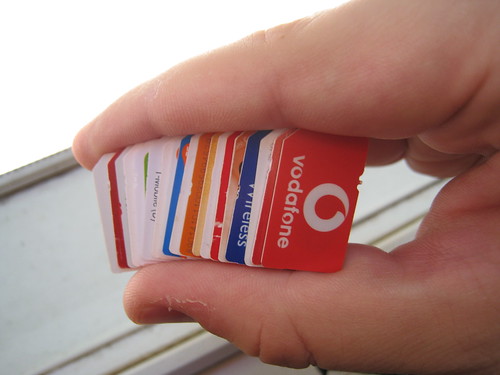
Start up: Facebook’s real origin, Apple’s political underspend, Samsung’s unbranding, the electric oil crisis, and more

Nintendo’s 3DS: not propping up sales so well as in the past. Photo by Ian Muttoo on Flickr.

You can now sign up to receive each day’s Start Up post by email. You’ll need to click a confirmation link, so no spam.

A selection of 11 links for you. Use them wisely. I’m charlesarthur on Twitter. Observations and links welcome.

Cratering portable sales can’t prop up Nintendo’s business anymore » Ars Technica

Kyle Orland:

»A new revision to Nintendo’s projected earnings, released [on Friday], sees Nintendo reducing its expectations of Nintendo 3DS sales for the full fiscal year, which ends in March. Nintendo now expects to sell 6.6m 3DS units during the 12-month period, a 13% drop from previous projections and a 24% decline from the year before. That drop (and the accompanying drop in 3DS software sales projections) is a big reason why Nintendo is now also saying that its annual profits will be 50% lower than it had projected, though the company blames some of that decline on the weakening Japanese yen.

You might think this kind of decline is natural for a system like the 3DS, which is, after all, approaching its fifth birthday. But previous Nintendo handhelds have looked much more robust at this point in their lifecycles. The Nintendo DS was still near the peak of its hardware sales dominance in its fifth and sixth years, selling a whopping 31.18m units in the 2009 fiscal year (and a healthy 27.11m the next year). Game Boy Advance sales were still near a steady peak in the 2005-2006 period, bouncing up and down in the 15m to 18m annual sales range, thanks in part to the successful Game Boy Advance SP hardware refresh.

The 3DS, on the other hand, seems to have peaked earlier and lower than other Nintendo handhelds.

«

In short, Nintendo is predicting that its revenues in FY2016 will be lower than its profits in FY09. It’s taken a while, but smartphones are beginning to undermine it. (Might it be that those who had a Nintendo handheld in 2009 are now updating with a smartphone?)
link to this extract


The true story of how Mark Zuckerberg founded Facebook » Business Insider

Biz Carson:

»In the Hollywood-stylized version, a Harvard student needed a tool to date girls.

The real version couldn’t be further from the truth, Mark Zuckerberg told Mathias Döpfner in an interview with “Die Welt am Sonntag.”

At the time, he already had a girlfriend — Priscilla Chan, now his wife — and he was obsessed with the internet. Google was great for searching for news and Wikipedia was great for searching for reference material, but there was a gap.

“There was no tool where you could go and learn about other people. I didn’t know how to build that so instead I started building little tools,” Zuckerberg told Döpfner.

He built a small tool called Coursematch where people could list what classes they were taking. He did build the Facematch tool, as seen in “The Social Network,” but that was just a prank, he says.

«

Rewrite of an interview with Die Welt am Sonntag (The World On Sunday).
link to this extract


Here’s how electric cars will cause the next oil crisis » Bloomberg BusinessWeek

Tom Randall:

»In the next few years, Tesla, Chevy, and Nissan plan to start selling long-range electric cars in the $30,000 range. Other carmakers and tech companies are investing billions on dozens of new models. By 2020, some of these will cost less and perform better than their gasoline counterparts. The aim would be to match the success of Tesla’s Model S, which now outsells its competitors in the large luxury class in the U.S. The question then is how much oil demand will these cars displace? And when will the reduced demand be enough to tip the scales and cause the next oil crisis?

«

A crisis in the form of a glut.
link to this extract


When the “Apple Encryption Issue” reached Piers Morgan » mobilephonesecurity

David Rogers does mobile phone forensics and teachers a mobile systems security course. Piers Morgan (who used to edit the Daily Mirror, which has apologised to some people for phone hacking) did however claim that he could take the FBI/Farook iPhone “to Tottenham Court Road [an electronics mecca in London) and they’d get into it” – suggesting that he might have confused carrier unlocking with PIN unlocking. Here’s Rogers on the tricky rapids to be navigated in deciding if we can force companies to unlock encrypted devices:

»Remember, someone who has actually committed a crime is probably going to say they didn’t do it. The phone data itself is usually more reliable than witnesses and defendant testimony in telling the story of what actually happened and criminals know that. I’ve been involved with digital forensics for mobile devices in the past and have seen first-hand the conviction of criminals who continually denied having committed a serious crime, despite their phone data stating otherwise. This has brought redress to their victim’s families and brought justice for someone who can no longer speak.

On the other side of course, we’re carrying these objects around with us every day and the information can be intensely private. We don’t want criminals or strangers to steal that information. The counter-argument is that the mechanisms and methods to facilitate access to encrypted material would fall into the hands of the bad guys. And this is the challenge we face – there is absolutely no easy answer to this. People are also worried that authoritarian regimes will use the same tools to help further oppress their citizens and make it easier for the state to set people up. Sadly I think that is going to happen anyway in some of those places, with or without this issue being in play…

…This is the same battle that my colleagues in the mobile world fight on a daily basis – a hole is found and exploited and we fix it; a continual technological arms race to see who can do the better job. Piers Morgan has a point, just badly put – given enough time, effort and money the San Bernadino device and encryption could be broken into – it will just be a hell of a lot. It won’t be broken by a guy in a shop on Tottenham Court Road (see my talk on the history of mobile phone hacking to understand this a bit more).

«

link to this extract


Apple’s $120M jury verdict against Samsung destroyed on appeal » Ars Technica

Joe Mullin:

»Apple’s second high-profile patent win against Samsung was appealed, just as the first was. And in an opinion (PDF) published today, a panel of appeals judges entirely wiped out Apple’s victory and its $120 million verdict.

The new decision found that out of three different patents Apple became famous for winning with, one wasn’t infringed and two of them are invalid.

The ‘647 patent described how to turn phone numbers and other software “structures” into links, allowing users to take actions like calling a number with one “click” rather than copying and pasting. The jury awarded Apple $98.7 million based on that patent, but the appeals judges today held that the patent wasn’t infringed at all. They held that “Apple failed to prove, as a matter of law, that the accused Samsung products use an ‘analyzer server’ as we have previously construed that term.”

Appeals judges also invalidated one of Apple’s most consistently ridiculed patents, the ‘721 “slide to unlock” patent. Jurors awarded $3 million based on infringement of that patent, but the appeals panel said the patent is invalid because of prior art.

«

This whole patent thing ends up as Bobby in the shower. “Patent trials? What patent trials?”
link to this extract


Six Hot Media Startups to Watch in 2016 » Al Jazeera America

Sadly this piece by @ProfJeffJarvis (in reality Rurik Bradbury) was deleted by Al Jazeera, which either didn’t recognise its satirical slant ahead of publication, or did and then got cold feet. But it’s still here at the Internet Archive, with gems like this:

»

The New Republic

The oldest startup here, it went through a significant reboot with its March 2012 purchase by Chris Hughes, tech mogul and co-founder of Facebook. It has since innovated so quickly that it is about to be re-rebooting under even newer ownership (name TBD), a great example of the rapid iteration that is characteristic of the best startups.

Instead of the old questions about subjective, qualitative measures, Chris Hughes brought in Yahoo! wartime consigliere Guy Vidra to ask fresh questions, such as: How well did this piece travel? And does this meme even lift our metrics?

I’m excited to see the New New The New Republic, and hope they re-embrace Walter Lippmann’s original mission of nextifying the bewildered herd using hot takes.

«

Nextify your thinkfluencing.
link to this extract


(UPDATE: China, too!) Korean Galaxy S7 to go without Samsung branding on front » AndroidAuthority

Matthew Benson:

»Carrier branding is arguably the bread-and-butter of free promotion: crudely referred to by some as a so-called “tramp stamp” these images tend to irritate customers who would prefer their devices to be free of all superfluous clutter. Even so, manufacturer branding tends to crop up most everywhere, be it the infamous HTC “black bezel bar” or the ever-visible under-the-earpiece location that companies like Samsung opt for.

Strange then, that Samsung’s South Korean website has pictures of its new Galaxy S7 and Galaxy S7 Edge…devoid of such a front-facing claim to fame. Take a look:

The front Samsung logo is clearly missing from the image. In fact, it’s missing from all the renders pictured, yet the rear logo is clearly present, as can be seen above.

«

Subtle messaging: Samsung really does seem to be getting rid of the visible “Samsung” name on the front of the device in China, Japan and Korea. In the first two, it has struggled recently to keep sales up in the face of competition. But why Korea? And is this an evolution of its branding (more confident) or is it concern?
link to this extract


Invisible porn-clicking trojans invade Android’s Google Play store » Tripwire

Graham Cluley:

»many bogus versions of a wide range of apps (ranging from Toy Truck Rally to Subway Surfers 2 to GTA San Andreas and Tinder) have been distributed by fraudsters who wish to use your bandwidth to earn themselves affiliate income by clicking on adverts for pornographic websites.

Of course, if the apps popped up a copy of the Chrome browser to click on the X-rated ads then chances are that you would notice something unusual was afoot. Criminals have learnt from experience that announcing their presence so obviously only hinders their money-making plans.

So, in the case of “Porn Clicker”, the apps spin up an invisible browser window – meaning that any ad-clicking is invisible to the naked eye. And then, a minute or so later, it clicks again.

The money soon begins to earn cash for the criminals – which is a truth especially evident when you consider that some of the bogus apps have been downloaded thousands of times.

«

Android is following exactly the same malware growth path as Windows did on the desktop.
link to this extract


Android phones are easier for police to crack than iPhones » CNN

Jose Pagliery:

»A Google spokesman said that encryption is now required for all “high-performing devices” – like the Galaxy S7 – running the latest version of Android, Marshmallow. But only 1.2% of Android phones even have that version, according to Google.

By comparison, most Apple products are uniformly secure: 94% of iPhones run iOS 8 or 9, which encrypt all data. Apple makes its devices, designs the software, and retains full control of the phone’s operating system.

“If a person walks into a Best Buy and walks out with an iPhone, it’s encrypted by default. If they walk out with an Android phone, it’s largely vulnerable to to surveillance,” said Christopher Soghoian, the principal technologist at the American Civil Liberties Union.

New York City’s top prosecutor, Cyrus Vance, has noted that Android phones have been easier to crack in the past, especially because Google can reset passcodes on older models.

Android is running on 105 million Americans’ smartphones — slightly more than the number of iPhones in the United States, according to industry trackers at comScore.

But there are ways in which an Android phone could actually be made more secure than an iPhone.

Android software can be tweaked to add all sorts of security features, like a password for a particular messaging app.

Google’s operating system also starts up only after the phone’s owner enters a passcode. That’s not true for the iPhone, which starts up as soon as you hit the power button. That’s an important detail: When confronted with a locked iPhone, police can take it to a trusted Wi-Fi connection and potentially copy the phone’s contents to iCloud on Apple’s computer servers, where investigators can then comb through the data.

Android phones won’t back up to the cloud until they’re unlocked.

«

link to this extract


Has Apple been neglecting politics? » tofias dot net

Michael Tofias:

»To understand Apple’s efforts at persuading legislators of various issues, I compiled a measure of political footprint which combines a company’s own federally registered lobbying expenditures from 2015 with the campaign contributions they made during the 2013-14 election cycle from their corporate PAC as well as any employees who made campaign campaign contributions (and listed their employer). This data comes from the Center for Responsive Politics.

In 2015, Apple spent $4.48m on lobbying efforts and while they don’t maintain a PAC for campaign contributions, Apple employees gave a combined $130,579 in FEC-regulated campaign contributions. This adds up to a $4.61m political footprint.

In contrast, Apple’s main rival in the market for smartphones, Google, spent $16.7m on lobbying in 2015, gave $1.65m in campaign contributions via its PAC, and another $2.25m via employees during the 2013–14 election cycle for a combined $20.5m political footprint – over four times the size of Apple’s.

Apple’s political footprint is also on the small side when compared to other large companies (as measured by market capitalization on on December 31, 2015 as reported by YCharts).

«

link to this extract


Platforms, postcodes and pushing services live: a year in the life of our platforms team » UK Ministry of Justice Digital

»Many of our services need info about postcodes, such as what addresses they cover, where they are on the map and what admin areas they fall under.

A year ago each team had used a different commercial solution, with different charging models, so our first platform was a postcode lookup service.

This combines Ordnance Survey and government data to provide one authoritative way for our applications to look up information for any postcode.

«

Astonishing. This already exists in the outside world, with APIs so you don’t have to laboriously enter things by hand. And this was thought a good use of anyone’s time?
link to this extract


Errata, corrigenda and ai no corrida: none specified.