Friday links: ecommerce discrimination, Android’s year class, WatchKit, free Office, and more


“Supermarket nightmare” by Paul Townsend on Flickr

A selection of 10 links for you. Do not use near rotating machinery. I’m @charlesarthur on Twitter. Personal site: charlesarthur.com

Buyer beware, online shopping prices vary user to user >> The Conversation

Home Depot served almost completely different products to users on desktops versus mobile devices. A desktop user searching Home Depot typically received 24 search results, with an average price per item of US$120. In contrast, mobile users receive 48 search results, with an average price per item of US$230. Bizarrely, products are also US$0.41 more expensive on average for Android users.

Why do sites do this?

Initially, we assumed that the sites would not personalize content, given the extremely negative PR that Amazon, Staples, and Orbitz received when earlier cases were revealed. To our surprise, this was not the case!

The study says price discrimination and steering on e-commerce sites is becoming more prevalent, and more sophisticated and that “it’s almost impossible to know whether the prices you are being shown have been altered, or if cheaper products have been hidden from search results.”

(Re the “more for Android”, the study mentions “iOS”, not “iPhone” or “iPad”. Surprise: Travelocity lowers prices for iOS users.)


Why BuzzFeed doesn’t do clickbait >> Buzzfeed

Ben Smith:

BuzzFeed has never sold a banner, and I couldn’t even tell you how many monthly page views we get. And so our business model at least moderates that incentive to drag every last click out of our audience.

The worst form of this online is on a pennies-per-click business model in the transactional netherworld of outsourced sponsored content sitting at the bottom of articles around the web. All that matters in that space is the snappy headline. Grab the reader’s attention, get the click — even if this isn’t the craziest thing Ted Cruz has said yet; even if “Paris Hilton – topless” is in fact demurely dressed and riding in a convertible; if this one easy trick won’t actually lose you weight; and if you actually can believe what happens next.

If your goal — as is ours at BuzzFeed — is to deliver the reader something so new, funny, revelatory, or delightful that they feel compelled to share it, you have to do work that delivers on the headline’s promise, and more.

Few people understand this aspect of Buzzfeed: it’s actually a method of creating viral content; it then sells that method to advertisers.


Year class: A classification system for Android >> Facebook Engineering Blog

Chris Marra and Daniel Weaver:

With so many different types of phones in the world, being able to segment people and their devices to understand usage patterns and performance is a significant task. Historically we relied on cuts by Android OS version, looking at how Gingerbread behaved differently from Ice Cream Sandwich, how Ice Cream Sandwich behaved differently from Jelly Bean, and so on. However, the recent explosion of affordable Android devices around the world has shifted the median, and the bulk of devices we now see are running Jelly Bean. In order to segment based on actual phone performance we decided to look more closely into the specifications of the phone – RAM, CPU cores, and clock speed – to characterize things. Using these three specifications, we’ve clustered every phone into a group of similarly capable devices to make understanding performance easier.

We call this new concept “year class” – essentially, in what year would a given device have been considered “high end?” This allows teams around the company to segment the breadth of Android devices into a more understandable set of buckets, and as new phones are released, they’re automatically mapped into the representative year. For example, the Alcatel T-Pop I bought at a market in Mexico is immediately recognized as a 2010-class phone, despite its 2012 release. Overall, about two-thirds of the phones connected to Facebook are equivalent to something released in 2011 or earlier.

That last sentence is amazing – but remember, Facebook has a huge number of mobile users outside the US. Telling too that the “most popular by year class” list has the Samsung Galaxy S2, S3, S4 for 2011, 2012, 2013 – and then 2013’s Note 3 for 2014. The SGS5 clearly hasn’t made a substantial impact.


Expectations for WatchKit >> David Smith

Apple has said we can expect for there to be a two-phase rollout of the WatchKit APIs. The most concrete exposition of this is the Press Release announcing the Apple Watch (emphasis mine).

Apple introduces WatchKit, providing new tools and APIs for developers to create unique experiences designed for the wrist. With Apple Watch, developers can create WatchKit apps with actionable notifications and Glances that provide timely information. Starting later next year, developers will be able to create fully native apps for Apple Watch.

So to start with we will be given the ability to implement actionable notifications and Glances. This is what I believe we are getting with the SDK release this month.

It will only be later next year that full apps will be possible. It is not a stretch to think that later next year is code for WWDC next June.


More Office. Everywhere you need it >> The Official Microsoft Blog

John Case, corporate VP for Microsoft Office:

Today we’re taking the next major step to bring Office to everyone, on every device, and I’m excited to announce that Office apps customers love are coming to Android tablets with the start of our Office for AndroidTM tablet Preview. We’re also delivering Word, Excel, and PowerPoint apps for iPhone® and updates for the iPad apps–to ensure a consistently beautiful and productive Office experience on every device. Our vision of Office everywhere wouldn’t be complete without Windows, so I’m pleased to confirm that new, touch-optimized Office apps for Windows 10 are in the works and we’ll have more to share soon.

No Office365 subscription required. You read that correctly. Office is moving to a freemium model. (Here’s what’s missing in the free version.) Do we conclude that Google’s mild erosion via Google Docs has been successful in chewing away at Microsoft’s pay-for-software model?


Fourth quarter 2014 tablet update >> Chitika

iPad users generated 79.9% of North American tablet-based web traffic over the month of September 2014 – a share down from the 81% figure observed one year ago, but a gain of 1.9 percentage points since July 2014. Meanwhile, Amazon and Samsung tablets are, respectively, still the second- and third-largest sources of tablet Web usage in the US and Canada after both posted slight quarter-over-quarter share drops over the study period.

That’s web traffic to Chitika’s ad network, not installed base. Clearly, the iPad over-indexes (shows up more than its installed base). Most telling stat: Windows tablet share up by 60% (from 1% to 1.6%, behind Amazon (6.7%), Samsung (6%), Google (1.7%) – this is before the Nexus 9 release.


Amazon Echo – Official site >> Amazon

Amazon Echo is designed around your voice. It’s always on—just ask for information, music, news, weather, and more. Echo begins working as soon as it hears you say the wake word, “Alexa.” It’s also an expertly-tuned speaker that can fill any room with immersive sound.

Invitation-only at present, but a clear shift into the Google Now/smart device/intelligent assistant space. (Is this the thing Charlie Kindel has been working on?) As Jan Dawson of Jackdaw says, this makes a lot more sense than the Fire Phone, because it’s a move into a space that’s opening up – but where Amazon could make a difference.

Brings new light to Eric Schmidt saying that he sees Amazon as Google’s biggest competitor.


CD-Loving Japan Resists Move to Online Music >> NYTimes.com

Ben Sisario (in a great local colour story):

Japan may be one of the world’s perennial early adopters of new technologies, but its continuing attachment to the CD puts it sharply at odds with the rest of the global music industry. While CD sales are falling worldwide, including in Japan, they still account for about 85% of sales here, compared with as little as 20% in some countries, like Sweden, where online streaming is dominant.

“Japan is utterly, totally unique,” said Lucian Grainge, the chairman of the Universal Music Group, the world’s largest music conglomerate.

That uniqueness has the rest of the music business worried. Despite its robust CD market, sales in Japan — the world’s second-largest music market, after the United States — have been sliding for a decade, and last year they dropped 17%, dragging worldwide results down 3.9%…

…The hugely popular girl group AKB48 pioneered the sale of CDs containing tickets that can be redeemed for access to live events — a strategy credited with propping up CD sales, because it can lead the biggest fans to buy multiple copies of an album.

Clever.


Will.i.am’s Puls smartwatch is the worst product I’ve touched all year >> The Verge

Dan Seifert:

The Puls’ main pitch is that it can determine your emotion and mood via your voice. It comes with an app called Vibe+ that listens to you for twenty seconds and then determines your emotions based on the intonation in your voice. It works with 32 different languages and is the result of 20 years of research and development by Beyond Verbal, the company that makes the app. It rewards you for being positive with different gems that display on the Puls’ screen and points that can shared with other users to “spread positivity.” Beyond Verbal will be bringing the Vibe+ app to iOS and Android devices early next year. It’s pretty awkward to have to speak random things to your wrist for twenty seconds (the app doesn’t require you to say anything specific) and I’m having trouble picturing anyone using this in the real world.

That’s probably fine anyways, since nobody should really buy the Puls watch. AT&T and O2 in the UK are going to be selling it in the coming weeks for an unspecified price, but it’s safe to say that you should probably just spend your money elsewhere. Will.i.am will get over it.

Why would you need your watch to tell you your emotions? Still, it has a full QWERTY keyboard. (Two presses per letter. Don’t complain.)

The wait for a good wearable goes on.


Crypto attack that hijacked Windows Update goes mainstream in Amazon Cloud >> Ars Technica

Underscoring just how broken the widely used MD5 hashing algorithm is, a software engineer racked up just 65 cents in computing fees to replicate the type of attack a powerful nation-state used in 2012 to hijack Microsoft’s Windows Update mechanism.

Nathaniel McHugh ran open source software known as HashClash to modify two separate images—one of them depicting funk legend James Brown and the other R&B singer/songwriter Barry White—that generate precisely the same MD5 hash, e06723d4961a0a3f950e7786f3766338. The exercise—known in cryptographic circles as a hash collision—took just 10 hours and cost only 65 cents plus tax to complete using a GPU instance on Amazon Web Service. In 2007, cryptography expert and HashClash creator Marc Stevens estimated it would require about one day to complete an MD5 collision using a cluster of PlayStation 3 consoles.

The 2012 exercise was Flame, which was espionage malware (almost certainly from the US).

Links: Xiaomi profits, Samsung Galaxy 6 codename, wearables forecasting, and more

A selection of 13 links for you. Use them wisely. I’m on Twitter @charlesarthur

Smartphone maker Xiaomi’s 2013 profit nearly doubled >> WSJ

Xiaomi, which a few months ago surpassed Samsung Electronics Co. as the biggest smartphone vendor in China by shipments, presented the document to banks in its recent pitch to raise $1bn in loans for overseas expansion or acquisition.

A table in the document showed that Xiaomi’s net profit last year rose 84% to 3.46bn yuan ($566m) from 1.9bn yuan in 2012, while its revenue more than doubled to 27bn yuan. Another table included a forecast of a 75% net profit increase this year.

Possibly due to its very low marketing costs; only spent 3.2% of revenue on sales and marketing in 2013. Great in China – but hard to replicate abroad. If it can, it’s going to be huge.


Exclusive: Samsung’s Next Big Thing is codenamed Project Zero >> SamMobile

Yes, it’s that time of the year, when we start talking about the next-generation Galaxy S device and, it’s going to be epic, that’s for sure!

According to our sources, the Galaxy S6 is in its early stages of development, so they weren’t able to confirm new specifications or features at the moment. However, what they did tell us was its codename; Project Zero. And, that right there is one interesting bit of information. This is the first time Samsung has decided to go with such a unique codename. In the past, Samsung has always used letters as codenames for its flagship devices, for example: Project J (Galaxy S4), Project H (Galaxy Note 3), Project K (Galaxy S5) and Project T (Galaxy Note 4). So what is the real reason behind Samsung opting Project Zero as the Galaxy S6’s codename? Our sources report that Samsung is probably developing its next-generation flagship device from scratch, with an entirely new vision, hence the codename.

Project Zero is an indication that Samsung is trying to achieve something unique and different with the Galaxy S6, which is exactly what we wanted from the Korean giant.

Can you be unique and the same?


A new wearables forecast >> Tech.pinions

Bob O’Donnell:

Despite all this news and excitement around the wearables category, I’m still not convinced it’s going to be as big a market as many have made it out to be. The primary, over-riding problem is that no one has really been able to provide a compelling reason why the vast majority of people would want a wearable, let alone feel that they “need” to have one. Sure, there are good cases to be made for fitness junkies, the whole “quantified self” movement and bleeding-edge early adopters, but for most people, smart wearables still feel like a solution in search of a problem.

If that wasn’t enough, many of these early products suffer from limited battery life, offer only semi-accurate sensor readings, and lock you into working with only certain smartphones.

Forecast for whole of 2015: 40m units. Wearables have been disappointing so far, because they definitely aren’t applicable in enough situations.


Bitcasa Personal Account Update FAQ >> Bitcasa Help Center

As part of this transition, Bitcasa will no longer offer or support the Infinite storage plans. This is due largely to the lack of demand, but also because of persistent abuse of our Terms of Service. Only 0.5% of our accounts require more than 1TB, and less than 0.1% require more than 10TB. The reality is while we have tried to make our vision of infinite work, the low demand combined with the growing number of suspected abusers, means that supporting an Infinite plan is not a viable business for us. To help provide a solution for large storage needs we have increased our Pro plan from 5 TB to 10 TB to accommodate all but the largest accounts.

Oh, you promised “infinite” and then people treated as though it was, you know, infinite? How unsurprising. (Apparently only 0.5% of accounts need more than 1TB, and under 0.1% more than 10TB.)


Video by lanceulanoff >> Instagram

Lance Ulanoff using Apple Pay in a New York taxi. Tip already added. NFC readers turn out to be more widely distributed than people thought.


American Airlines yanks their app from Windows Phone, reportedly drops support >> Windows Central

Living with Windows Phone tends to be a war of attrition. We make gains, but we always tend to lose something as well, causing frustration amongst users who have to deal with this chicken and egg problem.

This afternoon, American Airlines is the latest to take their ball and go home as their app for Windows Phone is no longer available.

Reader of our site Andy tried to grab the app recently but noticed it was no longer available. He reached out to American Airlines who noted that they no longer support Windows Phone.

Oddly enough, American Airlines just updated their Windows Phone app back in September (of this year, natch) with the ability to add boarding passes to the Wallet. However, when we click on the direct Store link, we get the familiar “this app is no longer published” message seemingly confirming the move by the #9 Forbes-ranked airline.

That’s really odd. As the article says, it could even add boarding passes.


This drone-shot porn is beautiful (NSFW) >> Motherboard

The film features people—straight, gay, and lesbian—having sex on the beach, on a farm, in the mountains, on a forest, on the side of the road, in lots of places (much of it is simulated). Even then, not everything made the cut: One of the more thought-provoking shots, which had to be left out because of the difficulty of filming it, would have brought drones to the suburbs, where they’ve already been shot down by people who were worried about their privacy.

“One of the shots was supposed to be in a quiet neighborhood where you see a barbecue happening in someone’s backyard,” LaGanke said. “Then, the camera pans over and there’s people fucking in the next yard over.”

But stay with it (if you can) for the director’s comment on whether drones are really any good for porn.


With Moore’s Law receding, design is how we decide >> Gigaom

John Maeda:

There’s a signal inside our heads going off today — we instinctively know that we don’t need more storage or speed because we don’t have any real use for it. In absence of the normal cues of “better,” which used to be as simple as knowing the CPU’s clock speed, or how much RAM it has, or how big a screen to pair with it, we now are choosing based upon something else: design. Because Mo(o)re computing power no longer makes technology feel better — in fact, the pile-on of new features that Moore’s Law has enabled makes us feel confused. And in this new universe, we have come to count on design to cut through the clutter and make things feel better.

Unfortunately, since “good design” is defined by the user it’s intended for, it’s not just about creating more, and there is no algorithmic “law” for how to get it. It suffers from the phrase that all technologists and investors hate to hear, which is “… it depends.” Whether we want “more” or “less” doesn’t have a single right answer. An example I like to use is about doing the laundry versus eating a cookie. You always want less laundry, but more cookies. One person’s laundry is another’s cookie. And so on.

Good design is even harder to define in the digital age.

I visited a local phone shop earlier today – it was empty of customers – and asked one of the assistants if there was any sign of people switching from Android to iPhones with the new models (prominently displayed in the front window). Not at all, he said – more the other way. The Samsung Galaxy S5 was doing far better. “It’s the same price as the iPhone, though?” I asked. He frowned. “It’s got better specs,” he replied.

Design isn’t quite the whole story for everyone yet.


Apple Pay: 1 Million Cards Down, 599 Million To Go – ReadWrite

Owen Thomas:

That [1m cards enrolled in Apple Pay] sounds impressive—until you consider that there are more than 600m credit and debit cards in the United States, and Apple has sold an estimated 20m Apple Pay-compatible iPhone 6 and 6 Plus units.

There are some factors limiting Apple Pay’s reach. Not all banks work with Apple Pay yet, and Apple Pay is only available in the United States. Also, some users likely added more than one card to their Apple Pay wallets. So it’s difficult to come up with a clean figure for Apple Pay’s market share among eligible iPhone 6 users.

Not all of those 20m iPhone 6 units are in the US, so it’s probably a bigger slice of them than zero. There are about 200m US credit card holders (July 2014 data), so that’s an average of three each; probably more if you’re affluent.

Which means it’s 1m out of 200m potential users accounted for. OK, not a lot yet.


Google Wallet use grows after Apple Pay launch >> Ars Technica

Megan Geuss:

Now, a person with knowledge of the matter tells Ars that Google Wallet, which launched back in 2011 and saw tepid success in the ensuing three years, has had considerable growth in the last couple of months. According to our source, weekly transactions have increased by 50%, and in the recent couple of months, new users have nearly doubled compared to the previous month.

Classic Google – as numbers-free as Amazon. When I looked into this, sources were happy to confirm my estimate of 20m downloads of Google Wallet. But usage numbers? No way. Other sources told me that it would be miraculous if 2m of those 20m were using it. Tim Cook’s claim – that getting 1m cards registered for Apple Pay outdistanced others – suggests Google Wallet might have had well under 1m using it regularly. That’s out of 90m Android users in the US.

When, do you think, will Google share some actual numbers about Google Wallet? For a data-driven organisation which has a mission to make the world’s information accessible and useful, it’s pretty bad with its home-grown stuff.

(By the way, the above paragraph comprises the entirety of the new information in the 470-words piece. That’s not to disparage Geuss, who seems to have done good work in this space; more to point out that Google’s not exactly got a lot to say, despite a three-year headstart.)


A month in, the iPhone 6 Plus was the right choice >> Quartz

Dam Frommer:

Yes, it’s still “too big”—in the best way. It’s not going to fit in your hand or pocket the same way a smaller phone does. But that’s the point—I’ve been very happy with the tradeoff. The big screen, which displays more text than before, and makes photos look amazing, has come to feel luxuriously comfortable. It’s like driving a SUV instead of a Prius. My old iPhone 4, which I use as a kitchen radio, feels like a miniature toy.

My phone isn’t bent. At all. But it’s amazing how many people asked me about that, ranging from family members to random strangers at a Paris restaurant. Apple truly is mainstream news.

He also cites battery life. I’ve certainly noticed, using a 6 Plus, that one stops thinking about the battery. You just charge it whenever it’s convenient. (This probably won’t be news to owners of the larger Android phones.)


Digitimes Research: global top-6 notebook vendors to share 81.7% global shipments in 2015 >> Digitimes

The world’s top-six notebook vendors, Hewlett-Packard (HP), Lenovo, Dell, Apple, Acer and Asustek Computer, will together occupy 81.7% of global notebook shipments in 2015, increasing 1.7pp on year, according to Digitimes Research.

With the exception of Lenovo and Asustek, other vendors will barely sustain significant shipment gains in 2015 during which Lenovo is expected to continue adopting an aggressive strategy to maintain its leading market position, while Asustek will try to generate more revenues by ramping up shipments of low-priced models.

HP, Dell and Apple will see their combined shipments decline slightly in 2015 as the buying activities triggered by the expiration of Windows XP and Sony’s phasing out from the notebook market will dwindle. However, the three vendors will take a combined 40% share.

Unclear why it thinks Apple is going to see a fall (did it benefit from XP’s end?) but there’s clearly now a shrinking pool for everyone else.


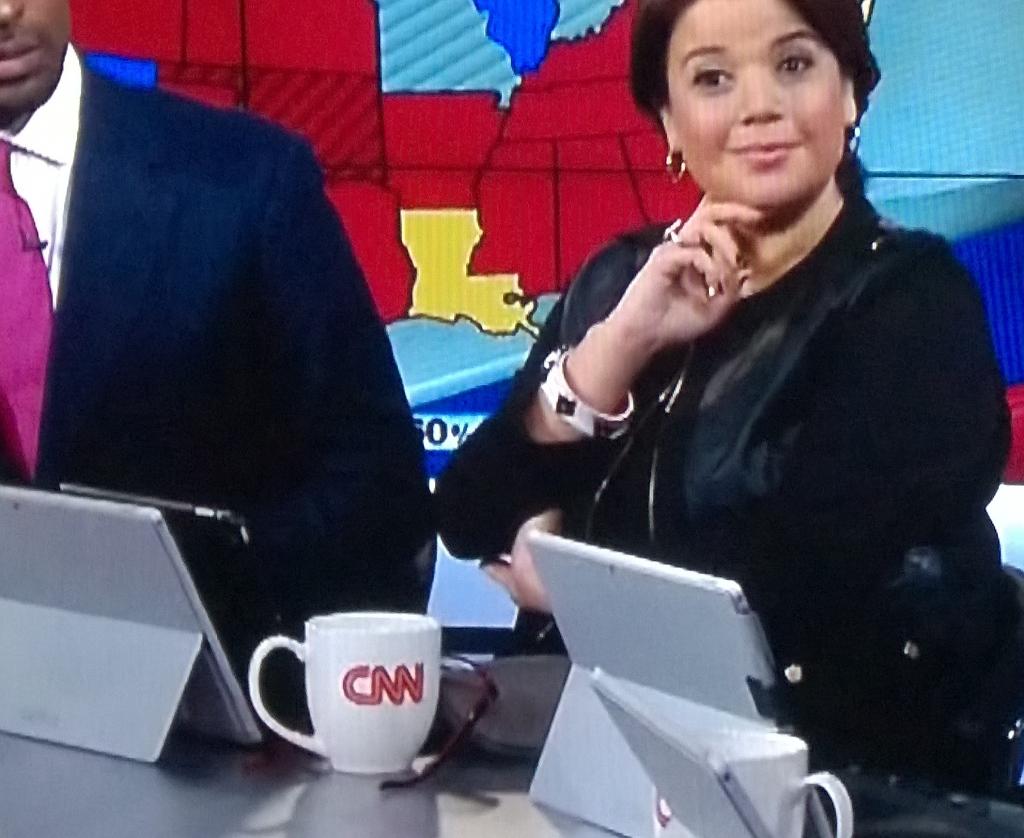
Adam on Twitter: “CNN commentators using Microsoft @surface tablets as iPad stand. Facepalm

“These things are really convenient for leaning my iPad against.” Hilarious, yet so indicative. The iPad smart cover is only so-so as a sit-up-and-beg stand; if the iPad had something like the Surface any-angle kickstand, that would be cool. But also heavier, so it won’t happen.

However, it does open an accessories opportunity for Microsoft…


Links: Nexus 9, Nexus Player, the homeless near San Jose, concrete failure, and more

concrete fissure texture
Concrete fissure texture by Grégory Legeais, on Flickr

A selection of 8 links for you. Use them wisely. Comment at the end if you want. I’m on Twitter as @charlesarthur.

Low post >> All this

Chicago-based Dr Drang (who one suspects is a civil engineer) came home to find the basketball post outside his house had blown over, because:

The post was almost all rust, with little if any competent steel left. This kind of rusting at the bases of posts and poles is pretty common. Water runs down and collects in little crevices, where the rusting initiates. In this case, the soil around the post, combined with the buried concrete in which the post was embedded, conspired to keep moisture in contact with the post, accelerating the corrosion process. A more common problem is hollow poles that don’t allow drainage of the moisture that collects inside. These are insidious failures because the steel rusts from the inside out, giving no visible indication of how far it’s progressed until the pole falls over.

Read on, though, to find out how steel and concrete aren’t actually very good playmates, and why old bridges look like they do underneath.


Nexus 9 review: a little better on paper than in practice >> Android Police

David Ruddock, in a review that struggles to find anything good to say:

Anyway, for example, if I’ve been sitting in Chrome reading a few articles for 10 or 15 minutes and go to pull up the multitasking UI, there can be a delay of anywhere from 2-4 seconds before it appears. The home button, too, will occasionally exhibit similar lag, though that’s nearly gone with the OTA I think. Or sometimes I’ll pull up the recents menu, then hit home, and the launcher is gone and takes a couple seconds to come back. There’s one correlating factor I notice when I have these problems, too: the Nexus 9 gets warm. The SoC sits at the top of the device just behind the speaker grille, and it gets warmer a lot more often than I’d expect. Just browsing web pages can noticeably heat it up.

Lots of reviewers seemed to have this problem with a hot spot on the Nexus 9. Shouldn’t that be a solved problem by now on tablets?


Amazon Prime members can now enjoy free unlimited photo storage with Prime Photos >> Amazon Media Room

Amazon today introduced Prime Photos, the newest benefit for Prime members, which provides free unlimited photo storage in Amazon Cloud Drive. Most people have a lifetime of birthdays, vacations, holidays, and everyday moments stored across numerous devices. And, they continue to create billions of photos every year. Now, Prime members have a simple, secure place to store them all for free. Starting today, members can securely store their existing photo collections, automatically upload new photos taken and access them anytime, anywhere, at no cost. Members can start using the Prime Photos benefit today by visiting http://www.amazon.com/primephotos.

Clever: effectively letting you hold your own photos to ransom if you don’t stick with Prime. The storage and bandwidth will be much, much cheaper for Amazon than the profit it makes from Prime.


Send SMS from your Mac… in 2002 >> O’Reilly Archives

Via @lrs on Twitter, a reminder that Apple had the “new” (in Yosemite) function of sending SMS to people straight from the desktop in 2002 – but inexplicably killed it with the 10.5 release of OSX:

Although Apple has done a good job supporting Bluetooth technology, not much has been done to educate users about what it can do. Recently, I was pleasantly surprised to see that the little nifty Address Book (in Mac OS X) has built-in Bluetooth functionality that allows you to send and receive SMS (Short Message Service) messages through your Bluetooth-enabled phone, all via your computer!

Everything old is new.


Riffsy raises $3.5m for GIF Keyboard on iOS >> Inside Mobile Apps

Mobile app company Riffsy has announced it has raised $3.5m in seed funding for its GIF Keyboard app on iOS devices. The funding round was led by Redpoint Ventures, and will help Riffsy transform the process of sending animated images to friends into one that’s as simple and “everyday” as sending emojis. To date, Riffsy has passed 500m monthly GIF views.

I use Riffsy and like it a lot (it’s here). I could see it becoming a social app which could easily go viral; if it could work out its monetisation method correctly, it could do OK.


Inside San Jose’s largest homeless encampment, the Jungle >> San Jose Mercury News

Keeping body and soul together is a daily struggle for Mama Red and her neighbors, but a close observation of the Jungle makes obvious why it – and nearly a hundred smaller places like it around the city – keep rising again despite San Jose’s efforts to knock them down.

The Jungle works for the people who live there, providing a sense of community, a support network, even a meager livelihood. The Jungle has its own crude system of governance, with order often maintained vigilante-style, residents say. “Any time people break the rules, they’re asked to leave,” said a longtime inhabitant, known as Giggles. “As much as we don’t like rules, you have to have them.”

Most of the people who live there didn’t choose to be homeless, but now that they are, the Jungle meets their most basic needs.

After a failed flower shop in Felton swept away the last of her savings, Mama Red — she declined to give her full name – took care of a friend’s invalid mother until the woman died. With no place to turn, she tumbled into the social safety net and wound up in a homeless shelter for several weeks. That was 13 years ago, the last time Red lived indoors.

Just as a reminder, here’s Google co-founder Larry Page, in the FT on Saturday: “The idea that everyone should slavishly work so they do something inefficiently so they keep their job – that just doesn’t make any sense to me. That can’t be the right answer… Even if there’s going to be a disruption on people’s jobs, in the short term that’s likely to be made up by the decreasing cost of things we need, which I think is really important and not being talked about.”

The Jungle is 18 miles away from Mountain View.


iOS 8 Share extensions will *only* show up if they explicitly support *all* of the provided activity items · Issue #5 · tumblr/ios-extension-issues >> GitHub

Here’s how we think this should work, using the Tumblr app as an example:

The user long-presses on a photo
We put the image data, the posts’s URL, and maybe a text summary of the post, all in the activity items array
We’d expect share extensions that support either image data or URLs or text to all show up in the activity controller
What actually happens is that only share extensions that explicitly support images and URLs and text will show up.

Hard to figure out if this is something which Apple should tweak, or where developers just have to knuckle under and roll with. (The latter will probably happen.) That said, I’ve found Extensions on iOS 8 to be just right – not too many, not too intrusive.


Google’s Nexus Player: more prototype than finished product >> Ars Technica

Ron Amadeo on the Asus-built $99 (+$40 gamepad) device:

Unfortunately for Google’s living room ambitions, the Nexus Player isn’t very good. Despite the company’s experience with Google TV, the Nexus Player and Android TV are first-gen products with lots of first-gen problems. The hardware/software combo flops on many of the basics—such as playing video smoothly—and doesn’t deliver on any of the compelling experiences “Android on your TV” would seem able to provide. Apps and games are presumably supposed to be the big differentiator here from the Chromecast and Apple TV, but the Play Store interface is clunky and, instead of 1.4m Android apps, you get access to about 70. It’s also pretty buggy…

…Given the emphasis on apps, that 8GB of storage is a disaster, though. After the OS and pre-installed apps, you’ve got about 5GB of storage free out of the box. Let’s install some games! Modern Combat 4 (a generic first-person shooter) is 1.9GB, Asphalt 8 (a racing game) is 1.3GB, The Walking Dead: Season 1 is 1GB… and we’re nearly out of space…

…The app selection here, though, is really sparse. You would think the whole point of Android on your television would be to have a decent chunk of the 1.4 million Android apps on your television, but Android TV has about 70 apps.

This will no doubt improve quickly, but if Android TV does gain a lot more apps, it will become more difficult to use because the “Play Store” on Android TV is awful. There’s no search, no top lists, and no free or paid filters. There are five categories you can browse though—and that’s it.

It always feels as though Google is in a rush to get these TV-related products out of the door, and it shows. Nobody is cleaning up in TV devices. Why not take the time to get it right?


Links: $1m NFC hacking, illegal iPhone 6s in Korea, why Taylor Swift’s off Spotify, and more

1989 album logo
Taylor Swift’s 1989 album logo on Flickr – not Spotify. Pic by C´sar J Paiva on Flickr.

A selection of 8 links for you. Use them wisely. I’m Charles Arthur on Twitter. Point links at me or leave them in the comments.

Flaw in New ‘Secure’ Credit Cards Would Let Hackers Steal $1M Per Card | WIRED

As US banks and retailers are barreling toward a 2015 deadline to replace magnetic-stripe credit and debit cards with more secure cards that come embedded with a microchip, researchers have announced a critical flaw in the card system.

According to researchers at Newcastle University in the UK, the card system developed by VISA for use in the United Kingdom fails to recognize transactions made in non-UK foreign currencies and can therefore be tricked into approving any transaction up to 999,999.99.

What’s more, because the cards allow for contactless transactions, wherein consumers need only to have the card in the vicinity of a reader without swiping it, a thief carrying a card reader designed to read a card that’s stored in a wallet or purse could conduct fraudulent transactions without the victim ever removing their card.

I knew there was a reason I wanted to be able to decide if I wanted an NFC card. Now on sale: RFID-blocking wallets.


Why Taylor Swift got off Spotify >> Business Insider

Nicholas Carlson:

This source blamed one person: Scott Borchetta.  

Borchetta is the president and CEO of Taylor Swift’s record label, the Big Machine Label Group. 

Our source notes Borchetta is trying to sell Big Machine. Reports say he wants $200 million.

Our source says Borchetta believes the only metric that will matter to potential buyers is the number of albums the label is able to sell. Our source says Borchetta doesn’t think the number of plays Swift’s songs have on Spotify will move the needle.

The source says Borchetta believes that pulling Swift’s music off Spotify will create “scarcity” online, and drive CD sales and paid downloads.

…Swift is very popular on Spotify. 25% of Spotify listeners have streamed her songs. Her songs were on 20m playlists.

Makes sense. Some music label people think streaming music is a passing fad. By contrast, as the story says, many of Swift’s fans have never bought a CD. (Some haven’t seen one.)


Illegal subsidies return for iPhone 6 >> Korea Times

Illegal handset subsidies to lure customers into buying new iPhone models have returned to the market, rendering the new telecom law designed to prevent such practices almost ineffective.

The Korea Communications Commission (KCC), the nation’s telecom watchdog warned the three mobile carriers ― SK Telecom, KT and LG Uplus ― against such practices and pledged to enforce “tough measures if any illegality is confirmed.”

An expert pointed out more customers who paid the regular price to buy the handset will suffer disadvantages unless the government establishes strict punishment for such illegalities.

Having breached this law previously, the three carriers were previously banned from selling new handsets earlier this year – just around the time that the Samsung Galaxy S5 was launched. (They found ways around it.) South Korea doesn’t seem very good at applying the law. But it’s also telling that it’s the iPhone 6 that they’ve all chosen to breach the law for.


FBI begins secret lobbying campaign on Capitol Hill to gain access to Apple and Google encrypted customer data >> Matthew Aid

The Obama administration is ramping up its campaign to force technology companies to help the government spy on their users.

FBI and Justice Department officials met with House staffers this week for a classified briefing on how encryption is hurting police investigations, according to staffers familiar with the meeting.

The briefing included Democratic and Republican aides for the House Judiciary and Intelligence Committees, the staffers said. The meeting was held in a classified room, and aides are forbidden from revealing what was discussed.

It’s unclear whether the FBI is planning a similar briefing for Senate aides.

…The speech was prompted by new policies from Apple and Google to provide default encryption on their phones, making it impossible for the companies to give police access to photos, contact lists, and other data stored on devices.

They’re not going to get Apple and Google to reverse this, so what’s the point? To create a villain they can blame when (it’s surely when) the next terrorist attack or other outrage occurs?


Fan TV Web video settop box maker looking for buyer >> Re/code

Conventional wisdom among industry sources is that Fan’s investors, who put at least $40m into different incarnations of the company over the years, will be unlikely to get all of their money back. Some sources say the company was recently looking for something in the $15m range.

Assuming that a deal goes through with numbers like that, the logical conclusion will be that Fan failed at a tough task: selling a stylish, affordable box that integrated Web video and pay TV programming, without a big push from pay TV providers or deep-pocketed consumer tech companies. I’ve asked Fan CEO Gilles BianRosa and some of his investors for comment.

Fan has a slightly confusing corporate history; it started life as a spinout from Vuze, a BitTorrent software company. For a few years, it concentrated on video “discovery” software that was supposed to help Web video watchers find their favorite shows and movies across competing platforms, like Netflix and Apple’s iTunes.

This year, operating as Fan TV, it started selling a $149 box that was supposed to replace both conventional pay TV set-top boxes and Web video boxes like Apple TV and Roku.

Could be that price is part of the problem.


Project Ara modularized smartphone to enter commercial production in 2015 >> Digitimes

Project Ara under Google’s Advanced Technology and Projects Group (ATAP) is currently working with more than 20 partners and aims to bring its modularized smartphone into commercial production in 2015, according to industry sources.

Makers in Taiwan’s supply chain will play an important role to help realize the production of modularized phones, with related handset frames to be produced by Quanta Computer and connector boards by Foxconn Electronics, the sources noted.

Hardware partners will ship modularized parts, including displays, camera modules, CPUs, wireless modules, batteries, memory devices and cases, to consumers directly through Google’s platform.


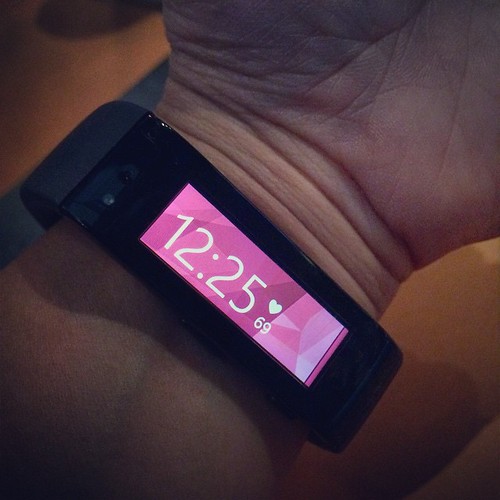
Hands on with Microsoft Band: It’s awkward and inaccurate, but stuffed with features >> PCWorld

Jon Phillips (I guess – there’s no byline on the article, but that’s the name on the photos):

I’ve never worn an ankle bracelet like the one Lindsay Lohan had to wear while under house arrest. But after two days testing the Microsoft Band, I think I may have an idea of how constricting and confining those electronic monitors might be.

The Microsoft Band is uncomfortable to wear, and its heart-rate tracking, a marquee feature, doesn’t hold up to real-world testing. It’s a shame my first impressions are so negative, because with built-in GPS, a UV sensor, skin temperature and perspiration sensors, and a broad set of smartwatch-style notifications, the Microsoft Band promises a lot of cool features for $200.

Where the best wrist wearables are pliable and unobtrusive, the Microsoft Band is bulky and rigid, and never lets you forget you have it on.

And there’s huge variability in the heartrate monitoring. Who wants an awkward, inaccurate and pricey piece of technology on their wrist?


Dell’s life after Wall Street >> NYTimes.com

Dell has a comprehensive strategy at a time when peers like Hewlett-Packard and IBM are splitting apart and selling bits of themselves.

The new Dell has software, equipment for data storage and computer networking, services and sensors. It is developing software that measures facial expressions, voice tone, even how we individually swipe key cards. There is a device that can make a hotel room’s digital television into a secure corporate computer. A Dell tablet is the world’s thinnest and lightest, the company says, with a four-million-pixel screen and a three-dimensional camera. And, of course, there are lots of new personal computers.

But some things have not changed. Dell is using the same plan in software and services that it used with PCs and servers two decades ago: Come in with a lower-profit-margin, “good enough” version of something like networking, then make the cheap stuff better.

…But will the big reboot of Dell work? Toni Sacconaghi, a financial analyst for Sanford C. Bernstein, said Dell’s strategy will hold up as long as PCs sell well.


Comments and links welcome. Be insightful, be helpful.

Links: how two-factor gets hacked, Microsoft Band, Page’s ambition, too-smart TV?, and more

#microsoftband#band#microsoft#fitness#fitnesstracker#health
Microsoft Band. Photo by Chun Yip on Flickr.

A selection of 10 links for you. Use them wisely.

My two-factor-protected Gmail account got hacked >> Ello

On Saturday, I had tweeted about the attack. Several people retweeted me and it cast a wide net. One of those people was Mat Honan, a senior staff writer at Wired. Mat has his own history in dealing with these kinds of attacks. On Monday, he kindly reached out to me suggesting he might have some information and we arranged a phone call.

Again, specific details from this point are murky, but he suggested that I check with my cell phone provider and make sure that call-forwarding had not been enabled on my number without me knowing. Creepy, I thought.

I called, and sure enough, as of Saturday morning my number had been forwarded to a number I did not recognize. Unreal. So, as far I can tell, the attack actually started with my cell phone provider, which somehow allowed some level of access or social engineering into my Google account, which then allowed the hackers to receive a password reset email from Instagram, giving them control of the account.

All because they wanted his two-letter Instagram account handle.


I’m terrified of my new TV: why I’m scared to turn this thing on — and you’d be, too >> Brennan Center for Justice

Michael Price:

I just bought a new TV. The old one had a good run, but after the volume got stuck on 63, I decided it was time to replace it. I am now the owner of a new “smart” TV, which promises to deliver streaming multimedia content, games, apps, social media, and Internet browsing. Oh, and TV too.

The only problem is that I’m now afraid to use it. You would be too — if you read through the 46-page privacy policy.

The amount of data this thing collects is staggering. It logs where, when, how, and for how long you use the TV. It sets tracking cookies and beacons designed to detect “when you have viewed particular content or a particular email message.” It records “the apps you use, the websites you visit, and how you interact with content.” It ignores “do-not-track” requests as a considered matter of policy.

I got a new “smart” TV the other day. I just chose not to share data with Sony (that’s the TV maker). Though it doesn’t have a camera and microphone, like Price’s does.


FT interview with Google co-founder and CEO Larry Page >> FT.com

A perennial optimist when it comes to technology, [Page] argues that all that will change. Rapid improvements in artificial intelligence, for instance, will make computers and robots adept at most jobs. Given the chance to give up work, nine out of 10 people “wouldn’t want to be doing what they’re doing today”.

What of people who might regret losing their work? Once jobs have been rendered obsolete by technology, there is no point wasting time hankering after them, says Page. “The idea that everyone should slavishly work so they do something inefficiently so they keep their job – that just doesn’t make any sense to me. That can’t be the right answer.”

He sees another boon in the effect that technology will have on the prices of many everyday goods and services. A massive deflation is coming: “Even if there’s going to be a disruption on people’s jobs, in the short term that’s likely to be made up by the decreasing cost of things we need, which I think is really important and not being talked about.”

If Page is right, then there is colossal social dislocation coming, but it’s hard to imagine it being positive. If companies like his avoid paying tax, which means governments don’t have money to disburse for social benefit, what happens?


The risk In Larry Page’s moonshots >> Business Insider

Jay Yarow takes issue with the Google chief’s insistence that you need to think gigantic to achieve gigantic:

By insisting on starting at “moonshot” level of ambition, Page risks missing out on the creation of small projects that lead to the real moonshots later on.

A similar mentality plagued Steve Ballmer at Microsoft. He tended to think about revenue. He was, and still is, hesitant to pursue a new product if it wasn’t going to make lots of money. That thinking gave Google an opportunity to destroy the Windows business with Android. It gave Google an opportunity to challenge Office with Google Docs. 

Page could miss the small projects that blossom into bigger projects if he insists on starting big. And there are a lot of small projects that are posing risks to Google’s lucrative search business.


Microsoft Band second impressions >> SuperSite for Windows

Paul Thurrott:

Even after less than a day of use, it’s pretty clear that Microsoft Band is big, bulky, uncomfortable and complex enough to dissuade many from using it. Which is too bad, because there is real magic here. Both in the Band itself, which provides an unprecedented number of data-gathering sensors. And in the underlying Microsoft Health services, which are more comprehensive than anything seen in other health and fitness platforms.

First, the basics. Physically, the Band itself will prove too unwieldy for most. I’m going to try and stick it out for a variety of reasons—Microsoft Health being the biggest and most obvious—but I wish Microsoft had made a few nods towards comfort in a device that is designed to sit on your wrist 24 hours a day. I don’t notice a Fitbit while I’m playing basketball, walking, typing, or whatever, but I notice the Band when I’m just sitting here motionless. It’s … obtrusive

Yes, the screen is big and bright. But it’s also flat, and not curved for your wrist, so it sticks out in odd angles and gets caught on things all the time. It’s like wearing handcuffs, and you’re always aware that the device is there. My Fitbit disappears from my mind until I want to check on something.

These days Paul Thurrott has kinder words for Apple than he does for Microsoft. (The Band does look terrible though. A flat, not curved, screen?)


What is to blame for Samsung’s bad fortune? >> Naofumi Kagami

In the case of iOS, the OS made full use of the 64-bit hardware to enable much faster processing of photos and movies. The OS made use of the TouchID sensor, which is also now being used by the Apple Pay service. Apple has given each piece of new hardware a significant reason for existing, and that is why customers want new devices.

On the Android side, that has not been the case. Google has not moved quickly to 64-bit, it has not worked hard on corporate level security, and it has not introduced software support for biometric sensor technology. Instead, Google has introduced a lot of software technologies that enable low-powered devices to smoothly run the latest operating system. Instead of adding new features that would take advantage of new high-end hardware, they focused on making sure that the mid-range and low-end hardware would be able to run the latest operating system and to take advantage of all of its features. In summary, Google actively designed their new operating system so that Samsung would have a hard time differentiating itself…

When Andy Rubin was removed and Sundar Pichai took over, it became rather clear that instead of fighting with iOS, Android would focus on the low-end. In fact, most products that Google creates (many of which were under the supervision of Sundar) aim at the very low-end where prices are normally zero. Google Docs is a prime example of this, as is Chrome OS. Google’s strategy is to commoditize all markets except for search and advertising, by providing a good enough product for free.

Google has been chasing the next billion users with Android L. That does create problems for Samsung in trying to chase the high-end users, as Android L also makes the midrange Android phones more attractive.


Android market share tops out while Google reasserts control >> Digits – WSJ

Google’s dominance over the smartphone landscape appears to be topping out, but the company is gaining more control over the devices that run its software.

The Android mobile operating system ran 84% of smartphones shipped globally in the third quarter, according to research firm Strategy Analytics, down slightly from 85% in the second quarter.

“Android’s global smartphone market share is peaking,” said Strategy Analytics analyst Neil Mawston. “Unless there is an unlikely collapse in rival Apple AAPL +0.75% iPhone volumes in the future, Android is probably never going to go much above the 85% global market share ceiling.”

The key thing, though, is that AOSP’s share of Android fell from 39% in the second quarter to 37% in the third quarter. Do the maths, and that means that in the second quarter, “Google Android” was 51.9% of the entire market, and in the third quarter, was 52.9%. It’s not a huge change, but it’s actually progress.

But as the WSJ points out, it’s the EC’s investigation into whether Google Android ties handset makers into using its services that could be the real roadblock.


James Thomson on Twitter: “Just had a phone call from Apple…”

“Just had a phone call from Apple – decision has been reversed, no changes required to PCalc’s widget. Thanks to everybody for their support!”

Told you. I understand there were decisions running at different speeds inside Apple. The right one took slightly longer to arrive.


This Android smartphone is too thin for a headphone jack >> The Verge

Chinese phone makers have been engaged in a long-running battle to see who can produce the thinnest possible smartphone, and today Oppo has scooped the title with the scarcely believable 4.85mm-thick R5. There is a caveat to that measurement since the camera sticks out from the ultra-slim body of the phone, but this is still the first handset of its kind to fit in under half a centimeter. Oppo has done its best not to compromise a spec sheet that includes a 5.2-inch Super AMOLED display, an octa-core Snapdragon 615 processor, and 13-megapixel camera.

However the small 2,000mAh battery and the absence of a headphone jack mark significant drawbacks for the R5.

The absence of a headphone jack?


Fueled by back-to-school promotions and US growth, the worldwide tablet market grows 11.5% in the third quarter >> IDC

The worldwide tablet grew 11.5% year over year in the third quarter of 2014 (3Q14) with shipments reaching 53.8m units according to preliminary data from the International Data Corporation (IDC) Worldwide Quarterly Tablet Tracker. Marked by back-to-school promotions and US appetite for connected tablets, the third quarter also saw shipments grow sequentially by 11.2% compared to 2Q14.

“Not only is the US market one of the largest for tablets, but third quarter results also indicate that this is where the growth is,” said Jean Philippe Bouchard, IDC Research Director for Tablets. “We saw Verizon continuing to sell connected tablets at a fast pace, a strategy that we believe other carriers will replicate in following quarters. We also saw RCA enter the top 5, impacting the entire US market and worldwide ranking with one large deal linked to back-to-school and channel fill ahead of Black Friday. Those two elements resulted in the US tablet market growing at 18.5% year-over-year compared to the worldwide market growing at 11.5% annually.”

Despite a continued shipment decline for its iPad product line, Apple maintained its lead in the worldwide tablet market, shipping 12.3m units in the third quarter. Samsung held its number two position on the market with 9.9m units shipped, capturing an 18.3% market share in the third quarter.

Asus did well, based on Windows-based 2-in-1 devices (which IDC doesn’t count as PCs). RCA, though?


Links: MCX’s ever-downward spiral, Apple nixes PCalc widget, ID theft site was sold credit data (and more)

Rite Aid, With Us, it's Personal, Signs, 2014, by Mike Mozart of TheToyChannel and JeepersMedia on YouTube #Rite #Aid
A selection of 10 links for you. Use them wisely.

MCX says merchants doing what’s best for customers, being attacked for ‘challenging the status quo’ >> Mac Rumors

MCX certainly appears to be placing the blame for its member retailers’ refusal to accept Apple Pay on the merchants themselves. Asked whether Apple Pay and MCX’s CurrentC solution should be able to exist side-by-side, the executives noted that believe they will in the future and that it will take two or three major players in mobile payments to allow the entire market to thrive.

But pressed as to why some retailers such as CVS and Rite Aid have shut down NFC entirely rather than allow unofficial Apple Pay payments in their stores, Davidson argued that merchants know their customers best and are making the choices they believe are right for their customers. He said the merchants believe customers want more than just mobile payments, and CurrentC’s integration of payments with loyalty cards and coupons will in his opinion prove to be the best solution.

“Merchants know their customers best.” That’s why you stop them paying in one way and make them wait for another that will come at some unspecified time next year and require them to enter all sorts of other stuff.

The narrative around MCX/CurrentC has its own fascinating momentum – hacks, press conferences – which suggests that it’s already heading towards some sort of crisis.


Drupal Core – Highly Critical – Public Service announcement >> Drupal.org

Automated attacks began compromising Drupal 7 websites that were not patched or updated to Drupal 7.32 within hours of the announcement of SA-CORE-2014-005 – Drupal core – SQL injection. You should proceed under the assumption that every Drupal 7 website was compromised unless updated or patched before Oct 15th, 11pm UTC, that is 7 hours after the announcement…

Attackers may have copied all data out of your site and could use it maliciously. There may be no trace of the attack.

The vulnerability was notified (highly critical) on 15 October; every version of version 7 from before that is vulnerable if you didn’t update.


James Thomson on Twitter: “Apple has told me that Notification Center widgets on iOS cannot perform any calculations, and the current PCalc widget must be removed.”

Apple has told me that Notification Center widgets on iOS cannot perform any calculations, and the current PCalc widget must be removed.

This was bad – but I understand Apple will reverse course and approve it today, Thursday. Especially in light of this.


Apple eyes new uses for NFC beyond iPhone payments >> The Information

Amir Efrati:

For instance, the “Clipper” card that’s used in California’s Bay Area Rapid Transit system uses a near-field communication (NFC) chip made by the same company that built the NFC chip that powers Apple Pay. And the Clipper card transmits data using the same standard and frequency as the iPhone 6 (ISO 14443 at 13.56 MHz), says Mr. Rosenberg of Creating Revolutions.

That means Apple could easily allow for Clipper cards to be uploaded into the phone, with key information stored in the phone’s “secure element,” along with bank cards used through Apple Pay, and let people tap their phones at the BART turnstiles to transmit the information to the card reader using the iPhone’s NFC chip.

Such a scenario would require a formal deal with Apple. For now, Apple restricts access to the iPhone’s NFC chip, meaning software developers can’t build apps that use it. But observers expect the company to open up access to developers in the future, just as it did for the iPhone’s Touch ID fingerprint sensor. Developers are already building apps that use the NFC chips in many Android phones like the Samsung Galaxy.

You can imagine software updates enabling new features on old iPhones, though Apple’s never done it before. Is it feasible on the NFC elements in the iPhone 6 range?


Experian sold consumer data to ID theft service >> Krebs on Security

An identity theft service that sold Social Security and drivers license numbers — as well as bank account and credit card data on millions of Americans — purchased much of its data from Experian, one of the three major credit bureaus, according to a lengthy investigation by KrebsOnSecurity.

In November 2011, this publication ran a story about an underground service called Superget.info, a fraudster-friendly site that marketed the ability to look up full Social Security numbers, birthdays, drivers license records and financial information on millions of Americans. Registration was free, and accounts were funded via WebMoney and other virtual currencies that are popular in the cybercriminal underground.


Answers to Your Questions >> MCX

MCX sets out how wonderful it is for everyone.

On the data security side, the technology choices we’ve made take consumers’ security into account at every aspect of their core functionality. We want to assure you, MCX does not store sensitive customer information in the app. Users’ payment information is instead stored in our secure cloud-hosted network. Removing this sensitive information from the mobile device significantly lowers the risk of it being inappropriately disclosed in a case that the mobile device is hacked, stolen or otherwise compromised.

In the cloud? I’m so.. not reassured. Also enjoyable:

When merchants choose to work with MCX, they choose to do so exclusively and we’re proud of the long list of merchants who have partnered with us. Importantly, if a merchant decides to stop working with MCX, there are no fines.

(MCX emphasis.)


72 Hours of #Gamergate >> Medium

Andy Baio did a fantastic analysis of three days’ tweets around Gamergate, and then (with help) drew up a Delphi graphic showing how the pro- and anti- camps look:

This network visualization is as good a metaphor as any for #Gamergate. Two massive, impenetrable hairballs of people that want little to do with one another, only listening to their side and firing volleys across the chasm.

Much the same as any political divide, and as unlikely to be closed.


Sprout >> HP® Official Site

It’s a PC that has inbuilt cameras that look down onto a tabletop mat, which connects the cameras to what appears on the screen.

Hard to categorise. If this had come from Apple everyone would be raving about it; as it’s HP it’s had a collective “hmm”. The difference, perhaps, is that Apple knows how to drive the interest – and use – for such a product. Still, could find some eager buyers in particular segments. (Bonus point for the “Sprout” name, though.)


Anita Sarkeesian on video games’ great future >> NYTimes.com

Anita Sarkeesian:

The Wii reignited my interest in gaming, offering play experiences I found engaging and rewarding, like Mario Kart, de Blob and The Beatles: Rockband. From there, I immersed myself in zany PC games like Plants vs. Zombies, World of Goo and Spore, and eventually became a fan of mainstream first-person titles like Mirror’s Edge, Portal and Half-Life 2.

Even though I was playing lots of games, I still didn’t call myself a “gamer” because I had associated that term with the games I wasn’t playing — instead of all the ones I was playing. This was largely because I’d bought into the myth that to be a “real gamer,” you had to be playing testosterone-infused blockbuster franchises like Grand Theft Auto, God of War or Call of Duty.

And that’s the crux of what’s going on. It’s like “cracker” v “hacker” (“hackers aren’t crackers, maaaan!”) and “what does ‘troll’ actually mean?” (“You see, ‘troll’ actually means humorously annoying people…”). Language is fluid, but the latter meaning above of “gamer” is – ironically – becoming a carapace that won’t let its participants out, because they’re building it around themselves.

Note also how the cracker/hacker, “define troll” and “actually, a ‘gamer’ is…” lends itself to mansplaining.


Getting chipped: Why I will live with an NFC chip implant for a year | Network World

René Schoemaker lives in Holland:

I’ve been living with an NFC chip in my left hand since Sept. 25. It was implanted between my thumb and index finger, and I can tell you that it hurt quite a bit. But that was mainly because of all the TV camera people trying to film it, which dragged the process out from the normal five seconds to about 30 seconds.

I got chipped together with nine other volunteers during the IT Innovation Day organized by IDG Netherlands. The other volunteers and I will spend the next 12 months testing the use of an NFC chip in our daily lives to see whether having the chip implanted in our bodies is more useful than using a chip embedded on a card or in a smartphone.

So far, it has been pretty useless though. We are still in the process of coming up with possible applications such as using the chip to pay for public transportation or in shops and restaurants.

Isn’t that the sort of thing you’d think about before getting the implant? Perhaps he’ll meet Kevin Warwick.

Leave a comment. Be informative. Add to the conversation.

Links: US virus scam, CurrentC’s woeful policies, when crowdsourcing goes wrong, and more

City of #SF has deployed #NFC payments for street parking meters. #mobile

A selection of 12 links for you. Use them wisely. Comments are open (but moderateable).

Acting on Facebook Referral, FTC Gets Federal Court to Shut Down Scam Support Outfit Pairsys – AllFacebook

Acting on a referral from Facebook, the Federal Trade Commission announced Friday that at the commission’s request, a federal court shut down the operations of Pairsys, an Albany, N.Y.-based company that coerced computer users into paying hundreds of dollars apiece for unnecessary technical support and software that was available free-of-charge.

According to the FTC, Pairsys employees cold-called computer users and posed as representatives of Facebook or Google, and the company was also behind online ads that indicated that its phone number was the technical support number for legitimate companies in the industry.

Damn. The Indian “Windows virus” variant was bad enough; now it’s metastatized to the US and UK.


Apple Pay Reality – accepting payments >> Quora

Brian Roemmele:

80% of the US transaction payment card volume comes from 150,000 merchant locations. These are the largest retailers in the US.

If we subtract the MCX members like WalMart and Target we are left with just over 60% of the top 150,000 top volume merchant locations accepting Apple Pay. This number is increasing rapidly as 250,000 medium sized merchant and the 5.5m small merchants join the Apple Pay rocket ride. This group has increased demand for NFC devices by over 3,000%. These merchants are rapidly adding these free upgrades to their existing payment card devices at such a record pace that supplies that were going to be sent to Europe are now being sent to the US. I see no slow down to this demand.


CurrentC User Terms and Conditions >> MCX

So much to choose from here. What about
– no “jailbroken” devices (might rule out some Android fans)
– you have to create a CurrentC account (obviously) for which “you will be asked to provide your name and certain other personal information, which may include, but not be limited to, name, email address, date of birth, and social security number. In addition, you will be asked to provide MCX with your Payment Method account information (such as bank account or other financial account information) necessary to originate, process and settle your payment transactions with participating MCX Merchants.” Though it says in the privacy policy that it doesn’t store those.
– “You grant MCX express written consent to receiving autodialed and prerecorded message calls, text messages or push notification alerts from MCX, or those Third Party Services providers acting on MCX’s behalf, at any mobile telephone number you provide to MCX, regardless of your registration of your mobile device number on any state or federal “do not call” registry. Your express, written permission applies to messages and alerts regarding the MCX payment transaction Services and any optional Services you have elected to receive.”

The privacy policy is amazing too: collects system activity; hardware settings; date and time; location; IP address; and then “may share or disclose” to merchants, third-party providers involved in providing the services, and so on.

It’s quite creepy. And giving a merchant organisation direct access to your bank account? You’d hope US consumers have seen enough examples of hackers breaking into retailers not to go for that.


How crowdsourcing turned on me >> Nautilus

Iyad Rahwan had taken part in a number of Darpa challenges, and succeeded using crowdsourcing. When it came to putting back virtual shredded documents using a crowd, all was going well – until a troll hit and scattered their work:

In our post-mortem analysis, Cebrian and I revealed how the crowd recovered efficiently from its own errors, fixing 86% of them in under 10 minutes. However, the crowd was hopeless against a determined attacker. Before the first attack, our progress on the fourth puzzle had combined 39,299 moves by 342 users over more than 38 hours. Destroying all this progress required just 416 moves by one attacker in about an hour. In other words, creation took 100 times as many moves and about 40 times longer than destruction. [Emphasis added.]

First place was taken by a team of three using custom-designed software. They were far less vulnerable to invasion than we were with our oh-so-open platform. A few days after the contest had ended, our attacker emailed Cebrian from an anonymous address, admitting that he or she belonged to a competing group. They claimed to have recruited individuals through…

Guess which notorious site they recruited them through.


Malicious ads on major websites held users’ files to ransom >> Engadget

A widespread attack has exposed millions to malware that holds files to ransom. The campaign, which was first detected a month ago, placed fake adverts on websites such as Yahoo, AOL and The Atlantic that installed so-called “ransomware” onto a victim’s computer. The attackers stole assets from the likes of Case Logic, Bing and Fancy in order to make the malicious ads appear real, but once a computer becomes infected, things get very bad, very fast, for victims.

The ransomware – named CryptoWall 2.0 – uses Adobe Flash to exploit browser vulnerabilities, installing itself on the affected computer.

Two avenues: malvertising, and Flash. Advertising is always going to be a risk; Flash, though, you can do something about. Like removing it. You don’t have it on your phone, after all.


Mobile in China — the year of the looking glass >> Medium

Julie Zhuo:

The strangest thing about iPhone usage in China was how most people had accessibility mode turned on. In other words, a persistent tab was always covering some part of the screen, though you could move it around along the edge. I wasn’t aware this feature even existed, but apparently you can use it to avoid having to use the power and home buttons. Baffled, I asked my cousin why this option was so commonly turned on. She said it was because people were concerned about their home button malfunctioning (apparently it’s enough of a meme that multiple people I talked to cited this reason) and as repairs are expensive they’ve resorted to not using the hardware buttons altogether.

I’ve seen this too (in Dubai) and the reason given was the same. (Personally, I’ve used lots of iPhones and never had a home button fault, but if repairs are expensive..) The Accessibility function is in Settings -> General -> Accessibility -> (scrolllll dowwwwnnn) AssistiveTouch -> (turn it on).

Plenty more to digest (not Apple-related) about the world’s biggest smartphone market, China, in this great post.


Facebook offers life raft, but publishers are wary >> NYTimes.com

David Carr on Facebook’s suggestion to publishers that they just publish stuff directly into Facebook itself, and do a revenue split on the adverts shown there:

It reminds me very much of those times when other digital behemoths tried to persuade content providers into letting them host the publishers’ content. In the early days, when AOL was dominant, the service preyed on the publishers’ fear that if they didn’t put their content inside the walled garden of AOL, their content would be invisible. That strategy benefited AOL in the short run, but no one prospered in the long run.

And I remember a visit to Google when Sergey Brin, a founder of the company, and some of his colleagues talked about how clunky most news web pages were — sound familiar? — and offered to host content with quicker load times and a revenue share. That went nowhere fast.

Once companies reach a certain scale online, they have a tendency to decide that while they love the Internet, they would like a better version. And, oh, by the way, they should run it. (All considered, Apple has already pulled off that trick, creating a private enclave of apps that it controls.)


Introducing Fire TV stick >> Amazon Media Room: Press Releases

Apart from “DUAL-CORE 1GB RAM 8GB STORAGE DUAL-BAND DUAL ANTENNA” (none of which will mean anything to the average person; Amazon is clearly aiming at the geek buyer who goes for the Chromecast), I found this interesting, about the inclusion of a remote control:

Customers have told us they want to use a remote control, not just their phones, to watch TV. Now, everyone in the household can watch movies and TV shows without borrowing your phone—use the included remote to easily navigate and discover movies, TV shows, apps, and games.

The impossibility of killing the remote control is one of those factors about internet TV that makes it so hard to do well.


Apple’s iPhone 6 Sales outpace Samsung Galaxy Note 4 in South Korea >> Chinatopix

The three South Korean carriers all reported strong sales, with the end result after one day being more than 500,000.

Compare this to the Galaxy Note 4’s 30,000 sales at the same time point, it is clear why some analysts are pointing to Apple’s final push into South Korea, after years of being shrugged off by the country, in favour of their own homegrown brands.

KT were the first carrier to start selling the iPhone 6 and iPhone 6 Plus, reporting 10,000 sales in 1 minute and 50,000 sales in 30 minutes. SK Telecom, the largest carrier in South Korea, gave even more praise to the early sales of the iPhone.

This is not good news for Samsung, which can normally rely on the Galaxy smartphones to come up big in South Korea. The Galaxy S5 was shunned in South Korea, in favor of the LG G3, which outsold Samsung’s flagship 3 to 1 for most of the year.

Did not know that about the G3. LG has really shown how to turn a phone business around.

Meanwhile, the Note’s apparently slow sales have to be seen in context: Samsung has been selling them since 2011, so you’d guess that anyone who wants one likely has one already.

Even so, likely to be a few high fives about this in Cupertino.


Leaked Rite Aid docs say Apple Pay may never come >> SlashGear

Here is the text of the alleged internal memo:

Please note that we do not accept Apple Pay at this time. However we are currently working with a group of large retailers to develop a mobile wallet that allows for mobile payments attached to credit cards and bank accounts directly from a smart phone. We expect to have this feature available in the first half of 2015.

If customers attempt to pay for a transaction with Apple Pay, a message will prompt both customer and cashier for a different form of payment. Please instruct cashiers to apologize to the customer and explain that we do not currently accept Apple Pay, but will have our own mobile wallet next year.

This is going to fail, not because Apple Pay is somehow magical, but because hackers will target the woeful security of CurrentC (ugh, the name) – which uses QR codes and insists on direct access to the customer’s current (not credit) account, and stores customer details.

It’s hard to believe that there’s been a real security audit of CurrentC. Perhaps they’ll publish it.


Why I don’t trust copypaste >> Securinti

I was talking to a good old friend when I accidentally hit ctrl-v instead of ctrl-c. Normally, this would be no big deal: I’d immediately notice my mistake and correct it. My friend wouldn’t notice anything.

But things went different this time. I was working on a photoshop project earlier that day. The data stored in my clipboard was not clear text, but an image. Facebook seems to treat images in a different way: it sends them right away, without having the need to press enter or “send”. Long story short: I sent my friend some image data from a project I’ve been working on. Not a big deal, or is it?

It is.


Why @Evleaks is giving up reporting phone scoops >> The Next Web

Evan Blass (aka phone leaker Evleaks)

These matters are always somewhat complicated, but like many things, it mostly comes down to money. Trying to monetize a stream of Twitter leaks is not easy. First I tried monthly sponsorships. Then weekly. Then single sponsored tweets. I took donations — felt like online panhandling.

I also started a website, and it’s actually done somewhat respectably, but with all the leaks going out on Twitter anyway, people have little incentive to visit, and most of my tech-savvy-heavy audience seem to be pretty heavy ad-block users, as well. It all adds up to an unsustainable living, and with a progressively worsening disease [Ed; Blass was diagnosed with multiple sclerosis], I need to make sure I can prepare myself better for the future, financially.

Best wishes for a lasting treatment for his MS.


Links: porn (ch)users, Fire Phone, moody ring, and more

A selection of 7 links for you. Use them wisely.

96pc of web users ‘opt to see porn’ — Telegraph

Rhiannon Williams:

The vast majority of broadband customers are choosing not to opt in to porn filters that prevent access to adult content, despite Prime Minister David Cameron’s insistence they are vital to protect “our children and their innocence”.

Only 4% of new Virgin Media customers have signed up to the parental controls, alongside 5% of BT and 8% of Sky newcomers, according to a new report by Ofcom
.
In the second of three reports examining the approaches the ‘big four’ internet service providers (ISP) are taking to implement the filters, Ofcom found that TalkTalk’s take-up rate was 36%, having offered parental filtering services since May 2011, two years prior to the government initiative.

Filed under “government initiatives that were successful in providing a choice that people completely ignored.”


Amazon Fire Phone review — The Verge

David Pierce:

The Kindle Paperwhite is what the Fire Phone should be, a device perfectly suited to its task with subtle improvements lurking behind every corner. And who knows? Maybe in seven more years we’ll have the smartphone equivalent. But this Fire Phone is more like that first Kindle: a device with so many features, so many ideas, that it has either forgotten or ignored what it’s supposed to be for. Dynamic Perspective and Firefly are impressive technological achievements with bright futures (if by some miracle Amazon can get its developers on board), and the Fire Phone is a remarkably efficient shopping machine. But it’s not a very good smartphone.


Nod ring lets you control gadgets with a wave of the hand >> Gadget Lab — WIRED

The stainless-steel ring is packed with motion sensors, a Bluetooth 4.0 antenna, and a pair of processors. According to Nod co-founder and CEO Anush Elangovan, the ring uses a Bluetooth Low Energy connection for all its needs; early prototypes of the ring included tests for NFC and Wi-Fi Direct chips, but those were too power-hungry and big.

Because of Bluetooth 4.0’s energy-efficiency, the Nod ring is able to squeeze an entire day’s worth of battery life out of a mere 23-mAh battery–essentially a rechargeable watch battery. The ring can also connect to Wi-Fi-controlled devices by using a smartphone as a Bluetooth gateway. Nod says the ring is designed to be worn all day–you can wear it while you’re in the shower or taking a swim, just as long as you don’t go below 170 feet.

It was sounding so good until it got to the bit about “entire day”. That should not be the horizon for a wearable’s battery life.


Now you can unlock your Moto X with a digital tattoo — The Official Motorola Blog

Made of super thin, flexible materials, based on VivaLnk’s eSkinTM technology, each digital tattoo is designed to unlock your phone with just a touch of your Moto X to the tattoo, no passwords required. The nickel-sized tattoo is adhesive, lasts for five days, and is made to stay on through showering, swimming, and vigorous activities like jogging. And it’s beautiful—with a shimmering, intricate design.

It’s another step in making it easier to unlock your phone on the go and keep your personal information safe. An average user takes 2.3 seconds to unlock their phone and does this about 39 times a day—a process that some people find so inconvenient that they do not lock their phones at all. Using NFC technology, digital tattoos make it faster to safely unlock your phone anywhere without having to enter a password. 

So much more convenient than those “fingerprint” things. Those only stay all the.. oh wait.


Chrome’s been eating your laptop’s battery for years, but Google promises to fix it — PCWorld

Google is just now responding to a bug in Chrome for Windows that may have been sapping users’ batteries for years.

Chrome’s battery drain problem was brought to wider attention by Forbes contributor Ian Morris, who noticed that Chrome for Windows was using considerably more power than other browsers.

The issue, he wrote, is that Chrome doesn’t return the system’s processor to an idle state when it’s not doing anything. Instead, Chrome sets a high “system clock tick rate” of 1 millisecond, and leaves it at that rate, even if the browser’s just running the background.

By comparison, Microsoft’s Internet Explorer only ramps up the tick rate for processor-intensive tasks such as YouTube, and otherwise returns it to the default rate of 15.625 milliseconds. According to Microsoft, setting the tick rate consistently at 1 millisecond can raise power consumption by up to 25% depending on your hardware configuration.

This bug wouldn’t be too surprising if it was introduced in a recent update. But according to Morris, the first report of it popped up in 2010, and a more recent bug report in Chromium has been racking up new comments since November 2012.

World domination first, bugfixes second. Quitting Chrome is definitely an easy way to gain battery life.


Google, Roboto and Design PR — Subtraction.com

Khoi Vinh:

There’s essentially no news in this article other than, “Google has revised Roboto using some recent best practices of type design.” And yet the Mountain View company has been able to spin that non-story into a story that claims that the company is fundamentally reinventing typography. I’ve seen the same publicity gears at work again and again over the past year, whether it’s about material design, Google’s card metaphor usage, their maps redesign, or even the narrative of how the company is integrating design itself.

The idea that Google actually is fundamentally reinventing typography has been thoroughly debunked elsewhere. So it’s an effective piece of PR.


The Nokia Lumia 1020 reaches End of Life status on September 14th. — Evleaks

As in “Microsoft’s Mobile Devices division won’t be making any more”, not “the existing devices won’t be supported”. The 1020 didn’t sell – the camera is fantastic, but people who want a fantastic camera buy a DSLR. People who want a smartphone, well, for the most part they aren’t buying a Lumia if they can afford what the 1020 cost.


Linking: sound, Intel’s results, digital generations, Apple-IBM

A selection of five links for you. Use them wisely.

There’s life above 20 kilohertz! A survey of musical instrument spectra to 102.4 kHz — Caltech

Trumpets and even violins make noises well above hearing range, and if you have the right equipment then people can tell a difference in playback. Maybe Neil Young is right after all?


Intel beats estimates, raises forecast on improved PC market — Re/code

Chipmaker Intel said on Tuesday that an improved PC market helped it to deliver quarterly earnings that exceeded its initial estimates. The company also hiked its full-year sales outlook.

Intel reported second-quarter earnings of $2.8bn, or 55 cents per share, on sales of $13.8bn for the three months ending in June.

The company raised its expectations last month, saying it expected sales to be about $13.7bn, up from its original April forecast of $13bn. At the time, the company said that the improved health of the business PC market was largely responsible for the improved outlook.

OK, so the business PC market – in line with business generally – is up. But part of the driver of that business PC market growth has been the end of life of Windows XP – launched in October 2001. Vista was released in 2005, so there’s a long time to wait for the same uplift.

Oh, but there’s also this:

After essentially missing out on the early days of the tablet, Intel has set an ambitious goal of powering 40m tablets this year, the bulk of them likely to run Android. The company also sees a growing business in selling laptops running Google’s Chrome OS.

Intel’s mobile unit, though, posted quarterly revenue of $51m, down 83% year on year and off 67% from the first quarter. (CEO Brian Krzanich said in a statement that Intel remains on track to hit that goal.)

Mobile is barely a pimple on Intel.

And here’s another thing: try finding any correlation between Intel’s revenues in its PC Client group (which is separated out from its Data Center group, Internet of Things group, Mobile, and Software & Services revenue) and worldwide PC shipments, either in the same quarter or for the succeeding quarter.

You won’t find it. It’s about 0.33 – where perfect correlation is 1, and “it’s random, man” is 0. Given that Intel provides the processors for the PC business, you’d expect to see it hovering at least around 0.75.

But the “PC Client group” revenues are both microprocessors, and “motherboards and other chips” – where the latter seems to inject enough variability (read: noise) into the data that it overwhelms the signal.


Digital Generation Gap — Tech.pinions

Bob O’Donnell on a study of 2,500 people from around the world; this takes in about 1,000 respondents in the US and UK:

As expected, the younger you are, the more you use your smartphone. The older you are, the more you use your PC. The degree of differences between age groups and the nearly perfect tracking with age was somewhat surprising however. Of course some of this has to do with using the devices we are most comfortable with. Younger people have grown up with smartphones and older people grew up using PCs. However, there’s also a difference in the type of activities and the amount of time spent on them between the different groups. Some of the activities older people do are arguably better suited to PCs and vice versa.

A big unanswered question is, how will this chart look in 5 years? Will the 18-24 year olds maintain this split of device usage as they age into the 25-34 group (and so on), or will their likely shifting of activities as they get older adjust their device usage? (Of course, there’s also the strong possibility we’ll have more device categories to add to the mix in 5 years, but that’s a topic for another column.)

This is part of why commenters get so grumpy when you talk about a shift away from PCs towards smartphones and tablets: they’re all on PCs.


Apple and IBM forge global partnership to transform enterprise mobility — Yahoo Finance

The new IBM MobileFirst for iOS solutions will be built in an exclusive collaboration that draws on the distinct strengths of each company: IBM’s big data and analytics capabilities, with the power of more than 100,000 IBM industry and domain consultants and software developers behind it, fused with Apple’s legendary consumer experience, hardware and software integration and developer platform. The combination will create apps that can transform specific aspects of how businesses and employees work using iPhone and iPad, allowing companies to achieve new levels of efficiency, effectiveness and customer satisfaction—faster and easier than ever before.

As part of the exclusive IBM MobileFirst for iOS agreement, IBM will also sell iPhones and iPads with the industry-specific solutions to business clients worldwide.

Well that might goose iPad sales a little. It’s all in the execution, of course. You can see two scenarios: IBM executes this incredibly well, and Microsoft and Android devices find themselves effectively locked out of the enterprise market for tablets and phones.

Or IBM screws it up, and it’s all just the same as it was before.

One could expect it will be somewhere in the middle – which still isn’t good for Microsoft and Android OEMs. Nor, indeed, BlackBerry.


Top 10 smartphones in May 2014 – Galaxy S5 fails to displace iPhone 5s — Counterpoint Technology

According to Counterpoint’s channel survey across 35 countries, Apple’s iPhone 5s continues to be the bestselling phone in the world, a spot that many expected to be taken by Samsung’s Galaxy S 5. The highly anticipated Galaxy S5 comes in at second place but still a quite distant number two in terms of (sell through) unit sales. The iPhone 5c shipments continue to decline but Apple continued clearing excess inventory for the iPhone 5c during the month. Apple iPhone 5c sales put it behing Samsung’s last year’s flagship Galaxy S4 and Galaxy Note III.

The top ten goes
Apple (5S)
Samsung (S5)
Samsung (S4)
Samsung (Note 3)
Apple (5C)
Apple (4S)
Xiaomi (M3)
Samsung (Galaxy S4 mini – a cut down version of last year’s flagship)
Xiaomi (Hongmi Redrice)
Samsung (Galaxy Grand 2 – a 2013 phablet, lower-priced, 5.25in screen).

The key point is that the iPhone 5S is doing the same numbers that the iPhone 5 was last year. Now, that might not be encouraging – that’s stalled growth, right?

But Samsung is selling fewer S5s than it was selling S4s last year. That suggests that the premium market for Apple is still staying the same, while that for Samsung is falling away. Or did it overshoot the market in terms of features it provided with the S3 or S4?