Start up: Adblock Plus v Axel Springer, Apple’s Wi-Fi problem, Xiaomi’s shortfall, sell that Priv!, and more


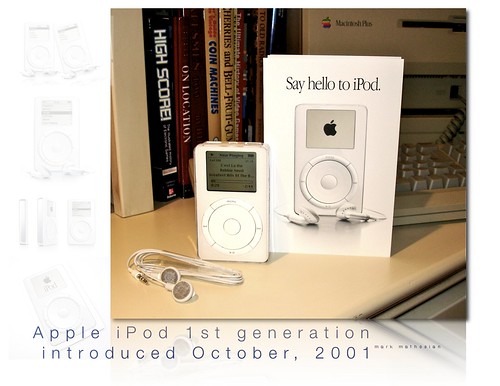
(Just over) 14 years ago… evolution, revolution or just another MP3 player? Photo by MarkGregory007 on Flickr.

You can now sign up to receive each day’s Start Up post by email. You’ll need to click a confirmation link, so no spam.

A selection of 9 links for you. Yes, I know if you’re reading this in the US it’s an hour earlier than usual – that’s because we’ve finished British Summer Time before you. I’m charlesarthur on Twitter. Observations and links welcome.

Adblock Plus and (a little) more: Smells like censorship, Big Brother » AdBlock Plus

Eyeo, which runs Adblock Plus, has been accused of behaviour tantamount to blackmail by saying it will allow “acceptable ads” from some sites that pay it money. Axel Springer in Germany, meanwhile, decided to institute an “non-paywall” which would prevent people using an adblocker from seeing its content on Bild.de etc. Then:

One of the independent moderators of our free and open forum discussed a workaround to the Bild.de blockade, because they still wanted to access the site. Basically, they just talked about how to write a specific filter that users could add to their ad blocker to get around “Axel’s Wall.”

Last week, Axel Springer demanded that we take down those forum posts, in effect demanding that we censor what people had written on our own forum. Our response basically channeled former basketball player/current journalist Jalen Rose: Nah … not gonna be able to do it.

Just a few minutes ago, a court in Hamburg served us with papers FORCING us to remove these specific forum posts. Apparently Axel Springer felt so strongly that they went to a court to get people to stop saying things they didn’t like. This is not without precedent: this week they sent a YouTuber a similar order after he decided to make a video describing how to circumvent …. the Wall.

Damn you, Internet Archive.
link to this extract


October 2001: Apple’s New Thing (iPod) » MacRumors Forums

Fabulous comment thread from Macrumors, including those calling it “Cube 2.0” (the Cube computer was killed after a year), and this from “WeezerX80”:

This isn’t revoltionary!

I still can’t believe this! All this hype for something so ridiculous! Who cares about an MP3 player? I want something new! I want them to think differently!

Why oh why would they do this?! It’s so wrong! It’s so stupid!

Tons more fun to be had. Sadly, Weezerx80 stopped posting there the same day, so we’ll never be able to ask him what he thought of the outcome. (Via Greg Koenig.)
link to this extract


Wi-Fi Assist: a $5 million mess » Medium

Alf Watt, developer of iStumbler, worked on the Mac OS Wi-Fi client user experience at Apple from 2007-12:

During my last few years I spent a lot of time working closely with AppleCare on customer Wi-Fi and networking issues: poring over user trouble reports, sitting down at call centers and listening in on calls, and generally doing everything I could to improve the user experience of Wi-Fi for Apple users.

I failed. It may have been possible to succeed, but the structure of the various teams working on Wi-Fi and networking at the time made it a seemingly insurmountable challenge. This current situation makes it clear to me that there are still forces inside of Apple which prevent any kind of real, comprehensive solution from being implemented. Balkanization, poor management and some uninformed decisions by executives contributed to the problem; and as I’m all to human, my own limitations and personal struggles played a large part. But it didn’t have to happen this way, and it doesn’t have to continue.

Lots of fascinating nuggets in this, including

“when a user calls the vendor of their Wi-Fi access point, nearly the entire profit margin for that box is destroyed by the end of the call.”

link to this extract


Xiaomi won’t hit its smartphone sales targets this year » TechInAsia

Charles Custer:

Last year, Xiaomi gave itself the goal of selling 100m phones in 2015. That seemed ambitious, but not outside the realm of possibility, especially after the fast-growing company finished 2014 having shipped more than 60m units after having originally projected only 40m sales.

2015 has not gone nearly as well, though. By March, Xiaomi CEO Lei Jun had revised this year’s goal to 80m to 100m units. In July, the company announced that it had sold 34.7m smartphones in the first half of the year, putting it on track to possibly miss even the lower end of Lei Jun’s revised target.

Now, there are additional signs that even 80m might be optimistic. Taiwan-based research firm Trendforce just released a report suggesting that Xiaomi is on track to sell around 70m smartphones this year. Meanwhile, research firm Canalys is saying that Xiaomi’s sales in the third quarter of this year actually dropped year-on-year, the first time that has happened.

What’s disrupting Xiaomi? Probably just the slowdown in the Chinese market, which is happening faster than its ability to expand into new markets. Hence it offering products such as a cheap 4K TV (China only, sadly).
link to this extract


We applied to Google’s €150m journalism fund – here’s what we sent in » The Register

The Register’s Kieren McCarthy filled out the form, which has questions such as:

Q Please provide a brief overview of the project. (max 1200 characters)

The project would use a combination of traditional news gathering skills and modern communication tools to gather data around a range of practices performed by internet search engine giant Google, in an effort to expose potential wrongdoing or abuse of market power.

In particular, the project would focus on:

• The skewing of search results.
• The tracking of right-to-be-forgotten requests performed by Google.
• The size, breadth, and impact of Google’s news service on online news sites, looking in particular at the phenomenon of stories written specifically to gather Google News traffic and any possible negative impact on quality journalism due to biases in the Google News algorithm.
• A logging and policy-tracking service to discern the impact of Google lobbying activities on policies and laws developed in Washington DC.
• An open source complaints system focused on gathering early warning signs of abuse of market power by Google.
• A “revolving door” service that specifically tracks current and former Google employees to identify how informal social networks may be used to influence public policy.

Looking to fund three staff. One to watch for sure.
link to this extract


Should we trust the young Turkers? » Tim Harford

The FT’s ‘undercover economist’:

“The majority of papers presented at the conferences I go to now use [Amazon’s Mechanical] Turk [which lets you hire people online to complete tasks],” says Dan Goldstein, a cognitive psychologist at Microsoft Research. Goldstein, an academic who has also worked at London Business School and Columbia University, has used MTurk in his own research, for instance, into the impact of distracting online display ads.

This stampede to MTurk has made some researchers uneasy. Dan Kahan of Yale Law School studies “motivated reasoning” — the way our goals or political opinions can influence the way we process conflicting evidence. He has written a number of pieces warning about the careless use of the Amazon Turk platform.

The most obvious objection is that Turkers aren’t representative of any particular population one might wish to examine. As an illustration of this, two political scientists hired more than 500 Turkers to complete a very brief survey on the day of the 2012 US presidential election. (Tellingly, the entire survey cost the researchers just $28 and the results arrived within four hours.) The researchers, Sean Richey and Ben Taylor, found that 73% of their Turkers said they had voted for Barack Obama; 12% had voted for “other” — compared with 1.6% of all voters. Mitt Romney polled vastly worse with the Turkers than the US public as a whole. Relative to the general population, Turkers were also more likely to vote and be young, male, poor but highly educated. Or so they claimed; it is hard to be sure.

There are all sorts of reasons not to trust Turk-sourced studies, and only a few in favour of them.
link to this extract


Microsoft’s quarter looks worse this way » Business Insider

Julie Bort:

Microsoft rolled out a new way to report earnings with its first quarter, 2016 earnings on Thursday.

This new reporting structure consolidated Microsoft’s businesses into three new units.

The previous structure had two major units (commercial and consumer) and broke out a few different businesses in each of those.

As you can see, under the old scheme, all business units shrunk except two:

Phone hardware down 54% to $1.1bn, computing and gaming hardware (Xbox, essentially) down 13% to $2bn; only “Device and Consumer Other” (Bing, MSN, Office 365, video games, app store) and “Commercial Other” (cloud services) showed growth. The puzzling thing is how Microsoft’s shares would move up on something like this.
link to this extract


Android, iPhone divergence: mid-price smartphones disappearing from Korean market » BusinessKorea

Jung Suk-yee:

The polarization between high-end and mass market products in the Korean smartphone market is expected to accelerate with the iPhone 6S’s local debut.

At present, few smartphones ranging from 400,000 to 700,000 won (US$353 to $617) in price are available in the domestic market, except for the recently-released Samsung Galaxy Note 5 and LG V10. This is because the prices of existing high-end handsets have been reduced to 400,000 won or less by a cut in factory price and an upward adjustment of the subsidies. The prices of the Galaxy Note 5 and the V10 are predicted to be lowered in the near future, too.

This is certainly a trend – most Android phones are getting cheaper and cheaper, but Apple and a few others, are holding on to top-end pricing. South Korea is the sort of “end state” of the smartphone business; it’s super-saturated.
link to this extract


Shop BlackBerry Priv Stock good or bad Sales? » CrackBerry forums

“So this was interesting. I started entering 999 QTY for the Priv at 10am today, and it told me they only have 965 available.

checking right now (12:25p), it says 840. so is that good or bad? what do you guys think..”

Later they figure out that it has sold 206 in six hours. Guys, is that good or bad?
link to this extract


Start up: a cure for ageing?, smartphone slowdown, how many Surface Books?, Playboy’s China link, and more


Probably not the A7 CPU, but it’s the principle that counts. Photo by tsukacyi on Flickr.

A selection of 10 links for you. Use them wisely. I’m charlesarthur on Twitter. Observations and links welcome.

Elizabeth Parrish, CEO of BioViva, claims to undergo anti-aging therapy » MIT Technology Review

Antonio Regalado:

Elizabeth Parrish, the 44-year-old CEO of a biotechnology startup called BioViva, says she underwent a gene therapy at an undisclosed location overseas last month, a first step in what she says is a plan to develop treatments for ravages of old age like Alzheimer’s and muscle loss. “I am patient zero,” she declared during a Q&A on the website Reddit on Sunday. “I have aging as a disease.”

Since last week, MIT Technology Review has attempted to independently verify the accuracy of Parrish’s claims, particularly how she obtained the genetic therapy. While many key details could not be confirmed, people involved with her company said the medical procedure took place September 15 in Colombia.

The experiment seems likely to be remembered as either a new low in medical quackery or, perhaps, the unlikely start of an era in which people receive genetic modifications not just to treat disease, but to reverse aging. It also raises ethical questions about how quickly such treatments should be tested in people and whether they ought to be developed outside the scrutiny of regulators. The field of anti-aging research is known for attracting a mix of serious scientists, vitamin entrepreneurs, futurists, and cranks peddling various paths to immortality, including brain freezing.

When I covered science as well as technology at The Independent (daily national in the UK), I literally lost count of the number of people who sincerely told me that they had finally got gene therapy/cloning/stem cell therapy/Alzheimers licked this time. None of them ever actually did – and the most high-profile announcements always receded fastest once challenged.
link to this extract


SanDisk in merger talks with rivals » FT.com

James Fontanella-Khan and Leslie Hook:

A wave of consolidation has swept across the chip industry since the beginning of the year, as once high-growth companies come to terms with a maturing industry and higher costs. Merger and acquisition activity in the tech sector has reached the highest level since the dotcom bubble of the late 1990s, hitting about $370bn in value, according to Thomson Reuters.

This year Singapore’s Avago acquired US rival Broadcom for $37bn, the biggest acquisition in the semiconductor sector. In March, NXP Semiconductors, the Dutch chipmaker, took over Freescale in an $11.8bn deal, and in June Intel bought Altera, a maker of programmable processors, for $16.7bn.
Meanwhile, Unisplendour, a Chinese state-controlled technology group, acquired a 15 per cent stake in Western Digital for $3.8bn this month.

Global chipmakers are combining rapidly as hardware makers such as Apple and Samsung squeeze them, forcing component makers to reach for greater scale to survive.

Intel’s chief financial officer Stacy Smith told the Financial Times that consolidation among chipmakers could continue. “One factor is that the scale that you need to afford your own factories has got so large, that there are only a couple of companies that have the scale to build their own factory.”

link to this extract


Seeing stars again: US Naval Academy reinstates celestial navigation » Capital Gazette

Tim Prudente:

“We went away from celestial navigation because computers are great,” said Lt. Cmdr. Ryan Rogers, the deputy chairman of the academy’s Department of Seamanship and Navigation. “The problem is,” he added, “there’s no backup.”

Among the fleet, the Navy ended all training in celestial navigation in 2006, said Lt. Cmdr. Kate Meadows, a Navy spokeswoman. Then officers’ training returned in 2011 for ship navigators, she said. And officials are now rebuilding the program for enlisted ranks; it’s expected to begin next fall.

“There’s about 10 years when the Navy didn’t teach to celestial,” said Rogers, the Naval Academy instructor. “New lieutenants, they don’t have that instruction.”

As Prudente observes, “you can’t hack a sextant” – and if GPS shut down, how would you navigate? (How would tons of planes that would be in the air navigate? I’m reliably told they don’t rely only on GPS. Phew.)
link to this extract


Third-quarter global smartphone shipments grew 9.1% to 332m; Huawei succeeds in its target of 10m shipped » Trendforce

Samsung retained its title as the top smartphone brand by contributing up to 25% of the global shipments in the third quarter, but the projected shipments of Galaxy S6 and S series devices for 2015 have been reduced to 40m units [from the 2Q estimate of 45m]. Also, approximately 10m units of the newly launched flagship device, Note 5, will be shipped by the end of this year. Samsung has lost much of its shares in the low-end to mid-range markets to Chinese competitors. TrendForce therefore anticipates that the vendor will see its first ever decline of annual smartphone shipments in 2015, with a 1% year-on-year drop and around 323.5m units shipped.

Apple iPhone 6s, which was released on schedule in September, has captivated consumers with its 3D Touch technology and rose gold exterior. Nonetheless, to surpass the incredible overall shipment result of iPhone 6 will be quite challenging for iPhone 6s as there is not much that sets apart the two devices appearance-wise. Wu noted that the main contributors to this year’s iPhone shipments are the large-size models that Apple introduced for the first time. Based on TrendForce’s analysis, iPhone’s annual shipment growth for this year will reach 16% with about 223.7m units shipped.

Trendforce’s total shipment figures tend to be about 10% lower than those from IDC and Gartner – in the second quarter it put them at 304m, against IDC’s 337m.

The Samsung prediction isn’t surprising; the company has already had four quarters of negative shipment growth, starting in 3Q 2014, and is being torn apart in China and India.
link to this extract


Funding request for Our World In Data » Max Roser

Roser has run the site for a year, but funding will end in December unless someone steps in:

It is easy to be cynical about the world and to maintain that nothing is ever getting better. But fortunately the empirical evidence contradicts this view. I believe it is partly due to a lack of relevant and understandable information that a negative view on how the world is changing is so very common. It is not possible to understand how the world is changing by following the daily news – disasters are happening in an instant, but progress is a slow process that does not make the headlines.

I believe it is important to communicate to a large audience that technical, academic, entrepreneurial, political, and social efforts have in fact a very positive impact. OurWorldInData shows both: It highlights the challenges that lie ahead and it shows visually that we are successfully making the world a better place.

It would be wonderful if someone could fund this. If you know someone who could make that happen, please point them to Roser’s page; it’s a wonderful resource.
link to this extract


China — not online porn — is why Playboy is dumping nude photographs » Quartz

Josh Horwitz:

Dumping the brand’s association with nudity, however mild compared to online porn standards, gives it a better image in countries where government policies towards pornographers can be highly critical—which just happen to be the two most populous countries in the world. Attempts to open Playboy-branded clubs in India were swatted by authorities twice. China, meanwhile, has repeatedly announced anti-porn campaigns in recent years.

Even with the government’s tough attitude to pornography, Playboy earns 40% of its revenues from China, according to the New York Times.

Across the country, it’s not uncommon to see men and women wearing t-shirts or carrying handbags donning the Playboy Bunny. Playboy-branded retailers take up space in high-end department stores and dingy street shops alike. Earlier this year the company made a further push in the Middle Kingdom, signing a 10-year licensing agreement with Handong United the oversee manufacturing and distribution of Playboy-branded items, and to increase its retail presence to 3,500 locations.

It’s remarkable how often the answer to “why is [X] doing this?” actually turns out to be “Because China.” So why didn’t Playboy say this was the reason? Perhaps because it doesn’t want its western audience to think it’s pandering to China’s morality.
link to this extract


Apple found in infringement of University of Wisconsin CPU patent, faces $862M in damages » Apple Insider

Mikey Campbell:

The IP in question, U.S. Patent No. 5,781,752 for a “Table based data speculation circuit for parallel processing computer,” was granted to a University of Wisconsin team led by Dr. Gurindar Sohi in 1998. According to WARF and original patent claims, the ‘752 patent focuses on improving power efficiency and overall performance in modern computer processor designs by utilizing “data speculation” circuit, also known as a branch predictor.

It was argued that Apple willfully infringed on the ‘752 patent, as it cited the property in its own patent filings. Further, the lawsuit claims Apple refused WARF’s requests to license the IP.

The initial complaint named A7 and all the products it powered at the time, a list that included iPhone 5S, iPad Air, and iPad Mini with Retina display. Apple subsequently incorporated the chip into iPad mini 3 models. The A8 and A8X SoCs were later added to the suit and affect iPhone 6, 6 Plus and multiple iPad versions.

WARF leveraged the same patent against Intel’s Core 2 Duo CPU in 2008, a case settled out of court in 2009 for an undisclosed sum, according to a 2014 report from The Register.

Branch prediction is essential for multi-core processors – and WARF sued Intel over the Core2Duo (first dual-core Intel processor) and A7 (first multi-core Apple processor). Pretty egregious of Apple to think it could cite a patent and yet not license it. (It will have to license it for all forthcoming Ax chips too.) Raises the question of who else is licensing this patent, of course: Samsung and Qualcomm make multi-core ARM processors, so they must too. Wisconsin’s alumni research foundation must be coining it.
link to this extract


Here’s how many Surface Books Microsoft could sell » Business Insider

Max Slater-Robins goes to the trouble of, shock, asking someone the question:

Microsoft’s latest product, the Surface Book, could see sales of between 50,000 and 100,000 units in the fourth quarter of 2015, research firm Gartner told Business Insider. 

The laptop, which was unveiled at an event on October 6, can be used with a keyboard dock or in a “clipboard” mode that is similar to a tablet computer. While the Surface Pro competes with the MacBook Air, the Book is designed to go head-to-head with the MacBook Pro. 

Annette Jump, a research director for Gartner, told Business Insider that Microsoft “probably won’t sell millions and millions of Surface Books but it could cause PC vendors to re-look at their current offerings and future offerings.” 

Gartner reckons Apple sold 5.4m MacBook Airs and 2m MacBook Pros in the first six months of the year, out of a total of 9.3m Macs total – so that’s less than 2m desktop machines (iMacs and Mac Pros) sold in the same period. That’s another reason why I don’t think Microsoft will do a “Surface iMac”.
link to this extract


Guaranteeing the integrity of a register » Government Digital Service

Philip Potter:

There are a number of ways of achieving this but one we have been exploring is based around Google’s Certificate Transparency project. At its heart, Certificate Transparency depends on the creation of a digitally signed append-only log. The entries in the log are hashed together in a Merkle tree and the tree is signed. The registrar can append to the log by issuing a new signature. Consumers can request proof that a single entry appears in a particular log. Consumers can also request proof that the registrar has not rewritten history which the registrar can easily provide.

At this point knowledgeable readers will be saying “BLOCKCHAIN! IT’S A BLOCKCHAIN!” And indeed it is. The British government is looking at the feasibility of using blockchain technology for things like registries for everything from restaurant inspections upwards and outwards.
link to this extract


By The Numbers » Daily Mail Online

This is real: it’s the Mail Online’s actual stats page, showing heatmap of where readership is, which commenters are most liked and most reviled, who’s busiest, and so on. A fascinating little insight into the busiest newspaper site in the world. And its readers. (Via Dan Catt.)
link to this extract


You can now sign up to receive each day’s Start Up post by email. You’ll need to click a confirmation link, so no spam.

Start up: boarding pass hacks, Microsoft Surfaces, the truth about Android Auto, ad fraud explained, and more


Kindle display at Waterstone’s: they were coming soon, now they’re gone. Photo by DG Jones on Flickr.

A selection of 10 links for you. Contains no additives. I’m charlesarthur on Twitter. Observations and links welcome.

What’s in a boarding pass barcode? A lot » Krebs on Security

Brian Krebs was contacted by a reader who had looked at a friend’s boarding pass:

“I found a website that could decode the data and instantly had lots of info about his trip,” Cory said, showing this author step-by-step exactly how he was able to find this information. ‘

“Besides his name, frequent flyer number and other [personally identifiable information], I was able to get his record locator (a.k.a. “record key” for the Lufthansa flight he was taking that day,” Cory said. “I then proceeded to Lufthansa’s website and using his last name (which was encoded in the barcode) and the record locator was able to get access to his entire account. Not only could I see this one flight, but I could see ANY future flights that were booked to his frequent flyer number from the Star Alliance.”

The access granted by Lufthansa’s site also included his friend’s phone number, and the name of the person who booked the flight. More worrisome, Cory now had the ability to view all future flights tied to that frequent flyer account, change seats for the ticketed passengers, and even cancel any future flights.

The information contained in the boarding pass could make it easier for an attacker to reset the PIN number used to secure his friend’s Star Alliance frequent flyer account. For example, that information gets you past the early process of resetting a Star Alliance account PIN at United Airline’s “forgot PIN” Web site.

Worrying. Keep it on your phone instead.
link to this extract


Every device is a compromise, part 2 » Beyond Devices

Jan Dawson:

immediately after the SP4 was introduced, we were shown the Surface Book. Which is a laptop. And Panos Panay, the presenter, started out by talking about all the things a laptop does that the Surface Pro does poorly – a better typing experience, a bigger screen, and so on. This was one of the most bizarre juxtapositions I’ve ever seen at a tech event. After 30 minutes of talking about how the Surface Pro 4 could replace your laptop with no compromises, the very same presenter offered up a laptop which was clearly better, because it didn’t make certain of those compromises.

Taking a step back for a minute, both products look really promising. I’ll withhold final judgment until I get to use these devices (or at least until others I trust have done so and shared their opinions). But this “no compromise” nonsense continues to do a massive disservice to Microsoft and to its customers.

link to this extract


Microsoft has warmed my cold cynical heart with hot new hardware » The Verge

Vlad Savov:

The brand new Surface Book is, like the original Surface Pro, another effort at complete reinvention. The Surface Book deconstructs the laptop and reconstitutes it in the shape of a hybrid device of the sort we’ve never seen before. Microsoft didn’t just make a new tablet with a detachable keyboard, it designed a whole new hinge and attachment mechanism, and it intelligently split up the internal components to deliver both a light and sleek tablet and a powerful laptop. The discrete Nvidia graphics chip sits among a battery of batteries inside the keyboard dock, liberating the tablet of most of its heft when power is not a priority, but keeping it substantially PC-like when the whole thing is connected and operating as one.

I am hugely impressed by the clear-eyed purpose underpinning every one of the decisions that Microsoft has made with its two Surface devices introduced today. The boundlessly charismatic Panos Panay — now in charge of both the Lumia and Surface product lines at Microsoft — simply didn’t allow a moment’s questioning or dubiety. Every time he presented a new feature or change, he asked the rhetorical “why?” question himself, and he answered it convincingly. Here are a thousand levels of pressure sensitivity for the stylus, and here’s what you can do with that. Here’s a keyboard with 1.6mm of travel and here’s why you’d want to mash your fingers against it. Panay elicited something that every tech company strives for, but few achieve: desire.

Presentation is so important, as is explaining why something needs to exist; that’s something Steve Jobs really used to do well. Apple doesn’t have anyone who can enunciate the need for something to exist in the way he could, and technology really needs that skill.

That said, Microsoft hasn’t priced these (or its Surface Pro 4) cheaply. Which means the rest of the PC OEMs will be left scrapping for dollars while, if these sell at all, Microsoft reaps both the hardware and software profits.
link to this extract


Verizon scraps its exclusive Sony phone before it even launches » CNET

Roger Cheng:

Sony said both companies agreed on the cancellation. “The decision was made after we have taken into consideration such factors as the competitive landscape and launch timing,” said a company spokeswoman. A Verizon spokesman echoed those sentiments without offering additional specific details.

There have been hints of problems with the Xperia Z4v, which was a modified version of the Xperia Z4 that added a larger battery and wireless charging. After its initial unveiling in June, both companies grew silent about the product. A Sony event held in New York over the summer was dominated by games from PlayStation, its virtual reality system, and other products like cameras, with only a single small area dedicated to showing off the Xperia Z4v.

Then there is the Xperia Z5 family, which debuted at the IFA trade show in September. The announcement of the three new phones rendered the Xperia Z4v outdated before it even launched.

link to this extract


Fraud is a million $ business; Here’s how they’re doing it » LinkedIn

Mike Nolet digs into a “golf” site which had fencing content (huh) and an absurd number of video views per visitor (177 per week?) but whose referrers seemed to be porn sites, among others:

as I mentioned in my disclaimer there’s never a way to know for sure, but here’s what I suspect:

• Unsurprisingly, I think the site is fake. No real users that go there.
• Traffic is sourced from adware programs and porn sites and show the site in popups, most likely hidden from view.
• They used to do display fraud, but got busted, and so started putting fake display ads to make the site seem more legitimate. They still get away with Video.
• They run a series of checks to try to determine whether or not they are being watched, and if they are, the sites behave normally.
• When they’re not being watched that they spam as many videos into a popup as they can.
• Gross they are generating $1.5m/week in ad impressions on this one site which is clearly part of a network of sites.
• Now, this traffic was caught, but even if only 2% of their traffic gets past the filters, it’s still a million $ business.

Scary. And this is just one site in a huge network. Hurrah for online advertising!
link to this extract


13 cool facts about the 2017 Porsche 911 » Motor Trend

Jonny Lieberman:

There’s no technological reason the 991/2 doesn’t have Android Auto playing through its massively upgraded PCM system. But there is an ethical one. As part of the agreement an automaker would have to enter with Google, certain pieces of data must be collected and mailed back to Mountain View, California. Stuff like vehicle speed, throttle position, coolant and oil temp, engine revs—basically Google wants a complete OBD2 dump whenever someone activates Android Auto. Not kosher, says Porsche. Obviously, this is “off the record,” but Porsche feels info like that is the secret sauce that makes its cars special. Moreover, giving such data to a multi-billion dollar corporation that’s actively building a car, well, that ain’t good, either. Apple, by way of stark contrast, only wants to know if the car is moving while Apple Play is in use. Makes you wonder about all the other OEMs who have agreed to Google’s requests/demands, no?

That’s Acura, Chevrolet, Honda, Hyundai, and Volkswagen to start with. (Insert joke about the VW data being worthless.) None of the stories which used this snippet then bothered to ask Google if it’s true – apart from Android Police, which was told:

we take privacy very seriously and do not collect the data the Motor Trend article claims such as throttle position, oil temp and coolant temp. Users opt in to share information with Android Auto that improves their experience, so the system can be hands-free when in Drive, and provide more accurate navigation through the car’s GPS.

link to this extract


Apple acquires startup developing advanced AI for phones » Bloomberg Business

Jack Clark and Adam Satariano:

Apple [has] acquired Perceptio, a startup developing technology to let companies run advanced artificial intelligence systems on smartphones without needing to share as much user data.

The company’s leaders, Nicolas Pinto and Zak Stone, are both established AI researchers who specialize in developing image-recognition systems using deep learning. Deep learning is an approach to artificial intelligence that lets computers learn to identify and classify sensory input…

Perceptio’s goals were to develop techniques to run AI image-classification systems on smartphones, without having to draw from large external repositories of data. That fits Apple’s strategy of trying to minimize its usage of customer data and do as much processing as possible on the device.

Apple said last week that it had acquired a U.K.-based software startup that made AI technology to create Siri-like digital personal assistants capable of having longer conversations.

Apple really is going all-in on AI. Which of course it needs to.
link to this extract


Waterstones is removing Kindles from stores » The Bookseller

Lisa Campbell:

Waterstones is removing Amazon’s Kindle devices from many of it stores as sales “continue to be pitiful”.

The company’s managing director James Daunt said there had been no sign of a “bounce” in Kindle sales, so the company was “taking the display space back” to use for physical books instead. 

He told The Bookseller: “Sales of Kindles continue to be pitiful so we are taking the display space back in more and more shops. It feels very much like the life of one of those inexplicable bestsellers; one day piles and piles, selling like fury; the next you count your blessings with every sale because it brings you closer to getting it off your shelves forever to make way for something new. Sometimes, of course, they ‘bounce’ but no sign yet of this being the case with Kindles.”

David Prescott, chief executive of Blackwell’s, has also confirmed that fewer e-reading devices were being sold at his chain. “We’re not seeing a great deal of people who are buying an e-reader for the first time now,” he said. “People are buying e-reader replacements, but that’s it.”

Douglas McCabe, analyst for Enders, said it was “no surprise” Waterstones was removing Kindle device sales from its shops. “The e-reader may turn out to be one of the shortest-lived consumer technology categories,” he said.

I dunno, have to compete with the Kinect there.
link to this extract


Taking pictures with flying government lasers » Generalising

Andrew Gray:

A few weeks ago, the Environment Agency released the first tranche of their LIDAR survey data. This covers (most of) England, at varying resolution from 2m to 25cm, made via LIDAR airborne survey.

It’s great fun. After a bit of back-and-forth (and hastily figuring out how to use QGIS), here’s two rendered images I made of Durham, one with buildings and one without, now on Commons:


The first is shown with buildings, the second without. Both are at 1m resolution, the best currently available for the area. Note in particular the very striking embankment and cutting for the railway viaduct (top left). These look like they could be very useful things to produce for Commons, especially since it’s – effectively – very recent, openly licensed, aerial imagery…

You can play too – just download QGIS (open source, Windows/Mac/Linux) and find the place where you live. Oh, LIDAR? Laser Interferometry Detection And Ranging (though Wikipedia has it as “Laser Imaging”). You’re welcome. The whole Generalising blog is worth browsing if you like people noodling with data. They do it wonderfully.
link to this extract


Scrivener crashes after upgrading to El Capitan (OS X 10.11) » Literature & Latte Support

There is a bug in El Capitan that can cause crashes in 32-bit applications when they try to access font data. Because Scrivener is 32-bit, some of our users have reported frequent crashes when Scrivener is used after updating OS X to 10.11 El Capitan. These crashes often occur when Scrivener is launched, but sometimes they may occur while it is in use.

The fix involves a little twiddling in the Terminal. Included because if you’re doing writing of any sort, you should use Scrivener. Also available on Windows.
link to this extract


You can now sign up to receive each day’s Start Up post by email. You’ll need to click a confirmation link, so no spam.

Start up: adblockers v retailers, robot nail technicians, who killed Nokia?, the SKU wars, and more


Apple Watch owners might get left behind with new phones unless they back up. Photo by Ian Muttoo on Flickr.

You can now sign up to receive each day’s Start Up post by email. You’ll need to click a confirmation link, so no spam.

(Apologies if yesterday’s didn’t arrive: WordPress’s RSS feed is co-written by Volkswagen, it seems.)

A selection of 9 links for you. Use them wisely. I’m charlesarthur on Twitter. Observations and links welcome.

Symantec employees fired for issuing rogue HTTPS certificate for Google » Ars Technica

Dan Goodin:

Symantec has fired an undisclosed number of employees after they were caught issuing unauthorized cryptographic certificates that made it possible to impersonate HTTPS-protected Google webpages.

“We learned on Wednesday that a small number of test certificates were inappropriately issued internally this week for three domains during product testing,” Symantec officials wrote in a blog post published Friday. “All of these test certificates and keys were always within our control and were immediately revoked when we discovered the issue. There was no direct impact to any of the domains and never any danger to the Internet.”

The post went on to say that the unnamed employees were terminated for failing to follow Symantec policies. Symantec officials didn’t identify the three domains the test certificates covered, but in a http://googleonlinesecurity.blogspot.com/2015/09/improved-digital-certificate-security.html, Google researchers said Symantec’s Thawte-branded certificate authority service issued an Extended Validation pre-certificate for the domains google.com and http://www.google.com.

“This pre-certificate was neither requested nor authorized by Google,” they wrote.

link to this extract


How to swap iPhones and not lose Apple Watch data » Finer Things in Tech

David Chartier:

When you unpair an Apple Watch from an iPhone, your iPhone creates a backup of your Watch data and configuration, then wipes the Watch. Since so many people will be getting a new iPhone 6S [from Friday], I wanted to see if there was an easy way to pair an Apple Watch to a new phone and restore all important data.

According to this Apple document (thanks to Rob Wensing), iPhone includes your Watch backups when it runs an iCloud backup. So, in theory, and supported by a few of my Twitter followers, here is the easiest way to switch your Apple Watch to a new iPhone and keep all your data. I don’t know what your schedule is like, but it might be best to start this the night before you get your new iPhone.

It’s a five-step process but it could take a while; crucial to it is making iCloud/iTunes backups.
link to this extract


Apple’s ad-blocking move is hurting retailers like Walmart » Fortune

Dan Primack points out that the Crystal adblocker doesn’t play nicely with some US retail sites:

Walgreens.com had a similar problem to Sears, when using Crystal. The homepage worked, but the Safari browser went blank after clicking the “Shop Products” link.

And, as Mason said, this issue goes far beyond just image rendering. For example, everything (mostly) loaded just fine on the mobile sites for Lululemon and Walmart with Crystal enabled. But it was impossible to add any products to the shopping cart. So if you just went to browse the pretty pictures, then there’s no problem. If you want to actually buy something, however…

Even for mobile websites that are working properly from a customer perspective, such ad-blocking technology also can strip out back-end code like Google Analytics or Adobe’s Omniture, which provide retailers with real-time insights into customer behavior. And then there is the whole matter of how retailers generate around 60% of their mobile web traffic inorganically, via online ads that Crystal and other ad-blockers are designed to eliminate.

“Retailers can work around it on the consumer side by doing a lot of recoding, but a lot of them freeze their codes on November 1, ahead of the holiday shopping season,” Branding Brand’s Mason says. “So that gives them just over a month or so to get it done. On the back-end they could use different sources of information for sales — kind of like checking the cash register instead of receipts — but it is a different process and also depends, in part, on if the sites are hosted on servers in-house or not.”

Do these retailers have any of the world’s smallest violins in stock? I feel I need one. A few things: Crystal isn’t the only adblocking app; Dean Murphy, Crystal’s developer, is looking at the problem; and as for “real-time insights into customer behaviour”, well, tough. Looks like it might be back to interpreting logs.
link to this extract


Preemadonna turns your smartphone into a nail salon » TechCrunch

Megan Rose Dickey:

Preemadonna just unveiled the Lacey Nailbot, a nail decorating robot, at TechCrunch Disrupt SF 2015.

The Lacey, which will retail for $199, uses your smartphone’s back camera and prints full color art on nails in just a few seconds. The only thing you have to do before putting your finger under the Nailbot is prime your nail with white polish.

The Nailbot uses inkjet, and will eventually use actual nail polish, that is controlled through its system over wireless connection (BLE) to decorate the nail with a swipe or through a motorized solution. The Nailbot utilizes Hewlett Packard’s thermal technology, your phone’s camera, machine vision, computer vision and other technologies. In addition to the Nailbot itself, users can create, design, modify and share their art with the accompanying app.

Wow. If there were a job I would have thought was safe from robots, it would be nail salon worker. Side note: how great to see a story about something involving a service for women.
link to this extract


Who killed Nokia? Nokia did » INSEAD Knowledge

Quy Huy, INSEAD Professor of Strategy and Timo Vuori, Assistant Professor of Strategy, Aalto University:

Nokia’s fall from the top of the smartphone pyramid is typically put down to three factors by executives who attempt to explain it: 1) that Nokia was technically inferior to Apple, 2) that the company was complacent and 3) that its leaders didn’t see the disruptive iPhone coming.

We argue that it was none of the above. As we have previously asserted, Nokia lost the smartphone battle because of divergent shared fears among the company’s middle and top managers led to company-wide inertia that left it powerless to respond to Apple’s game changing device.

In a recent paper, we dug deeper into why such fear was so prevalent. Based on the findings of an in-depth investigation and 76 interviews with top and middle managers, engineers and external experts, we find that this organisational fear was grounded in a culture of temperamental leaders and frightened middle managers, scared of telling the truth.

Ex-Nokia people on Twitter disagree pretty strongly. And it’s hardly as if Apple was led by a gentle consensus-seeking always-relaxed paragon. (We don’t know how frightened its middle managers are/were, either.)
link to this extract


More BlackBerry layoffs: 200 Venice devs binned amid Android shift » The Register

Reuters reports that around 200 hardware and design staff have been laid off, following the completion of work on an Android device codenamed “Venice”. It’s the latest in a succession of “resource reallocations”.

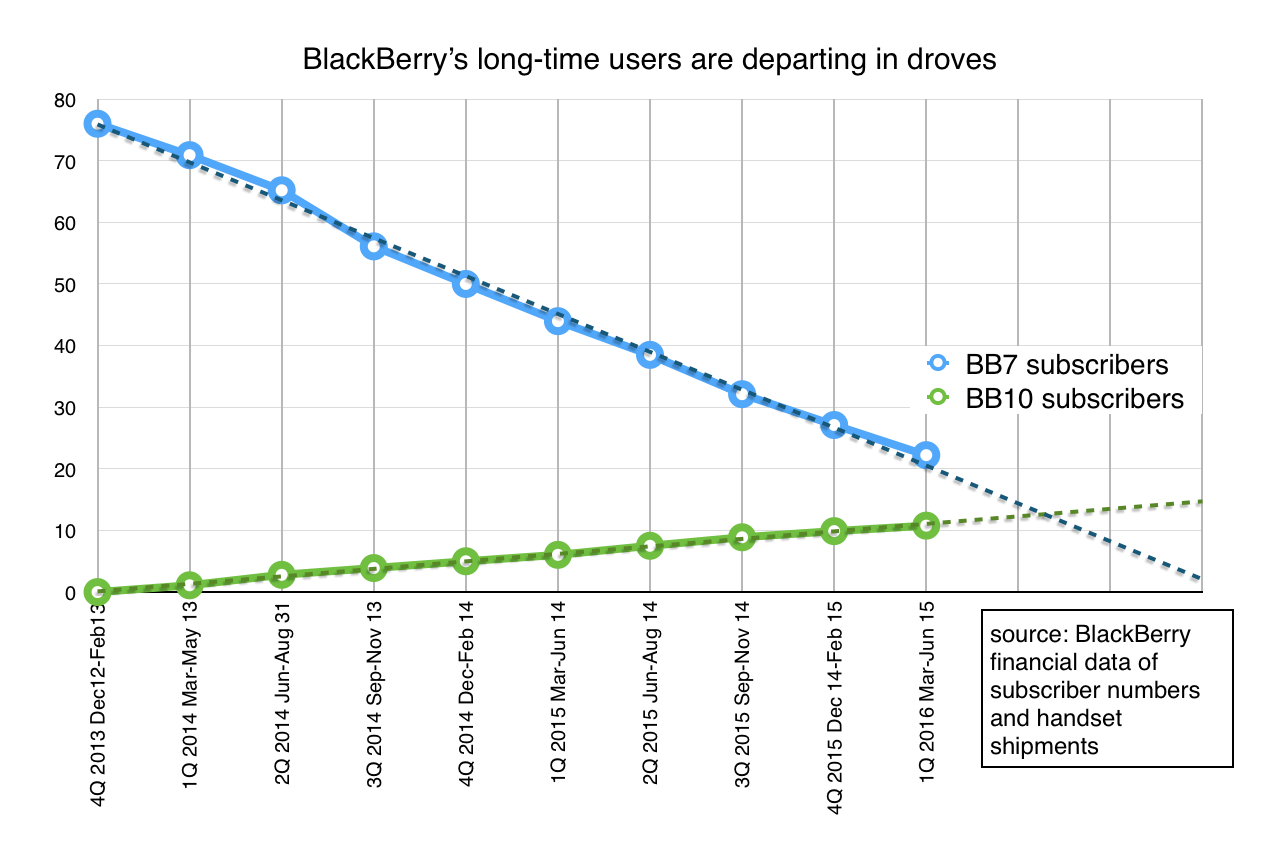
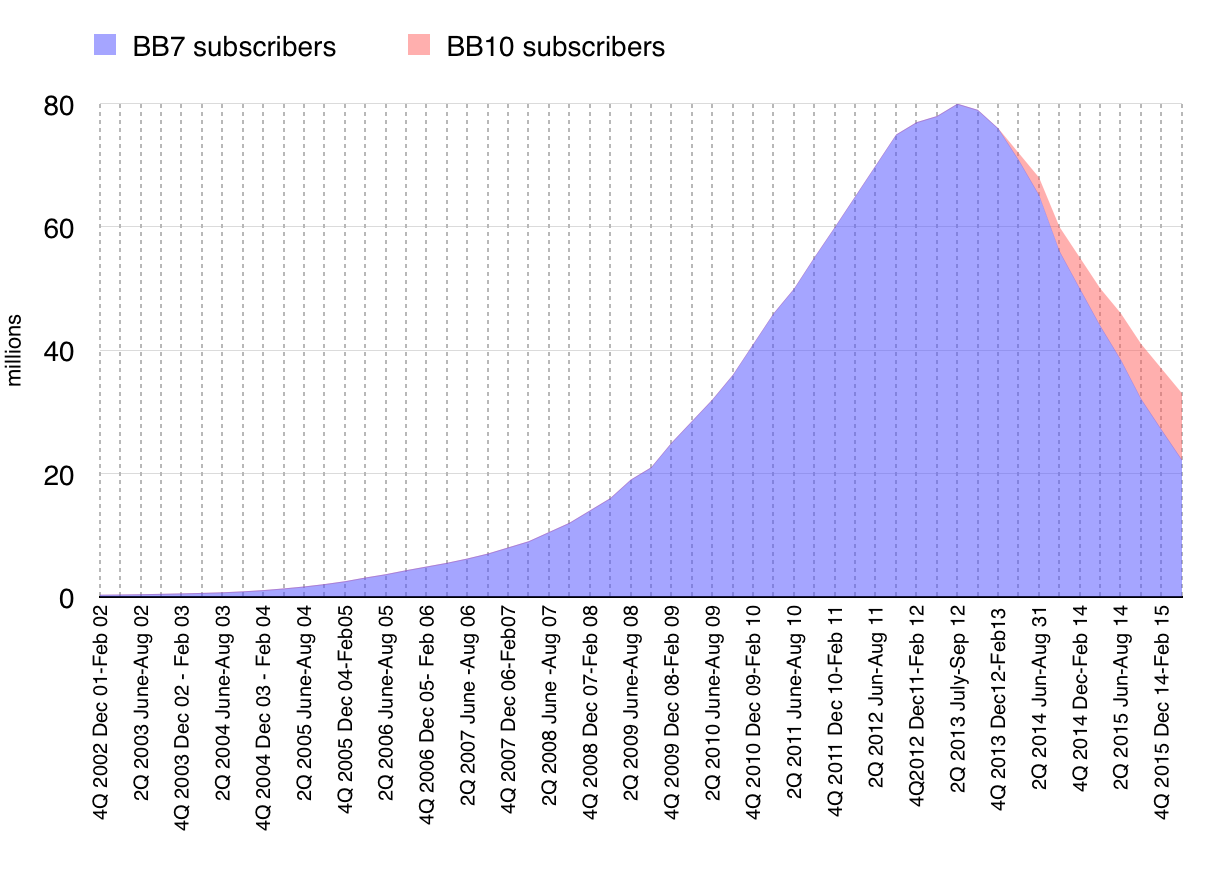
BlackBerry has struggled to achieve significant volumes since BB10 launched in January 2013, with only 1.1 million units shipped last quarter. The total number is shipped is probably lower than 10 million.

BlackBerry’s CEO John Chen has repeatedly said that BlackBerry will only continue to develop handsets if it’s profitable to do so, and that the break-even point hadn’t yet been reached. Chen has shied away from committing to enhancing BlackBerry’s own BB10 platform, and various indicators suggest it’s now Android or bust for BlackBerry phones, with BB10 placed in maintenance mode while continuing to receive critical security updates.

BlackBerry continues to hire in its QNX embedded systems division, but hasn’t advertised for BB10 developers for some time. While the company released a redesigned Passport in August, it hasn’t revealed any significant enhancements to BB10 this year. Its BB10 developer program is gathering cobwebs.

Chen has also qualified a commitment he made at MWC in March to produce four phones this year. It may just be one annually.

BlackBerry announces its second-quarter results at 0800EST (1300BST). Analysts reckon its revenues will be $611m, down a third from a year ago – its lowest figure since the same period in 2006.
link to this extract


Mail Online digital advertising slows down to 16% annual growth » The Guardian

Mark Sweney:

Stephen Daintith, finance director at DMGT [which owns the Daily Mail and Mail Online], said the company expects Mail Online to “comfortably” pass £70m for its full financial year to the end of September.

The company has previously said that it was aiming to make £80m in revenue this year, although it has said this is not a “hard target”.

The slowdown prompted analysts at Exane to publish a note to investors earlier this month warning that Mail Online was likely to miss its stated revenue target of £100m by the end of next year.

“We see the recent revenue slowdown of Mail Online (despite strong audience growth) as more structural than cyclical, with mobile, ad blocking and social media all bringing new challenges to monetisation,” said William Packer, analyst at Exane. “We now expect Mail Online to miss their £100m revenue target.”

Daintith admitted that given the slowdown, hitting £100m next year was now a “big goal”.

Never seen adblocking mentioned before in an analyst note, but this is quite a slowdown; previously it was 50%.
link to this extract


Note to readers » Toronto Sun

James Wallace, vp editorial, Toronto Sun:

As a paper, we pride ourselves both on dishing out and taking criticism – especially when the latter comes from our readers.

And part of that conversation has taken place on our online comment boards.

However, the increasing use of Sun comment boards for anonymous, negative, even malicious personal attacks, albeit by a minority, has led us to conclude our current commenting system is not serving the interests of the majority of our readers.

Therefore we have decided, for the time being, to no longer allow commenting on most online articles until we sort out a better and more accountable way for our readers to interact with us and each other.

Like a growing number of news organizations, we are also moving away from anonymous commenting because there are other options that encourage respectful, civil debate.

Much of that debate already takes place on social media.

Should we call this “reader-blocking”? “Comment-blocking”?
link to this extract
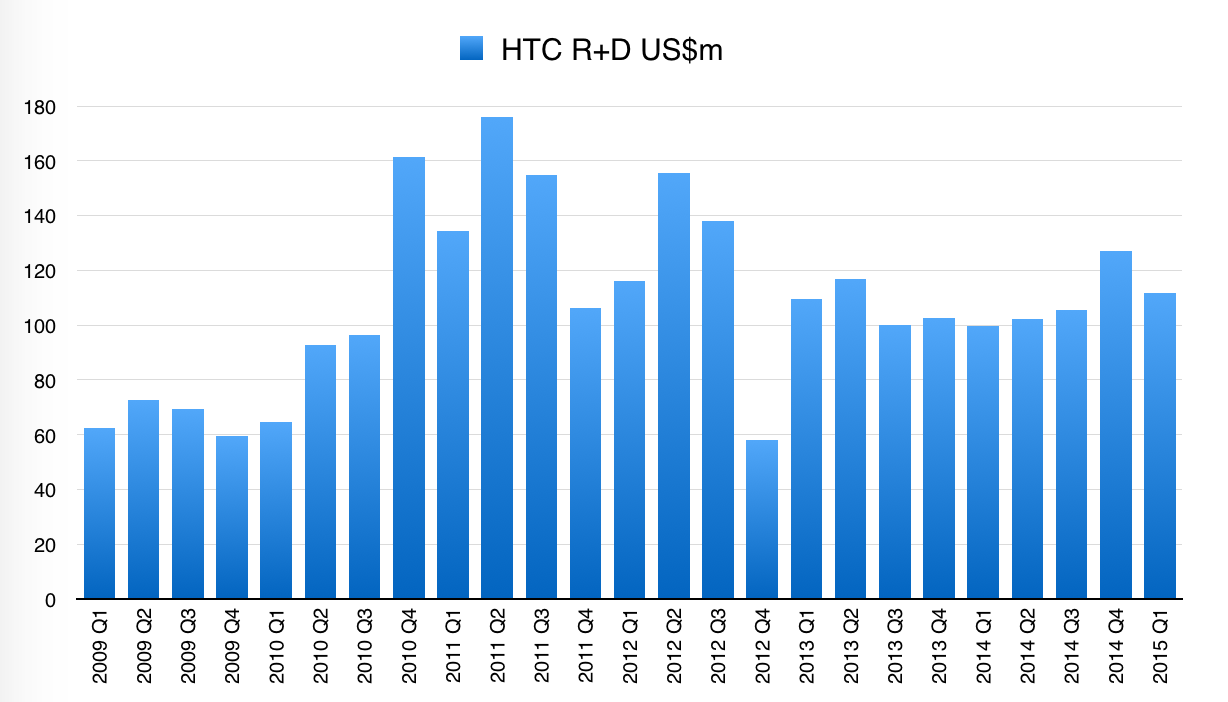

Why aren’t some smartphone makers simplifying SKU count to increase profitability? » Forbes

Patrick Moorhead:

many OEMs who never thought they could compete on the global market are now directly competing with Samsung Electronics and Apple for market share and consumers’ mind share. To compete with Samsung Electronics and Apple, many upcoming OEMs are wasting millions of dollars creating too many SKUs that they may eventually never sell. We created an economic model that shows that through SKU consolidation, one could see an 8% margin improvement through aggressive SKU management. This column is a flyover, but you can find more information here.

Apple has 6 SKUs, globally (different models; memory capacity and colour aren’t counted as SKUs) while Samsung’s SKU count is 14 for the Galaxy S6, 13 for the S6 Edge, 6 for the Edge Plus and 1 for the S6 active. That’s 34 SKUs, even before you look at the Note 5 and all the others.

Too many SKUs are an obvious problem because you have to match production, distribution, demand and sales – else you’re left with inventory or other writeoffs.
link to this extract


Start up: Android Wear on iOS, will Slack kill Dropbox?, India v Google, after the adblockers, and more


One other piece of technology – besides the lifejackets and boat – probably kept them alive. Photo by Irish Defence Forces on Flickr.

A selection of 9 links for you. Blimey, it’s September (here at least). I’m charlesarthur on Twitter. Observations and links welcome.

Android Wear now works with iPhones » Official Google Blog

David Singleton, director of engineering for Android Wear:

When you wear something every day, you want to be sure it really works for you. That’s why Android Wear offers countless design choices, so you can find the watch that fits your style. Want a round watch with a more classic look? Feel like a new watch band? How about changing things up every day with watch faces from artists and designers? With Android Wear you can do all of that. And now, Android Wear watches work with iPhones.

Android Wear for iOS is rolling out today. Just pair your iPhone (iPhone 5, 5c, 5s, 6, or 6 Plus running iOS 8.2+) with an Android Wear watch to bring simple and helpful information right to your wrist.

Key problem – and I think it will be a problem – is that it won’t be able to show reply to iMessages on the Wear watch. And iMessage is a huge part of using an iPhone (demonstrated by the volume sent each day), and, in my experience, the Apple Watch. The picture in the blogpost shows Google Hangouts; if you’re that dedicated to Hangouts, you’ll be on Android. Also: no third-party (Android Wear, nor, obviously, iOS) apps. Harry McCracken has a useful rundown – mostly of what it doesn’t do on iOS – at Fast Company.

So this might goose Android Wear watch sales a little, but I don’t see it lasting.
link to this extract


Dropbox: the first dead decacorn » Thoughts from Alex Danco

Slack (the workplace collaboration tool) is going to kill it, Danco reckons:

The problem for Dropbox is that our work habits are evolving to make better use of what’s available; specifically, the awesome power of the internet. And on the internet, the concept of a ‘file’ is a little weird if you stop and think about it. Files seem woefully old-fashioned when you consider organization tools like Evernote, task management tools like Trello, and communication channels like Slack. Files are discrete objects that exist in a physical place; the internet is … pretty much the opposite of that. And while it made sense that the birth and early growth of information and the internet would contain familiar, old-school ideas and organizing systems, and some point the other shoe was bound to drop. To me, Slack feels like the first truly internet and mobile-native productivity platform – especially as it expands beyond messaging and into workflow automation, helper bots, and who knows what else. Dropbox might be the pinnacle of file management, but Slack is the beginning of what comes next.
  
I don’t think files are going to completely disappear; not anytime soon, anyway. They’ll certainly still exist as data structures, deep inside our servers and our phones, for a very long time – and yet most people will be indifferent to their existence. I’m pretty sure Dropbox’s multi-billion dollar valuation isn’t an anticipation of this new reality – it’s simply a projection of our current world, played in fast-forward. This is gravely shortsighted. Dropbox may not be the first Unicorn to slide slowly and then quickly towards irrelevance and death – but it’ll happen.

Having used Slack, I can believe a lot of that. If you haven’t used Slack, you’ll be harrumphing at this. (People who still put music and video files onto SD cards to slot into their phones will be incredulous.) It’s just a matter of time.
link to this extract


India’s competition authority charges Google with rigging search results; Flipkart, Facebook corroborate complaints » The Economic Times

Deepali Gupta:

Flipkart, Facebook, Nokia’s maps division, MakeMy-Trip.com and several other companies have corroborated complaints that US Internet giant Google abused its dominant market position, in their response to queries raised by the Competition Commission of India.

Based on the responses from 30 businesses spanning search, social networks, ecommerce, travel and content sites, the CCI director-general last week filed a report that accuses Google of abusing its dominant position to rig search outcomes, both the actual search result as well as sponsored links. This marks the first case globally where an antitrust body is formally raising such charges against Google.

Flipkart’s complaint – that its position in organic results varied on how much it spent on ads with Google – is an eye-opener; often whispered, never made part of a complaint.

The list is comprehensive; if anything, Google faces more fires here than in Europe. What’s not clear is how determined, and meticulous, the CCI is. Anyone know? Google has to respond by September 10.
link to this extract


Adobe aims to bring Photoshop to mobile masses with upcoming app » CNET

Stephen Shankland:

“Project Rigel is designed and built in a way that serves the needs of professionals familiar with retouching tools on the desktop, but more so for people not familiar with Photoshop tools like content-aware fill or spot healing,” Manu Anand, Adobe’s senior product manager for digital imaging, said in an interview at Adobe’s offices here. “It democratizes them and makes them easier to use.”

The app itself has a touchscreen interface, with a menu of editing options across the bottom, pop-out tool adjustments on the left side and a strong zoom ability to offer precision when selecting areas of an image with fat fingertips. It’s even got face recognition technology that Photoshop for PC lacks, a feature that identifies facial features then lets people enlarge or tilt eyes or raise the corners of a subject’s mouth to emphasize a smile.

Bringing Photoshop to the mobile masses is crucial for Adobe as it tries to adapt its business to modern computing trends. The company has no desire to suffer Microsoft’s fate, being largely left behind by the meteoric rise of Apple’s iOS and Google’s Android, the software that powers nearly all smartphones and tablets.

Not sure Adobe gets a choice there. It has clung on to the desktop with Flash, and it’s hard to see how Photoshop is really that relevant for mobile; it feels like overkill. (Adobe has a large, unseen-by-consumers business in web measurement too.)
link to this extract


A 21st-century migrant’s essentials: food, shelter, smartphone » The New York Times

Matthew Brunwasser:

The tens of thousands of migrants who have flooded into the Balkans in recent weeks need food, water and shelter, just like the millions displaced by war the world over. But there is also one other thing they swear they cannot live without: a smartphone charging station.

“Every time I go to a new country, I buy a SIM card and activate the Internet and download the map to locate myself,” Osama Aljasem, a 32-year-old music teacher from Deir al-Zour, Syria, explained as he sat on a broken park bench in Belgrade, staring at his smartphone and plotting his next move into northern Europe.

“I would never have been able to arrive at my destination without my smartphone,” he added. “I get stressed out when the battery even starts to get low.”

Not a thing one would have been likely to forecast even five years ago. GPS and WhatsApp are now essential.
link to this extract


Apple iPhone 6 Plus vs. Samsung Galaxy Note 5 » Business Insider

Lisa Eadicicco:

After spending a week switching between the two, here’s what I came away with. 

• Both phones are gorgeous, but with the Note 5 you get a slightly larger screen packed into a phone that’s the same size as the iPhone 6 Plus.
• The Note 5’s screen displays colors more vibrantly than the iPhone, but it’s not any sharper than the iPhone’s screen even though it’s a higher spec.
• The iPhone is still much more simple to use than Samsung’s phone.
• The Note 5’s S Pen feels natural and the multiwindow feature is useful, but Samsung’s version of Android is still too cluttered for me.
• Both phones take excellent photos. It’s a win-win here, but, as is the case with the Note 5’s display, its camera also sometimes exaggerates color. 

She also liked the Note’s split screen, and found the pen useful too.
link to this extract


The mobile video ad lie » Medium

Rob Leathern found a page apparently with no video ads on the NY Post was loading 10MB. But how?

The large JPG files I referenced earlier make up the majority of the payload of this page — and are coming from the images.fusevid.com domain. Here again are those example1 and example2 of the image files.

Remember, I didn’t see any video content nor any video ads at all. If there is not willful fraud here, loading ads in the background that are impossible to see, then at the very least it is ‘user-hating’ irresponsible behavior to have a 10+mb payload with hundreds of http calls in a mobile browser.

Many publishers simply must have a sense that something nasty is going on — when their users complain about slow page loads on mobile web — but they either don’t have the tech savvy and/or more likely, they won’t ask questions about how their site could possibly be monetizing as well as it is when simple math indicates that their users aren’t watching that many video streams. Many simply turn a blind eye.

Ad industry insiders talk about “improving viewability” — but make no mistake, these are likely not mistakes made by inexperienced workers — just as mobile ads that pop up iTunes Store pages for mobile app installs are not casual errors — this is an industry that persists by helping already-fraught businesses like newspapers and online publishers survive at the expense of the advertisers who supposedly help us users have free content.

Is it any wonder desktop ad blocking has been on the rise, and many iOS users are excited at the prospect of using content blocking in iOS9 to get rid of mobile ads? The industry has only itself to blame.

I find these stories – which are growing in volume – fascinating. This is a boil that the internet community is looking to lance with vigour.
link to this extract


Life after content blocking » Monday Note

Jean-Louis Gassee:

What are the smaller publishers to do?

Displaying their outrage by posting “Access Denied” when reached by an “offending” browser won’t work.

Some very specialized sites, such as Ben Thompson’s Stratechery and Ben Bajarin’s TechPinions, are able to generate membership revenue because the quality of their content — sober analysis versus mere reporting — makes it worth the price of subscription.

But these are exceptions. Too many sites are just echo chambers, they rewrite news releases, add strong adjectives and adverbs, and a bit of spin. Competition for attention, pageviews, and advertising dollars drives them to shout from the rooftops. If they don’t want to disappear or be rolled up into a larger entity to “optimize expenses”, they’ll have to get us to pay for their content.

This is much easier said than done. It’s difficult to conjure up a picture in which we’ll have subscriptions to most of the sites we graze today in their ad-supported form.

An alternative to subscriptions for content we may or may not actually “consume” is pay-as-you-go. In principle, this isn’t very different from what we do when we buy an episode of Breaking Bad. We gladly pay $2.99 to watch what we want, when we want, and without ads.

This works well for TV shows, but it doesn’t easily translate to websites.

I do foresee a number of those middling sites selling up to others which reckon they can make a go of it.
link to this extract


We have no interest in competing with Apple: John Sculley of Obi Worldphone » Business Today

Interviewed by Manu Kaushik:

[Inflexionpoint chief executive] Neeraj [Chauhan] and I sat down. I asked him why he thought there’s an opportunity for us to go into this industry. He said that we have skills of distribution and supply chains, we know how to negotiate with various vendors, and we can run on a different business model.

At the same time, we were looking at the opportunity of buying BlackBerry. We were approached by the Canadian government. We have big operations in Toronto with another one of our companies. They said that we would like to keep BlackBerry a Canadian company and would you consider acquiring it. We studied BlackBerry’s business practices. We realised that they had 7,000 people in their handsets division at that time. That was incredible number of people. There’s no way you can make money with that. Eventually, BlackBerry pulled the auction [down]. They brought a talented CEO to run the company John Chen. They should have brought him in three years earlier.

But it opened our eyes. I asked Neeraj how many people you would need to run BlackBerry’s handset business. He said that he could do it with hundreds of people.

Via Charles Knight, who adds: “You have to wonder who else in Canada they approached.” It’s probably a long list.
link to this extract


Start up: wearables grow, adblocking as chemo?, how silent calls lead to fraud, Acer woes, and more


Replace “George Davis” with “Google” and you get its message. Photo by ross mcross on Flickr.

A selection of 9 links for you. Use them wisely. I’m charlesarthur on Twitter. Observations and links welcome.

Apple debuts at the number two spot as the worldwide wearables market triples in 2Q15 » IDC

In its first appearance in the wearables market, Apple finds itself within striking distance of the established market leader, Fitbit. According to the International Data Corporation (IDC) Worldwide Quarterly Wearable Device Tracker, Apple shipped a total of 3.6 million units in the second quarter of 2015 (2Q15), just 0.8m units behind Fitbit’s 4.4m units. Total shipment volume for the quarter came to 18.1m units, up 223.2% from the 5.6m units shipped in 2Q14.

“Anytime Apple enters a new market, not only does it draw attention to itself, but to the market as a whole,” noted Ramon Llamas, Research Manager for IDC’s Wearables team. “Its participation benefits multiple players and platforms within the wearables ecosystem, and ultimately drives total volumes higher. Apple also forces other vendors – especially those that have been part of this market for multiple quarters – to re-evaluate their products and experiences. Fairly or not, Apple will become the stick against which other wearables are measured, and competing vendors need to stay current or ahead of Apple. Now that Apple is officially a part of the wearables market, everyone will be watching to see what other wearable devices it decides to launch, such as smart glasses or hearables.”

This rather mixes oranges and.. um, because the Fitbit is not a “watch”. I’d prefer to see “watches” and “bands” separated, but that might be tricky. Telling that none of the Android Wear watches did more than 0.6m; and that Samsung’s early lead hasn’t translated into, well, anything. The figure for Apple Watches feels high, though.

Also: “hearables”?
link to this extract


The realities of a $50 smartphone » Engadget

Daniel Cooper:

“If you had asked me this a year ago, I would have said that it was impossible.” Wayne Lam is the principal telecoms analyst for IHS, a market intelligence firm that looks at the technology market. As part of the experiment, he offered to cook up a hypothetical device that, if someone built it today, could probably be mass-produced for under $50. He worked out that the upper limit for a bill of materials would be around $42, and worked backward to build out a spec list from there. It wasn’t pretty, since “any time you put a constraint on the design, like a maximum price, you end up having to make compromises.”

Really impressive. Of course, that doesn’t leave any margin for distribution, marketing, or R+D, but it’s amazing the market has come so far in just eight years.
link to this extract


Dark patterns : user interfaces designed to trick people

Harry Brignull and others:

Normally when you think of “bad design”, you think of the creator as being sloppy or lazy but with no ill intent. This type of bad design is known as a “UI anti-pattern”. Dark Patterns are different – they are not mistakes, they are carefully crafted with a solid understanding of human psychology, and they do not have the user’s interests in mind. We as designers, founders, UX & UI professionals and creators need to take a stance against Dark Patterns.

You can send them your examples via the site.

link to this extract


Acer honourary chairman Shih would ‘welcome’ takeover bid » The Register

Paul Kunert:

The major players, such as HP, Lenovo and Dell, would gain nothing on the technology front from buying Acer – which derived 65% of its revenues from PCs last year – save for perhaps some low-margin market share.

Surely it would be cheaper to let the company continue to wither on the vine?

More than a decade ago, Acer said it was the PC maker of the future, based partly on the relatively tiny workforce – it employs 7,000 heads, which is fewer than some vendors employ in their country operations.

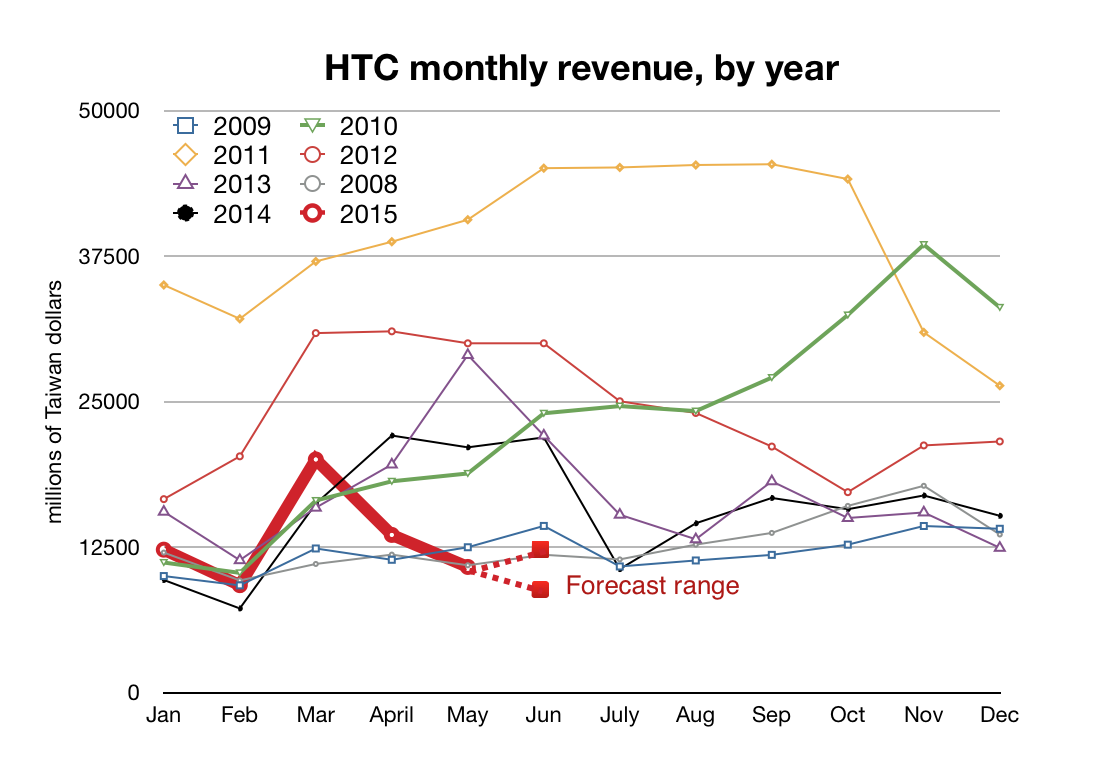
As we pointed out recently, Acer is running out of runway and something has to give. We doubt any of the majors in the industry will want to buy the business, and the politics involved in merging with Taiwanese rivals HTC or Asus make such a move unlikely, though not entirely implausible.

Becoming a question of whether Acer or HTC will be forced into someone else’s arms first. Acer is bigger, but shrinking fast.
link to this extract


Handling App Transport Security in iOS 9 » Google Ads Developer Blog

Tristan Emrich, mobile ads developer relations:

All iOS 9 devices running apps built with Xcode 7 that don’t disable ATS [App Transport Security, which forces HTTPS connections] will be affected by this change. The following log message appears when a non-ATS compliant app attempts to serve an ad via HTTP on iOS 9:

“App Transport Security has blocked a cleartext HTTP (http://) resource load since it is insecure. Temporary exceptions can be configured via your app’s Info.plist file.”

While Google remains committed to industry-wide adoption of HTTPS, there isn’t always full compliance on third party ad networks and custom creative code served via our systems. To ensure ads continue to serve on iOS9 devices for developers transitioning to HTTPS, the recommended short term fix is to add an exception that allows HTTP requests to succeed and non-secure content to load successfully.

Publishers can add an exception to their Info.plist to allow any insecure connection.

Translation: ads are insecure, and trackable, but let them through. (Obviously, many app developers will need to for revenue.) Once again, Apple is forcing the pace on advertisers.
link to this extract


Why phone fraud starts with a silent call » All Tech Considered : NPR

Aarti Shahani:

Maybe you gave your number to Target or some other big retailer that got hacked. Maybe you entered an online raffle to win a free iPhone.

According to the Federal Trade Commission, these robocalls are on the rise because Internet-powered phones make it cheap and easy for scammers to make illegal calls from anywhere in the world.

That initial call you get, with silence on the other end, “[is] essentially the first of the reconnaissance calls that these fraudsters do,” Balasubramaniyan says. “They’re trying to see: Are they getting a human on the other end? You even cough and it knows you’re there.”

The next step is gathering information about your bank or credit card account. You get a call with a prerecorded voice that tells you, for example, “[we’re] calling with an important message about your debit card. If you are the cardholder please stay on the line and press 1. Otherwise please have the cardholder call us at 1-877…”

If you’re thinking about ignoring it, the message tries to scare you into paying attention with a warning: “A temporary hold may have been placed on your account and will be removed upon verification of activity.”

That number leads to another automated system that prompts you to share personal details like your date of birth, your card number and secure PIN, the expiration date, your Social Security number.

It can be tricky because many real banks have a similar system.

Foolish of the banks, really.
link to this extract


Improving quality isn’t anti-competitive » Google Europe Blog

Kent Walker, Google’s general counsel:

The response we filed today [to the EC] shows why we believe those allegations [of stifling competition] are incorrect, and why we believe that Google increases choice for European consumers and offers valuable opportunities for businesses of all sizes.

The Statement of Objections [SO] says that Google’s displays of paid ads from merchants (and, previously, of specialized groups of organic search results) “diverted” traffic away from shopping services. But the SO doesn’t back up that claim, doesn’t counter the significant benefits to consumers and advertisers, and doesn’t provide a clear legal theory to connect its claims with its proposed remedy.

Our response provides evidence and data to show why the SO’s concerns are unfounded. We use traffic analysis to rebut claims that our ad displays and specialized organic results harmed competition by preventing shopping aggregators from reaching consumers. Economic data spanning more than a decade, an array of documents, and statements from complainants all confirm that product search is robustly competitive. And we show why the SO is incorrect in failing to consider the impact of major shopping services like Amazon and eBay, who are the largest players in this space.

Funny thing: I’ve skim-read the SO (it’s long – 100+ pages) and it picks away at lots of these traffic analysis claims (which were themselves dismantled thoroughly by Foundem, one of the complainants to the EC). Among the SO’s complaints was that Google didn’t provide enough data about shopping traffic. I don’t think the EC is going to roll over on this one. Nor, evidently, is Google. Though in arguing “choice for consumers” it’s using the wrong antitrust doctrine – that applies in the US, but not the EU.

Can’t find where Google has published its response, either. Surely it would want that public too? Also: an analysis of Google’s blogpost by “Focus On The User” (anti-Google, not involving Microsoft).
link to this extract


Apple’s content blocking is chemo for the cancer of adtech » Doc Searls Weblog

Searls calls “tracking” ads (eg Doubleclick etc) “adtech”, as opposed to simple brand ads:

• Apple’s iAd is for brand advertising, not adtech. At least that’s what I gather from Apple’s literature. This puts them on the side of [advertising] wheat, and Apple’s competitors — notably Google, Facebook and all of adtech — on the side of chaff.

• Apple has put a big stake in the ground on the subject of privacy. This is clearly to differentiate itself from adtech in general, and from Google and Facebooks in particular.

• Brand advertising is more valuable to publishers than adtech. Its provenance and value are clear and obvious, it sells for better prices, and — while some of it may be annoying — none of it shares its business model with spam, which adtech does. Nor is brand advertising corrupted by fraud, which is rampant in adtech. So rampant, in fact, that T.Rob Wyatt, a security expert, calls adtech “the new digital cancer.”

This is why content blocking is chemo for the cancer of adtech. It is also why it is essential for everybody involved in the advertising-funded online ecosystem to start separating the wheat from the chaff, and to make clear to everybody that the wheat — plain old brand advertising — is (to mix metaphors) the baby in the advertising bathwater.

(Searls was taken to task for using “chemo” and “cancer”; he pointed out that he has had loved ones die of cancer, and “I’m not sure they would have disapproved of the metaphor.”)

As bandwagons go, the anti-adtech one is rolling downhill at top speed. I’ve already got three different ones I’m testing on an iOS 9 phone.
link to this extract


The Labour Purge…. and social media privacy. » Paul Bernal’s Blog

Bernal notes that the Labour Party is trawling social media to try to find out if newly joined members really “support” the party:

We should not expect people to have social media profiles – let alone identifiable social media profiles. What is more, this is particularly important for some of the people that Labour should care about and support the most. People may be ‘digitally excluded’, for a start – but they might also have extremely valid reasons to be pseudonymous on the internet. Vulnerable people, in particular, might need pseudonymity to protect them from those to whom they are vulnerable. Whistleblowers. People with abusive spouses. People with abusive or manipulative employers. Trade unionists, for example, might have that status used against them – there’s a reason that Trade Union membership is considered ‘sensitive personal data’ under the Data Protection Act. People might wish not to have their religion revealed to all and sundry. People might wish to separate their personal and professional lives for perfectly good reasons.

There is much more to say on this subject – but the underlying issue is the one that is most disturbing. What the Labour Party is doing may well breach the Data Protection Act – there is a discussion to be had here – but it is certainly at least verging on the creepy.

The Labour Party has long had a problem with privacy; it tried really hard to introduce ID cards (with biometrics!), and was only stopped by losing an election.
link to this extract


Start up: smartphone jobs bloodbath, Apple v watch sales, Android’s messy sharing, and more


Content blockers for iOS are having their first tests: how do they do? Photo by WSDOT on Flikr.

A selection of 10 links for you. Use them wisely. I’m charlesarthur on Twitter. Observations and links welcome.

JFK displays actual wait times using sensors that monitor mobile phones » Blip Systems : Blip Systems

Passengers moving through JFK Airport’s Terminal 4 are now presented with estimated processing times on 13 new screens. The large and prominent screens are placed at TSA Security and Customs and Border Protection checkpoints, as well as the indoor taxi queue.

“It continuously updates,” says Daryl Jameson, vice president at the company JFKIAT, which runs Terminal 4. People like to know how long they are going to wait in queues. Nobody likes to wait in lines and signage helps to manage expectations.”

The wait times are driven by sensors that monitor passenger’s mobile devices as they move through the airport. The BlipTrack solution, invented by Denmark-based BLIP Systems, and installed by Lockheed Martin, detects Wi-Fi or Bluetooth devices in “discoverable” mode, found in mobile phones and tablets. When a device passes the sensors, its non-personal unique ID—called a MAC address—is recorded, encrypted and time-stamped. By re-identifying the device from multiple sensors, the travel times, dwell times and movement patterns become available.

Neat idea, though when you’re waiting in an inescapable queue, you don’t actually want to know your wait time; you want a distraction. This is why lift designers put mirrors and TVs showing news in lobbies where people wait for lifts: so you can do something else while you wait. Doesn’t speed up the lift; does reduce the subjective queuing time.
link to this extract


Ashley Madison search sites like Trustify are harvesting email addresses and spamming searched victims » Troy Hunt

I had this forwarded to me earlier today and frankly, I couldn’t believe it. I mean I knew Trustify were making email addresses publicly searchable and somehow not falling foul of DMCA takedowns whilst others doing the same thing were (possibly because Trustify has more lawyers than employees), but I had no idea they’d actually harvest addresses and then send unsolicited emails, so I Googled a bit and found a very unsympathetic Reddit thread on it. There’s a series of responses from thejournalizer (reportedly the content marketing director at Trustify) which provide such enlightening insights as:

The email OP received was actually established to help you and warn you that someone is seeking out details about you.

Ah, it’s there to help you! So after you search on the site and it says “You’ve been compromised” and provides a handy form to sign up to their commercial services, an email is also sent to you because, well, it might not be you.

Isn’t capitalism great, especially where data breaches are concerned.
link to this extract


Smartphone giants have lost 15,000 jobs to cheap Android phones this year » Quartz

Josh Horwitz:

The world’s smartphone manufacturing giants are losing their luster, leading to a steady stream of job cuts inside previously prestigious mobile units.

The most recent high-profile cuts occurred last week, when HTC and Lenovo each reported less than stellar earnings reports. HTC, after reporting a loss that exceeded analyst estimates five-fold (and caused its market valuation to fall below its cash assets), told investors it would cut fifteen percent of its workforce, amounting to over 2,000 jobs.

Lenovo, meanwhile, announced that it would reduce its workforce by 3,200 people, and cut its non-manufacturing headcount by 10%. The company didn’t specify which specific jobs were at risk, but it pointed to flagging global PC sales, along with the need to streamline its mobile phone unit, as its key goals for the coming year. The company’s net profits were down 51% year-on-year, and its Motorola handset division saw shipments plummet 31% to 5.9 million units.

You can argue about whether Microsoft, the source of half those 15,000 job losses, counts as a “smartphone giant” – shifted more units than Motorola, Sony or HTC – but when Lenovo (now owning Motorola) is cutting, that’s something.
link to this extract


Apple helps push US watch sales to biggest drop in seven years » Bloomberg Business

Thomas Mulier:

US watch sales fell the most in seven years in June, one of the first signs Apple’s watch is eroding demand for traditional timepieces.

Retailers sold $375m of watches during the month, 11 percent less than in June 2014, according to data from NPD Group. The 14% decline in unit sales was the largest since 2008, according to Fred Levin, head of the market researcher’s luxury division.

“The Apple Watch is going to gain a significant amount of penetration,” he said Thursday in a phone interview. “The first couple of years will be difficult for watches in fashion categories.”
The market for watches that cost less than $1,000 is most at risk, as consumers in that price range have indicated they’re the most likely to buy an Apple Watch, Levin said.

Well, it’s a data point.
link to this extract


Crystal benchmarks » Murphy Apps

Dean Murphy is developing a Safari content blocker called Crystal for iOS 9:

For this experiment, I have picked 10 pages from different news websites – Some I use regularly, some I don’t. The metrics I’m monitoring is page size (in MB) and load time (in Seconds). 10 pages is far from a good sample size for the web, I know, but the web is a big place, and my time to benchmark is limited. 

Websites tested: New York Times, Business Insider, Macworld, Wired, The Verge, PC Gamer, iMore, Kotaku, Huffington Post, Vice.

Method: All sites tested on an iPhone 6+, connected to wifi (154Mb Fiber). All metrics are taken from Safari Web Inspector after doing an Ignored Cache Reload (CMD+Shift+R).

Results

On average, pages loaded 74% faster with Crystal and used 53% less bandwidth. Just by having Crystal installed, I saved a total of 70 seconds and 35MB of data on these 10 pages.

These are dramatic differences. (Click through for the graphs.) I’m beta testing Crystal myself; it makes the mobile web very attractive, all of a sudden. Though perhaps sites don’t feel the same way.
link to this extract


Staff exodus plus pressure from Microsoft and Apple hits Google Now » Re/code

Mark Bergen:

[Sundar] Pichai [who now heads Google] is known as an executive who seeks consensus rather than conflict. A former Googler who worked on Now recalled Pichai’s response to their protests [when Google Now was shifted from the Android division to the search division – seen as the “boring” area, and not the right fit for a mobile OS framework]: “‘Look, I’ve got a lot on my plate. Chrome and Android are my top priorities. Google Now is not on that. I can’t fight that battle for you.’”

Now has its own battles in store. It has a solid user base, more than a hundred million monthly ones, according to multiple sources. (Google declined to comment on these numbers.) Yet it’s unclear how active those users are, and only a slim slice of them are on the iOS app.

Apple, for its part, looks prepared to launch a competitor to Now on Tap. With its proactive assistant and spotlight search, the Apple entry could elbow Google out. Several people said it was unusual for Google to pre-announce a feature like Now on Tap before it is ready. That hurriedness may have been to pre-empt Apple’s announcement the following month.

And now Bing, which powers search on Apple devices, has its own Now on Tap foil.

iOS 9, with Proactive, will make Google Now largely pointless for the vast majority of iOS users; Google Now will be fine for Android users. Microsoft might pick up a few diehards, but it’s hard to see it really making an impact.

Google, meanwhile, is discovering internal politics in a big way. And that’s before Alphabet.
link to this extract


Sharing on Android is Broken » Terence Eden’s Blog

I’ve been using Android – Google’s mobile OS – it since before it was launched. I now love and loathe it in equal measure.

Consider the simple act of sharing a piece of content. A fairly common activity which the OS should be able to handle in a standard manner. Yet Google’s own apps each have a radically different way of completing this basic task.

Let’s take a look at the latest versions of Play, Maps, YouTube, Chrome, Google+, and Docs – all running on Lollipop.

• Google Play, has the normal Share Icon.
• Google Maps hides the option in a menu.
• YouTube has two share buttons, neither of which look like the one in Play.
• Chrome hides the option in a dropdown (weird how it floats over the menu button, unlike Maps).
• Google+ takes us back to the regular share icon (with no text label).
• Google Docs uses a floating bottom menu (what?!) with a yet another icon and a “Send file” text label.

Things get even worse once you open the Share menu, though. Eden makes a good point: there’s clearly no single person in charge of this UX element for Android, even for Google’s own apps, despite the fact that they’re on every single Android phone sold outside China.
link to this extract


Samsung smart fridge leaves Gmail logins open to attack » The Register

John Leyden:

Pen Test Partners discovered the MiTM (man-in-the-middle) vulnerability that facilitated the exploit during an IoT hacking challenge run by Samsung at the recent DEF CON hacking conference.

The hack was pulled off against the RF28HMELBSR smart fridge, part of Samsung’s line-up of Smart Home appliances which can be controlled via their Smart Home app. While the fridge implements SSL, it fails to validate SSL certificates, thereby enabling man-in-the-middle attacks against most connections.

The internet-connected device is designed to download Gmail Calendar information to an on-screen display. Security shortcomings mean that hackers who manage to jump on to the same network can potentially steal Google login credentials from their neighbours.

Yeah, it’s that “jump on the same network” thing which is the sticking point. I’d wager that most home networks are secured nowadays.
link to this extract


EU deepens antitrust investigation into Google’s practices » WSJ

Natalia Drozdiak:

In one of the questionnaires [sent out to website operators] inquiring about “exclusivity obligations”—whether Google prevents or obstructs website operators from placing ads on their websites that compete with Google’s advertising business—the commission asks companies to update responses they made about the issue in 2010 and to provide a copy of all their advertising agreements with Google over the last four years.

A separate questionnaire, investigating the allegations that Google copies or “scrapes” content from rival sites, asks companies to provide more information about whether Google takes content, such as images, from the companies and uses it in its own online services.

The images question – raised by Getty – is about Google Images effectively bypassing visits to sites, and making copies of images. The latter is potentially a bigger problem than most other topics; “fair dealing” (the UK version of the US’s “fair use”) is hard to argue when you’re copying and storing entire image libraries.
link to this extract


BT may have to hive off Openreach to improve the UK’s broadband services » Telegraph

Labour MP Chris Bryant, who lives in a rural constituency:

The government’s roll-out of broadband has been far too slow.

The Government has cannibalised the BBC licence fee to fund otherwise not commercially viable superfast connections to the tune of more than £1bn. Yet they have already missed their initial deadline of May 2015 and shifted it back by two and a half years to December 2017.

Even the 2017 deadline is only a hope, as senior BT executives and almost half of councils have warned it could end up being 2018 before the roll-out to 95% of the country is finished. But there is also another problem. The Government designed the tender process for the superfast roll-out in such a way that it was virtually impossible for anyone other than BT to win. The end result was that BT Openreach won 44 out of 44 contracts and its monopoly was reinforced.

Although BT Openreach, which owns the existing copper network and delivers the rollout, is nominally at arm’s length from BT, it is right that Ofcom is now considering whether this provides an unfair advantage to BT and whether it should be split off in the interests of transparency and fair competition.

No question; it should. BT Openreach had an operating profit margin of around 50% in the most recent quarter – while the rest of BT languished. BT OR is being milked, and we’re the cows.
link to this extract


BlackBerry might have no BB7 users left by February 2016 – and that’s a big, bad problem


John Chen, BlackBerry’s chief executive, is a smart guy – but he’s got really big problems ahead. Photo by jdlasica on Flickr.

They really will let any old nonsense onto Seeking Alpha. On Wednesday there was a piece suggesting that “BlackBerry had a decent quarter; turnaround an extremely high probability“.

Yeah, and pigs will fly.

BlackBerry has a real problem, and it only becomes evident when you dig into the numbers. It’s this: BB7 users, who make up about 22m of its 33m subscribers, are deserting the platform at the rate of about 5m per quarter, while it’s only adding about 1m BB10 subscribers in the same period.

If this pattern continues, then by the end of this fiscal year – that is, February 2016 – there will be next to zero BB7 users, and only slightly more than 15m BB10 users. That will represent probably the bottoming out in subscribers, but will also mean that two key sources of revenue for BlackBerry – service revenues and handset sales – will effectively stop.

And in the just-gone quarter, those two categories made up 78% of its revenues – and the profit on the services, which only applies to BB7 users, amounted to about $211m.

Here’s the problem: once the BB7 users are gone, so are pretty much all the service revenues. And look how soon that could happen:

BlackBerry 7 users leaving; BB10 joining slower

BB7 users are departing the platform five times faster than they’re being replaced by BB10 users

With 15m handsets in use, and BB users replacing theirs roughly every three years (as I found previously), that means 5m handset sales per year, which is about where the company is now – and it currently makes horrendous operating losses on handsets. There just isn’t the scale.

Without the service revenue, and because the handsets are horrible money pits, BlackBerry is left with just its software revenues for profit. And oh dear, those aren’t pretty.

Let’s get stuck in

Here are some extra facts dug out of BlackBerry’s Q1 2016 10-Q, the quarterly detailed report:

• 33m subscribers (I estimated 34m; so it has fallen 4m from the previous quarter, an acceleration in decline)

• 81% of the 1.1m phones sold were BB10 (so 0.89m BB10, 0.2m BB7). Recall that BB7 was effectively dead with the launch of BB10 – back in January of 2013. Yet they’re still getting cleared out of the system.

• a total of 1.3m phones were sold through to end customers. That means that over the past eight quarters BlackBerry has “sold” (recognised revenue on) 15m phones, and sell-through has been 23.3m – that’s 55% more. Clearly, there was a gigantic amount of channel stuffing going on previously. And of those 15m phones (or 23.3m, take your pick) only 9.7m were BB10 models.

We know how many subscribers there were when BB10 was introduced, and we know how many there are now; we also know how many BB10 handsets have shipped. That means we know the split between BB7 subscribers and BB10 subscribers.

Rise and fall of BlackBerry subscribers

On the basis that every BB10 handset goes to a new user… it’s still not great.

In short, there are still twice as many BB7 users (22m or so) as BB10 users (10.8m). In the just-gone quarter, a total of 4.9m BB7 users left, and 0.89m “joined” BB10. Some of those “joining” will have been ex-BB7 users, of course, but the direction of travel is clear; if that 5:1 pattern continues, then when the last BB7 user exits, BB10 will only have 15.2m users.

And the graph above shows that if it’s a straight line, that will be February next year.

• that much-vaunted jump in software revenues (from $54m to $137m year-on-year, and from $67m to $137m sequentially – a rise of $70m) was actually due to a mysterious patent deal, one with Cisco and another with an unnamed company.

Some thought the rise heralded BlackBerry rising from the ashes as a profitable software business; the stock popped on the early results. But as was clarified in the earnings call and the documents, compared to the year before, software revenues rose by over 20% (Chen suggested “22-23-24%”); as the documents then make clear, software revenues alone actually fell compared to the previous sequential quarter.

As the year-ago software revenue was $54m, and the previous quarter software revenue was $67m, and 67/54 = 1.24, it’s evident that software revenues grew less than 24%. This $67m is the underlying quarterly software revenue figure you can rely on; multiply that by four, and you get pure software revenues for the fiscal year of about $270m.

That’s a long way short of the $500m (which excludes any BBM revenues, which I don’t see happening in a hurry) that Chen is aiming for this year. Of course, if he can sell off – I mean license – lots of patents, then he could be on course for that target; the extra $70m from licensing helps. Multiply that by four (one big deal per quarter!) and you get $280m, so if the licensing people can keep hitting home runs, and everything goes fine, he might hit that $500m target, just.

But there’s no indication that the licensing revenues will keep coming; this might have been a $70m one-off. Or (as is also hinted) the company might just sell some patents, and count those in its “licensing” revenue.

But even that is a downscaling from expectations of a $600m annual software revenue, and the analysts all zeroed in on the sleight of hand in the earnings call. The stock selloff that has followed is clearly their reaction to what weren’t such good numbers after all.

• the sequential rise in US revenues (from $147m to $216m, or $69m) was mostly caused by the licensing deal. (This actually emerged in the earnings call.) According to BlackBerry’s execs, US revenues excepting the licence did grow, slightly; which means we can peg one licensing deal at just under $69m. That leaves the other licensing deal at somewhere around $1m – because the total extra from licensing was about $70m.

Future imperfect

Soooo… you’ve got a handset platform (BB7) that people are abandoning at a remarkable rate, while they aren’t joining the new platform with any great alacrity. If things continue as now, by February 2016 there will be 15m BlackBerry users, and zero service revenue, and lossmaking handset revenue.

The saving grace is that the software is very profitable – about 84% gross margin. (This is in the annual 10K report published in March.)

So how does this look? If we have software revenues of about $125m, that generates $105m of gross profit (ie before expenses like R+D and keeping the lights on).

Now set against that the costs of the hardware business: it made a gross profit (by my calculations using the software profitability) of $13m on 1.1m sales. So everything’s rosy, right?

Unfortunately not – as Chen admitted, getting handsets to operating profitability (where you account for sales/general/administration and R+D) is much harder. By my calculation, allocating those costs in line with hardware revenues, the handset side hasn’t been operationally profitable since November 2011. I don’t think the handsets will ever come back to operating profit. Still, gross profit, eh?

Let’s see how the sums go. For the latest quarter, R+D was $139m, and SGA was $174m.

If those costs stay the same, your mostly-software-and-a-few-handsets company has gross profit of $118m, and immediate costs of $313m – that’s a loss of $195m, before any other costs arising (such as amortisation or inventory writedown or debenture revaluation). And make no mistake, there will be other costs arising.

Conclusion

If BlackBerry holds on to its hardware business, it’s going to run into the sand. It’s also losing its old BB7 userbase extremely fast. John Chen doesn’t have much time to start generating revenue from licences and software. I’d expect to see some sort of crisis point in a couple of quarters. But then, BlackBerry is always in crisis. And nobody much seems to care, either.

HTC’s prospects begin to look like a death spiral

HTC's stock has plummeted in the past few days after a profit warning.

HTC’s stock has plummeted in the past few days after a profit warning.

On Friday, HTC released a gold edition of its flagship M9 smartphone. Oh, hubris: the timing couldn’t have been worse. Not only did it emerge that the product promo photos had been taken with an iPhone, but within hours the company also issued a formal warning that its financial performance in the current quarter (running from April to June) would be substantially worse than it had expected. Revenues in May were terrible – down by 48% from the year before, which itself had been nothing to sing about.

Now it says that Q2 revenues won’t be the forecast TW$46-51bn (about $1.7bn), but more like TW$33-36bn (about $1.1bn) and that rather than a small profit it will make a net loss – between TW$9.70 and $9.94 per share, which is about TW$8.2bn (US$250m).

HTC has been skating along on operating margins of less than 1% for the past three quarters; cumulative net profits for that period is TW$1.47bn, or US$47m (yes, forty-seven million).

This latest news though feels like a headlong plunge into the abyss.

The forecast suggests that HTC’s June revenues will be as low as they’ve ever been since 2009 – perhaps worse.

HTC revenues through 2015 by month

Forecast for June is as low as 2009 – before the Android explosion.

The stock market certainly seems to think so, marking HTC’s shares down 9% for two successive days – the maximum drop allowed before “circuit-breakers” come in.

Caught in the value trap

HTC’s story is a cautionary tale about life in the value trap – when you don’t make the core software, and so have to rely on hardware differentiation and software add-ons. It has reduced the PC business to one where the five biggest Windows PC OEMs have 60% of the market, and pretty much all the profits; it’s doing much the same to the Android smartphone market, except the profits there are accruing to just one company (Samsung).

HTC’s problem is that its hardware advantage ran into the sand once Samsung really got serious about dominating the smartphone space, and now – rather like Samsung – it’s being eaten from below by Chinese rivals that do the job just as well, and at the high end is being outcompeted by LG (which has upped its game enormously in the past two years) and to a lesser extent by Sony (which offers features such as waterproofing and SD cards). Let’s also not mention those terrible adverts with the no-doubt-expensive Robert Downey Jr.

In its profit warning, HTC said:

“The change for revenue outlook is due to slower demand for high-end Android devices, and weaker than forecast sales in China, while gross margin is revised primarily on product mix change and lowered scale. At the same time, increased competition has raised operating costs for product promotion; HTC is enacting measures to further improve operating efficiency.”

In brief: the M9 (this year’s flagship) isn’t selling; Chinese buyers are buying other phones (or fewer phones altogether); it’s harder to get noticed with so many rivals; HTC’s going to cut some jobs and spending in an attempt to save itself.

HTC has been a sub-scale player for some time now – remember the calamitous delay to the HTC One in March 2013? – and to some extent the only interesting question is whether any of its attempts to escape the downward spiral can succeed. On the plus side, it’s well-capitalised, so it’s unlikely to abruptly go bust. Its key problem is how quickly it can ramp up other businesses such as its Vive VR headset and Re camera, and how much revenue they’ll generate, while it tries to rely on making smartphones that too few people want to buy.

Losing traction

You can actually trace the point where the wheels came off by looking at HTC’s accounts, and specifically the inventory levels. “Inventory” is a mixture of goods waiting to be made into handsets in factories, work-in-progress, and finished devices.

Now compare HTC’s revenues with its inventory level. You can see that it remains largely under control through to the end of 2012 – although it’s beginning to rise as the iPhone 5 and Galaxy S3 began pushing it out of the market, meaning it was harder to sell handsets. (The lines are on slightly different scales: by the end of 2012, inventory was about 40% of revenue.)

HTC revenues and inventory, by quarter

Revenues kept ahead of inventories, at least to the end of 2012…

But in 2013, it hit that problem sourcing camera sensors for the HTC One M8 (the original – thanks Matjaz Ropret). And it shows up in inventory: all those goods sitting in factories and warehouses waiting to be shipped. Inventory spiked to 89% of revenue for the quarter. Revenues have tracked down, and inventories have stayed relatively high (above 35% of revenue, and sometimes 76%) ever since. High inventories are bad because they’re goods that you’ve paid for, but can’t sell; they’re a drag on business, and what’s worse is that as they age they drop in value. Tim Cook described inventory as “like milk – it goes off after a few days”. (Apple’s inventory is consistently below five days of hardware sales.) HTC had 45 days’ worth of inventory at the end of Q1; watch out for the figure at the end of June, because it will tell us how the M9 has sold to carriers, if not end users.

HTC inventory v revenues

Suddenly at the end of 2012, things go out of control…

Basically, the inventory story breaks into two parts – green marks the OK stage, and red the point where it’s gone bad:

HTC inventory v revenues

The red period, from the end of 2012 on, shows inventories growing way above associated revenues

(This, by the way, is why it matters to look at company accounts. You can find stories if you read them closely enough. That’s where I found BlackBerry’s PlayBooks piling up in 2011.)

The company’s caught in a bind. It doesn’t make enough profit to invest in really top-level R+D that might let it break through into new spaces. Here’s its R+D spending by quarter, in US dollars:

HTC R+D, by quarter

With spending at about $100m per quarter, HTC can’t break out of its position as a mid-tier smartphone maker.

It’s pretty hard to spot where it is spending money on the HTC Re camera, or the HTC Vive VR headset. The latter seems like a smart move (whereas the camera is a complete commodity product whose minimal margins will get eaten by rivals, just like in the phone market). HTC’s in there comparatively early, and has a deal with Valve. I wouldn’t rely on that being the saviour of the business, though.

In search of a USP

So how does HTC get out of this? A better way to ask the question is: what’s HTC’s unique selling point (USP)? What does it bring to the smartphone and device party that nobody else does? Apple has its brand and vertical integration; Samsung has scale and vertical integration (it makes the chips and displays for its own phones); LG has vertical integration; Sony has its brand and terrific photo sensors, though I don’t think that’s necessarily sufficient for the survival of its smartphone business, it is at least a USP.

HTC doesn’t have a geographical advantage (it’s not in China, it’s in Taiwan); it doesn’t have a vertical integration advantage. It isn’t developing the software, though its Sense overlay for Android is nice. There’s no point making Windows Phone handsets, because they don’t sell except at the low end, and there’s no profit there.

Contrast BlackBerry and HTC: both are now pulling in roughly the same revenue per quarter (sub-$2bn). BlackBerry sells far fewer handsets than HTC – only 1.6m in the December-February quarter, and by my estimates perhaps 1.3m in the March-May period, while HTC shipped around 5m handsets in Q1.

BlackBerry’s advantage, though, is that it has a cushion of customers, particularly in enterprise, who are willing to pay subscription fees. If handsets were all BlackBerry had, it would have gone bust long ago.

HTC doesn’t have that cushion. So what does the future look like? At one time in 2012/3, Amazon was interested in buying it – but Cher Wang, its chair (and now CEO, having pushed Peter Chou over to the “future products” side) turned Jeff Bezos down. That looks like a bad decision. Short of a miracle, it doesn’t look like anything’s going to pull HTC out of the mire.

Start up: find a doppelgänger!, privacy woes, voice input’s promise, Brazil’s smartphone boom, and more


Like this, but online. Photo by pvantees on Flickr.

A selection of 9 links for you. Spreadable from the fridge. I’m charlesarthur on Twitter. Observations and links welcome.

How my doppelgänger used the Internet to find and befriend me » Fusion

Kashmir Hill:

For some reason, we’re obsessed with the idea of finding people in the world who look like us and the wondrousness of looking into a flesh-and-blood mirror. It’s fascinating enough that Canadian photographer Francois Brunelle has spent the last 14 years finding doppelgängers and taking their portraits. He told CBS News he loves capturing the shock that happens when they meet, and that he endlessly gets emails from people who want him to help them find their look-alike. I asked him why he finds face-twins so compelling. “I don’t really know,” he responded by email. “The fascination of seeing two same-looking people side by side.” With the rise of facial recognition, having a doppelgänger can sometimes be problematic. In 2011, a Massachusetts man had his license revoked because an anti-fraud system that scanned people’s photos decided he looked too much like another driver.


My ears, my eyes, my Apple Watch » Living with Usher Syndrome

Molly Watt:

On leaving the ReSound Offices [where she was fitted with hearing aids that connect directly her iPhone] and within 15 minutes I had my Apple Watch set up and it was a real “WOW” moment when I made my first call to my Dad, via my Apple Watch, his voice came straight into my ears, he sounded different, so much clearer than before, it dawned on me, I’d never heard my Dad’s real voice before, my Mum, ever faithful support and chauffeur sat beside me sounded totally different, even I sounded different to myself, it was strange, very strange, hard to process but it made me feel so emotional that day, day one, I was experiencing so much, new things for the first time ever!

I’ve linked to Watt before; her posts are such wonderful examples of how technology can enable people who would otherwise be excluded from so much.


Meet Apple PR’s worst nightmare » Fortune

Philip Elmer-DeWitt:

it’s at WWDC that Gurman’s shoe-leather reporting shines brightest, and he’s worked this year’s event harder than ever. If you want to know what’s coming Monday — or at least what’s expected — you might as well start with the round-up Gurman published Friday. It’s the post everybody else is linking to, including Wall Street analysts. I caught up to Gurman on Saturday at his parents’ home in Los Angeles where, lacking an invitation from Apple, he will watch Monday’s keynote remotely. He’s got one more year in Michigan, where he’s taking a lot of technical courses — software design, server structure, data analysis — at the School of Information. To carve out more time for coursework he cut back this year on day-to-day rumors to focus on the big scoops. After graduation he’s thinking about business school — he likes Stanford — and relocation to San Francisco or New York.

Gurman has got more and more things exactly right as time has gone on.


Talking computers pose a threat to current Apple versus Google market segmentation. Beyond Peak Google. » Praxtime

Nathan Taylor:

Google Now is already shipping and riding a technological tidal wave of machine learning. Let’s tie this back to the discussion on native ads. If Google owns the voice interaction channel to the internet, and can do branded “native ads” whenever someone talks into their phone or watch, then Peak Google is solved. Google will be launched into the next wave without being eclipsed. Billions are (potentially) at stake. Where’s the closest restaurant I’ll enjoy? What’s the best toothpaste to buy? How much are tickets to the game? What apartment can I afford to rent? What kind of car should I buy? Who should I marry? Except for that last question, I’m sure Google will eventually be capable and quite happy to answer. With proper brand product placement of course. And a small finder’s fee owed by the end vendor for any purchase. As Google becomes the front end to a potentially huge new voice interaction distribution channel, they’ll take their cut.


A complete taxonomy of internet chum » The Awl

John Mahoney on those annoying boxes that try to tempt you to click somewhere else, which he calls “chumboxes”:

Like everything else on the internet, traffic flowing through chumboxes must be tracked in order for everyone to be paid. Each box in the grid’s performance can be tracked both individually and in context of its neighbors. This allows them to be highly optimized; some chum is clearly better than others. As a byproduct of this optimization, an aesthetic has arisen. An effective chumbox clearly plays on reflex and the subconscious. The chumbox aesthetic broadcasts our most basic, libidinal, electrical desires back at us. And gets us to click.

Come and meet “Skin Thing”, “Old Person’s Face”, “Miracle Cure Thing” and the rest.


Global markets foreshadow low-cost smartphone opportunity in Brazil » Jana Blog

137 million people in Brazil own a mobile phone, and one-third [41m] of them own a smartphone. Brazil is the second largest country for downloads within the Google Play Store, and its citizens are some of the most eager app consumers. Brazil’s active Android smartphone market presents a huge opportunity for device manufacturers to capture the other 91 million mobile subscribers as they make their first ever smartphone purchase. In recent years, other countries have seen a massive adoption of smartphones thanks to a rush of competing brands entering the market and driving down handset costs. The smartphone market in Brazil is big, but could it be bigger?

Main installed base players: Samsung (50%), Motorola (21.1%) and LG (17%).


Exclusive: In ‘year of Apple Pay’, many top retailers remain skeptical » Reuters

Nandita Bose worked through the top 100 retailers in the US asking whether they would support Apple Pay:

Many companies that accept Apple Pay report that they and their customers are happy with it. Whole Foods spokesman Michael Silverman said that Apple Pay transactions accounted for 2% of its sales dollars as of March and that it expects use to rise. “Our shoppers are really enjoying the speed, convenience and security of Apple Pay,” he said. But for other retailers and consumers, Apple has yet to answer the question “what is in it for us if we use Apple Pay?” said Alberto Jimenez, program director for mobile payments at IBM, which provides technology to mobile wallet makers and retailers. Jimenez would not say whether Apple is among their customers. The program doesn’t offer loyalty rewards to customers, as companies such as Starbucks do with their mobile applications, nor does it provide customer information to retailers about Apple Pay users. For 28 of the retailers surveyed by Reuters, lack of access to data about customers and their buying habits is a key reason they don’t accept Apple Pay. “One of the biggest concerns is data control,” said Mario De Armas, senior director, international payments at the world’s largest retailer, Wal-Mart Stores Inc.

Apple is expected to provide some sort of way for retailers to collect loyalty data about customers – although this seems contrary to its point about not tracking your purchases. Clearly though there’s a tension between retailers and Apple over this. Now read on…


The online privacy lie is unraveling » TechCrunch

Natasha Lomas:

The [US] report, entitled The Tradeoff Fallacy: How marketers are misrepresenting American consumers and opening them up to exploitation, is authored by three academics from the University of Pennsylvania, and is based on a representative national cell phone and wireline phone survey of more than 1,500 Americans age 18 and older who use the internet or email “at least occasionally”. Key findings on American consumers include that — • 91% disagree (77% of them strongly) that “If companies give me a discount, it is a fair exchange for them to collect information about me without my knowing”
• 71% disagree (53% of them strongly) that “It’s fair for an online or physical store to monitor what I’m doing online when I’m there, in exchange for letting me use the store’s wireless internet, or Wi-Fi, without charge.”
• 55% disagree (38% of them strongly) that “It’s okay if a store where I shop uses information it has about me to create a picture of me that improves the services they provide for me.”


HMRC ditches Microsoft for Google, sends data offshore » The Channel

Kat Hall:

Her Majesty’s Revenue and Customs (HMRC) is the first major department to move to Google Apps, part of an apparent loosening of Microsoft’s stranglehold on the government’s software services. The department will join the Cabinet Office and Department for Culture, Media and Sport (DCMS) in deploying the fluffy white stuff. HMRC has 70,000 staff, and as such will be Whitehall’s first mass deployment of Google’s cloud services. The Cabinet Office currently has 2,500 users on Gmail. The government said in March the Google Apps suit best met the user needs for the Cabinet Office and DCMS. “Other solutions (e.g Microsoft 365) also scored highly, but the advanced collaboration and flexible working features of Google Apps were the best fit for our needs,” it said at the time.

Wow. That’s a huge blow to Microsoft, huge win for Google.