Start up: Apple Music for Android enters beta, how many Ubuntu phones?, Samsung’s dead Milk, and more


If only it were as simple as this for phones. Photo by Bradford Timeline on Flickr.

You can now sign up to receive each day’s Start Up post by email. You’ll need to click a confirmation link, so no spam.

A selection of 11 links for you. Use them wisely. I’m charlesarthur on Twitter. Observations and links welcome.

Google brings you closer to your customers in the moments that matter » Inside AdWords blog

Sridhar Ramaswamy, Senior Vice President, Ads and Commerce:

Customer Match allows you to upload a list of email addresses, which can be matched to signed-in users on Google in a secure and privacy-safe way. From there, you can build campaigns and ads specifically designed to reach your audience.

Let’s say you’re a travel brand. You can now reach people who have joined your rewards program as they plan their next trip. For example, when these rewards members search for “non-stop flights to new york” on Google.com, you can show relevant ads at the top of their search results on any device right when they’re looking to fly to New York. And when those members are watching their favorite videos on YouTube or catching up on Gmail, you can show ads that inspire them to plan their next trip.

Using Customer Match, you can also generate Similar Audiences to reach new customers on YouTube and Gmail who are likely to be interested in your products and services. For example, you can drive awareness on YouTube for new non-stop flights by showing TrueView ads to prospective customers who have similar interests and characteristics to your rewards members.

The quest for “relevant ads” must be pursued continuously. (Facebook already has a similar system.)
link to this extract


Bringing the Internet to more Indians—starting with 10 million rail passengers a day » Official Google Blog

Sundar Pichai, Google CEO:

on the occasion of Indian Prime Minister Narendra Modi’s visit to our U.S. headquarters, and in line with his Digital India initiative, we announced a new project to provide high-speed public Wi-Fi in 400 train stations across India.
 
Working with Indian Railways, which operates one of the world’s largest railway networks, and RailTel, which provides Internet services as RailWire via its extensive fiber network along many of these railway lines, our Access & Energy team plans to bring the first stations online in the coming months. The network will expand quickly to cover 100 of the busiest stations in India before the end of 2016, with the remaining stations following in quick succession.

Even with just the first 100 stations online, this project will make Wi-Fi available for the more than 10 million people who pass through every day.

link to this extract


Microsoft announces changes to financial reporting structure » Yahoo Finance

Beginning in fiscal year 2016, the company will report revenue and operating income based on three operating segments: Productivity and Business Processes, Intelligent Cloud, and More Personal Computing.   

The Productivity and Business Processes segment includes results from Office and Office 365 for commercial and consumer customers, as well as Dynamics and Dynamics CRM Online. 

The Intelligent Cloud segment includes results from public, private and hybrid server products and services such as Windows Server, SQL Server, System Center, Azure, and Enterprise Services. 

The More Personal Computing segment includes results from licensing of the Windows operating system, devices such as Surface and phones, gaming including Xbox consoles, and search.

This is surely going to obfuscate things more than ever; the latest scheme, which had seven reporting segments, had only been in place for three years – replacing one with six segments. The fewer reporting buckets, the less help it is trying to understand what is and isn’t working at the company.
link to this extract


Apple Music for Android beta invites spotted in the wild » Techaeris

Justin Jelinek:

The e-mail comes from a service called Betabound, a site that allows users to request access to different varieties of beta programs. In this instance though, it’s a doozy. The notice — in its entirety below — simply states:

We’re excited to invite you to come test Apple Music for Android. If you’re a current Android user that would like to join the beta for the new music streaming service, you won’t want to miss this opportunity. To learn more and apply, click the link below. Best of luck! The Betabound team.

Once you follow the link, you’ll be hit with a series of music related questions, some of which are real head-scratchers.  For example:

If you could only listen to 5 albums for the rest of your life, what would they be and why?

How do you even answer that? I’d be hard pressed to come up with an answer, though if the successful completion would get me into the Apple Music for Android beta I’m sure I could come up with something.

If you want to try your luck and see if you can get into the beta, you can sign up on Betabound’s website.

Yup, it’s really there. Big questions:
• will it follow Android’s Material design, or look like an iOS app?
• Will it try to integrate iTunes content, or just offer streaming/DRM downloads?
• How will it avoid the relentless one-star trolling of Android fans that greeted the “Move to iOS” app?

And now…
link to this extract


Apple Music’s functionality failure » Lefsetz Letter

Bob Lefsetz is an acerbic viewer of what’s happening in the music business, and he doesn’t like how Apple is handling its own shift:

this is death in tech. If you’re not willing to destroy the old business model on the way to the new, you’re gonna lose in the long run.

Yes, Apple has zillions of credit card numbers. Yes, Apple is the world’s most valuable company, a juggernaut. But IBM is a shadow of what it once was, as is Microsoft. Nothing is forever. When the great disruption comes you’ve got to sacrifice what once was, however profitable it might be, or you will die in the future.

The problem with streaming in the United States is that most people just don’t see the need to subscribe. Furthermore, they don’t see the need to experiment. Getting someone to try something is the hardest part. And when they do try something and they get less functionality than before, they’re out.

This is what’s happening with Apple Music, and this hurts not only Apple, but the music business at large.

It’d be like having a CD player that spins vinyl. Actually, they tried this. Needless to say, it failed.

As for streaming sound quality, Clayton Christensen went on to say that the new solution may not equal the quality of the old, but it’s good enough and it’s cheap. If you’re an iTunes customer you’re going to go to streaming, you just don’t know it yet. Because streaming is cheaper if you’re a heavy buyer, and owning nothing you can gain improvement along the way.

His argument that you want different apps for music you “own” and for “streams” feels right. Apple’s problem though would be how do you make people start to use the “streams” one? There must have been big fights over this internally. The present system feels like a compromise that hasn’t quite worked.
link to this extract


Samsung’s Milk Video to be shut down November 20 » Variety

Janko Roettgers:

Samsung is shuttering its Milk Video service in November. The company announced the shut-down on Google Play Monday, writing: “While we remain committed to providing premium entertainment services, we have decided to end support for the Samsung Milk Video app as of November 20, 2015.”

A Samsung spokesperson declined to comment on how the closure will affect Milk Video staff.

The closure comes almost to the day a year after Samsung launched Milk Video as a mobile-focused service focusing on short-form video content. Samsung at one point envisioned Milk Video as part of a larger suite of content-focused apps for mobile devices, which also includes the company’s Pandora-like Milk Music service.

Samsung struck some deals with Vice, Funny or Die and others for exclusive short-form content, and complemented these clips with aggregated videos from YouTube, Vevo and other sources.

Roettgers wrote about layoffs in those units back in May. Is this the end of Samsung’s content strategy?
link to this extract


The Apple Watch is perfect. On paper. » getwired.com

Wes Miller (who generally likes his Apple stuff) is taking his Apple Watch back, after a week, because he can’t find anything really relevant that it does for him:

The former product manager (and former development manager) in me sees how we arrived at this point. The Apple Watch team was established long ago, and started on their project. At one point, pressure from above, from outside, from investors, who knows… forced Apple to push up a launch date. The hardware was reasonably ready. But the software was a hot mess.

Traditionally, Apple excelled when they discarded features that weren’t ready, even if competitors already did them in a half-assed way – winning over consumers by delivering those features later when they’re actually ready. Unfortunately, you often get a product manager in the mix that pushes for a feature, even if it can’t really be implemented well or reliably. The Apple Watch feels like this. It offers a mix of checkbox features that, yes, you can argue, kind of work. But they don’t have the finish that they should. The software doesn’t respect the hardware. In fact, it’s giving a middle finger to the hardware. Even WatchOS 2 fails to deliver adequate finish. The list of features that the Watch promises sound nifty. But actually living with the Watch is disappointing.

link to this extract


Apple iPhone 6s vs iPhone 6s Plus Water Test! Is it secretly waterproof? A waterproof review » YouTube

If you don’t want to watch – he dunks the new phones in some bowls of water for an hour. They keep working. Apple has said nothing about the waterproofiness of the new iPhones.

Moving on…
link to this extract


Sony changes stance on waterproof phones: do not use underwater » Xperia Blog

Sony Mobile has made a hugely controversial change to its advice around Xperia waterproof devices. Despite most recent Sony Xperia waterproof devices achieving an Ingress Protection rating of IP68 for water resistance, the highest possible, Sony now says that they should not be used underwater.

If you head over to Sony Mobile’s support page on water and dust protection, you will find several statements on Sony’s new policy including: “Remember not to use the device underwater” and “The IP rating of your device was achieved in laboratory conditions in standby mode, so you should not use the device underwater, such as taking pictures.”

Specifically: don’t put it in seawater or chlorinated water such as swimming pools. Or in juice. Distilled water might be OK. It’s not quite the selling point it used to be, is it? Especially as it had promotional campaigns showing the phones being used to take photos underwater. And people *do* use them to take photos underwater – and like them for that.

Kudos to the Xperia blog, which has pulled together a slew of ads where Sony has shown the phones in water to push that “waterproof” idea. Over to you, Sony.
link to this extract


How many Ubuntu Phones are there? » RPadovani

Padovani, an Ubuntu contributor, does some maths:

As app developer, and mainly as big supporter of the project, it’s a question I ask myself often.

I don’t have the answer, but I can try to make a guess using a useful statistic I have: the number of times the Calculator App has been updated.

The statistic I have access is the number of unique users that have updated the calculator app at least once. The last update of calculator is from 8 Jun ‘15. So phones that have been sold later probably already included the update. Let’s say then the number of users I guess is updated to end of July ‘15.

This means the only market we consider is Europe. Russia, India, China and the rest of the world have started to have available the phones later this year.

His conclusion: probably about 25,000 by the end of September. Yes, twenty-five thousand. Remember when Ubuntu/Linux/Firefox OS was going to be the future third/fourth mobile ecosystem?
link to this extract


CEO John Chen shows off the BlackBerry Priv, gets lost » SlashGear

JC Torres:

Just because BlackBerry has finally admitted that it does have an Android smartphone doesn’t mean everyone might be on board with the plan. And “not everyone” might even include CEO John Chen. The chief executive gave the Business News Network an exclusive glimpse at a working BlackBerry Priv, the company’s first “true” Android smartphone. But in trying to demo the smartphone that “runs Google”, Chen is visibly seen struggling to figure out how to actually use the device, as well as probably some hints of unresponsiveness with the touch screen.

In his defense, Chen is, after all, the CEO of BlackBerry, not of Samsung, of LG, or Motorola, or any other Android device maker.

That’s not a defence. Can you imagine any tech CEO struggling so badly as this with the device they hope to make money on? They haven’t even sorted out the naming: Chen pronounces it “Priv”, with a short “i” (as in “privet hedge”), and then talks about it offering “pryvacy” (with a long “i” as in “prying”). Can’t operate the phone, isn’t on top of the marketing. That’s bad. BBN took the original video down and offered it in a non-embeddable view on its site, hence this link to a YouTube re-upload.


link to this extract


Start up: adblockers v retailers, robot nail technicians, who killed Nokia?, the SKU wars, and more


Apple Watch owners might get left behind with new phones unless they back up. Photo by Ian Muttoo on Flickr.

You can now sign up to receive each day’s Start Up post by email. You’ll need to click a confirmation link, so no spam.

(Apologies if yesterday’s didn’t arrive: WordPress’s RSS feed is co-written by Volkswagen, it seems.)

A selection of 9 links for you. Use them wisely. I’m charlesarthur on Twitter. Observations and links welcome.

Symantec employees fired for issuing rogue HTTPS certificate for Google » Ars Technica

Dan Goodin:

Symantec has fired an undisclosed number of employees after they were caught issuing unauthorized cryptographic certificates that made it possible to impersonate HTTPS-protected Google webpages.

“We learned on Wednesday that a small number of test certificates were inappropriately issued internally this week for three domains during product testing,” Symantec officials wrote in a blog post published Friday. “All of these test certificates and keys were always within our control and were immediately revoked when we discovered the issue. There was no direct impact to any of the domains and never any danger to the Internet.”

The post went on to say that the unnamed employees were terminated for failing to follow Symantec policies. Symantec officials didn’t identify the three domains the test certificates covered, but in a http://googleonlinesecurity.blogspot.com/2015/09/improved-digital-certificate-security.html, Google researchers said Symantec’s Thawte-branded certificate authority service issued an Extended Validation pre-certificate for the domains google.com and http://www.google.com.

“This pre-certificate was neither requested nor authorized by Google,” they wrote.

link to this extract


How to swap iPhones and not lose Apple Watch data » Finer Things in Tech

David Chartier:

When you unpair an Apple Watch from an iPhone, your iPhone creates a backup of your Watch data and configuration, then wipes the Watch. Since so many people will be getting a new iPhone 6S [from Friday], I wanted to see if there was an easy way to pair an Apple Watch to a new phone and restore all important data.

According to this Apple document (thanks to Rob Wensing), iPhone includes your Watch backups when it runs an iCloud backup. So, in theory, and supported by a few of my Twitter followers, here is the easiest way to switch your Apple Watch to a new iPhone and keep all your data. I don’t know what your schedule is like, but it might be best to start this the night before you get your new iPhone.

It’s a five-step process but it could take a while; crucial to it is making iCloud/iTunes backups.
link to this extract


Apple’s ad-blocking move is hurting retailers like Walmart » Fortune

Dan Primack points out that the Crystal adblocker doesn’t play nicely with some US retail sites:

Walgreens.com had a similar problem to Sears, when using Crystal. The homepage worked, but the Safari browser went blank after clicking the “Shop Products” link.

And, as Mason said, this issue goes far beyond just image rendering. For example, everything (mostly) loaded just fine on the mobile sites for Lululemon and Walmart with Crystal enabled. But it was impossible to add any products to the shopping cart. So if you just went to browse the pretty pictures, then there’s no problem. If you want to actually buy something, however…

Even for mobile websites that are working properly from a customer perspective, such ad-blocking technology also can strip out back-end code like Google Analytics or Adobe’s Omniture, which provide retailers with real-time insights into customer behavior. And then there is the whole matter of how retailers generate around 60% of their mobile web traffic inorganically, via online ads that Crystal and other ad-blockers are designed to eliminate.

“Retailers can work around it on the consumer side by doing a lot of recoding, but a lot of them freeze their codes on November 1, ahead of the holiday shopping season,” Branding Brand’s Mason says. “So that gives them just over a month or so to get it done. On the back-end they could use different sources of information for sales — kind of like checking the cash register instead of receipts — but it is a different process and also depends, in part, on if the sites are hosted on servers in-house or not.”

Do these retailers have any of the world’s smallest violins in stock? I feel I need one. A few things: Crystal isn’t the only adblocking app; Dean Murphy, Crystal’s developer, is looking at the problem; and as for “real-time insights into customer behaviour”, well, tough. Looks like it might be back to interpreting logs.
link to this extract


Preemadonna turns your smartphone into a nail salon » TechCrunch

Megan Rose Dickey:

Preemadonna just unveiled the Lacey Nailbot, a nail decorating robot, at TechCrunch Disrupt SF 2015.

The Lacey, which will retail for $199, uses your smartphone’s back camera and prints full color art on nails in just a few seconds. The only thing you have to do before putting your finger under the Nailbot is prime your nail with white polish.

The Nailbot uses inkjet, and will eventually use actual nail polish, that is controlled through its system over wireless connection (BLE) to decorate the nail with a swipe or through a motorized solution. The Nailbot utilizes Hewlett Packard’s thermal technology, your phone’s camera, machine vision, computer vision and other technologies. In addition to the Nailbot itself, users can create, design, modify and share their art with the accompanying app.

Wow. If there were a job I would have thought was safe from robots, it would be nail salon worker. Side note: how great to see a story about something involving a service for women.
link to this extract


Who killed Nokia? Nokia did » INSEAD Knowledge

Quy Huy, INSEAD Professor of Strategy and Timo Vuori, Assistant Professor of Strategy, Aalto University:

Nokia’s fall from the top of the smartphone pyramid is typically put down to three factors by executives who attempt to explain it: 1) that Nokia was technically inferior to Apple, 2) that the company was complacent and 3) that its leaders didn’t see the disruptive iPhone coming.

We argue that it was none of the above. As we have previously asserted, Nokia lost the smartphone battle because of divergent shared fears among the company’s middle and top managers led to company-wide inertia that left it powerless to respond to Apple’s game changing device.

In a recent paper, we dug deeper into why such fear was so prevalent. Based on the findings of an in-depth investigation and 76 interviews with top and middle managers, engineers and external experts, we find that this organisational fear was grounded in a culture of temperamental leaders and frightened middle managers, scared of telling the truth.

Ex-Nokia people on Twitter disagree pretty strongly. And it’s hardly as if Apple was led by a gentle consensus-seeking always-relaxed paragon. (We don’t know how frightened its middle managers are/were, either.)
link to this extract


More BlackBerry layoffs: 200 Venice devs binned amid Android shift » The Register

Reuters reports that around 200 hardware and design staff have been laid off, following the completion of work on an Android device codenamed “Venice”. It’s the latest in a succession of “resource reallocations”.

BlackBerry has struggled to achieve significant volumes since BB10 launched in January 2013, with only 1.1 million units shipped last quarter. The total number is shipped is probably lower than 10 million.

BlackBerry’s CEO John Chen has repeatedly said that BlackBerry will only continue to develop handsets if it’s profitable to do so, and that the break-even point hadn’t yet been reached. Chen has shied away from committing to enhancing BlackBerry’s own BB10 platform, and various indicators suggest it’s now Android or bust for BlackBerry phones, with BB10 placed in maintenance mode while continuing to receive critical security updates.

BlackBerry continues to hire in its QNX embedded systems division, but hasn’t advertised for BB10 developers for some time. While the company released a redesigned Passport in August, it hasn’t revealed any significant enhancements to BB10 this year. Its BB10 developer program is gathering cobwebs.

Chen has also qualified a commitment he made at MWC in March to produce four phones this year. It may just be one annually.

BlackBerry announces its second-quarter results at 0800EST (1300BST). Analysts reckon its revenues will be $611m, down a third from a year ago – its lowest figure since the same period in 2006.
link to this extract


Mail Online digital advertising slows down to 16% annual growth » The Guardian

Mark Sweney:

Stephen Daintith, finance director at DMGT [which owns the Daily Mail and Mail Online], said the company expects Mail Online to “comfortably” pass £70m for its full financial year to the end of September.

The company has previously said that it was aiming to make £80m in revenue this year, although it has said this is not a “hard target”.

The slowdown prompted analysts at Exane to publish a note to investors earlier this month warning that Mail Online was likely to miss its stated revenue target of £100m by the end of next year.

“We see the recent revenue slowdown of Mail Online (despite strong audience growth) as more structural than cyclical, with mobile, ad blocking and social media all bringing new challenges to monetisation,” said William Packer, analyst at Exane. “We now expect Mail Online to miss their £100m revenue target.”

Daintith admitted that given the slowdown, hitting £100m next year was now a “big goal”.

Never seen adblocking mentioned before in an analyst note, but this is quite a slowdown; previously it was 50%.
link to this extract


Note to readers » Toronto Sun

James Wallace, vp editorial, Toronto Sun:

As a paper, we pride ourselves both on dishing out and taking criticism – especially when the latter comes from our readers.

And part of that conversation has taken place on our online comment boards.

However, the increasing use of Sun comment boards for anonymous, negative, even malicious personal attacks, albeit by a minority, has led us to conclude our current commenting system is not serving the interests of the majority of our readers.

Therefore we have decided, for the time being, to no longer allow commenting on most online articles until we sort out a better and more accountable way for our readers to interact with us and each other.

Like a growing number of news organizations, we are also moving away from anonymous commenting because there are other options that encourage respectful, civil debate.

Much of that debate already takes place on social media.

Should we call this “reader-blocking”? “Comment-blocking”?
link to this extract


Why aren’t some smartphone makers simplifying SKU count to increase profitability? » Forbes

Patrick Moorhead:

many OEMs who never thought they could compete on the global market are now directly competing with Samsung Electronics and Apple for market share and consumers’ mind share. To compete with Samsung Electronics and Apple, many upcoming OEMs are wasting millions of dollars creating too many SKUs that they may eventually never sell. We created an economic model that shows that through SKU consolidation, one could see an 8% margin improvement through aggressive SKU management. This column is a flyover, but you can find more information here.

Apple has 6 SKUs, globally (different models; memory capacity and colour aren’t counted as SKUs) while Samsung’s SKU count is 14 for the Galaxy S6, 13 for the S6 Edge, 6 for the Edge Plus and 1 for the S6 active. That’s 34 SKUs, even before you look at the Note 5 and all the others.

Too many SKUs are an obvious problem because you have to match production, distribution, demand and sales – else you’re left with inventory or other writeoffs.
link to this extract


Start up: Facebook’s AI ambitions, it’s the Galaxy S7!, the value of comments, Apple goes Android, and more


Peace began the new war. Photo by ‘Lil on Flickr.

You can now sign up to receive each day’s Start Up post by email. You’ll need to click a confirmation link, so no spam.

A selection of 8 links for you. Use them wisely. I’m charlesarthur on Twitter. Observations and links welcome.

Facebook’s problem: Its algorithms aren’t smart enough » Fortune

Mathew Ingram:

Zuckerberg said: “Under the current system, our community reports content that they don’t like, and then we look at it to see if it violates our polices, and if it does we take it down. But part of the problem with that is by the time we take it down, someone has already seen it and they’ve had a bad experience.”

The promise of artificial intelligence, said the Facebook founder, is that some day computers might be able to filter such content more accurately, and allow people to personalize their news-feed. “But right now, we don’t have computers that can look at a photo and understand it in the way that a person can, and tell kind of basic things about it… is this nudity, is this graphic, what is it,” he said.

Zuckerberg said that in the case of the Syrian child lying dead on the beach, he thought that image was very powerful, because it symbolized a huge problem and crystallized a complex social issue. “I happen to think that was a very important photo in the world, because it raised awareness for this issue,” he said. “It’s easy to describe the stats about refugees, but there’s a way that capturing such a poignant photo has of getting people’s attention.”

Any AI that could make the right call about that photograph, though, would be as wise as the super-experienced editors around the world. It would have passed the Turing test and then some.
link to this extract


New ad blocker “Peace” tops iTunes paid apps chart within hours » Marketing Land

Danny Sullivan:

For months, marketers have been worrying over the possibility that consumers might embrace ad blocking that’s made easier in iOS 9. Now iOS 9 is out, and within hours of its launch yesterday, a new ad blocker called “Peace” became the most popular paid app.

The Peace app was created by Marco Arment, former CTO of Tumblr and founder of Instapaper. It sells for $2.99 in Apple’s app store. Within hours of the app going live, it topped the iTunes chart for paid apps for iPhone.

In addition to Peace, Purify Blocker also made the charts ranked fifth for iPhone. The Blockr app is ranked 28th. Crystal, which had some attention earlier this month, is listed at 110 in the free charts. It’s supposed to change to a paid model shortly.

As for iPad, Peace was the number two paid app (Purify is further down at 22; Blockr at 36):

The app is technically a “content blocker,” because it blocks not only ads but other types of tracking codes and anything that is deemed worth blocking based on a list that Ghostery maintains.

Ads are only blocked in Safari, not in other browsers like Chrome. It also doesn’t block ads within apps.

So the outbreak of war began with Peace. But not in other browsers like Chrome, because they don’t use the new WKWebKit viewer, available since iOS 8, which is really fast and powerful and, in iOS 9, enables content blockers. Wonder if Google has considered it? Read on…
link to this extract


Issue 423444 – chromium – Use WKWebView on iOS 8+ » Chromium Project

Stuart Morgan of Google’s Chromium project discussing, in October 2014, whether to use WKWebView instead of UIWebView in Chrome on iOS:

Unfortunately, despite the advantages of WKWebView, it has some significant technical limitations that UIWebView does not, which means we can’t simply drop it in as a replacement. A partial list of regressions relative to UIWebView that we’re currently aware of:
– There is no cookie management API, which means there is no obvious way to clear/manage cookies
– Protocol handlers no longer work, which breaks several very important features
– POST bodies are missing from delegate callbacks, which breaks certain aspects of form handling

We’re still actively investigating WKWebView, looking for possible alternate approaches, and providing feedback to Apple about issues. We certainly hope to use WKWebView in the future, but there’s currently no way of knowing if or when that will be possible.

The thread continues through the introduction of iOS 9, right up to 10 days ago. Still no movement. It seems remarkable that the newest, most powerful webview on iOS should be so behind in things that Google sees as essential. So Chrome on iOS uses the old – creaking, now – UIWebView instead of WKWebView. No modern compatibility (and lots of crashes, according to some) but equally, no adblocking on Chrome on iOS. (Thanks @reneritchie for pointing it out.)
link to this extract


Trash talk » Popbitch

The article (byline unprovided) does useful work in estimating the cost of moderating comments at the Mail Online and Guardian (it’s remarkably high) and then looks at sites that have shut down comments, and notes:

A number of journalists from across the political spectrum have spent this last week voicing their displeasure at Twitter, talking about how unpleasant it’s all become. It used to be fun and productive and helpful, they say, but the conversation nowadays is just vicious fighting.

Those reporting on the Scottish referendum last year complained of the same thing too; many threatening to quit social media in the face of brutal Cybernat campaigns. The sheer volume of vitriol leveled at them became unbearable, unmanageable.

Sadly, this will be the inevitable result of shutting down comments sections. People aren’t going to suddenly want to stop voicing their opinions. That’s one genie that won’t ever go back in the bottle. Instead those displaced commenters will simply take up an alternative platform, and the most obvious one of those is social media.

They can do that anyway, of course – the option has been open to them for as long as Facebook and Twitter have been around – but it’s no coincidence that the current trend for editors wanting to direct the conversation away from comments sections and onto social media correlates exactly with journalists’ growing dissatisfaction at the level of discourse on social media.

Comments sections are easy to avoid when you know where they are.

This I don’t agree with. People will find you on social media regardless of whether there are comments sections. The big advantage? There, you can block them. I prefer Mic Wright’s characterisation: comments are the radioactive waste of the web, there effectively forever, and never really useful. (And I speak as someone who has left a fair number of comments all over the place.) Gresham’s Law applies.
link to this extract


Welcome to hell: Apple vs Google vs Facebook and the slow death of the web » The Verge

Nilay Patel:

with iOS 9 and content blockers, what you’re seeing is Apple’s attempt to fully drive the knife into Google’s revenue platform. iOS 9 includes a refined search that auto-suggests content and that can search inside apps, pulling content away from Google and users away from the web, it allows users to block ads, and it offers publishers salvation in the form of Apple News, inside of which Apple will happily display (unblockable!) ads, and even sell them on publishers’ behalf for just a 30% cut.

Oh, and if you’re not happy with Apple News, you can always turn to Facebook’s Instant Articles, which will also track the shit out of you and serve unblockable ads inside of the Facebook app, but from Apple’s perspective it’s a win as long as the money’s not going to Google.

This is the dynamic to keep in mind — especially when you see Apple bloggers like [John] Gruber forcefully discount the notion that Apple’s decisions will affect small publishers. The Apple vs. Google fight has never been more heated or more tense, and Facebook’s opportunity to present itself as the savior of media has never been bigger — through hey-it’s-just-about-speed Instant Articles, which will almost certainly be featured higher in the News Feed, and huge things like its massive video initiative, which is a direct assault on YouTube. And oh — Apple’s new tvOS, that huge bet on bringing apps to TV? Doesn’t support WebKit at all.

Malicious view of Apple adding content blocking to Safari: it’s trying to kill Google.
Non-malicious view of Apple adding content blocking to Safari: it’s trying to kill ads which take over the mobile browsing experience, bouncing you to an app or putting up a non-removable screen (because the close button is off the screen), and/or trying to keep enterprise buyers happy that they can restrict what their users view.

Patel portrays this as a knife fight, but overlooks the fact that ads will work perfectly well inside iOS apps (annoying as they might be). Apple’s trying to do two things here: stop annoying, intrusive ads on Safari and in Safari web views, and trying to keep apps at the forefront of what people do on iPhones.

Both of those have collateral damage for Google, but it’s a stretch to think of this as a desperate fight to the death. He’s worried for his site, sure. And so he should be. But as I’ve said previously, web ads have to evolve. Nobody said they were somehow protected.
link to this extract


Sony shuts down its UK online retail store » AndroidAuthority

Andrew Grush:

Sony has never had a major presence in the US, offering most of its products either through its website or a partnering retailer. Sony has also had a carrier presence, but it has generally been limited to just T-Mobile or Verizon. This summer, Sony shut off one of these channels: its retail store. This meant that Sony fans had to either go through a site like Amazon, or turn to carriers. And now they are essentially doing the same in the UK.

Effective immediately, Sony shoppers will now be reliant on carriers or Sony’s partnering retails for Sony devices in the UK. The Japanese giant’s UK website will continue to offer advice on their phones but will no longer sell them, similar to what we have seen with the US website.

Sony gets so much right with the design of their phones, but unfortunately fails at the areas that matter most to average consumers: pricing, availability, and marketing.

That last sentence reminds me of a famous cricket writeup: “there are only three things wrong with the English team: can’t bat, can’t bowl, can’t field.”
link to this extract


Move to iOS » Android Apps on Google Play

Would it surprise you to hear there are lots of 1-star reviews? (But also, weirdly, lots of 5-star ones, though rather outnumbered by the 1-stars.)

Sample 1-star: Poor functionality:

I attempted to switch to iOS (apparently zombies ate my brain) and my iPhone 3G would not accept my data. Also, my micro USB would not fit.

Sample 5-star:

Reading all these reviews about people who say “1 star because I don’t want to move to Apple” ticks me off! THIS APP WAS NOT MEANT FOR YOU! Unlike everyone else who thinks Android is all that, there are people who make the jump to Apple. There are also people who switch to Samsung from Apple. (Using Samsung smart switch). Working for a MAJOR US cell phone carrier; this app is perfect!!!! Before we had to use stupid Celbrite machines or our made transfer app. Thank you Apple for making this!

So, you know, horses for courses.
link to this extract


Exclusive: first Galaxy S7 details emerge, codenamed Project Lucky » SamMobile

Abhijeet M:

Our insiders tell us that the Galaxy S7 is being tested with Samsung’s screaming fast UFS 2.0 storage, but the company might have found a way to make it work with SD cards. As we explained earlier this year, the memory controller on SD cards and the UFS 2.0 storage aren’t compatible with each other, making it impossible for them to co-exist on the same device. Samsung probably is trying out interfacing techniques to get around the limitation, though it would be best to not get too hopeful that the final product will bring back expandable storage to Samsung’s flagship line.

Finally, Samsung is supposedly testing a new 20-megapixel ISOCELL camera on the Galaxy S7, and also a project called the “all lens cover.” We have no idea what this project is; it’s perhaps a cover that will add additional lenses for the camera on to the phone, but we admit we’re in the dark about what the actual purpose will be.

The SD card explanation didn’t get much traction, did it? It makes complete sense, but Samsung sacrificed the broader principle of forward feature compatibility for a hard-to-see benefit in read/write speed. How many people say “wow, the read/write speed on this phone is great!” compared to the number who say “I can still use my SD card in this one!”
link to this extract


Start up: Samsung Pay to win?, Apple on Siri/Photos privacy, mystery ministry mujahadeen hack, and more


Scanning the content is only half the battle. Photo by JonathanCohen on Flickr.

A selection of 12 links for you. Not valid in Montana. I’m charlesarthur on Twitter. Observations and links welcome.

Lockpickers 3D print TSA master luggage keys from leaked photos » WIRED

Andy Greenberg:

If you have sensitive keys—say, a set of master keys that can open locks you’ve asked millions of Americans to use—don’t post pictures of them on the Internet.

A group of lock-picking and security enthusiasts drove that lesson home Wednesday by publishing a set of CAD files to Github that anyone can use to 3-D print a precisely measured set of the TSA’s master keys for its “approved” locks—the ones the agency can open with its own keys during airport inspections. Within hours, at least one 3-D printer owner had already downloaded the files, printed one of the master keys, and published a video proving that it opened his TSA-approved luggage lock.

Those photos first began making the rounds online last month, after the Washington Post unwittingly published (and then quickly deleted) a photo of the master keys in an article about the “secret life” of baggage in the hands of the TSA. It was too late.

link to this extract


Samsung Pay: the mobile wallet winner? » Mobile Payments Today

Will Hernandez:

During a panel discussion about the current state of ATMs, bitcoin, and mobile wallets, ATM Industry Association CEO Mike Lee unapologetically threw his support behind Samsung Pay as the mobile wallet that will “win.”

Lee’s Samsung Pay endorsement can be boiled down to a single feature that is supposed to separate it from other mobile wallet providers: magnetic secure transmission technology support on the device itself. 

Samsung acquired the rights to the technology when it bought LoopPay earlier this year, and has since embedded it into Galaxy S6 and Galaxy S6 Edge smartphones. The devices still rely on NFC chips to enable users to conduct tap-and-pay transactions at contactless-enabled point-of-sale terminals. Should contactless be unavailable, MST can “communicate” with the magnetic stripe reader currently present on all terminals in the United States. Samsung Pay will sense which option is available and transact accordingly.

But whether MST is really that true game changer in the industry remains to be seen.

link to this extract


Apple addresses privacy questions about ‘Hey Siri’ and Live Photo features » TechCrunch

Matt Panzarino:

With ‘Hey Siri’, “In no case is the device recording what the user says or sending that information to Apple before the feature is triggered,” says Apple.

Instead, audio from the microphone is continuously compared against the model, or pattern, of your personal way of saying ‘Hey Siri’ that you recorded during setup of the feature. Hey Siri requires a match to both the ‘general’ Hey Siri model (how your iPhone thinks the words sound) and the ‘personalized’ model of how you say it. This is to prevent other people’s voices from triggering your phone’s Hey Siri feature by accident.

Until that match happens, no audio is ever sent off of your iPhone. All of that listening and processing happens locally.

Live Photos:

Because Live Photos record motion before your still image, they are continuously buffered beginning the moment you open your camera app and see the Live icon (orange circle) at the top of your screen. Apple says that this 1.5 second recording only happens when the camera is on, and this information is not permanently saved until you take a picture, period.

“Although the camera is “recording” while you’re in Live Photo mode, the device will not save the 1.5 seconds before until you press the camera button,” says Apple. “The pre-captured images are not saved to the user’s device nor are they sent off the device.”

The 1.5 seconds after the still capture are also recorded because you’ve tapped the camera button in live mode.

From what we’ve gleaned, Live Photos are a single 12-megapixel image and a paired motion format file, likely a .mov. They are presented together by iOS but are actually separate entities tied to one another.

link to this extract


With iOS 9, ‘Hey Siri’ gains a new setup process tailored to your voice » Apple Insider

“Appleinsider Staff”:

Setting up “Hey Siri” is a simple, five-step process where users must speak a number of commands. If the iPhone or iPad does not properly hear the user, they are instructed to speak again.

Users say the words “Hey Siri” three times, then “Hey Siri, how’s the weather today?” followed by “Hey Siri, it’s me.” Once this is completed, iOS 9 informs the user that “Hey Siri” is ready to use.

Previously, in iOS 8, “Hey Siri” was enabled without a setup process. On occasion, the voice-initiated function would not work properly and took multiple tries. Presumably Apple’s new setup process will address some of those issues from iOS 8.

Smart to personalise it, if that is what this is. I’ve had Siri go off while plugged in and the radio’s on: stories about Syria tend to be the cause. Not sure this will help any iPhone-owning newsreaders, though.
link to this extract


App Programming Guide for tvOS: On-Demand Resources » Apple Developer Documents

On-demand resources are app contents that are hosted on the App Store and are separate from the related app bundle that you download. They enable smaller app bundles, faster downloads, and richer app content. The app requests sets of on-demand resources, and the operating system manages downloading and storage. The app uses the resources, and then releases the request. After downloading, the resources may stay on the device through multiple launch cycles, making access even faster.

Each app stored on Apple TV is limited to a maximum of 200MB. In order to create an app greater than this amount, you must break up your app into downloadable bundles. In Xcode, create tags and attach them to the required resources. When your app requests the resources associated with a tag, the operating system downloads only the required assets. You must wait until the assets are downloaded before you can use them in your app.

So many people saw the headline that each app is limited to 200MB and thought that that is the upper limit for everything related to an app on AppleTV. As this clearly says, it isn’t – and note also that point about “After downloading, the resources may stay on the device through multiple launch cycles, making access even faster.”

But reading dev documents takes effort. Tweeting “200MB OMG” is much simpler.
link to this extract


Whatever happened to Google Books? » The New Yorker

Tim Wu on the project that has been stalled since 2011:

There are plenty of ways to attribute blame in this situation. If Google was, in truth, motivated by the highest ideals of service to the public, then it should have declared the project a non-profit from the beginning, thereby extinguishing any fears that the company wanted to somehow make a profit from other people’s work. Unfortunately, Google made the mistake it often makes, which is to assume that people will trust it just because it’s Google. For their part, authors and publishers, even if they did eventually settle, were difficult and conspiracy-minded, particularly when it came to weighing abstract and mainly worthless rights against the public’s interest in gaining access to obscure works. Finally, the outside critics and the courts were entirely too sanguine about killing, as opposed to improving, a settlement that took so many years to put together, effectively setting the project back a decade if not longer.

link to this extract


Who controls the off switch? » Light Blue Touchpaper

Ross Anderson (who leads some of the UK’s best academic security researchers:

We have a new paper on the strategic vulnerability created by the plan to replace Britain’s 47 million meters with smart meters that can be turned off remotely. The energy companies are demanding this facility so that customers who don’t pay their bills can be switched to prepayment tariffs without the hassle of getting court orders against them. If the Government buys this argument – and I’m not convinced it should – then the off switch had better be closely guarded. You don’t want the nation’s enemies to be able to turn off the lights remotely, and eliminating that risk could just conceivably be a little bit more complicated than you might at first think. (This paper follows on from our earlier paper On the security economics of electricity metering at WEIS 2010.)

Anderson doesn’t need to scare people for money. But what he points to is often worrisome.
link to this extract


Cabinet ministers’ email hacked by Isil spies » Telegraph

So this is how modern media – well, I use the word “modern” in its loosest sense – works. Writing this story took four journalists, so please stand up, Claire Newell, Edward Malnick, Lyndsey Telford and Luke Heighton, for this 22-paragraph story which begins:

Jihadists in Syria have hacked into ministerial email accounts in a sophisticated espionage operation uncovered by GCHQ, the Telegraph can disclose.

I know! Blimey, you think. Hacked in to their accounts? They must have found a ton of stuff there, right?

You then plough on through tons of paragraphs about drone strikes and various bits of handwaving, but no detail. You carry on, and eventually – in the 13th paragraph – there’s this:

The recent cyber threat first emerged in a warning to Whitehall security officials in May and it is understood that the plans to attack Britain were exposed by the GCHQ investigation.

It is unclear what information the extremists were able to access, but it is understood that no security breaches occurred. However, officials were told to tighten security procedures, including changing passwords.

And that’s it. No more detail. So what do we think actually happened? Based on this very thin gruel, my guess is that the ministerial email had two-factor authentication, and someone got phished, and it set all sorts of alarm off in Cheltenham (where GCHQ is). No breach, but someone had been very stupid.

And of course “hacked” in the headline is overplayed. “Targeted” might work. Classic Sunday journalism: no paper will be able to follow this up for a Monday story, because there aren’t any facts to it. The story falls apart in your hands.
link to this extract


Ten years later, this is how Techmeme has avoided clickbait, autoplay ads, and more » LinkedIn

Gabe Rivera, the site’s chief executive and frequent editor:

In 2015, supporting an online news operation with advertising when your page view and unique visitor numbers aren’t massive is always an uphill battle. Media sites in this predicament are often tempted to run ads units that pay more but repel and infuriate readers.

Fortunately what Techmeme does have is the attention of the people who lead the tech industry. (Ask your CEO “where do you get your tech news?”) When a news destination is a hub for industry decision-makers, companies will want to reach its readers, making it possible to sell the far more welcome form of “ads” that Techmeme does include. These include posts from sponsors’ blogs, catchy taglines from companies that want you to check out their job openings, and events that companies want you to consider attending. While not all companies are used to making these sorts of marketing buys, many are learning how, and Techmeme is here to serve them.

link to this extract


FBI says ‘Australian IS jihadist’ is actually a Jewish American troll named Joshua Ryne Goldberg » Brisbane Times

Elise Potaka and Luke McMahon:

The Australi Witness persona fooled members of the international intelligence community as well as journalists, with well-known analyst Rita Katz of SITE Intelligence Group saying the “IS supporter” held a “prestige” position in online jihadi circles and was “part of the hard core of a group of individuals who constantly look for targets for other people to attack”.

Ms Katz has previously acted as a consultant for US and foreign governments and testified before Congress on online terrorist activities.

The Australian Federal Police were unaware of Australi Witness’s real identity as Goldberg until contacted by journalists working on behalf of Fairfax Media.

On the internet, nobody knows you’re a troll.
link to this extract


Why Xbox Kinect didn’t take off » Business Insider

Matt Weinberger:

The Kinect also introduced voice commands and a gesture interface to the Xbox 360 itself. You could pause a movie with your voice, or log in to your account on the console by standing in front of the camera.

But as cool as that all sounded, the Kinect was still a new technology, and there were some glitches with those cool new interface tricks.

“It does do magic, but only 85% correctly. When you encounter the 15%, it’s frustrating,” the former Xbox insider said.

Serious gamers care about precise movements, like landing a perfect Super Combo in “Street Fighter IV” or nailing a headshot in “Call of Duty.” Similarly, if you have voice controls for a movie, it had better work the first time, or else you’re just shouting “pause” at your TV over and over.

In both cases, it wasn’t quite the totally accurate experience that people wanted.

“It’s essentially a less precise replacement for a lot of things which, once the novelty wears off, is not valued by the market. So it’s real value is for new experiences impossible before without it. There isn’t enough interest or investment in those,” the ex-insider says.

Worse, the longer people used Kinect, the more they found places and situations where it just fell short and didn’t work as well as it should have.

In my apartment, playing a Kinect game requires moving furniture around to give the sensor the field of view that it needs to work well. It’s a big problem for lots of gamers, since you need 6 to 10 feet between you and the sensor.

Try playing that in a dorm room or small apartment.

Yes, precisely.
link to this extract


iPad Pro won’t replace the PC any time soon » Teschspective

Tony Bradley:

Perhaps the biggest change that has occurred over the past few years that makes the iPad Pro viable as a potential PC replacement is Microsoft. The shift in strategy by Microsoft to embrace the cross-platform ecosystem and make Microsoft Office and other key Microsoft products available across rival devices removes one of the biggest obstacles for the iPad as a laptop replacement. Microsoft was at the Apple event this week and stood on stage to reveal that it has improved apps developed specifically for iOS 9 and the iPad Pro that will make Microsoft Office arguably better on the iPad Pro than it is on a standard Windows PC or even on the Surface Pro 3 itself.

The flip side of that, though, is that the iPad Pro still runs iOS. It is still primarily a mobile device trying to be a PC—whereas the Surface Pro tablet is a PC trying to be a mobile device. Not much has changed since my experience using the iPad as a laptop replacement for 30 days. It is still a suitable device for a limited range of tasks and applications. It still won’t work as well as a traditional PC for a number of specific functions.

More importantly—at least as it relates to the ability of the iPad Pro to compete with Windows PCs in a business environment—it can’t run the software that organizations have already invested in and rely on to get things done.

Thus you have the bear (pessimist) case on the iPad Pro. But it’s that last sentence which betrays the flaw in the argument. Lots of organisations can’t get the new things done they want to on older systems. An iPad begins as a mobile device; the Surface yearns to be a laptop (just look at its screen ratio).
link to this extract


Start up: how 3D Touch was made (and what it’s like), adblock wars redux, why PC makers want gamers, and more


“What’s the call quality like?” LG’s next big growth market. Photo by stevec77 on Flickr.

A selection of 9 links for you. Use them wisely. I’m charlesarthur on Twitter. Observations and links welcome.

Apple TV Pre-Reprecussions » iLike.code

Nat Brown:

Apple TV will draw more people to gaming on televisions, so “television-based gaming” as a category will grow due to Apple TV in the near term. Consoles will continue to meet a very clear consumer demand for higher-end gaming using gamepads, though many independent game developers and even high-end publishers will abandon lagging consoles over time for the less restrictive Apple TV market as the Apple TV silicon matures, and for PC gaming on Steam (and with luck on Windows). If Apple introduces a gamepad or has a strong attach rate for third-party MFi gamepads, I expect a lot of current console buyers will within a few years find Apple TV’s performance, price-point and more appealing catalog of gamepad content their choice over the next Microsoft or Sony consoles, if those even get built.

Very true in the US, where Apple TV has more of a role (because box sets without ads sure beat the crap TV with ads) but less so in countries like the UK, I think.
link to this extract


LG Electronics looks to washing machines to keep spinning profits » WSJ

Min Jeong-Lee:

just as Samsung Electronics Co. and Sony Corp. have become more dependent on other business areas like components rather than mobile devices, LG is looking to its less-glamorous appliances’ unit to secure modest-but-steady profit growth.

“The mobile and TV businesses tend to have a lot of ups and downs. The home appliance business, meanwhile, is less vulnerable to swings,” Jo Seong-jin, LG’s home-appliance chief, said in a recent interview with The Wall Street Journal.

LG’s revenue for appliances—based on local currency value—is up about 13% so far this year, and operating profit margins in the division of about 4.5% to 6% will be “attainable” this year, he said. While far short of the double-digit margins enjoyed by Apple Inc., those levels will outshine LG’s other key business units and that of Samsung’s appliances unit, analysts say.

Washing machines. Washing machines.
link to this extract


How are artists actually using Apple Music Connect? » Musically

Stuart Dredge looked at some data from the past 10 weeks:

What are they posting? Two kinds of posts seem to be dominating Connect: photos – often cross-posted from Instagram, which suggests that artists (or often their social teams) think Instagram’s visual aesthetic and Apple’s new social service. And secondly promotional messages: encouraging fans to stream songs or albums on Apple Music, pre-order albums on iTunes, or – in the case of artists who are involved with the Beats 1 radio station – posts about their shows.

What’s missing, so far, is the kind of exclusive, engaging stuff promised at the Apple Music launch. In June, Apple’s services boss Eddy Cue said that Pharrell Williams would be posting photos, lyrics and raw mixes of songs – but at the time of writing, he’s posted a single photo two months ago.

Connect isn’t a ghost town: based on the iTunes and Facebook-based lists above, if you followed 30 popular artists on Apple Music, your Connect feed would have between 24 and 33 new posts a week – or 3-5 a day. That might actually be a nicely-manageable complement to the information blur on Twitter and Facebook IF the updates were more than just promotional messages and reposted photos.

It’s still early days, and I’d expect Apple to be working hard to encourage artists not just to use Connect, but to use it well, in the months ahead. As things stand, it is not delivering on its potential. But that potential is there.

link to this extract


iPhone 6s and iPhone 6s Plus first look: Hands-on with 3D Touch » IB Times

Me! I was there:

on the new models, which go on sale on 25 September in 12 countries including the UK, a hard press on an icon generates a subtle “tap” against the fingers holding the phone.

If the app can do something, you feel a single tap on your fingers, and a menu pops up; if it can’t (because it hasn’t been enabled, or the options don’t make sense) there’s a subtler triple tap, and nothing happens.

It needs a quite different approach from the normal “delete” push; you have to intend to make it happen. In the few minutes I was able to try it out, I quickly got used to the difference – which is helped by the haptic feedback. Practice would likely make perfect, or at least more familiar.

The “left-hand-side” press is not easy at first – it’s a sort of push-and-roll for the thumb. The process for getting the haptic pop is simpler. It’s not the sort of thing you’d find by accident in a hurry, though.

I also wrote hands-on for the iPad Pro and Apple TV; check the IB Times site for those later today (Thursday).
link to this extract


How Apple built 3D Touch » Bloomberg

Josh Tyrangiel gets the sort of prebrief/access that you’ll recall the New Yorker got a year back:

in lieu of the usual polite deflection, Federighi picked up an iPhone 6S and explained one of 3D Touch’s simpler challenges: “It starts with the idea that, on a device this thin, you want to detect force. I mean, you think you want to detect force, but really what you’re trying to do is sense intent. You’re trying to read minds. And yet you have a user who might be using his thumb, his finger, might be emotional at the moment, might be walking, might be laying on the couch. These things don’t affect intent, but they do affect what a sensor [inside the phone] sees. So there are a huge number of technical hurdles. We have to do sensor fusion with accelerometers to cancel out gravity—but when you turn [the device] a different way, we have to subtract out gravity. … Your thumb can read differently to the touch sensor than your finger would. That difference is important to understanding how to interpret the force. And so we’re fusing both what the force sensor is giving us with what the touch sensor is giving us about the nature of your interaction. So down at even just the lowest level of hardware and algorithms—I mean, this is just one basic thing. And if you don’t get it right, none of it works.”

It’s a great article that (especially if read with the New Yorker one) gives you an increasingly clear view of how Apple’s design process works.
link to this extract


Analyst suggests this may be the last big iPhone launch » PC Retail

Dominic Sacco:

Argus Insights CEO John Feland predicts that “Apple has one good cycle left in them, barring any earth shattering innovations”.

“This upcoming round of iPhones is likely to be the iPhone’s Farewell tour,” he said. “Market demand of future handsets will not be as high because the innovation pipeline has apparently run out of good (compelling enough for consumers to upgrade) ideas.

“iPhone sales are unlikely to hit the same peaks at next year’s upgrade cycle as the level of smartphone saturation tips to replacement over new users.

Noted for future reference. He’s certainly right about saturation, but the odd thing about saturation is that in theory it means you have more people who could upgrade at any given time than in an unsaturated market.
link to this extract


Samsung to cut 10% of head office staff, Economic Daily says » Bloomberg Business

Jungah Lee:

Samsung is targeting workers in the human resources, public relations and finance departments, Korea Economic Daily reported Tuesday, citing people it didn’t identify. The Suwon, South Korea-based company also plans to cut some expenses next year, the report added. Samsung declined to comment in an e-mail.

The moves come after new high-end Galaxy smartphones failed to impress consumers, triggering five straight monthly declines and wiping out more than $40bn in Samsung’s market value since April. The company’s share of global smartphone shipments fell more than 3 percentage points in the second quarter, and it’s no longer the top seller in China, the world’s biggest mobile-phone market.

“Cutting jobs is the easiest way to control costs and Samsung’s spending on mobile business could also be more tightly controlled,” said Chung Chang Won, an analyst at Nomura Holdings Inc. in Seoul. “Samsung’s preparing to tighten its belt as it isn’t likely see rapid profit growth in the years to come.”

Subsequently, Samsung has denied this, saying a number of employees are being “relocated”. To their homes?
link to this extract


After selling his company to Google, this man now wants to block ad-blockers » VentureBeat

Paul Sawer:

While [Ben] Barokas was cagey about the specifics of how the technology works, he did refer to a blurring of lines between ads and publishers’ content.

“There are many nuances, but at a high level our platform makes it harder for ad-block software to distinguish advertising from content,” he said. “We believe we can recover pretty much any advertising that exists today.  We have started with direct-sold brand campaigns because they tend to be of higher value to publishers and higher quality to users.”

Barokas said that dozens of ComScore 500 publishers are currently using the platform, but he didn’t reveal any specific details yet regarding the uptake of Sourcepoint, other than that demand has been “overwhelming,” far-exceeding its most optimistic projections.

I was discussing this topic on Twitter the other day and it occurred to me that advertising is a classic example where those who consume aren’t the customer. Advertisers buy space with publishers, but the people to whom those ads are shown aren’t involved in the transaction. This means there’s no way for them – that’s you and I, the readers – to show our displeasure except via adblocking. (A similar disconnect occurred when Microsoft was trying to displace the iPod: it sold music for enabling Windows Media music playback to Windows Media music player makers, not to listeners. That breaks the feedback loop.)

In that sense, adblocking is peoples’ way of speaking up in the transaction. It’s somewhat all-or-nothing, though.
link to this extract


The PC industry is betting big on gamers » The Verge

Vlad Savov:

The PC gaming market produced $21.5 billion in hardware sales last year, according to data from Jon Peddie Research, which is more than double the revenues derived from console sales. More notably, unlike the broader PC market, which continues shrinking, gaming PC sales are projected to increase over the next couple of years. The JPR analysis suggests the biggest chunk of gaming PC revenue — somewhere in the vicinity of 44% — comes from the so-called enthusiast segment, which the researchers identify as “very performance and style oriented, much like sports car owners.”

Sports car PCs are exactly what we saw from the big manufacturers at IFA. Acer’s Predators, whether it be on the desktop or in the form of pseudo-portable laptops, ape Lamborghini’s angular shapes and aggressive motifs throughout. Asus, with its Republic of Gamers sub-brand, does the very same. From overclocked monitors to otherworldly arachnid routers, both of these Taiwanese companies are pushing as hard as they can to give conventional, commoditized products the veneer of a fresh attitude and personality.

The very apt comment from Sameer Singh, industry analyst at App Annie: “Predictable response when facing disruption – flee upmarket.” (The source of the disruption fits in a pocket and also makes phone calls.)
link to this extract


Start up: Firefox attacked, iPhone’s “3D Touch Display”?, ad folks fret on blockers, Note 5/Edge+ reviewed, and more


A drinks machine in the Soviet arcade museum. OK, back to work! Photo (and many more) by jasoneppink on Flickr.

A selection of 9 links for you. Do not feed. I’m charlesarthur on Twitter. Observations and links welcome.

Mozilla: data stolen from hacked bug database was used to attack Firefox » Ars Technica

Megan Geuss:

An attacker stole security-sensitive vulnerability information from the Mozilla’s Bugzilla bug tracking system and probably used it to attack Firefox users, the maker of the open-source Firefox browser warned Friday.

In an FAQ published (PDF) alongside Mozilla’s blog post about the attack, the company added that the loss of information appeared to stem from a privileged user’s compromised account. The user appeared to have re-used their Bugzilla account password on another website, which suffered a data breach. The attacker then allegedly gained access to the sensitive Bugzilla account and was able to “download security-sensitive information about flaws in Firefox and other Mozilla products.”

Mozilla added that the attacker accessed 185 non-public Firefox bugs, of which 53 involved “severe vulnerabilities.” Ten of the vulnerabilities were unpatched at the time, while the remainder had been fixed in the most recent version of Firefox at the time.

Publishing the FAQ as a PDF is a bit crummy – makes it harder to process. Reuse of passwords is a big problem but you wouldn’t expect someone with high-level access to Bugzilla to do it.
link to this extract


iPhone 6s to have ‘3D Touch’ three-level, next-gen Force Touch interface » 9to5Mac

Mark Gurman, so we should trust it, right?

One of the cornerstone features of the iPhone 6s and iPhone 6s Plus, to be announced next Wednesday, is a screen based on the Force Touch technology from the latest MacBook trackpads and the Apple Watch. However, as we noted in previous articles such as our event expectations roundup from yesterday, the Force Touch feature in the new iPhones will actually be a next-generation version of the technology. According to sources familiar with the new iPhones, the new pressure-sensitive screen will likely be called the “3D Touch Display”…

Sounds like a bit of a clunky name?
link to this extract


The alternate universe of Soviet arcade games » Atlas Obscura

Kristin Winet:

When you walk into the Museum of Soviet Arcade Games in St. Petersburg, the first thing you’ll see is a series of gray, hard-edged soda machines from the early 1980s. If you choose the one in the middle, it will dispense a tarragon-flavored and slightly fermented soda whose recipe relies on a syrup that has not been mass produced since the fall of the Soviet Union. It tastes not unlike a mix of molasses and breath mints.

All around us are beeps, pings, and shot blasts coming from rickety old machines that seem like they’ve time-traveled from the golden era of American arcade games. And yet, everything’s in Russian, we’re using kopecks as currency, and there is no Donkey Kong here.

This is not your typical museum. For one thing, everything is not only touchable, but playable. Designed to look like a 1980s USSR video game arcade, the museum is filled with restored games carefully modeled after those in Japan and the West and manufactured to the approval of the Cold War-era Soviet leader, Nikita Khrushchev…

…“The fact that some of these products are in danger of disappearing is why they are beloved,” says Dr. Steven Norris, a Professor of History at Miami University in Ohio who specializes in Russian and post-Soviet studies. “Nostalgia for the video games of the 1970s and 1980s is part of a larger nostalgia for Soviet consumer products of late socialism.”

Fabulous journalism bringing us a view of the world we’d not otherwise get. And of course in Soviet Russia, arcade games play you.
link to this extract


DirectLinks » Canisbos

This [Safari] extension circumvents certain techniques used by Google and Facebook to track link clicks.

When you click a link in Google search results, Google uses JavaScript to replace the actual link with an indirect one, which they use for click tracking. Google then redirects the browser to the actual destination after logging the click. DirectLinks disables the JavaScript that replaces real links with indirect ones, so that when you click a search result link, Safari goes straight to the destination.

The extension does something similar for links in Facebook posts: it removes JavaScript that Facebook uses to track clicks on these links.

Probably won’t be long before this is incorporated into content blockers for iOS 9. It’s super-annoying to try to copy a link off Google and get a bunch of obfuscated Javascript.
link to this extract


IAB surveys options to fight ad blockers, including lawsuits » Advertising Age

Tim Peterson:

To catch up with the growing issue, the IAB [Interactive Advertising Bureau] hosted a member leadership summit on July 9 at the IAB Ad Lab in New York City that convened the IAB and IAB Tech Lab boards as well as a number of sales and technology executives to discuss ad blocking. “It was more of an educational [meeting] to get the options on the table,” [Scott] Cunningham [senior VP at IAB and general manager of its Technology Lab] said.

Some of the options put on the table were a lot stronger than some of the more Pollyanna-ish calls for better ads or publisher appeals asking people to turn off their ad blockers as ways to fight ad blockers.

“I advocated for the top 100 websites to, beginning on the same day, not let anybody with ad blockers turned on [to view their content],” said Mr. Moore. He said that the other IAB members in attendance considered it “a good idea but the possibility of pulling it off slim.”

That might not even be the most drastic option the IAB and its members are considering. The possibility of suing the ad-blocking companies is being explored.

The ad blockers “are interfering with websites’ ability to display all the pixels that are part of that website, arguably there’s some sort of law that prohibits that,” Mr. Moore said. “I’m not by any means a lawyer, but there is work being done to explore whether in fact that may be the case.”

“interfering with websites’ ability to display all the pixels that are part of that website”. I’m not going to laug…HAHAHAHAHA.

Denial, anger, bargaining, depression, acceptance. I think we’re on No.2. Progress still to be made.

Still, there is good news: the IAB officially adopted HTML5 as the new standard for display ads, replacing Flash.
link to this extract


How to write a great error message » Medium

Thomas Fuchs:

Imagine being in an office. In your cubicle. You’ve worked long hours this week for an upcoming product introduction. You’re tired and cranky, and you just want the weekend to finally arrive.

But first you have to try if the homepage for the new product works fine on Windows 10. No problem, you think, your trusty Mac laptop has software installed that allows you to run Windows.

You fire up the software, and when Windows politely asks you to update with several intrusive notifications, you say, sure, go ahead.

And then you see this.

That would be almost amusing, if it wasn’t for the deadline for the product.

Terrific article. (Via Dave Verwer’s iOS Dev Weekly. You should try it.)
link to this extract


Samsung Galaxy Note 5 and S6 edge+ review: pretty much exactly what you’d expect » Android Police

David Ruddock, who has been doing some terrific work at Android Police, has a great review with this conclusion:

So, should you buy these phones? I mean, that really comes down to the criteria they don’t meet for you, not what they do. Because these devices really are the technical pinnacle of the smartphones currently out there, a given person’s lack of interest in them is going to almost certainly come down to price, philosophy, or a particular missing feature or other perceived weakness (such as the absent microSD slot or a lack of stock Android). Make no mistake: these are excellent phones. But is excellence worth this much money, especially when the pitfalls (subpar battery life, slow updates, and performance hiccups) mirror or sometimes even exceed those of devices costing potentially much less? That’s for you, the consumer, to decide. If you’re asking me, the flash isn’t worth the cash – Samsung’s premium phones today are much more about brand image and fashion than they are user empowerment or choice.

The comments also show that Samsung users are… animated about the absence of SD cards/removable batteries, battery life, price, the “why upgrade?” question and app performance.
link to this extract


HTC: from riches to rags » Counterpoint Technology Market Research

Neil Shah analyses HTC’s position, where its August revenues were the lowest for 10 years – and there’s no sign of improvement:

Being a pure hardware only vendor won’t take HTC far enough. HTC should learn from another Taiwanese company Asus how it is making a comeback and scaling up with cutting edge specs at highly affordable price-points.

Similarly, Motorola as well following Xiaomi’s footsteps selling online in many markets its highly attractive offering in form of Moto X/G/E at affordable price-points and charting phenomenal comeback.

If this doesn’t work, a potential merger or getting acquired is the only way the company can return value to its shareholders and think about growing with other company.

However, for that HTC at least for short- to mid-term will need to raise its game, make itself attractive to others.

HTC should focus on building an IP portfolio over the next couple of years and eventually maximize its valuation. Merging with other Taiwanese companies such as Acer or Asus to justify scale could also be a possible strategy.

HTC’s Cher Wang seems unwilling to countenance a takeover, but she might have to consider it seriously pretty soon.
link to this extract


BlackBerry to acquire Good Technology: executive point of view » Inside BlackBerry

BlackBerry is spending $425m of its not-growing cash pile to buy Good, which has been a bitter rival for more than a decade. Inside BlackBerry lobbed some soft questions at BlackBerry COO Marty Beard and Good CEO Christy Wyatt, but not all the answers were quite that gentle:

IBB: Speaking of customers, how does this impact each of your existing customers and what new areas will come of it?

MB: Our acquisition of Good will mean the end of compromise for customers. We will be able to provide even stronger cross-platform capabilities – ensuring customers won’t have to make any sacrifices in operating systems, deployment models, or any level of privacy and security in their mobile environments. I truly believe that combined, BlackBerry and Good will raise the bar in the enterprise mobility market, enabling our customers to be more productive and protecting their sensitive data across all of their mobile end points.

CW: Historically, when a customer chooses their enterprise mobility platform, they have been asked to make tough choices: do they want deep management, deep security, a great user experience or enterprise scalability? The truth is that customers should not have to choose. They will need different tools to solve different mobility challenges. With this combination, customers can have the best in security, management, ecosystem and experiences all on a common platform.

I love how they’re both needling about each others’ products, but now saying that ach, it’s all good. This is a smart acquisition by BlackBerry; now it needs to make it work.
link to this extract


Start up: Android Wear on iOS, will Slack kill Dropbox?, India v Google, after the adblockers, and more


One other piece of technology – besides the lifejackets and boat – probably kept them alive. Photo by Irish Defence Forces on Flickr.

A selection of 9 links for you. Blimey, it’s September (here at least). I’m charlesarthur on Twitter. Observations and links welcome.

Android Wear now works with iPhones » Official Google Blog

David Singleton, director of engineering for Android Wear:

When you wear something every day, you want to be sure it really works for you. That’s why Android Wear offers countless design choices, so you can find the watch that fits your style. Want a round watch with a more classic look? Feel like a new watch band? How about changing things up every day with watch faces from artists and designers? With Android Wear you can do all of that. And now, Android Wear watches work with iPhones.

Android Wear for iOS is rolling out today. Just pair your iPhone (iPhone 5, 5c, 5s, 6, or 6 Plus running iOS 8.2+) with an Android Wear watch to bring simple and helpful information right to your wrist.

Key problem – and I think it will be a problem – is that it won’t be able to show reply to iMessages on the Wear watch. And iMessage is a huge part of using an iPhone (demonstrated by the volume sent each day), and, in my experience, the Apple Watch. The picture in the blogpost shows Google Hangouts; if you’re that dedicated to Hangouts, you’ll be on Android. Also: no third-party (Android Wear, nor, obviously, iOS) apps. Harry McCracken has a useful rundown – mostly of what it doesn’t do on iOS – at Fast Company.

So this might goose Android Wear watch sales a little, but I don’t see it lasting.
link to this extract


Dropbox: the first dead decacorn » Thoughts from Alex Danco

Slack (the workplace collaboration tool) is going to kill it, Danco reckons:

The problem for Dropbox is that our work habits are evolving to make better use of what’s available; specifically, the awesome power of the internet. And on the internet, the concept of a ‘file’ is a little weird if you stop and think about it. Files seem woefully old-fashioned when you consider organization tools like Evernote, task management tools like Trello, and communication channels like Slack. Files are discrete objects that exist in a physical place; the internet is … pretty much the opposite of that. And while it made sense that the birth and early growth of information and the internet would contain familiar, old-school ideas and organizing systems, and some point the other shoe was bound to drop. To me, Slack feels like the first truly internet and mobile-native productivity platform – especially as it expands beyond messaging and into workflow automation, helper bots, and who knows what else. Dropbox might be the pinnacle of file management, but Slack is the beginning of what comes next.
  
I don’t think files are going to completely disappear; not anytime soon, anyway. They’ll certainly still exist as data structures, deep inside our servers and our phones, for a very long time – and yet most people will be indifferent to their existence. I’m pretty sure Dropbox’s multi-billion dollar valuation isn’t an anticipation of this new reality – it’s simply a projection of our current world, played in fast-forward. This is gravely shortsighted. Dropbox may not be the first Unicorn to slide slowly and then quickly towards irrelevance and death – but it’ll happen.

Having used Slack, I can believe a lot of that. If you haven’t used Slack, you’ll be harrumphing at this. (People who still put music and video files onto SD cards to slot into their phones will be incredulous.) It’s just a matter of time.
link to this extract


India’s competition authority charges Google with rigging search results; Flipkart, Facebook corroborate complaints » The Economic Times

Deepali Gupta:

Flipkart, Facebook, Nokia’s maps division, MakeMy-Trip.com and several other companies have corroborated complaints that US Internet giant Google abused its dominant market position, in their response to queries raised by the Competition Commission of India.

Based on the responses from 30 businesses spanning search, social networks, ecommerce, travel and content sites, the CCI director-general last week filed a report that accuses Google of abusing its dominant position to rig search outcomes, both the actual search result as well as sponsored links. This marks the first case globally where an antitrust body is formally raising such charges against Google.

Flipkart’s complaint – that its position in organic results varied on how much it spent on ads with Google – is an eye-opener; often whispered, never made part of a complaint.

The list is comprehensive; if anything, Google faces more fires here than in Europe. What’s not clear is how determined, and meticulous, the CCI is. Anyone know? Google has to respond by September 10.
link to this extract


Adobe aims to bring Photoshop to mobile masses with upcoming app » CNET

Stephen Shankland:

“Project Rigel is designed and built in a way that serves the needs of professionals familiar with retouching tools on the desktop, but more so for people not familiar with Photoshop tools like content-aware fill or spot healing,” Manu Anand, Adobe’s senior product manager for digital imaging, said in an interview at Adobe’s offices here. “It democratizes them and makes them easier to use.”

The app itself has a touchscreen interface, with a menu of editing options across the bottom, pop-out tool adjustments on the left side and a strong zoom ability to offer precision when selecting areas of an image with fat fingertips. It’s even got face recognition technology that Photoshop for PC lacks, a feature that identifies facial features then lets people enlarge or tilt eyes or raise the corners of a subject’s mouth to emphasize a smile.

Bringing Photoshop to the mobile masses is crucial for Adobe as it tries to adapt its business to modern computing trends. The company has no desire to suffer Microsoft’s fate, being largely left behind by the meteoric rise of Apple’s iOS and Google’s Android, the software that powers nearly all smartphones and tablets.

Not sure Adobe gets a choice there. It has clung on to the desktop with Flash, and it’s hard to see how Photoshop is really that relevant for mobile; it feels like overkill. (Adobe has a large, unseen-by-consumers business in web measurement too.)
link to this extract


A 21st-century migrant’s essentials: food, shelter, smartphone » The New York Times

Matthew Brunwasser:

The tens of thousands of migrants who have flooded into the Balkans in recent weeks need food, water and shelter, just like the millions displaced by war the world over. But there is also one other thing they swear they cannot live without: a smartphone charging station.

“Every time I go to a new country, I buy a SIM card and activate the Internet and download the map to locate myself,” Osama Aljasem, a 32-year-old music teacher from Deir al-Zour, Syria, explained as he sat on a broken park bench in Belgrade, staring at his smartphone and plotting his next move into northern Europe.

“I would never have been able to arrive at my destination without my smartphone,” he added. “I get stressed out when the battery even starts to get low.”

Not a thing one would have been likely to forecast even five years ago. GPS and WhatsApp are now essential.
link to this extract


Apple iPhone 6 Plus vs. Samsung Galaxy Note 5 » Business Insider

Lisa Eadicicco:

After spending a week switching between the two, here’s what I came away with. 

• Both phones are gorgeous, but with the Note 5 you get a slightly larger screen packed into a phone that’s the same size as the iPhone 6 Plus.
• The Note 5’s screen displays colors more vibrantly than the iPhone, but it’s not any sharper than the iPhone’s screen even though it’s a higher spec.
• The iPhone is still much more simple to use than Samsung’s phone.
• The Note 5’s S Pen feels natural and the multiwindow feature is useful, but Samsung’s version of Android is still too cluttered for me.
• Both phones take excellent photos. It’s a win-win here, but, as is the case with the Note 5’s display, its camera also sometimes exaggerates color. 

She also liked the Note’s split screen, and found the pen useful too.
link to this extract


The mobile video ad lie » Medium

Rob Leathern found a page apparently with no video ads on the NY Post was loading 10MB. But how?

The large JPG files I referenced earlier make up the majority of the payload of this page — and are coming from the images.fusevid.com domain. Here again are those example1 and example2 of the image files.

Remember, I didn’t see any video content nor any video ads at all. If there is not willful fraud here, loading ads in the background that are impossible to see, then at the very least it is ‘user-hating’ irresponsible behavior to have a 10+mb payload with hundreds of http calls in a mobile browser.

Many publishers simply must have a sense that something nasty is going on — when their users complain about slow page loads on mobile web — but they either don’t have the tech savvy and/or more likely, they won’t ask questions about how their site could possibly be monetizing as well as it is when simple math indicates that their users aren’t watching that many video streams. Many simply turn a blind eye.

Ad industry insiders talk about “improving viewability” — but make no mistake, these are likely not mistakes made by inexperienced workers — just as mobile ads that pop up iTunes Store pages for mobile app installs are not casual errors — this is an industry that persists by helping already-fraught businesses like newspapers and online publishers survive at the expense of the advertisers who supposedly help us users have free content.

Is it any wonder desktop ad blocking has been on the rise, and many iOS users are excited at the prospect of using content blocking in iOS9 to get rid of mobile ads? The industry has only itself to blame.

I find these stories – which are growing in volume – fascinating. This is a boil that the internet community is looking to lance with vigour.
link to this extract


Life after content blocking » Monday Note

Jean-Louis Gassee:

What are the smaller publishers to do?

Displaying their outrage by posting “Access Denied” when reached by an “offending” browser won’t work.

Some very specialized sites, such as Ben Thompson’s Stratechery and Ben Bajarin’s TechPinions, are able to generate membership revenue because the quality of their content — sober analysis versus mere reporting — makes it worth the price of subscription.

But these are exceptions. Too many sites are just echo chambers, they rewrite news releases, add strong adjectives and adverbs, and a bit of spin. Competition for attention, pageviews, and advertising dollars drives them to shout from the rooftops. If they don’t want to disappear or be rolled up into a larger entity to “optimize expenses”, they’ll have to get us to pay for their content.

This is much easier said than done. It’s difficult to conjure up a picture in which we’ll have subscriptions to most of the sites we graze today in their ad-supported form.

An alternative to subscriptions for content we may or may not actually “consume” is pay-as-you-go. In principle, this isn’t very different from what we do when we buy an episode of Breaking Bad. We gladly pay $2.99 to watch what we want, when we want, and without ads.

This works well for TV shows, but it doesn’t easily translate to websites.

I do foresee a number of those middling sites selling up to others which reckon they can make a go of it.
link to this extract


We have no interest in competing with Apple: John Sculley of Obi Worldphone » Business Today

Interviewed by Manu Kaushik:

[Inflexionpoint chief executive] Neeraj [Chauhan] and I sat down. I asked him why he thought there’s an opportunity for us to go into this industry. He said that we have skills of distribution and supply chains, we know how to negotiate with various vendors, and we can run on a different business model.

At the same time, we were looking at the opportunity of buying BlackBerry. We were approached by the Canadian government. We have big operations in Toronto with another one of our companies. They said that we would like to keep BlackBerry a Canadian company and would you consider acquiring it. We studied BlackBerry’s business practices. We realised that they had 7,000 people in their handsets division at that time. That was incredible number of people. There’s no way you can make money with that. Eventually, BlackBerry pulled the auction [down]. They brought a talented CEO to run the company John Chen. They should have brought him in three years earlier.

But it opened our eyes. I asked Neeraj how many people you would need to run BlackBerry’s handset business. He said that he could do it with hundreds of people.

Via Charles Knight, who adds: “You have to wonder who else in Canada they approached.” It’s probably a long list.
link to this extract


Start up: Tim Cook’s stock question, Samsung’s pen trouble, bending the iPhone 6S, and more


Yeah, Sanford Wallace probably preceded you here. Photo by epSos.de on Flickr.

A selection of 10 links for you. Use them wisely. I’m charlesarthur on Twitter. Observations and links welcome.

Apple CEO Tim Cook got 280,000 Apple shares the day of the market rout » Fortune

Philip Elmer DeWitt:

By coincidence or design, Tim Cook was scheduled to receive a boatload of Apple stock the same day he stopped a market rout.

Apple disputes it, but the note Tim Cook sent CNBC’s Jim Cramer Monday, could, in theory, have personally saved him millions of dollars in unvested Apple shares.

Here’s the background.

In August 2011, when Tim Cook was tapped to replace the ailing Steve Jobs, Apple’s board of directors awarded him 1 million restricted stock units (RSUs), half to vest in five years, the rest in 10. At the time they were awarded, the shares were worth $323 million.

At Cook’s request, the terms by which those shares are distributed were changed two years later; the shares now vest on a yearly basis by a complicated formula that includes a performance incentive tied to the company’s performance.

It’s complicated. Cook had better have got that email read by a lawyer before he hit send (some time between 0500 and 0600 – by which time he’d have been up for a couple of hours already). Else things could get ugly. Credit to Daniel Tello who first brought this up.

Update: Tello says that “the latest info on [the] Cook stock reveals he actually picked the only day he could NOT benefit, instead makes a rebound worse for him.” Storm over, looks like. (Though there will doubtless be some more back and forth over revealing details about mid-quarter performance to a journalist who also holds some stock.)

link to this extract


Facebook ‘Spam King’ guilty for sending 27 million messages » Bloomberg Business

Joel Rosenblatt:

A Las Vegas man pleaded guilty to sending more than 27 million unsolicited messages through Facebook Inc. servers after gaining access to about 500,000 accounts on the social network, according to prosecutors.

Sanford Wallace, 47, known as the “Spam King,” admitted to his mass spamming in 2008 and 2009 while pleading guilty Monday to fraud and criminal contempt, San Francisco U.S. Attorney Melinda Haag said in a statement.

Oh, but that’s not nearly enough context. Sanford Wallace has been a spammer for absolutely ages; he goes back to the neolithic age of the web. Read the Wikipedia entry. And reflect: once a spammer, always a spammer.
link to this extract


Meet Wileyfox, an ‘edgy’ new mobile brand powered by Cyanogen » CNET

Rich Trenholm:

Among the new features offered by Cyanogen are security features that will appeal to consumers worried about their privacy. The unlock screen can scramble the numbers to make it harder for snoops to spy on your PIN. And if you’re alarmed by apps like Spotify that ask for access to unexpected parts of your phone, you can turn on and off individual app permissions. So for example, you can permit an app access to your camera but not your contacts, or require the app to ask each time it wants to use a different part of your phone. It also shows you the last time an app dipped into the further reaches of your phone, which is bound to be an eye-opening experience.

As a new brand, the company needs to carve attention from phone fans. “It’s an edgy brand,” says industry analyst Ben Wood of CCS Insight, “but it needs to be so it whips up a frenzy of social media interest. That’s the lifeblood for brands like this.”

Pretty standard phone (though it has dual SIM – unusual in western Europe). Cyanogen makes it more unusual: it’s not clear from the screenshots whether this is running Google Mobile Services (GMS) or not. Seems not, to my eye (but take a look for yourself).
link to this extract


Nigerian network operators deactivate 10.7m SIM cards » Techpoint Nigeria

Yemi Johnson:

Dr. Tony Ojobo, Director of Public Affairs, NCC, speaking yesterday on Channels TV about the current SIM card deactivation being witnessed by network subscribers across the country said that about 10.7 million lines in the country have been barred from all GSM networks by the operators.

According to Ojobo, the commission had returned 18.6 million SIM cards data to MTN; 7.4 million to Airtel; 2.2 million to Globacom and 10.4 million to Etisalat for corrections back in September 2014, stressing that the returned SIM cards had one challenge or the other, including some that were pre-registered and others without the required biometric information. Yet, the Telcos failed to respond to the NCC’s warning to get those lines properly registered, even in ensuing meetings until now.

The call to deactivate unregistered lines however, came from the NCC, after its meeting with the office of the National Security Adviser (NSA), Department of State Security (DSS), the network operators. The parties present at the meeting had pointed attention to crimes committed in the country via unregistered telephone lines across various networks.

Odd: is this to do with Boko Haram, or something else?
link to this extract


Aluminum and strength » All this

Dr Drang watches a video in which “Lew” tries to bend what seems to be the new iPhone 6S case, and then has it analysed by professionals:

While it’s obvious that zinc is the primary alloying element, which means the alloy is in the 7xxx series, the software didn’t find a good match in its database. Lew didn’t say anything about this in the video, but you can see it in the area I’ve circled at the top of the report.

I did a little looking around in my aluminum references, and I didn’t find a match, either. What’s weird is the tungsten (W) at 0.106%. I don’t have any aluminum specifications that call for tungsten, and in the 7xxx specs I’ve seen, “other” elements are limited to 0.05%.
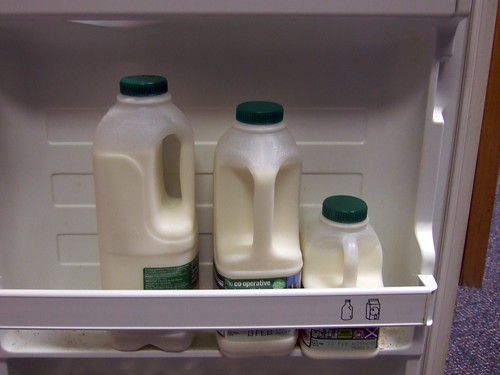

In the video, Lew finesses this unknown by calling the new material “7000 series,” which is certainly true, but it’s not the whole truth. To me, the fact that the aluminum in the new shell doesn’t meet a standard specification is one of the most interesting findings. It suggests that Apple has developed its own proprietary aluminum alloy.

It wouldn’t be the first time Apple’s done this. The Apple Watch Sport uses a proprietary 7xxx alloy, which is mentioned on both the “Craftsmanship” page and in Jony Ive’s “Aluminium” video, which is where I got that splashy image.

The natural question is “Is this new iPhone aluminum alloy the same as the Apple Watch Sport alloy, or was it developed specifically for the iPhone?” Since I haven’t seen the chemistry of the Sport alloy, I have no idea what the answer is.

Is there any other company for which you’d get a lab involved for a leak of a shell of a phone? (That said, this stuff is so educational. Do read on for what he says about the difference heat treatment makes to aluminium strength.)
link to this extract


Mobile ads: Media companies are losing the battle » Fortune

Mathew Ingram:

Is piggy-backing on Facebook’s platform the only way publishers can make mobile work? Perhaps. Entering into that kind of relationship also involves a significant transfer of power from the media outlet to the giant social network, something that has long-term risks. But for most publishers—and even for the New York Times—subscriptions aren’t generating enough revenue, and few people are paying for their apps.

For many companies that are watching the mobile chasm grow ever larger, in other words, there may be no other option. Their revenues are already so anemic that they can’t afford to build or buy anything that is going to move the needle. They can either play ball with Facebook and hope that will get them where they need to be, or they can stay on the sidelines and ultimately fade away.

The next year or two is going to be truly fascinating. Possibly ugly too.
link to this extract


Reluctant licence fee payers don’t like life without the BBC after all » The Guardian

Roy Greenslade:

What would it be like to live without the BBC? How would people react to losing the chance to see the corporation’s TV channels, hear its radio programming or access its online output?

The BBC commissioned research to find out how people might cope (or not cope) without the broadcaster. So 70 families in 15 locations across the UK agreed to the blocking of all BBC services for nine days. Of those, 48 had previously said they were either in favour of not paying the £145.50 [US$227] annual licence fee (and doing without the BBC) or paying only a reduced fee.

According to the study, carried out on the BBC’s behalf by research agency MTM, by the end of the period of deprivation two thirds had changed their minds.

Those nine days “saved” them £3.60 (US$5.63). The BBC is a bloody bargain – especially after you get exposed to the repeatedly fresh hell that is US TV, which has the attention span of a gnat. (There are no ad breaks on the BBC.) As with mobile phones and medical bills, the US doesn’t know how badly off it is when it comes to TV in comparison to the UK.
link to this extract


I Don’t Own, I Uber » Medium

Megan Quinn:

the move [from San Francisco to London, UK] meant [the car] had to go, and so it was sold for next-to-nothing to a really nice dad with two kids.

While I may have been sad to see my car go, I wasn’t concerned about being car-less because — when not on strike — public transportation is pretty good in Europe, and Uber is nearly ubiquitous in major cities. I knew Uber was more expensive in London, but everything was more expensive in London and I had factored that into my decision to move in the first place.

What I didn’t expect was that depending on Uber (UberX specifically) would actually be cheaper than owning and driving a car. Much cheaper. Yes, the company says this, but I didn’t think it was realistic yet.

Well, it is. At least for me.

About half the price, even allowing for the fact that petrol costs virtually nothing in the US compared to the UK. And that’s before amortisation of the car’s value. Mark this: it’s significant.
link to this extract


Probable Note 5 design flaw can cause S Pen to break pen detection when inserted backward, or get hopelessly stuck » Android Police

David Ruddock:

On the Note 5, inserting the S Pen the wrong way provides exactly as much resistance as inserting it the right way. Which is to say: basically none at all. Once you insert the pen far enough in the wrong direction (again, which causes no strange resistance or feel than putting it in the right way), it will get stuck. It doesn’t even have to “click” in. At this point, of course, you will panic. And you will try to get it out – and most likely, you’ll succeed. The problem is that if you do succeed, there’s a very real possibility you’ll break whatever mechanism the device uses to detect whether the pen is attached or detached from the phone. Which is exactly what happened to our review unit.

Yes, seriously. Watch the video.

We’re really not sure how this made it past testing at Samsung – it seems like such an obvious thing to design into the S Pen slot, especially when Samsung has full reason to know that inserting the pen the wrong way can damage the direction-sensitive detection mechanism in the slot.

Android Police was the site that discovered this flaw (not “probable flaw” – it is, no question; and Ruddock does call it that in the comments.) It’s really quite a doozy. (“Antennagate” was easily solved with a bumper, and “Bendgate” seems to have been more about care of larger phones than anything.) Samsung’s response, reported by The Verge: “We highly recommend our Galaxy Note5 users follow the instructions in the user guide to ensure they do not experience such an unexpected scenario caused by reinserting the S pen in the other way around.” Recommendations don’t come much higher.
link to this extract


A week without the Apple Watch » waitingtoDOWNLOAD

Lee Peterson survived:

I’ve missed notifications, workout tracking and the ability to control what’s playing on my iPhone the most – I miss the connivence of it.  Could I do without it, well yes and no – I mean yes I can live without it but now it’s opened up a whole new world I don’t think I could go without it.  It’s kept me in the moment more, stopped me from checking social media so much and for the first time I’m able to see how active (or inactive) I am allowing me to do something about it.

link to this extract


Start up: the Samsung conflict, Google Analytics v Edge, Windows 95 v 10, Android woes and more


A smart cap could tell you if your milk had gone off – so much more accurate than someone’s nose. Photo by alisdair on Flickr.

A selection of 11 links for you. Because you can take it. (You’d better, I’m taking a three-week holiday break.) I’m charlesarthur on Twitter. Observations and links welcome.

Samsung’s profit center » Asymco

Horace Dediu:

Phone operating margins [at Samsung] peaked in Q1 2014 at 20% but are half that level today. These margins have dropped to levels Samsung had in 2009, before the Galaxy launched and before they had any substantial revenues from smartphones.

In contrast, the semiconductor group is growing both revenues and margins. Margins and operating profits are both 50% higher than those of devices.

We also know that Apple is Samsung Semiconductor’s single biggest customer. We can’t be sure how much of the total revenue/profit comes from Apple but if the pattern continues then Apple could be the greatest contributor to Samsung’s profitability in the near future.

How could this be? Wasn’t Samsung supposed to “disrupt” Apple?

The reality is that Samsung’s own smartphones are being disrupted by good-enough Android devices, typically made by Chinese brands. This low-end disruption is also affecting LG, another phone maker and Apple supplier.

Unlike Samsung and LG, Apple is less susceptible to low-end disruption. What Apple offers is a brand promise, an ecosystem, associated products and services and what amounts to a new market. It’s this parallel value network that competes with Android/Google, rather than with Samsung.

I’ll add another data point: the “phone operating margins” actually cover the IM [IT & Mobile] division, which includes PCs and (I believe) cameras. In the latest quarter, the non-phone revenue in the IM division was below US$500m, for the first time in at least four years. That suggests we’re very close to seeing the true profit margin of Samsung’s phone business, as the non-phone business probably doesn’t perturb the very much larger (US$22bn, ie over 44x larger) phone business.

And read Dediu’s post for the killer payoff line.
link to this extract


Google loses bid to overturn low-cost patent licenses to Microsoft » Reuters

Andrew Chung:

In a setback for Google, a U.S. appeals court ruled on Thursday that the low licensing rate Microsoft pays to use some of Google’s Motorola Mobility patents had been properly set.

The 9th U.S. Circuit Court of Appeals in San Francisco said a lower court judge properly determined the patents’ value even though the royalty rate was only a fraction of what Motorola had asked for. Google sold the Motorola handset business to Lenovo last year but kept its patents.

The court also upheld $14.5m awarded to Microsoft for Motorola’s breach of contract to license its patents fairly.

Patents at issue being standards-essential; Motorola kicked it off demanding $4bn per year. Judge James Robart put the royalty rate at $1.8m per year.
link to this extract


BT hands £129m back to UK.gov after beating rural broadband targets » The Register

Simon Rockman:

Both BT and the Ministry of Fun – or the Department of Culture, Media and Sport, if you prefer – have spun BT’s toeing-the-line-of-a-contractual-obligation as unbridled generosity towards taxpayers.

A statement from the Minister of Fun, John Whittingdale, said:

It’s fantastic to see that the rollout of superfast broadband is delivering for customers and for the taxpayer. The Government was clear from the start that as levels of people taking up superfast broadband went beyond our expectations in areas where we invested public money, BT would reimburse the taxpayer for reinvesting into further coverage across the UK. This now means that BT will be providing up to £129m cashback for some of the most hard to reach areas.
The funding was part of a Broadband Delivery UK (BDUK) project which has the aims of:

• provide superfast broadband coverage to 90 per cent of the UK by 2016
• provide basic broadband (2Mbps) for all by 2016
• provide superfast broadband to 95 per cent of the UK by 2017
• explore options to get near universal superfast broadband coverage across the UK by 2018
• create 22 “SuperConnected Cities” across the UK by 2015
• improve mobile coverage in remote areas by 2016

Speaking as someone who keeps finding themselves somehow forever in that “it’s coming in a couple of years, honest” part of the country (which seems to be a lot larger than 5%), I’d prefer Whittingdale to be lighting a fire under BT, and for Ofcom to demand that BT Openreach (which does the infrastructure) be split from the rest of BT.

After all, power generators don’t own the power lines, rail operators don’t own the track; why does BT own the phone lines?
link to this extract


Enterprises retake lead in tech adoption » Deloitte CIO – WSJ

Apparently a sort of chief information officer-focussed niche of the WSJ, this has the entertaining premise that:

many believe this trend of consumer-originated innovations entering the workplace, dubbed the consumerization of IT, will become the dominant model going forward. But there is strong evidence that the pendulum is swinging back to enterprise-first adoption, with organizations likely to capture more near-term value than consumers in the following four technology areas:

Which areas? Let’s see: wearables; 3D printers; drones; Internet of Things. Not a chance on wearables – enterprise adoption and value will lag far behind consumers (already does). On 3D printing, businesses are already ahead through prototyping, so no contest. On drones, again, armies got there first, so not really at issue. And IoT? It’s such a pain at present for most people that again, it’s left to businesses which have the time and patience to deploy. But I’d bet once IoT stuff becomes prevalent enough, it will be widely used by the ordinary folk.
link to this extract


The challenge of tracking Microsoft’s new Edge browser in Google Analytics » GeekWire

Even though Edge is now in the wild, tracking usage and adoption of the browser is going to be problematic for many web developers and site owners because tracking for Edge is not yet supported in Google Analytics.

Web developers and designers frequently consult Google Analytics to answer important browser usage questions for their website. Answers to questions like “Do we need to still support IE8?” or “Are there enough users affected by this particular Chrome bug to implement a hack to fix it?” are usually answered by running a browser usage report in Google Analytics. Google Analytics provides an easy way to break down a website’s readers by their OS, browser and browser version, except in the case of Edge.

Taking a look at Google Analytics reports for Operating System Version in Windows, you’ll notice that there is no version 10 listed.

WTH, Google? (Via Richard Burte.)
link to this extract


UC Berkeley engineers devise 3D-printed ‘Smart Cap’ to check safety of milk, juice » Food Safety News

The “smart cap” has an embedded inductor-capacitor tank as the wireless passive sensor and can monitor the quality of milk and juice wirelessly, the article stated.

“A quick flip of the carton allowed a bit of milk to get trapped in the cap’s capacitor gap, and the entire carton was then left unopened at room temperature (about 71.6 degrees F) for 36 hours,” according to a university news report.

The result shows a 4.3% resonance frequency shift from milk stored in the room temperature environment for that period. This work establishes an innovative approach to construct arbitrary 3D systems with embedded electrical structures as integrated circuitry for various applications, including the demonstrated passive wireless sensors, the article explained.

The Berkeley folk are saying “hey, people will print them out at home!” while everyone else is saying “this would be so useful in mass-produced containers”.

So here’s a picture of the 3D printer that the UC Berkeley people think you’ll want to print out milk carton tops with.
UC Berkely 3D printer
Yeah, I’ll have two – you never know when you might need a spare.
link to this extract


The fastest-growing mobile phone markets barely use apps » Quartz

Africa and Asia, the two fastest growing mobile markets, aren’t very big on apps.

The overwhelming majority of mobile internet activity in the regions is spent on web pages, according to a report released on 28 July by Opera Mediaworks. In Asia and Africa, websites made up 90% and 96% of mobile impressions, respectively, in the second quarter.

Their habits are a sharp contrast to the US, where apps accounted for 91% of impressions. Globally, there’s a more even distribution, with apps making up 56% of mobile impressions and websites comprising the remainder…

…“A big portion of the mobile audience in mobile-first regions like Africa and [Asia-Pacific] are still using low-end feature phones because of the cost factor,” a spokesman tells Quartz. “This therefore compels them to use the mobile web more than apps, which are usually dominant on smartphones.”

Today’s challenger for the “well duh” prize.
link to this extract


Windows 10 launched so quietly you may have missed it » The Guardian

Some two-bit hack blathering about a new version of Windows:

Windows 10’s biggest new feature? It’s free if you download it within the next year, and will install on machines running Windows 7 or Windows 8. Its second biggest feature? It isn’t Windows 8, which was released in 2012 and created widespread puzzlement by submerging the traditional desktop interface beneath big, bright “tiles” and getting rid of the familiar, popular Start menu.

That puzzlement soon turned to anger, forcing the ejection of the man who had led Windows 8’s development, Steve Sinofsky, and the introduction of Windows 8.1, which, while it didn’t bring the Start menu, did at least let you start off in desktop mode.

Now, Microsoft breezily says, “the familiar Start menu is back”, as though it had been on holiday rather than unceremoniously dumped.

On reflection, the biggest feature of Windows 10 is that it isn’t Windows 8. Being free is its second-biggest.
link to this extract


August 1995: A window we will all want to open » The Independent

Some two-bit hack blathering about a new version of Windows:

Microsoft’s computer program lines up with a number of other classic products: the Biro, aerosols, the Sony Walkman, the Boeing 747 jumbo jet, the Mini and the compact disc. It is a piece of technology which has arrived at just the right time to satisfy people’s wants.

Like those other classic products, Windows 95 enhances our personal independence and autonomy, and makes our lives more convenient. It draws everyone deeper into the existence of the “me” generation. Thus, aerosols let you manage your hair, your hygiene, your cleaning as you choose: convenience in a can. A Biro can write for far longer than a fountain pen, and when it’s finished you simply throw it away. The Mini, costing £400 in its first incarnation, made car ownership possible for the young and relatively poor, not just the comfortably well-off. The Walkman provided everyone with their own personal environment: the music (or noise) that you want at the volume you choose.

But like those earlier products, Windows 95 also exemplifies a wider economic and cultural trend. Just as globalisation gives corporations multinational reach, their products link physically and culturally diverse peoples, homogenising aspects of our lifestyles and, literally, connecting us up. Software can be “shipped” over a telephone line across borders; Windows 95 will be the same in Australia or the Arctic.

link to this extract


CNET’s early coverage of Windows 95, back in 1995 » YouTube

CNET’s first impression of Windows 95 was that it would create a huge impact, what with the long file names, taskbar and a recycle bin for unwanted files. Check out this vintage review along with Microsoft’s own promotional video that went with the launch.

Here’s the video:

(The presenter is Richard Hart.)

How far we’ve come. No, don’t disagree. Look at that video of the Fonz.
link to this extract


The security flaw Google built into Android » MIT Technology Review

Tom Simonite:

Google can’t push you an update for Android. It hands out the operating system to device manufacturers for free. They get to tinker with it to add features or apps of their own and are the only ones—along with cellular carriers in some cases —that can push updates to the devices they sell. Google does bind companies that use Android with some restrictions (for example to do with using its app store) but doesn’t require them to push out security updates quickly.

That leaves users of Android devices unable to avail themselves of what security experts say is the most important strategy for staying safe, at least according to researchers at none other than Google itself. They reported last week on a survey that asked computer security pros how they stay safe. Applying security updates emerged as the experts’ number one priority.

Google has lately come up with workarounds for Android’s flawed security model. It has shunted many key functions into apps that it can push updates to via its app store. But that doesn’t cover all of Android, and the app store doesn’t have a way to signal to you whether an app wants to update for security reasons or just to add new features.

The text message vulnerability revealed today can’t be fully fixed by upgrading apps. And it’s not unlikely that most vulnerable phones will never get the security patches for Android that Google has developed and will offer up to manufacturers and cellular operators.

Android has done spectacularly well, but one feels that it’s overdue its Blaster moment.
link to this extract


Start up: Instagram v skin colour, slow smartphone sales, Galaxy Note 5 in a rush, and more


Are you sure you’d want not to feel pain or have super-strong bones? Photo by Jlhopgood on Flickr.

A selection of 9 links for you. Use them wisely. I’m charlesarthur on Twitter. Observations and links welcome.

The quiet racism of Instagram filters » Racked

Morgan Jerkins:

Last year, Danity Kane’s Dawn Richards uploaded a selfie on Instagram that lead to plenty of backlash from her fans. Aside from the apparent plastic surgery, many suspected that she had bleached her skin. In response, Richards tweeted “Filter is the new bleach.”

For women of color, she’s right. Instagram users can choose from over 20 filters, but as subjects, we don’t have a choice in how our images are processed once a filter is in place. In the name of enhancing or beautifying our photos, filters inevitably alter our appearances beyond recognition.

People often think of technology as inherently unbiased, but photography has a history of racism.

Remember the story of Kodachrome film’s insensible racism? Repeated by computers.
link to this extract


TrendForce reports Q2 global smartphone shipments at 304m and revises annual shipment growth… » PRNewswire

Trendforce is a Taiwan-based research company:

The latest analysis from the global market research firm TrendForce finds smartphone shipments in the second quarter of 2015 grew 1.9% over the previous quarter to 304m units. Shipment growth in the second quarter slowed as vendors prepared to launch their flagship devices in this year’s second half. However, shipments of branded Chinese smartphones benefited from the Chinese Labor Day sales and their entries into the overseas markets. TrendForce reports the second quarter shipments of Chinese branded smartphones had an above global average growth of 15.6% with 126m units shipped.

TrendForce has also made downward revision to smartphone shipment growth for the entire 2015 from 11.6% to 8.2%. According to Avril Wu, TrendForce’s smartphone analyst, this revision is attributed to the negative global economic outlook for the second half of this year and weakening demands.

Lots more figures to come (IDC, Gartner, Counterpoint among others) but this is a surprising data point. (Thanks Mr McC on Twitter.)
link to this extract


How strong is Apple’s grip over mobile phones? » WSJ

Rani Molla (and the graphics team?) put together this nifty graphic of revenue share in the mobile phone industry.

mobile phone industry revenue share

Note again that it is revenue share, not unit share (one slow-witted commenter failed to comprehend this), or profit share, or OS share. And it’s for the whole industry, not just smartphones – but of course smartphones generate more revenue. (A graphic showing absolute revenue would be fun too. Might have a stab at that.)
link to this extract


These superhumans are real and their DNA could be worth billions » Bloomberg Business

Caroline Chen:

Steven Pete can put his hand on a hot stove or step on a piece of glass and not feel a thing, all because of a quirk in his genes. Only a few dozen people in the world share Pete’s congenital insensitivity to pain. Drug companies see riches in his rare mutation. They also have their eye on people like Timothy Dreyer, 25, who has bones so dense he could walk away from accidents that would leave others with broken limbs. About 100 people have sclerosteosis, Dreyer’s condition.

Both men’s apparent superpowers come from exceedingly uncommon deviations in their DNA. They are genetic outliers, coveted by drug companies Amgen, Genentech, and others in search of drugs for some of the industry’s biggest, most lucrative markets.

Their genes also have caused the two men enormous suffering.

Admit it, until that last sentence you were feeling envious.
link to this extract


LifeLock plunges after FTC alleges data security firm made false promises to consumers » Forbes

Antoine Gara:

the Federal Trade Commission said on Tuesday afternoon LifeLock both failed to deliver on its pledges, or live up to a 2010 regulatory sanction, which barred the company from making false claims about the quality of its data protection services.

LifeLock, the FTC said, falsely claimed it protected consumers’ identity 24/7/365 by providing alerts “as soon as” it received any indication there was a problem, and charged consumers $10-a-month for the service. The company even revealed its CEO’s social security number in advertising campaigns as a means to prove the quality of its data protection.

However, between October 2012 through March 2014, the FTC says LifeLock not only misled customers on their protection by equating its services with the types of protection consumers’ receive from larger financial institutions. It also violated the 2010 order by failing to establish and maintain a comprehensive information security program to protect its users’ credit card, social security, and bank account numbers.

Would be nice if the US had better personal data security. Or even a law that protected it.
link to this extract


How YouTube killed an extension with 300,000 users » The Next Web

Owen Williams:

three years after its inception, Streamus is dead. It’s been removed from the Chrome Web Store after Google revoked its API key.

Sean Anderson, a 25-year-old developer based in California bet everything on his tiny, but incredibly useful Chrome extension.

At first, the extension was picked up by a few friends but it quickly gained steam when TechCrunch covered it in January of 2014.

It was always somewhat questionable, because it played music in the background without the video that went with it — Anderson seemingly knew this, but had hoped he would one day be able to work something out with YouTube if it got big enough.

Shortly after the Techcrunch article was published, YouTube sent Anderson a cease and desist letter.

YouTube was upset for three reasons: Streamus was not back-linking to YouTube or showing video in the foreground while playing music and didn’t show its advertisements. Understandable requests.

After the initial cease and desist and an introduction to YouTube’s head of developer relations, the company went quiet.

Did Anderson truly think Google was just going to ignore this? That’s naive optimism taken to the extreme.
link to this extract


Ahead of schedule: Samsung to release Galaxy Note 5 one month ahead of schedule » BusinessKorea

Cho Jin-Young:

According to industry sources on July 21, Samsung Electronics will hold an event in New York on Aug. 13 to unveil the Galaxy Note 5 and the Galaxy S6 Edge Plus.

Recent reports suggest that the Galaxy Note 5 will feature a 5.7 inch QHD Super AMOLED display, its own Exynos 7422 processor, 4GB of RAM, and a 16 megapixel main camera with optical image stabilization (OIS), along with a stylus pen. The Galaxy S6 Edge Plus will be the Note without a stylus. It will feature a 5.7 inch display, Exynos 7420 processor, 3GM of RAM, and 16 megapixel main camera.

The release of the Galaxy Note series in Aug. is very exceptional for Samsung Electronics. Until now, the company has launched the Galaxy Note series after making the products debut in IFA, the world’s leading trade show for consumer electronics and home appliances, which takes place in Germany every Sept. However, the company decided to move up the release date of the Galaxy Note 5 by a month this year. Also, this is the first time for Samsung to launch a “Plus” version of the Galaxy S series.

Big question is whether the Note 5 will have a removable back/battery and SD card slot.
link to this extract


An Irish startup thinks it can stop you from blocking online ads » The Irish Journal

[Pagefair CEO Sean] Blanchfield says he noticed last year that Apple begun sending signals that it wasn’t interested in helping ad tech firms track users and serve them ads.
“In July last year we noticed a company called Disconnect, they are an extension, much like Adblock, for Chrome. A San Francisco company. Their focus is privacy, user privacy and behavioural tracking.

“People install them basically to block cookies. As a side-effect they have to block most ads, because most ads use cookies.

“In any case, in July last year they launched mobile versions on Android and on iOS, and they weren’t approved for the Play Store, Google blocked them.

But Apple put them through (into the App Store). And I spoke to them after, and they felt pretty confident that they had been given the approval to proceed essentially blocking ads. That’s not their core mission but it’s an essential piece.”

PageFair’s solution is to scrambles the ads and deliver them in a way that adblock software can’t “see”.

“So a programme like Adblock Plus can’t recognise it,” Blanchfield said.

And will this work even against Apple’s new preference option for Safari? ”Yes.”

But doesn’t it slow down speed at which a page loads ads?  ”No, it’s still instantaneous.”

This is going to be quite a war.
link to this extract


Apple figures out way to help you more easily move objects on a touchscreen » CNET

It’s a patent filing, as Lance Whitney explains:

Apple and other mobile device makers have long offered the ability to cut or copy and paste text. To do this, you can use your finger to zoom in on the text you wish to select, then expand or shrink the highlighted text, and then finally delete or move that text. But that type of operation doesn’t always go smoothly because your fingers are typically too large to perform such a granular task. So selecting text is more frustrating than it should be. Apple’s patented solution would remove the need to place your big finger on the touchscreen in the first place.

Here’s how it would work: Let’s say you want to select a specific section of text. With the cursor placed in the right spot, you’d tap the side or another non-touchscreen area of the device. Each time you tap the side, the cursor could move one character, thereby expanding the selection of the text on a more precise and granular level. Tapping the right side of the device would move the cursor to the left, while tapping the left would move the cursor to the right.

Unconvinced.
link to this extract