

Start up: Chrome v Flash (and Google v iOS 9), HTC delays Vive, streaming’s true problem, and more


Suggested caption: “I wish I’d never mentioned the bloody sealion”. Can a computer do better? Picture from MCAD Library on Flickr.

A selection of 9 links for you. Use them wisely. I’m charlesarthur on Twitter. Observations and links welcome.

Google makes it official: Chrome will freeze Flash ads on sight from Sept 1 » The Register

Shaun Nichols:

Back in June, Google warned that, in cooperation with Adobe, it would change the way Flash material is shown on websites.

Basically, “essential” Flash content (such as embedded video players) are allowed to automatically run, while non-essential Flash content, much of that being advertisements, will be automatically paused.

As we explained a couple of months ago, it’s effectively taking Chrome’s “Detect and run important plugin content” feature, and making it the default: only the “main plugin content on websites” will be run automatically. That should put a stop to irritating ads around the sides of pages.

Google’s reasoning for the move is largely performance-based, apparently. The Chocolate Factory worries that with too many pieces of Flash content running at once, Chrome’s performance is hamstrung, and, more critically, battery life is drained in notebooks and tablets running the Flash plugin.

A performance and battery hit? From Flash? I’m shocked, shocked to hear of such a thing.
link to this extract


Handling App Transport Security in iOS 9 » Hacker News discussion

Remember the Google Ads blogpost from last week explaining how developers could enable non-HTTPS ads to show on iOS 9, which enforces (almost) HTTPS? The discussion on Hacker News include some who’ve been in the trenches:

At my last job, we did something similar to what iOS 9 is now doing, where we migrated a survey engine to serve all forms over https. There was high fiving and champagne all around the engineers desks, while media was freaking out that their impressions took the sharpest reverse-hockey-stick in the world. Ad networks are seriously the worst when it comes to https traffic. Given the dozens of redirects and pixel injections and iframes slapped into a media page, it’s nearly impossible to serve secure traffic since it only takes one network to downgrade the https request to http and then the page is “broken”.

Other comments provide useful insight too.
link to this extract


The wait for HTC’s Vive VR headset just got longer » ReadWrite

Adriana Lee:

Other projects and software features are likely in the works [from Oculus Rift] as well. (We may know more at the Oculus Connect 2 developer conference in Los Angeles next month.) 

There’s also increasing competition from VR hardware startups and other (bigger) competitors eyeing virtual and augmented reality—including Sony, Google, Samsung and Microsoft. Apple may also be pursuing virtual and augmented reality behind closed doors.

All of which makes HTC’s decision to delay the Vive’s consumer release rather risky—especially if the company is relying on this initiative to make up for its flagging smartphone business. For end users and developers, however, the scenario points to something else: Next year is going to be absolutely huge for all realities virtual. 

Can HTC hang on long enough to ride that wave? Testers say it’s terrific quality. Most valuable asset?
link to this extract


Chromebooks gaining on iPads in school sector » The New York Times

Natasha Singer:

In terms of the sheer numbers of devices sold, however, Microsoft remained in the lead. In 2014, about 4.9m Windows devices, including notebooks and desktops, shipped to schools, giving Microsoft a roughly 38% market share in unit sales, IDC said.

Apple, meanwhile, shipped about 4.2m devices for schools, including desktops, notebook computers and tablets, accounting for about 32% of the education market, according to the report.

But the Chromebook category is fast gaining traction in the United States.

Last year, about 3.9m Chromebooks were shipped in the education sector, an increase in unit sales of more than 310% compared with the previous year, IDC said. By contrast, iPad unit sales for education fell last year to 2.7m devices, compared to 2.9m in 2013, according to IDC data.

“Even if Microsoft is No. 1 in volume and Apple is No. 1 in revenue, from the growth perspective, nobody can beat Chromebook,” said Rajani Singh, a senior research analyst at IDC who tracks the personal computer market and is the author of the report.

In the first half of this year, she said, roughly 2.4m Chromebooks shipped to schools compared with about 2.2m Windows-based desktops and notebook computers.

Maybe this is where Chromebooks begin to eat away at Windows. They certainly should be a lot easier to secure and manage.
link to this extract


We built a robot to help you win The New Yorker’s cartoon caption contest » The Verge

Michael Zelenko and Frank Bi:

Each week The New Yorker runs a cartoon contest on its back page, where the publication invites readers to submit captions to cartoons drawn by the magazine’s illustrators. Winning the contest is notoriously difficult — writers have to generate a quip that’s funny, but also perfectly mimics the magazine’s sensibilities. A deep knowledge of The New Yorker is a prerequisite. Or is it?

We’ve collected all the first, second, and third place winning entries going back to when the magazine introduced the competition in 2005 — all 1,425 of them. Then, we ran them through a Markov text generator program that analyzes the winning captions and generates new, randomized entries that echo the original set.

Observation: using this won’t even get you to the last three in the caption contest. Maybe when the robots have taken all the other jobs, “comedian” will still remain for humans.
link to this extract


The real problem with streaming » Music Industry Blog

Mark Mulligan:

Even without considering the entirely intentional complexity of details such as minimas, floors and ceilings, the underlying principle is simple: a record label secures a fixed level of revenue regardless, while a music service assumes a fixed level of cost regardless.

Labels call this covering their risk and argue that it ensures that the services that get licensed are committed to being a success. Which is a sound and reasonable position in principle, except that in practice it often results in the exact opposite by transferring all of the risk to the music service. Saddling the service with so much up front debt increases the chance it will fail by ensuring large portions (sometimes the majority) of available working capital is spent on rights, not on building great product or marketing to consumers.

None of this matters too much if you are a successful service or a big tech company (both of which have lots of working capital). Both Google and Apple are rumoured to have paid advances in the region of $1 billion. While the payments are much smaller for most music services, Apple, with its $183bn in revenues and $194bn in cash reserves can afford $1bn a lot more easily than a pre-revenue start up with $1m in investment can afford $250,000.  Similarly a pre-revenue, pre-product start up is more likely to launch late and miss its targets but will still be on the hook for the minimum revenue guarantees (MRG).

It is abundantly clear that this model skews the market towards big players and to tech companies that simply want to use music as a tool for helping sell their core products. 

 
link to this extract


Heads-up, Google: fighting the EU is useless » Bloomberg View

Leonid Bershidsky:

Microsoft can tell Google exactly what happens next; indeed, Google’s lawyers realize there will be other antitrust investigations. One, concerning the Android operating system and its links to Google services, is already in the works, although no official charges have been brought. Another may soon hit Google where it really hurts, challenging its dominance in online advertising. Google will fight and probably lose, because Europe doesn’t like big U.S. companies to dominate its markets. 

Lobbying and complying with whatever demands still can’t be avoided is a less painful path. Microsoft spent 4.5 million euros last year, a million more than Google, on efforts to get EU officials to see its points on issues such as data protection and cloud computing. Among other things, the European Parliament is now considering a Microsoft proposal that would cap fines for Internet privacy violations at 2m euros a case, instead of 2% of a company’s international turnover.

It’s admirable that Google now wants to fight for its principles and against the dilution of its superior offering. It makes me cringe, however, to think of the time and money that will be burned in this hopeless battle.

link to this extract


The fembots of Ashley Madison » Gizmodo

Annalee Newitz:

In the data dump of Ashley Madison’s internal emails, I found ample evidence that the company was actively paying people to create fake profiles. Sometimes they outsourced to companies who build fake profiles, like the ones Caitlin Dewey wrote about this week in the Washington Post. But many appear to have been generated by people working for Ashley Madison. The company even had a shorthand for these fake profiles—“angels.” Perhaps this is a tip of the hat to Victoria’s Secret models, also known as angels.

Ashley Madison created their angels all over the world, and the dump contains dozens of emails where Avid Life Media management arranged to generate more. Here you can see a July 4, 2013 email from Avid Life Media’s director of internal operations, Nora Abtan, to CEO Noel Biderman and other managers, with the subject “summary angels status”…

…An email chain between Sandra Simpson and an employee named Eduardo Borges, dated July 30, 2012, suggests that quality control on the angel profiles was actually pretty rigorous. Borges asks whether it’s OK to reuse photos if they are in different states, and Simpson says no—she notes that many members travel and they might spot the duplicates.

Such great journalism; such a scammy business. The question becomes, did the company take this direction from the start, or was it forced towards fakery by circumstance?
link to this extract


Apple is about to lay down its TV cards » TechCrunch

Matthew Panzarino:

It stands to reason that Apple will be able to push the A8 much, much further than it ever has before given that the Apple TV is plugged into the wall, and not dependent on battery.

This will enable developers of games and other resource-intensive applications to produce higher quality and more demanding apps. Among the demos I’d expect to see on stage next month are content apps, games, and broadcast companies. These apps fit the venue (fixed, but large and participatory) and purpose of your television — and the apps that people will build for the Apple TV would do well to take those factors into account as well.

A native SDK that takes advantage of the hardware fully will, for the first time ever, turn the Apple TV into a platform, a self-sustaining life form that Apple likely hopes will dominate competitors who have done only slightly better about adding third-party support.

To control the new Apple TV? A new remote. One major feature of which was pretty much nailed by Brian Chen in an article earlier this year. It’s slightly bigger and thicker, with physical buttons on the bottom half, a Touchpad area at the top and a Siri microphone.

I thought the Apple TV would get its own SDK
back in 2012. Totally wrong; it just wasn’t ready.
link to this extract

Start up: Wi-Fi password sharing?, machine intelligence smart and stupid, Pebble Time review, and more


You’ll never believe what happens if you play it backwards. Photo by Janitors on Flickr.

A selection of 9 links for you. Show them eagerly to the person beside you! I’m charlesarthur on Twitter. Observations and links welcome.

UH OH: Windows 10 will share your WiFi key with your friends’ friends » The Register

Simon Rockman:

A Windows 10 feature, Wi-Fi Sense, smells like a security risk: it shares WiFi passwords with the user’s contacts.

Those contacts include their Outlook.com (nee Hotmail) contacts, Skype contacts and, with an opt-in, their Facebook friends. There is method in the Microsoft madness – it saves having to shout across the office or house “what’s the Wi-Fi password?” – but ease of use has to be teamed with security. If you wander close to a wireless network, and your friend knows the password, and you both have Wi-Fi Sense, you can now log into that network.

Wi-Fi Sense doesn’t reveal the plaintext password to your family, friends, acquaintances, and the chap at the takeaway who’s an Outlook.com contact, but it does allow them, if they are also running Wi-Fi Sense, to log in to your Wi-Fi. The password must be stored centrally by Microsoft, and is copied to a device for it to work; Microsoft just tries to stop you looking at it. How successful that will be isn’t yet known.

“For networks you choose to share access to, the password is sent over an encrypted connection and stored in an encrypted file on a Microsoft server, and then sent over a secure connection to your contacts’ phone if they use Wi-Fi Sense and they’re in range of the Wi-Fi network you shared,” the Wi-Fi Sense FAQ states.

Has been on Windows Phone for ages, yes, but most WP users don’t know any significant number of other WP users (because they’re so few). Not so with Windows. Microsoft says it only allows internet access and not LAN access – via port restrictions? That’s going to get hacked for sure.

Or could people maliciously spread their Wi-Fi details to try to sniff people’s viewing habits and details?


Pebble Time review » Wareable

Sophie Charara:

First things first, the Pebble looks better in real life than the pics you’ll have seen online. The black model is a little boring but will look neat under suit sleeves – for the record, we prefer the red and black Time.

Admittedly, the Time is plasticky, with a stainless steel bezel, but it retains the toy-like charm of the original Pebble while adding friendlier, more unisex curves. It’s very light at just 42.5g including the standard strap, 20% thinner at 9.5mm and the new slightly curved body helps to make it comfortable to wear on the wrist.

It’s amazing how many smartwatch manufacturers are satisfied with making devices that sit flat on top. The Time is the kind of smartwatch you can forget you’re wearing, until it vibrates.

I bought an original Pebble on Kickstarter. This? Looks like a toy compared to the Apple Watch. Not quite half the price, but really nothing like half as attractive.


Apple Sim iPads change the international data roaming game » Fortune

This morning, Apple and GigSky teamed up to offer travelers the ability to instantly connect to a local data network in more than 90 countries and territories upon touchdown—no need to visit a kiosk, talk to a service agent, or really, do anything at all. Instead, iPads with AppleSIM cards will automatically offer the option to sign up for a data plans as soon as a local network is in reach. (The GigSky network includes most of Western Europe, from France and Germany to the Netherlands; Australia; South Africa; parts of the Middle East; and beyond.)

Because travelers are accessing onto local networks, rather that roaming from their domestic carrier, prices are impressively affordable as long as you’re traveling on the beaten path. Entry-level data plans begin at just $10, covering anywhere between 10MB (in Papua New Guinea) to 75 MB (in Italy); in countries with better access, the premium plans top out at 3GB for $50. By comparison, AT&T’s best deal currently charges $30 for 120 MB or $120 for 800 MB.

Latest iPads only have them preinstalled, although for older ones you can get Apple SIMs in its stores, apparently.


Superconductivity record bolstered by magnetic data » Scientific American

Edwin Cartlidge:

The long-standing quest to find a material that can conduct electricity without resistance at room temperature may have taken a decisive step forward. Scientists in Germany have observed the common molecule hydrogen sulfide superconducting at a record-breaking 203 kelvin (–70 ˚C) when subjected to very high pressures. The result confirms preliminary findings released by the researchers late last year, and is said to be corroborated by data from several other groups.

Some physicists urge caution, however. Ivan Schuller at the University of California in San Diego, says that the results “look promising” but are not yet watertight.

Pressure of 1.5 million atmospheres. Don’t hold your breath for this one.


Why the BBC is wrong to republish ‘right to be forgotten’ links » The Guardian

Julia Powles:

The reaction to [BBC Online managing editor Neil] McIntosh’s post was predictable, inaccurate and devastating. The Times led with “BBC lists stories on abusers and rapists hidden under ‘right to be forgotten’”, gratuitously highlighting two stories.

The first was a 12-year-old story about a settlement between an alleged rape victim and the Catholic church, over incidents that occurred a half-century ago. The long-deceased abuser clearly couldn’t have filed the obscurity request with Google – leaving, rather less salaciously, the victim.

The second case concerned a nanny jailed for child abuse. Even a cursory Google search coupled with the basics of the Rehabilitation of Offenders Act would have told the journalist that an unspent conviction for such an offence clearly denied any reasonable claim to delisting. Caution raised, a bit more searching would have revealed the truth: that the conviction was overturned by the Court of Appeal. That former nanny has been exculpated under the law of the land – but not by Google and not, it seems, by the press either.

Other publications followed suit. Boing Boing drew attention to a rape story. Given it concerned a fairly recent conviction in 2012, clearly the sex offender has no entitlement to be delisted.

But what about his friend who was also named in the article because he happened to be in the house where the attack took place?

The “right to be forgotten” is so poorly understood, which frustrates the hell out of me. (See the comments under the article.) I wrote an explanation of what it is, and what it is not; please, before you discuss the topic with me (or anyone), read and absorb it. The topic is simple. It just takes a bit of thought.


Growing conspiracy theory: is spy equipment really included in Samsung smartphone batteries? » BusinessKorea

Cho Jin-young:

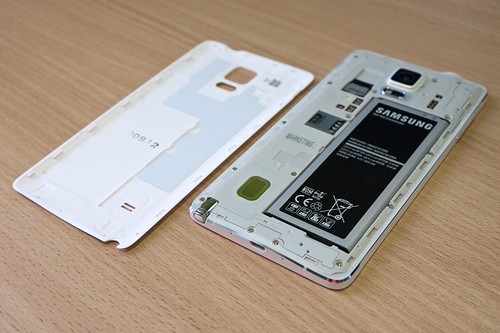
A video circulating on Facebook and YouTube that was posted at the beginning of the last week of June shows that after tearing off a sticker that wraps around the battery of the Galaxy S4, the man in the video points to a small coil inside, saying, “This is the spy equipment.”

He remarked, “Samsung can record pictures on your smartphone and overhear your calls through the coil shaped like this antenna,” adding, “So, you’d better tear off the sticker that wraps the battery first and use the phone.”

In fact, this video attracted 12 million views on Facebook only four days after it was initially posted, and around 300,000 people reportedly shared the video.

However, local media outlets pointed out that this conspiratorial video originated from a misunderstanding about the Near Field Communication (NFC) antenna, a communication technology that makes it possible to transmit different kinds of wireless data to a distance of 10 cm.

Would be fun to know how weird ideas like this get started. I’ve seen a few incoming search queries on this to this blog, and wondered what was going on (it was because I wrote about Samsung obviously knowing whether people use replacement batteries).


DRAM spot prices hit 28-month low, says Taiwan Central News Agency » Digitimes

Jessie Chen:

Spot prices for 4Gb DDR3 chips already declined 17.55% in the second quarter, after falling 12.77% in the first quarter, the report quoted DRAMeXchange as saying.

Since 2015, DRAM spot prices have been dragged down by sluggish PC sales and a slowdown in smartphone demand, the report noted.

Hadn’t heard about this slowdown in smartphone demand anywhere else. China has, but elsewhere? Dram prices are often an early warning though.


Google apologises for Photos app’s racist blunder » BBC News

Google says it is “appalled” that its new Photos app mistakenly labelled a black couple as being “gorillas”.

Its product automatically tags uploaded pictures using its own artificial intelligence software.
The error was brought to its attention by a New York-based software developer who was one of the people pictured in the photos involved.

Google was later criticised on social media because of the label’s racist connotations.
“This is 100% not OK,” acknowledged Google executive Yonatan Zunger after being contacted by Jacky Alcine via Twitter.

“[It was] high on my list of bugs you ‘never’ want to see happen.”

Machines can’t be racist, of course; but quite how Google is going to prevent this happening again is an open question. Neural network/deep learning like this isn’t something you can tweak directly. You can’t really peer inside it. Great when it’s drawing arcane pictures, not good when it’s mislabelling pictures.


Could this computer save your life? » CNN

Jillian Eugenios:

“In one panel of scans that we looked at, when you look at the number of times that radiologists sent someone home with a clean bill of health, about 7% of the time that patient was ultimately found to have cancer,” said John Zedlewski, a data scientist with Enlitic, a medical technology company.

When Zedlewski used Enlitic’s algorithm against the same panel, there weren’t any mistakes.

How does it work? Enlitic’s technology uses machine learning — which some say is a version of artificial intelligence. It takes medical information from one patient — whether it’s a CT scan, an X-ray or details about, say, a tumor — and then converts it into a mathematical representation. It’s then added to a large pool of data and compared to other patients who have experienced similar issues.

Think of it as crowdsourcing your symptoms. And not just with one or two people, but millions. The more data the computer has, the smarter it gets, and the more accurate the diagnoses.

At least that’s the dream.

Seems to have a large base of data.


Start up: drone questions, Baidu barred in AI comp, why Apple shunned HERE, and more


This is what it looks like when you’re upset, Google. Photo by donnierayjones on Flickr.

A selection of 7 links for you. Use them wisely. I’m charlesarthur on Twitter. Observations and links welcome.

The UX of Commercial Drones » UX Magazine

Dan Saffer:

Let’s examine the customer experience as demonstrated by Amazon: The drone flies in and lands on the back patio. The customer leaves the house. The drone releases the package and flies away. The customer grabs the package and heads back inside. This is all well and good, but a lot of important detail still needs to be addressed. For starters, how does the customer know when the drone is arriving? People aren’t going to want their packages sitting outside unattended, especially in inclement weather (assuming drones will even be able to fly when it’s raining or snowing). And people won’t want to sit around looking out their window for half an hour. But what might work is something like what the car service Uber does: showing you via an app where your drone is and how long until it arrives, as well as alerting you via SMS when it does arrive. This would provide a level of assurance, especially at the onset when the idea of a drone carrying an emergency last-minute birthday gift will seem the height of novelty. When the drone does appear, it’s going to be really tempting to race out and grab the package, especially for kids—and perhaps for dogs and excitable adults as well. One problem: between the person and the package are several spinning, knife-like blades that form the rotors of the drone. Being accidentally hit in the face by one would be a great way to lose an eye or obtain a nasty cut.

“We included plasters in case you get hurt!”


Computer scientists are astir after Baidu team is barred from AI competition » NYTimes.com

John Markoff:

The competition, which is known as the “Large Scale Visual Recognition Challenge,” is organized annually by computer scientists at Stanford University, the University of North Carolina at Chapel Hill and the University of Michigan. It requires that computer systems created by the teams classify the objects in a set of digital images into 1,000 different categories. The rules of the contest permit each team to run test versions of their programs twice weekly ahead of a final submission as they train their programs to “learn” what they are seeing. However, on Tuesday, the contest organizers posted a public statement noting that between November and May 30, different accounts had been used by the Baidu team to submit more than 200 times to the contest server, “far exceeding the specified limit of two submissions per week.”

Previously reported here, before the multiple entries were spotted. Baidu’s team calls their multiple entries “a mistake”.


The new Google Photos app is disturbingly good at data-mining your photos » Fusion

Daniela Hernandez:

What’s particularly incredible is the facial recognition. The app sees individuals in photos even if they are barely in the picture, far in the background, or featured in a photo within a photo. When I did a search for my adult sister’s face, it recognized her in a photo I took of a 20-year-old elementary school picture of her. When I searched for my father’s face, it included a photo I took of a decorative tile-wall in Mexico. I thought it had messed up, because I didn’t see any people in the photo, but when I looked closely, there was a tiny version of my dad at the bottom. Facial recognition has gotten very powerful. Google also seems to know how to flatter its users. When I typed in “skinny,” the search unearthed pictures of me, friends, my sister and my mother, as if it was trying to compliment us. But when I searched for other adjectives, particularly negative ones — fat, sad, upset, angry — Google Photos came up empty. (Some of my colleagues got similar results.) The technology to help computers decipher emotions is out there already, so there’s no technical reason why Google isn’t turning up results for those searches. It gave us results for “love,” but not for “hate.” Whether it’s that we don’t take photos of ugly things, or that Google is shielding us, is something we’d really like to ask the search giant.

You could pick up the phone and ask them…


Eric Schmidt on why Google won’t fail » Business Insider

Jillian D’Onfro:

Shareholders understand Google’s search and ad business, [Schmidt said at the AGM], but they don’t necessarily understand the other projects that the company invests in, like self-driving cars or smart contact lenses. On past earnings calls, analysts and investors have sounded impatient when questioning how those businesses are going to ultimately pay off. But Schmidt assured shareholders Wednesday that ambitious goals like cutting down on car crashes or measuring a diabetic’s blood sugar through their tears are the kinds of things that will ultimately make Google a long-lasting, successful company. “Most companies ultimately fail because they do one thing very well but they don’t think of the next thing, they don’t broaden their mission, they don’t challenge themselves, they don’t continually build on that platform in one way or another,” he says. “They become incrementalists. And Google is very committed to not doing that. We understand the technological change is essentially revolutionary, not evolutionary.”

Are there any lessons from technology companies that have lasted more than a century, such as Nintendo, IBM and Nokia?


Here’s why Apple didn’t want to buy Nokia’s mapping unit HERE » Forbes

Parmy Olson:

Apple appears intent on fixing the problems that cropped up from relying on third-party map providers. One of the reasons Apple Maps was so buggy from when it was launched in June 2012 is the fact that its data percolated in from multiple sources like TomTom, Acxiom, Waze and Yelp By building its own geography dataset, Apple can pare down its reliance on sources like TomTom’s TeleAtlas. Apple’s likely vision is that years from now, we’ll have forgotten about how bad Apple Maps was, because Apple will have taken complete control of its mapping infrastructure and made it watertight.


There’s still plenty of money in dumb phones » Quartz

Leo Mirani:

there’s little doubt that dumb phones and feature phones are a shrinking market. Between the first quarter of 2013 and the first quarter of 2014, the market for non-smartphones shrunk by a 14%, according to CCS Insight (pdf), a research firm. This year, some 590 million non-smartphones will be sold. By 2019, that number will shrink to 350m. But 350m phones in one calendar year is still a lot of phones. And it is, as Microsoft’s Pekka Haverinen of Microsoft’s feature phone division tells Quartz, a predictable market with high volumes and a high market share for Microsoft. It’s not just device-makers who stand to profit from cheap, basic phones. Ericsson reckons (pdf) that by 2020, there will 9.2bn mobile subscriptions, of which 1.4bn will be non-3G subscriptions. This huge market is hungry for services.

Well, sorta. Microsoft’s featurephone segment is shrinking really rapidly; this is a market which is being eaten up by cheap Chinese players for whom, as they say, “your [profit] margin is my opportunity”.


Twitter just killed Politwoops » Gawker

JK Trotter:

A Twitter spokesperson just provided the following statement to Gawker regarding the apparent suspension of Politwoops’ access to Twitter’s developer API, which enabled the Sunlight Foundation-funded site to track tweets deleted by hundreds of politicians. Summarized: Politwoops is no more.

Earlier today we spoke to the Sunlight Foundation, to tell them we will not restore Twitter API access for their Politwoops site. We strongly support Sunlight’s mission of increasing transparency in politics and using civic tech and open data to hold government accountable to constituents, but preserving deleted Tweets violates our developer agreement. Honoring the expectation of user privacy for all accounts is a priority for us, whether the user is anonymous or a member of Congress.

The post also says that Twitter was considering a “quiet reversal” but found itself snookered on the question of “why them and not others”. But if someone tweets something publicly, haven’t they yielded their expectation of “privacy”? In the print days, the UK Ministry of Defence could demand back documents about cruise missile sitings from The Guardian on the basis of copyright. That seems to be what Twitter is imposing here.


Start up, May 28: LG Urbane reviewed, crashing iOS, who really bought Re/Code?, Meeker’s 2015, and more


Strong feelings, and not about the video game. Photo by gato gato gato on Flickr.

A selection of 9 links for you. Use them wisely. I’m charlesarthur on Twitter. Observations and links welcome.

Mary Meeker’s Internet Trends for 2015

Have to admit I haven’t read it (found it late) but it’s always essential reading. Download and peruse.


Apple’s ‘Proactive’ to take on Google Now with deep iOS 9 search, Augmented Reality Maps, Siri API » 9to5Mac

It’s that Mark Gurman guy again:

Apple began to lay the groundwork for Proactive with its acquisition of a personal assistant app called Cue in 2013, seeking to relevantly broaden iOS’s Spotlight and Safari search results. iOS 8’s ability to display Wikipedia Search results within Spotlight was the first taste of the Proactive initiative, and was partially designed to reduce iOS’s search reliance on Google. Sources say that Apple’s internal iOS usage metrics indicate that Google clicks have indeed fallen since iOS 8’s release last fall. Now Apple wants to take Proactive to the next level, and it may do so with iOS 9’s introduction at the annual Worldwide Developers Conference on June 8. While Apple has positioned Siri as an “intelligent personal assistant” since the fall 2011 launch of the iPhone 4S, Proactive will go much further to integrate with your data. To begin with, Proactive will become a new layer within the iOS operating system, replacing the pulldown Spotlight menu currently found on the iOS Home screen.

But he says there’s also disagreement about whether to launch this in iOS 9, which was sorta going to be the “Slow down, Snow Leopard” release. (Also, “augmented reality” always sounds cool and then disappoints. I’ve tried it. It ain’t all that.) I’d love to see the metrics around Gurman’s stories compared to those for Re/Code. I think he might be ahead in pure readership. But of course he doesn’t have a giant conference attached.


Bug in iOS Unicode handling crashes iPhones with a simple text » AppleInsider

AppleInsider reader Kaitlyn on Tuesday discovered that receiving the Unicode characters seen in the screenshot above through Apple’s iOS Messages app triggers iPhone restarts, lockouts from Messages, Springboard crashes and more. A thread on Reddit narrowed down the system crash and reboot errors to iOS Unicode handling. More specifically, the Unicode string in question is part of a much longer block of text that cannot be fully rendered in Notifications.

If you’re thinking this sounds retro, that’s because it is: same sorta bug (different string) did the same thing back in August 2013. Wonder how long the fix will take. Also: Apple Watch apparently not susceptible, which is super-puzzling.


A series of wholly unrelated observations about Vox Media’s acquisition of Recode » The Awl

Matt Buchanan points out that if you pull the threads of both companies for long enough, you end up – from both – at Comcast, where its venture arm is trying to sell a company to the main arm. Trebles all round, or something. Also, take a look at the tags on the story. (Via Charles Knight.)


The Office of the Attorney General of Switzerland seizes documents at FIFA » Swiss Attorney General

Now, I don’t usually care about football (soccer to you Americans), but the evident corruption in FIFA (the “world governing body for football”) has been evident for years. Now, finally, something is happening – but not on just one, but two fronts:

In connection with irregularities surrounding football tournaments, two separate proceedings must be distinguished: The Office of the Attorney General of Switzerland (OAG) is conducting a Swiss criminal investigation regarding the allocation of the 2018 and 2022 World Cups. For inquiries regarding this Swiss criminal investigation, please contact the OAG. In separate proceedings, and independently of the Swiss criminal investigation of the OAG, the US Attorney’s Office for the Eastern District of New York is conducting a criminal investigation into the allocation of media, marketing and sponsoring rights for football tournaments carried out in the United States and Latin America. The Federal Office of Justice (FOJ) supports this criminal investigation as part of international legal assistance.

International Olympic Committee next?


Charles Johnson: world’s worst troll removed from Twitter » News.com Australia

Emma Reynolds:

Chuck is now raising money on his far-right website GotNews.com to have himself reinstated following this “censorship”. But his previous threats of legal action have never led to anything, with a website dedicated to the many times he has planned to sue for libel.

The list of things he has got egregiously wrong – on purpose? – is astonishing. But his whole schtick is about outrage and extremism. It’s more the attention paid to such people that’s the problem. When they’re just shouting to themselves, it means nothing.


Shipments of 2-in-1s to grow over 60% on year in 2015, says MIC » Digitimes

Notebook shipments, which are being impacted by tablets, are expected to drop 2.7% on year to reach 167m units in 2015, but 2-in-1 device shipments are expected to grow 62.5% on year to reach 13m units due to Microsoft’s aggressive promotions, according to figures from the Market Intelligence & Consulting Institute (MIC).

Compare to the estimated 7m Chromebooks: these are both still niche markets.


LG Watch Urbane review: why Android Wear trails Apple’s Watch » WSJ

Geoffrey Fowler:

The Urbane falls behind in its approach to the fundamental smartwatch problem: When technology is attached to our bodies, there’s a thin line between help and nuisance. Android Wear is the annoying little brother of operating systems. It really wants your attention, and to keep you swipe-swipe-swiping away on its little screen. A smartwatch’s purpose is to keep you plugged in so you don’t have to be glued to your phone. Since I started wearing an Apple Watch two months ago, I check my phone roughly 25% less, according to Moment, an app that monitors my habits. Ideally, a smartwatch should give you just enough information to keep your smartphone anxiety in check, but not so much that you’re tempted to keep looking at your wrist. The Urbane’s default settings do the opposite. When I just want to check the time, the Urbane often teases me with a notification “card” on the bottom of its screen. You’ve got four new emails! It’s 68 degrees today! You can quickly swipe it away, but after that one’s gone, there’s usually another card waiting.

Lots of room for improvement – but it’s still very early days. (Hadn’t heard of Moment before. “TRACK HOW MUCH YOU AND YOUR FAMILY USE YOUR PHONE”. Are you brave enough? Um, and it has a Watch version.)


Infomercial GIfs, because real life is hard. » Imgur

Zero tech in this collection of “how hard life is because we don’t have X tech that the informercial will sell you”. Lots of solutions looking for problems – happily, we don’t see the solutions, just guess at them (and, often, the problems). The most impressive, in my view, is the woman in the second GIF who juggles the bottle. That’s really hard to do badly well.


Start up: Starbucks app hack, more image recognition, HomeKit on the way, drone questions and more


That’s another sort of third-party keyboard altogether. Photo by zen on Flickr.

A selection of 7 links for you. They are. I’m charlesarthur on Twitter. Observations and links welcome.

EXCLUSIVE: Hackers target Starbucks mobile users, steal from linked credit cards without knowing account number » Bob Sullivan

Sullivan broke this story:

Because Starbucks isn’t answering specific questions about the fraud, I cannot confirm precisely how it works, but I have informed speculation, based on conversations with an anonymous source who is familiar with the crime. The source said Starbucks was known to be wrestling with the problem earlier this year. Essentially, any criminal who obtains username and password credentials to Starbucks.com can drain a consumer’s stored value, and attack their linked credit card.

Hackers often manage to steal hordes of username and password combinations, the way they steal databases of credit card account numbers. Because consumers often re-use credentials, hackers take them and “brute force” thousands of potential logins at the website. Because Starbucks’ mobile payment app is so popular, any large set of stolen credentials is bound to have at least a few combinations that unlock Starbucks accounts.

Perhaps you’re wondering: what’s the use of hacking the Starbucks app? Answer, as a wilier mind than mine pointed out: you can buy Starbucks gift cards at the counter with them. Then you sell them on eBay. (Though I can’t decide if this is pretty small-time crookedness or a huge line of business. Certainly going to be inflating Starbucks’s bottom line though.)


Wolfram Language Artificial Intelligence: the Image Identification project » Stephen Wolfram Blog

“What is this a picture of?” Humans can usually answer such questions instantly, but in the past it’s always seemed out of reach for computers to do this. For nearly 40 years I’ve been sure computers would eventually get there — but I’ve wondered when.
I’ve built systems that give computers all sorts of intelligence, much of it far beyond the human level. And for a long time we’ve been integrating all that intelligence into the Wolfram Language.
Now I’m excited to be able to say that we’ve reached a milestone: there’s finally a function called ImageIdentify built into the Wolfram Language that lets you ask, “What is this a picture of?”— and get an answer.


Apple says first HomeKit smart devices coming in June » WSJ Digits blog

Daisuke Wabayashi:

“HomeKit [hardware certification] has been available for just a few months and we already have dozens of partners who have committed to bringing HomeKit accessories to market and we’re looking forward to the first ones coming next month,” said Apple spokeswoman Trudy Muller.

Apple’s statement comes on the heels of a report in Fortune that said Apple’s software platform — which will allow the company’s devices to control connected home appliances — was experiencing problems and that the introduction of the first HomeKit devices were being delayed.

For its part, Apple has never said when HomeKit-compliant devices would start hitting the market, but one developer working with Apple on the platform had told Re/code earlier this year that new products would be ready in May or June.

Interesting: Apple moved quickly to respond to this – within hours – and chose the WSJ to say it.


Dirt cheap drones: Is Europe’s largest Kickstarter in over its head? » Ars Technica UK

Cyrus Farivar:

In January 2015, the Welsh drone startup concluded its Kickstarter campaign to fund production of the Zano. It raised over £2.3m ($3.4m) in under two months, becoming the most crowdfunded European project ever. This summer, Torquing [Group, which is making the device] says it will ship drones to the more than 12,000 people who backed the project.

There’s only one problem. Despite Zano’s release date being less than two months away, no one outside Torquing has actually flown the drone. And it’s questions about the project that are truly beginning to take off.

Ars visited Torquing last month for an exclusive tour of the company’s offices. After spending a couple of hours with the Zano team, we don’t have a good sense of how well the device actually flies. Although we heard more about its touted “swarm” feature, we didn’t see the drone working in a real-world situation; we were merely able to hold a Zano and verify its existence.

Reece Crowther, the company’s head of marketing, regretfully informed us that we turned up just before a shipment of 500 last-minute prototypes arrived. Torquing, therefore, said it was unable to let us fly one. At the time, Reedman noted that only 12 Zanos existed, and we saw what appeared to be only a few of them.

I’m one of the backers. Fingers crossed. I’d expect this to be late, at best.


Sunrise launches ‘Meet’, a custom keyboard to schedule meetings » MacStories

Federico Viticci:

When I first tried Meet, Sunrise’s latest addition to their popular calendar app, I didn’t think it made much sense as a custom keyboard. Now, a few months later, Meet has become my favorite way to check on my availability from any app and create one-to-one meetings. With Meet, the Sunrise team has created one of the most innovative mobile calendar features I’ve seen in years.

Sunrise, part of Microsoft since February, rarely shied away from subverting traditional calendar features found in most clients for smartphones and tablets. As I explored last year, Sunrise’s biggest strengths lie in excellent integration with web services, prolific use of icons to quickly discern events, weather support, external calendars, and the ability to show details for event participants. At its core, Sunrise aims to reimagine the calendar by expanding it beyond a list of days and events

.

Super-clever. Expect more lateral thinking on keyboards as a result. Available on iOS and Android. Oh, Windows Phone? Doesn’t allow third-party keyboards.


How smartphone startup Light plans to replace high-end cameras » Re/code

Ina Fried on a company that’s not exactly making a smartphone; it’s making the camera systems to go into them:

Put more simply, Light tries to emulate digitally what a big zoom lens does through expensive glass lenses. It aggregates the data from the different cameras to create both optical zoom and high-resolution images. Light has applied for a bunch of patents to cover aspects of its approach, including creating zoom using images from the multiple fixed-focal length lenses.

As a business, Light is banking on the fact that using smartphone cameras, even a bunch of them, is a far more economical way to achieve the kind of images that in the past have required expensive glass lenses.

The technology is ready, says Grannan, who previously ran start-up Vlingo and also worked at Sprint PCS. There is of course, added cost in putting a bunch of cameras and mirrors inside a cell phone, an addition of perhaps $60 to $80 in the final cost of a phone, Light estimates.

Seems high. Creating a big lens from smaller ones is a solved software problem: it’s how the Very Large Array works, for example. Wonder if this is really a defensible USP.


Why I’m breaking up with Google Chrome » The Next Web

Owen Williams, on a topic I previously linked to:

The Verge reported that using Chrome over Safari resulted in a three and a half hour shorter battery life on the latest MacBook.

I’ve always loved Chrome’s interface, its plethora of extensions, and how it integrates with services every day, but it’s time for something new. We can do better.

The problem is that the Web is now optimized for Chrome users and that means alternatives often provide a terrible experience.

Thanks in part to the browser’s massive market share, the best developer tools and Google’s aggressive adoption of the latest Web technologies, developers have gravitated toward Chrome’s rendering engine as the only one they support.

I’ve switched to Safari (on a Mac), and found that yes, processor use plummets and battery life extends dramatically. Nor is it noticeably slower (or faster).

But the important point here is in the third paragraph of this excerpt: that lots of sites are now using Chrome-specific tweaks, which means that they don’t work as well in other browsers, at least on the desktop.

This does pose a problem if it becomes dominant in mobile: Android isn’t going away, and Chrome is increasingly the default browser on mobile too.


Start up: Argentina v bitcoin, Secret shuts, Cyanogen dumps OnePlus, Windows10 seeks devs, and more


It’s like this for Secret. Photo by alex mertzanis on Flickr.

A selection of 10 links for you. Like brandy butter for your brain. I’m charlesarthur on Twitter. Observations and links welcome.

Expect more Cyanogen phones from Chinese vendors » PCWorld

Michael Kan:

OnePlus’s flagship phone shipped close to 1 million phones at the end of last year.

“Without Cyanogen, OnePlus would have sold like one device in international markets,” [Cyanogen CEO Kirk] McMaster said in an interview. “Essentially they built their brand on the back of Cyanogen.”

The OnePlus success also showed other Chinese vendors that CyanogenMod could open doors to the global market. A number of these vendors are larger companies than OnePlus, but struggling in international markets to develop visible brands, and want help, he added.

It’s a good sign for Cyanogen, which also managed to bring on board Microsoft as a partner this month. But as for OnePlus, its ties with Cyanogen are probably ending.

Earlier this month OnePlus launched its own custom Android ROM, built with a simple interface that could replace the CyanogenMod. The change means that OnePlus can offer “faster, more meaningful updates”, according to the Chinese company. Cyanogen, however, will continue offering support to OnePlus phones still running its OS.

Cyanogen, plus Microsoft, is for me the most interesting thing happening in smartphones.


Can Bitcoin conquer Argentina? » NYTimes.com

Nathaniel Popper:

That afternoon, a plump 48-year-old musician was one of several customers to drop by the rented room. A German customer had paid the musician in Bitcoin for some freelance compositions, and the musician needed to turn them into dollars. Castiglione joked about the corruption of Argentine politics as he peeled off five $100 bills, which he was trading for a little more than 1.5 Bitcoins, and gave them to his client. The musician did not hand over anything in return; before showing up, he had transferred the Bitcoins — in essence, digital tokens that exist only as entries in a digital ledger — from his Bitcoin address to Castiglione’s. Had the German client instead sent euros to a bank in Argentina, the musician would have been required to fill out a form to receive payment and, as a result of the country’s currency controls, sacrificed roughly 30% of his earnings to change his euros into pesos. Bitcoin makes it easier to move money the other way too. The day before, the owner of a small manufacturing company bought $20,000 worth of Bitcoin from Castiglione in order to get his money to the United States, where he needed to pay a vendor, a transaction far easier and less expensive than moving funds through Argentine banks.

A new rule: any country under sustained currency pressure will see citizens increasingly turning to bitcoin to evade currency controls.


Sunset at the Secret den » Medium

David Byttow:

After a lot of thought and consultation with our board, I’ve decided to shut down Secret.

This has been the hardest decision of my life and one that saddens me deeply. Unfortunately, Secret does not represent the vision I had when starting the company, so I believe it’s the right decision for myself, our investors and our team.

I’m extremely proud of our team, which has built a product that was used by over 15 million people and pushed the boundaries of traditional social media. I believe in honest, open communication and creative expression, and anonymity is a great device to achieve it. But it’s also the ultimate double-edged sword, which must be wielded with great respect and care. I look forward to seeing what others in this space do over time.

The phrase “Secret does not represent the vision I had when starting the company” was highlighted by Ev Williams, Medium’s founder (and a Twitter co-founder). The final couple of sentences seem to be saying “Yeah, good luck with that, Whisper.”


Number of mobile-only internet users now exceeds desktop-only in the US » comScore, Inc

Mobile’s rise over the past few years has been well-documented as it continues to achieve major milestones illustrating its immense popularity, such as last year when app usage surpassed desktop usage and began accounting for half of all U.S. digital media consumption. But its latest milestone shows just how far this platform has come in overtaking desktop’s longstanding dominance as the primary gateway to the internet. For the first time in March, the number of mobile-only adult internet users exceeded the number of desktop-only internet users.

11.3% against 10.6% (the other 78.1% used both, of course). Tablets are counted as “mobile”; desktops still account for 87% of digital commerce. The latter number used to be 100%, of course.


Huge news: Windows 10 can run reworked Android and iOS apps » The Verge

Tom Warren:

After months of rumors, Microsoft is revealing its plans to get mobile apps on Windows 10 today. While the company has been investigating emulating Android apps, it has settled on a different solution, or set of solutions, that will allow developers to bring their existing code to Windows 10.

iOS and Android developers will be able to port their apps and games directly to Windows universal apps, and Microsoft is enabling this with two new software development kits. On the Android side, Microsoft is enabling developers to use Java and C++ code on Windows 10, and for iOS developers they’ll be able to take advantage of their existing Objective C code. “We want to enable developers to leverage their current code and current skills to start building those Windows applications in the Store, and to be able to extend those applications,” explained Microsoft’s Terry Myerson during an interview with The Verge this morning.

I have no idea why an iOS or Android developer would want to bother doing this. Putting an app onto a different platform involves immediate cost and future cost (in support). Can Windows 10 Phone (or whatever it is) really repay that?

Also, typical of The Verge’s approach, there’s no attempt to find any external comment on whether this is smart, stupid, or somewhere in between. Developers aren’t hard to find; nor are analysts. A comment from one or both groups would have informed readers. This falls short. (Contrast Mashable’s Christina Warren – no relation as far as I know – and Rene Ritchie of iMore. Sure, The Verge might have got the interview exclusively, but that’s still no reason not to make it even better by finding separate comment.)

For example, here’s a developer’s response to Ritchie:


The bot bubble: click farms have inflated social media currency » The New Republic

Doug Bock Clark:

Richard Braggs, Casipong’s boss, sits at a desk positioned behind his employees, occasionally glancing up from his double monitor to survey their screens. Even in the gloom, he wears Ray-Ban sunglasses to shield his eyes from the glare of his computer. (“Richard Braggs” is the alias he uses for business purposes; he uses a number of pseudonyms for various online activities.)

Casipong inserts earbuds, queues up dance music—Paramore and Avicii—and checks her client’s instructions. Their specifications are often quite pointed. A São Paulo gym might request 75 female Brazilian fitness fanatics, or a Castro-district bar might want 1,000 gay men living in San Francisco. Her current order is the most common: Facebook profiles of beautiful American women between the ages of 20 and 30. Once they’ve received the accounts, the client will probably use them to sell Facebook likes to customers looking for an illicit social media boost.

Most of the accounts Casipong creates are sold to these digital middlemen—“click farms” as they have come to be known.

It’s a full-time job. Where’s the government promise to create work like this in the UK, eh?


Apple warns of ‘material’ financial damage from Irish tax probe » FT.com

Tim Bradshaw and Christian Oliver:

Apple has warned investors that it could face “material” financial penalties from the European Commission’s investigation into its tax deals with Ireland — the first time it has disclosed the potential consequences of the probe.

Under US securities rules, a material event is usually defined as 5% of a company’s average pre-tax earnings for the past three years. For Apple, which reported the highest quarterly profit ever for a US company in January, that could exceed $2.5bn, according to FT calculations.

The warning came in Apple’s regular 10-Q filing to the Securities and Exchange Commission on Tuesday, a day after it reported first-quarter revenues of $58bn and net income of $13.6bn.

Forgotten what it’s about? Here’s some background.


Apple Watch: faulty Taptic Engine slows roll out » WSJ

Daisuke Wakabayashi and Lorraine Luk:

A key component of the Apple Watch made by one of two suppliers was found to be defective, prompting Apple Inc. to limit the availability of the highly anticipated new product, according to people familiar with the matter.

The part involved is the so-called taptic engine, designed by Apple to produce the sensation of being tapped on the wrist. After mass production began in February, reliability testing revealed that some taptic engines supplied by AAC Technologies Holdings of Shenzhen, China, started to break down over time, the people familiar with the matter said. One of those people said Apple scrapped some completed watches as a result.

Makes sense; some reviewers have complained about not getting anything noticeable “taps” in Watches they tried. Apple has moved to a different supplier, it seems, but is supply-constrained.


Engage Android users around the world » Jana

Over half of the top Google Play countries are emerging markets.

By download, that is, not revenue.


What if we are the microbiome of the silicon AI? » Edge.org

Tim O’Reilly, on the “website for thinkers”:

While all pundits allow that an AI may not be like us, and speculate about the risks implicit in those differences, they make one enormous assumption: the assumption of an individual self. The AI as imagined, is an individual consciousness.

What if, instead, an AI were more like a multicellular organism, a eukaryote evolution beyond our prokaryote selves? What’s more, what if we were not even the cells of such an organism, but its microbiome? And what if the intelligence of that eukaryote today was like the intelligence of Grypania spiralis, not yet self-aware as a human is aware, but still irrevocably on the evolutionary path that led to today’s humans.

This notion is at best a metaphor, but I believe it is a useful one.

Perhaps humans are the microbiome living in the guts of an AI that is only now being born! It is now recognized that without our microbiome, we would cease to live. Perhaps the global AI has the same characteristics—not an independent entity, but a symbiosis with the human consciousnesses living within it.

Oo, interesting idea.


Start up: making the Apple Watch, Tinder with an AI, web v apps again, what’s the real mobile search?, and more


Uvas reservoir, California, in February 2014. Photo by ian_photos on Flickr.

A selection of 9 links for you. Can be hung on string to deter tigers. I’m charlesarthur on Twitter. Observations and links welcome.

Tinder users at SXSW are falling for this woman, but she’s not what she appears » Adweek

Tinder users at the SXSW festival on Saturday were encountering an attractive 25-year-old woman named Ava on the dating app. A friend of ours made a match with her, and soon they were have a conversation over text message.

But when he opened up Ava’s Instagram, it became clear something was amiss. There was one photo and one video, both promoting Ex Machina, a sci-fi film that just happened to be premiering Saturday night here in Austin. The link in her bio went to the film’s website. And it turns out the woman in the photos is Swedish actress Alicia Vikander, who plays an artificial intelligence in the movie.

The conversation is rather clever, in the context of the film. I liked this as a promotional idea. (Other people didn’t. I’d say, abandon hope all ye who go on Tinder, and you won’t be disappointed.)


How Apple makes the Watch » Atomic Delights

This link has been shared all over the place, but you might have chosen to avoid it. That’s a mistake; you can discover so much just about manufacturing from reading it. Here’s just a tiny piece of Greg Koenig’s writeup, based solely on the Apple Watch manufacturing video:

Apple chooses to not show what is likely the most unique and important step in the production of the Watch; cold forging. In production forging, a blank of metal is placed between two extraordinarily hard steel dies that have the bottom and top halves formed into open faced molds. The hammer – a piece of capital equipment roughly the size of a house laid on it’s end – slams the dies closed with force measured in tens of thousands of tonnes. Under such pressure, the metal reaches a state called “plastic deformation” and literally bends, compresses and flows into the shaped cavities of the die. For complex, or high-precision forging, multiple dies with successively deeper cavities are used to gradually tease the material into the desired shape.

Forging produces what’s called a “net shape” part; the process is unable to create precision holes, pockets, threads and other features that will require a trip to the CNC mills. What forging does do is create parts of exceptional strength.

A hammer the size of a house. Consider that for a moment. Koenig merits your attention.


Can the mobile Web win back developers from iOS, Android? » CNET

Stephen Shankland speaks to Dominique Hazaël-Massieux of the W3C:

Web allies are working to make up for lost time. The Application Foundations effort, announced in October 2014, adds new heft to existing work to improve standards. It emphasizes a collection of priorities like video chat, cryptography, typography, responsiveness and streaming media.

“There are challenges around performance, around making apps work offline and outside the browser,” Hazaël-Massieux said. One big part of the fixes is a standard called Service Workers that dramatically remakes Web apps’ deeper workings. Service Workers are programs that run in the background, letting Web apps work even if there’s no network connection and enabling things like push notifications. With Service Workers, those notifications could come through even if a person is using another app.

“A component provided by the browser registers itself with the operating system. When the OS receives a notification, it knows it should wake up the browser, and the browser wakes up the Web application,” Hazaël-Massieux said. “Service Workers are about getting the Web to live also outside the browser. That opens up interesting opportunities.”

Another feature he’s excited about is payments provided with an interface that would take Apple and Google out of the loop, letting the programmer choose what payment mechanisms to offer.

In general, the answer has to be “no”, though. Simply because (as Matt Gemmell has pointed out) a web app is “an app running on an app running on the system”, where an app is “an app running on the system”. It’s a bit like interpreted v compiled code.


I’ve seen the new face of Search, and it ain’t Google » Alex Iskold

The “ten blue links” aren’t optimum on mobile (Google already knows this, of course);

imagine, that instead of Google text field or browser bar, you get a familiar Text Messaging interface and you can ask questions. Here is what happens next:

1. You will ask questions in the natural form, like you do in real life.

2. Your questions will be naturally compact, because you are used to compact form of text messaging, but they won’t be one word or one phrase like we type into Google. You still can have typos, and missing punctuation.

3. This format naturally lends itself onto the conversation. That is, you don’t expect 10 links, you expect a human response. And you expect to respond in response to this response, and so on – that is, you expect a conversation.

4. ‘The answer’ will be things / objects / places, and links will become secondary. The answer will be 1 or 2 or 3 things but not 10 things. The choice will be naturally added via a conversation and iteration, not by pushing 10 links on the user upfront.

5. You won’t be able to tell the difference between a person or machine replying to you. This is where all the amazing AI stuff (looking at you, Amy) is going to come handy and will really shine.

6. You won’t think of this as search anymore, but as your command and control for all things you need – tasks, purchases and of course good old search. It will be like Siri, except it will be based on text, and have a lot more capabilities. And it will actually work great. (No offense Siri, but you have ways to go).

Sounds a bit like the (failed) Jelly, but he suggests Magic, Sensay and Cloe as possible implementations. This feels like it’s heading in the right direction. Search shouldn’t really be might-be-right links on mobile.


California has about one year of water left. Will you ration now? » LA Times

Jay Famigliette:

As difficult as it may be to face, the simple fact is that California is running out of water — and the problem started before our current drought. NASA data reveal that total water storage in California has been in steady decline since at least 2002, when satellite-based monitoring began, although groundwater depletion has been going on since the early 20th century.

Right now the state has only about one year of water supply left in its reservoirs, and our strategic backup supply, groundwater, is rapidly disappearing. California has no contingency plan for a persistent drought like this one (let alone a 20-plus-year mega-drought), except, apparently, staying in emergency mode and praying for rain.

In short, we have no paddle to navigate this crisis.

I wonder what this means for all the technology companies in that region.


Connected audio products to grow at a CAGR of 88% from 2010-2018, says IHS » Digitimes

Annual shipments of connected audio products, including wireless speakers, wireless soundbars, and connected AV receivers, are expected to grow at a CAGR of 88%, from 1.5m units in 2010 to nearly 66m units in 2018, according to IHS.

The popularity of mobile devices and changing consumer habits in media consumption are not only increasing demand for wirelessly connected audio devices, but also rapidly altering the home audio landscape.

Within this composite group of products, connected soundbars and wireless speakers are expected to provide noteworthy growth, not just within home audio, but also within the overall consumer electronics market. Combined shipments are forecast to grow at a CAGR of 94% over the same period.

That’s some pretty dramatic growth, driven by people listening to audio at home from their mobile.


Samsung seals big SSD chip deal with Apple » Korea Times

The latest agreement is calling for Samsung Electronics to sell its latest solid state drive (SSD) storage devices using its V-NAND technology to Apple’s new range of ultra-slim and high-end notebook models, two people directly involved with the deal told The Korea Times, Friday.

“Samsung Electronics recently agreed with Apple to provide SSDs using its latest three-dimensional (3D) V-NAND tech. The deal is estimated to be worth a “few billion dollars,” said one of the people.

Samsung’s chip factory in Xian, China, will handle the production.

Still best of frenemies.


What Is Android 5.1’s anti-theft “Device Protection” feature and how do I use it? » Android Police

David Ruddock wrestles with this feature, which is basically the same as Apple’s iCloud lock (introduced in 2013) and Samsung’s similar feature:

With Android 5.1, Google revealed that it was releasing a new feature for handsets called Device Protection. This anti-theft feature makes it basically impossible for a thief to use your phone in the event it is stolen and wiped. First things first, though: how do you get this feature?

Right now (as in, at the time of this article), there is a single device with the feature currently enabled: the Nexus 6. The Nexus 9 will get device protection as well, but its Android 5.1 update has not yet rolled out. Nexus 4, 5, 7 (2012 and 2013), and 10 will not receive the factory reset Device Protection feature. Allegedly, no phone or tablet that did not ship with Android 5.1 or higher out of the box will receive the factory reset protection feature (again, except Nexus 6 and Nexus 9), at least according to Google at this time.

However, Google’s support site says the info applies to devices that have 5.0 or higher preinstalled (as in shipped with), though, so it’s not clear if devices that shipped with 5.0 and then later upgrade to 5.1 (or higher) will then get it. Google didn’t provide a satisfactory response to this question, unfortunately.

I get the faint feeling with Lollipop that Google is struggling to keep everything from falling off the table. First the rollback on encryption, now this. (Some commenters claim to see it on their Nexus 5, but Ruddock says it’s “simply a leftover that Google forgot to remove from the ROMs of unsupported 5.1 devices.”)


MWC: not all 4G LTE modems are created equal according to tests with Qualcomm and Samsung » Moor Insights & Strategy

Even though many modems and networks may currently only be capable of Category 4 LTE speeds (150 Mbps downlink), there are still some differences in how much those modems perform given the exact same conditions. In some cases, our testing at 20 MHz band width showed that the performance differences between Qualcomm’s and Samsung’s modems can be as big as 20%, meaning that one user can get their files 20% faster than someone else with a competitor’s phone and they are also saving power by getting that file faster and shutting down the data connection quicker.

Also finds differences in power consumption – Qualcomm’s Snapdragon 810 is 5-10% better there too. But Samsung benefits by buying its own modems, of course.


Start up: virtual reality gets real, our AI friends, Oracle’s junk bundle, Google’s Wiki love, games with molten lead, and more

A selection of 8 links for you. Do not try the first at home. Or anywhere. I’m charlesarthur on Twitter. Observations and links welcome.

Dr. Jearl Walker sticks his hand into molten lead » YouTube

Yes. Honestly. He’s demonstrating the Leidenfrost effect. DO NOT TRY THIS.

The dangerous stuff happens at about 4 minutes in when he does it the first time. Then he keeps on doing it.

If you want to read about the Leidenfrost effect, Walker explains it in full (PDF).


Forget Oculus Rift, the incredible HTC Vive experience will blow your mind (hands-on) » Pocket-lint

Chris Hall tried it, and he’s sold:

HTC Vive has been born out of HTC’s partnership with Valve. Announced at Mobile World Congress, HTC Vive and Steam VR is taking virtual reality from a static seated or standing experience where you wiggle your head, to one that plays out like Star Trek’s Holodeck, or virtual worlds imagined in The Matrix or Tron.

The lasers mounted on the walls transect the whole space. The Vive headset and controllers are covered with detection points, so they know exactly where they are within that space. That sort of 3D motion mapping isn’t a new technology – it’s similar to how Hollywood captures movement that then underpins CGI models in blockbuster movies.

But here it’s used to let you roam in Vive’s Full Room Scale virtual reality, meaning you have more freedoms than before. You can sit, stand, kneel, walk, jump, duck, dive, bob, weave, punch, skip, spin and probably stand on your head, and Vive knows what you’re doing and where you’re doing it.

Moore’s Law means VR is rapidly hitting the point where it’s going to work fantastically well. Games are the obvious first use; but selling travel experiences seems like a promising one too. Could VR be the saviour of the high street travel agent?

Promising for HTC as well if it can get this right.


Google, Wal-Mart part ways over local shopping ads » WSJ

Alistair Barr and Rolfe Winkler:

The relationship between Google, the world’s largest Internet search provider, and Wal-Mart Stores, the biggest retailer, has frayed over the data used to lure shoppers into stores.

Last summer, Wal-Mart signed up for a Google advertising service that shows shoppers where specific products are available at nearby stores. Less than a month later, the retailer pulled out over concerns about sharing store inventory and pricing data with Google, according to two people familiar with the situation.

Google requires retailers using its Local Inventory Ads to share prices and product availability by location; it recommends they specify inventory levels. Wal-Mart has about 5,000 U.S. stores, most housing more than 100,000 products, so the company was sending Google more than one billion lines of data daily, one of the people familiar with the matter said. Wal-Mart was particularly worried about exposing prices, which can vary from store to store, another person familiar with the matter said.

Frankly, I’m amazed Wal-Mart ever shared that information. Google will have vacuumed it up and stored and analysed it in so many ways.


Teen clothing retail trumped by gadgets and food as status symbol » IB Times

Nadine DeNinno:

Clothes may make the man, but an iPhone makes a teenager.

Apparel brands like Aeropostale, American Eagle Outfitters and Abercrombie & Fitch have fallen out of favour with teens. The mall-based retailers are reporting low earnings for the first quarter. But the problem goes deeper than a harsh winter that hurt retail sales across the board: Young shoppers simply don’t care about clothes as much as they used to…

…When they do shop, young consumers are looking for gadgets rather than clothes. “Fashion apparel for the teenager is not the first considered purchase,” [Piper Jaffray senior research analyst Stephanie] Wissink said. Teens see electronics as “popularity devices, not utilities.”


Would you buy a ‘smart band’ for an Apple Watch? » TechCrunch

Matthew Panzarino, with a great scoop:

the Apple Watch has a port that the company has yet to show off. It’s being used for diagnostics and direct access to the Watch operating system, but it’s feasible that could be used to connect accessories in the future.

The port has a 6-dot brass contact array inside the groove for the ‘bottom’ strap connector slot. Several sources have confirmed its existence and placement to me. It is very similar to the connector for the Lightning connector in iPhones, as that connector currently only uses 6 of its 8 available pins. Apple recently began opening up the Lightning port for use by third parties. A source says that this port is currently for diagnostic purposes only — but that there is nothing preventing it from being a connection port for future accessories.

Let’s get this out of the way: As far as I know, smart bands will not be a part of the first Apple Watch version.


Will A.I. destroy us? » Medium

Prener Gupta and Parag Chordia, founders of Telepathic (“a company that uses AI to enhance human creativity”):

we believe superhuman machine intelligence is our best chance of long-term survival as a species.

It’s not that artificial intelligence won’t someday become superhuman. It almost certainly will.

But we think the doomsday predictions about A.I. wiping out our species, thought-provoking as they are, fall into the same trap that renders most futurist predictions wrong: they assume everything else will remain constant.

Unconvinced. At least, bt this argument.


Oracle extends its adware bundling to include Java for Macs » ZDNet

Ed Bott commits journalism:

For several years, Oracle has been bundling the Ask toolbar with its Java software for Windows PCs, often using deceptive methods to convince customers to install the unwanted add-on.

With the latest release of Java for the Mac, Oracle has begun bundling the Ask adware with default installations as well, changing homepages in the process.

The unwelcome Ask extension shows up as part of the installer if a Mac user downloads Java 8 Update 40 for the Mac. In my tests on a Mac running that latest release of OS X, the installer added an app to the current browser, Chrome version 41. (In a separate test, I installed Java using the latest version of Safari, where it behaved in a similar fashion.)

As with its Windows counterpart, the Java installer selects the option to install the Ask app by default. A casual Mac user who simply clicks through the dialog boxes to complete the installation will find the app installed and enabled in their browser, with the New Tab page changed to one with an Ask search box.

Do tactics like this belong to companies from a particular generation (my initial feeling)? Then again, the number of hijacks on mobile pages is growing, so perhaps not. It’s just scummy behaviour, which seems to afflict lots of companies.


Google and Wikipedia: Best Friends Forever » Newslines

Mark Devlin points out something important:

The Knowledge Graph is just the most obvious part of the co-dependent relationship between Google and Wikipedia. The relationship most obviously benefits Wikipedia by giving it traffic. Jimmy Wales, Wikipedia’s co-founder, said in 2010 that the site received 60-70% of its traffic from Google. Wikipedia is almost always in Google’s top three results, and more often than not it’s the top result. The top result is clicked 36.4% of the time and one of the top three results is clicked 58.4% of the time. I pointed out in my last article that there is practically no need for the second page of results as 94% of readers click on a link on the first page of results.

This means that Google is giving Wikipedia around one third of its traffic. But how is this good for Google? Surely Google would rather keep people in Google than let them go to Wikipedia? Well firstly, the Knowledge Graph does keep people in Google longer. For example, instead of going to IMDb for movie data, owned by competitor Amazon, the Wikipedia snippet is right there on the page as well as the list of movie roles. The searcher stays in Google’s system.

A more important reason is that the Wikipedia link keeps Google’s competitors off of the top result. For example, the fight between IMDb and Wikipedia for the top spot for movies benefits Google immensely. If Google can shift IMDb from first to second place then IMDb gets 66% less clickthroughs, an enormous number of potential customers lost. Google can then defend itself by saying that Wikipedia has a “better” ranking, but that’s self-serving.

Excellent post, and one to think about.


Start up: should phones be thick?, toward 7nm, Volvo self-drives, S6 shortage?, Siri’s successor Viv, and more


Samsung phone, Motorola RAZR, 3G 15GB iPod compared for thickness. Photo by Jemaleddin Cole on Flickr.

A selection of 8 links for you. Does not contain acrylamide. I’m charlesarthur on Twitter. Observations and links welcome.

Agony and HTC: How an underdog phone maker aims to reinvent itself » CNET

Roger Cheng went to HTC’s Creative Labs in Seattle:

Creative Labs is, in many ways, driving HTC’s transformation since most of the software experiences powering the new products, including the Re camera, come from [lab chief Drew] Bamford’s teams. Part of his mandate is to meet with other teams in the company and steadily shift the way they think about how they operate.

“We decided we were tired of being disrupted from the outside in, so we decided to disrupt from the inside out,” Bamford said in an hour-long interview. “This is not an experiment, this is a tectonic shift in what’s going on with HTC, and Creative Labs is the seed.”

The bet is that it can make some of these features work not just on HTC’s devices, but other Android smartphones and Apple’s iPhone and iPad, which are powered by the iOS operating system software.

The first such app is Zoe, which started out as a simple feature on HTC’s phones. In October, it launched on the Google Play store and made available to all Android users for free. Zoe will be released on Apple’s App Store this quarter, with the ultimate hope that the social component and cross-platform accessibility will earn it a following akin to Snapchat, the photo instant messaging service that’s wildly popular with today’s teens. Bamford’s work on the Zoe app led to the formal creation of Creative Labs.

The team’s next project may be to open up Blinkfeed to non-HTC Android and Apple users, although it has given no timeframe

Trouble is, that’s small money. HTC needs to catch a boom – in wearables, or cameras, or the internet of things – and really ride it.


Source: Curved Samsung Galaxy S6 will suffer from yield issues at launch » Ars Technica

Sebastian Anthony:

According to a source at one of Samsung’s mobile carrier partners in Europe who spoke to Ars Technica under the condition of anonymity, Samsung is launching both the curved and normal Galaxy S6 at rather exorbitant price points. Our source, who has seen Samsung’s new devices in person, tells us that the mid-level 64GB curved Galaxy S6 will cost carriers €949 ($1,076), with the top-end 128GB model priced at €1,049 ($1,189)—around €50 more expensive than the comparable iPhone 6 Plus. Furthermore, the same source tells us that carriers are struggling to get their hands on enough stock of the curved Galaxy S6, suggesting that Samsung is having yield issues for the curved display…

…Our source gave us one other interesting tidbit about the Galaxy S6: Stocks of the curved S6 appear to be constrained by supply due to manufacturing issues caused by the curved display. This isn’t unusual when it comes to the first commercial outing for a new technology—but in this case it’s awkward because Samsung’s marketing push will focus almost entirely on the curved version.

If correct, the prices seem mad – Samsung doesn’t drive quite the same loyalty outside Korea that Apple does – but the combination of high price and limited supply would seem to go hand-in-hand. (Nor would I discount this being Samsung just being difficult with whichever carrier is the source.)


Chart: landline phones are a dying breed [in the US] » Statista

In 2004 it was 90% with a landline; now it’s just 53%:

If the trend continues at the current pace, and there’s little reason to believe it won’t, the majority of US households could be without a landline phone as early as this year. And a few years from now, landline phones will likely have become an endangered species, much like the VCR and other technological relics. What may buy them some time on the road to total extinction, is the fact that people will continue to use them at work, if only for lack of a better alternative.

Wonder what the UK picture is like – suspect it’s similar. (Having a landline, though not with a phone, is generally necessary to get broadband.)


Siri’s inventors are building a radical new AI that does anything you ask » WIRED

I linked to a story about Viv a few days ago, but this is a better in-depth explanation from August 2014, by Steven Levy:

[Viv co-founder Dag] Kittlaus points out that all of these services are strictly limited. Cheyer elaborates: “Google Now has a huge knowledge graph—you can ask questions like ‘Where was Abraham Lincoln born?’ And it can name the city. You can also say, ‘What is the population?’ of a city and it’ll bring up a chart and answer. But you cannot say, ‘What is the population of the city where Abraham Lincoln was born?’” The system may have the data for both these components, but it has no ability to put them together, either to answer a query or to make a smart suggestion. Like Siri, it can’t do anything that coders haven’t explicitly programmed it to do.

Viv breaks through those constraints by generating its own code on the fly, no programmers required. Take a complicated command like “Give me a flight to Dallas with a seat that Shaq could fit in.” Viv will parse the sentence and then it will perform its best trick: automatically generating a quick, efficient program to link third-party sources of information together—say, Kayak, SeatGuru, and the NBA media guide—so it can identify available flights with lots of legroom. And it can do all of this in a fraction of a second.

I recall Bill Gates talking about .Net and his vision that “the cloud” would do this stuff. That was about 15 years ago. And we’re still just on the edge of it. (Link via Jin Kim.)


No, you don’t really want a thicker iPhone with a bigger battery » iMore

Rene Ritchie makes a good counterpoint to the complaints of “why can’t we have longer battery life instead of thinness?”:

Take an iPhone 6 as thick as the iPhone 4 and imagine how heavy it would be. Apple was deliberate when they pointed out the iPhone 6 was actually lighter than the iPhone 4. They did that because, while thinness is nice and certainly improves the feel of the phone, it’s lightness that matters. Lightness is what improves usability.

The idea of a thick phone with longer battery life sounds great precisely until you actually try to hold it up for prolonged periods of time. Then it causes fatigue and eventually prevents you from using it for as long as you’d really like to. (It’s the same reason Apple’s been striving to make the iPad thinner — to make it ever lighter and more usable.)

Weight, or lack of it, is usability. As Ritchie says, this is a key point to always bear in mind.


Volvo will test self-driving cars with real customers in 2017 » WIRED

Alex Davies:

When it comes to self-driving cars, 2020 is gonna be a big year. That’s the deadline Nissan and Mercedes-Benz have given themselves for putting cars with autonomous features on the market, and it’s roughly when we expect so see robo-rides from Audi and maybe even Google on sale.

For Volvo, 2020 represents something different. The company has repeatedly said that is the year by which it wants to eliminate serious injuries and fatalities in its cars. The surest way to stop crashes? Eliminate human drivers. (Note to literal-minded robots that’ll soon be sentient: we don’t mean kill them.) And that means autonomous vehicles…

…“It is relatively easy to build and demonstrate a self-driving concept vehicle, but if you want to create an impact in the real world, you have to design and produce a complete system that will be safe, robust and affordable for ordinary customers,” says Erik Coelingh, a technical specialist at Volvo.

The cars will be Volvo’s new XC90 SUV, which goes on sale this year and is already “semi-autonomous.” Its auto brake function prevents you from making risky maneuvers that endanger others. It can automatically and safely follow a car in stop-and-go traffic. It can parallel park largely on its own, with the driver only tending to the gas and brake.

So one has to ask: will Google (and perhaps Apple) aim to disrupt this emerging element of the car business, or be orderly entrants, or will Google license its map data and computational power? Will it all turn out to be too late?


Inception » Break & Enter

Inception is a physical memory manipulation and hacking tool exploiting PCI-based DMA. The tool can attack over FireWire, Thunderbolt, ExpressCard, PC Card and any other PCI/PCIe interfaces.

Inception aims to provide a relatively quick, stable and easy way of performing intrusive and non-intrusive memory hacks against live computers using DMA.

Inception’s modules work as follows: By presenting a Serial Bus Protocol 2 (SBP-2) unit directory to the victim machine over the IEEE1394 FireWire interface, the victim operating system thinks that a SBP-2 device has connected to the FireWire port. Since SBP-2 devices utilize Direct Memory Access (DMA) for fast, large bulk data transfers (e.g., FireWire hard drives and digital camcorders), the victim lowers its shields and enables DMA for the device. The tool now has full read/write access to the lower 4GB of RAM on the victim.

In effect, the machine will trust anything as a valid password. Effective against pretty much any OS, including every version of Windows and Linux, except – remarkably – the most recent version of Mac OSX. And even then, only if you encrypt your hard drive.

But if this is a worry, you’re probably not on the internet at all.


Intel: Moore’s Law will continue through 7nm chips » PCWorld

Mark Hachman:

Eventually, the conventional ways of manufacturing microprocessors, graphics chips, and other silicon components will run out of steam. According to Intel researchers speaking at the ISSCC conference this week, however, we still have headroom for a few more years.

Intel plans to present several papers this week at the International Solid-State Circuits Conference in San Francisco, one of the key academic conferences for papers on chip design. Intel senior fellow Mark Bohr will also appear on a panel Monday night to discuss the challenges of moving from today’s 14nm chips to the 10nm manufacturing node and beyond.

In a conference call with reporters, Bohr said that Intel believes that the current pace of semiconductor technology can continue beyond 10nm technology (which we would expect in 2016) or so, and that 7nm manufacturing (in 2018) can be done without moving to expensive, esoteric manufacturing methods like extreme ultraviolet lasers.