

Start up: the people who buy flops, remotely hacking Jeeps, sharing Google’s salaries, and more


Inside the Greenwich foot tunnel: great for (walking) London cyclists. Photo by nick.garrod on Flickr.

A selection of 9 links for you. Use them wisely. I’m charlesarthur on Twitter. Observations and links welcome.

Harbingers of failure » Penn State University

Eric Anderson, Song Lin, Duncan Simester and Catherine Tucker:

We show that some customers, whom we call ‘Harbingers’ of failure, systematically purchase new products that flop. Their early adoption of a new product is a strong signal that a product will fail – the more they buy, the less likely the product will succeed. Firms can identify these customers either through past purchases of new products that failed, or through past purchases of existing products that few other customers purchase. We discuss how these insights can be readily incorporated into the new product development process. Our findings challenge the conventional wisdom that positive customer feedback is always a signal of future success.

The authors aren’t specific, but might another word for such people be “Kickstarter participants”?
link to this extract


You disabled Flash in your browsers, but is that enough? » Fortinet Blog

Bing Liu:

Flash files can not only be embeded in a web page but also in various document formats such as Microsoft Office documents and PDF files. Even if you have disabled Flash in your browsers, Flash exploits can still leverage Flash player vulnerabilities through software like Microsoft Office and Adobe Reader. Let’s do some tests. I will use the PoC of CVE-2015-5122 from the Hacking Team in my test. It will pop up the caculator program when loaded in browsers and other applications that have a vulnerable Flash plugin enabled.

Oh god, please can Flash DIAF?
link to this extract


iPhone, iPad study shows trade stats dramatically overstate the value of US imports from China » American Enterprise Institute

Mark Perry:

This study [from 2011] also confirms our earlier finding that trade statistics can mislead as much as inform. Earlier we found that for every $299 iPod sold in the U.S., the U.S. trade deficit with China increased by about $150. For the iPhone and the iPad, the increase is about $229 and $275 respectively. Yet the value captured from these products through assembly in China is around $10. Statistical agencies are developing tools to gain a more accurate breakdown of the origins of traded goods by value added, which will be attributed based on the location of processing, not on the location of ownership. This will eventually provide a clearer picture of who our trading partners really are, but, while this lengthy process unfolds, countries will still be arguing based on misleading data.

Makes sense: the assembly in China doesn’t really create significant value. Moving those jobs back to the US (which is impossible: the infrastructure isn’t there) wouldn’t make a lot of difference either. (Via Eugene Wei.)
link to this extract


Nanotec Systems NESPA #1 » 6moons audio reviews

The procedure is simple. Place a CD or DVD inside the black box, secure the disc with the magnetic puck and rock the switch. The disc will start spinning and the light will flash 120 times in a 2-minute period. After that, the disc will stop spinning and voila, the disc is finalized.

The flash applied is rated at 1000mW/sec, has a temperature of 5500K and light intensity of one million Lux. So in fact the disc is exposed to sunlight without destroying it.

So marvellous. (Via Peter Bright.)
link to this extract


Apple iPhone 6, the bestselling smartphone for 10 months straight » Counterpoint Technology Market Research

Every year we’ve seen the pattern of the iPhone topping the list in the fourth and first quarter of the year, while the Galaxy S tops the second and third quarter. This pattern now seems to have been broken as the iPhone 6 continues to top the list since September 2014.

The highly anticipated Galaxy S6 Edge was plagued with supply issues in the first month and now suffers from its high price tag – quickly losing its flare as a consequence. We see its sales figures declining since its launch in April. This is a heavy blow to Samsung as it has no other new model launched in 2015 in the top 10 best sellers list.

The list goes: iPhone 6, iPhone 6 Plus, Samsung GS6, Samsung GS6 Edge, iPhone 5S, Xiaomi Mi Note, Samsung Galaxy S5, Samsung Galaxy Note 4, Xiaomi Redmi 2, LG G4. (Relative sizes not given.) This is the first time LG has been in there this year; Xiaomi’s presence is a clear and present danger to Samsung.

Note that the data is for sales to users, not shipments to carriers.
link to this extract


Downward trend: Korean smartphone makers struggle in Latin American market » BusinessKorea

Cho Jin-young:

Korean smartphone makers are expected to face a crisis after showing good performance in Latin America. Samsung Electronics accounted for 29.5% of the smartphone market in Latin America during Q1 2015, down 10% or more compared to the same period last year, according to Hong Kong-based market research firm Counterpoint Research. LG Electronics, which was the second-most-popular smartphone vendor in the region, also experienced a decline in market share within a year, from 14% to 10.9%. The combined share of the two Korean companies amounted to 52.4% in Q1 2014, but the figure for Q1 2015 was 40.4%. Therefore, it is urgent for two Android phone makers to come up with measures to address the problem.

In contrast, a shift in the center of gravity for the global smartphone market is predicted to become a golden opportunity for Chinese firms that mainly produce entry-level and mid-range smartphones. Xiaomi recently entered the Brazilian mobile phone market by showcasing the Redmi2, a mid-range model, in line with the current market environment. The Chinese company decided to produce Android phones in Brazil for local consumption by asking Foxconn to assemble their products in the country.

More concerning for them is that sales of smartphones in Latin America are slowing down – so that’s a falling share in a falling or static market.
link to this extract


Hackers remotely kill a Jeep on the highway—with me in it » WIRED

Andy Greenberg:

The attack tools [Charlie] Miller and [Chris] Valasek developed can remotely trigger more than the dashboard and transmission tricks they used against me on the highway. They demonstrated as much on the same day as my traumatic experience on I-40; After narrowly averting death by semi-trailer, I managed to roll the lame Jeep down an exit ramp, re-engaged the transmission by turning the ignition off and on, and found an empty lot where I could safely continue the experiment.

Miller and Valasek’s full arsenal includes functions that at lower speeds fully kill the engine, abruptly engage the brakes, or disable them altogether. The most disturbing maneuver came when they cut the Jeep’s brakes, leaving me frantically pumping the pedal as the 2-ton SUV slid uncontrollably into a ditch. The researchers say they’re working on perfecting their steering control – for now they can only hijack the wheel when the Jeep is in reverse.

All this is remote and wireless – they aren’t directly plugged in to the car: the car’s phone connection makes it vulnerable if you know its IP address. Let’s just hope these cars aren’t running Flash.
link to this extract


@EricaJoy’s salary transparency experiment at Google (with tweets) » Storify

Joy started a spreadsheet inside Google on which she shared her salary and details about bonuses (she wasn’t receiving any). The sheet went viral inside the organisation. Some choice extracts:

“I was invited to talk to my manager on Mon or Tues. Higher up people weren’t happy. She wasn’t happy. “Why did I do it? Don’t you know what could happen?”

“Nothing. It’s illegal to retaliate against employees for sharing salaries.”

“Wellll….

And another observation of Joy’s:

“Fighting for justice & fairness INSIDE Google doesn’t go over well. Salary sharing is only 1 example. Blogger porn. Real names. Many others.”

One can see how any company would be uncomfortable at having employees all virally sharing details of their remuneration. The irony of Google, which so insists that All Must Be Known And None Shall Be Hidden, getting a taste of it, is quite a thing to behold. (Joy left Google and is now at Slack.)
link to this extract


CityCyclist 1.0 » scraplab

Tom Taylor:

For a few months, in slivers of spare time, I’ve been working on a little app for city bike navigation, called CityCyclist.

I’ve tried to build something clean and accessible, that gets a good bike route on the screen as quickly as possible. That’s glanceable while on a bike, and more useful when off.

Key innovations: there’s a little scrubber on the elevation profile at the bottom to fly quickly along a route without zooming and panning around. My hypothesis was that might make it easier to consign a route to memory. I suspect that’s not true, but I still like it.

The search results use a combination of Foursquare and Apple’s address geocoder, and seem fairly good.

The routing is powered by CycleStreets (backed by OpenStreetMap) with a selection of three options: fast, balanced, quiet. (UK only for now.)

The height detail is really nifty. And yes, cyclists have very different routing needs from drivers or walkers.
link to this extract

Start up: how we view innovation, FBI malware v Tor, drones on the farm, Samsung in India, and more


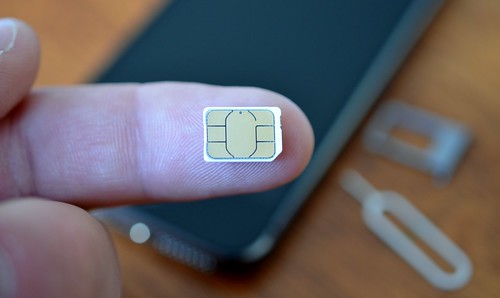
Small; soon invisibly so? Photo of a SIM card by smjbk on Flickr.

A selection of 9 links for you. Use them wisely. I’m charlesarthur on Twitter. Observations and links welcome.

Innovation isn’t dead » Money.com

Morgan Housel, with the only article you need about innovation and people being dismissive of stuff on the basis of “I’d never want one”:

The typical path of how people respond to life-changing inventions is something like this:

• I’ve never heard of it.
• I’ve heard of it but don’t understand it.
• I understand it, but I don’t see how it’s useful.
• I see how it could be fun for rich people, but not me.
• I use it, but it’s just a toy.
• It’s becoming more useful for me.
• I use it all the time.
• I could not imagine life without it.
• Seriously, people lived without it?

This process can take years, or decades. It always looks like we haven’t innovated in 10 or 20 years because it takes 10 or 20 years to notice an innovation.

Planes, lasers, cars, antibiotics, laptops – they’ve all gone through it. What’s going through exactly the same now?
link to this extract


Drawbridge hires Apple ad executive to track users across devices » WSJ

Douglas MacMillan and Elizabeth Dwoskin:

If a desktop computer and a smartphone are connecting to the same WiFi network, the network will recognize the unique ID in each device and pass that information to Drawbridge.

The guesswork gets more accurate the more frequently Drawbridge can capture instances of devices being in the same place or connecting to the same network. Drawbridge uses this cross-device matching system to build rich profiles of people’s behavior, interests, spending habits, demographic information, and sometimes their locations. They claim their matching software is more than 80% accurate.

Methods of tracking consumers online have drawn longstanding criticism from privacy advocates. The advertiser’s holy grail, of capturing every interaction a consumer has with their brand, also requires extensive surveillance of people’s behavior, and increasingly, their comings and goings. Privacy watchdogs say consumers do not want to be monitored in this way, and that the methods companies use to obtain consent to collect people’s data are broken.

Many apps ask for consumers’ permission to collect their location as a condition of downloading the app, but advocates warn that consumers are largely unaware of the extent of the information being collected or how it is being used. A recent study found that roughly 60% of consumers withdrew their consent when presented information about how their data was being shared.

Drawbridge says the company doesn’t maintain a database of names or of people’s real identities, but builds anonymous profiles using identification numbers.

Oh, come on. “Anonymous profiles using identification numbers”? Including, say, location, age, sex, marital status, interests, and so on? Quit the obfuscation; it’s profiling, of people, and Apple tries to limit its extent, and everyone else doesn’t.
link to this extract


Feds bust through huge Tor-hidden child porn site using questionable malware » Ars Technica

Cyrus Farivar and Sean Gallagher:

A newly unsealed FBI search warrant application illustrates yet another example of how the government deploys malware and uses sophisticated exploits in an attempt to bust up child pornography rings.

The 28-page FBI affidavit (text-only, possibly NSFW) was unsealed in a federal court in Brooklyn, New York earlier this month. It describes a North Carolina server hosting a Tor hidden service site. The setup was seized in February 2015, but law enforcement allowed it to run for two additional weeks as a way to monitor its nearly 215,000 users.

Currently, at least three men—Peter Ferrell, Alex Schreiber, and James Paroline—have been charged in connection with this site.

Ferrell, username “plowden23,” is the target of the search warrant affidavit. Schreiber, 66, of Queens, was a former New York City schoolteacher. The two New York men have been released on bond.

“Questionable” malware in the sense that the legal rules about venue of infected PC are very hand-wavey; how do you know where a PC you’re infecting via Tor is based? By getting it to phone home (to the FBI). What if that’s out of venue? Ignore it?
link to this extract


Apple, Samsung in talks with telecom groups to launch e-Sim card » FT.com

Daniel Thomas and Tim Bradshaw:

Apple and Samsung are in advanced talks to join the rest of the telecoms industry to launch electronic Sim cards, in a move could fundamentally change how consumers sign up to mobile operators.

The GSMA, the industry association which represents mobile operators worldwide, is close to announcing an agreement to produce a standardised embedded Sim for consumer devices that would include the smartphone makers.

The traditional Sim card locks in the user to a network but an embedded Sim would enable a smartphone, tablet or wearable user to avoid locking themselves into a plan with a single operator or sign up to switch instantly.

Wouldn’t expect this in 2015, but next year would make perfect sense. And that’s another opening/point of failure removed from phones. I bet Apple is working on making the iPhone 7 “waterproof” – and perhaps at a dual-SIM model.
link to this extract


Agricultural drones: the new farmers’ market » Engineering & Technology Magazine

Katia Moskvitch:

In the past, when farmers had smaller fields, they knew which areas had enough water, or were ready to harvest, just by walking around their land. However, to stay connected with today’s much bigger parcels of farm land, they need precision agriculture, with crop management that relies on GPS and big data analytics to increase yields and profits while cutting down on pesticide and water use.

Many tractors are now guided by GPS, to plant perfectly straight rows of crops. Farmers can monitor the progress of their driverless tractor on a tablet at home. Monsanto, the world’s largest seed company, estimates that data-driven prescriptive planting could increase global crop production by about $20bn a year, or about one-third the value of 2013’s US corn crop.

Drones are the latest addition in the toolkit of precision farming, collecting the key datasets used to make agronomic decisions. Right now, they are still new, and regulations how to use them vary from country to country. But farmers everywhere are waking up to the potential benefits, and “in a few years, drones could be a common sight above British farms,” says Alex Dinsdale, sales manager at Ursula Agriculture, a company that delivers crop intelligence from drones. But are they really useful, or just a technology gimmick?

“I remember driving the vineyards with my grandfather as a child, we would constantly stop, get out, and look at the vines. Right up close,” says Kunde. “He would take off a leaf and look at the undersides, show me, throw it down, then choose another.” At other times groups of men would use magnifying glasses to inspect the leaves, looking for potential pest problems in the vines. Fast-forward to today, and much of that work “could have been helped by advanced tools and aerial imagery,” he says.

link to this extract


How spyware peddler Hacking Team was publicly dismantled » Engaget

The Hacking Team hack has spawned so many stories, but this by Violet Blue pulls together some of the worst behaviour uncovered. Such as:

Ethiopia’s Information Network Security Agency (INSA) was employing Hacking Team to target [security researcher, The Intercept journalist, First Look Media director of security and former Google employee Morgan] Marquis-Boire, likely over his tracking of the company’s malware for Citizen Lab and at Google’s anti-malware team – one which culminated in a particularly bad PR moment for Ethiopia.

The Citizen Lab research in question found Ethiopia’s INSA using Hacking Team’s malware to target journalists; Ethiopian authorities use arbitrary arrests to silence journalists, and detainees routinely allege torture and ill treatment. The Ethiopian government’s spokesperson in Washington vehemently denied the use of products provided by Hacking Team.

Yet PhineasFisher’s haul shows Hacking Team not only provided its products to Ethiopia, but also proposed a new contract with Ethiopia because, according to a leaked email from operations chief Daniele Milan, “700K is a relevant sum.”

link to this extract


Samsung’s smartphone market share falls to 21.5% from 28% in India in June quarter | ETtech

Danish Khan:

Samsung’s smartphone market share fell to 21.5% from 28% in the previous quarter, the report [by tracking firm Cybex Exim Solutions] said. The company, however, still leads the overall handset market in the country with 18.9% share.

Home-bred handset maker Micromax is going steady at the No.2 position, with 12.6% share of the overall mobile phone market in the quarter to June, up from 10% in the previous quarter. In the smartphone segment, Micromax’s market share rose to 17.9% from 13%.

The Indian smartphone market grew by 23.5% sequentially to reach 25m units (according to Cybex). If you do the maths, that means Samsung’s smartphone sales did actually fall, from 5.7m to 5.4m, while Micromax’s rose from 2.6m to 4.5m. Samsung has a problem: it’s being out-competed at the low end.
link to this extract


Navy warns that fingerprint records were compromised in OPM breach » Darkmatters

Anthony Freed:

The Department of the Navy (DON) has sent a notice to more than 436,000 active duty personnel and reservists, as well as over 195,000 civilian employees, warning that data compromised in the recent breach at the Office of Personnel Management (OPM) also included fingerprint records.

“The interagency team has now concluded with high confidence that sensitive information, including the Social Security Numbers (SSNs) of 21.5 million individuals, was stolen from the background investigation databases,” said Thomas W. Hicks in performing the duties of the Under Secretary of the Navy.

“This includes 19.7 million individuals that applied for a background investigation, and 1.8 million non-applicants, predominantly spouses or co-habitants of applicants. Some records also include findings from interviews conducted by background investigators and approximately 1.1 million included fingerprints.”

Please update your fingerprints accordingly, using at least one whorl and two loops. (Though seriously, how can they be abused? Unless you’re going to whirl off into a plot involving a top-flight general using an iPhone with TouchID.)
link to this extract


In praise of Apple Music in my iTunes Library » Six Colors

Jason Snell:

I don’t know what I was expecting from Apple Music integration. I guess I assumed that when I added a track to “my library” from Apple Music, it would go to some special Apple Music tab, or playlist, or library. Nope—that music just shows up in the My Music section of iTunes, mixed in with all of the stuff I’ve bought over the years.

I realize that this approach may not work for everyone—one of the great challenges in designing any computer-based music service is going to be the endlessly different ways people consume to music—but boy, does it work for me. I play music from a lot of self-built playlists, but now I can add Apple Music playlists too, and they’re seamlessly integrated. Apple Music’s integration with my music library lets me listen to music in the same way I’ve been doing it for the past 14 years—but with the addition of tracks from Apple Music’s nigh-endless supply.

I can also see just how insidious this approach is. My music library is no longer pristine, no longer a collection owned by me. Now I’m acquiring albums and tracks not by buying them, but by clicking that Add to Library button. It’s already started to happen, after a couple of weeks. After a few months or years with this service, how will I ever be able to cancel it?

There are roughly 800m iTunes accounts, growing at about half a million per day in 2013.
link to this extract


Start up: Samsung’s missing numbers, Lizard Squad hacker convicted (but..), transparent aluminium!, and more


The internet of things, old style. Photo by Leo Reynolds on Flickr.

A selection of 9 links for you. Gawp at them. I’m charlesarthur on Twitter. Observations and links welcome.

Optically clear aluminium provides bulletproof protection » Total Security Solutions

While the U.S. Navy is busy with the development of a new bulletproof material called Spinel, Surmet Corporation is already commercially producing its own version called ALON®. Technically known as aluminium oxynitride, Star Trek fans may be more familiar with the term “transparent aluminium” first proposed by Scotty in the 1986 movie, Star Trek IV: The Voyage Home. While ALON isn’t quite what Scotty had in mind (it’s not truly a transparent metallic aluminium, but rather a transparent aluminium-based ceramic), it’s pretty darn close.

transparent aluminium Bloody hell, it is too. If this isn’t a con, it’s amazing. (And it’s aluminIum, dammit.)

Lizard Squad hacker convicted on 50,000 hacking charges » Daily Dot

William Turton:

Julius “zeekill” Kivimaki, 17, was sentenced to a two-year suspended prison sentence and was “ordered to fight against cybercrime” according to Finnish media. The charges against Kivimaki include data breaches, felony payment fraud, telecommunication harassments, and other counts relate to fraud and violations of company secrets. Neither the Ministry of the Interior, Police Department of Finland, nor the District Court of Espoo, the court presiding over Kivimaki’s case, were available for comment in time for publication due to time differences.

Kivimaki helped lead massive distributed-denial-of-service (DDoS) attacks on Microsoft’s Xbox Live and Sony’s Playstation Network over last year’s winter holidays, making international headlines. Kivimaki appeared on camera during an interview with U.K. television station Sky News. Blair Strater, a victim of Kivimaki’s repeated harassment, was “absolutely disgusted” by the ruling, he told the Daily Dot in a phone interview, because he felt the sentence was too light. Kivimaki has, according to Strater, repeatedly called in fake threats to American law enforcement, resulting SWAT teams arriving at the Strater residence, a practice commonly known as “swatting.” For three years, Kivimaki has harassed the Strater family by stealing their identities and wreaking havoc on their finances and personal lives, Strater said.

Doubt he would have got that little in the US, despite his age.


Television is no longer the screen of choice for kids » Advertising Age

Anthony Crupi:

Mobile devices are so popular with kids that nearly half of the 800 parents quizzed by Miner & Co. reported that they confiscate their kids’ tablets when they act up and make them watch TV instead, thereby fostering a sort of Pavlovian response that equates TV with punishment. (That these parents simply don’t restrict their kids’ access to video altogether when they misbehave suggests that they’re raising a generation of spoiled content junkies, but that’s another story.).

“Go to your room and watch TV!”


The anxious ease of Apple Music » The New Yorker

Alex Ross:

So, contrary to plan, Apple has not necessarily succeeded in making music better. Then again, it might not be doing long-term damage; indeed, it might not be having much effect at all. The musicologist Deirdre Loughridge recently published a blog post about the history of music-subscription services, which date back to sheet-music lending libraries in the 18th century.

By the 1830s, pundits were fretting that such libraries were undercutting the economics of the music business and altering the nature of listening. “One enjoys superficially, one always wants something new,” a critic groused in the Allgemeine musikalische Zeitung. A few decades later, a piano teacher wrote, “Music lending libraries could very well be called ‘music snacking libraries.’” Almost identical complaints are being levelled at Spotify, YouTube, and the rest. These anxieties are now forgotten because, as Loughridge notes, the very existence of music-lending libraries has been forgotten. If they hurt music sales, the damage was soon repaired. Loughridge suggests that this obscure history should promote a “healthier skepticism toward claims that any model represents ‘the’ answer for the music industry.”

All I’d ask for from Apple Music is what Deezer offers, called “Flow”: one press and it generates a neverending playlist based on what you’ve listened to and liked, but adding new “alike” tracks.


How the tech press forces a narrative on companies it covers » Medium

Aaron Zamost:

I don’t remember who told me company narratives were like a clock. I was at Google, where I’d taken a job on the communications team despite zero experience in communications. During my early days there, I tried to navigate my new profession by listening to the many comms experts already at the company from whom I would learn so much. One theory about narratives stuck with me: A company’s narrative moves like a clock: it starts at midnight, ticking off the hours. The tone and sentiment about how a business is doing move from positive (sunrise, midday) to negative (dusk, darkness). And often the story returns to midnight, rebirth and a new day. It was a passing remark, and hardly revolutionary — it closely followed the hero’s journey and other theories of storytelling. But it made a ton of sense.

Oh wow, does it ever. (Though: not just tech, is it?)


Smartphone trends in the US » Tech.pinions

Jan Dawson:

One of the key things I’m hearing – and which was somewhat evident already in the Q1 2015 results the carriers announced – is that the huge upgrade cycle which happened in 2014, and especially in Q4, is somewhat sucking the wind out of sales in 2015 so far. Though that upgrade cycle was partly driven by massive iPhone sales, and is therefore good news for Apple, it seems to be somewhat depressing Android device sales in the first half of 2015, despite the new device launches from major vendors including Samsung, LG, and HTC.

In general, I suspect we’ll see somewhat lower rates of upgrading this year than we did last year, as there were a number of factors that drove higher than usual rates in 2014 and many of those customers will now not be upgrade-eligible until late 2015 or even 2016.

Convenient for Apple that it doesn’t really focus its efforts until late in the year.


Samsung sees seventh straight profit decline » WSJ

Jonathan Cheng and Min-Jeong Lee:

When the Galaxy S6 and its curved-screen variant, the Galaxy S6 Edge, were launched in April, the phones were praised by reviewers and greeted with strong advance orders from consumers. But Samsung appears to have badly miscalculated in its expectations for what kinds of smartphones these consumers were after. According to a person familiar with the matter, the company initially expected to sell four Galaxy S6 smartphones for each Galaxy S6 Edge that it sold, and set up its production facilities accordingly. Instead, demand was much likely closer to even for the two devices, the person said. That led to a glut of unsold Galaxy S6 devices—particularly white-coloured devices—and not enough Galaxy S6 Edge smartphones, the person said.

Analysts quoted in the story are estimating between 71m and 76m smartphones shipped in the quarter, of which the S6 and Edge would be “slightly more than 20%” (that’s 14.2m-15.2m – so take it as 15m). Being left with a colour variant is bad, bad news.


The reddit rebellion, how should reddit make money?, the disappearance of high-end Android » Stratechery

From Ben Thompson’s paid daily briefing:

This is a pretty clear screw-up by Samsung that suggests they don’t understand just how starkly the smartphone market has bifurcated: the only people buying a high-end Android phone want the top-of-the-line, and that means the Edge. Anyone who is concerned about price isn’t going to save $100 by buying a normal S6; they’re going to save $500 and get a perfectly serviceable phone that runs the exact same software. That said, I suspect that even had Samsung properly forecast Edge demand sales would have still been disappointing…

…it does seem likely that the S6 stole whatever HTC One customers existed: the Taiwanese smartphone manufacturer just reported a loss of $261 million on revenues of just over $1 billion; the company originally forecast revenues of $1.57 billion but the One M9 has been a complete flop. It seems likely (pending LG’s numbers) that there is only room for one high-end Android model, for now anyways; small solace for Samsung, but solace nonetheless.

I don’t usually excerpt from subscriber products like Thompson’s (because it’s effectively breaking the paywall, which is his livelihood) but this was too apposite to miss. Subscribe. It’s low-priced and insightful. (His suggestion for how reddit should make money is smart.)


Billion dollar turnaround: Sony Mobile CEO » ArabianBusiness.com

Neil King:

As an inevitable by-product of the unit’s recent performance, [Sony Mobile chief Hiroki] Totoki has had to fend off rumours that Sony is, or was, planning to sell off its mobile division as a result of the dire financial results. A defence, he says, is easy to make when you look at the reasons behind the poor figures. “The speculations arose because in 2014 we made a huge loss as a mobile business,” he says. “It mainly came from the write-off of the goodwill of our impairment asset. When we bought back Ericsson’s share [in 2012], we bought back 100 percent of it. And obviously that price was high. We had to write it down and it made a substantial loss for the company.

“But this was an accounting loss and did not impact our cash flow. Our cash flow is very healthy. But the accounting loss was so huge — that’s why people have speculated like this. “Before that rumour, we exited the VAIO business, which was the PC business. That led people to think that Sony would exit the smartphone business, as well. But the smartphone business is very different from PCs. “Smartphones are completely connected to other devices, also connected to people’s lives — deeply. And the opportunity for diversification is huge. We’re heading to the IoT (Internet of Things) era and have to produce a number of new categories of products in this world, otherwise we could lose out on a very important business domain.”

Two things: the writeoff of value wasn’t the entirety; Sony still made an operating loss, even ignoring goodwill writeoffs. Secondly, the IoT argument is why I think Microsoft will stick with the smartphone business despite its horrendous losses. Interesting to see Sony Mobile using it too.


Start up: uncommenting The Verge, Siri v lights, the washing machine trials, web ad delights, and more


Life without the Apple Watch: which word fits? Photo by alexknowshtml on Flickr.

A selection of 8 links for you: laugh and point at the screen as though you found something funny. I’m charlesarthur on Twitter. Observations and links welcome.

We’re turning comments off for a bit » The Verge

Nilay Patel, editor-in-chief:

What we’ve found lately is that the tone of our comments (and some of our commenters) is getting a little too aggressive and negative — a change that feels like it started with GamerGate and has steadily gotten worse ever since. It’s hard for us to do our best work in that environment, and it’s even harder for our staff to hang out with our audience and build the relationships that led to us having a great community in the first place.

That’s a bad feedback loop, and we want to stop it. So we’re going to call timeout for a while and turn comments off by default on all posts for the next few weeks. It’s going to be a super chill summer.

We’re still dedicated to community, so our forums will remain open — in fact, we’ll be doing more to promote great posts from the forums on our front page and on our social channels than ever before. And we’ll be turning comments on on a post-by-post basis when we want to open things up, so look for that.

But in the meantime, let’s all take that minute and relax. Let someone else curate your playlists, you know? Comments will be back. There will always be another party. Freedom lasts forever.

I refer the honourable ladies and gentlemen to my analysis from last November of how Gresham’s Law explains precisely this phenomenon. We’ll see how the “comments will come back, honest” works out.

And here’s the Verge forum discussing it. Guess which tech company the discussion quickly degenerates into accusing The Verge of favouring? It’s the tech version of Godwin’s Law, and just as corrosive.


Aparna Chennapragada, head of Google Now, discusses apps, search, AI » Re/code

Mark Bergen:

Chennapragada spelled out the three-pronged direction of the product — what she called the “bets” her team is taking. The first bet was embedding Now with Google’s full “Knowledge Graph” — the billions-thick Web of people, places and things and their many interconnections.

The second is context. Now groks both the user’s location and the myriad of signals from others in the same spot. If you enter a mall, Now will tailor cards to what people in that mall typically ask for. “Both your feet are at the mall. You shouldn’t have to spell it out,” Chennapragada said. “Why should I futz with the phone and wade through 15 screens?”

And this is where the third benchmark for Now comes in: Tying that context to the apps on your phone, or ones you have yet to download. In two years, Google has indexed some 50 billion links within apps. In April, it began listing install links to apps deemed relevant in search. Indexed apps will be included in Now on Tap when it arrives in the latest Android version this fall.

Your phone knows you’re at the mall. Is this a place where I need my phone to know I am? I find these scenarios puzzling, because “things I might be at the mall to do” are truly difficult to narrow down, and enunciate, and likely aren’t the same between visits. The times I’d need Google Now to leap into action would be when I found myself somewhere unscheduled and without transport. That’s when I want help.


Hacking Team responds to data breach, issues public threats and denials » CSO Online

Steve Ragan:

Newly published documents from the cache include invoices for services with Italian law enforcement, Oman, South Korea, UAE, Kazakhstan, Mongolia, Lebanon, Germany, Saudi Arabia, Mexico, Brazil, Singapore, Egypt, and Vietnam. The total value of the invoices is €4,324,350 Euro.

The hack went without comment for several hours, until members of Hacking Team woke on Monday morning. One of the company’s staffers, Christian Pozzi, offered several comments on the breach, despite his statement that he couldn’t comment.

“We are awake. The people responsible for this will be arrested. We are working with the police at the moment,” Pozzi wrote.

“Don’t believe everything you see. Most of what the attackers are claiming is simply not true…The attackers are spreading a lot of lies about our company that is simply not true. The torrent contains a virus…”

Pozzi took to Twitter to repeat the same message for the most part, the key points being that Hacking Team is working with law enforcement on this matter, that the massive torrent file has malware in it (it doesn’t), customers are being notified, and that his company has done nothing illegal: “… We simply provide custom software solutions tailored to our customers needs…”


My week without Apple Watch » Tech.pinions

Ben Bajarin:

When I had the Apple Watch on, I averaged 28 fewer times I looked at my iPhone each day. This is a good proxy of how notifications on the watch help minimize the number of times I need to look at my phone to see the nature of each notification.

After reflecting on what looking at my phone fewer times meant in my daily life, I concluded the experience was less disruptive. Don’t get me wrong — I love my iPhone. It is my primary computer. However, having to respond to your phone or pull it out of your pocket or bag for each phone call or text message turns out to be fairly disruptive. As I’ve observed my wife’s behavior as well with her Apple Watch, she articulates similar feelings. As she is out and about, not having to fumble through her purse each time her phone dings is a less disruptive experience in many daily situations. Particularly since not all notifications are important or in need of an immediate response. However, without the use of the Apple Watch, you would not know this without getting your phone out and looking at it. This is an area of immense value that can only be understood once experienced.

I’d agree with this: I’m using an Apple Watch, and the value in not having to have your phone right there is substantial – but also difficult to quantify, because of course you can do without it. Filtering notifications matters; but being able to see or respond to the ones you deem urgent matters a lot.

(If you have an Apple Watch, Bajarin is working with a company called Wristly to do research; you could join.)


Hats off to web advertising. No, really. » WSJ

Chris Mims:

Vast advertising markets that had to decide what ad to show in milliseconds meant that from the very beginning of internet advertising, unprecedented amounts of data were flowing into growing quantities of computing power.

Like a kind of Manhattan project for data, solving the problem of ad matching and delivery meant taking formerly obscure areas of research and transforming it into something everyone could use. “Powerful machine learning techniques were just starting to be developed in academia,” says [Gokul] Rajaram [formerly lead engineer at early ad network Juno, then Google and Facebook, and now at Square], but ad networks would have been impossible without them.

As I researched, I discovered the alumni of ad tech platforms are everywhere, launching startups and leading projects within established companies. What they all have in common is an unusual and broadly powerful toolkit that is being applied to everything from agricultural drones and cybersecurity to food safety and the improvement of hiring practices.

It’s a fair point: we love to hate ads, but the necessity of making them work has driven a lot of improvement.


Here’s what it’s like to control your lights with Siri » The Verge

Jacob Kastrenakes:

If you’re anything like me, you’ll immediately begin using this ability to mess with the people you live with: turning off lights so that they’re sitting in a dark room, turning on a light while they’re set up to watch Netflix. I didn’t see the Siri control as much more than a novelty at first, but the utility became more apparent once I set up two lamps in the same room. At that point, it became easier to turn them on and off simultaneously with Siri than to walk over to each one individually. It’s a basic start, but there’s so much more you could do once additional pieces of the home become connected.

Must be a hell of a big room for it to be easier to talk to the phone than to stand up. Also, what is the “so much more” you can do? Lights are the classic “wrong application”: we usually turn lights on when we enter a room, turn them off when we leave. In between, there’s hardly ever anything we want to do to them – and if we do, then it’s either a short reach, or a couple of steps. Pretending otherwise is automation for its own sake.

Home automation still needs really simple sensors and actuators that we can fit ad-hoc to things we choose, not devices where it’s built-in but not actually useful.


Chaebol slapfight: Samsung, LG in first trial over washing machine vandalism » BusinessKorea

Cho Jin-young:

In the first trial between the two Korean home appliance giants, the legal representatives for LG gave an item-by-item rebuttal of the allegations that CEO Cho Seong-jin and two other officials at the company broke the doors of three Samsung washing machines intentionally. 

“The doors of the front-door washing machines are big and heavy, so they can naturally tilt downward to some extent and swing a little bit, which can be easily found in other washing machines,” a legal representative for LG appealed.

The attorney also raised suspicions about the authenticity of the damaged washing machines presented to the court as evidence, arguing that the products seemed to have had more scratches than before, and that they could not be the results of Cho touching the washers.

What’s “de minimis non curat lex” in Korean? (Also: “first” trial?)


YouTube is the No.1 music streaming platform – and getting bigger » Music Business Worldwide

Scary news for those who don’t feel YouTube is paying music rights-holders enough: it’s the biggest music streaming service on earth, and it’s growing faster than Spotify or any of its rivals.

That’s according to MBW analysis of the latest market stats out of the UK and US, which show that YouTube increased its market share of total on-demand streams in the first six months of this year on both sides of the Atlantic.

In the first half of 2015 in the US, overall on-demand streams grew 92.4% year-on-year to 135.2bn.

The majority of this growth was down to YouTube (plus Vevo and other video services), which saw a stream volume increase of 109.2% to 76.6bn.

Though it seems like Vevo is a big player in this. But yes, YouTube swamps everything else.


Start up: Wi-Fi password sharing?, machine intelligence smart and stupid, Pebble Time review, and more


You’ll never believe what happens if you play it backwards. Photo by Janitors on Flickr.

A selection of 9 links for you. Show them eagerly to the person beside you! I’m charlesarthur on Twitter. Observations and links welcome.

UH OH: Windows 10 will share your WiFi key with your friends’ friends » The Register

Simon Rockman:

A Windows 10 feature, Wi-Fi Sense, smells like a security risk: it shares WiFi passwords with the user’s contacts.

Those contacts include their Outlook.com (nee Hotmail) contacts, Skype contacts and, with an opt-in, their Facebook friends. There is method in the Microsoft madness – it saves having to shout across the office or house “what’s the Wi-Fi password?” – but ease of use has to be teamed with security. If you wander close to a wireless network, and your friend knows the password, and you both have Wi-Fi Sense, you can now log into that network.

Wi-Fi Sense doesn’t reveal the plaintext password to your family, friends, acquaintances, and the chap at the takeaway who’s an Outlook.com contact, but it does allow them, if they are also running Wi-Fi Sense, to log in to your Wi-Fi. The password must be stored centrally by Microsoft, and is copied to a device for it to work; Microsoft just tries to stop you looking at it. How successful that will be isn’t yet known.

“For networks you choose to share access to, the password is sent over an encrypted connection and stored in an encrypted file on a Microsoft server, and then sent over a secure connection to your contacts’ phone if they use Wi-Fi Sense and they’re in range of the Wi-Fi network you shared,” the Wi-Fi Sense FAQ states.

Has been on Windows Phone for ages, yes, but most WP users don’t know any significant number of other WP users (because they’re so few). Not so with Windows. Microsoft says it only allows internet access and not LAN access – via port restrictions? That’s going to get hacked for sure.

Or could people maliciously spread their Wi-Fi details to try to sniff people’s viewing habits and details?


Pebble Time review » Wareable

Sophie Charara:

First things first, the Pebble looks better in real life than the pics you’ll have seen online. The black model is a little boring but will look neat under suit sleeves – for the record, we prefer the red and black Time.

Admittedly, the Time is plasticky, with a stainless steel bezel, but it retains the toy-like charm of the original Pebble while adding friendlier, more unisex curves. It’s very light at just 42.5g including the standard strap, 20% thinner at 9.5mm and the new slightly curved body helps to make it comfortable to wear on the wrist.

It’s amazing how many smartwatch manufacturers are satisfied with making devices that sit flat on top. The Time is the kind of smartwatch you can forget you’re wearing, until it vibrates.

I bought an original Pebble on Kickstarter. This? Looks like a toy compared to the Apple Watch. Not quite half the price, but really nothing like half as attractive.


Apple Sim iPads change the international data roaming game » Fortune

This morning, Apple and GigSky teamed up to offer travelers the ability to instantly connect to a local data network in more than 90 countries and territories upon touchdown—no need to visit a kiosk, talk to a service agent, or really, do anything at all. Instead, iPads with AppleSIM cards will automatically offer the option to sign up for a data plans as soon as a local network is in reach. (The GigSky network includes most of Western Europe, from France and Germany to the Netherlands; Australia; South Africa; parts of the Middle East; and beyond.)

Because travelers are accessing onto local networks, rather that roaming from their domestic carrier, prices are impressively affordable as long as you’re traveling on the beaten path. Entry-level data plans begin at just $10, covering anywhere between 10MB (in Papua New Guinea) to 75 MB (in Italy); in countries with better access, the premium plans top out at 3GB for $50. By comparison, AT&T’s best deal currently charges $30 for 120 MB or $120 for 800 MB.

Latest iPads only have them preinstalled, although for older ones you can get Apple SIMs in its stores, apparently.


Superconductivity record bolstered by magnetic data » Scientific American

Edwin Cartlidge:

The long-standing quest to find a material that can conduct electricity without resistance at room temperature may have taken a decisive step forward. Scientists in Germany have observed the common molecule hydrogen sulfide superconducting at a record-breaking 203 kelvin (–70 ˚C) when subjected to very high pressures. The result confirms preliminary findings released by the researchers late last year, and is said to be corroborated by data from several other groups.

Some physicists urge caution, however. Ivan Schuller at the University of California in San Diego, says that the results “look promising” but are not yet watertight.

Pressure of 1.5 million atmospheres. Don’t hold your breath for this one.


Why the BBC is wrong to republish ‘right to be forgotten’ links » The Guardian

Julia Powles:

The reaction to [BBC Online managing editor Neil] McIntosh’s post was predictable, inaccurate and devastating. The Times led with “BBC lists stories on abusers and rapists hidden under ‘right to be forgotten’”, gratuitously highlighting two stories.

The first was a 12-year-old story about a settlement between an alleged rape victim and the Catholic church, over incidents that occurred a half-century ago. The long-deceased abuser clearly couldn’t have filed the obscurity request with Google – leaving, rather less salaciously, the victim.

The second case concerned a nanny jailed for child abuse. Even a cursory Google search coupled with the basics of the Rehabilitation of Offenders Act would have told the journalist that an unspent conviction for such an offence clearly denied any reasonable claim to delisting. Caution raised, a bit more searching would have revealed the truth: that the conviction was overturned by the Court of Appeal. That former nanny has been exculpated under the law of the land – but not by Google and not, it seems, by the press either.

Other publications followed suit. Boing Boing drew attention to a rape story. Given it concerned a fairly recent conviction in 2012, clearly the sex offender has no entitlement to be delisted.

But what about his friend who was also named in the article because he happened to be in the house where the attack took place?

The “right to be forgotten” is so poorly understood, which frustrates the hell out of me. (See the comments under the article.) I wrote an explanation of what it is, and what it is not; please, before you discuss the topic with me (or anyone), read and absorb it. The topic is simple. It just takes a bit of thought.


Growing conspiracy theory: is spy equipment really included in Samsung smartphone batteries? » BusinessKorea

Cho Jin-young:

A video circulating on Facebook and YouTube that was posted at the beginning of the last week of June shows that after tearing off a sticker that wraps around the battery of the Galaxy S4, the man in the video points to a small coil inside, saying, “This is the spy equipment.”

He remarked, “Samsung can record pictures on your smartphone and overhear your calls through the coil shaped like this antenna,” adding, “So, you’d better tear off the sticker that wraps the battery first and use the phone.”

In fact, this video attracted 12 million views on Facebook only four days after it was initially posted, and around 300,000 people reportedly shared the video.

However, local media outlets pointed out that this conspiratorial video originated from a misunderstanding about the Near Field Communication (NFC) antenna, a communication technology that makes it possible to transmit different kinds of wireless data to a distance of 10 cm.

Would be fun to know how weird ideas like this get started. I’ve seen a few incoming search queries on this to this blog, and wondered what was going on (it was because I wrote about Samsung obviously knowing whether people use replacement batteries).


DRAM spot prices hit 28-month low, says Taiwan Central News Agency » Digitimes

Jessie Chen:

Spot prices for 4Gb DDR3 chips already declined 17.55% in the second quarter, after falling 12.77% in the first quarter, the report quoted DRAMeXchange as saying.

Since 2015, DRAM spot prices have been dragged down by sluggish PC sales and a slowdown in smartphone demand, the report noted.

Hadn’t heard about this slowdown in smartphone demand anywhere else. China has, but elsewhere? Dram prices are often an early warning though.


Google apologises for Photos app’s racist blunder » BBC News

Google says it is “appalled” that its new Photos app mistakenly labelled a black couple as being “gorillas”.

Its product automatically tags uploaded pictures using its own artificial intelligence software.
The error was brought to its attention by a New York-based software developer who was one of the people pictured in the photos involved.

Google was later criticised on social media because of the label’s racist connotations.
“This is 100% not OK,” acknowledged Google executive Yonatan Zunger after being contacted by Jacky Alcine via Twitter.

“[It was] high on my list of bugs you ‘never’ want to see happen.”

Machines can’t be racist, of course; but quite how Google is going to prevent this happening again is an open question. Neural network/deep learning like this isn’t something you can tweak directly. You can’t really peer inside it. Great when it’s drawing arcane pictures, not good when it’s mislabelling pictures.


Could this computer save your life? » CNN

Jillian Eugenios:

“In one panel of scans that we looked at, when you look at the number of times that radiologists sent someone home with a clean bill of health, about 7% of the time that patient was ultimately found to have cancer,” said John Zedlewski, a data scientist with Enlitic, a medical technology company.

When Zedlewski used Enlitic’s algorithm against the same panel, there weren’t any mistakes.

How does it work? Enlitic’s technology uses machine learning — which some say is a version of artificial intelligence. It takes medical information from one patient — whether it’s a CT scan, an X-ray or details about, say, a tumor — and then converts it into a mathematical representation. It’s then added to a large pool of data and compared to other patients who have experienced similar issues.

Think of it as crowdsourcing your symptoms. And not just with one or two people, but millions. The more data the computer has, the smarter it gets, and the more accurate the diagnoses.

At least that’s the dream.

Seems to have a large base of data.


Start up: China’s Uber ripoff, Microsoft’s maps and ads exit, Google v Oracle redux, and more


Low power, but still pretty powerful. Photo licensed from Apple, I guess, on Flickr.

A selection of 12 links for you. Use them wisely. I’m charlesarthur on Twitter. Observations and links welcome.

One driver explains how he is helping to rip off Uber in China » Bloomberg Business

To create a fake trip, an Uber driver has essentially two options, according to drivers interviewed by Bloomberg, who asked not to be named discussing information that may get them barred by the company.

The first is a do-it-yourself option where the driver buys a hacked smartphone that can operate with multiple phone numbers and therefore multiple Uber accounts. Drivers use one number to act as a rider and request a lift, and then accept the trip as a driver with another phone number.

A driver like Li, for example, may know that he has a legitimate fare waiting for him at the airport, but he doesn’t want to make the trip there without getting paid. He could then request a trip as a rider, let the booking show up on Uber’s GPS tracking software as his car heads to the airport and then get paid by Uber for taking a “customer” on the route.

The second option involves working with other scammers over the Internet. If a driver doesn’t have a hacked phone, he can go into one of several invitation-only online forums and request a fake fare from professional ride-bookers. These bookers are referred to as “nurses” because they use specially tailored software to put an “injection,” or location-specific ride request near the driver.


Uber acquires part of Bing’s mapping assets, will absorb around 100 Microsoft employees » TechCrunch

Alex Wilhelm:

Uber will acquire assets from Microsoft Bing, including roughly 100 employees focused on the product’s image collection activities. In short, Uber is absorbing data-collection engineers from Microsoft to bolster its own mapping work.

The companies confirmed the transaction with TechCrunch, but each declined to name the terms of the agreement. Microsoft handing Uber part of its operating expenses is minor, given the financial scale of the firms. The technology transfer is far more interesting.

Uber’s app is essentially a map with add-ons, so that it would want to pick up engineers — currently the hottest Silicon Valley commodity1 — isn’t surprising. And that Microsoft might want to shed some talent that isn’t precisely core to its larger platforms and productivity efforts doesn’t shock.

So that’s one cost centre gone (and a nice win for Uber). One shoe drops..


Microsoft said to exit display ad business, cut 1,200 jobs » Bloomberg Business

Dina Bass:

Microsoft Corp. is shutting down its Web display advertising business and handing operations over to AOL Inc. and AppNexus Inc., a person with knowledge of the matter said.

About 1,200 jobs at Microsoft will be impacted, with some positions to be moved to AOL and AppNexus, said the person, who asked not to be identified because the deal hasn’t yet been announced. Some people will be offered other positions at Microsoft, while other jobs will be cut, the person said.

The software maker is shedding the business as Chief Executive Officer Satya Nadella works to sharpen focus on three key areas: personal computing, cloud platforms and business productivity.

And now we wait for the other other shoe to drop. Note how these disposals have come just ahead of the end of the fiscal quarter; Nadella is cleaning house.


CVE-2015-3113 (Flash up to 18.0.0.160) and Exploit Kits » Malware don’t need Coffee

Patched four days ago (2015-06-23) with Flash 18.0.0.194, the CVE-2015-3113 has been spotted as a 0day by FireEye, exploited in limited targeted attacks.  It’s now making its path to Exploit Kits

In other words, if there’s a Flash installation on your network that hasn’t been patched in the past four days, it’s vulnerable. (In this case, to malware aiming to exploit IE11 on Windows 7.)

If you haven’t removed Flash from your computer.. why not? YouTube will work fine (it goes to HTML5).


Reddit is an incubator of hate » BuzzFeed News

Charlie Warzel, pulling no punches:

At the core of the problem is Reddit’s newfound vow to police hate only when it manifests into real-world harassment — that is, to create a distinction between ideas and behavior that doesn’t actually exist. Ideas inform and incite behavior; we see this both in the physical world and on Reddit, where the ideals and discussions of its thousands of communities are reflected in the actions — both good (raising money for a Kenyan orphanage as well as a terminally ill cancer patient) and bad (Violentacrez, r/creepshots, and The Fappening) — of its members.

What’s more, there’s credible research to suggest that right-wing extremist online communities are frequently linked to hate crimes. An April 2014 report from the Southern Poverty Law Center found that more than 100 murders have been linked to Stormfront.org, a white nationalist website and forum that first emerged in 1995. The author of the report, Heidi Beirich, told The Guardian that her research showed that online hate forums helped nurture and strengthen already formed prejudices and, in the case of Stormfront, transform them into real-world violence


Benchmarks show iPhone performance difference when iOS 9’s Low Power mode is activated » Mac Rumors

Juli Clover:

Without Low Power mode activated, an iPhone 6 Plus scored 1606 on the single-core processor test and 2891 on the multi-core processor test. When Low Power mode was turned on, the same iPhone 6 Plus scored 1019 on the single-core test and 1751 on the multi-core test, suggesting there’s a significant performance reduction when Low Power mode is enabled to save as much battery as possible.

Results were similar on an iPhone 5s, with performance reduced by about 40%. We saw single/multi-core scores of 1386/2511 without Low Power mode and scores of 816/1405 with Low Power mode turned on.

Low Power mode activates when an iPhone is at 10% or 20% battery level, providing a popup that lets users toggle it on quickly. It can also be turned on via the new Battery section of the Settings app. When it’s turned on, in addition to lowering CPU speeds, Low Power mode also disables Mail Fetch, Background App Refresh, motion effects, and animated wallpapers.

At a guess, most people won’t notice the difference in processing power of engaging Low Power, but will like the battery life difference. And iOS 9 (in my own early testing) has remarkable battery life if you don’t have the phone baseband running, ie on non-LTE iPads and phones with Airplane mode engaged but Wi-Fi and Bluetooth on (so mobile calls and data aren’t on). And it’s still only beta 2.


The secret to groovy drumming may be math » Science/AAAS

Kerry Klein:

Holger Hennig, a physicist at the Max Planck Institute for Dynamics and Self-Organization in Göttingen, Germany, and colleagues decided to analyze the technique of prolific drummer Jeff Porcaro, one of the more famous musicians most people have never heard of. For more than a decade he drummed for the band Toto, and as a session musician he kept time for an extensive list of musical icons including Pink Floyd, Steely Dan, Michael Jackson, and Madonna. Porcaro died of a heart attack in 1992. Hennig and his colleagues chose to study Porcaro’s technique because the paper’s lead author, physicist Esa Räsänen of the Tampere University of Technology in Finland, is himself a drummer and admires Porcaro’s work.

As a representative sample of Porcaro’s timekeeping skills, the research team focused on the studio recording of the 1982 hit “I Keep Forgettin’ ” by singer Michael McDonald. The rapid, high-pitched tink-tink-tink-tink keeping the beat is the hi-hat, a clamshell arrangement of two small cymbals that a drummer opens and closes with a foot pedal and simultaneously strikes with a drumstick. With one hand, Porcaro hit the hi-hat four times on every beat, in subbeats known as sixteenth notes, and motored out almost 400 of them in every minute of the song.

It turns out that fractals are lurking. (Though when did he drum for Pink Floyd, exactly? I thought that was Nick Mason’s job.)


Hacker News » Premii

If you ever read Hacker News, you’ll have been frustrated by the way you have to click away to read the article, then click back (or to another tab) to read the comments on the story.

No more: now it’s in a convenient interface on Premii.


Do you trust Google to be the gatekeeper of your kids’ content? » Digital Content Next

Chris Pedigo (who is SVP of government affairs at DCN):

Google’s YouTube for Kids service is getting some attention recently from regulators and policymakers in Washington, DC. The FTC and now Senator Bill Nelson (D-FL) are asking questions about how content is selected for YouTube for Kids and how Google helps young viewers understand the difference between content and advertising. It has been alleged that some content is not appropriate for children and that some advertising in or around the content may not be labeled clearly enough for children and their parents.

While Google has a history of innovation, upending old business models and creating new opportunities and experiences via the internet, their “developer mentality” of breaking things to create even better new things may not work the same when it comes to products targeted to kids.

YouTube is great if you’re an adult, a disaster area (from a parent’s point of view) if you’re a child. Dividing the world into “over 18/under 18” really doesn’t work.


Oracle v. Google Android-Java copyright case goes back to San Fran: Supreme Court denies Google petition » FOSS Patents

Florian Müller (who has followed the ins and outs of this case over the years):

Now that the Supreme Court has denied Google’s petition and appellate attorney Joshua Rosenkranz (of Orrick Herrington Sutcliffe) has once again shown why he was dubbed the “Defibrillator” (for bringing cases back to life that appeared to have been lost), the sizable litigation caravan that had gone from California to Washington DC for the appellate proceedings–where an amazing reversal of fortunes occurred, with Oracle now having the upper hand–can finally head back all the way to the West. There, “fair use” will be the topic du jour. And, provided that Oracle wins (which I’ve always believed it will), remedies. This means injunctive relief more than anything else. The strategic implications are not described accurately by portraying this as a billion-dollar case.

On this occasion I do wish to say a few things about fair use. About a year ago I explained why I ultimately concluded that Google Books probably should fall under the “fair use” exception, but Android should not. What is really the idea of “fair use”? At a philosophical level, it’s all about whether, on balance, an unauthorized use of copyrighted material does more good than harm.

It’s difficult to get a handle on this case, but Müller is fairly sure that Google is going to have to pay something – perhaps quite a large something – to Oracle. (Note: Müller acts as a consultant to Oracle, and others. But his line on this case has been consistent since before Oracle hired him.)


Sky reveals evidence of Openreach service failure and calls for market investigation » Sky

In the submission, Sky sets out details of the standard of service delivered to consumers by BT’s Openreach division, which operates and maintains the UK’s national telecoms network. The evidence highlights how a history of under-investment has led to range of service quality problems including an excessive number of network faults, failure to meet targets for repairing faults, long waits to have new lines installed, appointments that are missed and jobs that are not completed. 

Key findings from Sky’s submission include:

More than 90% of new line installations, which require an Openreach engineer to attend, take 10 calendar days or longer. Almost one in ten installations takes longer than 30 days.
• Openreach changes the agreed installation date for Sky customers on average around 36,000 times a month.
• Openreach misses over 5002 appointments each month to install new lines for Sky customers and fails to complete a further 4,000 jobs per month.
• Fault rates across Openreach’s network increased by 50% between 2009 and 2012, the last year for which reliable data is publicly available.
• Openreach’s performance in fixing faults is consistently below the targets set out in agreements with service providers.

BT Openreach is such an anomaly. The electricity grid is owned separately from power generators; the railway lines aren’t owned by the train operators. So why does the dominant landline provider get to own the company doing landline upkeep and determine its budgets?


Galaxy S6 sales to reach 45 mln units in 2015: report » Yonhap News

“Samsung continues to struggle at the low-to-mid end, while the Galaxy S6 and S6 Edge combined look on course to reach a respectable 45m units this year,” EE Times said, citing a report released by Deutsche Bank.

If the sales estimate is accomplished, the Galaxy S6 will manage to catch up with the Galaxy S4, which holds the current annual sales record at 45m units.

The latest estimate, however, falls behind expectations made earlier by other market analysts.

Industry tracker DRAMeXchange had earlier estimated combined sales of 55m units for the new lineup, while Hong Kong-based researcher Counterpoint had offered a 50m sales figure for this year.


Start up: the forcePhone, analysts cut Samsung Q2 forecasts, bogus Beats?, the jailbreak economy, and more


Like this (from a MacBook), but in a phone. Photo by LoKan Sardari on Flickr.

A selection of 9 links for you. Use them wisely. I’m charlesarthur on Twitter. Observations and links welcome.

Apple suppliers start making iPhones with Force Touch » Bloomberg Business

Tim Culpan:

Apple has started early production of new iPhone models with a feature called Force Touch, which senses how hard users are pressing down on a screen, people with knowledge of the matter said.

Its newest iPhones, in the same 4.7in and 5.5in versions as the current iPhone 6 and iPhone 6 Plus devices, will have a similar exterior design, the people said. Volume manufacturing is scheduled to ramp up as soon as next month, they said.

Apple is bringing Force Touch, first unveiled for the Apple Watch and the newest MacBook model, to the iPhone at least two years after it started working with suppliers to perfect the pressure-sensitive displays.

Totally makes sense; why do you think Apple has been making so much noise about this feature on its PCs?


China adds 20 million 4G users in May » Chinadaily.com.cn

Xinhua (the official Chinese news agency):

The number of 4G users in China continued to grow in May, with 20 million added during the period, the Ministry of Industry and Information Technology (MIIT) said on Thursday.

There are now 200 million 4G clients in China, as the country steps up investment in the telecom industry to expand broadband coverage. In total, there were 657 million mobile broadband users, including 3G and 4G users, at the end of May.

Even if it’s a some way off, China is still the biggest 4G provider in the world.


Taylor Swift may have triumphed, but Apple will still call the tune » The Guardian

I wrote about the whole Apple/Swift/streaming shenanigans:

Martin Goldschmidt, the founder and chief executive of independent record label Cooking Vinyl, whose artists include Marilyn Manson, Amanda Palmer, Billy Bragg and Groove Armada, says that Swift’s decision could certainly not have been because the video service pays better.

“YouTube has a revenue-sharing scheme from adverts, not per-stream, but compared to Apple or Spotify it pays one-tenth to one-twentieth as much per play,” he says. “People see music on YouTube as promotion – wrongly – and Spotify as the destination, the endgame. The reality is that YouTube is the biggest place for music consumption on the planet.

“The reason is that YouTube has colossal reach. We’re in the strange situation where 10m plays on Spotify is viewed as lost sales, while 10m plays on YouTube is a marketing success.”

It’s often overlooked that YouTube’s ad-supported streaming makes Spotify’s look like chicken feed.


Of Ma and malware: inside China’s iPhone jailbreaking industrial complex » Forbes

Great piece by Thomas Fox-Brewster:

Any hacker who can provide the full code for an untethered jailbreak, where the hack continues to work after the phone reboots, can expect a big pay check for their efforts. “Many experts agree the price for an untethered jailbreak is around $1 million,” says Nikias Bassen, aka Pimskeks, a lanky 33-year-old iOS hacker who is part of the evad3rs hacker collective. More often, sellers of iOS zero-day vulnerabilities – the previously-unknown and unpatched flaws required for jailbreaks – make thousands if not hundreds of thousands of dollars from Chinese firms, private buyers or governments, in particular three-letter agencies from the US.

Such big sums are on offer due to the explosion of the third-party app store industry in China. There are at least 362 million monthly active mobile app users in China, according to data provided by iResearch. Whilst smartphone owners in Western nations are content within the walled gardens of Apple and Google app stores for their games, media and work tools, the Chinese are fanatical about apps and want the broadest possible choice from non-Apple app stores. Jailbreaks, which do away with Apple’s chains and allow other markets on the device, are thus vital to meeting that demand.

Super-detailed piece, which also points to Alibaba’s involvement in this shady practice.


Google helps British criminals polish their image – but what about the innocent » The Register

Andrew Orlowski:

Just to make sure of Google knew its obligations, the Judges pointed out that information had to be “inadequate, irrelevant or no longer relevant” for an applicant to succeed. This would seem to rule out figures in public life wanting details related to their professional lives from succeeding in scrubbing them away … or serious criminals: under UK law, a conviction resulting in a sentence of more than four years is never “spent” under the Rehabilitation of Offenders Act. In serious criminal cases the public interest is unambiguous.

However, someone who has committed no major crime – or merely done something embarrassing – should usually be allowed to have it forgotten at some point rather than having the incident follow them around on the internet forever.

How do ordinary people who have done ordinary things, for whom the law was designed, fare? It’s difficult to say. No deletion requests have been sent to the ICO for the Courts to decide – Google has acted as judge and jury, voluntarily. Google says it has removed 39,000 links and declined to remove 66,000 in the UK. In many cases, academic Julia Powles explained to us, it’s an incidental character such as a witness who actually lodged lodged the request rather than the subject of the story. Requesters are understandably reluctant to attract publicity. Until an academic conducts a credible study.

Yet from the Telegraph and BBC lists, it’s clear that people convicted of serious crimes are getting their reputations cleaned – even if they didn’t request the original deletion. Surely that’s the opposite of what the law intended: Google is rewarding the guilty.


Uh-oh: Beats teardown apparently used Beats knockoffs » Core77

Rain Noe:

The prototype engineer who did the breakdown, Avery Louie, never mentions what model of Beats he tore down. But he refers to the price as $199, which is consistent with Beats’ Solo 2 headphones. However, the color scheme in Louie’s photos doesn’t match the Solo 2 offerings, indicating he used Beats’ discontinued Solo HD, which also retailed for $199. And here’s where it starts to unravel.

Louie found just two drivers, one per ear, in his teardown. But the Solo HD contains four drivers, two per ear. So it appears Louie’s been given a bogus pair.

Entirely possible – wander around Shenzhen and there are “Beats” headphones absolutely everywhere.


Between Kickstarter’s frauds and phenoms live long-delayed projects » Ars Technica

Casey Johnston:

Ethan Mollick, a professor in management at University of Pennsylvania’s Wharton School, does some of the most quoted research on the business of crowdfunding. In a 2013 study, he found that 316 of the 471 successfully funded projects analyzed—all with estimated delivery dates of July 2012 or earlier—promised to deliver a physical product. Only three of those 471 projects had declared failure and offered refunds, while another 11 dropped off the map and stopped responding to their backers. Actual shameless fraud appeared rare.

“The concerns about the ability of projects to deliver, however, are supported,” Mollick wrote. Only 24.9% of the projects analyzed delivered on time, and 33% “had yet to deliver” at the time of analysis. The average delay measured 2.4 months. Projects that raise ten times their goal are half as likely to deliver on time.

Mollick also found a correlation between how much money a project raised and delays: projects that raised under $50,000 had a near-perfect delivery rate after eight months’ delay, while projects that raised more than $50,000 hovered around a 75 percent delivery rate eight months later. According to the New York Times Magazine, Mollick reported that since his 2012 evaluation, another 14 percent of projects had delivered either nothing or a subpar product.

Mollick takes the opposite stance. “I’m impressed so many things get delivered at all,” he told Ars.

Good to have some statistics on this.


The Samsung Galaxy S6 is the world’s fastest smartphone » Tom’s Guide

Sam Rutherford and Alex Cranz:

A fast phone shouldn’t just score well in benchmarks. It should deliver swift, everyday performance, too, whether it’s opening a large file, gaming without lag or firing up its camera faster than you can say “cheese.” We pitted six of the latest smartphones against each other in nine rounds of competition, and the Galaxy S6 blew away the field, finishing first in 6 out of 9 real-world tests and synthetic benchmarks.

The LG G4 is our runner-up, turning in the fastest camera-open time and storage benchmark score. The iPhone 6 finished third, tying for first in our real-world gaming test and second in our PDF load-time score. The biggest letdown was the Nexus 6, which finished fifth overall and dead last in opening our PDF, camera-open and gaming tests.

Turns out there’s barely any difference – could you tell the difference between a camera load time of 52.5 milliseconds v 61.5ms? OK, the Nexus 6 load time of 128ms is a lot more. But many of these are the sorts of “differences that don’t make much difference”.


Estimates of Samsung Electronics’ Q2 profits adjusted downward » BusinessKorea

Cho Jin-young:

Korea Investment & Securities adjusted its forecast downward from 7.717trn won (US$6.957bn) to 7.046trn won (US$6.352bn) on June 24, adding that the profits of every business unit but semiconductors are predicted to fall short of expectations.

[Other analysts cut their forecasts too.] According to financial information provider WISEfn, the average estimate fell from 7.4565trn won (US$6.7222bn) to 7.3488trn won (US$6.6244bn) between late March and early this month, and then to 7.2518trn won (US$6.5376bn) on June 24. As recently as a month ago, Hyundai Securities, IBK Investment & Securities, and HMC Investment & Securities used to expect that it profits would exceed 8trn won.

The drop in estimates can be attributed to sluggish smartphone sales. “It seems that the sales volume of the Galaxy S6 and the Galaxy S6 Edge have been less than expected, due to a supply shortage and consumer preference for the iPhone 6,” Mirae Asset Securities explained. Nomura Securities recently lowered its Galaxy S6 shipment estimates for the second quarter by three million to 18m units.

18 million is still a lot.


Start up: what Chinese hackers steal, Snapdragon overheats Sony, eternal Spotify streaming, and more


Think you could pretend to be one of these? Photo by anotherjesse on Flickr.

A selection of 8 links for you. Use them wisely. I’m charlesarthur on Twitter. Observations and links welcome.

The Reverse Turing Test: pretending to be a chatbot is harder than you think » Motherboard

Uri Bram, with a wonderfully executed idea:

You don’t fully realize how complicated human conversation is until you try to look at it through the eyes of a bot. Alison’s “How about you?” is an example of what the professionals call a tag question. “How about you?” on its own is meaningless; it’s implicitly referring back to my own previous question of “How are you doing today?” Within a few short words you already have a complex system of meaning the bot needs to understand.

Soon Alison was bombarding me with dialogue.

“I am going swimming later. Then I’m going to be an astronaut. I like chocolate. Do you?”

While this isn’t exactly a normal human conversation, a human can easily deal with it. Think about all the things your brain does to process those sentences.

It knows that “I’m going [swimming]” and “I’m going [to be an astronaut]” encode completely different meanings, even though they have superficially similar structures.

Figuring out the gaps when you try to be a bot is surprisingly useful for figuring out what bots need to do. (Tiny voice asks: why do we want bots to be able to fool us, precisely?)


Windows Phone is like religion – it gets people when they are down » The Register

Paul Kunert:

A division of the shipments shows Microsoft grabbed 7.6% of sales [0.57m handsets] during the quarter, up from 5.8% in the prior year quarter. The total market [for UK smartphone sales] declined 1.5% to 7.6m.

“Microsoft is slowly building share without a flagship or high-spec handset – they are after the volume end of the [professional] market. This strategy will probably change when Windows 10 comes out,” Coulling said.

Despite this, Windows barely touches the sides of the sprawling UK shipments achieved by phone royalty Samsung and Apple, the combined sales of which came to 4.93m units.

Sammy declined 8.5% in Q1 to 2.54m devices, giving it a 33.6% share of spoils, as it continued to work through the inventory bottleneck that ruined profits in 2014.

…Apple sales recovered on the back of the iPhone 6’s release, growing 7.8% to 2.43m units, narrowing the gap that Samsung opened up a year ago.

Windows Phone still not really doing anything. Maybe those are being bought by businesses?


Australian metal detector company counts cost of Chinese hacking » Reuters

Byron Kaye and Jane Wardell:

Donald McGurk, chief executive of Australian communications, metal detection and mining technology firm Codan, has watched sales and prices of his firm’s metal detectors collapse since Chinese hackers stole its designs three years ago to sell cheap imitations into Africa.

With the Australian government wary of rocking the boat ahead of this month’s historic signing of a free trade deal, McGurk says he was forced to hire a private investigative firm in China to stage a series of raids on counterfeit factories.

“They said you’re on your own,” McGurk told Reuters, referring to the Australian government officials he lobbied to help with his problem. The Australian government did not immediately respond to queries about Codan.

Codan’s experience provides a rare look at the longer-term impacts of hacking on companies, as most keep the extent of an incident under wraps. In fact, experts say many firms continue to turn a blind eye to cybersecurity even as hackers become increasingly sophisticated.

Often forgotten that hacking has a purpose; often to steal intellectual property. (Though that’s how countries have advanced themselves down the centuries.)


EU questions e-commerce firms as part of sector probe » WSJ

Tom Fairless:

Europe’s antitrust regulator has asked a broad swath of Internet commerce firms to hand over sensitive business information and copies of contracts as part of a sweeping investigation into possible abuses in the sector.

The investigation, announced in March, aims to establish whether some firms are raising contractual or other barriers to limit how consumers can shop online across national borders inside the European Union. The probe could lead to formal antitrust cases against individual companies that are suspected of abusing their dominant market position to restrict trade, in violation of EU law.

Margrethe Vestager really is getting serious.


Samsung offers to cover the difference if you buy a 64GB Galaxy S6 instead of 32GB (via a $100 rebate) » Android Police

Ryan Whitwam:

Samsung calls this the “Ultimate Upgrade.” You have until the end of the day on July 5th to make your purchase.

As with most deals of this sort, you’ll need to submit a copy of your receipt, the device’s MAC address, and the IMEI. It needs to be purchased in the US (sorry, guys) from a carrier or national retailer (i.e. not on eBay or Craigslist). Samsung says it also needs to be purchased at “full price,” which I assume means no additional discounts. Presumably you can still do a contract or payment plan with your carrier.

We’re coming to the end of the Galaxy S6’s first full quarter on sale, and Samsung is offering discounts to encourage sell-through of higher-priced models. This doesn’t seem like a resounding vote of confidence in its sales. It’s also pricey, in marketing terms (though people are pretty rubbish at taking advantage of rebates).


Google’s new self-driving cars can now be spotted on Mountain View roads » 9to5Google

Stephen Hall:

According to Google, the speed of the cars is currently capped at a pretty conservative 25 miles per hour, and they’re driving around at that “neighborhood-friendly” speed using the same software that powered the Lexus line. Ultimately, the goal is for them to be completely autonomous, but it would make sense that Google wants to take that slow to avoid any more sensationalized stories about their safety…

The company announced in the middle of May that the cars had gotten the green light to be put on the road “this summer,” and it looks like “this summer” means right now. Assuming this round of tests go well, we’ll surely be seeing more cars hit the roads over the next few months.


Watch the Xperia Z3+ camera crash in about 3 seconds » AndroidPIT

Kris Carlon:

We were pretty excited to get the Xperia Z3+ in for review. That is until we found one of the worst launch bugs we’ve ever seen. The problem is that the Xperia Z3+ camera crashes almost instantaneously when you throw anything even vaguely heavy at it.

By ”heavy” I simply mean using augmented reality mode or shooting 4K video for a few seconds. These are standard camera modes on the Z3+ so there really shouldn’t be any problems, especially in a phone that’s less than a week old. But we’ve been seeing the camera crash in 4K ever since the Z2. How Sony has failed to correct the issue two generations later is beyond me. 

Commenters concur. The Snapdragon 810 chipset seems to be at the core (sorry) of the problem. And this does look like a problem.


Stream your favorite artist forever » Eternify

Eternify leverages music from Spotify’s catalog in increments of 30 seconds, the minimum length that counts as a play—and as a royalty payment.

Pick your favorite artist, then watch in real time as you generate an average of $.005 for your artist with each play.

Appears to be registered in Germany. Can’t see Spotify allowing this to continue for long.


Start up: HTC and LG struggle, Getty’s Google complaint, Circa’s bad news, and more


Now adjust your calendar. Geographical layout of the London Underground by DigitalUrban on Flickr.

A selection of 10 links for you. See how they run. I’m charlesarthur on Twitter. Observations and links welcome.

Optus hands over customers’ numbers to websites » ZDNet

Josh Taylor:

Optus is sending the mobile phone numbers of customers to websites that those customers are accessing, but has defended the practice, stating that information is only handed to “trusted partners”.

Last week, a user on broadband enthusiast website Whirlpool found, when visiting certain websites that Optus has a commercial relationship with, that their phone number was included in the HTTP header of the web request to that site, through a practice known as HTTP Header Enrichment.

The poster said that they discovered the number had been passed on after receiving premium subscription services to a site they had not signed up to.

Optus is in Australia, but such amazingly sleazy behaviour is likely found elsewhere too.


Getty Images takes Google grievance to EU antitrust regulators » Reuters

Foo Yun Chee:

Getty Images has become the latest company to take its grievances with Google to EU antitrust regulators as it accused the world’s most popular Internet search engine of favoring its own images service at the expense of rivals.

The complaint comes as the European Commission waits for Google to respond to charges of abusing its market power in a dozen EU countries since 2007 by distorting search results to favor its shopping service.

The renowned photojournalism archive said its troubles with Google started in early 2013.

“Web search results that link directly to the Getty Images website are placed low in the search results, frequently, and remarkably, not on the first page of results,” the companysaid on its website.

“This means Google is benefiting from the use of Getty Images content, used to generate results within Google Image Search, without sending the image searchers to the Getty Images website or other competing image search engines.”

It never rains but it pours..


Debugging and reverse engineering: Samsung deliberately disabling Windows Update » BSOD Analysis

Patrick Barker, who is a Microsoft MVP:

On my home forum Sysnative, a user (wavly) was being assisted with a Windows Update (WU) issue, which was going well, aside from the fact that wavly’s WU kept getting disabled randomly. It was figured out eventually after using auditpol.exe and registry security auditing (shown below later) that the program that was responsible for disabling WU was Disable_Windowsupdate.exe, which is part of Samsung’s SW Update software.

SW Update is your typical OEM updating software that will update your Samsung drivers, the bloatware that came on your Samsung machine, etc. The only difference between other OEM updating software is Samsung’s disables WU.

Terrible move by Samsung. It said it did this to prevent WU screwing with Samsung’s drivers.

The bigger puzzle to me is why Samsung continues with PCs. It sells a tiny number (perhaps a couple of million a quarter?) and can’t be making any profit worth writing home about.


HTC ships 4.75m HTC One M9 in three months; unlikely to make new breakthrough in China » Digitimes

Kai-Ti Chiang and Steve Shen:

HTC has so far shipped only 4.75m units of its new flagship smartphone, the HTC One M9, since the model launched in the latter half of March, down 43.75% as compared to shipments of the HTC One M8 during its initial three months, according to a Chinese-language China Business Journal report.

HTC’s market value has also declined to around US$2bn recently compared to its all-time high of US$33.8bn a few years ago, the paper added.

The mid-range to high-end smartphone market (models priced at CNY1,600 (US$258) and up) in China has become mature, but HTC’s flagship models are still set at CNY4,000, pushing consumers to pick up iPhone devices, the journal quoted China-based iiMedia Research as saying.

This would explain the profit warning earlier this month.


Farewell to Circa News » Medium

Matt Galligan:

It’s with great disappointment that we let you know that Circa News has been put on indefinite hiatus*. Producing high-quality news can be a costly endeavor and without the capital necessary to support further production we are unable to continue. Our mission was always to create a news company where factual, unbiased, and succinct information could be found. In doing so we recognized that building a revenue stream for such a mission would take some time and chose to rely on venture capital to sustain. We have now reached a point where we’re no longer able to continue news production as-is.

“Continued negotiations” around its assets and staff.


iOS 9 and Safari View Controller: the future of web views » MacStories

Web views on iOS 9, that is, where apps will be able to present browser windows without needing their own browser code – which will be handled by Safari:

Apple is making sure that user privacy and security are highly valued in how Safari View Controller operates. Safari View Controller runs in a separate process from the host app, which doesn’t “see” the URL or navigation happening inside it. Therefore, Apple claims that Safari View Controller is entirely “safe”, as private user data stays in Safari and is never exposed to a third-party app that wants to open a link in it.

Because of this, Apple has been able to port many of the features that users know from Safari to any app that uses Safari View Controller in iOS 9. Safari View Controller shares cookies and website data with Safari, which means that if a user is already logged into a specific website in Safari and a link to that website is opened in Safari View Controller, the user will already be logged in. This alone could make for a drastically superior experience when tapping, for instance, links to services like Amazon, Pinterest, or Facebook from third-party apps. If those services use Safari View Controller and the user is already logged in from Safari, she’ll get a continuous and consistent experience.

But there’s more.

Popular with developers; likely to roll out fast.


Apple Music signs Beggars Group, Merlin: sources » Billboard

Shirley Halperin and Lars Brandle:

In a letter sent to Merlin members, CEO Charles Caldas writes, “I am pleased to say that Apple has made a decision to pay for all usage of Apple Music under the free trials on a per-play basis, as well as to modify a number of other terms that members had been communicating directly with Apple about. With these changes, we are happy to support the deal.”

The announcement comes on the heels of the company’s 180-degree turn on a deal term asking labels to forego royalty payments during a 90-day-free trial offered to Apple Music users. Criticism was loud and prompted Taylor Swift to write an open letter asking the company to reverse its policy.  

In a way, Swift’s blog helped ward off a slew of bad publicity the company had weathered in recent weeks. Apple was staring down a full-scale revolt from indie labels not affiliated with the majors and major-owned distributors. As it stands, most indie distributors say their labels hadn’t signed, anticipating a new contract for indies with revised terms.

Impossible to know whether this was coming with or without Swift. Seems likely she was the final, very public, straw.


Why adblocking is the new speeding » The Next Web

I wrote this because it occurred to me that the two sides of this debate just can’t hear each other, for the most part:

people who use adblockers aren’t interested in what the publishers or journalists say: just as when you’re in a car, cut off from the world with the radio turned up loud, the complaints of the people standing on the pavement really don’t impinge on your world. The two sides of the argument are cut off from each other. The speeding driver in their air-conditioned car, the adblocking reader at their desk, are both in essence the same.

I’m not condemning adblocking, by the way. I’m not condoning it either. I’m trying to show the two sides why they can’t agree.

So what’s the solution? You know how it works with speeding in local communities: the community organises, and either gets the police (who turn up occasionally) or get something concrete done – usually in the form of actual concrete ‘sleeping policemen,’ or other ‘road calming’ that makes it impossible for drivers to speed.

Publishers and advertisers need to find the online equivalent of road calming too.

Note, above all, that I am not suggesting that adblocking can kill people. Also: contains GIF of kangaroos fighting.


Google owns the platform – twice over » Eerke Boiten’s blog

Boiten wants the granular permissions of Android M because he doesn’t like the landgrab of Android apps at present, as he tweeted:

An interesting discussion with the makers of the London Tube Map (@TubeMapLondon) followed. It turned out that the app actually didn’t have a feature using the calendar! Rather, they were catering for adverts that might want to add calendar events. My first objection to that was that ads could use apps with the appropriate permission to change the calendar, rather than doing it themselves. More importantly though, surely this couldn’t scale? All apps with ads, grabbing all the permissions that all their ads might potentially want? I stuck with not installing the app (it also wants in-app purchases, media, and call info, by the way) and thought no more of it.

Weeks later, on my next visit to London, I used the London Tube Map app again (still the old version, of course). With ads. And suddenly it all became crystal clear. Ads served by … Google. The same Google who give whatever permissions they like to the built-in Android apps that you can’t remove. They own the platform. By serving the ads on third party apps, they own the platform twice over.


Analysts cut Q2 profit forecasts as the LG G4 underperforms » AndroidAuthority

At launch, the LG G4 had been expected to sell 8m units in 2015, meaning that around 2.6m G4s would need to be sold in each remaining quarter of the year. However, second quarter shipments are expected to come in at less than 2.5m units for Q2, meaning that actual sales will be even lower than that. This is a rather poor result for the flagship’s first quarter on the market. Last year’s LG G3 sold 5.9m units in its first year and LG was hoping to beat this target by at least 20%.

There are several possible reasons as to why LG G4 sales may be lower than initially expected. Pricing could be a factor, as could the lack of major differences from last year’s G3. It’s also possible that LG’s promise of another higher-end flagship later this year has resulting in potential customers deferring their purchases.

In addition to under performing sales, LG has also seen its marketing expenditure increase this quarter.

Analysts halved their forecasts for LG mobile operating profit to 60-65bn won ($54m-58m), down from 1Q of 73bn won. The G4 was well received critically, and has a great camera.


Start up: tracking Android, the 1998 software warning, Google’s revenge porn move, VUT Swift?, and more


Another micropayment from Amazon! Photo by Amanda Emilio on Flickr.

A selection of 8 links for you. Use them wisely. I’m charlesarthur on Twitter. Observations and links welcome.

Android Tracker » Fiksu

In contrast to the iOS industry statistics, the Android landscape is much more fragmented, with dozens of manufacturers and thousands of devices on the market. We’ve put together four charts to help illuminate the situation:

• Android Tablet vs. Phone Usage
• Android Version Monitor
• Top Android Manufacturers
• Top Android Phones
• Top Android Tablets

The one for phone manufacturers is eye-opening, to say the least. Worth bookmarking. (Via Daniel Tello.)


BlackBerry’s Classic moment, or not » WSJ

Spencer Jakab:

Two things could leave the market pleasantly surprised on Tuesday. One would be an announcement that BlackBerry is distancing itself from handsets, devoting more resources to software. The other would be if that latter business shows signs of meeting some ambitious revenue targets laid out by chief executive John Chen.

A hopeful sign on software sales would affect the share price far more than if BlackBerry’s loss for the period through May was better than the 5 cents a share projected by analysts. They see BlackBerry reporting software and support revenue of $83m for the quarter, up from $56m a year earlier. The company wants to more than double the annual figure in fiscal 2016 to $500m and to produce operating profits on a sustained basis. That would come as services revenue continues to shrivel, falling by about half this fiscal year.

I’ll post my own forecast for BlackBerry’s results an hour or two after this post goes live. (These days people write about BlackBerry almost as a curio; it’s the Crimea of the smartphone wars.)


Launch of the new Companies House public beta service » GOV.UK

In line with the government’s commitment to free data, Companies House is pleased to announce that all public digital data held on the UK register of companies is now accessible free of charge, on its new public beta search service.

This provides access to over 170 million digital records on companies and directors including financial accounts, company filings and details on directors and secretaries throughout the life of the company.

Free access to the data is available both through a web service and an application program interface (API), enabling both consumers and technology providers to access real time updates on companies.

Fabulous. Back in 2006, the pricing was opaque and redacted.


These hackers warned the Internet would become a security disaster. Nobody listened. » The Washington Post

Craig Timberg:

Your computers, they told the panel of senators in May 1998, are not safe — not the software, not the hardware, not the networks that link them together. The companies that build these things don’t care, the hackers continued, and they have no reason to care because failure costs them nothing. And the federal government has neither the skill nor the will to do anything about it.

“If you’re looking for computer security, then the Internet is not the place to be,” said Mudge, then 27 and looking like a biblical prophet with long brown hair flowing past his shoulders. The Internet itself, he added, could be taken down “by any of the seven individuals seated before you” with 30 minutes of well-choreographed keystrokes.

The senators — a bipartisan group including John Glenn, Joseph I. Lieberman and Fred D. Thompson — nodded gravely, making clear that they understood the gravity of the situation. “We’re going to have to do something about it,” Thompson said.

What happened instead was a tragedy of missed opportunity, and 17 years later the world is still paying the price in rampant insecurity.


“Revenge porn” and search » Google Public Policy Blog

Amit Singhal, Google Search SVP:

We’ve heard many troubling stories of “revenge porn”: an ex-partner seeking to publicly humiliate a person by posting private images of them, or hackers stealing and distributing images from victims’ accounts. Some images even end up on “sextortion” sites that force people to pay to have their images removed.

Our philosophy has always been that Search should reflect the whole web. But revenge porn images are intensely personal and emotionally damaging, and serve only to degrade the victims—predominantly women. So going forward, we’ll honor requests from people to remove nude or sexually explicit images shared without their consent from Google Search results. This is a narrow and limited policy, similar to how we treat removal requests for other highly sensitive personal information, such as bank account numbers and signatures, that may surface in our search results.

In the coming weeks we’ll put up a web form people can use to submit these requests to us, and we’ll update this blog post with the link.

You could almost call it a “right to be forgotten” or “right to be delinked”. Let’s see – person requests that information about them which is irrelevant asks to have those pages removed from search. Which are we talking about, Europe or revenge porn?


Amazon’s new plan to pay authors every time someone turns a page » The Atlantic

Peter Wayner:

Soon, the maker of the Kindle is going to flip the formula used for reimbursing some of the authors who depend on it for sales. Instead of paying these authors by the book, Amazon will soon start paying authors based on how many pages are read—not how many pages are downloaded, but how many pages are displayed on the screen long enough to be parsed. So much for the old publishing-industry cliche that it doesn’t matter how many people read your book, only how many buy it.

For the many authors who publish directly through Amazon, the new model could warp the priorities of writing: A system with per-page payouts is a system that rewards cliffhangers and mysteries across all genres. It rewards anything that keeps people hooked, even if that means putting less of an emphasis on nuance and complexity.

So, basically, book streaming? Is Taylor Swift going to come to their aid? Or is it just an encouragement to write books at a length that people want to read? I think every author would like to know where people gave up on their books, if they didn’t finish them. Though that might not be the point at which they stopped being interested.


An Open Letter To Apple » German Association of Independent Music Companies

From 18 June, ie two days before Taylor Swift’s similar open letter:

Your plan not to compensate independent labels during the three-month trial period leads to the assumption that you don´t respect the music of independent artists or the work their partners do. It is obvious that this will reduce the overall income for independent artists and labels significantly at a time when many depend on every cent for survival.

Clearly what VUT needed was to rename itself “Taylor Swifte” or something. Or perhaps this was just another outgrowth of the ire felt among independent musicians. Apple Music (or more accurately the move to streaming and away from downloads) is going to cause yet another earthquake in the industry, rather like when CDs stopped being big.


Samsung’s mobile OS dilemma » Monday Note

Jean-Louis Gassée:

When we look at what it would take for Samsung to come up with its own mobile OS, the first thing to note is that “operating system” is a misnomer. Surely, iOS and Android are operating systems in the old-school “kernel” sense: They manage drivers, memory, input and output streams, user tasks, and the like. But today, an “operating system” is much more than just a kernel, it includes rich frameworks that support a wide range of applications, games, maps, social networking, productivity, drawing… Building these frameworks is a much harder task than adapting a Linux kernel.

And the OS is just the beginning. What Samsung really wants is its own ecosystem, a set of services that will ensure its autonomy, growth, and lasting importance. It wants its own app store, maps, music/video, cloud storage…

How long would it take for Samsung to build all of this? Three years, four years? Add to this the difficulty of “skating to where the puck will be”, to divine where the industry will land four years from now.

Samsung hasn’t been much good at building an ecosystem, either: look at all the content companies it has bought and then dumped, or services (ChatOn) it has started and stopped.