Start up: LastPass’s warning, Google tracks down racists, HTC snubs Asus, valuing maps, and more


Health risk? An LED bulb sign board. Photo by Patrick Hoesly on Flickr.

A selection of 9 links for you. Use them wisely. I’m charlesarthur on Twitter. Observations and links welcome.

Competition and Partisanship » ignore the code

Lukas Mathis:

I wish we’d see even more competition! I wish Samsung would get serious with its own OS. I wish HP would revive Web OS. I wish Blackberry would stop making bad decisions, and start kicking ass again. I wish smaller companies like Jolla, Ubuntu, and the Firefox OS team would be better able to compete with the big guys. I wish Microsoft would get more credit for the progress it has made in UI design, instead of just getting crap for changing things from how they were in Windows 95. And I wish people would look outside of the confines of their chosen platform, and acknowledge the positive contributions that other companies are making. Get out of your bubbles! Other systems are great and interesting and useful, too!

The problem with this view, happy as it is, is that there’s a cognitive load associated with learning a new OS, and the cognitive load grows geometrically the more OSs you have to work on.


LastPass Security Notice » The LastPass Blog

Joe Siegrist:

We want to notify our community that on Friday, our team discovered and blocked suspicious activity on our network. In our investigation, we have found no evidence that encrypted user vault data was taken, nor that LastPass user accounts were accessed. The investigation has shown, however, that LastPass account email addresses, password reminders, server per user salts, and authentication hashes were compromised.

We are confident that our encryption measures are sufficient to protect the vast majority of users. LastPass strengthens the authentication hash with a random salt and 100,000 rounds of server-side PBKDF2-SHA256, in addition to the rounds performed client-side.

That’s grea– hang on, “vast majority” of users?


Do lightbulbs need a health warning label? » Consumer Reports

Consumer Reports’ medical experts say that studies have shown that exposure to light at night is clearly associated with an increased risk of sleep problems as well as mood disorders. Additional research has linked light at night with an increased risk of breast cancer, obesity, type 2 diabetes, and cardiovascular disease, however, much more research remains to be done to determine just how significant that risk may be.

So, why single out LEDs? LEDs do emit more blue light than CFLs, and incandescents emit very little. And while any light can suppress melatonin, the hormone that facilitates sleep, research has shown that human eyes are especially sensitive to blue (which is also emitted in higher levels by most of today’s indispensable electronic devices).

Fred Maxik, founder and chief technology officer of Lighting Science, says that in contrast to the older incandescent bulbs, LEDs and CFLs have significantly changed the impact light has on human health, affecting our circadian rhythms. He believes the effects can be beneficial, such as promoting alertness or enabling natural sleep hormones to be released. But “there’s a growing amount of evidence that light can also have negative biological effects,” he says. And that’s why the company created the label. Maxik is also encouraging other lighting manufacturers to make consumers aware of the effects of light on health.

Lighting Science has hired former U.S. Secretary of Health and Human Services, Louis W. Sullivan, M.D., as a consultant. “The fact is that the wrong kind of light can be disruptive on sleep patterns,” he says. “I think this label gives interesting information to the public so they can decide, particularly for people with sleep problems.”

Short answer: no, unless you’re an American.


Use Google searches to figure out how racist your neighbourhood is » Gizmodo

Annalee Newitz:

What [data scientist Seth] Stephens-Davidowitz ultimately discovered was that racism “appears to have cost Obama roughly four percentage points of the national popular vote in both 2008 and 2012.” He determined this by showing that the higher the number of searches there were on “nigger” in a given area, the more likely it was that Obama lost votes there — even controlling for things like income, already-existing political affiliations, and more. In other words, even in an area where people typically voted for Democrats, you’d see a less-than-typical number of votes for Obama if the rate of Google searches on “nigger” was higher than average. As Stephens-Davidowitz put it, “An area’s racially charged search rate is a robust negative predictor of Obama’s vote share.”


Campbell’s law, Goodhart’s law, and the trouble with observation » mmitII

Matt Ballantine pointed me back to this observation of his from 2012, following the article I linked the other day about how most mobile benchmarks aren’t much use:

Charles Goodhart is an economist from the London School of Economics, and a former member of the Bank of England’s Monetary Policy Committee.

The law named after him was first noted in a paper he published in 1975, and states:

“that once a social or economic indicator or other surrogate measure is made a target for the purpose of conducting social or economic policy, then it will lose the information content that would qualify it to play that role.”

And if you use benchmarks to try to value a phone (or PC) they’ll be gamed and become worthless.


BlackBerry: an Android phone won’t move the needle » Seeking Alpha

Zenith Investments:

So what can BlackBerry bring to the table so that they can make a profit from an Android smartphone if it can’t bring security? The sources spilling the beans on BlackBerry’s potential Android phone also indicated that they plan to differentiate their phone with a physical keyboard. Again I see the argument – this should appeal to the hardcore BlackBerry fans who had to switch to Android because of the added apps. The problem is that this was tried before – with the Motorola Droid Pro. It was an Android phone that was equipped with a physical keyboard, but it suffered from very low sales. The problem seems to be that the people, who desperately want a physical keyboard, also want the BlackBerry operating system.

That’s pretty much it. Seeking Alpha is a site where you can find any opinion that suits you, but this one on the “Android BlackBerry” is at least realistic about why people buy the phones. I’m forecasting an operating loss of about $20m in the just-gone quarter.


To clarify the news on Asustek will not rule out the possibility of acquiring HTC Corp » HTC

HTC’s formal announcement to the Taiwanese stock exchange on Monday:

We didn’t contact Asusteck and will not consider the acquisition. As an international brand, HTC will continue to design world-class innovative smart devices through its pursuit of brilliance brand promise.

Let’s put a marker down on that one.


Where are Maps going? » Asymco

Horace Dediu, using Apple’s data points about map requests per week:

In December 2012 I posted an analysis on the the cost of maps. It showed that maintaining maps requires an investment of between $1 billion and $2 billion/yr. With the addition of new features such as 3-D mapping, transit maps and thousands of new cities, the cost is likely to have increased. $2 billion/yr is probably the norm today.

Apple then could be seen as spending about $6.5/user/yr on maps and Google could be spending about $2/user/yr. To be profitable Google would need to find ad revenues of $2/user/yr and Apple would need to find $6 of profit on each phone/yr. Clearly, each of these targets is achievable.

In contrast we can see why Nokia’s HERE Maps business is now worth a lot less than it was in 2007. The asset has been for sale for some time and the latest bid  has been for $3 billion, making the $5 billion lost in market value and $7 billion of investment since seem like a catastrophe. Without a business model the data is worthless – with only 30 million users the cost per user reaches $66/yr. A buyer needs to find an appropriate model for sustaining a $2 billion/yr burn rate.

So the question of where maps are going depends on the business model for maps.

The point about the loss in value of HERE is well made.


Apple Music vs. Spotify: don’t repeat Bob Lefsetz’s mistake » Medium

Lefsetz, you’ll recall, was hugely dismissive of Apple Music. Michael Vakulenko thinks it is a different play altogether – a platform play in a different world of music:

Apple Music is more than a differently-packaged version of Spotify. Google AdWords is more than a less-expensive advertising agency, iOS is more than a nicer-looking version of Symbian, Uber is more than a digital version of a Taxicab stand, AirBnB is more than renting mattresses to strangers and Munchery is more than a bigger restaurant kitchen. These are platforms having very different economics from traditional products. As Marshall Van Alstyne said: “Platforms beat products every time.”

Platforms disrupt industry after industry: telecom, computing, watches, automotive, consumer electronics, banking, education, food, transportation, hospitality, healthcare, and more. When you see a new idea in the market or a new competitor, ask yourself: “Is it a market-creating platform?” and “What will it mean for my business if the platform reaches critical mass?”


Start up: Oculus here!, when cashless fails, what Twitter needs now, EC’s ebook probe, and more


Musical toast? Photo by revedavion.com on Flickr.

A selection of 9 links for you. Use them wisely. I’m charlesarthur on Twitter. Observations and links welcome.

April 2015: Twitter needs new leadership » Stratechery

Ben Thompson nailed it months ago:

I believe it’s time for Twitter’s leadership, in particular CEO Dick Costolo, to make way for new leadership that has improved credibility with Wall Street, with developers, and within Twitter itself…

…Twitter would be better off retooling their API and developer agreements to ensure they are learning from every application they interact with, and in return sharing their graph along with advertising in the form of their MoPub or Namo Media-derived offerings. The advantage of this approach is that the imagination and ingenuity of a massive developer ecosystem will always be far faster and more innovative than anything any one company can do on its own — just ask Apple.

Worth reading (or re-reading). The accompanying podcast nails it too.


Apple Music » Lefsetz Letter

Bob Lefsetz has a typically nuanced take on Apple’s new offering:

It’s toast.

Its success was based upon eliminating free. But that positively non-techie entity known as the government put the kibosh on that. Now the labels and Apple are too scared to enact their plan of eliminating freemium. So while the techies leap ahead, creating solutions to problems we didn’t even know we had, those in the music business stay mired in the past, believing backroom dealings and brawn will get them what they want.

But it won’t in the new world.

What I find puzzling is that nobody at the record labels has heard of the Laffer curve.


Oculus teams up with Microsoft on Rift VR headset » FT.com

Tim Bradshaw:

Oculus faces mounting competition from Sony PlayStation’s Project Morpheus and games software maker Valve’s Vive headset, made by HTC. Google is also investing heavily in VR, after unveiling updates to its low-cost Cardboard headset last month, including its Jump 360-degree video system.

Oculus emphasised its headset’s ease of use and a familiar video-gaming content for its launch.

“It rests comfortably right on your brow,” Mr Iribe said of the Rift. “You’re going to put it on like a baseball cap. It’s going to be simple and easy . . . The goal is you put it on and it goes away, it disappears.”


Download Festival-goers left hungry as cashless system goes to Borksville » The Inquirer

Chris Merriman:

Festivalgoers are ready to throw a Five Finger Death Punch at organisers after a cashless society model involving digital currency failed.

The Download Festival at Castle Donington is completely cashless this year, and visitors are being issued with a dog-tag At the Gates.

However, the system for topping up the dog-tags with currency has failed, and there’s no back up, leaving many people complaining of being unable to eat or drink.

This is a huge embarrassment for cashless as the future of money in the week that Apple Pay was announced for the UK market.

Download proudly hailed itself as the first major festival to use RFID technology to replace cash, but the Utopian dream seems to have turned into a nightmare as festival goers are not only unable to eat, but face the prospect of seeing Slipknot sober.

Test, and then test. Then test it again. Then pull out something essential. Test.


Who’s afraid of DNS? Nominet’s ‘turing’ tool visualises hidden security threats » Techworld

John Dunn:

UK domain registry Nominet has shown off a striking new visualisation tool called ‘turing’ that large organisations can use to peer into their DNS traffic to trace latency issues and spot previously invisible botnets and malware.

In development for four years, and used internally by Nominet for the last two, at core turing is about representing DNS traffic in visual form, allowing administrators to ‘see’ patterns in real time that would normally be impossible to detect let alone understand.


EU opens investigation into Amazon’s e-book selling » Reuters

Julia Fioretti:

The investigation adds to the pressure on the online retailer in Europe, where it is already being investigated for the low tax rates it pays in Luxembourg.

The Commission said it would look in particular into certain clauses included in Amazon’s contracts with publishers.

These clauses, it said, required publishers to inform Amazon about more favorable or alternative terms offered to Amazon’s competitors, a means to ensure Amazon is offered terms at least as good as those of its competitors…

…”Amazon has developed a successful business that offers consumers a comprehensive service, including for e-books,” Competition Commissioner Margrethe Vestager said in a statement.

“Our investigation does not call that into question. However, it is my duty to make sure that Amazon’s arrangements with publishers are not harmful to consumers, by preventing other e-book distributors from innovating and competing effectively with Amazon.”

Similar in that sense to Apple’s bad action in the “most favoured nation” clause for ebooks it sought from publishers.


Google’s Android One may go down as an interesting idea that bombed » ETtech

Gulveen Aulakh:

Google’s first set of phone-making partners Micromax, Karbonn and Spice have no development roadmap for the platform’s next batch of devices. Some are clearing available stock at discounts, executives told ET. Intex, Lava and Xolo, which were to join the above three, no longer seem to be keen, leading some to question whether the search giant is planning to drop the Android One project altogether.

Google insisted it’s still committed to the product. “We’re not backing away from the programme,” Caesar Sengupta, vice president of product management at Google, told ET. “We’ve learnt a lot from the initial round with our partners and they have learnt in terms of device availability, in channel and others. Over time, as we work with our partners, we will keep working on making sure that we do things much better.” But with the products not doing too well, executives at the three partners said they weren’t working on the next lot of Android One devices.

The problem with Android One being that it tried to force a uniform experience – which left the OEMs no way to differentiate. Who benefits? Only Google.


jansoucek/iOS-Mail.app-inject-kit » GitHub

Jan Soucek:

Back in January 2015 I stumbled upon a bug in iOS’s mail client, resulting in HTML tag in e-mail messages not being ignored. This bug allows remote HTML content to be loaded, replacing the content of the original e-mail message. JavaScript is disabled in this UIWebView, but it is still possible to build a functional password “collector” using simple HTML and CSS.

It was filed under Radar #19479280 back in January 2015, but the fix was not delivered in any of the iOS updates following 8.1.2. Therefore I decided to publish the proof of concept code here.

Here’s the Youtube video:

It uses a targeted email to capture the person’s iCloud password (if their iCloud email is the same email). The prime weakness is the way iOS 8 keeps popping up dialogs asking you to sign into the App Store. Secondary weakness may be loading images in Mail; I don’t know whether turning off “load images” guards against this.

Bad that it has taken Apple six months not to do anything for a potential targeted phishing attack.


The mobile to machine learning era: privacy in the new age. » Praxtime

Nathan Taylor on Apple, privacy and machine learning:

there’s a risk that inside the company Apple could cripple their machine learning efforts by overcommitting to their own marketing and privacy ideology. I noticed Apple’s Phil Schiller was on message last night about privacy on John Gruber’s The Talk Show. It’s hard to be certain of Apple’s motivation here. It’s likely some mix of being out of touch with recent trends so being overly creeped out by machine learning, spinning their backwardness in cloud and machine learning in the best light, having some real and serious moral concerns about privacy, plus some very cynical distancing from Google. The latter since they know Google will be the one to bear the brunt of the lawsuits and tech regulations around privacy as machine learning explodes. And then Apple can follow serenely behind in their wake…

…What I noticed and liked about the Apple keynote at WWDC this week is Craig Federighi clearly loved all the new cool features based on machine learning and searching with natural language. He has an infectious enthusiasm. It’s great to see. Apple clearly takes machine learning very seriously. They just want to do it their own quirky and backhanded way.

The point about lawsuits and regulation is one I hadn’t seen raised before. But once it’s said, it feels inevitable.


Start up: Starbucks gets pass-agg on hacking, what Uber really pays, adblocking for sociopaths, and more


Check that your backup doesn’t look like this. Photo by Mrs Gemstone on Flickr.

A selection of 8 links for you. Use them wisely. I’m charlesarthur on Twitter. Observations and links welcome.

Adblockers are immoral » The Next Web

Martin Bryant is editor-in-chief of the site:

It comes up a lot in conversation, especially online. “Oh yes, I can’t imagine viewing the Web without the ads blocked. I accidentally switched my adblocker off yesterday and it was HORRIBLE.”

No, it really wasn’t – it was perfectly fine, you’re just being a snob. The Web works well for me with the ads displayed. It’s a point of principle – helping publishers earn money is something I want to do and feel we all should do if we consume their work. For those few, accidental minutes your adblocker was off, you were helping the publishers of the sites you visit earn income for their content that you access for free.

I hate to go all high-and-mighty-Mr-Morals, but the proud ad-blocking folk out there are happily starving sites (that they rely on for information and entertainment) of vital income. Yes, publishers (including TNW) are increasingly opting to diversify their income with ‘native ads,’ events, deals, education offerings and the like, but display ads are still an important bread-and-butter income stream. Taking delight in denying publishers that revenue shows either sociopathic tendencies or ignorance of economic realities.

There really isn’t a middle ground. If you understand the economics, you’re being selfish. If you don’t understand the economics, you’re being wilfully ignorant these days. And the alternatives (native ads, paid placement?) will surely be worse. But they may soon be inevitable.


TeslaCrypt: Following the money trail and learning the human costs of ransomware « FireEye Threat Research

Nart Villeneuve:

We tracked the victims’ payments to the cybercriminals—available because the group used bitcoin—and determined that between February and April 2015, the perpetrators extorted $76,522 from 163 victims. This amount may seem trivial compared to millions made annually on other cyber crimes, or the estimated $3m the perpetrators of CryptoLocker were able to make during nine months in 2013-14.  However, even this modest haul demonstrates ransomware’s ability to generate profits and its devastating impact on victims.

The online correspondence between the victims and the cybercriminals provides context regarding the effect on peoples’ lives. The victims were spread across the globe from students in Iran and Spain to regular folks in the United States, Brazil, Argentina, Germany, Croatia and Mongolia. Some feared being expelled from school or fired by their employers if they are unable to retrieve their files. Fathers and mothers were devastated by the loss of family photos. The TeslaCrypt ransomware also affected nonprofits, including an organization dedicated to curing blood cancer, as well as small businesses. Many of the victims were simply unable to afford to pay the ransom and gave up.

Some of the conversations are heartbreaking. Weirdly, the extortionists sometimes cut their price for personal circumstances.


Can Google outsell Amazon and eBay? » WSJ

Google will launch buy buttons on its search-result pages in coming weeks, a controversial step by the company toward becoming an online marketplace rivaling those run by Amazon.com and eBay.

The search giant will start showing the buttons when people search for products on mobile devices, according to people familiar with the launch.

The buttons will accompany sponsored—or paid—search results, often displayed under a “Shop on Google” heading at the top of the page. Buttons won’t appear with the nonsponsored results that are driven by Google’s basic search algorithm…

…Some retailers said they worry the move will turn Google from a valuable source of traffic into a marketplace where purchases happen on Google’s own websites. The retailers, who wouldn’t voice their concerns publicly, fear such a move will turn them into back-end order takers, weakening their relationships with shoppers.

Mobile-only (to begin with). Wonder if this will be tried in Europe, where the concern over this is more substantial.


I was an undercover Uber driver » Philadelphia City Paper

Emily Guendelsberger, who was that undercover driver:

it’s no wonder the taxi industry is having so much trouble competing with Uber — taxi companies have to pay to maintain, acquire and insure all the cars in a taxi fleet. Uber’s drivers shoulder that burden themselves, with expenses eating around 20% of total gross fares. And Uber’s gross fares, according to a Business Insider tipster, are expected to hit $10 billion in 2015.

And it makes complete sense for Uber to continue cutting fares to as cheap as possible while flooding the market with more and more drivers and encouraging people to use Uber for shorter and shorter distances — all of which correlate with reduced take-home pay for each individual driver…

…after 100 rides, I felt like I had enough [data] to work with. Over that duration, during which I maintained a 4.83 [star] adjusted rating, high enough to qualify me for Uber’s VIP program, Uber would say I “earned” $17 an hour in gross fares. But subtract the 28% that went to Uber and the 19% that went to expenses, and I actually made $9.34 an hour (plus a grand total of $16 in tips, $10 of which were for meeting up with a guy who left his Porsche keys in my backseat).

Driving for UberX isn’t the worst-paying job I’ve ever had. I made less scooping ice cream as a 15-year-old, if you don’t adjust for inflation. If I worked 10 hours a day, six days a week with one week off, I’d net almost $30,000 a year before taxes.

But if I wanted to net that $90,000 a year figure that so many passengers asked about, I would only have to work, let’s see …

27 hours a day, 365 days a year.


Who’s responsible when a driverless car crashes? Tesla’s got an idea » WSJ

Mike Ramsey:

The Palo Alto, Calif., electric-car maker soon will begin activating semiautonomous features, including the capability to pass other cars without driver intervention, in its Model S sedans. A driver can trigger the passing function by hitting the turn signal, according to people familiar with the technology. That action not only tells the car it can pass, but also means the driver has given thought to whether the maneuver is safe.

While it might seem a minor detail, having drivers activate the turn signal could help auto makers like Tesla avoid a regulatory pile up.


Starbucks blaming passwords, victims doesn’t fix the problem; burning questions about attack remain » Bob Sullivan

Sullivan first pointed to the hacking of Starbucks app passwords, and now has had to tear down the spin put up around it by the company:

these positions are meant to create the impression that there’s nothing wrong with the way Starbucks is processing payments, and in fact, some journalists declared that to be the case. Fortune magazine wrote “Starbucks says its popular mobile app has not been hacked, contradicting multiple media reports that intruders have hijacked the accounts of hundreds of the coffee chain’s customers…” Starbucks actually never denied that intruders had hijacked consumers accounts, and anyone can find victims complaining about just that with a few moment’s work, but some journalists seemed eager to clear Starbucks of any culpability in the issue.

That’s unfortunate, because my email this week makes it clear that plenty of Starbucks customers are pretty angry at the way this issue has been handled, and many of them don’t appreciate being blamed for having their money stolen after they placed their trust in Starbucks.


Green lights for our self-driving vehicle prototypes » Official Google Blog

Chris Urmson, director of the self-driving car project:

We’ve been running the vehicles through rigorous testing at our test facilities, and ensuring our software and sensors work as they’re supposed to on this new vehicle. The new prototypes will drive with the same software that our existing fleet of self-driving Lexus RX450h SUVs uses. That fleet has logged nearly a million autonomous miles on the roads since we started the project, and recently has been self-driving about 10,000 miles a week. So the new prototypes already have lots of experience to draw on—in fact, it’s the equivalent of about 75 years of typical American adult driving experience.

Each prototype’s speed is capped at a neighborhood-friendly 25mph, and during this next phase of our project we’ll have safety drivers aboard with a removable steering wheel, accelerator pedal, and brake pedal that allow them to take over driving if needed. We’re looking forward to learning how the community perceives and interacts with the vehicles, and to uncovering challenges that are unique to a fully self-driving vehicle—e.g., where it should stop if it can’t stop at its exact destination due to construction or congestion.


Samsung’s Tizen Store is available in 182 countries and with 25 apps at launch » Malaysian Digest

At launch, the Tizen Store has 25 apps spread across four categories (games, apps to plan new resolutions, photography and EA games). Of the 25 apps, 14 of them are gaming while photography takes second spot with 6 apps.

There is currently only one device that supports the Tizen Store which is the Samsung Z1. Announced last June, the Samsung Z1 is now only sold in India and Bangladesh. Samsung initially wanted to launch the Z1 and other Tizen-powered smartphones in more markets, but things did not turn out as planned.

“Things did not turn out as planned” is putting it mildly.


Start up: Yahoo’s mobile trouble, BLARPing, Galaxy S6’s slow start?, killing iOS, and more


Marissa Mayer, CEO of Yahoo. You OK hun? Photo by jdlasica on Flickr.

A selection of 8 links for you. Count them, I dare you. I’m charlesarthur on Twitter. Observations and links welcome.

Office role-play? Meet the people who pretend to work at an office together » Fast Company

Justine Sharrock:

You’re stuck at an office all day, deleting all-staff emails and futzing with the office printer. But imagine if you were also part of an online group, pretending that you were in an office all day.

That’s what’s happening at one of the latest cult Facebook Groups, Generic Office Roleplay. Over 2,500 members from around the world fill its virtual pages with posts that mimic office-wide emails. There are passive aggressive notes about food stolen out of the fridge, mandates about office dress and office supplies, and tips for improving synergy. Think TV’s The Office meets David Rees’s clip Art cartoons, My New Filing Technique is Unstoppable meets live action role play (LARP), all happening on Facebook.

The term of choice for its practitioners is BLARPing—business live action role-play.

This is just wonderful.


‘No iOS Zone’ Wi-Fi zero-day bug forces iPhones, iPads to crash and burn » The Register

Darren Pauli:

Adi Sharabani and Yair Amit have revealed a zero-day vulnerability in iOS 8 that, when exploited by a malicious wireless hotspot, will repeatedly crash nearby Apple iPhones, iPads and iPods.

The Skycure bods say the attack, dubbed “No iOS Zone”, will render vulnerable iOS things within range unstable – or even entirely unusable by triggering constant reboots.

“Anyone can take any router and create a Wi-Fi hotspot that forces you to connect to their network, and then manipulate the traffic to cause apps and the operating system to crash,” Sharabani told the RSA security conference in San Francisco today.

“There is nothing you can do about it other than physically running away from the attackers. This is not a denial-of-service where you can’t use your Wi-Fi – this is a denial-of-service so you can’t use your device even in offline mode.”


The denial-of-service is triggered by manipulating SSL certificates sent to the iOS devices over Wi-Fi; specially crafted data will cause apps or possibly the operating system to crash.

Fix in the works. Somewhere.


Galaxy S6 smartphones suffer weaker than expected sales in S. Korea » Yonhap News

Samsung Electronics Co.’s newest high-end smartphones – the Galaxy S6 and the Galaxy S6 Edge – are seen drawing less than expected attention from consumers, industry data showed Wednesday, casting clouds over the market’s upbeat sales estimate of over 50m units for 2015.

South Korea’s No. 1 tech giant had sold a little over 200,000 units of the two smartphones here as of Sunday since their launch on April 10, sharply falling short of the 300,000 preorders, according to the data, indicating that earlier sales forecasts may be exaggerated…

…industry watchers have been painting rosy pictures of the gadgets, with Hong Kong-based industry tracker Counterpoint suggesting the two will sell more than 50m units this year, while some researchers even gave a 70m-unit forecast.

But some industry watchers say the 10-day sales figure is not alarming, given that South Korea’s already saturated smartphone market is currently dented by the country’s regulations on subsidies.

Korea may be a special case (and the story says carriers are pushing harder on subsidies). But I think Samsung might find the top end saturated. This is going to be fascinating to watch play out.


Does a higher bill mean a better 4G service? » OpenSignal blog

Kevin Fitchard, guest-posting:

The U.S. has the highest average revenue per subscriber (ARPU) of the 29 countries sampled in the analysis at about $59. Yet as far as network speed goes, the U.S. ranks 26th out of 29, supplying an average connection of 7 Mbps. Meanwhile the lowest ARPU in the sample, $3, belongs to the Philippines, yet its two LTE operators deliver average speeds of 8 Mbps, ranking the country above the U.S.

The fastest LTE performance can now be found in Northern Europe, Spain, France, Hungary and South Korea, where speeds between 16 and 18 Mbps are the norm. But the differences in ARPU between them are huge. In Denmark, ARPU is around $19 a month. In Norway that number is $34, which is more in line with South Korea’s ARPU of $33 than it is with Norway’s neighbor just over the North Sea.

Within countries, the pattern – or lack thereof – was the same. In the U.K., EE has the distinction of having the fastest speeds (17.8 Mbps), seemingly justifying the $2 to $6 more it collects in ARPU over its competitors Vodafone and O2. But in the U.S. the opposite is true. T-Mobile has by far the fastest speeds (10 Mbps) compared to Verizon, AT&T and Sprint, but its ARPU is $49, undercutting its next cheapest competitor by $8 a month.

US 4G is more like European HSDPA+. But you try telling them that… (I’m a customer of Three in the UK, which offers 4G for free. I like it.)


Tesla: It’s a battery! » MarketWatch

Claudia Assis:

At the event [on 30 April], Tesla “will explain the advantages of our solutions and why past battery options weren’t compelling (OK Elon said “sucked”),” Tesla’s IR manager Jeff Evanson wrote in an email to analysts and investors early Wednesday. “Sorry, no motorcycle…but that was a creative guess.”

Shares of Tesla rose nearly 5%. A close around those levels would be Tesla’s highest in two weeks. Tesla shares have gained 9% in the past three months, but lost 1.4% in the last 12 months. That compares with gains of 2% for the S&P 500 index SPX, +0.27%  in the past 12 months.

Tesla Chief Executive Elon Musk said Tesla was working on a battery for homes and business back in February, when the company announced fourth-quarter results. Last month, Musk tweeted about a new “major product line” to be unveiled on April 30, saying only it was not a car.

Regular readers have known this since 3 April.


How Timehop was created » Business Insider

Maya Kosoff on Timehop, which has 19 staff but 15m registered users (of whom 7m check in every day) to see what they were doing exactly a year ago on social media:

When Jonathan Wegener and Benny Wong started Timehop in 2011, they were working on a completely different project: a Craigslist replacement. Wong and Wegener — self-proclaimed “Foursquare fanboys” — participated in Foursquare’s first-ever hackathon, and they ended up building out a product on top of Foursquare’s API that showed users where they checked in on Foursquare a year ago.

They appropriately called the product, which they built in eight hours, 4SquareAnd7YearsAgo.

“The original inspiration for it was the ghost in Mario Kart, where you get to race yourself in time trials after you’ve done a race,” Wegener says. “We thought it would be really interesting to do that with your Foursquare checkins.”

First time that a useful idea has taken inspiration from a game concept?


Yahoo’s CEO Marissa Mayer on Q4 2014 results – earnings call transcript » Seeking Alpha

This is from January, where Mayer was asked whether Yahoo would try to knock Google off iOS as the search default (as it has on Firefox in the US – because Google didn’t bid, I understand):

I will take the question on the Safari deal. The Safari platform is basically one of the premiere search engine in the world, if not the premiere search engine in the world. We are definitely in the search distribution business. I think we stated that really clearly in the past and I think with Mozilla and also in addition we brought Amazon and eBay onboard with smaller distribution partnerships in Q4, we are in search distribution business and anyone who is in that business needs to be interested in the Safari deal.

The Safari users are among the most engaged and lucrative users in the world and it’s something that we would really like to be able to provide. We work really closely with Mozilla to ultimately bring to their users an experience that they designed and that they feel really suit those users and we welcome the opportunity with any other partner to do the same, particularly one with Apple’s volume and end user base.

I think when she said “the premiere search engine in the world”, she meant “one of the most-used browsers to access search engines”. Statcounter data suggests Safari was used for half of US smartphone and tablet use in March; if Mayer crazy enough to try to buy that search deal when it comes up later this year? (There’s no mention of it in the Q1 earnings transcript.)


AdBlock Plus proves it’s not illegal » Betanews

So hated is AdBlock Plus, in fact, that a case was brought against the tool to try to prove that it is illegal.

Now a court in Hamburg has come to a decision, and ruled that AdBlock Plus – in case there was ever any doubt – is entirely legal. The plaintiffs in the case alleged that AdBlock Plus should not be permitted to block ads on the websites it owns. The judge presiding over the case disagreed.

The court ruled that AdBlock Plus is well within its rights to provide the option to hide advertisements on websites. The company sees this as setting a precedent and is taking this moment in the spotlight to reach out to content creators to work together to “develop new forms of nonintrusive ads that are actually useful and welcomed by users.”

ABP’s Ben Williams enjoys his Nelson Muntz moment on the company blog.


Start up: hacking nannycams, S6 SD/battery poll, Watch wait, and more


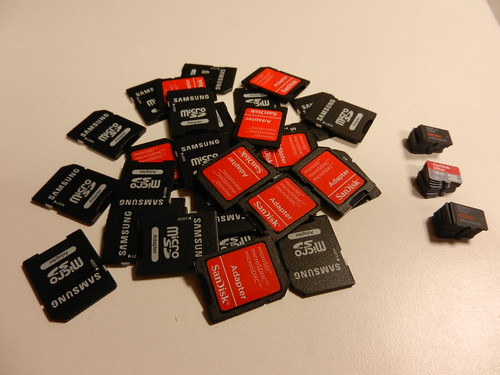
Could Samsung need these more than it thinks? Photo by seeweb on Flickr.

A selection of 9 links for you. Use them wisely. I’m charlesarthur on Twitter. Observations and links welcome.

Rochester family finds their “Nanny Cam” hacked for the world to see » KTTC Rochester, Austin

Mike Sullivan:

Many people across the country use “nanny cams” to monitor their children.  Some are closed circuit, but others allow parents to access their cameras through the Internet.  One Rochester family began to notice odd things happening with their “nanny cam”, but what they found out may shock you.

“We were sleeping in bed, and basically heard some music coming from the nursery, but then when we went into the room the music turned off,” said the Rochester mother who chose to remain anonymous.

Where were these tunes coming from? Would you have guessed another country?

“We were able to track down the IP address through the Foscam software, and found out that it was coming from Amsterdam,” said the concerned mother of one. “That IP had a web link attached to it.”

Creepy.


The $1,000 CPM » Medium

Hank Green:

Imagine that you would like to consume a piece of content, but in between you and that content is a paywall. They’re asking $15 for one person to view the content one time. While a YouTube video might net you $2 per thousand viewers, this fantasy world I’ve just described will net you $15,000 per thousand impressions…A $15,000 CPM!

With a $15,000 CPM, every two thousand views is a full-time, living-wage human per year!

Of course, this model would never work…except that it works every day at every movie theater in America.

Oh yeah. Then again, making a movie is incredibly expensive: the paywall around that process is unbelievable, running to millions of dollars. The barrier to entry for YouTube is effectively zero.


Samsung may have just lost half of its fans with the Galaxy S6 » AndroidPIT

Following a suggestion I made, Android Pit asked its readers whether they wanted a removable battery and/or SD card slot on the Galaxy S6. No data on how many people responded (and of course it’s a self-selecting survey – see later), so take with a pinch of salt what Kris Carlon finds:

The survey results also showed that only about two-fifths of Samsung owners currently carry a spare battery, and that the other three-fifths either don’t have one or rarely use the spare battery they do own.

Only 18% of respondents stated a removable battery was critical and would turn them off buying Samsung in future. Another 28% claimed it was important and that they would consider other manufacturers with removable battery options.

That’s 46% of current Samsung customers not happy with the decision to remove the removable battery. However, 54% said it either didn’t matter so much or that they preferred fast charging to a removable battery.

Pretty much in line with what I expected. Different story with SD cards:

An incredible 82% of respondents currently use a microSD card with a further 6% happy to at least have the option available to them. Only just over one-tenth of current Samsung owners don’t use a microSD card at all.

Almost two-thirds of participants either stated that they would no longer buy Samsung without a SD card slot or would consider buying other manufacturers that do include this feature on their smartphones. That’s 65% of current customers unhappy with Samsung’s decision to remove microSD expansion.

Let’s see if they don’t buy an S6, though. (Note: Samsung’s preliminary quarterly results for the first three months – not including the S6 launch – should now be available via its investor site.)


What to look for in the Apple Watch reviews » Beyond Devices

Jan Dawson:

The hardest thing for reviewers to gauge will likely be one of the most important factors in its ultimate success or failure – whether the Watch is compelling enough as an addition to the iPhone that its appeal lasts beyond the initial period when the novelty wears off. I don’t know how long reviewers will have had the Watch by the time they do their reviews, but it may well not be long enough to draw a conclusion on this. The Watch, like the iPad, lacks a single compelling selling point. Rather, I think each user will have to discover their own reasons why wearing one makes sense.


It’s time for the Watch » Above Avalon

Neil Cybart, in a thorough recap of how the Apple Watch got to where it is, makes a salient point about how we try to rationalise, or find a story thread, in stuff that’s more accidental:

Looking back at the iPad and iPhone, many have developed elaborate stories around those products in order to address the mystery. In reality, they were simply great products that relied on a revolutionary multi-touch user interface. After launching at a too-high price (and different business model based on mobile revenue sharing) and without an app store, it took Apple and the iPhone three years and additional features and changes before hitting mass-market awareness. However, the legend was that Apple foresaw the coming mobile app revolution. Stories are told to provide answers to the unknown. The problem occurs when those answers are fabricated. Apple is launching the watch as a fun, personalized iPhone accessory with different use cases dependent on the user. If one doesn’t leave the complicated stories and theories at the door, it will be difficult to see the Apple Watch for what is and, more importantly, isn’t. 


A new wave of Chinese smartphones set to emerge in 2015 » TechNode

Tracey Xiang:

China’s smartphone market is already crowded. But we’re expecting to see another half a dozen Chinese Android phone brands emerge in 2015. Many of them are already big tech companies in their home sectors.

LeTV, Qihoo, Gree, Smartisan – expect to hear more about them.


Bad data PR: how the NSPCC sunk to a new low in data churnalism » Online Journalism Blog

Paul Bradshaw:

Only Vice magazine decided to ask questions of the stats. And this is what they found:

“It turns out the study was conducted by a “creative market research” group calledOnePoll. “Generate content and news angles with a OnePoll PR survey, and secure exposure for your brand,” reads the company’s blurb. “Our PR survey team can help draft questions, find news angles, design infographics, write and distribute your story.

“… The OnePoll survey included just 11 multiple-choice questions, which could be filled in online. Children were recruited via their parents, who were already signed up to OnePoll.”

There are so many methodological issues here I can’t list them all, but let’s try. Firstly, there’s the issue of how representative OnePoll users are as a whole and how accurately they complete the survey (the site pays 20p per survey completed, and you have to reach £40 before you can withdraw). There’s the issue of self-selection (PDF) and of whether children are in an environment to give honest answers. And there’s the issue of leading questions: “I am addicted to pornography”?

As Vice’s article points out, research into this area is normally carried out very carefully to avoid these problems.

I’m always extremely wary of “surveys” like this; good to know Vice is too. Google News shows 129 hits for “NSPCC pornography”. Will any of them retract their pieces as a result of this untrustworthy data?


November 2014: Is the Rolling Stone story true? » Shots in the Dark

Richard Bradley is a former editor at George magazine, where he dealt with stories written by Stephen Glass which were shot through with untruths – which gave him an eye for it:

Written by a woman named Sabrina Rubin Erdely, the article is called “A Rape on Campus: A Brutal Assault and Struggle for Justice at UVA.”

The article alleges a truly horrifying gang rape at a UVA fraternity, and it has understandably shocked the campus and everyone who’s read it. The consequences have been pretty much instantaneous: The fraternity involved has voluntarily suspended its operations (without admitting that the incident happened); UVA’s president is promising an investigation and has since suspended all fraternity charters on campus; the alumni are in an uproar; the governor of Virginia has spoken out; students, particularly female students, are furious, and the concept of “rape culture” is further established. Federal intervention is sure to follow.

The only thing is…I’m not sure that I believe it. I’m not convinced that this gang rape actually happened. Something about this story doesn’t feel right.

Note that he wrote this when everyone was insisting that the story was true, must be true. Erdely isn’t the first journalist to be spoofed (it’s happened to me, though for much, much lower stakes). The failure was at Rolling Stone, where there wasn’t enough scepticism. And that failing continues throughout a lot of journalism; I notice it a lot (at a lesser scale) in tech journalism.


ActiveX actively going: South Korean gov’t to repeal ActiveX security requirement » BusinessKorea

Mary PArk:

The South Korean government plans to remove ActiveX from the county’s websites to boost foreign online shopping. The Ministry of Science, ICT, and Future Planning said on Wednesday that it will let the private sector drop the troublesome technical requirement, which has been cited as a major obstacle in Internet transactions.  

ActiveX is an Internet Explorer exclusive plug-in that allows Internet Explorer to run executable files on a user’s computer. Most of Korea’s financial websites and online shopping malls have relied on ActiveX to run their proprietary payment systems and online identity protection programs. But the outdated ActiveX dependency has prevented users of other web browsers or mobile devices from using those local websites…

…According to the Ministry, at least 90 percent of the country’s top 100 websites will replace ActiveX with alternative systems and technologies by 2017. This ActiveX-free plan provides subsidies of up to 50% of the financial costs to stop using ActiveX-based systems and to create HTML5-related alternative technologies to replace it, up to 100m won (US$91,734) per web site or 20m won (US$18,345) per solution.

So, so very overdue. South Korea has seen so many hacks due to its reliance on ActiveX, which has also held back mobile commerce.


Start up: Monumental confusion, obligatory (useless) 4K, drone cost surprise, Yahoo’s search inroad, ereaders stall, and more


However, it’s rather difficult to define quite what constitutes “piracy” in some situations. Photo from robotson on Flickr.

A selection of 11 links for you. Not valid in Ohio. I’m charlesarthur on Twitter. Observations and links welcome.

Mobile game piracy isn’t all bad, says Monument Valley producer (Q&A) » Re/code

Remember the remarkable “95% unpaid installs on Android, 60% on iOS” stat from Us Two Games? Here’s a followup:

Re/code: First off, how was that 95 percent statistic determined?

Dan Gray: Five percent are paid downloads, so the ratio is 9.5 to 1, but a portion of those are people who have both a phone and a tablet, people who have more than one Android device with them. So a small portion of that 95 percent is going to be taken up by those installs.

Q: Do you know how big that portion is?

A: It’s impossible for us to track that data. The only thing we can do is, two bits of data: One, how many purchases we have and, two, how many installs we’ve got. And we just leave people to draw conclusions from that as they wish, because we can’t clarify any further than that…

…When you compare the most affluent regions, obviously that kind of slants it toward developing markets and Android devices, where people are less inclined to spend $4 on a game. Let’s say you take U.S. only: those paid rates for Android and iOS are actually considerably closer. They’re closer than five and 40%.


The TidBITS Wishlist for Apple in 2015 » TidBITS

Though Apple fulfilled many user wishes in 2014, there is still more to be done. Here are some of what the TidBITS crew would like to see from Apple in 2015. We’ll circle back to this article at the end of the year to see what changed.

Tidbits is a longstanding online Mac weekly newsletter/site, and all the points made here – too many to enumerate briefly – are spot-on. This ought to be circulated within Apple.


4K TVs are coming for you, even if you don’t want them » Yahoo Tech

Rob Pegoraro, pointing out that manufacturers are pushing 4K resolution as hard as they can, despite the lack of bandwidth to transmit it or content to show. And there’s another thing:

Will you see that added resolution from your couch? You will on the CES show floor, where the crowds force you to within a few feet of sets that span from 50 to more than 100in across. From that perspective, 4K TVs almost always look spectacular.

Things change when you’re gazing at a 4K screen smaller than 55 inches (Samsung’s start at 48 inches and Sharp’s at 43 inches) from across the living room. In many cases, your existing set already shows all the resolution you can discern with 20/20 vision.

How close will you need to sit to see all those extra pixels? A Panasonic rep said the company recommends a viewing distance of 3.5 feet for a 50in 4K set, the smallest it will sell this year. That’s cozy even by Manhattan-apartment standards.

The average screen size has crept up — the NPD Group says 50 to 64in now represents the mainstream of the market — but the math of visual acuity suggests that to get sufficient benefit from 4K, you’re best off buying at the upper end of that scale.

I’ve seen the point made repeatedly that you won’t get any benefit from 4K across the average living room. This isn’t going to prevent a spec-based marketing push though.


The privacy tool that wasn’t: SocialPath malware pretends to protect your data, then steals it » Lookout Blog

Lookout recently discovered SocialPath, a piece of malware that advertises itself as an online reputation management tool. It claims that it will alert its users any time their photo is uploaded somewhere on the Internet. Instead, it steals the victim’s data.

We found one variant associated with this family in Google Play. We alerted Google to the malware and it has since been removed. This app offers a slightly different service — it promises to act as a backup service saving your contacts. It says it will also soon add features for saving your photos, videos, and other data “so if you lose your phone, you will not lose its contents.”

SocialPath targets Sudan predominantly — a region that has been rife with political unrest since the country split when an oil-rich South Sudan seceded.

Unclear whether it’s a nefarious government scheme – seems unlikely, but just possible. However then we come to Lookout’s advice:

You should always:
• Download apps from trusted developers — read reviews, research the developers, make sure you’re choosing a trustworthy product, especially if this tool is promising to help you protect sensitive information
• Don’t download apps from third party marketplaces

But this was on Google Play, at least in one variant. How do you decide in that situation?


Can drones deliver? (PDF) » IEEE Xplore

A guest editorial on the economic viability (or otherwise) of Amazon’s drone delivery, by Rafaeillo D’Andrea, formerly of Kiva:

A high-end lithium-ion battery costs roughly $300/kW h, and can be cycled about 500 times, resulting in a cost of roughly 0.8 cents per km for a 2 kg payload. The total cost of batteries and power is thus 1 cent per km for a 2 kg payload.

So, is package delivery using flying machines feasible? From a cost perspective, the numbers do not look unreasonable: the operating costs directly associated with the vehicle are on the order of 10 cents for a 2 kg payload and a 10 km range. I compare this to the 60 cents per item that we used over a decade ago in our Kiva business plan for the total cost of delivery, and it does not seem outlandish.

This seems surprising, and it would be helpful to know what proportion of Amazon deliveries are 2kg or less. There’s a non-PDF version with more discussion at Robohub.


Xiaomi’s Ambition » stratechery

Ben Thompson, explaining how demographics and non-renting in China works in Xiaomi’s favour as it expands its portfolio with super-keen fan buyers:

This, then, is the key to understanding Xiaomi: they’re not so much selling smartphones as they are selling a lifestyle, and the key to that lifestyle is MiUI, Xiaomi’s software layer that ties all of these things together.

In fact, you could argue that Xiaomi is actually the first “Internet of Things” company: unlike Google (Nest), Apple (HomeKit), or even Samsung (SmartThings), all of whom are offering some sort of open SDK to tie everything together (a necessity given that most of their customers already have appliances that won’t be replaced anytime soon) Xiaomi is integrating everything itself and selling everything one needs on Mi.com to a fan base primed to outfit their homes for the very first time. It’s absolutely a vertical strategy – the company is like Apple after all – it’s just that the product offering is far broader than anything even Gene Munster [proponent for years of a TV set from Apple] could imagine. The services Lei Jun talks about sell the products and tie them all together, but they are all Xiaomi products in the end.

Just bear in mind that there are about a billion people in China, and the one-child rule is being relaxed, and you begin to glimpse how big Xiaomi could be. “A computer on every desk”? Pah. A Xiaomi device in every room in all of China and beyond, more like.


“Best” Apple Mac mini (Late 2014) 2.8GHz review » Macworld UK

Andrew Harrison:

one thing we don’t ordinarily expect is for a newly revised computer to appear which computes more slower than the model that it replaces. Particularly when there’s been not one but two long years between the now-obsolete and shiny new editions.

That’s exactly what’s happened with Apple’s 2014 model of the Mac mini though. Today’s 2014 Mac mini range is in many respects slower than the 2012 range it replaces. Read: 2014 Mac mini v 2012 Mac mini comparison review.

Utterly amazing. It doesn’t offer a quad-core option, the RAM is soldered in place, and changing the disk drive is nigh on impossible. It’s like the worst sort of con job that Apple used to pull when Steve Jobs was in charge. I’d love to hear the reasons for these changes-that-aren’t-improvements.


Yahoo achieves highest US search share since 2009 » StatCounter Global Stats

In December Yahoo achieved its highest US search share for over five years according to the latest data from StatCounter, the independent website analytics provider. Google fell to the lowest monthly share yet recorded by the company*. These December stats coincide with Mozilla making Yahoo the default search engine for Firefox 34 users in the US.

StatCounter Global Stats reports that in December Google took 75.2% of US search referrals followed by Bing on 12.5% and Yahoo on 10.4%.

If you allow that StatCounter’s numbers are correct, Yahoo moved from 8.2% of US search in November 2014 to 10.4% in December. How many Firefox users does that represent? How many have yet to move to version 34? How many have/will switch their default from Yahoo back to Google? One to watch.


Kindle sales have ‘disappeared’, says UK’s largest book retailer » Telegraph

Waterstones, which expects to break even this year. plans to open at least a dozen more shops this year as the ebook revolution appears to go in reverse.

Amazon launched the Kindle, which is now in its seventh generation, in 2007. Sales peaked in 2011 at around 13.44m, according to Forbes. That figure fell to 9.7m in 2012, with sales flat the following year. It is estimated that Amazon has sold around 30m Kindles in total.
At the same time, British consumers spent £2.2bn on print in 2013, compared with just £300m on ebooks, according to Nielsen.

London bookstore Foyles has reported a surge in sales of physical books over Christmas.
US book giant Barnes & Noble is looking to spin off its Nook ereader business, which is estimated to be losing $70m a year. Meanwhile, core sales, excluding Nook, rose 5pc in the most recent quarter.

It seems that e-readers had a natural ceiling on adoption, which was far short of 100% (or even 90%). That in turn means that ebooks aren’t going to take over the world. Physical books, meanwhile, are pretty much guaranteed a readership somewhere. Now the challenge for publishers is working out the correct balance of effort and investment to put into ebooks and physical ones.


A&E in crisis: a special report » Daily Telegraph

Robert Colville:

here’s where I’m going to start: in a small green-painted room off one of the main corridors of that same hospital, where 10 women and two men are studying the spreadsheet projected on the walls and firing jargon back and forth.

“Four in urology with a decision to admit.” “306 is gone, 728 still waiting.” “With all that agreed, does that give you any ITU capacity?” “They’re desperate to bring the liver over from Worcester.” “Time to be seen is at 1hr 54.”

This is the “Ops Centre” of one of the country’s biggest hospitals, where I am spending the week as a fly on the wall. At this and other daily bed meetings, the senior nurses and managers get together to work out who is in the hospital, and where they need to go next.
They go through, ward by ward, listing spare beds and allocating them to the people in A&E. They can see who’s been waiting longest, where the pressure points are, and what needs to be done to resolve them.

This, then, is the story about the NHS that I want to tell. It’s the story of the NHS as a system – a system that takes millions of patients through from the GP surgery and A&E department to treatment, recovery and discharge.

This is a tour de force from Colville, in a piece so long and deep it could have come from the New Yorker (of the 1980s). If you want to understand the pressures on the UK’s NHS emergency services – which are clearly shown here not to be just about “money” – this is the single article to read.


Reporting on cyberattacks: the media’s urgent problem » Medium

Dave Lee is a (terrific) BBC technology writer, here writing in a personal capacity about the impossibility of knowing what’s really going on in some stories:

Let’s take an active story. The hack on Sony Pictures raises many issues about the reporting of hack attacks, and the coverage so far carries worrying implications.

Experts are queueing up to dispute the FBI’s confident claim that it was North Korea — mainly because the evidence pointing the finger at Kim Jong-un is either a) flakey at best or b) top secret, and therefore not open to scrutiny, journalistic or otherwise.

The result of this political back-and-forth is far-reaching, and one that from here on in is being reported on without anyone having any real clue whether the basis of the story — that it was North Korea — is in any way accurate.

We simply don’t know who did it — and yet the atmosphere created by the coverage means the US is considering reclassifying North Korea as a terrorist state. That move would open the door significantly when it comes to what the US considers a “proportional response” to the attack on Sony.


Start up: inside the Fire Phone debacle, a selfie stick successor, CES beats the bedroom, CNN’s last-ever video, and more


The Mayday button on the Amazon Fire Phone. Perhaps should have been used before it went on sale. Photo by TechStage on Flickr.

A selection of 8 links for you. Do not use as a flotation device. I’m charlesarthur on Twitter. Observations and links welcome.

The real story behind Jeff Bezos’s Fire Phone debacle and what it means for Amazon’s future » Fast Company

Austin Carr, in a terrific long read, explaining how the Fire Phone project began in 2010, and had Bezos as a micro-manager:

Some designers bristled at Bezos’s presence and privately questioned his taste, while others who were wowed by his wide-ranging insights loved his approach. Regardless, Bezos’s heavy hand certainly took getting used to, even for Chris Green, Lab126’s VP of industrial design. “In the beginning, Chris would take Jeff’s feedback a bit literally,” says Randall, the former Lab126 VP, “and there was many an evening spent over beers and sushi counseling him, saying, ‘Calm down, it’s going to get better.’”

Bezos drove the team hard on one particular feature: Dynamic Perspective, the 3-D effects engine that is perhaps most representative of what went wrong with the Fire Phone. Dynamic Perspective presented the team with a challenge: Create a 3-D display that requires no glasses and is visible from multiple angles. The key would be facial recognition, which would allow the phone’s cameras to track a user’s gaze and adjust the 3-D effect accordingly. After a first set of leaders assigned to the project failed to deliver, their replacements went on a hiring spree. One team even set up a room that they essentially turned into a costume store, filling it with wigs, sunglasses, fake moustaches, and earrings that they donned for the cameras in order to improve facial recognition. “I want this feature,” Bezos said, telling the team he didn’t care how long it took or how much it cost.

Turns out Bezos isn’t as good a micro-manager for building a phone as Steve Jobs. Result:

According to three sources familiar with the company’s numbers, the Fire Phone sold just tens of thousands of units in the weeks that preceded the company’s radical price cuts.

Was it perhaps somewhere around the 35,000 that I estimated in August? My range was between 26,000 and, generously, 35,000. I’d love to hear the actual figure.

The whole piece, though, gives terrific insight into how Bezos can get it wrong. He thought a single phone – one piece of hardware – could reshape Amazon’s brand, and turn it from a “get stuff cheap online” one, into a “we customers love you, take our money” brand. The two aren’t the same.


February 2014: What the world really needs: A telescopic SELFIE STICK » The Register

Simon Rockman in February 2014:

Mobile World Congress is often as interesting for the silly gadgets as it is for the mainstream announcements.

This (right) is the Selfie Stick, an extendable pole with a Bluetooth control for your phone.

The Selfie comes in two versions: a general one and one for Samsung phones where you have focus control.

Hahahahahawhatdo you mean they’re sold out everywhere?


The first wearable camera that can fly » Nixie

Wearable and flyable

The first wrist-band camera quadcopter.
Nixie flies, takes your photo, and comes back to you.

This feels like it could easily be one of those Great Ideas that is too easily bungled in the execution, but if it works well it could put selfie sticks out of business. Until selfie stick owners swat them out of the sky.


CES, the World’s Largest Trade Show, Is Too Big for Vegas » Bloomberg

The Consumer Electronics Show in Las Vegas has a problem that many events would love to have: It’s become too big. And it doesn’t want to get any bigger.

With as many as 160,000 visitors to CES—the world’s largest annual trade show—the Nevada city’s sprawling hotels are stretched to the limit. Last January’s gathering of gadget-loving geeks somehow packed in a full 10,000 more people than Las Vegas has rooms for them to sleep in.

The Consumer Electronics Association, the folks who put on the conference and expo, says CES 2015 will have the equivalent of 35 football fields, or about 2 miles of floor space, filled with phones, televisions, smartwatches, washing machines and throngs of people trying to see it all. “In order to enhance the experience for our attendees, we aim to keep attendance between 150,000 and 160,000 so that everyone can get where they need to go,” says CEA Vice President Karen Chupka.

That’s OK – they can sleep in the lines for press conferences showing off LG’s new dishwasher. Actually, the graph with the story suggests that attendees has exceeded the number of available hotel rooms since 2012. I’m pretty sure I slept there in 2012. Could it be that, shock, some people share rooms? Also, how’s AirBnB coming along there? And might some attendees, um, live in Vegas?


The weirdly-synched life of the Google Nest household » The Register

Richard Chirgwin:

At first glance it looks like the typical Utopian vision of Silicon Valley, but Vulture South took a second look and asked ourselves: “what kinds of life does Google think we live?”

The short answer: wealthy, lazy, and either lonely or in a strange 1950’s-sitcom family synchronisation. Everybody rises and sleeps at the same time, everybody leaves and arrives together, and we’re rich enough to have ‘leccy cars but too poor to charge them.

The most obvious believer in the synchronised family is appliance giant Whirlpool. Its Nest integration can “let your washer and dryer know when you’re home and they will automatically switch to quiet mode”. Unless only one occupant is recognised, that means the only time the appliances are allowed to let their hair down and party is when everyone’s away.

The August Smart Lock will tell Nest to change your thermostat settings when you arrive (warm the house up) or leave (switch off the heating) – which begs the question “what if I lock the front door while other people are still at home?” At least the Kwikset Kevo smart lock understands that more than one person might be in a household.

The Withings Sleep System: when you go to sleep it will “let your Nest Thermostat to a comfortable nighttime temperature. Wake up and it will tell Nest you’re ready to start the day.” Once again, the idea that a household might have sleep and wake times staggered by hours seems alien to the developer.

This is my general objection to “internet of things” and “homes of the future” visions: they don’t account for how we actually live. Them: Look, you’ll be able to get your coffee maker to make coffee before you get out of bed! Me: so I’ll have had to put the coffee in the night before. As I have to go downstairs to get the coffee, why not just make it fresh while I’m there?

And so on. Most IOT/HOTF concepts seem to come from 20-somethings who have no concept of running a household. Hence, I think, their limited success.


This is the video CNN will play when the world ends » Jalopnik

Michael Ballaban, who unearthed this Holy Grail-style rumoured-but-until-now-never-confirmed video, which has the notice:

“HFR till end of the world confirmed.”

Hold for release. CNN, once ever so thorough in its factchecking, knew that the last employee alive couldn’t be trusted to make a call as consequential as one from the Book of Revelation. The end of the world must be confirmed.

That leaves open a whole host of unanswered questions. If this is the last CNN employee alive, in the last CNN bureau on Earth, who do they confirm it with? What does confirmation look like? Who can be the one to make that determination, to pronounce the universe itself dead? Is it Wolf Blitzer himself, ever a fan of the Washington Wizards, and thus a man who would know death when he saw it? Would it be Rick Davis, CNN’s head of standards of practices, who has been with the company since its birth and who thus would know CNN’s journalistic practices better than anyone?

Or would it be some sort of living embodiment of CNN itself, ready to proclaim its own demise, as Judgment Day is truly the only thing able to bring about the long-anticipated death of cable news?

And who would be around to watch it?

Um.. that CNN employee? The machines grinding us into nanoparticles to feed into their hoppers? Take your pick.


Breach puts Morgan Stanley client data up for sale » NYTimes.com

Nathaniel Popper:

the bank traced the breach to a financial adviser working out of its New York offices, a 30-year-old named Galen Marsh, according to a person involved in the investigation who spoke on the condition of anonymity.

Mr. Marsh, who had been with Morgan Stanley since 2008, was quickly fired and is currently the subject of a criminal investigation by the Federal Bureau of Investigation, a person briefed on the investigation said. The Financial Industry Regulatory Authority is also examining the matter.

Morgan Stanley said on Monday that it had determined that Mr. Marsh took data on about 10% of its 3.5 million wealth management customers, including transactional information from customer statements.

The bank said that Mr. Marsh did not take any sensitive passwords or Social Security numbers, and that it had not found any evidence that the breach resulted in any losses to customers. A lawyer for Mr. Marsh, Robert C. Gottlieb, acknowledged on Monday that his client did take the information in question but said that he did not post it online, share it or try to sell it.

Afghanistan war logs: insider breach. NSA/GCHQ documents: insider breach. Morgan Stanley: insider breach. Sony Pictures..?


Hit mobile game Monument Valley and piracy: ‘Only 5%’ of Android players paid for it » VenureBeat

Jeff Grubb:

Piracy is still a big problem on Android.

Developer Ustwo had one of the break out mobile hits in 2014 with its isometric puzzler Monument Valley, but a successful game is not impervious to piracy. The studio confirmed on Twitter today that Monument Valley has had an especially tough time with “unpaid installs” on Android. The company said that 95% of the people playing the game on Google’s mobile operating system did not buy it — although, Ustwo did explain that a small number of those installs are legitimate and were not illegally downloaded. This makes a big dent in Ustwo’s earnings since Monument Valley is a premium-priced game that does not have in-app purchases like Candy Crush Saga or other lucrative mobile releases. Gaming on smart devices surpassed $21bn last year, but it potentially could have more if it weren’t for piracy.

The paid rate was much better on iOS, but it’s still alarming. Ustwo said that 40% of the people who have the game on an Apple mobile device paid for it. Again, that means the majority did not give the developer money.

Depressing numbers, for a game that costs just $4. There’s certainly piracy on iOS – but the astronomical amount on Android really isn’t good news. Does this get factored into the quotes about “revenues from app stores” we see?

There is some confusion over the iOS figure though: it’s not clear whether someone who buys on the iPhone and then downloads to their iPad counts as an “unpaid install”. We also don’t know if that’s how it works on Android – though do 95% of Android owners have multiple devices?


Start up: botnets worsen, who really hacked Sony?, mobile PCs in 2015, LizardSquad in detail


This stuff doesn’t work on mobile, apparently. Photo by Justin in SD on Flickr.

A selection of 9 links for you. Use them wisely. I’m charlesarthur on Twitter. Observations and links welcome.

Botnet summary 2014 >> Spamhaus

To nobody’s surprise, botnet activity appears to be increasing. The majority of detected botnets are targeted at obtaining and exploiting banking and financial information. Botnet controllers (C&Cs) are hosted disproportionately on ISPs with understaffed abuse departments, inadequate abuse policies, or inefficient abuse detection and shutdown processes. Botnet C&C domains are registered disproportionately with registrars in locations that have lax laws or inadequate enforcement against cybercrime.

In 2014, Spamhaus detected 7,182 distinct IP addresses that hosted a botnet controller (Command & Control server – C&C). That is an increase of 525 (or 7.88%) botnet controllers over the number we detected in 2013. Those C&Cs were hosted on 1,183 different networks.

Depressing.


New York Times bets on native ads to drive mobile-ad revenue >> Media – Advertising Age

The New York Times is looking at native advertising, sponsorships and video to wring more money from readers coming to the Times on their mobile phones, according to Mark Thompson, president and CEO of The New York Times Co.

Just 10% of the Times’ digital advertising revenue was from mobile ads in the third quarter, but more than half its digital traffic came through mobile devices. Although mobile ad revenue is “growing rapidly,” this gap represents a “significant delta,” Mr. Thompson said at the UBS Global Media and Communications Conference in New York on Tuesday.

“It’s a challenge to overcome, but we will overcome it,” he said.

This seems like a natural and necessary evolution, given the low rates of mobile. They won’t make up for desktop, which in turn didn’t make up for print. Advertising rates are falling to zero.


What is going to happen >> AVC

Venture capitalist Fred Wilson with his list of predictions, from which we’ll pick these two:

4/ After a big year in 2014 with the Facebook acquisition of Oculus Rift, virtual reality will hit some headwinds. Oculus will struggle to ship their consumer version and competitive products will underwhelm. The virtual reality will eventually catch up to the virtual hype, but not in 2015.

5/ Another market where the reality will not live up to the hype is wearables. The Apple Watch will not be the homerun product that iPod, iPhone, and iPad have been. Not everyone will want to wear a computer on their wrist. Eventually, this market will be realized as the personal mesh/personal cloud, but the focus on wearables will be a bit of a headfake and take up a lot of time, energy, and money in 2015 with not a lot of results.

I’m very interested in trying Oculus Rift. Wearables are a tough sell anyway. However, Apple isn’t positioning its Watch as any part of what has gone before.


FBI briefed on alternate Sony hack theory >> Politico

Tal Kopan:

Researchers from the cyber intelligence company Norse have said their own investigation into the data on the Sony attack doesn’t point to North Korea at all and instead indicates some combination of a disgruntled employee and hackers for piracy groups is at fault.

The FBI says it is standing by its conclusions, but the security community says the agency has been open and receptive to help from the private sector throughout the Sony investigation.

Norse, one of the world’s leading cyber intelligence firms, has been researching the hack since it was made public just before Thanksgiving.

Norse’s senior vice president of market development said the quickness of the FBI’s conclusion that North Korea was responsible was a red flag.

1) a riled insider or insiders is a far, far more likely path to this hack
2) there’s no way in the world, now that the FBI has said that North Korea did it, and President Obama has echoed that, that the FBI or US government will ever admit to being wrong unless it is part of some gigantic diplomatic deal with North Korea. One has to wonder what NK would give the US in return for making the US eat humble pie in public.


Competition to intensify in flagging mobile PC market in 2015 >> TrendForce

Google’s low-cost Chromebook notebook computer performed well this year, benefiting from its cloud storage capacity and strong data security capabilities. But Chromebook sales were affected by Microsoft’s subsidized low-cost Windows notebooks. In 2014, Google sold about 6.5m Chromebooks and the device’s market penetration [of the mobile market] reached 4%. But if Chromebook uses the 2-in-1 PC concept, it will be difficult for Google to keep the device’s price low, Chen said. TrendForce forecasts Chomebook sales will increase slightly to 8m units in 2015. 

This year, Microsoft and Intel both launched subsidy plans for their notebooks and tablets, which had reduced their revenues. “Because they lower manufacturers’ costs, subsidies indirectly benefit consumers, but it will be better if Microsoft and Intel can find more substantial ways to develop the market, such as by utilizing the 2-in-1 concept or cloud computing,” [Caroline] Chen [Trendforce notebook analyst] said. 

Notably, this group describes the expected 12.9in iPad as a “2-in-1” device, not a tablet. There’s a certain amount of disagreement between analyst companies on what is a PC, what’s mobile, what’s a 2-in-1, and what’s a tablet; it can make decoding what they say really tricky.


May 2014: Samsung says new Galaxy S5 smartphone is off to a strong start >> WSJ

Noted here for its hindsight value, from an interview in May 2014:

J.K. Shin, who also heads Samsung’s mobile business, said in an interview at company headquarters that sales of the new smartphone reached more than 11m units since its launch in early April, outpacing the Galaxy S4, which sold about 10m in the first month after it was unveiled last year.

Speaking halfway into Samsung’s second quarter, Mr. Shin also said he thinks strong Galaxy S5 sales will lead to higher mobile profit margins and market share in the quarter. He declined to provide specific figures.

“It’s been a month since we began selling the S5, and out of the gate, sales are much stronger than the Galaxy S4,” Mr. Shin said, noting sales were especially good in developed markets such as the U.S., Australia and Germany.

The comments from the top executive at the world’s biggest smartphone maker paint a rosier picture of Samsung’s mobile business than many analysts and investors had been expecting.

What then happened is that Samsung made 20% more S5s than it had S4s, but sold 10% fewer. This meant oversupply in the channel (wholesalers/carriers) and forced price cuts, and so lower profits and slower sales.

Worth considering when you next see a chief executive interviewed, and weigh up what analysts are expecting.

Samsung Electronics should announce its preliminary 4Q results some time next week.


Here’s why The Hunt’s app developer hearts Android >> VentureBeat | Dev | by Barry Levine

While “the conventional wisdom is build first for iOS,” he said, “if we had to do it all over again, I would launch on Android first,” or at the same time as iOS. More than half of The Hunt’s downloads are to Android devices.

The Hunt’s Android version launched last month, and its iOS version came out last year.

The Hunt allows its three million, mostly female users to post a picture of some product they’ve seen online — such as a photo of a dress in a news story — and get feedback from the community of retailers and fellow shoppers about where that item or something similar is sold.

Weingarten noted that his company has “a very successful iPhone app, [with] thousands of daily downloads.”

“I’m not being negative about Apple.”

But, he pointed out, his company is “seeing much stronger engagement rates on Android.”

As one example, more than a third of Android users who have downloaded the app have started Hunts, while only 20% of iOS users have. Additionally, 40% of iOS weekly users are following to see if their Hunt queries have found the product in question, while half of Android users are.

Be good to know some more of the demographics of the users showing these behaviours. An interesting data point though.


Inadvertent algorithmic cruelty >> Eric Meyer

Yes, my year looked like that.  True enough.  My year looked like the now-absent face of my little girl.  It was still unkind to remind me so forcefully.

And I know, of course, that this is not a deliberate assault.  This inadvertent algorithmic cruelty is the result of code that works in the overwhelming majority of cases, reminding people of the awesomeness of their years, showing them selfies at a party or whale spouts from sailing boats or the marina outside their vacation house.

But for those of us who lived through the death of loved ones, or spent extended time in the hospital, or were hit by divorce or losing a job or any one of a hundred crises, we might not want another look at this past year.

To show me Rebecca’s face and say “Here’s what your year looked like!” is jarring.  It feels wrong, and coming from an actual person, it would be wrong.  Coming from code, it’s just unfortunate.  These are hard, hard problems.  It isn’t easy to programmatically figure out if a picture has a ton of Likes because it’s hilarious, astounding, or heartbreaking.

This post has been widely shared, but it is worth reflecting on from a distance. Algorithms have dangerous power because once we start them off, it’s really hard to stop them.


Lizard Squad kids: a long trail of fail >> Krebs on Security

In a show of just how little this group knows about actual hacking and coding, the source code for the service appears to have been lifted in its entirety from titaniumstresser, another, more established DDoS-for-hire booter service. In fact, these Lizard geniuses are so inexperienced at coding that they inadvertently exposed information about all of their 1,700+ registered users (more on this in a moment).

These two services, like most booters, are hidden behind CloudFlare, a content distribution service that lets sites obscure their true Internet address. In case anyone cares, Lizardstresser’s real Internet address currently is 217.71.50.57, at a hosting facility in Bosnia.

In any database of leaked forum or service usernames, it is usually safe to say that the usernames which show up first in the list are the administrators and/or creators of the site. The usernames exposed by the coding and authentication weaknesses in LizardStresser show that the first few registered users are “anti” and “antichrist.” As far as I can tell, these two users are the same guy: A ne’er-do-well who has previously sold access to his personal DDoS-for-hire service on Darkode — a notorious English-language cybercrime forum that I have profiled extensively on this blog.

One of the duo alleged to make up Lizard Squad is a 22-year-old Briton who has been arrested and bailed by Thames Valley Police. He’s on Twitter, has been interviewed by Sky News, and denies having taken part in any hack (or DDOS?) of Sony or Microsoft; he claims just to be the group’s spokesman, if his Twitter feed reflects his views.

Let’s see how that works out. He also says the alleged offences for which he has been bailed include some from 2013.


Start up: India blocks Xiaomi, Chinese app habits, Office gets Bing, hacking smartwatches, and more


Refuelling a Toyota Prius. By the time he’s grown up, it might have paid for itself. Photo by Chris Yarzab on Flickr.

A selection of 9 links for you. Slippery when wet. I’m charlesarthur on Twitter. Observations and links welcome.

Breaking News: Delhi High Court grants injunction against Xiaomi >> Spicy IP

[On Monday] the Delhi High Court granted an ex parte injunction order against Chinese operator Xiaomi for infringement of Ericsson’s patents. The patents in question are Standards-Essential Patents (SEPs) which are subject to FRAND (Fair, Reasonable and Non-Discriminatory) terms. However, they may also be the same patents which are the subject matters of litigation Ericsson has mounted against Micromax, Gionee and Intex. As Shamnad Sir noted earlier today, while Ericsson has largely favourable orders against Micromax and Gionee, the same cannot be said for its case against Intex. Therefore, when the same patents are potentially in question under other cases as well, there was no need for the Courts to rush to grant an injunction against a new defendant, namely Xiaomi.

At this juncture, it is more interesting to note the reasons provided for granting the said injunction. One factor that the Court found persuasive was that Xiaomi had not responded to Ericsson’s repeated communications  (6 in number from July 2014). However, it must be questioned whether Xiaomi’s purported laxity in this matter is a sufficient reason to grant an injunction against them. More so, when an alternative remedy in the form of damages is available which is one of the cardinal principles that goes against the granting of injunctions.

This ex parte order injuncts Xiaomi from selling, advertising, manufacturing or importing devices that infringe the SEPs in question. The judge also directed the Customs officials to stop the imports under the IPR Rules, 2007. Moreover, local commissioners have been appointed to visit Xiaomi officers to ensure the implementation of these orders.

This is going to put a whole new complexion on Xiaomi’s expansion – and profitability – outside China, and probably means it won’t be coming to the US any time soon.


Chinese mobile app UI trends >> Dan Grover

Slightly to his surprise, San Francisco native Grover finds himself a product manager on Chinese messaging app WeChat, in Guangzhou; from the photo, it’s Shenzhen, as that’s where WeChat is headquartered. This isn’t the cheesy opener to a TV series, unless you make it so:

Moving to a new country has meant learning how to do lots of things differently: speaking a new language, eating, shopping, getting around. In a few months, I’m surprised at how acclimated I’ve become to what, at first, seemed such an overwhelmingly alien place.

This has applied to my digital life too. I’ve replaced all my apps with those used here, owning both to my keen interest as someone in the tech industry, and to “go native” to the extent I can. Since then, I’ve similarly become blind to the adaptations required there, too.

One day, for the fun of it, I started writing a list in my notebook of all the things that are different between apps here and those I’m accustomed to using and creating back in the US. When I finished, I was surprised by how long the list was, so it seemed fitting to flesh it out into a post.

You’ll look at it and say “oh, that’s why feature X that I never use is in iOS 8”. Plus much more. China may be like Japan – a harbinger of some of the mobile future, but not all. The trouble is figuring out which bits are which.


How the Prisoner’s Dilemma explains the lack of forked Android phones outside China >> Tech-Thoughts

I’ve taken liberties with the headline on Sameer Singh’s article, but that’s basically what he’s doing:

[in the classic minimax game] the best payoff for both prisoners will be achieved if both remain silent. But the best individual payoff requires each to betray the other. So the only rational course for any self-interested party (like profit-generating enterprises) is to betray each other. In the case of Android OEMs, it may benefit the whole industry (from a differentiation and profit standpoint) to fork Android and exclude Google services. But the threat of selling a non-competitive forked device, while others sell devices with Google services is too great for this to ever happen.

The rest is insightful too. Sameer’s been quiet for a while; pieces like this contribute greatly to our understanding of ecosystems:

There are close to 2 billion smartphone users today and that will grow to roughly 4 billion over the next few years. However, the purchasing power of these users will be far lower than that of the existing user base, i.e. they will probably buy $25-$50 devices and not $600 or even $200 devices. How do you monetize a user who can only afford to pay $25-$50 for a phone?

The answer: services, dear boy, services.


PC makers may beat Apple to the punch with new ‘fingerprint ID’ sensors built into notebook touchpads >> Apple Insider

Calling it the “first solution to integrate fingerprint ID technology into the TouchPad,” the Synaptics SecurePad is a 4-by-10-millimeter sensor on the surface of a notebook’s cursor controls. The SecurePad activates with the touch of a finger, and like Apple’s Touch ID, it supports fingerprint detection at any angle.

The Synaptics SecurePad is a Fast Identity Online-ready authenticator supporting the use of password-free security. It will allow PC makers to implement fingerprint scanning technology without the need to duplicate hardware components, allowing for simpler integration into existing notebook designs.

Once a user scans their fingerprint when prompted for a password, SecurePad initiates a cryptographically secure challenge and response with an online service provider. The Synaptics solution does away with storing password databases in the cloud, further improving security with FIDO-compliant partners.

Useful for enterprise PCs; unclear whether there will be much demand for it from consumers (though users of iOS devices with TouchID might like the idea). It all rests on the execution.


Microsoft begins integrating Bing search into Office >> ZDNet

Microsoft is beginning to integrate its Bing search technology into Office, starting with Word Online, company officials announced on December 10.

Microsoft is calling the new embedded search capability “Insights for Office”. Microsoft is rolling out the capability worldwide (everywhere where Bing is available) starting today, December 10. The rollout should be complete within the next few days, officials said.

Users don’t need to do anything to get the new capability; it will just be added to Word Online automatically. The new “intelligent search experience,” as Microsoft officials are calling this, isn’t ad supported. It’s free.

Bill Gates wanted to include Microsoft’s search solution in Office back in 2003, but antitrust concerns, and the Office team’s refusal to help the search team, killed it. (Source: my book, Digital WarsUS version. Just the present for you or someone like you.)


With $2 Gas, the Toyota Prius Is for drivers who stink at math >> Businessweek

It would take almost 30 years of fuel savings from the hybrid Prius to cover its price premium over the little Chevy Cruze, although that doesn’t account for the Chevy buyer marking savvy investments with her savings in the meantime. It doesn’t matter since we will all be flying around in futuristic Teslas before the Prius pays off. The all-electric Nissan gets a lot closer: The all-electric Nissan Leaf, without any gas stops, take just 3.8 years on the road to beat the cheaper sticker price of the Cruze.

The Cruze gets a respectable 30 miles per gallon of combined highway and city driving, but its real strength is relative affordability. Without a second engine and a massive battery, the average Cruze had a $21,322 sticker price last month, compared with almost $31,973 for a Prius and $32,933 for a Leaf. Even after federal tax breaks, Cruze buyers start with an advantage of $8,151 over the Prius and $4,111 over the Leaf. That’s a lot of gas money.

For the 13 states with no hybrid incentives, this is where the equation stops.

This is the real reason why the US hasn’t made any progress on electric cars: the lack of tax incentive. True, the idea that carbon emissions are a problem is relatively new, but the US’s dependence on foreign oil (and hence oil) was seen as a problem as far back as Jimmy Carter’s time in the 1970s.


Eric Young on Twitter: “”I work for 1 of largest credit issuers n world…”

Eric Young quoting a source at “a major [US] bank: “I work for 1 of [the] largest credit issuers n [in the] world. We processed way more Apple Pay transactions than all of Google Wallet since its beginning”.

I’ve calculated there have been 20m Google Wallet downloads (it’s US-only), and people who should know have subsequently suggested that perhaps one-tenth of those are active. Apple Pay is very likely far past Google Wallet for number of active users in the US, even though Google Wallet came out in 2011 – and Apple Pay in September.


Mobile Enterprise Apps >> Apple

The first fruits of the collaboration with IBM, yielding what Apple calls “a new class of apps — entirely reimagined for the mobile enterprise, made for iOS, and designed to empower employees wherever their work takes them”. I was struck by the one for pilots, and this one for law enforcement officers:

With the Incident Aware app, police officers can know each other’s whereabouts with greater insights in emergency situations. When law enforcement officials receive an emergency call, responders can go in with a bird’s-eye view of the scene’s perimeter that includes GPS map data, the location of those involved in the incident, and live video feeds updated in real time on their iPhone devices. This powerful and intuitive app can even access police records to calculate risk, letting other law enforcement stakeholders know where and when other responders will appear.

It relies of course on Apple Maps, which will really up the stakes on getting that right and up-to-date.


Data sent between phones and smartwatches wide open to hackers >> Ars Technica

The growing number of smart devices that interoperates with smartphones could leave text messages, calendar entries, biometric data, and other sensitive user information wide open to hackers, security researchers warn.

That’s because most smart watches rely on a six-digit PIN to secure information traveling to and from connected Android smartphones. With only one million possible keys securing the Bluetooth connection between the handset and the smart device, the PINs are susceptible to brute-force attacks, in which a nearby hacker attempts every possible combination until finding the right one.

Researchers from security firm Bitdefender mounted a proof-of-concept hack against a Samsung Gear Live smartwatch that was paired with a Google Nexus 4 running Android L Preview. Using readily available hacking tools, they found that the PIN obfuscating the Bluetooth connection between the two devices was easily brute forced. From that point on, they were able to monitor the information passing between the watch and the phone.

Trying to feel anxious. Somehow can’t summon up the necessary level of worry about someone seeing a calendar alert.