
Start up: Chromebooks beat iPads, Netscape’s growing pains, OnePlus’s India problem, Nexus 9 before and after, and more


The inside of Peter Morgan’s eye.

A selection of 12 links for you. Clean regularly. I’m charlesarthur on Twitter – observations and links welcome. (Note: I’ve tweaked – I hope – the font size on each link entry. If the spacing seems off, suggest a better CSS for it. I’m all ears, having twiddled with it to little satisfaction.)

Google overtakes Apple in the US classroom >> FT.com


Apple has lost its longstanding lead over Google in US schools, with Chromebook laptop computers overtaking iPads for the first time as the most popular new device for education authorities purchasing in bulk for students.

Google shipped 715,500 of the low-cost laptops into US schools in the third quarter, compared with 702,000 iPads, according to IDC, the market research firm. Chromebooks, which sell for as little as $199, have gone from a standing start two years ago to more than a quarter of the market.

It marks the first time Google has outsold its rival and consolidates a lead it opened up over Apple this year in the broader education market, which includes higher education establishments, as it closes in on Microsoft Windows, the market leader.

The multibillion-dollar education market has become a battleground for hardware makers trying to win the loyalties of the next generation of consumers. It has traditionally been dominated by Windows devices, which have a decades-long head start on iPads and Chromebooks, but schools are increasingly turning to lower-cost alternatives.

A $500m schools contract in Los Angeles was going to be all-iPad – and then the deal hit the rocks, and LA went for Chromebooks instead.


Peek Retina >> Indiegogo

What is Peek Retina?
It’s a clip-on camera adapter that gives high quality images of the back of the eye and the retina. This helps us to diagnose cataracts, glaucoma and many other eye diseases, ready for treatment.

It has been developed by an award-winning team of experts in eye care, engineering and technology.

Peek Retina combines both a traditional ophthalmoscope and a retinal camera in a mobile phone, providing a portable, affordable and easy way to carry out comprehensive examinations.

It sits neatly over the top of the device allowing a healthcare worker to easily take high-quality images of the back of the eye. It feels much less intrusive for the patient too.

The aim is to bring it to the millions of people who need affordable eye care in poorer regions. A donation would make a great Christmas gift. Or buy one for yourself.


A letter to our Indian users >> OnePlus Blog

This week, we announced that the OnePlus One will finally launch in India on December 2, 2014. This has been a long time coming both for our Indian fans, who have been incredibly patient, and everyone behind the scenes who have been working towards this moment since June.

OnePlus and all of our partners, including Cyanogen, have put countless hours of work into making this launch a success. Just last month, on October 7, Cyanogen released the 38R OTA update which included SAR values inside phone settings to comply with Indian regulations. Therefore, it was surprising and disappointing to hear from Cyanogen on November 26 that they had granted exclusive rights in India over the Cyanogen system to another company. Prior to this, OnePlus and Cyanogen have successfully cooperated to release the OnePlus One or carry out commercial operations in 17 countries and regions (including India). It is truly unfortunate that a commitment we both made to our Indian users will now not be upheld.

Cyanogen’s exclusive partner in India: home-grown Micromax. OnePlus’s solution: set up physical places where it will flash peoples’ OnePlus phones to the newest system. That’s going to be expensive.


Smartphones to commoditise like PCs; margins to contract >> Fitch Ratings

The margins of Asian smartphone makers are likely to contract in the medium term amid heightened competition and product commoditisation, says Fitch Ratings. The slowing pace of hardware development, and more manufacturers achieving a threshold level of build quality and functionality, means that the rapid growth of lower-cost smartphone producers will challenge market-leading incumbents and reduce profitability.

The smartphone industry runs the risk of following the cycle seen in PCs, where device-makers’ share of the value chain was squeezed by competition and where operating systems and applications software have become more important to consumers than hardware from a specific manufacturer. The dominance of Microsoft’s operating systems and applications enabled this trend in PCs. In smartphones, this trend may be facilitated by the Android operating system and the open environment for third-party application developers…

…Fitch expects that Samsung’s credit profile will remain solid, given its technology leadership, integrated structure and wider product range. Apple too is relatively well positioned owing to its strong brand value and ecosystem. Outside the big two, established brands such as LG Electronics, Sony, HTC and Nokia, will face stiffer competition from low-cost Chinese vendors.

It’s the value trap all over again.


Uber Josh Mohrer: New York’s general manager is facing disciplinary action over privacy violations >> Slate

Uber said Friday that it has concluded an investigation of New York City general manager Josh Mohrer for alleged privacy violations and has “taken disciplinary actions” against him.

Uber began looking into Mohrer 10 days ago after BuzzFeed’s Johana Bhuiyan reported that Mohrer had accessed her Uber travel data without her permission on multiple occasions. In one instance earlier this month, Bhuiyan arrived for a meeting with Mohrer at Uber’s New York headquarters in Long Island City to find him waiting for her. “There you are,” she recalled him telling her. “I was tracking you.”

Reached Friday afternoon, a spokeswoman for Uber declined to comment on any specifics of the “disciplinary actions” or discuss what might have prompted them other than the BuzzFeed report.

Somehow unsurprising that Uber would go for undisclosed self-regulation on this.


The best travel gear of 2014 >> Co.Design

If you need an unusual present for someone who’s always in and out of airports, or rides a bike, or needs an umbrella, here you go. Some great ideas in here.


Is Monument Valley overpriced? Yes. >> Terence Eden’s Blog

We live in times of desperate austerity. When you say “well, it’s only the price of a cup of coffee!” you utterly fail to realise that for many people Starbucks represents an unobtainable level of decadent spending.
People have hard lives. After working two jobs, slumped on an endless night bus home, they want relief from the pain and tedium of the working day. Pulling out an old phone – perhaps a hand-me-down, or one bought in happier times – they want to spend what little disposable income they have wisely. Something that gives them bang for their buck.

Renting a movie, like Transformers, works out at £1.30 per hour of enjoyment. Twice as cheap as Monument Valley.

Reading a book, knitting, chatting on the phone with a friend – all cheaper.

As the reviewer [quoted earlier in the post] said – there are many games which are just as good looking as Monument Valley, with far longer play times. Often for free.

This is a classic “functional pricing” argument, which I find is much more widely made (especially over PCs and smartphones and tablets, where “measurement” seems superficially easy – x GHz processor, y RAM, z hard drive storage). It’s also meaningless. I wouldn’t rent Transformers; you could offer it to me free and I wouldn’t watch it. Why? Because in my view it’s crap. Therefore no (non-negative) price is sufficiently low for me.

By contrast, I find Monument Valley to be fascinating, clever, unexpected, memorable – all those things that for me Transformers is not. As for other games that have longer play times and are free – sure, but is Doodle Jump or Angry Birds as memorable as Monument Valley?

I don’t often disagree with Eden, but this seems to me a classic case of mistaking price and value. Equally, it’s one that lots of people make when it comes to apps – which is the problem app makers face.


An Interactive Scale of the Universe Tool

From the teeny tiny to the gianty–… anyway. Terrific way to feel small. (Via Jake Davis.)


The BlackBerry Passport enigma: TCOB-machine or “worst designed thing, ever” >> Ars Technica

Sean Gallagher:

When viewed in the right light, the Passport ends up looking pretty. It was unexpectedly the best smartphone we’ve ever used from the perspective of taking care of business. Yes, it benchmarks somewhat below phones in its price range on the tests that would run in the BlackBerry 10 OS. And there’s still a significant “app gap” between the Passport and competing devices. But that’s all background noise when you use the Passport as it’s intended—as an information and communications machine, designed for people who still live and die by the e-mail inbox rather than iMessages and Hangouts and Snapchats.

Unlike this one, most reviews of the Passport miss its point – it’s not a general-purpose smartphone. It’s a BlackBerry.


The baffling and beautiful wormhole between branches of math >> WIRED

Lee Simmons, capitalising on the fact that “wormhole” is a key phrase at the moment (because of Interstellar) and hey, maybe this is new! But it isn’t. If you don’t know Euler’s identity equation, you’re in for a treat though:

the weirdest thing about Euler’s formula — given that it relies on imaginary numbers — is that it’s so immensely useful in the real world. By translating one type of motion into another, it lets engineers convert messy trig problems (you know, sines, secants, and so on) into more tractable algebra—like a wormhole between separate branches of math. It’s the secret sauce in Fourier transforms used to digitize music, and it tames all manner of wavy things in quantum mechanics, electron ics, and signal processing; without it, computers might not exist.


Nexus 9 made on Thursday vs before launch buttons comparison >> Nexus9

Poster “Sebianoti” posted a picture of his old and new Nexus 9 tablets, and commented:

Today my new Nexus 9 arrived, it was manufactured last week, it was shipped to me on Friday from Taiwan and it arrived today. It’s my replacement to my faulty one with extreme light bleed and buttons that are almost impossible to press, as you can see that’s one issue that’s been fixed. This may be the first Nexus 9 in white that has the buttons fixed, at least that’s what HTC’s AVP told me. Light bleed is still present however it’s nowhere near as bad as before.

Seems like damning with faint praise. The LTE version has apparently been delayed. HTC isn’t covering the Nexus name with glory here (and replacements aren’t going to help its bottom line).


Excerpts from my diary of early days at Netscape >> Jamie Zawinski

Here are some excerpts from my diary during the first few months of the existence of Netscape Communications (All Praise the Company), back when we were still called Mosaic. Back when there were only 20 or 30 of us, instead of however-many thousands of people there are today. Back before we had any middle managers.

This is the time period that is traditionally referred to as “the good old days”, but time always softens the pain and makes things look like more fun than they really were. But who said everything has to be fun? Pain builds character. (Sometimes it builds products, too.)

So you want to go work for a startup? Perhaps this will serve as a cautionary tale…

The first one starts at 4am. SGI hardware, Irix 5.3… but the same frustration that will be recognisable to many startups. It starts in July. By September:

We’re doomed.

We’ve finally announced a public beta to the net, and there are loads of bugs, and they’re hard bugs, sucky, hardware-dependent ones. Some of our private beta testers crash at startup on some SunOS 4.1.3 systems, and I’ve got what seems like an identical system here and it doesn’t crash. And scrolling text doesn’t work with the OpenWindows X server, though it works fine elsewhere.

(Via Steve Werby.)

Start up: tablet slowdown, find that toilet!, does live music pay?, BlackBerry’s iPhone offer, and more


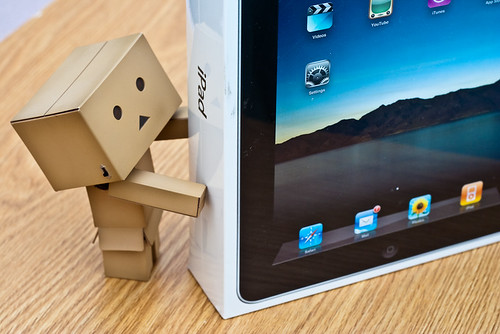
“Finally, I got my iPad” by juehuayin on Flickr

A selection of 10 links for you. Use them wisely.

Worldwide tablet growth expected to slow to 7.2% in 2014 along with first year of iPad decline >> IDC

The worldwide tablet market is expected to see a massive deceleration in 2014 with year-over-year growth slowing to 7.2%, down from 52.5% in 2013, according to a new forecast from International Data Corporation (IDC). At the core of this slowdown is the expectation that 2014 will represent the first full year of decline in Apple iPad shipments. Both the iPad and the overall market slowdown do not come as a surprise as device lifecycles for tablets have continued to lengthen, increasingly resembling those of PCs more than smartphones.

“The tablet market continues to be impacted by a few major trends happening in relevant markets,” said Ryan Reith, Program Director with IDC’s Worldwide Quarterly Mobile Device Trackers. “In the early stages of the tablet market, device lifecycles were expected to resemble those of smartphones, with replacement occurring every 2-3 years. What has played out instead is that many tablet owners are holding onto their devices for more than 3 years and in some instances more than 4 years. We believe the two major drivers for longer than expected tablet lifecycles are legacy software support for older products, especially within iOS, and the increased use of smartphones for a variety of computing tasks.”


The Great British Public Toilet Map >> Gail Knight

The Great British Public Toilet Map launched last Wednesday 19th November on World Toilet Day*

Previous versions of the map have existed since 2011, but this is now the largest publicly accessible toilet database in the UK by some way. It has over 9500 toilets, and I’d be confident of saying that the map will help you to find toilets no matter where you live.

If for some inexplicable reason it doesn’t, you can add, edit and remove toilets until it does! We’ve had over 1000 toilets added this week.

AT LAST. I judged a competition in April 2011 where this was one of the entries – and nearly the winner.


How Sonos and John MacFarlane built the perfect wireless speaker for streaming music >> Businessweek

[Mark] Trammell [a designer formerly at Digg and Twitter] likes to interview customers in their homes, sometimes in the moment when a Sonos speaker first arrives and a family is taking it out of the box and deciding where it should go.

“They’re looking for a Sonos-size hole to fill,” he says. The small Play:1 is good for bathrooms and kitchens; the Play:5 tends to go in living rooms and dens. The accessories allow for attaching other kinds of sound equipment, such as weatherproof outdoor speakers, to the network. The average Sonos household has 2.1 units.

A key moment tends to be when family members discover how to add to and remix playlists together. Mark Whitten, Sonos’s chief product officer, compares the experience to that of the Xbox. “The reason gaming consoles became ascendant wasn’t because of the games,” he says. “It’s because two kids were sitting on a couch, playing together.” Whitten was hired six months ago from Microsoft, where he introduced and oversaw much of the Xbox, including Xbox Live.

On an upward curve. Will someone buy them?


Automation makes us dumb >> WSJ

Nick Carr:

Late last year, a report from a Federal Aviation Administration taskforce on cockpit technology documented a growing link between crashes and an over-reliance on automation. Pilots have become “accustomed to watching things happen, and reacting, instead of being proactive,” the panel warned. The FAA is now urging airlines to get pilots to spend more time flying by hand…

…Ten years ago, information scientists at Utrecht University in the Netherlands had a group of people carry out complicated analytical and planning tasks using either rudimentary software that provided no assistance or sophisticated software that offered a great deal of aid. The researchers found that the people using the simple software developed better strategies, made fewer mistakes and developed a deeper aptitude for the work. The people using the more advanced software, meanwhile, would often “aimlessly click around” when confronted with a tricky problem. The supposedly helpful software actually short-circuited their thinking and learning.


Lee Rigby Woolwich report in full >> The Guardian

Report by parliament’s intelligence and security committee setting out what the intelligence services knew before 2013 Woolwich killing of fusilier by Michael Adebolajo and Michael Adebowale

Worth reading in depth if you’re interested in how security services operate, and what they can (and can’t) get from data. For example: the killers were known, but low priority; a tapping order took a month to be signed; submarine cables are tapped, but even if their discussions had been picked up by them, the fact neither was under “active” observation means key comments would have been missed.


The Lee Rigby murder doesn’t justify an extension of internet snooping powers >> The Guardian

I wrote on the report:

the ISC [Intelligence Services Committee] has a point here. As the report highlights, when internet companies discover accounts associated with child exploitation, they are quick to pass on details to the authorities. But if someone suggests “let’s kill a soldier” in a message, the account is marked for closure. Adebowale had four out of seven internet accounts at one provider automatically closed over suspected terror-related activity; yet none was reviewed by a human. That’s a clear failure to link the action – closing an account – and the reason; communications companies can’t seek public approval for trying to prevent child exploitation, yet wash their hands of terrorism discussions.

The BBC is saying that the Adebowale comment was made on Facebook. Expect more developments in the next few days.


Intel decides to keep tablet subsidies, say sources >> Digitimes

Facing domination from ARM-based processor suppliers such as Qualcomm and MediaTek, Intel’s subsidies including those for marketing, have helped reduce vendors’ costs by around US$20-30 and have attracted vendors such as Asustek Computer, Acer and Lenovo to place orders for Intel’s processors, the sources noted.

Although the strategy helps Intel to maintain a share of around 90% in the notebook market, the strategy has taken a heavy toll out of Intel in the mobile device market as the company has generated about US$7bn of losses from its mobile and communications business during the past two years and will continue to see losses in the fourth quarter, the sources noted.

Internally, Intel has been debating about whether to stay in the tablet market, but the company has decided to push for the market since its absence could impact its PC business and create a hole in its Internet of thing (IoT) lineup, the sources explained.

The logic is sound. And $20-30 could make the difference between profit and loss for some tablet makers.


Pomplamoose 2014 Tour Profits >> Medium

Jack Conte (half of Pomplamoose) does the numbers for the band’s recent self-financed tour:

Add it up, and that’s $135,983 in total income for our tour. And we had $147,802 in expenses.

We lost $11,819…

…The point of publishing all the scary stats is not to dissuade people from being professional musicians. It’s simply an attempt to shine light on a new paradigm for professional artistry.

We’re entering a new era in history: the space between “starving artist” and “rich and famous” is beginning to collapse. YouTube has signed up over a million partners (people who agree to run ads over their videos to make money from their content). The “creative class” is no longer emerging: it’s here, now.

We, the creative class, are finding ways to make a living making music, drawing webcomics, writing articles, coding games, recording podcasts. Most people don’t know our names or faces. We are not on magazine covers at the grocery store. We are not rich, and we are not famous.


Trade in your iPhone >> BlackBerry Trade Up

Trade your iPhone for a BlackBerry Passport and get up to $550!

For a limited time, starting December 1st.

Upgrade to a BlackBerry® Passport and get up to $400 back for your iPhone and an additional $150 from BlackBerry. Subject to Terms and Conditions.

To qualify for this offer, you must have purchased a BlackBerry Passport from select online retailers on or after December 1st, 2014.

BlackBerry essentially gives you $150, and you get a tradein of $90-$400 depending on iPhone model. Doesn’t seem to tie you to owning the Passport for any length of time, so the arbitrage-minded might like to see how easy it would be to round-trip this: cheap secondhand iPhone from drawer -> get BlackBerry Passport -> sell off Passport -> get cheap iPhone -> repeat? The problem might lie in the third step though.

Unlikely there will be a rush of iPhone owners to bankrupt BlackBerry, but also gives an insight into roughly how much it values each user: must be more than $150 over typical contract length.


Whistling Google: PLEASE! Brussels can only hurt Europe, not us >> The Register

Andrew Orlowski, on the European Parliament’s inconsequential (yet consequential) motion to make Google split services from search:

Google today wields enormous power over other industries, in a way Microsoft never could, even at the zenith of its influence. Newspapers didn’t close, and musicians didn’t go hungry, because Windows was late. No Active X control ever destroyed an economic sector. Yet you can plausibly argue that the consequences for European industry and its citizens freedoms are at least indirectly attributable to Google’s strategic use (and abuse) of other people’s property and personal effects…

…DCMA provisions were designed to protect ISPs and other service providers in the mid-1990s, when the public internet was in its infancy.

Today, they are favourable to huge internet aggregators, and load the deck against individuals and tiny companies seeking to protect their work. Google required the music company to promise not to sue an unlicensed uploader, thereby protecting Google’s supply chain. “You can sign and get a fraction of a penny,” Google was saying, “or you can refuse to sign and get nothing. It’s up to you – but either way, we’ll use your work and make money off it.”

As he points out, though, the European Commission is hopelessly screwed in both its aims and implementation of anything digital.


Start up: Uber’s vanishing blog, Samsung’s shrinking S5 sales, Google’s secret car, and more


What the Google self-driving car “sees”. Photo by Matt Chan on Flickr.

A selection of 10 links for you. Don’t worry, be happy.

The unknown startup that built Google’s first self-driving car >> IEEE Spectrum

Mark Harris:

one of Google’s most strategic acquisitions has mysteriously been actively blocked from public view. An investigation by IEEE Spectrum has uncovered the surprising fact that Google’s innovative self-driving car and the revolutionary Street View camera technology that preceded it were largely built by 510 Systems, a tiny start-up in Berkeley, California.

If you’ve never heard of 510 Systems, that’s exactly the way Google wants it. The purchase of 510 Systems and its sister company, Anthony’s Robots, in the fall of 2011 was never publicly announced. In fact, Google went so far as to insist that some 510 employees sign agreements not to discuss that the acquisition had even occurred. Google’s official history of its self-driving car project does not mention the firm at all. It emphasizes the leadership of Sebastian Thrun, the German computer scientist whose Stanford team won the autonomous-driving Grand Challenge in 2005, sponsored by the Defense Advanced Research Projects Agency (DARPA).

Why has Google worked so hard to keep this one acquisition a secret?

Harris has been doing fantastic digging into the truth about this Google project.


Kickstarter ‘fraudster’ finds second home on Indiegogo, as per usual >> Engadget

What do you do when you’ve been outed as a fraud and your Kickstarter was pulled? You go to Indiegogo, of course. Anonabox was a $45 device that promised to route your home’s internet connection through (privacy-focused network) Tor without any fiddling in the same way that PORTAL works. In the current climate, it was no surprise to see the project earn $600,000 in pledges in just the first few days. Slowly, however, people began to ask questions about creator August Germar after the hardware was found to be an off-the-shelf unit made by a Chinese OEM and the software turned out to be about as secure as a slice of Emmental.

Now the project has been re-born on Indiegogo, with claims that the mistakes of the previous project (and subsequent outcry) has helped the device get better. That’d be fine, and we’d be applauding Germar’s efforts, except for the fact that his claims of involvement with the Tor community have already been debunked. When ITSecurityGuru asked former Tor lead Runa Sandvik, she said that Germar “is making false claims, again.”

Some serious questions to be asked about Indiegogo here.


iPhone eye test spots vision problems cheaply >> New Scientist

Smart Vision Labs, a start-up in New York City, wants to make it easier to diagnose vision problems in developing countries with an iPhone camera add-on.

The World Health Organization estimates that 246 million people have poor vision. Of these, about 90% live in low-income areas without good access to healthcare or expensive diagnostic machines.

To solve this problem Smart Vision Labs has combined two tools often used for eye tests into a single inexpensive and portable device. The first tool, an autorefractor, calculates whether someone is short-sighted or long-sighted, and to what extent, by measuring the size and shape of their eye. The second, an aberrometer, looks for distortions in how light reflects off the eye, which could indicate rarer problems such as double vision.

Android phones would be a lot cheaper to do it with.


The real reason Excite turned down buying Google for $750,000 in 1999 >> Internet History Podcast

George Bell was chief executive of Excite, which was one of the biggest web properties. A bake-off didn’t find much difference between Excite’s search at the time, and Google’s. But he might have done the deal. However:

Ultimately, Larry said, “Look, I like the engineers at Excite. I really like the company. I get that you don’t see a lot of difference.” And, I think we struck a price. I believe that the price was $750,000 in cash, and something like 1% of Excite. The economics of that were really ok to us. The thing that Larry insisted on that we all do recall, is that Larry said, “If we come to work for Excite, you need to rip out all the Excite technology and replace it with Google’s search.” And, ultimately, that’s, in my recollection, where the deal fell apart. Because, we had hundreds of engineers at that point, and culturally, we really were driven by technology. And I didn’t think we could survive… or the differentiation in search results were clearly not dramatic enough to justify the cultural risk that Larry would insist on. So, ultimately, we passed.


Samsung considering shakeup in management >> WSJ

There also have been missteps at Samsung. The mobile division, under Mr. Shin, didn’t seriously question bullish projections for orders of its flagship smartphone, the Galaxy S5, which went on sale globally in April, according to a person familiar with the matter.

Samsung produced about 20% more devices than it did of the Galaxy S5’s predecessor, basing the numbers on a survey of its carrier partners around the world, who were asked to predict demand but who weren’t on the hook for any unsold devices, according to the person. That led to merchandise piling up in warehouses, forcing Samsung to increase marketing expenditures to unload the devices.

In all, Samsung sold about 40% fewer Galaxy S5 smartphones than expected, with about 12m units sold to consumers in the first three months since April compared with about 16m units for the preceding flagship phone, the Galaxy S4, according to people familiar with the matter. Only in one major market did Samsung sell more Galaxy S5 smartphones than it did the S4: the US, Samsung’s biggest market, one of these people said.

Making the point that Samsung’s real customers aren’t end-users, but carriers. S5 sales in China were down by about 50% compared to the S4 in its first six months.


A rare peek into the massive scale of Amazon Web Services >> Enterprise Tech

Timothy Prickett Morgan:

Like many hyperscale datacenter operators, Amazon started out buying servers from the big tier one server makers, and eventually became the top buyer of machines from Rackable Systems (now part of SGI). But over time, like Google, Facebook, Baidu, and its peers, the company decided to engineer its own systems to tune them precisely for its own workloads and, importantly, to mesh hand-in-glove with its datacenters and their power and cooling systems. The datacenters have evolved over time, and the systems have along with them in lockstep.

In the past, Amazon has wanted to hint at the scale of its infrastructure without being terribly specific, and so they came up with this metric. Every day, AWS installs enough server infrastructure to host the entire Amazon e-tailing business from back in 2004, when Amazon the retailer was one-tenth its current size at $7bn in annual revenue.

“What has changed in the last year,” Hamilton asked rhetorically, and then quipped: “We have done it 365 more times.”

That is another way of saying that in the past year AWS has added enough capacity to support a $2.55 trillion online retailing operation, should one ever be allowed to exist.


Apple’s forecast to sell 71.5M iPhones units in Q4, iPhone 6 sales more than double iPhone 6 Plus

According to a fresh report from prominent KGI analyst Ming-Chi Kuo obtained by AppleInsider, quarter-over-quarter Apple iPhone shipments will swell 82% in the fourth quarter of 2014.

Leading the charge is iPhone 6, predicted to account for just shy of 60 percent of all sales for the quarter, or 41.65m units. Coming in a distant second is the iPhone 6 Plus, which has been the more talked about next-generation variation due in large part to its scarcity at retail outlets. Kuo says the 6 Plus supply shortage is not only an indicator of high demand, but also confirmation that suppliers are having production issues. He believes final fourth quarter sales are largely dependent on supply chain success with 6 Plus yields.

Given Apple’s current situation, Kuo foresees a major slip in iPhone sales for the first quarter of 2015, mostly due to poor off-season demand. The analyst pegs shipments at a combined 49.4m units, including 21.6m iPhone 6 handsets and 10.2m iPhone 6 Plus versions.

71.5m units in CQ4 would be a 40% increase, year-on-year (and would probably challenge Samung for shipments). 49.4m in CQ1 would be just a 13% increase. One suspect it might be more evenly split than that.


Gartner says more than a third of US adult smartphone users use their smartphones for video calling >> Gartner

Video calling is growing into a key mainstream activity on smartphones, with high adoption rates in some markets, according to a survey by Gartner, Inc. The survey, which was conducted in June 2014, surveyed more than 6,500 U.S. and German consumers about their technology usage and attitudes in order to gain a better picture of how devices are used for work and leisure. 

More than 50 million adult smartphone users in the U.S. (about 35% of the total surveyed) use their smartphones for video calling. This number is likely to exceed 60 million people when those ages 17 and younger are included. In Germany, more than eight million adult smartphone users (about 20%) use their devices for video calling, a figure more likely to exceed 10 million when those ages 17 and younger are included. Gartner defines video calling as person-to-person communication using a video application such as Apple’s FaceTime, Skype or Google Hangouts…

…The survey results showed adoption is markedly skewed toward the younger demographic, with video calling in the 18 to 24 age group reaching 53.5% in the US and 30% in Germany. Video calling uptake is slanted toward early adopters but shows encouraging signs of expansion across all consumer segments.

FaceTime, Skype, Hangouts – Apple, Microsoft and Google, pitted against each other once again. Except they use it for slightly different purposes: FaceTime ties users to iOS; Skype makes money and has corporate tie-in; Hangouts.. well, that’s a bit less clear. It’s always felt like a wannabe Skype.


Have Microsoft’s Surface Pro vs. MacBook Air TV ads worked? >> Tech.pinions – Perspective, Insight, Analysis

Tim Bajarin:

I recently had a meeting with top officials in one of the major PC companies and asked them about their position on 2-in-1’s and convertibles. They told me they believe they need to have one or two models of these designs in their overall line up but the majority of what they will create and bring to market will still be clamshell based. They pointed out they are not seeing any real demand for these in IT yet and only slight interest by consumers. One reason the interest in something like Surface Pro is low is because of its price. They are two to three times the price of a cheap laptop.

Unless the Surface Pro is targeted at field service or as a replacement for those who use clipboards, I believe IT interest will continue to be soft at least for the 2 in 1 detachable. Lenovo tells me they have actually done well with their Yoga convertibles, especially in enterprise accounts, however it is still a minority when it comes to the total number of clamshell laptops they ship each year.


September 2011: Uberdata: How prostitution and alcohol make Uber better >> Uber Blog

What up humans?! Bradley Voytek here again. Man do we have some crazy #uberdata for you today.

Today is Uber: Freakonomics edition.

In this post I’ll show how where crimes occur — specifically prostitution, alcohol, theft, and burglary — improves Uber’s demand prediction models.

And then over three years later, I’ll delete it! Or someone will, realising that it’s a gigantic stain on our credentials.

First “Rides of glory” (about people avoiding the “walk of shame” by getting a cab some hours after being dropped off at a particular destination) and now now this.

Uber is clearly trying to pretend that its ability to peer at data relating to specific users can somehow be forgotten.

Unfortunately, the Internet Archive begs to differ. Speaking of which, have you donated to its upkeep?


Start up: Apple and Samsung split $300bn, Shazam v music biz, Lookout: Android malware!, sapphire tales and more


Defective sapphire boules from GTAT’s furnaces – from pictures sent by Apple to GTAT creditors. Source: Wall Street Journal.

A selection of 10 links for you. Dogs must be carried on escalator.

The $300bn smartphone industry >> Counterpoint Technology

Neil Shah:

Apple alone will contribute to roughly a third of the smartphone industry revenues in 2014, As Apple will cross the $100bn mark in iPhone hardware revenues this year – the first time in history for any mobile phone manufacturer.

To put into some more context the scale and value Apple or Samsung brings to the industry:
In Q3 2014, the Apple iPhone 5S alone generated more revenues than all the mobile phone hardware revenues generated by LG + Xiaomi + Sony + Huawei combined.

Launched in Sep 2014, within just two weeks, the iPhone 6 series (6 & 6 Plus) together generated more than three times the revenues generated by Xiaomi’s total smartphone revenues in Q3 2014. [Xiaomi was the third biggest smartphone company by shipments in Q3 2014.]

Meanwhile, the Samsung Galaxy S5 alone generated more revenues than all the mobile phone hardware revenues generated by Nokia+Lenovo+Motorola+HTC combined.


The Shazam effect >> The Atlantic
Derek Thompson looks at whether the advent of products such as Shazam – which can map exactly where people are getting interested in a song, and how it spreads – are “bad for music”. (No.) But we, humans, are:

Now that the Billboard rankings are a more accurate reflection of what people buy and play, songs stay on the charts much longer. The 10 songs that have spent the most time on the Hot 100 were all released after 1991, when Billboard started using point-of-sale data—and seven were released after the Hot 100 began including digital sales, in 2005. “It turns out that we just want to listen to the same songs over and over again,” [Silvio] Pietroluongo [Billboard’s director of charts] told me.

Because the most-popular songs now stay on the charts for months, the relative value of a hit has exploded. The top 1% of bands and solo artists now earn 77% of all revenue from recorded music, media researchers report. And even though the amount of digital music sold has surged, the 10 best-selling tracks command 82% more of the market than they did a decade ago. The advent of do-it-yourself artists in the digital age may have grown music’s long tail, but its fat head keeps getting fatter.


Samsung, white-box players looking to take over 10-15 million feature phone demand from Microsoft Mobile >> Digitimes Research

With Microsoft Mobile’s announcement in July 2014 it will terminate its feature phone business within a year and a half, Samsung Electronics and China’s white-box handset players have been aggressively competing for the market since the third quarter, and MediaTek and Spreadtrum are both expected to benefit from Microsoft’s decision.

Digitimes Research estimates that Microsoft Mobile’s monthly feature phone shipments in 2014 are around 10m-15m units.

Visiting China’s white-box handset players and related component makers, Digitimes Research discovered that the white-box industry is shipping 35m-40m feature phones each month in the second half of 2014, and with Microsoft gradually reducing its feature phone scale, they are eagerly trying to take over demand left by the software giant.

Feature phone market is shrinking fast, but there’s a little margin left at the bottom.


Google must be crazy? A web balloon crashes in south Africa >> Digits – WSJ

According to a report Thursday in the Afrikaans-language Beeld newspaper, Urbanus Botha, who farms in the arid landscape of the Karoo south of Bloemfontein and Lesotho in the center of South Africa, came across the crashed balloon and initially thought it a weather balloon from the nearby weather station at De Aar. He called up the station’s office but nobody picked up, so he packed it into his pickup truck, thinking that its plastic could come in handy as he planned to repaint his shed.

“The huge piece of plastic filled my whole van,” Botha said.

Botha didn’t know what to make of the balloon, especially since it contained several electronic components. His 20-year-old daughter, Sarita, was just as intrigued, and took photos of the balloon on her smartphone, sending them to her brothers John, 30, and Benny, 27. The brothers identified the words “Made in the USA” and “Google X” on the pictures, and so Googled “Google X” and balloons…

…Project Loon should have a “semipermanent” ring of balloons floating across the Southern Hemisphere in the next year or so, Google says.

Similar to June 2014, when another Google Loon balloon crashed into the sea off New Zealand.


Breached webcam and baby monitor site flagged by watchdogs >> BBC News

The public is being warned about a website containing thousands of live feeds to baby monitors, stand-alone webcams and CCTV systems.

Data watchdogs across the world have drawn attention to the Russian-based site, which broadcasts footage from systems using either default passwords or no log-in codes at all.

The site lists streams from more than 250 countries and other territories.

It currently provides 500 feeds from the UK alone…

…China-based Foscam was the most commonly listed brand, followed by Linksys and then Panasonic.

This “warning” is shutting the stable door after the horse has moved to the next town, got married and brought up a family. The terrible security on the systems, though, is the makers’ fault.


Malicious software said to spread on Android phones >> NYTimes.com

For years security researchers have warned that it was only a matter of time before nasty digital scourges like malicious software and spam would hit smartphones.

Now they say it is has finally happened.

A particularly nasty mobile malware campaign targeting Android users has hit between 4m and 4.5m Americans since January of 2013, according to an estimate by Lookout, a San Francisco mobile security company that has been tracking the malware for about two years.

Lookout first encountered the mobile malware, called NotCompatible, two years ago and has since seen increasingly sophisticated versions. Lookout said it believes, based on attempted infections of its user base of 50m, that the total number of people who have encountered the malware in the United States exceeds 4m.

Yikes. Here’s Lookout’s blogpost, and fuller investigation, which notes that “The operators behind NotCompatible.C have built up their population of infected devices on the back of massive spam campaigns and a lack of mobile threat protection on device populations.” NotCompatible disguises itself as a system update, and uses very sophisticated detection prevention and C&C work. (Thanks @Steven Moore for the link.)


App Annie reports global app store growth and opens doors to the underdog >> Infinite Monkeys

The joint App Annie/MEF report portrays a global app economy dominated by two giants of the industry: Google Play had downloads this year that were 60% higher than the iOS App Store, but the App Store managed to maintain a similar 60% lead in overall revenue. With emerging markets looking to get a piece of both companies’ profits, the drive for market share has become an uphill battle.

As Google Android (as opposed to AOSP Android) goes into more emerging economies, this difference – more downloads, but less per-download revenue versus iOS – is likely to wider. Benedict Evans calculated in the summer that on average an iOS user generated 4x the revenue of an Android user; projects such as Android One will make that tend towards 5x and 6x, even as the Android user base expands.

That’s not a bad thing; it’s just an outcome of the numbers.


Machine learning showdown: Apache Mahout vs Weka >> Algorithmia Blog

We here at Algorithmia are firm believers that no one tool can do it all – that’s why we are working hard to put the world’s algorithmic knowledge within everyone’s reach. Needless to say, that’s a work that will be in progress for awhile, but we’re well on the way to getting many of the most popular algorithms out there. Machine learning is one of our highest priorities, so we recently made available two of the most popular machine learning packages: Weka and Mahout.

Test machine learning against hand-drawn numbers (your hand does the drawing). The results are quite variable.


Inside Apple’s broken sapphire factory >> WSJ
Great work by Daisuke Wakabayashi:

Manufacturing wasn’t the only problem. In August, one of the former workers said, GT discovered that 500 sapphire bricks were missing. A few hours later, workers learned that a manager had sent the bricks to recycling instead of shipping. Had they not been retrieved, the misfire would have cost GT hundreds of thousands of dollars.

By that point, it was apparent that sapphire wouldn’t be used for the screens on the new iPhones, which went on sale Sept. 19. Yet Apple still was eager to get as much sapphire as possible, the people familiar with its operations said. Apple’s letter said it only received 10% of the sapphire that GT originally promised.

Also notable:

Apple consumes one-fourth of the world’s supply of sapphire to cover the iPhone’s camera lens and fingerprint reader. Early last year, the company began looking for a much larger supply, to cover the iPhone’s screen.


Business lessons from Apple suppliers >> WSJ

“Apple always asks the suppliers to expand their manufacturing facility to meet the rush demand for its new product, but we have to make our own judgment as the big orders only last for a few months,” said a manager at an Apple supplier. “For example, Apple might want us to increase 100 production lines, but we would only add 50 to 60 gradually.”

Taiwanese touch screen maker Wintek is one example of a company that over-expanded on Apple hopes. Long a secondary touch screen supplier for Apple’s iPhones and iPads, the company expanded its facilities on the prospect of growth, but ended up losing new orders when Apple shifted to new technology to make screens thinner, people familiar with the matter said. The company has languished for the past few years in operating losses.

Some suppliers said they refused similar arrangements as the one GT took, as they did not want to give up their autonomy.

“I know some suppliers took Apple’s offer to reduce investment in machinery but the equipment can only be used to manufacture Apple’s product,” an executive at a different Apple supplier said. “This is a risky arrangement as it limits the supplier’s ability to adjust its manufacturing resources when Apple’s orders decrease.”

The Apple-GTAT episode should probably be taught in business schools.


Start here: Firefox dumps Google, 50m Lumias?, Galaxy Note v iPhone 6+ screens, Uber accounting, and more


Search no further for Yahoo if you use Firefox. Well, maybe.

A selection of 11 links for you. Ventilate room thoroughly.

New search strategy for Firefox: promoting choice & innovation >> The Mozilla Blog

Today we are announcing a change to our strategy for Firefox search partnerships.  We are ending our practice of having a single global default search provider. We are adopting a more local and flexible approach to increase choice and innovation on the Web, with new and expanded search partnerships by country:

• United States

Under a new five-year strategic partnership announced today, Yahoo Search will become the default search experience for Firefox in the U.S.
Starting in December, Firefox users will be introduced to a new enhanced Yahoo Search experience that features a clean, modern interface that brings the best of the Web front and center.

Wow. A few days ago I wrote “I’m certain that no matter what price Mozilla demands (it presently gets about 90% of its revenue from Google kickbacks on searches), Google will pay it. Why? Because the cost of losing 20% of the desktop to Microsoft search at once is far greater than the odd millions it shovels Mozilla’s way.” So, that’s me wrong.

It’s not clear yet whether Google dumped Firefox, or Yahoo outbid Google; the latter seems unlikely, unless Google substantially cut its offer from the previous $300m three-year deal. Last time, Microsoft pushed up the bidding up to try to get Bing there; Google outbid it. No doubt the details will emerge in the coming days, or hours. Also unclear: what the default search will be in European countries. (Russia: Yandex; China: Baidu.) Quite a coup for Marissa Mayer, though.

Firefox does have a problem, though: it’s nowhere in mobile, and that’s increasingly where the search volume is. Update: Mozilla tells me that Google will remain the default for now in Europe.

Reaction on Twitter is that people will just switch the default back to Google. There’s sure to be some sort of search volume target in Yahoo’s deal; if too few searches come to Yahoo, Mozilla will lose out financially.


Passenger stuck with $1,171 Wi-Fi bill on Singapore Airlines flight >> WSJ Digits blog

Jeremy Gutsche, chief executive of Toronto-based innovation consultancy Trend Hunter, says he unwittingly accrued the charges on a flight last week from London to Singapore.

Gutsche says he signed up for a 30 megabyte Internet plan, which cost $28.99, and was aware that he would be responsible for data beyond that limit. But he was stunned when he learned upon landing that viewing some 155 pages — mostly checking email and uploading a PowerPoint document — had resulted in $1,142 of overage fees, he said in a blog post and on Twitter.

PowerPoint considered… expensive. (It was about 4MB, Gutsche says.)


Display color accuracy shootout >> Displaymate

Ray Soniera:

Some manufacturers and models provide better color accuracy than others. We have taken the six best mobile displays from our Display Technology Shoot-Out article series over the last year and compared their color accuracies all together side-by-side with detailed and very revealing measurement results. Since we only test the best performing displays to begin with, they were already known to have fairly good color accuracy, so we’ll learn which are the Best of the Best, and the reasons why…
 
But why is color accuracy important? Poor to mediocre color accuracy has been the rule since the dawn of color TVs in the 1950s, and people are also accustomed to seeing mediocre color prints from their film and now digital cameras. But the technology is already available that makes it possible for today’s consumer displays to be as color accurate as the best studio production monitors that cost $50,000 ten years ago. And once you get used to beautiful accurate colors on a display you won’t want to go back…

TL:DR: Samsung’s Galaxy Note 4 comes out top, Surface Pro 3 next, iPhone 6 Plus and iPad Air 2 are good on skin tones but score badly on others. Not clear who makes Apple’s screens.


Samsung preps new mobile video service >> The Information

Jessica Lessin:

Samsung Electronics is rebooting its mobile video strategy in a test of whether short-form video content can drive mobile revenues just as games have.

The South Korean company has earmarked several tens of millions of dollars to invest in short-form video for a new mobile product, according to people Samsung talked to about the effort. Internally, the product had gone by the code name Volt but will launch under another one.

The initiative is being overseen by John Pleasants, a gaming veteran who managed Disney’s mobile services and gaming business before joining Samsung as executive vice president of media solutions in June. While the initial business model for the service, which could also include music, isn’t clear, over time the company is looking to create media services for which it could charge a few dollars a month, said one of the people briefed.

Possibly might work in South Korea; can’t see it getting any traction in the US or Europe. Nokia used to think it could charge people a few dollars a month for mapping services, which is why it bought Navteq for $8.1bn in 2007, two years after Google Maps launched and a year before Android did. Nice timing, Nokia. Similarly, “short-form video” is already plentiful – and free.


What Uber drivers really make (according to their pay stubs) >> Buzzfeed

Johana Bhuiyan:

So we calculated Khalid’s new average of net income per hour over the five weeks I had access to by distributing his two largest expenses of being an Uber driver (rent and insurance) of approximately $641.67 over hours worked per week and subtracted that hourly expense from the net income per hour based on his pay stubs. His original average hourly net income without expenses was $32.90. Accounting for two weeks where he was technically in debt and could not cover both his rent AND insurance because he did not make enough, Khalid’s new average including expenses was a net income of $10.36.
Even drivers who own their vehicles and don’t have to worry about rental payments still come up against concerns.

Telling that NY general manager Josh Mohrer, who offered reporters the chance to verify his claims that Uber drivers make an average of $25 per hour (before expenses) is being investigated by Uber for allegedly tracking Bhuiyan.

I deleted the Uber app months ago over its tactics against Lyft. It seems that every day brings another reason to make its icon do the bee dance on your phone screen before you zap it.


GT Advanced creditors chafe at settlement deal with Apple >> Re/code

Holders of GT Advanced’s notes, including Aristeia Capital and an affiliate of Wolverine Asset Management, said in court papers that the “extraordinary allegations against Apple … call into question the adequacy of the settlement agreement.”

The noteholders cited allegations that Apple breached its contract and acted unfairly as GT Advanced’s lender. The noteholders also said Apple’s claims on GT Advanced’s equipment may be unsecured. This would put Apple among the last creditors to be paid, not the first as Apple’s deal anticipates.

Apple has denied GT Advanced’s allegations. In court filings, Apple has called the accusations “scandalous and defamatory” and “intended to vilify Apple and portray Apple as a coercive bully.”

Likely to run and run. (Reminder: I wrote about the travails at GTAT last week.)


Apple plans to push Beats to every iPhone >> FT.com

Matthew Garrahan and Tim Bradshaw:

Apple’s revamped Beats service will operate on a paid subscription model. The service, which is likely to be rebranded under the iTunes label, will form part of a three-pronged music strategy for Apple, alongside downloads and iTunes Radio, which it launched in 2013. The trio will challenge not only Spotify, whose paid streaming service has more than 10m subscribers, but also Pandora and Soundcloud.

Apple is preparing to put its new Watch on sale in early 2015, to which the new music push could be linked.

200m iTunes accounts, and many more iPhones than that in use. Obstacles: song/artist licensing (Beats and iTunes Radio are both only available in the US); price; getting those already on subscription services to switch.

Techcrunch’s Josh Constine originally reported this in late October, but the FT adds timing (March) and the app install.


More than 50 million Lumias activated, 320,000 apps in store and more interesting Windows Phone stats from Microsoft >> WM Power User

[Microsoft] also revealed [at a blogger conference] there were 320,000 apps in the store, up from 300,000 in August 2014.

Another very interesting item was that 50m Lumias have been activated to date [worldwide].  While this does not tell us how many Windows Phones are still in use, with Lumias being more than 90% of Windows Phones in use according to AdDuplex, it does set some kind of upper limit.

According to Nokia’s/Microsoft Mobile’s financials, 67m Lumias have been shipped since 3Q 2011. So this doesn’t quite square: where are the other 17m?

Meanwhile if AdDuplex’s 90% is right, then that’s an upper limit of 55m Windows Phone devices active – about as many as active BlackBerry subscribers (not BBM users), and a long way from the 350m or so iPhones (500m-odd iOS devices) and billion-plus Google Android devices. In fact, AOSP (non-Google Android, used in China) is about as big as iOS.

That makes Windows Phone the fourth ecosystem. Still, one of the slides in the presentation says it’s outsold the iPhone in 24 countries, so that’s OK.


Report: Android One facing stiff competition and low sales in India >> Android Authority

Android One was announced at Google I/O earlier this year, and with it, a promise that Mountain View would be handling all of the updates for these low-priced devices aimed at developing countries. Though some might not be aware, not one but three One devices launched in India mid-September, but the problem is not one of them has done well. Those trying to find out why need only look at Samsung’s plight: stiff competition.

Consumer sales is a game of numbers, and for the last two weeks of September, a total of 230,000 units running Android One were imported into India. But it gets worse: only 200,000 devices were imported for the entire month of October, according to data shared with The Economic Times by local marketing firm Cybex Exim Solutions. To put things into even better perspective, “for the month of October, roughly 8m smartphones were shipped into [India], of which Android One would be just about 2.5%,” a source told The Economic Times. Compare this with the extremely rosy expectations that were originally had.

The original extremely rosy expectations came from chipmaker MediaTek which expected 2m sales by the end of the year . Could be tough to meet. Small onboard storage, online-only sales and supply problems are listed as parts of the problem.


Helping users find mobile-friendly pages >> Official Google Webmaster Central Blog

Starting today, to make it easier for people to find the information that they’re looking for, we’re adding a “mobile-friendly” label to our mobile search results…

…We see these labels as a first step in helping mobile users to have a better mobile web experience. We are also experimenting with using the mobile-friendly criteria as a ranking signal.

“Ranking signal” means “we might demote you if you’re bad on mobile”. Questions: (1) how large or small does a screen have to be to count as “mobile”? Or is it dependent on access method, eg 3G = mobile, Wi-Fi = fixed? (2) how strong will the signal of being non-mobile be?

Also: Google first said it would do this “in the near future” 18 months ago. Clearly it wasn’t so near. What made it harder?


Rides of Glory >> Uber Blog

Cab service Uber thinks it has erased the “walk of shame” (ask your parents, kids) and replaced it with the “ride of glory”. Morning glory? Anyhow:

One of the neat things we can do with our data is discover rider patterns: are there weekend riders that only use Uber post-party? What about the workday commuters who use us every morning? It was while playing around with this idea of (blind!) rider segmentation that we came up with the Ride of Glory (RoG). A RoGer is anyone who took a ride between 10pm and 4am on a Friday or Saturday night, and then took a second ride from within 1/10th of a mile of the previous nights’ drop-off point 4-6 hours later (enough for a quick night’s sleep). (This time window may not be the best, but small changes don’t change the overall pattern.)

RoGer. Haha. Though it might just be people getting together for an all-night coding session starting their principled cab-offering rival, eh? (Anyhow, Boston comes out top, well ahead of New York, though this probably takes no account of the number of users, number of cabs, or any other relevant piece of statistical information.)


Start up: Roombas v dogs, native v web redux, Intel’s mobile loss, Samsung slims, and more


“Hatin’ on Roomba” by obloquy on Flickr

A selection of 8 links for you. Use them wisely. I’m @charlesarthur on Twitter. Send links, comments, etc there, or drop them at the end of the article.

Intel to combine PC and mobile chip divisions to reflect market shifts >> Computerworld

The Mobile and Communications Group, as it’s known, will be broken up. The teams that develop mobile processors will join the new client group, while the remainder, which builds modems, will be part of a new wireless R&D group.

Herman Eul, who leads the mobile group today, will oversee the move to the new structure until at least the end of the first quarter, with a new role for him to be announced after that, Mulloy said.

The reorganization comes as Intel battles to improve its position in the market for smartphones and tablets, which is dominated by chips based on designs from Arm Holdings, a UK competitor.

The Mobile and Communications Group reported an operating loss of more than US$1bn in the third quarter, in part because it’s been making payments to tablet makers to encourage them to use its chips. As a result of those and other efforts, Intel has said it aims to get its processors into 40m new tablets this year.

Ah. A good way to bury bad losses.


Samsung plans to cut smartphone models by up to 30% in 2015 >> WSJ

Here we are in November 2014:

Samsung Electronics said it would reduce the number of smartphone models it offers next year, part of a move to cut costs to combat declining profit.

The South Korean technology major said it would cut the number of models by about 25% to 30%, Robert Yi, head of investor relations, said during a presentation in New York. His remarks were confirmed by a company spokesman Tuesday.

Samsung didn’t disclose the exact number of models that would be affected by the reduction.

Yeah, so cost-cutting. But now – with thanks to Stefan Constantinelet’s revisit Nokia in April 2011:

An unnamed Nokia Executive, in an interview with the Hindustan Times, has said: “We will be launching 40 models in 2011 of which at least 30% would be smartphones.” This news isn’t exactly making us bust out the champagne because that’s right around how many models Nokia has been releasing every year for the past five years. The Finnish firm has consistently told us that they’re going to take a “more wood behind fewer arrows” approach, meaning that they’ll come out with less new models, but said models would be further refined, but we’ve yet to actually see that materialize.

“Fewer models” seems easy to say, but when your business has been about “lots of models” is hard to do.


Google’s secret NSA alliance: The terrifying deals between Silicon Valley and the security state >> Salon.com

Remember when Google’s servers were broken into by Chinese hackers at the end of 2009? Shane Harris points out that something more happened afterwards:

On the day that Google’s lawyer [David Drummond] wrote the blog post [condemning China], the NSA’s general counsel began drafting a “cooperative research and development agreement,” a legal pact that was originally devised under a 1980 law to speed up the commercial development of new technologies that are of mutual interest to companies and the government. The agreement’s purpose is to build something — a device or a technique, for instance. The participating company isn’t paid, but it can rely on the government to front the research and development costs, and it can use government personnel and facilities for the research. Each side gets to keep the products of the collaboration private until they choose to disclose them. In the end, the company has the exclusive patent rights to build whatever was designed, and the government can use any information that was generated during the collaboration.

It’s not clear what the NSA and Google built after the China hack. But a spokeswoman at the agency gave hints at the time the agreement was written. “As a general matter, as part of its information-assurance mission, NSA works with a broad range of commercial partners and research associates to ensure the availability of secure tailored solutions for Department of Defense and national security systems customers,” she said. It was the phrase “tailored solutions” that was so intriguing. That implied something custom built for the agency, so that it could perform its intelligence-gathering mission.

According to officials who were privy to the details of Google’s arrangements with the NSA, the company agreed to provide information about traffic on its networks in exchange for intelligence from the NSA about what it knew of foreign hackers. It was a quid pro quo, information for information.

Must-read. Including this:

Google’s Sergey Brin is just one of hundreds of CEOs who have been brought into the NSA’s circle of secrecy. Starting in 2008, the agency began offering executives temporary security clearances, some good for only one day, so they could sit in on classified threat briefings.

Starts slow. Goes deep, deep.


4K lens development limited by physics >> TVTechnology

Craig Johnston:

Large venue live sports production promises to be a huge market for 4K production equipment in what could be the very near future. And while there are 4K cameras aplenty, switchers that can be upgraded and a host of other 4K equipment ready to go, there’s no long focal-range, highly telephoto 4K lenses to mate with the Super 35 single-sensor cameras.
 
The motto of high quality lens makers might as well be: “Physics will fight you.”

“When we talk about a 100×1 zoom, and the 35mm sensor, 4K, we’re talking about something we don’t think is very practical today,” said Larry Thorpe, national marketing executive at Canon USA Inc. “Once you jump from 2/3-inch imagers up to something like a Super 35, you set a baseline in element sizes, so the lens by definition is going to be larger.”

Long story short, it’s going to be expensive, or perhaps just not feasible.


Samsung strikes chip deal with Apple >> Korea Times

“Apple has designated Samsung as the primary supplier of its next A-series chips powering iOS devices from 2016 as the alliance with GlobalFoundries (GF) enabled Samsung to cut off capacity risk,” a source familiar with the deal said.

The value of the deal is said to be worth “billions of dollars,” according to the sources.

Production of the APs will start early next year at Samsung’s local factory in Giheung, Gyeonggi Province, and the volume will grow as Samsung plans to use its facilities in Austin, Texas and the GF-owned factory in New York for increased output, another source said.

That will be about 80% of the application processors for iOS devices. Good for Samsung, though doesn’t really get its flywheel (make chips and screens for more profitable devices such as its own smartphones) turning.


Nokia partners with Foxconn to take on Apple with tablet device >> FT.com

Daniel Thomas:

Ramzi Haidamus, Nokia’s technology chief, said the N1 tablet would be as good as Apple’s iPad mini but cost less. He added that it was just the first consumer product that would be designed and labelled as Nokia devices.

“It’s the first of many coming – more SKUs [items for sale], more sizes, more features,” he told the Financial Times in his first interview since becoming head of Nokia’s technology division three months ago. “We will go beyond tablets for sure.”

Nokia is prohibited from making smartphones until 2016 under the terms of the sale of its handset business to Microsoft. But Mr Haidamus said that “we will be looking at going into the cell phone licensing business post-Microsoft rights”.

The N1 is the first Nokia-branded consumer device brought to market following the sale of the Lumia and Asha businesses to Microsoft. Nokia did not manufacture tablets. 
The company said it would be the first tablet operated by a “predictive engine” that gradually learnt a user’s habits and created customised shortcuts to commonly used apps, contacts and web content.

The tablet has a 7.9 inch screen, a 2.4Ghz 64-bit quad-core processor, 2GB of memory and 32GB of storage.

Foxconn also makes lots of Apple devices, and is partnering with BlackBerry too. Big ambitions. Can’t see Nokia’s tablet making much impression on the Chinese market though.


Native apps are part of the web >> Daring Fireball

John Gruber wrote the complete rejoinder (with some pointed notes about paywalls and free sites) to Christopher Mims’s “web is dying” piece from the previous roundup:

Users love apps, developers love apps — the only people who don’t love apps are pundits who don’t understand that apps aren’t really in opposition to the open Internet. They’re just superior clients to open Internet services. Instagram didn’t even have a web interface for years, but native app clients for iOS and Android didn’t lock Instagram into anything. Their back-end is just as open as it would have been if they had only had a web browser client interface. They just wouldn’t have gotten popular.

I spoke about this four years ago at O’Reilly’s Web 2.0 conference, in a talk titled “Apple and the Open Web: A Love Story”. The gist of it being that native iOS apps (and native apps for Android, Mac OS X, Windows, and everything else) aren’t in opposition to the “web”. They live on top of the web. A new layer. They are alternatives to websites that run in web browsers. They’re just better clients.

Clear thinking is easy to recognise when you see it. This is an example. Although the debate goes on: Tim Bray says on Twitter: “What @gruber says is correct, but native apps have gatekeepers, browser apps don’t. Call me old-fashioned, but that really bothers me. It doesn’t trump all the other issues, but it’s a big deal.” (The discussion continued on Twitter.)


When dogs and robots collide, somebody needs a talking to >> WSJ

This dates from 2008, but is still relevant:

To keep the peace at home, Keith Hearn had to scold his new robotic vacuum cleaner.

The trouble started when Mr. Hearn first turned on his Roomba automatic cleaner. When the device started scooting around the floor, Mr. Hearn’s dog, Argos, attacked it.

Seeking help, Mr. Hearn found an online forum dedicated to the hundred-dollar Roomba buzzing with similar stories of pet assailants. Owners were offering advice. Among the most popular: chastise the vacuum in front of the dog.

And so, with Argos looking on, Mr. Hearn shook his finger at his gadget and sternly called it “a bad Roomba.” Argos appeared to be mollified. “After that, he never tried nipping at it again,” says Mr. Hearn, a software engineer in San Carlos, Calif.

We’re only just beginning to get self-organising devices in the home, but where will pets fit into the internet of things? They have their own social structures that they believe exist.


Facebook ad pranking, Samsung’s design wars, Wirelurker arrests, web: alive or dead?, and more


1952 Illustrated Food Ad. This is not targeted to you at all. Honest.

A selection of 11 links for you. Do not spray on pets. I’m on Twitter as @charlesarthur. Do ping me links, opinions, etc.

Pranking my roommate with eerily targeted Facebook ads >> My Social Sherpa

Brian Swichkow:

I don’t do anything half-assed and he knew that. So about two months later I was experimenting with different ways to use Facebook’s Custom Audience targeting and having quite a bit of success. I was using a list of about 10,000 people and getting some of the highest click-throughs I had seen in a long time. Being a fan of the Mythbusters where they believe that anything worth doing is worth overdoing – I asked myself how I could take this to the next level. I realized that stepping things up a notch was actually stepping them down a notch in this case and I asked how targeted I could make my audience. I said to myself, “What if I only had like five people in an audience? What if I only had one person in an audience? … I should test this … I should test this on my roommate.”

The amazing thing here is the cost of doing it. You’ll have to read the article. Try guessing how much first though.


Pearl: the Compact Mirror Battery Project that started on Kickstarter but ended with Indiegogo >> Daniel Chin

Pearl™: Compact Mirror + USB Rechargeable Battery Pack was originally a Kickstarter project that was supposed to run from November 10 to December 3, 2014. In less than 48 hours since the project launched, it raised over $41,000, surpassing its $30,000 funding goal.

Then all of a sudden, we were informed by Kickstarter that our project was suspended due to a DMCA copyright infringement claim. It is a ridiculous, unfounded and fraudulent claim which Kickstarter did not bother to verify with us.

The allegations in the blog post are serious. One wonders how much of this goes on and simply never surfaces. Kickstarter doesn’t come out of it looking much good.


Alleged creators of WireLurker malware arrested in China >> SecurityWeek.Com

Three individuals suspected of being involved in the creation and distribution of a recently uncovered piece of malware referred to as “WireLurker” have been arrested and charged, the Beijing Municipal Bureau of Public Security said on Friday.

The suspects, identified by their surnames as Wang, Lee and Chen, were taken into custody on Thursday based on information provided to law enforcement authorities by the China-based security company Qihoo 360 Technology.

WireLurker, a threat designed to target devices running Mac OS X, iOS and Windows, was recently uncovered by Palo Alto Networks. The network security firm’s researchers identified a total of 467 malicious OS X apps which by mid-October had been downloaded by Chinese users over 350,000 times from an app store called Maiyadi. Cybercriminals distributed the threat by packaging it with popular games and applications.


Ditto creator says Samsung phones are “crammed with complexity and redundant features” >> PhoneArena

Parallel to the launch process of Ditto, the simplest notifications wearable device there is, its product designer Bob Olodort opened up about his small-time gig as a consulting designer at Samsung. He told VentureBeat that he’d pay the Korean chaebol a visit four times a year and show them “elegant, innovative phone designs” – each one “optimized to provide an ideal set of features for a […] target customer” and an example of “simplicity and elegance”. So why are our faithful Samsung phones the exact feature-stuffed opposite of this fine concept? 

Olodort has the blunt answer: “They would louse it up by putting in everything — that’s their style at Samsung. A few young Samsung engineering managers would each add their own pet features. Later, the carriers Samsung sold to would insist on another set of features. Pretty soon the phones would be crammed with complexity and redundant features.” Unsurprisingly, the simplicity-obsessed Oledorf left to do his own thing.

This is hardly news to anyone who’s tried a Samsung smartphone. It sounds much like LG’s approach to Smart TV – every manager is desperate to get their own pet project in.


What happens when pirates play a game development simulator and then go bankrupt because of piracy? >> Greenheart Games

Old (well, from April 2013) but good. Greenheart Games intentionally uploaded a cracked version of their game to torrent sites:

The cracked version is nearly identical to the real thing except for one detail… Initially we thought about telling them their copy is an illegal copy, but instead we didn’t want to pass up the unique opportunity of holding a mirror in front of them and showing them what piracy can do to game developers. So, as players spend a few hours playing and growing their own game dev company, they will start to see the following message, styled like any other in-game message:

“Boss, it seems that while many players play our new game, they steal it by downloading a cracked version rather than buying it legally. If players don’t buy the games they like, we will sooner or later go bankrupt.”

Slowly their in-game funds dwindle, and new games they create have a high chance to be pirated until their virtual game development company goes bankrupt.

The online responses are predictably hilarious as pirating players complain without irony that piracy is hurting the profitability of the pirated game they’re playing.

Apposite today with PCalc developer James Thomson noting that around 70% of the copies of his app in use on iOS are pirated. (The suggestions for how to fix that – read the tweet replies – are quite fun.)


How Apple creates leverage, and the future of Apple Pay >> stratechery by Ben Thompson

I hadn’t come across BATNA – Best Alternative To a Negotiated Agreement – before, which Thompson uses earlier in this piece to explain how Apple uses what it has to succeed in negotiations, and then in new spaces such as Apple Pay:

Presuming this works out as well for Apple as I expect it to, there are two key lessons to be drawn. First, all of Apple’s leverage ultimately – either directly or indirectly – stems from consumer loyalty, which itself is based on Apple’s focus on the user experience. Second, the reason why Tim Cook so confidently called out Apple Pay as a new category is that he knew it was an area where Apple could bring that leverage to bear, just as they did in music and telephony. This is in marked contrast to the Apple TV, which is still a hobby: TV remains a much stronger business that is far more resistant to disruption than most people in tech appreciate, and until Apple has a means of obtaining leverage it will only ever remain so.


Welcome to the “Million Smartphone Club” of India >> Counterpoint Technology

Looking at India’s burgeoning smartphone market in Q3 2014:

The growing need for consumers flocking to the internet using mobile phones coupled with rapidly declining average selling price (ASP) of smartphones has been the key drivers of uptake of smartphones in India. The declining smartphone ASPs is as a result of proliferation of firstly not only local brands entering a price-war but also the highly price-competitive Chinese brands such as Xiaomi or Lenovo entering the Indian market. These brands are employing cost-effective distribution strategies such as online e-commerce channels to keep the costs fairly low in order to gain price competitiveness which is a boon to consumers

India smartphone market still has a room for vendors to grow exponentially as it expands deeper beyond urban India. However going forward only the vendors need to find faster and innovative ways to reach out to the end consumer. We estimate that going forward three out of four smartphones in the country will be 3G smartphones.

The idea that American icon Motorola would effectively be saved by selling into India would have seemed weird even a couple of years ago. Now it’s a major player there.


The web is dying; apps are killing it >> Wall Street Journal

Christopher Mims:

even the Web of documents and news items could go away. Facebook has announced plans to host publishers’ work within Facebook itself, leaving the Web nothing but a curiosity, a relic haunted by hobbyists.

I think the Web was a historical accident, an anomalous instance of a powerful new technology going almost directly from a publicly funded research lab to the public. It caught existing juggernauts like Microsoft flat-footed, and it led to the kind of disruption today’s most powerful tech companies would prefer to avoid.

It isn’t that today’s kings of the app world want to quash innovation, per se. It is that in the transition to a world in which services are delivered through apps, rather than the Web, we are graduating to a system that makes innovation, serendipity and experimentation that much harder for those who build things that rely on the Internet. And today, that is pretty much everyone.

Mims’s article has come in for a lot of rejoinders and rebuttals – such as this one on Quartz. But just because an app has a web view, does that mean you’re using “the web”? The navigation idea is all different. And in the end, you almost always end up still inside the app.


Twist: A ultra-portable universal adapter for your MacBook by Oneadaptr >> Kickstarter

What is Twist?

Twist is a universal adapter with four optional USB ports designed to work with the MacBook adapter. It offers much more functions than the Apple World Travel Adapter Kit and makes charging your mobile devices much easier. 

Note that this Kickstarter isn’t live yet; I was sent the link over the weekend (but tried at once to order some). I like the idea of it. I’m hoping to get some to test, but I’d have already put my money in if that hadn’t happened. I particularly like the idea of not having to scoop up multiple plugs and cables when leaving a hotel room; and the bright yellow model would be hard to miss as you check you’ve got everything.


10 cities visualized by how cleanly their streets are laid out >> Co.Exist

Artist Steve Von Worley plots cities according to their orderliness.

One can guess, without seeing them, that younger cities (such as those in the US) will score highly because they are so new, so that they existed when horse-drawn traffic already did. London and especially Tokyo look like a mess, but you also have to consider geography – particularly height and rivers.

That said, what would a city developed now look like in these terms?


Samsung hunts next hit with internet push as phones fade >> Yahoo Finance

To demonstrate the Internet of things, the company is using its Samsung Innovation Museum, a glass-walled building across from its headquarters, about 30 miles south of Seoul. The five-story, 11,000 square-meter structure looks a bit like New York’s Guggenheim museum, painted almost entirely in white with words carved into the walls: ‘smart living’ and ‘inspiring others.’

In an open space on the second floor, booths stand side by side. Each is decorated with different interiors to show off connected life in hotels, planes, shopping malls or living rooms.

In the hotel booth, you can check in by pressing a key-patterned button on an Android smartphone without having to wait in line. Upon entering the room, the window blinds automatically roll up and the television turns on.

In the booth for home technology, lights, appliances and a robot vacuum cleaner are all connected online to mobile phone app. The idea is you can flick on the lights, warm the oven or even clean your living room from your phone before you come home. Samsung has started offering a rudimentary version of the service in Korea and will expand it globally.

This might be me being stupid, but why would you want to turn the lights on before you get home? Isn’t that what we have switches for? As to turning on the TV when you go into the room, what if you don’t want the TV on and the blinds rolled up? So many assumptions and so much effort that is more easily solved through simple human action.