Start up: more PC decline, apps for 2016, the OLED iPhone delay, cars that snitch, and more


Discover the epidemiology of the people who support him. Photo by Mike Licht, NotionsCapital.com, on Flickr

A selection of 11 links for you. See how they shine! I’m charlesarthur on Twitter. Observations and links welcome.

2013: Back to where they came from » number23

Nigel McDermott, writing in December 2013:

The iPhone spawned the iPad which spawned numerous other tablets, and we now live in a world where an iPad will do 90% of the tasks 90% of home PC users. This is not to say that the PC is dead. Far from it. The PC is the best tool for many, many tasks, but the majority of those tasks are associated with work, not leisure. The PC is the ideal tool to be used in many workplaces for years to come. And yes, I’m talking about Windows PCs with mouse and keyboard input: this paradigm is actually fantastic for many productivity tasks, that are just horrendous when carried out on touch screens or machines held in one hand. Even the ecosystem that has grown up with them, the enterprise market, is in many ways a mature and solid setup, that like the sub-optimal “design” of the mammalian eyeball, is actually quite fit-for-purpose.

The thing is about the PC: we just don’t need one at home anymore. Consoles and set top boxes provide us with amazing gaming and entertainment. Tablets and smartphones provide us with much better ways to consume news, knowledge and information, and to communicate and remotely socialise. These devices all do what they were designed to do where for years the poor PC had to limp along, doing it’s best. It’s time to give it a break.

I’m not calling time on the PC: I’m just saying it’s time for the PC to go back to the office.

Now read on…
link to this extract


Worldwide PC shipments will continue to decline into 2016 as the short-term outlook softens » IDC

“Despite the substantial shift in spending and usage models from PCs toward tablets and phones in recent years, very few people are giving up on their PC – they are just making it last longer,” said Loren Loverde , Vice President, Worldwide Tracker Forecasting and PC research. “The free upgrade to Windows 10 enables some users to postpone an upgrade a little, but not indefinitely. Some consumers will use a free OS upgrade to delay a new PC purchase and test the transition to Windows 10. However, the experience of those customers may serve to highlight what they are missing by stretching the life of an older PC, and we expect they will ultimately purchase a new device. As detachable systems become more compelling (including attractive new Wintel designs), some volume will go to detachable tablets rather than traditional PC form factors, which will cut into the PC growth rate, but still supports the PC vendors and ecosystem.”

While detachable tablets are expected to grow quickly, they are still a relatively small part of the market. As a reference, combining detachable tablets with PCs would boost growth by roughly 3 percentage points – this would result in a trend of declining volume from 2012 to 2015, followed by about 1% growth in 2016 and slightly higher gains in subsequent years.

The balance is shifting toward commercial buyers again. But the forecast is for a 10% drop compared to 2014, to about 277m shipped (excluding Surface Pro and similar).
link to this extract


Google will show live orchestra, opera, and theater performances in 360 degrees » The Verge

Now you can watch your next opera from the comfort of your couch. The Google Cultural Institute today announced that it is partnering with 60 global performing arts institutes to bring live, 360-degree performances to desktop and mobile users worldwide. Partners include the Metropolitan Opera in New York and the Royal Shakespeare Company in the UK, and the initiative should help make the arts available to those who would otherwise never have the opportunity to see such great work.

It’s not quite VR, but it’s like a stepping stone towards it.
link to this extract


Dailymotion hit by malvertising attack as perpetrators ‘up their game’ » The Register

John Leyden:

Malicious adverts spreading malware managed to make their way onto popular French video streaming site Dailymotion. The infection involved a rogue ad and JavaScript that ultimately directs surfers to sites harbouring the Angler Exploit Kit (EK).

The practical upshot was that Windows users running out-of-date software, such as older versions of Adobe Flash, would be infected with either the Bedep trojan or ad fraud malware, or maybe both.

The attack was spotted by security software firm Malwarebytes, which reports that the bogus advertiser behind the attack took great pains to disguise its origin and purpose.

So familiar now, it’s like hacking of sites. (Thanks “Arthur Arkwright” in comments on an article here.)
link to this extract


Top app predictions of 2016: from tvOS and Google Now on Tap, apps are eating the web » App Annie Blog

Every company that has an app is a publisher and apps are the new normal to deliver content, entertainment, utility, productivity, commerce, transportation, etc. 2016 promises to be another exciting year of developments and launches.  Our analysts predict the top 10 app trends to watch for in 2016:

• Google Now on Tap: Deep linking and contextual discovery to ease app discovery
• eSports: Set to become an emerging revenue stream for game publishers
• Messaging: Cultural factors to maintain messaging divide between the East and the West
• Online-to-Offline (O2O) Services: Asia primed for a wave of consolidation because of challenging unit economics
• Productivity Apps: New input methods to spur app innovation
• Financial Services: Retail banks face “death by a thousand cuts”
• tvOS: Set to unlock the smartphone as a powerful second screen device
• YouTube Red: Catalyst for indie long-form content
• Wearables: Watch for vertical-specific and enterprise use cases
• Augmented And Virtual Reality (AR/VR): Major content players to spur initial adoption, but still more hype in 2016

There’s a report you can download too.
link to this extract


Apple’s long, winding road to OLED and what it says about the next four iPhones » Forbes

Mark Rogowsky:

Back in 2013, when CEO Tim Cook was trash talking OLED, essentially the only supplier worldwide was Samsung. At the time, Apple and Samsung were in a blood feud over patents and even if the two companies weren’t at odds, the Korean giant lacked the production capacity to supply even the then smaller iPhone market. With the iPhone 6 due in 2014, there was simply no way Apple could offer OLED with just one realistic volume supplier — and one it didn’t much care for.

The massive success of that model, though, had the ironic effect of ensuring there’d be no OLED in the iPhone 7, what we’re calling the model due in the autumn of 2016. In the time since 2013, LG has emerged as an important OLED supplier, both in televisions and smartphones but not at iPhone-like volumes. To supply the iPhone 7 with OLED screens, Apple would need to know that somehow more than 50 million could be ready by the upcoming spring — just a few short months from now. They’d need at least that many more before the year was over. While Apple might have been ready to switch to OLED, which has now surpassed the quality of its still-excellent LCD screens, it couldn’t until the supply chain caught up.

Rogowsky explains really well why the gigantic supply chain Apple relies on simply can’t move quickly enough to just put OLED in right away. Which ought to be a problem for Apple – yet it managed to ride out not having larger screens for at least one year, and arguably two.
link to this extract


Apple fixes iPhone battery life – at a price » One Man & His Blog

Adam Tinworth:

The battery case, which charges with the phone, claims to over double double the talk and data life of the device – which mobile journalists who work in the field regularly will recognise as a huge boon:

Charge your iPhone and battery case simultaneously for increased talk time up to 25 hours, Internet use up to 18 hours on LTE, and even longer audio and video playback.* With the Smart Battery Case on, the intelligent battery status is displayed on the iPhone Lock screen and in Notification Centre, so you know exactly how much charge you have left.

Of course, it would be nice if the phone itself lasted longer, but this isn’t a bad solution for £79. It’s certainly more practical than the external battery bank I’ve been using up until now.

Twitter said OMG FUGLY – and it’s certainly not an aesthetic marvel (but battery packs tend not to be). I doubt Apple cares; this is meant for people who just want more battery life. (Though if it came in colours, it would sell even more.)

Entertainingly, Apple doesn’t specify the power capacity of the case.
link to this extract


Car turns driver in for hit-and-run » WPBF Home

Becky Sawtelle:

Police responded to a hit-and-run in the 500 block of Northwest Prima Vista Boulevard on Monday afternoon. The victim, Anna Preston, said she was struck from behind by a black vehicle that took off. Preston was taken to the hospital with back injuries.

Around the same time, police dispatch got an automated call from a vehicle emergency system stating the owner of a Ford vehicle was involved in a crash and to press zero to speak with the occupants of the vehicle.

The person in the vehicle, Cathy Bernstein, told dispatch there had been no accident, that someone pulled out in front of her and that she was going home. She said she had not been drinking and didn’t know why her vehicle had called for help.

Police went to Bernsteins’s home on Northwest Foxworth Avenue and saw that her vehicle had extensive front-end damage and silver paint from Preston’s vehicle on it. Bernstein’s airbag had also been deployed.

Oh, but that isn’t even the best of it. Read the rest. So, will self-driving cars use automatic numberplate readers to tell on vehicles that hit them? Add in dashboard cams, and that should be the end of disputes over crashes.. shouldn’t it?
link to this extract


The smartphone is eating the TV, Nielsen says » Fortune

Mathew Ingram:

Nielsen calls its report the Comparable Metrics report, because it’s the first time the measurement company has tried to combine equivalent ratings for usage of traditional TV and radio with the use of streaming services like Netflix, mobile devices, and web services like YouTube.

The company also takes pains to point out (PDF) that many comparisons of video viewing online through services like YouTube or Facebook confuse the measurement of actual audiences — in the sense of people watching a video for multiple minutes at a time over an hour or more—with the measurement of transitory viewers who are only present for a few seconds or more.

link to this extract


Why do Donald Trump and others get away with lying? » CNN.com

A number of writers were asked about this, and Douglas Rushkoff’s answer resonates:

no matter how fact-filled the Internet gets, without context there’s no way to really evaluate any of these supposed truths. A purported fact will spread more for its ability to inflame than its relation to the truth. On the Internet, information streams can be isolated, almost meaninglessly decontextualized triggers — or, worse, as elements in a feed algorithmically configured by a social media platform to keep users clicking and spreading.

Where news organizations may be trying to assemble a version of truth for their readers, social media platforms care only about views, clicks, favorites and retweets. And in such an environment, the most inflammatory triggers – the most outlandish claims to truth – easily surpass the boring old truths we need to address. A video of a decapitation gets more play than the exodus of a million desperate refugees. The unfounded accusation that Jersey City Muslims cheered the collapse of the World Trade Center spreads further than the real fear Muslims have of an America increasingly hostile to their existence here.

That’s because without anyone else to contextualize these claims, we fit all these loose facts into our personal, almost dreamlike mythology for how the world works. It’s a disorganized, impulsive and unconscious set of connections we draw – and the perfect palette for those depending on the darker side of human nature for traction and their personal gain.

link to this extract


Who is the average Donald Trump supporter? » Medium

Rob Leathern, who has lots of experience in using data for ad targeting, used Facebook’s Audience Insights tool to figure out the detail. (Obvious underlying assumptions: that Facebook is representative of the US population, and Trump supporters, and that these are the right queries to use.)

Here are some selected characteristics of the 10–15 million people that Facebook identifies as fans of Donald Trump, or his campaign. I compare the incidence of each row with the overall incidence across the entire US Facebook population and show a red negative score if Trump fans are underrepresented in that population, or a green positive score if Trump fans tend to overindex for that characteristic. Take a look below:

There’s much, much more; it’s a strange rabbit hole. But the broader idea – using Facebook Audience Insights to analyse presidential candidates’ support – is very clever. (You can do the same for technology devices, of course.)
link to this extract


You can now sign up to receive each day’s Start Up post by email. You’ll need to click a confirmation link, so no spam.

Errata, corrigenda and ai no corrida: none notified.

Start up: Samsung pays on patents, smartphone sales slow, Toshiba to sell PC arm?, and more


“Madam, I’m afraid that following the Galactic Depression I can’t give you a mortgage no matter what clothes you wear.” Photo by leg0fenris on Flickr.

You can now sign up to receive each day’s Start Up post by email. You’ll need to click a confirmation link, so no spam.

A selection of 10 links for you. Use them wisely. I’m charlesarthur on Twitter. Observations and links welcome.

LVMH’s TAG Heuer to step up smartwatch production to meet demand » Bloomberg Business

Swiss watchmaker TAG Heuer will increase production of its smartwatch in coming months after receiving requests from retailers, agents and subsidiaries for some 100,000 timepieces, according to LVMH Moet Hennessy Louis Vuitton SE’s watch chief.

TAG Heuer aims to make 2,000 pieces per week, up from a current 1,200, Jean-Claude Biver said in an e-mailed response to questions. Online sales of the Connected Watch will be suspended probably until May or June to give priority to physical stores, he said.

At $1,500 each, that’s revenue of $150m.
link to this extract


The economics of Star Wars: Modeling and systems risk analysis suggest financial ruin for the Galactic Empire » Phys.org

Erika Ebsworth-Goold:

First, [Zachary] Feinstein [PhD, assistant professor of electrical and systems engineering in the School of Engineering & Applied Science at Washington University in St. Louis] modelled the galactic economy by estimating the price of both Death Stars, using the most recently completed aircraft carrier in the American fleet as a measuring stick.

Comparing the price ($17.5bn) and size (100,000 metric tons of steel) of the USS Gerald Ford with an estimated size of both Death Stars, the price tag for the Empire was astounding: $193 quintillion for the first version; $419 quintillion for the second, though manageable in comparison to the $4.6 sextillion Galactic economy.

In the movies, both Death Stars are destroyed within a four-year time span, which would have been a staggering economic blow to the Imperial financial sector. To prevent a total financial collapse would require a bailout of at least 15%, and likely greater than 20%, of the entire economy’s resources.

“The most surprising result was how large the economic collapse could be,” Feinstein said. “Without a bailout, there was a non-negligible chance of over 30% drop in the size of the Galactic economy overnight—larger than the losses from the Great Depression over four years (from peak to trough).

“Episode 7: A New Quantitative Easing”.
link to this extract


Samsung announces payment of $548m to Apple but reserves right to seek reimbursement » FOSS Patents

Florian Müller (who has been following all the zillions of patent rows forever):

on Thursday afternoon local California time, Apple and Samsung filed a joint case management statement with the United States District Court for the Northern District of California, in which Samsung says it has “has made arrangements to complete payment to Apple.” It is now waiting for Apple’s original invoice, and if that payment arrives before the weekend by Korean time, it will send $548m to Apple by December 14.

So, approximately four months before the fifth anniversary of its original complaint, Apple will physically receive money from Samsung.

Not in nickels, either.
link to this extract


Worldwide smartphone market will see the first single-digit growth year on record » IDC

According to a new forecast from the International Data Corporation (IDC ) Worldwide Quarterly Mobile Phone Tracker , 2015 will be the first full year of single-digit worldwide smartphone growth. IDC predicts worldwide smartphone shipments will grow 9.8% in 2015 to a total of 1.43bn units. IDC updated its previous forecast to reflect slowing growth in Asia/Pacific (excluding Japan), Latin America, and Western Europe. The slower growth is expected to intensify slightly over the 2015-2019 forecast period and is largely attributed to lower shipment forecasts for Windows Phone as well as “alternative platforms” (phones running operating systems other than Android, iOS, and Windows Phone)…

…”With the smartphone market finally slowing to single-digit growth, maintaining momentum will depend on several factors,” said Ryan Reith , program director with IDC’s Worldwide Quarterly Mobile Phone Tracker. “The main driver has been and will continue to be the success of low-cost smartphones in emerging markets. This, in turn, will depend on capturing value-oriented first-time smartphone buyers as well as replacement buyers. We believe that, in a number of high-growth markets, replacement cycles will be less than the typical two-year rate, mainly because the components that comprise a sub-$100 smartphone simply do not have the ability to survive two years. Offering products that appeal to both types of buyers at a suitable price point will be crucial to maintaining growth and vendor success.”

“As shipment volumes continue to slow across many markets, consumers will be enticed by both affordable high-value handsets as well as various financing options on pricier models,” said Anthony Scarsella , Research Manager with IDC’s Mobile Phones team.

Say it again: “the components that comprise a sub-$100 smartphone simply do not have the ability to survive two years”.
link to this extract


Review: Microsoft’s Surface Book » iTnews

Juha Saarinen:

GeekBench 3 rated the single core processor score at 3480 and the multicore equivalent at 7165. This is quicker than the iPad Pro, which managed 3220 and 5442 in the single and multicore tests respectively, but a comparison between the two is difficult due to different processor architectures and Windows 10 and Apple iOS 9.1 being very dissimilar in how people use them: Windows 10 for instance allows full file system access, but iOS 9.1 doesn’t.  

You won’t be disappointed with the performance of the Surface Book in the vast majority of scenarios.  

You will, however, pay a premium for the tablet/laptop functionality: my AUD$4199 review unit is a good chunk’o’change. You could buy a top of the range 13-inch MacBook Pro with similar specs as the Surface Book and have change left for an iPad mini 4 as a companion tablet. 

Staying on the Microsoft side of the fence, the Surface Pro 4 top dog model has the same 512GB sized storage, 16GB RAM, is lighter, has a Core i7 processor but a slightly lower resolution PixelSense screen and no secondary graphics card – it costs $3580 with the Type keyboard cover, and runs Windows 10 just fine.

I thought Saarinen had transposed the numbers in that price, then saw the following paragraph. The prices translate to US$3,040 for that review unit and US$2,590. Clearly Microsoft doesn’t want to lose money on hardware any more. But at those prices, it’s really not going to sell in any appreciable numbers.
link to this extract


Access denied » The Awl

John Herrman on the problem for various media that follows the way “access” to big stars, and politicians, and everyone, is being short-circuited by social media:

As did pundits with Trump coverage, [Kotaku’s Stephen] Totilo diagnoses the specific problem correctly, I think: Ubisoft and Bethesda were probably upset about Kotaku leaking or being critical of their products, and cut off access as a result. This is, in his words, “the price of games journalism.”

But the post’s secondary conclusions—that Kotaku rejects the idea of a games press that is a “servile arm of a corporate sales apparatus” and that this change in some way vindicates its prescient and recently implemented plan to “embed” reporters in games, rather than treating the games as objects to be reviewed—hint at a bigger worry. It’s not just that game companies might be mad at Kotaku, it’s that at the same time, they need it less than ever. What good is a complex website with a few million viewers spread across hundreds of games in a world where a company can just release a couple hours of gameplay footage of its own, or hand over a title to a YouTuber or a Twitch celebrity who’ll play nicely in front of millions of viewers?

link to this extract


Transformation at Yahoo foiled by Marissa Mayer’s inability to bet the farm » The New York Times

Farhad Manjoo:

Yahoo’s fumbled foray into TV only highlights Ms. Mayer’s strategic failure. Instead of making a single big bet [of buying Netflix in 2012 when its share price was one-tenth its present level] that might have focused the company on something completely different and potentially groundbreaking, Ms. Mayer staked out a lot of small and midsize positions, rarely committing to anything early enough to make a difference. For Ms. Mayer, original programming was just one of dozens of products in a portfolio that remains too complex to understand.

So, too, were other projects that could have been at the center of Yahoo’s new mission. In the time that Ms. Mayer has been at the helm, Facebook has invested heavily in messaging apps that could define the future of communication. Google and Apple, anticipating the eventual decline of text-based search queries, have tried to create predictive, voice-based search engines that also catalog all the content inside apps. Pinterest is pioneering a new kind of online commerce, while Instagram, Snapchat and Vine are working on new ways to tell collective narratives through video.

Under Ms. Mayer, Yahoo has had a hand in many similar initiatives, but it hasn’t led in any of these areas.

“Inability” should probably have been “unwillingness” (Manjoo won’t have written the headline), but the analysis is spot-on.
link to this extract


Japan’s Toshiba, Fujitsu in talks to merge loss-making PC units – sources » Yahoo Finance UK

Makiko Yamazaki and Reiji Murai of Reuters:

The emergence of tablets and other devices as well as fierce competition has pushed Japanese PC divisions into the red. At the same time, Toshiba is under pressure to restructure in the wake of a $1.3 billion accounting scandal while Fujitsu has seen PC profitability slip away as a weaker yen has inflated the cost of imported parts.

Combining PC operations would create a company with around 1.2 trillion yen ($9.8bn) in sales and give greater economies of scale that would help with procurement costs. But analysts see prospects of a return to past days of thriving sales as slim given that the two account for just 6 percent of global PC sales.

“It is uncertain whether or not the new integrated company could recover international competitiveness,” said Takeshi Tanaka, senior analyst at Mizuho Securities.

A combination would come on the heels of Sony Corp hiving off its PC business into unlisted Vaio Corp last year. Some domestic media reported that Vaio would also be part of the new venture but a spokeswoman for the company denied it was in talks with any firm about its PC operations.

That $9.8bn is an annualised revenue figure for both companies’ PC divisions – though there may be other products in there. (Their accounts don’t split out PC revenues directly.) For comparison, Asus and Acer each had annualised PC revenues of $8.5bn in 2014.
link to this extract


Design: meet the internet — Figma Design » Medium

Dylan Field:

When we started working on Figma, we knew it was possible to build a fast and stable graphics tool in the browser, but we had no idea how hard it would be. From vector rendering to font layout to a million performance edge cases, getting here hasn’t been easy. Designers have high expectations for a tool they rely on every day! After dogfooding Figma internally for the past eighteen months and working closely with alpha customers, I’m confident we’ve reached this high bar.

While the technical achievement of building a vector based UI design tool in the browser is exciting, I’m even more excited by the collaborative possibilities we’re starting to unlock. Whether you’re sharing a design with a link, giving contextual feedback or setting shared brand colors for your team to use, Figma makes it easy to work with your team.

If you can do it in a browser it isn’t real work, of course.
link to this extract


Wearable technology in the car » Canadian Automobile Association

Mark Richardson:

Jeffrey Macesin says he was changing the music playing through his car speakers when the Montreal police officer pulled him over and charged him with distracted driving.

The music was coming from his iPhone and wired into the car’s stereo, but the phone was tucked away in his bag, out of sight. In fact, he was using his Apple Watch to change the track, another potential new distraction in a world increasingly crowded with them.

Macesin says he was astonished by the ticket, which carries a $120 fine in Quebec and four demerit points.

“I understand (the officer’s) point of view,” he told CTV in May, “but the fact is, he thought I was using my phone and I wasn’t using my phone – I was using my watch. I tried explaining this to the guy and he just ignored me. I told him I’d see him in court.”

I sent Macesin numerous requests for a chat but he didn’t respond – maybe his lawyer told him to keep quiet. But he acknowledged in outtakes to CTV that his left hand was on the wheel – the same arm that wears his new Apple Watch – and he was tapping on the watch dial with his right hand to change tracks when the officer saw him from an overpass. The Apple Watch was connected wirelessly to his iPhone and controlling its functions.

The actual charge is that he “drove a road vehicle using a hand-held device equipped with a telephone function,” and his argument against it, he said, is that a watch is not “hand-held” – it’s worn on the wrist. “That’s where it gets really controversial,” he said to CTV. “Is it? Is it not? But I think this needs to be talked about.”

Similar to the Google Glass driving ticket case (which was dismissed)?
link to this extract


Errata, corrigenda and ai no corrida:

Start up: the smartphone generation, OLED for iPhone?, VR’s Atari moment, and more


A new paper says this might not be enough to give an accurate measurement of your blood. Oh, hello, Theranos, didn’t see you there. Photo by biologycorner on Flickr.

You can now sign up to receive each day’s Start Up post by email. You’ll need to click a confirmation link, so no spam.

A selection of 10 links for you. (Ooh, are those turkey sandwiches?) I’m charlesarthur on Twitter. Observations and links welcome.

The generation that doesn’t remember life before smartphones » Popular Mechanics

Jacqueline Detwiler:

Zac [aged 18] probably started developing memories around 1999, the year Napster upended the music industry by turning songs into sharable files that nobody owned. Or maybe in 2000, the year Google became Google. Regardless, he is part of the first generation of human beings who never really lived before the whole world was connected by pocket-sized electronic devices. These kids might never read a map or stop at a gas station to ask directions, nor have they ever seen their parents do so. They will never need to remember anyone’s phone number. Their late-night dorm-room arguments over whether Peyton or Eli Manning won more Super Bowl MVPs will never go unsettled for more than a few seconds. They may never have to buy a flashlight. Zac is one of the first teenagers in the history of teenagers whose adult personality will be shaped by which apps he uses, how frequently he texts, and whether he’s on Facebook or Instagram or Twitter or Snapchat. Or whatever comes after Snapchat. Clicking like, clicking download, clicking buy, clicking send—each is an infinitesimal decision in the course of the modern American teenager’s life. They do this, collectively, millions of times a minute. But together these tiny decisions make up an alarming percentage of their lives. This generation is the first for whom the freedom to express every impulse to the entire world is as easy as it used to be to open your mouth and talk to a friend.

link to this extract


Samsung Gear VR review: virtual reality finds its Atari moment » WSJ

Geoffrey Fowler:

unlike other phone-goggle contraptions, the Gear VR headset has its own motion sensors, so it does a much better job of tracking your head movements when you’re turning or looking up. And it pushes the Samsung phone’s processor to cut motion delay to under 20 milliseconds, reducing the nausea-inducing blur. (My test Galaxy S6 Edge Plus worked so hard when mounted, it could blow through its huge battery with an hour or two of intensive VR.)

Other improvements also make Gear VR much more comfortable: The headset itself is less heavy—slimmed 19% from an experimental headset Samsung debuted last year. You can comfortably fit glasses inside, and there’s also a focus adjustment that makes the view more pleasurable for aging eyes.

Yet there’s still some discomfort. Wearing anything on your face for an hour can get old. Also, I occasionally encountered what appeared to be a flicker in the brightest parts of the screen. (Samsung says that’s rare, and has to do with the way my brain processes the screen refresh itself.)

link to this extract


Home Office meeting re IPBill » RevK’s rants

Adrian Kennard (who runs an internet service provider) went to talk to MPs about their Draft Investigatory Powers bill:

At the start of the briefing the the bill was explained, and we heard a story very similar to Theresa May’s comments along the lines of:-

“Consider the case of a teenage girl going missing. At present we can ask her mobile provider for call records before she went missing which could be invaluable to finding her. But for Internet access, all we get is that the Internet was accessed 300 times. What would be useful would be to know she accessed twitter just before she went missing in the same way as we could see she make a phone call”

Now, I am sure this is a well-practised speech, used many times before. I am sure the response has been nodding of heads and agreement with how important “Internet connection records” are, obviously.

However, I, and other ISPA members immediately pointed out the huge flaw in this argument. If the mobile provider was even able to tell that she had used Twitter at all (which is not as easy as it sounds), it would show that the phone had been connected to Twitter 24 hours a day, and probably Facebook as well. This is because the very nature of messaging and social media applications is that they stay connected so that they can quickly alert you to messages, calls, or amusing cat videos, without any delay.

This seemed to fool them somewhat and they had no real answer – we were not just nodding and agreeing, and that was unexpected 🙂

Not much wisdom on any other point either – including whether he could be compelled to lie if he were to use a “canary” over search warrants.
link to this extract


Apple to adopt OLED display for iPhone from 2018 » Nikkei Asian Review

Apple plans to introduce organic light-emitting diode displays for iPhones starting in 2018, sending suppliers racing to fine-tune the technology and invest in capacity expansion.

In light of the decision, South Korea’s LG Display is already planning capacity upgrades. But securing enough panels for the more than 200m phones Apples ships globally every year will likely prove difficult. The US company is thus likely to opt for offering OLED iPhones alongside those using LCD screens.

There are technical challenges as well. The brightness, energy-saving capacity and other functions of OLED panels tend to degrade over time. Apple has begun consulting with display makers and their suppliers of manufacturing equipment about the technology. The companies will work over the next year or so to see whether those drawbacks can be eliminated and a stable supply of screens secured…

…Apple’s shift to OLED displays will have major implications for two Japanese suppliers – Sharp, which is scrambling to rebuild its faltering operations, and Japan Display, which relies on the technology giant for 30% of its business.

2018? That’s a long way off. Why not jump to AMOLED? (Note: LG is spending $8.7bn on a new OLED plant to begin production in the first half of 2018. Coincidence?
link to this extract


New study spills doubt on some fingerprick blood tests » Ars Technica UK

Beth Mole:

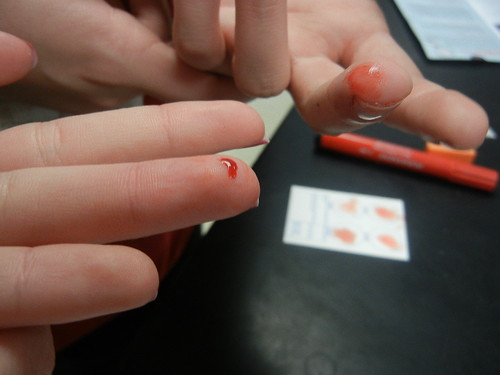
Tiny blood droplets that leak successively from a pricked finger can have widely variable contents, researchers reported in the American Journal of Clinical Pathology. In some cases, test results on such finger-bled droplets had nearly eight times more variation than vein-harvested blood samples—the gold standard. Only when the authors tested upwards of five drops combined (60 to 100 microliters) were they able to get accurate results. The study raises concerns that new diagnostic tests that rely on blood drops may yield inaccurate results.

*turns slowly to look at Theranos*
link to this extract


OnePlus concedes that its USB type-C cables are out of spec, will offer refunds » Android Police

Ryan Whitwam:

Google engineer Benson Leung recently started a crusade against bad USB type-C cables, and one of the cables he warned people to stay away from is the one sold by OnePlus. Now OnePlus has responded to the uproar, saying that it will offer refunds to customers who purchased these cables. Well, you can apply for a refund. It’s not clear how long it’ll take.

The issue is that OP’s type-C cable and the type-C adapter both have a 10kΩ resistor, which as Benson Leung has been pointing out, is potentially dangerous to use with some devices. A proper type-C cable has a 56kΩ resistor, and OnePlus says it is in the process of designing a new version of its accessories that have this resistor. OnePlus’ Carl Pei stresses that the cable and adapter are safe to use with the OnePlus 2 because it only pulls 2A of current. However, a phone like the Nexus 5X or 6P draws 3A, and that can cause damage to the power source.

Seems like a big oversight to miss getting the correct resistor.
link to this extract


Reader’s Digest and other WordPress sites compromised to push Angler EK » Malwarebytes Unpacked

Jérôme Segura:

We’re seeing another uptick in WordPress compromises, using a slightly different modus operandi than the EITest campaign we recently blogged about, being responsible for a large number of infections via the Angler exploit kit.

The attack consists of a malicious script injected within compromised WordPress sites that launches another URL whose final purpose is to load the Angler exploit kit. Site owners that have been affected should keep in mind that those injected scripts/URLs will vary over time, although they are all using the same pattern (see IOCs below for some examples).

The website of popular magazine Reader’s Digest is one of the victims of this campaign and people who have visited the portal recently should make sure they have not been infected. The payload we observed at the time of capture was Bedep which loaded Necurs a backdoor Trojan, but that of course can change from day to day.

Solution: don’t read sites on desktop? (Thanks Ivan Ivanovich.)
link to this extract


Macbook charger teardown: the surprising complexity inside Apple’s power adapter » Righto

The wonderful Ken Shirriff, who does electronics teardowns of fabulous sophistication and insight:

The Macbook 85W charger costs $79 from Apple, but for $14 you can get a charger on eBay that looks identical. Do you get anything for the extra $65? I opened up an imitation Macbook charger to see how it compares with the genuine charger. From the outside, the charger looks just like an 85W Apple charger except it lacks the Apple name and logo. But looking inside reveals big differences. The photos below show the genuine Apple charger on the left and the imitation on the right.


Inside the Apple 85W Macbook charger (left) vs an imitation charger (right). The genuine charger is crammed full of components, while the imitation has fewer parts.

The imitation charger has about half the components of the genuine charger and a lot of blank space on the circuit board. While the genuine Apple charger is crammed full of components, the imitation leaves out a lot of filtering and regulation as well as the entire PFC [Power Factor Correction] circuit. The transformer in the imitation charger (big yellow rectangle) is much bulkier than in Apple’s charger; the higher frequency of Apple’s more advanced resonant converter allows a smaller transformer to be used.

Also included: a microprocessor with as much power as the original Mac.
link to this extract


The Telharmonium was the Spotify of 1906 » Atlas Obscura

Ella Morton:

Invented by lawyer Thaddeus Cahill and initially known as the dynamophone, the telharmonium made use of telephone networks to transmit music from a central hub in midtown Manhattan to restaurants, hotels, and homes around the city. Subscribers could pick up their phone, ask the operator to connect them to the telharmonium, and the wires of their phone line would be linked with the wires emerging from the telharmonium station. The electrically generated tunes would then stream from their phone receiver, which was fitted with a large paper funnel to help pump up the volume. (The electric amplifier had not yet been invented.) 

The music was generated live at what Cahill called a “music plant,” which was located at Broadway and 39th Street. An entire floor of the building, which came to be known as Telharmonic Hall, was filled with the 200 tons of machinery required to generate the telharmonium’s tunes. With its banks of spinning rotors, switchboards, transformers, and alternators, the behemoth instrument gave “the impression of nothing so much as a busy machine-shop, or the center of a considerable manufacturing industry,” according to a 1906 article in McClure’s Magazine.

“Facebook, invented by Thaddeus Zuckerberg..” Why isn’t anyone called Thaddeus anymore? Notice also that this is an American publication, yet it uses “Spotify” as its shortcut for “streaming service” rather than, say, Pandora.
link to this extract


Jonathan Mayer, well-known online security expert, joins F.C.C. » The New York Times

Natasha Singer:

Among digital security experts, Mr. Mayer is known, among other things, as the Stanford computer scientist who reported in 2012 that Google was bypassing privacy settings in Apple’s Safari browser by placing bits of code in digital ads that tracked the sites users visited. Google subsequently agreed to pay a $22.5 million fine to settle charges by the Federal Trade Commission that the company had misrepresented its privacy practices.

Now Mr. Mayer, 28, has a new handle: federal regulator.

On Tuesday, the Federal Communications Commission said it had hired Mr. Mayer as chief technologist in the agency’s enforcement bureau.

Impressive hiring.
link to this extract


Errata, corrigenda and ai no corrida: none notified.
Dark matter full of piranhas: Android, Apple and the 3Q 15 smartphone scorecard


Remind you of the smartphone market? Red piranhas photo by Stig Nygaard on Flickr.

A friend of mine recently showed me his new handset. “It’s a Huawei,” he said. “Never heard of them, but it was a good price, and it does all I need.” He’d bought it to replace his ageing Nexus 4, and he seemed happy.

And so goes another example of Android dark matter: a company that is selling lots of handsets, but where we have no idea whether it’s making any money from them.

Yet we might guess that the answer is a qualified “no” when we look around at its rivals. Another quarter, and the profit story remains much the same: Apple and Samsung are making it all. The others whose financials we can actually see – LG, Sony, HTC, Lenovo, Microsoft, BlackBerry – all lost money as though it was what you’re meant to do. The big mystery: Huawei, which was the third biggest smartphone maker in this period, but doesn’t release financials. Is it making money? If so, it’s the only Android OEM besides Samsung which is to any notable extent.

But the third quarter, from June to the end of September (already receding into the distance) is notable because we’re now seeing the effect we’d expect from the rapid expansion of the Android OEM business: price deflation. It’s becoming rampant, and it’s beginning to tear into Samsung, which is being eaten from below by piranhas.

The effect of this was that even though Samsung shipped more smartphones than it has ever done before – a titanic 84.5m – its mobile revenues were only its 9th largest, and its mobile profits only one-third the size of its biggest (which came in early 2013).

That equally raises a very important question for the future of the big noise in the smartphone business: Apple. If even the biggest Android OEM is having its prices yanked down by smaller but numerous rivals, how (or how long) can Apple maintain its gigantic difference in pricing compared to those rivals?

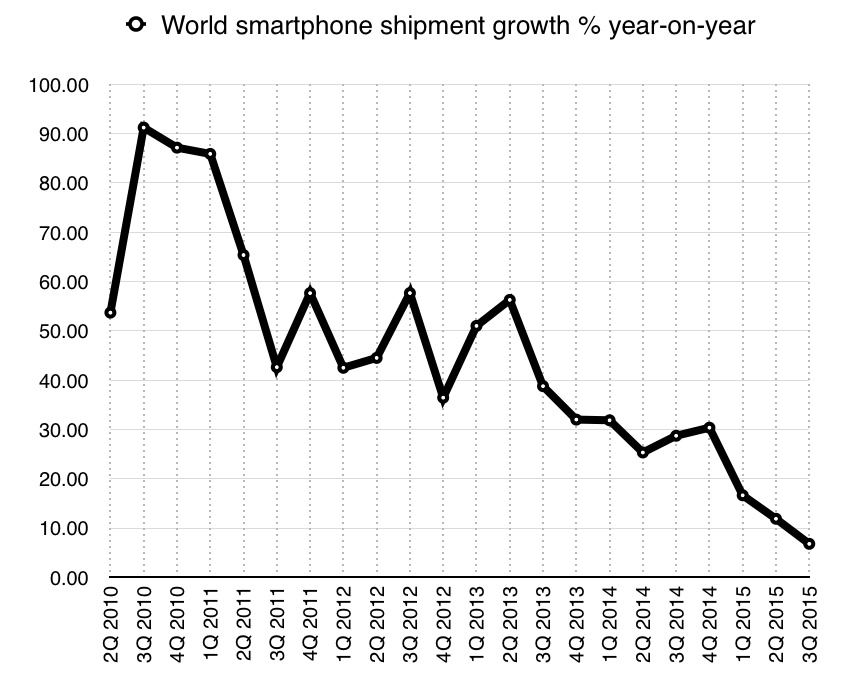
Note too that the smartphone market is still decelerating; from 11.9% growth (compared to the same period in 2014) in the second quarter, to 6.8% in the third, according to IDC’s numbers, which are the ones I use for consistency. (Gartner has a higher growth rate.)

World smartphone shipment growth by quarter

Data from IDC

Score that

I’ve added two columns to the scorecard this quarter: year-on-year shipment growth, and that growth normalised against the whole smartphone market. Apologies if this demands a lot of horizontal scrolling.

OEM S/phone revenue US$ (approx) Op profit US$m Op margin % S/phones shipped Implied ASP per s/phone Implied profit per s/phone Shipment growth y/y Shipment growth v s/phone mkt (6.8%)
HTC $0.674bn -$154m –23.1% 2.6m $259.27 –$59.85 –46.9% –53.7%
Sony $2.32bn -$171.7m –7.4% 6.7m $346.12 –$25.62 –32.3% –39.1%
LG $2.96bn –$88.6m –2.3% 14.9m $198.49 –$5.95 –11.3% –18.1%
Samsung $20.70bn* $2,440m 11.79% 84.5m $248.55 $28.86 +7.6% +0.9%
Lenovo
(inc Motorola)
$2.37bn* -$217m –9.2% 18.8m $126.22 –$11.54 –32.9% –39.6%
Total for ‘public’ Android $29.024bn $1,810m 6.2% 127.5m $227.64 $14.20 –7.7% –14.5%
Huawei ????? ????? ????? 26.5m ????? ????? +57.7% +50.9%
Xiaomi ????? ????? ????? 18.3m ????? ????? +1.1% –5.7%
ZTE ????? ????? ????? 16.2m ????? ????? +42.1% +35.3%
Total for “dark Android” ????? ????? ????? 61.0m ????? ????? +35.6% +28.8%
Apple $32.21bn $9,022m* (28% est) 48.05m $670.38 $187.76* +22.6% +15.8%
Microsoft Mobile $0.72bn* –$603m –83.8%% 5.8m $105.00 –$104.00 –38.6% –45.4%
BlackBerry $0.20bn –$180m* –89% 0.83m $242.16 –217.00 –61.9% –68.7%

* estimated smartphone revenues/profits/ASP only – excluding featurephones and tablets.

Working assumptions:
HTC: all revenues from smartphones – zero from the Nexus 9 tablet (pretty certainly true), zero from the HTC Re camera (probably true).
Sony: all revenues and profits from smartphones; zero from tablets – of which it shifted fewer than 1.6m, given IDC’s numbers; and zero profit from tablets. If tablets generated significant revenue and were profitable, then the smartphone ASP goes down, as does per-handset profit. (If tablets lost money, the per-handset loss is less.)
LG: $100 average selling price for the 1.6m tablets I’m estimating it shifted in the quarter. (That would put it equal with shipments in the previous quarter.) Tablets assumed to have zero profit, though they might have made some loss that made everything else look worse.
Samsung: featurephones (it shipped 20.5m) sold for $15, zero profit; tablets (8.0m) sold for $175 at zero profit. If the tablets or featurephones made any profit, then the profit from smartphones were lower.
Lenovo: assuming the 3.1m tablets it sold had an ASP of $100, and zero operating profit. If the tablet ASP was lower, Lenovo smartphone revenues were higher; if the tablets were profitable, per-smartphone loss was greater.
Apple: operating margin, as previously, of 28%. You could halve this, or even put it level with Samsung’s declared margin, and its operating profit would still be more than all the others’ profits (even ignoring losses) put together.
Microsoft Mobile: the figures here have to be backed out from the not-quite-stated phone revenue, including featurephones: “phone revenue decreased 58% by $1.5bn”, which takes us down to $1.1bn. There’s no gross margin given for phones, so I assumed –$104m, as in the previous quarter. Microsoft shipped 25.5m featurephones (up from 19.4m the quarter before, but down from 42.9m the year before) and 5.8m Lumia smartphones (stated; down from 8.4m the quarter before, and 9.4m the year before). Assuming featurephones had an ASP of $15 and made zero profit (same as with Samsung). The Lumia ASP has to be estimated, but seems reasonable.
BlackBerry: device revenue is given in financial statement; assuming software/services have gross margins of 84.5% (true historically), and that hardware R+D and sales costs are proportional to device revenues as % of overall revenues.

Troubles in common

Here’s the surprise: a number of Android OEMs managed to make their device ASPs rise from the previous quarter. First is Sony – up from $319.40 to $346.12. And who knows whether the $5m spent on product placement for Sony smartphones in the James Bond film Spectre won’t pay off some time. (They’ll have to have a hell of a return on investment, though.) HTC also managed it: up from $236.90 to $259.27. Lenovo also did it, up from $115.06 to $126.22.

And what else did those three companies, along with LG, all do? Lost money. The problem for premium Android goes on. We’re seeing the rise of “dark Android” – the companies which have huge reach (especially inside China) but whose finances are opaque. (All three of Huawei, ZTE and Xiaomi sell many, if not a majority, of their phones without Google’s services installed, because they sell them inside China.) Meanwhile Apple raises its ASP, and its profit rises in line, as far as we can tell.

The really interesting case is Samsung. A year ago, in the third quarter of 2014, Samsung had a terrible time: profits crashed and its semiconductor division became the most profitable part of the business – which is still the case. At that time, Samsung discovered that making a new “S” series phone wasn’t a guarantee of success; it was caught with lots of unsold Galaxy S5s sitting with wholesalers, and had to offer all sorts of discounts to get them moving, which hurt profits.

This time around, Samsung’s profits have risen year-on-year, but only because the same time last year it was so dire. The Wall Street Journal had some interesting data about how it managed to get so many phones sold: basically, it concentrated on the low-to-mid end. Screw the S6 and S6 Edge and its kin; this was about getting phones out the door.

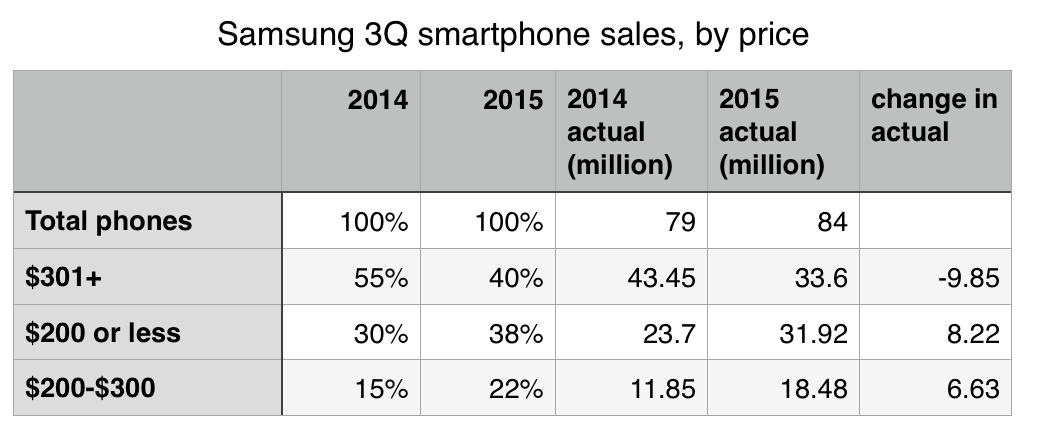
…while 55% of its smartphones were priced at $301 per unit or more at this time last year, that high-end segment has fallen to just 40% of Samsung’s overall smartphone sales, Counterpoint said.

Phones priced $200 or below now account for 38% of total units shipped at Samsung, versus 30% this time last year.

You can work this out pretty easily:

Samsung phones sales, by price segment

Data from Counterpoint Research for 3Q 14 and 3Q 15

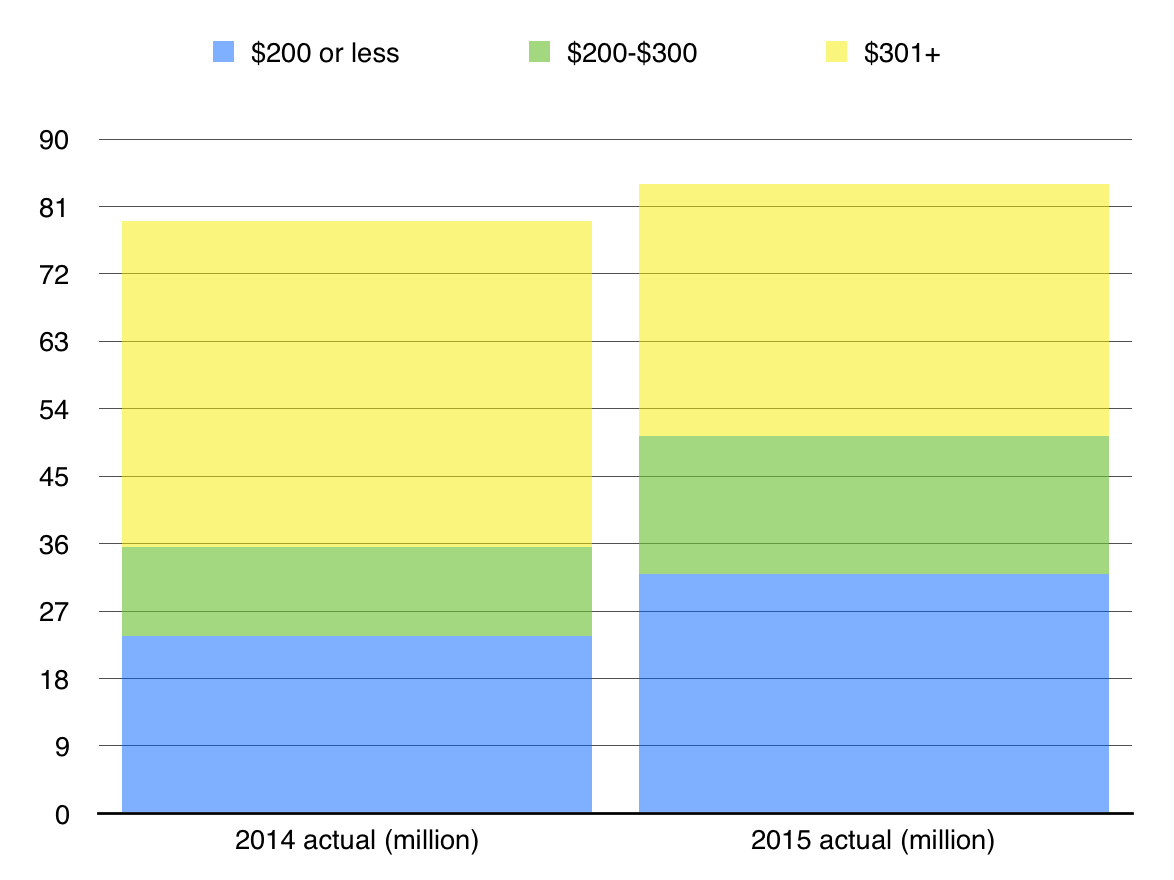
Here’s how that looks when you visualise it:

Samsung phone sales by segment, visualised

Data from Counterpoint Research. The mid-level segment is growing at the expense of the high-end one.

Look at how the blue and green edge up into the pricier yellow – which is now much smaller. And we’re comparing, remember, with last year, where the yellow (pricey) segment went pretty badly for Samsung as it was.

This is Samsung reacting to what’s going on in the market, and responding as it does best: by using its manufacturing and distribution might to try to squash competition. But in places like China and India, for example, local suppliers can compete pretty evenly:

“Samsung Electronics has decided to release the products priced at some 100,000 won for price competitiveness with Chinese and Indian smartphone makers. Local manufacturers, such as Xiaomi and Micromax, have already launched many models in the same price range. An official from the industry said, “Now, it is impossible to hold a dominant position in the competition just with a brand image of Samsung Electronics without releasing models in the same price range with local companies. When we have similar price competitiveness, we can defend our market share but profitability will get worse further.”

And LG? It’s getting walloped. Strategy Analytics says (in a super-pricey report I won’t buy) “LG’s global handset shipments dipped -21% YoY in Q3 2015. Competition from ZTE, Huawei and others ramped up across Asia and North America. A major challenge for LG is that it still has too many eggs in too few country baskets and it badly needs to diversify geographically for regrowth in 2016.”

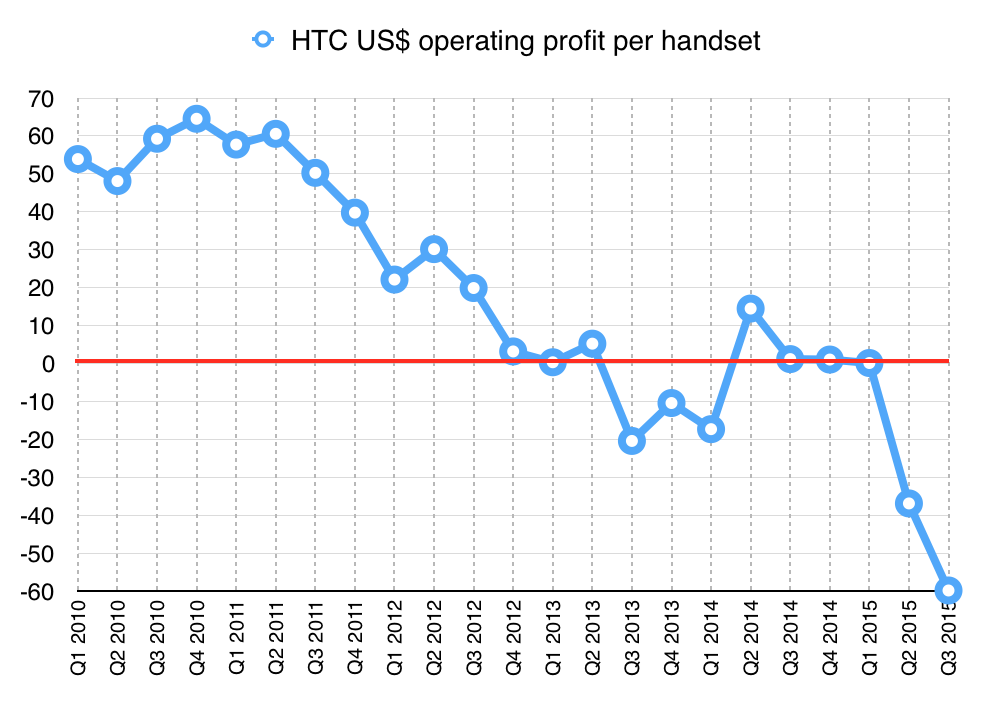
I don’t see that happening. What I find remarkable is that top-end Android vendors are now howling into the hurricane. The LG G4 has a camera that seems remarkable in all the sample shots I’ve seen; yet it’s struggling to sell them. HTC might hope that the newly released iPhone-alike A9 will raise revenues briefly this quarter, but I’m pretty sure they won’t reverse its per-handset losses, which are looking awful:

HTC US$ operating profit per handset

Data calculated from HTC financials

Android’s dark matter

Consumers are clearly beginning to think that many other Android handsets are “good enough”. My friend with his cheap Huawei handset is just one example. ZTE and Xiaomi and OnePlus and, now, the UK’s WileyFox and Marshall (the amplifier makers, yes) and even Pepsi are all piling into the handset market, sure that they can make money.

In some cases, it’s quite possible they are: by restricting its supply and distribution, OnePlus has a model that can scale as long as it can keep a lid on demand. What the phone OEMs really want is to be able to move closer to a Dell-type model: where you order the device and it’s pretty much custom-made for you from modular parts. That means lower inventory, and certainty about pricing components and satisfying demand.

Meanwhile, Android OEMs such as LG, Sony and Samsung are faced with the harsh reality spelt out by Ben Bajarin in one of his columns:

as a market matures, the early innovators get disrupted by competitors who come into their space with lower priced products, similar specs (the specs that matter), and eat into the market share of the early innovator in the category. Once the market embraces “good enough” products, the innovator can no longer push premium innovations as their value is diminished once a “good enough” mentality sets in. Android devices in the $200-$400 range are “good enough” for the masses, leaving Samsung’s $600 devices and above stranded on an island.

As he points out:

the innovator’s dilemma, in this case, only applies to Android-land because all the hardware OEMs run the same operating system. As I’m fond of saying, when you ship the same operating system as your competition you are only as good as their lowest price.

This is what Samsung is reacting to, but Sony and LG and HTC can’t react to without cutting their own throats even more. They have high fixed costs in order to produce those super-high-resolution phones (QuadHD, anyone? Even if you can’t tell the difference?) but it doesn’t cut any ice with the public.

Meanwhile Huawei, ZTE and Xiaomi the dark matter of the smartphone business: we know they’re there because of the enormous influence they wield on everyone around them. They’re also the only part of the Android OEM business that’s growing. But it’s very hard to have any idea of their financial position. (You can get some idea: CoolPad says it can’t make sufficient profit to sell a tablet to compete with Xiaomi’s newest model at the same price.) The way that the low-price piranhas are piling into Android does remind me of the days when the iTunes Music Store was taking off, and every company in a vaguely associated area scrambled to have their own download store – HMV, Tesco, Wal-Mart, Virgin – without much consideration of how they’d turn it profitable; they just reckoned it was a good idea. (Most have now shuttered those stores.)

In the same way, offering an Android phone is beginning to look like a possible sideline for all sorts of companies, which speaks to the problem that the big Android players have: if anyone can make a smartphone, why are they making a smartphone? Sure, the rivals don’t outsell the big players, but they don’t need to. For almost any price, control your inventory and demand and you control your profitability.

Black days for BlackBerry

You’ll notice BlackBerry’s figure, where its costs are so mad that it’s effectively losing enormous amounts on each device it sells. Chief executive John Chen may say handsets are “profitable”, but that’s gross margin, before you take away distribution, administration, sales, and R+D. In day-to-day terms, BlackBerry’s hardware division is a mess, and I don’t see why Chen doesn’t say “we’re going to go into a maintenance mode where we supply legacy handsets to existing clients on demand” and simply focus on the software/services business for profit. The BlackBerry Priv would have to be a colossal hit to make up this ground, and there is simply no sign of that happening. Richard Windsor agrees:

The new BlackBerry Priv and its rumoured successors are aimed at such a narrow niche that I doubt that they will ever make money. Once this realisation has sunk in, I think that BlackBerry will abandon its hardware business and focus on its software business which has recently been bolstered with the acquisition of Good Technology.

The iPhone pricing puzzle and the single spec that matters

How much longer can Apple keep on with its premium pricing? This question has been asked pretty much since the first Macintosh was launched. The answer from the PC market seems to be “a lot longer than you might expect”. In the smartphone market, the distance between the iPhone ASP and the average Android handset ASP, even on these public figures, is $450, which is itself double the price of the average Android ASP. And it’s unlikely that the missing Android data covers handsets with higher prices.

This seems like a situation that can’t last, and yet we’ve seen in the PC market that it can and does: Apple’s ASP there is over $1,200, while that of the big five Windows PC makers wobbles around $500. Apple also makes about twice the operating profit on PCs as HP, Lenovo, Asus and Acer combined.

Yet in a space where prices of phones are dropping precipitously, the iPhone’s price tag seems more and more anomalous. Yet by standing outside those price wars, and by incrementally improving its offering again and again, it keeps pulling it off. In part, that’s because of the price: as CCS Insight noted in April,

Apple’s success in opening up new, high-growth markets such as China, India and Indonesia is significant. Although its products are out of reach for many people, the iPhone is widely regarded as a badge of success in these countries and there are still enough buyers who are affluent enough to afford one.

In that sense, the price is a spec – one where rivals are actually being degraded. It sounds completely contrary, but to a number of people an iPhone is an affordable luxury. Think of it like a car: some people really want Porsches. But if you could buy a Porsche for the same price as any other car, would it still have that cachet?

Maturity and change

We’re now moving into a situation where the biggest markets – China and the US – are approaching saturation, so that it becomes increasingly hard to persuade the remaining featurephone owners to trade up, and people are less willing to buy a new device just because it’s new. That CCS Insight forecast in April also says that smartphone sales in western Europe and North America will peak in 2017; but it also expects Apple’s share to grow.

Again, this seems contrary – won’t that just lead to people being driven by price? But in a mature market, you can get a move towards perceived quality and luxury, because you’re in a situation of plenty. As I showed using Ericsson’s data from mature markets, Apple can gain users in that situation, creaming them off from Android (and to a less extent from Windows Phone).

Conclusion: segue to VR

Three months or so back I wrote about “premium Android” hitting the wall. Now it’s sliding down, and being swallowed by dark matter and eaten by piranhas. So what keeps the lossmaking companies in the business? I think it’s pretty evident that they now have their eyes on the future: virtual reality. It’s a hugely promising technology which demands integrated systems with gyroscopes and, moreover, super-high-quality screens where you can’t discern pixels even if it’s a few inches from your face. That’s what Sony, LG, HTC and Samsung are all aiming at; each has its own offering in VR, while Apple hasn’t so far made a move.

Perhaps, though, history is going to repeat itself here. Each of those companies was strong in phones before Apple came onto the scene with the iPhone. It cannot have escaped Apple’s notice that VR is a promising market, with lots of applications. And it has been granted patents in that space.

Maybe in a few years’ time, we’ll be scoring profits in the VR market. For now, though, it’s all about smartphones – and there are still only two clear winners.

More articles to read:
BlackBerry might have no BB7 users left by February 2016
Premium Android hits the wall: the Q2 2015 smartphone scorecard
Google’s growing problem: 50% of people do zero searches per day on mobile
The adblocking revolution, and iOS 9

Start up: journalism v Sean Rad, the Lumia 950 zombie?, Pepsi phones, and more


Too few of these getting sold. Photo by Yuxuan.fishy.Wang on Flickr.

Alternatively, you can sign up to receive each day’s Start Up post by email. There’s a confirmation link, so no spam.

A selection of 10 links for you. Aren’t they fluffy? I’m charlesarthur on Twitter. Observations and links welcome.

An Open Letter to Tinder’s Sean Rad from Vanity Fair’s Nancy Jo Sales | Vanity Fair

Nancy Jo Sales, who wrote a fabulous piece about how dating has changed (including Tinder), which some seemed to think meant she should “seek a quote from Tinder” before publishing. Rad, in the Evening Standard, suggested he had “information” about Sales:

Sean, you and I both know that when you spoke of me as “an individual,” you were talking about me personally. And you seemed to speak from a place of emotion, admitting that you were “upset” about my piece in Vanity Fair—which wasn’t actually just about Tinder per se, but changes in the world of dating, with the introduction of dating apps overall. This was something I tried to point out in my response to an avalanche of tweets directed at me, one night in August, when someone at Tinder decided that he or she would try to besmirch my reputation as a journalist as well. Your Twitter account admonished me: “Next time reach out to us first . . . that’s what journalists typically do.”

I don’t know what you and your colleagues at Tinder think journalism is, but I don’t believe it’s the same as what most journalists think it is. Our job is to report on what real people say and do, and how this impacts our world. It’s not our job to parrot what companies would like us to know about their products. Our job is an important one, and when the heads of companies decide to go after journalists personally, then I think we’re in very dangerous territory—not only for journalists, but for the whole practice of journalism, without which we can’t have a democracy.

This last paragraph. Oh yes, oh yes. I grow so weary of publications which think that a company announcing the new model of a phone or some new tweak to their software merits a breathless single-sourced story.
link to this extract


Match Group Inc – Free Writing Prospectus » US Securities and Exchange Commission

On November 18, 2015, the Evening Standard (the “Standard”), an online and print news service, published an article based on an interview with Sean Rad, the Chief Executive Officer of Tinder, a subsidiary of the Company. The article is described in relevant part in the following paragraph and the full article is attached hereto.

The article was not approved or condoned by, and the content of the article was not reviewed by, the Company or any of its affiliates. Mr. Rad is not a director or executive officer of the Company and was not authorized to make statements on behalf of the Company for purposes of the article. The article noted that “Analysts believe the [Tinder] app, which launched in 2012, has around 80 million users worldwide and records 1.8 billion “swipes” a day.”  While these statements were not made by Mr. Rad, the Company notes that they are inaccurate and directs readers to the Preliminary Prospectus, which states that for the month of September 2015, Tinder had approximately 9.6 million daily active users, with Tinder users “swiping” through an average of more than 1.4 billion user profiles each day.

Evening Standard routinely publishes articles and is unaffiliated with the Company and all other offering participants, and, as of the date of this free writing prospectus, none of the Company, any other offering participant and any of their respective affiliates have made any payment or given any consideration to Evening Standard in connection with the article described in this free writing prospectus.

The statements by Mr. Rad were not intended to qualify any of the information, including the risk factors, set forth in the Registration Statement or the Preliminary Prospectus and are not endorsed or adopted by the Company.

I can’t actually find that 9.6 million daily active user figure in the Preliminary Prospectus in the link. Still, nice to know.
link to this extract


Edward Snowden and the Paris attacks » Business Insider

Natasha Bertrand:

some experts are skeptical that revelations regarding the NSA’s ability to access encrypted data and the encryption methods adopted by companies in the wake of the Snowden disclosures had any effect on the ways terrorists have chosen to communicate.

“There is no evidence at all that the Snowden leaks contributed or altered the kind of terrorist activity that ISIS and Al Qaeda do,” Dave Aitel, CEO of the cybersecurity firm Immunity, Inc., told Business Insider.

“Al Qaeda was using high-grade operational technology long before the leaks — and they knew the NSA was their prime enemy long before Snowden,” he added. “For Morell to say the intel gaps that facilitated the Paris attacks fall into Snowden’s lap is a fantastic work of intellectual fiction.”

Indeed, Al Qaeda and other terrorist groups have been using their own encryption software since at least 2007, beginning with a program known as “Asrar al-Mujihideen” (Secrets of the Mujahideen). They extended that program to other devices, such as cellphones and text messaging, as the technology became available.

“Nothing has changed about the encryption methodologies that they use,” Evan Kohlmann, a partner at the private security firm Flashpoint Global Partners, told NBC in 2014. “It’s difficult to reconcile that with the claim that they have dramatically improved their encryption technology since Snowden.”

Paris seems to have been organised by plain old text message.
link to this extract


Pepsi Phone P1 is official: 5.5in 1080p display, 4G LTE and fingerprint sensor for $110 » Fone Arena

Srivatsan Sridhar:

After the leaks, Pepsi Phone P1s has gone official in China. It features a 5.5-inch (1080 x 1920 pixels) 2.5D curved glass display, is powered by an Octa-Core MediaTek MT6592 processor and runs on dido OS based on Android 5.1 (Lollipop). It has a aluminum unibody design and even has a finger print sensor on the back. It has a 13-megapixel rear camera on the back and 5-megapixel front-facing camera.

It has 4G LTE connectivity and dual SIM support that lets you use the second nano SIM slot as a microSD slot when required. Pepsi is just licensing its branding, and Shenzhen Scooby Communication Equipment Co., Ltd will manufacture the phone. The standard version of the phone is called P1 and the China Unicom version with FDD-LTE support is called P1s.

Phones are now just branding exercises; those specs would have been flagship two years ago. Interesting question: why hasn’t Coca-Cola done this? Probably because it doesn’t need to – Pepsi is playing catch-up in the branding stakes.
link to this extract


Pepsi phone: can it “change the game”? » Counterpoint Technology Market Research

Neil Shah:

The smartphone space is already looking like a FMCG [fast-moving consumer goods, akin to supermarkets] space where the goods are moving faster than ever and has become highly commoditized with value shifting beyond hardware to brand, content, software, commerce and services.

This offers a perfect opportunity for Pepsi to find some synergies in leveraging its strong brand to this consumer electronics FMCG segment which is smartphone (a highly personal good) and drive its brand further.

This could turn out to be a great and disruptive move if Pepsi plays its cards right and strike key partnerships across different markets to promote Pepsi brand via phones.

As we said, smartphone is “highly personal device” and this could give unique insights about consumers and we believe its the marketing dollars well spent more than Super Bowl commercials to consistently and continuously learn about consumers’ habits on phone as most users now have almost most of their lives use-cases linked to their phones.

We see “Pepsi Phone” as a great marketing & marketing research tool for Pepsi.

Remember when pretty much every FMCG company had its own music download store? I think this will pan out like that. (Count how many FMCG companies still operate their own music download store.)
link to this extract


Chrome Extensions – aka total absence of privacy » Detectify Labs

We signed up for one of the services which provides this information gathered by the Chrome extensions. We were able to see the following:

• Common URLs used by employees on targeted companies.
• Internal network URLs, exposing internal network structure as well as completely separated websites for internal use only.
• Internal PDFs being placed on AWS S3 referencing competitors.
• Pages which only one person had visited. We tested this out. One of the guys in the office using one of the plugins created a local website, page X, which didn’t link anywhere, but while being on the site he changed the address bar to page Y. He was the only visitor of page X. Two weeks later page X ended up in the “Similar sites” of page Y with “Affinity: 0.01%”.

Technical Details – how they are doing it

• They are running the tracking scripts in a separate background instance of the extension, but can still get access to all information about your tabs. By doing this, your network traffic of a web page will not disclose that requests are being done to a third party. This bypasses all Content Security Policy-rules and Chrome extensions – such as Ghostery – that tries to prevent tracking, since the requests are being done inside the extension itself.

Plus obfuscation, subdomains for extensions and more. Isn’t the web fun?
link to this extract


China’s chip acquisitions send ripples across industry – News & Trends – EETA

Junko Yoshiba:

The technologies and IP targeted by China include disk drives, CMOS image sensors, servers, memory chips and advanced semiconductor packaging and test services.

For the moment, the biggest prize sought by a private fund such as Tsinghua Unigroup appears to be NAND memory chips. In August, the firm made an informal $23bn takeover offer for US giant Micron Technology. The Idaho-based chipmaker rejected the deal outright, conceded that it might endanger US national security.

In an interview with Reuters this week, the Tsinghua Unigroup chair, Zhao Weiguo, said his firm plans to about $47bn “over the next five years in a bid to become the world’s third-biggest chipmaker.” To put the matter into perspective, this five-year investment target roughly equals a year’s revenue at Intel. (Intel’s 2014 revenue was $55.9bn.)

Over the past two years, Tsinghua has spent more than $9.4bn on acquisitions and investments at home and abroad. These include the purchase of stakes in US data storage company Western Digital Corp. and Taiwan’s Powertech Technology Inc. Without disclosing specifics, the chair revealed that the company is about to close another investment deal, a minority stake in a US chip company, as early as the end of this month, Reuters reported.

link to this extract


Who turned my blue state red? » The New York Times

Subtitle of this article by Alec MacGillis of ProPublic is “Why poor areas vote for politicians who want to slash the safety net”; for non-US readers, “blue” states vote Democrat, and “red” ones Republican:

The people in these communities who are voting Republican in larger proportions are those who are a notch or two up the economic ladder — the sheriff’s deputy, the teacher, the highway worker, the motel clerk, the gas station owner and the coal miner. And their growing allegiance to the Republicans is, in part, a reaction against what they perceive, among those below them on the economic ladder, as a growing dependency on the safety net, the most visible manifestation of downward mobility in their declining towns.

These are voters like Pamela Dougherty, a 43-year-old nurse I encountered at a restaurant across from a Walmart in Marshalltown, Iowa, where she’d come to hear Rick Santorum, the conservative former Pennsylvania senator with a working-class pitch, just before the 2012 Iowa caucuses. In a lengthy conversation, Ms. Dougherty talked candidly about how she had benefited from government support.

Pulling the ladder up.
link to this extract


Jawbone lays off 60, 15% of staff globally, closes NY office » TechCrunch

Ingrid Lunden:

TechCrunch has learned and confirmed that the company yesterday [Thursday] laid off around 60 employees, or 15% of staff. It’s a global round of layoffs affecting all areas of the business; and as part of it Jawbone is also closing down its New York office (which was concentrated on marketing) and downsizing satellite operations in Sunnyvale and Pittsburgh.

In an emailed statement, a spokesperson said the layoffs are part of a wider “streamlining.”

“Jawbone’s success over the past 15 years has been rooted in its ability to evolve and grow dynamically in a rapidly scaling marketplace. As part of our strategy to create a more streamlined and successful company, we have made the difficult decision to reorganize the company which has had an impact on our global workforce,” he said. “We are sad to see colleagues go, but we know that these changes, while difficult for those impacted, will set us up for greater success.”

Seventh among wearable device vendors, with a market share of 2.8%; Fitbit by comparison is No.1 (ahead of Apple) with 24.3%, selling 4.4m. Can’t see a market for that many non-smartwatch vendors except the really specialist, eg athletics.
link to this extract


Microsoft Lumia 950 review: can a smartphone be your PC? » WSJ

Joanna Stern loves the hardware, though notes the mobile apps are limited or out of date (Instagram hasn’t been updated for two years), then tries the “Continuum” system, plugging it into (just) a monitor:

this made for a decent basic desktop computing experience—decent enough for me to write this entire review and not spend every minute pining for my laptop. Word, Excel, PowerPoint all look and feel like they do on a laptop, and the Edge Web browser loads desktop sites instead of mobile ones.

The problem is, despite the hexa-core processor and 3GB of RAM, the system feels out of power. Having just five or six open tabs reminded me of the dial-up modem days. Not only were sites slow to load over Wi-Fi, but the entire system and browser got bogged down. Besides, Google’s Chrome is just a far better desktop browser, feature-wise.

But that’s not the worst of it. Remember those app problems? Because this is Windows 10 Mobile and there is no Intel chip inside, Windows desktop apps don’t work. That means no downloading the desktop version of Spotify or Slack or iTunes. You can’t run mobile apps on the big screen, either. For example, I couldn’t open the Windows Phone Spotify app in the desktop PC mode, but I could run it on the phone while I did work on the computer monitor.

Ah, Windows RT is back. Or risen from its zombie grave. (Via Mike Hole.)
link to this extract


Errata, corrigenda and ai no corrida: none notified.

TEDx Hilversum: “How to spot the next big thing” – slides and commentary from my talk

I spoke at the first TEDx in Hilversum, Holland

There was a “selfie booth”, appropriately enough.

I was invited to talk at the inaugural TEDx Hilversum – the Dutch city which is the country’s medialand, and whence the TV format ideas both for “Big Brother” and “The Voice” came.

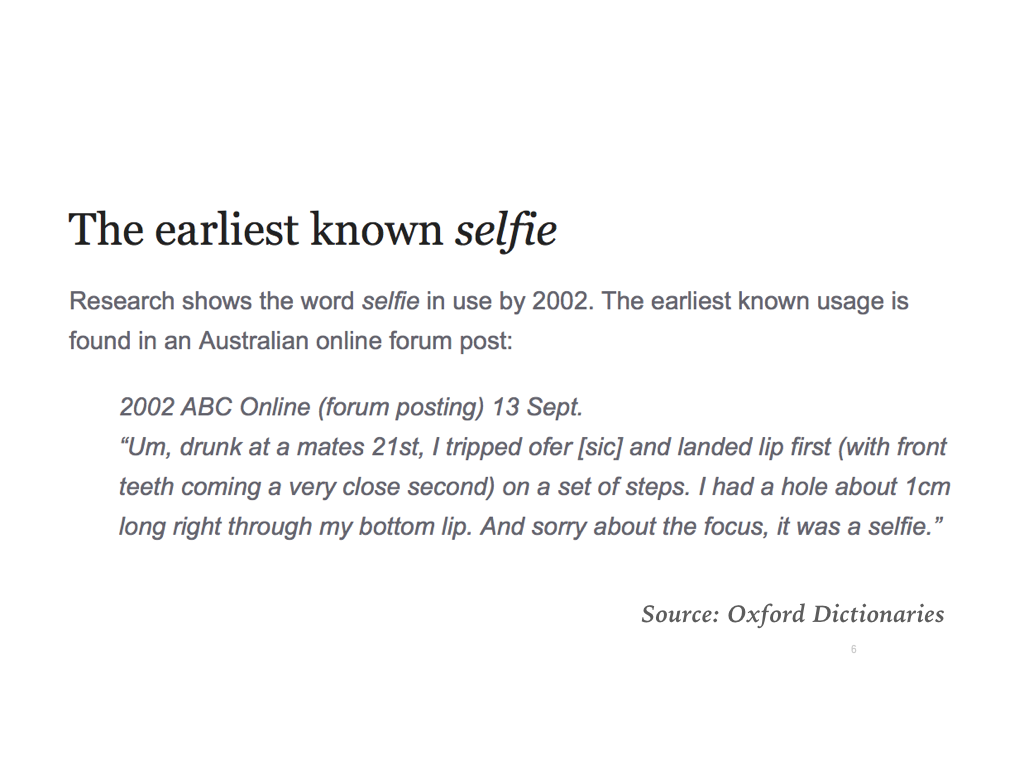
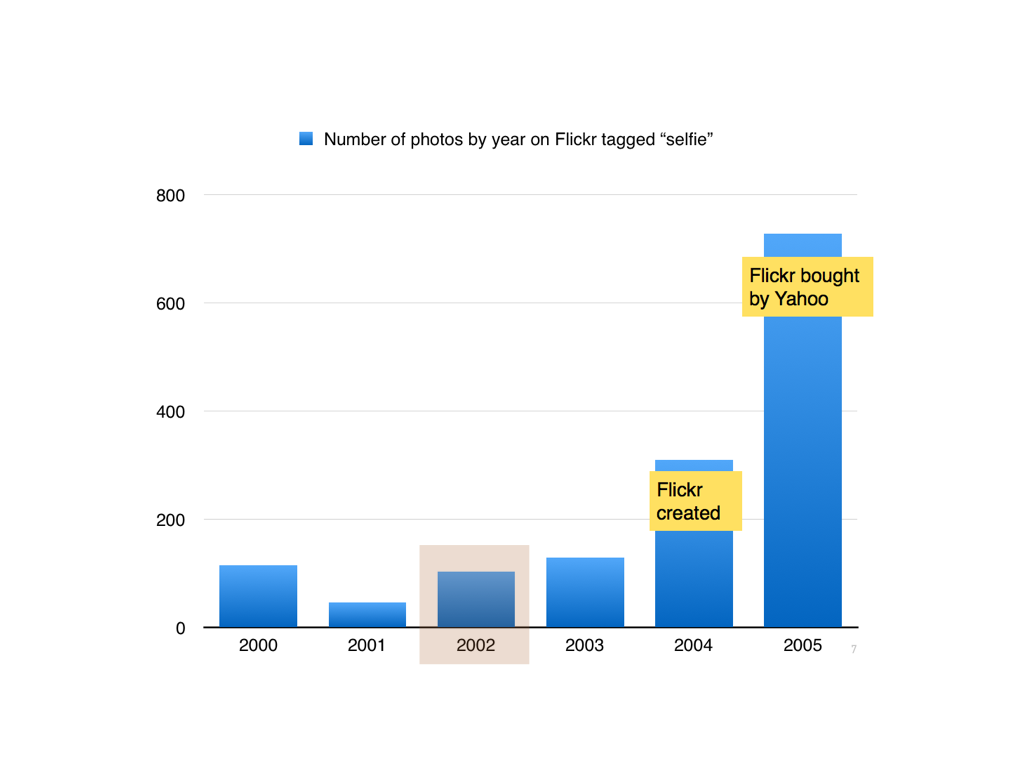
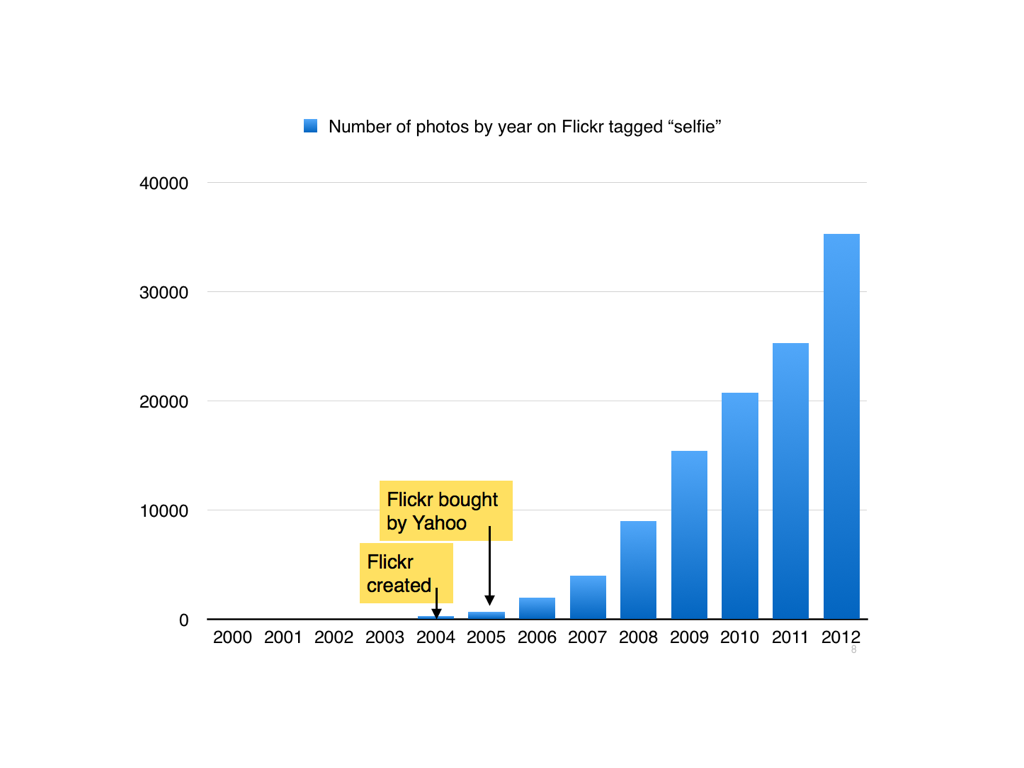
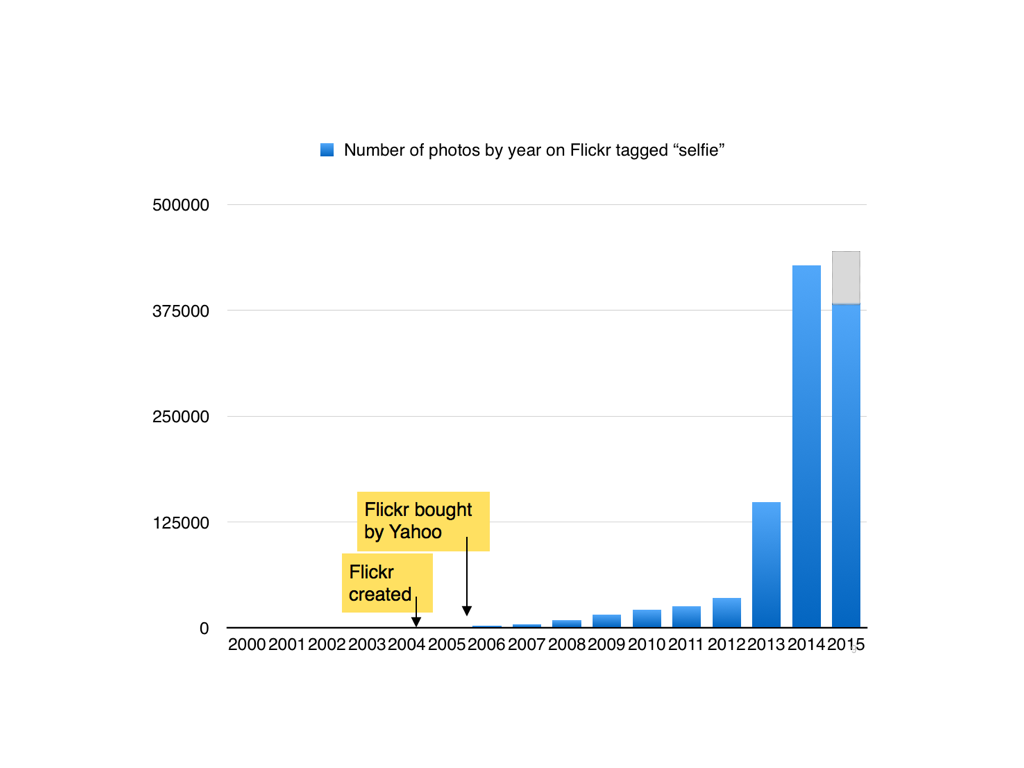
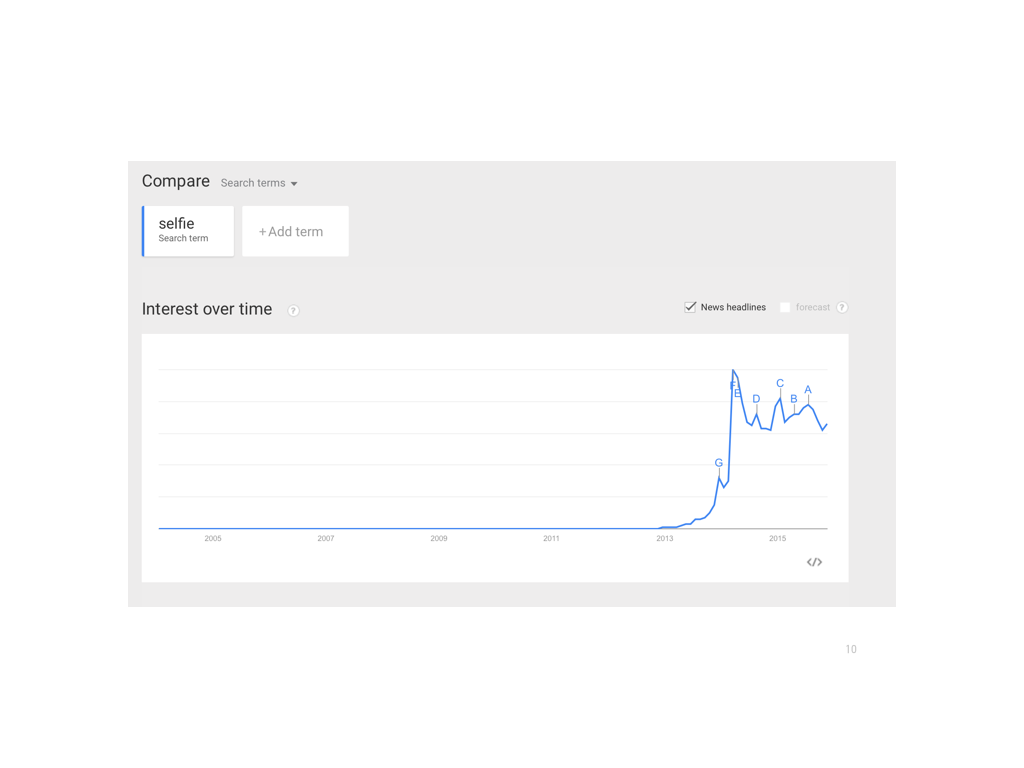
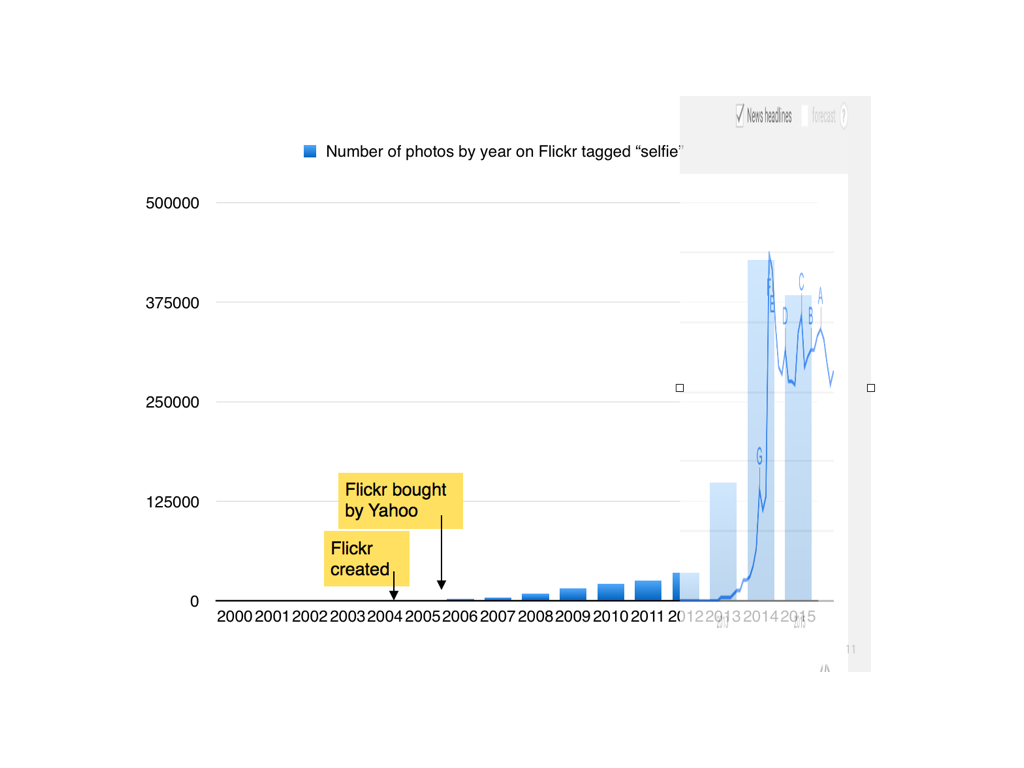
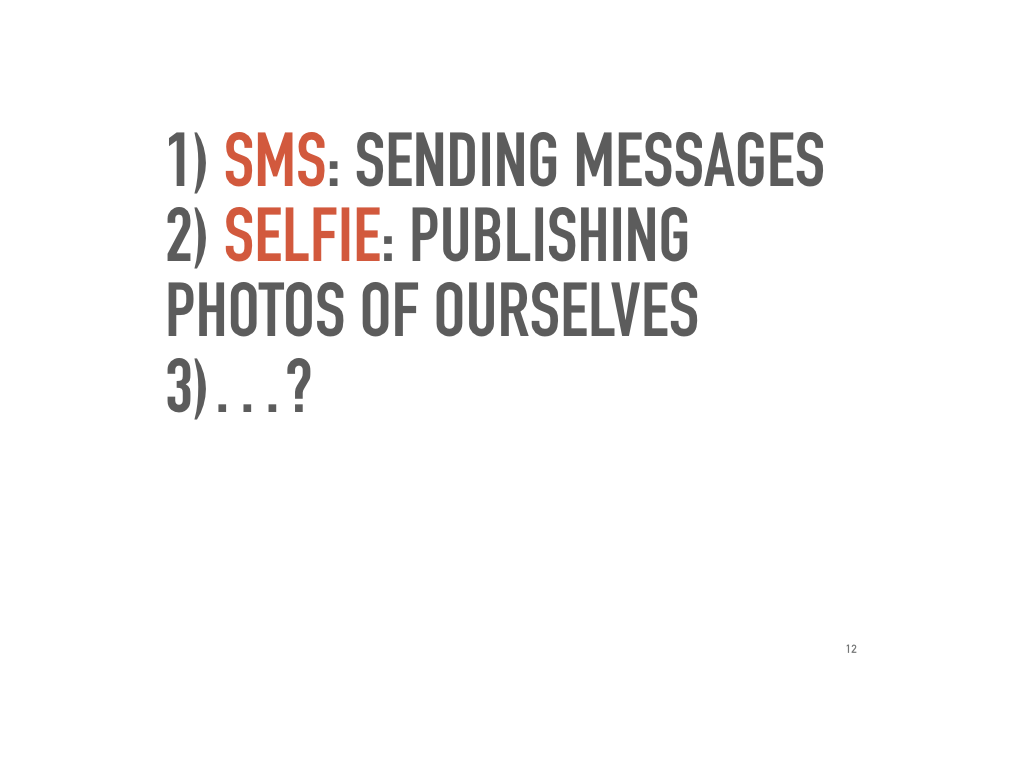
The topic: “How to spot the next big thing”, building on a column I wrote for The Guardian’s Tech Monthly supplement back in October, about how the selfie was pretty much accidental.

What I wanted to explore and expand on in the talk was how these “next big things” in social interaction happen, and where you’d look to find the next one. (This isn’t a transcript – it’s the ideas I spoke on. The talk is about 15 minutes. I’ll put up the link when it’s available.)

Spotting the next big thing

How to spot the next big thing
Photo by c@rljones

This isn’t, therefore, about which startup you should put your money into, though it might give you hints about what sort of things could generate money – if you’re ahead of the game.

Three characteristics

Three characteristics of a 'next big thing'
Photo by Japanexperterna.se

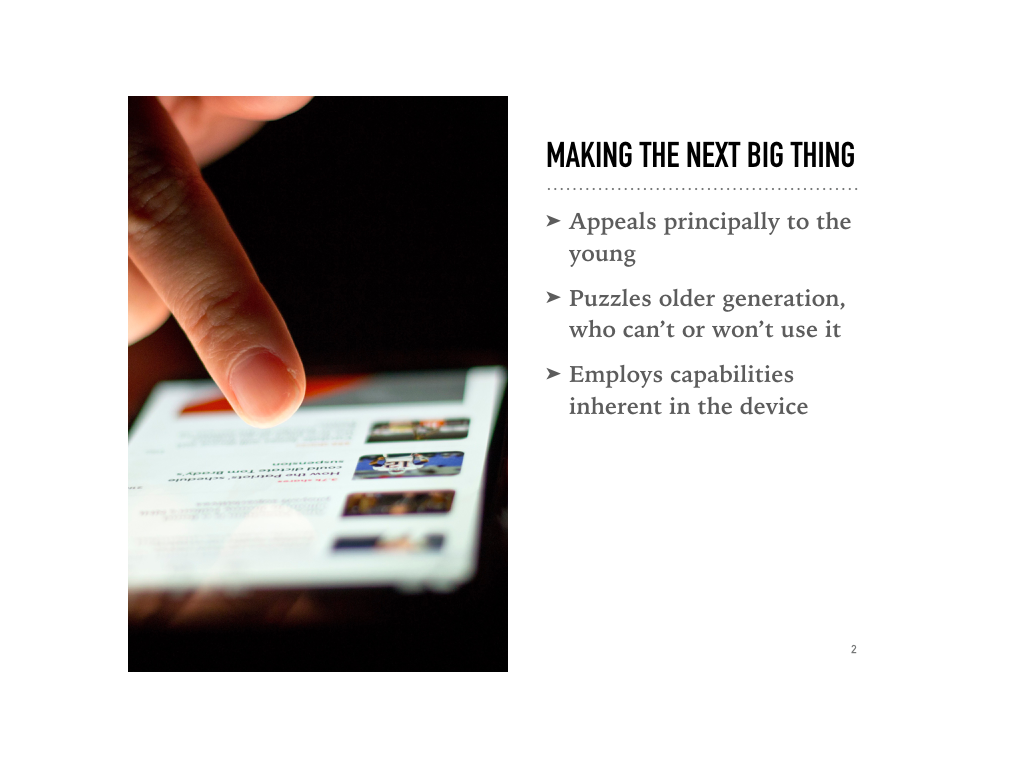
Three characteristics of “next big things”: they’re about kids and teens experimenting; adults find them a bit silly (or impossible or embarrassing); and they don’t require anything extra, because they’re immanent to the device.

Only mobile matters

Mobile is the only platform that matters
Photo by Kris Krug

When we’re looking for the “next big thing”, the only place to bother looking is mobile. It’s the only platform that matters. People might say “what about the PC? There are 1.5 billion of them installed around the world.” Nope.

Think about this: what was the last important app that launched first on the desktop (not in the browser, because browsers work on mobile too)? There were two – Spotify and Dropbox, which both launched around the autumn of 2009. Everything big since then – Instagram, Snapchat, Whatsapp, Uber – has launched first and pretty much only on mobile, with essentially no functionality on the desktop.

By contrast, everyone has a mobile phone – there are more than 2 billion smartphones in use today. Pretty soon everyone will have a smartphone. Look at the people in the picture above: they’re holding up their mobile phones, not their laptops.

The first big thing

The first big thing on mobile: texting
Photo by larskflem

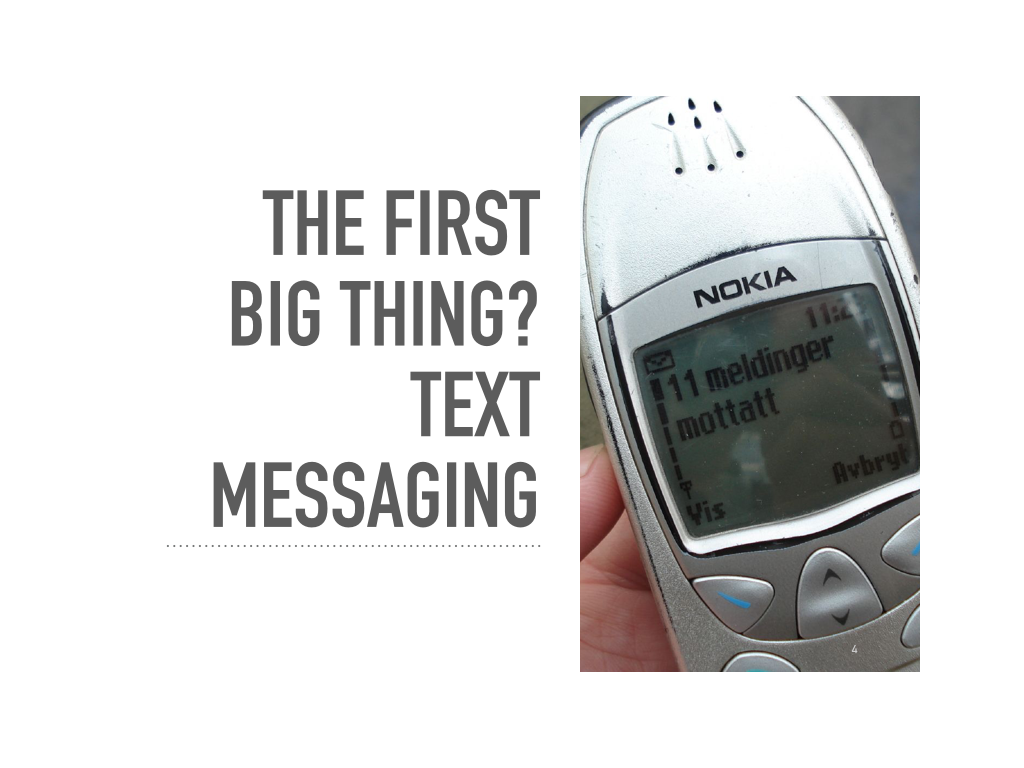
The first big thing was text messaging, aka SMS. Invented in 1986 and implemented in 1992, it didn’t take off at first – until the advent of pay-as-you-go (PAYG or pre-pay) phones, which meant that they were cheaper and adults didn’t have to commit to a contract for their kids; they’d just use what they needed. And those kids discovered SMS was cheap, and fast, and personal, and they loved it. The explosion in PAYG phones, in the UK at least, happened in 1999.

Watch SMS grow

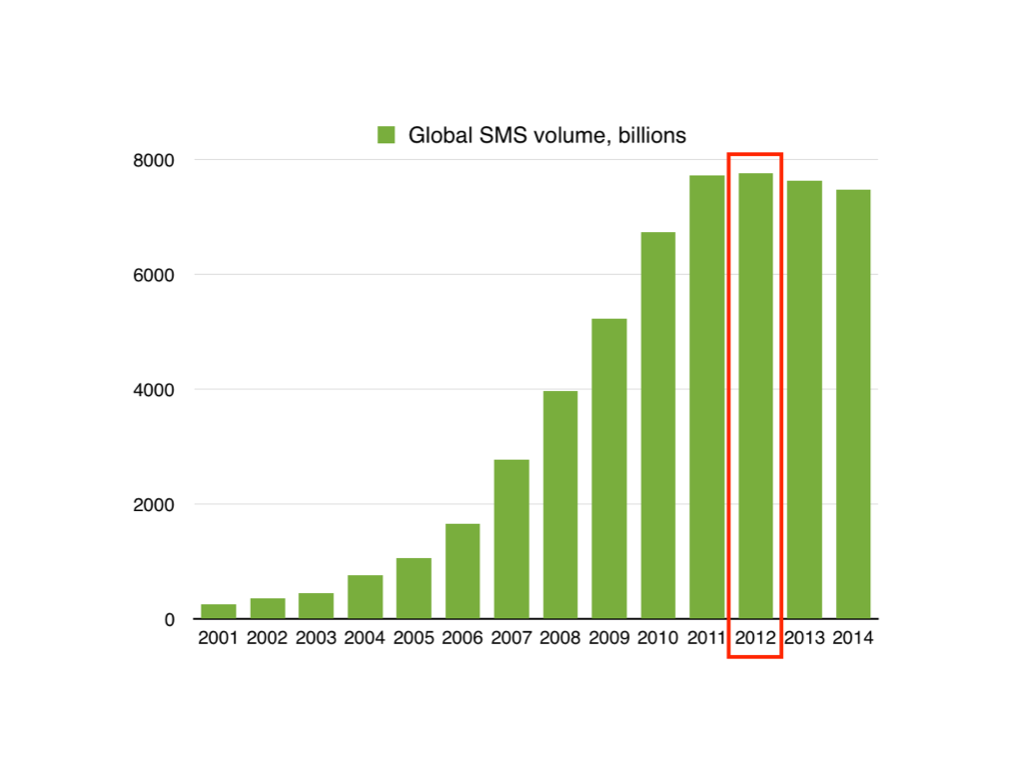
How SMS use grew globally
Here’s how SMS use grew globally. There’s almost exponential growth right up to 2011; and then it peaks in 2011-2012 and has fallen off since.

Why the falloff? Because the people who had been kids in 1999 were 12-13 years older. They’re grown up, having their own kids. Meanwhile the other kids growing up in the intervening years were moving on to their own things – OTT services using data, such as BBM, iMessage and Whatsapp. SMS was a golden goose for the carriers; now it’s being killed off. Whatsapp has only been available for five years – founded in 2009 and first released in 2010 – yet it’s now bigger than SMS in volume.

Me, my selfie, I

The source of 'selfie'
Sure, we know that there have been “selfies” for ages – painters in the Renaissance doing self-portraits, even Buzz Aldrin doing one in space during an Apollo mission in 1966. But we didn’t call it that, and “selfie” has a particular meaning in our context: pictures taken with our mobile phones, generally using the front-facing camera.

Watch ‘selfie’ grow

Photos tagged 'selfie' on Flickr, 2000-2005
I thought this 2002 origin was interesting, so I dug out data from Flickr, looking for photos tagged “selfie” by year (1 January-31 December for the respective years). There’s that first 2002 use highlighted for reference, and clearly lots of millennium-dated photos that were backloaded; Flickr didn’t even exist until 2004. Yahoo bought it in 2005, and things started growing.

..and grow

Photos tagged 'selfie' on Flickr, 2000-2012
Fast forward to 2012, and the number is exploding.

..and peak?

Photos tagged 'selfie' on Flickr, 2000-2015
Fast forward again, and this really looks like exponential growth. Though the 2015 figure – with my estimate for the final total – looks like growth has slowed substantially. Why’s that? We’ll come to that in a moment.

Trending searches

Google search trends for 'selfie'
Just for contrast, here are the Google search trends for “selfie”. Pretty much nothing until 2013, when it takes off. (Think of the selfie at the Mandela funeral by Obama and the Danish prime minister in December 2013, which is the first peak there, and the Oscars selfie by Ellen DeGeneres – actually taken by Bradley Cooper in March 2014 – which marks the high point.) But it looks as though interest in the selfie is dying, doesn’t it?

Peak selfie?

Google trends and Flickr trends for 'selfie'
If you superimpose the Google Trends data and the Flickr data, their growth looks pretty similar. So is the selfie dying off?

What’s more probably happening here is that a new generation of kids isn’t using Flickr – they’re on Instagram, where millions of selfies are posted every day. I couldn’t extract the data from Instagram, but you can be sure it’s huge. The selfie has probably got a few years left in it yet. But that generational shift is interesting, because it’s just what we saw with SMS before.

Next to arrive

Two big things; what might be a third?
So there are two examples so far of “next big things”. What might be next?

Well, the smartphone is the most personal device ever. It knows who we know, when they call, when we ignore them, what we like and what we watch, what we read, how we communicate, where we go.

Why wouldn’t it be used for… sex?

Call me maybe

Tinder's three-screen explanation
Turns out, it already is. Apps like Tinder fit all of our three criteria: it’s used by the young, it puzzles the old (“why would you judge someone based on so little information?”), and it uses qualities inherent to the device – selfies for profiles, real-time data updates, touch interaction, geolocation.

Tinder alone sees billions of “swipes” on profiles every day, and millions of meetups, and there are surely going to be Tinder babies – people created on the basis of algorithms on smartphones. Is that weird, or just natural? Your view might depend on your age.

A new search

It's in our phone, but what is it?
After SMS, selfies, sex, what will the next big thing look like? There are some clues. The biggest one is that it’s almost surely already in the phone, just as SMS was a capability in 1992, before PAYG phones, and selfies were possible from the first phones with a front-facing camera in 2003.

So here are three elements that I think might feed into the next big thing.

Three potential elements

The capability is there, and growing
Deep dream: photo by kevin dooley
Google Cardboard: photo by juan tan kwon

Artificial intelligence: The first, and biggest, is artificial intelligence or “machine learning”. This is a picture of someone as visualised through Google’s “Deep Dream” neural network. We don’t understand it because the machine refracts its view. But to the machine, it makes a sort of sense. There is a growing amount of AI/ML/NN technology in all our smartphones: Apple’s Siri, Google Now, Microsoft’s Cortana. You can also get “assistants” such as Amy (which will set up meetings) and “Charlie” (which will give you a social media profile of people you’re going to meet).

This AI tells us if we should leave early for meetings, who’s calling us (perhaps based only on phone numbers found in emails, not our contacts), what apps we look at, what news we look at, how we interact with the world through our phone. In the next few years, we should expect that it will become far more powerful, even without a connection to the cloud; if you think that sounds fanciful, just go back five years, to 2010, and none of the phones we have had those sorts of capabilities. Siri hadn’t been introduced. Think five years ahead, and that’s the sort of gap between now and then that we’re going to see.

Health/fitness: if my AI knows what I’ve been doing, shouldn’t it also know how well I’m doing? Connected to devices such as a watch or fitness band, there’s far more data about ourselves becoming available. Does that feed into the Next Big Thing by showing that you’re *really* fit in your online dating profile? Does your AI tell you before you’re going to be ill?

Virtual reality: This is Google Cardboard, a super-low-cost implementation of virtual reality: you cut and paste it together from a kit, and then slot your smartphone into the gap, and bingo. It’s on the tipping point, I think; ready to take off. And when that happens, everything becomes possible. What if the Tinder profile of the future lets you walk around the person you’re interested in dating, in 3D? What if you meet without physically being in the same place?

Conclusion

I don’t know what the Next Big Thing actually is. But consider a couple of points. SMS was invented over a decade before it actually took off. The word “selfie” was coined for the activity back in 2002 – yet it only exploded into public consciousness a decade later.

Perhaps the word for the next big thing has already been coined; it’s been tossed around carelessly on an online forum where someone is describing something they did or something that happened. And in years to come we’ll look back and say ah, it was obvious.

That’s because spotting the next big thing is a puzzle, not a mystery. There’s a difference between the two. A mystery is – well, think of a murder mystery. Only one person knows who did it, and they’re not saying. Mysteries are meant to remain unsolved.

But to understand a puzzle, think of a jigsaw puzzle. The pieces are all there, in plain view; the only problem is putting them together correctly.

For entrepreneurs, there is good news: if you’re alert, you can cash in. SMS made huge profits for carriers. Selfie sticks meanwhile have been nice business for some factories in Shenzhen. (They’ve even led to museums changing rules; that’s success, when you change society, even a little.)

Just as puzzles just need the pieces put together correctly, it’s very likely that everything necessary for the next big thing is right there, just waiting for someone to put it together. The people who do that probably won’t be the adults; it’ll be the kids and teens messing around. And adults will probably think it’s stupid. But that’s how it goes.

Still, we won’t have to look far to find it. It’ll be right there in the palm of our hands – in our phones.

Start up: how self-driving cars will change life, why *is* http on port 80?, iPad Pro reviewed, and more


Creating a more beautiful subway map for Tokyo wasn’t easy. Photo by aka.me on Flickr.

You can now sign up to receive each day’s Start Up post by email. You’ll need to click a confirmation link, so no spam.

A selection of 9 links for you. Smoosh them. I’m charlesarthur on Twitter. Observations and links welcome.

How Uber’s autonomous cars will destroy 10 million jobs and reshape the economy by 2025 » Zack Kanter

Industry experts think that consumers will be slow to purchase autonomous cars – while this may be true, it is a mistake to assume that this will impede the transition. Morgan Stanley’s research shows that cars are driven just 4% of the time, which is an astonishing waste considering that the average cost of car ownership is nearly $9,000 per year. Next to a house, an automobile is the second most expensive asset that most people will ever buy – it is no surprise that ride sharing services like Uber and car sharing services like Zipcar are quickly gaining popularity as an alternative to car ownership. It is now more economical to use a ride sharing service if you live in a city and drive less than 10,000 miles per year. The impact on private car ownership is enormous: a UC-Berkeley study showed that vehicle ownership among car sharing users was cut in half. The car purchasers of the future will not be you and me – cars will be purchased and operated by ride sharing and car sharing companies.

And current research confirms that we would be eager to use autonomous cars if they were available. A full 60% of US adults surveyed stated that they would ride in an autonomous car, and nearly 32% said they would not continue to drive once an autonomous car was available instead.

Today’s children are the last generation that will have to pass a driving test. Think about that briefly. Then read the rest of Kanter’s piece. (It’s actually optimistic, overall.) And one more thing: it doesn’t have to be about Uber.
link to this extract


Fantastical designs from the frontier of subway maps » Washington Post

For many designers, creating a better subway map is an irresistible puzzle — “infinitely alterable, incredibly vexing, with no definitive answer,” writes Emily Badger. Badger’s new article looks at some amazing examples of metro maps from the frontier of design, including the beautiful 2010 diagram of all of the rails in the Tokyo region, designed by Kim Ji-hwan.

link to this extract


Rooted, Trojan-infected Android tablets sold on Amazon » Help-Net Security

Zeljka Zorz:

If you want to buy a cheap Android-powered tablet, and you’re searching for it on Amazon, the best thing you can do is carefully read all the negative reviews you can find. If you are lucky, you’ll see some that will warn you about the device being rooted and coming pre-installed with malware.

Security researchers from Cheetah Mobile have recently discovered a slew of these devices – over 30 tablet brands in total – being sold on Amazon and other reputable online stores.

Here’s a short overview of affected devices, along with a sample of reviews warning about the malware.

The malware in question is the Cloudsota Trojan, which allows remote control of the infected devices and conducts malicious activities without user consent.

Remember, a Trojan is for life, not just for Christmas. Estimated that over 17,000 have been sold.
link to this extract


The case against a Google phone » The Information

Amir Efrati on the rumours that Google is looking to design its own phone chips:

the ecosystem of partners that build and sell Android phones has matured to some extent; those companies have 1.4bn customers (there’s one third as many iPhones in customer’s hands, by contrast). While many of those customers aren’t necessarily loyal, and surprising upstarts are gaining ground, Google won’t be able to suddenly capture a significant amount of market share with a better device, at their expense. (It would also risk its chance to return to China, given that it is working with local handset brands to do so.) There is no going back.

Even if Google wanted to compete on price by offering devices cheaper than the iPhone, it would still have to engineer a marketing apparatus so impressive that it convinces smartphones buyers that the Google phone is the best in the world. That’s the only way it could convert iPhone and even some Samsung Galaxy S users — who are wealthier than typical Android users — to the Google phone. Good luck with that.

Then there’s the fact that prices for phones have come down so much as components become cheaper that it’s become exceedingly difficult for existing Android phone brands to stand out in the market.

Even if the Google phone struck a chord, it’s hard to see it selling more than tens of millions of devices in the next few years, and that’s optimistic.

I can believe that Google is interested in designing ARM architecture chips. But I think it’s more likely considering them for its server farms. People inside Google already know Efrati’s argument (which holds water). Sundar Pichai is hardly the sort to hang on to an idea for pride. He killed Google+, remember?
link to this extract


Ad Replacer: turn spammy ads into breaking news

We take those terrible, misleading ads that take you to garbage websites (or worse!) and switch them out for real-time, human-curated headlines and links from ONLY the most trusted, reliable websites.

Sites that never end in best-deals-4-everyone.ru. Sites that never pop up 8 windows asking if you’re SURE you want to click away. Just sites you like and stories you want to read, all seamlessly integrated into your browsing experience before you even notice it’s changed. Doesn’t that sound nice?

Neat idea; Chrome extension only for now.
link to this extract


Facebook Messenger adds facial recognition » Tech Insider

Alex Heath:

Adding facial recognition to Messenger may seem odd given that it’s primarily considered to be a messaging app, but when you consider that people send a staggering 9.5 billion photos through Messenger every month, the decision begins to make more sense.

Messenger is very proactive in prompting to share a photo with friends it thinks are in a photo — the app will send a notification asking you to send a photo to people on Facebook it thinks are tagged. (This specific behavior can be turned off in the Messenger app’s settings.)

Australia only for now, but your feeling on whether this is creepy or great will probably depend on age. Note though that it’s machine learning/AI being deployed as utterly normal; even five years ago this would have been hard to implement on such scale.
link to this extract


iPad Pro review: jack of all trades, master of most » WSJ

Joanna Stern:

On paper, 12.9 inches may not seem much bigger than the standard iPad’s 9.7 inches, but the Pro screen made me more productive. I spent much of my week writing in Microsoft Word on the left hand of the screen and toggling between websites and my inbox on the right. Text looks incredibly crisp, especially in comparison with my MacBook Air’s display, which has just half the pixels.

The A9X processor and 4GB of RAM kept those apps running swiftly. But most impressive? When I exported the same 4K video in iMovie on both the Pro and my Intel Core i5-powered MacBook Air with 8GB of RAM, the iPad reached the finish line a minute and a half faster. And, unlike the Air, it didn’t sound like it was about to blast off from Cape Canaveral.

For real work, it’s all about attaching Apple’s $170 Smart Keyboard. You don’t do this via Bluetooth, but rather with the new magnetic Smart Connector. I quickly fell in love with the feel of the bouncy fabric keys, and it became second nature to hit Command+Tab to toggle between apps. Oh, and did I mention the keyboard is spill-proof? Seriously, my iced latte just wiped right off.

Still, many times I wished for something closer to Microsoft’s Surface Type Cover. Apple’s keyboard only props the screen at a 120-degree angle; attaching it and folding it take origami skill. It all almost toppled off my lap a few times, and the keys aren’t backlit. Plus, there’s no trackpad, like the Type Cover’s. I constantly had to reach out and touch the screen to scroll or select text and icons…

…Despite iOS 9’s improved multitasking, there are still shortcomings. You can’t customize the home screen’s comically large icons with files or other shortcuts. You can’t place the same app—say two Safari windows—side by side. And iOS’s lack of real file management can be maddening. Microsoft saddles its Surface Pro with full-blown desktop Windows while the iPad Pro is still too closely related to an iPhone. Apple has to keep working to find the happy middle.

Pricey. But here’s the kicker:

There’s one thing the iPad has over all other laptops and competing tablets though: incredible apps. The Pro helped me realize that I’ve been living in the past, using legacy desktop programs to accomplish things.

link to this extract


Why was 80 chosen as the default HTTP port and 443 as the default HTTPS port? » How To Geek

According to superuser jcbermu:

The Internet Assigned Numbers Authority (IANA) is a department of ICANN, a non-profit private corporation that oversees global IP address allocation, the Domain Name System (DNS), well-known ports, and other Internet Protocol-related symbols and numbers.

During March of 1990, they published a document (RFC 1060) where they listed all the well-known ports at that time. In that list there was no protocol assigned to port 80 (it jumped from 79 to 81). 79 was assigned to “finger” (find out if someone was online) and 81 to HOSTS2-NS, the HOSTS2 Name Server.

At that time, port 80 was officially free. In 1991, Tim Berners-Lee issued the first version of HTTP in a document (HTTP 0.9) where he stated “If the port number is not specified, 80 is always assumed for HTTP.”

HTTPS? Lost in time. Blamed on someone at NCSA Mosaic. So there’s your pub quiz question/answer pair.
link to this extract


Apple Music » Android Apps on Google Play

It arrived as an app on Android, as version 0.9.0:

Introducing the beta of Apple Music on Android.
Notes about the beta period:
• Music videos are coming soon.
• Family membership sign-ups and upgrades require Mac or iOS.
• Sign-up process to be optimized for Android.

Notable that it hasn’t attracted the hate reviews that the “Move to iOS” app did; there are actually a lot of five-star reviews. (Average 3.1.) The key element looks like the “family membership” element; that’s a really powerful reason for Apple to want to reach Android users – because families are mixed users.
link to this extract


Errata, corrigenda and ai no corrida:

HTC won’t forecast this quarter’s revenues. But don’t worry, we can. (They’re bad.)


Too much of this, not enough selling phones: that’s HTC’s problem. Photo by caribb on Flickr.

HTC, in its Q3 earnings call, declined to give any forecasts for its revenues or profits in the current quarter: “it’s our intention that we will not be providing financial forecast in the coming quarters,” said Chialin Chang, CFO and president, global sales, complaining that the guidance they used to give was far too detailed – gross margin, earnings per share, revenue. But he would offer this: “I will say the following. We are expecting – I’d like to expect Q4 result as compared to Q3 result to see the incremental improvement on revenue and the net income.”

(Actually, I challenge anyone to read that transcript and get any sense out of it. Sure, English isn’t Chang’s first language – it might not be his second language – but he seems competent enough to talk a lot in it. He just doesn’t actually explain anything. And what a sad little call; only two analysts on it, based on the questions.)

Law of averages

Still, even if HTC isn’t going to predict its revenues, we can. That’s because the Taiwan Stock Exchange makes listed companies report monthly revenues. And there’s a pattern to companies’ sales, especially those which are quite seasonal and predictable, like HTC. February is smaller than January; March is bigger than February; April’s about the same; and so on.

Using the monthly data from the past nine years, I’ve generated the “average” forecast for HTC’s revenues by month over the year. And we’ll use this to forecast this quarter’s revenues (and maybe profits).

Here’s how HTC’s year goes, from month to month, on average over the past nine years:

HTC average monthly revenue

Past financial data lets us see how HTC revenues change by month, on average

You’ll notice that the “next January” mark is lower than the previous one – which is just one of those things; on average, the revenue has grown by 3% over the year, then fallen by 17% the next January. Shrinking, in other words, which it has been doing since 2010.

But this is a pretty simple model. How good is it at predicting? How does it fare when we compare it with HTC’s revenue this year?

Here is the comparison, where we only use the data up to 2014 for the forward guidance:

HTC monthly revenues forecast

There’s an error, but it’s not gigantic; around 10%

So the aggregate error in revenue from forecast over the year is 10% – the highest value being around 12%. (I’ve used absolute values for the error, rather than averaging the plus and minus.)

But what if we feed in the results from 2015 too? It improves the graph a little:

HTC monthly data forecast for 2015

If we go up to the September-October data point, the aggregate error reduces further

I’ve changed the colour for the aggregate error: 8.7% for total revenues over the year so far. Not so bad.

Given this, what can we say about HTC’s revenue to the end of this year in two months? We’ve just had the October revenues, so we can look forward to the rest of the year. On the adjusted basis, using the new data, my forecast comes in at NT$26.64bn (about US$830m). That’s down from $47.9bn in the same period a year ago – a forecast decline of 45%.

Bear in mind there’s a likely error either way of 10% – so I’m forecasting NT$29bn-$23.9bn. (The midpoint figure would satisfy Chang’s wish for incremental improvement in revenue.)

And profit? Pretty hard to say, but assuming that things continue as they have at HTC, its gross margin will be 18%, so about NT$4.79bn; that’s NT$1bn more than the previous quarter, so the loss will be about that much less – so probably NT$4bn (around US$125m), which would also satisfy Chang’s vague wishes.

Obviously these are forecasts, based on single chunks of data, though they have been pretty accurate so far this year. If the HTC A9 takes off, or if the Vive VR set is a hit, I’d be completely wrong. I don’t see any obvious signs of that though.

The inventory squeeze

More generally, HTC is a company in crisis, with no obvious reason to exist and little to differentiate it from any other Android OEM. You can see the incredible pressure on it in its inventory/revenue numbers, which measure how much stuff it has sitting in the backroom compared to how much stuff it has sold. This ratio has now hit a historic high of nearly 100%, as of the end of the third quarter:

HTC's inventory ratio is at a historic high

Revenue is low but inventory is high: the signs of a company in stress

High inventory/revenue levels tend to mark out a company in severe stress. It can mean that it has lots of wonderful new finished products in the warehouse just waiting to be sprung on the world, which will fall on it with delight. But usually it doesn’t because you have to distribute those things to wholesalers who will sell them. And historically, HTC hasn’t been a rabbit-from-hat sort of company, as the graph suggests.

Clearly this isn’t a situation that can go on indefinitely. HTC says that it has things coming down the chute – there’s the HTC Vive, its virtual reality offering. Much handwaving from Chang in the earnings call, but nothing concrete. And if HTC really thinks that VR is going to bring its business back into profit in 2016, well, I don’t see it; these are high-priced devices with an uncertain market, regardless of the quality of HTC’s offering.

Of course that could have been said back when HTC was preparing its first Android smartphone. But the difference was that HTC had already been making smartphones (for Windows Mobile) for some years.

Overall, the best summing up of this came from The Verge, where Vlad Savov’s story had the deathless headline: “HTC will no longer give guidance for the future it doesn’t have”. Quietly brilliant, that one.

Start up: payday search predators, the natural nuclear reactor, Facebook’s code problem and more


Shh! Don’t tell Facebook! Photo by The Keenes on Flickr.

You can now sign up to receive each day’s Start Up post by email. You’ll need to click a confirmation link, so no spam.

A selection of 11 links for you. Please note: the “link to this extract” link doesn’t work if you’re using it from the email. Who shall we blame? Meanwhile, I’m charlesarthur on Twitter. Observations and links welcome.

People’s deepest, darkest Google searches are being used against them » The Atlantic

Adrienne Lafrance:

Consider, for example, a person who googles “need rent money fast” or “can’t pay rent.” Among the search results that Google returns, there may be ads that promise to help provide payday loans — ads designed to circumvent Google’s policies against predatory financial advertising. They’re placed by companies called lead generators, and they work by collecting and distributing personal information about consumers online. So while Google says it bans ads that guarantee foreclosure prevention or promise short-term loans without conveying accurate loan terms, lead generators may direct consumers to a landing page where they’re asked to input sensitive identifiable information. Then, payday lenders buy that information from the lead generators and, in some cases, target those consumers—online, via phone, and by mail—for the very sorts of short-term loans that Google prohibits.

But look, if Google bans those ads, then it’s taking a position. Shouldn’t it only accept ads from organisations that it has vetted? Or just not accept ads on those searches?
link to this extract


In the 1970s, scientists discovered a two billion-year-old nuclear reactor in west Africa » Medium

The Physics ArXiv blog explains:

When the ore in Gabon was laid down some 2 billion years ago, the concentration of uranium-235 would have been about 4%, more than enough for a self-sustaining nuclear reaction.

The idea is that when a neutrons hits an atom of uranium-235, the atom splits producing two smaller nuclei and several neutrons. These neutrons go on to split other atoms in an ongoing chain reaction.

However, the liberated neutrons are high-energy particles that tend to fly away rapidly. So nuclear reactors usually contain a moderating material that slows down the neutrons so that they can interact with other uranium atoms.

It turns out that water is a reasonable neutron moderator. So an important component of this natural reactor was the presence of water seeping through the uranium ore. And this had an interesting impact on the way the reactors operated.

Nuclear scientists believe that the Oklo reactors operated in pulses. As water flowed into the rock, it moderated the neutrons, allowing a chain reaction to occur. But this increased the temperature of the rock, boiling the water into steam which escaped.

Kept running for 300,000 years. More useful than that is what it taught scientists about how fission waste products migrate from burial sites. Turns out the answer is: not that much.
link to this extract


Facebook’s code quality problem » Graham King

Facebook has a software quality problem. I’m going to try to convince you with three examples. This is important because it demonstrates the time-honored principle that quality matters. In demonstrates it, as Facebook engineers like to say, at scale. I don’t work at Facebook or any competitor, I’m just an observer.

The three examples – 18,000 Objective-C classes in the iOS app with 429 people working on it (note: delete the app), database restarts and the fact that the site works better when its engineers aren’t there, all speak to a classic problem.
link to this extract


Hackers claim million-dollar bounty for iOS zero-day attack » WIRED

Andy Greenberg:

On Monday, the security startup Zerodium announced that it’s agreed to pay out that seven-figure sum to a team of hackers who have successfully developed a technique that can hack any iPhone or iPad that can be tricked into visiting a carefully crafted web site. Zerodium describes that technique as a “jailbreak”—a term used by iPhone owners to hack their own phones to install unauthorized apps. But make no mistake: Zerodium and its founder Chaouki Bekrar have made clear that its customers include governments who no doubt use such “zero-day” hacking techniques on unwitting surveillance targets.

In fact, Bekrar tells WIRED that two teams of hackers had attempted to claim the bounty, which was announced in September with an October 31st deadline. Only one proved to have developed a complete, working iOS attack. “Two teams have been actively working on the challenge but only one has made a full and remote jailbreak,” Bekrar writes. “The other team made a partial jailbreak and they may qualify for a partial bounty (unconfirmed at this time).”

I’d like to see documentary proof of the hack before I take this at face value. Zerodium is clearly seeking publicity; and the incentive to, um, bend the truth around seven-figure annoucements is high.
link to this extract


Ranking Digital Rights – Ranking ICT sector companies on respect for free expression and privacy

For the inaugural Index, Ranking Digital Rights analyzed a representative group of 16 companies that collectively hold the power to shape the digital lives of billions of people across the globe. Leading global ESG research and ratings provider, Sustainalytics, co-developed the methodology.

Eight publicly listed Internet companies and eight publicly listed telecommunications companies were selected based on factors including geographic reach and diversity, user base, company size, and market share. These companies were assessed on 31 indicators across three categories – commitment, freedom of expression, and privacy – drawn heavily from international human rights frameworks, as well as emerging and established global principles for privacy and freedom of expression.

The research revealed a deep need for improvement:

Only six companies scored at least 50% of the total possible points;
The overall highest score was only 65%;
Nearly half the companies in the Index scored less than 25%, showing a serious deficit of respect for users’ freedom of expression and privacy.

Google came top in internet companies. List at https://rankingdigitalrights.org/index2015/. Apple isn’t there – doesn’t it have any impact?

Anyhow, speaking of digital rights and freedom of expression…
link to this extract


A surprisingly difficult question for Facebook: do I have boobs now? » The Guardian

Hannah Jane Parkinson talks to Courtney Demone, a trans woman (ie born male) who asks the question that Facebook apparently finds exceptionally hard to answer:

Demone says that Facebook likes to present itself as a liberal and progressive organisation, but that most of its actions in this regard are decidedly low-risk. She mentions Facebook’s introduction of a widget allowing users to overlay their profile pictures with a rainbow flag and notes that it was to celebrate a gay marriage law which had been passed by the US supreme court – not before, in support of it.

Demone says that [Facebook’s] allowing users to define their gender in a free-form field, and offering a choice of pronouns, is progressive, but it is decidedly lower risk rather than, say, challenging the paradigm that female nipples should be covered up. This, of course, would run the risk of offending advertisers and in the case of Instagram, result in a 17+ user rating in app stores.

This gets to such a deep question: why should American organisations get to decide the mores of the countries that they export their business to? Mark Zuckerberg once said he hoped Facebook could solve the Arab-Israeli conflict by making people friends. But topics such as this shows why it can be seen as more like an enemy of social change.
link to this extract


India LTE smartphone shipments grew 2400% annually climbing to 10m units in Q3 2015 » Counterpoint Technology Market Research

Tarun Pathak has the details. Here’s one of the more interesting pullouts (from lots) about a local OEM:

Micromax maintained the second position in both overall mobile phone market and the smartphone segment with a market share of 13.7% and 17.7% respectively.

The brand’s share from online channel increased during the quarter. However, it is now facing pressure competition in $50-$100 price segment from Intex, Lava and others.

Micromax’s Cyanogen based online only brand ‘Yu’ launched its cheapest LTE model ‘Yunique’ during the quarter and the brand has been growing steadily ever since its launch.

Micromax Yu brand alone is now selling more smartphones than Xiaomi online, depicting it’s going to be challenging even for popular brands such as Xiaomi to scale in Indian market

If Xiaomi can’t succeed in India, it’s going to have a real problem.
link to this extract


Google abandons plan for a retail store in New York City » Crain’s New York Business

Daniel Geiger:

Google has abandoned plans to open its first-ever retail store in New York City.

The company is trying to sublease a 5,442-square-foot SoHo space it leased last year, and wants $2.25m annually in rent for it, according to sources.

The decision to abandon its retail store came after the Internet giant spent $6m renovating the 131 Greene St. location. The outpost was supposed to be one of Google’s first stand-alone stores in the U.S., putting it in direct competition with Apple, which has a host of brick-and-mortar shops that showcase and sell its products in the city, as well as other tech firms with a retail presence. Just last week, Microsoft opened its flagship store on Fifth Avenue.

A spokeswoman for Google didn’t immediately respond to a request for comment.

According to reports, Google planned to begin opening stores to sell products such as the Chromebook, a line of laptops and desktop computers made by several manufacturers that operate on Google software, and smartphones that run its Android operating system. Because Google is subleasing the Greene Street location, it would appear that the company has changed its mind and is pulling back on its plan to open physical stores. However, Google reportedly recently opened a kiosk within a larger electronics store in London earlier this year.

Even so. Why would you have a Google store? It doesn’t make sense.
link to this extract


Over 40% of China’s online sales counterfeit, shoddy: Xinhua » Reuters

Adam Jourdan:

More than 40% of goods sold online in China last year were either counterfeits or of bad quality, the official Xinhua news agency said, illustrating the extent of a problem that has bogged down the fast-growing online sector.

According to the report, which was delivered to China’s top lawmakers on Monday, just under 59 percent of items sold online last year were “genuine or of good quality”, Xinhua said.

China has been trying to shake off a notoriety for pirated and counterfeit goods, long a major headache for global brands targeting the Chinese market from iPhone maker Apple to luxury retailer LVMH.

Chinese e-commerce giant Alibaba Group Holding Ltd has been lobbying to stay off a US blacklist for fakes after coming under renewed pressure this year over suspected counterfeits sold on its shopping platforms.

link to this extract


It’s official: Amazon is opening its first-ever bookstore in Seattle » GeekWire

Taylor Soper:

Internet giant Amazon.com, which got its start selling books online, confirmed this afternoon that it will open its first-ever brick-and-mortar bookstore at Seattle’s University Village on Tuesday morning.

The company sent a letter to customers on Monday with details about the store, which is called “Amazon Books.” In the letter, Amazon Books VP Jennifer Cast calls the store a “physical extension of Amazon.com.”

Someone should disrupt that thing…
link to this extract


Microsoft reneges on ‘unlimited’ OneDrive storage promise for Office 365 subscribers » ZDNet

Ed Bott:

Here’s the key part of tonight’s announcement:

We’re no longer planning to offer unlimited storage to Office 365 Home, Personal, or University subscribers. Starting now, those subscriptions will include 1 TB of OneDrive storage.
100 GB and 200 GB paid plans are going away as an option for new users and will be replaced with a 50 GB plan for $1.99 per month in early 2016.

Free OneDrive storage will decrease from 15 GB to 5 GB for all users, current and new. The 15 GB camera roll storage bonus will also be discontinued. These changes will start rolling out in early 2016.

Microsoft blames a few greedy storage users for the change in heart. “A small number of users,” they wrote, “backed up numerous PCs and stored entire movie collections and DVR recordings. In some instances, this exceeded 75 TB per user or 14,000 times the average.”

That shouldn’t be surprising. If you advertise “unlimited” cloud storage, perhaps you should expect that some people will take you at your word and move large collections to the storage space you so generously offered?

Bott also portrays a division in some upheaval, which doesn’t quite fit the calm exterior Microsoft has been trying to put forward over its cloud work.

That “14,000 times the average” suggests that the average person was storing 5GB of data. Though that probably amounts to 10 Microsoft Word documents, given how the format has bloated. (Thanks @pedrostephano.)
link to this extract


Start up: iPhone 6S ain’t no scale, Samsung’s tablet TV, Theranos woes worsen, smartphones slow, and more

The Computing Scale Co
You’ll have to stick to this rather than your fancy smartphone. Photo by Kenny Louie on Flickr.

You can now sign up to receive each day’s Start Up post by email. You’ll need to click a confirmation link, so no spam.

A selection of 8 links for you. Eat, drink and be lairy. I’m charlesarthur on Twitter. Observations and links welcome.

Turning the iPhone 6s into a digital scale » Medium

Ryan McLeod had the idea of making a weighing app using the “3D Touch” capability of the iPhone 6S screen. It sorta worked (using a spoon as a scale), but…

To make a long story short the final answer over the phone was that the concept of a scale app was not appropriate for the App Store.

We were—and still are—bummed to say the least, but we understand some of the reasons Apple might not be allowing scale apps at this time.

Maybe it’s because the screen could get damaged if people tried dropping heavy weights on their phone—thing is that the sensor won’t weigh beyond a maximum weight of ~385g (0.85 lbs) and you’d be hard pressed (har) to damage the screen with that little weight (Gravity also flashes a bright red warning). In addition to that it’s hard to balance heavy objects on a spoon, but then again people will be people and we completely understand why Apple didn’t advertise the 6s’s new water-resistant properties.

link to this extract


License plate readers exposed » Electronic Frontier Foundation

Dave Maass and Cooper Quintin:

Law enforcement agencies around the country have been all too eager to adopt mass surveillance technologies, but sometimes they have put little effort into ensuring the systems are secure and the sensitive data they collect on everyday people is protected.

Case in point: automated license plate recognition (ALPR) systems. 

Earlier this year, EFF learned that more than a hundred ALPR cameras were exposed online, often with totally open web pages accessible by anyone with a browser. In five cases, we were able to track the cameras to their sources: St. Tammany Parish Sheriff’s Office, Jefferson Parish Sheriff’s Office, and the Kenner Police in Louisiana; Hialeah Police Department in Florida; and the University of Southern California’s public safety department. These cases are very similar, but unrelated to, major vulnerabilities in Boston’s ALPR network uncovered in September by DigBoston and the Boston Institute for Nonprofit Journalism. 

link to this extract


Cutting sugar improves children’s health in just 10 days » The New York Times

Anahad O’Connor:

The new research may help shed light on a question scientists have long debated: Is sugar itself harming health, or is the weight gain that comes from consuming sugary drinks and foods mainly what contributes to illness over the long term?

In the new study, which was financed by the National Institutes of Health and published Tuesday in the journal Obesity, scientists designed a clinical experiment to attempt to answer this question. They removed foods with added sugar from a group of children’s diets and replaced them with other types of carbohydrates so that the subjects’ weight and overall calorie intake remained roughly the same.

After 10 days, the children showed dramatic improvements, despite losing little or no weight. The findings add to the argument that all calories are not created equal, and they suggest that those from sugar are especially likely to contribute to Type 2 diabetes and other metabolic diseases, which are on the rise in children, said the study’s lead author, Dr. Robert Lustig, a pediatric endocrinologist at the Benioff Children’s Hospital of the University of California, San Francisco.

This seems so staringly obvious, yet politicians and industry lobbyists in the US and UK resist the idea of reducing sugar intake fiercely. It’s as if they’re more interested in money than health – because the health costs are offloaded elsewhere, onto health services. Such are externalities.
link to this extract


In Tanzania, you can now get your birth certificate by mobile phone – Quartz

Omar Mohammed:

More than 90% of children in east Africa’s second largest economy [Tanzania] have no birth certificates. This is despite a law mandating that new babies be registered.

For some rural families, however, bad roads make it prohibitive to travel the distance to government agencies to secure birth certificates. So a lot of families simply forgo the process. The mobile phone is about to change all that.

First launched in 2013, in a partnership with the mobile carrier Tigo and UNICEF, a mobile-based system by Tanzanian government now allows health workers to deliver birth certificates in a matter of days using SMS. The approach is now operational in 10 of the country’s 26 regions.

The way it works is health workers send a text that includes a baby’s name, sex, date of birth and family details to a central database managed by the Registration Insolvency & Trusteeship Agency (RITA), a government body. Once received, an automated response allows them to issue the document soon after. The government is now looking to expand the initiative into the rest of the country in the next five years.

link to this extract


Samsung Galaxy View hands-on review » The Inquirer

James Archer on Samsung’s 18.4in “tablet”:

Evidently, this is something that needs to be placed on a table, not held up by hand. The stand does include a carry handle, and the hinge feels strong enough to comfortably take the weight, but it’s still heavy enough that we wouldn’t want to lug it around, even in the included carry case. It’s easily as heavy as a large laptop, and with that stand it takes up more space than one as well.

Perhaps it’s just us being used to flat, easily portable slates, but the Galaxy View’s general design seems a bit, well, awkward. The fact that the stand can’t be removed means that it’s always flapping around, adding bulk and threatening to trap our fingers whenever we wanted to move the device around. Also, other than the front panel, which is made from glass, the entire thing is constructed with cheap-feeling plastics that are a far cry from the premium metallic bodywork of Samsung’s smartphones and more recent tablets.

As for connectivity, there’s a standard microUSB port and a microSD slot, as well as Bluetooth 4.1. Some form of display connectivity, like mini HDMI, might have made sense here, but at least the Galaxy View is big enough to be watchable from a good few feet away.

The Galaxy View’s screen is 18.4in diagonally, but it has a relatively low pixel density of 119ppi owing to the 1920×1080 resolution.

Clearly designed to be viewed from a distance; not so much a tablet as a Google TV. But where’s the remote?
link to this extract


Inside Apple’s perfectionism machine » Mashable

Lance Ulanoff with a long piece on Apple’s fastidious approach to design:

Apple, however, is growing at a time of sea change in the PC industry, where devotion to a piece of hardware may be less important than connection to files, content and services. As the cloud looms larger, will the hardware we use still matter? Schiller rejects this notion.

“No. 1, the importance and value of great hardware has not diminished in any way,” he said. “Across the board, our goal is to make the best in the categories we choose to compete in. It’s what we’re doing and it’s reflected in customers choosing our products over anyone else’s. So I do think people are showing with their choice that they do value quality and beauty of the hardware and that is not diminishing.”

“I have never heard anyone say, ‘Because I like to keep my stuff in the cloud, I will take a cheap piece of hardware and I want it to be ugly.’ All things being equal, of course, nobody wants that,” Schiller said.

He also rejects the idea that there’s a growing market for hybrids, or, to be more specific, laptops with touch screens that also happen to be tablets. 

“There certainly are more offerings today, more people trying to create a market. But based on all the data that I’ve been able to see, it is still incredibly small and niche and may not be growing to anything significant. Time will tell,” he told me. 

“Time will tell” is one of those Apple phrases that Steve Jobs used to use which meant “we’re already making one.”
link to this extract


The FDA’s notes from its visit to Theranos’ labs don’t look good » Business Insider

Lydia Ramsey:

The FDA has released documents related to its visit to Theranos’ labs, and they don’t look good.

Theranos, a $10bn company that says its blood tests can be done accurately with a single drop of blood, has come under fire after a lengthy Wall Street Journal exposé questioned just how revolutionary the startup was.

The reports are Form 483s, which are issued at the end of inspections when investigators see anything that may violate the Food Drug and Cosmetics Act. They are from an FDA visit that took place between August 25 and September 16, and they are heavily redacted. Nevertheless, they are worrisome.

Basically, they’re saying that Theranos’s “nanotainers” don’t have regulatory approval and aren’t sufficiently documented. This isn’t looking in any way good.

link to this extract


Smartphone shipments reach second-highest level for a single quarter » IDC

According to the latest preliminary results from the International Data Corporation (IDC) Worldwide Quarterly Mobile Phone Tracker, vendors shipped a total of 355.2m smartphones worldwide in the third quarter of 2015 (3Q15), up 6.8% from the 332.6m units in 3Q14, marking the second highest quarter of shipments on record. The 3Q15 shipments were slightly below IDC’s previous forecast of 363.8m units, largely due to slightly lower than expected iPhone shipments, as well as Android flagship introductions from several top-tier OEMs with price points outside the consumer sweet spot.

“The vendor landscape and product offerings are really unique at the moment as many markets are seeing consumers become more aware of alternative buying options when it comes to paying for their smartphone,” said Ryan Reith, Program Director with IDC’s Worldwide Quarterly Mobile Phone Tracker.

Couple of things: this is the slowest growth for six years (third quarter of 2009 was equally slow, during the world financial crisis); Samsung’s colossal total of 84.5m is a record, though achieved very much by stuffing the channel and cutting prices; it is losing share in the US and China, and pushing phones in Latin America, the Middle East/Africa and central Europe. And Huawei is growing enormously fast – up 61% in a year.
link to this extract