Start up: Twitter’s ongoing API cull, NSA v Hillary, life without Facebook, Apple’s cloud moves, and more

Boston Dynamics robot dog

“A Boston Dynamics robot is for life, not just for Christmas.” Photo by jurvetson on Flickr.

You can now sign up to receive each day’s Start Up post by email. You’ll need to click a confirmation link, so no spam.

A selection of 9 links for you. Still, it’s Friday, somewhere. I’m charlesarthur on Twitter. Observations and links welcome.

U+1F647 PERSON BOWING DEEPLY 🙇 » Medium

Matthew Rothenberg:

»Nearly three years since they officially blessed it with “partner” access (and after 14 billion emoji tweets tracked), Twitter has decided to shut Emojitracker down.

To be more accurate, they are removing its elevated access to the Streaming API that Emojitracker depends on in order to operate at its high volume

«

Twitter continues to cut off developers’ noses to spite its face.
link to this extract


NSA refused Clinton a secure BlackBerry like Obama, so she used her own » Ars Technica UK

Sean Gallagher:

»[US State Department coordinator Donald] Reid was tasked with trying to find a “BlackBerry-like” solution that would allow Clinton to be able to check her e-mail while in the secure office suite. The problem was that the solution supported by the NSA—its SME PED (Secure Mobile Environment Portable Electronic Device)—was hardly BlackBerry-like. SME PED devices are based on a secure version of Windows CE, and they’re only rated up to “Secret” classification. And as Clinton was taking over at State, the SME PED was only just becoming available. “The current state of the art is not too user friendly, has no infrastructure at State, and is very expensive,” Reid noted in one e-mail.

The NSA refused to give Clinton a device similar to the one used by Obama: a modified BlackBerry 8830 World Edition with additional cryptography installed. And while Clinton’s predecessor Condaleeza Rice had obtained waivers for herself and her staff to use BlackBerry devices, Clinton’s staff was told that “use [of the BlackBerry] expanded to an unmanageable number of users from a security perspective, so those waivers were phased out and BlackBerry use was not allowed in her Suite,” an e-mail from the NSA’s senior liaison to the State Department noted.

«

It’s basically the fight that everyone has with their IT department, but with state secrets involved.
link to this extract


Google puts Boston Dynamics up for sale in robotics retreat » Bloomberg Business

Brad Stone and Jack Clark:

»Executives at Google parent Alphabet Inc., absorbed with making sure all the various companies under its corporate umbrella have plans to generate real revenue, concluded that Boston Dynamics isn’t likely to produce a marketable product in the next few years and have put the unit up for sale, according to two people familiar with the company’s plans.

Possible acquirers include the Toyota Research Institute, a division of Toyota Motor Corp., and Amazon.com Inc., which makes robots for its fulfillment centers, according to one person. Google and Toyota declined to comment, and Amazon didn’t respond to requests for comment.

Google acquired Boston Dynamics in late 2013 as part of a spree of acquisitions in the field of robotics. The deals were spearheaded by Andy Rubin, former chief of the Android division, and brought about 300 robotics engineers into Google. Rubin left the company in October 2014. Over the following year, the robot initiative, dubbed Replicant, was plagued by leadership changes, failures to collaborate between companies and an unsuccessful effort to recruit a new leader.

«

OK, I’m astonished. The intersection between AI/neural networks and robotics seems so obvious that this points to deep problems within Alphabet – specifically, inability to create collaboration (as it mentions).
link to this extract


The secret life of a Silk Road 2.0 mastermind » Motherboard

Joseph Cox:

»In the real world, Dread Pirate Roberts 2 explained to me, people often made judgments about others before a conversation had even started. But in the dark web, where most people act pseudonymously thanks to the protections offered by Tor, the only social cue to go on is people’s actions.

“In this environment, you only heard what people were saying,” he told me. “There was nothing to judge them on other than what they did.”

Take Defcon, who offered his services as a programmer to DPR2 in a private message. DPR2 was intrigued by Defcon’s calm tone among the chaos of Silk Road being shut down, and put him to the test.

Within a few hours, Defcon had put what would become the Silk Road 2.0 forum online, along with a host of security features that others often neglect.

“He knew what he was doing, I could tell instantly,” DPR2 said.

Defcon did make a mistake, however. It would later be revealed that he registered a Silk Road 2.0 server with his personal email address.

«

He knew what he was doing. I could tell instantl… oh.
link to this extract


A Facebook experiment » Above Avalon

Neil Cybart:

»I deleted Facebook off of my iPhone six months ago. I had one simple reason in mind: I thought I would be able to analyze Facebook more accurately and completely by not using it or its companion apps, cold turkey. Purchasing an iPhone 6s Plus at launch gave me the perfect opportunity to begin my experiment. My initial assumption proved true. In just the first eight weeks, I learned more about Facebook, Instagram, WhatsApp and Facebook Messenger, than the last eight years. I’ve reached a number of observations over the past six months on Facebook’s value and vulnerabilities and a definite answer to what was once a seemingly difficult question: Are Facebook and Apple becoming competitors?

«

The answer to the latter is no, but the things he found out along the way about Facebook use ring very true.
link to this extract


The journalist and the troll: Benjamin Wey spent two years trying to destroy me online » Bloomberg Business

Dune Lawrence discovered a “news” site set up by a Chinese entrepreneur who had decided she had wronged him in articles she’d written for Bloomberg:

»The site’s other articles were an odd mix of celebrity gossip, entertainment news, and stabs at reporting on serious topics such as drug marketing. It wasn’t exactly high journalism, but it looked professional, not like some amateur blog. Google seemed to think so as well, because the story instantly went to the top of the results when I searched my name.

In September 2015 the FBI arrested the man behind TheBlot, one Benjamin Wey. Not for smearing me or the other people he imagined were his enemies. He’s primarily a financier, and he was charged with securities fraud and other financial crimes involving Chinese companies he helped to list on U.S. stock markets. The U.S. Department of Justice alleges Wey pocketed tens of millions of dollars in illicit profits that he funneled through associates overseas and back into accounts in the U.S. Wey denies the charges. A trial has been set for March 2017.

«

Lawrence is brave here, and Wey comes across as an utter scumbag – but also someone who is completely hyperactive, willing to spend hours cooking up totally libellous nonsense about people. That’s the problem online: the hyperactive idiots drive out the rational people.

One other point: Google really favours that junk site Wey created. Searching on duckduckgo, TheBlot is some distance down the results.
link to this extract


Cloud makes for strange bedfellows: Apple signs on with Google, cuts spending with AWS  » CRN

Good scoop by Kevin McLaughlin and Joseph Tsidulko:

»Alphabet’s Google has quietly scored a major coup in its campaign to become an enterprise cloud computing powerhouse, landing Apple as a customer for the Google Cloud Platform, multiple sources with knowledge of the matter told CRN this week.

Since inking the Google deal late last year, Apple has also significantly reduced its reliance on Amazon Web Services, whose infrastructure it uses to run parts of iCloud and other services, said the sources, who all requested anonymity to protect their relationships with the vendors.

Apple has not abandoned AWS entirely and remains a customer, the sources said.

According to the sources, Google executives have told partners that Apple is spending between $400m and $600m on Google Cloud Platform, although this couldn’t be independently confirmed. Also unclear is whether this range refers to an annual spending rate or a set amount of capacity.

AWS said Apple’s move to work with Google does not signify “competitive defection.”

«

Apple is in the position where it can get the big cloud providers to bid against each other. (Microsoft’s Azure was also said to be a supplier when iCloud started.) The question is, should Apple be trying to supplant them all with its own infrastructure – as Dropbox did to exit AWS? Well, let’s see…
link to this extract


Google adds Apple iCloud storage to cloud platform » Re/code

Mark Bergen:

»Apple has announced three data centers opening soon, and spent an estimated $1bn last year on AWS. It’s a logical move for Apple if it wants more independence from its tech rivals. And it’s one Apple should make to store the growing media libraries from its mobile, TV and TBD products.

According to a source familiar with the matter, Apple already has a team working on this; it’s known internally as “McQueen,” as in Steve. It’s unclear if that project will materialize or when. But a source tells Re/code that the codename refers to Apple’s intent, sometime in the next few years, to break its reliance on all three outside cloud providers in favor of its own soup-to-nuts infrastructure.

Apple has reckoned, one source says, that given the fees it is paying Amazon and Microsoft, it could break even with its own data centers within about three years and not have the headache of negotiating with companies it considers rivals in other areas of its business.

«

Pretty remarkable if Apple can build all that infrastructure and serve everyone and make it pay off that quickly. That would make the shift to Google just a temporary thing to drive down prices from those suppliers.
link to this extract


Observations on switching to the Galaxy S7 Edge from a non-Galaxy user » AndroidAuthority

Kris Carlon:

»The first thing I noticed when switching to the Galaxy S7 Edge is how bad the touch responsiveness seems to be (although I might just be unlucky). It’s not so much the screen, although it does kind of “grab” at your finger as you swipe on it compared to the Nexus 6P, but rather the touch response itself.

Quite often, when swiping away notifications the S7 Edge registers it as a press and launches the app instead. Likewise, when tapping UI elements it occasionally doesn’t register any press at all and I have to give it a serious press to get a response. Feel free to tease my ability to use a phone if you like, but something here is not right.

«

Quite a few of Carlon’s complaints (they’re mostly complaints) fall into the 1% category – is it really such awful news that the back of your phone shows fingerprints? – but the touchscreen point, and his complaint that “it’s laggy” seem like gigantic points, which are lined up as being just as important (or unimportant) as how crowded the folder UI is.
link to this extract


Errata, corrigenda and ai no corrida: none notified

Start up: the iCloud celeb hack, a Chinese ransom?, the real terrorist phone, Trump as Berlusconi, and more

“Hey, Miss Lawrence! My name’s iCloud! What’s your password?” Photo by YourWay Magazine on Flickr.

You can now sign up to receive each day’s Start Up post by email. You’ll need to click a confirmation link, so no spam.

A selection of 12 links for you. Use them wisely. I’m charlesarthur on Twitter. Observations and links welcome.

The disturbingly simple way dozens of celebrities had their nude photos stolen » Fusion

Kashmir Hill:

»According to court documents, Collins gained access to the intimate images of nude celebrities via a disturbingly simple technique: phishing.

Though many people assumed that the hacker took advantage of an iCloud vulnerability to brute-force his way into the celebrities’ accounts, the government makes no mention of that. Instead, it says that Collins hacked over 100 people by sending emails that looked like they came from Apple and Google, such as “e-mail.protection318@icloud.com,” “noreply_helpdesk0118@outlook.com,” and “secure.helpdesk0019@gmail.com.” According to the government, Collins asked for his victims’ iCloud or Gmail usernames and passwords and “because of the victims’ belief that the email had come from their [Internet Service Providers], numerous victims responded by giving [them].”

Celebrities really need better computer security advisers. If a dedicated enough attacker comes at you, it’s hard to avoid being compromised, but it helps immensely to turn on two-factor authentication for your online accounts. That way a person needs not just your password but a code sent to your phone to get into your account.

Once Collins had their credentials, says the government, he went through their email accounts looking for nude photos and videos. The government says that Collins got into approximately 50 iCloud accounts and 72 Gmail accounts this way, most of them belonging to celebrities. He “accessed full Apple iCloud backups belonging to numerous victims, including at least 18 celebrities” and “used a software program to download those full Apple iCloud backups.”

Ironically, that program was likely one that’s used by law enforcement to get evidence from phones.

«

The idea that someone had used a cutting-edge brute-force attack to break into the passwords always seemed like vapour trails to me. Social engineering is the Occam’s Razor explanation (and also the Hanlon’s Razor explanation) to stuff like this.
link to this extract


Exclusive: Chinese hackers behind U.S. ransomware attacks – security firms » Reuters

Joseph Menn:

»executives of the security firms have seen a level of sophistication in at least a half dozen cases over the last three months akin to those used in state-sponsored attacks, including techniques to gain entry and move around the networks, as well as the software used to manage intrusions.

“It is obviously a group of skilled of operators that have some amount of experience conducting intrusions,” said Phil Burdette, who heads an incident response team at Dell SecureWorks.

Burdette said his team was called in on three cases in as many months where hackers spread ransomware after exploiting known vulnerabilities in application servers. From there, the hackers tricked more than 100 computers in each of the companies into installing the malicious programs.

The victims included a transportation company and a technology firm that had 30 percent of its machines captured.

Security firms Attack Research, InGuardians and G-C Partners, said they had separately investigated three other similar ransomware attacks since December.

Although they cannot be positive, the companies concluded that all were the work of a known advanced threat group from China, Attack Research Chief Executive Val Smith told Reuters.

«

link to this extract


Reformed LulzSec hacktivist joins payments firm » The Register

John Leyden:

»A payments firm has hired reformed LulzSec hactivist Mustafa Al-Bassam (formerly known as tFlow) for a new blockchain research project.

London-based payments group Secure Trading has taken on Al-Bassam to help develop a platform that applies the verification benefits of blockchain technology in order to improve the visibility and security of online payments. Codenamed “Trustery”, the project aims to create a commercial platform.

Secure Trading approached Al-Bassam, who agreed to work for the firm part time while continuing his computer science degree at King’s College London.

«

Smart move: al-Bassam is a clever guy.
link to this extract


Crypto-ransomware spreads via poisoned ads on major websites » Tripwire

Graham Cluley:

»Some of the world’s most popular news and entertainment websites have been spreading poisoned adverts to potentially hundreds of thousands of visitors, putting innocent readers at risk of having their computers hit by threats such as ransomware.

Famous sites which displayed the malicious ads and endangered visiting computers include MSN, bbc.com, the New York Times, AOL and Newsweek.

As a result, researchers at Malwarebytes say that they saw a “huge spike in malicious activity” over the weekend.

Security analysts at TrendLabs and Malwarebytes report that the attack is one of the largest ransomware campaigns seen in years, taking advantage of a recently-updated version of the notorious Angler Exploit Kit to spread malware.

Just last month the Angler Exploit Kit was found to be targeting PCs and Macs after it was updated to take advantage of a known vulnerability in Microsoft Silverlight…

…It seems glaringly apparent to me that there is so much malicious advertising on the internet that anytime you surf even legitimate sites without an ad blocker in place, you are putting your computer’s data at risk.

«

link to this extract


Why is the Nokia 105 cellphone a favourite among ISIS fighters? » NBC News

Alexander Smith:

»The must-have cellphone for ISIS fighters in Iraq doesn’t have apps or a camera, and ships for less than $30.

The small and simple Nokia model is frequently used as a trigger device to set off ISIS’ improvised explosive devices, known as IEDs, according to a Conflict Armament Research report released last month.

As part of a study looking at civilian components in ISIS bombs, CAR documented 10 of the phones captured from members of the terror group in Iraq in December 2014.

The research showed the terror group “consistently” used the Nokia 105 above all others “in the manufacture of a specific type of remote controlled IED.”

Two phones are used in the bomb-making process: one to call the other, which then sends a signal to a circuit board and sparks the explosion.

There are plenty of other cheap, durable phones with long battery life that ISIS fighters could use — and yet this particular model, also branded as the Microsoft Mobile 105 after the tech giant bought Nokia in 2014, shows up again and again.

«

I’m sure there’ll be widespread condemnation of Microsoft for aiding terrorists any moment now.
link to this extract


Why Sony will win first in VR » Jon Peddie Research

The aforenamed Mr Peddie:

»Now that Oculus has revealed its consumer version of the Rift HMD, consumers can start planning how they might engage with VR, and they have a choice—a DIY rig with a PC and Rift, or a turn-key system with Sony.

Sony’s HMD will be about 30% less expensive than the Oculus HDM. And Sony buyers probably already have a PS4, and possibly PS4 accessory controllers. Most importantly, Sony also has content.

«

So, first couple of rounds to Sony.
link to this extract


The best things in Android are free — with in-app purchases » Medium

The iA team:

»A year ago, iA Writer for Android entered the Play Store. So far, we have sold a little more than 6’000 apps. At a price of 1 to 5 Dollars, this doesn’t cover much more than one month of app development. So we decided to go free and add in app purchases later.

We are not sure why apps sell in the Apple universe but not in the Android world. It just seems to be a hard cold fact:


Worldwide App Downloads by Store vs Worldwide App Revenue by Store

Looking at the sales numbers of paid Android apps it becomes apparent that plain paid offerings just do not get traction on Android. Why? We are not sure. Here is what we have learned.

«

There’s a point in there about price elasticity which is remarkable. But also that stuff with an upfront price tag does not sell.
link to this extract


Windows 10 Store will continue to support bitcoin » Softpedia

Bogdan Popa:

»while there was a lot of speculation online regarding the removal of Bitcoin support for new deposits in the Windows Store – some people said it’s because of the limited adoption of Bitcoin – it appears that the change made to the FAQ page was just “a mistake.”

In other words, Microsoft will continue to support Bitcoin in the Windows Store, so you can keep on using the digital currency for new deposits. A statement we received from a Microsoft spokesperson a few minutes ago provides us with some details on this:

“We continue to support Bitcoin for adding money to your Microsoft Account which can be used for purchasing content in the Windows and Xbox stores. We apologize for inaccurate information that was inadvertently posted to a Microsoft site, which is currently being corrected.”

«

Would love to know what volume of transactions they see.
link to this extract


Top NFL official acknowledges link between football-related head trauma and CTE for first time » ESPN

Steve Fainaru:

»The NFL’s top health and safety officer acknowledged Monday there is a link between football-related head trauma and chronic traumatic encephalopathy, or CTE, the first time a senior league official has conceded football’s connection to the devastating brain disease.

The admission came during a roundtable discussion on concussions convened by the U.S. House of Representatives’ Committee on Energy and Commerce. Jeff Miller, the NFL’s senior vice president for health and safety, was asked by Rep. Jan Schakowsky, D-Ill., if the link between football and neurodegenerative diseases such as CTE has been established.

“The answer to that question is certainly yes,” Miller said.

«

A bit like boxing: does it mean people will be put off the potentially fabulous riches? But equally: will parents be less likely to put their children into it? The public admission is important.
link to this extract


Teenager wins $250,000 in biggest drone race yet » The Verge

Rich McCormick:

»The sport has already attracted investment from the likes of NFL team owners, but it still has some way to go before it breaks into the mainstream. Particularly difficult is the question of how to actually observe the races. Drone pilots fly their racing craft in first-person, using special headsets to see as the drone sees, but for observers the footage can feel — and sound — like being strapped to the front of a particularly excitable wasp. A second camera following the action might help human brains contextualize the movements in space, but some of the nascent racing leagues set their courses inside buildings, making a chase camera’s operation difficult. Still, though, the speed of the craft and the deftness of his control make watching [15-year-old winner] Luke [Bannister]’s victory from Dubai an exhilarating — if slightly nauseating — experience.

«

Dubai, of course.
link to this extract


Music streaming has a nearly undetectable fraud problem » Quartz

Amy X Wang:

»For an in-depth look into how click fraud works, there’s Sharky Laguana’s thorough explanation here. Laguana—a music industry veteran who now owns a rental company—tells Quartz it certainly wouldn’t be hard to run the “perfect” scheme to con Spotify. First, set up a couple hundred fake artists. Next, upload some auto-generated tunes—mediocre dance music is particularly easy to “produce” online—and just make sure your bots click on an array of songs both real and fake, so no one gets suspicious. (He uses Spotify as an example because of its size, but the scheme could theoretically work for any music subscription service.)

“If it’s done properly, it’s nearly impossible to detect,” says Laguana. “There’s no way to know why somebody chose to click on something.”

«

Should we just turn off the internet?
link to this extract


Donald Trump, America’s own Silvio Berlusconi » The Intercept

Alexander Stille:

»Neither Trump nor Berlusconi has a real political program; what they are selling is themselves. Berlusconi used to say that what Italy needs is more Berlusconi. I recall a very telling moment in his first election campaign: During a TV debate, his opponent, the economist Luigi Spaventa, was pointing out the holes and inconsistencies in Berlusconi’s economic program, and Berlusconi stopped him mid-sentence and pointed to the victories of his soccer club, AC Milan: “Before trying to compete with me, try, at least, winning a couple of national championships!” The remark had the air of unassailable truth — however irrelevant it might be to Berlusconi’s fitness to govern. Similarly, when asked how he is going to get Mexico to pay for a giant wall between its country and ours, Trump simply responds, “Don’t worry, they’ll pay!”

Yet there is another element — a systemic one — that helps explain why Italy and the U.S. are the only major democracies in which a billionaire circus has raised its tent: the almost total deregulation of broadcast media.

«

The latter matters, as Stille explains. (Via @papanic.)
link to this extract


Errata, corrigenda and ai no corrida:

Start up: Android antitrust?, Flickr flickers, Apple gets small, Opera adblocks, an iPhone killer dies, and more

Sonos is cutting jobs but says voice recognition and streaming will be bigger parts of its future. Photo by nan palmero on Flickr.

You can now sign up to receive each day’s Start Up post by email. You’ll need to click a confirmation link, so no spam.

A selection of 10 links for you. A computer counted them. I’m charlesarthur on Twitter. Observations and links welcome.

What happens when video games can read your face » Fast Company

Elizabeth Segran:

»Game developers have always been interested in how players might react to the characters and plots they created—but what if they could tell exactly how the player was feeling and tailor the game to their mood?

“Back in the olden days we had to do a lot of guesswork as game designers,” says Erin Reynolds, the creative director of the gaming company Flying Mollusk. “Is the player enjoying this? Is the player bored? You had to create a game that was one size fits all.”

But all that is changing fast. Affectiva, an MIT Media Lab spin-off that creates technology that recognizes people’s emotions by analyzing subtle facial movements, has created a plugin that game developers can integrate into their games to make them more emotion-aware.

«

The warm bath of AI – it’s all around you.
link to this extract


EU taking steps towards formal complaint against Google’s Android » Bloomberg Business

Aoife White:

»The European Union may be gearing up to send Google an antitrust complaint over its Android mobile phone operating system, adding to a growing list of regulatory woes for the company on the continent, according to three people familiar with the probe.

The Internet giant’s opponents have been asked to remove any business secrets from documents submitted to regulators to prepare non-confidential versions that could be shown to Google after a statement of objections, said the people who asked not to be named because the investigation is private.

«

That’s certainly a key step towards a Statement of Objections. But it’s been more than a year since Vestager raised the SOO to Google’s search, and nothing has happened. Why will this make any difference?
link to this extract


Android N’s under-the-hood changes might point to a new future for OS updates » Android Central

Jerry Hildenbrand:

»Imagine a world where Samsung can have its vision of Android running just how it likes it, while deep system processes — like the infamous Stagefright library — are separate and untouched. That would mean that Samsung or Google could push out changes to their separate parts of the system far more easily (and much faster) than they can today without interfering with the other half of the system. (With APIs and libraries to bridge the gap.) The manpower alone that this situation frees up means more people are available to work on making the Samsung experience better without having to worry about the underlying Android code.

With Android N, Google has essentially started to divide Android into two sections: the core OS (the framework that makes everything work) and the interface (the apps, launcher, notifications, and everything else the user interacts with).

«

Sounds nice. Any reasonable estimate suggests that Android N will be on about a third of Android devices 18 months after it is announced; Lollipop (v 5.x) is now on 36.1% of devices, having been released in November 2014. So that suggests, if N goes live in November, that it’s going to be 2018 before any of this is really widespread.
link to this extract


Apple invites media to March 21 product event » Mashable

Lance Ulanoff:

»No one expects cutting-edge technology from the new 4-inch phone. Most rumors have pegged it with the last-generation A8 chip and an 8-megapixel camera. It will also, at a rumored $450, cost a lot less than Apple’s flagships, the iPhone 6S and 6S Plus.

Most people also expect an iPad Air 3. Apple’s latest 9.7in tablet will not be a great leap forward, but it should include an A9 processor, support for the Apple Pencil and maybe even Smart Connectors for accessories like an iPad Air-size Smart Keyboard.

This event will also mark the one year anniversary (plus a few days) of the official introduction of Apple’s first wearable, the Apple Watch. No one is predicting new hardware; the Apple Watch design will probably be fixed for at least another six months. There are rumors, though, of even more watch band styles and, possibly, some new Apple Watch colors and materials.

This is also the time of year where Apple does a laptop refresh. A year ago it introduced the ultra-light, gold MacBook, which was notable for having just a single USB-C port. The device is an engineering wonder, but its processor, the Intel Core M, is over a year old. Expect an upgrade to Intel’s sixth-generation Core line (a.k.a. Skylake). Apple could also introduce upgrades for the MacBook Pro and the Mac Pro.

There’s always the possibility of a surprisem, like a brand new gadget or accessory. It’s certainly been ages since Apple upgraded the earbuds that ship with the iPhone. Maybe they’ll finally get a Beats upgrade.

«

They all sound like solid upgrades; watching the effect of a new 4in iPhone on sales will be telling.
link to this extract


Navigating an industry in transition, investing in the future of music » Sonos

Sonos chief executive (and co-founder) John McFarlane on how future music streaming and voice control will be key to the company’s future:

»Now the path forward for the music industry is crystal clear, so too is our path at Sonos. We’re doubling down on our long-held conviction that streaming music is the dominant form of consumption now and in the future. We believe that listeners will grow increasingly dissatisfied with the solutions they’ve cobbled together for listening at home.

“Now that music fans can finally play anything anywhere, we’re going to focus on building incredibly rich experiences that were all but unimaginable when we started the company.”
Now that music fans can finally play anything anywhere, we’re going to focus on building incredibly rich experiences that were all but unimaginable when we started the company, and will be at the vanguard of what it means to listen to music at home. This is a significant long-term development effort against which we’re committing significant resources.

Voice: we’re fans of what Amazon has done with Alexa and the Echo product line. Voice recognition isn’t new; today it’s nearly ubiquitous with Siri, OK Google, and Cortana. But the Echo found a sweet spot in the home and will impact how we navigate music, weather, and many, many other things as developers bring new ideas and more content to the Alexa platform.

Alexa/Echo is the first product to really showcase the power of voice control in the home. Its popularity with consumers will accelerate innovation across the entire industry. What is novel today will become standard tomorrow. Here again, Sonos is taking the long view in how best to bring voice-enabled music experiences into the home. Voice is a big change for us, so we’ll invest what’s required to bring it to market in a wonderful way.

«

Apparently the new Sonos Play:5 has a microphone built in, but not – it seems – enabled yet. McFarlane also says there are layoffs, though the number isn’t specified. The admiration for Amazon’s Echo is something to note, though.
link to this extract


Flickr’s desktop auto-upload feature is no longer free » VentureBeat

Ken Yeung:

»Flickr has made a change to its $5.99 monthly Pro membership plan that will affect those using the photo-sharing social network for free. Starting today, its desktop Auto-Uploadr tool will be exclusive to paying customers. But all is not lost, as the company is offering a 30 percent discount to non-paying members to upgrade.

With the desktop Auto-Uploadr feature, users can automatically upload all of their photos from anywhere, while also making them accessible from any device. Introduced in May and available for Windows and Mac computers, it promised to take images from your hard drive, iPhoto, and any external hard drive and store it on Flickr’s servers. This was intended to tout the company’s increase in free storage capacity of up to 1000GB.

«

Feels like the first turn of the screw.
link to this extract


The roots of Tim Cook’s activism lie in rural Alabama » The Washington Post

Todd Frankel got sent down to Alabama to see what the hell he could find in the town where Tim Cook grew up. Turned out, not much to find:

»Robertsdale today is a two water-tower town of about 5,200 residents. It’s doubled in size since Cook grew up here, with houses spreading across former farm fields. The town got its first Walmart Supercenter two years ago.

Back in 1977, the new store in town was a Piggly Wiggly. There was no movie theater. No bowling alley. The fall county fair was the big deal. Teens hung out on the town’s tennis courts or outside Hammond’s Supermarket, where they knew the owner. “There was nothing to do,” said Teresa Prochaska Huntsman, another Class of ’78 alum.

School was the center of their lives. And Cook excelled there. He was in the National Honor Society and racked up academic honors. So did Huntsman, who managed to edge out Cook for the title of class valedictorian…

…“He probably considered himself to be a bit nerdy, but he didn’t come off that way,” recalled Harold Richardson, another former classmate.

And the topic of whether Cook — or any other student — was gay wasn’t even on the radar. “In the ’70s, in high school, no one thought about that, especially in Alabama,” Richardson said. It was like it wasn’t even possible.

Growing up gay in small-town Alabama a generation ago meant knowing the value of privacy, recalled Paul Hard, 57, who was raised in tiny Demopolis, Ala. He doesn’t know Cook, but imagines what he went through, because he went through it himself. “You kept your cards close to your chest,” he said.

«

The photo of Cook in the high school yearbook is amazing, though. Took me quite a while to find it.
link to this extract


China’s best iPhone clone maker bites the dust » Tech In Asia

Charlie Custer:

»So what killed Dakele? Frankly, having a good-quality, low-cost smartphone simply isn’t enough to win you customers in the Chinese smartphone market these days. While it worked in the early days of Xiaomi, when real iPhones were a luxury item and smartphone penetration was low, these days everybody in major cities has a smartphone, and the middle class has grown enough that Apple’s uber-expensive iPhone is consistently among China’s top sellers.

In this climate, investors are not longer interested in backing phone brands that only offer value-for-money. With virtually all of China’s internet giants getting in on the smartphone game, there are too many other companies out there that can offer the same kind of value for money in addition to other things, like an established customer base or unique software integrations. Dakele ultimately folded, according to Ding, because its sources of capital were cut off as investors became more interested in rivals. (It also probably didn’t help that the company Dakele outsourced its manufacturing to shut down last year.)

The most important lesson of Dakele’s death may be that in big, fast-growing markets like China the bang-for-buck approach to selling smartphones isn’t sustainable in the long term. In the early years of China’s smartphone market, knockoff brands and clone-makers like Dakele were making a killing, but the demise of Dakele suggest that now those days are well and truly gone. If you want to sell smartphones in China, having good specs and an affordable price isn’t enough to attract customers or investors anymore.

«

Now the question becomes: what is enough? Custer also points to other markets where the same lesson is likely to be learnt the hard way.
link to this extract


Opera becomes first big browser maker with built-in ad-blocker » Reuters

Eric Auchard:

»Norwegian company Opera is introducing a new version of its desktop computer browser that promises to load web pages faster by incorporating ad-blocking, a move that makes reining in advertising a basic feature instead of an afterthought.

Faster loading, increased privacy and security and a desire for fewer distractions are behind the growing demand for ad-blockers.

However, their popularity is cutting into the growth of online marketing for site publishers and corporate brands, who rely on reaching web and mobile users to pay for their content rather than restricting access to paid subscribers.

Opera has a history of introducing innovations that later become common in major browsers such as tabbed browsing and pop-up blocking, which helped users control an earlier generation of in-your-face ads and malware disguised as advertising.

«

It’s that last paragraph that’s important: Opera introduced tabbed browsing in 2000, and by 2001 it was in Mozilla, then Safari in 2003, and IE in 2006. Adoption of new features could be even faster now.
link to this extract


The Economist explains: Why fashion week is passé » The Economist

»Fashion week used to serve a distinct purpose. Designers would prepare collections and present clothes to the press, to major retailers and to select other industry insiders. Fashion editors would then prepare sumptuous magazine spreads featuring the clothes they liked best. Retailers would order this or that dress. About four to six months later, those clothes would appear in shops.

Technology has upended all this. As soon as models sashay down the runway, photographs are posted online and shared endlessly through social media. Fast-fashion brands copy designers’ styles (though the industry prefers the euphemism “interpret”), often stocking look-alikes in their shops before designers’ own clothes make it to department stores. When designers’ clothes do arrive, they seem stale . It is no coincidence that the world’s top two retailers are TJX and Inditex. TJX buys brand-name clothes from stores that can’t sell them at full price, then offers them at a deep discount. Inditex owns Zara, the pioneer in fast fashion.

Few designers like the current system. Less obvious is what they should do next.

«

(Via Benedict Evans.)
link to this extract


Errata, corrigenda and ai no corrida:

Start up: 3D TV is dead, Samsung’s S7 in brief, tablets to grow and shrink, the faked Nefertiti, and more


By the time you read this, the world’s best human Go player will have won – or lost – against the world’s best AI Go player. Photograph (of a standard corner formation) by Peter on Flickr.

You can now sign up to receive each day’s Start Up post by email. You’ll need to click a confirmation link, so no spam.

A selection of 10 links for you. Use them wisely. I’m charlesarthur on Twitter. Observations and links welcome.

How AlphaGo illustrates the “warm bath and ice bucket” view of technology progress » Tech.pinions – Perspective, Insight, Analysis

This is by me; I’ve started writing at Techpinions.

»Remember the last time you took a bath or shower and it started lukewarm but you gradually warmed it by adding more hot water, until it reached a temperature so hot you could never have got into it at the start? Isn’t it strange how we can be immune to subtle, slow changes all around us?

Then there’s the other extreme – the ice bucket experience, where you’re abruptly plunged into something so dramatically different you can’t think of anything else.

The warm bath and the ice bucket: that’s how technology progresses, too.

«

By the time you read this, the first game of the five-match Go tournament pitting Google Deepmind AlphaGo program v Lee Sedol, the world’s best Go player, will have been played. The result will be at https://gogameguru.com/alphago-1/.

But which is AI, do you think: the warm bath or the ice bucket?
link to this extract


Detachable tablets set to grow from 8% of tablet market in 2015 to 30% in 2020 » IDC

»Worldwide tablet shipments will drop to 195m units in 2016, down -5.9% from 2015, according to a new International Data Corporation (IDC) Worldwide Quarterly Tablet Tracker forecast. Looking beyond 2016, IDC expects the overall market to return to positive growth, albeit single digit, driven by growing demand for detachable devices. This somewhat hybrid category that brings together slate tablets and PCs is expected to grow from 16.6m shipments in 2015 to 63.8m in 2020.

“Beyond the growing demand for detachable devices, we’re also witnessing an increase in competition within this segment that will help drive design, innovation, and a decline in average prices,” said Jean Philippe Bouchard, Research Director, Tablets. “At the latest Mobile World Congress, we saw new entrants, like Alcatel and Huawei, coming from the mobile space and expanding their portfolio to address the demand for detachables. Everyone in the industry recognizes that traditional personal computers like desktops and notebooks will potentially be replaced by detachables in the coming years and this is why we will see a lot of new products being introduced this year.”

The change from slate form factor to detachables will bring along two other changes to the tablet industry. First, devices with larger screen sizes (9″ and above) will experience growth throughout the forecast while those under 9inches will decline. And second, Microsoft-based devices will begin taking share from the other platforms, most notably Android.

«

This “detachable” v “slate” v “you can get an extra keyboard as an add-on” is confusing as hell, and IDC isn’t making it any clearer. Nowhere in this release, or anywhere on IDC’s site that I’ve seen, is there a definition of what makes a “detachable”. Is the Surface Pro? The Surface Book? The iPad Pro? An iPad to which you add a Logitech keyboard?
link to this extract


Mossberg: Samsung’s new Galaxy S7 phones are beautiful » The Verge

Walt Mossberg:

»I had three hardware problems. First, the standard S7 ran hot, sometimes uncomfortably so. Second, the backs of both new Galaxies were slippery. I almost dropped each once.

My worst hardware problem — and it’s quite annoying — is that the fingerprint reader, built into the rectangular physical home button, failed on me. On both models, I kept getting a message to wipe off the home button and try again, even though the button and my thumb were each bone dry. If I left my thumb on the reader a bit longer, or pressed harder, it would work, but this was still a fail because it made unlocking the phone with my thumb a chore. Oddly, this didn’t happen with a second finger. Samsung had no explanation, but that same thumb has unlocked several other brands of handsets quickly and reliably…

…As has happened so often in the past, Samsung’s best efforts at hardware are let down by software. The company told me it had stopped trying half-baked software ideas, and reduced duplication of Samsung and Android apps by about 30%.

I agree that the S7’s have the cleanest software build of any Galaxy I’ve tested, and that Samsung’s TouchWiz interface has been toned down. But there’s still too much duplicate software for my taste. For instance, out of the box, there are still two email apps, two music services, two photo-viewing apps, two messaging apps, and, except on Verizon, two browsers and dueling wireless payment services. (Samsung says Verizon barred including Samsung’s browser and Samsung Pay out of the box.) And Verizon builds in a third messaging app…

…Worse, despite Samsung’s newfound software restraint, the company couldn’t stop itself from offering a complex new system of software shortcuts on the larger S7 Edge model. This is the new iteration of a useless feature from last year’s Edge model, and it is better. But it’s the kind of thing that just strikes me as a gimmick. You can swipe in from a small area of the right edge to see various different vertical rows of supposedly quick-action icons: frequent contacts, favorite apps,news, automated tasks and more. Some of these actually can be expanded to two vertical rows.

It sounds at first glance like a time-saving idea, but I found it to be a sort of competing user interface which I frequently forgot about.

«

So the hardware is beautiful.. and then the problems start? Terrible headline which doesn’t do the job a headline should. The phone running hot will be down to the Snapdragon 820 chip. And what does “reduced duplication by 30%” mean?
link to this extract


With a bullet to the head from Samsung, 3D TV is now deader than ever » CNET

Nice scoop by David Katzmaier, who got a Samsung source telling him its 2016 range won’t support 3D, going instead for smart functionality:

»LG, the No. 2 TV maker worldwide, is actually holding steady. Tim Alessi, director of new product development, told CNET that 3D “still remains a meaningful step-up feature for many” consumers. About a third of the 2016 series TVs it will sell in the US support the feature. On the other hand, all of them will be high-end 4K OLED and LED LCD models.

Case in point: LG’s main series of flat 4K OLED for 2016, the B6, won’t support 3D. That’s a shame for any remaining 3D fans because its 2015 predecessor, the EF9500 series, delivered the best 3D image quality we’ve ever tested.

Then there’s Vizio. A major brand in the US but not worldwide, Vizio hasn’t offered 3D on any of its TVs since 2013; even the exceedingly expensive Reference Series is 2D-only. And Sony’s rep told CNET that only two of its US series, the X930D and X940D, will support 3D in 2016. The cheapest costs $3,200.

3D movies continue to be released in theaters, and 3D Blu-ray discs will likely be sold for a few more years, so owners of current 3D TVs still have some use for those glasses. Streaming services like Netflix, Amazon and Vudu still offer a few titles too, but they can be difficult to find, and the new 4K Blu-ray disc format contains no provisions for 3D support at all.

«

Yeah, 3D TV is dead; Philips is giving up on it too, and broadcasters have abandonedit. There was never a reason for it, too big an installed base to fight against, and the requirement for special glasses (what if you had friends round?) too taxing.

So let’s remind ourselves of the breathless reports from CES 2010 and CES 2011, when we were told 3D TV would be the next big thing.
link to this extract


There’s something fishy about the other Nefertiti » The Great Fredini’s Cabinet of Curiosities

Fred Kahjl on the claims by Nora Al-Badri and Jan Nikolai Nelles to have used a Kinect to make a high-quality 3D scan of the bust of Nefertiti in Berlin’s Neues Museum:

»One theory is that the scan is actually generated by Photogrammetry, a technique of capturing images of the sculpture from a variety of angles. The images are then fed into software such as Agisoft Photoscan that analyzes all the images for common points, and generates a 3D model of the subject. Paul Docherty is a researcher who has extensively used photogrammetry to reconstruct historic artifacts and sites, including a model of Nefertiti’s bust using available imagery he gathered online. He catalogued the process in his article 3D Modelling the Bust of Queen Nefertiti, and also spoke on the 3D in Review podcast about his efforts. Mr. Docherty has since gone on to question the Nefertiti Hack scan in his article Nefertiti Hack – Questions regarding the 3D scan of the bust of Nefertiti, in which he agrees that there is no way this scan was captured with a Kinect. So, its possible that the scan could have been made using a series of 45-120 high res images covertly gathered with a cellphone, but if that’s the way it was done, why show the Kinect in the video?

The last possibility and reigning theory is that Ms. Badri and Mr. Nelles’ elusive hacker partners are literally real hackers who stole a copy of the high resolution scan from the Museum’s servers. A high resolution scan must exist, as a high res 3D printed replica is already available for sale online. Museum officials have dismissed the Other Nefertiti model as “of minor quality”, but that’s not what we are seeing in this highly detailed scan. Perhaps the file was obtained from someone involved in printing the reproduction, or it was a scan made of the reproduction? Indeed, the common belief in online 3D Printing community chatter is that the Kinect “story” is a fabrication to hide the fact that the model was actually stolen data from a commercial high quality scan. If the artists were behind a server hack, the legal ramifications for them are much more serious than scanning the object, which has few, if any legal precedents.

«

More detail from Kahl points out that a Kinect could never have done this – it lacks the precision. So a server hack seems most likely.
link to this extract


SoC and NAND performance – the Samsung Galaxy S7 & S7 Edge review, part 1 » Anandtech

Joshua Ho:

»While we’re ready to move on to newer benchmarks for 2016, our system performance benchmarks from 2015 are still going to provide a pretty good idea for what to expect from the Galaxy S7 and Snapdragon 820 by extension. For those that are unfamiliar with what the Snapdragon 820 is, I’d reference our previous articles on the Snapdragon 820.

In essence, we’re looking at a 2×2 CPU configuration with 2.2 GHz Kryo cores for the performance cluster, and 1.6 GHz Kryo cores for the efficiency cluster. Binding the two clusters together are some power aware scheduling at the kernel level and a custom interconnect to handle coherency between the two clusters. Memory is also improved relative to the Snapdragon 810, with a bump to LPDDR4-1800 over the former’s LPDDR4-1600. Of course, there’s a lot more to talk about here, but for now we can simply look at how the Snapdragon 820 compares in our benchmarks.

«

Yes, have a look. What stands out is that in 11 comparative benchmark tests, the S7’s 820 processor beats the six-month-old IPhone 6S Plus in just three. I’m not much of a believer in the importance of benchmarks – they won’t tell you how smoothly a screen will scroll, no matter what the frame rate, because animation code is a different thing from simply refreshing the screen – but this seems remarkable. How soon before Apple’s lead isn’t just six months, but a year?

And then take a look at the battery life figures, where Ho comments:

»looking at the iPhone 6s Plus relative to the Galaxy S7 edge it’s pretty obvious that there is a power efficiency gap between the two in this test. Despite the enormous difference in battery size – the Galaxy S7 edge has a battery that is 33% larger than the iPhone 6s Plus – the difference in battery life between the iPhone and Galaxy in this test is small, on the order of half an hour or 5-6% [longer for the S7 Edge]. This is balanced against a higher resolution (but AMOLED) display, which means we’re looking at SoC efficiency compounded with a difference in display power.

«

But of course it’s the people who are upgrading from two-year-old phones who will see the dramatic difference in speed and, on this evidence, battery life. (Thanks @papanic for the link.)
link to this extract


Amid Andrews trial, female sports reporters open up about safety » SI.com

Richard Deitsch:

»Erin Andrews’s lawsuit and trial this month against the Nashville Marriott (Andrews is suing the hotel for allowing a stalker to book the room next to hers and surreptitiously film nude videos of her in 2008 while she worked for ESPN) has not gone unnoticed for front-facing women in the sports media who travel regularly for work. Last week I contacted seven women who appear on television regularly (ESPN’s Josina Anderson, SNY’s Kerith Burke, Fox Sports reporter Laura Okmin, SportsNetLA Dodgers host and reporter Alanna Rizzo, NBC Sunday Night Football reporter Michele Tafoya, YES Network’s Yankees reporter Meredith Marakovits and Kusnierek). With them, I discussed the topic of security while on the road. I was curious if what happened to Andrews changed their approach about where they stay, what they do at hotels, or produced any new travel precautions for them.

“I don’t have a lot of say in where I stay or what hotel chains my company uses,” said Burke. “I do remember feeling sad and scared after what happened to Erin. I travel with Band-Aids to put over the peepholes. I prefer to join a coworker at the hotel restaurant or bar so strangers don’t approach me as much. There’s a noticeable difference when I eat or drink alone. I don’t like hotel rooms on the first floor. I don’t like rooms by the elevators. Depending on the length of my stay, I don’t get maid service because I don’t want anyone in my room except me.”

“I am very cautious,” said Rizzo. “I never post on social media where the team is staying. I used to stay under my actual name at hotels but this year that will be changed. There have been several occurrences when savvy fans have located the team hotel and have called my room asking me for a date or for money for their fundraisers.”

«

Erin Andrews was awarded millions of dollars against the hotel chain which failed to prevent the stalker making reservations.

Most men don’t realise how for women staying alone in a hotel isn’t necessarily a fun-packed fest; it’s more like a test of nerve, where they take multiple precautions. (It’s not just female sports reporters.)
link to this extract


Tim Sweeney is missing the point; the PC platform needs fixing » Ars Technica

Peter Bright responds to a (slightly puzzling) piece by Tim Sweeney of Epic Games in The Guardian, and says that for a lot of people smartphones and tablets feel a lot more secure, by design:

»Beyond the API-level checking to get in the store, the sandboxing means that apps simply can’t access things they shouldn’t.

This combination of security, isolation, compatibility, reliability, and predictability has given consoles, smartphones, tablets, and even Chromebooks substantial appeal when compared to the PC. Smartphones, consoles, and Chromebooks are all growing, expanding markets. Windows PCs aren’t, and the perceived failings in these areas are among the reasons that many users say they prefer their iPhone or their iPad to their PC. Their iPads are safe and consistent, and users just know that they’ll work in the right way.

The traditional PC has none of that, which is why Microsoft is trying to build it. The Store is central to this. UWP provides big parts of the infrastructure, in particular, sandboxed security and clean installation and uninstallation. The Store provides other parts. It provides infrastructure such as app updating and in-app purchasing, and it also allows Microsoft to enforce various technical rules, such as prohibiting the use of some APIs, mandating adequate performance in certain scenarios, and informing developers if their apps are crashing too much. Microsoft needs both the Store and UWPs together to deliver the kind of platform that consumers have shown they want. Take away the Store, and the platform concept as a whole is compromised.

«

Strong arguments.
link to this extract


Verizon settles with FCC over hidden tracking » The New York Times

Cecilia Kang:

»The Federal Communications Commission said Monday that it had reached a settlement with Verizon Wireless for its use of hidden tracking technology known as “supercookies,” which were used for targeted advertising without customers’ permission.

As part of the settlement, Verizon Wireless was fined $1.35m and is required to notify consumers of its data collection program, as well as get permission from users before sharing consumer data with third-party partners.

The penalty was small, but the enforcement action drew wide attention from the telecom industry as a glimpse of the F.C.C.’s expanding ambitions into privacy regulation. The agency is expected to soon consider first-time privacy rules for Internet service providers that could include mandates that wireless and fixed broadband providers get permission from users before tracking their behavior online.

«

Guess who now works at the FCC? Jonathan Mayer, who discovered Google’s hacking of Safari to plant Doubleclick cookies, and another company that was using Verizon supercookies to recreate its own. Expect more enforcement from the FCC.
link to this extract


How adblockers drive YouTubers to shill for mobile game makers » GamesBeat

Jeff Grubb:

»“I think what many people still don’t realize is that: YouTube Red exists largely as an effort to counter Adblock,” PewDiePie wrote on his blog. “Using Adblock doesn’t mean you’re clever and above the system. YouTube Red exists because using Adblock has actual consequences.”

The biggest of those consequences is a reduction in the CPMs (cost per 1,000 views) that marketers will pay to YouTube and the video creators. And that dropping value leads to the creation of services like YouTube Red and Roostr.tv.

“It’s not a secret to anyone that the CPMs people have been earning are dropping lately,” Roostr.tv content producer Elena Nizhnik told GamesBeat. “So a lot of gamers that are doing this full-time have been looking for additional ways to get supplemental income. If it’s not direct sponsorships for gear or something brick-and-mortar, many have been looking at doing deals with mobile publishers.”

An estimate from anti-adblock service Pagefair claims that 198 million people use software to black ads on the Web, and that number is growing rapidly. Nizhnik says she makes YouTube videos herself, and the dropping CPMs are affecting her.

“I’ve seen how my earnings have been dropping this year compared to last,” she said. “So many people are using Adblock. And you only monetize the views where Adblock isn’t on.”

«

The consequence is that they start to push “cost per install” deals from games companies. But do they really believe what they’re pushing?
link to this extract


Errata, corrigenda and ai no corrida: none notified.

Start up: app retention rates, the real FBI-Apple court problem, Samsung closing Milk Music?, and more

Steve Jobs’s desire to push books on the iPad led to an antitrust finding against Apple. Screenshot by tuaulamac on Flickr.

You can now sign up to receive each day’s Start Up post by email. You’ll need to click a confirmation link, so no spam.

A selection of 9 links for you. Aren’t they? I’m charlesarthur on Twitter. Observations and links welcome.

Apple, FBI, and the burden of forensic methodology » Zdziarski’s Blog of Things

Jonathan Zdziarski is a forensics expert who has testified in court cases and designed his own computer forensics tools. He says that even if Apple is forced to write the software to crack the iPhone PIN, it will need to be examinable in court:

»Full documentation must be written that explains the methods and techniques used to disable Apple’s own security features. The tool cannot simply be some throw-together to break a PIN; it must be designed in a manner in which its function can be explained, and its methodology could be reproduced by independent third parties. Since FBI is supposedly the ones to provide the PIN codes to try, Apple must also design and develop an interface / harness to communicate PINs into the tool, which means added engineering for input validation, protocol design, more logging, error handling, and so on. FBI has asked to do this wirelessly (possibly remotely), which also means transit encryption, validation, certificate revocation, and so on.

Once the tool itself is designed, it must be tested internally on a number of devices with exactly matching versions of hardware and operating system, and peer reviewed internally to establish a pool of peer-review experts that can vouch for the technology. In my case, it was a bunch of scientists from various government agencies doing the peer-review for me. The test devices will be imaged before and after, and their disk images compared to ensure that no bits were changed; changes that do occur from the operating system unlocking, logging, etc., will need to be documented so they can be explained to the courts. Bugs must be addressed. The user interface must be simplified and robust in its error handling so that it can be used by third parties.

«

Trivial, huh?
link to this extract


April 2015: Meerkat & Periscope: features, not products » Tech-Thoughts

Sameer Singh, writing almost a year ago when the two streaming apps were just taking off:

»Both Meerkat and Periscope leverage smartphone cameras to broadcast live video. However, the apps themselves don’t play a major role in the discovery of these broadcasts. This may be because they are too specialized to generate sustained engagement, at least enough to be a discovery platform (most app users are likely to be broadcasters). Also, it is relatively easy to replicate the feature set and user experience of a Meerkat or a Periscope, but it is very difficult to enable discovery. Therefore, these apps are not products in their own right, but just features built on top of broadcast-oriented social platforms, i.e. those that facilitate one-to-many communication (e.g. Twitter).

On a standalone basis, these apps have a limited shelf life — they could either be acquired by social platforms that fit the description above or be killed by them. Therefore, it isn’t surprising that Meerkat found viral success by leveraging Twitter’s social graph. Any incumbent’s response in this situation would be to build or acquire a similar feature set. Twitter chose to acquire.

«

And this month: Meerkat announces that it’s going to pivot to being a “video social network” instead.

Not just a feature, but a very niche feature.
link to this extract


Driverless lorry convoys to be trialled in the UK » Ars Technica UK

Sebastian Anthony:

»Convoys of automated lorries will be trialled on UK motorways, chancellor George Osborne is expected to announce in his 2016 Budget speech later this month.

The Times reports that the trials will take place on a northerly stretch of the M6, which runs from Birmingham all the way up to the border of Scotland, near Carlisle. The Department for Transport confirms that planning for “HGV platoons” is under way, though it did not comment on whether the trials will receive funding in the Budget, nor give any kind of timeline for the fleet’s deployment.

A DfT spokesman said: “We are planning trials of HGV platoons—which enable vehicles to move in a group so they use less fuel—and will be in a position to say more in due course.” The Times reports that these platoons could consist of up to 10 driverless lorries, each just a few metres away from each other.

The DfT’s “less fuel” claim refers to “drafting,” where the first lorry in the platoon creates a slipstream, significantly reducing drag and fuel consumption for the other lorries behind it. In a semi-automated lorry demo a couple of years ago, the fuel economy for a platoon of lorries improved by about 15%. Expand that out to the thousands of trucks that are on UK roads at any one time and you’re looking at potentially huge cost reductions.

«

link to this extract


Supreme Court rejects Apple e-books price-fixing appeal » Reuters

Lawrence Hurley:

»The U.S. Supreme Court on Monday declined to hear Apple Inc’s challenge to an appellate court decision that it conspired with five publishers to increase e-book prices, meaning it will have to pay $450m as part of a settlement.

The court’s decision not to hear the case leaves in place a June 2015 ruling by the New York-based 2nd U.S. Circuit Court of Appeals that favored the U.S. Department of Justice and found Apple liable for engaging in a conspiracy that violated federal antitrust laws.

Apple, in its petition asking the high court to hear the case, said the June decision by the 2nd U.S. Circuit Court of Appeals in New York upholding a judge’s ruling that Apple had conspired with the publishers contradicted Supreme Court precedent and would “chill innovation and risk-taking.”

«

One of those instances where Steve Jobs (who created the antitrust situation while trying to kickstart iPad sales by getting iBooks competitive with Amazon, but without the pain of competing on price) really overreached. And the irony? It turns out retail e-books aren’t a particularly strong driver of iPad sales.
link to this extract


Facebook pulls plug on ad software » The Information

Cory Weiberg:

»Last year, Facebook tested software that would represent a bold expansion of its display ads business beyond its own inventory, a move potentially worth billions in revenue. Using a demand-side platform, or a DSP, marketers would be able to use Facebook users’ identity data to bid on ad slots across the mobile and desktop Internet in real time.

But Facebook recently yanked the bidding software from service because the tests showed that banner ads that were served attracted too many fraudulent impressions by bots trawling the Web, the company confirmed to The Information on Friday.

While Facebook’s current advertising business centers mostly on its own mobile inventory and apps plugged into its ad network, many in the industry have been awaiting its plunge into the mobile web’s programmatic ad marketplace. Its ad server, Atlas, which on Monday added capabilities to serve video ads and track offline purchases, can measure whether users saw ads across digital devices. But because of the pulled DSP tests, the ad server doesn’t yet have a bidding platform that would expand its pool of marketing clients wanting to tap this programmatic marketplace.

«

Google dominates the banner ad space via DoubleClick, but one has to wonder whether it sees the same level of bot trawling; if it does, how does it stop it better than Facebook? Is it just about having more experience?
link to this extract


“Google Posts” embeds a one-way social network directly into search results » Ars Technica

Ron Amadeo:

»There’s a weird new feature popping up in Google search results called “Google Posts.” It seems to be a place for Google to directly host content in a post-Google+ world and to embed this content directly into search results. Imagine orphaned Google+ posts with the Google+ branding stripped out, and you’re most of the way there.

Over at Google.com/posts, Google has a landing page for this feature, calling it “an experimental new podium on Google” that allows you to “hear directly from the US presidential candidates in real time on Google.” It’s a believable explanation until you see this Google Posts profile from “Andrew Jewelers” in Buffalo, New York, (spotted by Mike Blumenthal), which is definitely not a presidential candidate.

The landing page says the “experimental” feature is “only available to the 2016 US presidential candidates” (Andrew Jewelers for president!), but those of us not running for office can join a waitlist as Google plans to “make it available to other prominent figures and organizations.”

It really seems like this is a Google+ reboot just for brands. The design definitely seems like Google+ with the Google+ branding stripped out, but this “social network” explicitly dodges being “social” AND any kind of “networking.”

«

Sort-of sponsored content in search results?
link to this extract


Expect lots more publishers to start asking people to turn off their ad blockers » Business Insider

Lara O’Reilly:

»The US digital advertising trade body, the Interactive Advertising Bureau (IAB,) has released advice to publishers on how they should deal with the growing number of ad blocker users visiting their sites.

The IAB wants publishers to “DEAL” with it, by taking these four steps:

• D: detect ad blocking, in order to initiate a conversation (The IAB also released an ad blocking detection script for its members to add to their websites on Monday.)

• E: explain the value exchange that advertising enables.

• A: ask for changed behavior in order to maintain an equitable exchange.

• L: lift restrictions or Limit access in response to consumer choice.

In other words, it looks like far more websites are going to start asking users to turn off their ad blocker or pay some sort of subscription or make a micropayment in order to access their content.

«

M-i-c k-e-y m-o-u-s-e acronyms are nice, but it’s a big risk to take that people actually do love your content so very much that they’ll take all those ads once more, having stopped. Or will publishers and advertisers just dial back on the ads only for adblocking users? Or for everyone? The inconsistencies multiply.
link to this extract


Milk Music may shut down as Samsung eyes Tidal [update: doesn’t eye Tidal] » Variety

Janko Roettgers:

»Samsung is likely going to shutter its Milk Music streaming service in the near future as part of a bigger revamp of its music strategy, Variety has learned from multiple sources. However, Samsung denied rumors that it was going to buy Jay Z’s Tidal service in a statement sent to Variety Friday hours after the original publication of this story.

The shut-down would come two years after Samsung unveiled Milk Music with big fanfare as a competitor to Pandora. The service, which offers consumers personalized radio stations, had initially been exclusive to owners of select mobile devices made by the company. Samsung later opened up Milk Music on the Web, and brought it to its smart TVs as well, but never released apps for phones from other manufacturers.

Milk Music was initially meant to be part of a bigger move toward a new generation of media services that would add value to Samsung devices while also adding incremental advertising and subscription revenue to Samsung’s bottom line. As part of that strategy, Samsung launched Milk Video as a platform for short-form video content in late 2014. There had been plans to branch out with the Milk brand into sports and other forms of entertainment as well.

But late last year, Samsung shuttered Milk Video after it failed to gain traction with consumers. Now, it looks like Milk Music may be heading for a similar shut-down.

«

Roettgers was first with the story about Milk Video shutting down. Samsung Milk Music has over 10m downloads on Google Play and a high rating (4.3).

But again, Samsung just can’t seem to make up its mind what it wants to do beyond hardware. Chat service? It closed Chaton. Video service? Closed Milk Video. Music service? … Oh well.
link to this extract


New data shows losing 80% of mobile users is normal, and why the best apps do better » andrewchen

Andrew Chen and Ankit Jain:

»The first graph shows a retention curve: The number of days that have passed since the initial install, and what % of those users are active on that particular day. As my readers know, this is often used in a sentence like “the D7 retention is 40%” meaning that seven days after the initial install, 40% of those users was active on that specific day.

The graph is pretty amazing to see:

Based on Quettra’s data, we can see that the average app loses 77% of its DAUs [daily active users] within the first 3 days after the install. Within 30 days, it’s lost 90% of DAUs. Within 90 days, it’s over 95%. Stunning. The other way to say this is that the average app mostly loses its entire userbase within a few months, which is why of the >1.5 million apps in the Google Play store, only a few thousand sustain meaningful traffic. (*Tabular data in the footnotes if you’re interested)

Ankit Jain, who collaborated with me on this essay, commented on this trend: “Users try out a lot of apps but decide which ones they want to ‘stop using’ within the first 3-7 days. For ‘decent’ apps, the majority of users retained for 7 days stick around much longer. The key to success is to get the users hooked during that critical first 3-7 day period.”

«

The graph for top 10 apps, by contrast, shows them at over 50% retention even after 90 days. Data via 125m Android devices worldwide, and excluding Google’s own apps.
link to this extract


Errata, corrigenda and ai no corrida: none notified.

Start up: Bitcoin’s nightmare, the cheating economy, how Snapchat took off, Oculus spurns Macs, and more

SIM swaps are leading to bank fraud. Photo by mroach on Flickr.

You can now sign up to receive each day’s Start Up post by email. You’ll need to click a confirmation link, so no spam.

A selection of 10 links for you. Use them wisely. I’m charlesarthur on Twitter. Observations and links welcome.

How Snapchat built a business by confusing olds » Bloomberg BusinessWeek

Max Chafkin and Sarah Frier:

»Compared with Twitter or Facebook, Snapchat can seem almost aggressively user-unfriendly. If you’re new to the app and looking for posts by your kid, your boyfriend, or DJ Khaled, good luck. It’s hard to find somebody without knowing his or her screen name. This is by design. “We’ve made it very hard for parents to embarrass their children,” [Snapchat founder Evan] Spiegel said at a conference in January. “It’s much more for sharing personal moments than it is about this public display.”

Spiegel, who declined to be interviewed, has been cagey about Snapchat’s business prospects. Its annual revenue is small—perhaps $200m, according to several press reports—but it has already drawn many big-name advertisers. Earlier this year, PepsiCo, Amazon.com, Marriott International, and Budweiser paid more than $1m to have their ads appear within the company’s Super Bowl coverage, according to a person familiar with the deals. And because Snapchat has yet to really try to sell ads to the small and midsize businesses that make up most of Google’s and Facebook’s customer base, there’s a lot of potential.

As Facebook has transformed from a slightly wild place to a communications tool for parents, teachers, and heads of state, Snapchat’s more playful ethos, and the fact that anything posted on it disappears in 24 hours, has made it the looser, goofier social network. “You’re sending this ephemera back and forth to your friends,” says Charlie McKittrick, the head of strategy at Mother New York, an ad agency. “It’s the detritus of life. But it’s really funny.” Last September, while Mark Zuckerberg hosted Indian Prime Minister Narendra Modi on Facebook’s campus, the big news at Snapchat’s offices in Venice was a feature called Lenses, which makes your selfies look like you’re vomiting a rainbow.

«

link to this extract


We’re moving away from torrents, so whats next? » Strike

“Andrew”:

»As you can see if just a teeny bit taxing on my server, so as of today I wanted to officially annouce that Strike will no longer focus on torrents, in fact I’ve decided to phase Strike into creating open source utilities that help every day life. Our first project is already under development and called Ulterius, an open source C# based framework that allows you to remotely manage windows based systems, all from any HTML5 enabled browser…

…Q: Will you ever do torrent related things again?

A: Most likely not. It’s easier to create completely original content than to attempt to ride the tails of existing content. While I found P2P technology fun, and I’ll continue to follow it and maybe develop stuff around it. I don’t foresee myself ever hosting Anything as a service in the future.

«

Combination of lawsuits against others, and the gigantic bandwidth demand on his site. Mostly the bandwidth, it seems.
link to this extract


Will we compile? » ROUGH TYPE

Nick Carr:

»Getting machines to understand, and speak, the language used by people — natural language processing — has long been a central goal of artificial intelligence research. In a provocative new interview at Edge, Stephen Wolfram turns that goal on its head. The real challenge, he suggests, is getting people to understand, and speak, the language used by machines. In a future world in which we rely on computers to fulfill our desires, we’re going to need to be able to express those desires in a way that computers can understand…

…Computers can’t choose our goals for us, Wolfram correctly observes. “Goals are a human construct.” Determining our purposes will remain a human activity, beyond the reach of automation. But will it really matter? If we are required to formulate our goals in a language a machine can understand, is not the machine determining, or at least circumscribing, our purposes? Can you assume another’s language without also assuming its system of meaning and its system of being?

«

Very deep questions underlying this. And speaking of controlling machines through spoken language..
link to this extract


Amazon adds the $130 Amazon Tap and the $90 Echo Dot to the Echo family » Techcrunch

Sarah Buhr:

»The Echo has received more than 33,000 Amazon reviews at a nearly five-star rating since launching in late 2014 and was one of the best-selling items going for more than $100 over the holidays. Amazon has not released sales figures for Echo, but its rise in popularity and the ability to build upon and integrate with the companion Alexa API have moved the Echo front and center as a must-have device for the smart home.

Amazon is now introducing two new members to the Echo family with slightly different uses in hopes of achieving a similar reaction: Amazon Tap is a portable version of the original Echo, and Echo Dot is a tiny, hockey-puck-sized version that includes a built-in line-out connector to hook into your choice of speaker.

«

link to this extract


Online break-in forces bank to tighten security » BBC News

Shari Vahl:

»Two major high street banks will change security procedures after journalists from BBC Radio 4’s You and Yours programme broke into an account online and removed money.
Recently bank customers accounts have been successfully attacked by criminals who divert mobile phone accounts.

Criminals persuade phone providers to divert mobile phone numbers in what is sometimes called “SIM swap fraud”.

Some banks text security details when customers forget their details.

The activation codes sent by text to mobile phones also allow payments to be made from an account.

The scam works by blocking the genuine phone. The owner is unaware of why the phone has been blocked and allows the criminal – who now has control of their phone – to syphon money from their bank account.

You and Yours has been contacted by dozens of people affected by the scam. All say they have never revealed their security details to anyone, and the that first they knew something was wrong was their mobile phone going dead.

«

Wow.
link to this extract


Chinese ISPs caught injecting ads and malware into web pages » The Hacker News

Rakesh Krishnan:

»Chinese Internet Service Providers (ISPs) have been caught red-handed injecting advertisements as well as malware through their network traffic.

Three Israeli researchers uncovered that the major Chinese-based ISPs named China Telecom and China Unicom, two of Asia’s largest network operators, have been engaged in an illegal practice of content injection in network traffic.

Chinese ISPs had set up many proxy servers to pollute the client’s network traffic not only with insignificant advertisements but also malware links, in some cases, inside the websites they visit.
If an Internet user tries to access a domain that resides under these Chinese ISPs, the forged packet redirects the user’s browser to parse the rogue network routes. As a result, the client’s legitimate traffic will be redirected to malicious sites/ads, benefiting the ISPs.

«

link to this extract


TensorFlow for Poets » Pete Warden’s blog

»I want to show how anyone with a Mac laptop and the ability to use the Terminal can create their own image classifier using TensorFlow, without having to do any coding.

I feel very lucky to be a part of building TensorFlow, because it’s a great opportunity to bring the power of deep learning to a mass audience. I look around and see so many applications that could benefit from the technology by understanding the images, speech, or text their users enter. The frustrating part is that deep learning is still seen as a very hard topic for product engineers to grasp. That’s true at the cutting edge of research, but otherwise it’s mostly a holdover from the early days. There’s already a lot of great documentation on the TensorFlow site, but to demonstrate how easy it can be for general software engineers to pick up I’m going to present a walk-through that takes you from a clean OS X laptop all the way to classifying your own categories of images. You’ll find written instructions in this post, along with a screencast showing exactly what I’m doing.

«

Warden was at Jetpac, which was bought by Google because of its expertise at machine learning and image classification. This is the one to follow to dive into deep learning (aka machine learning, aka AI).
link to this extract


Oculus’ Palmer Luckey will consider Mac support if Apple ‘ever releases a good computer’ » Shacknews

Daniel Perez:

»We spoke to Oculus VR founder Palmer Luckey recently during an Xbox press event where we took the opportunity to ask him some questions regarding the future of his company, and his product, the Oculus Rift.

One question we were dying to ask is he sees a future for the Oculus Rift with Apple computers. When asked if there would ever be Mac support for the Rift, Palmer responds by saying “That is up to Apple. If they ever release a good computer, we will do it.”

Palmer continues to clarify what he meant by that blunt statement by saying “It just boils down to the fact that Apple doesn’t prioritize high-end GPUs. You can buy a $6,000 Mac Pro with the top of the line AMD FirePro D700, and it still doesn’t match our recommended specs. So if they prioritize higher-end GPUs like they used to for a while back in the day, we’d love to support Mac. But right now, there’s just not a single machine out there that supports it.”

«

There aren’t that many Windows PCs that support it, either. Wonder if this is a high priority for Apple just now.
link to this extract


The cheating economy » Medium

Doug Bierend on Studypool, which lets students “hire” tutors for “help understanding their homework” – which the students of course translate into “doing their homework”, and give bad grades to those tutors who don’t comply:

»Rarely is the sharing model of enterprise, epitomized by the likes of Uber and Airbnb, sensitive to the costs incurred by its host system — those two companies are hardly compelled to preserve the integrity of the “legacy” cab companies and hoteliers they are undercutting. Likewise, success for this platform isn’t determined by whether it actually helps people learn. After all, optimizing and reducing the latency in busing information from one place to another makes sense — a lot of sense — for servers and data, but where brains and ideas are concerned, learning isn’t always efficient. And any approach that offers a backdoor — knowingly or not—where intellectual honesty is concerned is bound to reap the patronage of the many people willing to buy an answer or grade rather than earn it.

«

A passing thought: Bierend is a professional journalist (it shines through in this piece – read it all), and this appeared in “Bright” – which is funded by the Gates Foundation, and subsumed into Medium. The brave new world where a non-profit created from the money out of a brief technology monopoly pays for journalism published on a site created from the money paid to the creator of free publishing platforms (Blogger and Twitter) that were funded by advertising. Who says there aren’t new business models for journalism?
link to this extract


Bitcoin’s nightmare scenario has come to pass » The Verge

Ben Popper:

»Over the last year and a half a number of prominent voices in the Bitcoin community have been warning that the system needed to make fundamental changes to its core software code to avoid being overwhelmed by the continued growth of Bitcoin transactions. There was strong disagreement within the community, however, about how to solve this problem, or if the problem would ever materialize.

This week the dire predictions came to pass, as the network reached its capacity, causing transactions around the world to be massively delayed, and in some cases to fail completely. The average time to confirm a transaction has ballooned from 10 minutes to 43 minutes. Users are left confused and shops that once accepted Bitcoin are dropping out.

«

Remember how Mike Hearn, who saw this problem coming and proposed an increase in block size which would have headed it off, was criticised to hell and back for being “misleading”? I bet he’s feeling vindicated now. Wonder how his then-critics feel. (Update: not great, apparently, since the Pond Politics page I referenced has been deleted in the meantime.)
link to this extract


Errata, corrigenda and ai no corrida: none notified.

Start up: Facebook v Brazil, HTC Vive sells out, unsticky Cardboard, iPhone 7 rumours, and more

Everyone assumed it would be a hit, after it was a hit. Insiders like Tony Fadell remember it differently. Photo by janeko on Flickr.

Go on – sign up to receive each day’s Start Up post by email. Unless you already did.

A selection of 10 links for you. Not legal in Kansas. I’m charlesarthur on Twitter (and now on Medium too). Observations and links welcome.

Facebook executive arrested in Brazil for refusal to provide user info » New York Post

AP:

»Police in Sao Paulo have arrested Facebook’s most senior executive in Latin America in the latest clash between Brazilian authorities and the social media company its refusal to provide private information about its users to law enforcement.

A Tuesday news release says that Facebook’s vice president for Latin America, Diego Dzodan, was arrested on an order from a judge in the northeastern state of Sergipe. Dzodan is accused of ignoring a judicial order in a secret investigation involving organized crime and drug trafficking.

The decision by Judge Marcel Montalvao follows the company’s refusal to surrender user information from the WhatsApp messaging service, an application Facebook bought in 2014.

«

link to this extract


HTC sold 15,000 Vive VR headsets in less than 10 minutes » Mashable

Raymond Wong:

»Doing the math based on the $800 U.S. price (the Vive will cost £689 in the UK and €899 in Europe), HTC made $12m off those 15,000 headsets. HTC may be struggling to sell smartphones, but it already looks like its gamble on virtual reality may have been worth it.

HTC’s early success is good news for the budding VR industry, which is projected to worth $70bn by 2020, according to TrendForce, a technology market research company.

Facebook-owned Oculus VR will launch its highly anticipated Oculus Rift on March 28 to the first pre-orderers. At $600, the Rift costs $200 less than the Vive. The Rift, however, doesn’t come with the Vive’s wand-like VR controllers and ships instead with an Xbox One controller.

«

Could have priced them higher. Honestly. Money left on the table. However…
link to this extract


Google’s VR app not hooking users » The Information

Reed Albergotti and Peter Schulz:

»7Park tracks app usage for more than two million Android smartphone users in the U.S. Its data show that 0.42% of those, or about 8,400 people, were monthly active users of Cardboard as of Jan. 16, up from 0.06% in September, or 1,200 people. The proportion who were daily active users was only 0.02% in January; it had fluctuated between zero and 0.01% in the preceding months. The spike in monthly active users likely reflects the New York Times’ mailing of Cardboard devices to its print subscribers last November, which coincided with the Times’ launch of its virtual reality app.

Byrne Hobart, an analyst for 7Park, suggested that the apparent “failure to keep users engaged” reflects a lack of good content made for the technology. The Cardboard app has only a little content, including demonstrations such as a VR version of Google Earth with cities like Marseille and Chicago and landmarks like Bryce Canyon. Another demo, called “Tour Guide,” is essentially 3D photos inside the Palace of Versaille narrated by a tour guide—not the kind of thing that best showcases the technology.

«

Google Cardboard has between 5m and 10m downloads on Google Play – respectable numbers for an early-stage tech.
link to this extract


OS X blacklist accidentally disables Ethernet in OS X 10.11 » Ars Technica UK

Andrew Cunnigham:

»The culprit is an update for System Integrity Protection, the El Capitan feature that protects some system folders and keeps unsigned or incorrectly signed kernel extensions (or “kexts,” roughly analogous to drivers in a Windows or Linux machine) from loading. In this case, the kext used to enable the Ethernet port on Macs was blacklisted—if you restarted your Mac after applying this update but before your computer had a chance to download the quickly issued fix, you’ll find yourself without an Ethernet connection.

This blacklist isn’t updated through the Mac App Store like purchased apps or OS X itself. Rather, it uses a silent auto-update mechanism that executes in the background even if you haven’t enabled normal automatic updates. Apple uses a similar mechanism to update OS X’s anti-malware blacklist, a rudimentary security feature introduced in 2011 following the high-profile Mac Defender malware infection and occasionally used to push other critical software updates.

«

Apple Support Article to help those who are reading this… offline? Fixing this seems like a real chicken-and-egg problem for those who only used Ethernet. If a Mac desktop user you care for has been offline for some days, visit them with the download on a USB stick.
link to this extract


Do we really even need an app drawer in Android? » AndroidAuthority

Kris Carlon on rumours that the next version of Android will remove the “app drawer”:

»By removing the app drawer, Android would not only look more like iOS, it would also add more steps to launching apps you don’t have on your main home screen. It seems reasonable that widgets, shortcuts and so on will still function as we know them to, but using them would actually add steps to the app launching experience rather than making everything simpler.

Think about it: you’d have Google Now to the left, your primary home screen next, perhaps a calendar and email widget on the next two screens and then several pages of app icons. So rather than a single tap on the home screen to access your full apps list you’d have to swipe several times to get to it. Adding a primary home screen shortcut to the start of your app list would simply reproduce what the app drawer shortcut already does.

To Android users this setup feels terribly slow and laborious. The argument for doing it this way seems to be that it is simpler and more intuitive than the app drawer because the two-layer system is confusing and people don’t know where to find the apps they install or how to remove them. Perhaps this is true for novice users or those new to the platform, but considering Android has had an app drawer for forever, that’s a difficult pill to swallow.

Anyone that has ever had any contact with an Android phone would understand it has an app drawer in exactly the same way as Android users understand that iOS doesn’t or that automatic vehicle owners are aware of manual transmissions, even if they’ve never driven one.

«

I don’t think Carlon has ever watched someone who isn’t fully familiar with Android try to navigate their phone: they struggle with the way that apps are hidden away in the drawer, and don’t follow how you change the default layout. I know, because I have watched them. (Try it on your commute.)
link to this extract


Latest iPhone 7 rumor suggests thinner 6-like body, flush camera, stereo speakers, thinner Lightning port » 9to5Mac

Chance Miller:

»Corroborating a report from KGI analyst Ming-Chi Kuo from last September, Macotakara reports this evening that the iPhone 7 is expected to be 1mm thinner than the iPhone 6s. Furthermore, the report adds that the device will visually be similar to the iPhone 6 and iPhone 6s, retaining the same metal design with the same height and width, and will not be waterproof.

For comparison’s sake, the iPhone 6s is currently 7.1mm thin, so if this report comes to fruition, the iPhone 7 will be just 6.1mm thick. The iPod touch is also 6.1mm thick.

As has been rumored in the past, though, the report notes that the camera bump on the back will now be flush with the device’s casing and that the device will not feature a 3.5mm headphone jack in an effort to reduce the thickness of the device.

Next, the blog reports that the iPhone 7 will feature stereo speakers, making it the first iPhone to do so. In the past, all iPhone models have only featured a single mono speaker, so the addition of a second speaker should greatly improve the device’s sound quality.

«

The rumours are rolling off the production line, right on schedule, six months ahead of the actual unveil.
link to this extract


Nest CEO Tony Fadell on the iPod, iPhone, and the importance of shipping products » VentureBeat

Truly fascinating, long interview with Fadell by Kevin Surace; Fadell points out that with hindsight everyone thinks the iPod was fated to succeed – at a time when “The company had $500 million in debt, $250 million in the bank, and less than 1% US market share. There was nothing left to sell”:

»Everybody in the futurephone world was trying to crank out as many phones as they could every year. Samsung had a different model of phone every day. Each carrier had its own set of rules. It wasn’t about the consumer. It was about what you could sell to the carriers. The Motorola ROKR E1 was poorly designed. There was no way we could work with another company and get the right experience.

We started out by making an iPod phone. It was an iPod with a phone module inside it. It looked like an iPod, but it had a phone, and you would select numbers through the same interface and so on. But if you wanted to dial a number it was like using a rotary dial. It sucked. We knew three months in that it wasn’t going to work. Steve said, “Keep trying!” We tried everything. We tried for seven or eight months to get that thing to work. Couldn’t do it. We added more buttons and it just became this gangly thing.

That was the iPod phone. At the same time, we were trying to build a touchscreen Mac. We were also trying to do better video on an iPod. We had a real screen, but people didn’t like to watch videos on their iPod. So how can we get a really big screen, but not have the click wheel involved? Instantly, we knew we needed a virtual interface on top of a phone. We wanted to make this touch Mac, and we knew the iPod phone wouldn’t work, but we knew we needed to make a phone.

Steve’s like, “Come over here!” I didn’t know about this at the time, but he showed me a ping-pong table that was the first multi-touch screen. It was a ping-pong-sized table. It had a projector of a Mac on top of it, and you could interact with it. He said, “We’re going to put that in an iPod!” “Steve, it’s the size of a ping-pong table!”

In the end it was clear that we needed to build a phone, and we needed to build a touch screen company on top of it.

«

This doesn’t quite gel with the alternative tales of Fadell building an “iPod phone” and Scott Forstall building a “touchscreen Mac phone”, but it’s a great read from start to finish.
link to this extract


Fifth of UK adults block ads » warc.com

»Ad blocking in the UK is growing at the rate of roughly one percentage point a month, as new figures reveal 22% of UK adults are currently using ad blocking software, up from 18% in October.

The data comes from the latest wave of the Internet Advertising Bureau UK’s Ad Blocking Report, conducted online among 2,049 adults by YouGov.

The highest level of ad blocking occurred amongst 18-24 year olds (47%), while 45-54 year olds were the least likely to block ads (16%), along with women (14%).

Publishers are adopting a variety of strategies to address the problem, and it appears that, in the UK at least, a straightforward request to turn off can frequently have the desired effect.

Nearly two-thirds (64%) of respondents who had downloaded ad blocking software said they received a notice from a website asking them to turn it off. And over half (54%) said that, in certain situations, they would switch off their ad blocker if a website said it was the only way to access content. And this figure rose to nearly three-quarters (73%) of 18-24 year olds.

«

One percentage point per month. Wonder what it’s like on mobile.
link to this extract


Xiaomi – All mod cons. » Radio Free Mobile

Richard Windsor, noting that the Xiaomi Mi5 has had 16.8m registrations to buy – unsurprising, given that it’s a bargain-basement price for a high-spec phone, and that there had been nothing comparable from Xiaomi for a year:

»the company has said that it has passed 170m users but there is no sign of monetising them. One of the main reasons for this is that a large proportion of its users are not using a Xiaomi device. [I] calculate that at the end of Q4 15A, that there were 103.2m users with a Xiaomi device leaving 66.8m that have used one of the 69 or more mods that are available to put MIUI on a non-Xiaomi device. I believe that the vast majority of these ‘mods’ are outside of China where Xiaomi has no ecosystem and instead pushes Google.

This means that the effective user base from which it could potentially make money is actually around 100m. Xiaomi has chosen the hardware route of monetisation but unlike Apple, the ecosystem is clearly not exclusive to the device. Consequently, should Xiaomi’s ecosystem become popular, it will be unable to put its prices up because users will be able to download a ‘mod’ and get the ecosystem for free.

This is why I think that Xiaomi will have to either shut down the ‘mods’ or start charging for them to begin the monetisation of its ecosystem. This is still a long way in the future, and the Xiaomi ecosystem still needs an awful lot of work before it gets to the point where it can begin to make money for its owner.

«

He values Xiaomi at $5.9bn (compared to the $45bn of its last funding round). You have to say his argument is tough to refute.

But if Xiaomi can satisfy those orders for the Mi5, it would rival Samsung for the best-selling premium Android phone.
link to this extract


Report: Huawei, Vivo and Xiaomi to release phones using Samsung’s Dual Edge display » AndroidAuthority

Rob Triggs:

»News sources from China report that Vivo is preparing to launch its XPlay5 handset on March 1st, which will feature Samsung’s Dual Edge display. The phone is also said to be powered by a Qualcomm Snapdragon 820 and 6GB of RAM, so it’s clearly aimed at the very high-end of the market. A picture of the handset (below) was recently uploaded to Weibo and clearly shows off a curved display. However, the image was not uploaded by an official Vivo account or by a company representative, so we should treat it as unconfirmed.

Industry insiders are also suggesting that Huawei and Xiaomi are preparing to release handsets packing the same display technology from Samsung, although there don’t appear to be any other rumors to hint at potential specifications or release dates. We initially heard that Huawei may be purchasing curved displays from Samsung back in September last year.

«

Is this Samsung’s display division undercutting any advantage that its handset division might have had from the curved edge display? Or has it decided that volume is more important than a USP? Or has Samsung management decided that curved edges aren’t really a USP? The latter would be odd, given that demand for the “curved edge” design was reputedly higher than for the plain version last year.

Odd too, since Display’s operating margins are about 5%, against 9% for mobile. Maybe this is a way to improve the former’s margins.
link to this extract


Errata, corrigenda and ai no corrida: none notified
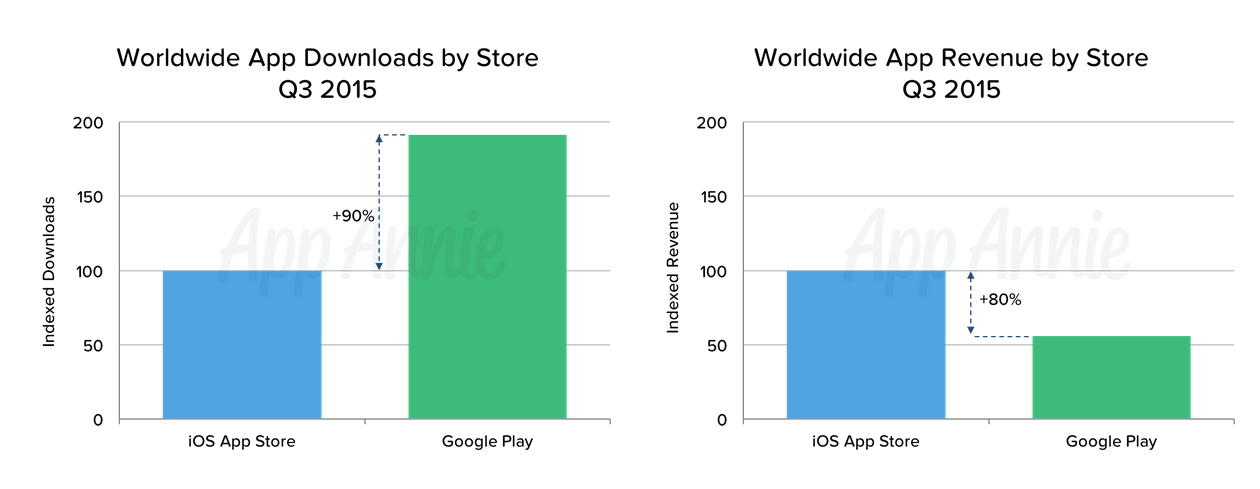
Start up: Facebook’s real origin, Apple’s political underspend, Samsung’s unbranding, the electric oil crisis, and more

Nintendo’s 3DS: not propping up sales so well as in the past. Photo by Ian Muttoo on Flickr.

You can now sign up to receive each day’s Start Up post by email. You’ll need to click a confirmation link, so no spam.

A selection of 11 links for you. Use them wisely. I’m charlesarthur on Twitter. Observations and links welcome.

Cratering portable sales can’t prop up Nintendo’s business anymore » Ars Technica

Kyle Orland:

»A new revision to Nintendo’s projected earnings, released [on Friday], sees Nintendo reducing its expectations of Nintendo 3DS sales for the full fiscal year, which ends in March. Nintendo now expects to sell 6.6m 3DS units during the 12-month period, a 13% drop from previous projections and a 24% decline from the year before. That drop (and the accompanying drop in 3DS software sales projections) is a big reason why Nintendo is now also saying that its annual profits will be 50% lower than it had projected, though the company blames some of that decline on the weakening Japanese yen.

You might think this kind of decline is natural for a system like the 3DS, which is, after all, approaching its fifth birthday. But previous Nintendo handhelds have looked much more robust at this point in their lifecycles. The Nintendo DS was still near the peak of its hardware sales dominance in its fifth and sixth years, selling a whopping 31.18m units in the 2009 fiscal year (and a healthy 27.11m the next year). Game Boy Advance sales were still near a steady peak in the 2005-2006 period, bouncing up and down in the 15m to 18m annual sales range, thanks in part to the successful Game Boy Advance SP hardware refresh.

The 3DS, on the other hand, seems to have peaked earlier and lower than other Nintendo handhelds.

«

In short, Nintendo is predicting that its revenues in FY2016 will be lower than its profits in FY09. It’s taken a while, but smartphones are beginning to undermine it. (Might it be that those who had a Nintendo handheld in 2009 are now updating with a smartphone?)
link to this extract


The true story of how Mark Zuckerberg founded Facebook » Business Insider

Biz Carson:

»In the Hollywood-stylized version, a Harvard student needed a tool to date girls.

The real version couldn’t be further from the truth, Mark Zuckerberg told Mathias Döpfner in an interview with “Die Welt am Sonntag.”

At the time, he already had a girlfriend — Priscilla Chan, now his wife — and he was obsessed with the internet. Google was great for searching for news and Wikipedia was great for searching for reference material, but there was a gap.

“There was no tool where you could go and learn about other people. I didn’t know how to build that so instead I started building little tools,” Zuckerberg told Döpfner.

He built a small tool called Coursematch where people could list what classes they were taking. He did build the Facematch tool, as seen in “The Social Network,” but that was just a prank, he says.

«

Rewrite of an interview with Die Welt am Sonntag (The World On Sunday).
link to this extract


Here’s how electric cars will cause the next oil crisis » Bloomberg BusinessWeek

Tom Randall:

»In the next few years, Tesla, Chevy, and Nissan plan to start selling long-range electric cars in the $30,000 range. Other carmakers and tech companies are investing billions on dozens of new models. By 2020, some of these will cost less and perform better than their gasoline counterparts. The aim would be to match the success of Tesla’s Model S, which now outsells its competitors in the large luxury class in the U.S. The question then is how much oil demand will these cars displace? And when will the reduced demand be enough to tip the scales and cause the next oil crisis?

«

A crisis in the form of a glut.
link to this extract


When the “Apple Encryption Issue” reached Piers Morgan » mobilephonesecurity

David Rogers does mobile phone forensics and teachers a mobile systems security course. Piers Morgan (who used to edit the Daily Mirror, which has apologised to some people for phone hacking) did however claim that he could take the FBI/Farook iPhone “to Tottenham Court Road [an electronics mecca in London) and they’d get into it” – suggesting that he might have confused carrier unlocking with PIN unlocking. Here’s Rogers on the tricky rapids to be navigated in deciding if we can force companies to unlock encrypted devices:

»Remember, someone who has actually committed a crime is probably going to say they didn’t do it. The phone data itself is usually more reliable than witnesses and defendant testimony in telling the story of what actually happened and criminals know that. I’ve been involved with digital forensics for mobile devices in the past and have seen first-hand the conviction of criminals who continually denied having committed a serious crime, despite their phone data stating otherwise. This has brought redress to their victim’s families and brought justice for someone who can no longer speak.

On the other side of course, we’re carrying these objects around with us every day and the information can be intensely private. We don’t want criminals or strangers to steal that information. The counter-argument is that the mechanisms and methods to facilitate access to encrypted material would fall into the hands of the bad guys. And this is the challenge we face – there is absolutely no easy answer to this. People are also worried that authoritarian regimes will use the same tools to help further oppress their citizens and make it easier for the state to set people up. Sadly I think that is going to happen anyway in some of those places, with or without this issue being in play…

…This is the same battle that my colleagues in the mobile world fight on a daily basis – a hole is found and exploited and we fix it; a continual technological arms race to see who can do the better job. Piers Morgan has a point, just badly put – given enough time, effort and money the San Bernadino device and encryption could be broken into – it will just be a hell of a lot. It won’t be broken by a guy in a shop on Tottenham Court Road (see my talk on the history of mobile phone hacking to understand this a bit more).

«

link to this extract


Apple’s $120M jury verdict against Samsung destroyed on appeal » Ars Technica

Joe Mullin:

»Apple’s second high-profile patent win against Samsung was appealed, just as the first was. And in an opinion (PDF) published today, a panel of appeals judges entirely wiped out Apple’s victory and its $120 million verdict.

The new decision found that out of three different patents Apple became famous for winning with, one wasn’t infringed and two of them are invalid.

The ‘647 patent described how to turn phone numbers and other software “structures” into links, allowing users to take actions like calling a number with one “click” rather than copying and pasting. The jury awarded Apple $98.7 million based on that patent, but the appeals judges today held that the patent wasn’t infringed at all. They held that “Apple failed to prove, as a matter of law, that the accused Samsung products use an ‘analyzer server’ as we have previously construed that term.”

Appeals judges also invalidated one of Apple’s most consistently ridiculed patents, the ‘721 “slide to unlock” patent. Jurors awarded $3 million based on infringement of that patent, but the appeals panel said the patent is invalid because of prior art.

«

This whole patent thing ends up as Bobby in the shower. “Patent trials? What patent trials?”
link to this extract


Six Hot Media Startups to Watch in 2016 » Al Jazeera America

Sadly this piece by @ProfJeffJarvis (in reality Rurik Bradbury) was deleted by Al Jazeera, which either didn’t recognise its satirical slant ahead of publication, or did and then got cold feet. But it’s still here at the Internet Archive, with gems like this:

»

The New Republic

The oldest startup here, it went through a significant reboot with its March 2012 purchase by Chris Hughes, tech mogul and co-founder of Facebook. It has since innovated so quickly that it is about to be re-rebooting under even newer ownership (name TBD), a great example of the rapid iteration that is characteristic of the best startups.

Instead of the old questions about subjective, qualitative measures, Chris Hughes brought in Yahoo! wartime consigliere Guy Vidra to ask fresh questions, such as: How well did this piece travel? And does this meme even lift our metrics?

I’m excited to see the New New The New Republic, and hope they re-embrace Walter Lippmann’s original mission of nextifying the bewildered herd using hot takes.

«

Nextify your thinkfluencing.
link to this extract


(UPDATE: China, too!) Korean Galaxy S7 to go without Samsung branding on front » AndroidAuthority

Matthew Benson:

»Carrier branding is arguably the bread-and-butter of free promotion: crudely referred to by some as a so-called “tramp stamp” these images tend to irritate customers who would prefer their devices to be free of all superfluous clutter. Even so, manufacturer branding tends to crop up most everywhere, be it the infamous HTC “black bezel bar” or the ever-visible under-the-earpiece location that companies like Samsung opt for.

Strange then, that Samsung’s South Korean website has pictures of its new Galaxy S7 and Galaxy S7 Edge…devoid of such a front-facing claim to fame. Take a look:

The front Samsung logo is clearly missing from the image. In fact, it’s missing from all the renders pictured, yet the rear logo is clearly present, as can be seen above.

«

Subtle messaging: Samsung really does seem to be getting rid of the visible “Samsung” name on the front of the device in China, Japan and Korea. In the first two, it has struggled recently to keep sales up in the face of competition. But why Korea? And is this an evolution of its branding (more confident) or is it concern?
link to this extract


Invisible porn-clicking trojans invade Android’s Google Play store » Tripwire

Graham Cluley:

»many bogus versions of a wide range of apps (ranging from Toy Truck Rally to Subway Surfers 2 to GTA San Andreas and Tinder) have been distributed by fraudsters who wish to use your bandwidth to earn themselves affiliate income by clicking on adverts for pornographic websites.

Of course, if the apps popped up a copy of the Chrome browser to click on the X-rated ads then chances are that you would notice something unusual was afoot. Criminals have learnt from experience that announcing their presence so obviously only hinders their money-making plans.

So, in the case of “Porn Clicker”, the apps spin up an invisible browser window – meaning that any ad-clicking is invisible to the naked eye. And then, a minute or so later, it clicks again.

The money soon begins to earn cash for the criminals – which is a truth especially evident when you consider that some of the bogus apps have been downloaded thousands of times.

«

Android is following exactly the same malware growth path as Windows did on the desktop.
link to this extract


Android phones are easier for police to crack than iPhones » CNN

Jose Pagliery:

»A Google spokesman said that encryption is now required for all “high-performing devices” – like the Galaxy S7 – running the latest version of Android, Marshmallow. But only 1.2% of Android phones even have that version, according to Google.

By comparison, most Apple products are uniformly secure: 94% of iPhones run iOS 8 or 9, which encrypt all data. Apple makes its devices, designs the software, and retains full control of the phone’s operating system.

“If a person walks into a Best Buy and walks out with an iPhone, it’s encrypted by default. If they walk out with an Android phone, it’s largely vulnerable to to surveillance,” said Christopher Soghoian, the principal technologist at the American Civil Liberties Union.

New York City’s top prosecutor, Cyrus Vance, has noted that Android phones have been easier to crack in the past, especially because Google can reset passcodes on older models.

Android is running on 105 million Americans’ smartphones — slightly more than the number of iPhones in the United States, according to industry trackers at comScore.

But there are ways in which an Android phone could actually be made more secure than an iPhone.

Android software can be tweaked to add all sorts of security features, like a password for a particular messaging app.

Google’s operating system also starts up only after the phone’s owner enters a passcode. That’s not true for the iPhone, which starts up as soon as you hit the power button. That’s an important detail: When confronted with a locked iPhone, police can take it to a trusted Wi-Fi connection and potentially copy the phone’s contents to iCloud on Apple’s computer servers, where investigators can then comb through the data.

Android phones won’t back up to the cloud until they’re unlocked.

«

link to this extract


Has Apple been neglecting politics? » tofias dot net

Michael Tofias:

»To understand Apple’s efforts at persuading legislators of various issues, I compiled a measure of political footprint which combines a company’s own federally registered lobbying expenditures from 2015 with the campaign contributions they made during the 2013-14 election cycle from their corporate PAC as well as any employees who made campaign campaign contributions (and listed their employer). This data comes from the Center for Responsive Politics.

In 2015, Apple spent $4.48m on lobbying efforts and while they don’t maintain a PAC for campaign contributions, Apple employees gave a combined $130,579 in FEC-regulated campaign contributions. This adds up to a $4.61m political footprint.

In contrast, Apple’s main rival in the market for smartphones, Google, spent $16.7m on lobbying in 2015, gave $1.65m in campaign contributions via its PAC, and another $2.25m via employees during the 2013–14 election cycle for a combined $20.5m political footprint – over four times the size of Apple’s.

Apple’s political footprint is also on the small side when compared to other large companies (as measured by market capitalization on on December 31, 2015 as reported by YCharts).

«

link to this extract


Platforms, postcodes and pushing services live: a year in the life of our platforms team » UK Ministry of Justice Digital

»Many of our services need info about postcodes, such as what addresses they cover, where they are on the map and what admin areas they fall under.

A year ago each team had used a different commercial solution, with different charging models, so our first platform was a postcode lookup service.

This combines Ordnance Survey and government data to provide one authoritative way for our applications to look up information for any postcode.

«

Astonishing. This already exists in the outside world, with APIs so you don’t have to laboriously enter things by hand. And this was thought a good use of anyone’s time?
link to this extract


Errata, corrigenda and ai no corrida: none specified.

Start up: more Google tax, LinkedIn’s problem, Apple’s 1970s fix, and more

HTC’s Vive pricing is surprisingly low. Is that good? Photo by theAV club on Flickr.

You can now sign up to receive each day’s Start Up post by email. You’ll need to click a confirmation link, so no spam.

A selection of 11 links for you. Just like that. I’m charlesarthur on Twitter. Observations and links welcome.

LinkedIn problems run deeper than valuation » TechCrunch

Daniel Kimmelman, noting how the site’s stock has plummeted, sees other problems:

»LinkedIn is not, in fact, a business network — individuals on LinkedIn represent themselves, not their businesses. And as LinkedIn’s content is mostly user-generated, the incentive is for the users to produce material that promotes themselves.

This creates a conflict. Most people aren’t looking to change jobs all the time. Instead, they want to communicate and build relationships. However, because LinkedIn’s revenue streams and design restrict typical business forms of communication and facilitate paid ones, most interactions on the platform are low-frequency and one-directional in nature, such as recruitment offers and sales pitches.

As a result, LinkedIn is now, at best, a business card holder. At worst, it’s a delivery service for spam.

«

link to this extract


Google’s new SERP layout: the biggest winners and losers » Search Engine Land

Larry Kim on Google’s new layout, which puts four ads above the organic search results and gets rid of the ones on the side:

»As always, Google is a zero-sum game. For everyone who wins, someone must lose. In that spirit, I’ve compiled a list of the four biggest winners and losers as a result of Google’s new desktop ad layout so far.

The proof is in the data. I looked at WordStream customer data (thousands of accounts across all industries) and determined that side and bottom ads account for just 14.6% of total clicks.

As Alistair Dent noted in his post analyzing iProspect UK clients, ads in the top positions get 14x higher click-through rate than the same ad on the same keyword on the right side.

It’s also important to remember that this change only impacts desktop, which now accounts for less than half of all searches. So, really, this will impact 7.3% of queries.

«

Those low numbers for side clicks suggests that people saw them as ads, whereas they don’t with the ads sitting on the top.
link to this extract


Google unpaid taxes: France seeks €1.6bn from search giant » BBC News

»French authorities have demanded that Google pays €1.6bn ($1.8bn; £1.3bn) in unpaid taxes.
The figure is substantially more than the £130m the search engine agreed to pay in back taxes to UK authorities.

However, France’s AFP news agency reported that Google might be able to negotiate and may not pay the full sum.

The company’s chief executive, Sundar Pichai, is visiting Paris and was due to meet the France’s economy minister Emmanuel Macron on Wednesday night. It is not clear if they will discuss the tax issue.

Earlier this month, French Finance Minister Michel Sapin ruled out striking a deal with the US company.

Google would not comment on reports of the tax demand and French officials said the matter was confidential.

«

link to this extract


Who hit you, HP Inc? ‘Windows 10! It’s all Windows 10’s fault’ » The Register

Chris Williams:

»HP Ink – the PC and printers half of the Hewlett-Packard split – has blamed Windows 10 for a ho-hum quarter of declining sales.

“Windows 10 is a tremendous operating system platform,” HP Ink CEO Dion Weisler told analysts and investors on a conference call on Wednesday afternoon. “But we have not yet seen the anticipated Win10 stimulation of demand that we would hope for.”

Weisler was speaking about an hour after his company published the financial figures [PDF] for the first three months of its fiscal 2016 year. It’s HP Ink’s first quarter as a standalone company since the Great HP Split of 2015.

We were told Microsoft’s software hasn’t, so far, apparently, spurred enough people into buying HP-branded PCs. Well, that may explain the 13% fall in the company’s personal systems revenues. But how about its printers, though? People love printers, right? Always buying them. Always having fun on cold Sunday evenings reinstalling drivers. Unjamming the paper trays. Buying new cartridges. Revenues fell 17 per cent. Ah.

«

HP Inc (as it’s formally called, but HP Ink is much better) is a ship let loose and quietly coasting towards oblivion.
link to this extract


How to disable ads on your Windows 10 lock screen » How-To Geek

Chris Stobling:

»If you’re like me, you might have opened up your Windows 10 laptop today only to see a giant ad for Square Enix’s Rise of the Tomb Raider plastered across your login screen. This is the work of the “Windows Spotlight” feature in your Personalization settings, and thankfully, you can turn it off for good.

«

Amazing.
link to this extract


What does it take to be a “bestselling author” on Amazon? $3 and five minutes » Observer

Brent Underwood:

»I would like to tell you about the biggest lie in book publishing. It appears in the biographies and social media profiles of almost every working “author” today. It’s the word “best seller.”

This isn’t about how The New York Times list is biased (though it is). This isn’t about how authors buy their way onto various national best-seller lists by buying their own books in bulk (though they do). No, this is about the far more insidious title of “Amazon Bestseller”—and how it’s complete and utter nonsense.

Here’s what happened in the book industry over the last few years: As Amazon has become the big dog in the book world, the “Amazon Bestseller” status has come to be synonymous with being an actual bestseller. This is not true, and I can prove it.

«

I added the “on Amazon” part to the headline, because it’s not in the original, and that’s misleading – as misleading as Amazon’s “bestseller” lists. Amazon’s bestseller lists on pretty much every product are indicative of nothing more general than what is selling best on Amazon; it doesn’t tell you about national or other trends, for the most part.

But what Underwood describes is pretty dire. He also wonders why Nielsen Bookscan doesn’t include ebooks. As I understand it, that’s because Amazon won’t share the data. It’s all Bezos charts as far as the eye can see.
link to this extract


HTC Vive pricing lower than expected » Digitimes

Max Wang and Steve Shen:

»HTC has set the price for the consumer edition of its first virtual reality (VR) headset, the HTC Vive, at US$799, which is much lower than market expectation of US$1,500.

HTC will take pre-sale orders globally on February 29 with full commercial availability starting early April, the company said.

The Vive, which is bundled with SteamVR, will be delivered as a complete kit allowing users to instantly jump into a fully immersive virtual environment using two wireless controllers, 360 degree tracking and room scale movement sensors, HTC added.

«

I don’t see this ending well for HTC. It needs revenue, and moreover it needs profitable revenue. Selling at a lower price might juice the market, but at present it can command a premium price simply because it’s new. Google Cardboard, Samsung VR? They’re cheap. Oculus Rift is a competitor, and its bundle costs $1,500.
link to this extract


In 2016, 14% of users are blocking ads » Medium

Rob Leathern:

»Optimal.com is building an adblocking service to help consumers, and we also give major websites tools to measure the rate at which users are blocking ads on their pages.

Below is a summary of data we’ve collected anonymously from over 30 million users from 1/1/16 to 2/13/16. We plan to release more aggregate information in the near future, especially to understand the many differences between mobile and desktop ad blocking. On this latter point for now I will only say that desktop adblocking is approximately 10x more prevalent than mobile adblocking (for the time being).

«

11.7% in the US; 16% in the UK. Poland, Ukraine, Greece, Czech Republic are way above, in the 25-30% range.
link to this extract


Apple files motion to dismiss the court order to force it to unlock iPhone » Techcrunch

Matthew Panzarino:

»Apple’s reasoning in the brief rests on three pillars. First, that forcing Apple to write code that weakens its devices and the security of its customers constitutes a violation of free speech as protected by the Constitution.

Second, that the burden the FBI is putting on it by requesting that Apple write the software and assist in unlocking the device is too large. Apple argues that it would have to create the new version of iOS, called GovtOS, which requires coding, signing, verification and testing. It would then have to create an FBI forensics laboratory on site at its headquarters and staff it. The burden would then extend to what Apple views is the inevitable onslaught of additional devices that would follow after the precedent was set.

In addition to free speech, Apple argues that the Fifth Amendment’s Due Process clause prohibits the government from compelling Apple to create the new version of iOS. Apple argues that there is no court precedent for forcing a company to create something new, like GovtOS.

«

Covered the First Amendment element here previously.

Or read the whole filing.
link to this extract


Latest iOS 9.3 beta unbricks iPhones affected by ‘January 1, 1970’ date bug » Mac Rumors

Juli Clover:

»The most recent beta of iOS 9.3, provided to developers and public beta testers earlier this week, fixes a bug that caused 64-bit iPhones and iPads to be disabled or “bricked” when the date was set to January 1, 1970.

Discovered in mid-February, the “1970” bug occurs whenever an iOS device’s date is manually set to 1970, resulting in a continuous reboot cycle. Speculation has suggested the reboot loop is the result of an integer underflow that causes the iPhone to reset the date to the maximum value, a huge number that iOS devices may be unable to process.

With iOS 9.3 beta 4, the date on the iPhone or iPad can’t be set beyond December 31, 2000 at 7:00 p.m. ET, which equates to 1/1/01 at 12:00 a.m. GMT. That effectively puts an end to the 1970 bug, which was used to trick some people into bricking their devices.

«

God Apple is being so BORING. First it fixes “error 53”, then it let people carry on using the Pencil to navigate on the iPad Pro, and now this.
link to this extract


Health » Google DeepMind

»We have been collaborating with some of the UK’s leading kidney experts at the Royal Free Hospital London to co-design and pilot a mobile app, called Streams, which presents timely information that helps nurses and doctors detect cases of acute kidney injury. AKI is a contributing factor in up to 20% of emergency hospital admissions as well as 40,000 deaths in the UK every year. Yet NHS England estimate that around 25% of cases are preventable.

Consultant Nephrologist and Associate Medical Director for patient safety at the Royal Free Hospital London, Dr Chris Laing, who helped design the app and oversaw two initial pilots at the Royal Free, said:

“Using Streams meant I was able to review blood tests for patients at risk of AKI within seconds of them becoming available. I intervened earlier and was able to improve the care of over half the patients Streams identified in our pilot studies.”

«

Really interesting. AI is a sort of “rising tide” technology: you don’t notice it changing your world, until the world is utterly changed and you find yourself thinking “however did we cope before?”
link to this extract


Errata, corrigenda and ai no corrida: not all Nissan LEAF cars have remote access for operating their air conditioning or checking their battery. (Thanks, Richard Burte.)

Start up: VR porn!, privacy and the FBI, Baidu’s data grab, why Trump?, and more

A Nissan Leaf charging. But you’d know that if you were to plug its VIN into a public API. Photo by Janitors on Flickr.

Don’t be late! Sign up to receive each day’s Start Up post by email. You’ll need to click a confirmation link, so no spam.

A selection of 10 links for you. Use them wisely. I’m charlesarthur on Twitter. Observations and links welcome.

Controlling vehicle features of Nissan LEAFs across the globe via vulnerable APIs » Troy Hunt

Someone in one of Hunt’s classes discovered how to find out the battery status of Nissan’s popular electric car – and also turn its air conditioning on or off. For any LEAF. Without authorisation. Via API. From anywhere. And Nissan didn’t listen, and four different groups have discovered it independently:

»Nissan need to fix this. It’s a different class of vulnerability to the Charlie Miller and Chris Valasek Jeep hacking shenanigans of last year, but in both good and bad ways. Good in that it doesn’t impact the driving controls of the vehicle, yet bad in that the ease of gaining access to vehicle controls in this fashion doesn’t get much easier – it’s profoundly trivial. As car manufacturers rush towards joining in on the “internet of things” craze, security cannot be an afterthought nor something we’re told they take seriously after realising that they didn’t take it seriously enough in the first place. Imagine getting it as wrong as Nissan has for something like Volvo’s “digital key” initiative where you unlock your car with your phone.

By pure coincidence, this week Nissan unveiled a revised LEAF at the GSMA Mobile World Congress. Clearly, like many car makers, their future involves a strong push for greater connectivity in their vehicles:

»

In a fully connected, fully mobile world, in-vehicle connectivity is an absolute must for today’s drivers.

«

«

Perhaps not an “absolute must”, actually.
link to this extract


I got hacked mid-air while writing an Apple-FBI story » USAToday

Steven Petrow works for USA Today, and was writing and sending emails via Gogo Wi-Fi on a flight to Raleigh, Virginia. On touchdown, the guy in the seat behind him explained that he had hacked him, and “most people on the flight”:

»“That’s how I know you’re interested in the Apple story,” he continued. “Imagine if you had been doing a financial transaction. What if you were making a date to see a whore?” My mind raced: What about my health records? My legal documents? My Facebook messages?

And then the kicker:

“That’s why this story is so important to everyone,” he told me. “It’s about everyone’s privacy.”

Then he headed down the escalator and I headed out the front door. I may have been wearing my jacket, but I felt as exposed as if I’d been stark naked…

…[He then called Alex Abdo, a civil rights lawyer]: who is in actual danger here? The answer, apparently, is pretty much all of us. “Anyone who relies on the security of their devices,” Abdo told me.

It should be up to each of us to decide what to make public, and what to keep private, he continued. For me, I felt as though the stranger on the plane had robbed me of my privacy — as was explicitly his intent. He took the decision of what to share out of my hands. He went in through the back door of the GoGo connection.

«

link to this extract


Microsoft has acquired Xamarin » Petri

Brad Sams:

»Xamarin is one of the leading platforms for mobile app development and provides a robust platform that helps developers build mobile apps using C# and deliver fully native mobile app experiences to all major devices, including iOS, Android, and Windows. Seeing as Microsoft is a productivity focused company whose Visual Studio product is used by millions around the globe, this acquisition will fit nicely into their portfolio of products.

With more than 15,000 customers in 120 countries, of which 100 are Fortune 500 firms, Xamarin has become a leader in this space. Companies like Alaska Airlines, Coca-Cola Bottling, Thermo Fisher, Honeywell and JetBlue all use the software to develop their apps.

«

Apparently MSDN devs want to know if they’ll get it for free.
link to this extract


Solid support for Apple in iPhone encryption fight: poll » Reuters

Jim Finkle:

»Nearly half of Americans support Apple Inc’s (AAPL.O) decision to oppose a federal court order demanding that it unlock a smartphone used by San Bernardino shooter Rizwan Farook, according to a national online Reuters/Ipsos poll.

Forty-six percent of respondents said they agreed with Apple’s position, 35 percent said they disagreed and 20 percent said they did not know, according to poll results released on Wednesday.

Other questions in the poll showed that a majority of Americans do not want the government to have access to their phone and Internet communications, even if it is done in the name of stopping terror attacks.

«

Wait, I thought half supported the FBI? Oh god I’m so confused. As are the people being asked subtly different questions about the same topic.
link to this extract


Apple-FBI fight asks: is code protected as free speech? » Bloomberg Business

Adam Satriano:

»There’s some precedent for arguing that code is protected legal speech. In the 1990s, a graduate student at the University of California at Berkeley wrote an encryption program for his own research that he wanted to make public. Under federal regulations, a coder must get a license to publish cryptography tools, and the government denied the student’s license. In 1999, the U.S. Court of Appeals in San Francisco ruled for the first time that source code was protected as speech, and the student, Dan Bernstein, who is now an instructor at the University of Illinois at Chicago, was allowed to share the code freely.

The case, Bernstein v. U.S. Department of Justice, has been highlighted by those who favor less regulation of the Internet. But judges have also ruled that free speech protections don’t apply to code. Courts have been especially skeptical in cases involving piracy of music and movies.
The law “is murky in this area,” said Michael Froomkin, a law professor at the University of Miami — and that’s why Apple’s case could break new ground.

«

link to this extract


I tried VR porn, and I liked it » Ars Technica UK

Sebastian Anthony:

»You will probably be unsurprised to hear that VR porn is awesome. It’s like porn, but better. The porn I was sampling—made by Naughty America—was essentially a standard first-person-perspective film, but with the ability to look around. Unlike some VR experiences that are just two-dimensional 360-degree panoramas, Naughty America’s porn is stereoscopic; stuff actually sticks out, or comes flying at you. You really do want to reach out and touch things.

I watched three different scenes as I sat there in the cafe. In all three of them, “I” (a male actor) was reclining on some kind of sofa, looking down at my muscular physique and giant appendage. In some scenes, other people did things to me—in other scenes, I was much more proactive.

To be honest, it was a bit weird, looking down and seeing someone else’s body. But, after a few minutes of watching, I began to feel a sense of agency; I began to feel that yes, those rippling muscles were mine; I began to feel that it was me being tended to by two other beautiful people.

And of course, just as I was starting to get into it, the demo ended and I found myself back in the real world, being grinned at by a couple of guys from Naughty America. “Pretty cool, eh?”

All I can do is nod. Why did the demo have to end so soon?

Right now Naughty America’s films only allow have a 180-degree field of view, primarily because a standard porn scene doesn’t require anything greater, but also because it’s technologically quite challenging as well. Different varieties of porn—orgies and the like—would require a 360-degree field of view, but it doesn’t seem that Naughty America is working on that just yet.

When I asked Ian Paul, the company’s CIO, about how they actually film the VR scenes, he refused to tell me anything. “I can’t give away anything right now.” Basically, according to Paul, it’s quite hard to shoot a 3D VR film from an actor’s perspective, and lots of porn studios are currently trying to find the optimal setup.

«

You think kids playing video games is a problem now? Wait until this stuff becomes easily available.
link to this extract


Trump shatters the Republican Party » Politico

Shane Goldmacher:

»While Cruz has tried to tap into frustrated voters via ideology, Rubio has been far more reticent to amplify the angriest voices, saying repeatedly, “It is not enough to simply nominate someone who is angry.”

In South Carolina last week, when a voter shouted out that Hillary Clinton was a “traitor,” Rubio interjected gently, “I wouldn’t go that far, sir.” And last month, in Iowa, when another voter worried about Islamic sharia law coming to America, Rubio rebutted, “Guys, that’s not going to happen.”

While Rubio dances around the electorate’s resentments, Trump revels in them. On primary night in South Carolina, he tapped into their nationalism as he whacked at Mexico and China. “They’ve taken out jobs, they’ve taken our money, they’ve taken our everything,” he declared.

The crowd cheered wildly. “I showed anger and the people of our country are very angry!” Trump later tweeted about his South Carolina victory.

Perkins, the evangelical leader, described the Trump phenomenon’s lack of ideology this way: “You can’t be fearful and thoughtful at the same time.”

«

I remain fascinated by Trump’s rise (from the relatively safe distance of a few thousand miles of ocean). What I don’t know, and nobody seems to be saying much, is: how does Trump play with the broader electorate? If it’s Trump v Clinton (as seems likely), how does that play out?
link to this extract


Huawei Watch: Android Wear burn-in prevention 4K lapse [N5X] » YouTube

»

Quick 4K time lapse of Android Wear burn in prevention on the Huawei Watch. Captured with Framelapse Pro using a Nexus 5X.

«

That moves around quite a bit. Which prompts the thought – how long will always-on screens survive before they’re burnt out? Something to consider with wearables.
link to this extract


Announcing Spotify Infrastructure’s Googley future » News

Nicholas Harteau:

»in a business growing quickly in users, markets and features, keeping pace with scaling demands requires ever increasing amounts of focus and effort. Like good, lazy engineers, we occasionally asked ourselves: do we really need to do all this stuff?

For a long time the answer was “yes.” Operating our own data-centers may be a pain, but the core cloud services were not at a level of quality, performance and cost that would make cloud a significantly better option for Spotify in the long run. As they say: better the devil you know…

Recently that balance has shifted. The storage, compute and network services available from cloud providers are as high quality, high performance and low cost as what the traditional approach provides. This makes the move to the cloud a no-brainer for us. Google, in our experience, has an edge here, but it’s a competitive space and we expect the big players to be battling it out for the foreseeable future.

«

Lots of people are interpreting this as the first step to Spotify’s entirely Googley (ie Google-owned) future, and it’s hard not to see this that way.
link to this extract


Thousands of apps running Baidu code collect, leak personal data: research » Reuters

Jeremy Wagstaff and Paul Carsten:

»Thousands of apps running code built by Chinese Internet giant Baidu have collected and transmitted users’ personal information to the company, much of it easily intercepted, researchers say.

The apps have been downloaded hundreds of millions of times.

The researchers at Canada-based Citizen Lab said they found the problems in an Android software development kit developed by Baidu. These affected Baidu’s mobile browser and apps developed by Baidu and other firms using the same kit. Baidu’s Windows browser was also affected, they said.

The same researchers last year highlighted similar problems with unsecured personal data in Alibaba’s UC Browser, another mobile browser widely used in the world’s biggest Internet market.

Alibaba fixed those vulnerabilities, and Baidu told Reuters it would be fixing the encryption holes in its kits, but would still collect data for commercial use, some of which it said it shares with third parties. Baidu said it “only provides what data is lawfully requested by duly constituted law enforcement agencies.”…

…”It’s either shoddy design or it’s surveillance by design,” said Citizen Lab director Ron Deibert.

«

Tricky choice.
link to this extract


Errata, corrigenda and ai no corrida: yesterday’s web page headline briefly said that it was Acer’s routers, not Asus’s, which had been found to be full of holes by the FTC. This was wrong.