Start up: who knows what about you?, smartphone tracking, slim your iPhone photos!, Xiaomi’s razor margins, and more


An iPad Air 2 being charged, apparently from a bicycle pump. Photo by LoKan Sardari on Flickr.

A selection of 8 links for you. Enjoy. I’m charlesarthur on Twitter. Observations and links welcome.

Amazon’s Echo is a good listener but a wretched assistant >> Gigaom

Stacey Higginbotham:

Never has the gap between a flawless technology experience and a closed ecosystem loomed as large as the gap between the Amazon Echo and the Ubi personal computer. While Amazon’s Echo works beautifully and is a gorgeous cylinder that is ready to hear and (attempt to) obey my every command from pretty much anywhere in the room, it fails because its abilities to connect with a variety of web services are very limited.

Meanwhile, the Ubi, a voice-activated computer that is older and, yes, much more painful to use, wants to do the same thing. Like a teenager, though, it isn’t adept at listening to my commands, sometimes awkwardly interrupting my conversations, and its music playback is not nearly as graceful as the Echo’s.

Pays money, takes choice (or don’t spend the money at all).


Android Vs. iOS start experience >> LukeW

Luke Wroblewski:

How times change… Today’s new iPad Air 2 experience consists of 23 or more steps and no less than three iCloud services (iCloud, iCloud Drive, & iCloud Keychain). In contrast, today’s new Android Nexus experience consists of only 8 steps but with a mandatory 234MB update (some things don’t change). Here’s both start experiences in detail.

You can argue this lots of ways. Apple offers TouchID, Apple Pay, Find My iPad, iMessage – and asks about using location services. Google stuffs many of those into a single screen. Wroblewski doesn’t give a “time taken” for the setup; that might be as useful.


People finding their ‘waze’ to once-hidden streets >> Associated Press

Great piece on a smartphone tragedy of the commons, by John Rogers:

Killeen said her four-mile commute to UCLA, where she teaches a public relations class, can take two hours during rush hour. “The streets on the west side are no longer a secret for locals, and people are angry,” she said.

That’s because the app can’t be outsmarted, Waze spokeswoman Julie Mossler said.

“With millions of users in LA, fake, coordinated traffic reports can’t come to fruition because they’ll be negated by the next 10 people that drive down the street passively using Waze,” she said.

Besides, Mossler added, “people are inherently good,” meaning most wouldn’t really screw with the app, no matter what they might say.

Indeed, of all the angry people interviewed for this story, none would admit doing so, although most said they heard someone else had.

One does have to wonder a little why Killeen doesn’t walk, cycle or get a motorbike for that four-mile commute.


It may be crushing Samsung in China, but Xiaomi barely makes a profit >> Forbes

Parmy Olson:

Chinese smartphone upstart Xiaomi, which this year grabbed Samsung’s No. 1 spot in China with its low-cost smartphones, revealed startlingly-low profits in a filing to the Shenzen stock exchange on Monday, Reuters reported.

The company earned $56m in net profit in 2013, on sales of $4.3bn. That’s an operating margin of just 1.8%, razor-thin when compared to Apple’s operating margin (which was 28.7% in 2013) or even Samsung’s (18.7%), which are being forced down by low-cost Indian and Chinese vendors like Xiaomi.

Eyebrows now raised at the WSJ report from earlier which said Xiaomi made a profit ten times that in 2012. Either the WSJ had the wool pulled, or Xiaomi is expanding dangerously fast. A spokesperson for Xiaomi said this “didn’t represent the whole company”, which somewhat contradicts its filing.


Sales of smartphones grew 20% in third quarter of 2014 >> Gartner

Lots to digest here (two months after the end of the third quarter): the continuing, rapid drop in featurephone sales, which particularly hurt Samsung; the growth of Huawei, ZTE and Xiaomi; that BlackBerry is still bumping along, managing 2.4m sales “to end users” in that period by Gartner’s numbers.


Boxed In >> Platformonomics

Charles Fitzgerald:

To own Box stock, you have to believe they will retain their customers for a really long time to pay back the acquisition costs and/or significantly increase their revenue per customer. It is hard to make this case and Box notably doesn’t make much of an effort.

How will Box extract significantly more revenue per customer? They have neither moat nor unique technology (unless you count their “which one of these things isn’t like the others” participation in the Linux Foundation’s Dronecode Project). They don’t have an operations at scale cost advantage. Their “platform ecosystem” is superficial at best. They face giant competitors like Apple, Google and Microsoft with untold billions in the bank who are happily giving cloud-based storage away as a complement to their other services, as well as Dropbox which continues to ooze into the enterprise with a bottoms-up strategy which has dramatically lower customer acquisition costs. Box is still doing the same thing it always has, even as the market has evolved. They no longer have the luxury of just highlighting SharePoint’s inadequacies. Some argue Microsoft’s refusal to support Android and iOS has been the singular Box value proposition – obviously, that is a window that has closed.

Fitzgerald isn’t an optimist on Box.


iCloud Photo Library beta FAQ >> Apple Support

Q :How does iCloud Photo Library save space on my device?

A: If you turn on Optimize [device] Storage, iCloud Photo Library will automatically manage the size of your library on your iOS device, so you can make the most of your device’s storage and access more photos than ever. iCloud Photo Library stores the original, high-resolution photos and videos in iCloud and can keep lightweight, device-optimized versions on each of your devices. As long as you have enough storage, recent photos and videos that you access the most will stay on your device at full resolution.

You can turn on Optimize [device] Storage from Settings > iCloud > Photos or Settings > Photos & Camera > iCloud Photo Library on your iPhone, iPad, or iPod touch. You need an Internet connection to access an original photo or video that’s stored only in iCloud.

As Mark Rogowsky points out, this is the way to free up space on iOS devices while also letting you see the photos you’ve taken.


Who’s Watching You?

You probably know that Google and Facebook are tracking you, but did you know your car is too? Take this test to find out how tracked you are.

Faintly depressing.


Start up: how much (little) ‘Happy’ earned on Pandora, Sony hack spills on, ‘inception’ mobile hack, QNX trumps Microsoft, and more


Ford MyTouch, powered by Microsoft. Well, not in the future. Photo by HighTechDad on Flickr.

A selection of 10 links for you. Choking hazard in children under 3. I’m charlesarthur on Twitter. Observations and links welcome.

Project Goliath: Inside Hollywood’s secret war against Google >> The Verge

What is “Goliath” and why are Hollywood’s most powerful lawyers working to kill it?

In dozens of recently leaked emails from the Sony hack, lawyers from the MPAA and six major studios talk about “Goliath” as their most powerful and politically relevant adversary in the fight against online piracy. They speak of “the problems created by Goliath,” and worry “what Goliath could do if it went on the attack.” Together they mount a multi-year effort to “respond to / rebut Goliath’s public advocacy” and “amplify negative Goliath news.” And while it’s hard to say for sure, significant evidence suggests that the studio efforts may be directed against Google.

The Sony hack is laying bare huge amounts of the entertainment industry’s thinking. Read on for more.


Nation-backed malware targets diplomats’ iPhones, Androids, and PCs >> Ars Technica

Researchers have uncovered yet another international espionage campaign that’s so sophisticated and comprehensive that it could only have been developed with the backing of a well resourced country.

Inception, as the malware is dubbed in a report published Tuesday by Blue Coat Labs, targets devices running Windows, Android, BlackBerry, and iOS, and uses free accounts on Swedish cloud service Cloudme to collect pilfered data. Malware infecting Android handsets records incoming and outgoing phone calls to MP4 sound files that are periodically uploaded to the attackers. The researchers also uncovered evidence of an MMS phishing campaign designed to work on at least 60 mobile networks in multiple countries in an attempt to infect targeted individuals.

“There clearly is a well-resourced and very professional organization behind Inception, with precise targets and intentions that could be widespread and harmful,” the Blue Coat report stated. “The complex attack framework shows signs of automation and seasoned programming, and the number of layers used to protect the payload of the attack and to obfuscate the identity of the attackers is extremely advanced, if not paranoid.”


Ford dumps Microsoft for BlackBerry infotainment system >> CNN

Ford is upgrading its infotainment system to make it more like a smartphone or tablet – and it is dumping its longtime software provider Microsoft as part of the change.

Instead, Ford (F) will use BlackBerry’s QNX operating system for the new Sync 3 infotainment system. Ford Sync allows drivers to navigate, listen to radio and music, make phone calls and control the car’s climate through touch or voice commands.

Among Sync 3’s improvements will be the ability to expand or shrink the display with pinch-to-zoom gestures. Customers will also be able to swipe the screen’s display, as they do on a smartphone or tablet.

Wonder if it’s anything to do with the glitches in MyTouch that surfaced in 2011, when it said it “will send memory sticks to 250,000 customers in the US offering a software upgrades for its glitch-prone MyFord Touch system, which replaces the standard dashboard knobs and buttons with a touchscreen.”

A win for BlackBerry’s QNX, though unlikely to be a dramatic money-earner for a while, if ever.


Pharrell made less than $3,000 from 43 million Pandora streams of “Happy” >> Fusion

Through the first three months of 2014, “Happy” was streamed 43m times on Pandora, while “All Of Me” was played 55 million times on the service.

But how much money did all those streams make for the artists involved in creating the tracks?

According to an email from Sony/ATV head Martin Bandier obtained by Digital Music News’ Paul Resnikoff, “Happy” brought in just $2,700 in publisher and songwriter royalties in the first quarter of this year, while “All Of Me” yielded just $3,400.


Windows Phone wobbles: why users are losing heart >> Tim Anderson’s ITWriting

Unlike Ed Bott and Tom Warren I still use a 1020 as my main phone. I like the platform and I like not taking a separate camera with me. It was great for taking snaps on holiday in Norway. But I cannot survive professionally with just Windows Phone. It seems now that a majority of gadgets I review come with a supporting app … for iOS or Android.

Microsoft is capable of making sense of Windows Phone, particularly in business, whether it can integrate with Office 365, Active Directory and Azure Active Directory. On the consumer side there is more that could be done to tie with Windows and Xbox. Microsoft is a software company and could do some great first party apps for the platform (where are they?).

The signs today though are not good. Since the acquisition we have had some mid-range device launches but little to excite. The sense now is that we are waiting for Windows 10 and Universal Apps (single projects that target both phone and full Windows) to bring it together. Windows 10 though: launch in the second half of 2015 is a long time to wait. If Windows Phone market share diminishes between then and now, there may not be much left to revive.

Windows 10 and unified development won’t be Windows Phone’s saviour; mobile apps aren’t shrunken mobile apps (just look at a desktop website shrunken down to a mobile screen to realise that).

And the very first comment is from someone who has given up on Windows Phone. These are not good signs.


With WebRTC, the Skype’s no longer the limit >> Reuters

WebRTC, a free browser-based technology, looks set to change the way we communicate and collaborate, up-ending telecoms firms, online chat services like Skype and WhatsApp and remote conferencing on WebEx.

Web Real-Time Communication is a proposed Internet standard that would make audio and video as seamless as browsing text and images is now. Installed as part of the browser, video chatting is just a click away – with no need to download an app or register for a service.

WebRTC allows anyone to embed real-time voice, data and video communications into browsers, programs – more or less anything with a chip inside. Already, you can use a WebRTC-compatible browser like Mozilla’s Firefox to start a video call just by sending someone a link.

A terrific desktop browser technology that feels like it’s five or six years too late in reaching a standard. Video calling is on mobiles now, in a variety of different (incompatible) protocols, some cross-platform, some not.


Furious Google ended MPAA anti-piracy cooperation >> TorrentFreak

The leaked emails reveal that Google responded furiously to the perceived slur [in a press release put out by the MPAA in reaction to Google’s press release about its changes to its algorithm].

“At the highest levels [Google are] extremely unhappy with our statement,” an email from the MPAA to the studios reads.

“[Google] conveyed that they feel as if they went above and beyond what the law requires; that they bent over backwards to give us a heads up and in return we put out a ‘snarky’ statement that gave them no credit for the positive direction.”

In response to the snub, Google pressed the ‘ignore’ button. A top executive at Google’s policy department told the MPAA that his company would no longer “speak or do business” with the movie group.

In future Google would speak with the studios directly, since “at least three” had already informed the search engine that they “were very happy about the new features.”


Tablet Ownership is Growing Faster than Ownership of Any Other Connected Device, According to The NPD Group

Tablet ownership among US consumers is on the rise, and growing at a faster rate than that of any other connected device. According to The NPD Group’s Connected Intelligence, Connected Home Report, as of the third quarter of 2014 (Q3 2014) there were 109m tablets in use, up 35m from last year.

“Now that the tablet market is unmistakably past the early adopter stage we are able to gain visibility into what the user base is still doing with their devices, and in this case it’s often video focused activities,” said John Buffone, executive director, Connected Intelligence.

More than half, 55%, of tablet users report leveraging a video feature of their device. This includes video calling; taking, posting, and uploading videos; as well as watching video from a streaming service or app from a TV channel or pay TV provider. Video feature usage is even more prominent among younger consumers. Two-thirds (67%) of tablet users aged 18-34 use these video features compared to 53% of 35-54 year olds, and 45% of users age 55 and older. Further, watching video from a streaming service or TV channel app is the most common video focused behaviour.

By contrast, there are 176m smartphones in use, for the same population. You wonder why tablet sales are slowing at the high end (Apple)? Because the high end is saturated, and tablets probably have a four-year, not two-year, replacement cycle.

And video usage is going to suck the life out of the networks.


Workflow for iOS aims to simplify automation of complex multi-step tasks >> Apple Insider

Examples of tasks that can be accomplished with Workflow, as noted by developer DeskConnect, include:

• Add a home screen icon that calls a loved one
•
Make PDFs from Safari or any other app
•
Get directions to the nearest coffee shop in one tap
•
Tweet the song you’re listening to
•
Get all of the images on a Web page
•
Send a message including the last screenshot you took

Once an automated task has been created within Workflow, users can launch them from within the app, or via other apps using a Workflow Action Extension, in addition to the aforementioned home screen shortcut.

There are location-aware actions, and you can create a homescreen shortcut to call someone (that was the first one I created). Wonder if this – with its capability of putting shortcuts on the homecreen – will fall foul of Apple’s hokey-cokey app store policies.


Google shuts down Russian engineering office >> The Information

Amir Efrati:

Google launched engineering operations in the country in 2006, and its programmers, including a top coder named Petr Mitrichev, work on Web-search quality, developer tools and the Chrome browser, among other projects. It has a sizable Moscow office. Sales operations are expected to continue in some form.

It’s unclear exactly why Google is making the move now, but it is likely related to the Russian government’s decision to require Web companies, starting in 2016, to keep data related to its citizens within Russia as opposed to data centers outside the country. There also was an alleged recent raid by authorities of a high-profile foreign e-commerce firm in Moscow that sent shockwaves throughout the tech community.

Google’s flight from Russia follows similar moves by other well-known firms including Adobe Systems. Western venture and private equity firms also have pulled back their activities in Russia.

I think Efrati had the scoop on this; the WSJ followed it up.


Start up: goodbye Windows Phone, Panic get iCloudy, Google’s long deal, how the cyberwars started, and more


Stormy weather ahead for Windows Phone? Picture by MacBeales on Flickr.

A selection of 10 links for you. Use them wisely. I’m charlesarthur on Twitter. Observations and links welcome.

Transmit iOS 1.1.1 [Updated] >> Panic Blog

UPDATE 12/11/14: After a considerate conversation with Apple, Transmit iOS 1.1.2 has been released with restored “Send To” functionality.

While the process feels less-than-perfect, this resolution is a nice reminder that, just as we thought, there are good people at Apple who will push hard to do the right thing. We hope you enjoy Transmit iOS 1.1.2.

I wrote about the strange back-and-forth that seems to be going on inside Apple over iOS 8 functionality for The Guardian. Developers are, to put it mildly, puzzled.


Apple contract loss could hit Google search revenue big time >> Investors.com

Google has potentially $9.4bn in gross revenue at risk if it’s unable to renew a contract with Apple for mobile Safari toolbar searches, says a Citigroup report, which says potential losses depend on how many Apple customers stick with Google’s search engine.

Google stock had fallen 3.5% as of Wednesday’s close since the Information reported on Nov. 24 that Google’s default search agreement with Apple might be in peril. Google stock, though, was up a small fraction in early trading Thursday.

That report said the Apple-Google deal is set to expire in 2015, possibly as soon as January. Apple’s iPhone 6 sales have been stronger than projected, increasing the potential impact.

Citigroup analyst Mark May estimates that 60% of Google’s 2014 mobile search revenue will come from its default search deal with Apple.

60% is a big number. I was previously wrong about what would happen in the Firefox search deal (Google was expected to renew; Yahoo got the deal in the US), so I’ll stand off this. But the intimation I’ve heard from Apple is that it still thinks Google offers the best search experience.


** A Letter to Indian Mi Fans ** >> Hugo Barra on Facebook

Dear Mi fans,

We have been committed to continue our sales of Redmi Note and Redmi 1S devices in India. In the last 2 days alone, we received about 150,000 registrations for Redmi Note on Flipkart and the momentum has been terrific.

However, we have been forced to suspend sales in India until further notice due to an order passed by the Delhi High Court. As a law abiding company, we are investigating the matter carefully and assessing our legal options.

One way or another, Xiaomi’s going to have to pay up, and that’s going to hit its bottom line unless it comes up with its own patents.


FRAND-ly injunctions from India: has ex parte become the “standard”? >> Spicy IP

Following up on the injunction given against Xiaomi in the Indian high court blocking further sales of the Chinese handsets over standards-essential patents owned by Ericsson:

given that Ericsson sued Indian telecom companies in the past, one needs to carefully reflect on the impact that these patent wars are likely to have on national interest and the growth of the Indian telecom industry. While there are plenty of writings in the pharma space (the various tussles between MNC’s on the one hand and the local generic industry and public health/affordable medication on the other), we haven’t focussed much on the telecom terrain. The time is now ripe to focus on this technology sector as well!

See this ET article from Soma Das and Anandita Singh, which speaks of the latest order in the Ericcson vs Micromax dispute (covered by Rupali on SpicyIP) and reflects a bit on this oft-neglected “national interest” dimension:

“The Delhi High Court has asked homegrown handset maker Micromax to pay a royalty that amounts up to 1% of the selling price of its devices to Ericsson for using the Swedish equipment maker’s patents on technologies that are essential to manufacture the products. The interim order holds until December 31, 2015, the deadline set by the court to conclude the trial…

Apparently China sets a ceiling of 0.017% of adjusted sale value of handsets for the total SEP payout. India might be closer to that, but other countries won’t be. Xiaomi is going to have a problem.


Mysterious 2008 Turkey pipeline blast opened new cyberwar era >> Bloomberg

Jordan Robertson and Michael Riley:

The pipeline was outfitted with sensors and cameras to monitor every step of its 1,099 miles from the Caspian Sea to the Mediterranean. The blast that blew it out of commission didn’t trigger a single distress signal.

That was bewildering, as was the cameras’ failure to capture the combustion in eastern Turkey. But investigators shared their findings within a tight circle. The Turkish government publicly blamed a malfunction, Kurdish separatists claimed credit and BP Plc (BP/) had the line running again in three weeks. The explosion that lit up the night sky over Refahiye, a town known for its honey farms, seemed to be forgotten.

It wasn’t. For western intelligence agencies, the blowout was a watershed event. Hackers had shut down alarms, cut off communications and super-pressurized the crude oil in the line, according to four people familiar with the incident who asked not to be identified because details of the investigation are confidential. The main weapon at valve station 30 on Aug. 5, 2008, was a keyboard.

Surprising. Stuxnet followed not long after.


Because reading is fundamental >> Coding Horror

Jeff Atwood:

Let’s say you’re interested in World War II. Who would you rather have a discussion with about that? The guy who just skimmed the Wikipedia article, or the gal who read the entirety of The Rise and Fall of the Third Reich?

This emphasis on talking and post count also unnecessarily penalizes lurkers. If you’ve posted five times in the last 10 years, but you’ve read every single thing your community has ever written, I can guarantee that you, Mr. or Mrs. Lurker, are a far more important part of that community’s culture and social norms than someone who posted 100 times in the last two weeks. Value to a community should be measured every bit by how much you’ve read as much as how much you talked.

So how do we encourage reading, exactly?

You could do crazy stuff like require commenters to enter some fact from the article, or pass a basic quiz about what the article contained, before allowing them to comment on that article. On some sites, I think this would result in a huge improvement in the quality of the comments.

Though he thinks that’s sub-optimal. See what he does suggest. This is such a terrific post. Read it all.


Benedict Evans on Twitter: “The end of SMS http://t.co/0n9hCi9uJJ”

Graph sourced from IHS/ industry data/ Ofcom showing that SMSs per head peaking in 2011 for a wide range of countries (except, strangely, France). Over-the-top services are taking over.


I’ve given up on Windows Phone >> The Verge

Tom Warren is The Verge’s Microsoft correspondent; he started Winrumors.com (which is part of how he got the job at The Verge). He’s been using Windows Phone since 2010, along with other platforms. Now he’s going to stick with an iPhone 6:

I’ve always been slightly frustrated at the lack of Windows Phone apps, but as the gaps have been gradually filled, a new frustration has emerged: dead apps. Developers might be creating more and more Windows Phone apps, but the top ones are often left untouched with few updates or new features. That’s a big problem for apps like Twitter that are regularly updated on iOS and Android with features that never make it to Windows Phone. My frustration boiled over during the World Cup this year, as Twitter lit up with people talking about the matches. I felt left out using the official Windows Phone Twitter app because it didn’t have a special World Cup section that curated great and entertaining tweets, or country flags for hashtags.

That same sense of missing out extends elsewhere with Windows Phone. I rely on apps like Dark Sky on iPhone to give me a weather warning when it’s about to rain, or Slack and Trello to communicate with colleagues at The Verge. All three aren’t available on Windows Phone, and Dark Sky is particularly useful when you’re at a bar and it pings you a notification to let you know it’s going to rain in your location for the next 30 minutes. It lets you decide whether to grab another beer (tip: always grab another beer) or risk getting wet. It’s an essential app to me personally, and it’s a good example of how apps are changing the world.


Sites certified as secure often more vulnerable to hacking, scientists find >> Ars Technica

The so-called trust marks are sold by almost a dozen companies, including Symantec, McAfee, Trust-Guard, and Qualys. In exchange for fees ranging from less than $100 to well over $2,000 per year, the services provide periodic security scans of the site. If it passes, it receives the Internet equivalent of a Good Housekeeping Seal of approval that’s prominently displayed on the homepage. Carrying images of padlocks and slogans such as “HackerProof,” the marks are designed to instill trust in users of the site by certifying it’s free of vulnerabilities that hackers prey on to steal credit card numbers and other valuable customer data.

A recently published academic paper discovered an almost universal lack of thoroughness among the 10 seal providers studied. For one thing, the scientists carried out two experiments showing that the scanners failed to detect a host of serious vulnerabilities. In one of the experiments, even the best-performing service missed more than half of the vulnerabilities known to afflict a site. In another, they uncovered flaws in certified sites that would take a typical criminal hacker less than one day to maliciously discover.

Well isn’t that so disappointing.


​Why have I given up on Windows Phone? Blame Verizon >> ZDNet

Ed Bott – Ed Bott – has finally given up on Windows Phone. Not because of any faults in the platform itself, but because of the lock that carriers have in the US:

I’d love to leave Verizon behind completely and switch to another carrier, but I don’t have that luxury: Where I live and work, Verizon is the only carrier with a reliable signal.

After waiting in vain for months, I’ve finally given up. I used the Nokia Software Recovery Tool to restore the factory software to my Lumia Icon and put it on the shelf until Microsoft and Verizon figure things out. In the meantime, I’ve switched to an iPhone 6 Plus.

I’m probably not the only one.

And as long as US-based carriers, including the biggest of them all, Verizon, are able to drag their feet and ignore Windows as a mobile platform, it’s unlikely that anything Microsoft can do will be able to make a dent in its market share in the United States.

This highlights the real problem in the mobile phone market: it is carriers which are the “customers”, while people like you and I are “users”. The same disconnect existed with PCs in business (and particularly enterprise apps). There’s no simple solution, though. (Don’t say “Wi-Fi networks!”)

The decision by both Warren and Bott may be seen by some as canaries in the coalmine. Their reasons are slightly different – but both blame Microsoft. That feels significant.


Start up: India blocks Xiaomi, Chinese app habits, Office gets Bing, hacking smartwatches, and more


Refuelling a Toyota Prius. By the time he’s grown up, it might have paid for itself. Photo by Chris Yarzab on Flickr.

A selection of 9 links for you. Slippery when wet. I’m charlesarthur on Twitter. Observations and links welcome.

Breaking News: Delhi High Court grants injunction against Xiaomi >> Spicy IP

[On Monday] the Delhi High Court granted an ex parte injunction order against Chinese operator Xiaomi for infringement of Ericsson’s patents. The patents in question are Standards-Essential Patents (SEPs) which are subject to FRAND (Fair, Reasonable and Non-Discriminatory) terms. However, they may also be the same patents which are the subject matters of litigation Ericsson has mounted against Micromax, Gionee and Intex. As Shamnad Sir noted earlier today, while Ericsson has largely favourable orders against Micromax and Gionee, the same cannot be said for its case against Intex. Therefore, when the same patents are potentially in question under other cases as well, there was no need for the Courts to rush to grant an injunction against a new defendant, namely Xiaomi.

At this juncture, it is more interesting to note the reasons provided for granting the said injunction. One factor that the Court found persuasive was that Xiaomi had not responded to Ericsson’s repeated communications  (6 in number from July 2014). However, it must be questioned whether Xiaomi’s purported laxity in this matter is a sufficient reason to grant an injunction against them. More so, when an alternative remedy in the form of damages is available which is one of the cardinal principles that goes against the granting of injunctions.

This ex parte order injuncts Xiaomi from selling, advertising, manufacturing or importing devices that infringe the SEPs in question. The judge also directed the Customs officials to stop the imports under the IPR Rules, 2007. Moreover, local commissioners have been appointed to visit Xiaomi officers to ensure the implementation of these orders.

This is going to put a whole new complexion on Xiaomi’s expansion – and profitability – outside China, and probably means it won’t be coming to the US any time soon.


Chinese mobile app UI trends >> Dan Grover

Slightly to his surprise, San Francisco native Grover finds himself a product manager on Chinese messaging app WeChat, in Guangzhou; from the photo, it’s Shenzhen, as that’s where WeChat is headquartered. This isn’t the cheesy opener to a TV series, unless you make it so:

Moving to a new country has meant learning how to do lots of things differently: speaking a new language, eating, shopping, getting around. In a few months, I’m surprised at how acclimated I’ve become to what, at first, seemed such an overwhelmingly alien place.

This has applied to my digital life too. I’ve replaced all my apps with those used here, owning both to my keen interest as someone in the tech industry, and to “go native” to the extent I can. Since then, I’ve similarly become blind to the adaptations required there, too.

One day, for the fun of it, I started writing a list in my notebook of all the things that are different between apps here and those I’m accustomed to using and creating back in the US. When I finished, I was surprised by how long the list was, so it seemed fitting to flesh it out into a post.

You’ll look at it and say “oh, that’s why feature X that I never use is in iOS 8”. Plus much more. China may be like Japan – a harbinger of some of the mobile future, but not all. The trouble is figuring out which bits are which.


How the Prisoner’s Dilemma explains the lack of forked Android phones outside China >> Tech-Thoughts

I’ve taken liberties with the headline on Sameer Singh’s article, but that’s basically what he’s doing:

[in the classic minimax game] the best payoff for both prisoners will be achieved if both remain silent. But the best individual payoff requires each to betray the other. So the only rational course for any self-interested party (like profit-generating enterprises) is to betray each other. In the case of Android OEMs, it may benefit the whole industry (from a differentiation and profit standpoint) to fork Android and exclude Google services. But the threat of selling a non-competitive forked device, while others sell devices with Google services is too great for this to ever happen.

The rest is insightful too. Sameer’s been quiet for a while; pieces like this contribute greatly to our understanding of ecosystems:

There are close to 2 billion smartphone users today and that will grow to roughly 4 billion over the next few years. However, the purchasing power of these users will be far lower than that of the existing user base, i.e. they will probably buy $25-$50 devices and not $600 or even $200 devices. How do you monetize a user who can only afford to pay $25-$50 for a phone?

The answer: services, dear boy, services.


PC makers may beat Apple to the punch with new ‘fingerprint ID’ sensors built into notebook touchpads >> Apple Insider

Calling it the “first solution to integrate fingerprint ID technology into the TouchPad,” the Synaptics SecurePad is a 4-by-10-millimeter sensor on the surface of a notebook’s cursor controls. The SecurePad activates with the touch of a finger, and like Apple’s Touch ID, it supports fingerprint detection at any angle.

The Synaptics SecurePad is a Fast Identity Online-ready authenticator supporting the use of password-free security. It will allow PC makers to implement fingerprint scanning technology without the need to duplicate hardware components, allowing for simpler integration into existing notebook designs.

Once a user scans their fingerprint when prompted for a password, SecurePad initiates a cryptographically secure challenge and response with an online service provider. The Synaptics solution does away with storing password databases in the cloud, further improving security with FIDO-compliant partners.

Useful for enterprise PCs; unclear whether there will be much demand for it from consumers (though users of iOS devices with TouchID might like the idea). It all rests on the execution.


Microsoft begins integrating Bing search into Office >> ZDNet

Microsoft is beginning to integrate its Bing search technology into Office, starting with Word Online, company officials announced on December 10.

Microsoft is calling the new embedded search capability “Insights for Office”. Microsoft is rolling out the capability worldwide (everywhere where Bing is available) starting today, December 10. The rollout should be complete within the next few days, officials said.

Users don’t need to do anything to get the new capability; it will just be added to Word Online automatically. The new “intelligent search experience,” as Microsoft officials are calling this, isn’t ad supported. It’s free.

Bill Gates wanted to include Microsoft’s search solution in Office back in 2003, but antitrust concerns, and the Office team’s refusal to help the search team, killed it. (Source: my book, Digital Wars – US version. Just the present for you or someone like you.)


With $2 Gas, the Toyota Prius Is for drivers who stink at math >> Businessweek

It would take almost 30 years of fuel savings from the hybrid Prius to cover its price premium over the little Chevy Cruze, although that doesn’t account for the Chevy buyer marking savvy investments with her savings in the meantime. It doesn’t matter since we will all be flying around in futuristic Teslas before the Prius pays off. The all-electric Nissan gets a lot closer: The all-electric Nissan Leaf, without any gas stops, take just 3.8 years on the road to beat the cheaper sticker price of the Cruze.

The Cruze gets a respectable 30 miles per gallon of combined highway and city driving, but its real strength is relative affordability. Without a second engine and a massive battery, the average Cruze had a $21,322 sticker price last month, compared with almost $31,973 for a Prius and $32,933 for a Leaf. Even after federal tax breaks, Cruze buyers start with an advantage of $8,151 over the Prius and $4,111 over the Leaf. That’s a lot of gas money.

For the 13 states with no hybrid incentives, this is where the equation stops.

This is the real reason why the US hasn’t made any progress on electric cars: the lack of tax incentive. True, the idea that carbon emissions are a problem is relatively new, but the US’s dependence on foreign oil (and hence oil) was seen as a problem as far back as Jimmy Carter’s time in the 1970s.


Eric Young on Twitter: “”I work for 1 of largest credit issuers n world…”

Eric Young quoting a source at “a major [US] bank: “I work for 1 of [the] largest credit issuers n [in the] world. We processed way more Apple Pay transactions than all of Google Wallet since its beginning”.

I’ve calculated there have been 20m Google Wallet downloads (it’s US-only), and people who should know have subsequently suggested that perhaps one-tenth of those are active. Apple Pay is very likely far past Google Wallet for number of active users in the US, even though Google Wallet came out in 2011 – and Apple Pay in September.


Mobile Enterprise Apps >> Apple

The first fruits of the collaboration with IBM, yielding what Apple calls “a new class of apps — entirely reimagined for the mobile enterprise, made for iOS, and designed to empower employees wherever their work takes them”. I was struck by the one for pilots, and this one for law enforcement officers:

With the Incident Aware app, police officers can know each other’s whereabouts with greater insights in emergency situations. When law enforcement officials receive an emergency call, responders can go in with a bird’s-eye view of the scene’s perimeter that includes GPS map data, the location of those involved in the incident, and live video feeds updated in real time on their iPhone devices. This powerful and intuitive app can even access police records to calculate risk, letting other law enforcement stakeholders know where and when other responders will appear.

It relies of course on Apple Maps, which will really up the stakes on getting that right and up-to-date.


Data sent between phones and smartwatches wide open to hackers >> Ars Technica

The growing number of smart devices that interoperates with smartphones could leave text messages, calendar entries, biometric data, and other sensitive user information wide open to hackers, security researchers warn.

That’s because most smart watches rely on a six-digit PIN to secure information traveling to and from connected Android smartphones. With only one million possible keys securing the Bluetooth connection between the handset and the smart device, the PINs are susceptible to brute-force attacks, in which a nearby hacker attempts every possible combination until finding the right one.

Researchers from security firm Bitdefender mounted a proof-of-concept hack against a Samsung Gear Live smartwatch that was paired with a Google Nexus 4 running Android L Preview. Using readily available hacking tools, they found that the PIN obfuscating the Bluetooth connection between the two devices was easily brute forced. From that point on, they were able to monitor the information passing between the watch and the phone.

Trying to feel anxious. Somehow can’t summon up the necessary level of worry about someone seeing a calendar alert.


Start up: Sony-signed malware, robots watching videos, Nexus 6’s lost finger lock, are tablets desktops?, and more


I love robots, by Duncan on Flickr.

A selection of 10 links for you. Use them wisely. I’m charlesarthur on Twitter. Observations and links welcome.

Swedish police raid The Pirate Bay, site offline >> TorrentFreak

This morning, for the first time in months, The Pirate Bay disappeared offline. A number of concerned users emailed TF for information but at that point technical issues seemed the most likely culprit.

However, over in Sweden authorities have just confirmed that local police carried out a raid in Stockholm this morning as part of an operation to protect intellectual property.

“There has been a crackdown on a server room in Greater Stockholm. This is in connection with violations of copyright law,” read a statement from Paul Pintér, police national coordinator for IP enforcement.


‘Destover’ malware now digitally signed by Sony certificates >> Securelist

Functionally, the backdoor contains two C&Cs [command & control servers for computers taken over by the malware] and will alternately try to connect to both, with delays between connections:

208.105.226[.]235:443 – United States Champlain Time Warner Cable Internet Llc

203.131.222[.]102:443 – Thailand Bangkok Thammasat University

So what does this mean? The stolen Sony certificates (which were also leaked by the attackers) can be used to sign other malicious samples. In turn, these can be further used in other attacks. Because the Sony digital certificates are trusted by security solutions, this makes attacks more effective. We’ve seen attackers leverage trusted certificates in the past, as a means of bypassing whitelisting software and default-deny policies.

We’ve already reported the digital certificate to COMODO and Digicert and we hope it will be blacklisted soon. Kaspersky products will still detect the malware samples even if signed by digital certificates.

Everyone says “ooh! Thailand again!” (a previous part of the hack was linked to a hotel in Bangkok) but nobody says “hmm, Time Warner.” What if the hackers are based in the US? (Speaking of which, has Re/Code walked back – as one says – on its claim that North Korea was behind the Sony hack?)


Android source reveals scrapped Nexus 6 fingerprint sensor >> Ars Technica

Methods like “FINGERPRINT_ACQUIRED_TOO_FAST” and “FINGERPRINT_ACQUIRED_TOO_SLOW” in the fingerprint API suggest it supported a “swipe” style fingerprint reader, which, unlike Apple’s stationary fingerprint reader, requires the finger to be moved across a sensor at the right speed. Another file said the system would show a picture indicating which part of the finger would need to be scanned next, which again points to it being more like a swipe reader and less like a whole-fingerprint scanner.

The fingerprint API would be open to multiple apps, with a comment saying Google had built “A service to manage multiple clients that want to access the fingerprint HAL API.” Presumably this would allow apps like Google Wallet to use your fingerprint as authentication.

Motorola had a fingerprint scanner in the Atrix in 2011. Sucked.


The real reason why Google is dropping the tablet v desktop distinction – it’s the user context, stupid! >> Search Engine Land

Looking at the huge amount of search query data that they have access to, Google picked up on a pattern in the way people use their devices. What they noticed is that user context trumps everything else.

“User context” refers to the time, location and device from which a search is conducted, and as [group product manager of Global Mobile Search Ads at Google] Surojit [Chatterjee] put it: “User context drives what people search for, and the actions they take. So for example, say I am at home in the evening, and I’m doing a search. The actions that I will take will be largely the same if I’m using a smartphone, tablet or notebook, because the context is the same. Particularly between notebook and tablet, the query patterns are very similar.”

Similarly, the types of searches that we typically think of as “mobile” searches are the ones that people make when they’re out and about, away from home or work – and that user context is actually far more important than the physical device they are using.

Also: “Currently, 80% of tablet traffic occurs in the home, in the evening, and Google is much more interested in user context vs. user hardware.”

In other words, tablets are the new laptops/desktops.


Korea’s shrinking market: domestic smart device market size likely to shrink for two years >> BusinessKorea

[Research company IDC] mentioned a decline in smartphone supply as the main culprit of the negative growth of the domestic market. The smartphone segment used to account for 80% of the overall smart device market, but the domestic supply is forecast to drop by 20.5% to 17.54m units and the sales by 29.2% to 12.345trn won (US$11.1bn) this year.

“The smartphone market has already reached a saturation point, and the market downturn has been accelerated by the recent suspension of the business of mobile carriers, the Terminal Distribution Structure Improvement Act and the crisis of Pantech,” IDC Korea explained.

Non-tablet PC demand is on the decline as well, with more and more people using their smartphones and tablet PCs instead of conventional PCs.

That’s a steep drop in Samsung’s and LG’s homeland.


OMG! Mobile voice survey reveals teens love to talk >> Official Google Blog

Mobile voice searches have doubled in the past year, says Google, which commissioned a study of 1,400 US adults so it could commission an annoying infographic:

We weren’t surprised to find that teens — always ahead of the curve when it comes to new technology—talk to their phones more than the average adult. More than half of teens (13-18) use voice search daily — to them it’s as natural as checking social media or taking selfies. Adults are also getting the hang of it, with 41% talking to their phones every day and 56% admitting it makes them “feel tech savvy.”

Those numbers feel high. Would love to know how they break down between smartphone platform; Google doesn’t specify that, and doesn’t show what the actual questions on the survey are.

Given that about half of smartphone owners in the US have iPhones, could it be that a significant portion of those people who use voice commands (because that’s what the survey asks about – not voice search) were actually asking Siri to do stuff?

Note though how Google cleverly elides from “voice search” (what it offers in the Google app) to voice commands – which don’t necessarily involve Google at all.


Digitimes Research: Lenovo mobile device shipments to lead Samsung by 9 million units in 2015 >> Digitimes

Note that by “mobile” it’s excluding smartphones, which might strike some as contrary. But anyway, Jim Hisiao and Joanne Chien report:

Despite difficulties to achieve further shipment growths for its tablet business, Lenovo with its advantage as the largest notebook brand vendor worldwide and aggressive promotions of its inexpensive and phone-enabled tablets is expected to achieve 50m in total tablet and notebook shipments in 2015, widening its gap with Samsung to 9m units.

Because tablet demand will weaken in 2015, Lenovo’s and Samsung’s strategies for the mobile computing device market are expected to focus on maintaining their tablet shipments. Digitimes Research believes Lenovo’s shipments for tablets with phone functions to emerging markets in 2015 are expected to remain strong…

…Samsung’s aggressive expansion of its tablet product line in the first half of 2014 did not receive a good response from the market. Since the company is expected to turn conservative about its tablet business and place most of the resources on the smartphone business in 2015, Digitimes Research expects the Korea-based vendor’s tablet shipments to drop to 36m units in the year.

As for the notebook business, after phasing out from the market in the second half of 2013, Samsung’s shipment volume has dropped rapidly and is only expected to reach 5m units in 2015.

Samsung’s essential weakness compared to Lenovo is its failure to make any profit from selling PCs.


Editorial: No comments. An experiment in elevating the conversation >> St Louis Post-Dispatch

Last Sunday, we challenged our region to have the serious discussion on race that it has been avoiding for decades. Such difficult discussions are made more challenging when, just to present a thoughtful point of view, you have to endure vile and racist comments, shouting and personal attacks.

If you’ve watched many of the talking heads on cable television try to discuss the killings of Michael Brown and Eric Garner, you know what we’re talking about. Unfortunately, sometimes comments on newspaper stories and columns have a similar effect.

In fact, it has a name: “The nasty effect.”

That’s what University of Wisconsin-Madison researchers Dominique Brossard and Dietram Scheufele dubbed the negative effect certain comments can have on a reader’s understanding.

Comments on general news sites are a waste of the readers’ (and arguably writers’) time. I wonder how much further this trend will go.


Apple trial continues, without a plaintiff for now >> Associated Press

U.S. District Judge Yvonne Gonzalez Rogers scolded Marianna Rosen and her attorneys on Monday for not providing more complete information about the iPods Rosen had purchased. That came after Apple lawyers successfully argued that the devices purchased by Rosen were not among those affected by the lawsuit.

But the judge also rejected Apple’s argument that the case should be dismissed because it’s too late to name a new plaintiff. She ordered the attorneys suing Apple to identify a new person, by Tuesday, who can serve as a lead plaintiff.

Both sides estimate about 8 million people bought iPods that are potentially affected by the lawsuit, which focuses on Apple’s use of restrictive software that prevented iPods from playing music purchased from competitors of Apple’s iTunes store. The plaintiffs say that amounted to unfair competition and that Apple was able to sell iPods at inflated prices because the software froze makers of competing devices out of the market.

Apple is carving out entirely new areas of law. There was the antitrust case where it had the minority share (in ebooks), and now a class action (also with antitrust implications) where none of the plaintiffs shows up. Presumably a suitable plaintiff will have to show that they bought music from Real and that it was deleted… but that they then couldn’t reload it or play it on any device, or only on the iPods? Did Apple explicitly promise that they would be able to buy music bought from anywhere on it? (I don’t think so.) The limits of this case aren’t clear.


Robots, not humans, fake 23% of web video ad views, study finds >> Bloomberg

Computers being remotely operated by hackers account for almost one in four views of digital video ads worldwide, according to a study that estimates such fraud will cost advertisers $6.3bn next year.

The fake views, which also account for 11% of other display ads, often take place in the middle of the night when the owners of the hijacked computers are asleep.

The result is retailers, automakers and other companies paying for web advertisements that are never seen by humans, or are seen by fewer people than they are paying for, according to the report released today by the Association of National Advertisers, whose members include Wal-Mart Stores, Ford Motor Co. and Wendy’s.

“We’re being robbed,” said Bob Liodice, president and chief executive officer of the New York-based association, which has 640 members that spend more than $250bn a year in advertising. “This isn’t about system inefficiencies or process sloppiness. This is about criminal activity.”

Between this and Google’s announcement that half of all online ads aren’t actually viewed, a lot of the basis for the online advertising business begins to look a bit shaky.


China’s polluted soil is tainting the country’s food supply >> Businessweek

A new study from the China National Environmental Monitoring Center examines the results of nearly 5,000 soil samples from vegetable plots across China. Roughly a quarter of the sampled areas were polluted. The most common problem is high soil concentrations of heavy metals—such as cadmium, lead, and zinc—which leach out from open mines and industrial sites and into surrounding farmland.

Plants grown in tainted soil can absorb heavy metals. People who ingest high levels of heavy metals over an extended time can develop organ damage and weakened bones, among other medical conditions.


Start up: pace of change, Anonymous’s guitarist, how first-time users view smartphones, Uber defended and more


Stereo texting, by Peronimo on Flickr.

A selection of 12 links for you. Use them wisely. I’m charlesarthur on Twitter. Observations and links welcome.

Is the pace of change really such a shock? >> plasticbag.org

Tom Coates, musing on his post-BBC repose (where there were warnings of the “sheer pace of change” in technology):

five years from now there will clearly be more bottom-up media, just as there are more weblogs now than five years ago, but I’d be surprised if it had really eradicated any major media outlets. These changes are happening, they’re definitely happening, but they’re happening at a reasonable, comprehendible pace. There are opportunities, of course, and you have to be fast to be the first mover, but you don’t die if you’re not the first mover – you only die if you don’t adapt.

Written in April… 2006. Worth reading now because it’s still completely true (and doesn’t apply only to the BBC, of course).


66-year-old rock guitarist sentenced to 10 days in jail for role in Anonymous attack >> The Verge

Russell Brandom:

Geoffrey Commander doesn’t fit the standard Anonymous profile. He’s a successful musician, earning his living by playing guitar for ELO and Elton John. At 66, he’s also a good deal older than your average hacktivist. But according to the indictment handed down last October, Commander was one of a group of 13 defendants who disrupted the websites of Bank of America, Mastercard, and a number of anti-piracy groups as part of Anonymous’s Operation Payback. Commander and his 12 co-defendants haven’t had as high a profile as the PayPal 13, who were brought before court around the same time, but they’re charged with the same crime: using a freely available web tool called the Low Orbit Ion Cannon to perform a denial-of-service attack.

Mr Low Orbit Ion Cannon Sky.. Really proving that Anonymous is much more diverse than it seems.


Peering into the minds of the 4.3 billion unconnected >> TechCrunch

Hassan Baig of ClubInternet, which tries to “connect the unconnected”:

The test subject in the GIF above was tasked with moving between various pages of the app launcher. Easy right? In multiple trials, she always attempted a mix of tapping and swiping to move between the pages, never definitively settling on swiping (which is the correct action for the said task). Her mental model for gesture control on mobile devices remained suspect throughout the usability test.

Overall, we’ve found that almost all of the unconnected muddle through when given a mobile device to use, struggling with understanding when to swipe, tap, double tap or pinch. A possible reason could be that feature phones, TV and radio — the three most widely used technologies among the unconnected — do not exactly nurture a mental model for gesture control in any meaningful way.

We’ve also found that repetitive smartphone use does alleviate this problem somewhat, but very gradually. Overall, in no way is using a smartphone as intuitive for the unconnected as it felt for us — the connected — back in 2007 when we experienced our first such device.


In defense of Uber in India >> Medium

Sriram Krishnan:

India has had a string of similar tragic incidents [to the one where an Uber driver is accused of rape, and had a past sexual assault record] for many years. When I was at Microsoft Hyderabad in 2005, we started having security guards accompany women home late at night after a string of incidents where women in tech companies were assaulted by their shuttle drivers. As I was writing this post, I found more incidents as recent as 2013. This has been happening for a long time now and India has been grappling with some hard social/cultural questions on why it has been unable to stop this. This is why a lot of us tell women traveling to India to be much more aware of their surroundings — the social calculus you employ when you do something as trivial as jumping into a cab or asking a stranger for a favor isn’t the same in every part of the world.

The idea of Uber doing background checks and “filtering out” this driver with an arrest record is laughable for anyone who has dealt with government records in India. First, there is no reliable way to run a check on someone in most parts of the world and second, even if they did, a small bribe in the right place will fix most records.

A side anecdote on how such records work. Most of my school friends didn’t have to go to the Indian equivalent of the DMV to get a license when they hit the right age — they just got a “friend” to get it for them for around $10. I remember being grumpy with my dad when he made me actually take the test. Not because my dad had some moral high ground but more because he didn’t want to spend the money on a bribe.


Despite its problems, Uber is still the safest way to order a taxi >> Business Insider

James Cook:

There’s also no cash involved with Uber, as payments take place through the app. And unlike taxis, you can’t hail an Uber off the street. While hailing a taxi is convenient, it opens up passengers to unlicensed taxis operating illegally. And of course, even if you get a taxi from an official rank, you don’t know who the person is at the wheel.

Uber also has a system where passengers and drivers can rate and — if need be — identify each other. The company is notoriously vigilant when it comes to its driver ratings. It has been speculated that any driver that dips below a 4.7 rating out of 5 are deactivated by the company.

In the normal course of business, drivers and riders only know each others’ first names. Riders get to know the cars, photos and license plates of their drivers, too. It’s all automatically recorded in the app. If a dispute arises (or an assault) Uber has a complete record of who was in the car, where the car went, and how long the journey was. That’s much more identifying info than a taxi ride generates.

He acknowledges that in the Delhi case “something there obviously went wrong”. But his general point is well-made.


YouTube offering its stars bonuses >> WSJ

Rolfe Winkler:

Three people who have been approached by Vessel [a startup intending to launch a subscription video service, with $75m of venture backing] say the company wants artists to post videos exclusively on its service for up to three days, part of its plan to offer subscribers an advance look at popular short-form video. One of those people said Vessel offered to pay an advance based on how well the creator’s videos have performed on YouTube.

Vessel also has told creators that its subscription service will provide a nicer neighborhood for their videos than YouTube, where videos may run next to edgy or low-budget fare, according to people who have heard the company’s pitch.

The moves show how emerging competitors are forcing Google to rethink YouTube’s traditional positioning as a “platform” where video creators can upload what they like. They still do, but YouTube now must put more skin in the game, investing to keep top stars on the site. Creators and agents say the service is acting with rare urgency.

The internet is full of niches, but some of those niches are gigantic.


Galaxy S6 rumors: Cat. 10 LTE data speed detailed in new report >> BGR

Tero Kuittinen:

a new report from South Korean online publication Naver says that Samsung is also working on a faster LTE chip of its own, which could be used in one version of next year’s Galaxy S6.

According to the report, Samsung is developing a tri-band LTE Cat. 10 modem for its Exynos chips that would support theoretical data speeds of up to 450Mbps, or significantly higher than the maximum 300Mbps speed of the current LTE Cat. 6 standard.

Apparently, Samsung is interested in making its own LTE modem chips, rather than relying on competing products. Qualcomm also has a similar modem for the Snapdragon 810 System on Chip that could be used in a different flavor of the Galaxy S6.

On the other hand, no matter how fast these LTE modem might be, they’re still useless as long as carriers don’t also support the faster data transfers.

Like any general, Samsung is still fighting the last war – in this case, the specs war – with the same weapons. Remember Smart Scroll, Air Gesture, and the like?


Qualcomm shoots down rumors of Snapdragon 810 delays >> Android Beat

Turns out that it was just a baseless rumor, which has now been shot down by Qualcomm’s Senior Director of Public Relations, Jon Carvill. While Carvill refused to comment on the delay or the rumor, he did say that the development on the Snapdragon 810 chip is going as per schedule.

“I can tell you that everything with Snapdragon 810 remains on track and we expect commercial devices to be available in 1H 2015,” said Carvill.

Okey-doke.


Android Police holiday gift guide 2014 >> Android Police

By far the best Android news site I’ve come across (for its ability to get exclusives, write interesting reviews and dig into new software). This year’s gift guide has that extra something; see if you can spot it.


By 2018, more than 50% of users will use a tablet or smartphone first for all online activities >> Gartner

Mobile devices are increasingly becoming the first go-to device for communications and content consumption, according to Gartner, Inc. In the emerging economies, users are adopting smartphones as their exclusive mobile devices while in developed economies, multi-device households are becoming the norm, with tablets growing at the fastest rate of any computing device. As such, Gartner predicts that, by 2018, more than 50% of users will go to a tablet or smartphone first for all online activities. 

“The use pattern that has emerged for nearly all consumers, based on device accessibility, is the smartphone first as a device that is carried when mobile, followed by the tablet that is used for longer sessions, with the PC increasingly reserved for more complex tasks,” said Van Baker, research vice president. “This behaviour will adapt to incorporate wearables as they become widely available for users. As voice, gesture and other modalities grow in popularity with consumers, and as content consumption tasks outweigh content creation tasks, this will further move users away from the PC.” 

Let’s hope they’re doing better than the first-time users above.


Monument Valley is Apple’s iPad Game of the Year >> Monument Valley by ustwo™ games

The thing to really pay attention to in this justifiedly celebratory blogpost is the email from the boss of UsTwo (which built the game) exhorting the team, and setting out clear goals – all starting “must…” – to achieve. All achievable, but all challenging. Great leadership and great teamwork.


Corrupt Apple exec sentenced to 1 year in prison >> Associated Press

A former Apple executive who sold some of the iPhone maker’s secrets to suppliers will serve a year in prison and repay $4.5m for his crimes.

Paul S. Devine was sentenced in San Jose federal court earlier this week, more than three years after he pleaded guilty to wire fraud, conspiracy and money laundering. The US Attorney’s office announced Devine’s penalty Friday, but declined to explain the reason for the lengthy delay in his sentencing.

Devine faced up to 20 years in prison.

The scheme funnelled millions in kickbacks to Devine for passing along confidential information to Apple suppliers and manufacturers who used the secrets to negotiate more favourable deals.

Considering this. The suppliers got better deals – so they were paid more by Apple? So either Apple’s profit was reduced, or it had to push up prices. Devine was a global supply manager at Apple between 2005 and 2010.


Start up: Google kills Pirate Bay apps, Uber in the spotlight, Secret to pivot?, Microsoft Band five weeks on, and more


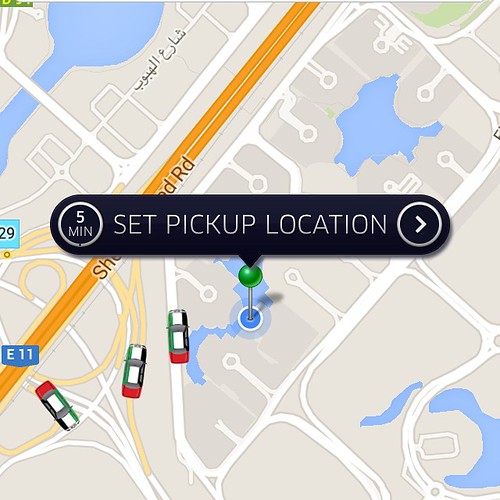
Uber in Dubai. Photo by khawaja on Flickr.

A selection of 9 links for you. (Only one post today.) Not for sale in Delaware. I’m charlesarthur on Twitter. Observations and links welcome.

Exclusive: upcoming version of Google Translate will include WordLens image translation and auto-detection for conversation mode >> Android Police

Michael Crider:

A few months ago Google purchased the developer of the impressive WordLens app, which translates text and signs from another language into your own simply by pointing your camera at it. The text appears in your language through the lens, as if you had super-powered Translate-O-Vision. As with Waze and Google Maps, it looks like Google’s own Translate app will soon see the benefit of that acquisition. Check out the screenshots below, taken from an upcoming version of Google Translate.

Logical purchase for Google; translation looks very impressive.


Google removes Pirate Bay apps from Play Store >> TorrentFreak

A few weeks ago the company implemented a major change to its search algorithm, aimed at downranking sites that often link to copyright infringing material.

Another drastic move came today when Google began removing many Pirate Bay related apps from its Play store. The apps in question include “The Pirate Bay Proxy,” “The Pirate Bay Premium,” “The Pirate Bay Mirror” and “PirateApp.”

The apps targeted by Google offer mobile optimized web-browsers for The Pirate Bay. In addition, many of them used proxy sites so users could easily circumvent local ISP blockades.

The apps appear to have been removed proactively as there is no mention of a DMCA takedown notice.

Reason for removal: “violation of the intellectual property… provisions of the Content Policy.” The Pirate Bay Proxy had had 900,000 downloads and 45,000 active users per day.


We can’t trust Uber >> NYTimes.com

Zeynep Tufekci and Brayden King:

We use these apps and websites [such as Uber, Facebook, Pandora, etc] because of their benefits. We discover new music, restaurants and movies; we meet new friends and reconnect with old ones; we trade goods and services. The paradox of this situation is that while we gain from digital connectivity, the accompanying invasion into our private lives makes our personal data ripe for abuse — revealing things we thought we had not even disclosed.


Pro tip: don’t tell Google Wallet you sell crack >> Daily Dot

Reddit user kag0 may not have actually been pushing the white stuff, but Google was watching nonetheless: 

So sometimes when I show friends or people how you can request money over Google Wallet, I’ll send a request for a few thousand bucks to close friends with a note saying something like “for my ransom” or “need crack”. They know whats up, they read it, chuckle and reject the request, it’s all good. 

 The tutorial went awry when Google caught kag0’s payment, complete with annotation that it was for “Drugs, Crack,” and shut things down. Apparently selling more than $20K worth of crack via Google’s e-payments platform is a no-go, violating two sections of the Google Wallet Terms of Service. 

Fool. Shoulda used Apple Pay.


With bullying app Secret on life support, investors learn the risk of investing in assholes >> PandoDaily

Paul Carr, after enumerating the many ways Secret (that’s the app that’s not Whisper) is in trouble:

there’s one major difference between Uber and Secret: For all its flaws, Uber is a genuinely useful service, and one that promises to give work to 1m new drivers next year alone. It just so happens to be operated by a deeply unpleasant company. That’s a hugely risky state of affairs, but clearly survivable.

Secret, by contrast, is an unpleasant company offering an inherently unpleasant service. As the company’s amoral investors have learned to their cost, that combination is nearly always going to be fatal.

(Disclosure: I know and like Paul Carr.) I tried Secret for a while, screwed up on a story because of it, and then generally found it like the scaly brown underside of Twitter – info I can’t use, people I didn’t like. (Even though they were meant to be “friends” or “friends of friends”.) I deleted it ages ago, and I don’t think there’s any pivot that would make me reinstall it.

Equally, I deleted Uber ages ago too.


Living with the Microsoft Band >> Tirias Research

Kevin Krewell has been wearing a Microsoft Band (on and off) for five weeks:

The biggest failing I see with the Band application is that it doesn’t directly connect you with the data in a meaningful way without significant work by the user. I preferred if the data was automatically charted and provided me with insightful health information about trends or other health related information. Today it requires research by the user to find any useful information from the tracking software. Certainly more automated information would be helpful. I’m hopeful that as the software evolves, there will be additional health tracking benefits to wearing the Band.

To this day I find the band is still clunky to wear – it catches on the lining of my sports jacket. Sometimes it feels like it’s a home detention bracelet on my wrist, but I grow more used to the bulk. I’ve had continuous trouble keeping the ban in sync with my iPhone application. Initially it would say that it could not sync now sometimes it says it is syching but no data appears on the application. There’s definitely room for improvement here. I’ve also found I had multiple BT connections listed in iPhone Setup for the Band.


Uber launches in Portland without city’s approval >> KGW Portland

Mayor Charlie Hales said the launch was illegal. The mayor’s office did not receive any advance notice from Uber about the Dec. 5 launch.

City Commissioner Steve Novick said Uber is choosing to break the law and the city is prepared to issue civil and criminal penalties against drivers and the company. Drivers could get hit with up to $3,750 for first-time offenses.

“There’s nothing sharing about this so-called ‘sharing economy’ company,” Novick said. “They want to profit in Portland without playing by the same rules as existing cab companies.”

What’s unclear here is what being registered with the city adds to the system. The point on the “sharing” economy is completely true, though. And if the cab registration helps pay for road upkeep, is that not useful? Does Uber pay that too?


Mark Zuckerberg and Facebook’s plan to wire the world >> Time

Lev Grossman:

[Zuckerberg says] “Our mission is to connect every person in the world. You don’t do that by having a service people pay for.” I suggest that Facebook’s users are paying, just with their attention and their personal information instead of with cash. A publicist changes the subject.

But before that happens Zuckerberg also notes — and it was the only time I saw him display irritation — that Apple CEO Tim Cook wrote something similar in September in a statement spelling out Apple’s privacy policy: “When an online service is free, you’re not the customer. You’re the product.” The shot was probably meant for Google, but Facebook was definitely in the blast radius. “A frustration I have is that a lot of people increasingly seem to equate an advertising business model with somehow being out of alignment with your customers,” Zuckerberg says. “I think it’s the most ridiculous concept. What, you think because you’re paying Apple that you’re somehow in alignment with them? If you were in alignment with them, then they’d make their products a lot cheaper!”

Zuckerberg’s frustration might be understandable – as I understand it, Facebook was definitely in the blast radius, because unlike some companies (plural) but in common with some companies (plural), it didn’t think the NSA’s Prism program was any reason to collect less data about users.

He’s certainly overlooking the fact that if you’re ad-funded, you have customers – the ones who pay you, who are called advertisers – and users, who you connect to the advertisers. It’s exactly the same model as news organisations have used for ages. But news organisations weren’t able to profile you exactly, or collect huge amounts of data about you. Having customers who aren’t users, and users who aren’t customers, creates huge potential for conflict. Noticed how Google’s ads take up more of the desktop results page? Noticed Google+? Noticed those autoplay video ads on Facebook?

Apple, on the other hand, tends to focus only on having users who are customers, and vice-versa. There’s no split; that’s the alignment. As to lower prices: that’s simply not how Apple rolls. Never has. Probably never will. But its users are absolutely its customers. At Pando Daily, Nathaniel Mott takes much the same position – with more examples.


When data gets creepy: the secrets we don’t realise we’re giving away >> The Guardian

Ben Goldacre:

I recently found myself in the quiet coach on a train, near a stranger shouting into her phone. Between London and York she shared her (unusual) name, her plan to move jobs, her plan to steal a client list, and her wish that she’d snogged her boss. Her entire sense of privacy was predicated on an outdated model: none of what she said had any special interest to the people in coach H. One tweet with her name in would have changed that, and been searchable for ever.

Just think of what that one tweet would have set in chain. Terrific piece from Goldacre which delves into how data affects privacy in medicine, shopping and so much more.


Links: self-driving cars in the rain (oh dear..), iBeacon in the Louvre, the unseen digital ads, bitcoin gets easier, and more


Apparently this stuff affects self-driving cars. Photo by Anthony Quintano on Flickr.

A selection of 6 afternoon links for you. Enjoy to the full extent of the law. I’m charlesarthur on Twitter. Observations and links welcome.

Louvre Museum’s DNA >> MIT SENSEable City Lab

How much time would you take to smile back at the Mona Lisa? Today, sophisticated Bluetooth signal tracking allows us to map how visitors move through a museum like the Louvre in Paris – what galleries they visit, what path they take, and how long they spend in front of each piece of artwork. Join us for a look inside one of the world’s largest museums… to see the people in front of the paintings.

Surprisingly, people who stay for long or short times don’t vary that much in where they go. They just go at different paces.


​This is how bad self-driving cars suck in the rain >> Jalopnik


(Jump forward to about 5 minutes in.)

The issues with the KAIST Unmanned Systems Research Group’s car were numerous, but the biggest problems had less to do with the slippery road surface and more to do with the visual systems. Those cameras and LIDAR arrays are dependent on a clear view, and with the angle of the car shifting and the direction of the sun, the sensors fail to pick up everything from street signs to lane markings and even pedestrians. And it just keeps getting worse.3

The team has to hit the emergency stop button at least twice, veers onto the side of the road, doesn’t see a curb and almost slams into a light pole, and then smacks into a barrier when parking.


56% of digital ads served are never seen, says Google >> Advertising Age

An incredible 56.1% of ads on the internet are not seen by humans, according to new research released today by Google.

“With the advancement of new technologies we now know that many display ads that are served never actually have the opportunity to be seen by a user,” said Google group product manager Sanaz Ahari in a blog post.

Those ads appear outside the viewable area of a browser window. Once you factor in bots, even fewer ads are seen by the people advertisers are paying to reach.


Bitcoin price decline sparks rare mining difficulty drop >> Coindesk

Mining difficulty determines how difficult it is to hash a new block and varies based on the amount of computing power used by miners on the bitcoin network. Bitcoin’s growing popularity has attracted more computing power to the network, meaning that the difficulty has been steadily increasing for some time.

However, stagnant pricing has caused a reduction in the hash rate over the past few weeks, resulting in the slight difficulty decrease. The estimated next difficulty level is 39,884,219,890, or -0.31%.

The sheer size of the bitcoin network ensures resilience and stability, but the hash rate has been stagnant for weeks and started declining in the first days of December.

This actually makes me think that bitcoin might have a chance as a medium of exchange. Once its price is stable for long enough, it becomes unattractive to speculators – but ideal for people looking to transfer value.


The SSD endurance experiment: two freaking petabytes >> The Tech Report

Geoff Gasior:

Our SSD Endurance Experiment has left four casualties in its wake so far. Representatives from the Corsair Neutron Series GTX, Intel 335 Series, Kingston HyperX 3K, and Samsung 840 Series all perished to satisfy our curiosity. Each one absorbed far more damage than its official endurance specification promised—and far more than the vast majority of users are likely to inflict.

The last victim fell at 1.2PB, which is barely a speck in the rear-view mirror for our remaining subjects. The 840 Pro and a second HyperX 3K have now reached two freaking petabytes of writes. To put that figure into perspective, the SSDs in my main desktop have logged less than two terabytes of writes over the past couple years. At this rate, it’ll take me a thousand years to reach that total.

They’re wayyy over spec. Great experiment.


Links: Galaxy S6 chip problems?, Sony hackers reveal film pay, WhatsApp’s Italian divorce, and more


I blame WhatsApp.

A selection of 6 morning links for you. Use them wisely. I’m charlesarthur on Twitter. Observations and links welcome.

Unexpected hurdle: problems in Qualcomm Snapdragon set alarm bells ringing for Samsung, LG >> BusinessKorea

Local [Korean] smartphone makers are nervous at the prospect of a delay in the launch of new models next year, including the Galaxy S6 and the G4. It is unclear whether or not the supply of the Snapdragon 810 will exist in the first half of next year due to technical problems such as overheating and a decline in speed.

Samsung is likely to solve the problem by featuring its own Exynos chips in the Galaxy S6, but LG seems to be in trouble. Even though the company has its first AP, NUCLUN, it is not better than entry-level APs. If Qualcomm cannot supply the Snapdragon 810, it won’t be easy for LG to find an alternative for the G4.

“Qualcomm is faced with hard-to-solve problems. The Snapdragon 810 overheats when it reaches a specific voltage. It also slows down owing to problems with the RAM controller connected to the AP. In addition, there is an error in the driver of the Adreno 430 GPU,” said an industry source on 2 December.

The source added that for these reasons, it is unclear if the Snapdragon 810 will be used in premium smartphones like the Galaxy S6, the G4, and the Xperia Z4 scheduled to be released in the first half of next year.


Sony hackers reveal Seth Rogen and James Franco’s pay for ‘The Interview’ >> Variety

The cyber-attack targeting Sony Pictures uncovered a few more confidential details on Wednesday in what’s quickly evolved into a publicity nightmare for the company.

Seth Rogen was reportedly paid $8.4m for “The Interview,” according to new data obtained by Bloomberg, while his co-star James Franco earned $6.5m for the comedy.

The film, which allegedly cost $44m, also paid Britney Spears’ ex-husband Kevin Federline $5,000 for his cameo.

“The Interview,” about two journalists tasked with assassinating North Korea dictator Kim Jong-un, is at the centre of a recent hack attack at Sony. Several new films leaked online as a result of the computer breach in addition to personal data and salary information about the Sony Pictures’ top executives.

This hack is producing some remarkable information.


Yahoo set to pass Twitter in US mobile ads after Mayer revamp >> Bloomberg

Yahoo is now projected to be the largest gainer of US mobile-ad market share between 2014 and 2016, according to new data from EMarketer Inc. out today. Yahoo’s mobile-ad slice will climb to 3.74% in 2015 and to 4.2% in 2016.

While still tiny, it’s enough to push Yahoo ahead of current number three player Twitter, which will have 3.69% market share next year and 3.8% in 2016. Google and Facebook remain the biggest U.S. mobile-ad companies, with 35% and 17% shares next year respectively.

Yahoo, the comeback kid.


Having an affair in Italy? You may want to avoid using WhatsApp >> GlobalPost

Eric Lyman:

Call it “Divorce Italian Style” version 2.0.

In Pietro Germi’s Oscar-winning 1961 comedy of that name, the unfaithful protagonist, unable to divorce his smothering wife, plots to kill her. If it had been set in 2014, he could have just let her stumble upon his WhatsApp account.

The instant messaging service acquired by Facebook this year for $19bn is cited in nearly half of all Italian divorce proceedings — more than any other source of information, whether amorous text messages or emails, late-night phone calls, handwritten notes, or even lipstick-stained collars — according to the Italian Association of Matrimonial Lawyers.

That’s remarkable. Italy used to be one of the most backward countries in terms of its internet connectivity.


Virtual reality is going to change everything >> Business Insider

Dave Smith:

As you move your head around, you can see other concert-goers — real people — cheering, and as you turn back towards the stage, you can see the pyrotechnics go off right as Paul McCartney hits the chorus to “Live And Let Die.”

I took the Rift off my head, and I was back inside Business Insider’s conference room.

Virtual reality is going to be huge. Monumental. It’s going to change the way we live. Facebook and Samsung have already made significant investments, and Apple was recently caught looking to hire an app engineer “to create high performance apps that integrate with virtual reality systems.” And then there’s Magic Leap, the mysterious $542 million startup that’s built an augmented reality device “so badass you can’t believe it.”

The future of virtual reality is incredibly exciting. But right now, the main focus is games. And here’s why.

I tried virtual reality at a UK company called Virtuality in 1991-2; it was OK, but limited by the computing power of the time, and especially eyescreen resolution. In all seriousness, I think Smith is completely right: once this stuff gets cheaper (and it will) and pervasive (and it will), we’ll use it all the time.

After all, there was a time when nobody but a few crazies thought you could fit a supercomputer in your pocket. VR is the logical next step for all that surplus computing power.


Design Explosions: Mapping on iOS and Google Maps >> Medium

Jon Bell and William Van Hecke take an enormously deep dive into the tradeoffs and triumphs of the native mapping apps on iOS and Android. There’s no simple extract, but this is a good point (you’d have to read the piece to understand its context):

The en route lock screen, while I do struggle with it sometimes, is a great example of the limitations of design. #2 might be the best overall option, but shipping it has nothing to do with pixels. It’s all about relationships, and politics, and legal teams, and so forth. This is why it’s important to have design courage at an organizational level. Otherwise you can only get so far with your designs before the best ideas are overruled by legal, executives, and your partners. Effective designers have effective relationships.


Start up (2): LA schools iPad subpoena, Yandex wants Google antitrust, are you a codebreaker?, and more


An Enigma coding machine. By visualtheology on Flickr.

An afternoon selection of 6 links for you. Use them wisely. I’m charlesarthur on Twitter. Observations and links welcome.

This is the second of two posts of links today. (It’s an experiment.) Like? Don’t like? Let me know.

Gallery of Fluid Motion >> American Physical Society

The energy deposition in a liquid drop on a nanosecond time scale by impact of a laser pulse can induce various reactions, such as vaporization or plasma generation. The response of the drop can be extremely violent: The drop gets strongly deformed and propelled forward at several m/s, and subsequently breaks up or even explodes. These effects are used in a controlled manner during the generation of extreme ultraviolet (EUV) light in nanolithography machines for the fabrication of leading-edge semiconductor microchips. Detailed understanding of the fundamentals of this process is of key importance in order to advance the latest lithography machines.

Yeah, whatever – the video of a LASER shooting an INK DROP at a bazillion frames per second is SUPER COOL.


Federal grand jury subpoenaed documents from L.A. Unified >> LA Times

LA school district officials turned over 20 boxes of documents Monday in response to a federal grand jury subpoena for documents related to its troubled iPad project, officials confirmed Tuesday afternoon.

The subpoena asked for documents related to the bidding process as well as to the winning bidders in the $1.3bn effort to provide a computer to every student, teacher and campus administrator.

The contract, approved in June 2013, was with Apple to supply iPads; Pearson provided the curriculum as a subcontractor.

The investigation is a broad one, seeking records related to Apple and Pearson that predate the bidding process or that involve other projects, according to the subpoena, which was provided to The [LA] Times.

A $500m contract that’s looking increasingly dodgy. The superintendent, John Deasy, is criticised for having (unspecified) “close ties” to “Apple executives” including Tim Cook – though you’d expect Cook might find some time for someone spending half a billion dollars.

Could make a fun trial, if it comes to anything.


Yandex CEO Backs Google Antitrust Probes as Search Share Drops – Bloomberg

Yandex chief executive officer Arkady Volozh said he supports antitrust investigations of Google, whose Android operating system is helping it gain market share against Russia’s biggest search engine.

Android’s default options push users to Google services including search and maps, limiting consumers’ ability to choose such services from Yandex or other vendors, Volozh said in an interview at the company’s Moscow offices. The operating system has 85% of Russia’s smartphone market, according to researcher IDC.

“This is very similar to what Microsoft was doing a decade ago,” Volozh said. “They were trying to use dominance in operating systems to promote their Internet Explorer browser and were finally banned from doing this. The same is now happening with Android – Google dominates in it and runs practices incompatible with fair competition…

“I fully agree with the investigation the EU began to change the situation,” Volozh said. “If we want to have different players in Internet services, if we want startups continuing to evolve in different spheres – search, commerce, maps, mail, etc. – and new apps emerging, there should be a possibility for these apps to be freely delivered to consumers.”

I understand that European Commission inquiries to Android handset makers have been extremely detailed – to the slight concern of the handset makers. Yandex would like a situation where it could bid to be the default search engine on an Android handset.

Question is, will the EC seek to force that?


Could you have been a codebreaker at Bletchley Park? >> Daily Telegraph

Tom Chivers:

In January 1942, a series of letters to The Daily Telegraph had claimed that the paper’s crossword wasn’t hard enough. It could be solved in a matter of minutes, they said; so a man called WAJ Gavin, the chairman of the Eccentric Club, suggested this be put to the test. He put up a £100 prize, to be donated to charity in the event that anyone could do it, and Arthur Watson, the paper’s then editor, arranged a competition in the newsroom on Fleet Street.

Five people beat the 12-minute deadline, although one, the fastest, had misspelled a word and was disqualified. The puzzle was printed in the next day’s edition, January 13 1942, so that everyone could try their hand (see the puzzle further down this article). And there the matter might have rested – but, unknown to the Telegraph and the contestants, the War Office was watching. Stanley Sedgewick, one of those who took part, said: “Several weeks later, I received a letter marked ‘Confidential’ inviting me, as a consequence of taking part in ‘The Daily Telegraph Crossword Time Test’, to make an appointment to see Col Nichols of the General Staff, who ‘would very much like to see you on a matter of national importance’.”

Bonus: that cryptic crossword for you to try to solve in less than 12 minutes. And then await a call.


Touchscreen clamshell notebooks to be phased out of the market >> Digitimes

Despite Microsoft and Intel aggressively promoting clamshell-type touchscreen notebooks, orders for such devices from vendors have already disappeared completely, and after existing inventories in the channel are cleared, this type of notebook will be phased out of the industry, according to sources from notebook makers.

In 2015, vendors will turn to focus on conventional non-touchscreen notebooks as well as 2-in-1 devices. Since touchscreen controls are not a necessary feature for notebooks, and increase costs, demand for touchscreen notebooks has been weak since their launch.

Unclear if this applies to Chromebooks too, but feels unsurprising.


Be wary of ‘order confirmation’ emails >> Krebs on Security

If you receive an email this holiday season asking you to “confirm” an online e-commerce order or package shipment, please resist the urge to click the included link or attachment: Malware purveyors and spammers are blasting these missives by the millions each day in a bid to trick people into giving up control over their computers and identities.

An “order confirmation” malware email blasted out by the Asprox spam botnet recently.
Seasonal scams like these are a perennial scourge of the holidays, mainly because the methods they employ are reliably successful. Crooks understand that it’s easier to catch would-be victims off-guard during the holidays. This goes even for people who generally know better than to click on links and attachments in emails that spoof trusted brands and retailers, because this is a time of year when many people are intensely focused on making sure their online orders arrive before Dec. 25.

This is the second post of the day. Let me know if you’d rather just have a single post.