
Start up: Russia and the Democrat hack, Mayer v Yahoo, a CRISPR future, another Brexit price hike, and more


It’s a phone from China’s top-selling Android OEM in June. Can you name the company? If not, why not? Photo by TechStage on Flickr.

You can now sign up to receive each day’s Start Up post by email. You’ll need to click a confirmation link, so no spam.

A selection of 10 links for you. What fun! I’m charlesarthur on Twitter. Observations and links welcome.

All signs point to Russia being behind the DNC hack • Motherboard

Thomas Rid:

»

two months earlier, in April, the Democrats had noticed that something was wrong in their networks. Then, in early May, the DNC called in CrowdStrike, a security firm that specializes in countering advanced network threats. After deploying their tools on the DNC’s machines, and after about two hours of work, CrowdStrike found “two sophisticated adversaries” on the Committee’s network. The two groups were well-known in the security industry as “APT 28” and “APT 29.” APT stands for Advanced Persistent Threat—usually jargon for spies.

CrowdStrike linked both groups to “the Russian government’s powerful and highly capable intelligence services.” APT 29, suspected to be the FSB, had been on the DNC’s network since at least summer 2015. APT 28, identified as Russia’s military intelligence agency GRU, had breached the Democrats only in April 2016, and probably tipped off the investigation. CrowdStrike found no evidence of collaboration between the two intelligence agencies inside the DNC’s networks, “or even an awareness of one by the other,” the firm wrote.

«

link to this extract


Why Armstrong really wanted Yahoo • The Information

Jessica Lessin and Tom Dotan:

»

To understand why Tim Armstrong just convinced Verizon to spend $4.83bn to buy Yahoo’s main business, you have to go back to April 2007.

Mr. Armstrong, then running North America advertising for Google, drove Google’s purchase of display ad firm DoubleClick, launching the search giant into banner advertising. By every measure it was a transformative deal, and it’s loomed large in Mr. Armstrong’s mind in the years since, multiple past colleagues say.

After he jumped to AOL from Google in 2009, Mr. Armstrong dreamed of building an ad network to rival the juggernaut Google became. For years, publishers have whined about wanting such an alternative. And Mr. Armstrong listened, believing you could build a better version of what DoubleClick had become.

Mr. Armstrong took a big step toward that goal last year when he signed a deal for AOL to sell Microsoft’s display advertising. The deal, struck in the wake of selling AOL to Verizon, gave him more ad space to sell to build out his network. Inside Verizon, the Microsoft deal is viewed as successful and part of the justification for taking a swing at Yahoo.

Now, he’ll get another influx of volume from Yahoo.  

If this all sounds a little deja vu to you, it is. Microsoft, Yahoo and many others have tried to dethrone Google in online advertising and proposed all sorts of permutations around teaming up.

«

Oh sure, that’ll work.
link to this extract


Mayer decries ‘gender-charged’ reporting of Yahoo • FT.com

David Crow and James Fontanella-Khan:

»

Marissa Mayer has hit out at sexist coverage of her leadership at Yahoo, as she agreed to sell the bulk of the internet pioneer’s assets to Verizon for $4.8bn cash, ending the independence of the star of the 1990s dotcom boom.

Speaking after announcing a deal that will bring the company set up 22 years ago by Jerry Yang and David Filo under the same roof as fellow internet pioneer AOL, Ms Mayer decried reporting about her that focused on her gender.

“I’ve tried to be gender blind and believe tech is a gender neutral zone but do think there has been gender-charged reporting,” she told the Financial Times.

“We all see the things that only plague women leaders, like articles that focus on their appearance, like Hillary Clinton sporting a new pantsuit. I think all women are aware of that, but I had hoped in 2015 and 2016 that I would see fewer articles like that. It’s a shame.”

Ms Mayer, who has been repeatedly criticised by analysts for making a series of bad acquisitions and poor hires, will stay at Yahoo until the deal closes, but is unlikely to join Verizon, according to people familiar with the matter.

After she said in a post on the company’s Tumblr page that she planned to stay “to see Yahoo into its next chapter”, she admitted that it was unclear what would happen once the deal closes early next year.

«

link to this extract


The age of the red pen • The Economist

Natasha Loder on the new gene-editing technology that is sweeping through biotech:

»

One particularly impressive—and potentially worrying—application is in the creation of genes that can spread themselves quickly through a population with blithe disregard for the constraints of natural selection. Engineering the CRISPR-Cas9 system itself into a creature’s genome makes it possible for an organism to edit its own genes, and there are ways that this ability can be used to “drive” a gene through a population (see article). Such a technology might, proponents say, be used to make the mosquitoes that carry malaria, or dengue fever, unable to spread the organisms responsible for causing the disease.

The applications seem limited only by the imagination. Dr Zhang says CRISPR has enormous potential for treating previously intractable diseases. For example, genome editing may make it possible to eliminate viral infections within the body, creating entirely new antiviral treatments. He also speculates that it might be possible to make red meat that is less harmful, or to engineer pig organs so that they could be transplanted into humans with much less risk of rejection. Dr Church, for his part, has speculated about using gene editing to turn elephants into mammoths—or to recreate Neanderthals.

«

Long and detailed, but an important primer. You might not think CRISPR is going to affect you, but it could well affect your children. (Loder won a science writing prize for this piece.)
link to this extract


Oppo becomes the leading smartphone brand in China in June 2016 • Counterpoint Technology

James Yan:

»

According to the latest research from Counterpoint’s Monthly Market Pulse, the demand for smartphones in China grew a healthy 17% annually in June. This was the best ever June month in terms of sell-through for smartphones, even though the overall market for the June-ending second quarter has seen modest growth over the first quarter of the year.Commenting on the results, Research Director, James Yan, highlighted, “The competitive environment in the world’s leading smartphone market has taken an interesting turn as domestic brands have significantly ramped-up their positions in the smartphone market. Oppo became the number one brand in China for the first time ever in June surpassing Huawei, Apple and Xiaomi with a record 23% market share with sales volumes up a massive 337% annually for the month…

…Chinese brands now control more than 84% of the total Chinese smartphone market as they exert an iron grip on the sales channels, industrial design curve and leverage access to Chinese supply chain. Their dominance extends across the price bands even extending in to the premium segment with models such as Huawei P9, Oppo R9 Plus and Vivo X play 5.

«

Samsung is fading from view – from the leading 14.1% share in June 2014 to 4th place in 2015 to 5th equal (with Xiaomi) this year. And Xiaomi is fading too, on those numbers.
link to this extract


Ofcom should push for fibre – Ex BT CTO • The Register

Kat Hall:

»

a damning report by MPs last week that warned if BT doesn’t get its house in order and address its significant under-investment in Blighty’s infrastructure, Openreach should be structurally split from the former state monopoly.

Earlier this year the regulator stopped short of recommending a formal separation – but deliberately kept that option on the table. BT has denied the accusations of underinvestment, pointing to its plans to roll-out ultrafast speeds to 12 million homes in the next four years, 2 million of which will be fibre-to-the-premise (FTTP).

But Professor Peter Cochrane, former CTO and head of R&D at BT, has slammed BT’s emphasis on its hybrid copper G.Fast technology. “An ambition of 2 million FTTP delivery is no target at all. It’s woeful. It would be 48 years to get to all the homes.”

He says: “I have no patience with the arguments being put forward that we can do it all with copper. I mean, we can do all our transport by boats on rivers if you want.”

Cochrane believes the estimated speeds of 1Gbps for G.Fast are wrong. “It’s been tested in a laboratory under rather idealised conditions in the field. And some people are quoting they can do a gigabit over 200 meters – I can categorically tell you they cannot. What they can actually do is a gigabit over 20, possibly 30 meters. After that it just dies.

“If they had fibre to the pole at the end of my garden they might be able to deliver 200-300mbps.”

«

“We can do all our transport by boats on rivers if you want” ranks among the very finest technical putdowns I’ve heard.
link to this extract


Notice regarding the impact of Pokemon GO on the consolidated financial forecast • Nintendo

»

The Pokémon Company, which is an affiliated company of Nintendo Co., Ltd. (the “Company”), holds the ownership rights to Pokémon. The Pokémon Company is going to receive a licensing fee as well as compensation for collaboration in the development and operations of the application.

The Company owns 32% of the voting power of The Pokémon Company. The Pokémon Company is the Company’s affiliated company, accounted for by using the equity method. Because of this accounting scheme, the income reflected on the Company’s consolidated business results is limited.

Also, a peripheral device for use with the application, “Pokémon GO Plus,” which will be produced and distributed by the Company, is scheduled for release. All of the above are reflected in the financial forecast ending March 31, 2017 as set forth on April 27, 2016.

Taking the current situation into consideration, the Company is not modifying the consolidated financial forecast for now. The Company will make a timely disclosure when the Company needs to modify its financial forecasts.

«

Spoilsports. Nintendo shares, which had doubled in value, plunged as a result of this fact-based announcement.
link to this extract


Hewlett Packard Enterprise: Brexit, weak pound. A price hike is coming • The Register

Paul Kunert:

»

Hewlett Packard Enterprise is to bump up the price of its infrastructure gear in Blighty from Monday, blaming the crash in the value of UK sterling currency for the hike.

According to sources close to the matter, the cost of servers will go up between 6-7%, and storage and legacy networking by circa 10%.

El Reg understands this week was the cut-off date for ordering kit in HPE’s third quarter of fiscal ’16, even though its Q4 doesn’t start until 1 August.

“HPE always carefully considers any price changes for our products and adjusts prices based on exchange rates and currency fluctuations,” a spokeswoman told us.

The value of the British pound had fallen by roughly 7% against the US dollar in the 12 months prior to the EU Referendum, but since the Brexit vote was down around 15%.

«

Follows Dell, HP Inc (printers/PCs), Asus, Cisco. Wonder when Apple will follow suit.
link to this extract


PonoMusic goes dark for several weeks as the company switches providers • TechCrunch

Brian Heater:

»

Neil Young’s music service is apparently down, but not out. In a note posted to Pono’s front page, the hi-res music provider announced that it’ll be going offline for for “several weeks,” due to the recent acquisition of Omnifone, which has been the driving force behind the service’s infrastructure.

The company’s purchase has led Pono to seek a new partner for PonoMusic, striking a deal with 7 Digital, a London-based digital music platform that has worked with a number of high-profile partners, including Samsung and BlackBerry. In its letter, Pono insists that the move, while “well underway, [is] not yet complete,” hastening to add that the move won’t affect any of its dealings with big music labels.

What all of this means for the Pono faithful is no more music purchases for what’s likely to be several weeks from last Wednesday.

«

All twelve users must be upset.
link to this extract


Apple: Katy Huberty calls BS on the three-year cycle • Philip Elmer‑DeWitt

»

Smartphones aren’t headed for a three-year cycle, says Morgan Stanley’s chief Apple watcher, contradicting last month’s supply chain rumors, today’s Wall Street Journal, and conventional wisdom on the Street.

“We’re actually quite bullish,” says Katy Huberty in a video released to clients Tuesday.

According to a new AlphaWise Survey of smartphone owners in seven countries, the market may in fact be setting itself up for what Huberty calls a “potential supercycle.”

Most analysts’ estimates for Apple and Samsung, she says, imply that customers are sticking with their current phones longer and longer, stretching a replacement cycle that used to be 24 months to nearly 36 months.

But that’s not what customers are saying.

«

Quite an important distinction. The suggestion is that people have hung on to old phones for quite a while, but are now ready to upgrade. Well, next year will be.
link to this extract


Errata, corrigenda and ai no corrida: none notified

Start up: Airbnb v racism, the iPad paradox, Kickass’s insider secret, sayonara VCRs, and more


The online ratings for Ghostbusters are all over the place – which demonstrates how screwed up online ratings are. Photo by The Shifted Librarian on Flickr.

You can sign up to receive each day’s Start Up post by email. You’ll need to click a confirmation link, so no spam.

A selection of 12 links for you. Helllooooo Monday, if it’s Monday where you are. I’m charlesarthur on Twitter. Observations and links welcome.

Airbnb’s racism “the greatest challenge we face as a company” • The Memo

Oliver Smith:

»

in 2015 a Harvard Business School study reported that there is “widespread discrimination against African-American guests” taking place on Airbnb.

Last month Chesky kick started a company-wide review of discrimination on Airbnb, and this morning he announced that [it will be led by] former US attorney general Eric Holder, the country’s first black person to hold this most senior legal position.

Chesky also reflected on why Airbnb had been so painfully slow to respond to these serious problems.

“Joe, Nate, and I started Airbnb with the best of intentions, but we weren’t fully conscious of this issue when we designed the platform,” he wrote.

“After speaking to many of you, I have learned that there have at times been a lack of urgency to work on this, and we need to rectify that immediately.”

The big question now for Airbnb, and many sharing economy businesses like it, is can they fix both the technical issues allowing discrimination to take place and then win back the trust of users.

In many ways Airbnb’s plight highlights just how significantly better Uber’s system is. Auto-matching passangers and drivers, giving drivers little option but to accept rides, and with a dispassionate rating system which uses average ratings to simply exclude ‘bad’ passangers and drivers.

«

When tech becomes woven into society, you start to see its social effects.
link to this extract


The iPad paradox • iMore

Michael Gartenberg:

»

“TiVo paradox” is a term I coined to explain how hard it is to market contextual value.

With some products, including TiVo, there’s a distinct conflict between consumer understanding of the features and the value assigned to those features. While the internet was filled with a rabid fan base of customers who loved and praised TiVo at every opportunity, most consumers didn’t understand the value of a $500 “digital VCR.”

TiVo’s features were relevant to the TV viewing experience based on a customer’s immediate contextual need: The pause and rewind live TV feature was killer for any sports fan; remote access to the electronic programming guide was key to any busy traveler’s DVR experience.

Without trying these features, though, customers are unaware of their overall value or how they come together as a whole. Want to pause TV when the phone rings? That’s the killer app at that moment. Recording a show using an EPG to simply search for it? That’s the killer app at that moment. Skipping commercials when you watch recorded content? That’s the killer app at that moment. Contextual functionality ONLY comes together when you get to see the whole, not a piece or part. When you see only pieces, you just get a very expensive VCR not a TiVo.

In short, if you met a TiVo owner at a party, they were rabid. It was like being cornered by an insurance agent. They wouldn’t leave you alone until you tried it. When most people tried it, the lightbulb turned on. TiVo was not an expensive VCR — it redefined watching TV.

I suspect iPad is suffering from the same paradox. Customers who buy an iPad Pro understand the power it unlocks relative to a Mac. The more they use it, the more it displaces their Mac.

They “get it,” but most folks just don’t.

«

link to this extract


How KickassTorrents was able to get movies months before they came out on DVD • Business Insider

James Cook:

»

a regular source of leaks comes from the production of DVDs, as then lots of factory workers are exposed to movies before they’re officially available to buy.

But the criminal complaint notes that many movies available on KickassTorrents have “telecine” or “TC” in their description. 

Here’s a look at a cached version of a “Warcraft” torrent on KickassTorrents, before the site was taken down:

“Warcraft” isn’t out on DVD yet, but it was posted on Kickasstorrents shortly after appearing in the cinema. That’s because it was converted using telecine, a type of machine that takes the original cinema reels of a movie and converts them to a digital file.

The cinema reels are run through the machine, which then records the film and turns them into a digital recording. That’s then shared on torrent sites, giving a faster turnaround than waiting for a screener copy of a DVD to be ripped.

KickassTorrents certainly wasn’t the only site to use telecine copies of movies, but it does show how it got them so quickly. After all, that’s a major reason why the site was more popular than The Pirate Bay — content came to Kickasstorrents before it reached its rivals.

«

It’s a model very like that used by the people who pirated music by getting early access to the masters at CD pressing plants. The next step will be to look for the insiders at the telecine shops.
link to this extract


Brexit Blues • London Review of Books

John Lanchester:

»

To be born in many places in Britain is to suffer an irreversible lifelong defeat – a truncation of opportunity, of education, of access to power, of life expectancy. The people who grow up in these places come from a cultural background which equipped them for reasonably well-paid manual labour, un- and semi- and skilled. Children left school as soon as they could and went to work in the same industries that had employed their parents. The academically able kids used to go to grammar school and be educated into the middle class. All that has now gone, the jobs and the grammar schools, and the vista instead is a landscape where there is often work – there are pockets of unemployment, but in general there’s no shortage of jobs and the labour force participation rate is the highest it has ever been, a full 15 points higher than in the US – but it’s unsatisfying, insecure and low-paid. This new work doesn’t do what the old work did: it doesn’t offer a sense of identity or community or self-worth.

«

This is a remarkable, detailed, insightful piece.
link to this extract


Hillary Clinton is launching a game-style mobile app for campaign volunteers • Recode

Ina Fried:

»

A team of technology veterans has built an app for the Hillary Clinton campaign that lets volunteers get most of the benefits of being in a campaign field office straight from their smartphone.

Hillary 2016, built by veterans of DreamWorks Animation, Charity: Water and Lifestream, is set to go live Sunday in the App Store. The app lets users brush up on the issues, post to social media and begin organizing.

Though designed to help Hillary supporters take real-world actions, it is based around gaming concepts like those used in FarmVille and other social games. Volunteers can compete against one another and earn both virtual and real-world rewards.

The Obama campaign also had a mobile app for volunteers, but it was geared more to offline actions, such as directing volunteers to phone banks or on going door-to-door.

«

Sure to be a target for abuse of all sorts. Wonder when the Android one version will come out. (Also: a piece of news about Clinton. Amazing.)
link to this extract


Three proposes protection in UK spectrum auction • CCS Insight

Kester Mann:

»

Only weeks after the deal to buy O2 was rebuffed, Three CEO Dave Dyson called on Ofcom to impose restrictions on rivals at an upcoming spectrum auction of 2.3 GHz and 3.4 GHz frequencies.

It’s not difficult to see why Mr Dyson started lobbying so soon. Having failed to buy O2, Three is in a precarious position without the assets or scale needed to challenge its larger rivals. The operator claims to carry over 40% of UK data traffic, but holds only about a 15% share of the airwaves — an unsustainable position that has already forced Three to raise prices on some tariffs.

Without adding extra capacity, it will be extremely difficult for Three to deploy the kind of challenger strategy with which it has become synonymous. This is particularly relevant given its preference for pure-play mobile in a market rapidly evolving to multiplay services. In many ways, the network’s very future depends on acquiring more spectrum. Until this happens, Three will be treading water, unable to formulate a long-term strategy as rivals bolster services and Sky prepares to enter the market.

Mr Dyson has called for a 30% spectrum cap on any operator following the auction.

This seems wishful thinking given that the combined BT and EE — which owns over 40% of the spectrum — would have to give up significant airwaves to take part. When the two companies came together, the merger was surprisingly smoothly dealt with by competition authorities, without any requirement to divest spectrum.

«

The BT/EE spectrum ownership does seem out of kilter, though, given that there are four operators; you’d hope for a balancing towards 25% each, surely.
link to this extract


You can disable Find My Mac by resetting NVRAM • Tidbits

Adam Engst:

»

There is one other problem that my friend Will Mayall alerted me to recently, which is that resetting NVRAM disables Find My Mac. Will discovered this on his own, but it turns out that others have run across the same fact over the past few years, as evidenced by a quick Google search. In essence, Apple stores the Find My Mac data in NVRAM, which is good for keeping it around even if the hard drive is removed, but bad in the sense that it’s easy to reset NVRAM — just restart while holding down Command-Option-P-R. A quick test confirmed the problem in OS X 10.11 El Capitan, and nothing has changed in the public beta of macOS 10.12 Sierra.

The only way to prevent Find My Mac from being disabled is to set a firmware password, which you must enter whenever you start up from a disk other than the usual startup disk. Plus, if you try to reset NVRAM, you’re prompted for the firmware password, and when you enter it, the Mac instead boots into Recovery mode. In fact, when you lock your Mac via Find My Mac, what it’s doing is setting a firmware password.

«

link to this extract


How Crowdmix collapsed into administration after raising over £14m • Business Insider

James Cook:

»

when Crowdmix — whose management also dreamed of billion-dollar “unicorn” valuation status — moved into the old Mind Candy office in August 2015, the [playground] slide [connecting to the floor above] stood like a symbol of failure. Or a warning.

So Roberts had the slide blocked up, and the company eventually paid to have it removed entirely.

Now, less than a year after moving in, Crowdmix is in an even worse situation than Mind Candy. It blew through £14m (about $20m) in investor funding without ever properly launching. It only managed to ship an invite-only version of its hybrid social network and music streaming app, before costs spiralled out of control. The company spent lavishly on parties, international travel for its staff, and ostentatious decorations for its offices, even though it didn’t have a product for consumers to use. The company never booked any revenue. Roberts, the founding CEO, was forced out, and the company collapsed into bankruptcy administration on July 11.

«

Founded in 2013, aiming to let people join “crowds” to talk about music and share tracks. How this ever got funded I cannot imagine. Cook tells the long story of a bloated startup with lavish parties and a Venice Beach office with a chandelier.
link to this extract


Sources: Cyanogen Inc. is undergoing major layoffs, may “pivot” to apps • Android Police

David Ruddock:

»

We’re hearing from multiple sources that Cyanogen Inc. is in the midst of laying off a significant portion of its workforce around the world today. The layoffs most heavily impact the open source arm of the Android ROM-gone-startup, which may be eliminated entirely (not CyanogenMod itself, just the people at Cyanogen Inc. who work on the open source side).

Accounts indicate that employees were called into meetings, sometimes in groups, and told they were being let go. In Seattle, Steve Kondik himself is allegedly conducting the layoffs. At this time, we’ve been told roughly 30 out of the 136 people Cyanogen Inc. employs – around 20% of the workforce – have been let go. It’s unclear if that number may change more in the coming hours and days. According to one source, the systems and QA teams in Palo Alto and Seattle have been heavily cut, with Cyanogen’s smaller offices in Lisbon and India reportedly being essentially gutted. Community support members were allegedly removed, too.

«

So it looks like there isn’t a viable third-party business in Android ROMs. (This news leaked out on Friday night.) Discussion on Hacker News shows that nobody can quite figure out what its commercial model should be.
link to this extract


The last VCR to be made this month • Variety

Lamarco McClendon:

»

Funai Electric, a Japanese consumer electronics company, will end production of VHS videocassette recorders (VCRs) at the end of July, according to Japanese newspaper Nikkei. This will also mark the end of the format as a whole 40 years after it began production.

Funai sold VCRs under the more familiar Sanyo brand in China and North America for nearly 30 years. The company’s move to stop manufacturing comes after years of declining sales and difficulty finding the materials for the electronics.

Funai Electric began production of VCRs in 1983 following the unsuccessful launch of its own CVC format in 1980. The electronics company sold as many as 15 million VCRs per year at its peak. Last year, Funai sold 750,000 units.

«

Sic transit gloria mundi. The phrase “Please rewind” will mean nothing to anyone under 20.
link to this extract


‘Ghostbusters’ is a perfect example of how internet movie ratings are broken • FiveThirtyEight

Walt Hickey:

»

Most fundamentally, single-number aggregations — like those used by sites such as Rotten Tomatoes, Metacritic and IMDb — are a pitiful way of explaining the diverse views of critics. More specifically, a vocal portion of men on the internet — shall we say — go out of their way to make their voices heard when it comes to judging entertainment aimed at women, and that appears to be happening with the new “Ghostbusters.”

But let’s back up. Last year, as part of an investigation into the inflated ratings on Fandango’s website, I looked at the world of online movie ratings in general. The moral of this story: Each site that aggregates ratings and reviews has its own skew one way or another, and it’s up to the user to determine which heuristic most accurately matches what they’d consider an ideal rating. (Also, don’t trust always-positive movie reviews from sites trying to use that review to sell you movie tickets. That, too.)

«

link to this extract


The Moto Z is a good phone headed down the wrong path • The Verge

Vlad Savov:

»

I hate to be a hater, but some things just need to be said. I think Lenovo, the new patron of the Moto brand after it took over Motorola, is going down a very wrong path with its Moto Z modular smartphone series. As a company that’s losing ground to cheaper rivals at home in China and better-marketed iPhone and Galaxy alternatives in the USA, Lenovo is grasping for a unique selling point — modularity. But, to my eyes at least, that bet is never going to pay off. Modular phones are the passing fad of 2016, and Lenovo’s commitment to them beyond this year could be an albatross for an already ailing mobile division.

Modular devices have appeal, both tactile and cultural, that transcends a mere explanation of their function or purpose — but what I’ve found this year is that their economics just don’t work out. No one is disputing that it would be cool to extract one cartridge from your phone, load up another, and suddenly go from high-end photography to high-end audio. What I’m arguing, however, is that LG’s £149 ($195) Hi-Fi Plus module isn’t going to be part of that fantasy. And neither will Lenovo’s Insta-Share Projector Moto Mod, which at $299 costs roughly as much as buying a Moto G and a Moto E.

«

Yeah, I believe I called this already, multiple times. Modules are super-profitable, but the number of people who buy them is tiny, meaning you don’t get economies of scale. Project Ara and modular products will never, ever transform the fortunes of the smartphone business. Other businesses? They might. But it’s still a long shot. (See also Savov’s response to a complaint about ‘negativity’ in the comments.)
link to this extract


Errata, corrigenda and ai no corrida: none notified

Start up: Brexit v open data, 3D-printed dead fingerprints, smartwatches slow, Kickass kicked, and more


Baidu has a figure for Apple’s revenues in the past quarter – based on smartphone movement data. Photo by kwramm on Flickr.

A selection of 8 links for you. Spongy. I’m charlesarthur on Twitter. Observations and links welcome.

What does Brexit mean for open data in the UK? • The Guardian

Marc Ambasna-Jones:

»

“The Government has invested a lot of money in open data but then people were asking, ‘what do you do with it?’” says Ian Hetherington, founder and CEO of 3D mapping software company eeGEO. “What’s the visualisation strategy? The data is useless unless you can visualise it.”

Now there are further concerns over the future of the UK’s open data culture. “Cabinet office policy on open data was in the doldrums well before the referendum,” says open data campaigner Owen Boswarva when asked whether he thought Brexit would give the UK’s open data movement a kicking. “Open data is already under threat from austerity, deregulation and cuts to public services.” Brexit, says Boswarva, could make it worse.

“Government could use Brexit as an excuse to stop maintaining datasets that are produced to support EU programmes like Inspire and Eurostat, or to meet EU targets on air pollution and water quality. The UK would also no longer be bound by the PSI Directive, which underpins our regulatory framework for re-use of public sector information,” adds Boswarva.

Chi Onwurah MP, shadow minister for culture and the digital economy, is also concerned.

«

This is concerning. Literally on the day that Theresa May was abruptly made prime minister I was in a meeting with a minister discussing better ways to use government-collected non-personal data. He didn’t stay through the meeting. May was appointed and he had to go.

He got reassigned. We’ll see if his ideas for data use survive.
link to this extract


Police asked this 3D printing lab to recreate a dead man’s fingers to unlock his phone • Fusion

Rose Eveleth:

»

Last month, law enforcement officers showed up at the lab of Anil Jain, a professor at Michigan State University. Jain wasn’t in trouble; the officers wanted his help.

Jain is a computer science professor who works on biometric identifiers such as facial recognition programs, fingerprint scanners and tattoo matching; he wants to make them as difficult to hack as possible. But the police were interested in the opposite of this: they wanted his help to unlock a dead man’s phone.

Jain and his PhD student Sunpreet Arora couldn’t share details of the case with me, since it’s an ongoing investigation, but the gist is this: a man was murdered, and the police think there might be clues to who murdered him stored in his phone. But they can’t get access to the phone without his fingerprint or passcode. So instead of asking the company that made the phone to grant them access, they’re going another route: having the Jain lab create a 3D printed replica of the victim’s fingers. With them, they hope to unlock the phone.

«

The fine details of how they’re going to make it work is quite something.
link to this extract


At Apple, the Sumner boys help build a car • The Information

Amir Efrati:

»

At Titan, the [three Sumner] brothers [who originally worked on Siri] have been developing software similar to what they built for Siri in order to capture the voluminous data that will be generated by the cars. Siri collects voice command data from hundreds of millions of iPhone owners in order to improve its voice-recognition accuracy and answer some of the more complex commands within seconds. In the same way, self-driving cars use cameras, radars and other sensors to collect imagery and other data about objects and scenarios they encounter on the road. That way, the systems (i.e., algorithms) that help the cars decide what to do, based on what they “see” around them, can learn from new data as it comes in. The brothers would also be involved in Apple’s purchase and configuration of computer servers needed to capture, store and process such data.

It’s a challenging job. One self-driving car will capture more than two gigabytes of data per mile, and up to 10 gigabytes a mile, says James Wu, CEO of DeepMap, which develops mapping technology for self-driving cars. Eventually, the software infrastructure for the Apple car fleet “will be way more challenging than Siri because of the volume of data” that the cars would need to collect. Much of that data would then be sent to Apple’s servers so that the company’s autonomous system could learn from the data and improve its accuracy, he says.

«

link to this extract


Worldwide smartwatch market experiences its first decline as shipments fall 32% in the second quarter of 2016 • IDC

»

Smartwatch vendors shipped 3.5 million units in the second quarter of 2016 (2Q16), which was down substantially from the 5.1 million shipped a year ago. Apple held the top rank by shipping 1.6 million watches. However, it was the only vendor among the top five to experience an annual decline in shipments. In fairness to Apple, the year-over-year comparison is to the initial launch quarter of the Apple Watch, which is in many ways the same product offered in the most recent quarter with price reductions.

“Consumers have held off on smartwatch purchases since early 2016 in anticipation of a hardware refresh, and improvements in WatchOS are not expected until later this year, effectively stalling existing Apple Watch sales,” said Jitesh Ubrani, senior research analyst for IDC Mobile Device Trackers. “Apple still maintains a significant lead in the market and unfortunately a decline for Apple leads to a decline in the entire market. Every vendor faces similar challenges related to fashion and functionality, and though we expect improvements next year, growth in the remainder of 2016 will likely be muted.”

«

Essentially, Apple went from 3.6m a year ago to 1.6m in this quarter, on year-old hardware, and still had nearly half the market. Samsung went from 0.4m to 0.6m, while LG and Lenovo both crept up from 0.2m to 0.3m.

Overall, Android Wear watches may have been about 0.9m shipments. Total activations (measured via Google Play) are less than 5m for its lifetime outside China. (Lenovo’s shipments are probably all inside China.) If you think the Apple Watch is a flop (though I’d say it’s far too early to claim that), what’s the word for Android Wear?
link to this extract


Why snark is the worst game Hillary Clinton can play right now • Medium

Holly Wood:

»

is snark the right response when it’s towards a man winning half the vote by threatening the wellbeing of virtually every American citizen? Right of the bat, we know his absurd economic policies will destroy the economy. If you listen to Chris Christie talk, we’re going to have about 800 times more cops all getting paid as much as software engineers to gun down Black kids for no reason. Unions will be criminalized. Everyone who cooks anything decent is getting deported. Fracking forever.

You’ll find that there’s really only a small sliver of the population that’s getting out of Trump’s reach with a snowball’s chance: rich, white people with the luxury of watching the news for sport so as to make jokes about it.

Everyone else? They need a hero.

I’m willing to say this is a crisis. It’s not a drill. That there are this many people willing to fucking Sieg Heil a man on live TV is that moment we agree this isn’t funny anymore.

When you sit down and ask yourself what response you wish we were getting from a leader right now, I hope you don’t say you’re wishing for more snark.

«

Wood has spent the past few months being exhausting on Twitter in her support of Bernie Sanders, who wasn’t (realpolitik would have told you) going anywhere, but spent a lot of time not going away. Occasionally though she hits the spot. This is one of those times.

The real problem for Hillary is that she needs to have an emotional message to make people want to vote for her. Not just against Trump; they can do that by not voting. But for her. What’s her message? What’s her response to “Make American Great Again”? Politics and voting is about emotion. Next week is going to be crucial. Obama had a slogan. Clinton badly needs one. And it had better be a terrific one.
link to this extract


Baidu uses millions of users’ location data to make predictions • New Scientist

Hal Hodson:

»

Baidu, China’s internet search giant, has shown just what you can learn when you have access to enough location data.

The firm’s Big Data Lab in Beijing has announced that it has used billions of location records from its 600 million users as a lens on the Chinese economy, tracking the flux of people around offices and shops as a proxy measurement for employment and consumption activity. The lab even used the data to predict Apple’s second quarter revenue in China.

We already know that location data is useful, tracking population movements and the spread of disease, for example, but this is the first time that a company on the scale of Google, Facebook or Baidu has shown its hand. The data generated by their huge user bases gives these companies enormous power and insight that they don’t typically talk about. Academic researchers have great difficulty accessing databases like this. But Baidu can just peer into its own servers. The search giant is saying exactly what it can do with the data, and how much data it has.

First, the researchers hand-labelled thousands of areas of interest – offices, shopping centres and industrial zones – across the country. Then they studied the location data – which runs from the end of 2014 to the middle of 2016 – to see how many people were at those places at each time, and how that changed through the year…

…Baidu has collated all the data to build an employment index for China, a number that reflects the overall state of the labour market by tracking how many people are visiting industrial, manufacturing and technology zones in the country. The index shows that employment in manufacturing has dipped by roughly 10% in China since 2014, while high tech employment has grown slightly.

«

Quoted at length because this is quite stunning. Google likely has similar data for the US at least; it knows about footfall traffic via Android phones. The full version of the paper is at arXiv.

For Apple, it forecasts the past quarter’s revenue as being down by 20% year-on-year. (Apple reports next Tuesday.)
link to this extract


Feds seize KickassTorrents domains, arrest owner • TorrentFreak

“Ernesto”:

»

With millions of unique visitors per day KickassTorrents (KAT) has become the most-used torrent site on the Internet, beating even The Pirate Bay.

Today, however, the site has run into a significant roadblock after U.S. authorities announced the arrest of the site’s alleged owner.

The 30-year-old Artem Vaulin, from Ukraine, was arrested today in Poland from where the United States has requested his extradition.

In a criminal complaint filed in U.S. District Court in Chicago, the owner is charged with conspiracy to commit criminal copyright infringement, conspiracy to commit money laundering, and two counts of criminal copyright infringement.

The complaint further reveals that the feds posed as an advertiser, which revealed a bank account associated with the site.

It also shows that Apple handed over personal details of Vaulin after the investigator cross-referenced an IP address used for an iTunes transaction with an IP address that was used to login to KAT’s Facebook account.

“Records provided by Apple showed that tirm@me.com conducted an iTunes transaction using IP address 109.86.226.203 on or about July 31, 2015. The same IP address was used on the same day to login into the KAT Facebook,” the complaint reads.

«

As TorrentFreak notes in a followup post, quite a few of the pieces of evidence that led to Vaulin are historical, from up to seven years ago. If you want to be net-illicit years in the future, don’t ever be visible and don’t have the same name. Also of note: the investigator who nailed this is the same one who caught Ross Ulbricht of the original Silk Road. Similar MOs in the nabbing.

(And yes, there’s wonderful irony in the person who ran a giant torrent site being grabbed because they bought something on iTunes.)
link to this extract


The Financial Times decides to get creative with ad-blocker blocking • Digiday

Jeremy Barr:

»

On Wednesday, the newspaper began blanking out, for some users, a percentage of words in articles symbolizing the percentage of the company’s revenue that comes from advertising.

The proportion of words blocked isn’t scientific, and the Financial Times doesn’t break out the exact chunk of revenue that comes from ads, said global advertising sales director Dominic Good. “It’s more illustrative than specific,” he said.

The test group comprises registered desktop computer visitors who don’t pay for a subscription, about .075% of the company’s desktop traffic. Some ad-blocking members of this group won’t see any new messaging, some will be asked to whitelist the website’s ads but can still read regardless, some will see articles with many words blanked out if they won’t whitelist the site, and some will be blocked outright if they don’t whitelist the site.

The company will evaulate the results after three or four weeks.

«

link to this extract


You can now sign up to receive each day’s Start Up post by email. You’ll need to click a confirmation link, so no spam.

Errata, corrigenda and ai no corrida: none notified.

Start up: Scrivener on iOS!, how Twitter should improve, Skype’s odd cloud move, Windows 10’s data problem, and more


Android tablets: where are they going? Photo by fsse8info on Flickr.

A selection of 9 links for you. Use them wisely. I’m charlesarthur on Twitter. Observations and links welcome.

It’s here! Scrivener for iOS is now available! • The Cellar Door

»

Scrivener for iOS is now available for sale on the App Store. At the time of writing, it is not yet showing up in searches on the App Store, as it can take several hours for Apple’s records to update. However, you can find it by following this link:

https://itunes.apple.com/app/scrivener/id972387337?ls=1&mt=8

If you tap on the above link on your iOS device, it will take you to Scrivener in the App Store.

«

This isn’t a 99p thing – but Scrivener is a terrific app on desktop for longform writing of all sorts, and beta testers have had good words to say about this.
link to this extract


Skype finalizes its move to the cloud, ignores the elephant in the room • Ars Technica

Peter Bright:

»

As well as addressing certain constraints of the peer-to-peer network, the new cloud-based system is used to underpin various other Skype features. For example, on the peer-to-peer network file transfers required the recipient to be present and to accept the transfer (with the file subsequently transported directly between the clients). File transfers on the new network go via the cloud, allowing fire-and-forget transfers, even to recipients that are temporarily away. This also allows a file to be downloaded by multiple recipients, or by the same recipient on multiple systems, without needing it to be retransmitted from the sender each time. The new voice and video messaging capabilities operate similarly, using cloud storage to hold voice and video messages even when the receiving client isn’t available.

New clients, including both the new UWP Windows client and the new Linux and Web client are built for the new network.

But what is most telling here is not what Microsoft’s blog post says. It is what it doesn’t say.

The Ed Snowden leaks raised substantial questions about the privacy of services such as Skype and have caused an increasing interest in platforms that offer end-to-end encryption. The ability to intercept or wiretap Skype came as a shock to many, especially given Skype’s traditionally peer-to-peer infrastructure. Accordingly, we’ve seen similar services such as iMessage, WhatsApp, and even Facebook Messenger, start introducing end-to-end encryption.

The abandonment of Skype’s peer-to-peer system can only raise suspicions here.

«

This is odd, given how robustly Microsoft fought to defend email stored on a server outside the US from US examination. But it’s also inarguable: the cloud-based system is worse than a peer-to-peer one for security.
link to this extract


Firefox to banish hidden Flash files – and kill off sneaky ad snoopers • The Register

Shaun Nichols:

»

Firefox will in the coming months automatically block invisible Flash content that users cannot see when loading a page, says Mozilla as it continues its campaign against Adobe’s plugin.

This should protect netizens from dodgy webpages that load hidden malicious Flash files that attempt to infect their computers with malware or perform similar devilish deeds.

It should also kill off unseen content that pointlessly drains devices’ battery lives. The open-source browser maker will also automatically block advertisers’ Flash scripts that snoop on surfers to make sure they are not blocking or ignoring ads.

This is ahead of a 2017 update that will see Firefox block all Flash content by default – meaning users will have to manually click on the Flash content to confirm that they want to view it.

Websites are urged to move from Flash to HTML5 for their multimedia content wherever possible. According to Mozilla, its browser has encountering fewer crashes since sites have started serving HTML5 media rather than Flash.

«

Still too slow. Flash honestly isn’t necessary except in a few edge cases. Try it: delete it from your desktop/laptop; if a site asks for it, change your browser agent to “iPad”. You’ll be fine.
link to this extract


Windows 10 personal data collection is excessive, French privacy watchdog warns | PCWorld

Peter Sayer:

»

Windows 10 breaches French law by collecting too much personal information from users and failing to secure it adequately, according to the French National Data Protection Commission (CNIL).

Some of the privacy failings identified can be remedied by users willing to delve deep into the Windows 10 settings, but one of the commission’s gripes is that better privacy should be the default setting, not one users must fight for.

CNIL served Microsoft with a formal notice on June 30, giving it three months to comply with the law, but only made it public on Wednesday.

The commission conducted seven tests of the data sent back to Microsoft by Windows 10 in April and June of this year. Among Microsoft’s faux pas was the collection of data about all the apps downloaded and installed on a system, and the time spent on each one, a process CNIL said was both excessive and unnecessary.

«

link to this extract


US Army Special Forces to dump Galaxy Note II for iPhone 6S because iPhones are “faster” • Android Police

David Ruddock on that story from yesterday:

»

In what I am tempted to say may be the stupidest news I’ve read all morning (give me an hour, though, I just grabbed my coffee), the US Army’s Special Operations Command is allegedly dumping its current Nett Warrior embedded tactical smartphone solution – a 4-year-old Galaxy Note II – for an iPhone 6S. Because, and I quote DoDBuzz’s source here, the iPhone is “faster; smoother. Android freezes up.” Wait, you’re telling me a smartphone that’s four years old trying to run a specialized government app isn’t very fast or stable? I am shocked, sir – simply taken aback!

«

When you put it like that.. why didn’t the US SOC go with the newer Galaxy Note?
link to this extract


What I want out of Twitter • Whatever

John Scalzi, in February 2016: T

»

witter’s major issue, as everyone except apparently Twitter’s C-bench knows, is that there are a bunch of shitheads on it who like to roll up to whomever they see as targets (often women and/or people in marginalized groups) and dogpile on them. That’s no good.

I get my own fair share of jerks trying to make my Twitter existence miserable, so over time I’ve developed some strategies to trim those down. The problem here is that they require me to be an expert Twitter user, and do things like use a Twitter client with more features than the native web/mobile interface, and also simply to make rules in terms of interaction that don’t involve Twitter at all (see: the Scamperbeasts Rule). It also requires me to have a certain level of “don’t give a fuck” attitude, which fortunately I have.

But then, I’m a well-off straight white dude, and I can laugh off some mouth breather saying stupid things to me. If I were a woman and getting a constant stream of rape and death threats, I’m not sure I could do that, and I’m not sure that I should be required to be an “expert” user not to have to see this stuff. More to the point, this shit exists on Twitter because the assholes know it’s hard to filter it out; they know their target has to see it first to block or mute it.

I think it’s fine if Twitter’s philosophy is that everyone, including complete shitbags, have a right to an account on the service. But I think it would be useful if Twitter also incorporated into its philosophy, far more robustly than it has, that everyone is allowed to decide who is allowed to impinge on their time, and timeline.

«

He has some excellent suggestions, including filtering based on account age (new ones don’t show through) and shared mute/block lists.
link to this extract


As global tablet market tumbles, PC brands develop survival tactics to cope • ABI Research

»

Downward trends in tablet shipments, with Apple and Samsung YoY shipments falling from 62% to 54% as the market shrinks, are forcing PC brands to strategize survival tactics for their product portfolios, finds ABI Research. While Amazon and Huawei will focus on tablets despite the dwindling figures, not all vendors share this mentality. Dell and HP, for instance, made the decision to shy away from the tablet market and will instead concentrate on providing 2-in-1 systems based on Windows.

“Amazon and Huawei may successfully buck the trend, but each company is taking a drastically different stance on how to best accomplish this,” says David McQueen, Research Director at ABI Research. “Amazon managed to move away from raising revenue through hardware to recurring digital content sales, but Huawei, and even Lenovo for that matter, are instead looking to form a wider product suite that includes tablets in addition to their legacy PC and smartphone products.”

Xiaomi also plans to follow in Huawei and Lenovo’s footsteps, recently announcing a tie-up with Microsoft to ship Microsoft Office and Skype on Xiaomi’s Android smartphones and tablets.

«

Notable in yesterday’s Microsoft results: “lower revenues from patent licensing”, ie from Android vendors. Wonder if the Office/Skype inclusion is the quid pro quo – and if it is, how well it’s converting. I can’t imagine many Xiaomi customers eagerly signing up for an Office subscription.
link to this extract


Exploring the App Store’s top grossing chart • MacStories

Graham Spencer:

»

Diving in a little deeper, we can see that the IAPs offered range from $0.99, all the way up to $399.99.1 Unsurprisingly, a large proportion of the IAPs are in the $0.99-$19.99 price range. But you’ll also notice huge spikes at $99.99, $49.99, and $29.99.

Games dominate the Top 200 Grossing charts, representing an overwhelming majority of 68% of the apps. The next closest is Social Networking at just 11% and comprised mainly of various dating apps. This is followed by Music at 7% (a mix of music streaming and music creation apps) and Entertainment at 5% (a variety of streaming video apps, mostly).

«

I really hope Spencer was able to do this in an automated fashion. Note that this barely overlaps with the introduction of Pokemon Go. And the $400 IAP? A “forever subscription” to Headspace.
link to this extract


Google DeepMind AI to be in all of Google’s data centres by end of 2016 • Business Insider

Sam Shead:

»

Google has adopted a DeepMind AI system in several of its data centres over the last few months as a way of reducing the amount of energy the server farms consume. However, the full extent of Google’s plans for the software are only just becoming clear.

“It [DeepMind’s AI] will be in the entire fleet by the end of the year,” DeepMind cofounder Mustafa Suleyman told Business Insider on Wednesday. “That will result in a 15% reduction on energy used every year by the entire data centre fleet.”

…every time a user engages with one of [Google’s[ services, a server is spun up and heat is produced that ultimately needs to be removed by an energy-consuming cooling system.

In order to lower the energy consumption of Google’s cooling systems, DeepMind analysed five years worth of Google data centre records that have been collected by sensors measuring variables like temperature, compute load, air pressure, and fan speed.

“We used that to predict what the optimal settings are for controlling the cooling system, which can be thought of as a very complex air conditioning unit that tries to extract heat from the data centre.”

After looking at the data, Google’s self-learning algorithm was able to figure out the best times to use the cooling fans. “We can optimally turn up the fan when we need to and not waste energy on over cooling when we don’t need to,” said Suleyman.

«

link to this extract


You can now sign up to receive each day’s Start Up post by email. You’ll need to click a confirmation link, so no spam.

Errata, corrigenda and ai no corrida: none notified.

Start up: AI photo colouring, Chrome extension malware, the biodiesel fake, iPhone 7 ’Airpods’?, and more


Going, going, up? Photo by mangee on Flickr.

A selection of 11 links for you. Or someone else. But who? I’m charlesarthur on Twitter. Observations and links welcome.

New software instantly colourises old photos • Digital Trends

»

While Instagrammers have been able to age a new photo for a long time, new software could allow the opposite — Algorithmia is a new program that automatically colourises black-and-white photos.

Colourising old photos is a long process, but using a “convolutional neural network,” Richard Zhang, a UC Berkeley computer vision PhD student, has developed a program with a much higher success rate than earlier attempts.

Convolutional neural networks (CNNs) are advanced image-recognition programs. They use multiple layers of overlapping input regions to create a better representation of the original than earlier technology allowed. Zhang took the idea of using CNNs a bit further and trained the artificial intelligence program by using over a million colour photos.

«

I’d have to say the effects are so-so, but a lot better than I’d do in the same time (it’s fast). And you could then improve it.
link to this extract


FY16 Q4 – Press Releases – Investor Relations • Microsoft

Microsoft’s fourth-quarter (for April-June) results are out. Ignoring the cloud and services stuff:

»

More Personal Computing revenue decreased $346m or 4%, mainly due to lower revenue from Devices and Gaming, offset in part by higher revenue from search advertising and Windows. Revenue included an unfavorable foreign currency impact of approximately 2%.

• Devices revenue decreased $782m or 35%, mainly due to lower revenue from phones, driven by the change in strategy for the phone business, offset in part by higher Surface revenue. Phone revenue decreased $870m or 71%, driven by a reduction in volume of phones sold. Surface revenue increased $76m or 9%, primarily driven by the release of Surface Pro 4 and Surface Book in the second quarter of fiscal year 2016, offset in part by a decline in revenue from Surface Pro 3 and Surface 3.

• Gaming revenue decreased $152m or 9%, primarily due to lower Xbox hardware revenue, offset in part by higher revenue from Xbox Live. Xbox hardware revenue decreased 33%, mainly due to a decline in consoles sold and lower prices of consoles sold. Xbox Live revenue increased 4%, driven by higher volume of transactions and revenue per transaction.

• Search advertising revenue increased $514 million or 54%. Search advertising revenue, excluding traffic acquisition costs, increased 16%, primarily driven by growth in Bing, due to higher revenue per search and higher search volume.

• Windows revenue increased slightly, mainly due to higher revenue from Windows OEM, offset in part by lower revenue from patent licensing.

«

That means phone revenue was down to $364m, which is more than halved from the previous quarter. A rough estimate suggests that’s about 1m Lumias sold. That’s nearly as bad as BlackBerry – which some once thought Microsoft would buy.

And the Xbox stuff – imagine how Nintendo’s report is going to sound soon.
link to this extract


Malware in the browser: how you might get hacked by a Chrome extension • Kjaer

Maxime Kjaer:

»

On my Facebook news feed, I had noticed that one of my friends was regularly liking some weird, lewd, clickbaity links. Now clickbait content is far from uncommon on Facebook, but something was off in this case. I had noticed a pattern: it was always the same friend who would Like the same type of links. They would always have around 900 Likes and no comments, while the page behind them has about 30 Likes. Even weirder: every single post on that page is posted 25 times.


One of the posts that my friend had Liked. 940 Likes, no comments.

Now I know my friend; he’s a smart guy, so I don’t really see him liking tons of this (frankly) crap content. Intrigued, I decided to go down the rabbit hole and see what this was all about.

So I clicked on one of these links. Huge mistake.

I was instantly greeted with a message saying that I should verify my age before I could view the content. The semi-raunchy nature of the content made it seem sort of justified. What wasn’t justified, though, was the fact that this verification had to be done by installing a Chrome extension.

«

Of course your spidey sense is tingling. But as you read through you’ll be saying “Whaaaa..?” The suggested moral: Google ought to vet the makers of Chrome extensions or manually verify them.

Not sure that’s going to happen in a hurry. However it is a new avenue of infection: Kjaer found 130,000 PCs infected with this malware.
link to this extract


Tor veteran Lucky Green exits, torpedos critical ‘Tonga’ node and relays • The Register

Richard Chirgwin:

»

Tor’s annus horribilis continues, with one of its earliest contributors, Lucky Green, quitting and closing down the node and bridge authority he operates.

Green’s announcement is here. He specifically declines to describe why it is “no longer appropriate” to take part in Tor, nor why he believes he has “no reasonable choice left within the bounds of ethics”.

It is therefore left to others to speculate about whether or not Green’s decision is the result of the turmoil in the project, which emerged when Jacob Applebaum exited amid accusations and recriminations, and continued with the project’s board replacing itself.

Practically, it’s a big deal. Bridge Authorities are part of the infrastructure that lets users get around some ISP-level blocks on the network (not, however, defeating deep packet inspection). They’re also incorporated in the Tor code, meaning that to remove a Bridge Authority is going to need an update.

The shutdown is to take place on August 31.

«

link to this extract


The fake factory that pumped out real money • Bloomberg Businessweek

Mario Parker, Jennifer Dlouhy & Bryan Gruley:

»

The biodiesel factory, a three-story steel skeleton crammed with pipes and valves, squatted on a concrete slab between a railroad track and a field of storage tanks towering over the Houston Ship Channel. Jeffrey Kimes, an engineer for the Environmental Protection Agency, arrived there at 9 a.m. on a muggy Wednesday in August 2011.

He’d come to visit Green Diesel, a company that appeared to be an important contributor to the EPA’s fledgling renewable fuels program, part of an effort to clean the air and lessen U.S. dependence on foreign fuel. In less than three years, Green Diesel had reported producing 50 million gallons of biodiesel. Yet Kimes didn’t know the company. He asked other producers, and they weren’t familiar with Green Diesel either. He thought he ought to see this business for himself.

Kimes, who works out of Denver, was greeted at the Green Diesel facility by a man who said he was the plant manager. He was the only employee there, which was odd. “For a big plant like that, you’re going to need a handful of people at least to run it, maintain it, and monitor the process,” says Kimes, a 21-year EPA veteran. The two toured the grounds, climbing metal stairways and examining the equipment. The place was weirdly still and quiet. Some pipes weren’t connected to anything. Two-story-high biodiesel mixing canisters sat rusting, the fittings on their tops covered in garbage bags secured with duct tape. Kimes started asking questions. “They showed me a log, and from that you could see they hadn’t been producing fuel for a long period of time,” he says.

An attorney for Green Diesel showed up. Kimes asked how he could reconcile the lack of production with what Green Diesel had been telling the EPA. The attorney said he didn’t know, he’d been hired only the day before. “It was obvious what was going on,” Kimes says.

«

A great (long) read.
link to this extract


Acer, Asustek consider raising PC prices in the UK, says report • Digitimes

Joseph Tsai:

»

With Dell and Hewlett-Packard (HP) both having decided to raise their PC prices in the UK by 10% beginning August, Acer and Asustek Computer are also considering following suit and will make decisions within two weeks, according to a Chinese-language Apple Daily report.

With the pound depreciating nearly 15% in the past few weeks, PC vendors have started raising their prices to avoid losses. Lenovo reportedly is also evaluating whether to raise prices, the paper added.

«

Expect everyone to follow suit. None of the PC makers can afford to eat a 15% change in price.
link to this extract


Self-driving Mercedes-Benz bus takes a milestone 12-mile trip • TechCrunch

Darrell Etherington:

»

CityPilot has taken a key early step towards fully autonomous public transportation: The Mercedes-Benz self-driving bus program saw one of its Future Bus vehicles drive 20 km (or around 12.4 miles) in the Netherlands, on a route that connected Amsterdam’s Schiphol airport with the nearby town of Haarlem. To make the trip, the bus had to stop at traffic lights, pass through tunnels, and navigate among pedestrians.

This is a big win for the program, which owes its origins to the transport truck-focused Highway Pilot program debuted by Mercedes two years ago. That autonomous vehicle program didn’t face the added challenges of navigating an urban environment, however, which makes the Future Bus successful test run a significant achievement.

«

link to this extract


Trademark filings seem to confirm Apple’s work on upcoming ‘Airpods’ • MacRumors

Eric Slivka noted that a company called “Entertainment in Flight” had trademarked “Airpods” and then began digging:

»

Given that Jonathan Brown is a fairly common name, we dug a little further to try to determine whether the manager at Entertainment in Flight and the attorney at Apple and Rambus are indeed the same person, and we came across a court filing from a 2010 civil case involving Rambus that includes a pair of Brown’s signatures. While there is some variation among those two signatures and the one on the AirPods trademark document, they have enough in common that we believe these Jonathan Browns are the same person and thus Apple is behind the AirPods trademark application.

«

Now that is journalism.
link to this extract


Army Special Operations Force to trade in its Androids for iPhones • DoD Buzz

Matthew Cox:

»

U.S. Army Special Operations Command is dumping its Android tactical smartphone for an iPhone model.

The iPhone 6S will become the end-user device for the iPhone Tactical Assault Kit – special-operations-forces version Army’s Nett Warrior battlefield situational awareness tool, according to an Army source, who is not authorized to speak to the media. The iTAC will replace the Android Tactical Assault Kit.

The iPhone is “faster; smoother. Android freezes up” and has to be restarted too often, the source said. The problem with the Android is particularly noticeable when viewing live feed from an unmanned aerial system such as Instant Eye, the source said.

When trying to run a split screen showing the route and UAS feed, the Android smart phone will freeze up and fail to refresh properly and often have to be restarted, a process that wastes valuable minutes, the source said.

“It’s seamless on the iPhone,” according to the source. “The graphics are clear, unbelievable.”

Nett Warrior as well as the ATAC and soon-to-be-fielded iTAC basically consist of a smartphone that’s connected to a networked radio. They allow small unit leaders to keep track of their location and the locations of their soldiers with icons on a digital map.

«

Pokemon Go, but for real, with bullets. They were using Samsung devices.
link to this extract


Dell kills Android business to focus on Windows 2-in-1 devices • Forbes

Jean Baptiste Su:

»

In a serious blow to the future of Google’s Android for Work program and six months after HP decided to stop selling Android tablets, arch rival Dell confirmed in a recent blog post that it too is discontinuing its Android tablet line (Venue) to focus on Windows 2-in-1 laptops or detachable tablets.

Dell’s main take is that the tablet market is oversaturated, with Android devices at rock bottom prices from companies like Asus, HTC, Huawei, Lenovo or ZTE.

“Additionally, 2-in-1s with larger screens in the 10- to 13-inch range are offering a laptop-first experience with the convenience of a tablet when needed,” said Kirk Schell, Dell’s vice-president of commercial solutions.

«

I cannot see that anyone is making money – as in worthwhile profit – in Android tablets. They seem more like a way to soak up excess touchscreen production capacity. Only Samsung has any economy of scale (makes the chips and screens, second largest tablet vendor).
link to this extract


BT must put house in order or face split • House of Commons Select Committee on Media

After hearing from BT and other ISPs:

»

The [House of Commons Media Select] Committee says BT has exploited its position to make strategic decisions that “favour the Group’s priorities and interests” – and is likely to have sacrificed shareholder value and customer benefit as a result. Capital investment in Openreach has been broadly flat since 2009 until this year, and quality of service remains poor.

The Committee is demanding that BT invest significantly more in Openreach, and allow Openreach much more autonomy over what it invests, when and where. It supports Ofcom’s plans for establishing greater separation between Openreach and BT Group, but makes clear that if BT fails to “offer the reforms and investment assurances necessary to satisfy our concerns”, Ofcom should move to enforce full separation of Openreach.

In the Committee’s judgement, Ofcom has not placed enough emphasis in the past on improving Openreach’s quality of service: it says the prospect of stiffer penalties should also encourage BT to voluntarily invest more in infrastructure.

«

Nice to have it spelt out.
link to this extract


You can now sign up to receive each day’s Start Up post by email. You’ll need to click a confirmation link, so no spam.

Errata, corrigenda and ai no corrida: none notified.

Start up: ransomware evaluated, Brexit and the death penalty, True Tone iPhones?, Swatch swoons, and more


Maybe our future wars will be about fooling these things. Photo by wim hoppenbrouwers on Flickr.

A selection of 12 links for you. So there. I’m charlesarthur on Twitter. Observations and links welcome.

Why these online criminals actually care about your convenience • F-Secure

“Melissa”:

»Crypto-ransomware criminals’ business model is, of course, encrypting your files and then making you pay to have them decrypted so you can access them again. To help victims understand what has happened and then navigate the unfamliar process of paying in Bitcoin, some families offer a “customer journey” that could rival that of a legitimate small business. Websites that support several languages. Helpful FAQs. Convenient customer support forms so the victim can ask questions. And responsive customer service agents that quickly get back with replies.

We think this is a pretty interesting paradox. Criminal nastiness, but on the other hand willingness to help “for your convenience,” as one family put it. We decided to dig a little deeper.

We evaluated the customer journeys of five current ransomware families (Cerber, Cryptomix, TorrentLocker, Shade, and a Jigsaw variant), and got an inside look we’re sharing in a new report, Evaluating the Customer Journey of Crypto-Ransomware. From the first ransom message to communicating with the criminals via their support channels, we wanted to see just how these criminals are doing with their customer journey – and whose is the best (or rather, least loathsome).

«

Those five won’t be pleased at the emergence of ransomware that just takes your money and deletes your stuff anyway.
link to this extract


Poké power: Pokémon GO has more in-game buyers than the rest of the mobile gaming market • Slice Intelligence

»Nostalgia or not, in-app spending by Millennials account for the majority of  Pokémon GO’s in-game revenue. With 52% of the buyers being between the ages of 18-34, many of these individuals were part of the prime target audience when the Pokémon frenzy first hit the United States in the mid-’90s. In addition to age gender also plays a role here; nearly three-quarters of paying Pokémon players are men. Here’s the full age breakdown:

«

This is totally what I expected: Pokemon Go is that perfect storm of a game that people adored when they were children, and a product that has come along just in time to reawaken that adoration.
link to this extract


Apple begins rolling out iTunes Match with audio fingerprint to Apple Music subscribers • Loop Insight

Jim Dalrymple:

»One of the biggest complaints about Apple Music over the past year was that it wouldn’t properly match songs subscribers had in their existing iTunes libraries. That problem is being fixed by Apple.

Apple has been quietly rolling out iTunes Match audio fingerprint to all Apple Music subscribers. Previously Apple was using a less accurate metadata version of iTunes Match on Apple Music, which wouldn’t always match the correct version of a particular song. We’ve all seen the stories of a live version of a song being replaced by a studio version, etc.

Using iTunes Match with audio fingerprint, those problems should be a thing of the past.

If you had songs that were matched incorrectly using the metadata version of iTunes Match, the new version will rematch to the correct song. However, it will not delete any downloaded copies of songs you have in your library. This is a very good thing—we don’t want songs auto-deleting from our libraries.

«

The latter said with a lot of feeling by Dalrymple, who had some songs deleted from his library when he first signed with Apple Music last year.
link to this extract


Robot war and the future of perceptual deception • BLDGBLOG

Geoff Manaugh:

»Finding ways to throw-off self-driving robots will be more than just a harmless prank or even a serious violation of public safety; it will become part of a much larger arsenal for self-defense during war. In other words, consider the points raised by John Rogers, above, but in a new context: you live in a city under attack by a foreign military whose use of semi-autonomous machines requires defensive means other than — or in addition to — kinetic firepower. Wheeled and aerial robots alike have been deployed.

One possible line of defense — among many, of course — would be to redesign your city, even down to the interior of your own home, such that machine vision is constantly confused there. You thus rebuild the world using light-absorbing fabrics and reflective ornament, installing projections and mirrors, screens and smoke. Or “stealth objects” and radar-baffling architectural geometries. A military robot wheeling its way into your home thus simply gets lost there, stuck in a labyrinth of perceptual convolution and reflection-implied rooms that don’t exist.

In any case, I suppose the question is: if, today, a truck can blend-in with the Florida sky, and thus fatally disable a self-driving machine, what might we learn from this event in terms of how to deliberately confuse robotic military systems of the future?

«

That’s kinda paranoid, but this sort of thing will be part of army planning in future.
link to this extract


Brexit voters, authoritarianism and the death penalty • Birkbeck University of London department of politics

Professor Eric Kaufman:

»culture and personality, not material circumstances, separate Leave and Remain voters. This is not a class conflict so much as a values divide that cuts across lines of age, income, education and even party. A nice way to show this is to examine the relationship between so-called ‘authoritarianism’ questions such as whether children should obey or the death penalty is appropriate, and support for the EU. The British Election Study’s internet panel survey of 2015-16 asked a sample of over 24,000 individuals about their views on these matters and whether they would vote to leave the EU. The graph below, restricted to White British respondents, shows almost no statistically significant difference in EU vote intention between rich and poor. By contrast, the probability of voting Brexit rises from around 20% for those most opposed to the death penalty to 70% for those most in favour. Wealthy people who back capital punishment back Brexit. Poor folk who oppose the death penalty support Remain.

A similar pattern holds in the British Values Survey for the strongly worded question probing respondents’ desire to see those who commit sex crimes “publicly whipped, or worse”. Political psychologists show a close relationship between feeling fearful of change, desiring certainty, and calling for harsh penalties for criminals and discipline for children. These are people who want a more stable, ordered world. By contrast, those who seek change and novelty are willing to embrace immigration and the EU.

«

This feels like an extreme version of “take back control”. (Support for the death penalty is just under 50% in the UK, but would never achieve a majority vote in Parliament; MPs know its failings, which include killing innocent people.)

The note dates back to the day after the referendum, but is still notable – and it has things to say about Donald Trump. (Unfortunately he’s in the news.)
link to this extract


Apple shows interest in expanding True Tone color accuracy beyond the 9.7″ iPad Pro • Apple Insider

Mike Wuerthele:

»The US Patent & Trade Office published an Apple patent filing on Thursday, discovered by AppleInsider, that details the technology that would eventually be introduced to the world this March as the iPad Pro True Tone display.

In the filing, Apple notes that the ultimate goal of its advanced display technology is to have “colors appear as they would on a printed sheet of paper.” That’s similar to Apple’s own marketing materials for the 9.7-inch iPad Pro and its True Tone display, which it boasts is “almost like looking at a sheet of paper.”

As with most applications, Apple’s proposed invention is all-encompassing, noting that while OLED displays are shown in accompanying illustrations, any compatible display can be used to implement the patented technology. The filing suggests the technology could have practical applications on devices ranging from small wearable displays, like an Apple Watch, to large desktop computers, such as Apple’s iMac.

«

I’d be astonished if this tech (which is great) isn’t on the forthcoming iPhones.
link to this extract


Why the Microsoft Kinect could have been great — and why it wasn’t • Business Insider

Matt Weinberger:

»Much of “FRU’s” development time was taken up with “research,” he says. Most Kinect developers made the same mistake: They assumed that you could just take a game or genre that already existed, bolt Kinect motion controls onto it, and call it a day.

Not every title is suited to that, though, especially given the Kinect’s not-so-perfect record at actually tracking players’ motion. And then, when gamers got frustrated, they blamed the Kinect and went back to traditional games, and developers followed them back to safer waters.

But Kinect-style motion controls “don’t work 100%, and that’s just a fact,” Traverso said. “You have to understand the limitations of the technology and use it to your advantage.”

And so, much of Through Games’ focus was on solving some basic issues. How long can a player reasonably be expected to stand up to complete each level of the game? How fast can the player move before the Kinect stops reliably picking up on their motion? And so on, and so forth. The result is a game that put a lot of time and energy into making sure it used the Kinect to the fullest extent.

«

Seems like “why it wasn’t” is pretty much explained in that penultimate paragraph. If you’re having to work around something that doesn’t work 100% and which is the essential interface for the game, you’re screwed.

The Kinect will always feel like the great lost wonder of technology. It could have been remarkable; instead it was a bust.
link to this extract


Swatch plunges as luxury malaise spreads from Asia to Europe • Bloomberg

Corinne Gretler:

»Swatch Group AG shares plunged as the watchmaker warned of a collapse in first-half profit and cut sales guidance for the year, adding to a luxury malaise that has spread from Hong Kong to other top markets such as France and Switzerland.

The stock fell as much as 14% as the Swiss maker of Omega and Tissot timepieces said earnings slid 50% to 60%. Analysts expected a 22% drop in net income. The impact on demand of Thursday’s deadly attacks in Nice means sales will be less than forecast earlier in the year, Chief Executive Officer Nick Hayek said by phone.

“Investor confidence will be shaken,” said Rene Weber, an analyst at Bank Vontobel in Zurich. He estimates the operating profit margin fell to 9% from 18%, which is either a “disaster” or represents one-time charges. Hayek said the first-half profit didn’t include any one-time items.

«

Gosh, I wonder if..

»

Swatch’s Tissot brand may have been one of the worst performers, partially because it’s in a price segment that competes directly with smartwatches from Apple Inc. and others, according to Bank Vontobel analyst Rene Weber.

«

Oh.
link to this extract


Ad-tech exits: wait for 2017 • OpenX

Archie Sharma:

»If we look at the number of new ad-tech companies founded over the last 15 years (Fig. 1), it has consistently grown and peaked in 2012, meaning we can now see normalization in industry entrants. Equally informative is Fig. 2, showing that the number of exits continues to grow each year. The trend highlights the state of many ad-tech companies that are at the point in their lifecycle where their investors are looking for exits.

That the number of industry entrants peaked in 2012 but the number of exits still continue to increase, suggests that net consolidation in the industry will continue apace for the next few years. The common exits are IPO’s, acquisitions, or failure (going out of business). IPO’s make-up less than 5% of exits; leaving the primary reasons for exits: acquisitions (82%) and failures (13%). Acquisitions and failures reduce the net companies in the industry, leading to further consolidation.

So, how long will consolidation last?

Our data driven approach suggests a high number (200+ per year) of exits through 2018, suggesting the continuation of a strong consolidation trend in 2016, 2017 and 2018.

In order to predict the number of exits in the future, we looked first to the past and determined (Fig. 3) that the average lifespan of an ad-tech firm is approximately 6 years. Additionally, less than 5% of ad-tech firms have survived past 10 years.

«

link to this extract


Yahoo reports second quarter 2016 results • Yahoo

»Yahoo! Inc. today reported results for the quarter ended June 30, 2016.
“With the lowest cost structure and headcount in a decade, we continue to make solid progress against our 2016 plan.  Through disciplined expense management and focused execution, we delivered Q2 results that met guidance across the board and in some areas exceeded it,” said Marissa Mayer, CEO of Yahoo.

«

Yeeaaaah. Well. Gross revenue actually increased, from $1.243bn to $1.308bn compared to the year-ago quarter. But traffic acquisition costs (what Yahoo pays companies to bring traffic to it) rose from $200m to $466m, so that revenue after TAC fell from $1.04bn to $841m. Most of the TAC went on search (that’s the Firefox deal, where Mayer outbid an uninterested Google): up from $105m to $392m, so that it’s larger than post-TAC search revenue.

This is a lot of ways to say Yahoo is a zombie; it just hasn’t stopped moving yet.
link to this extract


Apple scores GlaxoSmithKline study in key test of health apps • Bloomberg

Caroline Chen and Alex Webb:

»Glaxo wants to record the mobility of 300 participants over three months and will also ask the patients to input both physical and emotional symptoms, such as pain and mood. The app Glaxo created from ResearchKit comes with a guided wrist exercise that uses the phone’s sensors to record motion, giving the drugmaker a standardized measurement across all users. The company will use the results to help design better clinical trials.

The success of the study could help determine the pharmaceutical industry’s future appetite for using Apple’s products to conduct research. Drugmakers have to balance the lower costs of using the app with their ability to gather accurate, reliable data. Risks include that test subjects will tire of entering information into the app, and, given the iPhone’s $399 starting price, the sample may be skewed toward wealthier demographics.

By using ResearchKit, London-based Glaxo may be able to reduce research costs, which can stretch into the millions of dollars.

«

The point about the iPhone’s starting price is meaningless in the US and UK and other contract (pre-pay) markets, because the pricing structure with carriers’ contracts obscures the price differential with Android phones. In the US, iPhone price differences were completely hidden for years.
link to this extract


How falling behind the Joneses fuelled the rise of Trump • The New York Times

Thomas Edsall:

»A May 2015 Federal Reserve report provides a window into the financial condition of many in the working class. It found that 47% of Americans do not have the resources to cover a $400 bill for such unanticipated costs as a car repair or a health emergency. They would be forced to borrow from friends of family, to sell something, to go to a payday loan company or to add to their credit card debt.

For those in the bottom third of the income distribution, even essential expenditures have become unaffordable: the $7,000 to $10,000 average cost of a funeral, the $33,865 average cost of a new car, the $18,000 average annual cost of child care.

Crucially important is the fact that rising inequality constitutes a double whammy. It raises the cost of sought-after goods and it increases the economic gap between the working class and the affluent, spurring nostalgia for what was (even if what was really wasn’t).

This point was well put in an essay, “Keeping Up With the Joneses,” by Neil Fligstein, a professor of sociology at Berkeley, Pat Hastings, a Ph.D. candidate at Berkeley, and Adam Goldstein, professor of sociology at Princeton, which was presented at the annual meeting of the American Sociological Association:

Growing income inequality in the U.S. has meant that as those at the top are able bid up the price of valued goods like housing and access to good schools, those in lower groups have struggled to maintain their positions.

«

link to this extract


Errata, corrigenda and ai no corrida: none notified

You can now sign up to receive each day’s Start Up post by email. You’ll need to click a confirmation link, so no spam.

ARM: the weightless corporation that outweighs Intel

The news that Japan’s Softbank is spending £24bn to buy ARM – the UK company which designs (but does not actually make) the chips that power pretty much every smartphone and tablet in existence, plus almost every internet-of-things product in existence – has got people very confused.

The price is a 41% premium over its closing price on Friday – though the share price leapt on the news by 45%, creating a puzzle for those who hold the shares. A few points first:

• it isn’t specifically caused by the fall of the pound after the Brexit referendum. True, Softbank is buying in yen, and that has appreciated against the pound – from about 160 yen/pound just ahead of the referendum to 140 yen/pound on the day of the bid. That’s a 15% change, so Softbank got some benefit on the side. Possibly the market thinks it could go higher.

Yen-sterling exchange rate

Sterling has become cheaper against the yen since the referendum (fewer yen needed to buy a pound)

• it isn’t going to affect “British companies” and your smartphone won’t get more expensive. ARM designs chips, but doesn’t make them; there are no British companies making chips in British foundries from ARM designs. There would be no advantage to Softbank or ARM to increase the royalty on its new licences because companies would simply stick with the older versions.

• Softbank says the purpose of the takeover is to benefit from all the “internet of things” applications that are coming into view. Given that this is a market which will be multiple times bigger than the smartphone/mobile phone market, which was already multiple times bigger than the PC market, you can see that Softbank thinks it’s on to a good thing.

Design for life

But take the valuation on its face, and consider this: ARM doesn’t actually make anything physical. All it does is produce the designs for chips, which others then have to take away and turn into something physical. They pay ARM a royalty for each chip they make using its designs.

It might not sound like a promising way to rake in money, but ARM has the advantage that it can shift its focus as quickly as the market demands, and can hire and deploy people wherever it needs to. There’s barely any capital investment to consider, apart from a few offices and testing facilities. Its value comes directly from its staff and their capabilities. As is often said of IP-related businesses, the company’s future value literally walks out of the door every night. It truly is a weightless corporation.

ARM lets other companies, such as TSMC, Samsung and Apple do things with its designs, in return for royalties. Apple goes one stage further, tweaking the designs and then getting someone else to build them.

But through this all, ARM is weightless. It has a comparatively tiny staff, but precisely because of that it is able to pick the path to focus on. When it was set up in November 1990, the idea seemed a bit fanciful: everyone knew you had to own your own chip foundry to be successful at making chips, like Intel and AMD. Letting other people make your chips wasn’t going to be profitable. Being just a design company seemed even less sensible.

However, ARM turned out to have made all the correct calls. It focussed on low power consumption. It focussed on functionality. It focussed on the RISC (reduced instruction set computing) model – unsurprising, since its name is a contraction of “Advanced RISC Machines” – which has benefits both for low power and for reliability. (To understand the difference between RISC, as found in phones/tablets, and Complex Instruction Set Computing, CISC, as found in Intel-style PCs: think of RISC as a short-order cook who can do a few simple meals but quickly; think of CISC as the chef who can do amazing a la carte, but needs lots of time and care to prepare it.)

RISC turned out to be where the world wanted to go – though not for PCs, where RISC turned out to be a bust (Motorola’s PowerPC model, used by Apple and IBM, simply couldn’t keep up for sheer processing power with the Intel CISC model; Apple abandoned it in 2005, having always hedged its bets by keeping an Intel-compatible version of Mac OSX in the laboratories ready to be deployed.

However mobile phones and smartphones and tablets and chips in your lightbulb and thermostat and monitoring camera all benefit from being RISC-based. There’s a big, big future there.

Capital values

Compare the £24bn bid value to Intel’s valuation, which at the moment stands at $165.60bn (£114.84bn at current exchange rates). Intel has a business model very unlike ARM’s: it designs the chips and it then builds them. This has allowed it to make gigantic profits when times are good and when the world wants the chips that Intel is making.

But you could see Intel as two companies: an Intel-ARM (call it Intel-A) which designs chips, and a “sub-Intel” which then makes them. Intel-A only licences to sub-Intel, and sub-Intel generally only makes chips designed by Intel-A.

Put that way, it sounds a bit inefficient: wouldn’t Intel-A make more money by licensing its chips to anyone who wanted to make them? And couldn’t sub-Intel use its foundries more efficiently by making chips from anyone?

Certainly a lot of (combined) Intel’s value is tied up in its capital assets. Its Q1 2016 balance sheet shows “property, plant and equipment” having a value of $32.64bn, and inventories of $5.75bn – that’s $38.39bn tied up in capital, or nearly a quarter of its value tied up in capital. It’s hard to believe though that an orderly selloff of Intel’s foundries would recoup all that. Much of the valuation (and by extension the company’s market cap) lies in the expected utility of those foundries to make chips that people will want to buy.

Compare that with ARM’s 1Q results. Its direct revenues are tiddly by comparison – £276m, but the operating margin is 48.6% and it had operating profits of £137.5m. Its “plant and equipment” is a grand £58.9m, and inventories £1.6m; that’s
just 2% of its value. ARM could change direction to focus on any sort of chip design it wanted at a moment’s notice. If Intel wanted to start making ARM-design chips, it might be challenged because those foundries aren’t optimised for it.

The trouble with the future

That’s all great while the world is buying a growing number of PCs and Intel-design x86 chips. But it isn’t. The number of PCs sold continues to fall (it’s now down to 2007 levels, ie pre-financial crash) and there’s no sign of Intel making great inroads into either the smartphone/tablet space or the internet-of-things space. Intel recently reorganised itself to roll its “mobile” element into its “client computing” group, thus removing a lot of embarrassing red ink that the mobile side had pulled together.

But Intel also knows that only the paranoid survive; and so it has an “Internet of Things” group which is strongly profitable ($123m on sales of $571m in 1Q 2016), though the sums involved aren’t big by its standards. But they are growing.

The trouble with the future for Intel is all that capital tied up in its foundries, which represent a legacy that is now fading. They’ve done great, and will surely continue to make money. But the growing number of delays to new Intel chips, and its move away from “tick-tock” to a three-year schedule, suggest that it’s struggling to cope with the demands both of its past investment, and the demands of the future.

Contrast that with ARM’s stated intention:

ARM technology now reaches around 80% of people in the world, with chips based on our technology driving billions of products every day. To date more than 86 billion ARM-based chips have been shipped, and our Partners are shipping over 4 billion every quarter. Our strategy is to develop and deploy energy-efficient technology; to enable innovation through a broad ecosystem of Partners, building on our shared success; and to create superior returns for our shareholders by investing in long-term growth.

You’d have to say that ARM looks like a good bet for the future – better, for the moment, than Intel.

Start up: YouTube’s music economics, Brexit and privacy, LED lights v garage doors, and more


Here’s an essential technology you’ll need to shuft down for a successful coup. Photo by miguelb on Flickr.

A selection of 11 links for you. On such a day as this. I’m charlesarthur on Twitter. Observations and links welcome.

My experience with the Great Firewall of China • Zorinaq

Marc Bevand went to China and tried various methods to get across the Great Firewall (GFW) but kept being thwarted:

»None of the information above is new to those familiar with the GFW. It is only after I reached this point in my tests that I did some deeper reading and learned that the GFW uses machine learning algorithms to learn, discover, and block VPNs and proxies.

It all makes sense now: the GFW engineers do not even have to define explicit rules like I described above (if ApplicationData #2 is short, if ApplicationData #4 is around 1-4kB, etc). They train their models using various VPN and proxy setups, and the algorithms learns the characteristics of those connections to identify them automatically.

My proxy setup and custom relay script injecting random padding were running on my laptop which I could use at the hotel, and it worked very well. But I also needed a solution for my phone when out on the streets.

I used the commercial service ExpressVPN which seems to be 1 of the top 3 VPN service used to evade the GFW. It is simple and easy to configure: I installed their Android app and I was up and running in no time. ExpressVPN built their service on OpenVPN and have dozens of VPN servers located in many countries.

However I was not pleased when I saw that their OpenVPN root CA certificate RSA key size is only 1024 bits! Why, why, why?

«

At which point further suspicion arises.
link to this extract


Someone’s finally lifted the veil on YouTube • Bloomberg Gadfly

Leila Abboud looks at Mark Mulligan’s report into YouTube:

»

• Lesson #1: YouTube is no longer a haven for pirated music

A mere 2% of YouTube music videos are unofficial, meaning they’re technically pirated when put up by a fan. Meanwhile three-quarters are posted by labels as part of promotion efforts, or by Vevo, a joint venture between Sony, Universal and Google. Vevo, a YouTube channel, symbolizes the music labels’ contradictory approach. They want YouTube to pay more, but instead of withholding stars to wrangle better contract terms, their marketing departments are popping their best stuff up there for free. This makes it hard to swallow industry bleating about copyright reform.

• Lesson #2:  YouTube has a much sweeter deal than the streamersUnlike streaming providers, YouTube pays music labels a share of the ad revenue generated each time a video gets played. This means the payment correlates with ad sales, which fluctuate by country and even by season. By contrast, Spotify pays a fixed royalty each time a song is listened to.

This is important because consumption of music on YouTube is exploding, while ad sales aren’t keeping up. So YouTube puts way more music onto the Internet than any streaming service, but its fees are far lower. Spotify paid labels €1.6bn ($1.8bn) last year, nearly all of its revenue, according to Mulligan. Meanwhile, YouTube paid out only $740m, leading him to conclude that its revenue could be about $7bn (although Google doesn’t give a number).

So YouTube’s payment to labels per video watched is dropping, even as usage soars. The rate fell from $0.0020 per video in 2014 to $0.0010 in 2015. Spotify’s rate for its free, ad-supported music – probably the fairest comparison to YouTube – is $0.0015 per song.

«

link to this extract


Tearful mum thanks Pokémon Go for changing autistic boy’s life • The Memo

Kitty Knowles found a post on Facebook, and rewrote it. The original post is really delightful, though she does a poor job of transcribing it. (Fortunately it’s included at the end of the post.)
link to this extract


Brexiters and Bremainers also divided on rights to online privacy • The Online Privacy Foundation

»Brexit supporters are far more likely than Remain supporters to support the Investigatory Powers Bill proposed by the UK Government and dubbed the ‘Snoopers Charter’. The Bill is part of the policy agenda of the new UK Prime Minister, Theresa May  . It would give the Government bulk powers to record and collect citizens’ online history. The Bill also permits UK law enforcement agencies to remotely monitor and hack computers and smartphones for national security matters.

The Online Privacy Foundation study also found that:

• Leave voters scored higher on the scale of Right Wing Authoritarianism¹, a trait found to be associated with the acceptance of reductions in civil liberties in order to combat real or perceived threats such as terrorism. The higher someone scores on the Right Wing Authoritarian scale, the more likely they were to agree with the “nothing to hide, nothing to fear” argument.

• Remain voters tended to disagree with the statement across all age groups, while Leave voters’ tendency to agree with the statement increased as they got older.

«

link to this extract


How I could steal money from Instagram, Google and Microsoft • Arne Swinnen’s Security Blog

»TL;DR: Instagram ($2000), Google ($0) and Microsoft ($500) were vulnerable to direct money theft via premium phone number calls. They all offer services to supply users with a token via a computer-voiced phone call, but neglected to properly verify whether supplied phone numbers were legitimate, non-premium numbers. This allowed a dedicated attacker to steal thousands of EUR/USD/GBP/… . Microsoft was exceptionally vulnerable to mass exploitation by supporting virtually unlimited concurrent calls to one premium number. The vulnerabilities were submitted to the respective Bug Bounty programs and properly resolved.

«

Because they’ll let you link a mobile phone number to an account, and send a text to it, and a followup call – which can turn out to be via a premium-rate number.
link to this extract


Why coups in the modern age need to consider cyberpower too • Medium

“The Grugq” (an acute observer on cyber security who lives in Thailand):

»The [attempted] putsch [in Turkey at the weekend] takes over the main TV station (TRT) and has the news reader read a statement announcing the coup is “to reinstall the constitutional order, democracy, human rights and freedoms, to ensure that the rule of law once again reigns in the country, for law and order to be reinstated.” They also order the people to stay indoors.

This is very standard stuff. Take over the means of mass communication and keep the civilians out of the way so they can’t interfere.

But this is the era of cyberpower. Simply taking over the TV stations is not enough. The Internet is a more powerful means of communication than TV, and it is more resilient — especially with a sophisticated population. The Turks are experienced at handling attempts to cut their access to social media, and the putsch never even took over the ISPs.

The failure to block the Internet meant that the coup was battling a leadership that still had a very powerful capability: cyberpower. The ability to push out information that allowed them to coordinate a defence. In addition, both Twitter’s Periscope and Facebook Live allowed civilians to share their experiences, disseminate information, and build moral support for direct action.

It is an Intelligence service axiom that intelligence is of no value if not disseminated. Facebook Live, Twitter, and Periscope, provide a means of real time raw intelligence collection and dissemination. The civilian population is able to stay informed and make individual decisions, that collectively, can alter the course of events.

«

I never thought I would hear FaceTime described as a cyberweapon. But there it is, right there.
link to this extract


How LED lights can cause problems with your garage door opener • Some Content Farm Or Other

»If you’ve been experiencing problems with your garage door opener remote unit – sometimes it works, sometimes it doesn’t – and can’t track the problem down, you might look to the type of lights you’re using in and around your garage for the culprit.

The heart of the problem lies in the control circuit that provides the long life that LED (light emitting diode) lights are known for. LED lights get their efficiency from something called pulse width modulation, or PWM, which turns the light off and on more than 15 times per second. The energy savings comes from the fact that the light is actually on for only half the time. You don’t realize that the light is off part of the time because of the phenomenon of persistence of vision.

Government guidelines for LED manufacturers require these control circuits to operate on frequencies between 30 and 300 MHZ. By coincidence, most garage door opener remotes have been assigned frequencies between 288 and 360 MHZ.

«

I came across this via Marco Arment and, like him, feel that it’s simply something off a content farm. Yet it’s amazingly helpful. (And I can’t find the “original”.) I didn’t know that about LEDs and the radio frequency interference (RFI) they can cause.

(There’s more discussion on this forum.)
link to this extract


IDC estimates that Macintosh sales slipped at nearly twice the market rate • Pixel Envy

Nick Heer:

»Of the current lineup, fully half of all Macs — the Mac Pro, the Retina MacBook Pro, and the MacBook Air — are the most stale that those products have ever been.1 I’m not counting the non-Retina MacBook Pro as part of the Mac lineup because Apple seems to be winding down their promotion of the product. For the record, though, it would be the most stale product in Apple’s lineup by far: it hasn’t been refreshed in 1492 days, or just over four years.

The Mac Pro hasn’t been substantially updated since the new cylindrical model launched in December of 2013. The pro Macintosh situation is so dire that some designers and developers, like Mike Rundle and Sebastiaan de With, have opted to deal with the moderate hassle of building a “hackintosh” in order to get the performance they need for their work. Critical products like the MacBook Air and Retina MacBook Pro are well over a year old, too.

«

The incredible age of these products, and Apple’s apparent indifference to that ageing, is flummoxing and astonishing. Who is in charge of the Mac line, and don’t they care about this?
link to this extract


After one year, 10 lessons learned for Windows 10 • ZDNet

Ed Bott goes into a long list, but I feel he rather buries the story by having this right down at the very end:

»In April 2015, Terry Myerson drew a line in the sand, predicting that “Windows 10 will be installed on 1 billion devices within two to three years”.

I did the math on that claim a few weeks later and said it was realistic. But my numbers relied on Windows Phone continuing to sell at least 50 million handsets per year for a total of 200 million or more Windows 10 Mobile devices.

That’s not going to happen. And, meanwhile, the traditional PC market continues to shrink, slowly.

Add those two factors together and you get a longer ramp-up, which Microsoft officially confirmed to me this week, with a statement from Yusuf Mehdi:

»

Windows 10 is off to the hottest start in history with over 350 million monthly active devices, with record customer satisfaction and engagement. We’re pleased with our progress to date, but due to the focusing of our phone hardware business, it will take longer than FY18 for us to reach our goal of 1 billion monthly active devices.

«

«

I said last week that hitting that billion target looked tight. (I was going to do the maths for a blogpost..). Now it’s been pushed back because the PC market keeps shrinking, and so does the Windows Phone market. The statement seems to push it back by at least a year. That’s a long time in the technology world.
link to this extract


Revealed in court: 100% cast iron evidence of how Uber lies to secretly investigate and smear its critics • Pando

Paul Carr:

»A week or so ago, a judge ordered the release of documents that show beyond all reasonable doubt that Uber hired a CIA-linked private investigation firm to investigate the personal and professional life of Portland attorney Andrew Schmidt and his client, Spencer Meyer. Meyer had recently filed a lawsuit against Uber and Kalanick.

The emails, some of which are embedded below courtesy of the Bangor Daily News, show Uber executives contracting the investigations firm, Ergo, to dig into the backround of Meyer and Schmidt.

The plan begins with Ergo contacting colleagues and friends of Schmidt, and lying about the purpose of their emails and calls, in order to trick them into revealing damaging information which could form the basis of further investigation. Kalanick had previously denied that Uber was aware of any kind of secret investigation against Meyer and Schmidt.

«

They also encrypted the emails. (NB: this article might be paywalled by the time this goes up.)
link to this extract


Apple, stop being stingy with the iCloud storage • Macworld

Kirk McElhearn:

»These services, once dependent on an annual subscription ($99 a year for MobileMe in the US; $149 for a family plan), are now free. But as the price dropped, so did the amount of storage allocated to users. From 10GB with .Mac (initially, .Mac offered 100MB), to 20GB with MobileMe, iCloud only offers 5GB per user. You can pay to get more storage, of course, and that’s how Apple makes some spare change. But only 5GB per user? Seriously?

Remember, you use your iCloud storage not only for your data—photos, email, files, etc.—but also to back up your iOS devices. The files are stored just once, no matter how many devices you own, but each device needs space for its backup. I’m probably not alone in having more than one iOS device. Many people have an iPhone and an iPad, and backing up two devices with a 5GB plan is difficult. If you have an average photo library (mine is 3.9GB), and I don’t take a lot of photos, then you’re quickly short on space. And while I’m not an email hoarder, I know people who have gigabytes of email. And when people run out of space, the first thing they probably do is turn off backups for their devices, which isn’t a good idea. If anything, device backups shouldn’t count against the iCloud storage quota, because they are so important.

There is no such thing as a free lunch, and that iCloud account really isn’t “free;” it’s factored into the cost of the devices we buy. So why doesn’t Apple give us 5GB of iCloud storage for each device we own? If you have an iPhone, you get 5GB. If you also have an iPad, you get another 5GB. And if you have a Mac, perhaps you get an additional 10GB, especially because of the new optimized storage feature in macOS Sierra that will let you offload infrequently used files to iCloud.

«

There are lots of oddities about Apple’s policy on iCloud storage. For one, the free tier hasn’t shifted in years, even while the base amount you get with a phone or iPad has doubled. For another, there’s the fact that it’s per account, not per device. And there’s the puzzle of quite what in your backups counts against it.

Possibly Apple is waiting to double it along with the next iPhone launch; at the same time it could update its ancient Mac Pros (900+ days since update), and the Mac mini (keeps going backward) and the MacBook Pros (only really gained Force Touch, no significant processor upgrades).
link to this extract


You can now sign up to receive each day’s Start Up post by email. You’ll need to click a confirmation link, so no spam.

Errata, corrigenda and ai no corrida: none notified

Start up: the GMO lies, Eddy Cue on Hollywood, EC hits Google again, UK welfare blockchain, and more


Mobile phone use can predict literacy. Photo by Unesco Africa on Flickr.

You can now sign up to receive each day’s Start Up post by email. You’ll need to click a confirmation link, so no spam.

A selection of 10 links for you. Use them wisely. I’m charlesarthur on Twitter. Observations and links welcome.

An open letter from technology sector leaders on Donald Trump’s candidacy for President • Medium

Katie Jacobs Stanton and many others:

»We believe in an inclusive country that fosters opportunity, creativity and a level playing field. Donald Trump does not. He campaigns on anger, bigotry, fear of new ideas and new people, and a fundamental belief that America is weak and in decline. We have listened to Donald Trump over the past year and we have concluded: Trump would be a disaster for innovation. His vision stands against the open exchange of ideas, free movement of people, and productive engagement with the outside world that is critical to our economy — and that provide the foundation for innovation and growth.

«

Lots of signatures to this one. (Though none from Google or Apple or Microsoft.) What I’ll say, from a British perspective, is that fine words butter no parsnips. Elections – especially binary ones like the US choice (and the British choice in the Brexit referendum) – are about emotion: how do the choices make you feel? The key question is how many Trump supporters there are, and how many undecideds, and how you make sure that the latter group doesn’t vote for Trump, and that you persuade the former group away from their original voting intent.

For more, read “How ‘Remain’ failed: the inside story of a doomed campaign” by Rafael Behr. And ponder the value of open letters on Medium.
link to this extract


Eddy Cue on Apple’s TV plans and why Netflix isn’t a competitor • Hollywood Reporter

»Natalie Jarvey: Will Apple buy a Hollywood studio? And if not, why not?

Eddy Cue: That’s the great thing about Apple, it’s very focused on the things that we know how to do very well and not try to extend ourselves to areas that we know very little about or don’t have a lot of expertise in. So when we look at a studio, for example — this was discussed for why didn’t we buy a music label with iTunes — I’m not sure why we should do that. We’re always looking at things that come to us that make us better at things that we want to do or are doing. It’s not that we’ll never do anything, but I’m not sure why [we should] buy a studio. We like the fact that we’re working with all the studios.

NJ: There have been reports that you spearheaded acquisition talks with Time Warner. What was your pitch?

EC: Look, I read [the reports,] too. In general, there’s always a lot of speculation across many different companies, and some of that relates to the fact that we have a lot of money and so, therefore, we can afford to make acquisitions. So we have a lot of discussions with [Time Warner], but I don’t want to speculate. We’re not — at this point, certainly — actively trying to buy any studio.

«

Not actively trying to buy any studio. Passively? Or just not now? But Apple plus a Hollywood studio (even Pixar, when it was independent) simply doesn’t make sense. Hollywood is hit-driven, but it’s also done by numbers: lots of films, some work, some miss. Overall, it works out. Apple focuses on far fewer things, aiming for hits each time.
link to this extract


Research: what do homeowners really want from the smart home? • Alarm.com

»We found that the smart home has gone mainstream.  Homeowners are excited about its promise to make things safer, smarter and more efficient.

There are some important conditions, however.  Our research indicates that homeowners want to avoid the frustrations commonly experienced by early adopters of the ‘standalone device’ model.

Instead, they prefer that connected devices work together automatically to proactively solve real challenges like security, energy savings and comfort.  With more devices joining the smart home, homeowners expressed a clear preference for professional service providers to install, service and monitor homeowners’ new technology.

Here are some of the key findings and data points of Alarm.com’s Homeowners Survey, a study of 1,022 homeowners in the United States.

«

Most not controversial, but seem to open up a new job category – the “smart home professional” who will come in and troubleshoot this pesky stuff.
link to this extract


Are GMOs safe? Yes. The case against them is full of fraud, lies, and errors • Slate

William Saletan:

»I’ve spent much of the past year digging into the evidence. Here’s what I’ve learned. First, it’s true that the issue is complicated. But the deeper you dig, the more fraud you find in the case against GMOs. It’s full of errors, fallacies, misconceptions, misrepresentations, and lies. The people who tell you that Monsanto is hiding the truth are themselves hiding evidence that their own allegations about GMOs are false. They’re counting on you to feel overwhelmed by the science and to accept, as a gut presumption, their message of distrust.

Second, the central argument of the anti-GMO movement—that prudence and caution are reasons to avoid genetically engineered, or GE, food—is a sham. Activists who tell you to play it safe around GMOs take no such care in evaluating the alternatives. They denounce proteins in GE crops as toxic, even as they defend drugs, pesticides, and non-GMO crops that are loaded with the same proteins. They portray genetic engineering as chaotic and unpredictable, even when studies indicate that other crop improvement methods, including those favored by the same activists, are more disruptive to plant genomes.

«

I wrote a lot about GMOs and the row over their cultivation and inclusion in foods in the 1990s. I found a lot of the same attitudes as Saletan. Most jawdropping was the (less educated) opponents of GMOs who would say “but they have altered DNA!” This conveniently ignored – or overlooked – the fact that anything organic you eat has DNA.

The anti-GMO arguments which do carry weight involve hybridisation with weeds, and the use of patent enforcement on seeds. But the former has been discounted by careful trials.
link to this extract


Mobile phone data reveals literacy rates in developing countries • MIT Technology Review

»[Telenor Research Ground member Pål] Sundsøy says that his machine learning algorithm has found several factors that seem to predict illiteracy. The most powerful is the location where people spend most of their time. “One explanation can be that the model catches regions of low economic development status, e.g. slum areas where illiteracy is high,” says Sundsøy.

Another predictor of illiteracy is the number of incoming texts and how they differ from the number of outgoing texts. That could be because people do not send texts to others who they know are illiterate, points out Sundsøy.

And the social network seems to be a useful indicator as well. “Illiterates tend to concentrate their communication on few people,” says Sundsøy. That’s in line with other work suggesting that economic well-being correlates with diversity among social contacts.

All in all, he says, his machine learning algorithm can spot illiterate individuals with surprising accuracy. “By deriving economic, social, and mobility features for each mobile user we predict individual illiteracy status with 70% accuracy,” he says, pointing out that this allows areas with low literacy rates to be mapped.

That could be a useful trick for aid agencies wanting to allocate resources to areas with low literacy rates.

«

From an ArXiv paper Can mobile usage predict illiteracy in a developing country?
link to this extract


Microsoft promises to upgrade your PC by EOD or you’ll get a free PC • SuperSite for Windows

Rod Trent:

»If you’ve been delaying your upgrade to Windows 10, Microsoft has just outlined a pretty sweet deal.

For a limited time (lasts until July 29, 2016), if you bring your current PC into a Microsoft Store, employees will upgrade it by close of business or they’ll give you a free Dell Inspiron 15. There are obviously a few caveats that come with the deal. They are…

• PC must be checked into the Answer Desk at a participating retail store before 12 noon local time.
• If your PC isn’t compatible with Windows 10, they’ll recycle it and give you $150 toward the purchase of a new PC
• If the store runs out of Dell Inspiron 15 PCs, Microsoft reserves the right to select the free device that will be provided to eligible customers.
• Limit of one offer per customer, per device/PC.

«

Microsoft really, really does want people on Windows 10. (So this is a good deal. Recommended.) Still looking a bit tight for that billion target a few years hence.
link to this extract


Doing the two-step: Switching to Apple’s two-factor authentication • Six Colors

Dan Moren:

»The newer two-factor authentication is an improvement upon that process, which Apple started rolling out last year. While the principle is similar, the execution is refined. The verification code is now six digits and is automatically sent to all of your authorized devices. When a new device is logged into your iCloud account, you’re also shown the rough location of that device (on a city level), so that you can be sure it’s not someone halfway around the world trying to gain access; there are also buttons to allow or deny that login. Authentication only happens when you log into your iCloud account from a new device for the first time, or when logging into an account on the web. (In the latter case, you can choose to trust your browser so you don’t have to do that every time.)

«

2FA is always a great idea, though setting it up can be a huge pain. Not sure about having the code sent to all your devices. Isn’t there usually just one ur-device?
link to this extract


Antitrust: Commission takes further steps in investigations alleging Google’s comparison shopping and advertising-related practices breach EU rules* • European Commission

And here’s the other bit:

»Following the Statement of Objections issued in April 2015 and Google’s response in August 2015*, the Commission has carried out further investigative measures. Today’s supplementary Statement of Objections outlines a broad range of additional evidence and data that reinforces the Commission’s preliminary conclusion that Google has abused its dominant position by systematically favouring its own comparison shopping service in its general search results.

The additional evidence relates, amongst other things, to the way Google favours its own comparison shopping service over those of competitors, the impact of a website’s prominence of display in Google’s search results on its traffic, and the evolution of traffic to Google’s comparison shopping service compared to its competitors. The Commission is concerned that users do not necessarily see the most relevant results in response to queries – this is to the detriment of consumers, and stifles innovation.

In addition, the Commission has examined in detail Google’s argument that comparison shopping services should not be considered in isolation, but together with the services provided by merchant platforms, such as Amazon and eBay. The Commission continues to consider that comparison shopping services and merchant platforms belong to separate markets. (link and emphasis added)

In any event, today’s supplementary Statement of Objections finds that even if merchant platforms are included in the market affected by Google’s practices, comparison shopping services are a significant part of that market and Google’s conduct has weakened or even marginalised competition from its closest rivals.

By sending a supplementary Statement of Objections the Commission has reinforced its preliminary conclusion whilst at the same time protecting Google’s rights of defence by giving it an opportunity to respond formally to the additional evidence. Google and Alphabet have eight weeks to respond to the supplementary Statement of Objections.

«

link to this extract


Here’s why Google’s antitrust defence is faltering in Europe • Fortune

David Meyer:

»The third set [of antitrust complaints], unveiled Thursday, concerns AdSense for Search. This is Google’s advertising platform for the likes of online retailers and publishers and telecoms operators, who incorporate Google’s search functionality into their websites. The website publishers and Google share a roughly even split of the revenue from those ads.

According to the European Commission, when users searched for things in those boxes over the last decade, Google used various illegal tactics to stop them seeing ads coming from rival advertising platforms.

Sure, you might say, Google provided the box. So why can’t it dictate what goes in the box? The issue there is that Google has cornered approximately 80% of the European “search advertising intermediation” market, making it the dominant player by far—and saddling it with extra responsibilities as a result.

The Commission claims that, from 2006, Google forced website publishers not to source ads from Google’s competitors. Then, from 2009, it replaced this practice with demands for premium placement for ads coming from its own advertising network, and for the right to authorize ads coming from its rivals.

If this is all true, Google is in trouble. As competition commissioner Margrethe Vestager put it in a Thursday press conference: “We believe that all these restrictions allowed Google to protect its very high market share for search advertising. [It] stifled choice and innovation to the detriment of consumers.”

«

The highlighted bit shows that the EC agrees with Foundem, the comparison shopping site that was the original complainant and which demolished Google’s shopping claim in a blogpost back in June 2015.

What’s depressing is that it has taken 13 months for the EC to reach the same conclusion.
link to this extract


The UK wants to police welfare recipients’ spending with the blockchain • Motherboard

Jordan Pearson:

»The UK government is tracking the spending of people who receive welfare by posting their purchases to a digital ledger that can never be altered—specifically, a blockchain, the technology underpinning virtual currencies like bitcoin.

The use of such technology to police how the poor spend their money has come under fire from privacy advocates and anti-poverty activists alike.

The trial, which began in June, is the result of a partnership between UK company GovCoin Systems, University College London, Barclays, and energy company RWE npower. The trial was announced by former banker and current Conservative Minister of Welfare Reform David Freud at the 2016 Payments Innovations Conference in London.

“Claimants are using an app on their phones through which they are receiving and spending their benefit payments,” Freud said, according to a press statement. “With their consent, their transactions are being recorded on a distributed ledger to support their financial management.”

«

The risk, as Jenni Tennison of the Open Data Institute points out, is that this very personal data could leak out. I don’t know why the government is choosing personal data, rather than something impersonal, for this blockchain test. (Via Matthew Leach.)
link to this extract


Errata, corrigenda and ai no corrida: none notified
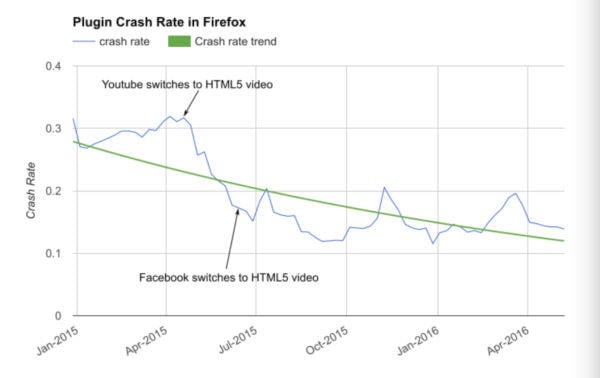
Start up: Chromebook infiltrate PC market, Privacy Shield arrives, Britain’s favourite map spots, and more


Apple wants to own all this. Times a BEEEELLLLLION. Photo by Adam Melancon on Flickr.

You could sign up to receive each day’s Start Up post by email. Nobody’s forcing you. But if you don’t, we might appoint you Foreign Secretary.

A selection of 11 links for you. Use them wisely. I’m charlesarthur on Twitter. Observations and links welcome.

PC shipments beat expectations in Q2 2016 as US market returned to growth while other regions continued to decline • IDC

»”The PC market continues to struggle as we wait for replacements to accelerate, along with some return of spending from phones, tablets, and other IT,” said Loren Loverde, vice president, Worldwide PC Trackers & Forecasting. “Our long-term outlook remains cautions. However, the strong results in the U.S. offer a glimpse of what the market could look like with pockets of growth and a stronger overall environment. It’s not dramatic growth, but it could push the market into positive territory slightly ahead of our forecast for 2018.”

“As expected, the start of the peak education buying season helped generate large Chromebook shipment volumes in the U.S.,” stated Linn Huang, research director, Devices & Displays. “A somewhat unexpected boost came from intensified inventory pull-in as cautious channel players, who had been working to pare down inventory over the last several quarters, opened up inventory constraints a bit. This was likely a one-time shipment boost to bring aggregate inventory levels back to market equilibrium. The larger story remains whether an early wave of enterprise transition to Windows 10 could help close out a 2016 that is increasingly looking stronger in the U.S.”

«

The US market was 17.03m units including those Chromebooks, according to IDC, while Gartner – which doesn’t count Chromebooks (don’t ask me why), puts the US market at 15.22m. Suggests that Chromebooks were 1.81m – just behind Apple’s figure of 1.87m (Gartner) or 1.91m (IDC).

If Chromebooks are over 10% of the US market, that’s beginning to be important. (By that calculation, Chromebook shipments in 2Q15 were 1.2m in a total market of 16.2m. Strong growth.)

The Windows PC market, meanwhile, isn’t healing.
link to this extract


Ad Blocker Beta • Optimal

»We’ve been building a better ad blocker that will give you more fine-grained control over your online experience. In early tests running 20+ tabs in Chrome across the top 50 news websites, it outperforms the most popular ad blocker (which itself saves just 6% browser memory vs. no blocking). It led to less tracking (66% fewer URLs loaded) and also cuts down on bandwidth use tremendously: 39% less memory, 52% less data.

«

Sign up for the beta.

link to this extract


Apple’s plan to own the entire music industry • Above Avalon

Neil Cybart:

»Following the Beats acquisition, I see Apple striving to take back the music narrative with the goal of eventually owning the entire music industry. There are four distinct steps to Apple’s strategy.

• Pivot into paid music streaming.
• Leverage a strong balance sheet to control the music narrative.
• Remove oxygen from the music streaming industry by grabbing revenue share.
• Create an environment for independent artist sustainability.

Although each step becomes progressively more difficult, ultimately, the four are interrelated…

…Any deal for Tidal would not be about getting access to the service’s 4.2 million subscribers. Instead, Apple would be interesting in gaining access to Jay Z and friends. Losing out on Beyoncé, Rihanna, and Kanye West album exclusives over the past year irked Apple. While Apple Music eventually got access to most of the exclusive content, the amount of attention and breathing room that Tidal received was obviously not something Apple enjoyed. Acquiring Tidal and bringing Jay Z on board Apple Music will be a way for Apple to make Apple Music more attractive and capable of getting additional revenue share.

«

link to this extract


Privacy Shield transatlantic data sharing agreement enters effect • Computerworld

Peter Sayer:

»[European Commissioner for Justice Vera] Jourová’s nice distinction between bulk data and mass surveillance didn’t impress campaign group European Digital Rights (EDRI), nor Max Schrems, the Austrian whose complaint to the Irish Data Protection Commissioner about Facebook’s handling of his data ultimately led to the CJEU ruling.

“In Annex VI of the Privacy Shield decision, the U.S. government explicitly confirms that U.S. services conduct ‘bulk collection’ by using data from U.S. companies. While the U.S. highlights what it called limitations (for example for only six broad purposes), the mere possibility of such mass surveillance is contrary to the CJEU judgement,” Schrems said via email.

EDRi Executive Director Joe McNamee doesn’t give Privacy Shield long: “We now have to wait until the Court again rules that the deal is illegal and then, maybe, the EU and U.S. can negotiate a credible arrangement that actually respects the law, engenders trust and protects our fundamental rights,” he said.

«

link to this extract


Britain’s most popular grid squares • Ordnance Survey Blog

»You may have heard us saying that there are over 500,000 routes in our OS Maps service…well, we’ve been analysing all of that data to look at which areas you most like to #GetOutside and explore. We’ve compiled a list of the 20 most popular grid squares in Britain, using 10 years of public routing data compiled in OS Maps and its predecessors.


Britain’s most popular grid squares – 18 are in the Lake District!

We suspected that the Lake District would feature highly, but were amazed to discover that eighteen of the top twenty most popular grid squares to create a route fall in the heart of the Lake District National Park, close to  popular tourist locations Keswick, Ambleside, Grasmere, Helvellyn and Scafell Pike. The other two top twenty places can be found in Snowdonia and the Yorkshire Dales.

«

link to this extract


AR will be startup dominated, VR will not • Reaction Wheel

Jerry Neumann:

»In analyzing any new medium, it pays to figure out the various pieces of the delivery value chain and which ones will have the ability to take whatever share they desire of the overall margin available. These will be the one that become the valuable players in that market.

Virtual reality’s value chain is going to be dominated by content creation. Somewhat like the movies and more like computer gaming. The cost of creating VR content will be high so content creation will economically dominate distribution and discovery. The high cost of creating quality content will mean that less quality content is created, allowing discovery through typical marketing/PR and word of mouth (like how movies are discovered now.) Because recouping the cost of high-quality content will require large audiences, VR headsets will need to be cheap. They may at first be subsidized, but will eventually be required by the content makers to be high-volume, low-margin hardware. Expensive, and thus scarce, content will tend towards the lowest common denominator (like console computer games) so risk can be managed through a portfolio approach (like music and movies.) This suggests that VR content will eventually be dominated by a few very large companies, and probably mainly companies that enter from adjacent industries (my bet would be on EA.)

There may be other uses for VR other than the mass media/broadcast model I describe, such as in business. But because the largest piece of the market will drive revenue in the rest of the value chain down, any other value chain that avoids the chockpoint but uses the other pieces will have very low barriers to entry because its suppliers will have no bargaining power. For instance, the creation of training films for businesses avoided the content creation chokepoint in the consumer media business and benefited from the lower cost of movie-making equipment and talent. But because these had been made plentiful by the mainstream industry, there was no way to build a big business in corporate film-making. Something similar will happen in VR.

Augmented reality is completely different.

«

link to this extract


Apple versus Samsung is so yesterday • Kantar

Lauren Guenver:

»Starting with the US, in the three months ending May 2016, Samsung accounted for 37% of smartphone sales and Apple 29%. However, sales of their respective flagship models reveal a much closer competition, with the Galaxy S7/S7 Edge accounting for 16% of sales and the iPhone 6s/6s Plus at 14.6%. What’s more, when we look at where these purchases are coming from, just 5% of Samsung purchases came from those switching away from Apple, while 14% of Apple purchasers came from those switching away from Samsung. In both cases, the majority of sales came from customers repurchasing and upgrading within their preferred brand. Among those intending to change devices within the next year, 88% of current Apple users and 86% of current Samsung users intend to stay loyal.

Great Britain reveals a closer race between the two brands, who together account for nearly three of every four phones sold, each with 36% of sales. Here we see the iPhone 6s and 5s as the two best-selling devices in the three months ending May 2016, followed by the Samsung Galaxy J5, and the iPhone SE.

Interestingly, in both the US and UK markets, Samsung and Apple claim the entire top 10 list of smartphones sold. Only when expanding our view to the top 20 do we begin to see brands such as LG (in the US) and Sony (in the UK) make an appearance. These markets have also seen smartphone sales flatten or drop in the latest year, as fewer new consumers are available and consumers are upgrading at a slower pace.

«

That doesn’t sound like “so yesterday”. More like “so current”. But in China it’s different:

»Unlike in Western markets where brand loyalty is high and fewer consumers defect for other brands, in China, loyalty remains low. For current top brand Huawei, just 19% of consumers were repurchasing the brand, while 24% switched over from Samsung. For Apple, 42% were repeat purchasers, and 25% came from Samsung. Xiaomi hasn’t captured as many former Samsung consumers as the other two (9%), primarily getting consumers from repeat purchases (45%); 12% of Xiaomi’s new customers switched over from Huawei.

«

link to this extract


Mercedes’ F1 team challenges fans to create new VR/AR experience • UploadVR

Jamie Feltham:

»With the help of F1 star Lewis Hamilton the group is offering some $50,000 as a grand prize. The second stage of the competition is asking contestants to come up with a unique VR and AR experience, but not one that simply simulates driving one of the state of the art racing cars.

Instead, the experience must offer a solution to help the team working on the track-side at a race and those working remotely from the team’s UK-based factory. As it stands, engineers develop a race strategy, review component changes and fix issues with audio communications and video feeds between the track and factory. Contestants will be tasked with refining this process with the help of VR and AR during mid-season tests and more. The aim is to help the two teams involved operate much more efficiently together.

«

link to this extract


Pokémon Go will make you crave augmented reality • The New Yorker

Om Malik:

»Open the app and, pretty much wherever you are, you could be alerted that there is a Pokémon in the vicinity. The other day, I had some time to spare at the San Francisco airport, so I started looking. An animated version of Google Maps popped up on my screen, along with indications that there might be Pokémon around. The more you move around, the more creatures you find. I found only one, but I got a good workout. More important, the game made me happy; it had served a real function.

The technology to make this happen is something we haven’t seen applied before in gaming. Whereas a typical massively multiplayer online game is decentralized among different servers and players, Niantic wanted to create a single source for its game. This requires extraordinary computing power and a fundamental rethinking of how gaming software is written. If a system is fragmented, all users might not be getting new information at the exact same time. Financial-trading systems also run on a single source, because everyone needs to know the correct price of a stock at the same time. “Since everything is changing constantly, this is more like a real-time financial system,” Hanke said, pointing out that the usage on Niantic’s system was “a lot, even by Google standards.”

Hanke has long been interested in mapping and the interplay of our physical and digital worlds. He was the founder of Keyhole, a startup that was acquired by Google and renamed Google Earth. During our conversation, he pointed out that Google Earth was made possible by a convergence of digital photography, broadband networks, mapping, and the small near-Earth satellites that emerged around that time. Augmented reality, he said, is on a similar track—powerful smartphones, faster and more robust networks, a new generation of computer infrastructure, and data collection are all converging.

«

It’s the last point that’s most important: we’re hitting a new inflection point because of the confluence of all these things becoming available. Pokemon Go (indifferent though I am to the game itself) looks like an iPhone moment for AR: many have done it before, but none in a way that grabs such huge attention as to make everything before look poorly worked out.
link to this extract


Exclusive: Samsung Gear S2 smartwatch upcoming update preview • Sam Mobile

»On the convenience front, Samsung has made a huge change – you no longer need to pick up your paired smartphone to install recommended apps on the watch. The same extends to a few watch faces as well.

Over in the world clock app for the Gear S2, Samsung has switched to a flatter design. The clock face now turns white during the day and goes dark at nighttime. Clicking on one of the displayed times will get you sunrise and sunset information as well.

In the weather app (powered by Accuweather), Samsung has added UV index information. It doesn’t give you tips on what you should do based on the UX levels, but at least you can know if you need to put on some sunscreen before going out.

«

Would like to know how it does the “no phone required” trick: does it have a 3G embedded SIM? Samsung beat Apple in round 1 of the usability battle for smart watches – the rotating bezel is a clever idea – but we’ll have to see how the double-tap for apps works on watchOS 3. (I haven’t tried it yet.)
link to this extract


EU regulators near end of Apple inquiry, delay Google one • Silicon Beat

Troy Wolverton:

»The Apple inquiry focuses on whether the low-cost tax structure it has benefited from in Ireland amounts to illegal government aid to the company. Some analysts have estimated that its tax arrangements have saved the Apple billions of dollars. The company has denied any wrong-doing, but has previously agreed to pay back taxes in Italy.

Even as the European Apple inquiry appears to be heading to a conclusion, a Google investigation is getting dragged out. European antitrust regulators postponed the deadline by which the company would have to respond to charges that it has abused its control over the Android operating system.

The company now has until September 7 to respond to the allegations, which focus on the company’s alleged efforts to force phone manufacturers who use Android operating system and want access to the Google Play store to also install other Google apps, including its search app and Chrome browser.

Previously, Google was supposed to file a response by July 27.

«

You may be wondering what happened to the search antitrust investigation. So is everyone else.
link to this extract


Errata, corrigenda and ai no corrida: none notified