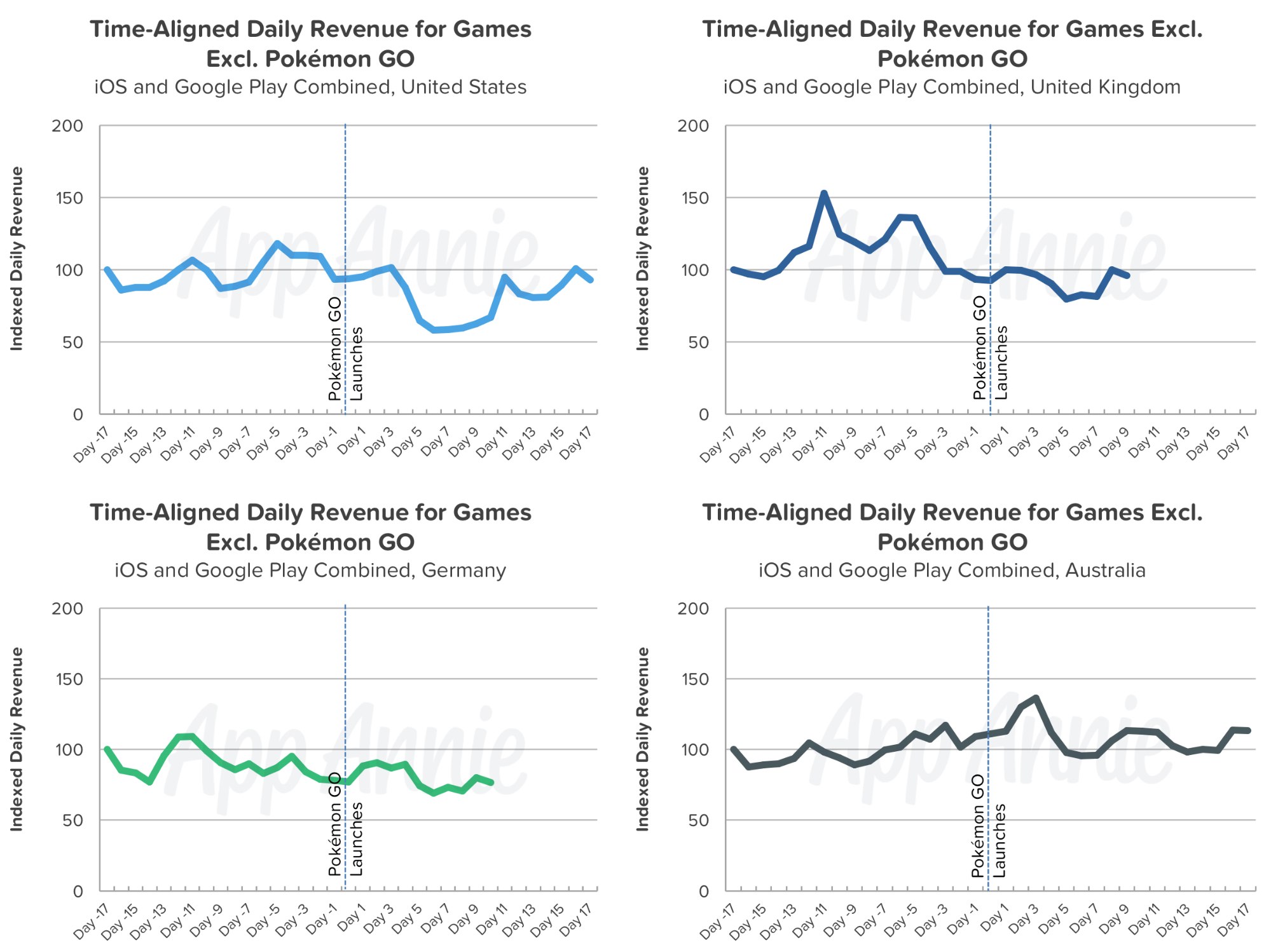
Start up: how not to fix online abuse, Google goes fuchsia, trouble with edu tech, Cook speaks, and more


Blurring your face in photos might be reversible. Bloody machines. Photo by ScottNorrisPhoto on Flickr.

You can now sign up to receive each day’s Start Up post by email. You’ll need to click a confirmation link, so no spam.

A selection of 10 links for you. Use them wisely. I’m charlesarthur on Twitter. Observations and links welcome.

The immortal myths about online abuse • Medium

Anil Dash points out a number of (proven) falsehoods about how to fix abuse within networks, and concludes:

»The bottom line, as I wrote half a decade ago, is that if your website is full of assholes, it’s your fault. Same goes for your apps. We are accountable for the communities we create, and if we want to take credit for the magical moments that happen when people connect with each other online, then we have to take responsibility for the negative experiences that we enable.

Our communities are defined by the worst things that we permit to happen. What we allow tells the world who we are.

«

That “worst things that we permit to happen” is where Twitter is struggling to bring things back to where it wants to be.
link to this extract


Google is working on a new operating system named Fuchsia • The Verge

James Vincent:

»Looking into Fuchsia’s code points gives us a few clues. For example, the OS is built on Magenta, a “medium-sized microkernel” that is itself based on a project called LittleKernel, which is designed to be used in embedded systems (computers that have a specialized function and often don’t need an actual operating system, like the software in a digital watch). Similarly, both of the developers listed on Fuchsia’s GitHub page — Christopher Anderson and Brian Swetland — are experts in embedded systems. Swetland is a senior software engineer at Google and Anderson has previously worked on the company’s Android TV and Nexus Q projects.

However, the Magenta kernel can do a lot more than just power a router. Google’s own documentation says the software “targets modern phones and modern personal computers” that use “fast processors” and “non-trivial amounts of RAM.” It notes that Magenta supports a number of advanced features, including user modes and a “capability-based security model.” Further evidence that Fuchsia is intended for more than just Wi-Fi-connected gadgets include the fact that Google already has its own IoT platform (the Android-based Brillo), and the fact that the new OS includes support for graphics rendering. Some users of Hacker News have even suggested that Fuchsia could be use for augmented reality interfaces.

«

This story neatly encapsulates a lot of modern (tech) journalism. What’s missing from it? First, it’s a rewrite of an Android Police story. But it adds nothing to it – no outside expert opinion, and particularly no comment from Google itself. Could nobody pick up a phone and just ask? Even to get “no comment”? (James Vincent tells me he did contact Google, which hasn’t so far responded. That’s not atypical for Google.)

The Verge often seems to preen about its web presence, but its editors seem content to have lots of warmed-over takes which add nothing to the original. That’s not sustainable for the writers or editors.
link to this extract


Boffins’ blur-busting face recognition can ID you with one bad photo • The Register

Darren Pauli:

»Scientists have found a way to accurately identify completely obscured faces using recognition systems trained on only a handful of well-lit photos.

The work by Seong Joon Oh, Rodrigo Benenson, Mario Fritz, and Bernt Schiele of Max Planck Institute in Saarbrücken, Germany, finds faces can be recognised with up to 91.5% accuracy when the system is fed with just 10 clear images of a target’s face.

The Faceless Person Recogniser is up to 69.6% accurate when working from just one image.

Accuracy sharply falls when imperfect training images are used. The team introduced black colour into the images dropping performance to 14.7%, still better than random guessing which clocks in at 4.65%.

They warn such an accurate system would likely be already in use.

“It is very probable that undisclosed systems similar to the ones described here already operate online,” the team says.

“We believe it is the responsibility of the computer vision community to quantify, and disseminate the privacy implications of the images users share online.”

The paper Faceless Person Recognition; Privacy Implications in Social Media [PDF] finds that obfuscation methods including Gaussian blurring are not enough to prevent obscured photos from being used in facial recognition.

«

link to this extract


Caution flags for tech in classrooms • NPR

Anya Kamenetz:

»A group of recent studies on technology in education, across a wide range of real-world settings, have come up far short of a ringing endorsement.

The studies include research on K-12 schools and higher ed, both blended learning and online, and show results ranging from mixed to negative. A deeper look into these reports gives a sense that, even as computers become ubiquitous in classrooms, there’s a lot we still don’t know — or at least that we’re not doing to make them effective tools for learning.

First, a quick overview of the studies and their results:

Last fall, the Organization for Economic Co-operation and Development published its first-ever, and one of the largest-ever, international analyses of student access to computers and how that relates to student learning. (The OECD administers the PISA test, the world-famous international academic ranking.)

For this report, the researchers asked millions of high school students in dozens of countries about their access to computers both in the classroom and at home, and compared their answers to scores on the 2012 PISA. Here’s the money quote:

“Students who use computers very frequently at school do a lot worse in most learning outcomes, even after controlling for social background and student demographics.”

«

Are we going to have to rethink this whole thing? Though there is a lot of uncertainty around how computers are used in the different countries, and how those fit into the courses.
link to this extract


How we killed the Tea Party • POLITICO Magazine

Paul Jossey:

»The Tea Party movement began building in the George W. Bush years. Profligate spending and foreign adventurism with no discernible results nurtured disgust with Washington’s habit of spending beyond its means and sending others to die in its wars. When President Obama made reorganizing the nation’s health care system his foremost priority—and repeatedly misrepresented its effects in the process—anger at Washington exploded.

Republicans inside the Beltway reacted to the burgeoning Tea Party with glee but uncertainty about how to channel the grass-roots energy usually reserved for the left. A small group of supposedly conservative lawyers and consultants saw something different: dollar signs. The PACs found anger at the Republican Party sells very well. The campaigns they ran would be headlined “Boot John Boehner,” or “Drop a Truth Bomb on Kevin McCarthy.” And after Boehner was in fact booted and McCarthy bombed in his bid to succeed him, it was naturally time to “Fire Paul Ryan.” The selling is always urgent: “Stop what you’re doing” “This can’t wait.”

One active solicitor is the Tea Party Leadership Fund, which received $6.7m from 2013 to mid-2015, overwhelmingly from small donors. A typical solicitation from the TPLF read: “Your immediate contribution could be the most important financial investment you will make to help return America to greatness.” But, according to an investigation by POLITICO, 87% of that “investment” went to overhead; only $910,000 of the $6.7m raised was used to support political candidates. If the prospect signs a “petition,” typically a solicitation of his or her personal information is recorded and a new screen immediately appears asking for money. Vendors pass the information around in “list swaps” and “revenue shares” ad infinitum.

«

Sounds like the direct marketing/ad tech business, because essentially that’s what it is – just applied to politics. Trump is essentially the politician raking over the furious ashes of the Tea Party’s animus.
link to this extract


Brain.fm brings musical AI to Rio Olympics’ training • ReadWrite

Cate Lawrence:

»Brain.fm is a freemium auditory program designed to help people either focus, relax or sleep using AI-generated music. It’s [sic – CA] users include students, insomniacs and athletes. Heavily steeped in scientific research, its creators have a history in making niche audio brainwave software for psychologists and researchers and their work includes patents on auditory brainwave stimulation and memory.

«

Stumbling over to Brain.fm, one notes that its readme says you shouldn’t use it if you’re epileptic, pregnant, or wearing a pacemaker: “those who fit into any of the above categories, whether knowingly or not, should not use this application.” How can you agree to something you might not know about? (Pacemaker excepted.)

You get a number of free sessions, and then you have to pay. Would like to know if this really has value; Lawrence’s byline photo doesn’t exactly inspire confidence. You’ll see.
link to this extract


Google’s high-speed web plans hit snags • WSJ

Jack Nicas:

»Google parent Alphabet Inc. is rethinking its high-speed internet business after initial rollouts proved more expensive and time consuming than anticipated, a stark contrast to the fanfare that greeted its launch six years ago.

Alphabet’s internet provider, Google Fiber, has spent hundreds of millions dollars digging up streets and laying fiber-optic cables in a handful of cities to offer web connections roughly 30 times faster than the U.S. average.

Now the company is hoping to use wireless technology to connect homes, rather than cables, in about a dozen new metro areas, including Los Angeles, Chicago and Dallas, according to people familiar with the company’s plans. As a result Alphabet has suspended projects in San Jose in California, and Portland in Oregon.

Meanwhile, the company is trying to cut costs and accelerate its expansion elsewhere by leasing existing fiber or asking cities or power companies to build the networks instead of building its own…

…Alphabet hopes the investment in Google Fiber will eventually pay off with subscriber fees and, indirectly, more clicks on its search ads. Fiber costs $70 a month for the fastest internet connection and an additional $60 a month for TV. Analysts estimate a one-time cost for Alphabet of more than $500 for each home the network reaches, not all of which subscribe.

Alphabet declined to disclose its number of subscribers. Based on numbers reported to the U.S. Copyright Office, research firm MoffettNathanson said in March the TV service had 53,000 subscribers total as of December.

«

Based on 53,000 subscribers, that’s revenue of between $11.1m and $20.7m per quarter. Digging up roads really is not such a great business. Setting up wireless internet will be a lot cheaper – but it’s tricky to keep working well: all you need is one big storm and all your carefully placed aerials are out of alignment.
link to this extract


Top three China smartphone vendors had combined 47% market share in 2016 Q2 • IDC

»

With growth coming mainly from replacement users in PRC, vendors employed aggressive marketing in the past few months. OPPO hired a few brand ambassadors to launch its R9 series prompting other vendors to follow suit after seeing their strong success. vivo hired a famous Korean star who’s wildly popular in China as its brand ambassador while Xiaomi hired three different ambassadors for its Redmi line. Recently, Huawei also announced a brand ambassador for its Honor line in China – a departure from its previous marketing message focused on product features. Most of these ambassadors seem to target the younger crowd. While having brand ambassadors is not a new phenomenon in China, vendors seem to be more aggressive with their marketing strategies. This is seen to be a new tactic for vendors such as Xiaomi that never used to spend on advertising.

While the Chinese vendors all saw QoQ growth in the market, Apple continued to decline in its shipment volumes. The iPhone SE was not a hit in China, where consumers prefer larger screen-sized phones. In 2016Q2, close to 90% of phones shipped in China had screen sizes that were 5 inches and above. Apple fans are holding out for the new iPhones to be launched in 2016Q3, which could likely give Apple a boost in China.

“In the past, Xiaomi started the trend of selling its phones online and other vendors soon followed suit and created their own online brand. After vendors witnessed OPPO’s success with its R9, they also started riding on the trend of hiring celebrity endorsers to represent their brand and appeal more to the young crowd,” says Xiaohan Tay, senior market analyst IDC Asia/Pacific.

Despite the market being saturated and driven mainly by replacement users, vendors are still aggressive with their marketing tactics, experimenting with new ways to win over consumers.

“Hiring celebrity endorsers may help increase numbers in the short-term, but this alone may not be sufficient to drive numbers in the long run. As there is very little differentiation across products to warrant significant brand loyalty, vendors must constantly think out of the box to get people hyped up about their products,” ends Tay.

«

What’s noticeable in the graph (which requires Flash for you to copy the code with a click 😱)(and might be blocked by WordPress’s security 🙄) is how Xiaomi has tumbled in that year. Not clear how it can regain momentum – and if it doesn’t, what then?
link to this extract


Tim Cook, the interview: Running Apple ‘is sort of a lonely job’ | The Washington Post

Jena McGregor with a long interview with Cook, which has lots of notable parts (which will have been filleted all over the web). Here’s the part I found telling:

»Q: Everyone’s always wanting to know what’s next. The car. The TV. You spoke about artificial intelligence and augmented reality. How do you make sure great ideas surface in such a big organization?

TC: Great people surface great ideas. We’re a believer in small teams versus monolithic huge teams. The product teams are horizontal, where people from hardware and software services can all work together.

We don’t have divisions. We’ve elected not to do what business school, and I think every other larger company, does: They break down their company into smaller divisions. They give each division a P&L, and each division does their own marketing and communications and operations.

We always re-challenge ourselves on this question. But we keep coming back to what the customer wants from us is a user experience that is seamless. They want to start working on whatever they’re working on from their iPhone. And then they want to go to the Mac, and they want it to be absolutely seamless. The only way to assure that is to do things once.

That means the top of the company must work together incredibly well. Think about if you were the CEO of a company with a lot of divisions — I’m going to exaggerate a little bit — it would almost be like you’re a holding company CEO. That is the model for most companies. But that’s not what customers want from us. You can’t have a weak link. You can’t have people who don’t get along. It has to be people who have great respect for one another and who work as a team.

«

link to this extract


Native Skype for Windows Phone walked behind shed, shot heard • The Register

Richard Chirgwin:

»Microsoft’s killed off a native Skype client for Windows Phone.

WinPho users won’t be alone: Redmond will also discontinue Skype clients on Android 4.02 or lower and iOS 7.

Microsoft has already announced that OS X and Linux will lose native clients under its Skype-for-the-cloud strategy.

Rather than announcing the shift, Microsoft has updated its Skype product support page to say (for various operating systems):

»While support will no longer be available from October 2016, the Skype app on Windows Phone 8 and Windows Phone 8.1 will continue to work (possibly with some limitations) until early 2017, when we finish moving Skype calling to the cloud (see Skype blog).

«

«

So Microsoft is driving everyone back to browsers for Skype because apps are, what, too much trouble? I thought the hassle with different browsers was part of what drove apps in the first place. More likely that Skype will see less and less use in favour of native client apps.
link to this extract


Errata, corrigenda and ai no corrida: none notified

Start up: Google v Korea, AI for faces, why swimmers tie, how secure is iMessage?, Wonder remembers, and more


Can you think of someone who you’d really like to get infected by the Locky ransomware? We can. Picture by Christolph Scholz on Flickr.

Hello! We’re back. Is this thing on?

A selection of 12 links for you. Enough is enough. I’m charlesarthur on Twitter. Observations and links welcome.

South Korea confirms Google antitrust probe • FT.com

Song Jung-a:

»South Korea’s antitrust watchdog says it is looking at whether Google has violated the country’s anti-competition laws, officially confirming its scrutiny of the global internet search group for the first time.

The Korea Fair Trade Commission did not elaborate on the scope of the investigation.

Local media have reported that the regulator is probing the company’s advertising policy, after Korean advertising agents filed a complaint with the KFTC in 2014 that Google had not paid them commissions for online advertising since 2012.

Friday’s statement from the KFTC came on the same day the Seoul Economic Daily newspaper reported that the regulator was poised to clear Google of charges that it abused its dominant market position with its advertising policy.

Separate media reports have suggested Google is under scrutiny over alleged abuse of its Android smartphone operating system’s dominance.

«

This is quite strange when compared with the report from Business Korea, which says:

»The Fair Trade Commission (FTC) of South Korea came to a conclusion that Google Korea’s preloaded apps and subsidies for search ads do not constitute any abuse of market dominance. This is because Naver enjoyed a market share of more than 70%, Daum Kakao enjoyed a market share of 15% to 19% and that of Google was merely 2% to 8% during the period of 2008 to March this year, when Google was involved in preloading of apps in the South Korean market.

«

They’re slightly different, but Business Korea seems to be saying things are fine, where the FT is saying things aren’t.
link to this extract


Machine learning is fun! Part 4: modern face recognition with deep learning • Medium

Adam Geitgey:

»Ok, so which measurements should we collect from each face to build our known face database? Ear size? Nose length? Eye color? Something else?

It turns out that the measurements that seem obvious to us humans (like eye color) don’t really make sense to a computer looking at individual pixels in an image. Researchers have discovered that the most accurate approach is to let the computer figure out the measurements to collect itself. Deep learning does a better job than humans at figuring out which parts of a face are important to measure.
The solution is to train a Deep Convolutional Neural Network (just like we did in Part 3). But instead of training the network to recognize pictures objects like we did last time, we are going to train it to generate 128 measurements for each face.

«

Geitgey’s writeup is lengthy but all fascinating. (And there are three previous parts.)
link to this extract


Craig Federighi comes clean on how Night Shift avoids ghosting artifacts when scrolling • iDownload

Christian Zibreg:

»A customer from Germany emailed Craig Federighi, who is Apple’s Senior Vice President in charge of Software Engineering, to complain about Night Shift mode potentially emitting more blue light than F.l.ux, an iPhone app that serves the same purposes like Night Shift but was banned from the App Store following the release of iOS 9.3.

He received the following reply:

»

Given the display technology we push it as far as we can without introducing major red ghosting artifacts when scrolling / animating. (Unfortunately, the red phosphors in the LCD hold their color longer and when we shift the display too far into the red then scrolling results in irritating ghosting artifacts).

«

«

My expectation is that the next iPhones will have the Tru-Tone display which adjusts to the light around them. Which requires even better displays.
link to this extract


What if intelligent machines could learn from each other? • The Conversation

Raja Jurdak:

»As an example, we have demonstrated how smartphones that are in proximity to each other can both run their own AI machines and share logic blocks from their programs to accelerate learning how to maintain battery life.

There are two reasons behind these benefits. First, each phone learns independently, developing its own genetic material of program logic – an evolution of sorts.

This is known as the “island model” in evolutionary computing. In the IoT, each device becomes its own “island”. Occasionally, the devices share what they’ve learned.

This adds to the diversity of their genetic pool, which can be beneficial in a system that learns or evolves. It also means that both devices know how to react better to new contexts that may have originally been observed by other collaborating devices.

«

link to this extract


Russia tells Google to cough up some loose change in Android monopoly probe • The Register

Iain THomson:

»Russia’s Federal Antimonopoly Service (FAS) has fined Google 468 million rubles ($6.8m) on charges that its Android operating system has been illegally disadvantaging other software vendors.

Last February, the FAS announced an investigation into Android after complaints from local search engine Yandex that Android phones came bundled with some Google apps. Yandex whined that this was anticompetitive and was sucking away its business customers.

In a statement, the FAS said it was imposing the fine (equal to around three hours’ worth of profit last quarter for the search giant) because Google was forcing Russian mobile phone companies to install its search app, its Maps, and its App store.

The FAS also objected to these services occupying prime real estate on the screens of Android phones, and to the Chocolate Factory banning some Russian apps from its storefront.

«

link to this extract


How I got tech support scammers infected with Locky • Borderline

Ivan Kwiatkowski:

»I agree to purchase his package and find test credit card numbers as fast as I can. For obvious reasons, the payment processor rejects the transaction and we try again four or five times. In the end, I suggest using my second credit card and give him another random yet valid (as far as the Luhn algorithm is concerned) number. Dileep makes me repeat both payment details at least ten times and I play dumb. He calls his superior in the hopes of figuring out why the payment isn’t going through. In the meantime, I hear other operators in the background repeating credit card numbers and CVVs aloud. I’m assuming they’re not PCI-DSS compliant. That’s when I’m hit by a stroke of genius. I open my “junk” e-mail folder where I find many samples of the latest Locky campaign – those .zip files containing a JS script which downloads ransomware. I grab one at random, drag it into the VM. The remote-assistance client I installed has a feature allowing me to send files to the operator. I upload him the archive and say:

— I took a photo of my credit card, why don’t you input the numbers yourself? Maybe that’ll work.
At first, Dileep ignores me. He makes me type in my information a few more times (he’s persistent, I’ll give him that), until I put my foot down:

— Look, Dileep, I’m old and my sight is not so good. It’s starting to hurt, having to squint to read those tiny numbers. Also, we’ve established I’m no good with computers, how about you give me a hand here?

He says nothing for a short while, and then:
— I tried opening your photo, nothing happens.

(I do my best not to burst out laughing.)

— Are you sure? Sometimes my pictures have a problem opening on MacOS, are you on Windows?
— Yes, he replies. Your pictures are corrupted because your computer is infected. This is why we need to take care of this.

And while a background process quietly encrypts his files, we try paying a couple more times with those random CC numbers and he finally gives up, suggesting that I contact my bank and promising to call me back next Monday.

In conclusion, whenever one stumbles on an obvious scam, the civic thing to do is to act like you buy it. Rationale: scammers don’t have the time to separate legitimate mugus from the ones who just pretend.

«

That is so wonderfully wicked. I hope as many people as possible manage to do this.
link to this extract


This is why there are so many ties in swimming • Deadspin

Timothy Burke:

»why doesn’t FINA, the world swimming governing body, increase its timing precision by adding thousandths-of-seconds?

As it turns out, FINA used to. In 1972, Sweden’s Gunnar Larsson beat American Tim McKee in the 400m individual medley by 0.002 seconds. That finish led the governing body to eliminate timing by a significant digit. But why?

In a 50 meter Olympic pool, at the current men’s world record 50m pace, a thousandth-of-a-second constitutes 2.39 millimeters of travel. FINA pool dimension regulations allow a tolerance of 3 centimeters in each lane, more than ten times that amount. Could you time swimmers to a thousandth-of-a-second? Sure, but you couldn’t guarantee the winning swimmer didn’t have a thousandth-of-a-second-shorter course to swim. (Attempting to construct a concrete pool to any tighter a tolerance is nearly impossible; the effective length of a pool can change depending on the ambient temperature, the water temperature, and even whether or not there are people in the pool itself.)

«

In Lane 1, competing for Germany, Werner Heisenberg.
link to this extract


iMessage’s ‘end-to-end’ encryption hardly any better than TLS, say cryptography researchers • Tom’s Hardware

Lucian Armasu:

»Ever since Edward Snowden released the NSA documents, an encryption mechanism called “forward secrecy” has significantly increased in popularity with service providers. The mechanism essentially automatically rotates the encryption keys at regular intervals, and once it switches to a new key, past data can’t be decrypted anymore.

This has been a main feature of end-to-end encryption protocols such as Off-The-Record (OTR) and Signal, but Green said iMessage lacks it completely. The lack of forward secrecy means that if someone steals an iOS or macOS device and unlocks it, they can then decrypt past conversations from those devices.

The researchers also criticized Apple for using non-standard encryption that seems implemented in a rather ad hoc manner. Moreover, Apple doesn’t use a properly authenticated symmetric encryption algorithm and instead relies on a digital signature to prevent tampering. This is what makes the chosen ciphertext attacks that can recover full contents of some messages possible.

Green once again recommended that Apple entirely replace iMessage with a new messaging system that’s been properly designed and verified. However, he realizes that Apple has to maintain some sort of backwards compatibility for the hundreds of millions of users that would continue to use iMessage even if Apple did create a new messaging app.

Because of that, he and his team also proposed some “short-term patches” for iMessage that can make the older iMessage clients a little more secure, as well as some long-term ones that will break iMessage’s compatibility with the old clients…

…The researchers said that they have reported all of these vulnerabilities to Apple, and the company has already implemented most of the proposed short-term patches such as the duplicate RSA ciphertext detection and certificate pinning (only for iOS 9+ clients), and it removed gzip compression. However, Green and his team stressed that Apple should eventually do a major overhaul of the iMessage protocol while following their proposed long-term changes.

«

link to this extract


Twitter now censors verified journalist accounts in Turkey’s post-coup purge • The Daily Dot

Efe Kerem Sozeri:

»Based on two recent court orders issued after the July 15 coup attempt, on July 23 and on July 25, Twitter withheld at least 12 journalists’ and three media outlets’ accounts; three of the censored accounts are verified. A quick tally of recently censored journalists lists as many as 26 accounts, half of which are verified.

The majority of the censored accounts are the former reporters and editors of the Zaman Amerika daily, an outlet close to Gülen movement, which Erdoğan blames for the coup attempt. However, the list also includes a Kurdish journalist, @AmedDicleeT, who has 186,000 followers, Kurdish daily @ozgurgundemweb1, and even the official account of the Kurdish news agency @DicleHaberAjans.

However, Twitter’s censorship criteria is still unclear, as these accounts do not complete the full list of journalist accounts that Turkey wants censored in these two court orders. Two other journalists who worked at Gülen-affiliated outlets, @tuncayopcin and @EmreUslu, are listed in the order but are not censored, nor is reporter @RifatDogann who works for the independent outlet @Dikencomtr.

Beyond the journalist accounts, Twitter seem to protect its international credibility by not censoring Amnesty’s Turkey researcher @andrewegardner, whose account was listed in the first court order.

«

Twitter Turkey supports (lots of) censorship, and is toying with reintroducing the death penalty – the latter of which would disqualify it from joining the European Union. It’s a mess.
link to this extract


Wonder is a bot that will remember anything for you • TechCrunch

Sarah Perez:

»Quick! What’s your gym locker combination? Your girlfriend’s favorite Starbucks order? The type of ink your printer uses? Can’t remember? Gotta look it up? There’s a lot of information that we can’t access via a Google search, but instead tend to make a mental note of in order to recall. Sometimes, we might jot these things down in Notepad, but often we forget to do that, too. A new bot called Wonder wants to help by remembering anything you want, then return the information you need via a text message.

It’s a pretty simple but clever idea. After you go to the Wonder website and provide your phone number, the bot sends you a text that explains how it works.

Basically, you just text Wonder the information you’ll need to recall at a later date, and it stores that for you in its system. When you’re trying to later remember something, you just text Wonder a question, like “Who’s our company’s dental insurance provider?,” “When’s the next company meeting?,” or whatever other information you’ve previously fed into it by way of text message. The bot will promptly respond with the answer.

«

OK, given stuff like that which you don’t want to commit to a note (even a passworded note?), can see the point.
link to this extract


Why everything might not be ‘great’ at Google’s $2.4bn venture capital business • Business Insider

Sam Shead:

»Google Ventures is likely to say that there’s no overlap between itself and the other Alphabet investment divisions but it’s perfectly possible that they end up treading on one another’s toes from time to time.

One startup cofounder even went as far as to say: “GV had no role after the Alphabet split.”

Looking at the data
CB Insights looked at GV deal data over the last five years. The researchers found that GV made 46% less deals in 2015 — the year that Alphabet was formed — than it did in 2014.

The biggest drop-off in GV deal activity was at the seed stage, where GV went from a high of over 40 new deals in 2014 to 0 in the first half of 2016.

The CB Insights researchers wrote: “Growth investments done through Google Capital and direct minority investments by Google into the likes of SpaceX and Magic Leap have increased in the past two years.”

Although GV is yet to make any seed stage deals in 2016, it has made several larger deals. In the first half of the year, GV made 31% more investments than the same period in 2015, but 30% fewer than in H1 2014, according to CB Insights.

Ultimately, the success of a VC firm comes down to the number of big exits from startups in its portfolio. CB Insights notes that GV has had six exits over $1bn (£773m) since its inception, with the latest one coming after Jet.com was acquired by Walmart for $3bn (£2.3bn).

A Google Ventures spokeswoman said: “Bill Maris has decided to step down to take a break with his family and tackle something new.”

«

link to this extract


Checking the time, and other killer smartwatch uses • NPD Research Group

Eddie Hold:

»Smartwatch adoption skews younger and lower income in many cases and while the natural inclination is to simply label this group as “early tech adopters,” the reality is a little different.

It appears that a successful target sector for the watch is the service industry, ranging from valets to bar staff and waiters. These are users that cannot stay glued to their phones while they are working, but still want access to “glanceable” information such as messaging notifications, alarms and (of course) how long they have left on any given shift. The ability to remain in contact without reaching for the phone is still the killer app.

This all bodes well for the newer generation of smartwatches, which can connect via cellular rather than just Bluetooth. The freedom to completely un-tether from the smartphone could become the next logical “killer use” as it means you can go for a run without carrying that ever-larger smartphone with you, for example, or range further in the restaurant without worrying about Bluetooth.

«

Would not have guessed that for the adopter market, but it does make sense when you consider it.
link to this extract


Errata, corrigenda and ai no corrida: it’s Turkey, not Twitter, that is considering the reintroduction of the death penalty.

You can now sign up to receive each day’s Start Up post by email. You’ll need to click a confirmation link, so no spam.

Start up: cyborg Olympics!, the lost iPhone conundrum, explaining iris scanning, Basis burns, and more


This might be too many for a listicle, but odd numbers intrigue more than even. Honest. Photo by Hecuba’s Story on Flickr.

Business note: The Overspill’s Start up will be taking a week’s break next week, returning – if we’re spared – on August 15. So don’t come crying to me on Monday when your inbox is empty.

A selection of 12 links for you. The wrong number, as you’ll see. I’m charlesarthur on Twitter. Observations and links welcome.

‘Digital detox’ promotes offline focus on love and jobs • FT.com

Madhumita Murgia:

»One in three Britons is choosing to undergo a “digital detox”, unplugging themselves from the internet in an effort to focus on their work and relationships, according to an Ofcom survey.

More than a third of people surveyed by the telecoms regulator said they had deliberately taken a break from their connected devices at some point, with 5% doing so for as long as a month. One in ten said they had done so as recently as the previous week from when they were surveyed…

…The study — of 2,025 adults and 500 teenagers — found that many felt bound to their devices, often experiencing separation anxiety if parted from them. In fact, six in ten internet users described themselves as being “hooked”, spending the equivalent of a day a week online.

More than half said they slept with their phone within reaching distance, checking it first thing in the morning and last thing at night. A quarter of mobile users said the first thing they did if they woke up during the night was check their phone.

A majority said their digital obsession negatively affected their offline lives: nearly half said they had ignored household chores and put off sleep as a result of spending too much time online, while a third felt they had neglected family and friends for their devices.

«

The full Ofcom report is here (and press release here).
link to this extract


Welcome to the Cyborg Olympics • Nature News & Comment

Sara Reardon:

»Around the world, nearly 80 research groups in 25 countries are honing their technologies for the €5m (US$5.5m) event. They range from small, ad hoc teams to the world’s largest manufacturers of advanced prostheses, and comprise about 300 scientists, engineers, support staff and competitors: disabled people who will each compete in one of six events that will challenge their ability to tackle the chores of daily life. A race for prosthetic-arm users will be won by the first cyborg to complete tasks including preparing a meal and hanging clothes on a line. A powered-wheelchair race will test how well participants can navigate everyday obstacles such as bumps and stairs.

The venue — Zurich’s 7,600-spectator ice-hockey stadium — should combine with the presence of television cameras and team jerseys to give the Cybathlon a sporting vibe similar to that of the Paralympics, in which disabled athletes compete using wheelchairs, running blades and other assistive technologies. The difference is that the Paralympics celebrates exclusively human performance: athletes must use commercially available devices that run on muscle power alone. But the Cybathlon honours technology and innovation. Its champions will use powered prostheses, often straight out of the lab, and are called pilots rather than athletes. The hope is that devices trialled in the games will accelerate technology development and eventually be used by people around the world.

«

Now this is an Olympics we can all support.
link to this extract


This is what Apple should tell you when you lose your iPhone • Hacker Noon

Joonas Kiminki:

»We got the car window fixed in a matter of hours, I later bought a new phone etc etc, but then yesterday — eleven days after the phone was stolen — the most interesting thing happened: I got an SMS and an email notifying that the phone was found!

The email looks exactly like an Apple email should. The sender is “Apple”. Google Inbox, Apple Mail and the traditional Gmail all let the email pass as non-suspicious. All the links in the footer lead to the right places.

I of course rushed to the address on the link and then started typing my credentials, but then suddenly stopped. Something was just not right.

At this point it’s probably best to note that I’m sort of professional. I’m managing director in a company that builds and supports large scale websites. We deal with web stuff all day long. I’m pretty sure many people would have just punched in their apple id and password and only then wondered why the login doesn’t work.

It does look very convincing, doesn’t it? All the links work, there’s jQuery features in place for a smooth user experience etc.

Let me take you inside the mind of a person who’s lost their phone for a while. You’re of course bummed that it got stolen in the first place. Everybody blames themselves at least a bit. Then, you set all the notifications on for notifying if it ever finds its way back online. Finally, you sort of forget it — and when messages finally arrive that it’s found, you rush at full speed to learn about your dear phone’s adventure.

Looking at the page above, there were two things that alarmed me. First, the address seemed a little off. Not really something Apple would use, is it?…

… If you ever lose your iPhone, iPad or iPod, be extra alert for upcoming identity theft attempts. This is what Google.com and Apple should’ve told me 12 days ago when I searched for what to do. The scam was so professional with perfect English and mobile responsive web pages that I consider myself lucky not to have given away my password. And as said, I’m sort of a professional.

«

Kiminki makes a good point. Clearly, thieves have wised up to the fact they can’t unlock phones without the iCloud passwords, and are phishing to a remarkable degree to get around this.
link to this extract


Oppo smartphone shipments marred by tight AMOLED supply • Digitimes

Sammi Huang and Steve Shen:

»Shipments of smartphones by China-based Oppo may fall short of its revised goal of shipping 90-100m units in 2016 due to insufficient supply of AMOLED panels from Samsung Display, according to industry sources.

Oppo shipped 50m smartphones 2015 and originally set a goal to ship 60m in 2016. However, the vendor raised its shipment goal for the year to 80m units in June and revise the goal again to 90-100m recently, the sources indicated.

Oppo has been increasing its orders for smartphone panels recently, looking to achieve its shipment goal. However, Samsung Display is having trouble supplying sufficient AMOLED panels to Oppo due to tight production capacity, said the sources.

«

Problem of relying on a competitor for your display panels. What happens once Apple starts wanting OLED too?
link to this extract


Electric vehicle charge points to outnumber petrol stations by 2020, say Nissan • The Guardian

James Murray:

»Public electric vehicle (EV) charge points will outnumber petrol stations in the UK by the end of the decade, marking a potential tipping point in the adoption of zero emission vehicles.

That is the conclusion of a new analysis by auto giant and EV manufacturer Nissan, which argues that based on current trends EV charge points will overtake traditional petrol stations by August 2020.

The report found that there were 8,472 traditional fuel stations in the UK at the end of last year, representing a steady decline from the 37,539 recorded in 1970. Based on the rate of decline in recent decades the number of petrol stations is likely to fall to under 7,870 by summer 2020, Nissan said.

In contrast, the UK’s EV charging network is expanding fast and plans are underway to accelerate its growth further over the coming years. As such, Nissan predicts the number of public EV charging locations will reach 7,900 by August 2020, although it adds that “accelerating adoption of electric vehicles means this crossover could happen a lot sooner”.

The report notes that there are now 4,100 public EV charging locations in the UK, representing rapid expansion given there were only a few hundred as recently as 2011. In contrast, more than 75% of traditional petrol stations have closed in the last 40 years.

«

Hmm. Define “traditional” petrol station. Does that include supermarkets? They’re the ones which have been wiping out the other petrol stations, but it’s unlikely they in turn will close.
link to this extract


Keeping an eye on security: the iris scanner of the Galaxy Note7 • Samsung Newsroom

»Each individual has a uniquely different and highly intricate iris pattern in each eye, which is completely developed at a very young age and remains unchanged throughout one’s lifetime. This, combined with the fact that iris patterns are almost impossible to replicate, makes iris scanning one of the most secure and reliable biometric techniques available.

As a result, it is widely being used for access control in pharmaceutical dispensing, border control and airport security…

…Samsung was able to apply two new components to enable iris recognition without sacrificing the design of the Galaxy Note7. To do so, the device was equipped with a dedicated iris camera, which utilizes a special image filter to receive and recognize the reflected images of the irises with a red IR LED light.

This red light allows for the best range for iris scanning. Furthermore, unlike traditional visible (or RGB) images, which can be affected by iris color or ambient light, infrared images display clear patterns and have low light reflection.

Samsung’s proprietary technology also makes use of the light emitted from the Galaxy Note7’s display so the scanner can receive data even in low light environments.

Together, these components ensure that iris readings are accurate and speedy. In fact, iris scanning requires fewer registration trials and results in fewer false acceptances than fingerprint scanning.

«

I would very much like to see some testing on the false accept/false reject rate for this, as well as the speed. High-end technology, but obviously going to move down to the other top-end models soon. Will others follow suit?
link to this extract


Designers come out for Apple in patent fight with Samsung • Reuters

Andrew Chung:

»Apple Inc deserved the hundreds of millions of dollars in damages Samsung Electronics Co paid for infringing patented designs of the iPhone because the product’s distinctive look drives people to purchase it, a group of design industry professionals told the U.S. Supreme Court on Thursday.

Setting up a clash with a number of Silicon Valley companies that have come out on the side of Samsung, more than 100 designers and educators signed on to a new court brief supporting Apple.

They include famous fashion names Calvin Klein, Paul Smith and Alexander Wang, the industrial design director at Parsons School of Design, the design director for Bentley Motors, and Tony Chambers, the editor-in-chief of Wallpaper magazine.

Samsung has appealed to the Supreme Court part of the $548m it paid Apple last December related to a jury verdict from 2012. Samsung says the $399m of that amount that was awarded for copying the designs of the iPhone’s rounded-corner front face, bezel and grid of icons is excessive and contributed only marginally to a complex product…

…The designers on Thursday said that in the minds of consumers, the “look of the product comes to represent the underlying features, functions, and total user experience.”

Stealing a design can lead to a lost sale, and Apple deserves to be compensated for that with the infringer’s entire profits, they said.

«

link to this extract


Why do odd numbers make people click on your story? • Medium

Andrew Watt:

»have you ever wondered why editorial teams are producing seemingly never ending listicles, especially those with an odd number?

Well, odd numbers are one of three elements which psychologists and web content studies have shown can entice a website visitor to click on a headline and visit an article.

One such study can be found in George Loewenstein’s The Psychology of Curiosity: A Review and Reinterpretation (1994), which concludes that humans are attracted to content which promises a short list of tips or insights on a subect the reader wishes to know more about or one which piques their interest.

Additionally, a meta-analysis of over 300 articles about online learning, conduced by instruction specialist Abreena Tompkins, concluded that grouping information in parcels of three or five enables readers to absorb information better.

«

I had thought listicles tended to range around the 10 mark, but will pay closer attention in future.
link to this extract


The European making sure America’s tech giants play by the rules • Bloomberg

Adam Satariano and Aoife White interview Margrethe Vestager:

»What if the competitors’ products just aren’t as good? People don’t seem to have a problem with Google’s quality.

MV: That’s not the question. You don’t know if someone can come up with something better. Just because something is good doesn’t mean it’s the end of innovation. If it was, well then, we’d still be in horse carriages.

But isn’t there a choice? You’re investigating Google because people need to sign up for its services when they use Android. Can’t somebody download another search or e-mail app for their phone?

MV: If everything is presented to you, then your impetus to look for something new is so much smaller. Android is a very good operating system—open source. But how Android is used seems to place customers in a lot of instances on a one-way Google Street. That’s because you want an out-of-the-box experience, and even before you start thinking there is something else, you’re in a 100% Google experience.

«

She says as a result of her work investigating this, “I’ve become slightly more obsessed with data security and much more reluctant to give away my data.”
link to this extract


The soap opera effect: when your TV tries to be smarter than you • CNET

Danny Sullivan, writing in April 2012:

»If you’re really interested in why the effect happens, it’s because soap operas (and some other television shows) are shot on video, which is cheaper than film. But shooting on video increases the number of frames displayed per second, giving them that particular look.

Many modern televisions seem to automatically create additional frames, even for filmed content. This “motion interpolation” is meant to smooth motion, which might be useful if you’re watching a fast-action sporting event. But it also effectively makes content that was shot on expensive film appear to have been recorded on cheap video.

TelevisionInfo.com had a nice, recent article explaining this in more detail. This CNET article also explains it briefly, though it doesn’t name it as the Soap Opera Effect.

What I found remarkable is that people have been complaining about this for several years. Complaints are all over the Internet. How did I end up with a new set configured by default to show images in a way that you’d think manufacturers know plenty of people dislike. Why do I even need it at all?

My TV, I’d argue, is trying to be smarter than I am. It’s trying to smooth out “blur” and “judder” and remake the picture in a way it assumes will be better. But instead, it transforms the picture into something that feels unnatural.

«

I arrived at this via a Daring Fireball link, read it and worried my new TV was doing this. And then went and tried to configure it. And then, just like Sullivan goes on to explain, couldn’t find out what setting in the thicket of “picture” settings would actually be involved in this. Film? Sports mode? Who knows?
link to this extract


Avoiding the census • #censusfail

»August 9 is Census night. All over Australia, families and households will huddle around laptops with poor quality internet connections to answer a series of questions that will provide a snapshot of who we are as a nation. The data collected by the census is invaluable. It provides important statistics about Australia which drive the development of evidence based government policy.

In previous years, although your name and address were collected, it was not stored. As of this year (2016) things are different — your name and address are now stored to enable future linking to other datasets. The Census has transitioned from anonymous statistics to an identifiable, personal record of every person in the country.

As per their privacy policy, the Australian Bureau of Statistics will store your name and address separate to the remainder of your Census responses, with names replaced by “anonymous linkage keys”. At this point in time, no information has been published on how these linkage keys are generated. A Freedom of Information request has been lodged to provide this information however may not be released prior to the Census taking place.

«

However, you can make foolish mistakes in your name spelling which will make it hard for you to be matched…
link to this extract


Intel’s smartwatches are so hot right now – LITERALLY: Basis Peaks recalled for skin burns • The Register

Shaun Nichols:

»Intel has recall every single one of its Basis Peak smartwatches – and urged people to stop using them – because they can become dangerously hot.

Chipzilla has issued a notice to anyone who bought the Basis Peak, asking them to send back the watch along with any and all accessories for a full refund.

“We had hoped to update the software on your watch to address the problem. Unfortunately, despite our best efforts, we aren’t able to develop such a solution without completely compromising the user experience,” Intel said.

“As a result, we are asking that you return your Basis Peak watch and authorized accessories for a full refund at your earliest convenience.”

Not that anyone should have been actually using the Basis Peak, anyway. Intel issued an advisory on June 13 that customers stop wearing the watch, amidst multiple reports that it was prone to becoming so hot as to cause “burns and blisters” on the skin of those brave enough to wear it.

«

Brings to mind Fitbit’s recall of its Force wristband in late 2014 due to irritation and burns. Those things can get really hot.
link to this extract


You can sign up to receive each day’s Start Up post by email. You’ll need to click a confirmation link, so no spam. But the next one won’t arrive for a week.

Errata, corrigenda and ai no corrida: none notified

Start up: Kim’s crushed BlackBerry, Amazon’s Alexa game kit, the electric database error, and more


What is it like to perceive millions more colours than other people? Photo by RoRoPics on Flickr.

A selection of 13 links for you. Great links, really terrific– they’re the best possible links. I’m charlesarthur on Twitter. Observations and links welcome.

Kim Kardashian has finally stopped using her Blackberry, but not by choice • Jezebel

Bobby Finger:

»Kim Kardashian, mother of North, Saint, and Selfies, is having a terrible, horrible, no-good, very bad day, and it’s all because her phone broke. But not her Lumee®-wrapped iPhone, which is presumably fine and could easily be replaced by Apple. It’s her second phone—her Blackberry—that has suffered irreparable damage.

Kim, as many of you probably know, is a vocal Blackerry fan—an unsolicited and uncompensated spokesperson, if you will. She prefers their physical keyboards to touchscreen versions on most phones of today, and has spent the past several years stockpiling the now-discontinued BlackBerry Bolds (her favorite model) on eBay to have on hand when one ultimately breaks…

«

And it broke. And she can’t find any on eBay. Huh. I’d have kept one buy to sell to her at a gigantic price, myself.
link to this extract


comma.ai research

»the comma.ai driving dataset

7 and a quarter hours of largely highway driving. Enough to train what we had in Bloomberg [a prototype self-driving car built in a garage].

Examples

We present two Machine Learning Experiments to show possible ways to use this dataset:

Training a steering angle predictor

Training a generative image model

«

45GB compressed, so you’ll need a fast link. More to the point, it’s out there for you to do something with – if you’re in machine learning.
link to this extract


History tells us what may happen next with Brexit and Trump • Medium

Tobias Stone, in an essay that will (once you read it) probably scare the living daylights out of you:

»Ignoring and mocking the experts , as people are doing around Brexit and Trump’s campaign, is no different to ignoring a doctor who tells you to stop smoking, and then finding later you’ve developed incurable cancer. A little thing leads to an unstoppable destruction that could have been prevented if you’d listened and thought a bit. But people smoke, and people die from it. That is the way of the human.

So I feel it’s all inevitable. I don’t know what it will be, but we are entering a bad phase. It will be unpleasant for those living through it, maybe even will unravel into being hellish and beyond imagination. Humans will come out the other side, recover, and move on. The human race will be fine, changed, maybe better. But for those at the sharp end — for the thousands of Turkish teachers who just got fired, for the Turkish journalists and lawyers in prison, for the Russian dissidents in gulags, for people lying wounded in French hospitals after terrorist attacks, for those yet to fall, this will be their Somme.

«

It’s a terrific essay which I’ve had sitting open in a tab for around a month, because I was scared to read it. Then I read it, and was even more scared (such as his “if Trump wins and Putin decides he wants to do something” scenario), but better educated. Notable above all is his suggestion of how the Brexit vote might trigger a global political tsunami.

Stone also responded to a number of (often incoherent) responses here.
link to this extract


Scientists have found a woman whose eyes have a whole new type of colour receptor • ScienceAlert

Fiona Macdonald:

»After more than 25 years of searching, neuroscientists in the UK recently announced that they’ve discovered a woman who has an extra type of cone cell – the receptor cells that detect colour – in her eyes.

According to estimates, that means she can see an incredible 99 million more colours than the rest of us, and the scientists think she’s just one of a number of people with super-vision, which they call “tetrachromats”, living amongst us.

Most humans are trichromats, which means we have three types of cone cells in our eyes.

Each type of cone cell is thought to be able to distinguish around 100 shades, so when you factor in all the possible combinations of these three cone cells combined, it means we can distinguish around 1 million different colours…

…So how do you get a fourth type of cone cell?

The idea of “tetrachromats” was first suggested back in 1948 by Dutch scientist HL de Vries, who discovered something interesting about the eyes of colour blind people.

While colour blind men only possess two normal cone cells and one mutant cone that’s less sensitive to either green or red light, he showed that the mothers and daughters of colour blind men had one mutant cone and three normal cones.

That meant they had four types of cone cells, even though only three were working normally – something that was unheard of before then.

Despite the significance of the finding, no one paid much attention to tetrachromats until the late ’80s, when John Mollon from Cambridge University started searching for women who might have four functioning cone cells.

«

This. Is. Mindblowing. First that you can interpolate these peoples’ existence; then that you can find them.
link to this extract


Welcome to AirSpace • The Verge

Kyle Chayka:

»It’s easy to see how social media shapes our interactions on the internet, through web browsers, feeds, and apps. Yet technology is also shaping the physical world, influencing the places we go and how we behave in areas of our lives that didn’t heretofore seem so digital. Think of the traffic app Waze rerouting cars in Los Angeles and disrupting otherwise quiet neighborhoods; Airbnb parachuting groups of international tourists into residential communities; Instagram spreading IRL lifestyle memes; or Foursquare sending traveling businessmen to the same cafe over and over again.

We could call this strange geography created by technology “AirSpace.” It’s the realm of coffee shops, bars, startup offices, and co-live / work spaces that share the same hallmarks everywhere you go: a profusion of symbols of comfort and quality, at least to a certain connoisseurial mindset. Minimalist furniture. Craft beer and avocado toast. Reclaimed wood. Industrial lighting. Cortados. Fast internet. The homogeneity of these spaces means that traveling between them is frictionless, a value that Silicon Valley prizes and cultural influencers like Schwarzmann take advantage of. Changing places can be as painless as reloading a website. You might not even realize you’re not where you started.

It’s possible to travel all around the world and never leave AirSpace, and some people don’t. Well-off travelers like Kevin Lynch, an ad executive who lived in Hong Kong Airbnbs for three years, are abandoning permanent houses for digital nomadism. Itinerant entrepreneurs, floating on venture capital, might head to a Bali accelerator for six months as easily as going to the grocery store. AirSpace is their home.

«

Thoughtful piece.
link to this extract


Theranos had a chance to clear its name. instead, it tried to pivot • WIRED

Nick Stockton:

»Many of the people gathered in that conference room at the 2016 annual meeting of the American Association of Clinical Chemistry were probably expecting the company to address those allegations, with data. Instead, they got a box.

The box, called miniLab, is a tidy, humbled version of the mythos that made Theranos a $9bn unicorn. According to Holmes, it is a glimpse of Theranos’ next chapter, “an inflection point for our company.” Which may have baffled the number of people who thought they had bought tickets for a reckoning. But why not? Theranos’ old business model is dead, skewered by nine months of really bad press, and bled out by a recent federal ruling that bans Holmes from running a clinical testing lab for two years. So, if you take a big step back and look not at where Holmes was speaking — a medical conference — but where she was coming from — Silicon Valley — it’s clear what really happened on that stage in Philadelphia. She pivoted.

Holmes and Company once promoted an innovative, breakthrough technology that would run up to 70 different tests on a single drop of blood — obtained painlessly from a finger prick — while being cheaper and faster than anything else available. Then, Wall Street Journal investigative journalist John Carreyrou published articles alleging that the company’s technology was in fact, only capable of doing a few tests on a single drop of blood. Further, many of those blood drops collected from real customers had been diluted and analyzed using a competitor’s technology. The recent federal ban for Holmes has vindicated the Journal‘s claims.

The box Holmes presented today uses analytical methods developed years ago (by other people) to run an unspecified number of tests on a small (but larger than finger prick) volume of blood, obtained by poking a needle into a person’s arm.

«

“Behold my works, ye mighty, and despair!”
link to this extract


Amazon releases tools to help devs build games for its Alexa voice tech • Gamasutra

Alex Wawro:

»Amazon seems eager to entice developers into making games for its Alexa voice service, as the company this week added a straightforward interactive adventure game design tool (replete with source code) to its dev-oriented Alexa Skills Kit.

Given that voice-controlled choose-your-own-adventure games are a relative rarity in the game industry, this effort on Amazon’s part potentially opens up some intriguing opportunities for game makers.

While most probably know Alexa best as the voice of Amazon’s Echo (pictured) wireless speaker, the Alexa tech actually extends beyond the Echo to provide interactive voice-enabled services on an assortment of devices from both Amazon and other companies.

«

Seems to me you’d have to be exceptionally lonely, or solipsistic, to want to play an adventure game in this way. Or maybe the idea is that you do it as a sort of collaborative party game?
link to this extract


Keep calm and send Telegrams! • Telegram

»Some media reported on a “massive” hacker attack on Telegram in Iran.
Here’s what really happened:

Certain people checked whether some Iranian numbers were registered on Telegram and were able to confirm this for 15 million accounts. As a result, only publicly available data was collected and the accounts themselves were not accessed. Such mass checks are no longer possible since we introduced some limitations into our API this year.

However, since Telegram is based on phone contacts, any party can potentially check whether a phone number is registered in the system. This is also true for any other contact-based messaging app (WhatsApp, Messenger, etc.).

As for the reports that several accounts were accessed earlier this year by intercepting SMS-verification codes, this is hardly a new threat as we’ve been increasingly warning our users in certain countries about it. Last year we introduced 2-Step Verification specifically to defend users in such situations.

«

Hmm, but which “certain people” did the checking? Iranian security people? If they did it for 15 million accounts – let’s enumerate that again, 15 MILLION ACCOUNTS – it’s hardly trivial, and hardly likely to be someone doing it for lulz. This doesn’t seem good, despite the cheery tone of the blogpost.
link to this extract


David Lammy: The latest Tory privatisation shows the triumph of right-wing ideology over economic sense • LabourList

»During a debate on the future of the Land Registry back in June it was clear that the Government will not have the votes it needs to push through their proposed privatisation, such was the strength of opposition from Tory backbenchers. It is time for the Government to confirm the U-turn that the then junior minister George Freeman hinted at from the front bench and announce that it will not be going ahead with this misguided and damaging privatisation.

British property worth at least £120bn is currently owned offshore, with many of these transactions involving criminals buying up properties in order to launder huge sums of money and hide the proceeds of their crime and corruption. Continuing with this misguided privatisation would merely prove beyond doubt that promises to tackle corruption and pervasive tax avoidance are nothing more than empty rhetoric.

In a twisted irony, the various private equity firms and pension funds lining up to bid for the Land Registry are all themselves linked to tax havens. Our system of land and property ownership is contingent on an independent, trusted and impartial adjudicator to grant titles and oversee transactions, but privatisation will create a blindingly obvious conflict of interest that scuppers this impartiality and dashes the prospect of increased transparency in future.

If the very people implicated in money laundering and tax evasion scandals are in charge of the information that could expose the practices of offshore companies, what hope do we have of ever actually tackling corruption?

«

Those seem like good questions.
link to this extract


Companies House proposal to wipe data on dissolved firms sooner decried • The Guardian

Juliette Garside:

»Millions of public records used to track down white collar criminals and combat money laundering would be deleted under proposals being considered by the government’s company registration agency.

Companies House maintains a database on every firm incorporated in the UK, providing access to their accounts and listing all directors and shareholders. But the agency is facing mounting pressure from businesses – and reportedly from members of parliament – to take down valuable information.

Proposals are being considered to reduce the amount of time the records of dissolved companies are retained, from 20 years to six. If the rules are changed, more than 2.5m records could be lost. Campaigners are warning that such a move would be a major step back in the global fight against corruption.

Police investigators, the National Crime Agency, the Serious Fraud Office, lawyers, journalists and bank compliance teams all make extensive use of the data, with many searches involving dissolved companies and their directors…

…A Companies House spokesman said: “We are currently considering the correct period for which records of dissolved companies should be kept on the register. This issue is being considered following a number of complaints made by members of the public who believe that retaining, and making publicly available, information relating to long-dissolved companies is inconsistent with data protection law.”

«

However, there is no time limit for how long records should (or shouldn’t) be kept under data protection laws. I’d prefer transparency and retention: the data is relevant for a substantial period.

link to this extract


Negative energy • 2040 information law blog

Tim Turner:

»The Competition and Markets Authority announced a proposal in March to deal with the problem of so-called ‘disengaged’ customers, those who defy the market by sticking with their energy company rather than hopping from one to another. The idea is to force the providers to identify those who don’t switch, and create a central database to which all will have access for marketing purposes. After a consultation exercise, the final shape of the proposal will be announced this month. When interviewed on the Today programme at the time, a CMA spokesman denied that those on the list would be bombarded with marketing, although he conceded that they would be bombarded with “information”.

The list will contain names and addresses (although that wasn’t the CMA’s original intention), and access to it will be supervised by [energy regulator] OFGEM…

…CMA wanted to include phone numbers and email addresses in the dataset, which would have exposed millions of people to a torrent of spam, tacitly approved by the state. It’s not hard to imagine some of the less ethical companies pretending they can ignore TPS [the Telephone Preference Service, the marketing companies’ voluntary list to block unsolicited calls] and previous expressions of customer wishes on the basis that the OFGEM list has state support (PREDICTION: some of them will use appending services to add phone numbers or emails to the OFGEM list, and do this anyway).

«

You and I can see straight away that this is a bad idea. Turner can too, and so he FOI’d both the CMA and the Information Commissioner’s Office, but what he found out is not encouraging.

»

I am one of the disengaged customers. I moved into my house in 2001 and I haven’t changed energy supplier since. Yes, this might cost me money, but it is a conscious choice. I do not want to engage with the market. I do not want to switch to an alternative provider whose prices are lower because their customer service is terrible. I do not want to give my data to price comparison websites who will then flog it to anyone who feels like buying it. The ICO themselves revealed the complex web of intermediaries that led PCW data ending up in the hands of the Better Together campaign. Of course, I only know about this because it was discussed at a Data Protection Officer conference with Data Controllers, not because the ICO did any publicity about the PCWs’ practices that might have reached data subjects.

«

The shocking thing is that the CMA is willing to give up peoples’ privacy and peace of mind in order to create an artificial “competition” in the market. Shouldn’t the market have been set up better, and shouldn’t OFGEM be making competition happen? That’s what gets people to switch.
link to this extract


Bitcoin drops 20% after $70M worth of Bitcoin stolen from Bitfinex exchange • TechCrunch

Fitz Tepper:

»Bitfinex, one of the most popular cryptocurrency exchanges online, has suffered a major hack. The company has posted a note on their website detailing the security breach, and while it doesn’t mention a total amount, one of their employees confirmed on Reddit that the total amount stolen was 119,756 bitcoins.

That amount converts to about US$77m based on a price of $650 per bitcoin, which is about what Bitcoin traded at over the course of the last week.

After news of the hack spread the price of Bitcoin dropped almost 20%, settling in around the current price of $540 per bitcoin. It’s not exactly clear why the price dropped, but it’s likely Bitcoin investors got nervous about potential hacks on other exchanges and decided to sell off their Bitcoin holdings, which led to a rapid decrease in price.

«

Lots of finger-pointing about which part of the system is responsible, but no clear answers. Also note how the “value” of the hack actually falls because of the hack itself.

»

While it’s too early to speculate next steps, many are wondering what the fate of their coins will be. Because of the segregated BitGo wallets, only some customer’s wallets were compromised. This means that some user’s wallets may be totally intact. The question then becomes do you let those users withdraw their funds, or pool the funds and proportionally issue refunds so every user incurs the same loss, even if their own wallets weren’t directly compromised.

«

Capitalism or socialism? Who’d have thought bitcoin would lead people to those sorts of decisions?
link to this extract


Samsung’s bleeding edge • Bloomberg Gadfly

Tim Culpan:

»For Samsung, though, a lot of this technology is more gimmick than gimme. Iris-scanning sounds cool, but hardware-access security is less of a risk than online hacking or device-installed malware, and one wonders how well it will work with contact lenses or glasses anyway.

Yet it does allow the company to stand out from a crowd where most smartphones look the same, and more importantly lets the company charge huge premiums over the dozens of devices that use the same lineup of chips, displays and software. It’s also an acknowledgement by Samsung that its chief competitor isn’t Apple but every Android maker on the planet.

That means the $13bn Samsung spends annually on R&D is a vehicle for its highly visible marketing program, a fact that’s highlighted by the Galaxy S7 Edge, Galaxy J2 and Galaxy S7 taking the top three spots in Strategy Analytics’ first-half global market-share survey.It also tells you that for Samsung, necessity is not the mother of invention; marketing is.

«

Good points. Hard to believe many people can distinguish the video quality (or screen quality).
link to this extract


You can now sign up to receive each day’s Start Up post by email. You’ll need to click a confirmation link, so no spam.

Errata, corrigenda and ai no corrida: none notified

Start up: Samsung eyes Note 7, iOS 10 further limits ad tracking, the Olympics and doping, and more


How far would you go out of your way to avoid walking through a graveyard? It might give some indication about your political alignment. Photo by VirtKitty on Flickr.

A selection of 11 links for you. They don’t write good. I’m charlesarthur on Twitter. Observations and links welcome.

iOS 10 to feature stronger “Limit Ad Tracking” control • Future of Privacy Forum

Stacey Gray:

»Most ad networks treated this flag [Settings – Privacy – Advertising: Limit Ad Tracking] as a user request to opt-out of “behavioral advertising” or “interest based advertising.” Some ad networks continued to target ads based on location or continued to use the ad to help enable cross-device tracking. Other companies treated the flag as a broader opt-out of any targeting and tracking. Apple specifically permitted companies to continue to use the ID for certain limited other uses when Limit ad Tracking was enabled, including “frequency capping, attribution, conversion events, estimating the number of unique users, advertising fraud detection, and debugging.” (iOS Developer Library)

Beginning in iOS 10, when a user enables “Limit Ad Tracking,” the OS will send along the advertising identifier with a new value of “00000000-0000-0000-0000-000000000000.” This will more effectively ensure that users are no longer targeted or tracked by many ad networks across sites. or over time. But it will also prevent the previously permitted “frequency capping, attribution, conversion events, estimating the number of unique users, advertising fraud detection, and debugging” uses of this ID.

The number of users who enable “Limit Ad Tracking” is now at roughly 17% of iPhone users, down from earlier years. Some speculate this is due to users moving on to use adblocking.

«

Possibly people just didn’t know about it.
link to this extract


The Internet of Things will turn large-scale hacks into real world disasters • Motherboard

Bruce Schneier:

»With the advent of the Internet of Things and cyber-physical systems in general, we’ve given the internet hands and feet: the ability to directly affect the physical world. What used to be attacks against data and information have become attacks against flesh, steel, and concrete.

Today’s threats include hackers crashing airplanes by hacking into computer networks, and remotely disabling cars, either when they’re turned off and parked or while they’re speeding down the highway. We’re worried about manipulated counts from electronic voting machines, frozen water pipes through hacked thermostats, and remote murder through hacked medical devices. The possibilities are pretty literally endless. The Internet of Things will allow for attacks we can’t even imagine.

The increased risks come from three things: software control of systems, interconnections between systems, and automatic or autonomous systems. Let’s look at them in turn…

«

…from between our fingers, behind the sofa.
link to this extract


Doping and an Olympic crisis of idealism • The New Yorker

Louisa Thomas:

»Most of the major anti-doping success stories—the cases of Lance Armstrong; balco; and, now, the Russian Olympic team—relied on whistle-blowers and methods more commonly associated with criminal investigations. Doping is a problem in the N.F.L., N.B.A., M.L.B., N.C.A.A., in tennis, in horse racing, in Nascar—everywhere the rewards far exceed the punishment. But it is a particular challenge for the Olympics, because the Olympics are supposed to mean something more than an athletic competition.

The distance between the ideal and the reality has never seemed greater. The bribery scandal during the bidding for the 2002 Salt Lake City Winter Games exposed an organization rotted by corruption. The price of hosting an Olympics has become so astronomical that few cities, especially in democratic countries, are willing to do it. In the cities that do, the residents who are least prepared to bear the costs often end up bearing the most. The runaway spending during the 2004 Athens Games—much of which was public debt—became a symbol of what was wrong with Greece’s economy when it went bust a few years later. In Beijing, the magnificent “Bird’s Nest” stadium sits underused and rusting. The risk of terrorism has led to draconian surveillance and security measures. Right after the Sochi Olympics, the host nation forcefully annexed Crimea.

And now Rio seems to be a catastrophe even before it begins. The water is polluted, the country is in a deep recession, the government is in the midst of political scandal, and the city is facing rising crime rates. Then came the Russian doping scandal.

«

link to this extract


Is your brain Republican or Democrat? • ChartsMe

»27 strange non-political scenarios will appear. Please respond honestly and alone and we’ll guess your brain’s political ideology.

«

Honestly, this is fun to try. Have a go.
link to this extract


Gawker founder Nick Denton files for bankruptcy • POLITICO Media

Peter Sterne:

»On Monday afternoon, Denton sent the following memo, with the subject line “Before the dawn,” to Gawker employees:

“You may have seen the news that I have, as expected, had to join the company in bankruptcy. Peter Thiel’s legal campaign has targeted individual writers like Sam Biddle, editors such as John Cook, and me as publisher. It is a personal vendetta. And yes, it’s a disturbing to live in a world in which a billionaire can bully journalists because he didn’t like the coverage.

“Still, I’m in a positive frame of mind, because our influential brands will soon be free to thrive under new ownership, and our very existence as an independent entity has been a triumph. For once, the journalistic cliché is appropriate: We’ve spoken truth to power. Sometimes uncomfortable truths. Sometimes gossipy truths. But truths. There is a price to pay for that, and I am paying it now. But we never gave up our souls in the pursuit of an easy life.”

«

There’s more to the memo; Gawker traffic is up, ad revenue is up. The bankruptcy filing is to avoid Hulk Hogan moving to seize his assets.
link to this extract


Samsung’s new jumbo phone unlocks with iris scanner • Associated Press

Anick Jesdanun:

»You’ll be able to unlock Samsung’s new phone by just looking at it.

The Galaxy Note 7 will come with an iris scanner, which matches patterns in your eyes with what was detected by your phone during setup. It offers an alternative to fingerprint ID, which doesn’t work well when fingers are wet. Of course, the four-digit passcode will still work.

“We challenged our engineers to design a security system that’s convenient and safe at the same time,” said Justin Denison, a senior vice president for product strategy at Samsung. “It took five years to perfect, but it only takes a glance to unlock your phone.”

Samsung isn’t first, though. Microsoft’s Lumia 950 phones had it.

Beyond that, the updates in the Note 7 are mostly enhancements, such as a stronger glass screen and more storage — 64 gigabytes, or double what Samsung usually offers, plus a slot to add more.

The Note 7 comes with a better camera — but it’s the same one that the smaller Galaxy S7 phones got in March, save for interface enhancements to access settings and switch between the front and rear cameras more easily.

«

Neat idea, the iris scanner. Look forward to hearing about the accuracy. Also: August is a strange time to release a phone, but Samsung is now pushing everything forward to get away from the iPhone and to beat its previous year figures.
link to this extract


How Samsung plans its phones • The Verge

Sam Byford interviews Kim Gae-youn, who is in charge of smartphone planning at Samsung:

»Why was it not possible to include things like waterproofing and a microSD slot before [in the Galaxy S6] — what can you do this year that you couldn’t do last year?

Kim Gae-youn: It takes time, right? So we at Samsung scrutinize what’s the real need for the consumer, so we understand the market and the consumer needs. And we have an end goal, but it takes time. So the S6 was our first time to apply the glass and metal materials for a smartphone design, and we tried to incorporate all that the customer needs, but there was a time limit so we prioritized which features went to the S6 and then we adopted other customer needs for the S7. So it’s a matured product.

SB: How important do you think those features are, if you released the S6 without them?

KGY: So we prioritized, as I said. At the time there were technological and time limitations so we had to decide whether we were going to choose the better aesthetic design, or waterproofing and the SD card slot. We chose the better design at that time, but we understand the market needs for the higher memory size, right, so that’s why we expanded our memory SKUs to 32, 64, and 128. With the S7, now we have the SD card slot so we’re going to reduce the memory SKUs. 32GB and maybe 64GB in the future.

«

This is a fascinating interview, ranging over topics like removable batteries (better to have fast-charging non-removables), bloatware, pricing.. Samsung is a company which thinks clearly about these things. It is (as Benedict Evans has observed) much more like a smartphone version of the old featurephone king Nokia than it is like Apple.
link to this extract


Murder victim’s phone unlocked with paper fingerprint after 3D printing fails • The Verge

Rich McCormick:

»Researchers who attempted to unlock a murder victim’s phone using a 3D printed replica of one of his fingers were forced to use an alternative method last week, after the models produced were found not to be accurate enough to gain access. The team from Michigan State University was asked by police to gain access to the phone, which was eventually unlocked with a 2D image of the dead man’s fingerprints, enhanced manually to fill in gaps in the original image, and rendered on conductive paper.

Both 2D and 3D versions of the dead man’s fingerprints were produced, but the poor quality of the original image kept in police files stymied the efforts of the team, led by professor Anil Jain. After a failed first attempt, the team used an image enhancement algorithm to fill in broken lines in the print, allowing them to successfully unlock the Samsung Galaxy S6 involved in the investigation. Fortunately for the team, the phone in question did not require a passcode after failed fingerprint attempts, allowing Jain and his colleagues to keep trying options indefinitely.

«

So the Galaxy S6 doesn’t require a passcode after a certain time, which the iPhone does? You can play this both ways: yay, murder victim’s phone unlocked with potentially useful clues! Or: oh noes, police/crooks can get into your Galaxy phone given enough time.
link to this extract


The future is dark…data • ZL Tech

Mike Flores:

»Gartner.com defines dark data as “the information assets organizations collect, process and store during regular business activities, but generally fail to use for other purposes (for example, analytics, business relationships and direct monetizing)” and blah, blah, blah…it’s basically unused or unprocessed and usually unstructured data that sits in storage. And while that might sound not so bad, it actually gets a little nefarious when you really start looking into it.

The thing is an estimated 80% of stored data is dark data – shoutout to our good friend, Vilfredo Pareto [of Pareto’s power law, on how most attention goes to a few things] – and that starts getting really bad really fast when you consider how much new data is created each day and how many tera- or petabytes of data exist in, say, your average Fortune 500. Or just your average business, even.

And even if you aren’t the CEO of a startup or multi-billion dollar corporation and are more like a casual reader who stumbled across this article, this should still be bad news to you. Why? Well, because your personal information exists somewhere in this black sea of unused bits and bytes and if you’re going to become the victim of fraud or identity theft or some cybercrime in the future, there’s a good chance it’s going to be due to the misplacement of this so-called dark data.

«

link to this extract


Exclusive: Hackers accessed Telegram messaging accounts in Iran – researchers • Reuters

Joseph Menn and Yeganeh Torbati:

»Telegram’s vulnerability, according to Anderson and Guarnieri, lies in its use of SMS text messages to activate new devices. When users want to log on to Telegram from a new phone, the company sends them authorization codes via SMS, which can be intercepted by the phone company and shared with the hackers, the researchers said.

Armed with the codes, the hackers can add new devices to a person’s Telegram account, enabling them to read chat histories as well as new messages.

“We have over a dozen cases in which Telegram accounts have been compromised, through ways that sound like basically coordination with the cellphone company,” Anderson said in an interview.

«

link to this extract


Searching for what’s next • Techpinions

Ben Bajarin:

»There are still a few hardware innovations in smartphones to come, like dual lens cameras, which will continue to drive new software innovations. But largely, we are moving from a hardware cycle to a software cycle. This hardware cycle adds roughly another billion consumers to the computing landscape and, between PCs, smartphones, and tablets, we now have roughly two billion people with an internet-connected computing device. During the PC era, our software scale was measured in hundreds of millions but now, thanks to the smartphone, the software industry scale is two billion global consumers and growing.

«

Dual-lens cameras, allied to on-device or fast cloud connections, have huge potential – not for photographs, but for machine vision. The phone (app, service) won’t just know where it is but because the dual lens gives a 3D picture, it can work out what it is looking at, and all of the scene. That feels like a move with giant potential.
link to this extract


You can now sign up to receive each day’s Start Up post by email. You’ll need to click a confirmation link, so no spam.

Errata, corrigenda and ai no corrida: none notified

Start up: why startups fail, Apple’s patent reverse, Yahoo’s troll-finder, Swiftkey’s leaky data, and more


Battery APIs can give away information about you – and your situation. Photo by jhons2012 on Flickr.

You can now sign up to receive each day’s Start Up post by email. You’ll need to click a confirmation link, so no spam.

A selection of 11 links for you. Use them wisely. I’m charlesarthur on Twitter. Observations and links welcome.

Autopsy: lessons from failed startups

It is what it says – a giant list of what they did and, if possible, where they went wrong. Good for whiling away some time in a VC’s waiting room.
link to this extract


Judge voids VirnetX’s $625.6 million Apple verdict; VirnetX plunges • Reuters

»A federal judge has thrown out a verdict requiring Apple Inc (AAPL.O) to pay VirnetX Holding Corp $625.6m for infringing four patents relating to Internet security technology, causing VirnetX’s share price to plunge.

VirnetX shares were down $1.93, or 44.6 percent, at $2.40 in Monday morning trading, after earlier falling to $2.14.

In a decision late Friday, U.S. District Judge Robert Schroeder in Tyler, Texas said it was unfair to Apple that two VirnetX lawsuits had been combined into a single trial.

He said jurors may have been confused by more than 50 references to the earlier case, though it contained “incredibly similar” issues, and deferred improperly to the prior jury’s findings when it found Apple’s liable for willful infringement.

«

VirnetX claims patents which it says are used in FaceTime and iMessage. So you can see how the outcome might be important to both it and Apple.
link to this extract


Battery Status readout as a privacy risk • Lukasz Olejnik

»Privacy risks and threats arise and surface even in seemingly innocuous mechanisms. We have seen it before, and we will see it again.

Recently, I participated in a study assessing the risk of W3C Battery Status API. The mechanism allows a web site to read the battery level of a device (smartphone, laptop, etc.). One of the positive use cases may be, for example, stopping the execution of intensive operations if the battery is running low.

Our privacy analysis of Battery Status API revealed interesting results.

Battery readouts provide the following information:

the current level of battery (format: 0.00-1.0, for empty and full, respectively)
time to a full discharge of battery (in seconds)
time to a full charge of battery, if connected to a charger (in seconds)
Those values are updated whenever a new value is supplied by the operating system

What might be the issues here?

Frequency of changes in the reported readouts from Battery Status API potentially allowed the monitoring of users’ computer use habits; for example, potentially enabled analyzing of how frequently the user’s device is under heavy use. This could lead to behavioral analysis.

«

And plenty more: if an app for a taxi-hailing service sees that you’re low on battery, you might be willing to accept a surge price. (It’s worth an A/B test at least.) That’s a situation where you don’t want such potential. More to the point: didn’t anyone at the W3C consider this when they created the API?
link to this extract


Yahoo has a tool that can catch online abuse surprisingly well • MIT Technology Review

Will Knight:

»Researchers are, in fact, making some progress toward technology that can help stop the abuse. A team at Yahoo recently developed an algorithm capable of catching abusive messages better than any other automated system to date. The researchers created a data set of abuse by collecting messages on Yahoo articles that were flagged as offensive by the company’s own comment editors.

The Yahoo team used a number of conventional techniques, including looking for abusive keywords, punctuation that often seemed to accompany abusive messages, and syntactic clues as to the meaning of a sentence.

But the researchers also applied a more advanced approach to automated language understanding, using a way of representing the meaning of words as vectors with many dimensions. This approach, known as “word embedding,” allows semantics to be processed in a sophisticated way. For instance, even if a comment contains a string of words that have not been identified as abusive, the representations of that string in vector space may be enough to identify it as such.

When everything was combined, the team was able to identify abusive messages (from its own data set) with roughly 90% accuracy.

Catching the remaining 10% may prove tricky.

«

link to this extract


‘We were wasting time churning out tweets’: The Economist guide to quality over quantity • Digiday

Lucinda Southern:

»On Twitter, the Economist has about a dozen accounts, split by region or topic — such as EconEurope, EconAsia, EconBizFin or EconSciTech — some with hardly any followers, whereas its main account has 15 million. “When we started doing social media a few years ago Twitter was very much a thing, so the number of accounts we started was very much supply driven,” Law told Digiday.

After an audit in March, the Economist found that more than 50% of their efforts was going into their secondary accounts, but was generating next to nothing in reach and traffic, she said. “We need to balance being lean, efficient and high quality, you can’t do that when you’re writing 15 tweets per article,” said Law, adding that more checks by staff are done on the copy now, and more checklists are in place.

Since then, that resource has been redirected to other, more relevant platforms. For instance, the EconAsia Twitter account has 33,000 followers and has been on Twitter since 2009 (this is substantially more than its EconChina account which has just 700 followers). After launching on messaging app Line the Economist has increased its follower count to more than 300,000 in less than six months, although more mainstream publishers like the BBC have grown following to nearly 1.5 million. Time spent writing for platforms like Tumblr and Pinterest, which weren’t getting much traction, has been redirected to Facebook, Twitter, Line, LinkedIn and YouTube.

«

Hadn’t heard of Line as a significant driver of social traffic before.
link to this extract


Here’s what top trend spotter Faith Popcorn sees for 2016 • Fortune

Eileen Daspin with an interview with Popcorn (who I hadn’t heard of, but sounds interesting):

»You think Americans binge-consume media—games, programming—as an escape?

They are seeking safety. We want to plug into somebody else’s story. It is escape, escape, escape. Look at Minecraft. Look at what they are building. They are building towns that are safes that have bars and guards with their own water systems. They plug in and they don’t want to get out.

Your perspective is very Brave New World.

People always say that about us. But most people don’t want their symptoms dealt with, they want to be transported to a whole new place. It’s not about flipping a switch in your brain and forgetting about Paris and forgetting about ISIS, it’s looking for things to create memories of happiness and peace as if they didn’t happen. It is altering the whole view. Its really fantasy.

How can marketers use this knowledge to reach consumers?

More and more, we are looking at micro-clans, really small groups that are ever smaller and more specific. The Internet has allowed us to target more specifically. We huddle with people who are more like us—either by their world views or what they collect or how many kids they have. We are creating family out of friends and any kind of grouping that makes us feels safe.

«

link to this extract


Joshua Topolsky, former Verge editor, raises funding for digital media venture • WSJ

Mike Shields:

»with The Outline, Mr. Topolsky said he is aiming to reach roughly 10 to 15 million users, most of whom come directly to his site. “This has to be a real brand,” he said. The site’s content will focus on three areas: power, as it relates to subjects like politics and business; culture; and the future. He said he’s aiming for a smart, influential readership.

The plan is to produce roughly 15 to 20 pieces of content a day, including text articles, more visual stories and video.

“I really want to move away from the impressions-based way of judging success,” he said. “We want to focus on the best way to tell a story. Digital media has millions of colors to paint with, and most of the time we only use like four.”

To help, he has hired 10 staffers, including journalists such as Aaron Edwards, formally of BuzzFeed News, and Adrianne Jeffries, who was most recently a managing editor at Vice. In addition, Mr. Topolsky has brought on Amanda Hale, formerly of the politics site Talking Points Memo, as head of revenue. The Outline staff may grow to 20 or 30 over the next few months, Mr. Topolsky added.

«

That’s a lot of staff to generate that comparatively small amount of content per day. The wish of attracting “smart, influential” readers is often made, and frequently abandoned in favour of just getting lots more readers to hit revenue targets.
link to this extract


Another media-stealing app found on Google Play • Symantec

Shaun Amiato:

»Last time we blogged about malware on Google Play that stole photos from Viber. Since then we’ve discovered another app on Google Play that is moving personal media files (photos and videos) off victims’ mobile devices and onto a remote server.

All your videos are belong to us
In the course of enhancing our Mobile Insight cloud-based features to identify apps that leak personally identifiable information (PII), we came across an app on Google Play that was clearly malicious. This app, ‘HTML Source Code Viewer’ by Sunuba Gaming, poses as a development tool, but actually posts files stored on the device in “/DCIM/Camera” and “/DCIM/100LGDSC/” (standard photo and video storage locations) to a web server hosted on proqnoz.info. A look on this server revealed a wealth of personal media files dating as far back as March, 2015. This personal media could be used for blackmailing, ransomware attacks, identity theft, pornography, and other forms of victimization.

Whois data for this server indicates that it’s hosted in Azerbaijan. The app had 1,000-5,000 downloads from Google Play when we discovered it, targets all versions of Android after and including Gingerbread, and uses the following permissions:

• android.permission.INTERNET (allows app to open network connections)
• android.permission.ACCESS_NETWORK_STATE (allows the app to access information about networks)
• android.permission.READ_EXTERNAL_STORAGE (allows the app to read from external storage)
• android.permission.WRITE_EXTERNAL_STORAGE (allows the app to write to external storage)

This is the second case of media-stealing malware we’ve profiled appearing on Google Play.

«

The problem remains Android’s outdated approach to permissions (can’t pick which you allow), which for the majority of Android users lags about four years behind Apple’s. If iOS had a longstanding flaw like this, you’d never hear the end of it.
link to this extract


Swiftkey app leaked users’ email addresses and phone numbers to strangers • Daily Telegraph

Cara McGoogan:

»SwiftKey has a database of words and phrases commonly typed by each of its users, which it uses to make suggestions as they’re typing. The app, which can read personal text such as emails, social media interactions and text messages, has access to sensitive information including regularly typed phone numbers, addresses, names and phrases.

One SwiftKey user, who works in the legal profession and asked to remain anonymous, found out their details had been compromised when a stranger emailed them to say that a brand new phone had suggested their email address when logging into an account online.

“A few days ago, I received an email from a complete stranger asking if I had recently purchased and returned a particular model of mobile phone, adding that not one but two of my email addresses (one personal and one work address) were saved on the phone she had just bought as brand-new,” said the user.

«

Swiftkey (bought recently by Microsoft) has disabled this sync. But – ouch. This is a bad mistake. Legal users in particular won’t come back.
link to this extract


Theresa May’s new government must renew the Government Digital Service’s political mandate • Huffington Post

Tom Watson:

»It is a classic Whitehall power grab carried out while the chaos caused by Brexit is still unfolding. While Cabinet members familiarise themselves with their new roles, the Government Digital Service (GDS) is under threat, with a Whitehall plan to undermine it already well advanced. Unless it’s stopped, a decade of digital progress in central government could be undone. The Home Office has already quietly removed its most senior digital leader and similar positions in the Cabinet Office, DWP and HMRC are reportedly under threat. The mandarin machine is taking advantage of the summer hiatus to launch a minor coup, with the Sir Humphreys of Whitehall effectively trying to repatriate powers to their respective departments. The new cabinet office minister, Ben Gummer, must not allow them to succeed.

The Government Digital Service was set up by the Coalition Government immediately after the 2010 general election with a simple but radical objective; to use the groundbreaking tools and techniques of the internet era to redesign public services around the citizens who use them. Until then, their interests had too often been subservient to government departments that habitually think and act in isolation. As a former Minister for Digital Engagement I’m glad it’s succeeded. According to the Treasury, it saved £4.1bn of public money in four years, and the digital approach it inspired helped transform Government services like the DVLA.

«

The GDS really took off after 2010 in the coalition under Francis Maude, an old-school Tory minister who knew how to get things done, and took no crap from civil servants. It would be a huge loss if his work, and Watson’s, were reversed: it would take us back to crappy big contracts which overspend and overrun.
link to this extract


Secrets of the Apple Store • Thrillist

Joe McGauley spoke to some people who worked years at the Apple Store. Many of the usual war stories, though there’s always entertainment like these:

»Lucas: “It’s very obvious when somebody is lying. Genii know what they’re talking about. The customer generally does not. Don’t try to bullshit somebody that knows the product inside out. Sometimes I found myself seeing people waiting in line before I even spoke to them and I’d think in my head ‘This guy is a bullshitter.’”

Tony: “I had a guy try to convince me that the liquid damage was some kind of E.T. fluid from when he was abducted [by aliens]. It was hard to keep a straight face during that.”

David: “One time we had a guy bring in a completely destroyed iPhone in a plastic bag. I mean this thing was 100% unrecognizable. He told us it wasn’t working right, so he took it out behind his house and shot it with a rifle because he was so fed up with the thing. We did not replace it.”

Lucas: “The most full-of-shit customer I ever had was a guy that came in and put a mutated, deformed iPhone in front of me and said ‘My phone isn’t working.’ I politely asked what happened. He explained that he had been talking on it, when suddenly the phone got very hot and started to burn his hand, so he threw it on the counter and it erupted into flames. I took the phone into the Genius Room to open it up… it clearly had been subjected to some type of liquid, and I returned to the Genius Bar to tell him. He responds with ‘Well yeah, it caught on fire, so I threw it in the sink and ran water over it.’ Right… I am quite certain that he dropped his phone in water and thought that the best idea was to dry it in the microwave.”

«

link to this extract


Errata, corrigenda and ai no corrida: Corrected spelling of Lukasz Olejnik’s name.

Start up: Pokemon Go’s $3.6bn sum, iPad v Linux?, the rise of wanksomware, GCHQ’s link honeypot, and more


“Wow, I can see where the pound-dollar exchange rate used to be!” Photo by Janitors on Flickr.

You can now sign up to receive each day’s Start Up post by email. You’ll need to click a confirmation link, so no spam.

A selection of 12 links for you. Use them wisely. I’m charlesarthur on Twitter. Observations and links welcome.

Pokémon GO: an opportunity, not a threat • App Annie

Sameer Singh:

»The Pokémon GO phenomenon is showing little sign of losing steam. The app continues to earn daily revenue of over $10m on iOS and Google Play combined, even though it has been over three weeks since its initial launch. Because of its unprecedented success, we have received numerous inquiries from our customers about its effect on revenue and user engagement of other leading apps and games.

Interestingly, it appears that Pokémon GO’s impact has been largely additive to the app economy. More importantly, it has given app developers a blueprint for increasing engagement with their users and opening up new revenue opportunities.

Pokémon GO’s impact on revenue of other Games on iOS and Google Play has been mostly muted in countries where it’s available. The United States did see a brief dip, but quickly regained prior levels.

According to data from App Annie Intelligence, Pokémon GO has not had a sustained and meaningful impact on the daily revenue of other games on iOS and Google Play.

«

On the face of it, this doesn’t make sense. This is an annualised revenue of $3.6bn which, if App Annie is correct, has simply appeared like a rare Pokemon out of nowhere. It has to be spending that otherwise would go on something else. The question is, what? Possibly it’s subtracted from other games that people launched at the same time, and never had the chance to earn any revenue – and so don’t show on App Annie’s chart. (And it does look like Germany has been affected.)
link to this extract


iPad-only is the new desktop Linux — Medium

Watts Martin on the differences between using a desktop OS and a mobile OS, such as the iPad Pro:

»Downloading an image from a web site, resizing and editing it in an image editor, and uploading it to WordPress — these are things that people do all the time and require coordination between multiple apps, yet don’t demand specific apps.

If you’re going to tell me “normal people” don’t do those tasks, please don’t. Quilters run blogs. Salespeople create presentations. And non-techie writers send revisions to editors. It’s us nerds who insist that iOS solves the “problem” of normal people who don’t understand the file system putting all their files on the desktop. But the desktop acts as shared document storage, which is something it turns out normal people sometimes need, and iOS does not solve that problem. Lecture me about the virtues of containers all you want, but there is no world in which having to use Dropbox as a temporary storage medium is a step forward.

“But Workflow — ”

Sigh.

Conceptually, I like Workflow. You can do some fantastic stuff with it. It’s kind of like Keyboard Maestro on the Mac. But you can do so much with KM that you can’t with Workflow, and while I know some people think Workflow is much easier to understand than KM or Automator, I can barely make heads or tails of Workflow’s UI. Workflow has an added ball and chain: switching between apps under iOS is, compared to the Mac, positively glacial.

But Workflow is an essential tool for being an iOS Power User, for that thrill of figuring out how to get relatively complex tasks done, right? Realizing that led me to a comparison that’s going to raise hackles, but here it is:

Using iOS as your primary OS is like using desktop Linux.

«

It’s definitely true that without Workflow, you can’t get done a lot of tasks that require content editing and twiddling which usually straddle multiple apps done. It can take some time to figure out Workflow; you have to rethink what you consider “objects” in the normal scripting sense. (After some experimentation, I’ve figured out how to do my essential workflow for this post in Workflow.)
link to this extract


Field in view: Vive is a victim of Brexit, but the UK price hike is not OK • UploadVR

Jamie Feltham:

»doing business with foreign companies is now more expensive than ever. Hence, HTC has decided to make up for its newfound losses by asking for more money in the first place. It’s easy to see how HTC reached this conclusion, and it’s far from the only company that’s considered this move and acted upon it. Inflation is an unfortunate reality as the UK strives to find its new place in the world.

But, to me, that doesn’t nearly justify punishing UK consumers by adding a significant amount of money onto the price of the Vive without offering any extra value. What’s most frustrating, though, is how the company has handled the situation thus far.

Let’s put this in a little context for our US readers. Without shipping the Vive’s UK price converts to a jaw-dropping $1003, roughly $200 more than the US price of the same unit. Currency conversions rarely work out in the UK’s favor when it comes to hardware, but this is certainly the largest gap I’ve seen between the two in some time, certainly within the VR industry. And we haven’t seen any other major gaming devices hike their price; the PlayStation 4 and Xbox One remain at their original tags.

«

I don’t think Feltham understands forex or VAT. Also, the lossmaking HTC is hardly in a position to eat a 10% differential in price.
link to this extract


Reversing the wall • Medium

Martin Conte Mac Donell works at Lyft:

»Apple welcomed us [to its Worldwide Developers Conference] in an imaginative and playful way. A wall of sentences pared down to the essence of apps but without removing poetry.


The Hello wall at Apple’s WWDC 2016

“What if we could get the text of every sentence, in the right order and associated with the right colour?” I asked.

And I’m not going to lie, I wasn’t trying to make the ephemeral endure, I was just wondering if it could be done before the conference was over.

This post will go over the steps I took to get this done but the tl;dr; is: it’s possible; go here and check it out.

«

This is an amazing piece of “hacking”, in the old sense of making something clever and delightful happen.
link to this extract


Heat wave sparks anthrax outbreak in Russia’s yamalo-nenets area • NBC News

Alexy Eremenko:

»Thirteen members of a nomadic Siberian community have been hospitalized after a heat wave thawed the carcass of an anthrax-infected reindeer and sparked an outbreak of the disease.

Around 1,500 of the animals have died from the highly infectious disease since Sunday, the government of Russia’s Yamalo-Nenets autonomous district announced on its website Tuesday.

A state of emergency has been imposed throughout the region in western Siberia due to the incident — the first of its kind since 1941.

The carcass of a reindeer thought to have died from anthrax decades ago thawed and released the bacteria, sending the disease rippling through a population of animals already weakened by unusually high temperatures, according to local officials.

«

Suspicions high that global warming, causing melting of permafrost, is to blame.
link to this extract


‘Webcam hackers caught me wanking, demanded $10k ransom’ • triple j

»One day in Melbourne, when the sun was out and the birds were singing, Matt opened an email and was greeted with a video of a man wanking.

The man was him.

“There I was in all my glory,” he told triple j’s Veronica & Lewis.

He had been hacked. A ‘ransomware’ program had infected his computer allowing the hackers to film him through the webcam. He had been filmed in a compromising situation.

Now they wanted money.

“There was an email saying they were going to release footage to all my Facebook friends and people I worked with if I don’t pay them money.”

“Initially I laughed.”

«

I do love how this Australian Broadcasting Commission site is so straightforward about the amount of wanking going on. And then mentions Mark Zuckerberg having covered over his webcam camera. Hmm…
link to this extract


Cirrus earnings bullish for IPhone 7 • Seeking Alpha

Mark Hibben:

»During its conference call Cirrus management was careful to state that it couldn’t go into specifics about its number one customer, Apple. However, in the shareholder letter that accompanied the earnings release on Wednesday, Cirrus acknowledged in effect that Apple still accounts for 68% of its revenue, while Samsung accounts for 12%. Cirrus refers to “OEMs 3-10” for the rest of its customers that make up the remaining 20%.

Cirrus provides audio codec chips. What are those? Codec chips provide two crucial functions. They provide decoding of compressed audio typically used in MP3 players and smartphones. This is digital processing of the audio files, usually hard wired into the silicon for speed and low latency. The other crucial function they provide is conversion of the digital data to an analog signal that can actually be played back through headphones or speakers. Codec chips may also contain an audio amplifier that can directly drive a set of headphones.

«

Hibben is one of the more sane commentators on Seeking Alpha. (There are lots. They vary in quality.) This seems to have a pointer towards no headphone jack, given that Cirrus made the Logic MFi (Made For iPhone/iPod/iPad) Headset Development Kit for Lightning-based headsets.
link to this extract


Apple could never recreate the success of the iPhone. But it doesn’t need to • The Guardian

I wrote about what the latest Apple results (where shares went up after revenues and iPhone shipments went down) presages for the future:

»Apple has underperformed the market, recording two successive quarters of falling iPhone sales amid fears that consumers will not flock to upgrade when Apple launches new models in the autumn. Asked about those concerns last week, Apple’s chief executive, Tim Cook, said the non-hardware part of the business would take the strain. Cook said he expected the services unit to be a star performer, through iTunes, app and iCloud storage sales. “We think [revenue from] services will continue to grow very briskly,” he said.

Nonetheless, despite their positive response last week, investors are understandably keen for Apple to unearth another big seller, with the iPad and the Watch failing to match the iPhone’s success. Could “Project Titan” – the codename for Apple’s electric car project – be the new smash hit? Or might virtual reality headsets, or some augmented reality product akin to Pokémon Go, prompt a new reason for overnight queues outside Apple stores? Analysts are sceptical. With a billion iPhones sold since the handset’s 2007 release, it is the most successful consumer product ever, generating almost $625bn (£475bn) in revenues in just nine years. Apple will struggle to come up with a concept or a category that matches the iPhone – what other hi-tech product could you potentially sell to everyone in the world?

«

link to this extract


Moon calendar • bl.ocks.org

»A 2016 moon calendar. Click to show today.

Uses the “Simple” moon plase calculation from Moon Phase Calculators. Built with blockbuilder.org. Forked from curran’s block: Moon

«

Neat and diagrammatic (you’ll have to click through to see the rendering).
link to this extract


Exclusive: Clinton campaign also hacked in attacks on Democrats – sources • Reuters

Mark Hosenball, Joseph Menn and John Walcott:

»The computer network used by Democratic presidential candidate Hillary Clinton’s campaign was hacked as part of a broad cyber attack on Democratic political organizations, people familiar with the matter told Reuters.

The latest attack, which was disclosed to Reuters on Friday, follows reports of two other hacks on the Democratic National Committee and the party’s fundraising committee for candidates for the U.S. House of Representatives.

The U.S. Department of Justice national security division is investigating whether cyber hacking attacks on Democratic political organizations threatened U.S. security, sources familiar with the matter said on Friday.

The involvement of the Justice Department’s national security division is a sign that the Obama administration has concluded that the hacking was state sponsored, individuals with knowledge of the investigation said.

«

link to this extract


British spies used a URL shortener to honeypot Arab Spring dissidents • Motherboard

Musafa Al-Bassam:

»A now-defunct free URL shortening service—lurl.me—was set up by GCHQ that enabled social media signals intelligence. Lurl.me was used on Twitter and other social media platforms for the dissemination of pro-revolution messages in the Middle East.

These messages were intended to attract people who were protesting against their government in order to manipulate them and collect intelligence that would help the agency further its aims around the world. The URL shortener made it easy to track them.

I was able to uncover it because I was myself targeted in the past.

The project is linked to the GCHQ unit called the Joint Threat Research Intelligence Group or JTRIG, whose mission is to use “dirty tricks” to “destroy, deny, degrade [and] disrupt” enemies by “discrediting” them, according to leaked documents.

The URL shortening service was codenamed DEADPOOL and was one of JTRIG’s “shaping and honeypots” tools, according to a GCHQ document leaked in 2014.

«

Al-Bassam went under the moniker of “Tflow” when he was part of LulzSec. You have to admit, it’s a great idea of GCHQ’s to set up a link shortener so that people will connect to it and you can see where they come from. How do you spy on the web? Become part of the web. (The Snowden documents contain other very clever things that GCHQ did.)

Also, “Deadpool”? Well before the film came out. Does this mean there will be a film called Luscious Giraffe, or whatever the weird GCHQ naming system generates?
link to this extract


Making markets work for citizens • Huffington Post

Margrethe Vestager, who is the European Commission’s competition commissioner:

»Do you remember what it was like to search the Internet before Google invented their search machine? I myself have a vague memory of it being very difficult. Today it is easy. But these fabulous innovations don’t give the company the right to stop others from competing. Because consumers need competition and innovation, so they can choose the product that’s best for them. And the economy needs competition, to drive companies to invest.

That’s why we’re concerned that Google seems to have favoured its own comparison shopping service in its search results. It means consumers see the results that Google wants them to see, which might not be the most relevant ones. And if Google’s rivals believe that their services will never be as visible as Google’s, no matter how good they are, that could discourage them from investing and invent new services all together.

We want to ensure that consumers have a choice, and to make sure Internet businesses keep investing in better products. Markets need to stay competitive because in a competitive market companies will invest. And have a fair chance to make it in the market.

«

Wait – “seems to have favoured”? Surely the point of the EC’s complaint is that Google has favoured its own services. Vestager has had ages; what’s the holdup to taking action, exactly, if this risk to rivals exists?
link to this extract


Errata, corrigenda and ai no corrida: none notified

Start up: Apple’s TV miss, Google’s non-ad hit, Soundcloud for sale?, floppies v nukes, and more


On the internet? Supporting Trump? Might be Russian. Photo by Thomas Hawk on Flickr.

A selection of 14 links for you. Quit grumbling, it’s Friday (somewhere). I’m charlesarthur on Twitter. Observations and links welcome.

Apple’s hard-charging tactics hurt TV expansion • WSJ

Shalini Ramachandran and Daisuke Wakabayashi with the full tale, spread over years, of Apple’s attempt to persuade the TV companies to let it have their content:

»

In 2013, [Eddy] Cue met with Mr. Britt, Time Warner Inc. CEO Jeff Bewkes and other executives in Mr. Britt’s office overlooking Manhattan’s Central Park. Time Warner owns HBO, TNT, CNN and other channels.

Apple’s Mr. Cue arrived 10 minutes late and was wearing jeans, tennis shoes with no socks, and a Hawaiian shirt, says a person familiar with the meeting. The other executives were wearing suits.

The talks dragged on. Apple wanted full on-demand seasons of hit shows and rights to a vast, cloud-based digital video recorder that would automatically store top programs and allow ad-skipping in newly aired shows.

TV-channel owners “kept looking at the Apple guys like: ‘Do you have any idea how this industry works?’ ” one former Time Warner Cable executive says. Apple has said doing new things requires changes that often are unsettling.

By late 2014, the discussions had gone cold. Apple changed directions again, hoping to assemble a “skinny bundle” delivered over the internet.

Apple’s Mr. Cue began pitching Disney, Fox, CBS and other media companies on the streaming-TV service. The goal was to attract consumers who have dumped their cable-TV supplier with 25 popular channels, anchored by the broadcast networks.

«

It’s a detailed story, though it lacks a narrative sweep. Partly because the US TV channel/content maker business is so complex.
link to this extract


How Apple’s Steve Jobs tried to buy ITV (the brand, not the company) • WSJ

Shalini Ramachandran:

»

In late 2006, British broadcast giant ITV’s then-CEO John Cresswell got a cold call from Apple Inc. founder Steve Jobs.

“I want to buy ITV,” Mr. Jobs said, according to Mr. Cresswell.

Mr. Cresswell says he was shocked. He told Mr. Jobs that it would obviously be the company’s fiduciary duty to consider any offer.

Then Mr. Jobs jumped in: “No, let me be clear: I’m interested in buying the brand, not the company.” The brand iTV, he explained, would fit with Apple’s brands like the iPod. Mr. Cresswell told Mr. Jobs “it’s a very strong, powerful brand for us,” but the board would consider an offer.

Mr. Jobs never followed up, Mr. Cresswell says. But the bold and impulsive move showed him how much Mr. Jobs personally viewed TV as the next Apple frontier. Apple declined to comment on the exchange.

«

So it ended up as just “Apple TV”.
link to this extract


Apple patent filing shows future potential of Touch ID not tied to a button • Apple Insider

Mike Wuerthele:

»

The patent filing describes more in detail the possibility of a buttonless TouchID implementation that has been rumored for a 2017 anniversary iteration of the iPhone. Additionally, the patent also suggests a conceivable implementation of the entire display acting as the Touch ID sensor.

The patent is attributed directly to Apple, and uses no shell company to obscure ownership, as is suspected is the case with wireless earbuds known as “AirPods.” The primary inventor is Dale R. Setlak, co-founder of biometric company AuthenTec.

AuthenTec was purchased by Apple in August 2012 for $356 million, after multiple electronics developers expressed interest in the company’s technologies, including what would become the Touch ID sensor.

The 2017 edition of the iPhone, which would commemorate the 10-year anniversary of the device, is said to have not only the Touch ID sensor embedded in the display, but also the front-facing camera, and the speaker.

«

I suggested this as a logical outcome of the 6S’s 3D Touch last September. Still think it makes sense. Also, as one of my children pointed out, there’s an easy way to spot an Apple device with a non-TouchID sensor: it has the empty square icon in it. TouchID sensors don’t.
link to this extract


The real reason America controls its nukes with ancient floppy disks • The Washington Post

Brian Fung:

»

there is a major reason — other than simply being behind the times — for the military’s continued use of floppies: Sometimes, it says, low-tech is safer tech.

That may come as a surprise at a time when digital technologies have almost completely superseded analog ones — heck, some companies literally give away USB flash drives these days because they’re so cheap. It highlights the yawning gulf between consumers and government…

…There are parallels here to fiction, which can be just as instructive. In the 2004 hit TV series “Battlestar Galactica,” humanity comes under assault from robots that it created. Much of the human space fleet is taken by surprise, crippled by a robot-built computer virus that spreads from ship to ship thanks to the sophisticated networks linking the crafts together. The Galactica, an obsolete warship due to be mothballed, is one of the few to survive the initial surprise attack. Why? Because the Galactica’s systems were not part of the humans’ IT network, sparing it from the virus that disables the rest of the fleet. The lesson seems clear: Sometimes, newer is not better.

«

link to this extract


Transistors will stop shrinking in 2021, Moore’s Law roadmap predicts • IEEE Spectrum

Rachel Courtland:

»

After more than 50 years of miniaturization, the transistor could stop shrinking in just five years. That is the prediction of the 2015 International Technology Roadmap for Semiconductors [ITRS], which was officially released earlier this month. 

After 2021, the report forecasts, it will no longer be economically desirable for companies to continue to shrink the dimensions of transistors in microprocessors. Instead, chip manufacturers will turn to other means of boosting density, namely turning the transistor from a horizontal to a vertical geometry and building multiple layers of circuitry, one on top of another…

…The new report embraces these trends, predicting an end to traditional scaling—the shrinking of chip features—by the early 2020’s. But the idea that we’re now facing an end to Moore’s Law “is completely wrong,” [chair of the ITRS Paulo] Gargini says. “The press has invented multiple ways of defining Moore’s Law but there is only one way: The number of transistors doubles every two years.”

Moore’s Law, he emphasizes, is simply a prediction about how many transistors can fit in a given area of IC—whether it’s done, as it has been for decades, in a single layer or by stacking multiple layers. If a company really wanted to, Gargini says, it could continue to make transistors smaller well into the 2020s, “but it’s more economic to go 3-D. That’s the message we wanted to send.”  

«

link to this extract


Apple’s car shifts direction in dark • Bloomberg Gadfly

Shira Ovide:

»

My worries are not only financial, it’s also that Apple may be doing harm to its car ambitions by fogging the project in its typical top secret, tighter-than-the-NSA secrecy.

A car isn’t a product that Apple can just cook in a lab for 10 years until everything is perfect and then spring it on the world with a dramatic on-stage reveal. No. Look at what Google has been doing with its self-driving car program. It’s been talking about it for years. It’s conducting test drives under every conceivable condition. It’s changed its mind about doing the actual manufacturing of the car on its own. Google is talking to regulators and suppliers and potential factories that could bring the company’s designs to life. 

Granted, Apple is not as far along with its car project, but it’s not clear it’s in Apple’s DNA to do the kind of glad-handing partner discussions and regulatory assurances that Google is doing. During the company’s earnings call this week, Apple CEO Tim Cook wouldn’t even acknowledge that his company would be releasing a new iPhone in two months. That’s how ingrained secrecy is at Apple. 

Meanwhile, Mark Zuckerberg this year outlined Facebook’s 10-year plan. Even another crazy secretive tech company, Amazon, talks about its drone project occasionally to put pressure on regulators, spook its delivery partners and excite the public. Of course, these companies aren’t throwing open to the public their board discussions about their next big thing, but they do talk in broad strokes about where they’re going and why.

«

Plenty of time to unveil a car, and let it be known to people. It’s years away. And the testing process will have to be open. Also notable: Apple recently hired the former CEO of BlackBerry-acquired QNX, used in – wait for it – cars.
link to this extract


Google just showed Wall Street growth where it needed to — in its non-ads business • Recode

Mark Bergen:

»

Facebook isn’t the only tech giant keeping Wall Street happy.

Google parent Alphabet reported its second-quarter earnings today and, like Facebook yesterday, delivered numbers above the Street’s expectations.

More importantly for core Google, the company reported a 33% increase in its “other revenues” — sales from its enterprise unit, Play digital media store and hardware sales.

That total ($2.17bn) is still just around 11% of its gargantuan ads business — so, relatively tiny. But its growth has typically been around 24% in prior quarters. So that jump is a good sign for Google’s ability to find another cash source besides search ads.

«

link to this extract


The real paranoia-inducing purpose of Russian hacks • The New Yorker

Adrian Chen:

»

after speaking with Russian journalists and opposition members, I quickly learned that pro-government trolling operations were not very effective at pushing a specific pro-Kremlin message—say, that the murdered opposition leader Boris Nemtsov was actually killed by his allies, in order to garner sympathy. The trolls were too obvious, too nasty, and too coördinated to maintain the illusion that these were everyday Russians. Everyone knew that the Web was crawling with trolls, and comment threads would often devolve into troll and counter-troll debates.

The real effect, the Russian activists told me, was not to brainwash readers but to overwhelm social media with a flood of fake content, seeding doubt and paranoia, and destroying the possibility of using the Internet as a democratic space. One activist recalled that a favorite tactic of the opposition was to make anti-Putin hashtags trend on Twitter. Then Kremlin trolls discovered how to make pro-Putin hashtags trend, and the symbolic nature of the action was killed. “The point is to spoil it, to create the atmosphere of hate, to make it so stinky that normal people won’t want to touch it,” the opposition activist Leonid Volkov told me.

What Volkov said stuck with me as I continued to follow the trolls. Since the article appeared, last summer, the Internet Research Agency appears to have quieted down significantly. Many of the Twitter accounts stopped posting. But some continued, and toward the end of last year I noticed something interesting: many had begun to promote right-wing news outlets, portraying themselves as conservative voters who were, increasingly, fans of Donald Trump.

«

Fancy that.
link to this extract


The Apple goes mushy part I: OS X’s interface decline (introduction) • Nicholas Windsor Howard

Part of a longer piece:

»

In the same way, and in step with its phone-bound sibling, iOS 7, Yosemite saw the transition from the metaphorical icon of the retired iPhoto to the unexpressive, meaningless abstraction that is the new Photos icon (see above image). Yosemite also borrowed the new Game Center icon from iOS 7, with its colored bubbles that have a dubious connection to anything. The Safari icon became an abstracted compass in place of the old literal depiction of one. Even the less literal of the previous icons saw more two-dimensional replacements.


A small selection of the numerous visual metaphors that have gone to their graves since 2014.

Buttons across the system now look much less like real buttons. Almost no life-imitating textures survive. OS X, in large part prior to Yosemite, used to crawl with visual metaphors; why has Apple banished so many of the analogies that helped people feel comfortable with the Macintosh in the first place?

«

Can I try? It’s because iOS is the dominant operating system, and dominant driver of UI design. Small icons on a phone need to be immediately recognisable, and different. The direction of travel in the design is towards simple, unfussy icons. Seeing OSX in isolation is the wrong way to do this.
link to this extract


AR helmet startup Skully goes down in flames •Techcrunch

Sarah Buhr:

»

Last week TechCrunch came to you with the dramatic departure of AR helmet maker Skully’s CEO and co-founder Marcus Weller and now several sources from inside the company tell us the startup is no more.

Operations have ceased within the company, and we’re told the website will be turned off at some point today. Weller has also been asked to sign a confidentiality deal with investors.

Weller told TechCrunch today he will not sign and that he’s completely walked away from all dealings with the company as of 10 days ago.

“I’m shocked and deeply saddened that they would now shut this company down,” Weller said in a phone conversation today. “We were raising a Series B to continue raising capital but then we had a buyer…I’m almost dubious to this.”

«

3,000 helmets ordered – goodbye refunds – and 50 people out of a job. Note:

»

the hardware company now only adds to the heap of carnage starting to pile up in Silicon Valley. Shuddle, the Uber for kids, hit the brakes in April, Buffer and General Assembly both chopped a bunch of staff last week and Zenefits took a tumble earlier this year, letting go of roughly 250 staffers as part of a course correction after ousting Parker Conrad.

Much of the upheaval is likely due to overgrowth issues in an increasingly tight VC market.

«

link to this extract


WikiLeaks put women in Turkey in danger, for no reason • Wikileaks

Zeynep Tefekci:

»

Just days after a bloody coup attempt shook Turkey, WikiLeaks dumped some 300,000 emails they chose to call “Erdogan emails.” In response, Turkey’s internet governance body swiftly blocked access to WikiLeaks.

For many, blocking WikiLeaks was confirmation that the emails were damaging to Turkish President Recep Tayyip Erdogan and the government, revealing corruption or other wrongdoing. There was a stream of articles about “censorship.” Even U.S. National Security Agency whistle-blower Edward Snowden tweeted the news of the WikiLeaks block with the comment: “How to authenticate a leak.”

But Snowden couldn’t have been more wrong about an act that was irresponsible, of no public interest and of potential danger to millions of ordinary, innocent people, especially millions of women in Turkey.

And yet Western media reports, ranging from Reuters to Wired, some from journalists I know and respect, made the same assumptions Snowden did. They merely reported the block as an act of censorship and reported WikiLeaks’ allegations of what the emails may contain, without apparently any cursory check.

«

Tricky: in some countries it can be illegal for journalists to look in detail at data obtained through a hack (looking at you, the UK) and then there may be lots and lots and lots of stuff. Plus, if you take time to read the emails then everyone else will have written their Hot! Takes!. So there goes your cursory check in favour of caution and hey, hot take!

Which doesn’t absolve Wikileaks; but it has long since ceased showing compunction or care about what it leaks. (Tufekci received a torrent of abuse on Twitter after this, of course. Wikileaks attracts cult-like behaviour.)
link to this extract


Mediated/Augmented reality (un)course notes, part I • OUseful.Info, the blog…

Tony Hirst:

»

Pokemon Go seems to have hit the news this week – though I’m sure for anyone off social media last week and back to it next week, the whole thing will have completely passed them by – demonstrating that augmented reality apps really haven’t moved on much at all over the last five years or so.

But notwithstanding that, I’ve been trying to make sense of a whole range of mediated reality technologies for myself as prep for a very short unit on technologies and techniques on that topic.

Here’s what I’ve done to date, over on the Digital Worlds uncourse blog. This stuff isn’t official OU course material, it’s just my own personal learning diary of related stuff (technical term!;-)

«

There’s then a set of links which anyone who has more than a passing interest in AR ought to follow. And you could bookmark and contribute. Hirst teaches a course at the Open University (it’s everywhere!) so worth watching.
link to this extract


SoundCloud owners said to mull $1 billion sale of music service • Bloomberg

Manuel Baigorri, Stefan Nicola and Kiel Porter:

»

The owners have had trouble finding a buyer willing to value the company at $1bn so far, two of the people said. SoundCloud raised $70m from Twitter Inc. in June, part of a $100m funding round that priced the company at $700m, a person familiar with the matter said at the time.

SoundCloud is working to generate reliable revenue from its approximately 175 million users, who spend time on the site to record, listen to and share songs. SoundCloud introduced a premium service in March, allowing customers to pay $10 a month for ad-free streaming and increased access to songs. It was a dramatic change to a more mainstream model, favored by larger players such as Apple and Spotify, for a company that had found its niche hosting music uploaded by DJs and musicians.

«

How surprising that a would-be unicorn can’t find people willing to agree that it’s a unicorn, even though it has glued a horn onto its head.

But it’s also part of the modern route to monetisation: start out being far more pleasant to use than ad-infested rivals; add annoying ads as you grow; give people the chance to pay money to get rid of the ads. Google has done it with YouTube; wonder if Facebook and Twitter will too eventually.
link to this extract


Notebook players less keen to adopt USB Type C • Digitimes

Cage Chao and Joseph Tsai:

»

Sources from analog IC makers pointed out that using the USB Type-C interface has become a trend, especially since demand for virtual reality (VR) has been picking up and the interface’s high speed transmission is necessary for related devices to operate stably.

However, most notebook vendors are still conservative about the interface with only a few of them planning to adopt one USB Type-C port for their new products for the second half. The USB Type-C interface is unlikely to become a mainstream technology in the notebook market until 2017.

The sources pointed out that the USB Type-C interface has two issues that have been stopping it to become a mainstream technology in the notebook market. First is that the interface features electric current that is larger than one of the previous-generation interfaces, and could lead to interference and heat dissipation problems when adopting too many at once.

Second is that the USB Type-C features a high-speed transmission, but in order to achieve its maximum speed, it requires an amplifier chip, a receiver chip and a special-spec transmission wire, which significantly raise product costs.

«

USB-C seems to cause more problems than it solves.
link to this extract


You can now sign up to receive each day’s Start Up post by email. You’ll need to click a confirmation link, so no spam.

Errata, corrigenda and ai no corrida: none notified

Start up: Tor’s sex woe, who opens emails?, park with Apple Maps, Xiaomi’s laptop challenge, and more


Augmented reality: this is just the start. What might the finish (or middle) look like? Photo by wZa HK on Flickr.

A selection of 12 links for you. In the 1970s you’d have counted to doublecheck – “you know how computers are.” I’m charlesarthur on Twitter. Observations and links welcome.

Tor project confirms sexual misconduct claims against employee • The New York Times

Nocole Perlroth:

»

The Tor Project, a nonprofit digital privacy group, announced on Wednesday that an internal investigation had confirmed allegations of sexual misconduct against a former employee who was the public face of the organization.

The group, which has risen to prominence at a time of controversy over government surveillance, had been grappling for months with allegations against Jacob Appelbaum, a top figure in the internet privacy debate. Mr. Appelbaum resigned from the Tor Project in May.

The allegations have divided the internet privacy community and have raised questions about management of the project, which promotes the use of software that helps internet users mask their online identities and whereabouts.

One result was the replacement of the group’s entire board this month.

On Wednesday, the group said that a seven-week investigation into the allegations involving Mr. Appelbaum determined they were accurate.

«

For his part, Appelbaum insists claims relating to him are false.
link to this extract


Videos of the future • Benedict Evans

Evans (who is suddenly blogging a lot – is summer quiet in Silicon Valley?) on augmented and virtual reality:

»

Where VR seems to me to be a branch off the main strand of computing, a little like games consoles were a branch off the PC, mostly, AR (augmented reality, sometimes called mixed reality) can be your main screen. It can be the next multitouch. Forecasting what that would look like is a bit like forecasting this music video [which is designed to be viewed on a smartphone and uses emoji and apps] in 2006, before the iPhone launched, but this concept video [below] has a go from a dystopian angle – this is what happens if you install too many toolbars in Internet Explorer, so to speak. 

What this really gets at, I think, is that after a decade in which phones swallowed physical objects, with cameras, radios, music players and so on turned into apps, AR might turn those apps back into physical objects – virtual ones, of course. On one hand cameras digitise everything, and on the other AR puts things back into the world. 

«

Watch the video – it really is terrific (and scary).
link to this extract


Why do people open emails? – The Signal

Justin Megahan:

»

armed with 85,637 subject lines from Mixpanel campaigns – totaling 1.7 billion emails sent and 232 million opens, over a span from June 2012 to May 2016 – I looked to answer the eternal question: What makes people open an email?

One thing worth calling out right away is that Mixpanel campaigns aren’t necessarily one-time email blasts out to an entire list. They can be, but more often they are event-driven emails, meaning the user took some action to trigger the email notification. For example, a campaign might target users who have created an account in the last 30 days, but haven’t returned in the last seven days. Then, for as long as that campaign is active, whenever a user qualifies, they receive the email.

Okay, now here’s what I learned.

Most emails aren’t opened.

«

Uh-huh. 13.5% overall open rate. BUT – and it’s a big but – variations matter. Urgency or “offers” actually don’t work. “How to” does. And so do questionmarks. And manners. And small groups. Hell, you’ll have to read it now.
link to this extract


Microsoft thinks it can do a better iPhone camera app than Apple • Recode

Ina Fried:

»

The app is part of two big trends at Microsoft. First, and best publicized, has been Microsoft’s move into iOS and Android. Less well known is a big shift inside Microsoft Research, which for a long time was seen as a pure research house. Historically, one of Microsoft’s existing product groups would have to decide it liked a research concept and then do the work of commercialization. With Fix, Hyperlapse and other recent releases, Microsoft is showing it is willing to let the research team directly bring products to market.

Weisberg said that while Microsoft isn’t charging for Pix, it still reaps benefits as more consumers gain an appreciation for the company’s ability to lead in the burgeoning field of machine intelligence.

Weisberg and Microsoft Research colleague Neel Joshi showed off the app at a tricked-out loft in San Francisco’s South of Market neighborhood last week, using a specially built rig that allows two iPhones to shoot simultaneously, one using Pix and the other using Apple’s camera app.

«

I argued in Microsoft’s internal magazine about 10 years ago that it should quit the blue-skies stuff in Microsoft Research – which had people even then studying computer Go – and focus on applied uses. They missed Go by a mile, but they’re finally getting the applied stuff.
link to this extract


Parkopedia to provide parking services to Apple globally • PR Newswire

»

Parkopedia®, the world’s leading parking services provider with more than 40 million parking spots listed, today announced that it is to provide its parking services to Apple Maps.

Apple Map users will be able to view key information about parking garages and lots around the world.  In addition, users will have the option to click through to Parkopedia’s website and iOS app to view more detailed information including pricing, user reviews, special offers and real-time space availability. They will also be able to make reservations.

«

Blimey. First carpool karaoke, now this.
link to this extract


Is Gorilla Glass 5 the end of the road for sapphire screens? • Tech.pinions

Tim Bajarin:

»

At a special event in Palo Alto last week, Corning announced its newest version of Gorilla Glass 5, which is by far the thinnest as well as strongest glass screen they have ever made. When they were working on the specifications of Gorilla Glass 5, they studied one key issue that drove a critical part of its ultimate design. In the past, Gorilla Glass was created to withstand a drop from about the waist of most individuals. But in their research, they realized that, for a lot of people, they often lift it much higher when using it to take selfies or take photos. So, with that in mind, Gorilla Glass 5 is designed to withstand a drop of 1.6 meters (a little over five feet). They showed us a smartphone using Gorilla Glass 5 that had already been dropped around 20 times and dropped it again on a hard surface — it did not break. They showed other tests of Gorilla Glass 5 taking a direct hit from various objects and withstanding all without any breakage.

Gorilla Glass 5 is already shipping to vendors and will be in some smartphones by this fall. Corning’s commitment to creating even thinner glass with harder surfaces is significant. I believe Gorilla Glass 5 makes it unlikely a sapphire smartphone screen of any type will ever gain traction. This product from Corning pretty much makes a need for it less likely.

«

Huawei made a sapphire-screened phone in 2014, expecting the iPhone 6 would have one. It didn’t. Sapphire is sooo over.
link to this extract


Xiaomi takes on the MacBook with the $750 “Mi Notebook Air” • Ars Technica

Ron Amadeo on the two Xiaomi laptops:

»

Both devices have one USB Type-C port for charging, 2 USB 3.0 Type-A ports, an HDMI port, and a headphone jack. The aluminum body comes in gold and silver, and there’s a backlit keyboard. Manufacturing duties for the Mi Notebook Air are handled by Inventec and Wistron. The outside is absolutely devoid of logos, while the inside follows the MacBook layout pretty closely other than the body-colored keyboard.

The move into the struggling laptop market is an interesting one for Xiaomi. Xiaomi’s usual strategy is to make money with apps and services on its MIUI Android ROM. There isn’t much in the way of Xiaomi services for Windows 10, though. The devices do have “Mi Sync” software, which presumably will pull down some phone data. The laptop can also be paired to a Mi Band fitness band, so it will automatically unlock when the wearer is near, Apple Watch style.

Xiaomi isn’t the first smartphone maker to make the jump to notebooks. Xiaomi’s Chinese rival Huawei introduced the MateBook earlier this year. The 2-in-1 Surface clone marked the Huawei’s first foray into larger mobile devices, but it featured little that made it stand out from the crowd. We’ll have to see if Xiaomi can do better.

«

Those are high prices for laptops in China that aren’t made by Apple. Either Xiaomi knows something the rest of us don’t about the laptop market in China (and the laptop market generally), or it’s going to fail hard on this one. Hmm. Let’s see if there’s any supply chain information…
link to this extract


Chip orders for notebooks from Huawei and Xiaomi falling, say sources • Digitimes

Cage Chao and Jessie Shen:

»

Chip orders for notebooks from Huawei Device and Xiaomi have fallen rapidly recently, according to industry sources.

Huawei and Xiaomi have both set their shipment goals at one million notebooks for 2016, which are likely to fail, the sources indicated. Orders placed by the two vendors already fell below 100,000 units each in March, the sources said.

Xiaomi once demanded its contract maker Inventec and other related Taiwan-based components suppliers get ready for monthly orders for as many as 300,000-400,000 notebooks, the sources noted. However, actual orders placed by the China-based firm reach only less than 50,000 units, the sources said.

Notebook orders placed by Huawei have also been lower than expected, the sources indicated. Huawei’s initial focus on high-end 2-in-1 models is hampering its notebook sales, the sources said.

«

They could be sourcing inside China. But they probably aren’t.
link to this extract


From 0 to 1,000,000 to ? • Medium

Adrien Roose is cofounder and CEO of TakeEatEasy.com:

»

Take Eat Easy’s business model is fairly simple. On each order, we charge the restaurant a 25-30% commission, and a 2,5€ delivery fee to the customer. With this c. 10€ of net revenue / order, we then have to pay the bicycle courier.

Contribution Margin is thus a function of Restaurant Commission, Average Order Value, Delivery Fee and Delivery Cost.

The first three parameters are mostly dictated by market conditions. Delivery Cost, however, is a direct function of “Courier Utilisation”, the number of deliveries / courier / hour.

Courier utilisation is one of the most important metrics in our business. Assuming couriers need to make minimum 15€ / hour not to churn, a low courier utilisation (less than 1,5 deliveries / courier / hour) implies a negative contribution margin.

«

Unfortunately looks like the third number in the title will also be “0”.
link to this extract


Tumblr to introduce ads across all blogs • TechCrunch

Sarah Perez:

»

Tumblr this week quietly announced plans to roll out a new advertising program across its site which will see it implementing ads across users’ blogs. The company did not provide specific details on how the program will operate, but it appears to be an expansion of its earlier Creatrs program, which connects brands with Tumblr users directly, instead of having advertisers work with third-party influencer networks.

Now, Tumblr says that the same opportunity provided by its Creatrs program will be available to “any eligible Tumblr—poet, musician, fan artist, and misfit weirdo memelord alike,” the company explains on its official Staff blog.

Tumblr users wishing to earn money in the program will need to go through some sort of registration process, which is launching this year, Tumblr also noted. The details of the partner program and how users will be onboarded is still being worked out, however.

«

Yahoo bought Tumblr in May 2013, completed in June. It’s taken three years to sort this out?
link to this extract


In China, Apple’s local competition takes a bite out of its revenue • WSJ

Eva Dou:

»

Apple is facing growing challenges in China, a key market contributing a fifth of its revenue. Local rivals including Huawei, Xiaomi and Oppo are increasingly moving from the budget phone market to the high-end segment. Market leader Samsung has moved to slash phone prices in China in a bid to claw back lost market share in the country. 

In recent months, Chinese smartphone makers have scrambled to pre-empt the next iPhone by beating Apple to the punch on features such as dual-lens cameras and brighter organic light-emitting diode or OLED screens.

“This quarter will still be a challenge for Apple,” said Canalys analyst Nicole Peng. “Local vendors are very, very strong this quarter.”

A prime example is an event scheduled to take place at China’s national convention center in Beijing, just hours after the iPhone maker’s earnings conference. One of China’s most valuable startups, Xiaomi Corp., plans to launch a new smartphone Wednesday with advanced features including a dual-lens camera and an OLED screen, both of which Apple is developing for future iPhones but has yet to bring to market, according to people familiar with iPhone development plans.

«

Apple always struggles in the summer, though the iPhone SE – its first mid-cycle launch – seems to be selling OK. Xiaomi’s high-end phones don’t sell well; as Samsung’s actions show, the action if you’re not Apple is principally at the low end.
link to this extract


The Ice Bucket Challenge just funded an ALS breakthrough • Wired

Libby Plummer:

»

A breakthrough in ALS research has been made thanks to funding from the Ice Bucket Challenge social media campaign.

A newly identified gene, NEK1, now ranks among the most common genes that contributes to the disease, presenting scientists with another potential target for developing therapies.

ALS, also known as motor neurone disease or MND, is a progressive neurodegenerative disease that affects nerve cells in the brain and spinal cord leading to paralysis and eventually, death.

The viral campaign, designed to promote awareness of the disease and raise research funds, involves a nominated person pouring a bucket of ice and water over their own head, videoing the stunt and posting it on social media.

«

Good Thing Happens Via Social Media; A Nation Amazed.
link to this extract


You can now sign up to receive each day’s Start Up post by email. You’ll need to click a confirmation link, so no spam.

Errata, corrigenda and ai no corrida: none notified

Start up: the feudal internet, driverless insurance?, Apple swoons, a computer to queue for you!, and more


Coming soon to a sky near you! Photomontage by Mike Licht on Flickr.

A selection of 10 links for you. They really are. I’m charlesarthur on Twitter. Observations and links welcome.

Power in the age of the feudal internet • CoLab

Bruce Schneier:

»

On the corporate side, power is consolidating around both vendor-managed user devices and large personal-data aggregators. It’s a result of two current trends in computing. First, the rise of cloud computing means that we no longer have control of our data. Our e-mail, photos, calendar, address book, messages, and documents are on servers belonging to Google, Apple, Microsoft, Facebook, and so on. And second, the rise of vendor-managed platforms means that we no longer have control of our computing devices. We’re increasingly accessing our data using iPhones, iPads, Android phones, Kindles, ChromeBooks, and so on. Even Windows 8 and Apple’s Mountain Lion are heading in the direction of less user control.

I have previously called this model of computing feudal. Users pledge allegiance to more powerful companies who, in turn, promise to protect them from both sysadmin duties and security threats. It’s a metaphor that’s rich in history and in fiction, and a model that’s increasingly permeating computing today.

Feudal security consolidates power in the hands of the few. These companies act in their own self-interest. They use their relationship with us to increase their profits, sometimes at our expense. They act arbitrarily. They make mistakes. They’re deliberately changing social norms. Medieval feudalism gave the lords vast powers over the landless peasants; we’re seeing the same thing on the Internet.

«

link to this extract


Driverless cars threaten to crash insurers’ earnings • WSJ

Leslie Scism:

»

The insurance industry has a $160bn blind spot: the driverless car.

Car insurers last year hauled in $200bn of premiums, about a third of all premiums collected by the property-casualty industry. But as much as 80% of the intake could evaporate in coming decades, say some consultants, assuming crucial breakthroughs in driverless technology make driving safer and propel big changes in car ownership.

As the threat approaches, U.S. insurance executives are spending millions and embedding with car companies, testing the technology themselves, and wrestling with whether to lower prices as parts of the autonomous future hit America’s roads.

For the actuaries who set insurance rates, it is a puzzle like no other: How do they prepare for a world of so many fewer auto accidents? In the future, will underwriters be insuring drivers or computer code?…

…Just as air bags and seat belts did in generations past, increasingly common semi-autonomous equipment is expected to offer significant improvements in safety. Among the most effective is automatic braking, which is in fewer than 10% of cars now but will be standard on new cars by 2022, according to the insurance-industry funded Insurance Institute for Highway Safety.

The Highway Loss Data Institute, a sister organization to IIHS, last year found that 11 front-crash-prevention systems from six manufacturers showed 10% to 15% lower rates of claims for damaging other vehicles, compared with models without the gear.

Surprisingly, the institute found no consistent reduction in claim rates from “lane-departure warning” systems.

«

link to this extract


Nest thermostats offline in U.S. heatwave • Business Insider

Todd Haselton:

»

Google’s Nest is experiencing a widespread outage that has knocked its line of thermostats offline, a particularly scary situation given the widespread heatwave across the United States right now. Members of our staff noticed the thermostats weren’t functioning properly this morning, in multiple states around the U.S., and a quick search on Twitter shows a similar story.

«

This might only be a small number of thermostats, but it’s probably bloody annoying when it does. An internet of things that is completely reliant on an internet that isn’t reliable is less useful than “things that just do”.
link to this extract


Apple sales top estimates as consumers warm to cheaper iPhone • Bloomberg

Alex Webb:

»

A slump in iPhone sales eased in the third quarter, helped by demand for the new SE model, a low-end device aimed at consumers in China and other emerging regions. With the iPhone accounting for almost two-thirds of sales, Apple has been weathering a slowdown in the global smartphone market, and Chief Executive Officer Tim Cook has sought to emphasize surging revenue from services, such as the App Store, iCloud storage and Apple Music, as a way of making up for cooling device sales.

“We had a June quarter that was better than we had expected 90 days ago,” Chief Financial Officer Luca Maestri said by phone. “The March quarter seems to have been the low point for the cycle.”
“We had a very successful launch of iPhone SE,” Maestri said, adding that the company wasn’t able to fulfill demand for the lower-end device.

“There are some macro conditions that exist in China, both in mainland China and in Hong Kong.” he said. “The economy has slowed down and the foreign exchange rate has weakened.”

«

Sales of iPhones down by 15% year-on-year to 40.4m. Sales of iPads down (though iPad revenue rose – people and businesses are buying pricier Pros). Sales of Macs down from 4.8m to 4.25m. Watches unknown.

Sure needs a hardware refresh in the autumn to push things along. Though it was always going to be difficult to match the sales bump of the iPhone 6 and 6 Plus the year before.
link to this extract


How to make a…[something] • Kottke

A beautifully shot video of the process for making a fairly common object. Notice the point where you realise what it is. Notice also the stages which do involve a human, and the ones which don’t, and wonder: how long might those last?


link to this extract


Using a computer to beat the crowds at the DMV • The Atlantic

Andrew McGill, who is writing a series about hacking together apps and devices, looks at the pain that is queueing for the US Department of Motor Vehicles, where staff allocations tend not to match demand:

»

If you time your visit right, you can beat the rush and save yourself from the soul-grinding sandpaper rasp of a normal DMV experience. But how can one understand the mysterious rhythms of America’s most-visited bureaucracy?

In this week’s project, I think I’ve found a way. The DMV in Washington, D.C., kindly provides webcam feeds of its centers, like this one in Georgetown. They’re updated every minute to show you the size of the crowd before you schlep down there.

A programming concept called computer vision could help here. Computers aren’t good at intuitively understanding images—that’s why so many of those online human-checks you fill out before buying concert tickets or something involve deciphering a line of text in a picture. But they’ve gotten exponentially better at recognizing patterns. And in this case, the DMV long ago made a decision that will make determining the relative number of people in this photo very easy: They bought those goofy blue chairs.

«

The UK Passport Office in London could probably do something similar.
link to this extract


Those Freedom Kids who performed at a Donald Trump rally are about to sue him • Mother Jones

Inae Oh:

»

From the Washington Post:

»

It started in Pensacola. When Popick first reached out to the Trump campaign about performing, he spoke with various people including former campaign manager Corey Lewandowski. His understanding from the campaign was that the Kids would make two appearances in Florida, where Popick lives. The first event didn’t come to fruition, and Popick says he asked for $2,500 in payment for the second performance, in Pensacola. The campaign made a counter-offer: How about a table where the group could pre-sell albums?

«

According to Popick, no table ever showed up—and the incident was the first of a series of broken promises and unreturned phone calls that went on all the way to the Republican National Convention in Cleveland. There, Trump’s team allegedly offered Popick a consolation prize and promised that the girls could perform because of all the previous disappointments. That performance never materialized either and now he says he’s planning to file suit.

«

Make friends and influence people. That’s the way.
link to this extract


U.K. signs a deal with Amazon to test delivery drones • MIT Technology Review

Michael Reilly:

»

Retail giant Amazon has partnered with the British government to test drones for package delivery—a major coup for the company, which is still forbidden from testing certain drone technologies in the U.S.

In June, the U.S. Federal Aviation Administration released updated rules governing drone use that opened American skies up to limited use of commercial drones. Crucially for Amazon, however, that did not include automated flights guided by GPS, or flights in which a drone leaves an operator’s line of sight.

«

The CAA’s rules don’t normally allow drones to travel more than 50m or to go out of line of sight. But Amazon’s announcement does talk of “partnership” to “explore the steps needed” – which include non-line-of-sight operations in rural and suburban areas, and multiple drones operated by one person.

Quite a strange future.

link to this extract


SMS authentication isn’t security. And that’s official • Consult Hyperion

Dave Birch:

»

Earlier in the week I blogged about mobile banking security, and I said that in design terms it is best to assume that the internet is in the hands of your enemies. In case you think I was exaggerating…

»

The thieves also provided “free” wireless connections in public places to secretly mine users’ personal information.

«

From Gone in minutes: Chinese cybertheft gangs mine smartphones for bank card data | South China Morning Post

Personally, I always use an SSL VPN when connected by wifi (even at home!) but I doubt that most people would ever go to this trouble or take the time to configure a VPN and such like. Anyway, the point is that the internet isn’t secure. And actually SMS isn’t much better, which is why it shouldn’t really be used for securing anything as important as home banking.

»

The report also described how gangs stole mobile security codes – which banks automatically send to card holders’ registered mobile phones to verify online transactions – by using either a Trojan virus in the smartphone or a device that intercepted mobile signals up to a kilometre away.

«

From Gone in minutes: Chinese cybertheft gangs mine smartphones for bank card data | South China Morning Post

Of course, no-one who takes security seriously ever wanted to do things this way in the first place (which is why, for example, we used a SIM Toolkit application for M-PESA).

«

He has lots of suggestions for improvement..
link to this extract


Platform wars: the final score • Benedict Evans

Evans surveys the battlefield as the smoke clears:

»

it’s now perfectly clear that both Apple and Android have sufficient scale for their ecosystems to be viable (including the Android subset in China), and that no-one else does. But at the same time, once you’ve achieved that scale, further changes in market share are not very meaningful. It doesn’t matter to a product manager at a big US bank how many Android users there are in China, nor to a product manager launching in India how any iPhones are in California. Where your users are, which users you want and which users spend what is more important. 

That is, the war is over. Yes, we’ll go from 2.5bn smartphones to 5bn, but the dynamics of the two ecosystems will not change much with that growth. Apple will get some more uses, perhaps, while Android will convert most of that next 2.5bn, but most of those people are in emerging markets and most will be buying phones for under $50 and certainly under $100. 

Rather, the changes, and the things to think about, come from other directions – VR and AR on one hand, AI and machine learning on the other. They might change the balance between Apple and Google, but they’re more likely to make that distinction boring. I stopped updating my Nokia, RIM and Microsoft models a while ago – my Android and Apple models are increasingly lower on my priority list too. 

«

link to this extract


You can now sign up to receive each day’s Start Up post by email. You’ll need to click a confirmation link, so no spam.

Errata, corrigenda and ai no corrida: none notified.