Start up: Apple stalls, Japan’s zombies, Samsung on iOS?, the truth about terror, and more

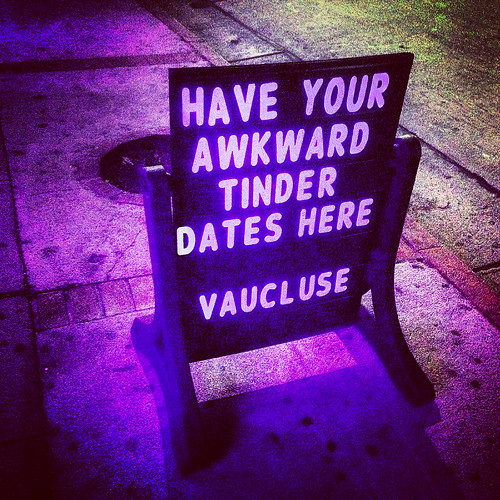
But what are your respective ratings? Photo by ChrisGoldNY on Flickr

You can now sign up to receive each day’s Start Up post by email. You’ll need to click a confirmation link, so no spam.

A selection of 10 links for you. Use them wisely. I’m charlesarthur on Twitter. Observations and links welcome.

Apple’s iPhone growth era comes to an end » FT.com

Tim Bradshaw:

Total revenues for Apple’s fiscal first quarter ending in December rose by just 2% to $75.9bn, a marked slowdown compared with 30% growth in the same period a year earlier, as iPhone sales in the US and Japan declined.

Apple increased net profits to $18.4bn, beating its own record set a year ago for the most profitable quarter in US corporate history, with earnings per share up 7% to $3.28, in line with expectations.

However, iPhone unit sales for the holiday quarter were less than 0.5% higher than the same period a year ago at 74.8m, despite chief executive Tim Cook’s firm insistence three months ago that the iPhone “will grow” in the most important period in the Apple calendar.

Wall Street’s fears that the March quarter would see iPhone sales drop for the first time since its 2007 debut were confirmed by Apple’s revenue guidance, which was below analysts’ consensus of around $55bn.

According to a note by RBC Capital Markets before the release of the results, $50bn in sales would imply iPhone unit shipments of 45m, down 26% on the same period a year earlier.

Sic transit gloria mundi. Like many premium smartphone makers, Apple is now hitting the point where the slowing market, combined with the slowing economy, creates a ceiling for sales. Apple legitimately blamed currency, but that’s hurting everyone.
link to this extract


Japan must let zombie companies die » Bloomberg View

Noah Smith:

Imagine that you’re a Japanese 26-year-old with big dreams. You graduated from Waseda University, an elite private school, with a degree in electrical engineering. You and your college buddies used to hang around your apartment, watching anime on your LCD television, which was made by Sharp Corp. — the world’s 10th-largest LCD TV manufacturer. Even then, you had ideas about how to improve the product.

Now, after graduating and working for four years in the research division of an LCD manufacturer, you’re sure that you have figured out how to make LCD panels more cheaply, at higher quality. You also believe that you could market these TVs more effectively to young people with cool, fun designs. Instead of giving the idea to the higher-ups in your giant corporation — which, knowing Japan, might get you little more than a pat on the head — you decide to leave your job and start a business with your college buddies. You just know that you can beat lumbering, struggling incumbents like Sharp.

Sharp, which is perennially struggling. But is to be bailed out by the Japanese government. Which makes it a zombie which is blocking progress.
link to this extract


I found out my secret internal Tinder rating and now I wish I hadn’t » Fast Company

Austin Carr:

Referred to inside the company as an “Elo score,” a term the chess world uses to rank player skill levels, Tinder’s rating system helps it parse its user base in order to facilitate better matches…

…Tinder CEO Sean Rad confirmed the scoring system to me while I was reporting Fast Company’s recent profile of the company. Rad, who tells me his Elo score is “above average,” stresses that the rating is technically not a measure of attractiveness, but a measure of “desirability,” in part because it’s not determined simply by your profile photo. “It’s not just how many people swipe right on you,” Rad explains. “It’s very complicated. It took us two and a half months just to build the algorithm because a lot of factors go into it.”…

…Rad teased me about it several times over dinner one evening, gauging what my score might be as he swiped through a slew of Tinder profiles on my phone. It was one thing to know my Uber rating, but did I really want to know my Elo score on Tinder? When I asked whether he could look up my rating, Rad responded, “Do you want me to do it now?” All he needed was my email address.

But of course Sean Rad is above average. And that’s not a worrying security hole. Is it?
link to this extract


Exclusive: Samsung plans to bring almost all its apps to iOS » SamMobile

Asif S:

We’ve recently received information from our trusted insiders that Samsung is planning to bring most of its apps (if not all) to Apple’s iOS platform later this year.

According to the information that we’ve received, Samsung is working on Gear Fit Manager for iOS. This will allow people who own the Gear Fit to pair it with an iPhone. To compliment the Gear Fit Manager and Gear Manager apps, Samsung will also release the S Health app for iPhone. S Health app can be used to log daily activity, workouts, food intake, and sleep.

In terms of home entertainment, Samsung is bringing iOS support for the Galaxy View. The company is developing the Remote Control and Family Square apps for the iOS, which can be used to remotely control the Galaxy View using an iPhone and allow different users to stream content to the movable display. There are plans to release the Level app for Samsung’s Level audio devices as well, which will enable iPhone users to use these devices and make use of various effects and an official way of control.

Looks like a way of expanding the total addressable market (TAM) for its peripherals and other products to iPhone users. Sensible.
link to this extract


The Google Pixel C Review » Anandtech

Brandon Chester and Joshua Ho were really, really unimpressed:

On top of the issues with this specific Android build, Android itself is simply too far behind the competition as far as functionality and apps are concerned. I have commented on this in several Android tablet reviews, but the fact that Google is shipping their own tablet makes it important to go over it once again. Quite frankly, I still have yet to see a single app that has an UI that is both optimized for tablets and is as fluid as its iPad counterpart, and with the iPad offering multitasking while Windows offers an entire windowing system, there’s absolutely no way for the Pixel C and other Android tablets to be competitive. This applies just as much to Google’s own apps as it does to third party ones, and it’s really not a stretch to say that they behave like you’re using a blown up smartphone. In the past few years both Apple and Microsoft have stepped up their games with their respective tablet OSes go, but it feels like Android has never really advanced past the first generation of tablet OSes, which leaves Android badly lagging the competition.

Statements from Google engineers make it clear that Google has some changes coming to Android in the future to bring features like multitasking, but at this point it seems to me that either nobody Google really understands what a tablet should be, or they are unable to come to a consensus to get something developed. Adding multitasking doesn’t do anything to fix the fundamental issue with application quality, and Google doesn’t want to take the first step in making proper applications so that other developers can follow.

Note too that Chester points to terrible graphics transitions – and yet in the GPU benchmarks, the Pixel C beats everything else. Another case where benchmarks don’t tell the whole story.
link to this extract


Unpacked: global ad blocker usage on smartphones » Tech.pinions

Ben Bajarin (on a paywalled piece, hence no diagram below) has data much the same as Global Web Index:

over 20% of the global internet audience is already using an ad blocker on their smartphone. 16.1% have not begun using an ad blocker but are interested in doing so. Just over 30% haven’t used an ad blocker and aren’t interested in going through the trouble to install one.

In light of what Matt and I discovered, I decided to slice the answers by demographic to see how different age groups answered the same question.

In line with the discovery Matt [Richman] and I made, ad blocking is most common among the millennial demographic. I can’t stress enough how valuable this demographic is from an advertising standpoint. As ad blocking becomes more the norm with this group, on smartphones and on PCs, it will require significant adjustment. What is also interesting is many of these ad blocking services are not free. Currently over 25% of millennials using an ad blocker paid for it. This has massive consequences for this with advertising-supported business models.

I’ve articulated before my conviction that free-with-ads business models may become things of the past. They certainly are no longer viable in emerging markets.

The point about emerging markets is important: India is a big source of adblocking on mobile, for example.
link to this extract


OPPO sold 50m smartphones in 2015 » Gizmochina

OPPO’s R7, R7S and R7 Plus constituted 15m units in sales alone which is an incredible figure. Specifically speaking the smartphones priced between 2000 Yuan [£210,$300] to 3000 Yuan [£320,$450] segment were highest selling smartphones.

That’s up 67% year-on-year. That would put it around fifth in the world, nudging LG and Sony and behind Xiaomi, Huawei, Apple and Samsung. The big Chinese name nobody in the west has heard of.
link to this extract


The threat is already inside » Foreign Policy

Rosa Brooks (formerly a senior advisor at the US State Department):

By now, the script is familiar: Terrorists attack a Western target, and politicians compete to offer stunned and condemnatory adjectives. British, Chinese, and Japanese leaders thus proclaimed themselves “shocked” by the Paris attacks, which were described variously as “outrageous” and “horrific” by U.S. President Barack Obama; “terrible” and “cowardly” by French President François Hollande; “barbaric” by Indian Prime Minister Narendra Modi; “despicable” by U.N. Secretary-General Ban Ki-moon; and “heinous, evil, vile” by U.S. Secretary of State John Kerry, who possesses a superior thesaurus.

The Paris attacks were all these things. One thing they were not, however, was surprising.

Occasional terrorist attacks in the West are virtually inevitable, and odds are, we’ll see more attacks in the coming decades, not fewer. If we want to reduce the long-term risk of terrorism — and reduce its ability to twist Western societies into unrecognizable caricatures of themselves — we need to stop viewing terrorism as shocking and aberrational, and instead recognize it as an ongoing problem to be managed, rather than “defeated.”

Politicians don’t like to say any of this. But we’re not politicians, so let’s look at 10 painful truths.

Essential reading, really.
link to this extract


Xavier Niel explores move to enter UK mobile market » FT.com

Niel set up Free, a French mobile network which has been a great hit, as Daniel Thomas explains:

Interest from Mr Niel’s telecoms group in the British market will worry rivals, given its record of offering low prices that deeply undercut existing offers.

The launch four years ago of Free, Iliad’s mobile offering in France, disrupted the market, leading to an intense price war that slashed profits among the existing three operators. Orange’s proposed acquisition of Bouygues Telecom is an attempt to reverse the effects of the introduction of the low-cost rival.

A similar deal is being proposed in the UK with the purchase of O2 by Three, the UK’s smallest mobile group, which is owned by Hong Kong’s CK Hutchison. If the deal were to go through, it would reduce the number of competitors from four to three.

However, the deal is set to be challenged in the next week by the European competition regulator, which will set out a range of objections given the potential loss of competition for customers as well as third-party mobile providers that use the two networks under wholesale contracts.

The UK mobile market really is very competitive. Adding Free would shake it up even further.
link to this extract


Internet of Things security is so bad, there’s a search engine for sleeping kids » Ars Technica

JM Porup:

Shodan, a search engine for the Internet of Things (IoT), recently launched a new section that lets users easily browse vulnerable webcams.

The feed includes images of marijuana plantations, back rooms of banks, children, kitchens, living rooms, garages, front gardens, back gardens, ski slopes, swimming pools, colleges and schools, laboratories, and cash register cameras in retail stores, according to Dan Tentler, a security researcher who has spent several years investigating webcam security.

“It’s all over the place,” he told Ars Technica UK. “Practically everything you can think of.”

We did a quick search and turned up some alarming results [of a sleeping baby in Canada, kitchen in Spain, classroom in China, someone’s house].

The cameras are vulnerable because they use the Real Time Streaming Protocol (RTSP, port 554) to share video but have no password authentication in place. The image feed is available to paid Shodan members at images.shodan.io. Free Shodan accounts can also search using the filter port:554 has_screenshot:true.

Shodan crawls the Internet at random looking for IP addresses with open ports. If an open port lacks authentication and streams a video feed, the new script takes a snap and moves on.

link to this extract


Errata, corrigenda and ai no corrida:

Start up: the open data economy, Samsung sued on software updates, Google v Isis, deaf developing, and more

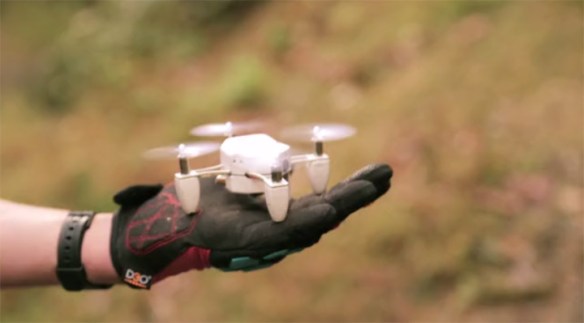
Zano drone: hardly any were built

Zano’s much-promised drone turned out to be a flop, not a flyer. Photo: Torquing Industries.

Hell, you might as well sign up to receive each day’s Start Up post by email. You’ll need to click a confirmation link, so no spam.

A selection of 10 links for you. Use them wisely. I’m charlesarthur on Twitter. Observations and links welcome.

The economic impact of open data: what do we already know? » Medium

Jeni Tennison and Jack Hardinges of the Open Data Institute:

Open data fuels economic growth. Many believe in the theory and ask for the proof. A new report by Nesta and the ODI adds to the evidence of the impact of open data. The report’s analysis, undertaken by PwC, examines the effects of the Open Data Challenge Series (ODCS) and predicts the programme will result in a potential 10x return (£10 for every £1 invested over three years), generating up to £10.8m for the UK economy.

Seems amazing that ten years ago I was having to fight government departments tooth and nail to persuade them that releasing open data could have an economic benefit.
link to this extract


‘Hateful Eight’ producer on piracy: “Aspirin ain’t curing the plague” » Hollywood Reporter

Richard Gladstein, producer of Hateful Eight:

the “Fair Use” provision and debate has also proven to be an extremely useful tool for those looking to distract from or ignore the real copyright infringement issue: piracy.

Such distractions include Google’s recent announcement that they will be offering legal support to “a handful of videos that we believe represent clear fair uses which have been subject to DMCA takedowns.” Fred von Lohmann, legal director of copyright at Google, noted in a recent post on Google’s Public Policy blog: “More than 400 hours of video are uploaded to YouTube every minute.” As the third most visited site on the web, YouTube occupies an important place in the discussion of online copyright infringement.

The criteria and definition of what constitutes fair use is a long-cherished and worthy debate. In fact, I agree with Mr. von Lohmann when he says, “Some of those uploads make use of existing content, like music or TV clips, in new and transformative ways that have social value beyond the original.”

However, it should be noted that the search behemoth won’t be defending every takedown notice, but said they will select a “small number of videos” they believe “will make a positive impact.” Would you care to guess how many videos they’ve selected? Turns out, it’s four. Jonathan Bailey at Plagiarism Today points out, “That’s 0.0000005% of all users.”

As Stephen Carlisle, Copyright Officer of Nova Southeastern University, describes it:

“The new policy is really nothing more than a publicity stunt, designed to encourage more people to upload to YouTube videos of dubious legality, while at the same time acting as an intimidation tactic to discourage the filing of valid takedown notices.”

link to this extract


Being a deaf developer » Cruft

Hollie Kay:

I’ve been deaf since infancy. It is not profound; my hearing loss is described as moderate to severe and is mostly problematic at higher frequency ranges, the range at which most human speech happens. I rely on lip-reading and identifying vowel patterns to understand spoken language. Particular struggles are:

• recognising consonants, especially sibilants and unvoiced consonants (all consonants are high frequency sounds, and the unvoiced and sibilant consonants don’t activate the vocal chords)
• the beginning of sentences
• the end of sentences

Some deaf people successfully become programmers. It’s mostly thought-based, often solitary work, where all your output is written down. Specifications and bugs come to you (in an ideal world, at least) on paper and in ticketing systems instead of through other people’s noiseholes. Some areas aren’t quite so fabulous (I’m looking at you, interminable conference call meetings involving 15 people sitting in a circle around a gigantic table), but adjustments are always possible.

The stereotype of a programmer as a solitary eccentric who’s allergic to human company is unfair and inaccurate. As a group, we’re a very social bunch.

The Tim Berners-Lee quote about accessibility further down in the article is worth bearing in mind.
link to this extract


Vladimir Putin’s internet adviser owns a torrent site » TorrentFreak

“Andy”:

Last week Putin signed a decree that officially enlisted [Herman] Klimenko and it didn’t take long for him to address the issue of Internet piracy. However, instead of tough talk, Klimenko criticized web-blocking and suggested that copyright holders should wait for a better economic situation before “terrorizing” on the issue of piracy.

“Consumption of copyright content increases with economic growth, and when the situation is very serious, I think people do not have to unnecessarily terrorize these issues,” Putin’s adviser said.

“Pushing hard now on this topic, I think, is not worth it. When the economy improves, you should return to this issue.”

While Klimenko’s comments at least in part sound reasonable, copyright holders would’ve been disappointed by his lack of support. What they will be even more disappointed over is the allegations now surfacing about Klimenko’s links to online piracy.

link to this extract


How Zano raised millions on Kickstarter and left most backers with nothing » Medium

Mark Harris:

bumps in the road kept popping up. In late May, Crowther posted that some of Zano’s plastic parts had been delayed due to a tooling issue. The decision not pursue a pilot build was coming back to bite Torquing. Additions that Reedman made to his initial design, and the fact that some of the plastics supplied were heavier than expected, had ballooned Zano’s weight from 55g as a prototype to 70g in pre-production. With the original propellers, the Zano could now fly for only a couple of minutes between charges — a far cry from the 15 minutes that Reedman had promised.

A bigger battery could increase flight time, and Reedman told me he was trying to boost the battery size from 750 mAh (milliampere hours, a measurement of discharge capacity over time) to 1,000 or 1,100 mAh before he left Zano. A review of comparable batteries designed for drones (from makers and third-party replacements) finds even custom-fit modules would weigh at least 30g for 1,000 mAh, seemingly impractical without further design changes.

His solution at the time was to send back the original propellers for larger ones. However, says Reedman, “As far as [the Chinese supplier] was concerned, the propellers did work so therefore are not faulty and would not accept returns.” Torquing was left having paid for tens of thousands of propellers it could not use.

Harris is a terrific journalist (he’s done sterling work on Google’s self-driving car problems) who was commissioned by Kickstarter itself to dig into what happened to the biggest-ever Kickstarter funding and flop. Earlier, he doesn’t say the promo video was faked, but if anyone could explain how it was not faked, I’m all ears. (I was a Zano backer. Win some, lose some.)

The key lesson seems to be: cap the amount you’ll allow to be raised, especially for complex devices. But there are lots of other lessons too.
link to this extract


Google: ISIS must be ‘contained to the dark web’ » Wired UK

Matt Burgess, reporting on a talk called “Waging a Digital Counterinsurgency”:

[Jared] Cohen, who heads up the Google department that is building products to help against oppression, said the “echo chamber” created by hordes of fake social media accounts “shouldn’t be neglected. He said: “The reality is what Isis is doing with technology ranges from communication to spamming, to all sorts of tactics that you’re probably more familiar with fraud and spam and various scams you’ve received in your inbox.”

“To me Isis is not a tech savvy organisation.”

One possible tactic, according Yasmin Green, also of Google Ideas, is to show targeted advertising to those who have been identified as looking at the propaganda.

Green said adverts may be able to “connect, distract, disrupt, and maybe sell a different product” to those with fighting for Isis in their eyes. The approach is also one that has been endorsed by the British government with internet minister Baroness Shields saying tech companies can do more to promote anti-extremist messages on their services.

If Cohen thinks Isis isn’t tech-savvy, then how has it got so much social media going on that a “digital counterinsurgency” is needed? And a solution consisting of targeted advertising? This is truly seeing nails everywhere because your toolbox only contains a hammer. In a few years, will Cohen be suggesting self-driving tanks to fight the war?
link to this extract


Samsung sued by consumer watchdog for failing to update its phones » AndroidAuthority

Bogdan Petrovan:

Consumentenbond, an influential non-profit organization looking after the interests of consumers in the Netherlands, is taking Samsung to court over its failure to provide [software] updates in a timely manner.

In a press release (PDF, English language), the group says it reached out to Samsung on December 2, but in the absence of a proper response, it “issued injunctive relief proceedings against” the Korean giant.

Consumentenbond considers Samsung is guilty of unfair trade practices, as consumers are not informed upon purchase how long they will receive software updates. The group demands “clear and unambiguous information” on updates and security patches, and wants Samsung to actually release updates for at least two years from the date of purchase.

Consumentenbond says 82% of the Samsung phones it checked were not updated within two years of their introduction. All manufacturers should be held to this high standard, according to the consumer watchdog, which noted that Samsung is the “undisputed leader” of the Dutch phone market.

This last demand seems rather hard to put in practice. Consumentenbond wants Samsung to support every device it sells for two years, regardless of how old it is. In practice, that would force Samsung to ensure updates for four years or even more.

And this would be bad because..? Definitely a lawsuit to watch, especially if other consumer organisations take up the same cause around Europe.
link to this extract


HTC denies plans to spin off VR business unit » Digitimes

Wei-Yan Lin and Steve Shen:

HTC has denied a media report indicating that it plans to spin off its virtual reality (VR) business unit to form an independent company in a bid to boost its VR business. The company said it will continue to dedicate resources to the development of VR products to create maximum value for its shareholders.

link to this extract


When Will We See A New Apple Watch? » TechCrunch

Matthew Panzarino:

Several things that I’ve heard (from several sources) indicate to me that we won’t see a major new hardware model of the Apple Watch in March. Design partnerships, accessories, that kind of thing maybe but not a “Watch 2.0” with a bunch of new hardware features. I could be wrong, of course, but I’ve heard enough to put it out there.

I’ve now heard a bit more that suggests that Apple might ship a minor revision of the Apple Watch that includes a FaceTime camera and not much else — but still that it would not be a full “Watch 2.0” with casing changes and major improvements. Still no word on timing but that could explain the reports of a camera have been showing up. Like I said, tea leaves!

I spoke to Creative Strategies analyst Ben Bajarin, who says that supply chain checks are showing no movement that would indicate a new Watch model in production as of yet.

Which makes it sound like June (WWDC) at the earliest, September more likely. That would give time for the technology to improve enough to make it an obvious replacement for those who want an upgrade, and a more attractive product for those who wavered.
link to this extract


‘No layoffs … this week’: Marissa Mayer’s twisted joke kills morale » New York Post

James Covert and Claire Atkinson:

“She said there are going to be no layoffs ‘this week,’ and many of the employees laughed at her,” said one insider, who, fearing retribution, asked not to be named.

“This is the reason employee morale is so low,” the insider added, noting that most workers took the scary remark as twisted confirmation that Yahoo!’s embattled chief executive is sharpening the ax.

Mayer, who returned to her duties at the struggling Internet pioneer just a few weeks after giving birth to twins on Dec. 10, made the less-than-reassuring comment in response to a question at an internal “Friday FYI” meeting on Jan. 8, sources said.

Word of the gaffe has been “spreading like wildfire” through Silicon Valley, another insider said, calling it the latest example of a chronically tone-deaf CEO in a crisis.

Nothing is going right for Mayer with Yahoo. Nothing at all, anywhere. But then, when did it last go right for Yahoo in anything? 2005?
link to this extract


Errata, corrigenda and ai no corrida:

Start up: Apple’s $8bn tax bill?, the tech funding squeeze, Friends Liquidated, Samsung ‘Live Photos’+ more


At least you knew that the advert might be seen by real people. No such assurances in the online world. Photo by University of Pittsburgh Libraries on Flickr.

You can now sign up to receive each day’s Start Up post by email. You’ll need to click a confirmation link, so no spam.

A selection of 12 links for you. Use them wisely. I’m charlesarthur on Twitter. Observations and links welcome.

Why you should never consider a travel planning startup » Tnooz

Nadav Gur, principal at NG Vanguard Enterprises:

First, you need to acquire users. Guess what — if they’re not planning a trip, they’re not interested in travel planners. They don’t even acknowledge their existence.

People are bombarded by new websites/apps/brands all the time, and they filter for what’s relevant.

That’s what you see GEICO ads on TV all the time – cause the only way to get your attention those 1–2 times a year when you give a damn about insurance, is to be in front of you all the time.
No matter how much press/word-of-mouth/viral exposure you’re getting, it only registers if/when it happens to be relevant.

Inevitably this means that you too have to advertise a lot. And no, free user acquisition schemes like SEO do not work in 2015 at scale in established markets.

The Priceline Group spends over $2bn per year on Google Ads alone. Guess why?

Not so easily disrupted. And that’s before you get to the question of how many people spend enough on travel for any affiliate amounts to be worthwhile.
link to this extract


Tech faces hour of reckoning as fundraising drops, layoffs rise » USA Today

Jon Swartz:

Is tech in for a rude awakening this year after a magic carpet ride the past few years?

The numbers, and recent actions by once-highflying start-ups, would seem to suggest so.

Consider: Mega-rounds, defined as funding of more than $100 million for venture capitalist-backed companies, are in free fall. The rate of private start-ups attaining unicorn status — a valuation of at least $1 billion — are grinding to a crawl. Friday layoffs at tech start-ups, deemed Black Fridays, are increasing. Bellwether tech stocks such as Apple, Google, Facebook and Amazon have been taking it on the chin.

“It’s a time to re-calibrate — so many companies can’t burn extraordinary amounts of money forever,” says Sunil Panel, co-founder of Sidecar, a pioneer in the crowded ride-sharing space that shuttered operations on Dec. 31.

Last year, Silicon Valley projected unbridled swagger. Today, “there is definitely an era of reckoning,” says Chris Sacca, a venture investor with stakes in Uber and Twitter. “Reality is setting in.”

Not sure about “grinding to a crawl” (note to USA Today subs: things grind to a halt, or slow to a crawl), but the slowdown in stupid ideas is palpable.
link to this extract


European antitrust chief takes swipe at privacy issue » The New York Times

Mark Scott on the EC’s Margrethe Vestager’s speech at the DLD conference:

“If a few companies control the data you need to cut costs, then you give them the power to drive others out of the market,” Ms. Vestager said at the DLD conference, a gathering of digital executives and policy makers.

She said that “it’s hard to know” how much data is given up when using an online messaging service.

“But it’s a business transaction, not a free giveaway,” she continued. “As consumers, we need to be treated fairly.”

Ms. Vestager’s warning shot in the often-rancorous privacy debate comes ahead of a Jan. 31 deadline for Europe and the United States to reach a new data-sharing agreement…

…A number of European executives echoed Ms. Vestager’s fears about how a small number of American tech companies could use their large-scale data collection to favor their own services over those of rivals. Among them was Oliver Samwer, the German entrepreneur who co-founded Rocket Internet, one of the region’s most high-profile tech companies.

“If someone like Google or Facebook has all of the data, then that’s not good,” Mr. Samwer said here on Sunday.

link to this extract


Whatsapp goes free, says it won’t introduce ads » Mashable

Whatsapp readily acknowledges that killing its only source of income will raise questions about introducing third-party ads. But the company has a different idea.

“Starting this year, we will test tools that allow you to use WhatsApp to communicate with businesses and organizations that you want to hear from. That could mean communicating with your bank about whether a recent transaction was fraudulent, or with an airline about a delayed flight,” the post reads.

We reckon Whatsapp will charge organizations and business for establishing channels with their users through the service, though no details were announced. The idea is by no means new; a Bloomberg report in May 2015 claimed Whatsapp might foray into B2C messaging in the “longer term.”

Perfectly sensible business idea, and could also turn it into a platform like WeChat (whose capabilities and inclusions dwarf those of any western app).
link to this extract


Friends Reunited website to close down » BBC News

Zoe Kleinman:

Friends Reunited launched in the year 2000 and was bought by broadcaster ITV for £175m ($250m) in 2005.

However, it failed to keep pace with other social networks.

It was sold to comic publisher DC Thompson for only £25m in 2009 and Mr Pankhurst wrote in a blog post that the company had offered it back to him a couple of years ago.

Pankhurst and business partner Jason Porter agreed to take on the site for a trial period to see if they could revitalise it.

“It became clear that most of the actual users coming to the site were using it purely as a messageboard,” wrote Mr Pankhurst.

“And I also realised that of the more than 10 million users registered, a lot had done so over a decade ago and hence their contact details were out of date. But importantly – it hasn’t covered its costs and like any business this can’t continue indefinitely. Therefore, whilst it’s sad, I believe it’s time to move on and put Friends Reunited to bed.”

Quite why ITV or DC Thompson bought it is one of those mysteries of business; it was never remotely a fit with either. So after ruining many marriages (of people who looked up old school flames), it’s handing that particular torch over to Facebook, where people can do exactly the same…
link to this extract


Pakistan lifts ban on Youtube after launch of own version » Reuters

Tommy Wilkes:

Pakistan said on Monday it had removed a three-year ban on YouTube after the Google-owned video-sharing website launched a local version that allows the government to remove material it considers offensive.

Pakistan banned access to YouTube in September 2012 after an anti-Islam film, “Innocence of Muslims”, was uploaded to the site, sparking violent protests across major cities in the Muslim-majority country of 190 million people.

The Ministry of Information Technology and Telecom said in a statement that under the new version of YouTube, the Pakistan Telecommunication Authority can ask for access to offending material to be blocked.

“On the recommendation of PTA, Government of Pakistan has allowed access to recently launched country version of YouTube for Internet users in Pakistan,” the ministry said.

“Google has provided an online web process through which requests for blocking access of the offending material can be made by PTA to Google directly and Google/YouTube will accordingly restrict access to the said offending material for users within Pakistan.”

link to this extract


November 2013: Bitcoin under pressure » The Economist

The Economist doesn’t name writers, but I happen to know this is by Glenn Fleishman, writing back in 2013:

Server farms with endless racks of ASIC cards have already sprung up. But as part of Bitcoin’s design, the reward for mining a block halves every 210,000 blocks, or roughly every four years. Sometime in 2017, at the current rate, it will drop to 12.5 Bitcoins. If the returns from mining decline, who will verify the integrity of the block chain?

To head off this problem, a market-based mechanism is in the works which will raise the current voluntary fees paid by users (around five cents per transaction) in return for verification. “Nodes in the peer-to-peer network will try to estimate the minimum fee needed to get the transaction confirmed,” says Mr Hearn.

Bitcoin’s growing popularity is having other ripple effects. Every participant in the system must keep a copy of the block chain, which now exceeds 11 gigabytes in size and continues to grow steadily. This alone deters casual use. Bitcoin’s designer proposed a method of pruning the chain to include only unspent amounts, but it has not been implemented.

As the rate of transactions increases, squeezing all financial activity into the preset size limit for each block has started to become problematic. The protocol may need to be tweaked to allow more transactions per block, among other changes. A further problem relates to the volunteer machines, or nodes, that allow Bitcoin to function. These nodes relay transactions and transmit updates to the block chain. But, says Matthew Green, a security researcher at Johns Hopkins University, the ecosystem provides no compensation for maintaining these nodes—only for mining. The rising cost of operating nodes could jeopardise Bitcoin’s ability to scale.

Following Mike Hearn’s farewell the other day, I think Fleishman is allowed to say “told you so”.
link to this extract


“Bitcoin Boulevard” no longer booming » Marketplace.org

Elizabeth Miller:

It’s been almost two years since a group of businesses in a Cleveland suburb started accepting digital currency bitcoin as a form of payment. The response at first was huge.  Visitors from around the world stopped at what became known as “Bitcoin Boulevard.” But now, the bitcoin hype has subsided. 

Along a lane of small retail stores, restaurants and bars, nine independent Cleveland Heights businesses banded together to form Bitcoin Boulevard in May 2014. But today, two of those businesses have closed, one is not actively accepting bitcoin, and a wine shop ceased most of its bitcoin transactions after the Ohio Division of Liquor Control banned alcohol purchases with the digital currency.

Mitchell’s Fine Chocolates is one of the original nine businesses. Owner Bill Mitchell says he started seeing a drop in bitcoin payment when its value dwindled at the beginning of 2015.

“Since the latter part of the winter of this year going through the end of October, it’s been deader than a doornail,” said Mitchell.

Mitchell isn’t the only one seeing a drop in bitcoin business. Shawn Paul Salon says it has only had six bitcoin transactions in the past 18 months. That’s a lot less exciting than everyone had hoped.

Reality check.
link to this extract


The problem with Adgorithms’ prospectus » Investors Chronicle

Alex Newman, on the AIM-listed ad tech company whose shares have plummeted by 80% from their IPO:

So what went wrong? This is what the company said in its first profit warning, on 9 October, explaining a “significant” and indefinite impact on revenue:

“In recent weeks, the online advertising market has experienced severe disruption, resulting in a loss of supply for major online advertising exchanges and a drop in demand from major media buyers.”

In fact, this disruption had begun several months before, even prior to Adgorithms’ listing. In April, media trading platform news site adexchanger.com reported that AppNexus – which, together with fellow ad exchange Adap.TV related to the majority of Adgorithms’ 2014 revenues – had started screening out unverifiable media inventory. AppNexus’ chief executive, who followed several other ad exchanges when he launched the clean-up in November 2014, later acknowledged that more than half of the impressions flowing through his platform were failing the test. This has had the dual effect of suppressing Adgorithms’ revenues and – according to Peel Hunt analyst Alex DeGroote – increasing the cost of digital media.

Adgorithms certainly should have known about AppNexus’ clean-up plans before listing, and was aware that at least one of its peers had been hit by the broader changes. In April, fellow Israeli ad tech group Matomy Media (MTMY) issued a profit warning, citing the “implementation by one of the leading media trading platforms [this was AppNexus] of a new media verification and screening tool that resulted in an immediate decrease in the amount of digital media available for purchase”.

“Unverifiable” inventory is what can also be called “fraudulent” ads – shown to bots on sites that humans never visit. It’s worth visiting the AdExchanger link (“screening out unverifiable…”) which points to just how much junk and fraud there may be going on.

Seriously, online ads have ended the age of “half of what I spend on advertising is wasted”. Now you have no idea what proportion it may be if you’re using an ad network.
link to this extract


Samsung to launch Live Photos rival called Vivid Photo with Galaxy S7 » Android Geeks

Marius Maria:

Back in September, Apple launched the iPhone 6S which comes with Live Photos, a feature which captures 1.5 seconds of video before and after a picture is taken. HTC’s Zoe Capture was capable of doing the same thing long before Live Photos, but this gimmick only became cool now because Apple has it on its phones.

But Samsung wants to jump into the Live Photos bandwagon, too. According to one of our sources the software engineers of the South Korean phone maker are testing a Live Photos-like feature that is supposed to debut with the Galaxy S7 later this year.

Not sure about the “But” beginning that second paragraph. All sorts of words fit better: “Now”, “Predictably”, “Unsurprisingly”. Cold comfort for HTC.
link to this extract


App economy jobs in the United States (Part 1) » Progressive Policy Institute

Michael Mandel:

Is 1.66 million a reasonable figure for US App Economy employment? This figure is based on our estimate of roughly 550,000 core app economy workers. That’s out of roughly 5 million people employed in computer and mathematical occupations or as computer and information systems managers. In effect, core app economy workers make up roughly 11% of the tech workforce.

Informal discussions with tech executives suggest that it’s reasonable to attribute roughly 11 percent of the tech workforce to the App Economy in the United States. Large portions of software development involve backend systems, such as financial and operation databases, which are not mobile specific. On the other hand, software development focused on online consumer or individual interactions must necessarily involve apps, because Americans increasingly access the Internet via their smartphone or other mobile devices. Going forward, mobile is likely to become more important rather than less, further pushing up the number of App Economy jobs.

We can do another comparison. In 2007, before the introduction of the iPhone, there were roughly 3.9 million people employed in computer and mathematical occupations or as computer and information systems managers. Since then tech employment has risen by 1.1 million, suggesting roughly half the net gain in tech occupational employment since 2007 has come from the App Economy.

For the job breakdown, it puts iOS at 1.4m (87%), Android at 1.1m (70%), BlackBerry at 107,000 (6%) and Windows Phone/Mobile at 45,000 (3%). Adds up to 166% because some people (two-thirds?) work on multiple ecosystems. (Via Horace Dediu.)
link to this extract


Apple may be on hook for $8bn in taxes in Europe probe » Bloomberg Business

Adam Satariano:

The European Commission contends that Apple’s corporate arrangement in Ireland allows it to calculate profits using more favorable accounting methods. Apple calculates its tax bill using low operating costs, a move that dramatically decreases what the company pays to the Irish government. While Apple generates about 55% of its revenue outside the US, its foreign tax rate is about 1.8%. If the Commission decides to enforce a tougher accounting standard, Apple may owe taxes at a 12.5% rate, on $64.1bn in profit generated from 2004 to 2012, according to Larson, a litigation analyst for Bloomberg Intelligence.

Apple is perhaps the highest-profile case of US companies facing scrutiny from officials in Europe. Starbucks, Amazon and McDonalds also have had its tax policies questioned.

Several senators came to the defense of US companies on Friday. In a letter to US Treasury Secretary Jack Lew, bipartisan members of the Senate Finance Committee asked the administration to make sure that European regulators won’t impose retroactive penalties like those that would hit Apple.

Odd if Google, Microsoft, Facebook and Twitter aren’t also in this.
link to this extract


Errata, corrigenda and ai no corrida:

Start up: BB Priv sales figured, Google drives to Ford, Samsung’s culture shock, and goodbye 2015


“Shot and processed on iPhone 6Plus”. Photo by andrewXu on Flickr.

This is the last Start Up of 2015. Thanks all so much for reading, and for your feedback. It will return on Monday 11 January.

A selection of 9 links for you. Freely given. I’m charlesarthur on Twitter. Observations and links welcome.

BlackBerry sold under 50,000 Priv units, Play Store data suggests » AndroidAuthority

Matthew Benson:

Because the Priv apps can only be installed on the Priv itself, this offers a very good indication of the kind of sales numbers BlackBerry has achieved. At worst, there are possibly 10,001 sold, and at most, there are possibly 50,000. For the sake of argument, there is the possibility that the statistics on the Play Store are not accurate. Even assuming that installs are double that which is reported, that would still give a range between 20,002 and 100,000 units.

It is difficult to make heads or tails of this presumed purchase point. Considering that BlackBerry sold approximately 700,000 total handsets in Q3, it would mean the Priv was not a major seller. Granted it was only available for 2 weeks before the end of Q3, but many devices typically see the highest sales in the initial release window.

Nah, it’s pretty easy really. People had already worked out that BlackBerry shipped (as in, “recognised revenue on”) about 125,000 Privs. (You can figure it from previous average selling prices, and the ASP in the past quarter.) These figures show how many have actually reached peoples’ hands; it wouldn’t be too hard to look at the trend in installs and figure it out pretty exactly.

The difference between the 125,000 and the 50,000 (max) is down to “sell-in” (what BlackBerry can persuade carriers and other vendors to take) and “sell-through” (what people have actually bought). Time will tell how quickly the two come into line. If they don’t, then BlackBerry’s handset business is surely, finally, come on now, done.
link to this extract


Fossil Q Founder review: good watch, mediocre smart watch » Android Police

Ryan Whitwam:

The screen looks nice, but there is that flat tire [cut-off strip at the bottom of the screen] to contend with. It’s lame that we’re still putting up with this design quirk, but on the upside you get an ambient light sensor. So, I guess it’s not all bad. You’re either willing to tolerate this or you despise it.

Fossil dropped the ball with the software. The few exclusive faces included with this watch are mostly boring with strange design decisions, and the companion app is almost useless. The watch itself also has some bugs that need to be worked out. I don’t expect a smart watch to necessarily be as stable as a mechanical one, but when I have to reboot because the time froze 30 minutes ago, that’s a problem. The reboots certainly don’t help the battery life, which is mediocre right now. If it gets any worse as the watch ages, then you’d probably have trouble making it through a full day away from the charger.

Have to say that since Apple’s Watch got Watch OS 2.1, the only time I’ve run down to 10% in a day from a 6.30 start has been when I did 3.5 hours of workout on the day. Otherwise, it has lots of charge left.

Android’s still looking for a winner in this category; the Huawei watch (compared in the piece) looks like the best so far.
link to this extract


Google pairs with Ford to build self-driving cars » Yahoo

Justin Hyde and Sharon Carty:

Google and Ford will create a joint venture to build self-driving vehicles with Google’s technology, a huge step by both companies toward a new business of automated ride sharing, Yahoo Autos has learned.

According to three sources familiar with the plans, the partnership is set to be announced by Ford at the Consumer Electronics Show in January. By pairing with Google, Ford gets a massive boost in self-driving software development; while the automaker has been experimenting with its own systems for years, it only revealed plans this month to begin testing on public streets in California.

Effectively the Model T – or T-Mobile G1? – of this emerging class.
link to this extract


Home broadband 2015 » Pew Research Center

Three notable changes relating to digital access and digital divides are occurring in the realm of personal connectivity, according to new findings from Pew Research Center surveys. First, home broadband adoption seems to have plateaued. It now stands at 67% of Americans, down slightly from 70% in 2013, a small but statistically significant difference which could represent a blip or might be a more prolonged reality. This change moves home broadband adoption to where it was in 2012.

Second, this downtick in home high-speed adoption has taken place at the same time there has been an increase in “smartphone-only” adults – those who own a smartphone that they can use to access the internet, but do not have traditional broadband service at home…

…many “smartphone-only” users say that the reason they do not have broadband at home is because their smartphone lets them do all they need to do online, underscoring the device’s utility for those without a home high-speed subscription.

The same pattern is happening in China: fixed broadband has stalled (or is just replacing dialup) while mobile broadband is exploding.
link to this extract


Your smartphone camera should suck. Here’s why it doesn’t » WIRED

Tim Moynihan:

The sensor simply senses light and converts it into an electrical signal. To use an analogy, it buys the groceries. Someone else cooks dinner. So while a high-quality sensor helps, it’s hardly the most important component. The lens is important, of course, but the biggest difference between a great camera and a good camera is the image signal processor—the secret sauce to any smartphone camera’s features and performance.

Hung says that the image sensor isn’t the only thing feeding information into the ISPs. A modern smartphone has several sensors at its disposal. “The gyroscope has evolved in terms of image stabilization,” he says. “A lot of the ISPs now can take the input from the gyroscope (and) combine that input with the image sensor to provide image stabilization. It’s a new kind of digital stabilization system.”

Apple and Samsung use their own image signal processors for the iPhone and Galaxy phones, respectively. However, many high-end Android handsets use the integrated image signal processors in Qualcomm’s Snapdragon system-on-a-chip, which keeps camera features relatively consistent from phone to phone. As good as it is, the company says the next-gen processor arriving early in 2016 will improve noise reduction, artifact correction, autofocus, and color reproduction.

That last point explains a lot about so many Android phones. I wonder how many people Qualcomm has working on its ISP systems.
link to this extract


Judge, siding with Google, refuses to shut down Waze in wake of alleged theft » Ars Technica

Cyrus Farivar:

Google, the owner of the traffic app Waze, has managed to beat back a copyright lawsuit filed by lesser-known rival PhantomAlert.

Back in September 2015 PhantomAlert sued Google over allegations of copyright infringement. Google purchased Waze in June 2013 for over $1bn. PhantomAlert alleged that, after a failed data-sharing deal between itself and Waze collapsed in 2010, Waze apparently stole PhantomAlert’s “points of interest” database.

In a judicial order filed earlier this month, the San Francisco-based federal judge found that PhantomAlert could not allege a copyright claim on simple facts of where different places actually are.

As Michael Love observed on Twitter, doesn’t this mean that Apple (or whoever) could simply steal Google’s, or Waze’s, POI database? The judge also dealt with the question of whether organising those facts meant they attracted copyright: he decided PhantomAlert hadn’t done enough to merit that.

PhantomAlert can file an amended complaint within two weeks, and says it will.
link to this extract


Humans are slamming into driverless cars and exposing a key flaw » Bloomberg Business

Keith Naughton:

“It’s a constant debate inside our group,” said Raj Rajkumar, co-director of the General Motors-Carnegie Mellon Autonomous Driving Collaborative Research Lab in Pittsburgh. “And we have basically decided to stick to the speed limit. But when you go out and drive the speed limit on the highway, pretty much everybody on the road is just zipping past you. And I would be one of those people.”

Last year, Rajkumar offered test drives to members of Congress in his lab’s self-driving Cadillac SRX sport utility vehicle. The Caddy performed perfectly, except when it had to merge onto I-395 South and swing across three lanes of traffic in 150 yards (137 meters) to head toward the Pentagon. The car’s cameras and laser sensors detected traffic in a 360-degree view but didn’t know how to trust that drivers would make room in the ceaseless flow, so the human minder had to take control to complete the manoeuvre.

“We end up being cautious,” Rajkumar said. “We don’t want to get into an accident because that would be front-page news. People expect more of autonomous cars.”

Turns out, though, their accident rates are twice as high as for regular cars, according to a study by the University of Michigan’s Transportation Research Institute in Ann Arbor, Michigan. Driverless vehicles have never been at fault, the study found: They’re usually hit from behind in slow-speed crashes by inattentive or aggressive humans unaccustomed to machine motorists that always follow the rules and proceed with caution.

“It’s a dilemma that needs to be addressed,” Rajkumar said.

Well, strictly it’s the humans who are at fault. The “key flaw” is that lots of humans drive badly, but they also have expectations of how the car in front will behave – so it’s a “theory of mind” problem too.
link to this extract


Culture shock: Samsung’s mobile woes rooted in hardware legacy » Reuters

Jeremy Wagstaff and Se Young Lee:

Interviews with former and serving employees paint a picture of confusion and overlap between competing divisions, where the short-term interests of promoting hardware trump long-term efforts to build platforms that would add value for customers and increase their loyalty to the brand.

One said he only learned from someone outside the company that the hands-free app his team was updating for the upcoming Galaxy S4 launch had competition — from inside Samsung. For the manager, who has since left the company but declined to be identified because his present employer does business with Samsung, it was one of many examples of the low priority the hardware-minded company placed on software, which was treated as little more than a marketing tool inside the firm.

“Samsung’s upper management just inherently doesn’t understand software,” the former employee said. “They get hardware – in fact, they get hardware better than anyone else. But software is a completely different ballgame.”

As a result, critics say, initiatives involving software or services languish and often fail.

Despite being pre-installed on Galaxy phones, Samsung’s ChatON messaging service gained few adherents and closed without fanfare in March, while the Milk Video app, a high profile project run by newly hired US executives, lasted a year, closing in November.

Knox (hardening security) has been a qualified success (though it’s unclear how many extra sales it has generated); jury still out on Samsung Pay.
link to this extract


Trends 2016: adblocking is here to stay » Global Web Index

Jason Mander:

Adblocking has captured a lot of headlines in recent months, despite the fact it’s still just 28% of online adults who say they are deploying one of these tools.

The heaviest consumers of the internet, 16-24s, are at the very forefront of the trend, with over a third of them blocking ads. But that presents something of a paradox: older groups are the most concerned about their privacy and personalized recommendations/ads and yet are the least likely to be blocking ads.

That’s surely a symptom of awareness; currently, older groups are the least likely to know what ad-blockers are. As such tools become more mainstream, there can be little doubt that usage levels will creep upwards and show fewer variations by age. It’s certainly telling that 55-64s are already about as likely as 16-24s to be deleting cookies on a regular basis, an action which is rather more established and well-known among internet users.

In light of these trends, trying to resist the spread of ad-blocking feels rather futile.

link to this extract


Errata, corrigenda and ai no corrida:

Start up: adbock in India, no ISIS internet?, Galaxy S7 hints, what else Adele CD buyers buy, and more


“Yeah, let me tell you about my previous job.” Photo by steveleenow on Flickr.

You could always sign up to receive each day’s Start Up post by email. Confirmation = no spam.

A selection of 11 links for you. No cadmium was harmed in the making of this post. I’m charlesarthur on Twitter. Observations and links welcome.

iPhone users in India embrace ad blocking: survey » Livemint

Dhanya Ann Thoppil:

iPhone users in India are warming up to the US phone maker’s move to introduce ad blocking on its devices, as mobile banner blocking gains grounds in one of the fastest growing smartphone markets in the world.

A recent survey by market researcher GlobalWebIndex shows that 42% of India’s iPhone 6 users use the software to block ads on their devices compared with a global average of 31%…

…“There’s a sizable audience who are likely to adopt a similar approach on their smartphones and this is a behaviour which could spread quickly across devices, which could spell the end of the mobile ad banner,” the survey said…

…India ranked fourth among the 34 countries surveyed by the market researcher—after Russia, Poland and Indonesia—in terms of adoption of ad block.

To be sure, Apple accounts for only a tiny share of India’s smartphone market. According to Counterpoint Research, Apple has a 1.5% share of the 190m smartphones sold in India thus far. Android-based devices accounted for 93% of the market.

Interesting split. Bandwidth is really expensive in India. But so of course are iPhones.
link to this extract


Google CEO Sundar Pichai outlines plan to capture Indian market with free Wi-Fi, recruitment and faster access – but not Android One » IB Times

David Gilbert:

In 2016, there will be more people using Android in India than there will be in the United States. Very few of those however will be using Android One, Google’s specially engineered version of its mobile software for emerging markets. On Wednesday Sundar Pichai, the new CEO of Google, addressed a large crowd in New Delhi where he avoided mention of the failed Android One effort and instead focused on Google’s new three-pronged approach to get people online and at the same time put Android and Google search right at the heart of India’s internet revolution.

The new approach will see Google aggressively increase its recruitment of developers in the region; getting people online with free Wi-Fi and an initiative to get women to use the internet; and by making the experience of using the internet much better — even for those with limited connectivity.

The Hindustan Times report is here but Gilbert’s has better background. Notable from the HT story: in India, mobile search passed desktop search in May 2013 – about two years before more developed countries.
link to this extract


No, you can’t shut down parts of the Internet » Errata Security

Rob Graham:

ISIS doesn’t have any “ASN” [Autonomous System Number] of their own. (If you think otherwise, then simply tell us the ASN that ISIS uses). Instead, ISIS has to pay for telecommunications links to route traffic through other countries. This causes ISIS to share the IP address space of those countries. Since we are talking about client access to the Internet, these are probably going through NATs of some kind. Indeed, that’s how a lot of cellphone access works in third world countries — the IP address of your phone frequently does not match that of your country, but of the country of the company providing the cellphone service (which is often outsourced).

Any attempt to shut those down is going to have a huge collateral impact on other Internet users. You could take a scorched earth approach and disrupt everyone’s traffic, but that’s just going to increasingly isolate the United States while having little impact on ISIS. Satellite and other private radio links can be setup as fast as you bomb them.

In any event, a scorched earth approach to messing with IP routing is still harder than just cutting off their land-line links they already have. In other words, attacking ISIS at Layer 3 (routing) is foolish when attacking at Layer 1 (pysical links) is so much easier.

You could probably bomb fiber optic cables and satellite links as quickly as they got reestablished. But then, you could disable ISIS by doing the same thing with roads, bridges, oil wells, electrical power, and so on. Disabling critical infrastructure is considered a war crime, because it disproportionately affects the populace rather than the enemy. The same likely applies to Internet connections — you’d do little but annoy ISIS while harming the population.

link to this extract


Samsung adding pressure-sensitive display, high-speed charging port to Galaxy S7 » WSJ

Jonathan Cheng:

Next year’s flagship will look largely similar to the Galaxy S6, and many of the new features take cues from other handsets already available on the market.

The pressure-sensitive display, for instance, will be similar to that offered by rival Apple Inc. on the iPhone 6s earlier this year. The responsive display allows the phone to interpret different taps and touches depending on how the user presses on the touch screen.

The Galaxy S7 will likely also feature a next-generation charging and connection port called a USB Type-C port, the people said, which will allow for a full day’s charge in under 30 minutes and in some cases significantly faster than that. The port has already appeared in smartphones manufactured by LG Electronics Co., Huawei Technologies Co. and others.

The noncurved version of the Galaxy S7 will likely also include an external memory card slot, one of these people said.

The retina scanner, which the company is considering for some versions of the phone, would come after handset makers, such as China’s ZTE Corp., have included the feature on some smartphones. 

So let’s see – stepping away from the S6’s wireless charging and lack of microSD; adding in pressure sensitivity (and USB-C, of course). Samsung can’t seem to make its mind up what features are important.
link to this extract


Samsung restores its PC business by establishing independent business team » ETNews

Han Juyeop:

[The] New PC Business Team will hire additional employees by end of this year and will reorganize product lines with the aim of releasing products in the second half of 2016. It will also newly develop premium PCs that will become the sign of all products and will lay out its strategy for expanding shipment in thre years from now after organization product lines. However modification on whom will be in charge of tablet business is not decided yet. There is a high chance that PC Business Team will be in charge of products based on Windows OS.

Samsung Electronics’ PC business that was almost going to bankrupt rapidly grew between 2009 and 2012. After it went over a hump by shipping 10 million PCs for the first time in 2010, its brand was in the top 10 in industries for the first time. In 2011, it shipped out 14.3 million PCs. While traditionally strong PC businesses such as HP and Dell were growing at an one-digit rate or going through de-growth, Samsung Electronics along with Apple and Lenovo increased their shipments by 20 to 30% every year. Samsung Electronics once presented a blueprint that it would become a top 3 global PC business in 2015.

However its PC business went downhill after IT Solution Business Department disappeared and as PC business was absorbed and combined to Wireless Business Department within IM Sector due to reorganization of group at the end of 2012.

The estimate is its PC shipments for 2015 will total about 3.5m, almost halved from 6m in 2014, and down from a peak of 15m in 2012. Finding its way back will be challenging.
link to this extract


The EU data law’s effect on online advertising industry – Business Insider

Lara O’Reilly:

The European branch of the Internet Advertising Bureau’s (IAB Europe) interpretation of what has been released of the new rules so far identifies two key concerns: that the idea of “personal data” has now been widened, and that internet companies worldwide will now need to gain consent from European users before they use their data to serve targeted advertising to them. Furthermore, the raising of the digital age of consent to 16 from 13 could be hugely disruptive to companies that have strong teen user bases.

Townsend Feehan, the CEO of IAB Europe, the trade body that represents the European internet advertising industry, told Business Insider: “It’s the amputation of a significant revenue stream just at the moment publishers are having such a challenge in switching to digital.”

One of IAB Europe’s key concerns is that “everything” will now be considered personal data, according to Feehan. She added that the new rules include language suggesting that “some identifiers that could not possibly be used to trace back to an individual person” will be included under the “personal data” bucket.

Expect more popups, and agreement possibly hidden as small X marks or similar. Wonder if the US will take up this idea?
link to this extract


Why Facebook still worries about Android » The Information

Amir Efrati:

Google’s future app notification filtering might be akin to the way Google automatically categorizes some Gmail email as “promotional” — advertising — or as spam, in which case it doesn’t even deliver the email to the inbox.

Several years ago Google began charging browser-based website owners like Yelp for using Google Maps on their sites, such as when visitors to Yelp located a restaurant. The rate Google charged depended on how much the sites used Google Maps. That caused an uproar and some website developers began using alternative mapping services like OpenStreetMap.

There’s no indication that Google is planning to start charging big mobile-app developers for using Google Maps on mobile or for using Google Cloud Messaging for notifications, especially given that Apple doesn’t charge developers for such privileges, either. But at Facebook, there was a sense that Google, under pressure to make money from Android, was interested in wringing some compensation out of Facebook.

Facebook is unique in its reliance on Android. It has upwards of a billion Android users and owns the two most-used mobile apps in the world, Facebook and WhatsApp, with two of its other apps, Instagram and Messenger, not far behind. As such, its app activity dwarfs that of other developers. In terms of advertising revenue, it generates more ad revenue from Android than any company other than Google itself.

The headline isn’t quite right; it should be “Why Facebook still worries about Google”. Android itself isn’t the concern. It’s what Google chooses to do with it.

The data about advertising revenue is a useful one, though.
link to this extract


Hello from the shopping aisle: what (else) are Adele fans buying? » Nielsen

According to the HomeScan panel, Adele’s CD purchasers were more likely to be employed full time in professional/managerial roles and, as such, have higher than average incomes. Over 56% of them have household incomes of $70,000 (compared with 38% of total U.S. households) and 38% have household incomes of over $100,000 (compared with 23% of total U.S. households). With their higher incomes, they spend 48% more at retail than the general population: a total of $5,505 each year, compared with the average $3,713 for total U.S. households.

So what else is in these shopping carts? Adele CD buyers over-index for nonessential comfort/mood-related items—not unlike an Adele album—such as magazines, women’s fragrances, men’s toiletries, candles and incense, seasonal merchandise, cordials and liqueurs, and liquor. They also over-index for healthier food items like fresh vegetables, herbs and fruit. They spent more dollars on computers and electronic products, health and beauty aids and hair care compared to other buyers of those items, suggesting they might not just be buying more but also be buying higher-quality, more expensive items.

They really spend heavily on electronics – 2.49x more than the average person, making that the biggest divergence from the average. No word on gender split, though.
link to this extract


Is Adele really ‘dumb and uneducated’ and mean to her fans for keeping her album off Spotify? » Auddly

Helienne Lindvall:

XL Recordings left it up to Adele and her management to decide for themselves if the album would go on streaming sites. Though many more artists and songwriters would like to follow her lead, most of them are, however, at the mercy of their publishers, labels and PROs – companies and collecting societies that can afford to take a gamble on streaming, led by decision makers on salaries, unlike artists and songwriters. Likewise, when Spotify doesn’t make a profit, its employees still get paid every month.

This is why the music creators’ wishes may not always tally with their labels, publishers or PROs, but still needs to be respected. Some streaming proponents argue that artists “only” need 100 streams to equal the revenue of a single download (there are differing calculations on this with some claiming it’s more like a couple of hundred). It may not sound like a lot, but taking a look at my iTunes library it’s clear that not even my favourite records have reached that many listens – and I’m an avid listener. And what about Spotify users that don’t pay?

The elephant in the room, though, is YouTube. You can find the entire album there multiple times for “free”, with the top one having nearly half a million plays already. There’s no way to keep it off, either; you’d just be playing whack-a-mole. So while Adele’s decision is perfectly valid, it’s actually not changing the power balance that existed before streaming.
link to this extract


Orifice Space » thewalrus.ca

Natalie Zina Walschots:

“I have to relabel all these asses. It’s going to take a thousand years.”

With less than an hour left in the workday, my boss opened his office door and spewed stress all over everyone in the content-creation department, located on the main floor of a squat office building in downtown Toronto. Grey carpet and beige walls, banks of cubicles on the lower floors and big offices with big windows for the executives above: this could be any content farm in the city.

All that sets my office apart from any other is that, instead of an insurance company or consulting firm, it houses an Internet pornography curator. We dozen or so staff writers share a space with customer service. Tech-support calls come from frantic, semi-erect subscribers unable to access our latest video uploads. The keywords for the content we generate comprise sex acts, positions, and assorted vulgarities: Rimjob. Doggy style. MILF. I once watched a co-worker Photoshop a porn star’s armpit stubble out of every single frame of a video in which it appeared.

So anyway, you were telling us about your tedious job that you hate. (Though this is not quite as good as – and is a lot shorter than – one of the internet’s Great Lost Treasures, the wonderful Diaries of a Porn Video Store Clerk; we’d would probably require Indiana Jones to unearth those, however.)
link to this extract


Vulnerable parking apps allow hackers to steal your login and credit card details » Graham Cluley

Conducted by information assurance firm NCC Group, the assessment analyzed six parking applications for the Android operating system. Some of the apps had been downloaded from Google Play between 5,000 and 10,000 times, whereas others boasted one million registered users.

The number of installs for each app ultimately did not matter, however, as all of the applications were affected by security vulnerabilities.

According to an NCC Group blog post the review determined that while all of the apps used encryption to protect their customers’ sensitive information – something from which four major airlines should learn a lesson or two – not one verified the certificate used by the server.

Attackers could subsequently exploit this oversight to conduct man-in-the-middle (MITM) attacks, especially if the application used Android WebView and contained a bridge that could enable JavaScript running from WebView to access native device functions.

NCC didn’t look at iOS, which seems strange. As I understand it iOS 9 forces use of HTTPS, unless an exception is given, and checks the certificate except in particular circumstances. So if I’m reading this correctly, iOS 9 apps wouldn’t be susceptible to this MITM attack. Park safely!
link to this extract


Errata, corrigenda and ai no corrida: none notified.

Start up: Apple v Samsung redux, Twitter hacks, hating Trump, zombie phones?, and more


Wichita roads don’t necessarily go in straight lines endlessly. Photo by fables98 on Flickr.

You can now sign up to receive each day’s Start Up post by email. You’ll need to click a confirmation link, so no spam.

A selection of 11 links for you. Truly. I’m charlesarthur on Twitter. Observations and links welcome.

Samsung’s patent loss to Apple is appealed to Supreme Court » The New York Times

Steve Lohr:

On Monday, Samsung, the Korean electronics company, filed an appeal to the Supreme Court, arguing that the legal framework for design patents — at the center of the suits between the companies — is outdated for the modern digital world. The issue at stake, Samsung says, extends well beyond the courtroom skirmishes of the two large corporations.

The case, if heard, could have far-reaching implications for design patents, which cover how a product looks, and the sort of financial penalties allowed under the law. Design patents are far less common than utility patents, which cover how a product functions.

The legal framework for design patents, according to Samsung, some other major technology companies and legal experts, is largely shaped by a 19th-century law intended to protect the designs of carpets, fireplace grates and ornamental spoons.

Back then, the design was the heart of such products, so seizing most or all of the gains of a copycat — known as the “total profit rule” — was justified. But today, a complex product like a modern smartphone is a dense bundle of intellectual property with more than 100,000 patents conceivably laying claim to some small aspect of the phone.

This strikes me as a nonsensical argument. Carpets, fireplace grates and spoons have technologies that you can’t see embedded in their design and production; cutlery, for instance, often consists of welded pieces, with plating. But it’s how it looks (and to a lesser extent feels) that affects purchasing decisions. If someone copies the wasp-waisted shape of a Coke bottle for their non-Coke product, buyers will grab it off the shelf without caring about the industrial processes by which the contents were made. But Coke’s design patent (should it have one) on the bottle shape is still infringed.

Samsung got dinged because it intentionally made its phones look like Apple’s. How the phones functioned is essentially invisible to users; it isn’t queried at the point of sale, and literally nobody has the expertise to query the differences between the functional differences of two similar-looking products from different companies. (If you have a persuasive counter-argument, please make it in the comments.)

It will be good to hear a Supreme Court decision, though. But it won’t even decide whether to hear the case before February 2016.
link to this extract


Slow business: Samsung Electronics unlikely to recover in operating profits until Q1 next year » BusinessKorea

Jung Suk-yee:

Samsung Securities Co. said on Dec. 13 that it trimmed Samsung Electronics’ operating profit forecast for the fourth quarter by 300 trillion won (US$253.91m) to 6.8 trillion won (US$5.76bn) from the previous 7.1 trillion won (US$6.01bn) estimate due to sluggish sales in its component business. Hwang Min-sung, an analyst at Samsung Securities, said, “With a slump in the semiconductor and display businesses from falling demand for PCs, Samsung Electronics is likely to show sluggish growth in its component business. Its growth in profits, which remained low in the third quarter last year, will slightly decrease.”

link to this extract


State Sponsored Attack: Twitter member list » Jens Kubieziel

StateSponsoredAttack2015: A public list by Jens Kubieziel. Several Twitter users got a warning from @twitter about a state sponsored attack in late 2015.

See if you can figure out any link between these people. I only know one of them, Runa Sandvik, directly. They were all warned that “state sponsored” hackers may have tried to break into their Twitter accounts.
link to this extract


Asustek, Gigabyte motherboard shipments to drop 10% in 2015 » Digitimes

Monica Chen and Joseph Tsai:

With demand for PC remaining weak, Asustek Computer and Gigabyte Technology are both expected to see their brand motherboard shipments drop 10% on year, each shipping around 17 million units in 2015, while other small players will see much worse declines in the year, according to sources from the upstream supply chain.

Elitegroup Computer Systems (ECS), Micro-Star International (MSI) and Biostar are seeing losses from their motherboard businesses, while China-based Onda reportedly will gradually phase out from the industry in 2016. The sources believe the global motherboard shipments will drop another 10% on year in 2016, forcing more motherboard players to quit.

When you see stories about falls in PC shipments, you often get comments that “that’s because everyone’s building their own”. That requires motherboards. If motherboard shipments are falling, clearly that’s not what’s happening. Motherboard shipments seem, in total, to be equivalent to about 15% of PC shipments for the year, but that ratio has remained pretty much the same for years; and shipments are falling in line with those of PCs.

So colour me unconvinced that PC shipments are falling because “everyone” is building their own PC.
link to this extract


The curious case of the curious case » Daring Fireball

John Gruber on Apple’s “pregnant” iPhone battery case:

Patents, by the way, are a non-issue regarding the Smart Battery Case’s design. A well-placed little birdie who is perched in a position to know told me that Nilay Patel’s speculation that the unusual design was the byproduct of Apple trying to steer clear of patents held by Mophie (or any other company for that matter) are “absolute nonsense”. This birdie was unequivocal on the matter. Whether you like it, hate it, or are ambivalent about it, this is the battery case Apple wanted to make.

Well, that’s that one shot down. Notice how a source at Apple would talk to Gruber, but not to Patel (who did ask Apple for comment; he got no response on or off the record). This either means better-cultivated sources or favouritism by Apple. Discerning the difference between the two is pretty much impossible from the outside, but if you were Patel, senior editor at The Verge – which takes itself seriously as a “technology news” website – you’d wonder why (and be frustrated that) your contacts weren’t better.
link to this extract


iOS Shortcomings » The Brooks Review

Ben Brooks has a few gripes with iOS, but this one, about Profile Pictures, seems like the one that would be the most useful:

You know how 90% of your contacts, probably more, don’t have a profile picture assigned to them? And you know how iOS thinks this is a pretty important part of life? We need to fix this, and that shouldn’t mean I have to go through my contacts and assign pictures, or snap pictures of people when I am out and about. I got away with that in 2007 when the iPhone was new, but now it is just creepy.

Sure I could sync with Twitter, or Facebook, but why should I have to give them control of my contact data just to do this? I would love for iOS to have a button inside my contact details to “request profile pic from contact” this would be a system level feature where once the other user approves it, the contact picture currently assigned to themselves is sent back and put in place. Boom, done. One tap from me, one tap from them, and we can move on with our lives.

It would also be neat if the first time you contacted this person, you sent an approval request then to get your profile picture and they approve right then. This would be less odd — “oh, Ben got a new iPhone I see, now he wants pictures from everyone…”

Profile pictures are surprisingly effective; we recognise faces almost at once when they’re familiar, which isn’t the case with text – and iOS abbreviates them to initials anyway which take a lot of decoding.
link to this extract


Why rural roads sometimes have mysterious detours » Travel + Leisure

Geoff Manaugh:

When the Dutch photographer Gerco de Ruijter arrived earlier this year for an artist’s residency at Wichita’s Ulrich Museum of Art, he noticed something strange while driving to a friend’s house outside of town. At several points, the rural road he was on came to an abrupt halt at a T intersection in the middle of nowhere, requiring a quick zigzag to continue on the same road. The detour could be anywhere from a few dozen yards to nearly half a mile, but, in every case, there was no visible reason why the road should shift at all. This wasn’t the urban street grid of Wichita, throwing a few random twists and turns de Ruijter’s way. It was the large-scale grid of the country itself—those huge squares of agricultural land visible from airplanes—seemingly gone haywire.

De Ruijter soon learned that these kinks and deviations were more than local design quirks. They are grid corrections, as he refers to them in a new photographic project: places where North American roads deviate from their otherwise logical grid lines in order to account for the curvature of the Earth…

…“It did not take long for legislators to understand that a township could not be exactly six miles on each side if the north-south lines were to follow the lines of longitude, which converged, or narrowed, to the north,” explains landscape architect James Corner in Taking Measures Across the American Landscape. “The grid was, therefore, corrected every four townships to maintain equal allocations of land.” This added up to a detour every 24 miles, from sea to shining sea.

link to this extract


Attacks on Trump just make these voters like him more » The Washington Post

David Weigel:

Over three hours Wednesday in Alexandria, Luntz lobbed dozens of Trump-seeking missiles. All 29 in the group had voted for Mitt Romney in 2012. All either supported Trump or had supported him earlier in the year. To [Republican media consultant Frank] Luntz’s amazement, hearing negative information about the candidate made the voters, only a few of whom gave their full names to the press, hug the candidate tighter.

“Normally, if I did this for a campaign, I’d have destroyed the candidate by this point,” Luntz told a group of reporters when the session ended. “After three hours of showing that stuff?”

If Republican strategists struggle to understand the mechanics of this… it begins to look like a virus of the mind. But the point might have a more general relevance: what happens when you have people whose demonstrably wrong ideas (ie, that Trump’s claims have any basis in truth – which is easily verifiable) are fixed such that appeals to both reason and emotion fail to change them?
link to this extract


Massive DDoS attack on core internet servers was ‘zombie army’ botnet from popular smartphone app » IB Times

Anthony Cutherbertson:

“There are smartphone apps with more than 100 million users that are known to be spying on us,” [John] McAfee [yes, THAT John McAfee] tells IBTimes UK. “It is trivial to build a free app which gets its ideas from a central source. As to who may have done this, I always look to those who have the most to gain or who have the largest axe to grind. The majority of the domain servers are controlled by U.S. interests – three are controlled by the US government. Who has the largest axe to grind? Isis. Who has the most to gain? Isis. Isis certainly has the technical capability to write a popular app. But I have no direct evidence.

“If there were 100 million users of an app, only 0.1% of the phones would have to be activated in order to achieve the effects that we saw. I have not yet identified the app, and it may be multiple apps. But this is as serious as it gets. We have absolutely no defenses in place to counter this threat. If the perpetrators had activated a mere order of magnitude more phones we would have lost the internet.”

I think it’s more likely that the DDOS (5m queries per second, 50bn queries in two days) was caused by poor configuration somewhere – whether of a hugely popular app, or a timeserver, or an app trying to ping a timeserver – than ISIS/IS/ISIL/Daesh trying to bring down the internet.
link to this extract


“By my ATM skimmers!” » YouTube

My Russian is nonexistent, but this is reckoned to be someone who builds ATM skimmers touting for work. See for yourself. Also, it’s scary how hard it is to spot.


link to this extract


In what conditions would you expect a power-law distribution curve to emerge? » Quora

Just following on from my 90:9:1 speculation, this is about what and how power laws distributions (and log-normal distributions, which are almost but not quite the same) emerge.

This by Justine Moore from Facebook seems pertinent:

When I think of the difference between power-law and log-normal (and take this with a grain of salt, I’m no expert), I think of log-normal as a bunch of independent simple factors combining to drive a final outcome, where in a power-law, the factors feed on themselves (a big city draws people in, making it bigger).

link to this extract


Errata, corrigenda and ai no corrida: none noted.

Start up: damn internet fridges!, getting hacked, the coming phone shakeout, PGP doubts over “Satoshi”, and more


This was when the fridge calendar worked. Photo by Kaeru on Flickr.

You can now sign up to receive each day’s Start Up post by email. You’ll need to click a confirmation link, so no spam.

A selection of 10 links for you. Use them wisely. I’m charlesarthur on Twitter. Observations and links welcome.

The joy of getting hacked » Waxy.org

Andy Baio:

A quick ‘top’ revealed that MySQL was pegging the CPU, so I logged into the MySQL console and saw that a dump of the database was being written out to a file. This was very unusual: I never schedule database backups in the middle of the day, and it was using a different MySQL user to make the dumps.

Then I noticed where the mysqldump was being written to: the directory for a theme from a WordPress installation I’d set up the previous month, an experiment to finally migrate this blog off of MovableType.

This set off all my alarms. I immediately shut down Apache and MySQL, cutting off the culprit before they could download the dumped data or do any serious damage.

I’d recently updated to the latest WordPress beta, and saw that the functions.php file in the twentysixteen theme directory was replaced with hastily-obfuscated PHP allowing arbitrary commands to be run on my server through the browser.

I’ve had this sort of experience in the past – also with WordPress. It’s a total pain.

Baio points out though that the real weakness was probably not WordPress, but PhPMyAdmin, which is even worse in terms of security vulnerabilities. If you’re running it, delete it.
link to this extract


China’s hippest smartphone maker warns shakeout will get worse » Bloomberg Business

Shai Oster:

OnePlus, based in Shenzhen, is aiming for similar glory. After originally requiring customers to get an invitation before buying a phone, OnePlus is dropping that approach to broaden its appeal and raise its brand awareness in the U.S., Europe and India. The company says it earned $300m selling nearly 1m phones last year, but won’t reveal figures for this year.

Sales have increased to about 1.3m units worldwide in the first nine months of this year, with 57% sold in the Asia Pacific region, according to Jensen Ooi, an analyst at IDC Corp.

“2016 is the year that a lot of people will be exposed to OnePlus,” Pei said, adding that the company is spending money on promotions like a pop-up store in New York’s Times Square to advertise their brand.

The trouble is that almost no one is making money in smartphones these days except Apple. That company alone gobbles up some 90% of industry profits.

“No one is going to get rich off smartphones in the short term,” he said.

OnePlus is probably making more money than HTC.
link to this extract


November 2014: Can’t sign in to Google calendar on my Samsung refrigerator » Google Product Forums

Kris Spencer (apparently):

I have a Samsung RF4289HARS refrigerator.  The Google calendar app on it has been working perfectly since I purchased the refrigerator August 2012.  However, with the latest changes in Google Calendar API, I can no longer sign in to my calendar.  I receive a message stating ” Please check your email in Google Calendar website”.  I can sign in fine on my home PC and have no problem seeing the calendar on my phone.  Perhaps this is a Samsung issue, but I thought I would try here first.  Has anyone else experienced this problem and what was the solution?

Yes, other people certainly had experienced this problem. The solution? Er.. well, here’s a post from 18 November 2015:

After 2 years, I still cannot access my Calendar on my Samsung HRS4289……It says cannot connect to the server. I just got done with Samsung and they say, if it needs a software update, it will ‘come’…..that’s a freaking joke. I have software 2.550 loaded……Is there something I need to do to reestablish my calendar??…..this is so ridiculous. I’m more of a yahoo person and not really too familiar with google calendar except I did have it up and running…Ii do have a google calendar account….and it should be talking. Please be specific if there’s something I need to do. I’d really appreciate it. Very frustrating.

Anyhow, do tell me more about your plans to build an internet fridge – the ultimate zombie product.
link to this extract


Satoshi’s PGP keys are probably backdated and point to a hoax » Motherboard

Sarah Jeong:

there’s one really big problem with the case for Craig S. Wright as Satoshi: at least one of the key pieces of evidence appears to be fake. The “Satoshi” PGP keys associated with the Wired and Gizmodo stories were probably generated after 2009 and uploaded after 2011.

We say keys, because there are two entirely different keys implicated by Wired and by Gizmodo. And neither of them check out.

There is only one PGP key that is truly known to be associated with Satoshi Nakamoto. We’ll call this the Original Key.

Before we continue, we should note that the PGP keys are just one piece of the puzzle. When asked for comment, Gizmodo editor Katie Drummond said that the keys “are just one (relatively small) data point among many others, including in-person interviews and on-the-record corroboration.”

But the keys are important because they’re not just plain suspicious, there’s evidence of active, intentional deception with respect to the keys. (Wired’s Andy Greenberg pointed out that this was already in line with their article, which notes that Wright may have engaged in an elaborate, long-running deception).

Urgh. So much work, and a detail like this seems to sink it (although read on; key creation dates can be faked). The element that made me (as a journalist) wonder about the original story was that the details were leaked by someone who claimed to have “hacked Satoshi”. Really? And yet the characters in the story – far-flung, credible – equally point strongly to it being correct. That sort of detail doesn’t happen coincidentally.

Also, Leah Goodman – who wrote the original “not quite” Satoshi story – says the “hack” was being touted to journalists aggressively this autumn, apparently from a disgruntled employee of the latest “Satoshi”.
link to this extract


The dangers of setting VR expectations and valuations too high » Forbes

Anshel Sag:

One report by Juniper Research forecasts 30m head-mounted display (HMD) shipments by 2020. That expectation includes a projection that 3m HMDs will ship by 2016 driven by video and gaming use cases. My biggest problem with this projection is that there is no one combination of players that can ship 3m units. Even taking Oculus, Sony, Samsung Electronics , and HTC Valve and all their HMDs [head-mounted displays] into account, the prices and volumes simply won’t be there for 3m units in 2016.

The reality will be much closer to 1 to 2 million units in 2016, and most of those will likely be Samsung Electronics’ Gear VR headsets, since the latest version will be shipping for $99 and be compatible with all of Samsung’s latest high-end phones. Oculus doesn’t have the manufacturing capacity or the price point (around $400-$500) to drive enough volume to help reach 3m units. The same goes for the Vive; they aren’t targeting to make it a high volume product. While we don’t know the price yet, we know it’s going to be more than the Oculus Rift and that will affect volume on its own, not to mention the fact that you need quite a bit of space to set it up. Sony and Samsung are the only two companies that really have the knowhow to potentially ship enough units to hit the million mark.

link to this extract


The global village and its discomforts — Design Fictions » Medium

Fabien Girardin suggests that new technologies bring their own anxieties with them:

Social network platforms act as an extension of our social practices. Like with any technological extension we are right to be fascinated by its power and scale. However, we too frequently choose to ignore or minimize the ‘amputations’ and implications they produce.

Or as French cultural theorist Paul Virilio would argue: “The invention of the ship was also the invention of the shipwreck.”

For instance, our capacity to record every moment of our lives comes with the high vulnerability of digital data. In fact, no machine can today read a 15 years old hard drive. It is ironic that we have the technological means to record and share our social lives, yet we all might suffer one day from ‘digital amnesia’.

link to this extract


Can Theranos CEO Elizabeth Holmes fend off her critics? » Bloomberg Business

Sheelah Kolhatkar and Caroline Chen:

Theranos isn’t the only diagnostic company to provide scant details on its technology. “The process has been suboptimal across the industry, but now I think we’re at the crossroads,” [John] Ioannidis [professor of medicine at Stanford, and author of a 2005 paper “Why Most Published Research Findings Are False”] says. “Theranos caught my attention early on because they had such vibrant media stories. Other companies just don’t make such claims. Today it’s Theranos. Tomorrow it may be another company.” He adds: “If you get the wrong test result, you could go down a path that could really destroy your life.”

Holmes says the company’s era of secrecy is over, and it’s inviting outsiders, including reporters, to try the tests for themselves. (For the record, the finger prick feels like a finger prick.) In December, she says, a group of independent medical experts will spend two days in Theranos’s lab to examine the technology, the data, and the regulatory filings, and can then talk publicly about what they found.

Looking forward to that. It would be fantastic if Theranos actually does have a super-cheap blood test; it could make a vast difference to diagnosis. But are the odds in its favour?
link to this extract


Focus by Firefox: content blocking for the open web » The Mozilla Blog

Denelle Dixon-Thayer, Mozilla’s chief legal and business officer:

We want to build an Internet that respects users, puts them in control, and creates and maintains trust. Too many users have lost trust and lack meaningful controls over their digital lives. This loss of trust has impacted the ecosystem – sometimes negatively. Content blockers offer a way to rebuild that trust by empowering users. At the same time, it is important that these tools are used to create a healthy, open ecosystem that supports commercial activity, instead of being used to lock down the Web or to discriminate against certain industries or content. That’s why we articulated our three content blocking principles

…we’ve based a portion of our product on a list provided by our partner Disconnect under the General Public License. We think Disconnect’s public list provides a good starting point that demonstrates the value of open data. It bases its list on a public definition of tracking and publicly identifies any changes it makes to that list, so users and content providers can see and understand the standards it is applying. The fact that those standards are public means that content providers – in this case those that are tracking users – have an opportunity to improve their practices. If they do so, Disconnect has a process in place for content providers to become unblocked, creating an important feedback loop between users and content providers.

Disconnect is the company whose product was banned from Google Play for “interfering with” other apps. Disconnect formally complained in the EU in June, but hasn’t apparently done so with the FTC in the US.
link to this extract


EU explores whether Google, Yahoo should pay for showing online news snippets » Reuters

Julia Fioretti:

The European Union is looking into whether services such as Google News and Yahoo News should pay to display snippets of news articles, wading into a bitter debate between the online industry and publishers.

The European Commission, the EU’s executive, said on Wednesday it will consider whether “any action specific to news aggregators is needed, including intervening on the definition of rights.”

The move came as Brussels unveiled plans to loosen copyright rules in the 28-member bloc in order to allow citizens to watch more content online.

Dubbed the “Google Tax”, making online services pay to display news snippets has sparked fierce opposition from both the tech industry and some publishers.

Can’t see it ending well for those who want payment. It’s like banning people from deep linking: sounds great to people who haven’t used the internet.
link to this extract


Samsung, Micromax planning to discontinue 2G phones » Times of India

Writankar Mukherjee & Gulveen Aulakh:

Samsung and Micromax, the leading sellers of smartphones in India, are planning to discontinue so-called 2G phones and focus on devices that run on faster 3G and 4G networks as prices have dropped sharply for such handsets in the past year. Then there’s the Reliance Jio effect.

“The focus has shifted to 4G phones with telecom operators launching such services,” said Micromax Informatics chief executive officer Vineet Taneja. “4G models already account for 30% of our portfolio with 14 models and will increase to 20 by March.”

The imminent launch of 4G services by Reliance Jio Infocomm has prompted incumbents Bharti Airtel and Vodafone to launch their own high-speed networks in anticipation of competition. That coupled with falling prices has almost wiped out demand for handsets running on 2G.

link to this extract


Errata, corrigenda and ai no corrida: none notified.

Start up: Samsung pays on patents, smartphone sales slow, Toshiba to sell PC arm?, and more


“Madam, I’m afraid that following the Galactic Depression I can’t give you a mortgage no matter what clothes you wear.” Photo by leg0fenris on Flickr.

You can now sign up to receive each day’s Start Up post by email. You’ll need to click a confirmation link, so no spam.

A selection of 10 links for you. Use them wisely. I’m charlesarthur on Twitter. Observations and links welcome.

LVMH’s TAG Heuer to step up smartwatch production to meet demand » Bloomberg Business

Swiss watchmaker TAG Heuer will increase production of its smartwatch in coming months after receiving requests from retailers, agents and subsidiaries for some 100,000 timepieces, according to LVMH Moet Hennessy Louis Vuitton SE’s watch chief.

TAG Heuer aims to make 2,000 pieces per week, up from a current 1,200, Jean-Claude Biver said in an e-mailed response to questions. Online sales of the Connected Watch will be suspended probably until May or June to give priority to physical stores, he said.

At $1,500 each, that’s revenue of $150m.
link to this extract


The economics of Star Wars: Modeling and systems risk analysis suggest financial ruin for the Galactic Empire » Phys.org

Erika Ebsworth-Goold:

First, [Zachary] Feinstein [PhD, assistant professor of electrical and systems engineering in the School of Engineering & Applied Science at Washington University in St. Louis] modelled the galactic economy by estimating the price of both Death Stars, using the most recently completed aircraft carrier in the American fleet as a measuring stick.

Comparing the price ($17.5bn) and size (100,000 metric tons of steel) of the USS Gerald Ford with an estimated size of both Death Stars, the price tag for the Empire was astounding: $193 quintillion for the first version; $419 quintillion for the second, though manageable in comparison to the $4.6 sextillion Galactic economy.

In the movies, both Death Stars are destroyed within a four-year time span, which would have been a staggering economic blow to the Imperial financial sector. To prevent a total financial collapse would require a bailout of at least 15%, and likely greater than 20%, of the entire economy’s resources.

“The most surprising result was how large the economic collapse could be,” Feinstein said. “Without a bailout, there was a non-negligible chance of over 30% drop in the size of the Galactic economy overnight—larger than the losses from the Great Depression over four years (from peak to trough).

“Episode 7: A New Quantitative Easing”.
link to this extract


Samsung announces payment of $548m to Apple but reserves right to seek reimbursement » FOSS Patents

Florian Müller (who has been following all the zillions of patent rows forever):

on Thursday afternoon local California time, Apple and Samsung filed a joint case management statement with the United States District Court for the Northern District of California, in which Samsung says it has “has made arrangements to complete payment to Apple.” It is now waiting for Apple’s original invoice, and if that payment arrives before the weekend by Korean time, it will send $548m to Apple by December 14.

So, approximately four months before the fifth anniversary of its original complaint, Apple will physically receive money from Samsung.

Not in nickels, either.
link to this extract


Worldwide smartphone market will see the first single-digit growth year on record » IDC

According to a new forecast from the International Data Corporation (IDC ) Worldwide Quarterly Mobile Phone Tracker , 2015 will be the first full year of single-digit worldwide smartphone growth. IDC predicts worldwide smartphone shipments will grow 9.8% in 2015 to a total of 1.43bn units. IDC updated its previous forecast to reflect slowing growth in Asia/Pacific (excluding Japan), Latin America, and Western Europe. The slower growth is expected to intensify slightly over the 2015-2019 forecast period and is largely attributed to lower shipment forecasts for Windows Phone as well as “alternative platforms” (phones running operating systems other than Android, iOS, and Windows Phone)…

…”With the smartphone market finally slowing to single-digit growth, maintaining momentum will depend on several factors,” said Ryan Reith , program director with IDC’s Worldwide Quarterly Mobile Phone Tracker. “The main driver has been and will continue to be the success of low-cost smartphones in emerging markets. This, in turn, will depend on capturing value-oriented first-time smartphone buyers as well as replacement buyers. We believe that, in a number of high-growth markets, replacement cycles will be less than the typical two-year rate, mainly because the components that comprise a sub-$100 smartphone simply do not have the ability to survive two years. Offering products that appeal to both types of buyers at a suitable price point will be crucial to maintaining growth and vendor success.”

“As shipment volumes continue to slow across many markets, consumers will be enticed by both affordable high-value handsets as well as various financing options on pricier models,” said Anthony Scarsella , Research Manager with IDC’s Mobile Phones team.

Say it again: “the components that comprise a sub-$100 smartphone simply do not have the ability to survive two years”.
link to this extract


Review: Microsoft’s Surface Book » iTnews

Juha Saarinen:

GeekBench 3 rated the single core processor score at 3480 and the multicore equivalent at 7165. This is quicker than the iPad Pro, which managed 3220 and 5442 in the single and multicore tests respectively, but a comparison between the two is difficult due to different processor architectures and Windows 10 and Apple iOS 9.1 being very dissimilar in how people use them: Windows 10 for instance allows full file system access, but iOS 9.1 doesn’t.  

You won’t be disappointed with the performance of the Surface Book in the vast majority of scenarios.  

You will, however, pay a premium for the tablet/laptop functionality: my AUD$4199 review unit is a good chunk’o’change. You could buy a top of the range 13-inch MacBook Pro with similar specs as the Surface Book and have change left for an iPad mini 4 as a companion tablet. 

Staying on the Microsoft side of the fence, the Surface Pro 4 top dog model has the same 512GB sized storage, 16GB RAM, is lighter, has a Core i7 processor but a slightly lower resolution PixelSense screen and no secondary graphics card – it costs $3580 with the Type keyboard cover, and runs Windows 10 just fine.

I thought Saarinen had transposed the numbers in that price, then saw the following paragraph. The prices translate to US$3,040 for that review unit and US$2,590. Clearly Microsoft doesn’t want to lose money on hardware any more. But at those prices, it’s really not going to sell in any appreciable numbers.
link to this extract


Access denied » The Awl

John Herrman on the problem for various media that follows the way “access” to big stars, and politicians, and everyone, is being short-circuited by social media:

As did pundits with Trump coverage, [Kotaku’s Stephen] Totilo diagnoses the specific problem correctly, I think: Ubisoft and Bethesda were probably upset about Kotaku leaking or being critical of their products, and cut off access as a result. This is, in his words, “the price of games journalism.”

But the post’s secondary conclusions—that Kotaku rejects the idea of a games press that is a “servile arm of a corporate sales apparatus” and that this change in some way vindicates its prescient and recently implemented plan to “embed” reporters in games, rather than treating the games as objects to be reviewed—hint at a bigger worry. It’s not just that game companies might be mad at Kotaku, it’s that at the same time, they need it less than ever. What good is a complex website with a few million viewers spread across hundreds of games in a world where a company can just release a couple hours of gameplay footage of its own, or hand over a title to a YouTuber or a Twitch celebrity who’ll play nicely in front of millions of viewers?

link to this extract


Transformation at Yahoo foiled by Marissa Mayer’s inability to bet the farm » The New York Times

Farhad Manjoo:

Yahoo’s fumbled foray into TV only highlights Ms. Mayer’s strategic failure. Instead of making a single big bet [of buying Netflix in 2012 when its share price was one-tenth its present level] that might have focused the company on something completely different and potentially groundbreaking, Ms. Mayer staked out a lot of small and midsize positions, rarely committing to anything early enough to make a difference. For Ms. Mayer, original programming was just one of dozens of products in a portfolio that remains too complex to understand.

So, too, were other projects that could have been at the center of Yahoo’s new mission. In the time that Ms. Mayer has been at the helm, Facebook has invested heavily in messaging apps that could define the future of communication. Google and Apple, anticipating the eventual decline of text-based search queries, have tried to create predictive, voice-based search engines that also catalog all the content inside apps. Pinterest is pioneering a new kind of online commerce, while Instagram, Snapchat and Vine are working on new ways to tell collective narratives through video.

Under Ms. Mayer, Yahoo has had a hand in many similar initiatives, but it hasn’t led in any of these areas.

“Inability” should probably have been “unwillingness” (Manjoo won’t have written the headline), but the analysis is spot-on.
link to this extract


Japan’s Toshiba, Fujitsu in talks to merge loss-making PC units – sources » Yahoo Finance UK

Makiko Yamazaki and Reiji Murai of Reuters:

The emergence of tablets and other devices as well as fierce competition has pushed Japanese PC divisions into the red. At the same time, Toshiba is under pressure to restructure in the wake of a $1.3 billion accounting scandal while Fujitsu has seen PC profitability slip away as a weaker yen has inflated the cost of imported parts.

Combining PC operations would create a company with around 1.2 trillion yen ($9.8bn) in sales and give greater economies of scale that would help with procurement costs. But analysts see prospects of a return to past days of thriving sales as slim given that the two account for just 6 percent of global PC sales.

“It is uncertain whether or not the new integrated company could recover international competitiveness,” said Takeshi Tanaka, senior analyst at Mizuho Securities.

A combination would come on the heels of Sony Corp hiving off its PC business into unlisted Vaio Corp last year. Some domestic media reported that Vaio would also be part of the new venture but a spokeswoman for the company denied it was in talks with any firm about its PC operations.

That $9.8bn is an annualised revenue figure for both companies’ PC divisions – though there may be other products in there. (Their accounts don’t split out PC revenues directly.) For comparison, Asus and Acer each had annualised PC revenues of $8.5bn in 2014.
link to this extract


Design: meet the internet — Figma Design » Medium

Dylan Field:

When we started working on Figma, we knew it was possible to build a fast and stable graphics tool in the browser, but we had no idea how hard it would be. From vector rendering to font layout to a million performance edge cases, getting here hasn’t been easy. Designers have high expectations for a tool they rely on every day! After dogfooding Figma internally for the past eighteen months and working closely with alpha customers, I’m confident we’ve reached this high bar.

While the technical achievement of building a vector based UI design tool in the browser is exciting, I’m even more excited by the collaborative possibilities we’re starting to unlock. Whether you’re sharing a design with a link, giving contextual feedback or setting shared brand colors for your team to use, Figma makes it easy to work with your team.

If you can do it in a browser it isn’t real work, of course.
link to this extract


Wearable technology in the car » Canadian Automobile Association

Mark Richardson:

Jeffrey Macesin says he was changing the music playing through his car speakers when the Montreal police officer pulled him over and charged him with distracted driving.

The music was coming from his iPhone and wired into the car’s stereo, but the phone was tucked away in his bag, out of sight. In fact, he was using his Apple Watch to change the track, another potential new distraction in a world increasingly crowded with them.

Macesin says he was astonished by the ticket, which carries a $120 fine in Quebec and four demerit points.

“I understand (the officer’s) point of view,” he told CTV in May, “but the fact is, he thought I was using my phone and I wasn’t using my phone – I was using my watch. I tried explaining this to the guy and he just ignored me. I told him I’d see him in court.”

I sent Macesin numerous requests for a chat but he didn’t respond – maybe his lawyer told him to keep quiet. But he acknowledged in outtakes to CTV that his left hand was on the wheel – the same arm that wears his new Apple Watch – and he was tapping on the watch dial with his right hand to change tracks when the officer saw him from an overpass. The Apple Watch was connected wirelessly to his iPhone and controlling its functions.

The actual charge is that he “drove a road vehicle using a hand-held device equipped with a telephone function,” and his argument against it, he said, is that a watch is not “hand-held” – it’s worn on the wrist. “That’s where it gets really controversial,” he said to CTV. “Is it? Is it not? But I think this needs to be talked about.”

Similar to the Google Glass driving ticket case (which was dismissed)?
link to this extract


Errata, corrigenda and ai no corrida:

Start up: Gravity’s mystery CEO, Android audio latency, Engadget v Wikipedia v AI, and more


The Pill – so well-known and powerful it only needs the noun to describe it. Photo by Beppie K on Flickr.

Haven’t you heard? You can receive each day’s Start Up post by email. None of this “web” nonsense. (You’ll need to click a confirmation link, so no spam.)

A selection of 10 links for you. Aren’t they pretty. I’m charlesarthur on Twitter. Observations and links welcome.

The CEO paying everyone $70,000 salaries has something to hide » Bloomberg BusinessWeek

Karen Weise does a wonderful job of just checking the damn facts about Dan Price, the guy who cut his own salary and raised his staff’s to $70,000 on 13 April:

In a follow-up interview in mid-November, I pressed Price about the inconsistency. How could what he told me about being served two weeks after announcing the raise be true when the court records indicated otherwise?

“Umm, I’m not, I have to look,” he said. The court document, I said, definitely says March 16. “I am only aware of the suit being initiated after the raise,” he replied.

“The court record shows you being served on March 16 … at 1:25 p.m.,” I said. “And actually, your answer to it was dated April 3,” also before the pay hike.

“I am only aware of the suit being initiated after the raise,” he repeated. I asked again how that could be, saying the declaration of service shows Price was served with the complaint, the summons, and other documents, “that you are a male, who is white, age 30, 5-feet-8-inches, medium height, dark hair.”

He paused for 20 seconds. “Are you there?” he asked, then twice repeated his statement that he was only aware of the suit being initiated in late April. “I’d be happy to answer any other questions you may have,” he added.

That’s not the end of it either. There’s deeper stuff to come.
link to this extract


Android audio latency in depth: it’s getting better, especially with the Nexus 5X and 6P » Android Police

Martim Lobao:

In a study published by the Audio Engineering Society, researchers attempted to determine the lowest latency detectable by different kinds of musicians…

What they found was a set of values below which absolutely no kind of delay or artifact was detected at all. With an 80% confidence level, this value was at least 28 ms for keyboards, whereas for drums, guitars, and bass, it was 9 ms, 5 ms, and 5 ms, respectively. Predictably, the lowest value found was for vocals, where singers only began to notice some slight artifacts at around 2 ms.

Using this data, we drew up another chart to compare these values with several Nexus devices running different versions of Android, as well as the iPhone 6, the iPad Air 2, and human reaction times to various kinds of stimuli. The red and green dashed lines represent the typical thresholds for detecting audio lags and for perceiving audio artifacts, respectively.

While it’s clear that OS updates play a large role (perhaps even the most important one), not everything can be attributed to software alone. Devices with older hardware like the 2013 Nexus 7 still have a latency of 55 ms, compared to the 15 ms on the Nexus 9 — and yet both are running Android 6.0. On the other hand, the Note 5 is roughly on par with the Nexus 5, even though the former runs Lollipop and the latter runs Marshmallow.

Audio latency is a perennial “it’ll get better next time, honest” challenge for Android. What the graph clearly shows is that every iOS device runs under the “detectable lag” threshold, and that every tested Android device runs above that same threshold. (Lobao calls this “unfortunate” and “an unfair advantage”, as though iOS were somehow cheating.)

Lobao pulls out some excellent examples of what the real-world effect of different delays sound like, such as this from SoundCloud.
link to this extract


Doing real design work on an iPad » Subtraction.com

Khoi Vinh (who works at Adobe):

Some folks may have little tolerance for hoop jumping at all when OS X is so powerful and precise, and many people I talk to find my desire to go all iPad all the time to be somewhat pointless. But it’s more than an academic exercise to me; I genuinely enjoy using my iPad more than my MacBook. It’s lightness and portability is a joy, and its nimbleness—I can use it in portrait or landscape, with or without a Bluetooth keyboard, seated, standing or even walking—makes it right for almost every usage scenario. I also like its ability to run iOS apps because that’s what I’m thinking about in my day-to-day work more than anything; it’s invaluable to me to be embedded in the native environment and mostly free from accessing desktop apps.

I’ve already written a column about the “real work” conundrum for next Sunday’s Tech Monthly in The Guardian. Notable how articles like this are cropping up more and more.
link to this extract


Samsung pulls out of cameras in the UK, cites decline in interest » Pocket-lint

Rik Henderson:

Samsung has confirmed to Pocket-lint that it will phase out the sale and marketing of digital cameras, camcorders and related accessories in the UK.

The company had been rumoured to be considering such a move on a global scale, with some suggesting that it would make a formal announcement during the CES trade show in Las Vegas in January. However, in response to such speculation in September, Samsung replied that it would be continuing with production of cameras and lenses.

It just won’t be selling them in the UK anymore, it seems.

First PCs, now this. Hard to think anyone is buying digital cameras or camcorders in appreciable numbers any more.
link to this extract


I taught a computer to write like Engadget » Engadget

Aaron Souppouris:

Building on this, you can seed Engadgetbot with an idea by adding some “primetext” that it’ll build a sentence or paragraph from. A few examples, with the primetext in italics:

A display with 1,920 x 1,080 resolution, for all it’s worth, is an excellent companion at $200.

The problem with Android is one that affects the search to find a standard chipset for Android.

The problem with iPhone is products of the same section and everything is closer than one of the plungentications.

Some of those sentences are more prescient than others, and I don’t know where it learned “plungentications” from, but structurally all of these sentences are perfect. An RNN certainly can’t replace an Engadget writer, but an RNN can definitely form sentences like an Engadget writer.

Definitely. I can see it getting its own blog pretty soon.
link to this extract


Despite privacy scare, Adele smashes secondary ticketing » MusicAlly

Stuart Dredge:

Coldplay’s six UK dates had 17,631 tickets available across the three secondary sites; Rihanna’s six UK gigs had 9,290 tickets available; and Adele’s 12-concert run had 649 tickets for secondary sale.

Or to put it another way, the average number of secondary tickets per Coldplay gig was 2,939, compared to 1,548 for Rihanna and just 54 for Adele:


Sources: Seatwave, GetMeIn, StubHub – evening of 1 December 2015

Even with caveats – Adele is playing arenas while Coldplay and Rihanna are playing stadiums, and StubHub had no Adele tickets available at all – those figures are startling.

The promise by Adele’s management that “the resale of tickets will not be tolerated” appears to have been followed through with action that hugely restricted the secondary market for the most-anticipated tour in years – Songkick said more than 500,000 people registered on Adele’s website for the pre-sale.

What action? “Songkick provided the opportunity to allow fans to register, and to use its proprietary technology to identify touts, reduce their ability to purchase tickets when advance sales commenced on December 1 and to cancel as many tickets appearing on secondary ticketing sites as possible,” claimed that company’s statement.

No further details have been given, but we suspect there’s a bigger story in that “proprietary technology to identify touts”.

Adele’s manager later said that 18,000 “known or likely touts” had been deregistered before presales, and more than 100 tickets cancelled after appearing on secondary sites. Chalk another one up to Adele and her management.

Wonder if they’ll share the “known or likely” list with other sites and/or artists?
link to this extract


The Pill versus the Bomb: what digital technologists need to know about power » Medium

Tom Steinberg:

The oral contraceptive pill doesn’t, at first glance, appear to have the same visceral connection to power as a bomb or an engine. And yet as a technology that shifts power around it is perhaps unmatched.

This is because the Pill allowed women from the late 1960s onwards to control their own fertility, which allowed them to postpone marriage, postpone the birth of their first child, and turn these advantages into more education and greater involvement in the employment markets. Put together this gave women with access to the pill relatively greater power than they had before, both through greater earnings and through greater ability to choose how to live their own lives.

But what is most interesting to me about the nature of this technological power shift is that it did not dissipate as the technology became ubiquitous.

…Like a diode, the power of the Pill only flows one way.

(Emphasis in original.) Steinberg, who set up MySociety, and was a technology adviser to the 2010-2015 coalition in the UK, is now looking for people who’ve got comparable power-spreading technologies.
link to this extract


Nokia’s Ozo VR camera marks a rebirth for the phone giant » WIRED

Maurizio Pesce:

The Ozo is set to be unveiled on November 30 in Los Angeles, and expected to cost around $50,000. That’s about three times the price tag of the GoPro Odyssey. However, while the GoPro’s footage must still be assembled in laborious post-production processes, the Ozo can generate a full 360-degree stereoscopic video in real time. Thanks to HD-SDI connections on the body, the camera can stream 1.5 Gbps of compressed RAW footage to store data from the streams from the eight lens, broadcast full 360-degree panoramic video, and also stream a low-res feed for monitoring. The camera is Wi-Fi enabled, too, allowing filmmakers to control the system remotely in real time while shooting.

Nokia’s bold move into virtual reality is a clear statement that the Finns are still alive, and that they’re more interested in the projected $150bn dollar VR industry than they are in the mobile handset industry.

It’s less a “rebirth” – Nokia’s network business has been doing OK – than a new direction, but the point about the VR industry compared to the handset business is a good one. And this is clearly aimed at content producers, a smart move.

So… when does Apple update Final Cut Pro to handle VR? Or will it introduce something entirely new?
link to this extract


Wikipedia deploys AI to expand its ranks of human editors » WIRED

Cade Metz:

With his new AI project — dubbed the Objective Revision Evaluation Service, or ORES — [senior research scientist at the Wikimedia Foundation, Aaron] Halfaker aims to boost participation by making Wikipedia more friendly to newbie editors. Using a set of open source machine learning algorithms known as SciKit Learn—code freely available to the world at large—the service seeks to automatically identify blatant vandalism and separate it from well-intentioned changes. With a more nuanced view of new edits, the thinking goes, these algorithms can continue cracking down on vandals without chasing away legitimate participants. It’s not that Wikipedia needs to do away with automated tools to attract more human editors. It’s that Wikipedia needs better automated tools.

“We don’t have to flag good-faith edits the same way we flag bad-faith damaging edits,” says Halfaker, who used Wikipedia as basis for his PhD work in the computer science department at the University of Minnesota.

In the grand scheme of things, the new AI algorithms are rather simple examples of machine learning. But they can be effective. They work by identifying certain words, variants of certain words, or particular keyboard patterns. For instance, they can spot unusually large blocks of characters. “Vandals tend to mash the keyboard and not put spaces in between their characters,” Halfaker says.

I CAN TYPING confirmed as fact. Next step: get the AI to write the Wikipedia articles. (Step after that: humans stop bothering to read Wikipedia?)
link to this extract


The Surface Phone you’ve always wanted is happening » Windows Central

Daniel Rubino:

Sources familiar with Microsoft’s plans have revealed that the rumored Intel-powered Windows 10 phone slated for May 2016 has been cancelled. Instead, an all-new flagship phone lead by Panos Panay and the team of engineers that built the Microsoft Surface and Surface Book has been given the green light. Slated for a release in the second half of 2016 this may be the long-wished-for Surface phone. Here is what we know and what we don’t.

What we know:
1) it’s about five years too late.
2) that’s all, really. It doesn’t matter if it’s a super-amazing premium flagship able to cure cancer while landing on the moon. Nobody (to a sufficiently good approximation) will buy it.
link to this extract


Errata, corrigenda and ai no corrida:

Start up: hackers for hire, Chrome grows, Tinder’s CEO chats, and more


Google Timeline: law-enforcement-friendly, at least in theory. Picture by portalgda on Flickr.

Mumble mumble receive each day’s Start Up post by email. Rhubarb rhubarb confirmation link, mutter no spam.

A selection of 9 links for you. Free as in cabbage. I’m charlesarthur on Twitter. Observations and links welcome.

Hired-gun hacking played key role in JPMorgan, Fidelity breaches » Reuters

Jim Finkle and Joseph Menn:

The trio, who are accused of orchestrating massive computer breaches at JPMorgan Chase & Co and other financial firms, as well as a series of other major offences, did little if any hacking themselves, the federal indictments and a previous civil case brought by the U.S. Securities and Exchange Commission indicate.

Rather, they constructed a criminal conglomerate with activities ranging from pump-and-dump stock fraud to Internet casino break-ins and unlicensed Bitcoin trading. And just like many legitimate corporations, they outsourced much of their technology needs.

“They clearly had to recruit co-conspirators and have that type of hacker-for-hire,” said Austin Berglas, former assistant special agent in charge of the FBI’s New York cyber division, who worked the JPMorgan case before he left the agency in May. “This is the first case where it’s that clear of a connection.” Berglas, who now heads cyber investigations for private firm K2 Intelligence, said additional major cases of freelance hacking will come to light, especially as more people become familiar with online tools such as Tor that seek to conceal a user’s identity and location.

link to this extract


Living in different worlds » Benedict Evans

A few years ago, one of the big UK retailers told me an anecdote from some market research they’d done into cameras. Their customers had said they wanted a solution for storing all the camera cards they had. This puzzled the researchers, so they dug a little further, and found out that a lot of their customers had dozens and dozens of memory cards.…

[they] just took the memory card out of the camera at the end of a trip, and when they wanted to show people the photos they’d taken they retrieved the card and put it back into the camera. 

I recognise this behaviour because it’s what my father-in-law does – and when he wants to print something from his computer, he takes a photo of the screen, takes out the camera’s memory card, slots it into the printer and prints out the photo (he also made quite a lot of money day-trading Imagination Tech – over the phone). 

As we go from 1.5bn PCs, of which only half are consumer, to 3bn iOS and Android devices today and 4-5bn in the future, this will become ever more important.

link to this extract


Chrome’s number of monthly active users on mobile devices has doubled over the past year

Bertel King:

During the keynote address yesterday for this year’s Chrome Dev Summit, VP of Chrome Darin Fisher shared some numbers about the mobile web browser’s rate of adoption. tl;dr, people are flocking to Chrome, and fast. Over the past year, the number of 30 day active users has doubled from 400 million to 800 million.

Chrome’s adoption has been boosted by an increasing number of devices now shipping the browser by default. Chrome for Android users visit 100+ sites a month on average, showing a decent level of engagement.

The power of defaults. Once it was Internet Explorer; now it’s Chrome. That final sentence is maddening, though. Where’s the evidence that that’s a decent level of anything? What does it compare to? Three different sites per day is “decent engagement”? Seriously? There’s a new generation of people writing content who seem incapable of doing simple maths and following its thread. (1.4bn Google Android monthly active users, 800m Chrome monthly active users. Think about that too.)
link to this extract


Exclusive: Samsung Pay to launch in China, Spain, and the UK in Q1 2016 » SamMobile

As per the information that we’ve received, Samsung is planning to launch Samsung Pay in China, Spain, and the UK in the first quarter of 2016. Currently, only five Samsung devices – the Galaxy S6, the Galaxy S6 edge, the Galaxy S6 edge+, the Galaxy Note 5, and the Gear S2 – support Samsung Pay, though the Gear S2 only supports NFC payments.

Samsung uses MST technology, which mimics card swipes at regular checkout equipments to make payments, in Samsung Pay-enabled smartphones.

Card swipes are useless in the UK and Spain, as everything is chip-and-PIN. But Samsung Pay does support those too. Wonder if that will help sales of the high-end phones at all.
link to this extract


How law enforcement can use Google Timeline to track your every move » The Intercept

Jana Winter:

The recent expansion of Google’s Timeline feature can provide investigators unprecedented access to users’ location history data, allowing them in many cases to track a person’s every move over the course of years, according to a report recently circulated to law enforcement.

“The personal privacy implications are pretty clear but so are the law enforcement applications,” according to the document, titled “Google Timelines: Location Investigations Involving Android Devices,” which outlines the kind of information investigators can now obtain.

The Timeline allows users to look back at their daily movements on a map; that same information is also potentially of interest to law enforcement. “It is now possible to submit a legal demand to Google for location history greater than six months old,” the report says. “This could revitalize cold cases and potentially help solve active investigations.”

Familiar? Exactly the same realisation for iOS in 2011, which was then quickly encrypted. Android was already doing that too.

Four years later, nothing’s really changed.
link to this extract


Tinder? I’m an addict, says hook-up app’s co-creator and CEO Sean Rad » London Evening Standard

Charlotte Edwardes swipes quite a weird interview, including this:

He’s obsessed with journalists — “too many are not seeking truth but fame” — and baffled by critics because “you can’t deny Tinder is what the world wants”. His own “truth” is that Tinder is “wonderful” — “we’ve solved the biggest problem in humanity: that you’re put on this planet to meet people.” 

In September Vanity Fair accused Tinder of heralding the “dawn of the dating apocalypse” in an article that interviewed twentysomethings in New York who used it solely for casual sex. 

Rad is “defensive” and still “upset” about the article, muttering  mysteriously that he has done his own “background research” on the writer Nancy Jo Sales, “and there’s some stuff about her as an individual that will make you think differently.” He won’t elaborate on the matter.

His argument for why the piece was “wrong” veers from “our research shows 80 per cent of users are looking for a long-term meaningful relationship” to “we believe in democracy. If society just wants to ‘hook up’, who am I to judge?” 

link to this extract


WhatsApp reneges on their promise of true message encryption » Medium

Dawud Gordon:

In interviews with journalists WhatsApp stated that they would use Public Key Encryption, where only the sender and recipient can unencrypted content. Indeed they did, but they used the same key for every user. This makes the Brno hack possible, meaning anyone on the same network as your phone could gain access to the content of your messages. Also, it means that WhatsApp themselves still have access to all message content. Moreover, their parent corporation Facebook has access as well and the ability to target you with advertising based on the content of your WhatsApp messaging. While this is surprising given WhatsApp’s previous PR, it does explain the mysterious $19bn price tag that Facebook was willing to put on WhatsApp.

link to this extract


India to overtake US next month with 402 million internet users » Tech In Asia

Malavika Velayanikal:

The number of internet users in India will reach 402 million next month, nearly 50% more than what it was last year, according to a study by the Internet and Mobile Association of India (IAMAI) and IMRB International. With the latest surge, India will overtake the US to have the second-largest internet user base in the world, next only to China. This will be music to the ears of mobile and internet-based businesses targeting the fast-growing digital market in India.

It took a decade for India to move from 10 million internet users to 100 million, but only four years to quadruple that figure. The primary driver of this takeoff is the boom in affordable smartphones over the past couple of years. But two-thirds of India’s population remain outside the internet, and broadband availability is poor.

link to this extract


Google Glass successor dumps some glass » The Information

Jessica Lessin:

So much for the screen. We’ve learned that Google’s revamped Google Glass project, dubbed Project Aura, is working on a wearable with a screen—and at least one without.

People tell us there have been three versions of the head-mounted device in development, although the three may be consolidated into two. One version, targeted at enterprises, has a screen. The others, one of which is targeted at “sport” users, doesn’t and relies on audio. They use bone conduction, like the original Google Glass. In other words, headphones worn on your face.

Or even like headphones worn on your head?
link to this extract


Errata, corrigenda and ai no corrida: