Start up: Apple stalls, Japan’s zombies, Samsung on iOS?, the truth about terror, and more

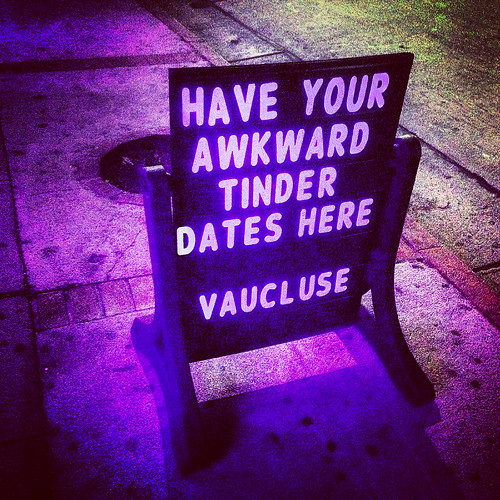
But what are your respective ratings? Photo by ChrisGoldNY on Flickr

You can now sign up to receive each day’s Start Up post by email. You’ll need to click a confirmation link, so no spam.

A selection of 10 links for you. Use them wisely. I’m charlesarthur on Twitter. Observations and links welcome.

Apple’s iPhone growth era comes to an end » FT.com

Tim Bradshaw:

Total revenues for Apple’s fiscal first quarter ending in December rose by just 2% to $75.9bn, a marked slowdown compared with 30% growth in the same period a year earlier, as iPhone sales in the US and Japan declined.

Apple increased net profits to $18.4bn, beating its own record set a year ago for the most profitable quarter in US corporate history, with earnings per share up 7% to $3.28, in line with expectations.

However, iPhone unit sales for the holiday quarter were less than 0.5% higher than the same period a year ago at 74.8m, despite chief executive Tim Cook’s firm insistence three months ago that the iPhone “will grow” in the most important period in the Apple calendar.

Wall Street’s fears that the March quarter would see iPhone sales drop for the first time since its 2007 debut were confirmed by Apple’s revenue guidance, which was below analysts’ consensus of around $55bn.

According to a note by RBC Capital Markets before the release of the results, $50bn in sales would imply iPhone unit shipments of 45m, down 26% on the same period a year earlier.

Sic transit gloria mundi. Like many premium smartphone makers, Apple is now hitting the point where the slowing market, combined with the slowing economy, creates a ceiling for sales. Apple legitimately blamed currency, but that’s hurting everyone.
link to this extract


Japan must let zombie companies die » Bloomberg View

Noah Smith:

Imagine that you’re a Japanese 26-year-old with big dreams. You graduated from Waseda University, an elite private school, with a degree in electrical engineering. You and your college buddies used to hang around your apartment, watching anime on your LCD television, which was made by Sharp Corp. — the world’s 10th-largest LCD TV manufacturer. Even then, you had ideas about how to improve the product.

Now, after graduating and working for four years in the research division of an LCD manufacturer, you’re sure that you have figured out how to make LCD panels more cheaply, at higher quality. You also believe that you could market these TVs more effectively to young people with cool, fun designs. Instead of giving the idea to the higher-ups in your giant corporation — which, knowing Japan, might get you little more than a pat on the head — you decide to leave your job and start a business with your college buddies. You just know that you can beat lumbering, struggling incumbents like Sharp.

Sharp, which is perennially struggling. But is to be bailed out by the Japanese government. Which makes it a zombie which is blocking progress.
link to this extract


I found out my secret internal Tinder rating and now I wish I hadn’t » Fast Company

Austin Carr:

Referred to inside the company as an “Elo score,” a term the chess world uses to rank player skill levels, Tinder’s rating system helps it parse its user base in order to facilitate better matches…

…Tinder CEO Sean Rad confirmed the scoring system to me while I was reporting Fast Company’s recent profile of the company. Rad, who tells me his Elo score is “above average,” stresses that the rating is technically not a measure of attractiveness, but a measure of “desirability,” in part because it’s not determined simply by your profile photo. “It’s not just how many people swipe right on you,” Rad explains. “It’s very complicated. It took us two and a half months just to build the algorithm because a lot of factors go into it.”…

…Rad teased me about it several times over dinner one evening, gauging what my score might be as he swiped through a slew of Tinder profiles on my phone. It was one thing to know my Uber rating, but did I really want to know my Elo score on Tinder? When I asked whether he could look up my rating, Rad responded, “Do you want me to do it now?” All he needed was my email address.

But of course Sean Rad is above average. And that’s not a worrying security hole. Is it?
link to this extract


Exclusive: Samsung plans to bring almost all its apps to iOS » SamMobile

Asif S:

We’ve recently received information from our trusted insiders that Samsung is planning to bring most of its apps (if not all) to Apple’s iOS platform later this year.

According to the information that we’ve received, Samsung is working on Gear Fit Manager for iOS. This will allow people who own the Gear Fit to pair it with an iPhone. To compliment the Gear Fit Manager and Gear Manager apps, Samsung will also release the S Health app for iPhone. S Health app can be used to log daily activity, workouts, food intake, and sleep.

In terms of home entertainment, Samsung is bringing iOS support for the Galaxy View. The company is developing the Remote Control and Family Square apps for the iOS, which can be used to remotely control the Galaxy View using an iPhone and allow different users to stream content to the movable display. There are plans to release the Level app for Samsung’s Level audio devices as well, which will enable iPhone users to use these devices and make use of various effects and an official way of control.

Looks like a way of expanding the total addressable market (TAM) for its peripherals and other products to iPhone users. Sensible.
link to this extract


The Google Pixel C Review » Anandtech

Brandon Chester and Joshua Ho were really, really unimpressed:

On top of the issues with this specific Android build, Android itself is simply too far behind the competition as far as functionality and apps are concerned. I have commented on this in several Android tablet reviews, but the fact that Google is shipping their own tablet makes it important to go over it once again. Quite frankly, I still have yet to see a single app that has an UI that is both optimized for tablets and is as fluid as its iPad counterpart, and with the iPad offering multitasking while Windows offers an entire windowing system, there’s absolutely no way for the Pixel C and other Android tablets to be competitive. This applies just as much to Google’s own apps as it does to third party ones, and it’s really not a stretch to say that they behave like you’re using a blown up smartphone. In the past few years both Apple and Microsoft have stepped up their games with their respective tablet OSes go, but it feels like Android has never really advanced past the first generation of tablet OSes, which leaves Android badly lagging the competition.

Statements from Google engineers make it clear that Google has some changes coming to Android in the future to bring features like multitasking, but at this point it seems to me that either nobody Google really understands what a tablet should be, or they are unable to come to a consensus to get something developed. Adding multitasking doesn’t do anything to fix the fundamental issue with application quality, and Google doesn’t want to take the first step in making proper applications so that other developers can follow.

Note too that Chester points to terrible graphics transitions – and yet in the GPU benchmarks, the Pixel C beats everything else. Another case where benchmarks don’t tell the whole story.
link to this extract


Unpacked: global ad blocker usage on smartphones » Tech.pinions

Ben Bajarin (on a paywalled piece, hence no diagram below) has data much the same as Global Web Index:

over 20% of the global internet audience is already using an ad blocker on their smartphone. 16.1% have not begun using an ad blocker but are interested in doing so. Just over 30% haven’t used an ad blocker and aren’t interested in going through the trouble to install one.

In light of what Matt and I discovered, I decided to slice the answers by demographic to see how different age groups answered the same question.

In line with the discovery Matt [Richman] and I made, ad blocking is most common among the millennial demographic. I can’t stress enough how valuable this demographic is from an advertising standpoint. As ad blocking becomes more the norm with this group, on smartphones and on PCs, it will require significant adjustment. What is also interesting is many of these ad blocking services are not free. Currently over 25% of millennials using an ad blocker paid for it. This has massive consequences for this with advertising-supported business models.

I’ve articulated before my conviction that free-with-ads business models may become things of the past. They certainly are no longer viable in emerging markets.

The point about emerging markets is important: India is a big source of adblocking on mobile, for example.
link to this extract


OPPO sold 50m smartphones in 2015 » Gizmochina

OPPO’s R7, R7S and R7 Plus constituted 15m units in sales alone which is an incredible figure. Specifically speaking the smartphones priced between 2000 Yuan [£210,$300] to 3000 Yuan [£320,$450] segment were highest selling smartphones.

That’s up 67% year-on-year. That would put it around fifth in the world, nudging LG and Sony and behind Xiaomi, Huawei, Apple and Samsung. The big Chinese name nobody in the west has heard of.
link to this extract


The threat is already inside » Foreign Policy

Rosa Brooks (formerly a senior advisor at the US State Department):

By now, the script is familiar: Terrorists attack a Western target, and politicians compete to offer stunned and condemnatory adjectives. British, Chinese, and Japanese leaders thus proclaimed themselves “shocked” by the Paris attacks, which were described variously as “outrageous” and “horrific” by U.S. President Barack Obama; “terrible” and “cowardly” by French President François Hollande; “barbaric” by Indian Prime Minister Narendra Modi; “despicable” by U.N. Secretary-General Ban Ki-moon; and “heinous, evil, vile” by U.S. Secretary of State John Kerry, who possesses a superior thesaurus.

The Paris attacks were all these things. One thing they were not, however, was surprising.

Occasional terrorist attacks in the West are virtually inevitable, and odds are, we’ll see more attacks in the coming decades, not fewer. If we want to reduce the long-term risk of terrorism — and reduce its ability to twist Western societies into unrecognizable caricatures of themselves — we need to stop viewing terrorism as shocking and aberrational, and instead recognize it as an ongoing problem to be managed, rather than “defeated.”

Politicians don’t like to say any of this. But we’re not politicians, so let’s look at 10 painful truths.

Essential reading, really.
link to this extract


Xavier Niel explores move to enter UK mobile market » FT.com

Niel set up Free, a French mobile network which has been a great hit, as Daniel Thomas explains:

Interest from Mr Niel’s telecoms group in the British market will worry rivals, given its record of offering low prices that deeply undercut existing offers.

The launch four years ago of Free, Iliad’s mobile offering in France, disrupted the market, leading to an intense price war that slashed profits among the existing three operators. Orange’s proposed acquisition of Bouygues Telecom is an attempt to reverse the effects of the introduction of the low-cost rival.

A similar deal is being proposed in the UK with the purchase of O2 by Three, the UK’s smallest mobile group, which is owned by Hong Kong’s CK Hutchison. If the deal were to go through, it would reduce the number of competitors from four to three.

However, the deal is set to be challenged in the next week by the European competition regulator, which will set out a range of objections given the potential loss of competition for customers as well as third-party mobile providers that use the two networks under wholesale contracts.

The UK mobile market really is very competitive. Adding Free would shake it up even further.
link to this extract


Internet of Things security is so bad, there’s a search engine for sleeping kids » Ars Technica

JM Porup:

Shodan, a search engine for the Internet of Things (IoT), recently launched a new section that lets users easily browse vulnerable webcams.

The feed includes images of marijuana plantations, back rooms of banks, children, kitchens, living rooms, garages, front gardens, back gardens, ski slopes, swimming pools, colleges and schools, laboratories, and cash register cameras in retail stores, according to Dan Tentler, a security researcher who has spent several years investigating webcam security.

“It’s all over the place,” he told Ars Technica UK. “Practically everything you can think of.”

We did a quick search and turned up some alarming results [of a sleeping baby in Canada, kitchen in Spain, classroom in China, someone’s house].

The cameras are vulnerable because they use the Real Time Streaming Protocol (RTSP, port 554) to share video but have no password authentication in place. The image feed is available to paid Shodan members at images.shodan.io. Free Shodan accounts can also search using the filter port:554 has_screenshot:true.

Shodan crawls the Internet at random looking for IP addresses with open ports. If an open port lacks authentication and streams a video feed, the new script takes a snap and moves on.

link to this extract


Errata, corrigenda and ai no corrida:

Start up: Apple’s phone expectations, Amazon’s giant backdoor, mobile adblocking grows, and more


Virtual reality attracts interest, but where’s the storytelling? Photo by Nick Habgood on Flickr.

Shh! It’s a secret, but you can sign up to receive each day’s Start Up post by email. You’ll need to click a confirmation link, so no spam.

A selection of 11 links for you. Not attributable to tributaries. I’m charlesarthur on Twitter. Observations and links welcome.

Apple 1Q16 Earnings Preview » Above Avalon

Neil Cybart:

Investor anxiety heading into Apple’s upcoming earnings report is at a multi-year high. Fears surrounding slowing iPhone 6s and 6s Plus sales have morphed into broad questions about the iPhone’s long-term viability. While investors are looking for answers that won’t likely be provided this week, management has a very clear goal with its 1Q16 earnings report and conference call: set expectations for 2016.

Cybart reckons in the just-gone quarter to December (Apple’s first fiscal quarter of its financial year) Apple has sold around 77m iPhones, 18m iPads and 5.7m Macs. He also gives gauges for what is low and high. Apple announces its earnings on Tuesday evening (and LG will have published its own by the time you read this).
link to this extract


IAB chief blasts Adblock Plus as an ‘immoral, mendacious coven of techie wannabes’ » Adweek

Christopher Heine:

When Adblock Plus said it had been “disinvited” from this week’s Interactive Advertising Bureau’s Leadership Summit, it raised virtual eyebrows across the Web. Wasting little time and mincing no words, the IAB’s leader kicked off the event by firing back.

“Now, you may be aware of a kerfuffle that began about ten days ago, when an unethical, immoral, mendacious coven of techie wannabes at a for-profit German company called AdBlock-Plus took to the digisphere to complain over and over that IAB had ‘disinvited’ them to this convention,” CEO Rothenberg told the audience in his opening keynote Monday. “That, of course, is as much a lie as the others they routinely try to tell the world…”

…Eyeo GmbH-owned Adblock Plus’ ticket was pulled, Rothenberg said, “for the simple reason that they are stealing from publishers, subverting freedom of the press, operating a business model predicated on censorship of content, and ultimately forcing consumers to pay more money for less — and less diverse — information. AdBlock Plus claims it wants to engage in dialogue. But its form of dialogue is an incessant monologue.”

Well, they had an invitation (which they had to pay for, like everyone else), and then it was withdrawn. Clearly, no Christmas cards between these two. (I’m going to go to Adblock Plus’s meeting in London in a week or so.)
link to this extract


37% of mobile users are blocking ads » Global Web Index

Jason Mander:

According to GWI’s latest wave of research, it’s a significant 37% of mobile users who say they’ve blocked ads on their mobile within the last month. That’s a pretty sizable number if you consider that these tools have only relatively recently come to the attention of consumers. It also shows just how keen users are to improve their mobile experience and to prevent their data allowances and battery lives from being drained.

No less striking is that another 42% of users say they haven’t blocked ads so far but are interested in doing so in the future. That means almost 80% of the mobile audience could be engaging with blockers before too long – a stat which underlines why this is a trend which is unlikely to burn out any time soon.

Big numbers. People have responded by saying that they’re not seeing those figures, but equally adblockers often block Google Analytics too – so adblocking users are ghosts; you’d have to check against server logs to see what’s really happening. GWI has a large sample base, weighted towards the US and UK, though it doesn’t say how many were sampled for this particular survey.
link to this extract


‘iPhone 5se’ likely to have faster A9/M9 chips & always-on Siri, come in 16/64GB capacities » 9to5Mac

Mark Gurman:

Last week we reported that Apple is preparing to announce a new 4-inch iPhone dubbed the “iPhone 5se” as soon as mid-March. Our report noted that the new iPhone is essentially an upgraded iPhone 5s with a faster processor, Apple Pay, new camera features, and curved glass edges instead of sharp chamfers. Now, we have a few additional details about this new iPhone model. First, we are told that there are different prototypes of the device floating around Apple’s campus: some with the A8 and M8 chips that we discussed in our previous report, and some with the iPhone 6s’s A9 and M9 processors. We’ve now learned that the iPhone 5se is more likely to include variants of the A9 and M9 chips instead of the A8 and M8 lines…

Because the iPhone 7 will include a faster chip potentially known as the A10 processor, Apple likely does not want its new 4-inch iPhone to fall two processor generations behind in just six months.

Gurman has an excellent track record on this stuff. So you can pretty much take this as being what’s on the shipping box. Next question: why has Apple decided to renew the 4-inch phone?
link to this extract


Why VR “storytelling” does not currently work. And can it ever work? » Medium

Mike Cartel (who has experience in creating VR experiences):

Storytelling is a RETROSPECTIVE thing. It always has been. People didn’t sit around the campfire telling stories in the timeframes that they actually occurred. And i’m not aware of realtime books. Linear narrative mechanisms have evolved to break down the constraints of time and emotive viewpoint.
But herein lies the VR Storytelling anachronism.

The hardware has raced forward at an incredible speed. It’s barely three years between Oculus Rift DK1, and Oculus Rift CV1, but the change is extraordinary. But with this charge forward brings a storytelling problem. The new Rift, HTC Vive and PSVR headsets behave and look close to real life. Screen door and latency has been nearly obliterated. The hardware is challenging our brains to differentiate with real life.

Hardware mimics real life, and real life timing. Whilst current non-gaming VR content relies upon existing forms of linear narrative. These things do not co-exist. Yet. But will they ever? Can they ever?

Like him, I recall a time when we were assured that CD-ROMs would usher in an age of “choose your own storyline” storytelling. Instead, we got video games – while storytelling has remained much the same.
link to this extract


The muscular dystrophy patient and the Olympic medallist with the same genetic disorder » ProPublica

David Epstein, who wrote a book about genes and sport, and was then contacted out of the blue:

It seemed absolutely crazy. The idea that an Iowa housewife, equipped with the cutting-edge medical tool known as Google Images, would make a medical discovery about a pro athlete who sees doctors and athletic trainers as part of her job?

I consulted Harvard geneticist Robert C. Green to get his thoughts, in part because he has done important work on how people react to receiving information about their genes. Green was open to discussing it, but he recalls a justifiable concern that had nothing to do with science: “Empowering a relationship between these two women could end badly,” he says. “People go off the deep end when they are relating to celebrities they think they have a connection to.” I was skeptical too. Maybe she was a nutjob.

I had no idea yet that Jill, just by investigating her own family, had learned more about the manifestations of her disease than nearly anyone in the world, and that she could see things that no one else could.

Open this in another tab, and make the time to read it today – you’ll need about 15 minutes. It’s stunning. And (for any criticism of Google’s tax affairs below) it’s also testament to the power of Google Images and search engines and the power of having the world’s scientific information available to everyone. Jill extended two peoples’ lives, including her father’s (and probably her own), because she could access information easily.
link to this extract


Two Y-axes » Kieran Healy

Healy takes to task those who would plot using a single x-axis and two sets of data using two y-axes:

When you’re just looking at data, though, it’s enough to bear in mind that it’s already much too easy to present spurious—or at least overconfident—correlations. Scatterplots do the job just fine, as you can see. (Just don’t pay much attention to the sudden clumpy vertical bits in the plot.) Even here, we can make our associations look steeper or flatter by fiddling with the aspect ratio. Two y-axes give you an extra degree of freedom to mess about that, in almost all cases, you really shouldn’t take. Guidelines like this won’t stop people who want to fool you with charts from trying, of course. But they might help you not fool yourself.

Read and take to heart, graph-plotters. (Including Dr Drang.)
link to this extract


Google obeys tax laws, and gives us awesome services for free. Why complain? » Spectator Blogs

Fraser Nelson:

If Google hoped for some good PR in offering £130 million to settle UK tax claims dating back to the Labour years, it was a miscalculation: Labour regards the offer as “derisory” and the BBC is leading its news bulletins the better to sock it to its rival. Why did Google bother? It has run up against the standard anti-business narrative: that the social worth of businesses can be measured only by how much cash they give to the government. In fact, Google provides its services to millions of Britons (worth at least £11bn, by some estimates) at no cost at all: this is its contribution to society. As for its contribution to the government’s coffers, Google has – from the offset – been following the rules. And for this, it has been lambasted.

I don’t quite buy Google as a “rival” to the BBC. The £11bn (one-off?) calculation comes from an analysis released by – surprise! – Google, compiled by Deloitte. But it’s reasonable – jobs created, work done, and so on.

But at the same time, that rests on the argument that Google’s services aren’t fungible; that if it didn’t exist, that there wouldn’t be other companies offering platforms for digital advertising (leading to the need for SEO), for creating content, for writing smartphone apps and so on. I suspect Yahoo, Microsoft and others wouldn’t necessarily agree.
link to this extract


That Google tax deal » Waiting for Godot

Jolyon Maugham:

Well, here’s what Google UK Limited does.

Now, that doesn’t sound much like selling advertising. And it isn’t. Its business is selling services to other Google companies. And it will charge a modest uplift on its costs – and that modest uplift will comprise its profits.

A consequence of this is that Google UK Limited’s accounting profits will never bear any relationship to the profits Google Inc chooses to report to its shareholders as having been generated in the UK. Those profits generated in the UK will never show up in Google UK Limited’s accounts and be subject to UK tax. Google UK Limited is never going to be hugely profitable.

Indeed if Google Ireland Limited and Google Inc were to choose to buy those services from some other jurisdiction, Google wouldn’t generate any accounting profits here at all.

The accounting profits they generate here they generate because they choose to buy services from here. They choose to make profits here.

We’re all being inculcated into the winding roads of multinational tax planning.
link to this extract


Asustek, Gigabyte to ship 4.2-4.5m own-brand motherboards each in 1Q16 » Digitimes

Monica Chen and Joseph Tsai:

With demand from the PC DIY market continuing to decline, global motherboard shipments dropped from 69m units in 2014 to 54m units in 2015, while shipments in China also slumped from 28m units to 26m.

As for second-tier players, excepting ASRock which was still profitable in 2015, Micro-Star International (MSI), Biostar, Elitegroup Computer Systems (ECS) and China-based Colorful all saw their profits from the motherboard business in 2015 drop sharply from 2014.

As for 2016, global motherboard shipments are expected to drop below 50m units, while Asustek and Gigabyte will both be able to maintain their shipments at around 17m units.

Note that point about the DIY market shrinking. (Will VR change that?) Remarkable that two companies have over 60% of the whole market.
link to this extract


Amazon’s customer service backdoor » Medium

Eric Springer:

As a security conscious user who follows the best practices like: using unique passwords, 2FA, only using a secure computer and being able to spot phishing attacks from a mile away, I would have thought my accounts and details would be be pretty safe? Wrong.

Because when someone has gone after me, it all goes for nothing. That’s because most systems come with a backdoor, customer support. In this post I’m going to focus on the most grievous offender: Amazon.com

Amazon.com was one of the few companies I trusted with my personal information. After all, I shop there, I used to work as a Software Developer and I am a heavy AWS user (raking up well over $600/month)

Truly horrendous story. Moral: don’t use a publicly-visible email for your Amazon account. (Now go and change it.)
link to this extract


Errata, corrigenda and ai no corrida:

Start up: weather-forecasting phones, MPs v BT, Google’s UK tax row, Apple Street View?, and more


Smartphones are transforming life in Myanmar. Photo by Timothy Neesam on Flickr.

All the cool kids sign up to receive each day’s Start Up post by email. You’ll need to click a confirmation link, so no spam.

A selection of 10 links for you. Not sure if they’re viral or bacterial. I’m charlesarthur on Twitter. Observations and links welcome.

The Facebook-loving farmers of Myanmar » The Atlantic

Craig Mod:

For six weeks last October and November, just before Myanmar [formerly Burma] held its landmark elections, I joined a team of design ethnographers in the countryside interviewing forty farmers about smartphones. A design ethnographer is someone who studies how culture and technology interact. A common mistake in building products is to base them on assumptions around how a technology might be adopted. The goal of in-field interviewing in design ethnography is to undermine these assumptions, to be able to design tools and products aligned with actual observed use cases and needs.

Myanmar is especially fertile ground for this kind of work. Until recently the military junta had imposed artificial caps on access to smartphones and SIM cards. Many of the farmers we spoke with had never owned a smartphone before. The villages were often without running water or electricity, but they buzzed with newly minted cell towers and strong 3G signals. For them, everything networked was new.

Fascinating points: brands, how the price of data has dived, apps, and how mobile shops have become pivotal.
link to this extract


Clever app turns everyone into a roving weather reporter » WIRED

Tim Moynihan:

With a free app for iOS, Sunshine wants to be the gold standard for weather accuracy. It hopes to achieve this ambitious goal by using altogether different meteorological instruments: People, iPhones, algorithms, and the draw of community and gamification. The app needs your location to work correctly, but the tradeoff is receiving hyper-local weather reports—Sunshine calls them “Nowcasts”—and becoming part of the data-aggregation process.

Using crowdsourced reporting, readings from the barometric pressure sensor in the iPhone 6 and latest iDevices, and predictive algorithms that overlay all that information on a map to deliver 18-hour forecasts, Sunshine generates what Stroponiati calls “weather forecasting at the street level.”

“It’s a weighted scheme of a user’s experience, community appreciation [you can upvote other users], and how much activity,” Stroponiati says. “Users that update often but also get a lot of upvotes get more weight. There is a whole gaming scheme behind it with local leaderboards and titles … As you get more points, you change titles and climb higher on the leaderboards.”

Was liking it until the gamification stuff. (Perhaps that’s necessary?) When she was still at Google in July 2009 I interviewed Marissa Mayer, who put forward exactly this sort of idea as what smartphones would enable.
link to this extract


Can DCMS safely ignore over 120 MPs protesting over constituency broadba[n]d » Computer Weekly

Philip Virgo:

The British Infrastructure Group report publicised in the Daily Telegraph today uses available data (assembled by the House of Commons Library) but puts on it a rather different interpretation to that recently used by BDUK to boast of its achievements to date and thsoe in the pipeline. The consequent call for action is backed by 120 MPs. Whether the break up of BT is the right action is another matter. If it were to be the right “answer” that raises the more interesting questions of whether “merely” separating out Openreach would achieve the objective of stimulating BT to invest in infrastructure (back haul as well as local loop) as opposed to content (alias subsidising premier league football) and whether that would be enough.

Can BT afford the scale and nature of investment necessary to build the communications infrastructure needed to underpin a “smart society”? A ‘smart society” is one in which everything is interconnected: from smart phones, TVs, toys and consumer goods, through smart meters, cars, buildings, telecare and telemedicine to smart grids and cities. It is also one in which those dependent on on-line medical devices (for example) may die when networks go down.

It is not just that BT has not maintained its previous rate of investment in recent years – it does not appear to have plans to increase it in the future and may find it hard to do so.

The BIG report, and others that have come out over the weekend, do make it seem like Openreach is very unloved, not just by customers but also by legislators.
link to this extract


How to save Wikipedia: Start paying editors … or write for machines » The Register

Andrew Orlowski:

Imagine that one giant manufacturer dominated the car market. The cars it made weren’t very good, but they were much cheaper and easier to buy than cars from anyone else, so the car company had ended up dominating the market.

These cars would often break down, spew noxious gasses, and a lot of the time, didn’t go where you wanted them to go.

Car travel was unreliable and sometimes even dangerous. People kept using them hoping that the crashes would happen to somebody else, and the health consequences of the pollution wouldn’t hit them for years.

For us, it isn’t difficult to imagine a better world, a world of reliable and safe cars.

Wikipedia at 15 is the monopoly car company of digital knowledge.

link to this extract


Apple Maps vehicles » Apple

Apple is driving vehicles around the world to collect data which will be used to improve Apple Maps. Some of this data will be published in future Apple Maps updates.

We are committed to protecting your privacy while collecting this data. For example, we will blur faces and license plates on collected images prior to publication.

As Benedict Evans points out, the blurring and publication mentions immediately point to a Street View competitor. (Microsoft also has a Street View product, as I recall, which even came before Google’s.)
link to this extract


Keeping up with Tim Cook’s Apple » Delusions Of Grandeur

Rob Rhyne:

Apple is moving at a blistering pace. Everywhere you look, a bearded neck slams Apple’s software quality. I agree that Apple has shipped some terrible bugs the past few years, but what did you expect? Apple is shipping software at an absurd rate.

When you consider the amount of technology they’re putting out to support new hardware and the number of people who use their software, it’s a mathematical reality that bugs will get out. Some of them can be nasty.

Those assailing Apple’s software quality fail to recognize the particulars of what Apple has shipped and how they have to ship it. If you take time to understand the problems facing a platform vendor and consider Apple’s scale, you might wonder how more bugs haven’t slipped out.

What Apple has accomplished in the past few years is astonishing, but you need to understand the details of how software frameworks are developed and shipped before you can truly appreciate it.

What we need is a graphic of how the hardware and software frameworks have expanded over the past few years. There really isn’t a company that is doing this much on so many fronts at such scale.
link to this extract


How Larry Page’s obsessions became Google’s business » NYTimes.com

Conor Dougherty:

Many former Google employees who have worked directly with Mr. Page said his managerial modus operandi was to take new technologies or product ideas and generalize them to as many areas as possible. Why can’t Google Now, Google’s predictive search tool, be used to predict everything about a person’s life? Why create a portal to shop for insurance when you can create a portal to shop for every product in the world?

But corporate success means corporate sprawl, and recently Google has seen a number of engineers and others leave for younger rivals like Facebook and start-ups like Uber. Mr. Page has made personal appeals to some of them, and, at least in a few recent cases, has said he is worried that the company has become a difficult place for entrepreneurs, according to people who have met with him.

Part of Mr. Page’s pitch included emphasizing how dedicated he was to “moonshots” like interplanetary travel, or offering employees time and money to pursue new projects of their own. By breaking Google into Alphabet, Mr. Page is hoping to make it a more welcoming home for employees to build new businesses, as well as for potential acquisition targets.

It will also rid his office of the kind of dull-but-necessary annoyances of running a major corporation. Several recently departed Google staff members said that as chief executive of Google, Mr. Page had found himself in the middle of various turf wars, like how to integrate Google Plus, the company’s struggling social media effort, with other products like YouTube, or where to put Google Now, which resided in the Android team but was moved to the search group.

Observation by Above Avalon’s Neil Cybart (former Wall Street analyst): “The continued lack of focus is noteworthy.”
link to this extract


Yes, Google’s UK back-tax payment is derisory. Here are the numbers that show it. » The Overspill

I used the public data to do some calculations:

The UK is the only region besides the US for which Google breaks out revenue in its quarterly earnings, because – for whatever reason – the UK represents 10% or more of Google’s total revenue. (Public companies are generally obliged to cite countries or regions which generate more than 10% of revenue in their results.)

Google doesn’t, however, break out profits for any region; it just gives a single figure for operating and net profit.

But what if we were to try to estimate how much profit Google has made in the UK, and then compare that to the tax it has paid, and the tax that it recently paid in a settlement with the UK’s tax authorities, HM Revenue & Customs?

This article from The Register is good background too.

link to this extract


Google’s 2.5% UK tax rate » ITV News

Robert Peston:

Google and HMRC would of course argue that for taxable purposes my calculation of its UK profits is wrong.

They would say that there is a global convention that the profits in the UK should be measured as a margin or increment on top of what it would cost Google to operate here if all its operations were subcontracted to a third party.

Those notional taxable profits would appear to be a bit more than a couple of hundred million quid for for the 18 months to the middle of last year.

And the British taxman would want credit for increasing that margin or increment in its latest negotiations with Google, to capture (in a way that I freely admit I don’t understand) a new assessment of the maturity of its UK business and the low risk of operating here.

They would argue that it would be wholly inappropriate to tax Google on profits measured as I suggested, because most of the costs and business risks of developing Google were taken in the US – and therefore it is only fair that the bulk of the taxable profit of this global giant should be attributable to the US.

In other words, the British taxman and Google would both insist that the Chancellor and the Exchequer are getting quite as much tax as they deserve – perhaps even more – given that multinationals conventionally pay most tax in their homeland (or America in this case).

Here is the punchline. George Osborne, who is struggling to reduce the government’s deficit and needs every penny of tax he can lay his hands on, would seem to concur that he is not being short-changed by mighty Google.

Peston’s calculations are the same as mine.
link to this extract


Google paid Apple $1bn to keep search bar on iPhone » Bloomberg Business

Joel Rosenblatt:

The revenue-sharing agreement reveals the lengths Google must go to keep people using its search tool on mobile devices. It also shows how Apple benefits financially from Google’s advertising-based business model that Chief Executive Officer Tim Cook has criticized as an intrusion of privacy.

Oracle has been fighting Google since 2010 over claims that the search engine company used its Java software without paying for it to develop Android. The showdown has returned to U.S. District Judge William Alsup in San Francisco after a pit stop at the U.S. Supreme Court, where Google lost a bid to derail the case. The damages Oracle now seeks may exceed $1 billion since it expanded its claims to cover newer Android versions.

Annette Hurst, the Oracle attorney who disclosed details of the Google-Apple agreement at last week’s court hearing, said a Google witness questioned during pretrial information said that “at one point in time the revenue share was 34 percent.” It wasn’t clear from the transcript whether that percentage is the amount of revenue kept by Google or paid to Apple.

It’s a good point: if Apple is so critical of Google’s business model, why is it happy to take money to let it run that business model on iOS? True, Safari blocks third-party cookies (including DoubleClick, the ad network Google owns) – until you sign in to Google. But still a point of contradiction, rather like iAds.
link to this extract


Errata, corrigenda and ai no corrida: none noted (though tax manoeuvres are notoriously complicated, so I’m expecting feedback on that).

Start up: Google’s ad stop, hacking phishers, the lost phone mystery, the adblocking browser and more

A game with these will give you an insight into production processes. Photo by judy_and_ed on Flickr.

You can now sign up to receive each day’s Start Up post by email. You’ll need to click a confirmation link, so no spam.

A selection of 10 links for you. Use them wisely. I’m charlesarthur on Twitter. Observations and links welcome.

Why is your team falling behind? Ask ‘The Penny Game’ » Atomicobject

Eric Shull:

The book Velocity describes an enlightening simulation, a model of a simple manufacturing line. The game uses pennies and dice to represent pieces of work flowing through stations in a factory. It may be simple, but the penny game can improve our understanding of how software teams work, how the interaction of variable processes affect the system as as whole.

In the penny game, pennies come in at one end of the line, are processed by each station, then exit at the other end. This would be rather mundane but for one complication: each station does not always process the same number of pennies.

In the simulation, rolled dice indicate how many pennies each station is allowed to move.

This is fascinating – and gives you real insight into the problems that have to be overcome in manufacturing to tight deadlines. Imagine now if you were processing millions of “pennies”, except they were phones.
link to this extract


Google disabled 49% more ads in 2015 » WSJ Digits blog

Alistair Barr:

More than 1,000 of Google’s 60,000 employees monitor and remove ads, an important task because the company gets about 90% of its revenue from advertising. It’s also been hit financially for not adequately monitoring ads. In 2011, the company agreed to pay $500m to settle allegations by the U.S. Department of Justice that ads for Canadian online pharmacies contributed to the illegal importation of prescription drugs. In the settlement, Google acknowledged it acted “improperly.”

Google blocked more than 12.5m ads in 2015 for drugs that were unapproved or that made misleading claims, up from 9.6m a year earlier.

Ads making misleading weight-loss claims were a big source of user complaints last year, prompting Google to suspend more than 30,000 websites from its ad systems. It declined to give a comparable number for 2014.

Rob Leathern has the growth figure for ad disabling: it’s growing by 50% annually, but still a long way short of catching them all.
link to this extract


How I stumbled upon thousands of Facebook passwords » Medium

“Rukshan”, a Colombo-based medical undergrad and hacker, received a Facebook phishing email and twiddled around with the phishing page:

after modifying the url I checked the folder which contained the php script that handles the post requests and I knew at that moment I hit the jackpot.

There was no index.html file to make sure no one else see the files in that directory or any .htaccess modification, well like I said phishing people are too bored to do all these tech stuff anyway, they’d rather get the passwords and go away.

So I opened the password.html file and I was greeted to the sight of hundreds of Facebook passwords, and by looking at the credentials one there was a pattern:

•Almost all of these accounts belonged to girls who are in their early 20s or teens.
• Almost all of the accounts belonged to females who are from Colombo.

Neat idea; neater still would be to wipe the files. But that would be one sizeable hack further (and probably illegal).
link to this extract


Why don’t you have an Android version? (Or why we develop for iOS first) » Impossible Ventures

Joel Runyon:

Android users may download more apps, but they spend less money than iTunes users.

But that’s not just fake studies either, in our experience with Paleo (io) – a top 20 app in iTunes and ranked even higher in Google Play – we make about 3x the sales on our iTunes listing as we do on Google Play (even though we have a higher ranking in Google Play than iTunes).

Which brings me to the next point: apps are not free to make.

As an app developer, you have to spend time & money on this concept that you have in your head to bring it to reality. The  MVP on an app can cost anywhere between $2k and $20k to build and launch. It might not seem like much if you spend all your time raising VC money and have a $1M+ in the bank, but it can add up if you’re bootstrapping.

In fact, with every dollar you spend, there’s a very real cost (along with another equally as real, opportunity cost).

Of course the argument is completely different in Asia, where it’s generally Android-first (except in Japan, and who knows in China?).
link to this extract


Finding the tennis suspects » Medium

Russell Kaplan, Jason Teplitz, and Christina Wadsworth:

The tennis world was sent reeling when BuzzFeed News and the BBC jointly published The Tennis Racket, which revealed “evidence of widespread match-fixing by players at the upper level of world tennis”. But BuzzFeed refused to publish the names of those players.

We dove into the data and found the names ourselves.

Unless you follow tennis really closely you won’t have heard of any of the names but one, and I do wonder if that one is thrown up by some weird quirk of the analysis. Seems robust, though. I think this might dissuade players – and administrators – from trying to hide this in future, knowing that there are people analysing public data for oddities. Will it put off the gamblers, though?
link to this extract


Why do people keep coming to this couple’s home looking for lost phones? » Fusion

Kashmir Hill:

It started the first month that Christina Lee and Michael Saba started living together. An angry family came knocking at their door demanding the return of a stolen phone. Two months later, a group of friends came with the same request. One month, it happened four times. The visitors, who show up in the morning, afternoon, and in the middle of the night, sometimes accompanied by police officers, always say the same thing: their phone-tracking apps are telling them that their smartphones are in this house in a suburb of Atlanta.

But the phones aren’t there, Lee and Saba always protest, mystified at being fingered by these apps more than a dozen times since February 2015. “I’m sorry you came all this way. This happens a lot,” they’d explain. Most of the people believe them, but about a quarter of them remain suspicious, convinced that the technology is reliable and that Lee and Saba are lying.

“My biggest fear is that someone dangerous or violent is going to visit our house because of this,” said Saba by email. (Like this guy.) “If or when that happens, I doubt our polite explanations are gonna go very far.”

It’s billed as “a tech mystery”, and it really is.
link to this extract


Brave is the name, ad-blocking the game of new browser » Computerworld

Former Mozilla CEO (for 11 days) Brendan Eich is behind a new browser for desktop and mobile which blocks all ads and tracking by default:

“We are building a new browser and a connected private cloud service with anonymous ads,” Eich said.

In effect, Brave will first scrub websites of most of their ads and all tracking, then replace those ads with its own. But the latter will be aimed not at individuals but at the anonymous aggregate of the browser’s user base. If enough people gravitate to the browser, Brave will share its ad revenue with users and content publishers.

“We will target ads based on browser-side intent signals phrased in a standard vocabulary, and without a persistent user id or highly re-identifiable cookie,” Eich said. “By default Brave will insert ads only in a few standard-sized spaces. We find those spaces via a cloud robot.”

No user data will be recorded or stored by Brave, Eich promised.

Elsewhere, Eich said that 55% of Brave’s revenue would be shared with site publishers, and 15% with users, who could then turn that money over to their favorite sites or keep it.

Al Hilwa, an analyst with research firm IDC, applauded the concept of creating an alternate revenue stream from traditional advertising, but wondered whether the browser could compete, even in the niche that Eich described. “This is a laudable idea, but fighting ‘free’ is always risky,” said Hilwa in an email reply to questions.

Not sure the world has an appetite for a new browser, but one can envisage adblocking becoming built in and then enabled, just as pop-up blocking in browsers went from “pop-up what?” to “optional” to “on by default”.
link to this extract


Apple pushes to bolster market share in India » WSJ

Newley Purnell:

India’s smartphone market is expanding quickly and by next year it should overtake the U.S. as the world’s second-biggest behind China, according to research firm IDC.

Just 35% of mobile phones sold in India now are smartphones, meaning there is room for growth as people upgrade from basic devices. Indian consumers, however, tend to purchase inexpensive devices: The average smartphone selling price in the country is likely to fall to $102 in 2018 from $135 in 2014, IDC says.

Apple’s problem has been that the sweet spot for smartphone sales in India has been handsets that cost less than $150. In a country where the average person earns about $1,500 a year and even middle-class consumers make less than $8,000 a year, the standard iPhone — which usually costs between $500 and $1,000 without a data plan — was just too expensive for most people to consider.

“Buying an iPhone is so expensive,” said Sakshi Maurya, a 20-year-old university student in New Delhi. She said she doesn’t understand why an iPhone is five times as expensive as some locally available Android phones. “It’s a luxurious thing.”

India poses a particular marketing challenge for Apple: it’s a mixture of very tech-savvy buyers and low-income buyers. Which does it target first, and how?
link to this extract


iPhone 6S/6S Plus underperform year-ago sales » Consumer Intelligence Research Partners

CIRP finds that the new iPhone 6s and 6s Plus accounted for 67% of total US iPhone sales, with iPhone 6s at 48% and iPhone 6s Plus at 19%. In the December 2014 quarter, iPhone 6 and 6 Plus accounted for 75% of total US iPhone sales with 30% iPhone 6 Plus.

“The iPhone 6s and 6s Plus did quite well,” said Josh Lowitz, CIRP Partner and Co- Founder. “Yet, they did not dominate the same way that iPhone 6 and 6 Plus did a year ago. The total share of the new flagship models fell below the share of the then-new phones in 2014, and the large-format iPhone 6s Plus share of sales dropped compared to the iPhone 6 Plus as well. Customers continue to choose the year-old iPhone 6 and 6 Plus, and even the two-year old iPhone 5S.”

CIRP can’t say whether total sales are higher or lower (it samples 500 buyers of Apple devices in the previous quarter), just the mix. This looks like a subtle price deflation of the iPhone as people opt for 2014’s models over 2015’s – after all, they look the same to other people, even if the newer models has extra features.
link to this extract


Issue 3434 – android – Add APIs for low-latency audio – Android Open Source Project – Issue Tracker

On Tuesday, Apple released its “Music Memos” app, which is intended to let musicians (of any standard) record little musical thoughts that come to them on the guitar or piano directly to their iPhone or iPad, and add musical accompaniment.

Android doesn’t have that, because as has been noted here before its audio latency is too long – over 10 milliseconds, which is the longest pro musicians can bear. So how long have developers been prodding Google to improve Android’s audio latency?

I am developer of real-time audio signal processing applications. I am interested in creating
applications for sale in the android marketplace, but found that android has no method for real-
time low latency audio.

This is the first entry in a bug/feature request which continues to the present (latest entry is June 2015). The date of the entry? July 31, 2009 – slightly over nine months after the first Android phone. Is six and a half years a long time for a feature request to lie open? (And here’s Google’s official list of device latencies. Look for any at 10ms or below.)

Apple effectively gets 100% of the professional audience through this feature.
link to this extract


Errata, corrigenda and ai no corrida:

Start up: Apple’s $8bn tax bill?, the tech funding squeeze, Friends Liquidated, Samsung ‘Live Photos’+ more


At least you knew that the advert might be seen by real people. No such assurances in the online world. Photo by University of Pittsburgh Libraries on Flickr.

You can now sign up to receive each day’s Start Up post by email. You’ll need to click a confirmation link, so no spam.

A selection of 12 links for you. Use them wisely. I’m charlesarthur on Twitter. Observations and links welcome.

Why you should never consider a travel planning startup » Tnooz

Nadav Gur, principal at NG Vanguard Enterprises:

First, you need to acquire users. Guess what — if they’re not planning a trip, they’re not interested in travel planners. They don’t even acknowledge their existence.

People are bombarded by new websites/apps/brands all the time, and they filter for what’s relevant.

That’s what you see GEICO ads on TV all the time – cause the only way to get your attention those 1–2 times a year when you give a damn about insurance, is to be in front of you all the time.
No matter how much press/word-of-mouth/viral exposure you’re getting, it only registers if/when it happens to be relevant.

Inevitably this means that you too have to advertise a lot. And no, free user acquisition schemes like SEO do not work in 2015 at scale in established markets.

The Priceline Group spends over $2bn per year on Google Ads alone. Guess why?

Not so easily disrupted. And that’s before you get to the question of how many people spend enough on travel for any affiliate amounts to be worthwhile.
link to this extract


Tech faces hour of reckoning as fundraising drops, layoffs rise » USA Today

Jon Swartz:

Is tech in for a rude awakening this year after a magic carpet ride the past few years?

The numbers, and recent actions by once-highflying start-ups, would seem to suggest so.

Consider: Mega-rounds, defined as funding of more than $100 million for venture capitalist-backed companies, are in free fall. The rate of private start-ups attaining unicorn status — a valuation of at least $1 billion — are grinding to a crawl. Friday layoffs at tech start-ups, deemed Black Fridays, are increasing. Bellwether tech stocks such as Apple, Google, Facebook and Amazon have been taking it on the chin.

“It’s a time to re-calibrate — so many companies can’t burn extraordinary amounts of money forever,” says Sunil Panel, co-founder of Sidecar, a pioneer in the crowded ride-sharing space that shuttered operations on Dec. 31.

Last year, Silicon Valley projected unbridled swagger. Today, “there is definitely an era of reckoning,” says Chris Sacca, a venture investor with stakes in Uber and Twitter. “Reality is setting in.”

Not sure about “grinding to a crawl” (note to USA Today subs: things grind to a halt, or slow to a crawl), but the slowdown in stupid ideas is palpable.
link to this extract


European antitrust chief takes swipe at privacy issue » The New York Times

Mark Scott on the EC’s Margrethe Vestager’s speech at the DLD conference:

“If a few companies control the data you need to cut costs, then you give them the power to drive others out of the market,” Ms. Vestager said at the DLD conference, a gathering of digital executives and policy makers.

She said that “it’s hard to know” how much data is given up when using an online messaging service.

“But it’s a business transaction, not a free giveaway,” she continued. “As consumers, we need to be treated fairly.”

Ms. Vestager’s warning shot in the often-rancorous privacy debate comes ahead of a Jan. 31 deadline for Europe and the United States to reach a new data-sharing agreement…

…A number of European executives echoed Ms. Vestager’s fears about how a small number of American tech companies could use their large-scale data collection to favor their own services over those of rivals. Among them was Oliver Samwer, the German entrepreneur who co-founded Rocket Internet, one of the region’s most high-profile tech companies.

“If someone like Google or Facebook has all of the data, then that’s not good,” Mr. Samwer said here on Sunday.

link to this extract


Whatsapp goes free, says it won’t introduce ads » Mashable

Whatsapp readily acknowledges that killing its only source of income will raise questions about introducing third-party ads. But the company has a different idea.

“Starting this year, we will test tools that allow you to use WhatsApp to communicate with businesses and organizations that you want to hear from. That could mean communicating with your bank about whether a recent transaction was fraudulent, or with an airline about a delayed flight,” the post reads.

We reckon Whatsapp will charge organizations and business for establishing channels with their users through the service, though no details were announced. The idea is by no means new; a Bloomberg report in May 2015 claimed Whatsapp might foray into B2C messaging in the “longer term.”

Perfectly sensible business idea, and could also turn it into a platform like WeChat (whose capabilities and inclusions dwarf those of any western app).
link to this extract


Friends Reunited website to close down » BBC News

Zoe Kleinman:

Friends Reunited launched in the year 2000 and was bought by broadcaster ITV for £175m ($250m) in 2005.

However, it failed to keep pace with other social networks.

It was sold to comic publisher DC Thompson for only £25m in 2009 and Mr Pankhurst wrote in a blog post that the company had offered it back to him a couple of years ago.

Pankhurst and business partner Jason Porter agreed to take on the site for a trial period to see if they could revitalise it.

“It became clear that most of the actual users coming to the site were using it purely as a messageboard,” wrote Mr Pankhurst.

“And I also realised that of the more than 10 million users registered, a lot had done so over a decade ago and hence their contact details were out of date. But importantly – it hasn’t covered its costs and like any business this can’t continue indefinitely. Therefore, whilst it’s sad, I believe it’s time to move on and put Friends Reunited to bed.”

Quite why ITV or DC Thompson bought it is one of those mysteries of business; it was never remotely a fit with either. So after ruining many marriages (of people who looked up old school flames), it’s handing that particular torch over to Facebook, where people can do exactly the same…
link to this extract


Pakistan lifts ban on Youtube after launch of own version » Reuters

Tommy Wilkes:

Pakistan said on Monday it had removed a three-year ban on YouTube after the Google-owned video-sharing website launched a local version that allows the government to remove material it considers offensive.

Pakistan banned access to YouTube in September 2012 after an anti-Islam film, “Innocence of Muslims”, was uploaded to the site, sparking violent protests across major cities in the Muslim-majority country of 190 million people.

The Ministry of Information Technology and Telecom said in a statement that under the new version of YouTube, the Pakistan Telecommunication Authority can ask for access to offending material to be blocked.

“On the recommendation of PTA, Government of Pakistan has allowed access to recently launched country version of YouTube for Internet users in Pakistan,” the ministry said.

“Google has provided an online web process through which requests for blocking access of the offending material can be made by PTA to Google directly and Google/YouTube will accordingly restrict access to the said offending material for users within Pakistan.”

link to this extract


November 2013: Bitcoin under pressure » The Economist

The Economist doesn’t name writers, but I happen to know this is by Glenn Fleishman, writing back in 2013:

Server farms with endless racks of ASIC cards have already sprung up. But as part of Bitcoin’s design, the reward for mining a block halves every 210,000 blocks, or roughly every four years. Sometime in 2017, at the current rate, it will drop to 12.5 Bitcoins. If the returns from mining decline, who will verify the integrity of the block chain?

To head off this problem, a market-based mechanism is in the works which will raise the current voluntary fees paid by users (around five cents per transaction) in return for verification. “Nodes in the peer-to-peer network will try to estimate the minimum fee needed to get the transaction confirmed,” says Mr Hearn.

Bitcoin’s growing popularity is having other ripple effects. Every participant in the system must keep a copy of the block chain, which now exceeds 11 gigabytes in size and continues to grow steadily. This alone deters casual use. Bitcoin’s designer proposed a method of pruning the chain to include only unspent amounts, but it has not been implemented.

As the rate of transactions increases, squeezing all financial activity into the preset size limit for each block has started to become problematic. The protocol may need to be tweaked to allow more transactions per block, among other changes. A further problem relates to the volunteer machines, or nodes, that allow Bitcoin to function. These nodes relay transactions and transmit updates to the block chain. But, says Matthew Green, a security researcher at Johns Hopkins University, the ecosystem provides no compensation for maintaining these nodes—only for mining. The rising cost of operating nodes could jeopardise Bitcoin’s ability to scale.

Following Mike Hearn’s farewell the other day, I think Fleishman is allowed to say “told you so”.
link to this extract


“Bitcoin Boulevard” no longer booming » Marketplace.org

Elizabeth Miller:

It’s been almost two years since a group of businesses in a Cleveland suburb started accepting digital currency bitcoin as a form of payment. The response at first was huge.  Visitors from around the world stopped at what became known as “Bitcoin Boulevard.” But now, the bitcoin hype has subsided. 

Along a lane of small retail stores, restaurants and bars, nine independent Cleveland Heights businesses banded together to form Bitcoin Boulevard in May 2014. But today, two of those businesses have closed, one is not actively accepting bitcoin, and a wine shop ceased most of its bitcoin transactions after the Ohio Division of Liquor Control banned alcohol purchases with the digital currency.

Mitchell’s Fine Chocolates is one of the original nine businesses. Owner Bill Mitchell says he started seeing a drop in bitcoin payment when its value dwindled at the beginning of 2015.

“Since the latter part of the winter of this year going through the end of October, it’s been deader than a doornail,” said Mitchell.

Mitchell isn’t the only one seeing a drop in bitcoin business. Shawn Paul Salon says it has only had six bitcoin transactions in the past 18 months. That’s a lot less exciting than everyone had hoped.

Reality check.
link to this extract


The problem with Adgorithms’ prospectus » Investors Chronicle

Alex Newman, on the AIM-listed ad tech company whose shares have plummeted by 80% from their IPO:

So what went wrong? This is what the company said in its first profit warning, on 9 October, explaining a “significant” and indefinite impact on revenue:

“In recent weeks, the online advertising market has experienced severe disruption, resulting in a loss of supply for major online advertising exchanges and a drop in demand from major media buyers.”

In fact, this disruption had begun several months before, even prior to Adgorithms’ listing. In April, media trading platform news site adexchanger.com reported that AppNexus – which, together with fellow ad exchange Adap.TV related to the majority of Adgorithms’ 2014 revenues – had started screening out unverifiable media inventory. AppNexus’ chief executive, who followed several other ad exchanges when he launched the clean-up in November 2014, later acknowledged that more than half of the impressions flowing through his platform were failing the test. This has had the dual effect of suppressing Adgorithms’ revenues and – according to Peel Hunt analyst Alex DeGroote – increasing the cost of digital media.

Adgorithms certainly should have known about AppNexus’ clean-up plans before listing, and was aware that at least one of its peers had been hit by the broader changes. In April, fellow Israeli ad tech group Matomy Media (MTMY) issued a profit warning, citing the “implementation by one of the leading media trading platforms [this was AppNexus] of a new media verification and screening tool that resulted in an immediate decrease in the amount of digital media available for purchase”.

“Unverifiable” inventory is what can also be called “fraudulent” ads – shown to bots on sites that humans never visit. It’s worth visiting the AdExchanger link (“screening out unverifiable…”) which points to just how much junk and fraud there may be going on.

Seriously, online ads have ended the age of “half of what I spend on advertising is wasted”. Now you have no idea what proportion it may be if you’re using an ad network.
link to this extract


Samsung to launch Live Photos rival called Vivid Photo with Galaxy S7 » Android Geeks

Marius Maria:

Back in September, Apple launched the iPhone 6S which comes with Live Photos, a feature which captures 1.5 seconds of video before and after a picture is taken. HTC’s Zoe Capture was capable of doing the same thing long before Live Photos, but this gimmick only became cool now because Apple has it on its phones.

But Samsung wants to jump into the Live Photos bandwagon, too. According to one of our sources the software engineers of the South Korean phone maker are testing a Live Photos-like feature that is supposed to debut with the Galaxy S7 later this year.

Not sure about the “But” beginning that second paragraph. All sorts of words fit better: “Now”, “Predictably”, “Unsurprisingly”. Cold comfort for HTC.
link to this extract


App economy jobs in the United States (Part 1) » Progressive Policy Institute

Michael Mandel:

Is 1.66 million a reasonable figure for US App Economy employment? This figure is based on our estimate of roughly 550,000 core app economy workers. That’s out of roughly 5 million people employed in computer and mathematical occupations or as computer and information systems managers. In effect, core app economy workers make up roughly 11% of the tech workforce.

Informal discussions with tech executives suggest that it’s reasonable to attribute roughly 11 percent of the tech workforce to the App Economy in the United States. Large portions of software development involve backend systems, such as financial and operation databases, which are not mobile specific. On the other hand, software development focused on online consumer or individual interactions must necessarily involve apps, because Americans increasingly access the Internet via their smartphone or other mobile devices. Going forward, mobile is likely to become more important rather than less, further pushing up the number of App Economy jobs.

We can do another comparison. In 2007, before the introduction of the iPhone, there were roughly 3.9 million people employed in computer and mathematical occupations or as computer and information systems managers. Since then tech employment has risen by 1.1 million, suggesting roughly half the net gain in tech occupational employment since 2007 has come from the App Economy.

For the job breakdown, it puts iOS at 1.4m (87%), Android at 1.1m (70%), BlackBerry at 107,000 (6%) and Windows Phone/Mobile at 45,000 (3%). Adds up to 166% because some people (two-thirds?) work on multiple ecosystems. (Via Horace Dediu.)
link to this extract


Apple may be on hook for $8bn in taxes in Europe probe » Bloomberg Business

Adam Satariano:

The European Commission contends that Apple’s corporate arrangement in Ireland allows it to calculate profits using more favorable accounting methods. Apple calculates its tax bill using low operating costs, a move that dramatically decreases what the company pays to the Irish government. While Apple generates about 55% of its revenue outside the US, its foreign tax rate is about 1.8%. If the Commission decides to enforce a tougher accounting standard, Apple may owe taxes at a 12.5% rate, on $64.1bn in profit generated from 2004 to 2012, according to Larson, a litigation analyst for Bloomberg Intelligence.

Apple is perhaps the highest-profile case of US companies facing scrutiny from officials in Europe. Starbucks, Amazon and McDonalds also have had its tax policies questioned.

Several senators came to the defense of US companies on Friday. In a letter to US Treasury Secretary Jack Lew, bipartisan members of the Senate Finance Committee asked the administration to make sure that European regulators won’t impose retroactive penalties like those that would hit Apple.

Odd if Google, Microsoft, Facebook and Twitter aren’t also in this.
link to this extract


Errata, corrigenda and ai no corrida:

Start up: UK encryption doubletalk, Netflix VPN crackdown, Apple’s iAd retreat, and more


A Nest thermostat: malfunctioning, but what about privacy? Photo by Elvert Barnes on Flickr.

You can now sign up to receive each day’s Start Up post by email. You’ll need to click a confirmation link, so no spam.

A selection of 10 links for you. Use them wisely. I’m charlesarthur on Twitter. Observations and links welcome.

No backdoors but UK government still wants encryption decrypted on request… » TechCrunch

Natasha Lomas:

During the committee session [in the UK Parliament] [home secretary Theresa] May was asked to clarify the implications of the draft bill’s wording for encryption. Various concerns have been raised about this — not least because it includes a clause that communications providers might be required to “remove electronic protection of data”.

Does this mean the government wants backdoors inserted into services or the handing over of encryption keys, May was asked by the committee. No, she replied: “We are not saying to them that government wants keys to their encryption — no, absolutely not.”

However the clarity the committee was seeking on the encryption point failed to materialize, as May reiterated the government’s position that the expectation will be that a lawfully served warrant will result in unencrypted data being handed over by the company served with the warrant.

“Where we are lawfully serving a warrant on a provider so that they are required to provide certain information to the authorities, and that warrant has been gone through the proper authorization process — so it’s entirely lawful — the company should take reasonable steps to ensure that they are able to comply with the warrant that has been served on them. That is the position today and it will be the position tomorrow under the legislation,” said May.

Completely contradictory.
link to this extract


Evolving proxy detection as a global service » Netflix

If all of our content were globally available, there wouldn’t be a reason for members to use proxies or “unblockers” to fool our systems into thinking they’re in a different country than they’re actually in. We are making progress in licensing content across the world and, as of last week, now offer the Netflix service in 190 countries, but we have a ways to go before we can offer people the same films and TV series everywhere.

Over time, we anticipate being able to do so. For now, given the historic practice of licensing content by geographic territories, the TV shows and movies we offer differ, to varying degrees, by territory. In the meantime, we will continue to respect and enforce content licensing by geographic location.

Shorter version: we’re going to block your VPN.
link to this extract


Five years later, Thunderbolt is finally gaining some traction in PCs » Ars Technica UK

Andrew Cunningham:

For many years, it looked like Thunderbolt was destined to be a modern version of FireWire: faster and smarter than contemporary USB interfaces, but so rare outside of Macs that there isn’t a very wide range of accessories beyond adapters and external hard drives. Thunderbolt versions 1 and 2 are available in most Macs sold between 2011 and now, but it has been included in just a handful of PC laptops and high-end motherboards.
Thunderbolt 3 is turning that around. The port is suddenly beginning to show up in high-end offerings from just about every major PC OEM, starting with some Lenovo workstation laptops and Dell’s new XPS lineup and continuing in laptops and convertibles from HP, Acer, Intel, and others.

We’ve been talking to the PC companies at CES about this sudden turnaround, and their answers have all been in more or less the same vein. The increased speed of Thunderbolt 3 combined with all the benefits of USB Type-C (including driving displays via Alternate Mode and charging laptops via Power Delivery) has finally made Thunderbolt convenient enough to be worth the trouble.

link to this extract


David Maisel’s geometric geographies » The New Yorker

Marcia Bjornerud:

David Maisel’s aerial photographs of Toledo, Spain, and the surrounding La Mancha region, some of which will be on view at Haines Gallery, in San Francisco, through March 12th, can make Earth’s surface look more alien than terrestrial. Parts of the area that Maisel focussed on are underlain by light-colored alkaline rocks, which formed through the evaporation of an ancient body of water. The silvery soil of plowed fields almost shimmers, like a ghostly memory of that long-vanished sea.

Things like this, and more, in the gallery of images.


link to this extract


Germany launches smartphone app to help refugees integrate » The Verge

Amar Toor:

The German government has launched a new smartphone app to help asylum seekers integrate in their new country. Known as Ankommen (“Arrive”), the Android app is available for free on the Google Play Store, and will launch on iOS soon, according to its website. Ankommen was jointly developed by the Federal Office for Migration and Refugees, the Federal Employment Agency, the Goethe Institute, and Bayerischer Rundfunk, a public radio and TV broadcaster.

The app is available in Arabic, English, Farsi, French, and German, and does not require an internet connection. It includes a basic German language course, as well as information on the asylum application process and how to find jobs or vocational training. The app also provides information on German values and social customs, with tips from other non-Germans who live in the country.

Note the underlying assumption: refugees will have a smartphone. So far the app has fewer than 1,000 downloads.
link to this extract


Apple to disband iAd sales team » BuzzFeed News

John Paczkowski:

six years after launching iAd, Apple is stepping back from it. Multiple sources familiar with the company’s plans tell BuzzFeed News that Apple is getting out of the advertising-sales business and shifting to a more automated platform.

While iAd itself isn’t going anywhere, Apple’s direct involvement in the selling and creation of iAd units is ending. “It’s just not something we’re good at,” one source told BuzzFeed News. And so Apple is leaving the creation, selling, and management of iAds to the folks who do it best: the publishers.

Apple is phasing out its iAd sales force entirely and updating the iAds platform so that publishers can sell through it directly. And publishers who do so will keep 100% of the revenue they generate. It’s not clear what this means for Rubicon Project, MediaMath, and the other ad tech companies that had been overseeing programmatic, or automated, demand-side ad buying on the platform, but it doesn’t look good. Since everything can be done directly through the updated iAd platform, it’s likely that most of it will. “The big publishing groups will just fold programmatic buys into the stuff they’re selling across all their properties,” one source explained. iAd sales team members will be offered buyouts and released into the wild. The move is coming soon, perhaps as early as this week.

Advertising industry sources familiar with Apple’s new self-serve plan for iAds seem intrigued by it. “I think this is going to be great for publishers,” said one. “It gives them direct dialogue with their customers as opposed to forcing them to go through an Apple middleman. Access will be more plentiful and easier to manage — theoretically.”

How long will it be until the first malvertising via iAd? And what happens after that? I still feel iAd is a bad fit for Apple’s business model.
link to this extract


Developing for wearables: from shrunken smartphone to wearable-first and beyond » VisionMobile

Stijn Schuermans:

In a previous post, we called the Internet of Things the peace dividend of the smartphone wars, and IoT developers the baby boomers of that period. In other words, smartphone innovation made hardware technology abundant. It’s no longer the bottleneck. IoT breakthroughs will happen not by making more powerful processors or larger memories, but by identifying new applications for the sensors, devices and connectivity. This certainly seems to be the case for wearables, which arguably started with the first Fitbit in 2008 and boomed after the launch of the Pebble and Android Wear in 2013 and 2014. Those were the days of the wearables hype.

That hype has now died down. Developers in particular are getting more cautious about wearables. Between Q4 2014 and Q2 2015, the percentage of IoT developers targeting wearables dropped from 28% to 21%. Developers have not turned their back on wearables entirely – many still plan to develop for wearables in the future – but the initial enthusiasm is making way for realism, and a search for truly valuable uses for these new devices.

link to this extract


New study highlights privacy gap between consumers and tech vendors » WSJ Digits blog

Elizabeth Dwoskin:

The Pew Research Center has found in recent years that users of mobile and desktop computers are anxious about online privacy. The nonprofit’s latest study, published on Thursday, aimed to learn whether consumer anxiety waxed or waned in specific scenarios.

Conclusion: It does.

Although users often accept the implicit bargain of the online world — receiving free services in exchange for personal data — service providers can’t take users’ comfort with the arrangement for granted. Privacy concerns are more “case-by-case than driven by broad principles,” said Lee Rainie, Pew’s director of Internet, Science, and Technology Research.

The report revealed a gulf between the public and the tech industry, Mr. Rainie said, judging by the plethora of data-gathering gadgets on display at last week’s Consumer Electronics Show in Las Vegas. For instance, Nest seeks to connect items in the home–smart thermostats, light bulbs, garage doors and so on — into a system that would collect data to coordinate their operations; switching on lights, for instance, when the garage door indicates that an occupant has returned home in the evening.

The January 2016  report suggests that public attitudes could limit such plans.

Sure that Paul Graham will get right onto this and set the tech industry straight.
link to this extract


Nest thermostat glitch leaves users in the cold » The New York Times

Nick Bilton:

“Woke up to a dead nest and a very cold house,” a commenter wrote on the company’s forum. “Not good when you have a baby sleeping!”

“Mine is offline,” another customer tweeted. “Not enough battery (?) I’m traveling. Called nest. Known problem. No resolution. #nest #fail.”

Admittedly, this may strike some as a quintessential first-world problem: a thermostat that can’t connect to the web. But for some users, it posed genuine issues.

For those who are elderly or ill, or who have babies, a freezing house can have dire health consequences. Moreover, homeowners who installed a Nest in a weekend home, or who were on vacation, were also concerned that their pipes could freeze and burst, causing major damage.

Matt Rogers, the co-founder and vice president for engineering at Nest, blamed a software update from December. “We had a bug that was introduced in the software update that didn’t show up for about two weeks,” Mr. Rogers said apologetically. In January, devices went offline, and “that’s when things started to heat up.”

The question is, will we look back on events like this as just teething problems – a bit like some of the cloud outages of, say, 2007 – or will they just multiply as more systems interact with slightly jury-rigged ones?

And as Bilton also points out, the contracts these gizmos/services are provided under use “arbitration” clauses which hugely favour the company, not the consumer; one lawyer tells him that Nest’s terms of service “are inherently unfair to consumers”. Not biased; inherently unfair.
link to this extract


Google scamming consumers and screwing publishers with “Contributor” » LinkedIn

Mike Nolet is former CTO of AppNexus:

When I first heard of Google Contributor in early November I thought… this is exactly what the ad-industry should be doing, go Google! For those not familiar with the service, Contributor allows users to contribute a certain sum of money and opt-out of bandwidth hogging ads. The service “bids” on the users behalf, and if successful the user can choose to either collapse the unused space or upload their own messages – ingenious!

I immediately signed up, dialed my contribution up to$15/mo and started browsing. I configured my contributor account to show me messages from the new wellbeing starutp I’m working on and instead of ads I started seeing all sorts of positive messages. Cool!

A few months have since past and I figured it was time to review where my money was going. Boy, did my opinion change.

Looking at reports, it turns out I contributed $4.77 to remove 977 ads on websites since I signed up and Google charged me $29.67. The ~$5-CPM paid out seems generous, but I’ll accept that.  

The  $30 CPM and whopping 83% margin is downright theft. Google is keeping 83% of the money.

Who knows, maybe something is broken, but as it stands this is a service is a scam.

But he could dial down his contribution, surely? In a world though where adblockers are free, it seems somewhat worthy. Also, I calculated how much news sites (well, The Guardian) probably gets per browser per year from ads: $1.14.
link to this extract


Errata, corrigenda and ai no corrida: SATs (Standard Aptitude Tests) are very useful, apparently.

Start up: smartphone v cars, Oracle v Android, Korea’s browser problem, flat design woes, and more


Sony’s Project Morpheus in action. But how many PCs can run this stuff? Photo by wuestenigel on Flickr.

You can now sign up to receive each day’s Start Up post by email. You’ll need to click a confirmation link, so no spam.

A selection of 10 links for you. Use them wisely. I’m charlesarthur on Twitter. Observations and links welcome.

Fun fun fun ’til her daddy takes the iPhone away » ROUGH TYPE

Nick Carr:

“A smartphone can get you a ride but a car can’t get you a date,” blogged venture capitalist Fred Wilson, revealing a remarkable ignorance of the entire modern history of youth culture. “The smartphone wins.”

Wilson’s words were inspired by a November 2013 interview with another prominent VC, Marc Andreessen. America’s love affair with the automobile is over, Andreessen declared. As evidence he pointed to a putative sea change in young people’s attitudes toward cars: “Today, ask kids if they’d rather have a smartphone or a car if they had to pick and 100% would say smartphones. Because smartphones represent freedom. There’s a huge social behavior reorientation that’s already happening.” I’ve never found financiers to be reliable guides to what kids are up to, but in this case Andreessen was just recycling a view that has achieved meme status in recent years: Americans are losing their taste for driving, and that trend is particularly  pronounced among the young.

At about the same time Andreessen was opining about how young folks love their tech but don’t give a crap about their wheels, MTV was launching an extensive survey of the attitudes of millennials. The network interviewed nearly 4,000 people between 18 and 34. One of the topics discussed was cars and driving.

Now, guess whether the survey – of thousands of real people – backed up Wilson’s opinion.
link to this extract


Education and underemployment in the age of machine intelligence » Brookings Institution

Daniel Araya (a researcher and advisor to the US government):

what is the role of education in the age of machine intelligence? Even a cursory analysis of educational reform in the United States reveals a deep concern with transforming the education system in the face of systemic economic and social change. It has become painfully clear, for example, that our current education system is not equipped to mitigate the scale of labor dislocation we may soon face. In my view, the most obvious problem with U.S. educational reform today is a misplaced focus on mobilizing systems of measurement and conformity in an era that demands risk and experimentation. The underlying problem is that “factory schools” have evolved from older institutions designed for a different era.

Beyond the bureaucratic systems of the Industrial Age, students must be better prepared to leverage autonomous creativity to solve real-world problems. Beyond basic numeracy and literacy, advanced competencies that build on network collaboration, digital fluency, and entrepreneurial innovation are now foundational to economic mobility. The real challenge today, in other words, is to transform the institutional and pedagogical structures that constitute schooling. Rather than framing educational reform in terms of the needs of a mass industrial society, educational policies must now adapt to the needs of a highly disruptive computational economy.

Sure, but who’s going to tear Americans away from their block-rote testing?
link to this extract


Few computers are powerful enough to support virtual reality » Bloomberg Business

Ian King:

Virtual reality has a very real problem. With several technology giants preparing splashy introductions for the first VR headsets in 2016, few people own hardware capable of fully supporting Facebook’s Oculus Rift or other systems.

Just 13m PCs worldwide next year will have the graphics capabilities needed to run VR, according to an estimate by Nvidia, the largest maker of computer graphics chips. Those ultra-high-end machines account for less than 1% of the 1.43bn PCs expected to be in use globally in 2016, according to research firm Gartner.

And yet IHS estimates that 7m VR headsets will be in use by the end of this year. Seems like a high penetration of those 13m PCs. (And I don’t hold out much hope for HTC/Valve’s effort to save HTC, given its $1,500 price.)
link to this extract


Oracle sinks its claws into Android » Andreas Gal

Gal is the former CTO at Mozilla, and was involved in its efforts with Firefox OS, so he knows his stuff:

While I am no longer working directly on mobile, a curious event got my attention: A commit appeared in the Android code base that indicates that Google is abandoning its own re-implementation of Java in favor of Oracle’s original Java implementation. I’ll try to explain why I think this is a huge change and will have far-reaching implications for Android and the Android ecosystem.

This quickly gets very complicated, hinging on the variations between the GPL, LGPL, GPLv2 and Apache licences. Read alongside this piece at Venturebeat, which has comments from Google.

Upshot seems to be: Oracle gets to dictate some future direction of Android’s Java; app developers who don’t update could see more crashes.
link to this extract


Issue 693 – TrendMicro node.js HTTP server listening on localhost can execute commands » Google Security Research

Tavis Normandy, on the security mailing list:

When you install TrendMicro Antivirus on Windows, by default a component called Password Manager is also installed and automatically launched on startup.

http://www.trendmicro.com/us/home/products/software/password-manager/index.html

This product is primarily written in JavaScript with node.js, and opens multiple HTTP RPC ports for handling API requests.

It took about 30 seconds to spot one that permits arbitrary command execution, openUrlInDefaultBrowser, which eventually maps to ShellExecute().

This means any website can launch arbitrary commands, like this:

x = new XMLHttpRequest()
x.open("GET", "https://localhost:49155/api/openUrlInDefaultBrowser?url=c:/windows/system32/calc.exe true);
try { x.send(); } catch (e) {};

(Note that you cannot read the response due to the same origin policy, but it doesn’t matter – the command is still executed).

Trend Micro reacted quickly, but it turns out this is only the first layer of a stinky security onion.
link to this extract


Pray to Microsoft: Google, Microsoft to stop technical support for older operating systems, browsers » BusinessKorea

Cho Jin-Young:

Google announced on January 11 that it would stop providing security for the Chrome browser on the older versions of the Windows including the Windows XP and the Windows Vista. Earlier, Microsoft said that its technical support for the older versions of the Internet Explorer would be stopped soon. Under the circumstances, Web users in Korea are getting more and more nervous.

At present, more than 80% of them are using Microsoft’s PC operating systems and 30% to 40% of them are using the older versions of the Internet Explorer. Besides, a number of public organizations in Korea are still heavily dependent on the IE, which means they are very vulnerable to security threats. In order to be free from the concerns, users of the Windows 7 and above are required to upgrade their IE to IE 11 or use the other browsers including Chrome, FireFox and Safari.

Problems are complicated for Windows XP and Windows Vista users though. The Chrome browser is unavailable on these operating systems from April this year since Google is going to stop its security update from that month.

People think of South Korea as super-sophisticated because it has really fast broadband. But it relies on absolutely ancient browsers which are vulnerable to all sorts of malarkey. This is going to cause some big problems as they’re either forced to shift or get hacked to hell and back.
link to this extract


Long-term exposure to flat design: how the trend slowly makes users less efficient » Nielsen-Norman Group

Kate Meyer:

To know where they can click on a website, users need signifiers: perceptible clues that help them understand how to use interfaces. Blue underlined text is an example of a traditional signifier of a clickable link that even the least experienced web users understand.

In the old days of rampant skeuomorphism and realism in web design, users were generally able to rely on obvious — but often ugly — signifiers of clickability (such as glossy, raised effects on buttons, or inset shadows that made input fields appear empty). Even though these signifiers varied from site to site, users could usually rely upon two assumptions:

• Elements with strong signifiers were probably clickable.
• Elements without strong signifiers were probably not clickable.

Flat design increased the popularity of designing clickable elements with absent or weak signifiers. Linked text styled as static text is an example of an absent signifier. A ghost button (text with a thin border and no background color) is an example of a weak signifier — a subtler version of a traditional clickability signifier.

Younger users are better at figuring this stuff, but this doesn’t mean it’s good design.
link to this extract


A driverless car saved my life – no, really » Forbes

Joann Muller took a ride in Delphi’s model on the Vegas roads during CES:

One of the first things I noticed was how polite the self-driving car was. It always stayed under the speed limit, and always drove a safe distance behind the car in front of us. It was kind of annoying, frankly, in frenetic Las Vegas, where 170,000 heavily caffeinated tech freaks converged for CES, the big three-day consumer electronics show.

At a busy four-way intersection, the Audi navigated itself into a left-turn lane behind five or six other cars stopped at a traffic light. I thought the gap between us and the car ahead seemed excessive, but that’s how the car is programmed to behave. If I were driving, I would have inched way up behind the other guy’s bumper.

The traffic arrow turned green, and as the cars ahead started moving, so did we. Just as we approached the intersection to make the left turn, the arrow turned yellow and our car stopped abruptly. My Delphi guide, Nandita Mangal, explained that because the car detected stopped traffic on the other side of the intersection it did not feel it was safe to proceed on yellow, even though most drivers (myself included) are probably more aggressive and would have tried to make the light.

That point was driven home just a few minutes later when our car, now first in the left turn lane, got a green arrow to proceed. The Audi drove forward and started turning left, when all of a sudden, out of the corner of my eye, I saw not one, but two cars come speeding through the intersection from the right, running the red light. I wanted to yell “Look out!” but before I could even get the words out, the Audi slammed its brakes as the bad drivers swerved around us. If the self-driving car hadn’t detected what was about to happen and stopped, we likely would have been T-boned on the right side, and I might not be here to write this story.

It will only take a few cases like this for SDCs to be hailed at the best thing since sliced bread. Will the bad drivers (like those running the light) get them first, though? (Note too: this isn’t a Google car.)
link to this extract


China’s Xiaomi under pressure to prove value to investors » WSJ

Eva Dou on Xiaomi, valued at $46bn in its last round, which looks to have missed its 80m phone sales target for 2015 (revised down from 100m):

“The competition in China’s smartphone market has intensified tremendously this year,” said a Xiaomi spokeswoman, who declined to comment on the company’s valuation or say whether it met its 2015 sales target. She said Xiaomi sales were “within expectations” and its flash sales are primarily for new phones when production ramps up.

The lack of its own high-end chip technology also proved to be a competitive disadvantage for Xiaomi last year. When early versions of Qualcomm Inc.’s Snapdragon 810 processor were reported to have overheated, it dampened sales of Xiaomi’s most expensive handset yet, the 2,299 yuan ($349) Mi Note, analysts said.

Xiaomi couldn’t fall back on an in-house developed chip to get around the problem as Huawei and Samsung did.

Xiaomi and Qualcomm declined to comment on the processor. Analysts say the problems have been fixed.

Overseas growth also has been slow for Xiaomi, with the percentage of its smartphones sold overseas in the first nine months of 2015 rising to 8%, compared with 7% in the 2014 calendar year, according to Canalys. Moreover, Xiaomi’s thin patent portfolio became a hurdle as it sought to expand in markets such as India. A lack of patents led to a court ruling that crimped its access to the crucial India market.

Hard to see now how Xiaomi isn’t Just One More Android OEM.
link to this extract


Education – Preview » Apple

This is interesting: coming in iOS 9.3, Apple’s classroom efforts (which in the US are being invaded by Chromebooks) let pupils log into any iPad “and make it their own”, use a “Photo ID” where “each student’s picture appears on the iPad they’ve been using” and younger students can access via a four-digit PIN.

Teachers meanwhile can see what’s on any screen, launch apps across a class, and reset passwords “without calling IT”.

Fraser Speirs (who’s big on education and iPads) points out that it’s going to need some hefty space – a 32GB iPad will be able to cater for 3 users, 64GB for 8, and 128GB for 16.

Wouldn’t mind having some of these for a home setting. (Via former Windows guy Steve Sinofksy.)
link to this extract


Errata, corrigenda and ai no corrida:

Start up: how late is your train?, Android v audio, Sean Penn’s odd meetup, rebutting Paul Graham, and more

Not sure if this is the one Shirley Bassey and David Bowie used. Photo by avlxyz on Flickr.

You can now sign up to receive each day’s Start Up post by email. You’ll need to click a confirmation link, so no spam.

A selection of 10 links for you. Use them wisely. I’m charlesarthur on Twitter. Observations and links welcome.

How reliable is my train? » Fasteroute

How reliable is my train? It’s something I often wonder when choosing which train to take, and it’s something that’s hard to answer without months of commuting experience.

This summer, in partnership with The Open Data Institute, we built a web site to try and help you find an answer to exactly this question. So if you’re are regular train traveller, or just a bit of a stats geek, why not head over the the Fasteroute Delay Explorer and plug in the details of your journey, and see how close to timetable your train generally runs. You’ll also be able to see how it compares to other trains around the same time. You might even find an excuse to stay in bed a bit longer in the morning.

Yes indeed – the Delay Explorer is just the thing to show your boss to explain why you’re late again. (And yay that it has come from open data via the ODI.)
link to this extract


Windows 10 hits 200 million devices in record time » Mashable

Pete Pachal:

Windows 10 had a good holiday.

That’s the prognosis from Microsoft, which reports that the latest version of Windows is now on 200 million devices. A good chunk of those were activated over the holiday season — 40% of Windows 10 devices became active on Black Friday or later.

Windows 10’s adoption is faster than an previous version of Windows, according to Microsoft, outpacing Windows 7 by 140% and leaving Windows 8 in the dust by a massive 400%. Microsoft also reports that 76% of its enterprise customers are in “active pilots” of Windows 10, but it’s hard to know how relevant that is without knowing the scale of those pilots; some companies may be testing a relatively small portion of their PC footprint, for any number of reasons.

Still, the numbers are all pointing in the right direction for Microsoft’s goal of having more than 1 billion devices running the OS within two to three years.

link to this extract


Sean Penn, intelligence dangle » emptywheel

Here’s an idea: what if Sean Penn’s visit and subsequent terrible Rolling Stone interview with Mexican drug lord El Chapo was actually set up by the DEA/FBI/CIA/spies in order that they could nail said Chapo? I know, you laugh, until you read this by Marcy Wheeler, which lines all the ducks up, including this:

Perhaps the most interesting detail is that when Chapo asked Penn to come back in 8 days for a return visit that never took place, Penn responded by asking for a photo — for Rolling Stone. Except that he arranged it so that it would be usable for facial recognition.

I say I can. I ask to take a photograph together so that I could verify to my editors at Rolling Stone that the planned meeting had taken place.
[snip]
I explain that, for authentication purposes, it would be best if we are shaking hands, looking into the camera, but not smiling. He obliges. The picture is taken on Alfredo’s cellphone. It would be sent to me at a later date.

Who knows? Maybe Rolling Stone uses sophisticated facial recognition software in the wake of their University of Virginia rape story disaster?

Oh yeah, also: pretty much immediately after Penn’s visit – set up via much cloak and dagger – El Chapo came under siege from Mexican troops. Pure coincidence, I bet. Totally. Sure.
link to this extract


David Bowie commencement speech to Berklee College of Music » Business Insider

Of all the many, many things written about David Bowie on Monday, this one seemed like the most wonderful – because it’s his own words. Well found, Peter Jacobs:

A word about Shirley Bassey. During the very early days of Ziggy Stardust, we often used to play these fairly grotty clubs called the “workingman’s clubs.” They were sort of like nightclubs but you got a cheap meal. The whole family would come. A round of beer. A rock act. A stripper — sometimes one and the same. Well, backstage one night I was desperate to use the bathroom. I was dressed in my full, battle finery of Tokyo-spaceboy and a pair of shoes high enough that it induced nose bleeds. I went up to the promoter — actually I tottered over to the promoter — and I asked, “Could you please tell me where the lavatory is?”

And he said, “Yeah, look down that corridor. On the far end of that wall. You see that sink? There you go.”

I said, “My good man, I’m not taking a piss in the sink.”

He said, “Listen son, if it’s good enough for Shirley Bassey, it’s good enough for you.”

From which I learned that mixing elements of bad taste with good would often produce the most interesting results.

As you read, imagine it in that sarf London accent. (You can also find the full speech on Berklee’s site.)
link to this extract


Paul Graham is still asking to be eaten » Medium

Holly Wood has a scalding, insightful take on Paul Graham’s increasingly famous essay about how inequality is good for you:

I will throw Paul Graham a bone for recognizing that in terms of scale and impact on the American economy, Wall Street is definitely the bigger concern.

But my guess is that what probably infuriates you about Paul Graham’s essay is his tacit contention that startups create wealth.

This is not true.

First of all, over 95% of startups fail. Every venture capitalist knows this. Those pesky things, for the most part, just eat money and more often than not actually destroy wealth.

But the second reason why you should not allow yourself to think that startups create wealth is because of how they are funded.

What actually happens is wealthy people like Paul Graham fund startups because they think these things are valuable. Through venture funding, rich people legitimate startups. Thus, they confer value upon the startup. They then use their ridiculous money and connections to “advise” and “mentor” those they deemed worthy of capital so that they can use this capital to build a future people like Paul Graham expect to see.

What Paul Graham never dissects in his essay is that people like Paul Graham simply take it for granted that they’ll be the ones to decide where capital goes.

I’d like to examine those numbers in Graham’s essay about big and small companies back in the 1950s/60s too. But this is a great – worthwhile – read once you allow yourself to consider it with an open mind.
link to this extract


Rebooting Android’s 10 millisecond problem: audio latency improvements in Android 6.0 Marshmallow » Superpowered

Gabor Szanto:

Since we published “Android’s 10 Millisecond Problem: The Android Audio Path Latency Explainer” in early 2015, Google has made tremendous strides in improving round-trip audio latency on Android OS. With the deployment of Android 6.0 Marshmallow, the Huawei Nexus 6P clocks in at a much improved 18ms round-trip audio latency and the HTC Nexus 9 at 15 ms.

As readers may recall, 10ms round-trip audio latency is the threshold that must be met by Android to be considered truly ‘pro audio’.

One second of round-trip audio latency sounds like an eternity. 250 ms is still terrible. 100 ms is 10% of one second, and still sounds unacceptable. At 25ms, things begin to approach acceptable ranges. Unless you are Terence Fletcher, the nightmare-ish jazz instructor from the movie Whiplash, 10 ms should be perceived as instantaneous…

…In our previous article, we discussed that the the Android Audio Hardware Abstraction Layer (“HAL”) implementations, the component between the audio driver and the media server, are often poorly implemented across the the Android device landscape. Google has also ensured that the HAL has been implemented properly for the most recent Nexus devices.

However, the Android media server itself does not look like it has been significantly improved from Android Lollipop to Android Marshmallow. While it was already good in Lollipop, it appears as if Google is now hitting the hard limits of the media server’s “push” mechanism.

Seems like pro audio latency is, once more, something that Android will have next year. Meanwhile, the listing of device latencies still shows all iOS devices at below or only just above 10ms.
link to this extract


Inside Deep Dreams: how Google made its computers go crazy » Medium

Steven Levy tells the story, but the key part is the implication of what Deep Dreams does:

it’s hard to tell what’s going on inside an effective neural net, and even harder to understand in what ways they work like real brains and in what ways they do not. But now that we know they do work, we need to know how, so as to improve the next generation.

That’s the utility of the Deep Dreams process. For instance, in one kind of experiment the researchers would choose which layer of the net would be active to enhance patterns it detected in a random photograph. If they chose one of the lower layers — those making the system’s initial assumptions about what an image contains — they would get intricate patterns, because at that point the network is analyzing the edges of objects and not yet classifying them. Another type of experiment tapped the higher layers, encouraging the system to riff on what it had begun to recognize. That’s when the weird animals will appear. While the output is fascinating, we’ve learned more about the way neural networks operate.

But [Alexander] Mordvintsev’s experiment is important in another way: as a pointer to the vast potential of neural nets. As these nets develop, they are destined to not only match human ability in some areas, but exceed it.

One of the notable quotes comes from a Swedish Swiss artist who argues that in five years we’ll be using this sort of thing inside – or instead of? – Photoshop.
link to this extract


How rooftop solar is causing big falls in peak demand » Renew Economy

Giles Parkinson:

The big push by utilities across Australia to hit solar households with higher network charges is underpinned by the claim that rooftop solar does little to reduce peak demand.

There is increasing evidence that that is not the case. Peak demand has been pushed in some states to the evening, after the sun comes down, but what is often not displayed is what the peak would have looked like without rooftop solar.

In short, it would have occurred earlier in the day, and at a much higher peak. This is critical, because networks super-sized their grid in anticipation of big rises in peak demand. The combination of energy efficiency and rooftop solar and declining industrial demand has junked those forecasts. But we’re still paying for the investment.

This graph released last week by the Australian Energy Market Operator, in a presentation on the WA market that it now manages, illustrates the point in Western Australia.
The peak – without solar PV – would have appeared at 3pm in Perth, and be considerably higher than the peak level with solar PV, which now occurs at 4.30p. Yet still, the network wants solar households to be hit with higher network fees, another example of where the benefits of rooftop solar are not factored in.

Gotta love big business blaming people for doing the right thing, and finding a way to make it seem like it was the wrong thing.
link to this extract


Apple News app is off to a rocky start » WSJ

Jack Marshall and Steven Perlberg note that it has been undercounting the number of users (oopsie!), though nobody knows by how much:

In response to requests from publishers, Apple said it now allows the integration of features from measurement specialist comScore into the app. Apple initially provided updates about the app’s usage by emailing spreadsheets that give a high-level overview of usage, but publishers want a more robust self-service dashboard to access that information.

Media outlets say they have questions about advertising, too.

If they sell their own ads, Apple requires that publishers use its iAd advertising technology to insert, or “serve,” them. Many publishers would prefer to use ad-serving tools provided by other companies such as Google. Requiring publishers to devote resources to a tool they only would use for Apple News could make them question whether it is worth it.

Mr. Cue said he was surprised by the extent to which publishers call on Apple to handle ad sales. He said Apple has accelerated the development of its iAd network and expects to launch a self-service ad-buying platform in the next two months to help increase ad spending.

Thin end of a wedge which Apple might want to consider. As surely as night follows day, advertisers will want to retarget ads across different publishers within Apple News, which means personalisation and user identification. Is news really that important?
link to this extract


Snapchat’s valuation is based on a single flawed assumption » LinkedIn

Dare Obasanjo:

Instagram has about 300 million active users and is projected to make about $700m this year. One might then assert that $2 a user is a reasonable target for a social media app that is light on ads. Heck, I honestly haven’t seen an ad on Instagram outside of screenshots in news stories about ads on Instagram. Reddit is a popular social media site that has about half the users of Instagram with about 160 million active users. How much do you then think they made last year? $350m? $175m? $100m? $80m?

Nope. The answer is $8m. That’s 5 cents a user.

What Reddit has found out the hard way is that their advertising doesn’t fit natively into their platform.Their ads often don’t match the form of the content and when it does, it doesn’t match user intent for what they want out of Reddit. On the other hand, people go to Instagram to see beautiful photos. Beautiful photos from brands they’ve expressed an affinity with via Facebook or Instagram’s social graph are the epitome of a native advertising slam dunk. The results advertisers have seen speak for themselves.

Is Snapchat like Reddit or like Facebook? Snapchat’s original product is actually quite bad from an advertising perspective. When you launch it to send messages you start directly in the camera so no place for ads. Secondly, ads into the user’s inbox of received messages or as part of message viewing would be extremely disliked by users and isn’t aligned with user intent.

He has a point. Instagram’s ads (“sponsored posts”) are pretty dire, too.
link to this extract


Errata, corrigenda and ai no corrida: none notified.

Apple has a *lot* more people using its Music app since June


Beats1: listen for free. Photo by Janitors on Flickr.

Here’s a thing: substantially more people in the US are using Apple’s Music app since the launch of Apple Music at the end of June.

I’d already noticed this last week, but coincidentally on Sunday Apple let it be known that Apple Music now has passed 10 million (paying) subscribers. That’s up from 6.5m in October.

(As an effort to provide a counterpoint, Tech Insider said that Apple had claimed 11m trial subscribers back in August, so nyaaah. Except on reflection, that’s not surprising: many more will have signed up and dropped out.)

Spotify, not impressed, responded that it had had its “fastest subscriber growth ever” in the second half of 2015. Tech Insider ran the numbers, which would mean 5m new paying subscribers, and perhaps put it at 25m-30m paying subscribers.

But anyway, let me put in my chunk of insight. Which of course goes against the general punditry that Apple Music is rubbish, worse than Spotify, etc. This is the trouble with punditry: it tends to be myopic and ignore what lots of people actually do. (Sure, Apple Music’s interface and general paradigm can be confusing: what’s “my” music and what’s “Apple’s” music? Why are they different? That’s a result of the challenge of migrating people used to “download and own” to “stream and never own”.)

Wo-o-oah, listen to the Music

The data comes out clearly from the latest ComScore data surveying phone use, which takes us up to November 2015. ComScore monitors which apps people use on their phones during each month; the top ones, as you might expect, are Facebook, YouTube and Facebook Messenger. ComScore lists the top 15 (for iOS and Android – neither of the other two platforms has large enough user bases to be relevant) and you can work out the absolute numbers using a service, as well as the percentage, quite easily.

I’ve been collating the ComScore data for a long time, and the jump in Apple Music users since the service’s launch on 30 June is very noticeable. To make sure it’s not some weird artefact of its collection, I’ve compared it with another iPhone-only service, Apple Maps.

Here’s the percentage figure:

Screenshot 2016-01-08 14.28.18

And the absolute numbers:

Apple's Music app got a lot of new users

Apple’s Music app total users in the US (green line) v Maps (blue line). There’s a big jump.

There’s a general trend upwards in both services, but that’s also the same for Google Maps – in the same period from July 2013 to November 2015 its user numbers have gone from 61m to 91.1m, though with seasonal dips.

The absolute numbers for Apple Music are pretty impressive: they rose immediately from 46.8m users in June 2015 to 57.5m in July. In November, which is past the three-month trial period (if you’re trying the paid-for streaming service) it was 59.7m.

On that basis, it looks like Apple Music has got around 10m extra people using the Music app more regularly. That doesn’t mean that they’re necessarily paying for it; you can listen to Beats1 Radio for free, for example.

And there may be lots of people who are rolling into and out of the three-month unpaid trial. (I’m definitely not suggesting they’re all paying subscribers – that doesn’t make any sense.)

But the ComScore data looks like substantially more than a statistical blip. (I can’t tell whether iTunes Radio, launched in the US in September 2013 and later in Australia, made any difference; ComScore didn’t collect the Music app data back then.)

Apple’s going to keep adding subscribers, too; it has passed 1m downloads on Google Play, and some of those are sure to stick.

What about the others?

What about other music services? Pandora is the most used service on ComScore’s data, with between 77m and 80m users across both iOS and Android in the same period; it doesn’t vary much.

Spotify doesn’t figure in the top 15 apps via ComScore, and never has; that means it must have fewer paying (and so mobile) users in the US than Snapchat, which has made a couple of appearances in the top 15 with about 22m monthly active users. But since we’ve already seen that Spotify’s worldwide paying user base (who are the only ones who can get it on mobile) has only just hit that figure, that’s not surprising.

This isn’t a fair comparison for Spotify, though: both Pandora and Apple’s Music app have free elements (you can just be using the Music app to listen to your own music, while Pandora offers free streaming in the US). It’s quite possible that it has a few million users in the US; its repeated appearance in the top-grossing charts for the US suggests it is getting some useful subscription moolah.

At the same time, that jump in Apple Music users does point to something else which the numbers above already point to: the streaming business can be additive – it’s not limited to the small numbers who are using it now. Apple has added 10m paying subscribers to the pool in six months, and Spotify has added perhaps another 5m. For music, that has to be good.

The YouTube problem

If the labels could be persuaded to lower their prices, it might expand the paying audience for streaming services even further. Though the enemy to that is always YouTube, the giant elephant in the streaming room, used by millions to get their music fix for free. (Read Mark Mulligan on this; it’s truly quite scary for those used to the old world of the music labels.)

Until the music business figures out what it wants to do about YouTube, persuading people to pay for streaming in substantial numbers will continue to be a struggle. But it can be done.

Start up: smart TV+dumb ads, dual camera phones, Apple registers .car, Fitbit spins, and more


“You’re classing this as not funny, right? RIGHT?” Photo by .robbie on Flickr.

We’re back! Don’t forget you can sign up to receive each day’s Start Up post by email. Then again, who’ll keep the web alive if you’re just reading email?

A selection of 10 links for you. Use them wisely. I’m charlesarthur on Twitter. Observations and links welcome.

How to ban the banner ads from Panasonic Smart TVs » CNET

David Katzmaier:

When I reviewed the Panasonic TC-PVT50 series, I was annoyed to see that the latest software update caused a banner ad to appear for a few seconds whenever I turned on the TV. It disappeared quickly and only popped up upon power-on, but it was still obnoxious. The first thing I wondered was whether I could turn it off.

Happily, Panasonic built in a way to disable the advertising. It’s a simple, albeit buried, menu command. Here it is in a nutshell.

Five steps. But as I learnt on Twitter, Panasonic is also doing this for changes in volume on its Viera sets. And apparently Samsung does a version of the same annoyance.

Incredible that any hardware vendor would think people would welcome ads in that form.
link to this extract


AI algorithm identifies humorous pictures » MIT Technology Review

Arjun Chandrasekaran from Virginia Tech and pals say they’ve trained a machine-learning algorithm to recognize humorous scenes and even to create them. They say their machine can accurately predict when a scene is funny and when it is not, even though it knows nothing of the social context of what it is seeing.

Psychologists have a relatively poor understanding of the mechanisms behind humor. Most theories of humor suggest that its key components are qualities such as unexpectedness, incongruity, pain, and so on. When one or all of these elements are present in sentences, pictures, and videos, the chances of raising a smile are increased.

Chandrasekaran and co limit their study to pictures. And to keep things simple, they confine themselves to pictures created with a clip art program. This contains 20 “paper doll” human models of various ages, genders, and races with moveable arms and legs and eight different expressions. It also contains 31 animals in various poses and around 100 indoor and outdoor objects such as doors, windows, tables, sun, clouds, trees, and so on.

A key part of any machine-learning process is creating a database that contains good examples of the thing the algorithm has to learn. This is no easy task, particularly when it comes to something as subjective as humor.

The team tackles this by asking workers on Amazon’s Mechanical Turk service to create funny scenes using the clip art program, along with a short sentence describing why they think the scenes are funny. They also asked these people—turkers, as they are called—to create unfunny scenes.

You can read the paper on Arxiv. Do we trust Turkers to do humour?
link to this extract


Kinect-like motion sensing comes to your phone » Tech in Asia

Michael Tegos:

According to [Extreme Reality], the Israeli startup, the software allows any kind of camera-enabled device to analyze a person’s body in 3D and perceive that person’s movements, enabling motion sensing and control for “any computing device or operating system.”

Extreme Reality highlights some diverse applications of its technology. Game developers X-Tech and Kokonut Studio have used it to enable motion control features in their mobile games, Snowball Effect and Sky Hero respectively. The player can simply place the phone or tablet on a table, step back, and control the games with their body.

It may not sound like the most attractive proposition – motion control games never did quite manage to bridge functionality and fun, and I haven’t tested this particular game to say for sure if it works or not. However, it’s impressive because just a few years ago, you had to buy an Xbox console with the Kinect accessory to do something like that.

The Technology Research Center at Finland’s Turku University has put the tech to use in research for exercise applications for the elderly. Titled Perceptions of the elderly users of motion tracking exergames, the research used Extreme Reality’s technology instead of spending money on expensive 3D cameras and sensors.

Other possible applications include education, marketing, and more, the startup says.

“Possible applications” always include marketing, because there’s always some idiot who thinks there’s a way to use a new idea to push ads or branding. But motion tracking just doesn’t have a clear use; the Kinect demonstrated that.
link to this extract


Socionext shipping dual camera image processor » Image Sensors World

(Fujitsu + Panasonic Semi) introduces “M-12MO” (MBG967) Milbeaut Image Processor. The MBG967, which will be available in volume shipments starting in January, is mainly targeted at smartphones and other mobile applications. It supports dual camera, the latest trend in mobile applications, along with functionalities such as low light shot and depth map generation. The expansion of dual camera capabilities in the mobile camera market has been highly anticipated because dual cameras enable new functionalities previously considered difficult with mobile cameras. These include low light shot, which integrates images from color and monochrome sensors, and the generation of depth maps, which can create background blur comparable to that of SLR cameras.

Here’s what it looks like:

Coming soon to a smartphone near you, for sure.
link to this extract


Apple registers ‘apple.car’ and other auto-related domains » Mac Rumors

Joe Rossignol:

Apple has registered a trio of auto-related top-level domain names, including apple.car, apple.cars and apple.auto. Whois records updated on January 8 show that Apple registered the domains through sponsoring registrar MarkMonitor Inc. in December 2015, although the addresses are not yet active.

Pretty convincing. Only a question of how long now.
link to this extract


Kenya’s mobile penetration hits 88% » Kenya Communications Authority

According to the quarterly sector statistics report by the Communications Authority of Kenya (CA), at the end of the quarter, mobile penetration stood at 88.1% with 37.8million subscribers up from 36.1 million in the previous quarter.

The report shows that pre-paid subscriptions continue to dominate the mobile telephony sector, registering 36.8 million subscribers, accounting for 97.3% of the total subscriptions. Post-paid subscriptions saw a marginal increase to 989,889 up from 963,684 in the previous quarter.

Other considerable gains were recorded in the Internet/data market, which has registered 21.6 million subscriptions up from 19.9 million in the last quarter.

Almost all of the internet subscriptions – 21.5m – are mobile data, out of an estimated total 31m internet users in the country. Also note:

Mobile money transfer service subscriptions increased to 28.7 million up from 27.7 million the previous quarter, with the number of mobile money agents recorded at 135,724 up from 129,357 in the previous quarter.

You can see the full report.
link to this extract


How to talk to your Mom about AI » LinkedIn

Dennis Mortensen, founder of x.ai (which does the fantastic “Amy” helper app):

I tend to classify services as either Vertical or Horizontal AI.

Companies like textio, Automated Insights, and ours, have taken on a single problem. These services are laser-focused on executing one job—whether that’s optimizing job listings, writing data-based stories, or scheduling meetings.

I consider these Vertical AI. These agents promise no more and no less than to perform one job for you and to do it so well, you might even mistake them for a human.

In contrast, M, Cortana, and Siri are extremely expansive generalists (which is not to say this is not fantastic technology, because it is!). There’s no single use case, no single “job-to-be-done.”

They function more as massive question and answer settings (“What is the time in Berlin?”) or request, immediate-action settings (“Set my alarm for tomorrow morning 08:00 AM!”).

I see these as Horizontal AI.

Useful distinction. Expect to hear a lot more about AI this year.
link to this extract


CES 2016: the toaster-fridge awakens — in 4K HDR! » iMore

Michael Gartenberg, formerly of Gartner and latterly of Apple’s product marketing department:

If you were at CES, you could see water bottles with screens, alarm clocks with smell, robots with video projectors, underwear that’s smart, and a tablet/refrigerator. That would have been all on one day. Yesterday.

CES started as a trade show for retail. In the ’80s and ’90s, it was a venue for great technology intros such as the CD (1981), the DVD, (1986) and HDTV (1998). By 2000, CES was the place to launch major products such as Xbox (2001). When I look at this year’s show, I see a lot of things no one needs, and few people will want. It’s a Sharper Image catalog brought to life, the ultimate “Why? Because I can!” So why is it still an important event? It’s the place to try and spot the new, new thing that might get consumers to replace the old, old thing. So far, I don’t see it but here’s what I do see.

He puts it elegantly, and you don’t need to read anything else about CES once you’ve read his take.
link to this extract


Piece of the puzzle : Chromebooks in the US and the rest of the world » Naofumi Kagami

if you look at the chart below, it clearly shows that Chromebook market share is much higher for developed countries than for emerging ones. Although one might presume that cheaper Chromebooks are more suited for low-income countries, the reality is that the inverse is true; low-income countries prefer Windows.

The reason is clearly stated in the article:

The main issue with these countries is that they do not have the required broadband infrastructure to support the cloud-based storage requirements of Chromebooks.

We often only look at the flashy devices that we use, made by the most powerful tech companies in the world; Google, Microsoft and Apple. We often forget that to make these devices work, we need a lot of infrastructure. We also forget that WiFi can be very, very expensive when you want to deploy a network capable of handling hundreds of simultaneous connections. We forget the infrastructure because unless you have to dealt with it directly, it is invisible.

This is something to keep in mind.

• Google exists only because broadband Internet access is cheap. Its business model and its data collection relies on the infrastructure of vast network of Internet equipment that most people in developed countries now take for granted.
• Amazon exists only because of a highly developed and inexpensive network of deliveries to your doorstep. This was not common 30 years ago in Japan, and I assume, most other countries.
• Microsoft and Apple built their businesses before this infrastructure. They have business models that work without it.

Thinking the rest of the world looks just like the view outside your window is such an elementary mistake, but pundits make it again and again.
link to this extract


Fitbit either doesn’t understand Apple Watch or hopes you won’t; neither is good » Forbes

Mark Rogowsky:

In announcing its own smartwatch, Fitbit directly acknowledged that Apple is competition but it appears to have shown up to a Swiss Army knife fight with a spork . Fitbit CEO James Park seems to think his simpler device — which is limited to fitness tracking, heart-rate monitoring, and a few other functions — is just what the market ordered. Park told the Financial Times: “People have struggled with what the killer app is for smartwatches. For us it’s health and fitness. It’s really cumbersome on the Apple Watch sometimes to see what is my daily activity because they are trying to do so many things.”

In two sentences, Park makes three pretty fundamental errors about the state of wearables today and how they are likely to progress. Let’s break them down one at a time.

Rogowsky skewers Fitbit (or its PR spin) thoroughly here; the stock market seems to have seen through it too, driving down Fitbit’s shares by 20% on seeing its clunky product.

Meanwhile, my estimates for Android Wear activations (based on Google Play data) suggests they crept past 3m just before Christmas, and now stand at 3.1 million. There wasn’t a big bump in activations over the holidays; I calculate they’re rising steadily at about 47,000 per week, or 0.5m per quarter.

That, in turn, would suggest – unless something changes – that Android Wear won’t pass the 5m downloads point on Google Play before September this year.
link to this extract


(Wondering where Apple Music hitting 10m, and Spotify saying “huh” is? I’ll post on that separately, as I’ve got some separate data not covered in those stories.)

Errata, corrigenda and ai no corrida: none so far for 2016!