Start Up: Facebook hits fake news, Japan’s holographic wives, malvertising v webmail, and more


Water damage is a problem for lots of smartphones – though waterproofing is changing that. Photo by londoncyclist on Flickr.

A selection of 11 links for you. Remember – the weekend is coming. I’m @charlesarthur on Twitter. Observations and links welcome.

Inside the turmoil at Faraday Future, the startup that wants to beat Tesla • BuzzFeed News

Priya Anand:

»

Faraday’s main financier is Jia [Yueting], founder and chair of a holding company called LeEco, which has been dubbed the “Netflix of China.” Publicly, there’s a lack of clarity around the nature of LeEco’s relationship with Faraday. But according to several former Faraday employees, the electric car startup – incorporated in Gardena, California – operates in practice as a branch of Jia’s Chinese company LeEco, sharing resources.

There is some evidence to support that characterization. In December 2015, employees at Faraday’s headquarters in Gardena, California, received a mandate from Jia: Design a prototype LeEco car that could be shown off publicly at a spring event in Beijing. According to several former employees, some of Faraday’s designers were pulled off of their core projects to work on the vehicle. And in April 2016, LeEco unveiled a sleek, electric sedan called LeSee. On stage, Jia, who has been outspoken about his plans to usurp Tesla, touted LeSee as a LeEco creation as the white sedan glided across the stage to park in a mock garage. The audience couldn’t see that the seemingly self-driving car was in fact being piloted from backstage via remote control.

Back in California, some Faraday employees were unsettled, sources told BuzzFeed News. Though they’d designed the car for LeEco per Jia’s request, they were not given credit for doing so, and the company didn’t receive payment in exchange.

«

And now faces lawsuits for payment. This isn’t going well. (The remote control thing is the sort of stuff companies occasionally pull, but that it has leaked out shows that the people there really are not happy.)
link to this extract


News Feed FYI: addressing hoaxes and fake news • Facebook Newsroom

Adam Mosseri is VP of News Feed – what a poisoned chalice that must feel like now:

»

We believe providing more context can help people decide for themselves what to trust and what to share. We’ve started a program to work with third-party fact checking organizations that are signatories of Poynter’s International Fact Checking Code of Principles. We’ll use the reports from our community, along with other signals, to send stories to these organizations. If the fact checking organizations identify a story as fake, it will get flagged as disputed and there will be a link to the corresponding article explaining why. Stories that have been disputed may also appear lower in News Feed.

It will still be possible to share these stories, but you will see a warning that the story has been disputed as you share.

Once a story is flagged, it can’t be made into an ad and promoted, either.

Informed Sharing
We’re always looking to improve News Feed by listening to what the community is telling us. We’ve found that if reading an article makes people significantly less likely to share it, that may be a sign that a story has misled people in some way. We’re going to test incorporating this signal into ranking, specifically for articles that are outliers, where people who read the article are significantly less likely to share it.

Disrupting Financial Incentives for Spammers
We’ve found that a lot of fake news is financially motivated. Spammers make money by masquerading as well-known news organizations, and posting hoaxes that get people to visit to their sites, which are often mostly ads. So we’re doing several things to reduce the financial incentives. On the buying side we’ve eliminated the ability to spoof domains, which will reduce the prevalence of sites that pretend to be real publications. On the publisher side, we are analyzing publisher sites to detect where policy enforcement actions might be necessary.

It’s important to us that the stories you see on Facebook are authentic and meaningful. We’re excited about this progress, but we know there’s more to be done. We’re going to keep working on this problem for as long as it takes to get it right.

«

No way of course that disputing stuff will be abused.
link to this extract


How Autonomy fooled Hewlett-Packard • Fortune

Jack Ciesielski:

»

In mid-November, the [US] SEC ordered the former CEO of Autonomy’s U.S. operations, Christopher Egan, to fork over $800,000 of compensation resulting from the takeover, in which HP relied on figures he had helped inflate. The facts of the case are now public. Although this case related to current IFRS revenue recognition rules, it can happen again, and to any company.

One fact really stands out: in each of the 10 quarters preceding the acquisition, Autonomy’s revenues were within 4% of analyst expectations. That’s a level of precision that should arouse suspicion. In hindsight, achieving revenue targets like clockwork looks awfully strange. Here’s how they did it.

Reseller transactions. Autonomy’s UK-based senior managers directed a program swelling revenues by almost $200 million. Autonomy sold its software through “value-added” resellers, legitimate businesses providing additional services and support to product end users while also selling Autonomy’s software. Just five resellers, in 30 transactions, provided services to Autonomy that couldn’t be called legitimate.

When Autonomy was negotiating a sale to an end user, but couldn’t close the sale by quarter’s end, Egan would approach the resellers on or near the last day of the quarter, saying the deal was nearly done. Egan coaxed the resellers to buy Autonomy software by paying them hefty commissions. The resellers could then sell the software to a specified end user – but Autonomy maintained control of the deals and handled negotiations with the end user without the resellers’ aid. There’s no way these transactions could be revenue.

Autonomy retained risks, rewards and ownership of the goods – not the resellers, and not the end users. Autonomy was still exercising continuing involvement to an abnormal degree for a real transfer of ownership to occur. And the benefits of the deals didn’t accrue to Autonomy until they were sold to an end user. These transactions “grew” Autonomy’s revenues by as much as 15% in some periods. They were critical: they enabled the firm to report financial results within the boundaries of analyst expectations.

«

Even so, one might have thought HP would have wondered about the ability to hit those targets that well again and again. Stuffing the last day of the quarter is pretty common; even someone who’s never been in sales (me) knows about that. So why not look for it?
link to this extract


This Japanese company wants to sell you a tiny holographic wife • Motherboard

Madison Margolin:

»

Hikari was created to be a “comforting character that is great for those living alone.” The purpose of this cutesy anime character, blue hair, mini skirt, knee high socks and all, is to “do all she can just for the owner”—also referred to as “master.” It seems designed specifically to appeal to lonely bachelors.

In this ad, Azuma wakes her master up in the morning, notifies him of the weather (“Take your umbrella”), and even coddles him with emotional support. During the day, while he’s at work she texts him things like “Come home early” or “I can’t wait to see you.” When he finally gets home at the end of the day, she’s already made sure all the lights are on and jumps up and down inside her little glass frame, exclaiming “Missed you, darling.”

Azuma’s character even comes with her own profile. She’s 20 years old, likes donuts, dislikes insects, and her dream is “to become a heroine to help people who are working hard.” She’s also shown as wearing a wedding ring—needless to say, Gatebox plays up the virtual stay-at-home wife role Azuma is meant to embody.

«

Creepy hardly begins to describe it.

link to this extract


One more sign the world is shrinking – eBay is for suckers • Matthew Sag

Matthew Sag:

»

If you live in an economy where officials are corrupt, contracts are hard to enforce, and trust is scarce, everyday transactions are burdensome and time-consuming. If you don’t want to get scammed, you either deal with people you know, people your relatives know, or you deal with repeat players who have an interest in their reputation. Lack of trust makes market small and transaction costs high.

The wonderful thing about eBay when it first arrived was that it freed so many people from the tyranny of small markets. eBay provided a marketplace where trust was built on reputation and feedback and the size of markets was only constrained by the cost of shipping.

Recently, however, eBay has reengineered its services so that buyer trust is based on a seemingly absolute guarantee that the seller will always lose in any dispute.

No one should be surprised that unscrupulous buyers use eBay to commit fraud on unsuspecting sellers. What surprised me was the extent to which eBay now facilitates this fraud through its “buyer protection program”. In October this year I listed a very slightly used iPhone 6S for sale on eBay and was quite satisfied when it eventually sold for $465. This satisfaction was short-lived, however, as I came to realize that I had been taken in by an eBay scammer.

«

And how. The item was particularly valuable, but the way Sag was bamboozled is a salutary lesson.
link to this extract


Adgholas malvertising: business as usual • Malwarebytes blog

Jérôme Segura:

»

In October, there was the first instance of AdGholas going through Yahoo’s ad network to deliver their malicious ad. This one was delivered within the Yahoo mail interface (users checking their mail would be shown the rogue advert).

It was not until much later (11/27) that we were finally able to reproduce the malvertising chain from a genuine residential IP address with a machine clean of any monitoring tools, only capturing traffic transparently. Up until then, we only had very strong suspicions that something was going on, but without a network capture, we simply did not possess the ‘smoking gun’ required to make an affirmative claim. As soon as we had evidence of malfeasance (November 27th), we informed Yahoo of our discovery.

It was quite revealing that only a few days (11/30) after our report to Yahoo, we saw AdGholas switch to another domain on the very same server (broxu[.]com) being used with the exact same tricks.

Large publishers such as the MSN network were once again serving malware.

«

I wonder how you could hack millions of email accounts belonging to a company that served adverts with its email. (Related question: how good are Google’s defences against same for its majority of users who don’t use two-factor authentication?)
link to this extract


The elephant in the smartwatch room • Above Avalon

Neil Cybart:

»

There have been only three legitimate players in the smartwatch industry.

Apple; Garmin; and Samsung.

Combined, these three companies have represented 78% of smartwatch shipments over the past two years. Even more remarkable, no other company has come close to these three in terms of unit sales. Since the beginning of 2015, only seven companies have shipped more than 200,000 smartwatches in any given quarter. Out of those seven, one will soon be broken up in a fire sale (Pebble), another just announced it was getting out of smartwatches (Motorola), and two have shown little interest in releasing new smartwatches (Huawei and LG). This leaves Apple, Garmin, and Samsung. 

Even more astounding, the “Other” category, the usual industry catch basin for dozens of other companies, is on track to account for just 11% of smartwatch shipments in 2016. One group of companies found in the “Other” category are the original sellers of utility on the wrist – watchmakers. The Swiss watch industry continues to dabble with connected watches. However, one would be correct in questioning the motivation guiding some of these companies. TAG Heuer, apparently in an attempt to claim its position as one of the more successful Swiss watchmakers when it comes to smartwatches, announced it will sell just 75,000 connected watches in 2016. Those kinds of sales make the Swiss watch industry completely irrelevant in terms of the broader smartwatch market.

«

It is brutal. May come down – as these markets seem to – to just two principal players, one of them being Apple.
link to this extract


Over 100,000 smartphones are damaged by liquids every day in Western Europe • IDC

»

Smartphones offering resistance against water damage (and other liquids) grew 45.2% year on year in the first nine months of 2016 in Western Europe, while shipments of non-water–resistant smartphones declined 17% in the same period. Water resistant smartphones reached 22.5m units in the period to represent 23% of the total number of smartphones shipped in 2016 to date, according to the International Data Corporation (IDC) European Quarterly Mobile Phone Tracker.

The strong growth in this segment was supported by the success of Samsung and Huawei devices offering this feature and by the recently launched iPhone 7 and iPhone 7 Plus, both offering IP67 [submersion resistance].

Liquid damage is the second-largest cause of damaged smartphones in the world, representing 35% of all devices repaired. This results in significant costs to end users, phone manufacturers, carriers, retailers, and the environment in general. IDC estimates that over 100,000 smartphones get damaged by water or other liquids every day in Western Europe. The impact of liquids is estimated to be worth in excess of $10.7bn a year in the region.

«

I guess the biggest cause is simple dropping onto solid ground.
link to this extract


2016’s word of the year should be gaslighting • Daniel Miessler

:

»

Teen Vogue has the single best analysis of Trump’s methodology of deceit that you’ll ever read.

Anyway.

Since reading it I’ve been struck by how well this gaslighting metaphor works for many things going on right now.

Someone was arguing in Twitter earlier that there’s no evidence that Russia hacked the elections. So the dance begins.

Russia hacked the elections; it’s pretty obvious.
“Nuh-uh.”
Yep.
“Do you have evidence?”
Only these 20 things. And plus the government’s cyber groups looked at it and they all said the same things—keeping in mind that they’re not all pro-liberal or anything.
“The government lies about things.”
True, but when you combine it all together…
“Anyone can say anything about anything. You don’t know who to trust. So I reject that Russia hacked the election.”

Well, fuck. He has a point. If you see the world that way.

«

There’s one extra point to this gaslighting: the people who deny all other evidence will take on absolute trust anything said by their single true source. 2016 has shown how vulnerable we are to our own confirmation bias.
link to this extract


Uber blames humans for self-driving car traffic offences as California orders a halt • The Guardian

Sam Levin:

»

“It is essential that Uber takes appropriate measures to ensure safety of the public,” the California department of motor vehicles (DMV) wrote to Uber on Wednesday after it defied government officials and began piloting the cars in San Francisco without permits. “If Uber does not confirm immediately that it will stop its launch and seek a testing permit, DMV will initiate legal action.”

An Uber spokesperson said two red-light violations were due to mistakes by the people required to sit behind the steering wheel and said the company has suspended the drivers.

A video posted by Charles Rotter, an operations manager at Luxor, a traditional cab company, shows one of Uber’s computer-controlled cars plowing through a pedestrian crosswalk in downtown about four seconds after the light turned red. Elsewhere, a photo from a San Francisco writer showed one of the Uber vehicles entering an intersection against a red light.

“People could die,” Rotter said in an interview later. “This is obviously not ready for primetime.”

«

Rewind: “after it defied government officials and began..” So this is Uber being both foolhardy and headstrong, as well as wrong. Can we expect fines, both for breaking traffic laws and operating without a licence?

Oh yes, and these (dangerous) offences happened on day one of the illegal testing.
link to this extract


How well do you really know your country? • FT.com

David Blood and Andrew Rininsland:

»

Ipsos MORI has published the results of its annual Perils of Perception poll of 40 countries, revealing some startling disparities between people’s preconceptions about their country and the realities.

Take our quiz to see how your perceptions compare to those of the country overall, as well as to other quiz-takers.

«

Simple sliders, nine questions, have your preconceptions challenged. Available for multiple countries, including the UK and US.

I’m hopeful the FT will do more of these. I think it might help people understand their biases if they also said, at the start or end, which media outlets they use.
link to this extract


Errata, corrigenda and ai no corrida: none notified

You can sign up to receive each day’s Start Up post by email. You’ll need to click a confirmation link, so no spam.

Start Up: Trump snubs Twitter, Japan’s vanishing people, BeatsX delayed, Surface Hubs boom, and more


Yahoo’s security seems to look like this. Photo by barmala on Flickr.


Apologies for the non-arrival of The Overspill’s Start Up email yesterday. This was due to scheduling problems. Bonus: two sets of links today! (Too late to get Airpods, though.)


A selection of 14 links for you. Keep it to yourself. I’m @charlesarthur on Twitter. Observations and links welcome.

Yahoo discloses new breach of 1 billion user accounts • WSJ

Anne Steele:

»

Yahoo revealed new security issues affecting more than a billion users’ data, a theft that is separate and twice as large as the hack it disclosed earlier this year.

On Wednesday, Yahoo said an unauthorized third party stole data associated with more than one billion user accounts in August 2013. In September, Yahoo blamed “state-sponsored” hackers for stealing data on 500 million user accounts, which at the time was the largest theft of personal user data ever disclosed.

Yahoo has agreed to sell its core business to Verizon Communications Inc. On Wednesday, Verizon said it would review the impact of the new breach.

Yahoo said it has taken steps to secure user accounts and is working closely with law enforcement.

In November, Yahoo disclosed law enforcement gave the company data files that a third party claimed was Yahoo user data. On Wednesday, the company confirmed it appears to be Yahoo user data.

«

I know: your first thought is “Yahoo has a billion accounts?” and your second thought is “so this is what happens to your security when all you’re interested in is selling ads, but you’re bad at doing that too.”
link to this extract


Source: Twitter cut out of Trump tech meeting over failed emoji deal • POLITICO

Nancy Scola:

»

Trump has had public beefs with other tech execs at the sit-down. He’s criticized Cook over Apple’s refusal to decrypt a cellphone whose owner was implicated in a terrorist incident, for example, and Bezos over his ownership of The Washington Post. But, it seems, Twitter CEO Jack Dorsey’s role in what the Trump operation saw as the breaching of a deal was a step too far for those close to Trump.

The incident at issue was detailed in a Medium post last month by Gary Coby, director of digital advertising and fundraising for the Trump campaign. According to Coby, Dorsey personally intervened to block the Trump operation from deploying — as part of a $5m deal between the social media company and the campaign — an emoji showing, in various renderings, small bags of money being given away or stolen. That emoji would have been offered to users as a replacement for the hashtag #CrookedHillary, a preferred Trump insult for his Democratic opponent.

«

The Trump team told Reuters that Twitter was “too small” to be included. But it also includes the claim made above.

In the video linked below, Trump says: “I won’t tell you the hundreds of calls we’ve had asking to come to this meeting,” [laughter in the room], “and I will say Peter (Thiel) was sort of saying ‘no that company’s too small,’ and these [attending] are monster companies.” The smallest is Tesla, market cap $32bn; Twitter’s is just under $14bn.

Influence isn’t however the same as value, as Microsoft could tell you in mobile.

Also: what an excruciating meeting. Twitter is better out of it.
link to this extract


Photo: Who sat where during Trump’s meeting with tech leaders • Business Insider

Biz Carson has the lowdown, along with everyone else. The seating plan doesn’t seem to allow for an exchange of views; instead, they’re all mixed in with each other. Reuters video has Trump opening proceedings by saying: “I’m here to help you folks do well, and you’re doing well right now… right now everybody in this room has to like me at least a little bit…”

Bizarre.
link to this extract


The chilling stories behind Japan’s ‘evaporating people’ • New York Post

Maureen Callahan:

»

Since the mid-1990s, it’s estimated that at least 100,000 Japanese men and women vanish annually. They are the architects of their own disappearances, banishing themselves over indignities large and small: divorce, debt, job loss, failing an exam.

“The Vanished: The Evaporated People of Japan in Stories and Photographs” (Skyhorse) is the first known, in-depth reportage of this phenomenon. French journalist Léna Mauger learned of it in 2008, and spent the next five years reporting a story she and collaborator Stéphane Remael couldn’t believe.

“It’s so taboo,” Mauger tells The Post. “It’s something you can’t really talk about. But people can disappear because there’s another society underneath Japan’s society. When people disappear, they know they can find a way to survive.”

These lost souls, it turns out, live in lost cities of their own making.

The city of Sanya, as Mauger writes, isn’t located on any map. Technically, it doesn’t even exist. It’s a slum within Tokyo, one whose name has been erased by authorities. What work can be found here is run by the yakuza — the Japanese mafia — or employers looking for cheap, off-the-books labor. The evaporated live in tiny, squalid hotel rooms, often without internet or private toilets. Talking in most hotels is forbidden after 6 p.m.

Here, Mauger met a man named Norihiro. Now 50, he disappeared himself 10 years ago. He’d been cheating on his wife, but his true disgrace was losing his job as an engineer.

«

This is an amazing tale. (Suggested tags other people have used about this story on Pinboard: “japan” – obviously enough – and “capitalism”. Hmm.)
link to this extract


Google to spin out self-driving car project in new company, Waymo • Business Insider

Biz Carson and Danielle Muoio:

»

the first version of Waymo’s self-driving technology to become available won’t be quite the revolution that Google once promised. While Google has been testing a fleet of pod-shaped autonomous vehicles without steering wheels or pedals, executives acknowledged on Tuesday that, for the time being at least, cars will continue to be piloted by humans, with Waymo’s self-driving technology included as a feature.

The spinout of the self-driving car unit, which is currently housed in X, another Alphabet company, has been expected for some time. But the move comes as Google has faced some setbacks in bringing its vision of a steering-wheel free car to market and as it faces increases competition from Uber, the ride-hailing company which is also developing self-driving cars, as well as other automakers.

“We are a self-driving technology company,” Krafcik said. “We’ve made it pretty clear we are not a car company…. We’re not in the business of making better cars, we’re in the business of making better drivers. We’re a self-driving technology company.”

«

As noted before, all that stuff with the cars was just to attract interest.
link to this extract


Google acquires smartwatch OS startup Cronologics, will work on Android Wear • VentureBeat

Ken Yeung:

»

The acquisition is a homecoming for Cronologics, which was founded in 2014 by Lan Rcohe, Leor Stern, and John Lagerling — all of whom have previously worked at Google in business development. In the past two years, they have sought to develop a way to build “compelling wearable hardware” and software-based experiences, using a common architecture.

Some of the company’s technology has already been integrated into the smartwatch CoWatch. Cronologics was able to place its Alexa-equipped operating system into the product so that you can control your smartwatch using your voice — perhaps like K.I.T.T. from Knight Rider? With this capability, Google may want the Cronologics team to flesh out the capabilities in Android Wear so that it’s more voice-enabled and could be used to facilitate more third-party voice-activated apps, and perhaps even pair with other connected devices, such as the Google Home.

«

Slightly more consolidation in the wearables market.
link to this extract


Microsoft’s surprise hardware hit: the Surface Hub • Ars Technica

Peter Bright:

»

The average Surface Hub customer is buying about 50 devices for each deployment, and the company will hit more than 2,000 customers by the end of the year. One (unnamed) car manufacturer bought 1,500 of the things. Though Microsoft didn’t reveal the exact mix between sizes, Surface Hub looks like it’s another billion-dollar-a-year business for the software giant—to boot, it’s a piece of hardware that it got right even in version one. In a Forrester report commissioned by Microsoft, it’s claimed that meetings start more promptly—less faffing about to get remote attendees dialed in or computers hooked up to the projector—saving 15 to 23 minutes per meeting. Less measurable, Microsoft claims that Surface Hub is also driving greater meeting engagement, with people standing up and engaging with each other and the screen rather than hiding behind their laptop screens around a conference table or quietly playing games on their phones.

«

2,000 customers buying 50 units is 100,000 units at between $9,000 and $22,000 each. Decent business, and probably a decent margin. Plus they’re all-in on Windows.
link to this extract


Google launches first developer preview of Android Things, its new IoT platform • TechCrunch

Frederic Lardinois:

»

Google has partnered with a number of hardware manufacturers to offer solutions based on Intel Edison, NXP Pico and the Raspberry Pi 3. One interesting twist here is that Google will also soon enable all the necessary infrastructure to push Google’s operating system updates and security fixes to these devices.

In addition, Google also today announced that a number of new smart device makers are putting their weight behind Weave. Belkin WeMo, LiFX, Honeywell, Wink, TP-Link and First Alert will adopt the protocol to allow their devices to connect to the Google Assistant and other devices, for example. The Weave platform is also getting an update and a new Device SDK with built-in support for light bulbs, smart plugs, switches and thermostats, with support for more device types coming soon. Weave is also getting a management console and easier access to the Google Assistant.

Google’s IoT platforms have long been a jumble of different ideas and protocols that didn’t always catch on (remember Android@Home from 2011?). It looks like the company is now ready to settle on a single, consolidated approach. Nest Weave, a format that was developed by Nest for Nest, is now being folded into the overall Weave platform, too.

«

Fingers crossed that the security updates really do get to the devices. As we’ve seen with the IoT, security is much more important than on smartphones because web servers will do anything you tell them to.
link to this extract


European cloud adoption grows thanks to Microsoft Office 365 push • Computer Weekly

Cliff Saran:

»

Microsoft appears to be increasing its share of the cloud-based office suite market compared with the Google rival, G Suite.

The study by data protection company Bitglass was based on analysis of 8,000 mail servers to determine the cloud apps being used in businesses.

Bitglass reported that, in the UK, Office 365 grew from 16.4% in 2015 to 35% in 2016, while G Suite’s adoption increased from 7.2% in 2015 to 18.7% in 2016.

In France, adoption of Office 365 grew from 22.4% in 2015 to 49.8% in 2016, while German adoption grew from 16.2% to 40%. French adoption of G Suite grew from 14.5% in 2015 to 32.3%, while in Germany the adoption of G Suite grew from 6.3% to 23.3%…

…The imbalance between Office 365 and G Suite illustrates the challenge Google faces. First, many European organisations put a high priority on data privacy, which tends to favour the Microsoft offering. Second, Microsoft’s publicly stated strategy has been to move existing customers onto its cloud products.

«

Basically becoming a two-player market.
link to this extract


Apple says BeatsX earphones delayed until February • Mac Rumors

Joe Rossignol:

»

Apple has updated its website to indicate its all-new BeatsX wireless earphones will be available in February in the United States, Canada, Australia, United Kingdom, and several other countries, after originally saying they would launch in the Fall. Online pre-orders can still not be placed at this time.

BeatsX earphones feature Bluetooth and the same Apple W1 chip used by AirPods, which launched on Tuesday, enabling users to pair them by simply powering them on and holding them near an iPhone. Unlike the truly wireless AirPods, the BeatsX have a Flex-Form cable that keeps the earpieces tethered to each other.

«

This starts to point to the W1 chip as the source of the problems with the AirPods: if yields were too low, or testing didn’t pick up faults, that would explain a lot. You’d need to landfill all the chips from one run, and go around again; it might not need a new fab (since you know the chips can work) but would need new testing. And you’d have to destroy all the AirPods you had made, unless you could re-test every single one.

That’s sort of “sound quality problems”, as mentioned yesterday, but more subtle.
link to this extract


Cookie warnings could be removed from websites under EU plans • Daily Telegraph

James Titcomb:

»

The notices are widely seen as irritating and ineffective, revealing little about how they are actually using people’s data and routinely ignored.  

“While such banners serve to empower users, at the same time, they may cause irritation because users are forced to read the notices and click on the boxes, thus impairing [the] internet browsing experience,” the Commission said in the draft document. 

It suggested that internet users could set their privacy options within the browsing software’s settings, with websites then detecting a visitor’s settings and automatically removing the cookie notice if the use has already been deliberately approved or blocked within the browser’s settings. 

Websites that only use cookies for basic functions that do not affect privacy, such as remembering language options, could also be exempt from the proposals.

«

2016 is saved, everyone!
link to this extract


How Google may be slowing down AMP by not using direct links to publishers • Search Engine Lane

Danny Sullivan:

»

It’s worth noting that if you’re using Google’s search app on iOS or through the built-in search feature on Android, a publisher’s URL is shown, not the Google cache URL. But in a regular browser, it’s not. This is something Google told me would be impossible for it to do, if the company wanted to continue to prerender AMP pages and to support features like swiping from one AMP story to the next.

I get why Google would want to make it easy for people to swipe through stories, but from what I can tell, this is something only supported for AMP stories that appear in Google’s “Top Stories” box for news-related content, not with regular search listings. There’s no reason I can see that it has to go with a Google cache URL for regular listings.

As for prerendering, as best I can tell, that just is another word for caching. That’s Google saying in another way that it can’t use a publisher’s URL if it wants to serve AMP pages from its supposedly faster cache. But given that the cache either isn’t that much faster, and potentially slower, this feels odd.

In the end, I think Google should leave the choice to publishers.

Those who don’t care about the URL that is shown can go with the Google cache and trust that Google says their pages will load more quickly.

For those who want their own URLs to show, Google should come up with mechanism within AMP allowing for this to be indicated, something similar to how meta tags exist to indicate if a publisher prefers their own page description over those from the Open Directory.

«

When Sullivan says “this feels odd” he’s essentially saying “wrong”, but couching it more gently, as his readers like Google. However AMP is not popular with people who like to share links, because it all goes back to Google, not the publisher.
link to this extract


Synaptics debuts new fingerprint sensors capable of scanning through display glass • Mac Rumors

Juli Clover:

»

Amid rumours suggesting Apple plans to debut a 2017 iPhone with an edge-to-edge display with built-in Touch ID, Synaptics has announced its own under-glass fingerprint detection solution, debuting a new line of Natural ID FS9100 optical fingerprint sensors.

The FS9100 sensors are capable of scanning a fingerprint through 1mm of full cover glass, allowing for button-free display designs that are still able to take advantage of fingerprint recognition functionality.

According to Synaptics, the sensors have been specifically designed for placement under cover glass, including 2.5D glass, located in the front, bottom bezel of smartphones and tablets.

The FS9100 sensors eliminate the need for cutouts on the display of a device, and because they’re under glass, they’re scratchproof, waterproof, and respond well to wet fingers. Wet finger performance is something that causes most fingerprint sensors, including Apple’s, to fail.

Synaptics says its sensors are also designed to be thin and consume a minimal amount of power, while also using AI to distinguish between fake and actual fingers.

«

All the pieces begin to line up…
link to this extract


Errata, corrigenda and ai no corrida: none notified

You can now sign up to receive each day’s Start Up post by email. You’ll need to click a confirmation link, so no spam.
Start Up: Airpods ahoy!, inside Pebble’s fall, Facebook’s (bad) Year in Review, cloud mistrust, and more


Google’s no-steering-wheel no-pedals self-driving car: it’s not around the corner. Photo by smoothgroover22 on Flickr.

A selection of 9 links for you. Calamitous! I’m @charlesarthur on Twitter. Observations and links welcome.

Apple’s Airpods now available for pre-order after unusual delay • BuzzFeed News

John Paczkowski:

»

Apple introduced AirPods in September alongside the headphone jack-less iPhone 7, touting them as a technically superior alternative to wired earbuds. Packed with a custom-designed Apple chip, accelerometers, optical sensors, beam-forming microphones, and antennas, Airpods are diminutive in-ear computers and a big part of Apple’s vision for the future of audio.

“These are as advanced a project as Apple Pencil,” Apple SVP Phil Schiller told BuzzFeed News back in September. “We started this project when we started the Watch project. We knew we needed a great wireless solution for audio. We said, ‘What if you could design what the future of headphones should look like?’ That’s what we asked the team to do.”

When it announced Airpods in September, Apple said the $159 headphones would begin shipping in October. But on October 26, with the month nearly concluded, the company said it was delaying their retail availability. “We don’t believe in shipping a product before it’s ready,” an Apple spokesperson told BuzzFeed News…

…a person familiar with the product’s development said it required additional “fine-tuning” related to sound performance and battery life.

«

By Apple’s standards, these are amazingly late. They were available in prototype form at the iPhone 7 launch, so that’s three months back. But in trying to ramp up production – to, what, a million per week? Per day? – something went wrong. (This is a key topic in John Gruber’s The Talk Show podcast with Glenn Fleishman.)

I think Fleishman’s analysis – that in random sample testing after production they found errors that weren’t being found by automated testing – feels right. They knew how to build these. Production errors occur, but you screen those out. But if your screening isn’t reliable, you suddenly have a big, line-stopping problem, and you have to go back and redo it all – production and screening. The tale of how it was discovered and how it was fixed will make a great late-night bar story some day, if those involved are allowed to tell it. (Note to Apple engineers: my contact details easy to find.)

Meanwhile the Apple Store in the UK is showing December 19 delivery. You waited months, is a couple more days going to kill you?
link to this extract


The inside story behind Pebble’s demise • Medium

Steven Levy had met with Eric Migicovsky, CEO of Pebble, multiple times during the wearable company’s life, including in April:

»

what Migicovsky didn’t tell me when he spoke about the Core during our April conversation was that Pebble’s return to Kickstarter was forced by the company’s inability to raise funds. “It was difficult to raise money around the layoffs. That was kind of a non-starter,” he now says. “That’s why we did the Kickstarter. After the Kickstarter we tried to raise money and we were unable to.”

Throughout the spring and summer, Migicovsky tried everything to keep the company afloat, with his efforts coming to a frantic crescendo as summer waned and a poor holiday season loomed — the new products were late, with scheduled shipments not slated until 2017. “September was hectic,” he says. “I was flying around the world, flying to China, trying to do a deal with a licensee to license the operating system, talking to investors — a really different tier of investors than the ones that you talk to in other stages of your startup.” Instead of top VCs he was visiting private equity companies, family-based investing offices—companies outside of the normal tech circles.

He brainstormed wilder alternatives, at one point even mulling crowd-sourced equity funding. But because the company had already gotten criticism for going to the Kickstarter well too often, that option was discarded. As were other options, including Hail Mary schemes “like firing everyone and bringing the company down to 10 people and just seeing what would be next.”

He now compares the situation to the real-time gaming scenarios that election night commentators charted as states kept going red: what was the narrowing path for Hillary Clinton to eke out an electoral victory? As with the Democratic candidate, there proved to be no path.

«

Migicovsky won’t be going to Fitbit, and doesn’t leave Pebble with riches. Interested to see where he turns up next.
link to this extract


2016: the year Facebook became the bad guy • The Guardian

Olivia Solon gives Facebook its very own Year In Review:

»

“Mark Zuckerberg is now the front-page editor for every news reader in the world. It’s a responsibility he’s not choosing to accept,” [the author Antonio García] Martínez said.

Claire Wardle, from First Draft News, thinks that is changing. “They may not have said it yet, but 2016 is the year Facebook recognized they are a publisher.” The company is simply reluctant to admit it because “it’s a nightmare”.

“We’ve never had a global newspaper in 192 countries, with all these different legal and cultural contexts and languages,” she said.

She points out that Facebook has been very diligent at policing the platform for sexual content and bullying, but now has to do the same for misinformation with a combination of expert human judgment and software. It’s not going to be easy and marks a huge cultural shift for Facebook. “Algorithms aren’t yet smart enough to make these decisions. Facebook needs to be honest about that,” she said.

Harvard Business School professor Ben Edelman added: “They need to grow up … There are duties that come with their size and revenue. Facebook spends more on beer and ping-pong tables than on professionals to vet the quality of the material they show to users.”

«

Solon’s work has been top-notch this year.
link to this extract


Imagining an attack that could wipe out trust in the cloud • Naofumi Kagami

»

Ransomware works because victims are willing to pay money to get back their files. However, now that we often have more valuable data on our smartphones or in the Cloud than on our PCs, it is reasonable to assume that hackers are right now thinking of new ways to hold your private photos, your location data, or messages that you might want to keep secret as hostages.

For example, a recent Apple Ransom scam asked for a $30-$50 ransom or otherwise they would do a factory reset. The author advises that you simply ignore this because you can easily recover with a backup. However, what if the scammer had threatened to publish all your photos, your emails, your location data, etc. on the web for all to see. Would you still ignore the scammer? Unlike the iCloud celebrity photo leak, this is something that could happen to any normal person, and this is what makes it so scary.

This is not about Apple vs. Google/Facebook or about any single company’s approach to privacy. If such attacks became widespread, it could cause people to be scared of storing anything in the cloud, despite whatever security measures each individual company took. Of course two-factor authentication will help, but not enough people use it yet.

«

Yes, it does sound like that episode of Black Mirror series 3.
link to this extract


Uber said it protects you from spying. Security sources say otherwise • Reveal

Will Evans:

»

For anyone who’s snagged a ride with Uber, Ward Spangenberg has a warning: Your personal information is not safe.

Internal Uber employees helped ex-boyfriends stalk their ex-girlfriends and searched for the trip information of celebrities such as Beyoncé, the company’s former forensic investigator said.

“Uber’s lack of security regarding its customer data was resulting in Uber employees being able to track high profile politicians, celebrities, and even personal acquaintances of Uber employees, including ex-boyfriends/girlfriends, and ex-spouses,” Spangenberg wrote in a court declaration, signed in October under penalty of perjury.

After news broke two years ago that executives were using the company’s “God View” feature to track customers in real time without their permission, Uber insisted it had strict policies that prohibited employees from accessing users’ trip information with limited exceptions.

But five former Uber security professionals told Reveal from The Center for Investigative Reporting that the company continued to allow broad access even after those assurances.

«

And that could never be used maliciously by a government, could it? Plus some of the things that Uber is said to have done – remotely encrypting computers against government raids – strike one as quite remarkable.

Plus Uber’s latest update asks for your location all the time. For a taxi company? Uber says it’s for safety, among other things.
link to this extract


As Trumplethinskin lets down his hair for tech, shame on Silicon Valley for climbing the Tower in silence • Recode

Kara Swisher:

»

When I call these top leaders — of course, it has to be off the record — I get a running dialogue in dulcet tones about needing to cooperate and needing to engage and needing to be seen as willing to work together. Also that Trump means very little of what he says out loud — which I will now officially dub the Peter Thiel take-it-seriously-not-literally defense. And they assure me that they will say what they really think behind closed doors where no one can hear it but each other.

This, even though it will be a certainty that Trump will tweet the whole thing with his doubtlessly warped take of the proceedings. My only hope is that often-erupting Tesla and SpaceX’s Elon Musk — who is also now attending — will also erupt when he realizes the farce he has agreed to be part of.

Or maybe I don’t get it because I am of the old school that when something smells fishy, there is probably a dead fish somewhere to be found. But to my ear, it’s a symphony of compromise, where only now and then a sour note sounds from someone who breaks from the platitudes they are spewing.

Like one tech leader who suddenly stopped mid-sentence about how to really make deals, Kara, because the truth just had to be out. “Trump is just awful, isn’t he? It makes me sick to my stomach,” the leader agonized, as a real thinking person would. “What are we going to do?”

«

There’s also an excellent (brief) tweetstorm by Mark Suster, pointing out that Trump’s bullying tweets against companies are “a classic authoritarian move that shouldn’t be tolerated”.

Trump isn’t president yet. When he is, let him call people in. Right now, he’s a businessman with a poor record and worse self-control.
link to this extract


Silicon Valley stumbles in world beyond software • WSJ

Jack Nicas on Google X’s somewhat quixotic attempt to build delivery drones:

»

Engineers shadowed deliverymen from Google Express, the delivery service. They saw the wide range of delivery locations, from homes with back entrances to apartment complexes with courtyards. Shippers often struggle with the “last-mile problem”; one former X employee called it “the last-inch problem.”

They struggled to devise a solution. “Do you land? Do you lower it on a string? If you land, are people going to steal the drone? Are they going to be afraid of it? How dangerous is it going to be?” the former employee said. “There was endless debate—I mean months—on landing versus not landing.”

The team eventually settled on lowering the package on a winch. But that required the tailsitter to hover upright, creating a sort of sail in the wind.

Similar questions bedeviled the drop-off location. Satellite data isn’t precise enough to ensure the drone is over the right house, particularly in cities. Even when the address is correct, camera sensors need to interpret the scene below, so the package doesn’t land on a roof or in a pool.

For deliveries, both Alphabet and Amazon now are considering asking customers for help. In a scenario depicted in an Amazon video and that former X employees said Alphabet also is considering, customers would place a specially marked mat as a landing pad that a drone could recognize from above.

One former X employee compared the notion to “having to go out and meet the mailman when he gets there.”

By early 2014, Google co-founder [Sergey] Brin, tiring of the delays, set a deadline: make a delivery to a non-Googler in five months. That led to the dog-treat drop in Australia [referred to earlier in the article. It worked, but not well.]

After that, “we threw everything out,” one former employee said. “Everything. I mean not just the form factor…[Everything] was deemed bullshit.”

«

The other, and more substantial, problem: doing it profitably. If it’s less convenient, you’ll have to charge less than the few dollars that courier companies do.
link to this extract


Google scaled back self-driving car ambitions • The Information

Amir Efrati:

»

The decision to pursue a less ambitious plan was made by Alphabet CEO Larry Page and CFO Ruth Porat, who determined that making a car without a steering wheel and foot pedals was impractical, say people familiar with the decision. Current U.S. regulatory guidelines call for a steering wheel and pedals.

Eliminating the steering wheel and pedals would allow designers to reimagine the experience of being in a car. For passengers who want to take a nap, for instance, there might be a reclining, bed-like seat option. The autonomous vehicle industry, including Mr. Page, by and large believes that cars without steering wheels will dominate some day.

The decision to be pragmatic and focus on building a real business with traditional cars wasn’t universally embraced by people at Chauffeur. It’s “a step back, a deviation,” said one person who has been involved with Chauffeur.

For many people at Chauffeur, focusing on a car without a steering wheel would differentiate the car from its rivals. Google co-founder Sergey Brin, who’s had a hand in Chauffeur from nearly the beginning, had been hoping the unit would continue work on a system for vehicles without a wheel, these people say. The self-driving car unit’s former chief, Chris Urmson, had also wanted to pursue this approach. He left this summer, less than a year after Mr. Page hired Mr. Krafcik to lead Chauffeur and bring much-needed structure and urgency to the program.

«

Google is also now looking to work with partners rather than doing everything itself. Reality is biting hard at the Other Bets part of Alphabet.
link to this extract


Michigan lets self-driving cars on roads without human drivers • Associated Press

»

Companies can now test self-driving cars on Michigan public roads without a driver or steering wheel under new laws that could push the state to the forefront of autonomous vehicle development.

The package of bills signed into law Friday comes with few specific state regulations and leaves many decisions up to automakers and companies like Google and Uber.

It also allows automakers and tech companies to run autonomous taxi services and permits test parades of self-driving tractor-trailers as long as humans are in each truck. And they allow the sale of self-driving vehicles to the public once they are tested and certified, according to the state.

The bills allow testing without burdensome regulations so the industry can move forward with potential life-saving technology, said Gov. Rick Snyder, who was to sign the bills. “It makes Michigan a place where particularly for the auto industry it’s a good place to do work,” he said.

The bills give Michigan the potential to be a leader by giving the companies more autonomy than say, California, which now requires human backup drivers in case something goes awry.

«

Let’s hope they’ve got the insurance details all figured out. Michigan is, of course, the home state of the vehicle manufacturing capital Detroit.
link to this extract


Errata, corrigenda and ai no corrida: none notified

You can now sign up to receive each day’s Start Up post by email. You’ll need to click a confirmation link, so no spam.

Start Up: Surface joy, Google gets driving, the VR headset market, restart your 787!, and more


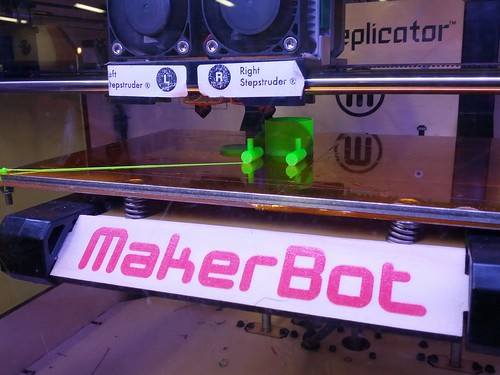
Remember when 3D printers were going to revolutionise the home? Now, not so much. Photo by fumi on Flickr.

You can now sign up to receive each day’s Start Up post by email. You’ll need to click a confirmation link, so no spam.

A selection of 12 links for you. Use them wisely. I’m @charlesarthur on Twitter. Observations and links welcome.

It’s the most wonderful time of the year – for Surface! • Microsoft Devices Blog

Brian Hall, CVP of Microsoft Devices Marketing:

»

November was our best month ever for consumer Surface sales. The Best Buy-exclusive Surface bundle sold out on the first day. The momentum was seen worldwide. In the UK, we had the best single week for Surface ever and in Germany the Surface Pen became the best seller in PC Accessories on Amazon.com for over 12 hours.

The excitement for Surface Studio is clear – evidenced by the 10+ million people that have viewed our launch video and the hundreds of thousands who watched the excitement of a fun unboxing of a Surface Studio. But what makes me excited is seeing how people are using, and loving their Surface Studios. Digital artists, to architects, to executives are using this beautiful PC to get things done and be their most creative.

More people are switching from Macs to Surface than ever before. Our trade-in program for MacBooks was our best ever, and the combination of excitement for the innovation of Surface coupled with the disappointment of the new MacBook Pro – especially among professionals – is leading more and more people to make the switch to Surface, like this. It seems like a new review recommending Surface over MacBook comes out daily. This makes our team so proud, because it means we’re doing good work.

«

“More people are switching from Macs to Surface than ever before” may well be true, but it’s a Bezos claim – no numbers to support it. Not even a chart without values on the axes. Are there dozens? Hundreds? Thousands? Microsoft carefully avoids being specific. Apple meanwhile claims the MacBook Pro had more preorders than any other; which is fairly easy to do, since others were more easily available.

Without numbers – even an order of magnitude – Microsoft’s claim is in the “nice, but let’s wait for the financials” category.
link to this extract


The tipping point for voice activated services • Medium

Ben Holliday is Head of User Experience at the Department for Work & Pensions, UK Government (though writing in a personal capacity, with his own views):

»

I’m calling it now. The tipping point is here for voice activated services — with Christmas 2016 just around the corner and many devices like the echo filling stockings around the developed world.

It’s not a radical view. The media is acknowledging this.

My (not so bold) predictions:
• We’re going to be increasingly thinking about voice activated services.
• The screen is slowly going to become more of a secondary consideration for digital teams designing public services.
• ‘Telephony’ (that’s business speak for ‘telephone’) channels will be indistinguishable from digital. Like most channels they will become seamless rather than things that businesses treat as separately designed, managed or ‘owned’.
• To make all this happen, content design will have to become more of a recognised and important skill set in digital delivery.

In my mind, the smart home is only a small part of the picture for voice activated services. The potential to open up services through conversation rather than a graphical interface is much greater.

«

One can certainly imagine that voice recognition systems on public service systems would be a great benefit.
link to this extract


Mobile is eating the world • Benedict Evans

»

As we pass 2.5bn smartphones on earth and head towards 5bn, and mobile moves from creation to deployment, the questions change. What’s the state of the smartphone, machine learning and ‘GAFA’, and what can we build as we stand on the shoulders of giants?

«

A new version of Evans’s presentation, in slide form and also as a video (embedded below). Some of the points – about machine learning and retail (“the internet lets you buy, but not yet shop”) are subtle but, once you consider them, far-reaching.


link to this extract


The 3D printing revolution that wasn’t • Backchannel

Andrew Zaleski:

»

How did MakerBot, the darling of the 3D printing industry, fall so hard and seemingly so fast? [Founder and former CEO Bre] Pettis did not return multiple requests for comment, while Smith and Mayer declined to be interviewed for this story.

Backchannel pieced together the account from industry observers, current MakerBot leadership, and a dozen former MakerBot employees. Some gave their names, while others asked to be identified only as former employees.

In the span of a few years, MakerBot had to pull off two very different coups. It had to introduce millions of people to the wonders of 3D printing, and then convince them to shell out more than $1,000 for a machine. It also had to develop the technology fast enough to keep its customers happy. Those two tasks were too much for the fledgling company.

“MakerBot built itself up really big to try and satisfy a market demand that just didn’t show up,” says Ben Rockhold, who spent four years at MakerBot in various engineering roles. In pursuit of the Everyman Tycoon dream, MakerBot tried to release printers that were both affordable and appealing to ordinary consumers, yet it repeatedly failed to hit its mark.

At a TEDx event in New York in 2012, Pettis said, “When you have a MakerBot you have a superpower. You can make anything you need.”

It would be years before anyone was willing to say that just wasn’t true.

«

3D printing was never going to go beyond a niche of people who really need it. Nobody’s going to buy one to make a spare part for their washing machine. One notable element in the story is how rapidly Pettis pivoted away from open source when it imperilled the company’s ability to maintain a price moat.
link to this extract


Google’s self-driving car team is hiring executives as it prepares to spin out from Alphabet’s X – Recode

Johana Bhuiyan:

»

Google’s self-driving project, led by ex-Hyundai CEO and president John Krafcik, is expected to be graduating from Alphabet’s moonshot shop “soon.” That’s according to Krafcik, who spoke at the Nikkei Innovation Forum in Palo Alto in October.

While the timeline of the project’s impending spinout isn’t any clearer two months later, the self-driving project is evidently preparing to separate from the mothership by hiring several of its own executives to positions X, formerly known as Google X, already has.

The first was Kevin Vosen, who was hired to be the self-driving arm’s chief legal officer. Now, Alphabet’s self-driving shop is looking for a head of real estate — or someone to secure new space for the autonomous company when it “graduates” from X.

In other words, the project is moving away from having to depend on X for things like dealing with regulation and expansion.

«

Will it still be in “Other Bets” or might it be a separate company inside Alphabet?
link to this extract


Google vs. the EU explains the digital economy • Harvard Business Review

Bala Iyer and Srinivasa Rangan, of Babson College in Massachusetts:

»

Google’s argument [in its antitrust cases against the EU] relies heavily on the prevailing American perspective of competition policy. In the United States, legal precedents, as well as enforcement efforts, approach competition policy with consumer welfare as its lodestar. This approach argues that promoting efficiency with which firms operate leads to enhanced consumer welfare since improved efficiency leads to lower costs which in turn leads to lower prices. In that context, preserving competition in the marketplace is only a means to an end. As one observer puts it, “efficiencies are the goal; competition is the process.” By this logic, Google’s approach to the mobile stack is efficiency enhancing whereby consumers benefit.

Unfortunately for Google, the EU antitrust enforcers have a slightly different perspective. They, too, start off with consumer welfare as the long-run goal, but they insist that moves by rivals that could be efficiency enhancing in the short run could be detrimental in the long run, especially if those moves could thwart technological innovation and competition. In other words, EU authorities put more stress on what one might call dynamic efficiency in markets.

The differing US and EU antitrust perspectives can lead to different outcomes when confronted with the same set of facts. For example, in the case of the proposed merger between GE and Honeywell, US antitrust authorities gave it a go-ahead based on projected cost efficiencies whereas the EU authorities denied it since it has the potential to lower competition in the long run…

…Based on Microsoft’s experience with European Union in the context of its browser and more recent decisions that the European Union has made with respect to other firms in the context of mergers and acquisitions, it is unlikely that Google will prevail in the EU case if its persists with its present arguments. Google, however, could argue that one of the EU assumptions about competition is flawed.

«

It could try, but it’s unlikely to get far. It would be a bit like saying at your murder trial “but look at all the people I haven’t killed!”
link to this extract


Fancy that! Google was keen on ‘draining the swamp’ in 2013 • The Register

Andrew Orlowski on the hunt for “fake news” advertisers:

»

Around four years ago, independent musicians, songwriters and filmmakers tried to find out how big brand advertisements were funding criminal piracy operations. Here’s how David Lowery described it: “When things get complex, it’s typically to hide some institution from liability. In finance, there’s a saying: ‘Complexity is fraud'”.

The brands didn’t like it when their ads showed up on porn sites. It was bad for the brand. The industry body the IAB took an interest. And Google made a promise, which today reads better than ever.

Google’s Theo Bertram welcomed initiatives to “drain the swamp of dodgy networks, dodgy agencies and dodgy sites” and pointed to its own efforts with “in partnership” with IAB.

That was in 2013. How’s the draining operation doing? The swamp must be bone-dry by now.

“Many Google-placed ads, including those for big brands, continue to appear on the sites, even including ads for Google’s new Pixel smartphones,” the WSJ tells us [in a new story].

Oh.

The WSJ saw a tip of an iceberg: according to the World Federation of Advertisers, many ads are bought, paid for, the cheques cashed, but never seen by a human. The system is “fraudulent by design”, to ensure the parties involved continue to profit, undisturbed.

The ad body described the many flavours of fraud in a report this summer, concluding: “Until the industry can prove that it has the capability to effectively deal with ad fraud, advertisers should use caution in relation to increasing their digital media investment, to limit their exposure to fraud,” it warned.

An exodus by big brands from the ad networks is not impossible to imagine.

«

Third-party ad networks are increasingly malign influences; strangling them would stop a lot of malvertising dead. Plus, of course, killing off fake news sites.
link to this extract


Exclusive: Some Bangladesh Bank officials involved in heist – investigator • Reuters

Ruma Paul:

»

Some Bangladesh central bank officials deliberately exposed its computer systems and enabled hackers to steal $81m from its account at the Federal Reserve Bank of New York in February, a top investigator in Dhaka told Reuters on Monday.

The comments by Mohammad Shah Alam of the Dhaka police are the first sign that investigators have got a firm lead in one of the world’s biggest cyber heists. Arrests are soon likely, he said.

On Thursday, the head of a Bangladesh government panel that investigated the heist said five bank officials were guilty of negligence but that they were only unwitting accomplices.

Alam told Reuters his investigations had discovered that some bank officials had knowingly created vulnerabilities in the bank’s connection to the SWIFT system, used for global transactions.

“Bangladesh Bank’s SWIFT network was made insecure by some bank employees in connivance with some foreign people,” he said. “They knew what they were doing.”

«

The plot, as they say, thickens.
link to this extract


FAA orders Boeing 787 safety fix: reboot power once in a while • The Seattle Times

»

The Federal Aviation Administration (FAA) is issuing a rule requiring urgent attention by operators of Boeing’s 787 Dreamliner to avoid the possibility all three computer modules that manage the jet’s flight-control surfaces could briefly stop working while in flight.

Operators must periodically shut and restart the electrical power on the planes, or the power to the three flight control modules. That will avoid the problem until Boeing has a permanent software fix.

In an airworthiness directive to be published Friday, the FAA said it is reacting to indications that “all three flight control modules on the 787 might simultaneously reset if continuously powered on for 22 days.”

It said such a simultaneous reset in flight “could result in flight control surfaces not moving in response to flight crew inputs for a short time and consequent temporary loss of controllability.”

«

The sharp-eyed will have spotted that 22 days is roughly 2^31 milliseconds, and figured that this means there’s a 32-bit counter in there somewhere measuring time; if it turns over from all 1s to all 0s, bad things happen.

Those with long memories will remember that Windows 95 used to have the same problem after 49.7 days. The saving grace was that, as with the airliners, they rarely stayed up that long. Phil Koopman has more examples (and a short analysis of this one).
link to this extract


Texas, Arkansas take opposite directions insuring their poor • Houston Chronicle

Jenny Deam looked at a location in the US where the line dividing two states also shows a literal divide in healthcare outcomes:

»

[Healthcare] insurance alone does not guarantee good health. But often, as Diane Rowland, executive vice president for the national Kaiser Family Foundation, explained, “it is the key to the door.”

Such a door opened in Arkansas.

Once home to some of the highest rates of stroke, heart disease and lung problems in the country, Arkansas appears to be getting healthier. The poor go to the doctor sooner. They go to the emergency room less. They manage chronic conditions better.

The exact opposite is happening in Texas, a recent Harvard University public health study reveals. For instance, three years ago, about 8% of poor Texans used the emergency room as their doctor. In 2014, it was 10%. Last year, it was 11.3%.

“The ER is the last place in the world you want to send someone who doesn’t have an emergency. It’s expensive; there is no continuity of care, no follow-up,” said Dr. Joe Thompson, director of the nonpartisan Arkansas Center for Health Improvements, a Little Rock-based health policy center.

The Arkansas turnaround grew out of the 2012 U.S. Supreme Court ruling on the ACA that said each state could decide whether to expand Medicaid. Texas said no; Arkansas said maybe.

«

No other developed nation uses the same system as the US for healthcare, with good reason: it generates the worst outcomes for the highest cost. Yet everyone seems powerless to change it. And the incoming Republicans are determined to make the US look more like Texas than Arkansas. Of course the election slogan wasn’t Make America Healthy Again. (Was it ever?) But why is it Make America Ill Again?
link to this extract


Over 2 million VR headsets to ship in 2016 • Canalys

»

VR headsets got off to a strong start in their first year of consumer shipments. Canalys predicts shipments will exceed 2 million units worldwide in 2016. This number is forecast to grow to 20 million by 2020. The lion’s share of 2016 shipments are basic VR headsets that rely on other devices, generally being tethered by cable to a desktop PC. Shipments of smart VR headsets, which can function independently, will reach over 100,000 units. These estimates only include VR headsets with integrated displays, so exclude simple viewers, such as Samsung’s Gear VR and Google’s Daydream View, which are also shipping in the millions.

As expected, Sony has quickly become the VR market leader, with its affordable PlayStation VR catering to the vast PlayStation 4 installed base. Canalys expects over 800,000 shipments in less than three months on the market. Shipments would have been greater if it were not for one key problem: PlayStation VR was delayed until October and is still seriously supply constrained due to problems making its OLED displays.

«

Canalys puts HTC Vive numbers at 500,000 and Oculus Rift at 400,000.
link to this extract


Scientific breakthrough reveals unprecedented alternative to battery power storage • University of Surrey

»

Ground-breaking research from the University of Surrey and Augmented Optics Ltd., in collaboration with the University of Bristol, has developed potentially transformational technology which could revolutionise the capabilities of appliances that have previously relied on battery power to work.

This development by Augmented Optics Ltd., could translate into very high energy density super-capacitors making it possible to recharge your mobile phone, laptop or other mobile devices in just a few seconds.

The technology could have a seismic impact across a number of industries, including transport, aerospace, energy generation, and household applications such as mobile phones, flat screen electronic devices, and biosensors. It could also revolutionise electric cars, allowing the possibility for them to recharge as quickly as it takes for a regular non-electric car to refuel with petrol – a process that currently takes approximately 6-8 hours to recharge. Imagine, instead of an electric car being limited to a drive from London to Brighton, the new technology could allow the electric car to travel from London to Edinburgh without the need to recharge, but when it did recharge for this operation to take just a few minutes to perform.

Supercapacitor buses are already being used in China, but they have a very limited range whereas this technology could allow them to travel a lot further between recharges. Instead of recharging every 2-3 stops this technology could mean they only need to recharge every 20-30 stops and that will only take a few seconds.

«

This is the sort of dense and uninformative stuff that lands in journalists’ inboxes all the time. The idea of “transformational effect” is repeated multiple times; only once is the explanation given that they’re polymers, and “based on large organic molecules composed of many repeated sub-units and bonded together to form a 3-dimensional network.”

Basically, we’re no wiser on why this material is a supercapacitor. But there might be some hope.
link to this extract


Errata, corrigenda and ai no corrida: none notified

Start Up: Google’s platform problem, what’s the Airpod delay?, Westworld deconstructed, and more


Republican email accounts were hacked – by more sophisticated attempts than this. Photo by vernieman on Flickr.

You can now sign up to receive each day’s Start Up post by email. You’ll need to click a confirmation link, so no spam.
A selection of 12 links for you. Use them wisely. I’m @charlesarthur on Twitter. Observations and links welcome.

Google is not ‘just’ a platform. It frames, shapes and distorts how we see the world • The Guardian

Carole Cadwalldr, who last week pointed to research showing how Google’s search results are being poisoned by right-wing sites:

»

One week on, Google is still quietly pretending there’s nothing wrong, while surreptitiously going in and fixing the most egregious examples we published last week. It refused to comment on the search results I found – such as the autocomplete suggestion that “jews are evil”, with eight of its 10 top results confirming they are – and, instead, hand-tweaked a handful of the results. Or as, we call it in the media, it “edited” them. It did this without acknowledging there was any problem or explaining the basis on which it is altering its results, or why, or what its future editorial policy will be. Its search box is no longer suggesting that Jews are still evil but it’s still suggesting “Islam should be destroyed”. And, it is spreading and broadcasting the information as fact.

This is hate speech. It’s lies. It’s racist propaganda. And Google is disseminating it. It is what the data scientist Cathy O’Neil calls a “co-conspirator”. And so are we. Because what happens next is entirely down to us. This is our internet. And we need to make a decision: do we believe it’s acceptable to spread hate speech, to promulgate lies as the world becomes a darker, murkier place?

Because Google is only beyond the reach of the law if it we allow it to be.

«

What happens if Jewish groups begin protesting to Google? If minority groups begin protesting, if enough people – and newspapers – make noise about it? Google can’t keep pretending there’s nothing going on if it keeps changing results that people have specifically complained about. But it needs its feet held to the fire – and the full article points out how

»

This is how power works too: the last time I wrote a story that Google didn’t like, I got a call from Peter Barron, Google’s UK head of press, who was at pains to point out the positive and beneficial relationship that Google has with the Guardian Media Group, our owners.

«

Uh-huh.
link to this extract


AirPods delay attributed to Apple ensuring both earpieces receive audio at same time [Updated] • Mac Rumors

Joe Rossignol:

»

With just two weeks remaining in the holiday shopping season, some believe Apple should now wait until the new year to launch AirPods, in line with an early rumor about a January 2017 launch. The wireless earphones remain listed as both “coming soon” and “currently unavailable” on different sections of Apple’s website.

Update: Apple blogger John Gruber says he’s heard that manufacturing issues have delayed the AirPods, rather than a technical problem.

»

It makes more sense to me that Apple has run into a manufacturing problem, not that they discovered a design defect after they were announced.

“More difficult to manufacture at scale than expected” is also what I’ve heard through the grapevine, from a little birdie who knows someone on the AirPods engineering team. Things like what happens when you lose one or the battery dies – Apple solved those problems during development.

«

«

I’m totally with Gruber on this: it makes no sense that you’d demo something (I’ve tried them, very briefly) and give out some prototypes (Gruber has been trying them for some time) and yet not have figured out a software issue. The only question is what the manufacturing problem is.

As to when to sell them – of course you’d put them on sale before Christmas. I’d buy them like a shot.
link to this extract


Tracking the hackers who hit DNC, Clinton • The Smoking Gun

William Bastone points out that the Republicans were also targeted successfully by phishing campaigns around the election:

»

While the emails and documents stolen from Soros and Breedlove have gotten some press coverage for DC Leaks, the site houses a hodgepodge of stolen emails offering fresh evidence of the scope and targets of the recent political hacking campaign.

A “portfolio” titled “The United States Republican Party” contains about 300 emails that were sent during a five-month period ending in late-October 2015.

A review of that correspondence shows that a wide variety of GOP e-mail accounts have been breached. The victims range from staffers for Senator John McCain’s campaign committee to a candidate running for State Senate in Virginia. Officials with four state Republican party organizations – Wyoming, Connecticut, Rhode Island, Illinois – had correspondence stolen. Emails to the campaign committees of Senator Lindsey Graham, Rep. Robert Hurt, and former Rep. Michele Bachmann were also swiped. Emails from Campaign Solutions, a leading Republican consulting firm, and the Stop Hillary PAC were pilfered.

None of the victims contacted by TSG – including the McCain campaign and the Connecticut GOP, were aware of the email hacking.

«

Funny how none of those came out during the election, right?

link to this extract


One delightfully clever & slightly Shakespearean way to fight trolls • Flare

Alanna Evans:

»

Since she started speaking out more vocally against Trump, [Summer] Brennan has received intense attacks by trolls and troll botnets (a hijacked network of malware-infected, remote-controlled computers that send spam messages).

“There has been a significant increase in my Twitter traffic in general, but with that came what was for me an unprecedented troll onslaught,” Brennan told FLARE. “Much of it was just juvenile taunting, like calling me a ‘special snowflake’ or a ‘libtard,’ but there were also violent drawings of women being beaten or killed, and threats to my life, safety and privacy.” She was also told that she “belonged in an oven” and “should be euthanized,” and she was sent photos of Hitler alongside words like that.

Brennan began to notice a common thread to the insults she received: her online abuse was incredibly gendered. To see if she could avoid the attacks, Brennan decided to try a Twitter experiment: if the trolls could assume anonymous avatars, why couldn’t she play with her online persona? 

“I wondered if changing my picture to that of a man would lessen the flow of abuse,” says Brennan. “So I decided to change my photo to that of my brother, and picked a photo in which he was wearing a tie—a white collar white guy. I didn’t use a random photo because I figured, well, this is what I’d probably look like if I were born a man, so, I’ll use that.”

On December 1, Brennan uploaded her brother’s photo to her Twitter account (a bit of Twelfth Night, or What You Will) and reduced her first name to “S.C.”—but kept the same handle.

For 48 hours, the effect on her mentions was astounding.

“The stream of abuse stopped almost immediately,” says Brennan. “There was probably a 99-percent reduction in trolling.”

Brennan was open with her followers about what she doing, and didn’t change her Twitter banner (which proudly displays her latest book and identifies her as a female author). Apparently assuming a new profile photo was enough to silence the trolls. 

«

link to this extract


How the Circle Line rogue train was caught with data • Singapore Government data blog

Daniel Sim:

»

Singapore’s MRT Circle Line was hit by a spate of mysterious disruptions in recent months, causing much confusion and distress to thousands of commuters.

Like most of my colleagues, I take a train on the Circle Line to my office at one-north every morning. So on November 5, when my team was given the chance to investigate the cause, I volunteered without hesitation.

From prior investigations by train operator SMRT and the Land Transport Authority (LTA), we already knew that the incidents were caused by some form of signal interference, which led to loss of signals in some trains. The signal loss would trigger the emergency brake safety feature in those trains and cause them to stop randomly along the tracks.

But the incidents — which first happened in August — seemed to occur at random, making it difficult for the investigation team to pinpoint the exact cause.

«

This is a great story; it reminds me of A Subway Called Moebius (read it in PDF form. Possibly a hooky copy.)
link to this extract


“Vinyl revival” stories are the worst fake news stories of all • Martin Belam

Let us give you the ammunition for your next dinner party/coffee shop discussion:

»

There’s another round this week of stories about “the vinyl revivial”, because apparently vinyl sales have out-stripped digital downloads in value for the first time.

Let’s be clear. Anybody writing about this topic needs to look at the official charts before they put a word to paper.

There is no vinyl sales revival for new music.

All that is happening here is that nobody buys new music on physical formats, and a load of old dads are picking up £45 reissue packages that they literally never play. The singles chart this week features Jimi Hendrix, Rolling Stones, Jethro Tull. The album chart features the Beatles, ELO, Nirvana and Guns’N’Roses.

«

Bloody dads.
link to this extract


Tim Cook, Larry Page, Sheryl Sandberg — and maybe even Jeff Bezos — are going to Trump’s tech summit next week • Recode

Kara Swisher:

»

But – as Recode can now report, because we still do that quaint journalism thing — is a very heady group of less than a dozen, comprising most of the key players in the sector.

Those who will be attending (although most of the companies declined to comment to Recode) along with Page, Cook and Sandberg, include: Microsoft CEO Satya Nadella; Cisco CEO Chuck Robbins; IBM CEO Ginni Rometty; Intel CEO Brian Krzanich; and Oracle CEO Safra Catz.

“I plan to tell the President-elect that we are with him and will help in any way we can,” said Catz in a statement. “If he can reform the tax code, reduce regulation and negotiate better trade deals, the U.S. technology industry will be stronger and more competitive than ever.”

It’s not clear who the other attendees are, because many more invites went out late this week. Whether tech’s most high-profile exec, SpaceX and Tesla CEO Elon Musk, is going is unknown, although he is an obvious invite.

But Amazon CEO and founder Jeff Bezos was invited, said sources, and he is likely to attend.

«

“We are with him and will help in any way we can” is an interesting choice of words. What if Trump asks Oracle to build a database of Muslims in the US? Will Catz be happy to help in any way he can then?

(One little point: Swisher’s boast about the quaint journalism thing is deserved, but they don’t seem to do the quaint sub-editing thing where someone checks your words make sense. The first sentence in the extract is as provided, and is missing “it” before “is a very heady group.)
link to this extract


The reality behind Magic Leap • The Information

Reed Albergotti:

»

Magic Leap, former employees say, pushed the boundaries of marketing, releasing videos that purported to be Magic Leap technology that were actually created by special effects companies. For instance, in March of last year, it released a video online titled “Just Another Day in the Office at Magic Leap.” Shot from the perspective of one of its employees working at his desk, all appears normal until robots start falling from the ceiling and converging on the worker, who picks up a toy gun and starts blasting his enemies into tangled lumps of virtual metal.

The video, viewed 3.4 million times on YouTube, was meant to demonstrate a game people were playing with Magic Leap’s headset. It had been used for more than a year to recruit employees to South Florida. “This is a game we’re playing around the office right now,” Magic Leap wrote in the description of the video.

But no such game existed at the time, according to two former employees with direct knowledge. The video was not actually filmed using any Magic Leap technology. It was made by New Zealand-based special effects company Weta Workshop, which has worked on movies like “Mad Max: Fury Road” and “The Hobbit,” the employees said. One of them called it an “aspirational conceptual” video. The employees said some at the company felt the video misled the public. Magic Leap has since begun working on an actual game similar to the one in the video.

More recently, Magic Leap has released videos shot through its prototype devices.

In the interview, [founder and CEO] Rony Abovitz said he had planned to keep the company secret, but that public interest was so great that he had no choice but to begin marketing its product publicly.

«

Magic Leap comes out of this sounding like it has tried to bite off far more than it can chew. Abovitz has suddenly taken up tweeting, a bit defensively; Albergotti did an AMA on Reddit. Magic Leap needs to ship something.
link to this extract


How “Westworld” failed the western • The New Yorker

Aaron Bady:

»

“Westworld” is filmed in Castle Valley, Utah, where Ford filmed his last four Westerns, and it is built upon the foundation of tropes, clichés, and cinematic shorthand that Ford’s work popularized. When Teddy and Ed Harris’s Man in Black character are hunting for Dolores, their quest resembles the plot of “The Searchers” (along with mirroring the movie’s iconic doorway shots); the character of Clementine recalls Ford’s 1946 “My Darling Clementine”; the Winchester rifle of Maeve’s strapping robot henchman, Hector, has the same “loop” handle as the rifle John Wayne was holding in his star-making entrance to “Stagecoach.” Most important, the Western’s core memory—the genocide and forced removal of the continent’s indigenous people—is projected onto the native people themselves: a tribe called “Ghost Nation” intermittently appears, killing and rampaging, exactly as the Comanche in “The Searchers” are shown to do. Even the park’s creator seems to be a personal fan of the Western director. Dr. Ford’s name is no coincidence: when explaining to Bernard why he has hidden the truth of the park’s original co-creator, Arnold, he explains that stories take precedence over reality by quoting the most famous line of what might be Ford’s last great Western, “The Man Who Killed Liberty Valance”: “When fact becomes legend, you print the legend.”

«

This is a fascinating take on Westworld. Contains gigantic spoilers if you haven’t seen the last episode; if you have, then it offers a fascinating – and unusual – insight into what you watched.
link to this extract


Google makes so much money, it never had to worry about financial discipline • Bloomberg

Max Chafkin and Mark Bergen:

»

The side projects, known then as “autonomous business units,” often competed directly with Google’s advertising partners, and it seems hard to imagine that a conventionally organized company would have been able to, for instance, start services such as Google Fiber (home broadband) and Project Fi (a cell phone carrier) while also trying to persuade big telecom companies to embed Google software in their devices.

But the fragmentation created a lot of overlap. At one point in 2016 the company had two music subscription services, YouTube Red and Google Play Music; two venture capital groups, GV and CapitalG; two mobile operating systems, Chrome OS and Android; and two advanced research labs, X and ATAP, which Page created in 2014 when he hired the former Defense Advanced Research Projects Agency director, Regina Dugan. (Dugan left Google earlier this year for Facebook.)

All that duplication created tension in part because, former Google employees say, Page tends to ignore employees he’s unhappy with. “Larry’s version of canning someone is to make it as unpleasant as he can,” says a former executive. Eric Schmidt, Google’s former CEO, and Bill Campbell, a board member and mentor to Page, helped smooth out these conflicts. But Schmidt, now executive chairman, started spending more time lobbying for Google in Washington, and Campbell fell gravely ill. (He died of cancer this year.)

«

The piece gets only a little from the former Google execs, but it’s really missing a sense of whether Alphabet’s top management has any idea of whether these ideas will pay off – and what their timescale is for that to happen.
link to this extract


PewDiePie is teaching his fans to mistrust the media, and we should listen • Venturebeat

Jeff Grubb:

»

[Matters] came to a head on Tuesday when sites like The Independent and The Lad Bible suggested that PewDiePie is a white supremacist because of a bit where he joked that YouTube was conspiring against him because he is white. GamesBeat even mentioned that it was “most likely a poor joke” in our coverage of the star’s complaints about Google.

The Independent’s headline reads “PewDiePie: YouTube could be ‘killin’ my channel because I’m white, so I’ll delete it.” This is not “fake news” in the way that some stories online are knowingly false and designed to generate clicks, but misleading headlines like these might be helping to create an environment where fake news can flourish.

It was quite obvious that PewDiePie was joking about YouTube punishing him for his ethnicity if you watched the video, but for a lot of people, the headline was all the evidence they need. It was almost enough for me.

I was more prepared to believe the headlines that Kjellberg said something stupid and hurtful than I was prepared to sit through one of his videos to see for myself. After all, no one would publish that headline unless they were sure, right?

But some nagging doubt convinced me to check the video, and I’m glad I did. Those stories are unfair. They likely do not meet the requirements for a libel suit in the United States, but that doesn’t mean they haven’t done damage. But they are doing damage to the media. They continue to weaken the public’s trust in journalism, and that is a criticism that PewDiePie touched on himself in a followup about the false stories about his racism.

“If anything, I’ve realized that whatever I’ve learned about other people through media is clearly being skewed while I was growing up,” said PewDiePie. “Because I can see how they represent me in the media.”

«

There is a continuing problem in which subtle but very public points are made by people whose fans understand them, but where the reporting journalists don’t. The internet allows that to be magnified, to great – and destructive – effect.
link to this extract


Belleville woman helped cook up Pizzagate • Toronto Star

“Washington Post and Star staff”:

»

In the final days before the election, other shopkeepers on the block began to receive threatening phone calls and disturbing emails. Strangers from faraway places demanded to know about symbols on their shop windows or photos on their walls.

Across from Comet, at the French bistro Terasol, co-owner Sabrina Ousmaal noticed a disturbing Google review of her restaurant that alleged that Terasol, too, was involved in a plot to abuse children.

Then, more online comments appeared, focusing on a photo on Terasol’s website that showed Ousmaal and her daughter posing with Clinton, who had eaten there several years earlier. The Internet sleuths also fixated on a heart logo that appeared on the restaurant’s site as part of a fundraiser for St. Jude Children’s Research Hospital, which Ousmaal, a cancer survivor, has supported for years.

“These maniacs thought that was a symbol of child pornography,” said her husband and business partner, Alan Moin. “It’s crazy.”

The family removed the symbol from their site, but the online comments adapted to the new reality: Terasol must be hiding something. The anonymous calls increased.

Alefantis and other merchants were mystified: Where was this all coming from? Can’t anyone make it stop?

The merchants approached Facebook and Twitter and asked that disparaging, fictitious comments about them be removed. The shopkeepers said the replies they got advised them to block individual users who were harassing them.

The owner of 4chan, Hiroyuki Nishimura, said in an email to The Post that “Pizzagate reminds me that a country indicated (there were) stockpiles of weapons of mass destruction in Iraq and many people and countries were deceived. It is same old story.”

«

It really isn’t the same story. In the WMD story, a government lied to its people. In the Pizzagate nonsense, people are lying to other people. The WMD case is egregious; the problem with the latter one is that it shows how poor we now are at distinguishing truth.
link to this extract


Errata, corrigenda and ai no corrida: none notified

Start Up: TalkTalk’s router duds, Samsung’s S8 plans, Trump’s tech table, Pebble’s vultures, and more


Donald Trump could be good for them, or their offspring. Joi Ito can explain. Photo by StreetFly JZ on Flickr.

You can now sign up to receive each day’s Start Up post by email. You’ll need to click a confirmation link, so no spam. Offer it to a friend as a present – it’s free!
A selection of 11 links for you. Boom. I’m @charlesarthur on Twitter. Observations and links welcome.

TalkTalk’s wi-fi hack advice is ‘astonishing’ • BBC News

Leo Kelion:

»

TalkTalk’s handling of a wi-fi password breach is being criticised by several cyber-security experts.

The BBC has presented the company with evidence that many of its customers’ router credentials have been hacked, putting them at risk of data theft.

The UK broadband provider confirmed that the sample of stolen router IDs it had been shown was real.

But it is still advising users that there is “no need” to change their routers’ settings.

A cyber-security advisor to Europol said he was astounded by the decision. “If TalkTalk has evidence that significant numbers of passwords are out in the wild, then at the very least they should be advising their customers to change their passwords,” said the University of Surrey’s Prof Alan Woodward. “To say they see no need to do so is, frankly, astonishing.”

A spokeswoman for TalkTalk said that customers could change their settings “if they wish” but added that she believed there was “no risk to their personal information”.

She referred the BBC to another security expert. But when questioned, he also said the company should change its advice.

«

Read on for the amazing denial about the trouble it’s in: there’s a huge list of routers and passwords out there. TalkTalk’s response: “We see no huge list.”

TalkTalk really doesn’t have a grip on security topics.
link to this extract


Samsung S8: new Galaxy phone to lose headphone jack and home button and be one big screen, just like iPhone 8 • The Independent

Andrew Griffin:

»

Samsung is about to launch a new phone that will include all of the iPhone 8’s biggest features.

The upcoming Galaxy S7 will drop the physical home button so that the entirety of the front of the phone can be one big screen, according to reports. That will allow it to have much the same design as the one rumoured for the upcoming iPhone 8 – which is also expected to be made entirely of glass and not have any bezel.

The new phone will also lose the headphone jack, according to reports. Apple dropped the headphone jack in its last iPhone, telling people to use wireless headphones instead, a decision that caused huge controversy.

«

Urr, but the iPhone 7 doesn’t have a physical home button. That is, not a moving one. It’s a Force Touch, or 3D Touch, or whatever we call it, “button”. So the big wraparound screen might be new, but the other two things aren’t.

Not sure Samsung will do well with the S8 without a headphone jack, though. Feel like that could see a lot of returns unless it includes a USB-C-to-3.5mm jack. Not even sure those exist.
link to this extract


Trump invites tech leaders to roundtable next week • USA Today

Jessica Guynn and Jon Swartz:

»

President-elect Donald Trump has invited technology industry leaders to a roundtable next week in New York.

The invitation for the Dec. 14 summit was sent by Trump’s chief of staff Reince Priebus, Jared Kushner, Trump’s son-in-law, and transition team adviser Peter Thiel. Among the CEOs who plan to attend the meeting are Cisco CEO Chuck Robbins and Oracle Co-CEO Safra Catz.

The tech industry, which bet heavily on Hillary Clinton in the months leading up to the presidential election, is looking to build bridges to the incoming administration…

…Facebook declined to comment whether it would attend next week’s tech roundtable. [Peter] Thiel [who is advising the Trump transition team] sits on the board of the giant social network.

Leading Silicon Valley companies such as Alphabet’s Google declined to comment.

Meg Whitman, the CEO of Hewlett Packard Enterprise and self-described “proud Republican” who had supported Trump rival Hillary Clinton in the campaign, won’t attend, the company said.

«

Do we think Twitter will attend, and will upbraid Minority Donald for offensive tweeting aimed at individuals?

link to this extract


Windows 10 on ARM: Microsoft’s key to the Chromebook market • Windows Central

Zac Bowden:

»

Microsoft has announced that the full version of Windows 10 is coming to ARM, with x86 support meaning your Win32 desktop applications won’t be missing like they were on Windows RT. This opens up a whole world of new opportunities for OEMs, and indeed Microsoft, to build low-cost and low-powered Windows 10 devices that can directly take on Chromebooks.

If you were to tell me a few years ago that Chromebooks would actually be a big deal and a possible threat to Windows, I’d have probably laughed in your face. I remember thinking “A laptop that’s just a browser? There’s no way that’ll catch on”. I know many don’t consider the rise of Chromebooks to be a threat to Microsoft or Windows 10, but they very much are. More and more schools and businesses are opting for Chromebooks over Windows 10 laptops, mainly because of price, but also because Chromebooks do what they need them to do, durably, and at a low cost.

«

There’s a lot of hope in the Windows enthusiast market that this latest version of Windows on ARM (WoA) will, unlike 2011’s version, be a really amazing implementation, rather than a milquetoast version which can’t run x86 apps.

The good news: they will be able to run x86 apps, through virtualisation. The bad news: they’ll be doing it on really underpowered CPUs. True, you don’t need a lot of power to compete with Chromebooks; but Chromebooks are already getting their market. It feels like another proof-of-concept.

For more, read Wes Miller’s 2012 thoughts on “architectural escape velocity“, which deals with the first attempt at WoA; then read his latest thoughts on this new announcement.
link to this extract


Bluetooth 5: What you need to know about the new wireless technology • Daily Telegraph

Cara McGoogan:

»

Bluetooth 5 is twice as fast as its predecessor and can connect devices at quadruple the range, making it more reliable for use outside and around the whole of a house. 

The bandwidth on Bluetooth 5 is 2 Mbps up from 1 Mbps, which means devices with the new standard will be able to transfer twice as much data, as well as making it quicker to send and receive information.

This means devices will be able to download updates in less time, and export collected information, for example from a sensor, at fast speeds. 

A longer range, of up to four times that of Bluetooth 4.2LE (low energy), means smart home devices such as security cameras will be able to cover the entirety of a house. Improved ability to detect and prevent interference from other devices helps improve signal too.

«

Basically it’s approaching the point where it will be Wi-Fi.
link to this extract


Who killed Pebble? Easy: The vulture capitalists • The Register

Andrew Orlowski wraps up Pebble’s history, with this coda:

»

In 2013 Charles River Ventures had handed Pebble $15m in funding. A venture capitalist at CRV, George Zachary, who owed his reputation to funding Twitter early, took a seat on the Pebble board.

Few smartstraps ever appeared. The colour Pebbles didn’t have such a great display after all, as we found. The non-Gorilla Glass model scratched easily. The software took the user experience backwards in a few ways: slower, and more cumbersome. After that, successive firmware updates were slow and often buggy. A “Round” model announced later that year was an attempt to make a more stylish and better looking timepiece, but the cost was a big fall in battery life, to about a day.

“Pebble has strayed further away from its hobbyist DIY roots,” we noted.

Pebble had benefited from the smartwatch hype but it was catching a cold from the backlash. Pressure from investors caused it to move further from its DIY roots and go for “health”. Why? Well, now we know. That’s where the VC community had decided a buyer would come from, allowing the funds to cash in their chips.

Pebble was being touted for a sale. Fitbit had made a successful flotation on the stock exchange, so had cash to spare, and won.

«

link to this extract


Joi Ito explains why Donald Trump is like the Sex Pistols • Medium

Steven Levy interviewed Joi Ito, who is has written a book about his ideas as head of the MIT Media Lab:

»

Ito: We write about what’s going on in the world today in a upbeat way because we want people to lean into it, but it’s not like only the good guys can use it. It just is. It’s the way everything is changing. Unless you figure it out, you’re not going to be able to keep up. Having said that, I don’t think that a lot of the people who voted for Trump are necessarily going to be up to speed on synthetic biology and AI.

Steven Levy: You don’t think?

Ito: No. But I think AI can be just as destructive for investment bankers and lawyers as it is for doctors. It could be that it will be empowering pharmacists who go to one year of community college and become a doctor — screw the whole medical school. Disruption doesn’t necessarily advantage those with power.

Levy: One theme of your book is disobedience over compliance. That seems to define the transition so far.

Ito: Absolutely. People want a culture change, and this moment reminds me of the beginning of punk rock, or the beginning of the hippie movement. But I’d hate for Trump to be our millennial Sex Pistols or Timothy Leary or the Beatles. We need something like the Beatles that captures the hearts and minds of people. We’re ripe for a new cultural movement. Culture movements and art and punk rock thrive under bad presidents. The music was better under Reagan and Nixon than it was under Obama. I think that the doomsday scenarios tend to promote the arts. A lot of my energy now is in trying to provide tools to the young people to try to organize.

«

link to this extract


Holy crap did I get the most annoying trojan attempt ever! • SuperGlobalMegaCorp

“Neozeed”:

»

Sit down kids, it’s time for an old man rant.

So yeah, I have one of those clients who wants to use ‘one of those’ file sharing sites. UGH.  I swear I’m to the point of just paying for an Office 365 subscription for them so I don’t have to deal with this kind of shit.  So I hit the site on my phone, then it jumps to this genchatu.top site.  Fantastic.

Then I’m alerted that my phone is 28.1% DAMAGED, and somehow my phone’s SIM card will be damaged!  Yes, it’s one of these scam sites!

Oh no, my phone apparently may be already physically damaged?  I guess this is once someone is tricked by this official Google looking image you’ll want to throw your phone against the wall.  As any user of Android will tell you updates from Google are non existent, and anything that could infect your phone, well is pretty much your problem.  You can beg the vendor, but lol, good luck.

I like to live dangerously, so yeah let’s look at the app.

So with this scary and official looking thing it’s trying to railroad you into “Ace Cleaner”. I don’t know how on earth they haven’t either been reported, or knocked out of the app store. I guess Google is busy teaming up with Facebook trying to figure out how to censor the news appropriately instead of trying to squash actual scam artists.

«

But as the reviews imply, these scams work. People download this stuff and it sits on their machines, and they probably don’t realise it’s watching everything they do.

link to this extract


We can fix it: saving the truth from the internet • Medium

Sunil Paul:

»

Terrorism and radicalism thrive because of our current media system. It is no coincidence that terrorism has grown and ISIS taken root at the same time that internet media has grown. It is easy to create a cultish cocoon of lies with today’s media system and terrorists exploit it to the hilt. As we are learning from the Comet Ping Pong situation, that cocoon extends to home grown conspiracy theories.

Powerful states have found tools of oppression in the internet we designed. The Russian government spread false information in the Ukraine and United States during elections. When there is no accountability for the truth, information is manipulated by the powerful for their own ends. The risk will grow as authoritarians exploit the weaknesses we built into the system.

The state of media today is similar to the spam crisis of the late 1990s. The integrity of email was at risk because of a flood of spam, most of which was fraudulent, malicious, or questionable. We solved the spam problem with a combination of technology, changes in social incentives, and laws. Today spam is only an annoyance because we have anti-spam technology like Brightmail**, informal rules that email senders like MailChimp use to limit abuse, and laws that allow legal action against the worst offenders. Like with spam, fixing the internet media problem will take a similar full assault of new technology, social incentives, and laws.

«

It is an important point how easily we accepted that religious radicalisation could happen online, yet have been surprised by it happening politically through the same medium.
link to this extract


Help Wanted at Google • WSJ

The WSJ noticed that the search giant has advertised for a manager of “Conservative Outreach and Public Policy Partnerships.” The employee “will act as Google’s liaison to conservative, libertarian and free market groups” and will be “part organizer, part advocate and part policy wonk”:

»

Google no doubt planned to continue wielding influence in a Hillary Clinton Administration. Eric Schmidt, executive chairman of Google’s parent company, advised John Podesta and Mrs. Clinton’s campaign on digital strategy and targeting voters, though perhaps not in the Upper Midwest. A report from the Campaign for Accountability turned up 57 people affiliated with both Mrs. Clinton (whether her campaign, foundation or State Department) and Google entities.

Now Google will have to scramble to preserve its enormous influence on everything from copyrights to privacy regulation. Whether Mr. Trump will indulge rent-seeking from Google and friends is anyone’s guess. But maybe Google’s Republican unicorn can host a staff seminar on the free-market philosophy that made the tech giant possible.

«

Nothing pleases a right-wing paper more than a right-wing administration bending liberal companies to its will.
link to this extract


Millions exposed to malvertising that hid attack code in banner pixels • Ars Technica UK

Dan Goodin:

»

Researchers from antivirus provider Eset said “Stegano,” as they’ve dubbed the campaign, dates back to 2014. Beginning in early October, its unusually stealthy operators scored a major coup by getting the ads displayed on a variety of unnamed reputable news sites, each with millions of daily visitors. Borrowing from the word steganography—the practice of concealing secret messages inside a larger document that dates back to at least 440 BC—Stegano hides parts of its malicious code in parameters controlling the transparency of pixels used to display banner ads. While the attack code alters the tone or color of the images, the changes are almost invisible to the untrained eye.

The malicious script is concealed in the alpha channel that defines the transparency of pixels, making it extremely difficult for even sharp-eyed ad networks to detect. After verifying that the targeted browser isn’t running in a virtual machine or connected to other types of security software often used to detect attacks, the script redirects the browser to a site that hosts three exploits for now-patched Adobe Flash vulnerabilities.

«

Flash plus ad networks: it’s a recipe for disaster. (Thanks @papanic for the link.)
link to this extract


Errata, corrigenda and ai no corrida: none notified

How many Apple Music users are on Android?


Apple Music: also on Android. Photo by tualamac on Flickr.

Apple announced on Wednesday that it now has 20 million subscribers to Apple Music after just 18 months – which feels like pretty good progress. Apple Music is also the only meaningful Apple service that’s also available on Android, as Apple tries to spread itself cross-platform.

Why is Music on Android as well as iOS? Because it’s not a distinguishing feature. Unlike Apple’s iMessage or its App Store, both of which are exclusive to Apple, and whose features are unique to it, you can already get lots of music services on both iOS and Android – Spotify, Tidal, Deezer, Google Play Music, Amazon Music and so on. (Not many, if any, of them are making money, but leave that aside.)

For Apple, every additional subscriber to Music is a bonus; it’s all money. The ones on Android are potential converts to iOS, where there’s more money to be made selling them iPhones, iPads and Macs, but time spent on Music is time not spent on Spotify, its principal rival, so that’s a benefit to Apple. App development costs aside, which are comparatively small, Android is a benefit. Additionally, if someone with an iPhone gets a Family Plan (allowing five people to use the same account; a Family Plan only counts as one subscription in Apple’s total), those five could include Android users.

So how many of those 20m are on Android? I’ve been tracking the stats on Google’s Play store for Apple Music downloads since its launch, including the download range and the number of 1-, 2-, 3-, 4- and 5-star reviews.

There are two things we need to work out: how many downloads there have been, and how many of those have resulted in subscriptions.

Download power

To estimate the number of downloads, I track the definite waypoints – when it passed 5,000, 50,000, 500,000, 1m, 5m – and the number of reviews against them.

Apple Music: how many downloads per comment?

The process is very standard across all apps: to begin with comments come quickly, so that almost every download prompts someone to review (about every 27 downloads, someone left a comment up to the 500,000 mark) which then tails off (only one in every 100 downloads prompted a comment by the 10m download mark). You can thus model how the number will change; and so even when you’re in the vague space between waypoints, you can estimate the number of downloads. (I’ve used this technique to calculate Android Wear downloads; it was accurate about when it would hit the 5m mark by a few weeks in a two-year timeframe.) The R-squared value is the correlation, which runs between 0 and 1: closer to 1 is nearer exact correlation.

Based on that, I calculate that this week Apple Music on Android hit 12.75m downloads. (It passed 10m around September 6.) It’s adding about 230,000 downloads per week, at a rate that seems to be holding pretty steady.

But downloads aren’t subscriptions. Apple Music offers a three-month trial period, after which you have to pony up. Clearly, some people will drop out. But what proportion of those who download it stay on and subscribe?

One subtlety here: the three-month trial means that strictly, we should ignore the downloads made in the past three months, since none of them will have qualified to become subscribers yet. (Downloads made to join a Family Plan don’t count as subscriptions.)

So the figure we’re looking at is from 6 September – which just happens to be when Apple Music hit the 10m download mark.

Star quality

Here’s an obvious way to estimate that: look at the high-quality reviews. It seems logical (Captain) that five-star reviews indicate people who are really happy with the service. Four-star reviews are people who are pretty happy, but find some hassles with it.

Apple Music reviews on Android

By the time you’re down to three-star and below, I think you’re talking about people who aren’t impressed and won’t be staying.

Although people don’t become subscribers until three months have elapsed, I think you can include recent ratings, since those could come from people who have become subscribers. (We don’t know what prompts people to review an app.)

So what do the ratings show? At present, five-star reviews are about 44% of all reviews; four-star ones, 11%. That ratio has been pretty consistent; five-star reviews have been at least 38% of all, and average 42% over the life of the app. Four-star reviews go down to 10%, and average 11%. (I don’t know what the average is across all apps on Google Play.) In fact, the data shows a gradual improvement in how the app is perceived, according to the reviews.

Apple Music on Android reviews

Based on this information, we can get some useful minima and maxima.

10m downloads, five-star users subscribe: 4.4m Apple Music subscribers on Android

10m downloads, four- and five-star users subscribe: 5.5m subscribers

12.75m downloads, five-star users subscribe: 5.61m subscribers

12.75m downloads, four- and five-star users subscribe: 7m subscribers.

I’d suggest the useful range is probably the 4.4m-5.5m one.

(One confounding caveat: we don’t know how many of the eager reviews come from people who downloaded it because they’re part of a Family Plan. I can’t think of a simple way to evaluate this unknown.)

Phoning home

If we accept those numbers, it suggests there are 14.5m-15.6m Apple Music subscribers on iOS.

What does that mean in the context of how many phones are out there?

There are about 550m iPhones in use, according to Neil Cybart. And there are around 1.2bn Android phones in use. (Apple Music is available in China, so it can run on phones there.)

This implies quite low penetration for Apple Music: about 2.5% on iPhones, and about 0.3%-0.4% on Android.

Then again, given that Spotify’s last published figure (in September) is 40m subscribers, and it is also available on both platforms, it’s clear that it’s just difficult to get people to sign up to these services. Given how many people Spotify has been available to in multiple countries, it has only been able to convert about 1% of the total available internet population during its life. It seems like getting people to sign up to music streaming really isn’t easy at all. So if you’re an Apple Music or Spotify subscriber, you’re very much in the minority.

Even though Apple’s progress in a short time looks strong compared to Spotify’s over the same period, it’s an open question how big the total addressable market is here. Are we just crossing over from the early adopters to the broader audience who will jump on streaming? Or is it going to struggle to break through? These are still open questions.

Start Up: join The Circle!, Macbook Pro woes, smartglasses for cyclists, tablet time squeeze, and more


Pebble has called time on its smartwatch business as it is sold to Fitbit. Photo by John Biehler on Flickr.

You can now sign up to receive each day’s Start Up post by email. You’ll need to click a confirmation link, so no spam.

A selection of 12 links for you. Luscious. I’m @charlesarthur on Twitter. Observations and links welcome.

The gadget apocalypse is upon us • The New York Times

Farhad Manjoo:

»

Just before I went on a trip to Hawaii last year, I thought it would be fun to get a GoPro camera to record some pool stunts. But when I searched Amazon.com, I noticed a ton of generic “action cameras” that carried many of the same specs as the GoPros, at a steep discount on price. I ended up buying an SJCAM for $75, about half the price of the cheapest GoPro I could find. And you know what? It worked pretty well.

This is the mixed blessing of cheaper manufacturing. “In some ways it’s much easier to be a hardware start-up than it ever was before, because the Shenzhen ecosystem gives you all the components you need,” said Jan Dawson, an analyst at Jackdaw Research, referring to the manufacturing hub Shenzhen, in southern China. “But that same ecosystem is available to everybody else, too, so setting yourself apart is really tough.”

You might point out that the SJCAM I purchased lacked some of the finer qualities of a GoPro. Its software wasn’t great, and it didn’t offer customer support. If I were an extreme sports enthusiast, I might have cared about those deficiencies.

«

But like most of us, he didn’t.
link to this extract


The Circle • Wearethecircle

Notable for its click-through licence agreement, and the stuff that happens afterwards. Don’t worry, nothing bad is going to happen. We’re watching you. And you can always click that big “Cancel” button – see?
link to this extract


Google Wifi and your privacy • Google Wifi Help

»

The information your Wifi points and the Google Wifi app collect helps us deliver the best Wi-Fi experience possible. Importantly, the Google Wifi app and your Wifi points do not track the websites you visit or collect the content of any traffic on your network. However, your Wifi points does collect data such as Wi-Fi channel, signal strength, and device types that are relevant to optimize your Wi-Fi performance. Google policies and terms of services apply as normal to any Google services you use (like Gmail or Google search), whether you’re using them on an Google Wifi network or not.

With simple controls in the Google Wifi app’s ‘Privacy’ settings, you can manage three types of data collected – Cloud services, Wifi point stats, and App stats. Examples of the kinds of data managed by these controls are given below.

Please note that some features may not function with certain privacy settings turned off, and some information (such as the association of your Google Account to your Google Wifi network) is stored by Google even if all privacy controls are turned off…

…Data is shared according to the Google Privacy Policy. For example, we may share anonymized data (e.g. diagnostics crash reports, aggregate metrics) to improve your Wifi point and the Google Wifi app. We do not share your personal information from your Wifi point or the Google Wifi app for the purposes of advertising without your consent.

«

link to this extract


Pebble’s next step • Pebble blog

Chief executive Eric Micigovsky:

»

Dear Pebblers,

Thank you all for being such loyal supporters and champions of the Pebble community and brand. You helped start something fantastic when you backed our first Kickstarter project (and shout-out to the first inPulse users). Since then, we’ve shipped over 2 million Pebbles around the world!

However—due to various factors—Pebble is no longer able to operate as an independent entity. We have made the tough decision to shut down the company and no longer manufacture Pebble devices. This news has several major implications, and we hope to answer as many questions as possible here, in Kickstarter Update #17, and on our support site.

«

Two million isn’t bad. But the first act of wearables is over.
link to this extract


New MacBook Pros plagued by complaints about battery life and graphics glitches • Macworld

Caitlin McGarry and Roman Loyola:

»

Macworld has a new 15-inch Touch Bar MacBook Pro, and we haven’t been successful in replicating the graphics problems being reported. We tried using Photoshop to edit images, watched videos in QuickTime, iTunes, and on YouTube, and also ran Unigine’s Heaven benchmark to stress the GPU. We’ve set the laptop to use automatic graphics switching, as well as to “always use high-performance graphics” (this setting is in System Preferences > Energy Saver > Automatic graphics switching). The only issue we’ve seen occurs while using Safari: sometimes the cursor disappears for what seems like a prolonged period when performing a task, like using the 1Password plug-in to load user names and passwords, or when loading a webpage heavy with elements. This could possibly be an issue with Safari, and not a graphics issue.

According to a MacRumors report, an email sent in response to a user regarding the graphics problem by Apple software engineering chief Craig Federighi says that the upcoming macOS Sierra 12.2.2 update includes a fix for the problem.

«

Perhaps not “plagued”. “Troubled”? “Some report…”?
link to this extract


iOS share driven higher by iPhone 7/7 Plus sales • Kantar Worldpanel

»

“The lack of the headphone jack has proved to be a non-issue for US iPhone consumers, as iPhone 7 was the top selling device in the three months ending October 2016, achieving 10.6% of smartphone sales, despite not being available for the full three month period. iPhone 7 Plus was the 4th best-selling device at 5.3%, behind the iPhone 6s and Samsung Galaxy S7,” said Lauren Guenveur, Consumer Insight Director for Kantar Worldpanel ComTech. “Google achieved 0.5% of smartphone sales, a strong showing given that the Pixel was only widely available from October 20th. In that short time, Google has reached market parity with more established brands like Huawei and Microsoft, who are also at 0.5%.”

«

In urban China, Apple outsold Xiaomi. Frustratingly as ever, Kantar doesn’t give market size figures – so we can’t tell if this is growth in volume or not.

Of Android’s 75% sales share, Guenveur says: “the apparent lopsided market share figures are not a reason for doubting the strength or future of the position held by Apple’s iOS. While Android dominates in terms of the raw number of devices it powers, Apple remains the most desirable smartphone brand in the world.”

In other words, there’s little point talking about loss or gain in share. It’s not going to change the relative positions of the two ecosystems substantially.
link to this extract


Raptor AR smartglasses give cyclists essential stats while on the road • UploadVR

Jamie Feltham:

»

While VR is letting cyclists explore the world from the comfort of their homes, this new set of AR glasses could provide huge benefits for those that still venture outside.

Israel-based Everysight today announced Raptor, a new set of glasses designed specifically for cyclists. It reminds us a little of Google’s Glass project, or the upcoming CastAR. While out on a ride, users will have stats like turn-by-turn navigation, time, distance, speed, heart rate, cadence and power displayed in front of them. These are all stats that you could get with a smartphone app, but Raptor allows riders to keep their eyes on the road at all times.

The display, which appears a little like the information on a car dashboard, can be controlled either by a device mounted to a bike’s handlebar, through voice commands, or using an on-board touchpad. Footage of rides is also captured with a camera that can be watched back and shared with others. It wouldn’t be a fitness wearable without a companion app to upload stats to, and Everyglass will release one of these for iOS and Android.

«

Neat – cyclists (and motorcyclists) are probably the civilians who have the most use for head-up displays, since distraction can be so costly.
link to this extract


The squeezing of tablet time • Strategy Analytics

Prabhat Agarwal:

»

With AppOptix we possess the data on the digital mobile consumer.

Aside from capturing smartphone user data, we also obtain data on tablet users – which is the topic of this blog.

Tablets have long since been a mainstay product in the mobile device family, capable of operating an array and abundance of applications (from gaming and productivity tools to health and fitness apps) with users integrating them into their daily workflow for accomplishing goals and/or tracking activities, or if they’re like me, for watching TV shows/movies. However, the insertion of “plus” size smartphones have taken a toll on tablet usage, with average daily usage steadily declined from 2014 compared to growth in smartphone minutes.

«

link to this extract


Dear Mr. Trump, about those US-made iPhones • Bloomberg Gadfly

Tim Culpan channels the spirit of Foxconn’s Terry Gou, who (as he points out) is considerably richer than Donald Trump:

»

I am a doer, Mr. Trump. I get things done. When Apple told me to start making iPhones in Brazil to get around import tariffs, I made it happen. It didn’t create much employment, mind you, because I just exported pre-fabricated iPhones for the locals to slot together – kind of like Lego – but it got the job done. And by job, I mean kept Apple’s and Brazil’s leaders happy. And who do you think paid for it? Not me.

If you want iPhones to be made in America, I can make that happen, too. Heck, I can set up a production line in Trump Towers if you like, but the costs will be yuuuge. I have to cover my expenses, which include factories, labor and transport. You see, I don’t manufacture in China just because it’s cheaper, but because thousands of suppliers are there, within spitting distance of my factories and the one million people I employ during peak season.

I can deploy more robots in the U.S., sure, but it can take months to train them whereas humans can be taught in a few hours. Besides, more robots means fewer jobs.

Bumping up your import tariffs won’t change the equation much, but give me tax breaks, subsidies to hire workers, cheap electricity and free land, and I’m sure we can come to some arrangement. Let me know what numbers you want to Tweet, and I’ve got your back.

«

One minor point: Culpan imagines Gou saying “I’m the man who makes your iPhone”. Trump uses a Samsung; it’s his staff who tweet from iPhones on his behalf. Whether or not Trump makes use of the headphone port is unknown at this time.
link to this extract


Progressive think tank: Trump’s $1trn infrastructure plan ‘shovels money at wealthy investors’ • The Washington Post

Ashley Halsey:

»

The challenge is a simple one: investors want a return on their money, and very few transportation projects provide one. Tolls can be imposed on selected roads and bridges, but the vast majority of them offer no opportunity to recoup investment.

“That would be a very rude shock to a lot of people who voted for Donald Trump if they suddenly found that the rural roads in Nebraska or Indiana — the interstate highway, which they paid for and they’re still paying gas taxes — now they have to pay a toll on top of that?” said Rep. Peter A. DeFazio (Ore.), the ranking Democrat on the House Transportation Committee. “They probably wouldn’t be happy.”

The Congressional Budget Office said last year that just 26 private-investment projects were completed or underway nationwide.

The Trump plan would give private investors an 82% tax credit to put money into projects. Trump said his plan would lead to up to $1 trillion worth of new projects, but simply lowering the cost of money with tax credits to investors is unlikely to unleash a new round of big-ticket projects, because states already have access to the municipal bond market.

«

The Center for American Progress is – by my reading – a left-leaning thinktank which basically advocates Keynesian ideas. The US, meanwhile, has a huge infrastructure deficit.
link to this extract


Apple Music hits 20 million subscribers, execs want “more, faster — we’re hungry!” • Hollywood Reporter

Shirley Halperin:

»

Apple has released the latest numbers for the music subscription service Apple Music. In the 18 months since the service was launched, the tech giant reveals that it has just crossed the 20m paid subscribers mark. It last reported 17m subscribers in September, marking a 15% jump in three months.

In addition, the company announces that 60% of customers using Apple Music have not bought content from the iTunes Music Store in the last 12 months — a portion of which are dormant users but “the vast majority are new customers,” Apple’s senior vp of internet software and products Eddy Cue tells Billboard. Now available in more than 100 countries, over 50% of Apple Music subscribers live outside of the U.S. — in such markets as Canada, China, South Africa, Japan, Russia, Brazil and India — states the company.

«

Spotify is on 40m paid users (and will probably report a number in the next couple of days; it is anxious not to let Apple appear to catch up). Numbers need to rise significantly to make up for the lost paid downloads, though.
link to this extract


Apple says iPhone 6 battery fires in China likely caused by external factors • Reuters

Cate Cadell:

»

Apple said external factors were the likely cause of iPhone 6 battery fires detailed in a Chinese consumer protection report that featured widely in state media earlier this week and created a buzz on social media.

The Shanghai Consumer Council released a report on Friday detailing battery fires in eight iPhone 6 handsets. It also detailed iPhone 6 handsets powering down before their batteries are depleted – handsets outside of a global iPhone 6 recall range that Apple announced on Nov. 20 to address the issue.

“The units we’ve analyzed so far have clearly shown that external physical damage happened to them which led to the thermal event,” an Apple spokeswoman said in an emailed statement to Reuters late on Tuesday. She also said Apple was widening its investigation into the power-down issue.

«

link to this extract


Errata, corrigenda and ai no corrida: none notified

Start Up: milking the iPhone, Android tablets’ death, Galaxy S8 may dump the headphone jack, and more


Toys that use the internet aren’t necessarily good. Photo by Open Arms on Flickr.

You can now sign up to receive each day’s Start Up post by email. You’ll need to click a confirmation link, so no spam.
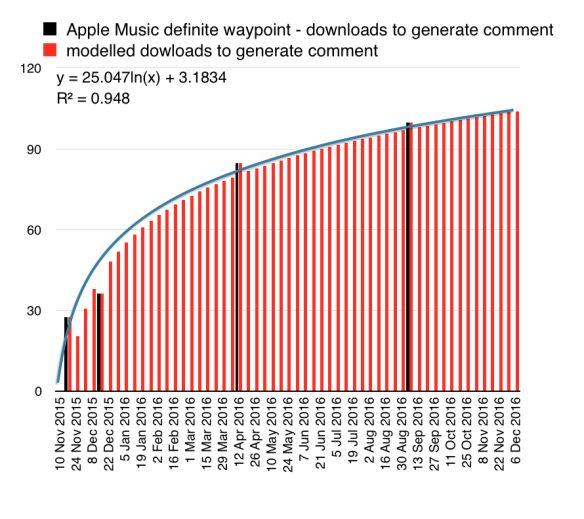
A selection of 11 links for you. Not available on Air Force One. I’m @charlesarthur on Twitter. Observations and links welcome.

Milking the iPhone • Above Avalon

Neil Cybart:

»

Apple is placing a big bet that we are still firmly in the smartphone era. In Apple’s view, many of these competing products are distractions trying to get us to move prematurely beyond the smartphone. This stance has contributed to the view that Apple is missing a step and resting on its laurels. While Microsoft pushes Surface Book and Surface Studio and Snap unveils sunglasses with a camera, Apple is still betting on a smartphone, a product unveiled in 2007. 

This pursuit of milking the iPhone has contributed to cracks forming at Apple’s edges. The friction is found when looking at Apple’s efforts to build a wider ecosystem that extends beyond the iPhone. There is evidence that Apple management wants to follow a product strategy described in my “Apple Experience Era” article. Consumers can pick and choose a range of Apple products that best fit their lifestyles. This is why Apple is very vocal about continuing to invest in the Mac. In addition, Cook has reiterated his view that the iPad is the clearest expression of Apple’s vision of the future of personal computing.

However, Apple’s handling of the Mac line has been increasingly questionable. The same can be said of the iPad line. It will have taken Apple at least two years to unveil a line of “Pro” iPad models spanning from 7.9-inch screens to the 12.9-inch model. 

While some have been quick to throw Apple’s functional organizational structure under the bus for causing these cracks, the organizational structure is not to blame. The issue doesn’t relate to a lack of focus either. Apple still isn’t selling that many products. Instead, these cracks are a result of today’s changing tech environment. 

When looking at some of the key accomplishments during the Tim Cook era, the installed base growth figures for Apple’s top products stand out. For every 100 users by which the iPhone installed base increases, the iPad installed base will grow by 35 users, and the Mac will increase by 10 users.

«

link to this extract


Government U-turn on health privacy • Light Blue Touchpaper

»

Now that everyone’s distracted with the supreme court case on Brexit, you can expect the government to sneak out something it’s ashamed of.

Health secretary Jeremy Hunt has decided to ignore the wishes of over a million people who opted out of having their hospital records given to third parties such as drug companies, and the ICO has decided to pretend that the anonymisation mechanisms he says he’ll use instead are sufficient. One gently smoking gun is the fifth bullet in a new webpage here, where the Department of Health claims that when it says the data are anonymous, your wishes will be ignored.

The news has been broken in an article in the Health Services Journal (it’s behind a paywall, as a splendid example of transparency) with the Wellcome Trust praising the ICO’s decision not to take action against the Department. We are assured that “the data is seen as crucial for vital research projects”.

«

link to this extract


Apple Watch sales to consumers set record in holiday week, says Apple’s Cook • Reuters

Julia Love:

»

Sales of the Apple Watch to consumers set a record during the first week of holiday shopping, and the current quarter is on track to be the best ever for the product, Apple chief executive Tim Cook told Reuters.

Responding to an email from Reuters, Cook said the gadget’s sell-through – a measure of how many units are sold to consumers, rather than simply stocked on retailers’ shelves – reached a new high.

Cook’s comments followed a report on Monday from technology research firm IDC estimating that the tech giant sold 1.1 million units of the Apple Watch during the third quarter of 2016, down 71% from the year-ago quarter. The comments offer a glimpse of the gadget’s performance during the holiday quarter, which is typically Apple’s strongest.

«

IDC’s estimate (it has to be an estimate) looks low – based on revenue, Apple probably sold between 2m and 2.5m.
link to this extract


Chapter 40. The fake news, the real links • Sadbottrue

Bear with the language here:

»

Can a major media with 17 years of history and a monthly audience of 40 million., quote fake news sites? As if it did not look weird, but yes.

Studying the history of the site Donaldtrumpnews.co (disabled), we found a backlink to it on Breitbart.com.

It was quoted by Wayne Allyn Root, in the story “Mr. President, You Disgust Me”, posted on breitbart.com June 13, 2016. The quotation was “Obama is the man who cut $2.6 billion in funding for U.S. veterans, while at the same time adding $4.5 billion to the budget to relocate Syrian refugees to America.” Here’s the archive copy. The article was shared more than 40,000 times.

If you can not identify this site [Donaldtrumpnews.co] among the other sites of fake news, we give a small clarification. This is the most popular of the Macedonian sites investigated by Buzzfeed in the article “How Teens In The Balkans Are Duping Trump Supporters With Fake News”.

The site was created on April 29, 2016. At the time of quotation, the site was only one and a half months [old].

«

“Sadbottrue” is edited by Vlad Shevtsov; it seems to be aiming to investigate the origin of many of the fake news sites, and some of the social media junk, around the US election. The point that is made here – that Breitbart was prominently requoting a fake news outlet that was just six weeks old – raises the questions: how did Breitbart’s writer find it, and why didn’t they check it? Well, the latter is obvious enough. (They don’t care about accuracy.)

But how did they find it? Six weeks isn’t much time for any site to rise up Google’s search rankings.
link to this extract


Supreme Court: lower court should reconsider what Samsung owes Apple • WSJ

Brent Kendall:

»

Samsung has been challenging a $399m award to Apple after jurors in 2012 found that 11 smartphone models from the South Korean electronics giant infringed Apple’s design patents.

The high court agreed to hear the case to clarify how courts should compute monetary damages for design-patent infringement. Apple argued it was entitled to the total profits on Samsung’s infringing products. Samsung argued that it shouldn’t have to hand over all of its profits on the phones because the design was only one component of those complex devices.

The Supreme Court said an appeals court used the wrong analysis when it ruled for Apple.

Justice Sonia Sotomayor, writing for a unanimous court, said the holder of a design patent isn’t always entitled to the total profits on an infringing product sold to consumers. In multicomponent products, sometimes a patent holder will only be entitled to the infringer’s total profits on the specific component that infringed the patent, she said.

The decision, however, didn’t resolve the dispute between the smartphone makers. The court declined to apply its legal rules to the specifics of the case, so it didn’t determine whether Samsung must pay its total profits on the 11 phones or just its profits attributable to the screen and case design of those products.

The justices said a lower court should sort out that issue.

«

This is pretty dramatic. Apple’s claim, which was supported by a number of designers, was that Samsung had profited because of its infringement of Apple’s design patents – basically, how Samsung’s phone looked – and that it should receive all the profits Samsung earned because that infringement was the essential act which caused the decision. There seemed to be precedent from patents on physical products in the 20th century.

This overturns that; it means that copying the appearance of another device carries far lower penalties, as long as you can show that there might be other elements to the product which customers find attractive. (Probably wouldn’t work for a simple chair, for example.)

Just as well for Apple that phone design isn’t a key differentiator any more – but what happens when someone such as Samsung chooses to copy the Apple Watch?
link to this extract


Patent troll claims to own Bluetooth, scores $15.7M verdict against Samsung • Ars Technica

Joe Mullin, writing in February 2015:

»

Marshall [in Texas] is a small town that has been a hotspot for patent lawsuits for more than a decade now. US District Judge Rodney Gilstrap, who presided over this trial, oversees far more patent lawsuits than any other federal judge.

The Eastern District of Texas has stayed popular with patent holders, even as the docket has clogged with cases. Some factors cited include relatively fast-moving litigation, judges reluctant to make early summary judgment rulings, and a perception that juries are more likely to grant large awards.

Samsung has been sued in East Texas dozens of times. That’s not unusual for a large technology company. More than its rivals, though, Samsung has taken some unusual steps in recent years to try to keep up its reputation in Marshall and nearby towns. There’s no mistaking who sponsors Marshall’s winter festival—Samsung has its corporate logo plastered all over the town’s ice-skating rink, which gets set up each year in the same downtown square as the federal courthouse.

The company also makes a habit of granting scholarships to high school students in Marshall and nearby Tyler, giving a total of $50,000 last year. Winners receive photograph-worthy giant checks with a Samsung logo on them, and those images are often published in the local newspaper. The same check was on display in the News-Messenger when Samsung made a donation to Habitat for Humanity.

«

Makes sense if you might find yourself in front of a group of jurors assembled from the area…
link to this extract


Amazon Go • Amazon.com

»

How does Amazon Go work?
Our checkout-free shopping experience is made possible by the same types of technologies used in self-driving cars: computer vision, sensor fusion, and deep learning. Our Just Walk Out technology automatically detects when products are taken from or returned to the shelves and keeps track of them in a virtual cart. When you’re done shopping, you can just leave the store. Shortly after, we’ll charge your Amazon account and send you a receipt.

What do I need to get started?
All you need is an Amazon account, a supported smartphone, and the free Amazon Go app.

Why did you build Amazon Go?
Four years ago we asked ourselves: what if we could create a shopping experience with no lines and no checkout? Could we push the boundaries of computer vision and machine learning to create a store where customers could simply take what they want and go? Our answer to those questions is Amazon Go and Just Walk Out Shopping.

So I can just shop normally?
Yes! Just browse and shop like you would at any other store. Then you’re on your way. No lines, no checkout.

«

Very, very interesting. Would it scale to something the size of a typical Tesco supermarket? Access is gained via the smartphone app; what if other people come in too? Obviously Amazon has asked itself this question, so the answer(s) will be interesting. Hackers are going to have field days, particularly in messing with the (presumably) facial recognition and RFID systems it uses. Typically, Amazon has said very little about how it works.
link to this extract


Exclusive: Galaxy S8 is not going to feature a 3.5mm headphone jack • SamMobile

“Adnan F”:

»

If you were cross with Samsung for ditching removable batteries with the Galaxy S6 then you might not like what it’s going to do with the Galaxy S8. We can exclusively confirm that Samsung is going to remove the standard 3.5mm headphone jack from the Galaxy S8. This means that all of your existing headphones will not be compatible with the upcoming flagship unless you use a USB Type-C adapter as the Galaxy S8 will feature a USB Type-C port. This also means that you won’t be able to plug in the Galaxy S8 and use wired headphones at the same time.

We’ve seen Apple take this step with the iPhone 7 as well as a handful of Chinese OEMs. Apple took a lot of flak for this decision but the company says that it showed courage by making this decision to move beyond the standard 3.5mm headphone jack. We don’t know how Samsung is going to put a spin on its decision since fans are likely to lash out but there are some functional advantages to it.

Removing the 3.5mm headphone jack enables Samsung to make the Galaxy S8 thinner while also freeing up more space inside for a bigger battery.

«

Commenters at SamMobile are furious.
link to this extract


The slow, uninteresting death of Android tablets is unfolding, and it is no one’s fault • Android Police

David Ruddock:

»

Demands for features, functions, and tablet-specific interfaces distract from the real problem with tablets – that fewer and fewer people need or even want them.…

…There remain legitimate niche markets for tablets, in both professional and consumer senses, but the writing is on the wall when it comes to the mass-market tablet: we’re only going down from here. Rumors that Google is working on a new 7″ tablet to showcase its next-generation Andromeda operating system gave hope to enthusiasts that Google isn’t quite ready to let the tablet off life support just yet. If and when that device arrives, great pains will be taken by some to assure us that people really do want tablets, it’s just that they didn’t want the tablets we had before. We just need that magic bullet; to finally crack the tablet code. “This time, developers will pay attention!”

This is a fantasy. Android tablets have had six years to mature and evolve, for developers to find the use cases and the markets for their wares, and at the end of it all we’re left with a tablet content ecosystem now utterly devoid of interest from consumers and developers alike. Nothing Google can do with its operating system will be able to shock the tablet market back to life, because the tablet is not dying for a lack of content. It is dying for a lack of compelling reasons to exist.

«

This may be the case for Android tablets, which have never quite managed to shift into a gear where they can rival PCs for usefulness. (I’d also take issue with Ruddock’s first point above: falling sales don’t mean fewer people want or need them, but that they’re slow to replace.) I think it’s different for the iPad, where the focus on apps, and especially paid apps, has made a difference. The existence of Workflow, which lets you automate workflows, and Pythonista, which lets you run Python programs, means you really can do a great deal on an iPad – and it’s a lot more portable than a laptop.
link to this extract


Connected toys violate European consumer law • Norwegian consumer council

»

In their review of the toys, the Consumer Council has found several serious issues:

• Lack of security: With simple steps, anyone can take control of the toys through a mobile phone. This makes it possible to talk and listen through the toy without having physical access to the toy.This lack of security could easily have been prevented, for example by making physical access to the toy required, or by requiring the user to press a button when pairing their phone with the toy.
• Illegal user terms: Before using the toy, users must consent to the terms being changed without notice, that personal data can be used for targeted advertising, and that information may be shared with unnamed 3rd parties.This and other discoveries are, in the NCC’s opinion, in breach of the EU Unfair Contract Terms Directive, the EU Data Protection Directive, and possibly the Toy Safety Directive.
• Kids’ secrets are shared: Anything the child tells the doll is transferred to the U.S.-based company Nuance Communications, who specialize in speech recognition technologies. The company reserves the right to share this information with other third parties, and to use speech data for a wide variety of purposes.

• Kids are subject to hidden marketing: The toys are embedded with pre-programmed phrases, where they endorse different commercial products. For example, Cayla will happily talk about how much she loves different Disney movies. Meanwhile, the app-provider has a commercial relationship with Disney.

«

Did nobody in the process ever think about these topics, or did they hope it would just be ignored?
link to this extract


Gender bias in hiring: interviewing as a trans woman in tech • Model View Culture

February Keeney is half-Puerto Rican, and now works at GitHub on its anti-harassment systems:

»

We know a lot about bias in hiring. Study after study confirms the very real phenomenon of bias against women, against people of color, against LGBT candidates. A fascinating phenomenon has shown up in some of the more recent studies: those who have very little explicit bias often have a lot of internalized implicit bias. That is to say, those who externally and consciously seem the least discriminatory, tend to be more likely to discriminate on a subconscious level.

My life has played out what many of these studies have simulated by replacing names on resumes, and other sleights of hand. The same exact candidate, in one instance presented as male and another as female, had not just slightly different results in the job search, but radically different results.

My career has become an A/B Test in gender. With the clear “winner” being male.

Being trans brings an entire new layer of bias and discrimination to play in every interview. In many circumstances I can avoid being read as trans. But almost never in a technical interview. Get me talking about tech and I will subconsciously drop voice. If the interviewer — almost always male — had suspicions about me prior to that, they have now been confirmed.

At this point a whole new set of factors come into play. Do they find me repulsive? Or worse, do they find me attractive? You can almost see the internalized homophobia in their eyes when this happens; that moment when they realize they are attracted to a trans woman. You see the fear in their eyes as they think “does this mean I am gay?”

I want to yell at them, “No! That is not how that works! It makes you straight! But even if it did make you gay: what’s wrong with that?”

Instead I sit there and hope they don’t sabotage me in their interview feedback. How often do these feelings translate into “not a good fit” or “she made me uncomfortable”?

«

Keeney is very interesting on this topic; equally good as the above is this interview with Techies Project. How galling would it be to be refused a job you know you’re qualified for because, basically, you wore lip gloss?

This is part of tech’s problem: it almost unconsciously enforces a strongly homogeneous culture.
link to this extract


Errata, corrigenda and ai no corrida: none notified

Start Up: how GitHub killed trolls, Facebook’s news threat, wearables struggle, Moto mods, and more


Can you spot a fake charger? Your house might depend on it. Photo by kikuyumoja on Flickr.

You can now sign up to receive each day’s Start Up post by email. You’ll need to click a confirmation link, so no spam.
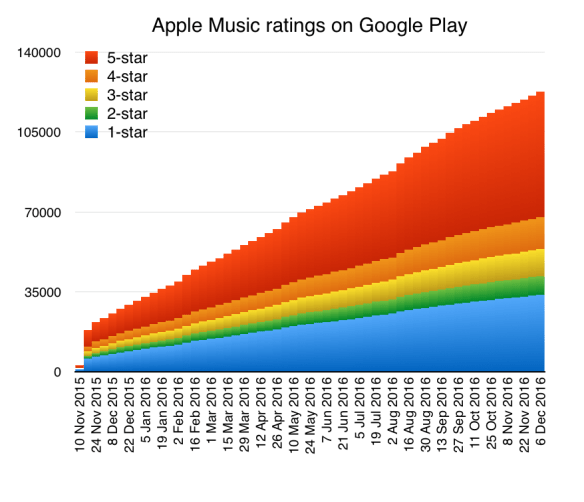
A selection of 9 links for you. Use them wisely. I’m @charlesarthur on Twitter. Observations and links welcome.

What GitHub did to kill its trolls • Fusion

Kristen Brown:

»

It was 2014 and the company was growing rapidly as a hub for programmers to collaborate on coding projects. But as its user base grew, so too did its problems. A GitHub developer, Julie Ann Horvath, left the company amid searing accusations of sexual and gender-based harassment, putting GitHub at the center of bad press for weeks and leading to the resignation of the company’s CEO.

To make matters worse, GitHub soon realized such problems weren’t limited to the office. Bullying and discrimination ran rampant on the site. There was systemic discrimination against women, with female coders often taken less seriously than their male peers. Petty disagreements devolved into flame wars in project comments. A bitter ex followed his former girlfriend from project to project, saying nasty things about her. And racist, sexist trolls sometimes co-opted features meant to enable collaboration to carry out vicious attacks, using, for example, a people-tagging feature to tag their targets on projects with racist names, transforming their portfolios into a slur of racist epithets.

Nicole Sanchez, the company’s VP of Social Impact, told that these are the “dangers and pitfalls of online life,” and not unique to GitHub, but GitHub wanted to try to prevent them.

«

What’s really notable about the way GitHub tackled this is that it had a diverse team (gender and colour) who knew just how these tools could be abused, and so were able to zero in on how to prevent it.
link to this extract


Facebook’s walled wonderland is inherently incompatible with news • Monday Note

Frederic Filloux:

»

when he reiterated Facebook’s mission statement at the F8 conference last April, this is what Mark Zuckerberg had to say:

»

We stand for connecting every person. For a global community. For bringing people together. For giving all people a voice. For a free flow of ideas and culture across nations. (…) We’ve gone from a world of isolated communities to one global community, and we’re all better off for it.

«

Well. No. That is cool mental construct, but it simply is not true.

Facebook might have created a “global community” but its components are utterly segregated and fragmented.

Facebook is made up of dozens of millions of groups carefully designed to share the same views and opinions. Each group is protected against ideological infiltration from other cohorts.

Maintaining the integrity of these walls is the primary mission of Facebook’s algorithm.

We must face the fact that Facebook doesn’t care about news in the journalism sense. News represents about 10% of the average user newsfeed and news can be cut overnight if circumstances dictate with no significant impact for the platform. (Actually, someone with good inside knowledge of the social network told me that news will be removed from users’ feed should the European Union move against Facebook in the same way it attacks Google on editorial issues).

In that broad context, the fake news situation is just a part of Facebook’s system, a bad apple in a large basket.

«

The European angle is concerning; as is the last sentence in that extract, because Facebook can be confident it will be able to fill its ad inventory even – perhaps especially – if it gets rid of “news” sites, whether genuine or fake.

But what happens to the reach of news sites then?
link to this extract


Mounds of Moto Mods: we’ll see at least 12 per year • CNET

Jessica Dolcourt:

»

Moto is investing big in Mods, those magnetic, snap-on accessories – such as a battery pack and external speaker – that enhance the Moto Z, Moto Z Force and Moto Z Play. In fact, Lenovo’s Moto execs told a small group of journalists this week, the company itself will commit to releasing at least 12 new Moto Mods a year.

Specifically, that works out to four Mods per quarter that Lenovo makes with partners like Mophie, Incipio and Kate Spade. Lenovo, which bought the Moto brand when it scooped up Motorola Mobility from Google, counts its year from April to April, so look for the number of Mods to ramp up starting next spring.

“Our goal is to get more Mods out this year than we did last year, no question,” said John Touvannas, Lenovo’s Moto Mods director.

In truth, we should see many more than 12 new mods for 2017 by the time next year is through. Lenovo will launch an Indiegogo campaign come January to drum up more developer involvement. Those who pitch the best ideas will get a Mods kit with the hardware and software needed to start making their own prototypes, plus help bringing those ideas to market…

…Here are a few more potential ideas, which may or may not become a reality:

E-reading concept and a mod that uses a front-facing speaker
LED lights to express your mood
Game controller
Measurement tool
Remote control
External storage
Alarm clock
Breathalyser mod
Baby care that measures humidity, temperature, etc.
Colour sensors for the blind.

«

Crowdfunded campaigns seem like the optimal way to make this successful, but I still don’t see a sizable public demand for modular phones. Battery packs and external speakers already exist, and you can connect them to the phone of your choice. Alarm clock? External storage? Game controller? All inbuilt. As for the breathalyser, that might have a bigger audience than the colour sensor for the blind – but it feels like Lenovo is just throwing out wild ideas in the hope something will work.

Modular can be more profitable, but it depends heavily on uptake. I remain sceptical.
link to this extract


Fake Apple chargers fail safety tests • BBC News

»

Investigators have warned consumers they face potentially fatal risks after 99% of fake Apple chargers failed a basic safety test.

Trading Standards, which commissioned the checks, said counterfeit electrical goods bought online were an “unknown entity”.

Of 400 counterfeit chargers, only three were found to have enough insulation to protect against electric shocks.

It comes as Apple has complained of a “flood” of fakes being sold on Amazon. Apple revealed in October that it was suing a third-party vendor, which it said was putting customers “at risk” by selling power adapters masquerading as those sold by the Californian tech firm.

The Trading Standards tests were performed by safety specialists UL. They applied a high voltage to the chargers, which were bought online from eight different countries, including the US, China and Australia, to test for sufficient insulation.

«

What’s the betting, though, that all of the chargers were actually made in China?
link to this extract


​Has voice control finally started speaking our language​? • The Guardian

Rhodri Marsden thinks that Alexa is the product that is making us comfortable with speech control, because it’s in the home, where we’re comfortable with talking aloud into the air:

»

Advances in speech recognition could be seen as the fulfilling of a science fiction dream that extends from Star Trek through 2001: A Space Odyssey to Knight Rider and beyond. Its history has been characterised by disappointment, but its key attributes are clear: it is hands-free and fast, devices don’t have to be unlocked and there are no menu structures to navigate. As more TVs and set-top boxes become speech savvy, the remote control will be consigned to history. As devices get smaller and lose their keyboards and screens, voice control will become crucial. And according to [associate director of Futuresource Consulting, Simon] Bryant, the knock-on effects are already being seen. “We’re expecting 6.1m units of Echo-like devices to be sold by the end of this year,” he says, “which takes a huge chunk out of the audio market. And it’s going to boost radio audiences, because people are going into rooms and just want something to be playing.”

Alexa’s ability to instantly switch on Heart FM falls well short of the kind of rich human-computer relationship that’s depicted in the Spike Jonze film Her, but while new apps like Hound are becoming more adept at having longer conversations and understanding context, there are limits to a computer’s ability to deal with conversational interaction, according to Mark Bishop, professor of cognitive computing at Goldsmiths University of London. “Action-focused commands like ‘tell me the weather in Seattle’ are much simpler things for a machine to parse and interact with than an open-ended narrative,” he says. “But there are fundamental problems in AI that, for me, mean that we’re some years away from having a machine that can have a meaningful, goal-directed conversation, if it’s ever possible at all.”

«

Marsden certainly has a good point with the idea of not needing a remote control. But then is it just about who can shout the loudest when different people want a channel?
link to this extract


43,203 Indian patient pathology reports were left publicly exposed by Health Solutions • Troy Hunt

»

I’m used to seeing large amounts of personal data left inadvertently exposed to the web. Recently, the Red Cross Blood Service down here left a huge amount of data exposed (well, at least the company doing their tech things did). Shortly afterwards, the global recruitment company Michael Page also lost a heap (also due to a partner, Capgemini). Both cases were obviously extremely embarrassing for the companies involved and they did exactly what you’d expect them to do once they found out about it – they pulled the data offline as fast as humanly possible.

And this is how it generally goes with incidents like this; lots of embarrassment, lots of scrambling to fix then lots of apologising afterwards. Which makes the behaviour of Health Solutions in India all the more confounding. Here’s how it all unfolded.

On Wednesday, someone popped up on the Twitters and shared a link with me via DM which went to http://www.hsppl.com/pathology/downloads/downloadReports and returned this page:

«

See, it’s already bad. (That page has been removed. But this was amazing neglect.)
link to this extract


Fitness trackers in the lead as wearables market grows 3.1% in the third quarter • IDC

»

While the smartwatch market took a tumble this quarter, the overall wearables market grew 3.1% year over year in the third quarter of 2016 (3Q16). Total wearables shipments reached 23m in the quarter, according to data from the International Data Corporation, (IDC) Worldwide Quarterly Wearable Device Tracker.

Basic wearables, primarily comprised of fitness bands, accounted for 85% of the market and experienced double-digit growth. Much of the increase was attributed to the launch of newer models, an expanding user base, and an enticing summer season that allowed people to step out of their homes. IDC expects the momentum for basic wearables to continue for the remainder of 2016 as the holiday season is now in full swing. However, smart wearables capable of running third party apps will likely continue to struggle in the near term.

“It’s still early days, but we’re already seeing a notable shift in the market,” said Jitesh Ubrani senior research analyst for IDC Mobile Device Trackers. “Where smartwatches were once expected to take the lead, basic wearables now reign supreme. Simplicity is a driving factor and this is well reflected in the top vendor list as four out of five offer a simple, dedicated fitness device. Meanwhile, from a design perspective, many devices are focusing on fashion first while allowing the technology to blend in with the background.”

«

Fitbit 5.3m units (up from 4.8m year ago); Xiaomi 3.8m (3.7m); Garmin 1.3m (1.2m); Apple 1.1m (3.9m); Samsung 1.0m (0.5m). “Others” rose from 8.3m to 10.4m, but IDC doesn’t distinguish whether those are smartwatches or trackers. I’m guessing the latter.

Samsung’s rise was helped by bundling with the Note 7, despite its recall. My guess is that only Fitbit, Apple and Garmin are making money in this game; Fitbit makes about $8.40 net income per device sold, which is respectable – it’s more than quite a few Android phone OEMs do on their phones (or, especially, their smartwatches).
link to this extract


Multiple security vulnerabilities found in AirDroid, including ability to send malicious APKs to a user’s device • Android Police

Corbin Davenport:

»

Mobile security company Zimperium recently released details of several major security vulnerabilities in AirDroid, allowing attackers on the same network to access user information and even execute code on a user’s phone.

The security issues are mainly due to AirDroid [which has 50m-100m installs via Google Play] using the same HTTP request to authorize the device and send usage statistics. The request is encrypted, but uses a hardcoded key in the AirDroid application (so essentially, everyone using AirDroid has the same key). Attackers on the same network an intercept the authentication request (commonly known as a man-in-the-middle attack) using the key extracted from any AirDroid APK to retrieve private account information. This includes the email address and password associated with the AirDroid account.

But this gets even worse. Attackers using a transparent proxy can intercept the network request AirDroid sends to check for add-on updates, and inject any APK they want. AirDroid would then notify the user of an add-on update, then download the malicious APK and ask the user to accept the installation.

Zimperium notified AirDroid of these security flaws on May 24, and a few days later, AirDroid acknowledged the problem. Zimperium continued to follow up until AirDroid informed them of the upcoming 4.0 release, which was made available last month. Zimperium later discovered that version 4.0 still had all these same issues, and finally went public with the security vulnerabilities today.

«

AirDroid has responded with a post that seems to have been Google Translated from another language. It doesn’t really explain anything.
link to this extract


Fake US embassy in Ghana shut down • Al Jazeera

»

Authorities in Ghana have busted a fake US embassy in the capital, Accra, run by a criminal network that for a decade issued illegally obtained authentic visas, the US State Department has said.

Until it was shut down this summer, the sham embassy was housed in a run-down, pink two-storey building with a corrugated iron roof and flew a US flag outside. Inside hung a portrait of President Barack Obama.

“It was not operated by the United States government, but by figures from both Ghanaian and Turkish organised crime rings and a Ghanaian attorney practicing immigration and criminal law,” the State Department said in a statement released late on Friday.

Turkish citizens, who spoke English and Dutch, posed as consular officers and staffed the operation. Investigations also uncovered a fake Dutch embassy, the State Department said…

…The real US embassy in Ghana is a prominent and heavily fortified complex in Cantonments, one of the capital’s most expensive neighbourhoods. Lines of people queue outside each day for visa appointments and other consular business.

The fake embassy was open three mornings a week and did not accept walk-in appointments. Instead, the criminals advertised on billboards in Ghana, Togo and Ivory Coast and brought clients from across West Africa to Accra where they rented them rooms in nearby hotels.

«

Now that is chutzpah.
link to this extract


Errata, corrigenda and ai no corrida: none notified