Start up: Chrome v Safari, designing Windows Phone, Apple Watch value, S6 battery life and more

Remember? That’s when Instagram for Windows Phone was last updated. Photo by Theen Moy on Flickr.

A selection of 9 links for you. Really, they are. I’m charlesarthur on Twitter. Observations and links welcome.

The Roomba for lawns is really pissing off astronomers » WIRED

Davey Alba on how the automated method of mowing lawns (using beacons to guide the mowers) could be a hassle for the star-struck:

the system requires special permission from the FCC due to its restrictions on fixed outdoor infrastructure. In a nutshell, the FCC doesn’t want people creating ad hoc networks of transmitters, which could interfere with existing authorized services like cellular and GPS systems. In its filings, iRobot says it should be exempt because it doesn’t set out to establish a broad communications network — its lawnbot networks would be tightly contained.
Astronomers say that’s not good enough. The frequency band proposed for the lawnbot (6240-6740 MHz) is the very same one several enormous radio telescopes operate on. Astronomers want the FCC to protect their share of the radio spectrum so their telescopes continue observing methanol, which abounds in regions where celestial bodies are forming.


Chrome is still a threat to your MacBook’s battery » The Verge

Vlad Savov on the comparative battery life of MacBooks using the Chrome browser, and Apple’s Safari:

It’s not just the distance you can go with Chrome that’s an issue. The speed and quality of the ride are also compromised. The widely used SunSpider browser benchmark clocks the MacBook Pro in at 203ms when using Chrome. Safari scores 30% better with a time of 144ms. Same machine, very different outcomes. You’d think YouTube would be a spot where Google collects an easy win, but that’s been another cause of distress: the new 4K 60fps videos that YouTube now supports are playable on the MacBook, but only — you guessed it — when using Safari and not Chrome. Google’s own browser chokes while playing back video from Google’s own video service.

Chrome’s problem is that it sets every page up as a virtual machine, demanding its own chunk of memory. Safari.. does it differently. The difference in battery life, though, is huge. Commenters weighing in seem to agree (while also liking the convenience of Chrome).


Apple Watch: an overnight multi-billion dollar business » carlhowe.com

Carl Howe used to analyse this sort of stuff for a living. Here he helps you think of the supply chain issues involved in the Apple Watch by likening it to producing a million origami lobsters:

Now let’s make this a little more realistic. As it turns out, we really want a million lobsters of two different sizes. Further, ordinary paper tears too easily and is the wrong colour for Origami lobsters, so we’ve decided to make our own paper; that will require its own process. We also need to be able to deliver some of the lobsters with glitter and others with hand-painted decorations; we’ll need to plan to supply and apply those materials too. Oh, and we want to make a few thousand out of two colors of pure gold leaf instead of paper. You’ll have to manufacture the paper for that too.
What’s your plan look like now?
There’s no rush; you can deliver your million lobsters any time during the month, provided that you don’t mind people complaining that you are way too slow at getting this done. Oh, and you’ll be criticized in the international press for every failure to produce perfect lobsters.
And now, imagine this same plan, except with this twist: no one has successfully folded this particular type of Origami lobster before, so you really don’t know how it’s all going to turn out. And your reward if you are successful will not be praise, but demands that you build even more next month.

This is such a wonderful post for wrapping your head around supply chain issues – as good in its way as Greg Koenig’s commentary about the amazing mechanics of how the Apple Watch is made.
Howe has a number for how many Watches have been sold, but you need to read his piece to find out. He’s probably right. (He also notes in an update that there’s only one module – that is lobster – so the Watch is even more profitable.)


Galaxy S6 Edge battery life – 4 days later » Android Authority

Let’s revisit Nirave Gondhia and see how he’s getting on with his series:

Another day of 13 to 16 hour battery life suggests that with my usage pattern, this is the most I can expect from the Galaxy S6 Edge. However, considering that the average user works approximately eight hours per day, it’s clear that the Galaxy S6 Edge will last a full working day, allowing you to charge it overnight and rely on it until you get home after work.
Another thing to take away is that using your phone at 50% brightness or less adds several hours to your battery life. I’ve done further testing on this and it’s certainly a key factor. The octa-core processor drives over 3.6 million pixels and if the brightness is set to full, it draws a large amount of power. Reducing to around 50 to 60% could increase your screen-on-time by over 50%.

16-hour battery life would certainly take you through a lot of the day.


Ex-Microsoft designer explains the move away from Metro » Thurrott.com

Paul Thurrott filleted an AMA by the designer of the new version of Office for Windows Phone so you don’t have to wade through the original. Fascinating bits, including:

Why is the hamburger menu in the top left of the display? It’s hard to reach, etc. I actually argued for top right. The issue with top right is that no one else does [it]. Being a special unique snowflake works for art but not design. Design should be invisible, so people shouldn’t be thinking ‘oh that’s odd. I’ve never seen this button used like this. I wonder if it does the same thing?’ … The industry decided top left. So to go against it you need to earn it. You need to be far, far better or else it just stands out awkwardly.”
But people need to be able to use it with one hand. “What the research is showing is that people aren’t actually as wedded to one handed use as we used to believe they are. Don’t get me wrong, this is clearly a tradeoff. Frequently used things have to be reachable, even one-handed. But hamburgers are not frequently used, and one-handed use is not ironclad. Combine those two factors together and you see why the industry has settled on this standard. It wasn’t random … And, sorry. But the hamburger has some real issues, but ‘I can’t reach uncommon things without adjusting my hand on my massive phone and that annoys me because it reminds me of the dominant OS on earth” [is not one of them].
But the bottom is better. “It turns out bottom is not better. You’d think that something 3 pixels from your palm would be easier to reach than something in the middle of the phone. But nope.

This really is a terrific post with so much about comparative user experience; this is the link you really should read today.


It has been one year since Instagram was last updated for Windows Phone » Neowin

Brad Sams:

It was on 3.22.14 that the Instagram beta was last updated and the app has remained unchanged since that day. In essence, this app represents the exact issue Windows Phone fans have expressed tirelessly over the years: It’s not the lack of apps, it’s the lack of support for the apps that do exist.
Twitter is another good example. While this app is updated more frequently, it lacks features of its iOS and Android counterparts. By all accounts, Twitter’s Windows Phone app is a distant second-thought for the company and while it is semi-frequently updated, when it does get new features, it’s months or years after the other apps.
Microsoft is aware of this, to no surprise, and they do hope that their universal apps will help to remedy this situation but it will not be an overnight fix.

It’s nice to hope. Has anyone pointed out yet that Instagram isn’t a desktop app, but is mobile-only, so the big Windows desktop installed base doesn’t matter at all to the company? Let me be the first then. Same for Snapchat, Uber.. the list goes on.


Here’s how much a Samsung Galaxy S6 replacement battery (and screen) costs » PC Mag

Sascha Segan:

According to a Samsung spokesperson in touch with the company’s support team, the Galaxy S6 battery has a one-year warranty. If its maximum capacity drops below 80% of its initial level during that year, your replacement is free (although you still have to pay for shipping.) At any other time, the replacement costs $45, plus shipping, though Samsung did not detail shipping costs.
That’s less than the $79 Apple charges for an iPhone battery replacement, but more than the official $29.99 price for a Galaxy S5 battery…
Samsung has walk-in repair centers in Los Angeles and Plano, Texas that don’t require shipping and do same-day battery swaps, the company said. Samsung is looking to establish those centers in more cities.
Screen replacements, meanwhile, cost $199 for the Galaxy S6 and S6 Edge. That’s more than the $109 Apple charges for iPhone 6 screen repair, but less than the $299 Apple charges for repairs that involve more than the screen. Samsung screen replacements also have a one-day turnaround.


Apple Pay plans to launch in Canada this fall » WSJ

Rita Trichur and Daisuke Wakabayashi, who note that Canada has lots of iPhones (30% installed base of smartphones) and lots of NFC-capable payment systems:

Canadian banks want Apple Pay to work in a way that requires a “secondary authentication” to verify customer information before cards can be used with the phones. That means that a consumer could be required to enter a PIN, log-on to a mobile banking app or use a one-time passcode sent via text message before cards can be used on Apple Pay, those people said.

Fair enough. Seems sensible given the problems US banks saw in letting people add cards without authentication. But then it carries on:

The trouble with that approach, however, is that it creates a clunky experience for consumers who expect mobile payments to be seamless—similar to tap-and-go credit cards that are already in wide use in Canada.

I checked this with the writers – surely the banks just want to authenticate initially, not every time? – but Trichur assured me she was hearing that the banks are considering a per-transaction authentication. Sounds bonkers to me.


This is why daddy drinks » Rusty Rants

Russell Ivanovic has been a dedicated disliker of Samsung phones since the S2 because “they often represented the worst possible Android experience you could have”. But they needed to have an S6 in the Shifty Jelly offices (which do Android app development):

The first thing that struck me was the build quality. It’s really good. The next thing that struck me was the screen. It’s amazing. Bright, super high density (far higher than the iPhone and Moto X I’m used to) and so beautiful. Then I was struck by the speed…this thing is fast…like really fast. Then I took a few test photos, and damned if they didn’t look better than all the same photos I was taking with my iPhone 6. In short I had a ‘huh?’ moment. Was it possible this was a good phone?


Start up: squinting at Lollipop, phone cameras ranked by pros, how Crossy Road triumphed, and more


“Your first day at Google?” “Mm-hm. Thought I’d get the eye surgery done first.” Photo by peretzp on Flickr.

A selection of 7 links for you. Contains 50% less sugar. I’m charlesarthur on Twitter. Observations and links welcome.

The Wolfram Data Drop Is Live! » Stephen Wolfram Blog

Our goal is to make it incredibly straightforward to get data into the Wolfram Data Drop from anywhere. You can use things like a web API, email, Twitter, web form, Arduino, Raspberry Pi, etc. And we’re going to be progressively adding more and more ways to connect to other hardware and software data collection systems. But wherever the data comes from, the idea is that the Wolfram Data Drop stores it in a standardized way, in a “databin”, with a definite ID.
Here’s an example of how this works. On my desk right now I have this little device:

Every 30 seconds it gets data from the tiny sensors on the far right, and sends the data via wifi and a web API to a Wolfram Data Drop databin, whose unique ID happens to be “3pw3N73Q”. Like all databins, this databin has a homepage on the web: http://wolfr.am/3pw3N73Q.

The homepage is an administrative point of presence that lets you do things like download raw data. But what’s much more interesting is that the databin is fundamentally integrated right into the Wolfram Language. A core concept of the Wolfram Language is that it’s knowledge based—and has lots of knowledge about computation and about the world built in.

Neat idea, aimed at the Internet Of Far Too Many Damn Things.


OneShot, a one week design case study — iOS App Development » Medium

Daniel Zarick:

On January 14th, my friend Ian Ownbey sent me a direct message on Twitter about a freelance design project. It turns out he was working on a small iOS app with his friend Jason Goldman and they were looking for a designer to help them wrap it up. At the time, I was in the middle of a substantial iPad design project for another client, but I really wanted to work on something with Ian and Jason. Luckily, since their project was small, I was able to squeeze a week of time for them in the middle of my other project.

Things I particularly noted (not particularly being an app developer, but interested in process): (1) they used Slack (2) they didn’t go with an iOS 8 Extension, and the only people who’ve queried that are techies. Pretty much nobody else cares. File that thought away.

A a side note, I find myself reading more and more stuff on Medium, and finding good quality.


WatchApps » WatchAware

Neat: shows you Apple Watch apps as they’re added to the store and also shows how they will look when used. I haven’t seen a killer app for me there yet.. but there are only a few.


Do all Google employees have perfect eyesight? » Terence Eden’s blog

Eden is unhappy with Lollipop, and particularly its design choices:

I can only assume that on their first day at Google, new employees are given their Android phone, a ChromeBook, a self-driving car, and complementary Laser Eye Surgery. That’s my theory on some of the problems besetting Android’s Lollipop release.

I’ve ranted about Lollipop before, and now I’d like to point out two particular problems.

All of these tests were performed on a Nexus 4 running Android 5.0.1, and the most recent versions of the apps.

In short: poor text wrapping in Google’s default web browser; and, more annoyingly, poor contrast between background and text in Google apps such as YouTube, Play and the General Settings menu. Remember, this is a Nexus, not some skin. Eden’s conclusion:

Lollipop is, for a large section of the population, really unpleasant to use.

I know I’m not the only person who has spent a lifetime working at a screen and appreciates legible text.


They wanted to make a phenomenon. They made $10m » Polygon

Dave Tach:

Unlike many of its contemporaries, nothing about Crossy Road makes a player feel the need to pay to progress or win. Its design subdues its monetization, and that has cost its developers revenue. Crossy Road rarely — if ever — squeezes onto the top of the iOS App Store’s list of highest grossing games, where titles like Clash of Clans and Candy Crush Saga are entrenched. Yet yesterday, Crossy Road was the 12th most popular free iPhone app without even appearing in the App Store’s list of top 100 grossing iPhone apps.

This is not an accident. Crossy Road was an experiment in doing free-to-play differently, and that experiment has been wildly effective.

Today, at a Game Developers Conference 2015 session, Hall and Sum told the story of Crossy Road’s creation and lifted the veil on its real success during the game’s first three months. They revealed that, 90 days after its release, Crossy Road’s combination of solid gameplay, unobtrusive in-app purchases, and optional in-app ads powered by the Unity engine, has earned $10m from 50m downloads.

A real lesson in the power of mobile’s reach. An average of 20 cents per install – and that’s probably skewed towards the high end, meaning 45m downloads probably paid nothing, or next to it.


And the best phone camera is… pro photogs rank Note 4, iPhone 6, Z3, Lumia 1020 and more » Phonearena

Taking a bunch of seasonal smartphones, like the iPhone 6, HTC One M8, LG G3, Nokia Lumia 1020, Samsung Galaxy Note 4, Sony Xperia Z1 Compact and Sony Xperia Z3, photo aficionados from Poland have snapped a bunch of samples in sunny Morocco, and then given them to professional photographers for ranking purposes.

The experiment has been a blind one, meaning that the shutterbugs didn’t know which picture came from which phone, just like we often do in our comparisons. The list of experts includes prominent lecturers and even editors of photography magazines, so it is as representative as it could be when it comes to accurately judging the true quality of the snaps. 

Usually these things are a bit pointless, but the variety of devices and the variation in what does best in which conditions is surprising – the Note 4 does extremely well, the Lumia doesn’t, despite the latter’s huge pixel count.


BlackBerry courts career builders with all-touch Leap smartphone » The Globe and Mail

Shane Dingman for Reuters:

The Leap is a buttonless touchscreen smartphone that looks like a lot of other mobile slabs on the market. Expected to be priced at around $275 (U.S.) without a subsidy, with an industry-standard five-inch display, a 2800 mAh battery promising 25 hours of use and a processor that first shipped in 2012, it’s a budget device designed for the mid-market.

But if it’s targeting a “volume opportunity,” Ryan Reith, research director for mobile devices at IDC, said BlackBerry’s Leap will find tough competition in Motorola or Huawei hardware with similar specifications.

“That’s directly where they are aiming, but they are still priced outside of that spectrum,” warns Mr. Reith, who said middle-market devices are selling for under $200. The Z3, unveiled at last year’s MWC, was also pegged as an emerging-market touchscreen device, but failed to gain traction. “In terms of moving commoditized handsets, this is a dying part of [BlackBerry’s] business.”

CEO John Chen has said that if BlackBerry can’t sell 10 million phones a year, it shouldn’t be in the hardware business. Mr. Reith said IDC projects BlackBerry will sell seven million or eight million devices in 2015.

Hard choices lie in BlackBerry’s near future. Chen is clearly trying to shift the BlackBerry software over to other platforms so that he can extricate the company from the loss-making hardware business while keeping customers in valuable software and service contracts.


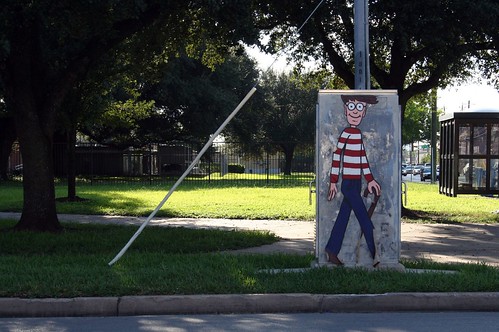
Start up: finding Waldo, Amazon’s tablet gripe, Samsung 4:3 tablet?, better interface design, and more


OK, that’s not so challenging. Picture by cybertoad on Flickr.

A selection of 9 links for you. May contain nuts. I’m charlesarthur on Twitter. Observations and links welcome.

Sapphire displays to see major step forward with lower reflectivity » Mac Rumors

While GT Advanced experienced difficulties with both the quality and quantity of sapphire, it is possible that Gorilla Glass was the better choice for the iPhone 6 and iPhone 6 Plus after all. TIME reported in September that sapphire, in its current form, has several properties that are less ideal than glass, including being thicker and heavier, more expensive, unable to transmit as much light and less durable after exposure to normal wear and tear. Sapphire also has up to double the screen reflectance of glass, especially under bright light, which could make it difficult to read the screen.

The reflective issue in particular could soon be a thing of the past, however, as DisplayMate confirmed to MacRumors that it has lab tested new sapphire technology that it believes will be a major breakthrough for smartphone displays. The display calibration and evaluation company found the production-ready enhanced sapphire to be at an advantage over both regular sapphire and glass based on the results of its testing, and predicted that “rapidly falling production costs” could make the material go mainstream in the near future.

I doubt that the sapphire being made at GT Advanced was planned for 2014’s iPhones. These problems would have been recognised, and the volumes would be too low to make screens for so many devices. Sapphire feels like a super-top-end product – as it is for Vertu. And that means low volume (comparatively).

Other phone makers are considering it, for sure.


Microsoft’s mobile inabilities » Om Malik

Microsoft has acquired two iOS applications — Acompli (email) and Sunrise* (calendar) — for about $300 million. Those acquisitions are good for the founders (and their investors). Some might see it as a sign of a new Microsoft — aggressive and quick in trying to turnover a new leaf. To me, they are all of that, but more importantly indicative of the much deeper cultural rot facing Microsoft and its now not so new chief executive, Satya Nadella.

“He’s hit all the low-hanging fruit — that said, these things were not easy to do — but now he has to address all the long-term issues,” Brad Silverberg, a former Microsoft executive-turned-venture capitalist told Bloomberg Business in an interview. Spot on — and these two acquisitions are just a perfect example of these long term challenges.

It is a pretty damning indictment that Microsoft had to spend hundreds of millions on front end apps for its own platform –Microsoft Exchange — and it should send alarm bells ringing. Exchange is something Microsoft understands better than most and it should in theory be able to develop good apps as front end for it.

I don’t agree. Nadella is being pragmatic here: Microsoft is a big organisation, and it moves slowly. Everyone recognises that small startups can hit precisely the user needs that big organisations can’t see, or can’t develop for even if they see. It has done poorly in mobile so far.

What it’s doing with these app purchases is strengthening Outlook – locking it in place as a product that will continue to rake in money year after year, especially because everyone will get a great experience using it on mobile via these apps.


Meet the ultimate WikiGnome » Medium

Andrew McMillen:

Maryana Pinchuk and Steven Walling addressed a packed room as they answered a question that has likely popped into the minds of even the most casual users of Wikipedia: who the hell edits the site, and why do they do it?

Pinchuk and Walling conducted hundreds of interviews to find out. They learned that many serious contributors have an independent streak and thrive off the opportunity to work on any topic they like. Other prolific editors highlight the encyclopedia’s huge global audience or say they derive satisfaction from feeling that their work is of use to someone, no matter how arcane their interests. Then Walling lands on a slide entitled, ‘perfectionism.’ The bespectacled young man pauses, frowning.

“I feel sometimes that this motivation feels a little bit fuzzy, or a little bit negative in some ways… Like, one of my favorite Wikipedians of all time is this user called Giraffedata,” he says. “He has, like, 15,000 edits, and he’s done almost nothing except fix the incorrect use of ‘comprised of’ in articles.”

Turns out to be 51-year-old software engineer Bryan Henderson. It beats commenting on websites as a lasting contribution, don’t you think?


The Next Episode: Apple’s plans for Beats-based music service revealed » 9to5Mac

Mark Gurman on the much-anticipated integration of Beats into Apple:

Rather than merely installing the existing Beats Music app onto iPhones, Apple has decided to deeply integrate Beats into iOS, iTunes, and the Apple TV. The company is currently developing new Beats-infused versions of the Music application for the iPad, iPhone, and iPod touch, as well as an updated iTunes application for computers that deeply integrates Beats functionality. A new Apple TV application is also in the works.

Based heavily upon cloud streaming, Apple’s new service is centered around the user’s music library. A new search feature will be able to locate any song in the iTunes/Beats catalog, and users will be able to stream music from the catalog as well as add songs to their personal libraries. Users will be able to select specific tracks to store on their iOS devices and/or computers, or keep all songs solely in the cloud. Apple will also deeply integrate Beats Music’s Playlists, Activities, and Mixes features into the new service, letting users access a vast array of pre-made, human-curated playlists to fit various activities. Surprisingly, Apple is likely to also update Beats’ social networking features, allowing people to follow other users and artists as they did with the failed Ping social music network.

Aiming for a lower price point than the $9.99 per month; Apple wanted $5 but is being pushed to $7.99 by labels. This fits with what I’ve been hearing from analysts and people in the music industry. A lower price is essential to getting more subscribers.


To make tech design human again, look to the past » WIRED

Tom Lakovic of the design company INDUSTRY:

who’s doing it wrong? Examples are everywhere of touch screens existing where no touchscreen should be. Even our favourite innovators over at Tesla Motors have missed out on potentially great DigiLog experiences in their Model S. Personally, I’d love to redesign their console just so I could get that oversized iPad out of their otherwise amazing cars.

You can’t just lean on PARC-style metaphors in every single context moving forward. You have to evaluate and re-evaluate the tradeoffs of digital versus analog interactions. What you gain by dropping in a giant touchscreen that controls every aspect of your vehicle experience is easy to state: customizable skins and software upgradable UIs, but what is lost in the translation?

I’m pleased that he agrees with me about Android Auto and Apple’s CarPlay: I don’t like the distraction they imply. I also liked this diagram of touch done right and wrong:

(Via Neil Cybart’s Above Avalon newsletter. You should subscribe.)


Profitable and uncopyable » Matt Richman

Apple Pay will succeed for one simple reason: Everyone in the system has an interest in it succeeding. Card issuers like Apple Pay because it reduces their fraud liability. Card networks like it because it reinforces their role in the system. Merchants like that it precludes Target-style data breaches. Everyone has a reason to want Apple Pay to succeed, so it will.

How much Apple will profit from Apple Pay is anyone’s guess. Mine is: Over time, a lot. In the US alone, credit and debit card transactions totalled $3.9trn in 2013. Since Apple gets a 0.15% cut of every Apple Pay transaction, a measly 10% transaction share is worth $585m. One year, one country, $585m. Over time, Apple will make billions from Apple Pay.

Though Apple Pay will make Apple a ton of money, the strategic implications of the service are worth far more. With Apple Pay, Apple leveraged its business model, cultural influence, and customer base to enter arguably the most heavily-regulated international system on Earth in a way that everyone already in the system had a reason to like. This is an incredible accomplishment, and no other company could have done it.

Google does not control Android enough to create anything truly comparable to Apple Pay. Even if Google were able to add Apple Pay’s software components to Android, the company would have to rely on its hardware partners to replicate Touch ID and the secure element and to seamlessly integrate everything together. They’re not going to be able to do that for the foreseeable future.

A few nitpicks. Not all retailers like all aspects of Apple Pay – in particular, they don’t get customer data they got previously, and might still want. (Whether they should get that is another matter.) Also, 10% of all transactions is a lot – but his number shows that even a couple of percentage points is very valuable, and almost all profit.

On the topic of Google, there is Google Wallet – whose key problem is poor and inconsistent implementation. The secure element is already available in ARM chips. But it will take a long time to feed through to handsets in use.


Amazon takes issue with report that holiday Fire tablet sales fizzled » Re/code

Dawn Chmielewski:

Researcher IDC said Amazon showed the steepest annual decline among the five major tablet makers, with worldwide shipments of its Kindle Fire devices falling by as much as 70% compared with the holiday 2013 period. The declines come at a time when worldwide shipments in the fourth quarter fell for the first time since the tablet market’s inception in 2010.

But there’s a caveat in the results: IDC doesn’t count shipments of Amazon’s new six-inch version of its Kindle Fire HD tablet, introduced in September and ranked among the “most wished for” gift items of the holiday season. A spokesperson for the retailer criticized IDC’s methodology, saying “our most affordable tablet ever, the Fire HD 6 at $99, which is one of our high volume products, wasn’t included in the report.” She declined to discuss sales.

Er.. if you’re going to call it a “high-volume product”, shouldn’t you help people out by explaining what that volume is? Doing this is like saying the cake you’ve got in the fridge is wayyy bigger than people are saying. But then not opening the fridge. Mmm, cake.

But wait, there’s more:

IDC Senior Research Analyst Jitesh Ubrani said the researcher doesn’t consider the Kindle Fire HD 6 a tablet because of its screen size and its inability to connect to cellular networks. It’s more of a media player, in the researcher’s view. But even if the estimated 1.2m shipments of the device were included in IDC’s numbers, Amazon’s holiday tablet shipments would still be off by 50% from the prior year, he said.

Soooo… the Kindle has hit its ceiling for sales; the Fire phone was a flop; the Fire tablet has fizzled. Let’s look forward to not hearing how the Amazon Echo has sold.


Wishbone: the world’s smallest smart thermometer by Joywing Tech » Kickstarter

The core function of Wishbone is to detect temperature using an infrared sensor. Wishbone is noninvasive, reliable and versatile for many applications. It can accurately measure body temperature by measuring forehead skin and examine liquid temperature from surfaces in just a few seconds. While measuring, Wishbone does not emit any radiation or sound as it uses a passive sensor.  Wishbone can also measure environment temperature by pointing it toward the sky or ceiling. Both Object and Ambient modes are still currently under development.

Works on iOS and Android (it plugs into the headphone jack). I think this is neat; I’ve backed it. (It’s already miles past its goal.) I like the idea of the Object and Ambient modes. Notice too how smartphones are now offering core functionality for medical products like this.

Yes, a simple alcohol thermometer is cheaper – but less flexible. As more people have smartphones, more functions and industries get sucked into them.


New Galaxy Tab 5 might have 4:3 aspect ratio as well » SamMobile

We have already reported that Samsung is working on new Galaxy Tab tablets. It is expected that these tablets are going to have displays with 4:3 aspect ratio instead of the 16:9 aspect ratio that Samsung has stuck with in the past. According to information obtained through the import tracking website Zauba the new Galaxy Tab 5 may also have a 4:3 aspect ratio. The import tracker picked up on a new Galaxy Tab 5 model imported into India and it seems to have a 9.7-inch display, similar to the screen size of Apple’s iPad, which also has a 4:3 ratio.

I’ve been told – endlessly – by people who claim it’s important that 16:9 is the “right” ratio for tablets because it means you can watch films without letterboxing. Now we find that Google (qua the HTC-built Nexus 9) and now perhaps Samsung are going for 4:3, like the iPad… which has seen the most success in the market.