
Start up: the open data economy, Samsung sued on software updates, Google v Isis, deaf developing, and more

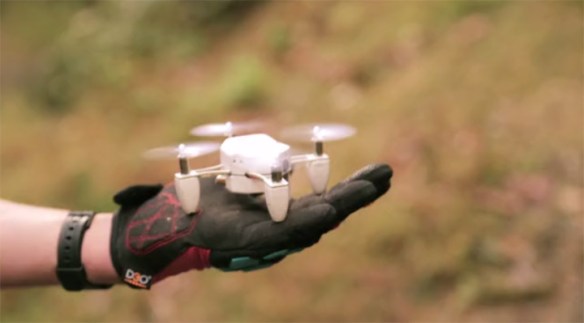
Zano drone: hardly any were built

Zano’s much-promised drone turned out to be a flop, not a flyer. Photo: Torquing Industries.

Hell, you might as well sign up to receive each day’s Start Up post by email. You’ll need to click a confirmation link, so no spam.

A selection of 10 links for you. Use them wisely. I’m charlesarthur on Twitter. Observations and links welcome.

The economic impact of open data: what do we already know? » Medium

Jeni Tennison and Jack Hardinges of the Open Data Institute:

Open data fuels economic growth. Many believe in the theory and ask for the proof. A new report by Nesta and the ODI adds to the evidence of the impact of open data. The report’s analysis, undertaken by PwC, examines the effects of the Open Data Challenge Series (ODCS) and predicts the programme will result in a potential 10x return (£10 for every £1 invested over three years), generating up to £10.8m for the UK economy.

Seems amazing that ten years ago I was having to fight government departments tooth and nail to persuade them that releasing open data could have an economic benefit.
link to this extract


‘Hateful Eight’ producer on piracy: “Aspirin ain’t curing the plague” » Hollywood Reporter

Richard Gladstein, producer of Hateful Eight:

the “Fair Use” provision and debate has also proven to be an extremely useful tool for those looking to distract from or ignore the real copyright infringement issue: piracy.

Such distractions include Google’s recent announcement that they will be offering legal support to “a handful of videos that we believe represent clear fair uses which have been subject to DMCA takedowns.” Fred von Lohmann, legal director of copyright at Google, noted in a recent post on Google’s Public Policy blog: “More than 400 hours of video are uploaded to YouTube every minute.” As the third most visited site on the web, YouTube occupies an important place in the discussion of online copyright infringement.

The criteria and definition of what constitutes fair use is a long-cherished and worthy debate. In fact, I agree with Mr. von Lohmann when he says, “Some of those uploads make use of existing content, like music or TV clips, in new and transformative ways that have social value beyond the original.”

However, it should be noted that the search behemoth won’t be defending every takedown notice, but said they will select a “small number of videos” they believe “will make a positive impact.” Would you care to guess how many videos they’ve selected? Turns out, it’s four. Jonathan Bailey at Plagiarism Today points out, “That’s 0.0000005% of all users.”

As Stephen Carlisle, Copyright Officer of Nova Southeastern University, describes it:

“The new policy is really nothing more than a publicity stunt, designed to encourage more people to upload to YouTube videos of dubious legality, while at the same time acting as an intimidation tactic to discourage the filing of valid takedown notices.”

link to this extract


Being a deaf developer » Cruft

Hollie Kay:

I’ve been deaf since infancy. It is not profound; my hearing loss is described as moderate to severe and is mostly problematic at higher frequency ranges, the range at which most human speech happens. I rely on lip-reading and identifying vowel patterns to understand spoken language. Particular struggles are:

• recognising consonants, especially sibilants and unvoiced consonants (all consonants are high frequency sounds, and the unvoiced and sibilant consonants don’t activate the vocal chords)
• the beginning of sentences
• the end of sentences

Some deaf people successfully become programmers. It’s mostly thought-based, often solitary work, where all your output is written down. Specifications and bugs come to you (in an ideal world, at least) on paper and in ticketing systems instead of through other people’s noiseholes. Some areas aren’t quite so fabulous (I’m looking at you, interminable conference call meetings involving 15 people sitting in a circle around a gigantic table), but adjustments are always possible.

The stereotype of a programmer as a solitary eccentric who’s allergic to human company is unfair and inaccurate. As a group, we’re a very social bunch.

The Tim Berners-Lee quote about accessibility further down in the article is worth bearing in mind.
link to this extract


Vladimir Putin’s internet adviser owns a torrent site » TorrentFreak

“Andy”:

Last week Putin signed a decree that officially enlisted [Herman] Klimenko and it didn’t take long for him to address the issue of Internet piracy. However, instead of tough talk, Klimenko criticized web-blocking and suggested that copyright holders should wait for a better economic situation before “terrorizing” on the issue of piracy.

“Consumption of copyright content increases with economic growth, and when the situation is very serious, I think people do not have to unnecessarily terrorize these issues,” Putin’s adviser said.

“Pushing hard now on this topic, I think, is not worth it. When the economy improves, you should return to this issue.”

While Klimenko’s comments at least in part sound reasonable, copyright holders would’ve been disappointed by his lack of support. What they will be even more disappointed over is the allegations now surfacing about Klimenko’s links to online piracy.

link to this extract


How Zano raised millions on Kickstarter and left most backers with nothing » Medium

Mark Harris:

bumps in the road kept popping up. In late May, Crowther posted that some of Zano’s plastic parts had been delayed due to a tooling issue. The decision not pursue a pilot build was coming back to bite Torquing. Additions that Reedman made to his initial design, and the fact that some of the plastics supplied were heavier than expected, had ballooned Zano’s weight from 55g as a prototype to 70g in pre-production. With the original propellers, the Zano could now fly for only a couple of minutes between charges — a far cry from the 15 minutes that Reedman had promised.

A bigger battery could increase flight time, and Reedman told me he was trying to boost the battery size from 750 mAh (milliampere hours, a measurement of discharge capacity over time) to 1,000 or 1,100 mAh before he left Zano. A review of comparable batteries designed for drones (from makers and third-party replacements) finds even custom-fit modules would weigh at least 30g for 1,000 mAh, seemingly impractical without further design changes.

His solution at the time was to send back the original propellers for larger ones. However, says Reedman, “As far as [the Chinese supplier] was concerned, the propellers did work so therefore are not faulty and would not accept returns.” Torquing was left having paid for tens of thousands of propellers it could not use.

Harris is a terrific journalist (he’s done sterling work on Google’s self-driving car problems) who was commissioned by Kickstarter itself to dig into what happened to the biggest-ever Kickstarter funding and flop. Earlier, he doesn’t say the promo video was faked, but if anyone could explain how it was not faked, I’m all ears. (I was a Zano backer. Win some, lose some.)

The key lesson seems to be: cap the amount you’ll allow to be raised, especially for complex devices. But there are lots of other lessons too.
link to this extract


Google: ISIS must be ‘contained to the dark web’ » Wired UK

Matt Burgess, reporting on a talk called “Waging a Digital Counterinsurgency”:

[Jared] Cohen, who heads up the Google department that is building products to help against oppression, said the “echo chamber” created by hordes of fake social media accounts “shouldn’t be neglected. He said: “The reality is what Isis is doing with technology ranges from communication to spamming, to all sorts of tactics that you’re probably more familiar with fraud and spam and various scams you’ve received in your inbox.”

“To me Isis is not a tech savvy organisation.”

One possible tactic, according Yasmin Green, also of Google Ideas, is to show targeted advertising to those who have been identified as looking at the propaganda.

Green said adverts may be able to “connect, distract, disrupt, and maybe sell a different product” to those with fighting for Isis in their eyes. The approach is also one that has been endorsed by the British government with internet minister Baroness Shields saying tech companies can do more to promote anti-extremist messages on their services.

If Cohen thinks Isis isn’t tech-savvy, then how has it got so much social media going on that a “digital counterinsurgency” is needed? And a solution consisting of targeted advertising? This is truly seeing nails everywhere because your toolbox only contains a hammer. In a few years, will Cohen be suggesting self-driving tanks to fight the war?
link to this extract


Samsung sued by consumer watchdog for failing to update its phones » AndroidAuthority

Bogdan Petrovan:

Consumentenbond, an influential non-profit organization looking after the interests of consumers in the Netherlands, is taking Samsung to court over its failure to provide [software] updates in a timely manner.

In a press release (PDF, English language), the group says it reached out to Samsung on December 2, but in the absence of a proper response, it “issued injunctive relief proceedings against” the Korean giant.

Consumentenbond considers Samsung is guilty of unfair trade practices, as consumers are not informed upon purchase how long they will receive software updates. The group demands “clear and unambiguous information” on updates and security patches, and wants Samsung to actually release updates for at least two years from the date of purchase.

Consumentenbond says 82% of the Samsung phones it checked were not updated within two years of their introduction. All manufacturers should be held to this high standard, according to the consumer watchdog, which noted that Samsung is the “undisputed leader” of the Dutch phone market.

This last demand seems rather hard to put in practice. Consumentenbond wants Samsung to support every device it sells for two years, regardless of how old it is. In practice, that would force Samsung to ensure updates for four years or even more.

And this would be bad because..? Definitely a lawsuit to watch, especially if other consumer organisations take up the same cause around Europe.
link to this extract


HTC denies plans to spin off VR business unit » Digitimes

Wei-Yan Lin and Steve Shen:

HTC has denied a media report indicating that it plans to spin off its virtual reality (VR) business unit to form an independent company in a bid to boost its VR business. The company said it will continue to dedicate resources to the development of VR products to create maximum value for its shareholders.

link to this extract


When Will We See A New Apple Watch? » TechCrunch

Matthew Panzarino:

Several things that I’ve heard (from several sources) indicate to me that we won’t see a major new hardware model of the Apple Watch in March. Design partnerships, accessories, that kind of thing maybe but not a “Watch 2.0” with a bunch of new hardware features. I could be wrong, of course, but I’ve heard enough to put it out there.

I’ve now heard a bit more that suggests that Apple might ship a minor revision of the Apple Watch that includes a FaceTime camera and not much else — but still that it would not be a full “Watch 2.0” with casing changes and major improvements. Still no word on timing but that could explain the reports of a camera have been showing up. Like I said, tea leaves!

I spoke to Creative Strategies analyst Ben Bajarin, who says that supply chain checks are showing no movement that would indicate a new Watch model in production as of yet.

Which makes it sound like June (WWDC) at the earliest, September more likely. That would give time for the technology to improve enough to make it an obvious replacement for those who want an upgrade, and a more attractive product for those who wavered.
link to this extract


‘No layoffs … this week’: Marissa Mayer’s twisted joke kills morale » New York Post

James Covert and Claire Atkinson:

“She said there are going to be no layoffs ‘this week,’ and many of the employees laughed at her,” said one insider, who, fearing retribution, asked not to be named.

“This is the reason employee morale is so low,” the insider added, noting that most workers took the scary remark as twisted confirmation that Yahoo!’s embattled chief executive is sharpening the ax.

Mayer, who returned to her duties at the struggling Internet pioneer just a few weeks after giving birth to twins on Dec. 10, made the less-than-reassuring comment in response to a question at an internal “Friday FYI” meeting on Jan. 8, sources said.

Word of the gaffe has been “spreading like wildfire” through Silicon Valley, another insider said, calling it the latest example of a chronically tone-deaf CEO in a crisis.

Nothing is going right for Mayer with Yahoo. Nothing at all, anywhere. But then, when did it last go right for Yahoo in anything? 2005?
link to this extract


Errata, corrigenda and ai no corrida:

Start up: the tech productivity gap, adtech fraud to pass $7bn, the stacked chart delusion, and more


Sexual harassment is a problem even in large tech companies. Photo by ghedo on Flickr.

Why read it on a web page when you could sign up to receive each day’s Start Up post by email? You’ll need to click a confirmation link, so no spam.

A selection of 10 links for you. Use them wisely. I’m charlesarthur on Twitter. Observations and links welcome.

The future is here. It just needs a big push » WSJ

Christopher Mims:

Past technological revolutions—the steam engine, electricity, the automobile, the telephone—have brought gains in welfare to all corners of the world. Continued sharp declines in poverty in Asia and Africa can be traced to the belated adoption of these old technologies.

But if the automobile, to take one revolution, helped make possible one of the greatest sustained economic booms in U.S. history, one that led to unprecedented prosperity for the middle class, why isn’t the more recent tech revolution doing the same?

Economists and economic historians think they have an answer. To put it bluntly, they say, the problem with the current technological revolution is that, despite multiple Internet booms, we have yet to figure out how to allocate enough capital to information technology and all it enables.

I was ready to say “but everyone has smartphones, even those fleeing countries”; however Mims’s argument is much more subtle: see the graphic below. Productivity isn’t rising. Why not, given all this technology?

Year-over-year change in U.S. labor productivity (output per hour), five-year moving average


link to this extract


Ad fraud to cost brands $7.2bn this year » FT.com

Shannon Bond:

The advertising industry’s rapid shift to digital formats is providing a boon to fraudsters, who will cost brands $7.2bn this year, up from $6.3bn in 2015, according to new research.

Marketers are losing money to fraudulent viewing by “bots”, or automated computer programs, that mimic human behaviour. Advertisers pay for those views even though they are not seen by the real people campaigns are intended to reach.

The study by the US’s Association of National Advertisers, whose members collectively spend more than $250bn a year on marketing, and White Ops, an online ad fraud investigator, attributed the rise in projected losses to an expected 15 per cent rise in digital ad spending this year.

Comparatively small survey, but big advertisers – and they all saw “bot traffic” getting worse. One ad-tech exec was upset at yesterday’s link on this topic, but ad fraud matters: this might appear to represent only 3% of spend, but it’s a huge amount of money, and this is only the loss you’re sure about.
link to this extract


What I learnt from being sexually harassed at Google » Gadgette

Julia Chou:

A recent study reported that 60% of women in Silicon Valley have been sexually harassed. Of those, 65% have received advances directly from a superior. These statistics caught me by surprise, though they probably shouldn’t have — I am one of them.

While at Google — a company well-known for its “Do no evil” culture — one of my managers sexually harassed me and made me feel incredibly uncomfortable. In the span of a week, I went from feeling excited and motivated about my job to feeling lethargic, anxious, and unenthused. As the youngest member of my team and the only woman, I felt stupid and naïve.

In that week, I was kissed on the cheek, asked to sit on my manager’s lap, told about my manager’s sex life and virility, and told that “all men go through an Asian fetish at some time,” among other wildly discomfiting, work-inappropriate things. Then I was asked to dinner alone. After a week of feeling confused and disrespected, my fight or flight reaction kicked in, and I immediately took the next shuttle home…

…During the HR investigation that ensued, I remember being shamed by a female colleague who thought I was blowing the situation out of proportion. She thought I was being overly sensitive, and that it was wrong of me to report my manager. That hurt. I thought she would’ve naturally supported me.

Concerning story. As a side note, Gadgette is clearly trying to shift subtly away from the conventional “here’s what a company announced in a blogpost today” output of the overwhelming majority of (male-targeting) tech sites.
link to this extract


Hypocrisy and why Mike Hearn will not be missed by Bitcoin » Pond Politics

John Hardy:

Another complaint [Hearn, who left the bitcoin community after his proposal to increase block size was rejected – whether by fair means or foul including DDOS attacks] makes is that Chinese miners have a majority of network power, and consequently do not want to increase the block size because it will make it harder for them to compete. This to me is either naive or wilfully misleading. If an increased block size struggled to pass through the firewall, the side of the firewall with the greatest hashing power would benefit most (the Chinese side), as the other size would end up producing more orphan nodes. Nobody wants this, including Chinese miners, because it will damage the integrity of Bitcoin and people are willing to wait and try other solutions first.

Hearn: Even if a new team was built to replace Bitcoin Core, the problem of mining power being concentrated behind the Great Firewall would remain. Bitcoin has no future whilst it’s controlled by fewer than 10 people. And there’s no solution in sight for this problem: nobody even has any suggestions. For a community that has always worried about the block chain being taken over by an oppressive government, it is a rich irony.

The rich irony here, is that increasing the block size through XT would actually exacerbate the problem, and that Mike seems oblivious to this.

Ultimately, having lost in the battle of consensus, Mike Hearn has taken his ball and gone home. Bitcoin XT could not gain consensus because enough people believe in the Core team’s vision for a more graceful and innovative solution for scaling Bitcoin, rather than clunkily just bumping up a number and hoping for the best.

Yes, its fine to be sceptical of Core’s vision, but the beauty of Bitcoin is that if SegWit and LN do not deliver on their promises, consensus will soon form around an alternative. In the mean time, if transactions slow down and the network fails, consensus may form sooner. Bitcoin is not dead, people recognise it is in an experimental phase and will be prepared to be patient. One day Mike may well regret not having a little more of it himself.

There are reasonable criticisms on both sides of the block size debate, the censorship and DDOS has been concerning, but so has the wilful misinformation coming from the other side.

I’ve linked to Hardy’s post rather than Greg Slepak’s point-by-point rebuttal because Hardy seems to offer a broader overview that deals directly with the issues.

I’m still unconvinced that Hearn is wrong. Hardy’s point that Chinese miners wouldn’t want to have their capacity locked behind the Great Firewall, and the fact that there was a DDOS campaign to block Hearn’s Bitcoin XT proposal (miners running XT were hit with DDOS attacks) suggests there is money, not just principle, behind the status quo.

link to this extract


It’s Wikipedia mythbuster time: 8 of the best on your 15th birthday » The Register

An excellent list from Andreas Kolbe, which ends with this one:

But Wikipedia needs money, doesn’t it?

That depends on your definition of “need”. Wikipedia’s article writers work for free. The Foundation’s employees, however, don’t. Their number has ballooned from eleven in 2007 to almost 300 today (17 in Fundraising alone). Internet hosting, once Wikipedia’s main expense, cost less than $2m last year; at the same time, the Foundation reported net assets of $78m, including $35m in “cash and cash equivalents” and $29m in “short-term investments”.

But the Foundation has long planned to set up an endowment; these plans are now going ahead. Secondly, with alternative knowledge delivery systems like Apple’s Siri and Google’s Knowledge Graph on the rise, some feel the days of the encyclopedia are numbered. Resources are being invested in Wikidata and a new “Discovery” or “Knowledge Engine” project said to have been a contributory factor in the current dust-up between the volunteer community and the Wikimedia board.

The question of what happens as usage shifts more to mobile is probably the biggest for Wikipedia’s next 15 years. (Via Seth Finkelstein.)
link to this extract


Microsoft shares new details on HoloLens: up to 5.5hr battery life, device link and more » Petri

Brad Sams:

At an event in Tel Aviv, Bruce Harris, a Microsoft Technical Evangelist, shared new details about the company’s upcoming Hololens. The highly anticipated device will start shipping to developers this quarter but the company has not announced yet when the device will generally available to consumer or enterprise clients.

Bruce notes that any universal application that can currently run on Windows 10, will run natively, out of the box, on Hololens and the device is “totally wireless” and uses Wi-Fi and Bluetooth for communication. In fact, there will not be a wired option for this device.

Battery life, while it depends on your usage, can run up to 5.5 hours and under heavy load is closer to 2.5 hours when pushing the device to its limits; anything can connect to the device, as long as it supports Wi-Fi or Bluetooth.

Field of view is similar to a 15in monitor about two feet away from your face and the reason for this size on the field of view is because of cost and battery life. Harris notes that as manufacturing improves, the company intends to expand the field of view once it makes sense from a pricing perspective.

Harris also says that they are manufacturing the device themselves but it is not being made in the US like the Surface Hub.

I think five and a half hours would be more than enough time to be wearing a device like this. I’d like to know what optometrists think of the potential long-term effects. (One writeup said the 5.5hr life would be “when working on Word documents.” If you’re using a Hololens to work on Word, could I suggest you’re doing it wrong?)
link to this extract


iOS code shows Apple experimenting with ultra fast, light-based Li-Fi wireless data for future iPhones » Apple Insider

Sam Oliver:

Beginning with iOS 9.1, the operating system’s library cache file makes mention of “LiFiCapability” alongside other hardware and software capability declarations. The change was spotted by Twitter user Chase Fromm and independently confirmed by AppleInsider.

Li-Fi works in a way not entirely unlike a traditional infrared remote control. Data is transmitted by rapidly modulating a light source, and received with a light sensor before being reassembled into an electronic signal.

Unlike your television remote, Li-Fi uses visible light and the modulation happens in a manner imperceptible to the human eye: that means the same bulb that lights your hallway can act as a data access point. It’s also much faster, with theoretical throughput capacity of up to 224 gigabits per second.

Indoor use only, obvs.
link to this extract


After Dark in CSS » Bryan Braun

Classic Mac screensavers, rendered in CSS. Which I’m afraid means you can’t use them as screensavers, unless you put your browser into full screen. Code available on Github for the CSS-inclined.
link to this extract


I hate stacked area charts » All this

Dr Drang:

I keep seeing stacked area charts in my travels around the ’net. Horace Dediu at Asymco, for example, seems particularly fond of them. It’s easy to see why. They have big blocks of color to attract the eye, and they don’t look as stodgy as their sibling, the stacked column chart. But I find them often misleading, even when their creator doesn’t intend them to be.

Here’s a fictitious example to show what I’m talking about. It’s a timeline of the change in market share, in percent, of three companies that are the only manufacturers of a particular device. We’ll call the companies Orange, Green, and Blue and use those colors in our charts. Let’s look at this chart.

Obviously, Orange started out dominating the market, but Blue expanded rapidly and took over. But here’s the harder question: How did Green do over this period?

Answer first, then read. Strong argument. You can, as he says, move them around so Green is on the bottom, but what if you have a four-way split and you’re trying to get them to represent correctly?
link to this extract


HTC reportedly to set up independent VR company » Digitimes

HTC plans to spin off its virtual reality (VR) business unit to form an independent company in a bid boost its VR business operations, according to a Taipei-based Central News Agency (CNA) report.

HTC and its chairperson Cher Wang will hold a 100% stake in the planned VR company initially, the report said. HTC did not comment or confirm the report.

Wang said earlier on the sidelines of CES 2016 that HTC will set up an independent business unit to develop and operate VR platform products with the possibility that the unit may operate outside HTC.

Remember when HTC bought a chunk of Beats and then sold it – making an overall profit of $80m? Maybe this could be like that.
link to this extract


Errata, corrigenda and ai no corrida:

Start up: Apple’s $8bn tax bill?, the tech funding squeeze, Friends Liquidated, Samsung ‘Live Photos’+ more


At least you knew that the advert might be seen by real people. No such assurances in the online world. Photo by University of Pittsburgh Libraries on Flickr.

You can now sign up to receive each day’s Start Up post by email. You’ll need to click a confirmation link, so no spam.

A selection of 12 links for you. Use them wisely. I’m charlesarthur on Twitter. Observations and links welcome.

Why you should never consider a travel planning startup » Tnooz

Nadav Gur, principal at NG Vanguard Enterprises:

First, you need to acquire users. Guess what — if they’re not planning a trip, they’re not interested in travel planners. They don’t even acknowledge their existence.

People are bombarded by new websites/apps/brands all the time, and they filter for what’s relevant.

That’s what you see GEICO ads on TV all the time – cause the only way to get your attention those 1–2 times a year when you give a damn about insurance, is to be in front of you all the time.
No matter how much press/word-of-mouth/viral exposure you’re getting, it only registers if/when it happens to be relevant.

Inevitably this means that you too have to advertise a lot. And no, free user acquisition schemes like SEO do not work in 2015 at scale in established markets.

The Priceline Group spends over $2bn per year on Google Ads alone. Guess why?

Not so easily disrupted. And that’s before you get to the question of how many people spend enough on travel for any affiliate amounts to be worthwhile.
link to this extract


Tech faces hour of reckoning as fundraising drops, layoffs rise » USA Today

Jon Swartz:

Is tech in for a rude awakening this year after a magic carpet ride the past few years?

The numbers, and recent actions by once-highflying start-ups, would seem to suggest so.

Consider: Mega-rounds, defined as funding of more than $100 million for venture capitalist-backed companies, are in free fall. The rate of private start-ups attaining unicorn status — a valuation of at least $1 billion — are grinding to a crawl. Friday layoffs at tech start-ups, deemed Black Fridays, are increasing. Bellwether tech stocks such as Apple, Google, Facebook and Amazon have been taking it on the chin.

“It’s a time to re-calibrate — so many companies can’t burn extraordinary amounts of money forever,” says Sunil Panel, co-founder of Sidecar, a pioneer in the crowded ride-sharing space that shuttered operations on Dec. 31.

Last year, Silicon Valley projected unbridled swagger. Today, “there is definitely an era of reckoning,” says Chris Sacca, a venture investor with stakes in Uber and Twitter. “Reality is setting in.”

Not sure about “grinding to a crawl” (note to USA Today subs: things grind to a halt, or slow to a crawl), but the slowdown in stupid ideas is palpable.
link to this extract


European antitrust chief takes swipe at privacy issue » The New York Times

Mark Scott on the EC’s Margrethe Vestager’s speech at the DLD conference:

“If a few companies control the data you need to cut costs, then you give them the power to drive others out of the market,” Ms. Vestager said at the DLD conference, a gathering of digital executives and policy makers.

She said that “it’s hard to know” how much data is given up when using an online messaging service.

“But it’s a business transaction, not a free giveaway,” she continued. “As consumers, we need to be treated fairly.”

Ms. Vestager’s warning shot in the often-rancorous privacy debate comes ahead of a Jan. 31 deadline for Europe and the United States to reach a new data-sharing agreement…

…A number of European executives echoed Ms. Vestager’s fears about how a small number of American tech companies could use their large-scale data collection to favor their own services over those of rivals. Among them was Oliver Samwer, the German entrepreneur who co-founded Rocket Internet, one of the region’s most high-profile tech companies.

“If someone like Google or Facebook has all of the data, then that’s not good,” Mr. Samwer said here on Sunday.

link to this extract


Whatsapp goes free, says it won’t introduce ads » Mashable

Whatsapp readily acknowledges that killing its only source of income will raise questions about introducing third-party ads. But the company has a different idea.

“Starting this year, we will test tools that allow you to use WhatsApp to communicate with businesses and organizations that you want to hear from. That could mean communicating with your bank about whether a recent transaction was fraudulent, or with an airline about a delayed flight,” the post reads.

We reckon Whatsapp will charge organizations and business for establishing channels with their users through the service, though no details were announced. The idea is by no means new; a Bloomberg report in May 2015 claimed Whatsapp might foray into B2C messaging in the “longer term.”

Perfectly sensible business idea, and could also turn it into a platform like WeChat (whose capabilities and inclusions dwarf those of any western app).
link to this extract


Friends Reunited website to close down » BBC News

Zoe Kleinman:

Friends Reunited launched in the year 2000 and was bought by broadcaster ITV for £175m ($250m) in 2005.

However, it failed to keep pace with other social networks.

It was sold to comic publisher DC Thompson for only £25m in 2009 and Mr Pankhurst wrote in a blog post that the company had offered it back to him a couple of years ago.

Pankhurst and business partner Jason Porter agreed to take on the site for a trial period to see if they could revitalise it.

“It became clear that most of the actual users coming to the site were using it purely as a messageboard,” wrote Mr Pankhurst.

“And I also realised that of the more than 10 million users registered, a lot had done so over a decade ago and hence their contact details were out of date. But importantly – it hasn’t covered its costs and like any business this can’t continue indefinitely. Therefore, whilst it’s sad, I believe it’s time to move on and put Friends Reunited to bed.”

Quite why ITV or DC Thompson bought it is one of those mysteries of business; it was never remotely a fit with either. So after ruining many marriages (of people who looked up old school flames), it’s handing that particular torch over to Facebook, where people can do exactly the same…
link to this extract


Pakistan lifts ban on Youtube after launch of own version » Reuters

Tommy Wilkes:

Pakistan said on Monday it had removed a three-year ban on YouTube after the Google-owned video-sharing website launched a local version that allows the government to remove material it considers offensive.

Pakistan banned access to YouTube in September 2012 after an anti-Islam film, “Innocence of Muslims”, was uploaded to the site, sparking violent protests across major cities in the Muslim-majority country of 190 million people.

The Ministry of Information Technology and Telecom said in a statement that under the new version of YouTube, the Pakistan Telecommunication Authority can ask for access to offending material to be blocked.

“On the recommendation of PTA, Government of Pakistan has allowed access to recently launched country version of YouTube for Internet users in Pakistan,” the ministry said.

“Google has provided an online web process through which requests for blocking access of the offending material can be made by PTA to Google directly and Google/YouTube will accordingly restrict access to the said offending material for users within Pakistan.”

link to this extract


November 2013: Bitcoin under pressure » The Economist

The Economist doesn’t name writers, but I happen to know this is by Glenn Fleishman, writing back in 2013:

Server farms with endless racks of ASIC cards have already sprung up. But as part of Bitcoin’s design, the reward for mining a block halves every 210,000 blocks, or roughly every four years. Sometime in 2017, at the current rate, it will drop to 12.5 Bitcoins. If the returns from mining decline, who will verify the integrity of the block chain?

To head off this problem, a market-based mechanism is in the works which will raise the current voluntary fees paid by users (around five cents per transaction) in return for verification. “Nodes in the peer-to-peer network will try to estimate the minimum fee needed to get the transaction confirmed,” says Mr Hearn.

Bitcoin’s growing popularity is having other ripple effects. Every participant in the system must keep a copy of the block chain, which now exceeds 11 gigabytes in size and continues to grow steadily. This alone deters casual use. Bitcoin’s designer proposed a method of pruning the chain to include only unspent amounts, but it has not been implemented.

As the rate of transactions increases, squeezing all financial activity into the preset size limit for each block has started to become problematic. The protocol may need to be tweaked to allow more transactions per block, among other changes. A further problem relates to the volunteer machines, or nodes, that allow Bitcoin to function. These nodes relay transactions and transmit updates to the block chain. But, says Matthew Green, a security researcher at Johns Hopkins University, the ecosystem provides no compensation for maintaining these nodes—only for mining. The rising cost of operating nodes could jeopardise Bitcoin’s ability to scale.

Following Mike Hearn’s farewell the other day, I think Fleishman is allowed to say “told you so”.
link to this extract


“Bitcoin Boulevard” no longer booming » Marketplace.org

Elizabeth Miller:

It’s been almost two years since a group of businesses in a Cleveland suburb started accepting digital currency bitcoin as a form of payment. The response at first was huge.  Visitors from around the world stopped at what became known as “Bitcoin Boulevard.” But now, the bitcoin hype has subsided. 

Along a lane of small retail stores, restaurants and bars, nine independent Cleveland Heights businesses banded together to form Bitcoin Boulevard in May 2014. But today, two of those businesses have closed, one is not actively accepting bitcoin, and a wine shop ceased most of its bitcoin transactions after the Ohio Division of Liquor Control banned alcohol purchases with the digital currency.

Mitchell’s Fine Chocolates is one of the original nine businesses. Owner Bill Mitchell says he started seeing a drop in bitcoin payment when its value dwindled at the beginning of 2015.

“Since the latter part of the winter of this year going through the end of October, it’s been deader than a doornail,” said Mitchell.

Mitchell isn’t the only one seeing a drop in bitcoin business. Shawn Paul Salon says it has only had six bitcoin transactions in the past 18 months. That’s a lot less exciting than everyone had hoped.

Reality check.
link to this extract


The problem with Adgorithms’ prospectus » Investors Chronicle

Alex Newman, on the AIM-listed ad tech company whose shares have plummeted by 80% from their IPO:

So what went wrong? This is what the company said in its first profit warning, on 9 October, explaining a “significant” and indefinite impact on revenue:

“In recent weeks, the online advertising market has experienced severe disruption, resulting in a loss of supply for major online advertising exchanges and a drop in demand from major media buyers.”

In fact, this disruption had begun several months before, even prior to Adgorithms’ listing. In April, media trading platform news site adexchanger.com reported that AppNexus – which, together with fellow ad exchange Adap.TV related to the majority of Adgorithms’ 2014 revenues – had started screening out unverifiable media inventory. AppNexus’ chief executive, who followed several other ad exchanges when he launched the clean-up in November 2014, later acknowledged that more than half of the impressions flowing through his platform were failing the test. This has had the dual effect of suppressing Adgorithms’ revenues and – according to Peel Hunt analyst Alex DeGroote – increasing the cost of digital media.

Adgorithms certainly should have known about AppNexus’ clean-up plans before listing, and was aware that at least one of its peers had been hit by the broader changes. In April, fellow Israeli ad tech group Matomy Media (MTMY) issued a profit warning, citing the “implementation by one of the leading media trading platforms [this was AppNexus] of a new media verification and screening tool that resulted in an immediate decrease in the amount of digital media available for purchase”.

“Unverifiable” inventory is what can also be called “fraudulent” ads – shown to bots on sites that humans never visit. It’s worth visiting the AdExchanger link (“screening out unverifiable…”) which points to just how much junk and fraud there may be going on.

Seriously, online ads have ended the age of “half of what I spend on advertising is wasted”. Now you have no idea what proportion it may be if you’re using an ad network.
link to this extract


Samsung to launch Live Photos rival called Vivid Photo with Galaxy S7 » Android Geeks

Marius Maria:

Back in September, Apple launched the iPhone 6S which comes with Live Photos, a feature which captures 1.5 seconds of video before and after a picture is taken. HTC’s Zoe Capture was capable of doing the same thing long before Live Photos, but this gimmick only became cool now because Apple has it on its phones.

But Samsung wants to jump into the Live Photos bandwagon, too. According to one of our sources the software engineers of the South Korean phone maker are testing a Live Photos-like feature that is supposed to debut with the Galaxy S7 later this year.

Not sure about the “But” beginning that second paragraph. All sorts of words fit better: “Now”, “Predictably”, “Unsurprisingly”. Cold comfort for HTC.
link to this extract


App economy jobs in the United States (Part 1) » Progressive Policy Institute

Michael Mandel:

Is 1.66 million a reasonable figure for US App Economy employment? This figure is based on our estimate of roughly 550,000 core app economy workers. That’s out of roughly 5 million people employed in computer and mathematical occupations or as computer and information systems managers. In effect, core app economy workers make up roughly 11% of the tech workforce.

Informal discussions with tech executives suggest that it’s reasonable to attribute roughly 11 percent of the tech workforce to the App Economy in the United States. Large portions of software development involve backend systems, such as financial and operation databases, which are not mobile specific. On the other hand, software development focused on online consumer or individual interactions must necessarily involve apps, because Americans increasingly access the Internet via their smartphone or other mobile devices. Going forward, mobile is likely to become more important rather than less, further pushing up the number of App Economy jobs.

We can do another comparison. In 2007, before the introduction of the iPhone, there were roughly 3.9 million people employed in computer and mathematical occupations or as computer and information systems managers. Since then tech employment has risen by 1.1 million, suggesting roughly half the net gain in tech occupational employment since 2007 has come from the App Economy.

For the job breakdown, it puts iOS at 1.4m (87%), Android at 1.1m (70%), BlackBerry at 107,000 (6%) and Windows Phone/Mobile at 45,000 (3%). Adds up to 166% because some people (two-thirds?) work on multiple ecosystems. (Via Horace Dediu.)
link to this extract


Apple may be on hook for $8bn in taxes in Europe probe » Bloomberg Business

Adam Satariano:

The European Commission contends that Apple’s corporate arrangement in Ireland allows it to calculate profits using more favorable accounting methods. Apple calculates its tax bill using low operating costs, a move that dramatically decreases what the company pays to the Irish government. While Apple generates about 55% of its revenue outside the US, its foreign tax rate is about 1.8%. If the Commission decides to enforce a tougher accounting standard, Apple may owe taxes at a 12.5% rate, on $64.1bn in profit generated from 2004 to 2012, according to Larson, a litigation analyst for Bloomberg Intelligence.

Apple is perhaps the highest-profile case of US companies facing scrutiny from officials in Europe. Starbucks, Amazon and McDonalds also have had its tax policies questioned.

Several senators came to the defense of US companies on Friday. In a letter to US Treasury Secretary Jack Lew, bipartisan members of the Senate Finance Committee asked the administration to make sure that European regulators won’t impose retroactive penalties like those that would hit Apple.

Odd if Google, Microsoft, Facebook and Twitter aren’t also in this.
link to this extract


Errata, corrigenda and ai no corrida:

Start up: real China lessons, map the past, India’s phone problem, and more


A Surface Pro: wouldn’t these yank up falling PC figures? Don’t get your hopes up too high. Photo by 麻吉小兔 on Flickr.

You can now sign up to receive each day’s Start Up post by email. You’ll need to click a confirmation link, so no spam.

A selection of 9 links for you. Use them wisely. I’m charlesarthur on Twitter. Observations and links welcome.

Beyond the copycats: 5 things I learned about the internet in China » Medium

Chenyu Zheng: In July 2014, my colleague and I moved to China to set up Whisper’s operations in Shenzhen. The subsequent 14 months were my first real experience working in China, on a startup. I was fully immersed in China’s booming tech scene. This humbling journey not only made me more grounded and connected to my roots, but also taught me life-long lessons.

She has five observations, of which this is the key one:

China is far beyond copying the West. Great innovation is happening everywhere in China.

Copying a popular app directly to China does not work — only when a validated need is combined with proper localization by the right team at the right timing. In Chinese, we say 天时地利人和。

(1) For example, Zhihu (30m registered users as of Aug 2015 and raised series C funding from Tencent in Nov 2015) is a leading Q&A platform with significant media distribution in China. At first glance, it could be China’s version of Quora, but it’s far beyond a copycat.

In my mind, it combines Pinterest-style lifestyle, fitness, inspiration photos with Quora’s Q&A and knowledge sharing. Their motto 与世界分享你的知识、经验和见解, which translates to “Share with the world your knowledge, experience and opinion.” Interestingly, the founders are journalists turned entrepreneurs and their stand-alone app Zhihu Daily is a leading media distribution platform in China. For tech worker or lifestyle blogger, having your article selected by Zhihu Daily is a great honor and adds credibility.

Most of my Western friends know about major SNS [social network services] such as Weibo, Wechat, QQ, but for any real China insider, Zhihu is a blossoming platform that people are rushing to build a presence on. It is similar to the trend I observe that Instagram influencers now direct their fans to follow them on Snapchat. The quality and $ value per Zhihu follower are way above Weibo.

(2) With 600m MAU [monthly average users] as of Aug 2015, WeChat is the Facebook of China. It is no exaggeration to regard it as a Swiss Army knife. When you make new acquaintance, the first thing to ask is not their phone number, but scan each other’s WeChat QR code.

On Wechat, I order my Didi taxi, pay for grocery at 711, AA with friends at a meal, top up my cellphone, pay for water & utility, order a ferry ticket to Macau, you name it. In addition, I can order fresh produce, snacks, fresh made yogurt from Wechat official accounts. Not to mention that most of my news and media consumption are from WeChat moment. Everything I need to make life convenient is all within Wechat.

When the smartphone isn’t the platform, but gets abstracted away. How soon will that happen in the west?
link to this extract


Maps from the past – programmatically »Thenmap

Use the Thenmap API to fetch historical geodata as GeoJSON or TopoJSON, or prerendered maps as SVG files.

Pass a year and preferred coordinate system or projection, and the API will give you all borders in return. Like the world in 1956, or Swedish municipalities from 1979.

The Thenmap API currently holds:

• World borders, from 1945
• Swedish municipalities, from 1974 (a few borders in southern Sweden still missing from 1973)
• Swedish counties, from 1968
• Finnish municipalities, from 2011
• US states, from 1865
• Municipalities of Greenland, from 1979

Learn more by reading the full documentation.

Neat. Built by Leo Wallentin of Journalism++Stockholm.
link to this extract


PC market finishes 2015 as expected, hopefully setting the stage for a more stable future » IDC

Gloom and doom – the figures for “traditional” PCs are back down to 2007 levels, with only Apple growing year-on-year, while the big players grab more of the market.

Note this though, because IDC doesn’t count these:

Detachable tablets, which are counted separately from PCs, are growing quickly but from a small base. Adding those units to PC shipments would boost growth by roughly 6 percentage points in the fourth quarter and 3 percentage points for all of 2015, bringing year-on-year growth for 4Q15 to a decline of about -5% and -7.5% for all of 2015. The impact for 2016 will be larger as detachable tablet volume grows, boosting earlier forecasts of PC growth in 2016 from -3.1% to growth of 1 to 2%.

That translates to about 4m “detachables” (ie they come with a keyboard, rather than offering the keyboard as an extra – so the iPad Pro is a tablet, not a detachable) shipped in Q4, and 8m in the whole year.

I think the Surface Pro also counts as a “tablet” under IDC’s definition. Nobody’s happy with this, of course.

So the numbers are pretty small, but they’re principally where the profit is – if you’re not Apple.
link to this extract


Digital publishers face a winter of discontent » Digiday

Ricardo Bilton:

The sunny days of hot growth for digital publishers are fading into a memory as many now face a long, dark winter.

Many venture-backed publishers are coming up to the limits of scale. Their models were based on eye-popping audience-growth figures and the presumption that business would follow. That’s not always the case. And traffic growth inevitably hits a ceiling.

At Business Insider, for example, traffic increased 10% to 40m monthly uniques over the past year, following an 80% increase the year prior. BuzzFeed’s growth was flat this year, at 75.3m uniques in November, after a year in which it grew 42%. (All figures are U.S. cross-platform figures, from comScore.) Mashable’s traffic, on the other hand, grew at a faster rate from November 2013 to November 2014 compared to a year later: 18% vs. 32%. Gawker Media, which spent most of last year in turmoil, has seen a 16% year-over-year decline in unique visitors.

“There’s that sense that not all of these digital news startups will see continuing hockey stick-like growth,” said Ken Doctor, principal analyst at Outsell. “Fall behind in growth, and the current value of these companies may plummet; it’s a momentum game, win or lose.”

A notable point in this: Buzzfeed pays millions of dollars annually for Facebook traffic. Mashable, of course, is reckoned to be shopping itself around.
link to this extract


A billion users may not be enough for India’s phone industry » Bloomberg Business

Bhuma Shrivastava :

India just signed up its billionth mobile-phone customer, joining China as the only countries to cross that milestone.

Yet that 10-digit base may not be enough to keep the industry from struggling. Asia’s third largest economy is crowded with a dozen wireless carriers – more than in any other country – spectrum is hard to come by and regulatory risks are high. Add it all up and it’s no wonder they deliver lower profitability than phone operators in other parts of Asia, according to Sanford C. Bernstein & Co.

“There are too many of them all fighting for limited spectrum,” said Chris Lane, a telecommunications analyst at Sanford C. Bernstein in Hong Kong. “In China by comparison, 1.3 billion subscribers are serviced by just three operators. The government in China allocates spectrum on the basis of need, and at no cost to the operators. As a result, the Chinese operators get scale benefits that Indian operators are unable to achieve.”

Raises the question of what the optimum number of mobile (or other) operators is for any country to create a competitive but also sustainable market. Four? Five?
link to this extract


Software turns smartphone into 3-D scanner » BetaBoston

Nidhi Subbaraman:

A team led by Brown professor Gabriel Taubin developed software that could sync up a basic light-pattern projector with a smartphone or camera that can work on “burst” mode.

The patterns illuminate an object in the right sequence as the camera takes photographs, creating a series of images that can then be stitched together to create a 3-D rendering, to use as a model on the computer or to run through a 3-D printer.

You could pick up any object — the curved receiver of a rotary phone, say — scan its surface, upload that scan to a computer program, and print out a replica.

“You need to capture an image at the proper time. You need the camera and the projector to be synchronized,” Taubin said.

The team presented its research at the Association of Computing Machinery’s SIGGRAPH Asia conference in November.

Disruption.
link to this extract


Why women aren’t buying smartwatches » Racked

Nicola Fumo:

Part of the advantage fitness trackers have over smartwatches with female consumers seems to be their simplicity. “The common knock against general-purpose smartwatches today is that they’re very overwhelming; they do too much,” Fitbit CEO James Park told The Verge. Kaspar Heinrici, who designs traditional watches as well as connected devices for Fossil as its associate creative director, told Racked that the most common pushback it gets from women on wearables is a similar lack of seeing the need. “The first reaction to technical products from women is ‘Oh, I don’t really need that functionality,’ or ‘That’s too much for me,'” he says. Fitness trackers are straightforward and, even more importantly, they offer the promise of a better self.

Aspiration is a strong tool in selling fashion. Think of the purchase motivations behind clothes, jewelry, or cosmetics. Largely, these aren’t replenishment buys like razor blades or socks, and they’re not thoughtful “big gadget” investments like televisions or washing machines. An internal tick is convinced life will be better with the confidence that comes with a dress that fits just so, a designer bag that communicates status, or the seamless disguising of under eye circles. Fitness trackers make an obvious path to an improved self; an increased awareness of behaviors that can be altered for results (more rest, fewer pounds, what have you). With all of their notifications and connected apps, smartwatches have yet to leverage the siren call of “me, but better.”

Though I’d say I know as many women who have Apple Watches as men. Android Wear, however – only men.
link to this extract


A top venture capitalist thinks startups are causing inequality. He’s wrong. » Vox

This critique is a week old, but Ezra Klein makes a number of good points (all of them worth reading) about this much-debated essay, including this:

An important point Graham makes is that while people are angry about income inequality, they usually prioritize fixing other problems. When it comes down to it, they really care about poverty, or social mobility, or median wages, or political power.

Consider two worlds. In one, the Gini coefficient — the standard measure of inequality — remains the same, but median wages are double their current level. In another, the Gini coefficient falls, but median wages are 10 percent lower and poverty is 3 percentage points higher.

Would anyone choose the second world? Bueller?

But having made that point, Graham spends much of his essay grappling with strawmen. Statements like “Ending economic inequality would mean ending startups” confuse the conversation. No one is talking about ending startups. No one is even talking about ending inequality. And you can certainly ameliorate inequality without destroying the ability to found new companies. Sweden, for instance, has a higher startup rate than America, and less income inequality — as do a number of other countries.

He also includes this useful graphic to show that, au contraire Mr Graham, the number of startups is actually falling as a percentage of all companies in the US:

It feels important to bear these things in mind: Silicon Valley suffers from an extreme myopia, which is fine if you’re trying to build a web service, less so if you’re doling out world advice.
link to this extract


Google picks former Obama adviser to lead global public policy » The New York Times

Cecilia Kang:

Google, facing increased scrutiny from European regulators, has hired a former senior adviser to President Obama to lead its global public policy team.

Caroline Atkinson, who left her position as a White House deputy national security adviser last month, will join Google in March and be based in Washington.

Her most pressing task will be to temper concerns by antitrust enforcement officials in the European Union, which has accused the company of abusing its dominance in web search.

Ms. Atkinson, who joined the administration in 2011, is the latest in a string of Obama administration officials to join Silicon Valley companies. David Plouffe, also a former adviser, joined Uber in August 2014, and Jay Carney, a former press secretary, was hired by Amazon early last year.

Replaces Rachel Whetstone, who left for Uber in May.
link to this extract


Errata, corrigenda and ai no corrida:

Start up: smartphone v cars, Oracle v Android, Korea’s browser problem, flat design woes, and more


Sony’s Project Morpheus in action. But how many PCs can run this stuff? Photo by wuestenigel on Flickr.

You can now sign up to receive each day’s Start Up post by email. You’ll need to click a confirmation link, so no spam.

A selection of 10 links for you. Use them wisely. I’m charlesarthur on Twitter. Observations and links welcome.

Fun fun fun ’til her daddy takes the iPhone away » ROUGH TYPE

Nick Carr:

“A smartphone can get you a ride but a car can’t get you a date,” blogged venture capitalist Fred Wilson, revealing a remarkable ignorance of the entire modern history of youth culture. “The smartphone wins.”

Wilson’s words were inspired by a November 2013 interview with another prominent VC, Marc Andreessen. America’s love affair with the automobile is over, Andreessen declared. As evidence he pointed to a putative sea change in young people’s attitudes toward cars: “Today, ask kids if they’d rather have a smartphone or a car if they had to pick and 100% would say smartphones. Because smartphones represent freedom. There’s a huge social behavior reorientation that’s already happening.” I’ve never found financiers to be reliable guides to what kids are up to, but in this case Andreessen was just recycling a view that has achieved meme status in recent years: Americans are losing their taste for driving, and that trend is particularly  pronounced among the young.

At about the same time Andreessen was opining about how young folks love their tech but don’t give a crap about their wheels, MTV was launching an extensive survey of the attitudes of millennials. The network interviewed nearly 4,000 people between 18 and 34. One of the topics discussed was cars and driving.

Now, guess whether the survey – of thousands of real people – backed up Wilson’s opinion.
link to this extract


Education and underemployment in the age of machine intelligence » Brookings Institution

Daniel Araya (a researcher and advisor to the US government):

what is the role of education in the age of machine intelligence? Even a cursory analysis of educational reform in the United States reveals a deep concern with transforming the education system in the face of systemic economic and social change. It has become painfully clear, for example, that our current education system is not equipped to mitigate the scale of labor dislocation we may soon face. In my view, the most obvious problem with U.S. educational reform today is a misplaced focus on mobilizing systems of measurement and conformity in an era that demands risk and experimentation. The underlying problem is that “factory schools” have evolved from older institutions designed for a different era.

Beyond the bureaucratic systems of the Industrial Age, students must be better prepared to leverage autonomous creativity to solve real-world problems. Beyond basic numeracy and literacy, advanced competencies that build on network collaboration, digital fluency, and entrepreneurial innovation are now foundational to economic mobility. The real challenge today, in other words, is to transform the institutional and pedagogical structures that constitute schooling. Rather than framing educational reform in terms of the needs of a mass industrial society, educational policies must now adapt to the needs of a highly disruptive computational economy.

Sure, but who’s going to tear Americans away from their block-rote testing?
link to this extract


Few computers are powerful enough to support virtual reality » Bloomberg Business

Ian King:

Virtual reality has a very real problem. With several technology giants preparing splashy introductions for the first VR headsets in 2016, few people own hardware capable of fully supporting Facebook’s Oculus Rift or other systems.

Just 13m PCs worldwide next year will have the graphics capabilities needed to run VR, according to an estimate by Nvidia, the largest maker of computer graphics chips. Those ultra-high-end machines account for less than 1% of the 1.43bn PCs expected to be in use globally in 2016, according to research firm Gartner.

And yet IHS estimates that 7m VR headsets will be in use by the end of this year. Seems like a high penetration of those 13m PCs. (And I don’t hold out much hope for HTC/Valve’s effort to save HTC, given its $1,500 price.)
link to this extract


Oracle sinks its claws into Android » Andreas Gal

Gal is the former CTO at Mozilla, and was involved in its efforts with Firefox OS, so he knows his stuff:

While I am no longer working directly on mobile, a curious event got my attention: A commit appeared in the Android code base that indicates that Google is abandoning its own re-implementation of Java in favor of Oracle’s original Java implementation. I’ll try to explain why I think this is a huge change and will have far-reaching implications for Android and the Android ecosystem.

This quickly gets very complicated, hinging on the variations between the GPL, LGPL, GPLv2 and Apache licences. Read alongside this piece at Venturebeat, which has comments from Google.

Upshot seems to be: Oracle gets to dictate some future direction of Android’s Java; app developers who don’t update could see more crashes.
link to this extract


Issue 693 – TrendMicro node.js HTTP server listening on localhost can execute commands » Google Security Research

Tavis Normandy, on the security mailing list:

When you install TrendMicro Antivirus on Windows, by default a component called Password Manager is also installed and automatically launched on startup.

http://www.trendmicro.com/us/home/products/software/password-manager/index.html

This product is primarily written in JavaScript with node.js, and opens multiple HTTP RPC ports for handling API requests.

It took about 30 seconds to spot one that permits arbitrary command execution, openUrlInDefaultBrowser, which eventually maps to ShellExecute().

This means any website can launch arbitrary commands, like this:

x = new XMLHttpRequest()
x.open("GET", "https://localhost:49155/api/openUrlInDefaultBrowser?url=c:/windows/system32/calc.exe true);
try { x.send(); } catch (e) {};

(Note that you cannot read the response due to the same origin policy, but it doesn’t matter – the command is still executed).

Trend Micro reacted quickly, but it turns out this is only the first layer of a stinky security onion.
link to this extract


Pray to Microsoft: Google, Microsoft to stop technical support for older operating systems, browsers » BusinessKorea

Cho Jin-Young:

Google announced on January 11 that it would stop providing security for the Chrome browser on the older versions of the Windows including the Windows XP and the Windows Vista. Earlier, Microsoft said that its technical support for the older versions of the Internet Explorer would be stopped soon. Under the circumstances, Web users in Korea are getting more and more nervous.

At present, more than 80% of them are using Microsoft’s PC operating systems and 30% to 40% of them are using the older versions of the Internet Explorer. Besides, a number of public organizations in Korea are still heavily dependent on the IE, which means they are very vulnerable to security threats. In order to be free from the concerns, users of the Windows 7 and above are required to upgrade their IE to IE 11 or use the other browsers including Chrome, FireFox and Safari.

Problems are complicated for Windows XP and Windows Vista users though. The Chrome browser is unavailable on these operating systems from April this year since Google is going to stop its security update from that month.

People think of South Korea as super-sophisticated because it has really fast broadband. But it relies on absolutely ancient browsers which are vulnerable to all sorts of malarkey. This is going to cause some big problems as they’re either forced to shift or get hacked to hell and back.
link to this extract


Long-term exposure to flat design: how the trend slowly makes users less efficient » Nielsen-Norman Group

Kate Meyer:

To know where they can click on a website, users need signifiers: perceptible clues that help them understand how to use interfaces. Blue underlined text is an example of a traditional signifier of a clickable link that even the least experienced web users understand.

In the old days of rampant skeuomorphism and realism in web design, users were generally able to rely on obvious — but often ugly — signifiers of clickability (such as glossy, raised effects on buttons, or inset shadows that made input fields appear empty). Even though these signifiers varied from site to site, users could usually rely upon two assumptions:

• Elements with strong signifiers were probably clickable.
• Elements without strong signifiers were probably not clickable.

Flat design increased the popularity of designing clickable elements with absent or weak signifiers. Linked text styled as static text is an example of an absent signifier. A ghost button (text with a thin border and no background color) is an example of a weak signifier — a subtler version of a traditional clickability signifier.

Younger users are better at figuring this stuff, but this doesn’t mean it’s good design.
link to this extract


A driverless car saved my life – no, really » Forbes

Joann Muller took a ride in Delphi’s model on the Vegas roads during CES:

One of the first things I noticed was how polite the self-driving car was. It always stayed under the speed limit, and always drove a safe distance behind the car in front of us. It was kind of annoying, frankly, in frenetic Las Vegas, where 170,000 heavily caffeinated tech freaks converged for CES, the big three-day consumer electronics show.

At a busy four-way intersection, the Audi navigated itself into a left-turn lane behind five or six other cars stopped at a traffic light. I thought the gap between us and the car ahead seemed excessive, but that’s how the car is programmed to behave. If I were driving, I would have inched way up behind the other guy’s bumper.

The traffic arrow turned green, and as the cars ahead started moving, so did we. Just as we approached the intersection to make the left turn, the arrow turned yellow and our car stopped abruptly. My Delphi guide, Nandita Mangal, explained that because the car detected stopped traffic on the other side of the intersection it did not feel it was safe to proceed on yellow, even though most drivers (myself included) are probably more aggressive and would have tried to make the light.

That point was driven home just a few minutes later when our car, now first in the left turn lane, got a green arrow to proceed. The Audi drove forward and started turning left, when all of a sudden, out of the corner of my eye, I saw not one, but two cars come speeding through the intersection from the right, running the red light. I wanted to yell “Look out!” but before I could even get the words out, the Audi slammed its brakes as the bad drivers swerved around us. If the self-driving car hadn’t detected what was about to happen and stopped, we likely would have been T-boned on the right side, and I might not be here to write this story.

It will only take a few cases like this for SDCs to be hailed at the best thing since sliced bread. Will the bad drivers (like those running the light) get them first, though? (Note too: this isn’t a Google car.)
link to this extract


China’s Xiaomi under pressure to prove value to investors » WSJ

Eva Dou on Xiaomi, valued at $46bn in its last round, which looks to have missed its 80m phone sales target for 2015 (revised down from 100m):

“The competition in China’s smartphone market has intensified tremendously this year,” said a Xiaomi spokeswoman, who declined to comment on the company’s valuation or say whether it met its 2015 sales target. She said Xiaomi sales were “within expectations” and its flash sales are primarily for new phones when production ramps up.

The lack of its own high-end chip technology also proved to be a competitive disadvantage for Xiaomi last year. When early versions of Qualcomm Inc.’s Snapdragon 810 processor were reported to have overheated, it dampened sales of Xiaomi’s most expensive handset yet, the 2,299 yuan ($349) Mi Note, analysts said.

Xiaomi couldn’t fall back on an in-house developed chip to get around the problem as Huawei and Samsung did.

Xiaomi and Qualcomm declined to comment on the processor. Analysts say the problems have been fixed.

Overseas growth also has been slow for Xiaomi, with the percentage of its smartphones sold overseas in the first nine months of 2015 rising to 8%, compared with 7% in the 2014 calendar year, according to Canalys. Moreover, Xiaomi’s thin patent portfolio became a hurdle as it sought to expand in markets such as India. A lack of patents led to a court ruling that crimped its access to the crucial India market.

Hard to see now how Xiaomi isn’t Just One More Android OEM.
link to this extract


Education – Preview » Apple

This is interesting: coming in iOS 9.3, Apple’s classroom efforts (which in the US are being invaded by Chromebooks) let pupils log into any iPad “and make it their own”, use a “Photo ID” where “each student’s picture appears on the iPad they’ve been using” and younger students can access via a four-digit PIN.

Teachers meanwhile can see what’s on any screen, launch apps across a class, and reset passwords “without calling IT”.

Fraser Speirs (who’s big on education and iPads) points out that it’s going to need some hefty space – a 32GB iPad will be able to cater for 3 users, 64GB for 8, and 128GB for 16.

Wouldn’t mind having some of these for a home setting. (Via former Windows guy Steve Sinofksy.)
link to this extract


Errata, corrigenda and ai no corrida:

Start up: how late is your train?, Android v audio, Sean Penn’s odd meetup, rebutting Paul Graham, and more

Not sure if this is the one Shirley Bassey and David Bowie used. Photo by avlxyz on Flickr.

You can now sign up to receive each day’s Start Up post by email. You’ll need to click a confirmation link, so no spam.

A selection of 10 links for you. Use them wisely. I’m charlesarthur on Twitter. Observations and links welcome.

How reliable is my train? » Fasteroute

How reliable is my train? It’s something I often wonder when choosing which train to take, and it’s something that’s hard to answer without months of commuting experience.

This summer, in partnership with The Open Data Institute, we built a web site to try and help you find an answer to exactly this question. So if you’re are regular train traveller, or just a bit of a stats geek, why not head over the the Fasteroute Delay Explorer and plug in the details of your journey, and see how close to timetable your train generally runs. You’ll also be able to see how it compares to other trains around the same time. You might even find an excuse to stay in bed a bit longer in the morning.

Yes indeed – the Delay Explorer is just the thing to show your boss to explain why you’re late again. (And yay that it has come from open data via the ODI.)
link to this extract


Windows 10 hits 200 million devices in record time » Mashable

Pete Pachal:

Windows 10 had a good holiday.

That’s the prognosis from Microsoft, which reports that the latest version of Windows is now on 200 million devices. A good chunk of those were activated over the holiday season — 40% of Windows 10 devices became active on Black Friday or later.

Windows 10’s adoption is faster than an previous version of Windows, according to Microsoft, outpacing Windows 7 by 140% and leaving Windows 8 in the dust by a massive 400%. Microsoft also reports that 76% of its enterprise customers are in “active pilots” of Windows 10, but it’s hard to know how relevant that is without knowing the scale of those pilots; some companies may be testing a relatively small portion of their PC footprint, for any number of reasons.

Still, the numbers are all pointing in the right direction for Microsoft’s goal of having more than 1 billion devices running the OS within two to three years.

link to this extract


Sean Penn, intelligence dangle » emptywheel

Here’s an idea: what if Sean Penn’s visit and subsequent terrible Rolling Stone interview with Mexican drug lord El Chapo was actually set up by the DEA/FBI/CIA/spies in order that they could nail said Chapo? I know, you laugh, until you read this by Marcy Wheeler, which lines all the ducks up, including this:

Perhaps the most interesting detail is that when Chapo asked Penn to come back in 8 days for a return visit that never took place, Penn responded by asking for a photo — for Rolling Stone. Except that he arranged it so that it would be usable for facial recognition.

I say I can. I ask to take a photograph together so that I could verify to my editors at Rolling Stone that the planned meeting had taken place.
[snip]
I explain that, for authentication purposes, it would be best if we are shaking hands, looking into the camera, but not smiling. He obliges. The picture is taken on Alfredo’s cellphone. It would be sent to me at a later date.

Who knows? Maybe Rolling Stone uses sophisticated facial recognition software in the wake of their University of Virginia rape story disaster?

Oh yeah, also: pretty much immediately after Penn’s visit – set up via much cloak and dagger – El Chapo came under siege from Mexican troops. Pure coincidence, I bet. Totally. Sure.
link to this extract


David Bowie commencement speech to Berklee College of Music » Business Insider

Of all the many, many things written about David Bowie on Monday, this one seemed like the most wonderful – because it’s his own words. Well found, Peter Jacobs:

A word about Shirley Bassey. During the very early days of Ziggy Stardust, we often used to play these fairly grotty clubs called the “workingman’s clubs.” They were sort of like nightclubs but you got a cheap meal. The whole family would come. A round of beer. A rock act. A stripper — sometimes one and the same. Well, backstage one night I was desperate to use the bathroom. I was dressed in my full, battle finery of Tokyo-spaceboy and a pair of shoes high enough that it induced nose bleeds. I went up to the promoter — actually I tottered over to the promoter — and I asked, “Could you please tell me where the lavatory is?”

And he said, “Yeah, look down that corridor. On the far end of that wall. You see that sink? There you go.”

I said, “My good man, I’m not taking a piss in the sink.”

He said, “Listen son, if it’s good enough for Shirley Bassey, it’s good enough for you.”

From which I learned that mixing elements of bad taste with good would often produce the most interesting results.

As you read, imagine it in that sarf London accent. (You can also find the full speech on Berklee’s site.)
link to this extract


Paul Graham is still asking to be eaten » Medium

Holly Wood has a scalding, insightful take on Paul Graham’s increasingly famous essay about how inequality is good for you:

I will throw Paul Graham a bone for recognizing that in terms of scale and impact on the American economy, Wall Street is definitely the bigger concern.

But my guess is that what probably infuriates you about Paul Graham’s essay is his tacit contention that startups create wealth.

This is not true.

First of all, over 95% of startups fail. Every venture capitalist knows this. Those pesky things, for the most part, just eat money and more often than not actually destroy wealth.

But the second reason why you should not allow yourself to think that startups create wealth is because of how they are funded.

What actually happens is wealthy people like Paul Graham fund startups because they think these things are valuable. Through venture funding, rich people legitimate startups. Thus, they confer value upon the startup. They then use their ridiculous money and connections to “advise” and “mentor” those they deemed worthy of capital so that they can use this capital to build a future people like Paul Graham expect to see.

What Paul Graham never dissects in his essay is that people like Paul Graham simply take it for granted that they’ll be the ones to decide where capital goes.

I’d like to examine those numbers in Graham’s essay about big and small companies back in the 1950s/60s too. But this is a great – worthwhile – read once you allow yourself to consider it with an open mind.
link to this extract


Rebooting Android’s 10 millisecond problem: audio latency improvements in Android 6.0 Marshmallow » Superpowered

Gabor Szanto:

Since we published “Android’s 10 Millisecond Problem: The Android Audio Path Latency Explainer” in early 2015, Google has made tremendous strides in improving round-trip audio latency on Android OS. With the deployment of Android 6.0 Marshmallow, the Huawei Nexus 6P clocks in at a much improved 18ms round-trip audio latency and the HTC Nexus 9 at 15 ms.

As readers may recall, 10ms round-trip audio latency is the threshold that must be met by Android to be considered truly ‘pro audio’.

One second of round-trip audio latency sounds like an eternity. 250 ms is still terrible. 100 ms is 10% of one second, and still sounds unacceptable. At 25ms, things begin to approach acceptable ranges. Unless you are Terence Fletcher, the nightmare-ish jazz instructor from the movie Whiplash, 10 ms should be perceived as instantaneous…

…In our previous article, we discussed that the the Android Audio Hardware Abstraction Layer (“HAL”) implementations, the component between the audio driver and the media server, are often poorly implemented across the the Android device landscape. Google has also ensured that the HAL has been implemented properly for the most recent Nexus devices.

However, the Android media server itself does not look like it has been significantly improved from Android Lollipop to Android Marshmallow. While it was already good in Lollipop, it appears as if Google is now hitting the hard limits of the media server’s “push” mechanism.

Seems like pro audio latency is, once more, something that Android will have next year. Meanwhile, the listing of device latencies still shows all iOS devices at below or only just above 10ms.
link to this extract


Inside Deep Dreams: how Google made its computers go crazy » Medium

Steven Levy tells the story, but the key part is the implication of what Deep Dreams does:

it’s hard to tell what’s going on inside an effective neural net, and even harder to understand in what ways they work like real brains and in what ways they do not. But now that we know they do work, we need to know how, so as to improve the next generation.

That’s the utility of the Deep Dreams process. For instance, in one kind of experiment the researchers would choose which layer of the net would be active to enhance patterns it detected in a random photograph. If they chose one of the lower layers — those making the system’s initial assumptions about what an image contains — they would get intricate patterns, because at that point the network is analyzing the edges of objects and not yet classifying them. Another type of experiment tapped the higher layers, encouraging the system to riff on what it had begun to recognize. That’s when the weird animals will appear. While the output is fascinating, we’ve learned more about the way neural networks operate.

But [Alexander] Mordvintsev’s experiment is important in another way: as a pointer to the vast potential of neural nets. As these nets develop, they are destined to not only match human ability in some areas, but exceed it.

One of the notable quotes comes from a Swedish Swiss artist who argues that in five years we’ll be using this sort of thing inside – or instead of? – Photoshop.
link to this extract


How rooftop solar is causing big falls in peak demand » Renew Economy

Giles Parkinson:

The big push by utilities across Australia to hit solar households with higher network charges is underpinned by the claim that rooftop solar does little to reduce peak demand.

There is increasing evidence that that is not the case. Peak demand has been pushed in some states to the evening, after the sun comes down, but what is often not displayed is what the peak would have looked like without rooftop solar.

In short, it would have occurred earlier in the day, and at a much higher peak. This is critical, because networks super-sized their grid in anticipation of big rises in peak demand. The combination of energy efficiency and rooftop solar and declining industrial demand has junked those forecasts. But we’re still paying for the investment.

This graph released last week by the Australian Energy Market Operator, in a presentation on the WA market that it now manages, illustrates the point in Western Australia.
The peak – without solar PV – would have appeared at 3pm in Perth, and be considerably higher than the peak level with solar PV, which now occurs at 4.30p. Yet still, the network wants solar households to be hit with higher network fees, another example of where the benefits of rooftop solar are not factored in.

Gotta love big business blaming people for doing the right thing, and finding a way to make it seem like it was the wrong thing.
link to this extract


Apple News app is off to a rocky start » WSJ

Jack Marshall and Steven Perlberg note that it has been undercounting the number of users (oopsie!), though nobody knows by how much:

In response to requests from publishers, Apple said it now allows the integration of features from measurement specialist comScore into the app. Apple initially provided updates about the app’s usage by emailing spreadsheets that give a high-level overview of usage, but publishers want a more robust self-service dashboard to access that information.

Media outlets say they have questions about advertising, too.

If they sell their own ads, Apple requires that publishers use its iAd advertising technology to insert, or “serve,” them. Many publishers would prefer to use ad-serving tools provided by other companies such as Google. Requiring publishers to devote resources to a tool they only would use for Apple News could make them question whether it is worth it.

Mr. Cue said he was surprised by the extent to which publishers call on Apple to handle ad sales. He said Apple has accelerated the development of its iAd network and expects to launch a self-service ad-buying platform in the next two months to help increase ad spending.

Thin end of a wedge which Apple might want to consider. As surely as night follows day, advertisers will want to retarget ads across different publishers within Apple News, which means personalisation and user identification. Is news really that important?
link to this extract


Snapchat’s valuation is based on a single flawed assumption » LinkedIn

Dare Obasanjo:

Instagram has about 300 million active users and is projected to make about $700m this year. One might then assert that $2 a user is a reasonable target for a social media app that is light on ads. Heck, I honestly haven’t seen an ad on Instagram outside of screenshots in news stories about ads on Instagram. Reddit is a popular social media site that has about half the users of Instagram with about 160 million active users. How much do you then think they made last year? $350m? $175m? $100m? $80m?

Nope. The answer is $8m. That’s 5 cents a user.

What Reddit has found out the hard way is that their advertising doesn’t fit natively into their platform.Their ads often don’t match the form of the content and when it does, it doesn’t match user intent for what they want out of Reddit. On the other hand, people go to Instagram to see beautiful photos. Beautiful photos from brands they’ve expressed an affinity with via Facebook or Instagram’s social graph are the epitome of a native advertising slam dunk. The results advertisers have seen speak for themselves.

Is Snapchat like Reddit or like Facebook? Snapchat’s original product is actually quite bad from an advertising perspective. When you launch it to send messages you start directly in the camera so no place for ads. Secondly, ads into the user’s inbox of received messages or as part of message viewing would be extremely disliked by users and isn’t aligned with user intent.

He has a point. Instagram’s ads (“sponsored posts”) are pretty dire, too.
link to this extract


Errata, corrigenda and ai no corrida: none notified.

Start up: BB Priv sales figured, Google drives to Ford, Samsung’s culture shock, and goodbye 2015


“Shot and processed on iPhone 6Plus”. Photo by andrewXu on Flickr.

This is the last Start Up of 2015. Thanks all so much for reading, and for your feedback. It will return on Monday 11 January.

A selection of 9 links for you. Freely given. I’m charlesarthur on Twitter. Observations and links welcome.

BlackBerry sold under 50,000 Priv units, Play Store data suggests » AndroidAuthority

Matthew Benson:

Because the Priv apps can only be installed on the Priv itself, this offers a very good indication of the kind of sales numbers BlackBerry has achieved. At worst, there are possibly 10,001 sold, and at most, there are possibly 50,000. For the sake of argument, there is the possibility that the statistics on the Play Store are not accurate. Even assuming that installs are double that which is reported, that would still give a range between 20,002 and 100,000 units.

It is difficult to make heads or tails of this presumed purchase point. Considering that BlackBerry sold approximately 700,000 total handsets in Q3, it would mean the Priv was not a major seller. Granted it was only available for 2 weeks before the end of Q3, but many devices typically see the highest sales in the initial release window.

Nah, it’s pretty easy really. People had already worked out that BlackBerry shipped (as in, “recognised revenue on”) about 125,000 Privs. (You can figure it from previous average selling prices, and the ASP in the past quarter.) These figures show how many have actually reached peoples’ hands; it wouldn’t be too hard to look at the trend in installs and figure it out pretty exactly.

The difference between the 125,000 and the 50,000 (max) is down to “sell-in” (what BlackBerry can persuade carriers and other vendors to take) and “sell-through” (what people have actually bought). Time will tell how quickly the two come into line. If they don’t, then BlackBerry’s handset business is surely, finally, come on now, done.
link to this extract


Fossil Q Founder review: good watch, mediocre smart watch » Android Police

Ryan Whitwam:

The screen looks nice, but there is that flat tire [cut-off strip at the bottom of the screen] to contend with. It’s lame that we’re still putting up with this design quirk, but on the upside you get an ambient light sensor. So, I guess it’s not all bad. You’re either willing to tolerate this or you despise it.

Fossil dropped the ball with the software. The few exclusive faces included with this watch are mostly boring with strange design decisions, and the companion app is almost useless. The watch itself also has some bugs that need to be worked out. I don’t expect a smart watch to necessarily be as stable as a mechanical one, but when I have to reboot because the time froze 30 minutes ago, that’s a problem. The reboots certainly don’t help the battery life, which is mediocre right now. If it gets any worse as the watch ages, then you’d probably have trouble making it through a full day away from the charger.

Have to say that since Apple’s Watch got Watch OS 2.1, the only time I’ve run down to 10% in a day from a 6.30 start has been when I did 3.5 hours of workout on the day. Otherwise, it has lots of charge left.

Android’s still looking for a winner in this category; the Huawei watch (compared in the piece) looks like the best so far.
link to this extract


Google pairs with Ford to build self-driving cars » Yahoo

Justin Hyde and Sharon Carty:

Google and Ford will create a joint venture to build self-driving vehicles with Google’s technology, a huge step by both companies toward a new business of automated ride sharing, Yahoo Autos has learned.

According to three sources familiar with the plans, the partnership is set to be announced by Ford at the Consumer Electronics Show in January. By pairing with Google, Ford gets a massive boost in self-driving software development; while the automaker has been experimenting with its own systems for years, it only revealed plans this month to begin testing on public streets in California.

Effectively the Model T – or T-Mobile G1? – of this emerging class.
link to this extract


Home broadband 2015 » Pew Research Center

Three notable changes relating to digital access and digital divides are occurring in the realm of personal connectivity, according to new findings from Pew Research Center surveys. First, home broadband adoption seems to have plateaued. It now stands at 67% of Americans, down slightly from 70% in 2013, a small but statistically significant difference which could represent a blip or might be a more prolonged reality. This change moves home broadband adoption to where it was in 2012.

Second, this downtick in home high-speed adoption has taken place at the same time there has been an increase in “smartphone-only” adults – those who own a smartphone that they can use to access the internet, but do not have traditional broadband service at home…

…many “smartphone-only” users say that the reason they do not have broadband at home is because their smartphone lets them do all they need to do online, underscoring the device’s utility for those without a home high-speed subscription.

The same pattern is happening in China: fixed broadband has stalled (or is just replacing dialup) while mobile broadband is exploding.
link to this extract


Your smartphone camera should suck. Here’s why it doesn’t » WIRED

Tim Moynihan:

The sensor simply senses light and converts it into an electrical signal. To use an analogy, it buys the groceries. Someone else cooks dinner. So while a high-quality sensor helps, it’s hardly the most important component. The lens is important, of course, but the biggest difference between a great camera and a good camera is the image signal processor—the secret sauce to any smartphone camera’s features and performance.

Hung says that the image sensor isn’t the only thing feeding information into the ISPs. A modern smartphone has several sensors at its disposal. “The gyroscope has evolved in terms of image stabilization,” he says. “A lot of the ISPs now can take the input from the gyroscope (and) combine that input with the image sensor to provide image stabilization. It’s a new kind of digital stabilization system.”

Apple and Samsung use their own image signal processors for the iPhone and Galaxy phones, respectively. However, many high-end Android handsets use the integrated image signal processors in Qualcomm’s Snapdragon system-on-a-chip, which keeps camera features relatively consistent from phone to phone. As good as it is, the company says the next-gen processor arriving early in 2016 will improve noise reduction, artifact correction, autofocus, and color reproduction.

That last point explains a lot about so many Android phones. I wonder how many people Qualcomm has working on its ISP systems.
link to this extract


Judge, siding with Google, refuses to shut down Waze in wake of alleged theft » Ars Technica

Cyrus Farivar:

Google, the owner of the traffic app Waze, has managed to beat back a copyright lawsuit filed by lesser-known rival PhantomAlert.

Back in September 2015 PhantomAlert sued Google over allegations of copyright infringement. Google purchased Waze in June 2013 for over $1bn. PhantomAlert alleged that, after a failed data-sharing deal between itself and Waze collapsed in 2010, Waze apparently stole PhantomAlert’s “points of interest” database.

In a judicial order filed earlier this month, the San Francisco-based federal judge found that PhantomAlert could not allege a copyright claim on simple facts of where different places actually are.

As Michael Love observed on Twitter, doesn’t this mean that Apple (or whoever) could simply steal Google’s, or Waze’s, POI database? The judge also dealt with the question of whether organising those facts meant they attracted copyright: he decided PhantomAlert hadn’t done enough to merit that.

PhantomAlert can file an amended complaint within two weeks, and says it will.
link to this extract


Humans are slamming into driverless cars and exposing a key flaw » Bloomberg Business

Keith Naughton:

“It’s a constant debate inside our group,” said Raj Rajkumar, co-director of the General Motors-Carnegie Mellon Autonomous Driving Collaborative Research Lab in Pittsburgh. “And we have basically decided to stick to the speed limit. But when you go out and drive the speed limit on the highway, pretty much everybody on the road is just zipping past you. And I would be one of those people.”

Last year, Rajkumar offered test drives to members of Congress in his lab’s self-driving Cadillac SRX sport utility vehicle. The Caddy performed perfectly, except when it had to merge onto I-395 South and swing across three lanes of traffic in 150 yards (137 meters) to head toward the Pentagon. The car’s cameras and laser sensors detected traffic in a 360-degree view but didn’t know how to trust that drivers would make room in the ceaseless flow, so the human minder had to take control to complete the manoeuvre.

“We end up being cautious,” Rajkumar said. “We don’t want to get into an accident because that would be front-page news. People expect more of autonomous cars.”

Turns out, though, their accident rates are twice as high as for regular cars, according to a study by the University of Michigan’s Transportation Research Institute in Ann Arbor, Michigan. Driverless vehicles have never been at fault, the study found: They’re usually hit from behind in slow-speed crashes by inattentive or aggressive humans unaccustomed to machine motorists that always follow the rules and proceed with caution.

“It’s a dilemma that needs to be addressed,” Rajkumar said.

Well, strictly it’s the humans who are at fault. The “key flaw” is that lots of humans drive badly, but they also have expectations of how the car in front will behave – so it’s a “theory of mind” problem too.
link to this extract


Culture shock: Samsung’s mobile woes rooted in hardware legacy » Reuters

Jeremy Wagstaff and Se Young Lee:

Interviews with former and serving employees paint a picture of confusion and overlap between competing divisions, where the short-term interests of promoting hardware trump long-term efforts to build platforms that would add value for customers and increase their loyalty to the brand.

One said he only learned from someone outside the company that the hands-free app his team was updating for the upcoming Galaxy S4 launch had competition — from inside Samsung. For the manager, who has since left the company but declined to be identified because his present employer does business with Samsung, it was one of many examples of the low priority the hardware-minded company placed on software, which was treated as little more than a marketing tool inside the firm.

“Samsung’s upper management just inherently doesn’t understand software,” the former employee said. “They get hardware – in fact, they get hardware better than anyone else. But software is a completely different ballgame.”

As a result, critics say, initiatives involving software or services languish and often fail.

Despite being pre-installed on Galaxy phones, Samsung’s ChatON messaging service gained few adherents and closed without fanfare in March, while the Milk Video app, a high profile project run by newly hired US executives, lasted a year, closing in November.

Knox (hardening security) has been a qualified success (though it’s unclear how many extra sales it has generated); jury still out on Samsung Pay.
link to this extract


Trends 2016: adblocking is here to stay » Global Web Index

Jason Mander:

Adblocking has captured a lot of headlines in recent months, despite the fact it’s still just 28% of online adults who say they are deploying one of these tools.

The heaviest consumers of the internet, 16-24s, are at the very forefront of the trend, with over a third of them blocking ads. But that presents something of a paradox: older groups are the most concerned about their privacy and personalized recommendations/ads and yet are the least likely to be blocking ads.

That’s surely a symptom of awareness; currently, older groups are the least likely to know what ad-blockers are. As such tools become more mainstream, there can be little doubt that usage levels will creep upwards and show fewer variations by age. It’s certainly telling that 55-64s are already about as likely as 16-24s to be deleting cookies on a regular basis, an action which is rather more established and well-known among internet users.

In light of these trends, trying to resist the spread of ad-blocking feels rather futile.

link to this extract


Errata, corrigenda and ai no corrida:

Start up: the smartphone slowdown, AirBnB ‘racism’, malware Bibles, Google lobbies and more


No longer big in Japan. Photo by Chris Blakeley on Flickr.

I know, you could sign up to receive each day’s Start Up post by email. But we’ll all be dead in 200 years, so why bother?

A selection of 9 links for you. Use them wisely. I’m charlesarthur on Twitter. Observations and links welcome.

Revealed: how Google enlisted members of US Congress it bankrolled to fight $6bn EU antitrust case » The Guardian

Simon Marks (Brussels correspondent) and Harry Davies (special investigations correspondent):

• Google’s co-founder and CEO Larry Page met the then European commission chief privately in California in spring 2014 and raised the antitrust case despite being warned by EU officials that it would be inappropriate to do so.

• Officials and lawmakers in Brussels say they have witnessed a significant expansion of Google lobbying efforts over the past 18 months as the company faces increased scrutiny of its business activities in Europe.

• Google has employed several former EU officials as in-house lobbyists, and has funded European thinktanks and university research favourable to its position as part of its broader campaign.

Capitol Hill’s aggressive intervention in Brussels came as the European parliament prepared to vote through a resolution in November 2014 that called on EU policymakers to consider breaking up Google’s online business into separate companies.

Republican and Democratic senators and congressmen, many of whom have received significant campaign donations from Google totalling hundreds of thousands of dollars, leaned on parliament in a series of similar – and in some cases identical – letters sent to key MEPs.

Lobbying is entirely fair play; it’s only stupid not to do it. Microsoft is certainly behind lobbying efforts against Google in the US and Europe. It’s the extent, and the subtlety, that’s so striking here.
link to this extract


Apple names Jeff Williams chief operating officer » Apple

Apple today announced that Jeff Williams has been named chief operating officer and Johny Srouji is joining Apple’s executive team as senior vice president for Hardware Technologies. Phil Schiller, senior vice president of Worldwide Marketing, will expand his role to include leadership of the revolutionary App Store across all Apple platforms. Apple also announced that Tor Myhren will join Apple in the first calendar quarter of 2016 as vice president of Marketing Communications, reporting to CEO Tim Cook.

Interesting on lots of levels:
– Jeff Williams has been COO-in-waiting for some time now; this simply cements it.
– Srouji has been on the chip side; elevating him like this shows the importance of chip design to Apple’s future
– putting Schiller in charge of the App Store looks like the end of a mini-power struggle inside Apple. As Rene Ritchie of iMore pointed out on the Blerg podcast (you listened, right?) responsibility for the App Store was effectively split among three people – Schiller, Eddy Cue and Craig Federighi.

Ritchie has a writeup on this change – definitely worth reading.
link to this extract


Cyber sacrilege at Christmas: Android malware hiding in Bible (and Quran) apps » Forbes

Thomas Fox-Brewster:

Security company Proofpoint isn’t revealing which exact Android apps are doing bad deeds, as it is going through the process of disclosure with the affected developers and vendors. It is instead revealing data on the number of malware or aggressive adware targeting the Google operating system. Proofpoint analyzed over 5,600 unique Bible apps (4,154 for Android and 1,500 for Apple’s iOS), including 208 that contained known malicious code and 140 were classified as “high risk” based on their behavior, all for the Android platform. Apple is evidently doing a good job of keeping out dangerous Bibles.

Kevin Epstein, VP of threat operations at Proofpoint, said those apps with known malicious behavior let attackers steal information from mobile devices, exploit zero-day vulnerabilities, possibly jailbreak or “root” a device, pilfer login credentials and communicate with IP addresses previously linked with rogue activity.

How is it that Apple is keeping out the dangerous ones, though? You’d assume it would be targeted just the same.
link to this extract


Discrimation against Airbnb guests » Ben Edelman

In an article posted today, Michael Luca, Dan Svirsky, and I present results of a field experiment on Airbnb. Using guest accounts that are identical save for names indicating varying races, we submitted requests to more than 6,000 hosts. Requests from guests with distinctively African-American names are roughly 16% less likely to be accepted than identical guests with distinctively White names. The difference persists whether the host is African American or White, male or female. The difference also persists whether the host shares the property with the guest or not, and whether the property is cheap or expensive.

Discrimination is costly for hosts who indulge in it. Hosts who reject African-American guests are able to find a replacement guest only 35% of the time.

On the whole, our analysis suggests a need for caution. While information can facilitate transactions, it also facilitates discrimination. Airbnb’s site carefully shrouds information Airbnb wants to conceal, such as hosts’ email addresses and phones numbers, so guests can’t contact hosts directly and circumvent Airbnb’s fees. But when it comes to information that facilitates discrimination, including name and photo, Airbnb offers no such precaution.

You can read the draft paper. I’ve seen no coverage of it at all. Update: I overlooked The Verge’s coverage of the paper. Apologies. (Recall the similar paper studying discrimination by buyers on eBay from the other day too.)
link to this extract


A botnet has been stealing billions through digital ads aimed at fake audiences » Social Media Today

Aaron Miles:

According to a recent report from ad-fraud prevention firm Pixalate, a sophisticated botnet has been leeching money from digital advertisers by serving up real ads to faked, highly-prized audiences. The botnet, nicknamed Xindi after some Star Trek bad guys, has, by Pixalate’s calculations, rung up something like 78 billion ad impressions so far. According to George Slefo of Adweek, Xindi “could cost advertisers nearly $3 billion by the end of 2016.”

The ingenious thing about the Xindi botnet is who it targeted. The infection was aimed at Fortune 500 companies, university computer networks, and other groups whose users are usually very sought-after by advertisers. Because the advertisers thought that they were reaching such a valuable audience, they were willing to pay much more, $200 per thousand impressions for some, which compounded the cost of the fraud and made things much more lucrative for the fraudsters.

The botnet also uses some sophisticated techniques to trick the protocols that normally check for ad fraud (see image below) and cover its tracks.

Billions of dollars. The scale is astonishing; and so is the ingenuity in how it evaded detection.
link to this extract


Emojis are no longer cool in Japan » Slate

Matt Alt:

The very first emojis appeared on a handset sold by the company J-Phone (now Softbank) in 1997, but high prices kept it out of the hands of average citizens. The direct ancestors of the emoji we know and use today debuted in Japan in 1999. And now? “The emoji boom is over here in Japan,” says Shigetaka Kurita, the man widely credited with creating the adorable little runes. “They’re still around, they’re still pervasive, but they aren’t a fad anymore,” he says in his Tokyo office. He ventures that when Obama mentioned emojis on the White House lawn, “I suspect most Japanese people’s response was, ‘wow, emoji are still popular over there!?’ ”

Extra irony: lack of emoji stalled interest in the iPhone in Japan too. Now it’s one of its best markets.
link to this extract


Elon Musk’s billion-dollar AI plan is about far more than saving the world » WIRED

Cade Metz:

We can’t help but think that Google open sourced its AI engine, TensorFlow, because it knew OpenAI was on the way—and that Facebook shared its Big Sur server design as an answer to both Google and OpenAI. Facebook says this was not the case. Google didn’t immediately respond to a request for comment. And Altman declines to speculate. But he does say that Google knew OpenAI was coming. How could it not? The project nabbed Ilya Sutskever, one of its top AI researchers.

That doesn’t diminish the value of Google’s open source project. Whatever the company’s motives, the code is available to everyone to use as they see fit. But it’s worth remembering that, in today’s world, giving away tech is about more than magnanimity. The deep learning community is relatively small, and all of these companies are vying for the talent that can help them take advantage of this extremely powerful technology. They want to share, but they also want to win. They may release some of their secret sauce, but not all. Open source will accelerate the progress of AI, but as this happens, it’s important that no one company or technology becomes too powerful. That’s why OpenAI is such a meaningful idea.

link to this extract


The smartphone lifetime challenge » Bob O’Donnell

In a recent survey of over 3,000 consumers across five countries (US, UK, Germany, Brazil and China) conducted by TECHnalysis Research, consumers said they expected to replace their smartphones every 1.8 years. Now, on the surface, that seems fine, and probably in line with what people have done in the past. The problem is, in response to the same question about notebook PCs, people said they expected to replace those devices every 2.5 years.

In reality, however, notebook PC replacements occur closer to 5 years. In other words, people clearly aren’t good at estimating how long they plan to keep a device. To be fair, I don’t think smartphone replacement times will be double the 1.8-year lifecycle that they responded with, but I am certain they will be longer. And that is the crux of the challenge for the smartphone market.

As we saw first with PCs and then with tablets, once a market reaches the saturation point, then future growth becomes nearly completely dependent on refresh rate and lifecycle—how quickly (or not) you choose to upgrade what you have.

Things are going to get tight in the next few years in mature markets.
link to this extract


Xiaomi plays down sales target » OmniFeed

Gillian Wong ad Eva Duo:

“This target [of 80m shipped in 2015, given earlier this year is not the No. 1 priority for us,” Mr. Lei said on the sidelines of the World Internet Conference on Wednesday in the Chinese city of Wuzhen, when asked if Xiaomi could reach its smartphone sales target. “What we care about the most is the rate of customer satisfaction.”

Mr. Lei played down the sales target, saying he was “constantly pushed by everyone” to give the figure earlier this year.

He said in a statement in July that Xiaomi sold 34.7m smartphones in the first half of the year. Xiaomi sold 61.1m smartphones in 2014 and 18.7m in 2013.

The “80m” number is actually a reduction from the 100m or so that Xiaomi was hoping for back in March.
link to this extract


Errata, corrigenda and ai no corrida:

Start up: adbock in India, no ISIS internet?, Galaxy S7 hints, what else Adele CD buyers buy, and more


“Yeah, let me tell you about my previous job.” Photo by steveleenow on Flickr.

You could always sign up to receive each day’s Start Up post by email. Confirmation = no spam.

A selection of 11 links for you. No cadmium was harmed in the making of this post. I’m charlesarthur on Twitter. Observations and links welcome.

iPhone users in India embrace ad blocking: survey » Livemint

Dhanya Ann Thoppil:

iPhone users in India are warming up to the US phone maker’s move to introduce ad blocking on its devices, as mobile banner blocking gains grounds in one of the fastest growing smartphone markets in the world.

A recent survey by market researcher GlobalWebIndex shows that 42% of India’s iPhone 6 users use the software to block ads on their devices compared with a global average of 31%…

…“There’s a sizable audience who are likely to adopt a similar approach on their smartphones and this is a behaviour which could spread quickly across devices, which could spell the end of the mobile ad banner,” the survey said…

…India ranked fourth among the 34 countries surveyed by the market researcher—after Russia, Poland and Indonesia—in terms of adoption of ad block.

To be sure, Apple accounts for only a tiny share of India’s smartphone market. According to Counterpoint Research, Apple has a 1.5% share of the 190m smartphones sold in India thus far. Android-based devices accounted for 93% of the market.

Interesting split. Bandwidth is really expensive in India. But so of course are iPhones.
link to this extract


Google CEO Sundar Pichai outlines plan to capture Indian market with free Wi-Fi, recruitment and faster access – but not Android One » IB Times

David Gilbert:

In 2016, there will be more people using Android in India than there will be in the United States. Very few of those however will be using Android One, Google’s specially engineered version of its mobile software for emerging markets. On Wednesday Sundar Pichai, the new CEO of Google, addressed a large crowd in New Delhi where he avoided mention of the failed Android One effort and instead focused on Google’s new three-pronged approach to get people online and at the same time put Android and Google search right at the heart of India’s internet revolution.

The new approach will see Google aggressively increase its recruitment of developers in the region; getting people online with free Wi-Fi and an initiative to get women to use the internet; and by making the experience of using the internet much better — even for those with limited connectivity.

The Hindustan Times report is here but Gilbert’s has better background. Notable from the HT story: in India, mobile search passed desktop search in May 2013 – about two years before more developed countries.
link to this extract


No, you can’t shut down parts of the Internet » Errata Security

Rob Graham:

ISIS doesn’t have any “ASN” [Autonomous System Number] of their own. (If you think otherwise, then simply tell us the ASN that ISIS uses). Instead, ISIS has to pay for telecommunications links to route traffic through other countries. This causes ISIS to share the IP address space of those countries. Since we are talking about client access to the Internet, these are probably going through NATs of some kind. Indeed, that’s how a lot of cellphone access works in third world countries — the IP address of your phone frequently does not match that of your country, but of the country of the company providing the cellphone service (which is often outsourced).

Any attempt to shut those down is going to have a huge collateral impact on other Internet users. You could take a scorched earth approach and disrupt everyone’s traffic, but that’s just going to increasingly isolate the United States while having little impact on ISIS. Satellite and other private radio links can be setup as fast as you bomb them.

In any event, a scorched earth approach to messing with IP routing is still harder than just cutting off their land-line links they already have. In other words, attacking ISIS at Layer 3 (routing) is foolish when attacking at Layer 1 (pysical links) is so much easier.

You could probably bomb fiber optic cables and satellite links as quickly as they got reestablished. But then, you could disable ISIS by doing the same thing with roads, bridges, oil wells, electrical power, and so on. Disabling critical infrastructure is considered a war crime, because it disproportionately affects the populace rather than the enemy. The same likely applies to Internet connections — you’d do little but annoy ISIS while harming the population.

link to this extract


Samsung adding pressure-sensitive display, high-speed charging port to Galaxy S7 » WSJ

Jonathan Cheng:

Next year’s flagship will look largely similar to the Galaxy S6, and many of the new features take cues from other handsets already available on the market.

The pressure-sensitive display, for instance, will be similar to that offered by rival Apple Inc. on the iPhone 6s earlier this year. The responsive display allows the phone to interpret different taps and touches depending on how the user presses on the touch screen.

The Galaxy S7 will likely also feature a next-generation charging and connection port called a USB Type-C port, the people said, which will allow for a full day’s charge in under 30 minutes and in some cases significantly faster than that. The port has already appeared in smartphones manufactured by LG Electronics Co., Huawei Technologies Co. and others.

The noncurved version of the Galaxy S7 will likely also include an external memory card slot, one of these people said.

The retina scanner, which the company is considering for some versions of the phone, would come after handset makers, such as China’s ZTE Corp., have included the feature on some smartphones. 

So let’s see – stepping away from the S6’s wireless charging and lack of microSD; adding in pressure sensitivity (and USB-C, of course). Samsung can’t seem to make its mind up what features are important.
link to this extract


Samsung restores its PC business by establishing independent business team » ETNews

Han Juyeop:

[The] New PC Business Team will hire additional employees by end of this year and will reorganize product lines with the aim of releasing products in the second half of 2016. It will also newly develop premium PCs that will become the sign of all products and will lay out its strategy for expanding shipment in thre years from now after organization product lines. However modification on whom will be in charge of tablet business is not decided yet. There is a high chance that PC Business Team will be in charge of products based on Windows OS.

Samsung Electronics’ PC business that was almost going to bankrupt rapidly grew between 2009 and 2012. After it went over a hump by shipping 10 million PCs for the first time in 2010, its brand was in the top 10 in industries for the first time. In 2011, it shipped out 14.3 million PCs. While traditionally strong PC businesses such as HP and Dell were growing at an one-digit rate or going through de-growth, Samsung Electronics along with Apple and Lenovo increased their shipments by 20 to 30% every year. Samsung Electronics once presented a blueprint that it would become a top 3 global PC business in 2015.

However its PC business went downhill after IT Solution Business Department disappeared and as PC business was absorbed and combined to Wireless Business Department within IM Sector due to reorganization of group at the end of 2012.

The estimate is its PC shipments for 2015 will total about 3.5m, almost halved from 6m in 2014, and down from a peak of 15m in 2012. Finding its way back will be challenging.
link to this extract


The EU data law’s effect on online advertising industry – Business Insider

Lara O’Reilly:

The European branch of the Internet Advertising Bureau’s (IAB Europe) interpretation of what has been released of the new rules so far identifies two key concerns: that the idea of “personal data” has now been widened, and that internet companies worldwide will now need to gain consent from European users before they use their data to serve targeted advertising to them. Furthermore, the raising of the digital age of consent to 16 from 13 could be hugely disruptive to companies that have strong teen user bases.

Townsend Feehan, the CEO of IAB Europe, the trade body that represents the European internet advertising industry, told Business Insider: “It’s the amputation of a significant revenue stream just at the moment publishers are having such a challenge in switching to digital.”

One of IAB Europe’s key concerns is that “everything” will now be considered personal data, according to Feehan. She added that the new rules include language suggesting that “some identifiers that could not possibly be used to trace back to an individual person” will be included under the “personal data” bucket.

Expect more popups, and agreement possibly hidden as small X marks or similar. Wonder if the US will take up this idea?
link to this extract


Why Facebook still worries about Android » The Information

Amir Efrati:

Google’s future app notification filtering might be akin to the way Google automatically categorizes some Gmail email as “promotional” — advertising — or as spam, in which case it doesn’t even deliver the email to the inbox.

Several years ago Google began charging browser-based website owners like Yelp for using Google Maps on their sites, such as when visitors to Yelp located a restaurant. The rate Google charged depended on how much the sites used Google Maps. That caused an uproar and some website developers began using alternative mapping services like OpenStreetMap.

There’s no indication that Google is planning to start charging big mobile-app developers for using Google Maps on mobile or for using Google Cloud Messaging for notifications, especially given that Apple doesn’t charge developers for such privileges, either. But at Facebook, there was a sense that Google, under pressure to make money from Android, was interested in wringing some compensation out of Facebook.

Facebook is unique in its reliance on Android. It has upwards of a billion Android users and owns the two most-used mobile apps in the world, Facebook and WhatsApp, with two of its other apps, Instagram and Messenger, not far behind. As such, its app activity dwarfs that of other developers. In terms of advertising revenue, it generates more ad revenue from Android than any company other than Google itself.

The headline isn’t quite right; it should be “Why Facebook still worries about Google”. Android itself isn’t the concern. It’s what Google chooses to do with it.

The data about advertising revenue is a useful one, though.
link to this extract


Hello from the shopping aisle: what (else) are Adele fans buying? » Nielsen

According to the HomeScan panel, Adele’s CD purchasers were more likely to be employed full time in professional/managerial roles and, as such, have higher than average incomes. Over 56% of them have household incomes of $70,000 (compared with 38% of total U.S. households) and 38% have household incomes of over $100,000 (compared with 23% of total U.S. households). With their higher incomes, they spend 48% more at retail than the general population: a total of $5,505 each year, compared with the average $3,713 for total U.S. households.

So what else is in these shopping carts? Adele CD buyers over-index for nonessential comfort/mood-related items—not unlike an Adele album—such as magazines, women’s fragrances, men’s toiletries, candles and incense, seasonal merchandise, cordials and liqueurs, and liquor. They also over-index for healthier food items like fresh vegetables, herbs and fruit. They spent more dollars on computers and electronic products, health and beauty aids and hair care compared to other buyers of those items, suggesting they might not just be buying more but also be buying higher-quality, more expensive items.

They really spend heavily on electronics – 2.49x more than the average person, making that the biggest divergence from the average. No word on gender split, though.
link to this extract


Is Adele really ‘dumb and uneducated’ and mean to her fans for keeping her album off Spotify? » Auddly

Helienne Lindvall:

XL Recordings left it up to Adele and her management to decide for themselves if the album would go on streaming sites. Though many more artists and songwriters would like to follow her lead, most of them are, however, at the mercy of their publishers, labels and PROs – companies and collecting societies that can afford to take a gamble on streaming, led by decision makers on salaries, unlike artists and songwriters. Likewise, when Spotify doesn’t make a profit, its employees still get paid every month.

This is why the music creators’ wishes may not always tally with their labels, publishers or PROs, but still needs to be respected. Some streaming proponents argue that artists “only” need 100 streams to equal the revenue of a single download (there are differing calculations on this with some claiming it’s more like a couple of hundred). It may not sound like a lot, but taking a look at my iTunes library it’s clear that not even my favourite records have reached that many listens – and I’m an avid listener. And what about Spotify users that don’t pay?

The elephant in the room, though, is YouTube. You can find the entire album there multiple times for “free”, with the top one having nearly half a million plays already. There’s no way to keep it off, either; you’d just be playing whack-a-mole. So while Adele’s decision is perfectly valid, it’s actually not changing the power balance that existed before streaming.
link to this extract


Orifice Space » thewalrus.ca

Natalie Zina Walschots:

“I have to relabel all these asses. It’s going to take a thousand years.”

With less than an hour left in the workday, my boss opened his office door and spewed stress all over everyone in the content-creation department, located on the main floor of a squat office building in downtown Toronto. Grey carpet and beige walls, banks of cubicles on the lower floors and big offices with big windows for the executives above: this could be any content farm in the city.

All that sets my office apart from any other is that, instead of an insurance company or consulting firm, it houses an Internet pornography curator. We dozen or so staff writers share a space with customer service. Tech-support calls come from frantic, semi-erect subscribers unable to access our latest video uploads. The keywords for the content we generate comprise sex acts, positions, and assorted vulgarities: Rimjob. Doggy style. MILF. I once watched a co-worker Photoshop a porn star’s armpit stubble out of every single frame of a video in which it appeared.

So anyway, you were telling us about your tedious job that you hate. (Though this is not quite as good as – and is a lot shorter than – one of the internet’s Great Lost Treasures, the wonderful Diaries of a Porn Video Store Clerk; we’d would probably require Indiana Jones to unearth those, however.)
link to this extract


Vulnerable parking apps allow hackers to steal your login and credit card details » Graham Cluley

Conducted by information assurance firm NCC Group, the assessment analyzed six parking applications for the Android operating system. Some of the apps had been downloaded from Google Play between 5,000 and 10,000 times, whereas others boasted one million registered users.

The number of installs for each app ultimately did not matter, however, as all of the applications were affected by security vulnerabilities.

According to an NCC Group blog post the review determined that while all of the apps used encryption to protect their customers’ sensitive information – something from which four major airlines should learn a lesson or two – not one verified the certificate used by the server.

Attackers could subsequently exploit this oversight to conduct man-in-the-middle (MITM) attacks, especially if the application used Android WebView and contained a bridge that could enable JavaScript running from WebView to access native device functions.

NCC didn’t look at iOS, which seems strange. As I understand it iOS 9 forces use of HTTPS, unless an exception is given, and checks the certificate except in particular circumstances. So if I’m reading this correctly, iOS 9 apps wouldn’t be susceptible to this MITM attack. Park safely!
link to this extract


Errata, corrigenda and ai no corrida: none notified.

Start up: more PC decline, apps for 2016, the OLED iPhone delay, cars that snitch, and more


Discover the epidemiology of the people who support him. Photo by Mike Licht, NotionsCapital.com, on Flickr

A selection of 11 links for you. See how they shine! I’m charlesarthur on Twitter. Observations and links welcome.

2013: Back to where they came from » number23

Nigel McDermott, writing in December 2013:

The iPhone spawned the iPad which spawned numerous other tablets, and we now live in a world where an iPad will do 90% of the tasks 90% of home PC users. This is not to say that the PC is dead. Far from it. The PC is the best tool for many, many tasks, but the majority of those tasks are associated with work, not leisure. The PC is the ideal tool to be used in many workplaces for years to come. And yes, I’m talking about Windows PCs with mouse and keyboard input: this paradigm is actually fantastic for many productivity tasks, that are just horrendous when carried out on touch screens or machines held in one hand. Even the ecosystem that has grown up with them, the enterprise market, is in many ways a mature and solid setup, that like the sub-optimal “design” of the mammalian eyeball, is actually quite fit-for-purpose.

The thing is about the PC: we just don’t need one at home anymore. Consoles and set top boxes provide us with amazing gaming and entertainment. Tablets and smartphones provide us with much better ways to consume news, knowledge and information, and to communicate and remotely socialise. These devices all do what they were designed to do where for years the poor PC had to limp along, doing it’s best. It’s time to give it a break.

I’m not calling time on the PC: I’m just saying it’s time for the PC to go back to the office.

Now read on…
link to this extract


Worldwide PC shipments will continue to decline into 2016 as the short-term outlook softens » IDC

“Despite the substantial shift in spending and usage models from PCs toward tablets and phones in recent years, very few people are giving up on their PC – they are just making it last longer,” said Loren Loverde , Vice President, Worldwide Tracker Forecasting and PC research. “The free upgrade to Windows 10 enables some users to postpone an upgrade a little, but not indefinitely. Some consumers will use a free OS upgrade to delay a new PC purchase and test the transition to Windows 10. However, the experience of those customers may serve to highlight what they are missing by stretching the life of an older PC, and we expect they will ultimately purchase a new device. As detachable systems become more compelling (including attractive new Wintel designs), some volume will go to detachable tablets rather than traditional PC form factors, which will cut into the PC growth rate, but still supports the PC vendors and ecosystem.”

While detachable tablets are expected to grow quickly, they are still a relatively small part of the market. As a reference, combining detachable tablets with PCs would boost growth by roughly 3 percentage points – this would result in a trend of declining volume from 2012 to 2015, followed by about 1% growth in 2016 and slightly higher gains in subsequent years.

The balance is shifting toward commercial buyers again. But the forecast is for a 10% drop compared to 2014, to about 277m shipped (excluding Surface Pro and similar).
link to this extract


Google will show live orchestra, opera, and theater performances in 360 degrees » The Verge

Now you can watch your next opera from the comfort of your couch. The Google Cultural Institute today announced that it is partnering with 60 global performing arts institutes to bring live, 360-degree performances to desktop and mobile users worldwide. Partners include the Metropolitan Opera in New York and the Royal Shakespeare Company in the UK, and the initiative should help make the arts available to those who would otherwise never have the opportunity to see such great work.

It’s not quite VR, but it’s like a stepping stone towards it.
link to this extract


Dailymotion hit by malvertising attack as perpetrators ‘up their game’ » The Register

John Leyden:

Malicious adverts spreading malware managed to make their way onto popular French video streaming site Dailymotion. The infection involved a rogue ad and JavaScript that ultimately directs surfers to sites harbouring the Angler Exploit Kit (EK).

The practical upshot was that Windows users running out-of-date software, such as older versions of Adobe Flash, would be infected with either the Bedep trojan or ad fraud malware, or maybe both.

The attack was spotted by security software firm Malwarebytes, which reports that the bogus advertiser behind the attack took great pains to disguise its origin and purpose.

So familiar now, it’s like hacking of sites. (Thanks “Arthur Arkwright” in comments on an article here.)
link to this extract


Top app predictions of 2016: from tvOS and Google Now on Tap, apps are eating the web » App Annie Blog

Every company that has an app is a publisher and apps are the new normal to deliver content, entertainment, utility, productivity, commerce, transportation, etc. 2016 promises to be another exciting year of developments and launches.  Our analysts predict the top 10 app trends to watch for in 2016:

• Google Now on Tap: Deep linking and contextual discovery to ease app discovery
• eSports: Set to become an emerging revenue stream for game publishers
• Messaging: Cultural factors to maintain messaging divide between the East and the West
• Online-to-Offline (O2O) Services: Asia primed for a wave of consolidation because of challenging unit economics
• Productivity Apps: New input methods to spur app innovation
• Financial Services: Retail banks face “death by a thousand cuts”
• tvOS: Set to unlock the smartphone as a powerful second screen device
• YouTube Red: Catalyst for indie long-form content
• Wearables: Watch for vertical-specific and enterprise use cases
• Augmented And Virtual Reality (AR/VR): Major content players to spur initial adoption, but still more hype in 2016

There’s a report you can download too.
link to this extract


Apple’s long, winding road to OLED and what it says about the next four iPhones » Forbes

Mark Rogowsky:

Back in 2013, when CEO Tim Cook was trash talking OLED, essentially the only supplier worldwide was Samsung. At the time, Apple and Samsung were in a blood feud over patents and even if the two companies weren’t at odds, the Korean giant lacked the production capacity to supply even the then smaller iPhone market. With the iPhone 6 due in 2014, there was simply no way Apple could offer OLED with just one realistic volume supplier — and one it didn’t much care for.

The massive success of that model, though, had the ironic effect of ensuring there’d be no OLED in the iPhone 7, what we’re calling the model due in the autumn of 2016. In the time since 2013, LG has emerged as an important OLED supplier, both in televisions and smartphones but not at iPhone-like volumes. To supply the iPhone 7 with OLED screens, Apple would need to know that somehow more than 50 million could be ready by the upcoming spring — just a few short months from now. They’d need at least that many more before the year was over. While Apple might have been ready to switch to OLED, which has now surpassed the quality of its still-excellent LCD screens, it couldn’t until the supply chain caught up.

Rogowsky explains really well why the gigantic supply chain Apple relies on simply can’t move quickly enough to just put OLED in right away. Which ought to be a problem for Apple – yet it managed to ride out not having larger screens for at least one year, and arguably two.
link to this extract


Apple fixes iPhone battery life – at a price » One Man & His Blog

Adam Tinworth:

The battery case, which charges with the phone, claims to over double double the talk and data life of the device – which mobile journalists who work in the field regularly will recognise as a huge boon:

Charge your iPhone and battery case simultaneously for increased talk time up to 25 hours, Internet use up to 18 hours on LTE, and even longer audio and video playback.* With the Smart Battery Case on, the intelligent battery status is displayed on the iPhone Lock screen and in Notification Centre, so you know exactly how much charge you have left.

Of course, it would be nice if the phone itself lasted longer, but this isn’t a bad solution for £79. It’s certainly more practical than the external battery bank I’ve been using up until now.

Twitter said OMG FUGLY – and it’s certainly not an aesthetic marvel (but battery packs tend not to be). I doubt Apple cares; this is meant for people who just want more battery life. (Though if it came in colours, it would sell even more.)

Entertainingly, Apple doesn’t specify the power capacity of the case.
link to this extract


Car turns driver in for hit-and-run » WPBF Home

Becky Sawtelle:

Police responded to a hit-and-run in the 500 block of Northwest Prima Vista Boulevard on Monday afternoon. The victim, Anna Preston, said she was struck from behind by a black vehicle that took off. Preston was taken to the hospital with back injuries.

Around the same time, police dispatch got an automated call from a vehicle emergency system stating the owner of a Ford vehicle was involved in a crash and to press zero to speak with the occupants of the vehicle.

The person in the vehicle, Cathy Bernstein, told dispatch there had been no accident, that someone pulled out in front of her and that she was going home. She said she had not been drinking and didn’t know why her vehicle had called for help.

Police went to Bernsteins’s home on Northwest Foxworth Avenue and saw that her vehicle had extensive front-end damage and silver paint from Preston’s vehicle on it. Bernstein’s airbag had also been deployed.

Oh, but that isn’t even the best of it. Read the rest. So, will self-driving cars use automatic numberplate readers to tell on vehicles that hit them? Add in dashboard cams, and that should be the end of disputes over crashes.. shouldn’t it?
link to this extract


The smartphone is eating the TV, Nielsen says » Fortune

Mathew Ingram:

Nielsen calls its report the Comparable Metrics report, because it’s the first time the measurement company has tried to combine equivalent ratings for usage of traditional TV and radio with the use of streaming services like Netflix, mobile devices, and web services like YouTube.

The company also takes pains to point out (PDF) that many comparisons of video viewing online through services like YouTube or Facebook confuse the measurement of actual audiences — in the sense of people watching a video for multiple minutes at a time over an hour or more—with the measurement of transitory viewers who are only present for a few seconds or more.

link to this extract


Why do Donald Trump and others get away with lying? » CNN.com

A number of writers were asked about this, and Douglas Rushkoff’s answer resonates:

no matter how fact-filled the Internet gets, without context there’s no way to really evaluate any of these supposed truths. A purported fact will spread more for its ability to inflame than its relation to the truth. On the Internet, information streams can be isolated, almost meaninglessly decontextualized triggers — or, worse, as elements in a feed algorithmically configured by a social media platform to keep users clicking and spreading.

Where news organizations may be trying to assemble a version of truth for their readers, social media platforms care only about views, clicks, favorites and retweets. And in such an environment, the most inflammatory triggers – the most outlandish claims to truth – easily surpass the boring old truths we need to address. A video of a decapitation gets more play than the exodus of a million desperate refugees. The unfounded accusation that Jersey City Muslims cheered the collapse of the World Trade Center spreads further than the real fear Muslims have of an America increasingly hostile to their existence here.

That’s because without anyone else to contextualize these claims, we fit all these loose facts into our personal, almost dreamlike mythology for how the world works. It’s a disorganized, impulsive and unconscious set of connections we draw – and the perfect palette for those depending on the darker side of human nature for traction and their personal gain.

link to this extract


Who is the average Donald Trump supporter? » Medium

Rob Leathern, who has lots of experience in using data for ad targeting, used Facebook’s Audience Insights tool to figure out the detail. (Obvious underlying assumptions: that Facebook is representative of the US population, and Trump supporters, and that these are the right queries to use.)

Here are some selected characteristics of the 10–15 million people that Facebook identifies as fans of Donald Trump, or his campaign. I compare the incidence of each row with the overall incidence across the entire US Facebook population and show a red negative score if Trump fans are underrepresented in that population, or a green positive score if Trump fans tend to overindex for that characteristic. Take a look below:

There’s much, much more; it’s a strange rabbit hole. But the broader idea – using Facebook Audience Insights to analyse presidential candidates’ support – is very clever. (You can do the same for technology devices, of course.)
link to this extract


You can now sign up to receive each day’s Start Up post by email. You’ll need to click a confirmation link, so no spam.

Errata, corrigenda and ai no corrida: none notified.