Start Up: slow electric clocks solved!, will Apple buy Snap?, S9 reviewed, Trump v videogames, and more


What if you let an AI decide your knitting pattern? Nothing as orderly as this. Photo by susan402 on Flickr.

You can sign up to receive each day’s Start Up post by email. You’ll need to click a confirmation link, so no spam.

A selection of 9 links for you. Tariff-free except where imposed. I’m @charlesarthur on Twitter. Observations and links welcome.

Will Apple buy Snap? • Vanity Fair

Nick Bilton:

»

The suggestion that the two companies should merge has been discussed for a long time, but I first heard this theory floated—and yes, it’s just a theory; as far as I’m aware, there have not been any formal talks between the companies—in a serious way a couple of weeks ago. And from the moment it was espoused, I could see why it was a fascinating Silicon Valley parlor game: from a business perspective, such a partnership would make sense for both companies, perhaps more than any speculative partnership that I’ve heard about in years. For Apple, Snap could offer value on multiple levels. Beyond iMessages, which some see as a sort-of inclusionary social network, Apple doesn’t have a foothold of any kind in the space. (And, as anyone who recalls Ping well knows, that’s not for lack of trying.) Like Snap, Apple covets teens. Apple and Snap also have a common competitor in Facebook, which Apple may begrudgingly need (it’s one of the reasons people are so addicted to its phones) and Snap straight up hates for consistently copying its product features. Apple, with its nearly $900 billion valuation, also has the money. The company currently has almost $300 billion—yes, billion—in cash on hand. Snap currently has a market cap of around $22 billion.

But perhaps most important, Snap appears key to Apple’s vision of itself and its future. Speaking on an earnings call last year, Tim Cook told investors that he sees the future of Apple as an augmented-reality company, and that A.R. will “change everything.” “Simply put, we believe augmented reality is going to change the way we use technology forever,” Cook said. “We’re already seeing things that will transform the way you work, play, connect, and learn.”

Funny thing is, that is exactly the way Snap sees the world, too. “Snap’s focus on privacy and private communication is very much in sync with Apple’s ideas around privacy,” Om Malik, a partner at True Ventures and an early proponent of augmented reality, told me recently while explaining why an Apple acquisition of Snap is something he believes could absolutely happen. “In addition, Snap is the most advanced A.R. company in terms of understanding real-term data and correlating with information and intelligence that humans like to use.”

«

“Will *spins wheel* ..Google! buy.. *spins second wheel* ..Vero? OK, get writing.”

More seriously, although Apple is looking for services-style revenue generators as the phone business plateaus, I don’t think Snap will ever be the solution.
link to this extract


Apple finds more serious supplier problems as its audits expand • Reuters

Stephen Nellis:

»

Apple said on Wednesday it had found a higher number of serious violations of its labor and environmental policies for suppliers, such as falsifying work hours data, as it expanded the scope of its annual audit of conditions of workers making its iPhones and other products.

But the overall trend among 756 suppliers in 30 countries was toward higher compliance with Apple’s code of conduct, according to a new report by the company, which has been carrying out the audits for 12 years. The latest annual supplier responsibility report includes 197 suppliers audited for the first time.

Apple runs one of the largest manufacturing chains in the world, mostly factories owned by contractors.

«

Samsung does a similar audit, but you’d struggle to find it on its website, and it doesn’t make any noise about its release. None of the other big OEMs does this to my knowledge.
link to this extract


How a mysterious case of ‘missing energy’ caused Europe’s clocks to run 6 minutes slow • Fortune

David Meyer committed an act of journalism over yesterday’s story about clocks that depend on mains frequency for timekeeping running slow:

»

According to the European Network of Transmission System Operators (ENTSO-E), the tiny Balkan state [of Kosovo] was from mid-January to this week consuming more energy than it produced, to the cumulative tune of 113 gigawatt hours.

“The deviation has stopped two days ago. Kosovo has accepted to stop it—they are back on track,” an ENTSO-E spokeswoman said. However, she added, the grid was still “under-frequency” and would need a bit of time to recover.

“We are still not sure that this problem is sustainably solved because some of the political reasons have not been stopped,” the spokeswoman said.

Kosovo declared independence from Serbia in 2008, and is still only partially recognized as an independent state. The north of the tiny country is still largely loyal to Serbia, and the people there do not pay the Kosovo government for the energy they consume, even though it is generated on Kosovo soil.

So Kosovo’s energy producers are underfunded, being effectively unable to bill for much of the energy they put out. Worse, they are producing that energy using creaky old coal plants that are, apart from generating a lot of pollution, sometimes unreliable. A new coal plant, funded by the World Bank, is only scheduled for completion in a few years’ time.

As reported by Associated Press, the Serbian grid company EMS blamed Kosovo for “uninterruptedly withdrawing, in an unauthorized manner, uncontracted electric energy from the Continental Europe synchronous area.”

«

So mystery solved: not bitcoin mining at all, but politics.
link to this extract


Skyknit: how an AI took over an adult knitting community • The Atlantic

Alexis C. Madrigal on how Janelle Shane set machine learning to work on existing knitting patterns to create new ones:

»

here’s the first 4 rows from one set of instructions that the neural net generated and named “fishcock.”

fishcock

row 1 (rs): *k3, k2tog, [yo] twice, ssk, repeat from * to last st, k1.
row 2: p1, *p2tog, yo, p2, repeat from * to last st, k1.
row 3: *[p1, k1] twice, repeat from * to last st, p1.
row 4: *p2, k1, p3, k1, repeat from * to last 2 sts, p2.

The network was able to deduce the concept of numbered rows, solely from the texts basically being composed of rows. The system was able to produce patterns that were just on the edge of knittability. But they required substantial “debugging,” as Shane put it.

One user, bevbh, described some of the errors as like “code that won’t compile.” For example, bevbh gave this scenario: “If you are knitting along and have 30 stitches in the row and the next row only gives you instructions for 25 stitches, you have to improvise what to do with your remaining five stitches.”

But many of the instructions that were generated were flawed in complicated ways. They required the test knitters to apply a lot of human skill and intelligence. For example, here is the user BellaG, narrating her interpretation of the fishcock instructions, which I would say is just on the edge of understandability, if you’re not a knitter:

“There’s not a number of stitches that will work for all rows, so I started with 15 (the repeat done twice, plus the end stitch). Rows two, four, five, and seven didn’t have enough stitches, so I just worked the pattern until I got to the end stitch and worked that as written,” she posted to the forum. “Double yarn-overs can’t be just knit or just purled on the recovery rows; you have to knit one and purl the other, so I did that when I got to the double yarn-overs on rows two and six.”


Fishcock: this is what it looks like. Don’t @ me.

«

link to this extract


Samsung Galaxy S9 review: a fantastic phone for the masses, but not an exciting one • Android Central

Andrew Martonik finds that it’s basically the S8, again; and that means some things don’t change:

»

With years of iteration, Samsung’s software has made leaps and bounds in terms of design, overall fluidity and features — but its out-of-box experience is still burdensome and clunky if you’re used to any other company’s phones.

Samsung Experience 9.0, built with Android Oreo, still feels like it’s hanging on to vestiges of previous software versions in many places. Countless settings pages go several layers deep concealing features new and old, leaving search as the only realistic way of finding something quickly. Many design cues, like the notification shade design, are mismatched with new Oreo-targeted apps. Samsung’s launcher just now offers long-press actions that came to Android in Nougat, but they’re half-baked and aren’t useful like they are on other phones — at least the notification badges are now actually tied to the notification shade. Somehow, its keyboard is still not even in the same ballpark as Google’s Gboard with prediction and swipe input — and don’t even get me started on the poor voice dictation.

The preservation of legacy features and a design lineage that stretches back several years may be comforting to some longtime Samsung users, but for people who just want to get the basics done the Galaxy S9 has a mountain of cruft to contend with. I personally can deal with it all just fine through an afternoon of tweaking settings, but then again, should I have to?

«

In essence, he noticed no difference from the S8, or Note 8; though “anyone who’s spend time with a Pixel 2… will be able to sense moments of dropped frames or stutters on the S9”. Perfection delayed again.
link to this extract


The five arguments you need to know about the gun control debate • Medium

StrategyCamp with five arguments on why the US needs gun control; this is part of No.4 (countering the “it’s just people with mental health problems who are to blame”):

»

the majority of mass-shootings involve a male with a history of domestic violence. And frequently, their female counterparts and family members are listed amongst the casualties. And legally, beating your wife is a crime, not a mental health issue.

Similarly, more Americans are killed every year in the United States by white male right-wing extremists than by any other type of organized terror group. Racism is also not considered a mental health issue — however, a strong argument can be made that participation in a white extremist group or organization should prevent an individual from possession of a firearm.

It seems only fair. The NRA and the GOP have been very comfortable restricting the Second Amendment rights of black people based on identity.

For example, both were very active in passing gun possession restriction in response to the Black Panthers asserting their Second Amendment right to self-defense. Conservatives denied Martlin Luther King, Jr. a firearm after he applied for one following the bombing of his home. They also have had no problem standing by silently as black and brown people are gunned down by police officers for nothing more than giving the impression that they are exercising their Second Amendment rights.
Rather than allowing the Gun Party to clear a pathway for white terrorist organizations and their affiliates to continue to committing mass murders while criminalizing people of color and scapegoating people with disabilities, we need to call bullshit on this Jim Crow song and dance.

The problem isn’t people with mental health issues. It’s guns. We need people to control guns. We don’t need to use guns as an excuse to control people.

«

link to this extract


Trump to meet with video-game industry in wake of Florida shooting • Reuters

Roberta Rampton:

»

The White House said that Thursday’s meeting will be the first of several and will include an industry trade group, conservative activists and members of Congress, including Republican Senator Marco Rubio of Florida.

Also attending will be executives from two video game-makers, Take-Two Interactive Software Inc, which owns Rockstar Games Inc, and ZeniMax Media Inc, which owns Bethesda Softworks.

The purpose of the meeting will be “to discuss violent video-game exposure and the correlation to aggression and desensitization in children,” White House spokeswoman Lindsay Walters said.

Trump has made the issue personal by mentioning his concern for his 11-year-old son, Barron. “I look at some of the things he’s watching, and I say, how is that possible?” he said last week. 

The president also has spoken for the need for a new ratings system for games. Currently, the industry employs its own system, which rates games for violence and sexual content.

Dan Hewitt, a spokesman for the Entertainment Software Association, whose CEO will attend the White House meeting, said studies have established no connection between video games and violent conduct.

“Like all Americans, we are deeply concerned about the level of gun violence in the United States,” Hewitt said. “Video games are plainly not the issue: entertainment is distributed and consumed globally, but the U.S. has an exponentially higher level of gun violence than any other nation.”

«

I like the image of Trump being amazed by the things he allows his son to do. (And Barron can read far worse about businessmen cavorting with porn stars.)

And I love the amazement. Could it be that all these gun deaths are due to, you know, having lots of guns? No, no, it must be the video games somehow. Good luck to Rockstar and Bethesda winning that argument though.
link to this extract


What’s it like to ride in a self-driving car? • The Economist

Tom Standage:

»

The vehicle I climbed into was a modified Volvo XC90, with a bundle of extra sensors, including cameras and a spinning LIDAR unit, on its roof. Ryan, the vehicle’s safety driver, manually drove the vehicle out of the car park and onto the public roads, before pressing a button to engage the self-driving system. And then the car started driving itself.

At first, the experience is thrilling. It seems like magic when the steering wheel turns by itself, or the car gently slows to a halt at a traffic light. The autonomous Uber drove carefully but confidently in downtown traffic and light snow, slowing down when passing a school or approaching the brow of a hill, and putting its foot down (as it were) when faced with an open, straight road with no other traffic. The most noticeable difference from a human driver was that the vehicle made no attempt to avoid Pittsburgh’s notorious potholes, making the ride slightly bumpy at times. Sitting in the back seat, I could see a digital representation, displayed on an iPad mounted between the front seats, of how the car perceived the world, with other vehicles, pedestrians and cyclists highlighted in clusters of blue dots. I felt as though I was living in the future. But then, after a minute or two, the novelty wore off. When technology works as expected, it’s boring.

«

The potholes thing would get a bit weary-making after a while, though. Also expensive getting your tyres and axles fixed.
link to this extract


Crypto exchange Binance faced ‘large scale’ theft attempt • FT

Adam Samson:

»

The unnamed hackers launched a ‘phishing’ scheme in early January, in which they purchased domain names that closely resembled binance.com, according to the exchange’s investigation. “Many users fell for these traps and phishing attempts,” Binance said.

Once traders unknowingly gave up their login credentials, the hackers created so-called ‘trading API keys’. These keys are essentially passcodes that are meant to allow Binance traders to write computer programs that can directly interact with the trading venue (it would be useful, for instance, in systematic trading).

After the keys were created, the hackers went silent and waited “for the most opportune moment to act,” according to Binance.

That window opened just before 3pm GMT on Wednesday.

During a two-minute period, the hackers used the API keys to place a “large number” of buy orders for Viacoin, a lesser-known digital currency. The move contributed to a surge in the price of Via from $2.80 just before the attack began to $6.79 in less than 30 minutes — a 143% increase, according to coinmarketcap.com data.

The hackers “selected Via, a coin with smaller liquidity, to maximise their own gains,” noted Binance.

As the price of Via spiked, the hackers sold Via in exchange for bitcoin, the world’s most valuable cryptocurrency, using 31 accounts they had preloaded, according to Binance. After the trades completed, withdrawal requests were “immediately” attempted.

Binance said that the unusual activity triggered its “automatic risk management system”, which halted withdrawals. It claimed that the system blocked the hackers from making withdrawals from the exchange.

«

link to this extract


Errata, corrigenda and ai no corrida: none notified

Start Up: every Oculus Rift bricked, the joy of (news)print news, the £37m Google ad fraudsters, why Maplin failed, and more


Clocks in Europe that set their time on the main frequency are running slow. Why? Photo by Arjan Richter on Flickr.

You can sign up to receive each day’s Start Up post by email. You’ll need to click a confirmation link, so no spam.

A selection of 11 links for you. Use them wisely. I’m @charlesarthur on Twitter. Observations and links welcome.

Continuing frequency deviation in the Continental European Power System originating in Serbia/Kosovo: Political solution urgently needed in addition to technical.

»

The power deviations are originating from the control area called Serbia, Macedonia, Montenegro (SMM block) and specifically Kosovo and Serbia. 

The power deviations have led to a slight decrease in the electric frequency average.

This average frequency deviation, that has never happened in any similar way in the CE Power system, must cease. The missing energy amounts currently to 113 GWh. The question of who will compensate for this loss has to be answered. [Emphasis added – CA]

The decrease in frequency average is affecting also those electric clocks that are steered by the frequency of the power system and not by a quartz crystal: they show currently a delay of close to six minutes.  

ENTSO-E, the association of the European TSOs, is exploring all technical options to address the deviation issue with the concerned TSOs.

«

Entsoe is the European Network of Transmission System Operators – 43 operators in 36 European countries. The variation in frequency is making clocks which depend for timekeeping on that frequency to run as much as five minutes slow.

Current suspicion is that the missing power is being stolen, or similar, by cryptominers.
link to this extract


Fraudsters jailed for £37m copycat web scam • BBC News

»

A group of fraudsters who conned UK consumers out of £37m by selling passports and driving licences through copycat websites have been sentenced to more than 35 years in jail.

The six people, led by Peter Hall and including his wife Claire, operated websites that impersonated official government services. They then sold key documents to people for inflated prices.

The illegal profits were used to fund luxury holidays and cars.

Mike Andrews, lead co-ordinator of the eCrime team at National Trading Standards, which investigated the fraud, said: “This was a crime motivated by greed. This group defrauded people so they could enjoy a luxury lifestyle. They showed no regard for the unnecessary costs they imposed on their victims – I would say they treated them with contempt.”

National Trading Standards said that the defendants set up copycat websites between January 2011 and November 2014 that mimicked government services such as applying for or renewing passports, visas, birth or death certificates, driving licences and tests, car tax discs and the London Congestion Charge.

The group also set up sites that copied the American, Turkish, Cambodian, Vietnamese and Sri Lankan official visa sites where people could apply and pay for electronic visas to visit those countries.
National Trading Standards said that in all cases the sites offered little or no additional value to consumers using them, adding that it is believed Indian, Turkish and US citizens have also been defrauded.

«

OK, but doesn’t Google bear some responsibility here for having ads which it does not mark clearly as ads? And will it give back some of the money it received to victims, rather than profit from crime?
link to this extract


Samsung’s Galaxy S9 pre-sales a dud, says Arthur Wood, look out below • Barron’s

Tiernan Ray:

»

today comes a note from Jeff Johnston of the boutique firm Arthur Wood Research, who declares that he’s hearing from “the channel” that Galaxy S9 orders “are down ~50% over GS8,” meaning the Galaxy S8, last year’s flagship phone, unveiled at the same time of year.

These pre-orders are “significantly underperforming pre-launch expectations of 10% to 15% growth,” he writes.

Johnston deems it a reflection of people “upgrading a much slower pace as features are falling on deaf ears.”

This is not great news for Samsung, but it’s worse for the industry, he writes, as it suggests “smartphone sales are starting to decline at an accelerating rate.”

“This trend is problematic for a whole host of companies – think Apple, and legacy suppliers such as; Broadcom, Qorvo, Qualcomm, Cirrus Logic and Skyworks Solutions.”

“We think AAPL supply chain investors are already on edge given what’s been reported thus far but we fear that smartphone demand over the next couple of quarters is poised to disappoint.”

«

I wouldn’t put much store on that S9 figure, but it’s definitely true that top-end phones are overserving – offering more than people want – for many.
link to this extract


The sad story of Maplin Electronics • Coppola Comment

Frances Coppola digs into Maplin’s pretty complicated accounts:

»

The hard truth is that Maplin not only is insolvent now, but was when Rutland Partners bought it. In fact it has been insolvent for a very long time. It is a zombie company.

The story of how it became a zombie is interesting, and ultimately, very sad. It is a story of a family business that was too successful for its own good.

Maplin was originally created in 1972 by two geeks who were frustrated by the difficulty they had obtaining components for their home electronics. They started up a mail order business from their attic room, producing a catalogue of electronic components from which fellow geeks could order. The business quickly expanded beyond simple mail order, though: Companies House tells us that Maplin Electronics Ltd. was incorporated in 1976, when its owners opened their first retail electronics store. Originally, it was called Maplin Electronic Supplies Ltd, but in 1988, the name was changed to Maplin Electronics Ltd…

«

Montagu Capital bought it in 2001, and then sold it in 2004 to private equity company Graphite Capital, where Maplin director Keith Pacey was a director and shareholder:

»

…some of the bank loans were existing Maplin borrowings brought through to the new holding company on consolidation. But by far the largest proportion of this debt is new. It seems that Montagu Capital financed the acquisition with a mix of bank loans and unsecured debt. But there’s something distinctly odd about the Series A loan notes. The interest rate was significantly higher than it should have been for senior unsecured debt, even in 2004. It was higher than the interest rate charged by Rutland on its deeply subordinated shareholders’ loans. And not only was the interest rate high, some of the interest was capitalised, thus compounding the interest. That suggests it was mezzanine debt. So, were the Series A loan notes subordinated? If so, why? Maplin was a healthy, fast-growing company which had delivered a stellar rate of return to its previous owner. There was absolutely no need for such an expensive form of financing. I’d call that extortion, personally.

Not only were the Series A notes extortionate, Maplin was never able to refinance them as it had Graphite’s subordinated loan notes. The interest on all that debt, together with amortisation of the balancing goodwill asset, completely swamped Maplin. The January 2005 accounts show that an operating profit of £1.84m was wiped out by £11.74m of interest charges, resulting in a statutory loss of £9.6m. As the holding company didn’t have any equity to start with, that loss rendered it insolvent by the same amount.

«

TL;DR It’s much more complicated than “they lost out to Amazon”.
link to this extract


Every Oculus Rift BR headset bricked due to expired certificate [update] • Neowin

Steven Parker:

»

Users of the Oculus Rift discovered today that their headsets have stopped working, and after a bit of digging, the issue appears to be caused by an expired certificate in the Oculus Runtime Service, which is being viewed as invalid. The file in question is called OculusAppFramework.dll and this will need updating in order for the software, and headset to work again.

The only workaround for now, appears to be setting your computer back a day or more, earlier than March 7, but that is hardly an ideal situation since it would bring more issues with other apps that rely on the correct date, such as the Windows Update service for example.

«

link to this extract


Microsoft confirms it’s already cancelling its newest version of Windows • BGR

Mike Wehner:

»

it appears as though Windows 10 S hasn’t been received as well as Microsoft had hoped. Just 10 months after announcing the new operating system, Microsoft on Tuesday evening confirmed that it is being scrapped next year. In its place, Microsoft will build a new “S Mode” into Windows 10 Home, Windows 10 Enterprise, and Windows 10 Pro. Administrators in settings like schools will likely be able to lock devices in S Mode, though details are scarce for the time being.

“We use Win10S as an option for schools or businesses that want the ‘low-hassle’/ guaranteed performance version,” Microsoft executive Joe Belfiore wrote in a post on Twitter. “Next year 10S will be a ‘mode’ of existing versions, not a distinct version.” Belfiore’s tweet was posted in response to a user asking why Windows S 10 market share data wasn’t being separated from overall Windows 10 market share figures.

«

Very hard to downsell people – even schools. A locked-down Windows would have made sense 10 years ago, and might have headed off ChromeOS. But now? Way too late.
link to this extract


Broadcom’s deal for Qualcomm is in jeopardy, and it might have to abandon its bid and come back later • CNBC

Alex Sherman:

»

Broadcom’s lawyers have also been looking into speeding up efforts to “redomicile,” or move its legal business location, to Delaware before the Qualcomm investor vote, said two of the people. That would make Broadcom a U.S. company before Qualcomm shareholders could vote on the deal.

CFIUS reviews don’t apply to domestic transactions — when one US-based company acquires another. Broadcom, currently based in Singapore, filed on Nov. 2 to redomicile.

But the CFIUS letter and interim order probably make Broadcom’s redomiciling efforts moot, said [Guillermo] Christensen [a partner at the law firm Brown Rudnick and a former CIA intelligence officer who specializes in CFIUS-related transactions]. The US Treasury’s reason for involving CFIUS prior to redomiciling is specifically to get ahead of it, he said. The government would have to approve Broadcom’s change of headquarters.

Instead, Broadcom may have to shelve this deal and become a US company. Then it would need to make a new offer to shareholders to potentially avoid CFIUS review, Christensen said.

“They could come in with a brand new offer, say ‘we’re not a foreign buyer,’ and go to war with CFIUS on it,” Christensen said.

There is a potential silver lining for Broadcom if it walks away from a deal. CFIUS’s pre-emptive move to rule on the deal would allow Broadcom to avoid paying an $8bn break fee it promised to Qualcomm as a sweetener in case regulators blocked an accepted deal.

«

Still can’t see any benefit to anyone broadly from Broadcom succeeding. A failure here would be just fine.
link to this extract


Nintendo expected to overtake Microsoft in 2018 • Gamesindustry.biz

James Batchelor:

»

Nintendo is expected to have a larger share of the console market than Microsoft this year as the Switch continues to perform well.

Analysis from IHS Markit reveals that over $10bn was spent globally on Xbox hardware, software and services in 2017, while spending on Nintendo products was around $8bn. This is approximately double what the Japanese firm achieved in 2016, while Microsoft actually saw a slight year-on-year dip.

Nintendo’s growth was predominantly driven by the launch of Switch, but also the release of the SNES Classic and continued sales of the 3DS.

Looking ahead, IHS Markit predicts spending on Nintendo products and services to be over $11bn in 2018, while Microsoft is expected to dip to around $9bn.

In fact, growth for Nintendo is expected detract from spending on both Xbox and PlayStation, especially as those two consoles enter the later stage of their lifecycle. However, PlayStation will almost certainly hold its position as market leader.

Spending on PlayStation products and services rose to well over $20bn in 2017

«

Amazing. Nintendo is doing what Microsoft does in OSs: one hit, one miss, one hit…
link to this extract


Newsweek media group websites ran malicious code that experts say is used to commit ad fraud • Buzzfeed

Craig Silverman:

»

The embattled publisher of Newsweek and the International Business Times on Tuesday admitted that three of its websites were running malicious code that experts say is used to commit ad fraud.

Newsweek Media Group issued a press release Tuesday afternoon that said the company “has been alerted to a piece of potential code that disrupted ad tracking and ad viewability. This piece of code affected IBTimes.sg, IBTimes.co.in and IBTimes.co.uk.”

NMG said it is conducting an internal investigation “to identify the individuals responsible and will take the necessary action.”

The admission comes after a BuzzFeed News report last month revealed that investigations by multiple ad technology firms found that several of the publisher’s sites were buying traffic and engaging in ad fraud. At the time the company denied any fraudulent activity.

A source told BuzzFeed News that the sudden admission by NMG may be connected to ongoing reporting by the Wall Street Journal. A recent Journal story revealed new details about an investigation into NMG by the Manhattan District Attorney, including that the DA is now looking into reports of ad fraud.

«

Hard to think the code got there by accident. This is a company in deep trouble: advertisers will run a mile if they think their money there is being wasted on fraud.
link to this extract


For two months I got my news only from print • NY Times

Farhad Manjoo:

»

In January, after the breaking-newsiest year in recent memory, I decided to travel back in time. I turned off my digital news notifications, unplugged from Twitter and other social networks, and subscribed to home delivery of three print newspapers — The Times, The Wall Street Journal and my local paper, The San Francisco Chronicle — plus a weekly newsmagazine, The Economist.

I have spent most days since then getting the news mainly from print, though my self-imposed asceticism allowed for podcasts, email newsletters and long-form nonfiction (books and magazine articles). Basically, I was trying to slow-jam the news — I still wanted to be informed, but was looking to formats that prized depth and accuracy over speed.

It has been life changing. Turning off the buzzing breaking-news machine I carry in my pocket was like unshackling myself from a monster who had me on speed dial, always ready to break into my day with half-baked bulletins.

Now I am not just less anxious and less addicted to the news, I am more widely informed (though there are some blind spots). And I’m embarrassed about how much free time I have — in two months, I managed to read half a dozen books, took up pottery and (I think) became a more attentive husband and father.

«

This is, I feel, starting to become a trend. And he’s right: not using social media, and sticking with print – careful, considered print – is a good way both to broaden your intake and control it.
link to this extract


10 ways a website can betray your privacy • Tech Radar

Gabe Carey has the full list, but this one caught my eye:

»

5. Selling your personal information

Whenever you purchase something at a store and are asked to provide your email and/or mailing address, you run the risk of that company selling off your personal information to advertisers – it’s why you sometimes get unsolicited emails in your inbox from senders you’ve never heard of, and don’t recall giving your details to. 

Larger, well-known companies don’t normally engage in this practice as they have reputations to protect. However, any company is vulnerable to data breaches, and should one occur there’s no telling how widely your private information could be disseminated.

«

Come on. Data breaches are not the source of all the crap of “you subscribed!” that plagues our inboxes. It’s companies taking your data and shamelessly selling it. The only way to track this is to add elements onto your email address (Gmail lets you add characters after a and it will reach you) to find and block the perpetrators. But that then makes it hard to remember your login details.
link to this extract


Errata, corrigenda and ai no corrida: none notified

Start Up: malicious guided vehicles, hacker blocks stalkers, space station incoming!, BB sues FB, and more


Is this when it all started to go wrong for Twitter? Photo by Rob Lawton on Flickr.

You can sign up to receive each day’s Start Up post by email. You’ll need to click a confirmation link, so no spam.

A selection of 10 links for you. Back to my Mac. I’m @charlesarthur on Twitter. Observations and links welcome.

The case against retweets • The Atlantic

Alexis Madrigal:

»

The retweet began as a user convention. People would write “Retweet” (or “RT”) and paste in another person’s post. This was cumbersome, but it also meant those words would go out next to your name and photograph. People were selective about what they chose to retweet. When Twitter introduced a retweet button, in 2009, suddenly one click could send a post careening through the network. The automatic retweet took Twitter’s natural tendency for amplification and cranked it up.

Somewhere along the line, the whole system started to go haywire. Twitter began to feel frenetic, unhinged, and—all too often—angry. Some people quit. Others, like Schulz, cut way back. I felt the same urge, but I wanted to do something less extreme, something that would allow me to keep the baby, even as I drained the bathwater. So I began to take note each time I experienced a little hit of outrage or condescension or envy during a Twitter session. What I found was that nearly every time I felt one of these negative emotions, it was triggered by a retweet.

Twitter has a tool that lets you turn off retweets from one person at a time. But I follow thousands of people, so my office mate, who happens to be a skilled programmer, wrote a script for me that turned off retweets from everybody. Retweets make up more than a quarter of all tweets. When they disappeared, my feed had less punch-the-button outrage. Fewer mean screenshots of somebody saying precisely the wrong thing. Less repetition of big, big news. Fewer memes I’d already seen a hundred times. Less breathlessness. And more of what the people I follow were actually thinking about, reading, and doing. It’s still not perfect, but it’s much better…

…what if viral content isn’t the best content? Two Wharton professors have found that anger tops the list of shareable emotions in the social-media world, and a study of the Chinese internet service Weibo found that rage spreads faster than joy, sadness, and disgust. In general, emotional appeals work well, as everyone in media has come to discover. Fundamentally small stories that have no lasting import can dominate Twitter for days: a doctor being dragged off an airplane, the killing of Harambe the gorilla, something Lena Dunham said.

Twitter can destroy your perspective. “Every outrage was becoming the exact same size,” Mike Monteiro, a prominent web designer, wrote in a Medium post about quitting Twitter. “Whether it was a US president declaring war on a foreign nation, or an actor not wearing the proper shade of a designated color to an awards ceremony. On Twitter those problems become exactly the same size.”

«

link to this extract


Panic Blog » The Mystery of the Slow Downloads

Cabel Sasser got reports from customers – and then discovered himself – that downloads from Panic were really slow. So they put out a script that would let people download a sample file, and recorded which ISP they were with, and at what time:

»

Nuts. The problem reports we’d been hearing were indeed a real thing.

Our downloads really were slow — but seemingly only to Comcast users, and only during peak internet usage times. Something was up.

At first we thought, maybe Comcast bandwidth is just naturally more congested in the evening as people come home from work and begin streaming Netflix, etc. But that didn’t explain why the connections to our Linode control server from Comcast, during the exact same time windows for each tester, were downloading with good speeds.

We wondered, is Comcast intentionally “throttling” Cogent customers? And if so, why?

«

This is a terrific story of internet plumbing.
link to this extract


Business can learn innovation lessons from Pentagon’s secret lab • FT

Ken Gabriel:

»

No one lasts long at the Defense Advanced Research Projects Agency, the secretive US government branch that gave birth to the internet, drones and stealth technology. On the day technical personnel arrive at Darpa, they are told when their term will end. To ensure they don’t forget, the date of their final day is printed on their security badge.

This fixed deadline is not a quirk, it is an essential part of the recipe for consistently delivering breakthrough innovations. In 1961, then president John F Kennedy didn’t just commit the US to sending a man to the moon and back — he committed to doing it “before this decade is out”. The Manhattan Project, which produced the first nuclear weapons before that, and the Darpa breakthroughs since all came from a process driven by the same urgency.

In a world hungry for technological advances, too many companies do not know how to manage innovation and are not learning from the breakthrough projects of the past. Innovation efforts too often wind up being worth no more than spare change, when they could be world-changing.

At one extreme, company leadership tries to produce innovation as they would widgets, by micro-managing research with rigid gates and metrics that lead to incremental innovation at best. At the other extreme, leadership treats innovation as art. In the belief that no constraints and no direction lead to the most creative innovations, technologists are left without the expectation or structure needed to identify and develop breakthroughs.

The latter is what happened at Bell Labs, where I started my career. Without some connection to the broader business goals, many of the innovations — from transistors to micro-electromechanical systems — that came out of Bell Labs were instead commercialised by competitors. Whether incrementally useful or useful to competitors, companies eventually tire of paying and shut down their innovation organisations.

«

Neat idea to have a set lifespan, though I wonder if you’d get discouraged if there was a month remaining and you knew you needed two or three months to get your breakthrough.
link to this extract


Tiangong-1 frequently asked questions • Rocket Science

There’s an 8.5-tonne Chinese space station that’s out of control and is going to crash to Earth in a few weeks:

»

Due to the orbital inclination of the Tiangong-1, approximately 42.8 degrees, and the likely uncontrolled nature of the reentry, the final impact point can be anywhere on Earth between 42.8 degrees North and 42.8 degrees South in latitude.


Map showing the area between 42.8 degrees North and 42.8 degrees South latitude (in green), over which Tiangong-1 could reenter. Graph at left shows population density. Credit: ESA CC BY-SA IGO 3.0

As you can see in the chart at right in the map above, the re-entry location itself is not uniformly distributed. Due to the geometry of the craft’s circular orbit, the probability of reentry happening at the maximum (42.8 degrees N) and minimum (42.8 degrees S) latitude are higher than at the equator.

Why is this?

Because of the low eccentricity and non-polar inclination of the orbit (in other words, because the orbit of the space station around the Earth is circular and at an angle with respect to the equator), the space station spends more time near the edges of the band then it spends crossing the equatorial region of Earth. This leads to a higher likelihood of reentry occurring near the edges of the latitude band, i.e., the top and bottom of the band in the map above.

«

More updates here. Have you booked that quick break holiday to northern Europe/Canada/Antarctica yet?

link to this extract


Galaxy S9+ fingerprint sensor placement may be too low for some • SamMobile

“Landon A”:

»

Alongside the aggravation behind the Bixby button for most users, the placement of the fingerprint sensor was most definitely quite high on the list of complaints. With Samsung a company that keeps its ear to the streets and makes changes accordingly, we have a differently placed sensor on the new flagships. But, for those with larger hands, like myself, it is now a hassle as the sensor is a tad too low. This is especially an issue on the S9+. The dual rear camera means the fingerprint sensor is placed lower on the body on the S9+ compared to the S9. Yes, the Galaxy S9 is shorter and should technically have the same problem, but since the S9+ is heavier, one tends to grip it higher up, which compounds the issue.

I had no issues at all with the placement of the sensor on the 2017 flagships; my finger rested right on the scanner. Others got used to it after a while. The previous placement appeased larger-handed folks, though, whereas this year it is kind of a middle ground for everyone.

«

So Samsung fired all its large-handed testers? Also, this really does count as one of the cream of first-world problems: the fingerprint sensor on a not-yet-on-sale phone is in slightly the wrong place for you.
link to this extract


Google is helping the Pentagon build AI for drones • Gizmodo

Kate Conger and Dell Cameron:

»

Google has partnered with the United States Department of Defense to help the agency develop artificial intelligence for analyzing drone footage, a move that set off a firestorm among employees of the technology giant when they learned of Google’s involvement.

Google’s pilot project with the Defense Department’s Project Maven, an effort to identify objects in drone footage, has not been previously reported, but it was discussed widely within the company last week when information about the project was shared on an internal mailing list, according to sources who asked not to be named because they were not authorized to speak publicly about the project.

Some Google employees were outraged that the company would offer resources to the military for surveillance technology involved in drone operations, sources said, while others argued that the project raised important ethical questions about the development and use of machine learning.

Google’s Eric Schmidt summed up the tech industry’s concerns about collaborating with the Pentagon at a talk last fall. “There’s a general concern in the tech community of somehow the military-industrial complex using their stuff to kill people incorrectly,” he said. While Google says its involvement in Project Maven is not related to combat uses, the issue has still sparked concern among employees, sources said…

…The project’s first assignment was to help the Pentagon efficiently process the deluge of video footage collected daily by its aerial drones—an amount of footage so vast that human analysts can’t keep up, according to Greg Allen, an adjunct fellow at the Center for a New American Security, who co-authored a lengthy July 2017 report on the military’s use of artificial intelligence. Although the Defense Department has poured resources into the development of advanced sensor technology to gather information during drone flights, it has lagged in creating analysis tools to comb through the data.

«

link to this extract


Geek Squad’s relationship with FBI is cozier than we thought • Electronic Frontier Foundation

Aaron Mackey:

»

Another document records a $500 payment from the FBI to a confidential Geek Squad informant. This appears to be one of the same payments at issue in the prosecution of Mark Rettenmaier, the California doctor who was charged with possession of child pornography after Best Buy sent his computer to the Kentucky Geek Squad repair facility.

Other documents show that over the years of working with Geek Squad employees, FBI agents developed a process for investigating and prosecuting people who sent their devices to the Geek Squad for repairs. The documents detail a series of FBI investigations in which a Geek Squad employee would call the FBI’s Louisville field office after finding what they believed was child pornography.

The FBI agent would show up, review the images or video and determine whether they believe they are illegal content. After that, they would seize the hard drive or computer and send it to another FBI field office near where the owner of the device lived. Agents at that local FBI office would then investigate further, and in some cases try to obtain a warrant to search the device. 

Some of these reports indicate that the FBI treated Geek Squad employees as informants, identifying them as “CHS,” which is shorthand for confidential human sources. In other cases, the FBI identifies the initial calls as coming from Best Buy employees, raising questions as to whether certain employees had different relationships with the FBI.

«

Now, is this really, actually bad? I’d suggest that the Geek Squad staff are doing precisely what you’d want concerned citizens to do: alerting the authorities when they think they have evidence of malfeasance. Then the authorities check it. The accused person might never know they were accused; it could all blow over. The evidence still has to be heard in public.

Related: it was staff at a PC World (akin to Geek Squad) in the UK who found child abuse imagery on the computer of a British man. And so began the downfall of Paul Gadd – aka the multiply-chart-topping music star Gary Glitter.
link to this extract


‘Stalkerware’ seller shuts down apps ‘indefinitely’ after getting hacked again • Motherboard

Lorenzo Franceschi-Bicchierai:

»

A company that sells spyware to regular consumers is “immediately and indefinitely halting” all of its services, just a couple of weeks after a new damaging hack.

Retina-X Studios, which sells several products marketed to parents and employers to keep tabs on their children and employees—but also used by jealous partners to spy on their significant others—announced that its shutting down all its spyware apps on Tuesday with a message at the top of its website.

“Regrettably Retina-X Studios, which offers cutting edge technology that helps parents and employers gather important information on devices they own, has been the victim of sophisticated and repeated illegal hackings,” read the message, which was titled “important note” in all caps.

The company sells subscriptions to apps that allow the operator to access practically anything on a target’s phone or computer, such as text messages, emails, photos , and location information. Retina-X is just one of a slew of companies that sell such services, marketing them to everyday users—as opposed to law enforcement or intelligence agencies. Some critics call these apps “Stalkerware.”

«

link to this extract


BlackBerry sues Facebook, WhatsApp, Instagram over patent infringement • Reuters

Ahmed Farhatha:

»

BlackBerry Ltd on Tuesday filed a patent infringement lawsuit against Facebook Inc and its WhatsApp and Instagram apps, arguing that they copied technology and features from BlackBerry Messenger.

Litigation over patent infringement is part of BlackBerry Chief Executive John Chen’s strategy for making money for the company, which has lost market share in the smartphone market it once dominated.

“Defendants created mobile messaging applications that co-opt BlackBerry’s innovations, using a number of the innovative security, user interface, and functionality enhancing features,” Canada-based BlackBerry said in a filing with a Los Angeles federal court.

“Protecting shareholder assets and intellectual property is the job of every CEO,” BlackBerry spokeswoman Sarah McKinney said in an email. However, she noted that litigation was “not central to BlackBerry’s strategy.”

The lawsuit followed years of negotiation and BlackBerry has an obligation to shareholders to pursue appropriate legal remedies, she added.

«

Facebook isn’t impressed. But last year BlackBerry squeezed $940m out of Qualcomm in arbitration over royalties. Chen is nobody’s fool. This doesn’t have to make a lot to be almost pure profit.
link to this extract


One single malicious vehicle can block “smart” street intersections in the US • Bleeping Computer

Catalin Cimpanu:

»

In the US, the Department of Transportation (DOT) has started implementing a V2I system called Intelligent Traffic Signal System (I-SIG), already found on the streets of New York, Tampa (Florida), Cheyenne (Wyoming), Temple (Arizona), and Palo Alto (California).

But the Michigan research team says the I-SIG system in its current default configuration is vulnerable to basic data spoofing attacks.

Researchers say this is “due to a vulnerability at the signal control algorithm level,” which they call “the last vehicle advantage.” This means that the latest arriving vehicle can determine the traffic system’s algorithm output.

The research team says I-SIG doesn’t come with protection from spoofing attacks, allowing one vehicle to send repeated messages to a traffic intersection, posing as the latest vehicle that arrived at the intersection.

Rresearchers say an attacker can use this bug and trick a traffic control system into believing cars keep arriving from all sides on the left lane. The system reacted by altering traffic lights and prolonging red light times to accommodate the non-existent vehicles, causing a delay in the entire intersection. (Here’s the simulation.)

«

link to this extract


Errata, corrigenda and ai no corrida: none notified

Start Up: the in-app browser risk, gun culture and slippery slopes, bad notch!, a cheaper MacBook Air?, and more


This Twitter user – a Russian troll – was amplified millions of times by American Reddit users. Photo by Bit Burner on Flickr

»You can sign up to receive each day’s Start Up post by email (arriving at about 0800GMT each weekday). You’ll need to click a confirmation link, so no spam.«

A selection of 11 links for you. Use them wisely. I’m @charlesarthur on Twitter. Observations and links welcome.

Leaked: secret documents from Russia’s election trolls • Daily Beast

Ben Collins:

»

what The Daily Beast has seen provides a new level of texture and detail to the [Russian troll farm Internet Research Agency] US efforts, online and off. While the troll farm’s use of YouTube, Twitter, and Facebook is now well-known, the leak shows that the Internet Research Agency also operated on Reddit and had a substantial footprint on Tumblr. They documented and tracked their personalized interactions with specific, unsuspecting Americans, some of whom are named in the leaks.

Those outreach efforts display conceptual sophistication. The leaks show that IRA imposter accounts targeted activists for specific causes the Russians wanted promoted. On the target list: the daughter of one of Martin Luther King’s lieutenants.

But the leaks also provide a glimpse into the troll farm’s weaknesses. Some of the Americans the group contacted described receiving impersonal entreaties from unfamiliar accounts, asking for trivial aid and then declining to follow up. The Internet Research Agency might have known how to leverage social media, but they knew far less about how users authentically interact with each other on it—which itself attracted suspicion amongst the very people the Russians were contacting.

“I couldn’t put my finger on it. I didn’t know who they were and why they were remaining anonymous, and I didn’t really see the need for it,” said Craig Carson, a Rochester, New York, attorney and civil rights activist who was contacted by the farm-created account Blacktivist.

Shanall LaRay Logan—who lives in Sacramento, California, and said she is active in Black Lives Matter campaigns —told The Daily Beast that these kind of trolling overtures are “actually just counterproductive to our movement.”

The leaks also reveal the IRA’s previously unreported connection to two additional 2016 rallies, one outside Atlanta and another in western New York, The Daily Beast can now confirm. One of them turned violent.

«

This came out last week. On Monday, Reddit admitted it was investigating and so far had found “a few hundred” accounts that were directly Russian-controlled – but also that (foolish American) people had amplified Russian propaganda. This is far from over.
link to this extract


Why iOS in-app browsers that don’t use Safari’s WebKitView are dangerous • Krausefx

Felix Krause on the risks from custom in-app browsers:

»

This is basically the main reason why in-app browsers are still a thing: It allows the app maintainer to inject additional analytics code, without telling the user. This way, the app’s developer can track the following:

– How long does the user visit the linked website?
– How fast does the user scroll?
– Which links does the user open, and how long do they stay on each of them?

Combined with watch.user, the app can record you while you browse third party websites, or even use the iPhone X face sensor to parse your face. Every single tap, swipe or any other gesture; device movements, GPS location (if granted) and any other granted iOS sensor, while the app is still in the foreground.

Any app with an in-app browser can [also] easily steal the user’s email address, passwords and two-factor authentication codes. They can do that by injecting JavaScript code that bridges the data over to the app, or directly to a remote host. This is simple, it’s basically code like this:

email = document.getElementById(“email”).value
password = document.getElementById(“password”).value

That’s all that’s needed: just inject the code above to every website, run it on every user’s key stroke, and you’ll get a nice list of email addresses and passwords.

«

In short: open links in Safari if you don’t trust the app; or insist it opens a Safari webview.
link to this extract


A HomePod intervention • 512 Pixels

Stephen Hackett:

»

Hardware wise, the HomePod may sound amazing but its physical controls aren’t as good as the Echo’s. Our first-gen Echo has a big ring that spins around to control the volume that works perfectly; the HomePod’s touch buttons can be finicky and slow to respond.

Even more annoying is the HomePod’s resumption of music playback if you touch the top of the unit. Our smart speakers have always been under a counter in the kitchen, and we brush the top of them a lot more than we realized after the HomePod would start blaring music after any accidental touch. Apple should have an option to disable it.

All in all, I thought the move to the HomePod was going well right until my family staged an intervention. Their annoyance with Siri misunderstanding or misinterpreting has grown over the last few weeks, and the clumsiness with which Siri handles — or doesn’t handle — some requests has become bothersome.

I’ve overheard several interactions with the HomePod that entail a family member asking for a song or album that ends in getting upset with the device when it starts playing something else. The Echo — coupled with Amazon Music — had a much higher hit rate when it came to accurately playing what was desired.

In short, the increase in sound quality doesn’t make up for the frustration of using Siri. The HomePod is going to live in my studio; the Echo is back in its rightful place in the kitchen.

«

Hackett makes a lot of good points. Even though the HomePod has been in development for years at Apple, its testers clearly didn’t put it through the right paces.
link to this extract


What critics don’t understand about gun culture • The Atlantic

David French on how people go from non-gun owners to full-time gun carriers:

»

Next, you realize that you want that sense of safety to travel with you. So you sign up for a concealed-carry permit class. You gather one night with friends and neighbors and spend the next eight hours combining a self-defense class with a dash of world-view training. And when you carry your weapon, you don’t feel intimidated, you feel empowered. In a way that’s tough to explain, the fact that you’re so much less dependent on the state for your personal security and safety makes you feel more “free” than you’ve ever felt before.  

And as your worldview changes, you expand your knowledge. You learn that people defend themselves with guns all the time, usually without pulling the trigger. You share the stories and your own experience with your friends, and soon they walk into gun stores. They start their own journey into America’s “gun culture.”

At the end of this process, your life has changed for the better. Your community has expanded to include people you truly like, who’ve perhaps helped you through a tough time in your life, and you treasure these relationships. You feel a sense of burning conviction that you, your family, and your community are safer and freer because you own and carry a gun.

It’s a myth that gun owners despise regulation. Instead, they tend to believe that government regulation should have two purposes—deny guns to the dangerous while protecting rights of access for the law-abiding. The formula is simple: Criminals and the dangerously mentally ill make our nation more violent. Law-abiding gun owners save and protect lives.

Thus the overwhelming support for background checks, the insistence from gun-rights supporters that the government enforce existing laws and lock up violent offenders, and the openness to solutions—like so-called “gun violence restraining orders” that specifically target troubled individuals for intervention.

«

Stephen King (the writer) says, in one of his writing rules, that “nobody ever thinks of themselves as the bad guy”. Gun ownership, as described here, is one of those slippery slopes, where you’re always doing completely rational things. Just one more step. But seen from outside, it’s just a descent into madness, with each step slightly more crazy than the next.

You’re never the bad guy, though.
link to this extract


Bad iPhone notches are happening to good Android phones • The Verge

Vlad Savov:

»

I’ve been coming to Mobile World Congress for close to a decade now, and I’ve never seen the iPhone copied quite so blatantly and cynically as I witnessed during this year’s show. MWC 2018 will go down in history as the launch platform for a mass of iPhone X notch copycats, each of them more hastily and sloppily assembled than the next.

No effort is being made to emulate the complex Face ID system that resides inside Apple’s notch; companies like Noa and Ulefone are in such a hurry to get their iPhone lookalike on the market that they haven’t even customized their software to account for the new shape of the screen. More than one of these notched handsets at MWC had the clock occluded by the curved corner of the display.


Ulefone T2 Pro Photo by Sam Byford / The Verge

Asus is one of the biggest consumer electronics companies in the world, and yet its copycat notch is probably the most galling of them all. The Zenfone 5 looks and feels like a promising phone, featuring loud speakers, the latest Sony imaging sensor with larger-than-average pixels, and a price somewhere south of $499. I should be celebrating it right now, but instead I’m turning away in disgust as Asus leans into its copying by calling Apple a “Fruit Company” repeatedly. If you’re going to copy the iPhone, at least have the decency to avoid trying to mock it.

It would be stating the obvious to say that this trend is not a good one. I’m absolutely of the belief that everyone, Apple included, copies or borrows ideas from everyone else in the mobile industry. This is a great way to see technical improvements disseminated across the market. But the problem with these notched screens on Android phones is that they’re purely cosmetic. Apple’s notch at the top of the iPhone X allows the company to have a nearly borderless screen everywhere else, plus it accommodates the earpiece and TrueDepth camera for Face ID. Asus et al have a sizeable “chin” at the bottom of their phones, so the cutouts at the top are self-evidently motivated by the desire to just look — not function, look — like an iPhone X.

«

Sure, these are obvious copycats. It’s stretching it to call them “good” Android phones though. They’re run-of-the-mill, entirely fungible things.
link to this extract


Mobiles to Americans? That’s not the only thing Xiaomi’s selling • Bloomberg Gadfly

Tim Culpan:

»

Xiaomi’s plan [to sell phones in the US] is as much about selling shares in its forthcoming IPO as it is about selling handsets to Americans.

Talk of a $100bn valuation for the Chinese startup would make it vastly overvalued. That doesn’t mean bankers won’t try to help it reach such lofty heights, or that Chinese investors won’t pay through the roof to bag some shares. However to get there, Xiaomi’s leadership, financial boffins and marketing teams all need to keep kicking the can down the road.

The story for 2017 was about the company’s turnaround, from a slump in 2015 to a rebound in 2016 and continued momentum last year. India was the main engine, and we can expect more of that noise over the coming 12 months. But Xiaomi needs another booster rocket if it’s to go to the moon like everybody hopes. Hence the talk of a U.S. entry, where growth in the most recent quarter was much faster than for Asia when measured in revenue terms.

And note the timing: end of this year or early next. That would be after Xiaomi’s IPO, providing a great talking point for bankers while not requiring them to demonstrate any actual success.

«

link to this extract


KGI: Apple to release more affordable 13in MacBook Air in Q2, HomePod demand ‘mediocre’ so far • 9to5 Mac

Chance Miller:

»

[KGI Securities’ Ming-chi] Kuo says that he expects Apple to release a new MacBook Air “with a lower price tag” during the second quarter of 2018, meaning we should see it sooner rather than later. The analyst expects that the more affordable MacBook Air will help push MacBook shipments up by 10%-15% this year.

Details on the new MacBook Air are sparse, but this report from KGI corroborates a similarly vague report from Digitimes earlier this year. The MacBook Air line has been largely stagnant in recent years as Apple has shifted focus towards the 12in MacBook and MacBook Pro.

Currently, Apple sells the 13in MacBook Air starting at $999, and KGI seems to think it will get even cheaper this year. Despite its neglect by Apple, the MacBook Air remains a popular choice for college students.

The investor notes also offers some additional details on supply chain reactions to the upcoming iPhone refreshes, the growing success of AirPods and more. Kuo says that KGI is “positive” on shipments of AirPods and predicts the refreshed model will come in the second half of the year, driving strong year over year growth.

«

Neil Cybart disagrees with this forecast (partly on the basis that Kuo doesn’t have insight into Apple’s pricing), and I go along with him. Apple hasn’t dropped the price of the Air in absolutely years; it’s an ageing – in some ways obsolescent (no retina screen!) – product which simply holds the base price down. No reason to drop it; Apple’s focus is all on the MacBook, which is smaller and lighter than the MBAir.
link to this extract


Brands beware – YouTube ads pulled from Infowars • BBC

Rory Cellan-Jones:

»

After CNN contacted the various brands, they mostly pronounced themselves surprised and opted to remove their adverts from the channel associated with Mr Jones and InfoWars.

One British company affected was Brighton-based financial services firm OneFamily. The business told me that its ads on YouTube – which is owned by Google – were targeted at groups including 18 to 34-year-old “business & economic news junkies”.

But it had not been aware that this would include InfoWars, which did not align with its values.

OneFamily explained that it had not specifically excluded the Alex Jones channel but had thought that its adverts would not appear alongside unsuitable content:
“Working with Google we exclude our advertising from any sites that fall within these categories: sensational and shocking, profanity & rough language, content not yet rated, sensitive social issues, tragedy & conflict, sexually suggestive content, adult content, and live streaming videos,” it said.

“As such, any site in these categories does not feature our advertising. We have asked Google to explain why InfoWars was not on its exclusion list.”

I asked Google for a response. The company said it could not comment on individual cases but stressed that it gave its advertising customers a range of options to filter out unsuitable videos for their messages and make sure they reached the right audience.

«

“Ah yeah, here’s your mistake, right here – you didn’t tick ‘don’t show my ads on nutjob conspiracy theory videos’. Oh wait, we don’t have that.”
link to this extract


More Mailchimp malware: invoice 1717 from City Sign Graphics Ltd • My Online Security

»

Back today with even more Mailchimp abuse and attempted malware spreading. By the time I got round to investigating the email, the links in it were down. At first I got a “Hostgator account suspended: message but now get an “error 500 server misconfigured: message.  A twitter post gave me the file # of the downloaded malware that I assume is still the Gootkit banking Trojan.

We still have no idea how the victim companies’ details or login credentials to the Mailchimp network are being stolen or compromised.

This next email has the subject of Invoice 1717 from CITY SIGN AND GRAPHICS LTD coming from CITY SIGN AND GRAPHICS LTD ; on behalf of; CITY SIGN & GRAPHICS LTD

About one month ago we saw a malware campaign using Mailchimp to distribute the Gootkit banking trojan. Since then there have been a regular almost daily campaign. Today’s campaign has changed slightly and although the initial emails are coming via the Mailchimp system, the malware downloader and the payloads are coming from other sites which are probably/almost certainly compromised.

They use email addresses and subjects that will entice a user to read the email and open the attachment. A very high proportion are being targeted at small and medium size businesses, with the hope of getting a better response than they do from consumers.

«

Obvious enough how they get Mailchimp logins: people are lazy and reuse them, and they get phished elsewhere. (Or you send out a phishing campaign around Mailchimp.)

It’s long past time that username/password was enough to log you in to services that can reach so many people. And I say that as a user of Mailchimp.
link to this extract


The blockchain pipe dream • Project Syndicate

Nouriel Roubini and Preston Byrne:

»

It turns out that many likely appropriate applications of blockchain in finance – such as in securitization or supply-chain monitoring – will require intermediaries after all, because there will inevitably be circumstances where unforeseen contingencies arise, demanding the exercise of discretion. The most important thing blockchain will do in such a situation is ensure that all parties to a transaction are in agreement with one another about its status and their obligations.

It is high time to end the hype. Bitcoin is a slow, energy-inefficient dinosaur that will never be able to process transactions as quickly or inexpensively as an Excel spreadsheet. Ethereum’s plans for an insecure proof-of-stake authentication system will render it vulnerable to manipulation by influential insiders. And Ripple’s technology for cross-border interbank financial transfers will soon be left in the dust by SWIFT, a non-blockchain consortium that all of the world’s major financial institutions already use. Similarly, centralized e-payment systems with almost no transaction costs – Faster Payments, AliPay, WeChat Pay, Venmo, Paypal, Square – are already being used by billions of people around the world.

Today’s “coin mania” is not unlike the railway mania at the dawn of the industrial revolution in the mid-nineteenth century. On its own, blockchain is hardly revolutionary. In conjunction with the secure, remote automation of financial and machine processes, however, it can have potentially far-reaching implications.
Ultimately, blockchain’s uses will be limited to specific, well-defined, and complex applications that require transparency and tamper-resistance more than they require speed – for example, communication with self-driving cars or drones. As for most of the coins, they are little different from railway stocks in the 1840s, which went bust when that bubble – like most bubbles – burst.

«

I think it’s the definition of a bubble that it bursts. The question still remains: what is blockchain better for than anything else? (I’m moderating a discussion on this at the E-crime and Cybersecurity congress on Wednesday in London. Do come and join in.)
link to this extract


Coal industry mired in decline despite Trump pledges • The Hill

Reid Wilson:

»

Production declines are likely to hit two of America’s three main coal regions particularly hard. In central Appalachia, where hot-burning and relatively clean coal is some of the best in the world, production costs are rising as miners are forced to dig deeper. And in the Powder River Basin, a lack of access to western ports that could ship coal to Asia means higher transportation costs.

That threatens states like West Virginia and Wyoming, where for generations blue-collar workers used the coal industry to build a middle class life for themselves and their families. 

“We’re talking about jobs where we have people with only a high school diploma making $70,000 or $75,000 a year,” said John Deskins, director of the Bureau of Business and Economic Research and an associate professor of economics at West Virginia University. “A bounce back to what we considered normal a decade ago is very unlikely.”

In Wyoming, where about 20% of the state’s revenue comes from taxes associated with mining, the legislature now faces a budget deficit.

“We’ve been living high and heady for a long time, and with the decline of the industry in the last couple of years and the crash, it’s significant,” Deti said. “When that revenue declines, obviously the state is crunched.”

«

Reality bites. Hard.
link to this extract


Errata, corrigenda and ai no corrida: none notified.

Start Up: here come the neo-luddites, advertisers flee Infowars, who’s meeting Trump on games?, and more


You see sheep; an AI may well see flowers. Howcome? Photo by Tim Parkinson on Flickr

»You can sign up to receive each day’s Start Up post by email (arriving at about 0800GMT each weekday). You’ll need to click a confirmation link, so no spam.«

A selection of 10 links for you. Thank you for all the thoughts and prayers. They turned a seven-day illness into one that lasted only one week. Well done everyone! I’m @charlesarthur on Twitter. Observations and links welcome.

Why I quit Google to work for myself • MTLynch

Michael Lynch became frustrated at trying to make an impact inside Google:

»

It was the third time in six months that my manager had reassigned me midway through a project. Each time, he assured me that it had nothing to do with the quality of my work, but rather some shift in upper management strategy or team headcount.

At this point, I took a step back to assess what was happening from a high level. Forget my manager, forget his managers, forget the promotion committee. What if I boiled it down to just me and just Google? What was happening in our “business relationship?”

Well, Google kept telling me that it couldn’t judge my work until it saw me complete a project. Meanwhile, I couldn’t complete any projects because Google kept interrupting them midway through and assigning me new ones.

The dynamic felt absurd.

My career was being dictated by a shifting, anonymous committee who thought about me for an hour of their lives. Management decisions that I had no input into were erasing months of my career progress.

Worst of all, I wasn’t proud of my work. Instead of asking myself, “How can I solve this challenging problem?” I was asking, “How can I make this problem look challenging for promotion?” I hated that.

Even if I got the promotion, what then? Popular wisdom said that each promotion was exponentially harder than the last. To continue advancing my career, I’d need projects that were even larger in scope and involved collaboration with more partner teams. But that just meant the project could fail due to even more factors outside my control, wasting months or years of my life.

«

link to this extract


AI breakthrough: otter.ai app can transcribe your meetings in real time, for free • ZDNet

Jason Hiner:

»

When we sat down to talk about it in a tiny meeting room in the back corner of Fira Barcelona’s Hall 2, Sam Liang placed his iPhone on the table and tapped the record button in the Otter app. As the CEO of AISense – the company behind Otter.ai – Liang started explaining how the 15-person startup from Los Altos, CA took a different approach to understand audio data than Amazon Alexa, Google Assistant, and the other companies working on speech recognition.

As Liang gave his pitch, Otter started spitting out text – with roughly a 2-3 second delay. And since Liang had set up our meeting in the app beforehand, the software automatically recognized when his teammate Seamus McAteer chimed in with his own comments or I interrupted with follow-up questions.

While Otter’s natural language processing wasn’t perfect by any means – punctuation is missing, words are misunderstood, speakers are sometimes misidentified – it’s remarkably close, especially considering its speed and the fact that the app is free.

“Our technology is quite different,” said Liang, in his interview with ZDNet. “We call it ‘Ambient Voice Intelligence’ and we use the word ambient to indicate that this is working in the background… Your brain can only remember 10-20% of the information [from a meeting]… So we thought we can help people capture that information and then search for it really fast.”

The search is the best feature. Once the recording is finished, the app’s machine learning automatically creates about 10 keywords so that you know what the meeting was about. And you can start searching the full text right away. Also useful is that once you hone in on a keyword, you can hit the play button to listen to the section of the audio where it occurred.

The next best feature of the app is that you can share recorded meetings. So, if you have a meeting and a colleague can’t attend, you can send them the transcript and audio afterward, so that they can find the stuff that’s relevant to them.

«

This is the holy grail for journalists who don’t want to do tedious, tedious transcription of important (and unimportant) interviews. Search in particular is really big. It’s on the App Store.
link to this extract


Global wearables market grows 7.7% in 4Q17 and 10.3% in 2017 as Apple seizes the leader position • IDC

»

“The 10.3% year-over-year growth in 2017 is a marked decline from the 27.3% growth we saw in 2016,” said Ramon T. Llamas, research director for IDC’s Wearables team. “The slowdown is not due to a lack of interest – far from it. Instead, we saw numerous vendors, relying on older models, exit the market altogether. At the same time, the remaining vendors – including multiple startups – have not only replaced them, but with devices, features, and services that have helped make wearables more integral in people’s lives. Going forward, the next generation of wearables will make the ones we saw as recently as 2016 look quaint.”

Apple, meanwhile, suddenly finds itself atop the wearables market. “Interest in smartwatches continues to grow and Apple is well-positioned to capture demand,” added Llamas. “User tastes have become more sophisticated over the past several quarters and Apple pounced on the demand for cellular connectivity and streaming multimedia. What will bear close observation is how Apple will iterate upon these and how the competition chooses to keep pace.”

«

Fitbit is in real trouble; its sales are shrinking and it isn’t getting users to upgrade. Xiaomi, well, it has the whole of China to sell to. I bet a lot of those who left the market were in the Android Wear space. It’s Huawei and nobody else there just now.
link to this extract


Eight years later, Google Fiber is a faint echo of the disruption we were promised • Motherboard

Karl Bode on how Google has moved on from wired to planning wireless broadband:

»

Google’s “pause” [on bringing Fiber to new cities] is driven largely by executive frustrations with fiber deployment costs and a fascination with the potential of next-generation wireless.

The company has been conducting trials in the 71-76 GHz and 81-86 GHz millimeter wave bands, and is also conducting a variety of different tests in the 3.5 GHz band, the 5.8 GHz band and the 24 GHz band. And while these technologies show promise, it’s going to take a while for Google to figure out the best combination of technologies to aid its deployment.

And while Google Fiber has focused on wireless as an alternative to deploying fiber, those efforts have faced stiff headwinds as well. In July of 2016 Google acquired Webpass, a wireless ISP focused largely on urban apartment building deployments. But there too Google Fiber’s ambitions appear to be shrinking with the recent news the service would be leaving Boston.

Since Google executives don’t appear to actually know what these evolved wireless efforts will look like yet, the company’s public relation apparatus has been left with little more than a rotating crop of non-answers, sowing further frustration among cities trying to get on the other side of the nation’s vast digital divide.

Users In the company’s initial launch market of Kansas City were frustrated to find their scheduled installations cancelled after years of waiting. Other cities, like Portland, state that they were strung along for more than a year only to be left standing at the altar. Some rumored target markets like San Francisco have decided to move forward on their own.

«

Better chance with wireless than wired. The latter is sunk costs, literally. However, you’re still challenging for something which is not a Google core competence (putting individual things in every home/business) against companies which got there years earlier. Why?
link to this extract


Do neural nets dream of electric sheep? • AI Weirdness

:

»

Are neural networks just hyper-vigilant, finding sheep everywhere? No, as it turns out. They only see sheep where they expect to see them. They can find sheep easily in fields and mountainsides, but as soon as sheep start showing up in weird places, it becomes obvious how much the algorithms rely on guessing and probabilities.

Bring sheep indoors, and they’re labeled as cats. Pick up a sheep (or a goat) in your arms, and they’re labeled as dogs.

Paint them orange, and they become flowers.

Put the sheep on leashes, and they’re labeled as dogs. Put them in cars, and they’re dogs or cats. If they’re in the water, they could end up being labeled as birds or even polar bears.

And if goats climb trees, they become birds. Or possibly giraffes. (It turns out that Microsoft Azure is somewhat notorious for seeing giraffes everywhere due to a rumored overabundance of giraffes in the original dataset)

«

link to this extract


Will 2018 be the year of the neo-luddite? • The Guardian

Jamie Bartlett:

»

the whole of society seems to have woken up to the fact there is a psychological cost to constant checking, swiping and staring. A growing number of my friends now have “no phone” times, don’t instantly sign into the cafe wifi, or have weekends away without their computers. This behaviour is no longer confined to intellectuals and academics, part of some clever critique of modernity. Every single parent I know frets about “screen time”, and most are engaged in a struggle with a toddler over how much iPad is allowed. The alternative is “slow living” or “slow tech”. “Want to become a slow-tech family?” writes Janell Burley Hoffmann, one of its proponents. “Wait! Just wait – in line, at the doctor’s, for the bus, at the school pickup – just sit and wait.” Turning what used to be ordinary behaviour into a “movement” is a very modern way to go about it. But it’s probably necessary.

I would add to this the ever-growing craze for yoga, meditation, reiki and all those other things that promise inner peace and meaning – except for the fact all the techies do it, too. Maybe that’s why they do it. Either way, there is a palpable demand for anything that involves less tech, a fetish for back-to-basics. Innocent Drinks have held two “Unplugged Festivals”, offering the chance of “switching off for the weekend … No wifi, no 3G, no traditional electricity”. Others take off-grid living much further. There has been an uptick in “back to the land” movements: communes and self-sustaining communities that prefer the low-tech life. According to the Intentional Community Directory, which measures the spread of alternative lifestyles, 300 eco-villages were founded in the first 10 months of 2016, the most since the 1970s. I spent some time in 2016 living in an off-grid community where no one seemed to suffer mobile phone separation anxiety. No one was frantically checking if their last tweet went viral and we all felt better for it.

«

link to this extract


Why are there few women in tech? Watch a recruiting session • Wired

Jessi Hempel:

»

In 2012 and 2013, researchers attended 84 introductory sessions held by 66 companies at an elite West Coast university. (They never explicitly name Stanford, but…) Roughly a quarter of attendees at these one-hour sessions were women, on average. The researchers documented an unwelcoming environment for these women, including sexist jokes and imagery, geeky references, a competitive environment, and an absence of women engineers—all of which intimidated or alienated female recruits. “We hear from companies there’s a pipeline problem, that there just aren’t enough people applying for jobs. This is one area where they are able to influence that,” says Wynn. They just don’t.

The chilling effect, according to Wynn, starts with the people companies send to staff recruiting sessions. As students entered, women were often setting up refreshments or raffles and doling out the swag in the back; the presenters were often men, and they rarely introduced the recruiters. If the company sent a female engineer, according to the paper, she often had no speaking role; alternatively, her role was to speak about the company’s culture, while her male peer tackled the tech challenges. Of the sessions Wynn’s research team observed, only 22% featured female engineers talking about technical work. When those women did speak, according to the sessions observed, male presenters tended to interrupt them.

Similarly, the follow-up question-and-answer periods were often dominated by male students who commandeered the time, using it to show off their own deep technical know-how in a familiar one-upmanship. Rather than acting as a facilitator for these sessions, male presenters were often drawn into a competitive volley. Wynn and Correll describe one session in which men asked 19 questions and women asked none.

«

link to this extract


Advertisers flee Infowars founder Alex Jones’ YouTube channel • CNN

Paul P. Murphy and Gianluca Mezzofiore:

»

A Nike spokesperson said the company was “disturbed to learn that we appeared on [The Alex Jones Channel].” It has since asked YouTube to address why the channel wasn’t flagged by a filter it had enabled.

Nike, like some of the other brands, opted in to a “sensitive subject exclusion” filter to better control where its ads appear. The exclusion filters include, according to YouTube: “Tragedy and Conflict;” “Sensitive Social Issues;” “Sexually Suggestive Content;” “Sensational & Shocking;” and “Profanity & Rough Language.”

YouTube did not respond to questions from CNN about whether the channels should have been excluded by any of those filters.

“We have a filter and brand safety assurances from Google our content would never run around offensive content,” a Paramount Network spokesperson said, adding that the company is trying to find out what “went wrong.”

An Acer spokesperson confirmed the company also had reached out to its partners at YouTube, saying its “existing filters should have prevented this.” The spokesperson said the company has set up additional filters to further block its ads from appearing on “divisive channels in the future.”

«

What went wrong? YouTube never expected there would be unfactual content like this. Simply wasn’t built into it.
link to this extract


A new, huge review of gun research has bad news for the NRA • Vox

German Lopez:

»

RAND’s report does not come out in favor of more or less gun control. Instead, the team compiled the best research that’s available so far into charts and in-depth evaluations — the result of a review of dozens of studies, focused on 13 policies and eight outcomes. Here are the overall findings, which only included studies that met RAND’s rigorous standards:

The RAND report emphasizes that much of the research on gun policy is still in its infancy. You can see that in the chart above in all the white and gray space — we still don’t have answers to a lot of important questions when it comes to gun policy, including the effects on defensive gun use, hunting and recreation, and police shootings.

But the answers we do have point in one direction. On the gun control front, there’s moderate evidence that background checks reduce suicide and violent crime, limited evidence that prohibitions associated with mental illness reduce suicide, moderate evidence that those prohibitions reduce violent crime, and supportive evidence that child-access prevention laws reduce suicides and unintentional injuries and deaths.

«

Data! What the argument is lacking so far. And here are the RAND conclusions, very briefly summarised, from its executive summary:
• Supportive evidence
-Child-access prevention laws may decrease suicide.
-Child-access prevention laws may decrease unintentional injuries and deaths.

• Moderate evidence
– Background checks may decrease suicide.
– Background checks may decrease violent crime.
– Prohibitions associated with mental illness may decrease violent crime.
– Stand-your-ground laws may increase violent crime.

• Limited evidence
– Bans on the sale of assault weapons and high-capacity magazines may increase the price of banned firearms.
– Concealed-carry laws may increase unintentional injuries and deaths.
– Concealed-carry laws may increase violent crime.
– Minimum age requirements may decrease suicide.
– Prohibitions associated with mental illness may decrease suicide.
link to this extract


Entertainment Software Association: White House has not invited it or any member company to meet Trump • Venturebeat

Jeff Grubb:

»

If President Trump is going to meet with the gaming industry next week [ie this week, beginning 5 March], the gaming industry doesn’t know about it. The Entertainment Software Association, gaming’s biggest lobbying group, says that it had no knowledge of a meeting next week. During a question-and-answer session with the media, White House press secretary Sarah Sanders announced that Trump is meeting with the gaming industry next week, but she did not say who would attend that event.

“The ESA and our member companies have not received an invitation to meet with President Trump,” ESA media relations boss Dan Hewitt told GamesBeat in an email.

ESA member companies include Capcom, Epic Game, Sony Interactive Entertainment, Nintendo, and Microsoft. The ESA is also the primary point of contact between corporate game makers and Washington D.C. If the White House has not invited any of the companies in that group, then who did it invite?

I’ve reached out to the White House for a comment.

I reached out to Hewitt and the ESA as well as several major publishers after Sanders revealed the alleged meeting earlier today. A couple of companies said they didn’t have a comment at the time, which is odd. This is typically the kind of thing that every company would have prepared statements for. I expected to get back something simple like, “Johnny’s Big Game Conglomerate is looking forward to speaking with the president about the dynamic and rich world of gaming at the White House next week.”

«

For the games industry, there’s no benefit in turning up – since Trump will just want to use it to blame them for school shootings.

Unless of course one of them is able to ask “we sell these exact same games in Australia, the UK and elsewhere. They don’t have school shootings. What’s your explanation for that?”
link to this extract


Errata, corrigenda and ai no corrida: none notified.

Start Up: YouTube’s conspiracy-mongers, how Facebook ads helped Trump, Apple acquiesces to China on iCloud, and more


Nearly half of 2017’s ICOs have already failed. More to come? Photo by Dimitris Kalogeropoylos on Flickr

»You can sign up to receive each day’s Start Up post by email (arriving at about 0800GMT each weekday). You’ll need to click a confirmation link, so no spam.«

A selection of 10 links for you. Use them wisely. I’m @charlesarthur on Twitter. Observations and links welcome.

Untrue-tube: monetizing misery and disinformation • Medium

Jonathan Albright looked into the “Up Next” videos (which generally play automatically after one you watch ends:

»

Every time there’s a mass shooting or terror event, due to the subsequent backlash, this YouTube conspiracy genre grows in size and economic value. The search and recommendation algorithms will naturally ensure these videos are connected and thus have more reach.

In other words, due to the increasing depth of the content offerings and ongoing optimization of Youtube’s algorithms, it’s getting harder to counter these types of campaigns with real, factual information.

I hate to take the dystopian route, but YouTube’s role in spreading this “crisis actor” content and providing these thousands of false videos is akin to a parasite-host relationship. This genre of videos is especially troublesome, since the content has targeted (individual) effects as well as the potential to trigger mass public reactions.

The view count for 50 of the top mass shooting-related conspiracy videos is around 50 million. Not every single video overlaps directly with conspiracy-related subjects, but it’s worth pointing out that these 8842 videos have registered almost four billion (3,956,454,363) views.

Contrary to my earlier remarks on Twitter about YouTube’s algorithm getting “gamed,” I’m no longer sure. The only gaming here appears to be using tragic events for automated content monetization.

«

Perverse incentives. Read on for more.
link to this extract


Trump and the weird attention economy of Facebook • Boing Boing

Cory Doctorow:

»

When you try to buy online ads from Facebook’s self-serve ad-auctioning platform, merely being the highest bidder isn’t enough to guarantee that your ads will get through: Facebook multiplies your bid by a software-generated prediction about how responsive the audience will be to it, so the clickbaitier your ad is, the less it costs to place it.

This is just one of the insights into the odd attention economics lessons in Antonio García Martínez’s deep dive into the Trump campaign’s use of Facebook in the 2016 election; another important lesson is that poor, rural voters aren’t very attractive to advertisers, so there’s less competition when you try to reach them and that makes them cheaper to advertise to than voters in big, Democratic-leaning cities.

The really interesting stuff is about the six-year-old Facebook practice of selling ads to Custom Audiences (people who engaged in a specific activity that Facebook knows about, like putting a pair of shoes in an online shopping basket, visiting a given website, etc), and Lookalike Audiences (people who have similar characteristics to a Custom Audience, that is, “Advertise this to people substantially similar to people you know about who have recently gone shoe-shopping”).

»Unsurprisingly, the Russians also apparently made use of Custom Audiences in their ads campaign. The unwary clicker on a Russian ad who then visited their propaganda site suddenly could find yet more planted content in their Feed, which could generate downstream engagement in Feed, and thus the great Facebook wheel turned. The scale of their spend was puny, however, a measly $100,000, which pales in comparison to the millions Trump spent on online advertising.

The above isn’t mere informed speculation, the Trump campaign admitted to its wide use of both Custom and Lookalike audiences. There seems to be little public coverage of whether the Clinton campaign used Facebook Ads extensively, but there’s no reason to think her campaign did not exploit the same tools.«

«

There was a lot of surprise about this when I tweeted an extract from the Wired piece (which I can’t get to load; it’s linked in this piece) on Saturday. That’s because we don’t expect ads to work like that. We’re familiar with a straight transaction – spend X, show to Y people. The idea that the platform itself inserts a multiplier seems weird to anyone unversed in it.

And it also implies that you can do better with crazy just-about lies than with calm, reasoned statements about what you’ll do. That doesn’t imply good things about closing the US partisan gap.
link to this extract


Amazon AWS servers might soon be held for ransom, similar to MongoDB • Bleeping Computer

Catalin Cimpanu:

»

Amazon AWS S3 cloud storage servers might soon fall victims to ransom attacks, similar to how hacker groups held tens of thousands of MongoDB databases for ransom throughout 2017.

The statement, made today on social media by infosec expert Kevin Beaumont, is nothing short of a prophecy of things to come, an opinion shared by many security professionals to whom Bleeping Computer spoke today.

Amazon AWS S3 storage servers have been leaking data all 2017, being behind some of the most notable data leaks of last year, including breaches at the NSA, the US Army, analytics providers, and more.

Those incidents happened because companies left data on publicly-readable S3 buckets (“bucket” being a term used to describe an S3 storage unit). In most cases, that data was found by security researchers who helped companies secure their systems, but hackers could get to these files first, too.

However, there’s also a category of S3 buckets that are even more dangerous than publicly-readable servers. Those are publicly-writeable ones —buckets allowing any user, with or without an Amazon S3 account, to write or delete data on the AWS S3 instance. A Skyhigh Networks report from September 2017 found that 7% of all Amazon AWS S3 buckets were publicly-writeable.

Experts believe that hacker groups who have been busy holding MongoDB, ElasticSearch, Hadoop, CouchDB, Cassandra, and MySQL servers for ransom all of 2017 might soon turn their sights on S3 publicly-writeable buckets.

The 2017 ransom attacks usually followed the same pattern. Hackers found an exposed server, wiped data, and left a ransom note behind asking for a ransom. Some victims paid, hoping to recover data, but most users were left at the altar, as hackers did not have the storage space to back up all the ransomed servers, and never returned any of the promised data.

Now, something like this is bound to happen to Amazon S3 server owners.

«

A few days later Beaumont found a Javascript cryptominer merrily fizzing away on an S3 bucket. This, despite Amazon having released a tool the day this story appeared to let people check and correct the read/write permissions of said buckets.

Basically, open season for any capable hacker to take over.
link to this extract


Apple moves to store iCloud keys in China, raising human rights fears • Reuters

Stephen Nellis:

»

When Apple begins hosting Chinese users’ iCloud accounts in a new Chinese data center at the end of this month to comply with new laws there, Chinese authorities will have far easier access to text messages, email and other data stored in the cloud.

That’s because of a change to how the company handles the cryptographic keys needed to unlock an iCloud account. Until now, such keys have always been stored in the United States, meaning that any government or law enforcement authority seeking access to a Chinese iCloud account needed to go through the US legal system.

Now, according to Apple, for the first time the company will store the keys for Chinese iCloud accounts in China itself. That means Chinese authorities will no longer have to use the US courts to seek information on iCloud users and can instead use their own legal system to ask Apple to hand over iCloud data for Chinese users, legal experts said.

Human rights activists say they fear the authorities could use that power to track down dissidents, citing cases from more than a decade ago in which Yahoo handed over user data that led to arrests and prison sentences for two democracy advocates. Jing Zhao, a human rights activist and Apple shareholder, said he could envisage worse human rights issues arising from Apple handing over iCloud data than occurred in the Yahoo case.

In a statement, Apple said it had to comply with recently introduced Chinese laws that require cloud services offered to Chinese citizens be operated by Chinese companies and that the data be stored in China. It said that while the company’s values don’t change in different parts of the world, it is subject to each country’s laws.

«

China today – and Russia, Turkey, the Philippines tomorrow, if they pass similar laws? Where does it stop? An iCloud backup also includes iMessage, so this is a risk to activists. I expect they will take two countermeasures: stop using iCloud (and delete all their backups), and start (or continue) using apps such as Signal.

It’s a sign of the roach motel effect of China on Apple: it’s such a big slice of its business now that it can’t (unlike Google in 2010) just refuse to do business there.
link to this extract


Manafort left an incriminating paper trail because he couldn’t figure out how to convert PDFs to Word files • Slate

Jacob Brogan:

»

So here’s the essence of what went wrong for [Trump aides] Manafort and Gates, according to Mueller’s investigation: Manafort allegedly wanted to falsify his company’s income, but he couldn’t figure out how to edit the PDF. He therefore had Gates turn it into a Microsoft Word document for him, which led the two to bounce the documents back-and-forth over email. As attorney and blogger Susan Simpson notes on Twitter, Manafort’s inability to complete a basic task on his own seems to have effectively “created an incriminating paper trail.”

In Manafort’s defense, converting documents to and from Word could be easier. Not having tried it for a while, I attempted to transform my Word draft of this blog post into a PDF. I confess that I did fumble a bit at first (it’s been a while), but I eventually managed to get the job done. According to my stopwatch, the full ordeal took me 42 seconds. It involves a few steps, but there are plenty of accessible tutorials out there if you get lost.

Changing PDFs back to editable Word documents, meanwhile, does get a little more complicated. Try it in Adobe Acrobat (via the “Save as Other” command under “File” on a Mac) and you’ll quickly be redirected to Adobe’s website and presented with a handful of subscription packages that will allow you to transform your documents. For as little as $2 a month, Adobe will allow you to convert PDF files to Word, Excel, and rich text formats. If this feels extortionate, there are also plenty of services online that promise to let you do the same thing for free, but—and, to be clear, I’m no financial genius—even people who are allegedly misreporting millions of dollars in income can almost certainly afford the budget option. Indeed, it’s probably a little safer, all things considered.

«

This is a little like the Mars lander which crashed because one team used imperial units and the other used metric. Tiny technical details bringing down a huge enterprise.
link to this extract


Venezuelan president asks banks to mine the national cryptocurrency. Unions are aghast • Fortune

Chris Morris:

»

Launched earlier this week, the Petro raised $735m in its first day, despite investor warnings from groups including the US Treasury Department. Maduro has said he plans to offer a total of 100 million Petros, with a starting price of $60 each, for a total of about $6bn.

“Our country has released our first official crypto in the history of the world,” Maduro said in a nationally televised event. “It’s also the only one whose value is backed by real estate. The Petro demonstrates, today more than ever, that together all is possible.”

In making the proposal, Maduro added that banks that build mining farms could increase the benefits of their employees. Union leaders, though, rejected the proposal.

“That seems to us an abuse of power and a totalitarianism,” said Ana Yanez, the national coordinator of the National Union of Workers. “In addition, [the Petro] is a virtual currency that violates the Constitution. As workers, we disagree that this cryptocurrency is imposed on us.”

«

Oh, but that’s not the end of it. The catch to the Petro is how difficult it is to redeem: you can’t redeem it for actual oil. You redeem it for the value of a barrel of oil, paid for in bolivars – whose own value is dwindling at a huge rate.
link to this extract


Ai facial recognition works better for white skin – because it’s being trained that way • World Economic Forum

Larry Hardesty:

»

Three commercially released facial-analysis programs from major technology companies demonstrate both skin-type and gender biases, according to a new paper researchers from MIT and Stanford University will present later this month at the Conference on Fairness, Accountability, and Transparency.

In the researchers’ experiments, the three programs’ error rates in determining the gender of light-skinned men were never worse than 0.8%. For darker-skinned women, however, the error rates ballooned — to more than 20% in one case and more than 34% in the other two.

The findings raise questions about how today’s neural networks, which learn to perform computational tasks by looking for patterns in huge data sets, are trained and evaluated. For instance, according to the paper, researchers at a major US technology company claimed an accuracy rate of more than 97% for a face-recognition system they’d designed. But the data set used to assess its performance was more than 77% male and more than 83% white.

“What’s really important here is the method and how that method applies to other applications,” says Joy Buolamwini, a researcher in the MIT Media Lab’s Civic Media group and first author on the new paper. “The same data-centric techniques that can be used to try to determine somebody’s gender are also used to identify a person when you’re looking for a criminal suspect or to unlock your phone. And it’s not just about computer vision. I’m really hopeful that this will spur more work into looking at [other] disparities.”

«

Would love to know which big American company that was.
link to this extract


46% of last year’s ICOs have failed already • Bitcoin.com

Kai Sedgwick:

»

Given enough time, everything withers and dies, from the most robust institutions to the most popular crowdsales. No one expected all of 2017’s ICOs to last the course. The pace at which they’ve withered and died may come as a surprise though. Tokendata, one of the more comprehensive ICO trackers, lists 902 crowdsales which took place last year. Of these, 142 failed at the funding stage and a further 276 have since failed, either due to taking the money and running, or slowly fading into obscurity. This means that 46% of last year’s ICOs have already failed.

The number of ICOs that are still a going concern is actually even lower. An additional 113 ICOs can be classified as “semi-failed”, either because their team has stopped communicating on social media, or because their community is so small as to mean the project has no chance of success. This means that 59% of last year’s crowdsales are either confirmed failures or failures-in-the-making.

«

link to this extract


Instagram is killing the way we experience art • Quartz

Anne Quito:

»

Are social platforms changing the way we judge art, or making us more easily dismissive? Put another way, does a work that an artist has labored over for months, even years, deserve more than a glance on a tiny screen?

As the images of the Obama portraits started streaming out, the reactions came hard and fast. Looking at art online feeds a coterie of casual critics, just as everyone’s a design critic with every new logo launch these days. Within minutes of the live-streamed unveiling, Twitter was ablaze with hot takes, critiques and memes.

A seminal 2001 study found that museum goers spent an average of 17 seconds looking at a work of art in a museum, with the bulk of time spent the reading the wall text. With social media, this time is probably even shorter.

There was a time when art lovers traveled great distances to see a work of art. For these pilgrims, a personal audience with genius was the goal. A museum was a place to hone one’s ability to detect beauty and appreciate nuance—with only our own internal filters between us and the work.

Platforms like the incredible Google virtual museum tours have eliminated the need to travel, by enabling art lovers to “visit” top museums and “see” works of art up close, at even higher resolutions than if they were to stand before it a museum.

But despite the democratizing value of widely disseminating great masterpieces, the fact is that looking at art on our backlit screens is not the same as encountering it in person. Take the work of the British painter J.M.W. Turner: To the casual Instagram swiper, his wild brushstrokes might seem unruly, even quaint. In person, even a smaller canvas like Peace – Burial at Sea is so arresting and emotional it’s impossible to ignore.

«

I’m probably the last person anyone would call an art connoisseur, but the reality is that art, including paintings, is three-dimensional. (Sculpture, of course, even more so.) The swirls of paint on a van Gogh or Pisarro tell you about the artist’s intent and skill. A photo – even a virtual museum – won’t show you that.
link to this extract


China’s cutthroat smartphone market is coming down to a handful of major brands • South China Morning Post

Li Tao:

»

“The top-20 smartphone brands control 93% of the market,” said Counterpart research director Neil Shah. “That means 180 other brands are competing for just the remaining seven% share, which means we could see a potential exit for some of these firms this year.”

He said the slowdown [in smartphone sales, which went into reverse in Q4 17] in China “has caused serious pain for tier-2 and tier-3 smartphone brands, such as Gionee, Coolpad and LeEco, which largely depend on domestic sales”. A further slowdown this year would make it more difficult for these companies to compete in terms of scale in component supply deals for production and in marketing, he said.

With fewer marketing resources at their disposal, small Chinese smartphone companies will be absent at this year’s edition of Mobile World Congress (MWC), the world’s largest exhibition for the mobile industry, to be held in Barcelona, Spain, from 26 February to 1 March.

This year’s absentees include Meizu, Gionee and Coolpad, which took part the past three years, and LeEco, which was at the event in 2015 and 2016.

«

Meizu insists it’s profitable, but I think the others face a cold winter.
link to this extract


Errata, corrigenda and ai no corrida: none notified.

Start Up: Goldilocks meets the iPhone, Google’s bad searches, awaiting AirPods 2, has pro-Trump media met its Vietnam?, and more


A Bulgarian playlist on Spotify (not this one) is reckoned to have made a huge profit – legally. Photo by Andrew Mager on Flickr

»You can sign up to receive each day’s Start Up post by email (arriving at about 0800GMT each weekday). You’ll need to click a confirmation link, so no spam.«

A selection of 10 links for you. Tell them you hear them. I’m @charlesarthur on Twitter. Observations and links welcome.

Bot-driven credential stuffing hits new heights • Infosecurity Magazine

Phil Muncaster:

»

More than 40% of global log-in attempts are malicious thanks to bot-driven credential stuffing attacks, according to the latest report from Akamai.

The cloud delivery provider’s latest State of the Internet/Security report for Q4 2017 comprised analysis from over 7.3 trillion bot requests per month.

It claimed that such requests account for over 30% of all web traffic across its platform per day, excluding video streaming. However, malicious activity has seen a sharp increase, as cyber-criminals look to switch botnets from DDoS attacks to using stolen credentials to try to access online accounts.

Of the 17 billion login requests Akamai tracked in November and December, over two-fifths (43%) were used for credential abuse. The figure rose to a staggering 82% for the hospitality industry.

The stats chime with similar data from fraud prevention specialist ThreatMetrix, which claimed in its latest Cybercrime report for Q4 2017 that there were 34 million bot attacks during the peak festive shopping period, rising to 800 million for the quarter.

It said that for some businesses bot activity can make up as much as 90% of their daily traffic.

Akamai claimed that credential stuffing can cost businesses up to $2.7m annually.

«

Just amazing. It’s as though the internet isn’t really for actual people most of the time.
link to this extract


The Goldilocks era for iPhone has begun • Above Avalon

Neil Cybart:

»

The lack of iPhone unit sales growth is not surprising. In May 2016, I published “iPhone Warning Signs” and the conclusion that “the iPhone growth story is breaking apart and management does not seem to be in control of the situation.” Over the past two years, this is exactly what has happened as the four iPhone growth warnings signs highlighted in my article have fully materialized. 

• Mobile carrier expansion is complete. Apple no longer has a sales tailwind from bringing iPhone to new carriers around the world. 
• India isn’t the next China. Any expectation of India becoming an iPhone sales growth engine in the near term is misplaced.
• Smartphone saturation. The era of iPhone sales growth coming from people buying their first smartphone has come to an end.
• Running out of Android switchers. There are only so many premium Android users in a position to switch to iPhone. 

Two additional red flags have now appeared:

Slowing iPhone upgrade rate. iPhone users are holding on to their devices for longer before upgrading. This trend has been unfolding for years, but the impact on iPhone sales is only now being felt.
Overserving users. One reason iPhone users are holding on to their devices for longer is that their needs are being met with older models and less capable features. While new iPhones are still intriguing and enticing to a majority of iPhone users, a growing percentage of the iPhone installed base is content with their current device. 

Instead of there being one particular reason or cause for the lack of iPhone unit sales growth, the six preceding factors have come together to create a much less friendly growth environment.

«

This applies across the smartphone market, of course. (Remember IDC says total sales shrank last year.) Expect more churn between OEMs at the lower price ranges, and a real challenge at the premium end – and not just for Apple. It’s probably safer than others.
link to this extract


#NotOKGoogle search suggestions: 2018 edition • Medium

Jonathan Albright:

»

I’m at a loss to understand how this could *still* be happening. The quality and reliability of Google’s search suggestions have actually devolved in the past year. It almost reads like these input signals are coming out of Reddit, Twitter and other online and social news forums.

Here’s February 20, 2018. Below are some examples of what kids are likely to see when they begin to type in or use Google to look up a controversial topic. Why does this matter? It matters because this is information pollution at the most critical interface: search. Google is the knowledge portal for most of the world.

When toxic information — suggestions like the ones seen below — get in the way of people actively fact checking and truth-seeking, it’s a major problem.

We’re at a critical juncture in social cohesion & the role of tech in society. The walls have been breached; platforms are now getting vandalized in broad daylight.

«

Note also that those are searches relating to American topics. But as Carole Cadwalladr has shown at the Guardian (a year ago, and again when Albright showed these) you get just as bad outside the US.
link to this extract


Internet of babies: when baby monitors fail to be smart • SEC Consult

»

Baby monitors serve an important purpose in securing and monitoring our loved ones. Unfortunately, the investigated device “Mi-Cam” from miSafes (and potentially further devices) is affected by a number of critical security vulnerabilities which raise serious security and privacy concerns. An attacker is able to access and interact with arbitrary video baby monitors and hijack other user accounts. Based on observed user identifier values extracted from the cloud API and Google Play store data, an estimated total number of more than 52,000 user accounts and video baby monitors are affected (implying a 1:1 distribution of user accounts to video baby monitors). Even worse, neither the vendor nor the CNCERT/CC could be reached for the coordination for our responsible disclosure process. Hence the issues are (up until the publication of this article) not patched and our recommendation is to keep the video baby monitors offline until further notice.

«

Baby monitors have never been the most secure things (in older times, they offered a couple of radio channels; people in adjacent flats or houses could sometimes eavesdrop accidentally). But this is taking it further.
link to this extract


Ex-engineer sues Google, saying he was fired for *condemning* diversity memo • The Guardian

Julia Carrie Wong:

»

Tim Chevalier, a site reliability engineer who worked for Google until November 2017, sued his former employer in California state court on Wednesday. Chevalier, who identifies as queer, disabled and transgender, alleges that Google terminated him over posts he made on internal forums advocating for diversity at Google and criticizing Damore.

Damore was fired for “advancing harmful gender stereotypes” in August 2017 after the memo, in which he posited that psychological differences between men and women explain the gaping gender imbalance at Google, was leaked and went viral…

…The Chevalier lawsuit offers a different spin on the debates that played out on Google’s internal email lists and message boards, which the attorney David Lowe described in a statement as “a cesspool of bullying and harassment”. Google failed to prevent employees from using the internal platforms to discriminate against marginalized groups, the suit alleges, allowing Google employees to call LGBT co-workers “immoral” and post statements such as:“If we have fewer Black and Latin@ people here, doesn’t that mean they’re not as good?”

Chevalier regularly participated in these internal discussions, the lawsuit states, “calling out discrimination and harassment for what it was and asking his peers to reflect on perspectives different from their own”.

“It is a cruel irony that Google attempted to justify firing me by claiming that my social networking posts showed bias against my harassers,” Chevalier said in a statement. “The anti-discrimination laws are meant to protect marginalized and underrepresented groups – not those who attack them.”

In an emailed statement, Google defended its termination of Chevalier.

“An important part of our culture is lively debate. But like any workplace, that doesn’t mean anything goes,” a spokeswoman, Gina Scigliano, said…

«

This now just seems like there’s war brewing internally.
link to this extract


The pro-Trump media has met its match in the Parkland students • Buzzfeed

Charlie Warzel:

»

factions of the mainstream media have proven time and again that they are unprepared for the pro-Trump media’s information war. Whether it’s Scott Pelley falling into a trap while interviewing pro-Trump personality Mike Cernovich, former New York Times public editor Liz Spayd taking the bait while being trolled on Twitter, or Megyn Kelly and NBC allowing Alex Jones to gin up outrage and scoop her on her own interview, the mainstream media has repeatedly failed to grasp the pro-Trump media’s new rules. It’s never quite understood that its online arm isn’t just an opposition force — it’s a parallel institution that insists on its own reality.

In the case of the Parkland students, however, the mold doesn’t fit. A look at the Twitter feeds of students like David Hogg shows that they are a remarkable foil for the pro-Trump media’s trolling tactics. Like the pro-Trump media, they, too, are an insurgent political force that’s native to the internet. And while they use legacy platforms like cable news to build awareness of their names and of their causes, much of the real work happens online.

They use platforms like Twitter to call out and put pressure on politicians. They address prominent critics like Bill O’Reilly not with bland, carefully written statements, but by dunking on them, and they respond to misinformation in real-time with their own viral, emoji-laden posts. Rather than take the bait on the crisis actor narrative, they opted to have fun with the conspiracy theories by mocking them. “I’m thankful that there are people out there finding my doppelgangers for me. I’ve always wanted to have a party with a room full of people who look like me,” Emma Gonzalez, a Parkland student, told BuzzFeed News. By dismissing the conspiracies for what they are — a tired, rather boring page in the Infowars playbook — Gonzalez and her classmates have stripped them of their power. Before the pro-Trump media can finish its line of attack, the students, unfazed, have moved on, staying one step ahead of their political enemies and owning the story.

«

It is fascinating to behold – and now that Twitter has verified a lot of those students, they are amassing huge followings. It is different this time. Wendy Grossman, an Overspill reader, suggests that US school shootings and gun control might be this new generation’s Vietnam: “their lives are threatened by decisions made by ‘the grown-ups’, who are out of touch with the incoming change in society.”
link to this extract


Apple plans upgrades to popular AirPods headphones • Bloomberg

Mark Gurman:

»

The Cupertino, California-based technology giant is working on a new version for release as soon as this year with an upgraded wireless chip, the [unnamed] people said. A subsequent model for as early as next year is planned to be water resistant, they added, asking not to be identified discussing private product plans.

The model coming as early as this year will let people summon Apple’s Siri digital assistant without physically tapping the headphones by saying “Hey Siri.” The function will work similarly to how a user activates Siri on an iPhone or a HomePod speaker hands-free. The headphones, internally known as B288, will include an upgraded Apple-designed wireless chip for managing Bluetooth connections. The first AirPods include a chip known as the W1, and Apple released the W2 with the Apple Watch last year.

The idea for the water-resistant model is for the headphones to survive splashes of water and rain, the people said. They likely won’t be designed to be submerged in water.

«

“Splashes of water”? Didn’t know they were subjected to that much. Note in passing all the fol-de-rol of formal American newswriting: the amazingly dull headline, the requirement to describe Apple as “the Cupertino-based technology giant”, in case you were trying to find them on a map; the inability to just say “my sources”; the strangulated “as soon as this year” instead of “perhaps this year”. It’s like a weird grammar of its own.
link to this extract


The great big Spotify scam: did a Bulgarian playlister swindle their way to a fortune on streaming service? • Music Business Worldwide

Tim Ingham:

»

Our sources tell us that this data, within Spotify’s analytics, was pretty consistent: around 1,200 monthly listeners, with some variation, were hitting play on each ‘Soulful Music’ song.

So let’s bring all of this information together:

• A Bulgarian individual or collective managed to run at least one third-party playlist – ‘Soulful Music’ – which generated so much revenue in September 2017, it landed at No.35 on Spotify’s global 100 chart. (We actually have a testimonial from a further trusted source that ‘Soulful Music’ went on to break the US Top 10 in late September, but we haven’t seen the evidence.)
• However, ‘Soulful Music’ had less than 1,800 followers at the time.
• What’s more, each of its 467 tracks were only attracting around 1,200 monthly listeners apiece.

Considering these numbers, how on earth could ‘Soulful Music’ beat down branded efforts from Sony, Universal and Warner to become one of the biggest playlists in the world?

There are only two possible answers to that question.

Soulful Music could – cough, splutter, sneeze – have been a completely legitimate niche playlist which was simply so addictive, 1,800 people just kept playing their way through it over and over and over.

Or – and this rather strikes us as the more likely scenario – an individual in Bulgaria set up circa 1,200 Spotify accounts, which continually played these 467 tracks on a loop, on random (thus why some songs had slightly different play counts to others).

In order to generate enough revenue to hit Spotify’s US Top 15 playlist rankings, all of these accounts must have been paid-for, premium subscriptions.

And it’s here that the genius of the (potential) ‘scam’ starts to become clear.

Let’s say that our friend the Bulgarian had laid out the money to purchase 1,200 premium accounts.

That would take a lot of work; they’d have to create individual email addresses and identities for each one.

It would also be expensive. A nice easy calculation shows why: 1,200 X $9.99-per-month would mean an outlay of $12,000 per month (although this could be reduced by family plans and other discounts).

That’s the monthly outgoings.

Now let’s work out the potential monthly revenue generation.

«

Spoiler: it’s a lot bigger. (It’s a LOT bigger.) And I bet family plans would be the way to go in setting up the paid accounts, cutting outgoings by 80%.
link to this extract


Jihadists see a funding boon in bitcoin • WSJ

Brett Forrest and Justin Scheck:

»

cryptocurrency has become an increasingly discussed topic among jihadist groups in the Middle East. This month, an issue of al-Haqiqa, a pro-al Qaeda online magazine, included a “Tech Talk” section that outlines bitcoin basics.

Al Sadaqah has realized what other violent groups have found: Raising funds in cryptocurrencies can evade the rules the global banking system has put in place to block terror financing and money laundering.

“It is fast, efficient, and does not pass through the same interest-loaded and traceable routes that any usual payment methods would go through,” Hassan Abdo, an al Sadaqah spokesman, wrote to The Wall Street Journal in a text message. “This way we and our donors can keep our full anonymity.”

Yaya Fanusie, an ex-CIA analyst who is a director of the Washington-based counterterrorism think tank Foundation for Defense of Democracies, has been tracking al Sadaqah’s bitcoin accounts for months. He said it is difficult to confirm the identities of such groups online because they hide behind fake personas and use technology to protect their identities.

“What they’re more than likely attempting to do isn’t just to pick up a few peanuts in donations here,” said Michael Smith, a fellow at the New America think tank who studies terrorists’ use of technology. “It’s to build a network of sympathizers.”

«

Maybe that’s the new use for the blockchain. Not quite what Satoshi intended.
link to this extract


The #1 reason facebook won’t ever change • Om Malik

Om Malik on how “growth” and “engagement” are the constant refrains for Facebook:

»

now you know why Facebook does what it has been doing recently — sending various messages constantly to get you back on the service. I know first hand. I left Facebook on September 23, 2017, and not a single day has gone by when I don’t get at least a couple of emails or some SMS messages trying to get me back with notes about what friends have posted recently, or birthdays or other milestones. I keep unsubscribing and they still keep coming. Now I’ve set up a spam rule: all emails from Facebook.com go straight into the spam folder.

Facebook’s DNA also explains why it is pushing Protect (the FB-owned VPN) and what it brings to the table. First of all, it allows the company to keep tabs on what apps people are using in different parts of the world, which in turn gives it a leg up on who or what to copy or, potentially, acquire.

The VPN data also allows Facebook to better target its ads — much like how Google Mail and Google Chrome allows Google to better target what ads you see. By the way, Facebook isn’t the only one who is taking data from VPN mobile streams. Other data brokers buy data from other VPN apps. To be clear, just because others are doing it doesn’t make it right for Facebook to follow suit. I would love to see a US version of GDPR — a citizen data rights manifesto — to be put on the table.

How does Protect help Facebook?

Protect can tell that you browsed H&M’s North American site, visited NYTimes.com, and bought groceries on Farmstead. It can figure out how much time you spend on various sites and services and start to build a better profile of your online usage for smarter ad targeting and to place you in more and more buckets.

In other words, Protect brings more granular and refined data into Facebook’s system, which in turn allows Facebook to refine its algorithms and become more efficient at targeting of ads. It is especially more useful in the Asia Pacific region and other emerging markets where it is pretty tricky to create buckets and hyper-targeting. Overseas users of Facebook are using the social platform on phones that are usually pre-paid phones and don’t have as much personalized information available from third party sources to create profiles. Facebook needs to find more high-value customers in the hordes of users in Asia, Africa, and Latin America.

«

I hadn’t thought about the point that PAYG phones mean less data for networks, but in retrospect it’s obvious, and relevant.
link to this extract


Errata, corrigenda and ai no corrida: none notified.
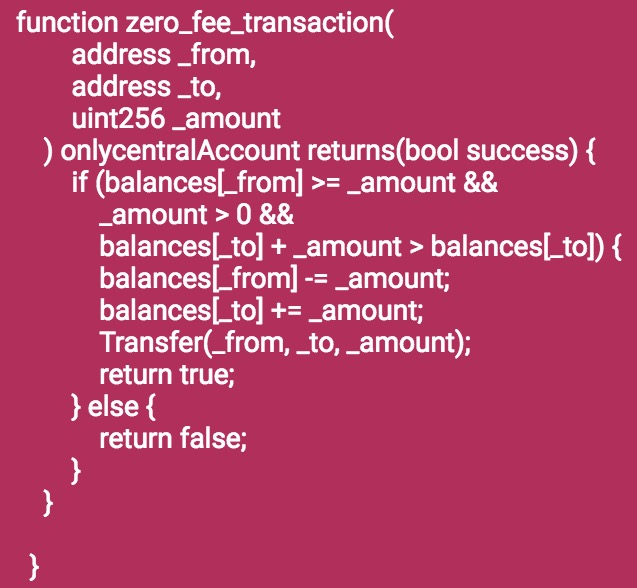
Start Up: The bot army, Samsung’s OLED questions, how hackers will use AI, Spotify hardware?, and more


Twitter has banned automated control of multiple accounts. (Finally?) Photo by untitled exhibitions on Flickr

»You can sign up to receive each day’s Start Up post by email (arriving at about 0800GMT each weekday). You’ll need to click a confirmation link, so no spam.«

A selection of 12 links for you. Will not mark wood. I’m @charlesarthur on Twitter. Observations and links welcome.

After Florida school shooting, Russian ‘bot’ army pounced • NY Times

Sheera Frenkel and Daisuke Wakabayashi:

»

When the Russian bots jumped on the hashtag #Parklandshooting — initially created to spread news of the shooting — they quickly stoked tensions. Exploiting the issue of mental illness in the gun control debate, they propagated the notion that Nikolas Cruz, the suspected gunman, was a mentally ill “lone killer.” They also claimed that he had searched for Arabic phrases on Google before the shooting. Simultaneously, the bots started other hashtags, like #ar15, for the semiautomatic rifle used in the shooting, and #NRA.

The bots’ behavior follows a pattern, said Mr. Morgan, one of the researchers who worked with the German Marshall Fund to create Hamilton 68, the website that monitors Russian bot and fake Twitter activity. The bots target a contentious issue like race relations or guns. They stir the pot, often animating both sides and creating public doubt in institutions like the police or media. Any issue associated with extremist views is a ripe target.

The goal is to push fringe ideas into the “slightly more mainstream,” Mr. Morgan said. If well-known people retweet the bot messages or simply link to a website the bots are promoting, the messages gain an edge of legitimacy.

An indictment made public on Friday by Mr. Mueller as part of the investigation into Russian interference in the election mentioned a Russian Twitter feed, @TEN_GOP, which posed as a Tennessee Republican account and attracted more than 100,000 followers. Messages from this now-deleted account were retweeted by the president’s sons and close advisers including Kellyanne Conway and Michael T. Flynn, the former national security adviser…

By Friday morning, the bots that pushed the original tweets around the Parkland shooting had moved on to the hashtag #falseflag — a term used by conspiracy theorists to refer to a secret government operation that is carried out to look like something else — with a conspiracy theory that the shooting had never happened.

By Monday, the bots had new targets: the Daytona 500 auto race in Daytona Beach, Fla., and news about William Holleeder, a man facing trial in the Netherlands for his suspected role in six gangland killings. It is unclear why.

«

link to this extract


Automation and the use of multiple accounts • Twitter Developer blog

Yoel Roth:

»

Keeping Twitter safe and free from spam is a top priority for us. One of the most common spam violations we see is the use of multiple accounts and the Twitter developer platform to attempt to artificially amplify or inflate the prominence of certain Tweets. To be clear: Twitter prohibits any attempt to use automation for the purposes of posting or disseminating spam, and such behavior may result in enforcement action.

In January, we announced that as part of our Information Quality efforts we would be making changes to TweetDeck and the Twitter API to limit the ability of users to perform coordinated actions across multiple accounts. These changes are an important step in ensuring we stay ahead of malicious activity targeting the crucial conversations taking place on Twitter — including elections in the United States and around the world.

Today, we’re sharing details about those changes, as well as important guidance for developers on how to comply with these rules…

Do not (and do not allow your users to) simultaneously post identical or substantially similar content to multiple accounts. For example, your service should not permit a user to select several accounts they control from which to publish a given Tweet.

«

Something of a stable door/horse move, but if it prevents amplification by automated accounts as above then it’s welcome. (And as some pointed out, this tells you how the Russians at the Internet Research Agency were doing it.)
link to this extract


Why we may soon be living in Alexa’s world • NY Times

Farhad Manjoo:

»

there are also advantages to Alexa’s model for ubiquity. Imagine if you could gain access to your smartphone on just about any screen you encountered. Move from your phone to your TV to your laptop to your car, and wherever you went, you’d find all your apps, contacts and data just there, accessible through the same interface.

That model isn’t really possible for phones. But because Alexa runs in the cloud, it allows for a wondrously device-agnostic experience. Alexa on my Echo is the same as Alexa on my TV is the same as Alexa on my Sonos speaker.

And it’s the same even on devices not in your home. Ford — the first of several carmakers to offer Alexa integration in its vehicles — lent me an F-150 pickup outfitted with Alexa. The experience was joyously boring: I called up Alexa while barreling down the highway, and although she was slower to respond than at home, she worked just the same. She knew my musical tastes, my shopping list, the apps and smart-home services I had installed, and just about everything else.

It was the best showcase of the possibilities of always-on voice computing. In the future, wherever you go, you can expect to talk to a computer that knows you, one that can get stuff done for you without any hassle.

There’s a lot of money in the voice game. For Amazon, Alexa’s rise could lead to billions of dollars in additional sales to its store, Mark Mahaney, an analyst at RBC Capital Markets, predicted recently. Amazon is thus not the only company chasing the dream of everywhere voice computing.

«

You can pretty much have that “all documents/contacts/etc” interface with Google or Apple; the trouble with voice remains that it’s so difficult to know what you can and can’t ask it. Is it “turn up the volume” or will “turn it up” suffice? And so on.
link to this extract


Artificial intelligence poses risks of misuse by hackers, researchers say • Reuters

Eric Auchard:

»

The study, published on Wednesday by 25 technical and public policy researchers from Cambridge, Oxford and Yale universities along with privacy and military experts, sounded the alarm for the potential misuse of AI by rogue states, criminals and lone-wolf attackers.

The researchers said the malicious use of AI poses imminent threats to digital, physical and political security by allowing for large-scale, finely targeted, highly efficient attacks. The study focuses on plausible developments within five years.

“We all agree there are a lot of positive applications of AI,” Miles Brundage, a research fellow at Oxford’s Future of Humanity Institute. “There was a gap in the literature around the issue of malicious use.”

Artificial intelligence, or AI, involves using computers to perform tasks normally requiring human intelligence, such as taking decisions or recognizing text, speech or visual images.

It is considered a powerful force for unlocking all manner of technical possibilities but has become a focus of strident debate over whether the massive automation it enables could result in widespread unemployment and other social dislocations.

The 98-page paper cautions that the cost of attacks may be lowered by the use of AI to complete tasks that would otherwise require human labor and expertise. New attacks may arise that would be impractical for humans alone to develop or which exploit the vulnerabilities of AI systems themselves.

«

I deal with this in a chapter in my forthcoming book Cyber Wars. It’s concerning.
link to this extract


Spotify is ‘on its way’ to creating its first hardware according to job ad • Musically

Stuart Dredge:

»

The role? “You will define and manage Distribution, Supply, Logistics, fulfillment and Customer Service for Hardware Products and work with partners to deliver the optimal Spotify experience to millions of users.”

Based in Stockholm, this isn’t a job about managing integrations with third-party devices: among the job’s duties is to “manage the supply chain, demand and forecast & inventory”.

Separate ads for a Senior Project Manager: Hardware Production and Project Manager: Hardware Production & Engineering are also indications that Spotify’s hardware plans are ramping up.

Many people will leap to ‘smart speaker’ as the assumption about what the first Spotify-branded hardware product will be. Which begs the question: if so, where will its voice assistant – its equivalent of Alexa, Google Assistant and Siri – come from?

«

We last heard about this in April 2017 and still there’s no word of what this might be. Wearable? Smart speaker? Dumb speaker? Wait for production to start in the Far East, then I give it a couple of weeks to a leak.
link to this extract


Apple’s iPhone X is the instant scapegoat for Samsung’s failure to win OLED orders from Chinese vendors • Patently Apple

Jack Purcher in an effective repudiation of yesterday’s piece on this topic:

»

In late January Patently Apple posted a report titled “Apple to end Samsung’s exclusive OLED contract and Shift to a new L-Shaped Battery with Increased Capacity.” In that report we also noted that China’s BOE and Sharp were vying for Apple’s OLED business.

Yet despite Samsung overestimating OLED display demand, the Nikkei Asian Review’s report adds: “To make matters worse, Chinese OLED panel makers are expanding production capacity, heating up the price competition even more.”

But somehow the blame continually shifts back to Apple being the real problem due to cutting back on orders for OLED display for calendar Q1. Even though iPhone demand annually drops after the holiday quarter, somehow it’s always viewed by the Nikkei that this is a shock and sign of trouble for Apple.

On February 8th we reported that in Q4 Apple surpassed Samsung to become the #1 smartphone brand in the world. I guess Samsung Display didn’t sell as many OLED displays to their own Samsung Electronics division. That very point was echoed by British Research company IHS which stated that “the number of OLED smartphone panels Samsung internally sources for its own smartphones fell year on year in 2017.”

Yet in the end, the Nikkei focuses back on Samsung’s OLED plant failures as being caused by Apple and forgets the reality that Samsung failed to win OLED orders from Chinese vendors like Oppo, Vivo or Xiaomi.

«

link to this extract


iPad 2018 rumors: Eurasian Economic Commission approves two new models for sale • Macworld

Michael Simon:

»

As first spotted by French site Consomac, the Eurasian Economic Commission has given approval to Apple to sell two new iPad models we’ve never seen before: A1893 and A1954. The EEC approves the sale of any products with encryption sold in Armenia, Belarus, Kazakhstan, Kyrgyzstan, and Russia.

We can’t glean too much from the model numbers themselves—the “A” model numbers cannot be directly translated into any particular feature or specification. But iPads of the same size and generation typically only differ in the last two numbers, meaning that A1893 and A1954 are probably different sizes, not just the Wi-Fi and Cellular versions of the same iPad.

Plausible? Apple often holds an event in March to announce new hardware, but it doesn’t do so every year. iPads often feature as part of that announcement. The timing of this certification suggests that Apple will hold a March event again this year and announce two iPads, though that does not preclude the company from also releasing an iPad or two later in the year. The regular lower-cost 9.7in iPad may get an annual refresh, and the iPad Mini is long overdue for an update. Apple is also said to be preparing a new high-end iPad with slim bezels and a TrueDepth camera module, though our guess would be that such a product would be announced later in the year.

While we already heard a rumor that the next round of iPads would support Face ID for unlocking, a report on iOS 12 in Bloomberg contains some some confirmation that Apple’s tablet will be adopting the iPhone X’s unique camera. Mark Gurman reports that Apple is working on a new iPad “that will have the required Face ID camera” to handle Animoji.

«

Doubt that the iPad mini will be updated. That part of the market has died.
link to this extract


Apple in talks to buy cobalt directly from miners • Bloomberg

Jack Farchy:

»

The move means Apple will find itself in competition with carmakers and battery producers to lock up cobalt supplies. Companies from BMW AG and Volkswagen AG to Samsung SDI Co. are racing to sign multiyear cobalt contracts to ensure they have sufficient supplies of the metal to meet ambitious targets for electric vehicle production. 

Australian Mines Ltd., developing the Sconi mine in Queensland state, this week agreed a cobalt and nickel supply deal with SK Innovation Co., South Korea’s top oil refiner, that’s worth about A$5bn ($3.9bn) at current prices, the Perth-based company said Wednesday in a presentation.

SK Innovation, which plans to use the raw materials at an EV battery manufacturing plant in Hungary, agreed to buy all of the project’s planned output for up to 13 years, according to the filing.

BMW is also close to securing a 10-year supply deal, the carmaker’s head of procurement told German daily FAZ in early February.

Cobalt is an essential ingredient in lithium-ion batteries for smartphones. While those devices use about eight grams of refined cobalt, the battery for an electric car requires over 1,000 times more. Apple has around 1.3 billion existing devices, while Apple Chief Executive Officer Tim Cook has been bullish about the prospects for electric vehicles.

The price of cobalt has more than tripled in the past 18 months to trade above $80,000 a metric ton. Two-thirds of supplies come from the Democratic Republic of Congo, where there has never been a peaceful transition of power and child labor is still used in parts of the mining industry.

«

Ethical challenges ahoy for Apple, then, if it does go direct to the DRC. Or could it make a difference to a poor, exploited country?
link to this extract


Money laundering via author impersonation on Amazon? • Krebs On Security

Brian Krebs:

»

Patrick Reames had no idea why Amazon.com sent him a 1099 form saying he’d made almost $24,000 selling books via Createspace, the company’s on-demand publishing arm. That is, until he searched the site for his name and discovered someone has been using it to peddle a $555 book that’s full of nothing but gibberish.

Reames is a credited author on Amazon by way of several commodity industry books, although none of them made anywhere near the amount Amazon is reporting to the Internal Revenue Service. Nor does he have a personal account with Createspace.

But that didn’t stop someone from publishing a “novel” under his name. That word is in quotations because the publication appears to be little more than computer-generated text, almost like the gibberish one might find in a spam email.

“Based on what I could see from the ‘sneak peek’ function, the book was nothing more than a computer generated ‘story’ with no structure, chapters or paragraphs — only lines of text with a carriage return after each sentence,” Reames said in an interview with KrebsOnSecurity.

The impersonator priced the book at $555 and it was posted to multiple Amazon sites in different countries. The book — which as been removed from most Amazon country pages as of a few days ago — is titled “Lower Days Ahead,” and was published on Oct 7, 2017.

Reames said he suspects someone has been buying the book using stolen credit and/or debit cards, and pocketing the 60% that Amazon gives to authors. At $555 a pop, it would only take approximately 70 sales over three months to rack up the earnings that Amazon said he made.

«

This is the sort of thing that would be really, really hard to eradicate.
link to this extract


The random walk of cars and their collision probabilities with planets • ArXiv

Hanno Rein, Daniel Tamayo, and David Vokrouhlicky:

»

On February 6th, 2018 SpaceX launched a Tesla Roadster on a Mars crossing orbit. We perform N-body simulations to determine the fate of the object over the next several million years, under the relevant perturbations acting on the orbit. The orbital evolution is initially dominated by close encounters with the Earth. The first close encounter with the Earth will occur in 2091. The repeated encounters lead to a random walk that eventually causes close encounters with other terrestrial planets and the Sun.

Long-term integrations become highly sensitive to the initial conditions after several such close encounters. By running a large ensemble of simulations with slightly perturbed initial conditions, we estimate the probability of a collision with Earth and Venus over the next one million years to be 6% and 2.5%, respectively. We estimate the dynamical lifetime of the Tesla to be a few tens of millions of years.

«

Well, you did ask.
link to this extract


Swype keyboards for Android & iOS discontinued as company focuses on business market • 9to5Google

Ben Lovejoy:

»

Nuance’s Swype keyboard apps for iOS and Android have been discontinued, as the company focuses its efforts on the business market.

The news was revealed when a Reddit user posted a message from Nuance support. Xda-developers did some checking and found that the same was true of the iOS keyboard:

»We are sad to announce that Swype Dragon for Android has faced end of development. Here is a statement from Swype Product Team:

Nuance will no longer be updating the Swype Dragon keyboard for Android. We’re sorry to leave the direct-to-consumer keyboard business, but this change is necessary to allow us to concentrate on developing our AI solutions for sale directly to businesses.«

Swype usage took a hit in 2016, when Google launched its Gboard keyboard. Alongside built-in search, the keyboard also supported Swype-style glide-typing.

«

Always difficult when you’re making something that is a feature more than a business.
link to this extract


Not again: Google Home Max can also damage wood furniture (but…) • Tom’s Guide

Mike Prospero:

»

Why hadn’t I noticed the Home Max’s white mark before, when Google’s speaker was sitting on my cabinet? Simple: I wasn’t using it with the silicone pad at the time.
Google ships the pad with the Max, but I had left the pad in the box, figuring it wasn’t that necessary. However, when devising this test, I decided to use the pad to see its effect. So, if you have or plan to purchase the Google Home Max, and want to place it on wood furniture, I would advise against using the silicone pad. We have reached out to Google for comment.

I still think the Sonos One, HomePod and Google Home Max (to a slightly lesser extent) deliver the best sound of all the smart speakers. When we put all three to the test, the Sonos One came out on top, but the Google Home Max was competitive, not only for its sound, but also for what you can do with Google Assistant. But if you purchase or own any of the speakers that can damage furniture, I advise placing it on a non-silicone pad or coaster.

«

OMG what a radical idea. I’m starting to get the feeling that applying a weight to a silicone pad on treated wood causes staining.
link to this extract


Errata, corrigenda and ai no corrida: none notified.

Start Up: Twitter and Facebook at bay, the teens opposing the NRA, Samsung cutting OLED output?, and more


Growing new teeth could be a matter of taking an Alzheimer’s drug. Photo by Chapendra on Flickr

»You can sign up to receive each day’s Start Up post by email (arriving at about 0800GMT each weekday). You’ll need to click a confirmation link, so no spam.«

A selection of 10 links for you. Not the subject of MPs’ letters. I’m @charlesarthur on Twitter. Observations and links welcome.

“Just an ass-backward tech company”: how Twitter lost the internet war • Vanity Fair

Maya Kosoff:

»

At the same time, her defenders say, [head of Twitter Trust & Safety, Del] Harvey has been forced to clean up a mess that Twitter should have fixed years ago. Twitter’s backend was initially built on Ruby on Rails, a rudimentary web-application framework that made it nearly impossible to find a technical solution to the harassment problem. If Twitter’s co-founders had known what it would become, a third former executive told me, “you never would have built it on a Fisher-Price infrastructure.” Instead of building a product that could scale alongside the platform, former employees say, Twitter papered over its problems by hiring more moderators. “Because this is just an ass-backward tech company, let’s throw non-scalable, low-tech solutions on top of this low-tech, non-scalable problem.”

Calls to rethink that approach were ignored by senior executives, according to people familiar with the situation. “There was no real sense of urgency,” the former executive explained, pointing the finger at Harvey’s superiors, including current CEO Jack Dorsey. “It’s a technology company with crappy technologists, a revolving door of product heads and CEOs, and no real core of technological innovation. You had Del saying, ‘Trolls are going to be a problem. We will need a technological solution for this.’” But Twitter never developed a product sophisticated enough to automatically deal with with bots, spam, or abuse.

«

I’ve known Del Harvey for years, as a journalist, so I’m probably a bit biased. But she’s not failing; Twitter’s problem is its drive for users instead of quality. It lives up to Mark Zuckerberg’s dismissive comment that “it’s a clown car that drove into a gold mine.”
link to this extract


Facebook battles new criticism after US indictment against Russians • WSJ

Robert McMillan:

»

The Twitter comments of Mr. Goldman, Facebook’s head of advertising, also fueled disagreement about the intent of the Russian efforts. One of Mr. Goldman’s tweets said “swaying the election was *NOT* the main goal” of the Russian ads, and that “the majority of the Russian ad spend happened AFTER the election.”

On Saturday, President Donald Trump cited Mr. Goldman’s comment in support of the idea that Russia’s actions didn’t affect the election.

Following criticism that he was obscuring the intent of the Russians, Mr. Goldman later tweeted that “the Russian campaign was certainly in favor of Mr. Trump.” He also dialed back some of his claims. “I am only speaking here about the Russian behavior on Facebook. That is the only aspect that I observed directly,” he tweeted.

Clint Watts, a fellow with the Foreign Policy Research Institute who studied the Russian influence campaign, said the ads bought on Facebook were only “a much smaller part of a very large effort.”

“Mr. Goldman should have stayed silent,” Mr. Watts said, adding that playing down the effect of the influence campaign risked further angering Americans. “The public is upset that they got duped on Facebook’s platform. Facebook got duped,” he said. “It makes it seem like they don’t get it.”

While Facebook’s role in the Russian campaign is in the spotlight, some researchers who have studied the efforts note that it was far from the only institution to fall short.

“Let’s not mince words. The Obama administration did not react quickly enough to this problem. The intelligence community did not react quickly enough to this problem,” said Thomas Rid, professor of strategic studies at Johns Hopkins University.

«

link to this extract


Scientists have found a drug that can repair cavities and regrow teeth • World Economic Forum

Kara Lant:

»

Dental fillings may soon be left in the ash heap of history, thanks to a recent discovery about a drug called Tideglusib. Developed for and trialled to treat Alzheimer’s disease, the drug also happens to promote the natural tooth regrowth mechanism, allowing the tooth to repair cavities.

Tideglusib works by stimulating stem cells in the pulp of teeth, the source of new dentine. Dentine is the mineralized substance beneath tooth enamel that gets eaten away by tooth decay.

Teeth can naturally regenerate dentine without assistance, but only under certain circumstances. The pulp must be exposed through infection (such as decay) or trauma to prompt the manufacture of dentine. But even then, the tooth can only regrow a very thin layer naturally—not enough to repair cavities caused by decay, which are generally deep. Tideglusib changes this outcome because it turns off the GSK-3 enzyme, which stops dentine from forming.

In the research, the team inserted small, biodegradable sponges made of collagen soaked in Tideglusib into cavities. The sponges triggered dentine growth and within six weeks, the damage was repaired. The collagen structure of the sponges melted away, leaving only the intact tooth.

«

link to this extract


Here’s what it’s like at the headquarters of the teens working to stop mass shootings • Buzzfeed

Remy Smidt:

»

behind the scenes, they’re also just kids — sitting in a circle on the floor in the home of one of their parents, eating a batch of baked pasta, tweeting at each other, and comparing which celebrity just shared their post. There’s laughter and tears, and “Mr. Brightside” by the Killers plays briefly, but it’s also remarkably businesslike. There’s work to do and a seemingly endless number of phone calls to answer.


Remy Smidt/BuzzFeed News

“We slept enough to keep us going, but we’ve been nonstop all day, all night,” said Sofie Whitney, 18, a senior who estimated that she has spent 70% of the past 48 hours speaking with reporters. “This isn’t easy for us, but it’s something I need to do.”

Whitney told BuzzFeed News that “[she] wouldn’t like to return to school until the federal government starts making some progress.” Other student organizers have said the same thing. When asked how her parents might feel about this, Whitney responded, “I haven’t really discussed this with my parents, but I’ll deal with them.”

On Tuesday, the teens will travel to Tallahassee, Florida’s state capital, to push for a change in gun laws. On Wednesday night CNN will air a special town hall meeting with students and lawmakers. The teens are also planning the “March for Our Lives,” a nationwide March 24 demonstration that they hope will serve as the movement’s coming-out party.

«

The Tuesday attempt (to get assault rifle sales stopped) failed. But these kids are close to voting age, and they’re angry. There’s a wind blowing: 20 years ago, same-sex marriage wasn’t backed by a majority. Now, it is, quite apart from the legal side.

And guns are owned by a minority of Americans.
link to this extract


The car of the future will sell your data • Bloomberg

Gabrielle Coppola:

»

Picture this: You’re driving home from work, contemplating what to make for dinner, and as you idle at a red light near your neighborhood pizzeria, an ad offering $5 off a pepperoni pie pops up on your dashboard screen.

Are you annoyed that your car’s trying to sell you something, or pleasantly persuaded? Telenav Inc., a company developing in-car advertising software, is betting you won’t mind much. Car companies—looking to earn some extra money—hope so, too.

Automakers have been installing wireless connections in vehicles and collecting data for decades. But the sheer volume of software and sensors in new vehicles, combined with artificial intelligence that can sift through data at ever-quickening speeds, means new services and revenue streams are quickly emerging. The big question for automakers now is whether they can profit off all the driver data they’re capable of collecting without alienating consumers or risking backlash from Washington.

“Carmakers recognize they’re fighting a war over customer data,” said Roger Lanctot, who works with automakers on data monetization as a consultant for Strategy Analytics. “Your driving behavior, location, has monetary value, not unlike your search activity.”

Carmakers’ ultimate objective, Lanctot said, is to build a database of consumer preferences that could be aggregated and sold to outside vendors for marketing purposes, much like Google and Facebook do today.

«

Whooaaa horsey. First: Google and Facebook do not sell your data. They sell anonymised access to profiles – people searching for lobsters, or people who own old cars and live in Uttoxeter.

Second, I recall a lot of “smartphones with Bluetooth will mean retailers can beam special offers to you as you walk past in the street!” Hasn’t happened.

Third, if cars were to do this, I think they’d get hacked pretty fast to stop them doing it.
link to this extract


Israel confirms it will tax bitcoin as property • Coindesk

Stan Higgins:

»

Israel’s government confirmed Monday that it would treat bitcoin and other cryptocurrencies as a kind of property for tax purposes.

The notice confirms past indications that the Tax Authority will regard cryptocurrencies as “a property, not a currency”, making it therefore taxable as such. The Authority’s position was first detailed in a draft circular issued in January of this year.

The circular explains that profits from cryptocurrencies will be subject to capital gains tax at rates between 20% and 25%, while individuals mining or trading cryptocurrencies in connection with businesses must pay a 17% value-added tax (VAT) in addition to capital gains tax.

That latter aspect – excluding broad swaths of investors from potential VAT charges – is in line with a trend seen in recent years since the issue gained prominence. The Israeli government started exploring the taxation of cryptocurrencies as early as 2013.

«

OK – but how will they determine that someone owns bitcoin in any appreciable amount?
link to this extract


Airfoil for Mac 5.7 rocks the HomePod • Rogue Amoeba

Paul Kafasis (of indie developer Rogue Amoeba:

»

Airfoil includes a built-in equalizer that lets you tweak your audio to get it just right. The HomePod sounds great, but you may wish to tone down its bass. Airfoil’s “Bass Reducer” preset is a great place to start.

Of course, if you want to go the other direction and really feel the music, the Bass Booster preset can help. Airfoil’s equalizer includes almost two dozen presets, and you can create and save custom presets as well.

Airfoil for Mac can even receive direction directly from the HomePod. That means you can use “Hey Siri” or the volume buttons to adjust playback levels. Even better, you can pass playback commands from the HomePod through Airfoil and on to supported sources. A single tap on the top of the HomePod will toggle play/pause, a double-tap will skip to the next track, and a triple-tap will jump back. Addressing Siri with these same commands works as well.

If you’re fortunate enough to have two (or more) HomePods, you can use Airfoil to send to all of them at once, with playback happening in sync. Airfoil has long been able to play audio to multiple devices in sync, and playback to the HomePod is no exception. Apple has touted multi-speaker sync as part of their delayed AirPlay 2 protocol, but it’s already possible today using Airfoil.

«

Not sure at this point why Apple hasn’t bought Rogue Amoeba. Its apps are so useful if you’re doing anything involving sound – which is a big part of its pro and semi-pro audience.
link to this extract


Tesla’s cloud hacked, used to mine cryptocurrency • Gizmodo

Dell Cameron:

»

In an email to Gizmodo, a Tesla spokesperson said there is “no indication” the breach impacted customer privacy or compromised the security of its vehicles.

“We maintain a bug bounty program to encourage this type of research, and we addressed this vulnerability within hours of learning about it,” a Tesla spokesperson told Gizmodo in an email. “The impact seems to be limited to internally-used engineering test cars only, and our initial investigation found no indication that customer privacy or vehicle safety or security was compromised in any way.”

According to RedLock, mining cryptocurrency is likely a more valuable use of Tesla’s servers than the data it stores.

“The recent rise of cryptocurrencies is making it far more lucrative for cybercriminals to steal organizations’ compute power rather than their data,” RedLock CTO Gaurav Kumar told Gizmodo. “In particular, organizations’ public cloud environments are ideal targets due to the lack of effective cloud threat defense programs. In the past few months alone, we have uncovered a number of cryptojacking incidents including the one affecting Tesla.”

Kumar said the attackers leveraged the Stratum mining protocol and evaded detection by hiding the true IP address of the mining pool server behind CloudFlare and keeping CPU usage low, among other tactics.

“Given the immaturity of cloud security programs today, we anticipate this type of cybercrime to increase in scale and velocity,” Kumar said.

«

Tired: hacking data. Wired: hacking CPUs to mine.
link to this extract


Samsung to slash OLED panel output as iPhone X slumps • Nikkei

Kenichi Yamada:

»

Samsung Electronics is to slash production at its OLED panel plant in response to customer Apple’s decision to reduce output of the iPhone X following weak demand.

Samsung Display now plans to manufacture organic light-emitting diode panels for 20 million or fewer iPhones at the South Chungcheong site in the January-March quarter. The initial goal was to supply panels for 45 million to 50 million iPhones.

The company has yet to decide its production target for the April-June period, but a further cutback may be in store.

The new target will reduce production at the plant to around 60% of the original plan. When it comes to the facility dedicated to making panels for Apple, the rate will fall to 50% or lower.

The Samsung group unit is looking to offset the impact by securing more orders from Chinese and other customers.

«

Could be that Apple hit its targets early – or that it really has tapped out the buyers for the iPhone X. Or, perhaps, it has found an alternative OLED supplier – everyone has been expecting LG to come on stream.
link to this extract


Say goodbye to Android Pay and hello to Google Pay • Techcrunch

Frederic Lardinois:

»

At first glance, the new Google Pay app is basically a redesign of Android Pay, with a look and feel that adheres closer to Google’s own Material Design guidelines than the original. In terms of functionality, there isn’t all that much here that’s new. One notable change, though, is that the Google Pay home screen now shows you relevant stores around you where you can pay with Google Pay. That list is personalized, based on previous stores where you used the service, as well as your location. In addition, the home screen shows you all of your recent purchases and you can still add all of your loyalty cards to the app.

As Google’s VP of Product Management for Payments, Pali Bhat, told me, the team really wanted to make it extremely easy to get started with Google Pay.

«

Personalising the list is a neat touch.
link to this extract


Errata, corrigenda and ai no corrida: none notified.

Start Up: Huawei’s no-Mate, illegal deepfaking?, Facebook’s Group problem, Cape Town’s true water trouble, and more


Centaurs! They’re the future, at least if you want humans to get on with AI. Photo by Mike S on Flickr

»You can sign up to receive each day’s Start Up post by email (arriving at about 0800GMT each weekday). You’ll need to click a confirmation link, so no spam.«

A selection of 10 links for you. Reflective. I’m @charlesarthur on Twitter. Observations and links welcome.

How to become a centaur • MIT Journal of Design and Science

Nicky Case on the idea of “centaurs” – humans using AI, for example in chess tournaments where the human, advised by the AI, picks a move:

»

won’t AI eventually get better at the dimensions of intelligence we excel at? Maybe. However, consider the “No Free Lunch” theorem, which comes from the field of machine learning itself. The theorem states that no problem-solving algorithm (or “intelligence”) can out-do random chance on all possible problems: instead, an intelligence has to specialize. A squirrel intelligence specializes in being a squirrel. A human intelligence specializes in being a human. And if you’ve ever had the displeasure of trying to figure out how to keep squirrels out of your bird feeders, you know that even squirrels can outsmart humans on some dimensions of intelligence. This may be a hopeful sign: even humans will continue to outsmart computers on some dimensions.

Now, not only does pairing humans with AIs solve a technical problem — how to overcome the weaknesses of humans/AI with the strengths of AI/humans — it also solves that moral problem: how do we make sure AIs share our human goals and values?

And it’s simple: if you can’t beat ‘em, join ‘em!

The rest of this essay will be about AI’s forgotten cousin, IA: Intelligence Augmentation. The old story of AI is about human brains working against silicon brains. The new story of IA will be about human brains working with silicon brains. As it turns out, most of the world is the opposite of a chess game:

Non-zero-sum — both players can win.

«

link to this extract


Huawei Mate 10 Pro review: software sadness • The Verge

Dan Seifert:

»

as with any phone, the hardware is only half the story, and software is generally what makes or breaks an experience. In the case of the Mate 10 Pro, Huawei’s software breaks it.

The Mate 10 Pro runs Android 8.0 Oreo with Huawei’s EMUI user interface on top of it, and it’s wildly different from the version of Android you find on a Pixel or other modern phones. The best way I can describe it is a poorly made knockoff of iOS.

Huawei has customized almost everything about Android, and often, not in a good way. For example, you can’t expand notifications on the lock screen, so deleting an email or marking a to-do complete can’t be done without unlocking the phone. The settings menu, messaging app, and share sheet have been lifted right out of iOS and shoehorned onto Android. For some reason, most of the apps in the share sheet are hidden by default, forcing extra taps and swipes just to see them all.

Sure, you can change some of these things by downloading a different launcher or messaging app, but you can’t change things like the quick settings menu that doesn’t match the rest of the notification shade or that awful share sheet. You can’t turn on an option to make notifications on the lock screen more useful. On top of that, there are frustrating bugs — even when I downloaded another launcher and attempted to use that, the Mate 10 would frequently reset itself to Huawei’s own launcher.

This isn’t the kind of software experience anyone should have on an $800 phone, especially when there are already so many better options available. It’s bad enough that I honestly think nobody should buy the Mate 10 Pro because of its software, especially not at this price.

«

link to this extract


Tool for journalists: Flourish, for creating data visualisations without coding • Journalism.co.uk

»

What is it? A platform for data visualisation and storytelling, without the need for the user to code.

Cost: Free, with premium services priced at £39 per month. Flourish is working with Google News Lab to offer newsrooms free premium accounts, which include features such as HTML downloads, private projects and custom templates.

How is it of use to journalists? Although it may be true that journalists in 2018 are expected to be jacks of all trades, able to report, film, take and edit photos, produce podcasts and on top of that be social media hacks, there are many tools out there designed to help reporters with their work.

Web development is a sought after skill in newsrooms, but coding can seem daunting to journalists who haven’t had any training in basic programming.

Flourish, which was previously available in private beta but has recently opened to the public, aims to remove the complex nature of coding, helping journalists produce with data visualisations without having to enlist the help of programmers to design interactive stories for them.

After creating an account with their email address, users get access to core templates, like a variety of maps and charts. They can insert the data either directly into the webpage or by uploading an Excel, CSV or TSV file, before being able to download and embed the creations on their websites for public view.

The visualisations can be produced on mobile and desktop, and can also be saved for offline use, useful if you want to add them to a project on social media or to an offline conference presentation.

«

Looks interesting, and having something to do visualisations easily is always welcome.
link to this extract


US lawmakers worry about rise of fake video technology • The Hill

Ali Breland:

»

Senator Ron Wyden (Democrat, Oregon), one of the most vocal members of Congress on tech issues, painted a grim picture about what the advances could mean for the future of discerning truth in media. 

“Since we can’t rely on the responsibility of individual actors or the platforms they use, I fully expect there will be a proliferation of these sorts of fictions to a degree that nearly drowns out actual facts,” Wyden told The Hill.

“For those who value real information, there will still be some reliable publications and news outlets, and their credibility will need to be guarded all the more intently by professional journalists,” he added.

Rep. Adriano Espaillat (Dem, NY), who has targeted fake news in the past through legislation, also told the The Hill that he’s concerned. 

Espaillat said that he is worried about the potential for foreign governments to use counterfeit audio and videos to manipulate the American public.

Lawmakers’ fears are backed up by concern from experts, who say that manipulated videos are another dangerous addition to the rising trend of fake news.

“Democracy depends on an informed electorate, and when we can’t even agree on the basics of what’s real, it becomes increasingly impossible to have the hard conversations necessary to move the country forward,” said Renee DiResta, one of the first researchers to sound the alarm on how social media platforms were being manipulated by foreign actors. 
“The cumulative effect of this is a systemic erosion of trust, including trust between people and their leaders,” she added.

«

Encouraging that they’re trying to get in front of this. That hardly ever happens. And Renee DiResta is always worth seeking out – she sounded the alarm over anti-vaccine idiots on Facebook, and how its echo chamber enabled them.
link to this extract


Like Peter Thiel, tech workers feel alienated by Silicon Valley ‘echo chamber’ • WSJ

Douglas MacMillan:

»

Sometimes Silicon Valley venture-capital investors and startup founders “have a certain way of thinking, and if you don’t fit into that way of thinking you’re not in the cool club,” said Ms. Kasireddy, who declined to state her political beliefs but said they didn’t influence her decision to move. She also said she realized many of the resources she needed to build her next project—a blockchain startup—didn’t require her to be in Silicon Valley.

Apart from ideological issues, many are being driven away from the Bay Area by soaring housing costs and increasing traffic congestion, a 2016 survey by the Bay Area Council suggested. Of the 1,000 registered voters from the nine counties making up the Bay Area, 40% said they were considering leaving the region, citing the cost of living, traffic and a lack of availability of housing.

Still, there are signs that the political discussions pervading workplaces over the past two years have alienated a section of the workforce. According to a recent survey by Lincoln Network, an advocacy group for conservatives and libertarians in the tech sector, 31% of the 387 tech workers polled said they know someone who didn’t pursue or left a career in tech because they saw a conflict in viewpoints with their employer or colleagues. Among respondents who identified themselves as “very conservative,” that number was 59%.

Dan Hackney, a 31-year-old who describes his political views as adhering to Ayn Rand’s objectivist philosophy, said he left his job as a software engineer at Alphabet Inc.’s Google in January, after growing frustrated with what he saw as a lack of tolerance for conservative views at the company.

He said he was surprised when, shortly after Donald Trump was elected president in November 2016, the firm canceled a companywide product demonstration and instead held an all-hands meeting to talk about the results of the election.

Mr. Hackney said he doesn’t support Mr. Trump, but added that he worried that Google’s co-founders, Larry Page and Sergey Brin, who attended the meeting, were setting a tone that it was OK to exclude certain types of political views from the dialogue in the workplace.

«

Libertarians and conservatives need advocacy in Silicon Valley? I thought it was the heartland of rapacious libertarian capitalism.
link to this extract


Why the iPhone is losing out to Chinese devices in Asia • WSJ

Newley Purnell:

»

In China, Apple’s market share is roughly 8% now from 13% in 2015, research firm Canalys says. In India—which last year overtook the US to become the world’s second-biggest smartphone market—Apple has had just a 2% market share since 2013. Apple’s shipments to India fell last quarter compared with the year before, a rare contraction, Canalys says.

The iPhone maker’s market share in Indonesia, home to some 260 million people, has fallen to 1% from 3% in 2013. Apple’s market share has also dropped in the Philippines and Thailand, and has remained static in Malaysia and Vietnam.

Meanwhile, Apple’s Chinese rivals are gobbling up customers. Beijing-based Xiaomi has jumped to 19% of India’s market today from just 3% in 2015. While much of that rise has been on the back of inexpensive phones, increasingly it is putting more expensive devices on the market that offer the look, feel and functionality of iPhones and even a few extra features.

Chitra Patricia, a 27-year-old Jakartan, picked an Oppo over Apple for its selfie features.

Oppo’s “selfie expert” F3 offers options such as a front-facing camera for selfies with wide angle that lends itself to “wefies,” or group shots with several people crammed into the frame. The phone also has a “beautify” function that smooths out users’ selfies, making them appear younger and more glamorous.

“It can capture around a dozen people in one ‘wefie,’” making it great for gatherings, said Ms. Patricia.

Xiaomi has an edge in many markets because it can customize for each country while Apple creates the same products for everyone, said Jai Mani, Xiaomi’s product manager for India.

«

The debate is whether those people who buy Xiaomi or OPPO or vivo now are lost to Apple forever, or if there’s some possibility that they will shift to it in the future. That requires software and apps that they want (the hardware is a wash). The signs there are mixed, at best.
link to this extract


The Mueller indictment exposes the danger of Facebook’s focus on Groups • The Verge

Casey Newton:

»

Last year, Facebook said 100 million people are in what the company calls “very meaningful” groups, or groups that are a primary part of the user’s social networking experience and extend to offline interactions. A parenting group might be very meaningful to a young family, for example. In his post last year, Zuckerberg said Facebook hoped to increase the number of people in very meaningful groups to 1 billion.

But what if those very meaningful groups are run by foreign actors working to make the country more polarized? It’s impossible to say how “meaningful” the groups Russia created were to its members, but the troll farms worked to create pages around subjects that generate the maximum level of emotion. Often, they were tied to identity. For immigration matters, there was a page called “Secured Borders.” For Black Lives Matter, there was “Blacktivist.” For religion, there were “United Muslims of America” and “Army of Jesus.” By 2016, those pages collectively had hundreds of thousands of American followers…

… the dark side of “developing the social infrastructure for community” is now all too visible. The tools that are so useful for organizing a parenting group are just as effective at coercing large groups of Americans into yelling at each other. Facebook dreams of serving one global community, when in fact it serves — and enables —countless agitated tribes. The more Facebook pushes us into groups, the more it risks encouraging the kind of polarization that Russia so eagerly exploited.

«

link to this extract


Facebook turned its two-factor security ‘feature’ into the worst kind of spam • Gizmodo

Kate Conger:

»

Sometimes, Facebook will send emails to users warning them that they’re having problems logging into their accounts, Bloomberg reported last month. “Just click the button below and we’ll log you in. If you weren’t trying to log in, let us know,” the emails reportedly read. Other times, Facebook will ask for a user’s phone number to set up two-factor authentication—then spam the number with notification texts.

I’ve been getting these text-spam messages since last summer, when I set up a new Facebook account and turned on two-factor authentication. I created the new profile with somewhat vague intentions of using it for professional purposes—I didn’t like the idea of messaging sources from my primary Facebook account, where they could flip through pictures of my high school prom or my young nephews. But I didn’t end up using the profile often, and I let it sit mostly abandoned for months at a time.

At first, I only got one or two texts from Facebook per month. But as my profile stagnated, I got more and more messages. In January, Facebook texted me six times—mostly with updates about what my ex was posting. This month, I’ve already gotten four texts from Facebook. One is about a post from a former intern; I don’t recognize the name of one of the other “friends” Facebook messaged me about.

The texts are a particularly obnoxious form of spam, and instead of making me want to log into Facebook, they remind me why I’m avoiding it. It’s painful to see my ex’s name popping up on my phone all the time, and while my intern was great at her job, I’m not invested in keeping up with her personal life.

«

The texts will actively turn people away from using 2FA, which is a really bad move. (You can use the Authenticator app to do 2FA for Facebook, rather than letting them text. They still haven’t figured out how to spam you there.)
link to this extract


What’s actually behind Cape Town’s water crisis • The Atlantic

Richard Poplak explains that lack of rain is only part of it:

»

Since 2009, the Western Cape, of which Cape Town is the capital, has been governed by the Democratic Alliance (DA), the official opposition to the African National Congress (ANC). (A DA-led coalition won Cape Town from the ANC in 2006. They now run the city outright.) The DA is a strange beast, a party with a white-dominated federal executive, and, until 2015, a white leader. There’s a longstanding perception that the party serves the white population’s agenda, described by its enemies as maintaining economic apartheid at the expense of black advancement—a notion that Cape Town’s spatial divisions reinforce. (The party’s former leader, Helen Zille, who has also served as Cape Town’s executive mayor, has a habit of posting tweets extolling the benefits of colonialism, which hasn’t helped matters much.) Culturally and politically, the Cape is a world apart from the rest of South Africa.

Accordingly, the DA has long pitched itself to voters as a “clean” version of the horrifically corrupt ANC—it self-identifies as a liberal, social-democratic party in the stodgy German mold. Back when the ANC ran Cape Town, the rains fell mostly on schedule, and planning for the worst took a back seat to systemic corruption. The DA promised that it would do better. Instead, it has been bad, but in its own special ways. Its near-messianic adherence to fiscal rectitude has meant that local bureaucrats have tended to ignore repeated warnings from civil engineers and climate scientists, who insisted that Cape Town’s water infrastructure, which relies exclusively on six dams in parched catchment areas, would not be able to meet demand should rainfall patterns change due to climate change. Theewaterskloof Dam, the biggest and most vital feeder site, is in an area of the Western Cape that has been subject to creeping desertification for at least a decade. It is currently at 11.7% to 12.5% of its capacity, and effectively unusable.

The drought is so severe that planning for it would take genuine governmental prescience. But over the years, the Cape Town government has studiously ignored reams of data and studies readily available in the public domain.

«

When economic dogma reigns… in the short term, expect unrest and disease. In the less short term, higher food prices and unrest. Climate change has consequences.
link to this extract


Where is Elon Musk’s Tesla Roadster with Starman? • Where Is Roadster

Ben Pearson (who isn’t anything to do with Tesla), using data from Nasa’s JPL Horizons:

»

where is this vehicle? The current location is 2,295,742 miles (3,694,640 km, 0.025 AU) from Earth, moving away from Earth at a speed of 6,732 miles/hour (10,835 km/hour, 3.01 km/s).

A plot of the Tesla Roadster's path through space
The Tesla Roadster (space edition) is on the green path; the picture shows its closest approach to Mars for a while – in 2020.

The car is 137,198,709 miles (220,799,988 km, 1.476 AU) from Mars, moving toward the planet at a speed of 42,967 miles/hour (69,149 km/hour, 19.21 km/s).

«

All those numbers are out of date now. Visit again regularly! And note from his graphic that it looks like its closest approach to Mars will be October 2020. Not quite close enough to, er, park though.
link to this extract


Errata, corrigenda and ai no corrida: none notified.