Start Up: Facebook’s smart speakers (with screens?), Russia’s internet farm, China’s piece of the US, and more


Here’s your new internet router! Take care turning it off and on again. Photo by Andi Sidwell on Flickr

»You can sign up to receive each day’s Start Up post by email (arriving at about 0800GMT each weekday). You’ll need to click a confirmation link, so no spam.«

A selection of 11 links for you. Thank Workflow + Pythonista. I’m @charlesarthur on Twitter. Observations and links welcome.

A Chinese casino has conquered a piece of America • Bloomberg

Matthew Campbell on the Chinese casino being built on Saipan, a tiny island in the Pacific that is even so part of the US:

»

So many laborers were getting hurt that [Dr] Rohringer’s colleagues began keeping an unofficial spreadsheet, separate from standard hospital records: a grim catalog of broken bones, lacerations, puncture wounds, dislocated limbs, and eyes penetrated by flying metal. The dead man Rohringer saw was not, of course, a tourist who’d stumbled over a railing—he was a builder named Hu Yuanyou, and he’d plummeted from a scaffold. His colleagues hadn’t called 911; instead, they’d pulled the work clothes off his broken body in a clumsy attempt to obscure his identity. The less that outsiders learned about the casino, the better.

Hu died building what’s become, on paper, the most successful gambling operation in history. In the first half of 2017, table for table, Imperial Pacific turned over nearly six times more cash than the fanciest gaming facilities in Macau, which themselves dwarf the activity in Las Vegas. And that was before Imperial Pacific opened its lavish megacasino in July.

Given Macau’s status as a hub for industrial-scale money laundering, the Saipan figures have left gaming veterans astonished that they could be generated on U.S. soil, under Washington’s ostensible oversight. Eight casino executives and analysts interviewed for this story, all with extensive experience of the Asian gaming trade, said they saw no way such volumes could be generated legitimately. Asked if there could be a benign explanation for such instantaneous success at a casino more than three hours’ flight from any major city, on a drowsy island where the best hotel is a 1970s-era Hyatt, one of the executives burst out laughing.

Per capita, there’s almost certainly more Chinese money moving through Saipan than anywhere else in the world.

«

Boardwalk Empire, Pacific version.
link to this extract


Hacker group makes $3m by installing Monero miners on Jenkins servers • Bleeping Computer

Catalin Cimpanu:

»

Hackers are targeting Jenkins, a continuous integration/deployment web application built in Java that allows dev teams to run automated tests and execute various operations based on test results, including deploying new code to production servers. Because of this, Jenkins servers are extremely popular with both freelance web developers, but also with large enterprises.

On Friday, Israeli security firm Check Point announced it uncovered the footprint of a large hacking operation targeting Jenkins servers left connected to the Internet.

Attackers were leveraging CVE-2017-1000353, a vulnerability in the Jenkins Java deserialization implementation that allows attackers to run malicious code remotely without needing to authenticate first.

Check Point says hackers used this vulnerability to make Jenkins servers download and install a Monero miner (minerxmr.exe).

The miner was being downloaded from an IP address located in China and assigned to the Huaian government network. It is unclear if this is the attacker’s server, or a compromised server used to host the miner on behalf of the hackers.

The attackers have been active for months. This has allowed them to mine and already cash out over 10,800 Monero, which is over $3.4m, at the time of writing.

«

Hardly going out on a limb to suggest it’s either Chinese or North Korean hackers.
link to this extract


Facebook to launch two smart speakers in July 2018 • Digitimes

Aaron Lee and Willis Ke:

»

Facebook is set to officially foray into the global smart speaker market in mid-2018 by launching two new models, codenamed Aloha and Fiona – both with 15-inch touchscreens – in July at the latest, with the devices positioned as a way to allow family and friends to stay in touch with video chat and various social features, according to industry sources.

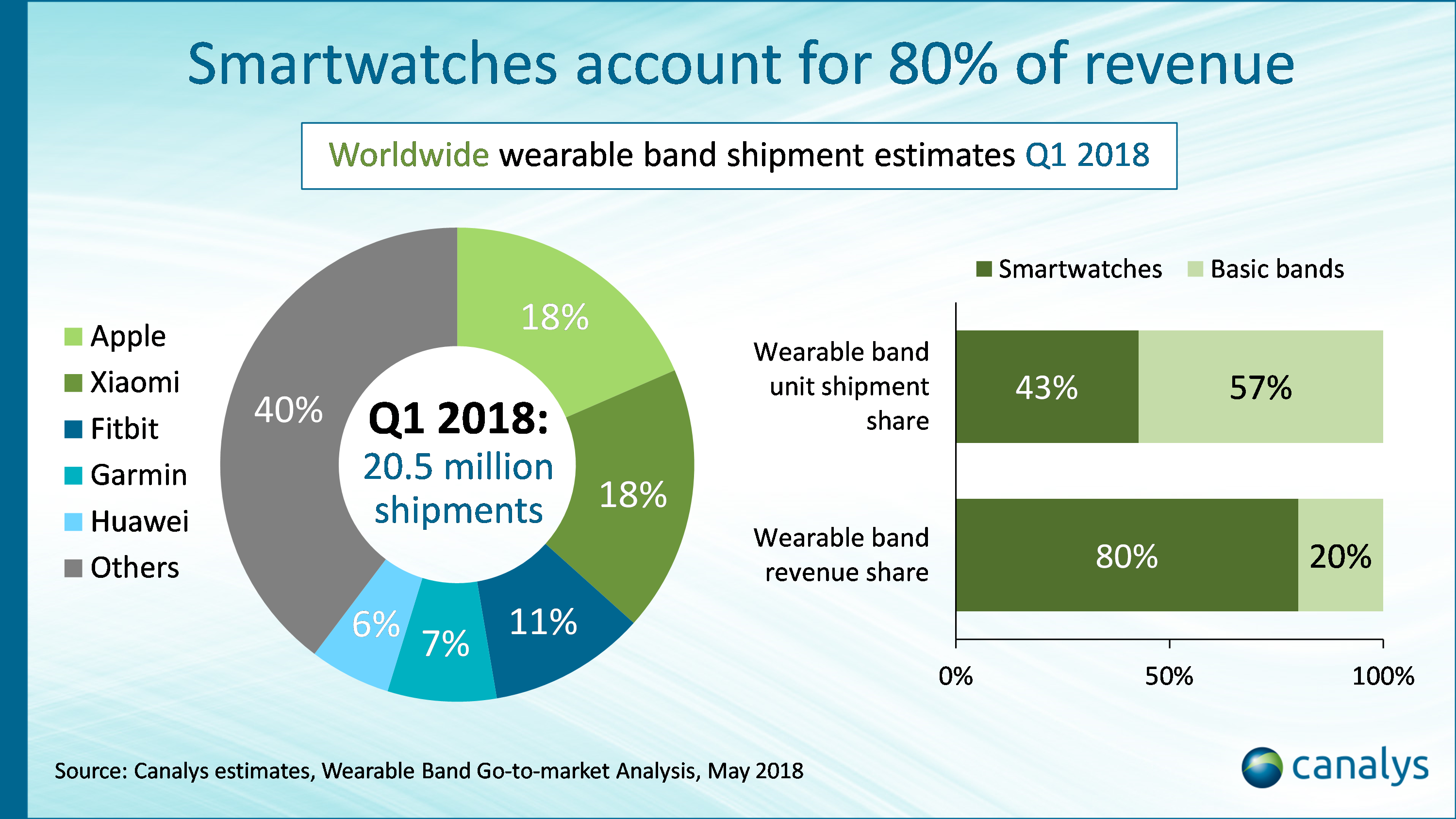
The sources said that the Facebook move is expected to further heat up the global smart speaker market, which has been crowded with heavyweight players, including top supplier Amazon and other tech giants such as Google, Microsoft, Apple and many China players including Alibaba. According to estimates by market researcher Canalys, the global market sales of smart speakers are likely to double to over 50 million units in 2018 from 2017.

Supply chain sources said that Facebook was originally slated to release the devices in May, but has decided to reschedule the launch to allow more time for perfecting the acoustic quality of the gadgets and software modification.

The two models will be fitted with 15-inch in-cell touchscreen panels reportedly to be sourced from LG Display, while Taiwan’s Pegatron is also reported to be the sole contract assembler of the devices. But both firms declined to comment on matters concerning clients.

The sources said that the Aloha model is more sophisticated than Fiona, both designed by Facebook’s Building 8 hardware lab. The Aloha model, to be marketed under the official name Portal, will use voice commands but will also feature facial recognition to identify users for accessing Facebook via a wide-angle lens on the front of the device.

«

1) a 15-inch touchscreen? Isn’t that what’s known as a “tablet”?
2) Will it do more than Facebook – will it do the rest of the web?
3) recall that Facebook’s last foray into hardware (the HTC-made One phone) was an epic failure. This feels very me-too.
link to this extract


Spires for hire in UK government broadband deal with Church of England • Bloomberg

Angelina Rascouet:

»

The Church of England struck a deal with the UK government departments to encourage the church to “use its buildings and other property to improve broadband, mobile and wifi connectivity for local communities,” the Department for Digital, Culture, Media and Sport said in a statement on Sunday.

The accord, also involving the Department for the Environment, Food and Rural Affairs, expands on an initiative that already exists in some dioceses in the UK including Chelmsford and Norwich.

“Our work has significantly improved rural access to high-speed broadband,” Bishop Stephen Cottrell of Chelmsford said in the statement.

About 65% of Anglican churches and 66% of parishes in England are in rural areas, according to the government.

The accord includes rules to ensure that any telecommunication infrastructure used doesn’t affect the character and architecture of the churches, according to the statement. The DCMS also said similar deals could be made with other religious communities.

The announcement follows last year’s pledge by the UK government that no part of the country or group in society should be without adequate connectivity, a pledge that includes the complete roll-out of 4G and superfast broadband by 2020.

«

Would love to know if any money is changing hands here. (Fundraising for church spire maintenance is a trope of British rural life, with giant thermometers of funds raised displayed at churches, and usually woefully far from their target.) This is a good way though for companies to bypass BT’s swingeing charges for use of its ducts and poles.
link to this extract


Trolls on twitter: how mainstream and local news outlets were used to drive a polarized news agenda • Medium

Jonathan Albright has done extensive (as in, really extensive work on how (Russian-controlled?) troll accounts went to work in the US election:

»

The chart below is the top-line breakdown of where these 11-plus thousand external links in my set of 36.5k troll tweets from 2016 pointed to. This includes the expanded short URLs and redirects. This shows the news outlets the troll accounts (through tweeting, retweeting, and tweet-quoting) tended to re-broadcast from the middle of 2016 through election day:


Top 25 most-linked news sources across 11.5k troll tweets (using thousands of expanded short links)

Looking at this breakdown, a result from this sample of tens of thousands of tweets is that the most-shared news outlets from 11.5k links across 388 troll accounts in the six months leading up to the election isn’t your typical hyper-partisan “fake news.”

Sure, Breitbart ranks first, but it’s followed by a long list of what many would argue are credible — if not mainstream — news organizations, as well a surprising number of local and regional news outlets.

Another result from this analysis is the effect of “regional” troll accounts, aka the fake accounts with a city or region name in the handle (e.g., HoustonTopNews, DailySanFran, OnlineCleveland), which showed a pattern of systematically re-broadcasting local news outlets’ stories.

The linking pattern is also consistent: a large number of story links are Bitly-wrapped, and links to local outlets often originate through RSS or Google Feedproxy — to some degree co-opting local outlets’ content streams in an attempt to establish themselves and connect with local audiences.

«

The collapse in local news outlets in the US (largely mirrored in the UK) magnifies this effect.
link to this extract


What Mueller’s indictment reveals about Russia’s Internet Research Agency • New Yorker

Adrian Chen:

»

The indictment names thirteen Russians, twelve of whom worked for a shadowy, Kremlin-connected outfit called the Internet Research Agency. The Agency has been linked to a campaign of online disinformation that included the creation of hundreds of fake political pages on Facebook and accounts on Twitter that were presented as belonging to everyday Americans; during the election, according to the indictment, this disinformation campaign was aimed at boosting Donald Trump, undermining Hillary Clinton, and sowing general “political discord” in the United States by supporting radical causes on both sides. It was sort of like a cutting-edge social-media marketing operation run, as the indictment alleges, by a St. Petersburg-based oligarch named Yevgeny Prigozhin.

Much of the information in the indictment isn’t new. The Agency was first noticed by Russian media outlets in 2014, when it was dedicated mainly to spreading online propaganda in support of pro-Russian separatists in the Ukraine conflict. In the spring of 2015, when the idea of a President Donald Trump was still a laughable fantasy, I travelled to St. Petersburg to investigate the Agency, which had recently started experimenting with targeting audiences outside Russia. As I conducted my reporting, I was myself the target of an elaborate smear campaign to label me a neo-Nazi sympathizer and U.S. intelligence agent—an early use of the kind of bizarre tactics that have been documented by numerous investigations in both the Russian and Western media, and by the internal investigations of social-media companies.

Yet the new indictment offers the most complete look yet at the Agency’s internal workings. Mueller’s investigators discovered that the Agency used a network of shell companies— entities with names like MediaSintez LLC, GlavSet LLC, and MixInfo LLC—to hide its activities and funding. The indictment alleges that the Agency employed hundreds of workers, and that by September, 2016, it had a monthly budget of more than $1.25m. The document details how the Agency’s “specialists” worked in day and night shifts, and the way they were constantly trying to measure the effect of their efforts. The employees ran fake conservative Twitter and Facebook accounts, and even planned (sparsely attended) real-life rallies.

«

link to this extract


A former Russian troll speaks: ‘it was like being in Orwell’s world’ • Washington Post

Anton Troianovski interviewed one such:

»

What was the working environment like — was it really like a factory?

There were two shifts of 12 hours, day and night. You had to arrive exactly on time, that is, from 9 a.m. to 9 p.m. There were production norms, for example, 135 comments of 200 characters each. … You come in and spend all day in a room with the blinds closed and 20 computers. There were multiple such rooms spread over four floors. It was like a production line, everyone was busy, everyone was writing something. You had the feeling that you had arrived in a factory rather than a creative place.

How did the trolling work?

You got a list of topics to write about. Every piece of news was taken care of by three trolls each, and the three of us would make up an act. We had to make it look like we were not trolls but real people. One of the three trolls would write something negative about the news, the other two would respond, “You are wrong,” and post links and such. And the negative one would eventually act convinced. Those are the kinds of plays we had to act out.

Do you think it worked?

Who really reads the comments under news articles, anyway? Especially when they were so obviously fake. People working there had no literary interest or abilities. These were mechanical texts. It was a colossal labor of monkeys, it was pointless. For Russian audiences, at least. But for Americans, it appears it did work. They aren’t used to this kind of trickery. They live in a society in which it’s accepted to answer for your words. And here — I was amazed how everyone was absolutely sure of their impunity, even as they wrote incredibly offensive comments. They were sure that with the anonymity of the Internet, no one would find them.

How much would you get paid?

Around 40,000 rubles a month [about $700 at the current exchange rate]. We’d work 12-hour days, two days on, two days off.

«

I love the nose-wrinkling of “who really reads the comments under news articles, anyway?”
link to this extract


Apple’s new spaceship campus has one flaw – and it hurts • Bloomberg

Mark Bergen:

»

Surrounding the building, located in Cupertino, California, are 45-foot tall curved panels of safety glass. Inside are work spaces, dubbed “pods,” also made with a lot of glass. Apple staff are often glued to the iPhones they helped popularize. That’s resulted in repeated cases of distracted employees walking into the panes, according to people familiar with the incidents. 

Some staff started to stick Post-It notes on the glass doors to mark their presence. However, the notes were removed because they detracted from the building’s design, the people said. They asked not to be identified discussing anything related to Apple. Another person familiar with the situation said there are other markings to identify the glass. 

Apple’s latest campus has been lauded as an architectural marvel. The building, crafted by famed architect Norman Foster, immortalized a vision that Apple co-founder Steve Jobs had years earlier. In 2011, Jobs reportedly described the building “a little like a spaceship landed.” Jobs has been credited for coming up with the glass pods, designed to mix solo office areas with more social spaces.

«

Seems more like an argument for not looking at your phone while walking, but glass demarcation is always a pain in offices.
link to this extract


The false teeth of Chrome’s ad filter • Electronic Frontier Foundation

Alan Toner:

»

The Coalition for Better Ads [which determined which ads could and could not be shown through the new adblocking Chrome] lacks a consumer voice. The Coalition involves giants such as Google, Facebook, and Microsoft, ad trade organizations, and adtech companies and large advertisers. Criteo, a retargeter with a history of contested user privacy practice is also involved, as is content marketer Taboola. Consumer and digital rights groups are not represented in the Coalition.

This industry membership explains the limited horizon of the group, which ignores the non-format factors that annoy and drive users to install content blockers. While people are alienated by aggressive ad formats, the problem has other dimensions. Whether it’s the use of ads as a vector for malware, the consumption of mobile data plans by bloated ads, or the monitoring of user behavior through tracking technologies, users have a lot of reasons to take action and defend themselves.

But these elements are ignored. Privacy, in particular, figured neither in the tests commissioned by the Coalition, nor in their three published reports that form the basis for the new standards. This is no surprise given that participating companies include the four biggest tracking companies: Google, Facebook, Twitter, and AppNexus. 

«

Taboola in particular is cited disapprovingly for “helping fund the underbelly of the net”.
link to this extract


How long is long enough? Minimum password lengths by the world’s top sites • Troy Hunt

Hunt is (if you’ve not been paying attention) behind the HaveIBeenPwned site, and well-versed in security topics:

»

I’ve been giving a bunch of thought to passwords lately. Here we have this absolute cornerstone of security – a paradigm that every single person with an online account understands – yet we see fundamentally different approaches to how services handle them. Some have strict complexity rules. Some have low max lengths. Some won’t let you paste a password. Some force you to regularly rotate it. It’s all over the place.

Last year, I wrote about authentication guidance for the modern era and I talked about many of the aforementioned requirements. I particularly focused on how today’s thinking is at odds with many of the traditional views of how passwords should be handled. That post has a lot of guidance from the NCSC in the UK and NIST in the US and it debunked many of those long-held beliefs; get rid of complexity rules, allow long passwords, let people paste them and move away from forced rotation. However, there was nothing on minimum required lengths, and that got me thinking – what’s the correct number?

When I run my Hack Yourself First workshop, that’s one of the first questions I ask – “what’s the correct minimum password length?” I was thinking about that again just this weekend when preparing V2 of Pwned Passwords because I thought I might be able to use a minimum length threshold to reduce the size of the data set. So, rather than projecting my own views on minimum password length, I thought I’d go and check what the world’s top sites are doing.

«

By the end, he had answered one question and found another, more difficult one.
link to this extract


Infamous Google memo author shot down by Federal Labor Board • Arc Technica

Sam Machkovech:

»

The National Labor Relations Board published its memo this week, which was issued in January after Damore filed a charge against his former employer on August 8. In spite of Damore withdrawing his NLRB filing in September, the board proceeded to examine and issue its own ruling:

Google “discharged [Damore] only for [his] unprotected conduct while it explicitly affirmed [his] right to engage in protected conduct.” The NLRB emphasized that any charge filed by Damore on the matter should be “dismissed.”

In explaining the board’s reasoning, NLRB member Jayme Sophir points to two specific parts of the controversial memo circulated by Damore in August: Damore’s claim that women are “more prone to ‘neuroticism,’ resulting in women experiencing higher anxiety and exhibiting lower tolerance for stress” and that “men demonstrate greater variance in IQ than women.”

Sophir describes how these gender-specific claims resemble other cases decided by the NLRB that revolved around racist, sexist, and homophobic language in the workplace. She says that specific Damore statements were “discriminatory and constituted sexual harassment, notwithstanding [his] effort to cloak [his] comments with ‘scientific’ references and analysis, and notwithstanding [his] ‘not all women’ disclaimers. Moreover, those statements were likely to cause serious dissension and disruption in the workplace.”
The NLRB memo also includes a quote from Google’s letter of termination given to Damore in August, which Sophir says focused specifically on offending, fireable content while also protecting other portions of his speech:

»I want to make clear that our decision is based solely on the part of your post that generalizes and advances stereotypes about women versus men. It is not based in any way on the portions of your post that discuss [the Employer’s] programs or trainings, or how [the Employer] can improve its inclusion of differing political views. Those are important points. I also want to be clear that this is not about you expressing yourself on political issues or having political views that are different than others at the company. Having a different political view is absolutely fine. Advancing gender stereotypes is not.«

«

I’m sure that will be the end of it 🙄 But of course not. Jordan Peterson has tweeted that it’s the end for science. Google’s HR made a subtle distinction in its dismissal, and Damore might not be able to get around that. But every cause needs its martyr.
link to this extract


Errata, corrigenda and ai no corrida: none notified.

Start Up: the duo who took on Google, cracking Facebook, Dyon’s electric cars, Nokia to drop wearables?, and more


It’s written in Telugu, and it can crash your iMessage app – until a forthcoming iOS update. Photo by Sean Ellis on Flickr

»You can sign up to receive each day’s Start Up post by email (arriving at about 0800GMT each weekday). You’ll need to click a confirmation link, so no spam.«

A selection of 11 links for you. Also: Friday! I’m @charlesarthur on Twitter. Observations and links welcome.

Google will make copyright disclaimers more prominent in image search • The Verge

Thuy Ong:

»

Getty Images and Google announced the forming of a multiyear global licensing partnership, nearly two years after Getty filed a competition law complaint against Google with the European Commission. As part of the partnership, Google will be modifying its image search to improve attribution of contributors’ work. The changes will also include making copyright disclaimers more prominent and removing view image links to the image URL.

The April 2016 complaint, which Getty has since formally withdrawn, accused Google of creating galleries of “high-resolution, copyrighted content,” and of “promoting piracy resulting in widespread copyright infringement.” Getty also accused Google of distorting search results in favor of its own services. Today’s partnership deal means Google will be able to use Getty Images’ content in its products and services, principally the image search portion of Google search with which Getty took issue.

«

TL;DR Getty got Google to stop making it so easy to steal images.
link to this extract


I cracked Facebook’s new algorithm and tortured my friends • Buzzfeed

Katie Notopoulos is the one to blame:

»

We’ve come to accept nonchronological feeds in our social media. Even on Instagram, where people do still seem to complain the most about it, we understand the rules of the new feed. It’s in the moments where the cracks start show — when the same awful video is at the top of your Facebook page for 12 days straight — that we remember how fucked up it is having our friendships ruled by an algorithm. It’s like in a sci-fi movie where a sexy android peels off her mask and you remember she’s made of steel, or the Wizard of Oz furiously cranking his noise machine behind the curtain. This algorithm doesn’t understand friendship. It can fake it, but when we see Valentine’s Day posts on Instagram four days later, or when the machines mistake a tornado of angry comments for “engagement,” it’s a reminder that the machines still don’t really get the basics of humanity.

I’ve been down this path before. In fact, I’ve written about this problem before. In the summer of 2016, Facebook did another recalibration of its News Feed that prioritized posts from friends and family over publishers, ending what seemed to many like a three-year tyranny of BuzzFeed quizzes and cooking videos. Soon after, I noticed a post from a coworker, asking if anyone had ever tried making overnight oats, had “stuck” to the top of my Facebook feed for five days straight, even though I had never commented or liked the post. I dubbed this phenomenon the overnight oats problem…

…You can try this yourself; it’s easy to game the system by posting something that drives comments. Try asking a question, or for advice: “Does anyone have a shampoo they love?” or “What was the most embarrassing thing that happened to you in middle school?”

Trust me, you will get lots of replies. And it will stick to the top of your friends’ feeds for days.

And if they are like my friends, they will hate you for it. Good luck.

«

Personally I detest nonchronological feeds. It’s a big reason why I rarely go on Facebook or Instagram.
link to this extract


A new iOS bug can crash iPhones and disable access to iMessages • The Verge

Tom Warren:

»

The bug itself involves sending an Indian language (Telugu) character to devices, and Apple’s iOS Springboard will crash once the message has been received. Messages will no longer open as the app is trying and failing to load the character, and it appears that the only way to regain access to your iMessages is to have another friend send you a message and try to delete the thread that contained the bad character.

We’ve also tested the bug on third-party apps like Facebook Messenger, WhatsApp, Gmail, and Outlook for iOS and found that these apps can become disabled once a message is received. It might be difficult to fix and delete the problem message for apps like WhatsApp, unless you have web access enabled. Telegram and Skype appear to be unaffected. The public beta version of iOS 11.3 is also unaffected. It appears Apple was made aware of the problem at least three days ago, and plans to address it in an iOS update soon.

«

Let’s hope soon is “very soon”. Though it’s clear that iMessage has real challenges when it come to rendering text – moreso, it seems, than any other app. Why?
link to this extract


Apple iPhone takes huge 515 share of global smartphone revenues in Q4 2017 • Strategy Analytics

»

According to the latest research from Strategy Analytics, global smartphone revenues hit an all-time high of US$120bn during the fourth quarter of 2017. Apple captured a record 51% global smartphone revenue share, accounting for more than the rest of the entire industry combined.

Linda Sui, Director at Strategy Analytics, said, “We estimate total global smartphone wholesale revenues grew 8% annually to reach an all-time high of US$120bn during Q4 2017. The smartphone industry’s wholesale average selling price surged 18% annually from US$255 in Q4 2016 to US$300 in Q4 2017. The smartphone industry has managed to increase massively its pricing and revenues, despite a recent decrease in shipment volumes.”

«

What’s also notable is that revenues increased for Samsung, Apple and Huawei, but decreased for “others” – by $3bn. Smaller players are getting squeezed out or down in price.
link to this extract


Dyson bets on electric cars to shake up industry • FT

Peter Campbell and Michael Pooler:

»

Through interviews with more than 20 people, the FT has gleaned details about the project’s scope and current status, including learning that Dyson is considering excluding its world-leading “solid state” battery technology from its debut model.

Dyson declined to confirm many of the details in this report.

The company is initially planning a range of three vehicles, according to two people.

The first car will be used to establish a route to market, a supply chain and a potential customer base. Because of this, the vehicle will have a relatively low production run — in the single-digit thousands, three people said.

The second and third vehicles, released later, will aim to be substantially higher volume.

“Even with a low-volume vehicle, they can make a business case and they will learn a tremendous amount about how to build a vehicle,” says Philippe Houchois, an automotive analyst at Jefferies investment bank. 

Dyson has worked extensively on lightweight materials, leading several people to speculate the first vehicle may be substantially comprised of plastics rather than metals, something usually reserved for high-end supercars.

«

link to this extract


Nokia might give up on wearables (updated) • Engadget

Rachel England:

»

Less than two years after spending millions repositioning itself in the consumer health market, Nokia has announced a strategic review of its digital health business which comes after news that the company could shed up to 425 jobs in its home country of Finland. Nokia acquired French fitness tracker manufacturer Withings for $191m in 2016 as part of its new digital health strategy WellCare, which is not dissimilar to Apple’s HealthKit. The deal came amid a spate of acquisitions by Nokia, buoyed by investment from Microsoft following their Windows Phone agreement.

But despite the company’s confident move into the health market, it wrote down $175m of goodwill on the business in the third quarter of 2017, which essentially means Withings’ net assets weren’t as valuable as Nokia initially thought. Nokia has tried to replicate Withings’ previous accomplishments, but what works for a small French startup has clearly not worked for a conglomerate with expectations of huge success. And, there’s less demand for wearables now than when they first landed – by the time Nokia got involved, Apple already had a firm hold on the market.

«

Not necessarily withdrawal, but looks a lot like it.
link to this extract


Why Silicon Valley singles are giving up on the algorithms of love • Washington Post

Drew Harwell:

»

Melissa Hobley, an executive at the dating app OkCupid, hears the complaints about the apps [being unable to find good matches] regularly and thinks they get a bad rap. Silicon Valley workers “are in the business of scalable, quick solutions. And that’s not what love is,” Hobley said. “You can’t hurry love. It’s reciprocal. You’re not ordering an object. You’re not getting a delivery in less than seven minutes.”

Finding love, she added, takes commitment and energy — and, yes, time, no matter how inefficiently it’s spent.

“You have a whole city obsessed with algorithms and data, and they like to say dating apps aren’t solving the problem,” Hobley said. “But if a city is male-dominant, if a city is known for 16-hour work days, those are issues that dating apps can’t solve.”

One thing distinguishes the Silicon Valley dating pool: The men-to-women ratio for employed, young singles in the San Jose metro area is higher than in any other major area. There were about 150 men for every 100 women, compared with about 125 to 100 nationwide, of never-married young people between 25 and 34 in San Jose, U.S. Census Bureau data from 2016 shows.

That ratio permeates the economy here, all the way to the valley’s biggest employers, which have struggled for years to bring more women into their ranks. Men make up about 70% of the workforces of Apple, Facebook and Google parent Alphabet, company filings show. The firms are also so big that different departments, with differing gender balances, barely mix.

«

link to this extract


Guess what? Sonos One speakers also damage wood • Tom’s Guide

Mike Prospero:

»

When I learned yesterday that Apple’s HomePod speaker—which I had been testing—can damage oil-stained wood, I was more than a little concerned, as it had been sitting on my cabinet for quite some time.

When I got home, I saw a large white ring, a telltale indication that the HomePod’s silicone base had messed up the finish. But, as I was inspecting the damage, I noticed a series of smaller white marks near where the HomePod was sitting.

A closer inspection revealed that the Sonos One speaker, which also has small silicone feet, had made these marks on my cabinet. Looking around the top of the cabinet, I noticed a bunch of little white marks, all left from the Sonos Ones as I moved them around. So, they will damage your wood furniture, too. We’re awaiting comment from Sonos.

«

HOW DO WE END THIS CYCLE OF VIOLENCE
link to this extract


Coinhoarder: tracking a Ukrainian bitcoin phishing ring DNS-style • Talos Intelligence

Edmund Brumaghin:

»

On February 24, 2017, Cisco observed a massive phishing campaign hosted in Ukraine targeting the popular Bitcoin wallet site blockchain.info with a client request magnitude of over 200,000 client queries. This campaign was unique in that adversaries leveraged Google Adwords to poison user search results in order to steal users’ wallets. Since Cisco observed this technique, it has become increasingly common in the wild with attackers targeting many different crypto wallets and exchanges via malicious ads.

Cisco identified an attack pattern in which the threat actors behind the operation would establish a “gateway” phishing link that would appear in search results among Google Ads. When searching for crypto-related keywords such as “blockchain” or “bitcoin wallet,” the spoofed links would appear at the top of search results. When clicked, the link would redirect to a “lander” page and serve phishing content in the native language of the geographic region of the victim’s IP address.

The reach of these poisoned ads can be seen when analyzing DNS query data. In February 2017, Cisco observed spikes in DNS queries for the fake cryptocurrency websites where upwards of 200,000 queries per hour can be seen during the time window the ad was displayed…

…Based on our findings associated with this syndicate, we estimate the COINHOARDER group to have netted over $50m over the past three years. It is important to note that the price of Bitcoin has shot up drastically over 2017, starting around $1,000 in January and hitting a high point just under $20,000 in December. While criminals were able to profit from this, it also adds a new level of complexity for criminals to convert their cryptocurrency funds to a fiat currency like US dollars. The historic price of Bitcoin during the height of this campaign would have made it very difficult to move these ill-gotten finances easily.

«

“Google AdWords really paid off for our phishing business!”
link to this extract


Google’s nemesis: meet the British couple who took on a giant, won… And cost it £2.1bn • Wired

Rowland Manthorpe speaks to Adam and Shivaun Raff, who set up Foundem – a price comparison site – in 2007 and then saw Google demote it in favour of its own offerings:

»

Because Google is hosted across numerous data centres, Adam was able to watch, horrified, as the penalty swept across the search engine, downgrading Foundem for every search except its own name.

One second Foundem ranked first or third (a status it maintained on Yahoo! and Microsoft’s Bing). The next, it was down in the 70s and 80s. For huge swathes of online life, Google is the default entry point. In a single stroke, Foundem had effectively been disappeared from the internet.

The Raffs knew instantly this was an existential threat. “We didn’t kid ourselves for one second,” says Adam. “If Google didn’t lift this penalty, we’d be dead.” But when they tried to contact Google, it was like sending messages into the void. Through a contact, they reached the firm’s head of search quality. The response came back from a colleague, saying he had “no specific insights to offer”.

No matter what they tried – and over the next two years the Raffs pursued every conceivable avenue – there was no reasoning with Google. Their only option was to find alternative sources of revenue, by licensing Foundem’s software to publishers such as Bauer and IPC Media.

To the Raffs, this is Google’s real crime: its inaccessibility and unwillingness to respond, even to legitimate complaints. “We’ve never said that the fault was being penalised,” says Adam. “Collateral damage in complex algorithms is inevitable. The fault was not having a procedure by which we could appeal and get timely relief.”

«

The Raffs have done analysis after analysis of the ways that Google’s “solutions” to the antitrust complaint on search are self-serving. But it has taken years, and Google’s present “solution” is one which was rejected previously. Even though Vestager, the new EC antitrust commissioner, has found against Google, it’s too slow.

Justice delayed is justice denied, and this has been delayed at least seven years.
link to this extract


Search tool accesses firms’ documents in the cloud • BBC

»

A website created by anonymous hackers has been launched that allows anyone to search for sensitive data stored in the cloud.
Buckhacker is a tool that trawls servers at Amazon Web Services (AWS), a popular cloud computing platform.

AWS provides data storage to private firms, governments and universities, among others.
Exposed data has been found on it before, but Buckhacker makes searching for it much easier.

The name comes from the fact that AWS Simple Storage Servers (S3) are known as “buckets” – this is the part of AWS that Buckhacker accesses.

The BBC alerted Amazon to Buckhacker shortly after it went live, but the firm has yet to issue a statement on the matter.

On Wednesday afternoon, Buckhacker went offline “for maintenance”, though it had previously been working allowing a number of cyber-security experts to explore it.

“We went online with the alpha version [too] early,” said a Twitter account associated with the Buckhacker site.

Security expert Kevin Beaumont told the BBC: “It’s a goldmine of stuff which shouldn’t be public.”

«

“Goldmine of stuff which shouldn’t be public” can describe much of the internet, but in this case it’s pretty accurate. Amazon has done well at security before, but now it has a serious problem.
link to this extract


Errata, corrigenda and ai no corrida: none notified.

Start Up: Twitch v TV, Google Chrome v (some) ads, iPhone Xx3?, HomePod crop circles, and more


North Korea’s hacker army probably isn’t as easy to spot as this. But might be just as numerous. Photo by (stephan) on Flickr

»You can sign up to receive each day’s Start Up post by email (arriving at about 0800GMT each weekday). You’ll need to click a confirmation link, so no spam.«

A selection of 12 links for you. Not facilitated by lawyers. I’m @charlesarthur on Twitter. Observations and links welcome.

Twitch just passed MSNBC and CNN for January viewers • Dotesports

Ana Valens:

»

It’s no secret that Twitch is one of the internet’s most popular streaming services. But now, its numbers are challenging traditional cable television. New statistics reveal that Twitch’s January viewership was higher than both CNN and MSNBC’s figures.

Last month, Twitch clocked in 962,000 average concurrent viewers throughout the month, which amounts to a 22% increase from January 2017 and a 26% increase since December, StreetInsider.com reports. The site also revealed that Twitch’s January viewership beat out both MSNBC and CNN, who reportedly featured 885,000 and 783,000 watchers for their total day viewership during Jan. 2018, respectively.

While Twitch performed well for January, it didn’t necessarily beat out the U.S.’s biggest cable networks. Fox News Channel and ESPN both reported 1.5 million viewers for total day viewership, beating out Twitch by over 500,000 viewers. But with Twitch close to reaching over 1 million viewers on average, its January 2018 figure isn’t something to scoff at by any means. Cable television has a hefty competitor.

«

Something is wayyyy off about those numbers for CNN and MSNBC – and Fox. Pretty sure they net loads more viewers than that. Is this just measuring concurrent viewers?
link to this extract


Google will block spammy ads (just not many of its own) • WSJ

Douglas MacMillan:

»

The Coalition [For Better Ads]worked with [coalition member] Google to improve the research, including deciding on a number of additional ad formats to test, said one person involved in the process. Google tested 55 desktop ad formats and 49 mobile formats and presented the findings to the group.

The coalition ultimately deemed 12 ad formats unacceptable.

Google’s leading role in the standard-setting process troubled some of the coalition’s members, who observed that the blacklisted ad formats generally don’t apply to Google’s own business, according to people who were part of the process. Google generates most of its revenue from text search ads and rectangular display ads, rather than the visually rich media ads that will be banned by the coalition.

“They are creating a standard that doesn’t apply to them,” said Ryan McConville, president of mobile-ad startup Kargo, one of 17 members on the coalition’s board.

Some of the members lobbied the coalition to make exceptions, including Facebook, which argued that the social network should be excluded from a rule banning videos that automatically play with sound. Bounce Exchange Inc., a pop-up ad maker, argued the pop-up ad rule should be changed to exclude ads that appear when a user is idle for more than 30 seconds. Both efforts were successful.

Google didn’t test one of its own most prominent ad formats, the ads that run on YouTube videos for several seconds before users can skip them.

«

Surprrriiiise! The blocking will begin today (Feb 15) on the updated version of Google Chrome, the world’s most widely-used browser on desktop and mobile.
link to this extract


Barclays says second-generation iPhone X could have smaller notch • MacRumors

Joe Rossignol:

»

Apple will launch a trio of new iPhone models later this year with a second-generation TrueDepth camera system, which will potentially be reduced in size, according to a research note issued today by analysts Andrew Gardiner, Hiral Patel, Joseph Wolf, and Blayne Curtis at investment bank Barclays.

While the analysts believe the new TrueDepth system will only “evolve slightly,” they predict it could allow for a “smaller notch” on the 2018 range of iPhones with Face ID, which is rumored to include a second-generation iPhone X, a larger iPhone X Plus, and an all-new mid-range 6.1-inch LCD model.

MacRumors obtained a copy of the research note, which also corroborates rumors about Apple extending Face ID to the iPad Pro this year…

«

Second generation and smaller and faster makes sense – that was the path with TouchID after all.
link to this extract


Silicon Valley’s tax-avoiding, job-killing, soul-sucking machine • The Atlantic

Scott Galloway:

»

If you want to manufacture and sell a Popsicle to children, you must undergo numerous expensive FDA tests and provide thorough labeling that outlines the ingredients, calories, and sugar content of the treat. But what warning labels are included in Instagram’s user agreement? We’ve now seen abundant research indicating that social- media platforms are making teens more depressed. Ask yourself: If ice cream were making teens more prone to suicide, would we shrug and seat the CEO of Dreyer’s next to the president at dinners in Silicon Valley?

Anyone who doesn’t believe these products are the delivery systems for tobacco- like addiction has never separated a seven- year-old from an iPad in exchange for a look that communicates a plot to kill you. If you don’t believe in the addictive aspects of these platforms, ask yourself why American teenagers are spending an average of five hours a day glued to their Internet- connected screens. The variable rewards of social media keep us checking our notifications as though they were slot machines, and research has shown that children and teens are particularly sensitive to the dopamine cravings these platforms foster. It’s no accident that many tech companies’ execs are on the record saying they don’t give their kids access to these devices.

All of these are valid concerns. But none of them alone, or together, is enough to justify breaking up big tech. The following are reasons I believe the Four should be broken up.

«

It’s quite the wild ride – and was quoted on Wednesday on the US Senate.
link to this extract


Youtube CEO to Facebook: ‘get back to baby pictures’ • The Guardian

Alex Hern:

»

YouTube’s chief executive, Susan Wojcicki, joined a lineup of tech and media executives lambasting Facebook at a conference in California.

Wojcicki, whose own company is facing intense criticism over its handling of shock-jock vlogger Logan Paul, suggested Facebook should head further down the path it started on when it announced plans in January to de-prioritise news content.

“They should get back to baby pictures and sharing,” Wojcicki told Code Media in Los Angeles.

But the CEO said Facebook’s increasing attempts to establish itself as a video platform do not keep her awake at night: “[Y]ou always have to take your competitors seriously, but you don’t win by looking backwards and looking around.”

She wasn’t the only one using the stage to attack Facebook, which has become one of the industry’s favourite punching bags in recent months. BuzzFeed co-founder and CEO Jonah Peretti joined in, arguing that Facebook should extend its revenue sharing practices to the news feed itself. “Most of Facebook’s revenue is in News Feed, and that’s where they’ve not shared revenue,” Peretti told the conference.

The social network does split advertising revenue from instant articles, or videos posted to the site, but Peretti argued that that isn’t enough. “These are places with a lot less distribution so there’s a lot less revenue.”

«

Not a great look for Wojicki, to be honest. YouTube’s problems look just as bad as Facebook’s, if not worse.
link to this extract


Black people in tech are still paid less than white people, according to Hired • Techcrunch

Megan Rose Dickey:

»

Pay discrimination and discrepancies based on gender and race are nothing new. Unfortunately, it seems that little has changed over the years.

In the tech industry, white people on average make $136,000 a year, which is about $6,000 more than black people with the same level of expertise. It also turns out white tech workers ask for more money, according to Hired’s data. Hired’s data is based on its marketplace of over 69,000 people and 10,000 companies.

“The racial gap may be partially a result of black and hispanic tech workers undervaluing their skills, which is symptom of being underpaid in previous roles,” Hired CEO Mehul Patel said in a blog post. “Black and hispanic candidates on the Hired platform set their preferred salaries lowest ($124K). Ultimately though, Hispanic candidates are offered $1K more than their black counterparts. For comparison, white tech workers ask for an average of $130K and Asian tech workers ask for an average of $127K.”

It also turns out people who identify as multiracial receive less than people who identify as one race.

«

link to this extract


Inside North Korea’s hacker army • Bloomberg

Sam Kim talks to three people who defected from North Korea’s program – which as they describe it seems to be about earning foreign currency by any means possible:

»

Lim Jong In, head of the department of cyberdefense at Korea University in Seoul and a former special adviser to South Korea’s president, says that North Korea’s hacking strategy has evolved since Jong defected. At the program’s height, he says, well over a hundred businesses believed to be fronts for North Korean hacking were working in the Chinese border cities of Shenyang and Dandong alone. China has since cracked down on these operations in an effort to comply with United Nations sanctions, but they’ve simply been moved elsewhere, to countries such as Russia and Malaysia. Their value to the regime—and to the hackers themselves—is simply too high to forgo. “North Korea kills two birds with one stone by hacking: It shores up its security posture and generates hard currency,” Lim says. “For hackers it offers a fast track to a better life at home.”

[Ex-North Korean state hacker] Jong is doing well for himself in Seoul. He blushes when congratulated for a promotion he recently received at a local software security company, saying he had to work especially hard for it. “I feel like my value as a programmer is discounted by half when I tell people I’m from North Korea,” he says. Others in the 30,000-odd defector community express similar frustrations about their outsider status; some display contempt for their adopted country’s concerns about appearances and money, and recall with pride their homeland’s penchant for bluntness.

Still, there’s no going back.

«

link to this extract


The hotlines between North and South Korea • Electrospaces

The unnamed author on the modern version of the formal communications link between north and south, which was first opened in 1971:

»

On the South Korean side, the hotline equipment is located in the communication office on the second floor of the Freedom House, which was built in 1998. On the North side, the line ends at a desk in the Panmungak building, which is less than 100 meters (328 feet) away.

The current equipment, which is seen in the most recent photos, was installed in 2009 and consists of a large, wood-panelled console on a desk. On top is a sign that says “South-North Direct Telephone”. The system features disk drives, USB ports and a computer screen, which shows the Windows XP user interface. It’s not clear what the function of the screen is, as there’s no keyboard visible.


Equipment of the Red Cross or border hotline on the South Korean side
(photo: YTN News)

The most important parts are however two telephone handsets, one red and one green. The red one is for incoming calls from North Korea, while the South uses the green handset to make outgoing calls to the North. However, both phone sets are capable of sending and receiving, but there have been installed two of them just in case one fails.

Since 2015, the console has two digital clocks on top, as in that year North Korea shifted to UTC 08:30 or Pyongyang Time (PYT), while South Korea stayed in the UTC 09:00 or Korea Standard Time (KST) zone. The green clock shows 3:34 for South Korea and the orange/red one 3:04 for North-Korea.

Next to the hotline console there’s a fax machine through which North Korea sometimes sends messages about topics that range from logistics to threats.

«

Ah yes, we used to have a fax machine like that connected to head office.
link to this extract


The house that spied on me • Gizmodo

Kashmir Hill and Surya Matta:

»

Matta: Yes, I am basically Kashmir’s sentient home. Kashmir wanted to know what it would be like to live in a smart home and I wanted to find out what the digital emissions from that home would reveal about her. Cybersecurity wasn’t my focus. (I wasn’t interested in hacking her sex toy or any of her other belongings.) Privacy was. What could I tell about the patterns of her and her family’s life by passively gathering the data trails from her belongings? How often were the devices talking? Could I tell what the people inside were doing on an hourly basis based on what I saw?

Using a Raspberry Pi computer, I built a router with a Wi-Fi network called “iotea” (I’m not very good at naming things) to which Kashmir connected all of her devices, so that I could capture the smart home’s network activity. In other words, I could see every time the devices were talking to servers outside the home.

I had the same view of Kashmir’s house that her Internet Service Provider (ISP) has. After Congress voted last year to allow ISPs to spy on and sell their customers’ internet usage data, we were all warned that the ISPs could now sell our browsing activity, or records of what we do on our computers and smartphones. But in fact, they have access to more than that. If you have any smart devices in your home—a TV that connects to the internet, an Echo, a Withings scale—your ISP can see and sell information about that activity too. With my “iotea” router I was seeing the information about Kashmir and her family that Comcast, her ISP, could monitor and sell.

«

All very scary, really. And inconvenient: she needed 14 different apps (and accounts) to control it all, and the lights wouldn’t listen to the Alexa, and “smart coffee was also a world of hell”. (The dream of making-coffee-at-a-distance just won’t go away.)
link to this extract


Does Injong Rhee’s departure spell doom for Bixby? • Medium

Philip Berne:

»

The scale and effort to create Bixby cannot be undersold. It was a massive undertaking of talent and brute force that few companies could muster. According to the company’s own Newsroom, Samsung spent over $13.6bn (14.8trn KRW) on R&D in 2016. In the same year, Apple spent about $10.4bn. Samsung has the resources to tackle massive projects like Bixby, but does it have the will?

Injong [who is going to Google to work on its Internet of Things projects] provided the will. This was a point we hammered to media repeatedly, especially when Milk Music, or the TouchWiz interface, or any other Samsung software failures came up. What’s different here is Injong. Injong has a track record of success. He has proven that he would not quit until the project is successful.

Well, Injong just quit. Of course Samsung won’t be giving up on Bixby right away. In one of the most boneheaded design decisions ever, the company put a dedicated button on their flagship phones. In another boneheaded move, they KEPT putting the Bixby button on phones, and it seems the upcoming Galaxy S9 flagship will feature that button. Feature. Thankfully, they positioned the button opposite the power button, so users will be able to squeeze it accidentally and will get to experience Bixby for themselves.

I actually liked using Bixby, and I loved Bixby’s ambition. Like Samsung Pay’s magnetic stripe compatibility, Bixby was truly filling a gap in the smartphone market, helping users navigate archaic interface designs. Also like Samsung Pay, it was a gap that persisted from the past, and would likely be filled by future innovations…

The question is whether Samsung can hold onto this ambition, as the chief architect and cheerleader for not giving up has himself moved on to something better.

«

link to this extract


Apple’s HomePod speakers leave white marks on wood • BBC

»

Apple’s new smart speakers can discolour wooden surfaces, leaving a white mark where they are placed, the firm has acknowledged.

The US company has suggested that owners may have to re-oil furniture if the HomePod is moved.

The device went on sale last week after having been delayed from its original 2017 release date.

Apple told Pocket-lint that it was “not unusual” for speakers with silicone bases to leave a “mild mark”.

But the gadget review site told the BBC it had never seen anything like this problem.

The website’s founder, Stuart Miles, told the BBC that a speaker left a mark on his kitchen worktop within 20 minutes.

“To clear it, I had to sand the wood down and then re-oil it,” Mr Miles said.

“It wasn’t the end of the world for us. But if you’ve bought an expensive Scandinavian sideboard or some beautiful piece of wooden furniture and then got a mark on it from the speaker, you can imagine the horror,” he added.

«

“Siri, show me something that should have been spotted during testing in Jony Ive’s lab with its big wooden tables.”
link to this extract


Audiophile HomePod reviewer turns out to not know much about measuring audio • Kirkville

Kirk:

»

The much touted review of the HomePod posted by an “audiophile” on Reddit last week – and gleefully tweeted by Apple’s Phil Schiller – turns out to be a long mess of uninformed and poorly made measurements.

This reply on Reddit highlights many of the problems, notably the fact that the HomePod wasn’t measure in an anechoic room, but mainly the fact that the “reviewer” fudged the display of his graphs, making them look better than they were.

«

Oh lordy, this process is never going to end, is it.
link to this extract


Errata, corrigenda and ai no corrida: none notified.

Start Up: Skype’s unfixed bug, retesting HomePod, Android cryptomining, Nokia’s back!, and more


“Professional drone racer” is an actual job title now. Photo by Ars Electronica on Flickr

»You can sign up to receive each day’s Start Up post by email (arriving at about 0800GMT each weekday). You’ll need to click a confirmation link, so no spam.«

A selection of 12 links for you. It’s amazing what you can fit in. I’m @charlesarthur on Twitter. Observations and links welcome.

Skype can’t fix a nasty security bug without a massive code rewrite • ZDNet

Zack Whittaker:

»

A security flaw in Skype’s updater process can allow an attacker to gain system-level privileges to a vulnerable computer.

The bug, if exploited, can escalate a local unprivileged user to the full “system” level rights — granting them access to every corner of the operating system.

But Microsoft, which owns the voice- and video-calling service, said it won’t immediately fix the flaw, because the bug would require too much work.

Security researcher Stefan Kanthak found that the Skype update installer could be exploited with a DLL hijacking technique, which allows an attacker to trick an application into drawing malicious code instead of the correct library. An attacker can download a malicious DLL into a user-accessible temporary folder and rename it to an existing DLL that can be modified by an unprivileged user, like UXTheme.dll. The bug works because the malicious DLL is found first when the app searches for the DLL it needs.

«

Not going to fix a deep bug in Skype for Windows?!
link to this extract


Head to head, does the Apple HomePod really sound the best? • Yahoo

David Pogue did an A/B/C/D test on the Sonos Play:1, HomePod, Amazon Echo, and Google Home Max. People didn’t pick the HomePod overall as the best sound:

»

I actually have no great explanation for this outcome. Most of the panelists had ranked the HomePod (“B”) as first on some of the songs — just not most of the songs.

Rob: “For me, A, the Sonos, consistently had the most robust sound of all of them.”
Tori:  “The Sonos won two of them for me. ‘B’ [HomePod] won the ‘Star Wars.’”
Dana: “’B’ [HomePod] won one of mine. I felt like ‘A’ [Sonos], a lot of times, sounded a lot more sharp.”
Julie: “I picked between B and D [HomePod and Google Home Max] as being the two best. B and D were pretty clear. And C [the Amazon Echo] came in consistently last for me.”
Darwin: “I actually found A [the Sonos] to be the one that I hated the most. B [HomePod] did win one for me. It won ‘Havana,’ because it had a better low end. But I generally picked D [Google Home Max], because it had a clearer, nicer range. As a classical person, I definitely would go with D. But if I were listening to more pop stuff, I could see where ‘A’ [Sonos] could win.”

So what are we to make of this? Why did none of my panelists rank HomePod a solid  No. 1, when most critics all do (and so do I)?

Was something wrong with my setup? Well, no, because the night before, using the same setup, [wife] Nicki and [former tour sound engineer] Mike both ranked the HomePod No. 1.

«

link to this extract


60 million Android users hit by cryptocurrency miner • Tom’s Guide

Marshall Honorof:

»

A new malvertising campaign is targeting Android users, forcing their phones to mine cryptocurrency, for as long as it can keep them captive on a shady website. The good news is that the scam is easy to avoid; the bad news is that if you fall victim, it could damage your phone permanently.

Malwarebytes Labs, a Santa Clara, California-based security firm, discovered the scheme, then wrote about it on the company blog. According to security researcher Jérôme Segura, the attack is an example of “drive-by mining,” in which a malefactor exploits a device to mine cryptocurrency (in this case, Monero, or XMR) for just a short period of time.

While Malwarebytes didn’t specify which sites might be carrying the dangerous ads in question, at least one of them must be pretty popular. Dr. Augustine Fou, working alongside Malwarebytes, discovered that more than 60 million visitors have visited the malicious domains, and spent an average of four minutes on the page. That’s probably equivalent to a few thousand dollars in Monero — and a lot of overtaxed Android CPUs…

…Here’s how the attack works: First, a user encounters a malicious ad on an otherwise-legitimate site. The ad determines what browser a user is running, and by extension, what OS. If the ad detects Android, it redirects the user to a malicious page, which claims that the phone is “showing suspicious surfing behavior.” Users have to input a captcha to “verify [themselves] as human.”

You’ve seen similarly shady pages if you’ve spent any time in an Android browser, but this one has a catch: It states that until users complete the captcha, it will “mine the Cryptocurrency (sic) Monero for us in order to recover server costs incurred by bot traffic.”

«

“You’ve seen similarly shady pages if you’ve spent any time in an Android browser”?
link to this extract


Nokia sells 4.4m smartphones in Q4 2017, surpassing OnePlus, Google and others • Tech Radar

Sudhanshu Singh:

»

The 4.4 million figure puts Nokia at the 11th position in the list of companies with highest market share. This also means that Nokia sold more phones in the last quarter than a lot of other popular brands. Some of the companies that sold lesser smartphones that Nokia are: Google, HTC, Sony, Alcatel, Lenovo, OnePlus, Gionee, Meizu, Coolpad and Asus.

«

Amazing. And it sold 20.7m featurephones (over 2017, one assumes.) In total sales – smartphone plus featurephone – it was in 6th spot, with 5% market share. The power of a brand.

IDC reckons the Google Pixel sold 3.9m, since you ask.
link to this extract


How Osso VR is revolutionizing the way surgeons train for operations • UploadVR

David Jagneaux:

»

Osso VR is a virtual reality technology company founded on the principle of training surgeons with real-world skills that can be directly applied when in the OR. It’s impressively designed and even the U.S. Department of Education agreed when they awarded the studio an EdSim prize.

Recently I had the chance to try out one of the training modules for myself to see what it was like. In the scenario I was installing a rod into someone’s shin after they had suffered a fracture. The virtual prompts walked me through each action, from drilling in screws to nailing in rods and everything else. It was a very kinetic training exercise and one that wouldn’t be feasible to try for the first time on a real patient without prior knowledge.

To prove the effectiveness of their training modules Osso VR conducted a study. They had one group of students study the procedure using text books and other traditional forms of education while the other group simply did the VR exercise and that’s it. When both groups tried to perform the procedure on a test body, the VR group dramatically out-performed the non-VR, as was determined by an impartial blind judge.

«

To be really useful, you’d want haptic feedback on this. Professional uses for VR really look promising. (Consumer uses I’m less sure about.)
link to this extract


Facebook is pushing its data-tracking Onavo VPN within its main mobile app • Techcrunch

Sarah Perez:

»

Onavo Protect, the VPN client from the data-security app maker acquired by Facebook back in 2013, has now popped up in the Facebook app itself, under the banner “Protect” in the navigation menu. Clicking through on “Protect” will redirect Facebook users to the “Onavo Protect – VPN Security” app’s listing on the App Store.

We’re currently seeing this option on iOS only, which may indicate it’s more of a test than a full rollout here in the U.S. It’s unclear what percentage of Facebook’s user base is seeing the option, or which markets may have had this listing before, as there’s been little reporting on the feature.

We do know this is not the first time Onavo’s Protect has shown up in Facebook’s app – it was spotted before in 2016 in the UK.

Marketing Onavo within Facebook itself could lead to a boost in users for the VPN app, which promises to warn users of malicious websites and keep information secure – like bank account and credit card numbers – as you browse. But Facebook didn’t buy Onavo for its security protections.

Instead, Onavo’s VPN allow Facebook to monitor user activity across apps, giving Facebook a big advantage in terms of spotting new trends across the larger mobile ecosystem. For example, Facebook gets an early heads up about apps that are becoming breakout hits; it can tell which are seeing slowing user growth; it sees which apps’ new features appear to be resonating with their users, and much more.

«

To be fair: Facebook is offering something which can protect you in many circumstances. And it does get a benefit from that. Which is no different from the way that any free VPN will seek to monetise you – quite possibly less beneficially for you.
link to this extract


Six top US intelligence chiefs caution against buying Huawei phones • CNBC

Sara Salinas:

»

Six top U.S. intelligence chiefs told the Senate Intelligence Committee on Tuesday they would not advise Americans to use products or services from Chinese smartphone maker Huawei.

The six — including the heads of the CIA, FBI, NSA and the director of national intelligence — first expressed their distrust of Apple-rival Huawei and fellow Chinese telecom company ZTE in reference to public servants and state agencies.

When prompted during the hearing, all six indicated they would not recommend private citizens use products from the Chinese companies.

“We’re deeply concerned about the risks of allowing any company or entity that is beholden to foreign governments that don’t share our values to gain positions of power inside our telecommunications networks,” FBI Director Chris Wray testified.

“That provides the capacity to exert pressure or control over our telecommunications infrastructure,” Wray said. “It provides the capacity to maliciously modify or steal information. And it provides the capacity to conduct undetected espionage.”

«

Paranoia? Or justifiable caution? After all, nothing is proven here, and other western governments (including the UK) don’t have those concerns – though I don’t know if anyone at GCHQ would use a Huawei phone. Wonder what they do use?
link to this extract


The trippy, high-speed world of drone racing • New Yorker

Vinson Cunningham looks at the new world of professional drone racing:

»

Flying their drones every day constitutes the core of their schedule, so, after lunch at a sandwich shop in Fort Collins (wooden tables, deluxe combos, artisanal sodas), Jordan and Travis drove us in Jordan’s new Subaru WRX hatchback into the Roosevelt National Forest and up the Cache la Poudre Canyon. The river, known as the Pooder, is one of the better trout-fishing streams in the state, and it provides angling access along the road every quarter mile or so. They stopped at a narrow pullout against the canyon wall, took out their equipment, goggled up, and sent the drones skyward. The rock formations in the canyon resembled books slumped this way and that on a shelf, with an occasional pillar standing out like a book’s denuded spine. The drones glided along the vertical rocks almost caressingly and wound among the scrubby junipers growing just downslope, as the motors made a high-pitched, sewing-machine sound.

Extra goggles had been brought so that I could watch along with the pilot. I found it impossible to do that without sitting on the tailgate and holding tightly to the car. At each swoop and plunge, the F.P.V. [first person viewer] view causes the uninitiated brain to think it’s about to die. After a few minutes, I took the goggles off, with relief. Watching the drones again without them, I noticed the canyon rocks’ black, cubistic shadow patterns for the first time. While Jordan flew, Travis told me about the passing flock of geese he tried to join with his drone, and about seeing a bear suddenly pop up in his F.P.V. He brought the drone back for a second look; the bear did not seem bothered.

Jordan’s drone hit a juniper branch and crashed. Putting his goggles aside, he sprang up the steep slope and retrieved drone, battery, and GoPro camera. A crash that scatters parts is called a yard sale, a term that is also used to describe a gear-strewing fall in skiing. Jordan skis and used to do ski acrobatics, but gave that up in his late teens after an accident in which he smashed his knee into his head and had to recuperate in bed for a month. Like a number of other drone racers, he has replaced a high-adrenaline physical sport with one in which you crash only vicariously.

«

link to this extract


Why the Connected PC initiative misses the mark • Techpinions

Tim Bajarin:

»

While in theory, I like the idea of always being connected, anytime and anywhere, I knew from our research that connectivity via cellular was not a high priority when it comes to features wanted in a laptop. Indeed, we have had the availability of cellular modems as options for laptops for over ten years, and demand for this feature in laptops is very low.

Another good benchmark to measure demand for cellular connectivity beyond a smartphone is the cellular activation rates of iPads. It turns out that of all iPads sold, around 50% buy up to include a cellular modem. But our research shows that less than 20% of those iPads with a cellular modem in them activate them. [So only 10% of all iPads – CA.]

The key reason for lack of real demand for a cellular connection in a laptop or a tablet is the additional cellular costs this adds to a person’s cell phone bill. When I asked one major cellular carriers about how they would price the connection on a connected PC, they said it would be an additional $10 or 12 dollars a month fee, and data used on a laptop would count against the person’s monthly data allotment they pay for already.

I could imagine that a younger demographic user who watches a lot of Youtube videos and accesses a lot of content on their laptops now, could go through their allotted all-you-can-eat 22-25 gig personal data plan in one or two weeks and then their data speeds on both their smartphone and connected laptop go down to 128 kbps.

Our research about the demand for cellular in a laptop was done sometime back so early this year we updated this survey by asking people “what are the three most important features you want in the next notebook or laptop you will buy.” As you can see from this chart below, long battery life, more memory, and larger hard drive storage topped their list.

«

Personally I use a PAYG (pay-as-you-go, aka prepaid) sim card. And being connected really is useful – though weirdly, one doesn’t care on a laptop.
link to this extract


Could self-driving trucks be good for truckers? • The Atlantic

Alexis C. Madrigal:

»

Uber does not believe that self-driving trucks will be doing “dock to dock” runs for a very long time. They see a future in which self-driving trucks drive highway miles between what they call transfer hubs, where human drivers will take over for the last miles through complex urban and industrial terrain.

For that reason, Woodrow says that he saw their version of self-driving trucks as complementing humans, not replacing them. To make their case, Uber created a model of the industry’s labor market based on Bureau of Labor Statistics data. Then, they created scenarios that looked at a range of self-driving-truck adoption rates and how often those autonomous trucks would be on the road in comparison to human-driven vehicles.

Their numbers for autonomous-truck adoption are intentionally very aggressive, Woodrow says, corresponding to 25, 50, and 70% of today’s trucks being self-driven. These do not reflect an Uber prediction that between 500,000 and 1.5 million self-driving trucks will be on the road by 2028, but rather they allow the model to show the dynamics in the labor market that might result from widespread adoption. “Imagine that self-driving trucks are incredibly successful and impactful,” he says. “What would that mean?”

The other set of numbers in the model—the utilization rate of the self-driving trucks—is the component that leads Uber to a different analysis of the effect that these vehicles will have on truckers. Basically, if the self-driving trucks are used far more efficiently, it would drive down the cost of freight, which would stimulate demand, leading to more business. And, if more freight is out on the roads, and humans are required to run it around local areas, then there will be a greater, not lesser, need for truck drivers.

«

Also read the full Uber writeup. Note how the narrative is shifting around these things: let robots do the boring stuff, let humans do the trickier things.
link to this extract


Fiat Chrysler pushed a UConnect update that causes constant reboots with no announced fix (updated) • Jalopnik

Jason Torchinsky:

»

It appears that the over-the-air update to the UConnect system went out on Friday, and many, many owners have not had working center-stack systems since then. Many of these vehicles are nearly brand-new, which makes the issue even more maddening.

(I reached out to FCA to find out what was known about the issue, if it was affecting all versions of the system, when a fix was expected, and so on, but I was surprised to find that the representative I spoke with wasn’t aware of the problem until I described it. I reached out to FCA two more times, but the first time I was told they had no statement or information yet, and the most recent time I had to leave a message. We’ll update with FCA’s response when we get it.)

The failure of the UConnect system isn’t just limited to not having a radio; like almost all modern automotive infotainment systems, the center screen, controlled by UConnect, handles things like rear-view camera systems, navigation, cell phone connection systems like Apple CarPlay or Android Auto, some climate control functions, many system and user settings, and more.

Losing access to the system on a new FCA vehicle is a major problem.

«

To say the least. Naturally, one’s imagination jumps forward to how it could be with self-driving cars.
link to this extract


Analyst predicts new Apple Pencil, ‘low-end’ $200 HomePod this fall/autumn • Apple Insider

Roger Fingas:

»

“Looking at the success of Amazon’s Echo products we believe demand could exceed 10 million units this calendar year,” wrote Rosenblatt Securities’ Jun Zhang. Apple is forecast to ship about 6 million units of the full-size [HomePod] product.

Zhang didn’t propose what features a second HomePod model might have, but much of Amazon’s success can be attributed to the Echo Dot, which sacrifices built-in sound quality in exchange for a $40-50 pricetag, about half the cost of a full-size Echo. The difference makes it practical to equip multiple rooms with Amazon’s Alexa voice assistant.

A cheaper HomePod would offer a similar benefit for Siri, but Apple might not be willing to sacrifice sound. The company has touted the product as a speaker first and AI platform second, focusing its marketing on technologies like beamforming, room correction, and the use of seven tweeters plus a dedicated woofer.

Separately, Zhang supported the idea that Apple’s 2018 lineup will include things like a faster iPhone SE and an iPad Pro with a TrueDepth camera.

«

The idea of Apple rushing downmarket quite so quickly with the HomePod feels a bit weird, but then again it was announced last summer – so the expectation had been that it would go on sale for last Christmas. Could a cheaper version really juice sales? Would enough people care that the sound was slightly less good? Answer to those could well be “yes” – it worked like a charm for Sonos with its Play:1 a few years ago.

As a counterargument: the AirPods have been out for more than 12 months without an update.
link to this extract


Errata, corrigenda and ai no corrida: the Sonos Play:5 does have a line-in connection; I incorrectly suggested yesterday that it doesn’t. I should have looked.

Start Up: hello robots, an audiophile on HomePod, the Big Switch decade, FBI v Cook, and more


The 2018 Winter Olympics were targeted by – surprise! – Russian hackers. Photo by M. Cheung on Flickr.

»You can sign up to receive each day’s Start Up post by email (arriving at about 0800GMT each weekday). You’ll need to click a confirmation link, so no spam.«

A selection of 9 links for you. Or so you think. I’m @charlesarthur on Twitter. Observations and links welcome.

Four examples from the automation frontier • Conversable Economics

Timothy Taylor:

»

Cotton pickers. Shelf-scanners at Walmart. Quality control at building sites. Radiologists. These are just four examples of jobs that are being transformed and even sometime eliminated by the newest wave of automated and programmable machinery. Here are four short stories from various sources, which of course represent a much broader transformation happening across the global economy.

«

They are short, but they don’t indicate anyone getting fired because of them.
link to this extract


The mental tricks of athletic endurance • WSJ

Alex Hutchinson:

»

Starting in the late 1990s, the South African author and fitness researcher Tim Noakes advanced the view that our brains are wired for self-preservation. If you push hard enough to endanger your health—by overheating your core or compromising your brain’s oxygen supply, say—your brain will function as a protective “central governor,” automatically weakening the nerve signals driving your muscles. The feedback loop gives rise to the sensation of fatigue and signals you to slow down.

An alternate view proposed a decade later by Samuele Marcora, an exercise scientist at the University of Kent’s Endurance Research Group, posits that our limits are defined by the balance between motivation and perceived effort. We don’t stop because our fatigued muscles are incapable of continuing, in this view, but because the effort required to continue is greater than we’re willing to exert.

Whatever the mechanism, both camps agree that the subjective perception of effort is a sort of master controller—which means, in practical terms, that if you change your perception of a task’s difficulty, you can change your actual results.

There are plenty of examples of this phenomenon. In a 2014 experiment described in the journal Frontiers in Human Neuroscience, researchers led by Dr. Marcora showed cyclists images of smiling faces on a screen in imperceptible 16-millisecond flashes. The exposure boosted cycling performance by 12% over the level recorded with frowning faces projected in the same way. The sight of a smile didn’t lower the subjects’ heart rates or lactate levels, according to Dr. Marcora. Instead, it subtly altered how their brains interpreted those signals, evoking feelings of ease that bled into their perception of how hard they were pedaling.

«

link to this extract


Apple HomePod – the audiophile perspective measurements! • Reddit

The writer is an audiophile, and says that the HomePod more than satisfies the requirements of an audiophile; almost flat frequency reproduction, but also that self-correcting system:

»

Speaking of inputs, you have one choice: AirPlay. which means, unless you’re steeped in the apple ecosystem, it’s really hard to recommend this thing. If you are, it’s a no brainer, whether you’re an audiophile or not. If you have an existing sound system that’s far beyond the capabilities of a HomePod (say, an Atmos setup) then grab a few for the other rooms around the house (Kitchen, bedroom, etc). It’s also a great replacement for a small 2-speaker bookshelf system that sits atop your desk in the study, for example. When this tiny unobtrusive speakers sound so good, and are so versatile, grabbing a few of these to scatter around the house so you can enjoy some great audio in other rooms isn’t a bad move — provided you’re already part of the Apple Ecosystem.

AirPlay is nice. It never dropped out during any of my testing, on either speaker, and provides 16bit 44.1Khz lossless. However, my biggest gripe is hard to get past: There are no ports on the back, no alternative inputs. You must use AirPlay with HomePod. Sure, it’s lossless, but if you’re an android or Windows user, theres no guarantee it’ll work reliably, even if you use something like AirParrot (which is a engineered AirPlay app). I understand that’s deeply frustrating for some users.

As a product, the HomePod is also held back by Siri. Almost every review has complained about this, and they’re all right to do so. I’m hoping we see massive improvements to Siri this year at WWDC 2018. There is some great hardware at play, too. What’s truly impressive is that Siri can hear you if you speak in a normal voice, even if the HomePod is playing at full volume. I couldn’t even hear myself say “Hey Siri” over the music, but those directional microphones are really good at picking it up.

«

Sonos’s Play:1 and Play:3 and Play:5 only have Ethernet inputs, besides wireless. Just sayin’.
link to this extract


The Big Switch: ten years on • Rough Type

Nick Carr looks back on his book about the rise of cloud computing (which he likened to the arrival of the electricity grid) published in 2008:

»

The stories of the electric grid and the computing grid are both stories of technical ingenuity and fearlessness. The book’s second part, “Living in the Cloud,” is darker. In fact, it was during the course of writing it that my view of the future of computing changed. I began The Big Switch believing that the new computing grid would democratize the use of computing power even as it centralized the machinery of data processing. That is, after all, what the electric grid did. By industrializing the generation and distribution of electricity, it made power a cheap resource that everyone could use simply by sticking a plug into a wall socket.

But data is fundamentally different from electric current, I belatedly realized, and centralizing the provision of computing would also mean centralizing control over information. The owners of the server farms would not be faceless utilities; they would be our overseers.

«

link to this extract


‘Olympic Destroyer’ malware hit Pyeongchang ahead of opening ceremony • Wired

Andy Greenberg:

»

while neither Olympics organizers nor security firms are ready to point the finger at the Kremlin, the hackers seem to have at least left behind some calling cards that look rather Russian.

Over the weekend, the Pyeongchang Olympics organizers confirmed that they’re investigating a cyberattack that temporarily paralyzed IT systems ahead of Friday’s opening ceremonies, shutting down display monitors, killing Wi-Fi, and taking down the Olympics website so that visitors were unable to print tickets. (While Intel also scrubbed its planned live drone show during the opening ceremonies, the Pyeongchang organizing committee said in a statement that the cause was “too many spectators standing in the area where the live drone show was supposed to take place,” rather than malware.)

«

Russian (state) hackers don’t seem too concerned that people can figure out their motivation.
link to this extract


Texts show FBI agents thought Tim Cook was a ‘hypocrite’ in the San Bernardino iPhone encryption fight • Business Insider

Kif Leswing:

»

In February 2016, as Apple and the FBI were quietly sparring over how to unlock an iPhone owned by one of the perpetrators of the mass shooting in San Bernardino, California, two FBI officials unrelated to the case back in Washington DC were privately discussing their distaste for Apple CEO Tim Cook.

“And what makes me really angry about that Apple thing? The fact that Tim Cook plays such the privacy advocate,” Peter Strzok, an FBI counterintelligence agent, wrote on February 9, 2016. “Yeah, jerky, your entire OS is designed to track me without me even knowing it.”

“I know. Hypocrite,” Lisa Page, a lawyer for the bureau, replied minutes later. 

A week after that exchange, the strained relationship between Apple and the nation’s top law enforcement agency became international news when Cook wrote an open letter explaining why Apple would not create special software to unlock the shooter’s iPhone, defying a request to do so by the FBI.  The FBI eventually dropped the request because it found a third-party vendor who was able to extract data from the iPhone 5C without Apple’s help.

The exchange between FBI agents Strzok and Page is part of hundreds of pages of bureau text messages recently published by the Senate Committee on Homeland Security and Governmental Affairs as part of a Republican-driven investigation into how the the bureau handled the Hillary Clinton probe.

«

Guess Apple needed to work a bit harder on the privacy messaging (you confused iOS with Android, Mr Strzok). Though arguably that has happened since.
link to this extract


Economists say the rise of monopoly power explains five puzzling trends • Bloomberg

Peter Coy:

»

Economists have concocted a variety of explanations for five recent phenomena in the U.S. economy that don’t match the “facts” that economists supposedly agree on. Now a Brown University economist and two of his doctoral students claim to have killed all five birds with one stone—advancing a simple explanation that accounts for all the anomalies at once.

Two changes explain all the discrepancies, they say. First, there’s been an increase in monopoly power, likely caused by an increase of power in the hands of dominant companies. Second, productivity growth has slowed and the population has aged, driving down the natural rate of interest.

The economists’ “unified explanation” has policy implications, says Gauti Eggertsson, the Brown economist who shared the work with two students, Jacob Robbins and Ella Getz Wold. The growth in monopoly profits strengthens the case for raising taxes on capital such as dividends and capital gains, and also suggests that antitrust authorities “should do more to prevent monopolies and oligopolies from forming,” they write.

The paper was released on Feb. 12 by the Washington Center for Equitable Growth, where Eggertsson is a grantee and Robbins is a junior fellow. Here is a layman’s summary by Robbins.

The researchers tackle five so-called stylized facts—economists’ lingo for observations about the real world that are so consistent over time that they come to be accepted as true.  For example, one stylized fact asserted by the Hungarian-British economist Nicholas Kaldor in 1957 was that the way the national income is split between workers and capitalists tends to be roughly constant over time. In fact, labor’s share of national income, in the form of wages and salaries, has been on a steady downhill.

«

A Grand Unified Theory of economics? Could be useful.
link to this extract


Essential sold fewer than 90,000 phones in its first six months • The Verge

Nick Statt:

»

industry research firm IDC is now reporting that Essential sold fewer than 90,000 units in its first six months on the market.

Francisco Jeronimo, IDC’s research director, tweeted out the stat this morning, writing that the device is “still a long way from becoming a successful venture.” No one reasonably expected Rubin’s new smartphone company to go head-to-head with Apple or Samsung anytime soon (or ever for that matter). But 88,000 units, which is the exact figure IDC reports for Essential Phone sales in 2017, is still quite low and illustrates the uphill battle Rubin is fighting by launching a new phone in a mature, high-end market dominated by some of the world’s largest and most well-equipped corporations.

Essential is effectively a startup, and although it has some of the best expertise in the business alongside Rubin’s reputation, the company may not be able to weather the storm as it slashes costs on the Essential Phone and gears up to inevitably try and launch a successor. The device itself is now $499 after some aggressive cost-cutting and a temporary $399 Cyber Monday deal, suggesting Essential’s margins may be razor-thin at this point as it tries to get more units out into the wild.

«

It’s a start. More important is whether it can scale up, and make a profit. I’m not optimistic: too many Chinese rivals.
link to this extract


Google’s next Android overhaul will embrace iPhone’s ‘notch’ • Bloomberg

Mark Gurman and Mark Bergen:

»

Google is working on an overhaul of its Android mobile software for a new generation of smartphones mimicking Apple’s controversial new “notch” at the top of the iPhone X, according to people familiar with the situation.

The Android update, due later in the year, will also more tightly integrate Google’s digital assistant, improve battery life on phones and support new designs, like multiple screens and foldable displays, the people added.

A key goal of this year’s update to the Google mobile operating system is to persuade more iPhone users to switch to Android devices by improving the look of the software, the people said. They asked not to be identified discussing the private plans. A Google spokesman declined to comment.

While Android dominates the middle and low-end of the global smartphone market, Apple controls much of the high-end with users who spend more on apps and other services. Embracing the notch may help change that. The design will mean more new Android phones with cutouts at the top of their screens to fit cameras and other sensors. That will likely support new features, helping Android device makers keep up with similar Apple technology.

What’s unlikely to change much is Android’s nagging problem: Most of the billion-plus Android devices globally run outdated versions of the operating system, exposing security holes and holding back Google’s newest mobile innovations.

«

It sounds as though smartphone OEMs – most likely Samsung – really are anxious about how the notch is such a visual effect that makes the iPhone X stand out if someone is gazing over your shoulder.

Can’t see how adding a notch is going to induce switching, though. Might make them feature-competitive, but do we still think OS switching is done by a significant proportion of the smartphone population?
link to this extract


Errata, corrigenda and ai no corrida: none notified.

Start Up: cryptominer attack!, torturing paper, the iBoot leakers, what we say to machines, and more


Your musical taste seems to be set when you were 13. Radiohead fan? Does that fit? Photo by rula on Flickr.

»You can sign up to receive each day’s Start Up post by email (arriving at about 0800GMT each weekday). You’ll need to click a confirmation link, so no spam.«

A selection of 11 links for you. Use them wisely. I’m @charlesarthur on Twitter. Observations and links welcome.

Protect your site from cryptojacking – with csp sri • Scott Helme

Helme noticed that thousands of sites, including government sites, were running a cryptominer via a hacked Javascript file. As he points out, to hack 2,000 sites you don’t hack 2,000, you hack one:

»

This is not a particularly new attack and we’ve known for a long time that CDNs [content delivery networks] or other hosted assets are a prime target to compromise a single target and then infect potentially many thousands of websites. The thing is though, there’s a pretty easy way to defend yourself against this attack. Let’s take the ICO as an example, they load the affected file like this:

[script src=”//www.browsealoud.com/plus/scripts/ba.js” type=”text/javascript”][/script]

That’s a pretty standard way to load a JS file and the browser will go and fetch that file and include it in the page, along with the crypto miner… Want to know how you can easily stop this attack?

[script src=”//www.browsealoud.com/plus/scripts/ba.js” integrity=”sha256-Abhisa/nS9WMne/YX dqiFINl JiE15MCWvASJvVtIk=” crossorigin=”anonymous”][/script]

That’s it. With that tiny change to how the script is loaded, this attack would have been completely neutralised. What I’ve done here is add the SRI Integrity Attribute and that allows the browser to determine if the file has been modified, which allows it to reject the file. You can easily generate the appropriate script tags using the SRI Hash Generator and rest assured the crypto miner could not have found its way into the page. To take this one step further and ensure absolute protection, you can use Content Security Policy and the require-sri-for directive to make sure that no script is allowed to load on the page without an SRI integrity attribute. In short, this could have been totally avoided by all of those involved even though the file was modified by hackers.

«

Sure, he’s selling a service. But it’s a useful service.
link to this extract


How a low-level Apple employee leaked some of the iPhone’s most sensitive code • Motherboard

Lorenzo Franceschi-Bicchierai:

»

A user named “ZioShiba” posted the closed source code for iBoot—the part of iOS responsible for ensuring a trusted boot of the operating system—to GitHub, the internet’s largest repository of open source code.

Jonathan Levin, an iPhone researcher, called it the “biggest leak” in the history of the iPhone. The iBoot code is for iOS 9 and the code is two-years old. But even today, it could help iOS security researchers and the jailbreak community find new bugs and vulnerabilities in a key part of the iPhone’s locked-down ecosystem.

The leak of the iBoot source code is not a security risk for most—if any—users, as Apple said in a statement. But it’s an embarrassment for a company that prides itself in secrecy and aggressively goes after leaks and leakers.

How does something like this happen?

A low-level Apple employee with friends in the jailbreaking community took code from Apple while working at the company’s Cupertino headquarters in 2016, according to two people who originally received the code from the employee. Motherboard has corroborated these accounts with text messages and screenshots from the time of the original leak and has also spoken to a third source familiar with the story.

Motherboard has granted these sources anonymity given the likelihood of Apple going after them for obtaining and distributing proprietary, copyrighted software. The original Apple employee did not respond to our request for comment and said through his friend that he did not currently want to talk about it because he signed a non-disclosure agreement with Apple.

According to these sources, the person who stole the code didn’t have an axe to grind with Apple. Instead, while working at Apple, friends of the employee encouraged the worker to leak internal Apple code. Those friends were in the jailbreaking community and wanted the source code for their security research.

«

Man, that guy was some idiot. Apple is sure to track these people down, and they’re going to get sued to oblivion.
link to this extract


The songs that bind • NY Times

Seth Stephens-Davidowitz:

»

For this project, the music streaming service Spotify gave me data on how frequently every song is listened to by men and women of each particular age.

The patterns were clear. Even though there is a recognized canon of rock music, there are big differences by birth year in how popular a song is.

Consider, for example, the song “Creep,” by Radiohead. This is the 164th most popular song among men who are now 38 years old. But it is not in the top 300 for the cohort born 10 years earlier or 10 years later.

Note that the men who most like “Creep” now were roughly 14 when the song came out in 1993. In fact, this is a consistent pattern.

I did a similar analysis with every song that topped the Billboard charts from 1960 to 2000. In particular, I measured how old their biggest fans today were when these songs first came out.
It turns out that the “Creep” situation is pretty much universal. Songs that came out decades earlier are now, on average, most popular among men who were 14 when they were first released. The most important period for men in forming their adult tastes were the ages 13 to 16.

What about women? On average, their favorite songs came out when they were 13. The most important period for women were the ages 11 to 14.

Granted, some results of my research are not surprising. One of the facts I discovered is that Coolio’s “Gangsta’s Paradise” is extremely unpopular among women in their 70s. Thank you, Big Data, for uncovering that nugget of wisdom!

But I did find it interesting how clear the patterns were and how much early adolescence matters. The key years, in fact, match closely with the end of puberty, which tends to happen to girls before boys.

«

This metric indicates that I am *looks at iTunes most-played* 31 years old.
link to this extract


Homepod initial impressions • GR36

Greg Morris:

»

I was dead set on returning the HomePod after I had played around with it. My Sonos speakers have been one of the best devices I have spent money on, and I found it hard to believe they could be replaced.

However given a very small time with the HomePod both myself and the family have been converted. The device has already replaced two Sonos Play:1 speakers upstairs and I will more than likely buy another to replace a Play:3 downstairs in time. This is said with a little resistance, as the HomePod only exists to keep iOS users in the ecosystem and gain Apple Music subscribers. Yes, Spotify works, in a roundabout way, but the experience is much better with Apple Music.

Although the smart aspects of the HomePod leaves a lot to be desired, so does using Alexa with my Sonos speakers. There are a lot of features that I feel are missing from the device to make every user happy, however for me the device is more than capable of doing what I require. Apple really needs to pull out all the stops this WWDC and introduce many platform changes to Siri for risk of being even further behind.

«

link to this extract


Why paper jams persist • New Yorker

Annie Proulx:

»

Bruce Thompson, the computer modeller who sat at the head of the table, had spent days creating a simulation of the jam. “We’re dealing with a highly nonlinear entity moving at a very high speed,” he said. On the screen, his wireframes showed a sheet of paper in mid-flight. He called up a shadowy slow-motion video made inside the press. “There’s a good inch before the vacuum takes effect,” he observed.
The team began to consider their options. The most obvious fix would have been to buffet the paper upward from below using a device called an air knife. This was off limits, however, because the bottom side was coated with loose toner. “An air knife will just blow the toner right off,” Ruiz said. Another possibility was to place “fingers”—small, projecting pieces of plastic—where they could support the corners as they began to droop. “That might create a higher jam rate on different paper shapes,” an engineer said—it could be a “stub point.” A mystified silence descended.
A mechanical engineer named Dave Breed pointed toward the upside-down conveyor belt. “The vacuum pump actually works by pulling air through holes in the belts,” he said. “So what is the pattern of those holes relative to the corners? Maybe there’s no suction there.”
On the whiteboard, Ruiz sketched a diagram of the conveyor belt—the V.P.T., or vacuum-paper transport—showing the holes through which the suction operated. “Optimize belt pattern,” he wrote.
“If my understanding of air systems is right,” Breed went on, “then the force that gets a sheet moving isn’t really pressure—it’s flow.”

«

You thought you didn’t care about printers, but this will make you care about printers, and realise that – as one person says – “a printer is a torture chamber for paper”. (So, is Annie Proulx between books?)
link to this extract


What 3,000 voice search queries tell us about the ‘voice search revolution’ • Search Engine Land

Bryson Meunier:

»

My family of five in the suburbs of Chicago, Illinois, has been using Google Home for a little over a year. We use it daily and now have five Google Homes in the house since the kids got Google Home Minis for Christmas.

Google returns personalized data in MyActivity, which you can filter by voice search queries. It’s not easy to extract, but when I did it manually, I extracted a total of 3,188 queries that mostly occurred between October 8, 2017, and January 10, 2018. These were mostly queries using Google Home, but some of them were voice queries from smartphone, desktop and tablet.

I have three kids under 8 years old, so not every query was crystal clear. When I categorized the queries, “unknown” was my sixth-largest category, and it comprised queries like my six-year-old daughter asking Google Home, “Does Google Home belong to me or my little brother” and queries I didn’t know we were making, like “All right, Blake if you’re going to be good you can come down,” after I told my 3-year-old he could come down from his time out.

But the findings largely show what my family uses the Google Home for. I am sharing my findings in hopes it will help other marketers find actual ways to promote their businesses with these devices and will provide value to themselves and to searchers.

Keep in mind while most of these are Google Home voice queries, we also search by voice from our smartphones and tablets, and those voice-based queries are included here as well.

By far, the number one thing we asked of our Google Home was to stop, which usually meant to stop playing “Cherry Bomb,” “Ghostbusters,” “Jingle Bells” or some other song my 3-year old decided was worthy of playing 10 times a day.

«

This seems to indicate that there’s a pretty narrow range of transactions one wants to (or can) carry out with these devices. Limitation of the voice UI, or what it can do?
link to this extract


About • Complexity Explorables

Dirk Brockmann:

»

This page is part of the Research on Complex Systems Group at the Institute for Theoretical Biology at Humboldt University of Berlin.

The site is designed for people interested in complex dynamical processes. The Explorables are carefully chosen in such a way that the key elements of their behavior can be explored and explained without too much math (There are a few exceptions) and with as few words as possible.

Almost all interactive visualizations are implemented in D3 (Data Driven Documents). All the Explorables should work on your laptop or desktop computer and on Chrome, Safari and Firefox. Not sure about IE. Some of the Explorables may not work on mobile devices but hopefully the majority does.

Complexity Explorables is also designed as an instructive element of a course in Complex Systems in Biology that I teach.

«

You could spent a lot of time playing around here. Double pendulums, plant growth, and all sorts of dynamic mathematical-biological processes are yours to play with.
link to this extract


Quantifying the value of bitcoin • Medium

Noah Ruderman puts the bull case for bitcoin’s trading value:

»

Quantifying the value of Bitcoin
tldr; $184k, maybe.

The value of Bitcoin is not a complete mystery. The problems that Bitcoin addresses have existed since the dawn of trade. Bitcoin’s value largely comes from presenting a compelling alternative to existing solutions. The value of solving a problem can be quantified with heuristics that puts a number on the the cost the problem or the cost of implementing an existing solution. We can put a number on Bitcoin by summing these values and dividing by the total supply that will ever exist excluding lost coins. Like estimations in physics, the hope is that the final number will be accurate to an order of magnitude.

I start with a few assumptions:
• Bitcoin’s primary use case is as a censorship-resistant store of value
• Bitcoin will be the premier store of value among cryptocurrencies

Let’s get started.

«

This really is the optimist’s read on how it could be used (“censorship-resistant transactions for institutions and government”) which is worth reading so that at least you can have your counterarguments ready. (For a start, I think some of his use cases overlap, which means he’s double-counting his theoretical benefits.)

Unless you agree with him, in which case BUY AND HODL!
link to this extract


Russian nuclear scientists arrested for ‘bitcoin mining plot’ • BBC

»

Russian security officers have arrested several scientists working at a top-secret Russian nuclear warhead facility for allegedly mining crypto-currencies.
The suspects had tried to use one of Russia’s most powerful supercomputers to mine Bitcoins, media reports say.

The Federal Nuclear Centre in Sarov, western Russia, is a restricted area.

The centre’s press service said: “There has been an unsanctioned attempt to use computer facilities for private purposes including so-called mining.”

The supercomputer was not supposed to be connected to the internet – to prevent intrusion – and once the scientists attempted to do so, the nuclear centre’s security department was alerted. They were handed over to the Federal Security Service (FSB), the Russian news service Mash says.

“As far as we are aware, a criminal case has been launched against them,” the press service told Interfax news agency.

«

🤦‍♂️
link to this extract


Has anyone seen the president? • Bloomberg View

Michael Lewis, author of Liar’s Poker, Moneyball and The Big Short, goes to Washington for the White House press room and lunch and some TV viewing with Steve Bannon:

»

“If you can get Trump elected president, you can get anyone elected president. And so I want you to tell me the steps I’d need to take to get elected. What do we need to do?”

He shakes his head quickly. The question doesn’t offend him. He just thinks I’m missing the point. “What was needed was a blunt force instrument, and Trump was a blunt force instrument,” he says. Trump may be a barbarian. He may be in many senses stupid. But in Bannon’s view, Trump has several truly peculiar strengths. The first is his stamina. “I give a talk to a room with 50 people and I’m drained afterward,” Bannon says. “This guy got up five and six times a day in front of 10,000 people, day in and day out. He’s 70! Hillary Clinton couldn’t do that. She could do one.” The public events were not trivial occasions, in Bannon’s view. They whipped up the emotion that got Trump elected: anger. “We got elected on Drain the Swamp, Lock Her Up, Build a Wall,” he says. “This was pure anger. Anger and fear is what gets people to the polls.”

The ability to tap anger in others was another of Trump’s gifts, and made him, uniquely in the field of Republican candidates, suited to what Bannon saw as the task at hand: Trump was himself angry. The deepest parts of him are angry and dark, Bannon told Wolff. Exactly what Trump has to be angry about was unclear. He’s had all of life’s advantages. Yet he acts like a man who has been cheated once too often, and is justifiably outraged. What Bannon loved was the way Trump sounded when he was angry. He’d gone to the best schools, but he had somehow emerged from them with the grammar and diction of an uneducated person. “The vernacular,” Bannon called Trump’s odd way of putting things. Other angry people, some of whom actually had been cheated by life, thrilled to its sound.

«

If Lewis has written this, he’s almost certainly writing a book about it. That’s something to look forward to.
link to this extract


Errata, corrigenda and ai no corrida: none notified.

Start Up: deepfake cryptomining, jumping skyscrapers, India fines Google, and more


A hedge fund is shorting Kodak for all it’s worth, saying its cryptocoins won’t save it. Photo by Miwok on Flickr.

»You can sign up to receive each day’s Start Up post by email (arriving at about 0800GMT each weekday). You’ll need to click a confirmation link, so no spam.«

A selection of 9 links for you. Kinda bitcoin-y. I’m @charlesarthur on Twitter. Observations and links welcome.

A deepfakes spinoff website is quietly mining cryptocurrency under the guise of fake porn • Motherboard

Samantha Cole:

»

“Deepfakes” are videos created using a machine learning algorithm that swaps one person’s face onto another person’s body. Most frequently, this is used to put a celebrity’s face on a video of a porn performer.

Some deepfakes fans are attempting to avoid watchful admin eyes by setting up their own websites, independent of other platforms. But at least one of these websites, called Deepfakes.cc, contains malware that hijacks visitors’ computing power to mine cryptocurrency without alerting the user. Deepfakes enthusiasts may make particularly good miners: The profitability of cryptocurrency mining depends on a computer’s power, and people running machine learning programs may have more powerful CPUs than the average consumer.

A member of the r/fakeapp subreddit (which was not banned because it does not allow porn) first pointed out the surreptitious mining on deepfakes.cc, in an attempt to alert other members of the issue. Motherboard ran the site through an online antivirus program; it showed that deepfakes.cc is running code from Coinhive’s in-browser miner.

This appears to be a Coinhive browser miner. Motherboard viewed the site’s source code and confirmed that mining is taking place…

«

link to this extract


Kodak pt 4: Kerrisdale Capital’s blistering crypto pre-mortem for Kodak • David Gerard

David Gerard on hedge fund Kerrisdale Capital’s excoriating preview of Kodak’s cryptocoin effort; the hedge fund is shorting Kodak hard:

»

Like all good cryptocurrency entrepreneurs, the KodakCoin team turn out to have an extensive track record in scams and fraud — in this case, securities fraud. Cameron Chell, leader of the team, has been banned from a Canadian exchange for securities fraud, and has formed several businesses with people also convicted of securities fraud.

KashMiner is dismissed forthwith — one heading states straight-up that “Kodak KashMiner is a scam” and another that it’s a “racket.” The scam is detailed much as I set out previously — you are startlingly unlikely to come out ahead on this thing, and there’s no way they couldn’t have known this when they promoted it.

These deals are desperation on the part of Eastman Kodak — their financial position hasn’t improved any since their last bankruptcy, they’re middling at best in the few profitable businesses they’re still in, they have cash on the balance sheet but half of it is stuck outside the US, and they can’t possibly avoid tripping debt covenants before the middle of next year, if not sooner. The numbers are set out in detail.

«

How many times can Kodak die, exactly?
link to this extract


People notice there’s something wrong with the rock’s new movie poster, and things escalate quickly • Bored Panda

»

People are calling Dwayne Johnson ‘The Rock-et’ after he shared a poster of his upcoming movie. The action thriller is set in the not-so-distant future, where his character, Will Ford, is called in to inspect the security at the tallest building in the world, called The Pearl. And yes, films like these don’t always rely on the laws of physics, but the internet believes this one is stretching it a wee bit too much.

https://platform.twitter.com/widgets.js

«

This is simply wonderful.
link to this extract


India’s antitrust watchdog fines Google for abusing dominant position • Reuters

Aditya Kalra and Aditi Shah:

»

The Competition Commission of India (CCI) said Google, the core unit of US firm Alphabet, was abusing its dominance in online web search and online search advertising markets.

“Google was found to be indulging in practices of search bias and by doing so, it causes harm to its competitors as well as to users,” the CCI said in a 190-page order.

“Google was leveraging its dominance in the market for online general web search, to strengthen its position in the market for online syndicate search services,” the CCI said.

However, the CCI said it did not find any contravention in respect of Google’s specialized search design, AdWords and online distribution agreements.

A Google spokesman said the company was reviewing the “narrow concerns” identified by the Commission and will assess its next steps.

«

A fine of $21.7m. Google might be able to handle it. But is anyone keeping count of how many countries Google has been found guilty of antitrust in? Russia, Europe, South Korea, now India..
link to this extract


Don’t get too excited about Twitter’s turnaround • Bloomberg Gadfly

Shira Ovide:

»

if Twitter’s audience doesn’t grow, that puts more pressure on Twitter’s advertising department to squeeze more revenue from existing users. That’s not an easy task for Twitter, which competes for some of the same business that’s going to Facebook, Google and Snapchat. Ideally, Twitter wants to increase the number of users, how much time they’re spending on Twitter and the ad sales per user. Admittedly, that’s a lot of balls in the air at once, and Twitter hasn’t been a skillful juggler. 

Investors’ feelings about Twitter have also turned from bitterness to overly optimistic. Shares have climbed 65% in the last six months, and the stock price hit a two-year high last week. Wall Street has been anticipating Twitter’s financial recovery, and a return of Twitter takeover rumors likely have lifted shares as well. Pre-market trading Thursday indicates shares may open 23% higher. 

The anticipation of a Twitter rebound means shares have become overheated. The company’s enterprise value now stands about nearly 7 times expected revenue in the next year, according to Bloomberg data. That’s the richest valuation for Twitter in at least two years.

«

Twitter says the flat user number was because it was getting rid of bots and other unwanted accounts. The feeling is that advertisers like that: it means they can trust who they’re dealing with. Simply measuring “active users” has been the wrong metric. Time spent could be better.
link to this extract


Leaked AI-powered game revenue model paper foretells a dystopian nightmare • Tech Powerup

“Btarunr”:

»

An artificial intelligence (AI) will deliberately tamper with your online gameplay as you scramble for more in-game items to win. The same AI will manipulate your state of mind at every step of your game to guide you towards more micro-transactions. Nothing in-game is truly fixed-rate. The game maps out your home, and cross-references it with your online footprint, to have a socio-economic picture of you, so the best possible revenue model, and anti buyer’s remorse strategy can be implemented on you. These, and more, are part of the dystopian nightmare that takes flight if a new AI-powered online game revenue model is implemented in MMO games of the near future.

The paper’s slide-deck and signed papers (with corrections) were leaked to the web by an unknown source, with bits of information (names, brands) redacted. It has too much information to be dismissed off hand for being a prank. It proposes leveraging AI to gather and build a socio-economic profile of a player to implement the best revenue-generation strategy. It also proposes using an AI to consistently “alter” the player’s gameplay, such that the player’s actions don’t have the desired result leading toward beating the game, but towards an “unfair” consequence that motivates more in-game spending. The presentation spans a little over 50 slides, and is rich in text that requires little further explanation.

«

link to this extract


Samsung and Roku smart TVs vulnerable to hacking, consumer reports finds • Consumer Reports

:

»

The problems affect Samsung televisions, along with models made by TCL and other brands that use the Roku TV smart-TV platform, as well as streaming devices such as the Roku Ultra.

We found that a relatively unsophisticated hacker could change channels, play offensive content, or crank up the volume, which might be deeply unsettling to someone who didn’t understand what was happening. This could be done over the web, from thousands of miles away. (These vulnerabilities would not allow a hacker to spy on the user or steal information.)

The findings were part of a broad privacy and security evaluation, led by Consumer Reports, of smart TVs from top brands that also included LG, Sony, and Vizio.

The testing also found that all these TVs raised privacy concerns by collecting very detailed information on their users. Consumers can limit the data collection. But they have to give up a lot of the TVs’ functionality—and know the right buttons to click and settings to look for.

«

Tested for the first time against the ”Digital Standard” (a new cybersecurity and privacy standard developed with third-party companies).

Just me, or does it feel like it would be easier to list the smart TVs which aren’t privacy-invading hacker-vulnerable nightmares?
link to this extract


Transcript: Apple CEO Tim Cook speaks with CNBC’s Josh Lipton and Jim Cramer • CNBC

Chloe Aiello had the slog of transcribing what is mostly a big nothing-burger, where Cook retreads the themes you’d have heard from the earnings call (for a moment at the start I thought it was the earnings call):

»

LIPTON: I want to stick with China for one moment, because it was interesting these Chinese smartphone manufacturers recently said they’re going to offer 5G, maybe as soon as 2019. And they are doing that by partnering with Qualcomm. If you didn’t have Qualcomm as a partner, Tim, would it be harder to compete in that market going forward?

COOK: Harder to compete in China?

LIPTON: Yeah, the fact that Chinese manufacturers are saying, “Listen, we are going to be able to offer this super fast 5G by 2019 by partnering with Qualcomm.”

COOK: Obviously 5G is something that is on everybody’s roadmap. I don’t want to talk about timing, obviously, it’s different in different countries. I believe China’s plan is a very limited offering in 2019. And I think it is a full, commercial offering in 2020. But regardless of what it is, we moved the iPhone from 2.5G to 3G, and from 3G to LTE, and it will eventually move to 5G, as well.

«

I get the feeling that means Apple is going to have 5G later than others. Hard to know at this point whether that’s really a competitive gap: 4G is plenty fast for so many things (better than Wi-Fi in many situations).
link to this extract


Google and Facebook make up less than 5% of publishers’ digital revenue • Digiday

Lucia Moses:

»

In the first half of 2017, publishers took in $10m from third-party platforms, representing 16% of their total digital revenue. That’s nearly flat with the first half of 2016, when third-party revenue was 14%. That’s pocket change for Google and Facebook, which together took in more than $52bn in digital ad revenue just in the US in 2017.

“The biggest surprise is how little has changed,” DCN CEO Jason Kint said. “You’re still looking at a situation where the best in class in news and entertainment isn’t being supported in a way it should be.”

The report was based on numbers reported by 20 members of DCN, which represents 75 digital content publishers including The New York Times, ESPN and PBS. (About two-thirds of that 20 are the same as the comparative group of the earlier report, so the comparison isn’t perfect.)

The report also shows that video revenue continues to drive monetization for publishers. Video represented about 85% of all third-party revenue. That might seem like a vindication for publishers that have organized their businesses around video, but the reality is that most of the video dollars went to companies that were established video producers. TV/cable companies reaping a disproportionate share of third-party platform monetization and growth through OTT and syndication partners including YouTube.

«

Pivot to vide—oh.
link to this extract


Errata, corrigenda and ai no corrida: none notified.

Start Up: Nest rejoins Google, bye Spectacles!, Tumblr’s Russian trolls, and more


British phone OEM Wileyfox has gone into administration; its future is very unclear. Photo by Richard Lewis on Flickr.

»You can sign up to receive each day’s Start Up post by email (arriving at about 0800GMT each weekday). You’ll need to click a confirmation link, so no spam.«

A selection of 9 links for you. Use them wisely. I’m @charlesarthur on Twitter. Observations and links welcome.

Google and Nest reunite in push to add AI to every gadget • Cnet

Richard Nieva:

»

Under the new org structure, Nest CEO Marwan Fawaz reports to Google’s hardware chief, Rick Osterloh, a former Motorola executive who took charge of all Google’s consumer devices in 2016. That includes Google Home smart speakers, Pixel smartphones and Chromecast streaming devices.

“All of Google’s investments in machine learning and AI, they can very clearly benefit Nest products. It just makes sense to be developing them together,” Osterloh said in an interview Tuesday, which included Fawaz and took place in a meeting room designed to look like a home, complete with a kitchen and a washer-dryer setup. “It’s the natural thing to evolve to.”  

Nest’s brand, known for its 2011 internet-connected thermostat, isn’t going anywhere, Osterloh and Fawaz said. In fact, the two drilled home the message that the reunion of the teams will “supercharge Nest’s mission,” as Fawaz put it. They used the word “supercharge” at least five times during our 40-minute interview at Nest headquarters in Palo Alto, California.

Fawaz said Nest has shipped more than 11 million products since its first thermostat went on sale in 2011. Since it’s been part of “Other Bets,” Alphabet doesn’t call out how much money Nest makes or loses.

«

Google is so, so serious about incorporating machine learning into everything it does. Don’t underestimate how far it could go.
link to this extract


Snap spectacles are dead • Wareable

Hugh Langley:

»

Snapchat is coming back up with its Q4 revenue soaring above Wall Street expectation but, as far as its Spectacles go, they were little more than a footnote on the company results.

Snap Inc made $8m in Spectacles revenue in Q1 of 2017; a fairly modest taking for a company of its size, but Snap said that it expect sales to be “substantially down year-over-year” in Q1 of this year and sequentially. Further to that, on a call with investors, the company said it doesn’t plan to “annualize” the product.

Translation: it’s pretty much done with Specs – don’t expect a new line for 2018.

Snap was overly confident in Spectacles, which cost the company $40m in excess inventory. In November it opened a storefront in London to shift some of those glasses, but this was only ever scheduled to remain until early 2018, Snap told us. The company has now shut down its Venice Beach store.

«

From the company’s S-1 filing for IPO: “Snap is a spectacles company.”
link to this extract


North Korea suspected of hatching coincheck heist • Bloomberg

Sohee Kim:

»

South Korea’s spy agency has begun investigating the possibility that North Korean hackers orchestrated the theft of about $500m worth of digital coins from Japanese cryptocurrency exchange Coincheck Inc., said a lawmaker who attended a meeting with the head of the intelligence service.

The National Intelligence Service is investigating last month’s incident – one of the largest cryptocurrency heists in history – based on similarities with past cases associated with its northern neighbor’s cyber-attack apparatus, said the lawmaker, who didn’t want to be identified because of the sensitivity of the information. The South Korean agency is now examining the incident with cooperation from international authorities, the lawmaker added.

Cybersecurity experts say North Korea has master-minded a growing number of crypto-heists in past years, as Kim Jong Un’s hermit regime seeks capital to bankroll its nuclear weapons program and circumvent tough international sanctions. South Korean investigators are already said to be looking into Pyongyang’s involvement in the hack of Seoul-based exchange Youbit, which collapsed in December. In a recent twist, cyber-sleuths say the regime’s attacks have expanded to include hijacking computers to mine digital currencies – particularly hard-to-trace Monero.

«

Yup, highly likely. Large amounts of foreign currency, hard to trace, freely available, loose law enforcement – it’s just what North Korea would ask for.
link to this extract


Russian trolls ran wild on Tumblr and the company refuses to say anything about it • Buzzfeed

Craig Silverman:

»

Russian trolls posed as black activists on Tumblr and generated hundreds of thousands of interactions for content that ranged from calling Hillary Clinton a “monster” to supporting Bernie Sanders and decrying racial injustice and police violence in the US, according to new findings from researcher Jonathan Albright and BuzzFeed News.

While Facebook and Twitter continue to face intense public and congressional pressure over the activity from trolls working for the Russian Internet Research Agency, Tumblr has somehow managed to escape scrutiny. But the blogging platform was in fact home to a powerful, largely unrevealed network of Russian trolls focused on black issues and activism.

“The evidence we’ve collected shows a highly engaged and far-reaching Tumblr propaganda-op targeting mostly teenage and twenty-something African Americans. This appears to have been part of an ongoing campaign since early 2015,” said Albright, research director of the Tow Center for Digital Journalism at Columbia University.

Tumblr and its parent company, Oath, did not reply to multiple emails with questions from BuzzFeed News. Despite not responding, tracking software shows the emails were opened more than 290 times, and the included links were clicked more than 70 times.

BuzzFeed News also did not receive a response from the office of Sen. Mark Warner, the Democratic chair of the Senate Intelligence Committee, which is investigating Russian interference in the 2016 election.

«

That’s a lot of clicking and sharing of those questions.
link to this extract


Chinese police use real-time facial recognition glasses for public security • China People’s Daily

»

Chinese police have been equipped with special glasses that conduct automatic facial recognition to prevent security risks.

With just one look, officers are able to identify a person. The technology is being used to hunt down fugitives and spot fake IDs.
The special glasses are being used by Zhengzhou railway police in central China’s Henan province – a major transportation hub for the #SpringFestivalRush, which kicked off on February 1. Officers equipped with the high-tech glasses are stationed at four entrances of the railway station.

As of February 5, the face scanning glasses have helped identity seven people suspected of human trafficking and hit-and-run accidents, as well as another 26 people using fake IDs.

«

No way to verify the claims about how wonderful they are, and who has been caught. The security will surely be of the government, not the public; imagine it being used against ethnic minorities. And of course there’s no consent.
link to this extract


How income impacts interest in smart home devices • Global Web Index

Chris Beer:

»

Following on from yesterday’s chart looking at smart home products in the US, today we put a spotlight on how levels of income influence interest in this new technology.

Across all smart home devices, consumer appetite is much more pronounced in the top 25% for income. Amazon and Google have looked to broaden smart home engagement with holiday discounts on their Echo and Home devices, but it’s still the affluent early adopters in the top income bracket who are much more likely to be interested in smart assistants.

Marketers would benefit from portraying such products with a use-case as affordable and necessary additions to consumers’ daily routines, rather than luxury gadgets. The price of entry to a smart home experience may be lower than ever, but the perception that smart home products are only for a select group needs to shift as well.

«

These devices are hardly necessities, in stark contrast (these days) to mobile phones. So they’re discretionary purchases, even when they’re super-cheap.
link to this extract


Facebook hired a full-time pollster to monitor Zuckerberg’s approval ratings • The Verge

Casey Newton:

»

“Facebook is Mark, and Mark is Facebook,” McGinn says. “Mark has 60% voting rights for Facebook. So you have one individual, 33 years old, who has basically full control of the experience of 2 billion people around the world. That’s unprecedented. Even the president of the United States has checks and balances. At Facebook, it’s really this one person.”

McGinn declined to discuss the results of his polling at Facebook, saying nondisclosure agreements prevented him from doing so. But he said he decided to leave the company after only six months after coming to believe that Facebook had a negative effect on the world.

“I joined Facebook hoping to have an impact from the inside,” he says. “I thought, here’s this huge machine that has a tremendous influence on society, and there’s nothing I can do as an outsider. But if I join the company, and I’m regularly taking the pulse of Americans to Mark, maybe, just maybe that could change the way the company does business. I worked there for six months and I realized that even on the inside, I was not going to be able to change the way that the company does business. I couldn’t change the values. I couldn’t change the culture. I was probably far too optimistic.”

After McGinn left Facebook, he founded a new market research firm named Honest Data. On January 27th, he posted the results of a poll he had conducted regarding opinions of Facebook. The poll, which surveyed 2,000 Americans using Google Consumer Surveys, asked respondents to evaluate a list of companies and mark which ones “are having a negative impact on society.” Among tech companies, 32% of Americans said Facebook is harmful. A separate survey, which placed Facebook among other large brands including Walmart, McDonald’s, and Marlboro, found that 27% said it is harmful.

«

link to this extract


Two phone makers go bankrupt: Wileyfox, Turing – update: one maybe not! • Slashgear

Chris Burns:

»

In November of 2017, Wileyfox revealed they’d be going ahead with the Windows 10 Mobile smartphone they’d revealed at IFA 2017 (earlier that year.) In December of 2017, Wileyfox revealed an Add-X ad-subsidized device. That contained a promotional newsfeed in the same vein as Amazon’s Prime Exclusive phone lineup. Ironically today, the same day this article is set to be released, Amazon did away with the lockscreen ads on their Prime Exclusive phones altogether, and Wileyfox confirmed that they were going out of business.

The former Wileyfox official Wileyfox-Jack confirmed on Reddit this week that the brand was in Administration. That’s the British equivalent of going bankrupt. [No, it isn’t exactly – CA] In this case, administration means the administrators on the case will attempt to save the company or find a buyer – but more than likely it’ll go under completely.

Turing Robotic declared bankruptcy in Finland this week. This information comes from Salon Seudun Sanomat (SSS), a newspaper from Salo Finland. SSS reported that Turing Robotic Industries Ltd. was set to enter bankruptcy on Monday.

UPDATE: SSS reported late this morning that Turing Robotics (TRI) informed them that they’d be setting up a new company in Salo. It’s not immediately clear how this all came to be – and it is a strange affair indeed.

«

Wileyfox hasn’t gone bankrupt, nor is it insolvent; it’s in administration, which gives it temporary protection from creditors. It might struggle though to get out of this. A pity – it was a small British company trying to find a profitable niche.
link to this extract


Bitcoin will someday be worth as much as 40 times its current value, says Cameron Winklevoss • CNBC

Hadley Gamble:

»

The cryptocurrency had a market capitalization or value of $135 billion on Wednesday, according to CoinDesk data, after the price recovered following a violent sell-off. Forty times this would be over $5 trillion.

Cameron Winklevoss made the call after comparing bitcoin to gold during a CNBC-hosted chat at the Milken Institute’s MENA Summit.

“Taking bitcoin in isolation … we believe bitcoin disrupts gold. We think it’s a better gold if you look at the properties of money. And what makes gold gold? Scarcity. Bitcoin is actually fixed in supply so it’s better than scarce … it’s more portable, its fungible, it’s more durable. Its sort of equals a better gold across the board,” Winklevoss told CNBC.

“So if you look at a $100 billion market cap today, now last week it might have been more like 200, so it’s actually a buying opportunity, we think that there’s a potential appreciation of 30 to 40 times because you look at the gold market today, it’s a $7 trillion market. And so a lot of people are starting to see that, they recognize the store of value properties. So we think regardless of the price moves in the last few weeks, it’s still a very underappreciated asset.”

«

Except gold has actual uses, which is part of what makes it valuable. Notable though that he isn’t calling bitcoin a currency – he sees it as a speculative asset.
link to this extract


Errata, corrigenda and ai no corrida: none notified.

Start Up: more tech support scams, who reads junk news?, HomePod reviewed, bitcoin’s miner margin, and more


Date formatting in spreadsheets is screwing up genetics papers. Photo by Tony Hirst (thanks Tony!) on Flickr.

»You can sign up to receive each day’s Start Up post by email (arriving at about 0800GMT each weekday). You’ll need to click a confirmation link, so no spam.«

A selection of 10 links for you. Or 20, in pental. I’m @charlesarthur on Twitter. Observations and links welcome.

Gene name errors are widespread in the scientific literature • Genome Biology

Mark Ziemann, Yotam Eren and Assam El-Osta:

»

The problem of Excel software (Microsoft Corp., Redmond, WA, USA) inadvertently converting gene symbols to dates and floating-point numbers was originally described in 2004. For example, gene symbols such as SEPT2 (Septin 2) and MARCH1 [Membrane-Associated Ring Finger (C3HC4) 1, E3 Ubiquitin Protein Ligase] are converted by default to ‘2-Sep’ and ‘1-Mar’, respectively. Furthermore, RIKEN identifiers were described to be automatically converted to floating point numbers (i.e. from accession ‘2310009E13’ to ‘2.31E 13’). Since that report, we have uncovered further instances where gene symbols were converted to dates in supplementary data of recently published papers (e.g. ‘SEPT2’ converted to ‘2006/09/02’). This suggests that gene name errors continue to be a problem in supplementary files accompanying articles.

Inadvertent gene symbol conversion is problematic because these supplementary files are an important resource in the genomics community that are frequently reused. Our aim here is to raise awareness of the problem.

«

They found errors of this sort affecting thousands of gene names in roughly one-fifth of papers they examined. The power of defaults to screw things up.
link to this extract


Tech support scammers find new way to jam Google Chrome • Malwarebytes

Jérôme Segura:

»

It happens too fast to see how it works, but you may be able to spot it with a powerful enough machine and if you try to close the tab early on. That code triggers a very large number of downloads in rapid fire, which causes the browser to become unresponsive within a few seconds, and unable to be closed via normal means.

The primary targets for this particular browser freeze are Google Chrome users on Windows. Other browsers will get their own landing pages, abusing other HTML APIs. Considering that Chrome has the most market share in the browser category, this is yet another example of the desire for threat actors to deploy new social engineering schemes.

Since most of these browser lockers are distributed via malvertising, an effective mitigation method is to use an ad-blocker. As a last resort, the Windows Task Manager will allow you to forcefully quit the offending browser processes. Malwarebytes users were already protected against the redirection mechanism used in this attack.

«

The dialog shows 2,601 downloads – which blocks you from closing the tab. (UI failure.) These scammers are hiring some skilled programmers.
link to this extract


How apps, music and more can buoy Apple beyond the iPhone • WSJ

Christopher Mims:

»

In the 2017 calendar year, Apple reported $31.15bn in revenue from services including Apple’s music (both downloads and subscriptions), video sales and rentals, books, apps (including in-app purchases, subscriptions and advertising sold by Apple), iCloud storage and money Google pays Apple to be the iPhone’s default search engine.

Another way to think of it: Apple is on track to take in about $26 a year in revenue from each of its 1.3 billion active devices. By contrast, Facebook brings in advertising revenue of about $25 a year for each of its more than two billion users. (Users in the US and Canada, Facebook’s most lucrative ad targets, are each worth $26.76 a year.)

Mr. Cook says by 2020 he wants Apple’s services revenue to double from its 2016 level. Between now and then, if revenue from iPhone sales holds steady or declines, which would be a natural consequence of people holding on to their devices longer, then growth in services could become the primary driver of Apple’s overall revenue growth—or even the one thing that keeps it from declining.

«

Those 1.3bn devices are held by rather fewer than 1.3bn people, since some proportion will have more than one device. Assume 1bn active users, and that per-user revenue looks even tastier. Facebook, meanwhile, has tapped out its biggest market unless it can push up ad prices.
link to this extract


Polarization, partisanship and junk news consumption over social media in the US • Oxford Internet Institute

»

What kinds of social media users read junk news? We examine the distribution of the most significant sources of junk news in the three months before President Donald Trump’s first State of the Union Address. Drawing on a list of sources that consistently publish political news and information that is extremist, sensationalist, conspiratorial, masked commentary, fake news and other forms of junk news, we find that the distribution of such content is unevenly spread across the ideological spectrum.

We demonstrate that (1) on Twitter, a network of Trump supporters shares the widest range of known junk news sources and circulates more junk news than all the other groups put together; (2) on Facebook, extreme hard right pages—distinct from Republican pages—share the widest range of known junk news sources and circulate more junk news than all the other audiences put together; (3) on average, the audiences for junk news on Twitter share a wider range of known junk news sources than audiences on Facebook’s public pages.

Download here

«

Depressing. But the phrase “junk news” is neat.
link to this extract


Apple HomePod review: locked in • The Verge

Nilay Patel says that the HomePod delivers terrific – nay, amazing – music playback. But:

»

If I had to bet, I would say that 99% of people will never compare a HomePod and, say, a Sonos One head-to-head in their kitchen. And if you don’t do that, you will never know that the HomePod can put out more bass and clearer mids than the Sonos One. You will instead think that the Sonos One sounds extremely good for its size and price while offering you the ability to use virtually any music service, including Spotify and Apple Music, and working with Amazon Alexa and (eventually) Google Assistant.

That’s really the crux of it: the HomePod sounds incredible, but not so world-bendingly amazing that you should switch away from Spotify, or accept Siri’s frustrating limitations as compared to Alexa.

Apple’s ecosystem lock-in is actively working against a remarkable product with the HomePod, and I say that as someone who uses Apple Music as their primary music service. Sometimes I want to listen to a radio station from TuneIn or SiriusXM; sometimes I want to just let Pandora handle it. Sometimes I want to ask the voice assistant in my house a random question and get a useful answer. And sometimes I want to have people over without remembering to turn off the feature that lets them access my text messages when I’m not in the room.

All of this is why I started thinking of the HomePod as “lonely.” It feels like it was designed for a very demanding person to use while living alone entirely inside Apple’s ecosystem. It’s tied more closely to a single iPhone and iCloud account than any other smart speaker, and Siri has none of the capability or vibrancy of what’s happening with Alexa. Apple can try to move mountains by itself, or it can recognize that the HomePod is a little iOS computer for the home and let developers build on it as they have for so long and with such great success with the iPhone, iPad, and Mac.

«

Highly recommended too: Joanna Stern’s video review for the WSJ. Funny and incisive.
link to this extract


Bitcoin miners fried in game of chicken • Bloomberg Gadfly

Tim Culpan:

»

Had Bitcoin stayed at its 50-day moving average of $13,200, then the average miner could expect to print $80 per week in profit at current levels of computation (hash rate) and difficulty. This is based on the very generous assumption that a miner is running Bitmain Technologies Ltd.’s Antminer S9 at 13.5 TH/s (retail price $2,320), one of the most advanced systems available, and the set-up is in China at wholesale prices. Older equipment will have lower returns, and a lot of those mines are still online.

(Note: Assumes China wholesale price ($0.06/KWh), using listed specifications for Antminer S9 (13.50 TH/s), adds 30% cooling & operational costs, assumes retail is 30% markup from wholesale hardware price, 52-week depreciation schedule (Bitmain offers 180-day warranty). No transaction fee or pool fee. Hash rate and computational difficulty as of Feb. 6, 2018.)

If the price doesn’t rise, then the average miner is set to lose $3 per week at current levels. Mining syndicates such as Antpool – which are probably buying their mines at less than the retail price – may still be making money, but will be getting returns 90% lower than they would at that 50-day moving average.

The only way for miners to return to sustained profits is if Bitcoin prices rise, or some miners turn off the lights, lowering competition. History shows that while the latter is possible, it’s unlikely. In fact, those who have plunked down millions of dollars to build their Bitcoin mining operations seem to be playing chicken in the hope that competitors will flinch.

If that happens, they reason, then the bravest miners will be left alone to enjoy the spoils. If it doesn’t, then expect a lot to drive off the cliff together.

«

$3 per week isn’t the end of the world, though it might be nice to have something to show for it than some conked-out graphics cards.
link to this extract


Wikipedia has become a science reference source even though scientists don’t cite it • Science News

Bethany Brookshire on how scientists don’t cite Wikipedia – but they do seem to look at it very closely:

»

the researchers created new Wikipedia articles from scratch to find out if the language in them affected the scientific literature in return. Hanley and Thompson had graduate students in chemistry and in econometrics write up new Wikipedia articles on topics that weren’t yet on the site. The students wrote 43 chemistry articles and 45 econometrics articles. Then, half of the articles in each set got published to Wikipedia in January 2015, and the other half were held back as controls. The researchers gave the articles three months to percolate through the internet. Then they examined the next six months’ worth of published scientific papers in those fields for specific language used in the published Wikipedia entries, and compared it to the language in the entries that never got published.

In chemistry, at least, the new topics proved popular. Both the published and control Wikipedia page entries had been selected from graduate level topics in chemistry that weren’t yet covered on Wikipedia. They included entries such as the synthesis of hydrastine (the precursor to a drug that stops bleeding). People were interested enough to view the new articles on average 4,400 times per month.

The articles’ words trickled into to the scientific literature. In the six months after publishing, the entries influenced about 1 in 300 words in the newly published papers in that chemical discipline. And scientific papers on a topic covered in Wikipedia became slightly more like the Wikipedia article over time. For example, if chemists wrote about the synthesis of hydrastine — one of the new Wikipedia articles — published scientific papers more often used phrases like “Passarini reaction,” a term used in the Wikipedia entry. But if an article never went on to Wikipedia, the scientific papers published on the topic didn’t become any more similar to the never-published article (which could have happened  if the topics were merely getting more popular).

«

The depth of Wikipedia on some topics is amazing. I had to look up a specific ligament injury recently. The related pages had clearly been written by medical students regurgitating textbooks. Definitely one of the wonders of the internet.
link to this extract


Why Microsoft Office is a bigger productivity drain than Candy Crush Saga • Tim Harford

Harford, an economist, writes:

»

digital devices slow us down in subtler ways, too. Microsoft Office may be as much a drag on productivity as Candy Crush Saga. To see why, consider Adam Smith’s argument that economic progress was built on a foundation of the division of labour. His most celebrated example was a simple pin factory: “One man draws out the wire, another straights it, a third cuts it, a fourth points” and 10 men together made nearly 50,000 pins a day.

In another example — the making of a woollen coat — Smith emphasises that the division of labour allows us to use machines, even “that very simple machine, the shears with which the shepherd clips the wool”.

The shepherd has the perfect tool for a focused task. That tool needs countless other focused specialists: the bricklayer who built the foundry; the collier who mined fuel; the smith who forged the blades. It is a reinforcing spiral: the division of labour lets us build new machines, while machines work best when jobs have been divided into one small task after another.

The rise of the computer complicates this story. Computers can certainly continue the process of specialisation, parcelling out jobs into repetitive chunks, but fundamentally they are general purpose devices, and by running software such as Microsoft Office they are turning many of us into generalists.

In a modern office there are no specialist typists; we all need to be able to pick our way around a keyboard. PowerPoint has made amateur slide designers of everyone. Once a slide would be produced by a professional, because no one else had the necessary equipment or training. Now anyone can have a go — and they do.

Well-paid middle managers with no design skills take far too long to produce ugly slides that nobody wants to look at. They also file their own expenses, book their own travel and, for that matter, do their own shopping in the supermarket. On a bill-by-the-minute basis none of this makes sense.

«

Perhaps this is where the productivity gap arises – all that time wasted trying to figure out how to stop Word inserting bullet points?
link to this extract


Crypto rich and paranoid: threats prompt radical security in bitcoin land • Coindesk

Rob Wile on how cryptocurrency investors fearful of online and offline thieves are taking precautions:

»

Previously, Grumpy stored the private keys to his cryptocurrency using an ingenious strategy of embedding an encrypted vault in a video file.

But he’s switched to the Ledger Nano S, a pocket-sized hardware wallet.

“Storing the private keys in a vault is good for cold storage, but when you want to use the wallet, you’ll have to expose your key to your PC,” Grumpy said.

A device like the Ledger, on the other hand, keeps the keys unexposed even when plugged into a computer that’s connected to the internet. Instead, the hardware wallet sends a signed message.

Still, Grumpy wasn’t taking any chances. After receiving the Ledger in the mail, Grumpy took the thing apart to verify the chips. He also double-checked the signatures that are generated by the device.

“This to be 99.99% sure that the device itself is genuine and that it hasn’t been tampered with,” he said.

This level of care underscores the added level of personal responsibility the crypto world now faces in a new security environment.

“It’s like moving from an apartment where building security is already provided, to a private home where you are responsible for your own security,” William Mougayar, the author and investor, told CoinDesk.

Most consumers, he said, have yet to make the mental jump to this new reality, which requires not only new skills and know-how but, critically, self-discipline.

“An eight-letter password in your head is no longer sufficient,” Mougayar said.

«

I am increasingly persuaded that bitcoin and its brethren are the desktop Linux of currencies.
link to this extract


Voice UI is the future. But when? • Monday Note

Jean-Louis Gassée:

»

Voice UI is great progress, even if the technology feels a bit stilted and is occasionally infuriating. One challenge is that the smart device just sits there awaiting our commands, doing little or nothing to let us know what commands it understands and how precisely they ought to be formulated. Also, voice assistants generally don’t pass the Turing Test, meaning they can’t really fool us into believing we’re conversing with a human.

A bigger frustration for those of us who are interested in the future of the technology, is that Amazon (and Google and Apple) are playing it close to the chest when it comes to numbers. How many Echo devices have been sold? How often are they used on average: Ten times a day? Five times a week? Almost never? Who (age, occupation) uses them the most and for what?
Amazon knows all this but keeps this fascinating knowledge to itself — and so we turn to the “market analysts”. A survey from late 2016 (eons ago in tech time) found that “the top feature tried by Echo users is the very simple act of setting a timer”. A more recent study says only that Echo users “buy more stuff”.

(As an aside: Serious investigation is, of course, complicated and expensive. You need a large sample, say 1,000 people, to achieve a decent confidence interval for the results, and the participants need to reliably represent the user population at large. I seriously doubt that most research “reports” caroming in the on-line echo chamber meet the above criteria. For example, the “top feature is setting a timer” conclusion was based on a survey of 180 Echo owners.)

«

This is, to me, the giant question around voice UIs. How many people use it? For example, my wife uses speech-to-text to dictate texts quite a lot, but doesn’t use it to control anything. I use voice to set timers and, um, dictate texts, quite a lot. Other stuff? Play music?

I can’t quite see myself going through the slog of installing controls around the house just to obviate the work of opening the curtains. This is where I wonder about what we need to get done.
link to this extract


Errata, corrigenda and ai no corrida: none notified.

Start Up: Intel’s smart glasses, why Apple pulled Telegram, China squashes cryptocoins, tablets fizzle, and more


Turns out that podcast listeners really do listen – a lot. Photo by Casey Fiesler on Flickr.

»You can sign up to receive each day’s Start Up post by email (arriving at about 0800GMT each weekday). You’ll need to click a confirmation link, so no spam.«

A selection of 12 links for you. Apologies for email recipients: today’s will be a double helping. I’m @charlesarthur on Twitter. Observations and links welcome.

Intel made smart glasses that look normal • The Verge

Dieter Bohn:

»

From the outside, the Vaunt glasses look just like eyeglasses. When you’re wearing them, you see a stream of information on what looks like a screen — but it’s actually being projected onto your retina.

The prototypes I wore in December also felt virtually indistinguishable from regular glasses. They come in several styles, work with prescriptions, and can be worn comfortably all day. Apart from a tiny red glimmer that’s occasionally visible on the right lens, people around you might not even know you’re wearing smart glasses.

Like Google Glass did five years ago, Vaunt will launch an “early access program” for developers later this year. But Intel’s goals are different than Google’s. Instead of trying to convince us we could change our lives for a head-worn display, Intel is trying to change the head-worn display to fit our lives.

Google Glass, and the Glassholes who came with it, gave head-worn displays a bad reputation. HoloLens is aiming for a full, high-end AR experience that literally puts a Windows PC on your head. Magic Leap puts an entire computer on your hip, plus its headset is a set of goggles that look like they belong in a Vin Diesel movie.

We live in a world where our watches have LTE and our phones can turn our faces into bouncing cartoon characters in real time. You’d expect a successful pair of smart glasses to provide similar wonders. Every gadget these days has more, more, more.

With Vaunt, Intel is betting on less.

«

Well. Intel doesn’t have the heft to make these in any volume; so who might? (The absence of a camera is a smart move, certainly.)
link to this extract


Apple abruptly pulled Telegram last week when it learned app was serving child pornography • 9to5Mac

Zac Hall:

»

9to5Mac has verified the authenticity of the email with Apple before publishing this story.

In the email, [Apple marketing VP Phil] Schiller takes an admirable and firm position on never allowing such vile content as child pornography to be distributed through the App Store.

»The Telegram apps were taken down off the App Store because the App Store team was alerted to illegal content, specifically child pornography, in the apps. After verifying the existence of the illegal content the team took the apps down from the store, alerted the developer, and notified the proper authorities, including the NCMEC (National Center for Missing and Exploited Children).«

The response also explains what Telegram CEO Pavel Durov referenced when responding to a user last week who asked why the app was pulled:

»We were alerted by Apple that inappropriate content was made available to our users and both apps were taken off the App Store. Once we have protections in place we expect the apps to be back on the App Store.«

Similar to Apple’s iMessage, Telegram offers a secure messaging feature that relies on end-to-end encryption for protecting the privacy of messages sent between users. This means the illegal content was likely not simply media being shared between users but more likely content being served up from a third-party plug-in used by Telegram.

«

link to this extract


Podcast listeners really are the holy grail advertisers hoped they’d be • Wired

Miranda Katz:

»

Apple’s Podcast Analytics feature finally became available last month, and [podcaster Misha] Euceph—along with podcasters everywhere—breathed a sigh of relief. Though it’s still early days, the numbers podcasters are seeing are highly encouraging.

Forget those worries that the podcast bubble would burst the minute anyone actually got a closer look: It seems like podcast listeners really are the hyper-engaged, super-supportive audiences that everyone hoped.

“I think some people had an apocalyptic fear that, ‘Oh my God, we’re going to get this data and see no one’s listening,’” says Erik Diehn, CEO of Midroll Media. Thanks to surveys and data from Stitcher, Midroll’s distribution platform, the podcast network had long felt confident that a nightmare scenario was unlikely—and now thanks to Podcast Analytics, Diehn says, it’s finally indisputable fact. On average, according to Midroll’s data, podcast listeners are making it through about 90% of a given episode, and relatively few are skipping through ads.

«

A sort-of captive audience, and prepared to listen at length.
link to this extract


China to stamp out cryptocurrency trading completely with ban on foreign platforms • South China Morning Post

Xie Yu:

»

China’s official Xinhua news agency quoted the PBOC on Monday afternoon as saying it would tighten regulations on domestic investors’ participation in overseas transactions of ICOs and virtual currencies, as risks are still high in the sector.
Beijing’s tougher stance – which effectively bans all forms of activity related to digital currencies – aims to put the breaks on the ICO and virtual-currency trading mania that has been sweeping China. The frenzy among retail investors led to huge price volatility and several reported incidents of fraud, causing a headache for regulators increasingly worried about social unrest.

In one incident on Saturday, reported by mainland Chinese media TMT Post, angry investors had forcibly taken Jiang Jie, founder of an ICO project called ARTS, to the Beijing municipal financial bureau, alleging fraud after the value of a virtual coin issued by ARTS tumbled to 0.13 yuan in two weeks from 0.66 yuan after its ICO and listing on an exchange in late January.
Following reports of the latest crackdown, advertisements for cryptocurrencies have stopped appearing on Baidu, China’s biggest search engine, and social media platform Weibo.

«

What happens to all the Chinese bitcoin miners, then?
link to this extract


Detachable tablets return to growth during the holiday season as slate tablet decline continues • IDC

:

»

The worldwide detachable tablet market grew to 6.5 million units in the fourth quarter of 2017 (4Q17), an increase of 10.3% from the previous holiday season, according to preliminary data from the International Data Corporation (IDC) Worldwide Quarterly Tablet Tracker. Growth for the entire year remained positive although it showed signs of slowing as detachable tablets grew 1.6% year over year in 2017, down from the 24% growth in 2016. However, some of the slowness was attributed to the launch cadence of high profile devices like the Surface, which was off schedule, leaving older models on shelves as consumers and businesses laid in wait for product refreshes.
“To date, much of the trajectory of the detachable market has been attributed to Microsoft and Apple pushing their wares in the U.S.,” said Jitesh Ubrani, senior research analyst with IDC’s Worldwide Quarterly Mobile Device Trackers. “However, continued success of this category hinges on the willingness of other PC vendors to participate and more importantly, consumers from other countries to adopt the new form factor over convertible PCs.”

«

Detachables aren’t a big slice – 6.5m of 49.1m in the fourth quarter. But Google Android tablets are really struggling: Amazon (which doesn’t use Google’s services) overtook Samsung to take second place.
link to this extract


‘I hope this is an instance of fake news’: FBI messages show the bureau’s real reaction to Trump firing James Comey • Lawfare

Benjamin Wittes:

»

Over the next few days [following Comey’s firing], a wealth of evidence emerged to suggest that Trump and [press secretary Sarah] Sanders were playing fast and loose with the truth. But we now have the documents to prove that decisively. Their disclosure was not a leak but an authorized action by the FBI, which released to us under the Freedom of Information Act more than 100 pages of leadership communications to staff dealing with the firing. This material tells a dramatic story about the FBI’s reaction to the Comey firing—but it is neither a story of gratitude to the president nor a story of an organization in turmoil relieved by a much-needed leadership transition.

Within a few days of the firing, both current and former FBI officials began pushing back against the White House’s claims. Then-Acting FBI Director Andrew McCabe, testifying before the Senate Select Committee on Intelligence, said that Comey “enjoyed broad support within the FBI” and that “the vast majority of employees enjoyed a deep and positive connection to Director Comey.”

Here at Lawfare, Nora Ellingsen—who served as a counterterrorism analyst at the FBI for several years—talked with roughly 20 of her former colleagues. She characterized the opinion of Comey among the FBI’s rank and file as almost universally positive. “Nearly everyone loved him,” she wrote, and the “degree of consensus on this point … has been incredible.” She went on: “All of the people I talked to described having the same reaction when they heard that the director had been fired: complete shock, followed by deep sadness.”

«

Trump and Sanders told lies? It’s barely credible.
link to this extract


Amazon pulls hair dryer after woman discovers it shoots fire • Canada Global News

Alexander Maveal:

»

Amazon has pulled several hair care products from their website after a South Carolina woman posted video of a hair dryer she ordered smoking and shooting fire.

“Oh my gosh. I can not freakin’ believe this,” Erika Augthun Shoolbred said in the video she posted to her Facebook page on Jan. 29. “Fire is coming out of the hair dryer.”

Shoolbred received the Salon Grade Hair Dryer at her home in Spartanburg, S.C. on Saturday.

“Talk about a bad hair day!” she added in her post, adding that the hair dryer became a “blow torch on its first use.”

«

Jeff Bezos beating Elon Musk to the flamethrower thing already.
Of course Musk’s flamethrower plan is offered as a “related story”. The picture of the dryer is scary, though.
link to this extract


South Wales cops crow about facial recognition arrests on social media • The Register

Rebecca Hill:

»

Campaigners have also voiced concerns about the fact innocent people’s faces are being scanned against criminal databases [when they go to a Six Nations rugby match], arguing this is edging the UK closer to a surveillance state.

“It is a great infringement of fans’ rights,” said Silkie Carlo, director of Big Brother Watch, adding that the police “have no clear basis” for using the tech.

“Thousands of innocent people will have their faces scanned against a database of half a million photos,” she said.

The Greater London Assembly – the group elected to hold the mayor to account – has also called for greater caution. Last year it wrote to mayor Sadiq Khan saying there was a “strong case” for him to ask the Met to stop the trials.

The GLA said it was “extremely disappointing” that the work has been done with “so little public engagement” and “in the absence of a legislative framework and proper regulation or oversight”.

That’s because the police are going ahead with the with the work in spite of the fact the government has yet to publish its biometrics strategy, which should give guidance on AFR and the retention of innocent people’s images.

«

Catching criminals: good. Potentially identifying anyone and not having a framework for them to challenge the basis on which you’re identifying them: bad, because it can be abused by authoritarians. This is where we’re at.
link to this extract


Foxconn package cost Wisconsin eight times as much per job as similar 2017 state jobs deals • Wisconsin Journal Sentinel

Jason Stein:

»

The [Journal Sentinel] newspaper examined Foxconn and the 58 other deals from 2017 in which Wisconsin promised companies tax credits if they created or retained jobs. The analysis found:

• Foxconn’s $2.85bn in tax credits accounted for 96% of the credits that the state awarded in these 2017 deals, but the deal produced only 44% of the jobs.
• The other 18 companies with 2017 deals to create jobs — not retain them — are set to receive an average of $26,300 in tax credits per job from the state. The closest deal to Foxconn was with convenience store chain Kwik Trip, which is getting $63,800 per job to expand its La Crosse headquarters.
• Foxconn would earn $219,200 per job if it holds up its end of the deal with Wisconsin. That’s just over eight times as much per job as the average from the 18 other job creation deals and more than three times as much per job as Kwik Trip, the second costliest deal.
• When all the 58 deals — both for newly created and retained jobs — were analyzed, they cost about $7,200 per job, or far less than for Foxconn.
• The Foxconn deal would also result in lower investment levels in plant and equipment compared to most of the other deals. Foxconn would put in up to $3.52 of private investment for every $1 in state tax credits. But the other 58 deals would provide about $14.45 in private investment for every $1 in state tax credits.
 
Walker and his administration have repeatedly said that the Foxconn deal makes sense because it will create a new cluster of technology companies and transform the state’s economy. 

“The state recognized the once-in-a-generation opportunity presented by Foxconn is unlike that of any other project in the state’s history as Foxconn is bringing the future of electronics manufacturing to Wisconsin with the first LCD manufacturing facility outside of Asia,” said Mark Maley, spokesman for the Wisconsin Economic Development Corp.

Bartik, the economist, said it might be possible to justify the Foxconn deal if the company ends up creating a technology cluster in Wisconsin that is akin to the one seen in Silicon Valley. But he cautioned that an impact like that is rare.

«

It’s a big gamble; what’s the betting that if it all goes south they’re bailed out by the government?
link to this extract


Our hackable political future • NY Times

Henry J. Farrell and Rick Perlstein:

»

Imagine it is the spring of 2019. A bottom-feeding website, perhaps tied to Russia, “surfaces” video of a sex scene starring an 18-year-old Kirsten Gillibrand. It is soon debunked as a fake, the product of a user-friendly video application that employs generative adversarial network technology to convincingly swap out one face for another.

It is the summer of 2019, and the story, predictably, has stuck around — part talk-show joke, part right-wing talking point. “It’s news,” political journalists say in their own defense. “People are talking about it. How can we not?”

Then it is fall. The junior senator from New York State announces her campaign for the presidency. At a diner in New Hampshire, one “low information” voter asks another: “Kirsten What’s-her-name? She’s running for president? Didn’t she have something to do with pornography?”

Welcome to the shape of things to come. In 2016 Gareth Edwards, the director of the Star Wars film “Rogue One,” was able to create a scene featuring a young Princess Leia by manipulating images of Carrie Fisher as she looked in 1977. Mr. Edwards had the best hardware and software a $200 million Hollywood budget could buy. Less than two years later, images of similar quality can be created with software available for free download on Reddit. That was how a faked video supposedly of the actress Emma Watson in a shower with another woman ended up on the website Celeb Jihad.

Programs like these have many legitimate applications. They can help computer-security experts probe for weaknesses in their defenses and help self-driving cars learn how to navigate unusual weather conditions. But as the novelist William Gibson once said, “The street finds its own uses for things.” So do rogue political actors. The implications for democracy are eye-opening.

«

I think they’re slightly less concerning the more widely available such things are, because familiarity means we can discount them more easily. Yes, it means that people can *deny* things they actually did; but the tools will emerge to determine the truth about such works.
link to this extract


Inside Amazon’s artificial intelligence flywheel • Wired

Steven Levy:

»

Amazon did have one thing going for it. Since the company works backward from an imagined final product (thus the fanciful press releases), the blueprints can include features that haven’t been invented yet. Such hard problems are irresistible to ambitious scientists. The voice effort in particular demanded a level of conversational AI—nailing the “wake word” (“Hey Alexa!”), hearing and interpreting commands, delivering non-absurd answers—that did not exist.

That project, even without the specifics on what Amazon was building, helped attract Rohit Prasad, a respected speech-recognition scientist at Boston-based tech contractor Raytheon BBN. (It helped that Amazon let him build a team in his hometown.) He saw Amazon’s lack of expertise as a feature, not a bug. “It was green fields here,” he says. “Google and Microsoft had been working on speech for years. At Amazon we could build from scratch and solve hard problems.” As soon as he joined in 2013, he was sent to the Alexa project. “The device existed in terms of the hardware, but it was very early in speech,” he says.

The trickiest part of the Echo—the problem that forced Amazon to break new ground and in the process lift its machine-learning game in general—was something called far field speech recognition. It involves interpreting voice commands spoken some distance from the microphones, even when they are polluted with ambient noise or other aural detritus. One challenging factor was that the device couldn’t waste any time cogitating about what you said. It had to send the audio to the cloud and produce an answer quickly enough that it felt like a conversation, and not like those awkward moments when you’re not sure if the person you’re talking to is still breathing. Building a machine-learning system that could understand and respond to conversational queries in noisy conditions required massive amounts of data—lots of examples of the kinds of interactions people would have with their Echos. It wasn’t obvious where Amazon might get such data.

Far-field technology had been done before, says Limp, the VP of devices and services. But “it was on the nose cone of Trident submarines, and it cost a billion dollars.” Amazon was trying to implement it in a device that would sit on a kitchen counter, and it had to be cheap enough for consumers to spring for a weird new gadget. “Nine out of 10 people on my team thought it couldn’t be done,” Prasad says. “We had a technology advisory committee of luminaries outside Amazon—we didn’t tell them what we were working on, but they said, ‘Whatever you do, don’t work on far field recognition!’”

«

link to this extract


Just Say It • Medium

Belikin Ilya:

»

iPad Pro is probably the most underutilized computing platform. Touch Pencil together are perfect for fast, intimate, and precise interactions. What is missing?
Keyboard shortcuts. Not the keyboards though, just shortcuts.
If you are a pro user what you want is fast interaction. You want to be effective in changing a mode, adding an object or accessing a property. On a desktop computer, the way to do this is the keyboard.

A pointer is there to provide context (selection, hover) and the keyboard is there to tell a computer what to do. Mostly with shortcuts like Cmnd and a keystroke or a short text search and Enter.

When the touch revolutionized the way we interact with computers it also took away the current context. It was okay for a small mobile device. But without the context of a pointer and ability to say what to do with something you are pointing at, interactions on tablets are cumbersome.

No, I do not want to tap and hold to copy a rectangle. I want to point at it and say “Duplicate”. On a Mac, one can do that with the pointer, click and Cmnd D.

I guess now it is obvious what is going to happen next. You will be able to tap and say. Tap on anything and speak in your calm voice. No need to switch to another input device (and lose time in transition between keyboard and mouse/touchpad).

Just tap and speak. The computer already has all the context and all the capabilities necessary to understand. You are close, no need to raise your voice. Say it casually. Say it softly.

«

And then realise that all the people in the office or cafe where you’re working are looking at you in an unimpressed manner. There’s a reason voice control hasn’t taken off, ever: you only do it if you absolutely must, or else you’re in a private setting such as your home.
link to this extract


Errata, corrigenda and ai no corrida: Monday’s email didn’t arrive because I missed a tickbox off the WordPress interface, and didn’t spot the error until it was too late. My apologies.