Unknown's avatar

About charlesarthur

Freelance journalist - technology, science, and so on. Author of "Digital Wars: Apple, Google, Microsoft and the battle for the internet".

Start up: Facebook v journalists, give me your email!, iPhone dips ahead, whose fault is Theranos?, and more


Android Wear hasn’t been a hit, even among Android fans. Howcome? Photo of a Samsung Gear Live by pestoverde on Flickr.

You can now sign up to receive each day’s Start Up post by email. You’ll need to click a confirmation link. Try not to confuse it with today’s second link.

A selection of 12 links for you. Too soon? I’m charlesarthur on Twitter. Observations and links welcome.

Want to know what Facebook really thinks of journalists? Here’s what happened when it hired some » Gizmodo

Michael Nunez:

»if you really want to know what Facebook thinks of journalists and their craft, all you need to do is look at what happened when the company quietly assembled some to work on its secretive “trending news” project. The results aren’t pretty: According to five former members of Facebook’s trending news team—“news curators” as they’re known internally—Zuckerberg & Co. take a downright dim view of the industry and its talent. In interviews with Gizmodo, these former curators described grueling work conditions, humiliating treatment, and a secretive, imperious culture in which they were treated as disposable outsiders. After doing a tour in Facebook’s news trenches, almost all of them came to believe that they were there not to work, but to serve as training modules for Facebook’s algorithm.

«

Server farms, like humans, require temperature control, but they don’t demand free lunch. So in time any tech company will try to replace the latter with the former.
link to this extract


I Want Your Email Address » Moneylab

»Can I have your email address? I’ll be here when you’re ready.

Give It To Me

Can I please have your email address before you go?

I’m trying to increase my subscriber rate by 600%, so you should be typing in your email address right about now.

«

This is brilliant. Scroll all the way through. Enjoy.
link to this extract


Speaker maker Bowers & Wilkins sells out to a tiny Silicon Valley startup » Bloomberg

Joshua Brustein:

»Bowers & Wilkins’s most devoted customers will probably be skeptical about a Valley startup being the best steward for a fancy speaker brand. Audiophiles often turn their noses up at digital music companies, which have a reputation for sacrificing fidelity for convenience. “It will take some explaining,” said Atkins. “I think when the verdict comes back, it will be clear that this is exactly what Bowers & Wilkins should be doing.”

Atkins will become CEO of the combined company, and Yu will be executive chairman. They will drop the name Eva in favor of the much more familiar Bowers & Wilkins brand. Yu and Atkins said there will be no staff cuts, and the company will continue to sell the current lineup of Bowers & Wilkins products. Atkins, who owns 60% of Bowers & Wilkins, will take a significant ownership stake in the new company. Bowers & Wilkins’s outside investors, Caledonia Investments and Sofina, will cash out.

Yu has been a Silicon Valley dealmaker for years. He was chief financial officer at YouTube when Google bought the company for $1.65bn. At Facebook, he helped the social network raise money from Microsoft Corp. As a partner at Khosla Ventures, he was an early investor in Square Inc. He also owns part of the 49ers and championed the football team’s new stadium in the Valley.

Yu said his latest deal is a potential model for other well-funded startups. “I think there will be others to follow,” he said. “This is the way that Silicon Valley and other industrial companies raise the game for consumer-brand electronics.”

«

It’s certainly the only way to add value; simply being high-end hardware isn’t sufficient in any space now. You need software, and something special.
link to this extract


TalkTalk to scrap separate line rental charge » TalkTalk Telecom Group PLC

»TalkTalk is leading the way in making broadband pricing simpler and more transparent by putting an end to separate line rental charges.

The UK’s fiercely competitive broadband market has been increasingly characterised by attention-grabbing broadband prices, underpinned by less prominent – and more costly – landline charges. Government, consumer groups and the Advertising Standards Authourity all agree that presenting landline and broadband costs separately adds unnecessary complexity and risks broadband deals appearing misleadingly cheap. However, TalkTalk is the only provider to have openly and consistently called for change.

Today, TalkTalk is going one step further by announcing that it is set to become the first major broadband provider to end the practice of separate pricing. TalkTalk will instead move toward a single monthly cost including line rental, known as ‘all-in pricing’, which will come into effect this autumn.

«

Good move, though it looks as though the regulator Ofcom will force this in time, so this is “we’re jumping before you push us”. The additional line rental cost has always been a bugbear in all the adverts for broadband services.
link to this extract


Craig Wright is not Satoshi Nakamoto » New Web Order

Nik Cubrolovic with some interesting insight into Craig Wright’s business dealings:

»What Wright did was establish a company for the purpose of carrying out research and development on e-learning software it had acquired from Wrights own trust. Wright would inject $30 million in Bitcoin to fund the company, $29 million of which would be paid to Wright’s trust to acquire the software and $1 million of which would fund operational costs – including an office in Sydney and 40 employees.

The purpose for the structure and why someone could commit fraud in this way becomes clear in the next action the company takes:

»

Further to incurring a range of expenses, the Company lodged its GST return for the September 2013 quarter, claiming a GST refund of $3.1 million (“the GST refund”). After various discussions and correspondence, the ATO issued a notice to the Company on 20 January 2014 notifying that it intended to withhold the refund pending further verification of transactions and the treatment of Bitcoin.

«

The sales tax (GST) component of the $29 million invested by Wright into the company was eligible for a refund. Thus by shuffling around some Bitcoin between entities you control yourself, it is possible to trigger a sales tax refund (in real cash).

Another Wright entity, DeMorgan, made the largest ever R&D tax concession claim in Australia – as per their own press release. The R&D tax concession is a program in Australia where companies investing in R&D are eligible for a 45% tax refund on each dollar spent. We know now that the supercomputers that were claimed to be part of this spending didn’t exist, so it is possible that the refund was an attempt to make a false claim.

While it is still early in the investigations against Wright’s companies, one can come away from reading about his firms with the conclusion that their primary business was to seek tax refunds from the government, and that most of the businesses were set up precisely for this.

«

You have to admit that if it’s fraud, it’s rather clever. So why would Wright claim to be Nakamoto? Because it could help him raise some *real* money.
link to this extract


Apple’s plan for refurbished iPhones in India faces opposition » Bloomberg

Saritha Rai:

»India has rejected Apple Inc.’s request to import and sell refurbished iPhones to the world’s second largest mobile population, a telecommunications ministry official said Tuesday.

The U.S. company’s application has been turned down, the official said, asking to not be identified, citing official policy. Apple has been seeking permission to import and sell used phones to court price-conscious consumers with a similar proposal rejected in 2015 by the environment ministry.

Apple declined to comment.

Apple’s rivals have mounted a public campaign against the effort, arguing that such a move would trigger a flood of used electronics while defeating the government’s Make-in-India program to encourage local manufacturing.

«

Oh, and they also didn’t like it because it would also allow Apple to sell more iPhones. Quite a blow for Apple. Speaking of which…
link to this extract


iPhone warning signs » Above Avalon

Neil Cybart has substantially reduced his forecasts for how many iPhones will be sold over the next 18 months, citing a number of key shifts (such as China Mobile as a one-off, India not being China, and so on):

»When looking at all of these iPhone warning signs, it is becoming clear that Apple has a significant iPhone growth problem on its hands. The combination of a slowing iPhone upgrade rate and declining number of growth catalysts for expanding the iPhone’s addressable market will make it very difficult for management to report unit sales growth going forward given its current strategy. In addition, the iPhone SE highlights how any strategy to fix some of these issues will likely end up jeopardizing iPhone ASP and margin trends.

It is important to note that the iPhone business is not imploding. Satisfaction rates and loyalty trends remain industry-leading. Apple has a very attractive iPhone installed base numbering close to 550 million users with additional users purchasing an iPhone in the grey market. Each quarter, Apple is still bringing new people to the iOS ecosystem. Instead, it is becoming much more difficult for Apple to grow iPhone unit sales each year.

All of this seems a bit surreal. Apple just recorded its best quarter for iPhone sales in 1Q16. How can there now be so many iPhone warning signs only a few months after this milestone to the point that even Apple management was caught off guard?

The iPhone 6 and 6 Plus masked deteriorating iPhone trends. While those two iPhone models ushered in a wave of sales from both existing iPhone users and consumers new to iOS, upon closer examination the iPhone installed base had become much more diverse than first thought when it comes to thoughts on upgrading.

«

Bear in mind that Apple has been locked into two-year design cycles for the iPhone since 2008, meaning that even if there had been realisation in 2015 that everything would be different by now, there would be no way to stop it. The market has shifted, and it is extremely hard to see Apple ever returning to the record-setting numbers of the past.
link to this extract


Rant: has Android Wear failed to make a case to normal users? » Android Police

David Ruddock:

»When someone asks me if they should buy an Android Wear device, I always answer with something along the lines of, “not if you actually expect to get your money’s worth.” The desirable smartwatches are all generally $250+, the cost of a decent entry-level smartphone these days. The inevitable next question is “what does it actually do better than a phone?” My stock response generally focuses on the ability to swipe away low-priority notifications without pulling out your phone, the ability to voice-dictate an SMS or text on major messaging platforms, media controls (when they work), track your steps, and the ability to perform simple voice commands or queries. And, of course, to look neat.

And the responses I receive each and every time? Either “but a smartphone already does that” or “but is it actually better at those things than my phone?” And the answer to the latter is plainly no. A phone allows you to type responses to messages. A phone allows you to see more text in a notification, or to expand it into the app full a complete view. A phone supports more voice commands and full web searches. A phone can track your steps. A phone – or often even your headphones – has media controls.

«

Quite a few of these criticisms are specific to Android Wear; reading the comments, people want to be able to use their Wear watches to do contactless payments too. The Apple Watch already does these things (including pay, steps and maps). But of course the Watch too has struggled so far to make progress beyond the early adopters.

Suspect there’s a big update, probably including payment, coming up for Wear at Google I/O. But will that really change anything? Android Wear still has fewer than 5m activations in more than 18 months. Apple has lapped it at least twice.
link to this extract


The secret culprit in the Theranos mess » Vanity Fair

Nick Bilton says the tech press bears some of the responsibility for failing to ask tougher questions:

»When I’ve asked V.C.s why they didn’t pour millions of dollars into a company that appeared to be changing the world, I was told that it wasn’t for lack of trying on Holmes’s part. She met with most top venture firms. But when the V.C.s asked how the technology worked, I was told, Holmes replied that it was too secret to share, even to investors. When they asked if it had been peer-reviewed, she insisted once again it was too secret to share—even to other scientists.

Maybe the tech press should have chosen to do the same thing. If Holmes wouldn’t explain how the technology that they were writing about actually worked, the blogosphere shouldn’t have written about it in the first place.

Since Carreyrou’s initial story was published, Holmes has stopped doing her endless media and speaking tours, and is instead trying to save her company and, presumably, her job. She has even abandoned social media. Her last tweet is a relic from December, back when the director of stage content at TEDMED tweeted a link to a story about Theranos, and subsequently defended the company and its founder by noting that the “media is so quick to idolize and then tear down brilliant change-makers, esp women.” Holmes replied with a single, terse word: “humbled.”

«

“Investigate and deeply understand the technology” is not a compatible requirement of journalists who are also required to churn out a ton of posts per day. The WSJ investigation took months, and was sparked by an inside source – but the key method, of asking ex-employees and peers how it could work, is open to anyone.

The chin-stroking over “why didn’t the US tech sites get this?” is exactly the same as it was over the Snowden revelations, and has the same answer: it’s not what they’re incentivised to do, as Bilton points out.
link to this extract


First Response’s Bluetooth pregnancy test is intriguing — and a privacy nightmare » The Verge

Ashley Carman:

»This is a list of the app’s permissions on Android, emphasis my own:

  • Device & app history – retrieve running apps
  • Identity – find accounts on the device
  • Calendar – read calendar events plus confidential information, add or modify calendar events, send email to guests without owners’ knowledge
  • Contacts – read your contacts, find accounts on the device
  • Phone – read phone status and identity, directly call phone numbers
  • Photos/Media/Files – modify or delete the contents of your USB storage, read the contents of your USB storage
  • Storage – modify or delete the contents of your USB storage, read the contents of your USB storage
  • Device ID & call information – read phone status and identity
  • Other – full license to interact across users, receive data from the internet, full network access, view network connections, pair with Bluetooth devices, access Bluetooth settings, prevent device from sleeping, use accounts on the device.

Church and Dwight also list a Privacy Policy for the app, which explicitly says in bold, “If you opt-in, we may share your Personal Information with third parties for third party marketing purposes.” Not only can the app call users’ contacts without their permission, search their device for social media accounts, and send emails to calendar event guests without permission, but it can also use all that data to create tailored ads.

«

The company told Carman: “Church & Dwight Co., Inc. puts users’ privacy first and works to ensure that the trust users place in our products is recognized and respected with the utmost discretion.”

Which notably isn’t “we would never send emails or messages to everyone without your permission saying HEY SHE’S PREGGERS!”
link to this extract


Flaws in Samsung’s ‘smart’ home let hackers unlock doors and set off fire alarms » WIRED

Andy Greenberg:

»The security research community has been loudly warning for years that the so-called Internet of Things—and particularly networked home appliances—would introduce a deluge of new hackable vulnerabilities into everyday objects. Now one group of researchers at the University of Michigan and Microsoft have published what they call the first in-depth security analysis of one such “smart home” platform that allows anyone to control their home appliances from light bulbs to locks with a PC or smartphone. They discovered they could pull off disturbing tricks over the internet, from triggering a smoke detector at will to planting a “backdoor” PIN code in a digital lock that offers silent access to your home, all of which they plan to present at the IEEE Symposium on Security and Privacy later this month.

«

Feels like we’re roughly at the Windows95 level of device security, but with hackers working at the Windows 7 level.
link to this extract


Nelly Furtado: ‘YouTube pays more than nothing. That doesn’t make it fair’ » The Guardian

Nelly Furtado:

»I was lucky enough to meet and open for Prince and see him live several times over the years. He stood for pure music and honouring music with proper reverence. Prince’s death reminds all of us artists to wake up and smell the coffee. As I sit here writing this, I am listening to Zayn Malik’s new album – absolutely transported by the freedom, beauty and universality in it – and I’m certain of the labour put into making it great. I am putting the finishing touches on my new album right now, and I won’t stop working on it until it feels complete, much like a cabinet maker or a window cleaner would. We are all “working” class. This work is valid and has value. I love YouTube, but I think it is underpaying and getting away with it. I know the truth hurts, but someone’s got to tell it.

1. YouTube needs to use its Content ID system in a more productive way. It is interesting to note that it is ultra-efficient at removing anything pornographic or beyond certain limits of taste. But it seems not so effective for artists’ music, publishers, and labels. Let’s not forget that YouTube is owned by a technology company with the ability and resources to solve the problem.

«

And she has more points. But principally, it’s that YouTube is getting away with murder.
link to this extract


Errata, corrigenda and ai no corrida: Yesterday’s photo was by cjjgbella on Flickr.

Start up: Schrödinger’s Satoshi, the trouble with VC funding, stalking with Waze, dentists get malware, and more

Would you put yourself in front of a rifle underwater?

You can sign up to receive each day’s Start Up post by email. You’ll need to click a confirmation link. So troubling

A selection of 10 links for you. Proceed in a westerly direction. I’m charlesarthur on Twitter. Observations and links welcome.

Craig Wright’s New Evidence That He Is Satoshi Nakamoto Is Worthless | Motherboard

Jordan PEarson and Lorenzo Francheschi-Bucchierai:

»While that [blogpost signature] looks legit, according to experts, the evidence Wright provided seems to actually be worthless. As it turns out, Wright simply reused an old signature from a bitcoin transaction performed in 2009 by Satoshi.

Dan Kaminsky, a well-known security researcher, wrote in a post debunking Wright’s alleged evidence that the whole thing is a scam. “Satoshi signed a transaction in 2009. Wright copied that specific signature and tried to pass it off as new,” he added on Twitter. “He’s lying. Full stop.”

Longtime bitcoin developers also pointed out that this signature could have been copied from a public source, and does not prove that Wright controls the associated addresses.

“It would be like if I was trying to prove that I was George Washington and to do that provided a photocopy of the constitution and said, look, I have George Washington’s signature,” Bitcoin developer Peter Todd said.

Todd added that someone contacted him by email two weeks ago, claiming to be Satoshi, and using the same signature trick as proof. He says he ignored the email.

«

In the space of a few hours this story went from “Bitcoin inventor found!” to “HOAAAAXX!”, leaving a lot of very puzzled citizens in the middle. The point about the “ignored email” could be key: if Wright, or someone, has been hawking this around, something is fishy.
link to this extract


Physicist fires a gun at himself underwater to prove a point » Mashable

»

To demonstrate the difference between air and water resistance, Norweigan physicist Andreas Wahl decided to plonk himself in front of a submerged rifle and pull the trigger.

«

Fantastic. Turns out that if you search on Wahl’s name on YouTube, he’s done a ton of these sorts of experiments.

It does however show that Leonardo DiCaprio need not have been so worried when he jumped into that river while being pursued by rifle-wielding enemies in The Revenant. Bigger risk was hypothermia.

link to this extract


Theranos and Elizabeth Holmes expose the perverse incentives at work in Silicon Valley » Quartz

Jay Edelson and Christopher Dore, of the law firm Edelson (which has taken class actions against a number of tech companies), argue that the VC model drives companies to ignore rules:

»Take Zynga, the gaming company responsible for Farmville, which has earned the moniker “Scamville” for its allegedly deceptive advertising. The co-founder of Zynga, Mark Pincus, famously said, “I knew I needed revenues…. Like I needed revenues now. So I funded the company myself but I did every horrible thing in the book … just to get revenues right away.” While Pincus, incredibly, made this statement in public, he expressed the private sentiment of countless entrepreneurs faced with the ticking of the VC clock. (Disclosure: our law firm, Edelson PC, has brought class-action lawsuits against Zynga and some of the other companies mentioned below, but not for the conduct discussed in this article.)

This is bad for investors, including venture investors who care just about growth. (Fraudulent companies are, at best, an unreliable source of revenue.) But the reckless pursuit of growth often comes at consumers’ expense as well. That’s because the way that companies grow rapidly is to expand their user bases by hook or by crook, in a process called “growth hacking.”

One of the most common examples of this involves “spam-viting,” or hijacking a consumer’s contact list to blast them with text messages or emails, knowingly in violation of various federal and state statutes. Companies spam-vite because it works. Sending millions of text messages or emails to consumers, dressed up as if they came from those consumers’ friends, is a viable, illegal way to grow a business quickly. LinkedIn, for example, settled a lawsuit for $13 million over its practice of repeatedly sending “add connections” emails to a new user’s entire email contact list. And TextMe, a text-based social network, generated its growth by sending a large volume of text messages to new user’s phone contacts, although it eventually won its legal battle with the Federal Communications Commission.

The pressure to growth-hack begets pressure to disregard the law, at least temporarily.

«

This is a terrific essay; you read it and think “wow, that’s so true”. The saying in Silicon Valley is “it’s better to ask forgiveness than ask permission”; it’s how so many of today’s giants got started – Google, YouTube, Uber and AirBnB being particular examples. All broke, or break, the rules in many ways regularly.
link to this extract


Google and Microsoft have made a pact to protect surveillance capitalism » The Guardian

Julia Powles on the surprising (to many) decision by Microsoft to withdraw from antitrust complaints and lobbying against Google:

»Microsoft today is facing a very different business ecosystem to the one it dominated in the 1990s. It needs to adapt. And it appears to want to do so by positioning itself at the heart of what Satya Nadella describes as “systems of intelligence”.

Explaining this concept at Hannover Messe 2016, Nadella defined systems of intelligence as cloud-enabled digital feedback loops. They rely on the continuous flow of data from people, places and things, connected to a web of activity. And they promise unprecedented power to reason, predict and gain insight.

This is unbridled Big Data utopianism. And it is a vision that brings Microsoft squarely into Google territory. So maybe Microsoft is pulling out of regulatory battles because it doesn’t want to shoot itself in the foot. For emeritus Harvard Business School professor Shoshana Zuboff, this gets to the core of the Google-Microsoft deal.

Zuboff is a leading critic of what she calls “surveillance capitalism”, the monetization of free behavioral data acquired through surveillance and sold on to entities with an interest in your future behaviour. As she explained to the Guardian: “Google discovered surveillance capitalism. Microsoft has been late to this game, but it has now waded in. Viewed in this way, its agreement with Google is predictable and rational.”

«

link to this extract


Are maps necessary? » ROUGH TYPE

Nick Carr, musing on Jason O’Beirne’s post (linked yesterday) about the changes in Google Maps over the years:

»O’Beirne is a bit mystified by the changes Google has wrought. He suspects that they were inspired by a decision to optimize Google Maps for smartphone displays. “Unfortunately,” he writes, “these ‘optimizations’ only served to exacerbate the longstanding imbalances [between levels of detail] already in the maps. As is often the case with cartography: less isn’t more. Less is just less. And that’s certainly the case here.”

I’m sure that’s true. Adapting to “mobile” is the bane of the modern interface designer. (And, you’ll note, the “cleaner” Google Map provides a lot of open space for future ad placements.) But, when it comes to maps, there’s something more profound going on than just the need to squeeze a map onto a tiny screen. Implicit in the Google changes is the obsolescence of the map as a navigational tool. Turn-by-turn directions and automated route selection mean that fewer and fewer people ever have to figure out how to get from one place to another or even to know where they are. As a navigation aid, the map is a vestigial organ. So why not get rid of the useful details and start to think of the map as merely a picture or an image, or a canvas for advertisements?

«

Carr has such a deliciously sardonic tone, yet deployed so sparingly and precisely, it’s shocking he isn’t British.
link to this extract


Drake’s Spotify gamble is paying off: Views just made $8m in a day » Music Business Worldwide

Tim Ingham:

»On Friday (April 29), Beyonce’s Lemonade became the biggest album of the year so far in the US.

Within another 24 hours, Drake’s Views had surpassed Lemonade’s entire week-one album download figure, with around 600,000 sales.

Views is now easily on course to smash through a million North American sales before the weekend.

Drake and his team will have breathed a big sigh of relief at this news – early vindication for a digital strategy which was by no means a safe bet.

Aside from its status as one of the most eagerly anticipated records of the year, Views (previously ‘Views From The 6’), is a complete Apple exclusive.

In its first week, it’s available to stream on Apple Music and buy on iTunes, but not available anywhere else – including physical stores.

Significantly, fans can’t ‘un-bundle’ Views on iTunes, as they could with Beyonce’s Lemonade last week; they only have the option to buy it as one package, with the exception of recent singles One Dance and Hotline Bling.

Drake took a sizable risk with this approach.

«

Really interested by how some artists can still hit it out of the ground by going for the download-only/one-service-only approach, while others can’t. It’s not just about age, either.
link to this extract


A poem about Silicon Valley, made up of Quora questions » Fusion

Jason Gilbert:

»Why do so many startups fail?
Why are all the hosts on CouchSurfing male?
Are we going to be tweeting for the rest of our lives?
Why do Silicon Valley billionaires choose average-looking wives?

What makes a startup ecosystem thrive?
What do people plan to do once they’re over 35?
Is an income of $160K enough to survive?
What kind of car does Mark Zuckerberg drive?

«

And there’s more. This is splendid.
link to this extract


Dental Assn mails malware to members » Krebs on Security

Brian Krebs:

»The American Dental Association (ADA) says it may have inadvertently mailed malware-laced USB thumb drives to thousands of dental offices nationwide.

The problem first came to light in a post on the DSL Reports Security Forum. DSLR member “Mike” from Pittsburgh got curious about the integrity of a USB drive that the ADA mailed to members to share updated “dental procedure codes” — codes that dental offices use to track procedures for billing and insurance purposes…

«

It had a launcher which would take a PC to a site which would try to download malware; and few antivirus checkers would find it.

»

In response to questions from this author, the ADA said the USB media was manufactured in China by a subcontractor of an ADA vendor, and that some 37,000 of the devices have been distributed. The not-for-profit ADA is the nation’s largest dental association, with more than 159,000 members.

“Upon investigation, the ADA concluded that only a small percentage of the manufactured USB devices were infected,” the organization wrote in an emailed statement.

«

One should now routinely assume that anything involving (a) Flash (b) USB drives is potentially a malware route. Fortunately, both are avoidable in normal life.
link to this extract


Yahoo’s $8bn black hole » Bloomberg Businessweek

Max Chafkin and Brian Womack:

»In some ways, [Yahoo CEO Marissa] Mayer’s strategy has worked. Yahoo’s apps have received stellar marks from both reviewers and users, and the company has created new lines of business that accounted for $390m in revenue last quarter. “Mavens as a revenue source didn’t exist at all in 2011 and was nascent in 2012,” Mayer said proudly on the February earnings call, using an acronym that stands for “mobile, video, native advertising, social.” Yahoo has more than 600 million mobile users, up from about 150 million before she took the job.

But those improvements are nowhere near big enough to turn the company around. “Marissa likes to present Mavens as though it should be compared to some nascent startup,” says SpringOwl’s Jackson. But startups, he points out, don’t begin with a billion users. “It’s as if Yahoo took an above-ground pool, dumped it into a bucket, and said, ‘Wow, we’re really filling up this bucket fast,’ ” he says.

And that traffic isn’t necessarily users delighting in Mayer’s new products and telling their friends; much of it comes from Yahoo paying ever-larger sums to other companies to direct their users to Yahoo’s sites and apps. It paid almost $900m in traffic acquisition fees in 2015, up from $200m in 2014. Predictably, Yahoo users are spending less and less time with its sites. A report by The Information, a tech news site, showed that as of early December, the average time spent on Yahoo properties had declined 32% for Yahoo Mail, 29% for the home page, and 20% for Tumblr over the previous 12 months.

«

link to this extract


If you use Waze, hackers can stalk you » Fusion

Kashmir Hill:

»Last week, I tested the Waze vulnerability myself, to see how successfully the UC-Santa Barbara team could track me over a three-day period. I told them I’d be in Las Vegas and San Francisco, and where I was staying—the kind of information a snoopy stalker might know about someone he or she wanted to track. Then, their ghost army tried to keep tabs on where I went.

The researchers caught my movements on three occasions, including when I took a taxi to downtown Las Vegas for dinner:

And they caught me commuting to work on the bus in San Francisco. (Though they lost me when I went underground to take the subway.)

The security researchers were only able to track me while I was in a vehicle with Waze running in the foreground of my smartphone. Previously, they could track someone even if Waze was just running in the background of the phone. Waze, an Israeli start-up, was purchased by Google in 2013 for $1.1 billion. Zhao informed the security team at Google about the problem and made a version of the paper about their findings public last year. An update to the app in January of this year prevents it from broadcasting your location when the app is running in the background, an update that Waze described as an energy-saving feature. (So update your Waze app if you haven’t done so recently!)

«

The only way not to be trackable is to choose to be “invisible”. Or not to use Waze, of course. Once more, it’s a theoretical risk – you’d need clever, determined hackers to use it against you – but it also shows how much data these apps leak intentionally.
link to this extract


Errata, corrigenda and ai no corrida: none notified.

Did you miss yesterday’s Start up: Overspill? Google’s health data grab, Intel’s mobile halt, satire wars, iPad Pro beats Surface Pro, and more.

Start up: Google’s health data grab, Intel’s mobile halt, satire wars, iPad Pro beats Surface Pro, and more


The ex-chief of Microsoft Windows has bought one, and he reckons it’s important. And IDC reckoned it outsold the Surface in the 1Q. Photo by matsuyuki on Flickr.

You can now sign up to receive each day’s Start Up post by email. You’ll need to click a confirmation link.

A selection of 14 links for you. Yeah, I know, but I couldn’t stop. I’m charlesarthur on Twitter. Observations and links welcome.

How AI can predict heart failure before it’s diagnosed » NVIDIA Blog

»The last place you want to learn you have heart failure is where it often winds up being diagnosed: in the emergency room.

Researchers analyzing electronic health records are using  artificial intelligence and GPUs to get ahead of this curve. They’ve shown they can predict heart failure as much as nine months before doctors can now deliver the diagnosis.

A research team from Sutter Health, a Northern California not-for-profit health system, and the Georgia Institute of Technology, believe their method has the potential to reduce heart failure rates and possibly save lives.

“The earlier we can detect the disease, the more likely we can change health outcomes for people and improve their quality of life,” said Andy Schuetz, a senior data scientist at Sutter Health and an author of a paper describing one aspect of the research. “That’s what’s exciting to me – the potential to change the future.”

«

Fascinating (though what do you do with the knowledge that you’re probably going to have heart failure in the next nine months? How specific is the diagnosis? The results haven’t yet been published).

Nvidia’s interest is because it builds the graphics processing units (GPUs) which turn out to be ideally suited for machine learning.
link to this extract


Revealed: Google AI has access to huge haul of NHS patient data | New Scientist

Hal Hodson:

»It’s no secret that Google has broad ambitions in healthcare. But a document obtained by New Scientist reveals that the tech giant’s collaboration with the UK’s National Health Service goes far beyond what has been publicly announced.

The document – a data-sharing agreement between Google-owned artificial intelligence company DeepMind and the Royal Free NHS Trust – gives the clearest picture yet of what the company is doing and what sensitive data it now has access to.

The agreement gives DeepMind access to a wide range of healthcare data on the 1.6 million patients who pass through three London hospitals run by the Royal Free NHS Trust – Barnet, Chase Farm and the Royal Free – each year. This will include information about people who are HIV-positive, for instance, as well as details of drug overdoses and abortions. The agreement also includes access to patient data from the last five years…

…This is the first we’ve heard of DeepMind getting access to historical medical records, says Sam Smith, who runs health data privacy group MedConfidential. “This is not just about kidney function. They’re getting the full data.”

The agreement clearly states that Google cannot use the data in any other part of its business. The data itself will be stored in the UK by a third party contracted by Google, not in DeepMind’s offices. DeepMind is also obliged to delete its copy of the data when the agreement expires at the end of September 2017.

«

From the document: “Data to be processed other than for the direct care of the patient must be pseudonymised in line with the NHS Act 2006″. (Emphasis in original.)
link to this extract


The Internet of Things has a dirty little secret » Internet of Shit

»As the market eventually saturates and sales of internet-widgets top off, you can bet that everyone from the smallest to largest vendor will look to what’s next: the treasure trove that is everything it knows about you.

Many of the newest IoT devices are the types of household appliances you won’t replace for a decade. We’re talking about a thermostat, fridge, washing machine, kettle, TV or light — long term, there’s just no other way to be sustainable for the creators of these devices.

There is an alternative path that some could take: maybe Nest needs to increase its revenue, so it decides to charge a monthly subscription model for its thermostat. Now you need to pay $5 per month or it’ll lock you out.

The question then, is if you’d pay for it? Will you pay for a subscription for everything in your home?

Maybe: if the device comes for free, with that subscription, and guarantees your data will be kept private… but I suspect that many people prefer to own outright and simply won’t care about the privacy compromise.

The future of your most intimate data being sold to the highest bidder isn’t dystopian. It’s happening now.

«

link to this extract


My tablet has stickers » Learning By Shipping on Medium

Steve Sinofsky (you know, the ex-Windows chief) has moved from a Surface Pro to an iPad Pro for his work:

»Every (single) time the discussion comes up about moving from a laptop/desktop (by this I mean an x86 Windows or Mac) to a tablet (by this I mean one running a mobile OS such as Android or iOS) there are at least several visceral reactions or assertions:

• Tablets are for media consumption and lightweight social.
• Efficiency requires keyboard, mouse, multiple monitors, and customizations and utilities that don’t exist on tablets.
• Work requires software tools that don’t/can’t exist on tablet.

Having debated this for 6+ years, now isn’t the time to win anyone over but allow me to share a perspective on each of these (some of which is also discussed in the podcast and detailed in the posts referenced above)…

…The fact that change takes time should not cause those of us that know the limitations of something new to dig our heels in. Importantly, if you are a maker then by definition you have to get ahead of the change or you will soon find yourself behind.

«

He asks developers, in particular, to butt out of the “but tablets can’t..” discussion.
link to this extract


The death of Intel’s Atom casts a dark shadow over the rumored Surface Phone » PCWorld

Mark Hachman:

»Intel’s plans to discontinue its Atom chips for phones and some tablets may not have killed the dream of a Microsoft Surface phone—just the piece of it that made it so enticing.

In the wake of a restructuring that relegated the PC to just another connected device, Intel confirmed Friday that it has cancelled its upcoming SoFIA and Broxton chips. That leaves Intel with just one Atom chip, Apollo Lake, which it had slated for convertible tablets.

Microsoft has never formally commented on its future phone plans, save for a leaked email that suggests that Microsoft is committed to the Windows 10 Mobile platform and phones running ARM processors. But fans of the platform have long hoped for a phone that could run native Win32 legacy apps as well as the new UWP platform that Microsoft has made a central platform of Windows 10. The assumption was that this would require a phone running on an Intel Atom processor. Intel’s decision eliminates that option.

Unless Microsoft has some other trick up its sleeve, the most compelling justification for a Win32-based Surface phone appears to have died.«

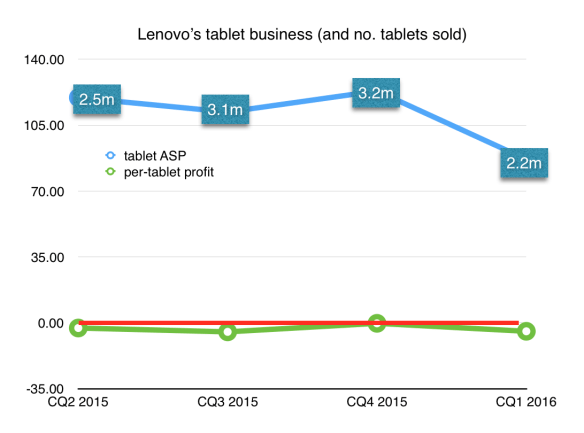
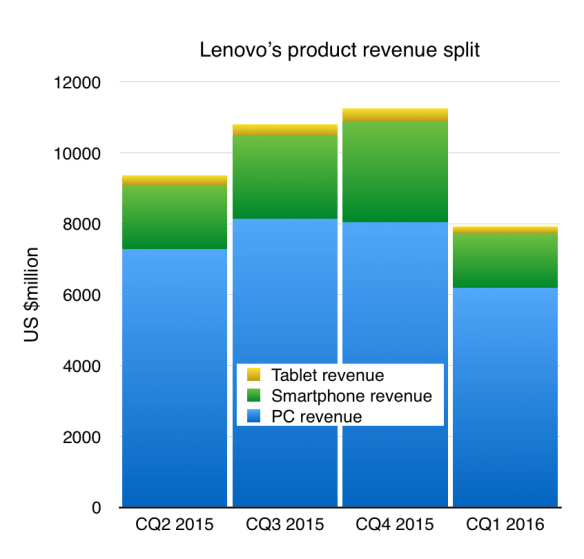
Kinda big for Intel too; giving up on its mobile ambitions into which it has sunk billions. And for Acer and Lenovo, which has relied on Intel chips (and subsidies) for its mobile effort.
link to this extract


What Happened to Google Maps? » Justin O’Beirne

Engrossing look at how Google Maps represents its content, and how it has changed:

»Let’s take a closer look at a couple of areas within the Bay Area.

First, the Pittsburg / Antioch area:

2010 – Cities, but No Roads. Pittsburg and Antioch are shown — but how to get there? No roads are shown that go to Pittsburg and Antioch.

2016 – Roads, but No Cities. Roads leading to Pittsburg and Antioch are shown — but Pittsburg and Antioch aren’t labeled. Why travel on those roads? Where do they go?

On the 2010 map, Pittsburg and Antioch are what cartographers call “Orphan Cities”. That is, they’re cities that lack connections to the rest of the road network.

A similar situation exists with Santa Cruz:

2010 – Santa Cruz, but No Roads. Santa Cruz is shown, but it’s orphaned (i.e., there are no roads going to it).

2016 – Roads, but No Santa Cruz. Four different roads leading into Santa Cruz are shown — but Santa Cruz isn’t.

On either map, it’s not immediately clear how to travel between San Francisco (or any other Bay Area city) and Santa Cruz.

See the problem?

Both maps, the one from 2010 and the one from 2016, have a similar issue: a lack of balance.

«

Would love to see a similar treatment for Apple Maps.
link to this extract


Google faces first EU fine in 2016 with no deal on cards: sources » Reuters

Foo Yun Chee:

»Google is likely to face its first European Union antitrust sanction this year, with little prospect of it settling a test case with the bloc’s regulator over its shopping service, people familiar with the matter said.

There are few incentives left for either party to reach a deal in a six-year dispute that could set a precedent for Google searches for hotels, flights and other services and tests regulators’ ability to ensure diversity on the Web.

Alphabet Inc’s Google, which was hit by a second EU antitrust charge this month for using its dominant Android mobile operating system to squeeze out rivals, shows little sign of backing down after years of wrangling with European authorities.

Several people familiar with the matter said they believe that after three failed compromise attempts since 2010, Google has no plan to try to settle allegations that its Web search results favor its own shopping service, unless the EU watchdog changes its stance.

«

The fines could be very big, up to 10% of global revenues – or just a slap on the wrist. How does Margrethe Vestager determine how big to make them?
link to this extract


Journalism professor will go to war for free speech, as long as it doesn’t mock him » Gawker

JK Trotter:

»the ever-present possibility that certain people might mistake a satire for reality is the very thing that makes satire funny. As Ken White, [a] First Amendment lawyer, observed, “The joke is not only at the expense of Jeff Jarvis. The joke is, in part, at the expense of people who read carelessly.”

Esquire, of all magazines, should know this. It frequently traffics in satirical articles, and was even sued a few years ago over a piece mocking the notorious birther Joseph Farah. (The magazine fought the lawsuit, and won.) So it is particularly remarkable that the magazine’s executives, in complying with Jarvis’s demands, have effectively endorsed his misunderstanding of satire. It is far more hypocritical and troubling, however, that a person of Jarvis’s position and influence would ever demand the piece’s removal in the first place.

Jarvis is a public figure who has built his reputation in part on his aggressive advocacy for journalists’ First Amendment rights, as well as his strong belief that a culture of free speech is a necessary component of any functioning political system.

«

This is a terrific essay by Trotter, and it does point up the essential contradiction of someone who (among other things) insists that Google’s search results should be sacrosanct against “a European court’s insane and dangerous ruling [to] allow people to demand that links to content they don’t like about themselves be taken down” demanding that content they don’t like not about themselves be taken down.
link to this extract


Apple beats Microsoft at their own game while Amazon primes the low end of the tablet market » IDC

»Slate tablets continued their decline while still accounting for 87.6% of all shipments. More importantly, the slate tablet segment has become synonymous with the low-end of the market. While this may bode well for vendors like Amazon that rely on hardware sales to increase their ecosystem size, it has not helped vendors who rely solely on greater margins for hardware sales. Meanwhile, detachables experienced triple-digit year-over-year growth on shipments of more than 4.9m units, an all-time high in the first quarter of a calendar year.

“Microsoft arguably created the market for detachable tablets with the launch of their Surface line of products,” said Jitesh Ubrani, senior research analyst with IDC’s Worldwide Quarterly Mobile Device Trackers. “With the PC industry in decline, the detachable market stands to benefit as consumers and enterprises seek to replace their aging PCs with detachables. Apple’s recent foray into this segment has garnered them an impressive lead in the short term, although continued long-term success may prove challenging as a higher entry price point staves off consumers and iOS has yet to prove its enterprise-readiness, leaving plenty of room for Microsoft and their hardware partners to reestablish themselves.”

«

The suggestion is that Apple sold more than 2m large iPad Pros (the 9.7in iPad Pro wasn’t released until the end of the quarter) and Microsoft fewer than 2m Surface Pros. And also that there’s no profit left in the low-end “slate” tablet market, if there was any before.
link to this extract


The end of a mobile wave » Benedict Evans

Evans notes that we’ve hit the end of the “which ecosystem will win?” (answer: both) challenge, and now we have a free-for all among Android/AOSP offerings:

»coming from the other end of the spectrum, mobile operators are increasing buying in a selection of low-end smartphones than they sell (generally unsubsidised on prepay) under their own brand. Sometimes these have operator apps preloaded (if they’ve not given up on that yet), sometimes not. One could argue that the value being added here is really only distribution, and so one might see other companies with distribution getting into this, such as mass-market retailers. Some of these have already experimented with Android tablets, with mixed results (as of course they did with MVNOs).

This is all rather like the PC clone market of the 1980s – hundreds of undifferentiated companies fighting it out to sell commodity computers built with commodity components running a commodity operating system (though those companies mainly made the PCs themselves, where many phone brands do not). That world in due course led to companies like Dell – people who embraced the volume, low-margin commodity model and found an angle of their own. We’re starting to see equivalent model-creation now.

«

link to this extract


YouTube: ‘No other platform gives as much money back to creators’ » The Guardian

Christophe Müller of Youtube:

»Just this month, a funny video of a Ben Affleck interview helped propel Simon and Garfunkel’s The Sound of Silence to the Top 10 Hot Rock Songs chart 50 years after it was released.

All of this is possible because our technology, Content ID, automates rights management. Only 0.5% of all music claims are issued manually; we handle the remaining 99.5% with 99.7% accuracy. And today, fan-uploaded content accounts for roughly 50% of the music industry’s revenue from YouTube.

The next claim we hear is that we underpay compared to subscription services such as Spotify. But that argument confuses two different services: music subscriptions that cost £10 a month versus ad-supported music videos. It’s like comparing what a black cab driver earns from fares to what they earn showing ads in their taxi.

So let’s try a fair comparison, one between YouTube and radio.

«

It’s all radio’s fault!
link to this extract


How to use Workflow for iOS when you don’t know where to start » iMore

Federico Viticci:

»Workflow is the most powerful app on my iPhone and iPad. I wouldn’t be able to work without it, and, almost two years after its release, I’m still discovering its infinite potential.

Whether it’s sending a message to a group of people or organizing documents, you’ve likely come across a task on your iPhone or iPad that you’d like to speed up. Our iOS devices have evolved into powerful modern computers, but there are still some areas where we can be slowed down by app limitations, or, more simply, by the tedious process of performing the same task over and over.

Thankfully, we have a solution to this: automation. And when it comes to automating tasks on iOS, Workflow is the undisputed king. Learning to master Workflow is the first step to living an efficient, productive life on iOS, and it’s how I’ve been working on my iPad for years now.

«

Viticci isn’t just saying that; he runs macstories.net, and he really does use his iPad for absolutely everything except podcasting. I’ve had Workflow for ages, but struggled with its lack of declarative structure; Viticci’s explanation is great. (It would be great to be able to simulate Workflow tasks on OSX and then export them to iOS.)
link to this extract


No time to panic as one quarter shows minor dip in smartphone sales » Communities Dominate Brands

Tomi Ahonen on why talk of “peak smartphone” after stalled growth in Q1 is wrong, wrong, wrong:

»it is a superficial view of the industry without understanding two aspects of it. The first was the pent-up demand of the 6 series of iPhone that created a one-off surge of phablet-screen-size iPhone sales – last year. Because iPhone owners had seen rival smartphones issue phablets for years, they waited and finally when Apple did the iPhone 6 and 6+ that created a one-time surge in iPhone sales pushing Apple in 2014 Q4 Christmas sales and 2015 Q1 January-March sales of the total smartphone market to an exceptionally high level. It was a surge, a peak in iPhone sales which is not normal (there is a normal level of iPhone jump in sales any other year at that time).

That means, that last year Q1, January-March 2015, was at an artificially high level – see how much higher Apple’s iPhone market share was Q1 of last year (was 16% in Q1 of 2014, surged to 18% in 2015 and returned to 15% now). That was not normal market wars where one brand gains and another loses. It was Apple loyalists buying the long-awaited phablet-screen size iPhone 6 and 6+ which created that surge. Because of Q1 of last year being so high, thus the normal [sequential from Q4] decline of Q1 meant, that it now produced that one-off dip in the Year-on-Year smartphone market size. Also note, that ‘loss’ of 2% now is exactly the rise of 2% that Apple gained for 2015 that same quarter, when their phablet surge happened.

«

Yup, that makes perfect sense. China stuttered, as did the US and Europe, but smartphones replacing featurephones is a train running down a hill. (Side note: I’ve replaced the words that Ahonen put IN CAPITALS with lowercase, as it makes no difference to the sense, and a lot to whether he’s YELLING in your EAR.)
link to this extract


LG Electronics profit growth powered by TV business » WSJ

Min-Jeong Lee:

»LG executives are banking on a turnaround at the company’s mobile business after three straight quarters of operating losses, spurred by sales of its new G5 smartphone.

LG introduced the G5 phone, which comes with a modular body that allows users to easily swap in accessories, to a warm reception in February, fueling expectations the new smartphone will be a hit.

LG expects to ship three million units of the G5 in the second quarter. Executives say the phone is on track to outpace the G3 model, released two years ago, which has been one of the company’s best-sellers. LG has shipped 1.6 million units of the G5, compared with 900,000 units during the first month of the G3’s release.

But the new phone comes at one of the toughest times in the smartphone market, which is facing waning global demand. Total smartphone shipments fell 3% to 335 million units in the first quarter from a year ago, which was the first ever decline in shipments since the advent of smartphones, research firm Strategy Analytics said Thursday.

“There’s no promise the [strong] profits will stay where they are given the dent in overall demand and stiff competition,” Greg Roh, an analyst with HMC Investment Securities in Seoul, said in a recent note to clients.

«

LG executives have been banking on a turnaround at the company’s mobile business for ages. It keeps not happening. Shipments, of course, aren’t the same as sales. And LG’s mobile business has actually made a loss for four straight quarters, not three.
link to this extract


Errata, corrigenda and ai no corrida: none notified.

Start up: Google rehires Moto chief, Esquire’s satire #fail, play the woman card!, Facebook’s video problem, and more


Heard of the Oppo N3? Millions of people in China have. But research companies disagree over how many million. Photo by TechStage on Flickr.

You can now sign up to receive each day’s Start Up post by email. You’ll need to click a confirmation link, so no spam.

A selection of 10 links for you. Low in sugar and salt. I’m charlesarthur on Twitter. Observations and links welcome.

Q1 2016: top ten Chinese brands capture 33% of global smartphone market » Counterpoint Technology

»• Smartphone shipments reached 344 million units in Q1 2016 with flat growth compared to last year as the market slowed down considerably

• 3 out of 4 mobile phones shipped on the planet now is a smartphone

• The slowdown can be attributed to higher sell-in during 4Q 2015 and weaker demand in markets such as Brazil, China, Indonesia and parts of Europe.

• This is the first time ever since the launch of smartphone, the segment has seen 0% growth, signaling the key global scale players need to invigorate sales with more exciting products and pricing schemes.

«

What’s odd is that IDC has OPPO shipping 18.5m phones; Counterpoint, just 13.3m. That’s a really big difference. Strategy Analytics, another research company, says Oppo shipped 15.5m.

Clearly, something’s wrong here. Given that research companies have to rely, to some extent, on what companies tell them, is there room for Oppo to .. nudge its figures along?
link to this extract


Venezuela doesn’t have enough money to pay for its money » Bloomberg

Andrew Rosati:

»In late 2015, the [Venezuela] central bank more than tripled its original order, offering tenders for some 10.2 billion bank notes, according to industry sources.

But currency companies were worried. According to company documents, De La Rue began experiencing delays in payment as early as June. Similarly, the bank was slow to pay Giesecke & Devrient and Oberthur Fiduciaire. So when the tender was offered, the government only received about 3.3 billion in bids, bank documents show.

“Initially, your eyes grow as big as dish plates,” said one person familiar with matter. “An order big enough to fill your factory for a year, but do you want to completely expose yourself to a country as risky as Venezuela?”

Further complicating matters is the sheer amount of bills needed for basic transactions. Venezuela’s largest bill, the 100-bolivar note, today barely pays for a loose cigarette at a street kiosk.

«

Did even Zimbabwe ever have this problem?
link to this extract


Google hires Rick Osterloh as SVP for new unified hardware division » Re/code

Mark Bergen and Ina Fried on the hiring of Rick Osterloh, formerly president of Motorola (acquired by and then dumped by Google):

»For years, Google has struggled to get sure footing on its various hardware initiatives — moving delicately to handle partners and, at times, deliver products that consumers actually use. When one of its hardware chiefs, Regina Dugan, who ran its Advanced Technology and Project group, departed for Facebook, we reported that Google was plotting a hardware shake-up.

Here it is now. Osterloh will now oversee Google’s Nexus devices. His new hardware division also includes a suite of products called the “living room,” demonstrating Google’s priority on owning that space.

«

Lots of things here. Osterloh will be in charge of Nexus (phones), Chromecast, consumer hardware (laptops), OnHub (router), ATAP (Project Ara) and – wait for it – Google Glass, which Tony Fadell at Nest had been an adviser to. (He remains an adviser.)

So here’s the setup now. Fadell isn’t going to drive Glass any more; and Nest is consumer hardware, just outside the main Google division. Won’t it get folded into Osterloh’s division now? Which leaves Fadell usurped.

Give it 18 months and see if Fadell’s still there.
link to this extract


Why Esquire removed its funny @ProfJeffJarvis post » NY Mag

Brian Feldman:

»If you’re the kind of person whose job, or, worse, interests lead you to read a lot of very similar (but actually earnest) essays on Medium about the future of technology, media, tech media, media tech, disruption, or innovation, the Esquire post was a funny bit of satire. The Esquire piece included “thinkfluencer” gibberish like:

»

The Innovation Party will be phablet-first, and communicate only via push notifications to smartphones. The only deals it cuts will be with Apple and Google, not with special interests. We will integrate natively with iOS and Android, and spread the message using emojis and GIFs, rather than the earth-killing longform print mailers of yesteryear.

«

The byline on the piece was “Prof. Jeff Jarvis.” Here’s where it got tricky: “Prof. Jeff Jarvis” isn’t former Entertainment Weekly editor and well-known future-of-media pontificator Jeff Jarvis. Rather, it’s a character developed in a parody Twitter account run by Bradbury. Well-known in certain media circles, @ProfJeffJarvis initially satirized the thoughts of Jarvis himself before growing into a more general and very funny riff on the pie-in-the-sky gambits of new media.

«

I do feel sympathetic to (the real) Jarvis: this would be infuriating. Feldman (and Jarvis) makes the point that people don’t get context; most wouldn’t realise that it wasn’t the real Jarvis.

I feel Bradbury could easily tweak the name of his character, and keep tweaking it – ProfJaffJervis, ProfJoeJervis, ProfJayJorving, and so on, until it’s some distance from where it started. That would give everyone a clean way out.
link to this extract


With Facebook video, the aggregators are winning » Digiday

Sahil Patel:

»[The highly popular Facebook video page run by] Vlechten met Daan insists it has the rights to all its content. But that’s not always the case. Funny Videos, Uber Humor and Funk You Entertainment have been singled out by content owners, speaking on the condition of anonymity to Digiday, as Facebook “freebooters.” (None of the channels responded to requests for comment.)

“It’s fraud and it’s hard to tell how big of a problem it is. Some of these pages are not pages you normally see on Facebook — and there are a lot of them out there,” said one publishing executive. “We’ve even seen stuff pop up on our friends and family’s news feeds without our name on it, and then they’ll share it with us and say, ‘Hey, this would be great for you.’”

With no steady ad system in place on Facebook, publishers have been willing to give the platform some slack as it tries to weed out the freebooters. But now that Facebook has loosened its grip on branded content, the issue becomes more immediate.

“The danger of the aggregations is that down the road it leads to monetization complexities,” said Katzeff. “You can’t monetize content that you don’t own unless you have some type of agreement that allows you to do that — and you certainly can’t monetize content that you put on your channel in an unauthorized fashion.”

«

Rather than “certainly can’t” in that last sentence, probably better to substitute “shouldn’t but probably will until forcibly stopped”.

Oh, and these “freebooters” are the aggregators against whom the big media companies seeking to monetise their video are going to be fighting.
link to this extract


Play the ‘woman card’ and reap these ‘rewards’! » The Washington Post

Alexandra Petri:

»“Frankly, if Hillary Clinton were a man, I don’t think she’d get 5 percent of the vote. The only thing she’s got going is the woman’s card,” Trump said Tuesday night, after winning 5 primaries.

Ah yes, the woman’s card.

I have been carrying one of these for years, proudly.

It is great. It entitles you to a sizable discount on your earnings everywhere you go (average 21%, but can be anywhere from 9% to 37%, depending on what study you’re reading and what edition of the Woman Card you have.) If you shop with the Woman Card at the grocery, you will get to pay 11% more for all the same products as men, but now they are pink.

Hook up the Woman Card to your TV and you will get a barrage of commercials telling you that you did something wrong with your face and must buy ointment immediately so as not to become a Hideous Crone. Also, you are now expected to spend your whole life removing hair from your body, except for the areas of your body where your hair must be long and luxurious. (Do not get these two areas confused!)

«

Satire so hot it burns, burns, burns.
link to this extract


AdMop vs Springer — our story » Medium

Vikram Kriplaney and Sebastian Vieira built a free, then paid-for adblocker for iOS 9:

»Axel Springer says that users are not free to see editorial content without ads, and we are violating their copyright because we replace the ads with something else. Despite the fact that bild.de shows a landing page which forces the user to buy a subscription or deactivate the ad blocker.

Their real foe is Eyeo GmbH, which has already won six cases. They are not without controversy, since they sell whitelisting. By defeating us and other indie developers, Axel Springer is building a case for the final ruling against Eyeo GmbH.

Firefox, Asus, Opera… everybody is doing ad blocking now.

Axel springer went as far as going against a youtuber because he gave instructions to how to disable bild.de’s anti-ad-blocking technology

It seems that if you do something that Axel Springer does not like, you are doing something illegal.

«

link to this extract


Warrants served in probe stemming from San Bernardino attack » Associated Press

Why not a headline with something like DRAMA OVER TERROR SHOOTERS? Read on:

»Three people connected to one of the San Bernardino shooters, Syed Rizwan Farook, have been arrested in a marriage fraud conspiracy, including his brother and sister-in-law, federal prosecutors said Thursday.

The third person arrested is the wife of Enrique Marquez Jr., a friend of Farook’s who has been charged for his alleged role in aiding the violence, the U.S. Attorney’s Office said. The two women arrested are Russian immigrants.

Prosecutors say the three participated in a marriage fraud conspiracy that involved lying under oath to obtain immigration benefits.

«

Oh, screw it. The San Bernadino killers weren’t terrorists acting with Isis; they were just a couple of idiots acting alone.
link to this extract


What voice commands & queries do people use Google Now for on Android Wear smartwatches ? » London SEO

“C Byrne”:

»To use Google Now on a smartwatch you say “OK Google”… and then your watch is listening. Wow! Now that is really creepy! You can use your voice with Android smartwatches to do things like search Google for information, get travel directions, and to create personal reminders. For example, you can say “Ok Google where’s the nearest grocery store?” to find grocery stores near you . There are commands and queries unique to Google Now on Android Wear smartwatches e.g. “what’s my heart rate?” (which also may be a normal search query)…

…Based on the phrases (including those below) in my research Google Keyword Planner reported that around 67% were from mobile devices with full browsers – this may be distorted by the inclusion of the phrase “OK google” for comparison.

«

The numbers seem pretty low – though there are fewer than 4m Android Wear devices in use, by my own calculations.
link to this extract


Getty accuses Google of ‘promoting piracy’ » FT.com

Christian Oliver:

»In its complaint [to the European Commission’s competition commissioner Margrethe Vestager], Getty argues that Google abused its dominance of image searches to change “drastically” the way that it presented Getty’s photographs after January 2013, by displaying them in a high resolution and large format. Before that date, they had only been shown in image searches as low-resolution thumbnails.

Yoko Miyashita, Getty’s general counsel, argued that this new display diverted customers away from her company’s website, where customers would pay for them, and deterred customers from ever leaving Google’s platforms.

She said this “promoted piracy, resulting in widespread copyright infringement, turning users into accidental pirates”.

Getty said that it raised its concerns with Google three years ago but Google had replied that Getty should either accept its new presentation of images or opt out of image search, in effect becoming invisible on the web.

Ms Miyashita said this was not a “viable choice” given the importance of Google to navigating the internet.

Getty added that Google was threatening the livelihoods of 200,000 contributors who relied on the company’s business model to make a living. “By standing in the way of a fair market place for images, Google is threatening innovation and jeopardising artists’ ability to fund the creation of important future works,” Ms Miyashita said.

Getty said its web traffic collapsed immediately in 2013 after the changes implemented by google.com and google.co.uk. However, traffic remained robust on the French and German Google sites, which did not implement the display changes in January 2013.

«

Watermarking might work; quite how Google can avoid complaints about copyright is puzzling. And who knew that there were 200,000 contributors to Getty?
link to this extract


Errata, corrigenda and ai no corrida: none notified.

Start up: infected airplanes, Samsung gets VR-y, the real counterfeiters, Youtube’s unstoppable ads, and more


Facial recognition is being used for unsavoury purposes in Russia. (This is an example from Iran, at SXSW.) Photo by TheSeafarer on Flickr.

You can now sign up to receive each day’s Start Up post by email. You’ll need to click a confirmation link, so no spam.

A selection of 9 links for you. Suits you. I’m charlesarthur on Twitter. Observations and links welcome.

Europe’s web privacy rules: bad for Google, bad for everyone » NYTimes.com

Daphne Keller and Bruce Brown on the “right to be forgotten” [more correctly, “delisted from search”] laws in Europe, which now applies to google.com accessed inside Europe:

»News outlets should have particular cause for alarm about geo-blocking. Journalists rely on global networks to investigate and report on international stories, like the recent Panama Papers revelations. They themselves are often the first targets when governments seek to control the flow of information to their citizens. Protection exists in European Union privacy law for journalistic activities, so the news media is not directly in the cross hairs of the “right to be forgotten.” But American news organizations have faced libel actions in hostile foreign courts — and when plaintiffs start asking for geo-blocking in those cases, journalists will be on the front lines.

Privacy is a real issue, and shouldn’t be ignored in the Internet age. But applying those national laws to the Internet needs to be handled with more nuance and concern. These developments should not be driven only by privacy regulators. State departments, trade and justice ministries and telecom regulators in France and other European countries should be demanding a place at the table. So should free-expression advocates.

One day, international agreements may sort this all out. But we shouldn’t Balkanize the Internet in the meantime. Once we’ve erected barriers online, we might not be able to tear them down.

«

There’s a wonderful unspoken cultural imperialism about this approach: whatever the prevailing thought in the US is about [topic], well, that should be the approach to [topic] everywhere. Applying US laws to the internet is just as misguided as applying any other national laws. The Panama Papers is a complete red herring in this context.

You might wonder if Keller and Brown are unaware of their imperial approach. Keller, as it happens, used to be a lawyer at Google.
link to this extract


Uh-oh, Apple — Samsung has a bona fide ecosystem around virtual reality » Re/code

Ina Fried:

»For a long time, Samsung’s phones have gone head to head with the iPhone, but when it came to having an ecosystem of different devices, Apple was the hands-down winner.

Sure, Samsung had its own tablets and watches, but it was Apple that was able to build loyalty, convincing customers to make purchase after purchase.

With virtual reality, though, Samsung is off to the early lead. Alongside Sunday’s debut of the Galaxy S7 and S7 Edge at the Mobile World Congress 2016 in Barcelona, the company is announcing the Gear 360 — a consumer camera for capturing virtual-reality content. That completes the VR circle, with its Gear VR headset, already the most accessible way to consumer virtual-reality content outside of Google’s ultra-cheap cardboard viewer, which is more for getting a taste of VR than long-term consumption.

The Gear 360 isn’t due out until the second quarter — and Samsung won’t say how much the orb will cost — but it looks small, simple and powerful, at least at first glance.

«

VR is coming.
link to this extract


German nuclear plant infected with computer viruses, operator says » Reuters

Christoph Steitz and Eric Auchard:

»Mikko Hypponen, chief research officer for Finland-based F-Secure, said that infections of critical infrastructure were surprisingly common, but that they were generally not dangerous unless the plant had been targeted specifically.

The most common viruses spread without much awareness of where they are, he said.

As an example, Hypponen said he had recently spoken to a European aircraft maker that said it cleans the cockpits of its planes every week of malware designed for Android phones. The malware spread to the planes only because factory employees were charging their phones with the USB port in the cockpit.

Because the plane runs a different operating system, nothing would befall it. But it would pass the virus on to other devices that plugged into the charger.

«

Absolutely gobsmacking.
link to this extract


This city embedded traffic lights in the sidewalks so that smartphone users don’t have to look up » The Washington Post

Rick Noack:

»Few nations in the world take red traffic lights more seriously than Germany.

Foreign visitors frequently wonder why crowds of Germans wait for traffic lights to turn green when there are no cars in sight.

That is why officials in the city of Augsburg became concerned when they noticed a new phenomenon: Pedestrians were so busy looking at their smartphones that they were ignoring traffic lights.

The city has attempted to solve that problem by installing new traffic lights embedded in the pavement — so that pedestrians constantly looking down at their phones won’t miss them.

«

(The headline pretty much covers the whole of the story, but there you go.) Cities being redesigned for our devices.
link to this extract


Fantastic fakes: busting a $70m counterfeiting ring » Bloomberg BusinessWeek

Del Quentin Wilber:

»By the time Gaab began his investigation in 2012, the Secret Service had linked at least 10 different versions to the same family of fake $50s and $100s. The margins were impressive. The agency estimated that the counterfeiter sold his initial run to his U.S. distributors for 10 percent of their face value. The distributors then dealt their haul to middlemen for 25¢ to 35¢ on the dollar. By the time they reached the person passing the bills at Walmart or Target, a bogus $100 note was being sold for as much as $65.

«

Another great read from Bloomberg’s team. Bloomberg BW is a print magazine.
link to this extract


Facial recognition service becomes a weapon against Russian porn actresses » Global Voices Advocacy

Kevin Rothrock:

»From the start, FindFace has raised privacy concerns. (Even in his glowing recommendation, [software engineer Andrei] Mima addressed fears that the service further erodes people’s freedoms in the age of the Internet.) In early April, a young artist named Egor Tsvetkov highlighted how invasive the technology can be, photographing random passengers on the St. Petersburg subway and matching the pictures to the individuals’ Vkontakte pages, using FindFace. “In theory,” Tsvetkov told RuNet Echo, this service could be used by a serial killer or a collector trying to hunt down a debtor.”

Hoping to raise concerns about the potential misuses of FindFace, Tsvetkov seems to have inspired a particularly nasty effort to identify and harass Russian women who appear in pornography. On April 9, three days after the media reported on Tsvetkov’s art project, users of the Russian imageboard “Dvach” (2chan) launched a campaign to deanonymize actresses who appear in pornography. After identifying these women with FindFace, Dvach users shared archived copies of their Vkontakte pages, and spammed the women’s families and friends with messages informing them about the discovery.

«

Oh, Russia. But this is how facial recognition systems will be used; this genie just announced its out-of-bottleness.
link to this extract


New ad format will bring unskippable 6-second ads to YouTube » AndroidAuthority

John Dye:

»Nobody likes ads, but they’re kind of the cost of doing business in a world where we’ve grown accustomed to getting our content for free. Although YouTube has long had ads before videos, Google is pushing out a new ad format called “Bumpers,” which are unskippable 6-second shorts placed in front of videos.

In the Adwords blogpost that announced the format, Product Manager Zach Lupei compares these Bumper ads to video haikus. Current ads placed before videos are often full-length ads that can be skipped after a few seconds. However, these ads have a hard cap of six seconds, making them more like Vine videos than traditional ads. Marketers will have to get pretty clever to squeeze meaningful, worthwhile content into that narrow window of time, so we might actually be getting some creative and hilarious little shorts out of this.

«

“Creative and hilarious”. And unskippable. (Also, I abhor the “hey, I just happened to be passing a keyboard and I kinda wrote this blogpost of no consequence except it fills our ad quota” style of writing.)
link to this extract


Worldwide smartphone growth goes flat in the first quarter as Chinese vendors churn the top 5 vendor list » IDC

»Vendors shipped a total of 334.9m smartphones worldwide in the first quarter of 2016 (1Q16), up slightly from the 334.3m units in 1Q15, marking the smallest year-over-year growth on record. The minimal growth this quarter is primarily attributed to strong smartphone saturation in developed markets, as well as a year-over-year decline from both Apple and Samsung, the two market leaders.

The biggest change to the market, however, was the addition of lesser-known Chinese brands OPPO and vivo, which pushed out previous fourth and fifth place players Lenovo and Xiaomi, respectively. As the China market matures, the appetite for smartphones has slowed dramatically as the explosion of uptake has passed its peak. In 2013, China’s year-over-year shipment growth was 62.5%; by 2015, it had dropped to 2.5%. Conversely, the average selling price (ASP) for a smartphone in China rose from US$207 in 2013 to US$257 in 2015.

“Along China’s maturing smartphone adoption curve, the companies most aligned with growth are those with products serving increasingly sophisticated consumers. Lenovo benefited with ASPs below US$150 in 2013, and Xiaomi picked up the mantle with ASPs below US$200 in 2014 and 2015. Now Huawei, OPPO, and vivo, which play mainly in the sub-US$250 range, are positioned for a strong 2016,” said Melissa Chau, senior research manager with IDC’s Worldwide Quarterly Mobile Phone Tracker. “These new vendors would be well-advised not to rest on their laurels though, as this dynamic smartphone landscape has shown to even cult brands like Xiaomi that customer loyalty is difficult to consistently maintain.”

«

Unless you’re quite into the phone business, you’ve probably never heard of OPPO or vivo before. The erosion of ASP is dramatic too. Which of course is a problem for Apple – even if it’s rising in China. Is there new growth left in the business?
link to this extract


Apple Music on course to top 20m subs this year as it flies past 13m » Music Business Worldwide

Rhian Jones:

»Apple Music has gained 2 million subscribers since February, surpassing 13 million this month, according to the company.

The latest figures put the Spotify rival on course to top 20m by the end of this year if it continues on its current impressive trajectory – adding a million subscribers per month.

The news was revealed in Apple’s latest earnings report covering its Q2 2016, released yesterday.

Apple Music gained a million subscribers in both January and February this year. Since first arriving on June 30 last year, Apple Music has launched in 113 countries. It’s now available in 58 markets in which Spotify is not – including Russia, China, India and Japan.

Last we heard, from SVP Eddy Cue, the platform’s subscribers went above 11m two months ago.

Apple CEO Tim Cook said in an earnings call yesterday: “Apple Music continues to grow in popularity, with over 13 million paying subscribers today.

“We feel really great about the early success of Apple’s first subscription business, and our music revenue has now hit an inflection point after many quarters of decline.”

«

Many quarters of what’s that now again? I don’t recall Apple mentioning music revenue declines before.
link to this extract


Errata, corrigenda and ai no corrida:

Start up: SWIFT’s hacking problem, Apple swoons, the emoji war, the medical firm shut by filesharing, and more


The price tag isn’t necessarily about what it’s worth to the maker. It might be what it’s worth to you. Photo by DaMongMan on Flickr.

You can now sign up to receive each day’s Start Up post by email. You’ll need to click a confirmation link, so no spam.

A selection of 10 links for you. (Check against delivery. Might not be decimal-based.) I’m charlesarthur on Twitter. Observations and links welcome.

Exclusive: SWIFT warns customers of multiple cyber fraud cases » Reuters

Jim Finkle:

»SWIFT, the global financial network that banks use to transfer billions of dollars every day, warned its customers on Monday that it was aware of “a number of recent cyber incidents” where attackers had sent fraudulent messages over its system.

The disclosure came as law enforcement authorities in Bangladesh and elsewhere investigated the February cyber theft of $81m from the Bangladesh central bank account at the New York Federal Reserve Bank. SWIFT has acknowledged that the scheme involved altering SWIFT software on Bangladesh Bank’s computers to hide evidence of fraudulent transfers.

Monday’s statement from SWIFT marked the first acknowledgement that the Bangladesh Bank attack was not an isolated incident but one of several recent criminal schemes that aimed to take advantage of the global messaging platform used by some 11,000 financial institutions.

«

Let’s see – since the Bangladesh hack we’ve gone through “not affected” and “isolated incident” and now “multiple incidents”. I believe the next stage is “it emerged that hackers have known for years…”
link to this extract


Apple ends 13 years of continuous quarterly growth » NBC News

Everett Rosenfeld:

»Shares in the company fell more than 6 percent in after-hours trading.

Speaking with CNBC, Apple CEO Tim Cook said the company is in “the early innings of the iPhone” and that they “feel good” about their business in China.

In fact, Apple beat Wall Street’s estimates on iPhone shipments, reporting 51.2m for the quarter. Analysts had expected 50.3m, according to StreetAccount.

Still, that iPhone unit count was a 16% decline from the 61.17m shipped during the same period last year.

Looking ahead to the fiscal third quarter, Apple said it expects revenue between $41bn and $43bn — Wall Street had expected $47.42bn on average, according to StreetAccount.

«

That’s a long way down. Notable that Google, Microsoft, Intel and others have also had poor earnings. So one asks…
link to this extract


The End of Hardware? » LinkedIn

Bob O’Donnell:

»Whether it’s PCs, tablets, smart watches or now, even smartphones, the outlook for most major hardware device categories is not looking good, particularly here in the US.

The issue is that both consumers and businesses have already bought a lot of these devices. Plus, they’re hanging on to their purchases longer than they used to, and longer than many people originally thought they would.

Many companies, including both Intel and Qualcomm, have been forced to make some painful employee reductions as a result of these challenges, and there are likely more from other vendors still to come.

So, does this signal the end of hardware as we know it?

On one hand, yes, we are arguably at the peak of these key hardware categories, particularly when you add them all together. As a result, we are likely to see modest declines in unit shipments from this point forward. After a 30+-year run of growth, that’s tough news to take.

But there is hope in hardware-land. It just requires thinking about the market in a different way.

«

link to this extract


‘It sounded like my child’: the ‘virtual kidnappers’ scamming Americans » The Guardian

Sam Levin:

»Tracy Holczer was driving with a friend to their writers’ group in a suburb of Los Angeles when she got a terrifying call on her cellphone from a number she didn’t recognize. A hysterical girl was screaming on the other end of the line.

“Mommy, please help me! Someone grabbed me, and I’m in a van. I don’t know where I am!”

It was 4.45pm on 22 March, and it was immediately clear to Holczer that she was experiencing the most unimaginable horror any parent could comprehend: her 14-year-old daughter, Maddy, whom she had left at home 30 minutes earlier, had been kidnapped.

A man quickly got on the line and demanded that the mother withdraw money from her bank and transfer it to his account. He told her that if she or her friend contacted anyone, he would know, and if she refused to comply, he would kill Maddy – whom Holczer could periodically hear screaming in the background. “He said they are happy to send body parts,” the 48-year-old mother recalled.

«

Terrifies people enough that they don’t think to ask to speak to the child, or get an identifying detail, or anything else that would prove it’s anything but a scam. You can understand it, though. And how do you stop this scam?
link to this extract


Inside “Emojigeddon”: the fight over the future of the Unicode consortium » BuzzFeed News

Charlie Warzel:

»There’s trouble afoot inside the Emoji Council of Elders, or, at the very least, signs of a low-simmering schism that’s being referred to by some of its participants — perhaps with less humor than one might expect — as “Emojigeddon.”

Emails seen by BuzzFeed News reveal an emerging tension at the Unicode Consortium — the 24-year-old organization that was established to develop standards for translating alphabets into code that can be read across all computers and operating systems.

The series of frustrated messages show a deepening rift between those who adhere to the organization’s original mission to code old and obscure and minority languages and those who are investing time and resources toward Unicode’s newer and most popular character sets: emojis, a quirky periodic table of ideograms and smiley faces that cover everything from bemused laughter to swirling, smiling piles of poop. The correspondence offers a peek behind the scenes of the peculiar and little-known organization that’s unexpectedly been tasked with building what some see as the first digital universal language.

«

🤔
link to this extract


The first rule of pricing is: you do not talk about pricing » Medium

Tom Whitwell, in a terrific essay that has been doing the rounds, but should be bookmarked by everyone who ever has to set a price:

»It’s tempting to talk to customers about price.

Your customers — real or potential — will certainly have views about prices that they are keen to share.
Ignore them.

“It is not your customer’s job to set pricing. An optimal price is one that is accepted but not without some initial resistance” as Ash Mauyra explains in this great piece.

It is almost impossible to predict how a customer will react to a particular price by asking them. That’s because they don’t know how they will react.

They have no idea.

“Are you in the market for tea lights on this trip to IKEA?” you might ask. “No” They might say. Or “Yes”. Neither is a useful signal, because they don’t have a clue.

There’s one easy way to find out what customers think about prices. By selling them things.

«

Whitwell was one of the teams at The Times digital edition, which raised its price in 2010 from zero to £2. Calamity didn’t follow. Why not?
link to this extract


A revolutionary new way to access all your files » Dropbox Business Blog

»With Project Infinite, we’re addressing a major issue our users have asked us to solve. The amount of information being created and shared has exploded, but most people still work on devices with limited storage capacity. While teams can store terabyte upon terabyte in the cloud, most individuals’ laptops can only store a small fraction of that. Getting secure access to all the team’s data usually means jumping over to a web browser, a clunky user experience at best.

Project Infinite will enable users to seamlessly and securely access all their Dropbox files from the desktop, regardless of how much space they have available on their hard drives. Everything in the company’s Dropbox that you’re given access to, whether it’s stored locally or in the cloud, will show up in Dropbox on your desktop. If it’s synced locally, you’ll see the familiar green checkmark, while everything else will have a new cloud icon.

«

I suspect this is going to be a business- (or paid-)-only thing. It’s a clever upsell. Here’s the user interface problem you have to figure out, though: if I download a file but now want to free up that space on the hard drive, when I hit “delete” should it be deleted from the cloud? I expect a three-option dialog (Cancel, only from hard drive, from cloud too). But it gets messy.
link to this extract


The iPhone 6 Blip » Beyond Devices

Jan Dawson argues that iPhone sales growth was on a slowing long-term trend which was artificially interrupted by the larger-screened iPhone 6, for a year:

»The iPhone 6 blip is over, but if iPhone sales land roughly where the analysts expect them to, they’ll be right back on track with where they were headed before the iPhone 6 launched. That’s a big “if” – sales could come in above or below that number, which would suggest either that underlying growth had slowed more dramatically in the past, or that Apple has successfully pushed to a slightly higher long-term growth rate off the back of the iPhone 6 and 6S.

The other big question is what happens in the next few quarters, and whether Apple is able to stay on or above that long-term trend line. Remember that the trend line calls for a 1-1.5% reduction in year on year growth per quarter – on that basis, growth would slow to 6%, 5%, and 4% over the remaining quarters of 2016 with 1% shrinkage, or drop as low as a 1% decline by the end of the year. This is obviously far too precise for a real-world projection, but it gives you some sense of that trajectory if it does continue. It’ll be very interesting to see Apple’s guidance for the June quarter – on the basis of the trajectory, Apple would sell between 39 and 41 million iPhones next quarter. But of course, it’s just launched the iPhone SE, which could change things. Anything below 40m iPhones (or $40bn in revenue guidance) is a sign that Apple is dropping below its long-term trajectory, and would be bad news. Anything above that is cause for optimism, at least in the short term.

«

As noted above, Apple is guiding $41-43bn.
link to this extract


Your media business will not be saved » Medium

Joshua Topolsky (a key mover behind the original Engadget, and then The Verge, who then went to Bloomberg, where things didn’t go well; he’s currently freelance):

»The truth is that the best and most important things the media (let’s say specifically the news media) has ever made were not made to reach the most people — they were made to reach the right people. Because human beings exist, and we are not content consumption machines. What will save the media industry — or at least the part worth saving — is when we start making Real Things for people again, instead of programming for algorithms or New Things.

So what will matter in the next age of media?

Compelling voices and stories, real and raw talent, new ideas that actually serve or delight an audience, brands that have meaning and ballast; these are things that matter in the next age of media. Thinking of your platform as an actual platform, not a delivery method.

«

This sounds great; there’s also an excoriation earlier of the business model of most publishing sites, and an overdone – to my view – criticism of news organisations for not “getting” digital; the ones I’ve been at have got it all too well. But this sound like a recipe for targeting premium readers/viewers, which already happens (FT, WSJ, New York Times). And I don’t quite see what “thinking of your platform as an actual platform” means in terms of “compelling voices and stories”. Clearly Topolsky does, but he isn’t quite willing to share it yet.
link to this extract


A leak wounded this company. Fighting the Feds finished it off » Bloomberg BusinessWeek

Dune Lawrence:

»That Tuesday, LabMD’s general manager came in to tell Daugherty about a call he’d just fielded from a man named Robert Boback. Boback claimed to have gotten hold of a file full of LabMD patient information. This was scary for a medical business that had to comply with federal rules on privacy, enshrined in the Health Insurance Portability and Accountability Act. I need proof, Daugherty told his deputy. Get it in writing.

Boback e-mailed the document. It was a LabMD billing report containing data, including Social Security numbers, on more than 9,000 patients. Boback quickly got to the sales pitch: His company, Tiversa, offered an investigative service that could identify the source and severity of the breach that had exposed this data and stop any further spread of sensitive information.

LabMD’s four-person IT team found the problem almost immediately: The manager of the billing department had been using LimeWire file-sharing software to download music. Without knowing it, she’d left her documents folder, which contained the insurance report now in Tiversa’s possession, open for sharing with other users of the peer-to-peer network.

«

You think (because of the headline and that last sentence) that you know where this story goes. You don’t. Read it; it’s shocking and disquieting.
link to this extract


Errata, corrigenda and ai no corrida: none notified.

Start up: China’s coming smartphone crash, Boston Globe v readers, Google Glass is back!, and more

A bucket with ice water: much cheaper, though it doesn’t have Bluetooth. Photo by mediadeo on Flickr.

You can now sign up to receive each day’s Start Up post by email. You’ll need to click a confirmation link, so no spam. (If you signed up and didn’t receive, please let me know in the comments here.)

A selection of 9 links for you. They are what they are. I’m charlesarthur on Twitter. Observations and links welcome.

Dark patterns by the Boston Globe » The Rationalist Conspiracy

Alyssa Vance:

»After years of falling revenue, some newspapers have resorted to deception to boost their subscription numbers. These dishonest tactics are sometimes called “dark patterns” – user interfaces designed to trick people.

For example, this is a Boston Globe story on Bernie Sanders:

Before you can read the article, there is a pop-up ad asking you to subscribe. By itself, this is annoying, but not deceptive. The real dark pattern is hidden at the top – the ‘Close’ button (circled in red) uses a very low contrast font, making it hard to see. It’s also in the left corner, not the standard right corner. This makes it likely that users won’t see it, causing them to subscribe when they didn’t have to.

One the ‘Close’ link is clicked, deception continues:

At the bottom, there’s a non-removable, high-contrast banner ad asking for a paid subscription. Again, this is annoying, but honest. However, the circled text “for only 99 cents per week” is not honest. It’s simply a lie, as later pages will show.

«

Turns out that 99c is actually $6.93 per week, and you can only unsubscribe by phone. So wicked.
link to this extract


The blockchain menu » net.wars

Wendy Grossman:

»The Internet of Things is such an established concept that I’m startled to note that week’s (Lego) prototype was my first. Three cars want to park…somewhere. Their owners have preset the maximum they will pay. The system locates the nearest parking space, and they bid. The winner is directed to the space, and the fee is automatically deducted from the car’s balance. A display showed the auction in real time. All very nice until I injected reality by grabbing a car and plunking it in the space before bidding ended.

“Usurped” the contested space was now tagged. “You’ll be fined,” Consult Hyperion’s demonstrator said. Who will that stop in Manhattan, where friends have missed two successive movie showings because no parking space? This may be an entertaining solution wishing for a problem.

In that, it was not alone at this week’s Tomorrow’s Transactions Forum, Dave Birch’s quirky annual event where ideas about the future of money are smashed together like particles to see what happens.

«

I love the idea of app developers thinking people would be well-behaved and wait for their app to tell them where to park, while Noo Yawkers just PARK THE DAMN CAR THERE IN THE STOOPID SPACE.

But the article is actually about blockchains, which in a similar way are mostly a solution in search of a problem.
link to this extract


China’s crowded smartphone market heads for an epic shakeout » Bloomberg

David Ramli:

»The startup Dakele looked pretty smart when it released a phone in China four years ago. The market was doubling annually, and the company put brand-name components inside a device that cost a fraction of the iPhone.

That $160 gadget went on sale just four months after Dakele opened its doors, and soon the company, which translates as “Big Cola,” made inroads against Huawei Technologies Co. and Xiaomi Corp. Buzz was building for the Dakele 3 model last year, with online reviews calling it the best Apple Inc. clone.

Then the sizzle started to fizzle. Huawei spent $300 million on marketing, Xiaomi cut prices and clones of the clone appeared. Troubles with a supplier and raising money prompted Dakele to shut down last month—and it likely won’t be alone. China’s herd of 300 phone makers may be halved in 12 months by competition, a sales plateau and economic growth that’s the slowest in a quarter-century, according to executives and analysts.

“The mobile-phone industry changed more quickly and brutally than expected,” Dakele Chief Executive Officer Ding Xiuhong said on his Weibo messaging account. “As a startup, we couldn’t find more strategies and methods to break through.”

«

I can’t decide whether the smartphone market is telescoping a decade of the PC market into two years, or just going through the same as happened in 1985-9 in about the same length of time.
link to this extract


Kickstarter’s biggest shitshow somehow got even messier » Motherboard

Jaason Koebler:

»A decidedly not chill development for 36,000 Kickstarter backers of the “Coolest Cooler”: Coolest is now considering asking people who haven’t yet received their coolers to pay an additional $97 for “expedited delivery” of the long-past-due all-in-one disaster, a prospect that has allegedly led some backers to threaten Coolest employees.

If you’re not familiar, at the time it launched, the Coolest Cooler was the most popular Kickstarter of all time, raising $13 million. The 55-quart cooler has a built-in blender, a waterproof Bluetooth speaker, a USB charger, and a bottle opener. You can buy one on Amazon, right now, and have it by the weekend if you pay $399.99.

That $399.99 price point is important—when Coolest Cooler was launched on Kickstarter, it cost between $165 and $225, a price its creator Ryan Grepper said in an update to backers was far too low…

…Coolest Cooler doesn’t have money to produce the remaining coolers, which is why it’s selling existing stock on Amazon but not sending them to backers who haven’t yet received the product (the company has delivered about 20,000 coolers to backers, but 36,000 more people are waiting). Reviews of the cooler are mixed — most say that it is indeed cool, but that it is very heavy and isn’t worth $400.

«

I’m trying to imagine a cooler that would be worth $400, even with those add-ons. The article’s comparison with the Welsh drone screwup Zano isn’t right, though; Zano had absurdly inflated claims. This is just poor pricing.
link to this extract


CDC: two of every five U.S. households have only wireless phones » Pew Research Center

»More Americans than ever have cut the (telephone) cord, but the growth rate of wireless-only households slowed last year.

About two-in-five (41%) of U.S. households had only wireless phones in the second half of 2013, according to a report released today by the National Center for Health Statistics. The center, the statistical arm of the Centers for Disease Control and Prevention, estimated that 39.1% of adults and 47.1% of children lived in wireless-only households.

«

When I noted yesterday that “call mom” had overtaken “call home” as a Google search (hence almost certainly a voice activation), I thought it was because “mom” was likely to be at home. But as was pointed out, there might not be a “home” to call.

(Next up: can we calculate the divorce rate based on the rise of “call mom” v “call dad”?)
link to this extract


Google Glass startup Augmedix raises $17m from healthcare orgs » Re/code

Mark Bergen:

»The next time you spot a Google Glass in the wild, it might not be on the face of a fervid techie. It might be on your doctor.

Augmedix, one of several startups that formed around the computerized headgear — and kept spinning after the search giant ditched its first attempt — is raising a fresh round of capital to get Google Glass into more health care facilities. The four-year-old startup is part of a wave of Silicon Valley companies trying to tap the massive medical market. It primarily builds software for wearable devices that display electronic health records so that doctors can access them hands-free.

“They’re engaging with patients in front of them,” said CEO Ian Shakil. “In the background, we’re doing all the burdensome work.”

He’s not raising cash from Sand Hill Road. Instead, the $17m strategic investment comes from a quintet of medical institutions.

«

I always thought that Glass’s best use would be inside businesses, not among consumers.
link to this extract


Apple’s Watch outpaced the iPhone in first year » WSJ

Daisuke Wakabayashi:

»Apple doesn’t disclose sales, but analysts estimate about 12m Watches were sold in year one. At an estimated average price of $500, that is a $6bn business—three times the annual revenue of activity tracker Fitbit Inc.

By comparison, Apple sold roughly 6m iPhones in its first year. As a new entrant, the Watch accounted for about 61% of global smartwatch sales last year, according to researcher IDC.

And yet, there are detractors such as Fred Wilson, co-founder of venture-capital firm Union Square Ventures, in December declared the Watch a “flop.” Mr. Wilson, who owns shares of Fitbit through a fund, had earlier predicted the Watch wouldn’t be a “home run” like the iPad, iPhone and iPod, saying many people wouldn’t want to wear a computer on their wrist.

The Watch has shortcomings. It is slow, with an underpowered processor that is throttled at times to extend the device’s battery life. It lacks mobile and Global Positioning System connections, meaning it must be accompanied by an iPhone, limiting its usefulness as an independent device. The battery needs to be charged every day.

Perhaps the biggest challenge is the Watch’s lack of a defining purpose. It does certain things well, such as activity tracking, mobile payments and notifications. But there is no task the Apple Watch handles that can’t be done by an iPhone or a less-expensive activity tracker.

«

The comparison with the first-year iPhone is meaningless – the Watch was released in more places, with more fanfare. Fred Wilson’s criticism, well, would the better metric be what proportion of devices are still in use? How would the Watch do against the Fitbit?

As to “defining purpose” – its purpose so far is to be an adjunct. It does that pretty well; satisfaction is high, according to survey firm Wristly.
link to this extract


Exclusive: Bangladesh Bank hackers compromised SWIFT software, warning to be issued » Reuters

Jim Finkle:

»The attackers who stole $81m from the Bangladesh central bank probably hacked into software from the SWIFT financial platform that is at the heart of the global financial system, said security researchers at British defense contractor BAE Systems.

SWIFT, a cooperative owned by 3,000 financial institutions, confirmed to Reuters that it was aware of malware targeting its client software. Its spokeswoman Natasha Deteran said SWIFT would release on Monday a software update to thwart the malware, along with a special warning for financial institutions to scrutinize their security procedures.

The new developments now coming to light in the unprecedented cyber-heist suggest that an essential lynchpin of the global financial system could be more vulnerable than previously understood to hacking attacks, due to the vulnerabilities that enabled attackers to modify SWIFT’s client software.

«

Got in via a poorly secured $10 router, got away with $81m, hacked the software the world’s banks rely on. This could be worse, right?
link to this extract


The secret rules of the internet » The Verge

Catherine Buni and Soraya Chemaly, with a (quite astoundingly) long piece about the history of content moderation on social networks – if by “history” you mean “starting in 2004”:

»When Dave Willner arrived at Facebook in 2008, the team there was working on its own “one-pager” of cursory, gut-check guidelines. “Child abuse, animal abuse, Hitler,” Willner recalls. “We were told to take down anything that makes you feel bad, that makes you feel bad in your stomach.” Willner had just moved to Silicon Valley to join his girlfriend, then Charlotte Carnevale, now Charlotte Willner, who had become head of Facebook’s International Support Team. Over the next six years, as Facebook grew from less than 100 million users to well over a billion, the two worked side by side, developing and implementing the company’s first formal moderation guidelines.

“We were called The Ninjas,” he said, “mapping the rabbit hole.” Like Mora-Blanco, Willner described how he, Charlotte, and their colleagues sometimes laughed about their work, so that they wouldn’t cry. “To outsiders, that sounds demented,” he said.

Just like at YouTube, the subjectivity of Facebook’s moderation policy was glaring. “Yes, deleting Hitler feels awesome,” Willner recalls thinking. “But, why do we delete Hitler? If Facebook is here to make the world more open,” he asked himself, “why would you delete anything?” The job, he says, was “to figure out Facebook’s central why.”

For people like Dave and Charlotte Willner, the questions are as complex now as they were a decade ago. How do we understand the context of a picture? How do we assign language meaning? Breaking the code for context — nailing down the ineffable question of why one piece of content is acceptable but a slight variation breaks policy — remains the holy grail of moderation.

«

One could pick out any part of this piece. It’s interesting all through. The trouble is it’s so long (around 2,500 words) that you may struggle to find its thread, because there isn’t an actual, progressing, story.
link to this extract


Errata, corrigenda and ai no corrida: none notified.

Start up: trouble with bots, big data’s fable, Google and the White House, beware iCloud phishers, and more

Google search for various speech-related commands
“Call mom” has overtaken “call home” in Google search – probably voice commands. Dad still lingers a way behind.

You can sign up to receive each day’s Start Up post by email. Isn’t that something.

A selection of 11 links for you. Well, it is Monday. I’m charlesarthur on Twitter. Observations and links welcome.

How big data creates false confidence » Nautilus

Jesse Dunietz:

»If I claimed that Americans have gotten more self-centered lately, you might just chalk me up as a curmudgeon, prone to good-ol’-days whining. But what if I said I could back that claim up by analyzing 150 billion words of text? A few decades ago, evidence on such a scale was a pipe dream. Today, though, 150 billion data points is practically passé. A feverish push for “big data” analysis has swept through biology, linguistics, finance, and every field in between.

Although no one can quite agree how to define it, the general idea is to find datasets so enormous that they can reveal patterns invisible to conventional inquiry. The data are often generated by millions of real-world user actions, such as tweets or credit-card purchases, and they can take thousands of computers to collect, store, and analyze. To many companies and researchers, though, the investment is worth it because the patterns can unlock information about anything from genetic disorders to tomorrow’s stock prices.

But there’s a problem: It’s tempting to think that with such an incredible volume of data behind them, studies relying on big data couldn’t be wrong. But the bigness of the data can imbue the results with a false sense of certainty. Many of them are probably bogus — and the reasons why should give us pause about any research that blindly trusts big data.

«

link to this extract


Google’s remarkably close relationship with the Obama White House, in two charts » The Intercept

David Dayen:

»[Mikey] Dickerson led the U.S. Digital Service, a new agency whose mission was to fix other technology problems in the federal government. Ex-Google staffers were prevalent there as well. Dickerson attended nine White House meetings with Google personnel while working for the government between 2013 and 2014.

Meetings between Google and the White House, viewed in this context, sometimes function like calls to the IT Help Desk. Only instead of working for the same company, the government is supposed to be regulating Google as a private business, not continually asking it for favors.

Much of this collaboration could be considered public-minded — it’s hard to argue with the idea that the government should seek outside technical help when it requires it. And there’s no evidence of a quid pro quo. But this arrangement doesn’t have to result in outright corruption to be troubling.

The obvious question that arises is: Can government do its job with respect to regulating Google in the public interest if it owes the company such a debt of gratitude?

Google doesn’t think its activities present an antitrust problem. It doesn’t feel constrained from holding incredible amounts of data. But should Google be in a position to make that determination itself? How much influence is too much influence?

«

It’s a very, very comprehensive look at how close Google is to the White House. Would it be any different under Clinton?
link to this extract


SMS phishing attackers continue to pursue Apple users » WeLiveSecurity

Graham Cluley:

»A week ago I reported on my personal blog how criminals were spamming out SMS messages that claimed to come from Apple, but were actually designed to steal personal information for the purposes of identity theft.

The messages all used a cunning piece of social engineering – posing as a notice from Apple that their Apple ID was due to expire that very day – to get unsuspecting users to click on a link to a phishing website.

The SMS messages were even more convincing because they referred to recipients by name, most likely fooling some into believing that there was a genuine reason to act upon the alert and visit the site pointed to by the criminals.

Although the site the criminals were initially using – appleexpired.co.uk – was quickly blocked by the major web browsers and taken down, that didn’t take the wind out of the criminals’s sails.

In the days since it has become clear that the identity thieves have registered a series of other domains – all claiming to be related to Apple or Apple ID. Examples have included icloudauth.co.uk, mobileicloud.uk, and icloudmobile.co.uk.

«

There was a big run of these over the weekend; my wife received two, which used her name. They do come via SMS; it seems that once someone’s address book is hacked, messages are then sent out to people in the address book. Standard phishing attack, jumping from one victim to the potential next.

Apple needs to be proactive and set up a way for people to forward these to its security team. And make two-factor authentication easier to implement. (Too late for those who have been hit.)
link to this extract


Microsoft Android patent-licensing revenue falling » Business Insider

Matt Rosoff:

»Microsoft missed earnings expectations by a couple of cents per share on Thursday afternoon because of an unexpected tax adjustment that skimmed $0.04 off its earnings per share.

In the release, Microsoft noted that its patent-licensing revenue was down 26% from a year ago. And it’s because of Android.

Android phones are still selling just fine, but the market is dominated by cheap handsets being sold in developing countries like China and India.

“The mix of devices in that market has shifted to the low end,” said Chris Suh, Microsoft’s head of investor relations.

Microsoft’s cut is also sinking. Suh also noted that not every Android manufacturer has a licensing deal with Microsoft. He didn’t name names, but Chinese phone makers typically take a very loose approach toward licensing American intellectual property, and as those inexpensive phones take over the world, Microsoft doesn’t benefit as much.

«

Well, OK, but there may be another part to the drop. Read on..
link to this extract


April 2015: Microsoft reportedly cutting patent fees in exchange for pre-installed apps » AndroidAuthority

Rob Triggs, in April 2015:

»Last month, Microsoft announced a global partnership with Samsung and other hardware manufacturers to bring its mobile productivity services, such as its Office suite, to consumers and business users. But there may be more to it than simply offering customers compelling services, DigiTimes Research suggests that Microsoft is tempting Android manufacturers to pre-install its software in exchange for discounts on its licensing fees.

Android hardware manufacturers have all signed a patent licensing agreement with Microsoft for various essential technologies developed by the company. However, according to findings from Taiwan’s and China’s smartphone/tablet upstream supply chain, Microsoft is offering discounts to those who pre-install Office programs such as Word, Excel, PowerPoint and OneNote, as well as OneDrive and Skype onto their Android devices. So far, 11 hardware partners are signed up to the deal.

«

link to this extract


As search changes, Google changes » Search Engine Land

Adam Dorfman:

»Recently, a company known as MindMeld, which provides voice search technologies, surveyed US smartphone users and found that 60% had started using voice search within the past year. You can also see a rise in search queries that are clearly voice commands when you look at Google Trends for phrases such as “call mom,” which are highly unlikely to be typed into a search box.

Voice search is no longer coming. It’s here.

These changes do not bode well for Google’s traditional revenue model, which relies on serving up ads while you search on Google.com. The user interface of talking to your mobile phone or wearable device to order a pizza does not leave any room for a paid search ad. So it’s not surprising that display advertising spend is overtaking search ad spend, and the gap between the two will widen over the next few years.

«

But, as Dorfman points out, Google is adapting. That graph of “call mom” is definitely one which would merit playing around with using a few other search terms. Here’s “Call home” against “call Mom” against “call Dad” and “call John” and “call Mary” (also at top of page).
link to this extract


Amazon unintentionally paying scammers to hand you 1000 pages of crap you don’t read » Consumerist

Kate Cox on a scam related to Kindle Unlimited:

»if you read 75 pages on your Kindle today, then turn the WiFi on and sync it, Amazon will mark you at page 75. If you never pick up the book again, that’s your furthest synced point. If it’s a 300 page book and you finish it, page 300 is your furthest synced point.

But e-books don’t have to be linear. You might, for example, open up a new Kindle book and find it has a link on the first page, to take you to a later chapter or a table of contents or another language. Tapping that link could put you hundreds of pages into the book — which means that the author of that file is now making money off you, even if you haven’t read a word… or even if there’s not a single real word there to be read.

And that is exactly what’s happening. Scammers are basically uploading “books” that are nothing but files full of nonsense with some link on page 1 that puts readers on page 300 or 3000 (the maximum page length for which Amazon will pay out) almost instantly. In between there’s nothing but nonsense, but the scammer can use click farms to drive up the ranking of their book and so people download it anyway.

The user hasn’t paid for this book directly, because they have an unlimited subscription, so they just close the file, forget about it, and move on to the next. But if dozens, hundreds, or even thousands of readers get tricked into the same maneuver, that “author” has just made a decent amount of money for something like 15 minutes’ worth of total work.

«

link to this extract


Bangladesh Bank exposed to hackers by cheap switches, no firewall: police » Reuters

Serajul Quadir:

»Bangladesh’s central bank was vulnerable to hackers because it did not have a firewall and used second-hand, $10 switches to network computers connected to the SWIFT global payment network, an investigator into one of the world’s biggest cyber heists said.

The shortcomings made it easier for hackers to break into the Bangladesh Bank system earlier this year and attempt to siphon off nearly $1 billion using the bank’s SWIFT credentials, said Mohammad Shah Alam, head of the Forensic Training Institute of the Bangladesh police’s criminal investigation department.

“It could be difficult to hack if there was a firewall,” Alam said in an interview.

«

The Internet of Astonishingly Insecure Things.
link to this extract


Bots won’t replace apps. Better apps will replace apps » Dan Grover

Grover points out the nonsense of people thinking AI-driven chatbots will take over from touch-and-choose visual interfaces:

»It shouldn’t require any detailed analysis, then, to point out the patent inanity of these other recent examples of bots and conversational UI proffered by companies on the vanguard of the trend:

This notion of a bot handling the above sorts of tasks is a curious kind of skeumorphism. In the same way that a contact book app (before the flat UI fashion began) may have presented contacts as little cards with drop shadows and ring holes to suggest a Rolodex, conversational UI, too, has applied an analog metaphor to a digital task and brought along details that, in this form, no longer serve any purpose. Things like the small pleasantries in the above exchange like “please” and “thank you”, to asking for various pizza-related choices sequentially and separately (rather than all at once). These vestiges of human conversation no longer provide utility (if anything, they impede the task). I am no more really holding a conversation than my contact book app really is a l’il Rolodex. At the end, a single call to some ordering interface will be made.

«

Earlier Grover points out that the “quick and easy way to order pizza with your chatbot” takes 73 precise clicks (of virtual keys), whereas doing it through the visual menu interface on the Pizza Hut app takes 16 fat-fingered ones.

Case closed.
link to this extract


Four fresh presentations, four key charts » Creative Strategies, Inc

Ben Bajarin looks at why people who have a PC aren’t upgrading, what people like about wearables, who wants virtual reality, and also whether people in India are interested in PCs:

»My gut told me there was an interesting opportunity brewing in India. I decided to commission a study, in collaboration with local researchers, to see if India was ready to move beyond the smartphone. We focused on the regions in India where PCs, smartphones, and tablets have the highest penetration — Delhi, Bangalore, Mumbai, Hyderabad, and Chennai. We did a mix of online studies, focus groups, and 1:1 interviews of 525 Indian consumers in this market.

The theory was simple. As consumers in India mature and have owned more than a few smartphones, they will look to more traditional PC form factors to use for work, school, and more. But with Windows PC penetration in India at less than 10% of the total population and Windows largely being an enterprise/workplace requirement in India, our theory was Android would be more popular as an operating system. As it turns out, it was for the overwhelming majority of consumers looking to buy their first PC in India. Which is encouragingly high for a market that began their journey on the internet on a smartphone.

«

link to this extract


Microsoft, Google end regulatory disputes » WSJ

Stephen Fidler and Sam Schechner:

»According to a person familiar with the matter, the two companies have agreed to talk to each other first in the future before taking any problems to regulators.

The change reflects the shift in approach that followed Microsoft’s 2014 appointment of Satya Nadella as its new chief executive. Mr. Nadella has taken a less combative stance than his predecessor Steve Ballmer, according to a person familiar with the matter.

“The relationship between the two companies has changed,” the person said, adding that “Nadella has made most of the difference.”

Microsoft’s business priorities also have changed, among other things, with the growth of cloud computing.

The relationship between the two companies began publicly to thaw last year as they worked together to settle their long-running patent war involving roughly 20 pending lawsuits, said a person close to Google.

Microsoft also resigned from FairSearch, a group of digital companies—including Nokia Corp. and Oracle Corp.—that are prominent Google complainants. In addition, the software maker has discouraged ICOMP, another lobby group of which it was a member, from pursuing Google.

«

Wow. Going to be interesting to see whether Icomp and Fairsearch can continue without funding from Microsoft.
link to this extract


Errata, corrigenda and ai no corrida: none notified.

How is Google’s mobile revenue rising if 50% of people do zero searches per day?


Ooh look, an ad on a mobile search. Photo by patientpowerful on Flickr.

If, on average, people do less than one search per day on mobile, then how is it that Google keeps reporting that mobile search is bringing in more money?

Isn’t that a refutation of what I said last October, when I said that it was a “growing problem” that 50% of people do zero searches per day on mobile?

Wall Street analysts are interested in this question, because they can see which way the wind’s blowing – towards mobile, away from desktop, where searches in developed countries are likely tailing away in total number. (They certainly are in the US.) If mobile is growing, and fewer people do searches, and Google depends on searches.. isn’t that bad?

But Google says everything’s rosy. Until you examine it more closely.

Here’s Ruth Porat, Google’s chief financial officer, on the Q1 2016 Google earnings discussion and Q+A transcript (from the ever-wonderful SeekingAlpha):

“Our very strong revenue of $20.3bn in Q1… [was] up 23% in constant currency versus last year. The primary driver was the use of Mobile Search by consumers, benefiting from our ongoing efforts to enhance the Mobile Search experience.”

And that’s not all:

“we also benefited from solid growth in desktop and tablet search as well as continued strength in YouTube and programmatic advertising.” Porat also says later (in the Q+A); “mobile search revenue was up considerably”.

So everything’s great. Although Wall St sold off the shares, on the basis that mobile ads weren’t converting well. Huh? Wall St has it wrong, surely?

Porat commented that

“our strongest growth areas, namely mobile and programmatic, carry higher TAC [traffic acquisition costs – when you have to pay someone to bring the traffic to you; an example is the default search on Apple’s desktop and mobile Safari. Google pays Apple a fixed amount, and – it’s reckoned – a per-search amount.]

So how is mobile search bringing in more money? Simple: Google has stuffed more ads into view. On mobile search, you now have to scroll the page before you see an organic search result.

This was brought up in the questions. Carlos Kirjner-Neto of Sanford Bernstein asked Sundar Pichai:

“can you talk a bit about the decision you took last year to have an additional ad on Mobile Search response pages relegating organic results below the fold? How is it good for the user experience to have [an] ad instead of organic? And if it is good, what does it say about the potential for innovation in organic search?”

Pichai’s response:

“We are incredibly sensitive to the user experience on Search. And so we are constantly evolving how we display ads, but we take a very long-term view. Our ads quality efforts [sic], these are people who have been working on this for many, many years and they are squarely focused on optimizing for positive metrics across users and advertisers. So our utmost focus is making sure, for users, these changes have a positive impact. And mobile is an entirely different paradigm and so a lot of things are counter-intuitive. So, for example, users are very comfortable swiping on mobile. So we deeply think about these things, and I’m very comfortable about how we are planning this for the very long term.”

“Users are very comfortable swiping on mobile.” Uh-huh. Though notice that it’s the advert that comes above the organic results. Presumably Google and advertisers wouldn’t be happy at people getting the organic results first and having to swipe to find the ads. Another analyst brought this up too. Justin Post, of Bank of America Merrill Lynch, asked:

“can you help us on query growth, just how that’s trending since Mobile really took off? Is it growing? How is it trending? And do you have more room to monetize, given where your ad coverage is now?”

This is a crucial question. What Post is asking is: do people actually do more searching on mobile? And is the number who do searches growing? (They’re precisely the questions I’d ask if I were on the call, so 👏 to Post.) Will Pichai, the search engine’s boss, answer this? No, it’s Ruth Porat stepping up to the mic.

“On query growth, we don’t really talk about query growth,”

she replies.

Oh.

“As Sundar said, [we’re] focused on answers’ there are a lot of new ways to search on mobile, of course, voice, et cetera. So let me try and actually add a little more on your question on cloud.”

(Post had asked a two-part question, part of which was to do with Google’s for-hire cloud business.)

The pattern keeps being repeated. Analysts try to ask questions to winkle some sort of insight into where mobile search is going; Porat and Pichai duck and dive.

Here’s Brian Nowak of Morgan Stanley:

“Just on Mobile Search and the mobile ad format changes in 3Q of last year… were those changes made globally last year in 3Q?… And then on the desktop, Ruth [Porat], you mentioned that desktop [revenue] growth picked up in the first quarter. What drove that pickup in growth, and [are there] any learnings from the change in the right-hand rail in the first quarter?”

Here, Nowak is first asking about the ad changes on mobile which added another ad. On the desktop, he’s asking another deeply relevant question. Desktop search is slowing down in developing markets, because people spend less time on desktops, more on smartphones.

So earlier this year, Google changed the layout of its desktop results so that there’s no “right-hand rail” of adverts. Instead, all the adverts are piled at the top of the page, followed by the “OneBox” promoting Google services (such as Maps, YouTube, and News).

For “highly commercial” queries (a definition Google isn’t sharing), you’ll get four rather than three ads on top of the results. And who knows, over time perhaps more and more queries that qualify for ads will be defined as “highly commercial”?

As on mobile, the result is that you now have to scroll some distance to get to organic search results on many queries. (If you think this is somehow new, not at all; in 2013 Danny Sullivan was asking “Are Google’s results getting too ad-heavy and self-promotional?”.)

So what happens? Is it possible that people impatiently click on an ad when they see something that looks like an answer? Nowak might be implying that it’s simply this which has driven up desktop revenue; analysts aren’t stupid.

Pichai confirms that the mobile change was global. But then, instead of the head of the search company handling the question about “learnings” from the change in desktop layout, it goes to the finance person, Porat. Here’s what she told Nowak:

“We had a modest benefit from that change where, just to be clear for all, we reduced the ad load by removing ads on the right-hand side of the screen while adding a fourth ad slot for highly commercial queries in the aggregate. That results in a cleaner, more useful, presentation and improved user experience. It was a modest impact, but additive.”

At this point one has to raise a hand. First, Google wouldn’t have made that change if it meant fewer clicks on ads. But how – how? – can having more ads piled on top of the organic results be an “improved user experience”? If the ads are better for the user than the organic results, then why have organic results at all? (Nowak seems to be hinting at this too. All ads would mean Google would absolutely coin it.) If the change means you have to scroll further to get to unpaid results, how is that better? I really don’t get it.

So what are we left with?
• Google stolidly refuses to tell us what’s happening with trends in search on mobile
• there are more ads above the results on both mobile and desktop than a year ago
• Google is getting more revenue, in total from adverts on both mobile and desktop
• Google insists that the addition of adverts above the results on the desktop results in an “improved user experience”
• happily, this improved user experience also results in improved revenues for Google.

Me – well, I’m still fascinated by where this will end up. Can Google just keep adding ads above the results without end, as Morgan Stanley’s Nowak possibly implied, and keep pumping up the revenues from desktop and mobile? If so, how does that square with Google’s long-ago disdain for search engines which put adverts ahead of organic results?

Just in case you want me to SaveYouAClick, the link text there says:

Since it is very difficult even for experts to evaluate search engines, search engine bias is particularly insidious. A good example was OpenText, which was reported to be selling companies the right to be listed at the top of the search results for particular queries [Marchiori 97].… In general, it could be argued from the consumer point of view that the better the search engine is, the fewer advertisements will be needed for the consumer to find what they want.

Those words are nearly 20 years old. But they’re still true.

Start up: fibre’s horsemeat moment, AMD in new Apples?, Sony’s troubled cameras, Xiaomi sales slow, and more

A discredited voice recognition system was used in scores of secret court cases which are now being disputed. Photo by Lotus Carroll on Flickr.

You can now sign up to receive each day’s Start Up post by email. Or just read it online. Choice!

A selection of 10 links for you. But is that 10 in base 10? I’m charlesarthur on Twitter. Observations and links welcome.

Quality woes a challenge for Tesla’s high-volume car » WSJ

Mike Ramsey:

»Anne Carter had her Tesla Motors Inc. Model X sport-utility vehicle for a few days before the $138,000 electric vehicle suffered a mechanical malfunction.

On a recent morning, the car’s falcon-wing doors wouldn’t open as she prepared to drive her children’s carpool to school. “It’s a bummer; you spent all this money…and the doors won’t open,” she said in an interview while waiting for the Model X to be picked up for repairs. She expected some issues, but feels embarrassed that friends might think: “Look at the Carters—they spent all this money and the doors don’t work.”

During a very critical time for the pioneering electric-car maker, its well-to-do customers are confronting not only problems with the Model X’s rear doors but other issues, including a seat latch the company has recalled.

«

Making cars seems to be really pretty difficult.
link to this extract


Nvidia creates a 15bn-transistor chip for deep learning » VentureBeat

Dean Takahashi:

»Nvidia chief executive Jen-Hsun Huang announced that the company has created a new chip, the Tesla P100, with 15 billion transistors for deep-learning computing. It’s the biggest chip ever made, Huang said.

Huang made the announcement during his keynote at the GPUTech conference in San Jose, California. He unveiled the chip after he said that deep-learning artificial intelligence chips have already become the company’s fastest-growing business.

“We are changing so many things in one project,” Huang said. “The Tesla P100 has five miracles.”

Nvidia previously launched its Tesla M4 and Tesla M40 deep-learning chips, and those chips are selling fast. Now the Tesla P100 is in volume production today, Huang said.

“We decided to go all-in on A.I.,” Huang said. “This is the largest FinFET chip that has ever been done.”

«

Maybe Intel could focus on GPUs instead of CPUs? Seems to be where the business is heading.
link to this extract


AMD Radeon 400 series ‘Polaris’ GPUs land major Apple design wins » WCCF Tech

Khalid Moammer:

»From what we’ve been hearing Polaris is no exception. In fact our sources have confirmed that the major OEM design win that we had reported on last year is indeed for Apple.

The Sunnyvale, California based chip maker secured wins for both of its upcoming Radeon 400 series 14nm FinFET graphics chips, Polaris 10 and Polaris 11. Previously known as “Ellesmere” and “Baffin”, both of which are Arctic Islands. The chips have since been renamed to Polaris 10 and 11 respectively, in line with AMD’s newly adopted Astronomy based architectural code naming scheme which Koduri had instated after the Radeon Technologies Group was established last year.

The Polaris 10 and 11 chips will go into new desktops and notebooks from Apple, which the company plans to bring to market later this year. And although these Apple design wins may not be significant volume contributors they are very profitable.

«

That’s going to make for an interesting WWDC in June, then. These Radeon GPUs would be capable of VR work, apparently.
link to this extract


Two thirds ‘misled’ by fibre broadband advertising, experts compare situation to horsemeat scandal » Cable.co.uk

»Research by Cable.co.uk has revealed that two thirds of fibre broadband customers on BT’s Openreach network – which services around 80% of the UK’s total broadband customer base – are unaware their so-called ‘fibre’ service arrives at their home through a standard copper telephone line.

This is important, because the speeds available over copper reduce drastically over distance, severely limiting both current speeds and future upgradability.

Experts, speaking to Cable.co.uk, labeled the way the term ‘fibre broadband’ is widely used in the UK ‘misleading’ and compared the situation to the horsemeat scandal.

This comes just days after the Broadband Infrastructure Group (BIG), a cross-party group of MPs led by Grant Shapps, demanded an end to what it described as a “mis-selling” scandal potentially bigger than PPI and Volkswagen’s emissions tests.

«

link to this extract


On the road to recap » Above the Crowd

Noted venture capitalist Bill Gurley:

»While not obvious on the surface, there has been a fundamental sea-change in the investment community that has made the incremental Unicorn investment a substantially more dangerous and complicated practice. All Unicorn participants — founders, company employees, venture investors and their limited partners (LPs) — are seeing their fortunes put at risk from the very nature of the Unicorn phenomenon itself. The pressures of lofty paper valuations, massive burn rates (and the subsequent need for more cash), and unprecedented low levels of IPOs and M&A, have created a complex and unique circumstance which many Unicorn CEOs and investors are ill-prepared to navigate…

…Perhaps the seminal bubble-popping event was John Carreyrou’s October 16th investigative analysis of Theranos in the Wall Street Journal. John was the first to uncover that just because a company can raise money from a handful of investors at a very high price, it does not guarantee (i) everything is going well at the company, or (ii) those shares are permanently worth the last round valuation. Ironically, Carreyou is not a Silicon Valley-focused reporter, and the success of the piece served as a wake-up call for other journalists who may have been struck by Unicorn fever. Next came Rolfe Winkler’s deep dive “Highly Valued Startup Zenefits Runs Into Turbulence.” We should expect more of these in the future.

«

Every VC I watch on Twitter has gone bananas about this post, which warns that “the game has changed”. Meanwhile, notable that the two articles Gurley points to were in the paywalled Wall Street Journal.
link to this extract


Sony disposal beckons » Bloomberg Gadfly

Tim Culpan:

»In a surprise announcement, Sony cut a further 59.6bn yen [£372m, $533m] from the value of the devices unit, citing camera modules as the culprit, wiping a net 30bn yen from full-year operating income:

»

“Due to a decrease in projected future demand, Sony has revised its Mid-Range Plan for the camera module business in the Devices segment from the period beginning with the fiscal year ending March 31, 2017.”

«

How the star performer morphed into one of Sony’s biggest drags can’t be fully explained by external factors. For sure, the global mobile market is slowing, but smartphones are still posting growth, especially at the high end, as consumers are prepared to pay more for quality components such as cameras. Declines in the PC and digital still camera markets can’t account for the sudden reversal in fortunes, either: That’s been a theme for a few years.

That leaves internal factors. If this truly is a macro problem, then the sudden writedown bears a whiff of incompetence. If, on the other hand, Sony lost a key client, that says something about its ability to retain big customers, or its dependence on too few.

«

Feels like it must have lost a key client in the smartphone space. But who, and to which rival?
link to this extract


Secretive legal committee buries ruling against Theresa May » Politics.co.uk

Ian Dunt:

»The case also saw Dr Harrison, an expert in voice recognition, dismantle the claims about fraud – and their ability to test for fraud – made by the Home Office and ETS, the firm who ran the test. What he said was equally applicable to all the other cases where people had been wrongly accused of fraud. The evidence the Home Office relied on was identical in all cases, so knocking it down for one should knock it down for all.

But it won’t, because the reporting committee is refusing to report it. The decision means that the case cannot be cited, except under very strict and laborious conditions, in other appeals. It means many thousands of people who have been unjustly deported will not even know of its existence. The decision makes the ruling against Theresa May legally useless. It’s as if it never happened. The reporting committee has taken a damning judgement against the home secretary and buried it.

«

Dunt only refers in passing to the voice recognition stuff. ETS apparently had a contract with the UK government to find impersonation – but it “decided not to renew the contract” after the BBC exposed evidence of fraud at two of UK-based centres using the software. ETS blamed “dishonest activities of third-party contractors”. It seems the expert witness blamed ETS.
link to this extract


Postscript: Bill Campbell, 1940-2016 » The New Yorker

Ken Auletta looks back on Campbell’s life as a mentor and advisor, which includes this fascinating tidbit:

»Google relied on Campbell to sort out tempests caused by imperial engineers burdened by oversized egos that prevented them from collaborating. This happened with Andy Rubin, the entrepreneur who created Android and built it into a resounding Google success. The Android team under Rubin was massive. But, as I learned through numerous interviews while writing a book about the company and in later conversations with Google executives, Rubin tended to trust only members of his élite team, and fought with other top executives, including such original Google employees as Salar Kamangar, who supervised YouTube, and Alan Eustace, the head of engineering. The weekly meetings of senior Google executives were filled with tension and discord. Executives became so dispirited by what they saw as Rubin’s dominance that they threatened to quit. Campbell advised Larry Page to make a choice, and to the relief of senior executives Page chose to remove Rubin. Campbell had earlier warned Page that Marissa Mayer, the talented engineer who went on to become the CEO of Yahoo, had a similar my-way-or-the-highway approach, which also led to her demotion to a position where she no longer reported to the CEO. Campbell knew that a lack of empathy often translated into an inability to listen.

«

Campbell had an outstanding ability to listen, as Auletta shows. Clearly he will be sorely missed.
link to this extract


Opera now has a totally free and unlimited built-in VPN » Gizmodo

Jamie Condliffe:

»The new feature is available in the latest developer version of the Opera browser for Windows or OS X. You just go to Settings on Windows or Preferences on a Mac, then toggle the VPN on in the Privacy & Security section. Bingo, you’re browsing over a virtual private network and you mask your IP address to dodge firewalls so that you can view content that you’re unable to from your current country or office. As well as all the other responsible things that a VPN can help you with.

«

“Virtual locations” only in the US, Germany and Australia at first. Which means this will become the “Netflix browser”, until Netflix blocks the Opera VPN IPs.

Even so, I have to wonder: what’s the catch? How does Opera benefit from this? Running VPNs isn’t free, or trouble-free. Am I the only person who has this reaction when free stuff is proffered?
link to this extract


Xiaomi sees sales shrink in Q1 2016 » Tech In Asia

Erik Crouch:

»Xiaomi sold 14.8m smartphones globally in the first quarter of 2016, a notable decline from 17.5m in the last quarter of 2015.

The new figure comes from research by IHS Technology, and the Q4 number from Strategy Analytics. Tech in Asia reached out to Xiaomi about these numbers, and the company declined to comment.

The number shows that Xiaomi’s slowing growth in 2015 is turning into its worst nightmare in 2016: falling sales.

Xiaomi sold 70 million smartphones last year.

These aren’t official Xiaomi statistics, and reports compiled by research firms are best treated as estimates. But even providing for a hefty margin of error – and keeping in mind that Xiaomi has said it wants to move away from “goals such as smartphone sales” and isn’t likely to publish Q1 stats – the figures show a company that will need to improve its numbers if it aims to grow its smartphone department at all this year.

«

Sequential quarter comparisons (especially from 4Q to 1Q) are rarely meaningful, but the year-on-year comparison is still down: Xiaomi shipped 15.3m in Q1 2015, from the figures I have.
link to this extract


Errata, corrigenda and ai no corrida: none notified.