
Start up: Samsung’s leukaemia compensation, Glass’s failure dissected, Pinterest v single ladies, unwritten Bitcoin tales, and more


Encryption (look closely). Photo by iceplee on Flickr.

A selection of 9 links for you. Do not apply to sensitive areas. I’m charlesarthur on Twitter. Observations and links welcome.

Hutchison may bid $13.6bn for UK’s O2, Sunday Times says » Bloomberg

Hutchison Whampoa Ltd. (13), the conglomerate controlled by Hong Kong billionaire Li Ka-shing, is in early talks to bid for UK mobile operator O2, the Sunday Times reported, citing sources it didn’t name.

Hutchison, which owns the Three mobile network in the UK, may pay O2’s owner Telefonica SA (TEF) as much as £9bn ($13.6bn) for the carrier, the newspaper said.

Telefonica has hired investment bank UBS AG to explore options for O2, according to the Times. The company, which is looking for ways to exit the UK to help pay off debts, may also consider selling shares of O2 to the public. Hutchison has hired Moelis & Co (MC) to look for possible deals in the UK, the newspaper said.

Telefonica has around €41.2bn of debt as of September and all its numbers (revenue, operating profit, EPS) are going negative. This would go some way to sorting some of that out.


Amid Bitcoin’s Bloodbath, Silence From Silicon Valley Press » RealClearMarkets

Andy Kessler:

So Tim Draper [who bought the bitcoins seized by the FBI in an auction in July and December 2014] invests some $18m in about 32,000 Bitcoin and today (wait for it…) they’re worth a whopping $6.7m, losing 63% in six months. Don’t get me wrong. I like Tim Draper. He’s a bit quirky and has an awful taste in ties. [Alternative successful auction bidder Barry] Silbert’s stake is now worth $10m – down 43% in a rotation of the moon. My point is less about the epic FAIL of their at the time hyped Bitcoin investing prowess. Jeez, we all make mistakes. No, my beef is more about the coverage.

Sure, Draper lost $11 something million in six months. Fool…money…etc. But my problem is that you wouldn’t know any of this from reading the Silicon Valley press, websites or blogs. Nothing. Pando Daily has run 14 stories on Bitcoin in the last month. But type “Tim Draper” into the search box in Pando. Nothing about the price drop. Try it at Techcrunch. Bupkis about the shellacking. My friend Kara Swisher at Re/Code? Zippo. Well, a pointer to an article in the New Statesman. Any mention of Draper or Second Market in that article? Nope. The new Valleywag? Surely old “Fake Steve Jobs” Dan Lyons is all over this? Oops. Not a peep. Venture Beat? Nah.

Um, good point.


Google Glass for work: still going strong » Business Insider

Julie Bort:

Google is instead shifting its attention to focus on the one area where Glass has done reasonably well: businesses. The Glass for Work program has about a dozen partners involved, all of whom are still writing apps for the device, our source says.

A business that wants ” a 100 [pairs of Glass] tomorrow, they can get it. They want 1,000 tomorrow, they can get it,” this source told us, and Google confirmed.

“We’ll continue to invest in our Glass at Work offering for enterprise developers and companies,” a spokesperson told us.

We’re not going to pretend that Glass for Work is a major focus or priority at Google. Other sources at the company have indicated to us that it isn’t, at least not yet.

But within the Glass for Work community, the death of the so-called Explorers program (in which Google sold the device to individuals for $1,500 a pop) is being met with a shrug.

Makes sense. Glass has also looked much more sensible as a product for specialist product niches than for consumers.


Pinterest congratulates single women on marriage » NYMag

A whole bunch of women are tweeting about an email they received from the manic pixie dream start-up that congratulated them on their impending nuptials. Super thoughtful— except most of them don’t even have significant others.

Some of the users think it’s because they’ve been pinning wedding-related objects like invitations and dresses to their boards…

Algorithms considered harmful.


“Open data could improve rail travel for disabled passengers” say industry and passenger groups » Open Data Institute

Developers are already creating applications that turn data about train times, accessibility and facilities at stations into information that’s easy to access for those with disabilities. There are many existing applications that are useful for people with disabilities to help plan their journeys, including Twitter, Station Master (comprehensive 3D maps that show steps, lift access and ticket points of London Underground stations), Rail Point (live travel updates) and Realtime Trains (help users track their trains and find their platforms in advance).

So what is stopping more products and services from being developed to benefit commuters with disabilities?


For Google Glass to succeed, Tony Fadell needs to rip out the camera » Co.Design

Mark Wilson:

people don’t always just get used to it, and I learned that from my own case study with a wearable camera. After my son was born, I attempted to wear a Narrative camera most of the time. The Narrative is a diminutive, auto-shooting camera, the size of a small lapel pin, optimized to capture candid moments in your life. But family member after family member would spot it, ask what it was, and slowly tense in my presence, even when I’d promise these photos were private and wouldn’t be shared on Facebook. The next time they’d visit, their eyes would lower to my chest pockets again.

Nobody likes worrying they’re being recorded, and a subtle, spy-worthy piece of hardware does nothing to alleviate that concern. It made me realize that smartphone cameras didn’t offend anyone, because they live in a pocket, and it’s always obvious when someone’s taking a photograph with one. Along the same lines, I believe an embedded photographer photographing us with a large SLR would have offended my guests less than my tiny lapel camera. A few weeks into the experiment, I removed the Narrative to never wear it again, even though it captured some great shots.


Andrew Bower: The encryption ban makes us look like the Thick Party » Conservative Home

Opening paragraphs:

This week the Prime Minister introduced a policy of banning strong encryption in the UK in order to deny terrorists ‘safe spaces’ in which to operate. Sounds robust, doesn’t it? In practice such a policy is impossible to implement and so would never yield any security benefit. It would, however, leave all of us vulnerable to trivial cyber-attacks and David Cameron’s vision of a Digital Britain in tatters…

…By mobilising against encryption the government is contradicting the advice of its Information Commissioner on data protection for organisations and its own advice to the general public about being safe online.

About the author: “Andrew Bower works in the ‘Silicon Fen’, graduated in Computer Science from Cambridge University and has served as an Conservative Association officer.”

For non-UK readers, this means a member of prime minister David Cameron’s own party, the Conservatives, is telling him on a prominent site for his own party that his idea is complete and utter tosh.

Well, let’s hope one of his advisers reads it, at least.


Samsung to compensate all leukaemia-stricken workers » Korea Times

Kim Yoo-chul:

Samsung Electronics will compensate all former workers who contracted leukaemia and other diseases after working at its display and semiconductor facilities, the company said on Friday.
 
“Samsung Electronics will compensate all former workers who have developed leukaemia or incurable diseases, the families of the deceased and also current employees battling illness at our display and semiconductor plants,” said Samsung Electronics’ chief negotiator Baek Soo-hyun.

He made the remarks at a new round of compensation talks in downtown Seoul to resolve leukaemia-related issues with representatives of affected families.

“Samsung Electronics decided to widen the company’s scope of those who will be compensated,” Baek said during the talks. “In accordance with that principle, we will include all workers who’ve been suffering from acute lymphoid leukaemia-related diseases.”

This has been a long-running dispute in which relatives have sought compensation. This resolution is good.


iPad observations heading into Apple earnings » Above Avalon

Neil Cybart:

Where do iPad sales go from here? Exhibit 4 highlights three possibilities: 1) increase and start to  track iPhone adoption, 2) remain relatively steady to slightly down until a more sustainable sales level has been reached, 3) decline due to other reasons. My 2015 iPad estimates run with a scenario that falls somewhere between options 2 and 3.

Cybart, a former Wall Street analyst (though not of Apple), reckons Apple will sell 59m-60m iPads this financial year (from Oct 2014-Sep 2015), with shipment growth only showing in the April-June quarter. Why? It’s complicated.

Start up: Samsung ChatON going off, USB apps for iPad, the ‘uncanny valley’ for algorithms, Sony hack history, and more


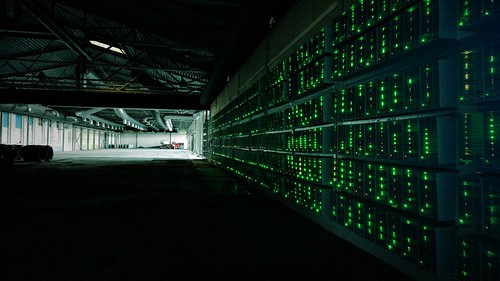
Bitcoin mining: significantly lower health and safety risk than other forms.

A selection of 10 links for you. Wipe off excess. I’m charlesarthur on Twitter. Observations and links welcome.

Apple, is USB allowed now? >> Medium

Matt Ronge, pointing to Duet Display, which lets you use an iPad (via Lightning) as an extra screen for a Mac running 10.9 or better:

For the past year, we’ve been working on an app (launching early 2015) that turns your iPad into a graphic tablet for your Mac (like a Wacom tablet). Our app at its core also streams video content from the Mac to the iPad, so we were very interested in USB connectivity early on in our project.

We knew that using USB instead of Wifi was a decision we had to make early on, as it would completely change our direction of development. USB offers a reliable, low latency connection which is 100x better than any wireless technology (especially with Yosemite experiencing serious Wifi reliability issues).

We were also very hesitant to build a business around a decision Apple may change on a whim. So we submitted an app to test the waters, would Apple allow an app that requires USB? An Apple representative called us and informed us USB connectivity was not allowed.

Duet Display looks like it could be fun, though one usually wants a bigger display – but if you had an 11in Macbook Air, a full-size iPad would almost double your screen size, and improve the resolution a lot.


Our tactics for Gamergate are outdated >> Space Channel 6

Brianna Wu:

For me, personally, I intend to keep lessening the amount I’m posting and writing about Gamergate. Everyone knows they are very sexist, very unhealthy individuals. Thanks to my Patreon, GSX’s full time staffer will document this behavior for law enforcement leaving me free to speak out for change in the industry and make inclusive games.

My suggestion to people rightly outraged about this movement, is to ask yourself what you currently want to accomplish. It’s my suggestion that it would be most helpful to shift the conversation back to representation in the industry. I think the gains in raising awareness of Gamergate have diminished, while the threat of giving the lunatic fringe the attention they desire has stayed the same.

To be blunt, I’m not sure endlessly talking about Gamergate does anything anymore.

I’m not sure it did past the second month. Idiots enjoy being idiots, and won’t be dissuaded from that track.

Topsy suggests a gradual dimunition in the number of tweets on this topic from 50,000 to 20,000 over the past month (and bear in mind that the obsessives tweet many, many times per day).


BuildZoom office burglary – $5000 reward – update!! >> BuildZoom

David Petersen of BuildZoom, from which equipment was stolen:

After our story was covered on ABC 7 News, we were contacted by a nearby startup that was burglarized on July 6th and July 13th. Comparing footage, it’s clear that the same person broke into both offices.

Update 2: It appears that this woman is breaking into SF startups with a Doorking / DKS code entry system. She has obtained a master key and is able to enter any office with this system.

Update 3: We believe we have identified the burglar. It’s a local San Francisco woman who has been convicted of similar crimes in the past. An acquaintance of hers emailed with photographs and additional information. It certainly looks like her.

Someone with a master key for office doors in SF? That’s a problem.


Facebook’s popularity among teens dips again >> Bloomberg

A report yesterday by Frank N. Magid Associates Inc. found that the portion of 13- to 17-year-old social-media users in the U.S. on Facebook slipped to 88% this year from 94% in 2013 and 95% in 2012. In the same period, Twitter and messaging applications rose in popularity in that age group, the study showed.

The Menlo Park, California-based company first warned a year ago that teens weren’t using its website as often as before. Facebook stopped discussing teen usage on its earnings calls after last year’s disclosure alarmed investors. While the issue was all but forgotten as the company’s advertising revenue reached new highs, it’s a bigger concern now, according to Tero Kuittinen, a managing director at Magid in New York.

“You look at Facebook and you say, ‘Wow, something really changed in 2014,’” Kuittinen said. “If kids are starting to use so much of their daily time on messaging apps, surely it’s going to hurt somebody.”

Among 13- to 17 year-olds, Twitter usage climbed 2 percentage points to 48%, according to the report. While more people use Facebook and its messaging app than any competitor, its user base tends to be older, with 55% of Facebook Messenger users being 37 or younger. By the same measure, 86% of Snapchat Inc.’s users and 83% of Kik Interactive Inc.’s users are under 37.

Seems reasonable to think that messaging apps are pulling teens away from Facebook.


2015: the year we get creeped out by algorithms >> Nieman Journalism Lab

Zeynep Tufekci:

It turns out computers have a built-in “uncanny valley” (that creepy feeling android robots generate when they kind of look human). Just like we don’t want robots too human-shaped — we want them to know their place — it turns out we aren’t too happy when our computers go from “smart” (as in automating things and connecting us to each other or information) to “smart” (as in “let me make that decision for you”).

Algorithmic judgment is the uncanny valley of computing.

Algorithms (basically computer programs, but here I’m talking about the complex subset that is being used to calculate results of some consequence, which then shape our experience) have become more visible in 2014, and it turns out we’re creeped out.

Tufekci is super-smart, and always ahead of the curve.


htmlwidgets: JavaScript data visualization for R >> RStudio Blog

Today we’re excited to announce htmlwidgets, a new framework that brings the best of JavaScript data visualization libraries to R. There are already several packages that take advantage of the framework (leaflet, dygraphs, networkD3, DataTables, and rthreejs) with hopefully many more to come.

An htmlwidget works just like an R plot except it produces an interactive web visualization. A line or two of R code is all it takes to produce a D3 graphic or Leaflet map. Widgets can be used at the R console as well as embedded in R Markdown reports and Shiny web applications.

This looks terrific (if you’re into R.)


Bitcoin’s collapse is worse than the ruble’s >> Quartz

Matt Phillips & Melvin Backman:

Why the collapse in bitcoin?  One of the clearest answers seems to be that it’s gotten harder to use bitcoin for some of its less savory uses, such as dodging taxes and buying drugs. Governments increasingly are trying to clamp down on the “dark web” sites where bitcoin quickly was the cryptocurrency of choice. Collapses of large, unregulated bitcoin exchanges — such as Mt. Gox — have done little to instill confidence in the currency either.

Mt Gox was a key reason for the start of the collapse. Yet the nearer Bitcoin gets to its 2011/12 levels, and the more people are using it (thus ironing out the speculative element), the more it looks like a really useful product. The implications of the blockchain are fascinating.


Absolute Sownage >> Attrition.org

Over the last two months, the multi-national Sony Corporation has come under a wide range of attacks from an even wider range of attackers. The backstory about what event prompted who to attack and why will make a mediocre made-for-TV movie someday. This article is not going to cover the brief history of hacks; readers can find details elsewhere. Instead, the following only serves to create an accurate and comprehensive timeline regarding the recent breaches, a cliff notes summary for easy reference.

Starts in April 2011, by the end of which we were up to 21. Current count: 24.


Why the sharing economy could be the internet’s most divisive revolution yet >> The Guardian

By me, on the “sharing economy” companies such as Uber and AirBnB:

what would happen if an Airbnb guest was harmed by fire, or a carbon monoxide leak – a constant concern for hotels. Airbnb’s site says owners “should” make sure they have a functioning CO detector and are following gas safety regulations. But although the money for any stay is paid via Airbnb, Robinson says he doesn’t know who would be responsible if someone were injured that way.

“I’m not a lawyer,” says [Patrick] Robinson [AirBnbB’s public policy director in Europe]. It seems surprising that the eventuality hasn’t come up in business meetings, but Robinson declines to discuss it.

It’s a scenario that has exercised insurance companies, which are wrestling with the question of who is liable in a collision involving a car being driven on an Uber journey, or one of the other car rental services, or a complaint involving Airbnb clients. Premiums might rise, or need extra tweaking.

I still find it surprising if AirBnB hasn’t discussed – and even worked out a plan – for the eventuality of poisoning or death at one of its lets, given that it receives the payments for them.


Samsung says ‘cya’ to ChatON smartphone messaging app >> WSJ

Samsung is closing ChatON, for which it claims a “user base” of over 200m users. To which everyone else says: O RLY? And they used it so much you’re closing it?

“Samsung’s failure in messaging apps is endemic of a broader struggle for the company in software and services,” said Rajeev Chand, managing director at Rutberg & Co., a San Francisco-based investment bank that focuses on the mobile industry.

Mr. Chand said he was puzzled by Samsung’s inability to parlay its massive handset sales into at least some traction in software and services, calling it “the defining issue for the company’s long-term success.”

“If they don’t succeed in apps and software, Samsung has a very large risk of being relegated to an increasingly shrinking-margin company,” he said, referring to the recent gains that low-cost Chinese and Indian competitors have made in handset sales in recent months.

Add in this from April:

Strategy Analytics, a Newton, Mass.-based research firm, said in a report Tuesday that U.S. users of Samsung’s devices spend little time on its own messaging, music and voice-activated applications including apps like ChatON, the South Korean company’s answer to services like WhatsApp, Line and Viber.

The report said that U.S. users of Samsung’s Galaxy S3 and S4 smartphones logged an average of six seconds per month using ChatON, compared to more than 11 hours per month on Facebook and about two hours per month on Instagram.

Six. Seconds. This is Samsung’s problem, writ large (or small). By contrast, Apple failed with Ping – but that was a social media app built on top of iTunes, itself a successful Apple-owned platform; iTunes remained. Samsung is left with nothing.

And it was always reluctant to give any hard numbers about ChatON. The irony is that ChatON is going to remain open for slightly longer in the US – apparently that’s one of the busier places.

Even more fun: at the end of November, Samsung categorically denied that it was going to close ChatON. Denials, eh?


Corrected: the author of the Gamergate post is Brianna Wu, not Anita Sarkeesian. Apologies, and thanks to Ron Hayter.

Links: self-driving cars in the rain (oh dear..), iBeacon in the Louvre, the unseen digital ads, bitcoin gets easier, and more


Apparently this stuff affects self-driving cars. Photo by Anthony Quintano on Flickr.

A selection of 6 afternoon links for you. Enjoy to the full extent of the law. I’m charlesarthur on Twitter. Observations and links welcome.

Louvre Museum’s DNA >> MIT SENSEable City Lab

How much time would you take to smile back at the Mona Lisa? Today, sophisticated Bluetooth signal tracking allows us to map how visitors move through a museum like the Louvre in Paris – what galleries they visit, what path they take, and how long they spend in front of each piece of artwork. Join us for a look inside one of the world’s largest museums… to see the people in front of the paintings.

Surprisingly, people who stay for long or short times don’t vary that much in where they go. They just go at different paces.


​This is how bad self-driving cars suck in the rain >> Jalopnik


(Jump forward to about 5 minutes in.)

The issues with the KAIST Unmanned Systems Research Group’s car were numerous, but the biggest problems had less to do with the slippery road surface and more to do with the visual systems. Those cameras and LIDAR arrays are dependent on a clear view, and with the angle of the car shifting and the direction of the sun, the sensors fail to pick up everything from street signs to lane markings and even pedestrians. And it just keeps getting worse.3

The team has to hit the emergency stop button at least twice, veers onto the side of the road, doesn’t see a curb and almost slams into a light pole, and then smacks into a barrier when parking.


56% of digital ads served are never seen, says Google >> Advertising Age

An incredible 56.1% of ads on the internet are not seen by humans, according to new research released today by Google.

“With the advancement of new technologies we now know that many display ads that are served never actually have the opportunity to be seen by a user,” said Google group product manager Sanaz Ahari in a blog post.

Those ads appear outside the viewable area of a browser window. Once you factor in bots, even fewer ads are seen by the people advertisers are paying to reach.


Bitcoin price decline sparks rare mining difficulty drop >> Coindesk

Mining difficulty determines how difficult it is to hash a new block and varies based on the amount of computing power used by miners on the bitcoin network. Bitcoin’s growing popularity has attracted more computing power to the network, meaning that the difficulty has been steadily increasing for some time.

However, stagnant pricing has caused a reduction in the hash rate over the past few weeks, resulting in the slight difficulty decrease. The estimated next difficulty level is 39,884,219,890, or -0.31%.

The sheer size of the bitcoin network ensures resilience and stability, but the hash rate has been stagnant for weeks and started declining in the first days of December.

This actually makes me think that bitcoin might have a chance as a medium of exchange. Once its price is stable for long enough, it becomes unattractive to speculators – but ideal for people looking to transfer value.


The SSD endurance experiment: two freaking petabytes >> The Tech Report

Geoff Gasior:

Our SSD Endurance Experiment has left four casualties in its wake so far. Representatives from the Corsair Neutron Series GTX, Intel 335 Series, Kingston HyperX 3K, and Samsung 840 Series all perished to satisfy our curiosity. Each one absorbed far more damage than its official endurance specification promised—and far more than the vast majority of users are likely to inflict.

The last victim fell at 1.2PB, which is barely a speck in the rear-view mirror for our remaining subjects. The 840 Pro and a second HyperX 3K have now reached two freaking petabytes of writes. To put that figure into perspective, the SSDs in my main desktop have logged less than two terabytes of writes over the past couple years. At this rate, it’ll take me a thousand years to reach that total.

They’re wayyy over spec. Great experiment.