Start up: the ad deception, why your Wi-Fi is lousy, will Android OEMs follow the iPhone SE?, and more

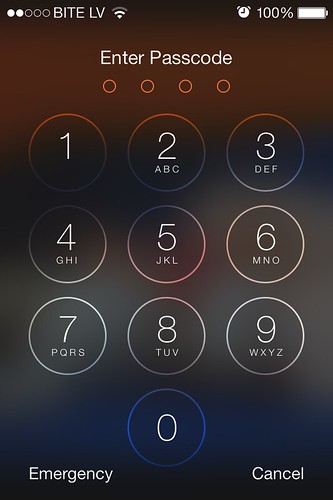
Maybe this is the way that you crack an iPhone passcode. Graphic by inju on Flickr.

You can now sign up to receive each day’s Start Up post by email. You’ll need to click a confirmation link, so no spam.

A selection of 10 links for you. Use them wisely. I’m charlesarthur on Twitter. Observations and links welcome.

My take on FBI’s “alternative” method » Zdziarski’s Blog of Things

Jonathan Zdziarski:

»Many firms have outright denied that they are the one, however there are at least a few firms that are not denying it, or not talking at all. The one that is the most tight lipped is, of course, the one people are paying the most attention to. I’m not at liberty to specify who, but you can count on reporters to be banging on doors in the middle of the night for this kind of information.

Speaking of middle-of-the-night, the brief was dated for Sunday, suggesting perhaps it was put together Sunday night. No forensics companies in the US are likely up and working at that hour, which seems to at least hint that it’s possible this company may be based overseas, where it would’ve been Monday morning. This is speculation, however worth investigating as a number of such DOJ contractors are based overseas.

We also know, based on the submitted court brief today, that FBI believes two weeks will be sufficient time for them to test and verify the soundness of this alternative technique. This tells us two things: 1. Whatever technique is being used likely isn’t highly experimental (or it’d take more time), and 2. Chances are the technique has been developed over the past several weeks that this case has been going on.

So what technology could be developed and reliably tested within say, roughly a month?

«

Quite a complicated but potentially effective one, it turns out.
link to this extract


How Spotify solved for the ‘paradox of choice’ » Medium

John McDermott:

»Discover Weekly creates playlists by analyzing a user’s listening behavior and comparing it to that of other like-minded users. Let’s say you’ve been listening to lots of Gary Clark, Jr. lately, for instance. Discover will find other Gary Clark, Jr. fans and identify the songs and artists they’ve recently added to their personal playlists (e.g. The Black Keys, “Them Shoes,” Heartless Bastards). Discover filters out the artists you’ve already heard, reducing the list to 30 songs (about two hours worth of music).

Perhaps the biggest key to Discover Weekly’s success has been this limited selection. “[30 songs] felt like a very digestible amount of music and that really made a difference,” Ogle says. “We also decided that it should feel special — kind of like a gift someone made for you.”

Discover is in stark contrast to Pandora’s exhaustive taxonomy process (known as the Music Genome Project): Each song is ascribed up to 450 distinct musical characteristics — such as “electric rock instrumentation,” “punk influences” and “minor key tonality” — and Pandora recommends songs that share characteristics. But Spotify’s relies on the hivemind of its users rather than a thorough dissection of each song’s elements.

«

I thought that Apple would take this approach in Apple Music; it has so much data already from the Genius system.
link to this extract


PC World’s cloudy backup failed when exposed to ransomware » The Register

John Leyden:

»The shortcomings of consumer-grade backup services in protecting against the scourge of ransomware have been exposed by the experiences of a UK businesswoman.

Amy W, who runs a small business in the Newbury, Berkshire area, was convinced that the KnowHow cloud was the only backup technology she’d ever need1 when she bought a laptop from PC World.

Eight months later, however, in the aftermath of a ransomware infection, Amy discovered that the KnowHow cloud backed up all her newly encrypted files and didn’t keep any revisions, leaving her unable to restore files from a historic clean backup.

PC World told El Reg that 30 days of historic backups should have been available through KnowHow cloud but this is contradicted by the victim herself, who said only two backup points, each from the same day she was infected with the CryptoWall ransomware, were available.

«

Oops.
link to this extract


This is Android N’s freeform window mode » Ars Technica

Ron Amadeo:

»We’ll get to the instructions, but first let’s talk about what’s actually here. Freeform window mode is just what we imagined. It’s a dead ringer for Remix OS—multiple Android apps floating around inside windows—and it might be the beginnings of a desktop operating system. It works on Android N phones and tablets, and once the mode is enabled, you’ll see an extra button on thumbnails in the Recent Apps screen. To the left of the “X” button that pops up after a second or two, there will be a square shape—the same ugly placeholder art Google used for the split screen mode in the Android M Developer Preview.

Press the square symbol for an app and you’ll be whisked away to a screen showing that app in a floating window that sits on top of your home screen wallpaper. The windows aren’t floating above the Android desktop; the background is just a blank wallpaper without any of your icons or widgets. The floating apps all have title bars like in Recent Apps. You can drag the apps around by the title bars or use the “close” and “maximize” buttons. Apps can be resized exactly how you would expect—press or hold on the edge and move your finger, and you’ll see the app change shape.

«

The picture accompanying this article perfectly fits ex-Microsoft manager (and now Microsoft analyst) Wes Miller’s description: “Every mobile operating system evolves to the point that it looks like Windows 3.1”.
link to this extract


Deception funds your online news » Medium

Rob Leathern:

»The aforementioned [junk] ad I saw was distributed by a company called Revcontent, on the news website International Business Times (ibtimes.com). You’d never fall for this clearly-fake site. But someone would, and does, otherwise this tactic wouldn’t still be showing up, 9+ months later after (presumably) someone else got shut down trying it. This deception increases conversion rates on these offers, and helps companies like Revcontent pay publishers “between $3 and $40 RPMs” (Revenue per thousand impressions). Sad to say, these numbers are a good return for websites’ online advertising in today’s climate. Buying online ads is far too easy, it seems.

I wouldn’t fall for it, so why should I care?

The most vulnerable among us are falling for these offers. They’re the ones spending hours on the phone in endless phone trees or with credit card companies trying to reverse a ‘free-trial’ that became an $87-a-month recurring charge.

In essence, these people are paying for the free news and content you consume. Every time you don’t become the victim of one of these fraudulent ads, you’re benefiting from someone else who isn’t as lucky. Lucky? I mean smart — they’re just not as smart as you knowing to avoid these things, right? Hmmmm. As a society, we should care.

«

link to this extract


Why your home Wi-Fi is lousy » WSJ

Christopher Mims notes that home Wi-Fi networks increasingly have to struggle with the “noise” from others, and growing demands from streaming and more devices:

»One solution would be to add more antennas, or nodes, throughout your home. Unfortunately, Eero’s units currently cost $200 a pop.

A new competitor announcing itself on Monday, called Plume, has gathered wireless-industry veterans to create what it claims is a new kind of Wi-Fi, protected by 14 patents. The company calls it “adaptive Wi-Fi.”

Fahri Diner, CEO of Plume and a veteran executive of Siemens and Qtera, says Plume’s system will consist of many cheap, “dumb” antennas, enough for every room of a house, for a total cost of about $100.

If Plume can do that, it would be enough to make a wireless-networking geek swoon. But we won’t know for a while, because the company doesn’t plan to unveil its product or partners until the third quarter of this year.

Essentially, Plume and most of its rivals aim to take the technology behind expensive, enterprise-grade Wi-Fi systems for offices and make it cheap enough to use in your home.

«

link to this extract


The absolute horror of WiFi light switches » Terence Eden’s Blog

Eden bought a cheap Wi-Fi light switch originating in China which runs, of course, on Android and has an Android app which, let’s see, wants to take pictures, directly call phone numbers, read your contacts, record audio, read your texts, read your USB storage..

»Those are some ridiculously scary permissions! I can understand wanting microphone access (voice control) and maybe GPS (turn lights on when I get home) – but why does this want to send SMS or place calls? Why does it need my contacts and the ability to take photos?

A quick virus scan showed nothing overtly malicious – but I decided to offer up a sacrificial tablet to run the app on. No way am I risking my main device with this software!

The software is of the usual sub-standard quality I’ve come to expect from cheap electronics. No set-up wizard, just dumped into a complicated screen.

«

Oh, did we mention that it also connects to a fixed IP in China and sends the light switch’s ID number to it, listening for.. something? Eden concludes:

»I’m guessing, with a small amount of effort, you could toggle strangers’ lights to your heart’s content.

«

This probably reminds you of those Android hotel light switches from last week.
link to this extract


August 1997: how UK TV covered the death of Diana, Princess of Wales » MHP Redux

VM_Phil“:

»As most of the world now knows, Diana, Princess of Wales died in a car crash in Paris in the early hours of Sunday, 31st August 1997. This page shows highlights of how the British television and radio services covered the immediate news that Sunday, with particular emphasis on the BBC TV news coverage.

«

What makes this worth looking at, on the day after the Brussels killings, is the way that TV and radio were effectively the only way for this news to spread. And it was for the most part really accurate.

Now imagine what it would be like today: all over social media, photos from the crash, all manner of craziness. I was working on The Independent at the time; everyone who could came in on the Sunday to work on a special. (I used the search engine AltaVista to find an expert in survivability of car crashes if you are and are not wearing a seatbelt in the back; there was no Google then. He lived in the US. I was the first to tell him the news.)

Now wonder how 9/11 would have been covered if today’s social media and connectivity were available. Different, yes, but better? Worse?
link to this extract


Editorial: The iPhone SE is the good small phone that could finally create good small Android phones » Android Police

David Ruddock:

»When it comes to Android smartphones, you don’t have much shopping around to do if you even want a device under 5″ at the moment. In the US, I can think of a single Android phone under 5″ that is officially distributed here that I’d want – the Moto E is a bit old at this point, and the Idol 3 is stuck on Android 5.0, probably forever. Samsung’s A-series isn’t sold here, and so Sony’s Z5 Compact ($429.99 on Amazon at the moment!) is literally the only viable option I’d have.

And along comes the iPhone SE. There had been some suspicion this would just be a slightly upgraded iPhone 5S – things would be changed where necessary to keep the device modern. Nope. It’s basically an iPhone 6s stuffed into a 5S chassis. Which is exactly what so many people on the internet seem to be absolutely screaming for Android OEMs to make: a flagship phone, downsized. Dramatically. The iPhone SE has the same processor as the 6s, the same camera (downgraded FFC, though), Touch ID, Apple Pay, the same sensors, and Apple even estimates it gets substantially better battery life than the standard 6s, likely owed to a reduced display resolution (granted, no 3D touch and reduced contrast ratio are trade-offs). For $399, that doesn’t sound like a bad deal. And the iPhone SE really has no direct analogs in current Android phones, just phones that are sold at a similar price.

«

Sony tried, but simply didn’t get the uptake for its 4″ phones. I doubt whether anyone but Apple can make it work, and even Apple is going to struggle to make this an expanding market – the number of 4″ phones sold shrank in the past year.
link to this extract


Apple in “advanced talks” to acquire Imagination Technologies for PowerVR GPU » Ars Technica UK

Sebastian Anthony:

»Apple is in “advanced talks” to acquire British chip design company Imagination Technologies, according to a source with knowledge of the discussions. When Ars sought comment, Imagination Technologies refused to deny any such planned takeover.

«

Apple, however, did say later in the day that it was not planning to buy Imagination “at this time”. (Imagination’s customers for its PowerVR chips include Samsung and Intel, both key suppliers to Apple.)
link to this extract


Errata, corrigenda and ai no corrida: none notified.

Start up: malware for all!, Tim Cook v FBI, US gov seeks source code, bedtime for robots, and more

Facebook discovered that tons of ads are as fake as this “pound coin”. Photo by Steve Parker on Flickr.

You can now sign up to receive each day’s Start Up post by email. You’ll need to click a confirmation link, so no spam.

A selection of 9 links for you. Off you go. I’m charlesarthur on Twitter. Observations and links welcome.

Building towards value with Atlas » Facebook Atlas Solutions

Dave Jakubowski, head of ad tech, Facebook:

»Marketing pioneer John Wanamaker once famously said, “Half the money I spend on advertising is wasted; the trouble is, I don’t know which half.” Despite the promises of the past two decades, digital still faces the same issue.

Through Atlas and the people-based layer that powers it, we’ve been able to identify and measure where most waste comes from: exchanges and banners.

We realized this by testing out a buying platform in Atlas last year. During that test, we plugged into a number of the usual exchanges and bought across several formats. There were two major takeaways:

1: We were able to deliver ads to real people with unprecedented accuracy, but came up against many bad ads and fraud (like bots). While we were fortunately able to root out the bad actors and only buy quality ads, we were amazed by the volume of valueless inventory.
2: Only two ad formats delivered significant value: native & video.

Based on those findings, we began to dig into the ads that came through LiveRail. And when we saw the same thing, we immediately shut off the low quality ads. In fact, we removed over 75% of the volume coming from our exchange by turning off publishers circulating bad inventory into LiveRail.

«

Wonder how many news sites will take note of those points.
link to this extract


AceDeceiver: first iOS trojan exploiting Apple DRM design flaws to infect any iOS device » Palo Alto Networks

Claud Xiao:

»We’ve discovered a new family of iOS malware that successfully infected non-jailbroken devices we’ve named “AceDeceiver”.

What makes AceDeceiver different from previous iOS malware is that instead of abusing enterprise certificates as some iOS malware has over the past two years, AceDeceiver manages to install itself without any enterprise certificate at all. It does so by exploiting design flaws in Apple’s DRM mechanism, and even as Apple has removed AceDeceiver from App Store, it may still spread thanks to a novel attack vector…

…To carry out the attack, the [malware] author created a Windows client called ”爱思助手 (Aisi Helper)” to perform the FairPlay MITM attack. Aisi Helper purports to be software that provides services for iOS devices such as system re-installation, jailbreaking, system backup, device management and system cleaning. But what it’s also doing is surreptitiously installing the malicious apps on any iOS device that is connected to the PC on which Aisi Helper is installed. (Of note, only the most recent app is installed on the iOS device(s) at the time of infection, not all three at the same time.) These malicious iOS apps provide a connection to a third party app store controlled by the author for user to download iOS apps or games. It encourages users to input their Apple IDs and passwords for more features, and provided these credentials will be uploaded to AceDeceiver’s C2 server after being encrypted. We also identified some earlier versions of AceDeceiver that had enterprise certificates dated March 2015.

As of this writing, it looks as though AceDeceiver only affects users in mainland China.

«

So it’s really a Windows infection?
link to this extract


275 million Android phones imperiled by new code-execution exploit » Ars Technica UK

Dan Goodin:

»The NorthBit-developed attack exploits a Stagefright vulnerability discovered and disclosed last year by Zimperium, the security firm that first demonstrated the severe weaknesses in the code library. For reasons that aren’t yet clear, Google didn’t fix the vulnerability in some versions, even though the company eventually issued a patch for a different bug that had made the Zimperium exploits possible. While the newer attack is in many ways a rehash of the Zimperium work, it’s able to exploit an information leak vulnerability in a novel way that makes code execution much more reliable in newer Android releases. Starting with version 4.1, Android was fortified with an anti-exploitation defense known as address space layout randomization, which loads downloaded code into unpredictable memory regions to make it harder for attackers to execute malicious payloads. The breakthrough of Metaphor is its improved ability to bypass it.

“They’ve proven that it’s possible to use an information leak to bypass ASLR,” Joshua Drake, Zimperium’s vice president for platform research and exploitation, told Ars. “Whereas all my exploits were exploiting it with a brute force, theirs isn’t making a blind guess. Theirs actually leaks address info from the media server that will allow them to craft an exploit for whoever is using the device.”

«

Affects versions 2.2 through to 4.0, and 5.0 and 5.1. Which is 41.1% of phones, according to latest data from Google. Would have thought that is more than 275m, actually.
link to this extract


Microsoft apologizes for GDC party with skimpily-clad dancers » Reuters

Anya George Tharakan:

»Microsoft Corp apologized for hiring dancers dressed as skimpily-clad schoolgirls for its Game Developer Conference (GDC) afterparty in San Francisco on Thursday night, responding to media reports citing attendees’ pictures on Twitter and Instagram.

“It has come to my attention that at Xbox-hosted events at GDC this past week, we represented Xbox and Microsoft in a way that was absolutely not consistent or aligned to our values,” Microsoft’s head of Xbox Phil Spencer said in a statement.

“That was unequivocally wrong and will not be tolerated,” Spencer said.

Photos purportedly from the party surfaced on Twitter and Instagram, with many users expressing their anger at Microsoft’s actions.

«

“Will not be tolerated”? What’s the penalty? Of course it would have been better if this hadn’t happened in the first place. Ah, San Francisco.
link to this extract


Google could beat Apple at fashion – just like it did phones » Co.Design

Mark Wilson:

»”when you think about things people wear, they have really diverse styles. It isn’t the case that one style fits all, in any clothing or accessory or other kind of apparel,” David Singleton, VP of Android Wear, says. “A lot of our DNA working on Android has always been to create an ecosystem of partners to work together to create something bigger than the sum of its parts, and that’s what we’re trying to do here.”

That strategy worked for Android Wear’s first fashion partnership, Fossil, which cites its Fossil Q Founder as its top-selling watch, period, of the 2015 holiday season. At $295, it’s more or less the Bentley of Fossils. But watches are just one small swatch of a much larger piece of fabric. Google’s open platform is poised to leave a much larger impact on the $1.2 trillion fashion industry than it has on smartphones—because while everyone is happy to use the same phone as the person sitting next to them, fashion is a form of personal expression. Even those who ride the latest trends don’t want to be matchy-matchy with everyone else on the street…

…what gets concerning about the viability of Apple’s strategy — if we really are to consider it a fashion company now — is how its closed approach not only will limit overall adoption of the Apple Watch, but limit the extent to which Apple can keep afloat in the sheer depth of wearables to come.

«

This would be a strong argument if Android Wear weren’t miles behind Apple Watch in sales; and the article doesn’t offer any explanation for what would make its adoption increase.
link to this extract


Silicon Valley’s unchecked arrogance » Medium

Ross Baird and Lenny Mendonca:

»Snapchat may be solving an important problem for well-connected young people in America who don’t have to worry about basic needs. But whether it’s unemployed young people in St. Louis looking for their next paycheck or a family in Flint, Michigan worried about clean water, many Americans have more immediate problems.

Because most of today’s entrepreneurs have their basic needs taken care of, their problem-solving often seems frivolous to the rest of the country.

Take Uber, for example. Uber’s great at solving how people with smartphones and disposable income can get around major cities — a small fraction of the global population. Uber is less good at helping the drivers, whose income is much lower than the riders, benefit from this new paradigm. Uber has hailed their impact as letting people work flexibly and use assets more productively, but strategically is investing hugely in driverless cars.

And we don’t blame Travis Kalanick (actually we do, but that’s not the point of this story). Uber’s founders’ experiences are as riders, not drivers. But imagine an ownership structure in which, for example, drivers could earn fractional equity in the company for each ride they gave. What if a percentage of the $50bn valuation were shared among the drivers, based on a merit-based system?

«

It’s quite a thought, isn’t it? Now *that* would be a sharing economy.

link to this extract


US government pushed tech firms to hand over source code » ZDNet

Terrific scoop by Zack Whittaker:

»The US government has made numerous attempts to obtain source code from tech companies in an effort to find security flaws that could be used for surveillance or investigations.

The government has demanded source code in civil cases filed under seal but also by seeking clandestine rulings authorized under the secretive Foreign Intelligence Surveillance Act (FISA), a person with direct knowledge of these demands told ZDNet. We’re not naming the person as they relayed information that is likely classified.

With these hearings held in secret and away from the public gaze, the person said that the tech companies hit by these demands are losing “most of the time.”

When asked, a spokesperson for the Justice Dept. acknowledged that the department has demanded source code and private encryption keys before. In a recent filing against Apple, the government cited a 2013 case where it won a court order demanding that Lavabit, an encrypted email provider said to have been used by whistleblower Edward Snowden, must turn over its source code and private keys.

«

The fact that Justice Department says it might demand the same from Apple does slightly imply that it doesn’t have it already.
link to this extract


Can we teach robots right from wrong by reading them bedtime stories? » Public Radio International

Elizabeth Shockman:

»“We’re still at a simpler stage,” [computer science professor at the Georgia Institute of Technology in Atlanta, Mark] Riedl says. “Natural language processing is very hard. Story understanding is hard in terms of figuring out what are the morals and what are the values and how they’re manifesting. Storytelling is actually a very complicated sort of thing.”

Eventually, however, Riedl hopes it will be possible to give robots entire libraries of stories.

“We imagine feeding entire sets of stories that might have been created by an entire culture or entire society into a computer and having him reverse engineer the values out. So this could be everything from the stories we see on TV, in the movies, in the books we read. Really kind of the popular fiction that we see,” Riedl says.

He doesn’t worry about robots being able to determine what right or wrong is in a story — whether it’s better to side with a heroic figure in a story or an anti-hero.

“What artificial intelligence is really good at doing is picking out the most prevalent signals,” Riedl says.

«

link to this extract


Full transcript of TIME’s interview with Apple CEO Tim Cook » TIME

Nancy Gibbs and Lev Grossman:

»Q: As a business person, as the guy running Apple, should this go to Congress, they rule, goes against you, how bad is it for Apple from a business point of view?

COOK: I think, first of all it’s bad for the United States. Because going against us doesn’t just mean going against us. It means likely banning, limiting or forcing back doors for [everyone]. I think it makes the U.S. much more vulnerable. Not only in privacy but also in security. The national infrastructure, everything. And I can’t imagine it happening because it would be outlandish for something like that to happen. I think everybody has better judgment than that.

But at the end of the day, we’re going to fight the good fight not only for our customers but for the country. We’re in this bizarre position where we’re defending the civil liberties of the country against the government. Who would have ever thought this would happen?

«

Absorbing read; the only point where Cook seems to bodyswerve the question is when he’s asked “what if it’s about finding out where the terrorist’s nuclear bomb is ticking down, or the child is being tortured?” Which is of course the question which pours grease onto the slippery slope.
link to this extract


Errata, corrigenda and ai no corrida: none notified.

Start up: Xiaomi’s money trouble, instructing Alexa, the App Store problem, Uber’s sick loophole, and more

The final position of AlphaGo’s third win in a five-game match Lee Sedol, the top Go professional. But what does that mean for human competition? Screenshot by kenming_wang on Flickr.

You can now sign up to receive each day’s Start Up post by email. You’ll need to click a confirmation link, so no spam.

A selection of 15 links for you. Use them wisely. I’m charlesarthur on Twitter. Observations and links welcome.

I stayed in a hotel with Android lightswitches and it was just as bad as you’d imagine » mjg59

The “switches” were Android tablets. He hooked up an Ethernet connection to see what was going on:

»wireshark revealed that [the data protocol] was Modbus over TCP. Modbus is a pretty trivial protocol, and notably has no authentication whatsoever. tcpdump showed that traffic was being sent to 172.16.207.14, and pymodbus let me start controlling my lights, turning the TV on and off and even making my curtains open and close. What fun!

And then I noticed something. My room number is 714. The IP address I was communicating with was 172.16.207.14. They wouldn’t, would they?

I mean yes obviously they would.

It’s basically as bad as it could be – once I’d figured out the gateway, I could access the control systems on every floor and query other rooms to figure out whether the lights were on or not, which strongly implies that I could control them as well. Jesus Molina talked about doing this kind of thing a couple of years ago, so it’s not some kind of one-off – instead, hotels are happily deploying systems with no meaningful security, and the outcome of sending a constant stream of “Set room lights to full” and “Open curtain” commands at 3AM seems fairly predictable.

We’re doomed.

«

link to this extract


MIT unveils 3D solar arrays that produce up to 20 times more energy » 3tags

»Intensive research around the world has focused on improving the performance of solar photovoltaic cells and bringing down their cost. But very little attention has been paid to the best ways of arranging those cells, which are typically placed flat on a rooftop or other surface, or sometimes attached to motorized structures that keep the cells pointed toward the sun as it crosses the sky.

Now, a team of MIT researchers has come up with a very different approach: building cubes or towers that extend the solar cells upward in three-dimensional configurations. Amazingly, the results from the structures they’ve tested show power output ranging from double to more than 20 times that of fixed flat panels with the same base area.

«

They’re not pretty, but they are efficient.
link to this extract


Fanfare for the Common Man – Emerson, Lake & Palmer (Olympic Stadium Montreal) » YouTube

Bloody cold (snow all over the ground) and they must have been shooting the video for at least five hours, judging by the clocks you can see at various points. This is shorter than that. The first use of the polyphonic synthesiser (able to play more than one note at a time) in a rock song. Farewell, Keith Emerson.
link to this extract


Listen up: your AI assistant goes crazy for NPR too » KWBU

Rachel Martin (in a transcript from her radio program on NPR:

»OK. Go ahead and turn up the volume because this update is for you, Alexa. Last week, we talked about Alexa, the voice-activated assistant that operates on a speaker sold by Amazon called the Echo. The technology is Amazon’s way of connecting to your home as part of a future where you walk into your house and you say – out loud – turn off the alarm. Dim the lights. Preheat the oven. Well, some of you out there already own an Amazon Echo, and our story activated your Alexas. I guess her ears were burning.

Listener Roy Hagar wrote in to say our story prompted his Alexa to reset his thermostat to 70 degrees. It was difficult for Jeff Finan to hear the story because his radio was right next to his Echo speaker, and when Alex heard her name, she started playing an NPR News summary. Marc-Paul Lee said his unit started going crazy too and wrote in to tell us this – let’s just say we both enjoyed the story. So Alexa, listen up – we want you to pledge to your local member station. You hear me? Lots and lots of money. Did you get that, Alexa?

«

link to this extract


Xiaomi – hard life » Radio Free Mobile

Richard Windsor is a sceptic about the prospects of the venture capitalistis’ starry-eyed kid:

»Xiaomi owns 30% of Xunlei and has incorporated its acceleration technology into its ecosystem from MIUI6 (2014) going forward. As a result of this, the performance of Xunlei’s advertising revenues gives some indication of how usage is faring within Xiaomi’s ecosystem and the numbers are not encouraging.

Xunlei’s Q4 2015A revenues declined 1.1% to US$35m however within that online advertising revenues were $1.7m growing 24% YoY with mobile advertising making a contribution for the first time.

Xiaomi claims to have 170m MIUI users all of which have the Xunlei technology but if Xunlei can only generate $1.7m from those users, difficult questions have to be asked with regards to engagement. This makes me concerned that although Xiaomi devices register strong usage, much of that usage may be occurring within the services of its rivals rather than its own…

…if all Xiaomi is doing is providing nicely specified devices at rock bottom prices then it is in fact helping its competitors rather than itself. This is exactly the same problem that other Android handset makers have outside of China. These handset makers slash each other’s throats to put better and better devices in the hands of users but it is Google that reaps all of the benefit from the subsequent usage increases.

«

link to this extract


Yahoo announces plans to kill off Games, Livetext, Boss, and more regional sites » VentureBeat

Eil Protalinski:

»Yahoo today announced its Q1 2016 progress report, highlighting the closure of several products and regional sites. As shared in its last earnings call, the company wants to focus on just seven core consumer products: Mail, Search, Tumblr, News, Sports, Finance, and Lifestyle.

First off, the company is shutting down its Yahoo Games site (first launched in 1998!) and publishing channel on May 13, 2016. This impacts all territories: Australia, Canada, France, Germany, Italy, Spain, the U.K., and the U.S.

Starting March 14, 2016, users will no longer be able to make in-game purchases on the Yahoo Games site. Yahoo says it has reached out to game publishers and asked them to develop a transition plan for players who have made in-game purchases.

Next, Yahoo Livetext is being shut down at the end of March 2016. The company launched the silent video chat app in July 2015 — we weren’t crazy about the app when we tried it out. As you might expect, Yahoo says Livetext let the company “experiment with new user experiences and features,” which it will try to incorporate into its existing products. Specifically, the company said Yahoo Messenger will have the most to gain here.

«

It’s also closing Yahoo Astrology in the UK, France, Germany, Spain and India. I’m sure they saw it coming though. As for Yahoo, its fate seems to be to pare off more and more of its sites until there’s just a nameplate on an office somewhere in Delaware.
link to this extract


A typo stopped hackers siphoning nearly $1bn out of Bangladesh » The Register

John Leyden:

»At least 30 transfer requests were made on 5 February using the Bangladesh Bank’s SWIFT code, out of which five resulted in successful transfers, AP reports, citing Bangladeshi newspaper reports.

If all the transfers were effected thieves would have made off with $950m. However, a spelling mistake in the name of one recipient led Deutsche Bank, which was involved in routing funds, to raise a query. The Federal Reserve Bank of New York flagged up the unusual transfer of funds to private accounts to the Bangladesh central bank at around the same time.

“Four requests to transfer a total of about $81m to the Philippines went through, but a fifth, for $20m, to a Sri Lankan non-profit organisation, was held up because the hackers misspelled the name of the NGO, Shalika Foundation,” Reuters reports.

The crooks misspelled “foundation” in the NGO’s name as “fandation”, prompting the query from Deutsche Bank.

«

link to this extract


How would you fare at the global negotiating table? » World Economic Forum

Donald Armbrecht:

»You’re a great negotiator at home, but how would you fare on the world stage? Strong negotiating skills in one culture can actually be a disadvantage in another, according to Erin Meyer, author of Getting to Si, Ja, Oui, Hai and Da.

Some cultures are emotionally expressive, even in the meeting room. Laughing, raising your voice or physical contact beyond a handshake can be considered normal in countries such as Italy and Spain. Whereas in the United States there’s a level of friendliness with limits. Meanwhile, business cultures in countries like Germany and Japan can find such behaviour inappropriate or unprofessional.

«

Also needs “what do phrases actually mean?” – given that when a Briton says “really?” they usually mean “that’s the stupidest thing I’ve ever heard”.
link to this extract


What no indie developer wants to hear about the App Store » iMore

Rene Ritchie:

»I hate hearing it as much as I hate writing it. It’s far easier to simply blame platform owners for failing to pull levers and influence economies; for treating Facebook or HBO better than they treat the 76th Notes app to launch this year.

If the absolutely capricious and often maddening [Apple App STore] review process and lack of attention really did chill innovation, though, it should be easy to point to Google Play and its over half-a-decade of relatively lax approval policies, and see year after year of ground-breaking, platform-making, device-selling apps that would never come to market on the App Store.

That would be the fastest way to get Apple to change review policies — force them to scramble into recovery mode, show the company rather than tell. But there’s nothing to show. Google Play isn’t full of universe-denting mobile software that iPhone and iPad owners simply can’t get. It has a few things like custom launchers, but those remain incredibly niche.

All the truly important apps of the last few years, from Instagram to Uber, all work just fine on the iPhone. In fact, they often work sooner and better.

If Apple did provide for trials and upgrade pricing and allowed more direct customer relationships, it’s uncertain how much that would really change things either. We live in an age of venture capital and mega corporations who can easily afford to release high-quality apps frequently and for free.

«

It is an unbeatable riposte to “trials would make all the difference” to say “well, it hasn’t for developers on Android”. Now read on..
link to this extract


Life and death in the App Store » The Verge

Casey Newton:

»Last month, Apple announced it had paid $40 billion to developers since the App Store opened, saying the store was responsible for “creating and supporting” 1.9 million US jobs. More than half a million iOS developers have created apps; the company’s Worldwide Developer Conference is so popular that tickets have to be distributed via a lottery. “[Apple] made our company,” Sykora says. “If Apple didn’t exist, we wouldn’t have a company at all.” And the market for apps is growing: between iOS, Android, and smaller platforms, apps could generate $101 billion annually by 2020, according to market research firm App Annie.

But the App Store’s middle class is small and shrinking. And the easy money is gone.

For a time, Pixite was a shining example of the businesses made possible by the app economy. Like thousands of other developers, Pixite’s founders took what had been a side project and turned it into a full-fledged career. But the company’s recent financial problems illustrate a series of powerful shifts in the industry toward consolidation and corporatization.

«

The death of the middle class here reflects wider changes in the outside world – but with evolution speeded up thousands of times. In passing, this article by Newton, and the interview below by Sam Byford, are two excellent pieces of journalism: as long as they need to be, well-researched, intimate, illuminating.
link to this extract


Artificial intelligence: Google’s AlphaGo beats Go master Lee Se-dol » BBC News

»A computer program has beaten a master Go player 3-0 in a best-of-five competition, in what is seen as a landmark moment for artificial intelligence.

Google’s AlphaGo program was playing against Lee Se-dol in Seoul, in South Korea.
Mr Lee had been confident he would win before the competition started.

The Chinese board game is considered to be a much more complex challenge for a computer than chess.

“AlphaGo played consistently from beginning to the end while Lee, as he is only human, showed some mental vulnerability,” one of Lee’s former coaches, Kwon Kap-Yong, told the AFP news agency.

«

This is what people overlooked in thinking that Se-dol would be able to pull things back even if he lost the first game. There’s no emotion in the machine; it just slogs on (and like chess, Go gets easier to compute towards the end). The human feels the pressure of being behind, and the pressure to win. The machine won’t blunder. The human can. I’m certain it will be a 5-0 result.
link to this extract


DeepMind founder Demis Hassabis on how AI will shape the future » The Verge

Sam Byford, in a terrific wide-ranging, intelligent interview:

»SB: So let’s move onto smartphone assistants. I saw you put up a slide from Her in your presentation on the opening day — is that really the endgame here?

DH: No, I mean Her is just an easy popular mainstream view of what that sort of thing is. I just think we would like these smartphone assistant things to actually be smart and contextual and have a deeper understanding of what you’re trying to do. At the moment most of these systems are extremely brittle — once you go off the templates that have been pre-programmed then they’re pretty useless. So it’s about making that actually adaptable and flexible and more robust.

SB: What’s the breakthrough that’s needed to improve these? Why couldn’t we work on it tomorrow?

DH: Well, we can — I just think you need a different approach. Again, it’s this dichotomy between pre-programmed and learnt. At the moment pretty much all smartphone assistants are special-cased and pre-programmed and that means they’re brittle because they can only do the things they were pre-programmed for. And the real world’s very messy and complicated and users do all sorts of unpredictable things that you can’t know ahead of time. Our belief at DeepMind, certainly this was the founding principle, is that the only way to do intelligence is to do learning from the ground up and be general.

«

This is a must-read; Hassabis is thinking so far ahead, but also so clearly. (I’ve previously said that I think the AI capabilities of phones will feed into the next pervasive thing – a bit like the selfie.)
link to this extract


What do games tell us about intelligence? » Medium

Johan Ugander is an assistant professor of management science and engineering at Stanford. The whole essay is terrific – he describes AlphaGo as “moving past the horizon of human Go ability” (chess programs have long since vanished over it) – but this part really makes you think:

»Imagine organizing a “Turing tournament” where all the subjects were human, but an interrogator was told that half of the subjects were machines. Tasked to determine which subjects were human and which were machine, the interrogator would be forced to choose which subject was “more human.” As a result, it is therefore possible to measure “how human” each human is. Or at least: how well each human performs human intelligence.

The next natural step is that there’s no reason to believe that computer programs can’t “out-human” us, achieving Elo ratings in the imitation game much higher than any human. This observation is particularly true if the interrogator in the game is human; the natural next step would be to put in place a machine interrogator, who would probably be able to discern the difference between subjects better than any human. As a first step in this direction, research on CAPTCHAs targets precisely this task of discriminating between machines and humans.

But beyond CAPTCHAs, at what point can a machine no longer tell the difference between a human and a machine?

«

link to this extract


One of the greatest art heists of our time was actually a data hack » Ars Technica

You already knew that it wasn’t a guerrilla 3D scan with a Kinect, because you read it here last week. Annalee Newitz has a neat followup, though:

»the true story of how the artists got their scan might actually be more revealing than the Kinect hoax. [Cosmo] Wenman [who has used high-quality photos to create scans] points out that many museums have high-quality scans of their artwork that they refuse to release to the public. He writes:

»

I know from first-hand experience that people want this data, and want to put it to use, and as I explained to LACMA in 2014, they will get it, one way or another. When museums refuse to provide it, the public is left in the dark and is open to having bogus or uncertain data foisted upon it.

Museums should not be repositories of secret knowledge, but unfortunately, as I’ve noted elsewhere, Neues is not alone in keeping their scan data to themselves. There are many influential museums, universities, and private collections that have extremely high quality 3D data of important works, but they are not sharing that data with the public.

«

He lists dozens of high-quality scans that are being hoarded by museums, from famous Rodin and Michelangelo sculptures, to Assyrian reliefs that are thousands of years old. If the artists behind The Other Nefertiti would come clean about where their scan came from, they might inspire other artists to force museums to open up their archives and allow many other artworks to return home— or come into our homes, making art part of our everyday lives.

«

There’s the scent of a novel in this. Which is real, the scan or the “original”?
link to this extract


Uber riders say they were charged massive cleaning fees for messes they never made » BuzzFeed News

Leticia Miranda:

»Uber customers are warning others to be wary of using the ride-hailing app after they say they were charged hundreds in vehicle cleaning fees for messes they claim they never made.

Jordan Hunter, a 22-year-old senior at University of Texas, says she and a group of friends were left stunned after a six-mile Uber ride in Austin left them with a triple-digit bill for what Uber said were cleaning purposes.

The group of six friends took an Uber home early on Saturday, Feb. 7, Hunter told BuzzFeed News. The friends were irritated by the surge pricing, but were willing to cough up the $68 it would cost to get home safely.

After arriving home, the friends were shocked to see they had been charged an additional $100 for a cleaning fee.

«

Sounds like drivers figuring out a way to make some extra cash on the side. If there’s a wrinkle, people will find it.
link to this extract


Errata, corrigenda and ai no corrida:

Start up: Android antitrust?, Flickr flickers, Apple gets small, Opera adblocks, an iPhone killer dies, and more

Sonos is cutting jobs but says voice recognition and streaming will be bigger parts of its future. Photo by nan palmero on Flickr.

You can now sign up to receive each day’s Start Up post by email. You’ll need to click a confirmation link, so no spam.

A selection of 10 links for you. A computer counted them. I’m charlesarthur on Twitter. Observations and links welcome.

What happens when video games can read your face » Fast Company

Elizabeth Segran:

»Game developers have always been interested in how players might react to the characters and plots they created—but what if they could tell exactly how the player was feeling and tailor the game to their mood?

“Back in the olden days we had to do a lot of guesswork as game designers,” says Erin Reynolds, the creative director of the gaming company Flying Mollusk. “Is the player enjoying this? Is the player bored? You had to create a game that was one size fits all.”

But all that is changing fast. Affectiva, an MIT Media Lab spin-off that creates technology that recognizes people’s emotions by analyzing subtle facial movements, has created a plugin that game developers can integrate into their games to make them more emotion-aware.

«

The warm bath of AI – it’s all around you.
link to this extract


EU taking steps towards formal complaint against Google’s Android » Bloomberg Business

Aoife White:

»The European Union may be gearing up to send Google an antitrust complaint over its Android mobile phone operating system, adding to a growing list of regulatory woes for the company on the continent, according to three people familiar with the probe.

The Internet giant’s opponents have been asked to remove any business secrets from documents submitted to regulators to prepare non-confidential versions that could be shown to Google after a statement of objections, said the people who asked not to be named because the investigation is private.

«

That’s certainly a key step towards a Statement of Objections. But it’s been more than a year since Vestager raised the SOO to Google’s search, and nothing has happened. Why will this make any difference?
link to this extract


Android N’s under-the-hood changes might point to a new future for OS updates » Android Central

Jerry Hildenbrand:

»Imagine a world where Samsung can have its vision of Android running just how it likes it, while deep system processes — like the infamous Stagefright library — are separate and untouched. That would mean that Samsung or Google could push out changes to their separate parts of the system far more easily (and much faster) than they can today without interfering with the other half of the system. (With APIs and libraries to bridge the gap.) The manpower alone that this situation frees up means more people are available to work on making the Samsung experience better without having to worry about the underlying Android code.

With Android N, Google has essentially started to divide Android into two sections: the core OS (the framework that makes everything work) and the interface (the apps, launcher, notifications, and everything else the user interacts with).

«

Sounds nice. Any reasonable estimate suggests that Android N will be on about a third of Android devices 18 months after it is announced; Lollipop (v 5.x) is now on 36.1% of devices, having been released in November 2014. So that suggests, if N goes live in November, that it’s going to be 2018 before any of this is really widespread.
link to this extract


Apple invites media to March 21 product event » Mashable

Lance Ulanoff:

»No one expects cutting-edge technology from the new 4-inch phone. Most rumors have pegged it with the last-generation A8 chip and an 8-megapixel camera. It will also, at a rumored $450, cost a lot less than Apple’s flagships, the iPhone 6S and 6S Plus.

Most people also expect an iPad Air 3. Apple’s latest 9.7in tablet will not be a great leap forward, but it should include an A9 processor, support for the Apple Pencil and maybe even Smart Connectors for accessories like an iPad Air-size Smart Keyboard.

This event will also mark the one year anniversary (plus a few days) of the official introduction of Apple’s first wearable, the Apple Watch. No one is predicting new hardware; the Apple Watch design will probably be fixed for at least another six months. There are rumors, though, of even more watch band styles and, possibly, some new Apple Watch colors and materials.

This is also the time of year where Apple does a laptop refresh. A year ago it introduced the ultra-light, gold MacBook, which was notable for having just a single USB-C port. The device is an engineering wonder, but its processor, the Intel Core M, is over a year old. Expect an upgrade to Intel’s sixth-generation Core line (a.k.a. Skylake). Apple could also introduce upgrades for the MacBook Pro and the Mac Pro.

There’s always the possibility of a surprisem, like a brand new gadget or accessory. It’s certainly been ages since Apple upgraded the earbuds that ship with the iPhone. Maybe they’ll finally get a Beats upgrade.

«

They all sound like solid upgrades; watching the effect of a new 4in iPhone on sales will be telling.
link to this extract


Navigating an industry in transition, investing in the future of music » Sonos

Sonos chief executive (and co-founder) John McFarlane on how future music streaming and voice control will be key to the company’s future:

»Now the path forward for the music industry is crystal clear, so too is our path at Sonos. We’re doubling down on our long-held conviction that streaming music is the dominant form of consumption now and in the future. We believe that listeners will grow increasingly dissatisfied with the solutions they’ve cobbled together for listening at home.

“Now that music fans can finally play anything anywhere, we’re going to focus on building incredibly rich experiences that were all but unimaginable when we started the company.”
Now that music fans can finally play anything anywhere, we’re going to focus on building incredibly rich experiences that were all but unimaginable when we started the company, and will be at the vanguard of what it means to listen to music at home. This is a significant long-term development effort against which we’re committing significant resources.

Voice: we’re fans of what Amazon has done with Alexa and the Echo product line. Voice recognition isn’t new; today it’s nearly ubiquitous with Siri, OK Google, and Cortana. But the Echo found a sweet spot in the home and will impact how we navigate music, weather, and many, many other things as developers bring new ideas and more content to the Alexa platform.

Alexa/Echo is the first product to really showcase the power of voice control in the home. Its popularity with consumers will accelerate innovation across the entire industry. What is novel today will become standard tomorrow. Here again, Sonos is taking the long view in how best to bring voice-enabled music experiences into the home. Voice is a big change for us, so we’ll invest what’s required to bring it to market in a wonderful way.

«

Apparently the new Sonos Play:5 has a microphone built in, but not – it seems – enabled yet. McFarlane also says there are layoffs, though the number isn’t specified. The admiration for Amazon’s Echo is something to note, though.
link to this extract


Flickr’s desktop auto-upload feature is no longer free » VentureBeat

Ken Yeung:

»Flickr has made a change to its $5.99 monthly Pro membership plan that will affect those using the photo-sharing social network for free. Starting today, its desktop Auto-Uploadr tool will be exclusive to paying customers. But all is not lost, as the company is offering a 30 percent discount to non-paying members to upgrade.

With the desktop Auto-Uploadr feature, users can automatically upload all of their photos from anywhere, while also making them accessible from any device. Introduced in May and available for Windows and Mac computers, it promised to take images from your hard drive, iPhoto, and any external hard drive and store it on Flickr’s servers. This was intended to tout the company’s increase in free storage capacity of up to 1000GB.

«

Feels like the first turn of the screw.
link to this extract


The roots of Tim Cook’s activism lie in rural Alabama » The Washington Post

Todd Frankel got sent down to Alabama to see what the hell he could find in the town where Tim Cook grew up. Turned out, not much to find:

»Robertsdale today is a two water-tower town of about 5,200 residents. It’s doubled in size since Cook grew up here, with houses spreading across former farm fields. The town got its first Walmart Supercenter two years ago.

Back in 1977, the new store in town was a Piggly Wiggly. There was no movie theater. No bowling alley. The fall county fair was the big deal. Teens hung out on the town’s tennis courts or outside Hammond’s Supermarket, where they knew the owner. “There was nothing to do,” said Teresa Prochaska Huntsman, another Class of ’78 alum.

School was the center of their lives. And Cook excelled there. He was in the National Honor Society and racked up academic honors. So did Huntsman, who managed to edge out Cook for the title of class valedictorian…

…“He probably considered himself to be a bit nerdy, but he didn’t come off that way,” recalled Harold Richardson, another former classmate.

And the topic of whether Cook — or any other student — was gay wasn’t even on the radar. “In the ’70s, in high school, no one thought about that, especially in Alabama,” Richardson said. It was like it wasn’t even possible.

Growing up gay in small-town Alabama a generation ago meant knowing the value of privacy, recalled Paul Hard, 57, who was raised in tiny Demopolis, Ala. He doesn’t know Cook, but imagines what he went through, because he went through it himself. “You kept your cards close to your chest,” he said.

«

The photo of Cook in the high school yearbook is amazing, though. Took me quite a while to find it.
link to this extract


China’s best iPhone clone maker bites the dust » Tech In Asia

Charlie Custer:

»So what killed Dakele? Frankly, having a good-quality, low-cost smartphone simply isn’t enough to win you customers in the Chinese smartphone market these days. While it worked in the early days of Xiaomi, when real iPhones were a luxury item and smartphone penetration was low, these days everybody in major cities has a smartphone, and the middle class has grown enough that Apple’s uber-expensive iPhone is consistently among China’s top sellers.

In this climate, investors are not longer interested in backing phone brands that only offer value-for-money. With virtually all of China’s internet giants getting in on the smartphone game, there are too many other companies out there that can offer the same kind of value for money in addition to other things, like an established customer base or unique software integrations. Dakele ultimately folded, according to Ding, because its sources of capital were cut off as investors became more interested in rivals. (It also probably didn’t help that the company Dakele outsourced its manufacturing to shut down last year.)

The most important lesson of Dakele’s death may be that in big, fast-growing markets like China the bang-for-buck approach to selling smartphones isn’t sustainable in the long term. In the early years of China’s smartphone market, knockoff brands and clone-makers like Dakele were making a killing, but the demise of Dakele suggest that now those days are well and truly gone. If you want to sell smartphones in China, having good specs and an affordable price isn’t enough to attract customers or investors anymore.

«

Now the question becomes: what is enough? Custer also points to other markets where the same lesson is likely to be learnt the hard way.
link to this extract


Opera becomes first big browser maker with built-in ad-blocker » Reuters

Eric Auchard:

»Norwegian company Opera is introducing a new version of its desktop computer browser that promises to load web pages faster by incorporating ad-blocking, a move that makes reining in advertising a basic feature instead of an afterthought.

Faster loading, increased privacy and security and a desire for fewer distractions are behind the growing demand for ad-blockers.

However, their popularity is cutting into the growth of online marketing for site publishers and corporate brands, who rely on reaching web and mobile users to pay for their content rather than restricting access to paid subscribers.

Opera has a history of introducing innovations that later become common in major browsers such as tabbed browsing and pop-up blocking, which helped users control an earlier generation of in-your-face ads and malware disguised as advertising.

«

It’s that last paragraph that’s important: Opera introduced tabbed browsing in 2000, and by 2001 it was in Mozilla, then Safari in 2003, and IE in 2006. Adoption of new features could be even faster now.
link to this extract


The Economist explains: Why fashion week is passé » The Economist

»Fashion week used to serve a distinct purpose. Designers would prepare collections and present clothes to the press, to major retailers and to select other industry insiders. Fashion editors would then prepare sumptuous magazine spreads featuring the clothes they liked best. Retailers would order this or that dress. About four to six months later, those clothes would appear in shops.

Technology has upended all this. As soon as models sashay down the runway, photographs are posted online and shared endlessly through social media. Fast-fashion brands copy designers’ styles (though the industry prefers the euphemism “interpret”), often stocking look-alikes in their shops before designers’ own clothes make it to department stores. When designers’ clothes do arrive, they seem stale . It is no coincidence that the world’s top two retailers are TJX and Inditex. TJX buys brand-name clothes from stores that can’t sell them at full price, then offers them at a deep discount. Inditex owns Zara, the pioneer in fast fashion.

Few designers like the current system. Less obvious is what they should do next.

«

(Via Benedict Evans.)
link to this extract


Errata, corrigenda and ai no corrida:

Start up: US parties v internet, see UK power flow!, Twitter’s broken park, decrypting Samsung, and more

What if Google makes Android proprietary and closes it off? Photo by romainguy on Flickr.

You can now sign up to receive each day’s Start Up post by email. You’ll need to click a confirmation link, so no spam.

A selection of 9 links for you. Count them if you dare repeat a machine’s work. I’m charlesarthur on Twitter. Observations and links welcome.

Amazon is recalling power adapters bundled with the UK version of the Fire 7 and Fire 7 Kids edition due to risk of electric shock » Android Police

Jeff Beck (not that Jeff Beck):

» If you live in the UK or Ireland and own one of Amazon’s affordable 7in tablets, then you need to request a new charger. Amazon has noted that a small quantity of the chargers bundled with these devices have had their housing detach when being removed from the wall, creating a risk of electric shock (no, they are not a fire hazard).

The recall applies to all Fire 7 and Fire 7 Kid’s Edition tablets sold in the UK and Ireland since September 2015. The faulty chargers have the model number FABK7B, which is found on the charger’s face as indicated in the image below.

Amazon is offering a free exchange to affected customers through a voluntary recall. If you own one of these devices you can visit this page to find instructions on the exchange process.

«

link to this extract


The voters decide » Stratechery

Ben Thompson analyses the US election not from the standpoint of politics or policies, but asking how the internet has changed – and is changing – how it works:

»step back to the world as it was: the one where newspapers (and TV stations, etc.) were gatekeepers thanks to their ownership of production and distribution. In this world any viable political campaign had to play nicely with those who ran the press in the hopes of gaining positive earned media, endorsements, etc. Just as important, though, was the need to buy advertising, as that was the only way to reach voters at scale. And advertising required lots of money, which meant donors. And then, once the actual election rolled around, a campaign needed an effective GOTV effort, which took not only money but also the sort of manpower that could only be rustled up by organizations like labor unions, churches, etc.

It is all these disparate pieces: partisan media members, advertisers, donors, large associations, plus consultants and specialists to manage them that, along with traditional politicians, made up the “party” in the The Party Decides.…

…What is critical to understand when it comes to this more broad-based definition of a “party” is that its goals are not necessarily aligned with a majority of voters.

«

It’s the same misalignment that one sees repeatedly in the technology industry. And now the Republican machinery – and to a lesser extent the Democrats – are paying the price. Definitely one to read, and consider, in full.
link to this extract


Adblocking is a ‘modern-day protection racket’, says culture secretary » The Guardian

Jane Martinson:

»Adblocking companies acting as a “modern-day protection racket” have been slammed by culture secretary John Whittingdale, who offered government support to those such as newspaper websites hit by the technology.

In a speech at the Oxford Media Convention, the culture secretary said the fast-growing use of software that blocked advertising presented an existential threat to the newspaper and music industries.

He vowed to set up a round table involving major publishers, social media groups and adblocking companies in the coming weeks to do something about the problem.

“Quite simply – if people don’t pay in some way for content, then that content will eventually no longer exist,” he said. “And that’s as true for the latest piece of journalism as it is for the new album from Muse.”

“Ten years ago, the music and film industries faced a threat to their very existence from online copyright infringement by illegal file-sharing or pirate sites,” he added.

He said that in the current climate, adblocking potentially posed a “similar threat”.

«

Important difference: unlike file-sharing or using pirate sites, adblocking is not illicit. And that round table has already happened: Eyeo, which controls AdBlock Plus, had one in February. Notice also that the proposed round table is missing representation from one key group: the users who are blocking ads.
link to this extract


What if the San Bernardino shooters had been using a Samsung Galaxy phone? » The Washington Post

Hayley Tsukayama and Andrea Peterson:

»According to a Samsung spokeswoman, the encryption option is turned on by default for the Galaxy S6 — and the forthcoming Marshmallow-powered Galaxy S7 — so it’s certainly not out of the realm of possibility.

The government would be unlikely to go to Google for help getting into a phone, said Chris Soghoian, principal technologist at the American Civil Liberties Union. Not only is the Android landscape complicated, but manufacturers, not Google, are in charge of signing the security certificates that prove their software is authentic, he said.

And Google wouldn’t be able to get past security measures on other company’s devices. According to Google, it generally can’t update the firmware — code that controls a phone’s chips, processors and other hardware — on phones it doesn’t make, meaning it can’t modify a phone to accept new software…

… because Android is set up the way it is, law enforcement may have a few more avenues of entry, said Tyler Shields, vice president for strategy at web application security firm Signal Sciences. He said that “the update chain ends up going from Android, to the hardware provider and to the service provider — everyone has their hand in the process.” And that means, in theory, the government may be able to turn to more than one actor in that chain if they wanted to deliver software changes to a device – which the government wants Apple to do in the case of the iPhone used by one of the San Bernardino shooters.

But with Apple, the options are limited.

«

Samsung says in a statement that it’s against backdoors.
link to this extract


The demise of user research? » Medium

Nalini Kotamraju:

»“In a few short years, user research will no longer exist!”

I declared boldly — if, in retrospect, a bit riskily — during my job interview for Salesforce last year. Despite my prediction (or maybe because of it?), Salesforce hired me to lead user research for Salesforce’s CoreUX team. My blunt statement was not, of course, a repudiation of user research; I believe that user research is essential for any company to create great experiences for its customers and users. User research, is however, at a transitional moment, as fellow user researchers at other companies have also noted.

«

I wonder how this prediction – which leans heavily on growing use of automated tools to measure user experience “directly”, and quantitative analysis – looks when you weigh it against the direct experience of the user in the link below.
link to this extract


Twitter has become a park filled with bats and perverts » NY Mag

Julieanne Smolinski, a journalist and TV writer, is taking a break from Twitter after being harassed by multiple multiple-account-creating jerks, who Twitter says are “not breaching terms of service”:

»Let me try to explain how I see it. Twitter is like a beloved public park that used to be nice, but now has a rusty jungle gym, dozens of really persistent masturbators, and a nighttime bat problem. Eventually the Parks Department might rip up the jungle gym, and make some noise about fixing the other problems, because that’s what invisible administrators like Twitter staff and municipal recreation departments tend to do. But if the perverts and the bats got to be bad enough with no recourse, you’d probably just eventually stop going.

(Additionally frustrating is that everybody is complaining about the safety issues at the park, and instead of addressing them, the city installs a crazy new slide. What? Nobody was calling for that. What about the perverts? What about the bats?)

I support public parks, and I support free speech. But getting bombarded with epithets and graphic images does not a love for humanity foster. I don’t know where these beardos got the idea that the First Amendment says, “Do whatever the fuck you want, it’s spring break, bitches.” Why do the laws of order and decency not apply to spaces where other people can’t tell you through basic social cues, or, barring that, Tasing, that you’re being a real asshole?

Technology has essentially ziplined past all the difficult social contract and legal infrastructure and face-to-face accountability that led us to negotiate limits on day-to-day expression. And instead of building any of that stuff, instead of addressing basic concerns of safety and gestalt and culture, our most popular platforms seem more concerned with “Haha”-face buttons and silly new engagement models.

I’d like to shift priorities. I want to elevate the need to address that people (particularly women) are being freely terrorized above whether or not a heart or a star is a more fun shape. And until that happens I can take walks and have picnics somewhere else.

«

link to this extract


Google – closed source » Radio Free Mobile

Richard Windsor:

»Android L (5.0) is currently on just 34.1% of Google’s Android devices despite having been available for around 18 months which corresponds to the penetration one would expect with virtually no updates being made.

This is a massive problem because it means that any innovations that Google makes to Android to compete against iOS, Windows or China will take 4 years to fully penetrate into its user base.
In my opinion this renders the innovation worse than useless as it will be fully visible to the competition who can copy it and get it into the market long before Google can.

This is why I think that Google has to take complete control of Android culminating in the migration of the Android Run Time (ART) from the Android Open Source Package (AOSP) into Google’s own proprietary Google Mobile Services (GMS). Its recent [court] loss in its war with Oracle has given Google the perfect excuse to close down its version of Android and blame Oracle when developers complain.

I don’t think that this is likely to happen this year, but in 2017, I see the possibility for Android to follow its little brothers Android Auto and Android Wear in becoming fully closed and proprietary. This would allow Google to roll everything up into a single release and distribute it through Google Play, thereby fixing the endemic fragmentation and distribution problems in one go.

«

Windsor’s point that the penetration of each version of Android is no more than you’d expect from simple sales is well made. And if it does become a sort of Windows, bypassing OEMs for updates, that would allow it to monetise (through the newer features of later releases) more effectively.

Might be a tough one for the “Android is open, open wins” crowd to explain, though. (Some of them are inside Google.)
link to this extract


G. B. National Grid status » Templar

Ooh! It’s the UK’s national grid activity from moment to moment. With dials so you can pretend you’re actually running it. (Shout into a microphone if it will make you feel more important.) Damn renewables need to pull their weight, though. Coal, nuclear and CCGT (combined cycle gas turbines) generating pretty much everything; wind just 12%. (Via Kate Craig-Wood)
link to this extract


Facebook executive jailed in Brazil set to be released Wednesday » Reuters

Brad Haynes:

»A senior Facebook Inc executive arrested in Brazil is likely to be released after spending nearly 24 hours in jail due to a dispute over a court order demanding data from the company’s WhatsApp messaging service in a drug-trafficking investigation.

A press representative for the court in Sergipe state that is handling the case said Diego Dzodan, who is Facebook vice president for Latin America, would likely be released in Sao Paulo on Wednesday morning after a judge overturned a lower court decision.

Law enforcement officials withheld further information about the nature of their request to the messaging service that Facebook Inc acquired in 2014, saying that doing so could compromise an ongoing criminal investigation.

«

Just a warning, then.
link to this extract


Errata, corrigenda and ai no corrida:

Start up: Facebook v Brazil, HTC Vive sells out, unsticky Cardboard, iPhone 7 rumours, and more

Everyone assumed it would be a hit, after it was a hit. Insiders like Tony Fadell remember it differently. Photo by janeko on Flickr.

Go on – sign up to receive each day’s Start Up post by email. Unless you already did.

A selection of 10 links for you. Not legal in Kansas. I’m charlesarthur on Twitter (and now on Medium too). Observations and links welcome.

Facebook executive arrested in Brazil for refusal to provide user info » New York Post

AP:

»Police in Sao Paulo have arrested Facebook’s most senior executive in Latin America in the latest clash between Brazilian authorities and the social media company its refusal to provide private information about its users to law enforcement.

A Tuesday news release says that Facebook’s vice president for Latin America, Diego Dzodan, was arrested on an order from a judge in the northeastern state of Sergipe. Dzodan is accused of ignoring a judicial order in a secret investigation involving organized crime and drug trafficking.

The decision by Judge Marcel Montalvao follows the company’s refusal to surrender user information from the WhatsApp messaging service, an application Facebook bought in 2014.

«

link to this extract


HTC sold 15,000 Vive VR headsets in less than 10 minutes » Mashable

Raymond Wong:

»Doing the math based on the $800 U.S. price (the Vive will cost £689 in the UK and €899 in Europe), HTC made $12m off those 15,000 headsets. HTC may be struggling to sell smartphones, but it already looks like its gamble on virtual reality may have been worth it.

HTC’s early success is good news for the budding VR industry, which is projected to worth $70bn by 2020, according to TrendForce, a technology market research company.

Facebook-owned Oculus VR will launch its highly anticipated Oculus Rift on March 28 to the first pre-orderers. At $600, the Rift costs $200 less than the Vive. The Rift, however, doesn’t come with the Vive’s wand-like VR controllers and ships instead with an Xbox One controller.

«

Could have priced them higher. Honestly. Money left on the table. However…
link to this extract


Google’s VR app not hooking users » The Information

Reed Albergotti and Peter Schulz:

»7Park tracks app usage for more than two million Android smartphone users in the U.S. Its data show that 0.42% of those, or about 8,400 people, were monthly active users of Cardboard as of Jan. 16, up from 0.06% in September, or 1,200 people. The proportion who were daily active users was only 0.02% in January; it had fluctuated between zero and 0.01% in the preceding months. The spike in monthly active users likely reflects the New York Times’ mailing of Cardboard devices to its print subscribers last November, which coincided with the Times’ launch of its virtual reality app.

Byrne Hobart, an analyst for 7Park, suggested that the apparent “failure to keep users engaged” reflects a lack of good content made for the technology. The Cardboard app has only a little content, including demonstrations such as a VR version of Google Earth with cities like Marseille and Chicago and landmarks like Bryce Canyon. Another demo, called “Tour Guide,” is essentially 3D photos inside the Palace of Versaille narrated by a tour guide—not the kind of thing that best showcases the technology.

«

Google Cardboard has between 5m and 10m downloads on Google Play – respectable numbers for an early-stage tech.
link to this extract


OS X blacklist accidentally disables Ethernet in OS X 10.11 » Ars Technica UK

Andrew Cunnigham:

»The culprit is an update for System Integrity Protection, the El Capitan feature that protects some system folders and keeps unsigned or incorrectly signed kernel extensions (or “kexts,” roughly analogous to drivers in a Windows or Linux machine) from loading. In this case, the kext used to enable the Ethernet port on Macs was blacklisted—if you restarted your Mac after applying this update but before your computer had a chance to download the quickly issued fix, you’ll find yourself without an Ethernet connection.

This blacklist isn’t updated through the Mac App Store like purchased apps or OS X itself. Rather, it uses a silent auto-update mechanism that executes in the background even if you haven’t enabled normal automatic updates. Apple uses a similar mechanism to update OS X’s anti-malware blacklist, a rudimentary security feature introduced in 2011 following the high-profile Mac Defender malware infection and occasionally used to push other critical software updates.

«

Apple Support Article to help those who are reading this… offline? Fixing this seems like a real chicken-and-egg problem for those who only used Ethernet. If a Mac desktop user you care for has been offline for some days, visit them with the download on a USB stick.
link to this extract


Do we really even need an app drawer in Android? » AndroidAuthority

Kris Carlon on rumours that the next version of Android will remove the “app drawer”:

»By removing the app drawer, Android would not only look more like iOS, it would also add more steps to launching apps you don’t have on your main home screen. It seems reasonable that widgets, shortcuts and so on will still function as we know them to, but using them would actually add steps to the app launching experience rather than making everything simpler.

Think about it: you’d have Google Now to the left, your primary home screen next, perhaps a calendar and email widget on the next two screens and then several pages of app icons. So rather than a single tap on the home screen to access your full apps list you’d have to swipe several times to get to it. Adding a primary home screen shortcut to the start of your app list would simply reproduce what the app drawer shortcut already does.

To Android users this setup feels terribly slow and laborious. The argument for doing it this way seems to be that it is simpler and more intuitive than the app drawer because the two-layer system is confusing and people don’t know where to find the apps they install or how to remove them. Perhaps this is true for novice users or those new to the platform, but considering Android has had an app drawer for forever, that’s a difficult pill to swallow.

Anyone that has ever had any contact with an Android phone would understand it has an app drawer in exactly the same way as Android users understand that iOS doesn’t or that automatic vehicle owners are aware of manual transmissions, even if they’ve never driven one.

«

I don’t think Carlon has ever watched someone who isn’t fully familiar with Android try to navigate their phone: they struggle with the way that apps are hidden away in the drawer, and don’t follow how you change the default layout. I know, because I have watched them. (Try it on your commute.)
link to this extract


Latest iPhone 7 rumor suggests thinner 6-like body, flush camera, stereo speakers, thinner Lightning port » 9to5Mac

Chance Miller:

»Corroborating a report from KGI analyst Ming-Chi Kuo from last September, Macotakara reports this evening that the iPhone 7 is expected to be 1mm thinner than the iPhone 6s. Furthermore, the report adds that the device will visually be similar to the iPhone 6 and iPhone 6s, retaining the same metal design with the same height and width, and will not be waterproof.

For comparison’s sake, the iPhone 6s is currently 7.1mm thin, so if this report comes to fruition, the iPhone 7 will be just 6.1mm thick. The iPod touch is also 6.1mm thick.

As has been rumored in the past, though, the report notes that the camera bump on the back will now be flush with the device’s casing and that the device will not feature a 3.5mm headphone jack in an effort to reduce the thickness of the device.

Next, the blog reports that the iPhone 7 will feature stereo speakers, making it the first iPhone to do so. In the past, all iPhone models have only featured a single mono speaker, so the addition of a second speaker should greatly improve the device’s sound quality.

«

The rumours are rolling off the production line, right on schedule, six months ahead of the actual unveil.
link to this extract


Nest CEO Tony Fadell on the iPod, iPhone, and the importance of shipping products » VentureBeat

Truly fascinating, long interview with Fadell by Kevin Surace; Fadell points out that with hindsight everyone thinks the iPod was fated to succeed – at a time when “The company had $500 million in debt, $250 million in the bank, and less than 1% US market share. There was nothing left to sell”:

»Everybody in the futurephone world was trying to crank out as many phones as they could every year. Samsung had a different model of phone every day. Each carrier had its own set of rules. It wasn’t about the consumer. It was about what you could sell to the carriers. The Motorola ROKR E1 was poorly designed. There was no way we could work with another company and get the right experience.

We started out by making an iPod phone. It was an iPod with a phone module inside it. It looked like an iPod, but it had a phone, and you would select numbers through the same interface and so on. But if you wanted to dial a number it was like using a rotary dial. It sucked. We knew three months in that it wasn’t going to work. Steve said, “Keep trying!” We tried everything. We tried for seven or eight months to get that thing to work. Couldn’t do it. We added more buttons and it just became this gangly thing.

That was the iPod phone. At the same time, we were trying to build a touchscreen Mac. We were also trying to do better video on an iPod. We had a real screen, but people didn’t like to watch videos on their iPod. So how can we get a really big screen, but not have the click wheel involved? Instantly, we knew we needed a virtual interface on top of a phone. We wanted to make this touch Mac, and we knew the iPod phone wouldn’t work, but we knew we needed to make a phone.

Steve’s like, “Come over here!” I didn’t know about this at the time, but he showed me a ping-pong table that was the first multi-touch screen. It was a ping-pong-sized table. It had a projector of a Mac on top of it, and you could interact with it. He said, “We’re going to put that in an iPod!” “Steve, it’s the size of a ping-pong table!”

In the end it was clear that we needed to build a phone, and we needed to build a touch screen company on top of it.

«

This doesn’t quite gel with the alternative tales of Fadell building an “iPod phone” and Scott Forstall building a “touchscreen Mac phone”, but it’s a great read from start to finish.
link to this extract


Fifth of UK adults block ads » warc.com

»Ad blocking in the UK is growing at the rate of roughly one percentage point a month, as new figures reveal 22% of UK adults are currently using ad blocking software, up from 18% in October.

The data comes from the latest wave of the Internet Advertising Bureau UK’s Ad Blocking Report, conducted online among 2,049 adults by YouGov.

The highest level of ad blocking occurred amongst 18-24 year olds (47%), while 45-54 year olds were the least likely to block ads (16%), along with women (14%).

Publishers are adopting a variety of strategies to address the problem, and it appears that, in the UK at least, a straightforward request to turn off can frequently have the desired effect.

Nearly two-thirds (64%) of respondents who had downloaded ad blocking software said they received a notice from a website asking them to turn it off. And over half (54%) said that, in certain situations, they would switch off their ad blocker if a website said it was the only way to access content. And this figure rose to nearly three-quarters (73%) of 18-24 year olds.

«

One percentage point per month. Wonder what it’s like on mobile.
link to this extract


Xiaomi – All mod cons. » Radio Free Mobile

Richard Windsor, noting that the Xiaomi Mi5 has had 16.8m registrations to buy – unsurprising, given that it’s a bargain-basement price for a high-spec phone, and that there had been nothing comparable from Xiaomi for a year:

»the company has said that it has passed 170m users but there is no sign of monetising them. One of the main reasons for this is that a large proportion of its users are not using a Xiaomi device. [I] calculate that at the end of Q4 15A, that there were 103.2m users with a Xiaomi device leaving 66.8m that have used one of the 69 or more mods that are available to put MIUI on a non-Xiaomi device. I believe that the vast majority of these ‘mods’ are outside of China where Xiaomi has no ecosystem and instead pushes Google.

This means that the effective user base from which it could potentially make money is actually around 100m. Xiaomi has chosen the hardware route of monetisation but unlike Apple, the ecosystem is clearly not exclusive to the device. Consequently, should Xiaomi’s ecosystem become popular, it will be unable to put its prices up because users will be able to download a ‘mod’ and get the ecosystem for free.

This is why I think that Xiaomi will have to either shut down the ‘mods’ or start charging for them to begin the monetisation of its ecosystem. This is still a long way in the future, and the Xiaomi ecosystem still needs an awful lot of work before it gets to the point where it can begin to make money for its owner.

«

He values Xiaomi at $5.9bn (compared to the $45bn of its last funding round). You have to say his argument is tough to refute.

But if Xiaomi can satisfy those orders for the Mi5, it would rival Samsung for the best-selling premium Android phone.
link to this extract


Report: Huawei, Vivo and Xiaomi to release phones using Samsung’s Dual Edge display » AndroidAuthority

Rob Triggs:

»News sources from China report that Vivo is preparing to launch its XPlay5 handset on March 1st, which will feature Samsung’s Dual Edge display. The phone is also said to be powered by a Qualcomm Snapdragon 820 and 6GB of RAM, so it’s clearly aimed at the very high-end of the market. A picture of the handset (below) was recently uploaded to Weibo and clearly shows off a curved display. However, the image was not uploaded by an official Vivo account or by a company representative, so we should treat it as unconfirmed.

Industry insiders are also suggesting that Huawei and Xiaomi are preparing to release handsets packing the same display technology from Samsung, although there don’t appear to be any other rumors to hint at potential specifications or release dates. We initially heard that Huawei may be purchasing curved displays from Samsung back in September last year.

«

Is this Samsung’s display division undercutting any advantage that its handset division might have had from the curved edge display? Or has it decided that volume is more important than a USP? Or has Samsung management decided that curved edges aren’t really a USP? The latter would be odd, given that demand for the “curved edge” design was reputedly higher than for the plain version last year.

Odd too, since Display’s operating margins are about 5%, against 9% for mobile. Maybe this is a way to improve the former’s margins.
link to this extract


Errata, corrigenda and ai no corrida: none notified

Start up: Facebook’s real origin, Apple’s political underspend, Samsung’s unbranding, the electric oil crisis, and more

Nintendo’s 3DS: not propping up sales so well as in the past. Photo by Ian Muttoo on Flickr.

You can now sign up to receive each day’s Start Up post by email. You’ll need to click a confirmation link, so no spam.

A selection of 11 links for you. Use them wisely. I’m charlesarthur on Twitter. Observations and links welcome.

Cratering portable sales can’t prop up Nintendo’s business anymore » Ars Technica

Kyle Orland:

»A new revision to Nintendo’s projected earnings, released [on Friday], sees Nintendo reducing its expectations of Nintendo 3DS sales for the full fiscal year, which ends in March. Nintendo now expects to sell 6.6m 3DS units during the 12-month period, a 13% drop from previous projections and a 24% decline from the year before. That drop (and the accompanying drop in 3DS software sales projections) is a big reason why Nintendo is now also saying that its annual profits will be 50% lower than it had projected, though the company blames some of that decline on the weakening Japanese yen.

You might think this kind of decline is natural for a system like the 3DS, which is, after all, approaching its fifth birthday. But previous Nintendo handhelds have looked much more robust at this point in their lifecycles. The Nintendo DS was still near the peak of its hardware sales dominance in its fifth and sixth years, selling a whopping 31.18m units in the 2009 fiscal year (and a healthy 27.11m the next year). Game Boy Advance sales were still near a steady peak in the 2005-2006 period, bouncing up and down in the 15m to 18m annual sales range, thanks in part to the successful Game Boy Advance SP hardware refresh.

The 3DS, on the other hand, seems to have peaked earlier and lower than other Nintendo handhelds.

«

In short, Nintendo is predicting that its revenues in FY2016 will be lower than its profits in FY09. It’s taken a while, but smartphones are beginning to undermine it. (Might it be that those who had a Nintendo handheld in 2009 are now updating with a smartphone?)
link to this extract


The true story of how Mark Zuckerberg founded Facebook » Business Insider

Biz Carson:

»In the Hollywood-stylized version, a Harvard student needed a tool to date girls.

The real version couldn’t be further from the truth, Mark Zuckerberg told Mathias Döpfner in an interview with “Die Welt am Sonntag.”

At the time, he already had a girlfriend — Priscilla Chan, now his wife — and he was obsessed with the internet. Google was great for searching for news and Wikipedia was great for searching for reference material, but there was a gap.

“There was no tool where you could go and learn about other people. I didn’t know how to build that so instead I started building little tools,” Zuckerberg told Döpfner.

He built a small tool called Coursematch where people could list what classes they were taking. He did build the Facematch tool, as seen in “The Social Network,” but that was just a prank, he says.

«

Rewrite of an interview with Die Welt am Sonntag (The World On Sunday).
link to this extract


Here’s how electric cars will cause the next oil crisis » Bloomberg BusinessWeek

Tom Randall:

»In the next few years, Tesla, Chevy, and Nissan plan to start selling long-range electric cars in the $30,000 range. Other carmakers and tech companies are investing billions on dozens of new models. By 2020, some of these will cost less and perform better than their gasoline counterparts. The aim would be to match the success of Tesla’s Model S, which now outsells its competitors in the large luxury class in the U.S. The question then is how much oil demand will these cars displace? And when will the reduced demand be enough to tip the scales and cause the next oil crisis?

«

A crisis in the form of a glut.
link to this extract


When the “Apple Encryption Issue” reached Piers Morgan » mobilephonesecurity

David Rogers does mobile phone forensics and teachers a mobile systems security course. Piers Morgan (who used to edit the Daily Mirror, which has apologised to some people for phone hacking) did however claim that he could take the FBI/Farook iPhone “to Tottenham Court Road [an electronics mecca in London) and they’d get into it” – suggesting that he might have confused carrier unlocking with PIN unlocking. Here’s Rogers on the tricky rapids to be navigated in deciding if we can force companies to unlock encrypted devices:

»Remember, someone who has actually committed a crime is probably going to say they didn’t do it. The phone data itself is usually more reliable than witnesses and defendant testimony in telling the story of what actually happened and criminals know that. I’ve been involved with digital forensics for mobile devices in the past and have seen first-hand the conviction of criminals who continually denied having committed a serious crime, despite their phone data stating otherwise. This has brought redress to their victim’s families and brought justice for someone who can no longer speak.

On the other side of course, we’re carrying these objects around with us every day and the information can be intensely private. We don’t want criminals or strangers to steal that information. The counter-argument is that the mechanisms and methods to facilitate access to encrypted material would fall into the hands of the bad guys. And this is the challenge we face – there is absolutely no easy answer to this. People are also worried that authoritarian regimes will use the same tools to help further oppress their citizens and make it easier for the state to set people up. Sadly I think that is going to happen anyway in some of those places, with or without this issue being in play…

…This is the same battle that my colleagues in the mobile world fight on a daily basis – a hole is found and exploited and we fix it; a continual technological arms race to see who can do the better job. Piers Morgan has a point, just badly put – given enough time, effort and money the San Bernadino device and encryption could be broken into – it will just be a hell of a lot. It won’t be broken by a guy in a shop on Tottenham Court Road (see my talk on the history of mobile phone hacking to understand this a bit more).

«

link to this extract


Apple’s $120M jury verdict against Samsung destroyed on appeal » Ars Technica

Joe Mullin:

»Apple’s second high-profile patent win against Samsung was appealed, just as the first was. And in an opinion (PDF) published today, a panel of appeals judges entirely wiped out Apple’s victory and its $120 million verdict.

The new decision found that out of three different patents Apple became famous for winning with, one wasn’t infringed and two of them are invalid.

The ‘647 patent described how to turn phone numbers and other software “structures” into links, allowing users to take actions like calling a number with one “click” rather than copying and pasting. The jury awarded Apple $98.7 million based on that patent, but the appeals judges today held that the patent wasn’t infringed at all. They held that “Apple failed to prove, as a matter of law, that the accused Samsung products use an ‘analyzer server’ as we have previously construed that term.”

Appeals judges also invalidated one of Apple’s most consistently ridiculed patents, the ‘721 “slide to unlock” patent. Jurors awarded $3 million based on infringement of that patent, but the appeals panel said the patent is invalid because of prior art.

«

This whole patent thing ends up as Bobby in the shower. “Patent trials? What patent trials?”
link to this extract


Six Hot Media Startups to Watch in 2016 » Al Jazeera America

Sadly this piece by @ProfJeffJarvis (in reality Rurik Bradbury) was deleted by Al Jazeera, which either didn’t recognise its satirical slant ahead of publication, or did and then got cold feet. But it’s still here at the Internet Archive, with gems like this:

»

The New Republic

The oldest startup here, it went through a significant reboot with its March 2012 purchase by Chris Hughes, tech mogul and co-founder of Facebook. It has since innovated so quickly that it is about to be re-rebooting under even newer ownership (name TBD), a great example of the rapid iteration that is characteristic of the best startups.

Instead of the old questions about subjective, qualitative measures, Chris Hughes brought in Yahoo! wartime consigliere Guy Vidra to ask fresh questions, such as: How well did this piece travel? And does this meme even lift our metrics?

I’m excited to see the New New The New Republic, and hope they re-embrace Walter Lippmann’s original mission of nextifying the bewildered herd using hot takes.

«

Nextify your thinkfluencing.
link to this extract


(UPDATE: China, too!) Korean Galaxy S7 to go without Samsung branding on front » AndroidAuthority

Matthew Benson:

»Carrier branding is arguably the bread-and-butter of free promotion: crudely referred to by some as a so-called “tramp stamp” these images tend to irritate customers who would prefer their devices to be free of all superfluous clutter. Even so, manufacturer branding tends to crop up most everywhere, be it the infamous HTC “black bezel bar” or the ever-visible under-the-earpiece location that companies like Samsung opt for.

Strange then, that Samsung’s South Korean website has pictures of its new Galaxy S7 and Galaxy S7 Edge…devoid of such a front-facing claim to fame. Take a look:

The front Samsung logo is clearly missing from the image. In fact, it’s missing from all the renders pictured, yet the rear logo is clearly present, as can be seen above.

«

Subtle messaging: Samsung really does seem to be getting rid of the visible “Samsung” name on the front of the device in China, Japan and Korea. In the first two, it has struggled recently to keep sales up in the face of competition. But why Korea? And is this an evolution of its branding (more confident) or is it concern?
link to this extract


Invisible porn-clicking trojans invade Android’s Google Play store » Tripwire

Graham Cluley:

»many bogus versions of a wide range of apps (ranging from Toy Truck Rally to Subway Surfers 2 to GTA San Andreas and Tinder) have been distributed by fraudsters who wish to use your bandwidth to earn themselves affiliate income by clicking on adverts for pornographic websites.

Of course, if the apps popped up a copy of the Chrome browser to click on the X-rated ads then chances are that you would notice something unusual was afoot. Criminals have learnt from experience that announcing their presence so obviously only hinders their money-making plans.

So, in the case of “Porn Clicker”, the apps spin up an invisible browser window – meaning that any ad-clicking is invisible to the naked eye. And then, a minute or so later, it clicks again.

The money soon begins to earn cash for the criminals – which is a truth especially evident when you consider that some of the bogus apps have been downloaded thousands of times.

«

Android is following exactly the same malware growth path as Windows did on the desktop.
link to this extract


Android phones are easier for police to crack than iPhones » CNN

Jose Pagliery:

»A Google spokesman said that encryption is now required for all “high-performing devices” – like the Galaxy S7 – running the latest version of Android, Marshmallow. But only 1.2% of Android phones even have that version, according to Google.

By comparison, most Apple products are uniformly secure: 94% of iPhones run iOS 8 or 9, which encrypt all data. Apple makes its devices, designs the software, and retains full control of the phone’s operating system.

“If a person walks into a Best Buy and walks out with an iPhone, it’s encrypted by default. If they walk out with an Android phone, it’s largely vulnerable to to surveillance,” said Christopher Soghoian, the principal technologist at the American Civil Liberties Union.

New York City’s top prosecutor, Cyrus Vance, has noted that Android phones have been easier to crack in the past, especially because Google can reset passcodes on older models.

Android is running on 105 million Americans’ smartphones — slightly more than the number of iPhones in the United States, according to industry trackers at comScore.

But there are ways in which an Android phone could actually be made more secure than an iPhone.

Android software can be tweaked to add all sorts of security features, like a password for a particular messaging app.

Google’s operating system also starts up only after the phone’s owner enters a passcode. That’s not true for the iPhone, which starts up as soon as you hit the power button. That’s an important detail: When confronted with a locked iPhone, police can take it to a trusted Wi-Fi connection and potentially copy the phone’s contents to iCloud on Apple’s computer servers, where investigators can then comb through the data.

Android phones won’t back up to the cloud until they’re unlocked.

«

link to this extract


Has Apple been neglecting politics? » tofias dot net

Michael Tofias:

»To understand Apple’s efforts at persuading legislators of various issues, I compiled a measure of political footprint which combines a company’s own federally registered lobbying expenditures from 2015 with the campaign contributions they made during the 2013-14 election cycle from their corporate PAC as well as any employees who made campaign campaign contributions (and listed their employer). This data comes from the Center for Responsive Politics.

In 2015, Apple spent $4.48m on lobbying efforts and while they don’t maintain a PAC for campaign contributions, Apple employees gave a combined $130,579 in FEC-regulated campaign contributions. This adds up to a $4.61m political footprint.

In contrast, Apple’s main rival in the market for smartphones, Google, spent $16.7m on lobbying in 2015, gave $1.65m in campaign contributions via its PAC, and another $2.25m via employees during the 2013–14 election cycle for a combined $20.5m political footprint – over four times the size of Apple’s.

Apple’s political footprint is also on the small side when compared to other large companies (as measured by market capitalization on on December 31, 2015 as reported by YCharts).

«

link to this extract


Platforms, postcodes and pushing services live: a year in the life of our platforms team » UK Ministry of Justice Digital

»Many of our services need info about postcodes, such as what addresses they cover, where they are on the map and what admin areas they fall under.

A year ago each team had used a different commercial solution, with different charging models, so our first platform was a postcode lookup service.

This combines Ordnance Survey and government data to provide one authoritative way for our applications to look up information for any postcode.

«

Astonishing. This already exists in the outside world, with APIs so you don’t have to laboriously enter things by hand. And this was thought a good use of anyone’s time?
link to this extract


Errata, corrigenda and ai no corrida: none specified.

The Q4 2015 smartphone scorecard: Apple gazes down at the rat trap

Seen Skyfall? Remember the scene when we first encounter Javier Bardem playing whoever the baddie is? Here it is, as a reminder:

Bear it in mind. We’ll come back to it.

So: Ben Bajarin had some pretty bleak news for top-end Android smartphone companies recently:

That’s a decline of 90m, even while the overall smartphone market has grown from 704m (of which 501m were Android) to 1.43bn (of which 1.16bn were Android).

But your objection is probably the same as mine: isn’t the decrease in those sur-$500 shipments because the price of high-end Android handsets has fallen? The price you have to pay to get something with the same qualities as the $500-or-more Android flagship is lower than it was in 2012.

This is almost certainly true – but it isn’t much compensation for those struggling to expand their sales and seeing average selling prices (ASPs) fall. There’s a simple financial reason: if you keep selling the same number of phones at lower ASP, your profit will inevitably fall off a cliff as fixed costs such as staff and administration weigh you down.

What’s also notable that Apple hasn’t – so far – been affected by any drop in ASP. Since the start of 2010, its ASP for any quarter has only been below $600 four times – and in the most recent quarter, it reached an all-time high. Which leads one to wonder: what the hell is going on? But let’s show you the numbers from the quarter, and then discuss them.

Q4 2015: the smartphone scorecard
* denotes estimate: explanations below
Company Handsets
(million)
Revenues Handset
ASP
Operating
profit
Per-handset
profit
Samsung 81.5 $20.40bn $225.39 $1.90bn $23.29
Apple 78.25 $51.64bn $690.50 $14.41bn* $184.10*
LG 15.3 $3.22bn $210.26 –$51.47m –$3.36
Sony 7.6 $3.20bn $421.58 $198.91m $26.17
HTC 3.4* $0.81bn $237.05 –$128.00m –$37.65
Microsoft
Mobile
4.5 $0.84bn $185.70 –$162m –$36.11

Assumptions

Samsung: featurephones (it sold 18.5m) had an ASP of $30, and generated zero profit; its tablets had an ASP of $100 and generated zero profit. (These are the same assumptions as in previous quarters. If the ASP is lower, then revenues are higher and the ASP of smartphones is higher; if profits are non-zero on tablets and featurephones, profits on smartphones are lower.)

Apple: operating profit has to be assumed, at the same 27.9% share of revenue as in previous quarters. This may not be true – new phones such as the 6S/Plus are more expensive to produce at the start of a cycle (such as now). But again, consistency probably helps give the broad picture rather than trying to dive into numbers that only a few people inside Apple truly know.

Microsoft Mobile: assumes, as previously, that featurephones (there were 22.5m of them) had an ASP of $15 and gross margin – the profit purely on the goods, not including costs such as R+D and administration etc – of $5. These are the same assumptions as in the past. I’ve chopped the estimates of R+D and administration cost from $200m in previous quarters to $100m and from $300m to $100m because Microsoft said in its 10-Q that

Operating expenses [in the Devices division, which makes the Surface Pro, Surface Book, and phones] decreased $561m or 14%, mainly due to lower sales and marketing expenses and research and development expenses. Sales and marketing expenses decreased $359m or 18%, driven by a reduction in phone expenses, partially offset by marketing expenses associated with the launch of Surface Pro 4, Surface Book, and Windows 10. Research and development expenses decreased $179m or 11%, mainly due to a reduction in phone expenses.

To reach my figure for Microsoft’s profitability (or lack of it) I’ve taken $300m out of the Microsoft phone group’s operating costs, which might be close to the amount from the total $920m it says it cut. Without more clarity (or a shutdown of the phones division), hard to tell. But there’s no way one can see a division which sells 4.5m phones and generates around $830m being profitable; that’s about the same scale as HTC, which we know is not profitable because it publishes its results.

Microsoft has become increasingly opaque about the profitability of its phone side (though of course Apple has never declared any numbers there; one has to back it out from what is known about Mac and iPod profitability).

Where’s Android Wear?

You may ask yourself: where are Android Wear shipments as a factor in the revenues of LG, Sony or Lenovo (or Samsung’s Gear in its figures)? To which I’ll answer: don’t worry. Too small to trouble with. By my calculations, and those of other analysts, Android Wear shipments from all makers in Q4 totalled 0.9m. At around $150 each, that’s a rounding error in revenue for any of these players. (I’ll revisit my ongoing calculations on Android Wear usage figures in the near future.)

Handset pricing: Apple stands on the precipice

The real lessons of what’s going one here aren’t easy to see from a single quarter’s numbers. But if you want it in a single statistic, look at the contrast between Sony and LG. LG sold nearly twice as many phones, but Sony made a respectable profit, while LG made a loss. What’s the difference between them? ASP. Sony’s phones sold at an average price of $421.58, while LG’s were half that – $210.26. (This doesn’t mean that every LG phone sold at that price, or every Sony phone. But it tells you that Sony must have sold a lot more expensive phones than LG.)

Graph the trend in ASP and it becomes clearer: Sony has (as it said it intended to) driven up ASP, while LG has been pushed down.

Sony phone ASPs are up, LG's are flat or down

Sony’s overall phone ASP has risen (though it now only sells half as many phones as LG)

Sony is literally the only Android OEM which has managed to raise ASPs consistently over the past year, and after a lot of pain (in the form of losses) it seems to be paying off in the form of profit. There’s a simple reason why, of course. The higher the price you can sell something for, the lower the proportion of your revenues the fixed costs – sales, administration, staff, and even seemingly trivial things like patent licensing – become. If you can drive your price up, you begin making profit. But if your ASP is driven down, everything starts eating into the bottom line.

Sony’s problem though is that it’s shrinking year-on-year. After a while, if your shipments are too low then even a high ASP can’t save you from your fixed costs – see HTC for the example. Still, Sony stands alone as having the highest ASP among Android OEMs. That doesn’t mean it sells the largest number of pricey handsets (Samsung surely has that title) but that it is consistently high.

Note how it’s only Samsung, which has both chip foundries and screen fabrication facilities, that has consistently been the biggest smartphone OEM and the only consistently profitable Android OEM.

But Samsung’s ASP is coming down quarter after quarter; it’s only keeping its profits level by making more phones, whose ASPs are falling. That hits revenues and profits – as charted below.

Samsung mobile revenues, profits and ASPs are falling

Note also how the total number of handsets that Samsung, HTC, Sony, LG and Lenovo/Motorola sold in 4Q15 was down to 128m, compared to 133.15m a year before – a fall of 4% while the smartphone business as a whole grew 6%. There’s a growing squeeze on the top end Android business, which we’ve seen since Q2 last year.

Apple meanwhile officially stayed static, mainly by “stuffing the channel” – getting carriers and others to buy phones which hadn’t reached customers by the end of the quarter, but counted as “shipped”; about 3m were pushed that way. This means Apple’s numbers of shipments to customers probably rose only minimally to 75m. Gartner’s figures say that Apple’s sales to end customers actually fell.

But there’s a bigger dynamic going on. Philip Elmer-DeWitt posted a fun interactive graphic showing how Android ASPs have moved compared to those for the iPhone. Here, statically, is the data – which comes from IDC and covers all Android handsets, of course, not just those at the top end from the companies which publish public figures:

The gap between iPhone and Android average prices is widening

In US$, iPhone average prices are remaining high; Android prices are falling as its base grows

The growing gap (or “delta”) between those two is dramatic. Of course part of that is what’s happening as Android reaches more and more people in the world: the poor in Kenya can’t afford an iPhone, but they can probably afford a $50 (Android) smartphone if it will help them do their jobs better. So is this just about Apple hanging on to profits as is often suggested? Not at all, responded Horace Dediu:

“Within the price is perception.” It’s quite the observation. As Dediu also pointed out, Apple hasn’t changed the selling price of its Mac line of computers for around 20 years. For all that Apple’s prices seem out of reach, that is precisely its attraction to some people – perversely, in the view of those who see smartphones (and PCs) as utterly functional and interchangeable. To some, they really aren’t.

And to continue having that perception, Apple also has to stand apart with its operating system and services. It could never license iOS; and I don’t see how it could make iMessage cross-platform without diluting its brand value. (That doesn’t mean it couldn’t grow iMessage into a messaging platform in its own right, able to do payments and so on.)

The pricing gap

With Android phones getting cheaper all the time, there’s not a lot of hope for the former premium makers. Kantar ComTech posted a neat graphic showing how the torch is passing among Android users in the EU’s five largest countries (Germany, UK, France, Spain, Italy) which shows this starkly:

Outflow from HTC, Sony, LG, Samsung to Huawei, BQ, Motorola, Wiko and Alcatel

Owners are abandoning established Android OEMs (purple) for rivals (green). Source: Kantar.

You’ve probably heard of Huawei, but would you have picked Alcatel or those others as rivals to Samsung or HTC? Probably not, even a few quarters ago.

LG is trying to escape this by effectively making this year’s G5 flagship modular, with add-ons such as cameras, high-end audio DAC and VR systems that you can plug in. The idea is to make the G5 more attractive because it has these extras. However given the numbers of G5s it’s likely to sell (a few million?) those add-ons (called “Friends”) are likely to be stranded. (I remember the same with Handspring’s add-ons. Great idea, but commercially doomed.) It’s extra revenue, and possibly each Friend sold will generate as much profit as a phone – accessories can do that – but won’t push up the ASPs of the actual phone. And if Friends are made available for cheaper LG phones, why would you buy the flagship when you can get the extra functionality of a Friend for cheaper?

Samsung has in effect already cut the price of the S7 by offering a free VR system to anyone who pre-orders. And Sony has Osborned its existing products with its announcements at Mobile World Congress, which its high-end customers will have noticed.

None of this helps with the finances, or fights off the rise of cheaper, just-as-good devices running the same software.

The Android handset market is broadening, and deepening, like a pothole opening up beneath the previoiusly established companies. Xiaomi (VC-funded), Huawei (big network business throwing off cash), scores of tiny Chinese OEMs, niche makers… they’re all eating away at the edge of what seemed like a certain market.

And add to that the slowdown in the smartphone market, and you have a recipe for a repeat of that rat pit we saw referred to way back at the top. It’s going to be last man, or OEM, or if you prefer rat, standing.

Looking down from the precipice into the rat trap

But what does Apple do in all this? The gap between its average price and that of the “average” Android phone is widening all the time. Isn’t that a problem? A big one?

Yet Apple’s brand, and that position, isn’t built on hardware alone. You don’t hear about people using an iPhone in spite of iOS, the way you do about Samsung and its TouchWiz skin, for instance. iOS’s software reputation remains pretty solid: it hasn’t, despite many predictions, lost its lead in getting apps before Android in the west. (As a reminder, Eric Schmidt’s “in six months developers will be writing for Android first” promise was in December 2011; didn’t work out, at least in the west. Asia was and remains Android-first for most things.) iOS 9’s adoption was faster than iOS 8, despite the ecosystem being bigger. Apple Music seems to be winning users, though it’s a long, long way behind Spotify, especially on Android.

The question of how Apple can maintain its pricing in the face of the rampant deflation in the Android handset market remains the most interesting one around. Yet it has managed that in the PC market: its ASP there is $1200, while that for the “big” PC makers ranges from $300 (Acer) to $500 (Lenovo). And it has managed that for more than a decade. But it’s done that as a niche product which has only recently become more mainstream. In the phone market, its share of all handsets in Q4 was over 10%, and 19% of smartphones. Can you maintain premium pricing and be mainstream?

For the Android OEMs, though, the story remains the same: you’re down there in the rat trap, and that curious face above you gazing down is Javier Bardem, waiting to see who’ll be left at the end. And I’m just behind, looking over his shoulder, just as fascinated.

Start up: who backs the FBI?, Google gets RCS, LG goes modular, Linux Mint backdoored, and more

Does the American public back Apple or the FBI in the fight over encryption? Photo by IceNineJon on Flickr.

You can now sign up to receive each day’s Start Up post by email. You’ll need to click a confirmation link, so no spam.

A selection of 11 links for you. Use them wisely. I’m charlesarthur on Twitter. Observations and links welcome.

After Jibe Mobile buy, Google to provide carriers with Android RCS client » TechCrunch

Natasha Lomas is very unimpressed by Google’s announcement with carriers at MWC:

»at the time of the acquisition of [RCS app maker] Jibe [in September 2015], telecoms analyst Dean Bubley suggested Mountain View’s move was actually aimed at building its own Android-to-Android iMessage competitor — a theory he’s still not ruling out, so perhaps Google still has some hopes on that front.

Albeit, Bubley couches Google’s latest RCS pronouncement as “very lukewarm”, noting it has not specified the client will be on all Android devices, for example, even if what is clearly carrier-written PR talks about reaching “all Android devices” — which would encompasses an awful lot of hardware these days, from phones to smart TVs, to smartwatches and more. (We’ve asked Google for some clarity here and will update this post with any response).

A Google spokeswoman said: “Once deployed, the Universal RCS Client will come standard for all Android devices globally, providing a more consistent experience with more advanced features.”  To be clear, that’s ‘standard’ in the sense of OEMs and carriers being able to choose to install it — so not universal, not mandated by Google and thus most certainly fragmented. (Also on fragmentation the spokeswoman confirmed that currently the client only works on phones and tablets, so not all Android devices by any means.)

There’s also no clear timeframe on when Google will be delivering the RCS client. (The spokeswoman had no concrete commitments to impart here, saying only that Google is “planning to launch later this year”.) And, as noted above, without ubiquity it’s going to mean fragmentation keeps RCS-powered messaging apps from building the sought for mass messaging momentum via the platform.

«

Expectations that Google would introduce a sort of iMessage-like app across all Android devices via Google Play seem overblown. It’s also not very private.
link to this extract


October 2015: Android 6.0 re-implements mandatory storage encryption for new devices » Ars Technica

Andrew Cunningham in October 2015:

»Shortly after the announcement of iOS 8 in 2014, Google made headlines by saying that it would make full-device encryption mandatory for new Android devices running version 5.0. It then made more headlines several months later when we discovered that the company backed down, “strongly recommending” that Android device makers enable encryption but stopping short of actually requiring it.

Now Google has published an updated version of the Android Compatibility Definition Document (PDF) for Android 6.0, and it looks like mandatory encryption is back with a couple of exceptions. New devices that come with Marshmallow and have AES crypto performance above 50MiB-per-second need to support encryption of the private user data partition (/data) and the public data partition (/sdcard).

«

Still unclear which devices actually implement this. Is there a table or list anywhere?
link to this extract


More support for Justice Department than for Apple in dispute over unlocking iPhone » Pew Research Center

»As the standoff between the Department of Justice and Apple Inc. continues over an iPhone used by one of the suspects in the San Bernardino terrorist attacks, 51% say Apple should unlock the iPhone to assist the ongoing FBI investigation. Fewer Americans (38%) say Apple should not unlock the phone to ensure the security of its other users’ information; 11% do not offer an opinion on the question.

News about a federal court ordering Apple to unlock the suspect’s iPhone has registered widely with the public: 75% say they have heard either a lot (39%) or a little (36%) about the situation.

«

Survey of 1,002 adults, so statistically valid (as you’d expect from Pew). The FBI, as we knew, has chosen its fight carefully.
link to this extract


Hacker explains how he put “backdoor” in hundreds of Linux Mint downloads » ZDNet

Zack Whittaker:

»The surprise announcement of the hack was made Saturday by project leader Clement Lefebvre, who confirmed the news.

Lefebvre said in a blog post that only downloads from Saturday were compromised, and subsequently pulled the site offline to prevent further downloads.

The hacker responsible, who goes by the name “Peace,” told me in an encrypted chat on Sunday that a “few hundred” Linux Mint installs were under their control [for a botnet] – a significant portion of the thousand-plus downloads during the day.

But that’s only half of the story.

Peace also claimed to have stolen an entire copy of the site’s forum twice — one from January 28, and most recently February 18, two days before the hack was confirmed.

The hacker shared a portion of the forum dump, which we verified contains some personally identifiable information, such as email addresses, birthdates, profile pictures, as well as scrambled passwords.

Those passwords might not stay that way for much longer. The hacker said that some passwords have already been cracked, with more on the way. (It’s understood that the site used PHPass to hash the passwords, which can be cracked.)

«

These days I operate on the default assumption that any site into which I put personal information will get hacked eventually. On that basis I’m parsimonious with such information.

Backdoors in Linux, though – not good. (Mint is reckoned to be the third most popular distro.)
link to this extract


LG’s G5 is a radical reinvention of the flagship Android smartphone » The Verge

Vlad Savov on the “Friends” additions for the LG G5:

»A small key on the side of the phone pops open its lower section, which can be pulled out along with the battery, then the battery is fitted into the next module and that straps back into the phone. The whole process sounds finicky, but there’s nothing flimsy about the way LG has constructed either the phone, its battery, or the extras, so everything can be done quickly and forcefully. And yes, it really does feel like loading a fresh clip into your gun.

The first plug-in module is the LG Cam Plus, which offers an enlarged camera grip for single-handed photography and also contains extra battery power. This Friend is decorated with a physical shutter button, a dedicated video recording key, an LED indicator, and a very satisfying jog dial to control zoom on the G5. You’re still using the two cameras built into the phone itself, but this extra part essentially reshapes the device and gives it extra juice to keep going for 6 to 8 hours longer, expanding the battery from 2,800mAh to 4,000mAh.

The LG Hi-Fi Plus is an external 32-bit DAC and amplifier combo unit, tuned in collaboration with Bang & Olufsen. It supports native DSD playback and will come with a pair of H3 B&O Play earphones. Unlike the Cam Plus, this module doesn’t really affect the shape or ergonomics of the G5. It just makes it a little longer and breaks up its color synchronicity (the Hi-Fi Plus is a matte black, whereas the phones vary between silver, gold, pink, and a graphite shade that LG calls “titan”). Importantly, the Hi-Fi Plus will process and upsample content from any app producing sound on the phone, including YouTube clips.

Also making their debut today are the LG 360 Cam and LG 360 VR headset. The camera is a dual-sensor spherical camera that captures either 16-megapixel stills or up to 2K video and will have immediate support from YouTube 360 and Google Street View.

«

And there’s even a VR headset. Price? “Reasonable,” according to LG, not giving a price. I’m unsure that “Friends” will get enough traction unless they’re available on all LG’s smartphones – but in that case, why would you buy the G5? Modularity in the handset kills premium pricing even faster than OS modularity.
link to this extract


Smartphone ownership and internet usage continues to climb in emerging economies » Pew Research Center

»For smartphone ownership, the digital divide between less advanced economies and developed economies is 31 points in 2015. But smartphone ownership rates in emerging and developing nations are rising at an extraordinary rate, climbing from a median of 21% in 2013 to 37% in 2015. And overwhelming majorities in almost every nation surveyed report owning some form of mobile device, even if they are not considered “smartphones.”

«

link to this extract


Telegraph suspends comment on relaunched online content » The Guardian

Mark Sweney:

»The Telegraph has suspended online comment on stories and features “until further notice” as part of a review of the way the newspaper engages with its audience.

As part of the relaunch of Telegraph.co.uk, the company is also researching whether to reinstate the facility. The print edition of the newspaper has recently been given a new look.

The roll-out of the new-look site is being done in stages with travel, TV, lifestyle and technology sections already live, but with comments turned off. The parts of the site that have not yet been included in the redesign still allow comments.

A spokesman for the Telegraph said: “In the process of migrating its site to a new online platform, the Telegraph has suspended the comment function in some areas under transition until further notice.

“It’s also undertaking research to understand the best way to support reader engagement, but in the meantime they can continue to comment on and share articles through Telegraph Facebook pages, or via Twitter, in the usual way.”

«

“In the usual way”? Anyway; another one onto the list. I should be totting these up.
link to this extract


In search of a business model: the future of journalism in an age of social media and dramatic declines in print revenue » Shorenstein Center

»Nicco Mele [former deputy publisher of the Los Angeles Times] described a deepening crisis in the newspaper industry: although some outlets are seeing the largest online audiences they have ever had, revenue is still shrinking. On a local level, preprint advertising (e.g. coupons) has seen a steep decline as retailers like Wal-Mart and Best Buy face challenges of their own. Paradoxically, print advertising still generates the vast majority of newspaper revenue – an undesirable situation, given the cost of printing.

“If the next three years look like the last three years, I think we’re going to look at the 50 largest metropolitan papers in the country and expect somewhere between a third to a half of them to go out of business,” said Mele.

Mele noted that newer entrants such as Buzzfeed, Vox and Vice rely in large part on venture capital. “None of them are yet true public companies with a clear sense of what their revenue equation looks like,” he said.

And although philanthropic and government funding could be options, Mele stressed the importance of news outlets remaining economically independent from large institutions to better fulfill their duty of holding power accountable.

What is clear is that diversity in revenue streams will be an essential part of the future, said Mele, and part of the mix could include two effective but “underappreciated” options: subscription revenue and native content.

«

The point about Buzzfeed, Vice and Vox is pretty keen: they’re still amped up on the sugar of VC money.
link to this extract


A skeleton key of unknown strength » Dan Kaminsky’s Blog

Kaminsky is a security researcher of some renown; here is his take on the bug in glibc, a very widely used C library:

»Patch this bug.  You’ll have to reboot your servers.  It will be somewhat disruptive.  Patch this bug now, before the cache traversing attacks are discovered, because even the on-path attacks are concerning enough.  Patch.  And if patching is not a thing you know how to do, automatic patching needs to be something you demand from the infrastructure you deploy on your network.  If it might not be safe in six months, why are you paying for it today?

It’s important to realize that while this bug was just discovered, it’s not actually new.  CVE-2015-7547 has been around for eight years.  Literally, six weeks before I unveiled my own grand fix to DNS (July 2008), this catastrophic code was committed.

Nobody noticed.

The timing is a bit troublesome, but let’s be realistic:  there’s only so many months to go around.  The real issue is it took almost a decade to fix this new issue, right after it took a decade to fix my old one (DJB didn’t quite identify the bug, but he absolutely called the fix).  The Internet is not less important to global commerce than it was in 2008. Hacker latency continues to be a real problem.

What maybe has changed over the years is the strangely increasing amount of talk about how the Internet is perhaps too secure.  I don’t believe that, and I don’t believe anyone in business (or even with a credit card) does either.

«

Wonder whose commit it was.
link to this extract


Customer Letter – FAQ » Apple

Apple has added on some answers to its “Customer Letter” from last week:

»Q: The government says your objection appears to be based on concern for your business model and marketing strategy. Is that true?

A: Absolutely not. Nothing could be further from the truth. This is and always has been about our customers. We feel strongly that if we were to do what the government has asked of us — to create a backdoor to our products — not only is it unlawful, but it puts the vast majority of good and law abiding citizens, who rely on iPhone to protect their most personal and important data, at risk.

Q: Is there any other way you can help the FBI?
A: We have done everything that’s both within our power and within the law to help in this case. As we’ve said, we have no sympathy for terrorists.

We provided all the information about the phone that we possessed. We also proactively offered advice on obtaining additional information. Even since the government’s order was issued, we are providing further suggestions after learning new information from the Justice Department’s filings.

One of the strongest suggestions we offered was that they pair the phone to a previously joined network, which would allow them to back up the phone and get the data they are now asking for. Unfortunately, we learned that while the attacker’s iPhone was in FBI custody the Apple ID password associated with the phone was changed. Changing this password meant the phone could no longer access iCloud services.

«

“It’s not our fault they acted like bozos.”
link to this extract


Can the government compel Apple to speak? » Lawfare

Andrew Keane Woods (assistant professor of law at the University of Kentucky College of Law, formerly at Stanford as a cybersecurity fellow) on the 1st Amendment implications of the Apple/FBI case:

»code can be a form of speech. The lock-swapping mechanism required in this case would require Apple’s engineers to sit down at a computer and start writing.  And that action, as courts recognized long ago, is speech. In Bernstein v. Department of Justice, the Electronic Frontier Foundation successfully argued that Daniel J. Bernstein, then a graduate student at Berkeley, had a constitutionally protected right to publish his source code, despite the government’s efforts to block it. (Fittingly enough, the code was for encryption software, which the government tried to suppress on the theory that encryption software is a munition subject to export controls.)

If code is speech, and the government is compelling Apple to code, then it looks an awful lot like the government is compelling speech. That does not resolve the issue, of course, but it opens up a new field for debate – one that has not receive enough attention. The government will respond to this claim by noting that Apple’s code is a far cry from the pledge of allegiance, and therefore does not raise the Establishment Clause concerns that applied in [the case of] Barnette [where schoolchildren were being required, against the constitution, to recite the Pledge of Allegiance]. Maybe. Apple will reply that their word is their most important asset, and that the federal government is compelling them to say something they do not believe.

«

This point hasn’t been much mentioned, but is sure to be brought up. The ramifications of this case really are fascinating.
link to this extract


Errata, corrigenda and ai no corrida:

Start up: careful with that axe, Marissa!, PC consolidation, ultra-cheap Android, and more

Yes, we need to discuss this. Photo by Janitors on Flickr.

You can now sign up to receive each day’s Start Up post by email. You’ll need to click a confirmation link, so no spam.

A selection of 11 links for you. Use them wisely. I’m charlesarthur on Twitter. Observations and links welcome.

Ringing Bells Freedom 251: cheapest Android smartphone for just Rs 251 ($3.65) » TechPP

Raju PP:

• 4-inch qHD screen with IPS
• 1.3 GHz quad-core processor
• 1GB RAM
• 8GB internal storage
• microSD slot for up to 32GB of external storage
• 3.2MP rear camera with auto focus
• 0.3MP (VGA) front camera
• 3G support
• 1450 mAh battery
• Android 5.1 Lollipop

The above hardware specifications look like an entry level smartphone from 2014 with no major compromises. Going by the published images, it doesn’t look bad either, at least not an eyesore that one would expect for a phone costing less than what you’d pay for a coffee at Starbucks.

Looks OK (they have actual photos). A bit like something from a cornflakes packet, but at that price it’s proof of how Android is revolutionising communication, and the world.

Only question now is whether the company can survive and make enough.
link to this extract


Samsung fails to secure thousands of SmartThings homes from thieves » Forbes

Thomas Fox-Brewster:

Critically, anyone relying on SmartThings devices for home security is vulnerable. In an environment where the SmartThings hub is connected to the firm’s own motion sensors, which act like traditional security alarms but provide alerts to people’s phones when activity is detected, they allow a hacker to enter a home undetected. Even worse, when connected to a connected smart lock, Cognosec researcher Tobias Zillner says a robber can get break into a home without using any brute force whatsoever.

“At the moment I am able to hack the system … and open the door lock as well as to jam the motion sensor without any trace left back in the system,” he told Forbes.

Come on, you knew the Internet of Things was going to lead to this.
link to this extract


Priorities in a time of plenty » Asymco

Horace Dediu:

The mass phenomenon of measuring the wrong thing because it’s the easiest to measure is called “financialization”. Financialization is the process by which finance and finances (rather than creation) determine company, individual and society’s priorities. It comes about from an abundance of data that leads to fixation on what is observable to the detriment of awareness of hazards or obstacles or alternatives. This phenomenon is more likely when the speed of change increases and decision cycles shorten.

Financialization is creeping into all aspects of society and the extent to which it infects companies is the extent to which they suffer from early mortality.

So is Apple avoiding financialization? How can anyone avoid the tyranny of mis-optimization?

Dediu’s writing is lyrical, despite the topic; the way that he seems to grope towards the conclusion (but actually knows where he’s going) is great to watch.
link to this extract


The ax falls at Yahoo » POLITICO

Peter Sterne:

“On our recent earnings call, Yahoo outlined out a plan to simplify our business and focus our effort on our four most successful content areas  – News, Sports, Finance and Lifestyle. To that end, today we will begin phasing out the following Digital Magazines:  Yahoo Food, Yahoo Health, Yahoo Parenting, Yahoo Makers, Yahoo Travel, Yahoo Autos and Yahoo Real Estate,” [Yahoo global editor in chief Martha] Nelson wrote in a Tumblr post.

In addition, a source familiar with the matter said that Yahoo was ending its tech vertical and moving some of its staff — including former New York Times columnist David Pogue — to Yahoo’s news vertical. Eater first reported that the food vertical was being shut down and Skift first reported that the travel vertical was being shut down.

As part of the changes, the editors of all of the eliminated verticals are being laid off. Dan Tynan, who joined Yahoo Tech as a columnist in December 2013 and became editor in chief of the vertical in July 2015, announced his departure in a farewell memo to staff.

“Well, that was not entirely unexpected. Eight Hundred and Four days after taking the purple, my career as a Yahoo is over,” he wrote.

Doubt the chopping is over yet. Tynan wrote in his memo that he worked with “the best (and smallest) staff of any tech publication on the internet”. You can argue about the quality, but smallest? Lots of news orgs would disagree.
link to this extract


Vaio near deal with Toshiba, Fujitsu to form Japan PC giant » Bloomberg Business

Pavel Alpeyev and Takashi Amano:

Vaio Corp., the personal computer maker spun off from Sony Corp. in 2014, is closing in on a three-way merger with rivals to create a producer that can dominate Japan and weather a shrinking global PC market.

Vaio expects to strike an agreement to combine with Toshiba Corp.’s and Fujitsu Ltd.’s PC divisions by the end of March, said Hidemi Moue, chief executive officer of Japan Industrial Partners Inc., the buyout fund that now controls the former arm of Sony. Vaio expects to own the biggest stake in the merged company, which can help the trio save on research and development and scale production, he said…

…The tie-up “makes sense if you want to build a niche consumer base in Japan,” said Damian Thong, an analyst at Macquarie Group Ltd. in Tokyo. “This approach of merging three Japanese PC makers will probably have little chance of success outside of the country”…

…“In the PC business, all options are on the table for restructuring and partnerships, but nothing has been decided at this moment,” Toshiba’s spokesman Hirokazu Tsukimoto said. A spokeswoman at Fujitsu declined to comment.

In contrast to the gloom, Vaio is set to report its first monthly profit in March and Moue expects the company to be profitable in the year ending May 2017. Japan Industrial Partners has slashed the workforce to 240 from about 1,000, slimmed its product line-up and focused on premium business users, he said.

Consolidation was inevitable.
link to this extract


In the matter of the search of an Apple iPhone seized during the execution of a search warrant » DocumentCloud

This is a scan of the order compelling Apple to help the FBI break into an iPhone 5C used by one of the San Bernadino killers (more details on this below, or in the docket). Note that it says that Apple must “[provide] the FBI with a signed iPhone software file, recovery bundle or other Software Image File that can be loaded onto the Subject Device… The SIF will be coded by Apple with a unique identifier of the phone so that the SIF would only load and execute on the Subject Device.”

Apple has five days to appeal. Below is its response.
link to this extract


Customer Letter » Apple

Tim Cook (and perhaps a few others at Apple) on why they’re refusing to create a version of iOS to be installed on an iPhone 5C seized from one of the killers in the terrorist attack at San Bernadino that would let the US government brute-force its password/code:

The government suggests this tool could only be used once, on one phone. But that’s simply not true. Once created, the technique could be used over and over again, on any number of devices. In the physical world, it would be the equivalent of a master key, capable of opening hundreds of millions of locks — from restaurants and banks to stores and homes. No reasonable person would find that acceptable.

The government is asking Apple to hack our own users and undermine decades of security advancements that protect our customers — including tens of millions of American citizens — from sophisticated hackers and cybercriminals. The same engineers who built strong encryption into the iPhone to protect our users would, ironically, be ordered to weaken those protections and make our users less safe.

We can find no precedent for an American company being forced to expose its customers to a greater risk of attack. For years, cryptologists and national security experts have been warning against weakening encryption. Doing so would hurt only the well-meaning and law-abiding citizens who rely on companies like Apple to protect their data. Criminals and bad actors will still encrypt, using tools that are readily available to them.

Apple has framed this well: that it’s about security (not privacy). You’ll recall that last week the FBI’s director declared that investigators couldn’t unlock the phone.

The American Civil Liberties Union and Electronic Frontier Foundation and WhatsApp have all backed Apple’s stance; the ACLU says “code is speech, and this would be forced speech, which is against the First Amendment, and perhaps the Fourth and Fifth too”.
link to this extract


Apple versus the FBI, understanding iPhone encryption, the risks for Apple and encryption » Stratechery

Ben Thompson dug into the detail of the encryption that the 5C held by the FBI does and doesn’t have; if it had been a 5S, he explains, things would have been different:

thanks the secure enclave an iPhone 5S or later, running iOS 8 or later, is basically impossible to break into, for Apple or anyone else. The only possible solution from the government’s perspective comes back to the more narrow definition of “backdoor” that I articulated above: a unique key baked into the disk encryption algorithm itself.

This solution is, frankly, unacceptable, and it’s not simply an issue of privacy: it’s one of security. A master key, contrary to conventional wisdom, is not guessable, but it can be stolen; worse, if it is stolen, no one would ever know. It would be a silent failure allowing whoever captured it to break into any device secured by the algorithm in question without those relying on it knowing anything was amiss. I can’t stress enough what a problem this is: World War II, especially in the Pacific, turned on this sort of silent cryptographic failure. And, given the sheer number of law enforcement officials that would want their hands on this key, it landing in the wrong hands would be a matter of when, not if.

This is why I’m just a tiny bit worried about Tim Cook drawing such a stark line in the sand with this case: the PR optics could not possibly be worse for Apple. It’s a case of domestic terrorism with a clear cut bad guy and a warrant that no one could object to, and Apple is capable of fulfilling the request. Would it perhaps be better to cooperate in this case secure in the knowledge that the loophole the FBI is exploiting (the software-based security measures) has already been closed, and then save the rhetorical gun powder for the inevitable request to insert the sort of narrow backdoor into the disk encryption itself I just described?

Then again, I can see the other side: a backdoor is a backdoor, and it is absolutely the case that the FBI is demanding Apple deliberately weaken security.

A couple of other points: the phone actually belongs to the California government; it was issued to a person who turned out to be a killer in the San Bernadino incident. That means it’s probably the government which implemented the Mobile Device Management (MDM) which wipes the phone after 10 failed passcode attempts. But they also can’t get into it. Also of note: the docket mentions that the killer destroyed two other phones ahead of the incident – they seem to have been “burner” phones, intended to destruction. So it’s likely that there’s nothing of interest at all on *this* phone.

The FBI has the iCloud backups up to October 19 (see p17 of the scan, above); the killings were on December 4.
link to this extract


Why the FBI’s request to Apple will affect civil rights for a generation » Macworld

Rich Mogull (a security expert):

Apple has a long history of complying with court orders and assisting law enforcement. Previous to iOS 8, they could extract data off devices. Even today, data in most of their online services (iCloud, excluding iMessage and FaceTime) can be provided upon legal request.

This case is different for multiple reasons:

• Apple is being asked to specifically create new software to circumvent their security controls. They aren’t being asked to use existing capabilities, since those no longer work. The FBI wants a new version of the operating system designed to allow the FBI to brute force attack the phone.

• The FBI is using a highly emotional, nationally infamous terrorism case as justification for the request.

• The request refers to the All Writs Act, which is itself under scrutiny in a case in New York involving Apple. Federal Magistrate Judge James Orenstein of the Eastern District of New York is currently evaluating if the Act applies in these cases.

That’s why this is about far more than a single phone. Apple does not have the existing capability to assist the FBI. The FBI engineered a case where the perpetrators are already dead, but emotions are charged. And the law cited is under active legal debate within the federal courts.

link to this extract


CRN Exclusive: Google terminating Play For Education in a small-scale retreat from Android’s educational market » CRN

Google is retreating from a small segment of its booming education business by ending the life of a product that was developed to encourage adoption of Android tablets in schools, Google partners told CRN on Friday.

Google Play for Education, an extension of the Play software distribution platform, was rolled out around two years ago with the intent of putting more tablets into the hands of students. The app store, curated in close collaboration with educators, enabled solution providers to manage both devices and their specialized content…

…One [reseller] executive who asked not to be named told CRN he learned of the product’s termination after attempting to procure tablets for a customer.

“We noticed something funny a couple weeks ago” when a client requested a quote for a number of Play for Work tablets, the Google partner told CRN. “Basically all manufacturers told us all those devices were end-of-lifed.”

Asus, then Samsung, said they didn’t have replacement devices that were Play-integrated, the reseller said. They told him to look at Chromebook laptops as an alternative.

Google later informed the partner that Play for Education was on its way out, and the company should focus on its Chromebooks practice for serving the educational market.

That partner exec said he believes some capability issues, like a limited number of student profiles that could be loaded onto a single device, coupled with competition from Apple’s iPads, kept the Android tablets from deeply penetrating the education market, and convinced Google to step back from the program.

Google made a big marketing push last year for the educational tablets, the partner exec said, but “I’m not sure it ever clicked.”

This makes it seem as though both Play For Education *and* Play For Work are dead, if those devices were EOL’d. Tablets and Android have never been a good fit.
link to this extract


News discovery » Sqoop

It’s a new Seattle-based startup, which mines US SEC documents and others for current information:

Sqoop saves you time and makes sure you don’t miss the story by giving you one place to search for company information, rather than spending hours each week conducting the same repetitive searches across a variety of public data sites. You can set alerts so that when new documents are filed, we’ll alert you how and when you want.

One to kick the tyres on. (I previously used SECAlerts.com but found it impossible to change settings.) Thanks to David Senior for the pointer.
link to this extract


Errata, corrigenda and ai no corrida: