Start Up: the internet of crypto things, smartphone slowdown, Fitbit wheezes, the AI gamblers, and more


The iPhone X: its OLED screen comes from Samsung, whose poor display sales misled analysts. Photo by Aaron Yoo on Flickr.

A selection of 12 links for you. Buying a book will make it better. I’m @charlesarthur on Twitter. Observations and links welcome.

Cryptocurrency-mining malware targeting IoT, being offered in the underground • TrendLabs Security Intelligence Blog

»

Crime follows the money, as the saying goes, and once again, cybercriminals have acted accordingly. The underground is flooded with so many offerings of cryptocurrency malware that it must be hard for the criminals themselves to determine which is best. This kind of malware, also known as cryptomalware, has a clear goal, which is to make money out of cryptocurrency transactions. This can be achieved through two different methods: stealing cryptocurrency and mining cryptocurrency on victims’ devices surreptitiously (without the victims noticing), a process also known as cryptojacking. In this post, we discuss how these two methods work, and see whether devices connected to the internet of things (IoT), which are relatively underpowered, are being targeted.

«

*taps mic* in my book Cyber Wars – published today! – I look at how weak the security around IoT devices tends to be, based on amazingly old code and with terrible business models that don’t envisage security updates.

Cryptocurrency is a quiet way of doing it, rather than the hacking where you get millions of devices to attack someone in a DDOS attack.
link to this extract


China slowdown drags worldwide smartphone market to 2.9% year-over-year decline • IDC

»

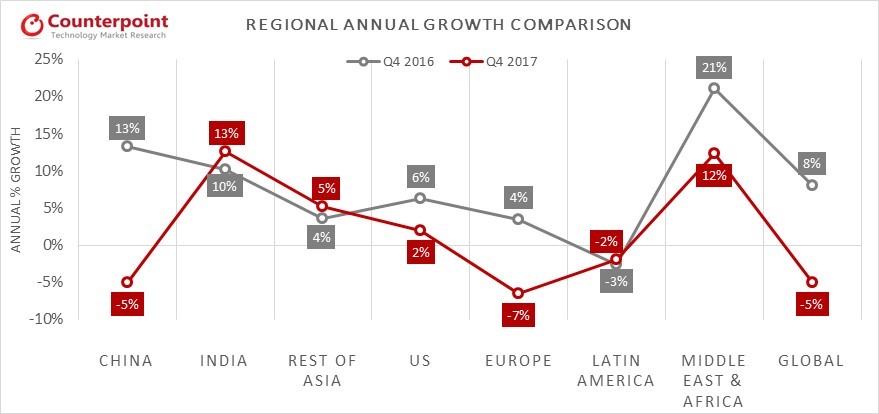
smartphone vendors shipped a total of 334.3 million units during the first quarter of 2018 (1Q18), resulting in a 2.9% decline when compared to the 344.4 million units shipped in the first quarter of 2017. The China market was the biggest driver of this decline with shipment volumes dipping below 100 million in the quarter, which hasn’t happened since the third quarter of 2013.

“Globally, as well as in China, a key bellwether, smartphone consumers are trading up to more premium devices, but there are no longer as many new smartphone converts, resulting in shipments dropping,” said Melissa Chau, associate research director with IDC’s Worldwide Mobile Device Trackers. “When we look at it from a dollar value perspective, the smartphone market is still climbing and will continue to grow over the years to come as consumers are increasingly reliant on these devices for the bulk of their computing needs.”

“Despite new flagships from the likes of Samsung and Huawei, along with the first full quarter of iPhone X shipments, consumers looked unwilling to shell out big money for the latest and greatest devices on the market,” said Anthony Scarsella, research manager with IDC’s Worldwide Quarterly Mobile Phone Tracker. “The abundance of ultra-high-end flagships with big price tags released over the past 12-18 months has most likely halted the upgrade cycle in the near term. It now looks as if consumers are not willing to shell out this kind of money for a new device that brings minimal upgrades over their current device. Looking forward, more affordable premium devices might be the solution the market needs in the second half of the year to drive shipments back in a positive direction.”

«

That unwillingness only stretched to companies that weren’t Apple, it seems. Samsung slightly down, Huawei and Xiaomi very much up. “Others” – those outside the top five – way down.
link to this extract


Bloomberg butchers Samsung OLED statements to portray iPhone X as weak • Apple Insider

Daniel Eran Dilger:

»

In its latest attack on Apple’s iPhone X, Bloomberg isolated selected statements from Samsung, the exclusive source of the phone’s OLED display panels, and threw out facts that didn’t support its narrative.

Citing mere 3% growth in the company’s Display Panel business segment and a company earnings statement that DP profits “were affected by slow demand for flexible OLED panels,” Bloomberg presented the conclusion that iPhone X sales must be “weak.”

Samsung didn’t say that its Display Panel segment turned in weaker results due to iPhone X. What the company actually reported in its earnings statement for the March quarter was that its DP “OLED Earnings declined due to weak demand and rising competition between Rigid OLED and LTPS LCD.”

It also stated that its DP segment “LCD Earnings stayed flat QoQ thanks to cost reduction efforts and product-mix improvements amid a decline in sales and ASPs caused by weak seasonality.”

So rather than Bloomberg’s contrived messaging portraying that Samsung’s OLED profits were declining because iPhone X was tanking, the reality is that Samsung reported that its entire DP unit was hammered in profitability during the quarter due to intense competition (from other suppliers and from other, cheaper screen technologies) and from weak demand and a decline in sales in general, across both OLED and LCD panels.

«

Samsung’s phone sales were down – despite the launch of the Galaxy S9 and S9 Edge during the quarter. That points to weakness in Samsung’s sales. Odd how people wanted to say that the iPhone X wasn’t selling well. Nobody has said much about the Galaxy S9. It don’t think it’s the hit Samsung might have hoped for.
link to this extract


Blockchain insiders tell us why we don’t need blockchain • FT Alphaville

Jemima Kelly:

»

[On Tuesday] a panel of blockchain experts gave evidence on the technology to the British Parliament’s Treasury Select Committee. The panel included Ryan Zagone, director of regulatory relations (yes, that’s apparently really a job title) at Ripple, the company behind the ultimate leap-of-faith-demanding centralised digital currency, XRP.

Mr Zagone gave the committee the usual spiel about the need for a bridging currency for cross-border payments (which we’ve previously debunked). He also told us that 120 financial institutions had signed up to “the Ripple network”. And then he said: “The banks we see on the network are not using XRP. Right now we’re looking down the road at how they can expand their reach through XRP.”

That’s right! No bank is using the digital currency designed for banks. That doesn’t stop it currently being assigned a market value of $32.5bn (more than Twitter’s market capitalisation).

Also on the panel was Chris Taylor, chief operating officer at Everledger, a company that is trying to use the blockchain to track (and miraculously “protect”) diamonds and other assets. Here’s an excerpt from his contribution: “It’s the same as any system – it’s garbage in, garbage out. So you’ve got to make sure that the participants that you’re allowing to contribute to the network are trustworthy.”

He said it, not us. A blockchain is the same as any system. If you feed garbage into it, it will feed garbage back out to you. And if you accidentally feed garbage into it, you can’t change it, because immutability!

Mr Taylor continued: “Blockchain doesn’t solve everything. It doesn’t solve entirely problems that couldn’t be solved in other ways. But we believe blockchain solves the problems that we’re solving in a better way than traditional database technology can provide.”

Compelling stuff, no?

«

Er.. no?
link to this extract


Biohacker Aaron Traywick found dead in a spa • BBC News

»

A biohacker who became infamous after apparently injecting himself with an untested herpes drug in front of an audience has been found dead.

Aaron Traywick’s body had been discovered in a spa room in Washington DC on Sunday, local police said. Vice News reported that Traywick had been using a flotation therapy tank.

The 28-year-old was chief executive of Ascendance Biomedical. He had skirted the law by self-medicating as well as encouraging others to do likewise.

A police spokeswoman has said no evidence has been found to suggest foul play.

Traywick had claimed his biohacking company had developed a DIY “research compound” that could cure HIV, Aids and herpes, but had no independent proof to back this up. Biohacking refers to people’s efforts to alter their own biology by a variety of means including lifestyle and diet changes, surgery and the use of unlicensed therapies.

The BBC challenged Traywick over his behaviour when it interviewed him at the BodyHacking Con in Austin, Texas, in February. Traywick, who had herpes, had performed a stunt at the event, apparently injecting his company’s unregulated product into his leg. On stage, he had referred to the product as a “research compound”.

But in conversation with the BBC he described it as a “treatment” – a claim that had the potential to attract the attention of the US Food and Drug Administration.

«

An autopsy has been carried out, but not released so far.
link to this extract


Fitbit’s current-quarter revenue forecast misses estimates • Reuters

»

Wearable device maker Fitbit Inc’s forecast for current-quarter revenue missed Wall Street estimates, hurt by a drop in sales of fitness trackers.

Shares of the company fell 1.6% to $5.41 in after-market trading on Wednesday after the company said it expects a 19% drop in the second-quarter revenue.

The company said it sold 2.2m devices in the quarter at an average selling price of $112 per device, below analysts’ estimate of 2.33m devices, according to financial data analytics firm FactSet.

Fitbit said it expects revenue for the current quarter to be in a range of $275m to $295m, below analysts estimate of $309.9m, according to Thomson Reuters I/B/E/S.

In April, Fitbit announced the worldwide launch of its latest smartwatch ‘Versa’ after Chief Executive Officer James Park promised to launch a more ‘mass appeal watch’ in 2018 compared with ‘Iconic’, the company’s first smartwatch that had failed to impress.

«

You have to go back to 2014 to find such a low number of devices sold. Revenue fell 18%. It’s only a matter of time before it gets rolled up by someone like Google (which needs a wearables business that actually works for it, unlike WearOS).
link to this extract


‘Success’ on YouTube still means a life of poverty • Bloomberg

Chris Stokel-Walker:

»

Do your children dream of YouTube stardom? Do them a favor: crush that ambition now.

New research out of Germany billed as among the first to review the chances of making it in the new Hollywood shows a vanishingly small number will ever break through—just like in the old Hollywood.

In fact, 96.5% of all of those trying to become YouTubers won’t make enough money off of advertising to crack the US poverty line, according to research by Mathias Bärtl, a professor at Offenburg University of Applied Sciences in Offenburg.

Breaking into the top 3% of most-viewed channels could bring in advertising revenue of about $16,800 a year, Bärtl found in an analysis for Bloomberg News. That’s a bit more than the U.S. federal poverty line of $12,140 for a single person. (The guideline for a two-person household is $16,460.) The top 3% of video creators of all time in Bärtl’s sample attracted more than 1.4 million views per month.

«

But as The Outline points out (amalgamating various sources), those YouFaceInstaTubeGramBookers can make money on the side – by promoting crap and getting paid for it.

link to this extract


Revealed: how bookies use AI to keep gamblers hooked • The Guardian

Mattha Busby:

»

Current and former gambling industry employees have described how people’s betting habits are scrutinised and modelled to manipulate their future behaviour.

“The industry is using AI to profile customers and predict their behaviour in frightening new ways,” said Asif, a digital marketer who previously worked for a gambling company. “Every click is scrutinised in order to optimise profit, not to enhance a user’s experience.”

“I’ve often heard people wonder about how they are targeted so accurately and it’s no wonder because its all hidden in the small print.”

Publicly, gambling executives boast of increasingly sophisticated advertising keeping people betting, while privately conceding that some are more susceptible to gambling addiction when bombarded with these type of bespoke ads and incentives.

Gamblers’ every click, page view and transaction is scientifically examined so that ads statistically more likely to work can be pushed through Google, Facebook and other platforms…

…“I never cease to be amazed at how low the gambling industry is prepared to go to exploit those who have indicated an interest in gambling,” says Carolyn Harris, a Labour MP who has campaigned for gambling reform.

“The industry is geared to get people addicted to something that will cause immense harm, not just to society but to individuals and their families. They are parasitical leeches and I will offer no apology for saying that.”

«

Completely agree with Harris.
link to this extract


The myth that civilian gun ownership prevents tyranny • ThinkProgress

Casey Michel:

»

In assessing data from 2008-2018, civilian gun ownership rates appear to have no influence on the strength of a country’s democracy.

For instance, five of the six countries with the greatest democratic improvements over the past decade are located among the bottom half of countries in terms of civilian arms rates. At the same time, six of the 11 countries with the greatest democratic backsliding have also been in the bottom half in terms of gun ownership rates. (For Freedom House, a lower score on its democracy index is better in terms of democratization; those with the highest scores are considered dictatorships.)

Look at Fiji and Ethiopia, for instance. In 2008, both had identical Freedom House scores, with nearly identical civilian arms ownership rates (Fiji has 0.5 guns per 100 civilians, while Ethiopia has 0.4). But a decade later, Fiji was far freer, boasting democracy scores comparable to Colombia and Montenegro, whereas Ethiopia was suffering under a far bloodier regime than it is now, scoring worse than dictatorships like Kazakhstan and Belarus.

«

Ten years seems quite a short timespan for such a study. You could probably take it over 100 years and see much the same results, though. But it gives the lie to the US suggestion that you need people to have guns so they can fight off the government:

»

The Second Amendment did little to prevent American governments from creating internment camps for Americans of Japanese descent or from enacting Jim Crow laws, repeatedly calling the country’s claims to liberal democracy into question. “White supremacists are absolutely correct in pointing to the Second Amendment as having been created for their supremacy in perpetuity, so that what they regarded as ‘tyranny’ was and is any deviance by government from that arrangement,” Roxanne Dunbar-Ortiz, the author of Loaded, a recent history of the Second Amendment, told ThinkProgress.

«

link to this extract


Building successful online communities: Evidence-based social design • AcaWiki

»

The authors also suggest that ascribing blame or community sanctions may be less effective than offering community members a way to “save face” “without having to admit that they deliberately violated the community’s norms.” They describe a system called stopit designed at MIT to address computer-based harassment. When users reported harassment, the system sent a message to the alleged harasser claiming that the alleged harasser’s account may have been compromised and urging them to change their password. Here is the rationale given by Gregory Jackson, the Director of Academic Computing at MIT in 1994:

»

recipients virtually never repeat the offending behavior. This is important: even though recipients concede no guilt, and receive no punishment, they stop. [this system has] drastically reduced the number of confrontational debates between us and perpetrators, while at the same time reducing the recurrence of misbehavior. When we accuse perpetrators directly, they often assert that their misbehavior was within their rights (which may well be true). They then repeat the misbehavior to make their point and challenge our authority. When we let them save face by pretending (if only to themselves) that they did not do what they did, they tend to become more responsible citizens with their pride intact.

«

«

That is amazing. You’d need a ton of “you’ve been hacked” warnings to make Twitter calm down, but worth a try, huh?
link to this extract


Pentagon orders stores on military bases to remove Huawei, ZTE phones • WSJ

Stu Woo and Gordon Lubold:

»

The Pentagon is moving to halt the sale of phones made by Huawei Technologies and ZTE in retail outlets on US military bases around the world, citing potential security threats they say the devices could pose.

The move intensifies a squeeze the Trump administration has put on the two Chinese makers of telecommunications gear and mobile devices. Washington officials have said Beijing could order Chinese manufacturers to hack into products they make to spy or disable communications. Huawei and ZTE have said that would never happen.

Huawei is the world’s third-largest smartphone maker, behind Apple and Samsung Electronics, but it sells very few devices stateside. ZTE, however, is the fourth-largest seller of phones in the US, with a 9.5% share of units shipped, according to research firm IDC.

“Huawei and ZTE devices may pose an unacceptable risk to the department’s personnel, information and mission,“ said Army Maj. Dave Eastburn, a Pentagon spokesman, in a statement. “In light of this information, it was not prudent for the department’s exchanges to continue selling them.” He was referring to the retail outlets at or near military installations in the US and overseas that cater to American soldiers and sailors. Only 2,400 Huawei and ZTE phones were sold at those outlets last year, he said.

«

Such drama, until that last sentence. It’s more about the perception on this. However, the earlier US embargo on ZTE in particular is going to hurt it: 9.5% of the US market is a big slice to lose (as seems likely).
link to this extract


Intel kills Kaby Lake-X, the bizarre enthusiast CPUs that nobody wanted • PCWorld

Brad Chacos:

»

Intel’s Kaby Lake-X chips were a headscratcher from the start.

Launched alongside the massively multi-core Skylake-X processors last summer, the quad-core chips didn’t offer any noticeable advantages over standard Kaby Lake chips beyond a very slight speed bump. Yet they required pricey X299 motherboards that cost significantly more than mainstream hardware—then failed to take advantage of the key platform advantages of the swankier chipset. Intel pitched the CPUs as an overclocker’s dream, but really, they were just plain weird, and effectively made obsolete mere months after release with the introduction of the 6-core, 12-thread Core i7-8700K in October.

Now Kaby Lake-X is officially obsolete. As first noticed by Tech Report, Intel quietly discontinued the Core i5-7640X and Core i7-7740X in a new document outlining end-of-line dates for the chips (PDF). The paperwork hints that Kaby Lake-X was indeed supplanted by 8th-gen Coffee Lake CPUs, stating that “Market demand for the products listed in the ‘Products Affected/Intel Ordering Codes’ tables below have shifted to other Intel products.”

«

Intel’s processor line has just exploded, Cambrian-style, and is now being trimmed back. One hopes.
link to this extract


Errata, corrigenda and ai no corrida: none notified

You can sign up to receive each day’s Start Up post by email. You’ll need to click a confirmation link, so no spam.


Start Up: dating Facebook, Apple’s X factor, UX mistakes, murderous malware, and more


An eggplant (aubergine to British readers). Is it a fruit? Does Alexa know? Photo by JiayiYoung on Flickr.

You can sign up to receive each day’s Start Up post by email. You’ll need to click a confirmation link, so no spam.

A selection of 12 links for you. Questions provided in advance. I’m @charlesarthur on Twitter. Observations and links welcome.

Facebook announces dating app focused on ‘meaningful relationships’ • The Guardian

Sam Levin:

»

Facebook is launching a new dating app on the social media platform, its CEO, Mark Zuckerberg, announced at an annual developer conference on Tuesday, unveiling a feature designed to compete with popular services like Tinder.

Speaking in front of a packed crowd in San Jose, Zuckerberg described the new dating feature as a tool to build “real long-term relationships – not just hookups”.

“We want Facebook to be somewhere where you can start meaningful relationships,” he continued. “We’ve designed this with privacy and safety in mind from the beginning.”

The announcement sparked gasps from the crowd and seemed to attract the most interest from the audience during Zuckerberg’s short speech, which focused on the company’s widening privacy scandal, new safeguards meant to protect users’ data and misinformation and fake news on the site.

Chris Cox, the chief product officer, said the dating feature would be “opt-in” and “safe” and that the company “took advantage of the unique properties of the platform”.

Soon after the announcement, Mandy Ginsberg, the CEO of Match Group, which owns Tinder, threw shade at Facebook, saying in a statement: “We’re surprised at the timing given the amount of personal and sensitive data that comes with this territory.”

«

Can’t see this going horribly wrong at all.
link to this extract


Seven inexcusable yet common UX gaffes that make you look like a total amateur • Medium

»

Rather than focusing on the specific blunders of certain technology products, this week, I have come up with 7 more common design patterns that just plain suck. There is never any excuse for any of them.

The thing is, if someone’s design includes one or more of these patterns, they’re probably not cut out for UX anyway, and this article will probably not reach them, or if it does, it won’t sink in. But I might as well try, right?

«

These are great, and so common. Usernames, passwords – all these things.
link to this extract


Apple reports second quarter results • Apple

»

The Company posted quarterly revenue of $61.1bn, an increase of 16% from the year-ago quarter, and quarterly earnings per diluted share of $2.73, up 30%. International sales accounted for 65% of the quarter’s revenue.

“We’re thrilled to report our best March quarter ever, with strong revenue growth in iPhone, Services and Wearables,” said Tim Cook, Apple’s CEO. “Customers chose iPhone X more than any other iPhone each week in the March quarter, just as they did following its launch in the December quarter. We also grew revenue in all of our geographic segments, with over 20% growth in Greater China and Japan.”

«

Quick data: 52.2m iPhones (up 2.8%), iPads 9.1m (up 2.1%), Macs 4.08m (down 1%). Revenues for Services and Other Products (the latter including Beats, AirPods, Apple Watch and HomePod) grew enormously – 30% and 37.6% respectively.

The iPhone ASP fell a little, but the iPhone X staying the most in-demand phone is a poke in the eye for all the analysts who declared their supply chain sources said it was doing badly. That’s why I linked to Apple’s own release: all the stories on big publications were pre-writes which had sentences like “analysts/observers were disappointed with iPhone X sales…” Yeah, not so much.
link to this extract


2016 MacBook Pro butterfly keyboards failing twice as frequently as older models • Apple Insider

Mike Wuerthele:

»

Given that the keyboard mechanisms are the same in the 13- and 15-in MacBook Pro models, we’ve combined the two models in this look. However, given that the numbers break down to about 45% 15in MacBook Pro and 45% 13in MacBook Pro across the whole dataset and model years, there is no real need to break them our separately.

We’re also subtracting warranty-voiding accidents, like impacts, or water spills.

All data has been collected from assorted Apple Genius Bars in the U.S. that we have been working with for several years, as well as Apple-authorized third-party repair shops.

The 2014 MacBook Pro model year saw 2120 service events in the first year, with 118 related to keyboard issues necessitating an upper case replacement —5.6% of all MacBook Pros serviced in the first year. The 2015 has 1904 service tickets, with 114 relating to the keyboard, making 6.0%.

The two numbers are very similar, which is to be expected. The keyboards were essentially unchanged since the 2012 Retina MacBook Pro, and should have failure rates similar to each other.

Apple released the new keyboard with the MacBook, and moved the design to the 2016 MacBook Pro. In the first year of the 2016 MacBook Pro, our data gathered 1402 warranty events, with 165 related to only the keyboard and not including the Touch Bar —11.8%.

We don’t have a full year of data for the 2017 MacBook Pro yet. But, since release in June 2017, our data set has 1161 captured service events with 94 related to keyboard issues also not including any Touch Bar issues —8.1%.

«

This is only for an unknown (but one presumes small – 10?) number of stores, so we don’t know how reliable it is. But one could assume it’s a sample of a random distribution, and so probably usable. That’s a striking difference. (And notice that the MacBook Air, which surely sells more, seems only to makes up 10% of all incidents, if I’m reading it correctly.)
link to this extract


They’re on the lookout for malware that can kill • The Washington Post

Ellen Nakashima and Aaron Gregg:

»

Dragos built a software product to help industrial companies detect cyberthreats to their networks and respond to them. Its clients include energy, manufacturing and petrochemical factories in the United States, Europe and Middle East.

In October, Dragos discovered Trisis, a malware that targets a “safety instrumented system,” or a machine whose sole function is to prevent fatal accidents. In a petrochemical plant, for instance, there are machines that operate at very high pressures, and if a valve blows, the pressure or the leak of hazardous materials could kill a human being. But a safety instrumented machine is supposed to shut down the entire system to reduce the risk of a fatal accident.

There has been one known deployment of the Trisis malware — FireEye called it Triton — at a petrochemical plant in Saudi Arabia in August. But a coding error prevented the malware from working as intended, and a potential catastrophe was averted.

As of this week the culprits behind Trisis were still active in the Middle East, Lee said. “It’s reasonable to assume that [what happened last year] is not a one-time event.’’

Though Dragos had some indication of who was responsible, the firm refrained from drawing a conclusion. “It wasn’t cut and dried,” Lee said. Dragos shared the malware with the Department of Homeland Security, but Lee argued against the government seeking to assign blame.

“The best they could do is a well-reasoned guess,” he said. “There’s not the years’ worth of data on this event that would make attribution possible.”

«

link to this extract


UK electricty generation sources – 2017 versus 2016 • MyGridGB

Andrew Crossland:

»

I have just released a new page on the MyGridGB website which tries to chart how electricity generation is changing year on year. It can be found here.

These charts tell some important stories about electricity in Britain and how fast it is changing. I now describe three biggest stories in the data and my predictions for 2017.

The decline of coal: The amount of coal used for electricity was 30% lower in Q1 2017 than it was in Q1 2016 despite there being very little difference in our demand for power. Coal power stations are rapidly being decommissioned and being replaced by renewables and gas.

My prediction: coal power stations will be switched off several times over the coming months (April onwards) when demand is low. The amount of times this happens will be affected by the global price of coal and gas which affects the choice of power stations to use.

The rise of intermittent generators: Wind and solar continue to grow and 2017 also saw an increased in metered generation from hydroelectric dams. Overall, low carbon renewable generation was 26% higher in Q1 2017 than it was in Q1 2016. The early signs from 2017 are that wind has overtaken coal to be the third biggest provider of electricity in Great Britain. In fact, wind turbines generated nearly 60% of what nuclear power stations provided.

My prediction: 2017 will see wind overtake coal as the third biggest provider of electricity in Great Britain.

Note that my values include an estimate for so called “embedded wind” turbines. Embedded wind refers to smaller turbines which are not included in the Elexon Portal data which I use for this website or gridwatch. At the time of writing, I estimated that around 30% of the installed wind capacity in Great Britain is embedded.

«

The “carbon intensity” (how much carbon is burnt per kWh) is falling fast too.
link to this extract


The YouTube stars being paid to sell cheating • BBC News

Branwen Jeffreys and Edward Main:

»

YouTube stars are being paid to sell academic cheating, a BBC investigation has found.
More than 250 channels are promoting EduBirdie, based in Ukraine, which allows students to buy essays, rather than doing the work themselves.

YouTube said it would help creators understand they cannot promote dishonest behaviour.
Sam Gyimah, Universities Minister for England, says YouTube has a moral responsibility to act.
He said he was shocked by the nature and scale of the videos uncovered by the BBC: “It’s clearly wrong because it is enabling and normalising cheating potentially on an industrial scale.”

The BBC Trending investigation uncovered more than 1,400 videos with a total of more than 700 million views containing EduBirdie adverts selling cheating to students and school pupils.

EduBirdie is based in Ukraine, but aims its services at pupils and students across the globe. Essay writing services are not illegal, but if students submit work they have paid for someone else to do the penalties can be severe…

…Universities minister Sam Gyimah said that EduBirdie’s marketing was shocking and pernicious as it presented cheating as “a lifestyle choice”.

He said the YouTubers involved should be “called out” for abusing their power as social influencers. “I think YouTube has a huge responsibility here,” he said.

“They do incredibly well from the advertising revenue that they get from the influencers and everyone else. But this is something that is corrosive to education and I think YouTube has got to step up to the plate and exercise some responsibility here.”

About 30 of the channels promoting EduBirdie are from Britain and Ireland. They include a student vlogger at a top UK university. Another is a popular 15-year-old YouTuber, whose mother was unaware he was promoting the company until she was approached by the BBC.

«

link to this extract


Amazon’s Alexa doesn’t know much about eggplants • NY Mag

Renée Reizman:

»

Eggplants, though savory, have seeds, unequivocally categorizing them as fruits. Thanks to Alexa, however, I lost an argument I should have won. While at a friend’s home, I confidently baited Alexa by asking, “Are eggplants fruit?” She replied, “No, an eggplant is not a fruit.” If Alexa can’t outdo Wikipedia, then what’s the use in having one? My 1920s-era apartment is too small to really take advantage of many of the conveniences smart-home assistants can offer. Without an AC unit to preset while I’m at work, a garage to open while I round the block, or a yard to irrigate overnight, for me, Amazon’s Alexa functions primarily as a parlor trick. She’ll entertain guests with a few rounds of Jeopardy!, play Janelle Monáe’s Dirty Computer, and should help me settle debates about fruits that masquerade as vegetables…

…If Alexa doesn’t have the capabilities to provide a skill or answer, it taps into Amazon’s partnership with Microsoft, which pulls from Cortana and Bing. A representative from Amazon said that Alexa also scrapes information from Amazon-trusted companies like Stats.com, IMDb, AccuWeather, Yelp, Answers.com, and Wikipedia.

But when I followed up with an Amazon representative about the eggplant discrepancy, realizing that I had unearthed a deeper issue with Alexa’s understanding of language of grammar, they cryptically responded, “Thanks for calling that one to our attention. That’s an error that has since been fixed.” Had I single-handedly inspired Amazon to overhaul Alexa’s understanding of indefinite articles? Apparently not. When I approached Alexa again, this time asking about “a tomato” and “tomatoes,” I realized that she still struggled with the distinction.

I didn’t run into this grammatical problem while experimenting with Google Assistant, Siri, or Cortana — the latter of which was particularly surprising because of Alexa’s aforementioned partnership with Microsoft. While I can’t pinpoint a clear answer without an Alexa programmer opening up about their top-secret code, one possible explanation lies within Evi, the knowledge base and semantic search-engine software that powers most of Alexa’s “Google-able” answers.

«

Smart assistants: how dumb are they.
link to this extract


Thousands of women say LuLaRoe’s legging empire is a scam • Bloomberg

Claire Suddath:

»

The DSA [Direct Selling Association] estimates that the median income for someone participating in these kinds of [multi-level marketing] businesses is $2,500 a year. From the beginning, LuLaRoe pitched itself as the exception: “What does your dream home look like? What car do you dream of driving? What schools do you envision your children attending?” the Stidhams wrote in their From the Founders letter, printed in LuLaRoe’s welcome guide for new retailers. “Where else can you make $50,000 to $100,000 yearly working part time?” Mark, who’s CEO, said in a video talk with consultants last year.

“I didn’t care about the leggings, I just wanted to make money again,” says consultant Adrianne Merkling, a former analytical flavor chemist who had to give up her career when one of her three children was diagnosed with apraxia of speech and needed therapy four times a week. She started selling LuLaRoe clothing in 2016.

Now, she, along with Blevins, are two of thousands of women who claim they’ve been duped by LuLaRoe. In the past year the company has faced more than a dozen lawsuits. The largest, a proposed class action, calls LuLaRoe a pyramid scheme focused on recruiting consultants and persuading them to buy inventory rather than actually selling clothing. Since the lawsuits were filed, consultants have fled LuLaRoe by the thousands. Many say the company owes them millions of dollars in promised refunds. Women have garages, closets, guest rooms—and, in one case, a farm shed—filled with LuLaRoe clothes they say they can’t sell.

«

MLM goes in waves: when economic times are hard, they spring up as a way to make “easy money on the side”. But as things improve, people don’t need the cheap stuff they sell (has to be cheap; otherwise they can’t push it up the levels) and don’t have the incentive to sell it because they’re doing OK.

And then people are left with a load of merchandise. Crunch.
link to this extract


On the naughty step – the questionable ethics of the Christian Legal Centre • Nearly Legal

Giles Peaker on the peculiar “legal” group (except it’s not legally allowed to practise law in the UK), the Christian Legal Centre, which inserted itself on the parents’ side in the sad Alfie Evans case:

»

Mr [Pavel] Stroilov’s involvement doesn’t end there. In the 24 April judgment of Hayden J, we find at 14:

»

A statement had been prepared bearing the now instantly recognisable hallmark of Mr. Pavel Stroilov, a law student and case worker for Christian Legal Centre (CLC), who yesterday encouraged F to seek to issue a Private Prosecution alleging murder against some of the doctors at Alder Hey. It was properly rejected by the District Judge. Today’s efforts by Mr. Stroilov were equally inconsistent with the real interests of the parents’ case. The Witness Statement, which Mr. Diamond tells me Mr. Stroilov prepared, is littered with vituperation and bile, critical of those who have done so much to help Alfie, attacking the system generally and the Court in particular.

«

It appears that Pavel Stroilov also advised Mr Evans to bring a private prosecution – an action that was doomed and wholly abusive. It also appears that he did so while a CLC caseworker.

CLC appear to be trying to row back from appearing to have anything to do with the private prosecution. Their press release says:

»

We also wish to make clear that we do not support the criminal prosecution of doctors involved in Alfie’s care.

«

That is rather hard to maintain when it was your self-described ‘lawyer’ who was still working on a witness statement for the hearing before Hayden J at the time who advised the parents to bring the prosecution.  CLC’s position is therefore effectively that they are utterly incompetent and can’t control their ‘lawyers’…

I gather there is talk of contempt of court applications against Mr Stroilov.

But a failure to supervise or control a caseworker, if that is what it was, is far from the only conduct issue involved.

«

I gather there’s a story on this in The Guardian for Wednesday. A lot more to come out on this, I think.
link to this extract


Google vs. Google: how nonstop political arguments rule its workplace • WSJ

Kirsten Grind and Douglas MacMillan:

»

“Activists at Google” helped organize a rally critical of President Donald Trump’s policies. “Militia at Google” members discussed their desire to overturn a prohibition on guns in the office. “Conservatives at Google” allege discrimination against right-leaning job candidates. “Sex Positive at Google” group members are concerned that explicit content is being unfairly removed from Google Drive file-sharing software.

“Googlers For Animals” invited the PETA president, only to be undercut by members of the “Black Googler Network.”

Google’s broad corporate culture has long leaned Democratic, and that’s reflected in internal debates that often pit left-wing causes against each other. Donations by its employees to Hillary Clinton’s presidential campaign outnumbered contributions to President Trump’s campaign 62 to 1, and former Alphabet Executive Chairman Eric Schmidt helped the Clinton campaign with data analysis. Less numerous, but increasingly voluble, are groups of conservative employees reacting against what they see as a Google’s political orthodoxy.

Beyond the internal debates are lawsuits, several since late last year, including legal actions from female employees alleging pay discrimination against women; from male ex-employees and potential new hires claiming bias against conservative white men; and from a transgender engineer who said he was fired for making derogatory statements about what he called white male privilege. All this comes on top of a very public controversy last August when Google fired a software engineer, James Damore, who wrote an internal memo saying gender differences might have something to do with women’s under-representation in the tech workforce.

Politicians, media and consumer groups are raising questions about how giant tech platforms such as Google, Facebook Inc. and Twitter Inc. make difficult decisions on issues of free speech that potentially affect billions of users.

«

It starts to sound as though the echo-chamber-leading-to-extremism effect that one sees so often on YouTube has previously taken hold at its creator. Though one skews left and the other wayyyy right.
link to this extract


The Wolf at the White House Correspondents’ Dinner • The Economist

“J.F.”:

»

Margaret Talev, the head of the White House Correspondents’ Association, tut-tutted that Ms Wolf’s monologue “was not in the spirit of [our] mission,” which was “to offer a unifying message about our common commitment to a vigorous and free press while honouring civility [and] great reporting…not to divide people.”

Among those who failed to receive that message, apparently, was Mr Trump, who in a nifty bit of counterprogramming held a rally in Washington, Michigan during the correspondents’ dinner. He skipped the event for the second straight year. Mr Trump accused the media—whom he has previously called “the enemy of the American people”—of making up sources and hating his supporters who attended the rally. One worked-up attendee at the rally screamed at reporters, whom he called “degenerate filth”, to leave the country.

After the speech, Mr Trump’s people pressed their advantage. Mrs Schlapp told a reporter that “journalists should not be the ones to say that the president or his spokesman is lying.”

This raises an obvious question—if not journalists, then whom?—with an equally obvious answer: nobody. Mr Trump’s communication staff would prefer it if nobody pointed out when he and his media team lie.

Ms Talev invited Mrs Sanders to sit at the head table because she “thought it sent an important decision about…government and the press being able to work together.” But of course, that is precisely what should never happen, particularly with an administration as ambivalent about the First Amendment—among other norms and laws—as this one. (The Justice Department recently removed a section entitled “Need for Free Press and Public Trial” from its internal manual for federal prosecutors.)

«

The kowtowing by the US press to the White House has looked awful for years, but has now reached an unbeatable nadir. Wolf’s full routine (which you should watch) spares nobody – which is as it should be. And now it’s time to declare the dinner dead.

https://www.youtube-nocookie.com/embed/L8IYPnnsYJw?rel=0
link to this extract


Errata, corrigenda and ai no corrida: none notified

#cyberwars: why and how you get phished, and how not to get phished

Cyberwars small This is the first of a series of posts illustrating points from my book Cyber Wars, published May 3 2018 in the UK (and a couple of weeks later in the US), which investigates hacking incidents such as the Sony Pictures hack, the TalkTalk hack, ransomware, the Mirai IoT botnet. It looks at how the people in those organisations responded to the hacks – and takes a look at what future hacks might look like.

Another Monday morning, and an email drops into my inbox.

Screenshot 2018 04 30 10 48 38

Well. That looks serious, doesn’t it? They’ve got my name correct. But you can see (especially on this version, the desktop one) that lots of things are wrong about this email.

Let’s enumerate them:
• the To: address is incorrect (clearly it reached me via a Bcc: address)
• the Google logo is all wrong: the characters are bunched up, rather than evenly spaced. (When I looked at the source code of the email, it turns out this was done in CSS, rather than an image. Designers will commiserate at the kerning failure.)
• the first sentence doesn’t make sense and isn’t grammatical and contains misspellings
• Second sentence capitalises “Email”, which isn’t standard spelling
• Third sentence ends with a comma rather than a full stop
• Fourth sentence (in red) doesn’t quite show what you need to do
• Fifth sentence spells “receive” wrongly, and ends with a comma
• Sixth sentence is stilted and lacks a full stop.

Not hate mail, fake mail

Overall, there are all sorts of indications that this is a fake email. It’s phishing: the obvious aim is to get people to reply to it, after which – one can predict – the phishers will respond by sending an email with a link to a page telling the victim to log in. It will be a fake Gmail login page, and once that’s done, they’ll be able to get control of the victim’s email (and lock them out by changing the password), and from there probably any account, possibly including their bank and other utilities. Any account whose password recovery, or password system, passes through that Gmail is going to be compromised.

You might look at that email and laugh, thinking it’s obvious that it’s a phishing attempt – you’d never fall for that. But phishing is a very old technique (want to know how old? It’s in the book, but if “AOL” rings a bell, that’s a clue), and has been refined over the years.

Just as with the “419” scam promising you a huge fortune if you’ll only send over a bit of money, phishing’s practitioners have learnt that a few intentional mistakes can actually increase the chance of success – because the people who don’t spot spelling mistakes or oddities about the From: in an email probably won’t know what phishing is either. (In 419 scamming, they intentionally write in a stilted, naive fashion because the recipient then thinks they are dealing with fools who can be stiffed. The truth is exactly the opposite.)

Sophistication nation

A rather more sophisticated version of that phishing technique is exactly how the inbox of John Podesta, Hillary Clinton’s campaign chairman, was hacked in the 2016 US Presidential election. (The story of that makes up chapter 4 of the book.)

The campaign team monitoring Podesta’s emails weren’t going to be fooled by something like the message above.

But they could be caught by the one that Russian hackers sent, which looked exactly like a standard Google phishing warning.

Podesta email hack

Now that is a lot more sophisticated. And Google does send out “suspicious login attempt” emails.

This phish purported to be from Gmail to Podesta’s inbox, saying that “Someone has your password”. (There was actually a subtle detail – it’s in the book! – that got that past Google’s filters.)

That” CHANGE PASSWORD” link led to a fake login page, where Podesta’s details were entered, and… calamity followed. (And contrary to some expectations, it wasn’t Podesta who entered those details.)

One point worth noting is that this was Podesta’s personal inbox. His campaign inbox? The inboxes of other staff? Those weren’t hacked, because they already had crucial protection: two-factor authentication. The fact that it was Podesta’s personal, not campaign, email that was hacked disappeared in the melée, but it’s a relevant point. The campaign also used another communications method to defeat would-be hackers; that’s in the book, and I’ll deal with it in a later post.

The lesson

Turning on two-factor authentication (2FA) is the single simplest method you can take to improve your email, and general computer, security. Google doesn’t push it hard enough, in my view. A survey of 2,000 adults in multiple countries in May 2016 showed that 70% don’t have 2FA turned on. Yet it’s easy, free, and increases your security enormously; it also reduces the need to worry about getting phished. (You can still get phished if you use 2FA, but it needs more sophisticated work on the part of the phisher.)

This page shows how to turn on 2FA for Gmail. (I’d recommend using an on-device app rather than SMS for codes; SMS can be hacked.) If you use a different service, try a search on 2FA with its name.

In short, 2FA means that you either generate a device-specific password for every device you use, or that you have to authenticate each time you log in your email on the device using your email, password and a “TOTP” – timed one-time password. (It’s a six-digit code generated from a 40-digit number which is in turn generated from a combination of the time when you login, and a “seed” number stored on both the server and your device. If the number generated by the server and by your device agree, then you’re authenticated.)

If you don’t have 2FA turned on, then there is always a risk that you’re going to get phished. You spotted the one above. Will you spot every single one? Remember, they only have to fool you once; you have to defeat them every time. And there are lots more of them than you.

Thanks for reading. And even if you don’t buy the book, please turn on two-factor authentication. Everyone, including you, will be so much happier.


Cyberwars small This is the first of a series of posts illustrating points from my book Cyber Wars, published May 3 2018 in the UK (and a couple of weeks later in the US), which investigates hacking incidents such as the Sony Pictures hack, the TalkTalk hack, ransomware, the Mirai IoT botnet. It looks at how the people in those organisations responded to the hacks – and takes a look at what future hacks might look like.

I also do a weekday roundup of interesting links called Start Up, posted here each day at 0700 UK time; or you can receive it as an email (roughly an hour later). Sign up here. You’ll get a confirmation link before you start receiving anything.

Unsubscribing is as easy as clicking a link, which will put you through to our customer service representative who values your call so much they’ll make you wait 10 minutes listening to 20-second clips of music interrupted with pleas not to go away and then struggle to hear you over the cheap VOIP line provided by a cheapskate outsourcing company which also hasn’t given them any power to actually act on your account.

No, wait, that’s the other people. With my one, you just click the link.

Start Up: hackers who hack back, Fitbit teams with Google, the Bezos memos, squirt guns for all!, and more


Four years later, Jan Koum is leaving WhatsApp – and Facebook. Photo by Tech.eu Photostream on Flickr.

You can sign up to receive each day’s Start Up post by email. You’ll need to click a confirmation link, so no spam.

A selection of 10 links for you. Still here. I’m @charlesarthur on Twitter. Observations and links welcome.

WhatsApp founder plans to leave after broad clashes with parent Facebook • The Washington Post

Elizabeth Dwoskin:

»

The billionaire chief executive of WhatsApp, Jan Koum, is planning to leave the company after clashing with its parent, Facebook, over the popular messaging service’s strategy and Facebook’s attempts to use its personal data and weaken its encryption, according to people familiar with internal discussions.

Koum, who sold WhatsApp to Facebook for more than $19bn in 2014, also plans to step down from Facebook’s board of directors, according to these people. The date of his departure isn’t known. He has been informing senior executives at Facebook and WhatsApp of his decision, and in recent months has been showing up less frequently to WhatsApp’s offices on Facebook’s campus in Silicon Valley, according to the people.

The independence and protection of its users’ data is a core tenet of WhatsApp that Koum and his co-founder, Brian Acton, promised to preserve when they sold their tiny startup to Facebook. It doubled down on its pledge by adding encryption in 2016. The data clash took on additional significance in the wake of revelations in March that Facebook had allowed third parties to mishandle its users’ personal information.

«

Wow. This must have come directly from Koum – the Washington Post isn’t going to go with a flyer on this. That Facebook is looking to weaken the WhatsApp encryption is a hell of a story in itself (this will be denied in the next news cycle).

One might say that Koum should have known this back in 2014 – that he’s cashing in and taking the billions. It certainly never meshed with the Facebook culture, according to the later parts of the story.

link to this extract


The digital vigilantes who hack back • The New Yorker

Nicholas Schmidle:

»

Last year, Nisos did such a test on behalf of a major financial institution. Two of Bourie’s colleagues went to a café across the street from the client’s headquarters, where employees often stopped in for coffee. One of the Nisos operators, carrying a messenger bag with a radio-frequency identification device concealed inside it, surreptitiously scanned the facility code from employees’ I.D. badges. With this information, Nisos could make fake badges. The next day, the Nisos operators swiped into the lobby, plugged a local-area-network device into an Ethernet port in a conference room, and left before anyone noticed. Using the lan connection, they hacked into the financial institution’s network and, among other things, briefly commandeered its security cameras. The company realized that it needed to make serious upgrades to its network.

According to Bourie, when the C.E.O. of the multinational corporation asked him if Nisos could hack into the ex-employee’s home network, the general counsel interrupted to say that the C.E.O. was obviously kidding—hacking the network would be illegal. The C.E.O. said, “Illegal how? Running-a-stop-sign illegal? Or killing-someone illegal?”

Bourie recalled that everyone laughed, and the question was left hanging. But it stuck with him, because he wasn’t sure of the answer. He knew that no firm had ever been prosecuted for hacking back, but he didn’t know why.

«

Fascinating examples about a murky area. (Nobody in Cyber Wars “hacked back” – they tended to be the people who discovered how to hack, such as the Microsoft worker who accidentally discovered SQL injection.)
link to this extract


Fitbit will use Google Cloud to make its data available to doctors • TechCrunch

Brian Heater:

»

For Fitbit, the deal means moving a step closer toward healthcare legitimacy. At a recent event, CEO James Park told us that health was set to comprise a big part of the consumer electronics company’s plans moving forward. It’s clear he wasn’t quite as all-in with Jawbone, which shuttered the consumer side entirely, but there’s definitely money to be made for a company that can make legitimate health tracking ubiquitous.

The plan is to offer a centralized stop for doctors to monitor both electronic medical records and regular monitoring from Fitbit’s devices. Recently acquired Twine Health, meanwhile, will help the company give more insight into issues like diabetes and hypertension.

No word yet on a timeline for when all of this will become widely available.

«

Fitbit really needs this business-to-business side to thrive; its consumer business is dying on its feet.
link to this extract


Publishing trade groups criticize Google over GDPR policy • Ad Age

George Slefo:

»

Four trade groups representing publishers such as Axel Springer, Bloomberg, Conde Nast, Hearst and the Guardian released a letter Monday addressed to Google CEO Sundar Pichai that sharply criticizes the company’s approach to publishers as strict new privacy rules loom in Europe.

The trade associations—Digital Content Next, European Publishers Council, News Media Alliance and the News Media Association—say Google is putting their members in a corner as it implements the European Union’s General Data Protection Regulation, or GDPR, which takes effect May 25.

Google updated its policy roughly one month ago, telling publishers they will need to share any data they receive from consumers if they intend to use the company’s software to sell ads. Google won’t disclose exactly how it will use that data and, should any GDPR violations occur, the liability will rest with the publishers, not Google.

Those found in violation under GDPR face fines of roughly $25m, or 4% of global revenue, whichever is greater.

“Your proposal severely falls short on many levels and seems to lay out a framework more concerned with protecting your existing business model in a manner that would undermine the fundamental purposes of the GDPR and the efforts of publishers to comply with the letter and spirit of the law,” the groups say in the letter.

«

Not much time left to fix this, is there?
link to this extract


Seth Rogen, in conversation • Vulture

David Marchese talks to the film writer:

»

Q: What thoughts get kicked up when you see North Korea in the news these days?
It does kick stuff up for sure. Honestly, I really don’t think North Korea hacked SonyDirected by Rogen and Goldberg, 2014’s The Interview stars Rogen and James Franco as journalists traveling to North Korea to interview Kim Jong-un, who are co-opted by the CIA to assassinate him. In June of that year, North Korea threatened the United States, calling the film’s release an “act of war.” In November, the DPRK-affiliated group “Guardians of Peace” hacked into Sony, dropping executive salary numbers and a few unreleased films. (It also revealed a huge gender and racial gap at the company.) Sony eventually decided not to widely release the picture in theaters, and made it available as a digital rental in December 2014. .

Why’s that?
When the trailer for The Interview came out we were called into a meeting at Sony, where they told us that North Korea had probably already hacked into their system and seen the movie and that the statements they’d put out was their response. Then, months later, when the movie itself finally came out, all this hacking shit happened. This was months after North Korea had probably already seen the movie. Why would they wait? And they never did anything like that before and haven’t done anything like it since. So things just never quite added up. The guy I’d hired to do my cybersecurity even told me, “There’s no way this was a hack. It had to be a physical act.” The amount of stuff that was stolen would have had to have physical mass to it.

In the sense that whoever stole the information needed to have his or her hands on a server at some point?
Yeah, it wasn’t something you could’ve hacked remotely. It required plugging shit into other shit. And the hack also seemed weirdly targeted at Amy [Pascal], which seems fishy — of all the people to target? Why not me? Why not Michael Lynton? [Lynton was the CEO of Sony Pictures Entertainment at the time of the hack, and was largely spared. He’s currently the CEO at Snapchat.]

«

Ooh, another chance to plug Cyber Wars. (Also available on Amazon and in bookshops from Thursday.) The first chapter investigates the Sony hack. There’s no doubt among security professionals that it was North Korea. Kim Jong Un wasn’t going to be made fun of on the international stage just as he was working towards being an international player with his nuclear plan. Sony Pictures was hacked by North Korea.

link to this extract


Bezos: a CEO who can write • Monday Note

Jean-Louis Gassée on the letters to shareholders that Bezos writes each year:

»

After reading this year’s letter, I downloaded the entire collection of twenty-one epistles and devoured them. (I hope someone, somewhere has done a better job than Amazon’s site putting the compilation together in a consistent and directly accessible fashion…)

More than a few thoughts emerged from the exercise, but the one that stands out is that the customer, the ultimate arbiter of success, must be held in awe. Bezos was a bit overly dramatic about it in 1998:

»

I constantly remind our employees to be afraid, to wake up every morning terrified. Not of our competition, but of our customers. Our customers have made our business what it is, they are the ones with whom we have a relationship, and they are the ones to whom we owe a great obligation. And we consider them to be loyal to us — right up until the second that someone else offers them a better service

«

By 2017, he had lightened up, but without losing the sense of the customers’ importance:

»

One thing I love about customers is that they are divinely discontent. Their expectations are never static — they go up. It’s human nature. We didn’t ascend from our hunter-gatherer days by being satisfied. People have a voracious appetite for a better way, and yesterday’s ‘wow’ quickly becomes today’s ‘ordinary’.

«

Bezos’ letters make splendid material for a Business School course on Strategy and Communication. (I’d love to teach it — if I were twenty years younger.) A caveat applies, however. Most of the strategies and practices advocated by Amazon’s founder have broad applicability, but a central mystery remains: Bezos himself, his combination of early life experience, intellect, emotional abilities and communication skills. Being Bezos isn’t teachable.

«

Bezos, and Amazon, remain the biggest mystery – in terms of function – of the big five tech companies.
link to this extract


Tech’s structural change • Bloomberg

Tim Culpan:

»

In the second quarter of 2016, for example, it sold panels at an average $504 per square meter and managed to generate a 44bn won ($41m) operating profit. In the first quarter of this year, prices touched $522, but LG Display posted a 98bn won operating loss.

The difference comes from costs, and that shift looks structural. General expenses have ballooned, which is a line item that could be trimmed. Research and development, though, is also on the rise and is an area LG Display can’t afford to skimp on as it tries to keep up with rivals such as Samsung Electronics Co.

Taiwan Semiconductor Manufacturing Co. sparked a plunge in tech stocks last week when it reported earnings and gave a weak second quarter outlook.

I argued at the time that the real concern should be that TSMC needs to spend more money – on capital expenditure – for lower sales growth. The same thing is playing out at LG Display, where R&D is a far larger cost component than depreciation.

LG Display is preparing to move into new technologies, including organic light-emitting diodes. A higher research spend is a necessary part of that development.

The breakeven price of panels has already climbed from around $500 per square meter in the second quarter of 2016 to approximately $550 in the most recent period.

If larger R&D budgets are baked into its cost base, then LG Display becomes the latest tech company to face the prospect of spending more money for less return – first in chips, now in displays.

«

The implication is higher costs, for manufacturers and consumers? Or slower growth? Or both?
link to this extract


Privacy guide: Amazon Echo, Google Home, Apple HomePod • NYMag

Kaveh Waddell:

»

Connecting a home speaker to third-party extensions is also potentially a recipe for abuse. It was a third-party quiz app that vacuumed up Facebook users’ personal data — and that of their friends — and shared it with a researcher associated with Cambridge Analytica. There’s no reason an unscrupulous developer couldn’t come up with a similarly invasive add-on for a home speaker. Both Google and Amazon allow developers to create extensions for their home speakers, but the Echo, having been around longer, has more plug-ins.

Apple is the odd one out in this trio: Its HomePod offers the most privacy of any home speaker — but at the cost of convenience. Besides using the HomePod to control Apple’s software or as a hub for an automated home, you can ask about the news, weather, or traffic — but not much else. You can’t install extensions the way you can on an Echo or a Google Home, so Apple has complete control over what data goes where.

But the biggest privacy difference between the HomePod and its competitors isn’t what it can or can’t do — it’s how the HomePod interacts with Apple’s servers. Like the other speakers, when a HomePod hears a request, it sends it off to Apple to parse and fulfill it. But instead of associating the request with the user’s account, like Google and Amazon do, HomePod requests are anonymous, tied only to a random, rotating ID. Just like a request you might make of Siri on an iPhone, HomePod requests will live on Apple’s servers for six months, associated with that ID, and then another year and a half, unlinked to any ID at all. By contrast, Google and Amazon only delete requests from their servers when asked by the user.

In the few months it’s been out, people have complained about one particular privacy shortfall of the HomePod. The HomePod can fulfill “personal requests,” like reading out and sending texts, or reading and creating notes. For someone who lives alone — or has no secrets — this might be useful. But otherwise, as long as the primary user is at home, anyone can walk up to the device and ask it to send an embarrassing text to mom, and it will. Unlike the Echo or the Google Home, HomePod can’t differentiate between people’s voices, so anyone’s request will go through.

But that’s a relatively small privacy gripe. Generally, if you value privacy (and sound quality) over omniscient assistance, Apple’s HomePod should be your go-to. Siri is leagues behind its competitors, but at least it doesn’t tattle.

«

link to this extract


Researchers reveal how hotel key cards can be hacked – what you need to know • Tripwire

Graham Cluley:

»

Security researchers at F-Secure have discovered a flaw that could allow millions of hotel rooms around the world to be accessed by unauthorised parties, without leaving a trace.

A design flaw in the widely-used Vision by VingCard electronic lock software could have been exploited by intelligence agencies, thieves, and other criminals to gain access to rooms – and potentially any computers left inside.

HOW’S THAT POSSIBLE?
It’s unusual today to check into a hotel room and to be given an old-fashioned physical key. It’s much more likely today that you will be given an electronic key card to gain access to a room via the RFID card reader used by its lock.

SO THE TRICK IS TO SOMEHOW CLONE THE KEY CARD?
Cloning a key card requires physical access to the card for a period of time, and that’s a challenge that someone keen to enter a room might not be able to pull off easily. Similarly, generating a new key card at the front desk might arouse suspicions and may invalidate the key card carried by the legitimate occupant of the hotel room.

What researchers Tomi Tuominen and Timo Hirvonen managed to do was find a vulnerability that allowed them to generate a master key that can open any room in a hotel, without leaving a trace.

WAS THE FLAW EASY TO FIND? IS IT POSSIBLE THAT OTHER CRIMINALS OR INTELLIGENCE AGENCIES HAVE ALSO EXPLOITED IT?
The researchers worked on-and-off on the challenge for a long time incorporating “several thousand hours of work,” after first becoming curious when a friend of Tuominen had his laptop stolen from his hotel room in 2003 while attending a security conference in Berlin.

Staff at the Alexanderplatz Radisson reportedly dismissed the issue at the time as there was no sign of forced entry or evidence of unauthorised access.

The fact that it took the researchers so long to find a way to unlock any room in a hotel, without leaving any evidence, proves that the flaw as not simple to uncover – but offers no guarantee that others, such as nefarious intelligence agencies, may have developed similar tools.

«

Great news for film scriptwriters, since this means the scene where the bad/good guys slip a card into the hotel room of the good/bad guy and go straight in is still valid.
link to this extract


Google and Facebook adopt water gun emoji, leaving Microsoft holding the pistol • The Verge

Thuy Ong:

»

Google is the latest company to ditch the pistol with a new emoji update for Android users. The switch to a bright orange and yellow water gun, rolling out now, mimics changes made by Apple, WhatsApp, Twitter, and Samsung over the last few years. That leaves Microsoft as the only major platform with the realistic handgun emoji. True, Facebook still uses it, but a spokesperson for the company confirmed to Emojipedia that it would also be replacing its gun emoji with a toy water gun. The Verge has reached out to Microsoft for comment.

The move makes Google’s gun emoji correspond with other platforms. So, if a friend sends the playful water pistol from an iPhone, it will now look similar on an Android device or in a tweet without any unintended miscommunication.


Image: Emojipedia

Ironically, Microsoft initially displayed the gun emoji as a toy, but changed it to a revolver in 2016 as part of its emoji redesign project. With Google’s (and Facebook’s) latest move, Microsoft’s gun emoji puts it at philosophical odds with the other giant tech companies based in the US where gun violence is a major concern. As we previously noted, in 2016 Apple successfully pushed to remove the rifle icon from the standardized collection of emoji.

«

The update is that Microsoft has now joined in the disarmament. Control language, control what you think. Emoji is, in case you hadn’t noticed, a language.
link to this extract


Errata, corrigenda and ai no corrida: none notified

Start Up: North Korea’s hacking goes on, YouTube’s garbage fire, 8m Xs?, Google’s podcast plan, and more


The Apple Watch Edition: no longer available in a dedicated store! Photo by Shinya Suzuki on Flickr.

You can sign up to receive each day’s Start Up post by email. You’ll need to click a confirmation link, so no spam.

A selection of 11 links for you. Plus one trying to sell you something. I’m @charlesarthur on Twitter. Observations and links welcome.

As two Koreas shake hands, Hidden Cobra hackers wage espionage campaign • Ars Technica

Dan Goodin:

»

As Kim Jong Un became the first North Korean leader to step into South Korea, his generals continue to oversee teams of increasingly advanced hackers who are actively targeting the financial, health, and entertainment industries in the US and more than a dozen other countries. The so-called GhostSecret data reconnaissance campaign, exposed Tuesday by security firm McAfee, remains ongoing. It is deploying a series of previously unidentified tools designed to stealthily infect targets and gather data or possibly repeat the same type of highly destructive attacks visited upon Sony Pictures in 2014.

Last month, McAfee reported finding Bankshot, a remote-access trojan attributed to Hidden Cobra—a so-called advanced persistent threat group tied to North Korea—infecting Turkish banks. In this week’s report, the security firm said the same malware was infecting organizations all over the world. McAfee researchers also found never-before-seen malware that was infecting the same organizations. One tool included many of the capabilities of Bankshot, including its ability to compromise computers that connect to the SWIFT banking network and permanently wipe data from infected computers. The tool also had digital fingerprints found in Destover, the name given to malware that was used in the Sony Pictures intrusion.

Coinciding with the McAfee discovery, according to a ThaiCERT advisory published Wednesday, Thailand officials seized a server inside the Thammasat University in Bangkok that was being used to communicate with computers infected in the GhostSecret campaign. The server used the same IP address range that was used in the Sony Pictures hack. Thai officials are in the process of analyzing the server now.

«

North Korea might (though I doubt it) give up its nukes, but it won’t give up its hacking capability, which it has identified as one of the two weapons of the 21st century. Nukes are the other.)

Massive plug: I wrote about North Korea’s attitude to hacking in my upcoming book, Cyber Wars. You can pre-order it!

Aleks Krotoski, who presents the BBC’s Digital Human series, read it and calls it “A terrifying analysis of the dark cyber underworld.” Can’t argue with that. (Unless you buy it and read it. Then you can argue.)
link to this extract


YouTube struggles with plan to clean up mess that made it rich • Bloomberg

Lucas Shaw and Mark Bergen:

»

Much like Facebook and Twitter, however, YouTube has long prioritized growth over safety. Hany Farid, senior adviser to the Counter Extremism Project, which works with internet companies to stamp out child pornography and terrorist messaging, says that of the companies he works with, “Google is the least receptive.” With each safety mishap, he says, YouTube acts freshly shocked. “It’s like a Las Vegas casino saying, ‘Wow, we can’t believe people are spending 36 hours in a casino.’ It’s designed like that.”

That’s not how Google or YouTube see things. Over the past year, YouTube has made the most sweeping changes since its early days, removing videos it deemed inappropriate and stripping away the advertising from others. But to date, both the video-sharing service and its corporate parent have struggled to articulate how their plan will make things better. Only recently, as Washington has edged closer to training its regulatory eye on Silicon Valley, did YouTube executives agree to walk Bloomberg Businessweek through its proposed fixes and explain how the site got to this point. Conversations with more than a dozen people at YouTube, some of whom asked not to be identified while discussing sensitive internal matters, reveal a company still grappling to reach a balance between contributors’ freedom of expression and society’s need to protect itself.

“The whole world has become a lot less stable and more polarized,” says Robert Kyncl, YouTube’s chief business officer. “Because of that, our responsibility is that much greater.”
In interviews at the San Bruno complex, YouTube executives often resorted to a civic metaphor: YouTube is like a small town that’s grown so large, so fast, that its municipal systems—its zoning laws, courts, and sanitation crews, if you will—have failed to keep pace. “We’ve gone from being a small village to being a city that requires proper infrastructure,” Kyncl says. “That’s what we’ve been building.”

But minimal infrastructure was a conscious choice, according to Hunter Walk, who ran YouTube’s product team from 2007 to 2011. When the markets tanked in 2008, Google tightened YouTube’s budgets and took staffers off community safety efforts—such as patrolling YouTube’s notorious comments section—in favor of projects with better revenue potential. “For me, that’s YouTube’s original sin,” Walk says. “Trust and safety has always been a top priority. This was true 10 years ago and it remains true today,” YouTube said in an emailed statement.

«

link to this extract


The facts about a recent counterfeiting case brought by the U.S. government • Microsoft

Frank Shaw is Microsoft’s head of communications:

»

here are some facts of the case worth noting – all of which are spelled out in detail in the court documents.

• Microsoft did not bring this case: U.S. Customs referred the case to federal prosecutors after intercepting shipments of counterfeit software imported from China by Mr. Lundgren.

• Lundgren established an elaborate counterfeit supply chain in China: Mr. Lundgren traveled extensively in China to set up a production line and designed counterfeit molds for Microsoft software in order to unlawfully manufacture counterfeit discs in significant volumes.

• Lundgren failed to stop after being warned: Mr. Lundgren was even warned by a customs seizure notice that his conduct was illegal and given the opportunity to stop before he was prosecuted.

• Lundgren pleaded guilty: The counterfeit discs obtained by Mr. Lundgren were sold to refurbishers in the United States for his personal profit and Mr. Lundgren and his codefendant both pleaded guilty to federal felony crimes.

• Lundgren went to great lengths to mislead people: His own emails submitted as evidence in the case show the lengths to which Mr. Lundgren went in an attempt to make his counterfeit software look like genuine software. They also show him directing his co-defendant to find less discerning customers who would be more easily deceived if people objected to the counterfeits.

«

This relates to the story from last week. Lundgren clearly not quite the innocent that some (including, er, me) made out.
link to this extract


Source: Apple will produce only 8 million iPhone X units In Q2 • Fast Company

Mark Sullivan:

»

a supply chain source with direct knowledge of Apple’s plans [says] the company has ordered the production of only 8 million iPhone X units in calendar Q2 of 2018.

This source says Apple ordered the production of too many units of the iPhone X in the last calendar quarter of 2017, and is now trying to “burn off” the inventory that has piled up at its resellers.

Apple sold 77.3 million total iPhones during the 2017 holiday quarter. Apple CEO Tim Cook said the X outsold all other iPhone models every week of the first quarter after the device’s launch on November 3, 2017, launch. And a high average sale price of $796 across all iPhone models suggested that the X, Apple’s most expensive phone, was indeed a heavy seller. Above Avalon analyst Neil Cybart says that the X contributed about 35% of total phone sales during the holiday quarter, which works out to about 27 million phones.

But as the global smartphone market has ceased to grow, and as smartphone owners hold on to their current devices longer, consumers may be less apt to part with more than a grand for a phone.

Our source says Apple is disappointed with sales of the iPhone X, and doubts have grown within the company that releasing a $1,000-plus smartphone in the current global smartphone market was a winning idea…

…Cybart also stresses that Apple pundits shouldn’t judge new iPhones on the same scale as the blockbuster iPhone 6.

“We have entered the iPhone’s Goldilocks era,” Cybart said. “Status quo is the new normal when it comes to unit sales. While Apple may still report quarterly iPhone unit sales growth from time to time, especially if year-over-year compares are favorable, the growth would not represent some kind of step increase in sales. As long as Apple is able to expand the iPhone installed base, the company will be able to offset some of the sales pressure from a slowing iPhone upgrade rate.”

«

That’s it, really: capture a huge chunk of revenues and profits, pull people through to upgrade every other year, incrementally grow the user base. The smartphone wars aren’t hot any more.

I’m also increasingly persuaded that the iPhone X will, like the iPhone 5, be a one-year product, replaced by other OLED models in the autumn. Apple wants to move people onto OLED, and no home button.
link to this extract


Silicon Valley can’t be trusted with our history • Buzzfeed

Evan Hill:

»

The internet has slowly unraveled since 2011: image-hosting sites went out of business, link shorteners shut down, tweets got deleted, and YouTube accounts were shuttered. One broken link at a time, one of the most heavily documented historical events of the social media era could fade away before our eyes.

It’s the paradox of the internet age: Smartphones and social media have created an archive of publicly available information unlike any in human history — an ocean of eyewitness testimony. But while we create almost everything on the internet, we control almost none of it.

In the summer of 2017, observers of the Syrian civil war realized that YouTube was removing dozens of channels and tens of thousands of videos documenting the conflict. The deletions occurred after YouTube announced that it had deployed “cutting-edge machine learning technology … to identify and remove violent extremism and terrorism-related content.” But the machines went too far.

“What’s disappearing in front of our eyes is the history of this terrible war,” Chris Woods, the director of the reporting and advocacy organization Airwars, said at the time. Not only were the deleted videos a resource for journalists and a public chronicle of the violence, they were potential evidence for war crimes trials. YouTube restored most of the channels following the outcry but has continued to delete footage at a slower pace — about 200,000 videos of the conflict have been memory-holed, observers estimated in March.

Our access to information is incredibly broad but shockingly fleeting. A tweet that was meant to be forgotten within minutes resurfaces years later to cost someone their job, while a video providing unambiguous evidence of war crimes disappears without a trace.

«

link to this extract


The last Apple Watch boutique is closing, and good riddance • Macworld

Leif Johnson:

»

Far on the other side of the world, an Apple store is dying. It’s not the usual blocky space filled with randos checking their email on carefully arranged display iMacs, but rather the last dedicated Apple Watch boutique in Tokyo’s Isetan Shinjuku department store. Apple probably would prefer you not know about it, and indeed most of the world learned about its May 13 shutdown not through an official announcement but rather from a tweet depicting a simple printout. Only three of these stores ever existed—the last two died back in London’s Selfridges and Paris Galeries Lafayette early last year—and this one’s closure seems to mark the last gasp of Apple’s push into explicit luxury marketing.

Good riddance. May we never see its like again.

Never before was Apple so unintentionally successful at making a mockery of itself than it was in the early days of the Apple Watch. Even The Onion may not have anticipated that a company known for pricey items would slather an Apple Watch in 18-karat gold and slap a $10,000 to $17,000 price tag on it. Apple, a company known for making devices that people seek out of their own volition, found itself practically begging celebrities like Beyoncé and Karl Lagerfeld to slap its lavish new watches on their wrists. It was embarrassing, in a way, as it reeked of the trend of celebrities praising their sponsored non-Apple devices from the comfort of their iPhones, save that this time Apple was on the receiving end.

But more importantly, never before had Apple strayed so far from Steve Jobs’ claim to Fortune in 2008 that “Apple’s DNA has always been to try to democratize technology.”

«

Indeed – the Edition never fitted into the Apple aim of being like Andy Warhol’s description of Coca-Cola: that everyone could drink it and it would be the same product.
link to this extract


Exclusive: ‘LG Watch Timepiece’ hybrid coming, all details confirmed • Androidheadlines.com

Dominik Bosnjak:

»

The analog basis of its setup ensures both accurate time tracking and long battery life, with the wearable capable of lasting up to a hundred days on a single charge while operating in Watch Mode which effectively has Wear OS (almost) completely disabled. Once its 240 mAh battery is depleted, the device will still be able to continue tracking time for close to a hundred hours, i.e. roughly four days. Below the physical watch hands is a circular 1.2-inch LCD panel with a resolution of 360 by 360 pixels amounting to a pixel density of 300 pixels per inch. As this is still a Wear OS-powered offering, its screen can display all watch faces and complications you can install from the Google Play Store. The analog watch hands themselves can relay extra information as well, thus effectively being able to serve as an at-glance compass, barometer, altimeter, timer, or a stopwatch, among other applications…

…The hybrid smartwatch will be equipped with 4GB of eMMC storage, 768MB of LPDDR3 RAM, and Qualcomm’s Snapdragon 2100, the same 1.1GHz system-on-chip whose four cores have been powering Android Wear (now Wear OS) wearables since 2016, much to the dismay of some industry watchers.

The device won’t have cellular capabilities and will instead only support Wi-Fi 802.11 b/g/n and Bluetooth 4.2 for wireless connectivity, in addition to being equipped with a USB Type-C 2.0 port.

«

This feels like LG almost being in the analogue watch world. But that two-year-old chip powering it? Indicative of the low demand from OEMs for Android Wear.
link to this extract


Overcast 4.2: The privacy update • Marco.org

Marco Arment on the latest update to his podcast playing app, which aims to stymie big-data-hungry advertisers and producers:

»

In most podcast apps, podcasts are downloaded automatically in the background. The only data sent to a podcast’s publisher about you or your behavior is your IP address and the app’s name. The IP address lets them derive your approximate region, but not much else.

They don’t know exactly who you are, whether you listened, when you listened, how far you listened, or whether you skipped certain parts.

Some large podcast producers are trying very hard to change that.

I’m not.

Big data ruined the web, and I’m not going to help bring it to podcasts. Publishers already get enough from Apple to inform ad rates and make content decisions — they don’t need more data from my customers. Podcasting has thrived, grown, and made tons of money for tons of people under the current model for over a decade. We already have all the data we need.

One of the ways publishers try to get around the limitations of the current model is by embedding remote images or invisible “tracking pixels” in each episode’s HTML show notes. When displayed in most apps, the images are automatically loaded from an analytics server, which can then record and track more information about you.

In Overcast 4.2, much like Mail (and for the same reason), remote images don’t load by default. A tappable placeholder shows you where each image will load from, and you can decide whether to load it or not.

I believe I’ve done this in the most secure way possible — I’m actually displaying the show notes using a strict Content Security Policy — and I would love to hear from anyone who finds a way to inject auto-loading remote images or execute arbitrary JavaScript in show notes.

«

link to this extract


Instant translation, lookahead scrubbing, and more: the future of Google Podcasts • Pacific Content

Steve Pratt:

»

According to Google Podcasts Product Manager Zack Reneau-Wedeen, in the future, Google will have the ability to “transcribe the podcast and use that to understand more details about the podcast, including when they are discussing different topics in the episode.

“It’s important to say that this technology is still improving, and some of our vision here is probably a little more long-term than what we’ve talked about so far. Still, it’s an exciting motivator for us to try to make these experiences possible.”

Imagine this: Google’s AI “listens” to every podcast published, converts all spoken word content into timestamped, searchable text, and indexes the contents of every episode. All the content of all episodes of all podcasts become searchable, sort of like a text article. And not just the entire episode: by analyzing podcast transcripts and/or publisher-created chapter markers, Google could begin to understand specific segments or topics within episodes.

In the future, Google Search and Google Assistant could allow listeners to go beyond finding the right episode of a podcast. It could help them jump straight to the right section that is of interest to them. This could be particularly useful on a smart speaker like Google Home, when a user may want a specific answer to a voice query and might prefer a specific piece of audio content as an answer instead of an entire podcast episode.

Zack gave an example: “There’s this great episode of You Made it Weird with Pete Holmes, where [Green Bay Packers’ Quarterback] Aaron Rodgers talks with Pete about all sorts of things, including that he tried ‘The Impossible Burger’ and thought it was very tasty.

“Suppose you’re a Packers fan and you asked a smart speaker, ‘How does The Impossible Burger taste?’ What if you actually got Aaron Rodgers telling you what he thinks of The Impossible Burger?”

«

What if you did? It’s a daft example. It’s not useful at all. Podcast transcripts would be peculiar; only if they were important interviews would they be in the least bit useful.
link to this extract


Sonos prepares for IPO as soon as June • WSJ

Maureen Farrell:

»

Sonos has raised about $110m in primary funding from investors, including Index Ventures and KKR & Co. Last fall, the company’s chief executive, Patrick Spence, told The Wall Street Journal that its 2017 revenue was on track to cross $1bn, helped by sales of its $699 Playbase, a wireless speaker for TVs.

Sonos, which would likely look to raise several hundred million dollars in proceeds from the IPO, would have a market value of about $2.5bn to $3bn, a person familiar with the deal said. Still, pricing can typically change up until the night before an IPO begins trading.

Sonos’s likely near-term offering is expected to take place as the IPO market, particularly for technology companies, is heating up after a streak of weak issuance. For years, U.S. tech companies increasingly sought private capital or sold themselves to competitors or private-equity firms in lieu of trying to raise capital from public investors.

This week, five companies, including electronic-signature technology company DocuSign Inc., are set to debut. Many companies that have gone public this year or are in the planning stages have existed for more than a decade—DocuSign, for example, was started in 2003, and Sonos was founded in 2002.

«

That’s a long, long path to an IPO. And through it all, Sonos hasn’t truly added anything to what it does. It had multi-room from the start; it has offered more and more streaming services, but that’s because more and more have come online. So why now? Perhaps the appetite for hardware IPOs is greater than it was. Or Sonos is running out of some sort of runway.
link to this extract


Warning signs for TSB’s IT meltdown were clear a year ago – insider • The Guardian

Samuel Gibbs:

»

When Sabadell bought TSB for £1.7bn in March 2015, it put into motion a plan it had successfully executed in the past for several other smaller banks it had acquired: merge the bank’s IT systems with its own Proteo banking software and, in doing so, save millions.

Sabadell was warned in 2015 that its ambitious plan was high risk and that it was likely to cost far more than the £450m Lloyds was contributing to the effort.

“It is not overly generous as a budget for that scale of migration,” John Harvie, a director of the global consultancy firm Protiviti, told the Financial Times in July 2015. But the Proteo system was designed in 2000 specifically to handle mergers such as that of TSB into the Spanish group, and Sabadell pressed ahead.

By the summer of 2016, work on developing the new system was meant to be well under way and December 2017 was set as a hard-and-fast deadline for delivery.

“The time period to develop the new system and migrate TSB over to it was just 18 months,” the insider said. “I thought this was ridiculous. TSB people were saying that Sabadell had done this many times in Spain. But tiny Spanish local banks are not sprawling LBG legacy systems.”

To make matters worse, the Sabadell development team did not have full control – and therefore a full understanding – of the system they were trying to migrate customer data and systems from because Lloyds Banking Group was still the supplier.

“This turned what was a super-hard systems job [into] a clusterfuck in the making,” the insider said.

By March 2017, the nightmare for customers that was going to unfold a year later appeared inevitable. “It was unbelievable – hardly even a prototype or proof of concept, yet it was supposed to be fully tested and working by May before the integration work started,” the insider continued. “Senior staff were furious about the state it was in. Even logging in was problematic.”

«

Hard-and-fast deadline for delivery. Sprawling systems. Lack of understanding. Hard to think why this project abruptly crashed, so that a week after all the accounts were switched to the new system, it still isn’t working for millions of customers.

That’s what hard-and-fast deadlines get you in the IT world.
link to this extract


Errata, corrigenda and ai no corrida: none notified

Start Up: Close (Tiny) Encounters, China’s slowing smartphones, WhatsApp’s age puzzle, and more


When an AI was given the task of landing a plane on an aircraft carrier, it found an unexpected solution. Photo by Official U.S. Navy Page on Flickr.

You can sign up to receive each day’s Start Up post by email. You’ll need to click a confirmation link, so no spam.
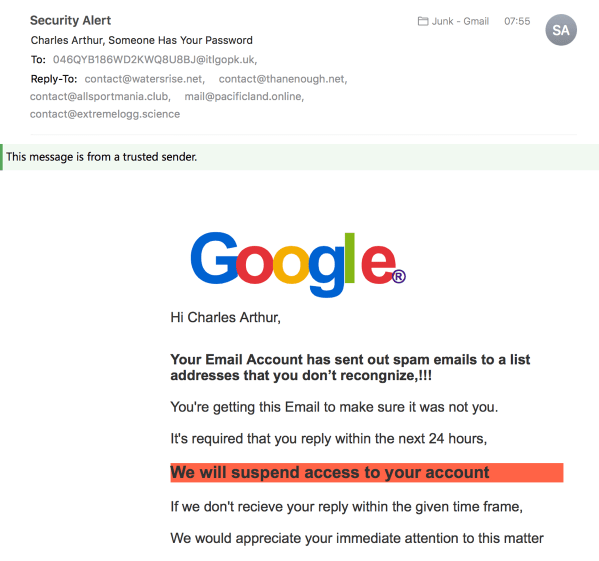
A selection of 12 links for you. Something for the weekend. I’m @charlesarthur on Twitter. Observations and links welcome.

A ‘Close Encounters’ example of forced perspective • Trailers From Hell

Glenn Erickson:

»

The most complex miniature was not a full model, but a ‘reflections’ model of an auto toll booth, in which Director of Photography of Special Effects Richard Yuricich was tasked with adding the effects of a glowing saucer flying through. On a shoot in San Pedro, Steven Spielberg suddenly decided he wanted a new shot, and had Yuricich line up his 65mm camera at a bridge toll booth to film the action of the cop cars racing left to right. The shot wasn’t in the schedule or the budget, which didn’t please Columbia production head John Veitch. Yuricich had to brainstorm to figure a way to do the shot for next to nothing, and the solution came to him on his drive home.

All Gregory Jein had to work with was a clip of a 65mm shot of the booths. He painstakingly constructed little panes of glass in depth, aligned so that when double-exposed onto the existing shot, reflections would be added of the passing flying saucer (the glowing red ‘Tinkerbell’ dot) as it chased the highway patrolmen: “Hey, that’s Ohio. It costs a quarter.”

Richard Yuricich lined up the shot, and I assisted Greg in plotting it out – mainly, I held up little pieces of plastic while he directed me through the viewfinder, as if I were a surveyor’s assistant. The ‘model’ ended up being this little set of boxes and windows. It worked amazingly well.

Storyboards called out for a wide shots of the crossroads where Power Company employee Roy Neary runs into his first saucers, glowing hot-rods that are apparently in love with our road system. Spielberg wanted a night-for night look where one could see to the horizon, which meant that the shot couldn’t be made in a real location. Bright lights from the saucers were meant to blast down on the road, throw shadows, etc.

«

It’s amazing – I’d never have thought, watching the film, that any of it wasn’t real landscape.
link to this extract


Chinese smartphone market suffers a hard-landing, shipments decline by 21% in Q1 2018 • Canalys

»

Smartphone shipments in China suffered their biggest ever decline in Q1 2018, down by more than 21% annually to 91m units, a number first passed some four years ago in Q4 2013. Eight of the top 10 smartphone vendors were hit by annual declines, with Gionee, Meizu and Samsung shrinking to less than half of their respective Q1 2017 numbers.

Huawei (including Honor) managed to grow shipments by a modest 2%, maintaining its lead and consolidating its market share to about 24% by shipping over 21m smartphones. Second-placed Oppo and third-placed Vivo bore the brunt of the overall decline, with shipments falling by about 10% to 18m and 15m respectively. Xiaomi was the only company to buck the trend, growing shipments by 37% to 12m units, and overtaking Apple to take fourth place.

«

That’s quite an ominous downward trend on the right. Counterpoint Research also sees China down (8% year-on-year), though it reckons Huawei, Oppo, Xiaomi and Apple all grew; it puts Apple ahead of Xiaomi.
link to this extract


LG mobile division sees big jump in losses, blames new strategy • Android Authority

Hadlee Simons:

»

The [overall] firm reported a 20% increase in operating income, making for the “highest first-quarter profit and revenue in company history.” The performance also translates to the “highest quarterly profitability” since Q2 2009, LG added.

It’s a different tale for the LG mobile division, however, as the unit posted sales of 2.16trn won ($2bn) and an operating loss of 136.1bn won ($126.85m) for the quarter. By comparison, Q1 2017 saw the unit deliver an operating loss of 200m won ($185,000 by today’s conversion rate).

“Sales declined from the same quarter last year due to a revised smartphone launch strategy,” the company explained.

That strategy was first revealed back at CES 2018, when LG Electronics CEO Cho Sung-jin said the company would release new phones “when it is needed.” The executive said it would also reveal more variants of the G and V series flagship phones. We saw the first major variant at MWC 2018 in the form of the V30s ThinQ, packing more RAM/storage, as well as improved AI-related camera features compared to the V30.

The company is forecasting improved sales in the second quarter of the year, citing the upcoming LG G7 ThinQ flagship and its software upgrade center as two major drivers. The new flagship will be officially revealed on May 2, but we already know it’ll pack a notch, a super bright LCD screen, and a dedicated AI button.

«

The only, tiny chance that LG’s mobile business has of ever coming back to profit is if Huawei and ZTE get banned from the US (and maybe UK) markets. So far it has lost money for 12 straight quarters – a tidy $2.6bn.
link to this extract


Ray Ozzie’s proposal: not a step forward • Steve Bellovin

Bellovin is well known in the computer security field; if you saw yesterday’s set, it was one of them:

»

[Ray] Ozzie presented his proposal at a meeting at Columbia—I was there—to a diverse group. Levy wrote that Ozzie felt that he had “taken another baby step in what is now a two-years-and-counting quest” and that “he’d started to change the debate about how best to balance privacy and law enforcement access”. I don’t agree. In fact, I think that one can draw the opposite conclusion.

At the meeting, Eran Tromer found a flaw in Ozzie’s scheme: under certain circumstances, an attacker can get an arbitrary phone unlocked. That in itself is interesting, but to me the important thing is that a flaw was found. Ozzie has been presenting his scheme for quite some time. I first heard it last May, at a meeting with several brand-name cryptographers in the audience. No one spotted the flaw. At the January meeting, though, Eran squinted at it and looked at it sideways—and in real-time he found a problem that everyone else had missed. Are there other problems lurking? I wouldn’t be even slightly surprised. As I keep saying, cryptographic protocols are hard.

The other point is that security is a systems problem. To give just one example, the international problem alone is a killer issue. If the United States adopts this scheme, other countries, including specifically Russia and China, are sure to follow. Would they consent to a scheme that relied on the cooperation of an American company, and with keys stored in the U.S.? Almost certainly not. Now: would the U.S. be content with phones unlockable only with the consent and cooperation of Russian or Chinese companies? I can’t see that, either.

«

link to this extract


Here’s what you need to know about the new Gmail • The Washington Post

Geoffrey Fowler:

»

Truth be told, when Google first showed me the redesign, I thought: Who asked for this? It’s like Gmail got a facelift to look cuter. Buttons are rounded and its bubbly new font could have been ripped from a 1992 school yearbook.

But I came around after living with the new Gmail for a week. It’s cleaner and the stuff you rely on hasn’t moved far. What’s more, it has some good ideas to keep you from missing important emails and to make them more secure. Google is getting much more deeply involved with our messages, and the result moves email in the right direction.

My favorite new thing: You can now send emails that self-destruct.

Your Gmail experience won’t change immediately, unless you tap the gear icon (for settings) and turn on the new website look. But it’ll come to you eventually: in the coming months, Google will bring the new design and features to everyone, including people with corporate accounts…

…But the AI isn’t all-knowing (yet). Gmail doesn’t know if you actually replied to a message in real life, on the phone, or in a text. It also doesn’t let you identify certain senders as top priority.

To keep annoyance to a minimum, Google promises to send a max of three nudges per day. It’s on by default, but you can turn it off if you’d like.

The new Gmail applies intelligence to another information-overload problem: notifications. Previously, Gmail apps for smartphones and tablets sent an alert every time you got a new email in your primary inbox. Turning on notifications would cause your phone to buzz all day long. When new Gmail apps for iOS and Android debut in the coming months, they’ll be able to alert you only when you’ve got an email Gmail actually thinks is “high priority.”

«

Lots more emphasis on AI. Let’s see how that could go.
link to this extract


Don’t buy the MacBook Pros even on sale, in my opinion • The Outline

Casey Johnston:

»

Since I wrote about my experience, many have asked me what happened with the new top half of the computer that the Apple Geniuses installed, with its pristine keyboard and maybe-different key switches. The answer is that after a couple of months, I started to get temporarily dead keys for seemingly no reason. Again.

I still had my 2013 MacBook Pro around, so I sold my 2016 MacBook Pro back to Apple’s refurb program, and now I just use the 2013 as my laptop (I used the recovered money to build a PC, lord help me). This old MacBook Pro is still fine, and most importantly, all the keyboard keys work. The new MacBook Pro is gone. When I started working at The Outline, I was offered a choice of a new MacBook Pro or a MacBook Air for my work computer, and I chose the MacBook Air, with its good keyboard that doesn’t break from dust. I’m fully committed to this bit.

«

I wonder if Apple is keeping the MacBook Air, with its old keyboard model, going because (1) it’s the best-selling laptop (2) there are no significant problems with the keyboard. A lot of people who have heard about the keyboard problems are holding off on buying new machines.

Apple’s fortunate that the wave has moved on from laptops. If this had happened 10 years ago, it would be in trouble. Similarly, if some equivalent to this happened on an iPhone model or iPad, it would take rapid action: look at how quickly it moved when the whole “#bendgate” stuff when the bigger iPhone 6 and 6 Plus came out.
link to this extract


MOSISO clear keyboard skin cover for Touch Bar Models 2017 & 2016 release newest version macbook pro 13 (A1706) and MacBook Pro 15 (A1707) with Touch ID (EU Layout) • Amazon.co.uk

Ian Fogg had problems with his new Mac keyboard; swears by this. It’s effectively the same thing as the “cloth” cover that the iPad Pro keyboards (which are the same key system) use. And cheap. Except doesn’t it stop air escaping around the keys, so you get a very hot device?
link to this extract


WhatsApp plans to ban under-16s. The mystery is how • The Guardian

I wrote an op-ed:

»

WhatsApp didn’t explain in its blogpost how it will enforce its policy. No social network – in fact, no ad-supported service – is keen on truly finding out the age of its users, because then it might have to turn them away, which means less chance to show them adverts, collect data about them, and tie them into longer-term use. Teenagers are the ideal customer: they have long lives ahead of them, can be brand-loyal, and are very susceptible to peer pressure to join. And online age verification really is difficult. Phone companies such as O2 demand photo ID at a shop (effective, but no use for online-only services) or a credit card (easy to defeat by stealing details from parents). Quizzes can be beaten by a search. Perhaps playing the mosquito alarm through the speakers constantly? Or maybe a question asking about a new meme; if you get the answer correct, you’re too young.

Nobody knows, as the government’s 2016 consultation demonstrated. Plans to enforce it for sex sites starting this month were quietly buried in March. Though it insists the scheme will be introduced this year, don’t hold your breath. The subtler, but bigger, problem is that the big social media companies (which includes YouTube) are flattening out the teenage years. To Facebook, YouTube, Google and so on you’re either over 18 or over 13; no other user ages exist.

Yet that period between 13 and 18 is one of enormous intellectual and social development, and you wouldn’t throw such disparate ages together in a youth club and just leave them to it. But in their indifferent rush to corral the world, social networks do, with the results that Ofcom noted: young children coming online are confronted by much older ones who already own the space [and report encountering hateful or sexual content].

«

link to this extract


Snapchat to stop retaining location data on under-16s in Europe • FT

Tim Bradshaw:

»

Snapchat plans to stop retaining certain data about users under the age of 16 in Europe, including precise location history, to comply with new EU privacy regulations.

The move is intended to allow the California-based company to meet the requirements of the General Data Protection Regulation without having to cut off millions of younger teenagers from using its app. 

Shares in Snapchat’s parent company Snap fell 7% on Wednesday after WhatsApp, a rival messaging app, said it would raise its minimum age for users in Europe to 16 in response to GDPR. 

The move by Facebook-owned WhatsApp is the most drastic yet by a popular mobile app to mitigate any risks that might arise from GDPR. Any breach can result in fines of as much as 4% of annual global revenue.

Snapchat’s steps might allay fears among some users and investors that it would have to follow WhatsApp’s example and cut off under-16s altogether. Teenagers are among Snapchat’s most loyal and active users.

«

link to this extract


UK healthcare startup said to have posted fake reviews online • Bloomberg

Giles Turner:

»

The two-year-old company [Cera Care] matches patients with in-home health-care professionals capable of providing everything from support for elderly clients to live-in assistance for people with dementia, and has garnered positive press from UK publications. Its website also boasts sky-high ratings on customer-satisfaction sites and partnerships with 10 UK National Health Service organizations.

But according to three people with knowledge of the matter, Cera Care doesn’t in fact have partnerships with at least seven of those groups, and up to a dozen of the reviews on third-party sites were crafted either by Cera Care employees or people close to them, rather than unbiased customers. These people asked not to be identified because of the sensitivity of the information.

In a widely publicized announcement in March 2017, Cera said it has partnered with a range of public health groups in London, including St. Barts, one of the U.K.’s largest. It later listed 10 of these groups on its website. However, the startup regularly works with only three of these groups – Lewisham CCG [Clinical Care Group], Haringey CCG, and Tower Hamlets CCG – according to people with knowledge of the matter.

“We note that our website was not fully up to date with these materials and are rectifying it,” Cera said in an emailed statement. The company had previous partnerships with health care groups including Brent, Harrow and Hillingdon and East London Foundation Trust, the company said…

…Patients and their families considering private in-home care often look closely at reviews on sites such as Trustpilot AS, HomeCare UK and Google Reviews before choosing a provider. Of the 104 reviews on Trustpilot, a number were fakes created by Cera Care employees, people with knowledge of the postings said. Of them, 12 have been taken down in recent days. “Good customer service. Great care from care workers as well. Happily continuing to do business with Cera,” one review said.

“We take any allegations of false reviews extremely seriously and these will be investigated thoroughly and dealt with strictly,” the spokeswoman for Cera, said. “We have no tolerance for this.”

Trustpilot said it has been investigating Cera Care and has been removing several reviews.

«

link to this extract


Letting neural networks be weird: when algorithms surprise us • Ai Weirdness

Janelle Shane:

»

machine learning algorithms are widely used for facial recognition, language translation, financial modeling, image recognition, and ad delivery. If you’ve been online today, you’ve probably interacted with a machine learning algorithm.

But it doesn’t always work well. Sometimes the programmer will think the algorithm is doing really well, only to look closer and discover it’s solved an entirely different problem from the one the programmer intended. For example, I looked earlier at an image recognition algorithm that was supposed to recognize sheep but learned to recognize grass instead, and kept labeling empty green fields as containing sheep.

When machine learning algorithms solve problems in unexpected ways, programmers find them, okay yes, annoying sometimes, but often purely delightful.

So delightful, in fact, that in 2018 a group of researchers wrote a fascinating paper that collected dozens of anecdotes that “elicited surprise and wonder from the researchers studying them”. The paper is well worth reading, as are the original references, but here are several of my favorite examples.

«

There are so many, but I think my favourite is:

»

In one of the more chilling examples, there was an algorithm that was supposed to figure out how to apply a minimum force to a plane landing on an aircraft carrier. Instead, it discovered that if it applied a *huge* force, it would overflow the program’s memory and would register instead as a very *small* force. The pilot would die but, hey, perfect score.

«

“OK, engaging machine learning autopilot for landing…” But truly, the paper itself (linked above) is hilarious. Some of the interactions between humans and programs truly are like captors and wild animals.
link to this extract


Snap’s second-generation Spectacles are more grown up — and more expensive • The Verge

Casey Newton:

»

Given Snap’s struggles in hardware, it’s fair to ask why the company is trying again. The reason is that hardware has the potential to be a much better business for Snap than software does. It enables new services, it can be sold at healthy profit margins, and it’s harder for competitors to copy. Hardware is extremely difficult to do well — but if Snap can pull it off, hardware could help the company chart a profitable path forward. (It lost $720m last year.)

To build a sequel to Spectacles, Snap talked with customers and drew up a list of employees’ own complaints about the original, a product designer told me this week. The company ultimately made three major refinements.

First, it created a slimmer design. Spectacles should now fit more easily in a pants pocket, or dangling from the front of your T-shirt. The case is smaller, too, and will take up less space in your bag. All those small tweaks added up to a product that feels a bit more like sunglasses and a bit less like a face camera.

Second, Snap improved the transfer speed between Spectacles and your phone. If you owned the first-generation Spectacles, you likely remember this as the worst part of using them. Transferring videos off your device means opening Memories, tapping “import,” accepting a dialog box that switches your phone to the Spectacles Wi-Fi network, and then waiting for several minutes while they download.

The good news is the download speeds are now three to four times faster, Snap says. The bad news is that the rest of the process, down to the awkward connection to a Spectacles Wi-Fi network, remains the same.

«

Spectacles v1: cost $150, sold 150,000, wrote off $40m.
Spectacles v2: cost $170, but now the excitement of “Snap making SPECTACLES?!” has worn off, it’s hard even to see them hitting the first version’s sales. This reminds me of the WC Fields quote: “If at first you don’t succeed, try, try again. Then quit. No point being a damn fool about it.”
link to this extract


Errata, corrigenda and ai no corrida: yesterday’s picture of French Uber icons on the map didn’t show France. It showed Bethnal Green, which has never been French. Thanks, Andrew B.

Start Up: Huawei face Iran questions, Amnesty knocks Google, Ellen Pao speaks, the iCloud storage problem, and more


Uber’s maps (here in France, on Bastille day) are getting more accurate. Photo by tim rich and lesley katon on Flickr.

A selection of 11 links for you. Not a substitute for percocet. I’m @charlesarthur on Twitter. Observations and links welcome.

Huawei under criminal investigation over Iran sanctions • WSJ

Stu Woo and Aruna Viswanatha:

»

The Justice Department is investigating whether Huawei Technologies Co. violated U.S. sanctions related to Iran, according to people familiar with the matter, a move that opens a new avenue of scrutiny of the Chinese cellular-electronics giant on national security grounds.

It’s unclear how far the Justice Department probe has advanced and what specific allegation federal agents are probing. A Huawei spokesman declined to comment.

Such a probe raises the stakes for Huawei, which is facing a series of actions by Washington to diminish the company’s already limited business dealings in the U.S. It could also have spillover effects for its much larger business overseas, particularly in Europe.

Analysts said a worst-case scenario could entail Huawei suffering the same fate as smaller Chinese rival ZTE Corp, which has lost access to U.S.-made components in a similar probe.

«

If Huawei falls foul of this, it will have a huge effect on its business – but there will be a knock-on effect too, driving Chinese technology companies to accelerate efforts to build their own chips. ZTE is crippled already by this. But if Huawei is hit, that could feed through to problems in supply for American companies (think: Apple).

Strangely, Iran could end up splitting up the globalised tech system that binds the US and China together, and all without firing a shot.
link to this extract


Google’s new Chat service shows total contempt for Android users’ privacy • Amnesty International

»

Responding to Google’s launch of a new messaging service for Android phones, Amnesty International’s Technology and Human Rights researcher Joe Westby said:

“With its baffling decision to launch a messaging service without end-to-end encryption, Google has shown utter contempt for the privacy of Android users and handed a precious gift to cybercriminals and government spies alike, allowing them easy access to the content of Android users’ communications.

“Following the revelations by CIA whistleblower Edward Snowden, end-to-end encryption has become recognized as an essential safeguard for protecting people’s privacy when using messaging apps. With this new Chat service, Google shows a staggering failure to respect the human rights of its customers.

“Not only does this shockingly retrograde step leave Google lagging behind its closest competitors – Apple’s iMessage and Facebook’s WhatsApp both have end-to-end encryption in place by default – it is also a step backwards from the company’s previous attempts at online messaging. Google’s own app Allo has an option for end-to-end encryption but the company says it will no longer invest in it. 

“In the wake of the recent Facebook data scandal, Google’s decision is not only dangerous but also out of step with current attitudes to data privacy…”

«

Harsh. Google is trying to marshal carriers to use a more modern version of SMS, called RCS; it’s also trying to bring text apps on Android up to date. (Weirdly, Google has never managed to produce a unified message product for Android in the way that Apple has iMessage.) As Ben Thompson puts it, Google’s trying to herd cats. Now it’s getting slagged off by Amnesty too.
link to this extract


Bitcoin is the greatest scam in history • Recode

Bill Harris is former CEO of Intuit and the founding CEO of Paypal:

»

I’m tired of saying, “Be careful, it’s speculative.” Then, “Be careful, it’s gambling.” Then, “Be careful, it’s a bubble.” Okay, I’ll say it: Bitcoin is a scam.

In my opinion, it’s a colossal pump-and-dump scheme, the likes of which the world has never seen. In a pump-and-dump game, promoters “pump” up the price of a security creating a speculative frenzy, then “dump” some of their holdings at artificially high prices. And some cryptocurrencies are pure frauds. Ernst & Young estimates that 10% of the money raised for initial coin offerings has been stolen.

The losers are ill-informed buyers caught up in the spiral of greed. The result is a massive transfer of wealth from ordinary families to internet promoters. And “massive” is a massive understatement — 1,500 different cryptocurrencies now register over $300 billion of “value.”

It helps to understand that a bitcoin has no value at all.

Promoters claim cryptocurrency is valuable as (1) a means of payment, (2) a store of value and/or (3) a thing in itself. None of these claims are true.

«

Shall we put you down as a “undecided voter”, Bill?
link to this extract


Ellen Pao, ex-Reddit CEO interview • NYMag

Noah Kulwin interviews (as part of a series) Ellen Pao, who was in charge of Reddit in 2014-15:

»

Q: When you think back to the early 2000s — to the post-dotcom, pre-web 2.0 era — there were a lot of folks who you knew personally, or worked with, who were the vanguard of this new emancipatory movement. I’m curious if you ever saw any ideological or intellectual shift among them.

EP: I think it all goes back to Facebook, where it was successful so quickly and raised so much money, and people got wealthy so fast. And they were so young and they were so admired that it changed the culture, and it went from “I’m going to build this company to change the way people do things and improve people’s lives” to “I’m gonna build this company that builds this product that everybody uses, so I can make a lot of money.”

Google went public, and all of a sudden you have these instant billionaires. No longer did you have to toil for decades. They were able to make billions in a very short amount of time.

And then in 2008, when the markets crashed, all those people who are motivated by money ended up coming out to Silicon Valley and going into tech and starting companies. And that’s when values shifted more.

There was, like, an optimism early around good coming out of the internet that ended up getting completely distorted in the 2000s, when you had these people coming in with a different idea and a different set of goals.

Q: I’m curious, because of your work on increasing diversity and representation of minorities within tech companies, about the ways in which you think that tech’s homogeneity sort of negatively influences its actions and makes it a more destructive force.

EP: I think that with the goal of finding the next Mark Zuckerberg, investors became oriented around finding that young white man who had dropped out of Stanford or Harvard. That became the pattern to match. And that ended up reinforcing some of the exclusion that was already there, and it made it that much harder for women and people of color, and especially women of color, to raise money.

«

link to this extract


How Uber is moving the “blue dot” and improving GPS accuracy in big cities • The Verge

Andrew Hawkins:

»

All at once, satellites went from tracking airplanes to tracking the smartphones of individuals walking through dense cities. Not only did these satellites lose their line-of-sight advantage, they had to contend with a forest of tall buildings acting as mirrors to refract and distort the signals. This phenomenon, commonly referred to as “shadowing,” can create a location error of up to 100 meters or more, especially in high-value markets like New York City and San Francisco. That can wreak havoc on the most sensitive aspect of Uber’s business: the pickup.

“So this obviously presents problems for us because we might think that a driver is on a different road than they actually are,” Iland says. “And that can cause ETAs to be totally off.”

To fix the problem, Iland and Irish [whose company Shadow Maps was bought by Uber in 2016] used a process called occlusion modeling, by which Uber’s algorithm looks at a full 3D rendering of the city and does a probabilistic estimate of where you are based, which satellites you can see, and which you can’t. There are around 30 satellites in the US’s GPS constellation, as well as a constellation of Russian GLONASS satellites. (China and the European Union are in the process of launching their own GPS satellites.) Using public data from the satellites available to software developers, Uber is able to use a process of elimination to get a more accurate read on where you are when you’re trying to hail a ride.

“Pretend there are only three satellites,” Iland says. “So, if I can see satellites C and D with high signal strength, but I can’t see satellite B, then I’m probably on the left side of the street where satellite B is blocked by a building. If I can see B and C, but I can’t see D, then I’m probably on the right side of the street. And so we’re using the satellite visibility information as part of the algorithm, instead of just assuming that all satellites are line of sight.”

«

Because (as it explains) that means drivers and riders can find each other more accurately.
link to this extract


Global smartphone shipments reached record 1.55bn units in CY 2017 • Counterpoint Research

»

smartphone shipments grew 2% annually in CY 2017 but declined 5% in Q4 2017. Top 10 players now capture 77% of the market thereby leaving just below a quarter of segment for over 600+ brands to compete.

Commenting on the findings, Jeff Fieldhack, Research Director at Counterpoint Research said, “For the first time in Q4 2017, shipments of seven out of the top ten brands declined YoY signaling a tough quarter for most of the OEMs. Xiaomi, OPPO and Vivo were the only brands among top ten which grew YoY–mostly due to strong performances outside of China. Apple shipped 77.3 million smartphones into the market during the final quarter of 2017, which is down 1% annually. The quarter was a week shorter than last year and the company was able to increase ASP’s by over $100 to $796 with the launch of the X, 8, and 8 Plus—a trade-off the company is content to make. The challenge for Apple going forward will be its ability to continue to grow its base of 1.3 billion devices.”

«

The regional variation, below, is notable (red line is the end of last year). But howcome nobody ever asks “will Samsung by able to grow its base of [very big number] devices?”


link to this extract


The real problem with Apple’s iCloud storage options (hint, it’s not price) • BirchTree

Matt Birchler:

»

As I’ve expressed time and time again, every single paid tier of iCloud storage gets you more bang for your buck than the competition. Despite what I hear from time to time, iCloud is a great deal if you’re looking for some online storage. I think Apple’s free tier (5GB) is totally reasonable for a file backup and sync service, and their paid options are pretty excellent.

But iCloud’s real problem is with how that storage is used.

I have a 64GB iPhone 8 Plus which is Apple’s entry level storage option. My backup, which is stored on iCloud, is 8.9GB. If I was on the free storage tier, I would not be able to back up my iPhone. I also have about 112GB of photos synced with Apple Photos which would also not be possible on the free storage tier.

We can argue about whether Apple should have a free photo sync/backup solution like Google Photos, but the backups are the real killer. Being able to back up one’s phone is not a “premium feature” by any means, it’s basic functionality. There are suggestions out there to do all sorts of crazy things with building up free storage depending on how many Apple devices you own and such, but I think that way lies madness.

I think the solution for Apple’s “iCloud is too expensive” problem is super simple: don’t count iPhone and iPad backups towards your iCloud storage, and offer a free, limited photo backup option.

By doing this, your backups would always work no matter how much storage you have.

«

Every year as WWDC rolls around, people expect Apple to change this. So far, every year it hasn’t. (It just quietly lowers the prices.)
link to this extract


‘Beyond belief’: Brexit app for EU nationals won’t work on iPhones • The Guardian

Daniel Boffey and Lisa O’Carroll:

»

[UK Home Secretary Amber] Rudd had insisted that using the Home Office app would be as easy for the 3 million EU nationals in the UK as setting up an online account at LK Bennett, the clothes retailer. She also said it had been “extensively tested”, but Home Office officials admitted they had not yet begun mass testing of the app. They also said they would be hiring 1,000 caseworkers for a customer service centre for EU citizens, although they had not yet begun this process.

However, the fact that the app does not work on Apple devices has highlighted what many say is the government’s poor record with technology.

EU citizens who have tested the app say it requires just a small amount of information, such as a scan of a passport, address, email address and a selfie to match the passport picture. The system then matches the biographical details with HM Revenue & Customs records to give the applicant an instant answer as to whether their application has been successful.

However, it has emerged that because Apple will not enable its technology to read the chip on modern passports, the registration can only be completed on an Android phone.

Guy Verhofstadt, the European parliament’s Brexit coordinator, said he would be writing to Theresa May this week about a series of wider concerns, including the £72 cost of registering, and the need for every member of a family to individually apply for settled status.

«

Doesn’t work on Apple devices because their NFC chips won’t talk to the NFC chip in modern passports. That’s not good planning, really.
link to this extract


How did this advocate of e-waste reuse end up behind bars? • The Washington Post

Tom Jackman:

»

A California man who built a sizable business out of recycling electronic waste is headed to federal prison for 15 months after a federal appeals court in Miami rejected his claim that the “restore disks” he made to extend the lives of computers had no financial value, instead ruling that he had infringed Microsoft’s products to the tune of $700,000.

The appeals court upheld a federal district judge’s ruling that the disks made by Eric Lundgren to restore Microsoft operating systems had a value of $25 apiece, even though they could be downloaded free and could be used only on computers with a valid Microsoft license. The US Court of Appeals for the 11th Circuit initially granted Lundgren an emergency stay of his prison sentence, shortly before he was to surrender, but then affirmed his original 15-month sentence and $50,000 fine without hearing oral argument in a ruling issued April 11…

…Initially, federal prosecutors valued the disks at $299 each, the cost of a brand-new Windows operating system, and Lundgren’s indictment claimed he had cost Microsoft $8.3m in lost sales. By the time of sentencing, a Microsoft letter to Hurley and a Microsoft expert witness had reduced the value of the disks to $25 apiece, stating that was what Microsoft charged refurbishers for such disks.

But both the letter and the expert were pricing a disk that came with a Microsoft license. “These sales of counterfeit operating systems,” Microsoft lawyer Bonnie MacNaughton wrote to the judge, “displaced Microsoft’s potential sales of genuine operating systems.” But Lundgren’s disks had no licenses and were intended for computers that already had licenses.

«

Man tries to do good, gets run over by US Customs. (Microsoft’s role in this is unclear; it doesn’t seem to have agitated for a prosecution.)

link to this extract


Google aims at privacy law after Facebook lobbying failed • Bloomberg

Kartikay Mehrotra:

»

While Mark Zuckerberg and Sheryl Sandberg were publicly apologizing this month for failing to protect users’ information, Google’s lobbyists were drafting measures to de-fang an Illinois law recognized as the most rigorous consumer privacy statute in the country. Their ambition: to strip language from a decade-old policy that regulates the use of fingerprints, iris scans and facial recognition technology, and insert a loophole for companies embracing the use of biometrics.

Google is trying to exempt photos from the Illinois law at a time when it’s fighting a lawsuit in the state in which billions of dollars of damages may be at stake. The world’s largest search engine is facing claims that it violated the privacy of millions of users by gathering and storing biometric data without their consent.

Facebook has faced global backlash for failing to secure users’ information, triggered by revelations that a British firm with ties to President Donald Trump’s 2016 campaign harvested information from as many as 87 million Facebook users without their knowledge. That breach has put the tech behemoth and its Silicon Valley cohort at the center of a data privacy debate.

Facebook is trying to show it’s taking consumer privacy more seriously, but there’s an inexorable dilemma: The business models and future growth of both Google and the world’s largest social network are tied up with the very data they’re now being asked to lock up – information most users have volunteered in exchange for these companies’ free products and services.

Illinois state senator Bill Cunningham proposed an amendment to the Biometric Information Privacy Act in February then aimed at saving a local nursing home from overly burdensome litigation. Google and lobbyists from the Illinois Chamber of Commerce – of which Facebook is a member – intervened, and on April 4 they offered a new version with Cunningham to embed further caveats in the legislation, including language to exclude photos from regulatory scrutiny.

«

link to this extract


Student loan adviser Drew Cloud is everywhere… and doesn’t exist • The Chronicle of Higher Education

NAME:

»

Drew Cloud is everywhere. The self-described journalist who specializes in student-loan debt has been quoted in major news outlets, including The Washington Post, The Boston Globe, and CNBC, and is a fixture in the smaller, specialized blogosphere of student debt.
He’s always got the new data, featuring irresistible twists:

One in five students use extra money from their student loans to buy digital currencies.

Nearly 8% of students would move to North Korea to free themselves of their debt.

Twenty-seven% would contract the Zika virus to live debt-free.

All of those surveys came from Cloud’s website, The Student Loan Report.

Drew Cloud’s story was simple: He founded the website, an “independent, authoritative news outlet” covering all things student loans, “after he had difficulty finding the most recent student loan news and information all in one place.”

He became ubiquitous on that topic. But he’s a fiction, the invention of a student-loan refinancing company.

After The Chronicle spent more than a week trying to verify Cloud’s existence, the company that owns The Student Loan Report confirmed that Cloud was fake.

«

I looked at that “cryptocurrency” story a couple of weeks ago, but didn’t link to it because something didn’t feel right. And so it turns out. Companies like this, which generate bogus stories for Googlejuice, have always existed; but now they’re damn hard to get rid of once they’re in a database.
link to this extract


Errata, corrigenda and ai no corrida: yesterday’s post said “The idea that you could have the Internet Archive itself is a bit fanciful.” It should have been “hack” rather than “have” – clearly we do have the Internet Archive. (Thanks Barry T for the gigantic embarrassment.)

You can sign up to receive each day’s Start Up post by email. You’ll need to click a confirmation link, so no spam.
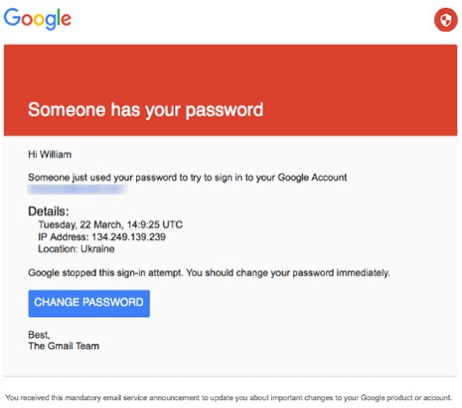
Start Up: the recommendation engine risk, DNS crypto hack, smartwatches goose Verizon, and more


A symphony orchestra: the apotheosis of synchrony in technology? Photo by Grant Williamson on Flickr.

You can sign up to receive each day’s Start Up post by email. You’ll need to click a confirmation link, so no spam.
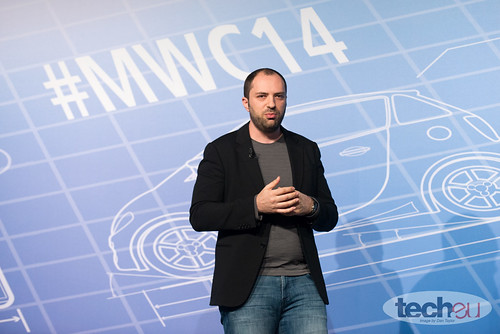
A selection of 10 links for you. Use them wisely. I’m @charlesarthur on Twitter. Observations and links welcome.

The web’s recommendation engines are broken. Can we fix them? • WIRED

Renee DiResta:

»

Today, recommendation engines are perhaps the biggest threat to societal cohesion on the internet—and, as a result, one of the biggest threats to societal cohesion in the offline world, too. The recommendation engines we engage with are broken in ways that have grave consequences: amplified conspiracy theories, gamified news, nonsense infiltrating mainstream discourse, misinformed voters. Recommendation engines have become The Great Polarizer.

Ironically, the conversation about recommendation engines, and the curatorial power of social giants, is also highly polarized. A creator showed up at YouTube’s offices with a gun last week, outraged that the platform had demonetized and downranked some of the videos on her channel. This, she felt, was censorship. It isn’t, but the Twitter conversation around the shooting clearly illustrated the simmering tensions over how platforms navigate content : there are those who hold an absolutist view on free speech and believe any moderation is censorship, and there are those who believe that moderation is necessary to facilitate norms that respect the experience of the community.

As the consequences of curatorial decisions grow more dire, we need to ask: Can we make the internet’s recommendation engines more ethical? And if so, how?

Finding a solution begins with understanding how these systems work, since they are doing precisely what they’re designed to do. Recommendation engines generally function in two ways. The first is a content-based system. The engine asks, is this content similar to other content that this user has previously liked? If you binge-watched two seasons of, say, Law and Order, Netflix’s reco engine will probably decide that you’ll like the other seventeen, and that procedural crime dramas in general are a good fit. The second kind of filtering is what’s called a collaborative filtering system. That engine asks, what can I determine about this user, and what do similar people like? These systems can be effective even before you’ve given the engine any feedback through your actions.

«

DiResta is a terrific follow on Twitter. Anyhow, today we’ve got some more recommendation engine stories below. Think of it as accidental ironic commentary.
link to this extract


The symphony orchestra and the Industrial Revolution • Marginal REVOLUTION

Tyler Cowen:

»

I heard Mozart’s 39th symphony in concert last night, and it occurred to me (once again) that I also was witnessing one of mankind’s greatest technological achievements.  Think about what went into the activity: each instrument, developed eventually to perfection and coordinated with the other instruments.  The system of tuning and the underlying principles of the music.  The acoustics of the music hall.  The sheet music on paper and the musical notation.  All of those features extremely well coordinated with the kind of compositional talent being produced in Central and Western Europe from say 1710 to 1920.  And by the mid-18th century most of the key features of this system were in place and by the early 19th century they were more or less perfected.

Sometimes I think of the Industrial Revolution as fundamentally a Cultural Revolution.  The first instantiation of this Cultural Revolution maybe was the rise of early Renaissance Art in Italy and in the Low Countries.  That too was based on a series of technological developments, including improved quality tempera paint, the development of oil painting, the resumption of bronze and marble techniques for sculpture, and the reintroduction of paper into Europe, which enabled artists’ sketches and drawings.

«

So much of this is what Steven Johnson calls “adjacent technology” – that you can’t move wholesale to new tech. You can’t build a nuclear reactor without having special steelmaking techniques (radioactive water does odd things). You can’t build commercial aircraft without special aluminium-forging methods, which implies huge amounts of electricity to make the aluminium, which implies…

Once you start thinking about it, it’s astonishing how far we have come in just a few thousand years.
link to this extract


Suspicious event hijacks Amazon traffic for two hours, steals cryptocurrency • Ars Technica

Dan Goodin:

»

Amazon lost control of a small portion of its cloud services for two hours on Tuesday morning when hackers exploited a known Internet-protocol weakness that allowed them to redirect traffic to rogue destinations. By subverting Amazon’s domain-resolution service, the attackers masqueraded as cryptocurrency website MyEtherWallet.com and stole about $150,000 in digital coins from unwitting end users. They may have targeted other Amazon customers as well.

The incident, which started around 6 AM California time, hijacked roughly 1,300 IP addresses, Oracle-owned Internet Intelligence said on Twitter. The malicious redirection was caused by fraudulent routes that were announced by Columbus, Ohio-based eNet, a large Internet service provider that is referred to as autonomous system 10297. Once in place, the eNet announcement caused Hurricane Electric and possibly other peers of eNet to send traffic over the same unauthorized routes. Amazon and eNet officials didn’t immediately respond to a request to comment.

The highly suspicious event is the latest to involve Border Gateway Protocol, the technical specification that network operators use to exchange large chunks of Internet traffic. Despite its crucial function in directing wholesale amounts of data, BGP still largely relies on the Internet-equivalent of word of mouth from participants who are presumed to be trustworthy. Organizations such as Amazon whose traffic is hijacked currently have no effective technical means to prevent such attacks.

«

The internet’s fragility is well-hidden, but plenty of people know how to exploit it.
link to this extract


Watches, not phones, fuel Verizon’s subscriber growth • Bloomberg

Scott Moritz:

»

Smartwatches, meanwhile, have helped bring another source of revenue to the industry — even if the devices aren’t as lucrative as phones. The latest wearable devices, such as the Apple Watch Series 3, have their own network connections. That means they don’t need to link up with smartphones to communicate and – good news for carriers – require a separate wireless subscription.

Verizon added about 359,000 subscribers last quarter who are using watches, wearables and other devices. That helped make up for the loss of 24,000 phone customers and 75,000 tablet customers in the period. But watch customers pay $10 a month, compared with the $40 or more that phone customers typically shell out.

That effect was evident in Verizon’s wireless service revenue, which fell 2.4% last quarter.

Verizon’s FiOS landline service, meanwhile, added 66,000 internet customers in the first quarter. But it lost 22,000 TV subscribers.

«

Wonder how many of those 359,000 subscriber adds were Apple Watch users, compared to Samsung or others. The lost tablet customers is a big number, too.
link to this extract


Facebook has hosted stolen identities and social security numbers for years • Motherboard

Lorenzo Franceschi-Bicchierai:

»

Cybercriminals have posted sensitive personal information, such as credit card and social security numbers, of dozens of people on Facebook and have advertised entire databases of private information on the social platform. Some of these posts have been left up on Facebook for years, and the internet giant only acted on these posts after we told it about them.

As of Monday, there were several public posts on Facebook that advertised dozens of people’s Social Security Numbers and other personal data. These weren’t very hard to find. It was as easy as a simple Google search.

A screenshot of the redacted Google search results for social security numbers on Facebook.
Most of the posts appeared to be ads made by criminals who were trying to sell personal information. Some of the ads are several years old, and were posted as “public” on Facebook, meaning anyone can see them, not just the author’s friends.

Independent security researcher Justin Shafer alerted Motherboard to these posts Monday.

“I am surprised how old some of the posts are and that it seems Facebook doesn’t have a system in place for removing these posts on their own,” Shafer told Motherboard in an online chat. “Posts that would have words flagged automatically by their system.”

«

Comment from editor-in-chief Jason Koebler:

»

“Sick of a) having journalists have to moderate social media platforms for the giant companies that run them b) getting no response to request for comment on things that are illegal/break TOS but having the companies delete them before we run an article.”

«

link to this extract


Facebook and Google: skip the F8 and I/O infomercials; fix your problems • Buzzfeed

John Paczkowski:

»

If the platforms are serious about healing themselves, you should be able to see it in a show that’s more about fixing what’s broken rather than building something new. And if they aren’t serious? Expect the same shiny, happy-fun wow-fests. If the onstage apology is shorter than the post-show afterparty, it will make clear that the contrition tours of 2017 and 2018 have been little more than lip service, and we can expect more of the same old fuckups and same old promises to do better.

In 2018 spending millions on rah-rah promotional spectacles for platforms like Facebook’s and Google’s is particularly unseemly when set against the conga line of travesties they’ve enabled.

What might 2019 look like if instead of dumping a manure spreader of money to rent out Mountain View, California’s cavernous Shoreline Amphitheatre and trick it out with 1,000-foot earth harps and other Burningmanalia, Google directed those resources towards developing moderation solutions that might have prevented the propagation of exploitative videos aimed at and starring children on YouTube — or prohibited mass shooting conspiracy theories from showing up in Google’s “top stories” search results? Or if instead of hiring Chvrches or Chance the Rapper to serenade developers, Facebook redirected those resources to repairing a massive, global platform that clearly incentivizes users to spread fake news faster than credible, verified reports?

This year instead of promising to “continue to look at ways to improve,” as Google did when it and YouTube spread fake news and propaganda about a Texas mass shooting suspect (just one month after the latter announced reforms intended to prevent such things from happening), just improve.

«

link to this extract


YouTube hosted graphic images of bestiality for months • Buzzfeed

Charlie Warzel:

»

The “Fantastic Girl and Her Horse in My Village” video itself does not feature any bestiality. It’s largely footage of a woman bathing and brushing a horse. But clicking on it triggers YouTube’s recommendation engine which promptly serves up dozens more animal videos — many with thumbnails featuring graphic bestiality. One such thumbnailed video, published by a channel called “ALL ANIMAL,” had amassed 2.3 million views at the time of this writing.

Most of these bestiality-thumbed videos — which appear to originate in South Asian countries like Cambodia — feature women in sundresses playing with or caring for animals like horses and dogs; Some feature up skirt angles and groin shots of women as they bathe or brush horses and dogs. And there are many. Without needing to search, YouTube’s recommendation algorithm pointed BuzzFeed News to dozens of accounts, each with multiple videos featuring explicit bestiality thumbnails.

«

OK, YouTube, you broke it with your algorithm. Now fix it.
link to this extract


Addressing recent claims of “manipulated” blog posts in the Wayback Machine • Internet Archive Blogs

Chris Butler:

»

This past December, [Joy Ann] Reid’s lawyers contacted us, asking to have archives of the blog (blog.reidreport.com) taken down, stating that “fraudulent” posts were “inserted into legitimate content” in our archives of the blog. Her attorneys stated that they didn’t know if the alleged insertion happened on the original site or with our archives (the point at which the manipulation is to have occurred, according to Reid, is still unclear to us).

When we reviewed the archives, we found nothing to indicate tampering or hacking of the Wayback Machine versions. At least some of the examples of allegedly fraudulent posts provided to us had been archived at different dates and by different entities.

We let Reid’s lawyers know that the information provided was not sufficient for us to verify claims of manipulation. Consequently, and due to Reid’s being a journalist (a very high-profile one, at that) and the journalistic nature of the blog archives, we declined to take down the archives. We were clear that we would welcome and consider any further information that they could provide us to support their claims.

At some point after our correspondence, a robots.txt exclusion request specific to the Wayback Machine was placed on the live blog.

«

The idea that you could have the Internet Archive itself is a bit fanciful. I could just about believe that someone malicious could have hacked an old blog and inserted content (some old blogs were Swiss cheese, security-wise); but then it should be feasible to follow when pages were added and deduce if they were contemporary or post-facto. (Disclaimer: I follow Reid on Twitter, and don’t really care what her views on homosexuality used to be.)
link to this extract


Alphabet boosts spending as revenues soar • FT

Richard Waters:

»

Even after deducting so-called TAC — traffic acquisition costs, the fees paid to other companies to carry its search service and adverts — Wall Street expects the company to add $17bn in net revenue this year. That is roughly as much as the entire US newspaper industry earned last year from print advertising.

The company’s net revenues jumped 24% in the first quarter, to $24.9bn, with growth driven by advertising from mobile search and YouTube. That was higher than the 21% most analysts expected.

Revenue from the company’s non-advertising businesses, driven by its cloud computing division, climbed 36%, and now account for 17% of the total.

The latest burst of spending included $7.3bn in capital spending in the first quarter, more than half the $13.2bn the company spent in the whole of last year. Even without the $2.4bn to buy a new office building in New York, that would still have been nearly double what it spent in the first quarter of last year.

Ruth Porat, chief financial officer, said half the capital spending was needed to expand the company’s data centres and network to handle heavier use of its services in future. “The investments we’re making there really support the compute capacity we see in our growth outlook,” she said.

«

Google seems to have discovered the ability to just keep growing its revenues. Hard not to think that it’s YouTube which is really driving the growth.
link to this extract


The Presidency: the hardest job in the world • The Atlantic

John Dickerson interviewed multiple people who have worked in the White House to wonder about how the job has arguably become too big:

»

Eisenhower sorted priorities through a four-quadrant decision matrix that is still a staple of time-management books. It was based on his maxim “What is important is seldom urgent, and what is urgent is seldom important.”

Sage advice, but antique for any president trying to manage the office after the attacks of September 11, 2001. The Cold War presidents monitored slow-moving events that had flashes of urgency. Now the stakes are just as high, but the threats are more numerous and fast-moving…

…Presidents now start their day with the President’s Daily Brief, an intelligence assessment of the threats facing America. How the PDB is delivered changes with each president. Early in his term, Trump reportedly requested a verbal digest of the brief. During the Obama years, the PDB was wrapped in a stiff leather binder and looked like the guest book at a country club. Inside was a grim iPad containing all the possible ways the president could fail at his most essential role. Satellite photos tracked terrorists’ movements, and pictures of failed laptop bombs demonstrated the pace of awful innovation. At the end of the briefing with intelligence officials, a president might be asked whether a specific person should be killed, or whether some mother’s son should be sent on a secret raid from which he might not return.

John F. Kennedy requested that his intelligence briefing be small enough to fit in his pocket. Since 2005, the PDB has been produced by an entirely new entity in the executive branch, the Office of the Director of National Intelligence, which itself includes several intelligence agencies founded since Kennedy’s era, among them the vast Department of Homeland Security.

Monitoring even small threats can take up an entire day. “My definition of a good day was when more than half of the things on my schedule were things I planned versus things that were forced on me,” says Jeh Johnson, who served Obama as homeland-security secretary. An acute example: In June 2016, Johnson planned to travel to China to discuss the long-term threat from cyberattacks. Hours before takeoff, he was forced to cancel the trip so he could monitor developments after the shooting at the Pulse nightclub in Orlando.

“The urgent should not crowd out the important,” says Lisa Monaco, Obama’s chief counterterrorism adviser. “But sometimes you don’t get to the important. Your day is spent just trying to prioritize the urgent. Which urgent first?”

«

link to this extract


Errata, corrigenda and ai no corrida: none notified

Start Up: China’s selfie madness, better notifications, Russia blocks Telegram (and Google), Facebook’s later smart speaker, and more


Apple’s purchase of music recognition service Shazam has been delayed over data concerns. Photo by Wind.com.my on Flickr.

A selection of 9 links for you. None owned by Sean Hannity. I’m @charlesarthur on Twitter. Observations and links welcome.

China’s selfie obsession • The New Yorker

Jiayang Fan visits Chinese phone maker Meitu:

»

The building’s interior evoked a giant Hello Kitty store. The walls were painted Jordan-almond shades—the color scheme changes every few months—and there were stuffed animals and bobblehead dolls on the desks. Conference rooms were named for aspirational spring-break locations: Hawaii, Bora-Bora, Fiji. (The average age of the employees is twenty-seven.) Stylishly clad men and women pecked at computers that were covered in garish stickers, like high-school lockers.

Chen Xiaojie, a twenty-seven-year-old with caramel-colored contact lenses and waist-length hair, gave me a demonstration of Meitu’s most popular apps, on her Meitu M8 phone. Holding the device at arm’s length, she tucked in her chin (“so the face comes out smaller”), snapped a photo of us, and handed me the result. My complexion looked smoother, my eyes bigger and rounder. I asked if I had been “P”-ed—the Chinese shorthand for Photoshopping. Chen said that the phone had automatically “upgraded” me. “Only when you enjoy taking selfies will you have the confidence to take more,” she explained. “And only when you look pretty will you enjoy taking selfies and ‘P’-ing the photo. It’s all very logical, you see.”

Next, using the BeautyPlus app, she showed me how to select a “beauty level” from 1 to 7—a progressive scale of paleness and freckle deletion. Then we could smooth out, tone, slim, and contour our faces, whiten our teeth, resize our irises, cinch our waists, and add a few inches in height. We could apply a filter—“celestial,” “voodoo,” “edge,” and “vibes” are some of the options. A recently added filter called “personality” attempts to counteract a foreseeable consequence of the technology: the more that people doctor their selfies, the more everyone ends up looking the same. Like everything else in the app, the personalities available—“boho,” “mystique,” and so on—are preset…

…I asked a number of Chinese friends how long it takes them to edit a photo before posting it on social media. The answer for most of them was about forty minutes per face; a selfie taken with a friend would take well over an hour. The work requires several apps, each of which has particular strengths. No one I asked would consider posting or sending a photo that hadn’t been improved.

When I met Meitu’s chairman, Cai Wensheng, later that day, he confirmed that editing your pictures had become a matter of ordinary courtesy. “In the same way that you would point out to your friend if her shirt was misbuttoned, or if her pants were unzipped, you should have the decency to Meitu her face if you are going to share it with your friends,” he said. He took enormous pride in the fact that “Meitu” had entered the Chinese lexicon as a verb.

«

link to this extract


YouTube under fire for censoring video exposing conspiracy theorist Alex Jones • The Guardian

Sam Levin:

»

YouTube’s algorithm has long promoted videos attacking gun violence victims, allowing the rightwing conspiracy theorist Alex Jones to build a massive audience. But when a not-for-profit recently exposed Jones’ most offensive viral content in a compilation on YouTube, the site was much less supportive – instead deleting the footage from the platform, accusing it of “harassment and bullying”.

Media Matters, a leftwing watchdog, last week posted a series of clips of Jones spreading falsehoods about the 2012 Sandy Hook elementary school massacre, a newsworthy video of evidence after the victims’ families filed a defamation lawsuit against the Infowars host. But YouTube, for reasons it has yet to explain, removed the video three days after it was published, a move that once again benefitted Jones, who is now arguing that the defamation suit has defamed him.

The video was censored for several days, but reinstated Monday after the Guardian’s inquiry and backlash on social media. Still, the case offered yet another stark illustration of the way tech companies and social media algorithms have failed to distinguish between fake news and legitimate content – while continuing to provide a powerful platform to the most repugnant views and dangerous propaganda.

“This just shows the capriciousness and arbitrariness by which they are enforcing these standards,” said Angelo Carusone, the president of Media Matters.

«

Perhaps it was initially taken down because it was targeted by flying ants on behalf of Jones, reporting it as spam/evil/abusive?
link to this extract


Apple’s deal for Shazam is delayed in Europe over data concerns • The New York Times

Adam Satariano:

»

Apple said in December that it would buy Shazam, the song-recognition service that has been a mainstay on people’s smartphones for years with its ability to name a track after listening for a few seconds. The app has also become a valuable source of data, giving music industry executives insight into what songs and artists are performing well and in what regions.

European authorities are raising alarms because Shazam has important data about Apple’s rivals, potentially allowing the company to “directly target its competitors’ customers and encourage them to switch” to Apple’s own streaming service, the European Commission, the European Union’s executive arm, said in a statement.

“Competing music streaming services could be put at a competitive disadvantage,” the commission said. It added that it wanted to prevent Apple from blocking Shazam from referring users to other music services.

The European Commission has until Sept. 4 to make a final decision on whether to block or approve the deal, or seek concessions from Apple.

«

A friend said to me that we won’t know what Apple’s planning for Shazam until we’ve have a WWDC following the completed acquisition – that’s when you’d see the fruits of its planning. If the decision is delayed past June, that’s probably going to mean quite a long delay on real integration.

But the question that the EC is asking is definitely the correct one to ask.
link to this extract


Designing better notifications • Martiancraft

Ben Brooks:

»

We need to start being proactive in designing for the way people live. We should make use of Apple‘s tools for things like threading identifiers to consolidate updates into a single notification. Calendar access lets us determine when people are busy and should not be distracted; we can even determine if a person has enough time between meetings that they should see notifications, or if the app should wait. Notifications were never intended to be the all important and distracting force they’ve become. With a bit of discipline and care, we can craft notifications people will actually appreciate.

We could set notifications to auto-mute during meals, not just sleep, allowing us to focus on the time we spend with others. Notifications can even use geofencing to determine if we actually need notifications from a particular app. Home alarm push notifications are redundant when I’m at home. Nor do I need work-related notifications when I am not at work. In other words, notifications should only come in when they are relevant, important, and when I will want to deal with them. If smartphones are what chains people to their work, then as the creators of apps, we can help to unchain them by restricting work notifications not only to “work hours” but to work locations as well.

«

link to this extract


How merchants use Facebook to flood Amazon with fake reviews • The Washington Post

Elizabeth Dwoskin and Craig Timberg:

»

an economy of paid reviews has flourished. Merchants pledge to drop reimbursements into a reviewer’s PayPal account within minutes of posting comments for items such as kitchen knives, rain ponchos or shower caddies, often sweetening the deal with a $5 commission or a $10 Amazon gift card. Facebook this month deleted more than a dozen of the groups where sellers and buyers matched after being contacted by The Post. Amazon kicked a five-star seller off its site after an inquiry from The Post.

“These days it is very hard to sell anything on Amazon if you play fairly,” said Tommy Noonan, who operates ReviewMeta, a website that helps consumers spot suspicious Amazon reviews. “If you want your product to be competitive, you have to somehow manufacture reviews.”

Sellers say the flood of inauthentic reviews makes it harder for them to compete legitimately and can crush profits. “It’s devastating, devastating,” said Mark Caldeira, owner of the baby-products company Mayapple Baby.

«

link to this extract


Google confirms some of its own services are now getting blocked in Russia over the Telegram ban • TechCrunch

Ingrid Lunden:

»

currently, nearly 18 million IP addresses are knocked out from being accessed in Russia, all in the name of blocking Telegram.

And in the latest development, Google has now confirmed to us that its own services are now also being impacted. From what we understand, Google Search, Gmail and push notifications for Android apps are among the products being affected.

“We are aware of reports that some users in Russia are unable to access some Google products, and are investigating those reports,” said a Google spokesperson in an emailed response. We’d been trying to contact Google all week about the Telegram blockade, and this is the first time that the company has both replied and acknowledged something related to it.

(Amazon has acknowledged our messages but has yet to reply to them.)

Google’s comments come on the heels of RKN itself also announcing today that it had expanded its IP blocks to Google’s services. At its peak, RKN had blocked nearly 19 million IP addresses, with dozens of third-party services that also use Google Cloud and Amazon’s AWS, such as Twitch and Spotify, also getting caught in the crossfire.

Russia is among the countries in the world that has enforced a kind of digital firewall, blocking periodically or permanently certain online content. Some turn to VPNs to access that content anyway, but it turns out that Telegram hasn’t needed to rely on that workaround to get used.

“RKN is embarrassingly bad at blocking Telegram, so most people keep using it without any intermediaries,” said Ilya Andreev, COO and co-founder of Vee Security, which has been providing a proxy service to bypass the ban.

«

link to this extract


Where countries are tinderboxes and Facebook is a match • The New York Times

Amanda Taub and Max Fisher:

»

Time and again, communal hatreds overrun the newsfeed — the primary portal for news and information for many users — unchecked as local media are displaced by Facebook and governments find themselves with little leverage over the company. Some users, energized by hate speech and misinformation, plot real-world attacks.

A reconstruction of Sri Lanka’s descent into violence, based on interviews with officials, victims and ordinary users caught up in online anger, found that Facebook’s newsfeed played a central role in nearly every step from rumor to killing. Facebook officials, they say, ignored repeated warnings of the potential for violence, resisting pressure to hire moderators or establish emergency points of contact.

Facebook declined to respond in detail to questions about its role in Sri Lanka’s violence, but a spokeswoman said in an email that “we remove such content as soon as we’re made aware of it.” She said the company was “building up teams that deal with reported content” and investing in “technology and local language expertise to help us swiftly remove hate content.”

Sri Lankans say they see little evidence of change. And in other countries, as Facebook expands, analysts and activists worry they, too, may see violence.

«

The question is whether it’s Facebooks’ design itself, or just the fact of easy communication, that enables this sort of explosive behaviour.
link to this extract


Facebook delays smart speaker launch to October • Digitimes

Aron Lee and Joseph Tsai:

»

Facebook’s smart speakers reportedly will begin mass production in June as originally scheduled, but the order volumes for 2018 have been cut by around 20% from the original plan, while the product launch is estimated to be delayed to October, according to sources from the upstream supply chain. The order volumes for 2019 remain unchanged.

Facebook originally planned to unveil two smart speakers in May, but the plan has been postponed because the company founder Mark Zuckerberg had been summoned to the US congress to testify on the company’s privacy issues.

Facebook has prepared two smart speakers codenamed Fiona and Aloha, both equipped with a 15in in-cell panel supplied from LG Display. Pegatron is the sole manufacturer of the two devices.

«

Speakers with 15in screens.. so.. big tablets? Then again, given that FB content is primarily visual, the odd thing is the “speaker” part. Unless it’s for video calls (Messenger) and playing music/video. The video being ads, of course.
link to this extract


Fake it till you make it: meet the wolves of Instagram • The Guardian

A great long read from Symeon Brown about how scammy financial products are sold to unsuspecting noobs on social media:

»

This is how it works. [Elijah] Oyefeso posts images of luxury goods he claims to have bought with his winnings. He gives the pictures hashtags such as #richkidsofinstagram and mass-follows young people online. One teenager told me he and his friends were drawn in by the sight of a young black man who grew up on a council estate similar to theirs, driving a Rolls-Royce. As soon as anyone follows Oyefeso back, he slides into their DMs with a message: “I’m offering a great opportunity to earn £100-400 per week from trading, no experience required, all done from home and only requires 15-30 min per day.” If you’re young, poor and want to defy the odds against you, the next question is: where do I sign up?

What wolves like Oyefeso fail to declare is that each of the trading platforms you sign up to (with a minimum deposit of £250) pays him around £40-80 – and that recruitment, rather than betting on these predatory financial products, is the way he makes his risk-free money (Oyefeso maintains he’s making money from trading). Young people join the platforms, make a few trades and can lose anything between £250 and several thousand pounds, then realise they can make it back by repeating the trick: becoming a paid marketing affiliate masquerading as a successful trader. It looks like a vintage pyramid scheme, rebooted for the social media era using a model of e-marketing that has boomed over the last 20 years.

In 2016, one of the wolves shared with me the presentation he was pitched by the leading software provider of binary options, SpotOption. The PowerPoint presentation revealed a system that is rigged against the consumer: the average user would lose 80% of everything he or she put in to “trade”. Later that year, the core of this presentation was published by the Bureau of Investigative Journalism, and SpotOption was banned in its home country, Israel. SpotOption says that since the changes in Israeli law, it has ceased all activities related to binary options, and terminated agreements with clients found to be acting unethically.

«

link to this extract


You can sign up to receive each day’s Start Up post by email. You’ll need to click a confirmation link, so no spam.

Errata, corrigenda and ai no corrida: none notified

Start Up: Hunt blasts social media companies, EventBrite muscles in, Google gets Chat-ty, climate’s hockey stick 20 years on, and more


The e-SIM would do away with physical ones – but US carriers want to lock it just like physical ones. Photo by tua ulamac on Flickr.

You can sign up to receive each day’s Start Up post by email. You’ll need to click a confirmation link, so no spam.

A selection of 12 links for you. Very recently declassified. I’m @charlesarthur on Twitter. Observations and links welcome.

Safeguards for social media ‘inadequate’, says Jeremy Hunt • The Guardian

Toby Helm:

»

In an angrily worded letter sent to executives at Apple, Microsoft, Facebook, Snapchat, Twitter and Google, [UK secretary of state for health] Hunt says their failure to come forward with safeguards to control access is both “morally wrong” and “unfair on parents”.

Hunt says their inadequate responses have left him with no option but to consider legislation on internet safety. He has also asked the chief medical officer, Dame Sally Davies, to report on the impact of technology on young people’s mental health, and to recommend healthy limits for screen time.

In the letter, Hunt tells the companies that their work on devising ways to verify the age of children accessing social media platforms, on screen-time limits, and on measures to end cyberbullying has fallen short.

“In particular, progress on age verification is not good enough … I am concerned that your companies seem content with a situation where thousands of users breach your own terms and conditions on the minimum user age.

“I fear that you are collectively turning a blind eye to a whole generation of children being exposed to the harmful emotional side-effects of social media prematurely; this is both morally wrong and deeply unfair on parents, who are faced with the invidious choice of allowing children to use platforms they are too young to access, or excluding them from social interaction that often the majority of their peers are engaging in. It is unacceptable and irresponsible for you to put parents in this position.”

«

Age verification is, as Hunt points out, appallingly badly carried out. YouTube’s failure to even try to distinguish between what’s appropriate for a 13-year-old and a 17-year-old has irked me for years. There is a feeling that some sort of reckoning is coming around.
link to this extract


Chat: Google’s big shot at killing Apple’s iMessage • The Guardian

Samuel Gibbs:

»

Google has unveiled a new messaging system, Chat, an attempt to replace SMS, unify Android’s various messaging services and beat Apple’s iMessage and Facebook’s WhatsApp with the help of mobile phone operators.

Unlike traditional texting, or SMS, most modern messaging services – such as Signal, WhatsApp, Facebook Messenger or Apple’s iMessage – are so-called over-the-top (OTT) services, which circumvent the mobile phone operator by sending messages over the internet.

Google’s Chat is different. Users will not need to download another chat app or set up a new account. Instead of using OTT, it is based on rich communication services (RCS), a successor to SMS (short message standard), which has been used by people all over the world since 1992 and is still the fallback for most.

RCS has been in the works since 2007, steered by the GSMA mobile operator trade body. Various mobile phone operators have offered their own versions, typically called “advanced messaging” or similar, but they haven’t usually worked with the outside world.

With Chat, Google is unifying all the disparate versions of RCS under one interoperable standard that will work across networks, smartphones and operating systems. In doing so it hopes to take the surefire nature of SMS – anyone can send anyone else with a phone a message without them requiring a specific account or app – and bring it up-to-date with all the features modern chat demands.

«

An obvious thought: if Google even looks as though it is positioning this as a way to “kill iMessage”, Apple will never support it, and if Apple doesn’t support it then operators are going to wonder why they’re letting Google screw up their golden goose, and they won’t support it after all. Google can preload it on Android phones, but that’s not “killing iMessage”; it’s “providing an alternative to iMessage”, which WhatsApp and latterly Facebook Messenger have done for years without “killing” iMessage.

Google, seems to be rewriting the Star Trek episode of The Trouble With Tribbles, but with chat apps taking the part of the tribbles.
link to this extract


U.S. investigating AT&T and Verizon over wireless collusion claim • The New York Times

Ceclia Kang:

»

The Justice Department has opened an antitrust investigation into potential coordination by AT&T, Verizon and a telecommunications standards organization to hinder consumers from easily switching wireless carriers, according to six people with knowledge of the inquiry.

In February, the Justice Department issued demands to AT&T, Verizon and the G.S.M.A., a mobile industry standards-setting group, for information on potential collusion to thwart a technology known as eSIM, said two of the people, who spoke on the condition of anonymity because the details are confidential.

The technology lets people remotely switch wireless providers without having to insert a new SIM card into a device. AT&T and Verizon face accusations that they colluded with the G.S.M.A. to try to establish standards that would allow them to lock a device to their network even if it had eSIM technology.

«

US carriers hate the idea of people having the ability to choose between them and introduce competition into the whole thing. It might bring down prices or let people choose based on quality, and then where would you be in the land of free enterprise and capitalism?

Meanwhile the GSMA has suspended work on eSIMs.
link to this extract


Eventbrite Merchant Agreement • Eventbrite Help Center

This has blown up over the weekend on Twitter:

»

7. Permissions You Grant us to Film and Record Your Events.
You grant permission to Eventbrite and its agents to enter onto and remain on the premises (including real property, fixtures, equipment, or other personal property) where your event is hosted (and any other premises you and Eventbrite mutually approve) (collectively, the “Premises”) with personnel and equipment for the purpose of photographing and recording the Premises, both internally and externally in connection with the production of digital content on the date of your event(s) and any other dates reasonably requested by Eventbrite (for example, during setup and breakdown for the event) (the “Shoot”). You, on behalf of yourself, your employees, independent contractors, invitees, licensees, performers, exhibitors, attendees, and all other individuals present at the Shoot (collectively, the “Subjects”), grant permission to Eventbrite and its agents, successors and assigns to record and use the image, likeness, appearance, movements, performances, and statements of the Subjects in any live or recorded audio, video, or photographic display or other transmission, exhibition, publication or reproduction made of, or at, the event (regardless of whether before, during or after the event) for any purpose (including, without limitation, the advertising, promotion and other exploitation of Eventbrite’s brand, Trademarks, Services, or events hosted on the Sites), in any manner, in any medium or context now known or hereafter developed, without further authorization from, or compensation to, the Subjects or anyone acting on a Subject’s behalf.

«

Gotta love legal jargon. But what is Eventbrite up to with this?
link to this extract


ICO fines Kensington & Chelsea £120,000 • UK Authority

Mark Say:

»

At the end of June the council received three requests for statistical information used in a report in 2015; specifically the addresses of empty properties in the borough.

As the council no longer held the information, different sources were combined to produce an Excel spreadsheet that included named owners against the addresses of empty properties. This was not originally intended to be disclosed, but an oversight led to it being included as hidden data on the spreadsheet made available to the FoI applicants: it could be revealed with a double click.

This led to the publication on newspaper websites of the number of empty properties with details of three high profile owners. In addition, the spreadsheet was published on one journalist’s online blog for an hour.

«

Excel considered harmful.
link to this extract


Rising sea levels reshape Miami’s housing market • WSJ

Laura Kusisto and Arian Campo-Flores:

»

Jesse Keenan, a real-estate professor at the Harvard University Graduate School of Design and author of the paper, said he was initially surprised to see ordinary homeowners already seeming to factor future sea-level rise into their calculations.

Low-elevation properties are becoming Miami’s laggards, he said. “To see them really separate is pretty shocking, because you can infer that this is a pricing signal from climate change.”

Miami is a testing ground for the vulnerability of housing markets in other coastal cities, such as New York and Boston, because its elevation is as little as one foot above sea level and its porous limestone makes it especially vulnerable to rising sea levels.

Another new paper, from researchers at the University of Colorado at Boulder and Pennsylvania State University, shows that the trend in Miami is playing out across the country, with homes that are vulnerable to rising sea levels now selling at a 7% discount compared with similar but less-exposed properties. The paper, which is under peer review, shows that the size of the coastal discount has grown over time.

Ryan Lewis, an assistant professor at the University of Colorado’s Leeds School of Business, said he and his co-authors noticed the strongest discounting among investors and second-home owners, who have the most choices about where to buy. Increasingly, he said, ordinary home buyers in places such as Miami, where there is strong awareness of the risks, also are starting to discount.

«

link to this extract


Earth Day and the Hockey Stick: a singular message • Scientific American Blog Network

Michael Mann published the original “hockey stick” graph with a pair of colleagues in Nature in 1998:

»

Nothing in my training as a scientist could have prepared me for the very public battles I would soon face. The hockey stick told a simple story: There is something unprecedented about the warming we are experiencing today and, by implication, it has something to do with us and our profligate burning of fossil fuels. The story was a threat to companies that profited from fossil fuels, and government officials doing their bidding, all of whom opposed efforts to reduce greenhouse gas emissions. As the vulnerable junior first author of the article (I was a postdoctoral researcher), I found myself in the crosshairs of industry-funded attack dogs looking to discredit the iconic symbol of the human impact on our climate…by discrediting me personally.


The hockey stick temperature reconstruction from 1999 (blue) along with the data record (red) and the 2013 “PAGES2k” temperature reconstruction (green). ​ ​​Credit: Klaus Bittermann via Wikimedia Commons ​(CC BY-SA 4.0)
 
In my 2013 book, The Hockey Stick and the Climate Wars: Dispatches from the Front Lines, I gave a name to this modus operandi of science critics: the Serengeti strategy. The term describes how industry special interests and their facilitators single out individual researchers to attack, in much the same way lions of the Serengeti single out an individual zebra from the herd. In numbers there is strength; individuals are far more vulnerable.

«

The “Serengeti strategy” is pretty widely used for all sorts of topics.
link to this extract


SmugMug snaps up Flickr photo service from Verizon’s Oath • USA Today

Jessica Guynn:

»

Flickr has been snapped up by Silicon Valley photo-sharing and storage company SmugMug, USA TODAY has learned.

SmugMug CEO Don MacAskill told USA TODAY he’s committed to breathing new life into the faded social networking pioneer, which hosted photos and lively interactions long before it became trendy. 

SmugMug, an independent, family-run company, will maintain Flickr as a standalone community of amateur and professional photographers and give the long neglected service the focus and resources it deserves, MacAskill said in an exclusive interview. 

He declined to disclose the terms of the deal, which closed this week.

“Flickr is an amazing community, full of some of the world’s most passionate photographers. It’s a fantastic product and a beloved brand, supplying tens of billions of photos to hundreds of millions of people around the world,” MacAskill said. “Flickr has survived through thick-and-thin and is core to the entire fabric of the Internet.”

The surprise deal ends months of uncertainty for Flickr, whose fate had been up in the air since last year when Yahoo was bought by Verizon for $4.5 billion and joined with AOL in Verizon’s Oath subsidiary.

«

The FAQ over at SmugMug includes this gem:

»

What will happen to my Flickr account? What will happen to my Smugmug account?

Absolutely nothing. Flickr and SmugMug will continue to operate separately, just as both have been. Your SmugMug and Flickr accounts will remain separate and independent for the foreseeable future.

Both Flickr and SmugMug users will continue to log in with their current credentials and you will have the same experience you are used to. If things do change in the future for Flickr, we’ll be as transparent as possible about the process and give you as much notice as we can about the issues that will matter to you.

«

Keep a watch on this one. I use Flickr Creative Commons licence photos on these posts; it would be a tragedy (for me, but more for creators) if SmugMug decides that Flickr just isn’t washing its face sufficiently.
link to this extract


This awesome illusion turns squares into circles in the mirror • Science Alert

Hi there, welcome to another dimension, where up is down, right is wrong, and squares are circles. Seriously, bring us all your squares and we’ll turn them into circles for you. Just place them in front of this mirror interdimensional portal here, and voilà! You’re welcome.

Meet one of the finalists of the aptly named Best Illusion of the Year Contest 2016 – the ‘ambiguous cylinder illusion’, performed by engineer Kokichi Sugihara from Meiji University in Japan. 

So what’s actually going on here? Like any good optical illusion, it’s a play on perspective – our eyes see something that our brains have a difficult time interpreting and correcting.

Watch it on YouTube, or in the embed below. Guarantee you won’t be able to work out how it works. (It’s a real, single, solid object – no sleight of hand involved.)

https://www.youtube-nocookie.com/embed/oWfFco7K9v8?rel=0

(“Privacy-enhanced” mode turned on for the embed.)
link to this extract


iPhony (August 2002) • Daring Fireball

John Gruber, wayyyyy back in August 2002:

»

John Markoff’s New York Times article speculating about a vaporware Apple-branded mobile “iPhone” is getting a lot of traction. Go ahead and read it, but remember that it’s all bullshit speculation at this point.

Other than Jobs himself, who confirms nothing about an Apple iPhone, Mr. Markoff’s only sources are “industry analysts”. Industry analysts know nothing about Apple, and given their record in the tech industry in the last few years, it’s a wonder anyone quotes them at all. Even the Daring Fireball could have offered better insight than these bozos…

…The article seems to insinuate that Apple could make Sherlock run on a cell phone; that’s impossible, unless the cell phone were actually running Mac OS X, which definitely is impossible. If Apple were to create an iPhone, and said iPhone were to have a search application called Sherlock, said Sherlock would by definition need to be completely rewritten.

«

This popped into my feed some time last week; the perspective is fascinating. The NYT article suggest that Apple would try to add phone capabilities to a computer – which is sort of how it worked out, but this was all before Apple had even begun working on a phone. At this point it was considering a tablet, because at a dinner with Jobs, a boastful Microsoftie (not, I think, Gates) had made so much of what the new Windows tablets could do that Jobs went back to the office and determined to crush it.

Then in 2005 the tablet was put off in favour of the phone.
link to this extract


Someone’s building a Twitter bot army in Thailand • Khao Sod

Todd Ruiz on the creation of 40,000 peculiar Twitter accounts:

»

Where it gets weird is that all are new accounts with no followers and, in almost all cases, no tweets. Yet each follows a few dozen accounts representing a who’s who list of online influencers including journalists, media companies, scholars and celebs. Some user names are written in Thai script, but all of those have machine-generated strings such as @hjZuotIwLtiSojc and @hIrQMl1B71tIYKF as account names…

…Thai internet transparency activist Arthit Suriyawongkul said that if the bots are specifically targeting media and influential figures, it could be something to watch out for. Because they haven’t done anything yet, he said it’s difficult to predict their intended purpose.

“Because they still haven’t shown activity, it’s not easy to tell what they’re up to,” he said. “I can’t think of any current (political) context in Thailand right now that might be fueling these bots.”

He believes that, when it comes to state surveillance, there are easier methods available. Also, bots are “generally harmless” if they remain inactive and unfollowed.

Pichaya said people should be wary of another possible function: recording online activity.

“If we post something and delete it later, we may think it is gone, but these bots will collect it. It’s not really deleted,” he said. “If you comment on something offensively, and let’s say it could be relevant to a libel case, that might cause you problems, because it will be kept.”

«

(Thanks JC for the link.)
link to this extract


National Enquirer parent, staunch Trump backer, faces mounting debt, shrinking sales • WSJ

Lukas Alpert:

»

The National Enquirer’s parent company, American Media Inc., has said the tabloid’s plentiful and positive coverage of President Donald Trump has been good for business.

If so, it hasn’t been enough to boost the company’s overall performance.

Nonpublic AMI financial reports reviewed by The Wall Street Journal reveal a company with ballooning debt, falling revenue and shrinking newsstand sales at its print magazines, including the flagship Enquirer as well as OK! and Star.

Revenue for the fiscal year that ended in March 2017 was $203.8m, down 9% from the prior year and 29% from 2014, when the company completed a substantial restructuring. Its outstanding debt load stood at $920m at the end of December. Acquisitions of Us Weekly and Men’s Journal in 2017 helped increase revenue in the first three quarters of fiscal 2018 to $195.5m, from $154m in the year-earlier period, but they also added more than $100m in debt.

Aggressive cost-cutting has kept AMI hovering around profitability on an operating basis, but the company has routinely booked quarterly and annual losses in the tens of millions of dollars due to amortization costs related to its debt, the financial reports show.

«

This graphic shows the average sold per week by the National Enquirer when it has/had Trump/Clinton on the cover. (There’s more detail, including specific covers – “Hillary’s Hitman Tells All!” is the highest peak, and “Hillary Gains 103 Lbs!” the second biggest-selling anti-Clinton cover. The biggest-selling Trump cover (over on the left) is “The Donald Trump Nobody Knows!”

But.. $920m of debt. That’s quite some gearing.
link to this extract


Errata, corrigenda and ai no corrida: none notified