Start up: the Meeker explosion, Saudi women on Uber, GCHQ on MPs, Windows goes Holographic, and more


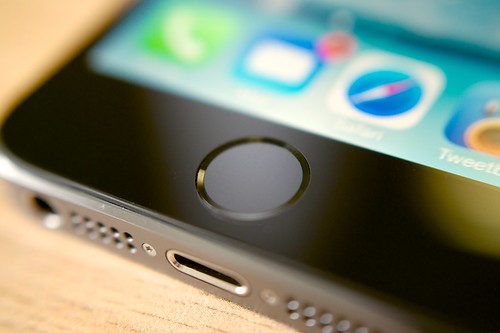
Imagined interfaces can make a difference to our existing ones in surprising ways. Photo by Sherif Salama on Flickr.

You can now sign up to receive each weekday’s Start Up post by email.

A selection of 11 links for you. Gratis. I’m charlesarthur on Twitter. Observations and links welcome.

Tech’s best barometer? Mary Meeker’s Internet Trends report has ballooned from 25 to 213 slides • VentureBeat

Chris O’Brien:

»Way back in 2001, Meeker was working for Morgan Stanley covering Internet companies. And, like many people who rode the first dot-com bubble to become Internet famous, she was just beginning to try to make sense of the wreckage and ask: What’s next?

That year, Meeker appeared at a conference for a magazine called “The Industry Standard.” For you kids who were born after 2001, a “magazine” is a publication printed on glossy paper with lots of shiny pictures. The Industry Standard was a tech magazine that was briefly a big deal and had lots of cool parties but then imploded when the dot-com bubble went poof!

In any case, that first slide deck was a mere 25 slides and was entitled: “The State of Capital Markets And An Update On Technology Trends.”

Over the years, Meeker’s Internet Trends reports have become a thing.

«

Great graphic:

The associated problem being that Meeker is just prolix now. (Also: what was so special about 2006?) I met her once, back in the late 1990s: she insisted that the internet would mean that news organisations would splinter, and you’d be left with individual journalists who people picked and chose from. Has happened, but also hasn’t.
link to this extract


This is what Saudi women think of their country’s massive investment in Uber • BuzzFeed News

Hayes Brown:

»A massive $3.5bn investment in Uber from the Kingdom of Saudi Arabia shocked the tech world on Wednesday, but has left women inside the country skeptical about any huge boon for them.

Hassah Al-Qabisy, 44, works as a security guard at a hospital in Riyadh and believes that “Uber is a business like any other business.” But will it overturn the country’s unofficial ban on women driving? Unlikely.

“Most of the clients will be ladies,” she continued, a feeling that Uber’s own stats bear out: 80% of its customers in Saudi Arabia are women, the company claims. “We as women can’t drive. If you know that we have been fighting for years to drive our own cars — and the state doesn’t allow that — what makes you think that Uber will change anything?”

«

This is what I think of headlines that don’t tell you anything but indicate they will have something you want to read: I can’t wait to build a parsing robot to kill them.
link to this extract


A conversation about fantasy user interfaces • Subtraction.com

Khoi Vinh:

»As a user interface engineer at Google, Kirill Grouchnikov brings real world UIs to life, but he devotes a considerable portion of his free time exploring the world of fantasy user interfaces—the visual design work that drives screens, projections, holograms (and much more exotic and fanciful technologies) in popular films and television shows. At his site Pushing Pixels, Grouchnikov has logged an impressive number of interviews with the designers who have created fictitious interfaces for “The Hunger Games,” “The Martian,” “Avengers: Age of Ultron,” “Kingsmen: The Secret Service” and many more. Each conversation is an in-depth look at the unique challenges of designing in support of fantastical narratives.

«

Now he turns the tables by interviewing Grouchnikov. Here’s the video of the sorts of things he looks at.


link to this extract


MPs’ private emails are routinely accessed by GCHQ • Computer Weekly

Duncan Campbell and Bill Goodwin:

»The intelligence agency in Cheltenham has been able to harvest traffic details of all parliamentary emails, including details of the sender, recipient and subject matter, for at least three years. As a result, details of private email correspondence between MPs and constituents are being collected by GCHQ as a matter of routine.

GCHQ documents classified above top secret, released by NSA whistleblower Edward Snowden, also reveal that the spy agency has the capability to scan the content of parliamentary emails for “keywords” through an established cyber defence network that is connected to commercial software used to filter spam emails from MPs’ inboxes.

The disclosures, which come as the House of Commons prepares for the Third Reading of the government’s controversial Investigatory Powers Bill on Monday 6 June, raise new questions over the sweeping powers to be granted in the bill to police and the security services.

The controversial decision by Parliament to replace its internal email and desktop office software with Microsoft’s Office 365 service in 2014, means that parliamentary data and documents constantly pass in and out of the UK to Microsoft’s datacentres in Dublin and the Netherlands, across the backbone of the internet.

«

How ya like them apples?
link to this extract


Microsoft wants Windows Holographic to power all VR devices, not just HoloLens • PCWorld

Mark Hachman:

»Think of virtual reality devices as PCs and you’ll better understand what Microsoft wants to do with Windows Holographic: establish it as the de facto operating system for augmented reality and virtual reality devices.

At Computex on Tuesday night, Microsoft executives said the company had opened up Windows Holographic to all devices, and had begun working with HTC’s Vive team to port the Windows Holographic Windows 10 interface to it. According to Terry Myerson, executive vice president of the Windows and Device Group at Microsoft, “Windows is the only mixed reality platform.”

Myerson showed off a video (below) where a HoloLens user was able to “see” the avatar of an Oculus Rift user, and vice versa. The two, plus an additional HoloLens user, were all able to collaborate on a shared project, passing holographic assets back and forth. Two employees did the same on stage, digitally painting a virtual motorcycle that was seen by both a HoloLens as well as an HTC Vive.

“Many of today’s devices and experiences do not work with each other, provide different user interfaces, interaction models, input methods, peripherals, and content,” Myerson said. Microsoft intends to solve that problem with Windows 10 and Windows Holographic.

Microsoft’s announcement shouldn’t be too surprising, given that the Rift and the Vive are tethered to a Windows 10 PC anyway. Microsoft boasts that more than 300m devices today run Windows 10, but an additional 80m VR devices could be sold by 2020, all of which Microsoft covets as potential Windows 10 devices.

«

Who’s missing? Oculus – owned by Facebook, in which Microsoft owns a chunk of stock. So that could still happen.
link to this extract


The playlist that’s helping Spotify win the streaming music battle • Vocativ

Cassie Murdoch:

»Every Monday, Spotify delivers a new Discover Weekly playlist to all its listeners. The weekly arrival of a fresh 30 songs has become a widely-anticipated event for many of Spotify’s 75 million active users and serves as a sign that Spotify has nailed a very tough assignment. Personalized engagement has long posed a challenge for all the big streaming services, but new data released this week signals that Spotify may have already won the battle against some very fierce competition.

Since the launch of Discover Weekly in July of last year, it has streamed nearly five billion tracks, and some 40 million subscribers have used the feature. For comparison, Apple Music—Spotify’s main competitor—only has 13 million subscribers total. Tidal has just three million.

«

Dear Stephanie: you don’t understand the difference between these offerings at all. You’re comparing paid subscribers (Apple, Tidal) with the mix of paid and unpaid subscribers who use Spotify (30m paid subscribers, 90m unpaid). Discover Weekly is good, clearly, and keeps customers there. But “already won the battle”? This battle is going to go on and on, and (in case you hadn’t noticed) retaining users hasn’t made Spotify profitable. Possibly it can’t.
link to this extract


Windows 10 nagware: You can’t click X. Make a date OR ELSE • The Register

Gavin Clarke:

»Recently, Microsoft’s policy had been to throw up a dialogue box asking you whether you wanted to install Windows 10.

If you clicked the red “X” to close the box – the tried-and-tested way to make dialogue boxes vanish without agreeing to do anything – Microsoft began taking that as permission for the upgrade to go ahead.

Now Microsoft is changing gears.

It has eliminated the option to re-schedule a chosen upgrade time once you’ve confirmed it while also removing the red “X” close option from the screen. One Reg reader grabbed the below screenshot from a relative’s PC on Windows 7.

«

Clearly thinks that nobody will bother to pay for the upgrade when it comes up. Seems too that Samsung PC users (not a giant group, but a few million) have problems with Windows 10 too.
link to this extract


2013: Who owns all these empty shops? • BBC News

Following the collapse of chain store BHS, this is relevant about what happens when shops fall vacant:

»Jamie Stirling-Aird works for Black Stanniland, which provides services to individuals who own shops.

“We recently marketed a shop in Bradford that had been empty for three years for a client who owns 20 or 30 shops,” he says. Its previous tenant, a jeweller, had been paying £93,000 a year rent. It has now been let to a pawnbroker for £65,000.

“In a place like Bradford, there will be 10 or 15 suitable vacant properties for any retailer to choose from,” Mr Stirling-Aird says. “I’m sure there are a lot of landlords struggling at the moment. There is reasonable demand for shops in decent locations, but there are shops in really bad locations for which there is never going to be demand.”

It is owners of these shops with so-called structural vacancy who are having to consider extreme measures.
It is easy enough to sell a large shop in a good location with a tenant on a long lease, but vacant shops have been fetching low prices at auction. “I suspect we’ll end up selling it to a developer who might be able to convert it into flats,” says Stirling-Aird.

“Demolition or alternative use is the only option for the vast majority of these ‘surplus to requirement’ shops,” says Matthew Hopkinson from the Local Data Company

«

Going to be a lot of these over time.
link to this extract


Bloomberg just hired 22-year-old Apple scoop machine Mark Gurman • Recode

Noah Kulwin:

»Over the last few years, Mark Gurman has made a name for himself as the go-to guy for Apple product scoops. And now he’s taking his talents to Bloomberg.

Gurman has broken stories on the iPad, Siri and almost every other device in the Apple catalogue. Tech Insider reported earlier today that Gurman was leaving his perch at 9to5Mac. According to a memo sent to Bloomberg staff from editor Brad Stone, he will be joining Bloomberg to cover consumer products, including those made by Apple rivals like Google and Amazon.

Gurman graduated from the University of Michigan last month, and he will be based in San Francisco.

«

Gurman richly deserves this, but experienced media types *cough* await with interest how he fares inside a big smoothly oiled media machine with a lot of hypercompetitive journalists who have been there a long time, rather than on a niche (and closely attended) news blog.
link to this extract


Smartwatches: I hate to say ‘I told you so’. But I told you so • The Register

Andrew Orlowski thinks the smart watch (whether from Apple or an Android OEM or Samsung) is a dead end:

»Nothing in Android Wear 2.0 hints at a new use case, and the UX is complicated further with a greater reliance on physical controls and a quite wacky swipe keyboard.

There’s no getting away from it, these expensive watches are clunkers. And I’ll make a new prediction: they always will be. The whole kitchen-sink platform approach to wearables looks mistaken. The strategy presumed that if you threw enough electronics into the watch it would eventually find a use case, and over time that would reach a mass market price point. But not all electronics fit that neat narrative.

Think about the small but useful bits of electronics, like a TV remote or wireless car keys, that are fantastically useful at one thing, but don’t merit a standalone market, because they are always bundled with something else. (Try buying a TV or a car without one of these). Only fitness wearables, with limited functionality and the ability to do one thing really well, have shown much promise in the wearable category, and I don’t see joggers with a £99 necessarily making the leap to a clunkier multipurpose £299 gadget because it’s the same brand.

Perhaps a wearable will only ever be something that’s bundled with a smartphone in the future? I wouldn’t be surprised if this year’s smartwatches will be the last we see for a very long time.

«

Android Wear is already a zombie, I’d say: sales have flatlined. Personally I like the Apple Watch, and find it useful all the time. The key to wider adoption might be price – or it might be battery life.
link to this extract


India’s Micromax plans to sell smartphones in China, go public • WSJ

Sean McLain:

»The company plans to go public to generate cash to fund the acquisition of companies that will help Micromax build a network of services to help its phones stand out in the crowd of competitors. “The company can’t do that without more cash coming in,” Mr. Jain said. Micromax hasn’t decided whether to list in India or the U.S., he added.

The announcement is a sign that India’s smartphone market won’t save a struggling global smartphone industry. Shipments of handsets to India have declined over the past six months, according to IDC data. That is a sign that unsold phones are piling up in Indian warehouses, said IDC in a report. Most of the unsold merchandise are priced below $100 and aimed at first-time smartphone buyers, who account for much of Micromax’s sales.

However, China might not be the answer for the smartphone maker, analysts say. “I’m not sure why they’re doing this,” said Kiranjeet Kaur, an analyst at IDC. “The Chinese market is not growing and it’s really competitive. I don’t know how they will survive there.”

«

Translation: Micromax is running out of runway and it’s hoping a cash infusion from the public market will get it out of the snakepit of less well-funded rivals.
link to this extract


Errata, corrigenda and ai no corrida:

Start up: 3D scan copyrights, 2016 internet trends report, smartphone growth stalls, Jawbone lives!, and more


Race or income: which matters more when you’re accused in the state of Virginia? Photo by karen_neoh on Flickr.

You can also sign up to receive each day’s Start Up post by email.

A selection of 12 links for you. May contain nuts. I’m charlesarthur on Twitter. Observations and links welcome.

New Whitepaper on 3D Scanning and (the Lack of) Copyright • Shapeways Blog

Michael Weinberg:

»We are excited to announce a new whitepaper, 3D Scanning: A World Without Copyright*.  As the name suggests, the paper examines how 3D scanning intersects with copyright law.  We are big fans of 3D scanning here at Shapeways, and so we thought it was important to start a discussion around how copyright might impact all of the scans that are coming into the world.

It may come as a surprise, but in many cases 3D scans will not be protected by copyright.  That does not mean that scans are not important, but it does mean that people making and distributing scans should understand what rights they do – and do not – have in those scans.

Why aren’t the scans protected by copyright?  One of the key requirements for copyright in the United States is originality. Even if it takes a large amount of skill to create a scan, if making the scan does not involve originality it is simply not eligible for copyright protection.

The vast majority of scans fall squarely in that category.  By definition, most 3D scans attempt to create a perfect digital replica of the model being scanned.  Injecting “original” content that deviates from the object being scanned into that digital file would undermine the purpose of the scan.

«

Wonder where this puts the Nefertiti 3D Scan which was nicked from a museum’s server.
link to this extract


Uncovering big bias with big data • Lawyerist

David Colarusso:

»A while back, two of my colleagues were arguing about which is a bigger problem in the criminal justice system: bias against defendants of color or bias against poor defendants. My first inclination was to suggest we could settle the dispute if we had the right dataset. (I’m an attorney turned data scientist, so yes, that really was my first thought.1) That being said, the right dataset magically appeared in a tweet from Ben Schoenfeld.

What follows is the story of how I used those cases to discover what best predicts defendant outcomes: race or income. This post is not a summary of my findings, though you will find them in this article. It is a look behind the curtain of data science, a how to cast as case study. Yes, there will be a few equations. But you can safely skim over them without missing much. Just pay particular attention to the graphs.

«

Graphs like this:

It’s a terrific walk through how to deal with a big dataset and draw conclusions from them. No, I’m not going to skip to the end; read it.
link to this extract


2016 Internet Trends Report • Kleiner Perkins Caufield Byers

»The 2016 edition of Mary Meeker’s annual Internet Trends report covers today’s Internet growth and an in-depth look at the following:

Global Internet users have surpassed 3B; India has supplanted the US as the world’s second-largest Internet market.
• Internet user growth remains consistent (led by acceleration in India), while smartphone user and shipment growth have slowed.
• In the face of a slowing global economy, key macro growth drivers from the past 2 decades are less certain.
• Internet advertising (particularly via mobile) continues to grow, but so does ad-blocking, pushing the envelope on development of more innovative ad formats.
• New online-first brands have rapidly grown in popularity for the millennial generation with their focus on omni-channel and personalized distribution strategies.
• In communication, video and images shared are growing as a means of storytelling; creators, consumers, and advertisers are taking part.
• Messaging has evolved from simple, expressive conversation to business-focused use cases, with Asian platforms often leading the way.
• More efficient and often more convenient than typing, voice-based interfaces are ramping quickly and creating a new paradigm for human-computer interaction.

«

And much more. You might take issue with some of the detail (it overstates the iPhone’s ASP, but the general direction is right) but it’s a reference, as usual. Question is, is it predicting the future or just setting up how the past looked? Anyway, here’s the whole 213 pages, if you have a spare five minutes.

link to this extract


The End of Scale • rafat.org

Rafat Ali was the founder of PaidContent (which he sold to the Guardian Media Group; it later sold it at a loss) and more recently of Skift, a travel intelligence company:

»2016 is a seminal moment in media business history. The year where digital scale finally got exposed as a false proxy to actually building a real business.

The promise of trillion device universe, the promise of infinite distribution.

The promise of infinite user time. What were we thinking?

The tyranny of scale.

Time, attention, value, real tangible utility value to the daily lives of people. We all got fooled into thinking those could be replaced by tonnage of shares/views/interactions, forgetting there were humans on the other end, who at some point would get tired of the distraction and deception. We all got fooled by the startup ecosystem, by the investors drunk of dreams of unicorns (in media, of all places!), by the media who were covering all of this, desperate to look relevant and cool.

If you are the type that sees analogies everywhere – I am one of them – then you can see a lot of parallels among this the rise and crash of media scale chasing era with the bundling and rebundling of crappy mortgages and passing them onwards to be rebundled and sold to the gullible, only to come crashing down only seven years ago. Chasing scale in finance, at any cost, same as chasing scale in media businesses, at any cost…

…Who were we trying to fool?

Therein comes the biggest lie in all this, now exposed: There is no secret sauce in media.

There is no outside savior coming to rescue.

It is all you. The value you build with your editorial. The value you can create by being focused on doing a few things very very well.

«

Quite scary, in its way.
link to this extract


AMD prices 3D tech to spur virtual reality market • WSJ

Don Clark on AMD’s release of its new Polaris-based graphics cards:

»the need for a PC with an add-in card that includes a beefy 3-D graphics chip is another barrier that stands in the way of widespread adoption of VR. An online survey conducted in April by the Advanced Imaging Society found that 68% of respondents said VR equipment was too expensive.

“Less than 1% of PC users have systems that are capable of doing VR,” said Raja Koduri, senior vice president and chief architect of AMD’s Radeon technologies group. “The entry point is very, very high.”

AMD said its new Radeon RX cards, certified for use in VR by HTC and Oculus VR, deliver performance equivalent to that of $500 graphics cards used for VR.

Patrick Moorhead, an analyst with Moor Insights & Strategy briefed on AMD’s strategy, estimated that the current minimum price on cards comparable to AMD’s new models is $399. He said the $199 pricing comes as a surprise.

“It’s great for getting more people into VR,” said Kelt Reeves, president of Falcon Northwest Computer Systems Inc., a boutique maker of gaming PCs that serves the market.

«

Except that would require people to upgrade their PC to one capable of doing it. More likely they’ll do it via their smartphone, surely.
link to this extract


Worldwide smartphone growth forecast to slow to 3.1% in 2016 as focus shifts to device lifecycles • IDC

»According to a forecast update from the International Data Corporation (IDC) Worldwide Quarterly Mobile Phone Tracker, smartphone shipments are expected to grow 3.1% in 2016, which is a substantial slowdown from the 10.5% growth in 2015 and 27.8% in 2014. Shipments are expected to hit 1.48 billion in 2016 and grow to 1.84 billion in 2020. The new forecast is 2.6 percentage points lower than IDC’s previous forecast for 2016 on the basis of the continued slowdown in mature markets and China.

IDC expects large markets like the United States, Western Europe, and China to see low single digit growth rates in 2016 while Japan and Canada are expected to contract by 6.4% and 6.9%, respectively. In all these markets, smartphone buying behavior is changing in many ways. In operator-driven markets the transition away from two year subsidized contracts toward monthly installment plans are slowly taking place. Meanwhile, many retail heavy markets are seeing a surge in the eTailer channel, better known as online marketplaces.

“Consumers everywhere are getting savvy about how and where they buy their smartphones, and this is opening up new doors for OEMs and causing some traditional channels to lose some control of the hardware flow,” said Ryan Reith, program vice president with IDC’s Worldwide Quarterly Mobile Phone Tracker. “Smartphones sold into eTailer channels grew 65% in 2015 and are expected to account for roughly 12% of smartphone shipments in 2016, up from just 4% in 2013. Consumers are having more say over which brands they want and at the same time able to bargain shop.”

«

Phablets will do well, Windows Phone won’t, iPhones to see slight drop from 232m in 2015 to 227m in 2016, BlackBerry to.. fade to black, probably.
link to this extract


Apple Watch 2 wishlist • Hypergeusia

Ryan Considine’s list (faster, better app launcher, ambient display and more) is right on the spot. And I have to agree with him on this wish:

»

TouchID
That passcode screen is miserable.

«

I have to do the passcode first thing every morning. It’s not a great experience.
link to this extract


We’re still committed • The Jawbone Blog

Hosain Rahman is CEO of Jawbone:

»As some of you may have recently seen, there have been a few incorrect media reports that Jawbone is exiting the wearables business or going out of business altogether. These reports are unequivocally false. This speculation appears to emanate from wrongful insinuations made in a blog post in which the particular digital publication has since made a “Correction.” Jawbone was not contacted on the specific insinuations prior to the post and other media picked them up before the digital publication posted a correction, further spreading this false information.

To be clear, Jawbone remains wholly committed to innovating in and building great wearables products. We have never been more excited about our pipeline of technology and products and look forward to sharing them with the world when ready.

We have always managed our inventory positions according to internal business processes and strategic product lifecycle objectives. This situation is no different and we will continue to support all of our products. UP2, UP3 and UP4 are still hugely popular and continue to sell well. We’re also continually inspired by stories of how our UP® community is using our products to live better.

«

The “particular digital publication” appears to be Tech Insider (aka Business Insider), where the story from Friday May 27 has been seamlessly updated to include this denial from June 1.

I’m not quite getting an unequivocal feeling that Jawbone is feeling strong. But it also shows how the world of zero-deadline digital can lead to messups; at least with a print deadline, you know when you need to answer. (That didn’t stop screwups, but it gave you a time by which to prevent them.)
link to this extract


From $4.5bn to nothing: Forbes revises estimated net worth of Theranos founder Elizabeth Holmes • Forbes

Matthew Herper:

»Theranos has been hit with allegations that its tests are inaccurate and is being investigated by an alphabet soup of federal agencies. That, plus new information indicating Theranos’ annual revenues are less than $100m, has led FORBES to come up with a new, lower estimate of Theranos’ value.

FORBES spoke to a dozen venture capitalists, analysts and industry experts and concluded that a more realistic value for Theranos is $800m, rather than $9bn. That gives the company credit for its intellectual property and the $724m that it has raised, according to VC Experts, a venture capital research firm. It also represents a generous multiple of the company’s sales, which FORBES learned about from a person familiar with Theranos’ finances.

At such a low valuation, Holmes’ [50%] stake is essentially worth nothing. Theranos investors own preferred shares, which means they get paid back before Holmes, who owns common stock.

«

If that’s the case about Holmes’s stock, she was poorly advised. Forbes also thinks she won’t raise money at a higher valuation again, has too many unknowns, hasn’t delivered on promises (or threats), and might not have a target market.

Apart from that, Ms Holmes, how was the play?
link to this extract


Twitter is betting everything on Jack Dorsey. Will it work? • Vanity Fair

Nick Bilton, who has been a splendid biographer of the Borgia-style goings-on at the top of Twitter, updates his book with the latest:

»I have been told by people close to the company that, in the face of mounting pressure from Wall Street, Twitter occasionally resorted to what most start-ups do when they need to goose the numbers: they kind of faked it. This happens at virtually all social networks; the company sends an e-mail to inactive users who haven’t been on the service in a few months, informing them there is a problem with their username or account, which leads people to log in to fix the situation. Magically, those people become monthly active users even if they were not.

And while Dorsey wasn’t employing that trick, his magic was not yet apparent to investors on Wall Street. Months into his turnaround campaign, user growth was relatively flat and Twitter’s stock was now down nearly 60% from where it had stood when Costolo was convening his staff in [the meeting room called] Waterthrush. Twitter, which once had a market valuation of nearly $40bn, was now worth about half that…

…There are few things about Twitter’s future that anyone can say for certain, but I’ll offer one prediction with absolute assuredness: there will not be a fourth Jack Dorsey era. Recently, when I met with executives at the company—including the executive chairman of the board, the chief financial officer, and the director of communications—there was one query that seemed to catch everyone off guard. What was Plan B, I asked, if Dorsey couldn’t turn the company around? “There is no Plan B,” I was told. “This is it.”

The solution to Twitter’s problems, they all reiterated, along with Dorsey, is that word “live.” “We now know what inhibits usage, and what doesn’t,” Dorsey explained to me. He said he has a slew of new features—including hosting live video from the N.F.L., where people can talk about the game as they watch it—that will grow the audience and focus on that single, live strategy.

Twitter is betting a lot on this relatively simple notion.

«

link to this extract


2016 Mobile Adblocking Report • PageFair

»Quick Facts:

• At least 419 million people (22% of the world’s 1.9bn smartphone users) are blocking ads on the mobile web.
• Both mobile web and in-app ads can now be blocked.
• As of March 2016 an estimated 408 million people are actively using mobile adblocking browsers (i.e., a mobile browser that blocks ads by default).
• As of March 2016 there are 159 million users of mobile adblocking browsers in China, 122 million in India, and 38 million in Indonesia.
• As of March 2016 in Europe and North America there were 14 million monthly active users of mobile adblocking browsers.
• A further 4.9 million content blocking and in-app adblocking apps were downloaded from the app stores in Europe and North America since September 2014.
• Adblocking is now the most hotly discussed topic in the digital media industry.

«

Those figures for China, India and Indonesia add up to 319 million – leaving about 111 million outside those three countries. Adblocking is most prevalent (ie most urgent to users) where data is expensive and phones are slow(er).

Here’s the presentation:

There’s a PDF report too.

link to this extract


Delaware court finds Dell’s $24bn buyout underpaid investors • FT.com

James Fontanella-Khan and Leslie Hook:

»“The sale process functioned imperfectly as a price discovery tool, both during the pre-signing and post-signing phases,” said Travis Laster, vice-chancellor of Delaware’s special corporate court.

The ruling is a black eye for Mr Dell and Silver Lake, which were attacked at the time for underpaying and then changing the voting rules to prevent the offer being blocked.

Magnetar Capital, a hedge fund, could net about $15m as it has legal rights to about 3.8m shares.

Dell’s $24bn sale to its founder came under scrutiny as many investors believed Mr Dell was conflicted: playing seller and buyer at the same time. A spokesperson for Dell declined to comment on Tuesday’s ruling.

In the wake of the financial crisis, Dell’s PC sales had slipped, causing share prices to fall — and presenting Mr Dell with an opportunity.

The efforts by Mr Dell and Silver Lake to take Dell private were contested by shareholders from the beginning. Shareholders who opposed the deal included billionaire activist Carl Icahn as well as T Rowe Price, which believed the market was underpricing Dell.

«

In total, it’s about $20m in extra payments. Not huge, but it’s the principle: how can it be right for Dell to be both seller and buyer? Here’s the ruling.
link to this extract


Errata, corrigenda and ai no corrida: none notified.

Start up: more iPhone rumours, tablet use falls, six useful algorithms, and more


TV in the US is losing its audience, and especially its paying audience. Photo by quinn.anya on Flickr.

You could always sign up to receive each day’s Start Up post by email.

A selection of 12 links for you. Yes they are. I’m charlesarthur on Twitter. Observations and links welcome.

Introducing comment moderation for Periscope • Medium

»Dear Periscope Community,

We’ve seen incredible communities and real-life friendships form on Periscope because it’s live, unfiltered and open. We’ve also seen broadcasters get discovered and quickly grow a large, public following. But with this openness comes an increased risk for spam and abuse, and this is something that we take seriously.

Above all, we want our community to be safe on Periscope. Comments are a vital part of the experience and we’ve been working hard on a system that still feels true to the live and unfiltered nature of our platform. Specifically, we want to develop a system that is: transparent, community-led, and live.

«

It was inevitable. Let’s see how this goes.
link to this extract


Apple moving to 3-year ‘major’ iPhone cycle, adding complex vibrations to 2017 model – report • Apple Insider

Roger Fingas:

»Apple will likely be waiting until next year to debut its next major iPhone refresh, treating this year’s “iPhone 7” as yet another interim upgrade, a Japanese report said on Tuesday.

The 2017 iPhone is expected to make the switch to OLED, among other important design changes, Nikkei said. While that would support recent rumors, the business publication also made an original claim that the device will have a new vibration motor, capable of producing more complex patterns than earlier iPhones.

That could indicate that Apple will use an evolved version of its “Taptic Engine,” found in devices like the Apple Watch and the iPhone 6s. The technology lets devices produce different, subtle responses to user actions and notifications.

The “iPhone 7” is likely to stay mostly the same, Nikkei said, the most noticeable difference being the removal of the 3.5-millimeter headphone jack. Camera, water resistance, and battery technology should be improved, the paper continued, also mentioning that “a high-end version of the model will give users better-quality photo capabilities via correction functions.”

Rumors have suggested that the standard iPhone 7 might gain optical image stabilization, while a “7 Plus” will have a dual-lens camera.

«

link to this extract


Tablet usage declines • Global Web Index

Katie Young:

»Certainly, tablets have enjoyed healthy growth in recent years; since 2011, the numbers getting online via these devices have more than trebled – jumping from just 10% at the start of the decade to more than 1 in 3 in 2016.

However, from market to market, region to region, a closer look at these figures reveals that the boom days for tablets appear to be over. The speed of the increases slowed dramatically during 2015 and, in the first quarters of 2016, tablets have now started to decline. What’s more, 16-24s now lag behind virtually all other age groups in terms of usage.

Clearly, these devices are struggling to convince many that they are must-have rather than just nice-to-have devices. So, unless tablets can provide a level of functionality sufficiently higher than mobiles to warrant the expense, we can expect this trend to continue.

«

link to this extract


Nearly 1 in 4 people abandon mobile apps after only one use • TechCrunch

Sarah Perez:

»Based on data from analytics firm Localytics, and its user base of 37,000 applications, user retention has seen a slight increase year-over-year from 34% in 2015 to 38% in 2016.

However, just because this figure has recovered a bit, that doesn’t mean the numbers are good. Instead, what this indicates is that 62 percent of users will use an app less than 11 times.

Says the report, “this is not a sustainable business model.”

These days, 23% launch an app only once – an improvement over last year, but only slightly. For comparison’s sake, only 20% of users were abandoning apps in 2014.

On iOS, user retention saw some slight improvements. The percentage of those only opening apps once fell to 24% from 26% last year, and those who return to apps 11 times or more grew to 36% from 32% in 2015.

«

That seems depressing. Then again, thinking of my own use, I tend to install apps, and not use them for ages; then I’ll suddenly discover a use, and go with it. It’s not quite “abandonment”. There aren’t that many apps that I have to use every day, or even every month. But there are lots that I might use once a year. (And there’s no particular distinction between mobile and desktop in that regard.)
link to this extract


The TV industry will unravel faster than you think — Lightspeed Venture Partners • Medium

Alex Taussig says it’s all going to go bad for the big networks:

»The most obvious beneficiaries of the decline of old TV media will be the dominant social networks who nail video: Facebook, Snapchat,* and perhaps Twitter, if the whole Periscope thing works out. (A new social network built natively with video could also be a contender. Email me if that’s what you’re working on!) They each have their own power law dynamics and, by most measures, are significantly larger and more global than the TV networks. Their data allows them to target videos more precisely; so, despite larger quantities of social video in the world, the odds of a specific consumer engaging with a given video are (in theory) much higher. If properly executed, they could expand the $73bn TV advertising market today by transforming it from an audience-based to a performance-based medium.

The second group of beneficiaries will be the new stream aggregators: Netflix, Amazon, YouTube, Twitch, and the like. These streams will continue to aggregate and package long tail content and form direct relationships with consumers. Again, there will only be a few winners here.

«

Taussig points to two key bits of data: US pay TV penetration rates are falling

and only those aged over 65 now watch more TV than they did five years ago:

Hard to argue with his reasoning.
link to this extract


Dell reveals industry’s first 17in 2-In-1 laptop • Twice

Joseph Palenchar:

»The PC industry’s first 17-inch two-in-one convertible Windows laptop is among six new Inspiron two-in-one laptops unveiled by Dell at Computex in Taiwan, Microsoft announced.

All six of the convertible two-in-ones come with touchscreen display and secure Windows Hello login via optional or standard built-in infrared cameras. A 360-degree hinge delivers four modes: laptop mode, tent mode for presentations, stand mode for playing movies, and tablet mode.

«

OK, that’s too big. Thanks, Dell, for showing us the limit, beyond which you’ve gone.
link to this extract


Six algorithms that can improve your life • WNYC

Manoush Zomorodi:

»There’s been a lot of negative press lately about algorithms (Facebook, Snapchat, the prison system). But this week we’re exploring ways that mathematical and scientific algorithms can actually help improve how we live.

Brian Christian co-wrote the book “Algorithms to Live By” with his friend, Tom Griffiths, a psychology and cognitive science professor at UC Berkeley. Brian is all about the intersection of technology and humanity, and figuring out how to use data to help people optimize their lives.

In their book, Brian and Tom offer really practical applications for scientific principles, which we’ll get to in a minute. But first, here’s the catch: There’s no formula for perfection. Even if you apply these algorithms to your life, things will go wrong. But by trying out these algorithms, you can statistically give it your best shot.

«

Includes: how to find stuff on your desk, stop tagging/filing your emails, arrange appointments faster, and more. Also with audio.
link to this extract


Economist editor: ‘We don’t want to be the grandpa at the disco’ • The Guardian

Mark Sweney interviews Zanny Milton Beddoes, editor of The Economist:

»Despite this success, as at other publishers print sales at the Economist have fallen across the globe, although the circulation still stands at 1.25m copies a week. Digital edition sales have broken through the 300,000 mark, up by 50% or more year-on-year in most markets, including the UK but not North and South America. Minton Beddoes says the print decline is in part to do with a “drive to quality” – getting rid of bulk copies and converting readers to paid subscribers.

“The overall circulation is slightly down but the profitability of our circulation is rising and print is still holding up remarkably well,” she says. “I’m completely agnostic [about whether] people read print or digital, I really want them to have a premium subscription giving them access to both.” The Economist is still willing to embrace the potential of print, as is shown by it launching 1843, a bi-monthly magazine (which replaced Intelligent Life) aimed at the “globally curious” which aims to speak to them “when they have their feet up, on a weekend break, on holiday”.

Minton Beddoes says the Economist is not feeling the same extreme pressure as advertising-reliant newspaper publishers. “I’m very simple about this. You make money out of things people pay for,” she says. “Subscriptions is the bulk of our business, ads are nice to have on top of that. We are in the midst of a massively changing disrupted industry and that is incredibly exciting but it is also challenging. There are going to be winners in that and losers. It is foolish for anyone to be complacent. I am confident and hopeful and paranoid at the same time.”

«

link to this extract


Are Trump hotels taking a ‘yuge’ hit? • Tailwind by Hipmunk

Kelly Soderlund on data from hotel-booking system Hipmunk:

»The Trump brand is associated with a variety of hotels, apartments, and products. On one hand, a growing number of political supporters could boost sales of Trump products; on the other, a growing number political detractors could lead people to avoid his brand. So which of these two forces is stronger?

We set out to answer this question by comparing the number of bookings at Trump Hotels’ most-booked locations this year on Hipmunk to bookings in the same locations the year prior (before he attracted national political attention).

The results? The share of bookings at Trump Hotels on Hipmunk as a percent of total hotel bookings are down, decreasing 59% compared to the same period last year.

While overall Hipmunk hotel bookings have been on the rise year-over-year, that has not been the case with bookings of Trump Hotels.

«

You could think of all sorts of possible reasons, but just not wanting to put any money into Trump’s pockets, and instead favouring Any Other Hotel Chain, seems like the immediately most plausible.
link to this extract


Forced Windows 10 upgrades push users to dangerously disable Windows Update • PC World

Brad Chacos:

»Ironically, improved security is one of Windows 10’s selling points. But by pushing it on users in such a heavy-handed way, Microsoft is encouraging users who have very valid reasons to stick with Windows 7/8 to perform actions that leave their machines open to attack. That’s bad. Very bad.

For the record: Don’t disable Windows Updates unless you’re an advanced user who wants to parse and manually install Windows patches. Instead, leave them active but also install GWX Control Panel or Never10, free tools that block the Get Windows 10 pop-ups and behavior. Microsoft’s been known to push out new patches that work around those tools in the past, however—again, violating Windows Update’s sanctity to push its new OS. Be sure to read the fine print if a GWX pop-up does appear in order to avoid being tricked into Windows 10.

«

Coming to something when people complain of feeling “tricked” into getting an operating system for free that they would have been queueing around the block to pay for a few years ago. Well, 20 years ago.
link to this extract


How big an issue is the nausea problem for virtual reality products? • Quora

Steve Baker is ex-Rediffusion Simulation, Hughes Aircraft, L3 Simulation:

»I’ve been working with helmet mounted displays in military flight simulation for several decades – I am an expert in the field.

IMHO – these devices should be banned – but that may not be necessary because after the first wave of early adopters I think it’ll go the way of 3D televisions. But that’s just my opinion. Let me explain why.

Everyone thinks these things are new and revolutionary…but they really aren’t. All that’s happened is that they dropped in price from $80,000 to $500…and many corners have been cut along the way.

There are several claims that the nausea problem has either been fixed, or will soon be fixed, or that application design can be used to work-around the problem.

The claims that it’s been fixed are based on the theory that the nausea is caused by latency/lag in the system, or by low resolution displays or by inaccurate head motion tracking…all of which can (and are) being fixed by obvious improvements to the system. Sadly, the $80,000 googles we made for the US military had less latency, higher resolution displays, and more accurate head tracking than any of the current round of civilian VR goggles…and they definitely made people sick – so this seems unlikely.

«

He has plenty more to say too about focal lengths and depth perception, and aftereffects. Worth considering. Of course, you could always assume that your users are going to be confused to begin with…
link to this extract


VR Party Game is a ridiculously confusing virtual reality experience for Cardboard • Android Police

Rita El Khoury:

»What if virtual reality was just reality, with a small asterisk? What if you could strap on your VR headset, regardless of the brand or technology behind them, and see the same thing that’s in front of you… but mirrored? Or upside down? Or delayed by 2 seconds? Ha, what a novel idea!

VR Party Game does just that. It’s a Cardboard app/game that transmits your smartphone’s rear camera view onto the screen, but applies one of three special effects to confuse you. It can delay the view by 2 seconds, mirror it, or flip it upside down. The idea is to use it as a party game with friends, asking each other to complete a few tasks while wearing the Cardboard headset…

…VR Party Game is just mindless fun and as such, you may find the price a little steep. The app costs $0.99 but that only gives you the delay and mirror modes. Upside down is another $0.99 IAP.

«

OH NO. A WHOLE $1.98??
link to this extract


Errata, corrigenda and ai no corrida: none notified.

Start up: products without money, Chromebooks that’ll miss Android, who’s killing US biometric law?, and more


Just another day in American media, according to Michael Crichton. Photo by idccollage on Flickr.

You can now sign up to receive each day’s Start Up post by email. You’ll need to click a confirmation link, so no spam.

A selection of 12 links for you. See? It’s already Tuesday. I’m charlesarthur on Twitter. Observations and links welcome.

The non-monetizable product blind spot • The Information

Sam Lessin on why there is no great calendaring, or digital address book, or news reader app:

»The problem with afterthoughts in the context of big companies is that the best people don’t want to work on them, and whenever there is a tradeoff between the core business and an afterthought, the afterthought loses.

There are plenty of products people want, but they’re not good businesses. It is because they fail as businesses that they can’t be built as products, not the other way around.

So, for something like iCloud, or Apple Music, it’s no surprise that they struggle to produce good consumer products. And it is no surprise that Apple’s attempts in some categories without obvious business models—like productivity apps—have failed too.

Could a great music service or better cloud services help Apple sell more phones? Of course. However, dollar for dollar and moment for moment, these services are not the easiest or next best way for Apple to sell more of the hardware that makes them who they are.

Google is, of course, the other giant to reference in this discussion. On one hand, with its massive search-advertising cash cow, historical “20% time” policy and extreme freedom for engineers, Google has supported more products with no immediate business benefit than almost any big company I can think of.

Even Google, however, ultimately shut down Google Reader rather than invest the money and time to make it great. And while Google’s mail and calendar products are the best of the options available, the company is clearly under-investing in them relative to what they could.

Why? Because Google gets paid for high-intent clicks from search. Products that don’t drive the core economics of the business are easy to start, but hard to make succeed in the culture and framework of business decision making.

«

link to this extract


New wave of malvertising leverages latest Flash exploit • Malwarebytes Labs

Jérome Segura:

»The setup for these malvertising attacks relies on a combination of techniques that start with the fraudulent advertiser choosing a victim, typically a legitimate website in the retail, or legal business. The goal is to use someone else’s identity to appear legitimate when approaching ad networks.

The ad banners are designed professionally by the miscreants and then hosted along with the ad code on shadowed domains. The owners of said domains are completely unaware that a subdomain has been created on their hosting platform, let alone that it is serving malicious ads.

Here is the interesting part though. The ads are typically clean of any malware for anyone trying to manually verify them. The JavaScript code looks benign no matter how many times you refresh the page or rotate IP address. This is because the rogue version of the JavaScript is served conditionally, with the proper referer, user-agent, sometimes even your screen resolution, and several other parameters.

Once a genuine user is identified (a victim that happened to browse a particular publisher serving that ad), another series of checks – which we call fingerprinting – is performed to ensure that only those that are likely to get infected are indeed redirected to the Angler exploit kit.

«

Flash! Again! (Via Rob Leathern.)
link to this extract


Why not all Chromebooks will get Android apps • PCWorld

Chris Hoffman:

»Google is adding Android app support to Chrome OS, but your Chromebook might not get it. Despite Google’s promise of a five-year lifespan for Chromebooks, most Chromebooks released more than two years ago will be left out.

Google published a list of Chromebooks, Chromeboxes, and Chromebases that will get Android apps. This isn’t necessarily a complete list yet, and new devices may be added.

If you want to be one of the first people to get your hands on this feature when it debuts in the developer channel with Chrome version 53 in June 2016, you’ll need an Asus Chromebook Flip, Acer Chromebook R11, or Google Chromebook Pixel (the 2015 model only).

A variety of other Chromebooks—primarily ones less than two years old—will receive Android app support later in 2016. But older Chromebooks—even very capable ones—are left out.

«

Suspect the arrival of Android apps will drive a fair number of new purchases, though.
link to this extract


Hackers stole 65 million passwords from Tumblr, new analysis reveals • Motherboard

Lorenzo Francheschi-Bicchierai:

»On May 12, Tumblr revealed that it had just found out about a 2013 data breach affecting “a set” of users’ email addresses and passwords, but the company refused to reveal how many users were affected.

As it turns out, that number is 65 million, according to an independent analysis of the data.

Troy Hunt, a security researcher who maintains the data breach awareness portal Have I Been Pwned, recently obtained a copy of the stolen data set.

Hunt told Motherboard that the data contained 65,469,298 unique emails and passwords. (Tumblr did not immediately respond to a request to confirm the figure).

«

They were hashed with random bytes and salted with an unspecified algorithm. So not really a risk – but the emails that go with them are being circulated. Then again, what’s the value of an email? The list of 65 million is being sold for $150.
link to this extract


Google’s DeepMind tried to justify why it has access to millions of NHS patient records • Business Insider

Sam Shead with the followup on this story:

»New Scientist questioned why Google DeepMind needs access to so much data on so many people, including those who have never experienced kidney problems, for the app, which is called Streams.

Streams — used by Royal Free clinicians in three separate trials since December 2015 — is designed to detect acute kidney injury (AKI), a condition that kills more than 1,000 people a month. It uses an algorithm developed by the NHS.

A Google DeepMind spokeswoman provided Business Insider with the following statement:

»

It’s difficult to predict who will develop acute kidney injury, which is why the NHS national algorithm is applied across a wide spectrum of patients. For example, fit 25-year-olds can develop AKI as a consequence of an appendicitis as much as an 80-year-old with a hip fracture, and it’s essential to pick all these cases up early.

In this case, the sharing of information is both necessary and proportionate to the purposes: failure to share a historical data set effectively would carry risk of avoidable harm if a patient presented to the Royal Free London and information could not be effectively presented to a clinician. There has been no sharing of identifiable information that is not relevant to direct clinical care in the context of this application. At all times, DeepMind Health acts only as a data processor, and the Royal Free retains control over the data.

«

«

link to this extract


Anti-choice groups use smartphone surveillance to target ‘abortion-minded women’ during clinic visits • Rewire

Sharona Coutts:

»Last year, an enterprising advertising executive based in Boston, Massachusetts, had an idea: Instead of using his sophisticated mobile surveillance techniques to figure out which consumers might be interested in buying shoes, cars, or any of the other products typically advertised online, what if he used the same technology to figure out which women were potentially contemplating abortion, and send them ads on behalf of anti-choice organizations?

The executive—John Flynn, CEO of Copley Advertising—set to work. He put together PowerPoint presentations touting his capabilities, and sent them to groups he thought would be interested in reaching “abortion-minded women,” to use anti-choice parlance.

Before long, he’d been hired by RealOptions, a network of crisis pregnancy centers (CPCs) in Northern California, as well as by the evangelical adoption agency Bethany Christian Services…

…What Flynn realized is that he could use the same technologies to infer that a woman might be seeking an abortion, and to target her for ads from anti-choice groups.

“We can reach every Planned Parenthood in the U.S.,” he wrote in a PowerPoint display sent to potential clients in February. The Powerpoint included a slide titled “Targets for Pro-Life,” in which Flynn said he could also reach abortion clinics, hospitals, doctors’ offices, colleges, and high schools in the United States and Canada, and then “[d]rill down to age and sex.”

“We can gather a tremendous amount of information from the [smartphone] ID,” he wrote. “Some of the break outs include: Gender, age, race, pet owners, Honda owners, online purchases and much more.”

Flynn explained that he would then use that data [using geo-fencing] to send anti-choice ads to women “while they’re at the clinic.”

«

Which is why you’d want a smartphone that doesn’t allow advertisers to track you via its ID or other data.
link to this extract


I am not my internet personality • The Cut

Julieanne Smolinski:

»It is part of the modern condition to pose and posture online, and it can be very fun to make fun of the various ways in which people make asses of themselves. But the unfiltered nature and open playing field of social media make it easy to forget that it’s all a performance. In person, Michael was great! Really and truly. His terrible use of social media was part deliberate schtick and part stone-cold, childlike buffoonery, but it was all very lovable. (You know, like Entourage.) Demi adored Michael the person but eventually, she realized that keeping tabs on him made it harder for her to separate the real guy from the Scarlett Johansson Her guy.

The gap between public and private personae used to be the exclusive concern of entertainers, but now anybody who wants to can live Martin. Plenty of prestige bloggery has been devoted to analyzing the phenomenon of “social-media happiness fraud,” which we’ve somehow elevated to Russian-novel levels of agony: Those people posing in bikinis? Don’t feel too envious of them, we’ve been told, for they are dead inside, too.

The ability to “research” people this way has already been catastrophic for casual dating, as we’ve all been forced to reduce other human beings to a series of forensic clues so as not to be murdered or have a boring two hours at a restaurant. While certainly expedient, the newish convention of deciding whether you like somebody before you have ever been in their physical presence is both depressing and a teensy bit unfair.

«

This gap between someone’s online personality and their offline one is too infrequently observed.
link to this extract


Apple prepping thinner MacBook Pros with OLED strip above keyboard, Touch ID for Q4 • 9to5Mac

Chance Miller:

»According to a new note from reliable Apple analyst Ming-Chi Kuo at KGI Securities and corroborated by our sources, Apple plans to introduce a dramatically overhauled MacBook Pro later this year. Kuo says the device will have a new “thinner and lighter” design with design cues taken from the 12-inch MacBook, as well as Touch ID support and a new OLED display touch bar above the keyboard.

Kuo’s report explains that the MacBook Pro updates are the “brightest spot for Apple’s 2016 rollouts” and will come to both the 13-inch and 15-inch models sometime during the fourth quarter of this year.

The OLED display touch bar will replace the physical function keys along the top of the keyboard, while the design will adopt new metal injection molded hinges as reported earlier this year. Additionally, the refreshed MacBook Pros are said to feature USB-C support and Thunderbolt 3.

In addition to upgrading the 13in and 15in MacBook Pros, Apple will also introduce a new 13in MacBook similar to that of the 12in Retina model that was just upgraded with performance boosts. According to Kuo, Apple plans to make the MacBook Air the entry-level option, while the MacBook will become the mid-tier choice and the MacBook Pro will remain the high-end variant.

«

No Retina display on the MacBook Air? But I suppose Apple is looking to create a gap between the Air, and the “MacBook” and the Pro.
link to this extract


2008: Michael Crichton’s 1993 prediction of mass-media extinction now looks on target • Slate

Jack Shafer in May 2008:

»In 1993, novelist Michael Crichton riled the news business with a Wired magazine essay titled “Mediasaurus,” in which he prophesied the death of the mass media—specifically the New York Times and the commercial networks. “Vanished, without a trace,” he wrote.

The mediasaurs had about a decade to live, he wrote, before technological advances—”artificial intelligence agents roaming the databases, downloading stuff I am interested in, and assembling for me a front page”—swept them under. Shedding no tears, Crichton wrote that the shoddy mass media deserved its deadly fate.

“[T]he American media produce a product of very poor quality,” he lectured. “Its information is not reliable, it has too much chrome and glitz, its doors rattle, it breaks down almost immediately, and it’s sold without warranty. It’s flashy but it’s basically junk.”

«

Shafer reckoned Crichton was going to be vindicated:

»As we pass his prediction’s 15-year anniversary, I’ve got to declare advantage Crichton. Rot afflicts the newspaper industry, which is shedding staff, circulation, and revenues. It’s gotten so bad in newspaperville that some people want Google to buy the Times and run it as a charity! Evening news viewership continues to evaporate, and while the mass media aren’t going extinct tomorrow, Crichton’s original observations about the media future now ring more true than false. Ask any journalist.

«

Now at the 23-year mark, and you could call it either way. The NYT isn’t dead, though; and most print papers are still going.
link to this extract


A lesson on infrastructure from the Anderson Bridge fiasco • The Boston Globe

Larry Summers and Rachel Lipson:

»Sometimes small stories capture large truths. So it is with the fiasco that is the repair of the Anderson Memorial Bridge, connecting Boston and Harvard Square. Rehabilitation of the 232-foot bridge began in 2012, at an estimated cost of about $20 million; four years later, there is no end date in sight and the cost of the project is mushrooming, to $26.5 million at last count.

This glacial pace of implementation does not reflect the intrinsic technical difficulty of the task. For comparison, the Anderson Bridge itself was originally completed in just 11 months in 1912. General George Patton constructed nearly 40 times as much bridging in six months as American soldiers crossed the Rhine to win World War II. And even modern-day examples abound; for instance, in 2011, 14 bridges in Medford were fixed in just 10 weekends. In contrast, the lapses exposed by the Anderson Bridge project hold key lessons for America’s broader inability to solve its infrastructure problems…

…[The] delay is at one level the result of bureaucratic ineptitude and the promiscuous distribution of the power to hold things up. At another level, it is the failure of leadership to insist on reasonable accountability to meet reasonable deadlines. Perhaps, at a deeper level, it is the failure of citizenry to hold government accountable for reasonable performance — a failure that may in part reflect a lowering of expectations as trust in government declines.

«

Summers, of course, was former secretary of the US Treasury. This examples points to a worrying problem for the US: it is simply becoming overwhelmed by its own complexity.
link to this extract


Someone’s trying to gut America’s strongest biometric privacy law • The Verge

Russell Brandom:

»For years, the Illinois Biometric Information Privacy Act has been a headache for any tech company working with facial recognition. It’s a simple law, requiring a person’s explicit consent before a company can make a biometric scan of their body. In the eight years since the law was first passed, those scans have become a central part of products like Google Photos, Snapchat filters, and Facebook’s photo-tagging system. All three companies are currently facing lawsuits for allegedly violating the Illinois law, producing biometric face prints without notifying Illinois citizens.

Now, Illinois’ law is facing sudden and quiet changes that would dramatically reduce its power.

Yesterday, Illinois State Senator Terry Link quietly proposed a revision to the biometrics act, attached to a long-delayed bill concerning unclaimed property procedures.

«

Which would, as it happens, end the three lawsuits at once. Facebook indicated it likes the revision.
link to this extract


The week in business • The New Yorker

James Surowiecki:

»A familiar argument for low state income taxes holds that, if rates are too high, wealthy people will simply move. The fundamental assumption behind this argument is that rich people are able to pick up and go when conditions no longer suit them. But a new study, lead-authored by Cristobal Young, a sociology professor at Stanford University, finds that this image is largely a myth. The authors looked at every tax return filed by millionaires between 1999 and 2011 (some 3.7 million unique filers), and found that only 2.4 per cent of millionaires move in a given year, a lower rate than that of the general population. The study also found no evidence that millionaires are less likely to live in states with high income taxes.

«

Inconvenient truth.
link to this extract


Errata, corrigenda and ai no corrida:

Start up: mobile phones still safe, Clinton’s email screwup, Apple Store life, Facebook everywhere, and more


You can study first dates using economics. Ask about their STDs! Photo by Thomas Hawk on Flickr.

You can now sign up to receive each day’s Start Up post by email. You’ll need to click a confirmation link, so no spam.

A selection of 13 links for you. There you are. I’m charlesarthur on Twitter. Observations and links welcome.

Cellphone radiation is still safer than viral science stories • Mashable

Jason Abbruzzese:

»Here’s the study’s title: “Report of Partial findings from the National Toxicology Program Carcinogenesis Studies of Cell Phone Radiofrequency Radiation in Hsd: Sprague Dawley® SD rats (Whole Body Exposure)

And here’s a summary from Mashable science editor Andrew Freedman: “The partial results show that exposing large doses of radiation over about two years to male rats can cause unusually high rates of two specific kinds of tumors. But the comparison to humans is a question mark and comparison even to the control group of rats is problematic because of abnormalities in that group. There are a lot of statistical oddities in the study.”

And now, a selection of headlines from various outlets that covered the study.

«

They’re all terrible misrepresentations. Survival in the control group of males was lower than in the exposed group of males. So.. mobile phones make you live longer?
link to this extract


Why Google and Boston Dynamics are parting ways • Tech Insider

Danielle Muoio:

»In 2015, Google attempted to take control of the robotics groups to learn what they were working on and how it could be translated into a consumer product, the former employees said.

“That’s when we first started seeing Google…actually trying to have leadership structure over all those robotic groups,” one former employee said. “Where they’re saying, ‘Okay, what do you do? Are you mobility, are you vision?’ …. and grouping them and directing them toward a commercial product space.”

It’s still unclear what exactly Google wanted in terms of a consumer product. One former employee said Google wanted an easy-to-use robot that could help with basic tasks around the house. One idea pitched was that it would roam around on wheels, which could arguably be seen as more consumer friendly than a complex, legged robot.

Boston Dynamics, given that it was born out of the MIT Leg Lab, was rubbed that wrong way by that concept.

«

Word is that Boston Dynamics is being sold to Toyota.
link to this extract


Clinton’s email shenanigans sure don’t look like an honest mistake • Bloomberg View

Megan McArdle:

»Today is the day that so many of us have been waiting for: The State Department’s Office of Inspector General has released its report about Hillary Clinton’s use of a private e-mail server while she was secretary of state. The report does not uncover any smoking guns – no records of Clinton saying “Heh, heh, heh, they’ll never FOIA my e-mails NOW!!!!” – what it does lay out is deeply troubling. Even though her supporters have already begun the proclamations of “nothing to see here, move along.”

It lays to rest the longtime Clinton defense that this use of a private server was somehow normal and allowed by government rules: It was not normal, and was not allowed by the government rules in place at the time “The Department’s current policy, implemented in 2005, is that normal day-to-day operations should be conducted on an authorized Automated Information System (AIS), which “has the proper level of security control to … ensure confidentiality, integrity, and availability of the resident information.”

It also shreds the defense that “Well, Colin Powell did it too” into very fine dust, and then neatly disposes of the dust…

… it isn’t minor. Setting up an e-mail server in a home several states away from the security and IT folks, in disregard of the rules designed to protect state secrets and ensure good government records, and then hiring your server administrator to a political slot while he keeps managing your system on government time … this is not acceptable behavior in a government official. If Clinton weren’t the nominee, or if she had an R after her name rather than a D, her defenders would have no difficulty recognizing just how troubling it is.

«

Clinton really, really screwed this up.
link to this extract


Q&A with an Apple Store worker: ‘yes, it’s like a cult’ • Business Insider

Jim Edwards had a long chat with an ex-Apple Store employee, who has tons of fascinating detail, including this:

»BI: You were at Apple for four years. Why couldn’t you become a store manager?

A: It’s very difficult at Apple. We had between five and eight store managers during my time at the store, of varying kinds. Only one of them had started at Apple the rest had been recruited from elsewhere. From, say, Dixons or HMV.

BI: Why don’t they promote from within? Surely the regular sales staff are the most knowledgeable?

A: That was a hugely contentious issue. They did try to fix that with a “Lead and Learn” programme, where you train on the shop floor by acting as a manager without being a manager. We had some great people on the shop floor, people who had been there for five years, who were selling more than anyone else. But they were still just specialists or experts [two of the lowest ranked positions at Apple].

BI: So why is Apple not promoting these people?

A: I don’t know. It was controversial, hence the “Lead and Learn” programme. But as far as I’m aware — and I’m still in contact with these people — no-one on this programme has been promoted to manager. There are other jobs in-store that can earn you more money, but they’re technical jobs, like working at the Genius Bar, which a lot of people absolutely hated because you’re dealing with really angry customers.

«

Tons more in there. Worth the time.
link to this extract


Facebook wants to help sell every ad on the web • WSJ

Jack Marshall:

»Facebook has set out to power all advertising across the Internet.

To that end, the social network and online advertising company said Thursday it will now help marketers show ads to all users who visit websites and applications in its Audience Network ad network. Previously Facebook only showed ads to members of its social network when they visited those third-party properties.

The change is a subtle one, but it could mean Facebook will soon help to sell and place a much larger portion of the video and display ads that appear across the Internet. The change will also intensify competition with Alphabet Inc. subsidiary Google, which dominates the global digital-advertising market, and a wide range of other online ad specialists.

“Publishers and app developers have some users who aren’t Facebook users. We think we can do a better job powering those ads,” said Andrew Bosworth, vice president of Facebook’s ads and business platform.

«

1.6bn people on Facebook; 3.2bn people using the internet worldwide. Room to grow.
link to this extract


How many stories do newspapers publish per day? • The Atlantic

Robinson Meyer:

»The [New York] Times says it publishes several hundred stories from the Associated Press or other wire services online every day, but almost all of them expire and go offline after a few weeks. The number of wire stories that make it to the print paper—about 13 per day—hasn’t changed significantly since 2010.

At The Wall Street Journal, the set-up is different. Because the Journal’s online content more closely mirrors what makes it into the paper, it publishes only about 240 stories per day. That’s both online and in print. About seven wire stories per day make it into the paper.

At the Journal, the number of stories per day has fallen more significantly than at other venues. Five years ago, the paper published about 325 stories per day. A spokeswoman told me that the recent drop in Wall Street Journal stories per day can be explained by the fact that the paper integrated its own newsroom with the Dow Jones wire service in 2013.

«

Wolfgang Blau, formerly at the Guardian and now at Conde Nast, has a comment on this, including this dangerous observation:

»journalism – just like search, social or e-commerce, but with a delay – is now globalizing and will be dominated by publishers whose home base is already large enough to make it there, i. e. the US or China. The British model of having to expand into the US just to finance their domestic operation (Daily Mail, Guardian) is doomed…

«

link to this extract


Does online media have a political agenda? • Parsely

Conrad Lee:

»A couple of months ago, Journalist Nicholas Kristof wrote a controversial op-ed column in The New York Times about how “The Media Helped Make Trump.” In the piece, he argued that the $1.9 billion in free publicity that the media has given Donald Trump so far during this election cycle has provided him with a platform from which to spew “outrageous statements that [draw] ever more cameras — without facing enough skeptical follow-up questions.” In the aftermath of Kristof’s piece, readers and journalists fervently debated the veracity of his claims.

Because we work with media sites around the world to help answer questions about how readers are responding to content, Parse.ly is in a unique position to provide insight into this particular debate. We analyzed more than one billion page views across more than 100,000 articles to figure out which of the last five remaining major U.S. Presidential candidates were getting the most attention both from reporters and readers.

PLAY WITH OUR DATA

The results surprised us, suggesting that while journalists seem to be preoccupied with covering Trump, the public is not especially interested in reading about him.

«

link to this extract


The celebrity privacy case that exposes hypocrisy of Silicon Valley power brokers • The Guardian

Evgeny Morozov:

»Silicon Valley’s elites hate such intrusion into their personal lives. Had they worked for any other industry, their concerns would be justified. But they work for an industry that tries to convince us that privacy does not matter and that transparency and deregulation are the way to go. Since they do not lead by example, why shouldn’t their hypocrisy be exposed?

If tech elites are so concerned about privacy, they can start backing initiatives such as the right to be forgotten. Why can’t Thiel – a backer of the Oslo Freedom Forum, an annual gathering of the world’s dissidents where the Human Rights Foundation awards the Václav Havel international prize for creative dissent – help us to make sure that embarrassing content, taken out of context and now enjoying worldwide circulation thanks to social networks and search engines, is easier to manage?

This won’t happen, as the right to be forgotten undermines the very business model – grab whatever data is available – on which the untaxed riches of Silicon Valley are built. In Thiel’s ideal world, our data flows freely and the tech companies can hoover it up as they see fit. Should someone else pry into our lives, disclosing intimate details and making money out of it, then it suddenly becomes a crime against humanity.

A world where the tech elites have all the privacy that they want while the rest of us have to either accept living in public or invest in market solutions like online reputation systems is a world that rests on foundations that are so hypocritical and so ridiculous that they must be exposed.

«

link to this extract


Google steps up pressure on partners tardy in updating Android • Bloomberg

Jack Clark and Scott Moritz:

»Smaller Android phone makers didn’t even attempt the monthly goal [for security updates to Android]. HTC Corp. executive Jason Mackenzie called it “unrealistic” last year. Motorola previously tried to get handsets three years old or newer patched twice a year. It’s now aiming for quarterly updates, according to a person familiar with the situation.

Google is trying to persuade carriers to exclude its security patches from the full series of tests, which can cost several hundred thousand dollars for each model, according to an executive at a leading Android handset maker.

“Google has come a long way since Stagefright,” said Joshua Drake, a senior researcher at mobile security firm Zimperium. But it’s still a struggle because some carriers don’t treat security as a priority, while phone makers have other incentives, such as selling new devices, he added.

Google is using more forceful tactics. It has drawn up lists that rank top phone makers by how up-to-date their handsets are, based on security patches and operating system versions, according to people familiar with the matter. Google shared this list with Android partners earlier this year. It has discussed making it public to highlight proactive manufacturers and shame tardy vendors through omission from the list, two of the people said. The people didn’t want to be identified to maintain their relationships with Google.

“Google is putting pressure on,” said Sprint’s [vp of product development Ryan] Sullivan, who has seen data that Google uses to track who is falling behind. “Since we are the final approval, we are applying pressure because our customers are expecting it.”

«

link to this extract


On Peter Thiel and Gawker • Elizabeth Spiers

Spiers was the founding editor of Gawker (2002-3) which “was mostly interested in insider media stuff, and even then, it just wasn’t that scandalous”; now she’s a venture capitalist. She has never met Thiel, but thinks his acts in going after Gawker might worry future co-investors or entrepreneurs working with him:

»he would have been someone I’d have been curious to meet, in part because I am convinced that he’s smart, provocative, and thinks in a very long term way about big thorny problems.

But there’s interesting-fun-mercurial and there’s the kind of mercurial where you start to worry about being anywhere near the blast radius when the person blows up, for of being completely incinerated — maybe even unintentionally. And that’s where I wonder what he’s like as an investor in situations where he’s actively involved. If you have a disagreement with him, is the result a reasonable adjudication of the conflict, or is there always a possibility that even small things could result in total annihilation?

And because I know there’s someone somewhere reading this and thinking “well, what the fuck is wrong with total annihilation when someone screws you over?”, here’s what I’d say: there’s a reason why proportionality is an important concept in the ethics of warfare and I think there’s a parallel here. I don’t want to go into Just War Theory/jus en bello rules of engagement or whether it’s a morally correct military doctrine, but if we didn’t largely hew to it, we could easily end up in a “because we can” cycle of foreign policy that allows wealthy powerful nations to catastrophically and relentlessly attack weaker ones for minor offenses. Disproportionate response facilitates tyranny.

«

link to this extract


When journalism gets confused with cyberbullying • Medium

Kristi Culpepper:

»What I do find interesting, however, is that so many journalists clamored to Gawker’s defense. Most non-journalists that I converse with were delighted to see Gawker taken down so spectacularly. Gawker is a morally repulsive publication — and not Larry Flynt repulsive, but let’s utterly destroy some random person’s life for giggles repulsive.

Gawker relishes abusive content and most of the time does not care if the claims they are making about people can be verified. We aren’t talking about a publication that stops at publishing celebrity nudes and sex tapes without permission, but that publishes videos of a woman being raped in a bathroom stall in a sports bar despite her begging them not to. Contrary to what several of the reporters in my Twitter feed have suggested, Gawker does not have a reputation for “punching up.” They just punch.

I think reporters’ displays of support for Gawker in this case raises a lot of questions about ethics in journalism and demonstrates an overarching decline in editorial standards as traditional media competes with online venues. The test of journalism should be whether reporting or writing serves a public purpose. It says a lot about the state of journalism that public interest is now confused with arbitrary victimization and cyberbullying. There are pre-teens on Facebook with more professional restraint.

«

Culpepper describes herself as a “bond market geek” (so hardly a hedge fund owner or billionaire), and points to the fact that it was Gawker which published the ironic tweet by a PR boarding a plane and turned it into a job- and career-destroying experience, besides plenty else.

That said, print publications have done plenty of mad damage to people too.
link to this extract


The market failure of first dates • Priceonomics

Sarah Scharf:

»While not rocking the boat may seem like ideal strategy for getting a second date, [economist Dan] Ariely argues that sticking to neutral topics (haven’t we all been on a date where the weather was discussed ad nauseum?) creates a “bad equilibrium”—an outcome where both sides converge, but neither side is pleased with it.

In an experiment he ran with online daters, subjects were forced to eschew safe topics in their messages and only throw out probing, personally revealing questions like “How many lovers have you had?” or “Do you have any STDs?”

The result? Both sides were more satisfied with the outcome. So the next time you find yourself on a “boring” date, the solution may be to push the envelope—and converge upon a new equilibrium.

«

This economic look at why and how dates work is great. (Note: I haven’t been on a first date for more than 20 years but am guessing stuff hasn’t really changed.) the next article in the series is how Subaru targeted lesbians to get a foothold in the US market. I’m agog.
link to this extract


Jawbone stops production of fitness trackers • Tech Insider

Steve Kovach:

»It’s been over a year since Jawbone has released a new flagship fitness tracker. Despite entering the wearables market almost five years ago, Jawbone has failed to gain any significant market share in the space. FitBit and Apple currently dominate.

Jawbone raised a new $165m round of funding in January. The company’s CEO Hosain Rahman told Tech Insider a few months ago that the company plans to use that money to develop clinical-grade fitness trackers.

«

Jawbone is also looking to sell its speaker business. It’s cashing in its chips in the consumer space and heading upmarket, having been driven out of business at the low end. Wearables is consolidating fast: there have been a number of purchases of smaller companies by larger ones in adjacent spaces.
link to this extract


Errata, corrigenda and ai no corrida:

Start up: the Gawker-Thiel fiasco in detail, Three to try adblock, how Genius screwed security, and more

Hello! Your internet thermostat is happy to control your home temperature. Photo by claireonline on Flickr.

You can now sign up to receive each day’s Start Up post by email. You’ll need to click a confirmation link, so no spam.

A selection of 12 links for you. Aren’t they pretty? I’m charlesarthur on Twitter. Observations and links welcome.

Market watchers pessimistic about 2-in-1 market • Digitimes

Aaron Lee and Steve Shen:

»To maintain the sales momentum of the Surface Book, Microsoft plans to launch upgraded models of its Surface Pro family products with improved CPU performance in the third quarter of 2016, indicated the sources.

Asustek also plans to launch a Surface Book-like model soon to cash in on the prevailing trend for 2-in-1 products, revealed the sources, adding that Asustek will roll out the new model at a rate of 40,000 units a month.

However, since the 2-in-1 models mostly come with a display in 12- to 13-inch size, demand for such models are likely to be limited, and therefore the proliferation of new models is likely to bring a price war in the segment in the second half, commented the sources.

«

Could be crowded; the 2-in-1 market is definitely limited, but a price war will hurt them.
link to this extract


Google wins Java copyright case against Oracle • WSJ

Jack Nicas:

»A federal jury here ruled that Google’s use of Oracle Corp.’s Java software didn’t violate copyright law, the latest twist in a six-year legal battle between the two Silicon Valley titans.

Oracle sued Google, a unit of Alphabet Inc., in 2010 for using parts of Java without permission in its Android smartphone software. A federal appeals court ruled in 2014 that Oracle could copyright the Java parts, but Google argued in a new trial this month that its use of Java was limited and covered by rules permitting “fair use” of copyright material.

A 10-person jury on Thursday agreed.

Google acknowledged using 11,000 lines of Java software code. But it said that amounted to less than 0.1% of the 15 million lines of code in its Android mobile-operating system, which runs most of the world’s smartphones.

«

Good. Let that be the end of it, please God. (But no, Oracle says it will appeal.)
link to this extract


Apple’s secret AI technology: meet VocalIQ, the self-learning technology that is a part of Siri2 • Medium

Brian Roemmele:

»If Apple utilizes just a small subset of the technology developed by VocalIQ [a Cambridge UK startup it bought at the end of 2015], we will see a far more advanced Siri. However I am quite certain the amazing work of Tom Gruber [who worked on the original Siri; no relation to John Gruber] will also be utilized.

Additionally the amazing technology from Emollient, Perception and a number of unannounced and future Apple acquistions will also become a big part of Apple’s AI future. I wrote about how the Voice First, Voice Commerce and Voice Payments world will play out here. As I have asserted in my 1989 Voice Manifesto, there will not be advertising in Voice First devices, there will be Voice Commerce and Voice Payments. The push mechanisms of advertising give way to Intelligent Agents pulling ontologies.

Apple has entered into a new era. Steve Jobs saw this in the twlight of his life and made sure the company had a firm foothold into the future. This future will be lead by Viv, Alexa, Google Home, Facebook M and 100s of companies that no one has yet heard of toiling in garages around the world quite like Apple did in 1975.

«

link to this extract


Peter Thiel’s dangerous campaign against Gawker • Fusion

Felix Salmon:

»[Peter Thiel] Thiel end up bankrolling the hugely expensive Hulk Hogan case against Gawker, along with an unknown number of others. And thus did the Hogan case become an attempt to bring a media organization to its knees, more than it was an attempt to deliver justice for Hulk Hogan himself.

Hogan could have accepted a substantial financial settlement; he could also have made it much more likely that he would get paid, by suing in such a manner as to make Gawker’s insurance company liable for any verdict. Instead, he refused all settlements, and withdrew the insurable complaints, to ensure that the company itself would incur as much damage as possible.

The next step, after the Hogan verdict, was for Thiel to go public. After the enormous damages were announced and the long appeals process creaked into action, it started to become obvious that Gawker would need to raise more capital in order to continue to be able to fight the case. (In the worst case scenario, it would need to put up a $50 million bond.) Gawker had already sold some new stock in January; there was talk of doing the same thing again. With cash, Gawker could fight the Hogan verdict, get it reduced or even thrown out entirely, and carry on as a going concern.

But then the Thiel bombshell dropped. The Hogan case, it turned out, wasn’t a war in which Gawker could emerge victorious; instead, it was merely a battle in a much larger fight against an opponent with effectively unlimited resources.

«

Rich rightwingers outspokenly or through subterfuge funding attacks against publications isn’t new; Robert Maxwell (as greedy a capitalist as ever there was) and Jimmy Goldsmith come immediately to mind. Clearly it’s the expectation that because someone is a tech-head they will be progressive that is the wrong one.

Salmon, by the way, thinks that Thiel outed himself to Forbes as the source of funding for Hogan.
link to this extract


Conservative Facebook investor Peter Thiel funded anti-ACORN videographer • Village Voice

Steven Thrasher:

»[James] O’Keefe is now well known as the young man who dressed up as a pimp with a colleague, Townhall.com blogger Hannah Giles, who was dressed like a prostitute. The pair traveled around the country, seeking advice from ACORN [Association of Community Organisations for Reform Now] workers about how to hide prostitution money for tax purposes. At five of the offices they visited, ACORN workers gave such advice while O’Keefe’s hidden camera was rolling. The videos have cost ACORN the support of Congress, the U.S. Census and the White House, and the organization stands to lose tens of millions of dollars in government grants.

O’Keefe, meanwhile, has repeatedly claimed to be financially independent. In an interview with the New York Post shortly after the ACORN videos hit the Internet, O’Keefe claimed to be “absolutely independent.” Giles said she had “drained my entire savings” to spend the summer making the undercover videos. O’Keefe estimated his budget at $1,300, and said that Giles had paid for her own plane ticket to California. The couple said they lived off of Power Bars and Subway sandwiches for two months.

But O’Keefe turns out to have a substantial history of being funded by conservative figures.

«

Thiel kicked in with funding of somewhere between $10,000 and $30,000, which isn’t a lot on its own, but sure helps. ACORN is defunct as of November 2010, but used to “advocate for low- and moderate-income families by working on neighbourhood safety, voter registration, health care, affordable housing, and other social issues”.
link to this extract


Gawker founder looking to sell after losing Hogan judgment • New York Post

Claire Atkinson:

»Gawker Media founder Nick Denton has begun quietly soliciting bids for the sale of his company, The Post has learned.

Denton hired Houlihan Lokey media banker Mark Patricof to advise him on the valuation of the cash-hungry company in the event that he needs to sell it to pay damages to Hulk Hogan, who was awarded $140m by a Florida jury after Gawker posted a sex video of the wrestling legend, sources said.

At least one unnamed party has already expressed interest with a deal valued at between $50m and $70m, sources said.

Denton owns a 68% stake in Gawker after bringing in his first outside investor earlier this year. He sold a minority stake for $100m to technology firm Columbus Nova Technology Partners, injecting some much-needed cash as the company fought the Hogan suit.

The value of the business was pegged at $250m around the time of that deal, but that number has since sunk, sources said.

«

link to this extract


Mt. Gox creditors seek trillions where there are only millions • The New York Times

Nathaniel Popper:

»$2,411,412,137,427.

That figure — $2.4 trillion for those with an untrained eye for very large numbers — is in the same ballpark as the annual economic output of France.

It is also exactly the amount that people around the world claim they lost when Mt. Gox, the Tokyo-based virtual currency exchange, collapsed into bankruptcy in 2014, after huge, unexplained losses of the volatile digital currency Bitcoin.

As with most of the people who lost money with Bernard L. Madoff, the investment manager who was convicted of running a Ponzi scheme, most of those who put their Bitcoin in Mt. Gox will be disappointed: The Japanese trustee overseeing the case said on Wednesday that only $91 million in assets has been tracked down to distribute to claimants — a small portion of the more than $500 million in assets that Mt. Gox claimed it had in the weeks before it went bankrupt in February 2014, and a tiny portion of the amount that claimants have requested.

«

Though as the story notes, the value of BTC currently extant is about $7bn, or 0.3% of $2.4trn. BTC hasn’t fallen that far. So there are lots of fake claims.
link to this extract


My internet-connected home gadget hell • NY Mag

The wonderful “Internet of shit” account holder on her/his experience:

»At first, I found myself obsessing over the app and my newfound insights into the home. I would check the temperature multiple times a day, as if I needed to know how warm it was inside. As with all home gadgets, my interest eventually waned as it did its job. Eventually, I forgot about the thermostat — until its “smart” features started failing gradually. One time I arrived home to a bitterly cold house, about 10°C (50°F), wondering what had gone wrong — it turned out the internet had gone down while I was away, so the thermostat hadn’t bothered to do anything.

This would eventually become a recurring theme with my thermostat. In the middle of winter it began disconnecting, frequently overnight — even when there was a solid internet connection — and didn’t have a backup mode. I’d wake up seeing my own breath, then spend hours rebooting the thermostat, boiler, and router to get it working again. The only way to control the gadget is via the app, so when it breaks you’re really screwed.

«

I have a Hive (controls heating and hot water via an app or web, remotely or there). The hot water stopped working. Must be a problem with the Hive, right? Spent ages on the phone with British Gas rebooting, checking connections, all that stuff.

Outcome: it was a problem with a valve in the hot water system. Nothing to do with Hive. It had simply added an extra layer of debugging to the system. (Via Charles Knight.)
link to this extract


Can BuzzFeed News survive the shift to video? • CNN

Dylan Byers:

»BuzzFeed is increasingly staking its future on video, where entertainment is top priority. At the beginning of 2015, video accounted for 15% of the company’s revenues. Today, it’s approaching 50%, according to a company spokesperson. Peretti even moved to Los Angeles last year — for personal reasons, he said, but also because BuzzFeed’s L.A.-based video division was the “fastest growing team” at the company.

Taken together, the reduced revenue projections and the shift to video signal a shift in the balance of power that favors entertainment over journalism. Many industry observers and some staff believe that BuzzFeed will eventually curtail or even jettison its news division in order to focus on more profitable revenue streams.

“The halo that BuzzFeed got from ‘News’, they don’t need it any more,” said one media executive who is familiar with BuzzFeed’s plans. “Entertainment, video, production — that’s where the money is, that’s where they can get growth.”

BuzzFeed News is in “retrenchment,” one senior member of the BuzzFeed editorial staff said. “The growth mode has stopped.”

«

So Buzzfeed can survive the shift fine – it’s whether, or to what extent, the news side can that’s in question. (Related: CNN has autoplay video. Beware.)
link to this extract


Three network to run 24-hour adblocking trial • The Guardian

Jasper Jackson:

»Mobile provider Three is to run a 24-hour adblocking trial in the UK in the first step towards removing ads for all its customers.

The company is planning to contact customers and ask them to sign up for the trial, which will take place in mid June.

Three claims it wants to introduce adblocking to improve customer privacy, reduce data costs and provide a better experience accessing the web on phones. The company said advertisers should pay for the data costs associated with ads, but that it isn’t trying to get ads removed completely.

Three UK chief marketing officer Tom Malleschitz said: “This is the next step in our journey to make mobile ads better for our customers. The current ad model is broken. It frustrates customers, eats up their data allowance and can jeopardise their privacy. Something needs to change.”

“We can only achieve change by working with all stakeholders in the advertising industry – customers, advertising networks and publishers – to create a new form of advertising that is better for all parties.”

Despite Three’s insistence it wants to work with the companies that are showing its customers ads, many publishers will view the move as an all-out attack on their businesses.

«

This could get ugly.
link to this extract


Could there be a fifth fundamental force of nature? • Popular Science

Ryan Mandelbaum:

»The Hungarian group found their new force while looking for a “dark photon,” light that only impacts dark matter. They hit a strip of lithium with protons, the lithium sucked up the protons to become an unstable version of beryllium, which threw up pairs of electrons and positrons, the electron’s antiparticle partner. When the protons hit the lithium at a certain angle, 140 degrees, out came way more electrons and positrons than the Hungarians were expecting. They think all that excess stuff could be from a new particle 34 times heavier than the electron, and a hint that maybe there’s a new force lurking somewhere.

Nature reports that other physicists seem skeptical, but are excited about the new force. Still, researchers at the Thomas Jefferson National Accelerator Facility in Newport News, Virginia, CERN, and other labs are trying to see if they can recreate the Hungarian team’s results in their own experiments.

«

Just noting this in case posterity finds a use for it.
link to this extract


How Genius annotations undermined web security • The Verge

Vining Assar:

»The primary way Genius annotations are accessed on the web is by adding “genius.it” in front of any URL as a prefix. The genius.it server reads the original content behind the scenes, adds the annotations, and delivers the hybrid content. The Genius version of the page includes a few extra scripts and highlighted passages, but until recently it also eliminated the original page’s Content Security Policy. The Content Security Policy is an optional set of instructions encoded in the header of the HTTP connection which tells browsers exactly which sites and servers should be considered safe — any code which isn’t from one of those sites can then be ignored.

Content Security Policies were first introduced in 2012 and are not yet in widespread use, since they can interfere with scripts used for advertising and social-network functionality, and thus tend to be implemented only by sites with high security standards. Still, the sites that do supply Content Security Policies include PayPal, BuzzFeed, Facebook, Twitter, Airbnb, Pinterest, CNN, and IMDb, among others. Since the web-annotator product is designed to work as a substitute for any webpage on the internet, Genius presented a substantial new attack surface, theoretically usable by any malicious hacker who could lure their victims into clicking on a Genius redirect…

…I began to realize that the entire service is built on top of a unique approach to overriding the standard security practices of the web.

«

“Let’s annotate the web!” has been the war cry of various people down the years (including, briefly, Microsoft). It never turns out to be a good idea.
link to this extract


Errata, corrigenda and ai no corrida: none notified.

Start up: the copyright abusers, Windows Phone is dead, browser bloat in detail, and more

Untitled//embedr.flickr.com/assets/client-code.js
Peter Thiel: the new public enemy No.1? Photo by apostolosp on Flickr.

A selection of 11 links for you. Use them wisely. I’m charlesarthur on Twitter. Observations and links welcome.

Revealed: How copyright law is being misused to remove material from the internet • The Guardian

Alex Hern, with a story that starts when Annabelle Narey complained on Mumsnet about the work done by BuildTeam Holborn Ltd of London; the company complained, she and Mumsnet declined to remove it. But:

in April, the decision was made for her, in a very peculiar way. Mumsnet received a warning from Google: a takedown request had been made under the American Digital Millennium Copyright Act (DMCA), alleging that copyrighted material was posted without a licence on the thread. As soon as the DMCA takedown request had been filed, Google de-listed the entire thread. All 126 posts are now not discoverable when a user searches Google for BuildTeam – or any other terms. The search company told Mumsnet it could make a counterclaim, if it was certain no infringement had taken place, but since the site couldn’t verify that its users weren’t actually posting copyrighted material, it would have opened it up to further legal pressure. In fact, no copyright infringement had occurred at all. Instead, something weirder had happened. At some point after Narey posted her comments on Mumsnet, someone had copied the entire text of one of her posts and pasted it, verbatim, to a spammy blog titled “Home Improvement Tips and Tricks”. The post, headlined “Buildteam interior designers” was backdated to September 14 2015, three months before Narey had written it, and was signed by a “Douglas Bush” of South Bend, Indiana. The website was registered to someone quite different, though: Muhammed Ashraf, from Faisalabad, Pakistan.

Obviously, shenanigans. The question is by who, for what, and when. Any more details on that website or its operators welcomed. (Or other examples of similar backdate-and-DMCA.)


Startup employees invoke obscure law to open up books • WSJ

Rolfe Winkler:

For more than a year, Jay Biederman has pestered Domo Inc. for its financial statements. The former manager wants to estimate how much his tens of thousands of shares in the tech startup are worth. Domo, whose software analyzes corporate data, has rejected those requests, he said, keeping its financial records under wraps like most privately held startups. But the law may be on Mr. Biederman’s side. He recently discovered section 220 of Delaware’s corporate law, which can compel locally incorporated companies such as Domo to open up their books to shareholders. The law, little known in Silicon Valley, is a potentially valuable tool for thousands of tech workers who received stock awards to join fast-growing startups, as well as other small investors, who now question their shares’ worth… …Some companies are now pushing employees to waive their right to inspect the books as a condition for receiving stock awards, says Richard Grimm, an executive compensation attorney. Fitness tracking company Fitbit Inc. and online dating site Zoosk Inc. both did so as private companies, according to their IPO filings. Fitbit declined to comment. Zoosk didn’t respond to questions.

You just have to ask. Another tricky thing: lots of startup employees are given options to buy, not actual shares.


Xiaomi – Broken engagement • Radio Free Mobile

Richard Windsor thinks Xiaomi has poor engagement with its ecosystem and is struggling on the smartphone side:

I think that there is real risk that in Xiaomi’s 2016 [smartphone] units decline YoY on the back of a much softer market and much tougher competition. The edge that Xiaomi carved out for itself did not last long and I see it having to cut prices in order to minimise market share losses. Hence, it is not difficult to see revenues declining by 10% or more in 2016. In this instance, Xiaomi will have to act quickly and trim its operations back in order to avoid a loss both at the EBIT level and in terms of cash flow.

He puts a price tag of $5bn on it – rather than the $50bn others did last year when investing. Seems more reasonable.


Molekule ::

Welcome to a whole new air purification experience—unobtrusive, portable, and 100% effective. From the inside out, Molekule has reimagined what clean air ought to look and feel like.

Yours for $800. Let me think for a moment about what air should look like. And feel like. Still, good to know we’re not in a bubble.


Parsing Spotify’s financials • Beyond Devices

Jan Dawson does a deep dive:

The other interesting aspect of Spotify’s results is the split in its revenue sources, among which paid subscriptions and advertising account for over 99%. The split between those two has remained relatively constant over the last three years, with subscribers generating roughly 90% of revenue, and advertising the other 10%. That’s notable, because Spotify has over two times as many free subscribers as paid subscribers, but those paid subscribers generate nine times as much revenue. To look at it another way, the paid subscribers generate roughly 80 euros a year in revenue each, while the free subscribers generate just $3-4. This has been a matter of some controversy within the music industry, but in that podcast episode I referred to earlier, we discussed this, and Ryan Wright’s take was that the existence of free streaming is actually important from a perspective of creating a funnel for future paid subscribers.

I’ll have “paying subscribers”, please. Spotify’s problem filling its ad inventory, even as it does it better, is how poorly they pay relative to the costs they impose through licensing payments to labels. Fun exercise which only Spotify can do: what if you removed the cost of the label payouts for free streamers? How does that affect the costs v revenues? That’s where Apple Music is. (I think it’s “a lot less lossmaking”.) The other point to look at is how much of the IFPI’s paid streaming money comes from Spotify. It’s surprising.


Pointless features add to browser bloat and insecurity • The Register

Richard Chirgwin:

It might be time for the warlocks of the Web and brewers of JavaScript to revisit their ever-burgeoning developer wish-lists and sweep away the rubbish. Researchers from the University of Illinois have looked at how users and Website designers respond to the feature-list, and their study suggests there’s a whole lot of kruft that nobody – site owners or end users – are using. Or, as El Reg would put it: your browsers and Web servers are bloating with features nobody wants, and contribute nothing but extra lines of code. As they write at Arxiv: “We find, for example, that 50 per cent of the JavaScript provided features in the web browser are never used by the top ten thousand most popular websites,” the paper states. It’ll surprise nobody that at least some of the non-execution of features is down to site ad-blockers and the like, but the end result is: “83 per cent of available features are executed on less than 1 per cent of the most popular 10,000 websites.”

Examples: “ambient light events” (lets browser react to light level around machine; used by 14 of 10,000 in the study – and why do they use it? Isn’t that an OS thing?); “Encoding standard” which converts between encodings. One site uses it. And guess what? Those extra features also create security vulnerabilities. Clearly there’s a space for a new, lightweight browser. Again.


Sunk • The Atavist Magazine

Mitch Moxley with an epic tale of what sounds like the modern Heaven’s Gate:

The script called for an epic battle. In the movie’s third act, the forces of the Eight Faery Kingdoms defend their aquatic empires from annihilation by the evil Demon Mage and his spectral legions. Five hundred extras would play the opposing armies. But in January 2010, when Jonathan Lawrence, the director of Empires of the Deep, showed up for the shoot, in Qinyu, a resort town in coastal China, he saw only about 20 extras, mostly ornery Russians complaining that they hadn’t been paid in weeks. How would he turn 20 people into 500? On top of that, their costumes—swamp green rubber suits decorated with scales, octopus suckers, and shells—looked like poorly made Halloween getups. Some of them had fins glued to their heads. Lawrence was in most ways a strange choice to be running a massive film set in China. A 40-something director from Los Angeles with just one feature-film credit, he made his living directing shorts, commercials, and music videos. But then again, ever since he saw Indiana Jones and the Raiders of the Lost Ark as a teenager in 1981, he had waited for this chance.

Then again, remember how everyone thought John Carter (the daft sorta-sci-fi film from 2012 which cost $264m to make) would bankrupt its studio? Took $284m at the box office. Nobody knows anything.


Microsoft announces streamlining of smartphone hardware business • Microsoft News Center

Microsoft Corp. on Wednesday announced plans to streamline the company’s smartphone hardware business, which will impact up to 1,850 jobs. As a result, the company will record an impairment and restructuring charge of approximately $950m, of which approximately $200m will relate to severance payments. “We are focusing our phone efforts where we have differentiation — with enterprises that value security, manageability and our Continuum capability, and consumers who value the same,” said Satya Nadella, chief executive officer of Microsoft. “We will continue to innovate across devices and on our cloud services across all mobile platforms.” Microsoft anticipates this will result in the reduction of up to 1,350 jobs at Microsoft Mobile Oy in Finland, as well as up to 500 additional jobs globally. Employees working for Microsoft Oy, a separate Microsoft sales subsidiary based in Espoo, are not in scope for the planned reductions. As a result of the action, Microsoft will record a charge in the fourth quarter of fiscal 2016 for the impairment of assets in its More Personal Computing segment, related to these phone decisions.

I take it that “Enterprises that value security, manageability and our Continuum capability” requires the intersection of all three elements, since you can get the first two all over the place. And “consumers who value the same” seem to be in short supply. Microsoft is going to be selling so few of these phones it may as well deliver them by courier.


Avoiding BlackBerry’s fate • The Brooks Review

Ben Brooks responds to Marco Arment’s “this looks bad for Apple” re AI:

Let’s assume that Marco is right and Apple isn’t even fucking trying big data or AI. (I personally feel there is little chance this is a correct assumption, but whatever. It actually doesn’t matter.) Let’s say, for shits and giggles, that Facebook wins at AI and Google wins at big data and Amazon does something else we don’t care about for this post. Does Apple become irrelevant? If you assume that they do, then essentially you think the iPhone paved the way. You think that the iPod was the first MP3 player, you think OS X was state of the art — and on and on. Apple rarely does it first. None of those things did it first. It’s not a zero-sum game. Apple succeeds right now because they do it better. Will it be hard to catch up? Maybe, but so far it’s not been hard for Apple at all. Not under Steve Jobs, and not under Tim Cook. Let’s also not forget Maps. When the iPhone came out, I don’t think Apple was prepared for just how crucial mapping would be. They just relied on Google to get it right. And then, Apple Maps. Is it better? That’s subjective. But it is most certainly good enough. The Apple Watch wasn’t even close to being the first. Is it amazing? Depends. But is it better than any other smart watch? Yes. So, even if Facebook, Google, and Amazon beat Apple to something, they would all very much want their something on the iPhone. Because: iPhone.

Tricky argument. A lot of the doomsaying is predicated on the idea that nobody can catch up on Google in machine learning (likely) *and* that nobody can make an adequate ML system even if they try to catch up. The latter doesn’t quite hold up when you think about it.


Inside Disney’s messy (and now closed) video game business • Tech Insider

Ben Gilbert:

One of the most common refrains among ex-Disney staffers was that Disney had a strong aversion to risk. They say Disney was rarely willing to make the investment — both financial and philosophical — required to become a major player in the video game business. “Disney is very buttoned up, financially, to an extent that was surprising to me,” former Disney Interactive senior VP and general manager Alex Seropian told Tech Insider. Seropian was the guy in charge of running Disney’s “core” game group from 2009 until 2012. He was the guy who oversaw various game studios that Disney bought, who worked with external development studios to create games that could be made in-house. He’s also a co-founder of Bungie Studios, the development studio that created blockbusters like “Halo” and “Destiny.” After nearly twelve years as CEO, Seropian moved over to Microsoft after its purchase of Bungie to oversee the launch of the first ever “Halo” game. Seropian understands how to create major new video games within a large corporation. But his knowledge and experience only got him so far at Disney. “Any big company has a finance department, has financial folks embedded in the product units, or business units will take the finances of the business very seriously, etc.” Seropian said. “But I found at Microsoft that there was a little more of a focus on the product, at least from the business decision-making aspect, with a little bit more of, ‘If we make the right thing the profits will come.'” Not at Disney.

Culture.


Champerty, Gawker and Peter Thiel • Caterina.net

Caterina Fake (who co-founded Flickr and many others):

It’s hard to pick a side in the Gawker-Thiel-Hogan lawsuit, reported today in Forbes, but the lawsuit and its outcome are a mere sideshow to the main story, which is that this case is a terrifying development for those of us who value a free, democratic media. What is most frightening about this lawsuit is that the press has always played a significant role in defending the small and powerless against the big and powerful. Gawker has played this role in its own tabloid style, but Thiel’s funding of this lawsuit shows how money can protect that power through third-party litigation funding.

Nah, it’s not hard to pick a side. Gawker were arses in putting up the Hulk Hogan content, but under the law that applies in the US it had a perfectly valid First Amendment right to do so. (A court has already ruled to that effect; the Hogan win elsewhere will be struck down on appeal.) That would have been different elsewhere with tougher privacy laws. But Gawker’s in the US, and it pokes usefully at the pompous in tech. Thiel, meanwhile, has made himself as welcome as the proverbial turd in the swimming pool. There’s some discussion as to whether Gawker became a target for Thiel because of this story. (Which is also unimportant – but that’s how the First Amendment works.)


Start up: interrogate better!, Twitter fixes replies, Google ads Maps, evading Windows 10, and more


No, you’re meant to use it in your house. Photo by Global X on Flickr.

A selection of 10 links for you. Because reasons. I’m charlesarthur on Twitter. Observations and links welcome.

You could of course sign up to receive each day’s Start Up post by email. You’ll need to click a confirmation link, so no spam.

Nothing but the truth • The Marshall Project

Robert Kolker:

Gabriel Campos-Martinez — 35, unassuming, and dour, with a shock of black hair and an intense stare — had been living with Medellin for about six months, and everything about his story raised suspicion. He told police that Medellin woke up one December morning and said he was leaving for Mexico, and that was the last Campos-Martinez had seen of him. But police could find no evidence that Medellin had gone anywhere in the weeks before the gruesome discovery — no ticket purchases, no gas station visits on his credit card. They learned that someone had transferred Medellin’s Social Security direct-deposit to an account controlled by both Medellin and Campos-Martinez. The latter’s browser history showed searches for diamond and gold websites, which made the cops wonder whether he’d been trying to sell some of Medellin’s belongings. Then there was the article that Campos-Martinez had apparently viewed online on December 27 — the last day Medellin was seen alive — about the best way to dismember a human carcass. All that evidence, however, was maddeningly circumstantial. A search of the Hollywood apartment the two men had shared turned up very little: no murder weapon, no incriminating physical evidence. Their interrogations didn’t yield much either.

It’s a deep dive into how US police have changed interrogation techniques. You can read pretty much the same piece (though with a different example) in the New Yorker from 2013. Either is fascinating. My key takeaway? Liars find it hard to tell their made-up story in reverse chronological order, and lack detail.


Coming soon: express even more in 140 characters • Twitter Blogs

Todd Sherman, senior product manager:

So, you can already do a lot in a Tweet, but we want you to be able to do even more. In the coming months we’ll make changes to simplify Tweets including what counts toward your 140 characters, so for instance, @names in replies and media attachments (like photos, GIFs, videos, and polls) will no longer “use up” valuable characters. Here’s what will change:…

Two biggest changes: @names won’t be part of the character count (include up to 50 people in your Twitter canoe! To 48 peoples’ annoyance!) and @-replies will be visible to everyone, not just those who follow the @-replied person and yourself. The latter is a reversion to how Twitter worked before May 2009.


Google Maps directions may soon lead you to … more ads • Associated Press

Michael Liedtke:

You might start seeing more ads when getting directions from Google’s popular mapping service. The ads, called “promoted pins,” will highlight restaurants and other merchants located along your way. They’ll show up inside the directions map as Google routes you to your destination. Google has displayed text ads alongside its online maps for several years. But the change announced Tuesday marks the first time the Internet company has inserted the equivalent of a digital billboard into the directions map itself. Google is importing the concept to its Maps app from Waze, a smaller traffic-navigation service that the company also runs. Google Maps boasts more than 1 billion users worldwide, but not everyone will see the new ads right away.

Images started getting ads a few weeks ago. Once ads come in, it’s irreversible. Choose for yourself whether you want to view companies’ reliance on them as an addiction, or an infection (along the lines of a retrovirus which inserts itself into the DNA – like HIV).


Apple opening Siri, developing Echo rival • The Information

Amir Efrati:

Apple hopes to make the Siri SDK available in time for its annual conference for developers in June. To work with Siri, the third-party apps will need some kind of search-query box that Siri could fill with the user’s verbal request once the app is accessed. It’s unclear what would happen if an iPhone or Apple Watch owner had multiple apps that did the same thing, like Uber and Lyft, and then asked Siri to “book me a ride home.” (Don’t bother asking Siri to book an Uber ride today; the results are typically terrible.) An Apple spokeswoman declined to comment. As for its Echo-competitor, Apple has been working on the device since long before the $180 Echo launched in mid-2015, according to a person with direct knowledge and another person briefed on the project. The Echo has been a surprise hit even among some non-tech-savvy English speakers. Like the iPhone already does today, the Web-connected Apple speaker in development would allow people to turn on/off or change settings for home appliances and other devices that support Apple’s “HomeKit” software, says the person with direct knowledge of the project. Such items include lights, sensors, thermostats, plugs and locks. Making a speaker won’t be a stretch for Apple—it has made speakers before, including speakers designed for the iPod music player.

Oddly enough, I was listening today to John Gruber’s Talk Show with Rene Ritchie, where both these ideas were discussed: Ritchie suggested the Echo idea had been one path that Apple tried with the Apple TV in experimentation. My question is, what use is a voice-operated gewgaw if you don’t have internet lights etc?


How to escape that forced Windows 10 upgrade you mistakenly agreed to • PCWorld

Mark Hachman:

On Monday, hordes of angry Windows users pelted Microsoft with complaints about being lured into upgrading their PCs over the weekend. For months, Microsoft has been urging users running Windows 7 and Windows 8.1 to upgrade to Windows 10 before the free offer expires on July 29. But the series of dialog boxes and other messages that Microsoft has sent users have become increasingly deceptive, burying the opt-out links amid text that appears to commit users to the upgrade. Normally, closing the dialog box by clicking the red box in the upper righthand corner automatically opted out. Over the weekend, clicking that red box started opting users in to the upgrade. That not only flies in the face of years of user-interface design, it contradicts Microsoft’s own advice for dealing with suspicious dialog boxes. “Never click ‘Agree’ or ‘OK’ to close a window that you suspect might be spyware,” states Microsoft’s page on viruses and malware. “Instead, click the red ‘x’ in the corner of the window or press Alt + F4 on your keyboard to close a window.”

The explanations of how to opt out are like one of those text Adventure games: you’re in a twisty passageway, with taskbar popups behind and in front of you.


Samsung is done with the Android Wear OS • Fast Company

Mark Sullivan:

It was at Google I/O two years ago that Samsung announced its Gear Live smartwatch (now discontinued) running the Android Wear OS. Two years later the collaboration is over. Samsung executives told Fast Company today that no more Samsung Android Wear devices are in development or being planned. The executives said Samsung’s own Tizen OS, used in almost all the company’s wearables now, is far more battery-efficient than Android Wear. Also, Tizen is becoming the standard OS on other Samsung products from TVs to refrigerators, the executives said.

One is slightly tempted to call Android Wear a little bit dead (even though Android Wear 2 brings a keyboard! For a watch!). By my calculations, in the past week it crossed a lifetime install figure of 4m, based on the number of downloads from the Google Play Store.


Facebook’s troubling one-way mirror • NYTimes.com

Jim Rutenberg:

For outlets like The Daily Caller, The Huffington Post, The Washington Post or The New York Times — for whom Facebook’s audience is vital to growth — any algorithmic change can affect how many people see their journalism. A cautionary tale came in 2014. The news site Upworthy was successfully surfing the Facebook formula with click bait headlines that won many eyeballs. Then a change in the Facebook algorithm punished click bait, which can tend to overpromise on what it links to. Steep traffic drops followed. (Upworthy has recovered, in part by relying on more on video.) Throughout the media, a regular guessing game takes place in which editors seek to divine how the Facebook formula may have changed, and what it might mean for them. Facebook will often give general guidance, such as announcing last month that it had adjusted its programming to favor news articles that readers engage with deeply — rather than shallow quick hits — or saying that it would give priority to live Facebook Live videos, which it is also paying media companies, including The New York Times, to experiment with.

News outlets as rats in Skinner boxes. So much for the internet as the great leveller which would allow anyone to flourish.


Pittsburgh offers ultimate test for Uber’s self-driving Fusions • TribLIVE

Aaron Aupperlee:

The car took control with the click of a button. Mathew Priest, the Uber employee in the driver’s seat who was no more than a passenger at this point, took his hands off the wheel and foot off the pedal as the car drove itself east on the 31st Street Bridge. The Ford Fusion slowed to a stop behind several cars at a red light and turned left onto River Avenue. Uber is testing its fleet of self-driving cars on the streets, bridges and hills of Pittsburgh, the ride-sharing company confirmed Wednesday. The San Francisco-based firm has said little about its progress in developing autonomous vehicles since it opened the Advanced Technology Center 15 months ago in Pittsburgh’s Strip District. John Bares, head of Uber’s Pittsburgh lab, took a Tribune-Review reporter on a ride in a Fusion hybrid that drove itself for portions of the trip. It was the first time Uber allowed a member of the media to ride in a test car in self-driving mode, he said.

Autonomous cabs? Very Total Recall. Uber is thinking just over the horizon, and this is it bringing that closer.


This newspaper used an algorithm to play a nasty trick on readers in comments section • Adweek

Gabriel Beltrone:

A publication in Pakistan is taking an aggressive approach to stressing the importance of press freedoms—by helping readers better understand the unpleasantness of having their own words inverted. The Daily Times and agency Grey Singapore wanted to drive home the dangers of censorship with their “Free My Voice” campaign. They wrote an algorithm that automatically flipped the meaning of commenters’ posts, and applied it to comments beneath a controversial article about the Islamic country’s blasphemy law (which includes such punishments as life imprisonment for desecration of the Quran—but often finds accused parties murdered before their trials are complete). Commenters praising the article or its subject automatically found themselves criticizing it, and vice versa, with the site changing their intent over and over. Eventually, the gimmick bounced them to a landing page for the publication’s campaign, where they could sign a petition supporting it, or donate.

This is AWFUL. No, I meant AWFUL. Dammit – I typed AWFUL.


How to recover from an Alpha ransomware attack • Graham Cluley

David Bisson:

Alpha is the third ransomware to ask for gift cards as ransom payment in recent weeks. Last week, I reported on TrueCrypter and Cyber.Police, two ransomware variants which asked that victims pay them in Amazon and iTunes gift cards, respectively. Both TrueCrypter and Cyber.Police suffered from design flaws which largely rendered them as little more than a nuisance. It would appear the same is true for Alpha. A bug in the ransomware’s code prevented the emails to which victims are supposed to send payments from being listed. But that doesn’t even matter anymore. Michael Gillespie has since spotted a more significant coding vulnerability, which he has used to develop a decryption tool for the ransomware. Any victim who has been affected by Alpha should download Gillespie’s utility here.

The choice of notionally untraceable gift card codes rather than the notionally untraceable bitcoin suggests that either bitcoin’s value has been too variable (unlikely – it’s ransomware, who cares about the precise value?), or victims have found it too hard to get bitcoin accounts (possible), or that it’s just a lot less hassle to sell gift card codes than bitcoin. Leaning toward a mixture of the last two.


Errata, corrigenda and ai no corrida: none notified.

Start up: bias in the machine, Spotify’s financials, is Watson a fraud?, Cook talks iPhones, and more


How can an unsafe car be safe? It’s all in the framing. Photo by Arslan on Flickr.

You can now sign up to receive each day’s Start Up post by email. You’ll need to click a confirmation link, so no spam.

A selection of 12 links for you. Use them wisely. I’m charlesarthur on Twitter. Observations and links welcome.

Machine bias: there’s software used across the country to predict future criminals. And it’s biased against blacks • ProPublica

Julia Angwin, Jeff Larson, Surya Mattu and Lauren Kirchner:

»Borden and her friend [both aged 18, who had stolen two bicycles] were arrested and charged with burglary and petty theft for the items, which were valued at a total of $80.

Prater was the more seasoned criminal. He had already been convicted of armed robbery and attempted armed robbery, for which he served five years in prison, in addition to another armed robbery charge. Borden had a record, too, but it was for misdemeanors committed when she was a juvenile.

Yet something odd happened when Borden and Prater were booked into jail: A computer program spat out a score predicting the likelihood of each committing a future crime. Borden — who is black — was rated a high risk. Prater — who is white — was rated a low risk.

Two years later, we know the computer algorithm got it exactly backward. Borden has not been charged with any new crimes. Prater is serving an eight-year prison term for subsequently breaking into a warehouse and stealing thousands of dollars’ worth of electronics.

«

You can read how the analysed the data, and download the dataset.
link to this extract


Unsafe cars can save lives • Marginal REVOLUTION

Alex Tabarrok:

»David Ward, secretary general of Global NCAP told the Wall Street Journal:

»

Global NCAP strongly believes that no manufacturer anywhere in the world should be developing new models that are so clearly sub-standard,” he said. “Car makers must ensure that their new models pass the UN’s minimum crash test regulations, and support use of an airbag.

«

Let’s take a closer look. These cars are very inexpensive. A Renault Kwid, for example, can be had for under $4000. In the Indian market these cars are competing against motorcycles. Only 6 percent of Indian households own a car but 47% own a motorcycle. Overall, there are more than five times as many motorcycles as cars in India.

Motorcycles are also much more dangerous than cars.

«

So easy to overlook the prevailing market conditions. How many motorbikes have airbags? A car without one is still safer.
link to this extract


Spotify revenues topped $2bn last year as losses hit $194m • Music Business Worldwide

Great scoop by Tim Ingham delving into Luxembourg filings:

»Spotify brought in a whopping $2.18bn (€1.95bn) in revenues in 2015, growing its income by 80% in the year.

Net losses stood at a painful  $194m (€173.1m), but these grew much slower – widening by just 6.7% compared to 2014.

In a financial filing in Luxembourg uncovered by MBW, Spotify told its investors that “in many ways, [2015] was our best year ever”.

Advertising revenues nearly doubled in the 12 months, up 98% to $219m (€195.8m).

Meanwhile, subscription revenues grew by a slightly slower pace, up 78% to $1.95bn (€1.74bn).

In terms of Spotify’s total $2bn+ income (negligible ‘other’ revenues aside), ads therefore claimed 10.1% – an improvement on the 9.2% share seen in 2014, but another reminder of how heavily the company relies on people paying for premium accounts.

«

The costs of sales and marketing, and general and administrative, are growing very fast. R+D not so much. Is there a point where it can swing to profitability?
link to this extract


Adblocking puts $32bn at risk globally by 2019 • Optimal

Rob Leathern:

»We recently collaborated with Wells Fargo Securities on a survey of US smartphone users, asking them about their ad blocking preferences, and as a result we produced a US model of display ad revenue lost to blocking ($12.1 billion by 2020, the full model is available with registration here). The data we shared also assisted Wells Fargo (along with MagnaGlobal figures) to produce the following estimates of global ad spend at risk from ad-blocking. You’ll need to be an accredited investor to read their report and see their reasoning, but they gave us permission to reproduce the top-level figures here ($ in millions):

«

Leathern thinks those figures are “conservative”.
link to this extract


Fraudulent claims made by IBM about Watson and AI • Roger Schank

»I started a company called Cognitive Systems in 1981. The things I was talking about then clearly have not been read by IBM (although they seem to like the words I used.) Watson is not reasoning. You can only reason if you have goals, plans, and ways of attaining them, and a comprehension of the beliefs that others may have and a knowledge of past experiences to reason from. A point f view helps too. What is Watson’s view on ISIS for example?

Dumb question? Actual thinking entities have a point of view about ISIS. Dog’s don’t but Watson isn’t as smart as a dog either. (The dog knows how to get my attention for example.)

I invented a field called Case Based Reasoning in the 80’s which was meant to enable computers to compare new situations to old ones and then modify what the computer knew as a result. We were able to build some useful systems. And we learned a lot about human learning. Did I think we had created computers that were now going to outthink people or soon become conscious? Of course not. I thought we had begun to create computers that would be more useful to people.

It would be nice if IBM would tone down the hype and let people know what Watson can actually do can and stop making up nonsense about love fading and out thinking cancer. IBM is simply lying now and they need to stop.

AI winter is coming soon.

«

link to this extract


Why the virtual reality hype is about to come crashing down • WSJ

Christopher Mims:

»Makers of virtual reality headsets think 2016 will be the year of VR. The experience “is radically different than any computing experience you’ve had before,” says Marc Metis, a vice president at HTC Corp., maker of the Vive headset.

Content creators, however, tell a different story. VR isn’t ready for prime time.

This gap between expectations and reality means the VR hype train is about to crash into a wall.

In my experience, VR demos can be very impressive. The problem is that most are just that—demos.

As new, highly touted headsets arrive this year, how much content will be available, and how deep will these experiences be? The short answers: not much, and fairly shallow…

…Unfortunately, much nongame VR content, including so-called “360 video,” doesn’t support that illusion. Rather than feeling that you are in a place, experiencing an event, current 360 video tends to make you feel like your head is “in a fishbowl of video,” as Mr. Pinnell puts it. Such experiences make me fear that 360 video will be the next 3-D TV, something nobody asked for and few will use.

«

By definition, hype crashes at some point. But this points to an essential thing about VR: it’s content-based. Without the content – or unless you can create the content yourself easily – it’s completely wasted. Imagine if the web had had to rely on professionals to create content, and we were in 1995; that’s sort of where VR is now.
link to this extract


CMA response to BIS consultation on the future of the Land Registry • Publications – GOV.UK

The Competition and Markets Authority is the UK’s monopolies regulator. Here is its summary on the government’s proposals to sell of Land Registry:

»Government’s preferred option would create a privatised vertically-integrated business engaged in both monopoly and commercial activities. The CMA believes that as a result, the business may fail to maintain or improve access to its monopoly data, and may seek to weaken competition to its own commercial products, despite the best efforts of oversight bodies to regulate prices and impose safeguards.

«

There’s more detail in this PDF. I find this amazing: a government oversight body essentially criticising government policy.

I hope that it will affect that policy, but it needs the right minister to hear it. I don’t know if there’s anyone listening beyond the dogma whistle.
link to this extract


Tim Cook acknowledges iPhone cost high in India • Business Insider

Jim Edwards:

»Apple CEO Tim Cook just gave his most detailed commentary yet on the effect the high price of the iPhone has on the device’s declining sales. In an interview with NDTV’s Vikram Chandra in India, Cook was asked a tough question about whether the iPhone — which costs about $600 in the US but is more expensive almost everywhere else in the world — was really worth its price.

iPhone sales fell 16% in the most recent quarter, and the iPhone is losing market share to Android almost everywhere. Analysts believe iPhone sales will continue to decline all through this year.

Cook replied that he did think the iPhone might be priced too high in India, and he said the company would consider lowering the price: “I recognise that prices are high. We want to do things that lower that over time to the degree that we can.”

That is a significant acknowledgement.

«

link to this extract


Apple’s Touch ID rules may be designed to protect human rights • Macworld

Glenn Fleishman:

»Consider a restriction to Touch ID’s continuous use that I just uncovered. Apple didn’t intend for this addition to be a secret, but it somehow added it in September 2015 and didn’t document the change until a few days ago. (Apple confirmed the change for me.)

You can read about it in detail, but the gist is that on top of the 48-hour countdown between Touch ID uses before a passcode is required, the “new” change adds a separate timer.

After six days of unlocking with just Touch ID (and not restarting), the 48-hour clock is replaced with an eight-hour one. If you go eight hours or more between unlocking with Touch ID, you’re required to unlock with the passcode. As soon as you enter the passcode, the 48-hour and 6-day countdowns are reset.

Why add an eight-hour timer? Apple declined to offer any insight into why it was added, nor why it wasn’t documented until last week. I have some thoughts, mostly in the form of analogy.

«

I’d wondered, like many, why TouchID was being more pernickety about wanting my passcode. Fleishman’s argument makes a lot of sense.
link to this extract


Exclusive: Xiaomi revenues were flat in 2015 • Fortune

Scott Cendrowski:

»Xiaomi, the Chinese smartphone maker and second highest-valued startup in the world at $45 billion, barely grew sales at all last year.

Revenue for 2015 reached 78 billion yuan ($12.5bn), a 5% rise from 2014’s 74.3bn yuan, a person in the company’s public affairs office said for the first time over the weekend. Taking into account the falling value of the Chinese currency, the yuan, sales rose 3% in US dollar terms.

Xiaomi has been mum about the 2015 sales total since founder Lei Jun gave a revenue target of 100 billion yuan ($16bn at the time) at a government meeting in March last year. The Xiaomi public affairs official, Ge Liang, announced the 2015 figure in an interview this weekend at a Beijing tech conference. The interview later ran on a few Chinese news sites, including the conference’s own. (One of the news sites, China News Net, has since deleted it.)

A Xiaomi spokeswoman says, “We have never shared the revenue figure and we are not able to comment on the figure that you shared. What we have shared is we sold over 70 million smartphones in 2015 despite the shrinking of the smartphone market.”

«

Xiaomi’s smartphone shipments were up 14.5%, so if its revenues – which now also include TVs and set-top boxes and air conditioners and so on – rose 5%, that’s not a healthy sign. Could it just be that all the money pumped into Xiaomi was chasing the wrong business model?
link to this extract


The definitive guide to decoding Washington’s anonymous sources • Huffington Post

Ryan Grim and Jason Linkins:

»You have surely noticed that story after story is powered by the musings of anonymous congressional aides, lawmakers and White House officials. Can you believe any of this? Yes. But it depends. To a non-initiated reader, the description of these anonymous creatures may appear to be quite random. But embedded within them are major giveaways about the reliability of the information being passed on, and how much credit you should give it. For example, if the author of the story you’re reading is an experienced Capitol Hill reporter, the description of the source you’re reading is likely the result of an explicit agreement between the source and the reporter.

«

Useful primer for the US elections; roughly the same works for UK politics too.
link to this extract


How Thync, startup behind brain-zapping gadget, almost died • Bloomberg

Ellen Huet:

»Khosla Ventures, a VC firm known for investing in out-there businesses like plant-based egg substitutes, biofuels and artificially intelligent toys, made an early investment in Thync when it led the Los Gatos, Calif., startup’s $13 million funding round in 2014. Thync, which created one of the first consumer brain-stimulation devices on the market, advertised a $199 white dongle that sticks to a person’s forehead with an accompanying strip on the back of their neck. The wearer presses a button on their phone and gets a 10- to 20-minute “vibe session.” The electric current that followed would give them quick energy or calmness, helping them perk up without coffee or sleep without drugs.

The concept drew in tech’s early adopters and quantified-self devotees, eager to try the Valley’s newest frontier-busting trend. Industry socialite Susan MacTavish Best hosted an “evening of vibes” last year at her Victorian home in San Francisco, where startup founders, executives and artists could sample Thync’s electrical pulses alongside a buffet of grilled romaine, pork-belly candy and blackberry-smash cocktails while jazz pianist ELEW performed live.

«

Note that: one of the *first* brain-stimulation devices. This makes Silicon Valley, the TV series, look more and more like a documentary.
link to this extract


Errata, corrigenda and ai no corrida:

Start up: Chromebooks rising, why airport queues grow, how Shapeshift was hacked, Apple v AI, and more


Your smartphone’s apps and software uses distraction like a magician – but is that a good thing for you? Photo by ThaQeLa on Flickr.

You can now sign up to receive each day’s Start Up post by email. You’ll need to click a confirmation link, so no spam.

A selection of 11 links for you. Unlucky for some (principally those who work in base 12). I’m charlesarthur on Twitter. Observations and links welcome.

For the first time, Google beat Apple in US PC sales — and that’s really bad news for Microsoft • Business Insider

Matt Weinberger achieves the trifecta of all three of the big names in a headline:

»Today, two very important things happened for the future of the PC as we know it.

First: For the first time ever, low-cost Google Chromebook laptops outsold Apple’s Macs during the most recent quarter, analyst firm IDC tells The Verge.

Manufacturers including Dell, Lenovo, and HP sold over 2 million Google-powered Chromebooks combined, versus around 1.76 million Macs, IDC estimates.

Second: those same Google Chromebooks are getting full access to Android’s Google Play store, opening the door for those laptops to run a significant portion of the 1.5 million Android apps out in the wild.

For Apple, it’s not necessarily great news, but it’s not the end of the world, either. Quarter after quarter, Macs have shown sales growth, bucking the overall shrinkage of the PC industry. And Apple has always been a company that’s content to completely and profitably own a small piece of a much larger pie.

But for Microsoft, it means that the pressure is on — Google’s slow-but-steady attack is bearing some real results, and it’s not great news for Windows 10.

«

Weinberger’s right; that 2m is over 10% of the US market (of 13.6m). And PC OEMs get better margins on Chromebooks (no Windows licence to pay). And soon those machines will be attractive to younger users because they’ll be able to run Android apps. (In passing: potentially a problem for Apple unless it can get iOS apps to run on Macs.)
link to this extract


Tech support locker scam poses as failed Microsoft Update • The Register

John Leyden:

»Cybercrooks have put together a new scam that falls halfway between ransomware and old school browser lockup ruses.

The new class of “tech support lockers” rely on tricking users into installing either a fake PC optimiser or bogus Adobe Flash update. Once loaded the malware mimicks ransomware and locks users out of their computers. Unlike Locky, CryptoWall and their ilk it doesn’t actually encrypt files on compromised Windows PCs, however.

Jérôme Segura, a senior security researcher at Malwarebytes, said “tech support lockers” represent a class of malware more advanced than browser locks and fake anti-virus alerts of the pre-ransomware past.

“This is not a fake browser pop up that can easily be terminated by killing the application or restarting the PC,” Segura writes in a blog post. “No, this is essentially a piece of malware that starts automatically, and typical Alt+F4 or Windows key tricks will not get rid of it.”

One strain of tech support locker employs a subtle piece of social engineering trickery by waiting until a users restarts their computer before confronting users with a fake Windows update screen. Users are told their computers can’t be restarted normally supposedly because of an “expired license key”. Thereafter a screen locks a user out of their computer in an attempt to trick marks into phoning a support number, staffed by scammers.

«

link to this extract


The strange science of why airport security lines spiral out of control • NY Mag

Drake Baer:

»Queues are governed by Little’s Law, which states that the number of items in a queuing system (the length of a queue) is equal to the average waiting time per item (how long each interaction takes) times the number of items arriving per unit time (how many people/things are coming in).

For queues with “servers” — someone handling transactions with whomever’s at the front of the line — the server needs to have some idle time, otherwise the queue, according to the math, could grow without limit. For a queue with only a single server, the rule of thumb is about 15 percent to 20 percent idle time. If there’s lots of servers (like a call bank with hundreds of people taking calls), then they don’t need as much idle time, because there’s less of a chance of every server being occupied at once, causing the line to build and leading to the inevitable viral videos.

A lot of this, Larson says, has to do with the profoundly human quality of variability. If queues were mechanical — like in a well-run factory, where the time of arrival and the time of service for each transaction were highly predictable — then a server could be super busy and queues still wouldn’t form.

But people are neither predictable nor identical in how they approach airline travel.

«

Damn people.
link to this extract


The hack at ShapeShift • Money And State

Erik Vorhees:

»Last fall, we realized the “minimum viable product” server architecture established originally for ShapeShift was insufficient. We needed a professional to join the small team, and craft a scalable, and secure, server apparatus upon which our technology could grow.

We hired such a person, and patted ourselves on the back for our proactive decision. On paper, he looked great; the reference we called confirmed his prior role and responsibility. He’d even been into Bitcoin since 2011/2012 and had built miners in his room. Awesome. We’ll call this new employee Bob… indeed his real name starts with a B.

Over the next months, Bob built and managed ShapeShift’s infrastructure. He did okay, nothing special, but we were content to have a professional taking care of devops at least well enough to enable our engineers to build upon the architecture.

In the first quarter of this year, as the market discovered what we already knew – that our world will be one of many blockchain assets each needing liquidity with the other – exchange volumes surged at ShapeShift. Ethereum was on the rise, specifically. Our infrastructure was not ready for the pace of growth. It was like riding a bicycle upon which jet engines suddenly appear full-thrust.

Unfortunately, Bob did little to be helpful. He puttered around aimlessly while the team worked long hours to keep the ship together.

Scratch that, actually, Bob was not aimless.

He was preparing to steal from us.

«

This is a riveting read – not short, but thorough and worthwhile.
link to this extract


Avoiding BlackBerry’s fate • Marco.org

»Becoming a major big-data AI services company doesn’t happen completely in secret and suddenly get released to the world, completed, in a keynote. It’s a massive undertaking, spanning many years, many people, and a lot of noticeable interaction with the world. It’s easier to conceal the development of an entire car than a major presence in AI and services.

Google is extremely well-placed for where they think the puck is going. They could be wrong — these AI services could be a socially awkward fad like Google Glass or a tonedeaf annoyance like Clippy. Google launches a lot of weird, geeky, technologically impressive things that go nowhere.

If Google is wrong, and computing continues to be defined by a tightly controlled grid of siloed apps that you poke a thousand times a day on a smooth rectangle of manufacturing excellence, Apple is fine. They’re doing a great job of what computing is today, and what it will probably continue to be for a long time.

But if Google is right, that’s a big problem for Apple.

«

Apple is pretty busy in AI and machine learning systems; it has been hiring. I think there’s a more subtle threat to Apple: what if you don’t use “things” to interact with these systems any more?
link to this extract


Mirrors blamed for fire at world’s largest solar plant • Associated Press

»A small fire shut down a generating tower Thursday at the world’s largest solar power plant, leaving the sprawling facility on the California-Nevada border operating at only a third of its capacity, authorities said.

Firefighters had to climb some 300 feet up a boiler tower at the Ivanpah Solar Electric Generating System in California after fire was reported on an upper level around 9:30 a.m., fire officials said.

The plant works by using mirrors to focus sunlight on boilers at the top of three 459-foot towers, creating steam that drive turbines to produce electricity.

But some misaligned mirrors instead focused sunbeams on a different level of Unit 3, causing electrical cables to catch fire, San Bernardino County, California fire Capt. Mike McClintock said.

David Knox, spokesman for plant operator NRG Energy, said it was too early to comment on the cause, which was under investigation.

«

Pretty dramatic fire – it melted lots of stuff.
link to this extract


How technology hijacks peoples’ minds — from a magician and Google’s design ethicist • Medium

Tristan Harris, who leaves you in no doubt from this article’s first line, which is “I’m an expert in how technology hijacks our psychological vulnerabilities”:

»If you’re an app, how do you keep people hooked? Turn yourself into a slot machine.

The average person checks their phone 150 times a day. Why do we do this? Are we making 150 conscious choices?

How often do you check your email per day?

One major reason why is the #1 psychological ingredient in slot machines: intermittent variable rewards.
If you want to maximize addictiveness, all tech designers need to do is link a user’s action (like pulling a lever) with a variable reward. You pull a lever and immediately receive either an enticing reward (a match, a prize!) or nothing. Addictiveness is maximized when the rate of reward is most variable.

Does this effect really work on people? Yes. Slot machines make more money in the United States than baseball, movies, and theme parks combined. Relative to other kinds of gambling, people get ‘problematically involved’ with slot machines 3–4x faster according to NYU professor Natasha Dow Shull, author of Addiction by Design.

But here’s the unfortunate truth — several billion people have a slot machine their pocket:
•When we pull our phone out of our pocket, we’re playing a slot machine to see what notifications we got.
•When we pull to refresh our email, we’re playing a slot machine to see what new email we got.
•When we swipe down our finger to scroll the Instagram feed, we’re playing a slot machine to see what photo comes next.
•When we swipe faces left/right on dating apps like Tinder, we’re playing a slot machine to see if we got a match.
•When we tap the # of red notifications, we’re playing a slot machine to what’s underneath.

«

That’s only the addiction side, and some of that is accidental; what Harris points to is that much of what gets us glued to distractions is intentional by the companies involved (including, as he points out, YouTube, owned by his ex-employer). His website is http://timewellspent.io
link to this extract


Modular phone Ara to finally launch • The Register

Kieren McCarthy:

»The Ara project was originally announced in October 2013 and was part of the acquired Motorola Mobility business. Since then it has become part of Google’s Advanced Technology and Products (ATAP) division.

Despite periodically putting out videos touting Ara’s possibilities, however, little has been heard about the project and many assumed it was going the way of so many other Google projects: into the trash.

Not so. And ATAP Head of Creative, Blaise Bertrand, said at Google’s I/O conference on Friday that the phone will launch to developers in the fourth quarter of this year, with a consumer version put out sometime in 2017.

The phone even has a website, complete with more videos, so it must be happening.

«

Except, as one of the commenters points out, the modularity won’t extend to the screen, GPU, CPU, RAM or sensors. So basically all the things that were meant to make this useful if modular won’t be modular.
link to this extract


Google built a tiny radar system into a smartwatch for gesture controls • The Verge

Dieter Bohn:

»”How are you going to interact with an invisible computer?”

When you hear a question like that posted in a conference room at a major tech corporation like Google, you expect you’re going to be in for an hour or two of technophizing with few tangible results at the end of it.

But then somebody sets a smartwatch on the table in front of you. You snap your fingers in the air just a couple of inches away from it. And the digital watch face starts spinning.

Ivan Poupyrev, who posed that question (and many more) works at Google’s ATAP [Advanced Technology and Projects] research lab and is the technical project lead for Project Soli, which is designed to prove that we can embed tiny radar chips into electronics so that we can use minute hand gestures to control the digital world around us. Why on earth would you want radar in a smartwatch?

To prove that you can interact with an invisible computer. Duh…

…By comparison to the electronics and the machine learning algorithms, actually deciding which gestures should do what seems easy. But if you think about it a minute, maybe it’s not. With a touchscreen, you can see buttons and sliders. With physical switch, you can feel the snick when you flick it on. But if there’s nothing but air, how do you guide the user?

“Is everything going to have its own interface?” Poupyrev asks. “Is every switch, every smart sprinkler, or cup going to have its own? It’s going to create confusion.” One of Soli’s goals is to create a common design language that’s easy to learn but flexible enough to control a lot of things.

«

I got the impression, reading the article, that neither Bohn nor the Googlers could figure out what the killer use case for this technology would be – or even if there is one.
link to this extract


December 2015: How Theranos misled me • Fortune

Roger Parloff, in December 2015, after the Wall Street Journal exposed how Theranos wasn’t doing what it claimed, tried to figure out why he had come away convinced, for an article in 2014, that it was doing all those things – including “more than 200” types of blood test:

»After Theranos’s Oct. 22 statement, I contacted officials there to inquire how many tests it had actually been commercially performing by proprietary means in June 2014, when I had reported that it was offering more than 200. A spokesperson acknowledged to me that it was fewer than 200, but declined to specify how many. She said she’d send a statement.

The company’s statement arrived Nov. 3. “As discussed when you visited Theranos,” it said, “Theranos could perform hundreds of tests (more than 200) using its proprietary technologies. The reports you reviewed at Theranos covered many of those tests Theranos developed for use with finger-stick samples.”

(The company had, indeed, provided me in the Spring of 2014 with what it said were—and what looked to be—validation studies for scores of different diagnostic tests, though, in truth, I lacked the expertise to assess their significance.)

The statement then went on to address my followup question, which was basically: If you were capable of doing 200-plus tests using your proprietary methods, why weren’t you in fact doing them?

Here, with trademark, Theranos-ian opacity, is the reply: “Over time, we’ve been optimizing our clinical lab to bring up tests that are more commonly ordered, and in some cases move resources off the proprietary tests that are less commonly ordered to get to a point where the ordering patterns we are seeing can all be accommodated through our finger-stick technology.”

Got that?

«

Parloff’s walk back through his notes, and Theranos and Elizabeth Holmes’s opaque replies, are a laudable attempt to try to figure out what happened. It’s something that can – has – happened to many journalists: you think you understand it, and you let them whitewash you. Only by repeatedly asking “just explain that to me in more detail” do you finally get to the core. Or in Theranos’s case, the void where the core should be.
link to this extract


Guns replaced with selfie sticks • Tumblr

For example:

Though the Schwarzenegger one that heads the site actually captures something about Arnie that had always been only implied.
link to this extract


Errata, corrigenda and ai no corrida: none notified.