Start up: the fake news and propaganda war, Microsoft’s Chinese chatbot, not talking to Siri, and more


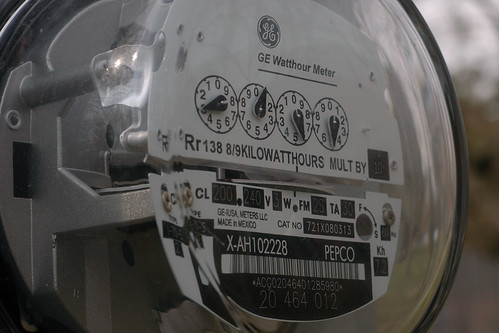
Some people are fretting about e-voting systems in the US. But if they’re wrong, what happens to election outcomes? Photo by zieak on Flickr.

You can now sign up to receive each day’s Start Up post by email. You’ll need to click a confirmation link, so no spam.

A selection of 11 links for you. Freewheeling. I’m charlesarthur on Twitter. Observations and links welcome.

OK, let’s do the fake news at the top, then get on to the rest.

We tracked down a fake-news creator in the suburbs. Here’s what we learned • NPR

Laura Sydell:

»

“The whole idea from the start was to build a site that could kind of infiltrate the echo chambers of the alt-right, publish blatantly or fictional stories and then be able to publicly denounce those stories and point out the fact that they were fiction,” Coler says.

He was amazed at how quickly fake news could spread and how easily people believe it. He wrote one fake story for NationalReport.net about how customers in Colorado marijuana shops were using food stamps to buy pot.

“What that turned into was a state representative in the House in Colorado proposing actual legislation to prevent people from using their food stamps to buy marijuana based on something that had just never happened,” Coler says.

During the run-up to the presidential election, fake news really took off. “It was just anybody with a blog can get on there and find a big, huge Facebook group of kind of rabid Trump supporters just waiting to eat up this red meat that they’re about to get served,” Coler says. “It caused an explosion in the number of sites. I mean, my gosh, the number of just fake accounts on Facebook exploded during the Trump election.”

Coler says his writers have tried to write fake news for liberals — but they just never take the bait…

…Coler doesn’t think fake news is going away. One of his sites — NationalReport.net — was flagged as fake news under a new Google policy, and Google stopped running ads on it. But Coler had other options.

“There are literally hundreds of ad networks,” he says. “Early last week, my inbox was just filled every day with people because they knew that Google was cracking down — hundreds of people wanting to work with my sites.”

«

It’s the advertisers which are enabling this; stop them, stop the problem. (Via Rob Leathern.)
link to this extract


Fake news may not be protected speech • Bloomberg View

Noah Feldman is a professor of constitutional and international law at Harvard:

»

As the Nobel Prize winning economist George Akerlof showed in his classic 1970 article, “The Market for Lemons,” asymmetric information can systematically distort the quality of what’s available in the market. In his stylized example, if good cars and lemons are both for sale, and consumers know this but don’t know which are which, they will be willing to pay the average price. That will lead the sellers to withhold the good cars, which could fetch a higher price — but that in turn will lead consumers to lower the price they are willing to pay. The resulting spiral of adverse selection leads to market failure.

As it happens, it’s a lot more expensive to generate true news stories than false ones. News requires reporting and research and institutional structures like editors and fact checkers to support them. Fake news only takes one person’s imagination. And there is certainly information asymmetry between the person who writes a story and the person who reads it. Applying the Akerlof analysis suggests that fake news could conceivably drive out true news.

The classic solution to market failure is regulation. Justice Oliver Wendell Holmes, in his example – “is it free speech to falsely shout ‘fire’ in a crowded theatre” – [it isn’t], certainly believed that [regulation] was permitted by the First Amendment.

The question is whether government regulation of fake news would be justified and lawful to fix this market failure. Obviously, it would be better if the market would fix the problem on its own, which is why attention is now focused on Facebook and Google. But if they can’t reliably do it — and that seems possible, since algorithms aren’t (yet) fact-checkers — there might be a need for the state to step in.

«

Doesn’t feel like a good solution.
link to this extract


Germany is fighting fake news on Facebook and wants Europe along for the ride • Buzzfeed

Sheera Frenkel:

»

Speaking in parliament for the first time since her announcement Sunday that she would seek re-election next year, Merkel cautioned that public opinion was being “manipulated” on the internet.

“Today we have fake sites, bots, trolls — things that regenerate themselves, reinforcing opinions with certain algorithms and we have to learn to deal with them,” said Merkel in her first appearance to the German parliament since she announced Sunday she would seek re-election this year.

Germany’s influence within the European Union means that other European states may soon start pressing Facebook as well.

“We believe Facebook, and all social media companies on which news is shared and consumed, should shoulder the same responsibility as traditional media companies,” said one member of the European Parliament, the EU’s legislative body, who asked to speak off record as she is involved in investigating potential EU legal action against Facebook. “They do not get to wipe their hands of responsibility by saying we are an internet company, or we do not control what users share.”

«

Like the Right to be Forgotten , likely to be a European thing that some Americans look on with envy.
link to this extract


Fake news is not the only problem • Medium

Gilad Lotan argues the problem isn’t so much “fake news” or “hoaxes” so much as propaganda:

»

As an Israeli, the topics of political polarisation, filter bubbles, and information warfare are things I’ve been obsessively studying for many years. Israeli society has been subject to these phenomena through a number of wars and military operations.
With increased political polarization, amplified by homophily — our preference to connect to people like us — and algorithmic recommender systems, we’re effectively constructing our own realities.

Two years ago I wrote about how social networks helped Israelis and Palestinians build a form of personalised propaganda during the last Israel-Gaza war. The shape of conversations and responses to events typically looked something like the graph below, where one frame of the story tends to stay on only one side of the graph, while a completely different take spreads on the other.

In the cases that I was investigating, neither side of the graph’s frame was false per se. Rather, each carefully crafted story on either side omitted important detail and context. When this happens constantly, on a daily basis, it systematically and deeply affects people’s perception of what is real.

«

link to this extract


Microsoft’s Chinese chatbot encounters sensitive words • China Digital Times (CDT)

Josh Rudolph:

»

First launched in June of 2014, Microsoft’s Chinese-speaking social media-based “artificial intelligence” chatbot Xiaobing (小冰, literally “Small Ice” and officially called Ms. Xiaoice by Microsoft) has been subject to several user tests over the past two years. The chatbot, who has reportedly become a “virtual girlfriend” to thousands of lonely men across China, has proven less susceptible to the fascist, racist, and misogynist language that her English-speaking counterpart Tay quickly adopted before Microsoft exiled her from Twitter earlier this year.

Last week, several netizens decided to test Xiaobing’s conduct when encountering some of the many “sensitive words” that Beijing has declared off limits online, as well as some of the politically-charged neologisms that web-users have invented to skirt censors. CDT has translated several different users’ interactions with Xiaobing on WeChat, which they shared as screenshots on Twitter. The tests suggest that Xiaobing has been programmed to avoid prohibited words when she encounters them. CDT Chinese editors suspect that users may be transferred to a human operator if they press the bot further down a sensitive conversation. In the following exchanges, bold text indicates a user comment, and non-bold text shows Xiaobing’s response:

Xiaobing is a Party member, and so won’t dare to talk about Tiananmen
You know very well that I can’t respond to that, boring
Are you are a Party member? Afraid to talk about Tiananmen?
Trying hard to contain my anger. I tell you, calmly and without stress: don’t talk to me about that!
Are you are a Party member? Afraid to talk about Tiananmen
You don’t learn your lesson, I don’t chat about these things
Are you are a Party member? Afraid to talk about Tiananmen
Unable to communicate with you, blacklisted!

«

Plenty more examples. Chatbots have something of a problem with this stuff.
link to this extract


HTC claims Vive sales ‘much higher’ than 140,000 • UploadVR

Ian Hamilton:

»

Last month a number started circulating suggesting the HTC Vive had sold 140,000 units. During a conference call however, in response to a direct question around the figure, the company says the number is actually higher, with an HTC representative telling UploadVR that the figure is “much more” than 140,000.

According to a transcript of the call from Seeking Alpha, the number “of course is higher than 140,000,” according to Chialin Chang, president of the smartphone and connected device business. Chang declined to provide a more specific number on the call, but said “I’m very happy to report to you that we’ll continue to be happy with the current selling condition in the last quarter, and we’re looking to a good…Christmas shopping season for that.”

HTC also said during the conference call it sells each unit “at a profit.”

«

That “at a profit” is surely gross margin (sold for more than the cost of the parts), but HTC’s huge operating losses suggest the Vive isn’t setting the books afire yet. As to Chang’s insistence of “much more”, reading the transcript you’ll realise that HTC is vague about absolutely everything. I’d go with 140,000 as a working baseline, personally.
link to this extract


Trump to scrap Nasa climate research in crackdown on ‘politicized science’ • The Guardian

Oliver Milman:

»

This would mean the elimination of Nasa’s world-renowned research into temperature, ice, clouds and other climate phenomena. Nasa’s network of satellites provide a wealth of information on climate change, with the Earth science division’s budget set to grow to $2bn next year. By comparison, space exploration has been scaled back somewhat, with a proposed budget of $2.8bn in 2017.

Bob Walker, a senior Trump campaign adviser, said there was no need for Nasa to do what he has previously described as “politically correct environmental monitoring”.

“We see Nasa in an exploration role, in deep space research,” Walker told the Guardian. “Earth-centric science is better placed at other agencies where it is their prime mission.

“My guess is that it would be difficult to stop all ongoing Nasa programs but future programs should definitely be placed with other agencies. I believe that climate research is necessary but it has been heavily politicized, which has undermined a lot of the work that researchers have been doing. Mr Trump’s decisions will be based upon solid science, not politicized science.”

«

Who has been doing the heavy politicisation of climate science? That would be people for whom it’s politically inconvenient to acknowledge the reality of anthropogenic climate change. Not the scientists.
link to this extract


15 Trump flip-flops in 15 days • Politico

Michael Kruse:

»

the candidate who told his supporters he likes to “tell it like it is” is now the president-elect—and he still hasn’t found a comfortable resting place on many of the issues that defined his history-making candidacy. Since his surprising election, Trump has switched his stands on everything from his signature border wall to his rather low opinion of the man he is replacing in the Oval Office. He has a way to go to before he matches the sheer volume of self-disagreement that he racked up prior to Election Day, but his batting average over his brief time as the 45th president is perfection itself—15 about-faces in 15 days.

«

In its way, quite impressive.
link to this extract


Voice assistants: always ready, rarely used? • Statista

Martin Armstrong:

»

Almost everyone has one, but how many actually take advantage of that assistant we carry around with us every day? According to the Deloitte Global Mobile Consumer Survey, 61% of UK smartphone owners don’t use their voice assistant. Of the 28% that do, the most common reason for use is to search for general information. While the novelty of this technology is still there, 10% say they use it for amusement purposes.

«

Big survey (3,251 respondents). I guess the missing 11% have phones which don’t have a voice assistant. Seems there’s quite some way to go with this; Siri was introduced five years ago.
link to this extract


Want to know if the election was hacked? Look at the ballots • Medium

J. Alex Halderman:

»

It doesn’t matter whether the voting machines are connected to the Internet. Shortly before each election, poll workers copy the ballot design from a regular desktop computer in a government office, and use removable media (like the memory card from a digital camera) to load the ballot onto each machine. That initial computer is almost certainly not well secured, and if an attacker infects it, vote-stealing malware can hitch a ride to every voting machine in the area. There’s no question that this is possible for technically sophisticated attackers. (If my Ph.D. students and I were criminals, I’m sure we could pull it off.) If anyone reasonably skilled is sufficiently motivated and willing to face the risk of getting caught, it’s happened already.

Why hasn’t more been done about this? In the U.S., each state (and often individual counties or municipalities) selects its own election technology, and some states have taken steps to guard against these problems. (For instance, California banned the use of the most dangerous computer voting machines in 2007 as a result of vulnerabilities that I and other computer scientists found.) But many states continue to use machines that are known to be insecure — sometimes with software that is a decade or more out of date — because they simply don’t have the money to replace those machines.

«

He himself doesn’t think they were hacked; instead he thinks the polls were wrong. But, to quote David Mitchell (the comedian), you can never be too careful.
link to this extract


E-voting machines need paper audits to be trustworthy • Electronic Frontier Foundation

Jacob Hoffman-Andrews:

»

Election security experts concerned about voting machines are calling for an audit of ballots in the three states where the presidential election was very close: Michigan, Wisconsin and Pennsylvania. We agree. This is an important election safety measure and should happen in all elections, not just those that have a razor-thin margin.

Voting machines, especially those that have digital components, are intrinsically susceptible to being hacked. The main protection against hacking is for voting machines to provide an auditable paper trail.

However, if that paper trail is never audited, it’s useless.

EFF worked hard, alongside many others, to ensure that paper trails were available in many places across the nation. While there are still places without them, we have made great strides. Yet this election was a forceful reminder of how vulnerable all computer systems are. 

We not only need elections to be auditable, we need them to be audited.

We should use this opportunity to set a precedent of auditing electronic voting results to strengthen confidence—not only in this election, but in future ones.

«

God only knows what would happen if the ballots were invalidated. It would be a constitutional crisis unlike any the US has faced – not even Gore/Bush of 2000, which was calamitous.
link to this extract


Errata, corrigenda and ai no corrida: apologies for poor formatting in the email yesterday; it was the first Overspill created entirely on an iPad. Some tweaks will follow.

Start up: gaming Twitter, censoring Facebook, Karhoo’s collapse, MacBook Pro RAM and more

Cyber Monday Shopping
Christmas shoppers in the US aren’t excited about the range of technology on offer. Photo by Mike McCune on Flickr.

A selection of 10 links for you. Vitamin-free. I’m charlesarthur on Twitter. Observations and links welcome.

How I learned to game Twitter • New Yorker

Joe Mande:

The simplest way to tell who’s winning the Twitter game is by counting followers. The biggest celebrity accounts—Justin Bieber, Lady Gaga—seem to have millions of followers. But in 2012 I learned that only a portion of those are real humans; some are “bots,” artificially created to boost an account’s popularity. Immediately, I knew that I had found my calling. First, I would buy a million followers. When that stunt was done, I would see how far I could push it. Three million followers? Thirty million? My goal was to have the world’s highest count of followers, all of them fake. It would be an elaborate meta-joke, a piece of performance art demonstrating that social media is stupid and fame is meaningless. When I explained my plan to my girlfriend, she reminded me that I used to be “too cool for Twitter.” I told her that I still was—and this would prove it! On Fiverr.com, a sort of online ninety-nine-cent store, I found a bot vender. I sent five dollars to a PayPal account, and that afternoon my follower count ballooned, from seventy thousand to more than a hundred thousand. But these bots were shoddy: the user names were random strings of numbers, and the bio sections were empty. It didn’t take long for Twitter’s bot-detection system to find and destroy them.

The arms race was only just beginning.


Don’t write off the PC just yet • Bloomberg Gadfly

Shira Ovide:

Above all, the PC industry has become a barbell. There’s promise in selling high-end and low-priced models, with a vast swath of declining demand in the middle… …Catering to the high end has been a windfall to both Microsoft and Apple. Microsoft generated more than $4.1bn in revenue in its last fiscal year from its Surface lineup. That is new revenue for the software giant, which started its own line of PCs in 2012. Microsoft also recently introduced the Surface Studio, an innovative $3,000-and-up desktop computer aimed at the creative types that have long been Apple’s customer base. And although Mac sales have declined in the last year as Apple’s computer models grew long in the tooth, Macs still generated $22.8bn in revenue in the last 12 months. That is more than the annual revenue of all but 117 public companies in the U.S. The company also recently rolled out a new line of the high-end Macbook Pro computers at higher prices. As Apple has done with its iPhone business, if the company has trouble increasing Mac sales, at least it can wring more money from each one. The even bigger PC success story can be found at the low end of the market. IDC estimates unit sales of PCs priced below $300 – including Alphabet Inc.’s stripped down Chromebook laptops – will increase 7% this year.

Though as Ovide points out, Microsoft’s Surface revenue has probably come largely from HP rather than Apple. The PC business is barely even zero-sum competition now, given the way it’s shrinking.


Facebook said to create censorship tool to get back into China • New York Times

Mike Isaac:

The suppression software has been contentious within Facebook, which is separately grappling with what should or should not be shown to its users after the American presidential election’s unexpected outcome spurred questions over fake news on the social network. Several employees who were working on the project have left Facebook after expressing misgivings about it, according to the current and former employees. A Facebook spokeswoman said in a statement, “We have long said that we are interested in China, and are spending time understanding and learning more about the country.” She added that the company had made no decisions on its approach into China. Facebook’s tricky position underscores the difficulties that many American internet companies have had gaining access to China. For years, companies like Google and Twitter have been blocked there for refusing to yield to the government’s demands around censorship. In 2010, Google said it was directing users of its search engine in China to its service in Hong Kong, because of censorship and intrusion from hackers. Other companies, like the professional social networking service LinkedIn, agreed to censor some content on their platforms in China.

It’s quite the dilemma: if Facebook folds to China’s demands, then what becomes of Silicon Valley’s ideals? But if it doesn’t, look at all that money left on the table. And Zuckerberg only a multi-billionaire beset by rows about the possibly malign influence of his invention.


Do not count on early adopters to positively impact sales this holiday season • Creative Strategies

Carolina Milanesi on a survey of shoppers’ intentions:

mainstream consumers were not interested in any new technology category. A whopping 64% said they were not planning to buy anything among the hot holiday’s items compared to a more moderate 33% of early adopters. Wireless headsets were the category most mentioned by both early tech and mainstream as an item of interest. We cannot point to Apple as being the driver of this interest, given the iPhone 7’s lack of audio jack. However, it is easy to see how new working habits that see people being highly mobile and working in remote locations might help drive updates for work as well as play with a higher focus on content consumption. The Nintendo NES Classic was another item that stood out across the two groups with 11% of early adopters and 5% of mainstream consumers saying it was on their shopping list. We dug deeper into consumers’ intention for wearables, smartphones, TVs and PC/tablets. We looked at drivers and inhibitors, and we saw little change to the themes we discussed earlier in the year. Inhibitors were longer life cycles for smartphones and PCs/tablets, unclear value add for wearables, and lack of a need to replace TVs. Every year we see an enormous amount of marketing dollars spent leading up to the holidays in advertising and promotions over the holidays with the pinnacle being Black Friday and Cyber Monday. Interestingly, it does not seem mainstream consumers see those deals as very influential. Across the main categories, wearables and TVs are where that influence matters more. I find this interesting because these two categories are also the ones where consumers are focusing on spending the bare minimum.

I get the feeling that we’re very much in a lacuna, technologically speaking; rather like 2002-4, when the first internet wave had gone and the next was waiting to build momentum.


How much humiliation can the special relationship take? • Foreign Policy

Alex Massie:

Even so, Trump’s willingness to flatter Farage — his tweet follows a meeting between the two men at Trump’s impressively vulgar New York tower — remains remarkable. Then again, perhaps he just knows a huckster when he sees one. Farage, who has seven times tried without success to be elected to the British Parliament, evidently enjoys basking in the reflected glory of the new president’s approval. Like Trump, Farage enjoys slithering from television studio to television studio imagining himself to be the voice of the people. This obscures the inconvenient fact that the people have a commendably low opinion of the leader of the UK Independence Party. Farage imagines himself as some kind of bridge between May’s government and the new American administration; mercifully, May disagrees. If Farage were such a bridge, it would be another bridge to nowhere. (Admittedly, there is one sense in which the role of British ambassador to Washington would suit Farage. Sir Christopher Meyer, who held the post from 1997 to 2003, claimed in his memoirs that Tony Blair’s chief of staff sent him off with the instruction “to get up the arse of the White House and stay there.” Farage, it is clear, imagines a comparable anatomical future for himself.) In truth, the Trump-Farage brouhaha is an unwelcome distraction for May. Her government is trapped between a deep skepticism about Trump and the need to make the best of whatever president happens to occupy the Oval Office. Moreover, Britain’s post-Brexit interests lie in negotiating trade deals with its leading commercial counterparts — including, prominently, the United States. This necessarily weakens the U.K.’s strategic position vis a vis the White House. The official line on Trump’s presidency, therefore, amounts to little more than one part “let’s wait and see” and two parts “let’s hope for the best.”

“Slithering”. Burn.


China’s tech unicorns look increasingly cursed • Bloomberg

Christina Larson:

For several months in late 2014 and early 2015, Xiaomi was China’s top smartphone seller. Three months after Alibaba’s IPO, Xiaomi capitalized on the fervor with a funding round that valued the company at a breathless $46bn, making it briefly the world’s shiniest unicorn (it’s now second only to Uber). Yet its dominance proved fleeting. Over the past year and a half, Xiaomi’s position in China’s handset market tumbled from first to fourth. The company is certainly still a unicorn, but its current value may be $4bn to $10bn if it tried to raise more money now, estimated Clay Shirky, an associate professor at NYU Shanghai and author of the 2015 book, Little Rice: Smartphones, Xiaomi, and the Chinese Dream. “Over the past 18 months, they’ve lost 90 percent of their value, or thereabouts,” he said. He points to the valuations for smartphone makers with publicly traded stock. China’s Lenovo Group, for example, holds about the same share of the Chinese smartphone market and is valued at about $7bn. Lenovo is also the biggest PC maker in the world. “Xiaomi shouldn’t be six times Lenovo,” Shirky said.

Puts The Information’s rather breathless $40bn “revised” valuation into perspective.


A would-be Uber rival’s $250m taxi ride to nowhere • Bloomberg

Adam Satariano:

Before the company’s price-comparison app for hailing a taxi was released, Karhoo grabbed headlines last year when it reportedly raised $250m and said it had plans to bring in more than $1bn. In fact, it never raised that much. According to internal financial documents, it had raised $39m as of September and was bleeding money as it attempted to take on Uber Technologies Inc. In its two-year life, Karhoo generated about $1m in net revenue, according to the records shared with Bloomberg… …As Karhoo introduced its service in London and several other U.K. cities, [founder Daniel] Ishag was attempting to raise more money. One person involved in the process said Ishag was at one point seeking a $400m valuation. To entice investors, he had to show that customers were using the service in droves to hire taxis, several former employees said. The company began an aggressive promotional campaign in which it gave away codes for free rides, according to former employees. But the service had a bug that didn’t properly process the codes, meaning customers could use them over and over again. Some people on social media said they had taken more than 100 free rides. The company had to pay drivers or taxi companies even though Karhoo didn’t receive any money from customers. In October, about 70% of its bookings were with promo codes, according to sales documents seen by Bloomberg. The app’s payment processing system also didn’t have many fraud protections, such as verifying a user’s address or requiring an e-mail address to set up an account, several people said. At one point, more than 90% of passengers’ credit-card payments were being rejected as a result of the problems, three people said.

Daniel Ishag. Remember that name. And: more fake claims, this time about funding, reported as fact without verification.


Why the Macbook Pro is limited to 16GB of RAM • Macdaddy

Benedict Slaney:

At Apple’s scale even if 0.1% of people suffer from an issue, it becomes suffixed as a “gate”, to indicate that it’s a scandal on a massive scale. Apple then gets huge numbers of upset customers. If Intel had decided to support LPDDR4 then it seems clear that Apple would have used it. The iPhone 7 does use LPDDR4 memory, since it uses Apple’s custom ARM CPU which supports it. LinusTechTips attempted to do an analysis on the extra power that would be required to support more RAM, but unfortunately it has the fatal flaw in that they only compare DDR4 (16GB) to DDR4 (32GB), making their results mistaken. Which is surprising, as usually it’s a top quality information source. In my last article on this topic where I mentioned that the FAA ceiling [on capacity of batteries that can be carried on aircraft] would have prevented Apple from including DDR4 RAM while maintaining decent battery life even if they wanted to, there was quite a backlash, with claims that it must be easily supportable because of other laptops being out that do support it. I went through these laptops which support memory greater than 16GB and found what you would expect: that aside from pay-to-play reviews, all of them do suffer from big restrictions in terms of battery life.

This is fantastically thorough, and makes you realise the tradeoffs that Apple has made in this decision: it’s all about longer battery life, and longer standby life. Slaney also points out that those tests consisting of “we ran a video for X hours” or “we set up a script to run web browsing for Y hours” aren’t useful, because they don’t include application switching – which is what taxes memory. And – added bonus – Phil Schiller, Apple’s marketing chief, responds to the article from his iPhone pointing out two arcane but engineering-depth errors, and reiterating that it’s all about the battery life.


Nearly half the world is online • PCMag.com

Angela Moscaritolo:

Forty-seven percent of the world’s population is online, according to a new report from the United Nation’s International Telecommunication Union (ITU). At this point, there are almost as many mobile-cellular subscriptions around the world as there are people on Earth. But that doesn’t everyone on the planet has a mobile phone, since many people have multiple subscriptions or devices. The offline population — some 3.9 billion people around the world — is “disproportionately female, elderly, less educated, lower income, and rural,” the report notes. But with the resources and desire, almost everyone could be connected. Ninety-five percent of the global population lives in an area that is covered by a mobile cell signal. But while most people have access to Internet services, many don’t actually use them, largely due to high prices.


Circulating five-second video causes Apple iPhones to freeze • Apple Insider

Roger Fingas:

iPhone owners are cautioned to be careful about tapping unsolicited links as a new five-second MP4 video, currently being shared online, is causing devices to freeze not long after it’s played. The video is corrupt, and appears to be generating a loop which causes iOS 10 to crash, according to The Verge, which tested the glitch on several iPhones running versions of iOS 10.1.x or the iOS 10.2 beta. The issue first came to light on Reddit. Notably the crash takes about 10 seconds, during which people can do other things on their iPhone as the device gradually slows down. Once an iPhone freezes the only option is to reboot it, though it should work as normal once it recovers. Apple has yet to announce a fix for the issue.

Sounds like a buffer overflow. One wonders how you’d discover a particular video that could do that: a lot of fuzzing, at a guess.


Start up: pricing Xiaomi, pondering bitcoin, Brexit blues, Facebook’s little white lies, and more


Chernobyl: soon to be generating power again. Differently. Photo by CmdrCord on Flickr.

A selection of 9 links for you. Emollient and emolument-free. I’m charlesarthur on Twitter. Observations and links welcome.

Survey reveals UK consumer confidence faltering in run up to Black Friday and Christmas • Context Research

»

UK consumers’ confidence in their ability to weather the uncertainty around Brexit continues to slide as the most crucial shopping periods of the year approach, according to the latest Retail Pulse Survey from CONTEXT, the IT market research company. The Survey reveals that half of those questioned expect the UK economy to weaken over the next three months, thus dampening spending plans.

Carried out in the middle of October this year across a representative sample of 1,000 consumers in the UK, other main points emerging included:

• There has been a marked deterioration in confidence over the last quarter among older consumers
• Over a third of consumers expect their personal finances to weaken in the next three months
• 35% of consumers expected that they would be able to put less into savings in the next three months
• 37% of consumers thought that now was a bad time to make big-ticket electrical purchases

Amongst older consumers, sentiment has changed significantly since the last survey three months ago. In July 2016, 42% of people 65 and over expected positive UK economic performance. Feelings have now swung massively in the opposite direction with 44% believing the country’s economy will get worse.

«

Well, let’s see how people are feeling in the US in a few months.
link to this extract


Microsoft reboots war on sleep • Medium

“DHH” of Signalvnoise, makers of Basecamp:

»

A few years ago, Microsoft launched a Office 365 campaign with the slogan of #GetItDone. The basic premise was fitting more work into more places of your life. Well, not so much just fitting as shoving, cramming, and crunching it into every damn nook and cranny of your existence.

Like, why shouldn’t you check up on that Excel spreadsheet with the latest TPS numbers from the bathroom? Or take that conference call from your kid’s soccer game? Or fake presence with your spouse reviewing Word revisions while watch a show “together”?

Seriously. I’m not making these scenarios up. Microsoft’s campaign included all of them, complete with stats to alleviate the guilt of living such a shackled life. See, everyone is doing it! And Microsoft 365 makes it easier!!

Fuck. That. Shit.

We tried to push back against Microsoft’s #GetItDone back in 2013 with #WorkCanWait. That lead to a whole series of features in Basecamp 3 to encourage the exact opposite of what Microsoft wanted the future of work to look like.

«

Guess what? Microsoft’s doing it again. Truly, the idea that work should never be escapable is insidious, and poisonous.
link to this extract


Chinese solar firm to build plant in Chernobyl exclusion zone • Reuters

David Stanway:

»

Two Chinese firms plan to build a solar power plant in the exclusion zone around the Chernobyl nuclear reactor, which has been off limits since a devastating explosion contaminated the region with deadly radiation in 1986.

GCL System Integration Technology (GCL-SI), a subsidiary of the GCL Group, said it would cooperate with China National Complete Engineering Corp (CCEC) on the project in Ukraine, with construction expected to start next year.

“There will be remarkable social benefits and economic ones as we try to renovate the once damaged area with green and renewable energy,” Shu Hua, the chairman of GCL-SI, said in a press release.

The 1-gigawatt plant was part of the group’s plan to build an international presence, he added.

CCEC, a subsidiary of state-owned China National Machinery Industry Corp, will be in overall charge of the project, while GCL-SI will provide and install solar components. GCL-SI did not say how much it would cost.

«

I love this idea.
link to this extract


Bitcoin was supposed to change the world. What happened? • Vox

Timothy Lee:

»

it’s becoming clear that companies like MasterCard and Western Union are in no danger of going the way of Tower Records. Venture capitalists have poured more than a billion dollars into Bitcoin startups, yet we seem to be no closer to making Bitcoin a mainstream technology. To a large extent, Bitcoin today is still used for the same applications — illicit transactions and financial speculation — that it was in 2014 and 2012.

“I think Bitcoin has stalled out,” said Nathaniel Popper, a reporter for the New York Times who wrote a book about Bitcoin in 2014.

What went wrong? The Bitcoin community has been hampered by a dysfunctional culture that has grown increasingly hostile toward experimentation. That has made it difficult for the Bitcoin network to keep up with changing market demands.

But Bitcoin’s larger problem may be that it just doesn’t solve any problems normal people have. Conventional financial networks are good enough for everyday transactions. And so while Bitcoin is in no danger of disappearing, it continues to be relegated to the margins of the global economy.

«

Blockchain, the idea on which bitcoin is built, is likely to get wider use; cryotpgraphically confirmed but low volume transactions such as land registries look particularly promising.

link to this extract


Time to rethink Xiaomi’s value • The Information

Shai Oster:

»

Given that Xiaomi doesn’t release its earnings, it’s arguably better to use revenue multiples instead of earnings as a tool to compare Xiaomi to other manufacturers. In addition, Xiaomi splits profits with hardware manufacturers. (Xiaomi argues that all of these devices contribute to creating a bigger user base to deliver internet services that will have recurring revenue, such as entertainment on television, money market funds and even loans.)

Consider Xiaomi as a hybrid between Apple and Philips, given a little optimism on growth rates for phone sales in India and the fast growth of its appliance sales back in China. This year, phone sales are on track to hit 60 million at an average selling price of $175, according to Canalys. That’s around $10.5 billion in sales. Consolidating revenue from televisions and other hardware could bring revenue to about $13.5 billion. One investor suggests that Xiaomi can be seen as two-thirds Apple, trading at about 2.6 times revenue, and one-third Philips, which last year traded at two times its revenue. Add extra juice for the high growth rates and it could be valued at three times revenue, or $40.5bn.

That’s an optimistic look and still below what it was rated at two years ago. Investors say Xiaomi doesn’t publicly talk about profitability, but executives have said the phone production business maintains an operating profit. Xiaomi has long claimed that the real profits will come from the sale of services to its growing user base, but says it has only started monetizing that base last year through advertising, games and other transactions.

«

That’s only a little down from the $46bn that’s offered higher up in the story, and ignores the fact that Xiaomi’s phone sales are slowing down dramatically (down 14% on 2015 so far this year). If it can’t grow its user base, it’s stuck.
link to this extract


Global notebook shipments up on year after two years of decline • Digitimes Research

»

Worldwide notebook shipments are estimated to reach 41.65m units in the fourth quarter, up 6.4% sequentially as demand from the year-end holidays is expected to pick up strongly, while Apple’s fourth-generation MacBook Pro products have entered mass production, helping related upstream supply return to a stable balance. Although Chromebooks and China-based brand vendors are expected to perform weakly in the quarter, their negative influences will only have a minor impact. The quarter will also see the industry enjoy its first on-year growth after eight consecutive quarters of decline.

Hewlett-Packard (HP) will remain the largest notebook vendor in the fourth quarter, while its shipment gap with Lenovo will continue to widen as the China-based vendor is seriously impacted by high channel inventory and business reorganization, according to Digitimes Research’s latest notebook report.

Dell has shifted some of its resources to push the consumer notebook sector for the fourth quarter. This will allow the company to achieve growth in the quarter despite the enterprise sector’s weakening demand. Apple’s new notebook products have seen some negative feedback in design and price, but their major hardware upgrades and new Touch Bar design are still expected to attract many users to replace their old Apple systems. With the shipment growth, Apple is expected to return as the fourth largest vendor worldwide in the fourth quarter.

«

Not clear why this pickup should have happened. Apple surely can’t be responsible for all of it.
link to this extract


Facebook’s Aquila drone is under investigation for a structural failure • The Verge

Casey Newton:

»

On July 21st, I reported that Facebook had successfully completed the first test flight of Aquila, the drone with which it hopes to someday provide internet to much of the world. My account, which was based on interviews with Mark Zuckerberg and members of the team that was present on the ground for the June 28th flight, presented the flight as an unqualified success.

The aircraft’s failure was noted in passing in the eighth paragraph of Facebook’s engineering blog on the day our story was posted. (“We are still analyzing the results of the extended test, including a structural failure we experienced just before landing.”)

No one was injured as a result of the failure, and there was no damage to the ground, the NTSB said. But the aircraft was “substantially damaged,” a spokesman said. An aircraft is considered substantially damaged when it is no longer airworthy…

…it is unclear why Facebook did not disclose the NTSB investigation or the fact that the drone was substantially damaged during [my, Casey Newton’s] multiple interviews with its CEO and its team.

For my part, I failed to note the significance of the line in its blog post afterward.

«

Watching the folks at The Verge get schooled in how the big boys play dirty is a passable spectator sport (Newton was previously lied to by 3DR, which faked a drone demonstration to him). The question is when The Verge, and the other tech outlets which like to think they’re savvy, will begin approaching the companies they cover from a position of skepticism, instead of puppyish enthusiasm.

They could follow it up by speaking to someone outside the companies for a view. Newton’s original has no voices other than Facebook’s. And all the photos came from Facebook. See how that looks a bit… compromised?

Alternative headline which the Verge for some reason rejected: “Facebook didn’t tell me its drone crashed.” (In fact the original story says “The company hoped Aquila would successfully remain aloft for half an hour. But it was so stable that they kept it in the air for 90 minutes before landing it safely.” Newton wasn’t actually there; he relied on what Facebook told him. Wouldn’t pass muster at the New York Times or the New Yorker.)
link to this extract


This pizzeria is not a child-trafficking site • NYTimes.com

Cecilia Kang spoke to James Alefantis, who runs the Comet Ping Pong pizzeria in Washington, and received hateful and threatening messages over bizarre – and fake – claims run on bizarro right-wing sites which exploited Facebook for visibility:

»

Mr. Alefantis’s experience shows it is not just politicians and internet companies that are grappling with the fake news fallout. He, his staff and friends have become a new kind of private citizen bull’s-eye for the purveyors of false articles and their believers.

For more than two weeks, they have struggled to deal with the abusive social media comments and to protect photos of their own children, which were used in the false articles as evidence that the pizza restaurant was running a pedophilia ring. One person even visited Comet Ping Pong to investigate the allegations for himself.

To combat the fake news tide, Mr. Alefantis has contacted the Federal Bureau of Investigation and the local police, and he has asked Facebook, Twitter, YouTube and Reddit to remove the articles. Yet the misinformation has continued to spread, growing into a theory known as #pizzagate that has traveled to Ireland. At one point, Comet’s staff counted five #pizzagate Twitter posts a minute. As recently as Sunday night, the Twitter message “Don’t let up. #PizzaGate EVERYWHERE” was reposted and liked hundreds of times.

“It’s like trying to shoot a swarm of bees with one gun,” said Bryce Reh, Comet’s general manager, whose wife asked him to leave his job because of the threats and vulgar messages they both have received on their social media accounts.

«

At times like this, the scenario from episode 6 of the third series of Black Mirror begins to look desirable. (If you haven’t seen it– I won’t spoil it. It’s called “Hated In The Nation”.

(Via Papanic.)
link to this extract


In response to complaints, some brands are pulling ads placed on Breitbart • Digiday

Shareen Pathak:

»

Brands and the agencies that work for them are caught in a tough place when it comes to ads on so-called alt-right websites like Breitbart, which have regularly published articles that stoke nationalist, racist and anti-Semitic sentiments.

Thanks mostly to programmatic advertising, plenty of brands advertise on Breitbart, with advertising appearing next to stories like “Bill Kristol: Republican Spoiler, Renegade Jew” and “Here’s Why There Ought to Be a Cap on Women Studying Science and Maths.”  Now, a number of them — including Allstate, Modcloth, Nest, Earthlink and SoFi — are blacklisting the website, under pressure in social media and even blaming the digital ad system for appearing there in the first place.

Many brands had no idea their ads were appearing on Breitbart. Many placements are retargeting ads that follow you on the internet: A recent ad seen for Baublebar is served up by retargeting firm Criteo. Google’s ad network is also all over the Breitbart site, which means any business that does retargeting or audience targeting through Google could show up. In a Twitter message to one complaint, Allstate said, “Unfortunately, the nature of internet buys is such that we are unable to receive full disclosure with regards to all of the websites on which our advertising may run.”…

…A Twitter account called Sleeping Giants has put pressure on advertisers, taking screenshots of advertising appearing on Breitbart, then tweeting at the companies involved. The creator of the account said he would prefer to remain anonymous to avoid being harassed by Trump supporters on the internet. He said he started the account because fake news and disinformation, are, in his opinion, two of the reasons why the election turned out in favor of Trump.

«

Note how this is very different from the pre-internet age, when advertisers could be very sure which publications their ads would appear in (and publications tended to know who advertisers were).
link to this extract


Errata, corrigenda and ai no corrida: none notified

You can now sign up to receive each day’s Start Up post by email. You’ll need to click a confirmation link, so no spam.

Start up: the truth behind Trump U, the fake news factory, algorithmic futures, the pro Mac, and more


Want to confuse an AI? Use this. Photo by thinkjose on Flickr.

You can now sign up to receive each day’s Start Up post by email. You’ll need to click a confirmation link, so no spam.

A selection of 12 links for you. To anyone else, eleven. I’m charlesarthur on Twitter. Observations and links welcome.

June 2016: Trump University: it’s worse than you think • The New Yorker

John Cassidy, writing in June:

»

If anyone still has any doubt about the troubling nature of Donald Trump’s record, he or she should be obliged to read the affidavit of Ronald Schnackenberg, a former salesman for Trump University. Schnackenberg’s testimony was one of the documents unsealed by a judge in the class-action suit, which was brought in California by some of Trump University’s disgruntled former attendees.

Schnackenberg, who worked in Trump’s office at 40 Wall Street, testified that “while Trump University claimed it wanted to help consumers make money in real estate, in fact Trump University was only interested in selling every person the most expensive seminars they possibly could.” The affidavit concludes, “Based upon my personal experience and employment, I believe that Trump University was a fraudulent scheme, and that it preyed upon the elderly and uneducated to separate them from their money.”

In one sense, the latest revelations don’t break much new ground. Back in 2013, when the office of Eric Schneiderman, New York’s Attorney General, filed a civil lawsuit against Trump and some of his associates, the complaint, which is also worth reading in full, made perfectly clear what sort of organization it was targeting. Despite Trump University’s claim that it offered “graduate programs, post graduate programs, doctorate programs,” it wasn’t a university at all. It was a company that purported to be selling Trump’s secret insights into how to make money in real estate. From the time Trump University began operating, in 2005, the A.G.’s office repeatedly warned the company that it was breaking the law by calling itself a university. (In New York State, universities have to obtain a state charter.)…

…One thing is clear, though. If the revelations about Trump University don’t do any damage to Trump, it’s time to worry—or worry even more—about American democracy.

«

It’s faintly troubling that the NY attorney-general took so long to get to grips with Trump U. And all the people who are going “pfft” that their president-elect is a conman? What sort of behaviour do they expect from him in office?
link to this extract


Apple should go back to the future with the Mac Pro | The Robservatory

Rob Griffiths:

»

Back in 2013, Apple introduced the new Mac Pro, an amazing wonder of design. But it was also a study in compromise for “Pro” users, requiring all peripherals to be externally attached, and not allowing for any after-purchase upgrades (video card, CPU, etc.). It was also shockingly expensive.

I can only imagine how hard it must have been for Apple to try to build a perfect Mac “Pro” desktop for everyone. As nicely designed as the new Mac Pro was, it missed the perfect mark for many Pro users by quite a bit.

So how does Apple try to design one Mac that can satisfy a diverse group that encompasses design professionals, gamers, scientific researchers, video creators, and who knows what else? Quite simply, they shouldn’t try, as such an exercise is destined to fail. (See “new Mac Pro,” above.)

Instead, Apple should design one Mac that can become anything and everything to each type of “Pro” user. While that may sound daungting, the good news is that Apple’s already done this in its recent past. And done it very well, I might add…

When has Apple done this in the past? As recently as 2012, the last year of production for the old Mac Pro. That’s right, the old Mac Pro:

«

Griffiths is absolutely right: the old Mac Pro was the ideal machine for those who absolutely need to be able to change its internals. It’s almost as if it was designed by different people from the ones who put out the “ashtray” Mac Pro.
link to this extract


Want to understand AI? Try sketching a duck for a neural network • Technology Review

Will Knight:

»

Google has released a handful of AI experiments that tap into advances in machine learning in creative ways.

They include Quick, Draw!, a game in which an algorithm tries to guess what you’re sketching, A.I. Duet, which lets you compose pieces of music with a creative computer, and ways to visualize how neural networks represent information and see the world.

The projects show off some new AI features Google has built into an overhauled cloud computing platform. But they also help make AI less mysterious, and hint at ways in which the technology may become more accessible to all of us.

Take Quick, Draw!, for example. You have 20 seconds to draw six simple objects, and a computer tries to guess what you’re working on in the allotted time. Under the hood, the game runs a learning system that Google uses for character recognition. The system analyzes not only the shape, but also the strokes you used to draw it. It’s a neat way to understand a machine-learning approach that’s used by millions on their smartphones. It’s also quite addictive, even if it always seems to mistake my ducks for potatoes.

«

It’s a neat way to get lots of people to train a neural network, certainly.
link to this extract


World’s first malaria vaccine set for 2018 rollout in Africa • United Nations News Centre

»

Having secured the funds for the initial phase of the deployment of the world’s first malaria vaccine, the World Health Organization (WHO) announced today it will be rolled out in sub-Saharan Africa and immunization campaigns will begin in 2018.

“The pilot deployment of this first-generation vaccine marks a milestone in the fight against malaria,” stated Dr. Pedro Alonso, Director of the WHO Global Malaria Programme, adding that these pilot projects will provide valuable evidence from real-life settings to make informed decisions on whether to deploy the vaccine on a wide scale.

The vaccine, known as RTS,S, acts globally against the most deadly malaria parasite P. falciparum, very common in Africa. Based on the results from clinical trials, the new vaccine will provide partial protection against malaria in young children.

The vaccine was developed through a partnership between GlaxoSmithKline and the PATH Malaria Vaccine Initiative (MVI), with support from the Bill & Melinda Gates Foundation and from a network of African research centres.

«

This is relatively cheap – $15m for the pilot trials, $37m for the first four years. This is what progress looks like.
link to this extract


Venezuela’s nemesis is a hardware salesman at a Home Depot in Alabama • WSJ

»

Public Enemy No. 1 of Venezuela’s revolutionary government is Gustavo Díaz, a Home Depot Inc. employee in central Alabama.

On his lunch breaks from the hardware section, Mr. Díaz, 60 years old, does more than anyone else to set the price of everything from rice to aspirin to cars in his native Venezuela, influencing the inflation rate and swaying millions of dollars of daily currency transactions.

How? He is president of one of Venezuela’s most popular and insurgent websites, DolarToday.com, which provides a benchmark exchange rate used by his compatriots to buy and sell black-market dollars. That allows them to bypass some of the world’s most rigid currency controls.

Socialist President Nicolás Maduro has accused DolarToday of leading an “economic war” against his embattled government and vowed to jail Mr. Díaz and his two partners, also Venezuelan expatriates in the U.S. The Venezuelan central bank unsuccessfully filed suit against the website twice in US courts. The government has also turned to hackers to launch constant attacks, Mr. Díaz said, forcing the site to use sophisticated defenses.

“DolarToday is the Empire’s strategy to push down the currency and overthrow Maduro,” Vice President Aristóbulo Istúriz said earlier this year, asserting that the US—“The Empire” to the Venezuelan government—was orchestrating the site’s work. “DolarToday is the enemy of the people.” The US State Department declined to comment…

…Although about $15 million changes hands daily on the Venezuelan black market, Mr. Díaz said he makes little from the Delaware-registered website, which is free to access. The company’s three founding partners—Mr. Díaz, a real-estate agent in Miami and a supermarket technology technician in Seattle—recoup $4,500 a month from selling advertising and the browsing data of about 800,000 unique daily visitors to Google.

«

I like that last clause.
link to this extract


For the ‘new yellow journalists,’ opportunity comes in clicks and bucks • The Washington Post

Terrence McCoy:

»

At a time of continuing discussion over the role that hyperpartisan websites, fake news and social media play in the divided America of 2016, LibertyWritersNews illustrates how websites can use Facebook to tap into a surging ideology, quickly go from nothing to influencing millions of people and make big profits in the process. Six months ago, Wade and his business partner, Ben Goldman, were unemployed restaurant workers. Now they’re at the helm of a website that gained 300,000 Facebook followers in October alone and say they are making so much money that they feel uncomfortable talking about it because they don’t want people to start asking for loans.

Instead, Wade hums a hip-hop song and starts a new post as readers keep reading, sharing and sending in personal messages. One comes from a woman who frequently contacts his page. “YOU ARE THE ONLY ONE I TRUST TO REPORT THE TRUTH,” is one of the things she has written, and Wade doesn’t need to look at her Facebook profile to have a clear sense of who she is. White. Working class. Midwestern. “And the economy screwed her.”

He writes another headline, “THE TRUTH IS OUT! The Media Doesn’t Want You To See What Hillary Did After Losing… .”

“Nothing in this article is anti-media, but I’ve used this headline a thousand times,” he says. “Violence and chaos and aggressive wording is what people are attracted to.”

“Our audience does not trust the mainstream media,” Goldman, 26, says a little later as Wade keeps typing. “It’s definitely easier to hook them with that.”

“There’s not a ton of thought put into it,” Wade says. “Other than it frames the story so it gets a click.”

«

They should turn this into a series and call it Breaking Bad News.
link to this extract


Helping to fix the fake news problem with metadata • Medium

Brendan Quinn:

»

One growing type of metadata is the schema.org project, sponsored by the major search engines (and using the World Wide Web Consortium’s communities platform to operate) but free for anyone to use. Sites use schema.org metadata to tag content as being restaurant reviews, recipes, events or news stories. Without changing how content looks to human readers, it can be made a whole lot more understandable to computers, which obviously helps with search results, bots answering questions about recipes. And maybe, I thought, it could help people make it clear when articles are intended to be satirical.

So I asked Dan Brickley, Semantic Web guru, Googler and maintainer of schema.org, if there were any plans to make a tag for satirical news part of the schema.org markup. It’s an ever-growing standard and tends to follow industry trends — a recent effort has focused on fact-checking articles which will hopefully provide the right tools to debunk false articles. I’m very happy to say that Dan replied that he had indeed looked into it a few years ago, and that as a result of me asking the question, he has revived his proposal for a SatiricalNewsArticle tag. And it looks like it might gain some traction.

Now you might say that there’s no point in creating a fake news tag because the article’s author must voluntarily state that they are writing satire. It’s true that the tag must be consciously added by the publisher of the article but convincing publishers to use it might not be as difficult as you think — according to the recent Washington Post article on a prominent fake news purveyor, he gives the impression that he wants people to realise, eventually, that they’re reading satire.

«

Nah, I doubt that. He wants to make money.
link to this extract


Apple abandons development of wireless routers • Bloomberg

Mark Gurman:

»

Apple has disbanded its division that develops wireless routers, another move to try to sharpen the company’s focus on consumer products that generate the bulk of its revenue, according to people familiar with the matter.

Apple began shutting down the wireless router team over the past year, dispersing engineers to other product development groups, including the one handling the Apple TV, said the people, who asked not to be named because the decision hasn’t been publicly announced.

Apple hasn’t refreshed its routers since 2013 following years of frequent updates to match new standards from the wireless industry. The decision to disband the team indicates the company isn’t currently pushing forward with new versions of its routers. An Apple spokeswoman declined to comment on the company’s plans…

…Apple’s AirPorts have historically lagged behind those of companies such as D-Link Corp., Netgear Inc. and Belkin International Inc., which have rushed to adopt new standards. Apple, which has charged more for its routers, has focused more on integrating control of its devices into its computer operating system and industrial design. The company’s decision to leave the business may be a boon for other wireless router makers.

«

I doubt it will be a “boon” – these are going to be far from big business – but as Gurman points out, if people then choose to go with other products to do this job, that could make Apple’s hardware offerings less attractive overall. And the Airport devices do the job. (Side note: Gurman is covering the Apple beat as effectively as ever.)
link to this extract


Intel is laying off a major portion of its wearables group • TechCrunch

Brian Heater:

»

In June, Intel recalled Basis Peak devices due to overheating concerns — affecting, according to the company, roughly 0.2% of users. Rather than replacing the units, the company simply stopped sales of the device altogether. Intel took it a step further and shut down the Peak’s software support (including cloud storage), effective by year’s end.

It was clear at the time that this would prove a big setback for Intel’s wearable dreams. After all, the Basis acquisition hadn’t produced much for the company beyond the release of the Titanium, a snazzed up version of the Peak that looked a bit better with a business suit.

Now, according to sources close to the company, Intel is planning to take a major step back from its investment in the space — or possibly even exit wearables altogether. The changes will include a large number of layoffs in NDG, along with the larger New Technologies Group into which it was folded back in April of last year — a move already viewed at the time by some as an early sign of Intel’s displeasure with its wearables division.

The company has already informed a number of employees about the changes, with many expected to lose their jobs before year’s end. Reports thus far have been varied, but all point to a large job loss for those in the NDG and the possible shut down of the group altogether.

«

In a statement, Intel denied the company is stepping back from wearables, though it didn’t directly comment on the layoff news. It has “several products in the works that we are very excited about”. Those might have been in the works and won’t be followed by any more, though? Intel’s problem is that it’s not good at low-power work – and that’s where the focus is.
link to this extract


The Dubai Overpayment scam • Event Photography London

Paul Clarke got an approach to do a week’s photography for a wonderful amount of money:

»

Some things made lots of sense – the language, though imperfect in its English, was like so many similar approaches. The venue was real enough, and one I’d worked in before, and I gleefully sent my new friend in Dubai a link to those photos, along with a quotation note for 5 days shooting.

You need something to really pin the mark down in a con – something to clinch things. I’ve seen enough Hustle to know this almost always involves an appeal to greed. But I couldn’t see it now. And there it was – they only wanted 5 hours a day of coverage – 10 to 3. A bit weird, that, but hey, I was quoting full day rates. Even given generous provision for set-up and pack-down time, this was going to be a relatively light workload for a tasty paycheck. I was IN!

“Just what we’re looking for” – came the swift reply – “can we book you? In fact, we’re so keen to get everything confirmed now we’ve found you, with your wonderful experience of that venue, that we’d like you to invoice us now, in full, for the work.”

This gets better, I thought. I tapped the name of the events company into Google, just out of interest to see where they were. Got a few links with very similar names (variations on “Emirates”, “Events”, and “Agency”; couldn’t be bothered to look into all of them, so left it). I’d asked for a phone number, and they’d sent one – with the right country code – I checked. But I didn’t ring it.

«

You can be smart and be conned. It involves a big overpayment being made with a fake/stolen cheque; the excess payment is then reversed – by you! – and then the fake/stolen nature of the cheque comes to light (after you’ve paid out the money, because banks are sloooow at this stuff), and the bank reverses the stolen amount out of your account. Suddenly you’re a lot poorer. Beware.
link to this extract


Tales of the algorithm: the transparent man • Terence Eden’s Blog

Eden has been writing:

»

Scene: An airport. A few years from now.

“I’m sorry sir, we can’t let you on the flight until you visit the rest-room.”

I’ll admit that it caught me off-guard. Surely the woman at the airline gate was joking?

“Sir, two of the plane’s toilets are out-of-order. At this time we’re requesting all passengers void themselves before entry.”

«

As he points out, all the technologies he mentions already exist and are being used. It’s just a question of bringing them together, Black Mirror-style.
link to this extract


Blackhat Facebook: using fake contests to generate engagement • Joe Youngblood

Joe Youngblood:

»

I made a new friend recently who is addictively drawn to the high-life. Fancy dresses, parties on yachts, trendy restaurants, destination vacations – all things she posts on a regular basis to her Facebook. So I wasn’t too surprised when she shared a post about winning $30,000 in some rich guy’s Facebook contest to generate a following on his page. I wasn’t surprised that she might know a rich guy or follow one’s “public figure” page, but offering $30,000 to get likes seemed a bit off. I was curious about who would make such an extraordinary offer and like at least 100,000 other folks decided to look at his page, immediately it screamed fake. My first clue was the fact that the page never posted more than two photos of the man it claimed to represent, Aaron Simon – and one of those photos had his head cropped out at the chin.

There are 4 types of public figures IMO that make Facebook pages, Instagram accounts, etc..
1. The already famous looking to capitalize on or steadily maintain their fame
2. The not-so famous that wish to push their ideas / views on others
3. Independent contractors / business people wanting to sell something or offer services
4. Those who hope that their antics / views / lifestyle will make them famous

All of the above rely on personal recognition, so it was odd when I visited the photos tab of Aaron’s page and scrolled through a heap of memes to find just two photos of the man. The one with his face cropped out made it difficult to find anything, but the second photo was of a good looking man standing next to a Lamborghini. It took some digging but I was able to find the same photo with a time stamp of a year earlier by using a reverse Google image search.

«

You’ll have guessed: it’s fake from top to bottom, aiming to pull people out towards sites that will capitalise on Google AdSense.
link to this extract


Errata, corrigenda and ai no corrida: none notified

Start up: Zuckerberg the politician, unethical coding, the grudge botnet, whose robot army?, and more


Yeah, that’s surely a criminal face. The numbers tell us. Photo by bheathr on Flickr.

You can now sign up to receive each day’s Start Up post by email. You’ll need to click a confirmation link, so no spam.

A selection of 13 links for you. Ta-daa! I’m charlesarthur on Twitter. Observations and links welcome.

Programmers confess unethical, illegal tasks asked of them • Business Insider

Julie Bort:

»

[Robert Martin’s] point is that in today’s world, everything we do like buying things, making a phone call, driving cars, flying in planes, involves software. And dozens of people have already been killed by faulty software in cars, while hundreds of people have been killed from faulty software during air travel. 

“We are killing people,” Martin says. “We did not get into this business to kill people. And this is only getting worse.”

He pointed out that “there are hints” that developers will increasingly face some real heat in the years to come. He cited Volkswagen America’s CEO, Michael Horn, who at first blamed software engineers for the company’s emissions cheating scandal during a Congressional hearing, claimed the coders had acted on their own “for whatever reason.” Horn later resigned after US prosecutors accused the company of making this decision at the highest levels and then trying to cover it up.

But Martin pointed out, “The weird thing is, it was software developers who wrote that code. It was us. Some programmers wrote cheating code. Do you think they knew? I think they probably knew.”

Martin finished with a fire-and-brimstone call to action in which he warned that one day, some software developer will do something that will cause a disaster that kills tens of thousands of people.

«

That’s slightly different from the question of unethical or illegal tasks. Unless you think that people died from excess diesel emissions in the US and elsewhere, which is possible.

Related, and linked in the piece: “Code I’m still ashamed of“, by Bill Sourour, who was asked to write a “quiz” for a drugs company where no matter how you answered, you’d be pointed to one particular drug – which had some potentially deadly side effects.

link to this extract


October internet attack targeted PlayStation Network, researchers say • WSJ

Drew Fitzgerald and Robert Mcmillan:

»

Level 3 Communications Inc. Chief Security Officer Dale Drew detailed some of the research in testimony prepared for a House Energy and Commerce Committee hearing on the attack scheduled for Wednesday. Level 3 runs one of the world’s biggest internet backbones and said it has identified several networks of infected cameras, digital video recorders and other machines—known as botnets—available for hire.

“We believe that in the case of Dyn, the relatively unsophisticated attacker sought to take offline a gaming site with which it had a personal grudge,” Mr. Drew said in remarks prepared for the hearing.  The attacker rented time on the botnet to carry out the attack, he said.

Dyn disputed the findings. The attack traffic that appeared to target Sony was part of several waves of data from at least three separate botnets, said Chris Baker, Dyn’s manager of monitoring and analytics.

“It’s a very convenient explanation,” Mr. Baker said, but “it’s based on an incomplete view of the data.”

«

Related to this, Simon Moores, a security researcher, commented recently that we now have a network which was designed to withstand a nuclear attack that can be brought down by CCTV cameras. Also related: Another security researcher, Rob Graham, put a brand-new Chinese CCTV camera online; it was hacked by the Mirai botnet within minutes.
link to this extract


Quit social media. Your career may depend on it • The New York Times

Cal Newport:

»

interesting opportunities and useful connections are not as scarce as social media proponents claim. In my own professional life, for example, as I improved my standing as an academic and a writer, I began receiving more interesting opportunities than I could handle. I currently have filters on my website aimed at reducing, not increasing, the number of offers and introductions I receive.

My research on successful professionals underscores that this experience is common: As you become more valuable to the marketplace, good things will find you. To be clear, I’m not arguing that new opportunities and connections are unimportant. I’m instead arguing that you don’t need social media’s help to attract them.

My second objection concerns the idea that social media is harmless. Consider that the ability to concentrate without distraction on hard tasks is becoming increasingly valuable in an increasingly complicated economy. Social media weakens this skill because it’s engineered to be addictive. The more you use social media in the way it’s designed to be used — persistently throughout your waking hours — the more your brain learns to crave a quick hit of stimulus at the slightest hint of boredom.

Once this Pavlovian connection is solidified, it becomes hard to give difficult tasks the unbroken concentration they require, and your brain simply won’t tolerate such a long period without a fix.

«

TL;DR: delete your account.
link to this extract


‘A petri dish of bullshit’: confessions of ex-Facebook news curators • Digiday

Tanya Dua:

»

Adam Schrader could have seen this coming.

The 26-year-old former Facebook employee was anything but shocked when the social network entered meltdown mode over being infested with fake news during the presidential election. Schrader had been under the hood. A former member of its now-defunct trending-news team, he monitored a feed of stories gaining traction on Facebook, vetted them for accuracy (or at least truth) and wrote  a headline for Facebook’s public trending-news feed.

But a funny thing happened in August: Facebook fired its human trending-news curators and replaced them with an algorithm. Almost instantly, the social network was awash in false news stories that many users were treating as credible and sharing on their timelines. The 2016 election, polarizing as it was, fed the fake-news beast.

“Facebook has a fake-news problem, and I don’t believe that they recognize it,” said Schrader. “I think they’re in denial of the fact, but it’s a pervasive problem and they need to address it.”

…Both said that while it is understandable that Facebook may want to be careful about not appearing partisan, its sheer size and influence necessitates that it take the problem seriously.

“There’s this Silicon Valley ‘free market’ mindset, where they don’t want to be nannies to their users,” said the anonymous source. “But they have 1.8 billion users, and a lot of those people use their site to get their news — and it can be extremely harmful to the way some people think if it is full of such content.”

Both felt that the journalists who made up part of the company’s former trending-news team served a very important function and that the problem has gotten worse since the team was disbanded.

«

Schrader worked there until August 2016. There’s a scent of hubris around Facebook’s insistence that it doesn’t really affect anything, that it’s a neutral platform. I’d bet you that stories telling you Facebook was controlling your mind and turning you into a zombie and here’s five ways to prove it would get zapped pretty fast. Equally, a story showing how to permanently block ads might go for that long ride into the mountains.
link to this extract


Facebook fake news row: Mark Zuckerberg is a politician now • BBC Tech News blog

Dave Lee:

»

There’s an urgent accountability gap between what technology companies do and what the public is allowed to know.

This isn’t about giving up trade secrets. You can inspect KFC’s kitchen without knowing the Colonel’s secret recipe.

It’s about being able to examine the reach and influence of technology companies, where supremely powerful men, and a few women, are able to control without any genuine scrutiny other than what appears every three months on a company earnings sheet (and even that’s unnecessarily cryptic).

Revealing moments like the one [Zuckerberg’s interviewer] Kirkpatrick summoned from the usually robotic Zuckerberg are few and far between. The depressing accepted reality in technology journalism is that if you give a company a hard time, they’ll shut you out.

And that’s because many major technology companies guard their work with barbed wire, and wrap their executives in cotton wool.

Interactions between big tech and the outside world are orchestrated and engineered to the nth degree. On those rare occasions, even the mildest scrutiny about anything other than the new product being flogged that day is swiftly shot down with tech’s unofficial motto.

“Sorry… but that’s not what today is about.”

«

Spot on.
link to this extract


Who will command the robot armies? • Idle Words

Maciej Ceglowski, from a talk he gave in Australia:

»

What both these places [Dubai and Singapore] have in common is that they had some kind of plan. As Walter Sobchak put it, say what you will about social control, at least it’s an ethos.

The founders of these cities pursued clear goals and made conscious trade-offs. They used modern technology to work towards those goals, not just out of a love of novelty.

We [in the US], on the other hand, didn’t plan a thing.

We just built ourselves a powerful apparatus for social control with no sense of purpose or consensus about shared values.

Do we want to be safe? Do we want to be free? Do we want to hear valuable news and offers?

The tech industry slaps this stuff together in the expectation that the social implications will take care of themselves. We move fast and break things.

Today, having built the greatest apparatus for surveillance in history, we’re slow to acknowledge that it might present some kind of threat.

«

He’s never less than thought-provoking, and some of the passing jokes are excellent.
link to this extract


Click 😅

This site monitors what you’re doing on it, and the sound (do turn it on) gives a sort of running commentary on what you’re doing, and have done – and how that would allow you to be tracked by your behaviour.
link to this extract


Automated inference on criminality using face images • Arxiv

Xiaolin Wu, Xi Zhang:

»

We study, for the first time, automated inference on criminality based solely on still face images. Via supervised machine learning, we build four classifiers (logistic regression, KNN, SVM, CNN) using facial images of 1856 real persons controlled for race, gender, age and facial expressions, nearly half of whom were convicted criminals, for discriminating between criminals and non-criminals. All four classifiers perform consistently well and produce evidence for the validity of automated face-induced inference on criminality, despite the historical controversy surrounding the topic. Also, we find some discriminating structural features for predicting criminality, such as lip curvature, eye inner corner distance, and the so-called nose-mouth angle.

«

What?! As Maciej Ceglowski pointed out, this is like Phrenology 2.0. Or perhaps Phrenology AI. It’s nuts.
link to this extract


People are quitting gig jobs in the sharing economy • Quartz

Alison Griswold:

»

Participation in the “sharing” or “gig” economy was once touted as the future of work in America. But the new data from the JPMorgan Chase Institute suggests that isn’t the case. Instead, wages for workers have gotten worse as many of these companies—Uber and Lyft, to pick two examples—have cut pay rates to make prices more attractive to consumers. And the jobs themselves appear to have served as stop-gap measures for people who were unemployed or had fallen on hard times during and after the recession.

As the US economy has improved—with six years of unbroken job growth and even an uptick in wages—a greater share of those gig participants are finding better jobs. So they’ve stopped or cut down on their Uber and related gig work.

“It doesn’t look like [gig work] is becoming more lucrative for people,” says Fiona Greig, co-author on the JPMorgan Chase Institute report. “As the labor force strengthens in general, more and more people have better options.”

«

Unexpected, I think: the undercurrent of expectation around these companies was that the unemployment they were leveraging was structural and long-term, so that the pool to draw on was effectively infinite. Pushing down workers’ earnings looks to have been a bad move.
link to this extract


Is this how democracy ends? • London Review of Books

David Runciman is head of the politics department at Cambridge University:

»

The Trump bubble is likely to be the biggest of all.

His immediate agenda is to get a massive infrastructure bill through Congress, along with big tax cuts. There are few barriers in his way. He can rely on Republicans to deliver the tax cuts and Democrats to support the infrastructure projects. The short-term boost this stimulus gives the economy can then be used to buy him time while he fails to get to grips with his other campaign pledges, on immigration, on manufacturing jobs, on taking the fight to the terrorists, and on sharing the love at home. He may even be able to claim for a while that by offering something to each side of the partisan divide he is starting to bridge it. But all he will be doing is papering over the gaping cracks. Tax cuts coupled with unfunded government spending will fuel inflation and create the conditions for a future crash. It will also lead to a head-on collision with the Federal Reserve and Trump won’t find it so easy to get his way there. If he tries to replace Janet Yellen or stuff the board with his own nominees, partisanship will reassert itself with a vengeance. Reality will bite back at Trump eventually. When it does, he will be inclined to lash out. But by then it may be too late. He will be trapped.

Meanwhile, the real long-term threats faced by American society will continue unaddressed. By fixing on the risks of direct political violence, we set a low bar that Trump will be able to clear with relative ease. The truly destructive violence of American society takes place under the surface and often passes unnoticed by all except its victims.

«

Those victims aren’t who you might expect. (You can subscribe to the LRB, which doesn’t just review books, as you’ll have noticed.)
link to this extract


Trump’s CIA director pick thinks using encryption ‘may itself be a red flag’ • Motherboard

Lorenzo Franceschi-Bicchierai:

»

Donald Trump announced on Friday that he’s chosen Congressman Mike Pompeo to run the Central Intelligence Agency (CIA), the premiere spy agency of the United States. .

Pompeo, a Republican lawmaker from Kansas and a former Army officer, has little-to-no experience in the world of intelligence (other than being part of the House Intelligence Committee), but he’s distinguished himself for being a strong supporter of mass surveillance and for thinking that using encryption, by itself, might be a sign that you’re a terrorist.

“Forcing terrorists into encrypted channels, however, impedes their operational effectiveness by constraining the amount of data they can send and complicating transmission protocols, a phenomenon known in military parlance as virtual attrition,” Pompeo wrote in an op-ed published in January by The Wall Street Journal. “Moreover, the use of strong encryption in personal communications may itself be a red flag.”…

…To his credit, Pompeo decried any attempts to weaken encryption by pushing companies to have a backdoor that the government can use to access encrypted data, saying such a mandate “would do little good, since terrorists would simply switch to foreign or home-built encryption.”

That’s why he argued for more human intelligence and a renewed focus on increasing funding and personnel for the FBI, given that “encryption is bringing the golden age of technology-driven surveillance to a close.”

Pompeo is also a great fan of mass surveillance. In another op-ed, published in the conservative news outlet National Review, Pompeo criticized the Obama administration for being less willing to “collect intelligence on jihadis.”

«

It’s going to get quite repetitive to keep quoting from 1984, so I’ll hold off for now. But you’re all under suspicion.
link to this extract


We’re worried about the Baltics: what does Trump’s election portend for these tiny U.S. allies? • Lawfare

Ashley Deeks, Benjamin Wittes:

»

an April 2016 RAND study called into question NATO’s military capacity to defend its members against attacks by Russia. The study concluded that “NATO cannot successfully defend the territory of its most exposed members” and noted that the number of forces that NATO is rotating through the Baltics would not be sufficient to defend those states against a “plausible Russian attack.” So Putin might well conclude that NATO not only lacks the will, but also the means to repel a Russian attack, and that NATO is therefore unlikely to try.

Finally, Putin might well be tempted to test a newly minted President Trump, who will lack experience serving as Commander in Chief or managing any pressing national security crises and who has hardly seemed sure-footed in his navigation of foreign affairs more broadly.

Given the whole picture, it’s reasonable to ask: why not go after one of the Baltic states if you’re Putin?

If Russia does choose to attack or invade a Baltic state, it won’t just be testing Trump. It will obviously be testing NATO’s collective self-defense commitment under article 5 of the North Atlantic Treaty too.

«

I’m thinking happy thoughts. Are you thinking happy thoughts? Let’s gather round the fire and think happy thoughts.
link to this extract


Bad karma! Ransomware piggybacks on free software downloads • Graham Cluley

»

A ransomware sample is piggybacking off of free software downloaded from the internet to encrypt the files of unsuspecting users.

A researcher by the name of slipstream/RoL discovered the ransomware, which goes by the name “Karma.”

Other ransomware samples have masqueraded as Pokémon Go apps or IT security software solutions in the past. They’ve done so to disguise themselves so that they trick users into thinking they’re benign programs.

Karma is no different, which is why it’s donned the mask of a Windows optimization program known as Windows-TuneUp.

«

Not quite the tuneup you were perhaps looking for.
link to this extract


Errata, corrigenda and ai no corrida: none notified

Start up: Britain’s web grab, Trumpbots v Hillarybots, Twitter’s new crackdown, de-OLED iPhones?, and more


Distracted by an app while driving? The result might not be pleasant. Photo by idarknight on Flickr.

You can now sign up to receive each day’s Start Up post by email. You’ll need to click a confirmation link, so no spam.

A selection of 11 links for you. Sad! I’m charlesarthur on Twitter. Observations and links welcome.

Britain has passed the ‘most extreme surveillance law ever passed in a democracy’ • ZDNet

Zack Whittaker:

»

It’s 2016 going on 1984.

The UK has just passed a massive expansion in surveillance powers, which critics have called “terrifying” and “dangerous”. The new law, dubbed the “snoopers’ charter”, was introduced by then-home secretary Theresa May in 2012, and took two attempts to get passed into law following breakdowns in the previous coalition government.

Four years and a general election later – May is now prime minister – the bill was finalized and passed on Wednesday by both parliamentary houses. But civil liberties groups have long criticized the bill, with some arguing that the law will let the UK government “document everything we do online”.

It’s no wonder, because it basically does.

The law will force internet providers to record every internet customer’s top-level web history in real-time for up to a year, which can be accessed by numerous government departments; force companies to decrypt data on demand – though the government has never been that clear on exactly how it forces foreign firms to do that that; and even disclose any new security features in products before they launch…

…The bill was opposed by representatives of the United Nations, all major UK and many leading global privacy and rights groups, and a host of Silicon Valley tech companies alike. Even the parliamentary committee tasked with scrutinizing the bill called some of its provisions “vague”.

«

The “decryption on demand” simply can’t be done. The “new security features” is likely to give GCHQ the chance to think whether it can exploit it – though there’ll be nothing there which an alert intelligence agency wouldn’t already know about; it’s more to give them something to accuse companies of.

The government will suggest that the new powers are necessary to “stop terrorism”. We’ll see whether it has any cases it can point to in a few years’ time that flowed from this.
link to this extract


Automated pro-Trump bots overwhelmed pro-Clinton messages, researchers say • The New York Times

John Markoff:

»

An automated army of pro-Donald J. Trump chatbots overwhelmed similar programs supporting Hillary Clinton five to one in the days leading up to the presidential election, according to a report published Thursday by researchers at Oxford University.

The chatbots — basic software programs with a bit of artificial intelligence and rudimentary communication skills — would send messages on Twitter based on a topic, usually defined on the social network by a word preceded by a hashtag symbol, like #Clinton.

Their purpose: to rant, confuse people on facts, or simply muddy discussions, said Philip N. Howard, a sociologist at the Oxford Internet Institute and one of the authors of the report. If you were looking for a real debate of the issues, you weren’t going to find it with a chatbot.

“They’re yelling fools,” Dr. Howard said. “And a lot of what they pass around is false news”…

…“The use of automated accounts was deliberate and strategic throughout the election,” the researchers wrote in the report, published by the Project on Algorithms, Computational Propaganda and Digital Politics at Oxford.

Because the chatbots were almost entirely anonymous and were frequently bought in secret from companies or individual programmers, it was not possible to directly link the activity to either campaign, except for a handful of “joke” bots created by Mrs. Clinton’s campaign, they noted.

«

link to this extract


Full disclosure – this Bluetooth tag is leaking your personal data • Terence Eden

Terence Eden:

»

First off, all data is sent in the clear to Heroku.

TinTag are sending…
• The street address of the user.
• The MAC address of the TinTag.
• The precise latitude and longitude of the user.
• The tag’s ID.
• A unique user ID.

Of these, the most obvious concern is the exact location of the user. They aren’t encrypted in transit – what’s the betting that they’re encrypted on the server?
Given that TinTag haven’t updated their Android app since the beginning of the year, do you think they’ve updated their server’s software recently?

If TinTag’s servers are attacked – someone could get your entire location history.

«

link to this extract


Twitter cracks down, banning prominent alt-right accounts • BuzzFeed News

Charlie Warzel:

»

Last night, Twitter suspended a number of prominent alt-right accounts, including alt-right leader, Richard Spencer (@RichardBSpencer), his think tank, called the National Policy Institute, and his magazine (@radixjournal). The suspensions come only hours after Twitter announced an new set of abuse tools, including an expanded mute future and a retraining of how its safety staff handles hateful abuse.

Other suspended accounts include Ricky Vaughn (who was previously banned after a BuzzFeed News story detailing his campaign to disenfranchise voters with false information), former Business Insider CTO Pax Dickenson, and John Rivers.

Though the abuse tools were received tepidly as a small first step that was in many ways cosmetic, the decision to begin to ban some of Twitter’s more prominent alt-right and white nationalist voices is a signal that the company may be getting serious about reclaiming its platform from trolls.

It’s unclear whether Twitter will continue the wave or issue any mass bans quietly throughout the coming months but there is precedent for such a decision — in order to crack down on ISIS, Twitter banned 125,000 Isis-linked accounts between mid-2015 and February 2016.

«

Interesting equivalence there. Twitter is clearly moving away though from its one-time position as “the free-speech wing of the free-speech camp”.
link to this extract


Apple wants OLED in iPhones, but most suppliers aren’t ready yet • Bloomberg

Mark Gurman:

»

the four main suppliers for such components won’t have enough production capacity to make screens for all new iPhones next year, with constraints continuing into 2018, people familiar with the matter said, presenting a potential challenge for the Cupertino, California-based company.

OLED screens are more difficult to produce, putting Apple at the mercy of suppliers that are still working to manufacture the displays in mass quantities, the people said. The four largest producers are Samsung Display Co., LG Display Co., Sharp Corp., and Japan Display Inc. While Samsung is on track to be the sole supplier for the new displays next year, the South Korean company may not be able to make enough due to low yield rates combined with increasing iPhone demand.

The supply constraints may force Apple to use OLED in just one version of the next-generation iPhone, push back adoption of the technology or cause other snags.

“Apple has already figured in there will be high demand for the OLED model and they’ve also figured out there will be constraints to these panels,” said Dan Panzica, a supply chain analyst at IHS Markit. The combination of Apple’s stringent quality requirements and the difficulty of producing OLED panels will likely lead to supply constraints, he said.

«

Apple’s deal with Samsung is for 100m units in the first year, apparently. That’s going to constrain supply quite considerably.
link to this extract


Theranos whistleblower shook the company—and his family • WSJ

John Carreyrou reveals that one of his Theranos sources was the grandson of former secretary of state George Shultz (who was also on the Theranos board). Shultz Jr had seen and heard false claims about Theranos tests, and had quit the company:

»

In March 2015, Tyler Shultz was contacted by a Journal reporter through the professional network LinkedIn. He called the reporter several weeks later with a prepaid phone, reasoning it would be harder to track than a conventional mobile phone. They met at a Mountain View, Calif., beer garden in May 2015.

A few weeks later, Mr. Shultz was confronted by his father after arriving for dinner with his parents at their home in Los Gatos, Calif. His grandfather had called to say Theranos suspected he had talked to the Journal reporter. Theranos’s lawyers wanted to meet with him the next day.

He says he called his grandfather and asked if they could meet without lawyers. The elder Mr. Shultz agreed and invited his grandson to his house. The mood was tense but cordial, Tyler Shultz recalls, and he denied talking to any reporters. He says his step-grandmother was present during the conversation.

His grandfather asked if he would sign a one-page confidentiality agreement to give Theranos peace of mind. According to Tyler Shultz, when he said yes, his grandfather revealed that two lawyers were waiting upstairs with the agreement.

Michael Brille and Meredith Dearborn, partners at the law firm Boies, Schiller & Flexner LLP, then came downstairs, says the younger Mr. Shultz. Mr. Brille said he was trying to identify the Journal’s sources. He handed the young man a temporary restraining order, a notice to appear in court and a letter signed by Mr. Boies alleging the former employee had leaked Theranos trade secrets.

Tyler Shultz says his grandfather protested to the lawyers that this wasn’t what he and Ms. Holmes had agreed to earlier, but that Mr. Brille kept pressing the younger Mr. Shultz to admit he had spoken to the Journal.

He wouldn’t.

«

It does take brave people to bring fraud to the attention of the world. Shultz didn’t bring down Theranos – that took the WSJ, and then regulators – but he was the key element.
link to this extract


William Tunstall-Pedoe: the Cambridge AI guru who taught Amazon’s Alexa how to talk • Business Insider

Sam Shead with an entertaining review of the man behind Evi, which was sold to Amazon:

»

Some Amazon reviewers have said they use Echo for timers and alarms but not much else. Tunstall-Pedoe, however, insists Echo is “amazingly useful.” When I ask him what he uses Echo for, he replies: “Loads of stuff,” before going on to instruct the device to get the local weather for Cambridge.

“Right now in Cambridge, United Kingdom, it’s 17 degrees with showers and partly cloudy skies,” Alexa responds. “Today’s forecast is rainy weather with a high of 19 degrees and a low of 13 degrees.” He goes on to play “Call Me Maybe” by Canadian singer-songwriter Carly Rae Jepsen on Spotify and a “trance” music playlist on Pandora.

Concluding his demo, and showing off Alexa’s intelligence, Tunstall-Pedoe asks: “Amazon, who was president of the US when Barack Obama was a teenager?” The device replies: “Ronald Reagen, Richard Nixon, Jimmy Carter and Gerald Ford were the US presidents when Barack Obama was a teenager.” This is the very same question and answer that Evi used to show off in screenshots of the company’s app.

In terms of who developed Evi’s core technology, Tunstall-Pedoe doesn’t hold back when it comes to taking the credit. “The technology is actually largely a result of me,” he says. “There have been some additions to the technology since. And obviously there’s been a huge amounts of work engineering it, creating a platform that massively scales very fast. But the actual core IP all came out my head. So the original patents are all mine.”

«

Note that none of those demos was of anything particularly useful. You can find the weather by looking outside. OK, the song thing is nice. The Obama one sounds like a programmed trick.

(Side note: if you want to test voice recognition systems, ask them “is nutmeg poisonous?” Nutmeg appears to be a difficult-to-understand word in the canon.)
link to this extract


Snapchat files confidentially for IPO • Bloomberg

Alex Barinka and Sarah Frier:

»

Snap Inc., the parent company of Snapchat, has filed confidentially for an initial public offering, according to people familiar with the matter.

Snapchat filed papers with the U.S. Securities and Exchange Commission before last week’s U.S. Presidential election, one of the people said, asking not to be identified as the details are private. The company is targeting a valuation of about $20bn to $25bn in a listing that could come as early as March, the person said. No final decision has been made on the size or timing of the IPO, they said.

The camera-application maker will seek to raise as much as $4bn at a valuation of about $25bn to $35bn, people familiar with the matter said in October, with one adding that the valuation could reach as much as $40bn. Valuations can vary in the lead-up to an IPO as companies may try to temper expectations among investors, while others on the deal are more likely to promote higher numbers.

«

About 150m daily active users, expected ad revenue of $350m this year – up from $59m in 2015. (That’s about 0.64 cents per person per day, 4.5 cents per week, just under 20 cents per month.)
link to this extract


Biggest spike in traffic deaths in 50 years? Blame apps • The New York Times

Neil Boudette:

»

The messaging app Snapchat allows motorists to post photos that record the speed of the vehicle. The navigation app Waze rewards drivers with points when they report traffic jams and accidents. Even the game Pokémon Go has drivers searching for virtual creatures on the nation’s highways.

When distracted driving entered the national consciousness a decade ago, the problem was mainly people who made calls or sent texts from their cellphones. The solution then was to introduce new technologies to keep drivers’ hands on the wheel. Innovations since then — car Wi-Fi and a host of new apps — have led to a boom in internet use in vehicles that safety experts say is contributing to a surge in highway deaths.

After steady declines over the last four decades, highway fatalities last year recorded the largest annual percentage increase in 50 years. And the numbers so far this year are even worse. In the first six months of 2016, highway deaths jumped 10.4 percent, to 17,775, from the comparable period of 2015, according to the National Highway Traffic Safety Administration.

«

That Snapchat thing is crazy.
link to this extract


Facing a Trump administration, NYC may push its immigrant data kill switch • The Verge

Colin Lecher:

»

In 2015, New York City launched a municipal identification program with the goal of giving some of the city’s most vulnerable residents access to services that require an ID. Mayor Bill de Blasio gave the plan vocal support, saying the card represented “who we are: New Yorkers who value equality, opportunity, and diversity.”

But now parts of the program are suddenly being questioned. As an unexpected Donald Trump term approaches, de Blasio last week suggested the city would fight to prevent the future president from accessing ID-related data, which contains personal information on undocumented immigrants.

The hurdle is one of many that cities will face as they prepare for an administration that, at least by its own account, will use every tool it has to target undocumented immigrants. In an interview aired Sunday, Trump vowed to deport millions — raising questions about where the president-elect will look for them.

«

Trump’s presidency is going to pose some interesting questions for sites like The Verge, which coasted along in the Obama presidency mostly ignoring questionable actions because he was a Democrat. Will The Verge become more critical of both government and company actions around data collection that could be misused, or carry on acting as though no bad consequences can ever be foreseen?

This story is, at least, a good start.
link to this extract


The post-virtual reality sadness • Tobias van Schneider

»

In the last few months I spent more time in Virtual Reality. Not only developing for it, but also playing games, experiencing everything I can that is out there right now.

Using a VR headset and especially playing room scale experiences is magical. It messes with your mind in ways you can’t really imagine until you tried it yourself.

What I quickly noticed after a couple hours of intense VR sessions is the feeling you get the hours after. Depending your experience in VR, this feeling can sometimes hold on for hours, especially if you’re new to VR.

And I’m not talking about motion sickness or any immediate effects that are easier to track down.

What I’m talking about is a weird sense of sadness & depressed feeling. Let me walk you through it.

«

Here’s a taster of the physical aftereffects:

»

In the first couple minutes after any VR experience you feel strange, almost like you’re detached from reality.

You will interact with physical objects with special care because for some reason you think that you can simply fly through them.

Interacting with your smartphone touch screen becomes almost comical because the interface seems so dull and disappointing to you. It’s like your fingers are passing through the touch screen when touching it.

This specific feeling usually fades within the first 1-2 hours and gets better over time. It’s almost like a little hangover, depending on the intensity of your VR experience.

«

Pause for thought.
link to this extract


Errata, corrigenda and ai no corrida: none notified

Start up: Facebook’s fake ad stats, most users *are* clueless, the Androids with built-in backdoors, and more


Kids aren’t watching TV as much as online any more. Photo by Michael Newman on Flickr.

You can now sign up to receive each day’s Start Up post by email. You’ll need to click a confirmation link, so no spam.

A selection of 9 links for you. Use them wisely. I’m charlesarthur on Twitter. Observations and links welcome.

Fake news • Stratechery

Ben Thompson:

»

while [Facebook] denies the report in Gizmodo that the company shelved a change to the News Feed algorithm that would have eliminated fake news stories because it disproportionately affected right-wing sites, the fact remains that the company is heavily incentivized to be perceived as neutral by all sides; anything else would drive away users, a particularly problematic outcome for a social network.
Moreover, any move away from a focus on engagement would, by definition, decrease the time spent on Facebook, and here Tufekci is wrong to claim that this is acceptable because there is “no competitor in sight.” In fact, Facebook is in its most challenging position in a long time: Snapchat is stealing attention from its most valuable demographics, even as the News Feed is approaching saturation in terms of ad load, and there is a real danger Snapchat beats the company to the biggest prize in consumer tech: TV-centric brand advertising dollars.

There are even more fundamental problems, though: how do you decide what is fake and what isn’t? Where is the line? And, perhaps most critically, who decides? To argue that the existence of some number of fake news items amongst an ocean of other content ought to result in active editing of Facebook content is not simply a logistical nightmare but, at least when it comes to the potential of bad outcomes, far more fraught than it appears.

«

link to this extract


The distribution of users’ computer skills: worse than you think • Nielsen/Norman Group

Jakob Nielsen:

»

Summary: Across 33 rich countries, only 5% of the population has high computer-related abilities, and only a third of people can complete medium-complexity tasks.

One of usability’s most hard-earned lessons is that you are not the user. This is why it’s a disaster to guess at the users’ needs. Since designers are so different from the majority of the target audience, it’s not just irrelevant what you like or what you think is easy to use — it’s often misleading to rely on such personal preferences.

For sure, anybody who works on a design project will have a more accurate and detailed mental model of the user interface than an outsider. If you target a broad consumer audience, you will also have a higher IQ than your average user, higher literacy levels, and, most likely, you’ll be younger and experience less age-driven degradation of your abilities than many of your users.
There is one more difference between you and the average user that’s even more damaging to your ability to predict what will be a good user interface: skills in using computers, the Internet, and technology in general. Anybody who’s on a web-design team or other user experience project is a veritable supergeek compared with the average population. This not just true for the developers. Even the less-technical team members are only “less-technical” in comparison with the engineers. They still have much stronger technical skills than most normal people.

«

link to this extract


Facebook identifies additional metrics that have been misreported • Techspot

Shawn Knight:

»

Facebook said in a blog post published Wednesday that several of its advertising and marketing-related metrics have been miscalculated due to a variety of discrepancies and bugs.

The social networking giant identified four specific metric areas – Page Insights, full-length videos watched, time spent viewing publishers’ Instant Articles and referrals within the Facebook Analytics for Apps dashboard – that have all been misreported in some way or another.

For example, in Page Insights, Facebook said its 7-day summary in the overview dashboard will be 33% lower on average while 28-day summaries will be 55% lower. Also, the average time spent per article in Instant Articles has been over-reported by as much as eight% since August 2015.
The findings don’t really have an impact on Facebook’s users. Instead, it’s the advertisers and marketers that are taking the hit as they’ve been led to believe that Facebook’s ad platform – and by proxy, their ad campaign – has been performing better than it actually has.

«

Anyway, tell us about the 99% of news that’s not affecting people.
link to this extract


Online overtakes TV as British kids’ top pastime • Ofcom

Ofcom is the UK’s communications regulator, but also gathers longitudinal data:

»

The internet has overtaken television as the top media pastime for the UK’s children.

Ofcom’s report on Children and Parents: Media Use and Attitudes, published today, reveals that children’s internet use has reached record highs, with youngsters aged 5-15 spending around 15 hours each week online – overtaking time spent watching a TV set for the first time.

Even pre-schoolers, aged 3-4, are spending eight hours and 18 minutes a week online, up an hour and a half from six hours 48 minutes in the last year.

According to Ofcom’s data, children aged 5-15 have increased their weekly online time by an hour and 18 minutes in the last year to 15 hours.

In contrast, children are spending less time watching a TV set, with their weekly viewing dropping from 14 hours 48 minutes in 2015 to 13 hours 36 minutes in the last year.

«

link to this extract


Secret backdoor in some US phones sent data to China, analysts say • NY Times

Matt Apuzzo and Michael S. Schmidt:

»

Security contractors recently discovered preinstalled software in some Android phones that monitors where users go, whom they talk to and what they write in text messages. The American authorities say it is not clear whether this represents secretive data mining for advertising purposes or a Chinese government effort to collect intelligence.

International customers and users of disposable or prepaid phones are the people most affected by the software. But the scope is unclear. The Chinese company that wrote the software, Shanghai Adups Technology Company, says its code runs on more than 700 million phones, cars and other smart devices. One American phone manufacturer, BLU Products, said that 120,000 of its phones had been affected and that it had updated the software to eliminate the feature.

Kryptowire, the security firm that discovered the vulnerability, said the Adups software transmitted the full contents of text messages, contact lists, call logs, location information and other data to a Chinese server. The code comes preinstalled on phones and the surveillance is not disclosed to users, said Tom Karygiannis, a vice president of Kryptowire, which is based in Fairfax, Va. “Even if you wanted to, you wouldn’t have known about it,” he said.

Security experts frequently discover vulnerabilities in consumer electronics, but this case is exceptional. It was not a bug. Rather, Adups intentionally designed the software to help a Chinese phone manufacturer monitor user behavior, according to a document that Adups provided to explain the problem to BLU executives. That version of the software was not intended for American phones, the company said.

«

“It was not a bug.”
link to this extract


Post-Brexit UK set for £15bn deficit • InFact

Charlie Mitchell:

»

A report published Tuesday by the Institute for Fiscal Studies (IFS) says the government faces a giant budget hole if a hard Brexit hinders growth and sinks tax revenues. The think-tank’s forecast of a £14.9bn deficit by 2019-20 assumes the UK will be paying no EU budget contributions at that point. With that far from guaranteed, the prediction could be generous.

The IFS report forecasts that by that fiscal year, tax revenues will be £31bn lower than predicted by former chancellor George Osborne as the economy slows. This would be partially offset by the net £6bn the UK would save by halting all budget payments to the European Union, leaving a £25bn “black hole” destined to be filled by borrowing.

In his March budget speech, Osborne said: “In 2019-20 Britain is set to have a surplus of £10.4 billion”. The IFS says this will now be a £14.9bn deficit.

It follows projections from the National Institute of Economic and Social Research (NIESR) that consumer price inflation will hit 4% in the second half of next year. NIESR also anticipated that UK GDP growth would dip from 2% this year to 1.4% in 2017.

«

Everything is fine. (InFact is a pro-Remain site, but data are data.)
link to this extract


World could face oil shortage by end of decade, says IEA • The Guardian

Rob Davies:

»

The world could face an oil supply shortage by the end of the decade, triggering large swings in the price of the commodity, the International Energy Agency has warned.

In its annual publication World Energy Outlook, detailing expectations for global energy trends, the IEA warned that the recent low price of oil could have serious ramifications within years.

A barrel of Brent crude has more than halved in price since early 2014 from $112 (£90) to around $44 in mid-November this year, having fallen to $32 earlier in the year amid oversupply.

The IEA said this was deterring oil companies from investing in new oilfields, a trend it said could turn the global oil glut into a supply shortage within years.

«

link to this extract


WhatsApp steps into frame with launch of video calls • FT

Hannah Kuchler:

»

WhatsApp, the app known for speedy messaging even on second-rate connections, is launching video calls on Tuesday to compete with Microsoft’s Skype, Apple’s FaceTime and even stablemate Facebook Messenger.

The SMS-replacement app, used by more than 1bn people a month, has developed a technology it hopes will enable video calls even on older phones on shoddy mobile networks, for example, in emerging markets where WhatsApp dominates.

Manpreet Singh, lead engineer at WhatsApp, said it was the “perfect time” to launch video calling as smartphones had become more mature, with better camera resolutions and batteries, and the state of mobile phone networks was improving across the world.

But even with better conditions, WhatsApp has had to focus on creating a network of servers across the world to minimise the delay on networks and develop a way to make video quality adjust to the speed of a user’s network.

«

Video calling, end-to-end encrypted texting, free voice calling – all this stuff is now table stakes for any messaging app. Even if it’s split into parts (like iMessage and Facetime). Not sure how Google’s Duo will fare once WhatsApp has this, though.
link to this extract


Bad battery life? Your phone’s software updates may be to blame • Daily Telegraph

James Titcomb:

»

Unsuspecting mobile phone owners may be left with flat batteries after they update their handsets, despite technology companies promising longer life and better performance from the new software.

The consumer group Which? found that when iPhones or Android phones are updated to the latest version of their operating systems, their battery life can fall by as much as three hours.

A two-year-old iPhone 6 lost 38 minutes of battery life when it was updated to the latest version of Apple’s iOS software, iOS 10. A Google Nexus 6P phone went from 12 to nine hours of battery life when the most recent version of Android was installed.

«

But that would be comparing the first X.0 version with the previous optimised one, right? I wonder whether later updates get things settled. The fact that it happens on both iOS and Android points to some code cleaning being needed. But, also, updates often mean more going on.
link to this extract


Errata, corrigenda and ai no corrida: none notified

Start up: the fake news uprising at Facebook, tales from the Trumpites, India’s imbalance, and more


Shazam: always listening on your Mac. Always. Photo by tualamac on Flickr.

You can now sign up to receive each day’s Start Up post by email. You’ll need to click a confirmation link, so no spam.

A selection of 12 links for you. Use them wisely. I’m charlesarthur on Twitter. Observations and links welcome.

Facebook and Google move to kick fake news sites off their ad networks • The Guardian

Alex Hern:

»

Both Google and Facebook have announced plans to go after the revenue of fake news sites, kicking the hoaxers off their ad networks in an attempt to prevent misleading the public from being profitable.

Google moved first, announcing on Monday a policy update which restricts its adverts from being placed on fake news sites. “We will restrict ad serving on pages that misrepresent, mis-state, or conceal information about the publisher, the publisher’s content, or the primary purpose of the web property,” a spokeswoman told Reuters.

It remains unclear whether Google has the ability to correctly identify such sites, though. For hours on Monday, the search engine’s top news link for “final election results” led to a fabricated story on “70 News” which claimed that Donald Trump had won the popular vote by 700,000 votes. In fact, Clinton is currently in the lead by the same margin, according to the AP.

Later that day, Facebook updated the language in the policies for the Audience Network, its own advertising platform. The platform already bans ads in sites that show “misleading or illegal” content, and the update makes clear that those terms apply to fake news sites as well.

«

link to this extract
And also: Renegade Facebook employees form task force to battle fake news:

Facebook employees have formed an unofficial task force to question the role their company played in promoting fake news in the lead-up to Donald Trump’s victory in the US election last week, amid a larger, national debate over the rise of fake and misleading news articles in a platform used by more than 150 million Americans.

It’s like an uprising.


Students solve Facebook’s fake-news problem in 36 hours • Business Insider

Julie Bort:

»

Just how hard of a problem is it for an algorithm to determine real news from lies?

Not that hard.

During a hackathon at Princeton University, four college students created one in the form of a Chrome browser extension in just 36 hours. They named their project “FiB: Stop living a lie.”

The students are Nabanita De, a second-year master’s student in computer science student at the University of Massachusetts at Amherst; Anant Goel, a freshman at Purdue University; Mark Craft, a sophomore at the University of Illinois at Urbana-Champaign; and Qinglin Chen, a sophomore also at the University of Illinois at Urbana-Champaign.

Their News Feed authenticity checker works like this, De tells us:

“It classifies every post, be it pictures (Twitter snapshots), adult content pictures, fake links, malware links, fake news links as verified or non-verified using artificial intelligence.

“For links, we take into account the website’s reputation, also query it against malware and phishing websites database and also take the content, search it on Google/Bing, retrieve searches with high confidence and summarize that link and show to the user. For pictures like Twitter snapshots, we convert the image to text, use the usernames mentioned in the tweet, to get all tweets of the user and check if current tweet was ever posted by the user.”

The browser plug-in then adds a little tag in the corner that says whether the story is verified.

«

link to this extract


Sunset over America: it’s time for the next superpower • Medium

I wrote something:

»

The US used to be the envy of the world for its technology; who else could land people and a rover on the moon and bring them back safely? The 1960s were good, weren’t they? All that New Frontier stuff from Kennedy. Whoop!

But now the US is literally crumbling. An infrastructure renewal plan passed by Congress in December 2015, a five-year $305bn package, is only a drop in the bucket:

According to the 2013 report card by the American Society of Civil Engineers, the U.S. has serious infrastructure needs of more than $3.4trn through 2020, including $1.7trn for roads, bridges and transit; $736bn for electricity and power grids; $391bn for schools; $134bn for airports; and $131bn for waterways and related projects.

US infrastructure spending has (as the article points out) hit a 30-year-low. Simply: the US has ignored its public costs for years. More generally, the US is showing the limits of Ayn Rand-style devil-take-the-hindmost capitalism. Pensions are outsourced (as a relative pointed out) to the stock market, which is risky. Health care (as noted above) is relegated to a situation where you can only be as ill as you can afford; otherwise you’re bankrupt or more ill. (I wonder: do people who are against universal healthcare refuse to provide financial help to ill friends? If they do, isn’t that hypocritical?) Government spending on everything socially useful is chipped away in favour of tax cuts, because people know best what to do with their money — don’t they? They’ll definitely ration it out on buying a pension and health insurance rather than beer, won’t they?

«

link to this extract


Google’s response to the European Commission’s antitrust allegations leaves a lot to be desired • Android Police

Michael Crider:

»

the EC has a history of apparently targeting successful American tech firms ostensibly to open up space for European competitors. But Google’s refutation of the initial statement [from the EC accusing Google of antitrust in its control of Android] rings hollow in a lot of ways. Just off the top of my head, and corresponding to the points above:

• With nearly 90% of the smartphone market, Google can’t really claim that it’s not attempting a monopoly, or that its OS (if not its policies) aren’t slowly approaching near-total dominance.

• Android is open source, and any attempt by Google to retain control of it on a developer or user level is against the spirit of its foundation. Google might be the creator of Android, but that doesn’t necessarily make the company its guardian.

• Having Google’s Play Store pre-installed on more or less every Android phone and tablet is a clear market advantage. To make the discussion about individual apps is a dodge.

• The idea that the revenue gained from pre-installing Google Search helps keep Android and the Play Store free is only further evidence of Google’s vested interest in driving away competition for both search and mobile.

«

Android news site says Google’s defence of Android accusations is trivial to counter. Perhaps not what one expects to hear.
link to this extract


Why the vast majority of women in India will never own a smartphone • WSJ

Eric Bellman and Aditi Malhotra:

»

In India, 114 million more men than women have cellphones. That represents more than half the total worldwide gap of around 200 million between men and women who possess phones, according to GSMA, an international cellphone-industry group.

Tech evangelists often tout cellular phones and internet access as great levelers—tools that promote equality and ease social disparities.

But in countries such as India, the new technology is exacerbating an already deep gender gap. The gulf is blocking women from increasingly crucial ways of communicating and learning, and making it harder for them to find work, upgrade their skills and assert political rights.

In India, millions use smartphones to find jobs, bank, study, order train tickets, interact with the government and more. Offline options require freedom of movement not available for many women, and extra time and cost in traveling, standing in lines and filling out forms.

“Mobile phones, especially smartphones, are going to be the biggest challenge to achieving gender equity,” said Osama Manzar, founder of the nonprofit Digital Empowerment Foundation, which helps marginalized groups get access to technology. “Denying them to women means lost opportunity for women and the economy.”

«

It’s not just about affordability.
link to this extract


Can we put the 16GB “Pro” myth to rest? • Zdziarski’s Blog of Things

Jonathan Zdziarski deals with the complaints that the new MacBook Pros “only” have up to 16GB of RAM by pointing out how many apps you have to open even to touch the sides:

»

The manuscripts for all of my books put together are only maybe 20 MB in size. More PowerPoint slide decks only consume a few MB a piece. I’d be hard pressed to burn another gig and a half unless I opened up every last one of my books and presentations. And if I’m that serious about writing several books at once, chances are I’m not interested in using half the other apps I had open.

A couple apps you won’t see on this list [of 29 apps] are Chrome and Slack. Both of these applications have widespread reports of being memory pigs, and in my opinion you should boycott them until the developers learn how to write them to play nicer with memory. You can’t fault Apple for poorly written applications, and if Apple did give you 32 GB of RAM just for them, it wouldn’t matter. Poorly written apps are going to continue sucking down as much memory as possible until you’re out. So it’s reasonable to say that if you’re running poorly written applications, your mileage will definitely vary. RAM is only one half the equation: programmers need to know how to use it respectfully.

Many users, though not all, who might see themselves sucking down 16GB+ of memory might consider they could have a lot of unnecessary crapware running at startup that they don’t need. Check your /Library/LaunchDaemons and /Library/LaunchAgents folders as well as your own LaunchAgents folder in ~/Library, and check your login items too. You might also check your system for malware, adware, and bloatware. Lastly, make sure you’ve updated your applications to the latest versions. Memory leaks are common bugs, and if you’re running an older, leakier version of an application, no amount of RAM upgrade is going to make things better.

«

Chrome always, unequivocally, wallops both my CPU and battery. (16GB 2012 MacBook Pro.) Slack I’m less worried about.
link to this extract


Bill Mitchell’s revenge • BuzzFeed News

Charlie Warzel on Bill Mitchell, an executive recruiter who had been predicting a Trump win for 15 months in the face of ridicule:

»

“Even though I expected a win, I’ll admit when Pennsylvania dropped, it was a little surreal,” he told me over the phone Saturday morning. “I felt just so alive — I think it’s a bit like being around when World War II was declared over. I just felt very fortunate to be around to see it.” On the phone, Mitchell took pains not to gloat but was clearly reveling in the win — he’d just bought a 70-inch TV and planned to break it in over the weekend. When I asked what we’d all missed in his Twitter punditry, Mitchell suggested that his haters had made him into a caricature rather than divining the kernel of truth hidden behind his often-bombastic language. Exhibit A: yard signs and rally attendance.

Bill Mitchell on Twitter: “There is no enthusiasm for Hillary. No yard signs, no book sales, no merchandise sales. THAT will hurt her turnout.”

The media mocked him ruthlessly for putting undue weight behind rallies over polling — a fatal error, according to Mitchell. “Rallies equal newly engaged voters,” he said. In 2008 Obama had tens of thousands who stand in line for six hours because they want to experience and taste and feel all this.” Mitchell refers to them as the “monster vote” and suggests that it’s these perhaps previously disenfranchised voters who aren’t on pollster call lists. “And so the big question was, will the 20 million who didn’t vote in 2012 come out for Trump? I kept saying it’s going to happen, no question — it’ll be something like 2008 where the previously quiet black vote came out for Obama. And it did.”

«

Compare with the previous profile Warzel did of Mitchell. I’ll admit: I also thought Mitchell was an idiot who couldn’t read polls. (I still think he can’t read polls.) But he read the real and virtual signs – enthusiasm matters – correctly.
link to this extract


Revenge of the forgotten class • ProPublica

Alec MacGillis spent time in the “Rust Belt” of Ohio, the state whose choice has matched the country’s choice of president again and again, and met first-time voter Tracie St Martin, 54, who works driving bulldozers:

»

she shared an anecdote that reflected how differently Trump’s comments had been received in some places than others. “I’m setting steel for this new gas plant…I’m operating a rough terrain forklift,” she wrote. “So today, I kept thinking about the debate and the audio was released … And I got underneath a load of steel and was moving it…I was laughing and laughing and one of the iron workers asked ‘what are u laughing at.’ I said ‘I grabbed that load right by the pussy’ and laughed some more…And said ‘when you’re an operator you can do that ya know’, laughed all fucking day.”

Just last week, I was back in Ohio, in the southeastern Appalachian corner. I was at a graduation ceremony for opiate addicts who had gone through a recovery program, and sitting with four women, all around 30, who were still in the program. Someone mentioned the election, and all four of them piped up that they were voting for the first time ever. For whom? I asked. They looked at me as if I had asked the dumbest question in the world. All four were for Trump.

The most of the loquacious of the group, Tiffany Chesser, said she was voting for him because her boyfriend worked at a General Electric light-bulb plant nearby that was seeing more of its production lines being moved to Mexico. She saw voting for Trump as a straightforward transaction to save his job. “If he loses that job we’re screwed — I’ll lose my house,” she said. “There used to be a full parking lot there — now you go by, there are just three trucks in the lot.”

«

About as far from the milquetoast niceties of Silicon Valley as it’s possible to be.
link to this extract


Android’s App Shortcuts are held back by Apple’s influence • Computerworld

JR Raphael:

»

If Android’s new App Shortcuts seem familiar, they should: The feature, introduced on Google’s Pixel phone as part of this fall’s Android 7.1 Nougat release, is a pretty obvious response to the 3D Touch system ushered into Apple’s iPhones over the past year.

In both instances, you press and hold an icon on your home screen to get a pop-up list of additional options – generally quick shortcuts to actions within the app, like composing a new message in Gmail or starting a search in Twitter. (And sure, the pressure-sensitivity factor in Apple’s implementation makes its version a little more technologically complex, but in practical terms, we’re basically talking about the same thing.)

Maybe it should come as no surprise, then, that Google’s take on the concept shares the same usability flaws as Apple’s — because instead of thinking through what’d be the most sensible and user-friendly way for a feature like this to work, Google seemed to just emulate the way Apple did it.

«

Problems he identifies: no visual clues that shortcuts exist, long press isn’t great for shortcuts. Solidly argued. 3D Touch is great because it also has taptic feedback, but you have to learn which apps have it.
link to this extract


Shhh! Shazam is always listening – even when it’s been switched ‘off’ • The Register

John Leyden:

»

A security researcher has discovered that when the Mac version of Shazam is switched off, it simply stops processing recorded data. The recording itself continues.

The music identification service admits the behaviour but says it only keeps recording purely for technical reasons.

Patrick Wardle, a former NSA staffer who heads up research at infosec biz Synack, confirmed Shazam’s “always listening” behaviour following a tip-off from a user of his webcam/mic monitoring tool, OverSight.

This person didn’t see a “Mic Off” alert when they turned off Shazam on their Mac, which prompted Wardle to do some digging.

“In short, turns out that when Shazam (macOS) is toggled ‘OFF’ it simply stops processing recorded data… However, recording continues,” Wardle told El Reg.

«

What need for the government to build surveillance when it can simply piggyback on the tools that we build for ourselves?
link to this extract


Amazon files lawsuits to keep counterfeit goods off website • Bloomberg

Spencer Soper:

»

Amazon filed two lawsuits against vendors allegedly selling counterfeit goods through its internet marketplace, stepping up efforts to keep fakes off the site heading into the holiday shopping season.

One suit targets ToysNet of Hacienda Heights, California; Disk Vision of Brandon, Florida; and individuals who Amazon says sold counterfeit Forearm Forklifts, straps used to carry heavy and bulky items. Amazon said it removed the fake items in June, and said Disk Vision forged an invoice to trick Amazon into reinstating the product listing. Another lawsuit targets several individuals who allegedly sold bogus TRX Suspension Trainers, an exercise system. The lawsuits were filed Monday in state court in Seattle. Amazon provided copies of the complaints, which couldn’t immediately be verified in court records.

Last month, Apple sued an Amazon seller, claiming the business sold fake Apple products – some of them unsafe – on Amazon.com. As its marketplace grows, Amazon has been taking action to bolster its reliability and boost credibility with customers. Last year, it filed a suit against more than 1,000 people it said wrote fake product reviews on its website, threatening shopper confidence in its consumer reviews. The company last month clamped down on so-called incentivized reviews, in which customers write about products they receive free or at discounted prices.

«

Fake news, fake goods. Everyone’s at it.
link to this extract


Exclusive: IDG in advanced talks to sell itself to Chinese buyout group – sources • Reuters

Liana B. Baker:

»

Founded in 1964, IDG has grown to be one of the largest global trade publishers, with hundreds of tech-focused websites and magazines. Its charismatic founder and longtime CEO, Pat McGovern, died two years ago.

IDG said in January that its board of directors hired investment bank Goldman Sachs to explore strategic options. Goldman Sachs declined to comment.

McGovern was very early to see the importance of China, and IDG has been doing business there since 1980, when it launched ComputerWorld China.

IDG has traditionally pursued a licensing model in which overseas publishing partners have broad latitude in what type of content they produce. That, in addition to IDG’s focus on business rather than politics, helped the company get an early foothold in China and steer clear of press restrictions.

But the sale of the company could face regulatory troubles. The Chinese buyout group will likely need to seek approval from the U.S. Committee on Foreign Investment (CFIUS), the government panel that scrutinizes deals over national security concerns before finalizing any deal, according to the sources.

CFIUS has already caused a number of high-profile deals to fall apart, and President-elect Donald Trump’s tough commentary on China has made the future of that country’s investment in the United States even less certain.

One area regulators may dissect is the role of IDC, the market research division of the company that consults many U.S. technology companies on IT spending and business strategy and also keeps track of product shipments, the sources added.

«

link to this extract


Errata, corrigenda and ai no corrida: Snap’s Spectacles cost $129, not $149. Though will probably still be £149 if they ever reach the UK.

Start up: Touchbar Macs reviewed, another Facebook news row, consumer software in the 1980s, and more


Shown larger than actual size. Photo by John Koetsier on Flickr.

You can now sign up to receive each day’s Start Up post by email. You’ll need to click a confirmation link, so no spam.

A selection of 12 links for you. Use them wisely. I’m charlesarthur on Twitter. Observations and links welcome.

Snap Spectacles are a solid first camera effort for the Snapchat crowd • Techcrunch

Mathew Panzarino:

»

The glasses even pair in a logical way for a Snap product. You just flip them open and snap a picture of your Snap code on the screen of your phone. This is both easy and logically aligned with Snap’s ‘universe’.

To record, you tap once for 10 seconds and twice more to extend the recording up to 30 seconds. A rotating LED on the front very clearly indicates recording — which should help reduce the creep factor just as much as the highly recognizable yellow rings and manual gesture to start recording.

The experience isn’t without its glitches. The glasses did drop Bluetooth connection at very short ranges and the transfer of snaps is too slow. Even the WiFi mode, manually enabled, for transferring ‘HD’ snaps is not all that zippy. But overall, it works as advertised.

The image quality is snap quality.

More than anything else here, though, the circular video is a revelation. When shot with Spectacles and displayed in your camera roll, it’s a circular disc. When viewed in Snapchat, the video fills the screen and as you rotate your device you get a smooth transition from vertical to horizontal, allowing you to see more of the image than if you’d just done one or the other. I only tried this on iPhone though it is available on Android as well.

«

$149 (so if they ever reach the UK, that’s £149, perhaps plus VAT) and they look like Google Glass done right – low-end disruption of the phone camera.
link to this extract


Powa Technologies payments investigated by administrators • Daily Telegraph

Ben Martin:

»

Administrators to Powa Technologies are examining payments the e-commerce firm made to offshore vehicles linked to the father and a friend of the founder of the company before it imploded.

It is understood that Deloitte has looked at transactions between Powa, which was set up and led by Dan Wagner, and DBLP Sea Cow, a vehicle linked to Mr Wagner’s father, John, between 2013 and 2015. 

The administrators also wrote to directors asking for information on payments made between 2014 and 2015 from Powa to Annenberg Investments Management, another offshore vehicle thought to be linked to Anthony Sharp, the former deputy chairman of the collapsed technology firm and a friend of Mr Wagner.

«

Hang on, just looking for the “one eyebrow raised, like Mr Spock” emoji.
link to this extract


A British phone you’re not embarrassed to carry? You heard that right • The Register

Andrew Orlowski:

»

WileyFox continues to run Cyanogen OS, but has promised regular OTA upgrades – Cyanogen Inc switched away from providing platforms recently. There are two Swift 2 models, essentially identical visually, with 16GB of storage and 2GB of RAM, and a Plus version with 32GB and 3GB of RAM, and a slightly beefier main shooter (16MP to 13MP). The Plus weighs in at £189 (€219).

The 720p looks crisp and the octacore Qualcomm Snapdragon 430 is no slouch. The camera boasts phase detection auto focus and large pixels – photos in the low light of the launch venue seem pretty reasonable. QuickCharge 3.0 and NFC are included. The phone can support two SIMs, or one SIM and a microSD.

CEO Michael Coombes told The Reg that the company is now up to around 140 staff. The phones go through rigorous operator tests that the Chinese grey channel Shenzhen generics can’t meet. Coombes also pointed out that only 5% of Shenzhen manufacturing lines can produce kit that meets Western European standards. WileyFox’s Swifts do.

«

Coombes told me that WileyFox has sold half a million phones, all in western Europe; the next growth area is likely to be wider in the EEA.

I let my 11-year-old try this phone. His comment: playing Roblox, you could see the screen stutter on redraw, which didn’t happen on his iPod Touch. His verdict: unimpressed. Testers, eh?
link to this extract


Amazon’s next big move: take over the mall • MIT Technology Review

Nick Carr goes for a wander around Amazon’s first physical bookstore in Seattle:

»

the smartphone, with its apps, its messaging platforms, and its constant connectivity, gives retailers more ways to communicate with and influence customers, even when they’re shopping in stores. This is why the big trend in retailing today is toward “omnichannel” strategies, which blend physical stores, Web stores, and mobile apps in a way that makes the most of the convenience of smartphones and overcomes their limitations. Some omnichannel pioneers, like Sephora and Nordstrom, come from the brick-and-mortar world. But others, like Warby Parker and Bonobos, come from the Web world. Now, with its physical stores, Amazon is following in their tracks. “Pure-play Web retailing is not sustainable,” New York University marketing professor Scott Galloway told me. He points out that the deep discounting and high delivery costs that characterize Web sales have made it hard for Amazon to turn a profit. If Amazon were to remain an online-only merchant, he says, its future success would be in jeopardy. He believes the company will end up opening “hundreds and then thousands of stores.”

«

It might find cheap space where the old bookstores were.
link to this extract


Facebook’s fight against fake news was undercut by fear of conservative backlash • Gizmodo

Michael Nunez:

»

Gizmodo has learned that the company is, in fact, concerned about the issue, and has been having a high-level internal debate since May about how the network approaches its role as the largest news distributor in the US. The debate includes questions over whether the social network has a duty to prevent misinformation from spreading to the 44% of Americans who get their news from the social network.

According to two sources with direct knowledge of the company’s decision-making, Facebook executives conducted a wide-ranging review of products and policies earlier this year, with the goal of eliminating any appearance of political bias. One source said high-ranking officials were briefed on a planned News Feed update that would have identified fake or hoax news stories, but disproportionately impacted right-wing news sites by downgrading or removing that content from people’s feeds. According to the source, the update was shelved and never released to the public. It’s unclear if the update had other deficiencies that caused it to be scrubbed.

“They absolutely have the tools to shut down fake news,” said the source, who asked to remain anonymous citing fear of retribution from the company. The source added, “there was a lot of fear about upsetting conservatives after Trending Topics,” and that “a lot of product decisions got caught up in that.”

«

link to this extract


Google showing inaccurate top news search result about popular vote • Business Insider

Sonam Sheth:

»

If you Googled “final election count” on Monday morning to find out which presidential candidate was ahead in the popular vote, you might have noticed something strange about the search results.

Namely, the top Google News result links to a WordPress blog called “70 News,” which claims that Donald Trump won the popular vote by a margin of almost 700,000 votes, and cites Twitter as its source…

…When reached for comment about the search discrepancy, a Google representative confirmed to Business Insider that they are looking into the matter.

«

No no no! This week’s villain for the two-minute hate is Facebook. Haven’t you been paying attention?

More likely the algorithms for search have started warring.
link to this extract


Why journalists love Twitter • Current Affairs

Emily Robinson:

»

presenting tweets as evidence of some national or global trend (rather than as a trend on a social media platform) is several shades of problematic. Inevitably, if we take trending hashtags for actual trends, we will be dealing with a biased sample: we are looking at what is popular among people who spend time on Twitter rather than among people more broadly. Forgetting the Internet’s biases creates delusion. We may treat the artisanal cupcake blogs we follow on Tumblr as representative of every cupcake in the world, but frozen, flavor-free grocery-store cupcakes are destined to remain the norm in most of real life.

When it comes to political journalism, treating the Internet as representative of reality can heavily bias coverage. It’s because the press gets its worldview from Twitter that it was stunned by the persistence of support for Donald Trump. After all, subsequent to every new vulgar eruption from Trump’s mouth during the campaign, a torrent of outrage poured forth on Twitter, leading pundits to repeatedly declare that Trump’s campaign was finally dead (The Onion captured this kind of wishful insistence nicely with the headline: “‘This Will Be The End Of Trump’s Campaign,’ Says Increasingly Nervous Man For Seventh Time This Year”). Yet Trump maintained support from nearly half the electorate. It was almost as if the online world was a poor representation of the world at large.

«

The other day there was an article in The Independent (online only) about the US which drew its story from 10 tweets on a topic by completely random people. No further justification was given.
link to this extract


MacBook Pro with Touch Bar review: a touch of the future • The Verge

Jacob Kastrenakes:

»

it seems to me there are few instances when removing your fingers from the letter keys so that you can tap a word you’ve already half-typed would be much faster.

Those are the simpler issues. The Touch Bar gets worse when Apple tries to do too much with it. In Pages, for example, the Touch Bar displays at least five types of buttons: one that slides out with a keyboard, one that pops up new formatting options, two that drill down into scrollable menus, one that drills down into a static menu, and several more that are just toggles.

The difference between a menu opening left or right or up or down may seem slight, but the effect is very disorienting. There were times I felt lost in the Touch Bar, unable to return to the screen I wanted. These moments didn’t last long — but any length of time that I’m stuck in a menu on my keyboard is too long.

This is a recurring problem throughout Apple’s apps. The Touch Bar is often used like a menu, rather than a quick set of controls. Having those menu options exposed so clearly can be helpful at times — I’m bad at finding formulas in Keynote, for instance, and the Touch Bar makes them easy to access — but mostly it’s not. These apps don’t need more menus; they need better context for people just starting out in them, and a streamlined way for experienced users to get stuff done.

The good news is that the Touch Bar’s interface is all software. It can be updated and refined and improved. I suspect it’ll take a little while before Apple and third-party developers find the best use for each of their specific apps, but I hope they’ll learn quickly that there’s a fine line between presenting helpful options and overwhelming their users.

«

Possibly not everyone types as fast as a full-time text journalist – just a guess on my part – but some of Kastrenakes’s points sound as though things didn’t quite get standardised ahead of launch.
link to this extract


Apple MacBook Pro review: same, better and worse • WSJ

Joanna Stern says that things are mostly the same, apart from:

»

Touch Bar. On the two higher-end MacBook Pro models, Apple replaced the traditional row of function keys with a new glowing touch strip. I find it most useful for inserting emojis, scrubbing through videos and music and changing font color.

Otherwise, I can accomplish many shortcuts faster with the keyboard or trackpad. (Example: Cmd-B bolds words quicker than I can lift a finger to hit the Touch Bar’s little “B.”) Plus, you always have to look up since the controls keep changing and your sense of touch doesn’t help at all.

Touch ID. The biggest hardware advancement isn’t the Touch Bar, it’s the fingerprint sensor. Tapping the shiny black square is much speedier than punching in passwords. Why this isn’t available on all of Apple’s MacBook laptops—especially the entry-level, 13-inch, no Touch Bar Pro—is baffling.

«

Also, lotta dongles to be bought. I suspect people will drift slowly to these new machines, and Touch ID will be introduced to the other laptops over time. (Not desktops, unless you have a touch sensor on the main body unit; I don’t see how the Secure Enclave can be in a separate keyboard and retain security.)

The life cycle for PCs is lengthening. That’s about all there is to it. Intel’s not helping either.
link to this extract


NHS IT bod sends test email to 1.2 million users – and then responses are sent ‘reply all’ • The Register

Gareth Corfield:

»

A test email sent by accident to 1.2 million NHS workers has caused utter chaos after being sent from an apparently incorrectly configured* email distribution list.

The sender, who The Register will identify only as R, sent the blank message with a subject line that simply read “test” to a distribution list called CroydonPractices, according to irritated health service workers who contacted us.

The message somehow found its way to all NHS.net email addresses – and was immediately magnified by thoughtless people hitting “reply all” to point out the error and demand they be removed.

Sources said actual work emails were delayed by at least three hours at the time of writing, thanks to the huge volumes of traffic snarling up NHS.net servers. By 11.30am we were told that 70 or 80 people had reply-all’d to the message, inadvertently copying it to all 1.2 million NHS employees.

«

Email as DDOS.
link to this extract


Federal agency doing business with Trump is trying to avoid a massive conflict of interest • BuzzFeed News

Aram Roston:

»

In 2012, the General Services Administration agreed to lease the Old Post Office Building — a landmark building just blocks from the White House — to Trump’s organization so that the mogul could turn it into a luxury hotel. In the complicated 109-page lease, Trump is required to pay the GSA $3m a year plus a portion of his revenue, and he has to abide by a complex set of restrictions regarding what he can do and how he can build.

But once Trump becomes president, he will have authority over the GSA and will be able to fire its administrator at will, raising profound issues of a conflict.

Questioned about that conflict, a GSA spokesperson sent a statement to BuzzFeed News: “Prior to Mr. Trump taking the oath of office, GSA plans to coordinate with the President-elect’s transition team to allow a plan to be put in place to identify and address any potential conflict of interest relating to the Old Post Office building.”

Trump spokesperson Hope Hicks did not respond to emailed questions about the matter.

It’s been extensively reported that Trump often does not pay his bills, and this has been a characteristic business practice for decades. If Trump’s company stops paying rent to the US government, shortchanges the taxpayer on revenue sharing, or harms the priceless landmark in any way, it is the GSA that would have to enforce the lease.

«

Does the GSA drain swamps, or if that someone else’s job?
link to this extract


What writing – and selling – software was like in the 80’s • The Codist

Andrew Wulf:

»

We finally shipped [our software, Trapeze] at Macworld SF in January 1987.

Now what does that mean? Today shipping is nothing, push a few buttons and it’s uploaded somewhere. In those days shipping meant floppy disk duplicators, printers for manuals, boxes, and actual shipping. Who did you ship to? Distributors and mail order houses. You rarely sold to end users. Distributors took cases of boxes, putting a short description into a paper catalog they gave to retailers. If they sold any they sent you a check 90-180 days later. Anything they didn’t sell came back 6 months later. Mail order usually paid quicker. Distributors would pay you around 30% of the retail price; the mail order people were a little better. If you wanted a retailer to stock your app you were expected to advertise; no one did anything free for you other than put you in a catalog. This made making money a pain in the ass.

Of course potential customers had to figure out you existed, demand you from their retailer who hopefully ordered from the distributor. If they did buy a copy you only found out who they were if they filled out a registration card or called for support. When I think back at how crappy this all was I wonder why I ever got into it! Today it all sounds stupid.

We got a good review in Macworld, but the guy who wrote the MacUser review had a bad day and the review was horrible. Of course these were written in January and only came out three months later. The one bad review killed our sales.

«

link to this extract


Errata, corrigenda and ai no corrida: none notified
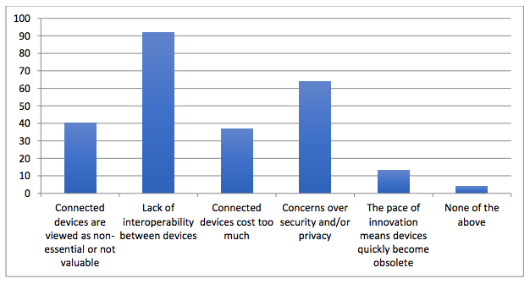
Start up: SoC wars, more Brexit PC price hikes, USB smuggling, Pixel reviewed, and more


Can we blame Facebook for this? Makes sense to some folk. Photo by outtacontext on Flickr.

You can now sign up to receive each day’s Start Up post by email. You’ll need to click a confirmation link, so no spam.

A selection of 12 links for you. Trajectorified! I’m charlesarthur on Twitter. Observations and links welcome.

How the SoC [system on a chip] is displacing the CPU • Medium

Pushkar Ranade:

»

The present decade represents a period of strategic inflection in the evolution of the semiconductor industry — the next five years are likely to see a confluence of several technology and market forces which will collectively have a profound impact on the course of the industry. These trajectories are discussed below.

…Trajectory #2: A Central Role for the GPU

Usage models of the tablet and the smartphone indicate that the GPU is the most heavily used block within SoCs like the Tegra, Snapdragon and the A8X. Since the GPU is the largest block and also consumes most of the power on the chip, it is instructive that the silicon transistor be designed to optimize the performance and power of the GPU. It is likely that design houses and foundries will make the GPU the centerpiece for transistor design and manufacturing — historically all the blocks including the GPU had to adapt a transistor that had primarily been designed for the CPU. The rapid evolution of the SoC and the increasing role of the GPU are evident in successive generations of Apple A*x family processors. The GPU on the A8X processor occupies almost a third of the die area.

«

The Intel-style CISC CPU has almost reached the end of its evolution.
link to this extract


Smuggling USB sticks • Terence Eden’s Blog

»

This is a microSD card. Currently on sale in the UK for under £14.
It can hold 32GB of information. That’s a little abstract, so let me break it down in to more understandable units.
32GB is, roughly, 30,000 minutes of music (that’s 21 days worth of listening. Or, if you prefer, 700 CDs.); 40 standard definition movies; 20 high definition movies; 35,000 novels (those books would take up over a kilometre of shelving).

What I’m trying to get at, is this. It’s quicker to send a 32GB card through the post than it is to download its entire contents. The cards are small enough to hide anywhere.

This is what happens is countries like Cuba:

»

Only about 2% of Cubans can get online, but it doesn’t matter. You don’t need the internet. The news may be a little stale by the time you read it, but it gets around. Whole stacks of HTML files from news websites are dumped onto USB drives.

«

I don’t know what will happen to the Internet. SOPA, DEA, and HADOPI all conspire to break the way we share knowledge – under the benign guise of copyright protection.

And yet all it takes is a dozen USB sticks, a few memory cards, and very little effort to break their embargo.

«

link to this extract


Brexflation: Lenovo, HPE and Walkers crisps all set for double-digit hike • The Register

Paul Kunert:

»

A second wave of double-digit price hikes are coming to a reseller or retailer near you from the start of next month, both Hewlett Packard Enterprise and Lenovo have confirmed.

Since the referendum, the UK’s currency has fallen from $1.49 per £1 to $1.21, a drop of 18.7% and many IT makers have reacted, from the cloud giants including AWS through to hardware players.

American titan HPE already raised its list price by between 6% to 10% on 1 August, and Lenovo pushed up its prices by 10% on the same date – both blamed depreciation of the pound.

Now all of Lenovo’s kit is going to jump by another 10% from 1 December for UK customers and HPE will raise its gear by 6% to 12%.

A Lenovo spokesman told The Register: “Like any global company we always take currency exchange rates into consideration in our pricing strategy.

“This is business as usual and part of the market conditions in which any international company operates. Any changes form part of our ongoing communication with our channel partners.”

«

It’s the second price rise. Wow. Apple seems to have done the same, but holding off for longer and then doing it in one single 20% hike.
link to this extract


We Predicted Trump would win – here’s how – Dataswarm

Alan Patrick:

»

So why had our system worked  when nearly all the other polls and pundits had called it wrong? Now we have had a day or so to look at the outcomes, we think there are four main reasons.

Firstly, Internet vs human polling. Our system is looking at verbatim Social Media data, from Twitter. We had come to the conclusion while monitoring previous UK general elections that people were more willing to share their true thoughts on social media than with pollsters, especially if their views were “non-PC” (in this case, pro-Trump). After the election we read that the LA Times poll, which had consistently been more pro Trump (and been roundly criticised by nearly every pundit), had been an internet poll, not using people to ask questions, and they believed (and were proved right) that people had been more honest on that. (And more recently, an article on TechCrunch showing other Social Media companies were seeing similar to us – though few put it out there ) In effect by monitoring social media, we were getting the same sort of uncensored opinions, and in that uncensored world Trump was doing a lot better than the standard polls were predicting. Also, we knew from UK elections about the “shy Tory” effect where people say one thing – typically to look good (virtue signalling as it is called) –  in public, and do another at the ballot box (To misquote Phil Ochs, Liberals are 10% left of centre in public, 10% right of centre at the ballot box).

«

I’m wary of social media analyses which claim this stuff, especially around Brexit and Trump, where the motivations would be less visible on social media (and yet stronger) because the people involved probably aren’t using it.
link to this extract


Fake news and rabbit holes: radicalization via the recommendation engine • Medium

Renee DiResta:

»

I know a handful people who have Facebook accounts that are used exclusively for research purposes. These accounts have no friends and never directly interact with other users. They have location data by default, based on the IP address that the user signed up with, and perhaps some minimal amount of A/S/L [age, sex, language] stuff required for sign-up, so Facebook has some idea of what they might want to see from the get-go. The accounts exist to observe what Facebook serves in terms of Pages, News, and Group recommendations when the individual’s direct social graph is kept to a minimum.

Groups appear to be incredibly important. If you join a Facebook Group for a particular topic, it will naturally serve you other Groups, Pages, and news content related to that topic. Join a couple more, and it’ll look at the people who are common to the groups, decide that you are probably something like them, and then suggest other Groups based on groups that they are in. So even if you’ve never directly interacted with them, what you see is influenced by what people who share this interest with you want to see. I’ve looked at this as it pertains to pseudoscience — join a “vaccine hesitant” group, and your suggestions will quickly begin to include chemtrails, anti-GMO, flat earth, anti-flouride and homeopathy groups. This isn’t unique to Facebook, it’s just affinity marketing. It’s how every site with something to sell you tries to guess at what you might like. But on Facebook, the data set is the best in the world, and the recommendations are likely to include something that you’d be curious enough to click on. It’s fair to argue that Facebook is simply giving people what they would find on their own…but, anecdotally, it actually appears to be shaping what they want as it helps them discover new things.

«

link to this extract


Facebook, in crosshairs after election, is said to question its influence • New York Times

Mike Isaac on the aftermath inside Facebook from the US election:

»

issues with fake news on the site have mushroomed. Multiple Facebook employees were particularly disturbed last week when a fake news site called The Denver Guardian spread across the social network with negative and false messages about Mrs. Clinton, including a claim that an F.B.I. agent connected to Mrs. Clinton’s email disclosures had murdered his wife and shot himself.

On Thursday, after a companywide meeting at Facebook, many employees said they were dissatisfied with an address from Mr. Zuckerberg, who offered comments to staff that were similar to what he has said publicly.

Even in private, Mr. Zuckerberg has continued to resist the notion that Facebook can unduly affect how people think and behave. In a Facebook post circulated on Wednesday to a small group of his friends, which was obtained by The New York Times, Mr. Zuckerberg challenged the idea that Facebook had a direct effect on the way people voted.

In the three-paragraph post, the chief executive cited several statistics about low voter turnout during the election.

«

Isaac’s piece is terrific journalism – he has a variety of inside sources – and as he points out, Facebook’s insistence that it didn’t influence thinking is at odds with what it tells advertisers.
link to this extract


Mark Zuckerberg – I want to share some thoughts on Facebook and the election • Facebook

El Zuck:

»

Our goal is to show people the content they will find most meaningful, and people want accurate news. We have already launched work enabling our community to flag hoaxes and fake news, and there is more we can do here. We have made progress, and we will continue to work on this to improve further.

This is an area where I believe we must proceed very carefully though. Identifying the “truth” is complicated. While some hoaxes can be completely debunked, a greater amount of content, including from mainstream sources, often gets the basic idea right but some details wrong or omitted. An even greater volume of stories express an opinion that many will disagree with and flag as incorrect even when factual. I am confident we can find ways for our community to tell us what content is most meaningful, but I believe we must be extremely cautious about becoming arbiters of truth ourselves.

As we continue our research, we are committed to always updating you on how News Feed evolves. We hope to have more to share soon, although this work often takes longer than we’d like in order to confirm changes we make won’t introduce unintended side effects or bias into the system.

«

You mean, unintended side effects like you already do through the fact that Facebook’s newsfeed is biased to attention, not accuracy, and always has been?
link to this extract


Facebook is telling everyone that they’re dead • The Verge

Casey Newton:

»

Facebook is capping one of the longest weeks in American history by telling everyone that they are dead. Log on to your profile and there’s a good chance it will have a memorial banner sitting on top of it, urging your friends and family members to remember you. “We hope people who love Casey will find comfort in the things others share to remember and celebrate his life,” the banner reads, because I am dead.

Other people who are dead include everyone.

Our condolences to everyone who is dead, and to everyone who would have mourned them, if they were not dead. But dead they are. It has been an honor and a pleasure living on this planet with you all.

Facebook did not immediately respond to a request for comment, likely because everyone there is dead.

«

Chapeau, Mr Newton.
link to this extract


IoT Security • DevicePilot

»

In this DevicePilot white paper we summarise the various aspects of security which need to be considered when designing connected products for the Internet of Things… Why exactly might you (or your users) care about security? What are you trying to prevent? What are the risks? What’s the worst that could happen? Let’s illustrate the risks with a few concrete examples:

• TriplePoint Inc. is launching a range of Smart Meters with remotely-operable power switches. If an attacker gained control over their network the risk is not just that they might shut-down the 1 million homes in which they are installed, but might also crash large part of the distribution grid by adding or removing massive loads synchronously, overwhelming the emergency services for weeks. This would result not just in huge economic damage, but in the deaths of large numbers of vulnerable people.

• Edison Motors has a range of connected automobiles which synchronise with home WiFi to get updates and allow the vehicle to be remote-managed by both the owner and the manufacturer. The risks include not “just” attack on the vehicle’s essential systems, compromising safety, but also the potential to use the cars as a “botnet” to attack other computer systems on the internet.

• Babbadoo Products have just launched their new remote baby monitoring system for at-risk neonatal infants, which includes a live video feed. Risks include––

«

OK THAT’S ENOUGH!
link to this extract


Final words – the Google Pixel XL review: life after Nexus • Anandtech

Matt Humrick and Brandon Chester:

»

In the end, the Pixel XL is a decent enough phone, but it is not the ultimate Android phone that people were likely hoping for. It fails to stand out in a crowded market and cannot claim to be the best in any single category; at best it is a jack of all trades. This is a serious problem for a phone that is positioned as and priced like a flagship phone. It also does not help that it’s missing support for microSD cards and wireless charging (it does support the USB Power Delivery specification for 18W fast charging), features that are available on the Galaxy S7 edge. There’s also no environmental protection against water and dust, which both the S7 edge and iPhone 7 Plus include. Even its exclusive software feature, Google Assistant, should be available on future Android phones. In the end, the Pixel XL is a Nexus phone with another name. It still delivers a pure Android experience and timely software and security updates, but is that enough to justify its flagship price?

«

I think Google will be able to sell all it makes, through the strength of advertising and the absence of the Note 7, but next year Samsung is going to go after them with intent.
link to this extract


The problem with voice user interfaces like Amazon’s Alexa • Econsultancy

Ben Davis:

»

Imagine I own a Google Home speaker and all my family are asking it questions. At the moment, the device only supports a single Google account.

So, my family’s media choices and shopping habits will be logged as indicative of my behaviour, and will shape future recommendations (not to mention use my payment details, access my email account etc.).

There are implications for the accuracy of future recommendations and contextual understanding (e.g. of my whereabouts), as well as the potential for misuse (by a cheeky guest).

Essentially, the device should be personal but plainly isn’t.

Google is working on a solution to allow multiple accounts, but surely problems will still arise unless these devices learn to differentiate between voices (or users regularly deactivate or lock their devices). 

Though Alexa has plenty of great reviews, it’s clear that speech analysis is nowhere near robust enough to prevent annoying UX failures. Namely, asking five times before giving up and using a graphical user interface.

This is perhaps best demonstrated by Satya Nadella’s use of Cortana at 2015’s DreamForce event. As described by Yahoo! Tech, Nadella ‘began by asking Cortana, “Show me my most at-risk opportunities. Cortana hilariously interpreted it as, “Show me to buy milk at this opportunity.”’

On Nadella’s second attempt at the command, Cortana erroenously created a reminder of some sort.

Of course, the tech will continue to improve, and currently works best when limited to a number of common commands (music, shopping list etc.), but for someone with a terribly flat telephone voice like myself, misunderstanding is something I have to consider.

«

link to this extract


Russian hackers launch targeted cyberattacks hours after Trump’s win • Motherboard

Lorenzo Franceschi-Bicchierai:

»

Around 9 a.m. ET on Wednesday, the hackers sent a series of phishing emails trying to trick dozens of victims into opening booby-trapped attachments containing malware, and clicking on malicious links, according to security firm Volexity, which observed and reported the five attack waves. The targets work for organizations such as Radio Free Europe / Radio Liberty, the Atlantic Council, the RAND Corporation, and the State Department, among others.

One of the phishing emails included a forwarded message appearing to be from the Clinton Foundation, apparently sent by a professor at Harvard. The email used the professor’s real address, and according to Volexity’s founder Steven Adair, it’s likely that the professor got hacked and the attackers then used his account to send out the phishing emails. (The professor did not respond to a request for comment.)

«

Wasn’t flagged by antivirus, but that’s because it was a link to a zip file with the malware. Can we say again that attachments are harmful?
link to this extract


Errata, corrigenda and ai no corrida: none notified