Start up: uncommenting The Verge, Siri v lights, the washing machine trials, web ad delights, and more


Life without the Apple Watch: which word fits? Photo by alexknowshtml on Flickr.

A selection of 8 links for you: laugh and point at the screen as though you found something funny. I’m charlesarthur on Twitter. Observations and links welcome.

We’re turning comments off for a bit » The Verge

Nilay Patel, editor-in-chief:

What we’ve found lately is that the tone of our comments (and some of our commenters) is getting a little too aggressive and negative — a change that feels like it started with GamerGate and has steadily gotten worse ever since. It’s hard for us to do our best work in that environment, and it’s even harder for our staff to hang out with our audience and build the relationships that led to us having a great community in the first place.

That’s a bad feedback loop, and we want to stop it. So we’re going to call timeout for a while and turn comments off by default on all posts for the next few weeks. It’s going to be a super chill summer.

We’re still dedicated to community, so our forums will remain open — in fact, we’ll be doing more to promote great posts from the forums on our front page and on our social channels than ever before. And we’ll be turning comments on on a post-by-post basis when we want to open things up, so look for that.

But in the meantime, let’s all take that minute and relax. Let someone else curate your playlists, you know? Comments will be back. There will always be another party. Freedom lasts forever.

I refer the honourable ladies and gentlemen to my analysis from last November of how Gresham’s Law explains precisely this phenomenon. We’ll see how the “comments will come back, honest” works out.

And here’s the Verge forum discussing it. Guess which tech company the discussion quickly degenerates into accusing The Verge of favouring? It’s the tech version of Godwin’s Law, and just as corrosive.


Aparna Chennapragada, head of Google Now, discusses apps, search, AI » Re/code

Mark Bergen:

Chennapragada spelled out the three-pronged direction of the product — what she called the “bets” her team is taking. The first bet was embedding Now with Google’s full “Knowledge Graph” — the billions-thick Web of people, places and things and their many interconnections.

The second is context. Now groks both the user’s location and the myriad of signals from others in the same spot. If you enter a mall, Now will tailor cards to what people in that mall typically ask for. “Both your feet are at the mall. You shouldn’t have to spell it out,” Chennapragada said. “Why should I futz with the phone and wade through 15 screens?”

And this is where the third benchmark for Now comes in: Tying that context to the apps on your phone, or ones you have yet to download. In two years, Google has indexed some 50 billion links within apps. In April, it began listing install links to apps deemed relevant in search. Indexed apps will be included in Now on Tap when it arrives in the latest Android version this fall.

Your phone knows you’re at the mall. Is this a place where I need my phone to know I am? I find these scenarios puzzling, because “things I might be at the mall to do” are truly difficult to narrow down, and enunciate, and likely aren’t the same between visits. The times I’d need Google Now to leap into action would be when I found myself somewhere unscheduled and without transport. That’s when I want help.


Hacking Team responds to data breach, issues public threats and denials » CSO Online

Steve Ragan:

Newly published documents from the cache include invoices for services with Italian law enforcement, Oman, South Korea, UAE, Kazakhstan, Mongolia, Lebanon, Germany, Saudi Arabia, Mexico, Brazil, Singapore, Egypt, and Vietnam. The total value of the invoices is €4,324,350 Euro.

The hack went without comment for several hours, until members of Hacking Team woke on Monday morning. One of the company’s staffers, Christian Pozzi, offered several comments on the breach, despite his statement that he couldn’t comment.

“We are awake. The people responsible for this will be arrested. We are working with the police at the moment,” Pozzi wrote.

“Don’t believe everything you see. Most of what the attackers are claiming is simply not true…The attackers are spreading a lot of lies about our company that is simply not true. The torrent contains a virus…”

Pozzi took to Twitter to repeat the same message for the most part, the key points being that Hacking Team is working with law enforcement on this matter, that the massive torrent file has malware in it (it doesn’t), customers are being notified, and that his company has done nothing illegal: “… We simply provide custom software solutions tailored to our customers needs…”


My week without Apple Watch » Tech.pinions

Ben Bajarin:

When I had the Apple Watch on, I averaged 28 fewer times I looked at my iPhone each day. This is a good proxy of how notifications on the watch help minimize the number of times I need to look at my phone to see the nature of each notification.

After reflecting on what looking at my phone fewer times meant in my daily life, I concluded the experience was less disruptive. Don’t get me wrong — I love my iPhone. It is my primary computer. However, having to respond to your phone or pull it out of your pocket or bag for each phone call or text message turns out to be fairly disruptive. As I’ve observed my wife’s behavior as well with her Apple Watch, she articulates similar feelings. As she is out and about, not having to fumble through her purse each time her phone dings is a less disruptive experience in many daily situations. Particularly since not all notifications are important or in need of an immediate response. However, without the use of the Apple Watch, you would not know this without getting your phone out and looking at it. This is an area of immense value that can only be understood once experienced.

I’d agree with this: I’m using an Apple Watch, and the value in not having to have your phone right there is substantial – but also difficult to quantify, because of course you can do without it. Filtering notifications matters; but being able to see or respond to the ones you deem urgent matters a lot.

(If you have an Apple Watch, Bajarin is working with a company called Wristly to do research; you could join.)


Hats off to web advertising. No, really. » WSJ

Chris Mims:

Vast advertising markets that had to decide what ad to show in milliseconds meant that from the very beginning of internet advertising, unprecedented amounts of data were flowing into growing quantities of computing power.

Like a kind of Manhattan project for data, solving the problem of ad matching and delivery meant taking formerly obscure areas of research and transforming it into something everyone could use. “Powerful machine learning techniques were just starting to be developed in academia,” says [Gokul] Rajaram [formerly lead engineer at early ad network Juno, then Google and Facebook, and now at Square], but ad networks would have been impossible without them.

As I researched, I discovered the alumni of ad tech platforms are everywhere, launching startups and leading projects within established companies. What they all have in common is an unusual and broadly powerful toolkit that is being applied to everything from agricultural drones and cybersecurity to food safety and the improvement of hiring practices.

It’s a fair point: we love to hate ads, but the necessity of making them work has driven a lot of improvement.


Here’s what it’s like to control your lights with Siri » The Verge

Jacob Kastrenakes:

If you’re anything like me, you’ll immediately begin using this ability to mess with the people you live with: turning off lights so that they’re sitting in a dark room, turning on a light while they’re set up to watch Netflix. I didn’t see the Siri control as much more than a novelty at first, but the utility became more apparent once I set up two lamps in the same room. At that point, it became easier to turn them on and off simultaneously with Siri than to walk over to each one individually. It’s a basic start, but there’s so much more you could do once additional pieces of the home become connected.

Must be a hell of a big room for it to be easier to talk to the phone than to stand up. Also, what is the “so much more” you can do? Lights are the classic “wrong application”: we usually turn lights on when we enter a room, turn them off when we leave. In between, there’s hardly ever anything we want to do to them – and if we do, then it’s either a short reach, or a couple of steps. Pretending otherwise is automation for its own sake.

Home automation still needs really simple sensors and actuators that we can fit ad-hoc to things we choose, not devices where it’s built-in but not actually useful.


Chaebol slapfight: Samsung, LG in first trial over washing machine vandalism » BusinessKorea

Cho Jin-young:

In the first trial between the two Korean home appliance giants, the legal representatives for LG gave an item-by-item rebuttal of the allegations that CEO Cho Seong-jin and two other officials at the company broke the doors of three Samsung washing machines intentionally. 

“The doors of the front-door washing machines are big and heavy, so they can naturally tilt downward to some extent and swing a little bit, which can be easily found in other washing machines,” a legal representative for LG appealed.

The attorney also raised suspicions about the authenticity of the damaged washing machines presented to the court as evidence, arguing that the products seemed to have had more scratches than before, and that they could not be the results of Cho touching the washers.

What’s “de minimis non curat lex” in Korean? (Also: “first” trial?)


YouTube is the No.1 music streaming platform – and getting bigger » Music Business Worldwide

Scary news for those who don’t feel YouTube is paying music rights-holders enough: it’s the biggest music streaming service on earth, and it’s growing faster than Spotify or any of its rivals.

That’s according to MBW analysis of the latest market stats out of the UK and US, which show that YouTube increased its market share of total on-demand streams in the first six months of this year on both sides of the Atlantic.

In the first half of 2015 in the US, overall on-demand streams grew 92.4% year-on-year to 135.2bn.

The majority of this growth was down to YouTube (plus Vevo and other video services), which saw a stream volume increase of 109.2% to 76.6bn.

Though it seems like Vevo is a big player in this. But yes, YouTube swamps everything else.


Start up: bitcoin for Greece?, news apps’ key problem, when hamburger menus are good, and more


Coming to the UK on 14 July? Apple Pay photo by DopiesLife.com on Flickr.

A selection of 7 links for you. Use them wisely. I’m charlesarthur on Twitter. Observations and links welcome.

Why it’s totally okay to use a hamburger icon » UXmatters

Steven Hoober:

Not too long ago, I was observing a test in which the subject was a mechanic in a truck repair shop. He didn’t have a computer at home, had no access to a smartphone, so had no base of knowledge. But we gave him a smartphone and an app to try out. He did fine with the big, obvious bits on the screen and performed every task. Then, we got to the tricky part. We asked him to reconnect the phone to the IoT (Internet of Things) device we were testing, then refresh the display on the screen.

“Hmm… I don’t see it. Maybe in here?” he said, tapping Menu, where he found the Refresh button. He said, “Ah, there it is,” as he tapped it.

I’ve experienced this sort of observation over and over again. Why? Well, first because of a fundamental behavior of mobile-device users, who do not scan a page top to bottom and left to right, but always gravitate toward the center. In Figure 3, you can see a chart showing where users tapped when presented with a scrolling list of selectable items.

user tapping

The same preference for the center applies to tap accuracy, speed, and comprehension. When designing, I assume users view and read the center, then move outward if they do not find the information they need.

This is actually starting to become a design principle of mine. Assume that users focus on and interact with things at the center of a page, and make sure that you can live with their missing or ignoring things at the top and bottom edges.

Some pushback in the comments: how do you get back from the hamburger?


The problem every news aggregation app faces » Medium

Simon Owens:

The chief problem I have with many news apps is they don’t deliver the level of customization that I can get on Twitter, Facebook, and other social networks. I launched my Twitter account in late 2008. In the intervening years I’ve accumulated a list of over 700 people whom I follow, and for a significant portion of those people I wouldn’t be able to remember my reasoning for following them. In some cases they’re colleagues I’ve worked with. In others they’re writers and journalists I admire. But there are still plenty more I followed because something in their profile caught my eye or they authored an article I enjoyed but have long since forgotten.

But despite not having a complete understanding of all my follow choices, my Twitter feed is a well-oiled machine, one that produces a rich tapestry of news and commentary (and plenty of jokes) every time I open it.

True, but it’s taken him six years to reach that level of aggregation on Twitter. News apps don’t get that. But his key point is that

“The problem is that news tastes go beyond mere categories and keywords.”

And that’s the crux of it.


Some miners generating invalid blocks » bitcoin.org

For several months, an increasing amount of mining hash rate has been signaling its intent to begin enforcing BIP66 strict DER signatures. As part of the BIP66 rules, once 950 of the last 1,000 blocks were version 3 (v3) blocks, all upgraded miners would reject version 2 (v2) blocks.

Early morning UTC on 4 July 2015, the 950/1000 (95%) threshold was reached. Shortly thereafter, a small miner (part of the non-upgraded 5%) mined an invalid block – as was an expected occurrence. Unfortunately, it turned out that roughly half the network hash rate was mining without fully validating blocks (called SPV mining), and built new blocks on top of that invalid block.

Note that the roughly 50% of the network that was SPV mining had explicitly indicated that they would enforce the BIP66 rules. By not doing so, several large miners have lost over $50,000 dollars worth of mining income so far.

All software that assumes blocks are valid (because invalid blocks cost miners money) is at risk of showing transactions as confirmed when they really aren’t. This particularly affects lightweight (SPV) wallets and software such as old versions of Bitcoin Core which have been downgraded to SPV-level security by the new BIP66 consensus rules.

Now bitcoin is getting the inertia problems of widespread use and software updates.


Leak suggests iPhone 6s and 6s Plus will be able to capture 4K video » MobileSyrup.com

Igor Bonifacic:

If a new leak is to be believed, the next iPhone will feature a 12 megapixel rear-facing camera that is able to capture 4K video.

The leak comes courtesy of anonymous poster on China’s Sina Weibo website.

If true, that will mean that the 6s and 6s Plus will boast cameras that are a significant upgrade from the already excellent shooters that are found on their predecessors.

While 4K TVs and computer displays still have a long way to go before they’re ubiquitous, there’s a case to be made that consumers could still get use out all those extra pixels. Current smartphones, TVs and computers might not be able to display 4K content at its native resolution, but consumers will still see an improvement in visual quality through downsampling.

A couple of things. (1) “If a new leak is to be believed”? This takes arms-length writing to an extreme. Later in the piece he says “Of course, it’s impossible to verify a rumour like this one”, which is patently untrue. You just need much, much, much better connections. (2) It can’t be surprising that the next iPhones will have better cameras. The only question will be how much better. (3) I’d like a clearer explanation of how it’s useful to shoot video at that resolution.


Apple Pay expected to go live in the U.K. on July 14th, £20+ transactions starting this fall » 9to5Mac

Mark Gurman:

Apple appears to be planning to enable its Apple Pay iPhone mobile payments service in the United Kingdom on July 14th, according to sources at multiple retailers. Apple has informed some Apple Retail employees in the U.K. that Apple Pay support will go live on that Tuesday, while an internal memos for supermarket Waitrose plus an additional retail partner indicate the same date…

Apple will also begin training its U.K staff on supporting Apple Pay on July 12th.

Given that the UK has widespread availability of NFC terminals, the UK could quickly become the largest location for Apple Pay payments – the penetration of iOS devices is high (32% or so of smartphones).

Vaguely related: it’s 20 years since Mondex tried to create cashless shopping in Swindon. I was there.


Huawei says Honor brand on track to sell 40 million smartphones » Chinadaily.com.cn

Huawei Technologies Co Ltd’s Honor brand has sold 20m smartphones in the first half of 2015 and by should reach its goal of 40m shipments by the year end, double the 2014 figure.

Honor’s sales amounted to $2.6bn of revenue during the first half of the year, Honor President George Zhao said at the launch of the Honor 7 phone in Beijing.

Huawei, the world’s No. 4 handset maker, has invested heavily in the past two years to establish Honor as a stand-alone brand to compete against Beijing-based Xiaomi Inc to win over young, fashion-conscious customers.

Zhao said that he expected 15%, or 6m, of the unit’s total sales this year to come from overseas, with the majority coming from China.

Since you’re wondering, that gives the Honor an average selling price (ASP) of $130 – which puts it some way below the top-end Android price, and lower even than Lenovo.


Fearing return to drachma, some Greeks use bitcoin to dodge capital controls » Reuters

Jemima Kelly:

Although absolute figures are hard to come by, Greek interest has surged in the online “cryptocurrency”, which is out of the reach of monetary authorities and can be transferred at the touch of a smartphone screen.

New customers depositing at least 50 euros with BTCGreece, the only Greece-based bitcoin exchange, open only to Greeks, rose by 400% [translation: tripled – CA] between May and June, according to its founder Thanos Marinos, who put the number at “a few thousand”. The average deposit quadrupled to around 700 euros.

Using bitcoin could allow Greeks to do one of the things that capital controls were put in place this week to prevent: transfer money out of their bank accounts and, if they wish, out of the country.

“When people are trying to move money out of the country and the state is stopping that from taking place, bitcoin is the only way to move any value,” said Adam Vaziri, a board member of the UK Digital Currency Association.

The problem is that in order to translate your euros into bitcoin, you have to find someone willing to take your euros – and you also have to have the euros available. It’s getting money out of the Greek banks that has been the problem lately. And this remains a minority sport.


Start up: Apple Music’s likely effects, no Paypal in Greece, how Bitstamp was hacked, and more


Of 58 aboard, only 15 survived. But was the crash due to machine or human error?

A selection of 8 links for you. Use them wisely. I’m charlesarthur on Twitter. Observations and links welcome.

Why the next few months of Apple Music will throw up a few surprises » Music Industry Blog

Mark Mulligan:

As we revealed on our MIDiA Research report on Apple Music back in March 28% of iOS users stated they were likely to pay for the service. Among downloaders the rate is 39% and for existing subscribers that rate rises to 62%. Consumer surveys of course always over-report so we shouldn’t expect those rates of paid adoption but the relative values are interesting nonetheless.

Given that 50% of existing subscribers are iOS users the implications are that a big chunk of Spotify et al’s subscribers will at the very least try out Apple’s 3 month trial, which is plenty enough time to get build a comprehensive library of playlists and to get hooked. But there is also going to be a big wave of downloaders that do not currently subscribe that will try it out.

As the iOS 8.4 update virtually pushes iTunes Music users into starting the trial on updating, expect pretty widespread uptake of the trial. Apple reached 11 million users for iTunes radio within 5 days of launch, 21 million within 3 months. Apple Music has had a far bigger build up and is much more deeply integrated into iOS so a fairly safe bet is that those numbers will at the very least be matched.

It’s getting people to pony up that’s hard. Adding Android users (with Apple Music for Android in autumn) might just be the icing on the cake; iOS is where the numbers and easy money will be.

Mulligan points to other surprises too – read on there.


Reddit’s AMA subreddit down after Victoria Taylor departure » Business Insider

Biz Carson:

The iAMA and Science subreddits both were set to private today after Reddit’s director of Communications, Victoria Taylor was allegedly dismissed. In a Reddit thread about her departure, she replied that she was “dazed” and “hopefully” plans to stay in the PR field.

Reddit and Taylor have not yet responded to request for comment.

One of Taylor’s job duties was coordinating the site’s popular AMAs.  Two of the site’s most popular posts ever are AMAs: the one with Barack Obama and a conversation with a man with two penises. The AMA subreddit became such a popular section of the site that Reddit eventually spun it out into its own app.

Something’s up at Reddit; it’s either going to come through this much stronger, or run into the sand.


40 states line up with Mississippi in Google Adwords pharma scrap » The Register

Andrew Orlowski:

Attorneys General representing 40 US states have filed an amicus brief backing Mississippi attorney general Jim Hood’s investigation into Google.

In December, the giant multinational sued the state of Mississippi after it had opened an investigation into Google’s business practices (claiming Hood’s complaints did not come under state law jurisdiction), and earlier this year a District Court froze this investigation.

The attorneys say if the freeze is upheld, it will have a chilling effect on investigative subpoenas across the US.

Hood’s 79-page subpoena inquires mainly into Google’s advertising practices, focussing on the sale of illegal and controlled substances.

Four pages consist of inquiries into how Google deals with IP enforcement. It follows from a 2011 non-prosecution agreement (NPA) between Google and the FBI, the FDA and Rhode Island into rogue drug traffickers, who used Google Adwords to move their wares. Google agreed to a $500m fine, $230m of which was funnelled to Rhode Island.

The NPA lapsed in 2013, three months early, with no indication from Federal authorities that Google had actually complied. That’s when the states got serious.

This is an odd case. Hood comes across as a little obsessed (but is that bad in a lawman?), but Google comes across as vindictive – and not a little defensive.


Bitstamp Incident Report (PDF) » Bitstamp

The bitcoin exchange had 18,000 BTC, worth (then) about $5m, stolen:

On 9 December 2014, Bitstamp’s Systems Administrator, Luka Kodric, received a phishing email to his Gmail account. Unlike some of the others targets, Kordic did have access to Bitstamp’s hot wallet. The email header had been spoofed to appear as if it had been sent from konidas@acm[.]org, although it was actually received from a Tor exit node [the email chain and header details can be seen in full at Appendix A].

ACM is the Association for Computing Machinery, which describes itself as the world’s largest educational and scientific computing society. The sender was offering Mr. Kodric the opportunity to join Upsilon Pi Epsilon (UPE), the International Honour Society for the Computing and Information Disciplines.

The UPE site is hosted within the acm.org domain. On 11 December, as part of this offer, the attacker sent a number of attachments. One of these, UPE_application_form.doc, contained obfuscated malicious VBA script. When opened, this script ran automatically and pulled down a malicious file from IP address 185.31.209.145, thereby compromising the machine.

As the security researcher The Grugq observed, “Computer security is such an unsolved problem that Bitstamp lost $5m because someone had macros enabled in Microsoft Word.”


The (slight) rise of _nomap » OpenSignal blog

Samuel Johnson, on OpenSignal’s checking of how many Wi-Fi networks added the suffix “_nomap” to stop Google mapping their location:

Wifi networks with nomap

This graph also shows a rise beginning at the end of 2013 and continuing into 2014. Edward Snowden’s revelations about the NSA’s privacy incursions occurred during the summer of 2013 – and so it is possible that the heightened awareness about privacy issues could have led to more people taking care that Google was not recording their Wi-Fi hotspot. However, compared to the number of global Wi-Fi networks detected by OpenSignal, it is clear that the number that adopted Google’s solution is very small.

So why is this? Obviously it was deeply concerning that Google were tracking payload data – but it is not in itself concerning that they are collecting Wi-Fi SSIDs (after all, this is what we at OpenSignal do). Those technologically savvy enough to have followed the story (and continued to do so months after the initial outburst of outrage) will know that Google had publicly pledged to stop tracking Wi-Fi payload data, and so any appending _nomap to their Wi-Fi hotspots would not make any difference to that.


We’ve finally hit the breaking point for the original Internet » The Washington Post

Brian Fung:

It’s finally happened. The North American organization responsible for handing out new IP addresses says its banks have run dry.

That’s right: ARIN, the American Registry for Internet Numbers, has had to turn down a request for the unique numbers that we assign to each and every smartphone, tablet and PC so they can talk to the Internet. For the first time, ARIN didn’t have enough IP addresses left in its stock to satisfy an entire order — and now, it’s activated the end-times protocol that will see the few remaining addresses out into the night.

The end of IPv4 has been forecast for a few years now. Looks like it’s actually going to happen, and we’ll move to IPv6.


PayPal no longer works in Greece—and why that matters » Quartz

Shelly Banjo:

Adding to their list of woes, Greeks can no longer use their PayPal accounts.

Limits on how much money Greeks can take out of banks put in place by their debt-stricken government as it negotiates with lenders have effectively crippled the online payment service, which relies on traditional banks and credit cards to transfer money.

According to a PayPal spokesman:

Due to the recent decisions of the Greek authorities on capital controls, funding of PayPal wallet from Greek bank accounts, as well as cross-border transactions, funded by any cards or bank accounts are currently not available. We aim to continue serving our valued customers in Greece in full, as we have for over a decade.

Except that they can’t serve their valued customers. So, why does it matter?

PayPal’s shutdown in Greece reminds us how difficult it is to disintermediate banks from the flow of money.

Well duh. Did you think it was all going to bitcoin? As the Bitstamp link above shows, good luck with that.


Faulty credit card-sized connector led to crash of 20-tonne plane » Bloomberg Business

Tim Culpan:

A faulty connector about the size of a credit card helped trigger a series of mechanical and human failures that led to the crash of a 20-ton aircraft in February, killing 43 people, investigators in Taiwan found.

Microscopic tests of a soldered connector joint on the TransAsia Airways Corp. plane engine showed potential cracking, and the connector failed post-crash tests, the Aviation Safety Council said in a report today.

That failure is at the heart of why the ATR72 twin-propeller plane incorrectly sounded a cockpit warning and an engine adjustment known as autofeather. That set in motion a series of pilot errors that eventually crashed the aircraft into a downtown Taipei river Feb. 4.

The autofeather made the engine ineffective. Pilot error then played a big part: they shut down the other engine, wrongly thinking it was the affected one.

How do you design faults like those out of a system? First the machines screw up, then the humans.


Start up: Wi-Fi password sharing?, machine intelligence smart and stupid, Pebble Time review, and more


You’ll never believe what happens if you play it backwards. Photo by Janitors on Flickr.

A selection of 9 links for you. Show them eagerly to the person beside you! I’m charlesarthur on Twitter. Observations and links welcome.

UH OH: Windows 10 will share your WiFi key with your friends’ friends » The Register

Simon Rockman:

A Windows 10 feature, Wi-Fi Sense, smells like a security risk: it shares WiFi passwords with the user’s contacts.

Those contacts include their Outlook.com (nee Hotmail) contacts, Skype contacts and, with an opt-in, their Facebook friends. There is method in the Microsoft madness – it saves having to shout across the office or house “what’s the Wi-Fi password?” – but ease of use has to be teamed with security. If you wander close to a wireless network, and your friend knows the password, and you both have Wi-Fi Sense, you can now log into that network.

Wi-Fi Sense doesn’t reveal the plaintext password to your family, friends, acquaintances, and the chap at the takeaway who’s an Outlook.com contact, but it does allow them, if they are also running Wi-Fi Sense, to log in to your Wi-Fi. The password must be stored centrally by Microsoft, and is copied to a device for it to work; Microsoft just tries to stop you looking at it. How successful that will be isn’t yet known.

“For networks you choose to share access to, the password is sent over an encrypted connection and stored in an encrypted file on a Microsoft server, and then sent over a secure connection to your contacts’ phone if they use Wi-Fi Sense and they’re in range of the Wi-Fi network you shared,” the Wi-Fi Sense FAQ states.

Has been on Windows Phone for ages, yes, but most WP users don’t know any significant number of other WP users (because they’re so few). Not so with Windows. Microsoft says it only allows internet access and not LAN access – via port restrictions? That’s going to get hacked for sure.

Or could people maliciously spread their Wi-Fi details to try to sniff people’s viewing habits and details?


Pebble Time review » Wareable

Sophie Charara:

First things first, the Pebble looks better in real life than the pics you’ll have seen online. The black model is a little boring but will look neat under suit sleeves – for the record, we prefer the red and black Time.

Admittedly, the Time is plasticky, with a stainless steel bezel, but it retains the toy-like charm of the original Pebble while adding friendlier, more unisex curves. It’s very light at just 42.5g including the standard strap, 20% thinner at 9.5mm and the new slightly curved body helps to make it comfortable to wear on the wrist.

It’s amazing how many smartwatch manufacturers are satisfied with making devices that sit flat on top. The Time is the kind of smartwatch you can forget you’re wearing, until it vibrates.

I bought an original Pebble on Kickstarter. This? Looks like a toy compared to the Apple Watch. Not quite half the price, but really nothing like half as attractive.


Apple Sim iPads change the international data roaming game » Fortune

This morning, Apple and GigSky teamed up to offer travelers the ability to instantly connect to a local data network in more than 90 countries and territories upon touchdown—no need to visit a kiosk, talk to a service agent, or really, do anything at all. Instead, iPads with AppleSIM cards will automatically offer the option to sign up for a data plans as soon as a local network is in reach. (The GigSky network includes most of Western Europe, from France and Germany to the Netherlands; Australia; South Africa; parts of the Middle East; and beyond.)

Because travelers are accessing onto local networks, rather that roaming from their domestic carrier, prices are impressively affordable as long as you’re traveling on the beaten path. Entry-level data plans begin at just $10, covering anywhere between 10MB (in Papua New Guinea) to 75 MB (in Italy); in countries with better access, the premium plans top out at 3GB for $50. By comparison, AT&T’s best deal currently charges $30 for 120 MB or $120 for 800 MB.

Latest iPads only have them preinstalled, although for older ones you can get Apple SIMs in its stores, apparently.


Superconductivity record bolstered by magnetic data » Scientific American

Edwin Cartlidge:

The long-standing quest to find a material that can conduct electricity without resistance at room temperature may have taken a decisive step forward. Scientists in Germany have observed the common molecule hydrogen sulfide superconducting at a record-breaking 203 kelvin (–70 ˚C) when subjected to very high pressures. The result confirms preliminary findings released by the researchers late last year, and is said to be corroborated by data from several other groups.

Some physicists urge caution, however. Ivan Schuller at the University of California in San Diego, says that the results “look promising” but are not yet watertight.

Pressure of 1.5 million atmospheres. Don’t hold your breath for this one.


Why the BBC is wrong to republish ‘right to be forgotten’ links » The Guardian

Julia Powles:

The reaction to [BBC Online managing editor Neil] McIntosh’s post was predictable, inaccurate and devastating. The Times led with “BBC lists stories on abusers and rapists hidden under ‘right to be forgotten’”, gratuitously highlighting two stories.

The first was a 12-year-old story about a settlement between an alleged rape victim and the Catholic church, over incidents that occurred a half-century ago. The long-deceased abuser clearly couldn’t have filed the obscurity request with Google – leaving, rather less salaciously, the victim.

The second case concerned a nanny jailed for child abuse. Even a cursory Google search coupled with the basics of the Rehabilitation of Offenders Act would have told the journalist that an unspent conviction for such an offence clearly denied any reasonable claim to delisting. Caution raised, a bit more searching would have revealed the truth: that the conviction was overturned by the Court of Appeal. That former nanny has been exculpated under the law of the land – but not by Google and not, it seems, by the press either.

Other publications followed suit. Boing Boing drew attention to a rape story. Given it concerned a fairly recent conviction in 2012, clearly the sex offender has no entitlement to be delisted.

But what about his friend who was also named in the article because he happened to be in the house where the attack took place?

The “right to be forgotten” is so poorly understood, which frustrates the hell out of me. (See the comments under the article.) I wrote an explanation of what it is, and what it is not; please, before you discuss the topic with me (or anyone), read and absorb it. The topic is simple. It just takes a bit of thought.


Growing conspiracy theory: is spy equipment really included in Samsung smartphone batteries? » BusinessKorea

Cho Jin-young:

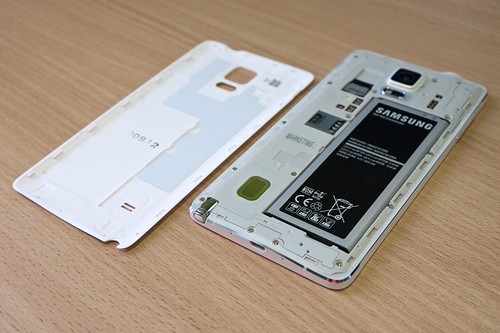
A video circulating on Facebook and YouTube that was posted at the beginning of the last week of June shows that after tearing off a sticker that wraps around the battery of the Galaxy S4, the man in the video points to a small coil inside, saying, “This is the spy equipment.”

He remarked, “Samsung can record pictures on your smartphone and overhear your calls through the coil shaped like this antenna,” adding, “So, you’d better tear off the sticker that wraps the battery first and use the phone.”

In fact, this video attracted 12 million views on Facebook only four days after it was initially posted, and around 300,000 people reportedly shared the video.

However, local media outlets pointed out that this conspiratorial video originated from a misunderstanding about the Near Field Communication (NFC) antenna, a communication technology that makes it possible to transmit different kinds of wireless data to a distance of 10 cm.

Would be fun to know how weird ideas like this get started. I’ve seen a few incoming search queries on this to this blog, and wondered what was going on (it was because I wrote about Samsung obviously knowing whether people use replacement batteries).


DRAM spot prices hit 28-month low, says Taiwan Central News Agency » Digitimes

Jessie Chen:

Spot prices for 4Gb DDR3 chips already declined 17.55% in the second quarter, after falling 12.77% in the first quarter, the report quoted DRAMeXchange as saying.

Since 2015, DRAM spot prices have been dragged down by sluggish PC sales and a slowdown in smartphone demand, the report noted.

Hadn’t heard about this slowdown in smartphone demand anywhere else. China has, but elsewhere? Dram prices are often an early warning though.


Google apologises for Photos app’s racist blunder » BBC News

Google says it is “appalled” that its new Photos app mistakenly labelled a black couple as being “gorillas”.

Its product automatically tags uploaded pictures using its own artificial intelligence software.
The error was brought to its attention by a New York-based software developer who was one of the people pictured in the photos involved.

Google was later criticised on social media because of the label’s racist connotations.
“This is 100% not OK,” acknowledged Google executive Yonatan Zunger after being contacted by Jacky Alcine via Twitter.

“[It was] high on my list of bugs you ‘never’ want to see happen.”

Machines can’t be racist, of course; but quite how Google is going to prevent this happening again is an open question. Neural network/deep learning like this isn’t something you can tweak directly. You can’t really peer inside it. Great when it’s drawing arcane pictures, not good when it’s mislabelling pictures.


Could this computer save your life? » CNN

Jillian Eugenios:

“In one panel of scans that we looked at, when you look at the number of times that radiologists sent someone home with a clean bill of health, about 7% of the time that patient was ultimately found to have cancer,” said John Zedlewski, a data scientist with Enlitic, a medical technology company.

When Zedlewski used Enlitic’s algorithm against the same panel, there weren’t any mistakes.

How does it work? Enlitic’s technology uses machine learning — which some say is a version of artificial intelligence. It takes medical information from one patient — whether it’s a CT scan, an X-ray or details about, say, a tumor — and then converts it into a mathematical representation. It’s then added to a large pool of data and compared to other patients who have experienced similar issues.

Think of it as crowdsourcing your symptoms. And not just with one or two people, but millions. The more data the computer has, the smarter it gets, and the more accurate the diagnoses.

At least that’s the dream.

Seems to have a large base of data.


Start up: Apple’s antitrust, querying Google, Microsoft’s coming writedown, unprivate faces, and more


Things like this can make Sony rich. Photo by Steys on Flickr.

A selection of 8 links for you. Use them wisely. I’m charlesarthur on Twitter. Observations and links welcome.

Facial recognition privacy talks: why I walked out » Slate

Alvaro M. Bedoya:

On June 16, consumer privacy advocates walked out of talks to set voluntary rules for companies that use facial recognition technology. They explained that they were withdrawing from the talks because industry would not agree to critical privacy protections. I was one of those advocates.

There is a growing divide in Americans’ right to privacy. As checks strengthen on government surveillance, tech companies are evading even basic limits on their ability to collect, share, and monetize your data. At the heart of this divide is an increasingly formidable force: industry lobbying.

Facial recognition lets companies identify you by name, from far away, and in secret. There’s little you can do to stop it. You can’t change your fingerprints or the unique dimensions of your face—not easily. And while you leave your fingerprints on only the things you touch, every time you step outside, your face appears, ready for analysis, in the video feeds and photographs of any camera pointing your way.

And there are more of those cameras than ever before.

The US’s lack of data protection law is beginning to catch up with it – in fact, it has run right past it and now looks ready to lap it.


Sony to invest billions in its image sensor business » AndroidAuthority

Rob Triggs:

To raise the necessary funds for this expensive investment, Sony will be issuing new shares for the first time since 1989, which caused an 8.25% fall in Sony’s share price. The company is planning to raise around $3.6bn through a combination of selling new shares and convertible bonds.

Of the total, much of the proceeds are earmarked for investment into additional production capacity for smartphone image sensors, such as those used in Apple and Samsung products, as well as its own handset line-up. Despite high demand for Sony’s cutting edge camera modules, its current production capacity is preventing the company from maximising its revenue.


Appeals court upholds Apple price-fixing conspiracy in ebook case » Fortune

Jeff John Roberts:

A long-running fight between Apple and the Justice Department is finally over after an appeals court affirmed a ruling that the iPad maker fixed book prices.

An appeals court in New York on Tuesday upheld a 2013 verdict that Apple organized an illegal conspiracy with five book publishers to raise the price of ebooks, noting that so-called horizontal price-fixing is “the supreme evil of antitrust.”

The ruling ends a long-running legal fight between Apple and the U.S. Justice Department, and paves the way for Apple to start issuing payouts to consumers in a related class-action settlement.

Apple set aside $450m in case it lost this one. One of Steve Jobs’s lousiest-ever ideas. Though others in the executive chain need to accept responsibility too. And continuing the antitrust theme…


Yelp researchers take aim at Google search results » LA Times

Daina Beth Solomon:

Yelp said the new report, which it presented to European regulators Friday, could put pressure on the investigation and encourage additional research.

“We believe these revelations are timely given the active inquiries into these very issues by antitrust authorities,” said Luther Lowe, Yelp’s vice president of public policy.

But others said the report wouldn’t prompt serious action, saying it did not prove a deliberate effort by Google to harm its rivals.

“I think hyperbole has gotten ahead of the fact,” said David Balto, an antitrust lawyer in Washington and former policy director for the FTC. “There’s a long journey to take before anyone can say this violates the competition laws.”

The research by Yelp instead appeared to be an attempt to “hobble” Google, he said, forcing the company to spend time and money justifying its conduct.

Here’s the report. The point to note is that it echoes what Google itself found during its own internal studies; it had to change its approval criteria before it could justify the changes favouring its own services.

Oh, and David Balto? As Luther Lowe (Yelp’s PR chief) pointed out, he’s been a paid writer for Google, but somehow forgot to mention it in a pro-Google article he wrote. Hyperbole and fact indeed.


Samsung GS6 US sales bode well for Android June quarter » Kantar Worldpanel

“The first full month of sales of the Galaxy S6 allowed Samsung to regain the market lead in the US and grow its share of Android sales from 52% in the three months ending in April to 55% for the three months ending in May,” reported Carolina Milanesi, chief of research at Kantar Worldpanel ComTech. “Samsung’s share of the US smartphone market grew period-over-period, as the Galaxy S6 became the third best-selling smartphone in the US, after the iPhone 6 and the Galaxy S5.Samsung’s year-over-year performance also improved, with its US market share now down only 0.5 percentage point compared to 1.6 percentage points in the three months ending in April.”

In the US, the momentum of iOS slowed as share declined, both period-over-period and year-over-year. “Sales of Android-based smartphones were fueled not only by Samsung, but also by LG, which was able to nearly double its share of the US smartphone market year-over-year,” Milanesi added. “Other tier-one Android players, such as HTC and Motorola, had a more difficult period, with their share decreasing both year-over-year and period-over-period, raising hopes for competitors – such as Huawei and Sony, who have yet to wow US consumers – that share could be up for grabs.”

Across Europe, demand for the iPhone 6 remained strong, with this model topping the chart in Great Britain, Germany, Italy and France. “Britain remains the iOS stronghold, forcing Android vendors to rely more on winning customers from Apple than from other Android players,” said Dominic Sunnebo, business unit director at Kantar Worldpanel ComTech Europe.” In the three months ending in May, only 5% of new Android buyers came from Apple, compared to 11% for the same period in 2014.”

The GS6 is the third best-selling phone? That’s weird. Sunnebo’s data on Apple-to-Android movers only tells half the story, of course. What also matters is movements in the other direction. And we don’t know how comparable these are in volume from year to year.


Getting the ‘iCloud Music Library can’t be enabled’ error? Here’s a fix! » iMore

Rene Ritchie:

If you just updated to iOS 8.4 and Apple Music and are now getting an error stating “Cloud Music Library can’t be enabled”, you’re not alone. I got it too, and here’s how I fixed it… at least for now!

My guess is that Apple servers are being slammed and iTunes is getting some occasional errors. So, patience and persistence wins out. Here’s what I did and how I got iCloud Music Library to work.

Note: iCloud Music Library seems to be the new name for iTunes Match and/or similar features contained as part of Apple Music.

“How-to” articles relate to Apple Music are going to do big business in the next few weeks.


These could be the Kickstarters the Feds go after next » Forbes

Abigail Tracy:

According to Helen Wong, an attorney with the FTC, investigators used consumer complaints in the case against [Erik] Chevalier [who was fined $112,000 for deceiving backers of his Kickstarter campaign for a board game] and the government agency will continue to listen to such complaints as it monitors the crowdfunding space moving forward. To identify other allegedly fraudulent campaigns that could be the next investigation targets, Forbes filed a Freedom of Information Act request with the FTC, seeking all complaints filed with the government agency about Kickstarter campaigns.

Smart thinking.


Microsoft could write off billions on Nokia deal as early as Wednesday » Computerworld

Gregg Keizer:

It’s not known how much of a write-down Microsoft will take, as companies have some flexibility in how they account for such balance-the-books moves. Three years ago, Microsoft had $6.4bn of goodwill related to the aQuantive acquisition before it wrote down 97% of that.

In its April 2015 filing, Microsoft said it carried $5.5bn in goodwill from the Nokia deal, as well as another $4.5bn in intangible assets. Because “goodwill” is the difference between the purchase price and the actual assets, tangible or otherwise, the $5.5bn, or something close to it, would be the likeliest number.

If Microsoft does write off the majority of the Nokia purchase – which ultimately cost it $7.9bn by the time the deal closed in the first half of 2014 – it would be but the latest move by the company to recast the acquisition.

Told you it was coming. And why it will stick with phones, despite their being a money pit.