Start Up No.1754: Ukraine’s tech sector under attack, war causes neon gas shortage, don’t frack – insulate, Twitter’s growth plans, and more


If you look at a Go board and think it looks a bit like a QR code, there’s a good reason why. CC-licensed photo by Chad Miller on Flickr.

You can sign up to receive each day’s Start Up post by email. You’ll need to click a confirmation link, so no spam.

A selection of 11 links for you. Not encircled. I’m @charlesarthur on Twitter. Observations and links welcome.


Ukraine’s thriving tech sector tries to hang on even as Russia’s attacks intensify • Rest of World

Masha Borak:

»

Before Russia invaded Ukraine, Vik Bogdanov was a digital marketer, writing content in Kyiv for a robotics and custom software company and contributing to the open-source coding site Hacker Noon.

Now, he splits his time between his day job and trying to hack websites in Russia and Belarus, as part of the Ukrainian “IT Army,” a volunteer group of around 200,000 people engaged in a cyber conflict with Moscow. From his apartment in Kyiv, he told Rest of World that he knows many other IT workers who joined Ukrainian defense units or volunteered to help civilians hiding in bomb shelters. Others have become refugees, driving in long lines from the city as they flee bombs and shootings.

“I can’t carry arms, I can’t shoot, I can’t do anything, but I can use my skills on the information front,” Bogdanov said. 

…“If Ukraine becomes unavailable, there will be visible effects on the global IT industry,” said Roman Pavlyuk, vice president of digital strategy at Intellias, a software firm with 2,000 employees in Ukraine. Half of Intellias’ staff have had to leave their homes.

Pavlyuk was attending a client workshop during a business trip in the US when the war started and he first heard the news. “War is always a surprise,” he said. But, he added, Ukrainian companies have been living in a state of alert for almost eight years. In 2014, Russia forcibly annexed Crimea and began to sponsor a proxy war in breakaway provinces in the east of Ukraine, conflicts that continued to simmer until the full-scale invasion in February 2022.

“Many [local] companies were born since the war was started eight years ago,” Olga Afanasyeva, head of the Kyiv office at software company ELEKS, told Rest of World.

«

The tech sector was booming. Until, obviously, two weeks ago.
unique link to this extract


Giving peace a chance • Comment is Freed

Lawrence Freedman, with an excellent explainer about the possible options if Russia gets totally bogged down in Ukraine:

»

The important thing to keep in mind about Vladimir Putin is that he is a spy and not a soldier. He began his career in the Soviet era KGB and was head of its Russian successor, the FSB, before becoming Prime Minister and then President. He has an instinct for the covert, the fabricated and the dishonest, for gaining advantage through manipulating perceptions, leaving his opponents disoriented and motivating his supporters by warning of dark threats.

He has relied on this approach increasingly over the course of his presidency, constructing a worldview to justify policies that appear to be increasingly detached from reality. How much of this reflects his true convictions and how much he knows to be fake is hard to discern. His descriptions of Ukraine’s proper relationship with Russia and the character of its leaders may reflect his convictions however fantastical they may seem to outsiders; claims that the Ukrainians are blowing up their own residential buildings or are on the verge of acquiring nuclear weapons are wholly cynical. 

The best soldiers, by contrast, rely on honest appreciations of the situation in which they find themselves. At the start of wars they might be prey to their own delusions about their military position and overconfident about the victories to come, but there is still a harsh reality to war that cannot be gainsaid. If supplies are not getting through, units have been destroyed and key objectives have not been reached that is the situation to be addressed. Pretending otherwise can make defeat more likely and more painful when it comes. 

«

Importantly, he explains why Ukraine probably won’t want a ceasefire, because of “keep what you hold”, and what “negotiated peace” might mean. You’ll be better informed – if not any more optimistic.
unique link to this extract


Assessing the impact of Russia’s assault • Canalys Research

Among multiple points about the tech impact of Russiaa’s invasion of Ukraine:

»

The world’s supply chain crisis will worsen: Just as hopes rise that global semiconductor shortages are starting to ease, the crisis in Ukraine threatens yet another set-back.

Ukraine is the world’s largest supplier of neon gas, key to semiconductor manufacture. That’s in addition to rising oil prices and the effect of sanctions arising directly from the crisis. This is likely to drive even higher levels of price inflation for technology products across the globe.

Disruption to vendor supply via Russia’s Trans-Siberian railway, which has become a cost-effective alternative to air freight from Asia, is already contributing to significant shipment delays for the European channel. Yet with many parts of the IT industry worldwide still struggling with product shortages, one potential immediate benefit of the effective shutdown of the Russian IT market – one of the world’s largest – could be the reallocation of IT products destined for Russia to other markets across EMEA, helping local channel partners to clear sales backlogs.

«

Did not know that point about neon. Semiconductors use 70% of world demand, and Ukraine supplies about 50% of that.
unique link to this extract


Study: Insulation and heat pumps can deliver UK energy security more quickly than domestic gas fields • BusinessGreen News

Cecilia Keating:

»

A national heat pump and home insulation roll out would cut demand for Russian gas much more quickly than development of new gas fields in the North Sea, the Energy and Climate Intelligence Unit (ECIU) has warned.

An analysis by the think tank notes concludes that the deployment of insulation and electric heat pumps in 6.5 million homes by 2027 could reduce UK gas demand by four%, which is roughly equivalent to UK imports of Russian gas.

By enabling citizens to use less gas to heat their homes, a policy focused on heat pumps and insulation could also curb energy bills and protect millions of households from volatile international gas prices, it said.

In contrast, an energy security strategy focused on approving new North Sea oil fields would not shield consumers from volatile international gas prices and would have little short-term impact on the provenance of UK’s gas supplies, given the projects in question would not come online until 2028 at the earliest, it said.

“The net zero path leads us to common sense home insulation and clean, renewable, homegrown energy that enables us to cut dependence on other countries like Russia for gas and oil,” said Dr Simon Cran-McGreehin, head of analysis at the ECIU. “It’s a permanent solution and the UK needs to embrace it with greater urgency if we want to be truly energy secure.” 

«

Anyone would think that Insulate Britain had it right all along.
unique link to this extract


‘I’m pleased it is being used for people’s safety’: QR code inventor relishes its role in tackling Covid • The Guardian

Justin McCurry:

»

The eureka moment that helped Masahiro Hara perfect the Quick Response, or QR code, sprang from a lunchtime game of Go more than a quarter of a century ago.

He was playing the ancient game of strategy at work when the stones arranged on the board revealed the solution to a problem troubling the firm’s clients in Japan’s car industry – and which is now being repurposed as a weapon in the fight against the coronavirus pandemic.

As an employee of the automotive components firm Denso Wave, Hara had been fielding requests from factories to come up with a better way to manage their inventories of an ever-expanding range of parts.

Workers wanted a less labour-intensive way to store more information, including kana and kanji characters, but the barcodes then in use could hold only 20 or so alphanumeric characters of information each. In some cases, a single box of components carried as many as 10 barcodes that had to be read individually.

Having helped develop a barcode reader in the early 1980s, Hara knew the method had its limitations. “Having to read so many barcodes in a day was very inefficient, and workers were tired of scanning boxes multiple times,” Hara, now a chief engineer at the company, said in an online interview from its headquarters in Aichi prefecture, central Japan.

“We had been making barcode readers for 10 years so we had the knowhow. I was looking at the board and thought the way the stones were lined up along the grids … could be a good way of conveying lots of information at the same time.”

Masahiro Hara had his breakthrough idea while playing the Go board game. Photograph: Cheryl Hatch/AP
And so the theory behind the QR code was born. Twenty-six years later, the two-dimensional patterns of tiny black and white squares, which can handle 200 times more information than a standard barcode, have revolutionised the way we shop, travel and access websites.

«

The interview is from 2020, but I didn’t know that Go was the inspiration for the QR code. Very satisfying. (One comment I saw: “this means I’m going to have to treat every QR code as a life-and-death problem.” A Go in-joke.)
unique link to this extract


How Twitter plans to add its next 100 million users • The Verge

Alex Heath:

»

[New Twitter CEO, Parag] Agrawal’s influence is being felt in how products are developed, according to [Arnaud] Weber, Twitter’s new leader of consumer engineering. “We are becoming more and more data-driven,” he says. “I think Parag brings a cultural change where basically we are pragmatic. We look at metrics, we do experiments, we increase the size of the experiments, et cetera.”

According to [VP of consumer product, Jay] Sullivan, a top product priority under Agrawal is “making Twitter more relevant to each individual person.” Twitter has historically relied on users manually following accounts, but the company has recently been investing in machine learning to surface tweets it thinks users will want to see.

A tentpole feature of this approach is called Topics, which shows related tweets around themes like a sports game or TV show. “I think one key part of the problem is that we have this amazing content on Twitter, which is often real-time and often very engaging, and we need to find ways to show that content to these new users once we understand what they care about,” says Weber.

To address its engagement problem, the team has been testing a feature called Communities, which acts like a mix of Facebook Groups and Reddit for tweeting with others who share specific interests.

“One of the things I hear from people is, ‘Hey, I read a lot of stuff. I’m not necessarily comfortable tweeting or don’t know when or why I should tweet. I would feel better if I was tweeting to a smaller community of people,’” says Sullivan. “And so we need to make the product more participatory and approachable, both for individuals and further along the spectrum, for people who view themselves as true creators.”

The biggest Twitter product bet in recent memory is Spaces, its audio chat feature that was built in response to the rapid rise of Clubhouse during pandemic lockdowns. The company hasn’t shared general usage stats for Spaces yet, but Sullivan says that, in the last couple of weeks, there have been multiple Spaces about Russia’s invasion of Ukraine with over 100,000 listeners.

«

Twitter aims to add these 100 million daily users (that’s about 50% growth) by the end of 2023. I hope it doesn’t make it, because Twitter would be an even worse hellhole with 50% more users.
unique link to this extract


Updated Mac mini to have versions with M2 and M2 Pro chip • 9to5Mac

Filipe Espósito:

»

As rumours point to a new redesigned Mac mini coming soon, 9to5Mac has learned from sources that Apple is developing two new versions of it: one with M2 and one with the M2 Pro chip.

Codenamed J473, the new Mac mini will be powered by the M2 chip, which is Apple’s next-generation entry-level chip for Macs and iPads. M2 will represent the first major upgrade to Apple’s “M” family of chips since the introduction of the M1 in 2020.

Internally known as “Staten,” M2 is based on the current A15 chip, while M1 is based on the A14 Bionic. Just like M1, M2 will feature an eight-core CPU (four performance cores and four efficiency cores), but this time with a more powerful 10-core GPU. The new performance cores are codenamed “Avalanche,” and efficiency cores are known as “Blizzard.”

M2 Mac mini development is nearing completion, and its release date is expected to be announced sometime later this year.

According to 9to5Mac’s sources, Apple had plans to introduce high-end versions of the current Mac mini with the M1 Pro and M1 Max chips, but they were probably scrapped to make way for the Mac Studio.

This time, Apple has also been working on another new Mac mini (codenamed J474) that features the M2 Pro chip – a variant with eight performance cores and four efficiency cores, totaling a 12-core CPU versus the 10-core CPU of the current M1 Pro.

«

So those will be priced below the Mac Studio (the Mac mini that fell off its diet) and fill the gap in desktops. Simple.
unique link to this extract


New Yorkers with marijuana convictions will get first retail licenses • The New York Times

Jesse McKinley and Grace Ashford:

»

New York State will soon announce plans to usher in its first outlets for retail sales of marijuana by the end of the year, giving applicants access to stockpiles of the drug grown by local farmers and offering sweeteners like new storefronts leased by the state.

The only catch? To be one of the state’s first licensed retailers, you or a member of your family must have been convicted of a marijuana-related offense.

The policy, to be announced by Gov. Kathy Hochul on Thursday, is part of a concerted push to assure that early business owners in the state’s projected billion-dollar marijuana industry will be members of communities that have been affected by the nation’s decades-long war on drugs.

In favouring those with marijuana convictions and prepping their businesses for turnkey sales, New York appears to be trying to avoid pitfalls encountered in some other states, which have seen designated “social equity” applicants and other mom-and-pop marijuana businesses struggle with issues like lack of capital or competition from deep-pocketed corporate operations.

Chris Alexander, the executive director of the state’s Office of Cannabis Management, said that by focusing early on “those who otherwise would have been left behind,” New York was in a “position to do something that has not been done before.”

«

What an excellent idea: the people who have been most disadvantaged by the outdated laws on marijuana get to be the ones who benefit first.
unique link to this extract


Reach plc launches new minimum page view targets for reporters • HoldtheFrontPage

David Sharman:

»

Regional journalists will be expected to generate increases of up to 70% in online page views on their stories by the end of 2022 under new targets being set by their publisher.

Reach plc has announced the scheme, under which news reporters who have been with the company for more than six months will be set minimum benchmarks of between 80,000 and 850,000 page views per month, depending on which title they work for and what their role is.

Journalists who fall below half of their “benchmark” number will be expected to have increased their monthly page views by 40% come July this year, and by 70% at the end of 2022, according to documents seen by HTFP.

Those who record less than their benchmark number, but more than half of it, will be set a target of increasing monthly page views by 20% come July and 35% at the end of the year.

The documents state that the “consequences” for staff not hitting July and December’s goals would “depend on the individual circumstances.”

However, the publisher has sought to reassure its journalists that the scheme, entitled Accelerated Personal Development, is “not designed to be punitive”.

The targets, which were outlined to staff last week, have been drawn up after Reach analysed data over the course of September, October and November to create an average number of monthly page views per role across its regional titles.

</blockquote

This is totally mad. The journalists get “minimum benchmarks”, but what control do they have over how stories are presented? Essentially this is demanding virality that’s beyond their control. Not to mention that pageviews are a terrible metric: what you want is engaged readers who return, not one-hit wonders. Twenty years into web journalism, and they’ve landed on pageviews as the metric they want their staff to die on.
unique link to this extract


Why America is the world’s first poor rich country • Eudaimonia and Co

umair haque in 2018, with what is essentially a pre-followup to the CNBC piece from yesterday about two-thirds of Americans living from paycheck to paycheck:

»

America, it seems, is becoming something like the world’s first poor rich country. And that is the elephant in the room we aren’t quite grasping. After all, authoritarianism and extremism don’t arise in prosperous societies — but in troubled ones, which are growing impoverished, like America is today. What do I mean by all that?

Let’s begin with what I don’t mean. I don’t mean absolute poverty. Americans are not living on a few dollars a day, by and large, like people in, for example, Somalia or Bangladesh. America’s median income is still that of a rich country, around $50k, depending on how it’s counted. Nor do I really mean relative poverty — people living below median income. While that’s a growing problem in America, because the middle class is imploding, that is not really the true problem these numbers hint at, either.

America appears to be pioneering a new kind of poverty altogether. One for which we do not yet have a name. It is something like living at the knife’s edge, constantly being on the brink of ruin, one small step away from catastrophe and disaster, ever at the risk of falling through the cracks. It has two components — massive inflation for the basics of life, coupled with crushing, asymmetrical risk. I’ll come to what those mean shortly.
The average American has a relatively high income, that of a person in a nominally rich country. Only his income does not go very far. Most of it is eaten up by attempting to afford the basics of life. We’ve already seen how steep healthcare costs are. But then there is education. There is transport. There is interest and rent. There is media and communications. There is childcare and elderly care. All these things reduce the average American to constantly living right at the edge of ruin — one paycheck away from penury, one emergency away from losing it all.

But this isn’t true for America’s peers. In Europe, Canada, and even Australia, society invests in all these things — and the costs of basic necessities societies don’t provide are regulated. For example, I pay $50 dollars for broadband and TV in London — but $200 for the same thing in New York — yet in London, I get vastly more and better media for my money (even including, yes, American junk like Ancient Aliens). That’s regulation at work.

«

The cost of basic utilities in the US belies any suggestion that regulation, or lack of public ownership, is a bad thing. (Thanks Martin for the link.)
unique link to this extract


Apple ditches the 27-inch iMac (for now) • Cult of Mac

Killian Bell:

»

After gracing us with its jaw-dropping Mac Studio and 27in Studio Display on Tuesday, Apple finally discontinued the aging 27in iMac. The machine is no longer available to purchase through official Apple retail channels.

It’s probably not gone for good, however. Cupertino is rumoured to be working on a larger iMac model that could appear alongside other new Mac models — including a new MacBook Air and MacBook Pro — later this year.

You’d have to be pretty crazy to buy a Mac with an Intel chip at this point. Apple silicon has gotten so good that it now outperforms even the fastest Mac Pro configuration in both processing and graphics — and by quite a long shot.

It seems Cupertino chiefs were starting to feel a little guilty about charging customers for a 27in iMac that’s falling way behind the pack. So, for the time being, at least, it is no longer a part of Apple’s lineup.

The company today removed the 27in iMac from the Apple Store. You’ll still be able to buy one from third-party retailers while stocks last, but we wouldn’t recommend it. Mac Studio is around the same price — and a lot better.

The larger iMac probably isn’t gone for good. Apple is rumoured to be working on a new model with a revamped design that will be powered by its latest and most powerful M1 chipsets, likely including the incredibly new M1 Ultra.

«

I agree with Neil Cybart, who says that the 27in iMac (the “iMac Pro”) is gone – because the reason for needing a “pro” version is gone. As he says: the iMac now is a consumer desktop, as it was at its inception. The 27in Pro was a stopgap until Apple had a powerful enough desktop and standalone screen. Expect the Mac Pro. And that’s it.

There is however still one good reason to buy a Mac with an Intel chip: if you need to run Windows natively.
unique link to this extract


• Why do social networks drive us a little mad?
• Why does angry content seem to dominate what we see?
• How much of a role do algorithms play in affecting what we see and do online?
• What can we do about it?
• Did Facebook have any inkling of what was coming in Myanmar in 2016?

Social Warming, my latest book, and find answers – and more.


Errata, corrigenda and ai no corrida: none notified

Start Up No.1753: Sandberg claims women don’t do war, perfect multiplication, how best to use Twitter, personalised TV?, and more


The use of lead in petrol to stop knocking depressed Americans’ IQ by about 5 points each up to 1996, research says. CC-licensed photo by frankieleonfrankieleon on Flickr.

You can sign up to receive each day’s Start Up post by email. You’ll need to click a confirmation link, so no spam.

A selection of 10 links for you. Still going. I’m @charlesarthur on Twitter. Observations and links welcome.


• Why do social networks drive us a little mad?
• Why does angry content seem to dominate what we see?
• How much of a role do algorithms play in affecting what we see and do online?
• What can we do about it?
• Did Facebook have any inkling of what was coming in Myanmar in 2016?

Social Warming, my latest book, and find answers – and more.


Sheryl Sandberg on Russia-Ukraine: women-led countries wouldn’t go to war • CNBC

Ryan Browne:

»

“No two countries run by women would ever go to war,” Sandberg told CNBC’s Hadley Gamble in Dubai on Tuesday during a fireside at a Cartier event marking International Women’s Day.

…Sandberg said that, if half the world were run by women, she believes the world would be “safer” and “much more prosperous.”

…Last week, Russian media censor Roskomnadzor said it would block access to Meta’s Facebook, claiming the social platform unfairly restricted access to several state-affiliated media outlets.

Russian authorities at first had ordered the platform to stop fact-checking and labeling content posted on Facebook by state-owned outlets like RT and Sputnik, Meta’s vice president of global affairs, Nick Clegg said. Meta refused that request. Russia has since strengthened its crackdown on social media companies, with Facebook blocked and Twitter harder to use.

Sandberg summed up Russia’s decision to block Facebook from the country in six simple words.

“Social media is bad for dictators,” Sandberg said. “That’s why Putin took us down.” The move will only worsen the internet freedoms of citizens in Russia, she added. “The scariest part of all of this is the lack of access,” she said. “When we go down in Russia, people are losing their ability to actually understand what’s happening.”

“We need to fight for access [and] make sure that social media exists so that people do get information from from all over the world, and that that information is valid and real.”

«

There was a longstanding theory that two countries with a McDonald’s wouldn’t go to war; Russia-Ukraine blew that one up. Sandberg really does talk some nonsense. Social media might be bad for dictators, but it’s also bad for democracies, at least as provided by the company she works for.

Yael Eisenstat, who worked there but quit in disgust, commented:

»

“Is she that out of touch? What I don’t understand is: does Sandberg really believe what she says? Or is the world finally seeing the real her? Sidenote: When I was at Facebook, an employee asked her what her north star was. A number of us were surprised that she had no answer.”

«

unique link to this extract


In the Ukraine conflict, fake fact-checks are being used to spread disinformation • ProPublica

Craig Silverman and Jeff Kao:

»

Researchers at Clemson University’s Media Forensics Hub and ProPublica identified more than a dozen videos that purport to debunk apparently nonexistent Ukrainian fakes. The videos have racked up more than 1 million views across pro-Russian channels on the messaging app Telegram, and have garnered thousands of likes and retweets on Twitter. A screenshot from one of the fake debunking videos was broadcast on Russian state TV, while another was spread by an official Russian government Twitter account.

The goal of the videos is to inject a sense of doubt among Russian-language audiences as they encounter real images of wrecked Russian military vehicles and the destruction caused by missile and artillery strikes in Ukraine, according to Patrick Warren, an associate professor at Clemson who co-leads the Media Forensics Hub.

“The reason that it’s so effective is because you don’t actually have to convince someone that it’s true. It’s sufficient to make people uncertain as to what they should trust,” said Warren, who has conducted extensive research into Russian internet trolling and disinformation campaigns. “In a sense they are convincing the viewer that it would be possible for a Ukrainian propaganda bureau to do this sort of thing.”

Russia’s Feb. 24 invasion of Ukraine unleashed a torrent of false and misleading information from both sides of the conflict. Viral social media posts claiming to show video of a Ukrainian fighter pilot who shot down six Russian planes — the so-called “Ghost of Kyiv” — were actually drawn from a video game. Ukrainian government officials said 13 border patrol officers guarding an island in the Black Sea were killed by Russian forces after unleashing a defiant obscenity, only to acknowledge a few days later that the soldiers were alive and had been captured by Russian forces.

For its part, the Russian government is loath to admit such mistakes, and it launched a propaganda campaign before the conflict even began. It refuses to use the word “invasion” to describe its use of more than 100,000 troops to enter and occupy territory in a neighboring country, and it is helping spread a baseless conspiracy theory about bioweapons in Ukraine.

«

BBC radio interviewers tried haplessly to get Russian interviewees to engage with a few facts; this shows why there’s a problem. In passing, I think “conflict” is the wrong word for the headline. Crimea was a conflict. This is a war – Russia wants all of Ukraine, just as Hitler wanted all of, well, everything. “Civil war” is a struggle for the whole country. Conflict is limited, war is not.
unique link to this extract


How to best use Twitter • Don’t Worry About the Vase

Zvi Mowshowitz:

»

It is high time for me to talk about the only practical way I know about to follow developments in the world in real time, whether they be a war, a pandemic or something else entirely, which is Twitter and in particular Twitter Lists.

I do not know of any practical alternative. One can of course watch or read the usual news reports, which are mostly effectively State Media of various quality, for various different States. When you’re reading about an actual war, the State part of State Media becomes more prominent and harder to miss.

The best TV sources for international events like the war that I have are Bloomberg (as far as I can tell, the closest thing to non-state media) for the economic side of things and the BBC World News for the more general side. Occasionally I’ll take a glance at CNN or Fox News or various other networks to get a sense of what they are focusing on. I have not attempted to directly watch any Russian broadcasts but am curious what is the best option for that.

For domestic American events, there are no non-obvious TV sources I have found, and TV is essentially useless other than to know what the Narratives are saying or to cover discrete events like debates, elections or the State of the Union. Any kind of #Analysis is strictly fuhgeddaboudit.

For written media, the usual suspects are what they are so choose your favorites. None of them seem able to keep up with the pace of play other than Bloomberg offering insight into markets, so they are mostly again useful for ‘how are things being presented and sold’ than insight into actual events.

For what is happening, Twitter is where it is at.

To use Twitter properly, there are four vital pieces of technology.

• Tweetdeck or another similar alternative application
• Knowing who to follow and read
• Lists
• Unfollows, filters, mutes and blocks.

«

Notably, Dominic Cummings gave much the same advice the other day: use Lists (self-curated groups of experts around a topic). Twitter’s timeline as normally configured is a jumble of the relevant and irrelevant, and using its algorithmic feed is a recipe for staying badly informed. Personally I use Tweetbot, and lots of lists. (Via John Naughton)
unique link to this extract


Ukraine warns of radiation leak risk after power cut at occupied Chernobyl plant • Reuters

Natalia Zinets and Alessandra Prentice:

»

Radioactive substances could be released from Ukraine’s Chernobyl nuclear power plant because it cannot cool spent nuclear fuel after its power connection was severed, Ukraine’s state-run nuclear company Energoatom said on Wednesday.

It said fighting made it impossible to immediately repair the high-voltage power line to the plant, which was captured by Russian forces after the Kremlin launched a full-scale invasion of Ukraine on Feb. 24. read more

Energoatom said there were about 20,000 spent fuel assemblies at Chernobyl that could not be kept cool amid a power outage.

Their warming could lead to “the release of radioactive substances into the environment. The radioactive cloud could be carried by wind to other regions of Ukraine, Belarus, Russia, and Europe,” it said in a statement.

Without power, ventilation systems at the plant would also not be working, exposing staff to dangerous doses of radiation, it added.

On Tuesday, the U.N. nuclear watchdog warned that the systems monitoring nuclear material at the radioactive waste facilities at Chernobyl had stopped transmitting data.

«

Considered dispassionately: possibility 1: Russia had no idea that keeping Chernobyl connected matters, and its forces in the field are just cutting power because that’s strategy. In which case the question becomes whether commanders will consider this a risk they should not take, and try to restore power (which also depends on how well they can communicate in the field). Or possibility 2: they knew this and did it on purpose. Seems like two of the three branches of possibility aren’t good.

However: there are backup generators, and the spent rods in question are more than 20 years old, and so don’t need much cooling – storage cooled by air will do it. Though the air probably needs filtration.
unique link to this extract


Apple’s new 27-inch 5K Studio Display supports Center Stage • Pocket Lint

Maggie Tilman:

»

One of the more interesting things about the Apple Studio Display is that it features an A13 Bionic chip inside to power the impressive camera and audio system, regardless of whether you have an M1 powered Mac connected to the display. 

There’s a 12-megapixel ultra-wide “Center Stage” ready camera – the same that’s been on the iPad. It supports the Center Stage feature, so video calls and conferences can be more engaging. It also includes an array of “studio-quality mics”, Apple said, in addition to a high fidelity six-speaker sound system consisting of four noise-canceling woofers and two high-performance tweeters.

And, thanks to Apple Silicon, it can process multi-channel surround sound. The speakers even support for Spatial audio for music and video with Dolby Atmos.

As for how the Studio Display connects with your other devices, it has three USB-C ports that deliver speeds up to 10 gigabits per second. There’s a Thunderbolt port, which allows you to connect Studio Display and any plugged-in peripherals to your Mac with a single cable. That same cable delivers 96 watts of power, so it can charge any Mac notebook and it can even fast charge a 14-inch MacBook Pro.

«

I had wondered if the A13 chip was just to drive the pixels, but it’s for all the extra stuff too – the camera focus follow (what Center Stage does) – that the Intel-based Macs can’t handle.

And, as webcams should be, it’s on the LONG side of the device. Ahem, iPad designers. (Thanks Stuart for the link.)
unique link to this extract


Future of TV: we’re putting new personalised features into shows using an ethical version of AI • The Conversation

Philip Jackson is a reader in machine audition at the University of Surrey:

»

“Look away now if you don’t want to know the score”, they say on the news before reporting the football results. But imagine if your television knew which teams you follow, which results to hold back – or knew to bypass football altogether and tell you about something else. With media personalisation, which we’re working on with the BBC, that sort of thing is becoming possible.

Significant challenges remain for adapting live production, but there are other aspects to media personalisation which are closer. Indeed, media personalisation already exists to an extent. It’s like your BBC iPlayer or Netflix suggesting content to you based on what you’ve watched previously, or your Spotify curating playlists you might like.

But what we’re talking about is personalisation within the programme. This could include adjusting the programme duration (you might be offered an abridged or extended version), adding subtitles or graphics, or enhancing the dialogue (to make it more intelligible if, say, you’re in a noisy place or your hearing is starting to go). Or it might include providing extra information related to the programme (a bit like you can access now with BBC’s red button).

The big difference is that these features wouldn’t be generic. They would see shows re-packaged according to your own tastes, and tailored to your needs, depending on where you are, what devices you have connected and what you’re doing.

«

But what happens if, as the photo shows, you’re watching it as a family? This is like when you order presents for your kids on Amazon, which messes up its algorithm forever. Though judging by the article they seem more worried about your TV becoming omnipotent.
unique link to this extract


Ukraine says it hit Russian vehicles in Kyiv thanks to a Telegram tip • Business Insider

Natalie Musumeci and Oleksandr Vynogradov:

»

Ukrainian forces successfully attacked Russian vehicles in the capital city of Kyiv thanks to a public tip made through the encrypted messaging app Telegram, Ukraine’s top law-enforcement agency said on Tuesday.

The Security Service of Ukraine said in a tweet that it was able to effectively target Russian convoys near Kyiv because of messages sent to an official Telegram bot account called “STOP Russian War.”

“Your messages about the movement of the enemy through the official chatbot … bring new trophies every day,” the government agency tweeted.

“This time we received the coordinates of enemy vehicles marked ‘V’ in Kyiv region,” it added.

“The result is on this photo: fiery ‘greetings’ to the invaders,” the Security Service of Ukraine wrote alongside a photo showing several military vehicles among plumes of black smoke.

«

Quite a dramatic method of crowdsourcing. War is changing as we watch.
unique link to this extract


Lead exposure in last century shrank IQ scores of half of Americans • Duke Today

»

In 1923, lead was first added to gasoline to help keep car engines healthy. However, automotive health came at the great expense of our own well-being.

A new study calculates that exposure to car exhaust from leaded gas during childhood stole a collective 824 million IQ points from more than 170 million Americans alive today, about half the population of the United States.

The findings, from Aaron Reuben, a PhD candidate in clinical psychology at Duke University, and colleagues at Florida State University, suggest that Americans born before 1996 may now be at greater risk for lead-related health problems, such as faster aging of the brain. Leaded gas for cars was banned in the US in 1996, but the researchers say that anyone born before the end of that era, and especially those at the peak of its use in the 1960s and 1970s, had concerningly high lead exposures as children.

The team’s paper appeared the week of March 7 in the journal Proceedings of the National Academy of Sciences.

Lead is neurotoxic and can erode brain cells after it enters the body. As such, there is no safe level of exposure at any point in life, health experts say. Young children are especially vulnerable to lead’s ability to impair brain development and lower cognitive ability. Unfortunately, no matter what age, our brains are ill-equipped for keeping it at bay.

“Lead is able to reach the bloodstream once it’s inhaled as dust, or ingested, or consumed in water,” Reuben said. “In the bloodstream, it’s able to pass into the brain through the blood-brain barrier, which is quite good at keeping a lot of toxicants and pathogens out of the brain, but not all of them.”

One major way lead used to invade bloodstreams was through automotive exhaust.

«

I’m just going to observe that a recent American president was born in 1946 and lived in Manhattan, New York, which has a lot of vehicles in a crowded city.
unique link to this extract


Mathematicians discover the perfect way to multiply • Quanta Magazine

Kevin Hartnett:

»

Four thousand years ago, the Babylonians invented multiplication. Last month, mathematicians perfected it.

On March 18, two researchers described the fastest method ever discovered for multiplying two very large numbers. The paper marks the culmination of a long-running search to find the most efficient procedure for performing one of the most basic operations in math.

“Everybody thinks basically that the method you learn in school is the best one, but in fact it’s an active area of research,” said Joris van der Hoeven, a mathematician at the French National Center for Scientific Research and one of the co-authors.

The complexity of many computational problems, from calculating new digits of pi to finding large prime numbers, boils down to the speed of multiplication. Van der Hoeven describes their result as setting a kind of mathematical speed limit for how fast many other kinds of problems can be solved.

“In physics you have important constants like the speed of light which allow you to describe all kinds of phenomena,” van der Hoeven said. “If you want to know how fast computers can solve certain mathematical problems, then integer multiplication pops up as some kind of basic building brick with respect to which you can express those kinds of speeds.”

«

Which matters, of course, because computers have to do lots of multiplication of large numbers for cryptography and so on.

Meanwhile, the slowest method of multiplication can be witnessed when a new Secretary of State for Education does their first radio interview, and is asked what 8 x 7 is. (It is surely the hardest single-digit multiplicand.)
unique link to this extract


As inflation heats up, 64% of Americans live paycheck to paycheck • CNBC

Jessica Dickler:

»

At the start of 2022, 64% of the U.S. population was living paycheck to paycheck, up from 61% in December and just shy of the high of 65% in 2020, according to a LendingClub report.

“We are all seeing the cost of everything shooting up,” said Anuj Nayar, LendingClub’s financial health officer. However, paying more for gas and groceries is hitting households particularly hard, he said.

“You’ve got to eat, you’ve got to commute; these are not discretionary expenses.”

Even among those earning six figures, 48% said they are now living paycheck to paycheck, up from 42% in December, the survey of more than 2,600 adults found.

“Depending on here you live, $100,000 may not get you that far,” Nayar said.

In San Francisco, for example, a family of four with a household of under $120,000 is considered low income.

«

Really scary. According to the US Census, median income there was $67,521 in 2020, slightly down from the 2019 figure. Can’t imagine things have improved since then.

In the UK, the median income was £29,900. A lot lower in apparent value (£1 = $1.36; £29,900 = $40,664) but having health included in taxes makes a big difference.
unique link to this extract


Errata, corrigenda and ai no corrida: thanks to all the people who pointed out that energy storage such as batteries can be counted as “generation” given that it stops surplus generated energy (from solar, say) from being wasted, so it can be fed back into the grid at times of need. (Hydro serves the same function, after all: it’s just a giant gravity-driven battery containing water.)

Start Up No.1752: Apple displays at speed, US gets into solar as oil dwindles, Russians turn to VPNs, army logistics, and more


Inside Russia, foreign currency is now unavailable for six months as Vladimir Putin tries to ride out the economic storm engulfing the country. CC-licensed photo by Ian Barbour on Flickr.

You can sign up to receive each day’s Start Up post by email. You’ll need to click a confirmation link, so no spam.

A selection of 11 links for you. Still quite Ukraine-y, but no blue site! I’m @charlesarthur on Twitter. Observations and links welcome.


Russia suspends foreign currency sales as sovereign default ‘imminent’ •

Giulia Bottaro:

»

Russia has suspended the sale of foreign currencies until September 9 in a scramble to steady its economy, as rating agency Fitch indicated that a sovereign default is imminent.

Citizens will not be able to buy foreign currencies in local banks but they will, however, be able to change them into the local ruble unit.

Between March 9 and September 9 “the banks will not be able to sell foreign currencies to citizens,” the Russian central bank said in a statement.

Cash withdrawals from foreign currency accounts at Russian banks will be limited to $10,000 until September 9.

Withdrawals on such accounts will only be permitted in dollars irrespective of the currency in which the account is denominated.

It may take “several days” for the banks to supply the necessary amount of foreign currency to the actual office, it added.

The ratings agency Fitch, which further cut its rating of Russia into the junk territory to ‘C’ from ‘B’, said that the ratcheting up of sanctions and the potential limits to the energy market increase the likelihood that the Kremlin will not pay sovereign debt obligations.

The ruble hit an all-time low against Western currencies on Monday

«

Six months. As someone commented on Twitter, Putin has destroyed the ruble. This is going to have a colossal effect.
unique link to this extract


Solar power and batteries account for 60% of planned new US electric generation capacity • U.S. Energy Information Administration (EIA)

»

Power plant developers and operators expect to add 85 gigawatts (GW) of new generating capacity to the US power grid from 2022 to 2023, 60% (51 GW) of which will be made up of solar power and battery storage projects, according to data reported in our Preliminary Monthly Electric Generator Inventory. In many cases, projects combine these technologies.

Battery storage capacity, as well as renewable capacity, significantly increased in the United States during 2021, partly because of tax credits and partly because of falling technology costs, especially for batteries. Depending on the configuration and charging sources, both solar power and battery storage units may be eligible for the solar investment tax credit (ITC), which is scheduled to phase down by 2024.

More than half of the 51 GW of planned solar and battery storage capacity within the next two years will be located in three states. The largest share, 12 GW (23%), will be in Texas. The next largest share, 11 GW (21%), will be in California, and 4 GW (7%) will be in New York.

«

Er.. how is battery storage counted under “generation”? Notably, though, wind is going to be another 15GW of planning addition – and about the same amount in gas. Might have to tear the latter up now – or perhaps coal-fired stations will come back online.
unique link to this extract


The new silent majority: people who don’t tweet • Axios

Erica Pandey and Mike Allen:

»

Most people you meet in everyday life — at work, in the neighborhood — are decent and normal. Even nice. But hit Twitter or watch the news, and you’d think we were all nuts and nasty. 

The rising power and prominence of the nation’s loudest, meanest voices obscures what most of us personally experience: Most people are sane and generous — and too busy to tweet. 

It turns out, you’re right. We dug into the data and found that, in fact, most Americans are friendly, donate time or money, and would help you shovel your snow. They are busy, normal and mostly silent.

These aren’t the people with big Twitter followings or cable-news contracts — and they don’t try to pick fights at school board meetings.

So the people who get the clicks and the coverage distort our true reality. 

Three stats we find reassuring:
• 75% of people in the US never tweet
• On an average weeknight in January, just 1% of US adults watched primetime Fox News (2.2 million) while 0.5% tuned into MSNBC (1.15 million)
• Nearly three times more Americans (56%) donated to charities during the pandemic than typically give money to politicians and parties (21%).

One chart worth sharing: as polarized as America seems, Independents — who are somewhere in the middle — would be the biggest party. (29% identify as Democrats, 27% as Republicans, 42% as independents.)

«

Which seems to leave 2% who don’t identify as any of those. Always worth a reminder that Twitter isn’t real life. Though based on this, nothing at all is real life.
unique link to this extract


Malware now using NVIDIA’s stolen code signing certificates • Bleeping Computer

Lawrence Abrams:

»

Threat actors are using stolen NVIDIA code signing certificates to sign malware to appear trustworthy and allow malicious drivers to be loaded in Windows.

This week, NVIDIA confirmed that they suffered a cyberattack that allowed threat actors to steal employee credentials and proprietary data.

The extortion group, known as Lapsus$, states that they stole 1TB of data during the attack and began leaking the data online after NVIDIA refused to negotiate with them. The leak includes two stolen code-signing certificates used by NVIDIA developers to sign their drivers and executables.

A code-signing certificate allows developers to digitally sign executables and drivers so that Windows and end-users can verify the file’s owner and whether they have been tampered with by a third party. To increase security in Windows, Microsoft also requires kernel-mode drivers to be code signed before the operating system will load them.

After Lapsus$ leaked NVIDIA’s code-signing certificates, security researchers quickly found that the certificates were being used to sign malware and other tools used by threat actors.

«

The phrase “threat actors” is such a strange one when you look at it for longer than a moment. You can’t act a threat – you make it, then you carry it out. Though what’s the alternative? “Bad people”? “L33t haX0rs”?

And not good that malware can be signed to run, of course. Revoking the certificates is difficult – though they’re expired, Windows will still run them (otherwise you’d be revoking legitimate software on millions of systems). There’s a solution in the article, but it’s “not an easy tasks, especially for non-IT Windows users.”
unique link to this extract


Apple’s ‘Peek Performance’ event: the seven biggest announcements • The Verge

Kim Lyons, Mitchell Clark, and Richard Lawler :

»

Apple has just finished its “Peek Performance” event, where it introduced a new version of the iPhone SE with its latest mobile processor and 5G, a new desktop Mac aimed at creative professionals, and an external monitor that doesn’t have a $5,000 starting price (finally). If you’re looking for a quick round-up, here are the biggest announcements Apple made in its hour-long presentation.

«

The display looks nice. Then again, at £1,600+ (there’s essentially parity in the dollar-pound exchange rate) you’d hope so. Notable how the display uses an iPhone chip, the A13 (found in the iPhone 11 range), presumably to drive all those pixels?

And the Mac Studio, which only began being rumoured over the weekend, seems to be a monster of a machine at the top end. It leaves Intel in the dust.
unique link to this extract


AppsFlyer: In-app gaming purchase revenue declined 35% globally in 2021 • GamesIndustry.biz

Jeffrey Rousseau:

»

Today AppsFlyer said in a report that in-app mobile gaming purchase revenue declined 35% globally in 2021 following Apple’s App Tracking Transparency update.

The analytics company’s State of Gaming App Marketing said that this decline came as the tech giant’s OS update gave users more privacy in their app usage.

The tech giant shared last year that the average app contains six different data trackers.

With the rollout of iOS 14.5, mobile apps are required to ask for permission from users to gather tracking data.

Additionally, during 2021 AppsFlyer said that in-app advertising revenue increased by 55% on AndroJeffid devices, which the report said was driven by hypercasual and hardcore games. [So, “games”? – Overspill Ed.]

“Data privacy in the United States has become one of the biggest growing concerns around technology, and this is reflected in the 39% consumer opt-in rates of Apple’s ATT framework – which is much lower than the global average,” said AppsFlyer head of gaming Brian Murphy.

«

Lightly edited from the original, which used too many words, had the opposite sense of what ATT does, and called an OS update “operating system firmware”. Time for a session on the subs’ desk, Jeffrey.
unique link to this extract


VPN apps save millions from censorship in Russia • Appfigures

“Ariel”:

»

The government in Russia is making it increasingly difficult for residents to access news. In the last week, they’ve outlawed most news coverage and blocked Facebook and Twitter, forcing those who want to stay in the know to use VPN apps, which allow users to get around such bans and blocks.

…As of right now, VPN apps make up most of the top apps in Russia across the App Store and Google Play.

To see how big of a trend this is right now, I combined downloads for the top 10 VPN apps in each store.

Cumulative downloads of the top 10 apps on the App Store and Google Play started climbing on February 24th, the day Russia officially invaded Ukraine. According to our estimates, downloads grew from a daily average of 16K to more than 700K by Wednesday.

In the 10 days between 2/24 and 3/5, the top 10 VPN apps on the App Store and on Google Play saw more than 4,600,000 new downloads. And our estimates are very conservative here.

«

So, just wondering, might Coinbase’s crackdown on transactions from Russian IP addresses be circumvented by a VPN? I’m not suggesting that’s what these downloads are about – I expect they’re almost all for news or social media – but it seems like a potential loophole.
unique link to this extract


Attack on Europe: documenting equipment losses during the 2022 Russian invasion of Ukraine • Oryx

Stijn Mitzer in collaboration with Joost Oliemans Kemal, Dan and Jakub Janovsky:

»

A detailed list of the destroyed and captured vehicles and equipment of both sides can be seen below. This list is constantly updated as additional footage becomes available.

This list only includes destroyed vehicles and equipment of which photo or videographic evidence is available. Therefore, the amount of equipment destroyed is significantly higher than recorded here. Small arms, munitions, civilian vehicles, trailers and derelict equipment (including aircraft) are not included in this list. All possible effort has gone into discerning the status of equipment between captured or abandoned. Many of the entries listed as ‘abandoned’ will likely end up captured or destroyed. Similarly, some of the captured equipment might be destroyed if it can’t be recovered. ATGMs [anti-tank guided missiles] and MANPADS [man-portable air defence system, with a range of up to 6km] are included in the list but not included in the ultimate count. The Soviet flag is used when the equipment in question was produced prior to 1991.

«

Presently shows Russian losses at about 4:1 over Ukrainian. That could be an undercount of the Ukrainian losses, but the Russian losses (now including two one-star generals) are very substantial.

Open source, of course.
unique link to this extract


How are the Big Sanctions hurting Russia so far? • Noahpinion

Noah Smith:

»

Why are all these brands pulling out of Russia? Maybe it’s to appear moral and avoid negative attention from Western consumers. Maybe it’s because Western governments are leaning on them to pull out. But the simplest explanation is that Russians are just not going to be able to pay for these goods, with the ruble crashing and Russian banks unable to make transactions with the West. What company would risk the negative optics of keeping their stores open in Russia just to serve customers who can’t pay?

Now before you laugh and think “Ha ha, look at those Russians who can’t buy fancy Swedish furniture”, realize that one of Russia’s main imports from Europe is medicine. Russians are going to have quite a lot of difficulty getting the medicines they need. (All pharmacies have stopped selling drugs at pre-war prices.)

This is just one way in which life is about to get significantly harder for the average Russian. Remember, Russia is not an impoverished country — its GDP per capita (PPP) was about $27,000 in 2019, making it somewhat poorer than a rich European country, but much richer than Ukraine (~$12,000).

In the past 15 years, Russians have become used to living a reasonably comfortable life. It’s a nearly-developed consumer society that has become accustomed to deep economic integration with Europe. Now suddenly that is all being yanked away — Russians are being asked to go back to the economic isolation, shortages, and hardship of the 90s, or even of the USSR, almost overnight.

I can’t say I know what political effect that will have. Will Russians rally around the flag and see this as an attack from the West that they need to resist? Or will discontent over Putin’s pointless war of choice rise and rise? Only time will tell.

«

Also worth reading, on the same topic: “The Russian sanctions regime and the risk of catastrophic success“.
unique link to this extract


November 2021: Feeding the Bear: a closer look at Russian army logistics and the fait accompli • War on the Rocks

Alex Vershinin, writing very presciently last November as Russia’s troop buildup began, pointing out that its aims of rapid progress (the “fait accompli”) would quickly hit a problem – the logistics of resupply:

»

The Russian army does not have enough trucks to meet its logistic requirement more than 90 miles beyond supply dumps. To reach a 180-mile range, the Russian army would have to double truck allocation to 400 trucks for each of the material-technical support brigades. To gain familiarity with Russian logistic requirements and lift resources, a useful starting point is the Russian combined arms army. They all have different force structures, but on paper, each combined army is assigned a material-technical support brigade. Each material-technical support brigade has two truck battalions with a total of 150 general cargo trucks with 50 trailers and 260 specialized trucks per brigade. The Russian army makes heavy use of tube and rocket artillery fire, and rocket ammunition is very bulky. Although each army is different, there are usually 56 to 90 multiple launch rocket system launchers in an army.

Replenishing each launcher takes up the entire bed of the truck. If the combined arms army fired a single volley, it would require 56 to 90 trucks just to replenish rocket ammunition. That is about a half of a dry cargo truck force in the material-technical support brigade just to replace one volley of rockets. There is also between six to nine tube artillery battalions, nine air defense artillery battalions, 12 mechanized and recon battalions, three to five tank battalions, mortars, anti-tank missiles, and small arms ammunition — not to mention, food, engineering, medical supplies, and so on. Those requirements are harder to estimate, but the potential resupply requirements are substantial. The Russian army force needs a lot of trucks just for ammunition and dry cargo replenishment.

…Tanks and armored vehicles burn through fuel when maneuvering in combat or just idling while stationary. This is the reason why the U.S. Army uses “days of supply” to plan fuel consumption, not range. If a Russian army operation lasts 36 to 72 hours as the RAND study estimates, then the Russian army would have to refuel at least once before tactical pipelines are established to support operations.

«

Supply chains: they’re not just for electronics.
unique link to this extract


WAR 101 • The Cosmopolitan Globalist

Claire Berlinski gives a modern updating for Warfighting, the US Marines’ manual:

»

You’re a 22-year-old Ukrainian who has just been handed a Kalashnikov, four magazines of thirty rounds, a helmet, and body armor. Last week you were studying architecture at Kyiv National University. Now you’re standing in the lead rank. An officer counts off and puts a hand on your shoulder. “You’re a fire team leader.” He points at the next three people in your rank. “That’s your team.”

There are three people behind you. You’ve never seen them before. They await your command.

Generals are not, contrary to popular belief, the most critical decision-makers on a battlefield. The leaders of the fire teams are. The fire team is the smallest unit in battle, usually made up of three people and a leader. Its task:

1. Fire weapons at enemy forces; and
2. Keep each other alive.

Modern militaries are usually organized according to the “Rule of Threes.” Three fire teams in a squad, three squads in a platoon, three platoons in a company. Why three? Because under the stress of combat, you can’t really keep more than three things in mind.

…You’re joined by a man and a woman who both look as if they might be accountants or lawyers, both about ten years your senior. Or perhaps you’re joined by two men who look like they were just let out of prison. You may be unaccustomed to working with people like this. You may never have spoken before to someone like this. It doesn’t matter. You have a common goal: getting the Russians out. You’re motivated by a common emotion: love of your country. You’ll build your unit cohesion on this common purpose and emotion. Everyone, up and down the chain, needs to lose the ego. Talk it out. Yes, seriously. You’ll have a lot of time to talk. Most of combat is sheer boredom, punctuated by moments of terror. Make the most of the boredom.

Shoot, move, and communicate. The free world’s fate is resting on the shoulders of Ukrainian men and women who can remember this.

«

Terrific reading. Let’s hope none of us ever has to mutter those words to ourselves. (Via John Naughton.)
unique link to this extract


• Why do social networks drive us a little mad?
• Why does angry content seem to dominate what we see?
• How much of a role do algorithms play in affecting what we see and do online?
• What can we do about it?
• Did Facebook have any inkling of what was coming in Myanmar in 2016?

Social Warming, my latest book, and find answers – and more.


Errata, corrigenda and ai no corrida: none notified

Start Up No.1751: life under surveillance, Coinbase blocks 25,000 Russian addresses, Tesla FSD doesn’t, YouTube Kids’ flaws, and more


As sanctions have begun to bite, it might be a while before you see planes from Russian airline Aeroflot in European or British airports. CC-licensed photo by Rich Bowen on Flickr.

You can sign up to receive each day’s Start Up post by email. You’ll need to click a confirmation link, so no spam.

A selection of 10 links for you. In a convoy. I’m @charlesarthur on Twitter. Observations and links welcome.


My wife tracked me, for journalism • The New York Times

Trevor Timm is the husband of Kashmir Hill, who tracked him (with his consent) using AirTags, Tiles and other stuff:

»

Despite what some readers said in the comments section of the article and on social media, I have a trusting wife, and I was happy to play a small role in highlighting the privacy implications of emerging technology. But when I heard and saw all of these misinterpretations about my day, I couldn’t help but think of all the people who might be surveilled without their consent, whether it’s by a spouse, an employer or law enforcement.

My mind kept wandering back to a Times investigation about a deadly incident in Kabul. In August, the Pentagon announced a drone attack against a driver who was suspected of having a bomb in his car, posing a threat to troops at the airport in Kabul. At the time, the defense officials called it a “righteous strike.” Journalists on the ground would later conclusively show the victim was not a terrorist; he was an aid worker.

The reporting showed that, while watching drone footage, military personnel misinterpreted almost every movement the man made during the day. What military officials said was a possible visit to an ISIS safe house was, the reporting showed, a day spent driving colleagues at an aid organization to work. Based on misinterpreted data, he and his family, including several children, were killed by a U.S. drone.

My experience, of course, was as different from his as possible. I was never in the slightest danger. Looking at the maps afterward, though, it was unnerving to realise that the devices knew where I was, but that they had no idea what I was doing.

«

unique link to this extract


Coinbase touts blacklist of 25k Russia-linked addresses allegedly tied to illicit activity • Coindesk

Danny Nelson:

»

Coinbase is blocking 25,000 Russian-linked crypto addresses it believes are tied to illicit activity, Chief Legal Officer Paul Grewal said in a late Sunday blogpost.

That figure accounts for years of sanctions and compliance efforts against Russian bad actors. In other words, it is not specific to the war in Ukraine. Coinbase said it has not seen a surge in illicit activity following Russia’s invasion of Ukraine, Grewal said.

Exchanges have been under pressure to closely monitor Russian-linked crypto activity in the days following Russia’s attack on Ukraine. Much of that is due to crypto’s purported risk as a tool for sanctions evasion. Coinbase and other industry participants say those fears are overblown.

“Digital assets have properties that naturally deter common approaches to sanctions evasion,” Grewal wrote in the blog post. He later claimed those properties “can actually enhance our ability to detect and deter evasion compared to the traditional financial system.”

Coinbase cast the 25,000 blocks as evidence of its “proactive” work in rooting out bad actors. It said it can anticipate threats, block sanctioned individuals from engaging with the company and detect attempts at evasion.

«

It was a week ago that Coinbase was refusing to ban all Russian accounts because it would punish ordinary citizens and that its mission is to “increase economic freedom in the world”. But now we discover there are accounts it will act against. And it knows they’re Russian. So what has it known, and for how long?
unique link to this extract


How Russia’s airline industry was pushed to the brink in a week • Financial Times

Philip Georgiadis, Sylvia Pfeifer, Ian Smith and Steff Chávez:

»

Flag carrier Aeroflot, which took delivery of its first western aircraft from Airbus when Boris Yeltsin was in the Kremlin, on Saturday announced it would stop all international flights other than to Belarus. S7, Russia’s second-largest airline, has also scrapped flights outside domestic airspace.

The industry’s mushrooming crisis is “unprecedented, unpredictable and unforecastable,” said Max Kingsley-Jones of Ascend by Cirium, the aviation consultancy.

With no clarity on how long the sanctions from US and EU authorities will remain in place, experts warned that in a worst-case scenario Russian domestic carriers’ schedules would shrink to levels not seen in three decades.

The EU’s sanctions prohibit the sale, transfer, supply or export of aircraft or any components, while the US has introduced export restrictions including on Russia’s aerospace sector.

“The Russian aviation sector is now on a footing that is similar to North Korea and Iran — and similar to where it was under Soviet rule,” noted Rob Stallard, an analyst at Vertical Research Partners.

Russia’s carriers have been hit just as they were drawing a line under the disruption caused by the coronavirus pandemic. Expectations of a steady and sustained rebound in domestic demand has been replaced, at least for now, by extreme volatility.

In a sign of the concern, the US, French and UK governments this week advised their citizens to leave the country while commercial flights were still available.

Yet with economists predicting that the Russian economy will soon be driven into a deep recession, local aviation executives are braced for a sharp decline in domestic demand.

“There will naturally be a serious correction in demand,” said one executive. “There are a lot of reasons, including stress for the economy.”

Late on Friday, rating agency Fitch cut Aeroflot’s credit rating from BB to B-, predicting the sanctions would “severely disrupt its business”. Aeroflot declined to comment.

«

unique link to this extract


Tesla Full Self Driving (FSD): what is it not so good doing? • CleanTechnica

Arthur Hasler has been using the Tesla FSD beta for the past six weeks, and covered about 2,000 miles:

»

Where Does FSD (Beta) Fail Completely?

Note: These failures are consistent, so I know when to disable the software and drive manually. Some may be caused by errors in the database. However, in item #1, it can see the stop signs — which I know, because they are visualized for me — but it apparently doesn’t use the visual distance information to calculate position accurately.

At some stop signs, it will stop 10 or 15 feet too early. (This may have improved slightly since V10.5.)
• There is one stop sign turning from 1650 W onto Snow Canyon Parkway in Saint George, Utah, where FSD (Beta) will always run the stop sign. Oh my! Note: this is the only stop sign where I have seen this behavior.
Right Lane Bias: Exiting from I-15 at 1600 N in Orem, Utah, 1600 N street narrows from two lanes to one lane at a stoplight. FSD (Beta) will consistently not just fail to make the merge but will actively put the car in wrong (righthand) lane. Recently, I saw the same behaviour in another location.
Right Lane Bias: When making a turn or going across an intersection, your car will sometimes turn into a bike lane or other wide lane on the right. It will find the correct land after ~50 ft.
Right Side Bias: Particularly on a freeway merge when the lane is still double width, your car will cling to the white line on the right. This is unnerving because a normal driver will tend toward the left hand dotted white line where you need to be when the merge is complete. Note: This also occurs with regular Tesla Autosteer.
Parking Lot Behaviour: You can engage FSD (Beta) in the Walmart or UPS parking lot, but good luck having it actually find its way out. In tight quarters, the steering wheel will jiggle and jerk like a Nervous Nellie and it’s as likely to find its way into a blind corner as it is find its way out. [Editor’s note: I have never played with FSD in such circumstances, so this is especially interesting to read.]

«

It all makes it sound like something to keep avoiding. FSD always seems like one of those problems where the edge cases are, paradoxically, the ones that come up surprisingly often; that more driving is edge-case handling than we realise. And let’s all wonder how it would cope with roundabouts (Hasler says that it tends to creep forward too slowly when approaching intersections, which would be a problem on a roundabout).
unique link to this extract


How YouTube Kids cleaned up its act • WSJ

Yoree Koh:

»

YouTube Kids was introduced in 2015. Former employees say it was an effort to show parents and regulators that the company took children’s safety seriously while grabbing its next generation of users.

Employees at YouTube Kids were divided on the best way to build a product specifically for children, the former employees said. Employees debated how big a role, if any, humans should play in picking what videos are allowed in the children’s version, they said. The founding engineers backed an open platform and were against employees selecting content, these people said, while others argued that a product made for children couldn’t be left solely to an algorithm.

The feeling among many product managers and engineers was that if a platform was 99% safe, that was enough, according to one former executive. The point was to find a way to avoid human curation, the person said.

The employees pushing for little editorial interference won out.

Within months, users were spending an average of 90 minutes a day watching videos, smashing internal goals, according to two former executives. Like its parent site, YouTube Kids was self-governed: It relied on users to flag inappropriate or troubling content and was subject to minimal review by human moderators.

Controversy and negative publicity followed. Watchdog groups and parents identified disturbing videos in which popular cartoon characters from Mickey Mouse and Paw Patrol to Peppa Pig were put in obscene or violent situations. Researchers chronicled the prevalence of videos they deemed to have little educational merit, such as “unboxing” videos that showed children and adults opening new toys.

“I would’ve flunked it when it launched,” said Josh Golin, executive director of Fairplay, a group that advocates reducing companies’ interactions with children.

By late 2018, YouTube executives acceded to more editorial intervention and began to pour more resources into YouTube Kids.

«

Amazing that anyone seriously thought they could create a childrens’ channel solely run by algorithm. The level of solipsistic belief in their ability is hard to credit.
unique link to this extract


Fraud is flourishing on Zelle. The banks say it’s not their problem • The New York Times

Stacy Cowley and Lananh Nguyen:

»

Consumers love payment apps like Zelle because they’re free, fast and convenient. Created in 2017 by America’s largest banks to enable instant digital money transfers, Zelle comes embedded in banking apps and is now by far the country’s most widely used money transfer service. Last year, people sent $490bn through Zelle, compared with $230bn through Venmo, its closest rival.

Zelle’s immediacy has also made it a favorite of fraudsters. Other types of bank transfers or transactions involving payment cards typically take at least a day to clear. But once crooks scare or trick victims into handing over money via Zelle, they can siphon away thousands of dollars in seconds. There’s no way for customers — and in many cases, the banks themselves — to retrieve the money.

Nearly 18 million Americans were defrauded through scams involving digital wallets and person-to-person payment apps in 2020, according to Javelin Strategy & Research, an industry consultant.

“Organized crime is rampant,” said John Buzzard, Javelin’s lead fraud analyst. “A couple years ago, we were just starting to talk about it” on apps like Zelle and Venmo, Mr. Buzzard said. “Now, it’s common and everywhere.”

The banks are aware of the widespread fraud on Zelle. When Mr. Faunce called Wells Fargo to report the crime, the customer service representative told him, “A lot of people are getting scammed on Zelle this way.” Getting ripped off for $500 was “actually really good,” Mr. Faunce said the rep told him, because “many people were getting hit for thousands of dollars.”

«

But here’s the twist: Zelle is owned and operated by the banks which wash their hands of the fraud. At least in the UK the financial regulator is tough on the banks, and often rules against them. Even so, fraud is widespread.
unique link to this extract


Librarian’s lament: digital books are not fireproof • ZDNet

Chris Freeland is a librarian, and director of the Internet Archive’s Open Libraries program:

»

The disturbing trend of school boards and lawmakers banning books from libraries and public schools is accelerating across the country. In response, Jason Perlow made a strong case last week for what he calls a “Freedom Archive,” a digital repository of banned books. Such an archive is the right antidote to book banning because, he contended, “You can’t burn a digital book.” The trouble is, you can.

A few days ago, Penguin Random House, the publisher of Maus, Art Spiegelman’s Pulitzer Prize-winning graphic novel about the Holocaust, demanded that the Internet Archive remove the book from our lending library. Why? Because, in their words, “consumer interest in ‘Maus’ has soared” as the result of a Tennessee school board’s decision to ban teaching the book. By its own admission, to maximize profits, a Goliath of the publishing industry is forbidding our non-profit library from lending a banned book to our patrons: a real live digital book-burning.

We are the library of last resort, where anyone can get access to books that may be controversial wherever they happen to live – an existing version of Perlow’s proposed “Freedom Archive.” Today, the Internet Archive lends a large selection of other banned books, including Animal Farm, Winnie the Pooh, The Call of the Wild, and the Junie B. Jones and Goosebumps children’s book series. But all of these books are also in danger of being destroyed.

«

This isn’t really a digital book-burning though, if the book is widely available in exactly the same way (electronically) but just through a different outlet, and paid (as it’s still in copyright, the author/publisher gets to decide about lending methods). It’s not “censorship” to ask to be paid for your work, and the lazy conflation of what governments do with what creators do, by people who get paid by other means, helps nobody.
unique link to this extract


Six key lifestyle changes can help avert the climate crisis, study finds • The Guardian

Matthew Taylor:

»

[“The Jump” campaign co-founder Tom] Bailey said as the world reaches the edge of ecological collapse, it needed a workable alternative to this ‘universal consumer society’ in the next decade.

“The research is clear that governments and the private sector have the largest role to play but it is also equally clear from our analysis that individuals and communities can make a huge difference.”

The Jump campaign asks people to sign up to take the following six “shifts” for one, three or six months:

• Eat a largely plant-based diet, with healthy portions and no waste

• Buy no more than three new items of clothing per year

• Keep electrical products for at least seven years

• Take no more than one short haul flight every three years and one long haul flight every eight years

• Get rid of personal motor vehicles if you can – and if not keep hold of your existing vehicle for longer

Make at least one life shift to nudge the system, like moving to a green energy, insulating your home or changing pension supplier

The campaign was officially kicked off on Saturday and Bailey said there was already a growing movement emerging in response to the evidence with Jump groups up and running around the country.

«

No more than three items of clothing per year? Long haul and short haul flights essentially never? There’s no way that people are going to make these sacrifices unless the items are put beyond reach by price. And if that’s the case, we’re all in big trouble for some other reason.
unique link to this extract


Amazon opens a Whole Foods with the next step in automation • The New York Times

Cecilia Kang:

»

“Would you like to sign in with your palm?”

That was the question a cheerful Amazon employee posed when greeting me last week at the opening of a Whole Foods Market in Washington’s Glover Park neighborhood. She blithely added, “You can also begin shopping by scanning the QR code in your Amazon app.”

“Let’s go for the palm,” I said.

In less than a minute, I scanned both hands on a kiosk and linked them to my Amazon account. Then I hovered my right palm over the turnstile reader to enter the nation’s most technologically sophisticated grocery store.

For the next 30 minutes, I shopped. I picked up a bag of cauliflower florets, grapefruit sparkling water, a carton of strawberries and a package of organic chicken sausages. Cameras and sensors recorded each of my moves, creating a virtual shopping cart for me in real time. Then I simply walked out, no cashier necessary. Whole Foods — or rather Amazon — would bill my account later.

More than four years ago, Amazon bought Whole Foods for $13 billion. Now the Amazon-ification of the grocery chain is physically complete, as showcased by the revamped Whole Foods store in Glover Park.

«

The picture it shows, with cameras dangling from the roof, seems to me to shift the vibe from reassuring untroubled shop to spookily monitored surveillance trap.
unique link to this extract


Everything we expect to see from tomorrow’s Apple event • MacRumors

Juli Clover:

»

Apple is set to hold its first event of 2022 on Tuesday, March 8 at 10:00 a.m. Pacific Time (1800GMT). Apple’s spring events often aren’t as exciting as the September and October events, but it’s nice to have new devices on the horizon in the new year.

For the 2022 spring event, we’re expecting a refreshed version of the iPhone SE, a new iPad Air, and at least one new Apple silicon Mac. We’ve rounded up everything that we might see at the March 8 event below, including last minute rumors.

«

iPhone SE 5G, a new iPad Air, an updated ARM-based Mac mini (with M1 Max/Pro chips?), perhaps an updated ARM-based 13in MacBook Pro (sans TouchBar), maybe a new 27in display that doesn’t cost the earth, and perhaps a differently coloured iPhone (green)?

Strange times to be launching such things, but then the iPod was launched only a month or so after 9/11.
unique link to this extract


• Why do social networks drive us a little mad?
• Why does angry content seem to dominate what we see?
• How much of a role do algorithms play in affecting what we see and do online?
• What can we do about it?
• Did Facebook have any inkling of what was coming in Myanmar in 2016?

Social Warming, my latest book, and find answers – and more.


Errata, corrigenda and ai no corrida: none notified
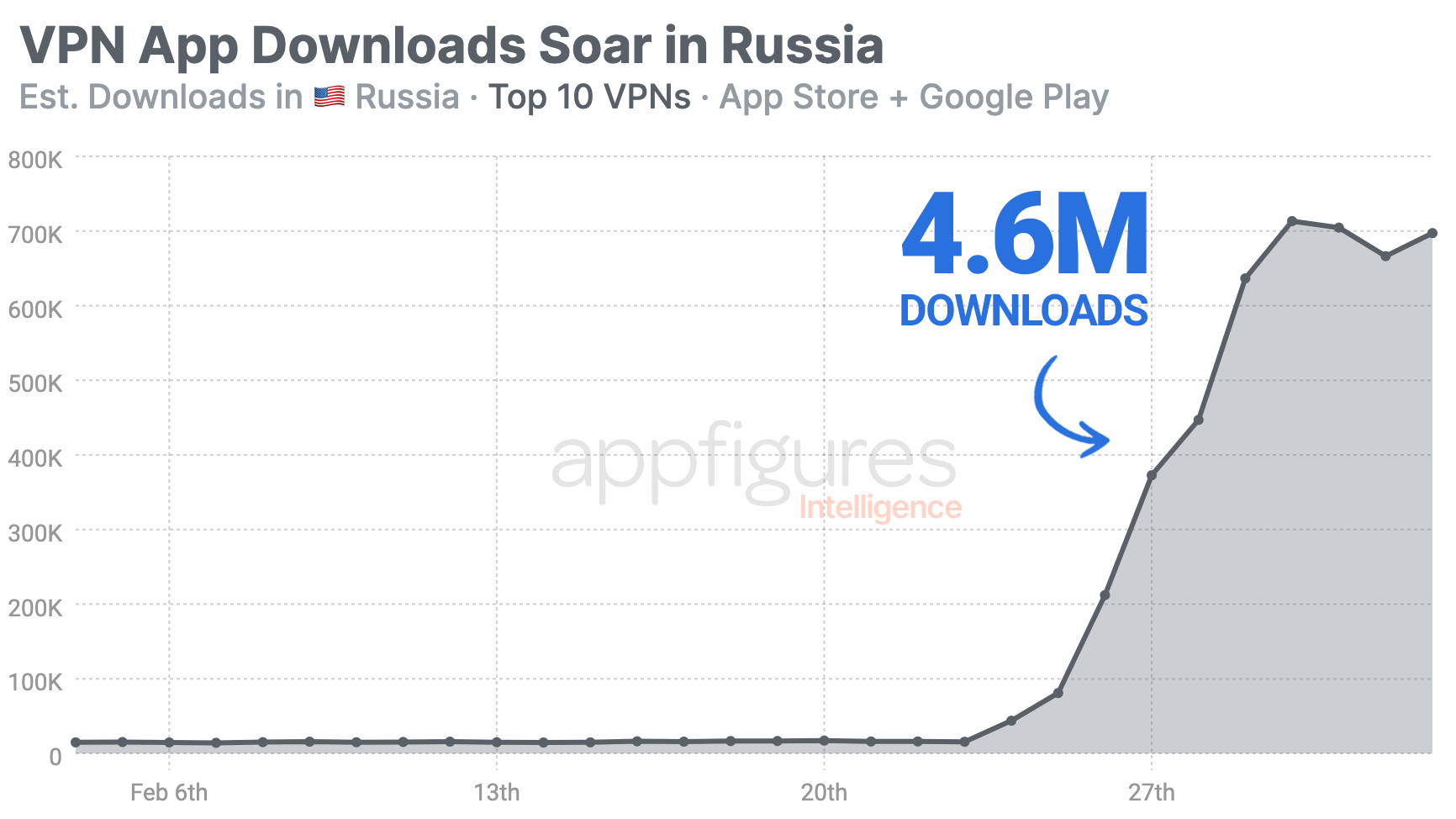
Start Up No.1750: TikTok suspends Russian uploads, QR codes’ quiet triumph, analysing the Ukraine war, no search numbers?, and more


The wheat fields of Ukraine give its flag the iconic yellow below the blue sky. War’s disruption has sent wheat prices rocketing, with potentially far-reaching effects. CC-licensed photo by Sunny Lapin on Flickr.

You can sign up to receive each day’s Start Up post by email. You’ll need to click a confirmation link, so no spam.

A selection of 11 links for you. Not bogged down. I’m @charlesarthur on Twitter. Observations and links welcome.


• Why do social networks drive us a little mad?
• Why does angry content seem to dominate what we see?
• How much of a role do algorithms play in affecting what we see and do online?
• What can we do about it?
• Did Facebook have any inkling of what was coming in Myanmar in 2016?

Social Warming, my latest book, and find answers – and more.


TikTok suspends new posts in Russia due to the country’s recent ‘fake news’ law • The Washington Post

Nitasha Tiku:

»

TikTok will suspend both live-streaming and new content from Russia in response to the country’s new “fake” news law, TikTok said Sunday on the video app’s official communications account on Twitter.

Signed Friday by President Putin, Russia’s new law bans what the country calls “fake” news about its military, including language that describes Russia’s attack against Ukraine as an “invasion,” under threat of a 15-year prison sentence.

“In light of Russia’s new ‘fake news’ law, we have no choice but to suspend live-streaming and new content to our video service while we review the safety implications of this law,” TikTok wrote on Twitter, noting that its in-app messaging would continue. “We will continue to evaluate the evolving circumstances in Russia to determine when we might fully resume our services with safety as our top priority.”

The law has further silenced homegrown Russian media voices that until recently were providing the Russian public with information absent from the government’s official account on state-owned media.

Despite TikTok’s increasingly dominant role as a source of content on the conflict from both Russia and Ukraine, the video app, which is owned by the Chinese company ByteDance, has been quieter than its Silicon Valley counterparts in disclosing the company’s policies on disinformation, fact-checking or censorship.

On Thursday, TikTok representatives exclusively told The Washington Post that the company was developing a policy on how it will handle state-controlled media on its platform.

«

I’d guess this is going to drive Russians onto the encrypted messaging platforms, particularly Telegram (though that isn’t end-to-end encrypted, which should, but doesn’t, worry enough users). How long will it take for that to feed through to proper discontent, though?
unique link to this extract


Russia’s war on Ukraine threatens global food supply • Associated Press

Joseph Wilson, Samy Magdy, Aya Batrawy and Chinedu Asadu :

»

Ukrainian farmers have been forced to neglect their fields as millions flee, fight or try to stay alive. Ports are shut down that send wheat and other food staples worldwide to be made into bread, noodles and animal feed. And there are worries Russia, another agricultural powerhouse, could have its grain exports upended by Western sanctions.

While there have not yet been global disruptions to wheat supplies, prices have surged 55% since a week before the invasion amid concerns about what could happen next. If the war is prolonged, countries that rely on affordable wheat exports from Ukraine could face shortages starting in July, International Grains Council director Arnaud Petit told The Associated Press.

That could create food insecurity and throw more people into poverty in places like Egypt and Lebanon, where diets are dominated by government-subsidized bread. In Europe, officials are preparing for potential shortages of products from Ukraine and increased prices for livestock feed that could mean more expensive meat and dairy if farmers are forced to pass along costs to customers.

Russia and Ukraine combine for nearly a third of the world’s wheat and barley exports. Ukraine also is a major supplier of corn and the global leader in sunflower oil, used in food processing. The war could reduce food supplies just when prices are at their highest levels since 2011.

A prolonged conflict would have a big impact some 1,500 miles (2,400 kilometers) away in Egypt, the world’s largest wheat importer. Millions rely on subsidized bread made from Ukrainian grains to survive, with about a third of people living in poverty.

«

A reminder that the Arab Spring was triggered by riots over bread prices.
unique link to this extract


I was told that QR codes would never succeed because no one could make money from them • Terence Eden’s Blog

Eden gets to say nyaah nyaah:

»

Search back through this blog and you’ll find dozens of posts about QR codes. Back in the day, I was a freelance “Mobile Internet” consultant. I’d rock up to companies and say “you know you can get the Web on your phone, right? It’s going to be the next big thing!” And people would pay me handsomely for that advice.

I’d also talk about apps – “You don’t need one, but if you’re going to develop one, here’s what you need to know.” It was like pushing on an open door.

My final pitch was always – “Hey, QR codes are pretty nifty! Would you like some help with them?”

Silence. Followed by a swift refusal.

The arguments against QR codes back then fell into a few main categories

• They’re ugly (true, but they can be made prettier)
• People don’t scan them (false, with lots of data)
• Hackers might do something bad (unlikely, and easily defended against)

But the main objection was that QR codes could never succeed because no one could make money from them! This was a time when Microsoft was pushing its paid-for MS Tag product – which only lasted about 3 years before it was shut down. They were trying to capture the mobile code scanning market, and failed.

Although lots of people were building scanners, there were very few companies pushing QR codes because they couldn’t see a way to make money from them. Sure, there were a few companies which would sell you a short URL with analytics baked in. But there was no “moat”. Anyone could build a slightly cheaper competitor. And businesses could bypass those companies easily. With no commercial driver, there was no pressure to promote the use of QR. So – in the UK at least – QR codes bumbled along, occasionally appearing on energy bills, physical products, and informational posters.

The “problem” is that QR codes are “boring infrastructure”. That’s what makes them magical – they’re both libre and gratis.

«

How do you incentivise people to build infrastructure which uses free material? Easy – just give them a once-in-a-century pandemic.
unique link to this extract


Space and time • Comment is Freed

Lawrence Freedman on Russia’s lack of military progress in Ukraine:

»

There have been a variety of estimates about how long the Russian army can keep this up, especially if Kyiv and Kharkiv continue to resist. Without a major resupply effort it has been put at no more than three weeks. The Russians have not planned for a long war nor made provisions to sustain it over time. Certainly, wars can be won quickly. In June 1967 Israel took Sinai from Egypt, the West Bank from Jordan, and the Golan Heights from Syria in six days. India required thirteen to advance from the border to Dhaka to receive the surrender of East Pakistan forces, which led to the creation of Bangladesh. It took longer – a month – for the Americans to reach Baghdad in 2003, but they had only one line of advance, up from Kuwait, and were also methodical in their approach. The reason why some wars drag on is rarely because this was envisaged in the original plan. It is normally because of early operational failures.

As soon as front-lines stagnate as an offensive runs out of steam the issue becomes one of the ability to feed the war machine over time, making economic and industrial strength as well as logistics even more important. This is why the Kremlin should be worried about a stalled campaign because it means that so long as Russia stays in Ukraine then its sanctioned economy will struggle even more. Fighting a war is an expensive business. Published estimates of the daily cost have ranged from $500 million to $20 billion. Something a bit over a $1 billion seems plausible.

The pre-war assumptions of a modernised and efficient Russian army that would soon overwhelm the outgunned Ukrainians have now been jettisoned but it remains difficult to accept the contrary assumption that this is a war that the Russians might lose. This is where the state of mind of those involved becomes important. Were it not for the fact that Russia still has the means to make life miserable for ordinary Ukrainians and use its firepower to push those unable to flee down into bunkers, one would say that it is facing defeat. Its army displays the pathology of one in disarray – at least away from the south, its logistics are literally being shot to pieces, command systems are degraded, and its troops demoralised and surrendering. We must keep emphasising that war is an uncertain business.

«

unique link to this extract


What Russian officials think of the invasion of Ukraine • A Sip of Freedom

Ilya Lozovsky, in a translation of an article by a well-connected Russian journalist, Farida Rustamova:

»

“If Russia considers itself an empire, why not become attractive to its neighbors by developing the country instead of by forcing their loyalty? Let’s build good roads, quality health care and education, and eventually come up with the kind of technology that would allow us to be the first to colonize Mars. That would be quite empire-like,” a high-ranking official said brokenly when I asked him what he thought of Putin’s motives for starting the war.

Another source— let’s call him a good acquaintance of Putin’s — puts it this way: The Russian president has it in his head that the rules of the game were broken and destroyed not by Russia. And if this is a fight without rules, then it’s a fight without rules — the new reality in which we live. 

“Here he is in a state of being offended and insulted. It’s paranoia that has reached the point of absurdity,” he says. According to him, Putin sincerely believes that, at least in the first years of his rule, he tried his best to improve relations with the West.

“On the one hand, there’s a really unfair state of affairs, where we are constantly being harmed year after year on various scales, and declared  as enemies long before Ukraine,” he said. “On the other hand, there’s our inability to build and execute our policies intelligently, including publicly. And the third thing is Putin’s degradation from being in power for too long.”

“Putin now seriously believes what [Defense Minister] Shoigu and [General Staff chief] Gerasimov are telling him: About how quickly they’ll take Kyiv, that the Ukrainians are blowing themselves up, that Zelensky is a coke addict.”

So far, none of the officials have dared to object to what’s happening in the slightest public way, much less to resign.

«

unique link to this extract


Do journalists need to be brands? • Medium

Elizabeth Spiers:

»

[Taylor] Lorenz did not grow up without privilege (Greenwich, Connecticut is not Slapout, Alabama**) but she moved into journalism from a digital background that wasn’t journalism, and does not have the typical trajectory of a Times journalist, or the Ivy League credentials they say are not important but they absolutely pay attention to. Ergo, Lorenz was regarded as a bit of an outsider internally, and some people tend to be dismissive of young women who cover beats they regard as lesser.

Ironically, this is also part of why Lorenz’s profile rose so quickly. She covered web culture, but that often overlapped with tech culture, and tech coverage generally. As a function of that, she was targeted by a high profile tech CEO and VC, Balaji Srinivasan, and that resulted in waves of harassment and nonsense for Lorenz because Srinivasan was able to mobilize a bunch of neoreactionary dudebros who resent the fact that journalists have the temerity to criticize Silicon Valley at all. And he targeted her intentionally, because she’s young, because she’s a woman, and because she wrote for [the NYT’s section called] Styles, which meant that he could portray her as essentially unserious. He thought she was more vulnerable to this kind of attack than, say, Kara Swisher, who reports on tech qua tech, and who would have eaten him for lunch (and has, on several occasions).

When this happened, I do not believe people like [NYT political reporter] Haberman inside the NY Times, understood what was going on. They just saw Lorenz all over the Internet, on TV, being increasingly recognized as one of the faces of The New York Times. Lorenz was accused of drawing attention to herself and when she pushed back on the harassment, was told that she couldn’t take criticism. But what Lorenz was getting wasn’t criticism. Attempting to doxx a journalist and texting them rape threats might be a critique of sorts, but let’s not pretend it’s legitimate discourse, or that Lorenz is thin-skinned to be disturbed by it. But the internal perception, as I understand it, is that Lorenz had not earned the right to all of this attention, even if she was not asking for it.

This is ridiculous, of course. The attention economy is not something you can control, or insert yourself into, willfully, any time you want.

«

Spiers captures the problem – which really really irks younger journalists on the big US papers – whereby journalists aren’t meant to draw attention to themselves, yet have to take all the crap for whatever they or anyone else on their paper writes. Lorenz had a bellyful, and isn’t afraid to point it out. It’s not perfect at the Washington Post (by a long chalk), but not as bad as the NYT. It’s also one that journalists on all publications face: when they tweet, are they speaking for themselves, or their publication?
unique link to this extract


Google testing removing the estimated number of search results • SE Round Table

Barry Schwartz:

»

Google Search is testing removing the estimated number of search results figure you typically see under the search bar after you conduct a search query. Google tested this back in 2016 and I guess Google is testing it again.

Initially, when I was first told about this test by Punit on Twitter and then Eli Schwartz on Twitter last week, I thought maybe it was a CSS bug. But since then, a few other people noticed it, including Steve Plunket on Twitter and some on Facebook. So I guess this is a test.

«

The “number of sites/results” figure really hasn’t meant anything for at least a decade. Barely anyone looks past the first page of results (they’re more likely to retry their search with different terms than click through to the second page). Possibly the sites number is a sort of silent confirmation that the system’s working which means something to people inside Google. But those outside don’t need it.
unique link to this extract


David Leonhardt, the pandemic interpreter • NY Mag’s Intelligencer

Sam Adler-Bell on how David Leonhardt, the writer of the daily NY Times morning newsletter (five million readers!), has become the focus of a furious row over his recent depiction of the risks from Covid:

»

“Many liberals have spent two years thinking of COVID mitigations as responsible, necessary, even patriotic. This attitude has become part of their identity,” Leonhardt told me. This was a good thing earlier in the pandemic, leading to high vaccine uptake, masking, and compliance with social distancing and lockdowns. But thanks to vaccination and the cresting Omicron variant, the costs of liberal caution — he cites “mental-health problems, anger, frustration, isolation, drug overdoses, vehicle crashes, violent crime, learning loss, student misbehavior” — have begun to outweigh the benefits. Leonhardt, who has described his journalistic colleagues as having a “bad-news bias,” sees his role as being an implicit corrective to some of the more alarmist coverage showing up elsewhere in traditional media and even in the Times itself.

This position has enraged some readers — doctors, scientists, and journalists among them — who believe it’s absurd to call for a return to normal when, according to the Times, around 2,000 people are dying from COVID each day. “Leonhardt is one of the key pundits leading the charge of those who want to declare unilateral surrender to COVID-19,” Gregg Gonsalves, an epidemiologist at the Yale School of Public Health, told me. In a January 26 appearance on The Daily, Leonhardt pressed his case that America is at a “pivot point” in which COVID “goes from being this horrible, deadly, life-dominating pandemic to something that is more endemic — to something that looks more like things that we deal with all the time without shutting down daily life, like the flu.” He cited the results of a poll, conducted by his staff and Morning Consult, purporting to show that while older Republicans remain irrationally unafraid of COVID, younger and vaccinated Democrats are irrationally overcautious about it.

«

I get the feeling that there’s quite a chunk of Americans who are hanging on to their attitudes from 2020 even though the evidence suggests it’s time to change their position.
unique link to this extract


Ten (more) tricks for finding stories • Transom

Latif Nasser:

»

One of the most popular features on Transom is Latif Nasser’s 2018 guide to finding stories. (Latif co-hosts WNYC’s Radiolab.) He’s back with NEW tricks for conjuring unconventional leads. This manifesto is full of creative tips to pull every last bit of interesting data from online search tools. It’s particularly handy during these drawn-out COVID-y times when in-person story hunting is challenging. We guarantee you’ll find a new trick.

Nasser: Back in 2018, I shared a bunch of my story-finding tricks in an effort to help demystify the process.  A lot of people seemed to find it helpful. I often get emails about it. 

So in that same spirit, here are ten more tricks, surefire ways to find good true stories, or at least to prime your mental pump. Please use them responsibly, but also with reckless abandon.

«

Go to Zoom lectures, search out scholarly articles, use search terms tactically, reverse engineer.. your toaster?, noodle around in databases, attend to phrases, look for limits, anticipate traffic jams, make the call (anyway), ask the question anyway. Now you need to fill in the gaps. They’re pretty good.
unique link to this extract


Yandex: Russian search engine warns it could default on foreign debt • CNN

Mark Thompson:

»

Russia’s biggest search engine could collapse as financial fallout from the invasion of Ukraine spreads.

Yandex, which handles about 60% of internet search traffic in Russia and operates a big ride-hailing business, said Thursday that it may be unable to pay its debts as a consequence of the financial market meltdown triggered by the West’s unprecedented sanctions.

The company is based in the Netherlands, but its shares are listed on the Nasdaq and the Russian stock exchange. Dealing in the stock has been suspended this week as the value of Russian assets collapsed in Moscow and around the world in the wake of the invasion. The imposition of sanctions by the United States, European Union and other big Western economies last weekend piled on the pressure.

Yandex hasn’t been sanctioned but it could still default. Investors who hold $1.25bn in Yandex convertible notes have a right to demand repayment in full, plus interest, if trading in its shares are suspended on the Nasdaq for more than five days. The Moscow stock market will remain shut at least until Tuesday, Russian state news agencies reported on Friday.

“The Yandex group as a whole does not currently have sufficient resources to redeem the Notes in full,” the company said in a statement.

…The crisis in Ukraine poses another threat to its business. Western companies are halting supplies of technology and services to Russian customers. A prolonged suspension of hardware or software sales could hurt Yandex over time.

“We believe that our current data center capacity and other technology critical to operations will allow us to continue to operate in the ordinary course for at least the next 12 to 18 months,” Yandex said.

Yandex, which had a market value of about $17.4bn at the beginning of February, reported revenues worth 356bn rubles in 2021, now equivalent to little more than $3bn after the collapse in the Russian currency.

«

The problems with systems will hit much sooner than the debt, I’d guess.
unique link to this extract


Putin proves my point. Whatever it is • Financial Times

Robert Shrimsley:

»

The most important thing to understand about the invasion of Ukraine is that it proves my point. Yes, yes, it may be pulling Europe to the brink of outright war, causing the deaths of innocent civilians and plunging the global economy into turmoil but the essential issue is that Putin has shown I was right. Right about what, you may ask. About everything. Whatever my personal and political prejudices, they have been triumphantly (ahem, better make that tragically) vindicated.

While Ukrainians have risked their lives on the streets, battalions of keyboard warriors are shelling social media with explanations of how this validates their other opinions. One conservative think-tanker has taken to collating multiple examples of this but, sadly, this virtual conflict has now morphed into a pincer movement with incursions into the real-world dinner tables of pontificating society.

While many others are wrong, all of my own instincts have naturally been borne out by events. This allows me the opportunity to bestow some of my wisdom upon you. I may also soon launch a separate Substack newsletter, at iwasrightallalong.substack.com.

Anyway, lest you were worried that your own inadequate views leave you wandering naked into the cocktail party, here are just a few to be going along with:

«

Choose from Nato’s eastward expansion/ the flabby West/ moving too slowly to net zero/ too much wokey windpower and not enough fracking/ Brexit (all Putin’s fault)/ not embracing Brexit/ dirty money/ pandering to wokery pronouns/ our weak Covid-19 response/ too many restrictions on wood-burning stoves.

Payoff line:

»

“Next week: why I was right about something else.”

«

unique link to this extract


Errata, corrigenda and ai no corrida: 1,750! Seems like 1,000 only happened recently, and 1,500 ditto. Let’s hope we can Get Ukraine Sorted before the next Big Number here.

Start Up No.1749: Icann leaves Russia online, Twitter goes Birdwatching, AMD and Intel ban, Venezuela users face crypto block, and more


Remember HTC? It isn’t dead yet, and it’s pivoting from the blockchain (yawn) to the metaverse (yay!). Still phones, of course. CC-licensed photo by Tony Webster on Flickr.

You can sign up to receive each day’s Start Up post by email. You’ll need to click a confirmation link, so no spam.

A selection of 10 links for you. Not part of a convoy. I’m @charlesarthur on Twitter. Observations and links welcome.


ICANN rejects Ukraine’s request to cut off Russia from the global internet • CNN

Brian Fung:

»

The international non-profit that coordinates management of the internet told Ukraine it will not intervene in the country’s war with Russia, rebuffing a request to cut Russia off from the global internet.

Ukraine’s proposal is neither technically feasible nor within the mission of ICANN, the Internet Corporation for Assigned Names and Numbers, according to a letter ICANN sent to Ukrainian officials on Wednesday.

“As you know, the Internet is a decentralized system. No one actor has the ability to control it or shut it down,” ICANN CEO Göran Marby wrote in the the letter. Marby expressed his personal concern about Ukrainians’ well-being as well as the “terrible toll being exacted on your country.” But, he wrote, “our mission does not extend to taking punitive actions, issuing sanctions, or restricting access against segments of the Internet — regardless of the provocations.”

“Essentially,” he added, “ICANN has been built to ensure that the Internet works, not for its coordination role to be used to stop it from working.”

Internet governance experts previously told CNN that ICANN was expected to reject Ukraine’s plea, and that Ukraine’s proposal, if implemented, could have devastating consequences for average Russian internet users, including dissidents.

The original request, sent on Monday from Ukraine’s representative on ICANN’s Governmental Advisory Committee, called for the Russian internet country code .RU and its Cyrillic equivalents to be revoked. The representative, Andrii Nabok, also said he was sending a separate request to Europe and Central Asia’s regional internet registry, asking it to take back all of the IP addresses it had assigned to Russia.

«

Certainly it would be relatively trivial for lots of companies to block anything coming from a .ru address – and I recall a developer saying recently that he found the simplest way to cut spam by 99% or so was to block anything from that IP range. But it was never going to happen as a broad strategy. Ukraine has developed a clever strategy of asking for everything – cut Russia off the internet, implement no-fly zones – and thus making any little concession seem like both a victory on its part and parsimony on those who do it.
unique link to this extract


Twitter’s Birdwatch fact-checking project moves forward with new test • The Washington Post

Will Oremus:

»

Twitter will begin showing fact-checking notes, submitted by volunteers, on potentially misleading tweets to a small fraction of its users in a test in the United States this week. The test is a step forward for its experimental Birdwatch program, which seeks to enlist Twitter’s users to flag and debunk misinformation on the social platform.

Users in the test group will see a message inviting them to click for more context when they encounter a tweet that has been flagged by a volunteer fact-checker participating in Birdwatch. There, they’ll find one or more notes written by Birdwatch contributors, correcting or adding relevant background to the tweet itself, and ideally citing reliable outside sources. They’ll then be asked to rate the note’s helpfulness — ratings that in turn are used to determine whether to continue showing that note to others on Twitter.

Twitter launched the Birdwatch pilot more than 13 months ago, inviting interested users to apply to become volunteer fact-checkers. As The Washington Post reported on Tuesday, Twitter has enrolled some 10,000 people in the pilot, but just 359 of those had actively contributed fact-checking notes in 2022, as of Feb. 24. In all, Birdwatch contributors have been flagging about 43 tweets per day in recent months, a vanishingly small fraction of the posts on a global platform that is used by some 217 million people each day.

The hope is that, eventually, crowdsourced fact checks can help Twitter users avoid falling for and spreading misinformation, while helping Twitter itself limit the spread of such information.

Twitter is taking a cue from sites including Wikipedia that harness volunteer labor to vet information transparently, at high speed and low cost. The approach differs from rival Facebook’s, which has relied on partnerships with professional fact-checking organizations to identify false posts.

«

Could work – better than Facebook’s system, but worse than Wikipedia’s because that has a static page to coalesce around.
unique link to this extract


Putin no longer seems like a master of disinformation • The New York Times

Farhad Manjoo:

»

The Ukrainian crisis shows that the West has learned a lot about countering Russian propaganda in the past few years. Social media companies are now adept at spotting and removing Russian disinformation. The Biden administration has been masterful at “prebunking” Russia’s moves; by disseminating intelligence about Russian plans almost as quickly as it collects it, the White House has managed to embarrass and undermine Russian efforts to control the Ukraine story.

Then there’s the steadfast bravery and media wiliness of the Ukrainians, whom Helmus described as “a messaging adversary of the type Russia has never seen before.” As the Russian military bore down on their nation, Ukrainians began filling the internet with irresistible footage of their determination — the 79-year-old grandmother taking up arms against the invaders, the fearless young man kneeling in front of a Russian tank, the member of parliament who boasts on Fox News about kicking Putin’s derrière. In a series of inspirational battlefield dispatches, Volodymyr Zelensky, Ukraine’s president, has projected an air of heroic machismo of the sort that Putin has long tried to cultivate.

«

It’s the simplicity and directness of the Ukrainian message – and especially its focus through Zelensky, who as an actor (his former job) knows completely the power of a moving image and a few powerful words – that makes it such a complete antidote, or even kryptonite, to Russia’s efforts.
unique link to this extract


AMD and Intel halt processor sales to Russia • Tom’s Hardware

Paul Alcorn:

»

In a sign that the United States government’s export restrictions on semiconductor sales to Russia due to its war against Ukraine have been enacted swiftly, AMD has confirmed that it has suspended chip sales to Russia, and according to multiple reports, Intel has taken the same steps. In addition, reports have also emerged that TSMC’s decision to participate in the sanctions will thwart Russia’s supply of homegrown chips. Intel and AMD have both provided us with a statement on the matter, and we have also reached out to Nvidia for comment.

The Russian media outlets also claim that the suspensions have been confirmed by the Association of Russian Developers and Electronics Manufacturers (ARPE). Additionally, Chinese IT companies are said to have been notified by Intel that sales to Russia have been banned.

An AMD representative told Tom’s Hardware, “Based on sanctions placed on Russia by the United States and other nations, at this time AMD is suspending its sales and distribution of our products into Russia and Belarus.”

Intel provided the following comment to Tom’s Hardware: “Intel complies with all applicable export regulations and sanctions in the countries in which it operates, including the new sanctions issued by OFAC [Office of Foreign Assets Control] and the regulations issued by BIS [Bureau of Industry and Security].”

The extent of Intel’s halted sales is currently unclear. The new export restrictions are primarily aimed at chips for military purposes or dual-use chips that could be used for both civilian and military purposes. That means sales of most consumer-focused chips, like Intel’s Core chips, likely won’t be impacted. However, it is widely expected that there will be a temporary halt for all semiconductor sales to Russia as companies work to decide which products and customers are impacted.

«

Depending how long this all goes on (and I think we should expect that it will last months, not weeks) we could see the slow-motion collapse of Russia’s economy and infrastructure. Artillery apart, its military has not looked too well prepared – despite all those “manoeuvres” – in the past week, and that can only get worse as sanctions bite.
unique link to this extract


A view from Russian academia • Tatyana Deryugina

Deryugina wrote to loads of Russian academics asking why they weren’t protesting. She got a response from one, which she was given permission to share:

»

Here is also my view as to why the Russian people are not protesting en masse:

1: Negative influence of the USSR: beginning with the immigration after 1917 and Stalinist purges and ending with the destruction of the will to live freely to the falling apart of the country. People didn’t live normally and so don’t want to live normally now, those who protest are mostly very young.

2. A non-trivial share of the people are idiots. They can’t or, for many reasons, don’t want to absorb non-one-sided information and just want to be “outside of politics”. And the most accessible information is, sadly, propaganda.

3. Propaganda is literally EVERYWHERE. On TV it reaches absurd proportions, and besides that special bot farms write a huge number of online comments, forming a false public opinion and swaying those who are uncertain to their side.

4. A huge army of siloviki (strongmen). Ukraine’s Maidan could happen because resistance [against the protestors] was not comparable to that of Russia and Belorussia. The Russian government has a huge horde of policemen and Rosgvardiya [National Guard of Russia] who get paid decent money just for brutally beating people who simply show up to a demonstration (and actually get pleasure out of doing so because they are idealistic and see enemies in those who show up). Then they imprison the people for 30 days and then create problems for them in their studies or work. And any resistance leads to a huge prison sentence. I’m not even mentioning, that people can be jailed for several years for tweets or social media posts (this is not an exaggeration!)

«

“A non-trivial share of the people are idiots” is pretty widely applicable, isn’t it.
unique link to this extract


Ukraine population density • Airwars

»

This interactive map depicts the population per square kilometre of Ukraine. Using data from the WorldPop initiative, each point is colour coded from least to most densely populated. The data comes from bedfore Russia’s invasion on February 24 2022.

Click on any location to reveal the population density there and search for specifgic locations or coordinates using the search bar.

«

Even on a first glance it’s quite sparsely populated, with occasional flashes of urban concentration; Russia is trying to occupy a whole load of wide open space.

By contrast, the UK has an average population density of 283 people per sq km; for Ukraine it’s 75. It’s also been seeing continued depopulation due to emigration, plus low birth/high death rates. The former has speeded up dramatically now, of course.
unique link to this extract


HTC pivots from blockchain to the metaverse for its next smartphone gimmick • The Verge

Chaim Gartenberg:

»

HTC’s slow-motion fall from smartphone grace is reportedly set to continue in 2022, with the company said to be working on a new “metaverse”-focused phone in April as the remnants of the once-flagship smartphone company continues to desperately cling to whatever zeitgeist term it can to stay afloat, according to DigiTimes.

The news comes from Charles Huang, HTC’s general manager for the Asia-Pacific region, who reportedly commented at MWC 2022 that the company would be introducing a new high-end smartphone next month with unspecified “metaverse” features. Details are slim, including any specs, markets it’ll be released in, or even what kind of AR or VR features the new device will offer.

The news sounds a lot like HTC’s last major pivot towards relevancy: its Exodus line of blockchain phones that its offered for the past few years. Promising decentralized apps (“Dapps”) and a built-in cryptocurrency wallet, the phones could run blockchain nodes and even mine paltry amounts of cryptocurrency, but — like many instances of blockchain technology — it was a solution largely in search of a problem that never really took off.

For argument’s sake, a metaverse phone would at least make slightly more sense than a blockchain one, if only because HTC has actually been a major player in the virtual reality space.

«

As Gartenberg notes:

»

Given that HTC’s Viverse doesn’t really exist — nor does widespread adoption of any modern metaverse concept — it’s easy for the company to just say it’s making a metaverse app or phone. After all, who’s to say that you aren’t?

«

First reaction: HTC is still going? Next reaction: how small can it get? Total revenues last year were $140m. That’s about 1% of its peak revenue (from 2011). Sometimes they just don’t die, they just fade Zeno-style.
unique link to this extract


Wikimedia says it ‘will not back down’ after Russia censorship threat • The Verge

Adi Robertson:

»

The Wikimedia Foundation has issued a statement supporting Russian Wikipedia volunteers after a censorship demand from internet regulators. On Tuesday, tech and communications regulator Roskomnadzor threatened to block Wikipedia over the Russian-language page covering Russia’s invasion of Ukraine, claiming it contained “false messages” about war casualties and the effects of economic sanctions, among other things.

“On March 1st 2022 the Wikimedia Foundation received a Russian government demand to remove content related to the unprovoked invasion of Ukraine posted by volunteer contributors to Russian Wikipedia,” reads the statement sent to The Verge via email. “As ever, Wikipedia is an important source of reliable, factual information in this crisis. In recognition of this important role, we will not back down in the face of efforts to censor and intimidate members of our movement. We stand by our mission to deliver free knowledge to the world.”

The Roskomnadzor demand, which was posted in Russian Wikipedia’s Telegram channel, demands Wikimedia address user edits from a February 27th version of the article. As translated by Wikimedia Russia, it takes issue with “information about numerous casualties among the military personnel of the Russian Federation, as well as the civilian population of Ukraine, including number of children,” as well as “the need to withdraw funds from accounts in banks of the Russian Federation in connection with the sanctions imposed by foreign states.” (While the war’s casualties remain difficult to estimate, the United Nations has confirmed hundreds of civilian deaths in Ukraine since the conflict began last week, including at least 13 children, and acknowledged that its numbers likely underestimate the real death toll.)

«

The truth hurts.
unique link to this extract


IKEA pauses operations in Russia and Belarus • Ikea.com

»

The war has had a huge human impact already. It is also resulting in serious disruptions to supply chain and trading conditions. For all of these reasons, the company groups have decided to temporarily pause IKEA operations in Russia. 

This means that:

• Inter IKEA Group has taken the decision to pause all export and import in and out of Russia and Belarus
• Inter IKEA Group has taken the decision to pause all IKEA Industry production operations in Russia. This also means that all deliveries from all sub-suppliers to these units are paused
• Ingka Group has taken the decision to pause all IKEA Retail operations in Russia, while the shopping centre Mega will continue to be open to ensure that the many people in Russia have access to their daily needs and essentials such as food, groceries and pharmacies.  

«

Seems to me the smart thing to do if you really want to disrupt them is just to hide all the Allen keys. Or take two screws out of every assembly kit.
unique link to this extract


Venezuelan users of crypto wallet MetaMask say they can no longer access it • The Block

MK Manoylov:

»

Users of MetaMask based in Venezuela say they can no longer access the popular digital asset wallet. 

Messages about the issue began to crop up on social media on Wednesday, with numerous examples spreading as of late Thursday morning. The suspected culprit is the API for Infura, a blockchain node infrastructure network.  

A MetaMask support page, updated an hour before press time, states that “MetaMask and Infura are unavailable in certain jurisdictions due to legal compliance.”

…Word of the blockages also prompted commentary on the use of VPNs to circumvent the issue. 

Unclear at present is the extent to which the reported blockages represent at tightening of rules with respect to other countries sanctioned by the US and other governments. Users from Iran and Lebanon appear to have been affected, though many of the recent messages pertain to Venezuelan access. 

«

Big win for decentralisation, yes?
unique link to this extract


• Why do social networks drive us a little mad?
• Why does angry content seem to dominate what we see?
• How much of a role do algorithms play in affecting what we see and do online?
• What can we do about it?
• Did Facebook have any inkling of what was coming in Myanmar in 2016?

Social Warming, my latest book, and find answers – and more.


Errata, corrigenda and ai no corrida: none notified

Start Up No.1748: the Ukraine war on Wikipedia, Amazon shutters retail stores, Fitbit recalls Ionic, fixing AirTags, and more


Fancy a game of Pong, but don’t have the small change? Don’t worry, you can play a version right here on your phone or computer. CC-licensed photo by Carlos Duarte Do Nascimento on Flickr.

You can sign up to receive each day’s Start Up post by email. You’ll need to click a confirmation link, so no spam.

A selection of 10 links for you. Use them carelessly. I’m @charlesarthur on Twitter. Observations and links welcome.


How the Russian invasion of Ukraine is playing out on Wikipedia • Slate

Stephen Harrison:

»

According to Samuel Breslow, an experienced Wikipedia editor and an information journalist, one of the trickiest elements of covering the Russian invasion is writing the encyclopedia articles at the right level of detail. Wikipedia aspires to take a long-term world-historical view similar to a traditional encyclopedia like Encyclopedia Britannica. That means presenting a summary rather than an overly detailed description of historical events. But with the Russian invasion of Ukraine, it’s not immediately clear what events will have long-term historical importance. “For instance, we don’t know whether the ‘Ghost of Kyiv’ will ultimately be a significant part of the narrative of the invasion or just a momentary internet rumor,” Breslow said in an email. (If you’re curious, the Ghost of Kyiv’s wiki page describes it as an “unconfirmed MiG-29 Fulcrum flying ace” credited with shooting down six Russian planes. The page also notes that the Ghost is most likely an urban legend that has had the effect of boosting Ukrainian morale.)

Most of the English Wikipedia articles relating to the invasion of Ukraine have a blue “E” symbol in the top-right corner, indicating that editing is limited to experienced Wikipedia editors, those with at least 500 edits and a month’s tenure. That means brand-new editors can only propose edits to the article’s behind-the-scenes talk pages. On the one hand, this protective measure cuts against Wikipedia’s ethos as the encyclopedia that “everyone” can edit. But Wikipedians say that the extra level of protection is helping to reduce vandalism and disinformation attacks on Ukraine-related information. “Writing on Wikipedia always comes with a lot of responsibility,” Breslow said in an email. “Wikipedia is the major collective record of humanity’s knowledge, and its articles are read by a staggering number of readers. They influence what people believe and how they live their lives, so it’s essential we make them as reliable, neutral, and comprehensive as possible.”

…although English Wikipedia has seen a huge uptick in the amount of activity dedicated to Ukraine, the Ukrainian-language version has seen considerably less activity. Since the invasion, the number of article edits per day on Ukrainian Wikipedia has decreased by at least 50%, according to the Wikimedia Foundation. That’s understandable. When a superpower is invading your country, the Wikipedia-editing hobby tends to fall off the old to-do list. “Editing Wikipedia from a bomb shelter is difficult,” said Mykola Kozlenko, the vice president of the Wikimedia Ukraine user group.

«

unique link to this extract


Amazon closing 68 stores, ending Amazon Books, 4-star, Pop Up shops • CNBC

Annie Palmer:

»

Amazon is shutting down all its Amazon Books physical bookstores, as well as its Amazon 4-star and Amazon Pop Up shops, which sold a variety of electronics and other hot items.

The closures affect 68 stores across the U.S. and U.K., Amazon said. Closure dates will vary by location and Amazon said it would help affected employees find roles elsewhere in the company. Workers who opt not to stay will be offered severance packages, it said.

Amazon declined to say how many employees would be affected by the closures.

…Amazon has gradually launched an array of brick-and-mortar concepts, from supermarkets to retail stores offering branded electronics like Fire tablets and Echo smart speakers. The 4-star stores, in particular, attempted to mesh Amazon’s in-store and offline operations by featuring top-selling products in its web store.

But sales growth of the physical stores unit has noticeably lagged the company’s overall retail business. Physical stores, which includes Whole Foods and Fresh outlets, reported lower sales in 2021 than in 2018.

Amazon is trimming its physical retail footprint after coming off its slowest growth rate for any quarter since 2001. Shares are down more than 8% so far this year, and the stock was the worst performer in the Big Tech group last year.

«

It always did seem a bit strange to be doing the thing that it was set up in direct opposition to.
unique link to this extract


Fitbit recalls Fitbit Ionic smartwatches due to burn hazard, offers refund • DC Rainmaker

DC Rainmaker:

»

Fitbit has announced a recall of their older Ionic GPS smartwatch, due to situations where the battery can overheat and cause burn injuries. The Ionic was introduced back in 2017, which was really their first smartwatch to support a 3rd party app platform as well as on-watch payments and on-watch music streaming services. It was a massive step forward for the company, setting their watch platform stage for the next half-decade. Their previous smartwatch was the Fitbit Blaze.

The company, in conjunction with the Consumer Protection Safety Commission (CPSC) says there are cases where the battery can overheat, and can cause burns. The CPSC says they’ve received 115 reports in the US (plus 59 internationally) over the battery overheating. Within that, 78 of those reports in the US include third-degree burns, with four reports of second-degree burns. Additionally, 40 internal burn injuries were reported.

«

Sold roughly 1 million in the US, and another 693,000 internationally. If you’ve got one lying around in a drawer, it’s still eligible. Pity it was the previous product that was called the Blaze or it would have been perfect nominative determinism.
unique link to this extract


AirTags are dangerous; here’s how Apple could fix them • The Verge

Monica Chin and Victoria Song:

»

the longer it takes from the time an AirTag is planted to the point when it alerts the victim, the more information an ex or spouse can potentially collect about their victim’s daily activities. Currently, that timeframe is too large.

As Victoria [Song, one of the writers] experienced, and as experts highlighted, the more time an abuser has to monitor a victim before they pull the plug, the more of that victim’s calendar they’re able to reconstruct for future use. “You’re usually in work nine to five; I ping at nine to five — now I know where you work. You’re usually home in the hours of eight to 10PM; I ping it — now I know where you live,” says Kathryn Kosmides. Kathryn is CEO of Garbo, a nonprofit dedicated to preventing tech-enabled abuse. “If they’re pinging at the opportune moments, at the right time, you can start to put patterns together. The ways someone walks to work, you know, all of these different things, which can be super, super weaponized.”

And abusers really are that relentless, says Becker. “They are tracking it while they’re in Zoom meetings; they’re tracking it while they’re checking their email or looking at memes. It is a full-time job to be an abuser, to be a stalker, and they take that job very seriously.”

What would an acceptable window be? That gets tricky. Advocates who have worked with Apple on AirTags noted that the device still needs to be able to accurately identify that it’s moving with someone rather than just near someone, which can take time to assess. “We actually don’t want people completely terrified that they’re being tracked when they’re not because they just happen to be sitting at a cafe with somebody who’s got an iPhone or an AirTag,” Olsen says.

And too many false alarms could put people in more danger — if someone develops a mindset that AirTag pings are usually errors, they could be quick to dismiss a real one. “We don’t want people to start ignoring these as noise,” Dodge said.

Still, all the advocates agree: the current arrangement does not work. There’s “a pretty significant valley between a few seconds and eight hours,” Dodge said.

«

“Dangerous” inasmuch as stalkers are dangerous, but yes, these seem like reasonable suggestions.
unique link to this extract


How Ukrainian tech companies are handling Russia’s invasion • Fast Company

Mark Sullivan:

»

The Ukraine crisis touches the tech world in a number of different ways. For example, a number of the U.S. sanctions relate to denying Russia’s ability to acquire high technology for military and other uses. And Ukraine is home to a number of business and consumer technology companies that impact the lives and businesses of millions of people around the world. I talked with some of them on Thursday, the first official day of the Russian occupation.

Grammarly may be the best-known Ukraine-based tech company. Grammarly is the maker of an AI-driven tool that helps people communicate better in writing. It is used by millions around the world, and has raised capital from some top-shelf VCs including General Catalyst and Blackrock. It’s now valued at $13bn.

The company has a significant number of software developers in Kyiv, the city in which the company was founded in 2009. Kyiv is about 700km or 435 miles from the current conflict zone in eastern Ukraine. It also has staff in San Francisco, New York, and Vancouver, BC.

Grammarly spokesperson Senka Hadzimuratovic told me via email Thursday that her company is now executing the contingency plans it had in place to protect its employees in Ukraine. She says the company isn’t providing many details of the plans, in the interest of security.

«

Also Readdle, MacPaw and plenty of freelance developers. (There’s always a tech angle. In a war, there’s an everything angle.)
unique link to this extract


Inside Bangladesh village YouTube cooking channel AroundMeBD • Rest of World

Nilesh Christopher and Faisal Mahmud:

»

Almost every week, Delwar Hussain, a stocky 40-year-old schoolteacher with betel-stained teeth, travels more than 100 miles on a public bus from his village of Shimulia in western Bangladesh to the capital city, Dhaka, carrying a 64GB SanDisk memory card carefully packed in a bag of fruits and vegetables. On a good day, this journey takes six hours, but during winter, when dense fog covers the River Padma and ferry services slow to a crawl, it can take more than 12. Once Hussain reaches the city, he heads to a cyber café owned by his nephew and business partner, Liton Ali Khan.

There, he transfers the contents of the memory card — professionally shot videos of elderly villagers preparing, cooking, and serving food to hundreds of people — to a desktop computer, from where the material is edited and uploaded to YouTube and watched by 4 million subscribers. The videos, depicting a community kitchen in Shimulia producing gargantuan quantities of food, are extravagant: meals include 14 full goat intestines, 50 country ducks, a 185-pound vanilla cake, or a 650-pound water buffalo.

The channel behind this operation is called AroundMeBD, and its success has created a whole new economy in Shimulia, which has since been dubbed the YouTube village of Bangladesh.

The YouTube village is a prominent example of a niche but is also part of a growing online trend across South Asia: As the internet reaches villages, rural societies are finding ways to showcase and monetize their unique food cultures to audiences across the world, using platforms like YouTube and Facebook.

«

unique link to this extract


The internet is a force multiplier for Ukraine • Platformer

Casey Newton:

»

Social media didn’t cause any of this resistance. But it amplified these stories quickly and at scale, overwhelming what analysts say has been a shockingly inept information strategy from the Russians. And with every viral TikTok about the situation unfolding — here’s one in which a Russian car influencer teaches you how to drive abandoned Russian military vehicles — support for the resistance grows.

All of this has offered some comfort during a frightening time. But there is a risk of making too much of the way the internet and social networks have bolstered the Ukrainian resistance to date — or in underestimating Russia’s ability to retaliate.

On the war front: yes, Ukraine’s efforts so far have been inspiring. But we are only four days in, and as this long thread from a Russian military analyst explains, most of the aggressor’s significant firepower is still waiting to be deployed. The most likely outcome continues to be a Russian takeover of the country. (Though even then Putin may find it exceedingly difficult or even impossible to govern, as Yuval Noah Harari explains.)

And on the platform front, the path forward is not at all clear. For their part, tech companies have largely acted as democratic governments have asked them to. On Monday Meta’s Nick Clegg announced that the company would restrict access to Russian state media networks RT and Sputnik in the European Union, just as the European Union itself announced it would do a day earlier. (TikTok followed suit on Monday as well.) Twitter stopped short of banning the networks but added a state media label to any links shared on the network.

Russia is actively resisting these efforts. It blocked Twitter and slowed Facebook. It sought to ban any footage of military action on TikTok. It wrote to Google protesting the demonetization of RT and Sputnik.

These moves are unfortunate primarily for Russian citizens, who will have less access to independent media and the organizing tools that social networks provide.

«

In Social Warming, I pointed out that humans work best when they work together against a common enemy. It’s how social media can be at its most useful.
unique link to this extract


Almost Pong • Lessmilk

»

Press space (or tap the screen) to make the ball jump and hit the paddles for as long as possible. This arcade game works on desktop and mobile.

«

Yes, it’s Pong, where you play yourself (or perhaps a two-player if you’re able enough). Well you did want something to take your mind off everything. You’ll certainly lose quite a few minutes on this one. It doesn’t bounce off the sides of the screen – it’s more like Flappy Bird, where you have to keep the bird (ball) up. (Thanks Barry C for the pointer.)
unique link to this extract


TikTok faces scrutiny in state attorneys general probe of online harms to children • WSJ

John McKinnon:

»

A coalition of state attorneys general is launching an investigation into TikTok, seeking information about whether and how the video-sharing platform contributes to online harms to children.

The move is an extension of an investigation unveiled by the same group of eight state attorneys general into Meta Platforms Inc.’s Instagram that focuses on similar concerns. The expansion adds fast-growing TikTok—owned by Beijing-based ByteDance Ltd.—to the list of targets under scrutiny.

“Today, attorneys general across the nation joined an investigation into TikTok for providing and promoting its social media platform to children and young adults while use is associated with physical and mental health harms,” the prosecutors said in a joint announcement Wednesday.

They added: “The investigation will look into the harms such usage causes to young users and what TikTok knew about those harms. The investigation focuses, among other things, on the techniques utilized by TikTok to boost young user engagement, including increasing the duration of time spent on the platform and frequency of engagement with the platform.”

Leading the investigation is a bipartisan coalition of attorneys general from California, Florida, Kentucky, Massachusetts, Nebraska, New Jersey, Tennessee and Vermont, the group said.

«

Very gradual but relentless. Truly this is turning into social networks’ tobacco moment. That too took a long time to grind through, but it got there in the end.
unique link to this extract


Twitter’s fact-checking project, Birdwatch, is MIA as Ukraine rumors swirl • The Washington Post

Will Oremus and Jeremy Merrill:

»

Over a year ago, Twitter launched a pilot of an ambitious project that was meant to harness the wisdom of crowds to answer just these sorts of questions on its platform, potentially across countries and languages, in near real time. Called Birdwatch, it lets volunteer fact-checkers add notes to tweets that are going viral, flagging them as potentially misleading and adding context and reliable sources that address their claims. By crowdsourcing the fact-checking process, Twitter hoped to facilitate debunkings at a greater speed and scale than would be feasible by professional fact-checkers alone.

Yet after 13 months, Birdwatch remains a small pilot project, its fact checks invisible to ordinary Twitter users — even as its volunteer contributors dutifully continue to flag false or contested tweets for an audience of only each other. That suggests that either Twitter hasn’t prioritised the project amid internal upheaval and pressure from investors to grow faster, or that it has proved thornier than the company hoped.

Twitter vice president of product Keith Coleman said Tuesday, after publication, that the company will be expanding the Birdwatch pilot “very soon.” He said it’s important to make sure that the fact-checks added to tweets are helpful, and the company has been “focused on making that a reality before expanding.”

A Washington Post analysis of data that Twitter publishes on Birdwatch found that contributors were flagging about 43 tweets per day in 2022 before Russia’s invasion of Ukraine, a microscopic fraction of the total number of tweets on the service and probably a tiny sliver of the potentially misleading ones. That’s down from about 57 tweets per day in 2021, though the number ticked upward on the day Russia’s invasion began last week, when Birdwatch users flagged 156 tweets. (Data after Thursday wasn’t available.)

«

I’d imagine it’s proved harder to get right than they expected. Spotting false stuff, and walking the line between something that’s “false” and that’s just “wrong” or “misguided” or “overinterpreting” is really difficult; we do it all the time, but if you felt that it could somehow affect how Twitter looks to absolutely everyone, you might be wary. (Or you ought to be.)
unique link to this extract


• Why do social networks drive us a little mad?
• Why does angry content seem to dominate what we see?
• How much of a role do algorithms play in affecting what we see and do online?
• What can we do about it?
• Did Facebook have any inkling of what was coming in Myanmar in 2016?

Social Warming, my latest book, and find answers – and more.


Errata, corrigenda and ai no corrida: none notified

Start Up No.1747: Apple halts Russian sales, Russians buy crypto, the missing cyberwar, “yes, Putin would 🍄”, convoy tracking, and more


Machine learning still struggles to make good film recommendations. Why is that, though? CC-licensed photo by Elias Bizannes on Flickr.

You can sign up to receive each day’s Start Up post by email. You’ll need to click a confirmation link, so no spam.

A selection of 10 links for you. Still mostly Ukraine. I’m @charlesarthur on Twitter. Observations and links welcome.


Apple halts all sales from online store and to channels in Russia • MacRumors

Juli Clover:

»

Apple today confirmed that it has stopped all product sales from its online website in Russia, which means customers in Russia can no longer purchase Macs, iPhones, iPads, and other Apple devices. Attempting to make a purchase from the Russia store results in a “delivery unavailable” result when trying to add a product to the online cart.

Sales have been halted following a plea last week from Ukrainian vice prime minister Mykhailo Fedorov, who wrote a letter to Apple CEO Tim Cook asking Apple to stop device sales and to block App Store access in Russia.

»

I appeal to you and I am sure you will not only hear, but also do everything possible to protect Ukraine, Europe, and finally, the entire democratic world from bloody authoritarian aggression – to stop suppling Apple services and products to the Russian Federation, including blocking access to App Store!

We are sure that such actions will motivate youth and active population of Russia to proactively stop the disgraceful military aggression.

«

Apple said in a statement that it has also stopped all exports into the sales channel in the country and disabled traffic and live incidents in Apple Maps in Ukraine as a safety and precautionary measure for Ukrainian citizens.

«

A lot easier for Apple to do, as has been pointed out by many, when it doesn’t have substantial manufacturing in Russia and it doesn’t represent 20% of its sales.
unique link to this extract


Russians are buying more crypto as sanctions set in, data shows • Vice

Ekin Genç:

»

The Russian ruble fell to a record low against the US dollar on Monday, plummeting by 30% at one point before regaining a third of its losses as the Central Bank of Russia hiked the interest rates from 9.5% to 20%. High interest rates often lure local currency depositors in a bid to help stop further depreciation, or at least that’s the goal.

Now, there are indications that Russians are converting their rubles into cryptocurrency in a bid to protect the value of their savings. Specifically, much of the buying activity has centered on Tether (USDT), a stablecoin that is pegged 1:1 with the value of the US dollar.

Data from blockchain research firm Arcane Research shared with Motherboard shows that USDT/RUB (Tether/Russian ruble) trading volume on Monday broke a new record with $34.94m. The previous daily record, $34.31m, was in May of last year, when Bitcoin’s price came crashing down after Elon Musk criticized its environmental footprint, and many investors—not just Russians—switched to stablecoins.

Monday’s trading volume in Tether was 519% above the average for this year—a period when Russian invasion rumors and possible sanctions were already circulating.

Last week, Bitcoin saw a 214% week-over-week growth in BTC/RUB volume, compared to a 46% growth in the global volumes in the same period, Arcane analyst Vetle Lunde told Motherboard. “Russian investors are evidently far more active in the market compared to the global investors,” he said.

The ruble-denominated Bitcoin trade recorded $11.4m in daily volume on Monday—a large amount but a far cry from the stablecoin trade volume in rubles.

«

Honestly, that’s small beer – and Tether implies it would take action if people tried to move very large amounts of money through these exchanges. This Twitter thread (on a single page) also explains why it’s not going to be a way to evade sanctions.
unique link to this extract


Russia, Ukraine cyberwar hasn’t unfolded as expected • The Washington Post

Joseph Menn and Craig Timberg:

»

Ukraine’s core cyberdefense has done better than expected because it focused on the issue after Russian hackers briefly knocked out power to swaths of the country in 2015 and 2016, said David Cowan, a veteran cybersecurity venture capitalist and corporate director, and because it has had help from American and European experts.

“I would have thought that by now Russia would have disabled a lot more infrastructure around communications, power and water,” Cowan said. “If Russia were attacking the US, there would be more cyber damage.”

The absence of major disruptions predicted by cyberwar doctrine has allowed Ukraine’s President Volodymyr Zelensky to deliver propaganda coups with little more than a smartphone and a data link. Images of civilian casualties, the brutal shelling of cities and also some Russian losses have undermined that nation’s claims of a limited and humane “special military operation.” A viral audio clip of Ukrainian soldiers on a tiny island telling a Russian warship to “go f— yourself” has become a defining moment of national resistance.

“It’s become a global participatory thing. Everybody thinks they’re part of it,” said Doug Madory, director of Internet analysis for Kentik, which tracks global data flows. “It would be a lot harder to do all that if there was a blackout.”

Ukraine has not escaped unscathed, and some experts warn that cyberattacks or Internet outages could grow as Russia’s invasion intensifies in the face of unexpectedly stout resistance.

Russia or its allies already have deployed software to wipe data off some Ukrainian computers, including border control offices. But such intrusions are not nearly as widespread as in past attacks such as NotPetya, in which fake ransomware attributed to the Russian government caused billions of dollars in damages, much of it in Ukraine.

«

When the story of this invasion comes to be written (there’s implicit optimism for you) the failure to knock out the mobile networks will look like a key mistake. (Though there is wiper software at large.)
unique link to this extract


‘Yes, he would’: Fiona Hill on Putin and nukes • POLITICO

Maura Reynolds:

»

Hill spent many years studying history, and in our conversation, she repeatedly traced how long arcs and trends of European history are converging on Ukraine right now. We are already, she said, in the middle of a third World War, whether we’ve fully grasped it or not.

“Sadly, we are treading back through old historical patterns that we said that we would never permit to happen again,” Hill told me.

Reynolds: What have we learned about NATO in the last two months?

Hill: In many respects, not good things, initially. Although now we see a significant rallying of the political and diplomatic forces, serious consultations and a spur to action in response to bolster NATO’s military defenses.

But we also need to think about it this way. We have had a long-term policy failure going back to the end of the Cold War in terms of thinking about how to manage NATO’s relations with Russia to minimize risk. NATO is a like a massive insurer, a protector of national security for Europe and the United States. After the end of the Cold War, we still thought that we had the best insurance for the hazards we could face — flood, fire etc. — but for a discounted premium. We didn’t take adequate steps to address and reduce the various risks. We can now see that that we didn’t do our due diligence and fully consider all the possible contingencies, including how we would mitigate Russia’s negative response to successive expansions. Think about Swiss Re or AIG or Lloyds of London — when the hazard was massive, like during Hurricane Katrina or the global financial crisis in 2008, those insurance companies got into major trouble. They and their clients found themselves underwater. And this is kind of what NATO members are learning now.

…if anybody thinks that Putin wouldn’t use something that he’s got that is unusual and cruel, think again. Every time you think, “No, he wouldn’t, would he?” Well, yes, he would. And he wants us to know that, of course.

«

She also calls for a complete temporary suspension of business activity with Russia: that companies have a choice to make about whether they want to help a regime doing this. An essential read. The money quote: “We’re already in World War III.”
unique link to this extract


Conti ransomware’s internal chats leaked after siding with Russia • BleepingComputer

Lawrence Abrams:

»

A Ukrainian security researcher has leaked over 60,000 internal messages belonging to the Conti ransomware operation after the gang sided with Russia over the invasion of Ukraine.

BleepingComputer has independently confirmed the validity of these messages from internal conversations previously shared with BleepingComputer regarding Conti’s attack on Shutterfly.

AdvIntel CEO Vitali Kremez, who has been tracking the Conti/TrickBot operation over the last couple of years, also confirmed to BleepingComputer that the leaked messages are valid and were taken from a log server for the Jabber communication system used by the ransomware gang.

Kremez told BleepingComputer that the data was leaked by a researcher who had access to the “ejabberd database” backend for Conti’s XMPP chat server. This was also confirmed by cybersecurity firm Hold Security.

In total, there are 393 leaked JSON files containing a total of 60,694 messages since January 21, 2021, through today. Conti launched their operation in July 2020, so while it contains a big chunk of their internal conversations, it is not all of them.

These conversations contain various information about the gang’s activities, including previously unreported victims, private data leak URLs, bitcoin addresses, and discussions about their operations.

«

Initially it was suggested this happened because one of the gang is Ukrainian and didn’t like the Russian invasion, but it seems just to have been an independent security researcher. The bitcoin wallets associated with the group have apparently received hundreds of millions of dollars in payments. Now they’re screwed for a couple of months at least.
unique link to this extract


The speed of information • SatPost

Trung Phan:

»

Twitter was founded in 2006. The most recent conflict of this *size* was the Iraq War, which started in 2003.

Twitter is already optimized as a dopamine drip machine. Now, it’s covering the largest land invasion on the European continent since the end of World War II. Then layer on the drama of a David vs. a nuclear-armed Goliath battle (Zelensky + Ukraine vs. Putin + Russia). Finally, throw in confusion as to what information is real and it has truly become “insane”.

Like a lot of writers I know, I have dozens of Google docs with ideas that “I might write about one day”. A random topic I’ve been collecting notes on is “what was communication like back in the day”.

I started this vaguely titled list after reading about how Abraham Lincoln received information during the US Civil War. After the war began in April 1861, the US Military Telegraph Corps. laid “15,000 miles of telegraph wire across battlefields that transmitted news nearly instantaneously from the front lines”, per History.

All communications from that telegraph network — literally 100% — was sent to the library room of the War Department, which was next to the White House.

Other than the White House, Lincoln spent more time in the telegraph room than any other place during the Civil War:

»

David Homer Bates, one of the four original members of the U.S. Military Telegraph Corps, recounted in “Lincoln in the Telegraph Room” that several times a day, Lincoln sat down at a telegraph office desk near a window overlooking Pennsylvania Avenue and read through the fresh stack of incoming telegrams, which he called “lightning messages.” As telegraph keys chattered, he peered over the shoulders of the operators who scribbled down the incoming messages converted from Morse Code. He visited the office nearly every night before turning in and slept there on a cot during pivotal battles.

«

From 1861-1865, the President of the United States was the only person in the country receiving all the flow of information related to the war (the Confederates never built a comparable telegraph network). He wrote more than a thousand telegrams.

Today, literally billions of people are being flooded with images, intel, news, updates and propagandas at every waking second. Obviously, we’re not getting the full picture but it’s an astounding amount of information (and mis/dis-information, too).

Each of us has Lincoln’s telegraph room in our pocket.

«

Plenty more analysis in the post, but even this part is quite astonishing.
unique link to this extract


Facebook AI researchers built a ‘fashion map’ with your social media photos • Vice

Ella Fassler:

»

Artificial intelligence researchers—some of whom are affiliated with Facebook’s parent company Meta and Cornell University—used more than 7 million public, geolocated social media photos from Instagram and Flickr to construct what they’re calling an “underground fashion map” that spans 37 cities. The map can reveal groupings of people within a city, including areas that are the most “trendy” or “progressive,” and builds on an Amazon-funded AI tool called GeoStyle to forecast fashion trends, according to a press release about the research.

“A person unfamiliar with a city could find out what neighborhoods might be suitable for them to visit, e.g., to satisfy interests in outdoor activities vs. shopping vs. tourist areas,” researchers wrote in a newly published report completed as part of an internship with Facebook AI Research. They also claim anthropologists could leverage the maps to infer trends within a city across time.

The project’s affiliation with Facebook and Amazon raises larger questions about the unexpected ways tech companies use personal data, often without explicitly notifying users.

Tamara Berg, co-author of the report and director of Meta AI—Facebook’s artificial intelligence research center—did not respond to Motherboard’s inquiry about Facebook’s potential use of the data, or whether Instagram and Flickr users are aware that their photos are being used to construct fashion maps.

«

Everything old is new again: back in January 2014 I wrote about a little British company called Jetpac, which produced “city guides” based on content from Flickr and Instagram. Its co-founder and chief technology officer Pete Warden was hired by Google, which was rather taken by the idea. But of course Instagram is owned by Facebook. And good ideas never die.
unique link to this extract


The oddly addictive quality of Google Alerts • The New Yorker

Casey Cep:

»

Google Alerts can cast a wonderful net, but mesh size matters: large holes and it catches nothing, too small and it catches everything. Consider the earliest and one of the most persistent reasons for setting these alerts: tracking yourself. All is vanity, perhaps especially on the Internet, so it’s no surprise that one of the things that we’re most eager to know is what the world is saying about us.

The engineer who developed the alert system for Google told CNN in 2016 that when he first presented the idea, twenty years ago, his manager was skeptical, worrying that it would starve the search-engine of traffic: rather than consumers constantly searching for fresh mentions of whatever topic interested them, they would wait for the alert, then follow its links not to Google but to outside Web sites, leaching away potential advertising revenue. In response, the engineer, one of the first forty or so employees of the company, took his prototype to Google’s co-founders, who approved it after watching him demonstrate only two search terms: “Google” and “Larry Page,” the name of one of the co-founders.

Learning what other people thought about us used to take either a great deal of luck, like Tom Sawyer being mistaken for dead and then getting to eavesdrop on his own funeral, or a great deal of effort, like Harun al-Rashid, a caliph of the Abbasid dynasty, in the “Arabian Nights,” disguising himself in order to venture out into the streets and talk with his subjects candidly. But the Internet has made it easy—made it, in fact, almost unavoidable. The same Google Alert can make sure you know that your long-lost bunkmate from summer camp has mentioned you in an essay, that a friend of your deceased uncle has written a memoir of their time together in the Marines (including the care packages you sent them), and that the local newspaper has digitized its archives, thereby offering up to the internet your high-school football averages and your arrest for vandalism.

«

unique link to this extract


Kyiv Convoy Tracker

Corey Scher:

»

This map automatically updates to highlight diferences between Sentinel-1 radar images at the location of Russian convoy buildup north of Kyiv.

«

Another fascinating piece of open source intelligence work. At the time of checking (about 11pm Tues Kyiv time) the head of the convoy was about 57km to the north.
unique link to this extract


My favorite movies of 2021 • Remains of the Day

Eugene Wei:

»

Film remains a difficult category for machine learning to crack. Most people only watch movies once. In a category like music, people listen to their favorite tracks repeatedly. Films are very long while music tracks only last a few minutes. As a result, the frequency of feedback is much higher for music than film.

Viewers generally provide a single point of feedback on a film, if they even choose to sample it: they either finish the movie or they don’t. In music, you not only gather many more data points per hour because of the short duration of each track, but you gather feedback within each piece. People hit skip, or rewind, or repeat. People add songs to playlists or ask their streaming service to generate radio stations off of that track.

As I’ve written before about TikTok, one of its most critical design choices was to full-screen videos, allowing it to gather really accurate signal from the viewer on each video. TikTok videos are even shorter than music tracks, but they often contain snippets of music tracks. In many ways a TikTok is about as short a piece of media as could be designed that can be said to still tell a narrative (though maybe a dating app profile photo is even more concise).

The ways that music tracks resemble each other feel easier to see with math. This makes it easier to generate a playlist of similar tracks even before gathering listener feedback. Machine learning algorithms have learned to write music that often sounds like specific composer and musicians. I’ve yet to see an algorithm that can just spit out a Wes Anderson-like movie.

It’s no surprise to me that Netflix seems largely to have given up on much of the work that came out of the Netflix Prize and instead focuses on using the massive funnel of its above-the-fold home screen real estate to push its latest original production. I didn’t like Red Notice, but I can understand what types of metrics would lead Netflix to just splash it across every subscriber’s eyeballs.

«

I haven’t watched any of the movies he liked, and of the TV series have only watched Succession. Though I agree with his analysis. It’s how humans work, isn’t it?

And apparently pushing new content, rather than showing you the programme you’d like to continue watching, makes millions for streaming companies.
unique link to this extract


• Why do social networks drive us a little mad?
• Why does angry content seem to dominate what we see?
• How much of a role do algorithms play in affecting what we see and do online?
• What can we do about it?
• Did Facebook have any inkling of what was coming in Myanmar in 2016?

Social Warming, my latest book, and find answers – and more.


Errata, corrigenda and ai no corrida: none notified

Start Up No.1746: Russian disinformation squashed, crypto keeps running, Dune DAO puzzles, moderating Pornhub, and more


Google Maps showed the Russian invasion happening in real time. Now Google’s turned that data off because of its potential for Russian use for targeting.

You can sign up to receive each day’s Start Up post by email. You’ll need to click a confirmation link, so no spam.

A selection of 10 links for you. Ukraine first, other stuff after. I’m @charlesarthur on Twitter. Observations and links welcome.


Facebook, Twitter remove disinformation accounts targeting Ukrainians • NBC News

Ben Collins and Jo Ling Kent:

»

Facebook and Twitter removed two anti-Ukrainian “covert influence operations” over the weekend, one tied to Russia and another with connections to Belarus, the companies said.

One of the operations, a propaganda campaign featuring a website pushing anti-Ukraine talking points, was an offshoot of a known Russian disinformation operation. A Facebook spokesperson said it used computer-generated faces to bolster the credibility of fake columnists across several platforms, including Instagram.

The other campaign used hacked accounts to push similar anti-Ukraine propaganda and was tied to a known Belarusian hacking group.

Disinformation experts warned that Russia is expected to continue to try to manipulate narratives about Ukraine — most notably around the claims made by Russian President Vladimir Putin. 

The networks that were removed by Facebook and Twitter pushed narratives that Putin himself mentioned in his speech announcing a military operation, which has since turned into a large-scale invasion.

The announcement also demonstrates that Russia continues to use disinformation strategies first identified years ago around the 2016 election, albeit with some advancements — most notably the use of software that can create realistic and original human faces.

«

My impression is that Russia has been faring exceptionally badly in the information wars. There’s so much factual stuff coming out of Ukraine (and wildly exaggerated stuff). Plus there doesn’t seem to be any media embedded with the Russian troops. Pictures win the morale war – though of course it’s troops that win the real war.
unique link to this extract


Google turns off maps features in Ukraine that inadvertently showed Russia’s invasion • Vice

Gavin Butler:

»

Google has temporarily disabled tools that provide live information about traffic conditions in Ukraine, the company confirmed to VICE World News, following reports that people around the world were using the service to track the movements of troops and civilians during the Russian invasion.

Google Maps’ live traffic data works by incorporating location and speed information from smartphones with the app, then using it to show in real-time how dense traffic conditions are in certain places, or how busy those areas are overall. When Russian President Vladimir Putin launched an attack on Ukraine last week, however, some spectators realised the feature could also be used to provide open-source insights regarding the whereabouts of military operations.

“I think we were the first people to see the invasion. And we saw it in a traffic app,” Jeffrey Lewis, an open-source intelligence expert and professor at Middlebury Institute, told Motherboard, after he noticed an unusual traffic jam developing around the Russian border town of Belgorod on Thursday morning.

This was just hours after Putin declared a “special military operation” in the eastern Ukrainian region of Donbas, foreshadowing a potential invasion. But the traffic buildup Lewis was seeing on Google Maps was across the border from a different region of Ukraine, north of Kharkiv, and slowly extended to the border before it disappeared.

“We have developed incredibly data-rich definitions of what normal patterns of life look like,” Lewis explained. “And any deviation is immediately caught.” 

«

Google has also disabled the data showing how busy locations are, as that could be used for targeting. The Ukraine carriers, meanwhile, have blocked Russian phones from connecting to their base stations. That’ll lead to some annoyed conscripts.
unique link to this extract


Crypto exchanges refuse to freeze all Russian accounts • Vice

Maxwell Strachan:

»

Faced with a request by Ukrainian leadership to freeze the accounts of all people in Russia and Belarus, major crypto exchanges are steadfastly refusing, saying the tactic would unfairly harm civilians and “fly in the face” of the crypto community’s libertarian ideology. 

In a tweet, Vice Prime Minister of Ukraine Mykhailo Fedorov publicly asked the world’s major crypto exchanges over the weekend to freeze all accounts of the Russian people, as well as the people of Belarus, a Putin ally, rather than only those entities who have been legally sanctioned, thereby placing additional domestic pressure on Russia to end its war on Ukraine.

Instead of joining the military defence, the US and European Union have attempted to cripple Russia’s economy by aggressively sanctioning Russian banks, sovereign debt, and leadership, leading the Russian ruble to plunge in value. At the same time, cryptocurrency has emerged as a site of contest, with millions of dollars in crypto being donated to Ukraine while observers wonder if Russia will turn to the blockchain to escape sanctions. 

A spokesperson for US-based exchange Coinbase told Motherboard that the company will not comply with the request to ban all Russian users, citing “economic freedom” and the harm that a ban would bring to average Russians, but that it is complying with existing sanctions.

”At this time, we will not institute a blanket ban on all Coinbase transactions involving Russian addresses. Instead, we will continue to implement all sanctions that have been imposed, including blocking accounts and transactions that may involve sanctioned individuals or entities,” the spokesperson said in an emailed statement. “Our mission is to increase economic freedom in the world. A unilateral and total ban would punish ordinary Russian citizens who are enduring historic currency destabilization as a result of their government’s aggression against a democratic neighbor. We remain vigilant as this invasion evolves and are deeply committed to playing our part.”

Coinbase conducts sanctions screening as part of its onboarding process, the spokesperson said, and blocks transactions between sanctioned entities as well as uses analytics to identify illicit transactions.

«

What about some sort of volume limitation? Cap transactions at the equivalent of £10,000? But of course someone could create lots of wallets and split large amounts into multiple smaller ones. But the bank sanctions hit individuals too; the point is that it’s those needing to move large amounts of money who are hit the hardest by it. Same with crypto. Therefore a ban does make sense if you’re really looking to play your part.
unique link to this extract


The internet is debunking Russian war propaganda in real time • Vice

Matthew Gault:

»

On February 21, Tass—a Russian news agency—reported that five Ukrainian soldiers had crossed the border into Russia riding two armored personnel carriers (APC). According to the story, Russian forces destroyed both vehicles and killed the five Ukrainians. Later, Russia released a helmet-cam from one of the supposed Ukrainians as well as photos and videos of one of the destroyed APCs. It’s one of many Russian reports of alleged Ukrainian aggression — like the shelling of a school in Donetsk and Luhansk — that Russia has used to justify its military action in the region. 

Soon after the footage hit the internet, sleuths had picked it apart. One Twitter user used metadata of the video file and satellite imagery to geolocate the images and figured out it had all been filmed in the exact same location where Russia previously claimed a shell had destroyed a border post. 

The location of the skirmish was miles from where Russia said it was and deep inside occupied territory in Eastern Ukraine, not Russia. The destroyed APC was a BTR-70M, a type that Ukraine doesn’t own, painted over to make it look Ukrainian.

There are dozens of stories like this. But as Russia floods Telegram, TikTok, and its own state-controlled media with stories of Ukrainian aggression, people on the internet are using open-source intelligence tools that have proliferated in recent years to debunk Russia’s claims. Internet sleuths are debunking the Kremlin’s disinformation and justification for war in real time.

Amid all this, Eliot Higgins and Bellingcat are collecting the data, fact checking it, archiving footage, and amplifying the messages online. Higgins and Bellingcat are old hands at this. They’ve been tracking conflict online and sifting through the morass of multiple sources and bad information for eight years now.

They’ve gotten good at it. “It used to be days or weeks until we had fact checks,” Higgins told Motherboard over the phone. “Now we’re getting it within an hour. That helps with the rapid news cycle. The question of whether these will be authentic or not is being answered very quickly. We didn’t have that back in 2014.”

«

This is definitely a very encouraging trend. We’ve come a long, long way since 2016, when misinformation bloomed around the Philippines election, Brexit referendum and US presidential election.
unique link to this extract


Why will Russia lose this war? • Thread Reader App

Kamil Galeev:

»

Why Russia will lose this war?

Much of the “realist” discourse is about accepting Putin’s victory, cuz it’s *guaranteed*. But how do we know it is?

I’ll argue that analysts 1) overrate Russian army 2) underrate Ukrainian one 3) misunderstand Russian strategy & political goals. Here’s a thread.

«

This is a single-page long read (not just in Twitter terms) but gives an excellent (as far as I can tell) insight into what’s been going on in the Russian army, and why being led by someone who’s survived every regime change since 1991 isn’t necessarily a good thing for success in the field. Ukraine is big, especially compared to Georgia, and things are very different from 2008 and 2014 – particularly in Ukraine’s army.

Another Twitter thread talked about how military officers are either regulators or ratcatchers. Regulators thrive in peacetime. Ratcatchers are what you want in war. Russia’s military chief is a regulator. (To get a Twitter thread on a single page like this, reply to any tweet in the thread with “@threadreadapp unroll please” and it will reply to you with a link to a page.)
unique link to this extract


The Jodorowsky’s Dune crypto collective wants to make its own sci-fi epic • The Verge

Adi Robertson:

»

It’s still not quite clear what scanning and sharing the book will ultimately entail, nor how much of the DAO’s roughly $3m in remaining Ethereum — according to its public treasury ledger — it will require. As of earlier this month, the bible was in Paris awaiting shipment to Delaware, after which it’s going to a climate-controlled art storage facility once the DAO sets up formal corporations and a bank account to make payments. The budget outline estimates storage and insurance will cost around $30,000 annually, plus fees for shipping and potential physical exhibition — which, at this point, might be the only risk-free way of sharing the whole book.

Around that January vote, Spice DAO had hit a rough patch. The value of the $SPICE token had cratered alongside a worldwide crash in cryptocurrency, including Ethereum, which Spice DAO used to store its funds. (Disclosure: I purchased a little under 60,000 $SPICE for $30 in the process of reporting this story. I sold it before this article’s publication for $8.) They had also failed to get approval for putting scans of the book online, a key reason lots of people supported the project.

The group’s forums lit up with drastic and quickly abandoned member proposals. They included a nixed plan that involved minting an NFT for every page of Jodorowsky’s bible and then burning the physical copy, leading the organizers to post a Discord message reassuring visitors they weren’t going to destroy the book.

The animated series, meanwhile, had become a point of tension between the core team and some backers. The organizers posted a Roble Ridge pitch for a series tentatively titled Vengeance on Planet Zug, including a rough draft of a potential pilot script. The script follows a protagonist with a burning desire for vengeance (naturally) and an “oversized sword,” which he uses to messily slaughter a bar full of people in an “extremely gore-heavy sequence” before throwing it across a room to impale a man against a wall.

The community response was less than thrilled. (“Sorry but what the hell is this,” said one DAO member in the group’s Discord.)

«

The volatility of cryptocurrency – especially the specific coins issued for DAOs – makes these flights of fancy even more fanciful. Keeping the book in a climate-controlled space will cost about $30,000 annually. That adds up, especially if your currency is challenging the ruble at cliff-diving.
unique link to this extract


The case of the creepy algorithm that ‘predicted’ teen pregnancy • WIRED

Diego Jemio, Alexa Hagerty and Florencia Aranda:

»

“With technology you can foresee five or six years in advance, with first name, last name, and address, which girl—future teenager—is 86% predestined to have an adolescent pregnancy,” Juan Manuel Urtubey, then the governor of the province [of Salta in northeastern Argentina], proudly declared on national television. The stated goal was to use the algorithm to predict which girls from low-income areas would become pregnant in the next five years. It was never made clear what would happen once a girl or young woman was labeled as “predestined” for motherhood or how this information would help prevent adolescent pregnancy. The social theories informing the AI system, like its algorithms, were opaque.

The system was based on data—including age, ethnicity, country of origin, disability, and whether the subject’s home had hot water in the bathroom—from 200,000 residents in the city of Salta, including 12,000 women and girls between the ages of 10 and 19. Though there is no official documentation, from reviewing media articles and two technical reviews, we know that “territorial agents” visited the houses of the girls and women in question, asked survey questions, took photos, and recorded GPS locations. What did those subjected to this intimate surveillance have in common? They were poor, some were migrants from Bolivia and other countries in South America, and others were from Indigenous Wichí, Qulla, and Guaraní communities.

Although Microsoft spokespersons proudly announced that the technology in Salta was “one of the pioneering cases in the use of AI data” in state programs, it presents little that is new. Instead, it is an extension of a long Argentine tradition: controlling the population through surveillance and force. And the reaction to it shows how grassroots Argentine feminists were able to take on this misuse of artificial intelligence.

«

No formal review, no official data on accuracy or outcomes – a classic piece of AI work. (How do you lower teenage pregnancies? It’s not easy, but it can be done. Doesn’t require AI.)
unique link to this extract


Behind Pornhub’s decade-old moderation problems • The Verge

Nathan Munn worked as a moderator back in the early days of Pornhub:

»

I realized that, even as I tried to keep my distance from the porn, I was, in fact, exercising my personal judgment every day — and that there was no way to do the job without making decisions based on what I thought was appropriate. 

I often encountered videos that were uploaded again and again, no matter how many times I removed them. One day, a woman emailed me, calmly explained that her ex-boyfriend had uploaded a video of them having sex, and asked me to remove it. I deleted the clip. Later that week, it was re-uploaded. The woman wrote again, I removed it, and this continued for months; I must have pulled the same video down a dozen times. This was before I had ever heard the term “revenge porn.”

Requests like this were not uncommon. Once, a woman wrote to say there was a video of her on Tube8 that showed her being sexually assaulted after someone spiked her drink at a party. The video had tens of thousands of views, so I had to review it before making the call to remove it. In the clip, the woman is clearly high, laughing and head lolling, having sex on a bed surrounded by fully dressed people holding drinks and watching as coloured lights flashed and music blared in the background. I took it down, but it was uploaded again repeatedly in the following months. Each time, the mortified woman flagged it, and each time, I removed it; both of us were aware that there was nothing we could do to stop the clip from resurfacing.

I only learned about the adult industry through informal chats and secondhand conversation around the office. Competition in the porn world was cutthroat. A Manwin developer told me how, when they caught a competitor ripping off content from Pornhub to create a knockoff website, engineers placed a link to the offending website in a few pixels of the Pornhub homepage, where millions of people clicked daily. The resulting tsunami of web traffic swamped the pirate site and knocked it offline in minutes — the kiss of death. 

«

unique link to this extract


Bitcoin is getting even dirtier • CNN

Jon Sarlin:

»

China’s cryptocurrency mining ban in the spring of 2021 significantly worsened Bitcoin’s environmental impact, according to new research on crypto mining published in Joule. It is because Bitcoin miners were tapping into a significant amount of Chinese hydropower which suddenly evaporated when China made mining illegal, said Alex de Vries, one of the study’s authors and a researcher at the School of Business and Economics at the Vrije Universiteit Amsterdam.

So miners took their business elsewhere, including countries using significantly dirtier energy than China. Electricity sources powering the Bitcoin network were just 25.1% renewable in August 2021, nearly 17 percentage points lower than the 2020 average.

Mining Bitcoin each year produces as much pollution as Greece created in 2019, the study found. A single Bitcoin transaction results in the same carbon footprint as a traveler flying from New York to Amsterdam.

“After China banned Bitcoin mining, everyone was expecting it to become more green, but we are somewhat surprisingly seeing the opposite happening.” said de Vries. “A lot of the hydropower these miners got previously in China has now been replaced with natural gas from the US.”

Bitcoin mining is still booming in the United States. According to the study, many of the American Bitcoin mines are powered by natural gas and coal. Kentucky now offers subsidies to crypto miners, looking to attract business for the state’s coal industry.

Kazakhstan has also become a destination for Bitcoin miners. According to the study, the country’s electricity grid is reliant on hard coal, which is even more polluting than the coal used in China.

«

It’s a no-win. If it uses renewables, it’s displacing the use of that energy by something useful. If it’s using something else, it’s adding to the general load, pulling polluting generators online.
unique link to this extract


EU’s Vestager says tech giants may prefer fines to compliance, cites Apple • Reuters

Foo Yun Chee:

»

Some US tech giants may prefer to pay a fine rather than comply with antitrust rules, the European Union’s antitrust chief said, and cited Apple’s fight with the Netherlands’ competition authority as an example.

The Dutch Authority for Consumers and Markets (ACM) imposed a €5m ($5.7m) fine on Apple on Monday [21st], the fifth such penalty in successive weeks, linked to claims Apple does allow access to non-Apple payment methods for subscriptions to dating apps.

European Commission Vice President and digital chief Margrethe Vestager said Apple’s behaviour could indicate other big companies behave similarly.

“Some gatekeepers may be tempted to play for time or try to circumvent the rules,” she said in an online speech at a US awards ceremony on Tuesday.

“Apple’s conduct in the Netherlands these days may be an example. As we understand it, Apple essentially prefers paying periodic fines, rather than comply with a decision of the Dutch Competition Authority on the terms and conditions for third parties to access its App Store.”

«

She’s not wrong. For Facebook and Apple, among others, such fines are just a cost of doing business. Apple’s behaviour over the Dutch case is especially egregious (to outsiders) and hard to explain except as a combination of extreme entitlement – we built it so we should be able to make money from it in perpetuity – and tone-deafness.
unique link to this extract


• Why do social networks drive us a little mad?
• Why does angry content seem to dominate what we see?
• How much of a role do algorithms play in affecting what we see and do online?
• What can we do about it?
• Did Facebook have any inkling of what was coming in Myanmar in 2016?

Social Warming, my latest book, and find answers – and more.


Errata, corrigenda and ai no corrida: none notified

Start Up No.1745: Instagram’s fake war reporters, vertical tabs!, Peloton’s rust trouble, Covid from Wuhan market?, and more


The war in Ukraine is going to change our futures significantly. It’s already changing our experience of war. CC-licensed photo by Bartosz Brzezinski on Flickr.

You can sign up to receive each day’s Start Up post by email. You’ll need to click a confirmation link, so no spam.

A selection of 10 links for you. “I don’t need a ride, I need ammunition.” I’m @charlesarthur on Twitter. Observations and links welcome.


Scammy Instagram ‘war pages’ are capitalizing on Ukraine conflict • Input Mag

Taylor Lorenz:

»

Just hours after the first explosions rocked Ukraine Wednesday night, massive Instagram meme pages began promoting an account purporting to be that of a journalist live-streaming from the ground.

The posts urged fans to follow @livefromukraine to stay in the loop on the breaking news. “PUTIN DECLARES WAR: @livefromukraine is streaming the chaos now!!” one meme page with more than 3.7 million followers posted along with a carousel of videos supposedly showing Russian jets flying overhead and a missile hitting an airport.

A slew of other meme pages followed suit, promoting @livefromukraine — affiliated with a similar page called @POVwarfare — throughout the day yesterday. The bios for both accounts claimed that they were run by journalists in Ukraine. Instagram users flocked to the pages, which were set to private, hoping to gain any morsel of information on what was happening from the ground.

But @livefromukraine and @POVwarfare were not run by Ukrainian journalists — they were operated by a young meme admin in the U.S. who oversees a network of viral content across the web.

The accounts are what have become known as “war pages” on Instagram. They gather shocking battleground footage and videos depicting violence and repost them on Instagram with little to no context, often in an effort to leverage tragedy and conflict to gain followers. (War accounts such as @waraholics, @military_footage, and @war_strikes have all gained followers since the crisis in Ukraine heated up.) Some then monetize these followers by posting advertisements, often for OnlyFans creators.

“What I’m trying to do is get as many followers as possible by using my platform and skills,” the administrator for @livefromukraine and @POVwarfare, who calls himself Hayden, says when reached by phone yesterday. …“I don’t really know what’s going on with all this political tension,” Hayden says. “I’m just trying to document what’s going on.” His verification methods involve sussing out the comment sections of the videos and seeing if other people have claimed they are false. “I can’t really verify them myself,” he says of the videos he shares.

«

War as a sort of spectator sport for Likes. Strange times. (Note that Lorenz has moved on from the NYTimes, where I think she didn’t get sufficient support for the sorts of stories she wrote – exposing sketchy behaviour by Silicon Valley types who had big megaphones that they’d use to go after her.)
unique link to this extract


How the crisis in Ukraine may end • The Atlantic

Derek Thompson:

»

There are now five ways that the aggression in Ukraine can end, according to Paul Poast, a professor of foreign policy and war at the University of Chicago. They are: a disastrous quagmire or retreat for Russia; violent regime change in Kyiv; the full conquest of Ukraine; the beginning of a new Russian empire; or a chaotic stumble into something like World War III.

In an interview for my podcast Plain English, Poast discussed these five scenarios in depth, the major factors that will shape the outcome of this crisis, the Biden administration’s response to Putin, why he feels this invasion is reminiscent of Japan’s attacks on Pearl Harbor, and the most important things to watch out for in the coming week. This is an edited and abbreviated transcript of our conversation.

Thompson: Tell me what you are looking for in the next week to determine the most likely outcome of this crisis.

Poast: Two things. First, how is the actual military campaign going? Does Russia seem like they’re achieving quick success? That will tell us whether full conquest is still likely. And second, watch Poland. I really do think that Poland could be the flashpoint. What does the refugee situation in Poland look like? What is Russia saying about the refugees? Are there any hints about whether Russia is planning any kind of move against Poland? Anything along those lines would bring us closer to the nightmare scenario of war against NATO.

«

I’m optimistic of something like disastrous quagmire/retreat where Putin is able (with a little help from those who don’t want escalation) to portray it, even to himself, as a success – eg securing some sort of corridor around Crimea. The expectation in the Kremlin certainly seems to have been that it would all be over by now.

I’d also recommend this analysis by Thomas Friedman at the NYT, who points out that since Russia took over the Crimea, Ukraine’s biggest trading partner has gone from being Russia to being the EU. Russia’s economy isn’t big enough to sustain it.
unique link to this extract


Elon Musk activates Starlink satellites on Ukraine plea • Bloomberg

Natalia Kniazhevich:

»

Elon Musk said his Starlink satellite service is up and running in Ukraine, responding to a plea from the deputy prime minister to supply satellite-based communications to help resist Russia’s invasion of the country.

More Starlink terminals are en route, Musk tweeted Saturday in reply to Mykhailo Fedorov’s entreaty, without explaining how the equipment would get there.

Musk’s SpaceX plans to take thousands of Starlink satellites into orbit, creating an internet-service constellation that would work as a low-cost alternative to remote land-based systems that are vulnerable to interruption. The billionaire previously donated 50 satellite terminals to restore the internet in Tonga, whose telecommunications network was severely disrupted by a tsunami this year.

«

Getting the satellites oriented is one thing, but getting the terminals distributed in the country quite another. As with all the questions about supply of anything to Ukraine just now, it’s pretty mysterious. And while we’re on the subject of Mr Musk…
unique link to this extract


Elon Musk promises full self-driving “next year” for the ninth year in a row • Jalopnik

Jason Torchinsky:

»

It’s happened again! It’s incredibly predictable, sure, but that doesn’t make it any less glorious or wonderful! During Tesla’s earnings call yesterday, where the company very justifiably crowed about their record revenue and Model Y production at their new Texas factory, Tesla CEO and adorable optimist Elon Musk gave the world what they wanted and confidently predicted that Tesla would achieve “full self-driving” (FSD) — a term usually understood to refer to SAE Autonomy Levels 4 and 5, requiring no monitoring or input from whomever is in the car — less than a year from now. This makes the ninth year in a row he’s predicted full FSD coming in around a year! It’s the gift that keeps on giving.

«

There’s now a neck-and-neck race as to which will happen first: Tesla cars achieve FSD, or we get usable fusion power. Place your bets.
unique link to this extract


New research points to Wuhan market as pandemic origin • The New York Times

Carl Zimmer and Benjamin Mueller:

»

Scientists released a pair of extensive studies on Saturday that point to a market in Wuhan, China, as the origin of the coronavirus pandemic. Analyzing data from a variety of sources, they concluded that the coronavirus was very likely present in live mammals sold in the Huanan Seafood Wholesale Market in late 2019 and suggested that the virus twice spilled over into people working or shopping there. They said they found no support for an alternate theory that the coronavirus escaped from a laboratory in Wuhan.

“When you look at all of the evidence together, it’s an extraordinarily clear picture that the pandemic started at the Huanan market,” said Michael Worobey, an evolutionary biologist at the University of Arizona and a co-author of both studies.

The two reports have not yet been published in a scientific journal that would require undergoing peer review.

…In a separate line of research, scientists at the Chinese Center for Disease Control and Prevention carried out a new analysis of the genetic traces of coronaviruses collected at the market in January 2020. Previous studies have shown that the viruses sampled from early cases of Covid belonged to two main evolutionary branches. The Huanan market samples included both branches, the scientists reported in a study they posted online on Friday.

Dr. Worobey, who said he was not aware of the study until it was made public, said that their findings are consistent with the scenario he and his colleagues put forward for two origins at the market.

“The beauty of it is how simply it all adds up now,” said Jeremy Kamil, a virologist at Louisiana State University Health Sciences, who was not involved in the new study.

«

The puzzle of there being two ever so slightly different strains of SARS-Cov-2 seems to be answered by the hypothesis that they crossed to humans from two different animal species, at slightly different times (a few weeks apart). I’m sure this will finally end the debate. (OK, it won’t. Thanks G for the link.)
unique link to this extract


Ex-ERCOT chief says Governor Abbott directed freeze blackouts to stop before decision to run up billions in bills • Houston Chronicle

James Osborne:

»

The former head of the Texas power grid testified in court Wednesday that he was following the direction of Governor Greg Abbott when the grid manager ordered wholesale power prices to stay at the maximum price cap for days on end during last year’s winter storm and blackout, running up billions of dollars in bills for power companies.

Bill Magness, the former CEO of the Electric Reliability Council of Texas, said even as power plants were starting to come back online, former Public Utility Commission Chair DeAnn Walker told him that Abbott wanted them to do whatever necessary to prevent further rotating blackouts that left millions of Texans without power.

“She told me the governor had conveyed to her if we emerged from rotating outages it was imperative they not resume,” Magness testified. “We needed to do what we needed to do to make it happen.”

…The decision to keep power prices at the maximum cap is now at the center of a bankruptcy trial waged by the Waco-based electric co-op Brazos Electric. Brazos contends that decision was made recklessly, adding up to a $1.9bn power bill from ERCOT that forced co-op into bankruptcy.

…The original order to raise power prices to the cap was made by the Public Utility Commission on Feb. 15. The aim was to provide incentives to get power plants back online and encourage large power users such as factories and petrochemical plants to stay offline. Even as power plants were starting to come back online on Feb. 17, ERCOT elected to keep prices at the cap another 32 hours, a decision that the Texas Independent Market Monitor criticized in a report last year as having “exceeded the mandate of the Commission.”

“This decision resulted in $16bn in additional costs to ERCOT’s market,” wrote Carrie Bivens, director of ERCOT’s Independent Market Monitor.

«

This, you’ll recall, is the outcome of Texas refusing to become part of a federal power grid. Bad decisions about power tend to be over-reliance on single sources. See also: Germany and Russian gas.
unique link to this extract


Inside ‘Project Tinman’: Peloton’s plan to conceal rust in its exercise bikes • Financial Times

Patrick McGee:

»

In September last year, staff at Peloton warehouses, which receive high-end bikes originally manufactured in Taiwan, noticed that paint was flaking off some of the exercise machines.

The cause was a build-up of rust on “non-visible parts” of the bike — the inner frame of the seat and handlebars — and did not affect the product’s integrity, Peloton recently told the Financial Times.

Instead of returning the bikes to the manufacturer, executives hatched a plan, dubbed internally as “Project Tinman”, to conceal the corrosion and sent the machines to customers who had paid between $1,495 and $2,495 to purchase them.

The project was first revealed in FT Magazine last week but eight current and former Peloton employees across four US states have provided further details on the operation.

They described the plan as a nationwide effort to avoid yet another costly recall just months after the company’s most tragic episode — the death of a child due to the design of its treadmill.

Internal documents seen by the FT showed that Tinman’s “standard operating procedures” were for corrosion to be dealt with using a chemical solution called “rust converter”, which conceals corrosion by reacting “with the rust to form a black layer”. Employees said the scheme was called Tinman to avoid terms such as “rust” that executives decided were out of step with Peloton’s quality brand.

Insiders were also angered about enacting a plan that they argued cut across Peloton’s supposed focus on its users, who are called “members” to evoke a sense that buyers are more than customers and part of a broader community. Tinman also put a spotlight on the company’s quality control process versus meeting aggressive sales targets in the search for growth.

“It was the single driving factor in my beginning stages of hatred for the company that I had spent the previous year and a half falling in love with,” said an outbound team lead, who reviews products before they are shipped to customers.

«

Totally cosmetic, no effect on performance or durability. Except at those prices you’d feel a bit miffed at flaky paint, surely.
unique link to this extract


A technical note on access to Russia’s Ministry of Defence site • Topicbox

William Waites, on Dave Farber’s “interesting people/things” mailing list:

»

Yesterday, as Russia began its invasion of Ukraine, some people on the Internet noticed a strange thing. I’m not going to comment on the big picture except to say that the situation is terrible, the invasion criminal and the failure of other countries to do anything meaningful to stop it, reprehensible. Nor will I attempt to expound on how the conditions for this to happen came to exist; there are plenty of people who know more about that than I do. Instead, I will examine this strange detail that will surely be just a minor footnote in this terrible conflict, try to explain what it means, and, at the end, indulge in some hopeful speculation into how it got there.

The web site of the Russian Ministry of Defence looks like it’s “down” from the perspective of nearly everyone outside of Russia and a small number of other countries. If you point a web browser at it right now, you’ll get a blank page. But the _way_ that it is down is interesting. If you look closely, you’ll see that it is producing an error code 418.

«

You’re familiar with 404 Not Found, but 418? Like most people you’ve probably never heard of it. But it means “I’m A Teapot”. But why would the Russian defence ministry website be returning such a peculiar error code? Waites has an intriguing theory. (Though that may be from earlier in the conflict; I tried the same commands as him and simply got “reset by peer”, with no HTTP code.)
unique link to this extract


Randy Russian soldiers bombard Ukrainian girls with flirty Tinder requests • The Sun

Nick Parker:

»

When Dasha [Synelnikova] asked outright whether Andrei was a Russian soldier, he replied with a cheeky “gif” video of Hollywood star Jim Carrey, as if to say: “Oops!”

In the space of one hour, Dasha’s Tinder trawl unearthed a steady stream of Russian admirers, all appearing to be among Putin’s force massing north of Kharkiv.

Ukrainian military intelligence said last night that the sheer volume of troops there pointed to an attack on the city in the coming hours.

Soldiers looking for love included bearded “Black” — a 33-year-old Chechen fighter who posted a snap of himself in bed clutching a pistol — and another cuddling a kitten.

Alexander, 29, posed in a beret with his sunglasses tucked in his tight blue and white striped vest.

Uniformed Gregory, 25, seemed keen to show off his military watch in another snap.

Another Russian was Alexander, 31 — a possible Russian spy. He revealed he was working in the “Ministry of Internal Affairs of the Russian Federation.”

Dasha said: “These guys are just the same as anyone else on Tinder — they want love or companionship. So it’s kind of hard to imagine that they could be coming here to attack us. I hope it won’t happen.”

Russian units have been ordered to switch off mobile phones in preparation for an invasion, it has emerged. Advanced units of the 1st and 2nd Army Corps are said to have received the order.

«

Tinder as a route to discovering intel about the opposing forces? Wouldn’t have happened if Hitler were in charge. (There’s a picture of Synelnikova holding her phone to prove it, in case you’re dubious. I found this story via a tweet linking to the FT linking to the NY Post linking to The Sun, which seems to be the origin.)
unique link to this extract


You should switch to a browser with ‘vertical tabs’ • Debugger

Clive Thompson:

»

I’m a pretty extravagant tab-hoarder. Currently I’ve got 94 tabs open — and that’s on the low side, since the number is usually well over 150. This is probably way more than the average person, I grant you! As this decade-old study of Firefox users would suggest, most people probably have a single-digit number of tabs open. Not me. I go for broke.

Why do I have so many tabs open? Because my work is research-intensive, and also longitudinal: If I’m working on a story for a few months, I might open 25 tabs in a flurry of research one evening, then leave half of them open as mental reminders for the weeks to come — oh, yeah, I should follow up on that. Seeing those weeks-old tabs, as I flit about doing my work, is a mental trigger to keep thinking about that subject.

It’s much like the cognitive value of leaving stacks of paper on your desk for months. When you idly glance at the corner of a document, peeking out from an unruly stack, it helps refresh that document in your mind. It keeps subjects from vanishing from your attention, and encourages your backbrain to ruminate on those subjects for weeks, months, or years. (This, indeed, was one of the findings in the insanely interesting book The Myth of the Paperless Office.) Having a document or tab lurk around the edges of your work for a long, long time can be crucial to doing long-term thinking.

Now, I know there are people who hate having cluttered desks and cluttered browsers. They find it distracting and mentally chaotic. That’s cool; this piece is not aimed at you! It’s for those of us who get deep value from having a sprawling amount of info arrayed before us.

«

I’m often a terrible tab hoarder, and make every effort to close them and get them out of the way; I “save” them by having my browser history go back a year, meaning I can easily find a closed tab if I can remember some part of the headline or URL. So I don’t agree with this piece; but in case you’re a tab hoarder too, his recommendation is that you switch to Vivaldi, as it offers vertical tabs. I can see the point of that. It feels like a necessary next step in browser UI evolution.)
unique link to this extract


• Why do social networks drive us a little mad?
• Why does angry content seem to dominate what we see?
• How much of a role do algorithms play in affecting what we see and do online?
• What can we do about it?
• Did Facebook have any inkling of what was coming in Myanmar in 2016?

Social Warming, my latest book, and find answers – and more.


Errata, corrigenda and ai no corrida: none notified