Start Up No.1844: TikTok takes over teenagers’ news, blockchain business sparks forest fire, when AI takes over writing, and more


Remember the chip shortage? Apparently it’s turning into a chip glut, and investor sentiment is dipping. CC-licensed photo by Windell Oskay on Flickr.

You can sign up to receive each day’s Start Up post by email. You’ll need to click a confirmation link, so no spam.

A selection of 10 links for you. Temperate. I’m @charlesarthur on Twitter. Observations and links welcome.


It’s that time of the week: another Social Warming Substack post is coming down the chute. Goes live 0845 BST. (If you’re reading this in the US, it’s probably already up.) This week: why the biggest users of social networks need the toughest moderation.


Instagram, TikTok and YouTube teenagers’ top three news sources • Ofcom

»

Teenagers in the UK are turning away from traditional news channels and are instead looking to Instagram, TikTok and YouTube to keep up to date, Ofcom has found.

Ofcom’s News consumption in the UK 2021/22 report shows that, for the first time, Instagram is the most popular news source among teenagers used by nearly three in ten in 2022 (29%). TikTok and YouTube follow closely behind, used by 28% of youngsters to follow news.

BBC One and BBC Two – historically the most popular news sources among teens – have been knocked off top spot down to fifth place. Around a quarter of teens (24%) use these channels for news in 2022, compared to nearly half (45%) just five years ago.1

BBC One remains the most used news source among all online adults, although it is one of several major TV news channels to reach fewer people in 2022.2 News viewing to BBC One, BBC Two, BBC News channel, ITV and Sky News is now below pre-pandemic levels, resuming a longer-term decline in traditional TV news viewing.

Conversely, TikTok has seen the largest increase in use of any news source between 2020 and 2022 – from 0.8 million UK adults in 2020 (1%), increasing to 3.9 million UK adults in 2022 (7%).3 This brings it onto a par with Sky News’ website and app.

TikTok’s growth is primarily driven by younger age groups, with half of its news users aged 16 to 24. Users of TikTok for news claim to get more of their news on the platform from ‘other people they follow’ (44%) than ‘news organisations’ (24%).4

«

The original Ofcom press release, here, is the best writeup of the findings. Kudos to the Ofcom press office.
unique link to this extract


Semiconductor shares sink as chip stockpiles grow • WSJ

Elaine Yu:

»

The chip industry has long followed a boom-and-bust cycle that investors have grown familiar with. When strong demand pushes up prices, manufacturers increase their capacity to take advantage of the high prices and produce more chips. Eventually, it creates a supply glut. Prices then slide, along with revenues and production levels. The cycle repeats.

Some companies have recently reported higher semiconductor inventories, in some cases chips are sitting in storage for three to four months, which is longer than usual, said Phelix Lee, an equity analyst at Morningstar Inc.

“Naturally, excessive inventories will lead to fears of lower future demand because the customers may have to cut some of their orders” to correct those inventory levels, he said. He expects excess chip inventories to persist through the end of the year before the situation normalizes.

Elizabeth Kwik, an investment director for Asia equities at British money manager Abrdn, said rising interest rates have also led investors to pull money out of growth stocks, a category that chip makers fall into. While some semiconductor stocks bounced off their lows recently, she said there are still signs of weaker demand and there could be more downward earnings revisions. “It may still be some time before things start to turn,” Ms. Kwik added.

How China manages Covid outbreaks in the coming months could also influence when consumer demand might recover, she said. In June, after lockdowns and restrictions began to lift, mobile-phone shipments in China rose 9.2% year-over-year, according to official data. They were down 22% for the first half from the same period in 2021.

«

Chip shortage has turned into chip glut really quickly. Like, about nine months.
unique link to this extract


Blockchain-powered carbon offset company Land Life starts huge forest fire in Spain • Web3 is going just great

Molly White:

»

Five villages were evacuated and a rail line was closed as a wildfire has burned 14,000 hectares (~35,000 acres) near Ateca in northwestern Spain. The fire was reportedly sparked by equipment used by a contractor to dig trees for Land Life.

Land Life is a carbon offset company that focuses on reforestation, and speaks about its “autonomous planting, remote monitoring and blockchain verification”. The Dutch company raised €3.5 million in a Series A round in October 2018.

The wildfire is reportedly the second fire in that same location attributed to the company in the last month.

«

Oops. Still, perhaps the fire and destruction have been recorded on the blockchain, in which case, uh, hooray?
unique link to this extract


TextExpander, which lets users build shortcuts to speed up business communications, raises $41.4M, its first-ever funding • TechCrunch

Ingrid Lunden:

»

RPA, and companies like UiPath, swooped into on the world of work a few years ago as a catchy way for organizations to help teams automate and speed up repetitive business activities such as processing information on forms. Today, a company called TextExpander — which has identified and built a way to fix a similar gap in another repetitive aspect of business life, communications, by letting users create customized shortcuts to trigger longer text-based actions such as specific phrasing around a topic, calendar events, emails, messages, CRM systems and many other environments — is announcing $41.4m in funding to expand something else: its business.

Alongside the funding, the company is also appointing a new CEO, J.D. Mullin, who is taking over from Philip Goward, who co-founded the company originally with Greg Scown. TextExpander was born out of another developer platform they built called Smile — you can read more about that early history, with an interesting nod to how they originally met at Macworld and how the threat of a clone led them to build for iOS after first launching on Mac, here — and both are keeping seats on the board and remaining involved in aspects of development.

«

This is an astonishing amount of money for such a simple program. Can’t help but think that it’s now going to get a lot more expensive (probably on subscription) to use for those simple shortcuts. Or else will expand to try to become everything – it’s a floorwax! It’s a dessert topping – to everyone, with calamitous effects.
unique link to this extract


Google under scrutiny over pledge to protect abortion location data • The Guardian

Stephanie Kirchgaessner:

»

In a report published on Thursday, Tech Transparency Project researchers made two findings following an experiment using two new Android phones. First, that if an Android user (described as a “perpetrator”) could get access to another user’s phone (described as a “victim”) and log into their own account using a Google app on the victim’s device, such as Google Play, the location history of the victim would then be visible to the perpetrator, without the victim being given any clear warning that they could be tracked.

Second, the same experiment showed that the victim’s visit to an abortion clinic, a Washington-based Planned Parenthood, was visible to the perpetrator and was not automatically deleted. In this case, the victim’s location history was turned off, but the perpetrator’s was enabled.

The route and time spent in the Planned Parenthood clinic was also viewable to the perpetrator via the Google Maps app on the perpetrator’s phone. A full week later, the clinic location remained in Google’s location history when viewed on the perpetrator’s phone and in a desktop browser.

TTP said: “It is unclear how Google plans to implement these [abortion-related] policies, and how long sensitive locations will remain on users’ location timelines before the tech giant deletes them.

“When TTP took a phone to an abortion clinic, the clinic’s exact location remained in Google’s location history for more than a week, suggesting that either Google has not yet implemented these changes or the company’s system for detecting and removing sensitive locations is faulty.”

…In a statement to the Guardian, Google called TTP’s experiment an “unlikely scenario” because it would require an unwanted user to access a device, breach someone’s device security, and have the user not realize another account is logged in.

«

Unlikely, but not impossible.
unique link to this extract


Very Online • Columbia Journalism Review

Karen Maniraho:

»

Recently I spoke with five reporters, each of whom casts a different gaze, drawing from different areas of expertise and defining their own beat within the beat. Journalism, strained for resources, often fails to reflect the diversity of the world, and certainly the internet; as Rebecca Jennings, a reporter for Vox, told me, “I think there needs to be way more people covering this beat that are not middle-class white women and white men that live in New York or LA.”

To their credit, the journalists I spoke with aim not to be comprehensive—the internet is simply too vast—but to embrace their idiosyncrasies. Jason Parham is fascinated by “how we think about Black ideas and Black creativity and Black brilliance”—subjects that have traditionally been left out of internet reporting. Jennings is focused on pop culture, the creator economy, and how platforms shape behavior. Through his Garbage Day newsletter, Ryan Broderick takes an anthropological approach to the internet, where content is rarely “new,” but mined and repackaged. In his newsletter, Today in Tabs, Rusty Foster bookmarks links that everyone is (or could be) reading. And Taylor Lorenz, who works for the Washington Post, identifies as a tech reporter—“internet culture,” she’s argued, cannot be distinguished from the culture at large.

Though I talked to each person separately, their responses to my questions seemed to be in conversation with one another, as they spoke about their points of access, their limitations, and how they view the world through the internet.

«

Broderick’s takes are always fascinating: his most recent, about “pathologically boring men (and girlbosses)” is exquisite. The different journalists’ working methods, too, are interesting to understand.

What’s notable is how they all see “technology” as too narrow; that the internet makes everything social, and you can only understand it in that context.
unique link to this extract


How independent writers are turning to AI • The Verge

Josh Dzieza:

»

ask GPT-3 to write Harry Potter in the style of Ernest Hemingway, as [researcher and writer Gwern] Branwen did, and it might produce profane reviews or a plot summary in Chinese or total nonsense. But write a few lines of Hemingway-esque Potter fanfiction, and the model seems to grasp what you mean by “style” and keep going. It can then go on to write Harry Potter in the style of P.G. Wodehouse, Jane Austen, and so on. It requires a strange degree of sympathy with the machine, thinking about the way it works and how it might respond to your query. Branwen wrote that it’s a bit like trying to teach tricks to a superintelligent cat. 

To create Sudowrite, [Amit] Gupta and [James] Yu collected plot twists from short stories and synopses of novels, presenting them to GPT-3 as examples. For descriptions, they wrote sentences about smells, sounds, and other senses so that GPT-3 would know what’s being asked of it when a writer clicks “describe.” 

And it does generally seem to understand the assignment, though it sometimes takes it in unexpected directions. For instance, Lepp found that the program had a tendency to bestow her characters with swords. Despite there not really being any swords in her version of magical Florida, it would have characters unsheathing blades mid-conversation or fondling hilts as they sat on the porch. 

She figures this is because the model was likely trained on far more examples of high fantasy than the much smaller genre of paranormal cozy mystery, so when it sees her writing about magic, it assumes some sword unsheathing and hilt fondling is going to happen. Or, if it sees a pixie and a vampire talking in a parking lot, Lepp said, it’s going to have someone get bit, despite the fact that Lepp’s vampire is a peaceful patron of blood banks. And one can only imagine the size of the romance dataset because it’s constantly trying to make her characters have sex. “I get a lot of, ‘He grabbed her shoulder and wrapped her in his arms,’” Lepp said. “I write cozies! Nobody’s breathing heavily in my books unless they’re jogging.” 

There were weirder misfires, too.

«

Whoa whoa whoa. I want to know more about this “Harry Potter in the style of P.G. Wodehouse”. But some of the “weirder misfires” are remarkable.
unique link to this extract


UK cybersecurity chiefs back plan to scan phones for child abuse images • The Guardian

Alex Hern:

»

Tech companies should move ahead with controversial technology that scans for child abuse imagery on users’ phones, the technical heads of GCHQ and the UK’s National Cybersecurity Centre have said.

So-called “client-side scanning” would involve service providers such as Facebook or Apple building software that monitors communications for suspicious activity without needing to share the contents of messages with a centralised server.

Ian Levy, the NCSC’s technical director, and Crispin Robinson, the technical director of cryptanalysis – codebreaking – at GCHQ, said the technology could protect children and privacy at the same time.

“We’ve found no reason why client-side scanning techniques cannot be implemented safely in many of the situations one will encounter,” they wrote in a discussion paper published on Thursday, which the pair said was “not government policy”.

They argued that opposition to proposals for client-side scanning – most famously a plan from Apple, now paused indefinitely, to scan photos before they are uploaded to the company’s image-sharing service – rested on specific flaws, which were fixable in practice.

They suggested, for instance, requiring the involvement of multiple child protection NGOs, to guard against any individual government using the scanning apparatus to spy on civilians; and using encryption to ensure that the platform never sees any images that are passed to humans for moderation, instead involving only those same NGOs.

«

This is going to put multiple cats among every pigeon available. The client-side scanning proposal was so controversial that Apple paused it after colossal outcry from security experts (remember? Last October?). Alec Muffett, who opposes it, is quoted in the story: he’s no more impressed than before.
unique link to this extract


“We’re all trying to find the guy who did this”: the meme that’s more than a meme • Slate

Rebecca Onion, back in August 2020, when Trump was still US president:

»

The sketch, which isn’t on YouTube but you can watch on Netflix, starts after a hot dog–shaped car has crashed into a menswear shop. As the stunned onlookers emerge from the wreckage, they tell each other: “We need to find the driver!” The camera scans the crowd, then reveals [comedian Tim] Robinson—wearing the hot dog suit. “Yeah, come on, whoever did this, just confess! We promise we won’t be mad!” he says. When the bystanders point out that obviously, he’s the culprit, first he feigns indignation: “I don’t have to sit here and be insulted like this! I’m just going to take as many suits as I can grab, get back in that random hot dog car, and drive back to Wiener Hall!” Cops arrive, but Hot Dog Guy is not daunted. He deflects and shifts the blame. Asked what his name is, he bemoans modern society, loading his arms with stolen suits: “We’ve been sitting here talking all day, and you all never bothered to learn my name. We’re so buried in our phones! Instead of giving someone a real smile, we send an emoji!”

A person who habitually realizes, too late, that he did something unpopular and then tries to cover his tracks by lying, Trump is a real-world Hot Dog Guy and the quintessential target for the burgeoning meme. But others are fair game too, both within his administration and outside of it, from Health and Human Services Secretary Alex Azar declaring on Meet the Press regarding coronavirus cases that “we’ve got to get to the bottom of why we’re seeing these cases surge” to Michael Bloomberg suggesting ways to regulate Wall Street. This is, alas, Hot Dog Guy’s world, and we are all living in it.

«

If, like me, you’ve been puzzled by Hot Dog Guy memes/references (but too ashamed to admit it), here you go. But it seems to me there’s a wider truth here. Laboured climate reference, but yes: we’re trying to find the guy who warmed the atmosphere by dumping carbon dioxide into it. We are all Hot Dog Guy.
unique link to this extract


Minecraft bans NFTs, sending one in-game builder’s token spiralling • Coindesk via MSN

Eli Tan:

»

“To ensure that Minecraft players have a safe and inclusive experience, blockchain technologies are not permitted to be integrated inside our client and server applications, nor may Minecraft in-game content such as worlds, skins, persona items, or other mods, be utilized by blockchain technology to create a scarce digital asset,” Minecraft studio Mojang said in a statement.

While Minecraft acknowledged the potential benefits of introducing NFTs to its games – namely providing in-game collectibles and play-to-earn style rewards – it also pointed to drawbacks:

“NFTs are not inclusive of all our community and create a scenario of the haves and the have-nots,” the company said. “The speculative pricing and investment mentality around NFTs takes the focus away from playing the game and encourages profiteering, which we think is inconsistent with the long-term joy and success of our players.”

The biggest loser of Minecraft’s announcement today has been NFT Worlds, a Web3 gaming project focused on third-party blockchain and NFT Minecraft integrations. Prices for the project’s NFTs have plummeted 70% following the announcement, though the project’s developers say they won’t be abandoning the community.

The price of the project’s native WRLD token is also down 65% on news, according to CoinMarketCap.

The announcement comes amid a year-long debate between traditional gamers who oppose NFTs and Web3 believers who champion them. The arguments for and against NFTs in gaming typically boil down to two schools of thought; NFT haters don’t want to over-financialize the sector, while NFT enthusiasts deem the technology as a form of agency against what they see as money-hungry publishers.

«

Surprising, after the Microsoft/Minecraft announcement, that the NFT Worlds prices have only fallen 65%-70%. Given how Minecraft says blockchain technologies (ie NFTs etc) “ARE NOT PERMITTED”, a fall of 100% seems more reasonable.

This is described as (part of?) “the hot button crypto culture wars”. Choose your fighter.
unique link to this extract


• Why do social networks drive us a little mad?
• Why does angry content seem to dominate what we see?
• How much of a role do algorithms play in affecting what we see and do online?
• What can we do about it?
• Did Facebook have any inkling of what was coming in Myanmar in 2016?

Read Social Warming, my latest book, and find answers – and more.


Errata, corrigenda and ai no corrida: none notified

Start Up No.1843: Russia tries to hack hacking Ukrainians, the climate dark ages, Tesla sells 75% of its bitcoin, airporters!, and more


If one person can be said to be truly responsible for our current climate trajectory, it’s Joe Manchin, the not-really Democrat senator for West Virginia, who blocks legislation on it. What’s the solution? CC-licensed photo by Governor Earl Ray Tomblin on Flickr.

You can sign up to receive each day’s Start Up post by email. You’ll need to click a confirmation link, so no spam.

A selection of 9 links for you. Parched. I’m @charlesarthur on Twitter. Observations and links welcome.


Russia released a Ukrainian app for hacking Russia that was actually malware targeting its users • Motherboard

Lorenzo Franceschi-Bicchierai:

»

Russian government hackers tried to trick Ukrainian and international volunteers into using a malicious Android app disguised as an app to launch Distributed Denial of Service (DDoS) attacks against Russian sites, according to new research published by Google on Tuesday. 

Since the beginning of the Russian invasion, Ukraine has resisted not only on the ground, but also online. A loose collective of technologists and hackers has organized under an umbrella quasi-hacktivist organization called the IT Army, and they have launched constant and persistent cyberattacks against Russian websites. 

The Russian government tried to turn this volunteer effort around to unmask Ukrainian hackers, in a smart, but ultimately failed attempt. 

“This is interesting and new, and [Russian government hackers] sort of testing the boundaries again, and trying to explore different things. The Russian groups definitely keep us on our toes,” Shane Huntley, the head of the Google research team Threat Analysis Group, told Motherboard in a phone call. 

…The app actually didn’t DDoS anything, but was designed to map out and figure out who would want to use such an app to attack Russian websites, according to Huntely.

“Now that they have an app that they control, and they see where it came from, they can actually work out what the infrastructure looks like, and work out where the people that are potentially doing these sorts of attacks are,” Huntley said.

Google said the fake app wasn’t hosted on the Play Store, and that the number of installs “was miniscule.”

«

The war, in all its forms, is very definitely not over.
unique link to this extract


The new climate dark ages have begun • The Atlantic

Robinson Meyer:

»

Today, I’m finding very little to sugarcoat. When Senator Joe Manchin pulled the plug on President Joe Biden’s legislative climate agenda last week, he locked in a genuine setback for the country and the world, all but ensuring that billions of tons of unnecessary carbon pollution will stream into the atmosphere. The planet’s climate is not doomed. Indeed, the nature of the problem is such that until the Hudson River turns to ash or crocodiles migrate to Greenland, the climate is never truly doomed.

But Manchin’s fickleness really has held back the scale of emissions reductions that will be possible over the next decade. Fixing climate change is like paying down a large debt: By neglecting that work now, we shall only find ourselves in deeper trouble in the future. And to move past that defeat, we should have the courage to look squarely at it. Here are seven ways to think about what just happened and what’s to come:

1. This is a truly irreversible climate defeat.
Here’s the status quo: The United States is slowly reducing its carbon pollution. Last year, even as carbon emissions came surging back from their pandemic collapse, the country’s climate pollution remained 17% below its all-time high. Exorbitant fossil-fuel prices and continued technological improvement will help emissions keep falling through this decade. By 2030, the country’s emissions could be 24% to 35% below their all-time peak, according to a new analysis from the Rhodium Group, a private energy-research firm.

But President Biden aimed to cut emissions 50% by that year (and America has pledged as much under the Paris Agreement). The climate provisions in an earlier draft of Build Back Better would have gotten us nearly there. With no further legislative action, the country is unlikely to meet that goal, meaning that an extra 5bn tons of carbon will flood the atmosphere, trapping additional heat in the Earth system and acidifying the ocean. That carbon will then persist for centuries, triggering essentially permanent sea-level rise.

Most news cycles in American politics are forgotten in a few months or years. This failure could resonate into the fourth millennium.

«

The lack of vitriol directed at Manchin, who is propped up by coal, gas and oil funding, amazes me. It amazes Robert Reich, ex-US Labor secretary, too: he thinks Manchin should be kicked out of the Democratic party. Should have been years ago, surely.
unique link to this extract


We’re not going to make it to 2050 • Eudaimonia and Co

umair haque:

»

Because of the killing heat, crops are beginning to fail. What kinds of crops? The better answer is: what isn’t on the list? Harvests for everything from cocoa to coffee to wheat to sugar to mustard are beginning to decline. They’re not going to stop, because neither is the heat. The crops our civilization depends on? They can’t survive the killing heat, either. So what happens as harvests fail?

Prices spike. Shortages break out. Both of those are beginning to happen now. My lovely wife’s back in America — I’m in Europe. She calls me daily to tell me how fast prices are rising. I commiserate, and tell her that Europe’s on fire. This is our daily catch-up chit chat.

What happens as prices spike? Inflation roars. And what happens as a consequence of inflation? People get poorer. What do people who are getting poorer not have the money to do anymore? Invest. They can’t afford to pay the taxes which fund modern social contracts. And so societies simply begin to fall apart. This is the vicious cycle many, many civilizations have fallen into before us, essentially. Poverty breeds an inability to take collective action and make collective investments. All the systems of a golden age? They simply begin to crumble, break down, fail — and now there’s nothing much left over to repair them, because people are just fighting for basics, a little more bitterly every day.

Sound like the path we’re on? It should, because it is.

What’s the brutal truth I’m trying to get to? It goes like this. We’re not going to make it to 2050. Not even close to that far.

By “make it,” I don’t mean…some kind of dumb Marvel Movie. We’re all going to die tomorrow! Nope. I mean “Civilization as we know it.”

«

Unfortunately I find myself agreeing with this. I can’t help thinking that the future is a gradual slide into a cascade of shortages and then outages, of retreat from globalism and into nationalism. (Via John Naughton.)
unique link to this extract


Men lose Y chromosomes as they age. It may be harming their hearts • Science

Mitch Leslie:

»

As men get older, they don’t just lose their hair, muscle tone, and knee cartilage. They also start to lose Y chromosomes from their cells. Scientists have linked this vanishing to a long list of diseases and a higher risk of death, but the evidence has been circumstantial. Now, researchers report that when they removed the Y chromosome from male mice, the animals died earlier than their Y-carrying counterparts, likely because their hearts became stiffer.

“This is the best evidence to date” that losing the Y chromosome is detrimental to health, says John Perry, a human geneticist at the University of Cambridge. Perry led one of the biggest studies on the frequency of Y chromosome loss in men, but wasn’t connected to the new research.

Despite its macho reputation, the Y chromosome is a pipsqueak, carrying a mere 71 genes—less than one-tenth as many as the X chromosome. That may be why the chromosome sometimes doesn’t get passed on when a cell divides. Analyzing blood samples is the easiest way to detect loss of Y, and researchers have found the chromosome is missing from at least some white blood cells in about 40% of 70-year-olds and 57% of 93-year-olds. In some older men, more than 80% of the cells can be short a Y chromosome.

Cells can survive and reproduce without a Y, but men lacking the chromosome in some of their cells are more likely to suffer from heart disease, cancer, Alzheimer’s disease, and other ageing-related ailments. Moreover, the condition could be a reason why men die on average about five years earlier than women in the United States, says molecular biologist Kenneth Walsh of the University of Virginia.

«

OK but IN MICE. So many experiments demonstrated in mice haven’t been replicated in humans. Even the most-cited animal studies from scientific journals have only been replicated in humans in 37% of instances. It may be that this is linked, but this is still a leap that might not be justified in fact.
unique link to this extract


Tesla earning reports reveal that it sold 75% of its bitcoin, worth $936m • Watcher News

Vignesh Karunanidhi:

»

According to the Tesla Q2 earnings report, Elon Musk’s car company has sold 75% of its bitcoin holdings, worth $936m.

The sale was categorized under the earnings report as “proceeds from the sales of digital assets” as per the report published on Wednesday.

Tesla is a well-known cryptocurrency investor, having put billions into bitcoin and other cryptocurrencies. To ride the cryptocurrency market wave, Elon Musk has been investing a large portion of his wealth in cryptocurrencies.

The current bitcoin holdings are currently way down from their previously reported $1.26bn. The 75% sales bring the firm’s current bitcoin holdings to $218m.

The information provided by Bitcointreasuries shows that Tesla previously had 43,200 BTC.

«

Very much depends when Tesla sold: the April-June quarter covers a period when bitcoin’s price varied from $46,000 to $19,000. Molly White calculates that the sale came when the price was around $28,900, having bought at $31-32,000. Oops. That’s 7-10% below the purchase price. Between this and Twitter, are we really thinking Elon’s such an amazing person at every deal? Musk says it was to maximise the cash position, because China (a major market) is still yo-yoing (not his words) in and out of Covid lockdowns.

Of course, even though it happened in the past, this news made bitcoin’s price drop again: it’s as prone to fainting fits as a dowager duchess in an amateur dramatic performance.
unique link to this extract


Crypto miners moved over $300m of bitcoin in one day • CNBC

MacKenzie Sigalos:

»

New data from blockchain analytics firm CryptoQuant shows that miners are rapidly exiting their bitcoin positions.

14,000 bitcoin, worth more than $300m at its current price, was transferred out of wallets belonging to miners in a single 24-hour period at the end of last week — and in the last few weeks, miners have offloaded the largest amount of bitcoin since Jan. 2021. The phenomenon is called “miner capitulation,” and it typically indicates that miners are preparing to sell their previously mined coins in order to cover ongoing mining expenses.

Bitcoin is currently trading around $21,600, up about 3% in the last 24 hours. Still, the wider crypto market has been in a slump for months, with bitcoin down nearly 70% from its all-time high of around $69,000 in Nov. 2021.

Meanwhile, inflation is on a tear, and the cost of energy is hitting record highs as the war between Russia and Ukraine rages on.

Lower bitcoin prices and higher energy costs are compressing profit margins for miners, which is part of why some are selling bitcoin at current prices to try to contain exposure to continued volatility in the sector and mitigate against further risk to their bottom line.

“Given rising electricity costs, and bitcoin’s steep price decline, the cost of mining a bitcoin may be higher than its price for some miners,” Citi analyst Joseph Ayoub wrote in a note on July 5.

«

Much as I predicted at the end of June: electricity bills came due, and those aren’t paid in funny money.
unique link to this extract


The people you meet at airports: an illustrated encyclopedia • Washington Post

Natalie Compton, illustrations by Anthony Calvert:

»

Getting through the airport these days can feel like an obstacle course. Yes, things were bad before the pandemic, but the recent air-travel hell has upped the ante.

From the moment you arrive at the curb, you’re up against chaos, or at least the potential for it. If you’re still checking a bag these days (don’t do it!), there’s the line at the check-in counter. Next, you’re praying you can get something to eat before your flight.

And the biggest hurdle of all? Other people. You’re jostling through security, crammed together in the food court, shoulder-to-shoulder at the gate and packed onto the plane.

These are the people you’ll meet — or avoid — at the airport.

«

Entertaining. I’ve certainly been at least one of these people. See also: the illustrated encyclopedia of sleeping positions on a plane.
unique link to this extract


My son didn’t need a scientific miracle, he just needed an iPad • The Verge

David Perry’s son, aged 15, is autistic with Down syndrome:

»

My son’s most significant needs relate to speech. By the time he was three, it was clear he was not going to predominantly use verbal speech, though he was learning to communicate in a wide variety of ways. His speech therapist at the time quickly sent us to a world-class facility to assess the best way for him to use tech to talk. At the time, Nico’s healthcare and education costs were covered by the “early intervention” programs in Illinois — statewide systems funded by federal, state, and local dollars intended to help children under three years of age meet “developmental milestones.”

We tried a wide variety of devices, but because he had the manual dexterity to operate the simplest one, that’s the one the state would pay for. Within a few weeks after having it prescribed, we had a plastic box where you could literally cut and paste pieces of paper with words and pictures on it, and then use your voice to record sounds that then my son could press to play out loud. It was over a foot long. It cost over $3,000.

There were much better, and much more expensive, dedicated speech devices on the market, many of which are in fact a marvel of engineering, and do not require exhausted parents to do arts and crafts. But what we needed, we thought, was a speech app; they were just becoming available on mobile platforms like iPads. We wanted Proloquo2go, one of a number of programs that can reproduce words or phrases by selecting from an infinitely customizable menu. It cost $250, which we didn’t have, and needed to be on an iPad, which we also couldn’t afford. The price would have been much lower than our state-funded arts and crafts box, but at the time the system wouldn’t pay for medical programs on non-medical devices. We ultimately got both the tablet and the app thanks to a donor.

«

His frustration with the bureaucracy is colossal – and understandable.
unique link to this extract


Instagram’s trying to make it easier to find nearby businesses • The Verge

Mitchell Clark:

»

Instagram’s latest update aims to make it easier for users to find local businesses or attractions by adding a searchable map that lets you “discover popular local businesses near you,” according to an Instagram Story from Mark Zuckerberg. The map will show you a list of places nearby and will let you see posts about a certain place or see only certain types of business.

There are a few ways to get to the map — if someone tags a place in a post or story, you can tap on the tag and hit “see location” to get to the location’s page. If you move around on the map, you’ll then be able to search the area to see what’s nearby.

Navigating to the map and searching it from a story sticker.
You can also search for places (including entire cities) in the Explore tab. Tapping on a place search result will take you to it on the map.

«

Could not be less interested in this “update”. But it also shows how every single one of the Meta apps is trying to become everything everywhere all at once: the messaging-maps-business-photos-videos-comments product. Instagram, as the only one that maybe is showing any growth (or at least not dwindling) is bearing the worst of this feature creep brunt.
unique link to this extract


• Why do social networks drive us a little mad?
• Why does angry content seem to dominate what we see?
• How much of a role do algorithms play in affecting what we see and do online?
• What can we do about it?
• Did Facebook have any inkling of what was coming in Myanmar in 2016?

Read Social Warming, my latest book, and find answers – and more.


Errata, corrigenda and ai no corrida: none notified

Start Up No.1842: Musk v Twitter set for October, heat burns cloud services, showrunners’ gripes about streaming, and more


Hackers are, predictably, lining up to bypass BMW’s scheme to charge a subscription for heated seats in some new models. CC-licensed photo by Michael on Flickr.

You can sign up to receive each day’s Start Up post by email. You’ll need to click a confirmation link, so no spam.

A selection of 9 links for you. Overheated. I’m @charlesarthur on Twitter. Observations and links welcome.


Elon Musk’s Twitter takeover trial set to start in October • The Verge

Elizabeth Lopatto:

»

a Delaware court ruled that Twitter’s lawsuit against Elon Musk for attempting to back out of his acquisition of the company will be heard in October. This is a win for Twitter, which asked for a shorter timeframe than Musk.

Musk agreed to buy Twitter for $44bn in April but then appeared to get cold feet about the deal. Despite having waived his ability to do “due diligence,” or research on the company he was planning to acquire, he claimed that Twitter had too many bots. He then tried to terminate the agreement. In response, Twitter sued to hold him to the purchase.

During oral arguments before the judge, Chancellor Kathaleen McCormick, Twitter claimed that Musk’s bot arguments were bad-faith attempts to back out of the deal due to an acute case of buyer’s remorse. Twitter originally wanted a date in September; Musk asked for February. The trial will be five days — longer than Twitter asked for but shorter than Musk did. The exact dates haven’t yet been scheduled.

In court, Twitter’s counsel said that Musk’s conduct was “inexcusable.” Musk has held up an employee retention plan, and is engaging in “needless value destruction.” In response, Musk’s lawyers suggested that Twitter was giving Musk the run-around with bot data. Both teams agreed that Musk’s team has run millions of queries on Twitter’s firehose, a real-time feed of Tweets as they are sent. Musk’s lawyers also indicated The New York Times got a copy of Twitter’s lawsuit before they did.

«

Not looking good for Musk, at least on the basis of the pretrial hearing. The sensible move for him would now be to settle in some way, because the way the pretrial judge treated his arguments was pretty brutal.
unique link to this extract


Google, Oracle cloud servers suffer outage in UK heatwave • The Register

Katyanna Quach:

»

Cloud services and servers hosted by Google and Oracle in the UK have dropped offline due to cooling issues as the nation experiences a record-breaking heatwave.

When the mercury hit 40.3ºC (104.5ºF) in eastern England, the highest ever registered by a country not used to these conditions, datacenters couldn’t take the heat. Selected machines were powered off to avoid long-term damage, causing some resources, services, and virtual machines to became unavailable, taking down unlucky websites and the like.

Multiple Oracle Cloud Infrastructure resources are offline, including networking, storage, and compute provided by its servers in the south of UK. Cooling systems were blamed, and techies switched off equipment in a bid to prevent hardware burning out, according to a status update from Team Oracle.

“As a result of unseasonal temperatures in the region, a subset of cooling infrastructure within the UK South (London) Data Centre has experienced an issue,” Oracle said on Tuesday at 1638 UTC. “As a result some customers may be unable to access or use Oracle Cloud Infrastructure resources hosted in the region.

…Google acknowledged the downtime at 1615 UTC. This outage has, for one thing, brought down WordPress websites hosted by WP Engine in the UK, which were powered by Google Cloud.

«

Damn, the heatwave’s taking out (bits of) the internet? Is nothing sacred?
unique link to this extract


The true costs of inflation in small-town Texas • The New Yorker

Rachel Monroe:

»

When I was in Sabinal, the lunch regulars started coming in around eleven, hanging their hats on a rack by the door with an easy familiarity. The regulars agreed that inflation was killing them, although they seemed to relish the opportunity to complain about the President. One regular, a farmer and feed-lot owner named George, told me that a fertilizer he uses had gone from a $166 a ton in January, 2021, to more than $700. “You either don’t grow a crop or you spend a lot of money to grow a crop,” he said.

Falkenberg, the man who made the horseshoe sculpture, mows lawns and does landscaping for people around town. He said that he lives alone, and used to come in to the restaurant regularly, for the chitchat and the lunch specials. Now, with his customers’ lawns drying up and gas prices what they are, it was hard to justify going out to eat. “Today’s the first day I’ve been here in a while, and I used to come every day,” he said. Another patron, Stephanie Cedillo, told me that she used to visit her sister in San Antonio nearly every weekend. “She wanted me to visit today,” Cedillo said. “But I thought about the gas—going to San Antonio, and then back. I can’t do it. I used to go out. Now I go straight home from work. That’s it.”

In June, one of Rodriguez’s two cooks gave his two weeks’ notice, after five years of working at the restaurant. He didn’t offer a reason, but Rodriguez wondered whether it had to do with gas prices; the cook lived 20 miles away and didn’t drive, so his brother had to drop him off and pick him up every day. “I can only imagine what that was costing,” Rodriguez said. Now R-BBQ was down to one cook. Rodriguez briefly considered quitting his school job to work the griddle himself, but he had 14 years vested in his pension, and he was hoping to get to 20. Instead, he opted to close the restaurant on Tuesdays, too. But this meant that his remaining employees, who were already worried about their paychecks, would lose shifts. “My drive is to keep this going, because my dad sunk his savings into it,” Rodriguez said. “But there are days when I feel like, Why am I doing this?”

«

A very effective tale of how spiralling inflation on everything – energy, fuel, food – can wipe out a business. Although Monroe subtly de-emphasises the point that there are also two fast-food chains in the town, which presumably find a way to eat (ha) these costs. And, as a style note, what’s the New Yorker’s rule for when a writer can refer to themselves as “I”, and when they have to use tortured phrases like “On the day that a reporter visited..”
unique link to this extract


‘I don’t know how my show is doing’: showrunners’ struggle with streaming services • Vulture

Kathryn VanArendonk and Josef Adalian:

»

For decades, television creators had a pretty good way of finding out if their show was a hit: They could look at the Nielsen ratings, an imperfect, universal system for measuring viewership. Now that question is a lot more difficult to answer because, according to showrunners [who direct the writing and arc of series] and producers, the platforms streaming their work share almost no data with them. Third-party measurement companies are springing up to fill the void, but without input from the platforms, they can’t tell the whole story. This means the people who made a show may have little idea how big its audience is and even less of an idea about whether the streamer is happy — right up until the moment the show is renewed or canceled.

…In a series of anonymous interviews, showrunners opened up about how it feels when your show’s fate is a black box. (The platforms themselves declined to comment on their data-sharing practices.) To some people, it’s liberating: They think tracking viewership isn’t a showrunner’s job anyway, and there was never a time when Hollywood decisions felt anything but arbitrary. But to others, the data void adds an extra dose of anxiety — it’s a lot harder to negotiate without numbers to back it up.

«

I loved this one, from the “showrunner of a concluded Apple TV+ series”:

»

Over the course of my time at Apple+, I was told two things: One is that shows did better when they were released weekly; the other was completion rates. But then it’s like, What does that metric mean to you? You never knew what their goals even were. Are their macro goals to sell iPhones?

You will never be approached with any information. If you choose to expend your social capital in such an ask, you will be politely handled, but you will not be given anything that has any kind of context to it. I’m not going to be the one who demands a Zoom meeting for them to share information that they literally would lose their jobs over if they ever shared. So I went off and developed this whole relationship with one of the people who work for an analytics company that estimates ratings. I paid money for a personal subscription, and I know I’m not the only person doing that. Our audience was pretty big. I found out the show had rabid fan bases in other countries, too.

«

Apple being very, extremely Apple-y.
unique link to this extract


Below MSRP and only getting cheaper: the GPU deluge begins • Tom’s Hardware

Jarred Walton:

»

We’ve been watching GPU prices fall since the start of the year, but the past few weeks suggest things could get a lot worse — for the graphics card manufacturers and GPU vendors, that is — in the near future.

GPU prices dropped 15% in May, and we’ve seen similar 10–15% drops each month for the past several months. We saw the best graphics cards come back into stock (at retail) as GPU mining profitability has plummeted — and that was before Bitcoin and Ethereum crashed again, dropping Bitcoin from around $30,000 to the low $20,000s and Ethereum from around $1,900 to about $1,100. In the past week, Bitcoin’s value dropped over 30%, while Ethereum plunged by more than 40%.

This has happened before — back in 2018, when it resulted in a massive oversupply of many GPU lines. AMD’s Polaris GPUs, such as the RX 570 and RX 580, went from being wildly-popular mining GPUs to being cards you could pick up for a song. The low-end RX 560 cost almost as much as the RX 570 4GB, even though the latter offered more than twice the performance. And it’s not just retail prices that will threaten sales — used GPUs will start to flood the market as people abandon cryptocurrency mining.

«

Bitcoin and Ethereum are creeping up again, but not significantly. So pile in if you need a GPU.
unique link to this extract


Apple reaches $50m settlement over defective MacBook keyboards • Reuters

Jonathan Stempel:

»

Apple Inc agreed to pay $50m to settle a class-action lawsuit by customers who claimed it knew and concealed that the “butterfly” keyboards on its MacBook laptop computers were prone to failure.

The proposed preliminary settlement was filed late Monday night in the federal court in San Jose, California, and requires a judge’s approval.

Customers claimed that MacBook, MacBook Air and MacBook Pro keyboards suffered from sticky and unresponsive keys, and that tiny amounts of dust or debris could make it difficult to type.

They also said Apple’s service program was inadequate because the Cupertino, California-based company often provided replacement keyboards with the same problems.

The settlement covers customers who bought MacBook, MacBook Air and most MacBook Pro models between 2015 and 2019 in seven US states: California, Florida, Illinois, Michigan, New Jersey, New York and Washington.

Apple denied wrongdoing in agreeing to settle.

…Lawyers for the customers expect maximum payouts of $395 to people who replaced multiple keyboards, $125 to people who replaced one keyboard, and $50 to people who replaced key caps.

«

Seems like Apple was paying to make this go away, since the amount is so comparatively piddling. Even so, the decision feels like vindication for the huge number of people who really, really didn’t like the butterfly keyboards.
unique link to this extract


BMW wants to charge for heated seats. These grey market hackers will fix that • Vice

Joseph Cox and Aaron Gordon:

»

Last week, the internet dragged BMW for a proposal in which heated seats would become an $18/month subscription service. Now, a community of hackers who have been unlocking features in BMWs for years tell Motherboard they’re prepared to help owners unlock subscription-only features.

These companies say they perform vehicle “coding” to add additional features like Android screen mirroring or remove undesired programs like turning off annoying chimes and can also enable a feature on the European model of BMW’s older electric car that was disabled for regulatory reasons. They advertise their services through various enthusiast forums and popular shopping websites like eBay and Etsy. Long viewed as part of the enthusiast/modding culture, some of these modders say they could unlock subscription-based features too.

“We’re always listening to our customers and finding ways to offer the features they’re looking for. As long as BMW makes it possible to activate heated seats, we can look at offering it. If BMW doesn’t allow it, then the same feature could be added with a hardware retrofit, so in the end the driver is always going to be able to get what they want,” Paul Smith, content marketing specialist at Bimmer Tech, a BMW coding firm, told Motherboard in an email. 

«

What I predicted: “I suspect this is going to be hugely unpopular and that BMW will discover reverse gear, or else people will figure out how to get around the software block. That’ll invalidate something in their guarantee, and then it’ll go to court, and then the European Union will probably rule in favour of consumers”.

We’re on step 2.
unique link to this extract


Amazon sues admins from 10,000 Facebook groups over fake reviews • TechCrunch

Taylor Hatmaker:

»

If the reviews of the last completely necessary and not at all superfluous thing you bought on Amazon looked like so much copypasta, there’s a good reason: Fake reviews abound and people are getting paid to post them.

Amazon filed a lawsuit Monday against the administrators of more than 10,000 Facebook groups that coordinate cash or goods for buyers willing to post bogus product reviews. The global groups served to recruit would-be fake reviewers and operated in Amazon’s online storefronts in the U.S., the U.K., France, Germany, Spain, Japan and Italy.

If 10,000 Facebook groups sounds like a lot, it’s apparently the sum total of groups Amazon has reported to Facebook since 2020. The company notes that past legal action it’s taken has been effective and “shut down multiple major review brokers,” and yet here we are. They’ve been suing people for this stuff since all the way back in 2015.

The company named one group, “Amazon Product Review,” which boasted more than 40,000 members until Facebook removed it earlier in 2022. That one evaded detection through the time-honored, AI-eluding strategy of swapping a few letters around in phrases that would get it busted.

Amazon says that it will leverage the discovery process to “identify bad actors and remove fake reviews commissioned by these fraudsters that haven’t already been detected by Amazon’s advanced technology, expert investigators and continuous monitoring.”

«

Eversolongstanding problem that Amazon has, which has been noted here before. That’s a lot of Facebook groups, though, which suggests the problem is endemic.
unique link to this extract


The psychology of Zoom fatigue • The Atlantic

Arthur C. Brooks:

»

The balance of evidence to date suggests that some people suffer a lot more from Zoom fatigue than others, but that for millions it likely deteriorates well-being, and for some—especially young people—this can be catastrophic for learning and mental health. For happiness and productivity, virtual interactions are better than nothing. But in-person interactions are better than virtual ones for life satisfaction, work engagement, and creativity.

Like most things, the right amount of virtual interaction is not zero. But for many of us, the amount we’re getting presently is too high. Each of us should think about virtual interaction more or less like nonnutritious food: In a pinch it’s okay, but we shouldn’t rely on it for regular social sustenance, because it will hurt our health.

Accordingly, employers, teachers, and friends should use the technologies as judiciously as possible, keeping virtual meetings, classes, and conversations short and to-the-point. And each of us should practice good Zoom hygiene by insisting on boundaries around our use of the technology. When possible, turn off your camera during meetings; use the old-fashioned phone with friends; agree with colleagues before meetings to an absolute, drop-dead end time, ideally after 30 minutes or less.

Also, pay attention to the creeping effects of Zoom fatigue, such as burnout and depression, and make sure you have regular breaks from the technology, such as no-Zoom weekends and a complete moratorium during your summer vacation, if you take one. Finally, on your Zoomiest days, program in some time with at least one real live human.

«

Or just head into the office! Just kidding.
unique link to this extract


• Why do social networks drive us a little mad?
• Why does angry content seem to dominate what we see?
• How much of a role do algorithms play in affecting what we see and do online?
• What can we do about it?
• Did Facebook have any inkling of what was coming in Myanmar in 2016?

Read Social Warming, my latest book, and find answers – and more.


Errata, corrigenda and ai no corrida: none notified
Start Up No.1841: Twitter went easy on Trump, has the US hit the EV tipping point?, UK wind costs a quarter of gas, and more


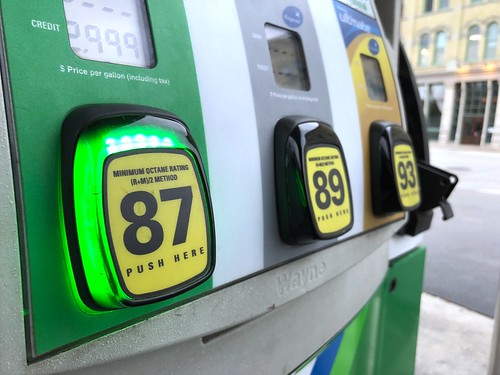
Rising fuel prices in the US have prompted some people to hack the pumps to fill up for free. The cause? Defaults and easy hacks. CC-licensed photo by Robert Geiger on Flickr.

You can sign up to receive each day’s Start Up post by email. You’ll need to click a confirmation link, so no spam.

A selection of 9 links for you. Unventilated. I’m @charlesarthur on Twitter. Observations and links welcome.


Donald Trump tweets incited Capitol violence, Twitter employee tells January 6th Committee • The Verge

Makena Kelly:

»

In testimony, the [anonymous former] Twitter employee [who worked on platform and content moderation] explained that platform was wary of the former president’s presence on the platform as early as September 2020 when Trump urged members of the violent far-right extremist group, the Proud Boys, to “stand back and stand by” during a presidential debate.

“My concern was that the former president, for seemingly the first time, was speaking directly to extremist organizations and giving them directives,” the employee said of the September debate statement. “We had not seen that sort of direct communication before, and that concerned me.”

Despite the concerns, the employee said that Twitter refused to ban Trump in response to the statements. “If former President Donald Trump were any other user on Twitter, he would have been permanently suspended a very long time ago,” the employee told investigators.

Asked to explain the reluctant moderation approach, the employee described a symbiotic relationship between the platform and President Trump. “I believe that Twitter relished in the knowledge that they were also the favourite and most used service of the former president,” the employee said, “and enjoyed having that sort of power within the social media ecosystem.”

Trump was banned from Twitter two days after the storming of the Capitol, a decision that remains both contested and controversial. In a policy statement announcing the ban, Twitter said the action was necessary “due to the risk of further incitement of violence,” citing two tweets posted in the days following the event.

Responding to Tuesday’s testimony, Twitter spokesperson Trenton Kennedy told The Verge “We are clear-eyed about our role in the broader information ecosystem in regards to the January 6th attack on the US Capitol.”

«

So if you ever wondered even for just a minute whether Trump got kid glove treatment: yes, he did. And it continues: Marjorie Taylor Greene, one of the nuttiest members of the US Congress, has tweeted a number of things which are being left on the platform “because of her position”. This is a terrible way to run a platform, where the rules shift all the time and favour the most prominent. Derek Powazek, who used to run online community systems, has an excellent thread about it, especially this: “The core mistake Twitter is making is they think that newsworthy figures shouldn’t have to follow the rules you and I follow, but they’re wrong. In fact, it’s the opposite. Famous (or infamous) people should be held to a HIGHER standard because their use will be mirrored.”

unique link to this extract


Hack the pump: rising prices lead to more reports of gas theft • NBC News

Kevin Collier:

»

Len Denton, a fuel industry veteran and the founder of Guardian Payment Solutions Corp., a startup that makes security products for gas stations, said that gas station owners and law enforcement officials have told him of a rush of theft complaints from station owners and police since March. [US fuel stations require people to pay, or insert a credit card, before the pump will work.]

Most American gas stations use pumps from one of two manufacturers: Wayne Fueling Systems or Gilbarco Veeder-Root. Besides thieves simply arriving in off hours and stealing gas in bulk from underground storage tanks, gas hackers primarily steal using one of two methods, one for each of the two companies, Denton said. Neither company responded to a request for comment.

The first exploits the fact that many Wayne fuel dispensers have a remote control option to allow station owners and fuel inspectors to easily access them. Those remotes are not regulated, though, and NBC News found many of them for sale online on places including eBay. Ebay did not immediately respond to a request for comment.

While Wayne’s gas dispensers require remote users to enter a key code to access its controls, many station owners never change it from the default setting, Denton said.

John Clark, a police officer at the Charlotte-Mecklenburg Police Department North Division in North Carolina, said a suspect he arrested in March used a remote control to access a Wayne pump at a Charlotte gas station then sold the gas. The suspect, who is still awaiting trial, put the pump into a setting designed for technicians to test gas, which allows them to dispense fuel without payment, Clark said.

“You can just pump as much as you want. The easy solution to prevent this from happening is to change that code when pumps are installed, but for whatever reason, whether apathy or lack of knowledge, some of these owners aren’t.”

«

In Britain it’s a lot simpler: people fill their tanks and drive off. But then their numberplate goes on to a national system shared between huge numbers of fuel stations, and they’ll never be able to fill up at a mainstream fuel station again.
unique link to this extract


Ignore the chaos. Britain’s system is working • The Atlantic

Tom McTague:

»

whenever Britain emerges from one of its political upheavals, calls emerge for the country to codify its constitution in a single, intelligible document like the United States’. Britain may have escaped this time, the argument goes, but it is still far too reliant on the “good chap” theory of politics—that in the end, good chaps in power do the right thing.

Over and over, Britain finds itself in this mess. Even today, Britain’s constitution seems entirely absent when it comes to the matter of who will replace [Boris] Johnson as prime minister. Over the summer, 160,000 or so Conservative Party members will choose their next leader, and therefore the country’s prime minister, based on rules drawn up by something called the 1922 Committee, a Conservative grouping in Parliament that has no constitutional basis at all.

But here’s the thing: Britain does not escape its various political crises despite its constitution. Britain escapes these crises because of it.

Britain did not need a set of written instructions to get rid of Johnson. Even though he won the biggest Conservative majority since 1987, he lost power within three years because a majority in Parliament decided he was no longer fit for office. America’s written constitution failed to get rid of Donald Trump despite the fact that he tried to blackmail Ukraine and then incited an attempted insurrection to steal an election. In France, a written constitution did not stop Charles de Gaulle from essentially taking power in a coup in 1958.

…which system has actually shown itself to be more adaptable: the British or the American? Today, the U.S. Constitution is worshipped almost as a sacral text, as if people have forgotten it was a messy and at times deeply immoral political compromise between a bunch of 18th-century British radicals, slave holders, and secessionists. It took a civil war to introduce the Thirteenth Amendment, banning slavery. And today, despite yet another wave of violent gun attacks, the Second Amendment appears unreformable. Over this same period, the British monarchy has essentially lost all its power.

«

For a Briton, reading this is refreshing: a reminder that the reason our constitution works so well is because it isn’t written down. Trump’s reign (the word’s appropriate) was laced with moments of “that breaks a law, doesn’t it?” which then demonstrated that the laws being broken carried no effective penalties.
unique link to this extract


Why we can’t have an air source heat pump • Terence Eden’s Blog

The ecological Mr Eden:

»

As part of our quest to make our house more efficient, we’ve installed solar panels, a battery, insulation, and all the other stuff you’re supposed to do. The next step is working out if we can reduce our dependency on gas.

Octopus Energy (join and we both get £50!) offered to send an engineer around for free to assess our property for suitability for an Air Source Heat Pump (ASHP).

The engineer was friendly, knowledgeable, professional, thorough, and just full of bad news!

Here’s a short summary of the issues they found:

• Siting of the ASHP. It can’t be in view of the road, so it needed to be in our back garden.

«

There are quite a few others, but this one infuriates me. Why can’t it be in view of the road? “Planning regulations”. Do they stop gas flues or chimneys being visible from the road? No. The planet’s on fire, but look, at least when the aliens come along and excavate our civilisation they’ll be impressed by how pretty our buildings are. At least when viewed from the road.
unique link to this extract


Bloomberg says US has hit electric car tipping point • CleanTechnica

Steve Hanley:

»

In the tech world, people like to talk about the S Curve, a graphical (and somewhat mythical) symbol that purports to predict when new technology will go mainstream. In theory, once a new, new thing hits 5% market penetration, the rate of acceptance goes up exponentially before tailing off at the end. Think of the smartphone. At first, people thought it was a fad, then everyone had to have one. Today, there are a few holdouts who are rocking flip phones, but they are by far the minority.

CBS News reports that the United States is the most recent addition to a growing list of nations where fully electric cars make up 5% of new vehicle sales, a threshold that opens the gate to mass adoption, based on the latest findings from Bloomberg. During the last 6 months, the US moved past that tipping point, following 18 other countries. If prior trends continue, a quarter of new car sales could be electric by the end of 2025, Bloomberg predicts.

When it comes to electric cars, 5% seems to be the magic number at which the early adopters are joined by most of the rest of a country’s population. Bloomberg found the scenario had played out in Norway after its first 5% quarter in 2013, with China following suit in 2018 and then South Korea last year. Canada, Australia, and Spain are among the other major car markets nearing the tipping point this year.

Every country that has crossed the mark has a program of federal incentives and pollution rules in place. That goes for the US too, with the White House last year calling for EVs to make up half of new cars by 2030, including hybrids. The US should hit that target several years ahead of schedule, Bloomberg says.

«

The S curve, aka the “diffusion curve“, isn’t mythical. It’s been demonstrated again and again. The curves tend not to be tidy, sure, but it’s a very useful approximation.
unique link to this extract


Analysis: record low price for UK offshore wind is a quarter the price of gas • Carbon Brief

Simon Evans:

»

A UK government auction has secured a record 11 gigawatts (GW) of new renewable energy capacity that will generate electricity four times more cheaply than current gas prices.

The projects are all due to start operating within the next five years up to 2026/27 and have agreed to generate electricity for an average price of £48 per megawatt hour (MWh) in today’s money. This is less than a quarter of the price of the £196/MWh current cost of running gas-fired power stations.

Most of the new capacity – some 7GW – will be offshore wind. Notably, for the first time, these projects were cheaper than the 1.5GW of onshore wind or 2.2GW of solar.

Once the pre-approved projects are built, Carbon Brief estimates they will generate 42 terawatt hours (TWh) of electricity per year, enough to meet around 13% of current UK demand.

«

This is the price delta you really need. When it’s that much cheaper to build wind (and solar), there’s no reason not to. Total UK generating capacity is a little over 100GW, though the concern is that this new capacity won’t be replacing fossil fuel (CCGT, ie gas) generators, but instead nuclear plants reaching the end of their life.
unique link to this extract


Tesla turns to California to build “world’s largest virtual power plant” • One Step Off The Grid

Joshua Hill:

»

Californian utility Pacific Gas and Electric Company and Tesla invited roughly 25,000 PG&E customers with Powerwall home batteries to join a virtual power plant (VPP) pilot in the state, offering compensation for the energy they discharge to the grid.

The companies said this week that more than 3,000 customers had responded to the initial offer, while more than 1,500 customers officially entered the program within the first two weeks.

…The collaboration in California will see Tesla participate in PG&E’s Emergency Load Reduction Program (ELRP) pilot by enrolling and combining residential Powerwall home battery systems into a virtual power plant to discharge power back to the grid in California during times of high electricity demand.

In California, Tesla and PG&E hope to accelerate customer adoption of distributed energy resource technologies by helping to expand access to new customer programs and participation opportunities.

“VPPs are a valuable resource for supporting grid reliability and an essential part of California’s clean energy future,” said Aaron August, PG&E’s vice president for business development & customer engagement.

“Our customers’ home batteries offer a unique resource that can positively contribute to our state’s electric grid and will become more significant as our customers continue to adopt clean energy technology.

…The PG&E and Tesla VPP will see PG&E direct load managements events for participating customers which will direct their battery to discharge when there is high demand for electricity between 4pm to 9pm, specifically through May to October (the Northern Hemisphere’s warmer months).

Customers participating in the VPP will receive $2 for every incremental kilowatt-hour of electricity that their Powerwall discharges back into the grid during a load management event.

«

Those kWh prices are impressive when you consider that PG&E charges $0.51 at peak for domestic users in the summer (if I’ve got the right tariff, which I might not.)
unique link to this extract


Fake IPL in Gujarat village dupes Russian punters • Times of India

Ashish Chauhan:

»

It’s not cricket, but a Gujarat village almost pulled off an elaborate con with a fake IPL [Indian Premier League of cricket] – complete with farm labourers masquerading as players, a Harsha Bhogle mimic and even an “official” Telegram channel to take punts – for a remote audience of Russian punters addicted to betting on the thrills and spills of T20 [the 20-overs-per-side, one-day cricket format].

The charade playing out in a remote farm at Molipur village of Mehsana district reached the “knockout quarterfinal” stage before the organisers of the “Indian premier cricket league” were caught out by the cops.

The gang of cons who set up “IPL” matches at a farm in a Gujarat village accepted bets from punters in Russian cities of Tver, Voronezh and Moscow. The cricket matches were broadcast live over a YouTube channel labelled “IPL” for over a fortnight.

What made the grand fraud even more audacious was that the fake matches started three weeks after the real IPL concluded.

All it took for the real-life con caper to be executed were 21 farm labourers and unemployed youths from the village, who took turns wearing jerseys of the Chennai Super Kings, Mumbai Indians and Gujarat Titans. They even did umpiring, flaunting a few walkie-talkies in front of five HD cameras. Crowd-noise sound effects downloaded from the internet made the ambience appear authentic to the audience sitting in Russia.

«

Wicked clever. Reminds me of the terrible setup for the film The Grand Seduction, in which the Canadian doctor who is the plot’s lynchpin is fanatical about cricket, of all things, in a Newfoundland fisheries town.
unique link to this extract


Low-background steel • Wikipedia

»

Low-background steel is any steel produced prior to the detonation of the first nuclear bombs in the 1940s and 1950s. Typically sourced from shipwrecks and other steel artefacts of this era, it is often used for modern particle detectors because more modern steel is contaminated with traces of nuclear fallout.

Since the cessation of atmospheric nuclear testing, background radiation has decreased to very near natural levels, making special low-background steel no longer necessary for most radiation-sensitive applications, as brand-new steel now has a low enough radioactive signature that it can generally be used in such applications. However, some demand remains for the most radiation-sensitive applications, such as Geiger counters and sensing equipment aboard spacecraft, and World War II-era shipwrecks near in the Java Sea and western South China Sea are often illegally scavenged for low-background steel.

«

Random but fascinating. Airborne background radiation hit 0.11 milliSieverts per year over natural background in 1963 (the year the Partial Nuclear Test Ban Treaty came into force). Since then it’s fallen to 0.005 mSv/yr above background, a factor of 22 less.

Ideal, as it turns out, for neutrino experiments. But it’s not always entirely legitimately acquired.
unique link to this extract


• Why do social networks drive us a little mad?
• Why does angry content seem to dominate what we see?
• How much of a role do algorithms play in affecting what we see and do online?
• What can we do about it?
• Did Facebook have any inkling of what was coming in Myanmar in 2016?

Read Social Warming, my latest book, and find answers – and more.


Errata, corrigenda and ai no corrida: none notified

Start Up No.1840: censoring novels in the cloud, the Channel migrant supply chain, Celsius hits zero, Fahrenheit passes 100, and more


The James Webb Space Telescope is a marvel of engineering – and also of communication reliability, with 57GB of daily data to store and send. CC-licensed photo by NASA’s James Webb Space Telescope on Flickr.

You can sign up to receive each day’s Start Up post by email. You’ll need to click a confirmation link, so no spam.

A selection of 10 links for you. How many fingers am I holding up? I’m @charlesarthur on Twitter. Observations and links welcome.


A million-word novel got censored before it was even shared. Now Chinese users want answers • MIT Technology Review

Zeyi Yang:

»

Imagine you are working on your novel on your home computer. It’s nearly finished; you have already written approximately one million words. All of a sudden, the online word processing software tells you that you can no longer open the draft because it contains illegal information. Within an instant, all your words are lost.

This is what happened in June to a Chinese novelist writing under the alias Mitu. She had been working with WPS, a domestic version of cloud-based word processing software such as Google Docs or Microsoft Office 365. In the Chinese literature forum Lkong on June 25, Mitu accused WPS of “spying on and locking my draft,” citing the presence of illegal content. 

The news blew up on social media on July 11 after a few prominent influencer accounts belatedly picked it up. It became the top trending topic on Weibo that day, with users questioning whether WPS is infringing on their privacy. Since then, The Economic Observer, a Chinese publication, has reported that several other online novelists have had their drafts locked for unclear reasons in the past. 

Mitu’s complaint triggered a social media discussion in China about censorship and tech platform responsibility. It has also highlighted the tension between Chinese users’ increasing awareness of privacy and tech companies’ obligation to censor on behalf of the government. “This is a case where perhaps we are seeing that these two things indeed might collide,” says Tom Nunlist, an analyst on China’s cyber and data policy at the Beijing-based research group Trivium China 

While Mitu’s document has been saved online and was previously shared with an editor in 2021, she says she had been the only person editing it this year, when it was suddenly locked. “The content is all clean and can even be published on a [literature] website, but WPS decided it should be locked. Who gave it the right to look into users’ private documents and decide what to do with them arbitrarily?” she wrote.

«

Appalling, awful, bad Chinese censors, etc. Also: precisely the same thing happens for Google Docs users, though for different reasons. People have found access to their documents blocked, with no reason given. Of course you could get it reversed by contacting Google customer service. Hahahaa.

Cloud documents: good in some ways, terrible in others. (Related, obliquely: have you noticed how rare it now is for authors to come onto Twitter in a panic saying they’ve lost their novel because of a disk crash? Disks are better. And possibly people are backing up more, or writing in the cloud. As here.)
unique link to this extract


The Webb Space Telescope’s profound data challenges • IEEE Spectrum

Michael Koziol on the James Webb Space Telescope, which can generate 57GB of data per day, compared to Hubble which generates 1-2GB daily, but which is also too far away for any sort of maintenance mission:

»

Any scientific data the JWST collects during its lifetime will need to be stored on board, because the spacecraft doesn’t maintain round-the-clock contact with Earth. Data gathered from its scientific instruments, once collected, is stored within the spacecraft’s 68GB solid-state drive (3% is reserved for engineering and telemetry data). Alex Hunter, also a flight systems engineer at the Space Telescope Science Institute, says that by the end of JWST’s 10-year mission life, they expect to be down to about 60 GB because of deep-space radiation and wear and tear.

The onboard storage is enough to collect data for about 24 hours before it runs out of room. Well before that becomes an issue, JWST will have scheduled opportunities to beam that invaluable data to Earth.

JWST will stay connected via the Deep Space Network (DSN)—a resource it shares with the Parker Solar Probe, Transiting Exoplanet Survey Satellite, the Voyager probes, and the entire ensemble of Mars rovers and orbiters, to name just a few of the other heavyweights. The DSN consists of three antenna complexes: Canberra, Australia; Madrid, Spain; and Barstow, Calif. JWST needs to share finite antenna time with plenty of other deep-space missions, each with unique communications needs and schedules.

Sandy Kwan, a DSN systems engineer, says that contact windows with spacecraft are scheduled 12 to 20 weeks in advance. JWST had a greater number of scheduled contact windows during its commissioning phase, as instruments were brought on line, checked, and calibrated. Most of that process required real-time communication with Earth.

All of the communications channels use the Reed-Solomonerror-correction protocol—the same error-correction standard as used in DVDs and Blu-ray discs as well as QR codes. The lower data-rate S-band channels use binary phase-shift key modulation—involving phase shifting of a signal’s carrier wave. The K-band channel, however, uses a quadrature phase-shift key modulation. Quadrature phase-shift keying can double a channel’s data rate, at the cost of more complicated transmitters and receivers.

«

If you find this both awe-inspiring and mind-numbing, you’re not alone. The amazing technical challenges of the JWST are set out in a series of posts. They’ve already benefited earthbound life by making far more precise medical procedures possible. And it’s the culmination of a 20-year project. Sometimes, humans are pretty good at things: the JWST is a cause for optimism in itself.
unique link to this extract


A migrant smuggling clan is broken up in Germany: “The hydra is alive” • DER SPIEGEL

Hannes Schrader, Roman Lehberger, Hubert Gude and Jürgen Dahlkamp:

»

“With this blow, we have broken up one of the most powerful migrant smuggling groups that Europe has ever seen,” says Helgo Martens, head of operations for the German Federal Police. The ring is thought to have funneled up to 10,000 migrants through the dangerous route to England since the beginning of 2021. At an estimated profit of at least 15 million euros, though officers involved say the true sum is likely twice that amount.

The shots fired in Osnabrück [when a gang member was shot six times, and subsequently informed police] and the raids provided a pathway into the secretive world of the traffickers. A world in which a new life in Britain can be had for between €1,500 and €8,000 – if the money is accompanied by a bit of luck and the refugees in the rubber rafts are actually successful in crossing the English Channel. If not, their money buys them a ticket to death. Like in November 2021, when 27 people, including a pregnant woman and three children, drowned when their boat foundered.

The international raid, the primary focus of which was in the German state of Lower Saxony, clearly demonstrates that Germany plays a decisive role in one of the greatest human dramas currently playing out on the European stage. Virtually unnoticed by the public, human smuggling groups based largely in Germany have developed, pursuing an unholy business in which they apparently don’t care if their freight ends up in England or in the afterworld.

And its not just the migrants themselves who make stopovers in Germany on their way to the Atlantic coast. The country is also considered to be the most important hub for small boats, primarily inflatable rafts, that are delivered on demand to the seaside, where they are then filled with migrants. Some 80% of the boats and the motors, French investigators estimate, come through Germany.

«

Detailed look at precisely what the smuggling chain actually looks like, for which the UK government’s answer seems to be to try to empty the bath with a thimble by sending asylum seekers arriving by those boats to Rwanda (and accepting Rwandan asylum seekers in return 🤷‍♂️). The obvious solution is to follow it back up to the source, as this article explains.

In 2021, just over 28,000 people arrived in the UK by the small boats/Channel route. (The number in the article from the French interior ministry says more than 36,000 were “intercepted at the English Channel”, which suggests about 8,000 were stopped on the French side.)

So taking out a group sending 10,000 is significant. Even more effective would be offering locations outside the UK where people could apply for asylum.
unique link to this extract


Why Celsius Network’s depositors won’t get their money back • Coppola Comment

Frances Coppola dives into the bankruptcy filing from the “asset manager” which, as she points out, was actually a “shadow bank” – a bank in everything but name and, oh, asset guarantees:

»

The crypto lender Celsius has filed for Chapter 11 bankruptcy. This should come as a surprise to absolutely no-one, though the grief and pain on Twitter and Reddit suggests that quite a few “Celsians” didn’t want to believe what was staring them in the face. Celsius suspended withdrawals nearly a month ago. So far, every crypto lender that has suspended withdrawals has turned out to be insolvent. There was no reason to suppose that Celsius would be different.  

Celsius’s bankruptcy filing says the company has assets of $1bn – $10bn and a similar quantity of liabilities.

This doesn’t tell us much about the extent of the company’s insolvency. But rumours have been circulating of a $2bn hole in its balance sheet. In May, according to Coindesk, the company said it had $12bn of what Celsius calls “customer assets” and Coindesk calls “assets under management”, and $8bn lent out to clients. So “assets under management” seem to have fallen by $2bn. Could this be the missing $2bn?

No, it couldn’t. It’s the wrong side of the balance sheet. What Celsius calls “customer assets” are its own liabilities.

«

Quite the category error there. And her recommendations:

»

Inevitably, there are calls for tougher regulation of crypto shadow banks like Celsius. To some extent, I agree. At the very least, misleading marketing should be stamped on: no way was Celsius ever a safer alternative to a traditional bank. And crypto lenders should be held to the same standards of disclosure as other financial institutions. It should not be possible for a crypto lender to produce no accounts for over two years and scrub all mention of its current financial position from its website.

«

unique link to this extract


Cryptomining capacity in US rivals energy use of Houston, findings show • The New York Times

Hiroko Tabuchi:

»

Seven of the largest bitcoin mining companies in the United States are set up to use nearly as much electricity as the homes in Houston, according to data disclosed Friday as part of an investigation by congressional Democrats who say miners should be required to report their energy use.

The United States has seen an influx of cryptocurrency miners, who use powerful, energy-intensive computers to create and track the virtual currencies, after China cracked down on the practice last year. Democrats led by Senator Elizabeth Warren are also calling for the companies to report their emissions of carbon dioxide, the greenhouse gas that is the main driver of climate change.

“This limited data alone reveals that cryptominers are large energy users that account for a significant — and rapidly growing — amount of carbon emissions,” Sen. Warren and five other members of Congress wrote in a letter to the heads of the Environmental Protection Agency and Department of Energy. “But little is known about the full scope of cryptomining activity,” they wrote.

Research has shown that a surge in cryptomining is also significantly raising energy costs for local residents and small businesses, and has added to the strain on the power grid in states like Texas, the letter noted.

…That data showed that the seven companies alone had set up to tap as much as 1,045 megawatts of power, or enough electricity to power all the residences in a city the size of Houston, the nation’s fourth-largest city with 2.3 million residents. The companies also said that they plan to expand their capacity at an eye-popping rate.

One of the largest cryptomining companies in the United States, Marathon Digital Holdings, told the probe that it operated almost 33,000 highly specialized, power-intensive computers, known as “mining rigs,” as of February, up from just over 2,000 at the start of 2021. By early next year, it intends to get that number up to 199,000 rigs, an almost hundredfold increase in two years, it said.

«

Tricky one for politicians: are they going to legislate how people should use power? Crypto is absolutely a waste of energy, yet is it moreso than a million people playing games on PCs using a kilowatt per hour? Obviously you’d charge more for electricity provided to commercial users, and that should include bitcoin miners.
unique link to this extract


Elon Musk opposes Twitter’s request for expedited trial over stalled deal • WSJ

Sarah E. Needleman and Erin Mulvaney:

»

Elon Musk filed a motion Friday opposing Twitter’s request to expedite a trial over his intention to terminate his $44bn takeover.

Lawyers for Mr. Musk filed papers with the Delaware Chancery Court, their first public response to the lawsuit filed earlier this week by the social-media company seeking to enforce the terms of their merger agreement. The court should reject Twitter’s “unjustifiable request to rush this,” they said in their filing.

Twitter has asked the court to expedite the proceedings, citing risks from the recent economic downturn and being held in limbo by a buyer. The company requested a trial by mid-September “to protect Twitter and its stockholders from the continuing market risk and operational harm resulting from Musk’s attempt to bully his way out of an airtight merger agreement.”

…In Friday’s filing, Mr. Musk’s lawyers said: “The core dispute over false and spam accounts is fundamental to Twitter’s value. It is also extremely fact and expert intensive, requiring substantial time for discovery.”

Mr. Musk’s lawyers argued that “it is unnecessary to resolve these weighty considerations on a breakneck schedule” and asked for a trial date on or after Feb. 13 of next year, adding that the debt financing was valid until April 25, 2023.

…“With the sense of humor of a bot, Twitter claims that Musk is damaging the company with tweets like a Chuck Norris meme and a poop emoji. Twitter ignores that Musk is its second largest shareholder with a far greater economic stake than the entire Twitter board,” the filing states.

«

February 2023? We might all die of excitement, or boredom. Meanwhile, that shareholding is going to be a leaden weight in his pocket.
unique link to this extract


Facebook advertisers are starting to shift spending for the first time • Business Insider

Claire Atkinson, Lucia Moses, and Lara O’Reilly:

»

Digital ad sellers are having a bad year. But for Facebook parent Meta Platforms, the problem is worse — and it may be one it doesn’t recover from.

Already, analysts expect the social giant to record zero growth in the second quarter, in a first for the company. Mark Zuckerberg himself called the situation “one of the worst downturns that we’ve seen in recent history,” according to Reuters. The rest of the digital ad sector, made up of Google, Twitter, Snap and others, is also facing a slowdown in growth.

What’s different is that Meta is in a perfect storm. As a result, more advertisers are not just increasingly willing to diversify away from Meta, but doing so for the first time. It’s a big shift for a company that historically could always count on their dollars, scandal after scandal, as long as their ads performed.

One top exec at a major holding company agency said the economic downturn would affect everyone in the second half but that significantly, Meta would lose share of client spending as well, saying, “This is a first.”

The major ad forecasters have cut their overall ad spending outlooks for the year, and other agency execs say Meta, long considered a “must-buy,” is now at the top of clients’ lists of places to cut.

Analysts, too, say Meta is coming down to Earth after years of explosive growth. Needham analyst Laura Martin on Monday downgraded Meta’s stock from “hold” to “underperform,” given its guidance for slower revenue growth and huge investment in its vision for the metaverse.

«

unique link to this extract


How Joe Manchin doomed the Democrats’ climate plan • The New York Times

Coral Davenport and Lisa Friedman:

»

First, he killed a plan that would have forced power plants to clean up their climate-warming pollution. Then, he shattered an effort to help consumers pay for electric vehicles. And, finally, he said he could not support government incentives for solar and wind companies or any of the other provisions that the rest of his party and his president say are vital to ensure a livable planet.

Senator Joe Manchin III of West Virginia, who took more campaign cash from the oil and gas industry than any other senator, and who became a millionaire from his family coal business, independently blew up the Democratic Party’s legislative plans to fight climate change. The swing Democratic vote in an evenly divided Senate, Mr. Manchin led his party through months of tortured negotiations that collapsed on Thursday night, a yearlong wild goose chase that produced nothing as the Earth warms to dangerous levels.

“It seems odd that Manchin would choose as his legacy to be the one man who single-handedly doomed humanity,” said John Podesta, a former senior counselor to President Barack Obama and founder of the Center for American Progress, a left-leaning think tank.

Privately, Senate Democratic staff members seethed and sobbed on Thursday night, after more than a year of working nights and weekends to scale back, water down, trim and tailor the climate legislation to Mr. Manchin’s exact specifications, only to have it rejected inches from the finish line.

«

You are requested to start building a time machine and to go back and persuade Manchin, as a teenager, not to bother with that politics nonsense.

More seriously: the US’s flawed approach to democratic representation has taken 200 years to show its real failure, but we’ll all have to suffer for it. Well, perhaps not all. Manchin is 74 years old.
unique link to this extract


Deadly heatwaves show why India needs to get serious on climate adaptation • Climate Change News

Skand Agarwal:

»

This March was India’s hottest since records began 122 years ago. The temperature hit 49C in several states of India by the end of May.

The increasing frequency of heatwaves and their early arrival have had enormous economic and health impacts, especially on agricultural communities and daily wage labourers. People employed in the informal sectors such as rickshaw pullers, domestic helpers and daily contractors risked heat stroke if they worked during the hottest hours and lost critical income if they rested instead.

Sporadic and prolonged summers are making monsoon season unpredictable, forcing farmers to adapt their production cycle every season. This year’s harsh summer has resulted in sudden pressure on power demand and coal shortages, pushing the country into a severe electricity crisis.

As if unprecedented heat was not enough to deal with, the northeastern state of Assam has witnessed torrential pre-monsoon rainfall causing floods all over the state. The overflowing of Brahmaputra River, one of the major rivers passing through India, has overrun close to 1,500 villages and affected nearly 500,000 people.

While the National Disaster Management Authority of India (NDMA) has started to rehabilitate the affected people, a sudden migration to nearby cities has put pressure on the local administrations.

All this shows why adapting to the impacts of climate change deserves equal attention to cutting emissions.

«

In the UK, everyone is falling about at the prospect of a 40ºC (104ºF) day, which will almost surely be record-breaking. 49ºF is 120ºF.
unique link to this extract


Ev Williams gives up • Platformer

Casey Newton:

»

[Blogger, Twitter and then Medium founder Ev] Williams went back and forth on whether Medium should host its own publications or serve as a platform for others to build on. And while he dithered, Medium got caught in the middle.

On the high end, well funded digital publishers from BuzzFeed to Vice to the Atlantic excelled at publishing high-quality journalism. And on the low end, Substack emerged to let solo creators develop thriving, sustainable careers by offering individual subscriptions. (See my ethics disclosure about Substack.) In such a world, Medium had no obvious advantage. With its owned and operated publications gone, it became a general-interest web magazine staffed by freelancers and dependent on Google.

Another former employee noted that, for all the pivots over the years, Williams always seemed a step behind.

“I’d say you could describe the Ev era of Medium as a series of digital publishing experiments that often felt of the zeitgeist without ever defining it,” the employee said. “A lot of the work Medium did over the years genuinely had an impact, but it often felt, for whatever reason, like Ev made it a point not to lean into this work. he meandered and never seemed satisfied. And eventually Twitter evolved to support more of the kind of publishing that had originally been native to Medium, and Substack came along and ate the platform’s lunch.”

“He’s a little bit of a mystery to me,” the employee aded. “I hope a leadership shakeup is good for the company and the people who work there.”

A third former employee told me my assessment of Williams — essentially, a callous dilettante — was unfair.

“I think he was trying to solve a really hard problem, it kept not working, and he screwed a lot of people over to varying degrees by continually changing his approach,” the employee said. “But he really did try a lot of things, and it wasn’t necessarily obvious that they’d fail until somebody with a ton of money tried it.”

«

In short: Williams has left Medium. Doubtless this means the paywall will get harder and charges will be higher (or ads will invade). Between Substack and actual publications, it’s hard to see where Medium fits.
unique link to this extract


• Why do social networks drive us a little mad?
• Why does angry content seem to dominate what we see?
• How much of a role do algorithms play in affecting what we see and do online?
• What can we do about it?
• Did Facebook have any inkling of what was coming in Myanmar in 2016?

Read Social Warming, my latest book, and find answers – and more.


Errata, corrigenda and ai no corrida: none notified

Start Up No.1839: Facebook criticised over India report, DARPA looks at open source, M2 MacBook Air reviewed, and more


Water levels on the Rhine river have fallen so low that barge traffic, essential for coal powered stations and chemicals production, is at risk. CC-licensed photo by Roger W on Flickr.

You can sign up to receive each day’s Start Up post by email. You’ll need to click a confirmation link, so no spam.

A selection of 9 links for you. Toot toot! I’m @charlesarthur on Twitter. Observations and links welcome.

There will also be a new post from my Social Warming Substack available from 0845 BST. Sign up and make your inbox even happier!


Facebook accused of ‘whitewashing’ India human rights report • Time

Billy Perrigo:

»

Facebook’s parent company Meta has been accused of “whitewashing” a long-awaited report on its human rights impact in India, which the company released in a highly summarized form on Thursday, drawing fire from civil society groups.

TIME first reported in August 2020 that Facebook had commissioned the human rights impact assessment (HRIA), in an effort to determine its role in the spread of hate speech online. The report has been anticipated for nearly two years by rights groups who have long raised the alarm that Facebook is contributing to an erosion of civil liberties in India and to dangers faced by minorities.

Ankhi Das, Facebook’s most senior executive in India, resigned in October 2020 after the Wall Street Journal reported she had intervened to prevent the platform removing accounts of members of the country’s Hindu nationalist ruling party, some of whom had called for violence against India’s Muslim minority. India is Facebook’s largest market by users.

The India HRIA was carried out by an independent law firm, Foley Hoag, which interviewed more than 40 civil society stakeholders, activists, and journalists to complete the report. But Facebook drew criticism from rights groups on Thursday after it released its own four-page summary of the law firm’s findings that was almost bereft of any meaningful details.

Ritumbra Manuvie, an academic who was one of the civil society members interviewed by Foley Hoag for the report, said Facebook’s summary was a “cover up of its acute faultlines in India,” and showed that its “commitment to human rights is rather limited.”

The Real Facebook Oversight Board, a pressure organization made up of critics of the platform, said in a statement that the report was “a master-class in spin and obfuscation” and a “whitewashing [of] the religious violence fomented in India across [Meta’s] platforms.”

«

Largest market by users, with a government that is very apt to censor content it doesn’t like. Facebook has a tiger by the tail there.
unique link to this extract


The US military wants to understand the most important software on Earth • MIT Technology Review

Patrick Howell O’Neill:

»

while the open-source movement has spawned a colossal ecosystem that we all depend on, we do not fully understand it, experts like [cybersecurity researcher and former NSA computer security scientist, Dave] Aitel argue. There are countless software projects, millions of lines of code, numerous mailing lists and forums, and an ocean of contributors whose identities and motivation are often obscure, making it hard to hold them accountable.

That can be dangerous. For example, hackers have quietly inserted malicious code into open-source projects numerous times in recent years. Back doors can long escape detection, and, in the worst case, entire projects have been handed over to bad actors who take advantage of the trust people place in open-source communities and code. Sometimes there are disruptions or even takeovers of the very social networks that these projects depend on. Tracking it all has been mostly—though not entirely—a manual effort, which means it does not match the astronomical size of the problem.

[DARPA program manager, Sergey] Bratus argues that we need machine learning to digest and comprehend the expanding universe of code—meaning useful tricks like automated vulnerability discovery—as well as tools to understand the community of people who write, fix, implement, and influence that code.

The ultimate goal is to detect and counteract any malicious campaigns to submit flawed code, launch influence operations, sabotage development, or even take control of open-source projects.

To do this, the researchers will use tools such as sentiment analysis to analyze the social interactions within open-source communities such as the Linux kernel mailing list, which should help identify who is being positive or constructive and who is being negative and destructive.

The researchers want insight into what kinds of events and behavior can disrupt or hurt open-source communities, which members are trustworthy, and whether there are particular groups that justify extra vigilance. These answers are necessarily subjective. But right now there are few ways to find them at all.

«

(Thanks Gregory for the link.)
unique link to this extract


Black Americans’ views on facial recognition use by police • Pew Research Center

Emily Vogels and Andrew Perrin:

»

Black Americans are less likely than White or Hispanic Americans to believe that the widespread use of facial recognition technology will make policing fairer. Only 22% of Black adults say it will make policing fairer, while 29% say it will make policing less fair and about half say it will make no difference. Hispanic and White Americans are more likely than Black Americans to say the widespread use of this technology will make policing fairer (40% and 36% say this, respectively).

Like Americans overall, most Black Americans are skeptical about whether face recognition technology should be used as evidence to arrest people. A majority of Americans, including 74% of Black adults, say that if a facial recognition program said that someone was involved in a crime, it should not be good enough evidence for police to arrest them. Roughly a third or fewer of adults in each major racial or ethnic group say the technology should be good enough evidence, even if there was a small chance the program was wrong.

Black Americans are more likely than other Americans to see certain negative outcomes from the widespread use of face recognition technology by police. For example, nearly half of Black adults (48%) think police definitely would use facial recognition technology to monitor Black and Hispanic neighborhoods much more often than other neighborhoods. That is higher than the shares of Hispanic (37%) and White (18%) adults who say the same.

…The findings come as other studies have found that face recognition technology may be accurate for identifying White men but is less accurate when it comes to identifying others.

«

unique link to this extract


Low Rhine water levels risk worsening Europe’s energy crunch • BNN Bloomberg

Todd Gillespie and Jack Wittels:

»

A heatwave has reduced parts of the river, western Europe’s most important waterway, to the lowest seasonal levels in at least 15 years. That could affect the delivery of everything from coal to oil products as the region races to stockpile energy supplies ahead of winter.

“Low water levels on the Rhine mean that barges cannot load steam coal at full capacity” for power plants in Germany, said Guillaume Perret, founder of energy consultancy Perret Associates. “This could be a double whammy for the German utilities, as they were already facing a shortage of barges.”

For now, most utilities have ample stockpiles, though that could change if the situation runs into late next month, he added.

…The water level at Kaub, a bottleneck point near Frankfurt, is at the lowest seasonal level since at least 2007, according to data from the German waterways administration. The situation is similar near Duisburg and Dusseldorf.

Dry spells occasionally restrict traffic on the Rhine, forcing barges to carry smaller loads. A barge with 2,500 tons of capacity loading diesel-type fuel in the Rotterdam region sailing beyond Kaub can only take on about 1,600 tons of product, maritime brokerage Riverlake said in a report this week.

“If there are low water levels in combination with limited diesel supplies, some storage tanks in Germany could run out, it happened before,” said Jelle Vreeman, a senior broker at the company. “Significant barge capacity is already taken off the market” because of the demand to cover deliveries during summer, he added.

«

Barges are also essential for shipping chemicals, one of Germany’s biggest businesses. And there are nuclear power stations which use the Rhine’s water for cooling. If the drought continues, winter fuel stocks might be affected. (Coal-powered stations, blah.)

A year ago, people were dying in floods on the Rhine. Variability is the biggest variable.
unique link to this extract


Apple MacBook Air M2 (2022) review: a whole new Air-a • The Verge

Dan Seifert:

»

Despite the lower performance in benchmark tests compared to the M2 MacBook Pro, the M2 Air didn’t present any issues for me when I used it to do my regular knowledge worker job. I was able to use dozens of tabs in multiple windows of Chrome, bounce between multiple Spaces with Slack, email, and other apps, take endless Zoom calls, and play media in the background while I continued to get my work done without missing a beat. It also didn’t heat up on the bottom panel or under the keyboard during my daily workload. For the tasks that a thin-and-light computer like the Air is ideal for — productivity work, browsing the web, video calls, watching TV shows or movies, writing term papers, etc. — the M2 is more than capable.

It’s also totally fine for the occasional light photo and video editing, especially if you’re using Apple’s Photos or iMovie apps for those tasks. On my review unit with 8GB of RAM, I was able to saturate the memory and force the system to swap memory to the SSD with my daily workload, but thanks to the speedy enough storage, that didn’t slow me down. If I had been using a base model with that single-chip 256GB of storage, the story might be different, however.

«

8GB wasn’t enough for an M1 device, so can’t think it would really meet the needs of the M2. Everyone’s really happy with it, judging by the reviews.
unique link to this extract


Netflix teams up with Microsoft on cheaper streaming with adverts • The Guardian

Mark Sweney:

»

The streaming platform first announced plans to launch a cheaper service – giving subscribers the chance to pay less in return for viewing ads – in April after reporting the first loss of subscribers in a decade, wiping almost $60bn (£51bn) off its market value.

Greg Peters, the Netflix chief operating officer, said: “Microsoft has the proven ability to support all our advertising needs as we work together to build a new ad-supported offering.

“More importantly, Microsoft offered the flexibility to innovate over time on both the technology and sales side, as well as strong privacy protections for our members.”

Netflix’s surprise move to belatedly follow rivals such as Hulu, HBO Max and Paramount+ by launching an ad-supported package this year is expected to precede the announcement next week of a further loss of 2 million global subscribers in the three months to the end of June.

“It’s very early days and we have much to work through,” Peters said. “But our long-term goal is clear. More choice for consumers and a premium, better-than-linear TV brand experience for advertisers.”

Netflix had reportedly been in talks with a number of partners to deliver advertising sales, including Google, and Sky owner Comcast’s NBCUniversal, before signing up with Microsoft.

«

Would not have guessed at Microsoft as the ad provider. It essentially wrote down the value of aQuantive, the online ad firm it bought for $6.3bn, to zero ten years ago.
unique link to this extract


Crypto crash drags lender Celsius Network into bankruptcy • WSJ

Alexander Gladstone, Vicky Ge Huang and Soma Biswas:

»

The chapter 11 filing in New York follows weeks of market speculation about Celsius, which built itself into one of the biggest cryptocurrency lenders on a pitch that it was less risky than a bank, and with better returns for its customers. But it overextended itself offering lofty yields to crypto depositors and making large loans backed by little collateral, leaving itself little cushion in the event of a market downturn.

The company was caught in the chain reaction rippling across crypto markets following selloffs in digital currencies this year, and it froze withdrawals, swaps, and transfers last month. Founded in 2017 by entrepreneur Alex Mashinsky, Celsius was valued at more than $3bn last fall in its latest venture round.

“This is the right decision for our community and company,” Mr. Mashinsky said Wednesday. “I am confident that when we look back at the history of Celsius, we will see this as a defining moment.”

Some members of Celsius’s board of directors said the suspension of withdrawals was a “difficult but necessary step” to stabilize the company’s business and protect its customers.

“Without a pause, the acceleration of withdrawals would have allowed certain customers—those who were first to act—to be paid in full while leaving others behind to wait for Celsius to harvest value from illiquid or longer-term assets before they receive a recovery,” those directors said Wednesday.

«

Leaves 100,000 creditors (including other crypto funds): had $4.3bn in assets but, oh dear, $5.5bn in liabilities at the time of filing. Amazing that a company offering 18% interest rates in a time when central bank rates were less than 1% might crash and burn, do you think?
unique link to this extract


Theranos’s Ramesh ‘Sunny’ Balwani found guilty on all 12 fraud counts • WSJ

Heather Somerville and Meghan Bobrowsky:

»

A federal jury convicted Ramesh “Sunny” Balwani, the former top lieutenant to Theranos Inc. founder Elizabeth Holmes, on all 12 charges that he helped perpetuate a yearslong fraud scheme at the blood-testing startup.

The verdict is the second conviction against Theranos leadership and comes six months after a jury found Ms. Holmes guilty of fraud; it secures another major victory for the U.S. government, which brought the case against the pair in 2018. It brings to conclusion one of Silicon Valley’s most notorious startup implosions, which saw nearly $1bn of investor money evaporate after revelations that the company delivered inaccurate blood-test results to patients, including for life-threatening conditions, and Ms. Holmes and Mr. Balwani lied about its proprietary technology.

Mr. Balwani, Theranos’s former president and chief operating officer, was charged with 10 counts of wire fraud and two counts of conspiracy to commit wire fraud. His case, like Ms. Holmes’s, marked a rare prosecution of a technology executive, and served as a referendum on startups taking the culture of “fake it until you make it” too far. Mr. Balwani faces up to 20 years in prison for each count for which he was found guilty, but former prosecutors said such a stiff sentence is rare in white-collar cases.

Mr. Balwani’s lawyers argued he wasn’t in charge at Theranos, and the responsibility for the company rested with Ms. Holmes. He used investor money as promised, to build the company, they said, and invested his own money to help the startup succeed. Mr. Balwani’s verdict shows how the government, in its second time prosecuting the case against the Theranos executives, appeared to have buttoned up its arguments following Ms. Holmes’s trial, which had a more mixed result.

«

This was last week, but sentencing won’t be until November. Unlike Holmes, he didn’t testify in his own defence – though probably it wouldn’t have made much difference.
unique link to this extract


Working all day in VR does not increase productivity • Inavate

»

A new study from Germany has found that working in virtual reality does not increase productivity, comfort, or wellbeing, but does say the report will help identify opportunities for improving the experience of working in VR in the future.

The project was heded up by Dr Jens Grubert, a specialist in human-computer interaction at Coburg University, Germany.

It involved 16 people who had to work for five days, eight hours a week (with 45 mins lunch break), in VR. The participants used Meta Quest 2 VR headsets combined with a Logitech K830 keyboard and Chrome Remote Desktop. The equipment was chosen specifically to create a realistic scenario of what users would be using in today’s world.

Participants were also asked specific VR-related questions (‘do you feel sick?’ or ‘are your eyes starting to hurt?’). The research team also monitored the worker’s heartbeats and typing speed.

The published paper, entitled ‘Quantifying the Effects of Working in VR for One Week‘ found “concerning levels of simulator sickness, below average usability ratings and two participants dropped out on the first day using VR, due to migraine, nausea and anxiety.”

The study found that, as expected, VR results in significantly worse ratings across most measures. Each test subject scored their VR working experience versus working in a physical environment, many felt their task load had increased, on average by 35%. Frustration was by 42%, the ‘negative affect’ was up 11%, and anxiety rose by 19%.

«

Wonder how this news is going to go down when it flashes across the visors of Mark Zuckerberg and Nick Clegg, assuming they’re not at the moment puking over a toilet. Though data finding that using VR systems for extended periods leaves significant proportions of people feeling queasy is longstanding – it goes back at least to the early 1990s when Atari was looking at launching the Jaguar VR headset.
unique link to this extract


• Why do social networks drive us a little mad?
• Why does angry content seem to dominate what we see?
• How much of a role do algorithms play in affecting what we see and do online?
• What can we do about it?
• Did Facebook have any inkling of what was coming in Myanmar in 2016?

Read Social Warming, my latest book, and find answers – and more.


Errata, corrigenda and ai no corrida: none notified

Start Up No.1838: Google says IG and TikTok eating into search, playing Doom in Doom, that Twitter-Musk lawsuit, and more


Digital roadside signs can be distracting to drivers – especially if they focus on how many people die on the stretch of road. CC-licensed photo by Oregon Department of Transportation on Flickr.

You can sign up to receive each day’s Start Up post by email. You’ll need to click a confirmation link, so no spam.

A selection of 10 links for you. Observing the limit. I’m @charlesarthur on Twitter. Observations and links welcome.


Google exec suggests Instagram and TikTok are eating into Google’s core products, Search and Maps • TechCrunch

Sarah Perez:

»

In a discussion about the evolution of search, [Google svp of Knowledge and Information Prabhakar Raghavan] somewhat offhandedly noted that younger users were now often turning to apps like Instagram and TikTok instead of Google Search or Maps for discovery purposes.

“We keep learning, over and over again, that new internet users don’t have the expectations and the mindset that we have become accustomed to.” Raghavan said, adding, “the queries they ask are completely different.”

These users don’t tend to type in keywords but rather look to discover content in new, more immersive ways, he said.

“In our studies, something like almost 40% of young people, when they’re looking for a place for lunch, they don’t go to Google Maps or Search,” he continued. “They go to TikTok or Instagram.”

The figure sounds a bit shocking, we have to admit. Google confirmed to us his comments were based on internal research that involved a survey of US users, ages 18 to 24. The data has not yet been made public, we’re told, but may later be added to Google’s competition site, alongside other stats — like how 55% of product searches now begin on Amazon, for example.

While older internet users may not be able to wrap their minds around turning to a social video app to find a restaurant, this trend could cut into Google’s core business of search and discovery over time — not to mention the ads sold against those sorts of queries. While younger users may eventually launch some sort of maps app for navigation purposes, this data indicates they don’t necessarily start their journey on Google anymore. That means all the work Google did over the years to organize, curate and recommend various businesses — such as local restaurants —  or its creation of discovery tools inside Google Maps — could be lost on these younger internet users.

«

Tempora mutantur, and that sort of thing.
unique link to this extract


Can behavioral interventions be too salient? Evidence from traffic safety messages • Science

Jonathan Hall and Joshua Madsen:

»

Contrary to policy-makers’ expectations, we found that displaying fatality messages increases the number of traffic crashes. Campaign weeks realize a 1.52% increase in crashes within 5 km of DMSs [dynamic message signs over/beside motorways], slightly diminishing to a 1.35% increase over the 10 km after DMSs. We used instrumental variables to recover the effect of displaying a fatality message and document a significant 4.5% increase in the number of crashes over 10 km.

The effect of displaying fatality messages is comparable to raising the speed limit by 3 to 5 miles per hour or reducing the number of highway troopers by 6 to 14%. We also found that the total number of statewide on-highway crashes is higher during campaign weeks. The social costs of these fatality messages are large: Back-of-the-envelope calculations suggest that this campaign causes an additional 2600 crashes and 16 fatalities per year in Texas alone, with a social cost of $377m per year.

Our proposed explanation for this surprising finding is that these “in-your-face,” “sobering,” negatively framed messages seize too much attention (i.e., are too salient), interfering with drivers’ ability to respond to changes in traffic conditions.

Supporting this explanation, we found that displaying a higher fatality count (i.e., a plausibly more attention-grabbing statistic) causes more crashes than displaying a small one, that fatality messages are more harmful when displayed on more complex road segments, that fatality messages increase multi-vehicle crashes (but not single-vehicle crashes), and that the impact is largest close to DMSs and decreases over longer distances.

«

I’d wonder if showing those statistics just makes you fret more about how dangerous the road must be.
unique link to this extract


Doom hacker gets Doom running in Doom • PC Gamer

Andy Chalk:

»

Getting Doom to run on things that were never meant to run Doom is something of a cottage industry among a die-hard subset of PC hackers and coders. Your motherboard’s BIOS (opens in new tab), a bunch of old potatoes (opens in new tab), a Lego brick (opens in new tab), a home pregnancy test (opens in new tab): The list goes on and on. But YouTuber and Doomworld community member kgsws has set a new standard for, well, something with this brilliant bit of techno-recursion: Doom running in Doom.

The full explanation for how it works gets technical (and, frankly, a bit dull, unless hacking is your hobby) but what it comes down to is an exploit that enables code execution within the game itself. That’s why this bit of trickery only works with the original DOS-based Doom 2, and not any of the more modern ports like GZDoom, which lack the exploit. (That’s not convenient for this project but it’s a good thing overall, kgsws noted: “People would abuse it to spread malicious code.”)

«


unique link to this extract


Congressional staffers send letter to Pelosi and Schumer urging action on climate • CNNPolitics

Ella Nilsen:

»

In a rare move, more than 200 congressional staffers have sent a letter to Democratic leadership in the House and Senate, demanding they close the deal on a climate and clean energy package and warning that failure could doom younger generations.

“We’ve crafted the legislation necessary to avert climate catastrophe. It’s time for you to pass it,” the staffers wrote in a letter, sent to Senate Majority Leader Chuck Schumer and House Speaker Nancy Pelosi on Tuesday evening. The letter, which staffers signed anonymously with initials, was shared first with CNN.

“Our country is nearing the end of a two-year window that represents a once-in-a-generation opportunity to pass transformative climate policy,” the letter continues. “The silence on expansive climate justice policy on Capitol Hill this year has been deafening. We write to distance ourselves from your dangerous inaction.”

The staffers’ grievances were delivered as Schumer negotiates with Sen. Joe Manchin of West Virginia on a Democrat-only package that is expected to address inflation, the cost of prescription drugs, energy and the climate crisis. The climate and energy portion has remained the largest sticking point in negotiations, as Manchin has publicly stated he wants to lower gas prices by increasing US energy production.

«

There’s always a short-term reason. Though the real short-term reason is that they want to stay in power; all else subsumes to that.
unique link to this extract


And we’re off: Twitter sues Elon Musk and lays out a strong case • Techdirt

Mike Masnick read the Twitter lawsuit against Musk so you don’t have to, and pretty amazing it is in so many ways:

»

even if — as many Musk fans keep wanting to insist — Twitter misled the SEC (and there’s little to no evidence to support that claim), in the merger agreement Musk explicitly said that he didn’t rely on such statements in the first place, and thus it wouldn’t make any difference at all.

I mean, kudos to Twitter’s lawyers who put together this purchase agreement, because they appear to have anticipated every stupid trick that Musk would try to pull.

Now, as for the other information sharing bit — the pretextual nonsense where Musk pretends Twitter isn’t sharing the info it promised him and which he needs to close the deal — Twitter’s lawyers dismantle that rather aggressively as well.

…Given all that, for Musk to claim that employees leaving was a reason he’s backing out of the deal is just so so incredibly rich. This entire complaint is basically showing that everything Musk does is in bad faith. Honestly, reading this, it’s difficult to see why anyone should ever trust Musk in any business deal ever again.

The lawyers even included some late breaking tweets, in which Musk posted ridiculously laughable memes implying that this whole mess was all part of his plan to force Twitter into court to reveal the information he wanted revealed. But, in doing so, he’s effectively admitting that this entire thing was pretextual bad faith actions — which… um.. does not make him look good. Especially not in the eyes of a court that deals with business disputes all the time.

«

The growing expectation is that Musk is going to come off worse in this. He owns 9.6% of the company shares (presently worth about $3bn); maybe he’ll give those up plus a chunk of cash (the $1bn penalty fee?). That would roughly double its cash on hand. Not a bad outcome.
unique link to this extract


After the pandemic, what next for Zoom? – Protocol

Aisha Counts:

»

From the fourth quarter of fiscal year 2021 to 2022, revenue growth slowed to 21% year-over-year. While still healthy compared to Zoom’s enterprise-tech peers, it was a far cry from the heyday of the pandemic. And last quarter, year-over-year revenue was up only 12%.

That sort of late-pandemic shock was expected to some extent, but not in such a drastic manner. “I think what is a surprise to investors, and this is reflected in the stock price, is how quickly things slowed down and how dramatically. I think people were expecting growth to be 30%, not mid-teens,” said Rishi Jaluria, managing director at RBC Capital Markets.

In many ways Zoom’s explosive growth during the pandemic may have been its Achilles’ heel. While the number of customers more than quadrupled, the company also seemed to have captured its entire target market — a concern investors have held for a while. “It’s renewing questions of No. 1, did they just pull forward all of their [total addressable market], and No. 2, if that’s the case, how do they grow from here?” asked Jaluria.

The natural approach would be by expanding into new markets and products, which explains Zoom’s vision for becoming a platform player. But Zoom has had a number of setbacks along the way.

Not long after the company announced its plan to expand into the contact center space, its acquisition of cloud-based contact center company Five9 fell through. Zoom announced its all-stock offer for Five9 in July of 2021, but by the time the deal was supposed to close, Zoom’s stock price had plummeted almost 30%. Five9 shareholders felt the purchase price was undervaluing the company and subsequently rejected the $14.7bn deal, forcing Zoom back to the drawing board.

To many, the failed Five9 acquisition was a major miss. “Five9 is on a roll right now and that would have enabled Zoom to strengthen its portfolio and provide more of a platform approach to their clients,” said Steven Dickens, a senior analyst at Futurum Research.

Zoom’s platform vision is also under serious threat from competitors who can offer video capabilities alongside broader and more robust collaboration products.

«

The idea that Zoom has captured its entire addressable market seems plausible. Its name awareness is astronomic. But it’s also not necessarily used for enterprise work, which is where the money is.

And talking of pandemic stock darlings…
unique link to this extract


Peloton to halt in-house production of exercise bikes in latest U-turn • Financial Times

Andrew Edgecliffe-Johnson:

»

The New York-based group said it would suspend operations at Tonic Fitness Technology, the Taiwanese manufacturing facility it acquired for about $45m less than three years ago. Rexon Industrial, another Taiwanese company with which it has worked for several years, will become the primary manufacturer of Peloton’s bikes and treadmills.

Barry McCarthy, the former Netflix and Spotify executive Peloton brought in as chief executive in February, portrayed the move as a natural progression in a strategy of simplifying the company’s supply chain and focusing on software and content rather than on hardware, where he has been trying to improve its profit margins.

“We believe that this along with other initiatives will enable us to continue reducing the cash burden on the business and increase our flexibility,” he added.

In May, Peloton said it had ended its fiscal third quarter with just $879mn in unrestricted cash and cash equivalents, with McCarthy admitting that cash outflows had left it “thinly capitalised” for a business of its size.

It has since raised $750m in new debt from lenders including Blackstone and Apollo, as McCarthy tries to cut $800m from annual costs by 2024. But its stock has fallen below $9 per share, cutting its equity valuation to $3bn from a peak of almost $50bn in late 2020, when investors hoped that the pandemic-fuelled surge in appetite for exercising at home would continue.

«

Bike production was paused by in January anyway. Back in April, I wrote: “I remain fascinated by how badly Peloton is working towards its obvious end state where it takes the high end to provide really good fitness workouts for any platform, not just its own hardware. Though it will find companies like Zwift already there, and happy to have a fight for user loyalty.”

Getting rid of the hardware is certainly a good step towards that high end. But now it has to figure out how to reach other stationary bike riders – where Zwift is well embedded.
unique link to this extract


Designing arithmetic circuits with deep reinforcement learning • NVIDIA Technical Blog

Rajarshi Roy, Jonathan Raiman and Saad Godil:

»

As Moore’s law slows down, it becomes increasingly important to develop other techniques that improve the performance of a chip at the same technology process node. Our approach uses AI to design smaller, faster, and more efficient circuits to deliver more performance with each chip generation.

Vast arrays of arithmetic circuits have powered NVIDIA GPUs to achieve unprecedented acceleration for AI, high-performance computing, and computer graphics. Thus, improving the design of these arithmetic circuits would be critical in improving the performance and efficiency of GPUs.

What if AI could learn to design these circuits? In PrefixRL: Optimization of Parallel Prefix Circuits using Deep Reinforcement Learning, we demonstrate that not only can AI learn to design these circuits from scratch, but AI-designed circuits are also smaller and faster than those designed by state-of-the-art electronic design automation (EDA) tools. The latest NVIDIA Hopper GPU architecture has nearly 13,000 instances of AI-designed circuits.

«

Notable that Google had a blogpost about doing the same process for its own chips back in April 2020. Might wonder whether everyone doing chip design is now using these techniques. Which should include Apple?
unique link to this extract


Turkey probably hasn’t found the rare earth metals it says it has • WIRED UK

Chris Baraniuk:

»

Seventy-eight% of all rare earth materials imported to the United States between 2017 and 2020 originated in China, according to the US Geological Survey. China also produces more than 80% of the world’s total rare earth refined products—compounds of these metals that are easily processed further and have all sorts of uses. The rest of the world more or less relies on China for its supply of these materials, though the country is also the largest consumer of rare earth elements.

That Turkey’s deposits could potentially upend this situation makes for a good headline. But we should take it with a sizable pinch of salt, says Kathryn Goodenough, principal geologist at the British Geological Survey. “The idea that this is some massive new reserve that we didn’t know of before is just plain wrong,” she says, adding that without a formal estimation of these resources that meets the standards of the global mining industry, it’s impossible to know the full extent of the recoverable, high-grade rare earth elements present in Turkey—and that’s what really matters.

A story in the Global Times, a publication owned by the Chinese Community Party, included a statement from the state-backed Bao Gang United Steel Group that critiqued the Turkish energy minister’s claims. “If the reserves are in the form of rare earth oxides, such scale of reserve should rank number one in the world, ahead of China,” the comment read, referring to the refined compounds containing these metals that are readily consumed by various industries worldwide. The alleged 694 million tons likely refers instead to preprocessed minerals, the statement continued.

«

If Turkey had been correct, and really had nearly 700 million tons of rare earths, it would totally upend the balance of power in this. Unfortunately, seems like it might just ameliorate it.
unique link to this extract


DALL-E, make me another Picasso, please • The New Yorker

Laura Lane:

»

Since humans invented art, sometime in the Paleolithic era, they’ve produced lots of pictures—“The Starry Night,” some memes, that photo of Donald Trump staring at the eclipse. What does it all add up to?

A few years ago, a company called OpenAI fed a good deal of those images, along with text descriptions, into the neural network of an artificial intelligence named dall-e. dall-e was being trained to create original art of its own, in any style, depicting in uncanny detail almost anything desired, based on written prompts. But a mastery of the entire universe of human imagery makes for difficult choices. How do you decide what dall-e should create?

After careful deliberation, one of the first images that OpenAI prompted was a doughnut made of porcupine quills.

“There was this belief that creativity is this deeply special, only-human thing,” Sam Altman, OpenAI’s C.E.O., explained the other day. Maybe not so true anymore, he said. Altman, who wore a gray sweater and had tousled brown hair, was videoconferencing from the company’s headquarters, in San Francisco. dall-e is still in a testing phase.

So far, OpenAI has granted access to a select group of people—researchers, artists, developers—who have used it to produce a wide array of images: photorealistic animals, bizarre mashups, punny collages. Asked by a user to generate “a plate of various alien fruits from another planet, photograph,” dall-e returned something kind of like rambutans. “The rest of mona lisa” is, according to dall-e, mostly just one big cliff. Altman described dall-e as “an extension of your own creativity.”

«

One of the pictures is “a real hippopotamus sitting on a sofa smoking a cigarette, 70mm Nikon,” as prompted by the cartoonist Roz Chast. And, well, that’s what it is. As happened with chess and Go, we can all be artistic centaurs now – part human, part machine. Plus, what a brilliant name for the product.
unique link to this extract


• Why do social networks drive us a little mad?
• Why does angry content seem to dominate what we see?
• How much of a role do algorithms play in affecting what we see and do online?
• What can we do about it?
• Did Facebook have any inkling of what was coming in Myanmar in 2016?

Read Social Warming, my latest book, and find answers – and more.


Errata, corrigenda and ai no corrida: none notified

Start Up No.1837: a remote worker’s remote death, Hive to cut some device support, how Musk made Twitter worse, and more


The car company BMW is now offering paid subscriptions to turn on the seat warmers. If you can believe that. CC-licensed photo by Car leasing made simple on Flickr.

You can sign up to receive each day’s Start Up post by email. You’ll need to click a confirmation link, so no spam.

A selection of 9 links for you. Like and subscribe. I’m @charlesarthur on Twitter. Observations and links welcome.


Exclusive: Myanmar’s junta rolls out Chinese camera surveillance systems in more cities – sources • Reuters via MSN

Fanny Potkin:

»

Myanmar’s junta government is installing Chinese-built cameras with facial recognition capabilities in more cities across the country, three people with direct knowledge of the matter said.

In tenders to procure and install the security cameras and facial recognition technology, the plans are described as safe city projects aimed at maintaining security and, in some cases, preserving civil peace, said the people who are or have been involved in the projects.

Since the February 2021 coup, local authorities have started new camera surveillance projects for at least five cities including Mawlamyine – the country’s fourth-largest city – according to information from the three people who asked not to be identified for fear of reprisals by the junta.

The new projects are in addition to five cities where camera systems touted as crime prevention measures were either installed or planned by the previous government led by Aung San Suu Kyi, according to the sources and local media.

A junta spokesman did not answer Reuters calls seeking comment. None of the 10 municipal governments, all of which are controlled by the junta, answered calls seeking comment. Reuters was not able to review the tenders or visit the cities to verify the installation of the cameras.

«

It’s so sad how brief Myanmar’s period of democracy was: from around 2010 to the November 2020 election. The military junta just couldn’t bear to give up power. Now it’s using China’s tactics to clamp down further on the population.
unique link to this extract


The ad risk for Netflix • Midia Research

Tim Mulligan:

»

The rationale for diluting Netflix’s well-known ad-free SVOD model can be effectively made to professional investors. Further, the clearly favourable response of the global ad ecosystem to the opportunities opening up also allows high value digital subscribers to be reached and underlines the business opportunity for Netflix as it moves into this new phase of its business evolution.

However, Netflix subscribers are likely to view the pivot less favourably. According to MIDiA Research’s Q1 2022 consumer survey, just over a quarter of all international Netflix subscribers do not want ads on any type of video service that they are currently paying for. This number rises to just under a third in the US, and both data points are above the weighted consumer average.

Netflix thus finds itself at an inflection point. It is confronted with the classic business dilemma of seeking to impose a business model upon consumers, of whom a significant minority are antagonistic towards being asked to pay for subscribing to an ad-supported service.

Of course, Netflix has publicly stated that that it is planning an ad-supported service that may or may not require a reduced paid subscription to access upon launch. Industry expectations are that it will be a free at-the-point-of-access tier (such as offered by rival D2C service Peacock Free). As such, ostensibly, Netflix will not be at risk of alienating its core subscriber base. However, it will undoubtedly be signalling to its wider userbase that it no longer has a differentiated service in the streaming marketplace.

«

Then again, pretty much everyone knows that there are loads of choices in the streaming marketplace. Arguably, too many.
unique link to this extract


He lived alone and died suddenly: a work-from-home tragedy • Los Angeles Times

Kiera Feldman:

»

Dominic, who was single and lived alone, had started his position as an epidemiologist in September, joining the 41% of white-collar workers who were fully remote, spending their days at home in jobs that were more disconnected and isolating than ever.

At the beginning and end of each shift, Dominic sent his bosses a mandatory email clocking in and out.

But the next day, a Thursday, Dominic didn’t send his 8 a.m. email. He missed the 4:30 p.m. sign-out too. Friday also came and went with no sign of Dominic.

Dominic’s parents, Joseph and Jeannine Green, who lived in Michigan, didn’t hear from him over the weekend, but that was not unexpected; they were used to waiting for texts from their busy son. But by Monday, which was Martin Luther King Jr. Day, they grew worried.

Joseph checked their family cellular plan and saw Dominic’s phone had been dark for five days. Jeannine checked their joint bank account and saw it too showed no activity.

By the time Dominic’s body was discovered in his apartment Monday night, he was unrecognizable and had to be identified by the few fingerprints still visible on his hands.

«

A carefully told story of an overlooked death that might never have happened if we were still using offices as we did three years ago.
unique link to this extract


Hive to end support for variety of smart home gizmos in 2025 • The Register

Richard Speed:

»

Home automation platform Hive plans to terminate key products in its line, including the Hive View cameras, HomeShield, and Leak products.

A Hive spokesperson told The Register: “At Hive, we’ve got big plans to make… homes greener, so we’ve made the tough decision to discontinue our smart security and leak detection products. As a smart tech brand in the middle of a climate crisis, we know the focus needs to change and will instead be developing smart home tech that’ll help get us closer to achieving Net Zero.”

Users, some of whom have invested four figure sums in Hive products are less than impressed.

The indoor and outdoor cameras and HomeShield will be supported until August 1, 2025. The Leak sensors will work as normal until September 1, 2023, after which leak notifications and water usage graphs will dry up.

Once that August date is reached, the cameras will simply no longer function. Video playback subscriptions will last for “a minimum of two years.”

«

It’s basically giving up on everything apart from – I hope – its home temperature monitoring system, though who knows. The home security and similar products don’t seem related to its core mission – home energy supply – so maybe that’s where its focus will be. (Thanks Ken Tindell for this and the next link.)
unique link to this extract


BMW starts selling heated seat subscriptions for $18 a month • The Verge

James Vincent:

»

BMW has slowly been putting features behind subscriptions since 2020, and heated seats subs are now available in BMW’s digital stores in countries including the UK, Germany, New Zealand, and South Africa. It doesn’t, however, seem to be an option in the US — yet.

We’ve asked BMW for the exact details of this roll-out, but it was unable to say when the subscriptions had been launched in which countries. It’s no surprise that BMW isn’t trumpeting the news, though. Since the company announced in 2020 that its cars’ operating system would allow for microtransactions on features like automatic high beams and adaptive cruise control, customers have decried the move as greedy and exploitative.

Carmakers have always charged customers more money for high-end features, of course, but the dynamic is very different when software, rather than hardware, is the limiting factor.

In the case of heated seats, for example, BMW owners already have all the necessary components, but BMW has simply placed a software block on their functionality that buyers then have to pay to remove.

«

Just astonishing. I suspect this is going to be hugely unpopular and that BMW will discover reverse gear, or else people will figure out how to get around the software block. That’ll invalidate something in their guarantee, and then it’ll go to court, and then the European Union will probably rule in favour of consumers (let’s hope).
unique link to this extract


How Elon Musk left Twitter worse off than he found it • The New York Times

Kate Conger and Mike Isaac:

»

Of all the wreckage Mr. Musk is leaving at Twitter, the most prominent may be how brutally he exposed the company’s waning financial and business prospects. Twitter has operated at a loss for seven of the nine years it has been a public company. During deliberations over Mr. Musk’s offer, the company received no serious interest from other suitors, people with knowledge of the situation have said. Twitter’s board determined that Mr. Musk’s offer of $54.20 a share was the best it could obtain, suggesting it saw no way to reach that price on its own.
“The board’s lack of conviction in the company’s long-term future will linger over employees, partners and shareholders regardless of the outcome with Elon,” Mr. Goldman said.

In recent months, Twitter’s business has deteriorated. Parag Agrawal, Twitter’s chief executive, said in a memo to employees in May that the company had not lived up to its business and financial goals. To address the issues, he pushed out the heads of product and revenue, instituted a hiring slowdown and began an effort to attract new users and diversify into e-commerce. In April, the company stopped providing a forward-looking financial outlook to investors, pending the acquisition.

That trajectory is unlikely to change as uncertainty over the deal discomfits advertisers, the main source of Twitter’s revenue.

“Twitter will have trouble in the near future reassuring skittish advertisers and their users that they’re going to be stable,” said Angelo Carusone, the president of the watchdog group Media Matters for America.

«

Now Twitter is suing him. All fun and games until someone loses an eye.
unique link to this extract


Boris Johnson’s climate push loses its champion as Tories eye new leader • POLITICO

Karl Mathiesen and Eleni Courea:

»

As it purges Britain’s greenest Tory leader in years, Boris Johnson’s party is toying with ditching Britain’s political consensus on climate change.

Johnson, who last week bowed to Conservative pressure and promised to resign once a new leader is elected, set tough climate goals, relentlessly talked up the economic opportunities of cleaner energy and, alongside his climate czar Alok Sharma, delivered the COP26 U.N. conference in Glasgow.

He achieved more on climate change than “any Conservative prime minister in the last 10 or so years,” said Sam Hall, director of the Conservative Environment Network. “So him going is a big moment.”

Johnson leaves behind a welter of unfinished climate business at home and abroad — and it’s not clear anyone else will pick up the baton. “There’s obviously still vastly more to do,” said Hall.

The stakes could hardly be higher. The next prime minister will be chosen through an internal Conservative Party election now underway amid a sweltering heat wave, which scientists say has been dialed up by climate change. Candidate Sajid Javid sweated profusely through his campaign launch event on Monday.

Whoever wins will need to deal with a huge gap between ambition and action if the country is to meet its goal of reaching net zero carbon emissions by 2050.

In a progress report a fortnight ago, the U.K.’s Committee on Climate Change said the government only had credible plans to achieve two-fifths of its 2035 climate target — a legally binding staging post on the way to zeroing out emissions. Manufacturing, agriculture and buildings are the areas that have been most neglected.

«

This, honestly, is the (only) bad thing about Johnson going. His wife pushed the green agenda hard, and he didn’t disagree. None of the extremists going for the job shows any indication of understanding the gravity of the problem.
unique link to this extract


Texas Bitcoin miners get paid to shut down, return power to grid in heat wave • Fortune

Eamon Barrett:

»

According to Lee Bratcher, president of the Texas Blockchain Council, “nearly all industrial-scale bitcoin mining” operations in Texas have shut down their rigs as of Monday, Bloomberg reports, freeing up 1,000 megawatts of electricity to be redistributed by the grid. Bratcher says that’s equal to 1% of Texas’s total grid capacity.

Texan bitcoin miners have powered down during previous crises, such as when a winter storm gripped the state in February. Reducing demand from power-hungry bitcoin mines freed up power supply for more life-giving services, like heating.

“We are proud to help stabilize the grid and help our fellow Texans stay warm,” Nathan Nichols, CEO of mining firm Rhodium, wrote on Twitter at the time.

But miners aren’t switching off their rigs just to be altruistic; economic incentives are driving that decision.

Grid operator the Electric Reliability Council of Texas (ERCOT) brokers “demand response” agreements that pay industries, including some bitcoin miners, to downsize operations during times of peak demand to provide more energy to the grid. For bitcoin miners, which can power operations on and off with the flip of a switch, taking ERCOT’s payout rather than continuing to mine bitcoin during times of tight power supply makes a lot of sense.

Bitcoin mines are only profitable so long as the cost of the energy they use remains below the value of bitcoin gained. That calculus is why miners seek out jurisdictions like Texas, where electricity prices are relatively low. But a weather-induced spike in demand across the grid inflates the cost of electricity and reduces profitability for miners.

«

Texas power prices spike absolutely enormously. It hasn’t of course figured out how to join the rest of the US grid, so people may have to suffer rolling blackouts. Bitcoin clearly isn’t a huge user (relatively) of the grid’s power. But 1% can be the difference between working and not working.
unique link to this extract


Global PC shipments down 15% in Q2 2022 due to Chinese production crunch • Canalys

»

The second quarter of 2022 brought major disruption to the PC market, as COVID lockdowns in China stymied manufacturing. The latest Canalys data shows total shipments of desktops and notebooks fell 15.0% annually to 70.2 million units, the lowest level since a similar disruption occurred in Q1 2020. Demand headwinds, especially from consumers, have also ramped up as inflation remains unchecked in many of the world’s largest PC markets.

Notebook shipments fell 18.6% in Q2 2022 at 54.5 million units, down for a third consecutive quarter as education procurement remained muted compared with the same quarter a year ago. Desktops fared much better, posting modest growth of 0.6% to 15.6m units as the strength of commercial demand amid the further opening of economies helped spur investment in desktop refreshes and upgrades. The premium commercial segment will remain a bright spot for the overall PC market this year, despite mounting challenges in the global macroeconomic outlook. 

«

Perhaps surprisingly, Apple isn’t in the top five (Asus is fifth with 4.7m units shipped). That might be because it didn’t have any new models during the quarter, and everyone who know about these things was waiting for the M2 chip. Which is now shipping.

Tough times again for the PC market, though.
unique link to this extract


• Why do social networks drive us a little mad?
• Why does angry content seem to dominate what we see?
• How much of a role do algorithms play in affecting what we see and do online?
• What can we do about it?
• Did Facebook have any inkling of what was coming in Myanmar in 2016?

Read Social Warming, my latest book, and find answers – and more.


Errata, corrigenda and ai no corrida: none notified

Start Up No.1836: UK energy prices set to rocket in winter, iPad beta so-so, alt-right spins Musk exit, Uber’s whistleblower, and more


Reinfections make up a bit less than a third of Covid cases in the UK – but the BA.5 subvariant is not able to escape vaccine immunity better than its parent. CC-licensed photo by Mike Finn on Flickr.

You can sign up to receive each day’s Start Up post by email. You’ll need to click a confirmation link, so no spam.

A selection of 9 links for you. So infectious you’ll pass them on. I’m @charlesarthur on Twitter. Observations and links welcome.


Is BA.5 the ‘reinfection wave’? • The Atlantic

Ed Yong:

»

the consequences of reinfections are still unclear. It’s unlikely that each subsequent bout of COVID is worse for an individual than the previous one; this idea has proliferated because of a recent preprint, which really only showed that getting reinfected is worse than not being reinfected. Nor should people worry that, as one viral news article recently suggested, “it is now possible to be reinfected with one of Omicron’s variants every two to three weeks.” [The newly rising Omicron subvariant] BA.5 is different from its forebears but not from itself; although someone could catch the new variant despite having recently had COVID, they’d be very unlikely to get infected again in the near future.

Though previous immunity has been dialed down a few notches, since BA.5 showed up, it hasn’t disappeared entirely. “We’re seeing that new infections are disproportionately people who haven’t been infected before,” Meaghan Kall, an epidemiologist at the U.K. Health Security Agency, told me. About 70% of those who currently have COVID in England are first-timers, even though they account for just 15% of the country’s population. This clearly shows that although reinfections are a serious problem, the population still has some protection against catching even BA.5.

The degree to which the new variant escapes immunity is also a shadow of what we saw last winter, when Omicron first arrived. For comparison, antibodies in vaccinated people were 20 to 40 times worse at neutralizing BA.1 than the original coronavirus. BA.5 reduces their efficiency threefold again—a small gain of sneakiness on top of its predecessor’s dramatic flair for infiltration.

«

So BA.5 is essentially carrying out a mopping-up operation – infecting the people who until now have evaded infection. This isn’t over, by any means. And 30% of infections being reinfections is a lot of reinfections in the grand scheme of people getting ill with Covid. Anecdotal reports say it takes a long time to clear, and leaves people feeling wiped.
unique link to this extract


iPadOS 16 preview: jack of all trades, master of some • The Verge

David Pierce, now that the public beta of iOS 16 and Mac OS Ventura has come out:

»

If you’re the kind of person who uses an iPad as your main workhorse, iPadOS 16 is for you. Just the ability to plug in an external monitor and use it as a second screen is a game-changer for anyone who spends hours a day doing work on their iPad. The process is pretty seamless: you can buy a specific USB-C to HDMI cable, but my USB-C hub worked well, too, and as soon as I plugged it in, it popped up a second screen with its own dock ready to go.

The iPad assumes the second screen is above it by default, so you drag windows up from your iPad onto your second screen. (You can tweak this in Settings.) Most apps just treat the monitor as a really big iPad with no touchscreen, which works well enough, but a few get crazy with it: Netflix played everything turned 90 degrees to the right, for instance, and YouTube expanded into some deeply broken layout I’ve never seen before. These are all solvable problems, and are why betas exist, but this actually isn’t an easy fix for everyone. Should apps actually treat it like a big iPad and give you 30-plus inches of a 10-inch app? Some apps are already built to be responsive and resize nimbly as you move them around, but no iPad developer has had to reckon with screens this size — or this many different sizes, period — before.

Stage Manager is the other thing that’s going to cause developers headaches. It’s also likely to be the most controversial thing about iPadOS 16: a new tool for multitasking designed to make it easier to quickly switch between a lot of apps. Once you turn on Stage Manager — it’s actually off by default, so you have to actively decide to use it before it appears — it puts four “piles” of apps onto the left side of your screen, like a dock of your various screen configurations.

…We’ll reserve full judgment for our review this fall, but so far, I hate Stage Manager. The piles take up too much room on the screen, and it takes way too much work to place the app windows just so.

«

Bit of an asterisk on this: you need an M1 iPad. Otherwise you just get mirroring on the second screen. Meanwhile, another Apple windowing manager added to the pile. Should have just stuck with Exposé.
unique link to this extract


Energy bills to rise more than predicted, says Ofgem boss • BBC News

Kevin Peachey:

»

Domestic energy bills will rise faster this winter than previously forecast by the energy regulator Ofgem, its chief executive has admitted to MPs.

Jonathan Brearley said in late May that a typical household would pay £800 a year more from October. But, while giving evidence to MPs, he said it was “clear” that estimate for winter bills now looked too low.

The original figure was used by ministers when deciding how much to pay in direct assistance this winter. One industry analyst has predicted a rise of more than £1,200 a year in October. Cornwall Insight said that the typical domestic customer was likely to pay £3,244 a year from October, then £3,363 a year from January.

The typical bill at present is about £2,000 a year. In itself, this was a rise of £700 a year in April, compared with the previous six months.

About 23 million households in England, Wales and Scotland have their bills governed by the energy price cap. That limits the amount suppliers can charge per unit of energy, and the standing charge, and is set every six months. From this winter, it is expected that this will change to a three-month period.

Mr Brearley said in May that a typical household gas and electricity bill on the price cap would increase to £2,800 a year, owing to continued volatility in gas prices. But on Monday, he told MPs on the Public Accounts Committee that it was “clear”, given the current “pricing dynamics” and the ongoing war in Ukraine, that “prices are looking higher than they did when we made that estimate”.

However, he would not be drawn on exactly how much higher bills would be ahead of the official announcement in the coming weeks.

«

The next Prime Minister is in for a world of hurt.
unique link to this extract


A G7 energy tariff on Russia would be better than a price cap • Centre for European Reform

Elisabetta Cornago:

»

A tariff on Russian oil imports would be preferable to a complex price cap in multiple ways. First, a tariff raises [government] revenues, while a price cap does not. Forcing the exporter to sell at a maximum price set by the cartel of buyers, the price cap destroys part of Russia’s fossil fuel revenues. But with a tariff, the EU would extract at least some of those revenues, and could use them in the short term for income support for poorer households facing high energy bills, and in the long term for reconstruction efforts in Ukraine.

Second, enforcing a price cap would be difficult: importers willing to pay more than the price cap could try to offer a higher price ‘behind doors’ to obtain priority access to Russian oil. Third, if many countries applied a price cap, demand for Russian oil would spike. Because refiners of Russian oil would compete with refiners of higher-priced oil from elsewhere, retail prices of fuel at the pump would follow the higher global oil price instead of the capped purchase price of Russian oil. This means that consumers would not see any benefits in terms of lower prices at the pump.

What about the spike in gas prices? While the EU aims to cut imports of Russian oil into the EU by 90% by the end of the year, Europe’s dependence on Russian natural gas is still the elephant in the room: following the lengthy, difficult negotiations leading to the partial oil embargo, no EU leader is particularly keen to embark on gas sanctions. Further, given Russia is increasingly cutting its exports to Europe, some may wonder whether it is worth the EU attempting any sanctions on gas at all.

But redirecting gas supplies away from Europe and towards other markets is even harder for Russia, and it would not be as profitable. For this reason, Russia would bear the brunt of a tariff on gas: European gas demand is more flexible than Russian gas supply. The EU should use this as an advantage.

«

Seems like a sensible idea, well-argued, which of course means that it won’t happen. All the momentum is towards the less good idea, of a price cap, and nobody’s going to want to be the person – or country’s leader – who admits they’re heading in the wrong direction. Maybe the euro falling to parity with the dollar over European recession fears will concentrate some minds.
unique link to this extract


The Uber whistleblower: I’m exposing a system that sold people a lie • The Guardian

Paul Lewis, Harry Davies, Lisa O’Carroll, Simon Goodley and Felicity Lawrence:

»

Mark MacGann, a career lobbyist who led Uber’s efforts to win over governments across Europe, the Middle East and Africa, has come forward to identify himself as the source who leaked more than 124,000 company files to the Guardian.

MacGann decided to speak out, he says, because he believes Uber knowingly flouted laws in dozens of countries and misled people about the benefits to drivers of the company’s gig-economy model.

The 52-year-old acknowledges he was part of Uber’s top team at the time – and is not without blame for the conduct he describes. In an exclusive interview with the Guardian, he said he was partly motivated by remorse.

“I am partly responsible,” he said. “I was the one talking to governments, I was the one pushing this with the media, I was the one telling people that they should change the rules because drivers were going to benefit and people were going to get so much economic opportunity.

“When that turned out not to be the case – we had actually sold people a lie – how can you have a clear conscience if you don’t stand up and own your contribution to how people are being treated today?”

The senior role MacGann held at Uber between 2014 and 2016 put him at the heart of decisions taken at the highest levels of the company during the period in which it was forcing its way into markets in violation of taxi-licensing laws. He oversaw Uber’s attempts to persuade governments to change taxi regulations and create a more favourable business environment in more than 40 countries.

«

Pretty strong story for day 2. And a remarkable thing to do by MacGann.
unique link to this extract


North Korean operatives are trying to infiltrate US crypto firms • CNNPolitics

Sean Lyngaas:

»

Devin, the founder of a cryptocurrency startup based in San Francisco, woke up one day in February to the most bizarre phone call of his life.

The man on the other end, an FBI agent, told Devin that the seemingly legitimate software developer he’d hired the previous summer was a North Korean operative who’d sent tens of thousands of dollars of his salary to the country’s authoritarian regime.

Stunned, Devin hung up and immediately cut the employee off from company accounts, he said.
“He was a good contributor,” Devin lamented, puzzled by the man who had claimed to be Chinese and passed multiple rounds of interviews to get hired. (CNN is using a pseudonym for Devin to protect the identity of his company).

Devin’s encounter is just one example of what US officials say is a relentless, evolving effort by the North Korean government to infiltrate and steal from cryptocurrency and other tech firms around the world to help fund Kim Jong Un’s illicit nuclear and ballistic weapons program.

…The FBI, Treasury and State departments issued a rare public advisory in May about thousands of “highly skilled” IT personnel who provide Pyongyang with “a critical stream of revenue” that helps bankroll the regime’s “highest economic and security priorities.”

It’s an elaborate money-making scheme that relies on front companies, contractors and deception to prey on a volatile industry that is always on the hunt for top talent. North Korean tech workers can earn more than $300,000 annually — hundreds of times the average income of a North Korean citizen — and up to 90% of their wages go to the regime, according to the US advisory.

“(The North Koreans) take this very seriously,” said Soo Kim, a former North Korea analyst at the CIA. “It’s not just some rando in his basement trying to mine cryptocurrency,” she added, referring to the process of generating digital money. “It’s a way of life.”

«

unique link to this extract


Here’s how the right is spinning Elon Musk’s Twitter withdrawal as a victory • Motherboard

David Gilbert:

»

For the right-wing media, lawmakers, and talking heads who were banned or had abandoned the platform—and who had spent weeks celebrating a deal they believed would herald their triumphant return to tweeting—Musk’s withdrawal was a devastating blow.

But rather than going into mourning, they’ve managed to twist logic to the point where they now claim that Musk planned to scupper the deal all along—and it’s actually a really good thing.

And what better way to show their contempt for Twitter than by sharing their views on Twitter.

“Holy shit. The party is really over here. The purge is coming,” Dave Rubin, a conservative political commentator tweeted after news of Musk’s withdrawal was announced.

The main gist of the argument from the right is that Musk was correct to pull out because he had successfully exposed the level of spam accounts on the platform.

“Elon musk is terminating his agreement to buy Twitter: So basically Twitter has a huge amount of spam accounts—way more than they let on—and has gotten busted for it,” Donald Trump Jr. tweeted. “As I said weeks ago spam accounts are probably 50% not 5% of Twitter users.”

«

Except, as Matt Levine points out in his newsletter, if spam accounts (and how exactly do you define that? Show your working), then that means that Twitter is monetising fantastically well on its humans, who actually look at ads, so Twitter is fabulously valuable and Musk should buy it after all. It’s a self-defeating argument to claim there are too many bots.

Also: thread about how Musk is likely to lose if he lets it all get to court.
unique link to this extract


Passenger deployed slide to exit moving plane at LAX! • Mentour Pilot

Spyros Georgilidakis:

»

A passenger on a United Express flight deployed an evacuation slide on a moving aircraft at LAX! The individual was the only one to suffer some injuries.

The airline operating the flight was SkyWest. This was flight UA5365, operating last Friday (25th of June). The aircraft would fly from Los Angeles (KLAX) to Salt Lake City (KSLC). The crew pushed back from gate 82 in Los Angeles at 6:55pm local time. Five-six minutes later, a passenger started behaving erratically, standing up in the cabin. Eventually, he would deploy an evacuation slide.

«

Well now. Seems that we have an empirical test of “can you open the aircraft door while the aircraft is taxiing?” Hope you’re all satisfied. (Please don’t attempt to submit this data to replication.)
unique link to this extract


Why business is booming for military AI startups • MIT Technology Review

Melissa Heikkiläarchive:

»

Companies that sell military AI make expansive claims for what their technology can do. They say it can help with everything from the mundane to the lethal, from screening résumés to processing data from satellites or recognizing patterns in data to help soldiers make quicker decisions on the battlefield. Image recognition software can help with identifying targets. Autonomous drones can be used for surveillance or attacks on land, air, or water, or to help soldiers deliver supplies more safely than is possible by land. 

These technologies are still in their infancy on the battlefield, and militaries are going through a period of experimentation, says Payne, sometimes without much success. There are countless examples of AI companies’ tendency to make grand promises about technologies that turn out not to work as advertised, and combat zones are perhaps among the most technically challenging areas in which to deploy AI because there is little relevant training data. This could cause autonomous systems to fail in a “complex and unpredictable manner,” argued Arthur Holland Michel, an expert on drones and other surveillance technologies, in a paper for the United Nations Institute for Disarmament Research

Nevertheless, many militaries are pressing forward. In a vaguely worded press release in 2021, the British army proudly announced it had used AI in a military operation for the first time, to provide information on the surrounding environment and terrain. The US is working with startups to develop autonomous military vehicles. In the future, swarms of hundreds or even thousands of autonomous drones that the US and British militaries are developing could prove to be powerful and lethal weapons.

«

It was 2006 when I commissioned a piece about uncrewed aerial vehicles (UAVs, aka drones) and how keen the US Army had been to use them since 2004. Now they’re commonplace in the Ukraine war. These systems can take a while to feed through, but once they’re ready, they’re used. AI is going to be exactly the same. One more war? Two?
unique link to this extract


• Why do social networks drive us a little mad?
• Why does angry content seem to dominate what we see?
• How much of a role do algorithms play in affecting what we see and do online?
• What can we do about it?
• Did Facebook have any inkling of what was coming in Myanmar in 2016?

Read Social Warming, my latest book, and find answers – and more.


Errata, corrigenda and ai no corrida: none notified

Start Up No.1835: huge leak shows Uber’s lobbying op, Twitter shapes up to Musk’s pullout, how bad UI causes scams, and more


A misguided attempt to turn Sri Lanka’s agriculture over to organic methods was a major contributor to last week’s riots which displaced the president. CC-licensed photo by Dennis Sylvester Hurd on Flickr.

You can sign up to receive each day’s Start Up post by email. You’ll need to click a confirmation link, so no spam.

A selection of 9 links for you. Getting warmer. I’m @charlesarthur on Twitter. Observations and links welcome.


There’s also the Social Warming Substack: weekly posts on the topic. Most recently about the torture of recording an audiobook. Sign up!


Uber broke laws, duped police and secretly lobbied governments, leak reveals • The Guardian

Harry Davies, Simon Goodley, Felicity Lawrence, Paul Lewis and Lisa O’Carroll:

»

A leaked trove of confidential files has revealed the inside story of how the tech giant Uber flouted laws, duped police, exploited violence against drivers and secretly lobbied governments during its aggressive global expansion.

The unprecedented leak to the Guardian of more than 124,000 documents – known as the Uber files – lays bare the ethically questionable practices that fuelled the company’s transformation into one of Silicon Valley’s most famous exports.

The leak spans a five-year period when Uber was run by its co-founder Travis Kalanick, who tried to force the cab-hailing service into cities around the world, even if that meant breaching laws and taxi regulations.

During the fierce global backlash, the data shows how Uber tried to shore up support by discreetly courting prime ministers, presidents, billionaires, oligarchs and media barons.

Leaked messages suggest Uber executives were at the same time under no illusions about the company’s law-breaking, with one executive joking they had become “pirates” and another conceding: “We’re just fucking illegal.”

The cache of files, which span 2013 to 2017, includes more than 83,000 emails, iMessages and WhatsApp messages, including often frank and unvarnished communications between Kalanick and his top team of executives.

«

It’s a colossal piece of work. If you ever had any doubts about Uber, well, that’s the end of those.
unique link to this extract


Sri Lanka’s organic farming experiment went catastrophically wrong • Foreign Policy

Ted Nordhaus and Saloni Shah of the Breakthrough Institute:

»

Faced with a deepening economic and humanitarian crisis, Sri Lanka called off an ill-conceived national experiment in organic agriculture this winter [2021-2022]. Sri Lankan President Gotabaya Rajapaksa promised in his 2019 election campaign to transition the country’s farmers to organic agriculture over a period of 10 years. Last April, Rajapaksa’s government made good on that promise, imposing a nationwide ban on the importation and use of synthetic fertilizers and pesticides and ordering the country’s two million farmers to go organic.

The result was brutal and swift. Against claims that organic methods can produce comparable yields to conventional farming, domestic rice production fell 20% in just the first six months. Sri Lanka, long self-sufficient in rice production, has been forced to import $450m worth of rice even as domestic prices for this staple of the national diet surged by around 50%. The ban also devastated the nation’s tea crop, its primary export and source of foreign exchange.

By November 2021, with tea production falling, the government partially lifted its fertilizer ban on key export crops, including tea, rubber, and coconut. Faced with angry protests, soaring inflation, and the collapse of Sri Lanka’s currency, the government finally suspended the policy for several key crops—including tea, rubber, and coconut—last month, although it continues for some others.

«

This was one of the dominoes that led to Sri Lanka’s foreign currency crisis (the other being a collapse in its tourist trade, following a number of terrorist bombings), which meant it couldn’t buy fuel, which meant people on the streets and, over the weekend, the invasion of the president’s office, who seems to have fled the country. Also written up by Michael Shellenberger, who doesn’t hold back in his condemnation of the people who pushed the scheme.
unique link to this extract


Bad UI is causing people to get scammed • Ashlan’s blog

“Ashlan” shows how you can think you’re selling a computer to someone, but bad UI lets you get scammed:

»

The usual scam I’ve encountered involves Zelle (I’ll blog about this in another article) but this one in particular involves Venmo. After a few back and forwards, he agrees to send the full amount with a shipping fee via Venmo if I send it next day USPS.

He sends the “payment” and asks me to check my email. I receive as an email from “Venmo.” This is where bad UI design is causing people to get scammed. The email appears to be legit with the Venmo colors and wording. If you aren’t tech savvy, you will only see it coming from “Venmo.” You have to click and expand it to show the email address is onlinevenmoforwarderserver@gmail.com. Gmail by default hides the sender email address (but conveniently shows the recipient email address??). I’m sure many people mostly use their phones to email and don’t know how to expand to display the full email address.

If I was an unsuspecting victim and followed through with the email, I may have sent my laptop to this person thinking Venmo will fund my account once I produced a tracking number. Once I realized my account isn’t funded, I would probably contact Venmo who will tell me that they never sent any email to me. Then I would become another statistic.

This Gmail “feature” is one example of what I consider bad UI (either via discovery problems or plain bad UI). When the iPhone first came out, it was very user friendly and non-techies in my friend had no problem using it. As iOS added more and more “features”, all these came more hidden or had to find.

«

It’s certainly the case that people can get scammed more easily by emails that don’t actually show the sender address. And he picks up some subtle points about how you can tell it’s a scam, which is in the initial language that is used.
unique link to this extract


My rural Kentucky county is awash in guns. Where does that leave me? • The Washington Post

Teri Carter:

»

I live in rural Kentucky, in a county with a population of 23,000 people, and I have been told half a dozen times lately that I should be carrying a gun when I jog at the local park. What kind of gun? I wonder, as I lie there in the soft, predawn dark. What size gun? How often would I need to practice to remember how to use it? Where, in my spandex running clothes, would I carry a gun? I tripped on a tree root back in December and fell flat on my face. Would the gun go off if I fell? What if I shot myself? What if I shot someone else? Could I shoot someone?

I think about guns because guns are what I talked about most for the last several months as I ran in our local Republican primary for county magistrate. Not gas prices. Not the “stolen” election. Not caravans at the southern border. Not abortion. Not the mundane, budget-related duties of the seat I was running for. I talked about guns.

I am a Democrat who ran for local office as a Republican because in Anderson County, Kentucky, right down the road from the state capitol, Democrats no longer have a prayer of winning a partisan election, even if it is to serve in a nonpartisan job. This is die-hard Trump country now. Donald Trump won the county in both 2016 and 2020 with more than 70% of the vote. I figured that running on the Republican ticket, talking neighbor to neighbor with Republicans in a sensible manner about issues like guns would give me a fair shot.

I was wrong. I not only lost, I lost spectacularly. No matter how I tried, I could not convince voters that I was not going to show up at their door one day with a checklist, authorized by either our Democratic governor, Andy Beshear, or Democratic president, Joe Biden, and seize their guns. And when I was honest in telling them I believe AR-15-style guns are weapons of war and should be banned altogether? Voters laughed.
The term “gun culture” gets tossed around. But what does it mean to live in a place rooted in Trumpian (angry, unabashed, aggrieved, armed-to-the-teeth) 2022 gun culture?

«

In short, it’s weird, but you should read it. (Thanks G for the link.)
unique link to this extract


The dangerous populist science of Yuval Noah Harari • Current Affairs

Darshana Narayanan is an evolutionary biologist :

»

Harari’s speculations are consistently based on a poor understanding of science. His predictions of our biological future, for instance, are based on a gene-centric view of evolution—a way of thinking that has (unfortunately) dominated public discourse due to public figures like him. Such reductionism advances a simplistic view of reality, and worse yet, veers dangerously into eugenics territory.

In the final chapter of Sapiens, Harari writes:

»

“Why not go back to God’s drawing board and design better Sapiens? The abilities, needs and desires of Homo sapiens have a genetic basis. And the sapiens genome is no more complex than that of voles and mice. (The mouse genome contains about 2.5 billion nucleobases, the sapiens genome about 2.9 billion bases, meaning that the latter is only 14% larger.) … If genetic engineering can create genius mice, why not genius humans? If it can create monogamous voles, why not humans hard-wired to remain faithful to their partners?”

«

It would be convenient indeed if genetic engineering were a magic wand—quick flicks of which could turn philanderers into faithful partners, and everyone into Einstein. This is sadly not the case.

«

I haven’t read Sapiens, but this (long piece) is a pretty comprehensive demolition. That little extract is very off-key if you know anything about how genetics functions, and the complex dance of nature and nurture in gene activation.
unique link to this extract


Michael Lewis: ‘The thing that really works for Trump is: the system’s rigged’ • Financial Times

Henry Mance has a wide-ranging lunch with the marvellous Michael Lewis, in which these two parts stood out to me:

»

Lewis studied art history at Princeton. Can he see any value in NFTs, which some see as akin to fine art? “I don’t trust myself on this subject. I can see myself saying something really stupid that five years later I regret. But the answer’s no.”

His eldest child wants him to write about climate change, but Lewis is searching for the right character: “Someone who has made billions of dollars already, operating largely in secret, who is making bets that have paid off because of this catastrophe . . . I did a casting search, and I don’t think that person exists.” Does that frustrate him? “That I can’t write about the most important thing going on? Not too much. A little bit.”

He is now 61. Does he not worry that his best days are behind him? “No, no, I think they’re ahead of me, actually. I think I’m getting better.” In this confidence, I glimpse the charlatan 25-year-old bond salesman that Lewis once was. Yet I leave breakfast feeling that, if I were a renegade investor cynically making billions from climate catastrophe, I would tell him everything.

«

I, too, would like to write about climate change, and I find I’m stymied in similar fashion: where do you begin? Where do you stop? Writing about a hyperobject is extraordinarily difficult.
unique link to this extract


Police sweep Google searches to find suspects; now the tactic is facing its first legal challenge • NBC News

Jon Schuppe:

»

A teen charged with setting a fire that killed five members of a Senegalese immigrant family in Denver, Colorado, has become the first person to challenge police use of Google search histories to find someone who might have committed a crime, according to his lawyers.

…In documents filed Thursday in Denver District Court, lawyers for the 17-year-old argue that the police violated the Constitution when they got a judge to order Google to check its vast database of internet searches for users who typed in the address of a home before it was set ablaze on Aug. 5, 2020. Three adults and two children died in the fire.

That search of Google’s records helped point investigators to the teen and two friends, who were eventually charged in the deadly fire, according to police records. All were juveniles at the time of their arrests. Two of them, including the 17-year-old, are being tried as adults; they both pleaded not guilty. The defendant in juvenile court has not yet entered a plea.

The 17-year-old’s lawyers say the search, and all evidence that came from it, should be thrown out because it amounted to a blind expedition through billions of Google users’ queries based on a hunch that the killer typed the address into a search bar. That, the lawyers argued, violated the Fourth Amendment, which protects against unreasonable searches.

«

Tricky: the point of principle – against unreasonable searches – is what protects you from overreach. Equally, a family is dead.
unique link to this extract


Twitter faces ‘worst case scenario’ as Elon Musk terminates purchase • The Washington Post

Cat Zakrzewski, Naomi Nix and Joseph Menn:

»

Elon Musk’s attempt to terminate his Twitter acquisition will likely force the social network into a protracted legal battle and send its stock price diving — thrusting a new level of chaos upon the firm after months of public disputes have battered its reputation and employee morale.

In short? “This was worst case scenario for Twitter, and now it’s happened,” said Dan Ives, the managing director and senior equity research analyst covering the tech sector at Wedbush Securities.

Ives warned that Musk’s bid to walk away may make the company appear to be “damaged goods” in the eyes of other investors or potential acquirers. Twitter shares were down nearly 6% in after hours trading on Friday. Wedbush Securities projects the stock could sink to between $25 and $30 when the market reopens Monday, down more than 30% from where it closed Friday afternoon before Musk’s filing.

In a Friday evening news release, Twitter’s board threatened to “pursue legal action” to enforce the terms of the $44bn deal Musk struck in April to buy the social network and take it private. He is required to go through with the purchase, barring a major change to the business, which legal experts say is difficult to prove.

Twitter’s board said that it was confident the company would prevail in court, but analysts warn — and employees fear — that Musk’s letter sets the stage for a turbulent period, which could carry new financial risks for the company and its workers.

«

Matt Levine at Bloomberg hasn’t believed that Musk is serious pretty much from the start, and his analysis on Saturday was to some extent a victory lap. He doesn’t think Musk has much hope in court. I’d expect Musk will end up paying somewhere between $1bn and $5bn to make the hassle stop. A nice payday for Twitter, if it can now steady the ship.
unique link to this extract


How Conti ransomware group crippled Costa Rica — then fell apart • Financial Times

Christine Murray and Mehul Srivastava:

»

Usually, hackers manage to gain access to single systems but Costa Rica’s case highlights the risk posed by weak cyber security to a nation’s entire IT infrastructure. In Costa Rica, Conti had spent weeks, if not months, of tunnelling around in its government systems, leaping from one ministry to the other.

Conti offered to return the data: at a price of up to $20mn. But Costa Rica’s government refused to pay the ransom. Instead, newly installed President Rodrigo Chaves declared a national emergency, launched a hunt for alleged “traitors” and leaned on tech savvier allies such as the US and Spain to come to its aid.

“We are at war, and that is not an exaggeration,” Chaves said in the days after his inauguration in mid-May, blaming the prior administration for hiding the true extent of the disruption, which he compared to terrorism.

The stand-off left parts of Costa Rica’s digital infrastructure crippled for months, paralysing online tax collection, disrupting public healthcare and the pay of some public sector workers.

In the meantime, Costa Rica’s shadowy tormentors were themselves a spent force, victims of geopolitical rivalries in the hacking world that had been inflamed by the war in Ukraine. After declaring its support for the Russian invasion on Feb 24, the group was betrayed by one of its insiders, purportedly a Ukrainian hacker-for-hire, who leaked their toolkits, internal chats and other secrets online in retaliation.

«

Still an ongoing problem; its novelty might have worn off but it’s as troublesome as ever, if not more so.
unique link to this extract


• Why do social networks drive us a little mad?
• Why does angry content seem to dominate what we see?
• How much of a role do algorithms play in affecting what we see and do online?
• What can we do about it?
• Did Facebook have any inkling of what was coming in Myanmar in 2016?

Read Social Warming, my latest book, and find answers – and more.


Errata, corrigenda and ai no corrida: none notified