Start Up No.1894: ghostwriting tweets for VCs, assisted death by AI, Netflix’s ad plan, the economics of happiness, and more

Not clippy
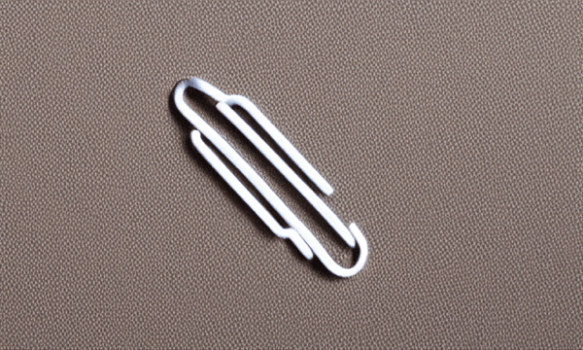
With AI illustrators all the rage, Microsoft is now offering one that could integrate with Office. Is Clippy back.. as an AI? (Picture by Stable Diffusion: “a paperclip interrupting a presentation”.)

You can sign up to receive each day’s Start Up post by email. You’ll need to click a confirmation link, so no spam.

A selection of 9 links for you. Sub-hypermobile. I’m @charlesarthur on Twitter. Observations and links welcome.


It’s Friday, so there’s another post due at the Social Warming Substack at about 0845 UK time.


How a ghostwriter makes $200,000 a year writing tweets for top Silicon Valley investors • Business Insider

Mattathias Schwartz spoke to said ghostwriter:

»

As a ghostwriter, I never log in to a client’s Twitter account. I just write things and they send them out into the world. We use a software tool where I draft tweets, the client sees them, and the client can then choose to send them if and when they want. We often use Trello. I’ll push it into Trello, and their executive assistant will post it.

There isn’t usually much of a filter between what I write and what gets tweeted. Twitter is so fast. You’re either on the zeitgeist or you’re not. Most people will post close to 100% of what I write. If it turns out to be a banger, that’s great. If it’s not a banger, it gets deleted.

I pride myself on not sticking my foot in my mouth. Nothing has turned into a gaffe. There is a set of topics that no matter what you say about them, it leads to people being angry in your replies. And VCs will often choose to engage in those third-rail topics. For example, how many hours should you work? That’s a classic. If a VC feels they’re not getting enough attention, they can just tweet, “You have to work 80 hours a week to be successful.” Everyone will come out to tell you that you’re canceled. It taps into money, privilege, class, ability to sacrifice. People have a lot of emotions about those subjects.

So taking risks can lead to greater attentional rewards, but the precise level of risk I’ll take depends on the client. Some clients don’t care. They’re shock jocks. They’ll tweet anything. Others are more careful. It’s a question of what brand they’re trying to build.

Most VCs who are playing the content game employ a bunch of writers. I know people who make almost seven figures doing this. I’m not there yet. But I definitely make more at this than I do at my day job. I’ve raised tens of millions of dollars for the company I founded, but I’m not allowed to cash out any of my equity. The average founder of a Series C company makes something like $120,000 a year. And you’re expected to cover your travel costs out of pocket. So that work doesn’t actually pay the bills. I can’t afford to stop ghostwriting, because the city where I live is too expensive.

«

And why does [person] find a market for this? Because SV VCs make their relationships on Twitter now, not in the bars or bistros or barbeques of Sand Hill Road. (OK, there aren’t any there.) It sounds like a lot of money, but that’s from having between 25 and 50 clients. Shifting patterns of work create more abstracted ways to connect. (How soon before an AI is doing this?)
unique link to this extract


AI-generated imagery is the new clip art as Microsoft adds DALL-E to its Office suite • The Verge

James Vincent:

»

Microsoft is adding AI-generated art to its suite of Office software with a new app named Microsoft Designer.

The app functions the same way as AI text-to-image models like DALL-E and Stable Diffusion, letting users type prompts to “instantly generate a variety of designs with minimal effort.” Microsoft says Designer can be used to create everything from greeting cards and social media posts to illustrations for PowerPoint presentations and logos for businesses.

Essentially, AI-generated imagery looks set to become the new clip art.

The app isn’t ready for a full launch though, and Microsoft is only offering a limited web preview. “We’re inviting people to try it out, give us feedback, and help us make it great,” writes Microsoft vice president Liat Ben-Zur in a blog post. Once it’s ready, Designer will be available as both a free standalone app and a more feature-filled version that will be available to paying Microsoft 365 subscribers.

«

Super bonus point to Nigel Moss on Twitter, who simply said: “Clipp-E”?
unique link to this extract


How AI could be used to make life and death decisions • MIT Technology Review

Will Douglas Heaven:

»

A coffin-size pod with Star Trek stylings, the Sarco is the culmination of Philip Nitschke’s 25-year campaign to “demedicalize death” through technology. Sealed inside the machine, a person who has chosen to die must answer three questions: who are you? Where are you? And do you know what will happen when you press that button? 

Here’s what will happen: The Sarco will fill with nitrogen gas. Its occupant will pass out in less than a minute and die by asphyxiation in around five. 

A recording of that short, final interview will then be handed over to the Swiss authorities. Nitschke has not approached the Swiss government for approval, but Switzerland is one of a handful of countries that have legalized assisted suicide. It is permitted as long as people who wish to die perform the final act themselves. 

Nitschke wants to make assisted suicide as unassisted as possible, giving people who have chosen to kill themselves autonomy, and thus dignity, in their final moments. “You really don’t need a doctor to die,” he says. 

Because the Sarco uses nitrogen, a widely available gas, rather than the barbiturates that are typically used in euthanasia clinics, it does not require a physician to administer an injection or sign off on lethal drugs. 

At least that’s the idea. Nitschke has not yet been able to sidestep the medical establishment fully. Switzerland requires that candidates for euthanasia demonstrate mental capacity, Nitschke says, which is typically assessed by a psychiatrist. “There’s still a belief that if a person is asking to die, they’ve got some sort of undiagnosed mental illness,” he says. “That it’s not rational for a person to seek death.”

He believes he has a solution, however. Exit International is working on an algorithm that Nitschke hopes will allow people to perform a kind of psychiatric self-assessment on a computer. In theory, if a person passed this online test, the program would provide a four-digit code to activate the Sarco. “That’s the goal,” says Nitschke. “Having said all that, the project is proving very difficult.” 

«

You may be able to see that having an algorithm decide whether you’re mentally competent is proving a bit of a stumbling block. Also, this pod idea doesn’t really work for people who don’t have the use of their limbs, which in wasting diseases is often linked with a wish for assisted death. Or maybe you’d have to speak the code, and then it would work? All very sketchy, really, compared to the certainty one feels about having humans involved. This pod thing is too reminiscent of Futurama’s suicide booths.

Plus, nominative determinism prize for having someone surnamed Heaven writing on this topic.
unique link to this extract


Netflix to charge $6.99 a month for ad-supported plan starting Nov. 3 • CNBC

Alex Sherman:

»

Netflix will charge $6.99 per month for its new advertising-supported tier, which the company will roll out in the U.S. on Nov. 3.

Netflix’s “Basic with ads” tier will include an average of four to five minutes of commercials each hour and won’t give users the ability to download movies and TV series. A limited number of TV series and movies will initially be unavailable due to licensing restrictions.

Ads will be 15 or 30 seconds in length and will play before and during Netflix’s content. Companies will have the ability to prevent ads from appearing on content they deem unsavoury or unsuitable. To help advertisers understand its reach, ratings company Nielsen will use its standard digital audience measurement, Digital Ad Ratings, in the US beginning in 2023.

…Netflix priced the service so that any customer who switches to the ad-supported service from the ad-free basic plan will have a “neutral to positive” effect on the company’s revenue, according to Peters.

That suggests Netflix will get at least $3 a month per user in advertising revenue.

“We want to offer consumers choice and figure out what the best offering is for them,” Peters said during the conference call.

Video resolution for Netflix’s advertising tier will be 720p rather than 1080p, the quality of Netflix’s standard plan that costs $15.49 per month. The company’s basic plan without advertising is $9.99 per month and also has 720p resolution.

«

Four minutes per hour will seem like nothing to American audiences. US broadcast channels average 12 to 17 (!) minutes per hour. Even in the UK, ad breaks can total up to 8 minutes per hour on “terrestrial” channels.
unique link to this extract


Economists must get more in touch with peoples’ feelings • Tim Harford

Tim Harford:

»

I once gently teased the happiness research community by suggesting we wouldn’t learn much about how to reform a nation’s economic institutions by asking citizens, “Overall, how rich do you think you are these days, on a scale of 0-10?” The question seems silly and a reminder of how little we really know about wellbeing.

Well, the joke is on me. Perhaps that is precisely the question we should be asking. A recent study by Federica Liberini, Andrew Oswald, Eugenio Proto and Michela Redoano looked at the impact of how people feel about their finances. Liberini and her colleagues looked at a question from a long-running academic survey, Understanding Society: “How well would you say you yourself are managing financially these days?”. Answers varied from 1 (living comfortably) to 5 (finding it very difficult).

The researchers found that people who said they were living comfortably were more likely to support the Remain campaign in the UK. Those who found their finances very difficult tended to sympathise with Vote Leave. Indeed, write the researchers, “UK citizens’ feelings about their incomes were a substantially better predictor of pro-Brexit views than their actual incomes.”

Then there is inequality. Objectively speaking, it is far from clear that income inequality is rising. In the UK, income inequality rose to high levels during the 1980s and has broadly stayed there ever since. Globally, there is no obvious cause for alarm either. Incomes have risen much faster in China and India — two large, poor countries — than in the US or Europe, putting downward pressure on income inequality.

But people’s feelings? They tell a different story. Jon Clifton, the head of Gallup, which has been tracking wellbeing around the world for many years, notes a polarisation in people’s life-evaluations. Compared with 15 years ago (before the financial crisis, smartphones and Covid-19) twice as many people now say they have the best possible life they could imagine (10 out of 10); however, four times as many people now say they are living the worst life they can conceive (0 out of 10). About 7.5% of people are now in psychological heaven, and about the same proportion are in psychological hell.

«

The Brexit data is a new one on me. But the story of society being pulled apart sounds very familiar.
unique link to this extract


Where is all the book data? • Public Books

Ruby Ray Daily:

»

BookScan’s influence in the publishing world is clear and far-reaching. To an editor, BookScan numbers offer two crucial data points: (1) the sales history of the potential author, if it exists, and (2) the sales history of comparable, or “comp,” titles. These data points, if deemed unfavorable, can mean a book is dead in the water.

Take it from freelance editor Christina Boys, whom I spoke with over email, and who worked for 20 years as an editor at two of the Big Five publishing houses (Simon & Schuster and Hachette Book Group). Boys told me that BookScan data is “very important” for deciding whether to acquire or pass on a book; BookScan is also used to determine the size of an advance, to dictate the scale of a marketing campaign or book tour, and to help sell subsidiary rights like translation rights or book club rights. “A poor sales history on BookScan often results in an immediate pass,” Boys said.

Clayton Childress, a sociologist at the University of Toronto, came to similar conclusions in his 2012 study of BookScan data, in which he interviewed and observed more than 40 acquisition editors from across the country. Bad book sales numbers can haunt an author “like a bad credit score,” Childress reported, and they can “caus[e] others to be hesitant to do business with them because of past failures.”

According to editors like Boys, the sway of book sales figures has siphoned much of the creativity and originality out of contemporary book publishing. “There’s less opportunity to acquire or promote a book based on things like gut instinct, quality of the writing, uniqueness of an idea, or literary or societal merit,” Boys claimed. “While passion—arguing that a book should be published—still matters, using that as a justification when it’s contrary to BookScan data has become increasingly challenging.”

…Trubek says that BookScan data encourages publishers to keep recycling the same kinds of books that sold well in the past. “I didn’t want to be a publisher who was working that way,” she elaborated.

«

But you can see the publishers’ point. It’s just like the music business: what you want is surefire hits. From a new act. Failing that, surefire hits from an old act.
unique link to this extract


Eero ends its $30 a year Eero Secure subscription plan • The Verge

Jennifer Pattison Tuohy:

»

Earlier this month, Eero announced it would be transitioning its paid subscription plans to one flat rate of $9.99 a month or $99.99 a year. Formerly called Eero Secure Plus, Eero Plus is now the only option for users of the mesh Wi-Fi system if they want to access features like parental controls, ad blocking, or any network usage information.

Today, subscribers to the now-defunct cheaper plan, Eero Secure, started to receive notifications that their plan was ending and would be transferred to the new — more expensive — Eero Plus plan starting on November 15th.

A subscription is not required to use Eero devices, but without one, you can’t set parental controls or see how devices behave on your network, including how much data is being used. These are services that most router manufacturers offer for free. For example, Google Nest Wifi offers parental controls and network activity information for free on its mesh network system.

«

Parental controls are one thing (though you can probably set those on the devices themselves?) but do many people spend any time looking at “how devices behave” on their network, or monitor their data usage? Some crazy plans might limit data, but surely not many – and people on plans like that would be unlikely to be experienced enough to deal with this. (Plus, now they might as well spend the extra money on an unlimited data plan.)

Peculiar move, though. It’s not as if that functionality actually costs Amazon anything at all to implement. It’s inherent in any router: it’s an essential, configurable part of the webserver it’ll have running to show an interface with the user. Money for nothing, really.
unique link to this extract


The amazing power of “machine eyes” • Ground Truths

Eric Topol:

»

Today’s report on AI of retinal vessel images to help predict the risk of heart attack and stroke, from over 65,000 UK Biobank participants, reinforces a growing body of evidence that deep neural networks can be trained to “interpret” medical images far beyond what was anticipated. Add that finding to last week’s multinational study of deep learning of retinal photos to detect Alzheimer’s disease with good accuracy. In this post I am going to briefly review what has already been gleaned from 2 classic medical images—the retina and the electrocardiogram (ECG)—as representative for the exciting capability of machine vision to “see” well beyond human limits. Obviously, machines aren’t really seeing or interpreting and don’t have eyes in the human sense, but they sure can be trained from hundreds of thousand (or millions) of images to come up with outputs that are extraordinary. I hope when you’ve read this you’ll agree this is a particularly striking advance, which has not yet been actualized in medical practice, but has enormous potential.

First, a review on deep learning from the retina. We should have known a few years back that something was rich (dare I say eye-opening) about the retina that humans, including retinal experts, couldn’t see. While there are far simpler ways to determine gender, it’s a 50-50 toss up for ophthalmologists, which means there are no visible cues to human eyes. But now two models have shown 97% accuracy of gender determination from neural network training. That was just the beginning.

«

I’ll be extremely picky and say that the Nature abstract doesn’t make clear whether it’s gender or sex that the retinal systems identify (and 97% offers a lot of edges anyway). But what the systems can detect is amazing; even if they’re wrong, it’s worth checking.
unique link to this extract


💊 Mango Markets exploited for $100m • Web3 Pills

Alex Valaitis writes a daily newsletter on the goings-on, which tend to be – oh, you guessed:

»

Yesterday alone, saw four DeFi hacks accounting for $115m! The vast majority of funds stolen came from a single exploit on a protocol called Mango Markets.

For those that are unfamiliar, Mango is one of the leading decentralized exchanges on the Solana network. In fact, the hack of Mango accounted for close to 10% of the entire DeFi TVL on Solana. 🤯

Once the Mango team realized what was happening, they froze the entire platform to prevent further damage, but at that point it was already too late.

…In many ways, the drama only began with the exploit. In the aftermath, there has already been a wild sequence of events. Most notably, the attackers went into the governance forum for Mango and made a proposal to return a portion of the funds in return for a bounty and the DAO committing to not pursue criminal investigations.

What is most absurd about this entire proposal, was that most of the ‘Yes’ votes in favor of it, were actually placed by the attackers themselves with funds from the exploit!

On the one hand, this situation has become almost comical and feels like an entertaining scene out of a movie. On the other hand, it shows just how immature the Web3 industry still is. Mango Markets was a “top” DeFi protocol built on the 6th largest blockchain by market cap, Solana.

The fact that they were able to suffer this large of an attack reflects poorly on the entire DeFi space. How can participants have confidence when a massive DeFi attack seems to happen every week?

Not to mention, there are a lot of important questions being asked in regards to who was behind this. It’s an open secret in crypto, that some nefarious developers and/or auditors, intentionally leave behind exploitable code. Some have been speculating whether or not this was an inside job of some sort.

While I think it’s dangerous to speculate to that degree right now, it is worth pointing out that this exact vulnerability was laid out in the Mango Markets Discord back in March.

«

Valaitis then points to someone describing, yup, exactly how the vulnerability could work. It is hilarious that the hacker(s) could, by virtue of the hack they’d carried out, give themselves the authority to pay a bounty and block any further action. Brilliant twist.
unique link to this extract


• Why do social networks drive us a little mad?
• Why does angry content seem to dominate what we see?
• How much of a role do algorithms play in affecting what we see and do online?
• What can we do about it?
• Did Facebook have any inkling of what was coming in Myanmar in 2016?

Read Social Warming, my latest book, and find answers – and more.


Errata, corrigenda and ai no corrida: none notified

Start Up No.1893: Amazon’s home data dream, Facebook sued over OnlyFans, Pixel Watch review, fracking and cancer?, and more


When it started in 1972, the Bay Area Rapid Transit (BART) system was futuristic. Now it’s decaying. CC-licensed photo by on Flickr.

You can sign up to receive each day’s Start Up post by email. You’ll need to click a confirmation link, so no spam.

A selection of 10 links for you. Tendentious. I’m @charlesarthur on Twitter. Observations and links welcome.


In the ultimate Amazon smart home, each device collects your data • Washington Post

Geoffrey Fowler:

»

You may not realize all the ways Amazon is watching you. No other Big Tech company reaches deeper into domestic life. Two-thirds of Americans who shop on Amazon own at least one of its smart gadgets, according to Consumer Intelligence Research Partners. Amazon now makes (or has acquired) more than two dozen types of domestic devices and services, from the garage to the bathroom.

All devices generate data. But from years of reviewing technology, I’ve learned Amazon collects more data than almost any other company. Amazon says all that personal information helps power an “ambient intelligence” to make your home smart. It’s the Jetsons dream.

But it’s also a surveillance nightmare. Many of Amazon’s products contribute to its detailed profile of you, helping it know you better than you know yourself.

Amazon says it doesn’t “sell” our data, but there aren’t many U.S. laws to restrict how it uses the information. Data that seems useless today could look different tomorrow after it gets reanalyzed, stolen or handed to a government. (Amazon founder Jeff Bezos owns The Washington Post.)

We each have to decide how much of our lives we’re comfortable with one company tracking. Scroll below to see what Amazon’s products and services could reveal about you.

«

Includes “toilet with Alexa integration” which “allows you to create personalized settings for your toilet, including a preferred temperature and ambiance. You can even flush it with your voice.”

The list is colossal, though I suspect just knowing your Amazon account purchases would go a long way to knowing plenty about you. Personally, I don’t have any Amazon hardware at all, though a Ring doorbell – or similar video system – always seems tempting. Or you can just have a large dog, which will also provide exercise. Beat that, Ring.
unique link to this extract


February 2022: Facebook accused of blacklisting OnlyFans’ rivals • BBC News

Noel Titheradge:

»

Facebook has been accused of colluding with OnlyFans to blacklist rival adult websites in a lawsuit filed in the US.

This week, BBC News revealed that OnlyFans was being sued over claims it directed a social media company to disable accounts of adult entertainers by placing their content on a terrorism database.

Facebook has now been named as the company alleged to have conspired with OnlyFans in a class action filing. Its parent company, Meta, says the claims are “without merit”.

UK website OnlyFans – best known for hosting pornography – has grown hugely in recent years. It lets users share video clips and photos with subscribers in return for a monthly fee.

Performers often use social media accounts to promote and link to adult websites showing their explicit content.
On Tuesday, BBC News revealed that rival adult website FanCentro is suing OnlyFans in the US.

The legal action claims that social media content of adult performers promoting rival websites to OnlyFans was placed on a database of extremist material shared between tech companies that is run by the Global Internet Forum to Counter Terrorism (GIFCT).

«

I’m linking to this February story because on Wednesday evening (UK time), an update to this story broke on Twitter quoting US court documents naming two Meta executives, one of whom is well-known in the UK. But being legally wary, I’m not going to link to them, because they’re (pretty dramatic) allegations, and not proven. Let’s see if the BBC follows up.
unique link to this extract


Greenland ice sheet may be more vulnerable to climate change, study finds • Glasgow Times

»

The study found rising air temperatures amplify the effects of melting caused by ocean warming, leading to greater ice loss from the world’s second largest ice sheet.

Experts liken the effect to how ice cubes melt more quickly if they are in a drink that is being stirred – the combination of warmer liquid and movement accelerates the melting process.

Previous studies have shown that rising air and ocean temperatures both cause the Greenland ice sheet to melt, however the new study, by researchers from the universities of Edinburgh and California San Diego, reveals how one intensifies the effects of the other.

Dr Donald Slater, of the University of Edinburgh’s School of GeoSciences, who led the study, said: “The effect we investigated is a bit like ice cubes melting in a drink – ice cubes will obviously melt faster in a warm drink than in a cold drink, hence the edges of the Greenland ice sheet melt faster if the ocean is warmer.

“But ice cubes in a drink will also melt faster if you stir the drink, and rising air temperatures in Greenland effectively result in a stirring of the ocean close to the ice sheet, causing faster melting of the ice sheet by the ocean.

A glacier undergoing submarine melting in south-west Greenland (Donald Slater/PA)
“This unfortunately adds to the overwhelming body of evidence showing the sensitivity of the Greenland ice sheet to climate change, hence the need for urgent action to reduce greenhouse gas emissions.”

«

Urgh.
unique link to this extract


Pixel Watch review: beautiful, fast, and way too expensive • Ars Technica

Ron Amadeo:

»

Let’s talk about the elephant-sized price tag in the room. The Pixel Watch starts at $350, and that’s without cellular. The LTE version is $400. The Apple Watch SE—a product that’s much better, faster, and more mature than the Pixel Watch—is $100 less, starting at $250. Google is asking an absolutely outrageous price for what is a barely there, first-generation beta test of a smartwatch ecosystem. Google CEO Sundar Pichai is currently on a penny-pinching mission at the company, but this pricing will kill this product. Everything related to the Pixel Watch needs to be about 30% less expensive to even approach being competitive.

Despite having sky-high prices, the specs of the Pixel Watch are not great. The SoC is made by Samsung, the company that is freeing Wear OS from the neglect of Qualcomm, but Google isn’t using Samsung’s latest wearable SoC. Google opted for the Exynos 9110, a 10 nm, dual Cortex A53 chip that is four years old. Samsung’s latest chip, the Exynos W920 in the Galaxy Watch 5, is a huge improvement; it’s a 5nm, dual Cortex A55 chip with a way faster GPU. Samsung’s Galaxy Watch 5 costs $280—that’s $70 less for better hardware. It’s not clear how Google decided this price is appropriate.

…As for battery life, the Pixel Watch is definitely a “charge every day” sort of device. In the first two days, I burned the battery down in 12 hours, but for what I would call “light” usage—no music streaming, cellular, workouts, or GPS, just 24/7 heart rate monitoring, dealing with notifications, and with the always-on display enabled—I’m getting about 24 hours of battery life. You’ll always need to charge the watch at least once a day—and probably more if you’re doing anything serious.

«

Always-on displays murder the battery. Reviews of this really are not favourable: too little, too late seems to be the verdict.
unique link to this extract


Proximity to fracking sites associated with heightened risk of childhood leukaemia • YaleNews

»

Pennsylvania children living near unconventional oil and gas (UOG) developments at birth were two to three times more likely to be diagnosed with leukemia between the ages of 2 and 7 than those who did not live near this oil and gas activity, after accounting for other factors that could influence cancer risk, a novel study from the Yale School of Public Health finds.

The registry-based study, published Aug. 17 in the journal Environmental Health Perspectives, included nearly 2,500 Pennsylvania children, 405 of whom were diagnosed with acute lymphoblastic leukaemia, the most common type of cancer in children.

Acute lymphoblastic leukaemia, also referred to as ALL, is a type that arises from mutations to lymphoid immune cells. Although long-term survival rates are high, children who survive this disease may be at higher risk of other health problems, developmental challenges, and psychological issues. Unconventional oil and gas development (UOG), more commonly referred to as fracking (short for hydraulic fracturing), is a method for extracting gas and oil from shale rock. The process involves injecting water, sand, and chemicals into bedrock at high pressure, which allows gas and oil to flow into a well and then be collected for market.

For communities living nearby, UOG development can pose a number of potential threats. Chemical threats include, for example, air pollution from vehicle emissions and well and road construction, and water pollution from hydraulic fracturing or spills of wastewater. Hundreds of chemicals have been reportedly used in UOG injection water or detected in wastewater, some of which are known or suspected to be carcinogenic. The paucity of data on the association between UOG and childhood cancer outcomes has fuelled public concerns about possible cancer clusters in heavily drilled regions and calls for more research and government action.

«

Not sure that growth in childhood leukaemia is what Liz Truss’s government is actually after.
unique link to this extract


podcast.ai

»

Welcome to podcast.ai, a podcast that is entirely generated by artificial intelligence. Every week, we explore a new topic in depth, and listeners can suggest topics or even guests and hosts for future episodes. Whether you’re a machine learning enthusiast, just want to hear your favorite topics covered in a new way or even just want to listen to voices from the past brought back to life, this is the podcast for you.

«

Everyone (else) is getting excited about this machine-generated podcast of Joe Rogan talking to Steve Jobs, though I have to say – not having listened to Rogan’s show – that it sounds dull as ditchwater. Jobs’s voice is just right, but I lost interest in what the machine didn’t have to say quite quickly. I’d love to know what proportion of listeners made it through the whole 19m15s. Only the robots?
unique link to this extract


TikTok profits from livestreams of families begging • BBC News

Hannah Gelbart, Mamdouh Akbiek and Ziad Al-Qattan:

»

Displaced families in Syrian camps are begging for donations on TikTok while the company takes up to 70% of the proceeds, a BBC investigation found.

Children are livestreaming on the social media app for hours, pleading for digital gifts with a cash value.
The BBC saw streams earning up to $1,000 (£900) an hour, but found the people in the camps received only a tiny fraction of that.

TikTok said it would take prompt action against “exploitative begging”. The company said this type of content was not allowed on its platform, and it said its commission from digital gifts was significantly less than 70%. But it declined to confirm the exact amount.

Earlier this year, TikTok users saw their feeds fill with livestreams of families in Syrian camps, drawing support from some viewers and concerns about scams from others.

In the camps in north-west Syria, the BBC found that the trend was being facilitated by so-called “TikTok middlemen”, who provided families with the phones and equipment to go live.

The middlemen said they worked with agencies affiliated to TikTok in China and the Middle East, who gave the families access to TikTok accounts. These agencies are part of TikTok’s global strategy to recruit livestreamers and encourage users to spend more time on the app.

Since the TikTok algorithm suggests content based on the geographic origin of a user’s phone number, the middlemen said they prefer to use British SIM cards. They say people from the UK are the most generous gifters.

«

BBC tested this by sending $106 from an account: the Syrians’ account received $33. TikTok (and middlemen) had taken the other 69% by value. When they took the cash out, another fee, leaving them just $19. At this point, arguments for cryptocurrency begin to make sense.
unique link to this extract


How clever mechanics use Windows 98 and eBay to keep the 50-year-old Bay Area Rapid Transit going • Mercury News

Eliyahu Kamisher:

»

When San Francisco’s Bay Area Rapid Transit (BART) first carried passengers, the country was sending astronauts to the moon. The Apollo-era trains were symbols of a generation barreling toward a space-age future complete with carpeted floors and a seat promised to every passenger.

That was 1972, when BART was state of the art. But half a century later, as the agency celebrates its 50th anniversary this month, many of those same silver-and-blue trains are still chugging through the Bay Area. And keeping them running — even in the country’s technology capital — requires a special breed of ingenuity.

BART mechanics rely on Frankensteined laptops operating with Windows 98, train yard scraps and vintage microchips to keep Bay Area commuters on the rails. “We have literally started with a picture and scoured different manufacturers and eBay looking for an oddball part,” said John Allen, a mechanic who specializes in breathing new life into broken down BART trains. When Car 372 caught fire in Orinda in 2013, his team created an entirely new system and built their own tools to replace the floor. “Sometimes we don’t even know what the name of the part is.”

To understand why BART upkeep is so complicated, take a look back to the founders. They shunned heavy steel trains and old-school signaling technology and instead hired an aerospace company to build a train fleet that would serve as a new model for public transit. The result? All-electric trains with sleek aluminum bodies and wide windows, underpinned by nearly autonomous operations. The price tag for BART’s original 450 cars: $160m.

…Today, the transit system is an outlier, with everything from wheels to windows crying out for custom-built attention. “The biggest stumbling block is coming up with parts that they don’t make anymore,” said Mark Wing, a mechanic who oversees maintenance on the entire train, spanning electrical propulsion equipment to busted seats.

Which parts are not made any more? “Pretty much everything,” he said.

«

Isn’t it infrastructure week yet?
unique link to this extract


Netflix to reveal for first time how many people watch its shows in the UK • The Guardian

Jim Waterson:

»

Netflix will finally reveal exactly how many people watch its programmes in the UK, giving an insight to the true cultural power of the streaming service and its impact on British viewing habits.

Until now it has been possible to know that 13 million people tuned in for the finale of the BBC’s Line of Duty or that 31 million viewers watched England in the Euro 2020 final – but Netflix has closely guarded the numbers of people who stream its hit shows such as Squid Game or Heartstopper.

In a change of direction, the streaming service agreed to sign up as a full member of the British ratings agency, Barb, meaning it will publish independently audited viewing figures that can be compared with traditional channels.

As a result, when the fifth series of The Crown is released next month, it will finally be possible to see whether the cultural coverage around Netflix’s royal show actually attracts more eyeballs than a less-hyped programme on a traditional television channel.

Preliminary figures from September showed how Netflix is already used by two-thirds of the British television viewing public in a given month. Netflix currently accounts for 8% of all television viewing in the UK, making the company larger than Channel 4, Channel 5, and Sky – but still far behind the BBC and ITV.

The decision to go public with viewing data for individual programmes suggests Netflix is confident that it will be seen in a good light.

«

No doubt just waiting long enough to be sure it’ll actually show up. And it does become something to promote over other streaming services, who are also vying for your monthly stipend, and at risk of cancellation at any moment. “Join millions of people who are watching The Crown tonight”, for example.
unique link to this extract


Lufthansa flip-flops: AirTags now allowed on flights • AppleInsider

Mike Wuerthele:

»

After being incredibly clear on social media that AirTags weren’t allowed on Lufthansa flights, the airline has caved and is now allowing them.

After a chaotic weekend for Lufthansa where its social media presence made it clear that Apple’s AirTags weren’t welcome in checked baggage, the airline seems to have reconsidered. In a tweet, the airline made it clear that the trackers are now allowed.

It’s unclear why Lufthansa said that the Luftfahrtbundesamt shares its risk assessment of AirTags. The airline was explicit over the weekend that they considered the devices unsafe for flight, despite international airline regulations being clear about the matter.

AppleInsider contacted six Lufthansa flight employees in the US who are not authorized to speak on behalf of the company while preparing this story. Three thought that the ban was still in place, two didn’t know about the ban, and one didn’t know what an AirTag was, or how it worked. So, it’s not clear if the new guidance — or any information at all — has been promulgated completely.

«

Over the weekend, Lufthansa (alone) had tweeted about not allowing AirTags in baggage, leading to this NY Times story. But it seems like everyone was very confused. Let’s settle down and decide: chicken or beef?
unique link to this extract


• Why do social networks drive us a little mad?
• Why does angry content seem to dominate what we see?
• How much of a role do algorithms play in affecting what we see and do online?
• What can we do about it?
• Did Facebook have any inkling of what was coming in Myanmar in 2016?

Read Social Warming, my latest book, and find answers – and more.


Errata, corrigenda and ai no corrida: none notified

Start Up No.1892: Meta launches new VR headset (and legs), GPT-3 writes for you, the missing Apple Watch workouts, and more

Spam meat in paradise
In India, spam from businesses has begun to make WhatsApp unbearable for some users. (Image: Diffusion Bee interpreting “spam meat in paradise”.)

You can sign up to receive each day’s Start Up post by email. You’ll need to click a confirmation link, so no spam.

A selection of 11 links for you. Incapacitorated. I’m @charlesarthur on Twitter. Observations and links welcome.


WhatsApp is now a spammers’ paradise in India • Rest Of World

Nilesh Christopher:

»

Meta’s WhatsApp is wildly popular in India, with around 550 million users in the country. Over the past year, the company has aggressively expanded its WhatsApp Business services in the country, allowing brands to reach out to customers, offer support, receive payments, and even verify documents. Direct access to customers over WhatsApp is an exciting proposition for Indian businesses since a reported 80% of messages sent on the app are seen within five minutes, making the platform an incredibly more efficient outreach channel than email or SMS.

The unchecked rise of spam has, however, meant that the messaging platform that was once seen as a private and intimate space to communicate with friends and family now feels like a busy main street crowded with hawkers, at least 10 regular users of the app told Rest of World. “It’s honestly such a frustrating experience now that WhatsApp has its business section. It feels like harassment tbh,” Rao wrote to Rest of World. “WhatsApp doesn’t really feel very personal anymore. I wish there was a legal way to fight this.”

“Every fucking thing Zuck [Mark Zuckerberg, Meta’s CEO] touches is forever ruined,” wrote Deepak Mehta, who works in tech, shared his irritation on Twitter. “WhatsApp used to be so good. Now every 2nd message is from a random corporate account I never gave permission to spam my inbox. Fuck you, you slithering lizard.”

WhatsApp did not respond to specific questions on the rise of spam. “As we continue to connect people with the businesses they value most on WhatsApp, it’s important that messages sent through our service are helpful and expected,” a WhatsApp spokesperson said in an email statement to Rest of World. “We offer features and tools to give people control over their conversations and take action when businesses send messages they don’t want to receive.

«

Thankful that nothing like this is happening (yet?) in the UK. Presumably if WhatsApp was a lot more popular in the US, this would be completely standard.
unique link to this extract


The bizarre duality of Meta’s new Quest Pro VR headset • Wired

Lauren Goode:

»

The Meta Quest Pro apps shown off during press demos last week were a mixed bag. The color pass-through imagery—the information about the real world being taken in by the cameras mounted on the outside of the device—sometimes appeared aberrated at the edges. Using Horizon Workrooms, Meta’s app for conducting business in VR, felt awkward. (Some of Meta’s own employees are reportedly skeptical of chief executive Mark Zuckerberg’s broad vision for the metaverse, and are using Meta’s Horizon software less than expected.) Zuckerberg, in his keynote today, tried to position the metaverse as people-centered, rather than app-centric, because of the potential for social interactions. But social experiences rely on broader adoption of these virtual worlds. 

The new Meta Quest Pro also costs $1,499, which might come as the biggest surprise. This is not a headset that’s accessible to most consumers, nor is VR in general far along enough to compel them to spend that much on a headset. The Meta Quest Pro is Meta’s attempt to prove that it can build this next generation of virtual reality computers, that real-time social interactions are possible in VR.

The result is a paradoxical computing platform, one that is technologically advanced and has the ability to catapult users into the virtual reality future, but still may not be the device to make VR totally mainstream. It is both a virtual reality and “mixed reality” headset. It’s a great escape from reality, but a good reminder that physical presence is better. Its apps are fun, but sometimes glitchy. The headset, which looks like a pair of high-end ski goggles, is comfortable at first; it also leaves a deep impression on your forehead after extended use.

«

unique link to this extract


Meta figured out legs for its Horizon avatars • The Verge

Jay Peters:

»

Legs are “probably the most requested feature on our roadmap,” Meta CEO Mark Zuckerberg said at the company’s Connect event while showing off the new avatars, which look significantly better than the avatars available now. (Imagine the improved avatar Zuckerberg showed after his current-gen avatar got memed on but in motion.) “But seriously, legs are hard, which is why other virtual reality systems don’t have them either.”

According to Zuckerberg, the company started off with avatars that don’t feature an entire body because it has been challenging for a VR headset to accurately estimate where things like your elbow or legs actually are. If the system had them show up inaccurately in VR, that would break the immersion.

For arms, Meta has gotten better at figuring out what those body parts are doing as tracking and predictive technologies have improved. Legs can be tricky because of occlusion, Zuckerberg said. If your legs are under a desk, for example, it’s hard for a standalone VR headset to figure out what they might be doing because the desk is blocking the view of the on-headset cameras. Instead, to be able to represent legs, Meta has built an AI model to predict the position of your whole body.

Avatar legs will be coming first to Meta’s Horizon social VR platform, though it’s unclear exactly when. They’ll be coming to “more and more experiences over time as we improve our technology stack,” Zuckerberg said. During the Connect event, they seemed to move quite naturally, though because it was a prerecorded video, we’re not sure yet how they’ll look in practice.

«

In some ways, having the legs will be even more distracting and weird. At least being Weebles meant that it showed this was for office work.
unique link to this extract


Article/Text Generator • GPT-3 AI Powered

»

Have GPT-3 generate an article or other content (including marketing pieces!), uniquely for you!

Need help with your next blog post? Want to generate a unique article for your website?
Need a unique article for your marketing campaign? This tool is for you!

For quality results, please try to be as specific as possible with your prompt.

«

The page is littered with AdWords ads, which implies that the creator expects it to get a fair amount of passing traffic. (Try giving it the prompt “a collection of links and extracts from web pages interspersed with commentary”. I don’t feel threatened. Yet.)
unique link to this extract


Facebook winds down its newsletter service • The New York Times

Katie Robertson:

»

Facebook is shuttering its Bulletin subscription service, ending its attempt to compete with Substack and other newsletter services.

Facebook, which is now part of the parent company Meta, has contacted writers within the program to tell them that the Bulletin platform will be wound down early next year.

“Bulletin has allowed us to learn about the relationship between creators and their audiences and how to better support them in building their community on Facebook,” the company confirmed in a statement on Tuesday. “While this off-platform product itself is ending, we remain committed to supporting these and other creators’ success and growth on our platform.”

The program began in June last year, aiming to attract independent writers when more were looking to leave publications and have a direct relationship with their readers and take home all of their own revenue. It was looking to mimic the success that Substack, another newsletter platform, had with enticing writers to build their own newsletter brands.

A note at the time from executives said Bulletin would support writers with a suite of publishing and subscription tools, as well as services like legal resources and design.

«

Included Malcolm Gladwell whose newsletter was (as Ryan Broderick pointed out) apparently less popular than skateboarding dogs etc that forms the most popular content on Facebook (“now part of parent Meta”, yeah sure). Benedict Evans comments that we really don’t know how big a business newsletters really are. I’d say they’re definitely a zero-billion dollar industry.
unique link to this extract


Lesser-known Apple Watch workouts • Basic Apple Guy

The anonymous guy:

»

I have been wearing my Apple Watch for years to track my steps and workouts. As a result, I have logged millions of steps and hundreds of cycling & strength training exercises to date. And for those types of activities, the Apple Watch shines. It has dozens of workout options ranging from outdoor runs and traditional strength training to archery, fitness gaming, and tai chi.

But what was missing were workouts that captured the true milieu of what happens during a life, tasks that we humbly perform each day that don’t get the credit for helping us close our rings that they deserve.

The project started in early August and became a running collection of posts titled “Lesser known Apple Watch Workouts.” This post is a collection of the first (but not the last) series of lesser-known Apple Watch workouts. Enjoy.

«

I particularly like Cable Management:

»

Part core, part endurance, part upper body, part lower body. Is there anything a round of cable management doesn’t strengthen? And not only does it test the body, but it also tests the mind. After all, you’re putting yourself and your body into places and positions nobody should ever be in. It’s basically the land equivalent of cave diving.

«

Very, very true.
unique link to this extract


Damien Hirst burns his own art after selling NFTs • BBC News

Steven McIntosh:

»

Damien Hirst has begun burning hundreds of his own artworks after selling a series of non-fungible tokens (NFTs).

The artist told buyers who bought pieces from his latest collection to choose either the physical artwork or the NFT representing it. Those who chose the NFTs were told their corresponding physical piece would be destroyed.

Asked how he felt to be burning the works, Hirst said: “It feels good, better than I expected.” The artist was dressed in silver metallic boiler-suit trousers and matching fire safety gloves as he collected each piece and burned it in a contained fire box. It has been estimated the works being burned are collectively worth almost £10m.

Hirst launched his first NFT collection last year, called The Currency, which was made up of 10,000 NFTs, corresponding to 10,000 original pieces of art. Collectors who bought one had to choose between keeping the NFT or swapping it for the physical artwork. London’s Newport Street Gallery said 5,149 buyers opted for the original artworks while 4,851 chose the NFTs.

Artworks for the non-exchanged NFTs would be destroyed, buyers were informed, with Hirst telling his Instagram followers earlier this week that he would burn the first 1,000 artworks on Tuesday. The NFTs, which depicted colourful spots, reportedly sold for $2,000 (£1,800) each.

Livestreaming the event, the Turner Prize winner and assistants used tongs to deposit individual pieces stacked in piles into fireplaces in the gallery as onlookers watched.

«

As Matt Levine put it in his newsletter: you could pay £2,000 to have a Damien Hirst work, or pay £2,000 to not have a Damien Hirst work, or you could not pay £2,000 to not have a Damien Hirst work. (Also, the Damien Hirst works are now more valuable by virtue of being rarer.)
unique link to this extract


People still seem to think their cars are fully self-driving • The Register

Richard Currie:

»

the US-based Insurance Institute for Highway Safety (IIHS) study of 600 motorists who regularly engage systems like GM’s Super Cruise, Nissan’s ProPILOT Assist, and Autopilot (200 of each) found that “they were more likely to perform non-driving-related activities like eating or texting while using their partial automation systems than while driving unassisted.”

Just over half of Super Cruise users, 42% of Tesla owners, and 12% of ProPILOT Assist drivers “said that they were comfortable treating their vehicles as fully self-driving.”

Despite the Autopilot branding, Tesla covers its behind by insisting the system should only be used by attentive drivers with hands on the wheel. It has a lockout feature that disables Autopilot if the user is deemed not to be paying attention, and Super Cruise does the same. Alarmingly, 40% of those using these drive assist systems admitted they had been kicked out for good.

“The big-picture message here is that the early adopters of these systems still have a poor understanding of the technology’s limits,” said IIHS president David Harkey. “But we also see clear differences among the three owner populations. It’s possible that system design and marketing are adding to these misconceptions.”

The IIHS said Super Cruise ads focus on hands-free capabilities while Autopilot “implies Tesla’s system is more capable than it really is.” This correlates with the lower number of users relying on ProPILOT Assist, the name of which makes it clearer to the driver that it is only an aid.

Gender may have also influenced the results. “The majority of Super Cruise and Autopilot owners were male, while both sexes were more or less equally represented among ProPILOT owners,” said the IIHS. “Most Super Cruise owners were over 50, Autopilot owners tended to be younger (a quarter of them were under 35), and ProPILOT Assist owners were more evenly distributed across the age range.”

«

Soooo… the problem is male drivers, basically?
unique link to this extract


Why Europe’s defense industry can’t keep up • POLITICO

Ilya Gridneff:

»

Simply put, there just aren’t enough bullets, weapons and hi-tech systems in Europe to match the EU’s demands and looming dangers ahead. And the demand is high — since the war broke out in February, EU countries have pledged to spend more than €230bn to modernize their arsenals. 

The reason for the sudden influx of cash is not just Russia’s revanchism. There is also a push from many powerful European countries to ensure the Continent does not have to rely on the US military — or the powerhouse US defense industry — to defend its own borders. The recent Russian mobilization, nuclear threats and suspected gas pipeline sabotage have only heightened the local nature of these threats.

“We hear from US colleagues, actually advice,” said Jiří Šedivý, head of the European Defense Agency (EDA), an EU agency that is trying to help countries team up on defense purposes. “‘Invest in your own strategic enablers, because there might come a time, and it could be pretty soon, when actually, we, the US, might be engaged fully elsewhere in Asia-Pacific and we will be simply unable to support you.’”

In response, European defense firms are trying to play catch up, intensifying production and their own capabilities. But many European contracts have still been going abroad to places like the U.S. and even South Korea.

“As a company, we are investing hundreds of millions now in making sure that we can meet the demand,” said Micael Johansson, CEO of the Swedish defense firm Saab, whose shoulder-mounted rocket launchers, called NLAWs, have been critical for Ukraine.

But Europe’s security challenge presents a typical EU problem: success hinges on aligning the self-interests of 27 member states. Failure to do so, some argue, will only allow conflicts to fester.

«

OK, but Russia really can’t keep up. Though the broader point is that the European arms industry is used to manufacturing during peacetime (uh, no surprise) and has been caught on the hop by people actually firing thousands of rounds per day.
unique link to this extract


The EU wants to put companies on the hook for harmful AI • MIT Technology Review

Melissa Heikkilä:

»

The new liability bill would give people and companies the right to sue for damages after being harmed by an AI system. The goal is to hold developers, producers, and users of the technologies accountable, and require them to explain how their AI systems were built and trained. Tech companies that fail to follow the rules risk EU-wide class actions.

For example, job seekers who can prove that an AI system for screening résumés discriminated against them can ask a court to force the AI company to grant them access to information about the system so they can identify those responsible and find out what went wrong. Armed with this information, they can sue. 

The proposal still needs to snake its way through the EU’s legislative process, which will take a couple of years at least. It will be amended by members of the European Parliament and EU governments and will likely face intense lobbying from tech companies, which claim that such rules could have a “chilling” effect on innovation. 

In particular, the bill could have an adverse impact on software development, says Mathilde Adjutor, Europe’s policy manager for the tech lobbying group CCIA, which represents companies including Google, Amazon, and Uber.  

Under the new rules, “developers not only risk becoming liable for software bugs, but also for software’s potential impact on the mental health of users,” she says. 

Imogen Parker, associate director of policy at the Ada Lovelace Institute, an AI research institute, says the bill will shift power away from companies and back toward consumers—a correction she sees as particularly important given AI’s potential to discriminate. And the bill will ensure that when an AI system does cause harm, there’s a common way to seek compensation across the EU, says Thomas Boué, head of European policy for tech lobby BSA, whose members include Microsoft and IBM. 

«

Interesting, but plenty of room for a slip between cup and lip.
unique link to this extract


Analysis: UK’s gas imports would be 13% lower if it had not ‘cut the green crap’ • Carbon Brief

Simon Evans:

»

The UK’s gas imports would be 13% lower if successive Conservative-led governments had not “cut the green crap” over the past decade, Carbon Brief analysis shows.

The findings come as the government’s North Sea Transition Authority announces a new licensing round for North Sea oil and gas, with the stated aim of increasing UK energy security. The analysis also follows news that the UK is at risk of blackouts if imports of gas and electricity are restricted.

Carbon Brief’s analysis shows that UK gas imports would have been cut by 65 terawatt hours (TWh) if government support for energy efficiency and renewables had continued, instead of being rolled back after then-prime minister David Cameron told ministers in 2013 to “cut the green crap”.

This saving would have been nearly twice as large as the 34TWh imported from Russia last year. It would have been sufficient to cut the UK’s net gas imports by 13% overall, significantly boosting energy security. The saving would have avoided buying 65TWh of gas at a cost of around £5bn.

Most of the savings would have been from additional onshore wind and solar capacity, which would have cut UK gas demand for electricity by 20%.

«

So many bad decisions in the past about energy. Didn’t build nuclear power stations. Didn’t insulate homes. Didn’t build onshore wind. Just amazing.
unique link to this extract


• Why do social networks drive us a little mad?
• Why does angry content seem to dominate what we see?
• How much of a role do algorithms play in affecting what we see and do online?
• What can we do about it?
• Did Facebook have any inkling of what was coming in Myanmar in 2016?

Read Social Warming, my latest book, and find answers – and more.


Errata, corrigenda and ai no corrida: none notified

Start Up No.1891: the end of futurism?, Truss v solar farms, Binance’s $570m hack, more ads on Instagram!, the rise of myopia, and more


Getting messaging apps to interoperate seems like a crazy demand. Yet Brazil’s banks managed it with Pix – and that exchanges real money. CC-licensed photo by Open Rights GroupOpen Rights Group on Flickr.

You can sign up to receive each day’s Start Up post by email. You’ll need to click a confirmation link, so no spam.


On Friday, there’s another post due at the Social Warming Substack at about 0845 UK time. Free signup.


A selection of 9 links for you. Use them wisely. I’m @charlesarthur on Twitter. Observations and links welcome.


Is it time to retire futurism? • TechTalks

Rich Heimann:

»

Charles Perrault perfectly captures the emphasis futurists place on movement and speed. Perrault is one of the leaders of the so-called AI Speedometer for the AI Index project. While the AI Speedometer cannot explain what AI is or how to solve it, it tries to convince you that the rate of progress within artificial intelligence is significant enough to result in bigger achievements. However, the value of measuring speed when you don’t know the destination or how to get there is never worth the time and effort spent calculating it.

Before speed can be essential, friends of artificial intelligence need to agree on where they are, where they are going, and how good a given solution is for the disputed problem of intelligence. After all, knowing the speed of something is useless if you don’t know where you are, where you are going, the distance to travel, and the time that one must reach a destination—going fast or faster means next to nothing if you don’t know where to go, or how or when to arrive. When distance and time are known and fixed, but speed varies due to research hurdles, speed alone will not be enough to accomplish a goal no matter how fast one goes. Like futurism, the AI Speedometer is, in effect, saying, “We’re lost, but we’re making good time!”

Instructional frivolity aside, scientific knowledge doesn’t require a speedometer. Thomas Kuhn perfectly describes how scientific knowledge is developed, dispelling the progress myth. Scientific knowledge is not based on movement, speed, action, accumulation, or spawned on a specific day. Scientific discovery does not happen in straight lines or on paved roads. It only sometimes moves forward, and it is futile to identify the exact date when a paradigm shift occurs.

We don’t track progress toward solving the Riemann hypothesis or P=NP in computing because progress is zero until a breakthrough is achieved. Futurism distorts our senses by distorting our perception of time and progress.

«

Definitely: progress is extremely non-linear. Let’s hope there is a sudden breakthrough just around the corner. In what, who knows.
unique link to this extract


Ministers hope to ban solar projects from most English farms • The Guardian

Helena Horton:

»

Ministers are planning to ban solar farms from most of England’s farmland, the Guardian can reveal.

The new environment secretary, Ranil Jayawardena, is understood to oppose solar panels being placed on agricultural land, arguing that it impedes his programme of growth and boosting food production.

To this end, say government sources, he has asked his officials to redefine “best and most versatile” land (BMV), which is earmarked for farming, to include the middling-to-low category 3b. Land is graded from 1 to 5, and currently BMV includes grades 1 to 3a. Planning guidance says that development on BMV land should be avoided, although planning authorities may take other considerations into account.

Currently, most solar farms are built on and planned for 3b land, so this move would scupper most new developments of the renewable energy source.

Extending BMV to grade 3b would ban solar from about 41% of the land area of England, or about 58% of agricultural land. Much of grade 4 and 5 land is in upland areas that are unsuitable for solar developments.

During her speech at the Conservative party conference last week, the prime minister, Liz Truss, reeled off a list of “enemies”, including green campaigners, who make up what she characterised as the “anti-growth coalition”. However, green campaigners say blocking the building of renewables would make her government part of such a group.

«

Bit inconvenient if Truss herself turns out to be part of the anti-growth coalition, but this is consistent with her previous actions: in 2014, exactly eight years ago, she stripped farmers of subsidies for solar farms saying they were a “blight” pushing food production overseas.
unique link to this extract


Brazil’s Pix is a great example for future messaging apps interoperability • Notes by Rodrigo

Rodrigo Ghedin:

»

Pix began to be developed by the Brazil Central Bank in 2014 with an open model for dialogue, consisting of a discussion forum, working groups and even an open source repository on Github.

• In less than two years, almost 130 million (>50%) people and just over 11m companies have made at least one transaction with Pix
• This audience has created more than 500m “Pix keys” — shortcuts to facilitate Pix transfers. A Pix key can be a phone number, an email, a national ID (and its equivalent for companies), or a random number
• Close to BRL 1 trillion (~$200bn) was moved in 2.2bn transactions — the majority, 68%, between individuals (P2P).

It is true that Brazilian banks, despite all the power they have, shrink next to the biggest companies in Silicon Valley, such as Meta, Apple, and Google. Even so, they are really powerful and yet were all in. For all these reasons, Pix can be a reference to another conundrum that we face on a daily basis: the multiplicity of messaging applications.

In the first half of this year, the European Union advanced the Digital Markets Act (DMA), a new law created to curb the unbridled power of American big tech and restore competition in the sectors in which these companies operate.

Among other requirements, the DMA demands for interoperability between messaging apps made by big companies. iMessage will have to talk to WhatsApp, and both will have to talk to… whatever Google’s messaging app is at the moment.

It seems as unlikely as it was in Brazil until 2020 to transfer a few bucks, free of charge and instantaneously, between rival banks accounts on a Sunday night. Difficult? Certainly, but not impossible.

…For messaging, we need a “common language” that understands the basic functionality of this kind of app, such as exchanging messages, creating groups, and making calls. The rest — stickers, reactions, mini-apps, etc. — is up to each application. These would be the differentiators.

«

Reflect on it: banking involves money, so it has to be encrypted and safe. Messaging doesn’t even involve money. It can be done, really.
unique link to this extract


Binance blockchain hit by $570m hack • The New York Times

Ephrat Livni:

»

Binance, the world’s biggest cryptocurrency exchange, confirmed on Friday that $570m had been stolen in a hack of a blockchain it runs that serves as a bridge for asset transfers between networks. The attack on the Binance Smart Chain network highlighted weaknesses in decentralized finance, or DeFi, where transactions are controlled by code.

“Software code is never bug free,” Binance’s chief executive, Changpeng Zhao, said in an interview with CNBC. He emphasized that no users had lost money in the hack but said that so-called cross-chain bridges were particularly vulnerable to hacks and the industry needed to get better at learning from them.

“We have seen a series of attacks on targeting vulnerabilities in cross-chain bridges,” Binance Smart Chain wrote in a blog post apologizing to users. “We will openly share the details of the postmortem and all lessons on how to implement more advanced security measures to shore-up these vulnerabilities.”

In August, the blockchain research company Chainalysis estimated that $2bn worth of cryptocurrency had been stolen in 13 cross-chain bridge attacks, mostly in 2022. In March, an attack drained $600m from a bridge behind the crypto-powered video game Axie Infinity. In February, $325m was stolen from the Wormhole network.

These exploits show that a reliance on code for control of DeFi platforms leaves these systems exposed, and that in emergency situations, decentralization can be an obstacle to quickly resolving issues.

«

Does the day have a Y in it? Then there’s an attack against a blockchain system being plotted, planned or executed. Also, if users lost no money, who did?
unique link to this extract


Instagram to increase ad load as Meta fights revenue decline • TechCrunch

Sarah Perez:

»

Following another quarter that saw marketers pull back on their ad spending, Meta today announced it’s increasing its ad load on Instagram with the launch of two new ad slots. Amid a slew of product updates for advertisers, including a music catalog for advertisers and a new ad format for Facebook Reels, the company said it will now allow advertisers to run ads on the Explore home page and in profile feeds.

Meanwhile, though Instagram Reels began rolling out 30-second ads globally last year, followed by Reels ads on Facebook earlier in 2022, the new format now being tested will involve shorter ads on Facebook Reels, specifically.

Called “post-loop” ads, these 4- to 10-second skippable ads and standalone video ads will play after a Reel has ended. When the ad finishes playing, the Reel will then resume and loop again. Like TikTok, many Reels are designed to be watched more than once — but stuffing an ad at the end could see users instead choosing to scroll to a new video instead of watching the same one again. This is a risky move, as people will also likely consider this a poor user experience.

Meta also said it will test “image carousel” ads in Facebook Reels starting today. These are horizontally scrollable ads that can include anywhere from two to 10 image ads and are shown at the bottom of Facebook Reels content.

«

Sounds awful. The good thing about Instagram’s adverts has always been that they’re well-targeted, but as there are more and more of them it’s inevitable that the quality gets worse and worse.
unique link to this extract


Why short-sightedness is on the rise • BBC Future

Jessica Mudditt:

»

While a family history of myopia raises the risk of a child developing it, a purely genetic case of myopia is rare, says Neema Ghorbani-Mojarrad, a lecturer at the University of Bradford in the UK and a registered optometrist.

Instead, lifestyle factors are thought to be more significant, in particular, a lack of time outdoors, and focusing on close objects for an extended period through an activity like reading. These factors help explain why one otherwise thoroughly positive trend in children’s lives has unintentionally worsened the spread of myopia: education.

Of course, education in itself – in the sense of discovering the world, and empowering oneself through knowledge and skills – does not cause poor eye health. In fact, education is associated with many positive, measureable health effects. But the way children obtain an education in the modern world, with the emphasis on long hours spent in classrooms, appears to be consistently hurting their eye health.

“Education has been shown to cause short-sightedness,” says Ghorbani-Mojarrad, referring to education as measured by school years. “We don’t know what it is about education – we suspect it is reading and spending more time indoors. Every year of education completed increases the expected amount of short-sightedness.”

Ghorbani-Mojarrad and his colleagues studied the effect of education, as measured by school years, on myopia, by investigating the impact of the UK’s raising of the school leaving age from 15 to 16, in the 1970s. “There’s literally a bump in the chart for the extra year of school. Now that the leaving age is 18 in the UK, I wonder whether we will find the same thing again,” he says.

To understand this surprising link, it helps to parse how myopia develops in the first place. Most newborn babies begin life long-sighted. Within the first year of life, the eyes naturally develop and the long-sightedness reduces to the point of their vision becoming almost perfect. However, in some cases the eyes do not stop growing and short-sightedness develops. The eyeball is too elongated to be able to make out objects at a distance without the help of a corrective measure such as glasses.

“Everyone has a finite amount of retina, and if the eye continues to grow, it’s like trying to scrape the same amount of butter on a larger piece of bread,” says Ghorbani-Mojarrad. “The retina becomes really thin and is more prone to tearing.”

It appears that being indoors may worsen this problem, perhaps because of the way indoor lighting differs from natural light.

«

unique link to this extract


Massive downturn in PC demand as worldwide shipments fall 18% in Q3 2022 • Canalys

»

“Alarmingly, vendors, channel partners and other industry players began indicating in Q3 that commercial procurement, which had remained strong in the face of worsening economic conditions, had come under threat as IT budgets were being reprioritized or slashed,” said senior analyst Ishan Dutt. “Businesses are exhibiting greater caution by extending device refresh cycles as they weather the current uncertainty. A positive signal for the PC market had been the relatively robust employment and hiring numbers in major markets. However, indications that this could reverse will further diminish commercial demand as the need for new PCs drops off. Business investment also faces constraints as the cost of borrowing is set to continue rising with interest rate hikes planned throughout the next few quarters. Despite the current adverse environment, the importance of PCs to support new workstyles and digital transformation goals remains high. Older devices in the installed base will need to be replaced and the market is expected to see recovery by the second half of 2023.”  

Lenovo maintained pole position in the global PC market but suffered a 16% year-on-year drop to 16.9m units. For the second quarter in a row, HP underwent the largest decline out of the top five vendors as it posted 12.7m units, a 28% year-on-year fall. Both Lenovo and HP shipped their lowest totals since the onset of the pandemic in Q1 2020. Third-placed Dell also posted a significant decline of 21% in shipments, posting just under 12m units. Apple enjoyed a better quarter than its competitors as it fulfilled orders from Q2 delayed due to supply disruptions in China and launched new M2 Macbooks. It sealed fourth place with 8.0 million units, a modest year-on-year increase of 2%. Asus rounded out the top five with 5.5m units, an annual decrease of 8%.

«

Basically takes the market as a whole back to pre-Covid levels, but with headwinds ahead. Apple was the only one to grow in a market that shrank dramatically: its market share hit (a record?) 9.3%.
unique link to this extract


The Tax Cuts and Jobs Act (TCJA): searching for supply-side effects • Economic Studies at Brookings University

William Gale and Claire Haldeman analysed the effects of Trump’s 2017 tax-cut to see if its supply-side moves increased government revenue or GDP in the following two years:

»

The revenue effects of TCJA should not be controversial, but leading advocates of the bill made what are essentially ludicrous claims in this regard. Former Treasury Secretary Steven Mnuchin claimed TCJA would “not only pay for itself but in fact create additional revenue for the government.” Former Senate majority leader Mitch McConnell said he was “totally convinced [it was] a revenue neutral bill.”

In fact, the TCJA reduced revenues significantly, a conclusion reached by every credible analysis of the fiscal effects of the Act; see results from Page et al. (2017), Penn-Wharton Budget Model (2017), Tax Foundation (2017), Zandi (2017), Barro and Furman (2018), International Monetary Fund (2018), and Mertens (2018). The non-partisan Joint Committee on Taxation (2017) estimated that TCJA would lose almost $1.5 trillion in revenue between 2018 and 2027 ($1.1 trillion on a dynamic basis), including $416bn in 2018 and 2019. The Congressional Budget Office obtained similar numbers.

In 2018 and 2019, total federal revenue was $545bn or 7.4% lower than projected before TCJA (CBO 2020a). Relative to pre-TCJA projections, income tax revenue declined 6.9%, and corporate tax revenue declined by more than 37%. These declines are not the product of overly optimistic prior projections. If they were, payroll tax revenues, which were unaffected by TCJA, would have declined relative to pre-TCJA projections. But predicted and observed payroll tax revenue track very closely in 2018 and 2019. In contrast, Holtz-Eakin (2020) reflects that the decline of almost a third in corporate income tax receipts from FY 2015 to FY 2019 “was to be expected” given the tax cut.

III. Economic Growth A. GDP
The facts are straightforward. GDP grew at the same rate in the first two years after the tax cut as it had in the last two years before the legislation, but it grew faster (at 2.4% per year) than had been predicted under pre-TCJA baselines (1.7%). The interpretation of these facts is difficult for several reasons. First, the predicted impact of TCJA on GDP was fairly small—CBO (2018a) estimated the Act would raise GDP by 0.3% in 2018 and 0.6% in 2019 and reports several other groups’ estimates that are similar in magnitude—which makes detecting the impact more difficult.

Second, much of the short-term projected growth derived from increases in consumer spending but consumption growth actually declined in 2018 and 2019 relative to 2016 and 2017 (Figure 2).

«

Perhaps someone could print this out and sneak it into Kwasi Karteng’s in-tray.
unique link to this extract


‘The owner of this iPhone was in a severe car crash’—or just on a roller coaster • WSJ

Joanna Stern:

»

On a sunny September Sunday, Sara White and her family headed to Kings Island amusement park outside Cincinnati. 

The 39-year-old dentist zipped her two-day-old iPhone 14 Pro securely in her fanny [For British readers: bum – Ed.] pack, buckled into the Mystic Timbers roller coaster and enjoyed getting hoisted 109 feet in the air and whipped around at over 50 mph.

Afterward, she looked down at her phone. The lock screen was lined with missed calls and voice mails from an emergency dispatcher asking if she was OK.

During the ride, Apple’s new car-crash detection triggered and automatically dialled 911. The call to the Warren County Communications Center featured an automated voice message from Ms. White’s iPhone: “The owner of this iPhone was in a severe car crash and is not responding to their phone.”

The message is repeated seven times during the call. As the phone made the call and played the automated message, it also picked up background audio from the scene—in this case cheers, music and other amusement-park sounds.

According to the 911 report, a team was sent to the ride but didn’t locate an emergency. When Ms. White realized what happened—ironically, when in line for the bumper cars—she called back the number to tell them she was OK. 

On one hand, it’s funny—especially when you consider that I flew to Michigan, hired a demolition-derby driver and totaled some cars so I could test the feature with the new iPhone 14 and Apple Watch Series 8, Ultra and SE. You know what would have been a lot easier? Driving to Six Flags in New Jersey!

On the other hand? There is nothing funny about busy emergency-services workers—and in some cases friends and family—accidentally being alerted to a tragedy that never happened.

«

The roller coasters seem to trigger this not during the wild up and down, but the stop at the end, which can be abrupt. Apple says it will keep working on the algorithms that detect this. People who have had the phone make calls for them seem reassured: it proves it works. Even a motorcyclist whose phone was knocked off the handlebars, and which then called and messaged all and sundry about the calamity, felt happy about it.

(You can turn Crash Detection off in Settings. Maybe next time you’re on a roller coaster…)
unique link to this extract


• Why do social networks drive us a little mad?
• Why does angry content seem to dominate what we see?
• How much of a role do algorithms play in affecting what we see and do online?
• What can we do about it?
• Did Facebook have any inkling of what was coming in Myanmar in 2016?

Read Social Warming, my latest book, and find answers – and more.


Errata, corrigenda and ai no corrida: none notified

Start Up No.1890: Facebook’s Metaverse – good or bad?, UK aims to cap electricity pricing, the self-driving “scam”, K-Pop chat, and more


All the money Jeff Bezos spent on taking William Shatner to space didn’t pay off: Cpt Kirk felt “grief” and “sadness” at the vista. CC-licensed photo by Kevin Gill on Flickr.

You can sign up to receive each day’s Start Up post by email. You’ll need to click a confirmation link, so no spam.


There’s another post coming this week at the Social Warming Substack on Friday at about 0845 UK time. Free signup.


A selection of 11 links for you. Use them wisely. I’m @charlesarthur on Twitter. Observations and links welcome.


William Shatner: my trip to space filled me with sadness • Variety

William Shatner went up with Jeff Bezos:

»

As we ascended, I was at once aware of pressure. Gravitational forces pulling at me. The g’s. There was an instrument that told us how many g’s we were experiencing. At two g’s, I tried to raise my arm, and could barely do so. At three g’s, I felt my face being pushed down into my seat. I don’t know how much more of this I can take, I thought. Will I pass out? Will my face melt into a pile of mush? How many g’s can my ninety-year-old body handle?

And then, suddenly, relief. No g’s. Zero. Weightlessness. We were floating.

We got out of our harnesses and began to float around. The other folks went straight into somersaults and enjoying all the effects of weightlessness. I wanted no part in that. I wanted, needed to get to the window as quickly as possible to see what was out there.

I looked down and I could see the hole that our spaceship had punched in the thin, blue-tinged layer of oxygen around Earth. It was as if there was a wake trailing behind where we had just been, and just as soon as I’d noticed it, it disappeared.

I continued my self-guided tour and turned my head to face the other direction, to stare into space. I love the mystery of the universe. I love all the questions that have come to us over thousands of years of exploration and hypotheses. Stars exploding years ago, their light traveling to us years later; black holes absorbing energy; satellites showing us entire galaxies in areas thought to be devoid of matter entirely… all of that has thrilled me for years… but when I looked in the opposite direction, into space, there was no mystery, no majestic awe to behold . . . all I saw was death.

I saw a cold, dark, black emptiness. It was unlike any blackness you can see or feel on Earth. It was deep, enveloping, all-encompassing. I turned back toward the light of home. I could see the curvature of Earth, the beige of the desert, the white of the clouds and the blue of the sky. It was life. Nurturing, sustaining, life. Mother Earth. Gaia. And I was leaving her.

«

Space tourism gets its first one-star Yelp review.
unique link to this extract


Meta’s VR platform Horizon is too buggy and employees aren’t using it enough, says exec • The Verge

Alex Heath:

»

Meta’s VR social network Horizon Worlds — the company’s flagship “metaverse” app — is suffering from too many quality issues and even the team building it isn’t using it very much, according to internal memos obtained by The Verge.

In one of the memos to employees dated September 15th, Meta’s VP of Metaverse, Vishal Shah, said the team would remain in a “quality lockdown” for the rest of the year to “ensure that we fix our quality gaps and performance issues before we open up Horizon to more users.”

Horizon Worlds lets people build and interact in virtual worlds as legless avatars, sort of like Roblox meets Minecraft. It’s a key initiative following CEO Mark Zuckerberg rebranding of Facebook to Meta; the company is spending billions per year to build his vision of the metaverse. The multiplayer platform was released on Meta’s Quest headset in December of last year. It hit 300,000 users earlier this year and is supposed to be coming to mobile and desktop via a web version sometime soon, though Vishal’s memos imply a web launch could be pushed back.

“Since launching late last year, we have seen that the core thesis of Horizon Worlds — a synchronous social network where creators can build engaging worlds — is strong,” Shah wrote in a memo last month. “But currently feedback from our creators, users, playtesters, and many of us on the team is that the aggregate weight of papercuts, stability issues, and bugs is making it too hard for our community to experience the magic of Horizon. Simply put, for an experience to become delightful and retentive, it must first be usable and well crafted.”

…A key issue with Horizon’s development to date, according to Shah’s internal memos, is that the people building it inside Meta appear to not be using it that much. “For many of us, we don’t spend that much time in Horizon and our dogfooding dashboards show this pretty clearly,” he wrote to employees on September 15th. “Why is that? Why don’t we love the product we’ve built so much that we use it all the time? The simple truth is, if we don’t love it, how can we expect our users to love it?”

«

Sounds bad. But: now read on.
unique link to this extract


24 hours in the metaverse version of Facebook was surprisingly fun • The New York Times

Kashmir Hill:

»

[The product manual] also said children under the age of 13 shouldn’t use the headset, while those over 13 shouldn’t use it for “prolonged periods,” because it could interfere with “visual development” and hand-eye coordination.

Wearing the headset, I thought I looked like a failed version of the future, but my 5-year-old was captivated. She begged to try my goggles. Eventually, I relented and let her play Bogo, a game in which she cared for a cute baby alien. After a few minutes, I tried to remove the headset, but she liked it so much that she ran away from me — and straight into a wall. (She was fine.)
Image

Despite Meta’s warnings, every time I went into the metaverse, I inevitably ran into children. During one of my first visits to the Plaza, on a Monday afternoon in July, a guy in a gray blazer named Dustin excitedly told me that he had joined Horizon the day before and had spent eight straight hours there. He invited me to play a zombie-shooting game in a shopping mall. When tiny versions of the blocky, green zombies appeared, I exclaimed, “They’re little kids!”

“So am I,” he said, before adding, “Well, not that little.”

Dustin told me that he was 11, squarely in the camp of people whose brains were more threatened by the device than by the undead. As other journalists have discovered, there are tons of young people running around Horizon. On the upside for Meta, this means the company finally has a product that appeals to the generation that has largely rejected Instagram and Facebook. Though Horizon is an 18-and-over app, community guides told me that they kicked out only users younger than 13, and only if users explicitly revealed their age.

My headset notified me that its battery was low, and so I bade Dustin and the other players farewell. “Why don’t you plug and play?” one asked. I cringed at hearing a cutesy expression for a behavior that struck me as unhealthy. I resolved never to plug in my headset while it was attached to my head.

“Too ‘Matrix’ for me,” I joked, and then wondered if the young Dustin would understand the reference to a 1999 science-fiction movie about pale humans encased in goo and plugged into a simulated reality machine.

«

Hill recounts multiple excursions into the Metaverse. The presence of children is surprising, but they’re probably the ones who are going to find out what’s good and bad about it.
unique link to this extract


UK looks to cap renewable electricity generator revenues • Financial Times

Nathalie Thomas and Jim Pickard:

»

Companies generating power from wind and solar fear the plans, similar to proposals already announced by the European Union, will effectively amount to a windfall tax on renewable energy.

The businesses involved in renewable power generation that could be affected include EDF Energy, RWE, ScottishPower and SSE. The government had been hoping to persuade electricity generators to agree voluntarily to 15-year fixed-price contracts well below current wholesale rates for their output.

But talks with the companies have collapsed and government legislation, which could be unveiled as early as next week, will be used to underpin a revenue cap on the generators, said people familiar with the plans. With UK households contending with soaring energy bills, the government indicated to generators at a private meeting last week that it would pursue a cap, said people briefed on the discussions.

People briefed on last week’s meeting said prices of about £50 to £60 per megawatt hour were mentioned as a starting point for the cap, well below current prices of about £490/MWh, although no final decisions have been taken.

…A “high percentage” or all of the revenues above the cap set by the government would be paid to the Treasury, added one of these people. The EU has announced a similar cap as part of plans to raise €140bn in windfall taxes.

Electricity generators fear the UK government’s plans will be more damaging to the sector than a 25% windfall tax imposed on oil and gas companies in May by the then chancellor Rishi Sunak.

His 25% “energy profits levy” was accompanied by a new investment allowance that energy companies can use to offset their tax bills if they press ahead with projects to boost UK production of fossil fuels.

«

Makes total sense, to be honest, but you can see that the renewables companies won’t like it.
unique link to this extract


‘It’s a scam’: Even after $100bn, self-driving cars are going nowhere • Bloomberg via Autoblog

Max Chafkin:

»

“It’s a scam,” says George Hotz, whose company Comma.ai Inc. makes a driver-assistance system similar to Tesla Inc.’s Autopilot. “These companies have squandered tens of billions of dollars.” In 2018 analysts put the market value of Waymo LLC, then a subsidiary of Alphabet Inc., at $175bn. Its most recent funding round gave the company an estimated valuation of $30bn, roughly the same as Cruise. Aurora Innovation Inc., a startup co-founded by Chris Urmson, Google’s former autonomous-vehicle chief, has lost more than 85% since last year and is now worth less than $3bn. This September a leaked memo from Urmson summed up Aurora’s cash-flow struggles and suggested it might have to sell out to a larger company. Many of the industry’s most promising efforts have met the same fate in recent years, including Drive.ai, Voyage, Zoox, and Uber’s self-driving division. “Long term, I think we will have autonomous vehicles that you and I can buy,” says Mike Ramsey, an analyst at market researcher Gartner Inc. “But we’re going to be old.”

Our driverless future is starting to look so distant that even some of its most fervent believers have turned apostate. Chief among them is Anthony Levandowski, the engineer who more or less created the model for self-driving research and was, for more than a decade, the field’s biggest star. Now he’s running a startup that’s developing autonomous trucks for industrial sites, and he says that for the foreseeable future, that’s about as much complexity as any driverless vehicle will be able to handle. “You’d be hard-pressed to find another industry that’s invested so many dollars in R&D and that has delivered so little,” Levandowski says in an interview. “Forget about profits—what’s the combined revenue of all the robo-taxi, robo-truck, robo-whatever companies? Is it a million dollars? Maybe. I think it’s more like zero.”

«

Elon Musk insisted in 2015 that it would soon be a solved problem. Guess that’s another thing he was wrong about.
unique link to this extract


Deaf or blind: Beethoven, Handel • The Sociological Eye

Randall Collins:

»

Beethoven started going deaf in his late 20s.  Already famous by age 25 for his piano sonatas, at 31 he was traumatized by losing his hearing. But he kept on composing: the Moonlight Sonata during the onset of deafness; the dramatic Waldstein Sonata at 32; piano sonatas kept on coming until he was 50. In his deaf period came the revolutionary sounds of his 3rd through 8th symphonies, piano and violin concertos (age 32-40). After 44 he became less productive, with intermittent flashes (Missa Solemnis, Diabelli variations, 9th symphony) composed at 47-53, dying at 56. His last string quartets were composed entirely in his head, left unperformed in his lifetime.

Handel went blind in one eye at age 66; laboriously finished the oratorio he was working on; went completely blind at 68. He never produced another significant work. But he kept on playing organ concertos, “performing from memory, or extemporizing while the players waited for their cue” almost to the day he died, aged 74.

Johann Sebastian Bach fell ill in his 64th year; next year his vision was nearly gone; he died at 65 “after two unsuccessful operations for a cataract.”  At 62 he was still producing great works; at 64 he finished assembling the pieces of his B Minor Mass (recycling his older works being his modus operandi). At death he left unfinished his monument of musical puzzles, The Art of the Fugue, on which he had been working since 55.

Can we conclude, it is more important for a composer to see than hear?

…My point is not the pathos of difficult lives, nor the triumph of overcoming it. Deaf or blind creators in different fields provide a natural experiment, evidence for what kind of the skill — including social skill– is the specific ingredient of creativity in music, and what are specific to other fields.

Music without texts (folk music and the like) is hand-to-ear coordination. With instrument ensembles, it becomes also hand-to-eye coordination.

Playing an instrument is a bodily skill; the whole body may go into the rhythm; the movements of fingers on strings and keys; of arms scraping bows over strings or beating drums; of fingers on stops and valves coordinated with lips and mouth and lungs that is the playing of wind instruments. Opera singers are trained players of their own body cavities and the tensing and relaxing of muscles. All this while keeping an eye on the score, or at least having memorized it. Complex music– AKA classical music — is the coordination of instruments and players: a social skill, a social invention. The symphony orchestra was no less an organizational innovation than a factory of workers operating machinery.

Participants in these humans-with-instruments combinations – composers, players – practice hand-to-eye-to-ear coordination. When composers are deaf, they can continue to coordinate hand-to-eye and thus generate the social follow-through that is music creation. When composers go blind, they mostly stop composing.

«

unique link to this extract


K-Pop apps create the illusion of private messaging with celebrities • Nielsen Norman Group

Lillian Yang:

»

South Korean pop music, known as K-Pop, is one of the most popular music genres in the world. With catchy pop hits and intricate choreography, K-Pop groups such as BTS and Black Pink have attracted deeply dedicated fans from around the world.

Individual K-Pop group members are referred to as “idols.” Idols are known for their carefully developed public personalities, which are often strictly controlled by their music labels, because fans’ emotional attachments to individual idols are extremely profitable. Within the past few years, the industry has pioneered a new way to monetize fans’ emotional needs by creating dedicated mobile apps, such as Bubble and Universe, that simulate private messaging between idols and fans.

…Fans feel as though they are receiving a private message, written just for them, from their favorite idol. However, in reality, idols do not reply individually to each fan message. The goal is to make fans feel as if they have direct access to their favorite idols and thus strengthen their emotional attachment to these stars and increase profits.

The first instance of simulated private messaging appeared in the Bubble app, owned by the K-Pop label SM Entertainment. To chat with each idol, fans need to purchase a monthly subscription plan on the application’s STORE page — a blunt commoditization of idols’ time and attention.

After users pay to chat with a specific idol, a new private chat room is created and the fans start receiving the idol’s messages. Some artists text several times a day, while others just once a month. Idols typically send updates about what they are currently doing or thinking — for example, what they ate for lunch, selfies of their day-to-day life, and song recommendations. This content may seem mundane, but it helps fans feel as if they know the idol personally. Moreover, each idol seems to have a unique texting style — for example, some send longer text messages and others heavily use emojis. This consistency in the idol’s “personality” helps to persuade fans that it’s truly that person behind the screen.

«

An insight into a very weird world, where they’re happy to get a message, disappointed if it breaks the illusion somehow (by being out of context), yet quickly forget it and carry on.

unique link to this extract


Virginians can pay new fee by the mile to boost gas tax • The Washington Post

Ian Duncan:

»

More than 7,000 Virginians have signed up to pay a fee for each mile they drive under a program launched this summer, putting the state at the forefront of a nationwide effort using new technology to prop up gas taxes that pay for roads.

The Virginia program, known as Mileage Choice, is aimed at drivers of electric vehicles and fuel-efficient cars who pay less in gas taxes while using the same roads as other drivers. Since 2020, Virginia has levied a fixed fee on those kinds of vehicles based on the difference between what they would have paid in gas taxes if driving an average number of miles.

In July, the state launched an alternative program to let drivers pay the fee at a per-mile rate — a cost savings for those who drive less than the average amount, which officials peg at 11,600 miles annually. For drivers of battery-powered cars, that fee works out to a penny per mile.

With the Biden administration aiming for half of new vehicle sales to be electric by the end of the decade, the federal government and states across the country are exploring such fees, seeing them as a way to ensure drivers continue to pay for the roads they use. The push is coming years after state and federal officials began to notice that increased fuel efficiency was denting transportation budgets funded by gas taxes.

Oregon and Utah have the nation’s longest-running per-mile programs, while other states have run pilots.

«

Not yet introduced in the UK, but as EVs become more common, it will surely be necessary – fuel duty tax generates a lot of money for the Treasury.
unique link to this extract


United Airlines is aiming to have electric planes flying by 2030 • CNBC

Ian Thomas:

»

United has pushed heavily into a variety of lower-emission forms of aviation, not only announcing plans to buy electric air taxis and vertical aircraft, as well as hydrogen-electric engines but also investing in the companies behind the burgeoning technologies.

“We cannot continue doing and operating our business the way we do; it is imperative that we change it, and the way we’re going to change it is through investing in technology,” Mike Leskinen, United Airlines Ventures president, said in an interview as part of CNBC’s ESG Impact virtual conference on Thursday.

“Existing technology is going to either cause us to fly less, which is an unacceptable alternative, or continue with a carbon footprint, which we believe is equally unacceptable,” Leskinen said.

Heart Aerospace, which recently redesigned what will be its first electric aircraft which is now called the ES-30, plans to have the planes enter service in 2028, said Anders Forslund, the company’s CEO and founder.

The 30-passenger planes will be driven by electric motors with battery-derived energy, allowing the planes to have a fully electric range of 200 kilometers (124 miles). The planes will also include a reserve-hybrid engine powered by sustainable aviation fuel, allowing it to have an extended range of up to 400 kilometers with a full flight.

«

A whole 124 miles, you say? For 30 passengers? If only there were some sort of road-based transport with similar – or better – ranges capable of taking as many – or more – passengers. Perhaps it would be something on which the wheels go round and round.
unique link to this extract


Scientists discover they can pull water molecules apart using graphene electrodes • Phys.org

»

Writing in Nature Communications, a team led by Dr. Marcelo Lozada-Hidalgo based at the National Graphene Institute (NGI) [at the University of Manchester, England] used graphene as an electrode to measure both the electrical force applied on water molecules and the rate at which these break in response to such force. The researchers found that water breaks exponentially faster in response to stronger electrical forces.

The researchers believe that this fundamental understanding of interfacial water could be used to design better catalysts to generate hydrogen fuel from water. This is an important part of the U.K.’s strategy towards achieving a net zero economy. Dr. Marcelo Lozada-Hidalgo said, “We hope that the insights from this work will be of use to various communities, including physics, catalysis, and interfacial science and that it can help design better catalysts for green hydrogen production.”

A water molecule consists of a proton and a hydroxide ion. Dissociating it involves pulling these two constituent ions apart with an electrical force. In principle, the stronger one pulls the water molecule apart, the faster it should break. This important point has not been demonstrated quantitatively in experiments.

Electrical forces are well known to break water molecules, but stronger forces do not always lead to faster water dissociation, which has puzzled scientists for a long time. A key difference with graphene electrodes is that these are permeable only to protons. The researchers found that this allows separating the resulting proton from the hydroxide ion across graphene, which is a one-atom-thick barrier that prevents their recombination.

«

Seems encouraging? Graphene has long been one of those wonder materials that we just need to be able to make in large enough amounts for something amazing to happen.
unique link to this extract


Why the US might not use a nuke, even if Russia does • Slate

Fred Kaplan:

»

The wargame’s scenario: Russia invades one of the Baltic countries; NATO fights back effectively; Russia fires a low-yield nuclear weapon at the NATO troops or at a base in Germany where drones, combat planes, and smart bombs are deployed. The question: What do US decision makers do now? (I describe this game, in greater detail, in my 2020 book, The Bomb.)

At first, the generals in the room discussed how many nuclear weapons the US should fire back, and at what targets. But then Colin Kahl, Vice President Joe Biden’s national security adviser, raised his hand. You’re missing the big picture, he told the generals. Once Russia drops a nuclear bomb, we face a “world-defining moment”—an opportunity to rally the entire world against Russia, to isolate and weaken Moscow politically, economically, and militarily. However, if we fire back with nukes of our own, we would forfeit that leverage and, besides, normalize the use of nuclear weapons. So, Kahl suggested, we should continue and step up the conventional war, which we’re winning.

A few hours of discussion ensued about Kahl’s political calculus, the conventional strength of NATO, the uncertainty of where to fire a nuclear weapon anyway, and the additional uncertainty of whether a nuclear response would end the war any sooner or more successfully. A consensus emerged: The U.S. should respond just with stepped-up conventional military operations.

One month later, the NSC’s Principals Committee—the group of cabinet secretaries and military chiefs headed by National Security Adviser Susan Rice—played the same game. At one point, an official from the Treasury Dept. raised the same point that Kahl had at the Deputies’ Meeting, but he was shouted down, mainly by Secretary of Defense Ashton Carter, who insisted that it was crucial to meet a nuclear attack with a nuclear response; the allies expect us to do this; if we didn’t, that would be disastrous for NATO, the end of all our alliances, the end of America’s credibility worldwide.

The Joint Chiefs of Staff chairman and the Secretary of Energy agreed with Carter. Antony Blinken, the deputy secretary of state, who was sitting in for a traveling John Kerry, was undecided, saying he saw the logic on both sides.

«

Ironic but certainly true: if Russia fires a low-yield nuclear bomb, that means you are, or were, winning. (Things may have taken a bit of a reset at that point.) Which means your conventional approach is right. Now you just need to make Russia the utter paraiah. That’s the tricky bit.
unique link to this extract


• Why do social networks drive us a little mad?
• Why does angry content seem to dominate what we see?
• How much of a role do algorithms play in affecting what we see and do online?
• What can we do about it?
• Did Facebook have any inkling of what was coming in Myanmar in 2016?

Read Social Warming, my latest book, and find answers – and more.


Errata, corrigenda and ai no corrida: none notified

Start Up No.1889: Google shows off AI HD video generator, Royal Mail goes for barcodes, streaming services churn rises, and more


The boss of Peloton is cutting hundreds more jobs and warns the company has six more months before it’s in serious trouble. CC-licensed photo by Tony Webster on Flickr.

You can sign up to receive each day’s Start Up post by email. You’ll need to click a confirmation link, so no spam.


It’s Friday, so there’s another post due at the Social Warming Substack at about 0845 UK time.


A selection of 9 links for you. Beyond Move target. I’m @charlesarthur on Twitter. Observations and links welcome.


Google’s newest AI generator creates HD video from text prompts • Ars Technica

Benj Edwards:

»

Google announced the development of Imagen Video, a text-to-video AI mode capable of producing 1280×768 videos at 24 frames per second from a written prompt. Currently, it’s in a research phase, but its appearance five months after Google Imagen points to the rapid development of video synthesis models.

Only six months after the launch of OpenAI’s DALLE-2 text-to-image generator, progress in the field of AI diffusion models has been heating up rapidly. Google’s Imagen Video announcement comes less than a week after Meta unveiled its text-to-video AI tool, Make-A-Video.

According to Google’s research paper, Imagen Video includes several notable stylistic abilities, such as generating videos based on the work of famous painters (the paintings of Vincent van Gogh, for example), generating 3D rotating objects while preserving object structure, and rendering text in a variety of animation styles. Google is hopeful that general-purpose video synthesis models can “significantly decrease the difficulty of high-quality content generation.”

The key to Imagen Video’s abilities is a “cascade” of seven diffusion models that transform the initial text prompt (such as “a bear washing the dishes”) into a low-resolution video (16 frames, 24×48 pixels, at 3 fps), then upscales it into progressively higher resolutions with higher frame rates with each step. The final output video is 5.3 seconds long.

Video examples presented on the Imagen Video website range from the mundane (“Melting ice cream dripping down the cone”) to the more fantastic (“Flying through an intense battle between pirate ships on a stormy ocean.”) They contain obvious artefacts, but show more fluidity and detail than earlier text-to-image models such as CogVideo that debuted five months ago.

«

The videos are remarkable; the artefacts are indeed visible, but when run small you don’t notice them particularly. This space is advancing so, so quickly.
unique link to this extract


Know where your old stamps are? Use them soon or they won’t be valid • Royal Mail Group Ltd

»

We’re adding barcodes to our regular stamps. After 31 January 2023, regular stamps without a barcode* will no longer be valid. You can either use up these stamps before this deadline or swap them for the new barcoded ones.

The stamps that are changing are the stamps (pictured below) that will be very familiar to you. They feature the profile of Her Late Majesty The Queen on a plain coloured background. The barcodes will enable exciting new services by connecting physical stamps to the digital world through the Royal Mail app which you can download.

Note: Special Stamps with pictures on and Christmas Stamps without a barcode will continue to be valid and don’t need to be swapped out.

«

Interesting move which will enable “operational efficiencies” and “security features” and “innovative services”.
unique link to this extract


Almost two-thirds of video streaming service subscribers cancelled a service in the past year • Newswire

»

Video streaming service providers have been feeling the effects of “streaming fatigue,” with nearly two out of three people cancelling services because of price and nonuse.

The industry study published by Blue Label Labs surveyed 1005 people in North America between the ages of 15 and 67, revealing which services households subscribe to and what has been cancelled in the last year. It further examines the total amount each household spends on services and their sentiments as well as attitudes toward ads.

The survey conducted over the web between May 2022 and August 2022 also analyzes other dynamics between subscribers and providers.

• The most canceled streaming service reported in the last year is Amazon Prime at 9.46%, followed by Netflix at 8.55% and Disney+ at 8.33%
• Most subscribers (37.42%) report canceling because a service goes unused, and the next most popular reason to cancel (25.88%) is because a service is too expensive
• Regarding ads, 51.98% will deal with ads to enjoy a lower price point, 18.81% will pay to remove ads, and 19.40% report deleting apps with ads
• Rather than use a paid streaming service, 22.42% of respondents report spending more time with YouTube’s free version, 17.49% spend more time on Instagram, and 14.16% use TikTok more frequently.

«

“Subscription fatigue” might be a better word for it. And speaking of subscriptions…
unique link to this extract


Peloton to cut 500 more jobs in last bid for turnaround • WSJ

Sharon Terlep:

»

Peloton Interactive said it plans to cut about 500 jobs, roughly 12% of its remaining workforce, in the company’s fourth round of layoffs this year as the connected fitness-equipment maker tries to reverse mounting losses.

Chief executive Barry McCarthy, who took over in February, said he is giving the unprofitable company about another six months to significantly turn itself around and, if that fails, Peloton likely isn’t viable as a standalone company. 

The job reductions, announced to staff on Thursday, will leave Peloton with roughly 3,800 employees globally, less than half the number of people the company employed at its peak last year. It also has eliminated about 600 more jobs since June than previously disclosed through retail store closings, attrition and other moves, Peloton said.

Mr. McCarthy said that the latest cuts mark Peloton’s final significant move to reduce its operating footprint and that executives would now focus on increasing revenue. He said the cuts are companywide but would be heaviest in its marketing operation, which he said is too big for a company of Peloton’s size.

“There comes a point in time when we’ve either been successful or we have not,” Mr. McCarthy said in an interview.

“If we don’t grow,” he said, before pausing. “We need to grow to get the business to a sustainable level.”

The company has reported six straight quarterly losses, culminating in a $1.2bn loss in the most recent quarter. Demand for Peloton’s bikes and treadmills has plunged and the number of people who subscribe to its fitness classes has stagnated as Americans return to pre-Covid routines and, more recently, confront decades-high inflation.

«

If the best time to launch a company is during a recession (because you can only succeed in the teeth of tough economic times), perhaps the worst time to launch – or rapidly grow – a company is during the best possible economic and social conditions for its business model, because they’ll eventually end.

Next question: who’ll want to buy it? (No, Apple won’t.) Amazon? Google? Under Armour? Nike? Answers on a postcard/email/Twitter DM.
unique link to this extract


Gas crisis set to worsen after Europe burns through winter stocks • Reuters

Essi Lehto and Kate Abnett:

»

Europe may face an even more acute energy crunch next year after draining its natural gas tanks to get through the cold of this winter, the head of the International Energy Agency said on Wednesday, as the EU looks for ways to ease the crisis.

European countries have filled storage tanks to around 90% of their capacity after Russia cut gas supplies in response to Western sanctions imposed over its invasion of Ukraine.

Gas prices, which surged in the months after the invasion in February, have retreated. But that could be short-lived as countries compete to buy liquefied natural gas (LNG) and other alternatives to Russian pipeline deliveries.

To help tackle the pain, the European Union is considering a gas price cap, an issue that has divided the 27-nation bloc as some countries worry it could make securing supplies harder.

“With gas storages almost at 90%, Europe will survive the coming winter with just some bruises as long as there are no political or technical surprises,” said Fatih Birol, executive director of the Paris-based IEA.

The real challenges facing Europe, which had historically relied on Russia for around 40% of its natural gas, will begin in February or March when storage needs to be refilled after high winter demand has drained them to 25%-30%.

“This winter is difficult but next winter may also be very difficult,” Birol told journalists in Finland.

European governments have moved to cushion consumers from the impact of higher prices and on Wednesday, Germany said it will subsidise power bills next year by paying just under €13bn ($12.8bn) towards the usage fees charged by the four high-voltage transmission grid companies (TSOs).

The fees form part of electricity bills, accounting for around 10% of overall costs for retail customers and a third for industrial companies in sectors such as steel or chemicals.

«

The workings of the electricity market are many and varied, but it feels like there are lots of people skimming people off all the way down the line.

Also: pray for mild winter, I guess.
unique link to this extract


Heat pumps: The super-efficient appliance that could save you thousands on home energy costs • CNN

Ella Nilsen:

»

When Maine Gov. Janet Mills took office, she pledged to install 100,000 heat pumps by 2025 to help wean her state off fossil fuel and meet her climate targets.

“We are definitely on track to hit that goal, or even hit it early,” Dan Burgess, the director of the Maine governor’s Energy Office, told CNN. “As the technology has gotten better, people have gotten used to having them or maybe know someone who has one. They’ve really taken off.”

Heat pumps have a leg up on traditional air conditioners and furnaces because they aren’t using energy to heat or cool air – a very inefficient process. Instead, they use energy to move heat in or out of the house.

In warm weather, heat pumps act as air conditioners by taking heat from indoors and pushing it outside. During a recent heat wave over 90ºF, the Hardys said they were cool in their home.

“I can’t tell you how comfortable we are,” Cathy said. “It’s not freezing like a window AC [that’s] harder to control the temperature. We don’t touch the thermostat.”

In cold weather, heat pumps consolidate heat from outside and push it indoors. And yes – there is still enough heat energy outside in the winter for the heat pump to warm your home, even when temperatures are very cold.

Heat pumps of the past always performed best in warm and moderate climates – ones that don’t get too cold. But the technology has advanced, making them more capable of heating homes in uber-cold temperatures.

“The American consumer’s perception is ‘heat pumps don’t work in cold climates, why would I want one?’” said Mark Kuntz, a CEO for Mitsubishi who oversees the companies US heat pump and HVAC operations. “The excitement in this is around a special type of heat pump that can produce an efficient heat – even in sub-zero temperatures.”

«

According to this Statista page (and who knows what its sources are), the UK has just shy of 240,000 heat pumps – ground source and air source – operating in 2019. Not bad.
unique link to this extract


Google is trying to become a more visual, more exploratory search engine • The Verge

David Pierce:

»

Google is trying to blow up how you think about search. To say it’s pivoting to compete in a world where TikTok and Instagram are changing the way the internet works would be an overstatement… but not a big one. Google now exists on a more visual, more interactive internet, in which users want to be surprised and delighted as often as they just want an answer to their questions. In that world, what is a search engine even for? The Google you see tomorrow might not be completely different, but the change is already starting.

At its annual Search On event today, Google showed off a bunch of new ways for people to search the internet. Most of them continue the trend of Google’s last few years: trying to find more natural and more visual ways for people to input searches and get results. You can now ask Google a question by taking a picture or rambling into your phone’s microphone rather than trying to type the perfect set of keywords into the search bar. And Google is looking for more ways to present information you might care about without you even having to ask. 

It’s an interesting thought experiment, really: what would Google’s equivalent of TikTok’s For You page look like? Google’s search team doesn’t know exactly, but it’s working on it. And at least so far, it looks like the answer will start to appear on the homepage of Google’s iOS app. That’s where many of Google’s new features are getting their start and where lots of customers are already interacting with Google in new ways.

…advances in AI and computer vision are what power Google Lens and the new Multisearch feature with which you can search with a picture and then modify it with text. (Google always explains this with a dress — snap a photo of the green dress you like, type “in purple,” and you’re off to the races.) Multisearch has been available for a few months and is now rolling out globally. Google’s classic list of links is starting to change, too, to be replaced in some contexts by a mosaic of images and informational widgets. (Sometimes links are still the best answer, Google thinks, but not always. Not even usually.)

«

Every couple of years Google says that search is changing completely, though the shift tends to be difficult to spot. But it’s definitely there. The question is, will it be enough to catch up with an audience increasingly using TikTok for search?
unique link to this extract


Truss cut the most popular taxes; this wasn’t an accident, but it may be a mistake • The Conversation

Lucy Barnes is an associate professor in comparative politics at University College London (UCL), and Benjamin Lauderdale is professor of political science, UCL:

»

For the purposes of our research, popular taxes are those that more of the respondents would choose to increase to raise revenues or at least wouldn’t decrease, given the choice. Unpopular taxes are those that more people would choose to cut and fewer would choose to increase.

We found that people were not keen on cuts to corporation tax, alcohol and tobacco duties, and the higher and additional rates of personal income tax.

But these were almost exactly the same as those the government chose to cut (or cancelled proposed raises for) in September’s mini-budget. The abolition of the 45p rate of income tax was the fourth most unpopular way to cut taxes out of the 23 options we presented.

Not all of the changes announced in the mini-budget were unappealing to our survey respondents, however. Reversing the changes to National Insurance and cutting the basic rate of income taxation have more support among the members of the public that we surveyed. But more of the public would prefer increases to the personal allowance and the higher rate threshold as ways to reduce the income tax burden.

The fact that the government chose otherwise is not simply a case of trying to appeal to Conservative voters either. The evidence indicates that these preferences are widely shared across the population, as well as among Conservative voters.

For example, we found that Corporation Tax is the second most popular way for generating public revenues among Conservative voters. Alcohol and tobacco duties are Conservative voters’ favourites, which aligns with the lukewarm reception for freezing them at the Conservative Party conference. Conservatives like the 45p rate of income tax less than their Labour counterparts, according to our survey, but they still see it as a reasonable way to raise the revenue.

«

Truss and Kwarteng are so astonishingly tin-eared politically that this comes as no surprise. But it’s helpful to have the data on it.
unique link to this extract


Ten ways Liz Truss’s policies diverge from the 2019 Tory election manifesto on which the Government was elected • the i

Jane Merrick:

»

An extraordinary battle is raging at the top of the Conservative Party over whether Liz Truss has a mandate for her radical policy agenda.

Former Cabinet minister Nadine Dorries says the Prime Minister needs to call a General Election to secure a new mandate because she has undone many of the policies she had secured as Culture Secretary, while several ex-ministers and MPs have made clear their opposition to likely cuts to benefits and the now-shelved 45p tax rate cut.

Yet on Sunday, the Prime Minister insisted she was delivering on the pledges people had backed under Boris Johnson in 2019, telling the BBC Tory voters had “voted for a different future”.

Home Secretary Suella Braverman has turned on the “45p-tax Tory rebels”, accusing them of staging a “coup” against the Prime Minister.

And on Tuesday, Ms Truss suggested her Government could start from scratch on all Government policy, telling Talk TV: “We are going to have to look at things differently as we move forward.”

Here are the 10 ways Ms Truss has diverged from the 2019 Conservative manifesto…

«

Tax (though the argument’s a bit marginal), debt (definitely), public spending (clearly), benefits payments (clearly), online safety (still not proceeding), fracking (complete reversal), net zero (lip service, with new licences for oil/gas), environment (unclear), NHS funding (possibly), NHS workforce (not growing as promised).
unique link to this extract


• Why do social networks drive us a little mad?
• Why does angry content seem to dominate what we see?
• How much of a role do algorithms play in affecting what we see and do online?
• What can we do about it?
• Did Facebook have any inkling of what was coming in Myanmar in 2016?

Read Social Warming, my latest book, and find answers – and more.


Errata, corrigenda and ai no corrida: none notified

Start Up No.1888: Amazon kills Glow for kids, how the Ukraine-Russia war could (will?) end, police try DNA phenotyping, and more

Clocks on the internet showing the same time, by DIffusion Bee
Getting clocks on the internet to agree on what the time is has been a problem right back to the network’s origins. One man essentially solved it.

You can sign up to receive each day’s Start Up post by email. You’ll need to click a confirmation link, so no spam.


On Friday, there’s another post due at the Social Warming Substack at about 0845 UK time.


A selection of 10 links for you. Bright and bushy. I’m @charlesarthur on Twitter. Observations and links welcome.


The thorny problem of keeping the internet’s time • The New Yorker

Nate Hopper:

»

To solve the problem of time synchronization on the Arpanet, Mills built what programmers call a protocol—a collection of rules and procedures that creates a lingua franca for disparate devices. The Arpanet was experimental and capricious: electronics failed regularly, and technological misbehaviour was common. His protocol sought to detect and correct for those misdeeds, creating a consensus about the time through an ingenious system of suspicion.

Mills prided himself on puckish nomenclature, and so his clock-synchronizing system distinguished reliable “truechimers” from misleading “falsetickers.” An operating system named Fuzzball, which he designed, facilitated the early work. Mills called his creation the Network Time Protocol, and NTP soon became a key component of the nascent Internet. Programmers followed its instructions when they wrote timekeeping code for their computers. By 1988, Mills had refined NTP to the point where it could synchronize the clocks of connected computers that had been telling vastly differing times to within tens of milliseconds—a fraction of a blink of an eye. “I always thought that was sort of black magic,” Vint Cerf, a pioneer of Internet infrastructure, told me.

Today, we take global time synchronization for granted. It is critical to the Internet, and therefore to civilization. Vital systems—power grids, financial markets, telecommunications networks—rely on it to keep records and sort cause from effect. NTP works in partnership with satellite systems, such as the Global Positioning System (GPS), and other technologies to synchronize time on our many online devices.

The time kept by precise and closely aligned atomic clocks, for instance, can be broadcast via GPS to numerous receivers, including those in cell towers; those receivers can be attached to NTP servers that then distribute the time across devices linked together by the Internet, almost all of which run NTP. (Atomic clocks can also directly feed the time to NTP servers.) The protocol operates on billions of devices, coördinating the time on every continent. Society has never been more synchronized.

«

Wonderful, in-depth reporting. By the way, if you think the current British government has a monopoly on mad ideas about the internet, don’t forget Greenwich Electronic Time, the brainchild of someone in Tony Blair’s team, back in 2000. It didn’t survive contact with the internet.
unique link to this extract


Amazon’s Glow goes the way of the Fire Phone and dodo • Ars Technica

Scharon Harding:

»

The Glow allowed children to video chat, draw, and play games with family members remotely via the 8-inch display. It also projected onto a 19in mat that children could interact with. One obvious downside was the requirement of an Amazon Kids+ subscription for playing games and accessing other content, like books and art. The service is $5 per month. Glow came from Amazon’s Grand Challenge lab, which makes experimental products.

Some reviewers praised Glow’s innovation, but some, like PCMag, also lamented Glow’s reliance on a subscription and phone or tablet, considering the high price. And some reviewers, including CNET and The Verge, noted glitchy behavior.

Amazon workers who had been focused on Glow are being moved elsewhere within the company, Bloomberg reported.

As the publication noted, other recently reported moves by Amazon seemingly aimed at keeping costs low amid slowing retail sales include closing warehouses and, according to a Bloomberg report yesterday, a hiring freeze on retail corporate jobs.

Amazon’s Glow device will meet other Amazon devices sent to product hell, including the Amazon Smart Oven convection oven/air fryer/microwave announced in 2019 and the FireOS-based Fire Phone, which Amazon killed off in 2015.

«

The hardest thing to make in hardware remains a profit.
unique link to this extract


How does the Russo-Ukrainian War end? • Thinking about…

Timothy Snyder:

»

The Ukrainians, let’s face it, have turned out to be stunningly good warriors.  They have carried out a series of defensive and now offensive operations that one would like to call “textbook,” but the truth is that those textbooks have not yet been written; and when they are written, the Ukrainian campaign will provide the examples.  The have done so with admirable calm and sang-froid, even as their enemy perpetrates horrible crimes and openly campaigns for their destruction as a nation.

Right now, though, we have a certain difficulty seeing how Ukraine gets to victory, even as the Ukrainians advance.  This is because many of our imaginations are trapped by a single and rather unlikely variant of how the war ends: with a nuclear detonation.  I think we are drawn to this scenario, in part, because we seem to lack other variants, and it feels like an ending. 

Using the mushroom cloud for narrative closure, though, generates anxiety and hinders clear thinking.  Focusing on that scenario rather than on the more probable ones prevents us from seeing what is actually happening, and from preparing for the more likely possible futures.  Indeed, we should never lose sight of how much a Ukrainian victory will improve the world we live in.

But how do we get there?  The war could end in a number of ways.  Here I would like to suggest just one plausible scenario that could emerge in the next few weeks and months.  Of course there are others.  It is important, though, to start directing our thoughts towards some of the more probable variants.  The scenario that I will propose here is that a Russian conventional defeat in Ukraine is merging imperceptibly into a Russian power struggle, which in turn will require a Russian withdrawal from Ukraine. This is, historically speaking, a very familiar chain of events.

«

I’m very dubious about the possibility of a tactical nuke being used (even though writing this feels like a hostage to fortune at any time of the day), which is why this deconstructionist approach is attractive.
unique link to this extract


Elon Musk’s texts shatter the myth of the tech genius • The Atlantic

Charlie Warzel, last week:

»

Whoever said there are no bad ideas in brainstorming never had access to Elon Musk’s phone.

In no time, the texts [released via legal discovery in Twitter’s case against Musk in Delaware] were the central subject of discussion among tech workers and watchers. “The dominant reaction from all the threads I’m in is Everyone looks fucking dumb,” one former social-media executive, whom I’ve granted anonymity because they have relationships with many of the people in Musk’s texts, told me. “It’s been a general Is this really how business is done? There’s no real strategic thought or analysis. It’s just emotional and done without any real care for consequence.”

Appearing in the document is, I suppose, a perverse kind of status symbol (some people I spoke with in tech and media circles copped to searching through it for their own names). And what is immediately apparent upon reading the messages is that many of the same people the media couldn’t stop talking about this year were also the ones inserting themselves into Musk’s texts. There’s Joe Rogan; William MacAskill, the effective altruist, getting in touch on behalf of the crypto billionaire and Democratic donor Sam Bankman-Fried; Mathias Döpfner, the CEO of Axel Springer (and the subject of a recent, unflattering profile); Marc Andreessen, the venture capitalist, NIMBY, and prolific blocker on Twitter; Larry Ellison, the founder of Oracle, who was recently revealed to have joined a November 2020 call about contesting Donald Trump’s election loss; and, of course, Jack Dorsey, Twitter’s co-founder and former CEO. Musk, arguably the most covered and exhausting of them all, has an inbox that doubles as a power ranking of semi- to fully polarizing people who have been in the news the past year.

Few of the men in Musk’s phone consider themselves his equal. Many of the messages come off as fawning, although they’re possibly more opportunistic than earnest. Whatever the case, the intentions are unmistakable: Musk is perceived to have power, and these pillars of the tech industry want to be close to it. “I love your ‘Twitter algorithms should be open source’ tweet,” Joe Lonsdale, a co-founder of Palantir, said, before suggesting that he was going to mention the idea to members of Congress at an upcoming GOP policy retreat. Antonio Gracias, the CEO of Valor Partners, cheered on the same tweet, telling the billionaire, “I am 100% with you Elon. To the mattresses no matter what.”

«

It’s equally alarming, hilarious and depressing that these people have so much money and power, but they think they need to abase themselves to someone who they view as having more money, and hence power.
unique link to this extract


iPhone not migrating to USB-C or getting Touch ID on power button any time soon • AppleInsider

William Gallagher:

»

Analyst Ming-Chi Kuo believes that market and financial benefits will mean Apple skips USB-C for iPhones, and will also not move Touch ID to the power button at any time in the near future.

Despite moving the iPad Pro to USB-C charging instead of Lightning, back in 2018, Apple has kept the iPhone on the older technology. Now the analyst says it appears Apple will neither adopt USB-C nor Touch ID on the iPhone.

“The market expects the iPhone to abandon Lightning in favor of USB-C and equip the power button with the Touch ID sensor,” writes Kuo in a note seen by AppleInsider. “Our latest survey indicates that there is no visibility on the current schedule for the iPhone to adopt these two new specifications.”

Kuo understands that there are technical issues around waterproofing, but says he believes there are market pressures involved. Specifically, Apple’s Made for iPhone (MFi) program is a profitable business that would be affected.

“We believe that USB-C is detrimental to the MFi business’s profitability, and its waterproof specification is lower than Lightning and MagSafe,” continues Kuo. “Therefore, if the iPhone abandons Lightning in the future, it may directly adopt the portless design with MagSafe support instead of using a USB-C port.”

“At present, the MagSafe ecosystem is not mature enough, so the iPhone will continue to use the Lightning port in the foreseeable future,” he says.

«

“No visibility on the current schedule” is a careful choice of words. The 2023 iPhone has been designed and prototypes will be coming off early lines. But the 2024 version, which will have to comply (unless I’ve missed something) with the EU’s USB-C charger ruling, is – if these things are going on the schedule I’d expect – has only just emerged from design, and has yet to start being templated in factories. (I’d expect that to start being visible early next year, perhaps.) So this story could be completely accurate and yet completely misleading about what’s further out.
unique link to this extract


Global electricity mid-year insights 2022 • Ember

Malgorzata Wiatros-Motyka:

»

• 1: Renewables met all growth in global electricity demand
Global electricity demand rose 3% in the first half of 2022 compared to the same period last year; this was in line with the historic average. Wind and solar met 77% of this demand growth, and hydro more than met the remainder. In China, the rise in wind and solar generation met 92% of its electricity demand rise; in the US it was 81%, while in India it was 23%.

2: Coal and gas generation remained almost unchanged
Because renewables growth met all the demand growth, fossil generation was almost unchanged. Coal declined by 1% and gas declined by 0.05%; these were offset by a slight rise in oil. Consequently, global CO2 power sector emissions were unchanged, despite the rise in electricity demand. Coal in the EU rose 15% only to cover a temporary shortfall in nuclear and hydro generation. Coal in India rose 10% because of a sharp rebound in electricity demand from the lows early last year when the Covid-19 pandemic struck hardest. These rises were offset against falls of 3% in China and 7% in the US.

3: Wind and solar growth delivered tangible cost and climate benefits
The growth in wind and solar in the first half of 2022 prevented a 4% increase in fossil generation. This avoided $40bn in fuel costs and 230 Mt CO2 in emissions. In China, the growth in wind and solar enabled fossil fuel power to fall 3%, rather than rise by 1%. In India, it slowed down the rise in fossil fuel power from 12% to 9%. In the US, it slowed down the rise in fossil fuel power from 7% to 1%. In the EU, it prevented a major rise in fossil fuel power – without wind and solar, fossil generation would have risen by 16% instead of 6%.

«

So basically we’re treading water: renewables come onstream, energy use expands to fill the gap. Ember warns that things could get worse in the rest of the year, but adds:

»

We are getting closer to a tipping point, where clean electricity – led by wind and solar – will meet all future electricity demand growth, and thus fossil fuel power generation peaks.

«

unique link to this extract


Police use DNA phenotyping in unsolved sexual assault • Edmonton Police

»

After a bus stopped at the shelter and picked up the people waiting, the unknown male followed the complainant as she continued to walk by. The male assaulted her, then pulled her into the field surrounding St. Basil and Spruce Avenue schools, where he violently sexually assaulted her.

After the assault, the woman reportedly regained consciousness and made her way to 103 Street and 114 Avenue, where a resident found her at approximately 5:45 a.m. and called 911.

An April 18, 2019 news release issued by the Edmonton Police Service outlined the details above and sought information about the suspect, describing him as 5’4”, with a black toque [“a small hat with a closely turned up brim” – dictionary], pants [trousers] and sweater or hoodie. He was described as having an accent. He was believed to have fled west from the scene.

Following a long investigation where no witnesses, CCTV, public tips or DNA matches were found, detectives took the step of enlisting Parabon NanoLabs, a DNA technology company in Virginia that specializes in advanced DNA analysis services. The service used in this case was DNA phenotyping, the process of predicting physical appearance and ancestry from unidentified DNA evidence. Law enforcement agencies use the company’s Snapshot ® DNA Phenotyping Service to narrow suspect lists and generate leads in criminal investigations.

Using DNA evidence from this investigation, Parabon produced trait predictions for the associated person of interest (POI). Individual predictions were made for the subject’s ancestry, eye color, hair color, skin color, freckling, and face shape. By combining these attributes of appearance, a “Snapshot” composite was produced depicting what the POI may have looked like at 25 years old and with an average body-mass index (BMI) of 22. These default values were used because age and BMI cannot be determined from DNA.

«

This is extremely dodgy. Parabon Nanolabs has generated what looks basically like glammed-up Identikit, which you’d hope the victim could do anyway. The company says its “snapshot” division has helped agencies in North America solve 230 violent crime cases. I’d really like to know how well those solved cases have stood up.
unique link to this extract


How to identify that light in the sky • Nasa Astronomy Picture Of The Day

»

What is that light in the sky? Perhaps one of humanity’s more common questions, an answer may result from a few quick observations. For example – is it moving or blinking? If so, and if you live near a city, the answer is typically an airplane, since planes are so numerous and so few stars and satellites are bright enough to be seen over the din of artificial city lights.

If not, and if you live far from a city, that bright light is likely a planet such as Venus or Mars – the former of which is constrained to appear near the horizon just before dawn or after dusk. Sometimes the low apparent motion of a distant airplane near the horizon makes it hard to tell from a bright planet, but even this can usually be discerned by the plane’s motion over a few minutes. Still unsure? The featured chart gives a sometimes-humorous but mostly-accurate assessment.

«

Please note that in no circumstance is the answer “damn, it’s an alien spaceship”.
unique link to this extract


The ever-expanding job of preserving the internet’s backpages • Financial Times

Dave Lee:

»

Walled gardens like Facebook are a source of great frustration to [the Internet Archive’s founder, Brewster] Kahle, who worries that much of the political activity that has taken place on the platform could be lost to history if not properly captured. In the name of privacy and security, Facebook (and others) make scraping difficult.

News organisations’ paywalls (such as the FT’s) are also “problematic”, Kahle says. News archiving used to be taken extremely seriously, but changes in ownership or even just a site redesign can mean disappearing content. The technology journalist Kara Swisher recently lamented that some of her early work at The Wall Street Journal has “gone poof”, after the paper declined to sell the material to her several years ago.

As we start to explore the possibilities of the metaverse, the Internet Archive’s work is only going to get even more complex. Its mission is to “provide universal access to all knowledge”, by archiving audio, video, video games, books, magazines and software. Currently, it is working to preserve the work of independent news organisations in Iran and is storing Russian TV news broadcasts. Sometimes keeping things online can be an act of justice, protest or accountability.

Yet some challenge whether the Internet Archive has the right to provide the material at all. It is currently being sued by several major book publishers over its “OpenLibrary” lending platform for ebooks, which allows users to borrow a limited number of ebooks for up to 14 days. The publishers argue it is hurting revenue.

Kahle says that’s ludicrous. He likes to describe the task of the archive as being no different from a traditional library. But while a book doesn’t disappear from a shelf if the publisher goes out of business, digital content is more vulnerable. You can’t own a Netflix show. News articles are there for only as long as publishers want them to be. Even songs we pay to download are rarely ours, they’re simply licensed.

«

Now up to about 100 petabytes, costing only $25m to run annually, compared to $170m for San Francisco’s libraries (though those allow people in – the old high street shop/online shop difference). Evanescence is becoming the internet’s byword.
unique link to this extract


Exclusive: Brands blast Twitter for ads next to child sexual abuse accounts • Reuters via Yahoo

Sheila Dang and Katie Paul:

»

Some major advertisers including Dyson, Mazda, Forbes and PBS Kids have suspended their marketing campaigns or removed their ads from parts of Twitter because their promotions appeared alongside tweets soliciting child sexual abuse material (CSAM), the companies told Reuters.

DIRECTV and Thoughtworks also told Reuters late on Wednesday they have paused their advertising on Twitter.

Brands ranging from Walt Disney Co, NBCUniversal and Coca-Cola Co to a children’s hospital were among more than 30 advertisers that appeared on the profile pages of Twitter accounts peddling links to the exploitative material, according to a Reuters review of accounts identified in new research about child sex abuse online from cybersecurity group Ghost Data.

Some of tweets include key words related to “rape” and “teens,” and appeared alongside promoted tweets from corporate advertisers, the Reuters review found. In one example, a promoted tweet for shoe and accessories brand Cole Haan appeared next to a tweet in which a user said they were “trading teen/child” content.

“We’re horrified,” David Maddocks, brand president at Cole Haan, told Reuters after being notified that the company’s ads appeared alongside such tweets. “Either Twitter is going to fix this, or we’ll fix it by any means we can, which includes not buying Twitter ads.”

«

I’m sure Elon will sort this all out really quickly – perhaps by getting rid of advertising.
unique link to this extract


• Why do social networks drive us a little mad?
• Why does angry content seem to dominate what we see?
• How much of a role do algorithms play in affecting what we see and do online?
• What can we do about it?
• Did Facebook have any inkling of what was coming in Myanmar in 2016?

Read Social Warming, my latest book, and find answers – and more.


Errata, corrigenda and ai no corrida: none notified

Start Up No.1887: EU mandates USB-C chargers, Musk says he’ll buy Twitter, analyse the Simpsons!, Rees-Mogg blocked, and more


A newly revealed investigation suggests that a rising star of the chess world used computer help in more than 100 online games. CC-licensed photo by Pasquale Paolo Cardo on Flickr.

You can sign up to receive each day’s Start Up post by email. You’ll need to click a confirmation link, so no spam.


On Friday, there’s another post due at the Social Warming Substack at about 0845 UK time.


A selection of 9 links for you. Handle with care. I’m @charlesarthur on Twitter. Observations and links welcome.


EU passes law to switch iPhone to USB-C by end of 2024 • MacRumors

Hartley Charlton:

»

The European Parliament on Tuesday voted overwhelmingly in favor of enforcing USB-C as a common charging port across a wide range of consumer electronic devices, including the iPhone and AirPods, by the end of 2024.

The proposal, known as a directive, forces all consumer electronics manufacturers who sell their products in Europe to ensure that a wide range of devices feature a USB-C port. This “common port” will be a world-first statute and impact Apple in particular since it widely uses the Lightning connector instead of USB-C on many of its devices. MEPs claim that the move will reduce electronic waste, address product sustainability, and make use of different devices more convenient.

The directive received 602 votes in favor, 13 votes against, and eight abstentions. A press release issued by the European Parliament on Tuesday states:

»

By the end of 2024, all mobile phones, tablets and cameras sold in the EU will have to be equipped with a USB Type-C charging port. From spring 2026, the obligation will extend to laptops. The new law, adopted by plenary on Tuesday with 602 votes in favour, 13 against and 8 abstentions, is part of a broader EU effort to reduce e-waste and to empower consumers to make more sustainable choices.

Under the new rules, consumers will no longer need a different charger every time they purchase a new device, as they will be able to use one single charger for a whole range of small and medium-sized portable electronic devices.

Regardless of their manufacturer, all new mobile phones, tablets, digital cameras, headphones and headsets, handheld videogame consoles and portable speakers, e-readers, keyboards, mice, portable navigation systems, earbuds and laptops that are rechargeable via a wired cable, operating with a power delivery of up to 100 Watts, will have to be equipped with a USB Type-C port.

«

«

Given that the 2024 iPhones will just be leaving the design boards, one has to wonder if those will have USB-C. Presumably yes, since they’ll be sold in the EU in 2025. Not sure a single charger will do the job: do you really want a 100W charger juicing your phone?
unique link to this extract


Elon Musk to proceed with $44bn buyout of Twitter after U-turn • The Guardian

Dan Milmo and Kari Paul:

»

Lawyers for Musk confirmed in a court filing Tuesday that the billionaire will push ahead with the deal after performing another dramatic U-turn on his decision to walk away from the agreement.

The filing confirmed reports from Bloomberg on Tuesday that the Tesla chief executive had written to Twitter offering to close the deal at the original price of $54.20 a share, which sent shares in the social media site climbing more than 12% to $47.93 in New York before trading was halted.

Musk had been set for a courtroom showdown with Twitter on 17 October, with multiple legal commentators warning he had a slim chance of succeeding in his attempt to scrap the deal.

“We write to notify you that the Musk Parties intend to proceed to closing of the transaction contemplated by the April 25, 2022 merger agreement, on the terms and subject to the conditions set forth therein and pending receipt of the proceeds of the debt financing contemplated thereby,” reads the notice, filed by Musk’s lawyers with the Delaware Chancery court which was overseeing the trial.

Twitter agreed, writing: “The intention of the company is to close the transaction” that was agreed upon during the original deal.

The microblogging platform has been demanding that Musk, the world’s richest man, complete the deal under terms agreed in April. It is suing him in Delaware, the state where Twitter is incorporated and which has a strong legal reputation for enforcing merger agreements.

«

Scared of the court case? Seems so. But it’s hard to see how this is going to benefit anyone. Musk’s texts back and forth with various friends have emerged in legal discovery over the past week, and they make him and them sound idiotic.

Buy it and immediately hand it over? In any case, buying it for that amount costs money, and that’s not as easy to find on the street as it used to be.
unique link to this extract


Chess investigation finds that US grandmaster ‘likely cheated’ more than 100 times • WSJ

Andrew Beaton and Joshua Robinson:

»

When world chess champion Magnus Carlsen last month suggested that American grandmaster Hans Moke Niemann was a cheater, the 19-year-old Niemann launched an impassioned defense. Niemann said he had cheated, but only at two points in his life, describing them as youthful indiscretions committed when he was 12 and 16 years old. 

Now, however, an investigation into Niemann’s play—conducted by Chess.com, an online platform where many top players compete—has found the scope of his cheating to be far wider and longer-lasting than he publicly admitted. 

The report, reviewed by The Wall Street Journal, alleges that Niemann likely received illegal assistance in more than 100 online games, as recently as 2020. Those matches included contests in which prize money was on the line. The site uses a variety of cheating-detection tools, including analytics that compare moves to those recommended by chess engines, which are capable of beating even the greatest human players every time.  

The report states that Niemann privately confessed to the allegations, and that he was subsequently banned from the site for a period of time. 

The 72-page report also flagged what it described as irregularities in Niemann’s rise through the elite ranks of competitive, in-person chess. It highlights “many remarkable signals and unusual patterns in Hans’ path as a player.”

While it says Niemann’s improvement has been “statistically extraordinary.” Chess.com noted that it hasn’t historically been involved with cheat detection for classical over-the-board chess, and it stopped short of any conclusive statements about whether he has cheated in person. Still, it pointed to several of Niemann’s strongest events, which it believes “merit further investigation based on the data.” FIDE, chess’s world governing body, is conducting its own investigation into the Niemann-Carlsen affair.

«

The proof is going to be interesting, and of course hotly disputed. Niemann seems to have improved more quickly than anyone, ever – including Bobby Fischer and Carlsen himself. Possible, but unlikely.
unique link to this extract


The next century of computing • Bzogrammer

Charles Rosenbauer:

»

In this article, I will be giving 80 brief predictions on the future of computing and its impact on the broader world. These are largely predictions that you will not find elsewhere, and this is certainly not an exhaustive list of my ideas. However, from much of my theoretical research and various trends I’ve seen playing out, these are the places where I see things eventually deviating from common expectations.

Many of these take the form of a niche that I see existing now or in the future. How fast these predictions come true will be highly dependent on how fast people can find these niches and begin to fill them. In some ways this is a guide for people who may be interested in building a future that I hope you’ll agree with me is more interesting and inspiring than many current visions of the future.

1. Let us start by getting the obvious out of the way. Moore’s law is coming to an end. It is slowing down rather than coming to a grinding halt, but already Dennard scaling has broken down, which eliminates many of the real benefits from scaling further for chips that are not almost entirely memory.
2. The end of Moore’s Law will quickly result in much more bizarre hardware. The decades ahead of us will be a Cambrian Explosion of bizarre hardware.
3. Existing architectures will be abandoned. No more x86, ARM, or RISC-V. However, this will go far deeper than people expect. The basic concept of computing as a machine executing a stream of instructions, shuffling data back and forth between processor and memory, will eventually be abandoned in favor of more exotic models. The models we have today will be shown to be largely arbitrary, holding back potential efficiency gains and theoretical insights with models that reflect naive computational theory from the 1940s and 50s that has yet to die far more than any fundamental nature of computing.

«

This goes very, very deep.
unique link to this extract


TWO minutes of the Simpsons • gralefrit

Joel Morris is a comedy scriptwriter (did you laugh at Paddington? Probably one of his jokes):

»

There’s an old saying that analysing comedy is like dissecting a frog. Nobody laughs and the frog dies.

But if that approach was applied to actual dissection, we’d still think humans were worked by little people inside, like The Numbskulls in that comic, or that Pixar film that was like The Numbskulls in that comic.

So I say, dammit. This is comedy science and we need to get some blood on our hands. We’ve waited long enough. Let’s cut up a frog and kill it. Not just kill it. Dice it. Shove it through the woodchipper. Leave its guts floating in the air as a fine, dull mist that nobody could laugh at, but which leaves a horrible taste in the mouth. Yay! Fun!

For this experiment, let’s send Igor to exhume the still warm corpse of the peak-era Simpsons episode Homer Badman. It’s a classic episode, from season six, regularly scoring high on critics’ and fans’ lists of the best Simpsons episodes of all time. The script will have been ping-ponged around one of the sharpest writing rooms in comedy history, but the lead writing credit here goes to Greg Daniels, who went on to co-create King Of The Hill, Parks and Rec and the American version of The Office. He knows what he’s doing, and he’s said that it’s his favourite ever Simpsons episode.

In Homer Badman, Simpson family patriarch Homer attends a candy industry trade fair, with the hope of stealing as many free samples as possible. On returning home, his attempts to grab a rare Gummi bear candy that the family’s childminder has sat on are mistaken for sexual harassment, and the hapless yellow dad ends up a victim of trial-by-media.

This episode features some of my personal favourite Simpsons moments (Homer throwing a shaken cola can as a grenade, a pitch-perfect throwaway Little Mermaid parody, a TV talk show hosted by a wild bear) and builds to possibly the greatest closing scene of any sitcom, where Homer proudly and tenderly tells his wife, “Marge, my love, I haven’t learned a thing.” (That’s the rules right there, not only for writing the character of Homer, but for keeping a sitcom going for thirty plus years.)

But we’re not going to get that far. Nowhere near.

«

Truly excellent. Not short, but if you thought a Simpsons episode was probably just a few jokes strung together, read this and reassess.
unique link to this extract


How to read an AI image • Cybernetic Forest

Eryk Salvaggio:

»

Let’s start with an image that I’d like to understand. It’s from OpenAI’s DALLE2, a diffusion-based generative image model. DALLE2 creates images on demand from a prompt, offering four interpretations. Some are bland. But as Roland Barthes said, “What’s noted is notable.”

So I noted this one.

It is an AI image created of two humans kissing. It’s obviously weird. There’s the uncanny valley effect. But what else is going on? How might we “read” this image?

We see a heterosexual white couple. A reluctant male is being kissed by a woman. In this case, the man’s lips are protruding, which is rare compared to our sample. The man is also weakly represented: his eyes and ears have notable distortions.

what does it all mean? To find out, we need to start with a series of concrete questions for AI images:

1. Where did the dataset come from?

2. What is in the dataset and what isn’t?

3. How was the dataset collected?

This information, combined with more established forms of critical image analysis, can give us ways to “read” the images.

Here’s how I do it.

«

As he says, the picture reveals the dataset underneath. We’re developing all sorts of new methods to interrogate what we see and understand it in new ways; it’s a whole new form of art.
unique link to this extract


Liz Truss quashes Jacob Rees-Mogg’s ‘half-baked’ labour market reforms • Financial Times

Peter Foster, Jim Pickard and George Parker:

»

As well as introducing no-fault dismissals for people earning more than £50,000 a year, [secretary of state for business Jacob] Rees-Mogg suggested scrapping corporate reporting requirements for the gender pay gap and the speed with which companies pay their suppliers, said people with knowledge of the discussions.

The business secretary has also proposed removing rights that enable agency workers to “passport” to full employment rights, along with the repeal of the working time directive.

The package would have sparked a hostile reaction from labour unions which are balloting for strike action across large parts of the UK economy, including railways, healthcare and postal services.

But Truss’s allies said Rees-Mogg’s ideas were either half-formed or unacceptable. The prime minister has said that she would not touch anybody’s holiday entitlement or make any significant changes to the working time directive.

The idea of removing employment rights from people earning more than £50,000 is still in play, but government officials said any threshold would have to be set above £100,000 if it were ever to be implemented.

Rees-Mogg’s allies believe such a move would be acceptable because many people on higher salaries had transferable skills and would be able to move to other jobs more easily.

«

It’s an utter mystery why Rees-Mogg wants to move everything back to the 1970s. Didn’t expect to miss the Johnson government, but at least Rees-Mogg was sidelined there to leaving snotty notes on the desks of civil servants who were working from home. Now he’s got actual powers.
unique link to this extract


Households face retrofitting bill as most new-build homes use gas boilers • openDemocracy

Ben Webster:

»

The majority of new homes rely on carbon-intensive gas boilers after developers lobbied Conservative governments to water down proposed laws on cutting emissions from buildings, openDemocracy can reveal.

Two-thirds of new homes built in England in the year to the end of March 2022 use gas for central heating, according to data compiled by the Office for National Statistics following a request by openDemocracy.

Experts have warned households will face large bills to retrofit properties as a result of watered-down or delayed plans to cut greenhouse gas emissions.

Last year, Boris Johnson was persuaded to delay a ban on developers connecting new homes to the gas grid. The government had considered implementing the policy, known as the ‘Future Homes Standard’, next year but it is now due to come into force in 2025. Even then, there will be loopholes that could allow developers to continue selling new homes with gas boilers until the end of 2026.

Taylor Wimpey, one of the UK’s largest housebuilders, tried to weaken the Future Homes Standard, Greenpeace’s Unearthed unit revealed last year. The company argued that the government’s proposal to cut emissions from new homes by 75-80% compared with the existing standard was “too ambitious”.

In May, Johnson’s government rejected a recommendation by the House of Commons’ Business, Energy and Industrial Strategy (BEIS) Committee that the policy be brought forward to 2023.

Speaking to openDemocracy, Darren Jones, the committee’s chair, warned that delaying the policy would cost households thousands of pounds – and accused developers of “passing the buck onto homeowners and tenants”.

«

unique link to this extract


Do people learn about politics on social media? A meta-analysis of 76 studies • Journal of Communication

Eran Amsalem and Alon Zoizner are university researchers in Israel:

»

Abstract:
Citizens turn increasingly to social media to get their political information. However, it is currently unclear whether using these platforms actually makes them more politically knowledgeable. While some researchers claim that social media play a critical role in the learning of political information within the modern media environment, others posit that the great potential for learning about politics on social media is rarely fulfilled.

The current study tests which of these conflicting theoretical claims is supported by the existing empirical literature. A preregistered meta-analysis of 76 studies (N = 442,136) reveals no evidence of any political learning on social media in observational studies, and statistically significant but substantively small increases in knowledge in experiments.

These small-to-nonexistent knowledge gains are observed across social media platforms, types of knowledge, countries, and periods. Our findings suggest that the contribution of social media toward a more politically informed citizenry is minimal.

«

I don’t have further access, but the abstract is straightforward enough. Did we really expect anything different? I don’t think it contradicts what I think about Brexit or Trump or social warming: that those emerged from reinforcement and intensification of peoples’ views, rather than some greater awareness and weighing up of the opposing views. Politics is emotion, not rationality.
unique link to this extract


• Why do social networks drive us a little mad?
• Why does angry content seem to dominate what we see?
• How much of a role do algorithms play in affecting what we see and do online?
• What can we do about it?
• Did Facebook have any inkling of what was coming in Myanmar in 2016?

Read Social Warming, my latest book, and find answers – and more.


Errata, corrigenda and ai no corrida: none notified

Start Up No.1886: UK aims for fusion plant by 2040, Ukraine’s green power, Kardashian fined on crypto hype, Apple v crashes, and more

The musician prince pictured in the style of andy warhol
A court case over Andy Warhol’s depiction of a photo of the musician Prince could become a copyright nightmare. (This isn’t it; it’s Stable Diffusion’s output for how a Warhol picture of Prince might look. Which is another copyright question altogether.)

You can sign up to receive each day’s Start Up post by email. You’ll need to click a confirmation link, so no spam.


There’s another post coming this week at the Social Warming Substack on Friday at about 0845 UK time. Free signup.


A selection of 9 links for you. No hot ashes. I’m @charlesarthur on Twitter. Observations and links welcome.


Nuclear fusion plant to be built at West Burton A power station • BBC News

Tony Roe and Alex Smith:

»

A power station has been chosen to be the site of the UK’s, and potentially the world’s, first prototype commercial nuclear fusion reactor.

Fusion is a potential source of almost limitless clean energy but is currently only carried out in experiments.

The government had shortlisted five sites but has picked the West Burton A plant in Nottinghamshire.

The plant should be operational by the early 2040s, a UK Atomic Energy Authority (UKAEA) spokesman has said. The government had pledged more than £220m for the STEP (Spherical Tokamak for Energy Production) programme, led by the UKAEA.

… Business Secretary Jacob Rees-Mogg announced the government’s choice in a speech at the Conservative Party conference in Birmingham.

“Over the decades we have established ourselves as pioneers in fusion science and as a country our capabilities to surmount these obstacles is unparalleled, and I am delighted to make an announcement of a vital step in that mission,” he said. “The plant will be the first of its kind, built by 2040 and capable of putting energy on the grid, and in doing so will prove the commercial viability of fusion energy to the world.”

«

Built by 2040? Can believe it. *Capable* of putting energy on the grid? Can believe it. (Solar arrays are capable of it, and frequently do.) Prove the commercial viability of fusion energy to the world? I think I’ll see an edible hat if that happens.

Hilariously, this is the same location where the local MP and a group of NIMBYs on Friday celebrated blocking a big new solar array, to be located in some nearby fields, which could have been ready in about a year. Wonder how they’ll feel about all the construction traffic that this will involve for a decade or so. Oh well, only swapping one proven fusion source for another, less proven, one.
unique link to this extract


After Ukraine, the great clean energy acceleration • Bloomberg New Energy Futures

Michael Liebreich:

»

according to Brussels-based think tank Breugel, by the middle of September European governments had committed €500bn ($480bn) to keeping the lights on. And this may be just a start: Norway’s energy major Equinor has warned that European energy market participants might need $1.5 trillion in liquidity guarantees to continue to operate. Clearly, this can only go on for so long before the bond markets exact punishment. A re-run of the European financial crisis of 2011 cannot be ruled out.

Other than spending public money, many of our leaders spent the early months of the crisis arguing for whatever energy technology they had always favored – be that renewables, heat pumps and electric vehicles, hydrogen, fracking or nuclear power. Of course, none of these can be deployed fast enough to make much of a difference over the next two critical winters.

…Germany’s Chancellor may be talking up hydrogen, but his ministries are beavering away, demolishing planning barriers to renewable energy projects and accelerating the electrification of heat and transport. No new natural gas boilers may be installed after 2024. Heat pump installations across 21 of the 27 EU member states have doubled over the last four years and are now growing by 34% per year. Plug-in vehicles account for around 20% of new car registrations in the EU, up from less than 5% three years ago. Europe is not just going cold turkey on Russian energy for a couple of years – it is looking to go clean for good.

«

Encouraging, if we can actually get a hold of what we want to achieve.
unique link to this extract


Copyright infringement in artificial intelligence art • TechnoLlama

Andres Guadamuz:

»

Assuming a lot of the inputs that go into training AI are lawful, then what about the outputs? Could a work that has been generated by an AI trained on existing works infringe copyright?

This is trickier to answer, and it may very well depend on what happens during and after the training, and how the outputs are generated, so we have to look in more detail under the hood at machine learning methods. A big warning first, obviously I’m no ML expert, and while I have been reading a lot of the basic literature for a few years now, my understanding is that of a hobbyist, if I misrepresent the technology it is my own fault, and will be delighted to correct any mistakes. I will of course be over-simplifying some stuff.

…style and a “look and feel” are not copyrightable. Sure, an image could be inspired by an author, and you could recognise a style, but it would be a stretch to say that it infringes copyright. One of the challenges for living authors, but also for others whose work may still be under copyright (Warhol and Basquiat come to mind), is that we don’t know if the AIs have been trained on their own artwork, or if they have been trained on the army of human imitators that are all over the web. There’s a reason why the AIs are so good at replicating Van Gogh’s style.

…I am sure that at some point an artist will try to sue one of the companies working in this area for copyright infringement. Assuming that the input phase is fine and the datasets used are legitimate, then most infringement lawsuits may end up taking place in the output phase. And it is here that I do not think that there will be substantive reproduction to warrant copyright infringement. On the contrary, the technology itself is encoded to try to avoid such a direct infringement from happening.

«

I am also not a lawyer, but this seems solidly argued, and it’s what I’ve thought too. So it must be right! 😬 (Thanks Wendy G for the link.)
unique link to this extract


The Andy Warhol case that could wreck American art • The Atlantic

Paul Szynol:

»

[Photographer Lynn] Goldsmith’s prolific and historically significant output has deservedly been archived in various institutions. One of her images was also enshrined by Andy Warhol, who used a photograph she took of Prince as the basis for his illustrations of the musician. But at least in some legal and art circles, Goldsmith may end up being remembered not so much for her beautiful photographs, but for her legal dispute with the custodians of Andy Warhol’s art, which the Supreme Court will hear on October 12.

The dispute started when Goldsmith learned that her 1981 photograph of Prince, which she’d taken in a quick session in her New York studio, was the basis for Warhol’s illustrations of the rock star. In 2019, the United States District Court for the Southern District of New York ruled that Warhol’s image was protected by fair use. The appellate court reversed, principally on the grounds that Warhol’s image is not sufficiently transformative because it “retains the essential elements of its source material” and Goldsmith’s photograph “remains the recognizable foundation.” In other words, the original is too visibly baked into Warhol’s iteration.

To Goldsmith, the question is one of justice; her website describes her battle as a “crusade,” an impassioned effort to make sure that “copyright law does not become so diluted by the definition of fair use that visual artists lose the rights to their work.” If the Supreme Court agrees with her legal challenge, a doctrine that is central to our freedom of expression and cultural growth will be damaged and weakened, possibly for decades to come.

«

Absorbing read about the argument over how far you can derive content. Which is of course relevant to the question of what AI illustration systems can and cannot do.
unique link to this extract


Kim Kardashian paying $1.26m to settle SEC crypto-hype charges • Variety

Todd Spangler:

»

Kim Kardashian agreed to pay $1.26m to settle charges by the Securities and Exchange Commission that she touted a crypto asset security without disclosing the payment she received for the promotion, the agency said.

Under the settlement, without “admitting or denying the SEC’s findings,” Kardashian also agreed to not promote any crypto asset securities for three years, per the agency.

According to the SEC’s order, Kardashian failed to disclose that she was paid $250,000 to publish a post on her Instagram account about EMAX tokens, the crypto asset security being offered by EthereumMax. Kardashian’s post linked to the EthereumMax website, which provided instructions for potential investors to purchase EMAX tokens.

Kardashian, a celebrity reality-TV star and influencer, has one of the most-followed accounts on Instagram — currently with 301 million followers.

“This case is a reminder that, when celebrities or influencers endorse investment opportunities, including crypto asset securities, it doesn’t mean that those investment products are right for all investors,” SEC chairperson Gary Gensler said in a statement. “Ms. Kardashian’s case also serves as a reminder to celebrities and others that the law requires them to disclose to the public when and how much they are paid to promote investing in securities.”

…Kardashian’s agreed payment of $1.26m includes approximately $260,000 in disgorgement (which represents her promotional payment plus prejudgment interest) and a $1m penalty.

«

I hope this chart from Coinmarketcap gives some insight into how this all panned out. You may be able to see the point at which Kardashian’s post appeared.
Market price of Ethereum Max token over time
unique link to this extract


Elon Musk may have a point about bots on Twitter • RAND

Marek Posard is a military sociologist (?) and professor at Pardee RAND Graduate School:

»

Twitter has a deep bench of engineers working for the company. They have access to trillions of data points on their over 300 million monthly active users. Why has a company this size struggled to clean up its platform?

Back in 2020, I led a project at RAND that developed tools to detect Russian interference in US elections on Twitter. Our team was small (fewer than 10 people). We had access to only 2.2 million tweets from 630,391 unique accounts. In a few months, our team was able to detect patterns of Russian bots and trolls on the platform that appeared to be interfering with American elections. If RAND could pull this off in a few months, why couldn’t Twitter do the same on a larger scale?

Here’s a possible hypothesis: Twitter might not want to look too closely at this problem because then they would have to remove accounts, reducing the number of reported “active users” on the platform.

More than 90% of Twitter’s revenue comes from advertisers. And it is probably safe to assume that most of these advertisers are paying Twitter to display ads to real human beings, not bots or Russian trolls masquerading as Americans. If Twitter removed more of these inauthentic accounts, it would ding its “active user” metrics, which drive advertising revenue—the source of value for the platform.

Twitter is not the only social media with this problem. Back in 2017, Facebook claimed that ads on its platforms could reach 41 million Americans between the ages of 18 and 24 years old. The problem was the US Census Bureau claimed that only 31 million Americans in this age group existed. Facebook is now facing a class-action lawsuit related to audience exaggeration.

Put simply, social media companies like Twitter and Facebook are not incentivized to look too closely at the problem of bots, trolls, and inauthentic accounts. The latest whistleblower, Peiter “Mudge” Zatsko, who used to be head of security at Twitter has said as much.

«

I think Twitter’s argument, repeatedly made, is that only 5-10% of those it counts as “daily active users” are bots. Not that only 10% of the whole user base is. And Russian bots trying to influence an election are much easier to spot than most. And, again, what is a bot? What’s the dividing line?
unique link to this extract


Russians dodging mobilization behind flourishing scam market • Bleeping Computer

Bill Toulas:

»

Another interesting trend that arose from the widescale exit of Russians is a 50% rise in the demand for the so-called “gray” SIM cards, reported by Russian news outlet Kommersant.

These are SIMs that people can get without presenting an identity document or registering their real subscriber information to the telecommunication service providers. Kommersant’s source stated that these SIM cards work in the networks of MTS, MegaFon, Beeline, Tele2, and Yota, and concern “pay-as-you-use” programs.

Russians are frantically seeking these cards because the state can use regular SIMs to track young men eligible for military service and possibly stop them at the border.

All this has led to the Russian border officers now tracking people based on their IMEI (International Mobile Equipment Identity), a unique 15-digit identifier linked to the device’s hardware, not the SIM card.

According to the Russian internet rights organization Roskomsvoboda, there are multiple reports of people who FSB agents forced to give away their IMEI numbers while crossing the border to Georgia, Kazakhstan, and Finland.

IMEI tracking works by using telecommunication antennas for approximate location triangulation, and it’s made possible thanks to the mobile operator keeping the number stored in their database. IMEI is included in every data transaction and communication request from and to the device and adjacent antennas, so it’s a persistent identifier. It’s the same system used by tracking software promising to locate your lost or stolen device, while law enforcement has also been using IMEI for many years now.

Assigned IMEIs aren’t interchangeable or editable, except for some Huawei, Xiaomi, and ZTE models that store the IMEI in a rewritable memory section in violation of the technology’s guidelines, giving users the capability to flash it with specialised tools.

«

A follow-on from yesterday’s link about the “unfitness” certificates (which get a mention earlier in the story: they’re often scams, as I suspected). IMEI tracking and the very intriguing detail about *some* Chinese models with rewritable IMEIs. Why do those exist at all? Espionage?
unique link to this extract


Does Apple’s crash detection work? We totaled some cars to find out • WSJ

Joanna Stern:

»

Here’s how I set up the tech inside the vehicles for this not-exactly-scientific test [getting a demolition derby driver, Michael Barabe, to crash into some cars in a junkyard]:

• Derby car: Around Michael’s wrist was an Apple Watch Ultra. Strapped next to him in durable OtterBox cases: an Apple Watch-paired iPhone 14 and a Google Pixel 5. Apple’s crash feature is on by default; on the Pixel, you have to turn it on in the Personal Safety app. 

• Junkyard car: Secured to the air vents and also protected by durable cases, an iPhone 14 Pro Max and a Google Pixel 6.

About five seconds after Michael first crashed into the Ford Taurus head-on, at about 25 mph, the Apple Watch Ultra on his wrist buzzed with an alert: “It looks like you’ve been in a crash.”

Michael hit the cancel button on his wrist. Had he not done that within 10 seconds, he would have heard a loud alarm and seen a 10-second countdown. Without further action, the watch would then have called 911 and sent a message with his location to a personal emergency contact.

While the impact barely moved Michael at all, the phones went flying onto the floor of his car. That’s why Apple designed the feature to display the alert on the Watch if it is paired together with an iPhone.

Despite the Taurus’ driver-side air bag going off—and the entire front of the car being smashed in—the iPhone and the Pixel in that car didn’t detect a crash. Nor did the Pixel in Michael’s car.

We tried again. On the second crash, the Taurus’ passenger-side air bag deployed, and the bumper went flying. Again, the phones inside the Taurus didn’t display an alert. Inside Michael’s car, the Pixel detected the crash, but that time the Apple devices didn’t.

«

She tried various other combinations: results were mixed. Apple and Google both said that the systems would want more data to indicate you were driving – the sustained periods at speed. (So the lesson seems to be, don’t have a crash too close to home?)

Also: the story pictured in this tweet suggests that indeed, crash detection does work. A pity that it was needed.
unique link to this extract


How I found a simple, no-cost solution to sleep apnea • Daily Beast

Jay Hancock:

»

I woke up in a strange bedroom with 24 electrodes glued all over my body and a plastic mask attached to a hose covering my face.

The lab technician who watched me all night via video feed told me that I had “wicked sleep apnea” and that it was “central sleep apnea”—a type that originates in the brain and fails to tell the muscles to inhale.

As a journalist—and one terrified by the diagnosis—I set out to do my own research. After a few weeks of sleuthing and interviewing experts, I reached two important conclusions.

First, I had moderate apnea, if that, and it could be treated without the elaborate machines, mouthpieces, or other devices that specialists who had consulted on my care were talking about.

Second, the American health care system has joined with commercial partners to define a medical condition—in this case, sleep apnea—in a way that allows both parties to generate revenue from a multitude of pricey diagnostic studies, equipment sales, and questionable treatments. I was on a conveyor belt.

It all began with a desire for answers: I had been feeling drowsy during the day, and my wife told me I snored. Both can mean obstructive sleep apnea. With obstructive sleep apnea, the mouth and throat relax when a person is unconscious, sometimes blocking or narrowing the airway. That interrupts breathing, as well as sleep. Without treatment, the resulting disruption in oxygen flow might increase the risk of developing certain cardiovascular diseases.

So I contacted a sleep-treatment center, and doctors gave me an at-home test ($365). Two weeks later, they told me I had “high-moderate” sleep apnea and needed to acquire a continuous positive airway pressure, or CPAP, machine, at a cost of about $600.

Though I had hoped to get the equipment and adjust the settings to see what worked best, my doctors said I had to come to the sleep lab for an overnight test ($1,900) to have them “titrate” the optimal CPAP air pressure.

“How do you treat central sleep apnea?” I worriedly asked the technician after that first overnight stay. She said something about an ASV (adaptive servo-ventilation) machine ($4,000). And one pricey lab sleepover wasn’t enough, she said. I needed to come back for another.

…recent European studies have shown that standards under the International Classification of Sleep Disorders would doom huge portions of the general population to a sleep apnea diagnosis—whether or not people had complaints of daytime tiredness or other sleep problems.

A study in the Swiss city of Lausanne showed that 50% of local men and 23% of the women 40 or older were positive for sleep apnea under such criteria.

Such rates of disease are “extraordinarily high,” “astronomical,” and “implausible,” Dr. Dirk Pevernagie, a scientist at Belgium’s Ghent University Hospital, wrote with colleagues two years ago in a comprehensive study in the Journal of Sleep Research.

«

unique link to this extract


• Why do social networks drive us a little mad?
• Why does angry content seem to dominate what we see?
• How much of a role do algorithms play in affecting what we see and do online?
• What can we do about it?
• Did Facebook have any inkling of what was coming in Myanmar in 2016?

Read Social Warming, my latest book, and find answers – and more.


Errata, corrigenda and ai no corrida: none notified

Start Up No.1885: why Stadia died, Truss – the normie playing at rebellion, Cook hints at AR, Tesla shows off pointless robot, and more

AI illustrator directing a film
The latest tweak to the Stable Diffusion AI illustrator means you can create (very) short films with it. How soon before we see much longer ones?

You can sign up to receive each day’s Start Up post by email. You’ll need to click a confirmation link, so no spam.

A selection of 11 links for you. Not chosen by AI. I’m @charlesarthur on Twitter. Observations and links welcome.


andreasjansson/stable-diffusion-animation – Run with an API on Replicate

Andreas Jansson:

»

Animate Stable Diffusion by interpolating between two prompts. Starting with noise, we then use stable diffusion to denoise for n steps towards the mid-point between the start prompt and end prompt, where n = num_inference_steps * (1 – prompt_strength). The higher the prompt strength, the fewer steps towards the mid-point.

We then denoise from that intermediate noisy output towards num_animation_frames interpolation points between the start and end prompts. By starting with an intermediate output, the model will generate samples that are similar to each other, resulting in a smoother animation.

Finally, the generated samples are interpolated with Google’s FILM (Frame Interpolation for Large Scene Motion) for extra smoothness.

«

So you start with the prompt suggestion “tall rectangular black monolith, monkeys in the desert looking at a large tall monolith, a detailed matte painting by Wes Anderson, behance, light and space, reimagined by industrial light and magic, matte painting, criterion collection” and say that the end prompt should show “tall rectangular black monolith, a white room in the future with a bed, victorian details and a tall black monolith, a detailed matte painting by Wes Anderson, behance, light and space, reimagined by industrial light and magic, matte painting, criterion collection” and let it go. (The outcome’s on the page.)

We’re not that far from some sort of AI-created film where the multiple intermediate points are drawn by AI. Certainly a great way to speed up storyboarding for films.
unique link to this extract


GhostlyStock

»

Freely-usable images summoned from beyond the aether. Energized by AI.

«

Sort-of stock images, generated by AI. They have a strange sort of quality about them – a feel that I think we’ll start to associate with AI-drawn images in the next few months, and which will likely last for a few years.
unique link to this extract


Liz Truss: the normie playing the rebel • Financial Times

Janan Ganesh:

»

Liz Truss began her career at that plucky start-up, Shell. She moved on to Cable & Wireless, which was founded in a tempest of risk-taking and rule-breaking. In 1869. Her wild card of a chancellor never got around to being an entrepreneur or (unless we count a hedge fund boss) working for one. Truss is a scion of the public sector middle class. Kwasi Kwarteng could not have passed through a stabler set of institutions — Eton, Harvard, JPMorgan — had he interned at the Vatican.

None of the credentials of mavericks but all of the pose: whatever else is said about these two, they are of their time. A co-authored treatise, were it honest, would be called something like Move Slow and Say Things

When did normies start doing this? When did status and lustre come to reside in cheeking the establishment? What happened to joining it? Truss and her backers will believe that financial markets are made of “sheeple” in thrall to “group think” and “orthodoxy”. The more the bourses convulse, the surer the government will be that it is on to something. I don’t want here to go into the question of whether they are right. The point is rather their relish in dissent. Why do such conventional people so enjoy filing the minority report?

…the further a society gets from its last existential test, the more desk-bound and temperature-controlled the texture of life becomes, the more some innate human need for risk goes unmet. And so it finds alternative outlets. The boom in martial sports is one that Chuck Palahniuk saw coming in Fight Club. Another is the proliferation of a kind of sham maverick in public life.

It is reported that Truss’s supply-side reforms are known internally as Operation Rolling Thunder. Besides the question of taste — the name comes from a bombing campaign in Vietnam — who speaks like this? This is going to a Rage Against the Machine gig at 50. This is popping a collar and taking a long drag of a cigarette. It is iconoclasm as interpreted by someone who has never put anything on the line. In this, she is less bad than some of the friendly wonks and pundits (note again the low-stakes work) who will her to “smash” Britannia’s chains.

«

Ganesh sounds light, but the final paragraph shows that he’s absolutely furious at the obstacles put in his way to citizenship. Worth hunting the whole thing down.

unique link to this extract


Tim Cook: not too long from now, you’ll wonder how you led your life without AR • MacRumors

Sami Fathi:

»

Responding to a question from a student [at an Italian university] on what future technologies excite him the most, [Tim] Cook pointed to artificial intelligence, calling it a “fundamental, horizontal technology that will touch everything in our lives,” ranging from innovations in the Apple Watch to “many other things” Apple is working on.

Cook, more importantly, stressed his excitement for augmented reality. Cook suggested that augmented reality’s impact on the world will be as profound as the internet itself, saying people will wonder how they led a life without it. As he was speaking on augmented reality, the live stream of the Q&A session abruptly cut, so Cook’s full comment on the subject is not publicly known. Here’s what there was:

»

I’m super excited about augmented reality. Because I think that we’ve had a great conversation here today, but if we could augment that with something from the virtual world, it would have arguably been even better. So I think that if you, and this will happen clearly not too long from now, if you look back at a point in time, you know, zoom out to the future and look back, you’ll wonder how you led your life without augmented reality. Just like today, we wonder, how did people like me grow up without the internet. And so I think it could be that profound, and it’s not going to be profound overnight…

«

Cook has in the past expressed his personal excitement for augmented reality and has hinted that Apple is working on AR/VR products. The company’s first AR/VR product, a high-end headset rumored to be called “Reality Pro,” is expected to be announced as soon as January.

«

In British politics this is known as “rolling the pitch” – a cricketing metaphor for getting everything ready for when you properly come out with your offering. (As a messaging technique, it’s lately fallen out of favour.)
unique link to this extract


Apple executive Tony Blevins to quit after vulgar TikTok joke • The Times

Laurence Sleator:

»

A senior executive at Apple is to leave the company after joking about “fondling big-breasted women” for a living in a viral social media video.

Tony Blevins, Apple’s vice-president of procurement, featured in a video by Daniel Mac, a TikToker who approaches people in expensive cars and asks them: “What do you do for a living?” In the 25-second video, which has been viewed more than 1.4 million times, Mac approaches Blevins as he gets out his silver $500,000 (£450,000) Mercedes-Benz SLR McLaren at a car show in California and asks the question.

Blevins, dressed in a turquoise suit, Union Jack waistcoat and bright red shoes, says: “I race cars, play golf and fondle big-breasted women, but I take weekends and major holidays off.” To laughter from Mac and a female passenger alongside Blevins, he adds: “If you’re interested, I’ve got a hell of a dental plan.”

The video, published on September 5, prompted an internal investigation at Apple. A spokesman confirmed yesterday that Blevins would leave the Californian-based company.

In charge of striking deals with suppliers and partners, Blevins had been at Apple for 22 years and managed several hundred employees. He was one of about 30 people who reported directly to Tim Cook, who has been the chief executive since 2011. Blevins, thought to be Apple’s main cost-cutter, was said to go by the nickname the “Blevinator”, according to a 2020 Wall Street Journal profile.

In a statement to Bloomberg, Blevins apologised for his remarks and said they were a reference to the 1981 film Arthur in which the main character, played by Dudley Moore, says: “I race cars, play tennis and fondle women, but I have weekends off and I am my own boss.”

…The video angered some employees and came as senior bosses at Apple were focusing on improving diversity in the workplace, Bloomberg reported.

«

The original headline called it a “vulgar TikTok boast”, except clearly it wasn’t a boast, but a joke, using a cultural reference more than 40 years old. (Blevins is 54 or 55.) No wonder then it fell flat. But this is a crazy overreaction. The employees who were “angered” maybe need to get out more. Are they more valuable than him? The WSJ profile suggests he’s been responsible for huge savings in negotiations.
unique link to this extract


Tesla shows off unfinished humanoid robot prototypes at AI Day 2022 • Ars Technica

Benj Edwards:

»

The entire live robot demonstration lasted roughly seven minutes, and the firm also played a demonstration video of the walking Optimus prototype picking up a box and putting it down, slowly watering a plant, and moving metal parts in a factory-like setting—all while tethered to an overhead cable. The video also showed a 3D-rendered view of the world that represents what the Optimus robot can see.

Tesla first announced its plans to built a humanoid robot during its AI Day event in August of last year. During that earlier event, a human dressed in a spandex suit resembling a robot and did the Charleston on stage, which prompted skepticism in the press.

At the AI Event today, Musk and his team emphasized that the walking prototype was an early demo developed in roughly six months using “semi-off the shelf actuators,” and that the sleeker model much more closely resembled the “Version 1” unit they wanted to ship. He said it would probably be able to walk in a few weeks.

Goals of the Optimus project include high-volume production (possibly “millions of units sold,” said Musk), low-cost (“probably less than $20,000”), and high-reliability. Comparing the plans for Optimus to existing humanoid robots from competitors, Musk also emphasized that the Optimus robot should have the brains-on-board to work autonomously, citing Tesla’s work with its automotive Autopilot system.

Shortly afterward, Musk handed over the stage to Tesla engineers that gave overviews about developing the power systems, actuators, and joint mechanisms that would make Optimus possible, replete with fancy graphs. “We are carrying over most of our design experience from the car to the robot,” said one engineer, while another engineer said they drew much of their inspiration from human biology, especially in joint design.

«

I’m certain this will never see the light of day (or at least, appear with a price tag). He promised a Cybertruck years ago, and that’s a type of thing that the company is actually set up to make. The inclusion of this robot segment in the “AI Day” event – for the second year in a row – suggests Tesla, or Musk, is rapidly running out of “AI” things to show off.
unique link to this extract


$620 for an HIV diagnosis: Russians buy their way out of military service on Telegram • Rest of World

Masha Borak:

»

Telegram has become the chat app of choice for Russians, Malika Kamil, a community manager in a project called Guide to the Free World, told Rest of World. The project, launched at the start of the war, is dedicated to helping Russians leave the country. It runs a Telegram group with over 101,000 users. More than 21,000 people joined after Russia announced its mobilization efforts.

Guide to the Free World uses Telegram in a number of ways. The non-profit helps Russians emigrate, through a program partly funded by Telegram’s built-in donation button, and uses the platform’s bot function to keep spam and scammers from its channel. Other Telegram groups help track police delivering draft papers, and broadcast news about the rise of mobile recruitment offices at the border with Finland and Georgia.

Many other Telegram channels have seen an influx of scammers. Young men have been driven by panic and fear of border closures into buying services from Telegram, even as reports on scams have risen, said Sawa Zarecki, founder of Advengene, a company helping professionals from Russia find placements and companies find new markets abroad, to Rest of World. Some were promised transportation across the border, only to have their ride disappear after taking the money. 

Others peddle fake documents which could qualify Russian men to be declared unfit for duty or to be put under medical observation, giving them three to six months to escape the country.

“At the moment, the most effective way is to get a certificate that you have HIV or hepatitis,” one seller, who refused to share their real name, told Rest of World.

«

Paid in bitcoin, of uncertain provenance or effectiveness. Some are sure to be scams. But the fact that people might be looking for them is indicative.
unique link to this extract


What if Russia uses nuclear weapons in Ukraine? • The Atlantic

Eric Schlosser:

»

[Former US senator, former Cuba missile crisis officer Sam] Nunn describes Russia’s violations of long-standing norms as “Putin’s nuclear folly” and stresses that three fundamental things are essential for avoiding a nuclear catastrophe: rational leaders, accurate information, and no major blunders. “And all three are now in some degree of doubt,” he says.

If Russia uses a nuclear weapon in Ukraine, Nunn thinks that an American nuclear retaliation should be the last resort. He favors some sort of horizontal escalation instead, doing everything possible to avoid a nuclear exchange between Russia and the United States. For example, if Russia hits Ukraine with a nuclear cruise missile launched from a ship, Nunn would advocate immediately sinking that ship. The number of Ukrainian casualties should determine the severity of the American response—and any escalation should be conducted solely with conventional weapons. Russia’s Black Sea fleet might be sunk in retaliation, and a no-fly zone could be imposed over Ukraine, even if it meant destroying anti-aircraft units on Russian soil.

Since the beginning of the invasion, Russia’s nuclear threats have been aimed at discouraging the United States and its NATO allies from providing military supplies to Ukraine. And the threats are backed by Russia’s capabilities. Last year, during a training exercise involving about 200,000 troops, the Russian army practiced launching a nuclear assault on NATO forces in Poland. “The pressure on Russia to attack the supply lines from NATO countries to Ukraine will increase, the longer this war continues,” Nunn says. It will also increase the risk of serious blunders and mistakes. An intentional or inadvertent Russian attack on a NATO country could be the beginning of World War III.

«

The strong suggestion is that any use of nuclear weapons will be answered by conventional weapons, but on a scale that will dwarf the effects of a “tactical nuke”. The US could wipe out Russia’s troops in Ukraine by conventional means, given how well Ukraine’s less well-equipped troops are doing. And the US would publicise any movements of potential nuclear weapons by Russia long ahead of actual deployment. Not a winning move for Russia.
unique link to this extract


Businessman who said he burned a $10m Frida Kahlo drawing is under criminal investigation • The Independent

Abe Asher:

»

An art collectour and entrepreneur is under criminal investigation in Mexico after allegedly burning a Frida Kahlo drawing to draw attention to an NFT collection.

Martín Mobarak said he had burned a drawing torn from the pages of one of Kahlo’s diaries that was believed to be worth $10m in order to promote the 10,000 NFTs he created of the piece.

The Mexican authorities, however, do not seem to have appreciated the stunt.

“In Mexico, the deliberate destruction of an artistic monument constitutes a crime in terms of the federal law on archaeological, artistic and historical monuments and zones,” Mexico’s National Institute of Fine Arts and Literature stated in reference to the incident.

Much about the entire saga remains unclear. Mr Mobarak, who is the founder of the company Frida.NFT, placed the drawing known as Fantasmones Siniestros in a martini glass and set it on fire in a public demonstration at his mansion in Miami in July while a mariachi band played in the background.

A video of the event posted on YouTube begins with a page of text that includes a quote from Mr Mobarak in which he states that “I am proud to say this event will solve some of the world’s biggest problems in honor of Frida Kahlo.”

«

Honestly, these are just the very worst people. NFT sales are down 97% from their peak. If we all wish really hard, we might be able to get rid of the other 3%.
unique link to this extract


Bruce Willis’ rep refutes report that he sold likeness for deepfakes • The Hollywood Reporter

Ryan Gajewski:

»

Bruce Willis’ team is dismissing the notion that the star sold his digital likeness to a deepfake company.

Recent media reports, including one from The Telegraph, suggested that the actor sold his rights to Deepcake to authorize the creation of a “digital twin” of himself to appear in projects following the announcement that he has stepped away from performing. Although reports stated that this made Willis the first Hollywood personality to set up this type of deal, his team denies the existence of any such arrangement.

In a statement shared to The Hollywood Reporter, Willis’ representative said that he “has no partnership or agreement with this Deepcake company.”

A publicist for Deepcake confirms to THR that Willis’ digital-likeness rights cannot be sold, as they are his by default, and that the company’s involvement with the star was set up through his representatives at [the star’s agents] CAA. Deepcake’s spokesperson explains that their company created his digital twin for 2021 ad campaigns, and that any future use of the likeness would be up to Willis.

Deepcake’s website touts the company’s digital-twin technology as an ability for A-list actors to virtually include their likeness in marketing campaigns without the need to physically appear in front of the camera. The site prominently features quotes attributed to Willis about a 2021 commercial that aired in Russia for mobile phone carrier MegaFon.

«

The implications of the initial story, of Willis licensing his face for all sorts of uses, were pretty big. Seems that’s not happening… yet.
unique link to this extract


Google Stadia never mattered, and it never had a chance • The Verge

Jay Peters:

»

In the end, Stadia barely made a dent. Yes, it probably lit a fire under Amazon, which launched its Luna cloud gaming service about a year after Stadia, and Microsoft, which began to roll out Xbox Cloud Gaming in April 2021. But cloud gaming hasn’t turned the gaming industry upside down when it arguably had the prime opportunity to. When we were all stuck at home early in the pandemic and couldn’t find PS5s, Stadia felt like it should have been the perfect solution to let vast numbers of people easily play games right from whatever screen is in front of them.

But as my colleague Sean Hollister wrote in March 2021, cloud gaming still has too much friction. Can my internet connection run the game? Is the game I want available on the platform of my choice? Do I have to buy it separately, or is it part of a subscription? The questions go on and on, and Stadia was no exception. Contrast that with my Nintendo Switch, which lets me slot in a game cartridge and just start playing, and you can see why cloud gaming still hasn’t quite caught on. (Cloud gaming is also an option for a handful of Switch games, and it’s generally not a good one.)

It’s clear Stadia never mattered all that much to Google, either. Most big-budget video games take years to develop, but the company shuttered its own studios a little over a year after Stadia officially launched. If Google wasn’t willing to invest in its own platform, why should other developers? 

Developers that did support Stadia were as surprised as everyone else about Thursday’s news. Bungie, on its Destiny 2 forums, said that it “just learned” about the shutdown and would send information to affected Stadia players “once we have a plan of action.” Mike Rose of No More Robots tweeted his frustration at Google’s lack of communication, saying that “hours later and I still have no email from Stadia, and no clarity on what’s happening with our games, deals, anything.” Even Stadia employees apparently had little notice.

…Cloud gaming isn’t dead. Xbox’s offering is pretty good and getting better. Same with Nvidia’s GeForce Now. PlayStation shuttered PlayStation Now but folded in cloud streaming to its most expensive PlayStation Plus tier. Amazon’s Luna is expanding, too. Logitech just announced a dedicated cloud gaming handheld.

«

Meanwhile Apple toddles along with its not-cloud-based Apple Arcade offering, launched in September 2019 (the same year as Stadia). Has it set the world on fire? Probably not. Is it going to kill it tomorrow? No. Are there very different attitudes to project longevity at Apple and Google? Yes.
unique link to this extract


• Why do social networks drive us a little mad?
• Why does angry content seem to dominate what we see?
• How much of a role do algorithms play in affecting what we see and do online?
• What can we do about it?
• Did Facebook have any inkling of what was coming in Myanmar in 2016?

Read Social Warming, my latest book, and find answers – and more.


Errata, corrigenda and ai no corrida: none notified