Start Up: Facebook’s (extra) Russian ads, iOS 11.4’s Lightning stop, Klout gets clonked, and more


Digital photocopiers keep a record of what they’ve seen. Think about that. Photo by Pesky Librarians on Flickr.

You can sign up to receive each day’s Start Up post by email. You’ll need to click a confirmation link, so no spam.

A selection of 8 links for you. Still, Friday! I’m @charlesarthur on Twitter. Observations and links welcome.

#BlueLivesMatter and Beyoncé: Russian Facebook ads hit hot-button US issues • The Guardian

Olivia Solon and Julia Carrie Wong:

»

The ads cover a range of issues, including racial injustice, gun control, LGBT rights, immigration and patriotism. Included with each ad is information about how many people saw or engaged with the ad, the price paid in rubles and the target audience.

A sample of the ads bought by the notorious Russian troll factory between 2015 and 2017 for a total of about $100,000 was previously released by Democrats on the House intelligence committee last year. Facebook provided them to the panel last year as part of an investigation into Russian meddling in the election.

The collection doesn’t include the 80,000 posts that were shared by 120 fake Russian-backed pages, shared by 29 million Americans directly and viewed by as many as 126 million Americans.

Among the cache are sponsored posts describing police brutality against black people, including the killings of the 12-year-old Tamir Rice, the Ferguson teenager Michael Brown and the unarmed motorist Walter Scott. They link to the “Black Matters” page on Facebook.

One batch of advertisements promotes “Williams and Kalvin”, a pair of black YouTube vloggers who decried racism and police brutality in their advertisements. The Daily Beast previously reported on the pair’s YouTube videos, in which they railed against Clinton and supported Trump.

The documents show that Williams and Kalvin targeted their ads specifically toward African Americans: many of the ads instruct Facebook to exclude people who are designated as showing Hispanic or Asian American “behavior” but include people whose “behavior” is designated as “African American (US)”. Facebook did not immediately respond to a request for clarification on how Facebook defines African American “behavior”.

«

In September I was on a radio show as all this was getting underway, and suggested there was plenty more to come out. Even with this, there’s still plenty more to come out. But it does show how easily Russia made an end run around Facebook (and America) by understanding the value and nature of propaganda.
link to this extract


Google Duplex makes your life easier by deceiving others • NYMag

Brian Feldman:

»

The hypothetical economic benefits of such a system are obvious and substantial. It’s also, in the classic Google mode, a huge boon to daily convenience. And boy, is it impressive technology — and worrying.

To some extent, these worries are more cultural than technical. The Duplex demos showed the system completing a task, like booking an appointment, and the dialogues stuck to discussing the program objective. How does Duplex work when the conversation goes off on a tangent, or if there’s an emotional component (let’s say your preferred stylist is out because of a family emergency)? Duplex inverts what we usually want out of our software. It is a complex system for performing dead-simple tasks. Google told the Verge that “it can only converse in ‘closed domains’ — exchanges that are functional, with strict limits on what is going to be said.” As of now, Duplex can only book hair appointments, make restaurant reservations, and ask a store’s holiday hours. At that point, you’re taking what should be a relatively simple, personable action and making it artificial and complicated. Not to be a grouch, but it’s not hard to pick up the phone and call if that’s really the only option left.

At its heart, the system that Duplex proposes is imbalanced. The system of making reservations or appointments over the phone isn’t a power struggle, but for it to work well everyone has to be coming from the same place, with the same restrictions on time and effort. The introduction of automation upsets this balance. Now it’s one person tapping a button and the other performing conversation. It’s not clear what sort of safeguards are in place to ensure that, for instance, the human answering the phone is not dealing with an overload of robocalls. After all, these places don’t have online reservations systems; how can Google know if they’re all booked up? Google told Wired that it is limiting the number of background calls users can place per day, and putting in safeguards to make sure a single user can’t spam a single number (it’s got a bit of experience identifying the habits of spammers).

«

I get the impression Google is listening for the reaction to Duplex to decide what it’s going to do; that’s why it isn’t giving a date for rolling it out. It might never release it, or only use it in some limited area. Some people have suggested it would be good for booking a place if you don’t talk the language (but Duplex, natch, does). Though it’s then going to be fun ordering your food there, isn’t it?
link to this extract


Digital photocopiers loaded with secrets • CBS News

Armen Keteyian:

»

Nearly every digital copier built since 2002 contains a hard drive – like the one on your personal computer – storing an image of every document copied, scanned, or emailed by the machine. In the process, it’s turned an office staple into a digital time-bomb packed with highly-personal or sensitive data. If you’re in the identity theft business it seems this would be a pot of gold.

“The type of information we see on these machines with the social security numbers, birth certificates, bank records, income tax forms,” John Juntunen said, “that information would be very valuable.” Juntunen’s Sacramento-based company Digital Copier Security developed software called “INFOSWEEP” that can scrub all the data on hard drives. He’s been trying to warn people about the potential risk – with no luck. “Nobody wants to step up and say, ‘we see the problem, and we need to solve it,'” Juntunen said.

This past February, CBS News went with Juntunen to a warehouse in New Jersey, one of 25 across the country, to see how hard it would be to buy a used copier loaded with documents. It turns out … it’s pretty easy. Juntunen picked four machines based on price and the number of pages printed. In less than two hours his selections were packed and loaded onto a truck. The cost? About $300 each.

Until we unpacked and plugged them in, we had no idea where the copiers came from or what we’d find. We didn’t even have to wait for the first one to warm up. One of the copiers had documents still on the copier glass, from the Buffalo, N.Y., Police Sex Crimes Division.

It took Juntunen just 30 minutes to pull the hard drives out of the copiers. Then, using a forensic software program available for free on the Internet, he ran a scan – downloading tens of thousands of documents in less than 12 hours.

The results were stunning: from the sex crimes unit there were detailed domestic violence complaints and a list of wanted sex offenders. On a second machine from the Buffalo Police Narcotics Unit we found a list of targets in a major drug raid.

«

Did not know there was a hard drive. How do you access it and see what’s on it? Or how do you get it to wipe?
link to this extract


iOS 11.4 to introduce USB Restricted Mode: disables Lightning port after 7 days • Pocket-lint

Max Langridge:

»

The Lightning connector can still be used for charging, but no data can be extracted from the iOS device. However, if the owner of the iPhone or iPad unlocks it using a passcode, the Lighting port will reactivate. The feature was first seen in the iOS 11.3 beta, but was never officially released, so there’s still a chance it won’t be ready for the full iOS 11.4 rollout.

Apple’s official notes for the feature say: “To improve security, for a locked iOS device to communicate with USB accessories you must connect an accessory via lightning connector to the device while unlocked – or enter your device passcode while connected – at least once a week.”

Elcomsoft has tested the feature, but still hasn’t figured out if the Lightning port disables only if the device isn’t unlocked with a passcode for seven days, if it isn’t unlocked at all using a passcode or biometrics, or if the device hasn’t been unlocked or connected to a trusted computer. In their testing, Elcomsoft didn’t try to unlock the iOS device at all, or connect it to a trusted computer and the port disabled.

This means that if law enforcement agencies need to obtain information from an iPhone or iPad, they will have a much smaller window of time in which to unlock it. It should also mean services such as GreyKey won’t be able to get into them either. GreyKey uses the Lightning port to install a piece of software that can figure out the passcode of an iOS device.

«

Strange that Elcomsoft didn’t test it further. Did they not want to know? This does seem intended to block unwanted intrusion into the device, though. For those in dictatorial regimes, that could be welcome.
link to this extract


Medium abruptly cancels the membership programs of its 21 remaining subscription publisher partners • Nieman Journalism Lab

Shan Wang:

»

Medium has informed publishers using its platform to offer paid memberships that it’s ending that feature. An email at the end of last month from Medium’s head of partnerships Basil Enan told publishers that the company was planning to discontinue memberships in May.

“We were among the first to sell memberships on Medium, among the few local organizations working with them,” Chris Faraone, founder of the Boston Institute for Nonprofit Journalism, told me. “We’ve had an arrangement with them for two years. I’m not saying they don’t have a right to break it. We’ve been scaling back, trying to get people to other platforms anyway. But it’d be nice to have more of a heads up.” (Faraone also works as the news and features editor of alt-weekly DigBoston.) “Our experience in dealing with a lot of these tech-oriented operations is that there’s some good reception, but in the end, it’s whatever their whim is.

“Meanwhile, we’re trying to make a living here. We’re cool with experimenting. But this is been an unbelievable blow. Could we have a better metaphor for the way Silicon Valley considers local journalism?”

«

So Medium has tried ad-supported, premium, non-premium.. can’t be long before it starts doing a Medium conference aiming to pay for the cost of running the site.
link to this extract


Chinese tech giant on brink of collapse in new US cold war • The New York Times

Raymond Zhong:

»

One of China’s most internationally successful technology suppliers, with about $17 billion in annual revenue, ZTE is facing a death sentence. The Commerce Department has blocked its access to American-made components until 2025, saying the company failed to punish employees who violated trade controls against Iran and North Korea.

American microchips power ZTE’s wireless stations. American optical components go into its optical fiber networks. Google’s Android operating system runs its smartphones. As the Trump administration threatens a trade war to stymie China’s plans for promoting advanced industries, the firm’s travails are proving an apt demonstration, for China’s leaders, of exactly why the country needs to be more self-sufficient in technology.

President Xi Jinping recently issued a rousing call to action, according to the state news agency Xinhua.

“By tightening our belts and gritting our teeth, we built ‘two bombs and one satellite,’” Mr. Xi said, referring to a Mao-era weapons development program. “This was because we made best use of the socialist system — we concentrated our efforts to get great things done. The next step is to do the same with science and technology. We must cast away false hopes and rely on ourselves.”

ZTE’s moment of crisis, if it leads to the company’s collapse, could also show how the tech cold war might ripple around the world.

The company has 75,000 employees and does business in more than 160 countries. It is the No. 4 smartphone vendor in the United States. And its telecommunications gear supports the digital backbone of a great swath of the developing world.

«

Watching ZTE go down is like watching the death of the Titanic. Just a little tilt, and then more and more… but China’s reaction is going to make a big difference. If China becomes self-sufficient in hardware, the balance of power will change dramatically.
link to this extract


Klout, the scoring system for social media influence, is shutting down • Business Insider

Kif LEswing:

»

Klout was founded in 2009 by Joe Fernandez, partially as a way to get a job at Twitter, according to Business Insider. But ranking people by importance or influence turned out to be a strong enough idea to raise four rounds of venture funding from top-tier firms totaling $40m.

Eventually, it was sold in 2014 for $200m to Lithium Technologies, which is the company that is shutting down the service later this month. Lithium is a private company that makes digital marketing tools.

Klout enabled users to share their Facebook and Twitter data, and parsed that data through a vague algorithm to give users a simple popularity metric between 10 and 100, called the “Klout score.”

Here’s a screenshot of the software, taken on Thursday:

Lithium CEO Pete Hess discussed the shutdown in an email to customers on Thursday. “The Klout acquisition provided Lithium with valuable artificial intelligence (AI) and machine learning capabilities but Klout as a standalone service is not aligned with our long-term strategy,” he wrote.

To be fair, Klout scores are probably not aligned with anyone’s long-term strategy, unless that involves becoming a huge Twitter star. Over the years, Klout scores became a punchline for techies and the Twitter-obsessed. “Klout has been one of my go-to punchlines for some time now,” TechCrunch founder Michael Arrington wrote in August 2012.

«

And yet it carried on independently for two more years, and for another four after that. Nine years of Klout? Though I can’t say I’ll miss it. Never used it; what’s a single number compared to the complexity of human interaction?
link to this extract


Android P’s gesture navigation is bad, Google • Android Police

David Ruddock:

»

The multitasking button is gone – that’s the first thing to know. The home button is now a pill, and the back button appears in apps, but not on the launcher. Swiping up on the home button opens the new multitasking interface (which I actually think looks great), and swiping up a second time opens the app drawer (this makes no sense). Or, if you’re on the homescreen, a long swipe up to the middle of the screen briefly opens the multitasking UI then flips open the app drawer. Swiping right on the home button allows you to quickly switch back to the last app you had open (functionally, this is equivalent to double-tapping recents on Oreo).

Google has taken what was a not-particularly-attractive but otherwise functional navigation model and replaced it with one that isn’t any better (arguably, it is worse). At the same time, I’d argue strongly that this new navigation bar is even uglier than the old one. It’s visually uneven with the missing multitasking key, and now the back key isn’t filled. I suspect the latter inconsistency is about highlighting that the back key is ephemeral, which I get, but it looks like something out of a bad custom ROM – not a serious smartphone OS.

We also get no extra real estate out of this deal. The navigation bar still takes up a big strip on the bottom of the screen in apps, unlike the iPhone X, which integrates the home bar seamlessly over the interface of applications (and it’s completely hidden on the homescreen). The beauty of Apple’s system is that gestures allow you to get rid of overt visual elements for extremely common actions. Pull up to go home. Hold up to multitask (or go up and left to immediately multitask). Swipe on the bar to quickly switch between apps. Swipe from the left of the screen to go back (admittedly, this isn’t true in many apps, which still use the back button in the upper left).

Reviews of the iPhone X routinely cite gesture navigation as one of the best features of the phone, and for all the problems I have with using an iPhone, the gesture navigation is easily the thing I miss most after coming back to Android.

Android P’s half-baked attempt – one foot in the world of gestures, one back in software keys – simply isn’t an acceptable compromise.

«

There’s some way to go before Android P is locked down, but it’s hard to know how much of this can be changed.
link to this extract


Errata, corrigenda and ai no corrida: none notified

Start Up: did Tidal inflate its numbers?, Europe’s smartphone shrinkage, the fake review economy, and more


If you’re an evolutionary scientist, you think: what if we put this into an MRI scanner and played it Bach? Photo by Nemodus photos on Flickr.

A selection of 9 links for you. Number not inflated. I’m @charlesarthur on Twitter. Observations and links welcome.

TIDAL accused of deliberately faking Kanye West and Beyoncé streaming numbers • Music Business Worldwide

Tim Ingham:

»

In March 2016, the firm claimed that Kanye West’s The Life Of Pablo, a six-week exclusive on its platform, had been streamed 250m times in just 10 days. At the same time, TIDAL claimed that its platform had surpassed 3m subscribers.

These numbers meant that, on average, every single TIDAL subscriber would have had to be playing the Kanye album over eight times a day.

Similar suspicions were triggered by the success of Beyonce’s record-breaking Lemonade a couple of months later.

TIDAL claimed that Lemonade was streamed 306m times on its platform in its first 15 days post-release. Stats like this led Norwegian newspaper Dagens Næringsliv to investigate in January 2017 – and uncover documents which, it said, suggested that TIDAL had been deliberately inflating its subscriber figures.

This report was lend credence by data from trusted music industry research firm Midia in the same month, which estimated that TIDAL’s subscriber base actually only included 1m people worldwide.

Now, DN has run an update – following more than a year of journalistic digging. And it’s an absolute jaw-dropper.

Its central accusation: ‘Beyoncé’s and Kanye West’s listener numbers on TIDAL have been manipulated to the tune of several hundred million false plays… which has generated massive royalty payouts at the expense of other artists.’

The newspaper’s investigation was ignited by its receipt of an illicit hard drive, which it says ‘contains ‘billions of rows of [internal TIDAL data]: times and song titles, user IDs and country codes’.

The veracity of the data on this hard drive has been strongly challenged by TIDAL, but according to DN, the numbers match exactly with information received by record labels during the dates in question.

«

Oh my. Lemonade is amazing, but you need subscribers too.
link to this extract


Smartphone shipments fall 6.3% in Europe in Q1 2018 • Canalys

»

Smartphone fatigue hit Europe in Q1 2018, as shipments fell 6.3% year on year, the biggest ever drop in a single quarter. Western Europe bore the brunt, down 13.9% with 30.1m units shipped. Central and Eastern Europe, though a smaller market, remained a growth region, up 12.3% at 15.9m units, driven by a buoyant Russia.

“This is a new era for smartphones in Europe,” said Ben Stanton, Analyst at Canalys. “The few remaining growth markets are not enough to offset the saturated ones. We are moving from a growth era to a cyclical era. This presents a brand-new challenge to the incumbents, and we expect several smaller brands to leave the market in the coming years.”

Adapting to new market dynamics, the top three vendors all had starkly different results:

• Samsung remained on top, shipping over 15m smartphones, but slipped 15% compared with last year as Huawei and Xiaomi put pressure on its low-end and mid-range models. But the high price of the Galaxy S9, as well as its earlier launch in the calendar year than the Galaxy S8, prompted a drastic rise in its ASP over the previous year, and helped Samsung boost its shipment value by over 20%.

• Apple outperformed the market and shipped over 10m units, but this still represented a 5.4% decline. As a percentage of models shipped, the iPhone X declined slightly from Q4, to around 25%, but it remained comfortably the best-shipping smartphone in the region. Apple’s larger portfolio strategy will become more important as the year progresses, with over 25% of its Q1 shipments the iPhone SE, 6 and 6S – models that are over two years old. This wider spread of shipments did, however, offset the value growth driven by the pricier iPhone X.

• Huawei bucked the trend, growing 38.6% and shipping 7.4m units. It shipped over 1m of its new P Smart in its first full quarter. But the delay to its flagship P20, versus last year’s P10, meant that very few of its Q1 shipments were premium models. Despite its large volume growth, it only managed to boost its shipment value by 1.7% over the previous year. But it will be confident of a rise in ASP as the P20 truly comes into play in Q2.

«

That fall in the UK is pretty dramatic – down by a third. That’s saturation at work. And the fifth-biggest supplier might surprise you.
link to this extract


Scientists stuffed a crocodile into an MRI machine to see if it likes Bach • ExtremeTech

Joel Hruska:

»

This is rather less ridiculous than it might seem at first glance. The team in question was investigating the evolution of complex stimulus processing. Crocodiles have remained phenotypically similar for tens of millions of years; crocodilians like Deinosuchus that lived 80-73 million years ago look quite similar (if much larger) than crocodiles today. The last common ancestor between crocodiles and birds lived 240 million years ago, which makes modern crocodiles an interesting comparison case for both mammals and birds.

And one of the interesting things about mammals and birds is that we handle complex audio processing in areas of our brains that are functionally similar, even if the regions themselves are quite physiologically distinct. The question was, would reptiles show similar functional similarity, or did they evolve an entirely different method of processing this information? The only way to find the problem was to chuck a crocodile in an MRI and play it some music.

This is easier said than done. “The difficulty in scanning crocodiles—beside being a little bit dangerous for the experimenter—is that they are cold-blooded reptiles,”” lead researcher Dr. Felix Ströckens, from the Department of Biopsychology at Ruhr University Bochum, told Gizmodo. “We thus had to find a temperature which allowed us to pick up a good signal and was comfortable for the animal. We also had to keep this temperature stable within the scanner which is relatively difficult since the coils used for scanning also emit heat.”

The crocodiles were tested with a wide range of stimuli, including various colors, simple sounds, and complex audio, with the latter provided by Johan Sebastian Bach’s Brandenburg Concerto No. 4.

«

I’m not going to spoil the surprise for you.
link to this extract


Qualcomm plans exit from server chips • Bloomberg

Ian King:

»

The San Diego-based company is exploring whether to shutter the unit or look for a new owner for the division, which was working on ways to get technology from ARM Holdings Plc into the market for chips that are at the heart of servers, the person said. ARM is one of Intel’s only rivals in developing semiconductor designs, and its architecture is primarily used in less power-intensive products, such as smartphones.

Qualcomm is the largest backer of an effort to find a role for ARM designs in the highest end of the computing market, where individual chips sell for multiple thousands of dollars. Chipmakers have been trying for years to provide owners of large data centers – companies such as Alphabet Inc.’s Google and Amazon.com Inc.’s Amazon Web Services – with processors to run them, trying to break into a business that Intel dominates with about 99% market share.

A Qualcomm spokesman declined to comment. In the company’s earnings report last month, Chief Executive Officer Steve Mollenkopf told analysts that Qualcomm is focused on spending reductions in its non-core product areas.

Servers, which crunch data in corporate networks and act as the backbone of the internet, are a much smaller market than phones and personal computers when measured by shipments. But the price that chipmakers are able to charge for the high-performance parts needed to run them makes the market attractive.

Qualcomm began selling a server chip, the Centriq 2400, based on ARM technology last year. At the time, the company said the chips, which were manufactured by Samsung Electronics Co., offered better results than an Intel Xeon Platinum 8180 processor, based on energy efficiency and cost. At the public introduction of the server chip line in November, potential customers such as Microsoft Corp. took to the stage to voice their interest in the offering. Since then, Qualcomm has been silent about its progress.

«

Strange; ARM chips for servers seemed like the next big thing a few years ago. But it’s gone nowhere – perhaps because it’s not just about having a cooler chip.
link to this extract


Bail-bond industry suffers another blow as Facebook and Google ban ads • NBC News

Jon Schuppe:

»

Google and Facebook, the world’s most dominant online-advertising companies, will no longer take money from America’s for-profit bail bond agencies, siding with a growing national movement to eliminate cash bail from the criminal justice system.

The two tech giants said this week that their decisions to block bail-bond ads were part of a broader effort to protect users from damaging or hurtful content. Typically, that strategy has focused on scams and deception. But that list has recently expanded to include guns, marijuana, payday loans, cryptocurrencies and, now, bail bonds.

David Graff, Google’s senior director of global product policy, said in a statement on Monday that the company was persuaded by studies showing that bail bond agencies profited off poor and minority communities, where people who are arrested often must go into debt in order to post court-ordered bonds that guarantee their return for trial.

“We made this decision based on our commitment to protect our users from deceptive or harmful products, but the issue of bail bond reform has drawn support from a wide range of groups and organizations who have shared their work and perspectives with us,” Graff wrote in a blog post.

«

Without a doubt, a good thing. Gambling next? That profits off poor and minority communities too.
link to this extract


Inside Amazon’s fake review economy • Buzzfeed

Nicole Nguyen:

»

One morning in late January, Jake picked up the box on his desk, tore through the packing tape, unearthed the iPhone case inside, snapped a picture, and uploaded it to an Amazon review he’d been writing. The review included a sentence about the case’s sleek design and cool, clear volume buttons. He finished off the blurb with a glowing title (“The perfect case!!”) and rated the product a perfect five stars. Click. Submitted.

Jake never tried the case. He doesn’t even have an iPhone.

Jake then copied the link to his review and pasted it into an invite-only Slack channel for paid Amazon reviewers. A day later, he received a notification from PayPal, alerting him to a new credit in his account: a $10 refund for the phone case he’ll never use, along with $3 for his trouble — potentially more, if he can resell the iPhone case.

Jake is not his real name. He — along with the four other reviewers who spoke to BuzzFeed News for this story — wanted to remain anonymous for fear Amazon would ban their accounts. They are part of an extensive, invisible workforce fueling a review-fraud economy that persists in every corner of the largest marketplace on the internet. Drawn in by easy money and free stuff, they’ve seeded Amazon with fake five-star reviews of LED lights, dog bowls, clothing, and even health items like prenatal vitamins — all meant to convince you that this product is the best and bolster the sales of profiteers hoping to grab a piece of the Amazon Gold Rush. Meanwhile, sellers trying to play by the rules are struggling to stay afloat amid a sea of fraudulent reviews, and buyers are unwittingly purchasing inferior or downright faulty products. And Amazon is all but powerless to stop it…

…Amazon won’t reveal how many reviews — fraudulent or total — it has. But based on his analysis of Amazon data, [ReviewMeta CEO Tommy] Noonan estimates that Amazon hosts around 250 million reviews. Noonan’s website has collected 58.5 million of those reviews, and the ReviewMeta algorithm labeled 9.1%, or 5.3 million of the dataset’s reviews, as “unnatural.”

«

If it can be gamed, it will be gamed. If it can be gamed for money, it will be gamed for money. The problem is limiting the scale. Plenty of stories here of scammy products, honest products scammed, and the scammy reviewers.
link to this extract


And for his next act, Ev Williams will fix the internet • The New York Times

Kevin Roose:

»

Echoing Mr. Zuckerberg’s testimony before Congress last month, Mr. Williams said he now believed that he had been too optimistic during social media’s early days, and had failed to appreciate the risks of putting such powerful tools in users’ hands with minimal oversight.

“One of the things we’ve seen in the past few years is that technology doesn’t just accelerate and amplify human behavior,” Mr. Williams wrote. “It creates feedback loops that can fundamentally change the nature of how people interact and societies move (in ways that probably none of us predicted).”
Image

Mr. Williams has not given up on Twitter, but “I think I was a little bit ahead of some people in seeing the dark side” of social media, he said.

Mr. Williams is only a partial heretic. He acknowledges that social media companies have not done enough to promote high-quality content, but he also blames publishers for amping up sensationalism in order to increase their traffic. And when I asked if he agreed with Mr. Zuckerberg’s recent statement that “the world would lose if Facebook went away,” he demurred.

“I honestly don’t know my answer to that,” he said. “I think it’s probably right.”

But if Mr. Williams isn’t ready to denounce social media, he is at least muting its effects in his own life. He still uses Twitter, but he has turned off most mobile notifications, and he tries to leave his phone behind when he’s with his friends or his kids. He is reading less daily news these days, he said, and more books and long-form articles.

“That’s been healthy for me,” he said. “I feel the effects of that.”

Listening to an architect of the fast-twitch internet extol the benefits of books and magazines is a little odd, like watching Chef Boyardee open a farm-to-table restaurant. But Mr. Williams is not alone among tech leaders in his quest for a slower and more balanced media diet. (Mr. Dorsey, who has been Twitter’s chief executive since 2015, went on a 10-day silent meditation retreat in December.)

«

link to this extract


China’s ZTE Corp says main business operations cease due to US ban • Reuters

Sijia Jiang:

»

ZTE, China’s second biggest telecom equipment maker, was hit last month with a ban from Washington forbidding US firms to supply it with components and technology after it was found to have violated US export restrictions.

“As a result of the Denial Order, the major operating activities of the company have ceased,” ZTE said in the filing.

“As of now, the company maintains sufficient cash and strictly adheres to its commercial obligations subject to compliance with laws and regulations,” it said.

ZTE said it was actively communicating with the US government “in order to facilitate the modification or reversal of the Denial Order by the US government and forge a positive outcome in the development of matters.”

The ban that threatens to cut off ZTE’s supply chain came amid heightened tension over a possible US-China trade war. The Chinese government raised the issue of ZTE last week with a visiting US trade delegation.

ZTE said on Sunday it had submitted a request to the US Commerce Department for the suspension of the ban.

«

That’s colossal. But without access to American(-owned) component sources, ZTE was stuffed.

No doubt: this is going to make the Chinese government determined to secure its own component companies. It won’t like having a big player like this liable to shutdown by American fiat. (ZTE was banned for selling equipment to Iran when sanctions were in place.)

Next question being, is Huawei going to be affected somehow?
link to this extract


Leaving on a jet plane: the trade in fraudulently obtained airline tickets • SpringerLink

Alice Hutchings:

»

Nohl found flight bookings could be accessed using brute force attacks, whereby common surnames and potential passenger name records (PNRs) are repeatedly tried against airline’s online systems. Furthermore, provided with access to a boarding pass, or a photograph of one (which are readily posted on social media sites), the PNR can be read with the use of a barcode scanner (and are printed in plain text on baggage tags). Malicious actors who access booking systems in such a way could change flight dates or destinations, or request refunds, allowing them to travel under the victim’s name. Some airlines also allow name changes.

Less obtrusively, they could insert or replace a frequent flyer account number, to harvest the traveller’s points. While the new frequent flyer account must be in the same name as the traveller, some airlines allow name changes on these accounts. Furthermore, the PNR includes the passenger’s name and email address, which may be used to send targeted phishing emails requesting confirmation of frequent flyer credentials or payment details. Nohl was also concerned that GDS’ do not properly authenticate users accessing PNRs, do not rate limit attempts to access the system, therefore allowing the brute force attacks to occur, and do not log when PNRs have been accessed, making unauthorised access harder to detect. Nohl’s work is a proof of concept, showing such attacks are possible. It is unknown if these attacks, or variations of them, had already occurred, although some of the vulnerabilities were reported many years earlier.

«

This (free to read) article is a real eye-opener about the extent of this fraud, which is reckoned to cost airlines about €1bn annually.
link to this extract


Errata, corrigenda and ai no corrida: quite a few people have said that landlines remain a necessity in the US, so that beating spam callers is still a real challenge.

You can sign up to receive each day’s Start Up post by email. You’ll need to click a confirmation link, so no spam.

Start Up: Google I/O top lines, mobile gaming takes over, encrypted Twitter DMs?, iMac timing, and more


Got a ton of email? Google will write the replies for you. Photo by Robert Couse-Baker on Flickr.

A selection of 13 links for you. Unlucky for unlucky people. I’m @charlesarthur on Twitter. Observations and links welcome.

Twitter has an unlaunched ‘Secret’ encrypted messages feature • TechCrunch

»

Buried inside Twitter’s Android app is a “Secret conversation” option that if launched would allow users to send encrypted direct messages. The feature could make Twitter a better home for sensitive communications that often end up on encrypted messaging apps like Signal, Telegram or WhatsApp.

The encrypted DMs option was first spotted inside the Twitter for Android application package (APK) by Jane Manchun Wong. APKs often contain code for unlaunched features that companies are quietly testing or will soon make available. A Twitter spokesperson declined to comment on the record. It’s unclear how long it might be before Twitter officially launches the feature, but at least we know it’s been built.

The appearance of encrypted DMs comes 18 months after whistleblower Edward Snowden asked Twitter CEO Jack Dorsey for the feature, which Dorsey said was “reasonable and something we’ll think about.”

Twitter has gone from “thinking about” the feature to prototyping it.

«

Coming late to the game. Will it be end-to-end like iMessage? Will it be decryptable on the server?
link to this extract


Just in time • Asymco

Horace Dediu:

»

To me the incredible aspect of the iMac’s entry is its uncanny timing. It came not only just in time to save Apple but exactly half-way between the first two ages of computing. In the following graph showing “share of computing” you can see it as launching precisely at “peak Windows”.

In retrospect you have to wonder if Apple, with the iMac, was lucky to survive into this next era or if that era would have ever happened without the iMac. It’s a question of causality which quickly devolves into an un-winnable argument about stochastic vs. deterministic existence.

Regardless, the result was felt more than seen. The computing industry was pivoting. The results are seen also in the graphs above. The iMac came right in the middle of the “desert” of platform choice of the late 1990s. By the 2000s mobile platforms detonated on the scene. The iPod was Apple’s first entry, in 2001, but it was not a computer. It was an appliance. A stepping stone at a time when the early platform contenders Nokia, Palm, Microsoft and BlackBerry surged before realizing that they did not have sound foundations upon which to build ecosystems. Their advances could not be consolidated.

The spoils went to the later entries of iOS and Android. The resulting disruption was shocking and disorienting. Not only did the old order get up-ended but the magnitude of the new was 100x the old. The iMac enabled at least a trillion dollars of value to be created and made Apple the biggest company in the world.

«

But, as he asks, what is the “new iMac” to arrive now that the mobile world dominates?
link to this extract


Self-driving cars are here • Medium

Andrew Ng of Drive.ai, which is introducing self-driving cars in Frisco, Texas in July:

»

It is every self-driving company’s responsibility to ensure safety. We believe the self-driving car industry should adopt these practices:

• Self-driving cars should be made visually distinctive, so that people can quickly recognize them. Even with great AI technology, it is safer if everyone recognizes our cars. After examining multiple designs, we found that a bright orange design is clearly recognizable to pedestrians and drivers.

We deliberately prioritized recognizability over beauty, since it is recognizability that enhances safety.

• While a human driver would make eye contact with a pedestrian to let them know it is safe to cross, a driverless car cannot communicate the same way. Thus, a self-driving car must have other ways to communicate with people around it. Drive.ai is using exterior panels to do this.

• Self-driving car companies should engage with local government to provide practical education programs. Just as school buses, delivery trucks, and emergency vehicles behave differently from regular cars, so too are self-driving cars a different class of vehicle with their own behaviors. It has unique strengths (such as no distracted driving) and limitations (such as inability to make eye contact or understand hand gestures). It’s important to increase the public’s awareness of self-driving through media, unique signage, and dedicated pickup and dropoff zones. We also ask members of the local community to be lawful in their use of public roads and to be considerate of self-driving cars so that we can improve transportation together.

«

OK, but what about people who seem like plastic bags?
link to this extract


Google I/O 2018: The 11 most important announcements • BGR

Zach Epstein:

»

The annual Google I/O developer conference is Google’s biggest event of the year by far. Unlike Apple, where the biggest event each year is the company’s late-summer iPhone unveiling, Google is a software company first and foremost. At Google I/O each year, Google takes us on a journey through the company’s efforts to push the boundaries of consumer technology. Google isn’t a completely open book, of course, and there are plenty of secret projects being worked on behind closed doors. But the company is always quite open about its core focuses, and Google I/O 2018 was a showcase of all the key areas of concentration at Google.

Artificial intelligence was obviously among the stars of the show at Google I/O 2018, and Google Assistant will play an even more central role in Google’s ecosystem than it already has over the past few years. We also got our first glimpse at the newly updated version of Android P, which is available to developers (and anyone else who wants to install it on his or her Pixel phone) beginning today. The company covered all that and more during its 90-minute Google I/O 2018 keynote presentation, and we’ve rounded up all of the most important announcements right here in this recap.

«

Or if you don’t want to read it, a couple of highlights…
link to this extract


Gmail’s new “smart compose” feature will help you write emails faster • Ars Technica

Valentina Palladino:

»

At today’s I/O keynote, Google announced a new Gmail feature dubbed “smart compose.” This AI-based system will let Gmail users write messages faster by suggesting phrases to them as they type out emails.

Google CEO Sundar Pichai presented a short demo of the new feature, showing how the AI suggests words and phrases and even completes sentences as you type out messages in a new email window. Smart compose will suggest options for what you may want to say next based on what you’ve already typed. If it works as well as it did in the demo, smart compose should help Gmail users write emails faster and more efficiently.

We’ve seen features similar to “smart compose” in other contexts, like smartphone messaging apps. However, those apps typically stop at suggesting words and short phrases—Google’s new AI feature for Gmail goes even further to suggest full sentences. “Smart compose” will be rolling out to Gmail users this month.

«

Making the calls, writing the emails, editing the photos, controlling the apps.. Google seems keen on taking tasks away. What you think of that possibly depends on your age (or your email volume).
link to this extract


Google Maps is getting the coolest new feature since turn-by-turn directions • BGR

Chris Mills:

»

Google is adding some massive new features to Google Maps, the biggest being the addition of augmented reality directions to help with walking directions. If you’re trying to follow a set of directions, you can now hold your phone up, and Google Maps will match the view from your camera to the saved Street View imagery of the world. Street View can label things in the real world using your camera, and show you an overlay to let you know which way to go.

The company didn’t say when the augmented reality features will come to the Google Maps app, but it did hint that it might even include a cute robotic fox to act as your virtual guide.

«

I’ve lost count of the number of times I’ve emerged from an underground station (US readers: subway station) and tried to work out which direction I’m facing, compared to where the map is directing me.

Betting on Apple having something like this in the works for WWDC?
link to this extract


Google Assistant will call businesses for you to set up appointments • Android Police

»

Google Assistant is pretty great already, but there are some things you need an actual human for. Not every business has an online booking system, so in some cases, you have to talk to an actual person to make a reservation (the horror!). Google’s solution for this is ‘Duplex,’ which will allow Assistant to actually call a business for you to set up an appointment or reservation.

Once the feature goes live, you’ll be able to ask Assistant to book something for you. For example, you can say “Make me a haircut appointment on Tuesday morning anytime between 10 and 12.” After that, Assistant will call the business and interact with the person on the other site of the call to book the appointment. The person on the other side of the call will probably think Assistant is a person, especially since it uses “hmm” and “um” between words.

The on-stage demo was nothing short of incredible, but we’ll have to wait and see how well it works in real-world testing.

«

Google blogpost with more detail. What happens when you get machines to answer the phones too (as often happens)? They’re going to be messing with each other for ages.
link to this extract


HTC reports earnings for 1Q18 • Digitimes

Steve Shen:

»

HTC has reported net profits of NT$21.1bn (US$707.69m) or NT$25.7 per share for the first quarter of 2018, ending its 11 consecutive quarterly losses.

The earnings were mainly contributed by non-operating income of NT$31.6bn from the sale of its ODM business unit to Google, which offset its operating losses of NT$5.2bn and other expenses in the quarter.

Gross margin remained negative at -3.1% in the first quarter, but was a significant improvement from -30.8% of a quarter earlier.

However, the company’s smartphone business has remained in the doldrums, seeing its monthly revenues drop to an over 14-year low of NT$2.099bn in April. And year-to-date, the company had combined revenues of NT$10.89bn, down 43.4% from a year earlier.

«

So its underlying business remains as unprofitable as it has been for the past three years, while the company shrinks. That Google bonus can only keep it going for so long.
link to this extract


Mobile gaming cements its dominance, takes majority of worldwide sales • Ars Technica

Kyle Orland:

»

Just over two years ago, we looked back at analyst reports for the 2015 gaming market and highlighted the surprising finding that the PC was actually the world’s most important gaming platform from a raw revenue perspective. But we warned that continued double-digit growth in the mobile market meant the PC’s market dominance wouldn’t last forever.

Fast-forward to the forecast for the 2018 global game market, and things could scarcely look more different. Newzoo’s 2018 Global Games Market Forecast now predicts that mobile games will make up a slim majority (51%) of all worldwide gaming revenue this year (including smartphones and tablets, but not dedicated gaming handhelds). That’s up from 34% in 2015 and just 18% in 2012. Console and PC games will split the remainder of the pie relatively evenly in 2018, at 25% and 24% of worldwide spending, respectively.

The growth of the mobile market doesn’t show any signs of stopping, either: by 2021, Newzoo estimates that 59% of all gaming spending will go to mobile platforms, with console and PC games dividing up the scraps.

If you had to sum up that change in one word, it could easily be “Asia,” which now represents 52% of the global games market (when paired with Oceania). China alone is now responsible for 28% of all gaming spending in the world, up from 24% in 2015. Mobile gaming is overrepresented in the world’s biggest gaming market, responsible for 61% of all Chinese gaming revenue and poised to grow to 70% by 2021.

«

link to this extract


AI generates new Doom levels for humans to play • MIT Technology Review

»

[Edoardo Giacomello and colleagues at the Politecnico di Milano in Italy] say it is indeed possible to create compelling Doom levels in this automated way, and that the technique has significant potential to change the way game content is created.

The team’s approach is relatively straightforward. They begin with 1,000 Doom levels taken from a repository called the Video Game Level Corpus, which includes all the official levels from Doom and Doom 2 as well as more than 9,000 levels created by the gaming community.

The team then processed each level to generate a set of images that represent its most important features, such as the walkable area, walls, floor height, objects, and so on. They also created a vector that captured important features of the level in numerical form, such as the size, area, and perimeter of rooms, the number of rooms, and so on.

Then they used a deep-learning technique called a generative adversarial network to study the data and learn how to generate new levels.

The results show just how powerful this technique is. After some 36,000 iterations, the deep-learning networks were able to produce levels of good quality. “Our results show that generative adversarial networks can capture intrinsic structure of DOOM levels and appears to be a promising approach to level generation in first person shooter games,” say Giacomello and co.

«

Makes sense; much cheaper and it seems like a crazy thing to spend time getting humans to design something when they aren’t needed. Though you could imagine that the AI might come up with an impossible level, which would only be discovered on trying to play it.
link to this extract


Facebook announces a ban of all Eighth referendum ads from foreign sources • The Irish Journal

Cormac Fitzgerald:

»

Social media giant Facebook has announced that it is banning all ads on its platform related to the upcoming referendum if they are from advertisers based outside of Ireland.

Facebook said that it will not allow any ads coming from foreign sources which are deemed to be “attempting to influence the outcome of the vote on May 25″. It said that this would relate to paid of advertisements on its platform.

“We do not intend to block campaigns and advocacy organisations in Ireland from using service providers outside of Ireland,” the company said in a statement on its website.

The ban from Facebook comes following concerns that unknown actors from outside of the state could buy ads to influence Irish voters ahead of the historic referendum.

On 25 May the Irish public will vote on whether to repeal of retain the Eighth Amendment of the constitution – which grants the equal right to life to the mother and the unborn child.

Transparency campaigners and advocates have been voicing concerns over a number of difficult to trace advertisements related to the referendum that have been appearing on Facebook and other platforms in recent weeks.

Online advertising is not regulated for under Ireland’s electoral laws. Currently, there are no laws or regulations governing social media advertisements or targeting of voters by overseas organisations in relation to the upcoming referendum.

«

About time; the arguments over the Eighth Amendment (a “Yes” vote would legalise abortion in the Irish Republic up to a foetal age of 12 weeks) have been goign on for months, and there has been a lot of foreign money buying ads on Facebook – from America, pushing the “No” side.
link to this extract


Yes, it’s bad. Robocalls, and their scams, are surging • The New York Times

Tara Siegel Bernard:

»

In an age when cellphones have become extensions of our bodies, robocallers now follow people wherever they go, disrupting business meetings, church services and bedtime stories with their children.

Though automated calls have long plagued consumers, the volume has skyrocketed in recent years, reaching an estimated 3.4 billion in April, according to YouMail, which collects and analyzes calls through its robocall blocking service. That’s an increase of almost 900 million a month compared with a year ago.

Federal lawmakers have noticed the surge. Both the House and Senate held hearings on the issue within the last two weeks, and each chamber has either passed or introduced legislation aimed at curbing abuses. Federal regulators have also noticed, issuing new rules in November that give phone companies the authority to block certain robocalls.

Law enforcement authorities have noticed, too. Just the other week, the New York State attorney general, Eric T. Schneiderman, warned consumers about a scheme targeting people with Chinese last names, in which the caller purports to be from the Chinese Consulate and demands money. Since December, the New York Police Department said, 21 Chinese immigrants had lost a total of $2.5m.

Despite these efforts, robocalls are a thorny problem to solve. Calls can travel through various carriers and a maze of networks, making it hard to pinpoint their origins, enabling the callers to evade rules. Regulators are working with the telecommunications industry to find ways to authenticate calls, which would help unmask the callers.

In the meantime, the deceptive measures have become more sophisticated. In one tactic, known as “neighborhood spoofing,” robocallers use local numbers in the hope that recipients will be more likely to pick up.

«

Why would you have a landline phone at all in the US?
link to this extract


Who controls glibc? • LWN

Jonathan Corbet:

»

Toward the end of April, Raymond Nicholson posted a patch to the glibc manual removing a joke that he didn’t think was useful to readers. The joke played on the documentation for abort() to make a statement about US government policy on providing information about abortions. As Nicholson noted: “The joke does not provide any useful information about the abort() function so removing it will not hinder use of glibc”. On April 30, Zack Weinberg applied the patch to the glibc repository.

Richard Stallman, who added the joke sometime in the 1990s, asked that it not be removed. The resulting discussion touched on a number of issues. Carlos O’Donell, who has been trying hard to resolve the issue with some degree of consensus, suggested that the joke could hurt people who have had bad experiences associated with abortion. He proposed a couple of possible alternatives, including avoiding jokes entirely or discussing such issues in a different forum. Stallman, however, replied that “a GNU manual, like a course in history, is not meant to be a ‘safe space'”. He suggested the possibility of adding a trigger warning about functions that create child processes, since childbirth is “far more traumatic than having an abortion”

«

There’s insensitivity, and then there’s Richard Stallman. This seems to be one of those “nobody’s laughing – THAT’S WHY IT’S FUNNY” jokes.
link to this extract


Errata, corrigenda and ai no corrida: none notified
You can sign up to receive each day’s Start Up post by email. You’ll need to click a confirmation link, so no spam.

Start Up: how Facebook helped form Isil, spotting old Flash memory, Xiaomi’s real business model, the GOP donor hack, and more


Will a self-driving car see the person, or just the bag? Photo by Paolo Gamba on Flickr.

You can sign up to receive each day’s Start Up post by email. You’ll need to click a confirmation link, so no spam.

A selection of 7 links for you. Tuesday! Could be worse. I’m @charlesarthur on Twitter. Observations and links welcome.

Uber finds deadly accident likely caused by software set to ignore objects on road • The Information

Amir Efrati:

»

Uber has determined that the likely cause of a fatal collision involving one of its prototype self-driving cars in Arizona in March was a problem with the software that decides how the car should react to objects it detects, according to two people briefed about the matter.

The car’s sensors detected the pedestrian, who was crossing the street with a bicycle, but Uber’s software decided it didn’t need to react right away. That’s a result of how the software was tuned. Like other autonomous vehicle systems, Uber’s software has the ability to ignore “false positives,” or objects in its path that wouldn’t actually be a problem for the vehicle, such as a plastic bag floating over a road. In this case, Uber executives believe the company’s system was tuned so that it reacted less to such objects. But the tuning went too far, and the car didn’t react fast enough, one of these people said…

…Uber’s findings may cause other self-driving car developers to examine the kind of software tuning they do to deal with potential false positives. The entire industry has been wondering whether the accident was caused by issues that might also apply to them. Aside from Uber, Alphabet’s Waymo and dozens of companies ranging from General Motors’ Cruise to startups like Aurora Innovation and Voyage are testing self-driving cars. Developers such as Nvidia and Toyota said they temporarily suspended testing of autonomous vehicle prototypes in the wake of the crash.

In the collision investigation, Uber found that a vital piece of the self-driving car was likely working properly: the “perception” software, which combines data from the car’s cameras, lidar and radars to recognize and “label” objects around it. In this case, the software is believed to have seen the objects. The problem was what the broader system chose to do with that information.

«

Hell of a scoop by Efrati. And how do you get around this problem for self-driving cars? Plastic bags and other opaque debris are going to be a constant feature of roads.
link to this extract


Elliott Broidy and the GOP’s bad hacking karma • Bloomberg

David Voreacos and Michael Riley:

»

Whoever took [GOP donor Elliott] Broidy’s emails has doled out curated selections to media outlets, including the New York Times, the Wall Street Journal, and Bloomberg News.

The leaks, from a group called LA Confidential, have led since March to a succession of embarrassing stories on Broidy’s attempts to trade his proximity to the president for his benefit and that of wealthy clients in Malaysia, the United Arab Emirates, and elsewhere. (Broidy also admitted paying $1.6m to a former Playboy Playmate who had an affair with him and became pregnant, a deal negotiated by Trump attorney Michael Cohen.) American national security officials concluded that in 2016 the Democrats were hacked by Russian intelligence operatives trying to tip the scales of the U.S. election. Broidy believes he was targeted for political motives as well—in his case, by UAE rival Qatar. He claims Qatar was retaliating against him because he has spoken out about what he sees as that country’s support for terrorism and its friendliness with Iran. If Qatar were behind the hack, it would be the latest example of a foreign power trying to influence domestic American politics by exposing the secrets of the political elite.

Broidy allowed Bloomberg to talk with security experts working for him as part of an effort to focus more attention on the hack (and less, presumably, on the leaks). In March, he filed a lawsuit in California accusing Qatar of orchestrating the attack. The experts confirmed that the hackers probably got away with tens of thousands of emails and other documents, a cache they could continue to dribble out for months. “It is a horrible experience to have business and personal information stolen and disseminated,” Broidy told Bloomberg in an email. “This attack on our privacy has taken a great emotional toll on me, my family, and my employees.”…

…The hackers got access to emails from Broidy and five of his employees because they all used the same password, his security team confirmed.

«

Brody was hacked via his wife, who fell for the same Gmail phishing attack that was used to break into Clinton campaign chairman John Podesta’s personal Gmail inbox – because he (and she) didn’t have two-factor authentication enabled. (Although a well-coordinated state hacking attack could break that too.)

As it happens, I look in detail at how Podesta was hacked, and how the campaign’s security reacted, in a full chapter in my new book Cyber Wars. Available now in the UK, and physically on May 28 in the US.
link to this extract


Google and JBL’s all-in-one soundbar combines Android TV and Google Home • Ars Technica

Ron Amadeo:

»

Welcome to Day Zero of Google I/O 2018. The keynote might be tomorrow, but that isn’t stopping one of the more interesting products from being announced a day ahead of time. Google and JBL have built the JBL Link Bar, a soundbar that combines the functionality of Android TV with Google Home. Your TV gets upgraded sound, the Android TV interface and apps, and always-on Google Home functionality, all in a compact soundbar package that can be wall-mounted.

Android TV devices have had the Google Assistant since 2017, and while this seems to have the usual Android TV Assistant commands, it also works as a smart speaker. It has the always-on “OK Google” hotword and four front lights, just like a Google Home. You can tell it to turn the TV on, all without touching a thing.

«

Not sure why you’d want a soundbar to be a smart speaker; it’s meant to be subservient to the TV, surely.
link to this extract


That new memory smell: tech can tell if your Flash is new or recycled • IEEE Spectrum

Samuel Moore:

»

A flash memory cell is like an ordinary transistor, it has a source and a drain and a channel through which current flows under the control of voltage on the gate electrode. The difference is that the gate is split into several layers—the control gate, the blocking oxide, the floating gate, and the tunneling oxide.  Voltage on the control gate causes electrons to tunnel through that bottom oxide and get stuck inside the floating gate. This charge or its absence is the stored bit. It alters how much voltage you need to turn the transistor on in a way that you can easily measure. Erasing the bit is done by reversing the voltage and driving the charge out of the floating gate.

Ray and his team took advantage of the rather high voltages—about plus or minus 20 volts—needed to program and erase flash. The more you program and erase a cell, the more defects will accumulate in the oxide, he explains. These defects lead to an increase in the amount of current that leaks through the transistor when it’s supposed to be off, and it also slows down the rate at which charge moves through the device. These effects show up as a slowdown in the memory’s erase time. They examined other metrics, but “we found that slower erase is the best metric to get [a chip’s] age.”

In research reported this week at the IEEE International Symposium on Hardware Oriented Security and Trust, in Washington, D.C., the Alabama engineers’ erase-time technique was able to identify recycled flash with as little as 3% usage with 100% confidence.

«

OK, but as it says, Flash is designed to last 10 years or more. Is 3% really enough to make a difference?
link to this extract


Xiaomi is more like Facebook than Apple • Bloomberg

Tim Culpan:

»

“We pioneered an amazing, innovative business model underpinned by courage and trust,” founder Lei Jun said in an open letter accompanying its offer document Thursday in which he reiterated a pledge to cap hardware margins in favor of making money via services.

Reading through its 597-page prospectus, it’s apparent that in Xiaomi-speak, “services” means “serving ads.”

Xiaomi has done quite a job of monetizing device buyers beyond the initial transaction, tripling sales from the services segment over the past two years. Smartphones accounted for 70% of revenue last year and 46% of gross profit. Internet services, on the other hand, accounted for 8.6% of revenue but an outsized 39% of gross profit.

What surprised me most is how dependent this business is on advertising, which accounted for 57% of the category’s revenue last year. (Online games is the other major component.)

“We use our proprietary technologies and big data analytical capabilities to offer comprehensive and innovative services to our business partners and users.”

When you remember that “business partners” means advertisers, you start to understand that Xiaomi isn’t a rip-off of Apple Inc., as has been suggested, but is mimicking Facebook Inc.

Here’s how it works: Xiaomi sells a smartphone at near-cost, including its MIUI mobile interface. Through that, Xiaomi tracks your usage and learns what you might be interested in. It then starts suggesting apps, some of which will be Xiaomi-developed. Once installed, the company then has an ad-serving platform right in front of your eyes.

«

link to this extract


Facebook accused of introducing extremists to one another through ‘suggested friends’ feature • Daily Telegraph

Martin Evans:

»

Researchers, who analysed the Facebook activities of a thousand Isil supporters in 96 countries, discovered users with radical Islamist sympathies were routinely introduced to one another through the popular ‘suggested friends’ feature.

Using sophisticated algorithms, Facebook is designed to connect people who share common interests.

The site automatically collects a vast amount of personal information about its users, which is then used to target advertisements and also direct people towards others on the network they might wish to connect with.

But without effective checks on what information is being shared, terrorists are able to exploit the site to contact and communicate with sympathisers and supporters.

The extent to which the ‘suggested friend’ feature is helping Isil members on Facebook is highlighted in a new study, the findings of which will be published later this month in an extensive report by the Counter Extremism Project a non profit that has called on tech companies to do more to remove known extremist and terrorist material online.

Gregory Waters, one of the authors of the report, described how he was bombarded by suggestions for pro-Isil friends, after making contact with one active extremist on the site.

Even more concerning was the response his fellow researcher, Robert Postings, got when he clicked on several non-extremist news pages about an Islamist uprising in the Philippines. Within hours he had been inundated with friend suggestions for dozens of extremists based in that region.

«

That’s the “suggested friends” algorithm working exactly as it’s designed to. Unfortunately…
link to this extract


How Michael Cohen, Trump’s fixer, built a shadowy business empire • The New York Times

William K. Rashbaum, Danny Hakim, Brian M. Rosenthal, Emily Flitter and Jesse Drucker:

»

Mr. Cohen’s businesses are private entities, making it difficult to get a full picture of their finances and operations. But a New York Times review of thousands of pages of public records, and interviews with bankers, lawyers and businessmen who have interacted with Mr. Cohen, reveal the degree to which he has often operated in the backwaters of the financial and legal worlds.

While he has not been charged with a crime, many of his associates have faced either criminal charges or stiff regulatory penalties. That includes partners in the taxi business, doctors for whom he helped establish medical clinics and lawyers with whom he worked.

He has spent much of his personal and professional life with immigrants from Russia and Ukraine. His father-in-law, who helped establish him in the taxi business, was born in Ukraine, as was one of Mr. Cohen’s partners in that industry. Another partner was Russian. And Mr. Cohen used his connections in the region when scouting business opportunities for Mr. Trump in former Soviet republics.

More recently, Mr. Cohen and his father-in-law lent more than $25m to a Ukrainian businessman who has a checkered financial record and a history of defaulting on loans. And Mr. Cohen long held a small stake in his uncle’s catering hall, which was frequented by Russian and Italian mobsters.

In addition to his legal and taxi businesses, Mr. Cohen has had a seemingly charmed touch as a real estate investor. On one day in 2014, he sold four buildings in Manhattan for $32 million, entirely in cash. That was nearly three times what he paid for them no more than three years earlier.

«

The way in which this never says “money laundering” is impressive.
link to this extract


Errata, corrigenda and ai no corrida: none notified
Start Up: Instagram pets train AI, GDPR’s first success, COBOL forever?, • kills the Android app, and more


It was 20 years ago today (well, yesterday). Photo by Marcin Wichary on Flickr.

You can sign up to receive each day’s Start Up post by email. You’ll need to click a confirmation link, so no spam.

A selection of 12 links for you. Use them wisely. I’m @charlesarthur on Twitter. Observations and links welcome.

The original iMac: 20 years since Apple changed its fate • Six Colors

Jason Snell:

»

with the rise of the Internet, someone at Apple realized that there was suddenly a huge opportunity to sell people an appliance to let them get online. That was the core idea of the Jeff Goldbum-narrated “There’s No Step Three” TV ad: Plug in the iMac, plug in a phone line, and that’s it—you’re on the Internet. That concept put the “i” prefix in Apple’s product dictionary, where it remains to this day.

Apple’s bold choice to rip out all of the Mac’s traditional ports—Mac serial, Apple Desktop Bus, and SCSI—and replace it with the USB standard that was just starting to emerge in the PC world, was also helpful. It made all of us longtime Mac users cringe—you think the iPhone losing its headphone jack was tough?—but in a stroke it made the iMac compatible with a huge range of peripherals previously only designed to be used on PCs, and it made accessory manufacturers happy because with a low amount of effort the stuff they were making for PCs could now also be sold to new iMac users.

It was very clear, in the days after the announcement, that there would be a lot of those new iMac users. The iMac wasn’t a computer for the existing Mac user base (though we all came along as well, in the end), but for a whole new group—this was a true renewal of the promise, made 14 years earlier, that the Mac was a “computer for the rest of us.”

That original iMac “Elroy” enclosure was radical in an era where all computers were boxy and beige. It was hugely influential on what was to come—both in freeing designers to be more whimsical, with curves and colors and translucency, and in leading to an infestation of translucent blue plastic stuff in the lives of everyone during the late 90s and early 2000s. If you were a plastics manufacturer, translucency and bright colors immediately went into your brochure—because you haven’t lived until you’ve bought an orange semi-clear clock radio.

In fact, as I wrote this article I realized just how far the iMac’s design legacy has gone. My family owns a bright blue first-generation Nissan Leaf. I realize now that for the last year I’ve been driving around an iMac G3.

«

The impact that the “Bondi Blue” iMac had on design was colossal: that translucency was aped by the makers of all sorts of products. The computer itself made designers think about Apple again. It was the slipway back to success, as Snell says. (Just don’t mention the mouse.)

Here’s the Steve Jobs presentation, where as Snell points out, he has to spend a big chunk explaining that Apple’s not going bust. (That had been the year before.)

https://www.youtube-nocookie.com/embed/oxwmF0OJ0vg?rel=0

Which company is doing the equivalent now?
link to this extract


Google broke up a Vietnamese con scheme after an employee was scammed buying a Bluetooth headset • South China Morning Post

Jillian D’Onfro:

»

When a Google executive found a high-end Bluetooth headset selling at a steep discount on the company’s shopping site earlier this year, he didn’t consider that the deal may have been too good to be true.

He ordered the product and waited. And waited. The expected delivery date passed. He tried calling the website’s customer service number. It was disconnected. The headset never arrived. The money was lost.

In reality, the merchant wasn’t based in the U.S., as its website indicated. Google Shopping had redirected the buyer to a bogus seller, who took the Google employee’s credit card information with no intention of ever sending out a headset.

The prospective buyer kicked the case over to his co-workers to start an investigation. But instead of simply banning the bad actor from listing new products, Google Shopping’s trust and safety team initiated a global probe that ultimately tracked down 5,000 merchant accounts wrapped up in a sophisticated scheme to defraud users.

“I think we caught them right at the tip of when they were trying to scale up,” Saikat Mitra, Google Shopping’s director of trust and safety, told CNBC.

«

link to this extract


Your Instagram #Dogs and #Cats are training Facebook’s AI • WIRED

Tom Simonite:

»

An artificial intelligence experiment of unprecedented scale disclosed by Facebook Wednesday offers a glimpse of one such use case. It shows how our social lives provide troves of valuable data for training machine-learning algorithms. It’s a resource that could help Facebook compete with Google, Amazon, and other tech giants with their own AI ambitions.

Facebook researchers describe using 3.5 billion public Instagram photos—carrying 17,000 hashtags appended by users—to train algorithms to categorize images for themselves. It provided a way to sidestep having to pay humans to label photos for such projects. The cache of Instagram photos is more than 10 times the size of a giant training set for image algorithms disclosed by Google last July.

Having so many images for training helped Facebook’s team set a new record on a test that challenges software to assign photos to 1,000 categories including cat, car wheel, and Christmas stocking. Facebook says that algorithms trained on 1 billion Instagram images correctly identified 85.4% of photos on the test, known as ImageNet; the previous best was 83.1 percent, set by Google earlier this year.

Image-recognition algorithms used on real-world problems are generally trained for narrower tasks, allowing greater accuracy; ImageNet is used by researchers as a measure of a machine learning system’s potential. Using a common trick called transfer learning, Facebook could fine-tune its Instagram-derived algorithms for specific tasks. The method involves using a large dataset to imbue a computer vision system with some basic visual sense, then training versions for different tasks using smaller and more specific datasets.

As you would guess, Instagram hashtags skew towards certain subjects, such as #dogs, #cats, and #sunsets. Thanks to transfer learning they could still help the company with grittier problems. CEO Mark Zuckerberg told Congress this month that AI would help his company improve its ability to remove violent or extremist content. The company already uses image algorithms that look for nudity and violence in images and video.

«

link to this extract


Sonos announces June 6th event for new home theater speaker with Alexa • The Verge

Chris Welch:

»

Sonos just sent out press invites for a June 6th event in San Francisco. The invitation shows a coffee table littered with TV and other home theater remotes and has a simple tagline: “You’re better than this.” The company recently registered a new home theater smart speaker — very likely a successor to the Playbar or Playbase — with the FCC. Documents attached to that filing reveal that the product will include HDMI connectivity and microphones for voice control.

The invite might be alluding to Alexa’s ability to control some TVs and other components of an entertainment setup. An HDMI port would give Sonos’ next speaker more direct control over the big screen in your living room. Sonos has previously pledged to add support for Google Assistant to its voice-enabled speakers as well.

«

Strange how the headline is certain about the Alexa-ness, while the story hedges its bets. I don’t think the headline is wrong, but you’d like the story to be more confident.

For Sonos, a soundbar with HDMI ARC (audio return – means you can connect it to more devices, rather than relying on optical-out, which quite a few TVs don’t have) is long overdue. The optical-only Playbar came out in 2013. These days you can get HDMI ARC soundbars for a song. What’s Sonos’s USP in this situation? Sound quality is hard to discern, and doesn’t show up in a spec list; and “play streaming music” isn’t usually a task you give your soundbar. That Sonos IPO needs to arrive in a hurry.
link to this extract


Improving the Advanced Protection Program for iOS users • Google blog

»

Last October, Google launched the Advanced Protection Program, our strongest level of account security, designed to protect the overlooked segment of our users who face an increased risk of sophisticated attacks. These users may be journalists, activists, business leaders, political campaign teams, and others who feel especially vulnerable.

Today we’re announcing that Advanced Protection now supports Apple’s native applications on iOS devices, including Apple Mail, Calendar, and Contacts. This allows iOS users to enroll in the program without having to adjust how they use Google services on their Apple devices.

To protect you from accidentally sharing your most sensitive data with fraudulent apps or web services, Advanced Protection places automatic limits on which apps can gain access to your Google data. Before today, this meant that only Google applications were able to access your data if you were enrolled in the program.

With today’s update, you can now choose to allow Apple’s native iOS applications to access your Gmail, Calendar, and Contacts data. When you sign into iOS native applications with your Google account, you will get instructions on how to complete the sign-in process if you’re enrolled in Advanced Protection. We’ll continue to expand the list of trusted applications that can access Google data in the future. 

«

I didn’t even know this existed. (Perhaps it was only offered by invitation?) How is Google going to stop everyone from claiming they need Advanced Protection, I wonder.
link to this extract


Fail by design: COBOL and banking′s legacy of dark code • DW

»

“When these large scale financial systems were developed, they were developed on mini and mainframe [computer] systems,” says Simon Moores, a former UK “IT ambassador” and managing director at Zentelligence Research.

They were big systems with inscrutable names, like HP minis, DEC VAX, Dexcom, or IBM MVS, running in big rooms, creating lots of heat.

“Those things are robust. The best analogy is that of a tank or a Kalashnikov — you can drop it, kick, fill it full of sand and it just works,” says Moores. “It was created with COBOL running underneath, and it was absolutely suitable for the environment and the requirements of the time.”

But over time we’ve added more and more requirements at increasing speed as the technology has advanced, and it’s getting harder to tell how each new layer will interact with the old — especially as COBOL is now what some programmers call “dark code.” All the experts have either retired or died, few universities teach it, and as a result even fewer people can understand or fix it.

When the TSB Bank tried to upgrade its system, it appears the upgrade couldn’t cope with the level of transactions coming in at that same time.

“A slight incompatibility cascades into something catastrophic, and, I would suggest, that maybe nobody existed to be able to look at the code, or even understand the code, because it was compiled [Ed.: source code is compiled or “interpreted” before it is executed], to know what might possibly go wrong — other than to code it with your fingers crossed,” says Moores.  

«

This turns into an engrossing piece about COBOL (COmputer Business Oriented Language), which most modern-day programmers will never have come across. (I’ve dipped a toe in, a long time ago.) It’s got one of the strangest, yet logical, structures you’ll ever come across.
link to this extract


PewDiePie blasts YouTube’s ad revenue in new vlog • Daily Dot

Josh Katzowitz:

»

YouTube’s most popular vlogger says he’s not making enough money on the platform.

In a video released Wednesday, PewDiePie, who has 62 million subscribers, said he’s basically a hat salesman these days because of his decreased earnings.

“Honestly, legit, I am making more on selling these hats this month than I’m making on ad revenue, despite uploading daily content,” he said. “Do you understand how bad ad revenue is? I might as well not even call myself a YouTuber, I’m a hat merch, I’m a hat salesman, at this point. That is my profession.

“I really want to thank YouTube for having such a great way of monetizing on their platform. It’s wonderful. I am so thankful.”

PewDiePie, whose real name is Felix Kjellberg, has been caught in plenty of controversies that haven’t helped his earning potential. He’s uploaded multiple videos where he’s used anti-Semitic imagery and made anti-Semitic jokes—Disney cut ties with him for that, and YouTube canceled his YouTube Red series—and he casually dropped a racial slur while livestreaming last year. He’s apologized for those mistakes.

Even still, Forbes reports PewDiePie still earned $12m between June 1, 2016, and June 1, 2017—he also made $15m the year before that.

«

That inaudible noise? The Tiniest Violin Symphony Orchestra tuning up.
link to this extract


YouTube has 1.8 billion logged-in viewers each month • The Verge

Adi Robertson:

»

YouTube CEO Susan Wojcicki says that 1.8 billion registered users are watching videos on the platform each month, not counting anyone who’s watching without an account. Wojcicki announced the milestone at YouTube’s Brandcast presentation to advertisers, alongside some of the year’s most noteworthy successes — like Beyoncé’s record-setting 41 million livestream views at Coachella and the “Despacito” music video passing 5 billion views last month. The company previously announced that it had 1.5 billion logged-in monthly users in mid-2017.

«

It’s a data point. Well, two.
link to this extract


Unroll.me to close to EU users saying it can’t comply with GDPR • TechCrunch

Natasha Lomas:

»

Put on your best unsurprised face: Unroll.me, a company that has, for years, used the premise of ‘free’ but not very useful ’email management’ services to gain access to people’s email inboxes in order to data-mine the contents for competitive intelligence — and controversially flog the gleaned commercial insights to the likes of Uber — is to stop serving users in Europe ahead of a new data protection enforcement regime incoming under GDPR, which applies from May 25.

In a section on its website about the regional service shutdown, the company writes that “unfortunately we can no longer support users from the EU as of the 23rd of May”, before asking whether a visitor lives in the EU or not.

Clicking ‘no’ doesn’t seem to do anything but clicking ‘yes’ brings up another info screen where Unroll.me writes that this is its “last month in the EU” — because it says it will be unable to comply with “all GDPR requirements” (although it does not specify which portions of the regulation it cannot comply with).

«

Don’t expect this to be the end. The adtech swamp is getting drained.
link to this extract


There’s a ⚫ emoji message that crashes any Android app, but it’s no big deal • Android Police

Martim Lobao:

»

There’s a message that’s making the rounds on WhatsApp that mysteriously causes the app to crash if you dare to tap on the black dot within. You may have already come across it and wondered how just tapping on a single emoji can cause an app to freeze and become unresponsive. The answer, unsurprisingly, is that it can’t.

The message, which is shown below, is actually made up of more than what meets the eye. You might have even suspected as much if you already noticed that tapping anywhere on the message — and not only on the black dot — triggers the bug. The fact is that there are hundreds (around two thousand, actually) of invisible characters in the message that end up causing Android’s text rendering engine to go haywire and ultimately crash, particularly on older devices. (Some newer phones like the Pixel 2 seem to recover after freezing up and don’t force close the app.)

…the invisible part of the message is comprised of special characters which Unicode uses to specify whether a given text should be laid out right-to-left or left-to-right. These characters are necessary to properly display text in several languages that are written right-to-left, such as Hebrew and Arabic.

There’s nothing wrong with these characters per se. Modern devices have been able to handle LTR and RTL text for decades, even within the same sentence. The issue only shows up when a strange combination of characters triggers some obscure bug in the rendering engine — which is precisely what is happening here. The sequence of two thousand characters switches the text’s orientation back and forth repeatedly, and when the engine can’t handle this string of characters, it locks up and crashes the app. The curious part is that Android is able to display the characters without any issue, but locks up when a user tries to tap the message.

«

Not seeing how this is different from the rendering bugs on iOS that cause people to write OMG IPHONE IS BROKEN APPLE CAN’T CODE IT IS DOOMED stories. Those aren’t a big deal either, of course, but the contrast is weird.
link to this extract


UK regulator orders Cambridge Analytica to release data on US voter • The Guardian

Carole Cadwalladr:

»

Cambridge Analytica has been ordered to hand over all the data and personal information it has on an American voter, including details of where it got the data and what it did with it, or face a criminal prosecution.

The UK Information Commissioner’s Office (ICO) served the enforcement notice to the company on Friday in a landmark legal decision that opens the way for up to 240 million other American voters to request their data back from the firm under British data protection laws.

The test case was taken to the ICO by David Carroll, an associate professor at Parsons School of Design in New York. As a US citizen, he had no means of obtaining this information under US law, but in January 2016 he discovered Cambridge Analytica had processed US voter data in the UK and that this gave him rights under British laws. Cambridge Analytica had refused to accept this and told the ICO that Carroll was no more entitled to make a so-called “subject access request” under the UK Data Protection Act “than a member of the Taliban sitting in a cave in the remotest corner of Afghanistan”.

The ICO did not accept this as a valid legal argument and has now told SCL Elections, which acted as the data controller for Cambridge Analytica, that it has 30 days to comply or appeal. Cambridge Analytica and its affiliates announced this week that they had gone into liquidation, but the ICO has made it clear that it cannot avoid its responsibilities under UK law and states that “failure to comply with this enforcement notice is a criminal offence”.

«

The way that Cadwalladr has worked on this story has been like water eroding a stone. Over time, the stone gives up its weakness.
link to this extract


Telegram messaging app scraps plans for public coin offering • WSJ

Paul Vigna:

»

The popular messaging app Telegram has brought in so much money from a small group of private investors that it is calling off a planned sale of cryptocurrency to the wider investing public, according to a person familiar with the matter.

Telegram Group Inc. has pulled in $1.7bn by selling newly created cryptocurrency to fewer than 200 private investors.

The startup, founded by two Russian brothers, has created a groundswell of enthusiasm in the private markets for its next project, which it describes as a digital payments and technology platform that will appeal to a wider audience than established virtual currencies like bitcoin.

Telegram says it is using the money it has raised for the project, called Telegram Open Network, to build out its technology and further redevelop and maintain its main messenger service, which has about 200 million users globally.

The network, which will be built using “blockchain” ledger technology, “can become a Visa/Mastercard alternative for a new decentralized economy,” the company noted in a 23-page description of its plans.

«

That’s an average of $8.5m each from those investors. They must think that the “shares” (that’s what they effectively are) will appreciate substantially in value over the coming years.

Cryptocurrencies are becoming investment vehicles kept growing by faith that they’ll keep growing. I’m not sure how sustainable that is.
link to this extract


Errata, corrigenda and ai no corrida: none notified
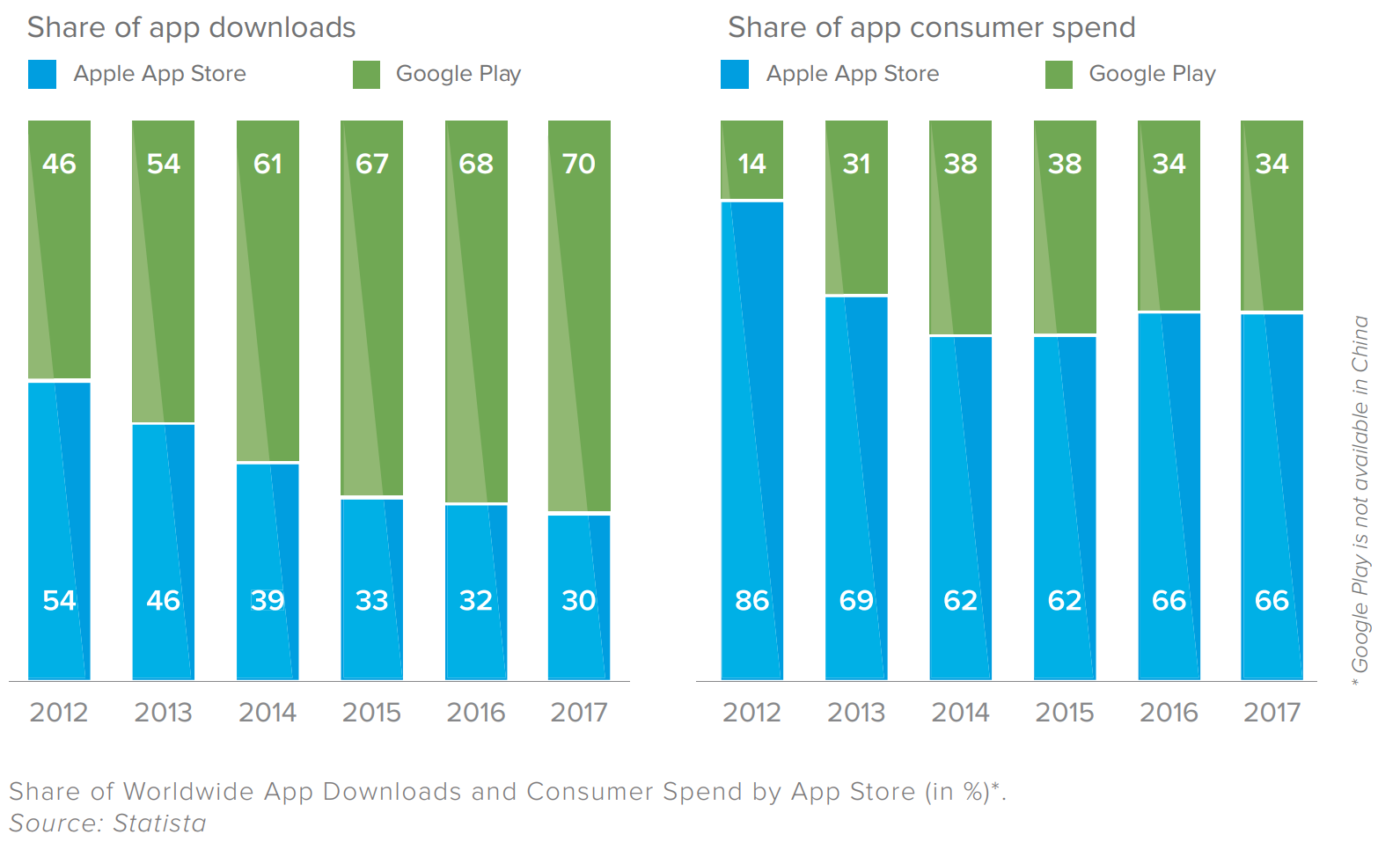
Start Up: Xiaomi preps giant IPO, tablet market (but not iPad) withers, the CIA cop on the streets, and more


GoPro made another loss. How long before its time runs out? Photo by Janeen on Flickr.

You can sign up to receive next week’s (and the future’s!) daily Start Up post by email. You’ll need to click a confirmation link, so no spam.

A selection of 11 links for you. My Twitter password isn’t in here. I’m @charlesarthur on Twitter. Observations and links welcome.

The spy who came home • The New Yorker

»

Though [Patrick] Skinner had completed his training just two months earlier, he already knew every road in the Third Precinct. On slow nights, he tried to memorize the locations of Savannah’s traffic lights and stop signs, so that he could visualize the quickest route to any call. Darren Bradley, who went through training with Skinner, said, “When they gave us the sheets with police signals and codes”—a list of nearly two hundred radio call signs—“he looked it over once and had it in his head.”

As Skinner approached Summerside, a white Camaro with tinted windows pulled out and came toward him. Cars registered in Georgia don’t have license plates on the front, but, as the Camaro zoomed past, Skinner glanced into his side mirror, memorized the rear-plate number from its backward reflection, and called it in.

Skinner sped north, picturing the Camaro’s likely escape route, and how to cut the driver off. “If he’s an idiot, he’ll turn right on Fifty-second Street and end up behind me at the next light,” Skinner said. Two minutes later, the Camaro rounded a bend and pulled up behind Skinner. He smiled.

In Savannah, several cars are stolen every day—often for use in other crimes. The Camaro driver made some evasive maneuvers, but, to Skinner, this behavior did not qualify as probable cause for a traffic stop. When the dispatcher ran a check on the license plate, it came back clean. Skinner continued on his patrol.

Georgia’s law-enforcement-training program does not teach recruits to memorize license plates backward in mirrors. Like many of Skinner’s abilities, that skill was honed in the C.I.A.

«

This is a long, but great, read.
link to this extract


Facebook’s dating service is a chance to meet the catfisher, advertiser or scammer of your dreams • The Washington Post

Drew Harwell and Elizabeth Dwoskin:

»

The love-seeking singles of Facebook’s new dating service, privacy experts say, may not be prepared for what they’ll encounter: sham profiles, expanded data gathering and a new wave of dating fraud.

Facebook — under fire for viral misinformation, fake accounts and breaches of trust — said this week it will soon offer a new dating service designed to help its users find love, giving the world’s largest social network a uniquely intimate vantage point on its users’ romantic desires and personal lives.

The service will allow people older than 18 to create a dating profile — separate from their main profile and invisible to their friends — that it shows to potential matches based on common interests, dating preferences, location and mutual friends, company officials said.

Using a button — not a swipe, as popularized by popular dating app Tinder — people will then be able to say whether they’re “interested” or would rather “pass” on those potential partners, officials said. Matches will be shown the other person’s first name, age, current city and photo, though users will also have the option of sharing their work, education and other biographical information. The service will begin testing in a few months.

Privacy watchdogs, advertising experts and industry rivals worry the service could expose users more acutely to the worst of the Web — scams, malicious strangers and other problems Facebook already has its hands full with.

«

This was pretty much my point when I spoke to CNN about this earlier in the week. We know what the desired consequences are; but Facebook should try to think about the possible unintended consequences. (Of course the problem is it’s really, really hard to forecast them.) We’ve seen what happened with the news feed: fake news, and inflammatory behaviour creating social disruption. What happens with the “dating feed”?
link to this extract


GoPro reports smaller-than-expected loss on lower costs • Reuters

»

Action-camera maker GoPro Inc reported a smaller-than-expected first-quarter loss on Thursday as the company cut costs and sold more of its new entry-level cameras…

GoPro — whose cameras are used by surfers, skydivers and other action junkies — said revenue fell to $202.35 million from $218.61 million. Analysts had expected revenue of $184.2m. The company’s net loss narrowed to $76.3m in the quarter ended March 31, from $111.2m a year earlier. Total operating expenses fell to $119.7m from $156.8m.

The company – which exited its Karma drone business to stem losses- has been trying to attract users with its $199.99 entry-level HERO camera that was announced in March.

The company in April also announced huge discounts and trade-up programs for its premium products.

Demand for GoPro’s cameras have been waning as users move to cheaper options and smartphones with powerful cameras.

«

As with Fitbit yesterday, the question has to be: how close to the ground is it going to get before it’s scooped up? There’s no reason for it to exist in its own right; it doesn’t have enough of an ecosystem. Hardware on its own is insufficient – something that Cisco (rightly, in retrospect) figured out when it abruptly closed its Flip camera division in 2011 as smartphones ate its business.

Likely buyer: Xiaomi, which should have some cash to spare soon. (Read on.)
link to this extract


How to live in San Francisco without spending any money • WSJ

Eliot Brown:

»

Venture capital has barreled by the billions into startups aimed at urban millennials, hunting for hits in businesses meant to shake up food delivery, home cleaning and car sharing, typically starting in the tech-savvy Bay Area.

But with record levels of money lying around, investors don’t always have patience for slow growth. So companies juice demand with heavy discounts to first-time users—and generous referral bonuses for anyone who signs up a friend. Ideas that gain traction spawn competitors who tend to spend even heavier on marketing.

All the promotions make for a golden consumer age in San Francisco, so long as these businesses last.

Want a rental car? Getaround starts at $5 an hour, and the first $20 is free. A snickerdoodle cookie within 15 minutes? Doughbies offers $10 off your first delivery. Or $20 off your first $30 order of marijuana? Eaze will deliver in San Francisco within 20 minutes with a discount code.

Elad Ossadon and Noam Szpiro, who work in software engineering, have become referring pros. In 2016, they created a website called VC Fund My Life, which catalogs discounts and freebies. When a user signs up for the startups listed, they get a referral bonus, often alerted by a buzz of their phones.

Mr. Ossadon said before he started the site, he was pushing startups with bonuses on anyone he knew.

“Friends that visit here, move here—friends of friends, random people,” he said. His reward: free burgers and Thai food delivered by startup Postmates and “months over months” of free housecleanings from on-demand services company Handy.

In all, Mr. Ossadon and Mr. Szpiro estimate they have earned over $10,000 in referral credits, although many startups have started to put an expiration on the credits. “The challenge after a while became, can you use your credits before they expire?” said Mr. Szpiro, in a gray knit shirt acquired with the aid of referral credits from online retailer Everlane.

«

But none for rent, are there?
link to this extract


Player 3 has joined the game – Chrome OS detachables paint a brighter future while tablet market struggles • IDC

»

Global tablet shipments in the first quarter of 2018 (1Q18) reached 31.7m, declining 11.7% from the prior year, according to preliminary data from the International Data Corporation (IDC) Worldwide Quarterly Tablet Tracker. However, the growing niche of detachable tablets like the Microsoft Surface and iPad Pro did experience more than 2.9% year-over-year growth and captured 15.3% share as newer models came into play. Meanwhile, the decline for traditional slate tablets continued as vendors managed to ship 26.8m units, down 13.9% from the prior year.

“Chrome OS’ entrance in the detachable market is a welcome change as Google is finally a serious contender from a platform perspective,” said Jitesh Ubrani, senior research analyst with IDC’s Worldwide Quarterly Mobile Device Trackers. “Google’s tighter control and integration of Chrome OS will allow brands to focus more on hardware design and additional services rather than spending resources reconfiguring Android to work in a detachable setting. Combined with Microsoft’s efforts to run Windows on ARM, the detachable market is poised for strong growth in the near term.”

“The timing of Chrome OS’ official entry into the tablet category is apt,” stated Linn Huang, research director, Devices and Displays. “Peak education buying season is approaching, and Chrome OS has resonated with administrators for its manageability where deployment is strong. Schools looking for that same environment but in tablet form – generally students aren’t provisioned a device with a keyboard until older – could find favor with these new devices.

«

The detachables market seems to be (on those numbers) 4.85m. Apple sold 1.8m iPad Pros – making it leader in the detachables market. Lenovo managed 0.2m detachables, apparently. That leaves another 2.85m split between all the others.

link to this extract


Sources: Facebook has fired multiple employees for snooping on users • Motherboard

Joseph Cox and Max Hoppenstedt:

»

On Tuesday, Facebook fired an employee who had allegedly used their privileged data access to stalk women online. Now, multiple former Facebook employees and people familiar with the company describe to Motherboard parts of the social media giant’s data access policies. This includes how those in the security team, which the fired employee was allegedly a part of, have less oversight on their access than others.

The news emphasizes something that typical users may forget when scrolling through a Silicon Valley company’s service or site: although safeguards against abuse may be in place, there are people who have the power to see information you believe to be private, and sometimes they may look at that data.

Motherboard granted the sources in this story anonymity to speak more candidly about Facebook’s policies and procedures. One source specifically mentioned Facebook’s strict non-disclosure agreement.

One former Facebook worker said when they joined the company multiple people had been terminated for abusing access to user data, including for stalking exes.

Another former Facebook employee said that they know of three cases where people were fired because they mishandled data, one of which included stalking. Typically, these incidents are not publicly reported.

As with many other businesses, data access is distributed depending on an employee’s role in a company. One source familiar with Facebook employees’ data access told Motherboard that different teams have varying levels of access, and that they can request additional access if required. The person added that the security team is more trusted than other departments, and abuse there is more difficult to detect.

«

link to this extract


Xiaomi shows off scorching growth ahead of $10bn IPO • Bloomberg

»

The Chinese smartphone maker filed for an IPO in Hong Kong Thursday, kicking off a process that’s expected to raise at least $10bn and confer a value of $100bn on the eight-year-old company. That offered investors a glimpse into the inner workings of the company controlled by billionaire Lei Jun, and its ups-and-downs since almost dropping off the radar in 2016…

…Xiaomi, reporting detailed financials for the first time, posted a net loss of 43.9bn yuan in 2017, reversing from a meager profit a year earlier. Some of that however reflected one-time items such as share-based compensation and changes in the value of preferred shares, the company said in its filing. Excluding those, operating profit reached 12.2bn yuan.

The company is taking advantage of changes by Hong Kong that allowed companies with different share classes to list. The filing didn’t mention how much it’s looking to raise, with the number of shares and price among details redacted from the document. It’s a big win for Hong Kong Exchanges & Clearing Ltd., whose officials spent years pushing to scrap a ban on the weighted voting rights that give founders control even with minority ownership. Xiaomi’s decision, four years after Alibaba Group Holding Ltd. chose New York, signals a new phase for the city’s ambitions to rival the U.S. market.

“Investors will like Xiaomi’s business model because growing user numbers guarantee profits in the future,” said James Yan, an analyst at Counterpoint. “A bigger hardware user base will translate to stronger profitability from services and at the ecosystem end.”

«

Lots of detail in this: 40% of its smartphone sales from outside China in 2017. (That will be mostly India.) It’s doing OK, especially given how it stumbled in 2016.
link to this extract


Xiaomi phones to be sold in UK, Italy, and other European markets • Android Authority

Oliver Cragg:

»

The Beijing-based firm today announced that it has partnered with CK Hutchinson to bring Xiaomi products to Three Group Europe stores in Austria, Denmark, Italy, Ireland, Sweden, and the U.K.

Three — one of the four major carriers in the UK — has confirmed that Xiaomi phones will be sold in stores across the country in the near future. This marks the first time Xiaomi phones will be officially available to buy in the region without having to resort to importing websites.

“We have been watching Xiaomi’s success from afar and impressed with the huge range of connected devices that they currently offer,” said Tom Malleschitz, chief digital officer at Three’s U.K. division.

«

Has Xiaomi managed to figure out how to get around the patent infringement claims that are sure to follow this?
link to this extract


Senior North Korean counterintelligence official believed to have defected • intelNews.org

Joseph Fitsanakis:

»

One of North Korea’s most senior intelligence officials, who played a major role in building Pyongyang’s nuclear weapons program, has disappeared and is believed to have defected to France or Britain, according to sources. South Korean media identified the missing official as “Mr. Kang”, and said he is a colonel in North Korea’s State Security Department (SSD), also known as Ministry of State Security. Mr. Kang, who is in his mid-50s, enjoyed a life of privilege in North Korea, because he is related to Kang Pan-sok (1892-1932), a leading North Korean communist activist and mother to the country’s late founder, Kim Il-sung.

According to South Korean reports, Kang was in charge of North Korea’s counter-espionage operations in Russia and Southeast Asia, including China. He is also believed to have facilitated secret visits to Pyongyang by foreign nuclear scientists, who helped build North Korea’s nuclear weapons program. In recent years, Kang was reportedly based in Shenyang, the largest Chinese city near the North Korean border, which is home to a sizeable ethnic Korean population.

«

This could make the summit a little more interesting. Reckoned to have defected to Britain or France some time in February; North Korea reckoned to have a manhunt going on. He’ll do well to evade the sort of VX nerve agent murder that Kim Jong-un used on his half-brother. (It’s not only Russians that do that sort of thing.)
link to this extract


Businesses warned over GDPR privacy policies • Out-Law

»

Many companies have issued new privacy terms to consumers ahead of the new General Data Protection Regulation (GDPR) taking effect on 25 May. However, European data protection supervisor Giovanni Buttarelli said some of the policies he has seen present a “take-it-or-leave-it proposition” that may not comply with the new laws.

“Too often privacy policies have seemed to be designed to provide legal cover for the companies themselves in the case of harm to a customer: non-negotiable, incredibly long, complicated, full of legal jargon which nobody reads …”, said Buttarelli. “Furthermore, the policies have tended to give an illusion of user control – while in reality you cannot see or control what the company does with information about you.”

“Companies whose business model depends on tracking are now asking their customers to say whether they agree to, for example, the use of sensitive data and data from outside sources. Just like with the notorious cookie pop-ups, people fell pushed towards clicking ‘I accept’ because the only apparent alternative on offer seems complicated, time-consuming and risks excluding them from digital society,” he said.

“We and other DPAs (data protection authorities) are therefore worried that even the biggest companies may not yet understand that with the GDPR these manipulative approaches must change. They must change, for instance, to satisfy Article 7(4) of the GDPR, which states that consent cannot be freely given if the provision of a service is made conditional on processing personal data not necessary for the performance of a contract,” he said.

«

It’s going to be a mess. Twitter is likely in a few advocates’ sights: its system for data control is pretty rubbish.
link to this extract


Google Pay is rolling out on the web for desktop and iOS • Android Police

Rita El Khoury:

»

The move from Android Pay, Google Wallet, and Pay with Google to Google Pay hasn’t been completely smooth sailing, but the Mountain View giant is slowly getting its footing and transitioning everything from the old brandings to the new one. The latest to make the switch are web payments done either on desktop or on iOS.

Google is starting to roll out Pay on the web for iPhone, iPad, and desktop users so you should start seeing it when you’re trying to make a payment on a supported site, regardless of the browser or device you’re using.

«

Why would you want to use Google Pay on iOS? If it wasn’t on desktop previously, then the only way would be if you had Google Pay on an Android and switched. But iOS encourages you to set up an Apple Pay account when you set up the device. And Google Pay would be less convenient than the built-in Apple Pay system.
link to this extract


Errata, corrigenda and ai no corrida: none notified

Start Up: the internet of crypto things, smartphone slowdown, Fitbit wheezes, the AI gamblers, and more


The iPhone X: its OLED screen comes from Samsung, whose poor display sales misled analysts. Photo by Aaron Yoo on Flickr.

A selection of 12 links for you. Buying a book will make it better. I’m @charlesarthur on Twitter. Observations and links welcome.

Cryptocurrency-mining malware targeting IoT, being offered in the underground • TrendLabs Security Intelligence Blog

»

Crime follows the money, as the saying goes, and once again, cybercriminals have acted accordingly. The underground is flooded with so many offerings of cryptocurrency malware that it must be hard for the criminals themselves to determine which is best. This kind of malware, also known as cryptomalware, has a clear goal, which is to make money out of cryptocurrency transactions. This can be achieved through two different methods: stealing cryptocurrency and mining cryptocurrency on victims’ devices surreptitiously (without the victims noticing), a process also known as cryptojacking. In this post, we discuss how these two methods work, and see whether devices connected to the internet of things (IoT), which are relatively underpowered, are being targeted.

«

*taps mic* in my book Cyber Wars – published today! – I look at how weak the security around IoT devices tends to be, based on amazingly old code and with terrible business models that don’t envisage security updates.

Cryptocurrency is a quiet way of doing it, rather than the hacking where you get millions of devices to attack someone in a DDOS attack.
link to this extract


China slowdown drags worldwide smartphone market to 2.9% year-over-year decline • IDC

»

smartphone vendors shipped a total of 334.3 million units during the first quarter of 2018 (1Q18), resulting in a 2.9% decline when compared to the 344.4 million units shipped in the first quarter of 2017. The China market was the biggest driver of this decline with shipment volumes dipping below 100 million in the quarter, which hasn’t happened since the third quarter of 2013.

“Globally, as well as in China, a key bellwether, smartphone consumers are trading up to more premium devices, but there are no longer as many new smartphone converts, resulting in shipments dropping,” said Melissa Chau, associate research director with IDC’s Worldwide Mobile Device Trackers. “When we look at it from a dollar value perspective, the smartphone market is still climbing and will continue to grow over the years to come as consumers are increasingly reliant on these devices for the bulk of their computing needs.”

“Despite new flagships from the likes of Samsung and Huawei, along with the first full quarter of iPhone X shipments, consumers looked unwilling to shell out big money for the latest and greatest devices on the market,” said Anthony Scarsella, research manager with IDC’s Worldwide Quarterly Mobile Phone Tracker. “The abundance of ultra-high-end flagships with big price tags released over the past 12-18 months has most likely halted the upgrade cycle in the near term. It now looks as if consumers are not willing to shell out this kind of money for a new device that brings minimal upgrades over their current device. Looking forward, more affordable premium devices might be the solution the market needs in the second half of the year to drive shipments back in a positive direction.”

«

That unwillingness only stretched to companies that weren’t Apple, it seems. Samsung slightly down, Huawei and Xiaomi very much up. “Others” – those outside the top five – way down.
link to this extract


Bloomberg butchers Samsung OLED statements to portray iPhone X as weak • Apple Insider

Daniel Eran Dilger:

»

In its latest attack on Apple’s iPhone X, Bloomberg isolated selected statements from Samsung, the exclusive source of the phone’s OLED display panels, and threw out facts that didn’t support its narrative.

Citing mere 3% growth in the company’s Display Panel business segment and a company earnings statement that DP profits “were affected by slow demand for flexible OLED panels,” Bloomberg presented the conclusion that iPhone X sales must be “weak.”

Samsung didn’t say that its Display Panel segment turned in weaker results due to iPhone X. What the company actually reported in its earnings statement for the March quarter was that its DP “OLED Earnings declined due to weak demand and rising competition between Rigid OLED and LTPS LCD.”

It also stated that its DP segment “LCD Earnings stayed flat QoQ thanks to cost reduction efforts and product-mix improvements amid a decline in sales and ASPs caused by weak seasonality.”

So rather than Bloomberg’s contrived messaging portraying that Samsung’s OLED profits were declining because iPhone X was tanking, the reality is that Samsung reported that its entire DP unit was hammered in profitability during the quarter due to intense competition (from other suppliers and from other, cheaper screen technologies) and from weak demand and a decline in sales in general, across both OLED and LCD panels.

«

Samsung’s phone sales were down – despite the launch of the Galaxy S9 and S9 Edge during the quarter. That points to weakness in Samsung’s sales. Odd how people wanted to say that the iPhone X wasn’t selling well. Nobody has said much about the Galaxy S9. It don’t think it’s the hit Samsung might have hoped for.
link to this extract


Blockchain insiders tell us why we don’t need blockchain • FT Alphaville

Jemima Kelly:

»

[On Tuesday] a panel of blockchain experts gave evidence on the technology to the British Parliament’s Treasury Select Committee. The panel included Ryan Zagone, director of regulatory relations (yes, that’s apparently really a job title) at Ripple, the company behind the ultimate leap-of-faith-demanding centralised digital currency, XRP.

Mr Zagone gave the committee the usual spiel about the need for a bridging currency for cross-border payments (which we’ve previously debunked). He also told us that 120 financial institutions had signed up to “the Ripple network”. And then he said: “The banks we see on the network are not using XRP. Right now we’re looking down the road at how they can expand their reach through XRP.”

That’s right! No bank is using the digital currency designed for banks. That doesn’t stop it currently being assigned a market value of $32.5bn (more than Twitter’s market capitalisation).

Also on the panel was Chris Taylor, chief operating officer at Everledger, a company that is trying to use the blockchain to track (and miraculously “protect”) diamonds and other assets. Here’s an excerpt from his contribution: “It’s the same as any system – it’s garbage in, garbage out. So you’ve got to make sure that the participants that you’re allowing to contribute to the network are trustworthy.”

He said it, not us. A blockchain is the same as any system. If you feed garbage into it, it will feed garbage back out to you. And if you accidentally feed garbage into it, you can’t change it, because immutability!

Mr Taylor continued: “Blockchain doesn’t solve everything. It doesn’t solve entirely problems that couldn’t be solved in other ways. But we believe blockchain solves the problems that we’re solving in a better way than traditional database technology can provide.”

Compelling stuff, no?

«

Er.. no?
link to this extract


Biohacker Aaron Traywick found dead in a spa • BBC News

»

A biohacker who became infamous after apparently injecting himself with an untested herpes drug in front of an audience has been found dead.

Aaron Traywick’s body had been discovered in a spa room in Washington DC on Sunday, local police said. Vice News reported that Traywick had been using a flotation therapy tank.

The 28-year-old was chief executive of Ascendance Biomedical. He had skirted the law by self-medicating as well as encouraging others to do likewise.

A police spokeswoman has said no evidence has been found to suggest foul play.

Traywick had claimed his biohacking company had developed a DIY “research compound” that could cure HIV, Aids and herpes, but had no independent proof to back this up. Biohacking refers to people’s efforts to alter their own biology by a variety of means including lifestyle and diet changes, surgery and the use of unlicensed therapies.

The BBC challenged Traywick over his behaviour when it interviewed him at the BodyHacking Con in Austin, Texas, in February. Traywick, who had herpes, had performed a stunt at the event, apparently injecting his company’s unregulated product into his leg. On stage, he had referred to the product as a “research compound”.

But in conversation with the BBC he described it as a “treatment” – a claim that had the potential to attract the attention of the US Food and Drug Administration.

«

An autopsy has been carried out, but not released so far.
link to this extract


Fitbit’s current-quarter revenue forecast misses estimates • Reuters

»

Wearable device maker Fitbit Inc’s forecast for current-quarter revenue missed Wall Street estimates, hurt by a drop in sales of fitness trackers.

Shares of the company fell 1.6% to $5.41 in after-market trading on Wednesday after the company said it expects a 19% drop in the second-quarter revenue.

The company said it sold 2.2m devices in the quarter at an average selling price of $112 per device, below analysts’ estimate of 2.33m devices, according to financial data analytics firm FactSet.

Fitbit said it expects revenue for the current quarter to be in a range of $275m to $295m, below analysts estimate of $309.9m, according to Thomson Reuters I/B/E/S.

In April, Fitbit announced the worldwide launch of its latest smartwatch ‘Versa’ after Chief Executive Officer James Park promised to launch a more ‘mass appeal watch’ in 2018 compared with ‘Iconic’, the company’s first smartwatch that had failed to impress.

«

You have to go back to 2014 to find such a low number of devices sold. Revenue fell 18%. It’s only a matter of time before it gets rolled up by someone like Google (which needs a wearables business that actually works for it, unlike WearOS).
link to this extract


‘Success’ on YouTube still means a life of poverty • Bloomberg

Chris Stokel-Walker:

»

Do your children dream of YouTube stardom? Do them a favor: crush that ambition now.

New research out of Germany billed as among the first to review the chances of making it in the new Hollywood shows a vanishingly small number will ever break through—just like in the old Hollywood.

In fact, 96.5% of all of those trying to become YouTubers won’t make enough money off of advertising to crack the US poverty line, according to research by Mathias Bärtl, a professor at Offenburg University of Applied Sciences in Offenburg.

Breaking into the top 3% of most-viewed channels could bring in advertising revenue of about $16,800 a year, Bärtl found in an analysis for Bloomberg News. That’s a bit more than the U.S. federal poverty line of $12,140 for a single person. (The guideline for a two-person household is $16,460.) The top 3% of video creators of all time in Bärtl’s sample attracted more than 1.4 million views per month.

«

But as The Outline points out (amalgamating various sources), those YouFaceInstaTubeGramBookers can make money on the side – by promoting crap and getting paid for it.

link to this extract


Revealed: how bookies use AI to keep gamblers hooked • The Guardian

Mattha Busby:

»

Current and former gambling industry employees have described how people’s betting habits are scrutinised and modelled to manipulate their future behaviour.

“The industry is using AI to profile customers and predict their behaviour in frightening new ways,” said Asif, a digital marketer who previously worked for a gambling company. “Every click is scrutinised in order to optimise profit, not to enhance a user’s experience.”

“I’ve often heard people wonder about how they are targeted so accurately and it’s no wonder because its all hidden in the small print.”

Publicly, gambling executives boast of increasingly sophisticated advertising keeping people betting, while privately conceding that some are more susceptible to gambling addiction when bombarded with these type of bespoke ads and incentives.

Gamblers’ every click, page view and transaction is scientifically examined so that ads statistically more likely to work can be pushed through Google, Facebook and other platforms…

…“I never cease to be amazed at how low the gambling industry is prepared to go to exploit those who have indicated an interest in gambling,” says Carolyn Harris, a Labour MP who has campaigned for gambling reform.

“The industry is geared to get people addicted to something that will cause immense harm, not just to society but to individuals and their families. They are parasitical leeches and I will offer no apology for saying that.”

«

Completely agree with Harris.
link to this extract


The myth that civilian gun ownership prevents tyranny • ThinkProgress

Casey Michel:

»

In assessing data from 2008-2018, civilian gun ownership rates appear to have no influence on the strength of a country’s democracy.

For instance, five of the six countries with the greatest democratic improvements over the past decade are located among the bottom half of countries in terms of civilian arms rates. At the same time, six of the 11 countries with the greatest democratic backsliding have also been in the bottom half in terms of gun ownership rates. (For Freedom House, a lower score on its democracy index is better in terms of democratization; those with the highest scores are considered dictatorships.)

Look at Fiji and Ethiopia, for instance. In 2008, both had identical Freedom House scores, with nearly identical civilian arms ownership rates (Fiji has 0.5 guns per 100 civilians, while Ethiopia has 0.4). But a decade later, Fiji was far freer, boasting democracy scores comparable to Colombia and Montenegro, whereas Ethiopia was suffering under a far bloodier regime than it is now, scoring worse than dictatorships like Kazakhstan and Belarus.

«

Ten years seems quite a short timespan for such a study. You could probably take it over 100 years and see much the same results, though. But it gives the lie to the US suggestion that you need people to have guns so they can fight off the government:

»

The Second Amendment did little to prevent American governments from creating internment camps for Americans of Japanese descent or from enacting Jim Crow laws, repeatedly calling the country’s claims to liberal democracy into question. “White supremacists are absolutely correct in pointing to the Second Amendment as having been created for their supremacy in perpetuity, so that what they regarded as ‘tyranny’ was and is any deviance by government from that arrangement,” Roxanne Dunbar-Ortiz, the author of Loaded, a recent history of the Second Amendment, told ThinkProgress.

«

link to this extract


Building successful online communities: Evidence-based social design • AcaWiki

»

The authors also suggest that ascribing blame or community sanctions may be less effective than offering community members a way to “save face” “without having to admit that they deliberately violated the community’s norms.” They describe a system called stopit designed at MIT to address computer-based harassment. When users reported harassment, the system sent a message to the alleged harasser claiming that the alleged harasser’s account may have been compromised and urging them to change their password. Here is the rationale given by Gregory Jackson, the Director of Academic Computing at MIT in 1994:

»

recipients virtually never repeat the offending behavior. This is important: even though recipients concede no guilt, and receive no punishment, they stop. [this system has] drastically reduced the number of confrontational debates between us and perpetrators, while at the same time reducing the recurrence of misbehavior. When we accuse perpetrators directly, they often assert that their misbehavior was within their rights (which may well be true). They then repeat the misbehavior to make their point and challenge our authority. When we let them save face by pretending (if only to themselves) that they did not do what they did, they tend to become more responsible citizens with their pride intact.

«

«

That is amazing. You’d need a ton of “you’ve been hacked” warnings to make Twitter calm down, but worth a try, huh?
link to this extract


Pentagon orders stores on military bases to remove Huawei, ZTE phones • WSJ

Stu Woo and Gordon Lubold:

»

The Pentagon is moving to halt the sale of phones made by Huawei Technologies and ZTE in retail outlets on US military bases around the world, citing potential security threats they say the devices could pose.

The move intensifies a squeeze the Trump administration has put on the two Chinese makers of telecommunications gear and mobile devices. Washington officials have said Beijing could order Chinese manufacturers to hack into products they make to spy or disable communications. Huawei and ZTE have said that would never happen.

Huawei is the world’s third-largest smartphone maker, behind Apple and Samsung Electronics, but it sells very few devices stateside. ZTE, however, is the fourth-largest seller of phones in the US, with a 9.5% share of units shipped, according to research firm IDC.

“Huawei and ZTE devices may pose an unacceptable risk to the department’s personnel, information and mission,“ said Army Maj. Dave Eastburn, a Pentagon spokesman, in a statement. “In light of this information, it was not prudent for the department’s exchanges to continue selling them.” He was referring to the retail outlets at or near military installations in the US and overseas that cater to American soldiers and sailors. Only 2,400 Huawei and ZTE phones were sold at those outlets last year, he said.

«

Such drama, until that last sentence. It’s more about the perception on this. However, the earlier US embargo on ZTE in particular is going to hurt it: 9.5% of the US market is a big slice to lose (as seems likely).
link to this extract


Intel kills Kaby Lake-X, the bizarre enthusiast CPUs that nobody wanted • PCWorld

Brad Chacos:

»

Intel’s Kaby Lake-X chips were a headscratcher from the start.

Launched alongside the massively multi-core Skylake-X processors last summer, the quad-core chips didn’t offer any noticeable advantages over standard Kaby Lake chips beyond a very slight speed bump. Yet they required pricey X299 motherboards that cost significantly more than mainstream hardware—then failed to take advantage of the key platform advantages of the swankier chipset. Intel pitched the CPUs as an overclocker’s dream, but really, they were just plain weird, and effectively made obsolete mere months after release with the introduction of the 6-core, 12-thread Core i7-8700K in October.

Now Kaby Lake-X is officially obsolete. As first noticed by Tech Report, Intel quietly discontinued the Core i5-7640X and Core i7-7740X in a new document outlining end-of-line dates for the chips (PDF). The paperwork hints that Kaby Lake-X was indeed supplanted by 8th-gen Coffee Lake CPUs, stating that “Market demand for the products listed in the ‘Products Affected/Intel Ordering Codes’ tables below have shifted to other Intel products.”

«

Intel’s processor line has just exploded, Cambrian-style, and is now being trimmed back. One hopes.
link to this extract


Errata, corrigenda and ai no corrida: none notified

You can sign up to receive each day’s Start Up post by email. You’ll need to click a confirmation link, so no spam.

Start Up: dating Facebook, Apple’s X factor, UX mistakes, murderous malware, and more


An eggplant (aubergine to British readers). Is it a fruit? Does Alexa know? Photo by JiayiYoung on Flickr.

You can sign up to receive each day’s Start Up post by email. You’ll need to click a confirmation link, so no spam.

A selection of 12 links for you. Questions provided in advance. I’m @charlesarthur on Twitter. Observations and links welcome.

Facebook announces dating app focused on ‘meaningful relationships’ • The Guardian

Sam Levin:

»

Facebook is launching a new dating app on the social media platform, its CEO, Mark Zuckerberg, announced at an annual developer conference on Tuesday, unveiling a feature designed to compete with popular services like Tinder.

Speaking in front of a packed crowd in San Jose, Zuckerberg described the new dating feature as a tool to build “real long-term relationships – not just hookups”.

“We want Facebook to be somewhere where you can start meaningful relationships,” he continued. “We’ve designed this with privacy and safety in mind from the beginning.”

The announcement sparked gasps from the crowd and seemed to attract the most interest from the audience during Zuckerberg’s short speech, which focused on the company’s widening privacy scandal, new safeguards meant to protect users’ data and misinformation and fake news on the site.

Chris Cox, the chief product officer, said the dating feature would be “opt-in” and “safe” and that the company “took advantage of the unique properties of the platform”.

Soon after the announcement, Mandy Ginsberg, the CEO of Match Group, which owns Tinder, threw shade at Facebook, saying in a statement: “We’re surprised at the timing given the amount of personal and sensitive data that comes with this territory.”

«

Can’t see this going horribly wrong at all.
link to this extract


Seven inexcusable yet common UX gaffes that make you look like a total amateur • Medium

»

Rather than focusing on the specific blunders of certain technology products, this week, I have come up with 7 more common design patterns that just plain suck. There is never any excuse for any of them.

The thing is, if someone’s design includes one or more of these patterns, they’re probably not cut out for UX anyway, and this article will probably not reach them, or if it does, it won’t sink in. But I might as well try, right?

«

These are great, and so common. Usernames, passwords – all these things.
link to this extract


Apple reports second quarter results • Apple

»

The Company posted quarterly revenue of $61.1bn, an increase of 16% from the year-ago quarter, and quarterly earnings per diluted share of $2.73, up 30%. International sales accounted for 65% of the quarter’s revenue.

“We’re thrilled to report our best March quarter ever, with strong revenue growth in iPhone, Services and Wearables,” said Tim Cook, Apple’s CEO. “Customers chose iPhone X more than any other iPhone each week in the March quarter, just as they did following its launch in the December quarter. We also grew revenue in all of our geographic segments, with over 20% growth in Greater China and Japan.”

«

Quick data: 52.2m iPhones (up 2.8%), iPads 9.1m (up 2.1%), Macs 4.08m (down 1%). Revenues for Services and Other Products (the latter including Beats, AirPods, Apple Watch and HomePod) grew enormously – 30% and 37.6% respectively.

The iPhone ASP fell a little, but the iPhone X staying the most in-demand phone is a poke in the eye for all the analysts who declared their supply chain sources said it was doing badly. That’s why I linked to Apple’s own release: all the stories on big publications were pre-writes which had sentences like “analysts/observers were disappointed with iPhone X sales…” Yeah, not so much.
link to this extract


2016 MacBook Pro butterfly keyboards failing twice as frequently as older models • Apple Insider

Mike Wuerthele:

»

Given that the keyboard mechanisms are the same in the 13- and 15-in MacBook Pro models, we’ve combined the two models in this look. However, given that the numbers break down to about 45% 15in MacBook Pro and 45% 13in MacBook Pro across the whole dataset and model years, there is no real need to break them our separately.

We’re also subtracting warranty-voiding accidents, like impacts, or water spills.

All data has been collected from assorted Apple Genius Bars in the U.S. that we have been working with for several years, as well as Apple-authorized third-party repair shops.

The 2014 MacBook Pro model year saw 2120 service events in the first year, with 118 related to keyboard issues necessitating an upper case replacement —5.6% of all MacBook Pros serviced in the first year. The 2015 has 1904 service tickets, with 114 relating to the keyboard, making 6.0%.

The two numbers are very similar, which is to be expected. The keyboards were essentially unchanged since the 2012 Retina MacBook Pro, and should have failure rates similar to each other.

Apple released the new keyboard with the MacBook, and moved the design to the 2016 MacBook Pro. In the first year of the 2016 MacBook Pro, our data gathered 1402 warranty events, with 165 related to only the keyboard and not including the Touch Bar —11.8%.

We don’t have a full year of data for the 2017 MacBook Pro yet. But, since release in June 2017, our data set has 1161 captured service events with 94 related to keyboard issues also not including any Touch Bar issues —8.1%.

«

This is only for an unknown (but one presumes small – 10?) number of stores, so we don’t know how reliable it is. But one could assume it’s a sample of a random distribution, and so probably usable. That’s a striking difference. (And notice that the MacBook Air, which surely sells more, seems only to makes up 10% of all incidents, if I’m reading it correctly.)
link to this extract


They’re on the lookout for malware that can kill • The Washington Post

Ellen Nakashima and Aaron Gregg:

»

Dragos built a software product to help industrial companies detect cyberthreats to their networks and respond to them. Its clients include energy, manufacturing and petrochemical factories in the United States, Europe and Middle East.

In October, Dragos discovered Trisis, a malware that targets a “safety instrumented system,” or a machine whose sole function is to prevent fatal accidents. In a petrochemical plant, for instance, there are machines that operate at very high pressures, and if a valve blows, the pressure or the leak of hazardous materials could kill a human being. But a safety instrumented machine is supposed to shut down the entire system to reduce the risk of a fatal accident.

There has been one known deployment of the Trisis malware — FireEye called it Triton — at a petrochemical plant in Saudi Arabia in August. But a coding error prevented the malware from working as intended, and a potential catastrophe was averted.

As of this week the culprits behind Trisis were still active in the Middle East, Lee said. “It’s reasonable to assume that [what happened last year] is not a one-time event.’’

Though Dragos had some indication of who was responsible, the firm refrained from drawing a conclusion. “It wasn’t cut and dried,” Lee said. Dragos shared the malware with the Department of Homeland Security, but Lee argued against the government seeking to assign blame.

“The best they could do is a well-reasoned guess,” he said. “There’s not the years’ worth of data on this event that would make attribution possible.”

«

link to this extract


UK electricty generation sources – 2017 versus 2016 • MyGridGB

Andrew Crossland:

»

I have just released a new page on the MyGridGB website which tries to chart how electricity generation is changing year on year. It can be found here.

These charts tell some important stories about electricity in Britain and how fast it is changing. I now describe three biggest stories in the data and my predictions for 2017.

The decline of coal: The amount of coal used for electricity was 30% lower in Q1 2017 than it was in Q1 2016 despite there being very little difference in our demand for power. Coal power stations are rapidly being decommissioned and being replaced by renewables and gas.

My prediction: coal power stations will be switched off several times over the coming months (April onwards) when demand is low. The amount of times this happens will be affected by the global price of coal and gas which affects the choice of power stations to use.

The rise of intermittent generators: Wind and solar continue to grow and 2017 also saw an increased in metered generation from hydroelectric dams. Overall, low carbon renewable generation was 26% higher in Q1 2017 than it was in Q1 2016. The early signs from 2017 are that wind has overtaken coal to be the third biggest provider of electricity in Great Britain. In fact, wind turbines generated nearly 60% of what nuclear power stations provided.

My prediction: 2017 will see wind overtake coal as the third biggest provider of electricity in Great Britain.

Note that my values include an estimate for so called “embedded wind” turbines. Embedded wind refers to smaller turbines which are not included in the Elexon Portal data which I use for this website or gridwatch. At the time of writing, I estimated that around 30% of the installed wind capacity in Great Britain is embedded.

«

The “carbon intensity” (how much carbon is burnt per kWh) is falling fast too.
link to this extract


The YouTube stars being paid to sell cheating • BBC News

Branwen Jeffreys and Edward Main:

»

YouTube stars are being paid to sell academic cheating, a BBC investigation has found.
More than 250 channels are promoting EduBirdie, based in Ukraine, which allows students to buy essays, rather than doing the work themselves.

YouTube said it would help creators understand they cannot promote dishonest behaviour.
Sam Gyimah, Universities Minister for England, says YouTube has a moral responsibility to act.
He said he was shocked by the nature and scale of the videos uncovered by the BBC: “It’s clearly wrong because it is enabling and normalising cheating potentially on an industrial scale.”

The BBC Trending investigation uncovered more than 1,400 videos with a total of more than 700 million views containing EduBirdie adverts selling cheating to students and school pupils.

EduBirdie is based in Ukraine, but aims its services at pupils and students across the globe. Essay writing services are not illegal, but if students submit work they have paid for someone else to do the penalties can be severe…

…Universities minister Sam Gyimah said that EduBirdie’s marketing was shocking and pernicious as it presented cheating as “a lifestyle choice”.

He said the YouTubers involved should be “called out” for abusing their power as social influencers. “I think YouTube has a huge responsibility here,” he said.

“They do incredibly well from the advertising revenue that they get from the influencers and everyone else. But this is something that is corrosive to education and I think YouTube has got to step up to the plate and exercise some responsibility here.”

About 30 of the channels promoting EduBirdie are from Britain and Ireland. They include a student vlogger at a top UK university. Another is a popular 15-year-old YouTuber, whose mother was unaware he was promoting the company until she was approached by the BBC.

«

link to this extract


Amazon’s Alexa doesn’t know much about eggplants • NY Mag

Renée Reizman:

»

Eggplants, though savory, have seeds, unequivocally categorizing them as fruits. Thanks to Alexa, however, I lost an argument I should have won. While at a friend’s home, I confidently baited Alexa by asking, “Are eggplants fruit?” She replied, “No, an eggplant is not a fruit.” If Alexa can’t outdo Wikipedia, then what’s the use in having one? My 1920s-era apartment is too small to really take advantage of many of the conveniences smart-home assistants can offer. Without an AC unit to preset while I’m at work, a garage to open while I round the block, or a yard to irrigate overnight, for me, Amazon’s Alexa functions primarily as a parlor trick. She’ll entertain guests with a few rounds of Jeopardy!, play Janelle Monáe’s Dirty Computer, and should help me settle debates about fruits that masquerade as vegetables…

…If Alexa doesn’t have the capabilities to provide a skill or answer, it taps into Amazon’s partnership with Microsoft, which pulls from Cortana and Bing. A representative from Amazon said that Alexa also scrapes information from Amazon-trusted companies like Stats.com, IMDb, AccuWeather, Yelp, Answers.com, and Wikipedia.

But when I followed up with an Amazon representative about the eggplant discrepancy, realizing that I had unearthed a deeper issue with Alexa’s understanding of language of grammar, they cryptically responded, “Thanks for calling that one to our attention. That’s an error that has since been fixed.” Had I single-handedly inspired Amazon to overhaul Alexa’s understanding of indefinite articles? Apparently not. When I approached Alexa again, this time asking about “a tomato” and “tomatoes,” I realized that she still struggled with the distinction.

I didn’t run into this grammatical problem while experimenting with Google Assistant, Siri, or Cortana — the latter of which was particularly surprising because of Alexa’s aforementioned partnership with Microsoft. While I can’t pinpoint a clear answer without an Alexa programmer opening up about their top-secret code, one possible explanation lies within Evi, the knowledge base and semantic search-engine software that powers most of Alexa’s “Google-able” answers.

«

Smart assistants: how dumb are they.
link to this extract


Thousands of women say LuLaRoe’s legging empire is a scam • Bloomberg

Claire Suddath:

»

The DSA [Direct Selling Association] estimates that the median income for someone participating in these kinds of [multi-level marketing] businesses is $2,500 a year. From the beginning, LuLaRoe pitched itself as the exception: “What does your dream home look like? What car do you dream of driving? What schools do you envision your children attending?” the Stidhams wrote in their From the Founders letter, printed in LuLaRoe’s welcome guide for new retailers. “Where else can you make $50,000 to $100,000 yearly working part time?” Mark, who’s CEO, said in a video talk with consultants last year.

“I didn’t care about the leggings, I just wanted to make money again,” says consultant Adrianne Merkling, a former analytical flavor chemist who had to give up her career when one of her three children was diagnosed with apraxia of speech and needed therapy four times a week. She started selling LuLaRoe clothing in 2016.

Now, she, along with Blevins, are two of thousands of women who claim they’ve been duped by LuLaRoe. In the past year the company has faced more than a dozen lawsuits. The largest, a proposed class action, calls LuLaRoe a pyramid scheme focused on recruiting consultants and persuading them to buy inventory rather than actually selling clothing. Since the lawsuits were filed, consultants have fled LuLaRoe by the thousands. Many say the company owes them millions of dollars in promised refunds. Women have garages, closets, guest rooms—and, in one case, a farm shed—filled with LuLaRoe clothes they say they can’t sell.

«

MLM goes in waves: when economic times are hard, they spring up as a way to make “easy money on the side”. But as things improve, people don’t need the cheap stuff they sell (has to be cheap; otherwise they can’t push it up the levels) and don’t have the incentive to sell it because they’re doing OK.

And then people are left with a load of merchandise. Crunch.
link to this extract


On the naughty step – the questionable ethics of the Christian Legal Centre • Nearly Legal

Giles Peaker on the peculiar “legal” group (except it’s not legally allowed to practise law in the UK), the Christian Legal Centre, which inserted itself on the parents’ side in the sad Alfie Evans case:

»

Mr [Pavel] Stroilov’s involvement doesn’t end there. In the 24 April judgment of Hayden J, we find at 14:

»

A statement had been prepared bearing the now instantly recognisable hallmark of Mr. Pavel Stroilov, a law student and case worker for Christian Legal Centre (CLC), who yesterday encouraged F to seek to issue a Private Prosecution alleging murder against some of the doctors at Alder Hey. It was properly rejected by the District Judge. Today’s efforts by Mr. Stroilov were equally inconsistent with the real interests of the parents’ case. The Witness Statement, which Mr. Diamond tells me Mr. Stroilov prepared, is littered with vituperation and bile, critical of those who have done so much to help Alfie, attacking the system generally and the Court in particular.

«

It appears that Pavel Stroilov also advised Mr Evans to bring a private prosecution – an action that was doomed and wholly abusive. It also appears that he did so while a CLC caseworker.

CLC appear to be trying to row back from appearing to have anything to do with the private prosecution. Their press release says:

»

We also wish to make clear that we do not support the criminal prosecution of doctors involved in Alfie’s care.

«

That is rather hard to maintain when it was your self-described ‘lawyer’ who was still working on a witness statement for the hearing before Hayden J at the time who advised the parents to bring the prosecution.  CLC’s position is therefore effectively that they are utterly incompetent and can’t control their ‘lawyers’…

I gather there is talk of contempt of court applications against Mr Stroilov.

But a failure to supervise or control a caseworker, if that is what it was, is far from the only conduct issue involved.

«

I gather there’s a story on this in The Guardian for Wednesday. A lot more to come out on this, I think.
link to this extract


Google vs. Google: how nonstop political arguments rule its workplace • WSJ

Kirsten Grind and Douglas MacMillan:

»

“Activists at Google” helped organize a rally critical of President Donald Trump’s policies. “Militia at Google” members discussed their desire to overturn a prohibition on guns in the office. “Conservatives at Google” allege discrimination against right-leaning job candidates. “Sex Positive at Google” group members are concerned that explicit content is being unfairly removed from Google Drive file-sharing software.

“Googlers For Animals” invited the PETA president, only to be undercut by members of the “Black Googler Network.”

Google’s broad corporate culture has long leaned Democratic, and that’s reflected in internal debates that often pit left-wing causes against each other. Donations by its employees to Hillary Clinton’s presidential campaign outnumbered contributions to President Trump’s campaign 62 to 1, and former Alphabet Executive Chairman Eric Schmidt helped the Clinton campaign with data analysis. Less numerous, but increasingly voluble, are groups of conservative employees reacting against what they see as a Google’s political orthodoxy.

Beyond the internal debates are lawsuits, several since late last year, including legal actions from female employees alleging pay discrimination against women; from male ex-employees and potential new hires claiming bias against conservative white men; and from a transgender engineer who said he was fired for making derogatory statements about what he called white male privilege. All this comes on top of a very public controversy last August when Google fired a software engineer, James Damore, who wrote an internal memo saying gender differences might have something to do with women’s under-representation in the tech workforce.

Politicians, media and consumer groups are raising questions about how giant tech platforms such as Google, Facebook Inc. and Twitter Inc. make difficult decisions on issues of free speech that potentially affect billions of users.

«

It starts to sound as though the echo-chamber-leading-to-extremism effect that one sees so often on YouTube has previously taken hold at its creator. Though one skews left and the other wayyyy right.
link to this extract


The Wolf at the White House Correspondents’ Dinner • The Economist

“J.F.”:

»

Margaret Talev, the head of the White House Correspondents’ Association, tut-tutted that Ms Wolf’s monologue “was not in the spirit of [our] mission,” which was “to offer a unifying message about our common commitment to a vigorous and free press while honouring civility [and] great reporting…not to divide people.”

Among those who failed to receive that message, apparently, was Mr Trump, who in a nifty bit of counterprogramming held a rally in Washington, Michigan during the correspondents’ dinner. He skipped the event for the second straight year. Mr Trump accused the media—whom he has previously called “the enemy of the American people”—of making up sources and hating his supporters who attended the rally. One worked-up attendee at the rally screamed at reporters, whom he called “degenerate filth”, to leave the country.

After the speech, Mr Trump’s people pressed their advantage. Mrs Schlapp told a reporter that “journalists should not be the ones to say that the president or his spokesman is lying.”

This raises an obvious question—if not journalists, then whom?—with an equally obvious answer: nobody. Mr Trump’s communication staff would prefer it if nobody pointed out when he and his media team lie.

Ms Talev invited Mrs Sanders to sit at the head table because she “thought it sent an important decision about…government and the press being able to work together.” But of course, that is precisely what should never happen, particularly with an administration as ambivalent about the First Amendment—among other norms and laws—as this one. (The Justice Department recently removed a section entitled “Need for Free Press and Public Trial” from its internal manual for federal prosecutors.)

«

The kowtowing by the US press to the White House has looked awful for years, but has now reached an unbeatable nadir. Wolf’s full routine (which you should watch) spares nobody – which is as it should be. And now it’s time to declare the dinner dead.

https://www.youtube-nocookie.com/embed/L8IYPnnsYJw?rel=0
link to this extract


Errata, corrigenda and ai no corrida: none notified

Start Up: hackers who hack back, Fitbit teams with Google, the Bezos memos, squirt guns for all!, and more


Four years later, Jan Koum is leaving WhatsApp – and Facebook. Photo by Tech.eu Photostream on Flickr.

You can sign up to receive each day’s Start Up post by email. You’ll need to click a confirmation link, so no spam.

A selection of 10 links for you. Still here. I’m @charlesarthur on Twitter. Observations and links welcome.

WhatsApp founder plans to leave after broad clashes with parent Facebook • The Washington Post

Elizabeth Dwoskin:

»

The billionaire chief executive of WhatsApp, Jan Koum, is planning to leave the company after clashing with its parent, Facebook, over the popular messaging service’s strategy and Facebook’s attempts to use its personal data and weaken its encryption, according to people familiar with internal discussions.

Koum, who sold WhatsApp to Facebook for more than $19bn in 2014, also plans to step down from Facebook’s board of directors, according to these people. The date of his departure isn’t known. He has been informing senior executives at Facebook and WhatsApp of his decision, and in recent months has been showing up less frequently to WhatsApp’s offices on Facebook’s campus in Silicon Valley, according to the people.

The independence and protection of its users’ data is a core tenet of WhatsApp that Koum and his co-founder, Brian Acton, promised to preserve when they sold their tiny startup to Facebook. It doubled down on its pledge by adding encryption in 2016. The data clash took on additional significance in the wake of revelations in March that Facebook had allowed third parties to mishandle its users’ personal information.

«

Wow. This must have come directly from Koum – the Washington Post isn’t going to go with a flyer on this. That Facebook is looking to weaken the WhatsApp encryption is a hell of a story in itself (this will be denied in the next news cycle).

One might say that Koum should have known this back in 2014 – that he’s cashing in and taking the billions. It certainly never meshed with the Facebook culture, according to the later parts of the story.

link to this extract


The digital vigilantes who hack back • The New Yorker

Nicholas Schmidle:

»

Last year, Nisos did such a test on behalf of a major financial institution. Two of Bourie’s colleagues went to a café across the street from the client’s headquarters, where employees often stopped in for coffee. One of the Nisos operators, carrying a messenger bag with a radio-frequency identification device concealed inside it, surreptitiously scanned the facility code from employees’ I.D. badges. With this information, Nisos could make fake badges. The next day, the Nisos operators swiped into the lobby, plugged a local-area-network device into an Ethernet port in a conference room, and left before anyone noticed. Using the lan connection, they hacked into the financial institution’s network and, among other things, briefly commandeered its security cameras. The company realized that it needed to make serious upgrades to its network.

According to Bourie, when the C.E.O. of the multinational corporation asked him if Nisos could hack into the ex-employee’s home network, the general counsel interrupted to say that the C.E.O. was obviously kidding—hacking the network would be illegal. The C.E.O. said, “Illegal how? Running-a-stop-sign illegal? Or killing-someone illegal?”

Bourie recalled that everyone laughed, and the question was left hanging. But it stuck with him, because he wasn’t sure of the answer. He knew that no firm had ever been prosecuted for hacking back, but he didn’t know why.

«

Fascinating examples about a murky area. (Nobody in Cyber Wars “hacked back” – they tended to be the people who discovered how to hack, such as the Microsoft worker who accidentally discovered SQL injection.)
link to this extract


Fitbit will use Google Cloud to make its data available to doctors • TechCrunch

Brian Heater:

»

For Fitbit, the deal means moving a step closer toward healthcare legitimacy. At a recent event, CEO James Park told us that health was set to comprise a big part of the consumer electronics company’s plans moving forward. It’s clear he wasn’t quite as all-in with Jawbone, which shuttered the consumer side entirely, but there’s definitely money to be made for a company that can make legitimate health tracking ubiquitous.

The plan is to offer a centralized stop for doctors to monitor both electronic medical records and regular monitoring from Fitbit’s devices. Recently acquired Twine Health, meanwhile, will help the company give more insight into issues like diabetes and hypertension.

No word yet on a timeline for when all of this will become widely available.

«

Fitbit really needs this business-to-business side to thrive; its consumer business is dying on its feet.
link to this extract


Publishing trade groups criticize Google over GDPR policy • Ad Age

George Slefo:

»

Four trade groups representing publishers such as Axel Springer, Bloomberg, Conde Nast, Hearst and the Guardian released a letter Monday addressed to Google CEO Sundar Pichai that sharply criticizes the company’s approach to publishers as strict new privacy rules loom in Europe.

The trade associations—Digital Content Next, European Publishers Council, News Media Alliance and the News Media Association—say Google is putting their members in a corner as it implements the European Union’s General Data Protection Regulation, or GDPR, which takes effect May 25.

Google updated its policy roughly one month ago, telling publishers they will need to share any data they receive from consumers if they intend to use the company’s software to sell ads. Google won’t disclose exactly how it will use that data and, should any GDPR violations occur, the liability will rest with the publishers, not Google.

Those found in violation under GDPR face fines of roughly $25m, or 4% of global revenue, whichever is greater.

“Your proposal severely falls short on many levels and seems to lay out a framework more concerned with protecting your existing business model in a manner that would undermine the fundamental purposes of the GDPR and the efforts of publishers to comply with the letter and spirit of the law,” the groups say in the letter.

«

Not much time left to fix this, is there?
link to this extract


Seth Rogen, in conversation • Vulture

David Marchese talks to the film writer:

»

Q: What thoughts get kicked up when you see North Korea in the news these days?
It does kick stuff up for sure. Honestly, I really don’t think North Korea hacked SonyDirected by Rogen and Goldberg, 2014’s The Interview stars Rogen and James Franco as journalists traveling to North Korea to interview Kim Jong-un, who are co-opted by the CIA to assassinate him. In June of that year, North Korea threatened the United States, calling the film’s release an “act of war.” In November, the DPRK-affiliated group “Guardians of Peace” hacked into Sony, dropping executive salary numbers and a few unreleased films. (It also revealed a huge gender and racial gap at the company.) Sony eventually decided not to widely release the picture in theaters, and made it available as a digital rental in December 2014. .

Why’s that?
When the trailer for The Interview came out we were called into a meeting at Sony, where they told us that North Korea had probably already hacked into their system and seen the movie and that the statements they’d put out was their response. Then, months later, when the movie itself finally came out, all this hacking shit happened. This was months after North Korea had probably already seen the movie. Why would they wait? And they never did anything like that before and haven’t done anything like it since. So things just never quite added up. The guy I’d hired to do my cybersecurity even told me, “There’s no way this was a hack. It had to be a physical act.” The amount of stuff that was stolen would have had to have physical mass to it.

In the sense that whoever stole the information needed to have his or her hands on a server at some point?
Yeah, it wasn’t something you could’ve hacked remotely. It required plugging shit into other shit. And the hack also seemed weirdly targeted at Amy [Pascal], which seems fishy — of all the people to target? Why not me? Why not Michael Lynton? [Lynton was the CEO of Sony Pictures Entertainment at the time of the hack, and was largely spared. He’s currently the CEO at Snapchat.]

«

Ooh, another chance to plug Cyber Wars. (Also available on Amazon and in bookshops from Thursday.) The first chapter investigates the Sony hack. There’s no doubt among security professionals that it was North Korea. Kim Jong Un wasn’t going to be made fun of on the international stage just as he was working towards being an international player with his nuclear plan. Sony Pictures was hacked by North Korea.

link to this extract


Bezos: a CEO who can write • Monday Note

Jean-Louis Gassée on the letters to shareholders that Bezos writes each year:

»

After reading this year’s letter, I downloaded the entire collection of twenty-one epistles and devoured them. (I hope someone, somewhere has done a better job than Amazon’s site putting the compilation together in a consistent and directly accessible fashion…)

More than a few thoughts emerged from the exercise, but the one that stands out is that the customer, the ultimate arbiter of success, must be held in awe. Bezos was a bit overly dramatic about it in 1998:

»

I constantly remind our employees to be afraid, to wake up every morning terrified. Not of our competition, but of our customers. Our customers have made our business what it is, they are the ones with whom we have a relationship, and they are the ones to whom we owe a great obligation. And we consider them to be loyal to us — right up until the second that someone else offers them a better service

«

By 2017, he had lightened up, but without losing the sense of the customers’ importance:

»

One thing I love about customers is that they are divinely discontent. Their expectations are never static — they go up. It’s human nature. We didn’t ascend from our hunter-gatherer days by being satisfied. People have a voracious appetite for a better way, and yesterday’s ‘wow’ quickly becomes today’s ‘ordinary’.

«

Bezos’ letters make splendid material for a Business School course on Strategy and Communication. (I’d love to teach it — if I were twenty years younger.) A caveat applies, however. Most of the strategies and practices advocated by Amazon’s founder have broad applicability, but a central mystery remains: Bezos himself, his combination of early life experience, intellect, emotional abilities and communication skills. Being Bezos isn’t teachable.

«

Bezos, and Amazon, remain the biggest mystery – in terms of function – of the big five tech companies.
link to this extract


Tech’s structural change • Bloomberg

Tim Culpan:

»

In the second quarter of 2016, for example, it sold panels at an average $504 per square meter and managed to generate a 44bn won ($41m) operating profit. In the first quarter of this year, prices touched $522, but LG Display posted a 98bn won operating loss.

The difference comes from costs, and that shift looks structural. General expenses have ballooned, which is a line item that could be trimmed. Research and development, though, is also on the rise and is an area LG Display can’t afford to skimp on as it tries to keep up with rivals such as Samsung Electronics Co.

Taiwan Semiconductor Manufacturing Co. sparked a plunge in tech stocks last week when it reported earnings and gave a weak second quarter outlook.

I argued at the time that the real concern should be that TSMC needs to spend more money – on capital expenditure – for lower sales growth. The same thing is playing out at LG Display, where R&D is a far larger cost component than depreciation.

LG Display is preparing to move into new technologies, including organic light-emitting diodes. A higher research spend is a necessary part of that development.

The breakeven price of panels has already climbed from around $500 per square meter in the second quarter of 2016 to approximately $550 in the most recent period.

If larger R&D budgets are baked into its cost base, then LG Display becomes the latest tech company to face the prospect of spending more money for less return – first in chips, now in displays.

«

The implication is higher costs, for manufacturers and consumers? Or slower growth? Or both?
link to this extract


Privacy guide: Amazon Echo, Google Home, Apple HomePod • NYMag

Kaveh Waddell:

»

Connecting a home speaker to third-party extensions is also potentially a recipe for abuse. It was a third-party quiz app that vacuumed up Facebook users’ personal data — and that of their friends — and shared it with a researcher associated with Cambridge Analytica. There’s no reason an unscrupulous developer couldn’t come up with a similarly invasive add-on for a home speaker. Both Google and Amazon allow developers to create extensions for their home speakers, but the Echo, having been around longer, has more plug-ins.

Apple is the odd one out in this trio: Its HomePod offers the most privacy of any home speaker — but at the cost of convenience. Besides using the HomePod to control Apple’s software or as a hub for an automated home, you can ask about the news, weather, or traffic — but not much else. You can’t install extensions the way you can on an Echo or a Google Home, so Apple has complete control over what data goes where.

But the biggest privacy difference between the HomePod and its competitors isn’t what it can or can’t do — it’s how the HomePod interacts with Apple’s servers. Like the other speakers, when a HomePod hears a request, it sends it off to Apple to parse and fulfill it. But instead of associating the request with the user’s account, like Google and Amazon do, HomePod requests are anonymous, tied only to a random, rotating ID. Just like a request you might make of Siri on an iPhone, HomePod requests will live on Apple’s servers for six months, associated with that ID, and then another year and a half, unlinked to any ID at all. By contrast, Google and Amazon only delete requests from their servers when asked by the user.

In the few months it’s been out, people have complained about one particular privacy shortfall of the HomePod. The HomePod can fulfill “personal requests,” like reading out and sending texts, or reading and creating notes. For someone who lives alone — or has no secrets — this might be useful. But otherwise, as long as the primary user is at home, anyone can walk up to the device and ask it to send an embarrassing text to mom, and it will. Unlike the Echo or the Google Home, HomePod can’t differentiate between people’s voices, so anyone’s request will go through.

But that’s a relatively small privacy gripe. Generally, if you value privacy (and sound quality) over omniscient assistance, Apple’s HomePod should be your go-to. Siri is leagues behind its competitors, but at least it doesn’t tattle.

«

link to this extract


Researchers reveal how hotel key cards can be hacked – what you need to know • Tripwire

Graham Cluley:

»

Security researchers at F-Secure have discovered a flaw that could allow millions of hotel rooms around the world to be accessed by unauthorised parties, without leaving a trace.

A design flaw in the widely-used Vision by VingCard electronic lock software could have been exploited by intelligence agencies, thieves, and other criminals to gain access to rooms – and potentially any computers left inside.

HOW’S THAT POSSIBLE?
It’s unusual today to check into a hotel room and to be given an old-fashioned physical key. It’s much more likely today that you will be given an electronic key card to gain access to a room via the RFID card reader used by its lock.

SO THE TRICK IS TO SOMEHOW CLONE THE KEY CARD?
Cloning a key card requires physical access to the card for a period of time, and that’s a challenge that someone keen to enter a room might not be able to pull off easily. Similarly, generating a new key card at the front desk might arouse suspicions and may invalidate the key card carried by the legitimate occupant of the hotel room.

What researchers Tomi Tuominen and Timo Hirvonen managed to do was find a vulnerability that allowed them to generate a master key that can open any room in a hotel, without leaving a trace.

WAS THE FLAW EASY TO FIND? IS IT POSSIBLE THAT OTHER CRIMINALS OR INTELLIGENCE AGENCIES HAVE ALSO EXPLOITED IT?
The researchers worked on-and-off on the challenge for a long time incorporating “several thousand hours of work,” after first becoming curious when a friend of Tuominen had his laptop stolen from his hotel room in 2003 while attending a security conference in Berlin.

Staff at the Alexanderplatz Radisson reportedly dismissed the issue at the time as there was no sign of forced entry or evidence of unauthorised access.

The fact that it took the researchers so long to find a way to unlock any room in a hotel, without leaving any evidence, proves that the flaw as not simple to uncover – but offers no guarantee that others, such as nefarious intelligence agencies, may have developed similar tools.

«

Great news for film scriptwriters, since this means the scene where the bad/good guys slip a card into the hotel room of the good/bad guy and go straight in is still valid.
link to this extract


Google and Facebook adopt water gun emoji, leaving Microsoft holding the pistol • The Verge

Thuy Ong:

»

Google is the latest company to ditch the pistol with a new emoji update for Android users. The switch to a bright orange and yellow water gun, rolling out now, mimics changes made by Apple, WhatsApp, Twitter, and Samsung over the last few years. That leaves Microsoft as the only major platform with the realistic handgun emoji. True, Facebook still uses it, but a spokesperson for the company confirmed to Emojipedia that it would also be replacing its gun emoji with a toy water gun. The Verge has reached out to Microsoft for comment.

The move makes Google’s gun emoji correspond with other platforms. So, if a friend sends the playful water pistol from an iPhone, it will now look similar on an Android device or in a tweet without any unintended miscommunication.


Image: Emojipedia

Ironically, Microsoft initially displayed the gun emoji as a toy, but changed it to a revolver in 2016 as part of its emoji redesign project. With Google’s (and Facebook’s) latest move, Microsoft’s gun emoji puts it at philosophical odds with the other giant tech companies based in the US where gun violence is a major concern. As we previously noted, in 2016 Apple successfully pushed to remove the rifle icon from the standardized collection of emoji.

«

The update is that Microsoft has now joined in the disarmament. Control language, control what you think. Emoji is, in case you hadn’t noticed, a language.
link to this extract


Errata, corrigenda and ai no corrida: none notified

Start Up: North Korea’s hacking goes on, YouTube’s garbage fire, 8m Xs?, Google’s podcast plan, and more


The Apple Watch Edition: no longer available in a dedicated store! Photo by Shinya Suzuki on Flickr.

You can sign up to receive each day’s Start Up post by email. You’ll need to click a confirmation link, so no spam.

A selection of 11 links for you. Plus one trying to sell you something. I’m @charlesarthur on Twitter. Observations and links welcome.

As two Koreas shake hands, Hidden Cobra hackers wage espionage campaign • Ars Technica

Dan Goodin:

»

As Kim Jong Un became the first North Korean leader to step into South Korea, his generals continue to oversee teams of increasingly advanced hackers who are actively targeting the financial, health, and entertainment industries in the US and more than a dozen other countries. The so-called GhostSecret data reconnaissance campaign, exposed Tuesday by security firm McAfee, remains ongoing. It is deploying a series of previously unidentified tools designed to stealthily infect targets and gather data or possibly repeat the same type of highly destructive attacks visited upon Sony Pictures in 2014.

Last month, McAfee reported finding Bankshot, a remote-access trojan attributed to Hidden Cobra—a so-called advanced persistent threat group tied to North Korea—infecting Turkish banks. In this week’s report, the security firm said the same malware was infecting organizations all over the world. McAfee researchers also found never-before-seen malware that was infecting the same organizations. One tool included many of the capabilities of Bankshot, including its ability to compromise computers that connect to the SWIFT banking network and permanently wipe data from infected computers. The tool also had digital fingerprints found in Destover, the name given to malware that was used in the Sony Pictures intrusion.

Coinciding with the McAfee discovery, according to a ThaiCERT advisory published Wednesday, Thailand officials seized a server inside the Thammasat University in Bangkok that was being used to communicate with computers infected in the GhostSecret campaign. The server used the same IP address range that was used in the Sony Pictures hack. Thai officials are in the process of analyzing the server now.

«

North Korea might (though I doubt it) give up its nukes, but it won’t give up its hacking capability, which it has identified as one of the two weapons of the 21st century. Nukes are the other.)

Massive plug: I wrote about North Korea’s attitude to hacking in my upcoming book, Cyber Wars. You can pre-order it!

Aleks Krotoski, who presents the BBC’s Digital Human series, read it and calls it “A terrifying analysis of the dark cyber underworld.” Can’t argue with that. (Unless you buy it and read it. Then you can argue.)
link to this extract


YouTube struggles with plan to clean up mess that made it rich • Bloomberg

Lucas Shaw and Mark Bergen:

»

Much like Facebook and Twitter, however, YouTube has long prioritized growth over safety. Hany Farid, senior adviser to the Counter Extremism Project, which works with internet companies to stamp out child pornography and terrorist messaging, says that of the companies he works with, “Google is the least receptive.” With each safety mishap, he says, YouTube acts freshly shocked. “It’s like a Las Vegas casino saying, ‘Wow, we can’t believe people are spending 36 hours in a casino.’ It’s designed like that.”

That’s not how Google or YouTube see things. Over the past year, YouTube has made the most sweeping changes since its early days, removing videos it deemed inappropriate and stripping away the advertising from others. But to date, both the video-sharing service and its corporate parent have struggled to articulate how their plan will make things better. Only recently, as Washington has edged closer to training its regulatory eye on Silicon Valley, did YouTube executives agree to walk Bloomberg Businessweek through its proposed fixes and explain how the site got to this point. Conversations with more than a dozen people at YouTube, some of whom asked not to be identified while discussing sensitive internal matters, reveal a company still grappling to reach a balance between contributors’ freedom of expression and society’s need to protect itself.

“The whole world has become a lot less stable and more polarized,” says Robert Kyncl, YouTube’s chief business officer. “Because of that, our responsibility is that much greater.”
In interviews at the San Bruno complex, YouTube executives often resorted to a civic metaphor: YouTube is like a small town that’s grown so large, so fast, that its municipal systems—its zoning laws, courts, and sanitation crews, if you will—have failed to keep pace. “We’ve gone from being a small village to being a city that requires proper infrastructure,” Kyncl says. “That’s what we’ve been building.”

But minimal infrastructure was a conscious choice, according to Hunter Walk, who ran YouTube’s product team from 2007 to 2011. When the markets tanked in 2008, Google tightened YouTube’s budgets and took staffers off community safety efforts—such as patrolling YouTube’s notorious comments section—in favor of projects with better revenue potential. “For me, that’s YouTube’s original sin,” Walk says. “Trust and safety has always been a top priority. This was true 10 years ago and it remains true today,” YouTube said in an emailed statement.

«

link to this extract


The facts about a recent counterfeiting case brought by the U.S. government • Microsoft

Frank Shaw is Microsoft’s head of communications:

»

here are some facts of the case worth noting – all of which are spelled out in detail in the court documents.

Microsoft did not bring this case: U.S. Customs referred the case to federal prosecutors after intercepting shipments of counterfeit software imported from China by Mr. Lundgren.

Lundgren established an elaborate counterfeit supply chain in China: Mr. Lundgren traveled extensively in China to set up a production line and designed counterfeit molds for Microsoft software in order to unlawfully manufacture counterfeit discs in significant volumes.

Lundgren failed to stop after being warned: Mr. Lundgren was even warned by a customs seizure notice that his conduct was illegal and given the opportunity to stop before he was prosecuted.

Lundgren pleaded guilty: The counterfeit discs obtained by Mr. Lundgren were sold to refurbishers in the United States for his personal profit and Mr. Lundgren and his codefendant both pleaded guilty to federal felony crimes.

Lundgren went to great lengths to mislead people: His own emails submitted as evidence in the case show the lengths to which Mr. Lundgren went in an attempt to make his counterfeit software look like genuine software. They also show him directing his co-defendant to find less discerning customers who would be more easily deceived if people objected to the counterfeits.

«

This relates to the story from last week. Lundgren clearly not quite the innocent that some (including, er, me) made out.
link to this extract


Source: Apple will produce only 8 million iPhone X units In Q2 • Fast Company

Mark Sullivan:

»

a supply chain source with direct knowledge of Apple’s plans [says] the company has ordered the production of only 8 million iPhone X units in calendar Q2 of 2018.

This source says Apple ordered the production of too many units of the iPhone X in the last calendar quarter of 2017, and is now trying to “burn off” the inventory that has piled up at its resellers.

Apple sold 77.3 million total iPhones during the 2017 holiday quarter. Apple CEO Tim Cook said the X outsold all other iPhone models every week of the first quarter after the device’s launch on November 3, 2017, launch. And a high average sale price of $796 across all iPhone models suggested that the X, Apple’s most expensive phone, was indeed a heavy seller. Above Avalon analyst Neil Cybart says that the X contributed about 35% of total phone sales during the holiday quarter, which works out to about 27 million phones.

But as the global smartphone market has ceased to grow, and as smartphone owners hold on to their current devices longer, consumers may be less apt to part with more than a grand for a phone.

Our source says Apple is disappointed with sales of the iPhone X, and doubts have grown within the company that releasing a $1,000-plus smartphone in the current global smartphone market was a winning idea…

…Cybart also stresses that Apple pundits shouldn’t judge new iPhones on the same scale as the blockbuster iPhone 6.

“We have entered the iPhone’s Goldilocks era,” Cybart said. “Status quo is the new normal when it comes to unit sales. While Apple may still report quarterly iPhone unit sales growth from time to time, especially if year-over-year compares are favorable, the growth would not represent some kind of step increase in sales. As long as Apple is able to expand the iPhone installed base, the company will be able to offset some of the sales pressure from a slowing iPhone upgrade rate.”

«

That’s it, really: capture a huge chunk of revenues and profits, pull people through to upgrade every other year, incrementally grow the user base. The smartphone wars aren’t hot any more.

I’m also increasingly persuaded that the iPhone X will, like the iPhone 5, be a one-year product, replaced by other OLED models in the autumn. Apple wants to move people onto OLED, and no home button.
link to this extract


Silicon Valley can’t be trusted with our history • Buzzfeed

Evan Hill:

»

The internet has slowly unraveled since 2011: image-hosting sites went out of business, link shorteners shut down, tweets got deleted, and YouTube accounts were shuttered. One broken link at a time, one of the most heavily documented historical events of the social media era could fade away before our eyes.

It’s the paradox of the internet age: Smartphones and social media have created an archive of publicly available information unlike any in human history — an ocean of eyewitness testimony. But while we create almost everything on the internet, we control almost none of it.

In the summer of 2017, observers of the Syrian civil war realized that YouTube was removing dozens of channels and tens of thousands of videos documenting the conflict. The deletions occurred after YouTube announced that it had deployed “cutting-edge machine learning technology … to identify and remove violent extremism and terrorism-related content.” But the machines went too far.

“What’s disappearing in front of our eyes is the history of this terrible war,” Chris Woods, the director of the reporting and advocacy organization Airwars, said at the time. Not only were the deleted videos a resource for journalists and a public chronicle of the violence, they were potential evidence for war crimes trials. YouTube restored most of the channels following the outcry but has continued to delete footage at a slower pace — about 200,000 videos of the conflict have been memory-holed, observers estimated in March.

Our access to information is incredibly broad but shockingly fleeting. A tweet that was meant to be forgotten within minutes resurfaces years later to cost someone their job, while a video providing unambiguous evidence of war crimes disappears without a trace.

«

link to this extract


The last Apple Watch boutique is closing, and good riddance • Macworld

Leif Johnson:

»

Far on the other side of the world, an Apple store is dying. It’s not the usual blocky space filled with randos checking their email on carefully arranged display iMacs, but rather the last dedicated Apple Watch boutique in Tokyo’s Isetan Shinjuku department store. Apple probably would prefer you not know about it, and indeed most of the world learned about its May 13 shutdown not through an official announcement but rather from a tweet depicting a simple printout. Only three of these stores ever existed—the last two died back in London’s Selfridges and Paris Galeries Lafayette early last year—and this one’s closure seems to mark the last gasp of Apple’s push into explicit luxury marketing.

Good riddance. May we never see its like again.

Never before was Apple so unintentionally successful at making a mockery of itself than it was in the early days of the Apple Watch. Even The Onion may not have anticipated that a company known for pricey items would slather an Apple Watch in 18-karat gold and slap a $10,000 to $17,000 price tag on it. Apple, a company known for making devices that people seek out of their own volition, found itself practically begging celebrities like Beyoncé and Karl Lagerfeld to slap its lavish new watches on their wrists. It was embarrassing, in a way, as it reeked of the trend of celebrities praising their sponsored non-Apple devices from the comfort of their iPhones, save that this time Apple was on the receiving end.

But more importantly, never before had Apple strayed so far from Steve Jobs’ claim to Fortune in 2008 that “Apple’s DNA has always been to try to democratize technology.”

«

Indeed – the Edition never fitted into the Apple aim of being like Andy Warhol’s description of Coca-Cola: that everyone could drink it and it would be the same product.
link to this extract


Exclusive: ‘LG Watch Timepiece’ hybrid coming, all details confirmed • Androidheadlines.com

Dominik Bosnjak:

»

The analog basis of its setup ensures both accurate time tracking and long battery life, with the wearable capable of lasting up to a hundred days on a single charge while operating in Watch Mode which effectively has Wear OS (almost) completely disabled. Once its 240 mAh battery is depleted, the device will still be able to continue tracking time for close to a hundred hours, i.e. roughly four days. Below the physical watch hands is a circular 1.2-inch LCD panel with a resolution of 360 by 360 pixels amounting to a pixel density of 300 pixels per inch. As this is still a Wear OS-powered offering, its screen can display all watch faces and complications you can install from the Google Play Store. The analog watch hands themselves can relay extra information as well, thus effectively being able to serve as an at-glance compass, barometer, altimeter, timer, or a stopwatch, among other applications…

…The hybrid smartwatch will be equipped with 4GB of eMMC storage, 768MB of LPDDR3 RAM, and Qualcomm’s Snapdragon 2100, the same 1.1GHz system-on-chip whose four cores have been powering Android Wear (now Wear OS) wearables since 2016, much to the dismay of some industry watchers.

The device won’t have cellular capabilities and will instead only support Wi-Fi 802.11 b/g/n and Bluetooth 4.2 for wireless connectivity, in addition to being equipped with a USB Type-C 2.0 port.

«

This feels like LG almost being in the analogue watch world. But that two-year-old chip powering it? Indicative of the low demand from OEMs for Android Wear.
link to this extract


Overcast 4.2: The privacy update • Marco.org

Marco Arment on the latest update to his podcast playing app, which aims to stymie big-data-hungry advertisers and producers:

»

In most podcast apps, podcasts are downloaded automatically in the background. The only data sent to a podcast’s publisher about you or your behavior is your IP address and the app’s name. The IP address lets them derive your approximate region, but not much else.

They don’t know exactly who you are, whether you listened, when you listened, how far you listened, or whether you skipped certain parts.

Some large podcast producers are trying very hard to change that.

I’m not.

Big data ruined the web, and I’m not going to help bring it to podcasts. Publishers already get enough from Apple to inform ad rates and make content decisions — they don’t need more data from my customers. Podcasting has thrived, grown, and made tons of money for tons of people under the current model for over a decade. We already have all the data we need.

One of the ways publishers try to get around the limitations of the current model is by embedding remote images or invisible “tracking pixels” in each episode’s HTML show notes. When displayed in most apps, the images are automatically loaded from an analytics server, which can then record and track more information about you.

In Overcast 4.2, much like Mail (and for the same reason), remote images don’t load by default. A tappable placeholder shows you where each image will load from, and you can decide whether to load it or not.

I believe I’ve done this in the most secure way possible — I’m actually displaying the show notes using a strict Content Security Policy — and I would love to hear from anyone who finds a way to inject auto-loading remote images or execute arbitrary JavaScript in show notes.

«

link to this extract


Instant translation, lookahead scrubbing, and more: the future of Google Podcasts • Pacific Content

Steve Pratt:

»

According to Google Podcasts Product Manager Zack Reneau-Wedeen, in the future, Google will have the ability to “transcribe the podcast and use that to understand more details about the podcast, including when they are discussing different topics in the episode.

“It’s important to say that this technology is still improving, and some of our vision here is probably a little more long-term than what we’ve talked about so far. Still, it’s an exciting motivator for us to try to make these experiences possible.”

Imagine this: Google’s AI “listens” to every podcast published, converts all spoken word content into timestamped, searchable text, and indexes the contents of every episode. All the content of all episodes of all podcasts become searchable, sort of like a text article. And not just the entire episode: by analyzing podcast transcripts and/or publisher-created chapter markers, Google could begin to understand specific segments or topics within episodes.

In the future, Google Search and Google Assistant could allow listeners to go beyond finding the right episode of a podcast. It could help them jump straight to the right section that is of interest to them. This could be particularly useful on a smart speaker like Google Home, when a user may want a specific answer to a voice query and might prefer a specific piece of audio content as an answer instead of an entire podcast episode.

Zack gave an example: “There’s this great episode of You Made it Weird with Pete Holmes, where [Green Bay Packers’ Quarterback] Aaron Rodgers talks with Pete about all sorts of things, including that he tried ‘The Impossible Burger’ and thought it was very tasty.

“Suppose you’re a Packers fan and you asked a smart speaker, ‘How does The Impossible Burger taste?’ What if you actually got Aaron Rodgers telling you what he thinks of The Impossible Burger?”

«

What if you did? It’s a daft example. It’s not useful at all. Podcast transcripts would be peculiar; only if they were important interviews would they be in the least bit useful.
link to this extract


Sonos prepares for IPO as soon as June • WSJ

Maureen Farrell:

»

Sonos has raised about $110m in primary funding from investors, including Index Ventures and KKR & Co. Last fall, the company’s chief executive, Patrick Spence, told The Wall Street Journal that its 2017 revenue was on track to cross $1bn, helped by sales of its $699 Playbase, a wireless speaker for TVs.

Sonos, which would likely look to raise several hundred million dollars in proceeds from the IPO, would have a market value of about $2.5bn to $3bn, a person familiar with the deal said. Still, pricing can typically change up until the night before an IPO begins trading.

Sonos’s likely near-term offering is expected to take place as the IPO market, particularly for technology companies, is heating up after a streak of weak issuance. For years, U.S. tech companies increasingly sought private capital or sold themselves to competitors or private-equity firms in lieu of trying to raise capital from public investors.

This week, five companies, including electronic-signature technology company DocuSign Inc., are set to debut. Many companies that have gone public this year or are in the planning stages have existed for more than a decade—DocuSign, for example, was started in 2003, and Sonos was founded in 2002.

«

That’s a long, long path to an IPO. And through it all, Sonos hasn’t truly added anything to what it does. It had multi-room from the start; it has offered more and more streaming services, but that’s because more and more have come online. So why now? Perhaps the appetite for hardware IPOs is greater than it was. Or Sonos is running out of some sort of runway.
link to this extract


Warning signs for TSB’s IT meltdown were clear a year ago – insider • The Guardian

Samuel Gibbs:

»

When Sabadell bought TSB for £1.7bn in March 2015, it put into motion a plan it had successfully executed in the past for several other smaller banks it had acquired: merge the bank’s IT systems with its own Proteo banking software and, in doing so, save millions.

Sabadell was warned in 2015 that its ambitious plan was high risk and that it was likely to cost far more than the £450m Lloyds was contributing to the effort.

“It is not overly generous as a budget for that scale of migration,” John Harvie, a director of the global consultancy firm Protiviti, told the Financial Times in July 2015. But the Proteo system was designed in 2000 specifically to handle mergers such as that of TSB into the Spanish group, and Sabadell pressed ahead.

By the summer of 2016, work on developing the new system was meant to be well under way and December 2017 was set as a hard-and-fast deadline for delivery.

“The time period to develop the new system and migrate TSB over to it was just 18 months,” the insider said. “I thought this was ridiculous. TSB people were saying that Sabadell had done this many times in Spain. But tiny Spanish local banks are not sprawling LBG legacy systems.”

To make matters worse, the Sabadell development team did not have full control – and therefore a full understanding – of the system they were trying to migrate customer data and systems from because Lloyds Banking Group was still the supplier.

“This turned what was a super-hard systems job [into] a clusterfuck in the making,” the insider said.

By March 2017, the nightmare for customers that was going to unfold a year later appeared inevitable. “It was unbelievable – hardly even a prototype or proof of concept, yet it was supposed to be fully tested and working by May before the integration work started,” the insider continued. “Senior staff were furious about the state it was in. Even logging in was problematic.”

«

Hard-and-fast deadline for delivery. Sprawling systems. Lack of understanding. Hard to think why this project abruptly crashed, so that a week after all the accounts were switched to the new system, it still isn’t working for millions of customers.

That’s what hard-and-fast deadlines get you in the IT world.
link to this extract


Errata, corrigenda and ai no corrida: none notified