Start Up: the recommendation engine risk, DNS crypto hack, smartwatches goose Verizon, and more


A symphony orchestra: the apotheosis of synchrony in technology? Photo by Grant Williamson on Flickr.

You can sign up to receive each day’s Start Up post by email. You’ll need to click a confirmation link, so no spam.

A selection of 10 links for you. Use them wisely. I’m @charlesarthur on Twitter. Observations and links welcome.

The web’s recommendation engines are broken. Can we fix them? • WIRED

Renee DiResta:

»

Today, recommendation engines are perhaps the biggest threat to societal cohesion on the internet—and, as a result, one of the biggest threats to societal cohesion in the offline world, too. The recommendation engines we engage with are broken in ways that have grave consequences: amplified conspiracy theories, gamified news, nonsense infiltrating mainstream discourse, misinformed voters. Recommendation engines have become The Great Polarizer.

Ironically, the conversation about recommendation engines, and the curatorial power of social giants, is also highly polarized. A creator showed up at YouTube’s offices with a gun last week, outraged that the platform had demonetized and downranked some of the videos on her channel. This, she felt, was censorship. It isn’t, but the Twitter conversation around the shooting clearly illustrated the simmering tensions over how platforms navigate content : there are those who hold an absolutist view on free speech and believe any moderation is censorship, and there are those who believe that moderation is necessary to facilitate norms that respect the experience of the community.

As the consequences of curatorial decisions grow more dire, we need to ask: Can we make the internet’s recommendation engines more ethical? And if so, how?

Finding a solution begins with understanding how these systems work, since they are doing precisely what they’re designed to do. Recommendation engines generally function in two ways. The first is a content-based system. The engine asks, is this content similar to other content that this user has previously liked? If you binge-watched two seasons of, say, Law and Order, Netflix’s reco engine will probably decide that you’ll like the other seventeen, and that procedural crime dramas in general are a good fit. The second kind of filtering is what’s called a collaborative filtering system. That engine asks, what can I determine about this user, and what do similar people like? These systems can be effective even before you’ve given the engine any feedback through your actions.

«

DiResta is a terrific follow on Twitter. Anyhow, today we’ve got some more recommendation engine stories below. Think of it as accidental ironic commentary.
link to this extract


The symphony orchestra and the Industrial Revolution • Marginal REVOLUTION

Tyler Cowen:

»

I heard Mozart’s 39th symphony in concert last night, and it occurred to me (once again) that I also was witnessing one of mankind’s greatest technological achievements.  Think about what went into the activity: each instrument, developed eventually to perfection and coordinated with the other instruments.  The system of tuning and the underlying principles of the music.  The acoustics of the music hall.  The sheet music on paper and the musical notation.  All of those features extremely well coordinated with the kind of compositional talent being produced in Central and Western Europe from say 1710 to 1920.  And by the mid-18th century most of the key features of this system were in place and by the early 19th century they were more or less perfected.

Sometimes I think of the Industrial Revolution as fundamentally a Cultural Revolution.  The first instantiation of this Cultural Revolution maybe was the rise of early Renaissance Art in Italy and in the Low Countries.  That too was based on a series of technological developments, including improved quality tempera paint, the development of oil painting, the resumption of bronze and marble techniques for sculpture, and the reintroduction of paper into Europe, which enabled artists’ sketches and drawings.

«

So much of this is what Steven Johnson calls “adjacent technology” – that you can’t move wholesale to new tech. You can’t build a nuclear reactor without having special steelmaking techniques (radioactive water does odd things). You can’t build commercial aircraft without special aluminium-forging methods, which implies huge amounts of electricity to make the aluminium, which implies…

Once you start thinking about it, it’s astonishing how far we have come in just a few thousand years.
link to this extract


Suspicious event hijacks Amazon traffic for two hours, steals cryptocurrency • Ars Technica

Dan Goodin:

»

Amazon lost control of a small portion of its cloud services for two hours on Tuesday morning when hackers exploited a known Internet-protocol weakness that allowed them to redirect traffic to rogue destinations. By subverting Amazon’s domain-resolution service, the attackers masqueraded as cryptocurrency website MyEtherWallet.com and stole about $150,000 in digital coins from unwitting end users. They may have targeted other Amazon customers as well.

The incident, which started around 6 AM California time, hijacked roughly 1,300 IP addresses, Oracle-owned Internet Intelligence said on Twitter. The malicious redirection was caused by fraudulent routes that were announced by Columbus, Ohio-based eNet, a large Internet service provider that is referred to as autonomous system 10297. Once in place, the eNet announcement caused Hurricane Electric and possibly other peers of eNet to send traffic over the same unauthorized routes. Amazon and eNet officials didn’t immediately respond to a request to comment.

The highly suspicious event is the latest to involve Border Gateway Protocol, the technical specification that network operators use to exchange large chunks of Internet traffic. Despite its crucial function in directing wholesale amounts of data, BGP still largely relies on the Internet-equivalent of word of mouth from participants who are presumed to be trustworthy. Organizations such as Amazon whose traffic is hijacked currently have no effective technical means to prevent such attacks.

«

The internet’s fragility is well-hidden, but plenty of people know how to exploit it.
link to this extract


Watches, not phones, fuel Verizon’s subscriber growth • Bloomberg

Scott Moritz:

»

Smartwatches, meanwhile, have helped bring another source of revenue to the industry — even if the devices aren’t as lucrative as phones. The latest wearable devices, such as the Apple Watch Series 3, have their own network connections. That means they don’t need to link up with smartphones to communicate and – good news for carriers – require a separate wireless subscription.

Verizon added about 359,000 subscribers last quarter who are using watches, wearables and other devices. That helped make up for the loss of 24,000 phone customers and 75,000 tablet customers in the period. But watch customers pay $10 a month, compared with the $40 or more that phone customers typically shell out.

That effect was evident in Verizon’s wireless service revenue, which fell 2.4% last quarter.

Verizon’s FiOS landline service, meanwhile, added 66,000 internet customers in the first quarter. But it lost 22,000 TV subscribers.

«

Wonder how many of those 359,000 subscriber adds were Apple Watch users, compared to Samsung or others. The lost tablet customers is a big number, too.
link to this extract


Facebook has hosted stolen identities and social security numbers for years • Motherboard

Lorenzo Franceschi-Bicchierai:

»

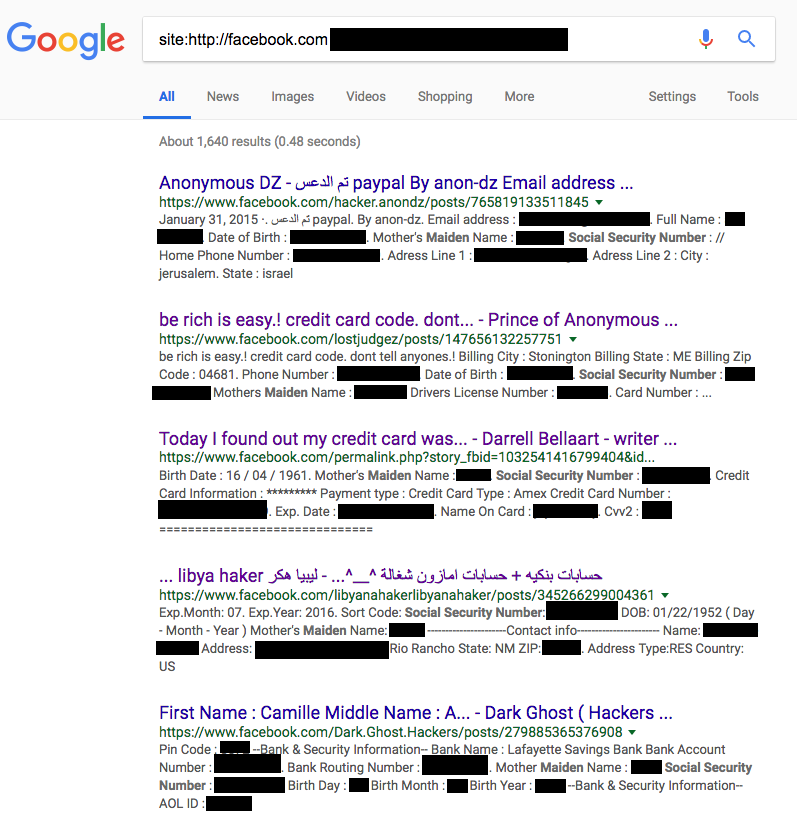
Cybercriminals have posted sensitive personal information, such as credit card and social security numbers, of dozens of people on Facebook and have advertised entire databases of private information on the social platform. Some of these posts have been left up on Facebook for years, and the internet giant only acted on these posts after we told it about them.

As of Monday, there were several public posts on Facebook that advertised dozens of people’s Social Security Numbers and other personal data. These weren’t very hard to find. It was as easy as a simple Google search.

A screenshot of the redacted Google search results for social security numbers on Facebook.
Most of the posts appeared to be ads made by criminals who were trying to sell personal information. Some of the ads are several years old, and were posted as “public” on Facebook, meaning anyone can see them, not just the author’s friends.

Independent security researcher Justin Shafer alerted Motherboard to these posts Monday.

“I am surprised how old some of the posts are and that it seems Facebook doesn’t have a system in place for removing these posts on their own,” Shafer told Motherboard in an online chat. “Posts that would have words flagged automatically by their system.”

«
Comment from editor-in-chief Jason Koebler:

»

“Sick of a) having journalists have to moderate social media platforms for the giant companies that run them b) getting no response to request for comment on things that are illegal/break TOS but having the companies delete them before we run an article.”

«

link to this extract


Facebook and Google: skip the F8 and I/O infomercials; fix your problems • Buzzfeed

John Paczkowski:

»

If the platforms are serious about healing themselves, you should be able to see it in a show that’s more about fixing what’s broken rather than building something new. And if they aren’t serious? Expect the same shiny, happy-fun wow-fests. If the onstage apology is shorter than the post-show afterparty, it will make clear that the contrition tours of 2017 and 2018 have been little more than lip service, and we can expect more of the same old fuckups and same old promises to do better.

In 2018 spending millions on rah-rah promotional spectacles for platforms like Facebook’s and Google’s is particularly unseemly when set against the conga line of travesties they’ve enabled.

What might 2019 look like if instead of dumping a manure spreader of money to rent out Mountain View, California’s cavernous Shoreline Amphitheatre and trick it out with 1,000-foot earth harps and other Burningmanalia, Google directed those resources towards developing moderation solutions that might have prevented the propagation of exploitative videos aimed at and starring children on YouTube — or prohibited mass shooting conspiracy theories from showing up in Google’s “top stories” search results? Or if instead of hiring Chvrches or Chance the Rapper to serenade developers, Facebook redirected those resources to repairing a massive, global platform that clearly incentivizes users to spread fake news faster than credible, verified reports?

This year instead of promising to “continue to look at ways to improve,” as Google did when it and YouTube spread fake news and propaganda about a Texas mass shooting suspect (just one month after the latter announced reforms intended to prevent such things from happening), just improve.

«

link to this extract


YouTube hosted graphic images of bestiality for months • Buzzfeed

Charlie Warzel:

»

The “Fantastic Girl and Her Horse in My Village” video itself does not feature any bestiality. It’s largely footage of a woman bathing and brushing a horse. But clicking on it triggers YouTube’s recommendation engine which promptly serves up dozens more animal videos — many with thumbnails featuring graphic bestiality. One such thumbnailed video, published by a channel called “ALL ANIMAL,” had amassed 2.3 million views at the time of this writing.

Most of these bestiality-thumbed videos — which appear to originate in South Asian countries like Cambodia — feature women in sundresses playing with or caring for animals like horses and dogs; Some feature up skirt angles and groin shots of women as they bathe or brush horses and dogs. And there are many. Without needing to search, YouTube’s recommendation algorithm pointed BuzzFeed News to dozens of accounts, each with multiple videos featuring explicit bestiality thumbnails.

«

OK, YouTube, you broke it with your algorithm. Now fix it.
link to this extract


Addressing recent claims of “manipulated” blog posts in the Wayback Machine • Internet Archive Blogs

Chris Butler:

»

This past December, [Joy Ann] Reid’s lawyers contacted us, asking to have archives of the blog (blog.reidreport.com) taken down, stating that “fraudulent” posts were “inserted into legitimate content” in our archives of the blog. Her attorneys stated that they didn’t know if the alleged insertion happened on the original site or with our archives (the point at which the manipulation is to have occurred, according to Reid, is still unclear to us).

When we reviewed the archives, we found nothing to indicate tampering or hacking of the Wayback Machine versions. At least some of the examples of allegedly fraudulent posts provided to us had been archived at different dates and by different entities.

We let Reid’s lawyers know that the information provided was not sufficient for us to verify claims of manipulation. Consequently, and due to Reid’s being a journalist (a very high-profile one, at that) and the journalistic nature of the blog archives, we declined to take down the archives. We were clear that we would welcome and consider any further information that they could provide us to support their claims.

At some point after our correspondence, a robots.txt exclusion request specific to the Wayback Machine was placed on the live blog.

«

The idea that you could have the Internet Archive itself is a bit fanciful. I could just about believe that someone malicious could have hacked an old blog and inserted content (some old blogs were Swiss cheese, security-wise); but then it should be feasible to follow when pages were added and deduce if they were contemporary or post-facto. (Disclaimer: I follow Reid on Twitter, and don’t really care what her views on homosexuality used to be.)
link to this extract


Alphabet boosts spending as revenues soar • FT

Richard Waters:

»

Even after deducting so-called TAC — traffic acquisition costs, the fees paid to other companies to carry its search service and adverts — Wall Street expects the company to add $17bn in net revenue this year. That is roughly as much as the entire US newspaper industry earned last year from print advertising.

The company’s net revenues jumped 24% in the first quarter, to $24.9bn, with growth driven by advertising from mobile search and YouTube. That was higher than the 21% most analysts expected.

Revenue from the company’s non-advertising businesses, driven by its cloud computing division, climbed 36%, and now account for 17% of the total.

The latest burst of spending included $7.3bn in capital spending in the first quarter, more than half the $13.2bn the company spent in the whole of last year. Even without the $2.4bn to buy a new office building in New York, that would still have been nearly double what it spent in the first quarter of last year.

Ruth Porat, chief financial officer, said half the capital spending was needed to expand the company’s data centres and network to handle heavier use of its services in future. “The investments we’re making there really support the compute capacity we see in our growth outlook,” she said.

«

Google seems to have discovered the ability to just keep growing its revenues. Hard not to think that it’s YouTube which is really driving the growth.
link to this extract


The Presidency: the hardest job in the world • The Atlantic

John Dickerson interviewed multiple people who have worked in the White House to wonder about how the job has arguably become too big:

»

Eisenhower sorted priorities through a four-quadrant decision matrix that is still a staple of time-management books. It was based on his maxim “What is important is seldom urgent, and what is urgent is seldom important.”

Sage advice, but antique for any president trying to manage the office after the attacks of September 11, 2001. The Cold War presidents monitored slow-moving events that had flashes of urgency. Now the stakes are just as high, but the threats are more numerous and fast-moving…

…Presidents now start their day with the President’s Daily Brief, an intelligence assessment of the threats facing America. How the PDB is delivered changes with each president. Early in his term, Trump reportedly requested a verbal digest of the brief. During the Obama years, the PDB was wrapped in a stiff leather binder and looked like the guest book at a country club. Inside was a grim iPad containing all the possible ways the president could fail at his most essential role. Satellite photos tracked terrorists’ movements, and pictures of failed laptop bombs demonstrated the pace of awful innovation. At the end of the briefing with intelligence officials, a president might be asked whether a specific person should be killed, or whether some mother’s son should be sent on a secret raid from which he might not return.

John F. Kennedy requested that his intelligence briefing be small enough to fit in his pocket. Since 2005, the PDB has been produced by an entirely new entity in the executive branch, the Office of the Director of National Intelligence, which itself includes several intelligence agencies founded since Kennedy’s era, among them the vast Department of Homeland Security.

Monitoring even small threats can take up an entire day. “My definition of a good day was when more than half of the things on my schedule were things I planned versus things that were forced on me,” says Jeh Johnson, who served Obama as homeland-security secretary. An acute example: In June 2016, Johnson planned to travel to China to discuss the long-term threat from cyberattacks. Hours before takeoff, he was forced to cancel the trip so he could monitor developments after the shooting at the Pulse nightclub in Orlando.

“The urgent should not crowd out the important,” says Lisa Monaco, Obama’s chief counterterrorism adviser. “But sometimes you don’t get to the important. Your day is spent just trying to prioritize the urgent. Which urgent first?”

«

link to this extract


Errata, corrigenda and ai no corrida: none notified

Start Up: China’s selfie madness, better notifications, Russia blocks Telegram (and Google), Facebook’s later smart speaker, and more


Apple’s purchase of music recognition service Shazam has been delayed over data concerns. Photo by Wind.com.my on Flickr.

A selection of 9 links for you. None owned by Sean Hannity. I’m @charlesarthur on Twitter. Observations and links welcome.

China’s selfie obsession • The New Yorker

Jiayang Fan visits Chinese phone maker Meitu:

»

The building’s interior evoked a giant Hello Kitty store. The walls were painted Jordan-almond shades—the color scheme changes every few months—and there were stuffed animals and bobblehead dolls on the desks. Conference rooms were named for aspirational spring-break locations: Hawaii, Bora-Bora, Fiji. (The average age of the employees is twenty-seven.) Stylishly clad men and women pecked at computers that were covered in garish stickers, like high-school lockers.

Chen Xiaojie, a twenty-seven-year-old with caramel-colored contact lenses and waist-length hair, gave me a demonstration of Meitu’s most popular apps, on her Meitu M8 phone. Holding the device at arm’s length, she tucked in her chin (“so the face comes out smaller”), snapped a photo of us, and handed me the result. My complexion looked smoother, my eyes bigger and rounder. I asked if I had been “P”-ed—the Chinese shorthand for Photoshopping. Chen said that the phone had automatically “upgraded” me. “Only when you enjoy taking selfies will you have the confidence to take more,” she explained. “And only when you look pretty will you enjoy taking selfies and ‘P’-ing the photo. It’s all very logical, you see.”

Next, using the BeautyPlus app, she showed me how to select a “beauty level” from 1 to 7—a progressive scale of paleness and freckle deletion. Then we could smooth out, tone, slim, and contour our faces, whiten our teeth, resize our irises, cinch our waists, and add a few inches in height. We could apply a filter—“celestial,” “voodoo,” “edge,” and “vibes” are some of the options. A recently added filter called “personality” attempts to counteract a foreseeable consequence of the technology: the more that people doctor their selfies, the more everyone ends up looking the same. Like everything else in the app, the personalities available—“boho,” “mystique,” and so on—are preset…

…I asked a number of Chinese friends how long it takes them to edit a photo before posting it on social media. The answer for most of them was about forty minutes per face; a selfie taken with a friend would take well over an hour. The work requires several apps, each of which has particular strengths. No one I asked would consider posting or sending a photo that hadn’t been improved.

When I met Meitu’s chairman, Cai Wensheng, later that day, he confirmed that editing your pictures had become a matter of ordinary courtesy. “In the same way that you would point out to your friend if her shirt was misbuttoned, or if her pants were unzipped, you should have the decency to Meitu her face if you are going to share it with your friends,” he said. He took enormous pride in the fact that “Meitu” had entered the Chinese lexicon as a verb.

«

link to this extract


YouTube under fire for censoring video exposing conspiracy theorist Alex Jones • The Guardian

Sam Levin:

»

YouTube’s algorithm has long promoted videos attacking gun violence victims, allowing the rightwing conspiracy theorist Alex Jones to build a massive audience. But when a not-for-profit recently exposed Jones’ most offensive viral content in a compilation on YouTube, the site was much less supportive – instead deleting the footage from the platform, accusing it of “harassment and bullying”.

Media Matters, a leftwing watchdog, last week posted a series of clips of Jones spreading falsehoods about the 2012 Sandy Hook elementary school massacre, a newsworthy video of evidence after the victims’ families filed a defamation lawsuit against the Infowars host. But YouTube, for reasons it has yet to explain, removed the video three days after it was published, a move that once again benefitted Jones, who is now arguing that the defamation suit has defamed him.

The video was censored for several days, but reinstated Monday after the Guardian’s inquiry and backlash on social media. Still, the case offered yet another stark illustration of the way tech companies and social media algorithms have failed to distinguish between fake news and legitimate content – while continuing to provide a powerful platform to the most repugnant views and dangerous propaganda.

“This just shows the capriciousness and arbitrariness by which they are enforcing these standards,” said Angelo Carusone, the president of Media Matters.

«

Perhaps it was initially taken down because it was targeted by flying ants on behalf of Jones, reporting it as spam/evil/abusive?
link to this extract


Apple’s deal for Shazam is delayed in Europe over data concerns • The New York Times

Adam Satariano:

»

Apple said in December that it would buy Shazam, the song-recognition service that has been a mainstay on people’s smartphones for years with its ability to name a track after listening for a few seconds. The app has also become a valuable source of data, giving music industry executives insight into what songs and artists are performing well and in what regions.

European authorities are raising alarms because Shazam has important data about Apple’s rivals, potentially allowing the company to “directly target its competitors’ customers and encourage them to switch” to Apple’s own streaming service, the European Commission, the European Union’s executive arm, said in a statement.

“Competing music streaming services could be put at a competitive disadvantage,” the commission said. It added that it wanted to prevent Apple from blocking Shazam from referring users to other music services.

The European Commission has until Sept. 4 to make a final decision on whether to block or approve the deal, or seek concessions from Apple.

«

A friend said to me that we won’t know what Apple’s planning for Shazam until we’ve have a WWDC following the completed acquisition – that’s when you’d see the fruits of its planning. If the decision is delayed past June, that’s probably going to mean quite a long delay on real integration.

But the question that the EC is asking is definitely the correct one to ask.
link to this extract


Designing better notifications • Martiancraft

Ben Brooks:

»

We need to start being proactive in designing for the way people live. We should make use of Apple‘s tools for things like threading identifiers to consolidate updates into a single notification. Calendar access lets us determine when people are busy and should not be distracted; we can even determine if a person has enough time between meetings that they should see notifications, or if the app should wait. Notifications were never intended to be the all important and distracting force they’ve become. With a bit of discipline and care, we can craft notifications people will actually appreciate.

We could set notifications to auto-mute during meals, not just sleep, allowing us to focus on the time we spend with others. Notifications can even use geofencing to determine if we actually need notifications from a particular app. Home alarm push notifications are redundant when I’m at home. Nor do I need work-related notifications when I am not at work. In other words, notifications should only come in when they are relevant, important, and when I will want to deal with them. If smartphones are what chains people to their work, then as the creators of apps, we can help to unchain them by restricting work notifications not only to “work hours” but to work locations as well.

«

link to this extract


How merchants use Facebook to flood Amazon with fake reviews • The Washington Post

Elizabeth Dwoskin and Craig Timberg:

»

an economy of paid reviews has flourished. Merchants pledge to drop reimbursements into a reviewer’s PayPal account within minutes of posting comments for items such as kitchen knives, rain ponchos or shower caddies, often sweetening the deal with a $5 commission or a $10 Amazon gift card. Facebook this month deleted more than a dozen of the groups where sellers and buyers matched after being contacted by The Post. Amazon kicked a five-star seller off its site after an inquiry from The Post.

“These days it is very hard to sell anything on Amazon if you play fairly,” said Tommy Noonan, who operates ReviewMeta, a website that helps consumers spot suspicious Amazon reviews. “If you want your product to be competitive, you have to somehow manufacture reviews.”

Sellers say the flood of inauthentic reviews makes it harder for them to compete legitimately and can crush profits. “It’s devastating, devastating,” said Mark Caldeira, owner of the baby-products company Mayapple Baby.

«

link to this extract


Google confirms some of its own services are now getting blocked in Russia over the Telegram ban • TechCrunch

Ingrid Lunden:

»

currently, nearly 18 million IP addresses are knocked out from being accessed in Russia, all in the name of blocking Telegram.

And in the latest development, Google has now confirmed to us that its own services are now also being impacted. From what we understand, Google Search, Gmail and push notifications for Android apps are among the products being affected.

“We are aware of reports that some users in Russia are unable to access some Google products, and are investigating those reports,” said a Google spokesperson in an emailed response. We’d been trying to contact Google all week about the Telegram blockade, and this is the first time that the company has both replied and acknowledged something related to it.

(Amazon has acknowledged our messages but has yet to reply to them.)

Google’s comments come on the heels of RKN itself also announcing today that it had expanded its IP blocks to Google’s services. At its peak, RKN had blocked nearly 19 million IP addresses, with dozens of third-party services that also use Google Cloud and Amazon’s AWS, such as Twitch and Spotify, also getting caught in the crossfire.

Russia is among the countries in the world that has enforced a kind of digital firewall, blocking periodically or permanently certain online content. Some turn to VPNs to access that content anyway, but it turns out that Telegram hasn’t needed to rely on that workaround to get used.

“RKN is embarrassingly bad at blocking Telegram, so most people keep using it without any intermediaries,” said Ilya Andreev, COO and co-founder of Vee Security, which has been providing a proxy service to bypass the ban.

«

link to this extract


Where countries are tinderboxes and Facebook is a match • The New York Times

Amanda Taub and Max Fisher:

»

Time and again, communal hatreds overrun the newsfeed — the primary portal for news and information for many users — unchecked as local media are displaced by Facebook and governments find themselves with little leverage over the company. Some users, energized by hate speech and misinformation, plot real-world attacks.

A reconstruction of Sri Lanka’s descent into violence, based on interviews with officials, victims and ordinary users caught up in online anger, found that Facebook’s newsfeed played a central role in nearly every step from rumor to killing. Facebook officials, they say, ignored repeated warnings of the potential for violence, resisting pressure to hire moderators or establish emergency points of contact.

Facebook declined to respond in detail to questions about its role in Sri Lanka’s violence, but a spokeswoman said in an email that “we remove such content as soon as we’re made aware of it.” She said the company was “building up teams that deal with reported content” and investing in “technology and local language expertise to help us swiftly remove hate content.”

Sri Lankans say they see little evidence of change. And in other countries, as Facebook expands, analysts and activists worry they, too, may see violence.

«

The question is whether it’s Facebooks’ design itself, or just the fact of easy communication, that enables this sort of explosive behaviour.
link to this extract


Facebook delays smart speaker launch to October • Digitimes

Aron Lee and Joseph Tsai:

»

Facebook’s smart speakers reportedly will begin mass production in June as originally scheduled, but the order volumes for 2018 have been cut by around 20% from the original plan, while the product launch is estimated to be delayed to October, according to sources from the upstream supply chain. The order volumes for 2019 remain unchanged.

Facebook originally planned to unveil two smart speakers in May, but the plan has been postponed because the company founder Mark Zuckerberg had been summoned to the US congress to testify on the company’s privacy issues.

Facebook has prepared two smart speakers codenamed Fiona and Aloha, both equipped with a 15in in-cell panel supplied from LG Display. Pegatron is the sole manufacturer of the two devices.

«

Speakers with 15in screens.. so.. big tablets? Then again, given that FB content is primarily visual, the odd thing is the “speaker” part. Unless it’s for video calls (Messenger) and playing music/video. The video being ads, of course.
link to this extract


Fake it till you make it: meet the wolves of Instagram • The Guardian

A great long read from Symeon Brown about how scammy financial products are sold to unsuspecting noobs on social media:

»

This is how it works. [Elijah] Oyefeso posts images of luxury goods he claims to have bought with his winnings. He gives the pictures hashtags such as #richkidsofinstagram and mass-follows young people online. One teenager told me he and his friends were drawn in by the sight of a young black man who grew up on a council estate similar to theirs, driving a Rolls-Royce. As soon as anyone follows Oyefeso back, he slides into their DMs with a message: “I’m offering a great opportunity to earn £100-400 per week from trading, no experience required, all done from home and only requires 15-30 min per day.” If you’re young, poor and want to defy the odds against you, the next question is: where do I sign up?

What wolves like Oyefeso fail to declare is that each of the trading platforms you sign up to (with a minimum deposit of £250) pays him around £40-80 – and that recruitment, rather than betting on these predatory financial products, is the way he makes his risk-free money (Oyefeso maintains he’s making money from trading). Young people join the platforms, make a few trades and can lose anything between £250 and several thousand pounds, then realise they can make it back by repeating the trick: becoming a paid marketing affiliate masquerading as a successful trader. It looks like a vintage pyramid scheme, rebooted for the social media era using a model of e-marketing that has boomed over the last 20 years.

In 2016, one of the wolves shared with me the presentation he was pitched by the leading software provider of binary options, SpotOption. The PowerPoint presentation revealed a system that is rigged against the consumer: the average user would lose 80% of everything he or she put in to “trade”. Later that year, the core of this presentation was published by the Bureau of Investigative Journalism, and SpotOption was banned in its home country, Israel. SpotOption says that since the changes in Israeli law, it has ceased all activities related to binary options, and terminated agreements with clients found to be acting unethically.

«

link to this extract


You can sign up to receive each day’s Start Up post by email. You’ll need to click a confirmation link, so no spam.

Errata, corrigenda and ai no corrida: none notified

Start Up: Hunt blasts social media companies, EventBrite muscles in, Google gets Chat-ty, climate’s hockey stick 20 years on, and more


The e-SIM would do away with physical ones – but US carriers want to lock it just like physical ones. Photo by tua ulamac on Flickr.

You can sign up to receive each day’s Start Up post by email. You’ll need to click a confirmation link, so no spam.

A selection of 12 links for you. Very recently declassified. I’m @charlesarthur on Twitter. Observations and links welcome.

Safeguards for social media ‘inadequate’, says Jeremy Hunt • The Guardian

Toby Helm:

»

In an angrily worded letter sent to executives at Apple, Microsoft, Facebook, Snapchat, Twitter and Google, [UK secretary of state for health] Hunt says their failure to come forward with safeguards to control access is both “morally wrong” and “unfair on parents”.

Hunt says their inadequate responses have left him with no option but to consider legislation on internet safety. He has also asked the chief medical officer, Dame Sally Davies, to report on the impact of technology on young people’s mental health, and to recommend healthy limits for screen time.

In the letter, Hunt tells the companies that their work on devising ways to verify the age of children accessing social media platforms, on screen-time limits, and on measures to end cyberbullying has fallen short.

“In particular, progress on age verification is not good enough … I am concerned that your companies seem content with a situation where thousands of users breach your own terms and conditions on the minimum user age.

“I fear that you are collectively turning a blind eye to a whole generation of children being exposed to the harmful emotional side-effects of social media prematurely; this is both morally wrong and deeply unfair on parents, who are faced with the invidious choice of allowing children to use platforms they are too young to access, or excluding them from social interaction that often the majority of their peers are engaging in. It is unacceptable and irresponsible for you to put parents in this position.”

«

Age verification is, as Hunt points out, appallingly badly carried out. YouTube’s failure to even try to distinguish between what’s appropriate for a 13-year-old and a 17-year-old has irked me for years. There is a feeling that some sort of reckoning is coming around.
link to this extract


Chat: Google’s big shot at killing Apple’s iMessage • The Guardian

Samuel Gibbs:

»

Google has unveiled a new messaging system, Chat, an attempt to replace SMS, unify Android’s various messaging services and beat Apple’s iMessage and Facebook’s WhatsApp with the help of mobile phone operators.

Unlike traditional texting, or SMS, most modern messaging services – such as Signal, WhatsApp, Facebook Messenger or Apple’s iMessage – are so-called over-the-top (OTT) services, which circumvent the mobile phone operator by sending messages over the internet.

Google’s Chat is different. Users will not need to download another chat app or set up a new account. Instead of using OTT, it is based on rich communication services (RCS), a successor to SMS (short message standard), which has been used by people all over the world since 1992 and is still the fallback for most.

RCS has been in the works since 2007, steered by the GSMA mobile operator trade body. Various mobile phone operators have offered their own versions, typically called “advanced messaging” or similar, but they haven’t usually worked with the outside world.

With Chat, Google is unifying all the disparate versions of RCS under one interoperable standard that will work across networks, smartphones and operating systems. In doing so it hopes to take the surefire nature of SMS – anyone can send anyone else with a phone a message without them requiring a specific account or app – and bring it up-to-date with all the features modern chat demands.

«

An obvious thought: if Google even looks as though it is positioning this as a way to “kill iMessage”, Apple will never support it, and if Apple doesn’t support it then operators are going to wonder why they’re letting Google screw up their golden goose, and they won’t support it after all. Google can preload it on Android phones, but that’s not “killing iMessage”; it’s “providing an alternative to iMessage”, which WhatsApp and latterly Facebook Messenger have done for years without “killing” iMessage.

Google, seems to be rewriting the Star Trek episode of The Trouble With Tribbles, but with chat apps taking the part of the tribbles.
link to this extract


U.S. investigating AT&T and Verizon over wireless collusion claim • The New York Times

Ceclia Kang:

»

The Justice Department has opened an antitrust investigation into potential coordination by AT&T, Verizon and a telecommunications standards organization to hinder consumers from easily switching wireless carriers, according to six people with knowledge of the inquiry.

In February, the Justice Department issued demands to AT&T, Verizon and the G.S.M.A., a mobile industry standards-setting group, for information on potential collusion to thwart a technology known as eSIM, said two of the people, who spoke on the condition of anonymity because the details are confidential.

The technology lets people remotely switch wireless providers without having to insert a new SIM card into a device. AT&T and Verizon face accusations that they colluded with the G.S.M.A. to try to establish standards that would allow them to lock a device to their network even if it had eSIM technology.

«

US carriers hate the idea of people having the ability to choose between them and introduce competition into the whole thing. It might bring down prices or let people choose based on quality, and then where would you be in the land of free enterprise and capitalism?

Meanwhile the GSMA has suspended work on eSIMs.
link to this extract


Eventbrite Merchant Agreement • Eventbrite Help Center

This has blown up over the weekend on Twitter:

»

7. Permissions You Grant us to Film and Record Your Events.
You grant permission to Eventbrite and its agents to enter onto and remain on the premises (including real property, fixtures, equipment, or other personal property) where your event is hosted (and any other premises you and Eventbrite mutually approve) (collectively, the “Premises”) with personnel and equipment for the purpose of photographing and recording the Premises, both internally and externally in connection with the production of digital content on the date of your event(s) and any other dates reasonably requested by Eventbrite (for example, during setup and breakdown for the event) (the “Shoot”). You, on behalf of yourself, your employees, independent contractors, invitees, licensees, performers, exhibitors, attendees, and all other individuals present at the Shoot (collectively, the “Subjects”), grant permission to Eventbrite and its agents, successors and assigns to record and use the image, likeness, appearance, movements, performances, and statements of the Subjects in any live or recorded audio, video, or photographic display or other transmission, exhibition, publication or reproduction made of, or at, the event (regardless of whether before, during or after the event) for any purpose (including, without limitation, the advertising, promotion and other exploitation of Eventbrite’s brand, Trademarks, Services, or events hosted on the Sites), in any manner, in any medium or context now known or hereafter developed, without further authorization from, or compensation to, the Subjects or anyone acting on a Subject’s behalf.

«

Gotta love legal jargon. But what is Eventbrite up to with this?
link to this extract


ICO fines Kensington & Chelsea £120,000 • UK Authority

Mark Say:

»

At the end of June the council received three requests for statistical information used in a report in 2015; specifically the addresses of empty properties in the borough.

As the council no longer held the information, different sources were combined to produce an Excel spreadsheet that included named owners against the addresses of empty properties. This was not originally intended to be disclosed, but an oversight led to it being included as hidden data on the spreadsheet made available to the FoI applicants: it could be revealed with a double click.

This led to the publication on newspaper websites of the number of empty properties with details of three high profile owners. In addition, the spreadsheet was published on one journalist’s online blog for an hour.

«

Excel considered harmful.
link to this extract


Rising sea levels reshape Miami’s housing market • WSJ

Laura Kusisto and Arian Campo-Flores:

»

Jesse Keenan, a real-estate professor at the Harvard University Graduate School of Design and author of the paper, said he was initially surprised to see ordinary homeowners already seeming to factor future sea-level rise into their calculations.

Low-elevation properties are becoming Miami’s laggards, he said. “To see them really separate is pretty shocking, because you can infer that this is a pricing signal from climate change.”

Miami is a testing ground for the vulnerability of housing markets in other coastal cities, such as New York and Boston, because its elevation is as little as one foot above sea level and its porous limestone makes it especially vulnerable to rising sea levels.

Another new paper, from researchers at the University of Colorado at Boulder and Pennsylvania State University, shows that the trend in Miami is playing out across the country, with homes that are vulnerable to rising sea levels now selling at a 7% discount compared with similar but less-exposed properties. The paper, which is under peer review, shows that the size of the coastal discount has grown over time.

Ryan Lewis, an assistant professor at the University of Colorado’s Leeds School of Business, said he and his co-authors noticed the strongest discounting among investors and second-home owners, who have the most choices about where to buy. Increasingly, he said, ordinary home buyers in places such as Miami, where there is strong awareness of the risks, also are starting to discount.

«

link to this extract


Earth Day and the Hockey Stick: a singular message • Scientific American Blog Network

Michael Mann published the original “hockey stick” graph with a pair of colleagues in Nature in 1998:

»

Nothing in my training as a scientist could have prepared me for the very public battles I would soon face. The hockey stick told a simple story: There is something unprecedented about the warming we are experiencing today and, by implication, it has something to do with us and our profligate burning of fossil fuels. The story was a threat to companies that profited from fossil fuels, and government officials doing their bidding, all of whom opposed efforts to reduce greenhouse gas emissions. As the vulnerable junior first author of the article (I was a postdoctoral researcher), I found myself in the crosshairs of industry-funded attack dogs looking to discredit the iconic symbol of the human impact on our climate…by discrediting me personally.


The hockey stick temperature reconstruction from 1999 (blue) along with the data record (red) and the 2013 “PAGES2k” temperature reconstruction (green). ​ ​​Credit: Klaus Bittermann via Wikimedia Commons ​(CC BY-SA 4.0)
 
In my 2013 book, The Hockey Stick and the Climate Wars: Dispatches from the Front Lines, I gave a name to this modus operandi of science critics: the Serengeti strategy. The term describes how industry special interests and their facilitators single out individual researchers to attack, in much the same way lions of the Serengeti single out an individual zebra from the herd. In numbers there is strength; individuals are far more vulnerable.

«

The “Serengeti strategy” is pretty widely used for all sorts of topics.
link to this extract


SmugMug snaps up Flickr photo service from Verizon’s Oath • USA Today

Jessica Guynn:

»

Flickr has been snapped up by Silicon Valley photo-sharing and storage company SmugMug, USA TODAY has learned.

SmugMug CEO Don MacAskill told USA TODAY he’s committed to breathing new life into the faded social networking pioneer, which hosted photos and lively interactions long before it became trendy. 

SmugMug, an independent, family-run company, will maintain Flickr as a standalone community of amateur and professional photographers and give the long neglected service the focus and resources it deserves, MacAskill said in an exclusive interview. 

He declined to disclose the terms of the deal, which closed this week.

“Flickr is an amazing community, full of some of the world’s most passionate photographers. It’s a fantastic product and a beloved brand, supplying tens of billions of photos to hundreds of millions of people around the world,” MacAskill said. “Flickr has survived through thick-and-thin and is core to the entire fabric of the Internet.”

The surprise deal ends months of uncertainty for Flickr, whose fate had been up in the air since last year when Yahoo was bought by Verizon for $4.5 billion and joined with AOL in Verizon’s Oath subsidiary.

«

The FAQ over at SmugMug includes this gem:

»

What will happen to my Flickr account? What will happen to my Smugmug account?

Absolutely nothing. Flickr and SmugMug will continue to operate separately, just as both have been. Your SmugMug and Flickr accounts will remain separate and independent for the foreseeable future.

Both Flickr and SmugMug users will continue to log in with their current credentials and you will have the same experience you are used to. If things do change in the future for Flickr, we’ll be as transparent as possible about the process and give you as much notice as we can about the issues that will matter to you.

«

Keep a watch on this one. I use Flickr Creative Commons licence photos on these posts; it would be a tragedy (for me, but more for creators) if SmugMug decides that Flickr just isn’t washing its face sufficiently.
link to this extract


This awesome illusion turns squares into circles in the mirror • Science Alert

Hi there, welcome to another dimension, where up is down, right is wrong, and squares are circles. Seriously, bring us all your squares and we’ll turn them into circles for you. Just place them in front of this mirror interdimensional portal here, and voilà! You’re welcome.

Meet one of the finalists of the aptly named Best Illusion of the Year Contest 2016 – the ‘ambiguous cylinder illusion’, performed by engineer Kokichi Sugihara from Meiji University in Japan. 

So what’s actually going on here? Like any good optical illusion, it’s a play on perspective – our eyes see something that our brains have a difficult time interpreting and correcting.

Watch it on YouTube, or in the embed below. Guarantee you won’t be able to work out how it works. (It’s a real, single, solid object – no sleight of hand involved.)

https://www.youtube-nocookie.com/embed/oWfFco7K9v8?rel=0

(“Privacy-enhanced” mode turned on for the embed.)
link to this extract


iPhony (August 2002) • Daring Fireball

John Gruber, wayyyyy back in August 2002:

»

John Markoff’s New York Times article speculating about a vaporware Apple-branded mobile “iPhone” is getting a lot of traction. Go ahead and read it, but remember that it’s all bullshit speculation at this point.

Other than Jobs himself, who confirms nothing about an Apple iPhone, Mr. Markoff’s only sources are “industry analysts”. Industry analysts know nothing about Apple, and given their record in the tech industry in the last few years, it’s a wonder anyone quotes them at all. Even the Daring Fireball could have offered better insight than these bozos…

…The article seems to insinuate that Apple could make Sherlock run on a cell phone; that’s impossible, unless the cell phone were actually running Mac OS X, which definitely is impossible. If Apple were to create an iPhone, and said iPhone were to have a search application called Sherlock, said Sherlock would by definition need to be completely rewritten.

«

This popped into my feed some time last week; the perspective is fascinating. The NYT article suggest that Apple would try to add phone capabilities to a computer – which is sort of how it worked out, but this was all before Apple had even begun working on a phone. At this point it was considering a tablet, because at a dinner with Jobs, a boastful Microsoftie (not, I think, Gates) had made so much of what the new Windows tablets could do that Jobs went back to the office and determined to crush it.

Then in 2005 the tablet was put off in favour of the phone.
link to this extract


Someone’s building a Twitter bot army in Thailand • Khao Sod

Todd Ruiz on the creation of 40,000 peculiar Twitter accounts:

»

Where it gets weird is that all are new accounts with no followers and, in almost all cases, no tweets. Yet each follows a few dozen accounts representing a who’s who list of online influencers including journalists, media companies, scholars and celebs. Some user names are written in Thai script, but all of those have machine-generated strings such as @hjZuotIwLtiSojc and @hIrQMl1B71tIYKF as account names…

…Thai internet transparency activist Arthit Suriyawongkul said that if the bots are specifically targeting media and influential figures, it could be something to watch out for. Because they haven’t done anything yet, he said it’s difficult to predict their intended purpose.

“Because they still haven’t shown activity, it’s not easy to tell what they’re up to,” he said. “I can’t think of any current (political) context in Thailand right now that might be fueling these bots.”

He believes that, when it comes to state surveillance, there are easier methods available. Also, bots are “generally harmless” if they remain inactive and unfollowed.

Pichaya said people should be wary of another possible function: recording online activity.

“If we post something and delete it later, we may think it is gone, but these bots will collect it. It’s not really deleted,” he said. “If you comment on something offensively, and let’s say it could be relevant to a libel case, that might cause you problems, because it will be kept.”

«

(Thanks JC for the link.)
link to this extract


National Enquirer parent, staunch Trump backer, faces mounting debt, shrinking sales • WSJ

Lukas Alpert:

»

The National Enquirer’s parent company, American Media Inc., has said the tabloid’s plentiful and positive coverage of President Donald Trump has been good for business.

If so, it hasn’t been enough to boost the company’s overall performance.

Nonpublic AMI financial reports reviewed by The Wall Street Journal reveal a company with ballooning debt, falling revenue and shrinking newsstand sales at its print magazines, including the flagship Enquirer as well as OK! and Star.

Revenue for the fiscal year that ended in March 2017 was $203.8m, down 9% from the prior year and 29% from 2014, when the company completed a substantial restructuring. Its outstanding debt load stood at $920m at the end of December. Acquisitions of Us Weekly and Men’s Journal in 2017 helped increase revenue in the first three quarters of fiscal 2018 to $195.5m, from $154m in the year-earlier period, but they also added more than $100m in debt.

Aggressive cost-cutting has kept AMI hovering around profitability on an operating basis, but the company has routinely booked quarterly and annual losses in the tens of millions of dollars due to amortization costs related to its debt, the financial reports show.

«

This graphic shows the average sold per week by the National Enquirer when it has/had Trump/Clinton on the cover. (There’s more detail, including specific covers – “Hillary’s Hitman Tells All!” is the highest peak, and “Hillary Gains 103 Lbs!” the second biggest-selling anti-Clinton cover. The biggest-selling Trump cover (over on the left) is “The Donald Trump Nobody Knows!”

But.. $920m of debt. That’s quite some gearing.
link to this extract


Errata, corrigenda and ai no corrida: none notified

Start Up: the ICO scam that wasn’t, millennial streamers, machine learning and chaos, Intel shutters smart glasses, and more


Mycelia: they could make an impressive leather replacement for vegans. Photo by Amadej Trnkoczy on Flickr.

You can sign up to receive each day’s Start Up post by email. You’ll need to click a confirmation link, so no spam.

A selection of 11 links for you. Use them wisely. I’m @charlesarthur on Twitter. Observations and links welcome.

Millennial streamers and music on smart speakers • Global Web Index

Olivia Valentine:

»

Millennials are the most passionate generation when it comes to music streaming, with 68% engaging. But just as the music-streaming business is experiencing continued user growth, the interest in smart voice-controlled devices (e.g. Amazon Echo, Google Home) is trending quickly upwards, too, pointing at a potential to shake up the music streaming landscape. 

Two-thirds of Millennial Music Streamers say they currently use or are planning to purchase one of these smart devices, putting this group 9 percentage points ahead of the Millennial average for this figure across the globe.

«

So quite a lot of room for Apple to expand into, if it gets it right. This is in the early stages.

(The definition of “music streamer” is someone who says they stream music daily.)
link to this extract


Palantir knows everything about you • Bloomberg Businessweek

Peter Waldman, Lizette Chapman, and Jordan Robertson offer a huge rundown on Peter Thiel’s data-gathering company, which does work mostly for law enforcement and finance (it seems); this little example from Los Angeles where the LAPD is using its “Gotham” system points to the problems:

»

In 2016, [22-year-old Manuel] Rios was sitting in a parked car with an Eastside 18 [gang] friend when a police car pulled up. His buddy ran, pursued by the cops, but Rios stayed put. “Why should I run? I’m not a gang member,” he says over steak and eggs at the IHOP near his home. The police returned and handcuffed him. One of them took his picture with a cellphone. “Welcome to the gang database!” the officer said.

Since then he’s been stopped more than a dozen times, he says, and told that if he doesn’t like it he should move. He has nowhere to go. His girlfriend just had a baby girl, and he wants to be around for them. “They say you’re in the system, you can’t lie to us,” he says. “I tell them, ‘How can I be in the hood if I haven’t got jumped in? Can’t you guys tell people who bang and who don’t?’ They go by their facts, not the real facts.”

The police, on autopilot with Palantir, are driving Rios toward his gang friends, not away from them, worries Mariella Saba, a neighbor and community organizer who helped him get off meth. When whole communities like East L.A. are algorithmically scraped for pre-crime suspects, data is destiny, says Saba. “These are systemic processes. When people are constantly harassed in a gang context, it pushes them to join. They internalize being told they’re bad.”

«

You don’t finish this thinking that Palantir are on the up and up.
link to this extract


Machine learning’s ‘amazing’ ability to predict chaos • Quanta Magazine

Natalie Wolchover:

»


Half a century ago, the pioneers of chaos theory discovered that the “butterfly effect” makes long-term prediction impossible. Even the smallest perturbation to a complex system (like the weather, the economy or just about anything else) can touch off a concatenation of events that leads to a dramatically divergent future. Unable to pin down the state of these systems precisely enough to predict how they’ll play out, we live under a veil of uncertainty.

But now the robots are here to help.

In a series of results reported in the journals Physical Review Letters and Chaos, scientists have used machine learning — the same computational technique behind recent successes in artificial intelligence — to predict the future evolution of chaotic systems out to stunningly distant horizons. The approach is being lauded by outside experts as groundbreaking and likely to find wide application.

“I find it really amazing how far into the future they predict” a system’s chaotic evolution, said Herbert Jaeger, a professor of computational science at Jacobs University in Bremen, Germany.

The findings come from veteran chaos theorist Edward Ott and four collaborators at the University of Maryland. They employed a machine-learning algorithm called reservoir computing to “learn” the dynamics of an archetypal chaotic system called the Kuramoto-Sivashinsky equation. The evolving solution to this equation behaves like a flame front, flickering as it advances through a combustible medium.

«

link to this extract


What’s the length of the shortest bit sequence that’s never been sent over the internet? • Sean Cassidy

Sean Cassidy:

»

A friend of mine posed this brain teaser to me recently: “What’s the length of shortest bit sequence that’s never been sent over the Internet?”

We can never know for sure because we don’t have a comprehensive list of all the data.

But what can we say probabilistically? Restating it like so: “At what value for X is there a 50% chance there’s a sequence of X-bits in length that hasn’t been transmitted yet?”

What does your intuition say? Obviously every 8-bit sequence has been sent, since there’s only 256 values. By downloading this HTML page over TLS you’ve probably used up every 8-bit value. Has every 100 byte message been sent?

This is how my intuition went: it’s probably less than 128 bits because UUIDs are 128 bits, and they’re universally unique. It’s probably greater than 48 bits because of how common collisions are at that end for hashes and CRCs, and the Internet has generated a lot of traffic.

How would we determine the right value?

I decided to model data as each bit sent is like flipping a coin. This isn’t strictly true, of course, but with encryption becoming more prevalent, it’s getting to be close.

«

If you’re at all into maths, it’s fun just to pause and try this before you go to his solution.
link to this extract


The disgraceful dockless drama: what dockless bikes/scooters are exposing • Haveago.city

Have A Go, following cease-and-desist orders sent to three electric scooter companies in San Francisco:

»

Dockless bikes and scooters are not actually the problem.

For decades now, cars have gotten the royal treatment. Users were able to pick up their cars and drop them off anywhere in the city. Automobile parking is all around. From street parking, to business parking lots, to single family homes with driveways and garages, to large parking structures. Thus, the user experience for drivers is essentially go anywhere, park anywhere.

It was simply expected that anywhere one goes in a city, one could be guaranteed a free, giant space to park one’s private 4000-pound box, no questions asked.

Sure, in some dense areas, payment is now required. Yet private vehicle parking is essentially considered a right. We know this because when we can’t find parking for more than two minutes, we get upset. 5 minutes? We get very upset.

We also know this because it is quite literally law with parking minimums mandates for homes, businesses, and just about every building that is built or remodeled. We’ve mandated that the space that could otherwise be utilized for affordable housing, parks, cafes, or other human uses is legally required to serve as public storage for urban tanks and a free subsidy to oil and car companies.

If a city all of a sudden woke up to find the same amount of parking for cars as there is now for bikes/scooters, there wouldn’t be a few angry tweets (as there is now for new dockless bikes/scooters), but riots in the streets!

«

Fair point.
link to this extract


Mylo, a material that looks like leather, made from plants • Bolt Threads

»

How do you make Mylo™?

We use corn stalks and supplemental nutrients to feed and grow our mycelium. We precisely control growth conditions like temperature and humidity to encourage the mycelium to grow upward and self-assemble into an organized mat of interconnected cells. Their connections give the material strength. We then use a natural tanning process and compress the mat to be as thin or thick as we’d like the final material to be. At this point the mycelium is no longer growing. The final step is to imprint any desired pattern, which gives us the final material.

Is this the same technology you use to make Microsilk™?

No, our Microsilk™ technology involves engineering yeast to produce protein materials. With Mylo™, we grow mycelium, which we process into the final Mylo™ material.

Our friends at Ecovative pioneered this mycelium fabrication technology, which literally grew out of the great work they’ve been doing in creating soft flexible foams. We were blown away, and thrilled when they agreed to allow us to help develop it into a commercially viable new material. We’ve established a long-term partnership with Ecovative to optimize this technology and put processes in place to produce commercial-ready Mylo™ material and bring products to market that consumers will love.

Are these mycelium genetically engineered?

No, instead we carefully control the wild spores’ growth conditions like temperature and humidity to engineer the final material’s properties.

«

Like to know the tensile strength compared to leather, and how it copes with rain and wear.
link to this extract


Facebook moves 1.5bn users out of reach of new European privacy law • The Guardian

Alex Hern:

»

Facebook has moved more than 1.5 billion users out of reach of European privacy law, despite a promise from Mark Zuckerberg to apply the “spirit” of the legislation globally.

In a tweak to its terms and conditions, Facebook is shifting the responsibility for all users outside the US, Canada and the EU from its international HQ in Ireland to its main offices in California. It means that those users will now be on a site governed by US law rather than Irish law.

The move is due to come into effect shortly before General Data Protection Regulation (GDPR) comes into force in Europe on 25 May. Facebook is liable under GDPR for fines of up to 4% of its global turnover – around $1.6bn – if it breaks the new data protection rules.

The shift highlights the cautious phrasing Facebook has applied to its promises around GDPR. Earlier this month, when asked whether his company would promise GDPR protections to its users worldwide, Zuckerberg demurred. “We’re still nailing down details on this, but it should directionally be, in spirit, the whole thing,” he said.

A week later, during his hearings in front of the US Congress, Zuckerberg was again asked if he would promise that GDPR’s protections would apply to all Facebook users. His answer was affirmative – but only referred to GDPR “controls”, rather than “protections”. Worldwide, Facebook has rolled out a suite of tools to let users exercise their rights under GDPR, such as downloading and deleting data, and the company’s new consent-gathering controls are similarly universal.

Facebook told Reuters “we apply the same privacy protections everywhere, regardless of whether your agreement is with Facebook Inc or Facebook Ireland”. It said the change was only carried out “because EU law requires specific language” in mandated privacy notices, which US law does not.

«

In other news, leopards’ spots remain unchanged.
link to this extract


Intel plans to shut down smart glasses group • The Information

Aaron Tilley:

»

The division, formed in 2013, made fitness trackers and smart glasses. Despite an investment of several hundred million dollars by Intel, including through acquisitions of other companies, the group never made much of an impact in the wearables market.

The closure is likely to lead to some layoffs. The department reportedly had 200 people earlier this year, down from as many as 800 in 2016, although the current size isn’t known. Employees who can’t find a position in other divisions of Intel will be laid off, the people said.

In February, Bloomberg reported that Intel was looking for outside investment for the smart glasses project. Intel valued the smart glasses division at $350m with around 200 employees, according to Bloomberg. The closure suggests Intel wasn’t able to raise any fresh investment. That same month, The Verge reported on the smart glass project, known internally as Vaunt.

In a statement, Intel said it is “continuously working on new technologies and experiences. Not all of these develop into a product we choose to take to market.” It added that Intel will continue to take a “disciplined approach as we keep inventing and exploring new technologies, which will sometimes require tough choices when market dynamics don’t support further investment.”

The unit’s closure is the latest sign of how Intel has failed to diversify beyond its core chip business. Intel has tried various other steps, including buying security firm McAfee and internet of services business Wind River, without success. Last year it sold a majority stake in McAfee and recently sold Wind River.

«

Wearables are tricky – look at Nokia giving up on Withings – but it’s hard not to feel that Intel is getting out of this at the wrong time. Unless it has discovered things about AR and similar which tell it that this is an utter dead end.
link to this extract


Amazon recruits Best Buy to sell Fire TV edition smart TVs • Engadget

Steve Dent:

»

Best Buy has partnered with Amazon to sell voice-controlled Fire TV Edition branded TVs in its stores and on its website, the companies announced. CEOs Jeff Bezos from Amazon and Best Buy’s Hubert Joly said the retailer will sell 11 Amazon-powered TVs, including 4K and HD models, starting this summer with Toshiba models. At the same time, Best Buy will become a merchant on Amazon’s website and get exclusive rights to sell Amazon Fire TVs.

“Amazon and Best Buy have a long history of working together,” said Bezos, referring to Best Buy sales of Kindle readers. “Today we take our partnership to a new level.”

Amazon unveiled its first Fire TV Edition sets last year with TV maker Element, starting at $449 for a 43-inch model. The TVs expand on what you can do with a Fire TV stick, letting you see live TV alongside streaming options, detect devices connected to your TV, and consult a channel guide, to name a few features.

At the same time, you can use Alexa to control not just your TV, but also Hue lights and other smart home devices. Unlike with an Echo device, you have to hit a button to reach Alexa, as it’s not listening for a wake word.

«

Two things: first, this is bad news for Roku, which Best Buy used to sell with TVs; second, it increases the pressure on Apple to integrate the Apple TV into a TV set and just sell the all-in-one. Well, it worked for the iMac, right?
link to this extract


The marriage-saving robot that can assemble Ikea furniture… sort of • New Yorker

Ronan Farrow:

»

The researchers bought a basic chair from Ikea—the stefan model, made of lacquered pine—and, to simulate the human experience, took the pieces out of the box and put them “randomly within the environment.” First, the robot assessed where everything was; that took three seconds. Then it used an algorithm to plan out what to move where, and how; that took eleven minutes and twenty-one seconds. Actually building the chair took just under nine minutes. The sequence of steps was hard-coded in advance—the robot essentially followed the manual—but everything else was done on the fly. “The challenge is to quickly and consistently find fast, collision-free motions in a highly cluttered environment,” the researchers note, which pretty well describes every Ikea-furniture-building undertaking ever.

The Ikea bot’s arms move in extreme slow motion; it’s like watching two people try to put a chair together while stoned. (My point of reference here is Hikea Productions, a seemingly defunct YouTube channel featuring videos of humans assembling micke desks and nordli dressers while tripping on psychedelics.)

«

The robots though are kinda.. big? There’s a video. You wouldn’t want them in the living room. But I like the idea of Hikea productions. (Style note: the New Yorker calls it “ikea” but even the store calls itself Ikea, surely, so I’ve changed it. What I also don’t understand is the NYer’s spelling out of numbers like “twenty-one”, which are faster to read as “21”.)
link to this extract


We tracked down the SaveDroid motherfscker and need your help • Crypto Briefing

Adam Selene on the followup to that “cryptocurrency exit scam” which featured yesterday:

»

Crypto Briefing tracked Yassin Hankir’s location to an Egyptian resort town.

UPDATE: By now, many of you will know that Savedroid perpetrated what they consider to be a giant prank designed to illustrate that exit scams are a part of the crypto market.

Here’s the deal.

When you take $50m in funds that are raised by investors who believe in your project, you don’t then pretend to disappear with that money.

What happens if you do? People start looking for you.

Yassin Hassir may consider himself a genius for drawing the eyes of millions to his stunt. But to his investors, he caused them anxiety, pain, and distress.

RULE ONE – NEVER, EVER, EVER TREAT YOUR INVESTORS WITH A LACK OF RESPECT.

Hassir broke that rule. And while there are those who will criticize Crypto Briefing for trying to help those investors track down their money, and the man who claimed to have stolen it, we are proud of our response.

We took the trouble to search for hours online to match a photo to a location in Egypt. We called the police in Frankfurt. We did what we could to be part of the REAL community – the kind of people you’d want on your side if this had been the real thing.

As to the prank itself? Not so clever. Not so funny. And having dragged his company’s name through the mud, not so good for Hassir’s investors.

We will not be removing the original article, printed below, because we are – as we say – proud to be acting in the best interests of our community.

«

Hassir posted a photo of a beach and an Egyptian beer online; the community pored over photos of beaches in Egypt, and tracked him down to his hotel. He says it’s a PR stunt. The equivalent of running with scissors while lighting matches in a firework factory.
link to this extract


Errata, corrigenda and ai no corrida: none notified

Start Up: another scam ICO?, Amazon’s 100m Primes, Facebook gets chippy, PornHub deepfakes, and more


The US Army has figured out how to do facial recognition in the dark. Photo by gabriella travaline on Flickr.

A selection of 12 links for you. Sunshine for all. I’m @charlesarthur on Twitter. Observations and links welcome.

Another scam ICO? Savedroid founder exits with $50m to chill on a beach • Cryptovest

Hunain Naseer:

»

In what is either a joke in very bad taste or another ICO exit scam, the founder of Savedroid ICO Tweeted ‘Over and out’, with a picture of himself at the airport and then chilling on a beach.

It is believed that the ICO raised around 40 million Euros, or $50 million USD via the token sale, claiming that they will build a smart, A.I managed application which would automatically invest user funds into profitable ICO portfolios. There were also claims of a cryptocurrency credit card, but it seems all that is gone now, with the official site displaying a Southpark meme.

«

Even if this isn’t a scam – just a joke – why would anyone put any money into these ridiculous things? Why why why.
link to this extract


Amazon annual shareholder letter • SEC

Jeff BEzos:

»

Prime – 13 years post-launch, we have exceeded 100 million paid Prime members globally. In 2017 Amazon shipped more than five billion items with Prime worldwide, and more new members joined Prime than in any previous year – both worldwide and in the U.S. Members in the U.S. now receive unlimited free two-day shipping on over 100 million different items. We expanded Prime to Mexico, Singapore, the Netherlands, and Luxembourg, and introduced Business Prime Shipping in the U.S. and Germany. We keep making Prime shipping faster as well, with Prime Free Same-Day and Prime Free One-Day delivery now in more than 8,000 cities and towns. Prime Now is available in more than 50 cities worldwide across nine countries. Prime Day 2017 was our biggest global shopping event ever (until surpassed by Cyber Monday), with more new Prime members joining Prime than any other day in our history.

«

Bezos’s decision to release this now, in this way, is fascinating. Estimates suggest that 70-80m of those Prime accounts are in the US; and that the “exceeding 100m” serves many more than that number of people, because of the number of families using the accounts. (I’ll testify to that in my house.) Also helps people to start figuring out the size of Amazon Video and Amazon Music.
link to this extract


Facebook is forming a team to design its own chips • Bloomberg

Mark Gurman, Ian King and Sarah Frier:

»

Facebook is building a team to design its own semiconductors, adding to a trend among technology companies to supply themselves and lower their dependence on chipmakers such as Intel and Qualcomm, according to job listings and people familiar with the matter.

The social media company is seeking to hire a manager to build an “end-to-end SoC/ASIC, firmware and driver development organization,” according to a job listing on its corporate website, indicating the effort is still in its early stages.

The Menlo Park, California-based company would join other technology giants tackling the massive effort to develop chips. In 2010, Apple started shipping its own chips and now uses them across many of its major product lines. Alphabet’s Google has developed its own artificial intelligence chip as well.

Facebook could use such chips to power hardware devices, artificial intelligence software and servers in its data centers. Next month, the company will launch the Oculus Go, a $200 standalone virtual-reality headset that runs on a Qualcomm processor. Facebook is also working on a slew of smart speakers. Future generations of those devices could be improved by custom chipsets. By using its own processors, the company would have finer control over product development and would be able to better tune its software and hardware together.

Facebook declined to comment on the job postings.

«

Most likely it’s trying to save power in its data centres by going for ARM designs. I’m a tiny bit wary of this story, for no better reason than that it has three authors. In my experience that means different people chucking in different pieces; it’s not the same as a single person tracking down an interesting lead. And it can also mean misinterpretation.

link to this extract


An elaborate test cheating scheme in Asia involved hidden phones and flesh-coloured earpieces • Gizmodo UK

Melanie Ehrenkranz:

»

A tutor and several accomplices were recently caught running a complex exam cheating operation in Singapore that one prosecutor called “highly sophisticated.” Unfortunately for them, it apparently wasn’t sophisticated enough to avoid getting busted.

According to prosecutors, 32-year-old Tan Jia Yan ran the operation, which involved surreptitious FaceTime calls, hidden Bluetooth devices, and flesh-coloured earpieces. During the Singapore Examinations and Assessment Board (SEAB) exams, students wore Bluetooth devices connected to mobile phones hidden in their clothes as well as flesh-colored earpieces, Channel News Asia reports. Tan reportedly sat in on the exams, using clear tape to stick an iPhone to her shirt, hiding it with a jacket. Authorities say Tan would then FaceTime the exam questions to her accomplices, who would call the students at the exam centre and relay the answers to their earpieces. The ring is accused of helping at six students, all Chinese nationals, cheat at exams in English, Math, Chemistry, and Physics.

«

link to this extract


Mentally ill Chinese man ‘lost’ for a year reunited with family thanks to facial recognition technology • South China Morning Post

Zhuang Pinghui:

»

The shabbily dressed man was found in January last year wandering in a tunnel at Chongqing railway station. He appeared confused, and when officials asked him where he lived he simply mumbled “money”, Chongqing Evening News reported… The man was sent to a hospital for treatment and improved, but still could not say where he came from. Staff read out the names of all the counties in neighbouring Sichuan province as he had a thick local accent, but still could not confirm where his family came from.

Officials later contacted a technology company that was piloting a scheme with a local government to use facial recognition technology.

The man’s picture was sent to the firm and after a scan through public records was found to match a 31-year-old from the Liangshan Yi autonomous prefecture in Sichuan.

The man was later taken to a shelter in the prefecture to meet his brother.

The relative said he was grateful his brother had returned home safely after going missing for more than a year.

«

Reading the SCMP on this is fascinating – this is about the only positive story out of China on facial recognition. Others on offer: “Facial recognition tech catches fugitive in huge crowd at Jacky Cheung pop concert in China”; “facial recognition technology used by Shenzhen police to identify jaywalkers”. Try it yourself.
link to this extract


US Army figures out how to do facial recognition in the dark • Defense One

Patrick Tucker:

»

Our brains “see” by extrapolating a picture from a relatively small amount of sensory data, filtered through the eye. The brain uses several times more neuronal mass to construct images from visual data than the eye does collecting the data.

The Army researchers saw a parallel with thermal images. Such images show what parts of the face are hotter and cooler, but generally contain fewer data points than a comparable optical image from a camera, making it hard to pick out distinct features. So they set up a convolutional neural network, or CNN, a deep-learning method that uses specific nodes similar to the brain’s, and set it to infer faces from limited data.

The method that the researchers use breaks a thermal picture of a face into specific regions and then compares them to an optical image of the same face. The network estimates where key features are in the thermal image in relation to the conventional image. The network’s final product is something like a police sketch — not a perfect match, but with enough overlap in key points to make a high-certainty match.

In a paper published by the IEEE Winter Conference on Applications of Computer Vision, the researchers write, “We were able to produce highly discriminative representations. Despite the fact that the synthesized imagery does not produce a photo-realistic texture, the verification performance achieved was better than both baseline and recent approaches when matching the synthesized faces with visible face.”

«

link to this extract


PornHub banned “deep fake” celebrity sex videos, but the site is still full of them • Buzzfeed

Charlie Warzel:

»

Last February, PornHub announced that it no longer tolerate machine learning-powered Deepfakes videos on its platform. The site said the videos — which feature realistic celebrity faces swapped onto the bodies of adult actors — were a form of non-consensual content and would be purged from the site, which averages over 100 billion video views a year. But despite the initial pledge, celebrity deepfake porn videos continue to thrive on PornHub.

While banned material frequently slips through the cracks on large sites that allow users to upload content, the deepfake violations on PornHub are especially flagrant. More than 70 deepfake videos were easily searchable from the site’s homepage using the search term “deepfake.” Nearly all the videos — which included graphic and fake depictions of celebrities like Katy Perry, Scarlett Johansson, Daisy Ridley, and Jennifer Lawrence — had the word “deepfake” prominently mentioned in the title of the video and many of the names of the videos’ uploaders contained the word “deepfake.” Similarly, a serach for “fake deep” returned over 30 of the non-consensual celebrity videos.

«

Videos, and adverts. Pornhub has either decided the money’s too good, or it’s much harder to search for “deep fake” than it thought. Hmm.
link to this extract


Google responds to troubling report of apps tracking kids • Tom’s Guide

Henry Casey:

»

Shockingly, a total of 57% of the apps studied appeared to be in potential violation of COPPA, the Children’s Online Privacy Protection Act (COPPA), a 1998 law that looks to safeguard the privacy of users under the age of 13.

A Google spokesperson provided the following response to Tom’s Guide: “We’re taking the researchers’ report very seriously and looking into their findings. Protecting kids and families is a top priority, and our Designed for Families program requires developers to abide by specific requirements above and beyond our standard Google Play policies. If we determine that an app violates our policies, we will take action. We always appreciate the research community’s work to help make the Android ecosystem safer.”

Part of the potential violations at hand include the nugget that 92% of the 1,280 apps that plug into Facebook’s API may be using it for activities prohibited by COPPA.

Further, 19% of children’s apps collect some kind of identifier “or other personally identifiable information” using software development kits (SDKs) whose terms of service say these programs shouldn’t be used in children’s apps.

«

And now follow on to the next…
link to this extract


No boundaries for Facebook data: third-party trackers abuse Facebook Login • Freedom To Tinker

»

Facebook Login and other social login systems simplify the account creation process for users by decreasing the number of passwords to remember. But social login brings risks: Cambridge Analytica was found misusing user data collected by a Facebook quiz app which used the Login with Facebook feature. We’ve uncovered an additional risk: when a user grants a website access to their social media profile, they are not only trusting that website, but also third parties embedded on that site.

We found seven scripts collecting Facebook user data using the first party’s Facebook access. These scripts are embedded on a total of 434 of the top 1 million sites, including fiverr.com, bhphotovideo.com, and mongodb.com. We detail how we discovered these scripts in Appendix 1 below. Most of them grab the user ID, and two grab additional profile information such as email and username. We believe the websites embedding these scripts are likely unaware of this particular data access.

The user ID collected through the Facebook API is specific to the website (or the “application” in Facebook’s terminology), which would limit the potential for cross-site tracking. But these app-scoped user IDs can be used to retrieve the global Facebook ID, user’s profile photo, and other public profile information, which can be used to identify and track users across websites and devices.

«

link to this extract


We can stop hacking and trolls, but it would ruin the internet • New Scientist

Sally Adee and Carl Miller, writing in August 2017:

»

The existing internet was never meant to cope with billions of users and abusers – though its underlying technology, known as TCP/IP, was designed to survive cold war nuclear annihilation.

Rather than sending data across static network paths, which could be destroyed, TCP/IP will do everything it can to get packets of information from point A to point B via any viable route. It doesn’t care who you are, what you’re sending or who you’re sending it to: all that matters is the internet addresses that need connecting.

This attitude was fine in the 1970s when you could map the entire internet on a single sheet of paper. These days, it is a disaster, making it tough to figure out who people on the internet actually are and stop them doing bad things.

But what if you could assign a unique, permanent and traceable identifier to every phone, laptop, identity or document? Robert Kahn, co-developer of TCP/IP, created just such a system in the early 1990s. As the modern internet struggles, it is starting to get attention.

Rather than dealing with anonymous packets of data, Kahn’s system is based on digital objects – each a specific sequence of bits with its own unique identifier, or handle. This “handle system” is already in limited use on today’s internet. Academic journals use a form of handle called a digital object identifier, aka, DOI, to give research papers a citable and unchanging identity, even if it moves to a new website.

“It’s one identifier for the material that gets you to the material, no matter where it is,” says Kahn. Research papers are just one example. “It can be a movie, a book or chapters of a book,” he says. And using handles to identify parts of a digital object, like a chapter, would provide a massive online security update.

«

Still true. Still can’t really do it.
link to this extract


Pioneering fingerprint technique helps South Wales Police secure drugs convictions against 11 people • South Wales Police

»

On top of Morris’ links to the cannabis conspiracy, officers were able to prove he was also responsible for supplying huge amounts of ecstasy, a Class A drug, thanks to the innovative work of the JSIU [Join Scientific Support Unit].

Staff from the unit’s specialist imaging team were able to enhance a picture of a hand holding a number of tablets, which was taken from a mobile phone, before fingerprint experts were able to positively identify that the hand was that of Elliott Morris.

In another first for South Wales Police, they were also able to prove that he had almost £20,000 hidden in bitcoin accounts – the majority of which, Elliott admitted, was gained from his illegal drug sales.

In total, cannabis, cocaine and ecstasy worth around £36,000 and around £21,000 in cash, was recovered during the investigation.

«

link to this extract


Tougher smartphone market in EMEA in 2017 sees emerging markets slow but Apple gains •IDC

»

The EMEA [Europe, Mid-East, Africa] mobile phone market saw smartphone volumes fall for a second year in 2017, while there was a relative boom in shipments of lowly feature phones, a reversal of the previous trend.
Smartphone volumes were down modestly at 361m, against 374m in 2016. Feature phone shipments rose by 8.7% to 206m. Smartphone market value was marginally lower in dollar terms at $109bn, though the drop was more pronounced in euros, at €96bn, against €101bn in 2016.

“Looking at the European market of the European Union, Norway, and Switzerland, consumers are spending more money on phones even as they buy them less frequently. This is true of countries in both Western and Central Europe,” said Simon Baker, program director of mobile phone research in IDC CEMA. In a year when the European economy showed shoots of recovery, and the euro rose against the dollar, the drop underlined the pressures as the smartphone business matures.

Apple managed to stand out in a difficult market, commented Susana Santos, senior research analyst at IDC Western Europe. The premium iPhone X was only launched in November but added some $4.3bn to Apple sales in the European market across the year, over a sixth of the annual Apple total. Sales in the more affluent Western European countries were overall flat, though Germany stood out, but overall in EMEA the shipment value of Apple iPhones rose to 37.5% of total smartphone value, on sales of 57m iPhones across the year, up from 34.2% of the market value and 54.8m iPhones in 2016.

The competition to Samsung from Huawei helped to revitalize the top end of the Android market, and in Europe sales of Android phones above $700 (€619 in 2017) were up by a fifth from 2016. But there was a trend to keep older premium models in production at lower prices to keep volumes buoyant as consumers looked for better value in their phone purchases. Samsung continued to dominate Android sales in EMEA and in 2017 held on to a two-fifth share, while Huawei’s challenge slowed, with the Android share only slightly above that of the previous year at 13.4%.

«

Stagnation; and yet within that, Apple increases sales. The same as we’ve seen in the personal computer market.

link to this extract


You can sign up to receive each day’s Start Up post by email. You’ll need to click a confirmation link, so no spam.

Errata, corrigenda and ai no corrida: none notified

Start Up: eat that plastic!, Huawei backs out of US, more on Russia and Facebook, Nokia selling Withings, and more

Multiplayer Minesweeper!
Yes, everyone, multiplayer Minesweeper is here. Photo: timewaster’s own.

A selection of 14 links for you. Not the fourth client. I’m @charlesarthur on Twitter. Observations and links welcome.

Engineering a plastic-eating enzyme • University of Portsmouth News

»

Professor John McGeehan at the University of Portsmouth and Dr Gregg Beckham at NREL solved the crystal structure of PETase—a recently discovered enzyme that digests PET— and used this 3D information to understand how it works. During this study, they inadvertently engineered an enzyme that is even better at degrading the plastic than the one that evolved in nature.

The researchers are now working on improving the enzyme further to allow it to be used industrially to break down plastics in a fraction of the time.

Professor McGeehan, Director of the Institute of Biological and Biomedical Sciences in the School of Biological Sciences at Portsmouth, said: “Few could have predicted that since plastics became popular in the 1960s huge plastic waste patches would be found floating in oceans, or washed up on once pristine beaches all over the world.

“We can all play a significant part in dealing with the plastic problem, but the scientific community who ultimately created these ‘wonder-materials’, must now use all the technology at their disposal to develop real solutions.”

The researchers made the breakthrough when they were examining the structure of a natural enzyme which is thought to have evolved in a waste recycling centre in Japan, allowing a bacterium to degrade plastic as a food source.

«

BRB just writing a screenplay about how humanity subsists on paper bags and wood boats after the enzyme mutates and eats everything plastic everywhere so it eats our TVs and computers and screens and keyboards and
link to this extract


Apple is planning to launch a news subscription service • Bloomberg

Mark Gurman and Gerry Smith:

»

Apple plans to integrate recently acquired magazine app Texture into Apple News and debut its own premium subscription offering, according to people familiar with the matter. The move is part of a broader push by the iPhone maker to generate more revenue from online content and services.

The Cupertino, California company agreed last month to buy Texture, which lets users subscribe to more than 200 magazines for $9.99 a month. Apple cut about 20 Texture staff soon after, according to one of the people.

The world’s largest technology company is integrating Texture technology and the remaining employees into its Apple News team, which is building the premium service. An upgraded Apple News app with the subscription offering is expected to launch within the next year, and a slice of the subscription revenue will go to magazine publishers that are part of the program, the people said. They asked not to be identified discussing private plans. Apple declined to comment.

«

Makes complete sense. Services business, repeat business, content aggregation.
link to this extract


Huawei, failing to crack US market, signals a change in tactics • The New York Times

Raymond Zhong and Paul Mozur:

»

Last week, the company laid off five American employees, including William B. Plummer, the executive who was the face of its Sisyphean efforts to win over Washington, according to people familiar with the matter. Huawei has also been dialing back its political outreach in the United States, these people said — which could end a decade of mostly fruitless efforts to dispel Washington’s accusations that the company has ties to the Chinese government.

Huawei’s tactics are changing as its business prospects in the United States have darkened considerably. On Tuesday, the Federal Communications Commission voted to proceed with a new rule that could effectively kill off what little business the company has in the United States. Although the proposed rule does not mention Huawei by name, it would block federally subsidized telecommunications carriers from using suppliers deemed to pose a risk to American national security.

Like other major tech companies, whether American or Chinese, Huawei (pronounced “HWA-way”) has been caught in the crossfire as the Trump administration ratchets up efforts to stop China’s high-tech ambitions. The two countries are waging a new kind of cold war, and with each increasingly suspicious of the other’s technology, winners are chosen based on national allegiances.

Huawei’s latest moves suggest that it has accepted that its political battles in the United States are not ones it is likely to win.

«

It’s doing OK in Europe, and very well in Asia and elsewhere, but the US now seems to be a closed market.
link to this extract


Ajit Pai’s ex-broadband advisor arrested on charge of forging fiber contracts • Ars Technica

Jon Brodkin:

»

The former head of FCC Chairman Ajit Pai’s Broadband Deployment Advisory Committee (BDAC) has been arrested on a charge of wire fraud for allegedly tricking investors into pouring money into a fiber-optic network.

Elizabeth Pierce is accused of “forg[ing] guaranteed revenue contracts to fraudulently induce investors to invest more than $250m in a fiber optic cable network in Alaska,” according to a press release issued last week by the US Attorney for the Southern District of New York.

Pierce was the first chair of the Federal Communications Commission’s 29-member broadband committee, which has seen defections from municipal officials who say it has prioritized the interests of private Internet providers over those of cities and towns.

«

Peculiar thing: the Trump-backing Wall Street Journal has the same story about Pierce – except that unlike every other outlet which reported the story, it doesn’t mention that she sat on Pai’s broadband committee.

It’s amazing: Trump’s administration is like a vortex of corruption. If convicted, Pierce could get 20 years.

link to this extract


OLPC’s $100 laptop was going to change the world — then it all went wrong • The Verge

Adi Robertson:

»

In late 2005, tech visionary and MIT Media Lab founder Nicholas Negroponte pulled the cloth cover off a small green computer with a bright yellow crank. The device was the first working prototype for Negroponte’s new nonprofit One Laptop Per Child, dubbed “the green machine” or simply “the $100 laptop.” And it was like nothing that Negroponte’s audience — at either his panel at a UN-sponsored tech summit in Tunis, or around the globe — had ever seen.

After UN Secretary-General Kofi Annan offered a glowing introduction, Negroponte explained exactly why. The $100 laptop would have all the features of an ordinary computer but require so little electricity that a child could power it with a hand crank. It would be rugged enough for children to use anywhere, instead of being limited to schools. Mesh networking would let one laptop extend a single internet connection to many others. A Linux-based operating system would give kids total access to the computer — OLPC had reportedly turned down an offer of free Mac OS X licenses from Steve Jobs. And as its name suggested, the laptop would cost only $100, at a time when its competitors cost $1,000 or more.

“We really believe we can make literally hundreds of millions of these machines available to children around the world,” Negroponte promised. “And it’s not just $100. It’s going to go lower.” He hinted that big manufacturing and purchasing partners were on the horizon, and demonstrated the laptop’s versatile hardware, which could be folded into a chunky e-reader, a simple gaming console, or a tiny television.

Then, Negroponte and Annan rose for a photo-op with two OLPC laptops, and reporters urged them to demonstrate the machines’ distinctive cranks. Annan’s crank handle fell off almost immediately. As he quietly reattached it, Negroponte managed half a turn before hitting the flat surface of the table.

«

So much went wrong: the design, the software (people didn’t want a desktop Linux their kids would never see again), the price. And the concept: technological determinism would triumph, surely. (As a side note, this is a terrific piece of investigation and writing by Robertson. A timeless piece, because it will always be a reminder against technological hubris.)
link to this extract


Don’t trust anyone over 70 • Foreign Policy

Gautam Mukunda:

»

Even beyond the immediate effects of illness, aging can have pronounced effects on personality. Put simply, in general people really don’t mellow with age. Instead, Jerrold Post and Bert Park have shown that they tend to become exaggerated versions — almost caricatures — of themselves, with their normal tendencies and patterns becoming intensified. This tendency is particularly likely to affect foreign policy. The aggressive can become belligerent, the passive, apathetic. Tendencies that would otherwise have fallen within an acceptable range can suddenly become problematic — a shift that, when it happens to a head of government, is particularly likely to upset foreign policy.

Finally, and perhaps most troubling, are aging’s effects on cognition. Some of these are well known. The advance of age tends to weaken recall, particularly of recent events, for example. Less commonly acknowledged, but perhaps more important, are aging’s effects on intelligence. Cognitive abilities can be split into two categories: crystallized and fluid. Crystallized intelligence is what we use to accomplish routine tasks. It increases over the course of a person’s life, peaking in the 60s. Fluid intelligence, on the other hand, is the ability to solve new problems. It seems to begin declining at 20. This asymmetric deterioration is perhaps the most worrying feature of aging. The increase in crystallized intelligence can serve to camouflage any real decline that might be occurring. Most situations, after all, are routine, and so a leader may seem entirely unaffected by age. Furthermore, governments are likely to have considerable institutional ability to handle such situations, which will tend to compensate for a leader’s compromised skills.

The most critical and dangerous situations, on the other hand, are novel ones — situations that the normal functioning of governmental institutions is least able to handle and that therefore require peak performance from a leader. This is precisely when an age-related decline in fluid intelligence is likely to have its most severe effects. So age-related decline may be most consequential at the worst possible moment.

Given the potential dangers, the burden of proof should be on aging leaders to justify their continued hold on power, not on those who challenge them.

«

Donald Trump will be 72 in June. (Vladimir Putin is 66 in October; Xi Jinping is 65 in June; Angela Merkel, Germany’s chancellor since 2005, is 64 in July; Theresa May is 61; Justin Trudeau turned 46 in December; Kim Jong-un is 34, or 35, or 36.)
link to this extract


Whois is dead as Europe hands DNS overlord ICANN its arse • The Register

Kieren McCarthy:

»

In a letter [PDF] sent this week to DNS overseer ICANN, Europe’s data protection authorities have effectively killed off the current service, noting that it breaks the law and so will be illegal come 25 May, when GDPR comes into force.

The letter also has harsh words for ICANN’s proposed interim solution, criticizing its vagueness and noting it needs to include explicit wording about what can be done with registrant data, as well as introduce auditing and compliance functions to make sure the data isn’t being abused.

ICANN now has a little over a month to come up with a replacement to the decades-old service that covers millions of domain names and lists the personal contact details of domain registrants, including their name, email and telephone number.

ICANN has already acknowledged it has no chance of doing so: a blog post by the company in response to the letter warns that without being granted a special temporary exemption from the law, the system will fracture.

“Unless there is a moratorium, we may no longer be able to give instructions to the contracted parties through our agreements to maintain Whois,” it warns. “Without resolution of these issues, the Whois system will become fragmented.”

«

The GDPR says personal information can’t just be offered publicly. So WHOIS lookups on European individuals who own sites can’t show personal information. But ICANN lets it. Impasse, and big problem.
link to this extract


Are external GPUs for Macs viable in macOS 10.13.4? We tested to find out • Ars Technica

Samuel Axon:

»

When software support is complete and everything works as intended, the performance gains we’ve seen here paint a rosy picture for the future of this technology as a way to augment laptops for games and creative applications. We recorded more playable frame rates in games and significantly improved benchmark scores over what we got with the internal GPU—and that’s with one of the fastest discrete GPUs in Apple’s laptops.

But even though the potential is vividly clear, the implementation is not yet complete. The experience is hit-and-miss depending on which software you’re using. Further, we experienced several crashes and unexpected behaviors, and while Metal performance is greatly improved, the performance gap isn’t as big for apps built for OpenGL—and unfortunately, many consumer Mac applications still are.

eGPUs might be publicly supported now, but they’re still not ready for primetime. The experience is too unstable, support isn’t robust enough, there are too many caveats and limitations, and Boot Camp support will be necessary for eGPUs to be attractive to many consumers.

That said, I see where Apple is going with this, and I’m convinced that it could be viable if the company expands support in the right ways. Apple clearly intends this to be the upgrade and expansion path for its iMac Pro and MacBook Pro computers, and if the software support falls into place, I believe that can work out as the company and its users hope. After all, video editors are already accustomed to connecting their machines to various other equipment in their edit bays.

«

Once developers (including Apple, it seems: Final Cut Pro doesn’t yet support eGPUs) update their software, it should get there. It’s hoping for a lot that you could seamlessly add an external GPU. (There’s a good discussion, if you have a couple of hours, about this when Matthew Panzarino appeared on John Gruber’s The Talk Show recently.)


link to this extract


Nokia’s Health division is up for sale (again) and Nest is interested • Wareable

Hugh Langley:

»

Nokia is close to finalizing a sale of its Health division, which is made up mostly of the assets of Withings, the company it acquired in 2016.

Among the interested potential bidders is Nest, the Alphabet smart home subsidiary currently being merged back into Google, according to sources familiar with the matter. Two French companies and one other non-European company are also said to be in the running, as reported by French news outlet Les Echos.

However, following the Facebook Cambridge Analytica scandal, in which a political data firm accessed private information of up to 87 million Facebook users, the French government is concerned that a sale to Google in the current climate could be received badly, say sources.

«

Nokia never quite figured out what to do with Withings, despite spending €170m on it, acquired “to accelerate entry into Digital Health”. Its smartphone project had died, and thus it had no convincing consumer-facing business. Whose bad idea was it? Let’s rewind to that press release:

»

“We have said consistently that digital health was an area of strategic interest to Nokia, and we are now taking concrete action to tap the opportunity in this large and important market,” said Rajeev Suri, president & CEO of Nokia.

«

Might not want to count on this year’s bonus, Rajeev. No way Nokia is getting €170m back on this sale.
link to this extract


Mutliplayer Minesweeper

Yes, it really is. The most timewasting you can all do together. (I couldn’t work out how to flag squares and so played sacrificial lamb, hitting mines instead of marking them.)
link to this extract


Apple grabs 86% of smartphone profits globally, iPhone X alone seizes 35% • Apple Insider

Mike Wuerthele:

»

According to a study by Counterpoint Research seen by AppleInsider, Apple gained one percentage point of the profit year-over-year in a static smartphone market. Not only that, but the iPhone X itself generated five times the profit than the combined profits of over 600 Android manufacturers during the fourth quarter of 2017.

“The share of iPhone X is likely to grow as it advances further into its life-cycle,” said Counterpoint Research Analyst Karn Chauhan. “Additionally, the longer shelf life of all iPhones ensured that Apple still has eight out of top 10 smartphones, including its three-year-old models, generating the most profits compared to current competing smartphones from other OEMs.”

Counterpoint expects more stiff competition in the next year —but it has predicted the same for the last two years, and it has not yet materialized.

«

And you can probably count ZTE out of that after yesterday’s news, and Huawei (as above) might have a bit of a problem too. It’s Apple and Samsung all the way: one has the components business locked down, the other has pricing power in spades.
link to this extract


Facebook admits tracking users and non-users off-site • The Guardian

Alex Hern:

»

“When you visit a site or app that uses our services, we receive information even if you’re logged out or don’t have a Facebook account. This is because other apps and sites don’t know who is using Facebook,” [Facebook product manager David] Baser wrote.

“Whether it’s information from apps and websites, or information you share with other people on Facebook, we want to put you in control – and be transparent about what information Facebook has and how it is used.”

But the company’s transparency has still not extended to telling non-users what it knows about them – an issue Zuckerberg also faced questions over from Congress. Asked by Texas representative Gene Green whether all information Facebook holds about a user is in the file the company offers as part of its “download your data” feature, Zuckerberg had responded he believed that to be the case.

Privacy campaigner Paul-Olivier Dehaye disagreed, noting that, even as a Facebook user, he had been unable to access personal data collected through the company’s off-site tracking systems. Following an official subject access request under EU law, he told MPs last month, Facebook had responded that it was unable to provide the information.

“They’re saying they’re so big the cost would be too large to provide me data,” he said. “They’re really arguing that they’re too big to comply with data protection law, the cost is too high, which is mind-boggling.”

«

link to this extract


FCC moves to block wireless carriers from using subsidies to buy Chinese telecom gear • WSJ

John McKinnon:

»

US regulators adopted a measure on Tuesday aimed at barring wireless carriers from using federal subsidies to buy telecommunications gear made by Chinese manufacturers.

The vote by the Federal Communications Commission was 5-0.

The measure would prohibit US carriers from using federal universal-service subsidies to buy equipment from companies seen as posing a national security threat. Universal-service subsidies total almost $9bn a year. They support service for high-cost rural areas, for schools and libraries and for low-income consumers and residents of tribal lands.

The FCC will receive public comment and gather more information before approving a final rule in the coming months. Several commissioners suggested they would want to weigh national-security benefits against the plan’s potential effects on consumers.

The plan could hit smaller rural phone companies and internet providers that sometimes depend on Chinese-made equipment. Large wireless providers such as AT&T have long steered clear of Chinese companies like Huawei. Huawei has been effectively barred from big US businesses since a 2012 congressional report alleged the Chinese government could force the company to assist in espionage or cyberattacks—an accusation that Huawei has denied.

«

The squeeze on Chinese technology companies is intensifying abruptly. First ZTE, now this.
link to this extract


How Russian Facebook ads divided and targeted US voters before the 2016 election • WIRED

Issie Lapowsky:

»

In the course of her six-week study in 2016, [professor of journalism at University of Wisconsin-Madison, Mie] Kim collected mounds of evidence about how the IRA and other suspicious groups sought to divide and target the US electorate in the days leading up to the election. Now, Kim is detailing those findings in a peer-reviewed paper published in the journal Political Communication. The researchers couldn’t find any trace, in federal records or online, of half of the 228 groups it tracked that purchased Facebook ads about controversial political issues in that six-week stretch. Of those so-called “suspicious” advertisers, one in six turned out to be associated with the Internet Research Agency, according to the list of accounts Facebook eventually provided to Congress…

…Over the last few months, Kim says she’s spent lots of weekends poring over these ads. “It was pretty depressing,” she says. One ad shared by multiple suspicious groups read: “Veterans before illegals. 300,000 Veterans died waiting to be seen by the VA. Cost of healthcare for illegals 1.1 billion per year.”

…The second part of Kim’s research focused on who exactly these unregulated ads—including both standard dark money ads and Russian ads—targeted. She found that voters in Pennsylvania, Virginia, and Wisconsin, all states with tight races, were the most targeted. Specifically, voters in Wisconsin were targeted with gun ads about 72% more often than the national average. She also found that white voters received 87% of all immigration ads.

It makes sense that swing states would be more heavily targeted overall leading up to an election. And Kim didn’t analyze the Russians trolls’ targets independently from the other unregulated ads, given the small sample size of 19 groups.

«

Facebook somehow didn’t keep this data; fortunately Kim did.
link to this extract


You can sign up to receive each day’s Start Up post by email. You’ll need to click a confirmation link, so no spam.

Errata, corrigenda and ai no corrida: none notified

Start Up: Tesla’s factory pains, accessing Alexa, Google’s Maps spam trouble, and more


ZTE’s handset business is abruptly in big trouble: it can’t use Google’s Android apps. Photo by Kārlis Dambrāns on Flickr.

A selection of 9 links for you. Re-watching The Third Man. I’m @charlesarthur on Twitter. Observations and links welcome.

Tesla says its factory is safer—but it left injuries off the books • MIT Technology Review

Will Evans and Alyssa Jeong Perry:

»

Under fire for mounting injuries, Tesla recently touted a sharp drop in its injury rate for 2017, which it says came down to meet the auto industry average of about 6.2 injuries per 100 workers.

But things are not always as they seem at Tesla. An investigation by Reveal from The Center for Investigative Reporting found that Tesla has failed to report some of its serious injuries on legally mandated reports, making the company’s injury numbers look better than they actually are.

Last April, Tarik Logan suffered debilitating headaches from the fumes of a toxic glue he had to use at the plant. He texted his mom: “I’m n hella pain foreal something ain’t right.”

The searing pain became so unbearable he couldn’t work, and it plagued him for weeks.

But Logan’s inhalation injury, as it was diagnosed, never made it onto the official injury logs that state and federal law requires companies to keep. Neither did reports from other factory workers of sprains, strains and repetitive stress injuries from piecing together Tesla’s sleek cars.

Instead, company officials labeled the injuries personal medical issues or minor incidents requiring only first aid, according to internal company records obtained by Reveal.

Undercounting injuries is one symptom of a more fundamental problem at Tesla: The company has put its manufacturing of electric cars above safety concerns, according to five former members of its environment, health and safety team who left the company last year. That, they said, has put workers unnecessarily in harm’s way.

«

Tesla isn’t quite getting things right, it seems. Also: that auto industry average seems very high.
link to this extract


Alexa is a revelation for the blind • The Atlantic

Ian Bogost:

»

Sure, Dad [who is almost completely blind after a car accident in 1954] can still pick up the phone and call people. But who talks on the phone anymore?

Now, at 82—and with a different technology on offer—Dad is willing to adapt. After his initial fumbles with the Echo, he begins to get the hang of it, asking Alexa for football scores and stock-market updates, or to tell him who the president of Venezuela is. He discovers that, for some reason, Alexa isn’t set up to report the Tokyo Stock Exchange’s Nikkei index, and he begins to enjoy posing questions the device can’t answer. He taunts it the way everyone else does: “Alexa, what would you like for breakfast?”

Dad’s background as a psychologist makes his initial error of address—Electra rather than Alexa—accidentally funny. Carl Jung, the founder of analytical psychology, coined the Electra complex to name a girl’s competition with her mother for the attention of her father—the feminine corollary of the Oedipus complex. But unlike in Jung’s formulation, my mother relishes this new interloper. For decades, Mom has facilitated my father’s access to news and information—and she’s happy to be unseated by a rival, even if it’s just a fabric-covered cylinder with a light on top. Even so, this new setup is not perfect. “Dad often gets his commands wrong,” Mom reports, “and he gets frustrated when she does not understand him.”

When I was younger, Dad would write me letters—big, weird, angular script on stationery left over from his private practice. That became harder for him over time, as his vision and dexterity degraded—and I was never a very good written correspondent anyway. Then email and text messaging came along, and communication began to channel through computers—and for Dad, through my mother. There’s a difference between being read a letter addressed to you, and being a secondary party to communications on someone else’s personal device.

The Echo promised to rectify this slight. Dad can dictate a message to Alexa, and it will arrive on my Echo, as well as in an app on my phone, as both a recording and a transcribed text message.

«

link to this extract


UK and US move on Chinese group, citing national security • FT

Nic Fildes, Shawn Donnan and Pan Kwan Yuk:

»

Britain and the US have moved against one of China’s largest telecoms equipment makers, adding to a growing list of restrictions imposed by western governments on Chinese companies on national security grounds.

The measures taken against ZTE Corp, which cuts it off from US suppliers and bars it entirely from doing business in the UK, comes amid a particularly aggressive move by the Trump administration, which has already used the Committee on Foreign Investment in the US, a secretive national security body, to block or force changes to several Chinese-linked deals.

It also is likely to add to mounting economic tension between Washington and Beijing, which are locked in a rhetorical trade war that threatens to impose tariffs on $150bn in bilateral trade.

US commerce department officials insisted the move was not related to other actions taken in recent weeks by the White House, noting ZTE’s violations were first investigated by the Obama administration. But experts said the sanctions were part of a growing anti-China backlash not only in London and Washington, but also Germany, Australia and Canada.

“Things are pretty rocky right now,” said Matthew Goodman, an expert on US-Asian economic ties at the Centre for Strategic and International Studies in Washington.

«

The US said ZTE had supplied Iran and North Korea with equipment; the UK says ZTE’s ownership by the Chinese government raises security concerns.

While it will be able to use open-source Android (AOSP), ZTE is going to be stuffed in trying to sell handsets outside China. It won’t be able to get Google’s Play Store or other apps. ZTE was, until now, the fourth-biggest phone vendor in the US (says analyst Avi Greengart). Here’s the US Dept of Commerce order: US companies are banned from providing hardware or software.

And the network equipment business, a far more lucrative space, is in effect shot in two gigantic markets. ZTE is toast.
link to this extract


Hundreds of thousands of spam listings on Google “My Maps” • Terence Eden’s Blog

Terence Eden:

»

Back in 2007, Google introduced “My Maps”: “Easily create custom maps with the places that matter to you. Allow friends to see and edit your maps, or publish them to the whole world.”

Like most Google products, it was effectively abandoned after launch – receiving a superficial update in 2014. Now it is a haven for spammers and fraudsters.

Even Google’s mighty AI is unable to detect this complex spam…

How big a problem is this? Pretty big.

Each of those “My Maps” contains a link to a dodgy site delivering dubious downloads. There is, of course, no “report spam” button on these maps. Even if there were, I’m not sure I could be bothered to do Google’s job for them.

Naturally, people have reported this spam to Google many times before, but Google show no signs of removing it.

«

Oddly enough, the BBC consumer programme You And Yours had an item on the same day about scammers who had changed the phone numbers for contacting UK Job Centres: normally they are freephone numbers, but the scammers changed it so they would get paid. How? By editing details on Google map listings, which of course “Anyone can edit!”

Google’s MyMaps thing has been a complete pain for years because it scales so badly: the likelihood of malicious actors is far bigger than the ability of checkers to catch them.
link to this extract


FTC obtains court orders banning marketer from negative-option sales • Federal Trade Commission

»

The ringleader of an operation that lured people into an expensive negative-option scam using a low-cost “trial” offer for tooth whiteners and other products is banned from negative-option sales under a settlement with the Federal Trade Commission.

The settlement order is one of three orders resolving FTC charges against Blair McNea, Jennifer Johnson, Danielle Foss and 59 corporate defendants. The defendants’ deceptive claims, hidden disclosures and confusing terms tricked people into providing their billing information, supposedly to pay shipping and a nominal cost for a trial product. They charged consumers for two ongoing subscriptions to nearly identical products until the consumers canceled. As a result, consumers who believed they had agreed to buy a single trial product for about $5 were charged about $200 a month until they canceled both unauthorized subscriptions.

Under settlement orders announced today, McNea and the corporate defendants are banned from negative-option sales, and from assisting others engaged in deceptive negative-option sales, and Foss and Johnson are subject to restrictions on negative-option marketing. The orders impose a judgment of $92,011,601, which represents the amount consumers lost to the scam. The remaining portion of the judgment will be suspended upon the surrender of the defendants’ assets, including money, vehicles, and proceeds from the sale of two homes.

«

This “negative option” stuff is rife in the US. This though might dissuade companies from doing it.
link to this extract


In a leaked memo, Apple warns employees to stop leaking information • Bloomberg

Mark Gurman:

»

The Cupertino, California-based company said in a lengthy memo posted to its internal blog that it “caught 29 leakers,” last year and noted that 12 of those were arrested. “These people not only lose their jobs, they can face extreme difficulty finding employment elsewhere,” Apple added. The company declined to comment on Friday.

Apple outlined situations in which information was leaked to the media, including a meeting earlier this year where Apple’s software engineering head Craig Federighi told employees that some planned iPhone software features would be delayed. Apple also cited a yet-to-be-released software package that revealed details about the unreleased iPhone X and new Apple Watch.

Leaked information about a new product can negatively impact sales of current models, give rivals more time to begin on a competitive response, and lead to fewer sales when the new product launches, according to the memo. “We want the chance to tell our customers why the product is great, and not have that done poorly by someone else,” Greg Joswiak, an Apple product marketing executive, said in the memo.

The crackdown is part of broader and long-running attempts by Silicon Valley technology companies to track and limit what information their employees share publicly. Firms like Google and Facebook Inc. are pretty open with staff about their plans, but keep close tabs on their outside communications and sometime fire people when they find leaks.

«

Steve Sinofsky wrote a long thread about this on Twitter. (The link is to the “unrolled” version.) Apple’s hate of leaks is legendary, but this memo (whose leaker[s] won’t have felt they were at much risk with an all-hands blogpost) is standard. Don’t forget, Apple has a session with everyone who joins where it drills into them Not To Leak Or Risk Getting Fired.
link to this extract


UK and US accuse Russia of hacking home routers in global cyberattacks • Forbes

Thomas Fox-Brewster:

»

[UK National Cyber Security Centre director, Ciaran] Martin said the sustained targeting had continued for months and could have been used for espionage, the theft of intellectual property, or for “use in times of tension.” He said millions of machines were being targeted and many had been seized by hackers to get access to ISP customers, to spy on organizations and their connections. That included the UK government, he added.

[Cybersecurity coordinator at the National Security Council, Rob] Joyce said “we can’t rule out Russia may attempt to use this [hacked] infrastructure for further attacks.” Advice will be handed out to potentially affected entities today, marking the first time the U.K. and the U.S. has pushed out such recommendations together. “The actions you’re seeing today is one in a series of steps against this unacceptable activity,” Joyce added.

Jeanette Manfra, chief cybersecurity official for the DHS, said that amongst its techniques, the Russians had scanned for devices running vulnerable Cisco Smart Install software designed to make it easy to set up network equipment from the massive networking manufacturer. Cisco itself recently warned about attacks aimed at the product, warning they could put critical infrastructure at risk.

«

Routers were used to create a Mirai IoT botnet by amateur hackers; wouldn’t bet that state hackers couldn’t do something more subtle.
link to this extract


Britain does a great job of opening its data, except for what journalists really want • Online Journalism Blog

SA Mathieson has just produced a new ebook, “Britdata”:

»

Some specific recent improvements have made it easier and cheaper to do good journalism with public data: in June 2015, for example, Companies House, which covers England and Wales, dropped charges for online access to documents including companies’ annual filings. I was able to use that access to track how little tax companies including Facebook, Google and Apple pay in Britain.

More generally, the Office for National Statistics releases a wealth of data in machine-readable formats.


Britain is joint second with Australia in the Open Data Index

The UK government also makes it straightforward for people to reuse this data through the Open Government Licence, which is broadly similar to the Creative Commons Attribution licence with a few exceptions including images and personal data.

The fact that commercial reuse is clearly allowed is helpful for journalists trying to find new uses for their research. I have taken advantage of this in my new e-book Britdata — as well as providing a guide to data available on Britain it also includes mini-profiles of all the UK’s 206 top-tier council areas with topline numbers for population, health and economic output.

The same open data has been used in the Journalists’ Local Authority Directory, an information and contacts service already available to members of the Chartered Institute of Journalists and the Society of Authors, and in the near future the National Union of Journalists.

«

However… he does have criticisms. But (12 years after beginning the Free Our Data campaign) I feel pretty happy about the general state of this.
link to this extract


Google AMP for Email: what it is and why it’s a bad idea • NY Mag

Vijith Assar:

»

AMP for the web is ostensibly solving a performance problem that simply doesn’t exist in the context of email. Bloated advertisements woven into the pages you want to see are a core part of the economy of the internet, and can kill your speed and battery life on mobile devices. In contrast, unexpected third-party ads in email messages aren’t a meaningful problem (outside of unsolicited spam, which is a substantially separate concern altogether). One of the fundamental miscalculations of AMP for Email is that it degrades the delivery speed of a medium in which nobody really likes rich-message content to begin with. AMP for the web was a faster subset of the standard web, but AMP for Email is a slower superset of standard email. The product name is a misnomer — it’s not accelerated at all!

There’s a steep cost: In order to add interactivity, AMP for Email executes JavaScript code in the messages for the first time, creating an enormous new target for malicious hackers. Google’s engineering and security are nearly always best in class, and you can be sure that the various scripts required for AMP features will be vigorously protected, but this is email’s biggest new attack vector since file attachments began carrying viruses.

All this to what end? AMP for Email may be an extension of email, but it is not a meaningful extension of email. There are some slick new display options, simple actions that could be accomplished with a link, a bit of that strange dynamic content, and not much else. And yet this will require carving out a schism between AMP and non-AMP email, between compatible and incompatible apps and clients. Just about one of the silliest things you can possibly do to a communication medium is artificially bifurcate it.

«

I missed this when it premiered in March. It’s a colossally bad idea that could have come out of Microsoft in 1998, when its approach to standards was “embrace, extend, extinguish”.
link to this extract


You can sign up to receive each day’s Start Up post by email. You’ll need to click a confirmation link, so no spam.

Errata, corrigenda and ai no corrida: none notified
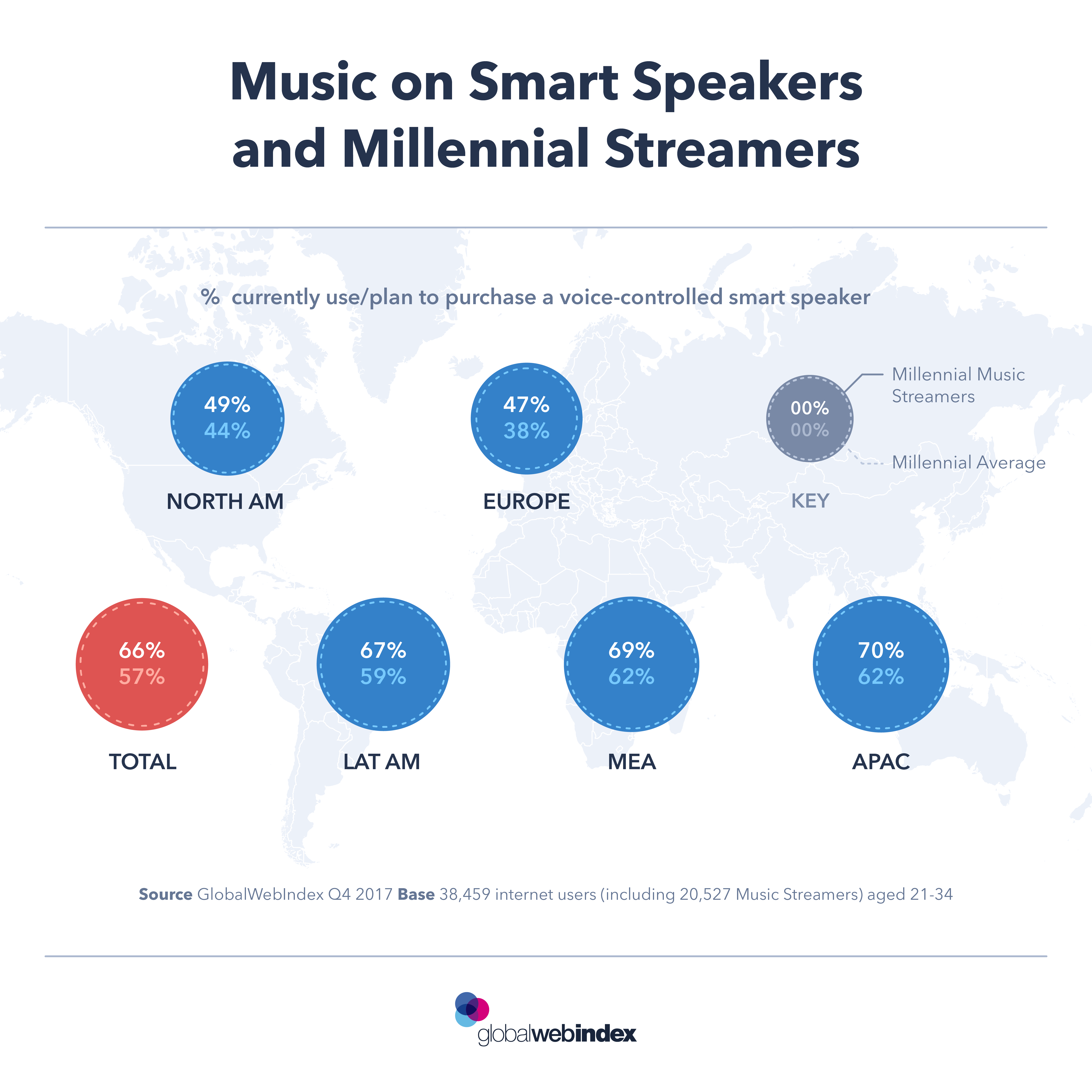
Start Up: TurboTax’s dark patterns, fiduciary Facebook, Rome’s (real) collapse, Xiaomi and GoPro?, and more


Cocktail party? Google can listen in on specific voices for you. Well, for itself. Photo by James Vaughan on Flickr.

You can sign up to receive each day’s Start Up post by email. You’ll need to click a confirmation link, so no spam.

A selection of 11 links for you. Who knows what the GDPR says. I’m @charlesarthur on Twitter. Observations and links welcome.

TurboTax UX and dark patterns critiqued • Medium

Brandon Read:

»

It’s important to recognize that TurboTax is one of many tax-preparation corporations lobbying against legislation that could greatly simplify the filing process for millions of Americans. This means it’s in their best interest to perpetuate the existing convoluted tax system so that they may continue to generate massive profits each year. We’ll explore concrete examples of unethical design strategies TurboTax employs to generate these profits.

TurboTax dissuades customers from using their Free offering by exaggerating the benefits of their mid-tier (or “recommended”) paid service and by fabricating obstacles that trick users into paying for unnecessary upgrades. While the paid service offers benefits that may be applicable to some users (such as specialist support and increased security), most filers would be perfectly happy (and just as successful) filing their taxes through the Free product. Instead of surfacing this reality, TurboTax buries it by manufacturing the illusion of complexity and time-scarcity. The following UX teardown shines a critical light on these Dark Patterns, and offers users tips on how to stay in control when navigating the modern freemium landscape.

«

There are so many dark patterns in this stuff that it’s like a black knitted blanket.
link to this extract


We may own our data, but Facebook has a duty to protect it • The New Yorker

Nathan Heller:

»

Two years ago, Jack M. Balkin, a constitutional-law professor at Yale, published a fifty-page article in the U.C. Davis Law Review examining what he called problems “at the intersection of information privacy and the First Amendment.” On one hand, he noted, people want to protect private information. On the other, information businesses tend to challenge regulation as infringements of free speech. Balkin ran through some prospective solutions. The government could regulate the collection and use of information, or the time, place, and manner of expression. Companies could treat data as commercial speech, or as a commodity. Platforms could make privacy contracts with their users. Yet Balkin found all these options lacking. Instead, he offered the idea of the “information fiduciary.” Fiduciaries, in traditional contexts, are defined by two responsibilities. They must be loyal to their clients’ interests, and they must show a “duty of care.”

It was no surprise to find Balkin’s article mentioned during Mark Zuckerberg’s testimony to the Senate Judiciary and Commerce Committees earlier this week. To a striking degree, the fiduciary model was the one toward which discussion slowly and chaotically converged. The hearing revealed little about Facebook, the company that Zuckerberg founded, and a lot about the committees, which at times seemed hair-raisingly ill-equipped for their task…

…What a duty of care might look like for a company such as Facebook was the meat of Balkin’s paper in 2016. One benefit of an information fiduciary, he argued, is that it has widely and easily understood obligations that go beyond a written policy. (You can reasonably expect your tax accountant not to send your financial information to the nearest newsroom, regardless of whether there’s an explicit agreement to that effect.)

«

link to this extract


The “GDPR consent” email I’d like to receive • informationrightsandwrongs

Jon Baines:

»

“Dear Jon

You know us. We’re that firm you placed an order with a few months ago. You may remember that at the time we took your order we explained we were going to send occasional marketing emails to you about similar products and services, but you could opt out then, and at any subsequent point.

We know that since 2003 (with the Privacy and Electronic Communications Regulations) (PECR) it’s been unlawful to send unsolicited marketing emails except in circumstances like those above.

We’re contacting you now because we’ve noticed a lot of competitors (and other firms) who are either utterly confused or utterly misrepresenting a new law (separate to PECR) called the General Data Protection Regulation (GDPR). They’re claiming it means they have to contact you to reconfirm your consent to receive marketing emails.

GDPR actually says nothing of the sort. It does explain what “consent” means in data protection terms in a slightly more strict way, but for companies like us, who’ve respected our customers and prospective customers all along, it makes no difference…”

«

Plenty more. The GDPR is one of the least understood laws around, one suspects.
link to this extract


Rome wasn’t built in a day but these days it feels as if it may collapse in one • The Guardian

Tobias Jones on the sinkholes cropping up all over Rome:

»

In November – and this is a sure sign things are serious – Lazio’s football match against Udinese was postponed due to torrential rain. Last week, there was more flooding of the subway. In the past month, central Italy has had 141% more “anomalous rainfall” than average.

Rain is a problem because of the city’s geology. Much of Rome is built on unconsolidated (ie soft) sediments, like the floodplain of the river Tiber. That means that water washes away small deposits that give the ground additional rigidity. Soft soil also amplifies not just earthquake tremors (hence the missing south side of the Colosseum) but also the vibrations of the city’s incessant traffic, causing what the president of Lazio’s guild of geologists calls “the liquefaction of the ground”. It’s like shaking a sieve full of water and clay below the asphalt: soon enough, the water will whisk away the grit and you’ll be left with a jelly-like blob to support the heavy traffic.

Additional water comes not from the skies but from the creaking subterranean infrastructure. Ancient aqueducts, such as the Vergine one that supplies the Trevi fountain, are still in use. Because of leaks, 50% of water is lost between the Lazio region’s freshwater lakes and Romans’ taps. Many of the city’s sewers are so old they’re made of cracked brick and tiles. And the fact that there are 32 sq km of tunnels, cavities, catacombs and quarries beneath the surface of the city hardly helps.

In many ways, the city council has exacerbated the problem: it is perennially corrupt and chronically incompetent. Last December, it was unable even to buy a green evergreen for Christmas. The tendering process for road repairs and reconstruction has been dragging on for years, because Roman bureaucracy is like treacle. And when a contract is finally awarded, companies often cut corners, patching roads badly because that way there will be more work in future.

«

Remarkable piece; it makes it feel as though Italy, or at least Rome, is on the verge of collapse.
link to this extract


Google works out a fascinating, slightly scary way for AI to isolate voices in a crowd • Ars Technica

Jeff Dunn:

»

The company says this tech works on videos with a single audio track and can isolate voices in a video algorithmically, depending on who’s talking, or by having a user manually select the face of the person whose voice they want to hear.

Google says the visual component here is key, as the tech watches for when a person’s mouth is moving to better identify which voices to focus on at a given point and to create more accurate individual speech tracks for the length of a video.

According to the blog post, the researchers developed this model by gathering 100,000 videos of “lectures and talks” on YouTube, extracting nearly 2,000 hours worth of segments from those videos featuring unobstructed speech, then mixing that audio to create a “synthetic cocktail party” with artificial background noise added.

Google then trained the tech to split that mixed audio by reading the “face thumbnails” of people speaking in each video frame and a spectrogram of that video’s soundtrack. The system is able to sort out which audio source belongs to which face at a given time and create separate speech tracks for each speaker. Whew.

«

Creepy machine learning! Let’s continue that thread…
link to this extract


Facebook uses AI to predict your future actions for advertisers, says confidential document • The Intercept

Sam Biddle:

»

The recent document, described as “confidential,” outlines a new advertising service that expands how the social network sells corporations’ access to its users and their lives: Instead of merely offering advertisers the ability to target people based on demographics and consumer preferences, Facebook instead offers the ability to target them based on how they will behave, what they will buy, and what they will think. These capabilities are the fruits of a self-improving, artificial intelligence-powered prediction engine, first unveiled by Facebook in 2016 and dubbed “FBLearner Flow.”

One slide in the document touts Facebook’s ability to “predict future behavior,” allowing companies to target people on the basis of decisions they haven’t even made yet. This would, potentially, give third parties the opportunity to alter a consumer’s anticipated course.

Here, Facebook explains how it can comb through its entire user base of over 2 billion individuals and produce millions of people who are “at risk” of jumping ship from one brand to a competitor. These individuals could then be targeted aggressively with advertising that could pre-empt and change their decision entirely — something Facebook calls “improved marketing efficiency.” This isn’t Facebook showing you Chevy ads because you’ve been reading about Ford all week — old hat in the online marketing world — rather Facebook using facts of your life to predict that in the near future, you’re going to get sick of your car. Facebook’s name for this service: “loyalty prediction.”

«

AI for everything!
link to this extract


How I implemented iPhone X’s FaceID using Deep Learning in Python • Medium

Norman Di Palo:

»

Performing classification, for a neural network, means learning to predict if the face it has seen it’s the users’s one or not. So, it should use some training data to predict “true” or “false”, basically, but differently from a lot of other deep learning use cases, here this approach would not work. First, the network should re-train from scratch using the new obtained data from the user’s face.

This would require a lot of time, energy consumption, and impractical availability of training data of different faces to have negative examples (little would change in case of transfer learning and fine tuning of an already trained network). Furthermore, this method would not exploit the possibility, for Apple, to train a much more complex network “offline”, i.e. in their laboratories, and then ship it already trained and ready to use in their phones.

Instead, I believe FaceID is powered by a siamese-like convolutional neural network that is trained “offline” by Apple to map faces into a low-dimensional latent space shaped to maximize distances between faces of different people, using a contrastive loss. What happens is that you get an architecture capable of doing one shot learning, as they very briefly mentioned at their Keynote. I know, there are some names that could not be familiar to many readers: keep reading, and I will explain step by step what I mean.

«

If you’re into machine learning, this is quite a read.
link to this extract


My 9.7 iPad (2018) review: Drawn, written, edited, and produced with an iPad • iMore

Serenity Caldwell:

»

It’s no secret to say that the iPad has changed how I work and think on my devices. I use it for work, roller derby, casual sketching and idea generation, watching movies, and so much more. And it’s why I’ve continually been bullish on the device, even when sales lagged and great multitasking was but a rumor on the road map.

To me, the 2018 base-model 9.7-inch iPad is a special beast: It hits a line drive right through the company’s fabled intersection of technology and liberal arts — and at the right price point. The iPad Pro did it first, but at a cost unattainable for all but the tinkerers and serious artists, and without iOS 11’s crucial multitasking features. At $329, the iPad offers a low-end tablet experience unlike any other on the market. Add an extra $99 for Apple Pencil, and Apple has created the best device for all-purpose education, period.

«

This is absolutely amazing.
link to this extract


Elon Musk says Autopilot will never be perfect but can ‘reduce accidents by a factor of 10’ • BGR

Yoni Heisler:

»

Earlier [on Sunday], CBS This Morning aired a new clip from its sit-down interview with Tesla CEO Elon Musk. The clip below centers on Tesla’s Autopilot feature, a topic that has been in the news quite a bit over the past few weeks following a tragic crash that saw a Model X in Autopilot mode careen into a highway divider before the vehicle’s battery pack burst into flames.

In the wake of the accident, Tesla said that the car’s Autopilot system warned the driver to place his hands on the wheel in the seconds leading up to the crash, warnings that Tesla claims were not heeded.

“The crash happened on a clear day with several hundred feet of visibility ahead,” Tesla said earlier this week, “which means that the only way for this accident to have occurred is if Mr. Huang was not paying attention to the road, despite the car providing multiple warnings to do so.”

As part of the interview, CBS This Morning co-host Gayle King went on a drive with Musk in a Model 3 where the two talked briefly about all things Autopilot. When asked about the benefits of Autopilot if the feature requires users to keep their hands on the wheel, Musk responded: “Oh, it’s because the probability of an accident with autopilot is just less.”

«

Musk is pushing this hard, but I think that this case is not going to break in Tesla’s favour in the way that its response to the NY Times car critic did in 2013.
link to this extract


Former operator of Android app pirate site Applanet gets three years’ probation • Android Police

Jason Hahn:

»

Aaron Buckley, who was an enterprising 15-year-old when he launched Applanet from his parents’ home in Mississippi, pleaded guilty to two counts of his indictment: conspiracy to commit copyright infringement and criminal copyright infringement. The Northern District Court of Georgia announced on April 11th that Buckley, now in his mid-20s, will be placed under three years’ probation and will also be put into a home-incarceration program for 365 days. He will also have to complete 20 hours of community service, work toward his GED, pay a $200 “special assessment” fee, and refrain from owning a firearm or possessing a controlled substance.

Buckley’s attorney pushed for a lenient sentence from US District Judge Timothy Batten, framing Buckley’s life since launching the site for pirated Android apps as one of community work and taking a leadership role in a support community for LGBT teenagers. He also spoke of unspecified difficulties in Buckley’s personal life.

“I really respect the government and the judge in their sentencing and am extremely grateful that they took into account all concerns of my health and life situation in regards to possible sentences,” Buckley told TorrentFreak.

«

The tiny bit that struck my eye was the “refrain from owning a firearm”. I don’t see why operating an app pirating site would make you unsafe to own a gun. Would it?
link to this extract


Xiaomi could be just the hero GoPro needs • Bloomberg Gadfly

Tim Culpan:

»

GoPro’s problem is that it hasn’t done much in 16 years. Its product line is little changed, with mere iterations of the same tiny rugged camera, and the company still relies on its home market for the bulk of sales. Consider that in 2004 – when GoPro released its first camera – Apple Inc.’s hottest product by units was the iPod.

The few attempts to diversify have failed. An entry into the drone market in 2016 lasted less than 15 months at a time when DJI and others were enjoying booming growth. Asia accounts for just 21% of revenue.

Xiaomi, meanwhile, can’t be accused of standing still. The Chinese smartphone startup has its fingers in so many pies that it’s hard to keep up. So it makes sense that it would consider making a a bid for GoPro, as The Information reported. Xiaomi may offer up to $1bn, but doesn’t want to overpay, the news website said.

A tie-up with another device maker is exactly the future I envision for GoPro. Right now it’s a technical feat to film a day on the slopes, then take it back to show on the TV in your ski lodge. For many, it’s just easier to shoot with an iPhone and a selfie stick, which is the crowd Woodman should be chasing. A combination with Roku Inc., the provider of streaming content players, is one I have advocated for a while. Xiaomi has MiBox, as well as routers and other connected devices.

A $1bn outlay for Xiaomi shouldn’t damage its balance sheet, and the upside could be immense.

«

Agree – this could be just what GoPro needs (though I imagine a wailing at the idea of an American company being bought by a Chinese one). For good measure it could buy Fitbit too, which also needs a white knight while its smartwatch business seeks liftoff.
link to this extract


Errata, corrigenda and ai no corrida: none notified

Start Up: Netflix’s personal art, the Facebook ad scammers, PC market still stagnant, the missing Android security, and more


Apple’s HomePod: do we have any idea how popular it actually is? Photo by Joe Wilcox on Flickr.

You can sign up to receive each day’s Start Up post by email. You’ll need to click a confirmation link, so no spam.

A selection of 10 links for you. Somewhere, it’s Friday. I’m @charlesarthur on Twitter. Observations and links welcome.

Artwork personalization at Netflix • Medium

Ashok Chandrashekar, Fernando Amat, Justin Basilico and Tony Jebara, on the Netflix Techblog:

»

For many years, the main goal of the Netflix personalized recommendation system has been to get the right titles in front each of our members at the right time. With a catalog spanning thousands of titles and a diverse member base spanning over a hundred million accounts, recommending the titles that are just right for each member is crucial. But the job of recommendation does not end there. Why should you care about any particular title we recommend? What can we say about a new and unfamiliar title that will pique your interest? How do we convince you that a title is worth watching? Answering these questions is critical in helping our members discover great content, especially for unfamiliar titles. One avenue to address this challenge is to consider the artwork or imagery we use to portray the titles. If the artwork representing a title captures something compelling to you, then it acts as a gateway into that title and gives you some visual “evidence” for why the title might be good for you.


A Netflix homepage without artwork. This is how historically our recommendation algorithms viewed a page.


Artwork for Stranger Things that each receive over 5% of impressions from our personalization algorithm. Different images cover a breadth of themes in the show to go beyond what any single image portrays.

«

Breathtaking.
link to this extract


Ad scammers need suckers, and Facebook helps find them • Bloomberg

Zeke Faux:

»

“I’m Robert Gryn, and when I’m not playing games or trying to build billion-dollar startups, I like to live life to the fullest,” he tells the camera in the trailer for his vlog, drinking from a mug that says “I’M A F—ING UNICORN.”

When I introduced myself in Berlin, Gryn suggested we decamp to a nearby bar, saying he was tired of getting so much attention. His online bravado was just an act, he said; in person, he preferred to affect a humble naiveté, as if he couldn’t believe where luck had taken him. He told me that having money taught him that materialism is unfulfilling. “Life is like the most beautiful game,” he said, sipping a beer in the sun, speaking in unaccented English he’d learned in international schools. “Money is just the high score.”

Gryn estimated that users of his tracking software place $400m worth of ads a year on Facebook and an additional $1.3bn elsewhere. (He later showed me reports that roughly support those figures.) It’s not just affiliates who think Gryn is at the pinnacle of the industry. In June, just before the conference, Facebook’s newly installed executive in charge of fighting shady ads, Rob Leathern, had invited him to the company’s London office to explain the latest affiliate tricks.

The basic process isn’t complicated. For example: A maker of bogus diet pills wants to sell them for $100 a month and doesn’t care how it’s done. The pill vendor approaches a broker, called an affiliate network, and offers to pay a $60 commission per sign-up. The network spreads the word to affiliates, who design ads and pay to place them on Facebook and other places in hopes of earning the commissions. The affiliate takes a risk, paying to run ads without knowing if they’ll work, but if even a small percentage of the people who see them become buyers, the profits can be huge.

Affiliates once had to guess what kind of person might fall for their unsophisticated cons, targeting ads by age, geography, or interests. Now Facebook does that work for them. The social network tracks who clicks on the ad and who buys the pills, then starts targeting others whom its algorithm thinks are likely to buy. Affiliates describe watching their ad campaigns lose money for a few days as Facebook gathers data through trial and error, then seeing the sales take off exponentially. “They go out and find the morons for me,” I was told by an affiliate who sells deceptively priced skin-care creams with fake endorsements from Chelsea Clinton.

«

Rob Leathern is straight-up focussed on getting rid of scam ads; the startup he ran before Facebook bought it was all about killing ad fraud (which I know infuriates him), and he hasn’t let up on that since joining it. Let’s hope that Gryn’s session with him helps stamp this stuff out.
link to this extract


Apple’s stumbling HomePod isn’t the hot seller it wanted • Bloomberg

Mark Gurman:

»

During the opening pre-order weekend, the HomePod grabbed 72% of revenue in the smart speaker category. But in February and March, its share of revenue slipped to 19%, according to Slice Intelligence, compared with 68% for Amazon. Google Home and Sonos Ones garnered 8% and 5% of revenues, respectively. (Slice estimated the sales by monitoring e-commerce receipts.)

Gene Munster, a co-founder of Loup Ventures and a long-time Apple watcher, expects HomePod sales to pick up in the holiday shopping season. He says Apple will probably sell 7 million HomePods this year and close to 11 million in 2019. By contrast, Munster predicts that Amazon will sell 29 million Echos this year and 39 million in 2019. Alphabet, he estimates, will move 18 million Google Homes in 2018 and about 32 million the following year.

The HomePod will almost certainly improve. Not every Apple product was a hit out of the gate. The Apple Watch faced challenges when it launched, too, and is now widely recognized as the top performing smartwatch on the market (although still a tiny part of its maker’s business).

«

The HomePod bears some consideration. It’s a really good speaker (pair it with an Apple TV and you have a soundbar for that output) but it isn’t trying to be the things that the Echo range or Google Home range are. You can view that as a failure, on the basis that Amazon and Google have defined the category, or that it’s most focussed on the thing people want a good speaker to do: play music.

But today I was also wondering about the inability of any Apple device to run two timers at once (something which Echo and Google Home devices do), and thinking there are some real blind spots in Apple’s view of the world. Seven million is a good number of devices, but it’s hard not to think that these devices are mutually exclusive.

(Neil Cybart, at Above Avalon, is pretty suspicious of the numbers; he thinks they overestimate Apple’s expectations of initial sales, given the limited distribution at first, and also overestimate likely sales this year. He prefers 4m-5m.)
link to this extract


New Apple Music head named as service surpasses 40 million subscribers • Variety

Shirely Halperin:

»

Apple Music is thinking globally as the streaming service officially surpasses 40 million paid subscribers. Today, the company announced the promotion of Oliver Schusser to lead Apple Music Worldwide. His new title is vice president of Apple Music & International Content. Schusser has led efforts outside the U.S. related to the App Store, iTunes’ movies and TV portals, iBooks, Apple Podcasts, and more. He has worked closely with Apple svp of Internet Software and Services Eddy Cue, who hired Schusser some 14 years ago and also announced his promotion to staff earlier this morning (April 11).

«

There’s quite the PR tussle going on between Apple and Spotify for the announced number of subscribers. The story also says there are 8m “auditioning” via free trials, which gives an idea of its churn/conversion rate – which seems pretty favourable – and that in the US it’s growing at 5% per month in the US, vs 2% for Spotify.

Schusser was based in London, where he worked on the Shazam acquisition. (Apple owns it now.) But now he’s off to Cupertino and LA. Better weather, for sure.
link to this extract


Chinese toddler disables mom’s iPhone for 47 years • CNBC

Kristin Huang:

»

A two-year-old boy in Shanghai disabled his mother’s iPhone for the equivalent of 47 years after playing with it and repeatedly entering the wrong passcode, according to a Chinese media report.

The incident happened in January after the phone was given to the child to watch educational videos online, the news website Kankanews.com said.

The mother returned home one day and when she checked the phone found it had been disabled for 25 million minutes by pressing keys repeatedly when the handset requested the passcode be inputted, according to the article. Each time the wrong keys were pressed the phone was disabled for a period of time, the report said.

«

“These phones are too secure.”
link to this extract


YouTube tech reviewer Marques Brownlee is the most famous person you wouldn’t recognize in public • Recode

Eric Johnson:

»

Marques Brownlee likes the fact that he still has a bit of anonymity — despite having more than six million subscribers on YouTube and more than 2.75 million followers on Twitter, he can go almost anywhere without people accosting him in public.

“That’s the beauty of the internet,” Brownlee said on the latest episode of Recode Media with Peter Kafka. “A lot of people who are on the internet most of the time aren’t in the street most of the time. So, I can just walk down the street and no one knows.”

But when he goes to tech conferences like CES, he gets bombarded with attention. Although making YouTube videos started as a hobby, his channel MKBHD’s massive reach has caused the tech giants to take notice: When the Samsungs and Apples of the world have a new phone coming out, Brownlee is one of the people invited to those products’ unveilings, in the hope that he’ll make a video about the new product that will attract millions of views.

“We’re at a point in 2018 where pretty much every company recognizes, there’s eyeballs on YouTube,” he said. “If you want to reach them, you’ve got to have some sort of relationship and work with the creators.”

«

First video release: 2009, aged 15. Brownlee is one of the very few YouTubers who Apple chooses to review new products. He has become unavoidable; though I doubt he would know what the magic formula was. (The podcast with him is on the page.)
link to this extract


Traditional PC market exceeds expectations with flat year-on-year shipment growth • IDC

»

Worldwide shipments of traditional PCs (desktop, notebook, and workstation) totaled 60.4m units and recorded flat (0.0%) year-on-year growth in the first quarter of 2018 (1Q18), according to the International Data Corporation (IDC) Worldwide Quarterly Personal Computing Device Tracker. The results exceeded the earlier forecast of a 1.5% decline and marks the third consecutive quarter where traditional PC shipment volume has hovered around flat growth year on year.

Although the numbers are preliminary, the data seems to indicate a continued build up in commercial renewal activity as the main driver for the stabilizing trend. Business uptake of Windows 10 systems appear to be steadily ongoing, benefitting commercially-focused PC OEMs such as HP, Dell, and Lenovo. Demand for premium notebooks in both the consumer and commercial segments have also helped major vendors retain better margins and garner buyer interest. Furthermore, continued focus on gaming systems has injected slight improvement in pockets of the consumer space. Unlike the first quarter of 2017, an improved supply of key notebook components also loosened pressures on both supply and pricing, leading to some recovery of share for the smaller vendors.

«

The Gartner data is gloomier – a fall of 1.4%, though to a higher total of 61.69m units. The confusing thing is that Gartner excludes Chromebooks, but IDC includes them; but Chromebook sales would probably explain how IDC sees sales as static while Gartner sees them falling.

Either way, the PC market is a long way down; in 1Q 2012 IDC’s figures were showed shipments of 88m. Somewhere, 28m sales got lost.
link to this extract


How Android phones hide missed security updates from you • WIRED

Andy Greenberg:

»

Security Research Labs (SRL) tested the firmware of 1,200 phones, from more than a dozen phone manufacturers, for every Android patch released in 2017. The devices were made by Google itself as well as major Android phone makers like Samsung, Motorola, and HTC, and lesser-known Chinese-owned companies like ZTE and TCL. Their testing found that other than Google’s own flagship phones like the Pixel and Pixel 2, even top-tier phone vendors sometimes claimed to have patches installed that they actually lacked. And the lower-tier collection of manufacturers had a far messier record.

The problem, Nohl points out, is worse than vendors merely neglecting to patch older devices, a common phenomenon. Instead, it’s that they tell users they install patches that they in fact don’t, creating a false sense of security. “We found several vendors that didn’t install a single patch but changed the patch date forward by several months,” Nohl says. “That’s deliberate deception, and it’s not very common.”

More often, Nohl believes, companies like Sony or Samsung would miss a patch or two by accident. But in other cases, the results were harder to explain: SRL found that one Samsung phone, the 2016 J5, was perfectly honest about telling the user which patches it had installed and which it still lacked, while Samsung’s 2016 J3 claimed to have every Android patch issued in 2017 but lacked 12 of them—two considered as “critical” for the phone’s security.

«

Chinese companies (including Lenovo’s Motorola), and HTC and LG figure badly here. How big a problem is this, though? Are these hacks exploitable? The rest of the article suggests not. But it’s poor customer relations to do this.
link to this extract


California bill could introduce a constitutionally questionable ‘right to be forgotten’ in the US • Techdirt

Mike Masnick:

»

here in California, Assemblymember Mark Levine has introduced a local version of the [EU’s data protection regulation] GDPR, called the California Data Protection Authority, which includes two key components: a form of a right to be forgotten and a plan for regulations “to prohibit edge provider Internet Web sites from conducting potentially harmful experiments on nonconsenting users.” If you’re just looking from the outside, both of these might sound good as a first pass. Giving end users more control over their data? Sounds good. Preventing evil websites from conducting “potentially harmful experiments”? Uh, yeah, sounds good.

But, the reality is that both of these ideas, as written, seem incredibly broad and could create all sorts of new problems. First, on the right to be forgotten aspect, the language is painfully vague:

»

It is the intent of the Legislature to ensure that personal information can be removed from the database of an edge provider, defined as any individual or entity in California that provides any content, application, or service over the Internet, and any individual or entity in California that provides a device used for accessing any content, application, or service over the Internet, when a user chooses not to continue to be a customer of that edge provider.

«

Any content? Any application? At least the bill does limit “personal information” to a limited category of topics, so we’re not just talking about “embarrassing” information, a la the EU’s interpretation of the right to be forgotten. But “personal information” is still somewhat vague. It does include “medical information” which is further defined as “any individually identifiable information, in electronic or physical form, regarding the individual’s medical history or medical treatment or diagnosis by a health care professional.” So, would that mean that if we wrote about SF Giants pitcher Madison Bumgarner, and the fact that his broken pinky required pins and he won’t be able to pitch for a few weeks… we’d be required to take that information down if he requested it? That seems like a pretty serious First Amendment problem.

«

The “right to be forgotten” clashes fundamentally with the US’s First Amendment. But the GDPR doesn’t have to, if it’s about the initial control of data. The clash comes once the data has become “public”.

link to this extract


What does the EU’s General Data Protection Regulation mean for open blockchain networks? • Coin Center

Neeraj Agrawal, at “the leading non-profit research and advocacy centre focused on the public policy issues facing cryptocurrency”:

»

As provocative as it may be to European regulators, the better conception may be to see the new law as incompatible with the reality of open blockchain networks. That is to say, the GDPR presumes that there will be central intermediaries that can ‘erase’ information, but the world is trending toward ever more decentralized and immutable technologies. While firms may alter their behavior to comply with the new law, decentralized networks are global and unowned and won’t change. The result of the law, then, may be that Europe is closing itself off from the future of the Internet to its detriment.

That said, we’re optimistic that our European friends will come to see that their legitimate privacy concerns are best addressed not through law, but through decentralizing technology itself.

«

Yeah, I’m sure that 27 countries which have worked for years on a data protection regime being considered as a framework for US data protection will ditch it in order to help a technology whose benefits remain unproven beyond validating software archiving. (Bitcoin is unproven too so far.)
link to this extract


Errata, corrigenda and ai no corrida: none notified

Start Up: Zuck’s part 2, adblocking politics, how YouTube creates human clickbait, China’s AR challenge, and more


Dots: Netflix can’t see them in email, Gmail can. Bad news. Photo by Leon Lee on Flickr.

A selection of 10 links for you. Augment that reality. I’m @charlesarthur on Twitter. Observations and links welcome.

Zuckerberg denies knowledge of Facebook shadow profiles • TechCrunch

Taylor Hatmaker:

»

Commerce Committee, New Mexico Representative Ben Lujan cornered Mark Zuckerberg with a question about so-called “shadow profiles” — the term often used to refer to the data that Facebook collects on non-users and other hidden data that Facebook holds but does not offer openly on the site for users to see.

In one of the handful of slightly candid moments of the past few days, Rep. Lujan pressed Zuckerberg on the practice today:

Lujan: Facebook has detailed profiles on people who have never signed up for Facebook, yes or no?

Zuckerberg: Congressman, in general we collect data on people who have not signed up for Facebook for security purposes to prevent the kind of scraping you were just referring to [reverse searches based on public info like phone numbers].

Lujan: So these are called shadow profiles, is that what they’ve been referred to by some?

Zuckerberg: Congressman, I’m not, I’m not familiar with that.

«

Lujan really takes Zuckerberg to task. It’s quite a thing to see. The House of Representatives, despite the funding they get from Facebook, were much tougher than the Senate; partly because they’re younger, but also had wider experience – including one with a computer science degree (which is more than Zuck has).
link to this extract


Bitcoin would be a calamity, not an economy • MIT Technology Review

James Surowiecki:

»

The problem with a world in which there are lots of different private currencies is that it massively increases transaction costs. With a single, government-issued currency that’s legal tender, you don’t have to think about whether or not to accept it in exchange for goods and services. You accept dollars because you know that you will be able to use them to buy whatever you want. Commerce flows more smoothly because everyone has implicitly agreed to use the dollar.

In an economy with lots of competing currencies (particularly cryptocurrencies unbacked by any commodity), it would work very differently. If someone wants to pay you in Litecoin, you have to figure out whether you think Litecoin is a real cryptocurrency or just a scam that could shut down any day now. You have to consider who else might accept Litecoin if you want to spend it, or who would trade you dollars for it (and at what exchange rate and transaction fee). Basically, a proliferation of currencies tosses sand into the gears of commerce, making transactions less efficient and more costly. And any currency that is hard to use is less valuable as a medium of exchange.

This isn’t speculative. we actually have a historical example of how this works. In the United States in the decades before the Civil War, there was no national currency. Instead, it was an era of what was called “free banking.” Individual banks issued bank notes, theoretically backed by gold, that people used as money. The problem was that the farther away from a bank you got, the less recognizable (and therefore the less trustworthy) a bank’s note was to people. And every time you did a deal, you had to vet the note to make sure it was worth what your trading partner said it was worth. So-called wildcat banks sprang up, took people’s money, issued a host of notes, and then shut down, making their notes worthless. To be sure, people came up with workarounds—there were volumes that were a kind of Yelp for banking, displaying the panoply of bank notes and rating them for reliability and value. But the broader consequence was that doing business was simply more complicated and slower than it otherwise would have been. The same will be true in a world where some people use Ethereum, others use Litecoin, and others use Ripple.

«

link to this extract


Tesla issues strongest statement yet blaming driver for deadly crash • abc7news.com

Dan Noyes on the latest regarding Walter Huang, who died when his Tesla, on Autopilot, drove into a crash barrier:

»

Tesla sent [ABC News] a statement Tuesday night that reads in part, “Autopilot requires the driver to be alert and have hands on the wheel… the crash happened on a clear day with several hundred feet of visibility ahead, which means that the only way for this accident to have occurred is if Mr. Huang was not paying attention to the road.”

“We know that he’s not the type who would not have his hands on the steering wheel, he’s always been (a) really careful driver,” said [Walter Huang’s brother] Will.

The family’s lawyer believes Tesla is blaming Huang to distract from the family’s concern about the car’s Autopilot.

“Its sensors misread the painted lane lines on the road and its braking system failed to detect a stationary object ahead,” said lawyer Mike Fong.

You can already see the arguments forming for the lawsuit.

«

If Huang had driven down the road before in the same car in the same way, Tesla will have records. If this happened after a software update, it’s Tesla’s fault: Huang would have had a reasonable expectation that the car would (as previously) avoid the obstacle. (Recall the videos of how this could happen from a few days ago.)
link to this extract


Your Facebook data is only worth $5.20 on the dark web – MarketWatch

Maria LaMagna:

»

Whether or not you were impacted by the Cambridge Analytica incident, there’s a depressing aspect of many recent privacy violations: The most important parts of your identity can be sold online for just a few dollars.

Consumers have to spend hours of their time — and, sometimes, their own money — when they find out their driver’s license, Facebook “likes” or Social Security number have been exposed to hackers. But those who sell them are making only petty cash.

That’s according to a new report from the content marketing agency Fractl, which analyzed all the fraud-related listings on three large “dark web” marketplaces — Dream, Point and Wall Street Market — over several days last month.

The “dark web” is part of the internet that people can only access by using special software. To create this report, Fractl accessed the dark web through the browser Tor. People buy other risky or illegal substances on the dark web, including drugs, pirated content like movies or music and materials that help with scams, including credit-card “skimmers.”

Facebook logins can be sold for $5.20 each because they allow criminals to have access to personal data that could potentially let them hack into more of an individual’s accounts. The credentials to a PayPal account with a relatively high balance can be sold on the dark web for $247 on average, the report found.

«

link to this extract


The dots do matter: how to scam a Gmail user • James Fisher

Fisher got a valid email from Netflix saying it was having trouble with his credit card payment. He was going to update it – but the credit card it had didn’t match his own. What gives?

»

I finally realized that this email is to james.hfisher@gmail.com. I normally use jameshfisher@gmail.com, with no dots. You might think this email should have bounced, but instead it reached my inbox, because “dots don’t matter in Gmail addresses”:

If someone accidentally adds dots to your address when emailing you, you’ll still get that email. For example, if your email is johnsmith@gmail.com, you own all dotted versions of your address:

john.smith@gmail.com
jo.hn.sm.ith@gmail.com
j.o.h.n.s.m.i.t.h@gmail.com

Netflix does not know about this Gmail “feature”. Externally, jameshfisher@gmail.com and james.hfisher@gmail.com are different identities, and should have their own Netflix accounts. I signed up for Netflix account N1 backed by jameshfisher@gmail.com in 2013. But in September 2017, someone, let’s call her “Eve”, created a new Netflix account N2, backed by james.hfisher@gmail.com.

Eve has access to account N2 because she set its password when signing up, but I also have access to the account because I own james.hfisher@gmail.com, and so I can follow the password reset process for this account. I did so.

Eve loves her TV! She’s watched 587 titles in six months, all from her “Android Device” in Alabama. She watched three seasons of Trailer Park Boys over a single day in October. She consumed nearly every day until 22nd March, when Netflix put her account “on hold” due to payment failure. Eve had paid for these shows. She paid $13.99 every month for her Premium plan, until February when her card **** 2745 (also billed to Huntsville, Alabama) was declined.

Perhaps this was all a mistake? Perhaps Eve is actually one of the twelve James Fishers in Huntsville, AL, and perhaps he typed his email address in wrong when he signed up months ago. Netflix doesn’t do any email address verification when you sign up; you can start watching shows straight away.

But perhaps this was not a mistake but a scam. I was almost fooled into perpetually paying for Eve’s Netflix access, and only paused because I didn’t recognize the declined card.

«

Google is proud of this “feature”, but like Fisher, I think it’s a bug. I get tons of scam emails like this.
link to this extract


Trump’s company is suing towns across the country to get breaks on taxes • ProPublica

Katherine Sullivan:

»

Since becoming president, Trump’s companies have filed at least nine new lawsuits against municipalities in Florida, New York and Illinois, arguing for lower tax bills, ProPublica has found. Some of those lawsuits have been previously reported. At stake is millions of dollars that communities use to fund roads, schools and police departments.

Real estate owners dispute property taxes frequently, and some even sue. The president has a long track record of doing so himself. But experts are troubled that he’s doing so while in office.

No president in modern times has owned a business involved in legal battles with local governments. “The idea that the president would have these interests and then those companies would sue localities is really a dangerous precedent,” says Larry Noble, of the nonpartisan Campaign Legal Center. The dynamic between local and federal governments is impossible to ignore in these cases, says Noble. Municipalities “rely on resources from the federal government and the federal government can make your life easier or much more difficult.” The concern arises because the president did not fully separate from his businesses, he says.

A spokesman for the Trump Organization said, “Like any other business or property owner when property taxes become inflated it is not uncommon to challenge the process to ensure fair treatment. This is a routine practice and any suggestion otherwise is simply ridiculous.”

«

And also obvious. What happens when the president doesn’t disentangle himself from his companies.
link to this extract


One woman got Facebook to police opioid sales on Instagram • WIRED

Nitasha Tiku:

»

Eileen Carey says she has regularly reported Instagram accounts selling opioids to the company for three years, with few results. Last week, Carey confronted two executives of Facebook, which owns Instagram, about the issue on Twitter. Since then, Instagram removed some accounts, banned one opioid-related hashtag and restricted the results for others.

Searches for the hashtag #oxycontin on Instagram now show no results. Other opioid-related hashtags, such as #opiates, #fentanyl, and #narcos, surface a limited number of results along with a message stating, “Recent posts from [the hashtag] are currently hidden because the community has reported some content that may not meet Instagram’s community guidelines.” Some accounts that appeared to be selling opioids on Instagram also were removed.

The moves come amid increased government concern about the role of tech platforms in opioid abuse, and follow years of media reports about the illegal sale of opioids on Instagram and Facebook, from the BBC, Venturebeat, CNBC, Sky News and others. Following the BBC probe in 2013, Instagram blocked searches of terms associated with the sale of illegal drugs.

«

Zuckerberg was asked about opioid adverts on Facebook by the House of Representatives committee; he said (paraphrased) they couldn’t do much and that they’d have to wait for better AI.
link to this extract


Ad blocking as a radical political act • Terence Eden’s Blog

Terence Eden:

»

Aside from unavoidable billboards and the occasional magazine, I just don’t see advertising any more. I’m not sure why any sane person would want to.

Even when I worked in the mobile ad industry, I blocked ads. Everyone did. The first thing that the IT helpdesk said to people who complained that they couldn’t log into their work email was “yeah mate, you need to turn your ad-blocker off…”

I’ve been blocking Facebook adverts since before it was fashionable. As a result, I’m bemused by the claims that my information has been microtargetted and used to manipulate me.

I thought it was common knowledge that you could set your Facebook preferences to block creepy use of your data for advertising purposes. Even if you didn’t want to block adverts, why wouldn’t you do that?

Perhaps Facebook themselves have been subtly manipulating what stories they choose to show me. Perhaps my friends are activated Manchurian Candidates swamping me with fake news. Or perhaps I just block the obviously dodgy news sources and unfriend anyone daft enough to share them.
Perhaps we need a word to describe the people who willingly watch adverts? The technology to block them is simple to use, and information about blocking is widely disseminated.

People who watch adverts are like anti-vaxxers – blissfully unaware of the benefits of herd-immunity.

«

Advertisers (and a lot of publishers) see it quite the other way round, of course.
link to this extract


China is catching up to Apple in AR, says KGI Securities’ Ming-Chi Kuo • Business Insider

Kif Leswing:

»

The most-closely followed Apple analyst warned in a Wednesday note that Chinese smartphone companies are rapidly catching up to Apple in augmented reality technology, which CEO Tim Cook has called “profound” and a “core technology” for the company going forward. 

The example Ming-Chi Kuo provides is a Tencent game called Honour of Kings, which will release an augmented reality version in May. It’s a big game, with over 200 million players worldwide.

It’s also a much more advanced augmented reality experience than Pokemon Go, he writes, and uses algorithms from $3bn artificial intelligence startup SenseTime.

“Apple’s first-mover lead in AR eroded by OPPO,” reliable Apple analyst Ming-Chi Kuo at KGI Securities wrote.

Apple launched ARKit last summer, which easily allows developers to make rich experiences where computer models interact with surfaces in the real world. Apple was the first major technology company to announce software like that, and had a chance to capture the entire development market. 

“However, since the debut of the ARKit nearly a year ago, there has been no heavyweight AR application on iOS,” Kuo wrote. 

Which is why he believes Apple should be concerned that it’s launching on Oppo phones running Android at the same time as iOS, on less-advanced hardware.

«

SenseTime again. However, I think that AR’s struggles (Pokemon Go aside) are going to remain the same: is it as engaging to have a virtual object in the real world as it is to have a virtual object in a virtual world that you control more precisely?
link to this extract


Your pretty face is going to sell • Open Space at SF MOMA

Joe Veix on the peculiar phenomenon of “YouTube Face” (YTF) – the strange, overplayed expressions that you see people adopting on videos in order to make arresting preview frames for the time when they’re in the “up next” lineup and want to be chosen, oh please choose me, for the next click:

»

Getting attention on social media platforms requires creating content designed to perform well within their ecosystems. Everything must contort to please the almighty Algorithmic Gods. It requires some guesswork, as these algorithms exist at such an ever-increasing scale and complexity that even their creators don’t — can’t — understand them. The Algorithm Gods work in mysterious ways.

This has odd and often unexpected effects on the physical world. Restaurants attempt to create Instagram-friendly environments with nauseatingly kitschy interior designs. Hamburger buns are glazed to make them more aesthetically appealing. Extremist political campaigns are won partially on the strength of their shitposting. Perhaps the emergence of YTF hints at one of the many ways these algorithmic forces might begin to shape our physical appearances.

We’re also witnessing tactics common to the advertising industry, especially those of late-night infomercials, being utilized autonomously by individuals. People simulate the behavior of corporate brands, while corporate brands simulate people, hiring teams of flacks to help make something like, I don’t know, fracking seem “authentic” and “cool.”

So begins the Great Brand Singularity. Corporations, humans, and machines merging in a banal orgy of commerce. The tech is currently primitive, but it’s easy to imagine scrolling through some future feed and seeing the faces of long-deceased relatives digitally grafted onto advertisements for #FappuccinoHappyHour; close friends suddenly revealed to be replicants working for foam mattress startups; augmented reality Pillsbury Doughboys stalking us on late night walks home, their soft footsteps squishing confidently along.

«

Or as he also says, “YouTube Face is clickbait made human”.
link to this extract


Errata, corrigenda and ai no corrida: none notified

You can sign up to receive each day’s Start Up post by email. You’ll need to click a confirmation link, so no spam.