Start Up: OnePlus 6 reviewed, Google used on Safari (again), getting the internet inside, MoviePass’s fatal flaw, and more


An octopus: visitor from an alien race? Photo by damn_unique on Flickr.

You can sign up to receive each day’s Start Up post by email. You’ll need to click a confirmation link, so no spam.

A selection of 9 links for you. Should have been eight, right? I’m @charlesarthur on Twitter. Observations and links welcome.

A controversial scientific study suggests octopuses came from outer space • Quartz

Ephrat Livni on a bizarre speculative paper published in “Progress in Biophysics and Molecular Biology”:

»

The octopus, for example, is traditionally considered to come from the nautiloid, having evolved about 500 million years ago. But that relationship doesn’t explain how these odd cephalopods got all their awesome characteristics or why octopuses are so very different, genetically speaking, from their alleged nautiloid ancestors. The paper states:

»

The genetic divergence of Octopus from its ancestral coleoid sub-class is very great … Its large brain and sophisticated nervous system, camera-like eyes, flexible bodies, instantaneous camouflage via the ability to switch color and shape are just a few of the striking features that appear suddenly on the evolutionary scene.

«

The transformative genes leading from the consensus ancestral nautilus to the common cuttlefish to squid to the common octopus can’t be found in any pre-existing life form, the authors say.

So far, so good. But then the paper gets highly speculative. The researchers continue, “It is plausible then to suggest they [octopuses] seem to be borrowed from a far distant ‘future’ in terms of terrestrial evolution, or more realistically from the cosmos at large.”

«

Nope. Nope nope nope. Though the signatories might be prestigious, this is not a “scientific study”; it’s a bit of handwaving. Just because you don’t know how the genes came to be present doesn’t mean that they’re alien, because they’re not. Or else everyone is alien, which gets us back to square one.
link to this extract


OnePlus 6 Review—A series of downgrades is saved by the low price • Ars Technica

Ron Amadeo:

»

The OnePlus 6 is a worse phone than the OnePlus 5T. The new SoC is nice, but other than that we get downgrades in the form of a higher price, a switch from metal to glass, and a smaller, harder-to-use fingerprint reader. I guess it speaks to just how good of a phone the OnePlus 5T was, then, that OnePlus can throw a round of downgrades at the design and still end up with a phone that can stand up to the competition. I feel like the company could have done a much better job than this, but at the end of the day the phone is still $300 cheaper than the competition for similar specs.

OnePlus is hesitant to stand behind its products with a solid support policy, which makes me just as hesitant to recommend them. The company won’t commit to a support timeframe for major OS updates, and it doesn’t provide consistent, stable monthly security updates. This is something you’d get from almost any other flagship phone manufacturer and something Nokia/HMD provides even on lower-end phones. If you’re the type that doesn’t mind getting your hands dirty and flashing OS upgrades yourself from a third-party, then OnePlus’ shaky support isn’t as much of a concern.

If the 6 was $800, it would be a completely forgettable, generic device, like the LG G7. It’s not $800, though; it’s way cheaper than that.

«

A weird idea: the new phone is a downgrade from the older, but cheaper. If OnePlus can make a profit this way, good luck to it.
link to this extract


Google sued for ‘clandestine tracking’ of 4.4m UK iPhone users’ browsing data • The Guardian

»

Google is being sued in the high court for as much as £3.2bn for the alleged “clandestine tracking and collation” of personal information from 4.4 million iPhone users in the UK.

The collective action is being led by former Which? director Richard Lloyd over claims Google bypassed the privacy settings of Apple’s Safari browser on iPhones between August 2011 and February 2012 in order to divide people into categories for advertisers.

At the opening of an expected two-day hearing in London on Monday, lawyers for Lloyd’s campaign group Google You Owe Us told the court information collected by Google included race, physical and mental heath, political leanings, sexuality, social class, financial, shopping habits and location data.

Hugh Tomlinson QC, representing Lloyd, said information was then “aggregated” and users were put into groups such as “football lovers” or “current affairs enthusiasts” for the targeting of advertising.

Tomlinson said the data was gathered through “clandestine tracking and collation” of browsing on the iPhone, known as the “Safari Workaround” – an activity he said was exposed by a PhD researcher in 2012.

«

OK, this is quite weird. It’s exactly the same incident that I wrote about back in 2012/3 (here’s a Josh Halliday article on it). Yet no reference in this to that? Or by anyone? Whatever happened to institutional memory?
link to this extract


Free app brings iPhone X gesture navigation to Android phones without Android P • BGR

Zach Epstein:

»

Google announced during its Google I/O 2018 keynote presentation that gesture controls will be coming to the Android platform later this year when Android P is released. There’s already a public beta of Android P available for people with certain smartphones, but everyone else will have to wait until sometime later this year or in 2019 when Android P updates finally start rolling out to phones. Some smartphone makers don’t want to wait for Android P, so they’re adding their own take on the iPhone X’s gesture navigation. OnePlus is a good example, though gesture navigation on the OnePlus 6 is kind of terrible.

There are already a few different apps out there that let you add gesture-based navigation to an Android phone. The problem with these apps is they require you to root your Android device. Not everyone wants to bother rooting their phones, and there are also security implications that many people aren’t comfortable with. Don’t worry though, because we have some good news: There’s a new free app that brings the iPhone X’s gestures to Android without the need for root access.

The app is called Navigation Gestures, and it was built by an admin from xda-developers. It’s currently available for free in the Play store. The app can be installed on any modern Android phone, and it doesn’t require users to first root their devices. There is one small caveat though. Navigation Gestures uses an API that is only accessible by granting a special permission, and you’ll need to connect your Android device to a Windows or Mac computer in order to grant that permission. It’s quite easy, and XDA provides a video that walks you through the process.

«

Seems fairly clear that in four years or so, the majority of phones will be working on gestures and have no bezels.
link to this extract


Teen phone monitoring app leaked thousands of user passwords • ZDNet

Zack Whittaker:

»

The mobile app, TeenSafe, bills itself as a “secure” monitoring app for iOS and Android, which lets parents view their child’s text messages and location, monitor who they’re calling and when, access their web browsing history, and find out which apps they have installed.

Although teen monitoring apps are controversial and privacy-invasive, the company says it doesn’t require parents to obtain the consent of their children.

But the Los Angeles, Calif.-based company left its servers, hosted on Amazon’s cloud, unprotected and accessible by anyone without a password.

Robert Wiggins, a UK-based security researcher who searches for public and exposed data, found two leaky servers.

Both of the servers was pulled offline after ZDNet alerted the company, including another that contains what appears to be only test data.

“We have taken action to close one of our servers to the public and begun alerting customers that could potentially be impacted,” said a TeenSafe spokesperson told ZDNet on Sunday.

«

Yet there’s never any comeback on companies which behave in such an amazingly sloppy manner. No fines, and of course no way to retrieve the data.
link to this extract


How the internet gets inside us • The New Yorker

Terrific essay by Adam Gopnik:

»

things that were once external and subject to the social rules of caution and embarrassment—above all, our interactions with other people—are now easily internalized, made to feel like mere workings of the id left on its own. (I’ve felt this myself, writing anonymously on hockey forums: it is easy to say vile things about Gary Bettman, the commissioner of the N.H.L., with a feeling of glee rather than with a sober sense that what you’re saying should be tempered by a little truth and reflection.) Thus the limitless malice of Internet commenting: it’s not newly unleashed anger but what we all think in the first order, and have always in the past socially restrained if only thanks to the look on the listener’s face—the monstrous music that runs through our minds is now played out loud.

A social network is crucially different from a social circle, since the function of a social circle is to curb our appetites and of a network to extend them. Everything once inside is outside, a click away; much that used to be outside is inside, experienced in solitude. And so the peacefulness, the serenity that we feel away from the Internet, and which all the Better-Nevers [ie people who say things have never been better than now, with the internet] rightly testify to, has less to do with being no longer harried by others than with being less oppressed by the force of your own inner life. Shut off your computer, and your self stops raging quite as much or quite as loud.

It is the wraparound presence, not the specific evils, of the machine that oppresses us. Simply reducing the machine’s presence will go a long way toward alleviating the disorder. Which points, in turn, to a dog-not-barking-in-the-nighttime detail that may be significant. In the Better-Never books, television isn’t scanted or ignored; it’s celebrated. When William Powers, in “Hamlet’s BlackBerry,” describes the deal his family makes to have an Unplugged Sunday, he tells us that the No Screens agreement doesn’t include television: “For us, television had always been a mostly communal experience, a way of coming together rather than pulling apart.” (“Can you please turn off your damn computer and come watch television with the rest of the family,” the dad now cries to the teen-ager.)

Yet everything that is said about the Internet’s destruction of “interiority” was said for decades about television, and just as loudly.

«

This is from 2011, but could have been written yesterday. Absorb it at length. (Also worth reading for one paragraph’s punchline: “next thing you knew there wasn’t a hot bath or a good book for another thousand years.”)
link to this extract


Team Trump’s ‘deep state’ paranoia fans conspiracy theories • FT

Gideon Rachman:

»

The US president rages about the “greatest witch-hunt in American history”. He has also frequently accused members of his own government of conspiring against him, tweeting darkly that this is “Big stuff. Deep State ”.

This accusation — that there is a “deep state” of government employees and agencies determined to destroy the Trump presidency — has become standard stuff among the president’s most ardent supporters. Two recent best-selling books have popularised the idea and the phrase: The Plot to Destroy Trump by Ted Malloch and Roger Stone; and Killing the Deep State by Jerome Corsi. The president’s closest supporters and relatives have also embraced this notion. His son, Donald Jr, tweeted: “The Deep State is real, illegal and endangers national security.”

The Trump world’s accusations about a “deep state” plot to destroy the president are now increasing in volume, with the revelation that the FBI used an informant to probe connections between the Trump campaign and Russia. Mr Trump himself has greeted this news as further confirmation of an establishment plot to undermine him.

But the fact that a theory is popular does not make it true. There is no evidence that the FBI, nor the “deep state”, was intent on destroying the Trump campaign. On the contrary, the FBI director, James Comey, did Mr Trump a favour by publicly re-opening an inquiry into Hillary Clinton’s mishandling of official emails — while keeping quiet about FBI suspicions of links between the Russian state and the Trump campaign. The fact that an FBI informant was probing evidence of these links is not, as Mr Trump would have it, the “all time biggest political scandal”. It is exactly what an intelligence service should be doing.

The “deep state” controversy may be phoney. But it is still significant. For it reveals the extent to which paranoid fantasy has now entered the mainstream of American political discourse — fanned by the president himself.

«

The Trump campaign was shot through with people who were working for outside states, or interested in doing so – Paul Manafort being only the most prominent. But all this gonzo noise will keep eroding Americans’ trust in their systems. This will take a lot of fixing, after Trump.
link to this extract


These 299 MacOS apps are so buggy, Apple had to fix them in AppKit • Worth Doing Badly

Zhuowei Zhang:

»

Looking through the list of apps tells a lot about what apps Apple considers essential to the Mac platform: after all, they put special effort to make them work on newer system versions. So what apps do Apple consider important?

• Productivity apps from large companies:
most of the Adobe suite; the Microsoft Office suite; Autodesk’s AutoCAD and Maya; Matlab; Ableton Live; Intuit Quicken/QuickBooks; TurboCAD; VMWare Fusion

• Communication apps:
Google Chrome; Opera Browser; Twitter for Mac; Tencent QQ, WeChat; AOL Messenger; Citrix GoToMeeting; Cisco Spark; HipChat; Sketch; Spotify; Evernote; Dropbox

• A surprisingly high number of games. I suspect there are even more IDs in game-specific libraries such as OpenGL.

Blizzard’s games: installer, Diablo 3, Heroes of the Storm, Starcraft 2, World of Warcraft, Hearthstone, and Battle.NET; Grid 2 Reloaded; Dragon Age 2 (of course)

• Open-source apps:
Firefox; VLC; Blender; Eclipse; AquaMacs (an Emacs port); OpenJDK; Textual IRC…

«

It’s a remarkable list – in many cases, Apple puts in fixes so that the apps (older or newer versions) won’t crash immediately, or at some random point. (See? All those feedback notes you send when the apps crash do have some effect.)

Now try to guess how many of these patches there are for UIKit, Apple’s iOS foundation to which first- and third-party apps are written.
link to this extract


How two million people loved MoviePass nearly to death • Bloomberg

Kyle Stock:

»

Since paying the $9.95 monthly fee for the movie-a-day service in January, Hannah Wolfe has seen Black Panther and most of the Academy of Motion Picture Arts and Sciences’ Best Picture nominees. Twelve films in total, at no additional cost to her. “It seemed a little too good to be true, especially in New York where movies cost like $16 each,” she says. “It feels like I haven’t paid for the ticket.”

In a way, she hasn’t. Wolfe has paid MoviePass about $50, and in turn the company would have likely shelled out almost $200 to theaters to cover the full ticket prices. To make matters worse, Wolfe has been recruiting everyone she knows—and some are getting even more out of the service. Her roommate rarely went to movies before and recently saw five in a week. Her father, a retired teacher, is on pace to see 40 films this year.

Eight months after slashing its price and expanding membership past two million users, MoviePass is now at risk of going bust. The parent company, Helios & Matheson Analytics Inc., which now owns 92% of MoviePass, said last week that it had just $15.5m in cash at the end of April and $27.9m on deposit with merchant processors. MoviePass has been burning through $21.7m per month. A US Securities and Exchange Commission filing last month revealed that the company’s auditor has “substantial doubt” about its ability to stay solvent. Michael Pachter, an analyst at Wedbush Securities Inc., warns that MoviePass may not survive the summertime run of blockbusters.

On Tuesday, Helios reported the performance of MoviePass for the three months ending on March 31. The company lost $107m, earning just over $1m from marketing deals and $47m from subscriptions. Helios shares have fallen to decade lows of less than $1 after peaking at $32.90 in October, alongside the MoviePass hype.

«

There’s disruption, and then there’s stupid. This is the latter one. The wonderful irony is that Helios is owned by Ted Farnsworth, former owner of a psychic hotline. Don’t need one to know how this story ends.
link to this extract


Errata, corrigenda and ai no corrida: none notified

Start Up: smart luggage drops out, a Pixel Watch?, two Steve Jobs questions, Gates on Trump, and more


Landsat photo showing the plume from Hawaii’s Kilauea. Free – but for how long? Photo by Stuart Rankin on Flickr.

You can sign up to receive each day’s Start Up post by email. You’ll need to click a confirmation link, so no spam.

A selection of 10 links for you. Isn’t that how it’s meant to work? I’m @charlesarthur on Twitter. Observations and links welcome.

US government considers charging for popular Earth-observing data • Nature

Gabriel Popkin:

»


The ongoing melt of Alaska’s Columbia glacier is revealed in these images captured by the US government’s Landsat satellites in 1986, 1999 and 2017.Credit: Landsat/EO/NASA

The US government is considering whether to charge for access to two widely used sources of remote-sensing imagery: the Landsat satellites operated by the US Geological Survey (USGS) and an aerial-survey programme run by the Department of Agriculture (USDA).

Officials at the Department of the Interior, which oversees the USGS, have asked a federal advisory committee to explore how putting a price on Landsat data might affect scientists and other users; the panel’s analysis is due later this year. And the USDA is contemplating a plan to institute fees for its data as early as 2019.

Some scientists who work with the data sets fear that changes in access could impair a wide range of research on the environment, conservation, agriculture and public health. “It would be just a huge setback,” says Thomas Loveland, a remote-sensing scientist who recently retired from the USGS in Sioux Falls, South Dakota.

«

There were charges until 2008; then the USGS made the data available for free, and use increased 100-fold, and there have been dramatic discoveries.

The free data principle applies: the government collects it, people pay for the government, the government should make it free to the people. The benefits to the people and the economy are far greater than revenues minus the cost of administration.

link to this extract


Raden is the second startup to bite the dust after airlines ban some smart luggage • The Verge

Sean O’Kane:

»

Smart luggage startup Raden announced today that it has shut down and can no longer handle “returns, exchanges or repairs.” It’s the second dedicated smart luggage company to go under this month (following Bluesmart, which ceased operations May 1st) after major US airlines imposed strict rules on suitcases with batteries earlier this year.

The policies that airlines like Delta and American put in place earlier this year most aggressively targeted luggage with non-removable batteries, like the kinds Bluesmart sold. (Bluesmart shut down, but it sold its intellectual property to luggage giant TravelPro.) Raden, meanwhile, sold suitcases with removable batteries, which are still fine to check on most airlines as long as fliers carry the battery in the cabin with them. The company says the companion app — which lets users check the weight of their bag and was supposedly going to enable an ambitious mesh-network style tracking system — will continue to work, too. But the ban, and perhaps the change in sentiment toward smart luggage, will still hit Raden hard, according to the company.

«

It’s the lithium-ion batteries; these companies were living on borrowed time (for check-in luggage) as soon as there were problems with Li-ion overheating in luggage. The rest of the story details problems that people who bought Away bags (another brand) have been having.

It was a great idea, sadly screwed by chemistry.
link to this extract


Pixel Watch investigation: everything we know, and what it needs to succeed • Wareable

Husain Sumra:

»

Multiple reports have said Google is prepping a Pixel-branded smartwatch for this year, but what will it look like and what features will it host? That much is still up in the air, but we can certainly start the speculation. Here’s what we know so far, and what we’re hoping to see…

A smartwatch with a better Google Assistant means a more proactive assistant. Dennis Troper, head of product for Wear OS, told Wareable that Google wants Assistant on Wear OS to anticipate how it can help before a command is issued. Think of this like the Pixel’s song identification feature. If there’s a song playing in the background, the song and artist will pop up automatically on your homescreen – no need to Shazam it.

You can likely expect a Pixel Watch to show off how helpful Assistant can be on the wrist, setting an example for the rest of the Wear OS partners. It’d be nice if Google could use Assistant, Google Maps and a new health focus to do things like track runs, or recommend running spots or food places or whatever else from your wrist.

The other thing Google really wants to improve is how Wear OS handles fitness. Troper says we can expect more on this from the Wear OS team this year, and we’re willing to bet a Pixel Watch is where these features will get their big debut.

One of the things Google is working on is proactive coaching, helping with wellbeing and motivating users to stay more active. You can likely expect a Pixel Watch to have at least a heart rate sensor.

«

I’d have thought Google would want to pack everything it could in – LTE, GPS, heart rate sensor, any thing it can.
link to this extract


Google’s Selfish Ledger is an unsettling vision of Silicon Valley social engineering • The Verge

Vlad Savov, who got hold of an internal Google concept video from 2016 which builds on the “selfish gene” concept to offer the “selfish ledger” idea of huge amounts of data collection about you:

»

Building on the ledger idea, the middle section of the video presents a conceptual Resolutions by Google system, in which Google prompts users to select a life goal and then guides them toward it in every interaction they have with their phone. The examples, which would “reflect Google’s values as an organization,” include urging you to try a more environmentally friendly option when hailing an Uber or directing you to buy locally grown produce from Safeway.


An example of a Google Resolution superimposing itself atop a grocery store’s shopping app, suggesting a choice that aligns with the user’s expressed goal.

Of course, the concept is premised on Google having access to a huge amount of user data and decisions. Privacy concerns or potential negative externalities are never mentioned in the video. The ledger’s demand for ever more data might be the most unnerving aspect of the presentation.

Foster envisions a future where “the notion of a goal-driven ledger becomes more palatable” and “suggestions may be converted not by the user but by the ledger itself.” This is where the Black Mirror undertones come to the fore, with the ledger actively seeking to fill gaps in its knowledge and even selecting data-harvesting products to buy that it thinks may appeal to the user. The example given in the video is a bathroom scale because the ledger doesn’t yet know how much its user weighs. The video then takes a further turn toward anxiety-inducing sci-fi, imagining that the ledger may become so astute as to propose and 3D-print its own designs. Welcome home, Dave, I built you a scale.

Foster’s vision of the ledger goes beyond a tool for self-improvement. The system would be able to “plug gaps in its knowledge and refine its model of human behavior” — not just your particular behavior or mine, but that of the entire human species. “By thinking of user data as multigenerational,” explains Foster, “it becomes possible for emerging users to benefit from the preceding generation’s behaviors and decisions.” Foster imagines mining the database of human behavior for patterns, “sequencing” it like the human genome, and making “increasingly accurate predictions about decisions and future behaviours.”

«

Soooper creepy. Only a concept, of course.
link to this extract


What is the most sophisticated piece of software/code ever written? • Quora

Answer from John Byrd, CEO of Gigantic Software, formerly at Sega and Electronic Arts:

»

Buckle in.

The most sophisticated software in history was written by a team of people whose names we do not know.

It’s a computer worm. The worm was written, probably, between 2005 and 2010.

Because the worm is so complex and sophisticated, I can only give the most superficial outline of what it does.

This worm exists first on a USB drive. Someone could just find that USB drive laying around, or get it in the mail, and wonder what was on it. When that USB drive is inserted into a Windows PC, without the user knowing it, that worm will quietly run itself, and copy itself to that PC. It has at least three ways of trying to get itself to run. If one way doesn’t work, it tries another. At least two of these methods to launch itself were completely new then, and both of them used two independent, secret bugs in Windows that no one else knew about, until this worm came along.

Once the worm runs itself on a PC, it tries to get administrator access on that PC. It doesn’t mind if there’s antivirus software installed — the worm can sneak around most antivirus software. Then, based on the version of Windows it’s running on, the worm will try one of two previously unknown methods of getting that administrator access on that PC. Until this worm was released, no one knew about these secret bugs in Windows either.

At this point, the worm is now able to cover its tracks by getting underneath the operating system, so that no antivirus software can detect that it exists. It binds itself secretly to that PC, so that even if you look on the disk for where the worm should be, you will see nothing. This worm hides so well, that the worm ran around the Internet for over a year without any security company in the world recognizing that it even existed.

«

I hope you’ve figured out what it is, but it’s still worth reading the rest of his answer just for the jawdropping details of what this software did – or does.
link to this extract


GDPR emails highlight variable advice ahead of new data regime • FT

Barney Thompson:

»

the thousands of organisations emailing customers asking them to click a box for permission to keep sending them messages are wasting their time — and could inadvertently be damaging their businesses.

Email marketing is covered by a separate piece of legislation — derived from a 16-year-old EU directive on electronic privacy — rather than GDPR. Provided regular messages include an “unsubscribe” option there is unlikely to be any need to contact customers at all.

“In the majority of cases there is no need to send an email to people on your database,” said Eduardo Ustaran, co-director of privacy and cyber security at Hogan Lovells, the law firm. “If they are your customers and you have collected their data in order to provide services, you are entitled to keep sending them emails . . . Some marketing departments are going to be pretty unhappy when they find out that they didn’t need to massively reduce their marketing databases after all.”

This problem is particularly acute for some small and medium-sized enterprises. Matthew Howett, founder of Assembly Research, a telecoms and digital sector analyst, said the advice from the UK’s Information Commissioner’s Office was “not easy to understand”.

Assembly had emailed clients, he added, but only if they had supplied email addresses on business cards, rather than filling in an online form. Less than one-third of about 700 people had responded so far, which he called “disappointing”.

By asking regular customers for their consent to send more emails, businesses may also have actually made it technically illegal for them to keep in regular contact with those who have not replied.

“If you say ‘we need your consent’ and you don’t get it, the argument must be that you can no longer contact that individual,” said Rohan Massey, a data protection and privacy lawyer at Ropes & Gray.

«

I’m fine with that.

link to this extract


Steve Jobs’ secret for eliciting questions, overheard at a San Francisco cafe • Medium

Andy Raskin overheard a “famous CEO” (from a famous-brand internet company) talking to a Young CEO who was puzzled by why people said he wasn’t open to being questioned, when he insisted he was. Turns out that saying “Any questions?” is the wrong question:

»

“In the early 2000s,” Famous CEO said, “Jobs was splitting his time between Apple and Pixar. He would spend most days at Apple, but then he would parachute into Pixar. He would have to figure out where his attention was needed really fast, so he would arrange sessions with all the different teams—the Cars team, the technology team, whatever—so there were a dozen or so people in each one. Then he would point to one person in each session and say:

Tell me what’s not working at Pixar.

Famous CEO continued: “That person might offer something like, ‘The design team isn’t open to new technology we’re building.’ Jobs would ask others if they agreed. He would then choose someone else and say:

Tell me what’s working at Pixar.

According to Famous CEO, Jobs would alternate between the two questions until he felt like he had a handle on what was going on.

Famous CEO said he ran sessions like these with his own teams every few months. He advised Young CEO to “never invite VPs” (i.e., team leaders) to the sessions, since subordinates might feel intimidated and share less freely. Instead, Famous CEO would commit, after collecting issues, to discussing them with the VP in charge, who would be responsible for following up.

«

I’ve also heard that Bill Gates would insist that everyone who came to him should bring at least some bad news. He didn’t want to hear just about what was going well; he wanted to know the trouble too.
link to this extract


Bill Gates: Trump twice asked me the difference between HIV and HPV • The Guardian

David Smith:

»

Gates himself met Trump for the first time in New York in December 2016, he recalled: “So when I first talked to him it was actually kind of scary how much he knew about my daughter’s appearance. Melinda [Gates’s wife] didn’t like that too well.”

They met again in March last year at the White House. Gates continued: “In both of those two meetings, he asked me if vaccines weren’t a bad thing because he was considering a commission to look into ill-effects of vaccines and somebody – I think it was Robert Kennedy Jr – was advising him that vaccines were causing bad things. And I said no, that’s a dead end, that would be a bad thing, don’t do that.

“Both times he wanted to know if there was a difference between HIV and HPV so I was able to explain that those are rarely confused with each other.”

«

So perhaps we have Gates to thank that Trump didn’t start an ill-advised anti-vaccination investigation that would have led to the death and/or disability of children as a result of credulous parents.

As to the HIV/HPV thing – the first time is understandable; the second time, with the same person, suggests someone with poor retention.
link to this extract


I don’t know how to waste time on the internet anymore • NY Mag

Dan Nosowitz:

»

After college, when I had a real job, with health insurance and a Keurig machine, I would read blogs, funny people talking about nothing in particular with no goal besides being entertaining for a three- to eight-minute block. These were evolutions of the Seanbaby type of writers. Their websites were comparatively elegant, set up for ease of reading. Gawker, Videogum, the Awl, the A.V. Club, Wonkette, various blogs even less commercial than those. There was one that just made fun of Saved by the Bell episodes. I never even watched Saved by the Bell, but I loved that one.

I started a Twitter account, and fell into a world of good, dumb, weird jokes, links to new sites and interesting ideas. It was such an excellent place to waste time that I almost didn’t notice that the blogs and link-sharing sites I’d once spent hours on had become less and less viable. Where once we’d had a rich ecosystem of extremely stupid and funny sites on which we might procrastinate, we now had only Twitter and Facebook.

And then, one day, I think in 2013, Twitter and Facebook were not really very fun anymore. And worse, the fun things they had supplanted were never coming back. Forums were depopulated; blogs were shut down. Twitter, one agent of their death, became completely worthless: a water-drop-torture feed of performative outrage, self-promotion, and discussion of Twitter itself. Facebook had become, well … you’ve been on Facebook.

In the decade since I took that computer class, the web browser has taken over the entire computing experience. There is nothing to “learn” about computers, really, except how to use a browser; everything you might want to do is done from that stupid empty address bar.

«

This piece could have been called “Requiem for Wasted Time”.
link to this extract


The gun-law loophole that entices tycoons and criminals to play cop • Bloomberg Businessweek

Zachary Mider, with an amazing piece about a loophole that lets people sign up as police for tiny places – and then carry concealed weapons all around the US:

»

In Oakley, a village of about 300, the police department charged $1,200 to become a cop. It tried to keep the names of some 150 volunteers confidential by saying they could be targeted by Islamic State jihadis. When a list of applicants became public a few years ago, it included out-of-town lawyers and businessmen, a pro football player and the musician Kid Rock.

Action-movie star Steven Seagal got a badge from Hudspeth County Sheriff Arvin West. So did at least five people linked to a civilian Navy unit in Virginia that became the focus of an unrelated corruption investigation, the Washington Post reported. According to 2016 testimony in the case, members of the Navy unit helped direct $14,000 worth of radio equipment to the sheriff’s office and used their shields to travel the country armed, including on commercial airlines. 

Neither West nor the former Oakley police chief responded to requests for comment.

To qualify for the concealed-carry perk, known as H.R. 218 after the House version of the bill, officers must be authorized to make arrests and carry a gun on duty. An unarmed dispatcher or records clerk doesn’t meet that standard. But in some states, volunteers can carry weapons and make arrests without completing the rigorous certification process required of most full-time cops. In these states, police chiefs and sheriffs can award the privileges to pretty much anyone they want.

That’s partly why nobody knows how big the badge market is. There’s little state or federal oversight, and some localities keep their volunteer rosters secret. 

“This is widespread and widely abused,” said David LaMontaine, a retired deputy sheriff and union official who pushed for state oversight of volunteers in Michigan. Now federal lawmakers, he said, should “close that loophole.”

The risks of policing with volunteers became national news in 2015, when a 73-year-old reservist and donor to the Tulsa, Oklahoma, sheriff’s office accidentally shot and killed an unarmed suspect during an arrest. The reservist was convicted of manslaughter, and the sheriff later pleaded no contest to a misdemeanor for covering up an internal report alleging preferential treatment for the donor.

Lake Arthur points to a different problem: men with badges who aren’t doing much police work at all.

«

If you have a system, it will be abused. If the system lets you carry deadly weapons, its abuse will kill people.
link to this extract


Errata, corrigenda and ai no corrida: none notified

Start Up: bitcoin v renewables, porn boost for UK newsagents?, Chinese phone OEM settles with FTC, and more


Google says its Duplex assistant called a real hair salon. Did it, though? Photo by Saffy on Flickr.

You can sign up to receive each day’s Start Up post by email. You’ll need to click a confirmation link, so no spam.

A selection of 9 links for you. Use them wisely. I’m @charlesarthur on Twitter. Observations and links welcome.

What Google isn’t telling us about its AI demo • Axios

Dan Primack:

»

What’s suspicious?

When you call a business, the person picking up the phone almost always identifies the business itself (and sometimes gives their own name as well). But that didn’t happen when the Google assistant called these “real” businesses:

When the hair salon picks up, a woman says: “Hello, how can I help you?”

When the restaurant picks up, a woman says: “Hi, may I help you?”

Axios called over two dozen hair salons and restaurants — including some in Google’s hometown of Mountain View — and every one immediately gave the business name.

There also does not seem to be ambient noise in either recording, such as hair dryers or plates clattering. We heard that in most of the businesses we called, but not in all.

Finally, neither the hair salon nor the restaurant ask for the customer’s phone number or any other contact information.

Axios asked Google for the name of the hair salon or restaurant, in order to verify both that the businesses exist and that the calls were not pre-planned. We also said that we’d guarantee, in writing, not to publicly identify either establishment (so as to prevent them from receiving unwanted attention).

A longtime Google spokeswoman declined to provide either name.

We also asked if either call was edited, even perhaps just cutting the second or two when the business identifies itself. And, if so, were there other edits? The spokeswoman declined comment, but said she’d check and get back to us. She didn’t.

So we sent a new message, this time also copying another member of Google’s communications team. The spokeswoman replied by saying she’d get right back to us.

That was more than a day ago.

«

I didn’t link to stuff about Google Duplex previously, because demos– well, you can do anything with a demo. But Google claimed that it was calling local businesses. Primack is doing the essential work of saying “can we just check this?”. And suddenly Google clams up. Pichai said “What you’re going to hear is the Google assistant actually calling a real salon to schedule an appointment for you.”

Some more to come on this, I think. That’s probably a Google employee or similar answering the phone, and we’ll learn that Pichai’s script shouldn’t have said “real businesses”.
link to this extract


Youtube is going to charge more to see ad-free shows like ‘Cobra Kai’ • Recode

Peter Kafka:

»

Two years ago, YouTube launched YouTube Red, a service that gave subscribers an on-demand music service, more or less similar to Spotify or Apple Music — as well as access to original programming created just for the service. YouTube Red also removed ads from the world’s largest video service.

All of that cost $10. But now that’s changing.

Next week, YouTube is launching YouTube Music — a revamped version of its existing music service that is functionally the same, but comes with extra bells and whistles like personalized playlists based on your YouTube history and other usage patterns.

That service, which is supposed to soft-launch on Tuesday, will cost $10 a month after a trial period. (That same service will eventually also replace Google Play Music, a rival music service Google has inexplicably operated at the same time it was trying to get YouTube Music off the ground.)

Now YouTube intends to charge $2 more for the other parts of YouTube Red, which will be renamed YouTube Premium — but will require you to also pay for YouTube Music.

That is: If you want to watch ad-free, YouTube original shows like “Cobra Kai,” which appears to have a bit of buzz and four million views, you’re now going to have to pay $12 a month instead of $10 a month.

«

Google launches subscription music/video services in the way it launches chat services – they get thrown out there under different names with no obvious differentiation. Rather than putting more things under a single name (Apple with iTunes: was music, added music videos, then video and TV) it throws the same thing out. Confusing as hell, and suggestive of warring product teams with nobody coordinating them all.
link to this extract


Bitcoin’s energy use got studied, and you libertarian nerds look even worse than usual • Grist

Eric Holthaus:

»

Bitcoin’s energy footprint has more than doubled since Grist first wrote about it six months ago.

It’s expected to double again by the end of the year, according to a new peer-reviewed study out Wednesday. And if that happens, bitcoin would be gobbling up 0.5% of the world’s electricity, about as much as the Netherlands.

That’s a troubling trajectory, especially for a world that should be working overtime to root out energy waste and fight climate change.

By late next year, bitcoin could be consuming more electricity than all the world’s solar panels currently produce — about 1.8% of global electricity, according to a simple extrapolation of the study’s predictions. That would effectively erase decades of progress on renewable energy.

Although the author of the study, Alex de Vries, an economist and data consultant based in the Netherlands, has shared these calculations publicly before, this is the first time that an analysis of bitcoin’s energy appetite has appeared in a peer-reviewed journal.

Bitcoin continues to soar in popularity — mostly as a speculative investment. And like any supercharged speculative investment, it swings wildly. Within the past 18 months, the price of bitcoin has soared ten-fold, crashed by 75%, only to double again, all while hedge funds and wealthy libertarians debate the future of the virtual currency.

«

Jeez, this is depressing. Libertarian idiots will literally be the death of us all.
link to this extract


Newsagents to sell ‘porn passes’ to visit X-rated websites anonymously under new government plans • The Independent

Colin Drury:

»

High street newsagents are to sell so-called “porn passes” that will allow adults to visit over-18 websites anonymously.

The 16-digit cards will allow browsers to avoid giving personal details online when asked to prove their age.

Instead, they would show shopkeepers a passport or driving licence when buying the pass.

The UK’s film censor, the British Board of Film Classification, carried out a public consultation ahead of age-verification laws that are to be introduced this year that will require viewers to prove they are over 18 when viewing certain sites.

The legislation is designed to stop children accessing online pornography.

But there are concerns that asking adults to hand over passport or driving licence details to view adult material could leave them open to data-hacking and blackmail.

Some 56% of British adults admitted to watching pornography in a 2014 study carried out by The Observer.

David Austin, chief executive with the BBFC, told The Daily Telegraph that such a process would be “simpler than people think” to create.

«

Well, that’s one way to keep local newsagents alive, I guess, and would return them to their traditional role in British society as the gatekeeper to young boys’ first experiences with scantily clad ladies.
link to this extract


ICE just abandoned its dream of ‘extreme vetting’ software that could predict whether a foreign visitor would become a terrorist • Washington Post

Drew Harwell:

»

Immigration and Customs Enforcement officials told tech-industry contractors last summer they wanted a system for their “Extreme Vetting Initiative” that could automatically mine Facebook, Twitter and the broader Internet to determine whether a visitor might commit criminal or terrorist acts or was a “positively contributing member of society.”

But ICE dropped the machine-learning requirement from its request in recent months, opting instead to hire a contractor that can provide training, management and human personnel who can do the job. Federal documents say the contract is expected to cost more than $100m and be awarded by the end of the year.

After gathering “information from industry professionals and other government agencies on current technological capabilities,” ICE spokesperson Carissa Cutrell said, the focus of what the agency now calls its Visa Lifecycle Vetting program “shifted from a technology-based contract to a labor contract.”

«

Crouching ovation for this one. You know they’re going to do much the same, but with humans. The reality is that predicting how (a tiny number of) people will become radical or dangerous is difficult; the best indicator, at present, seems to be a record of domestic violence. But that doesn’t fit narratives.
link to this extract


Blu phone maker settles with FTC over data privacy • CNet

Jessica Dolcourt:

»

The company behind low-priced, top-selling phones on Amazon has reached a settlement with the US Federal Trade Commission over privacy practices.

After security researchers discovered in 2016 that Blu’s phones were sending personal data — including text messages, contact lists and locations — to servers in China, the Florida-based company said it would update the software to fix the “mistake.” Eight months later, the same security researchers found that Blu phones were still siphoning off the same data to Chinese servers.  

The issue is tied to preinstalled software from a company called Shanghai Adups Technology. The software, which Blu uses to help update phones, mined data and couldn’t be removed. Blu didn’t tell consumers their phones were sending that data to Chinese servers, according to the FTC.

On Monday, the FTC announced that it has reached a settlement with Blu, in which the company agrees to a security plan regarding security risks with all its devices, both new and old. Blu will also be required to undergo third-party checks every two years for the next 20 years. Blu and its president, Samuel Ohev-Zion, will also be prohibited from misleading the public about how it protects people’s privacy. 

Blu didn’t respond to a request for comment.

«

Low price always comes with a price.
link to this extract


Trump can’t afford to admit his failures with North Korea • The Atlantic

David Frum:

»

Throughout his career, Trump has coped with failure by brazenly misrepresenting failure as success.

In 1995, for example, Trump presided over the sale of the Plaza Hotel for $75m less than he had paid for it in 1988. His ownership stake had long since been extinguished, and by then he was little more than a front for the syndicate of creditors who actually controlled what remained of Trump’s portfolio after 1990, when he faced bankruptcy in all but name. Yet Trump insisted of the Plaza purchaser, “I put him through the wringer and made a great deal.”

We should probably expect the Plaza Hotel treatment for the coming Kim-Trump summit. Secretary of State Mike Pompeo has demanded “complete, verifiable, irreversible denuclearization,” or CVID in the argot of the negotiators. That will not be forthcoming. But perhaps something else will: a testing pause, maybe, or some other interim measure that can somehow be upgraded into the promised “great deal.”

The administration may have little choice by now but to carry on the pretense that it is scoring a great success in its Korea negotiations, and for two reasons.

First, US options in the Korean peninsula depend heavily on the cooperation of South Korea. Trump has now thoroughly frightened and alienated South Korean opinion. South Korea’s dovish president, Moon Jae In, was elected with only 41% of the vote. Polls now show his approval rating in the mid-70s, because of his success in drawing Trump away from “fire and fury” and toward negotiations. As Robert Kelly of Pusan National University in South Korea observes, revulsion against Trump has consolidated a dovish consensus in South Korea.

Much of the work of snookering Trump into the Kim summit has actually been done by South Koreans, not North Koreans. It was President Moon who slyly insinuated that Trump deserved a Nobel Prize for the summit—bait that Trump swallowed like a credulous guppy. In fact, it was a South Korean delegation that first put the summit idea into Trump’s head back in March. It was the South Koreans who immediately announced Trump’s impulsive “yes” answer at the very entrance to the West Wing, thus effectively locking the door behind the president before he understood the full implications of what he had done—and before he could be dissuaded by his staff and secretary of state.

«

Frum, in common with many professional politicians, is signally unimpressed by Trump’s “dealmaking” skills.
link to this extract


Trump administration wants to end Nasa funding for the International Space Station by 2025 • The Verge

Loren Grush:

»

The Trump administration is preparing to end support for the International Space Station program by 2025, according to a draft budget proposal reviewed by The Verge. Without the ISS, American astronauts could be grounded on Earth for years with no destination in space until NASA develops new vehicles for its deep space travel plans.

The draft may change before an official budget request is released on February 12th. However, two people familiar with the matter have confirmed to The Verge that the directive will be in the final proposal. NASA says it won’t comment on the request until it’s released. “NASA and the International Space Station partnership is committed to full scientific and technical research on the orbiting laboratory, as it is the foundation on which we will extend human presence deeper into space,” a NASA spokesperson said in a statement to The Verge. “We will not comment on any leaked or pre-decisional documents prior to the release of the President’s FY19 budget, which is scheduled for February 12.”

Any budget proposal from the Trump administration will also be subject to scrutiny and approval by Congress. But even announcing the intention to cancel ISS funding could send a signal to NASA’s international partners that the US is no longer interested in continuing the program. Many of NASA’s partners still have yet to decide if they’d like to continue working on the station beyond 2024.

The International Space Station has been an ongoing program for more than two decades. It costs NASA between $3 to $4bn each year, and represents a more than $87bn investment from the US government. It’s become a major hub for conducting both government and commercial experiments in microgravity, as well as testing out how the human body responds to weightlessness.

«

If the US really is interested in going to Mars – though talking about it might be different from “really interested” – then not having the space station seems remiss. It can’t all be funded by dot-com billionaires. It makes everything feel like the opening scenes of a not particularly good dystopian sci-fi film.
link to this extract


How Ireland’s abortion referendum became a battleground in the dark digital culture war • The i

Karl McDonald:

»

Facebook is grappling with its political influence problems already and prepping transparency tools for US midterm elections – but they weren’t ready for Ireland. “I don’t want Ireland to be the last case study in bad practices,” says Senator Higgins.

Liz Carolan, one of the founders of the volunteer Transparent Referendum Initiative, says part of the problem is that we don’t know why the big tech companies, both of which have European HQs in Dublin, have made the decisions.

On the question of whether the dark money has been favouring one side over the other, she told i: “We don’t know. Facebook has this information, and not just in the sense of booking ads from a company in New York. They’ve got their own information on whether a page that’s buying an ad has overseas connections.”

This vote in particular is on a moral issue that comes with its own very motivated constituencies around the world, she says, and that leads to different challenges. “This referendum is symbolically important to folks outside of Ireland,” says Carolan.

“This is very different to the allegations about the US election where a foreign power, Russia, was trying to influence the result. This is a proxy war. Private companies and individuals in other countries are trying to influence the outcome.”

Young voters also back [the Yes side] strongly: a recent poll showed 67% support among 18- to 24-year-olds.

The No side didn’t take kindly to the changes, calling a press conference to cry foul.

“Anything that has to be done to get this thing passed, clearly will be done,” communications director John McGuirk tweeted after the restrictions on Facebook and Google advertising were announced. “This is rigged.”

«

The latter reaction gives a clue about which side has been supported by foreign money funding dark ad spending.
link to this extract


Errata, corrigenda and ai no corrida: none notified

Start Up: what Apple knows about you, Sonos’s patent play, Iran hackers get played, Trump’s second ZTE U-turn, and more


Hokkaido, by night: the number of lights is correlated with GDP. Photo by Stuart Rankin on Flickr.

You can sign up to receive each day’s Start Up post by email. You’ll need to click a confirmation link, so no spam.

A selection of 9 links for you. Nearly Friday! I’m @charlesarthur on Twitter. Observations and links welcome.

I asked Apple for all my data. Here’s what was sent back • ZDNet

Zack Whittaker:

»

What’s interesting about the data is what Apple has – and what it doesn’t.

The zip file contained mostly Excel spreadsheets, packed with information that Apple stores about me. None of the files contained content information – like text messages and photos – but they do contain metadata, like when and who I messaged or called on FaceTime.

Apple says that any data information it collects on you is yours to have if you want it, but as of yet, it doesn’t turn over your content which is largely stored on your slew of Apple devices. That’s set to change later this year when the tech giant will allow customers to download their data archives, largely to comply with new European data protection and privacy rules. And, of the data it collects to power Siri, Maps, and News, it does so anonymously – Apple can’t attribute that data to the device owner.

My entire set of data can be perused in less than an hour – at most.

One spreadsheet – handily – contained explanations for all the data fields, which we’ve uploaded here. Not all the spreadsheets contained information referencing these fields, but it shows you what kind of data Apple can collect on you…

…As insightful as it was, Apple’s treasure trove of my personal data is a drop in the ocean to what social networks or search giants have on me, because Apple is primarily a hardware maker and not ad-driven, like Facebook and Google, which use your data to pitch you ads.

«

In short, it doesn’t tell very much about you. (Side note: the comments. 🙄)
link to this extract


How Sonos played patent hardball to strike Google deal • The Information

Aaron Tilley starts out by explaining how Sonos waved a patent on tuning speakers to rooms to get Google to put Assistant on Sonos products, but this is where it gets more interesting:

»

Sonos was founded in 2002. Despite being located far from Silicon Valley in Santa Barbara, it managed to become an influential player in the tech industry and has grown to $1bn in revenue in 2017.

Along the way, it built up a portfolio of roughly 1,300 patents and pending applications, around features like how music can be streamed to speakers from phones or servers in the cloud, how antennas are laid out on a device or how the speaker can automatically be tuned. Starting in 2016, Sonos has also begun filing more patents around how voice assistants work with its speaker system, said Mr. Triplett.

Sonos’ patents are ranked number two in the electronics industry, behind only Apple, according to Patent Power ranking in IEEE Spectrum, an engineering magazine. The ranking takes into account not the number of patents, but how often they are cited in other company patents and how influential they are.

“Sonos’ patents are highly cited by other companies,” including the likes of Google, Apple and Bose, said Patrick Thomas, co-founder of 1790 Analytics, the intellectual property firm that conducts the Patent Power ranking every year. “It suggests that these companies are looking at Sonos’ technology and saying this is state of the art and how can we improve it.”

Sonos’ most influential patent was filed in 2004 and describes a method for controlling its sound system across multiple speakers. New speaker systems from Apple and Google include a similar feature.

“This is the key patent in their portfolio,” said Mr. Thomas. “It underpins their technology.”

…Sonos appears to have considered, and then mostly abandoned, trying to make money by licensing. Last year, it hired its first chief licensing officer with Tanya Moore, a veteran patent lawyer used to working out massive patent licensing deals at Microsoft and IBM.

Licensing its patents could generate royalty revenue, but would open up competition for Sonos, making it a short-term approach. Sonos appears to have realized that. Ms. Moore left Sonos earlier this year and the company said it doesn’t plan to hire a replacement.

«

That point about licensing being a problem is worth noting.
link to this extract


Vigilante hacks government-linked cyberespionage group • Motherboard

Joseph Cox:

»

Somewhere, government-linked hackers might be panicking. A digital vigilante has struck back against what researchers believe is a cyberespionage group connected to a nation state. The hacker has allegedly stolen, rather ironically, a cache of data that the government-linked hackers lifted from their own victims across the Middle East.

The news provides a rare instance of someone targeting a so-called advanced persistent threat, or APT, as well as an opportunity for a behind-the-scenes look at a government hacking campaign.

“10 minutes of effort; intel on Iranian APTs,” the anonymous hacker told Motherboard in an online chat, saying which nation they believe may be linked to the hacking group. Some cybersecurity experts tentatively agreed. But Kaspersky, which originally reported on the hacking group it dubbed “ZooPark” earlier this month, told Motherboard it could not currently link the outfit to a known actor.

The stolen data the hacker provided to Motherboard though is noteworthy. It includes text messages, emails, and GPS locations seemingly swept up by ZooPark’s tools; audio recordings apparently captured by the malware of people speaking; and the hacker said they found another related server hosted in Tehran, Iran during their spree.

«

An Android hacking campaign which had victims in Egypt, Jordan, Morocco, Lebanon and Iran. Feels like an Iranian nation-state group.
link to this extract


Trump links ZTE rescue to larger trade talks with China, contradicting top aides • The Washington Post

Damian Paletta:

»

President Trump on Wednesday said for the first time that he would allow a rescue of embattled Chinese telecommunications company ZTE only if China agrees to a range of trade concessions, contradicting several of his top advisers who had said that the firm would be dealt with separately.

Trump’s comments, made in morning Twitter posts, mark the most direct linkage he has made between helping ZTE and extracting concessions from Chinese leaders on trade.

But the Twitter posts also included statements that appear at odds with what he or his aides had asserted in recent days about ZTE and the status of trade talks with China.

The biggest discrepancy came over whether ZTE would be dealt with individually or as part of a larger trade package with China.

“Nothing has happened with ZTE except as it pertains to the larger trade deal,” Trump wrote Wednesday in posts that also criticized CNN and The Washington Post for their coverage of the issue.

«

Their coverage of the issue, where they’d been trying to work out what on earth his strategy was, partly based on his tweets, which seemed conciliatory. And of course from talking to his Commerce Secretary and others. The White House doesn’t know what it’s doing from room to room.
link to this extract


‘I lost it’: the boss who banned phones, and what came next • WSJ

John Simons:

»

Mr. Hoopes put his convictions into practice at group gatherings when he took over a team of about 25 people at the aerospace defense company three years ago. “Every time someone’s phone went off, they had to stand for the rest of the meeting,” he says. Before long, he asked the group to leave their phones at their desks when two or more people got together.

Over time, he says, he has noticed not only an improvement in the quality of conversation and ideas in meetings, but also that his people seem to show more respect and appreciation for one another’s work.

Mat Ishbia, CEO of United Wholesale Mortgage, banned technology from meetings about two years ago and recently asked that his executive team and other managers not check their phones as they walk to and from meetings.

“Don’t act like we’re too important to say hello,” he says he told them. “Make eye contact with people.”

Mr. Ishbia is now piloting another solution to phone addiction. A group of about 250 workers are part of an experiment in which they refrain from all personal phone use at their desks. If they want to use their devices they must go to a common area designated for phone use and socializing. Forty-five days into the trial run, workers are checking their phones a lot less, he said.

«

So we’re moving back towards the point where we use our phones sensibly.
link to this extract


If solar and wind hit 50% of generation, US wholesale energy prices could fall 25% or more • Greentech Media

Emma Foehringer Merchant:

»

In a world where wind and solar resources make up 40% to 50% of generation, wholesale energy prices will drop by as much as $16 per megawatt-hour, according to a study released Wednesday from a group of researchers at Lawrence Berkeley National Laboratory.

Modeling 2030 scenarios in which CAISO, NYISO, SPP and ERCOT reach combined wind and solar penetration at or above 40%, the researchers found electricity prices will fall — but price fluctuations may increase and the number of peak net-load hours will spread to a greater number of days.  

According to co-author Joachim Seel, the study offers a “holistic” analysis of price formation in a decarbonizing market. He said that data is not generally available to the public. 

Researchers hope the results, part of a three-part study stretching into the next several years, will offer policymakers, utilities and grid authorities a long-range view of how current choices could impact their future ability to cope with changes in the electric sector.

«

That’s quite a fall – though it would also be a dramatic rise in PV/wind generation.
link to this extract


Microsoft reportedly working on $400 Surface tablets to compete with the iPad • The Verge

Chaim Gartenberg:

»

Microsoft is working on a new line of budget Surface tablets to better compete with Apple’s low-cost iPad options, according to a report from Bloomberg.

According to the report, the new Surface tablets won’t just be smaller, cheaper Surface Pros. Rather, Microsoft is said to be completely redesigning the devices, with 10in screens instead of the 12in size currently found on the Surface Pro, rounded corners that more resemble an iPad than the more rectangular Surface design, and USB-C for charging. Most importantly, priced at $400, they will be more in line with Apple’s cheaper tablets, too.

Bloomberg also claims that the new models will be around 20% lighter than the current Surface Pro, although that reduced weight comes at the cost of around four hours fewer of battery life. Like the full-size Surface, the new budget Surface computer will feature Intel processors and graphics, and run the full version of Windows 10 Pro. (No word on whether or not S Mode will be enabled by default, which may make sense given the budget nature of the device.) And like the iPad, Microsoft is said to be planning on models that offer LTE connectivity.

«

A discussion on Twitter between Tom Warren (longtime Microsoft watcher) and Steve Sinofsky (ex-Surface creator) drew the conclusion that this is more about competing with Chromebooks than the iPad. You’re not going to get people to switch from the iPad to a Surface.
link to this extract


Satellite data strongly suggests that China, Russia and other authoritarian countries are fudging their GDP reports • The Washington Post

Christopher Ingraham:

»

China, Russia and other authoritarian countries inflate their official GDP figures by anywhere from 15 to 30% in a given year, according to a new analysis of a quarter-century of satellite data.

The working paper, by Luis R. Martinez of the University of Chicago, also found that authoritarian regimes are especially likely to artificially boost their gross domestic product numbers in the years before elections, and that the differences in GDP reporting between authoritarian and non-authoritarian countries can’t be explained by structural factors, such as urbanization, composition of the economy or access to electricity.

Martinez’s findings are derived from a novel data source: satellite imagery that tracks changes in the level of nighttime lighting within and between countries over time…

“The key question that the paper tries to tackle is whether the checks and balances provided by democracy are able to constrain governments’ desire to manipulate information or, more specifically, their desire to exaggerate how well the economy is doing,” Martinez said via email. “The way I try to answer the question above is by comparing GDP (a self-reported indicator, prone to manipulation) and nighttime lights (recorded by satellites from outer space and much harder to manipulate) as measures of economic activity.”

Research published in 2012 by economists from Brown University and the National Bureau of Economic Research showed how changes in nighttime lighting closely tracked with changes in economic activity. “Consumption of nearly all goods in the evening requires lights,” that paper explained. “As income rises, so does light usage per person, in both consumption activities and many investment activities.”

«

The paper leans a lot on others’ data, so it’s hard to see quite how reliable this is. One can think of lots of confounding factors. But it’s an interesting point.
link to this extract


UK police use of facial recognition technology a failure, says report • The Guardian

Vikram Dodd:

»

Some in policing see facial recognition as the next big leap in law enforcement, akin to the revolution brought about by advances in DNA analysis. Privacy campaigners see it as the next big battleground for civil liberties, as the state effectively asks for a degree of privacy to be surrendered in return for a promise of greater security.

But for now the Big Brother Watch report says the benefits are missing, because the technology does not work.

The Met used facial recognition at the 2017 Notting Hill carnival, where the system was wrong 98% of the time, falsely telling officers on 102 occasions it had spotted a suspect.

The technology failed to pick out any suspects during the Met’s trial at the previous carnival.

South Wales police have been given £2.1m by the Home Office to test the technology, but so far it gets it wrong 91% of the time. It was used at at a festival to celebrate Elvis, a Kasbian concert in Cardiff, a royal visit by Prince Harry and a Liam Gallagher concert, among other deployments.

On 31 occasions police followed up the system saying it had spotted people of concern, only to find they had in fact stopped innocent people and the identifications were false.

«

So how long until it is good enough, a la Facebook tagging you in photos? A few years? Many years? Never?
link to this extract


Errata, corrigenda and ai no corrida: none notified

Start Up: Facebook’s spam blast, White House zaps cyber czar, that meme explained, HTC’s blocky phone, and more


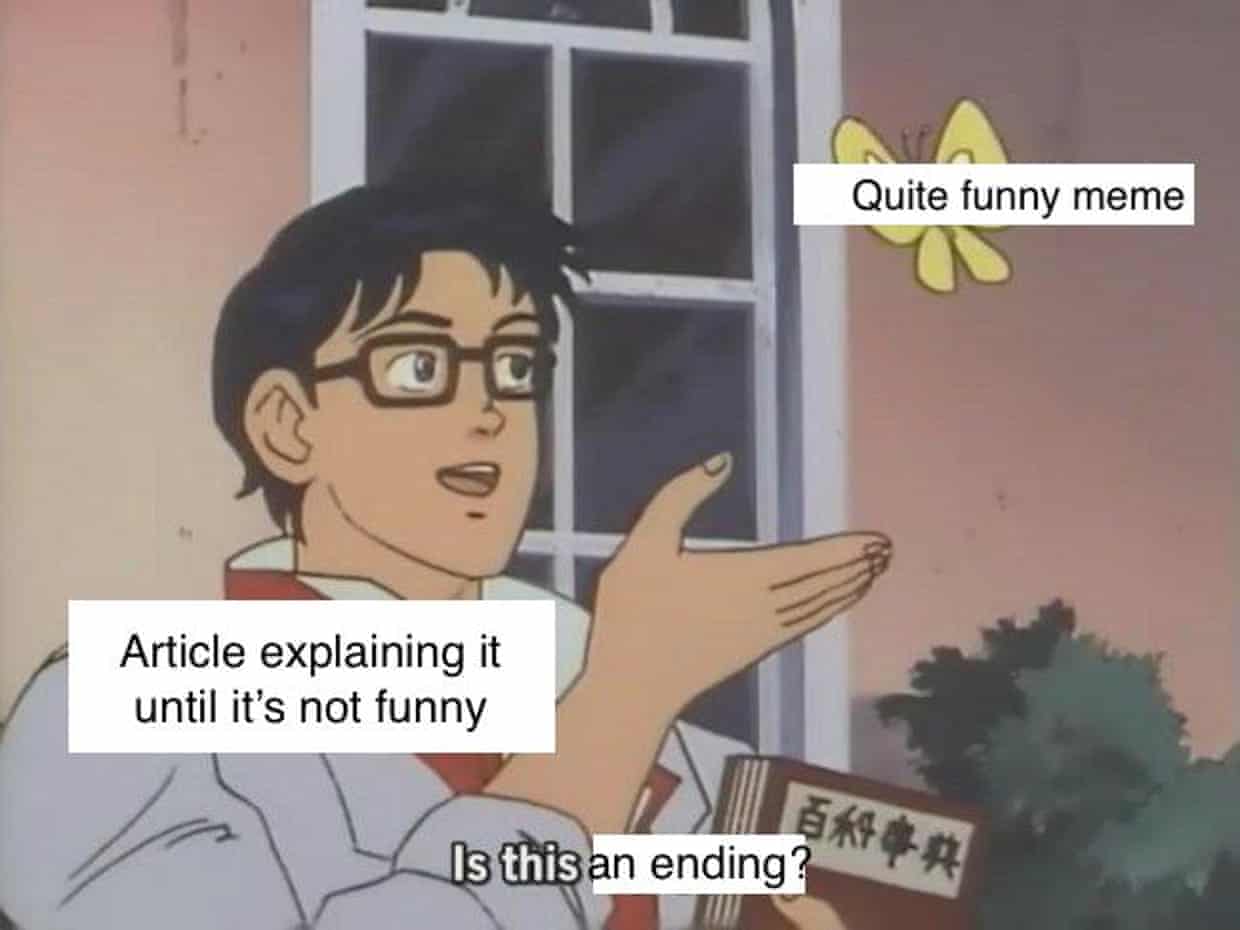
If you don’t recognise this scene, get a kid to explain it to you. Photo by BagoGames on Flickr.

A selection of 11 links for you. No, you broke up the negotiations. I’m @charlesarthur on Twitter. Observations and links welcome.

Facebook closed 583m fake accounts in first three months of 2018 | Technology | The Guardian

Alex Hern and Olivia Solon:

»

Facebook said the overwhelming majority of moderation action was against spam posts and fake accounts: it took action on 837m pieces of spam, and shut down a further 583m fake accounts on the site in the three months. But Facebook also moderated 2.5m pieces of hate speech, 1.9m pieces of terrorist propaganda, 3.4m pieces of graphic violence and 21m pieces of content featuring adult nudity and sexual activity.

“This is the start of the journey and not the end of the journey and we’re trying to be as open as we can,” said Richard Allan, Facebook’s vice-president of public policy for Europe, the Middle East and Africa.

The amount of content moderated by Facebook is influenced by both the company’s ability to find and act on infringing material, and the sheer quantity of items posted by users. For instance, Alex Schultz, the company’s vice-president of data analytics, said the amount of content moderated for graphic violence almost tripled quarter-on-quarter…

…Facebook also managed to increase the amount of content taken down with new AI-based tools which it used to find and moderate content without needing individual users to flag it as suspicious. Those tools worked particularly well for content such as fake accounts and spam: the company said it managed to use the tools to find 98.5% of the fake accounts it shut down, and “nearly 100%” of the spam.

Automatic flagging worked well for finding instances of nudity, since, Schultz said, it was easy for image recognition technology to know what to look for. Harder, because of the need to take contextual clues into account, was moderation for hate speech. In that category, Facebook said, “we found and flagged around 38% of the content we subsequently took action on, before users reported it to us”.

«

That’s pretty good work by the AI, though of course we don’t know how many fake accounts it missed.
link to this extract


Russian troll farm hijacked American teen girls’ computers for Likes • Daily Beast

Kevin Poulsen:

»

The Kremlin-linked Russian troll farm known as the Internet Research Agency took an ominous detour into malware distribution in the middle of the 2016 presidential campaign, targeting teenage girls in the US with a Chrome plug-in that pulled their browsers into a crude botnet, according to an analysis by The Daily Beast and outside security experts.

The app, called FaceMusic, was billed as an embedded music player that would allow users to listen to free tunes while browsing Facebook. The Internet Research Agency purchased Facebook ads promoting the app in May 2016 through one of its fraudulent profiles, “Stop All Invaders,” which normally pushed xenophobic anti-immigration memes in support of the Donald Trump campaign.

Facebook data released by Congress last week shows the FaceMusic ads garnered 24,623 impressions from 107 ads, but only 85 clicks in all. The most successful single ad run, with 28 clicks, used Facebook’s targeting system to go after female users in the United States between 14 and 17 years old. (In total, more than 13,000 machines were likely infected by the FaceMusic malware, according to a Daily Beast analysis.)

Google has since removed the malicious app from the Chrome store, and the public FaceMusic website at fbmusic[.]com is now defunct. But an examination of an archived copy of the code, coupled with an analysis of its web traffic, shows it packed hidden functionality that was active even when the victim wasn’t on Facebook.

«

Despite passing Google’s review before going on the Chrome Web Store, it could connect to a server and silently connect to web addresses it was told to. Considering what Chrome extensions can do, that’s unlikely to have attracted attention. But it’s a basis for clickfraud and botnets. Time to reconsider Chrome extensions, as it once was for ActiveX on IE6?

link to this extract


Qualcomm’s new smartwatch chips launch soon – what do they mean for Wear OS? • Wareable

Hugh Langley:

»

Wear OS is in an awkward spot. Having recently rebranded the smartwatch OS formerly known as Android Wear, Google hopes the number of iPhone users buying Wear smartwatches will continue to swell – but the bedrock on which these wearables are built is starting to fossilise.

Over the last few years Google has assembled an all-star cast of fashion and technology brands to build Wear OS smartwatches, but they’re all being held back by technology that feels antiquated – and is rapidly falling behind the competition. Qualcomm’s Snapdragon Wear 2100 system-on-chip was announced at the start of 2016 and – some software improvements aside – hasn’t been refreshed since, while the Apple Watch and even Samsung’s Tizen smartwatches have bounded ahead.

That will change when Qualcomm unveils its new silicon later this year, said Pankaj Kedia, Qualcomm’s senior director of wearables. The new platform will be announced this autumn alongside a lead smartwatch, he revealed, and by the holidays several partners will have Wear OS smartwatches with the new chipset on the market. Sadly a lot of the specifics will remain under wraps until Qualcomm is ready for a more formal announcement, but in a discussion with Wareable, Kedia and Dennis Troper, Wear OS director of product, confirmed the new platform is coming and gave us a taste of what it will look like.

«

This all feels to me like digital media players in the iPod age. One company made the hardware, another the software, and the content (apps, here) came from another place – though on watches, at least, there’s less demand for third-party apps. The problem with the modular (Microsoft) model, though, is that it can’t move as fast as the vertical one. In this case, the laggard element is Qualcomm, which hasn’t seen enough demand to make it worth updating those smartwatch chips. If the next lot don’t sell – as seems likely – it could be a few years before it updates them again.
link to this extract


Justice Department and FBI are investigating Cambridge Analytica • The New York Times

Matthew Rosenberg and Nicholas Confessore:

»

The Justice Department and the FBI are investigating Cambridge Analytica, the now-defunct political data firm, and have sought to question former employees and banks that handled its business, according to an American official and other people familiar with the inquiry.

Prosecutors have questioned potential witnesses in recent weeks, telling them that there is an open investigation into Cambridge Analytica — which worked on President Trump’s election and other Republican campaigns in 2016 — and “associated U.S. persons.” But the prosecutors provided few other details, and the inquiry appears to be in its early stages, with investigators seeking an overview of the company and its business practices.

The investigation compounds the woes of a firm that has come under intense scrutiny from lawmakers and regulators in the United States and Britain since The New York Times and Observer in London reported in March that it had harvested private data from more than 50 million Facebook profiles, and that it may have violated American election laws. This month, Cambridge Analytica announced that it would shut down and declare bankruptcy, saying that negative press and cascading federal and state investigations had driven away customers and made it impossible for the firm to remain in business.

«

This is what is known in British football manager lingo as “squeaky bum time”.
link to this extract


Is this a pigeon? The story behind the internet’s new favorite meme • The Guardian

Sam Wolfson:

»

The image comes from a scene in the show where an android is trying to convince a police detective that he is human. He’s a long way from Westworld standards of artificial intelligence, however, and keeps wrongly identifying the objects around him. He thinks roses are violets, and asks if a butterfly is a pigeon…

…Finding an image that can tell a story so perfectly isn’t easy, but “is this a pigeon?” fits the bill, which is likely why it remerged. It also helps that anyone with the most slapdash editing skills can give it a go, even me.

«

Thank you, Sam. (There are some great other examples in there, though sadly the four-frame biker-father-and-son one has already been forgotten.)
link to this extract


A DC think tank uses fake Twitter accounts and a shady expert to reach the NSA, FBI, and White House • Buzzfeed

Craig Silverman:

»

Earlier this year, leaders from the Marine Corps, the Department of Homeland Security, NASA, the NSA, the White House, and the FBI gathered at a Ritz-Carlton in Virginia to discuss the latest in cybersecurity and information warfare.

The event was organized by the Institute for Critical Infrastructure Technology, a nonprofit think tank founded just a few years ago that quickly established itself as a convener of well-attended cybersecurity events, a facilitator of Capitol Hill briefings, and the beneficiary of hundreds of thousands of dollars in sponsorships from top private sector security vendors.

The day’s closing session featured James Scott, ICTI’s senior fellow and cofounder, discussing Russian cyberinfluence operations and his new book about information warfare. What audience members from intelligence and law enforcement agencies didn’t know is that Scott and ICIT have been running their own deceptive information operation.

BuzzFeed News identified a network of at least 45 fake Twitter accounts being used to amplify ICIT content and Scott’s book, as well as a group of fake YouTube accounts that upload and like ICIT videos and frequently post adoring comments about Scott on content featuring him.

Reporting by BuzzFeed News has also established that Scott, ICIT’s top expert, previously sold spammy and fake social media engagement services, has a history of manufacturing flattering articles about himself and his ventures using dubious SEO techniques, and ran companies that are magnets for online complaints about dishonest business practices. His background in information security also primarily consists of self-published books on the topic that he only began publishing in 2013.

«

Scott has been emailing me (I notice) since early 2016. I haven’t actioned any of it, though the ICIT seems to generate some legitimate-looking content.

link to this extract


White House eliminates top cyber adviser post • POLITICO

Eric Geller:

»

The Trump administration has eliminated the White House’s top cyber policy role, jettisoning a key position created during the Obama presidency to harmonize the government’s overall approach to cybersecurity policy and digital warfare.

POLITICO first reported last week that John Bolton, President Donald Trump’s new national security adviser, was maneuvering to cut the cyber coordinator role, in a move that many experts and former government officials criticized as a major step backward for federal cybersecurity policy.

According to an email sent to National Security Council staffers Tuesday, the decision is part of an effort to “streamline authority” for the senior directors who lead most NSC teams. “The role of cyber coordinator will end,” Christine Samuelian, an aide to Bolton, wrote in the email to NSC employees, which POLITICO obtained from a former U.S. official.

The NSC’s cyber team has two senior directors, Samuelian wrote, and thus “cyber coordination is already a core capability.”

…“I don’t see how getting rid of the top cyber official in the White House does anything to make our country safer from cyber threats,” Senate Intelligence ranking member Mark Warner (D-Va.) tweeted Tuesday.

«

If they’re not being listened to (and can you believe they were?) it probably doesn’t make any difference if they’re there or not.
link to this extract


How Fortnite captured teens’ hearts and minds • The New Yorker

Nick Paumgarten on the huge hit, which (if you didn’t know) is like a cross between the Hunger Games and Minecraft; 100 of you start, only one can survive:

»

It was hard to do homework on a night like this; Gizzard Lizard returned to the game. He played on a PC he’d built at school. It didn’t have a graphics card. He’d never been a big gamer—his parents were fairly strict about screens and had never consented to an Xbox or even a Wii—though he’d played Minecraft for a while. This level of obsession was something new. He saw on his find-your-friends bar that a bunch of schoolmates were playing, so he FaceTimed one who goes by ism64. They teamed up and hit Lucky Landing. Gizzard Lizard wore an earbud under a set of earphones, so that he could talk with ism64 while listening for the sound of approaching enemies. From a distance, it appeared that he was talking to himself: “Let’s just build. Watch out, you’re gonna be trapped under my ramp. I’m hitting this John Wick. Oh my God, he just pumped me. Come revive me. Build around me and come revive me. Wait, can I have that chug jug? Thank you.”

I’d been struck, watching Gizzard Lizard’s games for a few days, by how the spirit of collaboration, amid the urgency of mission and threat, seemed to bring out something approaching gentleness. He and his friends did favors for one another, watched one another’s backs, offered encouragement. This was something that I hadn’t seen much of, say, down at the rink. One could argue that the old arcade, with the ever-present threat of bullying and harassment and the challenge of claiming dibs, exposed a kid to the world—it’s character-building!—but there was something to be said for such a refuge, even if it did involve assault rifles and grenades.

And then the John Wick was upon him. “Oh God! Oh God!” Foiled again.

A John Wick was an accomplished player who had earned a skin that bears a resemblance to the character played by Keanu Reeves in the “John Wick” movies. (Officially, the skin is called the Reaper, presumably to avoid licensing fees, but players call it John Wick.) It was available to anyone who had attained all hundred tiers of the game in Season 3—a combination of achievement and experience which would have required playing for between seventy-five and a hundred and fifty hours.

«

link to this extract


HTC Exodus: Blockchain powered smartphone for decentralized networks • Business Insider

Zoë Bernard:

»

On Tuesday, HTC unveiled the HTC Exodus — a phone that it’s describing as “the world’s first native blockchain phone.”

The HTC Exodus, will be similar to HTC’s other Android smartphones. The difference is that will be designed to support for blockchain-based distributed apps, and feature what the company describes as “built-in secure hardware.”

Details, including price, are currently scant. The big-picture idea, says HTC, is that this is a phone for the privacy-minded user. By using blockchain tech, HTC promises that the Exodus can give privacy-minded users control over their data, without having to rely on the major technology companies for cloud storage.

Furthermore, the phone will come with a built-in cryptocurrency wallet. Ultimately, HTC says that each Exodus will act as a node for the bitcoin and ethereum blockchains — so that every phone increases the overall size and scope of the network.

«

“The folks in marketing have had another brainwave. Yeah, I know. No, this one doesn’t involve paying huge sums to Robert Downey Jr…”
link to this extract


Wisconsin’s voter-ID law suppressed 200,000 votes in 2016; Trump won by 22,748 • The Nation

Ari Berman:

»

Prior to the 2016 election, Eddie Lee Holloway Jr., a 58-year-old African-American man, moved from Illinois to Wisconsin, which implemented a strict voter-ID law for the first time in 2016. He brought his expired Illinois photo ID, birth certificate, and Social Security card to get a photo ID for voting in Wisconsin, but the DMV in Milwaukee rejected his application because the name on his birth certificate read “Eddie Junior Holloway,” the result of a clerical error when it was issued. Holloway ended up making seven trips to different public agencies in two states and spent over $200 in an attempt to correct his birth certificate, but he was never able to obtain a voter ID in Wisconsin. Before the election, his lawyer for the ACLU told me Holloway was so disgusted he left Wisconsin for Illinois.

Holloway’s story was sadly familiar in 2016. According to federal court records, 300,000 registered voters, 9% of the electorate, lacked strict forms of voter ID in Wisconsin. A new study by Priorities USA, shared exclusively with The Nation, shows that strict voter-ID laws, in Wisconsin and other states, led to a significant reduction in voter turnout in 2016, with a disproportionate impact on African-American and Democratic-leaning voters. Wisconsin’s voter-ID law reduced turnout by 200,000 votes, according to the new analysis.

Donald Trump won the state by only 22,748 votes…

…It’s important to note that this study was conducted by a Democratic Party–affiliated group and has not been peer-reviewed or gone through the typical academic vetting process. While some studies have shown big reductions in turnout among minority voters because of voter-ID laws, others have not. But the Priorities USA study is consistent with a 2014 study by the Government Accountability Office, which found that strict voter-ID laws in Kansas and Tennessee reduced turnout by 2%, enough to swing a close election, with the largest drop-off among newly registered voters, young voters, and voters of color.

«

You won’t be surprised to hear that those disadvantaged by this tended to be African-American, and tended to be Democrat voters.

link to this extract


Twitter will start hiding tweets that “detract from the conversation” • Slate

Will Oremus:

»

Are you the sort of person who annoys, frustrates, and offends lots of people on Twitter—but manages to avoid technically violating any of its policies on abuse or hate speech? Then Twitter’s newest feature is for you. Or, rather, it’s for everyone else but you.

Twitter is announcing on Tuesday that it will begin hiding tweets from certain accounts in conversations and search results. To see them, you’ll have to scroll to the bottom of the conversation and click “Show more replies,” or go into your search settings and choose “See everything.” Think of them as Twitter’s equivalent of the Yelp reviews that are “not currently recommended” or the Reddit comments that have a “comment score below threshold.”

But there’s one difference: When Twitter’s software decides that a certain user is “detract[ing] from the conversation,” all of that user’s tweets will be hidden from search results and public conversations until their reputation improves. And they won’t know that they’re being muted in this way; Twitter says it’s still working on ways to notify people and help them get back into its good graces. In the meantime, their tweets will still be visible to their followers as usual and will still be able to be retweeted by others. They just won’t show up in conversational threads or search results by default.

You’ve heard of Twitter jail? Let’s call this Twitter purgatory. (Note: This is not Twitter’s preferred nomenclature, as the company’s representatives made clear to me when I suggested the term in a phone call Monday. “That kind of makes me cringe,” a spokesperson said.)

«

“Twitter purgatory” is a neat way to put it. The company blogpost is here; it’s the first work I know that Del Harvey has been involved in since she returned from maternity leave. And it’s good.
link to this extract


Errata, corrigenda and ai no corrida: none notified

You can sign up to receive each day’s Start Up post by email. You’ll need to click a confirmation link, so no spam.

Start Up: ticketing by face?, stop that PGP email, the man whose blood saved millions of babies, MFPs: the last word, and more


ZTE: the new phoenix? Photo by Bycroft Boy on Flickr.

You can sign up to receive each day’s Start Up post by email. You’ll need to click a confirmation link, so no spam.

A selection of 9 links for you. One hand washes the other. I’m @charlesarthur on Twitter. Observations and links welcome.

Trump’s ZTE reversal flouts warnings from top national security officials • The Washington Post

Derek Hawkins:

»

The head of the FBI and other intelligence chiefs in congressional testimony this year urged American citizens to steer clear of products from ZTE and its Chinese rival Huawei. And just two weeks ago, the Pentagon banned the companies’ phones from being sold on military bases, saying they “may pose an unacceptable risk to Department’s personnel, information and mission.”

As my colleagues Tony Romm, Damian Paletta and Steven Mufson report, the Commerce Department last month said it would bar U.S. firms for seven years from exporting critical microchips and other parts to ZTE, as punishment for violating a sanctions settlement over illegal shipments to Iran and North Korea. On Wednesday, ZTE said it would shut down its global business but was “actively communicating with the relevant U.S. government departments in order to facilitate the [order’s] modification or reversal.”

Trump appeared receptive to the idea, sending shockwaves through the national security establishment by tweeting Sunday that he and Chinese President Xi Jinping were working to give ZTE “a way back into business, fast”.

“It’s striking that he is overruling the judgment of his own national security apparatus in order to help a Chinese company succeed,” Abraham Denmark, director of the Asia Program at the Woodrow Wilson International Center for Scholars, told me. “There’s often tension between economic issues and national security issues, and this tweet seems to suggest in this case the economic issues won out.”

Adam Segal, director of the Digital and Cyberspace Policy Program at the Council on Foreign Relations, called Trump’s instruction to his Commerce Department to assist ZTE “highly unusual, given the intelligence community has given several unambiguous warnings about using ZTE and Huawei products.”

«

Everyone is puzzled as hell about this. ZTE was caught bang to rights evading a US ban on selling telecoms equipment to Iran – even after it was warned not to. Iran is a country that Trump, apparently, doesn’t like anyone doing business with, so the Iran nuclear deal got ripped up. ZTE relies on US suppliers, but they were banned from selling to ZTE.

So why help ZTE? One suggestion: China has made that conditional if Trump wants its help in the North Korea talks. Another suggestion: a Chinese state-owned construction firm has put up to $500m into an Indonesian project with Trump-brand buildings. When the White House (deputy) spokesman was asked if the latter didn’t violate the US’s emoluments (foreign bribes) rules, he said you’d have to ask the Trump Organisation.

So the rules just don’t apply any more. Want to trade with Iran? Depends what your country has over Trump. (Thanks Mark C for the Indonesia link.)
link to this extract


Ticketmaster could replace tickets with facial recognition – The Verge

Jacob Kastrenakes:

»

“We will continue investing in new technologies to further differentiate Ticketmaster from others in the ticketing business,” Live Nation wrote in a note to investors last week. It added that Blink’s technology could let you “ associate your digital ticket with your image, then just walk into the show.”

While that sounds convenient, it also means that concert venues would have to be outfitted with surveillance equipment. And on perhaps an even worse note, it means that Ticketmaster — a company everyone hates more with each new convenience fee tacked onto their bill — would need to develop a database of all its concertgoers’ faces, which a lot of people aren’t going to be comfortable with.

For now, there don’t appear to be actual plans to put this tech into place. It’s not even clear that Blink’s tech works as effectively as the company describes. But it’s clearly something Ticketmaster is thinking about.

«

Oh, by the way, sure to include an extra booking fee.
link to this extract


Blood, sweat and tears in biotech — the Theranos story • Nature

Eric Topol reviews John Carreyrou’s new book (“Bad Blood: Secrets and Lies in a Silicon Valley Startup”) on you-know-who:

»

I met Holmes twice and conducted a video interview with her in 2013, for the medical-information website Medscape. At the time, I gave a fingerstick nanotainer blood sample and within 30 minutes received my results for many routine tests — allegedly showing, for instance, normal glucose and lipid levels in accordance with previous testing. Little did I know that they were run on a standard Siemens machine (I was not allowed to see the lab area) in the back room of Theranos, and had nothing to do with the miniLab. Like so many others, I had confirmation bias, wanting this young, ambitious woman with a great idea to succeed. The following year, in an interview with The New Yorker, I expressed my deep concern about the lack of any Theranos transparency or peer-reviewed research.

Near the end of Bad Blood, Carreyrou describes how, in 2015, litigator David Boies — then Theranos’s legal counsel — attempted to prevent The Wall Street Journal from publishing Carreyrou’s reportage. For instance, Boies accused the paper of publishing Theranos trade secrets and making false and defamatory statements. Despite the $125 million invested in Theranos by Murdoch, the newspaper’s owner, the pieces were published. We also learn about Carreyrou’s tipster, a pathologist and blogger, along with so many employees who were rightfully afraid of hurting patients with fraudulent lab results. The combination of these brave whistle-blowers, and a tenacious journalist who interviewed 150 people (including 60 former employees) makes for a veritable page-turner.

«

Though as he points out, there’s little reflection about how willing people were to put money into something with no independent validation or scientific enquiry.
link to this extract


How a smartwatch literally saved this man’s life and why he wants more people to wear one • South China Morning Post

Cathy Hilborn Feng:

»

Gaston D’Aquino did not wait for the priest’s final blessing before he left Easter Sunday mass in Hong Kong on April 1. He went directly to Adventist Hospital to learn why the alarm on his Apple Watch had gone off during the service, alerting him to a spike in his heart rate.

“I had read about these cases before, so I knew it was something that was serious,” the semi-retired diamond trader says, adding he skipped family Easter lunch because “I thought that going to the hospital was that important. It was a strong signal, not ambiguous. It said I had an elevated heart rate.” That decision probably saved his life.

“I told the doctor I don’t know why I’m here, but my watch tells me I have an elevated heart rate. He says, ‘Are you feeling anything?’ I said no, I feel fine, I’m feeling all right, nothing’s wrong.”

Hooked up to an electrocardiograph machine – which records the heart’s electrical activity – he learned something was wrong. He was immediately referred to cardiologists.

“I told them about the Apple Watch giving me this reading, and they told me that the watch gives pretty accurate readings,” says D’Aquino. After batteries of tests over the next three days, “they told me that out of the three main coronary arteries, two were completely blocked, and one was 90% blocked.”

«

Plenty of these examples, but they’re never boring. (Also: heart trouble doesn’t look like the movies. I feel some sort of trend here.)
link to this extract


He donated blood every week for 60 years and saved the lives of 2.4 million babies • CNN

Doug Criss:

»

Harrison’s remarkable gift of giving started when he had major chest surgery when he was just 14, the Australian Red Cross Blood Service said.

Blood donations saved his life, so he pledged to become a blood donor. A few years later, doctors discovered his blood contained the antibody which could be used to create Anti-D injections, so he switched over to making blood plasma donations to help as many people as possible.

Doctors aren’t exactly sure why Harrison has this rare blood type, but they think it might be from the transfusions he received when he was 14, after his surgery. He’s one of no more than 50 people in Australia known to have the antibodies, the blood service says.

“Every bag of blood is precious, but James’ blood is particularly extraordinary. His blood is actually used to make a life-saving medication, given to moms whose blood is at risk of attacking their unborn babies. Every batch of Anti-D that has ever been made in Australia has come from James’ blood.” Falkenmire said. “And more than 17% of women in Australia are at risk, so James has helped save a lot of lives.”

Anti-D, produced with Harrison’s antibodies, prevents women with rhesus-negative blood from developing RhD antibodies during pregnancy. More than three million does of Anti-D have been issued to Australian mothers with negative blood types since 1967.

Even Harrison’s own daughter was given the Anti-D vaccine. “That resulted in my second grandson being born healthy,” Harrison said. “And that makes you feel good yourself that you saved a life there, and you saved many more and that’s great.”

The discovery of Harrison’s antibodies was an absolute game changer, Australian officials said.
“In Australia, up until about 1967, there were literally thousands of babies dying each year, doctors didn’t know why, and it was awful. Women were having numerous miscarriages and babies were being born with brain damage,” Jemma Falkenmire, of the Australian Red Cross Blood Service, told CNN in 2015.

«

Anti-D, or Rho(D), still has to be extracted from blood plasma; it isn’t made via genetic engineering of bacteria (as Factor 8 clotting agent is). I was ready to dispute the maths in the headline, but there have been 14.7m live births in Australia since 1958, so he’s not the only contributor, and the 2.4m figure is possible.
link to this extract


Favstar Pro is no longer for sale • Favstar

Tim Haines, owner and operator of Favstar (which shows who’s doing best on the “liked” – previously “faved” – tweets):

»

At Favstar’s peak it was serving over 50 million visits a month. Not bad for a site operated from a single web-server by a single person.

During December 2017 Twitter stated that on June 19th 2018 they will be shutting down the method that Favstar and other third-party Twitter apps use to receive your Tweets, Likes, and Retweets. You can read more about this on Apps of a Feather.

Twitter wrote that they’ll be replacing this with another method of data access, but have not been forthcoming with the details or pricing. Favstar can’t continue to operate in this environment of uncertainty.

Favstar will go offline on June 19th 2018.

Favstar Pro is no longer for sale. Anyone who has a Favstar Pro Membership beyond June 19th will receive a refund.

«

More collateral damage from this change of Twitter’s, about which third-party developers still seem to be in the dark.

link to this extract


If you use PGP, you should probably stop • NY Mag

Brian Feldman:

»

If you use PGP encryption to protect your email, you might want to disable it for the time being. A team of European researchers have discovered vulnerabilities — they’re calling them “EFAIL” — which “might reveal the plaintext of encrypted emails, including encrypted emails sent in the past.” In the meantime, the researchers and the Electronic Frontier Foundation are recommending that users disable PGP plug-ins for popular email clients like Thunderbird and Apple Mail.

PGP (Pretty Good Privacy) is a popular encryption scheme in which a sender encrypts an email with the recipient’s public key, and the recipient decrypts it with their private key. Email client plug-ins can make this decryption process automatic, and an attacker can exploit that in concert with the way in which emails are rendered using HTML (similar to a web page).

«

The advice of “just stop using PGP for email” is good enough. Doesn’t matter whether there’s a problem with it. Layering encryption on top of email is like giving a lawnmower a fridge – especially when these days there are so many other end-to-end encrypted communications systems. Email isn’t encrypted, and just isn’t going that way. Or, as Wendy Grossman put it in 2011:

»

There are so many details you can get wrong to mess the whole thing up that if this stuff were a form of contraception, desperate parents would be giving babies away on street corners.

«

link to this extract


The nine minutes that almost changed America • Buzzfeed

Kate Nocera and Lissandra Villa:

»

At around 7:06 a.m., a man in a blue T-shirt approached the field and fired 62 7.62x39mm rounds through a lawfully purchased Century International Arms SKS-style semiautomatic assault rifle. The shooting was, Alexandria’s elected prosecutor concluded, “an act of terrorism” that was “fueled by rage against Republican legislators.” The day was one in a continuum of violent, surreal days over the past year, from mass shootings to Charlottesville.

You may love them, or you may disagree with almost everything they stand for, but that morning, the roughly two dozen people on that field just tried to stay alive. Those nine minutes were a near miss of modern American history, between the dark aftermath of a deadly, mass political assassination and our own reality, in which most people don’t think very often about June 14, 2017, the difference between everything changing and almost nothing changing at all.

«

It’s a remarkable retelling of the attack on the US congressional baseball team practice. They were very lucky in many ways, notably that there was a senior member there who had a security detail – who then engaged the shooter.

It’s notable for its detail about the physical and medical effects of being shot (it’s not like in the films), and the confusion of trying to work out where a shooter is. Also for this:

»

Some of the players don’t want to talk about the man who opened fire on them, or even think he should be discussed. None say the shooting changed what they thought about gun control, except that if Washington had different gun laws and they could carry weapons, maybe some of them would have had guns in their cars.

But many lawmakers are mad, or frustrated, or saddened, at how quickly the story disappeared from the headlines given that the shooter, James T. Hodgkinson, targeted Republicans. The FBI concluded the shooting wasn’t politically motivated — suicide by cop, they told members after an investigation.

«

So they’re angry not about his ability to get a gun and almost kill them, but because they didn’t stay in the headlines for longer? Talk about taking home the wrong lesson.
link to this extract


Digital copiers, faxes and MFP’s and their hard drives • Adventures in systems land

Mark Cathcart with the last word (for now) on these devices and their hard drives:

»

Copiers that are lightly used often have a lifecycle of 10-15 years. If you buy rather than lease, it’s quite possible you still have one that doesn’t include encryption of the internal hard drive. Even with a encrypted drive, there is still potential to hack the device software and retrieve the key, although pretty difficult.

The surprise thing is that many modern Multi-function Printers (MFP) also have local storage. While in modern models it is not an actual hard drive, it is likely to be some form of onboard flash memory ala cell phone memory, either part of the system board or via an embedded SD card. It’s worth remembering that these machines are Fax, copier, printers, and scanners all in one machine.

The US Federal Trade Commision has a web page that covers all the basics, in plain language.

Whatever the device, it is still incumbent on the owner to ensure it is wiped before returning it, selling it, or scrapping it. PASS IT ON!

For those interested in how you can get data from a copier/MFP type device, Marshall University Forensic Science team has a paper, here.

«

As they used to say in newspaper letters columns, this correspondence is now closed.
link to this extract


Errata, corrigenda and ai no corrida: none notified

Start Up: music’s “unacceptable behaviour”, Iran’s hackers are back, Skype’s update problem, and more


When you drown, it doesn’t look like what you probably think drowning looks like. Photo by Simon Huggins on Flickr.

You can sign up to receive each day’s Start Up post by email. You’ll need to click a confirmation link, so no spam.

A selection of 10 links for you. Use them wisely. I’m @charlesarthur on Twitter. Observations and links welcome.

Apple Music and Pandora have pulled R. Kelly’s music from curated playlists • The Verge

Andrew Liptak:

»

Pitchfork reported that Apple quietly began to pull R. Kelly from some of its curated playlists prior to Spotify’s announcement in light of renewed reports about his behavior from a number of women. However, other artists, like XXXTentacion, who was also pulled from Spotify’s playlists, remains on Apple’s promoted playlists.

Similarly, Pandora has reportedly been working for “months” to update its policies on artists who have exhibited questionable behavior, according to Blast. Like Spotify, it has removed Kelly from its playlists. The service told Blast that its “policy is to not actively promote artists with certain demonstrable behavioral, ethical or criminal issues. We approach each of these scenarios on a case–by–case basis to ensure we address components true to Pandora’s principles while not overreaching and avoiding censorship.”

Spotify told The Verge earlier this week that R. Kelly’s music remains on the various services: the service just won’t promote it to users through its playlists. The same appears to be true for Apple and Pandora: the companies aren’t pulling their music from their catalogs, and are simply exercising some editorial control over who goes on the curated lists.

«

So this is tricky. None of these artists has actually been found guilty of anything. The services are free to do as they like with content, but if they are actually taking action over accusations of past behaviour (as is clearly the case) are they also going to pay the artist back all the money they took as their cut? After all, they clearly don’t want to benefit from “undesirable” behaviour. Doesn’t that apply to behaviour that occurred in the past too, then? (And the lack of proven built is quite apart from the question of how you’re going to set fences around “acceptable” and “questionable” behaviour in the music business.)
link to this extract


Drowning doesn’t look like drowning • Soundings Online

Mario Vittone wrote this article perhaps a decade ago; now he’s republishing it in the hope that ahead of summer, people learn its lessons. Please read the whole thing:

»

The new captain jumped from the deck, fully dressed, and sprinted through the water. A former lifeguard, he kept his eyes on his victim and headed straight for a couple who were swimming between their anchored sportfish and the beach. “I think he thinks you’re drowning,” the husband said to his wife. They had been splashing each other, and she had screamed, but now they were just standing neck-deep on a sandbar. “We’re fine, what is he doing?” she asked, a little annoyed. “We’re fine!” the husband yelled, waving him off, but his captain kept swimming hard toward him. “Move!” he barked as he sprinted between the stunned owners. Directly behind them, not 10 feet away, their nine-year-old daughter was drowning. Safely above the surface in the arms of the captain, she burst into tears and screamed, “Daddy!”

How did this captain know — from 50 feet away — what the father couldn’t recognize from just 10? Drowning is not the violent, splashing call for help that most people expect. The captain was trained to recognize drowning by experts and years of experience. The father, on the other hand, learned what drowning looks like by watching television.

If you spend time on or near the water (hint: that’s all of us), then you should make sure that you and your crew know what to look for when people enter the water. Until she cried a tearful, “Daddy,” the owner’s daughter hadn’t made a sound. As a former Coast Guard rescue swimmer, I wasn’t surprised at all by this story. Drowning is almost always a deceptively quiet event. The waving, splashing and yelling that dramatic conditioning (television) prepares us to look for is rarely seen in real life…

…if a crewmember falls overboard and everything looks okay, don’t be too sure. Sometimes the most common indication that someone is drowning is that they don’t look as if they’re drowning. They may just look as if they are treading water and looking up at the deck. One way to be sure? Ask them, “Are you alright?” If they can answer at all, they probably are. If they return a blank stare, you may have less than 30 seconds to get to them. And parents — children playing in the water make noise. When they get quiet, you need to get to them and find out why.

«

I was once walloped by three waves in the surf about 10 metres off Bondi Beach on a busy day. I couldn’t catch my breath before each one, and realised that if I didn’t get clear of the next wave, I would drown – even though there were people all around me. As he says, drowning doesn’t look like films/TV suggest. Less drama, more crisis.
link to this extract


Is ‘SimCity’ homelessness a bug or a feature? • Motherboard

Emanuel Maiberg:

»

SimCity players have discussed a variety of creative strategies for their virtual homelessness problem. They’ve suggested waiting for natural disasters like tornadoes to blow the vagrants away, bulldozing parks where they congregate, or creating such a woefully insufficient city infrastructure that the homeless would leave on their own.

You can read all of these proposed final solutions in Matteo Bittanti’s How to Get Rid of Homelessness, “a 600-page epic split in two volumes documenting the so-called ‘homeless scandal’ that affected 2013’s SimCity.”

“I started to find the discussion about homeless in SimCity way more interesting than SimCity itself because people were talking about the issue in a very—how can I say, not racist, not classist, but definitely peculiar way,” said Bittanti, a visiting professor at IULM University in Milan who spent seven years teaching in the Bay Area.

Bittanti collected, selected, and transcribed thousands of these messages exchanged by players on publisher Electronic Arts’ official forums, Reddit, and the largest online SimCity community Simtropolis, who experienced and then tried to “eradicate” the phenomenon of homelessness that “plagued” SimCity.

SimCity’s homeless people are represented as yellow, two-dimensional, ungendered figures with bags in tow. Their presence makes SimCity residents unhappy, and reduces land value. Like many other players, Bittanti discovered the online discussions when he was searching for a way to deal with them.

«

A metaphor for San Francisco. Pay more in taxes, people. It’s the price of good weather. (There’s still plenty of discussion on this.)

By the way, this article is from January 2015.
link to this extract


Without nuclear deal, US expects resurgence in Iranian cyberattacks • The New York Times

»

Within 24 hours of Mr. Trump announcing on Tuesday that the United States would leave the deal, researchers at CrowdStrike, the security firm, warned customers that they had seen a “notable” shift in Iranian cyberactivity. Iranian hackers were sending emails containing malware to diplomats who work in the foreign affairs offices of United States allies and employees at telecommunications companies, trying to infiltrate their computer systems.

And security researchers discovered that Iranian hackers, most likely in an intelligence-gathering effort, have been quietly examining internet addresses that belong to United States military installations in Europe over the last two months. Those researchers would not publicly discuss the activity because they were still in the process of warning the targets.

Iranian hackers have in recent years demonstrated that they have an increasingly sophisticated arsenal of digital weapons. But since the nuclear deal was signed three years ago, Iran’s Middle Eastern neighbors have usually been those hackers’ targets.

Now cybersecurity experts believe that list could quickly expand to include businesses and infrastructure in the United States. Those concerns grew more urgent on Thursday after Israeli fighter jets fired on Iranian military targets in Syria, in response to what Israel said was a rocket attack launched by Iranian forces.

“Until today, Iran was constrained,” said James A. Lewis, a former government official and cybersecurity expert at the Center for Strategic and International Studies in Washington. “They weren’t going to do anything to justify breaking the deal. With the deal’s collapse, they will inevitably ask, ‘What do we have to lose?’”

Mr. Lewis’s warnings were echoed by nearly a dozen current and former American and Israeli intelligence officials and private security contractors contacted by The New York Times this week.

«

Iran is a “second-tier” hacking nation: not quite at the level of the US/UK/China/Russia, but adept. (As much as anything it’s about resources.) This development is predictable enough; they want to know what the discussion is around sanctions. It’s pure intelligence. The only surprise is if they haven’t had silent malware in there to monitor it for some time, given that Trump’s intent has been clear for months.
link to this extract


Don’t Skype me: how Microsoft turned users against its beloved video-chat program • LA Times

Dina Bass and Nate Lanxon:

»

The company hasn’t updated the number of Skype users since 2016, when it put the total at 300 million. Some analysts suspect the numbers are flat at best, and two former employees describe a general sense of panic that they’re actually falling. The former Microsoft workers, who requested anonymity to discuss confidential statistics, say that as late as 2017 they never heard a figure higher than 300 million discussed internally.

Chief Executive Satya Nadella has repeatedly said he wants the company’s products to be widely used and loved. By turning Skype into a key part of its lucrative Office suite for corporate customers, though, Microsoft is threatening what made it appealing to regular folks in the first place. “It is like Tim Tebow trying to be a baseball player,” Malik said. “The product is so confusing, kludgey and unusable”…

…Skype has tried to be all things to all people, “and almost all those things are executed better elsewhere,” says Matthew Culnane, a user experience and content strategist at the U.K.’s Open University.

It doesn’t help that Microsoft keeps overhauling the app. A redesign last summer sent ratings plunging. In a scorching Twitter commentary, security journalist Brian Krebs said that finding basic buttons was a pain and that the recent update was “probably the worst so far.” The tweet — and retweets — got the attention of Skype’s social network team. “Brian, we’re sorry to hear this,” a representative replied. “Would love to hear more feedback and see if there’s anything we can help with.”

“There was a demographic that loved Skype for what it was; it was clean and simple,” says Carolina Milanesi, an analyst at Creative Strategies. “That’s no longer the case.” Milanesi once paid for a Skype subscription for her mother in Italy. Then her mother got an iPad, and now they talk on Apple Facetime. Millions do the same, despite the fact that Skype apps are a download away on iPhone and Android smartphones and tablets.

«

The redesign is really appalling. Not broken? Don’t fix. The only thing that keeps people using Skype (for podcasts and so much else) is that you can record it relatively easily: the security of apps like Signal actually works against them for things like that.
link to this extract


Apple hit with class action suit over MacBook, MacBook Pro butterfly switch keyboard failures • Apple Insider

Mikey Campbell:

»

Lodged in the Northern District Court of California, the complaint levels multiple claims targeting MacBook models manufactured from 2015 and MacBook Pro models produced from 2016. Both laptops feature the company’s butterfly keyboard mechanism, an ultra low-profile switch advertised as both more responsive and robust than traditional scissor-type components.

According to the filing, “thousands” of MacBook and MacBook Pro owners have experienced some type of failure with Apple’s butterfly keyboard, thus rendering the machine useless. Specifically, the suit claims the design is such that small amounts of dust or debris impede normal switch behavior, causing keystrokes to go unregistered.

In extreme cases, the key fails, forcing owners to take their laptop in for service at a Genius Bar or authorized Apple repair facility, a trip that could cost hundreds of dollars if the machine is out of warranty.

One named plaintiff, Zixuan Rao, purchased a new 15-inch MacBook Pro in January and began to experience problems with the laptop’s “B” key about a month later. After attempting to clean out the key on his own, Rao ultimately sought help from the Apple store in April. Representatives were unable to fix the issue and suggested repair under Apple’s gratis one-year warranty.

Not able to wait the one week it would take to fix the machine, and unconvinced that a repair would permanently solve the issue, Rao declined the offer and purchased an external keyboard.

«

As Nati Shochat said on Twitter, this was inevitable. The challenge will be to show that Apple has been negligent and to find enough people who agree, I think.
link to this extract


Cryptocurrency has been great for GPU makers—that might change soon • Ars Technica

Timothy Lee:

»

Cryptocurrency values have been falling in recent months, and graphics cards have been following along with it. GPUs haven’t quite returned to “normal” values last seen a year ago, but they’re a lot cheaper than they were earlier this year.

On Thursday, Nvidia said it was projecting next quarter’s cryptocurrency-specific revenue to be a third what it was in the first quarter.

AMD didn’t provide a specific projection for blockchain-related revenues in the second quarter, but a company spokesman said last month that he expected blockchain revenue to be a “mid-to-high single-digit percentage” of revenue for all of 2018—again, suggesting that the rest of the year will be significantly below the first-quarter sales.

If cryptocurrency prices continue to fall, that could have dire consequences for GPU makers. If cryptocurrency prices fall low enough, we won’t just see miners stop buying new GPUs. We could start to see them selling the graphics cards they already have on the secondary market. The resulting graphics-card glut could push graphics-card values well below MSRP, which would be great news for gamers but bad news for companies trying to sell new GPUs.

But in last month’s earnings call, AMD president Lisa Su said she wasn’t worried about this scenario. “There are multiple currencies being used,” she said. “People who are mining do go from one currency to another depending on what’s happening.”

«

At the time of writing, bitcoin (and so naturally the other cryptocurrencies) are having a minor crash, lying below $8500. Everything about it is unsustainable, but as they say, the market can stay irrational longer than you can stay solvent. (If, that is, you put money into it. I haven’t.)
link to this extract


What data can be recovered from a MFP (multifunction printer) hard drive? • Spiceworks

Anon user, in 2013:

»

My company has a Sharp 4101N MFP and it leases it and we do not plan to renew it. We were reminded by Sharp support to wipe any data from it before returning it. We do not have the “Data security kit” that Sharp offers to wipe the data. The frustrating thing is that they want to charge $500.00 for the Data Security Kit to be used or $500.00 to take the hard drive out and give it to us. I know that there are proven free utilities that can wipe a hard drive successfully such as Darik’s Boot and Nuke which is commonly used with Hiren’s disc.

Does anyone know if there is actually detailed data from scans, faxes, and print jobs that can be recovered or would it more or less just be basic print job files which I would not think would contain a whole lot?

«

SO ANYWAY. Last Friday’s link about MFPs (printer-copier-scanners) having hard drives which store everything turned out to be a CBS News story from 2010. My mistake for not noticing.

Except that nothing seems to have changed since then. If you want to wipe that drive, you’ll have to access the factory settings menu; you probably won’t have been warned about it. Or your company might, as above, be charged $500 for something you didn’t realise would be needed.

So, to sum up: this is still a problem, and might be an even bigger problem with GDPR.
link to this extract


Microsoft’s Joe Belfiore on the future of Windows and connecting phones to PCs • The Verge

Tom Warren interview Belfiore and Shilpa Ranganathan about Microsoft’s forthcoming “Your Phone” Windows 10 program:

»

While Microsoft has used Cortana for linking SMS and notifications to PCs in the past, this new app will be the primary way phones connect to Windows 10 PCs. Microsoft has shown off messages, notifications, and photo sharing at the moment, but not all of these features will necessarily work on both iOS and Android.

“We will actually have photos on iOS and notifications as well,” explains Shilpa Ranganathan. “Apple does make it a tad harder for messages, but we’re very willing to work with Apple.” A number of third-party apps use workarounds to support messages, but Microsoft’s vision is essentially to bring iMessage to Windows inside its Your Phone app. “I want to do this in a supported way with a respect for the ecosystem we’re building on and at the same time make it a delightful experience,” says Ranganathan. “Messages is one where we’re not currently where we need to be compared to Android, but we need to work with Apple.”

That work with Apple has not started, and Microsoft has not yet approached the company to see if it’s willing to work with Microsoft. It seems very unlikely that it will be able to convince Apple to partner on such a project, so Your Phone will likely ship with better features on Android. Still, Microsoft is also looking at other features for the app. “I know people have asked for calling and dialing as well, that’s something that has been on our radar as well,” reveals Ranganathan. Microsoft is also investigating clever features like providing directions based on text message information, or surfacing relevant contact information through the app. It’s still early for Your Phone, but Microsoft is clearly committed to making this a powerful part of Windows 10.

«

Apple’s not going to let Microsoft touch iMessage. Not while it can get platform leverage by making it available only on Macs. Of course there are more Android users on Windows than iOS users on Windows (because there are more Android users overall), so Microsoft might not lose out that heavily.
link to this extract


IBM employees banned from using all removable storage • ExtremeTech

Joel Hruska says it’s an easy edict, but it’s not real-world viable:

»

But — and boy is there a but, here — it’s also precisely the kind of decision that plays great in the C-suite and causes merry hell in the rank and file. There are going to be times and cases when servicing a machine or helping a customer with software deployment is going to require distributing patches via USB stick. Not every system or server is automatically configured for external internet support. Not every business makes their corporate Wi-Fi available for guests. IBM’s argument is that its employees can simply switch to using its Sync’n’Share service for such needs. To be fair to IBM, that’s probably true — to a point.

But if you’ve ever done any kind of IT work, you know that real life adores these kinds of rigid policies, precisely so it can fling you curveballs that suddenly become problems. I had to hang on to a 1.44-inch floppy drive long after they’d stopped shipping in new PCs, for example. First, Windows XP (the dominant OS of the time) didn’t support loading storage drivers off anything but a floppy, unless they were slipstreamed into the OS image on the CD. Second, BIOS updates of the day couldn’t be run off anything but floppy disks, either. This eventually improved, but it wasn’t unusual to have a BIOS flash utility that was only compatible with FAT16 or FAT32 devices, while you had an NTFS partition on the primary drive. How often did I use that floppy drive? Almost never. Most of the time, there were ways to get around driver issues. Most motherboards didn’t need a flash. But it’s the “almost” in “almost never” that made me keep the stupid thing around, long after it should’ve outlived its usefulness. Hell, I think I’ve still got one sitting in the garage.

Of course, it’s possible IBM has perfectly programmed its systems, built the perfect cloud sync system, conceived of every possible circumstance in which its employees might need to access said system, and taken every step to make certain nobody on a service call winds up not being able to access necessary files due to network permissions or firewalls.

But you know, I kind of doubt it.

«

He’s right; word is that IBM is already offering that there can be extenuating circumstances when USB sticks could be allowed for software updates. Which is exactly the sort of problem you’re trying to prevent, of course: Stuxnet, the worm that delayed Iran’s nuclear ambitions, was spread via USB sticks.
link to this extract


Errata, corrigenda and ai no corrida: last Friday’s link about the hard drives on multi-function printers was from 2010. See above (if you’ve skipped) for a link about what still seems to be the case.

Start Up: Facebook’s (extra) Russian ads, iOS 11.4’s Lightning stop, Klout gets clonked, and more


Digital photocopiers keep a record of what they’ve seen. Think about that. Photo by Pesky Librarians on Flickr.

You can sign up to receive each day’s Start Up post by email. You’ll need to click a confirmation link, so no spam.

A selection of 8 links for you. Still, Friday! I’m @charlesarthur on Twitter. Observations and links welcome.

#BlueLivesMatter and Beyoncé: Russian Facebook ads hit hot-button US issues • The Guardian

Olivia Solon and Julia Carrie Wong:

»

The ads cover a range of issues, including racial injustice, gun control, LGBT rights, immigration and patriotism. Included with each ad is information about how many people saw or engaged with the ad, the price paid in rubles and the target audience.

A sample of the ads bought by the notorious Russian troll factory between 2015 and 2017 for a total of about $100,000 was previously released by Democrats on the House intelligence committee last year. Facebook provided them to the panel last year as part of an investigation into Russian meddling in the election.

The collection doesn’t include the 80,000 posts that were shared by 120 fake Russian-backed pages, shared by 29 million Americans directly and viewed by as many as 126 million Americans.

Among the cache are sponsored posts describing police brutality against black people, including the killings of the 12-year-old Tamir Rice, the Ferguson teenager Michael Brown and the unarmed motorist Walter Scott. They link to the “Black Matters” page on Facebook.

One batch of advertisements promotes “Williams and Kalvin”, a pair of black YouTube vloggers who decried racism and police brutality in their advertisements. The Daily Beast previously reported on the pair’s YouTube videos, in which they railed against Clinton and supported Trump.

The documents show that Williams and Kalvin targeted their ads specifically toward African Americans: many of the ads instruct Facebook to exclude people who are designated as showing Hispanic or Asian American “behavior” but include people whose “behavior” is designated as “African American (US)”. Facebook did not immediately respond to a request for clarification on how Facebook defines African American “behavior”.

«

In September I was on a radio show as all this was getting underway, and suggested there was plenty more to come out. Even with this, there’s still plenty more to come out. But it does show how easily Russia made an end run around Facebook (and America) by understanding the value and nature of propaganda.
link to this extract


Google Duplex makes your life easier by deceiving others • NYMag

Brian Feldman:

»

The hypothetical economic benefits of such a system are obvious and substantial. It’s also, in the classic Google mode, a huge boon to daily convenience. And boy, is it impressive technology — and worrying.

To some extent, these worries are more cultural than technical. The Duplex demos showed the system completing a task, like booking an appointment, and the dialogues stuck to discussing the program objective. How does Duplex work when the conversation goes off on a tangent, or if there’s an emotional component (let’s say your preferred stylist is out because of a family emergency)? Duplex inverts what we usually want out of our software. It is a complex system for performing dead-simple tasks. Google told the Verge that “it can only converse in ‘closed domains’ — exchanges that are functional, with strict limits on what is going to be said.” As of now, Duplex can only book hair appointments, make restaurant reservations, and ask a store’s holiday hours. At that point, you’re taking what should be a relatively simple, personable action and making it artificial and complicated. Not to be a grouch, but it’s not hard to pick up the phone and call if that’s really the only option left.

At its heart, the system that Duplex proposes is imbalanced. The system of making reservations or appointments over the phone isn’t a power struggle, but for it to work well everyone has to be coming from the same place, with the same restrictions on time and effort. The introduction of automation upsets this balance. Now it’s one person tapping a button and the other performing conversation. It’s not clear what sort of safeguards are in place to ensure that, for instance, the human answering the phone is not dealing with an overload of robocalls. After all, these places don’t have online reservations systems; how can Google know if they’re all booked up? Google told Wired that it is limiting the number of background calls users can place per day, and putting in safeguards to make sure a single user can’t spam a single number (it’s got a bit of experience identifying the habits of spammers).

«

I get the impression Google is listening for the reaction to Duplex to decide what it’s going to do; that’s why it isn’t giving a date for rolling it out. It might never release it, or only use it in some limited area. Some people have suggested it would be good for booking a place if you don’t talk the language (but Duplex, natch, does). Though it’s then going to be fun ordering your food there, isn’t it?
link to this extract


Digital photocopiers loaded with secrets • CBS News

Armen Keteyian:

»

Nearly every digital copier built since 2002 contains a hard drive – like the one on your personal computer – storing an image of every document copied, scanned, or emailed by the machine. In the process, it’s turned an office staple into a digital time-bomb packed with highly-personal or sensitive data. If you’re in the identity theft business it seems this would be a pot of gold.

“The type of information we see on these machines with the social security numbers, birth certificates, bank records, income tax forms,” John Juntunen said, “that information would be very valuable.” Juntunen’s Sacramento-based company Digital Copier Security developed software called “INFOSWEEP” that can scrub all the data on hard drives. He’s been trying to warn people about the potential risk – with no luck. “Nobody wants to step up and say, ‘we see the problem, and we need to solve it,'” Juntunen said.

This past February, CBS News went with Juntunen to a warehouse in New Jersey, one of 25 across the country, to see how hard it would be to buy a used copier loaded with documents. It turns out … it’s pretty easy. Juntunen picked four machines based on price and the number of pages printed. In less than two hours his selections were packed and loaded onto a truck. The cost? About $300 each.

Until we unpacked and plugged them in, we had no idea where the copiers came from or what we’d find. We didn’t even have to wait for the first one to warm up. One of the copiers had documents still on the copier glass, from the Buffalo, N.Y., Police Sex Crimes Division.

It took Juntunen just 30 minutes to pull the hard drives out of the copiers. Then, using a forensic software program available for free on the Internet, he ran a scan – downloading tens of thousands of documents in less than 12 hours.

The results were stunning: from the sex crimes unit there were detailed domestic violence complaints and a list of wanted sex offenders. On a second machine from the Buffalo Police Narcotics Unit we found a list of targets in a major drug raid.

«

Did not know there was a hard drive. How do you access it and see what’s on it? Or how do you get it to wipe?
link to this extract


iOS 11.4 to introduce USB Restricted Mode: disables Lightning port after 7 days • Pocket-lint

Max Langridge:

»

The Lightning connector can still be used for charging, but no data can be extracted from the iOS device. However, if the owner of the iPhone or iPad unlocks it using a passcode, the Lighting port will reactivate. The feature was first seen in the iOS 11.3 beta, but was never officially released, so there’s still a chance it won’t be ready for the full iOS 11.4 rollout.

Apple’s official notes for the feature say: “To improve security, for a locked iOS device to communicate with USB accessories you must connect an accessory via lightning connector to the device while unlocked – or enter your device passcode while connected – at least once a week.”

Elcomsoft has tested the feature, but still hasn’t figured out if the Lightning port disables only if the device isn’t unlocked with a passcode for seven days, if it isn’t unlocked at all using a passcode or biometrics, or if the device hasn’t been unlocked or connected to a trusted computer. In their testing, Elcomsoft didn’t try to unlock the iOS device at all, or connect it to a trusted computer and the port disabled.

This means that if law enforcement agencies need to obtain information from an iPhone or iPad, they will have a much smaller window of time in which to unlock it. It should also mean services such as GreyKey won’t be able to get into them either. GreyKey uses the Lightning port to install a piece of software that can figure out the passcode of an iOS device.

«

Strange that Elcomsoft didn’t test it further. Did they not want to know? This does seem intended to block unwanted intrusion into the device, though. For those in dictatorial regimes, that could be welcome.
link to this extract


Medium abruptly cancels the membership programs of its 21 remaining subscription publisher partners • Nieman Journalism Lab

Shan Wang:

»

Medium has informed publishers using its platform to offer paid memberships that it’s ending that feature. An email at the end of last month from Medium’s head of partnerships Basil Enan told publishers that the company was planning to discontinue memberships in May.

“We were among the first to sell memberships on Medium, among the few local organizations working with them,” Chris Faraone, founder of the Boston Institute for Nonprofit Journalism, told me. “We’ve had an arrangement with them for two years. I’m not saying they don’t have a right to break it. We’ve been scaling back, trying to get people to other platforms anyway. But it’d be nice to have more of a heads up.” (Faraone also works as the news and features editor of alt-weekly DigBoston.) “Our experience in dealing with a lot of these tech-oriented operations is that there’s some good reception, but in the end, it’s whatever their whim is.

“Meanwhile, we’re trying to make a living here. We’re cool with experimenting. But this is been an unbelievable blow. Could we have a better metaphor for the way Silicon Valley considers local journalism?”

«

So Medium has tried ad-supported, premium, non-premium.. can’t be long before it starts doing a Medium conference aiming to pay for the cost of running the site.
link to this extract


Chinese tech giant on brink of collapse in new US cold war • The New York Times

Raymond Zhong:

»

One of China’s most internationally successful technology suppliers, with about $17 billion in annual revenue, ZTE is facing a death sentence. The Commerce Department has blocked its access to American-made components until 2025, saying the company failed to punish employees who violated trade controls against Iran and North Korea.

American microchips power ZTE’s wireless stations. American optical components go into its optical fiber networks. Google’s Android operating system runs its smartphones. As the Trump administration threatens a trade war to stymie China’s plans for promoting advanced industries, the firm’s travails are proving an apt demonstration, for China’s leaders, of exactly why the country needs to be more self-sufficient in technology.

President Xi Jinping recently issued a rousing call to action, according to the state news agency Xinhua.

“By tightening our belts and gritting our teeth, we built ‘two bombs and one satellite,’” Mr. Xi said, referring to a Mao-era weapons development program. “This was because we made best use of the socialist system — we concentrated our efforts to get great things done. The next step is to do the same with science and technology. We must cast away false hopes and rely on ourselves.”

ZTE’s moment of crisis, if it leads to the company’s collapse, could also show how the tech cold war might ripple around the world.

The company has 75,000 employees and does business in more than 160 countries. It is the No. 4 smartphone vendor in the United States. And its telecommunications gear supports the digital backbone of a great swath of the developing world.

«

Watching ZTE go down is like watching the death of the Titanic. Just a little tilt, and then more and more… but China’s reaction is going to make a big difference. If China becomes self-sufficient in hardware, the balance of power will change dramatically.
link to this extract


Klout, the scoring system for social media influence, is shutting down • Business Insider

Kif LEswing:

»

Klout was founded in 2009 by Joe Fernandez, partially as a way to get a job at Twitter, according to Business Insider. But ranking people by importance or influence turned out to be a strong enough idea to raise four rounds of venture funding from top-tier firms totaling $40m.

Eventually, it was sold in 2014 for $200m to Lithium Technologies, which is the company that is shutting down the service later this month. Lithium is a private company that makes digital marketing tools.

Klout enabled users to share their Facebook and Twitter data, and parsed that data through a vague algorithm to give users a simple popularity metric between 10 and 100, called the “Klout score.”

Here’s a screenshot of the software, taken on Thursday:

Lithium CEO Pete Hess discussed the shutdown in an email to customers on Thursday. “The Klout acquisition provided Lithium with valuable artificial intelligence (AI) and machine learning capabilities but Klout as a standalone service is not aligned with our long-term strategy,” he wrote.

To be fair, Klout scores are probably not aligned with anyone’s long-term strategy, unless that involves becoming a huge Twitter star. Over the years, Klout scores became a punchline for techies and the Twitter-obsessed. “Klout has been one of my go-to punchlines for some time now,” TechCrunch founder Michael Arrington wrote in August 2012.

«

And yet it carried on independently for two more years, and for another four after that. Nine years of Klout? Though I can’t say I’ll miss it. Never used it; what’s a single number compared to the complexity of human interaction?
link to this extract


Android P’s gesture navigation is bad, Google • Android Police

David Ruddock:

»

The multitasking button is gone – that’s the first thing to know. The home button is now a pill, and the back button appears in apps, but not on the launcher. Swiping up on the home button opens the new multitasking interface (which I actually think looks great), and swiping up a second time opens the app drawer (this makes no sense). Or, if you’re on the homescreen, a long swipe up to the middle of the screen briefly opens the multitasking UI then flips open the app drawer. Swiping right on the home button allows you to quickly switch back to the last app you had open (functionally, this is equivalent to double-tapping recents on Oreo).

Google has taken what was a not-particularly-attractive but otherwise functional navigation model and replaced it with one that isn’t any better (arguably, it is worse). At the same time, I’d argue strongly that this new navigation bar is even uglier than the old one. It’s visually uneven with the missing multitasking key, and now the back key isn’t filled. I suspect the latter inconsistency is about highlighting that the back key is ephemeral, which I get, but it looks like something out of a bad custom ROM – not a serious smartphone OS.

We also get no extra real estate out of this deal. The navigation bar still takes up a big strip on the bottom of the screen in apps, unlike the iPhone X, which integrates the home bar seamlessly over the interface of applications (and it’s completely hidden on the homescreen). The beauty of Apple’s system is that gestures allow you to get rid of overt visual elements for extremely common actions. Pull up to go home. Hold up to multitask (or go up and left to immediately multitask). Swipe on the bar to quickly switch between apps. Swipe from the left of the screen to go back (admittedly, this isn’t true in many apps, which still use the back button in the upper left).

Reviews of the iPhone X routinely cite gesture navigation as one of the best features of the phone, and for all the problems I have with using an iPhone, the gesture navigation is easily the thing I miss most after coming back to Android.

Android P’s half-baked attempt – one foot in the world of gestures, one back in software keys – simply isn’t an acceptable compromise.

«

There’s some way to go before Android P is locked down, but it’s hard to know how much of this can be changed.
link to this extract


Errata, corrigenda and ai no corrida: none notified

Start Up: did Tidal inflate its numbers?, Europe’s smartphone shrinkage, the fake review economy, and more


If you’re an evolutionary scientist, you think: what if we put this into an MRI scanner and played it Bach? Photo by Nemodus photos on Flickr.

A selection of 9 links for you. Number not inflated. I’m @charlesarthur on Twitter. Observations and links welcome.

TIDAL accused of deliberately faking Kanye West and Beyoncé streaming numbers • Music Business Worldwide

Tim Ingham:

»

In March 2016, the firm claimed that Kanye West’s The Life Of Pablo, a six-week exclusive on its platform, had been streamed 250m times in just 10 days. At the same time, TIDAL claimed that its platform had surpassed 3m subscribers.

These numbers meant that, on average, every single TIDAL subscriber would have had to be playing the Kanye album over eight times a day.

Similar suspicions were triggered by the success of Beyonce’s record-breaking Lemonade a couple of months later.

TIDAL claimed that Lemonade was streamed 306m times on its platform in its first 15 days post-release. Stats like this led Norwegian newspaper Dagens Næringsliv to investigate in January 2017 – and uncover documents which, it said, suggested that TIDAL had been deliberately inflating its subscriber figures.

This report was lend credence by data from trusted music industry research firm Midia in the same month, which estimated that TIDAL’s subscriber base actually only included 1m people worldwide.

Now, DN has run an update – following more than a year of journalistic digging. And it’s an absolute jaw-dropper.

Its central accusation: ‘Beyoncé’s and Kanye West’s listener numbers on TIDAL have been manipulated to the tune of several hundred million false plays… which has generated massive royalty payouts at the expense of other artists.’

The newspaper’s investigation was ignited by its receipt of an illicit hard drive, which it says ‘contains ‘billions of rows of [internal TIDAL data]: times and song titles, user IDs and country codes’.

The veracity of the data on this hard drive has been strongly challenged by TIDAL, but according to DN, the numbers match exactly with information received by record labels during the dates in question.

«

Oh my. Lemonade is amazing, but you need subscribers too.
link to this extract


Smartphone shipments fall 6.3% in Europe in Q1 2018 • Canalys

»

Smartphone fatigue hit Europe in Q1 2018, as shipments fell 6.3% year on year, the biggest ever drop in a single quarter. Western Europe bore the brunt, down 13.9% with 30.1m units shipped. Central and Eastern Europe, though a smaller market, remained a growth region, up 12.3% at 15.9m units, driven by a buoyant Russia.

“This is a new era for smartphones in Europe,” said Ben Stanton, Analyst at Canalys. “The few remaining growth markets are not enough to offset the saturated ones. We are moving from a growth era to a cyclical era. This presents a brand-new challenge to the incumbents, and we expect several smaller brands to leave the market in the coming years.”

Adapting to new market dynamics, the top three vendors all had starkly different results:

• Samsung remained on top, shipping over 15m smartphones, but slipped 15% compared with last year as Huawei and Xiaomi put pressure on its low-end and mid-range models. But the high price of the Galaxy S9, as well as its earlier launch in the calendar year than the Galaxy S8, prompted a drastic rise in its ASP over the previous year, and helped Samsung boost its shipment value by over 20%.

• Apple outperformed the market and shipped over 10m units, but this still represented a 5.4% decline. As a percentage of models shipped, the iPhone X declined slightly from Q4, to around 25%, but it remained comfortably the best-shipping smartphone in the region. Apple’s larger portfolio strategy will become more important as the year progresses, with over 25% of its Q1 shipments the iPhone SE, 6 and 6S – models that are over two years old. This wider spread of shipments did, however, offset the value growth driven by the pricier iPhone X.

• Huawei bucked the trend, growing 38.6% and shipping 7.4m units. It shipped over 1m of its new P Smart in its first full quarter. But the delay to its flagship P20, versus last year’s P10, meant that very few of its Q1 shipments were premium models. Despite its large volume growth, it only managed to boost its shipment value by 1.7% over the previous year. But it will be confident of a rise in ASP as the P20 truly comes into play in Q2.

«

That fall in the UK is pretty dramatic – down by a third. That’s saturation at work. And the fifth-biggest supplier might surprise you.
link to this extract


Scientists stuffed a crocodile into an MRI machine to see if it likes Bach • ExtremeTech

Joel Hruska:

»

This is rather less ridiculous than it might seem at first glance. The team in question was investigating the evolution of complex stimulus processing. Crocodiles have remained phenotypically similar for tens of millions of years; crocodilians like Deinosuchus that lived 80-73 million years ago look quite similar (if much larger) than crocodiles today. The last common ancestor between crocodiles and birds lived 240 million years ago, which makes modern crocodiles an interesting comparison case for both mammals and birds.

And one of the interesting things about mammals and birds is that we handle complex audio processing in areas of our brains that are functionally similar, even if the regions themselves are quite physiologically distinct. The question was, would reptiles show similar functional similarity, or did they evolve an entirely different method of processing this information? The only way to find the problem was to chuck a crocodile in an MRI and play it some music.

This is easier said than done. “The difficulty in scanning crocodiles—beside being a little bit dangerous for the experimenter—is that they are cold-blooded reptiles,”” lead researcher Dr. Felix Ströckens, from the Department of Biopsychology at Ruhr University Bochum, told Gizmodo. “We thus had to find a temperature which allowed us to pick up a good signal and was comfortable for the animal. We also had to keep this temperature stable within the scanner which is relatively difficult since the coils used for scanning also emit heat.”

The crocodiles were tested with a wide range of stimuli, including various colors, simple sounds, and complex audio, with the latter provided by Johan Sebastian Bach’s Brandenburg Concerto No. 4.

«

I’m not going to spoil the surprise for you.
link to this extract


Qualcomm plans exit from server chips • Bloomberg

Ian King:

»

The San Diego-based company is exploring whether to shutter the unit or look for a new owner for the division, which was working on ways to get technology from ARM Holdings Plc into the market for chips that are at the heart of servers, the person said. ARM is one of Intel’s only rivals in developing semiconductor designs, and its architecture is primarily used in less power-intensive products, such as smartphones.

Qualcomm is the largest backer of an effort to find a role for ARM designs in the highest end of the computing market, where individual chips sell for multiple thousands of dollars. Chipmakers have been trying for years to provide owners of large data centers – companies such as Alphabet Inc.’s Google and Amazon.com Inc.’s Amazon Web Services – with processors to run them, trying to break into a business that Intel dominates with about 99% market share.

A Qualcomm spokesman declined to comment. In the company’s earnings report last month, Chief Executive Officer Steve Mollenkopf told analysts that Qualcomm is focused on spending reductions in its non-core product areas.

Servers, which crunch data in corporate networks and act as the backbone of the internet, are a much smaller market than phones and personal computers when measured by shipments. But the price that chipmakers are able to charge for the high-performance parts needed to run them makes the market attractive.

Qualcomm began selling a server chip, the Centriq 2400, based on ARM technology last year. At the time, the company said the chips, which were manufactured by Samsung Electronics Co., offered better results than an Intel Xeon Platinum 8180 processor, based on energy efficiency and cost. At the public introduction of the server chip line in November, potential customers such as Microsoft Corp. took to the stage to voice their interest in the offering. Since then, Qualcomm has been silent about its progress.

«

Strange; ARM chips for servers seemed like the next big thing a few years ago. But it’s gone nowhere – perhaps because it’s not just about having a cooler chip.
link to this extract


Bail-bond industry suffers another blow as Facebook and Google ban ads • NBC News

Jon Schuppe:

»

Google and Facebook, the world’s most dominant online-advertising companies, will no longer take money from America’s for-profit bail bond agencies, siding with a growing national movement to eliminate cash bail from the criminal justice system.

The two tech giants said this week that their decisions to block bail-bond ads were part of a broader effort to protect users from damaging or hurtful content. Typically, that strategy has focused on scams and deception. But that list has recently expanded to include guns, marijuana, payday loans, cryptocurrencies and, now, bail bonds.

David Graff, Google’s senior director of global product policy, said in a statement on Monday that the company was persuaded by studies showing that bail bond agencies profited off poor and minority communities, where people who are arrested often must go into debt in order to post court-ordered bonds that guarantee their return for trial.

“We made this decision based on our commitment to protect our users from deceptive or harmful products, but the issue of bail bond reform has drawn support from a wide range of groups and organizations who have shared their work and perspectives with us,” Graff wrote in a blog post.

«

Without a doubt, a good thing. Gambling next? That profits off poor and minority communities too.
link to this extract


Inside Amazon’s fake review economy • Buzzfeed

Nicole Nguyen:

»

One morning in late January, Jake picked up the box on his desk, tore through the packing tape, unearthed the iPhone case inside, snapped a picture, and uploaded it to an Amazon review he’d been writing. The review included a sentence about the case’s sleek design and cool, clear volume buttons. He finished off the blurb with a glowing title (“The perfect case!!”) and rated the product a perfect five stars. Click. Submitted.

Jake never tried the case. He doesn’t even have an iPhone.

Jake then copied the link to his review and pasted it into an invite-only Slack channel for paid Amazon reviewers. A day later, he received a notification from PayPal, alerting him to a new credit in his account: a $10 refund for the phone case he’ll never use, along with $3 for his trouble — potentially more, if he can resell the iPhone case.

Jake is not his real name. He — along with the four other reviewers who spoke to BuzzFeed News for this story — wanted to remain anonymous for fear Amazon would ban their accounts. They are part of an extensive, invisible workforce fueling a review-fraud economy that persists in every corner of the largest marketplace on the internet. Drawn in by easy money and free stuff, they’ve seeded Amazon with fake five-star reviews of LED lights, dog bowls, clothing, and even health items like prenatal vitamins — all meant to convince you that this product is the best and bolster the sales of profiteers hoping to grab a piece of the Amazon Gold Rush. Meanwhile, sellers trying to play by the rules are struggling to stay afloat amid a sea of fraudulent reviews, and buyers are unwittingly purchasing inferior or downright faulty products. And Amazon is all but powerless to stop it…

…Amazon won’t reveal how many reviews — fraudulent or total — it has. But based on his analysis of Amazon data, [ReviewMeta CEO Tommy] Noonan estimates that Amazon hosts around 250 million reviews. Noonan’s website has collected 58.5 million of those reviews, and the ReviewMeta algorithm labeled 9.1%, or 5.3 million of the dataset’s reviews, as “unnatural.”

«

If it can be gamed, it will be gamed. If it can be gamed for money, it will be gamed for money. The problem is limiting the scale. Plenty of stories here of scammy products, honest products scammed, and the scammy reviewers.
link to this extract


And for his next act, Ev Williams will fix the internet • The New York Times

Kevin Roose:

»

Echoing Mr. Zuckerberg’s testimony before Congress last month, Mr. Williams said he now believed that he had been too optimistic during social media’s early days, and had failed to appreciate the risks of putting such powerful tools in users’ hands with minimal oversight.

“One of the things we’ve seen in the past few years is that technology doesn’t just accelerate and amplify human behavior,” Mr. Williams wrote. “It creates feedback loops that can fundamentally change the nature of how people interact and societies move (in ways that probably none of us predicted).”
Image

Mr. Williams has not given up on Twitter, but “I think I was a little bit ahead of some people in seeing the dark side” of social media, he said.

Mr. Williams is only a partial heretic. He acknowledges that social media companies have not done enough to promote high-quality content, but he also blames publishers for amping up sensationalism in order to increase their traffic. And when I asked if he agreed with Mr. Zuckerberg’s recent statement that “the world would lose if Facebook went away,” he demurred.

“I honestly don’t know my answer to that,” he said. “I think it’s probably right.”

But if Mr. Williams isn’t ready to denounce social media, he is at least muting its effects in his own life. He still uses Twitter, but he has turned off most mobile notifications, and he tries to leave his phone behind when he’s with his friends or his kids. He is reading less daily news these days, he said, and more books and long-form articles.

“That’s been healthy for me,” he said. “I feel the effects of that.”

Listening to an architect of the fast-twitch internet extol the benefits of books and magazines is a little odd, like watching Chef Boyardee open a farm-to-table restaurant. But Mr. Williams is not alone among tech leaders in his quest for a slower and more balanced media diet. (Mr. Dorsey, who has been Twitter’s chief executive since 2015, went on a 10-day silent meditation retreat in December.)

«

link to this extract


China’s ZTE Corp says main business operations cease due to US ban • Reuters

Sijia Jiang:

»

ZTE, China’s second biggest telecom equipment maker, was hit last month with a ban from Washington forbidding US firms to supply it with components and technology after it was found to have violated US export restrictions.

“As a result of the Denial Order, the major operating activities of the company have ceased,” ZTE said in the filing.

“As of now, the company maintains sufficient cash and strictly adheres to its commercial obligations subject to compliance with laws and regulations,” it said.

ZTE said it was actively communicating with the US government “in order to facilitate the modification or reversal of the Denial Order by the US government and forge a positive outcome in the development of matters.”

The ban that threatens to cut off ZTE’s supply chain came amid heightened tension over a possible US-China trade war. The Chinese government raised the issue of ZTE last week with a visiting US trade delegation.

ZTE said on Sunday it had submitted a request to the US Commerce Department for the suspension of the ban.

«

That’s colossal. But without access to American(-owned) component sources, ZTE was stuffed.

No doubt: this is going to make the Chinese government determined to secure its own component companies. It won’t like having a big player like this liable to shutdown by American fiat. (ZTE was banned for selling equipment to Iran when sanctions were in place.)

Next question being, is Huawei going to be affected somehow?
link to this extract


Leaving on a jet plane: the trade in fraudulently obtained airline tickets • SpringerLink

Alice Hutchings:

»

Nohl found flight bookings could be accessed using brute force attacks, whereby common surnames and potential passenger name records (PNRs) are repeatedly tried against airline’s online systems. Furthermore, provided with access to a boarding pass, or a photograph of one (which are readily posted on social media sites), the PNR can be read with the use of a barcode scanner (and are printed in plain text on baggage tags). Malicious actors who access booking systems in such a way could change flight dates or destinations, or request refunds, allowing them to travel under the victim’s name. Some airlines also allow name changes.

Less obtrusively, they could insert or replace a frequent flyer account number, to harvest the traveller’s points. While the new frequent flyer account must be in the same name as the traveller, some airlines allow name changes on these accounts. Furthermore, the PNR includes the passenger’s name and email address, which may be used to send targeted phishing emails requesting confirmation of frequent flyer credentials or payment details. Nohl was also concerned that GDS’ do not properly authenticate users accessing PNRs, do not rate limit attempts to access the system, therefore allowing the brute force attacks to occur, and do not log when PNRs have been accessed, making unauthorised access harder to detect. Nohl’s work is a proof of concept, showing such attacks are possible. It is unknown if these attacks, or variations of them, had already occurred, although some of the vulnerabilities were reported many years earlier.

«

This (free to read) article is a real eye-opener about the extent of this fraud, which is reckoned to cost airlines about €1bn annually.
link to this extract


Errata, corrigenda and ai no corrida: quite a few people have said that landlines remain a necessity in the US, so that beating spam callers is still a real challenge.

You can sign up to receive each day’s Start Up post by email. You’ll need to click a confirmation link, so no spam.

Start Up: Google I/O top lines, mobile gaming takes over, encrypted Twitter DMs?, iMac timing, and more


Got a ton of email? Google will write the replies for you. Photo by Robert Couse-Baker on Flickr.

A selection of 13 links for you. Unlucky for unlucky people. I’m @charlesarthur on Twitter. Observations and links welcome.

Twitter has an unlaunched ‘Secret’ encrypted messages feature • TechCrunch

»

Buried inside Twitter’s Android app is a “Secret conversation” option that if launched would allow users to send encrypted direct messages. The feature could make Twitter a better home for sensitive communications that often end up on encrypted messaging apps like Signal, Telegram or WhatsApp.

The encrypted DMs option was first spotted inside the Twitter for Android application package (APK) by Jane Manchun Wong. APKs often contain code for unlaunched features that companies are quietly testing or will soon make available. A Twitter spokesperson declined to comment on the record. It’s unclear how long it might be before Twitter officially launches the feature, but at least we know it’s been built.

The appearance of encrypted DMs comes 18 months after whistleblower Edward Snowden asked Twitter CEO Jack Dorsey for the feature, which Dorsey said was “reasonable and something we’ll think about.”

Twitter has gone from “thinking about” the feature to prototyping it.

«

Coming late to the game. Will it be end-to-end like iMessage? Will it be decryptable on the server?
link to this extract


Just in time • Asymco

Horace Dediu:

»

To me the incredible aspect of the iMac’s entry is its uncanny timing. It came not only just in time to save Apple but exactly half-way between the first two ages of computing. In the following graph showing “share of computing” you can see it as launching precisely at “peak Windows”.

In retrospect you have to wonder if Apple, with the iMac, was lucky to survive into this next era or if that era would have ever happened without the iMac. It’s a question of causality which quickly devolves into an un-winnable argument about stochastic vs. deterministic existence.

Regardless, the result was felt more than seen. The computing industry was pivoting. The results are seen also in the graphs above. The iMac came right in the middle of the “desert” of platform choice of the late 1990s. By the 2000s mobile platforms detonated on the scene. The iPod was Apple’s first entry, in 2001, but it was not a computer. It was an appliance. A stepping stone at a time when the early platform contenders Nokia, Palm, Microsoft and BlackBerry surged before realizing that they did not have sound foundations upon which to build ecosystems. Their advances could not be consolidated.

The spoils went to the later entries of iOS and Android. The resulting disruption was shocking and disorienting. Not only did the old order get up-ended but the magnitude of the new was 100x the old. The iMac enabled at least a trillion dollars of value to be created and made Apple the biggest company in the world.

«

But, as he asks, what is the “new iMac” to arrive now that the mobile world dominates?
link to this extract


Self-driving cars are here • Medium

Andrew Ng of Drive.ai, which is introducing self-driving cars in Frisco, Texas in July:

»

It is every self-driving company’s responsibility to ensure safety. We believe the self-driving car industry should adopt these practices:

• Self-driving cars should be made visually distinctive, so that people can quickly recognize them. Even with great AI technology, it is safer if everyone recognizes our cars. After examining multiple designs, we found that a bright orange design is clearly recognizable to pedestrians and drivers.

We deliberately prioritized recognizability over beauty, since it is recognizability that enhances safety.

• While a human driver would make eye contact with a pedestrian to let them know it is safe to cross, a driverless car cannot communicate the same way. Thus, a self-driving car must have other ways to communicate with people around it. Drive.ai is using exterior panels to do this.

• Self-driving car companies should engage with local government to provide practical education programs. Just as school buses, delivery trucks, and emergency vehicles behave differently from regular cars, so too are self-driving cars a different class of vehicle with their own behaviors. It has unique strengths (such as no distracted driving) and limitations (such as inability to make eye contact or understand hand gestures). It’s important to increase the public’s awareness of self-driving through media, unique signage, and dedicated pickup and dropoff zones. We also ask members of the local community to be lawful in their use of public roads and to be considerate of self-driving cars so that we can improve transportation together.

«

OK, but what about people who seem like plastic bags?
link to this extract


Google I/O 2018: The 11 most important announcements • BGR

Zach Epstein:

»

The annual Google I/O developer conference is Google’s biggest event of the year by far. Unlike Apple, where the biggest event each year is the company’s late-summer iPhone unveiling, Google is a software company first and foremost. At Google I/O each year, Google takes us on a journey through the company’s efforts to push the boundaries of consumer technology. Google isn’t a completely open book, of course, and there are plenty of secret projects being worked on behind closed doors. But the company is always quite open about its core focuses, and Google I/O 2018 was a showcase of all the key areas of concentration at Google.

Artificial intelligence was obviously among the stars of the show at Google I/O 2018, and Google Assistant will play an even more central role in Google’s ecosystem than it already has over the past few years. We also got our first glimpse at the newly updated version of Android P, which is available to developers (and anyone else who wants to install it on his or her Pixel phone) beginning today. The company covered all that and more during its 90-minute Google I/O 2018 keynote presentation, and we’ve rounded up all of the most important announcements right here in this recap.

«

Or if you don’t want to read it, a couple of highlights…
link to this extract


Gmail’s new “smart compose” feature will help you write emails faster • Ars Technica

Valentina Palladino:

»

At today’s I/O keynote, Google announced a new Gmail feature dubbed “smart compose.” This AI-based system will let Gmail users write messages faster by suggesting phrases to them as they type out emails.

Google CEO Sundar Pichai presented a short demo of the new feature, showing how the AI suggests words and phrases and even completes sentences as you type out messages in a new email window. Smart compose will suggest options for what you may want to say next based on what you’ve already typed. If it works as well as it did in the demo, smart compose should help Gmail users write emails faster and more efficiently.

We’ve seen features similar to “smart compose” in other contexts, like smartphone messaging apps. However, those apps typically stop at suggesting words and short phrases—Google’s new AI feature for Gmail goes even further to suggest full sentences. “Smart compose” will be rolling out to Gmail users this month.

«

Making the calls, writing the emails, editing the photos, controlling the apps.. Google seems keen on taking tasks away. What you think of that possibly depends on your age (or your email volume).
link to this extract


Google Maps is getting the coolest new feature since turn-by-turn directions • BGR

Chris Mills:

»

Google is adding some massive new features to Google Maps, the biggest being the addition of augmented reality directions to help with walking directions. If you’re trying to follow a set of directions, you can now hold your phone up, and Google Maps will match the view from your camera to the saved Street View imagery of the world. Street View can label things in the real world using your camera, and show you an overlay to let you know which way to go.

The company didn’t say when the augmented reality features will come to the Google Maps app, but it did hint that it might even include a cute robotic fox to act as your virtual guide.

«

I’ve lost count of the number of times I’ve emerged from an underground station (US readers: subway station) and tried to work out which direction I’m facing, compared to where the map is directing me.

Betting on Apple having something like this in the works for WWDC?
link to this extract


Google Assistant will call businesses for you to set up appointments • Android Police

»

Google Assistant is pretty great already, but there are some things you need an actual human for. Not every business has an online booking system, so in some cases, you have to talk to an actual person to make a reservation (the horror!). Google’s solution for this is ‘Duplex,’ which will allow Assistant to actually call a business for you to set up an appointment or reservation.

Once the feature goes live, you’ll be able to ask Assistant to book something for you. For example, you can say “Make me a haircut appointment on Tuesday morning anytime between 10 and 12.” After that, Assistant will call the business and interact with the person on the other site of the call to book the appointment. The person on the other side of the call will probably think Assistant is a person, especially since it uses “hmm” and “um” between words.

The on-stage demo was nothing short of incredible, but we’ll have to wait and see how well it works in real-world testing.

«

Google blogpost with more detail. What happens when you get machines to answer the phones too (as often happens)? They’re going to be messing with each other for ages.
link to this extract


HTC reports earnings for 1Q18 • Digitimes

Steve Shen:

»

HTC has reported net profits of NT$21.1bn (US$707.69m) or NT$25.7 per share for the first quarter of 2018, ending its 11 consecutive quarterly losses.

The earnings were mainly contributed by non-operating income of NT$31.6bn from the sale of its ODM business unit to Google, which offset its operating losses of NT$5.2bn and other expenses in the quarter.

Gross margin remained negative at -3.1% in the first quarter, but was a significant improvement from -30.8% of a quarter earlier.

However, the company’s smartphone business has remained in the doldrums, seeing its monthly revenues drop to an over 14-year low of NT$2.099bn in April. And year-to-date, the company had combined revenues of NT$10.89bn, down 43.4% from a year earlier.

«

So its underlying business remains as unprofitable as it has been for the past three years, while the company shrinks. That Google bonus can only keep it going for so long.
link to this extract


Mobile gaming cements its dominance, takes majority of worldwide sales • Ars Technica

Kyle Orland:

»

Just over two years ago, we looked back at analyst reports for the 2015 gaming market and highlighted the surprising finding that the PC was actually the world’s most important gaming platform from a raw revenue perspective. But we warned that continued double-digit growth in the mobile market meant the PC’s market dominance wouldn’t last forever.

Fast-forward to the forecast for the 2018 global game market, and things could scarcely look more different. Newzoo’s 2018 Global Games Market Forecast now predicts that mobile games will make up a slim majority (51%) of all worldwide gaming revenue this year (including smartphones and tablets, but not dedicated gaming handhelds). That’s up from 34% in 2015 and just 18% in 2012. Console and PC games will split the remainder of the pie relatively evenly in 2018, at 25% and 24% of worldwide spending, respectively.

The growth of the mobile market doesn’t show any signs of stopping, either: by 2021, Newzoo estimates that 59% of all gaming spending will go to mobile platforms, with console and PC games dividing up the scraps.

If you had to sum up that change in one word, it could easily be “Asia,” which now represents 52% of the global games market (when paired with Oceania). China alone is now responsible for 28% of all gaming spending in the world, up from 24% in 2015. Mobile gaming is overrepresented in the world’s biggest gaming market, responsible for 61% of all Chinese gaming revenue and poised to grow to 70% by 2021.

«

link to this extract


AI generates new Doom levels for humans to play • MIT Technology Review

»

[Edoardo Giacomello and colleagues at the Politecnico di Milano in Italy] say it is indeed possible to create compelling Doom levels in this automated way, and that the technique has significant potential to change the way game content is created.

The team’s approach is relatively straightforward. They begin with 1,000 Doom levels taken from a repository called the Video Game Level Corpus, which includes all the official levels from Doom and Doom 2 as well as more than 9,000 levels created by the gaming community.

The team then processed each level to generate a set of images that represent its most important features, such as the walkable area, walls, floor height, objects, and so on. They also created a vector that captured important features of the level in numerical form, such as the size, area, and perimeter of rooms, the number of rooms, and so on.

Then they used a deep-learning technique called a generative adversarial network to study the data and learn how to generate new levels.

The results show just how powerful this technique is. After some 36,000 iterations, the deep-learning networks were able to produce levels of good quality. “Our results show that generative adversarial networks can capture intrinsic structure of DOOM levels and appears to be a promising approach to level generation in first person shooter games,” say Giacomello and co.

«

Makes sense; much cheaper and it seems like a crazy thing to spend time getting humans to design something when they aren’t needed. Though you could imagine that the AI might come up with an impossible level, which would only be discovered on trying to play it.
link to this extract


Facebook announces a ban of all Eighth referendum ads from foreign sources • The Irish Journal

Cormac Fitzgerald:

»

Social media giant Facebook has announced that it is banning all ads on its platform related to the upcoming referendum if they are from advertisers based outside of Ireland.

Facebook said that it will not allow any ads coming from foreign sources which are deemed to be “attempting to influence the outcome of the vote on May 25″. It said that this would relate to paid of advertisements on its platform.

“We do not intend to block campaigns and advocacy organisations in Ireland from using service providers outside of Ireland,” the company said in a statement on its website.

The ban from Facebook comes following concerns that unknown actors from outside of the state could buy ads to influence Irish voters ahead of the historic referendum.

On 25 May the Irish public will vote on whether to repeal of retain the Eighth Amendment of the constitution – which grants the equal right to life to the mother and the unborn child.

Transparency campaigners and advocates have been voicing concerns over a number of difficult to trace advertisements related to the referendum that have been appearing on Facebook and other platforms in recent weeks.

Online advertising is not regulated for under Ireland’s electoral laws. Currently, there are no laws or regulations governing social media advertisements or targeting of voters by overseas organisations in relation to the upcoming referendum.

«

About time; the arguments over the Eighth Amendment (a “Yes” vote would legalise abortion in the Irish Republic up to a foetal age of 12 weeks) have been goign on for months, and there has been a lot of foreign money buying ads on Facebook – from America, pushing the “No” side.
link to this extract


Yes, it’s bad. Robocalls, and their scams, are surging • The New York Times

Tara Siegel Bernard:

»

In an age when cellphones have become extensions of our bodies, robocallers now follow people wherever they go, disrupting business meetings, church services and bedtime stories with their children.

Though automated calls have long plagued consumers, the volume has skyrocketed in recent years, reaching an estimated 3.4 billion in April, according to YouMail, which collects and analyzes calls through its robocall blocking service. That’s an increase of almost 900 million a month compared with a year ago.

Federal lawmakers have noticed the surge. Both the House and Senate held hearings on the issue within the last two weeks, and each chamber has either passed or introduced legislation aimed at curbing abuses. Federal regulators have also noticed, issuing new rules in November that give phone companies the authority to block certain robocalls.

Law enforcement authorities have noticed, too. Just the other week, the New York State attorney general, Eric T. Schneiderman, warned consumers about a scheme targeting people with Chinese last names, in which the caller purports to be from the Chinese Consulate and demands money. Since December, the New York Police Department said, 21 Chinese immigrants had lost a total of $2.5m.

Despite these efforts, robocalls are a thorny problem to solve. Calls can travel through various carriers and a maze of networks, making it hard to pinpoint their origins, enabling the callers to evade rules. Regulators are working with the telecommunications industry to find ways to authenticate calls, which would help unmask the callers.

In the meantime, the deceptive measures have become more sophisticated. In one tactic, known as “neighborhood spoofing,” robocallers use local numbers in the hope that recipients will be more likely to pick up.

«

Why would you have a landline phone at all in the US?
link to this extract


Who controls glibc? • LWN

Jonathan Corbet:

»

Toward the end of April, Raymond Nicholson posted a patch to the glibc manual removing a joke that he didn’t think was useful to readers. The joke played on the documentation for abort() to make a statement about US government policy on providing information about abortions. As Nicholson noted: “The joke does not provide any useful information about the abort() function so removing it will not hinder use of glibc”. On April 30, Zack Weinberg applied the patch to the glibc repository.

Richard Stallman, who added the joke sometime in the 1990s, asked that it not be removed. The resulting discussion touched on a number of issues. Carlos O’Donell, who has been trying hard to resolve the issue with some degree of consensus, suggested that the joke could hurt people who have had bad experiences associated with abortion. He proposed a couple of possible alternatives, including avoiding jokes entirely or discussing such issues in a different forum. Stallman, however, replied that “a GNU manual, like a course in history, is not meant to be a ‘safe space'”. He suggested the possibility of adding a trigger warning about functions that create child processes, since childbirth is “far more traumatic than having an abortion”

«

There’s insensitivity, and then there’s Richard Stallman. This seems to be one of those “nobody’s laughing – THAT’S WHY IT’S FUNNY” jokes.
link to this extract


Errata, corrigenda and ai no corrida: none notified

You can sign up to receive each day’s Start Up post by email. You’ll need to click a confirmation link, so no spam.