Start Up No.1,161: New Yorker machine writing, predicting the hits, Apple ups iPhone production?, deepfake detail, and more


Waze might not be able to predict crashes ahead of time, but it’s good for saying they’ve happened. CC-licensed photo by 7-how-7 on Flickr.

You can sign up to receive each day’s Start Up post by email. You’ll need to click a confirmation link, so no spam.

A selection of 10 links for you. Think it through. I’m @charlesarthur on Twitter. Observations and links welcome.

Can a machine learn to write for the New Yorker? • The New Yorker

John Seabrook:

»

For several days, I had been trying to ignore the suggestions made by Smart Compose, a feature that Google introduced, in May, 2018, to the one and a half billion people who use Gmail—roughly a fifth of the human population. Smart Compose suggests endings to your sentences as you type them. Based on the words you’ve written, and on the words that millions of Gmail users followed those words with, “predictive text” guesses where your thoughts are likely to go and, to save you time, wraps up the sentence for you, appending the A.I.’s suggestion, in gray letters, to the words you’ve just produced. Hit Tab, and you’ve saved yourself as many as twenty keystrokes—and, in my case, composed a sentence with an A.I. for the first time.

Paul Lambert, who oversees Smart Compose for Google, told me that the idea for the product came in part from the writing of code—the language that software engineers use to program computers. Code contains long strings of identical sequences, so engineers rely on shortcuts, which they call “code completers.” Google thought that a similar technology could reduce the time spent writing e-mails for business users of its G Suite software, although it made the product available to the general public, too. A quarter of the average office worker’s day is now taken up with e-mail, according to a study by McKinsey. Smart Compose saves users altogether two billion keystrokes a week.

«

Long, but entertaining – and includes segments where the AI suggests the content. It’s pretty good. Worryingly good.
unique link to this extract


Cheap Android smartphones have a disturbing secret • Fast Company

Michael Grothaus:

»

Seventeen dollars for a smartphone sounds like a great deal, especially for people living in poverty who can barely afford rent.

But there’s a problem: low-cost smartphones are privacy nightmares.

According to an analysis by the advocacy group Privacy International, a $17 Android smartphone called MYA2 MyPhone, which was launched in December 2017, has a host of privacy problems that make its owner vulnerable to hackers and to data-hungry tech companies.

First, it comes with an outdated version of Android with known security vulnerabilities that can’t be updated or patched. The MYA2 also has apps that can’t be updated or deleted, and those apps contain multiple security and privacy flaws. One of those pre-installed apps that can’t be removed, Facebook Lite, gets default permission to track everywhere you go, upload all your contacts, and read your phone’s calendar. The fact that Facebook Lite can’t be removed is especially worrying because the app suffered a major privacy snafu earlier this year when hundreds of millions of Facebook Lite users had their passwords exposed. (Facebook did not respond to request for comment.)

Philippines-based MyPhone said the specs of the MYA2 limited it to shipping the phone with Android 6.0, and since then it says it has “lost access and support to update the apps we have pre-installed” with the device. Given that the MYA2 phone, like many low-cost Android smartphones, runs outdated versions of the Android OS and can’t be updated due to their hardware limitations, users of such phones are limited to relatively light privacy protections compared to what modern OSes, like Android 10, offer today.

The MYA2 is just one example of how cheap smartphones leak personal information, provide few if any privacy protections, and are incredibly easy to hack compared to their more expensive counterparts.

«

unique link to this extract


Waze data can help predict car crashes and cut response time • WIRED

Aarian Marshall:

»

In May, a team of medical researchers with UCLA and UC Irvine published a paper in the journal Jama Surgery suggesting that places in California might be able to use data from the crowdsourced traffic app Waze to cut emergency response times. (Waze has a four-year-old program that gives cities traffic data in exchange for real-time information about problems its users might want to avoid, like sudden road closures.) By comparing the data from the Google-owned service with crash data from the California Highway Patrol, the researchers concluded that Waze users notify the app of crashes an average of 2 minutes and 41 seconds before anyone alerts law enforcement.

That almost three minutes of lead time might not always be the difference between life and death, says Sean Young, a professor of medicine at UCLA and UCI who serves as executive director of the University of California Institute for Prediction Technology. But “if these methods can cut the response time down by between 20% to 60%, then it’s going to have the positive clinical impact,” he says. “It’s generally agreed upon that the faster you get into the emergency room, the better the clinical outcomes will be.”

Last year, the Transportation Department’s Volpe Center wrapped up its own analysis of six months of Waze and accident report data from Maryland, and found something similar: Its researchers could build a computer model from the crowdsourced info that closely followed the crashes reported to the police. In fact, the crowdsourced data had some advantages over the official crash tallies, because it caught crashes that weren’t major enough to be reported, but were major enough to cause serious traffic slowdowns. The government researchers wrote that the model could “offer an early indicator of crash risk,” identifying where crashes might happen before they do.

Now the DOT is funding additional research, this time with cities that might actually use the data.

«

It’s not quite predict car crashes; more “identify where they’re likely to happen”.
unique link to this extract


Using Spotify data to predict what songs will be hits • Tech Xplore

Ingrid Fadelli:

»

According to the researchers [who published a preprint on ArXiv of a system which used four different machine learning models to look at patterns of hits and non-hits, and draw conclusions], if record labels were to use any of these models to predict what songs will be more successful, they would probably choose a model with a high precision rate than one with a high accuracy rate. This is because a model that attains high precision assumes less risk, as it is less likely to predict that a non-successful song will become a hit.

“Record labels have limited resources,” Middlebrook said. “If they pour these resources into a song that the model predicts will be a hit and that song never becomes one, then the label may lose lots of money. So if a record label wants to take a little more risk with the possibility of releasing more hit records, they might choose to use our random forest model. On the other hand, if a record label wants to take on less risk while still releasing some hits, they should use our SVM model.”

Middlebrook and Sheik found that predicting a billboard hit based on features of a song’s audio is, in fact, possible. In their future research, the researchers plan to investigate other factors that might contribute to song success, such as social media presence, artist experience, and label influence.

“We can imagine a world where record labels who are constantly seeking new talent are inundated with mix-tapes and demos from the “next hot artists,”” Sheik said. “People only have so much time to listen to music with human ears, so “artificial ears,” such as our algorithms, can enable record labels to train a model for the type of sound they seek and greatly reduce the number of songs they themselves have to consider.”

«

Is the problem at record labels really that they don’t have enough time to listen to the music?
unique link to this extract


Inside Google Stadia • WIRED UK

Stephen Armstrong:

»

For all Stadia’s promises, there remains one big question: can it succeed? And what will it mean for the gaming industry if it does?

“This is definitely the kind of power move that only a large tech company could make,” says David Farrell, lecturer in computer games at Glasgow Caledonian University. We meet in a pub in Edinburgh, south of Scotland’s gaming hub Dundee, where the companies behind Lemmings, Grand Theft Auto, Crackdown and Minecraft were all originally based. In 2018, Edinburgh-based Cloudgine, which developed real-time cloud gaming technology, was bought by Fortnite creators Epic Games to help move its Unreal game engine into the cloud.

“Cloud gaming is the future – although when it comes to the next generation of consoles, Google’s offering isn’t the most exciting thing around, and it’s not clear how long it’ll take to get there,” he says. “In the long term, Google isn’t really trying to be Xbox; they’re trying to be the platform on which everyone else builds their cloud gaming. EA is using Google as its streaming provider rather than developing its own streaming tech – so essentially, they’re offering their ‘Netflix of gaming’ on the back of Google technology. Unless Google comes up with some killer app games, it’s just building the pipes for cloud gaming to run through.”

George Jijiashvili, senior analyst at tech research giant Ovum, has reservations about the technology, especially when it comes to latency and lag. “Most of what Google is promising is possible and deliverable, but there are three or four pain points that will take a few years to be ironed out,” he says. “The biggest one is networks – they can open up new data centres closer to hubs, but most of the networks users are receiving are low quality, and were put in place to transfer voice or small packets of data.”

Majid Bakar insists Google has developed a solution to this. “Our platform and infrastructure allows for techniques that create additional time buffers,” he says. “We can generate frames in less time than it takes consoles or PCs, and with our machine learning experience we have built models to help with the prediction and generation of content faster. This counteracts the impact of network distribution time.”

«

As Farrell says: it’s really about the games. You can have as many data centres as you like, but without the games it’s nothing.
unique link to this extract


Most deepfakes are used for creating non-consensual porn, not fake news • VICE

Joseph Cox:

»

While media, politicians, and technologists panic over the risk of deepfakes impacting elections, a new study has found that the vast, vast majority of deepfakes are pornographic in nature. On top of that, to the surprise of absolutely no one, all of the pornographic deepfakes analyzed in the study exclusively targeted women.

The news acts as a reminder that although in the future political actors may adopt deepfakes for the purposes of disinformation, at the moment their use is squarely in their original, designed purpose: to target and harass women.

“[A] key trend we identified is the prominence of non-consensual deepfake pornography, which accounted for 96% of the total deepfake videos online,” the study, titled The State of Deepfakes and authored by cybersecurity company Deeptrace , reads.

«

This misses the point, though. The problem isn’t how many. It only takes one deepfake video going viral and being believed by a significant number of people to make a difference. It only takes a couple being shared in closed Facebook groups to make a small difference. This is a danger at the margins, not in the main field.
unique link to this extract


Donald Trump tax return history: a history of presidents providing tax returns • Esquire

Kevin Kruse:

»

On November 17, 1973, the president [Richard Nixon] sought to reestablish his credibility in the fantasy-friendly confines of Disney World. In a televised Q&A session with 400 newspaper editors, he hoped to convince the nation of his honesty and integrity. He only made things worse.

Nixon grew increasingly angry and agitated at the podium when the Orlando press conference turned to questions about his finances. Reporters had been hounding him for weeks, asking how he could afford two separate private homes on his relatively meager presidential salary and whether he’d benefitted personally from administration dealings. There had even been rumors that the President of the United States was being bankrolled in some way by the eccentric billionaire Howard Hughes.

Grabbing the podium with both hands and bobbing nervously on his feet, Nixon tried to dispel the rumors and shore up his credibility:

»

Let me just say this, and I want to say this to the television audience: I made my mistakes, but in all of my years of public life, I have never profited, never profited from public service—I have earned every cent. And in all of my years of public life, I have never obstructed justice. And I think, too, that I could say that in my years of public life, that I welcome this kind of examination, because people have got to know whether or not their President is a crook. Well, I am not a crook. I have earned everything I have got.

«

«

Well, it turned out his tax returns hadn’t been totally on the up-and-up. And then there was the little matter of impeachment. Trump’s been told to hand over his tax returns. I’m looking forward to November 17.
unique link to this extract


Facebook to pay $40m in proposed settlement in video metrics suit • Hollywood Reporter

Eriq Gardner:

»

On Friday, several advertising agencies revealed the details of a proposed settlement with Facebook that would end a class action alleging the social media giant overstated the average time its users spent watching video.

According to a brief in support of the settlement, Facebook would pay $40 million to resolve claims. Much of that would go to those who purchased ad time in videos, though $12 million — or 30% of the settlement fund — is earmarked for plaintiffs’ attorneys.

The suit accused Facebook of acknowledging miscalculations in metrics upon press reports, but still not taking responsibility for the breadth of the problem. “The average viewership metrics were not inflated by only 60%-80%; they were inflated by some 150 to 900%,” stated an amended complaint.

Faced with claims of violating unfair competition law, breaching contract and committing fraud, Facebook contested advertisers’ injuries, questioning whether they really relied on these metrics in deciding to purchase ad time. In early rounds in the litigation, Facebook was successful in getting the judge to pare the claims, though until a settlement was announced, several of the claims including fraud were still live. Even after agreeing to pay $40m for settlement, Facebook maintains the suit is “without merit.”

«

“900%” inflation is tenfold. Is Facebook really suggesting that advertisers wouldn’t look at something claiming they’ll watch for 100 seconds when it’s really 10 seconds, and not be persuaded? Or 10 seconds vs 1 second? You only have to ask to know how crazy that defence is.
unique link to this extract


Apple increases production of iPhone 11: sources • Nikkei Asian Review

Cheng Ting-Fang, Lauly Li, and Kensaku Ihara:

»

Apple has told suppliers to increase their production of its latest iPhone 11 range by up to 10%, or 8 million units, the Nikkei Asian Review has learned, following better-than-expected demand worldwide for its new cut-price handset.

The increase in orders appears to validate Apple CEO Tim Cook’s new strategy of enticing budget-conscious consumers with cheaper models amid the weakening world economy. The order boost of between 7 million and 8 million units is equivalent to total annual phone shipments this year by Google, a rising iPhone rival in Apple’s home US market.

“This autumn is so far much busier than we expected,” one source with direct knowledge of the situation said. “Previously, Apple was quite conservative about placing orders,” which were less than for last year’s new iPhone. “After the increase, prepared production volume for the iPhone 11 series will be higher compared to last year,” the source said.

«

So there’s downward pressure on pricing as the phone market becomes saturated and people don’t need the tippy-top specs because there’s very little difference as the improvement in capabilities becomes harder to discern. Neat burn on Google, though.
unique link to this extract


Mike Postle: why is this the point where he started winning at poker? • YouTube

If you read the lead item in yesterday’s posting, you’ll know there’s a discussion about how Mike Postle is able to win while playing a “high variance” poker style. If you’re interested in more, then via David Chu, here’s a link to a video (whose title is different from mine – I’m not suggesting Postle cheats!) which points to a peculiar breakpoint at which Postle stops losing and starts winning.

It’s to do with his phone, though what I find astonishing about what’s going on is that all the players have their phones with them and are fiddling with them all the time. How do you stop people cheating, or using some kind of card-counting, or whatever, in that situation?

The Postle allegation, though, seems to be about a much more sophisticated method of knowing what others are doing. If he’s doing it, he’s well beyond card-counting.
unique link to this extract


Errata, corrigenda and ai no corrida: none notified

Start Up No.1,160: the poker ‘cheating’ fight, TikTok bans political ads, cryptocurrency mining’s real cost, Paypal exits Libra, and more


Taiwan: is is an “independent state” or a “province of China”? It depends when you ask Wikipedia. CC-licensed photo by Matthew Fang on Flickr.

A selection of 11 links for you. Welcome back. I’m @charlesarthur on Twitter. Observations and links welcome.

The cheating scandal rocking the poker world • The Ringer

David Hill:

»

The fact is, the mystery was solved a long time ago. It’s just like De Niro’s Ace Rothstein says in Casino when the yokel slot attendant gets hit for three jackpots in a row and tells his boss there was no way for him to know he was being scammed. “Yes there is,” Ace replies. “An infallible way. They won.”

According to one poster on TwoPlusTwo, in 69 sessions on Stones Live, [Mike] Postle has won in 62 of them, for a profit of over $250,000 in 277 hours of play. Given that he plays such a large number of hands, and plays such an erratic and, by his own admission, high-variance style, one would expect to see more, well, variance. His results just aren’t possible even for the best players in the world, which, if he isn’t cheating, he definitely is among.

Add to this the fact that it has been alleged that Postle doesn’t play in other nonstreamed live games at Stones, or anywhere else in the Sacramento area, and hasn’t been known to play in any sizable no-limit games anywhere in a long time, and that he always picks up his chips and leaves as soon as the livestream ends. I don’t really need any more evidence than that. If you know poker players, you know that this is the most damning evidence against him. Poker players like to play poker. If any of the poker players I know had the win rate that Mike Postle has, you’d have to pry them up from the table with a crowbar.

«

This is weirdly fascinating, though it all feels like circumstantial evidence; there’s absolutely nothing suggesting directly that Postle cheats in any way. But people love an internet rabbit hole.
unique link to this extract


The broken record: why Barr’s call against end-to-end encryption is nuts • Ars Technica

Sean Gallagher:

»

Much of the reasoning behind the need to prevent end-to-end encryption by default—an argument used when Apple introduced it as part of iMessage and repeated multiple times since—is that criminals are inherently stupid, and giving them protection by default protects them from being stupid and not using encryption.

Facebook has offered end-to-end encryption as an option for Messenger conversations for years now, and it offers the service as part of WhatsApp as well. But because encryption requires an extra (and non-intuitive) step to turn it on for Messenger, most people don’t use it—apparently even criminals sending messages they think aren’t under surveillance. It’s like the Dunning-Kreuger effect in that case—the belief is that criminals think they’re “using the juice” and it’s concealing them from being observed.

The problem is not all criminals are idiots. And while Facebook may have contributed massively to the reporting of child pornography in recent years, there are other services that even the idiots could move to if it becomes apparent that they’re not out of sight. Take Telegram, for instance—where much of 8chan moved to after the site lost its hosting—or WhatsApp or Signal, which provide end-to-end voice and messaging encryption. On top of those, there are a host of “dark Web” and “deep Web” places where criminals, including those exploiting children, operate.

Based on conversations I’ve had with researchers and people in law enforcement, there is a significant amount of tradecraft related to these types of crimes floating around in forums. Not all of it is very good, and people get caught—not because they didn’t have end-to-end encryption but because they used it with the wrong person…

…While fighting child exploitation, terrorism, or any other fundamental evil is vitally important, the risks posed by banning encrypted communications between citizens, customers and businesses, journalists and sources, whistleblowers and lawyers, and every other legal pairing of entities who may have some need to communicate in confidence are too high to justify mandating an untenable, universal, extraordinary level of access for government to communications.

«

unique link to this extract


The Lib Dems are using data to profile every voter in UK – and give you a score • Sky News

:

»

The Liberal Democrats are profiling every voter in the country by rating their political preferences, Sky News can reveal.

This includes which party they will vote for in the next election and whether they are a Remainer or Leaver.

The percentage ratings – there are at least 42 in total, although the identity of only 37 are known – estimate whether someone voted Leave or Remain in the 2016 EU referendum and predict how they would vote if there was a second poll in 2019.

Other scored characteristics include “Likelihood of being a Labour voter in 2019”, “Likelihood of being a core Lib Dem” and “Net difference in likelihood of voting for the Conservative or Brexit Party in 2019”.

The system, which uses a sophisticated computer model to generate the scores, also assesses personal outlooks, giving a percentage to “Likelihood of being a pragmatic liberal”.

The Liberal Democrats also use software which estimates the age and first language of voters by analysing their names.

The name Rowland Manthorpe, for instance, is categorised as “older: probably older”…

…The data used to create the scores comes from a range of sources, including the UK electoral register, phone and doorstep canvassing, anonymous online surveys, and publicly available data such as census area classifications, which categorise different regions according to their populations.

The Liberal Democrats also employed “consumer/market research data”, which it bought from a third party.

«

Seems fair enough, and if you were running a political party wouldn’t you want to be able to focus your resources where they’ll be best used? This is just fighting fire with fire.
unique link to this extract


Cryptodamages: monetary value estimates of the air pollution and human health impacts of cryptocurrency mining • ScienceDirect

Andrew Goodkind, Benjamin Jones, Robert Berrens (all from the University of New Mexico):

»

we estimate the per coin economic damages of air pollution emissions and associated human mortality and climate impacts of mining these cryptocurrencies in the US and China. Results indicate that in 2018, each $1 of Bitcoin value created was responsible for $0.49 in health and climate damages in the US and $0.37 in China. The similar value in China relative to the US occurs despite the extremely large disparity between the value of a statistical life estimate for the US relative to that of China.

Further, with each cryptocurrency, the rising electricity requirements to produce a single coin can lead to an almost inevitable cliff of negative net social benefits, absent perpetual price increases. For example, in December 2018, our results illustrate a case (for Bitcoin) where the health and climate change “cryptodamages” roughly match each $1 of coin value created.

«

unique link to this extract


China and Taiwan clash over Wikipedia edits • BBC News

Carl Miller:

»

Anyone can write or edit entries on Wikipedia, and in almost every country on Earth, communities of “Wikipedians” exist to protect and contribute to it. The largest collection of human knowledge ever amassed, available to everyone online for free, it is arguably the greatest achievement of the digital age. But in the eyes of [Wikimedia Taiwan board member Jamie] Lin and her colleagues, it is now under attack.

The edit war over Taiwan was only one of a number that had broken out across Wikipedia’s vast, multi-lingual expanse of entries. The Hong Kong protests page had seen 65 changes in the space of a day – largely over questions of language. Were they protesters? Or rioters?

The English entry for the Senkaku islands said they were “islands in East Asia”, but earlier this year the Mandarin equivalent had been changed to add “China’s inherent territory”.

The 1989 Tiananmen Square protests were changed in Mandarin to describe them as “the June 4th incident” to “quell the counter-revolutionary riots”. On the English version, the Dalai Lama is a Tibetan refugee. In Mandarin, he is a Chinese exile.

Angry differences of opinion happen all the time on Wikipedia. But to Ms Lin, this was different. “It’s control by the [Chinese] Government” she continued. “That’s very terrible.”

BBC Click’s investigation has found almost 1,600 tendentious edits across 22 politically sensitive articles. We cannot verify who made each of these edits, why, or whether they reflect a more widespread practice. However, there are indications that they are not all necessarily organic, nor random.

Both an official and academics from within China have begun to call for both their government and citizens to systematically correct what they argue are serious anti-Chinese biases endemic across Wikipedia. One paper is called Opportunities And Challenges Of China’s Foreign Communication in the Wikipedia, and was published in the Journal of Social Sciences this year.

In it, the academics Li-hao Gan and Bin-Ting Weng argue that “due to the influence by foreign media, Wikipedia entries have a large number of prejudiced words against the Chinese government”.

«

Control the language and you control the thought, as Orwell described.
unique link to this extract


TikTok says it won’t allow any political ads on its platform • ABC News

Catherine Thorbecke:

»

As the 2020 presidential election nears, TikTok, the wildly popular video-sharing app among young people, said it will not allow any political ads on its platform.

“While we explore ways to provide value to brands, we’re intent on always staying true to why users uniquely love the TikTok platform itself: for the app’s light-hearted and irreverent feeling that makes it such a fun place to spend time,” TikTok’s vice president for Global Business Solutions Blake Chandlee said in a blogpost on their website explaining their policies for paid ads.

The video-sharing social media app, which reportedly has 500 million users, has become an especially popular place for young people to share DIY music videos.

“In that spirit, we have chosen not to allow political ads on TikTok,” Chandlee added. “Any paid ads that come into the community need to fit the standards for our platform, and the nature of paid political ads is not something we believe fits the TikTok platform experience.”

«

1) Wouldn’t it be wonderful if all the platforms did this?
2) Chinese-owned app doesn’t want political advertising. That probably isn’t surprising.
unique link to this extract


PayPal drops out of Facebook’s Libra payments network • WSJ

Peter Rudegeair:

»

The San Jose-based payments company “made the decision to forgo further participation” in the Libra Association, the group backing the libra cryptocurrency, a spokesman said in an email. PayPal remains supportive of libra’s mission and will continue to discuss how to work together in the future, the spokesman said.

PayPal’s announcement comes days after The Wall Street Journal reported that Visa Inc., Mastercard Inc., and other financial partners that had agreed to back libra are reconsidering their involvement following a backlash from US and European government officials.

“Each organization that started this journey will have to make its own assessment of risks and rewards of being committed to seeing through the change that Libra promises,” said Dante Disparte, head of policy and communications for the Libra Association, in an email. Mr. Disparte added that 1,500 entities have said they are interested in participating in libra…

…“We believe that our more than 20 years of payments expertise can not only contribute value to the Libra Association, but it also gives us the opportunity to work with and learn from other leading organizations,” PayPal Chief Executive Dan Schulman wrote in a blog post in June. The post has since been deleted.

Lawmakers and regulators in the US and Europe were quick to criticize libra after it was unveiled in June, citing concerns about how Facebook and other companies involved would protect users’ privacy and stop criminals and terrorists from using it to launder money.

This summer, PayPal was one of a number of companies that received a letter from the US Treasury Department that asked for a complete overview of its money-laundering compliance programs and how libra would fit into it.

«

unique link to this extract


China introduces facial-recognition step to get new mobile number • Quartz

Jane Li:

»

From Dec. 1, people applying for new mobile and data services will have to have their faces scanned by telecom providers, the Ministry of Industry and Information Technology said in a Sept. 27 statement (in Chinese).

MIIT said the step was part of its efforts to “safeguard the legitimate rights and interests of citizens in the cyberspace” and to control phone and internet fraud. In addition to the facial-recognition test, phone users are also banned from passing their mobile phone numbers to others, and encouraged to check if numbers are registered under their name without their consent.

Most countries require some form of ID to sign up for mobile phone contracts—versus for prepaid services—but the facial-recognition requirement seems to be a first. In China, it’s only the latest example of the technology’s embrace by a government that is using it for everything from catching jaywalkers to nabbing criminals at concerts to social profiling, even as other countries go slow due to concerns over privacy and human rights. The new decree is an upgrade of China’s real-name registration system for mobile phone users launched in 2013, which requires people to have their national IDs checked and photos taken by carriers to get a new number. The facial-recognition step will match the image against the person’s stored ID.

«

Suuuure, it’s to stop phone fraud. China really is becoming increasingly scary in its determination to have the most possible data on all its citizens, and to use that for control.
unique link to this extract


Shingy reflects on his time at AOL and what’s next • NY Mag

Brian Feldman:

»

Q: you think the reaction was overblown. But as someone who was looking at it from the outside, I think it looked like AOL — a company that, at that point, had a sort of stodgy reputation — was just trying and failing to be cool somehow.

David Shing (Shingy): I don’t think it was overblown. I just think it was if you’re inside media or you’re inside brands or you’re an executive in the media, you kind of get the context because there is context. When somebody comes on for three minutes or something, it just seems like the context is completely off. That’s why my comms team probably should’ve said no to it. And it ended up being what it was. It wasn’t overblown; I just think it was current and ripe for the picking. I just happened to be picked.

At AOL around that time, do you recall any internal reaction?

People thought it was fantastic. Kept them in the news cycle, made us seem far more interesting, meant we had interesting people that just didn’t — it wasn’t stodgy, it’s just a lot of people didn’t know that. I think I represented more of the “not stodgy,” if that makes sense. It’s this historical, 25-year-old brand. It wasn’t like, “Oh my God, now what?” 2014, 2015 is an interesting time anyway. Everyone’s trying to create the app of the century, iPad strategies, everyone’s having a crack at it, trying to be culturally relevant. I was just agnostic, talking about stuff that’s going on, whatever.

That fills in a lot of gaps

Really? I thought that stuff had been written about.

«

I read this interview and it seems he wasn’t a performance. Though could anyone have performed like that?
unique link to this extract


Closed curtains, phone chargers, clean remotes and other hotel hacks • Washington Post

Natalie Compton:

»

Hotels are supposed to be designed with guests in mind, but sometimes the masterminds behind hotel planning miss the mark. You will discover these flaws when they’re annoying you from your bed at midnight. It’s the air conditioner that blows too forcefully on your head or the WiFi router blinking brightly. When hotel-room frustration strikes, turn to easy hacks to fix your problems.

Twitter became a helpful resource for travel-hack discovery after user Rick Klau posted a trick he saw on the site years ago that he says has improved every night he has spent in hotel rooms since. The hack: using a hanger to secure light-leaking curtains in your room.

The post by Klau, who is a senior operating partner at GV (formerly Google Ventures), resulted in more than 1,600 replies. Some gave other creative answers to Klau’s same problem, such as using binder clips or pen caps or old-fashioned clothespins to secure curtains together. Many of the responses addressed other hotel-specific issues with equally ingenious patches. Here are some of the best they offered.

«

These are legitimately great. The one for the TV remote is maybe for the germophobic, but you can’t fault it.
unique link to this extract


New in-ear AirPods with noise cancellation found in iOS 13.2 beta • 9to5Mac

Guilherme Rambo:

»

Rumors about new Apple AirPods with noise cancellation aren’t exactly new, dating back a couple of years. But now a glyph found in iOS 13.2 reveals what the new AirPods with noise cancellation will look like.

They remind me of Apple’s old in-ear headphones, but wireless, similar to how the AirPods look like EarPods without the wires. The icon is found in a component of the system related to accessibility settings, suggesting that these will work as hearing aids, similar to what can be done with the current AirPods.

Other references found in the OS suggest the new AirPods will have different listening modes, with or without noise canceling, which is being called “focus mode” in the system. The new AirPods have the model code B298.

It’s possible the new AirPods with noise cancellation will be announced later this month, when Apple is expected to have another special event.

«

It’s something of a guess that they’ll have noise cancellation – that feels more like a wish. But if they fit more ears, that alone would be an improvement. The current “one size has to fit all” is frustrating for some.
unique link to this extract


Errata, corrigenda and ai no corrida: none notified

You can sign up to receive each day’s Start Up post by email. You’ll need to click a confirmation link, so no spam.

Start Up No.1,159: the online review problem, Apple kills Hong Kong police app, the fake Tory fusion dream, DNS over HTTPS = bad, and more


Endangered species? Pedestrians in America are increasingly the victims of accidents involving cars. CC-licensed photo by gato-gato-gato on Flickr.

You can sign up to receive each day’s Start Up post by email. You’ll need to click a confirmation link, so no spam.

A selection of 10 links for you. Friday already? I’m @charlesarthur on Twitter. Observations and links welcome.

Have online reviews lost all value? • WSJ

Rebecca Dolan:

»

Sephora.com reviews came under scrutiny in 2018 when emails posted to Reddit revealed that some staffers at skin care brand Sunday Riley were sent instructions for posting positive product reviews, including tips to create multiple fake accounts. Sunday Riley acknowledged the emails at the time via its verified Instagram account stating, “Yes, the email was sent by a former employee” and defending its actions by adding that “competitors often post negative reviews of products to swing opinion.” Sunday Riley didn’t respond to emails requesting comment. Sephora responded by sending a link to its terms for posting reviews, which require registering with an email.

The quid pro quo nature of digital relationships on apps like Uber has created ratings inflation; riders and drivers rarely score each other below four stars for fear of retaliatory ratings—especially since a low score can get you locked out of hitching future rides.

Online influencers generate a different kind of biased review; many who post about brands on social media are compensated with money or free products. Often, influencers are vague at best about these connections, unlawfully misleading at worst. In 2017, the FTC sent a letter to 91 influencers outlining the need to “clearly and conspicuously” disclose material connections in captions. A simple “thanks” to a brand, the FTC said, doesn’t make a connection sufficiently transparent for shoppers.

The only reviews you can absolutely trust are those from people you know, so many sites battling review scams offer ways to share recommendations with actual friends. And if you’re still looking for toothpaste, you’re better off asking a dentist anyway.

«

The article is actually written in a “yes” and “no” form, and this is the “yes” (ie, online reviews have lost value). The “no” doesn’t come close.
unique link to this extract


Here’s that hippie, pro-privacy, pro-freedom Apple y’all so love: Hong Kong protest safety app banned from iOS store • The Register

Kieren McCarthy:

»

Apple has banned an app that allows people in Hong Kong to keep track of protests and police activity in the city state, claiming such information is illegal.

“Your app contains content – or facilitates, enables, and encourages an activity – that is not legal … specifically, the app allowed users to evade law enforcement,” the American tech giant told makers of the HKmap Live on Tuesday before pulling it.

The makers, and many others, have taken exception to that argument, by pointing out that the app only allows people to note locations – as many countless thousands of other apps do – and so under the same logic, apps such as driving app Waze should also be banned.

That argument is obtuse of course given that the sole purpose of HKmap Live is to track police activity on the streets of Hong Kong and not to help people navigate to other locations. For example, at the time of writing – 0300 Hong Kong time – there are only a few messages live but they are clearly intended to provide ongoing intelligence on police movements…

…Hong Kong citizens have highlighted a quirk of local laws that provide a strong counter-argument: under the law, the Hong Kong police are obliged to wave a blue flag at the spot in which they wish to declare that an illegal gathering is taking place.

The intent is to give citizens sufficient notice and time to move away from the area before any police action is taken. The HKmap Live app simply takes that official approach and extends it to citizens, allowing them to notify others of action that will be taken in specific locations.

It is far from clear whether Apple has undertaken that kind of legal review, or whether it is choosing to follow local law or US law in declaring the app illegal.

«

unique link to this extract


Collision course: why are cars killing more and more pedestrians? • The Guardian

Peter C Baker:

»

Here is what the frustrated safety experts will tell you: Americans are driving more than ever, more than residents of any other country. More of them than ever are living in cities and out in urban sprawl; a growing number of pedestrian fatalities occur on the fringes of cities, where high-volume, high-speed roads exist in close proximity to the places where people live, work, and shop.

Speed limits have increased across the [US] over the past 20 years, despite robust evidence that even slight increases in speed dramatically increase the likelihood of killing pedestrians (car passengers, too – but the increase is not as steep, thanks to improvements in the design of car frames, airbags and seatbelts). American road engineers tend to assume people will speed, and so design roads to accommodate speeding; this, in turn, facilitates more speeding, which soon enough makes higher speed limits feel reasonable.

And more Americans than ever are zipping around in SUVs and pickup trucks, which, thanks to their height, weight and shape are between two and three times more likely to kill people they hit. SUVs are also the most profitable cars on the market, for the simple reason buyers are willing to pay more for them. As with speeding, there appears to be a self-perpetuating cycle at work: the increased presence of large cars on the road makes them feel more dangerous, which makes owning a large car yourself feel more comforting.

«

So of course there are “pedestrian detection” solutions, but that’s a technology solution to a human problem. It’s a terrific article.
unique link to this extract


Attorney General Bill Barr will ask Zuckerberg to halt plans for end-to-end encryption across Facebook’s apps • Buzzfeed News

Ryan Mac and Joseph Bernstein:

»

Attorney General Bill Barr, along with officials from the United Kingdom and Australia, is set to publish an open letter to Facebook CEO Mark Zuckerberg asking the company to delay plans for end-to-end encryption across its messaging services until it can guarantee the added privacy does not reduce public safety.

A draft of the letter, dated Oct. 4, is set to be released alongside the announcement of a new data-sharing agreement between law enforcement in the US and the UK; it was obtained by BuzzFeed News ahead of its publication.

Signed by Barr, UK Home Secretary Priti Patel, acting US Homeland Security Secretary Kevin McAleenan, and Australian Minister for Home Affairs Peter Dutton, the letter raises concerns that Facebook’s plan to build end-to-end encryption into its messaging apps will prevent law enforcement agencies from finding illegal activity conducted through Facebook, including child sexual exploitation, terrorism, and election meddling.

“Security enhancements to the virtual world should not make us more vulnerable in the physical world,” the letter reads. “Companies should not deliberately design their systems to preclude any form of access to content, even for preventing or investigating the most serious crimes.”

«

China. Russia. Saudi Arabia. Turkey. You really want dissidents who live in those countries to be less secure? I think DNS-over-HTTPS (on which more later) goes too far in obfuscation, but encryption doesn’t. The police can catch criminals, and have done for decades before electronic surveillance. (Also, Barr and Patel are terrible, terrible people, though this won’t be their idea.) CNBC has the text of the letter.
unique link to this extract


Conservatives’ “nuclear fusion by 2040” pledge is wishful thinking • The Conversation

Thomas Nicholas is doing a PhD in plasma science and fusion at the University of York:

»

In 2018, the IPCC released their 1.5°C report, which explained that the world must reach net-zero greenhouse gas emissions by 2050 in order to limit future warming to 1.5°C. It’s unlikely that commercial fusion power plants will exist in time for that, and even once a first-of-its-kind DEMO [demonstration fusion] power plant is operational, hundreds would still need to be built to seriously dent global emissions. None of this sits well with the 2040 date the Conservatives have promised.

Even if a new green energy technology like fusion is realised before 2050, that’s far too late for the 1.5°C target anyway. “Net-zero by 2050” assumes that emissions have been constantly decreasing from now until 2050. As it’s the total amount of carbon dioxide in the atmosphere that sets the level of eventual global warming, it’s cumulative emissions that matter.

Even if we could snap our fingers on December 31, 2049 and replace all fossil fuel plants, the world would have already emitted twice as much carbon as the budget allows. Sound climate policy involves cutting emissions as soon as possible, and any further delay makes the task even harder.

«

The Conservatives have been throwing around pledges – more police, longer prison sentences, more hospitals, fibre broadband for all, and now moar fusion – like drunken sailors, because it’s all pre-election. The manifesto will doubtless pare that back.
unique link to this extract


Firefox and DNS-over-HTTPS • Cambridge University Information Services


»

Tunnelling DNS over HTTP(s) in this way is not a new idea. What is different is Firefox’s plan to deploy it as a mass-market default. This has caused widespread consternation.

The DNS is a very convenient point of control for network security.
• DNS telemetry can identify infected devices that are trying to contact malware command-and-control servers
• DNS blocks can help to protect against phishing and stop ads
• The big UK ISPs use the DNS as part of their system for blocking access to child pornography and other officially censored web pages.

The discussion around Firefox’s deployment of DoH has been remarkably bad-tempered. Part of the problem is that Firefox is removing a security mechanism without providing a replacement. Network providers and enterprises block malware and phishing on their DNS servers, and home users use software like Pi-Hole or custom hosts files to block malware and ads. Firefox’s DoH implementation will stop these blocks from working.

There is also an awkward question about consent. Until now, network providers have relied on the user’s sign-up agreement to give consent to the provider’s overall approach to managing their network (DNS and everything else) as a bundle. Don’t like it? Choose another provider. Firefox is using choice of software as implied consent to change the DNS configuration and bypass existing DNS-related security mechanisms.

More awkwardly, it isn’t reasonable to expect the vast majority of people to make an informed choice about their DNS configuration or give meaningful consent to any changes.

«

Essentially, the DNS-over-HTTPS is much more complicated than one might think.
unique link to this extract


Taboola buys Outbrain as digital ad networks consolidate • Vox

Peter Kafka:

»

If you’ve been on the internet in the last 10 years, you couldn’t have missed them: Rows of small, box-shaped ads at the bottom of articles on news sites, promising to take you to more articles — or to find an amazing credit card or a too-good-be-true solution for belly fat or to see what really happened to that teen TV star from a long time ago.

You may complain about them, and some publishers have stopped running them. But there are very good odds you’re going to see them all day, every day — like at the bottom of this very article.

Now the two companies that dominate that corner of the ad business are getting together. Taboola and Outbrain, two New York City-based companies run by Israeli CEOs, are combining. It’s a move their employees, investors, and everyone else in the digital ad business have been predicting for years.

The two companies are calling this a merger, but it certainly looks as though Taboola is buying Outbrain: The combined company will be called Taboola, and current Taboola leader Adam Singolda will stay as CEO; his longtime Outbrain counterpart Yaron Galai will leave. Outbrain shareholders will get 30% of the combined companies plus a $250m cash payout.

«

And since you’re wondering:

»

If you read articles on the internet, nothing is going to change for you

«

I long since adblocked them. That belly fat can figure things out for itself.
unique link to this extract


Google contractors reportedly targeted homeless people for Pixel 4 facial recognition • The Verge

Sean Hollister:

»

In July, Google admitted it has employees pounding the pavement in a variety of US cities, looking for people willing to sell their facial data for a $5 gift certificate to help improve the Pixel 4’s face unlock system. But the New York Daily News reports that a Google contractor may be using some questionable methods to get those facial scans, including targeting groups of homeless people and tricking college students who didn’t know they were being recorded.

According to several sources who allegedly worked on the project, a contracting agency named Randstad sent teams to Atlanta explicitly to target homeless people and those with dark skin, often without saying they were working for Google, and without letting on that they were actually recording people’s faces.

Google wasn’t necessarily aware that Randstad was going after homeless people, but a Google manager reportedly did instruct the group to target people with darker skin, one source told the Daily News.

There are too many eyebrow-raising passages in the full story to print them all here, but here’s a few:

»

“They said to target homeless people because they’re the least likely to say anything to the media,” the ex-staffer said. “The homeless people didn’t know what was going on at all.”

[…]

Some were told to gather the face data by characterizing the scan as a “selfie game” similar to Snapchat, they said. One said workers were told to say things like, “Just play with the phone for a couple minutes and get a gift card,” and, “We have a new app, try it and get $5.”

«

«

That’s embarrassing for Google. (I’d have gone directly to the NY Daily News story, but they haven’t figured out how to just serve ads without tracking, so it’s not available in GDPR countries.) Not really the sort of story that it wanted ahead of the Pixel 4 launch. Quite the contrast with all those “leaks”, in fact.
unique link to this extract


Exclusive: Pixel 4’s Motion Sense gestures in action [Video] • 9to5Google

Ben Schoon:

»

Motion Sense gestures on the Pixel 4 will have the ability to silence alarms and phone calls and also skip songs. Now, with this official promo video, we can show you exactly what that will look like.

For silencing alarms and phone calls, the gesture is as simple as you’d expect. The phone call option seems mindless enough to not even break a conversation as a quick wave over the phone turns off the ringer. As for the alarm, it seems like a swipe to either direction will snooze or turn off the alarm, although Google’s video only shows one of those actions.

As for skipping tracks, the promo video shows a husband and wife cooking while listening to YouTube Music on a Pixel 4. A swipe to the right skips the track forward.

Clearly, Google wants prospective Pixel 4 buyers to see how these gestures can be used in their daily lives. As we’ve seen in previous leaks, these various features will be completely optional and can be turned off in settings. We’ve also recently learned that Motion Sense won’t work in every country and might be restricted to only certain applications too.

«

I’d go with Motion Makes-No-Sense. Airy gestures are either going to be too easily misinterpreted, or else require such deliberate action that you might as well do it with your voice. And actually, what’s wrong with just using your voice?

My other bugbear: calling these carefully parcelled out bits of marketing “leaks”. A leak is done against the wishes or knowledge of the company. These aren’t that: Google’s marketing department is hard at work on these, parcelling them out to a carefully selected group who’ll then present them as W1LD L3AK$. The pretence is quite boring.
unique link to this extract


Samsung will pay $10 to Galaxy S4 owners for manipulating benchmarks • SamMobile


»

Back in 2013, Samsung and a few other Android manufacturers were caught cheating on smartphone benchmarks. They did this by including code that temporarily increased the speed of the chipset when a benchmark app was running. Samsung’s Galaxy S4 was one of the devices to have allegedly engaged in such behavior.

Unsurprisingly, a lawsuit was filed against Samsung in the US in 2014 for misleading the customers. Five years later, the Korean tech giant is settling the lawsuit by paying $13.4m in damages – of which, $2.8m will go towards settlement costs and $10.6m for injunction relief. Taking the total sales of the Galaxy S4 in the US into consideration, this will result in a payout of around $10 for each affected customer. The lawyers will reportedly get $1.5m, while the plaintiff, Daniel Norcia, will receive $7,500 for his efforts.

Details about how to apply for the payout are not yet clear, but it appears Samsung will be reaching eligible Galaxy S4 owners via email, informing them about the settlement along with a link to apply.

«

Seems like a fair payout, all said. Not bad for the lawyers, who look like the real winners here.
unique link to this extract


Errata, corrigenda and ai no corrida: none notified

Start Up No.1,158: Pew Research on social media and news, Reddit moderates harder, Libra backers stepping back?, the location builders, and more


“You mean WannaCry’s main effect was to lead to fewer cancelled appointments? Does that make it good?” CC-licensed photo by DataCorp Technology LTD on Flickr.

You can sign up to receive each day’s Start Up post by email. You’ll need to click a confirmation link, so no spam.

A selection of 10 links for you. Peachy. I’m @charlesarthur on Twitter. Observations and links welcome.

Americans are wary of the role social media sites play in delivering the news • Pew Research Center

From a just-released study:

»

Almost all Americans – about nine-in-ten (88%) – recognize that social media companies have at least some control over the mix of news people see. And most Americans feel this is a problem: About six-in-ten (62%) say social media companies have too much control over the mix of news that people see on their sites, roughly four times as many as say that they don’t have enough control (15%). Just 21% say that social media companies have the right amount of control over the news people see.

The largest social media platforms control the content on their feeds using computer algorithms that rank and prioritize posts and other content tailored to the interests of each user. These sites allow users to customize these settings, though previous research has found that many Americans feel uncertain about why certain posts appear in their news feed on Facebook specifically. Social media companies have also been public about their efforts to fight both false information and fake accounts on their sites.

While social media companies say these efforts are meant to make the news experience on their sites better for everyone, most Americans think they just make things worse. A majority (55%) say that the role social media companies play in delivering the news on their sites results in a worse mix of news. Only a small share (15%) say it results in a better mix of news, while about three-in-ten (28%) think their efforts make no real difference.

«

This will doubtless trigger another replacement of algorithms by humans at one company, and humans by algorithms at another. Though one shocking piece of data is that 28% of Americans say they get news from YouTube.
unique link to this extract


Reddit moderation gets update with new anti-bullying rules • Daily Dot

Matthew Hughes:

»

today’s change to Reddit’s policies against harassment and bullying is a landmark. In a post to /r/announcements, Reddit administrator landoflobsters explained that abusive behavior would no longer need to meet the criteria of “continued” or “systematic” in order to become actionable by the company.

“Chiefly, Reddit is a place for conversation,” they said. “Thus, behavior whose core effect is to shut people out of that conversation through intimidation or abuse has no place on our platform.”

For the first-time, Reddit also plans to accept reports from “bystanders” who have witnessed abuse but were not the recipient of it. Previously, the company only accepted reports from those who had received inappropriate comments first-hand.

Hoping to assuage the fears of users wary of heavy-handed enforcement, the Reddit representative explained that it’ll attempt to pay attention to context. The site plans to use machine-learning tools to prioritize reports, but these will play no role in actual enforcement. That job will remain in the hands of human moderators.

By lowering the threshold where a post or subreddit becomes objectionable, and allowing anyone to report a post, users will inevitably report more posts. The question remains whether the so-called “Frontpage of the Internet” can cope.

«

They’re going to need a bigger moderation team. But: indicative of a wider trend in moderation. First we saw news sites turning off comments; then we saw social media sites cracking down. Now we’re seeing comment sites cracking down.
unique link to this extract


A retrospective impact analysis of the WannaCry cyberattack on the NHS • npj Digital Medicine

S. Ghafur, S. Kristensen, K. Honeyford, G. Martin, A. Darzi and P. Aylin:

»

Compared with the baseline, there was no significant difference in the total activity across all trusts during the week of the WannaCry attack [on Friday 12 May 2017]. Trusts had 1% more emergency admissions and 1% fewer A&E attendances per day during the WannaCry week compared with baseline.

Hospitals directly infected with the ransomware, however, had significantly fewer emergency and elective admissions: a decrease of about 6% in total admissions per infected hospital per day was observed, with 4% fewer emergency admissions and 9% fewer elective admissions. No difference in mortality was noted.

The total economic value of the lower activity at the infected trusts during this time was £5.9m including £4m in lost inpatient admissions, £0.6m from lost A&E activity, and £1.3m from cancelled outpatient appointments. Among hospitals infected with WannaCry ransomware, there was a significant decrease in the number of attendances and admissions, which corresponded to £5.9 m in lost hospital activity. There was no increase in mortality reported, though this is a crude measure of patient harm.

«

This is a remarkable finding, though what it demonstrates is the resilience of the UK healthcare system when only a few organisations are hit, and the attack is brief – the kill switch was found on the same day. It’s possible that Marcus Hutchins (who found the dummy site) saved as many lives as the doctors that day.
unique link to this extract


Ransomware forces three hospitals to turn away all but the most critical patients • Ars Technica

Dan Goodin:

»

Ten hospitals—three in Alabama and seven in Australia—have been hit with paralyzing ransomware attacks that are affecting their ability to take new patients, it was widely reported on Tuesday.

All three hospitals that make up the DCH Health System in Alabama were closed to new patients on Tuesday as officials there coped with an attack that paralyzed the health network’s computer system. The hospitals—DCH Regional Medical Center in Tuscaloosa, Northport Medical Center, and Fayette Medical Center—are turning away “all but the most critical new patients” at the time this post was going live. Local ambulances were being instructed to take patients to other hospitals when possible. Patients coming to DCH emergency rooms faced the possibility of being transferred to another hospital once they were stabilized.

“A criminal is limiting our ability to use our computer systems in exchange for an as-yet unknown payment,” DCH representatives wrote in a release. “Our hospitals have implemented our emergency procedures to ensure safe and efficient operations in the event technology dependent on computers is not available.”

«

Typically the problem is temporary staff who haven’t been clued up about not clicking on attachments to plausible-looking emails. But ransomware authors are now targeting public sector organisations like this, because they know there are plenty of weak links, and that the public-service requirements they face along with the likely underinvestment in backups means they’re likely to pay up.
unique link to this extract


What really happens when you become an overnight millionaire? • Marker

Stephanie Clifford:

»

Peter Rahal, a 33-year-old energy-bar impresario who sold RxBar to Kellogg for $600m and became something of a consumer-products legend in the process, stood in the gigantic, spotless kitchen in his new Miami Beach mansion. Behind him, floor-to-ceiling windows revealed his pool, his outdoor bar, and Sunset Harbour. Throughout the house were expensive-looking modernist metal chandeliers; in the kitchen’s drawers, there were gold utensils.

And for dinner, Rahal was eating a can of beans.

Correction: he wasn’t even eating the beans, just showing the dinner-for-one — chickpeas, eggs, avocado — that he makes most nights.

Rahal bought the fully furnished house for about $19m in May. He splits his time between his longtime Chicago apartment and this place; he chose Miami Beach in part because Florida has no personal income tax. There’s a Ferrari 488 and a cream Vespa in the driveway. A housekeeper, who comes daily, keeps the seven bedrooms spotless, though most are usually empty. Upstairs, there are his/hers dressing rooms, and the “hers” — which has a Lucite-leg stool topped with pink tufts sitting forlornly at a vanity — is untouched. It’s as if, when Rahal were sending wire instructions to get his RxBar money from Kellogg, he ticked a box requesting the newly-rich-bachelor package, and this setup fell from the sky.

For a guy who’s been working ferociously for years, it’s a jarring shift. He and a buddy from elementary school started RxBar in 2012 after seeing an improbable opportunity in a very crowded energy-bar market. They concocted their original date-nut-egg-white recipe in Rahal’s mom’s suburban kitchen; ginned up the brand’s package design on a PowerPoint slide; sold the bars to CrossFit gyms in Chicago, then Indiana, then across the Midwest. By the time RxBar became a business with revenues north of $100m, with virtually no outside investment, Rahal was grinding at it from 7 a.m. to 10 p.m daily.

Rahal prides himself on struggle, and he says that’s how he built RxBar into a breakout success. Yet now he exists in a rich-person’s wonderland, where workers appear and disappear on some imperceptible schedule to clean the pool or fix the elevator, where the kitchen’s surfaces are entirely smooth and glossy. The many contradictions now swirling in Rahal’s daily existence are not lost on him. “As life moves forward,” he says, “an easier life isn’t always a better life.”

«

Love how he has more money than he knows what to do with, but still chose a location which doesn’t have personal income tax. Because who wants to give their money to help pay for communal items such as roads, libraries, schools, police, fire services and buses? Maybe his next startup could manufacture empathy bars.
unique link to this extract


Microsoft Surface event: Surface Duo Phone, Pro 7, Pro X, Laptop 3, Earbuds, Neo • The Verge

I honestly don’t see much point in picking any of these out: they’re all either me-too products (Surface Earbuds! Another iteration of the Surface Laptop!) or so far off – the Surface Neo, slated for “holiday [ie Christmas] 2020” – that it doesn’t seem worth bothering with. Though the Neo is essentially the Microsoft Courier tablet which J Allard suggested back in 2008, but because he thought it shouldn’t run Windows, got squished by Steve Ballmer, then CEO. Times change.
unique link to this extract


Visa, Mastercard, others reconsider involvement in Facebook’s Libra network • WSJ

AnnaMaria Andriotis and Peter Rudegeair:

»

Privately, US regulators have leaned on Libra’s backers. The Treasury Department sent letters to companies including Visa, Mastercard, PayPal and Stripe asking for a complete overview of their money-laundering compliance programs and how Libra will fit into them, people familiar with the matter said.

Dante Disparte, head of policy and communications at the Libra Association, said in an email that the group has held regular meetings with regulators and policy makers to discuss conforming to anti-money-laundering laws and preventing terrorism financing.

Libra Association members, meanwhile, have been pressing Facebook for more information. They have asked Mr. Marcus and other Facebook executives how illegal activities such as money laundering and terrorist financing would be kept off Libra and haven’t received detailed answers, one of the people said.

Mr. Marcus said on Twitter on Tuesday evening that it was “categorically untrue” that detailed information about how to protect the Libra network from illegal activity wasn’t shared.

“I can tell you that we’re very calmly, and confidently working through the legitimate concerns that Libra has raised by bringing conversations about the value of digital currencies to the forefront,” Mr. Marcus said.

It is unclear how many of the initial Libra Association members ultimately will commit to the network. So far, association members have signed nonbinding letters of intent, and they haven’t yet handed over the $10m that Facebook requested from each member to fund the creation of the digital coin and build out the payments network, people familiar with the matter said.

“It’s important to understand the facts here and not any of us get out ahead of ourselves,” Visa Chief Executive Al Kelly said on the company’s earnings conference call in July. “No one has yet officially joined.”

«

A cloud on the horizon the size of a man’s fist.
unique link to this extract


Ocean plastic waste probably comes from ships, report says • AFP.com

»

Most of the plastic bottles washing up on the rocky shores of Inaccessible Island, aptly named for its sheer cliffs rising from the middle of the South Atlantic, probably come from Chinese merchant ships, a study published Monday said.

The study offers fresh evidence that the vast garbage patches floating in the middle of oceans, which have sparked much consumer hand-wringing in recent years, are less the product of people dumping single-use plastics in waterways or on land, than they are the result of merchant marine vessels tossing their waste overboard by the ton.

The authors of the study published in the Proceedings of the National Academy of Sciences, or PNAS, collected thousands of pieces of waste during visits to the tiny island in 1984, 2009 and again in 2018.

The island is located roughly midway between Argentina and South Africa in the South Atlantic gyre, a vast whirlpool of currents that has created what has come to be known as an oceanic garbage patch.

While initial inspections of the trash washing up on the island showed labels indicating it had come from South America, some 2,000 miles (3,000 kilometers) to the west, by 2018 three-quarters of the garbage appeared to originate from Asia, mostly China.

«

Maybe sort this out before shooting Hong Kong protesters seeking better representation?
unique link to this extract


Google – polling like it’s the 90s • Ably Blog: Data in Motion

Matt O’Riordan (who is CEO and co-founder of Ably):

»

Ably recently had the pleasure of delivering realtime scoring and commentary updates to fans of the Laver Cup tennis championship, on behalf of Tennis Australia, for the third year in a row.  During the event, I saw that Google embeds live score updates within search results, which is pretty nifty. It seems this first appeared in results sometime in 2016 and received an update for the 2018 World Cup.

Being the curious engineer and realtime geek I am, I jumped in to my browser dev console and started reverse engineering the Google magic.  Given the sheer scale of everything Google does, I was anticipating some off-the-wall micro-optimization work to squeeze out every last byte to minimize bandwidth and energy consumption.  After all Google, has been pioneering the “light web” for years now, with initiatives like AMP, so I expected nothing less

So what did I find? Literally, technology from the 90s.

In this blog post I dive into why Google’s design choices are surprisingly bad in terms of bandwidth demand, energy consumption (battery life and unnecessary contribution to global warming), and ultimately a sluggish user experience.  At Google’s scale, I expected to see the use of common shared primitives such as an efficient streaming pub/sub API, or dogfooding of their own products.

«

Certainly seems to be done sub-optimally: 38x higher bandwidth than necessarily, 25x higher latency. Is this the same Google where Page and Brin used to scream for faster loading of the home page?
unique link to this extract


Amazon and Apple are quietly building rival networks that know where everything is • WIRED UK

Sophie Charara:

»

it’s clear that both Amazon and Apple have embarked on similar missions to extend their control of their customers’ connectivity in and around the home. Amazon’s Sidewalk, which operates on the 900MHz band typically used for amateur radio and emergency services, and Apple’s close-range, ultra-wideband positioning with the U1 are designed to get Amazon out of the home and Apple inside it. Or at least give each company more power in their respective weak areas.

Amazon dominates Google and Apple’s smart-home ecosystems with a base of controllers, sensors and routers, but it abandoned designs on Fire phones years ago; now its Echo Buds and experimental smartglasses are breaking out of the home.

Apple, meanwhile, still doesn’t have the third-party hardware compatibility of its rivals inside the home with HomeKit, but, despite slowing sales, can’t be matched for tight control over software and services on its iPhones, not to mention its existing initiatives around spatial positioning and location like Bluetooth iBeacons.

Many a promising Internet of Things protocol has vowed to fill the gaps between Wi-Fi, Bluetooth and cellular but failed to get off the ground, most recently Thread, which is backed by a consortium including Google, Qualcomm and Samsung. Both Amazon and Apple have the hardware scale, though, to build up the base of access points needed to create a useful network before reaching out to, most likely, iOS developers in Apple’s case, and hardware makers already on board with Alexa in Amazon’s case…

…Why so muted then from the two tech giants? Amazon’s Dave Limp described Sidewalk, which has launched for developers, as in the “very early” stages, and Apple, too, hasn’t announced any partners for its indoor positioning yet. In fact, even its own long-rumoured Tag tracker, similar to Tile’s devices, which was said to use the same network of UWB devices as the AirDrop feature instead of Bluetooth and GPS, didn’t make an appearance at the Cupertino launch in September.

It could be that with the privacy-focused techlash of recent years, both are treading carefully in the launch stages. Just look at how Amazon’s acquisition of mesh networking company eero was received earlier this year or the widespread interest in Huawei’s level of involvement with 5G networks. Location tracking in particular is currently the focus of much more granular controls in iOS 13 and Android 10 than ever before.

«

unique link to this extract


Errata, corrigenda and ai no corrida: none notified

Start Up No.1,157: Huawei Mate 30 workaround blocked, games competition intensifies, Ladybirding Trump, and more


Does the sight or sound of this person annoy the hell out of you? Then we can make a lot of predictions about you. CC-licensed photo by World Economic Forum on Flickr.

You can sign up to receive each day’s Start Up post by email. You’ll need to click a confirmation link, so no spam.

A selection of 10 links for you. No quid, not a pro. I’m @charlesarthur on Twitter. Observations and links welcome.

Huawei Mate30 loses SafetyNet certification and Google Apps install workaround • Android Police

Ryne Hager:

»

John Wu’s explanation appears to have caught some other critical eyes as well, as shortly after it made the rounds earlier today, the site hosting the LZ Play app was taken down. We aren’t sure if it was taken down by the developer behind the app (someone named QiHoo Jiagu, according to Wu) or the site’s hosting service Alibaba. It’s possible that Huawei was concerned regarding the bad press circulated about the technical details and sent the project or its host the Chinese equivalent of a cease and desist — though, presumably, the app would have needed Huawei’s blessing in the first place to work.

Whatever the cause or explanation, lzplay.net is down, and the Mate 30’s workaround for the Google Play Store has disappeared with it. In the meantime, folks interested in installing Google’s apps onto their devices will probably just find even less trustworthy sources for the LZ Play app now that it’s already out in the wild.

Shortly after publication of the original version of this post, our friends at Android Central noticed that the Huawei Mate 30 no longer passes Google’s SafetyNet security test:

It’s a little odd that the Mate 30 Pro passed SafetyNet to begin with. While some of the inner workings behind SafetyNet are unknown, it’s supposed to work by comparing a signature generated on the phone with “reference data for approved Android devices” held by Google. While that doesn’t mean that Google necessarily has to coordinate with Huawei to get that data in a way that might violate the current trade ban, it does imply the possibility. Google, as a US company, isn’t supposed to be playing that sort of pattycake with Huawei.

«

Seems like Google noticed this workaround, and blocked it. Plus the method that enabled it was super-unsafe. The Mate 30’s problems continue.
unique link to this extract


Misogyny, male rage and the words men use to describe Greta Thunberg • The Conversation

Camilla Nelson:

»

At a deep level, the language of climate denialism is tied up with a form of masculine identity predicated on modern industrial capitalism – specifically, the Promethean idea of the conquest of nature by man, in a world especially made for men.

By attacking industrial capitalism, and its ethos of politics as usual, Thunberg is not only attacking the core beliefs and world view of certain sorts of men, but also their sense of masculine self-worth. Male rage is their knee-jerk response.

Thunberg did not try to be “nice” when she confronted world leaders at the United Nations last week. She did not defer or smile. She did not attempt to make anybody feel comfortable.

US President Donald Trump tweeted: “She seems like a very happy young girl looking forward to a bright and wonderful future. So nice to see!” Happiness here aligns itself with conformity, and an unspoken idea that women and children are expected to be docile and complacent.

But in reality, Thunberg is cutting through – rather than displaying – emotionalism. What certain kinds of men do not wish to acknowledge is that asking for action on climate change is entirely rational.

«

To quote someone from Twitter, Thunberg really boils a lot of these peoples’ piss. (Nelson is a professor of media.)
unique link to this extract


Apple Arcade is a home for premium games that lost their place on mobile • The Verge

Andrew Webster:

»

Noodlecake was in a similar position. The studio is best-known for the Super Stickman Golf series, but it’s also become a major publisher of indie titles on both iOS and Android. There were a number of titles the studio was looking at, but was unsure of where they could live before Arcade came along. Holowaty cites his studio’s Arcade launch title Possessions — an emotional puzzle game about looking at objects from different perspectives — as an example. “It would’ve been a hard decision as to how we would go about publishing that game, because it’s a shorter experience. It’s a more artsy puzzle game, and a premium experience like that on the App Store isn’t really selling anymore,” he explains. “We knew that would be a struggle.”

It helps that games don’t have to be exclusive to Apple Arcade. They can’t appear on other mobile platforms or subscription services, but otherwise developers are free to support Arcade and sell their games on console or PC. Standout launch title Sayonara Wild Hearts, for instance, is also available on the Nintendo Switch and on PS4. The real loser in this scenario is Android users, who likely won’t see many of the biggest iPhone games ported to their platform of choice. For developers, though, this may not be a huge loss. “If premium games were dying on iOS,” Holowaty says, “they’ve been a rotting corpse on Android.” (Holowaty speaks from experience: Noodlecake has long been the go-to studio for porting iOS hits to Android.)

«

It’s the Netflix model, essentially, but brought to games.
unique link to this extract


Sony cuts PlayStation Now monthly price by 50%, to $9.99 in the US • Variety

Todd Spangler:

»

Facing new competition for consumers’ entertainment spending, Sony is slashing the price of the PlayStation Now game-subscription service — with the monthly tier now starting at $9.99, down from $19.99 previously.

Sony Interactive Entertainment also said PlayStation Now will add new limited-time blockbuster titles including “Grand Theft Auto V” and “God of War” to its lineup of more than 800 games available on the service.

The move comes after Apple and Google each launched app subscription services priced at $4.99 per month: Apple Arcade includes over 100 exclusive game titles, and Google bowed the $5-per-month app subscription service with access to more than 350 games and apps. Other game subscription plans include Microsoft’s Xbox Game Pass, regularly priced at $9.99 (for console or PC only) or $14.99 per month (console plus PC), which offers 100 titles including “PUBG,” “Minecraft” and “Gears of War 4.”

«

Odd that Sony appears to be feeling pressure from Apple and Google; they’re totally different offerings from a console. It seems more likely that it’s about Microsoft, doesn’t it?
unique link to this extract


Trump is too dangerous for Twitter • The New York Times

Kara Swisher:

»

in recent weeks, including at a fancy-pants Washington dinner party this past weekend, I have been testing my companions with a hypothetical scenario. My premise has been to ask what Twitter management should do if Mr. Trump loses the 2020 election and tweets inaccurately the next day that there had been widespread fraud and, moreover, that people should rise up in armed insurrection to keep him in office.

Most people I have posed this question to have had the same response: Throw Mr. Trump off Twitter for inciting violence. A few have said he should be only temporarily suspended to quell any unrest. Very few said he should be allowed to continue to use the service without repercussions if he was no longer the president. One high-level government official asked me what I would do. My answer: I would never have let it get this bad to begin with.

Now my hypothetical game has come much closer to reality. In using a quote to hide behind what he was actually trying to say, Mr. Trump was testing the system, using a tactic that is enormously dangerous.

It’s important to stress that what Mr. Trump is doing is no different from what various autocrats and haters around the world are doing with social media platforms to push their malevolent agendas. With this latest move by the troller in chief, with no reaction from Twitter, it’s official that the medium has been hijacked by those who want to take advantage of its porous and sloppy rules.

«

Anyone else would indeed have been thrown off Twitter; people have been barred forever for much, much less. The absurd latitude that “politicians” are afforded by Twitter and Facebook is indefensible.
unique link to this extract


How to write a Ladybird book about Trump without quoting Trump: the comics’ dilemma • The i

Jason Hazeley and Joel Morris are comedy writers who created the “adult Ladybird” books, which show the ennui of life:

»

the Brexit debate had been redefined as a tribal battle for the soul of an imagined Britain, and we had unprecedented access [in the Ladybird picture archive] to a collection of nostalgic images of sunlit uplands and vintage certainty; a fantasy land that clearly resembled the inside of Jacob Rees-Mogg’s head. A Brexit Ladybird book could blend nostalgia and knackeredness, and maybe that was the non-divisive joke we’d been looking for.

The Story of Brexit: A Ladybird Book turned out to be a surprise hit. We were initially concerned that our book might be overtaken by events, but at a research lunch with a prominent political editor, we were assured that despite the appearance of a frenzied news cycle, politics was actually trapped in a Groundhog Day stalemate. Sure enough, over a year later, the book is still selling, maybe because it remains a topical depiction of a nation attempting to achieve six impossible things before breakfast.

And that was that. But a few months later our editor sent us a mock-up of a Ladybird cover – something we occasionally did to entertain each other, trying out impossible titles (The Ladybird Book of Mark Rylance or People at Work: The KLF) that we knew would never get off the drawing board.

His cut-up had a fat, painterly orange on a plain background – a baby-friendly image from a First Words book. Above it, in stern block capitals: The Ladybird Book of Donald Trump. We replied with an email laugh, and forgot all about it. A week later our publicist messaged us: “Are you guys doing that Trump book, then?” We answered, slightly baffled. “Sorry – was that joke a commission?”

With a bit of effort we could surely find Trumpian images of wealth, power and vulgarity
Our editor came back and said: “No, it was only a joke.” Then, about five minutes later, another email: “But if we asked, could you do it?” Maybe we could. The orange was very funny.

So we found ourselves doing the other book we said we would never do.

«

Their podcast “Rule of Three”, where they deconstruct comedy work with another comic, is consistently excellent.
unique link to this extract


Apple Watch Series 5 review: the best smartwatch is now a watch • WSJ

Joanna Stern:

»

For Apple Watch owners, it has become muscle memory: Tap the screen—even with your nose—or lift your wrist to wake the display. The Series 5 allows you to break that habit, with a screen that always shows the time but dims nonvital information and graphics until you wake it up.

Two technical changes allow the screen to be on all day without killing the battery: a new screen component that adjusts the refresh rate, along with optimized watch faces that go bare bones when not in use. Mickey Mouse, for instance, still points to the hour and minute, but stops tapping his foot to count out every second. Apple optimized all watch faces to support this.

I’ve already found the always-on helpful in some situations. When racing through the airport, for example, coffee in one hand, roller-bag handle in the other, I could glance down at my arm to see if I had time to grab a snack. When running, I found the dimmer, optimized version of the Workout app great for tracking my pace—though bright sunlight made it harder to see.

With the always-on display, I was able to make it through a full day—7 a.m. to 11 p.m.—with just under 10% battery left. But when I disabled the always-on feature in settings, I had 30% remaining—just like with my Series 4. (I have been testing the smaller 40mm model—not the larger 44mm model.)

I have so far used the trusty compass, enabled by the watch’s new magnetometer, just once. I was coming out of the subway and wanted to make sure I was headed in the right direction.

The Series 5 is, otherwise, just like the Series 4. And that’s a great thing. The Series 4’s bigger screen and health features made it the first watch I could confidently recommend to all. (If you weren’t confused enough: The 4 is no longer on sale; Apple replaced it with the 5, which costs the same amount.)

«

Stern really does do the (wo)man-in-the-street reviews, which I’ve always thought were the way to go for this equipment, rather than spec-laden jargon. Her email inbox shows that’s what people want, too.
unique link to this extract


I used to fear being a nobody. Then I left social media • The New York Times

Bianca Vivion Brooks:

»

I began using Twitter in 2010 as a newly minted high school freshman. Though it began as a hub for my quirky adolescent thoughts, over the years it became an archive of my emotional and intellectual voice — a kind of virtual display for the evolution of my politics and artistic identity. But after nine years, it was time to close the archive. My wanting to share my every waking thought became eclipsed by a desire for an increasingly rare commodity — a private life.

Though I thought disappearing from social media would be as simple as logging off, my refusal to post anything caused a bit of a stir among my small but loyal following. I began to receive emails from strangers asking me where I had gone and when I would return. One message read: “Not to be over familiar, but you have to come back eventually. You’re a writer after all. How will we read your writing?” Another follower inquired, “Where will you go?”

The truth is I have not gone anywhere. I am, in fact, more present than ever.

Over time, I have begun to sense these messages reveal more than a lack of respect for privacy. I realize that to many millennials, a life without a social media presence is not simply a private life; it is no life at all: We possess a widespread, genuine fear of obscurity.

«

I think that “widespread, genuine fear of obscurity” is comparatively new. Rewind 30 or 40 years, and all that most people knew was obscurity, but to their friends, partners and family they weren’t obscure at all; they were well-known, because our potential social circle was much smaller. Now it encompasses the entire world, and we have a view of our position among a few billion people. That drives a “fear of obscurity”.

Also, in passing, a note from the article: “Ms. Brooks hosts a weekly culture podcast, ‘Ask Viv.'” So, not that removed from the social whirl, then.
unique link to this extract


Graphics that seem clear can easily be misread • Scientific American

Alberto Cairo:

»

Say that you are obese, and you’ve grown tired of family, friends and your doctor telling you that obesity may increase your risk for diabetes, heart disease, even cancer—all of which could shorten your life. One day you see this chart (below). Suddenly you feel better because it shows that, in general, the more obese people a country has (right side of chart), the higher the life expectancy (top of chart). Therefore, obese people must live longer, you think. After all, the correlation (red line) is quite strong.


Credit: Alberto Cairo; Consultant: Heather Krause, Datassist; Sources: “Association between Class III Obesity (BMI of 40-59 kg/m2) and Mortality: A Polled Analysis of 20 Prospective Studies,” by Cari M. Kitahara et al., in PLOS Medicine; July 8 2014; CIA World Factbook (worldwide obesity rates, 2016); How Charts Lie: Getting Smarter about Visual Information, by Alberto Cairo, W. W. Norton (in press)

The chart itself is not incorrect. But it doesn’t really show that the more obese people are, the longer they live. A more thorough description would be: “At the national level—country by country—there is a positive association between obesity rates and life expectancy at birth, and vice versa.” Still, this does not mean that a positive association will hold at the local or individual level or that there is a causal link. Two fallacies are involved.

«

The graphic might be clear, but its axes are poorly chosen, as you’ve probably already figured out. But the rest of the post is interesting too, because it shows that you can slice and dice all sorts of data around just this question, and not quite get to the core of its cause.
unique link to this extract


EU brings in ‘right to repair’ rules for appliances • BBC News

Roger Harribin:

»

Household appliances will become easier to repair thanks to new standards being adopted across the European Union.

From 2021, firms will have to make appliances longer-lasting, and they will have to supply spare parts for machines for up to 10 years. The rules apply to lighting, washing machines, dishwashers and fridges.

But campaigners for the “right to repair” say they do not go far enough as only professionals – not consumers – will be able carry out the repairs.

The legislation has been prompted by complaints from consumers across Europe and North America infuriated by machines that break down when they are just out of warranty.

Owners are usually unable to repair the machines themselves – or find anyone else to do it at a decent price – so are forced to buy a replacement. This creates waste and fuels global warming through the greenhouse gases created in the manufacturing process for new machines.

In the US, around 20 states are said to have right to repair legislation in progress.

Under the European Commission’s new standards, manufacturers will have to make spares, such as door gaskets and thermostats, available to professional repairers. These parts will have to be accessible with commonly-available tools and without damaging the product.

«

Nice, but for British readers we’ll be outside the EU by then (almost certainly). Oh, so the UK’s going to follow the same rules? Great. The other problem is diagnosing the problem correctly – at this point one hopes YouTube and installation/repair manuals will also have to go online. There’s still a problem, though, in doing it well. Repair technicians do it again and again, rather than coming to it for the first time. And no, this doesn’t apply to phones.
unique link to this extract


Errata, corrigenda and ai no corrida: none notified
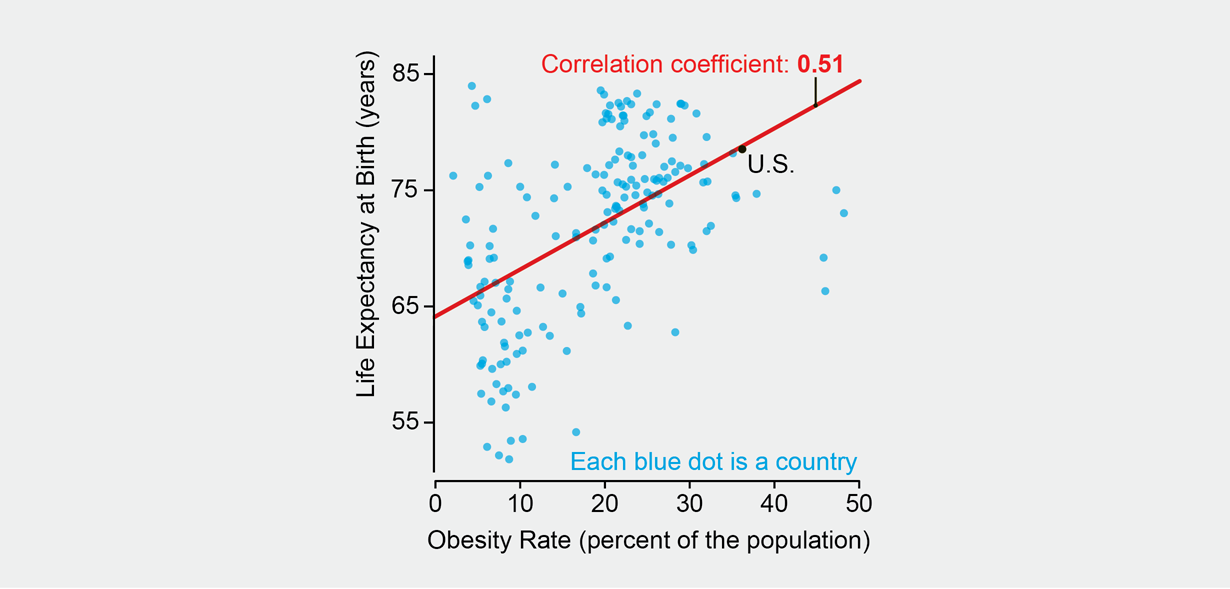
Start Up No.1,156: Simjacker debunked, Medium’s content problem, Mozilla and DoH, WeWork still in trouble, and more


Asimov’s Three Laws were great for stories about robots; less so for real life robots. CC-licensed photo by Simon Liu on Flickr.

You can sign up to receive each day’s Start Up post by email. You’ll need to click a confirmation link, so no spam.

A selection of 10 links for you. Use them wisely. I’m @charlesarthur on Twitter. Observations and links welcome.

The Three Laws of Robotics have failed the robots • Mind Matters

:

»

Chris Stokes, a philosopher at Wuhan University in China, says, “Many computer engineers use the three laws as a tool for how they think about programming.” But the trouble is, they don’t work.
He explains in an open-access paper:

»

The First Law fails because of ambiguity in language, and because of complicated ethical problems that are too complex to have a simple yes or no answer.

The Second Law fails because of the unethical nature of having a law that requires sentient beings to remain as slaves.

The Third Law fails because it results in a permanent social stratification, with the vast amount of potential exploitation built into this system of laws.

The ‘Zeroth’ Law, like the first, fails because of ambiguous ideology. All of the Laws also fail because of how easy it is to circumvent the spirit of the law but still remaining bound by the letter of the law.

«

Maybe we’d better hope it never gets tested in real life? At any rate, here at Mind Matters News, it’s Sci-Fi Saturday so we asked some of our contributors for reactions to the laws and to Stokes’s doubts about them.

«

Odd how we keep trying to wrestle ideas for films, TV and books into things to live by. (Other examples: Star Trek.)
unique link to this extract


New SIM attacks demystified, protection tools now available • Security Research Labs

»

We wanted to understand the extent to which users need to worry about Simjacker and create ways to know whether your SIM is vulnerable or even under attack.

Key research findings

• Around 6% of 800 tested SIM cards in recent years were vulnerable to Simjacker
• A second, previously unreported, vulnerability affects an additional 3.5% of SIM cards
• The tool SIMtester provides a simple way to check any SIM card for both vulnerabilities (and for a range of other issues reported in 2013)
• The SnoopSnitch Android app warns users about binary SMS attacks including Simjacker since 2014. (Attack alerting requires a rooted Android phone with Qualcomm chipset.)
• A few Simjacker attacks have been reported since 2016 by the thousands of SnoopSnitch users that actively contribute data (Thank you!)

«

OK, so it sounds like the concerns were overblown.
unique link to this extract


With Facebook’s coming News Tab, only some will get paid • WSJ

Lukas I. Alpert and Sahil Patel:

»

Facebook is planning to pay only a minority of publishers whose headlines will be featured in its coming news section, according to people familiar with the matter.

The specialized news section—which will appear on the toolbar at the bottom of Facebook’s mobile app—is set to launch as early as the end of October and will include links to stories from about 200 publications, the people said.

A person familiar with the matter said Facebook had never planned to pay all the news outlets whose content it would link to in its news section. The plan is similar to what Facebook has done with its Watch section, which includes videos not paid for by Facebook, the person said. Taking into account companies that own multiple publications, Facebook will pay fees to about one-quarter of the organizations that will be involved at launch, the person said.

Facebook is still negotiating with several big publishers, and in most cases talks have centered around how much of their reporting publishers would allow to be posted on the Facebook tab, the people familiar with the matter said. Facebook wants news organizations to allow access to all their stories for possible inclusion in the news tab, but some outlets have pushed for only allowing limited access.

«

Well of course it wasn’t looking to pay everyone. It just let them think that.
unique link to this extract


Will 10 million people pay for personal essays? • Simon Owens Substack

Simon Owens (who has Tech and Media Newsletter – doesn’t everyone?):

»

Last week I posted a tweet thread that you should check out. It starts with a screen capture of a headline for an article that appeared behind Medium’s paywall. This article fits into a content category that I’ve noticed is proliferating on Medium. It’s what I call “shitty personal advice column.”

In fact, anytime I see someone bragging about how much money they’re making through Medium’s partnership program – which allows users to place their content behind its paywall and get paid for the amount of engagement it generates – I then click on their user profile to see what kind of articles this person is regularly producing, and it almost always falls under this category. Often, the person is publishing upward of two or three articles a day, with each headline over-promising and under-delivering on its premise. 

And this makes sense. If you’re going to make real money on a platform that’s doling it out based on the amount of engagement it receives, you’ll need to produce a high volume of low calorie articles that require very little original research and contain clickable headlines. And with engagement being one of the required metrics, you’d want to stick to inspirational content, with the kind of shareable aphorisms that can be found in most career advice columns.

Which is all fine and good, but here’s the thing: Medium CEO Ev Williams has stated his goal is to reach 10 million paying subscribers. No text-based platform has attracted that many digital subscribers. The New York Times only has about 3 million. So can you get 10 million people to pay up to $5 a month so they can be flooded with a high volume of dashed-off columns that were written and published in the span of a few hours? 

«

Sounds like the long-lost Demand Media, killed by Google changing its algorithm. Wonder if the same fate lies ahead for those essays.

unique link to this extract


Mozilla won’t turn on DoH as default in the UK like it’s planning to do in the US • Gizmodo UK

Shabana Arif:

»

DoH [DNS over HTTPS, ie encrypted domain lookup queries] has been fairly controversial, with the Internet Services Providers Association (ISPAUK) nominating Mozilla for an ‘Internet Villain’ over the whole thing, saying it will “bypass UK filtering obligations and parental controls, undermining internet safety standards in the UK.”

In his letter to Morgan, Mozilla vice president of global policy, trust and security, Alan Davidson, stressed that the company “has no plans to turn on our DoH feature by default in the United Kingdom and will not do so without further engagement with public and private stakeholders”.

He did add that Mozilla does “strongly believe that DoH would offer real security benefits to UK citizens. The DNS is one of the oldest parts of the internet’s architecture, and remains largely untouched by efforts to make the web more secure.

“Because current DNS requests are unencrypted, the road that connects your citizens to their online destination is still open and used by bad actors looking to violate user privacy, attack communications, and spy on browsing activity. People’s most personal information, such as their health-related data, can be tracked, collected, leaked and used against people’s best interest. Your citizens deserve to be protected from that threat.”

Whilst safety is an issue, it has to be balanced with privacy, and walking the line between freedom and forms of censorship is never easy. The sexual abuse and exploitation of children is often cited in this debate, with a government spokesperson stating that it’s “an abhorrent crime that this Government is committed to tackling,” and one of the measures is blocking certain websites that DoH would allow users to circumvent.

«

The difference in dialogue between the US and UK over DoH is notable: preventing malware and chid abuse imagery is a much bigger talking point in the UK. In the US it doesn’t seem to enter the discussion.
unique link to this extract


Apple denied tariff relief on Mac Pro parts after staying in Texas • Bloomberg

Mark Gurman and Mark Niquette:

»

Apple Inc. won’t be exempted from tariffs on five Chinese-made components for the upcoming Mac Pro computer, even after the company announced it was keeping some assembly operations in the US.

The US Trade Representative’s office denied Apple’s request for relief from 25% tariffs on the much-discussed optional wheels for Apple’s Mac Pro, a circuit board for managing input and output ports, power adapter, charging cable and a cooling system for the computer’s processor.

The decisions, posted Monday, come about a week after Apple announced it would make new Mac Pro computers at a plant in Austin, Texas – which it’s operated since 2013 – after originally considering shifting production to China like its other products. The move followed an announcement this month that the US trade office had agreed to Apple’s request for tariff waivers on 10 of 15 Chinese parts.

«

There are tariffs on the wheels. Wheels. How do wheels attract tariffs? It’s weird.
unique link to this extract


WeWork still needs cash after pulling IPO • WSJ

Eliot Brown:

»

To cut costs, the company’s new co-CEOs, Sebastian Gunningham and Artie Minson, are planning thousands of job cuts, putting extraneous businesses up for sale and purging some luxuries from the previous CEO, such as a G650ER jet purchased for more than $60m last year, people familiar with the matter have said.

New York-based We had $2.5bn in cash as of June 30. At the current rate of cash burn—about $700m a quarter—it would run out of money some time after the first quarter of 2020, according to Chris Lane, an analyst at Sanford C. Bernstein & Co. Mr. Lane and his colleagues projected in a recent note to clients that We would burn through nearly $10bn in cash between 2019 and 2022, assuming it keeps growing.

Messrs. Gunningham and Minson said in a joint email to We staff last week that they “anticipate difficult decisions ahead.”

“As we look toward a future IPO, we will closely review all aspects of our company with the intention of strengthening our core business and improving our management and operations,” the co-CEOs wrote.

Further adding pressure are agreements We made in a bond offering last year for which it must keep at least $500m of cash, according to S&P Global Ratings, which downgraded We’s bonds last week.

«

Wow, they’re down to their last executive jet. Times are tough. Set an alarm for February, when things are going to be getting frantic there.
unique link to this extract


October 2015: WeWork used these documents to convince investors it’s worth billions • Buzzfeed

Nitasha Tiku in October 2015:

»

Neumann likes to present WeWork as a star of the sharing economy, a technology platform that connects consumers to office space, just like Uber and Airbnb connect them to cars and homes, respectively.

But how can an infrastructure-dependent real estate venture scale like a low-overhead software startup? How can a company that signs 15-year leases — but sells monthly memberships — expect to survive a downturn? How can an entity that doesn’t own its own real estate be “worth” more than three times as much as the New York Yankees? Why does WeWork’s future look so bright when it sits smack in the middle of two bubbling markets (that is, tech and commercial real estate)? Why would a business model that drove one high-profile dot-com darling [Regus] promising “the office of the future” into bankruptcy succeed this time around?

October 2014 fundraising documents obtained by BuzzFeed News reveal how Neumann answers those questions behind closed doors. The material was shared with BuzzFeed by someone familiar with the company, on the condition of anonymity, and independently verified. WeWork would only comment on a couple of aspects of its fundraising pitch. It includes a five-year financial forecast and a slide presentation (also known as a pitch deck), both embedded below, as well as a company overview.

«

In 2014 its forecast for 2018 was $2.86bn in revenues; in fact it managed $1.8bn. Not bad, but still a substantial miss.
unique link to this extract


Looking back at the Snowden revelations • A Few Thoughts on Cryptographic Engineering

Matthew Green (who is a highly respected cryptographer:

»

Have things improved?

This is the $250 million question.

Some of the top-level indicators are surprisingly healthy. HTTPS adoption has taken off like a rocket, driven in part by Google’s willingness to use it as a signal for search rankings — and the rise of free Certificate Authorities like LetsEncrypt. It’s possible that these things would have happened eventually without Snowden, but it’s less likely.

End-to-end encrypted messaging has also taken off, largely due to adoption by WhatsApp and a host of relatively new apps. It’s reached the point where law enforcement agencies have begun to freak out, as the slide below illustrates.


Slightly dated numbers, source: CSIS (or this article)

Does Snowden deserve credit for this? Maybe not directly, but it’s almost certain that concerns over the surveillance he revealed did play a role. (It’s worth noting that this adoption is not evenly distributed across the globe.)

It’s also worth pointing out that at least in the open source community the quality of our encryption software has improved enormously, largely due to the fact that major companies made well-funded efforts to harden their systems, in part as a result of serious flaws like Heartbleed — and in part as a response to the company’s own concerns about surveillance.

It might very well be that the NSA has lost a significant portion of its capability since Snowden.

The future isn’t American.

I’ve said this before, as have many others: even if you support the NSA’s mission, and believe that the U.S. is doing everything right, it doesn’t matter. Unfortunately, the future of surveillance has very little to do with what happens in Ft. Meade, Maryland. In fact, the world that Snowden brought to our attention isn’t necessarily a world that Americans have much say in.

«

unique link to this extract


iOS 13.1.1 and iOS 13.1.2: Apple takes an aggressive update cadence to clean up iOS 13 • Ars Technica

Samuel Axon:

»

Just this past Friday, Apple released iOS and iPadOS 13.1.1, a small bug-fix update that repaired a security problem for third-party keyboard applications whereby those apps could get permissions before users had given them; an issue that precluded iPhones from restoring from backups in some cases; and an issue affecting battery life. The update also included minor bug fixes for Apple’s own apps like Safari and Reminders.

Apple doesn’t usually release so many updates in rapid succession. iOS 13 only launched 11 days ago, and it has already received three updates. As we noted in our review of iOS 13, it’s a major and ambitious update compared to last year’s iOS 12, but iOS 13 had a relatively rocky beta period, and a number of kinks still need to be ironed out even after today’s update.

«

This is very unusual to have so many updates without a calamitous mistake (eg knocking out cellular connectivity) or giant security hole.
unique link to this extract


Errata, corrigenda and ai no corrida: in last week’s article about offshore wind v nuclear, I suggested that wind farms’ rating could be comparable with nuclear power stations. They’re not though; they’re typically rated as capable of generating an average of half their maximum power. That changes the maths somewhat compared to nuclear, which can maintain a much higher output consistently.

Start Up No.1,155: Google faces DNS-on-https queries, the FCC’s false neutrality claims, iOS 13’s hidden features, and more


If you use Slack at work, maybe consider that everything in it can be saved.. and might prove embarrassing or even expensive. CC-licensed photo by Gustavo da Cunha Pimenta on Flickr.

You can sign up to receive each day’s Start Up post by email. You’ll need to click a confirmation link, so no spam.

A selection of 9 links for you. Don’t worry, nearly October. I’m @charlesarthur on Twitter. Observations and links welcome.

Google draws House antitrust scrutiny of internet protocol • WSJ

John D. McKinnon and Robert McMillan:

»

The Justice Department is aware of concerns over the protocol change and has recently received complaints, according to a person familiar with the matter.

The new standard would encrypt internet traffic to improve security, which could help prevent hackers from spoofing or snooping on websites.

But the new standard could alter the internet’s competitive landscape, cable and wireless companies say. They fear being shut out from much of user data if browser users move wholesale to this new standard, which many internet service providers don’t currently support. Service providers also worry that Google may compel its Chrome browser users to switch to Google services that support the protocol, something Google says it has no intention of doing.

“Right now, each internet service provider has insight into the traffic of their users, and that’s going to shift” as a result of the change, said Andy Ellis, chief security officer at Akamai Technologies Inc., which provides internet services to corporations, but doesn’t support the new standard.

Google, which has vast troves of consumer data thanks to its domination of search, plans to begin testing the navigation protocol with about 1% of its Chrome browser users next month, a first step toward more widespread adoption of the new technology.

Google says that it is supporting the new technology to improve users’ security and privacy and that its browser changes will leave consumers in charge of who shares their internet surfing data.

«

As the story explains, this is DNS-over-HTTPS, and the ISPs are furious about it because it will mean they can’t peek at peoples’ web traffic to insert “targeted” ads.
unique link to this extract


NPD forecasts growth in consumer tech through 2021 • NPD

Stephen Baker (who has been predicting consumer tech trends for ages):

»

Key trends to watch:
Big segments continue to dominate
• Core growth areas, including wireless headphones, smart home products, smart speakers, smartwatches, and gaming accessories and hardware (e.g., desktop and notebook PCs and monitors), are expected to triple in revenue from 2016 to 2021, while tech’s top three categories, notebooks (not including gaming), TVs, and tablets, will grow approximately 5 percent. That said, the revenue total for the top three sellers is $10B more than core growth areas — so the success of these big segments is especially critical to the industry.

Niches can drive growth in the biggest and the smallest categories
• In a mature market, unit growth is unlikely, since there aren’t a lot of new customers to sell to. The biggest opportunity is to find underserved niches.

New tech starts to impact growth in 2021
• New and emerging technologies we are starting to see in limited availability today will begin to have an impact by the end of 2021. Products like next-generation foldable screens, 5G, AR and others will have an impact in the not-so-distant future.

Post-2021, the technology industry will undergo radical change
• What trends drive the inflection points?
1: The screen: whether foldable or transparent screens will be everywhere
2: The intelligent assistant: software that knows me and can help me with everyday tasks will drive tech purchases
3: Do-it-for-me devices: products that are intelligent and can do things for me will interest consumers
4: The connection: Inside the home, everything will be connected
5: Connectivity: connectivity to devices, to the cloud, and to the edge will be key.

«

Transparent screens I could just about go for; foldable still feels like a stretch.
unique link to this extract


The anxiety-inducing peril of old Slack posts • NY Mag

Brian Feldman:

»

A lesser known fact about Slack is that its name is, according to the company’s founder Stewart Butterfield, an acronym. It stands for “Searchable Log of All Communication and Knowledge.” Not menacing at all.

The software lives up to its name. If you’re a certain type of masochist, you can drop into your new employer’s Slack and search your name (from NYMag’s Slack chat on August 19, 2014: “who’s brian feldman”). In 2016, my colleague Max Read had his innocuous Slack joke about Hulk Hogan read out in court during the lawsuit that eventually bankrupted Gawker Media. The communication logs were included in the discovery process, a good demonstration of why lawyers would always rather talk on the phone.

Writing for New York’s nascent tech vertical at the time, Read assessed, “There’s a bible’s worth of casual (or joking) shit-talking I’ve done in Gawker’s chat archives, some of which would make me very uncomfortable (if not unemployable) if it got out — a wealth of gossip and prattle I should have just conducted in person.” Unfortunately, the lessons of Hogan were soon forgotten.

Shortly after word got out that Bankoff had pledged to merge Vox’s and New York’s Slack channels, the staff of New York’s defunct tech vertical, Select All, agreed that we would request that chief product officer Daniel Hallac, our Slack admin, wipe the #select-all chatroom. (Slack has a function that auto-wipes messages on a regular interval, but in a workplace context, I think most have the understandable instinct to retain as much data as possible.) “I don’t think I can nuke it entirely but definitely make it hard to access,” he said. I’ll take it.

I will not say what was contained within, nor, honestly, can I even recall specific comments. But there were certainly ungenerous through lines in our insular chat bubble. There were comments aimed at competitors that were legitimate critiques. I’m not too proud to admit that others were remarks borne of petty jealousy. Most were probably a bit of both. Some comments were probably extremely funny, incredible, solid-gold quips. The thought of those targets combing through our Slack archives is so remote a possibility that it’s easy to put it out of mind. What fools we were.

«

unique link to this extract


Study proves the FCC’s core justification for killing net neutrality was false • VICE

Karl Bode:

»

For years, big ISPs and Trump FCC boss Ajit Pai have told anyone who’d listen that the FCC’s net neutrality rules, passed in 2015 and repealed last year in a flurry of controversy and alleged fraud, dramatically stifled broadband investment across the United States. Repeal the rules, Pai declared, and US broadband investment would explode.

“Under the heavy-handed regulations adopted by the prior Commission in 2015, network investment declined for two straight years, the first time that had happened outside of a recession in the broadband era,” Pai told Congress last year at an oversight hearing.

“We now have a regulatory framework in place that is encouraging the private sector to make the investments necessary to bring better, faster, and cheaper broadband to more Americans,” Pai proclaimed.

But a new study from George Washington University indicates that Pai’s claims were patently false. The study took a closer look at the earnings reports and SEC filings of 8,577 unique companies from Q1 2009 through Q3 2018 to conclude that the passage and repeal of the rules had no meaningful impact on broadband investment. Several hundred of these were telecom companies.

“The results of the paper are clear and should be both unsurprising and uncontroversial,” The researchers said. “The key finding is there were no impacts on telecommunication industry investment from the net neutrality policy changes. Neither the 2010 or 2015 US net neutrality rule changes had any causal impact on telecommunications investment.”

«

Shocked, shocked I tell you.
unique link to this extract


The internet is overrun with images of child sexual abuse. What went wrong? • The New York Times

Michael Keller and Gabriel Dance:

»

More than a decade ago, when the reported number was less than a million, the proliferation of the explicit imagery had already reached a crisis point. Tech companies, law enforcement agencies and legislators in Washington responded, committing to new measures meant to rein in the scourge. Landmark legislation passed in 2008.

Yet the explosion in detected content kept growing — exponentially.

An investigation by The New York Times found an insatiable criminal underworld that had exploited the flawed and insufficient efforts to contain it. As with hate speech and terrorist propaganda, many tech companies failed to adequately police sexual abuse imagery on their platforms, or failed to cooperate sufficiently with the authorities when they found it.

Law enforcement agencies devoted to the problem were left understaffed and underfunded, even as they were asked to handle far larger caseloads.

The Justice Department, given a major role by Congress, neglected even to write mandatory monitoring reports, nor did it appoint a senior executive-level official to lead a crackdown. And the group tasked with serving as a federal clearinghouse for the imagery — the go-between for the tech companies and the authorities — was ill equipped for the expanding demands.

A paper recently published in conjunction with that group, the National Center for Missing and Exploited Children, described a system at “a breaking point,” with reports of abusive images “exceeding the capabilities of independent clearinghouses and law enforcement to take action.” It suggested that future advancements in machine learning might be the only way to catch up with the criminals.

«

US tech companies copy the blame: “The companies have known for years that their platforms were being co-opted by predators, but many of them essentially looked the other way, according to interviews and emails detailing the companies’ activities.” Tumblr is also indicated as a big source of trouble.

(To the obvious question: is it more people, or just more images? “I think that people were always there, but the access is so easy,” said Lt. John Pizzuro, a task force commander in New Jersey. “You got nine million people in the state of New Jersey. Based upon statistics, we can probably arrest 400,000 people.”)
unique link to this extract


The failed political promise of Silicon Valley • The New Republic

Kim Phillips-Fein reviews Margaret O’Mara’s book “The Code: Silicon Valley and the Remaking of America”:

»

In 1952, the British historian Eric Hobsbawm wrote an essay titled “The Machine Breakers” for the journal Past and Present, in which he sought to present Luddism and the wrecking of industrial machinery as a reasonable tactic at a certain point in the development of the British labor movement, rather than an irrational and futile gesture. Workers, he argued, were hardly possessed by a passionate and unthinking fury that led them to destroy the mechanical looms and ricks. Instead, they did so in particular and targeted ways in order to augment their bargaining power at specific moments.

One is hard-pressed to find machine-breakers today; the writers chronicling their agonized efforts to quit the iPhone and the tech moguls panicking about the effects of screen time on their kids’ brains are the closest we’ve come so far. Still, The Code brings to mind Hobsbawm’s arguments about the politics of technology. For it suggests that the widespread discomfort with the technological regime is not only about the machines themselves. We live in a moment when the political consensus of the ’80s and ’90s is being called into question.

Faith in unregulated free markets has led to the dominion of the rich; the disinvestment in the public sector has led to the hollowing out of the institutions upon which democratic society rests. The tech industry seemed at one point to make material many dreams of the free market. It provided an image of a highly competitive economy that rewarded intelligence and daring, funded by venture capitalists with an ownership stake in the companies they built. As people challenge the social certitudes that rose in the ’80s, the slicker, brighter future that machines promised looks shakier too. This deepening unease about technology—and the spaces that have nurtured it, like Silicon Valley—is testament to the shifting politics of our time.

«

unique link to this extract


The new productivity • Benedict Evans

Evans on how everything’s becoming workflowed now:

»

a few years ago a consultant told me that for half of their jobs they told people using Excel to use a database, and for the other half they told people using a database to use Excel. There’s clearly a point in the life of any company where you should move from the list you made in a spreadsheet to the richer tools you can make in coolproductivityapp.io. But when that tool is managing a thousand people, you might want to move it into a dedicated service. After all, even Craigslist started as an actual email list and ended up moving to a database. But then, at a certain point, if that task is specific to your company and central to what you do, you might well end up unbundling Salesforce or SAP or whatever that vertical is and go back to the beginning. 

Of course, this is the cycle of life of enterprise software. IBM mainframes bundled the adding machines [from offices of the 1950s], and also bundled up filing cabinets and telephones. SAP unbundled IBM. But I’d suggest there are two specific sets of things that are happening now. 

First, every application category is getting rebuilt as a web application, allowing continuous development, deployment, version tracking and collaboration. As Frame.io (video!) and OnShape (3D CAD!) show, there’s almost no native PC application that can’t be rebuilt as a web app. In parallel, everything now has to be native to collaboration, and so the model of a binary file saved to a file share will generally go away over time (this could be done with a native PC app, but in practice generally won’t be). So, we have some generational changes, and that also tends to create new companies.

But second, and much more important – everyone is online now. The reason we’re looking at nursing or truck drivers or oil workers is that an entire generation now grew up after the web, and grew up with smartphones, and assumes without question that every part of their life can be done with a smartphone. In 1999 hiring ‘roughnecks’ in a mobile app would have sounded absurd – now it sounds absurd if you’re not.

«

unique link to this extract


Will the Ukraine scandal be Trump’s downfall? • NY Mag

Jonathan Chait:

»

Giuliani’s original goal was to prod Ukraine to turn over evidence that would exonerate Paul Manafort, the former Trump campaign manager. Manafort had worked in Ukraine for a pro-Russian party, then gone on to manage Trump’s campaign while maintaining secret contacts with a Russian intelligence officer, and he was helping Trump in 2018 by withholding cooperation from special counsel Robert Mueller. Giuliani was attempting to prove that Manafort had been set up by Ukrainians working with the Clinton campaign and that — even more bizarrely — Ukrainians had stolen Clinton’s emails.

If these theories sound fantastical, they are. But just as Watergate demystified the White House staff as bumblers, the Ukraine scandal has revealed Trump and his allies are suffering from Fox News poisoning. The bizarre conspiracy theories that the rest of us took to be devious propaganda had a profound impact on the president and his inner circle. They are not-very-bright guys who also happen to be genuinely nuts.

But the mission followed a coherent strategic goal. Trump thrives on cynicism, excusing his misconduct with the assumption everybody does it — simultaneously condoning his own failings while dragging his antagonists down to his level. His election required many Americans to believe his opponent had engaged in criminal behavior. He has instinctively replicated those conditions in his quasi-campaign against Mueller as well as against the Democrats in 2020.

In the course of his work, Giuliani made contact with Ukrainian prosecutors and hit upon yet another conspiracy theory. The story held that, during the Obama administration, Joe Biden had called for the firing of a prosecutor who was on the tail of a Ukrainian firm that had hired his son Hunter. This theory, too, was wrong. Hunter Biden had gone to work for a Ukrainian energy firm as part of a generally sleazy practice of trading on his father’s name. And it was true that Joe Biden spearheaded demands to fire a prosecutor. But the prosecutor was not investigating Hunter Biden’s firm at that time. And the vice-president’s call to fire the prosecutor, who was notoriously ineffectual at rooting out corruption, placed him squarely on the side of human-rights activists, democratic countries, the IMF, the World Bank, and other international do-gooders.

«

It’s amazing what nonsense Guiliani, and Trump, are willing to believe. It’s as if their grasp on reality long ago became unmoored. But as the writeup also makes clear, the vice-president Mike Pence almost surely knew about the illegal actions too. Can they both be impeached?
unique link to this extract


iOS 13 hidden features: mute Mail threads, silence unknown callers, reading goals, low data mode and more • MacRumors

Juli Clover:

»

Apple this week debuted iOS 13 with a ton of updates, including a new dark mode option, major performance improvements, faster Face ID, simpler photo editing tools and a new Photos interface, a Sign In With Apple Privacy feature, a swipe-based keyboard, and tons more.

In addition to these features that made it into Apple’s keynote event, there are dozens if not hundreds of smaller new changes and tweaks that are included in iOS 13. Below, we’ve rounded up a comprehensive list of new and notable “hidden” features in iOS 13.

«

These are quite fun (obviously only really useful if you run iOS..), though some seem to be device-specific: using an iPhone X, I don’t get the “Facetime Attention Correction” which would make you seem to be looking at the caller even though you aren’t.
unique link to this extract


Errata, corrigenda and ai no corrida: none notified

Start Up No.1,154: AI medical diagnosis as good as human, Amazon’s new IoT protocol, 5G’s heat problem, WeWork aims to sell three businesses, and more


Publicity still of the Hornsea One offshore wind farm, via Ørsted. One third the output of a nuclear power plant, but cheaper and on time.

You can sign up to receive each day’s Start Up post by email. You’ll need to click a confirmation link, so no spam.

A selection of 9 links for you. Use them wisely. I’m @charlesarthur on Twitter. Observations and links welcome.

AI equal with human experts in medical diagnosis, study finds • The Guardian

Nicola Davis:

»

Artificial intelligence is on a par with human experts when it comes to making medical diagnoses based on images, a review has found.

The potential for artificial intelligence in healthcare has caused excitement, with advocates saying it will ease the strain on resources, free up time for doctor-patient interactions and even aid the development of tailored treatment. Last month the government announced £250m of funding for a new NHS artificial intelligence laboratory.

However, experts have warned the latest findings are based on a small number of studies, since the field is littered with poor-quality research.

One burgeoning application is the use of AI in interpreting medical images – a field that relies on deep learning, a sophisticated form of machine learning in which a series of labelled images are fed into algorithms that pick out features within them and learn how to classify similar images. This approach has shown promise in diagnosis of diseases from cancers to eye conditions.

However questions remain about how such deep learning systems measure up to human skills. Now researchers say they have conducted the first comprehensive review of published studies on the issue, and found humans and machines are on a par.

Prof Alastair Denniston, at the University Hospitals Birmingham NHS foundation trust and a co-author of the study, said the results were encouraging but the study was a reality check for some of the hype about AI.

Dr Xiaoxuan Liu, the lead author of the study and from the same NHS trust, agreed. “There are a lot of headlines about AI outperforming humans, but our message is that it can at best be equivalent,” she said.

«

“Can at best be equivalent” isn’t quite the message that those pushing the Singularity were hoping for, one feels. Then again, this is after only seven years. The problem is always one of trust: how do you query the process by which a decision was reached?
unique link to this extract


The world’s largest offshore wind farm is nearly complete • CNN

Hanna Ziady:

»

The world’s largest offshore wind farm is taking shape off the east coast of Britain, a landmark project that demonstrates one way to combat climate change at scale.

Located 120 kilometers (75 miles) off England’s Yorkshire coast, Hornsea One will produce enough energy [1.2 gigawatts, twice as large as the next-biggest which is in the Irish Sea] to supply 1 million UK homes with clean electricity when it is completed in 2020.

The project spans an area that’s bigger than the Maldives or Malta, and is located farther out to sea than any other wind farm. It consists of 174 seven-megawatt wind turbines that are each 100 metres tall. The blades have a circumference of 75 meters, and cover an area bigger than the London Eye observation wheel as they turn.

Just a single rotation of one of the turbines can power the average home for an entire day, according to Stefan Hoonings, senior project manager at Orsted (DOGEF), the Danish energy company that built the farm.

The project will take the United Kingdom closer to hitting its target of deriving a third of the country’s electricity from offshore wind by 2030.

«

Meanwhile the new 3.2GW nuclear plant at Hinkley Point C looks likely to cost an extra £2.9bn (to £22bn) and be late: had been promised online in 2017, now looks like 2025. Hornsea One, cost about £4.2bn, and which has delivered on time, is part of four such which could generate a total of 6GW.
unique link to this extract


Global smartwatch shipments projected to reach 80.55m units in 2020 • TrendForce

Jason Tsai:

»

The global shipments of smartwatches in 2019 are estimated to total around 62.63 million units, according to the latest tracking analysis from the research firm TrendForce. Looking ahead to 2020, smartwatch sales will benefit from the lower prices of the earlier versions of the Apple Watch devices and the releases of new smartwatch models from other branded device manufacturers. TrendForce forecasts that the global smartphone shipments in 2020 will grow by 28.6% YoY to around 80.55 million units. The total shipments of the Apple Watch devices for the same year are also forecasted to grow by 21.8% YoY to around 34 million units.

“The strong demand for the Apple Watch has been the chief growth driver of the whole smartwatch market,” said Jason Tsai, TrendForce analyst for wearable devices. Tsai pointed out that Apple adjusted the prices of the Series 1 models in conjunction with the launch of the Series 2 models. The move helped galvanize the overall sales of the Apple Watch devices.

“Apple’s success in the smartwatch market is based on an effective pricing strategy and a proactive approach to the development of new products,” Tsai added. “The price cut for the Series 1 models, in particular, has been a significant help in boosting shipments.”

The upcoming release of the Series 5 models will again accompany by a price reduction for the Series 3 models. Furthermore, new products and perhaps new brands will soon be entering the market.

«

“Perhaps new brands”. Well, maybe. But it’s not one where they’re making much, if any, money. Same as tablets.
unique link to this extract


Ring Fetch will track your dog using Amazon’s new low-energy IoT protocol • Android Police

Manuel Vonau:

»

while protocols such as 5G, Bluetooth, and Wi-Fi exist for IoT devices, they can become complicated and expensive pretty fast and only go so far. A specific network for low-cost, low-bandwidth connections is missing for devices that would measure their battery life in years, not days if they could use low-energy standards. By transmitting data on the 900MHz spectrum, Amazon Sidewalk aims to be the answer to this problem.

Amazon envisions to use this protocol for water sensors in your garden, even if they’re far removed from your Wi-Fi’s range, or for your mailbox, letting you know when your important letter has been delivered. Since the devices establish a peer-to-peer network and offer great range, cities should quickly be blanketed with coverage once Amazon starts offering products.

The first reference design is going to be the Ring Fetch. It’s a dog tracker that uses Sidewalk and sends you notifications when your dog leaves a geofenced perimeter. There is no word on exact hardware specifications, battery life, or size yet, but more details will be available next year.

«

Sidewalk is a mesh network technology; Amazon says in its tests it sent 700 Sidewalk-enabled devices to Ring employees, family and friends and “in just three weeks had the sprawling, densely populated L.A. Basin fully covered”.

Hmm. I’d like to see a bit more detail on what “fully covered” means, and what geographical area they really covered. The LA Basin can mean 3.8m people (Greater LA), or 12.8m (LA metropolitan) or 18.1 (larger metropolitan region). But low-power IoT with range is always welcome. Probably more welcome than Google’s Sidewalk, which hasn’t won many friends.
unique link to this extract


The heat death of 5G • DIGITS to DOLLARS

Jonathan Goldberg:

»

Yes, 5G is coming and data rates will improve, but we, the mobile industry, still have a lot of work to do. We could regale you with litanies of woe about roaming and hand-offs, or belabor the small cell backhaul density logjam. But perhaps the best example of roadblocks to 5G is much easier to grasp: heat.

5G phones get hot. Really hot. Probably not hot enough to ignite your battery (probably), but enough to generate a definite burning sensation in your pants pockets. At Mobile World Congress in February, we spoke with an engineer from Sony who was demo’ing a phone (behind glass) that was clocking 1 Gbps speeds. Wow, fast. We asked the engineer why it was not going faster and he said “It overheats.” A good solid answer, from a nuts-and-bolts-and-antenna person. We will wage any amount that at next year’s show, no one on the floor will be as open about this problem.

The big improvement in data rates for 5G will only come with mmWave radios. This is a whole new spectrum band that allows for really high data rates (again, let’s set aside the whole densification issue for now). The trouble is that mmWave radios generate a lot of heat. To greatly oversimplify, mmWave frequencies are pretty close to microwave frequencies, as in the thing we use to reheat our lunches.

From some of our very recent industry conversations we know that the handset industry is using a tried-and-tested method for dealing with this problem – ignoring it and hoping it goes away. The whole issue strikes us as one of those issues where middle management really does not want to raise the subject with senior management who have wrapped themselves so tightly around the 5G flagpole. “Uh boss, your pants are literally on fire.”

«

Don’t know about you, but I honestly don’t see the point in 5G. Like, at all. Improve coverage everywhere first, perhaps? Who actually needs 1Gbps when mobile at the moment? Isn’t whatever that application is a thing that we’ll only have the terminals for in five to ten years? At present, the biggest use of 5G appears to be demonstrating that you have 5G speeds. I’ve seen nobody who has been able to do anything better with it.
unique link to this extract


Basic apps are using Play Store loophole to overcharge users • Android Authority

Hadlee Simons:

»

You don’t have to pay to get basic apps such as calculators and QR code scanners on the Play Store, but Google has pulled some basic apps for exploiting its trial period system.

Sophos discovered over a dozen apps that provide very rudimentary functionality, such as QR code scanning, photo editing, and GIF creation. But the security firm found that their sole purpose was actually to over-charge users.

According to the security firm, these so-called fleeceware apps take advantage of the Play Store’s trial period functionality in order to charge unsuspecting users. Sophos notes that once the app’s trial period ends, users are often charged an exorbitant subscription fee, ranging from €105 to €220 ($115 to $241).

The company says these developers routinely charge users, even if you’ve uninstalled the app before the end of the trial period.

«

So the subscription scammers are there on Google Play as well as the App Store. “Fleeceware” is a lovely portmanteau. Kudos to Google for removing them. (I would have linked to the ZDNet original, but it was too wordy.)
unique link to this extract


Inside the campaign that tried to compromise Tibetans’ iOS and Android phones • Ars Technica

Dan Goodin:

»

Attackers from a group dubbed Poison Carp used one-click exploits and convincing social engineering to target iOS and Android phones belonging to Tibetan groups in a six-month campaign, researchers said. The attacks used mobile platforms to achieve a major escalation of the decade-long espionage hacks threatening the embattled religious community, researchers said.

The report was published on Tuesday by Citizen Lab, a group at the University of Toronto’s Munk School that researches hacks on activists, ethnic groups, and others. The report said the attackers posed as New York Times journalists, Amnesty International researchers, and others to engage in conversations over the WhatsApp messenger with individuals from the Private Office of His Holiness the Dalai Lama, the Central Tibetan Administration, the Tibetan Parliament, and Tibetan human rights groups. In the course of the conversation, the attackers would include links to websites that hosted “one-click” exploits—meaning they required only a single click to infect vulnerable phones.

None of the attacks Citizen Lab observed was successful, because the vulnerabilities exploited had already been patched on the iOS and Android devices that were attacked. Still, the attackers succeeded in getting eight of the 15 people they targeted to open malicious links, and bit.ly-shortened attack pages targeting iPhone users were clicked on 140 times. The research and coordination that went into bringing so many targeted people to the brink of exploitation suggest that the attackers behind the campaign—which ran from November 2018 to last May—were skilled and well-organized.

«

This is separate from the attack reported by Google Project Zero to target Uighyur Muslims, also by China, but has lots of the same malware families. Citizen Lab says the Android malware used “hadn’t previously been documented” (bit failed nonetheless). Read Goodin’s writeup (or the CL original): this was very sophisticated.
unique link to this extract


WeWork puts three businesses up for sale • The Information

Cory Weinberg:

»

The three business WeWork will look to sell are Managed by Q, which WeWork bought in May; Conductor, which WeWork bought last spring; and Meetup, which WeWork bought in late 2017. WeWork spent nearly $500m combined in cash and stock for the three firms, according to its IPO filing. But that price reflected what the value then put on WeWork’s stock, which is likely to have come down since then. WeWork in recent weeks had reportedly slashed its proposed IPO valuation to as low as $15bn, from its last private fundraising valuation of $47bn.

The three companies have revenue in the “hundreds of millions” annually, one of the people said, but lose money. The total expenses of the three companies—along with another acquired firm, Flatiron School—was $81m in the first half of the year, according to WeWork’s IPO filing. That only includes a portion of Managed by Q’s expenses because the deal was completed in May.

«

And so the great unwinding begins.
unique link to this extract


A battery with a twist • ETH Zurich

»

Following the design of commercial batteries, this new type of battery is built in layers like a sandwich. However, it marks the first time that researchers have used flexible components to keep the whole battery bendable and stretchable. “To date, no one has employed exclusively flexible components as systematically as we have in creating a lithium-ion battery,” Markus Niederberger [professor for multifunctional materials at ETH Zurich] says.

The two current collectors for the anode and the cathode consist of bendable polymer composite that contains electrically conductive carbon and that also serves as the outer shell. On the interior surface of the composite, the researchers applied a thin layer of micronsized silver flakes. Due to the way the flakes overlap like roof tiles, they don’t lose contact with one another when the elastomer is stretched. This guarantees the conductivity of the current collector even if it is subjected to extensive stretching. And in the event that the silver flakes do in fact lose contact with each other, the electrical current can still flow through the carbon-containing composite, albeit more weakly…

…More and more applications for a battery like this are emerging every day. Well-known manufacturers of mobile phones are vying with each other to produce devices with foldable screens. Other possibilities include rollable displays for computers, smartwatches and tablets, or functional textiles that contain bendable electronics – and all of these require a flexible power supply. “For instance, you could sew our battery right into the clothing,” Niederberger says. What’s important is, in the event of battery leakage, to ensure that the liquids that come out cause no damage. This is where the team’s electrolyte offers a considerable advantage.

However, Niederberger stresses that more research is necessary to optimise the flexible battery before they consider commercialising it.

«

Of course gadget sites are saying “ooh, foldable phones more foldable!” but I’d say the application is much more in clothing, or devices that have to be shaped or flexible. Smartphones, even foldable ones, are a solved problem, relatively.
unique link to this extract


Errata, corrigenda and ai no corrida: none notified

Start Up No.1,153: TikTok’s moderation revealed, Apple still seeks thinner keyboards, Amazon’s new kit, WeWork’s counterfeit capitalism, and more


OK, iOS 13 won’t ask for permission over this sort of Bluetooth. CC-licensed photo by Carlos Merigo on Flickr.

You can sign up to receive each day’s Start Up post by email. You’ll need to click a confirmation link, so no spam.

A selection of 9 links for you. Use them wisely. I’m @charlesarthur on Twitter. Observations and links welcome.

Revealed: how TikTok censors videos that do not please Beijing • The Guardian

Another great scoop by Alex Hern:

»

The guidelines divide banned material into two categories: some content is marked as a “violation”, which sees it deleted from the site entirely, and can lead to a user being banned from the service. But lesser infringements are marked as “visible to self”, which leaves the content up but limits its distribution through TikTok’s algorithmically-curated feed.

This latter enforcement technique means that it can be unclear to users whether they have posted infringing content, or if their post simply has not been deemed compelling enough to be shared widely by the notoriously unpredictable algorithm.

The bulk of the guidelines covering China are contained in a section governing “hate speech and religion”.

In every case, they are placed in a context designed to make the rules seem general purpose, rather than specific exceptions. A ban on criticism of China’s socialist system, for instance, comes under a general ban of “criticism/attack towards policies, social rules of any country, such as constitutional monarchy, monarchy, parliamentary system, separation of powers, socialism system, etc”.

Another ban covers “demonisation or distortion of local or other countries’ history such as May 1998 riots of Indonesia, Cambodian genocide, Tiananmen Square incidents”.

A more general purpose rule bans “highly controversial topics, such as separatism, religion sects conflicts, conflicts between ethnic groups, for instance exaggerating the Islamic sects conflicts, inciting the independence of Northern Ireland, Republic of Chechnya, Tibet and Taiwan and exaggerating the ethnic conflict between black and white”.

«

The spread of Chinese apps has concomitant risks to what we are shown about the world around us. Is it “censorship” or “moderation”?
unique link to this extract


Everything Amazon announced: Echo Buds, Echo Frames, Echo Loop • WIRED

Boone Ashworth and Michael Calore:

»

If cramming Alexa into your ears isn’t enough, how about putting Alexa directly onto your face? Echo Frames are Amazon’s new Alexa-enabled smart glasses that let you talk to Alexa without having to whip out your phone. This means you can talk to Alexa in all the places you previously could not without being a rude phone person, like at the movies, in the gym locker room, or at your favorite brunch spot. OK, maybe barking at Alexa in those situations would still be rude—which is likely why Amazon is releasing these glasses in limited quantities to start. If they’re a hit, then we’ll see production ramp up. These smart glasses—which have microphones but, critically, no camera—go on sale to beta testers this fall for $180 a pair. You can add a prescription if you want as well.

[Which brings us to the Echo Loop.] At this point, do you have any limbs that aren’t Alexa-enabled? The new Echo Loop is a smart ring, because of course it is. (The company really missed the opportunity to call it the Ring Ring.) Two microphones, a tiny speaker, and haptic alerts let you talk to the hand (your own) to respond to notifications or ask Alexa a question.

«

Not sure what the point of the Echo Frames is, honestly. And the Ring looks weird. I could see the point of a smart ring which tells you things, but not one you just talk to. (The Echo Buds are wireless earbuds.)
unique link to this extract


Apple is evaluating new keyboard mechanisms to make thinner MacBooks • Apple Insider

Malcolm Owen:

»

The butterfly keyboard mechanism used in the current generation of MacBook Pro models has gone through a number of revisions to fix issues with how it functions, including occasions where debris could interfere with the mechanism’s operation. The issues have led to the creation of a repair program to fix the problem, but complaints about the component continue to be made.

The keyboard is also a space-occupying component of a notebook’s design, with the switch mechanism providing an actuation, namely the physical movement of the key to register a press and to reset. In order to allow this to happen, a mechanism has to sit between the key and the circuit board, taking up valuable space that could be used to make the notebook design even thinner, or to provide more battery capacity.

In a patent published by the US Patent and Trademark Office on Tuesday titled “Keyboard assemblies having reduced thickness and method of forming keyboard assemblies,” Apple seeks to do just that.


An illustration of the PCB at the bottom of the stack, with layers for the membrane, switching mechanism, and keycap.

In Apple’s filing, the company suggests the use of a single membrane sheet adhered directly to the printed circuit board (PCB). A switch housing can optionally be affixed directly to the membrane layer or to the PCB, sandwiched between the two, and a dome switch coupled directly on top to the membrane layer.

«

This had better be tested to death. Also: won’t that be incredibly difficult to replace in the event of a single key failure?
unique link to this extract


Regulating Big Tech makes them stronger, so they need competition instead • Open Voices

Cory Doctorow:

»

Over the past 12 months there has been a radical shift in the balance of power on the internet. In the name of taming the platforms, regulators have inadvertently issued them a “Perpetual Internet Domination Licence”, albeit one that requires that they take advice from an aristocracy of elite regulators. With only the biggest tech companies able to perform the regulatory roles they have been assigned because of complexity and cost, they officially become too big to fail, and can only be nudged a little in one direction or another by regulators drawn from their own ranks.

As has been the case so often in the internet’s brief life, humanity has entered uncharted territory. People (sort of) know how to break up a railway or an oil company and America once barely managed to break up a phone company. No one is sure how to break up a tech monopolist. Depending on how this moment plays out, that option may be lost altogether.

But competition is too important to give up on.

One exciting possibility is to create an absolute legal defence for companies that make “interoperable” products that plug into the dominant companies’ offerings, from third-party printer ink to unauthorised Facebook readers that slurp up all the messages waiting for you there and filter them to your specifications, not Mark Zuckerberg’s. This interoperability defence would have to shield digital toolsmiths from all manner of claims: tortious interference, bypassing copyright locks, patent infringement and, of course, violating terms of service.

«

All well and good; but what if they just don’t want to compete? Did companies compete with Microsoft once the SMB protocol was more open? (I don’t know the answer to this.) Interop sounds attractive. But competition only arises if there are willing competitors.
unique link to this extract


Google’s knowledge panels are magnifying disinformation • The Atlantic

Lora Kelley:

»

Over the years, the [UK national who works in tech consultancy called Martin John] Bryant I spoke with has gotten messages calling him a psycho; been taunted by Australian teens on WhatsApp; received an email from schoolchildren saying how evil he was (their teacher wrote an hour later to apologize); and even had a note sent to his then-employer informing them that they’d hired a killer.

But the biggest issue? When people Google him, an authoritative-looking box pops up on the right side of the results page, informing them that “Martin John Bryant is an Australian man who is known for murdering 35 people and injuring 23 others in the Port Arthur massacre.” He fears that he’s missed out on professional opportunities because when people search his name, “they just find this guy with a very distinct stare in his eyes in the photos and all this talk about murder.”

That box is what Google calls a “knowledge panel,” a collection of definitive-seeming information (dates, names, biographical details, net worths) that appears when you Google someone or something famous. Seven years after their introduction, in 2012, knowledge panels are essential internet infrastructure: 62% of mobile searches in June 2019 were no-click, according to the research firm Jumpshot, meaning that many people are in the habit of searching; looking at the knowledge panel, related featured snippets, or top links; and then exiting the search. A 2019 survey conducted by the search marketing agency Path Interactive found that people ages 13 to 21 were twice as likely as respondents over 50 to consider their search complete once they’d viewed a knowledge panel.

This is all part of an effort to “build the next generation of search, which taps into the collective intelligence of the web and understands the world a bit more like people do,” as Amit Singhal, then the senior vice president in charge of search at Google, wrote in a 2012 blog post.

But people do not populate knowledge panels. Algorithms do.

«

unique link to this extract


WeWork and counterfeit capitalism • Matt Stoller’s BIG

Matt Stoller has a newsletter, and this is from the latest:

»

Amazon has spawned a host of imitators, including WeWork. It has also reshaped venture investing. The goal of Son, and increasingly most large financiers in private equity and venture capital, is to find big markets and then dump capital into one player in such a market who can underprice until he becomes the dominant remaining actor. In this manner, financiers can help kill all competition, with the idea of profiting later on via the surviving monopoly.

Engaging in such a strategy used to be illegal, and was known as predatory pricing. There are laws, like Robinson-Patman and the Clayton Act, which, if read properly and enforced, prohibit such conduct. The reason is very basic to capitalism. Capitalism works because companies that thrive take a bunch of inputs and create a product that is more valuable than the sum of its parts. That creates additional value, and in such a model companies have to compete by making better goods and services.

What predatory pricing does is to enable competition purely based on access to capital. Someone like Neumann, and Son’s entire model with his Vision Fund, is to take inputs, combine them into products worth less than their cost, and plug up the deficit through the capital markets in hopes of acquiring market power later or of just self-dealing so the losses are placed onto someone else. This model has spread. Bird, the scooter company, is not making money. Uber and Lyft are similarly and systemically unprofitable. This model is catastrophic not just for individual companies, but for their competitors who have to *make* money. I’ve written about this problem before. Amazon has created a much less competitive and brittle retail sector. Netflix’s money-losing business is ruining Hollywood.

«

This part at least isn’t libellous, but Stoller isn’t restrained in his criticism of many of the key players. A must-read. (Thanks John Naughton for the link.)
unique link to this extract


Samsung Galaxy Tab S6 review: master entertainer, amateur worker • The Verge

Dan Seifert:

»

Using DeX on such a small screen is also frustrating due to the amount of scrolling and flipping between windows that’s required to multitask. Virtual desktops would help with this, but DeX doesn’t support them. There is also no window snapping features that I could find; resizing the windows requires tapping and dragging on the screen or using the fiddly trackpad on the keyboard. DeX on the Tab S6 is nice to have in a pinch to knock out an email while on the go, but it’s not something I’d like to use as my primary computer or for any extended length of time.

There are other bugs in Samsung’s software that I’ve found frustrating to deal with. The night mode, which flips the interface to a dark shade in the evening, constantly forgets its settings; the screen brightness will aggressively dim itself to unreadable levels when I hold the tablet in landscape because my hand blocks the light sensor; search in DeX doesn’t work on the first keystroke, requiring me to type “OOutlook” if I want to launch my email app; and I’ll have to frequently reboot the tablet to get the Wi-Fi to work.

Basically, the Tab S6 is a very good tablet to use to watch video, provided you don’t block the light sensor with your palm. If all you want from a tablet is to lean back and watch video on your couch, the Tab S6 is excellent for that.

The problem is that “good for watching video” is about the lowest bar to hit for a tablet in 2019. The iPad was great for watching video almost 10 years ago, and Amazon’s Fire HD 10 will do the job for about a third of the cost of the Tab S6 if that’s all you need.

«

Amazing that at this point Samsung isn’t just cutting its prices to push everyone else on Android out of the market. Instead it sticks with its high-end products, which can’t be selling well enough to justify it.
unique link to this extract


Here’s why so many apps are asking to use Bluetooth on iOS 13 • The Verge

Chris Welch:

»

A beacon is very easily able to detect your device’s Bluetooth chip and log that with a retailer or some other app on your phone. So getting more strict about Bluetooth is a good move by Apple to prevent unwanted tracking of its customers.

Similarly, the company is also getting even more transparent about location, showing you on a map how often and where apps have recorded your position. This prompt is much easier to understand, and will probably startle people into slimming down the list of apps that can monitor where they are. As it should!

But there’s more room for confusion around the Bluetooth prompt.

At the most basic level, I think some iPhone owners are going to wonder and maybe even assume that they must grant Bluetooth permission for music and other media apps to continue working with their Bluetooth earbuds, headphones, or speakers. It’s a reasonable question when you see that an app “would like to use Bluetooth.” (To be clear, you don’t have to. Bluetooth audio is handled through system settings, is separate from apps, and will continue working for apps that you deny permission for.)

«

Most people probably won’t know that about the audio. That generic “would like to use” could probably be improve. Might be fun to deny all these and see how things change.
unique link to this extract


Mysterious Mac Pro shutdowns likely caused by Google Chrome update • Variety

Janko Roettgers:

»

A serious data corruption issue that resulted in Mac Pro workstations being rendered unusable at a number of Hollywood studios Monday was likely caused by a browser update gone haywire: Google told Mac Pro users Tuesday evening that an update to its Chrome browser is likely to fault for the issue, which particularly impacted video editors across Hollywood and beyond.

“We recently discovered that a Chrome update may have shipped with a bug that damages the file system on MacOS machines,” the company wrote in a forum post. “We’ve paused the release while we finalize a new update that addresses the problem.”

Reports of Mac Pro workstations refusing to reboot started to circulate among video editors late Monday. At the time, the common denominator among impacted machines seemed to be the presence of Avid’s Media Composer software.

The issue apparently knocked out dozens of machines at multiple studios, with one “Modern Family” reporting that the show’s entire editing team was affected. Avid’s leadership updated users of its software throughout the day, advising them to back up their work and not to reboot their machines.

«

Thanks Nic for the pointer.
unique link to this extract


Errata, corrigenda and ai no corrida: none notified

Start Up No.1,152: the trouble with SDKs, Facebook’s politics pass, WeWork’s CEO’s out, Fitbit for sale?, Trump mumble mumble, and more


You can delete the messaging app Kik: its founders are closing it to defend a cryptocurrency case. CC-licensed photo by Salman Aslam on Flickr.

You can sign up to receive each day’s Start Up post by email. You’ll need to click a confirmation link, so no spam.

A selection of 12 links for you. Not available in Ukraine. I’m @charlesarthur on Twitter. Observations and links welcome.

The loophole that turns your apps into spies • The New York Times

Charlie Warzel:

»

By now you probably know that your apps ask for permission to tap into loads of data. They request device information, like advertiser IDs, which companies use to build marketing profiles. There’s data the companies explicitly ask for via a pop-up window, like access to contacts or your camera roll. And then there’s tracking that is especially invasive, like access to your microphone or your phone’s gyroscope or location tracking data.

What you probably didn’t know is that by downloading those apps and entering into those contracts, you’re also exposing your sensitive information to dozens of other technology companies, ad networks, data brokers and aggregators. Sometimes the information is shared with global tech giants; other times it’s with small companies you’ve never heard of.

The data is transmitted — or in some cases leaked — via software development kits (SDKs). They are essentially developer shortcuts, a set of tools or a library of code that developers can import from a third party so that they don’t have to build them from scratch.

Because they’re so useful to app developers, SDKs are embedded into thousands of apps, ranging from mundane weather services to mobile games and even in some health apps. Facebook, Google and Amazon, for example, have extremely popular SDKs that allow smaller apps to connect to bigger companies’ ad platforms or help provide web traffic analytics or payment infrastructure. In exchange, the SDK makers receive user data from that app. Just how much data is often unclear. And once the companies have it, there are no restrictions on what they can do with it. Theoretically, they could turn around and sell that data for profit.

«

Argh, everything is broken.
unique link to this extract


Nancy Pelosi announces formal impeachment inquiry of Trump • The New York Times

Nicholas Fandos:

»

Speaker Nancy Pelosi announced on Tuesday that the House would begin a formal impeachment inquiry of President Trump, opening a fresh chapter of confrontation in response to startling allegations that the president sought to enlist a foreign power for his own political gain.

“The actions taken to date by the president have seriously violated the Constitution,” she said after emerging from a meeting of House Democrats in the basement of the Capitol. Mr. Trump, she said, “must be held accountable. No one is above the law.”

The announcement was a stunning development that unfolded after months of caution by House Democrats, who have been divided over using the ultimate remedy to address what they have called flagrant misconduct by the president.

In this case, with an avalanche of Democrats — including many who had resisted the move — now demanding it, Ms. Pelosi said that Mr. Trump’s reported actions, and his administration’s refusal to share details about the matter with Congress, have left the House no alternative outside of impeachment. The inquiry has the potential to reshape Mr. Trump’s presidency and to cleave an already divided nation only a year before he plans to stand for re-election.

«

And there we were thinking that the UK Supreme Court ruling 11-0 that the prime minister acted unlawfully in suspending Parliament was the international story of the day. OK, neither is tech, but they seemed worth marking.
unique link to this extract


Facebook, elections and political speech • Facebook Newsroom

The former leader of the UK Liberal Democrat party and once-deputy prime minister of the UK, Nick Clegg, now VP of Global Affairs and Comms at Facebook:

»

Facebook has had a newsworthiness exemption since 2016. This means that if someone makes a statement or shares a post which breaks our community standards we will still allow it on our platform if we believe the public interest in seeing it outweighs the risk of harm. Today, I announced that from now on we will treat speech from politicians as newsworthy content that should, as a general rule, be seen and heard. However, in keeping with the principle that we apply different standards to content for which we receive payment, this will not apply to ads – if someone chooses to post an ad on Facebook, they must still fall within our Community Standards and our advertising policies.

«

Huh. Become a politician and you can say whatever you like. How do we define politician? Do you have to be officially in office? Running for office? Saying you’ll run for office? Can I declare myself a politician in order to say anything on Facebook without fear of being zapped?
unique link to this extract


Facebook acquires startup developing AI finger tracking armband • UploadVR

David Heaney:

»

Facebook is in the final stages of acquiring a New York based startup called CTRL Labs which was developing an armband which tracks the user’s fingers by reading electrical signals inside their arm.

It works by detecting electrical signals passing through the user’s wrist to the fingers. Based on how the signal changes passing through the tendons and muscles of the arm their position can be determined. Machine learning is used to convert these position changes into finger poses.

The technology is very similar to what’s described in a patent application filed by Facebook back in February. It’s possible that the CTRL Labs team were able to solve problems that Facebook’s team wasn’t, or that Facebook wanted to combine their efforts. It’s also possible that the startup held intellectual property that Facebook would need to commercialize this technology.

«

unique link to this extract


Seven good and three bad things in iPadOS • The Verge

Dieter Bohn:

»

Anybody who has felt like the iPad was a little too limiting because of how it handled windows or webpages should be excited to install this update. And although it really does feel like a “power user”-focused set of features this year, people who use their iPads for the basics will find things to like, too.

Here are the things we like best and hate the most about iPadOS so far.

«

Precis: new desktop-equivalent Safari good, new managing windows method good, learning how to manage windows bad, new home screen good, floating keyboard good, text selection bad, new Files app good, Dark Mode good, Photos app good, bugs bad.

It’s putting some distance between the iPad and the iPhone OS. Though the Files app can’t preview AVI video, which is slightly annoying if that’s what you’ve got on an SD card.
unique link to this extract


About an issue that impacts third-party keyboard apps in iOS 13 and iPadOS • Apple Support

»

An upcoming software update will fix an issue that impacts third-party keyboard apps. This issue applies only if you’ve installed third-party keyboards on your iPhone, iPad, or iPod touch.

Third-party keyboard extensions in iOS can be designed to run entirely standalone, without access to external services, or they can request “full access” to provide additional features through network access. Apple has discovered a bug in iOS 13 and iPadOS that can result in keyboard extensions being granted full access even if you haven’t approved this access.
This issue does not impact Apple’s built-in keyboards. It also doesn’t impact third-party keyboards that don’t make use of full access. The issue will be fixed soon in an upcoming software update.

«

Bugs. So it’s going to be 13.1.1.
unique link to this extract


WeWork’s Adam Neumann to step down as chief executive • Financial Times

Eric Platt and James Fontanella-Khan:

»

WeWork co-founder Adam Neumann has agreed to step down as chief executive of the lossmaking property company after some of its biggest backers lost faith in the 40-year-old executive.

Mr Neumann has been named non-executive chairman. Sebastian Gunningham, the company’s vice-chair, and finance chief Artie Minson will take over as co-chief executives.

The fall from grace of Mr Neumann is a stunning reversal at a young, hyped venture-backed firm where the cult of the founder was once especially strong. It compares in recent years only to the toppling of Uber’s chief executive Travis Kalanick…

…Mr Neumann, who earlier told employees he had been “humbled” by the aborted IPO, said in a statement: “While our business has never been stronger, in recent weeks, the scrutiny directed toward me has become a significant distraction, and I have decided that it is in the best interest of the company to step down as chief executive.”

«

Damn right there’s been scrutiny of his self-dealing practices; unsurprising the IPO stalled and that he’s out. The S-1 filing was the brightest sunlight on a really badly supervised company. And according to The Information, its current spend could burn through $1.5bn over the next six months and leave it with just $400m early next year if it doesn’t raise more funds. Neumann was toxic to that, so had to go.

unique link to this extract


WeWTF, Part Deux • No Mercy / No Malice

Scott Galloway, writing a few days before Neumann’s ouster when the IPO had been pulled:

»

So, as a distressed asset, the playbook is fairly clear:

• Bring in new management. What got We here, isn’t going to get it where it needs to go. Each layer that comes off the We onion stinks more and more. The media has turned its attention to the Neumanns, and it’s as if the lights have been turned on at a cocaine-fueled party that ended several hours too late. Everyone and everything suddenly looks bad, scary even.

• The firm needs to bust a move to break even pronto. The new CEO should be from a REIT, ideally a hospitality or commercial real estate REIT. My vote is Adam Markman, CFO of Equity Commonwealth — Sam Zell’s firm.

• Shed/close all non-core businesses. WeGrow and WeLive are vanity projects. As someone close to the firm told me yesterday, they distract Mr. Neumann from the core business, where he was wreaking havoc. A $13 million investment in a firm that makes wave pools to indulge Adam’s passion for surfing. Really? Really?

• Raise money after an adult conversation with SoftBank (“You f*cked up, you trusted us. Do you want to participate in the next round or get washed out?”)

• Focus on margin expansion vs. growth. We has a differentiated product in the marketplace, and should command a premium.

• Lay off all employees not directly tied to managing the core business. Reprice options for remaining employees, as the current options are now worthless and most execs will begin looking for other jobs. The most talented (the ones with the most options) will be the first to leave if they aren’t given substantial economics for staying in Saigon as the North Vietnamese roll into town.

«

unique link to this extract


Xiaomi’s Mi Mix Alpha is almost entirely made of screen • The Verge

Sam Byford:

»

The “surround screen” on the Alpha wraps entirely around the device to the point where it meets the camera module on the other side. The effect is of a phone that’s almost completely made of screen, with status icons like network signal and battery charge level displayed on the side. Pressure-sensitive volume buttons are also shown on the side of the phone. Xiaomi is claiming more than 180% screen-to-body ratio, a stat that no longer makes any sense to cite at all…

…Xiaomi describes the Mix Alpha as a “concept smartphone” and isn’t going to be mass-producing it any time soon. The phone will go into small-scale production this year and go on sale in December for 19,999 yuan, or about $2,800. The original Mi Mix was also given the “concept” label and released in small quantities, with the Mi Mix 2 following a year later as a more mainstream device.

«

Twice the chance to break the screen, and a real puzzler for where you put the phone case. Perfect bragging rights for Xiaomi – “we were the first with a total screen phone!” – but I don’t think it makes any sense. We can’t look around corners, which is what you’d need to use this to the full.
unique link to this extract


Google wins landmark right to be forgotten case • BBC News

Leo Kelion:

»

The EU’s top court has ruled that Google does not have to apply the right to be forgotten globally.

It means the firm only needs to remove links from its search results in Europe – and not elsewhere – after receiving an appropriate request.

The ruling stems from a dispute between Google and a French privacy regulator. In 2015, CNIL ordered the firm to globally remove search result listings to pages containing damaging or false information about a person. The following year, Google introduced a geoblocking feature that prevents European users from being able to see delisted links.

But it resisted censoring search results for people in other parts of the world. And the firm challenged a 100,000 ($109,901; £88,376) euro fine that CNIL had tried to impose.

“Currently, there is no obligation under EU law, for a search engine operator who grants a request for de-referencing made by a data subject… to carry out such a de-referencing on all the versions of its search engine,” the European Court of Justice ruling said.

«

This seems a good, proportional decision: if the EU could demand Google remove stuff everywhere, why wouldn’t China allow Google in and then demand the same? Next question: should Google block access to non-EU versions by EU citizens? I suspect that’s going to be “no” as well, if anyone raises it.
unique link to this extract


Exclusive: Fitbit considers whether it should explore a sale – sources • Reuters

Greg Roumeliotis:

»

Wearable device maker Fitbit has been in talks with an investment bank about the possibility of exploring a sale amid challenges in successfully pivoting from fitness trackers to smartwatches, people familiar with the matter said on Friday.

Fitbit has struggled to gain a foothold in the smartwatch category, as Apple and Samsung Electronics have cornered a bigger share of the market with more sophisticated devices.

At the same time, Fitbit’s dominant share of the fitness tracking sector continues to be chipped away by cheaper offerings from companies such as China’s Huawei Technologies and Xiaomi Corp.

Fitbit has held discussions with investment bank Qatalyst Partners about whether it should engage with potential acquirers, the sources said.

«

The way this is written seems to imply that Fitbit has already had some approaches about acquisition, and is trying to decide whether to go with them. Who would want a struggling fitness tracker company, though? It’s been essentially unprofitable since the end of 2016.
unique link to this extract


Kik chat app shuts down as company goes all-in on Kin cryptocurrency • BetaKit

Meagan Simpson:

»

The Kik app is officially shutting down. The company will reduce its headcount to 19 people, and will focus solely on converting Kin users into Kin buyers, according to a company blog post by Kik founder Ted Livingston.

Livingston said although the Kik app will shut down, Kin is “here to stay.” The remaining team will focus on “moving the Kin blockchain forward,” he added. It appears the company is shedding its operational costs so it can fight the United States Securities Commission (SEC) in court, with Livingston saying the changes will “drop our burn rate by 85%, putting us in position to get through the SEC trial with the resources we have.”

He said that instead of selling some of Kik’s Kin cryptocurrency, the company made the decision to focus its “current resources on the few things that matter most.”

“These are hard decisions. Kik is one of the largest apps in the US. It has industry-leading engagement and is growing again,” wrote Livingston. “Over 100 employees and their families will be impacted. People who have poured their hearts and souls into Kik and Kin for over a decade.”

«

Kik was a huge social messaging app popular with teens; but cryptocurrency looked like a way to make much quicker millions, so its founders chased that. Then the SEC pointed out that selling tokens which can change in value and be paid for in money is essentially dealing in a security. Which came as a surprise to Kik/Kin, who thought it was just a way to get rich.

Sad end for Kik, which had some momentum at one point.
unique link to this extract


Errata, corrigenda and ai no corrida: none notified