Unknown's avatar

About charlesarthur

Freelance journalist - technology, science, and so on. Author of "Digital Wars: Apple, Google, Microsoft and the battle for the internet".

Start up: rogue algorithms, Luckey unlucky for Oculus, Snapglasses!, robots that see, and more


Always wondering who might be buying it. Photo by Chris Corneschi on Flickr.

You can now sign up to receive each day’s Start Up post by email. You’ll need to click a confirmation link, so no spam.

A selection of 12 links for you. No debate there. I’m charlesarthur on Twitter. Observations and links welcome.

Kansas couple who live in a ‘digital hell’ sue mapping company MaxMind • Fusion

Kashmir Hill (who wrote the original story about how a family was being hassled by police and others claiming their house was the location shown on a map of Bad Things):

»

“At that time, we picked a latitude and longitude that was in the center of the country, and it didn’t occur to us that people would use the database to attempt to locate people down to a household level,” MaxMind co-founder Thomas Mather told me earlier this year. As with Pokémon Go, the company didn’t realize its digital map of the country would have consequences for the people located at the real-world coordinates.

When I wrote the first story, I spoke with Joyce Taylor, the 82-year-old owner of the property, who also suffered from the digital fall-out. Her renters, the Arnolds, did not talk with me, because as their lawyer Randall Rathbun explains, “they are very private people.”

In their lawsuit, the Arnolds say that MaxMind’s conduct “placed them in a false light and invaded their privacy,” resulting in “great emotional distress, fear for their safety, and humiliation.” The damages amount to at least $75,000. Rathbun estimates that it will take at least a year for the case to go to trial.

MaxMind did not respond to a request for comment. But after my story, they changed the default location for the U.S. in their database. It is now conveniently located in a nearby lake.

«

link to this extract


At Twitter, who makes decision to sell? • The Information

Martin Peers and Steve Nellis:

»

reports on Friday of bidding interest in Twitter could be speculation stirred up by investment bankers looking for a deal. But the question of who decides remains crucial.

Is it Mr. Dorsey’s call? He only owns about 2% of Twitter stock, after putting about a third of his stake into an employee equity incentive program this past spring, securities filings show.

That ranks him well below several other people, including co-founder Evan Williams, who owns 6.2%, former Microsoft CEO Steve Ballmer who has said he owns about 4% and Prince Alwaleed bin Talal of Saudi Arabia who owns another 4.99%, according to filings. Twitter doesn’t have a dual-class voting structure, so Mr. Dorsey doesn’t have supervoting shares that would inflate his voting power.

What he surely does have, however, is influence on the board. And it’s the board, not shareholders, that will consider any offer that comes in. Nearly half of the directors now serving are those who agreed to put Mr. Dorsey back into the CEO Job last September. The other half, including BET CEO Debra Lee and Pepsico CFO Hugh Johnston, have joined since then. It’s a good bet, therefore, that Mr. Dorsey has the loyalty of much of the board

«

link to this extract


Apple offers mixed signals on auto strategy • FT.com

Tim Bradshaw:

»

[Last] week, it emerged that Apple had approached McLaren Technology Group, the British supercar engineer and Formula 1 team owner, about a potential investment or acquisition over the summer. While McLaren has denied that any talks are still in progress, the news follows reports in the German press that Apple had previously tried to strike partnerships with BMW and Daimler.

Traditional automakers might be comforted that Apple felt unable to break into their industry without the help of an established manufacturer — albeit the maker of expensive sports cars.

Nonetheless, in Silicon Valley, the car market is seen as ripe for disruption. “The analogies between what happened to the phone industry and what is going to happen to cars are very close at every piece of the value chain,” says Benedict Evans, a partner at venture capital firm Andreessen Horowitz. “The differentiation became the design and then all the value moved into software.”

Even as it is rethinking its strategy, Apple’s commitment to entering the automotive industry seems undiminished. Its annual R&D budget has doubled to $10bn in the three years since Project Titan started hiring hundreds of employees.

“Something has changed but I don’t think there is a lack of interest in the car business at Apple,” says Horace Dediu, a tech industry analyst who writes at his site Asymco.

«

link to this extract


‘Rogue algorithms’ and the dark side of big data • Knowledge@Wharton

»

In the wake of a financial crisis that was at the very least exacerbated by loose credit, banks are understandably trying to be more rigorous in their assessment of risk. An early risk assessment algorithm, the well-known FICO score, is not without its problems; but for the most part, [author of “Weapons of Math Destruction” Cathy] O’Neil writes, it is an example of a healthy mathematical model. It is relatively transparent; it is regulated; and it has a clear feedback loop. If default rates don’t jibe with what the model predicts, credit agencies can tweak them.

In recent years, however, a new, pseudoscientific generation of scoring has proliferated wildly. “Today we’re added up in every conceivable way as statisticians and mathematicians patch together a mishmash of data, from our zip codes and internet surfing patterns to our recent purchases.” Crunching this data generates so-called “e-scores” used by countless companies to determine our creditworthiness, among other qualities. Yet unlike FICO scores, they are “arbitrary, unaccountable, unregulated, and often unfair.”

A huge “data marketplace” has emerged in which credit scores and e-scores are used in a variety of applications, from predatory advertising to hiring screening. In this sea of endless data, the author contends, the line between legitimate and specious measures has become hopelessly blurred. As one startup proclaims on its website, “All data is credit data.”

«

link to this extract


Personal blogging has declined in popularity but it will never be obsolete • The Pool

Emma Beddington:

»

the trend is clear: I delete, regretfully, another voice lost, and I almost never add. What about my own blog, eight years old and still staggering on? My posting is sporadic at best and the traffic reflects that.  When I don’t post for weeks, the pressure to write something “good enough” to make up for my absence feels paralysing, so I dither and feel guilty. Why do I bother – who reads blogs now anyway? Is it time to pull the plug? 

Blogging is dead: I’ve been reading about its demise for years. The blogs that are thriving have become businesses: “lifestyle websites”, carefully curated, monetised and cross-channel promoted. Mommy blogging – the kind with giveaways and reviews – is still alive and kicking too, but old-school personal blogs – visually unlovely, text-heavy – are an endangered species, heading towards extinction.

«

Emma’s a friend, who our family got to know through her wonderful blog; you can tell a lot about someone from their blog. (Pause for reflection.) Blogs have been endangered since they stopped growing, but something about her sort of blog – intimate, funny, personal – feels eternal.
link to this extract


Developers ditching Oculus over Luckey’s pro-Trump memes • Tom’s Guide

Andrew Freedman:

»

On social media, indie developers are denouncing Luckey and his involvement, with some threatening to drop Oculus Rift support from games until Luckey steps down or is removed from his job.

Polytron, the makers of the hit indie game Fez, put out a statement on Pastebin and on Twitter that it won’t support the Oculus Rift with its new game, SuperHyperCube due to Luckey’s funding the pro-Trump group.

“In a political climate as fragile and horrifying as this one, we cannot tacitly endorse these actions by supporting Luckey or his platform,” the team wrote.

“Hey @oculus, @PalmerLuckey’s actions are unacceptable. NewtonVR will not be supporting the Oculus Touch as long as he is employed there,” developer Tomorrow Today Labs wrote on Twitter. NewtonVR is a free physics-based tool for VR developers, and Oculus Touch is the VR company’s upcoming controllers to support its Rift headset.

Developer Scruta Games also voiced discontent on Twitter: “Until @PalmerLuckey steps down from his position at @oculus, we will be cancelling Oculus support for our games.”

Late Friday night, Luckey released a statement on Facebook:

“I am deeply sorry that my actions are negatively impacting the perception of Oculus and its partners,” he wrote. “The recent news stories about me do not accurately represent my views.”

He claimed to have contributed $10,000 to Nimble America, which he said he wrote “had fresh ideas on how to communicate with young voters through the use of several billboards.”

«

So yup, he used his money to contribute to pro-Trump propaganda. He says his vote is going to neither, which almost feels like it makes it worse.
link to this extract


Snapchat’s 10 second video glasses are real and cost $130 • TechCrunch

Fitz Tepper:

»

Snapchat’s long-rumored camera glasses are actually real. The startup’s first foray into hardware will be a pair of glasses called “Spectacles” and will go on sale this fall for $129.99, as first reported by The WSJ and confirmed to TechCrunch by the newly rebranded Snap Inc..

The glasses will only come in one size, but will be available in three colors – black, teal and coral.

To start recording you tap a button on the side of the glasses. Video capture will mimic Snapchat’s app, meaning you can only capture 10 seconds of video at once. This video will sync wirelessly to your phone, presumably making it available to share as a snap.

«

I think Tepper meant to write that the glasses are “actually in prototype”. It’s a long road to sales in volume. The Wall Street Journal’s Seth Stevenson had the scoop, which says that “Spectacles’ camera uses a 115-degree-angle lens, wider than a typical smartphone’s and much closer to the eyes’ natural field of view. The video it records is circular, more like human vision.”

I’ve never thought of my field of vision as circular, to be honest. More like a broad oval. Also, Spiegel looks like Brains from Thunderbirds in those glasses. (Also, you can get glasses that do something like that from Amazon already.)
link to this extract


Doubts about digital ads rise over new revelations • WSJ

Suzanne Vranica and Mike Shields:

»

Despite their reservations, marketers will have little choice but to keep increasing spending on digital ads, especially on mobile devices, if they hope to reach consumers spending more time away from traditional media.

In Facebook’s case, the company disclosed that the metric it reported for two years for the average time users spent watching videos was artificially inflated, because it only factored in video views of more than three seconds. Big ad agencies pressed Facebook for more details and ad buyer Publicis Media, a division of Publicis Groupe SA, was told that the Facebook error likely overestimated average time spent viewing videos by 60% to 80%, The Wall Street Journal reported.

On Friday, Facebook apologized for the erroneous video metric. “While this is only one of the many metrics marketers look at, we take any mistake seriously,” said David Fischer, vice president of business and marketing partnerships, in a Facebook post.

«

Here’s, by contrast, is what one Overspill reader who works in marketing told me about the Facebook video stuff:

»

Facebook video ads. They are amazing, and here’s why.

It’s true a lot of views are for barely seconds as most user scroll by. A view on Facebook seems be be costing me between 0.1p to 2p. If views were as expensive as YouTube ads (which are cheap, but far from this cheap), it would be terrible.

In practice, I’m getting a bunch of people scroll past, and a minority watching a sensible amount. Two things happen:

1. We still get to identify a great audience for a great price. I had a video over five minutes for one client, and when you look at the cost per view for people watching 95% of the video, it worked out at just under 30p per view. That’s an amazing price for getting someone to sit down and hear the ‘pitch’ from the business owner for five minutes. And everyone who watches less than 95% is, in this scenario, effectively a free view,

2. We can ‘retarget’ people who watch a certain length (10 seconds, 25%, 50%, 75%, 95%, and 100%). This is huge.

This means video lets me create a quality engaged audience for a great price. Our real advertising starts when we’ve built a retargeting audience using the awesomely cheap video ads at the start of this funnel.

So yes, viewability is pathetically low on Facebook, but the goal isn’t to get everyone to watch. It’s to get our real audience to identify themselves by showing an interest.

«

link to this extract


UK news publishers say digital news ‘not sustainable’ because of Google and Facebook and urge Government action • Press Gazette

Freddy Mayhew:

»

The News Media Association has called on the Government to protect news publishers who are investing in original online journalism from those who capitalise on the content without sharing the expense.

In a briefing to ministers, the news publishers’ association detailed what it saw as the threat to news media organisations from ad-blocking and the industry’s “relationship” with digital giants Facebook and Google.

The NMA said the existing model was “not sustainable”, adding: “The value chain of digital news has become wildly out of step with the contribution that each player makes”.

“Significant value is being captured by companies who do not invest in original journalism at the expense of those who do,” it said.

According to figures from the Advertising Association, the “internet” took 43% of the overall UK ad spend last year, up 17.3% year-on-year, while the share of this going to newspapers and magazines declined.

«

BAD “the internet”.

»

the NMA highlighted the news media’s role as a creator of “highly sought after news content” which “can be counted on to provide the subject matter of the country’s democratic conversation”.

[The NMA] added: “The online news environment is characterised by aggregation of news stories by third party players who repackage, serve, link to and monetise that content.

“In particular, Google dominates these activities in search and Facebook dominates in social.

“There are potential benefits for news publishers in working with them, not least in terms of reaching new audiences. However, the situation is far from win-win and significant value is being captured by companies who do not invest in original journalism at the expense of those who do.”

«

Perhaps related: Guardian US lost $15.85m on revenues of $15.5m in the 12 months to April 2016 (that is, spent $31.35m – two dollars spent for every dollar of revenue).

Also worth reading: The comments on Roy Greenslade’s article about this topic – Google saying it doesn’t have ads on Google News (true, except search drives more stories), and a commenter saying that they found all sorts of copyrighted content illicitly uploaded to YouTube, being monetised by Google, and:

»

“If I was doing this on bootleg DVDs or offering these through my own website what would happen to me? Why does Google seem to have a get out of jail free card?”

«

link to this extract


How to build a robot that “sees” with $100 and TensorFlow • O’Reilly Media

Lukas Biewald:

»

Running tensorflow/contrib/pi_examples/label_image/gen/bin/label_image on an image from the camera will output the top five guesses. The model works surprisingly well on a wide range of inputs, but it’s clearly missing an accurate “prior,” or a sense of what things it’s likely to see, and there are quite a lot of objects missing from the training data. For example, it consistently recognizes my laptop, even at funny angles, but if I point it at my basket of loose wires it consistently decides that it’s looking at a toaster. If the camera is blocked and it gets a dark or blurry image it usually decides that it’s looking at nematodes—clearly an artifact of the data it was trained on.

Finally, I connected the output to the Flite open source software package that does text to speech, so the robot can tell everyone what it’s seeing.

Here are my two homemade robots running deep learning to do object recognition.

From 2003 to 2005, I worked in the Stanford Robotics lab, where the robots cost hundreds of thousands of dollars and couldn’t perform object recognition nearly as well as my robots. I’m excited to put this software on my drone and never have to look for my keys again.

«

link to this extract


Exclusive: Japan’s antitrust watchdog considers action against Apple, carriers – sources • Reuters

Yoshiyasu Shida:

»

n a report published last month, Japan’s Fair Trade Commission (FTC) said that NTT Docomo, KDDI Corp and Softbank Group were refusing to sell older surplus iPhone models to third party retailers, thereby hobbling smaller competitors.

Apple was not named in that report, but two senior government sources told Reuters that regulators were also focusing on Apple’s supply agreements with all three carriers.

Under those deals, surplus stock of older iPhones is kept out of the market and sent to overseas markets, such as Hong Kong, according to industry sources.

The carriers, locked in a costly battle to win consumers who covet iPhones, also bulk purchase the Apple smartphones and sell them at a discount, which gives the U.S. company an advantage over rivals such as Samsung Electronics Co, according to the two government officials and an industry source.

Both iPhone 7 and Samsung’s Galaxy S7 edge model sell for 93,960 yen ($932) under Docomo’s main service package without any contract, but the cost for the iPhone drops sharply to 38,232 yen with a two-year contract, while the Galaxy falls to 54,432 yen.

«

There have been similar rumblings about Apple and carriers in Europe, though so far it has come to nothing.
link to this extract


Yahoo! This is personal • Joe Leech

The aforementioned Joe Leech:

»

Yahoo was the first website I ever visited. My first real email was a Yahoo! email address. In 1997 I loved Yahoo! and everything it did. For many years it was the #1 company I wanted to work for.

Then somehow I pissed Yahoo! off and it became personal.

My very first website in a friendly welcoming place called Geoctities. I loved Geocities, I made lifelong friends there. Yahoo! learned this and bought it in 1999 taking their time, playing with me but eventually shutting Geocities down in 2009.

The crusade against me had started.

Yahoo! 1-0 mrjoe

«

It’s a match of rather more than one half.
link to this extract


Errata, corrigenda and ai no corrida: none notified

Start up: AirBnB’s race problem, solar prices crater, modern porn, AirPods teardown (sorta), and more


“All I did was say my name was Jennifer Null.” Photo by Random McRandom on Flickr.

You can now sign up to receive each day’s Start Up post by email. You’ll need to click a confirmation link, so no spam.

A selection of 10 links for you. Use them wisely. I’m charlesarthur on Twitter. Observations and links welcome.

Response to Airbnb’s report on discrimination • Edelman.org

(Professor) Ben Edelman:

»

This month Airbnb released a report (PDF) investigating discrimination by its hosts against guests (including racial minorities and others), assessing the evidence of the problem and evaluating proposed solutions. The accompanying announcement offers lofty principles—”creating a world where anyone can belong anywhere.”

In contrast to the company’s prior denials, Airbnb now admits the problem is urgent: “discrimination must be addressed”; “minorities struggle more than others to book a listing”; “some members of the community did not receive the timely, compassionate response they expected and deserved when they reported instances of discrimination”; Airbnb’s nondiscrimination policy was not widely known, within or outside company. This much is beyond dispute.

While Airbnb’s report is a step in the right direction, it does little to address the crucial subject of how to actually fix the problem of discrimination. Indeed, the report proposes actions of uncertain or unproven effectiveness.  At the same time, the report quickly dismisses a simpler alternative response—removing guest photos and names from booking requests—which would be far more likely to succeed. Meanwhile, the report completely fails to defend the legal gamesmanship by which Airbnb avoids litigation on the merits when consumers complain about Airbnb, and the report equally fails to defend Airbnb’s continued prohibition on users conducting research to uncover and measure discrimination for themselves.

This article offers my critique.

«

Edelman is good at critiquing the subtle discrimination that big and small tech companies do. He pointed out the racial discrimination among AirBnB lettors back in December 2015; it’s still valid.
link to this extract


New record low solar price in Abu Dhabi – costs plunging faster than expected • Ramez Naam

»

The price of solar power – in the very sunniest locations in particular – is plunging faster than I expected. I’ve been talking for years now about the exponential decline of solar power prices. I’ve often been called a wide-eyed optimist. Here’s what those projections (based on historical learning rates) look like.

In fact, if anything, my forecasts were too conservative. The solar prices I expected have been smashed by bids in the Middle East and in Latin America. I will need to update the model above in a future post.

The latest record is an incredibly low bid of 2.42 cents/kwh solar electricity in Abu Dhabi. That is an unsubsidized price.

«

If there’s anything to give us a little hope, it’s this: allied to electric cars, the almost unlimited supply of silicon (sand is plentiful), you could get towards a future where we use a great deal less fossil fuel.

Equally, this puts the crazily high price that the UK government has agreed to buy electricity from the new Chinese-built Hinkley C nuclear reactor – 9p per kWh, or about 12 cents/kWh – into perspective. It would almost be cheaper just to pay for solar panels on all the UK’s household and factory roofs.
link to this extract


These unlucky people have names that break computers • BBC Future

Chris Baraniuk:

»

Jennifer Null’s husband had warned her before they got married that taking his name could lead to occasional frustrations in everyday life. She knew the sort of thing to expect – his family joked about it now and again, after all. And sure enough, right after the wedding, problems began.

“We moved almost immediately after we got married so it came up practically as soon as I changed my name, buying plane tickets,” she says. When Jennifer Null tries to buy a plane ticket, she gets an error message on most websites. The site will say she has left the surname field blank and ask her to try again.

Instead, she has to call the airline company by phone to book a ticket – but that’s not the end of the process.

«

And you thought “Robert’); DROP TABLE Students;” was a made-up name. (Of course the XKCD cartoon is worth the second hit of its alt text.)
link to this extract


Apple still leads in smartwatch sales; sector growth slow • Kantar Worldpanel

»

“In the three months ending July 2016, 47% of wearable sales in the US occurred in the smartwatch category, versus the more basic fitness bands,” said Lauren Guenveur, Consumer Insight Director for Kantar Worldpanel ComTech. “Apple continues to dominate this segment with a 33.5% share, although that lead shrank slightly in the last three months as the market awaited the Apple Watch Series 2 announcement. The EU4 countries show a similar trend, with 38.6% of all sales coming in the smartwatch category, with Apple leading at 31.8%.”

“Looking ahead, 9.3% of the US-based non-owners we surveyed said they intend to purchase a wearable in the next 12 months, which came in slightly below the 11.3% figure from Great Britain,” Guenveur continued. “September 7th’s unveiling of the Apple Watch Series 2 showed Apple addressing the key considerations cited by those planning to buy, including GPS, one of the most-desired functionalities, and waterproofing, the most-desired feature.”

«

link to this extract


Making sense of modern pornography • The New Yorker

Katrina Forrester:

»

The majority of the world’s [porn] tube sites are effectively a monopoly—owned by a company called MindGeek, whose bandwidth use exceeds that of Amazon or Facebook. Its C.E.O. until recently was a German named Fabian Thylmann, who earned a reported annual income of a hundred million dollars; he sold the company while being investigated for tax evasion.

The millions of people using these sites probably don’t care much about who produces their content. But those who work in porn in the United States tend to draw a firm line between the “amateur” porn that now proliferates online and the legal adult-film industry that took shape after the California Supreme Court ruled, in California v. Freeman (1989), that filmed sex did not count as prostitution. Since then, the industry has been based in Los Angeles County’s San Fernando Valley, where its professional norms and regulations have mimicked its more respectable Hollywood neighbors. In “The Pornography Industry: What Everyone Needs to Know” (Oxford), Shira Tarrant explains how that industry works in the new age of Internet porn, and sets out to provide neutral, “even-handed” information about its production and consumption.

It’s not an easy task.

«

But hey, someone’s got to do it. At least it was even-handed rather than.. ok, I’ll stop.
link to this extract


Airpods – a speculative teardown • LinkedIn

Nick Hunn is chief technology officer of WiForce:

»

Companies have developed a number of proprietary ways to ensure [sound signals, especially music, in separate Bluetooth earbuds] are synchronised. The first was from Cambridge Silicon Radio (now part of Qualcomm), who developed a method where one chip receives the stereo signal, then separates out the left and right and resends one of the channels to a Bluetooth chip in the other earbud. They included synchronisation signals, so that the audio output of both chips could be coordinated in time. You also need to do this if one earbud is a music player, streaming data to the other ear, which is a particularly difficult use case. Others have streamed over Bluetooth A2DP to both earbuds and tried to use Bluetooth low energy to send synchronisation signals between the ears. Others have done the same thing using Near Field Magnetic Induction (NFMI). Some have even attempted to stream audio between earbuds using NFMI.

The problem with all ear-to-ear communication is that the head is remarkably effective in blocking 2.4GHz radio propagation. Designs which fit snugly within the ear have real problems in getting a signal across. The bigger the earbud, the easier this is, as you can include a bigger antenna, but the best solution is to put the antenna outside the ear. Apple’s design does exactly that. By locating the antenna in the long white battery and microphone boom, it moves it closer to the jaw where there’s a lot less attenuation from one side of the head to the other. So I surmise they’re using A2DP to stream audio from the phone to each Airpod and probably using BLE control signals between them to synchronise the audio rendering. So there’s no need for NFMI…

…So why would Apple make [the W1] chip? Developing a wireless chip with this spec isn’t cheap – it will probably cost at least $10m with a similar amount going on the stack. It is just a peripheral chip, which will never go into a phone, so the volumes are not that high. But it is interesting that Apple emphasised that this is their first wireless chip, in a tone suggesting it won’t be the only one. My guess is that Apple wants to incorporate Bluetooth and Wi-Fi into their next generation of processors, as that’s what their competitors are doing. Wireless can be difficult, so it’s a big step to do that in one go. Far better to design the wireless chip and evaluate it in an entirely new product category, as well as forcing one of your subsidiaries to use it. That way you get to test the chip as well as getting useful feedback for your next generation of earbuds.

«

This is the smartest thing you’ll read all week, and it contains a great deal about Bluetooth technology that wouldn’t be obvious. And he’s right – the longer tabs of the AirPods mean they can communicate through flesh (your neck) rather than bone (your skull).
link to this extract


Yahoo is expected to confirm massive data breach, impacting hundreds of millions of users • Recode

Kara Swisher:

»

While sources were unspecific about the extent of the incursion, since there is the likelihood of government investigations and legal action related to the breach, they noted that it is widespread and serious.

Earlier this summer, Yahoo said it was investigating a data breach in which hackers claimed to have access to 200 million user accounts and was selling them online. “It’s as bad as that,” said one source. “Worse, really.”

The announcement, which is expected to come this week, also possible larger implications on the $4.8 billion sale of Yahoo’s core business — which is at the core of this hack — to Verizon. The scale of the liability could be large and bring untold headaches to the new owners. Shareholders are likely to worry that it could lead to an adjustment in the price of the transaction.

«

Turns out it was 500 million account details in 2014 by a suspected “state-sponsored actor”. Hard to defend against that. I’ve been getting malware emails from hacked Yahoo accounts for months now. No idea if it’s connected.
link to this extract


The Galaxy Note 7 recall has nothing to do with removable batteries • SamMobile

“Deidre R” on the biggest of the Samsung-watching sites:

»

The batteries being shipped in the Galaxy Note 7 are faulty (at least some of them are; Samsung has never said that all the currently-shipped phones have faulty batteries, though mass hysteria can never be contained, unfortunately). The batteries are faulty because of issues within the battery itself. Nothing has been said to confirm that Samsung’s “sealing” the battery itself, or the battery and the phone together, are causing the conflict that is resulting in explosions worldwide. The issue has been found within the battery cells, an issue that mandates using a different, non-faulty battery that doesn’t suffer from the same defect.

This is the issue, but removable battery fanboys are switching topics, throwing out the real issue and planting a smokescreen from a different discussion. The topic concerns the batteries being defective, but removable battery fanboys want to get you off topic because they still can’t accept that removable batteries are going the way of the dodo and that, contrary to what they like, the old way of battery charging has been replaced with newer, more sophisticated methods of doing so.

«

“Removable battery fanboys”? Truly we have begun to segment the world into ever-smaller niches. What I find fascinating here, though, isn’t the fake row about whether the fault is removability (obviously, it’s in manufacture) but how what used to be near-religious dogma among, uh, boosters of Android devices (removability of batteries trumps the iPhone’s non-removability) has morphed into one where of course you don’t want to be able to swap the battery out.

But then, we have always been at war with Eastasia. Ever since the Galaxy S6.
link to this extract


Mode Media collapse: the inside story • Business Insider

Nathan McAlone and Eugene Kim:

»

From the winding freeway that links Silicon Valley with San Francisco, the giant Mode Media sign gracing the company’s headquarters was a hard-to-miss proclamation alerting passing drivers to an internet success story with a rich, $1bn valuation.

But on the 11th floor of the gleaming building last week, the mood among employees was sour.

Those gathered in the office and patched in through a crackly teleconference suddenly learned that they had no more jobs, no more health insurance coverage, and no more access to the company email system. Mode Media, founded in 2003 and once known as Glam Media, was shutting down. Oh, and please hand in your laptops on the way out.

People were stunned and shocked, and the management team’s final Q&A session with the troops didn’t help.

Someone asked about severance, one former Mode employee recounted. John Small, the COO, simply responded: “There is no severance. There is no Cobra. There is no company.”

«

Great reportage – though there’s a lot of fingerpointing every which way about quite what went wrong. Programmatic advertising (aka adtech) seems to have been a key element in the downfall.
link to this extract


You’re not alone: 51% of Amazon Echo owners have it in the kitchen • Recode

Jason Del Rey:

»

Amazon’s Echo voice-controlled speaker can perform more than 3,000 skills today thanks to its Alexa technology, but the most common use case is still simply setting a timer, a recent survey of early adopters found.

And that makes sense when you consider that about half of Amazon Echo owners — 51%, to be exact — surveyed place the device in their kitchen. The second most popular location for the smart speaker is the living room, with about one out of three using the device in that gathering space.

The findings come from a survey of about 1,300 smartphone owners who have used voice-controlled virtual assistants from companies like Apple, Google and Amazon. Of that group, 180 respondents — or about 14% — said they own an Amazon Echo. The survey was a partnership between Experian and the market research firm Creative Strategies.

«

link to this extract


Errata, corrigenda and ai no corrida: none notified

Start up: Google Now not, the price of Oculus, Dropbox hack blocked, Amazon pricing re-examined, and more


Christmas bokeh! Look forward to finding out who got an iPhone 7 Plus under the Christmas tree. Photo by Chris Loyd Photography on Flickr.

You can now sign up to receive each day’s Start Up post by email. You’ll need to click a confirmation link, so no spam.

A selection of 10 links for you. Non-binary. I’m charlesarthur on Twitter. Observations and links welcome.

Google Now is dead: latest beta of Search app erases references to Google Now • Android Police

David Ruddock:

»

It was never clear how Google Now would fit in alongside assistant, as both products were initially pitched as being about giving you contextual and predictive information before you knew you wanted it. But assistant is clearly the way forward, while Google Now is over four years old. But Now On Tap was a fair bit younger, having been announced at Google I/O 2015. This probably means the decision to de-brand Now was fairly recent. Given that Now On Tap’s reception among many users has been less than fantastic, and its recent redesign, it seems likely that the feature never really caught on in the way Google wanted it to.

Assistant would make far more sense as an umbrella term for all the various features Now has come to embody over the years, and Google’s use of the assistant branding in apps like Inbox and Photos made it look as though the “Now” name would never really break out of the Search app. Today, that seems essentially confirmed.

«

The problem with Now On Tap was that it was hard to find, surely – plus it required Android Marshallow? You have to hold the home button (or spot where the home button would be), let the OS figure out what’s on the screen and do a Google Now search on it. (Typical breathless Verge piece explaining it.)

Now On Tap couldn’t be backported. It never reached anything like the majority of Android devices.
link to this extract


Hands on with the iPhone 7 Plus’ crazy new Portrait mode • TechCrunch

Former professional photographer Matthew Panzarino:

»

I’ll just refer back to my iPhone review to set the scene for how Apple is making Portrait mode work:

The depth mapping that this feature uses is a byproduct of there being two cameras on the device. It uses technology from LiNx, a company Apple acquired, to create data the image processor can use to craft a 3D terrain map of its surroundings.

This does not include the full capabilities of the Primesense chip Apple purchased back in 2013 (we have yet to see this stuff fully implemented), but it’s coming.

For now, we’re getting a whole host of other benefits from the two cameras, including “Fusion,” Apple’s method of taking image data from both the wide angle and telephoto lenses and mixing them together to get the best possible image.

We’re also getting Portrait mode, which launches today in developer beta and later this week in public beta.

The Portrait mode, which prominently displays a beta notification on first launch, resides to the right of the standard photo mode in your camera app. There is no zooming, digital or otherwise, in Portrait mode. Instead, the Portrait mode exclusively uses the 56mm lens to shoot the image and the wide angle lens to gather the perspective data that allows it to generate a 9-layer depth map.

«

So you can pick any spot in a photo to be the “focus”, but unlike Huawei’s implementation you can’t then control the level of bokeh. But Panzarino is very impressed with this first pass. I wasn’t able to examine Huawei’s output (on a P9) in any detail; it looked clever on screen.
link to this extract


New report suggests Oculus Rift could be a tad pricey for the UK • T3

Dom Reseigh-Lincoln:

»

“CONTEXT’s latest insight into the market shows that 34% of UK gamers are willing to spend up to £500 for their first VR headset,” says retail MD, Adam Simon. “However, this figure drops sharply to only 3% for the £500- £600 bracket. This is also mirrored by general consumers, of whom only 2% would meet Oculus’ asking price.”

“CONTEXT has been tracking the rapidly growing VR sector and recently conducted a huge European-wide consumer survey about attitudes towards the new technology, including opinions on Oculus and other manufacturers in the space,” he adds.

However, while that price point might be a little alienating for early adopters, Simon does agree the decision will ultimately work in Facebook and Oculus’ favour, adding: “By keeping the price out of reach of most of the general public, and focusing on the most committed Oculus fans, they are able to closely monitor demand, and control their supply chain accordingly.”

«

link to this extract


Inside Google’s Internet Justice League and Its AI-powered war on trolls • WIRED

Andy Greenberg:

»

Now a small subsidiary of Google named Jigsaw is about to release an entirely new type of response: a set of tools called Conversation AI. The software is designed to use machine learning to automatically spot the language of abuse and harassment—with, Jigsaw engineers say, an accuracy far better than any keyword filter and far faster than any team of human moderators. “I want to use the best technology we have at our disposal to begin to take on trolling and other nefarious tactics that give hostile voices disproportionate weight,” says Jigsaw founder and president Jared Cohen. “To do everything we can to level the playing field.”

Conversation AI represents just one of Jigsaw’s wildly ambitious projects. The New York–based think tank and tech incubator aims to build products that use Google’s massive infra structure and engineer ing muscle not to advance the best possibilities of the Internet but to fix the worst of it: surveillance, extremist indoctrination, censorship. The group sees its work, in part, as taking on the most intract able jobs in Google’s larger mission to make the world’s information “universally accessible and useful.”

Cohen founded Jigsaw, which now has about 50 staffers (almost half are engineers), after a brief high-profile and controversial career in the US State Department, where he worked to focus American diplomacy on the Internet like never before. One of the moonshot goals he’s set for Jigsaw is to end censorship within a decade, whether it comes in the form of politically motivated cyberattacks on opposition websites or government strangleholds on Internet service providers.

«

“End censorship”. But also “take on trolling and other nefarious tactics”. Are those two congruent? And also, doesn’t one man’s censorship look like another man’s removal of revenge porn/paedophile material/fomenting of radicalisation?
link to this extract


Microsoft will ‘solve’ cancer within the next 10 years by treating it like a computer virus, says company • Independent.ie

»

Microsoft says it is going to “solve” cancer in the next 10 years.

The company is working at treating the disease like a computer virus, that invades and corrupts the body’s cells. Once it is able to do so, it will be able to monitor for them and even potentially reprogramme them to be healthy again, experts working for Microsoft have said.

The company has built a “biological computation” unit that says its ultimate aim is to make cells into living computers. As such, they could be programmed and reprogrammed to treat any diseases, such as cancer.

In the nearer term, the unit is using advanced computing research to try and set computers to work learning about drugs and diseases and suggesting new treatments to help cancer patients.

«

Hmm. Well. From January 2004:

»

Spam will be a thing of the past in two years’ time, Microsoft boss Bill Gates has promised.

Spammers – senders of bulk e-mail that mostly offers dubious products or pornography – were innovative, he said.

However, a three-pronged strategy would soon stamp out the problem, he said in remarks at the World Economic Forum (WEF) in Davos.

«

Remind me, is spam still a thing that we have to deal with? Asking for a friend. On the other hand…
link to this extract


Artificial intelligence reveals mechanism behind brain tumor • Scienmag

»

Researchers at Uppsala University have used computer modelling to study how brain tumours arise. The study, which is published in the journal EBioMedicine, illustrated how researchers in the future will be able to use large-scale data to find new disease mechanisms and identify new treatment targets.

The last ten years’ progress in molecular biology has drastically changed how cancer researchers work. Instead of almost exclusively using different biological models, like cells, today large-scale statistical analyses are increasingly used to understand tumour diseases and find new therapies.

Researchers at Uppsala University, together with colleagues at the University of Gothenburg, Chalmers University of Technology and University of Freiburg, have developed a new algorithm, aSICS, that uses large amounts of data to suggest hypotheses about “what causes what” in a cancer cell.

«

link to this extract


Dropbox hack blocked by Apple in Sierra • AppleHelpWriter

Phil Stokes previously explained how Dropbox uses a sneaky hack to get accessibility access, rather than the system dialog:

»

With the release of the latest version of the Mac operating system, 10.12 macOS Sierra, it’s pleasing to see that Apple have fixed a bug I reported against El Capitan in October of last year, and wrote about on this blog here and here.

The TCC.db is now under SIP, which means hacking the Accessibility preferences is no longer possible.

The bug basically allowed anyone to circumvent the authorisation warning to place an app in the list of Accessibility apps in System Preferences > Security & Privacy. It still required sudo, but an app (Dropbox being the most high profile offender), that got your admin credentials in other ways could insert itself into Accessibility and make it almost impossible for the user to remove.

Users can still alter Accessibility in the normal way (through Sys prefs GUI), but trying to hack the sql database via Terminal now returns “Error: attempt to write a readonly database.”

«

link to this extract


Is Amazon really ripping off consumers by promoting more expensive versions of products? • IB Times

Mary-Ann Russon:

»

We found no evidence that Amazon UK was trying to make us pay more money for any product, no matter how popular or expensive, and in some cases, when the product was niche, it would only list the seller that had the product. Because it was rare, the user would need to pay whatever the seller chose to charge for shipping.

However, when it came to Amazon US, we had a completely different experience. We logged both accounts into Amazon US and proceeded to perform tests on the same products we searched for in the UK. There was no difference between the prices offered to Prime users and the prices offered to non-Prime users.

We tried to search for “Loctite super glue”, which was the example used by ProPublica as evidence of Amazon pushing for consumers to spend more money. We found that ProPublica was accurate in their assessment, in this case.

«

Excellent bit of actual “let’s check it first” journalism. This is great work.
link to this extract


Google backs off on previously announced Allo privacy feature • The Verge

Russell Brandom:

»

Like Hangouts and Gmail, Allo messages will still be encrypted between the device and Google servers, and stored on servers using encryption that leaves the messages accessible to Google’s algorithms.

According to Google, the change was made to improve the Allo assistant’s smart reply feature, which generates suggested responses to a given conversation. Like most machine learning systems, the smart replies work better with more data. As the Allo team tested those replies, they decided the performance boost from permanently stored messages was worth giving up privacy benefits of transient storage.

The decision will also have significant consequences for law enforcement access to Allo messages. By default, Allo messages will now be accessible to lawful warrant requests, the same as message data in Gmail and Hangouts and location data collected by Android. The messages might not be there if the user had previously deleted them, or if the conversations took place in Incognito Mode — but in most cases, they will be. That leaves Google with much less danger of the kind of legal showdown Apple faced in San Bernardino and WhatsApp currently faces in Brazil.

«

Allo is iOS-only at present. It’s meant to be a sort of “smart assistant”, though early reviews have been lukewarm. (Aren’t all of them these days?) Google’s position on repressive regimes is hard to square with its reluctance to take a hands-off approach to user data.
link to this extract


The Coalition for Better Ads is destined for a glorious failure • Marketing Week

Mark Ritson is a columnist:

»

The main reason people block advertising is not because of poorly conceived creative or annoying, data-heavy executions. It is because they hate advertising and prefer their media without it. In a recent survey of British ad blockers by KPMG, for example, almost half the sample (46%) said they would use an ad blocker because – and I quote – “they do not like advertising at all”.

In contrast, the Coalition believes that “better” advertising will reduce the adoption of ad blockers. They say that because they are all marketers and marketers are the only people on the planet that think people like advertising. They think that because of what psychologists call ‘post-hoc rationalisation’, or what we might also call ‘how the fuck could I go to work each day if I really admitted how much people hate what I do?’.

So you can see how this one will play out. The Coalition spends several million quid creating inane legislation that slightly improves online ads. At which point consumers, who still have their ad blocking software up in the right hand corner of their screen, completely ignore the whole charade and keep blocking ads. They will do that not because the Coalition will fail to improve online advertising, but because the only good ad for most consumers is the one they do not have to download and be distracted by while they consume digital media.

None of this is digital’s fault by the way. If consumers had a similar opportunity to block TV ads, they would jump on it. Oh, hang on, they do and they have.

«

Ritson seems pretty good at hitting nails on the head.
link to this extract


Errata, corrigenda and ai no corrida: none notified

Start up: Google’s Pixel leak, Porat profiled, Skittles photo row deepens, hacking Teslas, and more


How would you rate it? How much did you pay? Photo by William Christiansen on Flickr.

You can sign up to receive each day’s Start Up post by email. You’ll need to click a confirmation link, so no spam.

A selection of 12 links for you. Would you eat a handful? I’m charlesarthur on Twitter. Observations and links welcome.

Non-blurry photos of the Google Pixel and Pixel XL leak • Android Police

Ryan Whitwam:

»

Today is apparently Pixel leak day. After getting some new details on pricing and spotting the phone in a Nest ad, some actual photos of the phones have emerged. The image above (and another below) show both phones side-by-side. This marks the first time we’ve actually seen the phones in the flesh—er, metal. Whatever.

The images show both phones in the aluminum finish, which does look very light above. I think that’s down to the harsh lighting. The top of the rear panel is clearly lighter and smoother (it’s glass). The fingerprint sensor is up there as well. There are some IDs and markings obscured for obvious reasons.

The front has that same sensor layout we’ve seen before, and the bezels are a little big. Feel free to complain about that in the comments. 

«

Er.. is it just me, or do those really look like iPhones?
link to this extract


Donald Trump Jr tweet: ‘I’m a refugee’ says Skittles photographer • BBC News

Patrick Evans:

»

Donald Trump Jr’s tweet comparing Skittles to refugees has caused a furore on social media. In a new development, the man who took the photo of the Skittles has revealed himself to be a former refugee.

David Kittos, 48, from Guildford, UK, woke up to find an image he had posted to Flickr in January 2010 had become embroiled in a political controversy.

“This was not done with my permission, I don’t support his politics and I would never take his money to use it,” Mr Kittos told the BBC.

«

Astonishing. The tweet used the photo, with the caption: “If I had a bowl of skittles [sic] and I told you just three would kill you. [sic] Would you take a handful? That’s our Syrian refugee problem.”

Within hours it had been demonstrated that the “handful” would actually be 10 billion containing three solitary poisonous ones.

And the photo clearly says “All rights reserved”. That’s utterly egregious on the part of Trump. I hope he gets sued, or that he pays compensation which is then given – for annoyance – to Clinton’s campaign.
link to this extract


Worldwide smartwatch market will see modest growth in 2016 before swelling to 50m units in 2020 • IDC

»

Apple’s WatchOS will stay atop the smartwatch platform list throughout the forecast. The Series 2 Watch addresses some of the shortcomings of its Series 1 predecessor, but the lower price on the Series 1 (starting at $269 USD) may end up driving more volume in the upcoming holiday season. Still, these will be enough to keep watchOS the overall market leader, and future iterations of the Watch with new body styles, materials, and cellular connectivity will help cement the company’s spot later in the forecast.

Android and Android Wear will see the fastest growth of any platform on the list, and by 2020 will challenge watchOS for the top position in the worldwide smartwatch market. Support from OEMs both inside and outside of the IT industry will adopt Android Wear as the cornerstone of their smartwatch strategy, and in the process will address gaps in the product portfolio to lure new users.

«

Related: Is Android Wear going to make Google create the next Zune? Shameless self-promotion, on the point at which Android Wear has just passed 5m activations after 30 months on the market – and Apple has passed 16m sold.
link to this extract


Hackers hijack Tesla Model S from afar, while the cars are moving • The Register

Darren Pauli:

»

Chinese hackers have attacked Tesla electric cars from afar, using exploits that can activate brakes, unlock doors, and fold mirrors from up to 20 kilometres (12 miles) away while the cars are in motion.

Keen Security Lab senior researchers Sen Nie, Ling Liu, and Wen Lu, along with director Samuel Lv, demonstrated the hacks against a Tesla Model S P85 and 75D and say their efforts will work on multiple Tesla models.

The Shanghai, China-based hacking firm has withheld details of the world-first zero day attacks and privately disclosed the flaws to Tesla.

The firm worked on the attack for several months, eventually gaining access to the motor that moves the driver’s seat, turning on indicators, opening the car’s sunroof and activating window wipers.

Keen Security Lab’s attacks also appear to compromise the touch screen that controls many of a Tesla’s functions.

«

link to this extract


Who cares about the new iPhone camera? The real change is Apple Pay • WIRED

Cade Metz:

»

Apple’s not talking about it. Tim Cook and company are too busy trumpeting a new iPhone that’s pretty much like the old iPhone (except there’s — gasp — no headphone jack!). But if Apple’s not talking about it, that probably means it’s far more interesting — and far more important. And indeed it is.

This week, with the arrival of the new iPhone operating system, Apple Pay now works inside web browsers. Yes, that’s more interesting than no headphone jack. And its importance will only grow in the next few weeks as Apple Pay, the company’s digital payments service, reaches the web on Macs as well as iPhones.

«

He has a point.
link to this extract


Global handset revenues on a steady decline • Strategy Analytics

»

Apple and Samsung together captured 57% of the Global Handset Revenues in Q2 2016, per our latest report from the Handset Country Share Tracker (HCST) Service.  Global Handset industry revenues declined by -5% annually in Q2 2016.

Apple led in four of the six regions but has been on a steady decline globally. Samsung though led by volumes retained the second position by revenues. Apart from Huawei, Oppo, vivo, ZTE and Meizu most of the other vendors tracked witnessed an annual revenue decline.

«

That would put total revenues at $81.9bn, of which about $75bn (92%) was contributed by the top 10 OEMs.
link to this extract


The Wall Street veteran who’s helping Google get disciplined • Fortune

Leena Rao with a long profile of former Wall Street banker Ruth Porat, aged 58, who is now chief financial officer at Google:

»

One source close to the company says it’s now difficult for Other Bets [the non-Google companies inside Alphabet] to get new hires approved. The Bets are also being told to be self-sufficient administratively: They can rely on Alphabet for functions like legal counsel, human resources, and public relations, but only if they pay Alphabet for the services. (One Other Bets subsidiary was billed $500,000 for a year’s worth of PR help.) If these units were independent companies, of course, they’d be shouldering these costs on their own. But within Alphabet, they represent unfamiliar constraints, and for some, a signal that the culture Google was built on— focusing on innovation over profits—is dissipating.

Google executives reject that assertion. Schmidt, the chairman, acknowledges that the focus is new but says it allows Alphabet to invest more efficiently in its winners. Alphabet has been aggressively hiring engineers for cloud-computing and artificial-intelligence projects, for example. “The cost cutting is real, and it’s the right thing to be done, and it’s driven by [Porat],” Schmidt says. “Before she was there, we had lost discipline.”

But is discipline really the problem? In the most recent quarter, Other Bets lost an ugly $859m on $185m in revenue. Still, when you consider that Alphabet generated $7bn in free cash that quarter, the losses seem like something the company could easily absorb. Cost cutting, says Rob Enderle, the analyst, “is like taking painkillers when you are sick. At some point you are going to have to address what is making you sick.” The real issue at Alphabet, he adds, is that “what they are spending money on isn’t successful.”

«

It astonishes me to say it, but Enderle has a point.
link to this extract


What matters for Apple: line length or average selling price? • BTIG Research

Walter Piecyk:

»

Despite the lack of lines [outside stores when the new iPhones were released], we expect Apple to grow iPhone units in the December quarter to 77.5m units (3.6% y/y growth). This is the primary driver in our expectation of a return to revenue and EPS growth for Apple in fiscal 2017. We assume an iPhone ASP decline of 6% in the December quarter. If there is a mix shift to iPhone 7+ purchases, Apple could deliver upside to our revenue estimate, which is already above consensus. The increase in the memory of entry level phones to 32GB from 16GB is compelling, however 128GB could also attract some upward migration to the mid-level phones which could help also ASP.

«

Includes lots of photos of no people queueing. Still, there’s a first for your predictions on iPhone sales in the next quarter. Seems an ambitious target.
link to this extract


Google Trips is a killer travel app for the modern tourist • The Verge

Casey Newton:

»

Google today announced Trips, a new app that serves as a trip planner and travel guide for anyone who is exploring a new place. The free app, which is available on Android and iOS, will organize your plane tickets and hotel reservations, offer editorial guides to more than 200 cities, and make personalized recommendations based on your Google history. Best of all, it works offline: you can download everything to your phone before you leave, including maps and walking directions — sparing you from having to use an expensive international data plan.

Trips is the culmination of more than two years of work on improving Google’s travel products, said Richard Holden, a vice president of product management at the company, in an interview. In recent months Google introduced Destinations, a travel-planning feature inside mobile search, and revamped its hotel and flight search features.

Now the company is introducing an app that it hopes will become the default way for travelers to organize trip information ahead of their travels and get around town once they have arrived. “We’re doing a great job on the planning stages, but we really need to help consumers when they’re actually at their destination,” Holden said.

«

More aggregation by Google (see ridesharing yesterday – which as Sameer Singh pointed out, labels the ridesharing services as Ads, which means it’s both getting people to use its apps *and* getting paid). It is very noticeable how focussed it has become on leveraging its strengths (search, aggregation, brand) to get people using its apps on mobile in the past few months.
link to this extract


Statement from Sunlight Foundation’s board chairman • Sunlight Foundation Blog

Mike Klein:

»

We are aware that the robust maturation of technology over the past decade has — happily but substantially — reduced the urgency of Sunlight’s early role as a leading transparency innovator. In addition, the board had to recognize that Sunlight’s initiating objective— to build support for better legislation against and regulation of the power of money in politics— has been significantly limited by the US Supreme Court’s 5-4 Citizens United decision.

Those factors required a rethinking of what, if anything, can most effectively be done with the resources available to continue the technology/transparency cause and Sunlight’s role in it. We’ve done that work, and here is what we have determined.

The board has not found a candidate for executive director who persuaded us of both a compelling new strategic vision and of their capacity to lead Sunlight to its achievement. Accordingly, we have determined to explore alliances with other organizations similarly motivated, perhaps merging with one of them, in an arrangement that advances and preserves Sunlight’s mission and identity with increased efficiency and effectiveness.

During this time period, we will deliver on all existing obligations to funders and partners, making certain that we continue the great work we’re doing in the What Work Cities initiative, for instance. We are making necessary adjustments to staff in accordance with this direction.

We will discontinue our tool building and database maintenance activities, and encourage others to continue our most promising projects. The decision to retire OpenCongress is an example.

«

Wait, so – you’re shutting down your services and closing up shop? Why not say so in the headline?
link to this extract


Analysis of 7m Amazon reviews: customers who receive free or discounted item much more likely to write positive review • Review Meta

»

If you’ve read reviews on Amazon within the last few years, you’ve surely noticed a disclaimer at the bottom of many that look like this:

“I received this product for free or at a discount in exchange for my honest, unbiased review”
 
At ReviewMeta, we call these “Incentivized Reviews”.

Consumers have growing distrust and even disdain for incentivized reviews, especially when it seems every single one is a glowing 5-star review.  We wanted to confirm or deny this seemingly anecdotal opinion, so we analyzed 7 million reviews.  

After looking at over 7 million reviews, here’s what we see
We found that reviews containing language that would indicate the reviewer received the item for free or at a discount in exchange for a review (incentivized reviews) on average rate the product .38 stars higher than reviews that did not contain this disclosure (non-incentivized reviews).

«

It’s not a huge difference, but it’s consistent, and it means you’re being misled by reviews. And that’s before one considers all the glowing reviews put there by people paid via Amazon Turk by the product makers.
link to this extract


Amazon says it puts customers first. But its pricing algorithm doesn’t • Pro Publica

Julia Angwin wanted to buy something:

»

In an instant, Amazon’s software sifted through dozens of combinations of price and shipping, some of which were cheaper than what one might find at a local store.

TheHardwareCity.com, an online retailer from Farmers Branch, Texas, with a 95% customer satisfaction rating, was selling Loctite for $6.75 with free shipping. Fat Boy Tools of Massillon, Ohio, a competitor with a similar customer rating was nearly as cheap: $7.27 with free shipping.

The computer program brushed aside those offers, instead selecting the vial of glue sold by Amazon itself for slightly more, $7.80. This seemed like a plausible choice until another click of the mouse revealed shipping costs of $6.51. That brought the total cost, before taxes, to $14.31, or nearly double the price Amazon had listed on the initial page.

What kind of sophisticated shopping algorithm steers customers to a product that costs so much more than seemingly comparable alternatives?

One that substantially favors Amazon and sellers it charges for services, an examination by ProPublica found.

«

I know, you’re shocked. The deeper question is: how does one discover that this is going on?
link to this extract


Errata, corrigenda and ai no corrida: none notified

Is Android Wear going to make Google create the next Zune?


This isn’t an Android Wear watch, but there are similarities. Photo by David Lee King on Flickr.

Once upon a time there was a Big Software Company, and it wrote some Software for a Task, and that Software could run on Devices made by Other Companies. However, the Big Software Company didn’t want to get into the Devices business in any serious way; it much preferred to let the Other Companies deal with the (low-margin) hardware side of business, and stay principally on the high-earning Software side. (The Big Software Company did make some hardware, but it really didn’t make much money on it. In fact it even made a loss at times.)

Meanwhile Apple also began offering a thing for the Task, competing with both the Big Software Company and the Other Companies’ Devices. Except that Apple wrote its own software and built its own devices, which meant that it could extract profit from whichever part of the value chain it could, and subsidise the bits that weren’t profitable by its end pricing. If writing Software was a cost (which it is), it could make up for that by screwing down suppliers by buying up in volume, or raising prices subtly. The relationship between the Big Software Company and the Other Companies didn’t allow for that dynamic.

Pretty soon, Apple dominated sales of devices dedicated to the Task. This didn’t please the Big Software Company, which decided that the Other Companies needed someone to show them how to do it properly, and set about building its own Devices using its own Software to do the Task.

At this, the Other Companies looked askance at the Big Software Company, and essentially told it to go screw itself.

Not a moment too Zune

Reading this, you may – if your memory is long enough – have thought “oh, it’s the story of Microsoft, the MP3 makers, the iPod and the Zune.” And that story certainly fits. Microsoft wrote the Windows Media Player and controller software, which then had to synchronise with the music stores and with the music players made by OEMs, all with the intention of giving the customer the most delightful experience.

The reality was rather different – it was so hard to keep all the software and hardware synchronised that you never knew who to blame. Did your player not work because the OEM had been lazy in implementing Microsoft’s software, or because Microsoft had somehow screwed things up?

There was also the problem of marketing and advertising: despite having a powerful brand, Microsoft couldn’t really favour one OEM over all the others, so they all had to fight for themselves. You got different devices, different sizes, and no clear story about what to do.

Apple, meanwhile, came through the middle, launching into the MP3 player market just as it was ready to expand (in 2001, when MP3 was big on the desktop but not in the pocket) with a clearly identifiable design and really easy-to-use software. (Yeah, yeah, I know, you hate iTunes. Believe me, there was a time when it wasn’t overloaded.)

The rise of the iPod left other MP3 makers floundering; they just couldn’t get traction, because they couldn’t have a single message (they needed to differentiate themselves from each other) and they often didn’t update in sync. Apple, meanwhile, ruthlessly exploited advertising gaps, celebrity endorsement and an interested media (which ran endless “iPod killer” stories, the first in October 2002 – it was attached to a Creative Technologies player).

This went on from 2001-2006, by which time Microsoft decided that it had had enough of these messups – Steve Ballmer, then CEO, was particularly annoyed by Apple’s dominance – and so it made its own, the Zune. The project started in March 2006 and launched in November that year. You can guess that the timing wasn’t fortuitous; the Zune arrived as the MP3 player market was going into decline. It’s often overlooked that in the same January 2007 video where Steve Ballmer dissed the iPhone, he also talked up the prospects of the Zune:


(Jump to 1’00” for the iPod discussion)

(You can read more about the whole Microsoft/Windows Media/iPod/Zune debacle in my book Digital Wars. Also has chapters about search, smartphones, tablets and China. UK Amazon paperback, UK Amazon Kindle, US Amazon paperback, US Amazon Kindle, iBooks.)

Not only but also: Android Wear

However, you could read the above story and replace “Microsoft” with “Google”, the Task with “smartwatches”, and all the OEMs with… the OEMs who have struggled to sell Android Wear watches.

And it is a struggle. Last week, Android Wear finally passed 5m downloads on Google Play. As I understand it (from sources), each download is an activation of an Android Wear device.

Here’s how the download figure, using the waypoints on Play, has progressed since the release at Google I/O 2014, when all the attendees got one:

Android Wear downloads/activations by week
Android Wear downloads, definite waypoints; the polynomial fit is pretty good, according to the correlation coefficient (R-squared: 1 = perfect correlation, 0 = none).

That’s actually quite encouraging: it seems to suggest that after a slow start, sales are just beginning to take off.

And now here’s how it looks if you also include the number of reviews for the app on Google Play. The trend there suggests that reviews led downloads – that is, the ratio of reviews to downloads wasn’t steady, and has shifted down, so that over time fewer people who download the app leave a review. (I use that approach in my modelling to estimate download growth.)

Android Wear downloads v reviews
Android Wear downloads, and reviews left on the app page. (Some data for reviews missing.)

So, 5m sold in 115 weeks (just under 30 months). Here’s the problem, though: those 5m have been divided up between LG, Motorola, Huawei, Asus, Acer and the various other bit players in the Android Wear space.

Enter the Watch

But that’s before we consider Apple’s offering here. Apple doesn’t release official figures for individual sales of the Watch (“competitive reasons” is the line, and they’re sticking to it). According to Canalys though in its first two quarters of availability – April-October 2015 – it sold 7m. That was probably split 4m + 3m, given the estimates for a 4m first quarter.

And for the Christmas quarter, estimates (again, necessarily) put sales at 5.1m. And then for the first quarter of 2016 they were estimated (again) at 1.5m – a long way down, for certain, but not surprising for something which isn’t a necessity (like, say, a phone in the modern age) but more of a gift. A bit like iPods used to be, in fact.

So that takes us to 13.6m by March. Since then there have been two more quarters – well, we’re nearly through September. In the second, Apple was reckoned to have sold another 1.6m amid a widespread decline in smartwatch sales. Probably sales during this current about-to-end quarter have been similar, or even lower.

That’s a total so far of around 16.5m in five quarters. Those aren’t iPad-style numbers – that achieved 28.7m sales in its first five quarters – though it’s better than the iPhone (6.1m) over the same time from launch. (The iPod did 0.6m in its first five quarters, but they were different times.)

Here though is where Apple Watch/Android Wear starts to look like iPod/MP3 players. Apple gets all the revenue from the Watch, and it controls the software, and it decides how it’s going to move the business along. That’s why Apple’s trajectory looks a lot stronger at present:

Apple Watch sales v Android Wear activations
On cumulative sales, Apple Watch is outpacing Android Wear by a substantial margin.

By contrast the Android Wear OEMS don’t even get to personalise Android Wear; they just make the product, and still have the software support costs (those driver updates don’t write themselves) without getting any sort of side benefit. It’s not even as if using one model ties people to that brand of phone; interchangeability is the model with Android, unlike Apple. For the consumer who wants to pick and mix, it’s fine, but as a business model it brings some pain.

That’s clearly why, as Roger Cheng found out at CNet (by the shocking tactic of Asking People), the big Android Wear OEMs are going to hold fire for now:

LG, Huawei and Lenovo’s Motorola unit will not release a smartwatch in the waning months of the year, the companies confirmed to CNET. While LG launched a watch in the first half, it’ll have been more than a year since Huawei and Motorola offered an update on their wearables.

That marks a reversal from last year, when all three companies launched Android Wear smartwatches at the early September IFA trade show in Berlin in what was supposed to be a resurgence of the platform. At this year’s show, Chinese maker Asus was the only major tech company to return with a new Android Wear watch.

That’s perhaps a bit discouraging, since aside from chip companies, you’d struggle to see other OEMs in the big list on the Android Wear site:

Android Wear partners
Not many of these are selling Android Wear watches as their primary business. Or even secondary business.

According to Wareable, there are somewhere between 10 and 21, perhaps 24, Android Wear watches to choose from. (Its guide is pretty handy.) You can also get an idea of pricing, which tends to be around £200; again, that’s quite a bit less than Apple’s Watch used to be, though since the introduction of the new version the price for last year’s model has fallen to £269.

Altogether, Android Wear vendors have taken in a total of 5m x £200 = £1bn ($1.3bn). That’s spread across multiple vendors – let’s assume four of them – over 30 months. It’s not a great return on investment; it’s about $10m per month each, or $120m per year. Apple, in the meantime, has probably taken in $350 x 16.5m = $5.7bn.

(Sanity check: Tim Cook said Apple was second only to Rolex in watch revenues for 2015, and Rolex did $4.5bn in sales in 2015, and the sales estimate above is 12.1m; at $350 each that’s $4.2bn. That’s also ahead of Fossil, which did $3.2bn. So this all fits with what we know.)

This is the inherent weakness, for a device that needs to be personal, in the modular business model: OEMs can’t control enough of the story around it. Samsung’s decision to go its own way with Tizen looks sensible; its use of the watch bezel for a control is an inspired little bit of UX.

See you zune?

In the face of indifference by the OEMs, though, what’s a Big Software Company to do? Well, perhaps what Big Software Companies do: roll its own. Google is said to be working on not one but two Android Wear watches of its own, set for release very soon. One is big and one is smaller, and it’s reported (by Android Police) that the larger one will have LTE connectivity as well as GPS and a heart rate sensor, and be a “do-all device that will allow Google to demonstrate Wear’s most robust capabilities, including the announcement at Google I/O that Android Wear 2.0 will support standalone apps”.

The smaller one, meanwhile, won’t have LTE or GPS and maybe not even a heartrate sensor. Price unknown.

If they’re going to happen, then they’ll come with the October 4 announcement of the new Pixel phones. Google has already indicated that it’s going to try to move beyond the Nexus line (something which has occasionally annoyed its Android OEMs; that’s part of why the Nexus phone line has never been big in sales terms). Perhaps it has decided the same for smartwatches. I guess we’ll find out zune enough.

Start up: Google buys more AI, iTunes’s overload, how SoftRAM fooled the world, Google Maps v Uber, and more


What makes a good chatbot? Photo by reynermedia on Flickr.

You can now sign up to receive each day’s Start Up post by email. You’ll need to click a confirmation link, so no spam.

A selection of 11 links for you. Not for resale in Kansas. I’m charlesarthur on Twitter. Observations and links welcome.

Prices of low-end smartphone panels hit new historical highs in september as demand outpaces supply • TrendForce

Julian Lee is an analyst at research company Trendforce:

»

strong demand is pushing up prices of LCD panels for smartphone displays of the lower resolution specs. With demand for high-end device models falling short of expectations, smartphone brands are now relying on low-end devices with bargain-priced panels to boost their product shipments. However, limited supply and increasing demand have caused prices of 4-inch WVGA and 4.5-inch FWVGA panels to reach new highs in September, with monthly increases at over 50%, respectively. Looking ahead, prices of lower-end smartphone panels are expected to keep rising in the fourth quarter.

WitsView’s latest analysis indicates that this year’s high-end smartphone models have not been well-received by consumers due to various reasons, such as the lack of innovations, unclear product positioning and even serious product quality issues. Adjusting to the market conditions, smartphone brands are now stepping up shipments of mid-range and low-end devices to achieve their annual shipment targets. Though lower-end smartphone panels are not actively promoted by suppliers due their weak product margins, their demand has soared recently as smartphone brands need them to sustain their overall device shipments.

«

That bit about “annual shipment targets” – and the miss on the high end (and the “various reasons”) – is notable.
link to this extract


Common bot misconceptions • Medium

Amir Shevat, head of developer relations at Slack:

»

With every new technology and paradigm, there are a lot of misconceptions, but I’ll try to set the record straight about the most common ones concerning bots.

1. “Bots are AI”

Wrong, most bots do not currently use AI, a lot of them will never need to use AI.

Some bots use Natural Language Processing/Understanding to map what the user is saying to the bot to an actual intent. For example, there are many ways to say you want to book a ticket to a movie — “I wanna book a ticket for later this evening”, “I want to go to the movies tonight”, “book me a ticket to a movie after 8pm”- all of these mean more or less the same, but for a developer it is quite hard to map these into an intent to book a ticket this evening. That is the most common use of AI today in bots, this is not what most people think about when they say artificial intelligence.

In addition, AI is not limited to bots – bots are by far not the only use case for AI. There are great AI solutions, for example image recognition or finding the right song you want to hear right now — solutions that uses AI but does not require bots.

«

And there’s more.
link to this extract


Google acquires natural language understanding startup Api.ai • VentureBeat

Jordan Novet:

»

Google today said that it’s acquired API.ai, a startup with tools for speech recognition and natural language understanding. Terms of the deal weren’t disclosed.

In addition to its developers tools, Api.ai offers a conversational assistant app with more than 20 million users.

Google did not disclose its plans for integrating the startup’s technology. That will be important, as Google already has tools for natural language understanding and speech recognition, and it has unveiled a Google Assistant that will be available through text messaging interface and the Google Home smart speaker.

“API.AI has a proven track record for helping developers design, build and continuously improve their conversational interfaces,” Google vice president of engineering Scott Huffman wrote in a blog post. “Over 60,000 developers are using Api.ai to build conversational experiences, for environments such as Slack, Facebook Messenger and Kik, to name just a few. Api.ai offers one of the leading conversational user interface platforms and they’ll help Google empower developers to continue building great natural language interfaces.”

«

Just a guess, but might they use it for conversational AI?
link to this extract


iTunes will never work well • Medium

Firas Durri:

»

At this point, whatever the causes of the product problems with iTunes and related iOS apps — feature scope, management, team structure, etc. —we can be pretty sure that the only ‘solution’ will appear when this software achieves end-of-life, the same way that the mystery of how to set recording time on VCRs was finally solved by their obsolescence.

«

iTunes used to be really simple, because it didn’t have a great deal to do: play music stored on your computer, through your computer. Then it had to sync with an iPod. Then it had to sync with an iPhone and its apps. Then with video content which might be rented. Then with an iPad and its apps. Then with a cloud library. Then with a music streaming service. No wonder its UI looks exhausted; its functions have been split into separate apps on iOS (Podcasts, App Store, iTunes Store, Music).

And yet it’s still widely used.
link to this extract


Snake oil software – or how SoftRAM hoodwinked the world • Digital Trends

Brad Jones:

»

When Windows 95 launched in August 1995, there was only one piece of software available that was specifically written for the brand new operating system. SoftRAM 95 was a utility intended to double a system’s memory without the need for a hardware upgrade, and it was in stock at retail locations around the country as consumers ventured out to make the jump from Windows 3.1.

There was only one problem. SoftRAM 95 didn’t work.

Unfortunately, this wasn’t common knowledge. No one knew until after the software had become a best-seller across the globe. Back in the 1990s, SoftRAM hoodwinked hundreds of thousands of people. But that was before the age of widespread internet connectivity. Today, we’re more informed and harder to fool — right?

“The reason that it got as much attention and publicity as it got was that on the day that Windows 95 launched — August 24, 1995 — it was the only Windows 95-specific software available,” recalled Larry Seltzer, then a technical director for PC Magazine.

“Someone told me that they had been testing this, and that their claims are full of crap,” Seltzer continued. “I had already been involved in test labs for a long time, and the people involved with those labs talked with each other, so there was a lot of behind-the-scenes chatter about it.”

Despite these rumors of wrong-doing, SoftRAM was a hit with the general public.

«

It took a while to tear down (much longer, oddly, than the real problem with Intel’s flawed multiplication a year before) and prove false. But as Jones points out, “placebo” is still around today – you just don’t pay for it with money.
link to this extract


Samsung unloads tech shares as it braces for Galaxy Note 7 recall costs • WSJ

Kwanwoo Jun:

»

Over the past decade, Samsung has used its massive manufacturing scale to expand into smartphones, televisions and components such as displays and semiconductors. But top executives believe that those markets are no longer able to generate the huge growth returns Samsung has seen in the past. In the smartphone market, Samsung is currently facing Chinese and Indian upstarts that are offering high-spec phones at cheaper prices. Meanwhile, Apple Inc. on Friday launched its newest iPhone, matching Samsung’s waterproof and advanced camera phones.

In a statement Sunday, the South Korea-based tech giant said it sold off its entire 4.2% stake in Seagate Technology and its whole 4.5% stake in Rambus, both based in California. Samsung also confirmed the previously reported sales of half of its 2.9% stake in ASML Holding and its full 0.7% stake in Sharp.

A person familiar with the stake sale told The Wall Street Journal last week Samsung was selling about half of its stake in ASML for €606m ($676m). Samsung’s stakes in Rambus, Seagate and Sharp were valued at more than $500m combined, based on Friday’s closing prices.

«

The Note 7 recall costs will be an exceptional item, so won’t affect operating profits (except they couldn’t sell any more), but will affect the bottom (net) line. This sale near quarter end thus looks like an effort to keep the dividend up by having cash on hand.
link to this extract


Exclusive: Google may face over $400m Indonesia tax bill for 2015 – government official • Reuters

Gayatri Suroyo and Eveline Danubrata:

»

Most of the revenue generated in the country is booked at Google’s Asia Pacific headquarters in Singapore. Google Asia Pacific declined to be audited in June, prompting the tax office to escalate the case into a criminal one, [Indonesian tax affairs chief Muhammad] Hanif said.

“Google’s argument is that they just did tax planning,” Hanif said. “Tax planning is legal, but aggressive tax planning – to the extent that the country where the revenue is made does not get anything – is not legal.”

The tax office will summon directors from Google Indonesia who also hold positions at Google Asia Pacific, Hanif said, adding that it is working with the Indonesian police.

Globally, it is rare for a state investigation of corporate tax structures to be escalated into a criminal case.

«

link to this extract


Hailing more ride service options in Google Maps • Google Maps blog

»

Back in March, we introduced a new way for people to find and compare the fastest ways to get around town by adding a new ride services tab when searching for directions in Google Maps. Today, we’re adding two more partners in the U.S., Lyft and Gett. Now Google Maps will display options from 9 ride-sharing partners in over 60 countries, allowing you to compare the fastest, most affordable ride near you, without having to download and open multiple apps.

Say you’re looking to get from the High Line to Times Square in Manhattan. When typing these locations into the Google Maps app, you’ll see a ride services tab appear alongside driving, transit and walking directions. Just tap the icon and you’ll find fare estimates and pick up times from multiple ride service partners, depending on driver availability. We’ll also show various types of services offered by each partner— for instance Lyft may also show options for a Lyft Line ride.

«

Ben Thompson pointed out this blogpost in his daily Stratechery update, suggesting that it creates a threat for Uber because it will now be priced directly against other services.

My first thought though was: this is Google trying to get people out of non-Google apps, and back onto its own ones. If you order your Uber in Google Maps, it can (potentially) show you an ad.

The question now is: does Uber mind this use of its API? If it does, can it afford to block it, or would the lost business be too great? (I suspect “no” and “perhaps”.) So far, then, a win for Google.
link to this extract


Microsoft lays off hundreds of employees this week, largely in Redmond, London • ZDNet

Mary Jo Foley:

»

The Financial Times reported on September 16 that Microsoft is planning to shut down Skype’s London offices. A Microsoft spokesperson with whom I spoke today characterized the London cuts as a consolidation of some engineering positions that affected both Skype and Yammer. The spokesperson said about 220 jobs would be eliminated as a result.

Microsoft cut about 300 additional people globally this past week, the company spokesperson confirmed, with the majority of those cuts affecting those working in the Puget Sound, Wash., area. I saw a few people cut from various teams in Redmond earlier this week post about the cuts on Facebook.

«

link to this extract


Sony Xperia XZ and Xperia X Compact won’t have fingerprint scanners in the US • Phone Arena

Florin T:

»

Sony’s brand new Xperia XZ and Xperia X Compact are coming soon to the US. In case you’re planning to buy any of them, you should first know this: unlike their European counterparts, the US-bound Xperia XZ and X Compact do not feature fingerprint scanners. This is confirmed by Sony Mobile’s US website, where full specs for both phones are available (see the source links below), and there’s no mention of fingerprint scanners whatsoever.

The non-US Xperia XZ and Xperia X Compact have fingerprint scanners embedded in their power buttons, but Sony decided to remove them from the devices that will be shipped in the States. Perhaps this shouldn’t come as a surprise, since Sony did the same with the Xperia X Performance, Xperia Z5, and Xperia Z5 Compact. As for why this is happening, there is no official explanation.

«

Perhaps I can help? HP has a patent in the US on fingerprint scanners in power buttons. Filed in 2009, published in 2012, and I’d guess that HP wants some good money for it – which Sony’s money-losing mobile division really can’t afford given the tiny volumes in the US.

The patent is also published (hence valid?) through WIPO, Europe and China – but maybe Sony thinks it’s worth paying there. Though one would think it would move to a different design, to avoid the patent.
link to this extract


Has the UK got Tech Talent? • BBC News

Rory Cellan-Jones:

»

Across BBC News outlets this week, under the banner Tech Talent, we are asking whether the UK can compete in the global technology industry – and why we haven’t produced a tech giant on the scale of Google or Apple. Here are my thoughts on those questions.

In the last ten days I’ve met the founder of a British games company which is still independent after a quarter of a century, and about to launch one of Sony’s first virtual reality titles.

I’ve attended a celebration to mark the extraordinary success of the Raspberry Pi, a tiny computer created in Cambridge to teach children to code, which has now achieved global sales of ten million.

And I’ve had a demo of the latest products from a fledgling company called Chirp, created by a University College London scientist to transmit data via an audio signal.

All of these are examples of a thriving British technology landscape. So why, over nearly 20 years of covering the tech scene, do I keep getting asked the same thing – where is the UK’s Google?

«

What isn’t mentioned in the piece, but seems relevant, is that Google, Apple, Facebook and so on can count on scale: the US is largely homogenous and can be largely covered using a single language (add Spanish and you’re pretty much at 100%). The UK is part of Europe (presently) but crucially you can’t reach all its users with a single language, plus there are cross-border differences in business practice.

That said, the UK has produced lots of top-flight tech companies. We just tend to overlook them until they get bought.
link to this extract


Errata, corrigenda and ai no corrida: yesterday we linked to Ars Technica’s piece about the 2003 Nintendo Game Boy Advance SP, which didn’t have a 3.5mm headphone jack. Guess what? Every model after that did have a headphone jack. (Bet the iPhone 7’s successors won’t.)

Start up: Note 7’s slow recall, HP v refills, here come the ad police!, AirPods pro and anti, and more


Removing the headphone jack didn’t hurt sales in 2003. Photo by yuankuei on Flickr.

You can sign up to receive each day’s Start Up post by email. You’ll need to click a confirmation link, so no spam.

A selection of 13 links for you. Please enable your ad blocker, or something. I’m charlesarthur on Twitter. Observations and links welcome.

Fewer than 15% of the 1m US Galaxy Note 7 phones have been returned • Recode

Ina Fried:

»

Despite the risk of fire or explosion, the vast majority of Samsung Galaxy Note 7 owners in the US have been holding on to their devices.

Only about 130,000 units have so far been returned as part of an exchange program that Samsung kicked off nearly two weeks ago. On Thursday the company formally recalled the device in conjunction with the U.S. Consumer Product Safety Commission, the agency charged with overseeing safety-related product issues.

«

Probably because they simply haven’t heard about it. Most people (one forgets) aren’t that interested in tech news.
link to this extract


Remember that time Nintendo got rid of the headphone jack? • Ars Technica

Kyle Orland:

»

A leading technology company announces the next in its successful and long-standing line of handheld hardware. The new update sports plenty of long-awaited features, including an improved screen and a better battery. But it also includes one major omission: the standard 3.5mm headphone jack, which had been included on all of its portable products until this point, has been replaced by a proprietary standard. Many in the press are livid, and consumers largely react with confusion, but many shrug it off and decide to buy the product anyway.

«

But that was 2003. How do you expect anyone to remember that far back? (Ars does a nice job finding examples of “outrage” from the time.)
link to this extract


HP allegedly time bombs unofficial ink cartridges from working in its printers • Hot Hardware

Brandon Jill:

»

HP… is allegedly using a rather destructive method to prevent customers from using remanufactured ink cartridges. The company reportedly preprogrammed a date into its printers to display a message informing customers that their non-genuine ink cartridges were damaged. Specifically, the message reads:

Cartridge Problem. The following ink cartridges appears to be missing or damaged. Replace the ink cartridges to resume printing.

If the objective is to get people to abandon the use of non-genuine/remanufactured ink cartridges, HP could have a used a subtler approach. Instead of using a randomly generated date to “fake” a failure, HP choose preprogrammed September 13th into the most recent firmware updates for its printers. So on that date, scores of HP customers at the same time began complaining about the same problem. Nice.

Because of this sudden influx of complaints, it didn’t take long to trace the “failures” to a HP firmware update that was released during the spring. HP’s support forums are flooded with complaints from customers that have received the warning and at least one reseller of remanufactured cartridges was also inundated with its own customer complaints.

«

The forum link supports it, but this story seems to have happened repeatedly over the years. (It feels like a rewrite, too.)
link to this extract


Google and 16 other companies have formed a coalition that wants to police ads on the web • Business Insider

Lara O’Reilly:

»

“The Coalition for Better Ads” was announced on Thursday at digital advertising trade show Dmexco in Cologne, Germany.

The Coalition was formed as a direct response to the rise of ad blocking, and will act as a kind of regulator for internet ads.

The group has been put together to create global standards for online advertising, which will be deployed using technology created by the IAB (Interactive Advertising Bureau)’s Tech Lab. The technology will essentially score ads based on a number of criteria — such as page load time, the number of tracking pixels, and the type of creative — with only ads that meet a certain threshold making it through to the web page of participating companies.

«

Won’t make any difference, because people aren’t driven to block ads by the lovely fast-loading ads they encounter – it’s the other 90% of ads. And those won’t want to be controlled by these companies.
link to this extract


Asenqua Ventures: the venture capital firm that wasn’t there • Fortune

Dan Primack does some great digging:

»

After [Albert] Hu’s trial [in which he was convicted of fraud], Asenqua Ventures seemed to disappear. Its website went offline, and its various business entities dissipated, per records at the California Secretary of State’s office.

But then, in the summer of 2015, http://www.asenquavc.com reemerged, claiming to represent two entities:

• Asenqua Ventures, a “private equity merchant banking firm focused on early stage and middle market opportunities.”
• Asenqua Financial Advisors Inc, which “can support a diverse array of financial engagements, including mergers and acquisitions, leveraged buyouts, restructurings, recapitalizations and capital formation.”

There was no more mention of Albert Hu, but the website’s “team” page was full of people with impressive-looking resumes. For example, managing director Peter Arnold “spent 23 years as an Investment Banker/Venture Capitalist, where he was instrumental in the development of over 200 businesses with early-stage funding in excess of $2 billion dollars.” Fellow managing director Bob Lin had been “responsible for the financial management of over 6,000 IBM ibm software developers and responsible for over $500 million in annual company revenues.”

Moreover, Arnold had a LinkedIn profile claiming that he had spent nearly six years as a managing director with New York-based investment giant BlackRock BLK .

None of this, however, holds up.

«

link to this extract


OverhypedPods • Medium

Nati Shochat isn’t impressed by the AirPods. Sure, he says, they have:

»

• Pairing — an easy way to pair the headphones (which also uses the cloud to propagate the pairing to other related devices).
• Connectivity — improved connectivity over regular Bluetooth.
• Ease of use when switching between devices.
• Battery life — Longer battery life than regular Bluetooth headsets of that size.

These capabilities are not to be dismissed as nothing else but true engineering innovations. But also they are not making the AirPods a platform, or the next computing devices. Yet.

Further more, Bluetooth headsets have been around for more than a decade, so they are nothing new about the notion of using a wireless headset to make calls, or even listen to music. Also tapping into Siri with wireless headsets has been available for a few years now, with a (long) press of a button. So the fact that with the AirPods a user can double tap the headphone and trigger Siri is not a new feature. Perhaps a new UI.

Yes, you can grab almost any Bluetooth headsets connect them to an iPhone or an iPad and long press the main button, to trigger Siri. Perhaps the sound quality will be different (for better or worse), perhaps the comfort levels will not be similar (again for better or for worse), but AirPods don’t bring any new capabilities to the world. They only enhance and improve the current ones.

«

Compare and contrast with the following.
link to this extract


Why Silicon Valley is all wrong about Apple’s AirPods • Medium

Chris Messina:

»

Apple began the journey of promoting user acceptance of technology apparatuses as fashion accessories with the introduction of the iPod in 2001, fifteen years ago.

You can hear it when Jobs explains why he decided to pursue music in the first place: he knew it was universal and represented a huge addressable market in which there was no market leader. He also knew that everyone loved music, and that their personal, emotional relationships with music would give him the opening he needed to send in the  ᴛʀᴏᴊᴀɴ ʜᴏʀsᴇ to permeate their lives for a generation.

And now, by exploiting that same relationship, Apple is doing it again: offering a sexy fashion statement, an expensive luxury item, an entertainment accessory, which will usher in the era of voice-controlled intimate computing. Apple won’t sell the AirPods by enumerating their tech specs but by evoking an emotional, aspirational response — which is an approach vividly different from nearly anything else that comes out Silicon Valley’s burgeoning nerdtopia.

«

In my experience – so far – people outside tech are interested in AirPods in a way that they absolutely aren’t about Bluetooth headphones.
link to this extract


Half of US smartphone users download zero apps per month • Recode

Dan Frommer:

»

Specifically, some 49% of U.S. smartphone users download zero apps in a typical month, according to comScore, reflecting a three-month average period ending this past June.

Of the 51% of smartphone owners who do download apps during the course of a month, “the average number downloaded per person is 3.5,” comScore’s report says. “However, the total number of app downloads is highly concentrated at the top, with 13% of smartphone owners accounting for more than half of all download activity in a given month.”

Do these concepts sound familiar? That’s because comScore has been banging this drum for a while. Two years ago, a similar study found that almost two-thirds of US smartphone owners downloaded zero apps in a typical month. So this year’s 49% suggests an improvement.

What’s the deal? ComScore’s Andrew Lipsman says it’s more a reflection that his company has improved its methodology since then — rather than any drastic changes in the app economy — so it’s not fair to compare the two surveys apples-to-apples.

«

One point: if you download an app in one month, then you have the app. You don’t need to re-download it the next month. (That’s rather different from, say, Google searches on mobile: it needs a constant flow of those.)

What would be more useful would be the percentage of users who download 1, 2, 3, 4 apps over the course of a year or two years – because that’s probably the life of the device. That’s probably pretty high.
link to this extract


iOS 10 is a major shift for iOS • The Brooks Review

Ben Brooks:

»

Let’s take a normal scenario to see how iOS changes things. My wife and I have been looking at houses on Zillow. Typically, for me, that means [in iOS 9] a lot of copy and pasting, or other hijinks to get a satellite view from Apple Maps (I can do it in the app, but I like to see images hopefully taken at different times — I’m odd like that, but I have reasons). It’s even worse when I wanted to drive by these places because I would constantly be switching apps and pasting in addresses.

With iOS 10 this changes a lot, now Maps knows what house and address I have been looking at, and it prompts me to use that address in Maps. Now the workflow is: look at house in Zillow, move to Maps, and tap the address suggested. No copying and pasting, it just is there, and there without Zillow being updated for iOS 10.

It was also crazy that the fastest way to get directions to the next event on your calendar, was by tapping the location field in Calendar, not from within Maps — completely counter intuitive. Under iOS 10, this again changes, now Maps knows that the location is on the calendar, is your next event, and puts the address one tap away inside of Maps — where it should have been the entire time.

There’s a lot of little things like this, because for once iOS knows what the other hand is doing and it’s about time. This is one of the biggest reasons why I say that iOS 10 is going to be a tipping point — because now iOS has tangible usability benefits over macOS. Limited still, yes, but significantly better in many ways also.

«

I hadn’t noticed that (yet) in iOS 10, and of course the next Mac OSX update (to become MacOS) brings some more cross-platform integration (such as the clipboard, and Apple Watch unlock). But iOS is definitely getting things Mac OS isn’t.
link to this extract


Raw Data becomes first VR title to hit $1M in a month • Gamasutra

Chris Kerr:

»

Vive-exclusive sci-fi shooter Raw Data has become the first virtual reality game to hit $1m in sales in the space of a month.

Developer Survios made the claim in an interview with Fast Company, and said at least 20% of HTC Vive owners have purchased the action title. 

Earlier this year, Raw Data also became the first VR release to top the overall Steam charts, although its stay at the summit was brief. 

The game currently retails for $39.99 on Steam – though it was launched at a discounted $31.99 –  and Survios believes the game’s success is rooted in the VR market’s “need” for a true triple-A experience. 

«

Daniel Ahmad reckons this means the HTC Vive install base is under 150,000 units.

($1m/$32 = 31,250; $1m/40 = 25,000; if the larger number represents 20% of HTC Vive units, there are 156,250 Vive units in all. If it’s a larger percentage, there are fewer Vive units – down to 25,000 at the minimum.

However we had a figure of “approaching 100,000” back in July, so this feels consistent. If it’s gone from 100,000 to 150,000 in three months, that seems like solid growth.
link to this extract


Facebook Video leaves a small window for advertisers • The Information

Tom Dota:

»

Most video ads on Facebook are seen for only a second or two, according to a new study, well below the average for video ads on YouTube and other websites. It suggests few people on Facebook are clicking on video ads as they scroll past them in their News Feed.

The data provides further evidence to advertisers who want to use Facebook that they have to come up with specially designed ads that can capture people’s attention quicker than the standard TV spot. As Facebook makes a hard push for more TV ad dollars, it also could be used by advertisers as a cudgel in pricing negotiations.  

The study found that little more than 30% of video ads on Facebook met the industry standard of a “viewable” ad, one that is played for two seconds or more with at least half the video in view, said a person familiar with the study. On YouTube, more than 70% of ads are deemed viewable…

…A spokesman for Facebook said the [Media Ratings Council] standards for viewability are designed for desktops and don’t accurately assess the the News Feed format. “Within a mobile feed, research shows that value can be created within the first second, much sooner than the MRC mobile guidelines suggest,” the spokesman said in an email. He pointed to data that shows an ad can have impact with as little as one-quarter of a second.

«

That bar for viewability is set so low it should be in the finals of the world limbo championships. How sustainable are video ads on Facebook going to be with that sort of criterion?
link to this extract


Setting up a new iPhone — it just does not work • Medium

Ouriel Ohayon:

»

Restoring all your apps take a good one hour at minimum because they need to be re-downloaded. In my case (have a lot of apps) it will take a few hours.

Some of those apps (eg Spotify, Downcast for podcasts, Audible…) have content to be downloaded for offline consumption. iTunes and iCloud backup don’t include those (it would cost me a lot of icloud $) and iTunes back up does not include those. So there you go, you need to download again each app the content. One by One.

Then if you have an Apple watch, you need to unpair it from the old phone, then reset the watch, and pair again the Watch (a good 30 min). Even John Gruber (ZE Apple expert) screwed up in this.

Then you need to reset Apple pay and all your cards, on your iPhone and your watch.

Then you have for certain apps to go through the 2 key authentication process again (payment apps, bank apps).

Reset 2 key authentication for all services you are already using (a real pain in the b…). Certain apps just need sign in again like Google Apps and of course Authenticator. Reset of 1password (if sync with Dropbox). Then for Communication apps (Viber..) you need to reset your account to your new Phone (even with the same line).

«

(Odd he doesn’t mention doing a restore from iTunes – though I understand some people detest iTunes. But you could, you know, just use it for setting up your phone. It won’t reach out and kill you.)

Setting up a new iPhone from an iCloud backup (if you’re not going down the iTunes route) is like Churchill’s description of democracy – the worst, except for all the others. Has Ohayon ever tried setting up a new Android phone? The experience is nowhere near that on iOS. There is an Android Backup service, but as Google’s help notes, “not all apps use [it]. Some apps may not back up and restore all data.”

As for the complaints about two-factor authentication – the idea of 2FA is that it’s hard to configure a new device. Ditto for credit cards in Wallet.

Sometimes it feels as though people complain without considering what they’re complaining about. If this stuff were easy to do, imagine the real havoc that a hacked iCloud password would cause to the actual owner – and how much someone like Ohayon would complain if they were the victim: I’m sure we’d hear that Apple had made it too easy for people to set up new phones from a UID/password combination.
link to this extract


Software application risks on the OSX continuum • Cyber ITL

»

We always look across all of the binaries to identify the very best and very worst applications in any run, to see if anything of interest pops out.  We were dismayed to see that Microsoft AutoUpdate (the update software that ships with their office suite) had one of the worst 10 scores out of all 38k+ binaries we evaluated.  It’s a 32 bit application with no ASLR, an executable heap, unfortified source, and no stack guards.  In the office suite scores from the prior histogram, we did not include this update software. If we change the score of the office suite to include all the software it comes with, this pulls the score down significantly. It should be pointed out that this updater is related to Microsoft’s DRM (digital rights management – anti software piracy) component that is listening on the network on your OS X system if you have MS Office installed. 

In contrast, the native OSX Auto Update software does quite well, scoring slightly better than Google Chrome did.  Given what a target auto updaters are for attackers, this is more along the lines of what we would like to see for this sort of software.

«

They’ve also looked at OSX v Linux v Windows 10 in terms of “security” against attack. Windows 10 is miles ahead – which just goes to show what more than a decade of “Trustworthy Computing” initiatives can do.
link to this extract


Errata, corrigenda and ai no corrida: none notified
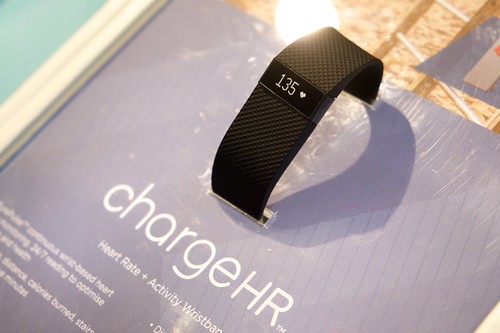
The 2Q 2016 smartphone scorecard: players searching for an exit


Exit. Who’s next? Photo by Today is a good day on Flickr.

There comes a time in every former top-ranking sports player’s career when they have to accept reality: they’re not up to it any more. They keep getting beaten by people whom they once would have trampled; what should have been easy wins are now struggles, or upsets. Eventually, they accept the reality everyone else has already seen: it’s time to exit.

And now we’re seeing that happen in the smartphone market. This isn’t really about sales of iPhones being down year-on-year – though they are, for the second quarter in a row, and though in the previous quarter Apple managed to keep its handset ASP (average selling price – calculated by total handset revenue divided by the number of handsets) up, in this quarter it was substantially down, below $600 for the first time since 2Q 2014.

But more generally, this is the quarter where China really began to muscle into the top ranks of Android OEMs – and all the players who used to be the big names there are inching towards the exit. The problem for the big-name Android OEMs is that, because it’s Android, they’re replaceable. Android on one handset is quite a lot like Android on another. But an Apple device, and its integrated software, is sui generis.

Numbers for all

So here are the numbers showing how that replacement is going. The list below is all in diminishing size of handset shipment volume. Other data sometimes has to be estimated, and in the case of Huawei, OPPO and vivo you’d have to be in one of the big analyst camps to know what their ASPs and hence revenues are, and you might have to be at the companies to know whether they’re profitable.

Standout elements from the quarter: Sony made a profit! (Even as it dwindled.) Lenovo kept shrinking; Apple’s ASP fell; Samsung trundled on; LG made more losses (the G5 flagship essentially sank); Microsoft barely turned up.

Q2 2016: the smartphone scorecard

* denotes estimate: explanations below

Company Handsets
(million)
Revenues Handset
ASP
Operating
profit/loss
Per-handset
profit/loss
% profit/loss
Samsung 77.0 $22.61bn $275.64* $3.75bn $48.66* 16.59%
Apple 40.4 $24.05bn $595.26 $6.71bn* $166.09* 27.9%*
Huawei 32.1 $7.06bn* $220 positive? positive? positive?
OPPO 22.6 $4bn?? $177* positive? positive? positive?
vivo 16.4 $3.7bn?? $225.60* positive? positive? positive?
ZTE 14.7 $2.5bn?? $170* ?? ?? ??
Xiaomi 14.5 $2.28bn* $150 negative? negative? negative?
LG 13.9 $2.88bn $207.52 –$177m –$12.73 –6.15%
Lenovo/
Motorola
11.3 $1.71bn $150.97 –$163m –$14.42 -9.53%
Sony 3.1 (not a misprint) $3.64bn $582.26 $4.03m $1.30 0.11%
HTC 2.3* $0.5bn* $217.39* –$128.50m –$55.87* -25.7%
Microsoft
Mobile
1.2 (not a misprint either) $0.23bn* $190.80* –$45m* –$38* –19.56%
Everyone else 135.4m

Assumptions:
Samsung: 6m tablets sold for $175 ASP at zero profit; 11.4m featurephones sold for $15 ASP at zero profit. (For every $1 fall in featurephone price, smartphone ASPs rise by $0.14 – so with zero featurephones and 6m $175 tablets, smartphone ASP would be $277.84. For tablets, every $5 rise in ASP lowers smartphone ASPs by $0.38 – so if tablets were free and there were no featurephones, smartphone ASPs would be $291.37. It isn’t a huge difference; tablets and featurephones are together generate about $880m, or less than 5% of overall mobile revenues.)

Apple: operating profit calculated at the historic figure of 27.9% (derived from multiple financial analysts). Might have been lower or higher – the 6S range maybe costs more to make than the 6 range, but there’s the SE range which might be cheaper because less retooling needed.

Huawei, OPPO, vivo, ZTE, Xiaomi: ASP figures all estimated, based on their perceived market power

How do I calculate the revenue figures (and hence ASPs) for OPPO, vivo, Xiaomi? According to According to Strategy Analytics,

Global Smartphone Industry revenues declined by -5% YoY in Q2 2016, due to softening of volumes. Apple was followed by Samsung, Huawei, Oppo and vivo from a revenue perspective. The report also captures the Wholesale Average Selling ASP’s for all major vendors across six regions. ASP’s in the quarter declined by -6% globally.

So if Oppo and vivo were bigger than Sony, they must have done more than 3.64bn. (Xiaomi must have been less than them too.) I’m guessing they weren’t that much bigger. For Huawei, which like those two doesn’t release revenue figures, I’ve estimated an ASP (up from the previous quarter) and generated the revenue figure from that.

LG: assume tablet sales were minimal, and had zero profit.

HTC: given that it now sells the Vive headset too, though not in large numbers (certainly not millions), it only takes a small adjustment from the overall revenue.

Microsoft Mobile: Microsoft gave figures for featurephone sales, of 9m; assuming an ASP of $15 for those and gross margin of $5 each (as before) gives the featurephone revenue. Assume the same manufacture cost as before, and you get zero gross margin; even with zero sales/marketing and R+D, you get a negative margin.

Rampant deflation

Everyone’s seeing price declines, which is what you’d expect in a growing market where you also have Moore’s Law and scale coming into play. But this is barely a growth market. Smartphone shipments were up just 0.26% year-on-year. When you look at the trend over the past nine years, we’ve really hit a wall here:

Smartphone growth year-on-year.png

The red line shows the four-quarter moving average, and that’s clearly down. What that suggestion of slowdown doesn’t quite tell is how the market is diverging. The premium end was long ago saturated: people who could buy expensive phones did so, but now there’s no new market to sell into in the developed countries – and consequently the US, China and western Europe are expected to see slowdowns, and even reductions in volume, this year (per IDC). The action, such as it is, will be in emerging markets such as the Middle East, Africa and Latin America – though even they will only see growth of about 5.6%.

In such a world, the companies which initially made Android a Huge Thing are beginning to head for the exit. HTC built the first Android phone. Sony had to go Android (as Sony Ericsson) because it was losing money hand over fist. LG had to figure out how to make smartphones quickly, because its featurephone business was being destroyed.

Now though they’re seeing those be destroyed all over again. You can see the numbers above. And here’s a graph of how pretty much everyone is seeing sales growth compared to the smartphone market turn negative (so if the market grows 10% and they grow 5%, they’re falling behind):

Smartphone OEMs: growth against the overall market

Year-on-year shipment growth measured against the overall market

But I’ve been collecting the revenue and profit/loss numbers too (and publishing them) going back to Q4 2014. That’s seven quarters. What if you add that up?

Seven quarters of hurt

Here’s the lineup when you calculate it over seven quarters:

Seven-quarter smartphone scorecard covering Q4 2014 to Q2 2016 inclusive

(all estimate elements as above)

Company Handsets
(million)
Revenues Handset
ASP
Total operating
profit/loss
Per-handset
profit/loss
% profit/loss
Samsung 555.4 $158.70bn $285.74 $17.95bn $32.32 11.31%
Apple 401.07 $263.59bn $657.22 $73.62bn* $183.56* 27.92%
Xiaomi 116.92 $18.62bn* $159.25 ? ? ?
LG 102.75 $21.58bn $210.02 –$428.39m –$4.17 –1.98%
Lenovo/
Motorola
121 $17.44bn $144.13 –$1,114m –$9.26 –6.39%
Sony 47.8 $17.13bn $358.37 –$908.33m –19.00 –5.30%
HTC 26.1 $6.45bn* $247.13 –$717.51m –$27.49 –11.12%
Microsoft
Mobile
41.3 $5.76bn $139.47 –$2,621m –$63.46 –45.50%
(Huawei, OPPO, vivo and ZTE aren’t included because I don’t have figures for them over the period; and there aren’t any financials for any of them.)

This bears out a truth that is borne out again and again by analyst reports into best-selling handsets, brand loyalty, and customer satisfaction: these days it’s a two-horse race, Apple and Samsung.

Xiaomi is an unknown, financially. But all the rest are losing money hand over fist, and as Vlad Savov wrote in a terrific piece entitled “Android OEM death watch: Sony, HTC and LG edition“, you do wonder why they soldier on:

The Android ecosystem has never been more diverse than it is today, but I suspect that what we’re witnessing now is a peak from which the basic economics of a maturing smartphone market will rapidly drag us down. Niche players like Nextbit, Vertu, and BlackBerry might survive thanks to their low volume of sales and correspondingly limited costs. But the big names we’ve known for so long, the Sonys and HTCs of this world, seem fated to fade from view.

I think this is absolutely right. Look at those numbers: why is LG putting up with a division that has lost money, and shows no sign of stopping? Although Sony made money this quarter, it’s fading from view. Lenovo’s ASP is so woefully low that it’s an obvious target for every up-and-coming Chinese OEM. (I was recently contacted by Meizu, which is launching into the Asian market: yet another rival for the uncommitted phone buyer.)

It isn’t even as if these struggling companies have scale: Sony has only sold 12% as many phones as Apple over the period (and 8.6% as many as Samsung, which might be the better comparison); LG has managed a more respectable 18.5% of Samsung’s number, but it’s losing money on them, over seven quarters.

Sure these companies have a lot invested in this business; you can’t just shut down a smartphone business like closing a corner shop. There are contracts, staff, distribution deals. But you can edge out, which is what Sony seems to be doing as its range and distribution shrinks. Will LG follow, or is its rivalry with Samsung in Korea just too strong to let it ever let go?

I’m honestly puzzled by companies which tot up millions in red ink and decide it’s fine to carry on. Microsoft is clearly getting out (who wouldn’t, looking at those margins) but how can Sony or Lenovo look at their returns and feel they’re OK? That’s the puzzle here.

Sure, there’s lots else going on: Apple’s falling ASPs and falling sales point to the saturation of the markets. Equally, the cheap hardware is getting really good – the Shenzhen effect, as volume of production means that the only distinguishing thing is software and, to a lesser extent, chip design ability. (Apple, Samsung and Huawei stand alone here.) I’m certainly impressed by Huawei, which offered a dual-lens camera on the new P9 which has a neat refocus/re-aperture effect, well ahead of Apple.

(Huawei’s problem is it doesn’t have a coherent strategy: it offered “3D Touch” before Apple too – as did ZTE – but hasn’t followed through; only the latest P9 still has it. Will the dual lens offering spread to the rest of its offerings, or fall by the wayside as happened with HTC’s dual system on the M8 in 2014?)

In search of the lost profits

What then happened to all the profits that HTC, Lenovo, and Sony used to earn? Simple: eaten by Samsung, Apple, and Chinese rivals. The growth of companies like OnePlus, Meizu, and of course Huawei, vivo and OPPO and (less so) Xiaomi means the potential for scale falls away from those already in the market.

However it can take a while for these effects to become visible. HTC’s sales peaked in 2011; LG’s, Sony’s and Microsoft’s in the second half of 2014. From around that time, all the Chinese OEMs began growing rapidly, first in their home market, and then India; and in Huawei’s case, Africa, Europe and the US.

Late exit

Apple looks to have peaked in 2015 – but it has a solid ecosystem and so many users that any erosion would take a long, long time. That’s in stark contrast to every Android OEM, which (as even Xiaomi is finding out) is disposable and replaceable.

But it can take a long time. BlackBerry’s handset sales peaked in 2010, and yet it’s still going. (Though will John Chen finally announce the company is getting out of hardware at the quarterly results on September 28? One to watch.) HTC has been ebbing for a while, for example. Sony has begun withdrawing to Asia. LG is being pushed aside in Europe by Huawei.

The only question is when some of the executives at these companies will finally ask why they’re still trying to play a losing hand. There comes a time for the players to leave the game. When is it?

Start up: Pandora subs up, can links break copyright?, Note 7 recall!, PC/smartphone death watch, and more


Looks harmless, but one of these bit Apple hard in the butt this week. Photo by Lisa Brewster on Flickr.

You can now sign up to receive each day’s Start Up post by email. You’ll need to click a confirmation link. Then it’ll arrive next week.

A selection of 12 links for you. Freshly fried. I’m charlesarthur on Twitter. Observations and links welcome.

Pandora signs its Warner Music deal, which means it can finally launch its $5 subscription service – Recode

»Sometimes a launch isn’t actually a launch. Until it’s actually a launch.

For instance: This morning, at 8 am ET, Pandora announced that it “launched Pandora Plus,” its new $5-a-month subscription service.

But Pandora didn’t actually launch Pandora Plus, because it couldn’t launch the service legally: It had yet to sign a licensing deal with Warner Music Group.

Now Pandora has signed its Warner deal, so it can go ahead and start letting some of its users try out Pandora Plus — a souped-up, ad-free version of its ad-supported free web radio service.

Pandora Plus’s temporary limbo status wasn’t relevant to normal people, and it went mostly unnoticed in the music business.

Pandora has already said that only 1% of its user base would see the new service today anyway, so it was nearly impossible for anyone to figure out if it was live or not.

«

But Warners used Pandora’s desperation to screw better terms out of it. A bit like Universal screwing Microsoft in 2006 when the latter was desperate to launch the Zune.

Still, brings Pandora into the streaming game in the US.
link to this extract


iOS 10 is surfacing hardcore porn GIFs in iMessage • The Verge

Jacob Kastrenakes:

»Apple is having trouble removing porn from iMessage’s new GIF search feature. Overnight, Deadspin noticed a highly sexual My Little Pony GIF appearing in searches for the word “butt,” but the problem goes well beyond that.

A woman who emailed The Verge this afternoon says her eight-year-old daughter, while trying to send a message to her dad, was presented with “a very explicit image” of “a woman giving oral sex to a well endowed male.” Her daughter hadn’t searched for anything explicit, just the word “huge.”

“I see the image come up like, holy shit, whoa whoa whoa, that’s a hardcore porn image,” Tassie Bethany, whose daughter discovered the image, tells The Verge by phone. “I grabbed the phone from her immediately. She typed in the word ‘huge,’ which isn’t sexual in any nature. It’s just a word, not like butt or anything else.”

«

Haven’t tried this. Apple blocked the MLP thing, but it seems like the flaw lies in Microsoft’s Bing (which supplies the search results on GIFs) not having figured out that GIFs might sometimes not be child-friendly.

Plus the wild overconfidence of thinking you could just let a search engine have a direct feed into your platform. There’s Giphy, which does the same sort of job, but without the porn.
link to this extract


Links can infringe copyright in EU, European Court of Justice rules • Fortune

David Meyer:

»Thursday’s ruling by the Court of Justice of the European Union (CJEU) will be music to the ears of rights holders who are frustrated at the existence of sites that provides lists of links to pirated music and films but that do not host such material themselves.

It could also have major implications for search engines such as Google GOOG 1.26% if they link to copyright-infringing services despite having been asked not to do so.

This particular case involved a website called GeenStijl (“No Style”) that repeatedly posted links to Playboy pictures of a Dutch TV presenter called Britt Dekker, even after Playboy’s Dutch publisher at the time told it to stop.

The ruling marks a rare occasion on which the court went against the advice of its advocate general, the court’s top advisor. (Another example would be the infamous Google Spain ruling that extended the so-called “right to be forgotten” to search engines.)

Advocate-general Melchior Wathelet recommended back in April that it should be irrelevant whether or not a site posting links to copyright-infringing material is doing so deliberately.

«

Really perplexing. Here’s the ruling, and the press release.
link to this extract


iPhone 7: for the first time, the Plus model is the most pre-ordered – Slice Intelligence

»Data from Slice Intelligence just revealed the first online sales figures for the iPhone 7, and early shoppers prefer the Plus. Among those preordering the iPhone 7, in the first 48 hours of availability, 55% ordered the Plus model. By comparison, over half of the iPhone orders of the 6 and 6s were for the regular model during the first two days of availability.

As is typical, those who re-ordered the iPhone 7 tend to be Apple loyalists. 55% of iPhone 7 buyers purchased an iPhone online in the past two years. We also observed that the iPhone upgrade cycle is ticking up: only 34% of iPhone 7 buyers hadn’t purchased a phone online since 2014, versus 40% of 6s buyers.

«

Pinch of salt, but if correct will bump up the average selling price of iPhones.
link to this extract


U.S. Consumer Safety Agency plans recall of Samsung Galaxy Note 7 • WSJ

John McKinnon:

»Samsung already has been pursuing a global recall effort of its own, after reports surfaced of overheating and exploding batteries in its new top-of-the-line phone.

But the company’s recall effort has been plagued by problems, including conflicting consumer information and communications troubles with regulators.

The formal recall in the U.S. is likely to specify ways of remedying the overheating and explosion problems that have surfaced in the phone.

«

Bang goes a ton of brand equity.
link to this extract


[1609.04327] The bumpy road towards iPhone 5c NAND mirroring • ArXiv

Sergei Skorobogatov

»This paper is a short summary of a real world mirroring attack on the Apple iPhone 5c passcode retry counter under iOS 9. This was achieved by desoldering the NAND Flash chip of a sample phone in order to physically access its connection to the SoC and partially reverse engineering its proprietary bus protocol. The process does not require any expensive and sophisticated equipment. All needed parts are low cost and were obtained from local electronics distributors. By using the described and successful hardware mirroring process it was possible to bypass the limit on passcode retry attempts. This is the first public demonstration of the working prototype and the real hardware mirroring process for iPhone 5c.

«

Skorobogatov works at the Cambridge University computer science lab. This isn’t trivial.
link to this extract


PC leaders must overhaul their businesses or leave the market by 2020 • Gartner

»Business leaders of PC vendors face a stark choice and must decide between overhauling their businesses or leaving the PC market by 2020, according to [research company] Gartner. If they decide to stay, they need to rapidly determine what changes to make or what alternatives to adapt in today’s over-penetrated PC market.

“The PC business model as we have traditionally known it is broken. The top five mobile PC vendors have gained 11% market share over the past five years — from 65% in 2011 to 76% in the first half of 2016; but this has come at the expense of profitable revenue,” said Tracy Tsai, research vice president at Gartner. “While this does not mean that the PC market is finished, the installed base of PCs will continue to decline over the next five years, with a continuing erosion of PC vendors’ revenue and profit.

“The traditional way of gaining shipment market share by competing on price to stimulate demand simply won’t work for the PC market over the next five years,” said Ms. Tsai. “Today’s PC vendors need to adjust to the new realities that are shaping consumption, including the fact that PC users are extending PC lifetimes until end of life, business PC applications and storage are moving into the cloud, and are less reliant on PC performance and, crucially, that price and specification are not enough for a user to upgrade a PC — a new and better customer experience is the only true differentiation.”

«

Intel and Microsoft are looking elsewhere, Gartner says, but the PC companies don’t seem to have caught the hint. Moreover, it says the installed base of PCs is shrinking: from 1.48bn in 2015 to 1.44 this year, and 1.33bn in 2019. Fewer PCs means fewer replacements means fewer sales means less profit.

That 2020 timescale is pretty short.
link to this extract


Android OEM death watch: Sony, HTC, and LG edition • The Verge

Vlad Savov:

»If Android OEMs were just that, original equipment manufacturers, their jobs would be much simpler and easier. But in the modern smartphone world, it’s not enough to just design and build new gadgets to a high spec; you have to power them with your own tailored software, you have to support them with updates and security patches, and you have to price them enticingly, too. Not everyone has been doing a particularly good job of this, and as the ranks of Android OEMs continue to swell, escalating competition might push some familiar names out of the game altogether.

«

This is a great piece; I’ve been compiling my Q2 2016 smartphone scorecard – who’s making money, who’s not – and Savov hits the mark. These companies are in trouble.
link to this extract


The free-time paradox in America • The Atlantic

Derek Thompson:

»60 years later, it seems more true to say that it is not leisure that defines the lives of so many rich Americans. It is work.

Elite men in the US are the world’s chief workaholics. They work longer hours than poorer men in the US and rich men in other advanced countries. In the last generation, they have reduced their leisure time by more than any other demographic. As the economist Robert Frank wrote, “building wealth to them is a creative process, and the closest thing they have to fun.”

Here is the conundrum: Writers and economists from half a century ago and longer anticipated that the future would buy more leisure time for wealthy workers in America. Instead, it just bought them more work. Meanwhile, overall leisure has increased, but it’s the less-skilled poor who are soaking up all the free time, even though they would have the most to gain from working. Why?

«

He then offers three alternatives: less available work for poor men; “social forces” cultivate “industriousness”; leisure is “leaking” into work, and vice-versa.

I like the third one best.
link to this extract


Shoot iPhone DNG RAW photos today in the new Lightroom Mobile • Petapixel

DL Cade:

»Adobe made a huge announcement today that will change the iPhone photography game entirely: the newest version of Lightroom Mobile for iOS now lets you capture RAW DNG photos right inside the app.

This is huge news made possible by the release of Apple’s newest operating system, iOS 10. Lightroom Mobile could already edit RAW files before this, but never before has an iOS app been able to capture DNG RAW photos natively. The quality and latitude of your iPhone photos is about to get a whole lot better.

«

However: only for the iPhone 6S/Plus, iPhone SE, iPhone 7/Plus.. and iPad Pro 9.7 (mini Pro). RAW is big for photographers; it’s been supported in Android since Lollipop (beginning of 2015), so is now available to 50% of active devices.
link to this extract


Tested: this all-AMD $650 PC proves VR-ready rigs don’t have to be expensive • PCWorld

Brad Chacos:

»Experiencing virtual reality will blow your mind, but it’ll also demolish your wallet. Or at least that’s what people think, and that perception was exacerbated when Oculus’s CEO said that building a Rift setup from scratch will set you back a cool $1,500. Since the Oculus Rift itself costs $600, that implies you’ll need a $900 PC to run it. I often hear people say you’ll need to spend about $1,000 on a PC for VR.

Nothing could be further from the truth—and it’s all thanks to AMD.

«

$650 or so and it’s yours. Now you just need to find some content for it.
link to this extract


Steve Kondik: There won’t be “much if any” involvement from Cyanogen Inc. on CyanogenMod 14 • Android Police

David Ruddock:

»If a comment on a CyanogenMod commit thread by founder Steve Kondik is any indicator, rumors that Cyanogen Inc. is basically getting out of the OS development business seem to be coming to fruition. While the context of the comment is a rather specific commit thread, Kondik’s frustration seems to have led to him to say a bit more about Cyanogen Inc.’s future plans than the company may have liked:

There isn’t really going to be much if any involvement from the Inc this time around and I’m taking on a lot of stuff on my own to try and keep us moving forward.

This would appear to be at odds in some ways with the assurances Kondik gave to CyanogenMod community members about the for-profit Cyanogen Inc’s involvement back in July.

Cyanogen Inc (including myself) will still be sponsoring the project [CyanogenMod] and will continue to have an active role in it’s [sic] development.

I’m not sure how “an active role” in CyanogenMod’s development and “much if any involvement” in that development gel.

«

It cost BlackBerry, HP and Microsoft about a billion dollars each to write a new mobile OS – BB10, webOS, Windows Phone (well, HP bought theirs), with no guarantee of success. If the costs for development even of an Android offshoot are anywhere close, no wonder Cyanogen is getting out of it.
link to this extract


Errata, corrigenda and ai no corrida: none notified

Start up: what colour is the web?, Samsung’s problem deepens, driverless in Pittsburgh, and more


Look like lights out for the Microsoft Band. Photo by Chun’s Pictures on Flickr.

You can now sign up to receive each day’s Start Up post by email. Don’t be shy.

Apologies to those who received a double-length email yesterday, with both the Tuesday and Wednesday content. This was probably someone else’s fault, and we’ll fire them if we ever find we’re paying them.

A selection of 11 links for you. Liable to move to Channel 4 if you like them too much. I’m charlesarthur on Twitter. Observations and links welcome.

A case of misplaced trust: how a third-party app store abuses Apple’s developer enterprise program to serve adware • TrendLabs Security Intelligence Blog

»For bogus applications to be profitable, they should be able to entice users into installing them. Scammers do so by riding on the popularity of existing applications, embedding them with unwanted content—even malicious payloads—and masquerading them as legitimate. These repackaged apps are peddled to unsuspecting users, mostly through third-party app stores.

Haima exactly does that, and more. We discovered this China-based third-party iOS app store aggressively promoting their repackaged apps in social network channels—YouTube, Facebook, Google+, and Twitter—banking on the popularity of games and apps such as Minecraft, Terraria, and Instagram to lure users into downloading them.

Third-party app stores such as Haima rely on the trust misplaced not only by the users but also by distribution platforms such as Apple’s, whose Developer Enterprise Program is abused to deploy these repackaged apps. These marketplaces also appeal to the malefactors because they are typically less policed. Haima capitalizes on the monetization of ads that it unscrupulously pushes to its repackaged apps…

…By pretending to be an enterprise, this third-party app marketplace can distribute apps without having to be vetted through Apple’s lengthy certification process.

«

Ah. “Third-party app store”. Stop there. The “enterprise certificate” route is still a problem for Apple; it’s the simplest route for malware. But look at how often Haima has to change to keep ahead of Apple: five certificates in 15 days.
link to this extract


Samsung S7 Edge explodes in teacher’s hands in middle of busy cafe • The Sun

Nick Pisa and Daniel Jones:

»A Samsung Galaxy S7 owner fears she could have been killed as it overheated in her hand and exploded.

Supply teacher Sarah Crockett, 30, told how the phone blew up in a busy cafe even though it was not being charged.

«

(There’s CCTV footage.) This is of course just a single case out of millions of S7s sold. But: not being charged. Samsung has a problem, and part of the problem is that it’s impossible to say how big (or small) the problem is. The suspicion is that implementing fast-charging systems has made these batteries more difficult to fabricate safely.

And if you scroll down the page, you find an S7 Edge owner who claims their phone exploded in his trouser pocket, badly burning him.
link to this extract


‘Created’ in China: Shenzhen is making hardware like Silicon Valley makes apps • Fusion

An Xiao Mina:

»Lei Gao is part of this new generation that uses the internet’s agility to augment what the city has to offer. Within days, he had what he needed to experiment with his idea. It took just 10 yuan—about 1.50 USD—and an account on Taobao, an eBay-like e-commerce site run by Chinese tech giant Alibaba, to purchase an exercise gripper shipped from Fujian, a province about a nine hour drive up the coast. Alibaba’s efficient payment and shipping system saved him a trip, and he already had the other parts and pieces he needed from previous projects. After the gripper arrived, he and his team tinkered with code and a Bluetooth trigger, and they created a prototype: a “smart gripper” to interact with your phone. It was perfect for games like Flappy Bird.

Gao and his team make up Imlab, one startup amongst over a million small and medium-sized companies in Shenzhen. Hardware startups across the city can readily pull together a working prototype in a day, test it, and quickly figure out where to go next. Gao’s company is based at Emielab, a coworking space and hardware incubator modeled after successful ones in San Francisco.

«

link to this extract


Google, Apple are about to face India’s security demands • Bloomberg

Saritha Rai:

»India could force companies to use technology cooked up in a government-funded lab.

The initiative is part of a national biometric identity program called Aadhaar (Hindi for foundation). Millions of Indians use fingerprint and iris-scan authentication to access a range of public and private services that now includes banking. Failure to join the effort could limit the tech industry’s access to a vast and growing market, but companies like Apple and Google are expected to resist opening up their phones and operating systems to the Indian registration, encryption and security technology.

“There will be lots of pushing and shoving by the technology companies,” says Neeraj Aggarwal, managing director of the Boston Consulting Group in India. “It will be a battle of ecosystems, and companies will do their best to hold on to their own.”

A few weeks ago, government officials invited executives from Apple Inc., Microsoft Corp., Samsung Electronics Co. and Alphabet Inc.’s Google to a meeting to discuss embedding Aadhaar encryption into their technology. None of the companies will comment on what transpired at the gathering – and Apple didn’t show up at all.

«

This isn’t going to fly with the tech companies. They won’t allow a potentially insecure encryption system onto their devices. Which creates a delicate problem: how do you refuse to cooperate with a government which insists you do? Or can they find an interface between their system and the government’s which keeps everyone happy?
link to this extract


When you change the world and no one notices • Collaborative Fund

Morgan Housel:

»Do you know what’s happening in this picture? Literally one of the most important events in human history.

But here’s the most amazing part of the story: Hardly anyone paid attention at the time.

Wilbur and Orville Wright conquered [powered] flight on December 17th, 1903. Few inventions were as transformational over the next century. It took four days to travel from New York to Los Angeles in 1900, by train. By the 1930s it could be done in 17 hours, by air. By 1950, six hours.

Unlike, say, mapping the genome, a lay person could instantly grasp the marvel of human flight. A guy sat in a box and turned into a bird.

But days, months, even years after the Wright’s first flight, hardly anyone noticed.

«

As Housel points out with numerous examples in this fascinating piece (your must-read for today), world-changing inventions can take years to make the slightest impact, and they’re usually dismissed at first as pointless or toys by “smart” people.

Which does make one wonder how many world-changing inventions have been missed for that reason. Or is all progress inevitable, and it’s just a question of who puts their name to it?
link to this extract


The most popular colour on the internet is… • WIRED

Margaret Rhodes:

»It’s blue. The web is very blue. Not metaphorically, either. The Internet’s most heavily trafficked websites are literally coloured with nearly twice as many shades of blue as shades of yellow and red, and three times as much green.

Its dominance is so total, in fact, that, in a recent analysis of the colours used by the ten most popular websites, designer Paul Hebert had to make an entirely separate category for turquoise.

Hebert wanted to see what he could learn from the colour palettes of the web’s most popular websites. “I often struggle to create colour schemes, and was curious about what other companies are doing.” So he wrote a script that would scrape the 10 most popular sites on the internet as ranked by Alexa, including the likes of Google (#1), Facebook (#3), and Amazon (#7). It produced complete lists of the colours found on those sites’ home pages, which Hebert then turned into a series of visualizations.

«

Why yes, I have anglicised the spelling of “colour”.
link to this extract


Android Wear hopefuls call timeout on smartwatches • CNET

Roger Cheng:

»LG, Huawei and Lenovo’s Motorola unit will not release a smartwatch in the waning months of the year, the companies confirmed to CNET. While LG launched a watch in the first half, it’ll have been more than a year since Huawei and Motorola offered an update on their wearables.

That marks a reversal from last year, when all three companies launched Android Wear smartwatches at the early September IFA trade show in Berlin in what was supposed to be a resurgence of the platform. At this year’s show, Chinese maker Asus was the only major tech company to return with a new Android Wear watch.

The poor showing underscores the general lack of enthusiasm for smartwatches, which the industry has touted as the next hot trend in tech. Consumers, however, continue to question the usefulness of these gadgets. Even Apple, which leads the market for smartwatches, saw its shipments fall 55% from a year ago in the second quarter, according to IDC.

“Smartwatches still have yet to make a significant impression on consumers as a must-have device,” said Ramon Llamas, an analyst at IDC.

«

Android Wear this week passed 5 million downloads (ie activations) on Google Play. That’s after it was released in March 2014: 30 months for 5m users isn’t great, considering that Apple’s Watch is past 15m in 18 months.

A side note: Cheng’s reporting is consistently, solidly excellent – finding stuff out, asking people questions, not just waiting for corporate blogposts.
link to this extract


New Project Titan details, the Project Titan “reboot,” Project Titan is a platform • Above Avalon

Neil Cybart (in his paid-for newsletter) shows what happens when you have someone smart analysing public facts – in this case, where Apple’s leased Dodge Caravans which are collecting data “which will be used to improve Apple Maps” actually go:

»I have been noticing something weird with these Dodge Caravans and the locations that they frequent. Apple discloses on its website where the vans will be driven in two week increments. The vans have never been to Connecticut. However, the vans very frequently visit much more rural areas such as Kansas, Idaho, South Dakota, and Wyoming. In addition, there are states where these vans are found all the time – such as Louisiana and Nevada (and we are talking pretty extensive coverage in those states). If the goal is to capture business fronts and other items on busy roads for a version of Street View, spending a lot of time in Wyoming and skipping Connecticut is odd. In addition, focusing on a few states, while ignoring other states is weird. It got me thinking.

If you look at the states that have enacted autonomous vehicle legislation, I see some overlap with the areas where these Dodge Caravans most frequently visit. Nevada and Louisiana allow autonomous vehicles, two states where these vans are routinely found. I suspect the Dodge Caravans are being used to collect data for autonomous driving.

«

Did anyone else notice the lack of Connecticut visits? No – yet the data has been sitting there in plain view.
link to this extract


Apple Watch Series 2: Living the Fit Life • WSJ

Joanna Stern with a video review:

»Apple’s new watch is faster and more focused around your workouts, with GPS and a water-resistant body. WSJ’s Joanna Stern takes you through a full, exhausting day with Series 2.

«

I generally don’t think much of video reviews, but Stern (and/or her producer) has the grammar perfect: no “hey guys”, no showboating. But there is running and swimming. Stern may already be the person who has racked up the most time underwater testing phones and watches.
link to this extract


Uber driverless car in Pittsburgh: review, photos • Business Insider

Danielle Muoio was given the VIP treatment; self-driving means there’s a driver and engineer in the front just in case:

»Once you’re actually riding in the self-driving car, it feels surprisingly … normal. My driver had his hands on the wheels most of the time just in case he had to take over, so we had to double check a few times that the car was, in fact, self-driving.

But that speaks to just how good these cars are at handling city roads. Pittsburgh terrain isn’t easy to tackle, with steep hills and several bridges, but the cars rolled through just fine.

That being said, the cars are nowhere near perfect. There were at least four occasions in our roughly five-mile route where a “ding” went off indicating the driver needed to take control. It happened once on a bridge, but also on a perfectly straight back road without any perceptible obstacles.

We’ve talked about why Uber’s self-driving cars struggle with bridges.

«

Bridges are hard because they don’t have surrounding buildings, in general. Uber is definitely stealing a march here. Meanwhile, Bloomberg says “Google’s self-driving car project is losing out to rivals“, which has these interesting paragraphs:

»

“Google still has an imperfect system and no clear path to go to market,” said Ajay Juneja, chief executive officer of Speak With Me Inc., which offers voice recognition and related technology for cars, watches and other connected devices. “How exactly would they have shipped something by now?”

This is part of a broader challenge Google parent Alphabet Inc. faces turning research projects into profitable businesses. The company is more cautious about rolling out new technology early, after its Glass internet-connected eyewear flopped, according to one of the people. There’s also a higher bar now for projects as Chief Financial Officer Ruth Porat has said she requires clearer paths to profitability before approving more funding or expansion.

«

Porat is starting to look like an inconvenient pragmatist. But it’s early days still.
link to this extract


Don’t expect a new Microsoft Band device this year (or maybe ever) • ZDNet

Mary Jo Foley:

»Contacts told me recently that Microsoft has no plans to release a new Band fitness device this calendar year. I also heard that Microsoft disbanded the group of individuals who were trying to get the Band to run Windows 10 a number of weeks ago. But they weren’t certain whether Microsoft might simply release a Band 3 running firmware at some point in the future. The first- and second-generation Band devices run custom firmware, not Windows.

Microsoft has been plagued by quality issues with its Band 2 devices, as the skins on more than a few users’ devices have been splitting. (Microsoft may have started fortifying the skins of Band 2 devices to try to address that issue, as noted by Windows Supersite’s Rod Trent.)

Microsoft currently is selling the Band 2 for $175, a price cut designed to last until Oct. 16. Microsoft initially unveiled the first-generation Band fitness device on Oct. 29, 2014. It was released in the US the following day for $200. Microsoft launched the second-generation Band 2 device on Oct. 6, 2015. It went on sale in the US starting on Oct. 30 for $250.

The Band 2 included a barometer sensor and other updated ones, including its onboard GPS. Band 2, like Band 1, provided heart-rate monitoring, tracking for running, biking, golfing, cycling, etc., and the ability to work with Windows Phone (though not so well with Windows 10 Mobile, I’ve heard), Android, and iPhone devices.

«

Nice functions in the Band, but it always suffered from being clunky and having limited marketing support. Now it’s going the way of the Zune.
link to this extract


Errata, corrigenda and ai no corrida: none notified.