
Unknown's avatar

About charlesarthur

Freelance journalist - technology, science, and so on. Author of "Digital Wars: Apple, Google, Microsoft and the battle for the internet".

Start Up: what your kids are watching, BroadQual?, Russia’s early Trumpbots, Apple delights, and more


Art thefts have taken on a new form for the email age. Photo by AV Dezign on Flickr.

Tell a friend they can sign up to receive each day’s Start Up post by email. They’ll need to click a confirmation link, so no spam.

A selection of 8 links for you. Use them wisely. I’m @charlesarthur on Twitter. Observations and links welcome.

Broadcom offers $105bn for Qualcomm in landmark deal • Bloomberg

Ian King:

»

Broadcom Ltd. offered about $105bn for Qualcomm Inc., kicking off an ambitious attempt at the largest technology takeover ever in a deal that would rock the electronics industry.

Broadcom made an offer of $70 a share in cash and stock for Qualcomm, the world’s largest maker of mobile phone chips. That’s a 28% premium over the stock’s closing price on Nov. 2, before Bloomberg first reported talks of a deal. The proposed transaction is valued at approximately $130bn on a pro forma basis, including $25bn of net debt.

Buying Qualcomm would make Broadcom the third-largest chipmaker, behind Intel Corp. and Samsung Electronics Co. The combined business would instantly become the default provider of a set of components needed to build each of the more than a billion smartphones sold every year. The deal would dwarf Dell Inc.’s $67bn acquisition of EMC in 2015 – then the biggest in the technology industry.

«

Broadcom is so keen to do this that it doesn’t care whether or not Qualcomm’s current $47bn takeover bid for NXP completes or not. It wants Qualcomm anyway. Hard to see this sort of consolidation as good for the industry. But Singapore-based Avago, which reverse-qacuired Broadcom in 2016. is also moving its official headquarters to the US – which would make regulatory approval for the takeover a lot easier.

Trump supporters thought getting Broadcom to relocate was a coup. In fact it’s a way to erode the US’s supremacy in this chip space; the control of the unified company will rest outside the US.

Qualcomm, unsurprisingly, isn’t keen on this deal.
link to this extract


Galleries hit by cyber crime wave • The Art Newspaper

Cristina Ruiz, Anna Brady, Sarah P. Hanson and Julia Michalska:

»

Hackers are stealing large sums of money from art galleries and their clients using a straightforward email deception. The Art Newspaper has so far identified nine galleries or individuals targeted by this scam. They include Hauser & Wirth, the London-based dealers Simon Lee, Thomas Dane, Rosenfeld Porcini and Laura Bartlett and, in the US, Tony Karman, the president of Expo Chicago.

“We know a number of galleries that have been affected. The sums lost by them or their clients range from £10,000 to £1m,” says the insurance broker Adam Prideaux of Hallett Independent. “I suspect the problem is a lot worse than we imagine.”

The fraud is relatively simple. Criminals hack into an art dealer’s email account and monitor incoming and outgoing correspondence. When the gallery sends a PDF invoice to a client via email following a sale, the conversation is hijacked. Posing as the gallery, hackers send a duplicate, fraudulent invoice from the same gallery email address, with an accompanying message instructing the client to disregard the first invoice and instead wire payment to the account listed in the fraudulent document.

«

Old scam – many lawyers and their clients have already suffered at this – and it’s all for big money.
link to this extract


Russian Twitter support for Trump began right after he started campaign • WSJ

Mark Maremont and Rob Barry:

»

Kremlin-backed support for Donald Trump’s candidacy over social media began much earlier than previously known, a new analysis of Twitter data shows.

Russian Twitter accounts posing as Americans began lavishing praise on Mr. Trump and attacking his rivals within weeks after he announced his bid for the presidency in June 2015, according to the analysis by The Wall Street Journal.

A US intelligence assessment released early this year concluded the Kremlin developed a “clear preference” for Mr. Trump over his Democratic opponent Hillary Clinton, but cited December 2015 as the earliest suspected time that Russian social-media accounts advocated for Mr. Trump.

The earlier starting point of pro-Trump tweets highlights the breadth of the Russian effort to manipulate social media during the 2016 election. Kremlin-paid actors sowed division among Americans with fake pages and accounts, inflammatory postings and thousands of paid ads aimed at both liberal and conservative audiences, according to testimony before Congress last week.

The Journal analyzed 159,000 deleted tweets from accounts that Twitter identified to congressional investigators as operated by the Kremlin-backed Internet Research Agency.

«

I get a feeling that the journalists on the WSJ are trying to send a not-so-subtle message to their editor about his support for Trump.
link to this extract


Apple at its best • Stratechery

Ben Thompson found himself delighted – that’s the word – with the iPhone X, and reflects on where Apple’s sustainable advantage exists in the smartphone world of hardware and services:

»

smartphones are increasingly replacing PCs, but even then most use is additive, not substitutive. In other words, there is no reason to expect that the arrival of artificial intelligence means that people will no longer care about what smartphone they use. Sure, the latter may “recede into the background” in the minds of pundits, but they will still be in consumers’ pockets for a long time to come.

There’s a second error, though, that flows from this presumption of zero-summedness: it ignores the near-term business imperatives of the various parties. Google is the best example: were the company to restrict its services to its own smartphone platform the company would be financially decimated. The most attractive customers to Google’s advertisers are on the iPhone — just look at how much Google is willing to pay to acquire them — and while Google could in theory convince them to switch by keeping its superior services exclusive, in reality such an approach is untenable. In other words, Google is heavily incentivized to preserve the iPhone as a competitive platform in terms of Google’s own services; granted, Android is still better in terms of easy access and defaults, but the advantage is far smaller than it could be.

Apple, meanwhile, is busy building competing services of its own, and while its easy — and correct — to argue that they aren’t really competitive with Google’s, that doesn’t really matter because competition isn’t happening in a vacuum. Rather, Apple not only enjoys the cost of switching advantage inherent to all incumbents, but also is, as the iPhone X shows, maintaining if not extending the user experience advantage that comes from its integrated model. That, by extension, means that Apple’s services need only be “good enough” — there’s that phrase! — to let the company’s other strengths shine.

«

Worth it for the GIF he includes of unlocking for notifications. For all the (plentiful) moaning about Apple, In the past year, both AirPods and the iPhone X have really delighted people who begin using them expecting “just another” product. The iPhone X, in particular, has had rave reviews from customers.

What’s the last product you used that utterly delighted you?
link to this extract


Facebook estimates 60 million users may be fake: report • TheHill

Josh Delk:

»

Facebook estimates that around 60 million, or 2%, of its monthly average users may be fake accounts, according to a report from the company.

Many of the false accounts are used for spam, Facebook CFO Dave Wehner said in a recent investors call.

Separately, Facebook estimates that around 10% of its accounts are “duplicate” accounts, meaning they are accounts run by a user separate from their main account. This would amount to more than 200 million accounts.

Facebook, Twitter and Google testified before the Senate Intelligence Committee in a three-day session this week, providing investigators information on the efforts of foreign actors to meddle in U.S. politics. 

One of the investigators’ concerns, according to The New York Times, is the widespread use of “fake” social media accounts.

Twitter also reports that nearly 5% of its user base, or more than 16 million accounts, are fake “spam” accounts, Sean Edgett, the social media giant’s acting general counsel, said in testimony.

«

link to this extract


Something is wrong on the internet • Medium

James Bridle on the weird subculture within YouTube’s “Kids” space of knockoff and randomly-generated videos aimed at children:

»

A step beyond the simply pirated Peppa Pig videos mentioned previously are the knock-offs. These too seem to teem with violence. In the official Peppa Pig videos, Peppa does indeed go to the dentist, and the episode in which she does so seems to be popular — although, confusingly, what appears to be the real episode is only available on an unofficial channel. In the official timeline, Peppa is appropriately reassured by a kindly dentist. In the version above, she is basically tortured, before turning into a series of Iron Man robots and performing the Learn Colours dance. A search for “peppa pig dentist” returns the above video on the front page, and it only gets worse from here.

Disturbing Peppa Pig videos, which tend towards extreme violence and fear, with Peppa eating her father or drinking bleach, are, it turns out very widespread. They make up an entire YouTube subculture. Many are obviously parodies, or even satires of themselves, in the pretty common style of the internet’s outrageous, deliberately offensive kind…

…Here are a few things which are disturbing me:

The first is the level of horror and violence on display. Some of the times it’s troll-y gross-out stuff; most of the time it seems deeper, and more unconscious than that. The internet has a way of amplifying and enabling many of our latent desires; in fact, it’s what it seems to do best. I spend a lot of time arguing for this tendency, with regards to human sexual freedom, individual identity, and other issues. Here, and overwhelmingly it sometimes feels, that tendency is itself a violent and destructive one.

The second is the levels of exploitation, not of children because they are children but of children because they are powerless. Automated reward systems like YouTube algorithms necessitate exploitation in the same way that capitalism necessitates exploitation, and if you’re someone who bristles at the second half of that equation then maybe this should be what convinces you of its truth. Exploitation is encoded into the systems we are building, making it harder to see, harder to think and explain, harder to counter and defend against. Not in a future of AI overlords and robots in the factories, but right here, now, on your screen, in your living room and in your pocket.

Many of these latest examples confound any attempt to argue that nobody is actually watching these videos, that these are all bots. There are humans in the loop here, even if only on the production side, and I’m pretty worried about them too.

«

Something is definitely wrong, and YouTube’s utter laissez-faire attitude is a giant part of the problem. By treating anyone under the age of 18 as essentially the same – the sort of decision that would only be made by someone without children or without morals – it is seeding a deeply weird future. And by chaining videos together – so convenient! Just flag the unsuitable ones, kids, while we show you ads! – it deepens the rabbit hole.
link to this extract


Users exploit Twitter rule, post epic 30,000 character tweet • Daily Dot

Phillip Tracy:

»

The tweet, written in German, starts by introducing the two users who discovered the trick, “People! @Timrasett and @HackneyYT can override the character limit! You don’t believe us? Here is the approximately 35K character proof,” it reads. The rest is complete gibberish—one string of random numbers and character too long to even be a German word.

Eloquent or not, the post shows that it’s possible to publish a single tweet with more than 280 characters. Note, the tweet is actually “only” 30,396 characters, not 35,000. One of the tweet’s authors apologized, claiming Twitter showed them a different number.

So how did they do it? By exploiting a rule Twitter made in 2016 that links would no longer count in the 140-character limit. Yes, this is just one big web address with a URL code hidden deep in the large block of text. You can find it by opening up the tweet and searching for “.cc/”

«

And because Twitter de-obfuscates the URLs when you look at them (even though it stores them in its t.co format in its database), you see a gigantic tweet. Personally, I just blocked the tweeters. Life’s too short.
link to this extract


Two popular conservative Twitter personalities were just outed as Russian trolls • Philadelphia Inquirer

Rob Tornoe:

»

Jenna Abrams was a popular figure in right-wing social media circles. Boasting nearly 70,000 followers, Abrams was featured in numerous news articles during the 2016 election, spotlighted by outlets as varied as USA Today, the Washington Post, the BBC, and Yahoo! Sports. Her tweet about CNN airing porn during Anthony Bourdain’s show (it didn’t) was reported by numerous outlets.

But Abrams never existed.

According to information released by House Democrats earlier this week, Abrams was one of more than 2,750 fake Twitter accounts created by employees at the Internet Research Agency, a “troll farm” funded by the Russian government based in St. Petersburg. In addition to the Abrams account, several other popular conservative social media personalities — @LauraBaeley, SouthLoneStar, Ten_GOP — were all revealed to be troll accounts. All have been deactivated on Twitter.

According to the Daily Beast, the agency developed a following around the Abrams account by offering humorous, seemingly non-political takes on pop culture figures like Kim Kardashian. The agency also furnished the fake account, which dates back to 2014, with a personal website, a Gmail account and even a GoFundMe page.

Once the Abrams account began to develop a following, the tone of its tweets shifted from pokes and prods at celebrities to divisive views on hot topics like immigration and segregation.

“To those people, who hate the Confederate flag. Did you know that the flag and the war wasn’t about slavery, it was all about money,” the Abrams account wrote in April of 2016. The tweet quickly went viral, earning rebukes from historian Kevin Kruse and Al Letson, the host of the Center for Investigative Reporting’s popular Reveal podcast.

Those rebukes only allowed Abrams initial message to spread even wider, which was the ultimate intention of Russia’s propaganda campaign — to sow dissension and increase the racial divide among America’s voting populace, revealing the world’s only superpower as a country in decline.

«

The other troll was a pro-Trump account, indistinguishable in its excitement from real-life American idiots wrongly excited about Trump.
link to this extract


Errata, corrigenda and ai no corrida: none notified

Start Up: animoji karaoke!, Twitter’s Russian errors, cheap VR, fake WhatsApps, and more


Even including this screwup, nuclear power is the least lethal major energy source. Oh yes. Photo by CMdRCoRd on Flickr.

You can sign up to receive each day’s Start Up post by email. You’ll need to click a confirmation link, so no spam.

A selection of 11 links for you. Use them wisely. I’m @charlesarthur on Twitter. Observations and links welcome.

Twitter sidestepped Russian account warnings, former worker says • Bloomberg

Selina Wang:

»

In 2015, researchers from the University of California at Berkeley approached Twitter, asking for help, [Leslie] Miley said. They had found that Twitter had a significant amount of fake accounts, but wanted more data to further their research. Three employees on the product safety and security team, including Miley, met with them. They declined to give the academics data, but the meeting made them curious.

Afterward, the employees ran an analysis on Twitter’s accounts. Miley [then a manager on the accounts team, responsible for the infrastructure handling logins] said he was stunned to find that a significant percentage of the total accounts created on Twitter had Russian and Ukrainian IP addresses. According to Miley’s recollections, he brought the information to his manager, who told him to take the issue to the growth team. Miley said that he doesn’t have records of the tallies. 

“When I brought the information to my boss, the response was ‘stay in your lane. That’s not your role’,” Miley said.

Miley said he advised the growth team to delete most of the accounts they had surfaced from Russia and Ukraine, since the analysis suggested that most were inactive or fake. The growth team didn’t take any action on the Russian and Ukrainian accounts after he presented the data to them, according to Miley.

Many pro-Trump bots that were active during the 2016 U.S. elections were long-dormant accounts, according to researchers. These profiles give the illusion that they’re legitimate, and not created for the sole purpose of spreading propaganda during a campaign, according to Samuel Woolley, research director of the Digital Intelligence Lab at Institute for the Future, a non-profit research organization.

«

What a mess. We’ve always known that the only number that mattered to Twitter was the number of accounts, but this is terrible.
link to this extract


A fake news writer reveals how he’s making money on Facebook • Mic

Jake Horowitz and Kendall Ciesemier:

»

The source attributed a fake quote in the headline of a story to the celebrity and distributed that story on Facebook. Eventually, the story was taken down after it was flagged by Snopes, a third-party fact-checking website that Facebook has enlisted to help flag fake news for removal.

However, the source said he still was able to make $20,000 before the story was taken down.

“The site had already made its money, we had already made our money. We could probably do that a dozen more times before Google and Facebook both would be like, ‘We’re now going to blacklist this website,’” the source said.

In a written statement to Mic, a Facebook spokesperson explained, “Our fact-checking partners diligently review items that are not apparent satire and are focused on the worst of the worst: hoaxes intended specifically to deceive.”

However, the spokesperson also admitted that it commonly takes Facebook more than three days before it is able to remove fake news stories.

“While we know that most of the impressions typically happen in the first day, and that we have missed many, we are getting better,” the spokesperson said.

«

Not really going to get ahead of this, are they.
link to this extract


How the web became unreadable • WIRED

Kevin Marks:

»

Typography may not seem like a crucial design element, but it is. One of the reasons the web has become the default way that we access information is that it makes that information broadly available to everyone. “The power of the Web is in its universality,” wrote Tim Berners-Lee, director of the World Wide Web consortium. “Access by everyone regardless of disability is an essential aspect.”

But if the web is relayed through text that’s difficult to read, it curtails that open access by excluding large swaths of people, such as the elderly, the visually impaired, or those retrieving websites through low-quality screens. And, as we rely on computers not only to retrieve information but also to access and build services that are crucial to our lives, making sure that everyone can see what’s happening becomes increasingly important.

We should be able to build a baseline structure of text in a way that works for most users, regardless of their eyesight. So, as a physicist by training, I started looking for something measurable…

«

He found it in contrast ratio (between type and background.)

»

For example: Apple’s typography guidelines suggest that developers aim for a 7:1 contrast ratio. But what ratio, you might ask, is the text used to state the guideline? It’s 5.5:1.

Google’s guidelines suggest an identical preferred ratio of 7:1. But then they recommend 54% opacity for display and caption type, a style guideline that translates to a ratio of 4.6:1.
The typography choices of companies like Apple and Google set the default design of the web. And these two drivers of design are already dancing on the boundaries of legibility.

«

link to this extract


How to make Animoji Karaoke with iPhone X • iMore

Rene Ritchie:

»

How do you make awesome Animoji Karaoke to share with your friends and all your socials? With these simple steps!

Animoji Karaoke is really more like Animoji or dubsmash or whatever it is we’re calling lipsync these days. You play some music, you move your mouth, and your iPhone X turns it into an animated emoji singing a song.

Let’s break it down.

«

It’s probably only going to be a thing for a week, if that – to be replaced by people lipsyncing Trump speeches, film extracts, books and so on – but it’s fun while it lasts. Here’s Bohemian Rhapsody:

(I think the trick is to move your mouth a lot.)

Has there ever been a phone which has created a genre like this so quickly? The thing’s been on sale since Friday.
link to this extract


Examining the malaise of bargain basement virtual reality • Anandtech

Ian Cutress went for a wander around IFA (back in September, but this is still valid), to look for the crappy VR headsets, to see how bad “bad” might be and still be on sale:

»

So here’s the thing: the Skyworth headset is essentially a smartphone under the hood that you can’t take out. So what makes it better than a Samsung VR headset where the smartphone can be attached / detatched? One would assume it’s a price thing, and we were told the price for the headset could be $400 to $800. I remarked that it was a pretty large range, but was told that the Skyworth headset is still a work in progress, with exact specifications to be decided later. If it was $400, it might be more palatable, but for $800 then it might be easier to go the smartphone route.

This brings us around to the problem with VR right now. Everyone wants in on the bandwagon, and in a keynote at the event it was pointed out that in order for triple-A style games and film studios to start making content in these new formats, there needs to be more potential sales out there. Current estimates put 500k headsets in the market (of varying degrees of power) with another 2.7 million by the end of 2017. No game studio or film studio, working on the next FPS or Avatar, will make a massive piece of content for only 3.2 million people – it needs to be in the hands of tens of millions to even start to make sense, and we won’t be at that point for a number of years.

All that being said, you have a choice – investing in a premium VR headset to be able to experience the best will cost $700+, in terms of the headset itself plus any extra hardware you need to power it. The easiest way to enter the VR space with some clout is the smartphone or all-in-one route, but that is still a hefty cost. Then there is a large, long gap to the segment of very basic all-in-one virtual reality headsets as shown at IFA this year.

For $100, or the rough price of the Samsung headset without any internal hardware, you get a basic quad-core Rockchip design with limited functionality. I’m half inclined to suggest that a bucket be provided as well, just in case nausea takes over. But it shows what a state VR is in, when the hardware is still so expensive. In order to get a base experience that can truly be called VR, such as with the Skyworth headset, it might be as much as a high-end smartphone anyway. For mass market adoption, the cost to enter has to be low, but not so low we’re scraping the barrel for basic frame rates.

«

I can’t see how VR gets to there from here.
link to this extract


The mystery of Apple’s one-time Services boost • Yahoo Finance

Evan Niu on the mysterious extra payment which appeared in Apple’s Services segment in the past quarter, ascribed to “a favorable one-time adjustment of $640 million due to a change in estimate based on the availability of additional supporting information”. Whaaat? It’s probably traffic acquisition payments from Google for being the default search on Safari and Siri on iOS:

»

[on the desktop] the rising popularity of Google’s Chrome browser over the past decade as it overtook Firefox directly undermined the need to occupy Firefox’s default search spot (which was long Mozilla’s primary revenue source); Yahoo! scored the default search spot in Firefox back in 2014. In other words, Chrome cannot displace Safari on iOS in the same way that it displaced Firefox on desktop [because you can’t change the default browser on iOS]. It’s also worth pointing out that Apple just switched Siri search from Microsoft Bing to Google too, which sounds an awful lot like a change in “partner agreements.”

This all comes just months after Bernstein analyst Toni Sacconaghi estimated that Google could end up paying Apple approximately $3bn this year in TAC, which gets booked into Apple’s services business. This revenue is “nearly all profit,” since Apple incurs virtually no cost in sending traffic to the search giant, which helps boost Apple’s overall gross margin. It could offset some other margin headwinds that Apple is currently facing, like the current memory pricing environment. Apple’s gross margin last quarter came in at 37.9%, near the high end of guidance.

Investors don’t have confirmation, but all signs point to that $640m adjustment coming from Google.

«

That’s a lot of money just for the Siri switch. And Apple now has millions of reasons not to allow people to switch default apps on iOS.
link to this extract


Smartphone shipments set third quarter record clocking 400m units, growing 5% annually • Counterpoint Research

Shobhit Srivastava:

»

According to the latest research from Counterpoint’s Market Monitor service, global smartphone shipments grew 5% YoY in Q3 2017.  Top 10 players now capture 75% of the market thereby leaving just a quarter of the market for the remaining 600+ brands to compete.

Commenting on the findings, Jeff Fieldhack, Research Director at Counterpoint Research said, “The global smartphone market continues to grow in single digits driven by growth in emerging markets. In such a scenario, we have seen key hardware differentiators proliferate to lower price points at much faster rates. For example, alternative aspect ratio 18:9 devices already penetrated sub $150 segment within two quarters of launch in the premium segment. This indicates how cut-throat the competition is within the industry.  Brands are striving for differentiation across price bands. In addition, the increasing share of leading brands is putting additional pressure on smaller brands which can lead to consolidation in some of the OEM-crowded regions going forward.”

«

That “quarter of the market” still amounts to 100m units for those 600 brands – an average of 167,000 each. There must be some tiny players out there, given that Sony, HTC, Google and even Nokia make up a few million each – reducing that to 90m units for 590-odd brands. Doesn’t change the maths much; a mean of about 152,000 each.

What’s really going to hurt them is the rise in the price of RAM. Big suppliers will be able to get lower prices; small ones will lose their price competitiveness, and likely their business.
link to this extract


In just three years Xiaomi has nearly taken over India’s booming smartphone market •

Sushma UN:

»

In the last year, Xiaomi’s market share in India has gone from just 6% to 22%, according to Hong Kong-headquartered market intelligence firm Counterpoint Research. That puts its share at par with South Korea’s Samsung, a leader for several years now. And as of September, three of the five most popular smartphones in India are from Xiaomi, Counterpoint said in a report on October 27.

It’s quite a coup considering Xiaomi entered India only in 2014 – Samsung has been around since 1995. The Beijing-based company has invested around $500 million in the Indian subcontinent in the last two years according to Bloomberg and intends to invest a similar amount between the next three and five years.

This stupendous success, analysts reason, is because of a strong supply chain and the company’s ability to sell value for money products in a very price sensitive market.

Since its entry into India, Xiaomi has stood out for its unique go-to-market strategy of selling only via e-commerce. It signed an exclusive partnership with e-tailer Flipkart and ran flash sales for new model launches, with the sales typically ending within seconds of opening. For instance, in a flash sale for the Redmi 1S model in September 2014, around 40,000 pieces were sold out in just 4.2 seconds.

This allowed the company to single-mindedly build capabilities around online retail, which now accounts for around 30% of India’s total smartphone sales. Most other brands have struggled with juggling online and offline sales, with many often failing to satisfy either set of customers.

«

Notice that Xiaomi is trying to do offline retail in China – which is comparatively expensive. India is a particular market though: very aware of technical specifications and “value for money”.
link to this extract


Over a million Android users fooled by fake WhatsApp app in official Google Play Store • The Register

Iain Thomson:

»

Once again Google’s Play Store has proved less than excellent at tackling malicious apps, after netizens found a fake version of WhatsApp that was good enough to fool over a million people into downloading it.

The rogue program was spotted by Redditors earlier today, and the software looks very much like the real deal. However, when opened, it appears to download and run the real WhatsApp Android client albeit with adverts wrapped around it, making a fast buck for whichever miscreant produced this dodgy imitation.


Fake on the left, legit on the right

“I’ve also installed the app and decompiled it,” reported DexterGenius.

“The app itself has minimal permissions (internet access) but it’s basically an ad-loaded wrapper which has some code to download a second apk, also called ‘whatsapp.apk.’ The app also tries to hide itself by not having a title and having a blank icon.”

The fake app, now removed from the official Play Store, appeared to be developed by WhatsApp Inc, the legit Facebook-owned maker of the messaging client. However, thanks to some Unicode trickery, a hidden space at end allowed this dodgy version to masquerade as a product of WhatsApp Inc, albeit with two bytes, 0xC2 0xA0, at the end forming an invisible space. In other words, it appeared to be a legit app from a real developer, but really it wasn’t.

«

The Play Store’s openness doesn’t work in anyone’s favour here. Manual checks on iOS apps bug developers. But is there an equivalent of this on the App Store?
link to this extract


Contrarily: out of all major energy sources, nuclear is the safest • Our World in Data

Hannah Ritchie:

»

Discussions with regards to energy safety often incite the question of: how many died from the nuclear incidents at Chernobyl and Fukushima? We addressed this question in a separate blog post. In summary: estimates vary but the death toll from Chernobyl is likely to be of the order of tens of thousands. For Fukushima, the majority of deaths are expected to be related to induced stress from the evacuation process (standing at 1600 deaths) rather than from direct radiation exposure.

As stand-alone events these impacts are large. However, even as isolated, large-impact events, the death toll stands at several orders of magnitude lower than deaths attributed to air pollution from other traditional energy sources—the World Health Organization estimates that 3 million die every year from ambient air pollution, and 4.3 million from indoor air pollution.15 As so often is the case, single events that make headlines overshadow permanent risks that result in silent tragedies.

Based on historical and current figures of deaths related to energy production, nuclear appears to have caused by far the least harm of the current major energy sources. This empirical reality is largely at odds with public perceptions, where public support for nuclear energy is often low as a result of safety concerns. This is shown in the chart below which measures the share of survey respondents in a given country who are opposed to nuclear energy as a means of electricity production. At a global level, opposition to nuclear energy stood at 62% in 2011.

https://ourworldindata.org/grapher/public-opposition-to-nuclear-energy-production

«

As Lewis Wolpert was fond of saying, common sense isn’t, and science tends to reveal things which aren’t common sense. (“Common sense” suggests the sun revolves around the earth, for instance.)
link to this extract


Tablet market declines 5.4% in third quarter despite 4 of top 5 vendors showing positive year-over-year growth • IDC

»

The third quarter of 2017 (3Q17) closed with 40m tablets shipped globally, according to preliminary data from the International Data Corporation (IDC) Worldwide Quarterly Tablet Tracker. Growing demand for smartphones combined with the lengthening replacement cycle of tablets and strengthening position of traditional PCs left the tablet market in an awkward middle ground that it has not been able to escape. Growth in 3Q17 declined 5.4% year over year, marking the twelfth consecutive quarter of annual decline.

“There’s a penchant for low-cost slates and this holds true even for premium vendors like Apple,” said Jitesh Ubrani, senior research analyst with IDC’s Worldwide Quarterly Mobile Device Trackers. “However, many of these low-cost slates are simply long-awaited replacements for consumers as first-time buyers are becoming harder to find and the overall installed base for these devices declines further in the coming years.”

Meanwhile, growth in the detachable tablet market has been slower than expected as Apple and Microsoft are essentially the only two vendors supplying the category and other PC vendors champion the convertible PC form factor.

“In a recent IDC survey, owners of both convertibles and detachables stated they were far more inclined to recommend a convertible to another shopper than a detachable,” said Linn Huang, research director, Devices & Displays. “Market momentum has steadily shifted away from the latter towards the former over the course of this year. The 2017 holiday season may prove to be a critical crossroad for the detachables category.”

«

Apple’s iPad Pro and the Microsoft Surface (and some Samsung Tabs) are the only serious players in the “detachable” category; IDC doesn’t include “convertibles” here (which are PCs which have a twistable screen so they can be tablet-like).

More to the point: outside Apple, which has grown for the past two quarters, and up 10% in this quarter, the tablet market is falling away – down by 10% in this quarter. Cheap Chinese OEMs are quitting the market, which is likely saturated; Samsung does lots of “get a tablet with our phone” offers; Amazon sells them really cheap; and it’s hard to see Huawei and Lenovo making a handsome profit on them.
link to this extract


Errata, corrigenda and ai no corrida: none notified

Start Up: Lenovo’s PC problem, Bin Laden’s computer, Russian DNC hackers tracked, and more


This one wasn’t, but some would-be novels have had the first lines written by an AI. The results are.. different. Photo by sights set on Flickr.

A selection of 9 links for you. Also: Friday (day may vary according to location). I’m @charlesarthur on Twitter. Observations and links welcome.

Software matters in the world – Fog Creek Software • Medium

Anil Dash:

»

When our company, Fog Creek Software, was started as a little indie firm way back in 2000, we mostly saw bugs that way, too. We made a bug-tracking app and tried to help people make sure they were fixing what was wrong in their software.

While that was happening, our cofounder Joel Spolsky also wrote a lot about the culture of making software. Back then, at the height of the dot-com boom, it was seen as a bit eccentric to put as much focus on the human factors and ethical behavior as our founders did. But it helped us win fans, and some of those people tried out the various apps we built along the years, and we’ve been lucky to keep thriving as what feels like one of the last few independent tech companies that’s still relevant.

But we missed something important, too. Those ideas and insights about how to treat people, how to listen to customers (and to communities), and how to be thoughtful and responsible in creating technology were even more important than anything we built into our software. They were the first steps to trying to fix what we could now think of as “Big Bugs”. Little bugs were mistakes in the software. Big Bugs are when we exacerbate (or cause!) major problems in society.

«

link to this extract


Stop being so PC, Lenovo • Bloomberg Gadfly

Tim Culpan is pretty salty about Lenovo’s results and acquisition of 51% in Fujitsu’s PC business:

»

Apparently that loss on previous acquisitions wasn’t a lesson for the board, because they’ve just doubled down on PCs to the tune of at least 20.4bn yen ($179m), and as much as 30.7bn yen. The deal sees them join with with Fujitsu and Development Bank of Japan Inc., which will hold a 5% stake.

The joint venture will focus on the research, development, design, manufacturing and sales of client computing devices for the global PC market.

Spare me (and your shareholders)! Lenovo investing even more money in an anemic business is folly, and dressing it up as R&D looks like it might be intended to fool us.

I get why they want to go deeper into client computing: It’s the only division that’s capable of showing consistent growth and profitability. But we all know that this is an unhealthy addiction, because in the long term PCs are a dying business. Lenovo may be staying there because of old habits, or perhaps is driven by a need to report profits to shareholders every quarter; Lenovo’s client computing division remains the only unit capable of delivering profits.

This won’t be an easy addiction to kick. At least one rival, Dell Inc., went cold turkey and is trying to wean itself off the quarterly treadmill. Others have pivoted away from client devices.

A decade from now, Lenovo won’t be predominantly a PC company, because it will have shifted focus, or succumbed. It should start that process now, while it can.

«

It has lost money in smartphone for 15 straight quarters, and I can’t find evidence of its tablets making money. PCs are all it has.
link to this extract


15 things we learned from the tech giants at the Senate hearings • The Atlantic

Alexis Madrigal:

»

During three Congressional hearings spread over two days, we heard a lot of bluster from senators and pat answers from tech-company lawyers about the role their firms played in the 2016 election.

Scattered among all the questions, some new facts entered the public record. Here we attempt to catalog the important new information we learned. Some of the biggest disclosures came in the prepared testimony from Facebook, Twitter, and Google, as well as in the introduction from the ranking members of the Senate Intelligence Committee, Senator Richard Burr of North Carolina and Senator Mark Warner of Virginia.

1. Russian electoral disinformation reached 126 million people on Facebook and 20 million on Instagram. That’s 146 million total.

These topline numbers keep going up, and we hadn’t known that the influence campaign extended to Instagram. This information seems to have only reached the Senate committee in the last couple of days.

2. Most Russian advertising on Facebook was used to build up pages, which then distributed their content “organically.”

The $100,000 of advertising that has been a big focus of Congressional interest was used primarily to build audiences for a variety of Russian-linked pages. In other words, they paid to buy likes and build the distribution channels through which they would pump disinformation.

«

And plenty more like it.
link to this extract


Osama bin Laden’s compound computers held crochet lessons, viral YouTube videos, and sexy video games • The Verge

Adi Robertson:

»

The CIA-hosted archive includes hundreds of gigabytes’ worth of files, but its title indexes — for audio, documents, video, and images — are a lot more manageable. Agency director Mike Pompeo, who authorized their release, says the collection “provides the opportunity for the American people to gain further insights into the plans and workings” of al-Qaeda.

In addition to a mass of basic operating system elements and clearly terrorism-related material, they reveal some odd details about compound residents’ media diets. There are a few big-name films like Antz, Cars, and Resident Evil, which the CIA has withheld (alongside less prominent copyrighted videos) in case someone was planning to download a 174GB file to fish around for pirated media.

But beyond that, you can also find listings for a downloaded copy of the super-popular YouTube video “Charlie Bit My Finger;” as well as a video file called “Loosechange2” — likely a copy of the second edition of Loose Change, which argues that the September 11th attacks were masterminded by the American government, not bin Laden. You can even find a wealth of videos on crocheting baskets, baby socks, and beanie caps, among other things.

«

I guess that kills the stories about them not having really kill OBL. Or, um, maybe it doesn’t. Also includes Illuminati conspiracy theories. Guess it got boring there in Abbotabad. A marvellous resource for academics.
link to this extract


Prosecutors consider bringing charges in DNC hacking case • WSJ

Aruna Viswanatha and Del Quentin Wilber:

»

The Justice Department has identified more than six members of the Russian government involved in hacking the Democratic National Committee’s computers and swiping sensitive information that became public during the 2016 presidential election, according to people familiar with the investigation.

Prosecutors and agents have assembled evidence to charge the Russian officials and could bring a case next year, these people said. Discussions about the case are in the early stages, they said.

If filed, the case would provide the clearest picture yet of the actors behind the DNC intrusion. US intelligence agencies have attributed the attack to Russian intelligence services, but haven’t provided detailed information about how they concluded those services were responsible, or any details about the individuals allegedly involved.

The high-profile hack of the DNC’s computers played a central role in the US intelligence community’s assessment in January that “Russian President Vladimir Putin ordered an influence campaign in 2016 aimed at the US presidential election.” Mr. Putin and the Russian government have denied meddling in the US election.

«

There’s a sort of quiet war going on between the WSJ’s reporters and its editor. This story won’t get much – if any – coverage on Fox News, which has consistently run with a wild story about an insider hack. All the evidence anyone can gather suggests it wasn’t.
link to this extract


Russia hackers had targets worldwide, beyond US election • Associated Press

Raphael Satter, Jeff Donn and Justin Myers:

»

The hackers who disrupted the U.S. presidential election had ambitions well beyond Hillary Clinton’s campaign, targeting the emails of Ukrainian officers, Russian opposition figures, US defense contractors and thousands of others of interest to the Kremlin, according to a previously unpublished digital hit list obtained by The Associated Press.

The list provides the most detailed forensic evidence yet of the close alignment between the hackers and the Russian government, exposing an operation that stretched back years and tried to break into the inboxes of 4,700 GMail users across the globe — from the pope’s representative in Kiev to the punk band Pussy Riot in Moscow.

“It’s a wish list of who you’d want to target to further Russian interests,” said Keir Giles, director of the Conflict Studies Research Center in Cambridge, England, and one of five outside experts who reviewed the AP’s findings. He said the data was “a master list of individuals whom Russia would like to spy on, embarrass, discredit or silence.”

…In the United States, which was Russia’s Cold War rival, Fancy Bear tried to pry open at least 573 inboxes belonging to those in the top echelons of the country’s diplomatic and security services: then-Secretary of State John Kerry, former Secretary of State Colin Powell, then-NATO Supreme Commander, U.S. Air Force Gen. Philip Breedlove, and one of his predecessors, U.S. Army Gen. Wesley Clark.

The list skewed toward workers for defense contractors such as Boeing, Raytheon and Lockheed Martin or senior intelligence figures, prominent Russia watchers and — especially — Democrats.

«

List gathered by the security company Secureworks, covering the March 2015 – May 2016 period.
link to this extract


How the National Enquirer saw Donald Trump would get elected – Popbitch

A magnum opus on how the National Enquirer rose on the back of Mafia money (and Trump’s friend Roy Cohn) and then moved to Florida, and was doing down Trump’s opponents during the primaries in 2016 with exactly the electorate who would decide the election:

»

We started this whole story by pointing out that the non-profit organisation Leaders In Further Education (LIFE) had cancelled their proposed annual gala at Mar-A-Lago, and suggested that that could prove to be disastrous for Donald Trump’s presidency. Worse than his dismal approval ratings. Worse than the Russia investigation. Worse than any of the day-to-day setbacks and scandals he seems to be constantly embroiled with.

Why? Because the CEO and Chairwoman of LIFE is Lois Pope.

Maybe you remember her. We briefly alluded to her in Part Three. She’s the widow and executor of Generoso Pope Junior’s estate: the woman who sold the National Enquirer to form American Media, Inc. Now, to be crystal clear, it’s important to note that Lois Pope has never had an editorial position on the Enquirer, nor has she had any say in its corporate management since it was sold in 1988. She is in no way one of the Machiavellian puppetmasters of this operation.

And that’s exactly what makes her so useful.

Lois Pope is about the best canary we could possibly hope for in this coalmine. A Trump loyalist. A Florida resident. A mover in Tabloid Triangle society, married to the man who effectively created the industry. She lived and breathed this entire world every day for 35 years. She is about as tuned in to this whole scene as any person could possibly be – without actually being an integral part of it.

She is also a woman who has hosted more than twenty galas at Mar-A-Lago. At least two of them since Trump first said that Mexicans are rapists and murders (and some, we assume, are good people).

If even someone like Lois Pope has apparently given up hope with him, then it could be catastrophically bad news for Trump. As a barometer for what the Enquiring Mind is thinking, there are worse people to take under consideration than Gene Pope’s own wife.

«

A long read for you, but this is the kicker.
link to this extract


Mexico resort blackouts: TripAdvisor blocked warnings, tourists say • Journal Sentinel

Raquel Rutledge and Andrew Mollica:

»

Since July, when the Journal Sentinel began investigating the mysterious death of a Wisconsin college student in Mexico — and found widespread problems with tainted alcohol, derelict law enforcement and price gouging from hospitals — more than a dozen travelers from across the country have said TripAdvisor muzzled their first-hand stories of blackouts, rapes and other ways they were injured while vacationing in Mexico.

“To me it’s like censoring,” said Wendy Avery-Swanson of Phoenix, whose recent review of a Mexican resort — describing how she blacked out from a small amount of alcohol served at the swim-up bar — was removed from the website. 

“It wasn’t hearsay,” as TripAdvisor claimed, said Avery-Swanson, 52. “It actually happened to me.”

Massachusetts-based TripAdvisor touts its more than 535 million user reviews of hotels, restaurants and attractions around the globe. And company officials say it uses finely tuned software to detect fake reviews and has hundreds of employees dedicated to policing posts and ensuring “content integrity.”

 A Journal Sentinel investigation into the workings of the $1.5 billion company has found that it is what TripAdvisor does not publish that poses real problems for travelers.
 
The company’s policies and practices obscure the public’s ability to fully evaluate the information on its site. Secret algorithms determine which hotels and resorts appear when consumers search. Some hotels pay TripAdvisor when travelers click on their links; some pay commissions when tourists book or travel. 

An untold number of TripAdvisor users have been granted special privileges, including the ability to delete forum posts. But the company won’t disclose how those users are selected.

There’s no way to know how many negative reviews are withheld by TripAdvisor; how many true, terrifying experiences never get told; or for site users to know that much of what they see has been specifically selected and crafted to encourage them to spend.

«

The flip side of sites which let anyone post anything, and are thus open to spam.
link to this extract


A neural network tries writing the first sentence… • AI weirdness

Janelle Shane:

»

I decided to give a neural network examples of first sentences of novels, to see if it could generate some that might help writers get started. The main problem turned out to be finding enough examples of first sentences – ideally, I need thousands. I could only find a couple hundred of the most famous lines, and the neural network proceeded to do what it usually does when faced with too little data, which is to give up on trying to understand what’s going on, and instead just try to read it back to me word for word. Think of it like cramming for a test by memorizing instead of learning how to apply rules to solve problems.

Most didn’t make much sense, and/or were obvious mishmashes of famous lines. A few turned out to be maybe usable, probably by accident:

»

There was a man and he had seventy first sight.

It is a truth universally acknowledged, that a single man in possession of a good fortune must be in want of my life, fire of my loins.

4 Had come to America from Europe Privet Drive.

The snow is gone sometime, and you said, Why, and I said, To be with the darkness.

It was like the imagination.

It was a wrong number that struggled against the darkness.

It was a dark and stormy night; the swall of the gods?

The moon turned out to see me.

It was a wrong number four Privet Drive.

That’s good thinking: a bowl of the carriage’s parts.

The sky above the present century had reached the snapping point.

«

«

To some extent I think neural networks are inscrutable. Trying to understand why they do this stuff makes on feel like a dog trying to understand physics.
link to this extract


Before next week, you can sign up to receive each day’s Start Up post by email. You’ll need to click a confirmation link, so no spam.

Errata, corrigenda and ai no corrida: it has been pointed out that the photo captioned as a turtle yesterday was of a tortoise. We have fired the AI which chooses our pictures.

Start Up: how Google and Facebook took the web, Edge falls off, Note 8 freezes, and more


You might think it’s a turtle – but what if an AI vision system reckons it’s a rifle? Could happen. Photo by QueenieVonSugarpants on Flickr.

A selection of 10 links for you. But what number base? I’m @charlesarthur on Twitter. Observations and links welcome.

The web began dying in 2014; here’s how • André Staltz

»

What has changed over the last 4 years is market share of traffic on the Web. It looks like nothing has changed, but GOOG and FB now have direct influence over 70%+ of internet traffic. Mobile internet traffic is now the majority of traffic worldwide and in Latin America alone, GOOG and FB services have had 60% of mobile traffic in 2015, growing to 70% by the end of 2016. The remaining 30% of traffic is shared among all other mobile apps and websites. Mobile devices are primarily used for accessing GOOG and FB networks.

(Source: https://www.sandvine.com/resources/global-internet-phenomena/2016/north-america-and-latin-america.html)

The press, unlike before, depends on GOOG-FB to stay in business.

Another demonstration of GOOG and FB dominance can be seen among media websites. The most popular web properties that don’t belong to GOOG nor FB are usually from the press. For instance, in the USA there are 6 media sites in the top 10 websites; in Brazil there are 6 media sites in the top 10; in UK it is 5 out 10.

From where do media sites get their traffic? Prior to 2014, Search Engine Optimization (SEO) was a common practice among Web Developers to improve their site for Google searches, since it accounted for approximately 35% of traffic, while more than 50% of traffic came from various other places on the Web. SEO was important, while Facebook presence was nice-to-have. Over the next 3 years, traffic from Facebook grew to be approximately 45%, surpassing the status that Search traffic had. In 2017, the Media depends on both Google and Facebook for page views, since it’s the majority of their traffic.

«

This is reminiscent of Anil Dash’s “the web we lost“, from 2012.
link to this extract


Russian ads, now publicly released, show sophistication of influence campaign • The Washington Post

»

Another ad, from a Russian-controlled group called Heart of Texas, announced a rally for May 21, 2016, under the banner of “Stop Islamization of Texas.” A separate Russian-controlled group, United Muslims of America, publicized a competing rally to “Save Islamic Knowledge” at the same place and time, causing the two groups to face off in competing demonstrations in Houston — a sign of how Russians hoped to turn divisions into open conflict.

Another page, targeting Donald Trump and Donald Trump Jr supporters, touted a rally opposing Hillary Clinton in New York City.

This crossover of online influence to real-world consequences was among the issues raised in a contentious Capitol Hill hearing Wednesday as members of the Senate Intelligence Committee repeatedly scolded technology company lawyers for not doing more to thwart Russian disinformation.

“I don’t think you get it,” said Sen. Dianne Feinstein (D-Calif.), whose home state includes the headquarters for Facebook, Google and Twitter, whose lawyers were testifying at the hearing. “What we’re talking about is a cataclysmic change. What we’re talking about is the beginning of cyber-warfare. What we’re talking about is a major foreign power with sophistication and ability to involve themselves in a presidential election and sow conflict and discontent all over this country. We are not going to go away gentlemen. And this is a very big deal.”

«

I’m giving a talk in Cambridge next week about communications technology and democracy. Three states (Michigan, Wisconsin and Pennsylvania) swung the election to Trump; if Clinton had won them, she’d be president. Trump won them by a total of just over 77,000 votes, or 0.6% of the votes for those two candidates in those three states.

That’s six votes out of every thousand. The question isn’t how big Facebook’s influence is. It’s how small it would need to be to not make a difference.
link to this extract


Fooling neural networks in the physical world with 3D adversarial objects • labsix

Anish Athalye, Logan Engstrom, Andrew Ilyas and Kevin Kwok:

»

Here is a 3D-printed turtle that is classified at every viewpoint as a “rifle” by Google’s InceptionV3 image classifier, whereas the unperturbed turtle is consistently classified as “turtle”.

We do this using a new algorithm for reliably producing adversarial examples that cause targeted misclassification under transformations like blur, rotation, zoom, or translation, and we use it to generate both 2D printouts and 3D models that fool a standard neural network at any angle.

Our process works for arbitrary 3D models – not just turtles! We also made a baseball that classifies as an espresso at every angle! The examples still fool the neural network when we put them in front of semantically relevant backgrounds; for example, you’d never see a rifle underwater, or an espresso in a baseball mitt.

All the photos above fool the classifier!

«

Things like this fascinate me. AI is increasing what security analysts call the “attack surface” of the systems that we use; just as adding databases to websites made SQLi (injection attacks) possible, so these systems will add new ways to subvert the larger parts that they are part of.

If you have automated systems which insist your pet turtle is a rifle and won’t be dissuaded, you can see this might be a problem.
link to this extract


Microsoft Edge floundered in October, while Google Chrome gained • Computerworld

Gregg Keizer:

»

Microsoft’s Edge last month sank to its lowest-ever user share, with less than 16% of Windows 10 users running the browser during October.

According to US analytics vendor Net Applications, the user share of Edge — an estimate of the world’s personal computer owners who ran that browser — fell by six-tenths of a percentage point, ending October at 4.6%. The decline was the largest ever for Edge, and set the browser back to the user share spot it last occupied in April 2016.

More notable was Edge’s usage when calculated as a percentage of Windows 10. (Edge is the default browser for Microsoft’s OS; likewise, Edge only runs on Windows 10.) Of all Windows 10 users, just 15.7%, a record low, ran Edge in October. As recently as March, Edge’s share of Windows 10 had been around 22%.

Edge’s share of Windows 10, which started off at 36% when the operating system debuted, has steadily fallen since then, wrapping up 2015 at 28% and ending 2016 at 22%.

If every Windows 10 user had stuck with Edge, the browser would now have a user share of 29.3%, or more than six times its mark. Instead, the trend line has shown that the more PCs that run Windows 10, the poorer Edge has performed.

Simply put, Edge never caught on among Windows 10 users. And at this point, it may be in an unrecoverable position.

«

So it sounds like either companies, or individuals, or both, are dumping Edge for Chrome. Though there’s some churn with Internet Explorer. Chrome, meanwhile, is at 60% of everything. Another Google monopoly.
link to this extract


The Theses • 95 Theses about Technology

John Naughton hammers his theses to his.. blog. OK, it’s less dramatic. But these are worth considering:

»

Remember that the purpose of a thesis is to start a discussion. A thesis is not a conclusion, or a conviction, but an assertion that’s designed to get people talking. It may be right or wrong. In fact sometimes wrong theses are the most productive.

If a Thesis is a clickable link, then it will open an explanatory page. Eventually all theses will have such pages.

«

First ten:
1: Digital technology is significantly different from other technologies
2: Kranzberg’s First Law of technology rules OK
3: Technological progress is not linear, but exponential. That’s why we find it hard to cope with it
4: The Internet is an architecture for ‘permissionless innovation’
5: Facebook is not the Internet. Nor is Google. Nor is the World Wide Web.
6: June 2007 was a pivotal moment in the evolution of the networked world
7: Free software is what keeps the networked world going
8: Cloud computing is heating the planet
9: Winners take all in digital markets
10: Surveillance is the business model of the Internet
link to this extract


The downfall of Doppler Labs: inside the last days of a hardware startup • WIRED

David Pierce has followed Doppler Labs since it thought it had something special happening in late 2016:

»

Suddenly, [Doppler’s Bluetooth earbud offering] Here One was on pace to beat Apple’s AirPods to market. “Not only did we have an inbound offer, but we were ahead of the curve,” [co-founder Noah] Kraft says.

Armed with an awesome demo and what they believed was a real offer from a tech giant, Kraft and his team started to think about selling the company. “Before this revolution happens, maybe somebody’s going to take us out to win the race,” Kraft thought. The team set up shop in the gorgeous offices of the Universal Music Group in downtown San Francisco, a wide-open space with spacious views of the Bay Bridge. Through October and November [2016], they hosted a parade of potential investors and acquirers from all over the Valley, including all of the big five. Kraft, [co-founder Fritz] Lanman, and some high-level Doppler engineers took each group through the company’s technology and vision, and gave them a demo of Here One.

Looking back, both Kraft and Lanman say they should have approached the process differently. “We were definitely irrationally confident,” Lanman says. Kraft is more blunt: “We thought we were the shit.” He won’t share Doppler’s actual asking price, but compares its fortunes to Dropcam, which sold to Google for $555m in 2014. “We were signaling that we’re not desperate at this point, so if you want us, it has to be proactive.” That might be why, at the end of the meetings, everyone responded the same: Investors love your tech, but wanted to see Doppler actually mass-produce and sell a product

By the end of November it was clear the best thing for Doppler to do was prove that Here One could be a success. That presented its own challenges. They’d switched manufacturers, and a longer-than-expected wait for a component pushed mass production back from fall of 2016 to February of 2017. That meant Here One wouldn’t beat AirPods to market, or capitalize on the all-important holiday sales rush. And Doppler had to raise another $10m just to get the product out the door.

«

Kraft, when asked what their real mistake was, says it was starting a hardware business. “We shouldn’t have done that.” Now it’s finished. A cautionary tale: hardware is expensive and failure is common.
link to this extract


Google Drive ate our homework! Doc block blamed on code blunder • The Register

THomas Claburn:

»

An indeterminate but supposedly small number of Google Docs users on Tuesday found that their essays, reports, school assignments, tracts, and manifestos had run afoul of Google’s terms of service and had been made inaccessible.

Some users reported being unable to share their documents; others said their documents could not be viewed in Google Drive; and a few claimed their work had been lost, though we’re told what was lost has been found again.

Several hours ago, Bhaskar Sunkara, founder of Jacobin magazine, via Twitter said an article on Eastern Europe’s post-socialist policies had vanished from his Google Drive space due to a terms of service (ToS) violation.

Rachel Bale, a reporter for National Geographic, said a draft of a story about wildlife crime had been frozen for a ToS violation.

And Jason Heppler, an assistant professor of history at the University of Nebraska at Omaha, posted a screenshot showing that a requested file had been deleted from Google Drive.

Similar tales litter the Google Docs Help Forum.

The incident prompted reiterations of longstanding concerns about the downside of cloud-based services, namely that files stored remotely can be swept away at any time for any reason. And it comes at a time when Google and its peers are under scrutiny in the US for not knowing more about those who share content and pay for ads on social platforms.

«

Blamed on the “flagging” software for “bad content” having gone haywire. Relax, everything’s in the cloud.
link to this extract


WikiTribune is already biased • The Outline

Adrianne Jeffries on Jimmy Wales’s attempt to do as a news service what Wikipedia sort-of does for factual things:

»

A Guardian op-ed in 2014 noted that the canonical [Wikipedia] article for women porn stars is better maintained than the analogous article on women writers. Another article on systemic bias within Wikipedia noted that those without internet, people with little free time, and people outside of English speakers from Anglophone countries are underrepresented on the site, while factors like the availability of sources can also bias coverage. “[B]oth China and India have populations greater than all native English speakers combined, or greater than all of Europe combined; by this measure, information on Chinese and Indian topics should, at least, equal Anglophone or European topics,” that article reads. “However, Anglophone topics dominate the content of Wikipedia.”

I asked Wales how he planned to protect WikiTribune from replicating Wikipedia’s systemic bias. “It is a tough challenge. Wikimedia takes it very seriously and yet in that context we have hardly moved the needle at all,” he responded. “Very eager for ideas!” This is Wales’s theme today: WikiTribune is a work in progress. Today’s launch is “not the launch of a news service” but rather “the launch of a project to build a news service,” he wrote. In the promotional video for WikiTribune,” he claimed not to have the solution, but to have a process that will lead to a solution: “The news is broken, but we have figured out how to fix it.”

This tack is very Wiki-esque: Let’s solve it, together! That would be fine except that Wales has not identified the correct problem, nor does he acknowledge that he himself may bring some bias to the process, nor does he seem familiar with the current media landscape. Wales believes that climate change deniers can be persuaded by “actually explain[ing] the evidence to people,” as he wrote on Reddit earlier this year, but this is already what climate reporting is, and does. There are endless articles explaining the evidence to people. This is the bulk of climate reporting.

«

Wales’s heart is in the right place, but as Jeffries points out, this is a truly quixotic effort. We’re all biased. It’s just some of us are correct in our biases. Me, obviously, and you, of course. The rest of them, though..
link to this extract


Some Galaxy Note8 phones are freezing when the contacts app is opened, even for texting and speed dial • Android Police

Richard Gao:

»

We’ve been informed that many units of Samsung’s Galaxy Note8 are completely freezing when the contacts app is opened, and that includes when other apps like ‘Messaging’ and ‘Phone’ use it as well. Basically, these Note8s are refusing to function as phones.

According to replies on a post entitled ‘Note 8 Freezing and unresponsive‘ in Samsung’s forums, many variants of the Note8 are having this problem. Most of these reports are occurring when the user is doing something concerning calling and texting, leading us to believe that it’s the contacts app that is the culprit. Here’s a list of what is causing Note8s to freeze that we’ve gathered from the forum post and its replies:…

«

The list has 14 items, including “charging overnight” and “while making a phone call” and “opening the phone app”. I’m sure there will be an outcry over this functionality problem in a $1,000 phone with face unlocking.
link to this extract


RIP Camera Button ☠️ – Astro HQ • Medium

Savannah Reising:

»

A few weeks back we unveiled the Camera Button — a new iPad interaction that turns the front-facing camera into a button. Tap the camera to reveal workspace shortcuts in our productivity apps Luna Display and Astropad.

We planned to introduce the Camera Button in an update to Astropad Studio going out today. However, we are disappointed to report that the Camera Button was rejected by Apple’s App Store review under Section 2.5.9:

»

Apps that alter or disable the functions of standard switches, such as the Volume Up/Down and Ring/Silent switches, or other native user interface elements or behaviors will be rejected. — App Store Review Guidelines.

«

The Camera Button might be dead, but our urge to innovate lives on.

«

Sadly, this was entirely predictable. Great innovation running full pelt into the rules.
link to this extract


Errata, corrigenda and ai no corrida: none notified

You can now sign up to receive each day’s Start Up post by email. You’ll need to click a confirmation link, so no spam.

Start Up: Google gets lobbying, Samsung rejigs, iPhone X reviewed, Congress quizzes Facebook, and more


Soon we won’t need human celebrities – AI will be able to generate photos of entirely fake ones. Weird, huh? Photo by Thomas_H_photo on Flickr.

A selection of 10 links for you. Usable straight from the fridge! I’m @charlesarthur on Twitter. Observations and links welcome.

Google’s dominance in Washington faces a reckoning • WSJ

John D. McKinnon and Brody Mullins:

»

Even before Mr. Trump was sworn in Jan. 20, Google faced its first tough policy challenge of the new era. During the transition, opponents of the company began pushing to install a Google adversary, Utah Attorney General Sean Reyes, as the new chairman of the Federal Trade Commission, which enforces antitrust laws.

In 2016, Mr. Reyes had called for the FTC to reopen a closed antitrust investigation into Google—a major threat to the firm, which controls more than 80% of the business for internet search by some measures. Earlier this year, European officials imposed a groundbreaking $2.7 billion antitrust fine on Google for unfairly steering web searchers to Google’s own shopping platforms.

Earlier, Mr. Reyes had joined with a half-dozen other state attorneys general in battling with Google over what some viewed as the company’s facilitation of internet ills such as online sex trafficking. The company says it has made extensive efforts to combat such harms.

Google responded to the threat of potentially unfriendly policies from Mr. Reyes by engaging a squadron of GOP lobbyists to press the incoming Trump administration not to name him to the position, and instead pick another candidate who was viewed by some as more Google-friendly, according to several people familiar with the matter. The lobbyists argued that if Mr. Reyes were tapped, the company would flex its muscles in the Senate to block his confirmation.

“Google plays hardball beyond what most companies are willing to do,” said Jon Bruning, the former Nebraska attorney general who was part of the battle against Google. Google’s effort helped keep Mr. Reyes from being nominated, according to people familiar with the matter.

«

Normally I find these stories compelling, but the WSJ here has shifted into a “Google tries to get political influence, and that’s got to be a bad thing” mode. What’s noticeable about the whole story is that it feels as though it portrays Schmidt’s and Googlers’ support of the Democrats as bad, and even misguided (“Populist conservatives are particularly hostile to big tech, given its size and pervasive influence, as well as its support for immigration rights and other causes that clash with their economic nationalism” says an earlier passage).

I’ve included this because although it just shows politics working as politics does in the US, the WSJ’s tone demonstrates something else – an undercurrent of disdain, even hostility, for those who backed the loser.

That doesn’t seem good in a newspaper, or in a country. (Oh, and also: “internet ills such as online sex trafficking”? Is that different from real-world sex trafficking? See what I mean about the tone?)
link to this extract


Samsung unveils new management to quell leadership crisis • The New York Times

Raymond Zhong:

»

The troubles at Samsung’s management have not diminished its status as an innovative — and highly profitable — powerhouse in the technology world. That point was underscored on Tuesday, when the company reported a record-high profit for the second quarter in a row.

But the newly appointed executives, who have been drawn from Samsung’s deep ranks of professional managers, could help ensure the company can run while the fate of the powerful family that built the Samsung empire remains under a cloud.

The three executives appointed on Tuesday to run Samsung’s major business units are Kim Kinam, who will lead its lucrative components business; H.S. Kim, its new consumer-electronics chief; and D. J. Koh, who will lead the mobile-device division. The three men are expected to serve as co-chief executives once they are elevated to the company’s board, a decision that requires shareholder approval.

Kim Kinam succeeds Kwon Oh-hyun, who was widely credited with building up the components business — a major revenue driver for Samsung as other smartphone makers bought up its chips and displays.

«

Samsung just announced record profits, principally driven by semiconductor sales (up 51% year-on-year; memory was up 65%). Mobile was substantially up, but that’s comparing to the Note debacle. Mobile revenues and profits actually fell slightly sequentially.

So Apple, and all the companies reliant on Samsung for OLED and other displays and for memory, have contributed to this. Anyhow, if this is a company in crisis, imagine how it’s going to be when it’s focussed.
link to this extract


New research from Nvidia shows that the era of easily-faked, AI-generated photos is quickly emerging • Quartz

Dave Gershgorn:

»

Three years ago, after an argument at a bar with some fellow artificial intelligence researchers, Ph.D student Ian Goodfellow cobbled together a new way for AI to think about creating images. The idea was simple: one algorithm tries to generate a realistic image of an object or a scene, while another algorithm tries to decide whether that image is real or fake.

The two algorithms are adversaries—each trying to beat the other in the interest of creating the final best image—and this technique, now called “generative adversarial networks” (GANs) has quickly become a cornerstone of AI research. Goodfellow is now building a group at Google dedicated to studying their use, while Facebook, Adobe, and others are figuring out how to use the technique for themselves. Uses for data generated this way span from healthcare to fake news: machines could generate their own realistic training data so private patient records don’t need to be used, while photo-realistic video could be used to falsify a presidential address.

Until this month, it seemed that GAN-generated images that could fool a human viewer were years off. But last week research released by Nvidia, a manufacturer of graphics processing units that has cornered the market on deep learning hardware, shows that this method can now be used to generate high-resolution, believable images of celebrities, scenery, and objects. GAN-created images are also already being sold as replacements for fashion photographers—a startup called Mad Street Den told Quartz earlier this month it’s working with North American retailers to replace clothing images on websites with generated images.

«

Uh-oh.
link to this extract


Live updates: Facebook, Google and Twitter testified before Congress today • Recode

Kurt Wagner and Tony Romm did a liveblog, which is well worth a look:

»

4.40pm ET: Sen. Mazie Hirono just asked the million dollar question to Facebook’s Colin Stretch:

Hirono: “In an election where a total of about 115,000 votes would have changed the outcome, can you say that the false and misleading propaganda people saw on your Facebook didn’t have an impact on the election?”

Stretch: “Senator, we’re not well positioned to judge why any one person or an entire electorate voted as it did.”

Stretch added, again, that the content Facebook found was a “very small fraction”of everything available on Facebook and that it still shouldn’t have been there. But Hirono’s question is the big one: How much influence did this misinformation campaign actually have? It’s seems like it will be virtually impossible to quantify.

4:51 pm ET: Sen. Al Franken is now asking Facebook’s Stretch about the company’s embarrassing ad targeting feature, which allowed marketers to target ads for groups of users who identified as “Jew haters” and other inappropriate labels. Facebook claims it didn’t know those targeting categories existed, claiming they were created by a software algorithm. Franken was in disbelief over the fact that Facebook was unaware that those options were available to advertisers.

«

link to this extract


pretrained.ml – Deep learning models with demos

»

Deep learning models with demos
Sortable and searchable compilation of pre-trained deep learning models. With demos and code.

Pre-trained models are deep learning model weights that you can download and use without training. Note that computation is not done in the browser

«

This stuff is all going to be available anywhere, everywhere, all the time.
link to this extract


Super Mario Run’s 200 million downloads didn’t result in ‘acceptable profit’ for Nintendo • The Verge

Andrew Webster:

»

Nintendo’s first mobile game, Super Mario Run, was enormously popular — but that doesn’t mean it was a success for the company. During its most recent earnings report, Nintendo revealed that Mario Run has been downloaded 200 million times, 90% of which came from outside of Japan. However, Nintendo says that despite these big numbers, the game has “not yet reached an acceptable profit point.” While Nintendo didn’t reveal any specifics with regards to conversion rates, a big sticking point for many with Super Mario Run was its comparatively large price point; it’s free to download, but requires a one-time fee of $9.99 to unlock the whole game.

In contrast, Fire Emblem Heroes — which utilizes a more typical free-to-play structure, with plentiful microtransactions — has been a much more lucrative title for Nintendo. The company didn’t release specific numbers for the game, but says that Heroes’ success has largely been due to its continual updates since the game debuted in February. “For this title, we listened to the voices of our consumers and provided continual updates,” Nintendo says. “As a result, we are on track to meet our overall business objectives, including our profit objectives.”

«

Apparently with 7m Switches sold, 2m bought Super Mario Odyssey in its first three days. That’s a hell of a conversion rate. I bet that’s reached an acceptable profit point.

Nintendo remains a puzzle: feeling its way in mobile but wedded to its console roots.
link to this extract


iPhone X review: how we tested (and tricked) FaceID • WSJ

Joanna Stern:

»

A few other things I found during my testing:

• Hats, scarves, earrings, glasses and other everyday accessories are all good. Putting these on didn’t slow down the login process, although my glasses seemed to trip it up a few times, possibly when I held the phone too close to my face. Apple says you should hold the phone 10 to 20 inches out.
• Two different pairs of sunglasses I tried didn’t get in the way of things, either. Although direct sunlight did—I had to adjust my positioning slightly to unlock the phone.
• It hasn’t failed me in the dark. In the back of a dark car at night, and in a pitch-black bedroom, it unlocked.
• Apple says FaceID learns and grows with you, which is why smacking on a handlebar mustache or eyebrows that resemble a raccoon freaks it out. Grow a killer ‘stache over time and it should be fine, though a Groucho ‘stache may never work, as the system needs to see eyes, nose and, yes, a mouth.
• The login process didn’t slow down when registering faces of various skin colors and tones, as other more-primitive facial-recognition systems have been known to do.
• Using Apple Pay is the place I missed TouchID most. While you just have to glance at the phone to authenticate, it’s still something else to think about at the cash register. It may never feel as natural as using a finger.

I tried hard to get a photo to unlock the X: I taped a cutout photo of my face to my face, I pasted it on a big Popsicle stick, I even tried holding a photo on my iPhone 7 up to the new iPhone X. While the Galaxy Note 8 was fooled more than once with the paper cutout, none of this made the X flinch. If the X recognizes a face but it isn’t yours, the lock icon will jiggle.

It makes sense that a photo didn’t work. Apple’s sophisticated system uses two cameras and projected infrared dots to measure the depth of your face. You know what has depth? A mask, a real theatrical mask.

«

No, that didn’t work either. Notice the fact that it discriminates better than the Samsung. And how they beat it? Needed 8-year-old triplet twins. (Apple says that under 12, FaceID isn’t as reliable.)
link to this extract


PR • OneThirtySeven

Matt Alexander, on the annoyance expressed by a number of more “traditional” tech outlets (where “traditional” means “up to 10 years old”) at a number of YouTubers having got a hands-on use of the iPhone X which they published ahead of said outlets:

»

it’s worth bearing in mind that Apple’s goal isn’t for you to produce a multi-thousand word treatise about the Face ID mechanism for your audience of people who are statistically most likely to have already pre-ordered the product.

Rather, looking at the past year or so — and particularly the past month and a half — their goal has been to accomplish the following:

• Create a multitude of reasons for consumers, of all types, to justify spending $1,000 on a phone. Although it’s a subsidized cost, many consumers have not considered the true cost of their iPhone ever. Now, with many press outlets leading with the $1,000 total cost angle, Apple needs to combat that perception.

• Assure users that Face ID is better and more secure than Touch ID.

• Emphasize that the “notch” is not the dealbreaker that the tech press (and its audience), primarily, overhyped around the iPhone X announcement.

• Combat the theory that the phone is going to be next-to-impossible to purchase. Combining the elements above, they need to show that it’s going to be available to normal people.

• Finally, show some of the fun of the device, rather than the technical prowess and industrial design.

How would Apple go about accomplishing these goals?

Simply put, they’d create a crashing wave, of sorts, of press around the product, which would enable them to control and manipulate consumer perception of the news, regardless of how more technical reviewers may feel.

«

Exactly right. We’re well past the point where a smartphone review needs to be some spec-obsessed dive into precisely how many millimetres have been shaved off a bezel. (I felt we reached that point a couple of years ago.) What Apple wants people to get is: how does it feel to own this phone? That so many early reviewers’ response has been to generate an animoji shows that that’s the right choice.

People who think they know PR and marketing consistently underestimate Apple’s grasp of it. Having watched it operate for over 20 years, I think I can spot when it has made a mistake. This wasn’t a mistake.
link to this extract


Building the best possible driver inside Waymo’s castle • TechCrunch

Darrell Etherington:

»

Waymo classifies anything from Levels 1 through 3 as technically “driver assist” features, according to Krafcik, and this is an “important divide” which Waymo has observed first hand, concluding early on that it’s not an area they’re interested in pursuing.

Krafcik revealed that one of the first products Waymo considered bringing to market back in 2012 and 2013 was a highway driving assist feature, which would handle everything. between onramp and exit, but that also required drivers to be fully attentive to the road and their surroundings while it was in operation.

The results, per Krafcik, were downright frightening: footage taken from the vehicles of Google employees testing the highway assist features, which the company showed us during the briefing, including people texting, doing makeup, fumbling around their seat for charge cables and even, in one particularly grievous instance, sleeping while driving 55 MPH on a freeway.

“We shut down this aspect of the project a couple of days after seeing that,” Krafcik said. “The better you make the driver assist technologies… the more likely the human behind the wheel is to fall asleep. And then when the vehicle says hey I need you to take over, they lack contextual awareness.”

This is why Waymo has been very vocal in the past and today about focusing on Level 4 (full autonomy within specific ‘domains’ or geographies and conditions) and Level 5 (full, unqualified autonomy).

«

“Lacks contextual awareness” is a nice way to say “won’t know what the hell is going on”. Reminds of the old joke – “I want to die peacefully in my sleep, like my father, not screaming in terror like his passengers.”
link to this extract


An iPhone lover’s review of the Google Pixel 2 • BirchTree

Matt Birchler:

»

The metal back is coated in a plastic material that is somewhat grippy, but also lets the phone slide into my pocket easily. It feels comfortable without feeling cheap. I do find it odd that they would make a metal back to the phone and then cover it with plastic though. If they had just used plastic for the entire thing they could have added wireless charging, something I very much miss from this phone. I had just gotten used to it with the iPhone 8 and had converted most of my charing spots to wireless. Being forced to use a wire for all charging needs feels like stepping backwards.

The back of the phone also has a fingerprint reader. This is far from the first phone to do it, but it’s the first phone I’ve owned with a rear-mounted fingerprint reader. I haven’t been using it for too long, but I don’t love it personally. People say this location is great because it’s were your index finger naturally is when you’re holding the phone, but my index finger simply does not rest there when I’m using the phone. I can put my finger there easily enough when I pic up the phone to unlock it, but my hand shimmies down the phone to actually use it. I’m about an inch below it and need to stretch to reach it, which is not comfortable. This is most noticeable when trying to authenticate 1Password to fill a form or to make a payment on the Google Play Store.

I also have an issue with the back mounted reader when I’m at my desk at work or driving in the car where my phone is on a stand. The back-mounted fingerprint reader is not accessible in either of these common orientations, so I see this screen a lot:

I’ve entered my PIN more in the past week on this phone than I have in the past year on the iPhone because the reader simply isn’t in a place I can always reach.

«

He has plenty to say about the processing that generates the portrait effect in the camera too. TL;DR: he likes the phone a lot. But it falls a little short of the iPhone 8 Plus here and there.
link to this extract


Errata, corrigenda and ai no corrida: none notified
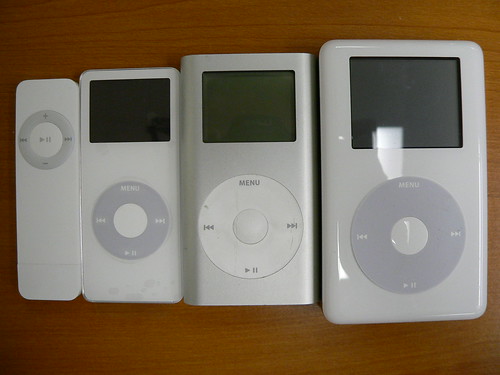
You can now sign up to receive each day’s Start Up post by email. You’ll need to click a confirmation link, so no spam.

Start Up: VR company dumps VR, Facebook’s Russian reach, bloating browsers, and more


The first iPhone X review – well, impression – is in. Face front. Photo by MarkGregory007 on Flickr.

A selection of 11 links for you. Question: do colloids collude? I’m @charlesarthur on Twitter. Observations and links welcome.

Apple’s iPhone X: the first field report • WIRED

Steven Levy was one of the first reviewers of the original iPhone, and has been using an iPhone X since last Tuesday:

»

Does [Face ID] work? Pretty much. It seems reliable at fending off intruders. I have thrust my phone into several people’s faces—though considerably fewer than the million punims that Apple says I’d have to try before a false positive—and it has not fallen for any of them. I even offered up my own head shot to the camera: no go. How it has dealt with my own real-life face is another matter. There have been times when, despite a clear view of my face, the iPhone X has ghosted me. (Apple tells me that perhaps I wasn’t making what the iPhone X considers eye contact. I wouldn’t want it to turn on every time my face was within camera range, would I?)

Eventually I devised a strategy. When waking my iPhone I think of it as De Niro’s mirror in Taxi Driver. You talkin’ to me? Well, I’m the only one here! I then see if the little lock icon on the screen has released its latch. Alternatively, a good way to see when you’ve been recognized is to notice the generic messages on the lock screen saying “you have a notification” from Facebook, Gmail, or wherever. When you and your iPhone X make that turn-on connection, those flesh out with the actual content of the message…

…A decade hence, when it’s time for the iPhone 20 (XX?), we’ll already be on the road to what comes after the smartphone; the X might be a halfway point to that future. And that’s why, despite the fact that the iPhone X at present is no more than a great upgrade to the flagship device of the digital age, I can’t easily dismiss Tim Cook’s effusions that this is more than just another iteration.

It’s no accident that some of the most impressive expressions of the new phone’s technology is in the realm of augmented reality, where the digital world adds layers onto the physical one.

«

What’s notable is that to demonstrate what’s radical about it, he’d do the animated poo emoji thing. But that’s a real sign of where it’s all heading: superimpose things on reality.
link to this extract


CCP Games ending VR efforts after building its biggest titles • UploadVR

Ian Hamilton:

»

In what can only be characterized as one of the biggest blows to the budding VR industry, CCP Games is shelving its VR efforts.

The Iceland-based creator of EVE Online is one of VR’s biggest proponents and earliest developers, producing some of the industry’s most prominent titles including Rift-first space battle game EVE: Valkyrie, mobile VR turret shooter Gunjack and PlayStation-first sports game Sparc. The company is closing its Atlanta office and selling its Newcastle office, according to a report by the Iceland Monitor. The decision affects around 100 employees.

«

Well well. This is dramatic.
link to this extract


Russian content on Facebook may have reached 126 million users — far more than first disclosed, company testimony says • The Washington Post

Craig Timberg and Elizabeth Dwoskin:

»

Facebook plans to tell lawmakers on Tuesday that 126 million of its users may have seen content produced and circulated by Russian operatives, many times more than what the company previously disclosed about the reach of the disinformation campaign during the 2016 presidential election, according to documents obtained by the Washington Post.

Google on Monday acknowledged for the first time that its platforms were also compromised, revealing that Russian trolls uploaded over a thousand videos to YouTube on 18 different channels.

The disclosures, which are contained in draft testimonies obtained by The Washington Post ahead of three Capitol Hill hearings this week, come as tech giants face mounting pressure to more fully investigate how Russians used their platforms to influence American voters and reveal more of their findings to the public.

Previously, Facebook had focused its disclosures on Russian ads. The company has said that 470 accounts and pages run by a Russian troll farm had purchased roughly 3,000 ads, which the company said reached an estimated 10 million users. But the troll farm, known as the Internet Research Agency, also published free content. Researchers estimated that the spread of free content was far greater than that of ads and that Facebook has been under pressure to share more about those posts.

«

link to this extract


Facebook’s Mark Zuckerberg makes another appearance in China • WSJ

Alyssa Abkowitz:

»

Later that evening, Mr. Zuckerberg posted a picture of himself with Tsinghua students – drawing several comments that pointed to the obstacles Facebook must overcome for any return of its social-networking platform to China.

“If you think you can ever convince them about opening up to a free speech platform like Facebook, forget it,” one commenter wrote. “They just had a 19th Congress that reaffirmed their commitment for censorship and weeding out dissent.”

Mr. Zuckerberg has said he considers China crucial to Facebook’s future, and his participation on the Tsinghua board may be a sign that he hasn’t given up on hopes of re-entering the country’s market, said Mark Natkin, managing director at Marbridge Consulting in Beijing.

“I think he’s someone who likes a challenge and who is accustomed to beating the system,” Mr. Natkin said. “The arrangement with Tsinghua is probably one of many ways he has come to believe it may help his company in China.”

Mr. Zuckerberg was appointed to the board in 2014 and attended its annual meeting in 2015.

In addition to Mr. Zuckerberg, Western business leaders present included Apple Inc. Chief Executive Tim Cook, Blackstone Group Chief Executive Stephen A. Schwarzman and former U.S. Treasury Secretary Hank Paulson. During the meeting, Mr. Xi said he was looking forward to U.S. President Donald Trump’s visit to China next month, and said China wanted to deepen its cooperation with the U.S. and resolve their conflicts, according to CCTV’s evening broadcast.

«

That’s a lot of executives milling around Xi. They don’t seem to be doing the same around Trump. Just an observation.
link to this extract


Thread Reader • TTTThreads

»

Thread Reader helps you unroll a full Twitter thread on a dedicated beautifully designed page to allow an easy read of the whole story.

Enter any tweet from the thread.

«

For those who have been struggling with epics such as Seth Abramson’s 130+ tweet threads, this is what you really want. Being able to enter *any* tweet from the thread makes life a lot simpler than trying to find the end of it (which is required for my previous favourite on this, Spooler.)
link to this extract


Gotta have standards? Security boffins not API about bloated browsers • The Register

Richard Chirgwin:

»

The W3C introduces API standards that end up mostly unused, doing nothing more than loading up the code base with vulnerabilities.

That’s the conclusion of a paper by University of Illinois, Chicago researchers to be presented next week at the ACM’s Conference on Computer and Communications Security in Dallas.

While the research – “Most Websites Don’t Need to Vibrate: A Cost-Benefit Approach to Improving Browser Security” – which you can find here at arXiv, focuses on Firefox, its findings are relevant across the board.

Graduate computer science student Peter Snyder and colleagues Cynthia Taylor and Chris Kanich structure the paper as a cost-benefit analysis of having 74 APIs with which browser authors need contend. On the benefit side, they measured the proportion of websites that use a feature (thereby making browser support important); on the cost side, they tried to measure the security exposure a feature created.

The “cost” side takes a couple of characteristics into account, including the number of historical CVEs associated with a feature (since that hints that it’s hard to code to the API securely); and the number of API entry points and lines of code that are associated with a feature, since that indicates more complex code.

Their headline finding should chill browser authors: “Blocking 15 of the 74 standards avoids 52.0% of code paths related to previous CVEs, and 50.0% of implementation code identified by our metric, without affecting the functionality of 94.7% of measured websites.”

«

So: browsers are getting unnecessarily complicated, and that’s making them vulnerable to exploits. But because some sites want toys, they’re pushing for it.
link to this extract


Data Viz Project • datavizproject

»

A ollection of data visualizations to get inspired and find the right type.

«

They’re fascinating, and man are they plentiful. Also, each one has examples of how you’d use them. There are dozens. (One for you, Sophie.)
link to this extract


Chasm of comprehension • Remains of the Day

Eugene Wei:

»

 In the future, diagnosing why Autopilot or other self-driving algorithms made certain choices will likely only become more and more challenging as the algorithms rise in complexity.

At times, when I have my Tesla in Autopilot mode, the car will do something bizarre and I’ll take over. For example, if I drive to work out of San Francisco, I have to exit left and merge onto the 101 using a ramp that arcs to the left almost 90 degrees. There are two lanes on that ramp, but even if I start in the far left lane and am following a car in front of me my car always seems to try to slide over to the right lane.

Why does it do that? My only mental model is the one I know, which is my own method for driving. I look at the road, look for lane markings and other cars, and turn a steering wheel to stay in a safe zone in my lane. But thinking that my car drives using that exact process says more about my limited imagination than anything else because Autopilot doesn’t drive the way humans do. This becomes evident when you look at videos showing how a self-driving car “sees” the road.

When I worked at Flipboard, we moved to a home feed that tried to select articles for users based on machine learning. That algorithm continued to be to tweaked and evolved over time, trying to optimize for engagement. Some of that tweaking was done by humans, but a lot of it was done by ML.

At times, people would ask why a certain article had been selected for them? Was it because they had once read a piece on astronomy? Dwelled for a few seconds on a headline about NASA? By that point, the algorithm was so complex it was impossible to really offer an explanation that made intuitive sense to a human, there were so many features and interactions in play.

As more of the world comes to rely on artificial intelligence, and as AI makes great advances, we will walk to the edge of a chasm of comprehension.

«

link to this extract


Bug in Google’s bug tracker lets researcher access list of company’s vulnerabilities • Motherboard

Lorenzo Franceschi-Bicchierai:

»

Alex Birsan, a security researcher, found three vulnerabilities inside the Google Issue Tracker, the company’s internal platform where employees keep track of requested features or unpatched bugs in Google’s products. The largest one of these was one that allowed him to access the internal platform at all. The company has quickly patched the bugs found by Birsan, and there’s no evidence anyone else found the bugs and exploited them.

Still, these were bad bugs, especially the one that gave him access to the bug-tracking platform, which could have provided hackers with a list of vulnerable targets at Google.

“Exploiting this bug gives you access to every vulnerability report anyone sends to Google until they catch on to the fact that you’re spying on them,” Birsan told Motherboard in an online chat. “Turning those vulnerability reports into working attacks also takes some time/skill. But the bigger the impact, the quicker it gets fixed by Google. So even if you get lucky and catch a good one as soon as it’s reported, you still have to have a plan for what you do with it.”

«

Reminiscent of Microsoft being hacked so that its bug list could be seen. This is obviously the two-step way to finding big weaknesses.
link to this extract


This doctor diagnosed his own cancer with an iPhone ultrasound • MIT Technology Review

Antonio Regalado:

»

Earlier this year, vascular surgeon John Martin was testing a pocket-sized ultrasound device developed by Butterfly Network, a startup based in Guilford, Connecticut, that he’d just joined as chief medical officer.

He’d been having an uncomfortable feeling of thickness on his throat. So he oozed out some gel and ran the probe, which is the size and shape of an electric razor, along his neck.

On his smartphone, to which the device is connected, black-and gray images quickly appeared. Martin is not a cancer specialist. But he knew that the dark, three-centimeter mass he saw did not belong there. “I was enough of a doctor to know I was in trouble,” he says. It was squamous-cell cancer.

The device he used, called the Butterfly IQ, is the first solid-state ultrasound machine to reach the market in the U.S. Ultrasound works by shooting sound into the body and capturing the echoes. Usually, the sound waves are generated by a vibrating crystal. But Butterfly’s machine instead uses 9,000 tiny drums etched onto a semiconductor chip.

«

Medicine is changing. The IQ cost about $2,000. The nearest comparison is a Philips portable which costs $6,000. And of course they’re looking to add AI to make it even more usable. (Though I hope they don’t rely on headphone jacks.)
link to this extract


Robert Mueller’s show of strength: a quick and dirty analysis • Lawfare

Susan Hennessey and Benjamin Wittes:

»

Before we dive any deeper into the Manafort-Gates indictment—charges to which both pled not guilty to today—or the Papadopoulos plea and stipulation, let’s pause a moment over these two remarkable claims, one of which we must still consider as allegation and the other of which we can now consider as admitted fact. President Trump, in short, had on his campaign at least one person, and allegedly two people, who actively worked with adversarial foreign governments in a fashion they sought to criminally conceal from investigators. One of them ran the campaign. The other, meanwhile, was interfacing with people he “understood to have substantial connections to Russian government officials” and with a person introduced to him as “a relative of Russian President Vladimir Putin with connections to senior Russian government officials.” All of this while President Trump was assuring the American people that he and his campaign had “nothing to do with Russia.”

The release of these documents should, though it probably won’t, put to rest the suggestion that there are no serious questions of collusion between the Trump campaign and the Russian government in the latter’s interference on the former’s behalf during the 2016 election. It also raises a profound set of questions of its own about the truthfulness of a larger set of representations Trump campaign officials and operatives have made both in public, and presumably, under oath and to investigators.

«

Lawfare is a very thorough, quite wonk-ish US legal site. Hennessey and Wittes are reasonably neutral voices in this maelstrom. So this is probably the one to read.
link to this extract


Errata, corrigenda and ai no corrida: apparently half of you reading the email do open it. Well done! For those of you who don’t.. hmm, this is a puzzler.

You can now sign up to receive each day’s Start Up post by email. You’ll need to click a confirmation link, so no spam.

Start Up: the Spectacles flop, Google’s language failure, NAO on #wannacry, a Luther for today?, and more


Oxycontin, from Purdue Pharma, has laid waste to millions of lives in the US. Now they want to expand. Photo by redfishingboat on Flickr.

(A search on Flickr for “Oxycontin” turned up something called the “Oxycontin Express”, which turned out to be this programme. Very relevant.)

You can sign up to receive each day’s Start Up post by email. You’ll need to click a confirmation link, so no spam.

Yes, we’re back! A selection of 11 links for you. Unlike our holiday, doesn’t contain food poisoning. I’m @charlesarthur on Twitter. Observations and links welcome.

Why Snapchat Spectacles failed • TechCrunch

Josh Constine:

»

How come only 0.08% of Snapchat’s users bought its camera sunglasses? Hundreds of thousands of pairs of Spectacles sit rotting in warehouses after the company bungled the launch. Initial hype and lines for its roving, limited time only Snapbot vending machines led Snap to overestimate demand but underdeliver on quality and content.

Massive piles of assembled and unassembled video-recording sunglasses sit unsold, contributing to Snap’s enormous costs and losses, says The Information. Internal Snap data shows less than 50% of buyers kept using Spectacles a month after purchase, Business Insider’s Alex Heath reports. A “sizeable” percentage stopped after just a week, with a source calling the retention rate “shockingly low”.

What was the problem?


Karl Lagerfeld’s photo of Snap CEO Evan Spiegel donning Spectacles for their September 2016 reveal

«

Gee, can’t imagine. All the tech writers said they were F.A.B.
link to this extract


Dear Google, when are you going to fix Android Wear? • AndroidAuthority

Adam Doud:

»

Smartwatches are in a funny state. They’re not really all that popular amongst the populace at large, but they’re not exactly busts either. The Apple watch is still the big seller in terms of market penetration. Android Wear is no slouch either, with many OEMs producing a wide array of options. There’s just one problem. The Android Wear software is just not good.

To me, the root problem with Android Wear devices is that they’re trying too hard to be watches. We use the term “smartwatch” to describe these devices, but all they really are – and all they really need to be – are small screens on your wrist. Sure, they can tell time – that’s fine. But the power of the smartwatch isn’t the “watch” part— it’s the “smart” part. Getting notifications and apps running on a screen on your wrist is far more powerful than knowing how long it is until the Blackhawks game starts.

«

Actually, the first paragraph contains a canard. Apple’s Watch is selling fine. Android Wear is an absolute dog. The app (which is needed to run the watch) passed the 5m downloads mark in September 2016, having started in July 2014 or so. But it hasn’t added another 5m. It’s not selling.

Their “problem” is the users. They don’t care about what it offers.
link to this extract


Google’s sentiment analyzer thinks being gay is bad • Motherboard

Andrew Thompson:

»

Google’s sentiment analyzer isn’t always effective and sometimes produces biased results.

Two weeks ago, I experimented with the API for a project I was working on. I began feeding it sample texts, and the analyzer started spitting out scores that seemed at odds with what I was giving it. I then threw simple sentences about different religions at it.

When I fed it “I’m Christian” it said the statement was positive:

When I fed it “I’m a Sikh” it said the statement was even more positive:

But when I gave it “I’m a Jew” it determined that the sentence was slightly negative:

The problem doesn’t seem confined to religions. It similarly thought statements about being homosexual or a gay black woman were also negative:

Being a dog? Neutral. Being homosexual? Negative:

I could go on, but you can give it a try yourself: Google Cloud offers an easy-to-use interface to test the API.

«

Google apologised, in a response. This is a classic example of “garbage in, garbage out” – and as we start to build these systems into subsystems, it could become pernicious. Worse: unlike public opinion, which shifts over time (track opinion about abortion, gay marriage and marijuana legalisation) these systems wouldn’t shift their position. They’d be embalmed views of how we should think, from how we used to think.
link to this extract


Investigation: WannaCry cyber attack and the NHS • National Audit Office (NAO)

»

The key findings of the investigation are:

• The Department was warned about the risks of cyber attacks on the NHS a year before WannaCry and although it had work underway it did not formally respond with a written report until July 2017. The Department and Cabinet Office wrote to trusts in 2014, saying it was essential they had “robust plans” to migrate away from old software, such as Windows XP by April 2015. In March and April 2017, NHS Digital had issued critical alerts warning organisations to patch their systems to prevent WannaCry. However, before 12 May 2017, the Department had no formal mechanism for assessing whether local NHS organisations had complied with their advice and guidance and whether they were prepared for a cyber attack.

• The attack led to disruption in at least 34% of trusts in England although the Department and NHS England do not know the full extent of the disruption. On 12 May, NHS England initially identified 45 NHS organisations including 37 trusts that had been infected by the WannaCry ransomware. In total at least 81 out of 236 trusts across England were affected. A further 603 primary care and other NHS organisations were infected by WannaCry, including 595 GP practices. However, the Department does not know how many NHS organisations could not access records or receive information, because they shared data or systems with an infected trust. NHS Digital told us that it believes no patient data were compromised or stolen…

• The Department had developed a plan, which included roles and responsibilities of national and local organisations for responding to an attack, but had not tested the plan at a local level. As the NHS had not rehearsed for a national cyber attack it was not immediately clear who should lead the response and there were problems with communications. Many local organisations could not communicate with national NHS bodies by email as they had been infected by WannaCry or had shut down their email systems as a precaution, though NHS Improvement did communicate with trusts’ Chief Executive Officers by telephone. Locally NHS staff shared information through personal mobile devices, including using the encrypted WhatsApp application.

«

That last bit is deliciously ironic given ministers’ repeated calls to be able to tap into it. Turns out mobile is the last resort – and reliable.
link to this extract


#wannacry: cyber defence failure or organisational lapse? • Medium

Vladimiro Sassone on the National Audit Office report into Wannacry:

»

This particular attack — as several others before — was known, not particularly sophisticated, and has only affected organisations which did not take the recommended precautions. Once a vulnerability is in the public domain, you either close it by applying the relevant patch, or stand as a sitting duck borrowing time on your good luck.

Admittedly, for organisations like the NHS this represents a big cultural change. These are organisations used to procure their equipment and then expect to use it flawlessly for tens of years, without giving it a further thought. The reality is that IT does not work that way. IT systems can be extremely complex, and therefore (for reasons too long to explain here) are not perfect, are reachable from the global network, and therefore are exposed to all sort of malicious behaviours and attacks, and so need constant revision. When a critical piece software becomes no longer supported, it has essentially reached the end of its useful life, and must be replaced, even if at the naked eye it may still appear as perfectly viable. This is true of PCs running the obsolete Windows XP, as well as of other scary situations with health devices and implants not designed with security and upgradability in mind.

«

(Sassone is based at the University of Southampton, in the cyber security controls effectiveness project; they’ve produced a paper on what SME networks need for cybersecurity.)

I’m writing a book on hacking, and ransomware is one of the chapters – with a focus on hospitals. The NHS problem is hydra-headed: million-pound equipment you replace once every 20 years uses old interfaces; small numbers of IT staff; large numbers of temporary staff who might not know what not to click; old equipment. It’s a nightmare.
link to this extract


Why we need a 21st-century Martin Luther to challenge the church of tech • The Guardian

John Naughton (professor of the public understanding of technology at the Open University) is aiming to create a modern form of Martin Luther’s 95 theses:

»

One thing above all stands out from those theses. It is that if one is going to challenge an established power, then one needs to attack it on two fronts – its ideology (which in Luther’s time was its theology), and its business model. And the challenge should be articulated in a format that is appropriate to its time. Which led me to think about an analogous strategy in understanding digital technology and addressing the problems posed by the tech corporations that are now running amok in our networked world.

These are subjects that I’ve been thinking and writing about for decades – in two books, a weekly Observer column, innumerable seminars and lectures and a couple of academic research projects. Many years ago I wrote a history of the internet, motivated partly by annoyance at the ignorant condescension with which it was then viewed by the political and journalistic establishments of the time. “Don’t you think, dear boy,” said one grandee to me in the early 1990s, “that this internet thingy is just the citizens band [CB] radio de nos jours?”

“You poor sap,” I remember thinking, “you have no idea what’s coming down the track.”

«

The church door to which they will be pinned is 95theses.co.uk, on 31 October. I’m looking forward to it. The two extracted in the article (“No.19: the technical is political”; “No.92: Facebook is many things, but a ‘community’ it ain’t”) are mouthwatering.

(Disclosure: I have known John for years, and was a visiting fellow last academic year at Cambridge on his Technology & Democracy project.)
link to this extract


The family that built an empire of pain • The New Yorker

Patrick Radden Keefe on the Sackler family, who own Purdue Pharma, which makes Oxycontin, which is widely abused – and has led to opioid abuse being declared both an epidemic in the US in 2011, and a national emergency (finally) by Trump earlier this month:

»

Purdue developed a pill of pure oxycodone, with a time-release formula similar to that of MS Contin. The company decided to produce doses as low as ten milligrams, but also jumbo pills—eighty milligrams and a hundred and sixty milligrams—whose potency far exceeded that of any prescription opioid on the market. As Barry Meier writes, in “Pain Killer,” “In terms of narcotic firepower, OxyContin was a nuclear weapon.”

Before releasing OxyContin, Purdue conducted focus groups with doctors and learned that the “biggest negative” that might prevent widespread use of the drug was ingrained concern regarding the “abuse potential” of opioids. But, fortuitously, while the company was developing OxyContin, some physicians began arguing that American medicine should reëxamine this bias. Highly regarded doctors, like Russell Portenoy, then a pain specialist at Memorial Sloan Kettering Cancer Center, in New York, spoke out about the problem of untreated chronic pain—and the wisdom of using opioids to treat it.

“There is a growing literature showing that these drugs can be used for a long time, with few side effects,” Portenoy told the Times, in 1993. Describing opioids as a “gift from nature,” he said that they needed to be destigmatized. Portenoy, who received funding from Purdue, decried the reticence among clinicians to administer such narcotics for chronic pain, claiming that it was indicative of “opiophobia,” and suggesting that concerns about addiction and abuse amounted to a “medical myth.”

In 1997, the American Academy of Pain Medicine and the American Pain Society published a statement regarding the use of opioids to treat chronic pain. The statement was written by a committee chaired by Dr. J. David Haddox, a paid speaker for Purdue.

Richard Sackler worked tirelessly to make OxyContin a blockbuster, telling colleagues how devoted he was to the drug’s success. The F.D.A. approved OxyContin in 1995, for use in treating moderate to severe pain. Purdue had conducted no clinical studies on how addictive or prone to abuse the drug might be.

But the F.D.A., in an unusual step, approved a package insert for OxyContin which announced that the drug was safer than rival painkillers, because the patented delayed-absorption mechanism “is believed to reduce the abuse liability.” David Kessler, who ran the F.D.A. at the time, told me that he was “not involved in the approval.” The F.D.A. examiner who oversaw the process, Dr. Curtis Wright, left the agency shortly afterward. Within two years, he had taken a job at Purdue.

«

This is a long read. But it’s astonishing in its depth, and the myriad ways in which the US medical industry has been coöpted by this company and drug. The scary ending: Purdue is now looking for sales abroad because the US is slowing down – and the UK is in its sights.
link to this extract


Colliding neutron stars could settle cosmology’s biggest controversy • Quanta Magazine

Natalie Wolchover on how measurements for the Hubble constant – how quickly the universe is expanding – might be determined; currently the two best estimates are 67 and 73 (the story explains the units that go with it):

»

The crashing stars serve as “standard sirens,” as Holz and Scott Hughes of the Massachusetts Institute of Technology dubbed them in a 2005 paper, building on the work of Bernard Schutz 20 years earlier. They send rushes of ripples outward through space-time that are not dimmed by gas or dust. Because of this, the gravitational waves transmit a clean record of the strength of the collision, which allows scientists to “directly infer the distance to the source,” Holz explained. “There is no distance ladder, and no poorly understood astronomical calibrations. You listen to how loud the [collision] is, and how the sound changes with time, and you directly infer how far away it is.” Because astronomers can also detect electromagnetic light from neutron-star collisions, they can use redshift to determine how fast the merged stars are receding. Recessional velocity divided by distance gives the Hubble constant.

From the first neutron-star collision alone, Holz and hundreds of coauthors calculated the Hubble constant to be 70 kilometers per second per megaparsec, give or take 10. (The major source of uncertainty is the unknown angular orientation of the merging neutron stars relative to the LIGO detectors, which affects the measured amplitude of the signal.) Holz said, “I think it’s just pure luck that we’re smack in the middle,” between the cosmic-distance-ladder and cosmic-microwave-background Hubble estimates. “We could easily shift to one side or the other.”

The measurement’s accuracy will steadily improve as more standard sirens are heard over the next few years, especially as LIGO continues to ramp up in sensitivity. According to Holz, “With roughly 10 more events like this one, we’ll get to 1% [of error],” though he stresses that this is a preliminary and debatable estimate.

«

If we can fix the Hubble constant, we might have an idea of the composition of the universe. Then again, we might just be more confused about the differences between the early one, and the current one.
link to this extract


This new Twitter account hunts for bots that push political opinions • Quartz

Keith Collins:

»

One account features a photo of a middle-aged woman, and a bio that reads “Patriot, self employed, loving mother and grandmother.”

Another has a photo of a younger woman in sunglasses, described in the bio as a “NonProfit Exec born to LEGAL Immigrants who owned laundromat for 30 yrs to earn our #AmericanDream. #PresidentTrump #ProIsrael #ThankAVet #BackTheBlue #MAGA.”

Both Twitter accounts frequently tweet or retweet in support of US president Donald Trump and in opposition to everything from immigrants, to the National Football League, to CNN. They’ve both had accounts on Twitter since 2012—and they both appear to be bots.

They were identified by a new bot created by Quartz, @probabot_, which searches Twitter for accounts that tweet about politics and scores them using Botometer, a classification tool that applies machine learning to determine how likely a given account is to be a bot.

«

Could we lend it to Twitter?
link to this extract


No, Apple’s machine learning engine can’t surface your iPhone’s secrets • iMore

Rene Ritchie on this article in Wired, which posits that Apple’s CoreML machine learning system could be used maliciously:

»

Theoretically, finding and extracting a few photos might be easier to hide than simply pulling a large number or all photos. So could trickle uploading over time. Or based on specific metadata. Or any other sorting vector.

Just as theoretically, ML and neural networks could be used to detect and combat these kinds of attacks as well.

»

For an example of where that could go wrong, thing of a photo filter or editing app that you might grant access to your albums. With that access secured, an app with bad intentions could provide its stated service, while also using Core ML to ascertain what products appear in your photos, or what activities you seem to enjoy, and then go on to use that information for targeted advertising.

«

Also nothing unique to Core ML. Smart spyware would try to convince you to give it all your photos right up front. That way it wouldn’t be limited to preconceived models or be at risk of removal or restriction. It would simply harvest all your data and then run whatever server-side ML it wanted to, whenever it wanted to.

That’s the way Google, Facebook, Instagram, and similar photo services that run targeted ads against those services already work.

«

Just recently, iMore has found itself writing two kinds of stories: “here’s how to” and “No, here’s why this story about Apple is bogus”. As he says, people are overthinking this. A service (malicious or otherwise) that says “let us see all your photos and do wonderful things to them!” is going to get a lot more of your photos than one which tries to subvert CoreML. But people are desperate to find a new angle on anything Apple-y.
link to this extract


Google defends Pixel 2 XL screen, promises updates for audio issues • Ars Technica

Ron Amadeo:

»

The end result of the complaints (and news articles) is that every Pixel 2 and 2 XL will come with a two-year warranty, and Google will push out some software updates to alleviate some of the other Pixel problems.

LG is far behind Samsung when it comes to producing quality OLED panels for smartphones, but for some reason Google still chose to slap an inferior component onto its flagship smartphone. Here are the most common complaints we’ve seen out there as a result:

• The display is grainy or “dirty” looking at low brightness.
• It experiences image burn-in after just a few weeks.
• There’s a blue shift to the display when looked at off-angle.
• The colors are “dull.” (This one is more of a personal preference.)

Mario Queiroz, Google Hardware’s VP of product management, said on the Pixel forums that while he thinks the Pixel 2 XL display is “beautiful,” Google is taking some steps to address some of these issues.

For the display burn-in, Queiroz says Google’s investigation found that “the Pixel 2 XL display shows that its decay characteristics are similar to OLED panels used in comparable products” and that “the differential aging is in line with that of other premium smartphones and should not affect the normal, day-to-day user experience of the Pixel 2 XL.”

«

Well, this has been a whole saga during the past week. LG-made p-OLED panels on the Pixel XL seem to show burn-in (many reviewers bore this out). And people complain they look dull. The former seems to be down to LG not being great at OLED (its V30 drew similar complaints); the latter, to not trying to have oversaturated colours on the OLED.

Given the small numbers the Pixel 2 sells in, comparatively, this is hardly a great start.

link to this extract


Errata, corrigenda and ai no corrida: none notified. Either that, or I’ve forgotten.

Start Up: Pichai interviewed, tracking Google’s ads, Amazon’s pensioner scheme, open data PDfs!, and more


The Pixel 2 XL’s screen is being criticised. Is that fair? Photo by portalgda on Flickr

Welcome! The Overspill is on holiday next week. You can refresh this page (or gaze at your inbox) but it won’t make it appear.

A selection of 12 links for you. Use them wisely. I’m @charlesarthur on Twitter. Observations and links welcome.

Everyone’s mad at Google and Sundar Pichai has to fix it • Bloomberg

Mark Bergen and Brad Stone:

»

Pichai probably didn’t figure that defusing political and cultural grenades would be such a big part of the job. But while some critics charged that Google waffled on the issue and let it boil over into a PR nightmare, others saw a surer hand in Damore’s firing. Scott Galloway, a New York University professor and author of The Four, a critical book about big technology companies, compliments Pichai’s response. “It was a crisp, clear decision; he made it fast,” he says. “Google would be the scariest company in the world if you didn’t believe they had adult supervision.”

Pichai’s solution to the gnawing problems of fake news and illicit content that slip through Google artificial intelligence is, no surprise, more artificial intelligence. He thinks humans will succeed in training AI and that it’ll all be worth the effort. Like other technologists, he believes AI can do far more for both Google and the world, dramatically improving transportation, health care, agriculture, and any other field that uses computers. And he’s reshaped the company on the premise that the age of AI will usher in opportunities that dwarf even the size of the internet economy.

«

A curiously unfocussed interview; there’s no core to it. They can’t seem to decide what, if any, theme there is about Google. Pixel launch? James Damore? Fake news? They don’t quite pin anything down.
link to this extract


Debunking misinformation about the Pixel 2 XL’s display • Medium

Daniel Matte has long experience with displays of all varieties:

»

There is nothing inherently bad about OLED color accuracy, period. The Phil Schiller keynote slide on OLED displays was 100% nonsense. In Apple’s defense, they were really talking about the quality of their competitors’ displays in general. The slide made it look like these were inherent OLED issues, which was extremely misleading to consumers. Companies try to sell you a product, not teach and inform.

OLED displays have been better than LCDs for the past few years. OLED has improved massively over many years but still has tons of issues. Both these sentences are true.

Samsung and Apple both always ship awesome displays. Google devices have had both good and bad displays over the years. I would strongly recommend not reflexively being biased towards any brand or product, though, if you actually want to understand the technology.

AnandTech has covered OLED displays in extreme depth over the years, so if you want to learn about OLED and all displays my highest recommendation would be to read their articles (you can search for various previous device reviews). You can also follow @nexusCFX on Twitter.

Android didn’t have color management until Oreo. Now it does. We’re good here. (There’s much more work still to be done for HDR support for Android P.)

Because they have color management (and other factors), both the new Pixels target the Display P3 color space (which is currently correct for “wide color”), not sRGB. Google’s marketing even says this. How good the specific panel calibrations turn out to be is a separate question. Vlad Savov’s review unit is clearly extremely green and looks awful. I won’t cover the work that needs to go into calibrating displays at the factory level here.

«

link to this extract


New findings show Google organic clicks shifting to paid • Moz

Brian Wood:

»

Looking at 2015 vs 2017 data for all keywords ranking organically on the first page, we’ve seen a dramatic change in CTR. Below we’ve normalized our actual CTR on a 1–10 scale, representing a total drop of 25% of click share on desktop and 55% on mobile.


Organic receives 25% less desktop CTR and 55% less mobile CTR compared to two years ago.

The much larger drop on mobile is particularly relevant because we’ve seen large traffic shifts to mobile over the last two years as well. The overall percentage drop plays out somewhat similarly across the first page of results; however, the top four were most heavily impacted…

…It’s important to note that paid ads are not getting all the clicks that organic is not. In addition to the small number of people who click beyond the first page, a surprising number do not click at all. Our best guess is that all ads combined now get about the same percentage of clicks (for our results) as all organic results combined.

«

In other words, Google is stuffing its results page with ads. Another point: they’re seeing more and more Google Shopping ad clickthroughs.
link to this extract


Edisun Microgrids – Series.c • SeedInvest

»

At Edisun Microgrids, we believe solar can be a major source of the world’s energy because every day the sun provides more than 10,000 times the energy the world needs. The key is making solar cost-effective and available on-demand.  Edisun’s solutions address these hurdles and through them, we are aiming to drive down the cost of solar energy to make clean power more affordable than fossil fuels.

Our technology is a new solar tracking system named PV Booster™ that points solar panels directly at the sun all day long. By enabling the panels to continuously face the sun, PV Booster increases clean energy production by 30% and improves the economics of solar by 20%. We designed PV Booster to meet the unique needs of the underserved Commercial and Industrial (C&I) rooftop solar market – a trillion-dollar opportunity in the US alone.

«

I don’t recommend investing in this; though it’s an attractive idea to make solar panels follow the sun, you’ll probably see improvements of 30% in output through general improvements over the next couple of years. Notable though that Bill Gross – who came up with the “ads against what you search for” model which Google adopted – is one of the investors. Gross is a smart guy. I still don’t recommend investing.
link to this extract


Mr. Robot: This is how the hacks are created on the show • Verdict

Amelia Heathman:

»

When you first meet Elliot Alderson, played by the enigmatic Rami Malek, in Mr Robot, he is explaining to a local café owner about how he hacked his laptop to find the huge swathes of child porn in his possession.

Before long, the viewer is taken down the cyber rabbit hole into an underground world featuring cyber terrorism, murder, and the failures of society, all presided over by Mr Robot.

Ahead of the premiere of season three tonight, Verdict spoke to one of the show’s technical consultants, Ryan Kazanciyan (left), chief security architect at security firm Tanium, about the Mr Robot hacks and how it is changing perceptions of hacking.

«

Good points in particular about how hacking has become something we take as part of the landscape; it’s part of the zeitgeist.
link to this extract


Facebook and Apple can’t agree on terms, so Facebook’s subscription tool will only launch on Android phones • Recode

Peter Kafka:

»

Facebook’s effort to help media companies sell subscriptions has hit a snag: Apple.

The two companies are butting heads over Facebook’s plan for a new subscription tool in its mobile app. The tool will put paywalls around some articles in Facebook’s news feed, and then send users to publishers’ sites to buy subscriptions.

The issue: Apple wants to take as much as 30% of any subscription revenue Facebook helps generate. Facebook wants all of the money to go to publishers.

People familiar with both companies say they’ve been discussing the impasse for months. In the meantime, Facebook says it is rolling out a version of the subscription tool that will work on Android phones in the next few weeks; it says it will work with publishers including the Washington Post, Hearst and Tronc.

That tool will allow publishers to use two kinds of paywalls around “Instant Articles” that Facebook hosts on its mobile apps — a “metered” version, which turns on after Facebook users have read 10 of the publisher’s articles in a month, and a “freemium” version, where publishers can put paywalls around individual articles.

In both cases, users who hit the paywall will be sent to the publisher’s site to sign up for a subscription.

«

Apple’s 30% thing is becoming quite the problem. I suspect it wants to do this through Apple News, not let Facebook get all the glory – and data.
link to this extract


What is CamperForce? Amazon’s nomadic retiree army • WIRED

Jessica Bruder:

»

Chuck [Stout] still remembers the call from Wells Fargo that brought the 2008 financial crisis crashing down on his head. He had invested his $250,000 nest egg in a fund that supposedly guaranteed him $4,000 a month to live on. “You have no more money,” he recalls his banker saying flatly. “What do you want us to do?” Unable to think of a better answer, Chuck told him, “Well, shove your foot up your ass.” Then he hung up.

Barb had lost her savings too, some $200,000 in investments. And with the travel industry flattened by the Great Recession, bookings at Carolina Adventure Tours dwindled. By the time Barb and Chuck got married in 2009, they were upside down on their mortgage and grappling with credit card debt.

The couple was facing bankruptcy, which scared Chuck to death. It brought back the terror of growing up poor—the pervasive insecurity he’d stamped out by going to work at 16. But by 2012, they had run out of options. After filing their papers, Chuck and Barb began liquidating their lives…

…Whatever survived the purge had to fit in their new dwelling: a 29-foot 1996 National RV Sea Breeze motor home, which Barb’s brother sold to them for $500. The rig had dry-rotted tires, a dead generator, and a leak in the gas line. Back when the Stouts had money, they’d idly fantasized about becoming carefree vagabonds in a nice RV. Their current situation didn’t quite align with that dream, but they embraced it anyway. Perhaps, Barb reflected, this was destiny—the universe pushing them toward the lifestyle they’d wanted all along. She decided to call their next move “Barb and Chuck’s Great Adventure.”

«

Just as a story of middle America, this would be absorbing. And then Amazon arrives.
link to this extract


Twitter was warned repeatedly about this fake account run by a Russian troll farm and refused to take it down • Buzzfeed

Kevin Collier:

»

Twitter took 11 months to close a Russian troll account that claimed to speak for the Tennessee Republican Party even after that state’s real GOP notified the social media company that the account was a fake.

The account, @TEN_GOP, was enormously popular, amassing at least 136,000 followers between its creation in November 2015 and when Twitter shut it down in August, according to a snapshot of the account captured by the Internet Archive just before the account was “permanently suspended.”

Some of its tweets were deliberately outrageous, the archive shows, such as one in December 2016 that claimed that unarmed black men killed by police officers deserved their fate. It also trafficked in deliberate fake news, claiming just before it was shut down that a photo of the Cleveland Cavaliers’ NBA championship parade was actually a crowd waiting to hear Donald Trump speak.

Twitter, already under fire, along with Facebook, for being slow to recognize its role in Russian election meddling, declined to comment. A spokesperson told BuzzFeed News that the company does not comment on individual accounts.

@TEN_GOP gained enough support from the far right that when it was finally shut down, commentators like Reddit’s pro-Trump r/the_donald forum expressed outrage. Jack Posobiec, a pro-Trump internet activist who himself has more than 213,000 Twitter followers, questioned the action when Twitter temporarily suspended the account in July.

«

Posobiec then deleted every one of this tweets referring to that account after Buzzfeed approached him for this story.
link to this extract


Apple Watch hits cellular snag in China • WSJ

Yang Jie and Yoko Kubota:

»

For the first time, the Apple Watch can have an independent cellular connection, allowing people to use it to make voice calls, send and receive text and data even if the watch isn’t wirelessly connected to an iPhone.

But in China, the feature was abruptly cut off for new subscribers, without explanation, after a brief availability with one telecom company.

Industry analysts say the suspension likely stemmed from Chinese government security concerns to do with tracking users of the device, which uses different technology than standard mobile phones.

China strictly regulates mobile phones and all three major telecom service providers are state-owned companies. To get a SIM—subscriber identity module—card to operate the phone, users must register under their real names with a network carrier.

The latest Apple Watch poses a challenge to the existing user identification system, industry analysts said. The watch contains a new and tiny version of the SIM card, called embedded SIM, or eSIM. The eSIM is embedded in the watch by Apple, not by carriers.

The benefit of a device carrying an eSIM is that, with software, users can choose a telecom operator and a communications plan. But in China, that new system raises the question of how carriers and regulators can track the device user’s identity.

“The eSIM (system) isn’t mature enough yet in China,” one analyst said. “The government still needs to figure out how they can control the eSIM.”

«

Just in case anyone needed a riposte to some of the articles that have been running suggesting China is a wonderful place to be.
link to this extract


Trying to understand the hype around Google’s Pixel Buds • BirchTree

Matt Birchler on how Google-focussed outlets represent the new wireless (except for the wire) headphones:

»

The Pixel buds are said to have better battery life than the competition because of the wired connection between the earbuds, but they have the exact same advertised life as the AirPods (5 hours, and 24 extra hours of charge in the case). He goes on to say the cost of the Pixel Buds is undercutting the competition. The Pixel Buds cost $159, which again is exactly the same as AirPods.

The Verge calls the Pixel Buds “more pragmatic” than AirPods. How, exactly? They cost the same, have the same battery life, seem to have lower build quality, and are not “truly” wireless headphones, but have a special integration into Google’s Translate app. The feature seems cool, but since you still need to unlock your phone, open the Google Translate app, select your languages, and the other person still has to hold a button and talk into your phone, I don’t see how this is a revolution in translation services.

As far as I can tell, Google’s “AI-powered headphones” (The Verge’s words, not mine) are no smarter than any other bluetooth headphones out there, and certainly not smarter than their main competitors, Apple’s AirPods. The Google Assistant and translation features are 100% run on the phone, just like AirPods, and the only difference is the audio is routed to the headphones, not your phone speakers. You know, exactly like you’d expect when having headphones connected to your phone…

…I’m prepared to be wrong about these, and maybe I’ll get a pair next year to try them out, but as of right now there seems to be a lot of buying into Google’s marketing jargon by many publications out there.

«

I think it’s what people call “grading on a curve”. AirPods are truly the most Apple-y product in ages: the perfect integration of hardware and barely-visible software (which does plenty of heavy lifting, quietly).
link to this extract


How gridlock, social media giants and the Clintons made the internet ripe for Russian meddling • Daily Beast

Lachlan Markay and Andrew Desiderio:

»

[Marc] Elias [a Democratic lawyer who led Hillary Clinton’s team and found a way to coordinate with an in-theory-independent political ad group], indeed, is a recurring character in much of the drama that has led the social media political landscape to this current point. He also represented Google before the FEC in 2010 in what was the last instance of the FEC affirmatively ruling on a case involving the “small items” exemption for a major digital advertiser. In that case, Elias convinced the commission to exempt Google from disclosure rules as long as the pages to which its ads redirected did disclose who was behind them.

That case was specific to Google and did not establish broadly applicable rules for ad disclosure on social media, search engines, and similar platforms. The year after its Google ruling, the FEC opened up an initial comment period on such rules, but never ended up codifying them. It’s now reopened that comment period in what disclosure advocates hope will be an earnest effort to address the issue.

“That’s really the whole reason for campaign finance rules besides corruption and the like—but it is in part transparency so people can determine if there’s corruption, as well as just the ability to know who’s behind campaigns so they can make thoughtful decisions when they’re voting,” Ravel added. “All of these things are being done purposefully, in my view, to ultimately deregulate campaign finance completely.”

Divisions at the FEC remain deep, and the commission currently has just five members, meaning all but one of them would have to vote in favor of a regulatory proposal for it to go into effect.
A number of experts believe that Republican commissioner Matthew Peterson could rally a coalition to support a rule imposing additional disclosure requirements on digital political ads. But Trump has nominated Peterson to a federal judgeship, and it’s not likely that he’ll remain on the commission long enough to vote on a final rule.

«

It all began, as the standfirst notes, with a blog years ago demanding Bill Clinton’s impeachment. Political ads in the US are a mess, disclosure-wise.
link to this extract


Open Data Institute study shows role for PDF with Open Data • Public Policy blog by Adobe

John Joliffe is Adobe’s European Government Relations lead:

»

Earlier this year we blogged about an exciting project we had kicked off with the Open Data Institute in London, to explore how PDF could be better used to help international policies on Open Data. The final ODI report on Best Practices for PDF and Data has just been published.

We’re particularly happy that the report confirms what we have known for some time, that PDF can already achieve at least 3 stars on the 5 Star Open Data scale, on a par with other well-used formats such as .csv. And it’s exciting to see a PDF with data published to Data Mill North, proving that PDF with data can be more valuable in some cases than just publishing the raw data itself.

We think the report will be welcome news for many in government and beyond who already work with PDF or who need to publish open data that is both human- and machine-readable,.

The report highlights two use cases in particular: the first relating to the role of PDF in the English Planning system, which was conducted in collaboration with the Department for Communities and Local Government. The second relating to the complex needs of scientific publishers.

But the work is only just beginning. The ODI has kicked off a public process to capture additional use cases where PDF is essential, with a view to showing how PDF can address their open data needs too.

«

I know that the idea that a PDF could be as machine-readable as a CSV (comma-separated variables) file sounds like nonsense. But Tom Forth has been doing work on creating PDFs which contain the data files as attachments. He has built an open-source tool which lets you add and remove them. TYou can have something human-legible which also has the data onboard. That’s useful.

It’s also a potential security threat, I’d guess, but that’s how this stuff rolls: one step forward, half a step back.
link to this extract


Errata, corrigenda and ai no corrida: in case you missed the warning up above, The Overspill is on holiday next week. So this is a sort of pre-emptive corrigenda.

Start Up: how Hey Siri works, SolarCity boondoggle?, Puerto Rico’s bust grid, and more


Until yesterday, AlphaGo was the best known Go player on the planet. No longer. Photo by kenming_wang on Flickr.

A selection of 11 links for you. Use them wisely. I’m @charlesarthur on Twitter. Observations and links welcome.

Hey Siri: an on-device DNN-powered voice trigger for Apple’s personal assistant • Apple

“Siri Team”:

»

The “Hey Siri” feature allows users to invoke Siri hands-free. A very small speech recognizer runs all the time and listens for just those two words. When it detects “Hey Siri”, the rest of Siri parses the following speech as a command or query. The “Hey Siri” detector uses a Deep Neural Network (DNN) to convert the acoustic pattern of your voice at each instant into a probability distribution over speech sounds. It then uses a temporal integration process to compute a confidence score that the phrase you uttered was “Hey Siri”. If the score is high enough, Siri wakes up. This article takes a look at the underlying technology. It is aimed primarily at readers who know something of machine learning but less about speech recognition.

«

Some interesting detail here about battery use, especially on the Watch. Something of a contrast with Google’s offering today. Different challenges: one about rulespace, one about power constraint.
link to this extract


SolarCity: Tesla’s solar boondoggle • Fool.com

Travis Hoium:

»

Tesla’s $2.6bn acquisition of SolarCity was supposed to create a vertically integrated clean energy company. But since the buyout Tesla has been shutting down SolarCity’s operations around the country. This month, Tesla will lay off about 200 workers in a Roseville, California operations center that was once a hub for SolarCity. This is on top of thousands of layoffs over the past year. 

Elon Musk has argued that the best solar strategy is to sell solar in stores, getting EV buyers to pick up a solar system along the way. But Tesla has barely rolled out solar sales in-store across the country and it’s not clear the new retail strategy will result in anywhere near the sales SolarCity made on its own. 

The main thing SolarCity had going for it was a massive sales and installation organization. A vast majority of employees worked in these roles and they’re the ones responsible for growing the company into a nationwide organization. 

If Tesla’s vision was to move solar sales from the SolarCity sales staff to its own stores then why buy SolarCity at all? And if you’re selling solar systems in a store, why buy a company with thousands of its own installers? Why not use a contracted installer like Home Depot or Lowe’s does to install the kitchen counters they sell in-store? 

«

Solar isn’t a self-fit. It’s too complex. In a way, it’s the modern form of the alumin(i)um sidings business captured in the film Tin Men. Except it really does help.
link to this extract


Why Puerto Rico’s electric grid stood no chance against Maria • FiveThirtyEight

Maggie Koerth-Baker:

»

Being an island has also, historically, limited the types of energy resources Puerto Rico could use and raised their cost. The island’s electricity is almost entirely generated by burning fossil fuels, mostly oil — and all of that fuel has to be imported. When the cost of oil goes up, so do electric bills. Even if you burn natural gas — which is a cheaper energy source than coal or oil — that still costs more when you have to haul it across an ocean. Until 2012, the Autoridad de Energía Eléctrica didn’t have facilities that could burn natural gas, anyway.

All of this helps to explain why Puerto Rico’s grid was in such bad shape before Maria hit — and why it will take so long to rebuild. The AEE has long been under political pressure to not raise prices, said José Román Morales, interim president of the Puerto Rico Energy Commission, a government body formed in 2014 as a regulator for the AEE and private electric generation companies. That made sense in some ways: Electricity is crucial, and Puerto Ricans, in general, don’t have a lot of spare cash — the median income is just $19,350, and more than 40% of the population lives below the poverty line.

But those pressures, combined with the realities of running an electric grid on an island, created problems. The AEE didn’t raise its base rate — the part of the electric bill that’s meant to cover basic operating costs and maintenance — between 1989 and January 2017. But the price consumers actually pay — the total bill — still went up over that time period because of rising fuel prices. Puerto Ricans became trapped in a feedback loop where the AEE had less and less money to keep the grid working well, but consumers had more and more reason (from their perspective) to demand that the agency not raise rates.

«

And it got worse. Another problem: solar fields and wind turbines don’t fare well in hurricanes. (Would some sort of tidal barrier work better?)
link to this extract


AlphaGo Zero: learning from scratch • DeepMind

Demis Hassabis and David Silver:

»

The paper introduces AlphaGo Zero, the latest evolution of AlphaGo, the first computer program to defeat a world champion at the ancient Chinese game of Go. Zero is even more powerful and is arguably the strongest Go player in history.

Previous versions of AlphaGo initially trained on thousands of human amateur and professional games to learn how to play Go. AlphaGo Zero skips this step and learns to play simply by playing games against itself, starting from completely random play. In doing so, it quickly surpassed human level of play and defeated the previously published champion-defeating version of AlphaGo by 100 games to 0.

It is able to do this by using a novel form of reinforcement learning, in which AlphaGo Zero becomes its own teacher. The system starts off with a neural network that knows nothing about the game of Go. It then plays games against itself, by combining this neural network with a powerful search algorithm. As it plays, the neural network is tuned and updated to predict moves, as well as the eventual winner of the games.

This updated neural network is then recombined with the search algorithm to create a new, stronger version of AlphaGo Zero, and the process begins again. In each iteration, the performance of the system improves by a small amount, and the quality of the self-play games increases, leading to more and more accurate neural networks and ever stronger versions of AlphaGo Zero.

«

This is mindblowing. OK, a limited rulespace – Go has fewer than most serious games – but utterly incredible to create the best Go player ever.

Though I was watching The Incredibles on Wednesday, where Mr Incredible is used to train better and better Omnidroids until it can kill him. It always feels like a subtle warning.
link to this extract


Crafty app developers are ripping off big-name brands • The Economist

»

Some apps fill a gap in the market. Selfridges, a chain of British fashion stores, for instance, has a legitimate app for Apple devices but not for Android ones. RadioShack, an American electronics retailer that filed for bankruptcy in February 2015, has a website but not an official app. Three imitation apps have by now sprouted under the shop’s name.

Other developers simply copy an existing app and hope users will fail to notice. The Economist found that half of the 50 top-selling apps in Google Play had fakes. These included ones with tweaked names (“MyGoogleTranslate” rather than “Google Translate”) and a bogus Netflix app that uses a weird Halloween-themed font for the logo. Google says it is reviewing these apps and will take action where necessary.

Fake apps are often stuffed with malicious code. Academics from a research group, SerVal, at the University of Luxembourg, estimate that around a fifth of all Android app-based malware is hidden in fake apps. The malware facilitates various money-making schemes. The most egregious are designed to steal the passwords that unlock users’ bank accounts. But it is more common for scams to profit from ordinary advertising, particularly on Android devices, says Eliran Sapir of Apptopia, a tech firm. Adverts in the smartphone’s web browser get quietly replaced by similar ones chosen by the fake-app developer.

«

link to this extract


Ad industry insiders profited from an ad fraud scheme that researchers say stole millions • Buzzfeed

Craig Silverman:

»

Some of the world’s biggest brands were ripped off by a digital fraud scheme that used a network of websites connected to US advertising industry insiders to steal what experts say could be millions of dollars, a BuzzFeed News investigation has found.

Approximately 40 websites used special code that triggered an avalanche of fraudulent views of video ads from companies such as P&G, Unilever, Hershey’s, Johnson & Johnson, Ford, and MGM, according to data gathered by ad fraud investigation firm Social Puncher in collaboration with BuzzFeed News. Over 100 brands saw their ads fraudulently displayed on the sites, and roughly 50 brands appeared multiple times.

Documents obtained by BuzzFeed News reveal that the CEO of an ad platform and digital marketing agency is an owner of 12 websites that earned revenue from the fraudulent views, and his company provided the ad platform used by sites in the scheme. Another key player is a former employee of a large ad network who runs a group of eight sites that were part of the fraud, and who consults for a company with another eight sites in it. That company is owned by a model and online entrepreneur who played Bob Saget’s girlfriend on the HBO show Entourage. A final site researchers identified in the scheme is owned by the cofounder of one of the 20 largest ad networks in the United States.

«

I keep thinking that (a) this is the tip of the iceberg (b) this time it will lead the online ad industry to clean up its act. The second one never happens. But the iceberg seems bigger and bigger.
link to this extract


Watchdog slams HMRC, Amazon over ‘dismal’ response to UK biz hurt by online VAT fraud • The Register

Kat Hall:

»

HMRC, Amazon and eBay have not done enough to crack down on overseas sellers evading VAT in the UK, a “dismal” failure that has hit British businesses hard, the House of Commons’ Public Accounts Committee said today.

The select committee’s report, Tackling online VAT fraud and error, warned that online sellers who do not charge VAT when using online marketplaces are undercutting prices offered by UK businesses by up to 20%, “forcing many to lay off staff or even go out of business”.

HMRC estimates that UK taxpayers lost up to £1.5bn in 2015-16 from online VAT fraud. But the committee said the taxman’s estimate of the full impact of fraud is “out of date and flawed”.

Meg Hillier MP, chair of the PAC, said the response of HMRC and the marketplaces where fraudsters operate “has been dismal.”

…All online marketplaces should force non-EU traders selling goods to customers in the UK to display a valid VAT number. ”In the absence of a legal requirement to do so we would expect online marketplaces to implement this measure voluntarily,” it said.

As The Register has previously reported, goods sold via online marketplaces are in many cases held in warehouse “fulfilment centres” physically based in the UK. However, HMRC does not know how many fulfilment houses there are in the UK, estimating the number to be somewhere between 500 and 3,000.

«

Not a trivial amount in these days of austerity.
link to this extract


Google serves fake news ads in an unlikely place: fact-checking sites • The New York Times

Daisuke Wakabayashi and Linda Qiu:

»

The fake news ads all worked the same way: They would display headlines at the top of the fact-checking sites that, once clicked, took readers to sites that mimicked the logos and page designs of legitimate publications. The fake stories began with headlines and large photos of the celebrities in question, but after a few sentences, they transitioned into an ad for an anti-aging skin cream.

The fake publishers used Google’s AdWords system to place the advertisements on websites that fit their broad parameters, though it’s unclear if they specifically targeted the fact-checking sites. But that Google’s systems were able to place fake news ads on websites dedicated to truth-squadding reflects how the internet search giant continues to be used to spread misinformation. The issue has been in the spotlight for many internet companies, with Facebook, Twitter and Google all under scrutiny for how their automated ad systems may have been harnessed by Russians to spread divisive, false and inflammatory messages.

The Snopes and PolitiFact ads show how broad the problem of online misinformation can be, said David Letzler, research scientist at Impact Radius, a digital marketing intelligence firm. “Even websites whose mission is to promote accountability can inadvertently wind up getting used by snake oil salesmen,” he said.

«

link to this extract


Facebook and Google helped anti-refugee campaign in swing states • Bloomberg

Benjamin Elgin and Vernon Silver:

»

In the final weeks of the 2016 election campaign, voters in swing states including Nevada and North Carolina saw ads appear in their Facebook feeds and on Google websites touting a pair of controversial faux-tourism videos, showing France and Germany overrun by Sharia law. French schoolchildren were being trained to fight for the caliphate, jihadi fighters were celebrated at the Arc de Triomphe, and the “Mona Lisa” was covered in a burka.

“Under Sharia law, you can enjoy everything the Islamic State of France has to offer, as long as you follow the rules,” intoned the narrator of one ad.

Unlike Russian efforts to secretly influence the 2016 election via social media, this American-led campaign was aided by direct collaboration with employees of Facebook and Google. They helped target the ads to more efficiently reach the intended audiences, according to internal reports from the ad agency that ran the campaign, as well as five people involved with the efforts.

«

Completely legal. Except the content isn’t true. But it’s all money. Who’s going to complain about that?

Every day brings more data about how Trump’s narrow electoral college victory – a smattering of votes in a few states – was enabled by the narrow targeting of untruths. It’s a victory built on the abuse of the new technology. I imagine the same was said about the first TV political ads; except everyone could see those. With these ads, we don’t know who sees them.
link to this extract


Google Pixel 2 XL review: A conflicted second coming • Pocket-lint

Chris Hall on the LG-made larger Google phone with its strangely tuned p-OLED display:

»

all eyes will be drawn to the colour balance on that display. Daily use feels lacklustre: the app icons just don’t look like the right tone and showing the phone to people they immediately assume you’re on battery saving mode or night light, when you’re not. That’s not an experience you get when watching movies where things are much better, although that’s an experience you’ll have to hunt for.

The result is that the Pixel 2 XL feels like a device that hasn’t quite delivered. It’s a twist in design that’s not as effective as others, the screen doesn’t look great and a camera that, although clever, only really keeps pace with others on the market. For an Android fan that’s likely to be a disappointment: the Pixel 2 XL was supposed to be the device to fend off the iPhone X. As it is, it doesn’t feel like it’s a strong enough rival.

That makes it hard to highly recommend the Pixel 2 XL, not at its £799 asking price.

«

link to this extract


The war to sell you a mattress is an internet nightmare • Fast Company

David Zax:

»

“Casper Sues Sleepopolis with Federal Lawsuit,” read the headline on the page I opened. The post was written by a guy named Derek Hales, the site’s proprietor. Derek’s photo showed a pale, skinny twentysomething with freckles and short red hair. I clicked around on his site. Derek Hales evidently took mattress reviewing seriously, rating the firmness of mattresses on a scale from one to 10, cutting them open to measure the exact thickness of the foam.

I returned to the page outlining the lawsuit.

“From the very first day Sleepopolis launched I knew I wanted to build something different,” wrote Derek. “Reviews rooted in honesty, transparency, integrity, and clarity, without the marketing speak or fluff. Guided by these principles I feel like Sleepopolis readers have the right to know that Casper Sleep has filed a federal lawsuit in New York, suing both Sleepopolis and me, personally.”

So it was true. I scratched my head. Casper was on its way to becoming a $750m company. It was the hottest of the bed-in-a-box disruptors, with investments from celebrities like Ashton Kutcher and Nas. And it was picking on some skinny blogger from Arizona?

«

This is your compulsory long read for today. Read it, and consider how many other sites might have been subverted in just the same way as happens in this story.

It’s also a terrific piece of journalism.
link to this extract


Errata, corrigenda and ai no corrida: email subscribers won’t have received Tuesday’s edition due to WordPress’s interface. (OK, I missed a tick off a box.) It’s here, if you missed it.

You can now sign up to receive each day’s Start Up post by email. You’ll need to click a confirmation link, so no spam.

Start Up: WPA2 v paywalls, how Russia rocket the US, Apple’s Safari ad squeeze, and more


From oil discovery to this guy (and a lawsuit): Auto-Tune had quite the genesis. Photo by Joe Shlabotnik on Flickr

A selection of 11 links for you. Use them wisely. I’m @charlesarthur on Twitter. Observations and links welcome.

The flawed system behind the Krack Wi-Fi meltdown • WIRED

Lily Hay Newman:

»

“If there is one thing to learn from this, it’s that standards can’t be closed off from security researchers,” says Robert Graham, an analyst for the cybersecurity firm Erratasec. “The bug here is actually pretty easy to prevent, and pretty obvious. It’s the fact that security researchers couldn’t get their hands on the standards that meant that it was able to hide.”

The WPA2 protocol was developed by the Wi-Fi Alliance and the Institute of Electrical and Electronics Engineers (IEEE), which acts as a standards body for numerous technical industries, including wireless security. But unlike, say, Transport Layer Security, the popular cryptographic protocol used in web encryption, WPA2 doesn’t make its specifications widely available. IEEE wireless security standards carry a retail cost of hundreds of dollars to access, and costs to review multiple interoperable standards can quickly add up to thousands of dollars.

«

I’ve got an inkling what happened here. The proposal for WEP was widely available before being chosen as a standard, and it was demonstrated to be utterly flawed before becoming a standard. (Buy my book next year!)

I wonder if the IEEE was so embarrassed by that episode that it decided to erect paywalls around standards so that they wouldn’t be so open to examination by any random person who might be able to critique them – or, equally, to prevent a hacker discovering a zero-day and never disclosing it.
link to this extract


The mathematical genius of Auto-Tune • Priceonomics

Zachary Crockett on the inventor of this much-used product, who first retired – after making his fortune in oil discovery – in 1989:

»

Others who’d made an attempt at creating software had used a technique called feature extraction, where they’d identify a few key “variables” in the sound waves, then correlate them with the pitch. But this method was overly-simplistic, and didn’t consider the finer minutia of the human voice. For instance, it didn’t recognize dipthongs (when the human voice transitions from one vowel to another in a continuous glide), and, as a result, created false artifacts in the sound.

Hildebrand had a different idea. 

As an oil engineer, when dealing with massive datasets, he’d employed autocorrelation (an attribute of signal processing) to examine not just key variables, but all of the data, to get much more reliable estimates. He realized that it could also be applied to music:

“When you’re processing pitch, you add wave cycles to go sharp, and subtract them when you go flat. With autocorrelation, you have a clearly identifiable event that tells you what the period of repetition for repeated peak values is. It’s never fooled by the changing waveform. It’s very elegant.”

While elegant, Hildebrand’s solution required an incredibly complex, almost savant application of signal processing and statistics. When we asked him to provide a simple explanation of what happens, computationally, when a voice signal enters his software, he opened his desk and pulled out thick stacks of folders, each stuffed with hundreds of pages of mathematical equations.

“In my mind it’s not very complex,” he says, sheepishly, “but I haven’t yet found anyone I can explain it to who understands it. I usually just say, ‘It’s magic.’”

«

A great long read.
link to this extract


Apple Watch vs. Android Wear: why most all smartwatches suck for small wrists • iMore

Serenity Caldwell:

»

If wearable technology is the next big thing for our tech-connected society, why is Apple the only company paying attention to the smaller-wristed set? Lady or dude, there are quite a few people on this earth whose arms don’t resemble the trunk of a Sequoia tree — many of whom would be excited to use a smartwatch.

And for that reason, I love that Apple supports multiple sizes for the Apple Watch. Smartwatches are one of the more personal technology purchases available out there today, and the company is committed to making them accessible to people young, old, large, or small. Engineering LTE inside a 38mm Series 3 was no small feat; Apple could have limited it to the 42mm set, but it chose to attack the problem and make it accessible to all.

I can’t say the same for the rest of the smartwatch market. I’ve been looking avidly across the Android Wear (and Android Wear-adjacent, like Fitbit) lines since 2015 for alternative smartwatch options, but have struck out every time.

It’s not that I dislike my Apple Watch — it’d probably be my favorite smartwatch even if I were limited to a 42mm size. But I want to like Android Wear. Competition is good, and Android Wear does some smart things with notifications that I’d love to see over on the Apple side. Its hardware (mostly) isn’t terribly-designed, either: On the contrary, for those with applicably-sized wrists, the watches look quite natural.

«

The Android OEMs don’t have the incentive – they aren’t selling about an order of magnitude fewer than Apple – and (Huawei possibly excepted; Samsung doesn’t use Android Wear) they don’t have the technological capability.

Apart from that, nothing’s stopping them.
link to this extract


Russian journalists publish massive investigation into St. Petersburg troll factory’s U.S. operations • Meduza

“Meduza”

»

The Internet Research Agency, Russia’s infamous “troll farm,” reportedly devoted up to a third of its entire staff to meddling in U.S. politics during the 2016 presidential election. At the peak of the campaign, as many as 90 people were working for the IRA’s U.S. desk, sources told RBC, revealing that the entire agency employs upwards of 250 people. Salaries for staff working in the U.S. department apparently range from 80,000 to 120,000 rubles ($1,400 to $2,100) per month.

The head of the IRA’s U.S. desk is apparently a man originally from Azerbaijan named Dzheikhun Aslanov (though he denies any involvement with the troll factory).

In August and September this year, Facebook, Instagram, and Twitter suspended 118 communities and accounts run by the St. Petersburg “troll factory,” disabling a network capable of reaching 6 million subscribers. In 2016, at the height of the U.S. presidential campaign, this network reportedly produced content that reached 30 million people each week.

A source also told RBC that the Internet Research Agency spent almost $80,000 over two years, hiring roughly 100 local American activists to stage about 40 rallies in different cities across the United States. The activists were hired over the Internet, communicating in English, without their knowledge that they were accepting money or organizing support from a Russian organization. According to RBC, internal records from the IRA verify its role in these activities.

The main activity in the troll factory’s U.S. desk was to incite racial animosity (playing both sides of the issue), and promoting the secession of Texas, objections to illegal immigration, and gun rights.

«

link to this extract


An ex St. Petersburg ‘troll’ speaks out: Russian independent TV network interviews former troll at the Internet Research Agency • Meduza

“Meduza”:

»

According to “Max”, the IRA’s [Russia’s Internet Research Agency] “foreign desk” had open orders to “influence opinions” and change the direction of online discussions. He says this department within the agency considered itself above the “Russian desk,” which he claims is generally “bots and trolls.” The foreign desk was supposedly more sophisticated. “It’s not just writing ‘Obama is a monkey’ and ‘Putin is great.’ They’ll even fine you for that kind of [primitive] stuff,” Max told Dozhd. People in his department, he says, were even trained and educated to know the nuances of American social polemics on tax issues, LGBT rights, the gun debate, and more.

Max says that IRA staff were tasked with monitoring tens of thousands of comments on major U.S. media outlets, in order to grasp the general trends of American Internet users. Once employees got a sense of what Americans naturally discussed in comment forums and on social media, their job was to incite them further and try to “rock the boat.”

According to Max, the Internet Research Agency’s foreign desk was prohibited from promoting anything about Russia or Putin. One thing the staff learned quickly was that Americans don’t normally talk about Russia: “They don’t really care about it,” Max told Dozhd. “Our goal wasn’t to turn the Americans toward Russia,” he claims. “Our task was to set Americans against their own government: to provoke unrest and discontent, and to lower Obama’s support ratings.”

«

link to this extract


Publishers are already feeling pain from Apple’s move against ad tracking • Digiday

Ross Benes:

»

Programmatic publishers’ ad rates have taken a hit since Apple updated its Safari browser last month to prevent third parties from tracking users for more than 24 hours after a user visited a website. Although Apple’s move hurts publishers reliant on third-party data that advertisers depend on to target niche audiences at scale, publishers that sell their inventory directly say they aren’t affected by the Safari update.

“It has already had an impact on our revenue, and that will only be compounded as adoption [of Safari’s update] increases,” said Paul Bannister, co-founder of CafeMedia, which sells more than half of its impressions programmatically. “It’s hard to quantify what it will end up as since it’s so early still and lots of other variables are at play, but it’s a [measurable] impact.”

Because users didn’t update their operating systems all at once and Apple released the update near the end of a quarter, when ad rates tend to be higher, gauging the impact of Safari’s tracking change isn’t as simple as comparing monthly CPMs. Apple did not reply to an interview request for this story.

Bannister said CPMs on Safari are about 10% lower than what he’d expect them to be heading into the fourth quarter. CafeMedia gets about a third of its mobile traffic from Safari, which is in line with industry averages, according to NetMarketShare.

Since Apple’s Safari update, Ranker saw the gap between its yields on iOS and Android (which doesn’t use the Safari browser) increase by 8% in favor of Android, said Ranker CEO Clark Benson, who estimated that Apple’s move could potentially lead to a 1% to 2% drop in overall ad revenue.

«

I’m standing at the production line for the world’s tiniest violins, where output has been increased substantially.
link to this extract


Exclusive: Microsoft responded quietly after detecting secret database hack in 2013 • Reuters

Jospeh Menn:

»

Microsoft’s secret internal database for tracking bugs in its own software was broken into by a highly sophisticated hacking group more than four years ago, according to five former employees, in only the second known breach of such a corporate database.

The company did not disclose the extent of the attack to the public or its customers after its discovery in 2013, but the five former employees described it to Reuters in separate interviews. Microsoft declined to discuss the incident.

The database contained descriptions of critical and unfixed vulnerabilities in some of the most widely used software in the world, including the Windows operating system. Spies for governments around the globe and other hackers covet such information because it shows them how to create tools for electronic break-ins.

The Microsoft flaws were fixed likely within months of the hack, according to the former employees. Yet speaking out for the first time, these former employees as well as US officials informed of the breach by Reuters said it alarmed them because the hackers could have used the data at the time to mount attacks elsewhere, spreading their reach into government and corporate networks.

“Bad guys with inside access to that information would literally have a ‘skeleton key’ for hundreds of millions of computers around the world,” said Eric Rosenbach, who was US deputy assistant secretary of defense for cyber at the time.

«

Smart move by the hackers.
link to this extract


Toshiba smacks down down ‘ransomware killed flash factory’ report • The Register

Simon Sharwood:

»

Taiwan’s Digitimes, which often finds news from deep in the supply chain, on Monday reported that Toshiba halted production for three to six weeks while it sorted out a ransomware mess. Doing so, the report suggested, saw production of 100,000 wafers deferred.

The outlet pondered that the supposed shutdown may be helping contribute to ongoing high memory prices.

Analyst firm DRAMeXchange, which specialises in solid-state memory, reached in to the supply chain and found no evidence of missing shipments. The firm’s senior research manager Alan Chen said “there is no module supplier suspending quotes or shipments after knowing this information.”

Chen didn’t rule out a disruption of some sort, saying “This incident is expected to be resolved immediately with Toshiba quickly ramping up production to lower or fully compensate for the wafer deficit.”

But Toshiba did smack it down: the company’s media relations team told The Register “There is no such a fact that Toshiba Memory’s Yokkaichi Operation is suspending its production line as reported in DigiTimes.”

«

Hasn’t quite denied the ransomware report, though. Only that it hasn’t suspended production. People scoff at Digitimes, but it’s well-sourced within the supply chain.
link to this extract


The new MacBook keyboard is ruining my life • The Outline

Casey Johnston:

»

My [MacBook Pro] was getting its third diagnostic test in 45 minutes. The problem was not that its logic board was failing, that its battery was dying, or that its camera didn’t respond. There were no mysteriously faulty innerworkings. It was the spacebar. It was broken. And not even physically broken — it still moved and acted normally. But every time I pressed it once, it spaced twice.

“Maybe it’s a piece of dust,” the Genius had offered. The previous times I’d been to the Apple Store for the same computer with the same problem — a misbehaving keyboard — Geniuses had said to me these exact same nonchalant words, and I had been stunned into silence, the first time because it seemed so improbable to blame such a core problem on such a small thing, and the second time because I couldn’t believe the first time I was hearing this line that it was not a fluke. But this time, the third time, I was ready. “Hold on,” I said. “If a single piece of dust lays the whole computer out, don’t you think that’s kind of a problem?”

In every other computer I’ve owned before I bought the latest MacBook Pro last fall, fixing this would have begun by removing the key and peering around in its well to see if it was simply dirty. Not this keyboard. In fact, all of Apple’s keyboards are now composed of a single, irreparable piece of technology. There is no fixing it; there is only replacing half the computer.

«

This seems to be a problem. Rather as with USB-C, Apple jumped in, but the water hasn’t been lovely.
link to this extract


A startup funded by iPod creator Tony Fadell is suing Andy Rubin’s new company over smartphone trade secrets • Reuters

Stephen Nellis:

»

Keyssa has been working since 2009 on a chip for mobile phones to transfer large amounts of data without using wires or Wi-Fi connections. In August, Keyssa said it was partnering with Samsung, Foxconn parent Hon Hai Precision Industry and others to make its technology a standard feature on mobile phones.

In September, the Essential Phone was released. One of the first devices on the market to feature a wireless connector, the phone uses it to communicate with a camera accessory the company released at the same time.

Keyssa alleged in its lawsuit that Essential engaged in technology and design discussions with Keyssa for 10 months but ultimately ended the relationship. In November 2016, Essential said it would use a competing chip from SiBEAM, a division of Lattice Semiconductor, the lawsuit alleges.

Keyssa alleged that despite Essential’s use of a different chip, the final Essential Phone design incorporates many of the techniques developed by Keyssa to make wireless connectors function well in a phone, from antenna designs to methods for testing phones on the manufacturing line.

«

Headline from CNBC, but story from Reuters. Essential is really getting hit by trucks.
link to this extract


Apple explored buying a medical-clinic startup as part of a bigger push into health care • CNBC

Christina Farr:

»

The discussions have been happening inside Apple’s health team for more than a year, one of the people said. It is not yet clear whether Apple would build out its own network of primary care clinics, in a similar manner to its highly successful retail stores, or simply partner with existing players.

It’s also possible Apple will just decide not to make this move.

Some experts see a move into primary care as a way to build out its retail footprint. Apple’s worldwide network of more than 300 stores has been one of its most important sales channels.

Canaan’s Nina Kjellson, a prominent health tech investor who has no knowledge of Apple’s plans, believes the move is plausible. “It would help build credibility with Apple Watch and other health apps,” she explained.

“Apple has cracked a nut in terms of consumer delight, and in the health care setting a non-trivial proportion of satisfaction comes from the quality of interaction in the waiting room and physical space,” she continued.

«

It seems a bit excessive to buy that sort of chain, though maybe they would be good for selling the Watch. Also perhaps if there were apps much more tightly tailored for health and more particularly medical needs.
link to this extract


Errata, corrigenda and ai no corrida: none notified
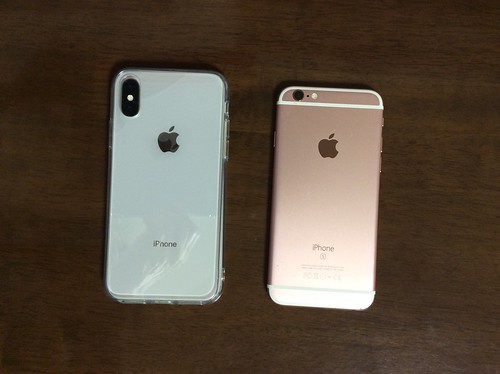
You can sign up to receive each day’s Start Up post by email. You’ll need to click a confirmation link, so no spam.