
Unknown's avatar

About charlesarthur

Freelance journalist - technology, science, and so on. Author of "Digital Wars: Apple, Google, Microsoft and the battle for the internet".

Start Up No.1212: how Finns beat fake news, Apple’s decade in retrospect, Google’s cloud deadline, and more


DeepMind’s AlphaZero has found that changing a single rule in chess can make games more interesting – and reduce draws. CC-licensed photo by Megan Wong on Flickr.

You can sign up to receive each day’s Start Up post by email. You’ll need to click a confirmation link, so no spam.

A selection of 9 links for you. Well-decorated. I’m @charlesarthur on Twitter. Observations and links welcome.

Kramnik and AlphaZero: how to rethink chess • Chess.com

Vladimir Kramnik is a former world chess champion who asked DeepMind to get AlphaZero to test new variations – because it can run through millennia of games in a few days:

»

My aim was to find a chess variant that would not only have the potential to bring the excitement and decisive victories back to chess, but is also aesthetically pleasing. The goal was to reignite interest and introduce players and audiences to the immense complexity and creativity of the original game of chess.

To begin, we tasked AlphaZero with exploring a variant that prevented either side from castling, trying different opening moves from both sides. The outcome was beyond our expectations!

We let AlphaZero learn how to play “no-castling chess” from scratch, allowing the program to incrementally learn how to master the game through a process of trial and error, similar to how it taught itself to play classical chess. After playing millions of games, AlphaZero became a no-castling expert, allowing us to analyze how it plays and assess the overall game balance.

The win/loss percentages for both White and Black are similar to classical chess, suggesting that the no-castling variant should be quite playable without favoring a particular player. Preventing the king from retreating to a safe distance means that all of the pieces have to engage in the melee, making the play more dynamic and entertaining, with a number of original patterns.

«

Certainly much simpler, and easy to test. (He considered, and rejected, FischerRandom – where you place the back row pieces randomly but mirror-image before the game. Too difficult for amateurs, and too variable.)
unique link to this extract


Finland is winning the war on fake news. Other nations want the blueprint

Eliza Mackintosh:

»

Finland has faced down Kremlin-backed propaganda campaigns ever since it declared independence from Russia 101 years ago. But in 2014, after Moscow annexed Crimea and backed rebels in eastern Ukraine, it became obvious that the battlefield had shifted: information warfare was moving online.

Toivanen, the chief communications specialist for the prime minister’s office, said it is difficult to pinpoint the exact number of misinformation operations to have targeted the country in recent years, but most play on issues like immigration, the European Union, or whether Finland should become a full member of NATO (Russia is not a fan).

As the trolling ramped up in 2015, President Sauli Niinisto called on every Finn to take responsibility for the fight against false information. A year later, Finland brought in American experts to advise officials on how to recognize fake news, understand why it goes viral and develop strategies to fight it. The education system was also reformed to emphasize critical thinking.

Although it’s difficult to measure the results in real-time, the approach appears to be working, and now other countries are looking to Finland as an example of how to win the war on misinformation.

“It’s not just a government problem, the whole society has been targeted. We are doing our part, but it’s everyone’s task to protect the Finnish democracy,” Toivanen said, before adding: “The first line of defense is the kindergarten teacher.”

«

Government-funded, which seems wise.
unique link to this extract


Exclusive: Facebook funding Reuters deepfakes course for newsrooms • Axios

Sara Fischer:

»

The free e-learning course, called “Identifying and Tackling Manipulated Media,” seeks to help journalists globally learn how to identify photos or videos that have been altered to present inaccurate information.

It’s available online only, and takes about 45 minutes to complete. Reuters and Facebook will do events and panels in 2020 together around the course.

Much of the course isn’t focused on deepfakes specifically, but rather on the way manipulated media can be used to distort the facts. Deepfakes involve the use of artificial intelligence to create media that is doctored to look real; they are a subset of the much broader category of manipulated media, which is any media altered to change the factual record.

What they’re saying: Hazel Baker, Reuters’ head of user-generated content news-gathering, who created the course, says that the goal was to help newsrooms understand what they should be looking for.

“Ninety per cent of manipulated media we see online is real video taken out of context used to feed a different narrative,” says Baker, whose unit of 13 at Reuters specializes in verifying visual media. “Sometimes it’s edited, but often it’s not. I think that’s quite an important starting point.”

«

So is Facebook going to take down content like this? *Hilarious laughter* Ok then.
unique link to this extract


Facebook’s unhealthy obsession with growth persists after years of scandal • Buzzfeed News

Alex Kantrowitz:

»

Facebook’s growth at any cost mentality has birthed innumerable scandals over the past decade — election meddling, political discord, privacy invasion. Yet today, after repeated apologies and promises to do better, that mentality remains largely unchanged. BuzzFeed News has learned the company continues to evaluate and compensate product managers based mostly on their ability to grow its products, with little regard to the impact of those products on the world. In fact, for Facebook, the very word “impact” is often defined by internal growth rather than external consequences and it uses growth metrics as a key criteria for evaluating performance and determining compensation changes.

This emphasis on growth, particularly as it’s tied to performance evaluation, encourages Facebook’s employees to focus on growth above all else, sources close to the company told BuzzFeed News.

“Working at Facebook made me aware of how you can reprogram humans,” one ex–product manager who recently left the company said. “It’s hard to believe that you could get humans to override all of their values that they came in with. But with a system like this, you can. I found that a bit terrifying.”

“When you’re building something at this scale, solutions take a good amount of time” 
The system this product manager described — a source of concern among others who have worked for the company — has two main components: Facebook’s data science team and its performance evaluation system. The company’s data science team has years of data at its disposal, which it uses to pinpoint how much a team should grow a product it’s working on. Facebook’s product teams use that information to set goals every six months as part of a “roadmap planning” process. The criterion is typically growth, though there are sometimes other goals as well, like reducing harmful behavior on its service.

«

A microcosm of ourselves.
unique link to this extract


Introducing MusicBot: the all-in-one Apple Music assistant, powered by Shortcuts • MacStories

Federico Viticci:

»

For the past several months, I’ve been working on a shortcut designed to be the ultimate assistant for Apple Music. Called MusicBot, the shortcut encompasses dozens of different features and aims to be an all-in-one assistant that helps you listen to music more quickly, generate intelligent mixes based on your tastes, rediscover music from your library, control playback on AirPlay 2 speakers, and much more. I poured hundreds of hours of work into MusicBot, which has gained a permanent spot on my Home screen. Best of all, MusicBot is available to everyone for free.

I’m a happy Apple Music subscriber, and I love the direction Apple has taken with the service: fewer exclusive deals, more human curation, artist spotlights, and playlists updated daily. However, I believe the Music app for iPhone and iPad leaves much to be desired in terms of navigation and fast access to your favorite music. While Music gets the job done as a gateway to a streaming catalog, I find its interactions somewhat slow when it comes to playing my favorite playlists on shuffle or getting to albums I frequently listen to. Some of Music’s most interesting mixes are only available by asking Siri; additionally, getting to certain sections of the app or tweaking specific settings often takes far too many taps for my taste.

«

That it’s written in Shortcuts is, in its own right, incredible: the interface for working in Shortcuts is terrible, and this has more than 750 Shortcut actions in it. Proof, of a sort, that you can program on an iPad. But unless Viticci was able to use a second screen (which he might have, with an iPad), this was the sort of masochism that would have left the Marquis De Sade raising his eyebrows and asking if that wasn’t a bit much.
unique link to this extract


Walt Mossberg: Tim Cook’s Apple had a great decade but no new blockbusters • The Verge

Mossberg came out of retirement to write about Apple’s decade:

»

Cook does bear the responsibility for a series of actions that screwed up the Macintosh for years. The beloved mainstream MacBook Air was ignored for five years. At the other end of the scale, the Mac Pro, the mainstay of professional audio, graphics, and video producers, was first neglected then reissued in 2013 in a way that put form so far ahead of function that it enraged its customer base.

Some insiders think Cook allowed Ive’s design team far too much power and that the balance Jobs was able to strike between the designers and the engineers was gone, at least until Ive left the company earlier this year.

The design-first culture that took root under Cook struck again with the MacBook Pro, yielding new laptops so thin their keyboards were awful and featuring USB-C ports that required sleek Macs to be used with ugly dongles. Apple has only recently retreated back to decent keyboards on the latest MacBook Pro, and it issued a much more promising Mac Pro. But dongles are still a part of the Apple experience across its product lines.

Cook’s other success this decade was to nurture the iPhone along as smartphone sales first plateaued and then began to decline. The biggest change he made came in 2014, before the dip, when Apple introduced two new iPhone 6 models, which belatedly adopted big screens that Android phones had pioneered. Sales took off like a rocket, and there’s been a big iPhone option every year since.

«

I’d definitely agree with the “some insiders”. USB-C perhaps could have waited a year or two, or three, but dongles are hardly the end of the world. The keyboards, though, and the overemphasis on “thin” and “featureless” over functional, are points that maybe were impossible to hear above the noise of everything else happening inside the company – particularly with the shift to services and TV.
unique link to this extract


Google brass set 2023 as deadline to beat Amazon, Microsoft in cloud • The Information

Nick Bastone, Kevin McLaughlin and Amir Efrati:

»

The clock is ticking for Google Cloud.

The Google unit, which sells computing services to big companies, is under pressure from top management to pass Microsoft or Amazon—currently first and second, respectively, in cloud market share—or risk losing funding. While the company has invested heavily in the business since last year, Google wants its cloud group to outrank those of one or both of its two main rivals by 2023, said people with knowledge of the matter.

That timeline was devised early last year, after an intense monthslong debate among senior leaders at Google and its parent company Alphabet over the future of the cloud business, a person with direct knowledge of the matter told The Information. The group, which included Google CEO Sundar Pichai, Alphabet chief financial officer Ruth Porat and then-CEO of Alphabet Larry Page, discussed whether Google could “win” in the business, who would be best to lead the effort and the difficulties of competing on things other than technology, such as sales and marketing. The group even talked about—and eventually dismissed—the idea of leaving the market entirely, this person said.

…Becoming No. 1 or 2 in the cloud market will be a stretch for Google. In the third quarter, Amazon Web Services accounted for almost 33% of global cloud spending, while Microsoft had nearly 17% and Google had just under 7%, according to research firm Canalys.

At the same time, there are some signs of progress. On Alphabet’s fiscal second quarter earnings call in July, Pichai revealed that Google Cloud generated $2bn in revenue during the quarter, giving it an $8bn annualized sales rate—double the $1bn a quarter in cloud revenue it disclosed for the last quarter of 2017

«

But Google’s ad business is about 20 times bigger. Business Insider also mentioned 2023. This is the sort of revelation that won’t help Google’s Cloud business at all.

unique link to this extract


Match the classic book to its not-so-classic sequel • Mental Floss

Personally I didn’t even know there was a sequel to Forrest Gump. Or quite a few of the others. Difficult!
unique link to this extract


List of best-selling mobile phones • Wikipedia

Everyone on the internet:

»

With over 4 decades on the market, mobile phones have become the most used electronic device in the world. Below is a list of best-selling mobile phones, released between 1992 and 2018. The best-selling mobile devices are the Nokia 1100 and 1110, two bar phones released in 2003 and 2005, respectively. Both have sold over 250 million units.

The best-selling touchscreen phones are the Apple iPhone 6 and 6 Plus, both released in 2014. Together, they have sold over 220 million units. The best-selling flip phone is the Motorola RAZR V3, released in 2004. It sold over 130 million units. The best-selling slider phone is the Samsung E250, released in 2006. It has sold over 30 million units.

«

Some amazing stats in here, and surprises too. Apple leads on the individual best-selling phones because its portfolio was, for so long, so small: rather than releasing a different phone every day of the week (as Samsung sometimes seems to), its focus until recently on one or two helps bump it up.

Even so, the numbers for this year may surprise you. (Thanks stormyparis for the link.)
unique link to this extract


Errata, corrigenda and ai no corrida: none notified

Start Up No.1211: Google/YouTube moderators speak out, the adaptive UI, Facebook goes DeepText, on Corbyn in 2015, and more


Guess what, Marissa Mayer’s back – and she wants to save you some time. CC-licensed photo by TechCrunch on Flickr.

You can sign up to receive each day’s Start Up post by email. You’ll need to click a confirmation link, so no spam.

A selection of 10 links for you. Never garbage in, only out. I’m @charlesarthur on Twitter. Observations and links welcome.

Google and YouTube moderators speak out on the work that’s giving them PTSD • The Verge

Casey Newton:

»

Peter is one of hundreds of moderators at the Austin site. YouTube sorts the work for him and his colleagues into various queues, which the company says allows moderators to build expertise around its policies. There’s a copyright queue, a hate and harassment queue, and an “adult” queue for porn.

Peter works what is known internally as the “VE queue,” which stands for violent extremism. It is some of the grimmest work to be done at Alphabet. And like all content moderation jobs that involve daily exposure to violence and abuse, it has had serious and long-lasting consequences for the people doing the work.

In the past year, Peter has seen one of his co-workers collapse at work in distress, so burdened by the videos he had seen that he took two months of unpaid leave from work. Another co-worker, wracked with anxiety and depression caused by the job, neglected his diet so badly that he had to be hospitalized for an acute vitamin deficiency.

Peter, who has done this job for nearly two years, worries about the toll that the job is taking on his mental health. His family has repeatedly urged him to quit. But he worries that he will not be able to find another job that pays as well as this one does: $18.50 an hour, or about $37,000 a year.

«

People paying the price of all the other people.
unique link to this extract


Marissa Mayer is launching a new project: Lumi Labs • Fast Company

Harry McCracken:

»

Mayer remains cryptic about the specific types of apps Lumi has under development, and the time frame for their launch. But she will say that Lumi stands to benefit from the kinds of AI breakthroughs that Silicon Valley researchers are making in areas such as teaching cars to drive themselves. This kind of work, she says, is immediately useful for the tools Lumi is devising to automate activities “so mundane and so time-consuming that a lot of people [choose not to] do them.” For instance, the company is applying machine learning to certain photo-related tasks such as figuring out whether a particular image “is blurry, whether it’s well lit, whether it’s one that someone is likely to want to share based on the history of photos they shared in the past.”

If Lumi’s apps take off, it won’t be through the company’s use of AI alone. “We want our products to be thoughtful, to feel nice when they’re used,” explains Mayer, who was once famous for zealously guarding Google’s search engine against complication and clutter. She admits that she misses the days when the products she launched reached hundreds of millions of people. But with Lumi, “the hope is to be able to have that kind of impact and scale at some point,” she says. “That’s certainly what we will be building for.”

«

Whether my photo is too blurry. Really. Too blurry. From the woman who once oversaw Google Mail.

Let’s check back in two years.
unique link to this extract


How AI will eat UI

Artyom Avanesov:

»

When AR wearables hit the market, our apps will start tracking both our conscious and subconscious behavior. By measuring our heart rate, respiration, pupil size, and eye movement, our AI’s will be able to map our psychology in high resolution. And armed with this information, our interfaces will morph and adapt to our mood as we go about our day.

Future interfaces will not be curated, but tailored to fulfill our subconscious needs. Maybe the best way to navigate a digital ecosystem isn’t through buttons and sliders. Maybe the solution is something more organic and abstract.

Autodesk is developing a system that uses Generative Design to create 3D models. You enter your requirements, and the system spits out a solution. The method has already produced drones, airplane parts, and hot rods. So it’s only a matter of time before we start seeing AI-generated interfaces.

This may all sounds far out, but the future tends to arrive sooner than we expect. One day, in a brave new world, we will look at contemporary interfaces the same way we look at an old typewriter; gawking at its crudeness and appreciating how far we’ve come.

«

Now that’s something to think about. What if the UI is different for each of us because the AI picks up different things? Nobody’s phone would look the same, nobody’s phone would act the same. You wouldn’t be able to make sense of your best friend’s device. And yet it might happen.
unique link to this extract


Google Turkey suspends services for upcoming phones over fine • Daily Sabah

:

»

Tech giant Google has suspended its services for new Android smartphones in Turkey unless the country backtracks from its decision to fine the company for violating competition law, the company announced Sunday.

The decision will not affect current users or current phone models already existing on the market. The move will only suspend Google services for Android devices yet to be released.

Turkey’s Competition Authority last September announced it had fined Google some TL 93 million for violating competition laws with its mobile software sales. The watchdog said in March this year that it was launching a broader investigation into Google based on preliminary findings.

Google told Turkish business partners, phone manufacturers and telecom carriers selling smartphones that it would not grant licenses to Android phones set to be launched on the Turkish market for the use of its services, including Google Play Store, Gmail, YouTube and other Google applications. Accordingly, Google said it would also suspend operating system updates.

…The initial probe aimed to determine whether Google’s contracts with equipment producers – in addition to its mobile communications systems, applications and provision of services – found the tech giant had violated the law.

«

That’s quite the reaction, Google. Most of the 10m smartphones sold in Turkey annually run Android. Wonder how this is going to pan out if neither side backs down.
unique link to this extract


Introducing DeepText: Facebook’s text understanding engine • Facebook Engineering

Ahmad Abdulkader, Aparna Lakshmiratan, and Joy Zhang:

»

DeepText is already being tested on some Facebook experiences. In the case of Messenger, for example, DeepText is used by the AML Conversation Understanding team to get a better understanding of when someone might want to go somewhere. It’s used for intent detection, which helps realize that a person is not looking for a taxi when he or she says something like, “I just came out of the taxi,” as opposed to “I need a ride.”

We’re also beginning to use high-accuracy, multi-language DeepText models to help people find the right tools for their purpose. For example, someone could write a post that says, “I would like to sell my old bike for $200, anyone interested?” DeepText would be able to detect that the post is about selling something, extract the meaningful information such as the object being sold and its price, and prompt the seller to use existing tools that make these transactions easier through Facebook.

DeepText has the potential to further improve Facebook experiences by understanding posts better to extract intent, sentiment, and entities (e.g., people, places, events), using mixed content signals like text and images, and automating the removal of objectionable content like spam. Many celebrities and public figures use Facebook to start conversations with the public. These conversations often draw hundreds or even thousands of comments. Finding the most relevant comments in multiple languages while maintaining comment quality is currently a challenge. One additional challenge that DeepText may be able to address is surfacing the most relevant or high-quality comments.

«

But fake news? Perish the thought.
unique link to this extract


September 2015: Last house on the Left: following Jeremy Corbyn’s campaign trail • The Quietus

Taylor Parkes, back in September 2015, when it looked as though Corbyn was going to be elected leader of the Labour Party:

»

The fact is, unless a lot of things change deeply and most unexpectedly over the next four years, Jeremy Corbyn is not going to win a general election. This is not to suggest that there’s some kind of objective, immovable “centre ground”, nor that if there were, it would be occupied by the Labour Right – still less the modern Conservative Party. In truth, Corbyn’s domestic policies are not very extreme, and would in many cases prove quite popular. Yes, they’re “radical” in the sense that there’s a chasmal distance out to there from where we are today, but really, Corbynism is just about hauling Britain back towards the social-democratic Centre. There will be no pogroms, no fifteen-hour queues for stale bread. This is not the problem.

I think we all know what the problems are. For instance, I’m not what you’d call a hawk, but please: out there in grainy, hard-bollocked reality, Corbyn’s foreign policy would not just leave Britain naked in the conference chamber, but fastened into a gimp mask with a horse-tail dangling out of its arse. Whether we like it or not, there is at least one confrontation coming; you can be sure of that. There are some nasty people in the world, you know. Some of them – get this! – are even nastier than Tony Blair. And even if you leave them all alone, they will not stop. Not for all the tea in Islington North.

What’s more, there are certain… issues with Corbyn and the company he keeps. He doesn’t just have skeletons in his closet, he hangs up his shirts in an ossuary. This is not a trivial matter. Those who underestimate the problems this will cause are fooling themselves (and in some cases, losing sight of their own moral compass).

«

It’s amazing: Parkes gets every single thing correct about Corbyn, about his outriders, and his past, about how he would fare against Boris Johnson. Four. Years. Ago.

It’s a fantastic piece; I highly recommend all of it.
unique link to this extract


Post Office coughs £57.75m to settle wonky Horizon IT system case • The Register

John Oates:

»

The UK’s Post Office has finally agreed to settle a long-running case brought by postmasters the company accused of theft based on evidence from the Horizon IT system.

Claimants (and their lawyers, of course) will split £57.75m in order to settle Bates and others v the Post Office.

The biz said in a statement: “The Post Office would like to express its gratitude to claimants, and particularly those who attended the mediation in person to share their experiences with us, for holding us to account in circumstances where, in the past, we have fallen short and we apologise to those affected.”

It said the new chief executive was committed to learning lessons and that the company would be “undertaking an ambitious and sustained programme of changes to the Post Office’s relationship with postmasters”.

Freelance journalist Nick Wallis, who has been reporting on the case since 2010, pointed out that litigants would have spent about £22m, assuming their legal bills were similar to the Post Office’s. Wallis noted the case was backed by litigation funder Therium and by his rough maths on what they would expect to be paid, he estimated payments for each of the 550 litigants would be between £47,000 and £78,000.

«

Astonishing that something like this has to go on for so long, and yet the consequences for those who behaved wrongly will, one fears, be minimal.
unique link to this extract


FixMyStreet for TfL — now live • mySociety

Myfanwy Nixon:

»

Back in November, we announced our new partnership with Transport for London. We’re now pleased to say that the new Street Care service is live.

If you’re a seasoned user of FixMyStreet, there’s no learning curve required: you can proceed exactly as normal. If you prefer, you can carry on making reports through the national website at FixMyStreet.com or via the FixMyStreet app.

The only difference is that now, if the issue is the responsibility of TfL, that’s where your report will be routed, and that’s where updates will come from to let you know when the fix is in progress or completed.

The new service covers potholes, roadworks, bus shelters and traffic lights on the capital’s busiest roads — the ‘red routes’, which make up only 5% of the city’s highways, but account for a whopping 30% of traffic. Users can also report graffiti and flyposting, problems with hoardings, scaffolding and mobile cranes, street lights and damaged trees.

As ever, the underlying FixMyStreet platform means that you don’t need to think about who is responsible for your issue. If a problem is reported and it’s nothing to do with TfL, it’ll be automatically routed to the relevant borough or authority.

«

Amazingly, FixMyStreet dates back to 2007 – it’s one of the earliest web projects built for the community in the UK. Only slightly concerning that it has taken 12 years for the capital’s transport authority to integrate it.
unique link to this extract


Netflix’s Napster moment • Tech-Thoughts

Sameer Singh:

»

All of a sudden, Netflix finds itself in a world where must-watch content is fragmented across streaming services with individual subscriptions. Not that different from the pre-cord cutting world. The content economics are largely similar and all that has changed is that it is now delivered over the internet. In this world, does Netflix have the freedom to cut down on original content investments? The subscribers they have acquired have their own niche tastes. If they no longer get new content  they are interested in, they have enough options available from competitors.

Even if Netflix continues to invest in content, is that enough to keep subscribers around in this world? Users are unlikely to sign up AND stick to every streaming service that has a “must watch” show. A fan of Stranger Things, His Dark Materials and The Mandalorian is unlikely to pay for Netflix, HBO Max and Disney+ every month. A more likely outcome is that users “hop” between streaming subscriptions based on what they want to watch. There is already evidence of this, as HBO NOW subscriptions in the past few years experienced a dramatic peak during every new season of Game of Thrones. Subscriptions then dropped back down as soon as the season was complete. This pattern will dramatically increase user churn and, consequently, customer acquisition costs. Of course, the other eventuality is an increase in piracy, which will also hurt economics.

…The upside is that Netflix isn’t the only company facing these challenges. The entire video streaming industry is on an unsustainable path. High content costs, subscriber churn and piracy will affect everyone in the industry. This, in turn, is likely to create the conditions necessary for a new industry structure. Take yourself back to the music industry in the early 2000s. Revenue losses caused by piracy, and Napster in particular, forced industry players to co-operate and created the conditions necessary for Apple to unbundle music albums via iTunes. Video streaming is on a very similar path (a combination of unbundling and re-aggregation onto a single platform).

«

Singh is always worth listening to – though I think it’s no secret that this splurge on video content can’t last.
unique link to this extract


Prime leverage: how Amazon wields power in the technology world • The New York Times

Daisuke Wakabayashi:

»

The A.W.S. [Amazon Web Services] database service, an instant hit with customers, did not run software that Amazon created. Instead, the company plucked from a freely shared option known as open source.

…open source is a tried and true model nurtured by the software industry to get technology to customers quickly. A community of enthusiasts often springs up around the shareable technology, contributing improvements and spreading the word about its benefits. Traditionally, open-source companies later earn money for customer support or from paid add-ons.

Technologists initially paid little attention to what Amazon had done with database software. Then in 2015, Amazon repeated the maneuver by copying Elasticsearch and offering its competing service.

This time, heads turned.

“There was a company that built a business around an open-source product that people like using and, suddenly, they have a competitor using their own stuff against them,” said Todd Persen, who started a non-open-source software company this year so there was “zero chance” that Amazon could lift his creations. His previous start-up, InfluxDB, was open source.

Again and again, the open-source software industry became a well that Amazon turned to. When it copied and integrated that software into A.W.S., it didn’t need permission or have to pay the start-ups for their work, creating a deterrent for people to innovate.

That left little recourse for many of these companies, which could not suddenly start charging money for what was free software. Some instead changed the rules around how their wares could be used, restricting Amazon and others who want to turn what they have created into a paid service.

«

This piece begins promisingly – OMG Amazon totes ripped off Elasticsearch! – but you gradually realise that the complaints are nothingburgers. Open source companies are whining because Amazon is using the combination of its size and software that is provided as open source to produce big services they can’t compete with because they’re small.

Clue for you, people: don’t make it open source. Do it the hard way: closed source, and find customers. It worked for Microsoft and for Amazon and a gazillion companies up and down the chain. (Thanks Nic for the link.)
unique link to this extract


Errata, corrigenda and ai no corrida: none notified

Start Up No.1210: the decade’s puzzled economists, Foxconn wriggles in Wisconsin, Samsung’s smaller fold, and more


Biopharma companies aren’t working on new antibiotics – because of a quirk of the US health care system. CC-licensed photo by NIAID on Flickr.

You can sign up to receive each day’s Start Up post by email. You’ll need to click a confirmation link, so no spam.

A selection of 10 links for you. Use them wisely. I’m @charlesarthur on Twitter. Observations and links welcome.

Biopharma has abandoned antibiotic development. Here’s why we did, too • Endpoints News

Isaac Stoner is president and COO of Octagon Therapeutics:

»

Patients who contract, or succumb to, a resistant infection are severely undercounted. Under the Affordable Care Act, hospitals must pay a penalty for each hospital-acquired-infection (HAI) occurring with in their in-patient population. As a result, if a patient dies from a superbug contracted during a procedure such as surgery, the official cause of death may be instead listed as “Complications from Surgery.” Consistent and systemic undercounting of illnesses and deaths from resistant infections further discourages the development of new antibiotics as the number of patients who need these medicines may appear to be very small.

The failure of the market for new antibiotics has al so been caused by several economic and commercial factors. Approval incentives were not the only policy included in the GAIN Act. There were also measures designed to promote stewardship, or appropriate use, of new antibiotics. In short, when a new antibiotic be comes available, it should only be used as a last resort to prevent new resistance from arising. This kind of responsible use is a good thing! But stewardship severely limits the number of patients who will receive a new antibiotic and, correspondingly, the potential sales volume.

Insurers pay for in-patient antibiotics as part of a lump sum to hospitals known as a Diagnosis Related Group (DRG). Using a cheap antibiotic increases hospital profit margins, while using an expensive new drug could mean that a hospital might lose money by treating a given patient. As a result, hospitals are incentivized to use cheaper antibiotics when ever possible.

«

So in short we’re at risk of antibiotic collapse because of perverse incentives in the utterly broken American healthcare system. So much for which America is to blame.
unique link to this extract


Economists got the decade all wrong. They’re trying to figure out why • WSJ

Greg Ip, on how economists’ forecasts for interest rates and inflation and GDP kept being wrong:

»

in 2013 Larry Summers, a former top adviser to Presidents Bill Clinton and Barack Obama and now an economist at Harvard University, advanced an alternative explanation: “secular stagnation.” He borrowed the phrase from an earlier Harvard economist, Alvin Hansen who used it in 1938 to describe the Great Depression’s persistently weak growth and high unemployment. Mr. Hansen tied it to weak investment due to slow population growth: Businesses had less need to invest when there were fewer new workers and customers and when aging households bought fewer big-ticket products like houses.

Slow population growth is once again weighing on growth and interest rates, Mr. Summers noted, and he added several other factors: the fastest-growing businesses, such as social-media platforms, invest little of their rich profits. Higher inequality meant more income flows to the high-saving, low-spending rich.

Though initially skeptical of Mr. Summers’s thesis, many economists have since warmed to it, at least for other parts of the world, if not the U.S. In some countries like Germany a persistent excess of savings manifests itself as a trade surplus which flows into other countries’ bonds, holding down interest rates around the world.

Secular stagnation has several profound implications. First, with interest rates closer to zero, central banks are less able to combat future recessions. Second, a structural shortage of private borrowing means governments can run big deficits without pushing up interest rates.

«

unique link to this extract


Samsung denies selling 1 mln Galaxy Fold smartphones • Yonhap News Agency

주경돈:

»

Samsung Electronics on Friday denied media reports that the company has sold one million Galaxy Fold smartphones globally since the device’s launch in September.

Samsung Electronics President Sohn Young-kwon said at a conference organized by US tech media TechCrunch that the South Korean tech giant has sold 1 million Galaxy Folds so far, double the industry’s earlier estimate.

But a Samsung spokesman said Sohn may have confused the figure with the company’s initial sales target for the year, emphasizing that sales of the tech firm’s first foldable handset have not reached 1 million units.

Earlier, Samsung said it expected to sell 500,000 Galaxy Fold globally this year.

Many analysts previously expected that Samsung would sell about 400,000 to 500,000 units of the foldable phone this year.

«

unique link to this extract


100 best memes of the decade • Buzzfeed News

Katie Notopoulos, Julia Reinstein and Ryan Broderick:

»

This decade, memes became something not just for a handful of internet nerds who lurked on message boards; memes are now for everyone. The online culture of this decade hasn’t just changed the words we use, it’s changed how we express ourselves. Huge technological shifts of the 2010s led to this: widespread smartphone adoption and the rise of newfangled social media platforms like Vine. Memes also became a business — brands used meme-speak and accounts like @fuckjerry made big bucks by reposting memes.

«

I learnt “deep fried” from this. Side note: how classic that Buzzfeed News’s roundup of the decade should be memes.
unique link to this extract


Exclusive: documents show Foxconn refuses to renegotiate Wisconsin deal • The Verge

Josh Dzieza:

»

given that Foxconn is building something completely different than that Gen 10.5 LCD facility specified in its original contract with Wisconsin, is it still going to get the record-breaking $4.5bn in taxpayer subsidies?

Documents obtained by The Verge show that Wisconsin officials have repeatedly — and with growing urgency — warned Foxconn that its current project has veered far from what was described in the original deal and that the contract must be amended if the company is to receive subsidies. Foxconn, however, has declined to amend the contract, and it indicated that it nevertheless intends to apply for tax credits.

Foxconn has “refused by inaction” to amend the deal, says Wisconsin Department of Administration Secretary Joel Brennan. “They were continuously encouraged. It’s a relatively recent development, where they have said, ‘No, we don’t want to do anything with the contract.’ Our expectation has been, and continues to be, that they should want to come back and have discussions about this.”

The documents show it was Foxconn that first proposed amending the contract in a meeting on March 11th, 2019. Over the following months, various officials from the Wisconsin Economic Development Corporation (WEDC) and Gov. Tony Evers’ administration urged Foxconn to formally apply to revise its contract to reflect whatever it is actually building, a process that would involve describing Foxconn’s current plans, its expected costs, employment, and other basic details.

Foxconn never did.

«

The Verge has done great work exposing this gigantic screwup. Since July 2017, when it was first boosted by Trump and (now-defeated) Wisconsin governor Scott Walker, the ambition of this scheme has gone down and down, but its demand for subsidies – which in its original form wouldn’t have paid off until 2042; going to be much smaller now – hasn’t wavered.
unique link to this extract


Google’s shopping comparison draws US Justice Department scrutiny • Bloomberg

Ben Brody and Naomi Nix:

»

US antitrust enforcers are examining Google’s conduct in the online shopping comparison market as they continue their probe of the search giant.

Richard Stables, chief executive officer of the shopping comparison site Kelkoo Group, said he spent more than an hour with Justice Department officials on Thursday to discuss how Alphabet allegedly hurt his European-based business.

The meetings show that the Justice Department, which opened its investigation of Google with a document seeking a wide swath of information on the company, has an interest in at least one of three landmark European antitrust cases.

A Justice Department spokesman said the department has had numerous productive meetings with third parties, but declined to comment on specific discussions.

Stables said he also met with congressional staff members for lawmakers on antitrust committees in the House and Senate earlier this week.

In 2017, the European Union fined Google €2.4bn ($2.8bn) and ordered the company to stop promoting its own shopping search results over those of competitors. Stables, who has been trying to convince the EU to toughen its remedy, outlined to the US antitrust enforcers what he said was harm to consumers stemming from Google’s practices.

«

The US Congress had a series of hearings about Google Shopping back in 2011. Eric Schmidt defended it. Is eight years too long a timeframe for anyone to remember this sort of stuff?
unique link to this extract


Dominic Cummings thinks Brexit can end British nativism • Foreign Policy

Sahil Handa:

»

In laying out his own vision for a post-Brexit Britain, [senior government adviser Dominic] Cummings barely mentions national identity. His concerns are structural, not cultural—he is preoccupied with free trade, not ethnic replacement.

In laying out his own vision for a post-Brexit Britain, Cummings barely mentions national identity. His concerns are structural, not cultural—he is preoccupied with free trade, not ethnic replacement. He wants to increase skilled immigration and turn the UK into a magnet for young scientists from across the world, using the comparative advantages of the country’s National Health Service to take a lead in the controversial field of genomic medicine (the technology that allows doctors to detect disease risk and cognitive problems in embryos). He even proposes providing open borders to math and computer science PhD.s — not out of generosity, but out of an absolutist belief in scientific talent—an idea that Johnson has already taken up. Indeed, Cummings uses the word “talent” repeatedly in his writings. The Chinese Communist Party attracts talent, he contends; the EU and UK do not.

If liberal democratic values are to survive, the institutions that defend them require an overhaul. They must be streamlined, democratized, and updated at the same rate as the technology sector. Otherwise, the decisive policymaking of China’s authoritarian model—better suited to tackling climate change and other long-term challenges—could make it a serious rival to the West’s staid, stagnant bureaucracies.

«

Given that the Tories and Cummings are now firmly ensconced, it helps to know what they’re thinking. Cummings has quite an odd worldview, in my opinion, but that’s something we’re going to have to deal with.
unique link to this extract


Chinese netizens slam Huawei’s legal bullying of former employee with a series of codes • Global Voices

Oiwan Lam:

»

Li Hongyuan, a former Huawei employee, was arrested by Shenzhen police on 16 December 2018 after Huawei accused him of extortion. He was detained for 251 days.

The court dismissed the charges due to “unclear criminal facts and insufficient evidence”. Li had negotiated with the company secretary for an employment termination compensation of about 300,000 yuan (US$42,430 dollars) and he had recorded his negotiation with the company secretary on tape. As the charge was acquitted Li received 100,000 yuan (US$14,100 dollars) compensation for his illegitimate detention.

Li later revealed to local media outlets that he had met a number of former Huawei employees in the Shenzhen detention center facing similar charges. One widely reported case was Zheng Meng. Zheng was arrested by Shenzhen police during his touristic visit in Thailand on 30 December 2018 and detained in Shenzhen for 90 days on extortion. He was in the process of negotiating with the corporation over his unpaid leave compensation.

Apart from employees, a number of netizens who criticized Huawei’s products were arrested for spreading rumors by Shenzhen police. For example, Wang Hao, who worked for a tech media outlet, was arrested in early November 2018 and detained for 252 days for criticizing Huawei mobile phone Mate 20. His charge was acquitted eventually but he had not received any compensation for his illegitimate detention.

As netizen uproar continued, the web censor stepped in to block the discussion on Chinese social media platforms. Prominent tech blogger William Long’s post on Weibo was blocked on 30 November and the blogger expressed his frustration on Twitter

«

There’s a lot in the story; Huawei getting dinged up and down social media. Though of course it’s difficult to know whether that has any broader relevance. (Thanks Nic for the pointer.)
unique link to this extract


Twenty tech trends for 2020 • The Guardian

Alex Hern:

»

From new gaming consoles to activism at Apple, we predict the things you will – or won’t – see in tech in 2020

«

Pretty hard to argue with any of these: no Google Duplex in Europe (GDPR), more ads on smart speakers (has happened already), Facebook to kill Portal, and plenty more. Reliable.

From having done this game in the past, the difficulty in compiling them is always whether you go for the obvious back-of-the-net ones, or the out-there ones which, if they come off, will make you look like a fabulous guru. This is a good mixture.
unique link to this extract


Look how easy it is to fool facial recognition—even at the airport • Fortune

Jeff John Roberts:

»

Masks and simple photographs are enough to fool some facial recognition technology, highlighting a major shortcoming in what is billed as a more effective security tool.

The test, by artificial intelligence company Kneron, involved visiting public locations and tricking facial recognition terminals into allowing payment or access. For example, in stores in Asia—where facial recognition technology is deployed widely—the Kneron team used high quality 3-D masks to deceive AliPay and WeChat payment systems in order to make purchases.

Those systems, which resemble the ones seen in airports, use a person’s face rather than a PIN or a fingerprint to validate user’s identity. Such masks, in theory, could allow fraudsters to use another person’s face—and bank account—to go shopping.

More alarming were the tests deployed at transportation hubs. At the self-boarding terminal in Schiphol Airport, the Netherlands’ largest airport, the Kneron team tricked the sensor with just a photo on a phone screen. The team also says it was able to gain access in this way to rail stations in China where commuters use facial recognition to pay their fare and board trains.

The transportation experiments raise concerns about terrorism at a time when security agencies are exploring facial recognition as a means of saving money and improving efficiency. In the case of the payment tablets, the ability to fool WeChat and AliPay with masks raises the spectre of fraud and identity theft.

«

Couldn’t beat the iPhone’s face recognition, but that’s hardly widely deployed. Quick-and-dirty facial recognition systems are going to have wide-and-dire flaws, one suspects.
unique link to this extract


Errata, corrigenda and ai no corrida: none notified

Start Up No.1209: the podcasters hacking Ring cameras, Strava drives London’s cyclists, Apple’s influential journalists, the Apple non-tax, and more


Do you like this stuff? Then you’re probably the sort of person who picks politicians nobody cares for. Marketers love you. CC-licensed photo by Mike Mozart on Flickr.

You can sign up to receive each day’s Start Up post by email. You’ll need to click a confirmation link, so no spam.

A selection of 10 links for you. A minority view. I’m @charlesarthur on Twitter. Observations and links welcome.

Inside the podcast that hacks Ring camera owners live on air • VICE

Joseph Cox and Jason Koebler:

»

“Sit back and relax to over 45 minutes of entertainment,” an advertisement for the podcast posted to a hacking forum called Nulled reads. “Join us as we go on completely random tangents such as; Ring & Nest Trolling, telling shelter owners we killed a kitten, Nulled drama, and more ridiculous topics. Be sure to join our Discord to watch the shows live.”

Software to hack Ring cameras has recently become popular on the forum. The software churns through previously compromised email addresses and passwords to break into Ring cameras at scale. This has led to a recent spate of hacks that have occurred both during the podcast and at other times, several of which have been covered by local media outlets. In Brookhaven a hacker shouted at a sleeping woman through her hacked Ring camera to wake-up. In Texas, a hacker demanded a couple pay a bitcoin ransom. Hackers targeted a family in DeSoto County, Mississippi, and spoke through the device to one of the young children.

Ring cameras are the wildly popular home surveillance devices owned and heavily marketed by Amazon. The company has signed partnership agreements with hundreds of police departments around the country; many of these police departments have marketed and sold Ring devices on the company’s behalf. These internet-connected cameras have invaded much of America’s suburbs, as Gizmodo showed using data that Ring left exposed. These hacks, and this podcast, have turned devices nominally designed to protect people’s homes into surveillance devices that have been turned back on their owners.

After the recent media attention about Ring hacks, Nulled members are scrambling to remove evidence of the Ring hacks and distance themselves from the practice.

«

Inviting devices into your home and not having simple ways to make them secure seems suboptimal. And so it proves.
unique link to this extract


City planners zero in on cyclists through exercise app • Financial Times

Bethan Staton:

»

When the UK capital built a “cycle superhighway” in 2016, Strava indicated where people had changed their route and showed that the number of cyclists increased by 60% when a bike-only lane was built along the Victoria Embankment on the Thames. Planners can observe changes, such as many cyclists avoiding a direct route, to see where roads may be dangerous.

Granular data from Strava also show where cyclists have to stop and wait, information Ms Hall used to review traffic light patterns so more cyclists could get a clear run on their commute.

While recognising its potential, however, researchers warned that Strava and other crowdsourced data sets should be treated with caution. Giulio Ferrini, from cycling charity Sustrans, said the average Strava user was probably “not representative” of the average cyclist.

Strava says it has 5.5m users in the UK. But researchers fear they are a self-selecting group, filtered by an affinity for exercise apps that may make them more competitive than others. According to Ms Hall at TfL, they “tend to be more gung-ho”.

Relying on crowdsourced data, Mr Ferrini said, could lead to cities being designed for “white men in Lycra” who usually travel speedily from A to B and neglecting groups such as parents who cycle with their children to school.

«

Data-powered policy decisions: enormously difficult, because how do you collect the best data without forcing people to participate in the collection? This is a good enough compromise, I suppose.
unique link to this extract


A better internet is waiting for us • The New York Times

Annalee Newitz:

»

Social media is broken. It has poisoned the way we communicate with each other and undermined the democratic process. Many of us just want to get away from it, but we can’t imagine a world without it. Though we talk about reforming and regulating it, “fixing” it, those of us who grew up on the internet know there’s no such thing as a social network that lasts forever. Facebook and Twitter are slowly imploding. And before they’re finally dead, we need to think about what the future will be like after social media so we can prepare for what comes next.

I don’t mean brainstorming new apps that could replace outdated ones, the way Facebook did Myspace. I mean what will replace social media the way the internet replaced television, transforming our entire culture?

To find out what comes next, I went on a quest. I was looking for a deeper future than the latest gadget cycle, so I spoke to experts in media history, tech designers, science fiction writers and activists for social justice. I even talked to an entity that is not a person at all.

Collectively, they gave me a glimpse of a future where the greatest tragedy is not the loss of our privacy. It is the loss of an open public sphere. There are many paths beyond the social media hellscape, and all of them begin with reimagining what it means to build public spaces where people seek common ground.

«

unique link to this extract


The “harbinger customers” who buy unpopular products and back losing politicians • Kottke

Jason Kottke:

»

This paper, about the curious phenomenon of “harbinger customers” and “harbinger zip codes”, is really interesting. These harbinger customers tend to buy unpopular products like Crystal Pepsi or Colgate Kitchen Entrees and support losing political candidates.

»

First, the findings document the existence of “harbinger zip codes.” If households in these zip codes adopt a new product, this is a signal that the new product will fail. Second, a series of comparisons reveal that households in harbinger zip codes make other decisions that differ from other households. The first comparison identifies harbinger zip codes using purchases from one retailer and then evaluates purchases at a different retailer. Households in harbinger zip codes purchase products from the second retailer that other households are less likely to purchase. The analysis next compares donations to congressional election candidates; households in harbinger zip codes donate to different candidates than households in neighboring zip codes, and they donate to candidates who are less likely to win. House prices in harbinger zip codes also increase at slower rates than in neighboring zip codes.

«

It’s fascinating that these people’s preferences persist across all sorts of categories — it’s like they’re generally out of sync with the rest of society.

«

They’re a strange group: everything they touch (or pick up in the supermarket) sells like crap.
unique link to this extract


Magic Leap is renaming its AR headset to attract business customers • The Verge

Adi Robertson:

»

The new headset will ship on Magic Leap’s own site and through AT&T, just like the old one. But it’s cast as a commercial product rather than a kit for developers or artists. Magic Leap is using this new device to launch an operating system update and a software suite that appeals to professional customers, including a virtual collaboration application called Jump, which is rolling out in beta over the coming months. Magic Leap is also selling an “Enterprise Suite” at a higher price of $2,995, offering buyers access to dedicated support, device management software, and a “rapid replace” program if a headset malfunctions.

«

Oh look, the pivot to business. Only, what, two or three years late.
unique link to this extract


How Apple News UK editors quietly influence UK’s election reading • The Guardian

Jim Waterson:

»

Rasmus Nielsen, of the University of Oxford’s Reuters Institute for Journalism, believes the power of the service – and equivalents such as Samsung’s Upday – is under-appreciated. “Our data suggests that more than a quarter of online news users in the UK rely on one or more aggregators for online news, and Apple News and Google News have higher reach among people aged 18-24 than established brands like ITV and Sky or the Sun and the Mirror,” Nielsen said. “Their editorial processes, however, remains opaque, whether reliant on human editors, algorithms, or some combination.”

[The five UK-based] journalists who work for Apple News have scrubbed the company’s name from their social media accounts, a move that reduces the risk of them being accused of bias but adds to the lack of transparency around their decisions.

People at British media organisations who deal with Apple News say the editors have a welcome reputation for promoting exclusives and high-quality news featuring original reporting in their “top stories” section. If the Apple News editors like what they see, their backing can deliver enormous numbers of readers – which gives these editors a power akin to an old-school newspaper boss choosing a front-page story.

“You could get a million views in the UK alone if they pick one of your stories,” said one social media manager at a British news site, who suggested outlets were hooked on traffic from the service. Although news websites struggle to make money from Apple News traffic, they are often loth to give up a source of traffic that can refer more readers than Facebook.

«

Being a default helps, I suppose.
unique link to this extract


“Link In Bio” is a slow knife • Anil Dash

Anil Dash:

»

Links on the web are incredibly powerful. There are decades of theory behind the role of hyperlinks in hypertext — did you know in most early versions, links were originally designed to be two-way?  You’d be able to see every page on the web that links to this one. But even in the very simple form that we’ve ended up with on the World Wide Web for the last 30 years, links are incredibly powerful, opening up valuable connections between unexpected things.

For a closed system, those kinds of open connections are deeply dangerous. If anyone on Instagram can just link to any old store on the web, how can Instagram — meaning Facebook, Instagram’s increasingly-overbearing owner — tightly control commerce on its platform? If Instagram users could post links willy-nilly, they might even be able to connect directly to their users, getting their email addresses or finding other ways to communicate with them. Links represent a threat to closed systems.

«

I remember quite a while back when Deja News was a standalone company (it archived Usenet newsgroups – a bit like archiving all of Twitter) that it was advertising-run, but none of the links worked. You literally couldn’t get out of it: it was an internet black hole, and the walls were covered in ads. Dash’s point is that Instagram is trying to do the same. (Google eventually bought Deja in February 2001. It had no idea what to do with it either.)
unique link to this extract


52 things I learned in 2019 • Medium

Tom Whitwell:

»

This year I edited another book, worked on fascinating projects at Fluxx, and learned many learnings.

«

Whitwell’s lists are always one of the most wonderful things about the end of the year. A couple of favourites: emojis in court cases, harbinger customers (included today), the 10,000 steps source, how the US is like Mongolia, Japan’s love of CDs, and that asking ‘What questions do you have for me?’ can be dramatically more effective than ‘Any questions?’ at the end of a talk.
unique link to this extract


The “Apple Tax” died years ago • Above Avalon

Neil Cybart:

»

The theory of there being an Apple Tax has been around for more than a decade. The term was coined during the mid-2000s to refer primarily to Apple laptops (iBooks and then MacBooks). A MacBook was said to cost more money than a Windows laptop with similar specifications because of there being a premium built into the MacBook’s price. Said another way, the MacBook was more expensive than other products since it included an Apple logo.

The “Apple Tax’ phrase became a way to poke fun at MacBook users for their apparent cluelessness in paying more for a product despite cheaper alternatives being available. In recent years, the Apple Tax definition has morphed to merely refer to higher-priced Apple products like the iMac Pro and new Mac Pro.

There has always been a glaring hole in the Apple Tax narrative: Since Apple does not license its Mac operating system to OEMs, a MacBook running Apple software ends up being very different than a Windows laptop said to have similar specs. In addition, while Apple made a number of content creation applications available for free on the Mac, Windows laptops positioned as direct competitors lacked such free applications. It may be more correct to say that the Apple Tax reflected the price of Mac software instead of some kind of premium created out of thin air.

«

Welllllll, Windows OEMs had to pay a licence fee for Windows to Microsoft. But Apple included lots of other pieces of software – Garageband (which has been used by professionals), iMovie (Bill Gates complained bitterly to Microsoft’s engineers that Windows Movie Maker wasn’t anything like as good) and iPhoto (…). But there was also build quality.
unique link to this extract


When China and other big countries launch cryptocurrencies, it will kick off a global revolution • The Conversation

Liang Zhao is a doctoral researcher at Lund University:

»

There has been a massive rise in the number of bilateral agreements between central banks that allow two countries to swap currencies directly, a large number involving China. Meanwhile, a number of countries, including Germany and the Netherlands, have been repatriating their gold reserves from vaults in the US where they had long been stored.

Yet by comparison, major sovereign digital currencies based on blockchain technology would be revolutionary. Blockchains are encrypted ledgers for storing information that are decentralised rather than being under any country’s or company’s control. When applied to international payments, this offers the prospect of much more transparent and cheaper transactions than SWIFT.

It could cut the payments time lag from a couple of days to one second, and the cost from 0.01% to almost nothing. It will have the capacity to handle far higher volumes of payments, partly since they won’t require bank accounts or even internet access.

Cryptocurrencies like Bitcoin and XRP have been a good experiment in using blockchains for international payments. Yet when countries issue equivalents of their own, these will have even more advantages. They will be backed by states, and completely decentralised cryptocurrencies like Bitcoin will not be able to compete with this.

«

I’d certainly agree on that latter point – bitcoin will get squashed by any national cryptocurrency, because it won’t be able to compete in exchange terms; governments could make it really difficult to exchange bitcoin for any useful currency (which bitcoin still isn’t). The suggestion is that a flip to national cryptocurrencies could happen in the same manner as going bankrupt: gradually, and then suddenly.
unique link to this extract


Errata, corrigenda and ai no corrida: none notified

Start Up No.1208: YouTube tweaks ‘hate speech’ policy, Trump fined and barred from NY charity work, Apple Pro Display XDR Cloth©, the 201x’s 100 gadgets, and more


TIME’s Person of The Year – but is one year enough? (Mural: Jody Thomas, in Bristol) CC-licensed photo by Andrew Gustar on Flickr.

You can sign up to receive each day’s Start Up post by email. You’ll need to click a confirmation link, so no spam.

A selection of 10 links for you. Use them wisely. I’m @charlesarthur on Twitter. Observations and links welcome.

Greta Thunberg: TIME’s Person of the Year 2019 • Time

Charlotte Alter, Suyin Haynes and Justin Worland:

»

For a moment, it’s as if Thunberg were the eye of a hurricane, a pool of resolve at the center of swirling chaos. In here, she speaks quietly. Out there, the entire natural world seems to amplify her small voice, screaming along with her.

“We can’t just continue living as if there was no tomorrow, because there is a tomorrow,” she says, tugging on the sleeve of her blue sweatshirt. “That is all we are saying.”

It’s a simple truth, delivered by a teenage girl in a fateful moment. The sailboat, La Vagabonde, will shepherd Thunberg to the Port of Lisbon, and from there she will travel to Madrid, where the United Nations is hosting this year’s climate conference. It is the last such summit before nations commit to new plans to meet a major deadline set by the Paris Agreement. Unless they agree on transformative action to reduce greenhouse gas emissions, the world’s temperature rise since the Industrial Revolution will hit the 1.5°C mark—an eventuality that scientists warn will expose some 350 million additional people to drought and push roughly 120 million people into extreme poverty by 2030. For every fraction of a degree that temperatures increase, these problems will worsen. This is not fearmongering; this is science. For decades, researchers and activists have struggled to get world leaders to take the climate threat seriously. But this year, an unlikely teenager somehow got the world’s attention.

«

This is well deserved; the only downside is that 11 months from now, they’ll be casting around for someone else to name as the person around whom the year is deemed to have revolved. (Quick test: can you recall who it was last year?) By its nature, there’s an implication that the Person only mattered this year; and then we can move on to other things. The climate crisis is here for the rest of our lives.
unique link to this extract


YouTube will ban videos that ‘maliciously insult’ people based on race, gender, or sexual orientation • Buzzfeed News

Mark Di Stefano:

»

“Beyond threatening someone, there is also demeaning language that goes too far,” reads the statement by YouTube’s vice president, Matt Halprin. “To establish a consistent criteria for what type of content is not allowed on YouTube, we’re building upon the framework we use for our hate speech policy.

“We will no longer allow content that maliciously insults someone based on protected attributes such as their race, gender expression, or sexual orientation. This applies to everyone, from private individuals, to YouTube creators, to public officials.”

…The company also said YouTubers who “repeatedly brush up” against the harassment policy will also be removed from the platform’s partner program and will lose the ability to make ad revenue from advertising on videos.

But the new update also raises questions about how YouTube would deal with “malicious insults” made by “public officials”. President Donald Trump, who has made numerous disparaging remarks about individuals based on their race, uploads videos to his YouTube channel and livestreams all his rallies to the platform.

During a rally in Pennsylvania last night, Trump revived the use of “Pocahontas” as an insult, referring to Democratic presidential nominee Elizabeth Warren’s Native American heritage. He even bragged that the slurs had hurt Warren in the polls: “She’s starting to crash again. I thought I knocked her down. I did that heavy, heavy Pocahontas deal.”

YouTube has looked specifically at Trump’s use of the “Pocahontas” insult. According to the platform’s policy team, it’s not a violation of the new policy because it is directed at Warren in a political manner, in an apparent effort to ridicule her for allegedly exploiting her heritage with voters.

«

There’s always an exception for Trump, isn’t there? And how is “malicious” defined? It’s the usual cottonwool.
unique link to this extract


Trump pays $2m in damages ordered by judge over misuse of charity funds, according to NY attorney general • The Washington Post

David Fahrentold:

»

President Trump has paid $2 million in court-ordered damages for misusing funds in a tax-exempt charity he controlled, the New York attorney general said Tuesday…

In the 2000s, Trump began to use the charity in ways that benefited himself or his businesses, according to the attorney general’s lawsuit. He used the charity’s cash to buy paintings of himself and sports memorabilia and to pay $258,000 in legal settlements for his for-profit clubs.

Charity leaders are barred from using their nonprofits’ money for personal benefit.

Trump also used the charity to boost political campaigns — first, Pamela Bondi’s Florida attorney general campaign, and then his own 2016 campaign. Trump gave away Trump Foundation checks onstage at rallies, despite strict rules barring nonprofit charities from participating in political campaigns.

The New York attorney general’s suit drew heavily on reporting by The Washington Post during the 2016 election.

Now, the foundation will be shuttered. The consequences of this case will linger for Trump. Under the terms of the settlement, he has agreed to special supervision if he ever returns to charity work in New York.

«

The lawsuit only began in 2018, so that’s quite a rapid result. I hope nobody’s surprised that Trump corruptly used a charity for personal gain and broke every rule surrounding it; it’s entirely in character. The Trump organisation wouldn’t say whether it’s going to count the $2m fine as a “charitable donation” because it went to charities. What’s the betting…
unique link to this extract


49% of workers, when forced to update their password, reuse the same one with just a minor change • Graham Cluley

The aforementioned Cluley:

»

A survey of 200 people conducted by security outfit HYPR has some alarming findings.

For instance, not only did 72% of users admit that they reused the same passwords in their personal life, but also 49% admitted that when forced to update their passwords in the workplace they reused the same one with a minor change.

Furthermore, many users were clearly relying upon their puny human memory to remember passwords (42% in the office, 35% in their personal lives) rather than something more reliable. This, no doubt, feeds users’ tendency to choose weak, easy-to-crack passwords as well as reusing old passwords or making minor changes to existing ones.

According to the survey, forgetting passwords is a big problem – with 78% of respondents saying that they had had to reset a password in their personal life within the last 90 days (57% said the same for the workplace). HYPR said that this was due to users’ forgetting their passwords, so I presume they are not including figures for users who have had password resets forced upon them due to a security incident.

«

Not surprising; we’ve gone in the past 20 years from a situation where you might need one password (for your email) to one where they’re needed in scores of situations – smartphone, social media sites, apps, email – and that has happened far faster than people have been able to adapt their tool use (eg password managers), with all the cognitive overload, and hence bad security, that implies.
unique link to this extract


India proposes new rules to access its citizens’ data – TechCrunch

Manish Singh:

»

India has proposed groundbreaking rules, akin to Europe’s GDPR, that would require technology companies to garner consent from citizens before collecting and processing their personal data.

But at the same time, the new rules also state that companies would have to hand over “non-personal” data of their users to the government, and New Delhi would also hold the power to collect any data of its citizens without consent to serve sovereignty and larger public interest.

The new rules, proposed in nation’s first major data protection law dubbed “Personal Data Protection Bill 2019,” a copy of which leaked on Tuesday, would permit New Delhi to “exempt any agency of government from application of Act in the interest of sovereignty and integrity of India, the security of the state, friendly relations with foreign states, public order.”

If the bill passes — and it is expected to be discussed in the Parliament in the coming weeks — select controversial laws drafted more than a decade ago would remain unchanged. The bill might also change how global technology companies that have invested billions of dollars in India, thanks in part to the lax laws, see the nation of more than 600 million internet users.

«

Give with one hand, take with the other. India’s government shows worrying signs of really overt authoritarianism.
unique link to this extract


How to clean your Apple Pro Display XDR • Apple Support

»

How to clean your Apple Pro Display XDR

Your Pro Display XDR has either standard or nano-texture glass. To prevent damage to your display, follow these important guidelines for cleaning the display panel and enclosure.

Clean the nano-texture glass:
Use only the dry polishing cloth that comes with your display to wipe dust or smudges off the screen. Don’t add water or use other liquids to clean the nano-texture glass.

Never use any other cloths to clean the nano-texture glass. If you lose the included polishing cloth, you can contact Apple to order a replacement polishing cloth.

«

Though with the standard glass, you can “Use the polishing cloth that came with your display or another clean, dry, micro-fiber cloth”. Nano-structures, maxi-care, it seems.
unique link to this extract


Scoop: China tried to get World Bank to fund surveillance in Xinjiang – Axios

Bethany Allen-Ebrahimian:

»

Chinese recipients of World Bank loans tried to secure funding for the purchase of facial recognition technology for use in China’s northwest region of Xinjiang, according to documents obtained by Axios.

The World Bank’s loan program in Xinjiang demonstrates the extreme moral hazard that is now facing any organization with operations in the region, where China has constructed a surveillance state and detained more than a million ethnic minorities.

In more than 8,000 pages of official World Bank Chinese-language procurement documents dated June 2017 and reviewed by Axios, Chinese recipients of the loan program requested tens of thousands of dollars for the purchase of facial recognition cameras and software, night-vision cameras, and other surveillance technology for use in Xinjiang schools.

The World Bank told Axios those funds were not disbursed. A World Bank spokesperson said, “As an institution focused on ending poverty, the World Bank knows that inclusive societies are key to sustainable development, and we take a strong line against discrimination of any kind. We promote equal access to opportunities, including education and training, so that everyone can seek to realize his or her full potential. We are fully committed to the integrity of our projects. We respond immediately when issues are raised, and we act based on facts.”

«

Well done, World Bank.
unique link to this extract


My paper reported the story of the boy on a hospital floor. Then online lies took over • The Guardian

James Mitchinson edits the Yorkshire Evening Post, which broke a story about a mother whose child with suspected pneumonia had to rest on coats because no emergency beds were available:

»

On Monday night, one of our readers, a woman called Margaret, wrote to tell me that despite being a regular buyer of the Yorkshire Post (sister paper of the Yorkshire Evening Post), she had been let down by us. She’d seen a post on Facebook that showed we had not checked our facts. That social media post was from a nice, respectable, family-oriented lady who had a “good friend” working as a nurse at LGI [Leeds General Infirmary] who explained that our news story was in fact fake. This is despite all of the facts in front of Margaret – and all readers – on our part: including an explanation from the chief medical officer at Leeds Teaching Hospitals General Trust and an apology – a sincere and heartfelt one – from its chief executive.

I faced losing a loyal reader because Margaret was taken in by the seeming warmth and sincerity of the manipulatively crafted words of a complete stranger. Someone who she did not know, could not contact, could not hold to account. This digital disease of our time was killing my business, imperilling the livelihoods of those employed on the titles I’m charged with looking after.

I wrote to Margaret to politely and sympathetically explain she had been the victim of a con. The source she cited had been tracked down by lunchtime on Tuesday: the woman whose Facebook post claimed the Jack Williment-Barr story was a hoax said that her account had been hacked and she had nothing to do with the allegations.

Unlike most cons, Margaret had lost no money. But she – like all of us – is in danger of losing something more valuable: the ability to discern between truth and lies in the news we consume, wherever we consume it.

«

The deeper question: who writes the misinformation, and what is their purpose? Just for the lulz?
unique link to this extract


Smart lock has a security vulnerability that leaves homes open for attacks • CNET

Alfred Ng:

»

Smart locks are sold as devices that can make getting in your home more convenient, but security researchers found a vulnerability that makes it easy for hackers and thieves to do the same. 

On Wednesday, Finland-based security company F-Secure disclosed flaws with the “KeyWe Smart Lock,” which marketed itself as the “Smartest Lock Ever!” The lock sells for about $155 on Amazon and allows for unlocking doors through a mobile app. 

F-Secure’s researchers found that potential hackers could intercept network traffic between the mobile app and the smart lock, essentially stealing the keys to someone’s home out of thin air. 

“Unfortunately, the lock’s design makes bypassing these mechanisms to eavesdrop on messages exchanged by the lock and app fairly easy for attackers, leaving it open to a relatively simple attack,” Krzysztof Marciniak, an F-Secure consultant, said in a statement. “There’s no way to mitigate this, so accessing homes protected by the lock is a safe bet for burglars able to replicate the hack.”

The security researcher noted that this attack could be performed through network-sniffing devices, some of which can be bought for as little as $10. 

«

I get a daily email from Indiegogo, and every item seems obliged to call itself “Smart” and “The Most… Ever” and often “AI”. Very often you can tell it’s none of those, though in this case “The Most Terrible Implementation Ever” might work.
unique link to this extract


iPhones, Samsung Galaxy, and more: the 100 gadgets that defined this decade • The Verge

Nilay Patel:

»

Gadgets in the 2010s were shaped first by the furious race to win the smartphone wars and then a furious race to create new kinds of hardware once it was clear that Apple, Google, and Samsung would dominate phones. And that hardware was tied to software and services like never before — every light bulb the endpoint of a cloud service, every speaker imbued with the voice of the data center’s soul.

USB-C was inflicted upon an unsuspecting public; our headphone jacks were taken away.

My favorite thing about gadgets is that they are intensely revealing: each one is a semipermanent encapsulation of a company’s trade-offs and priorities, and once they’re shipped, there’s no more PR spin or influencer marketing to hide behind. The processors are fast or they’re slow. The keyboards are reliable or they break. The battery lasts a long time or it dies.

Sometimes, the batteries explode.

And when gadgets work — when they really work — people do fantastic and unexpected things with them.

«

Patel didn’t choose all of the gadgets, and there’s sure to be lots of discussion about the things left in and out; by calling them “gadgets” it avoids looking at devices that have made other real impacts (solar panels? wind turbines?), even while it includes the Toyota Camry and other not-very-gadgety things. A long read; maybe save it for Boxing Day. It’ll wait.
unique link to this extract


Errata, corrigenda and ai no corrida: none notified

Start Up No.1207: those lyin’ political ads, Unicorn runs out of road (and cash), Mac Pro pricing, don’t touch that (car) screen, and more


Arctic warming is entering a dangerous feedback loop. And look, there’s one of the causes. CC-licensed photo by Paul Downey on Flickr.

You can sign up to receive each day’s Start Up post by email. You’ll need to click a confirmation link, so no spam.

A selection of 10 links for you. It’s getting hot in herre. I’m @charlesarthur on Twitter. Observations and links welcome.

The Arctic may have crossed a key threshold to a long-dreaded climate feedback • The Washington Post

Andrew Freedman:

»

The Arctic is undergoing a profound, rapid and unmitigated shift into a new climate state, one that is greener, features far less ice, and emits greenhouse gas emissions from melting permafrost, according to a major new federal assessment of the region released Tuesday.

The consequences of these climate shifts will be felt far outside the Arctic in the form of altered weather patterns, increased greenhouse gas emissions, and rising sea levels from the melting Greenland ice sheet and mountain glaciers.

The findings are contained in the 2019 Arctic Report Card, a major federal assessment of climate change trends and impacts throughout the region. The study paints an ominous picture of a region lurching to an entirely new and unfamiliar environment.

Especially noteworthy is the report’s conclusion that the Arctic may have already become a net emitter of planet-warming carbon emissions due to thawing permafrost, which would only accelerate global warming. Permafrost is the carbon-rich frozen soil that covers 24% of the Northern Hemisphere’s land mass, encompassing vast stretches of territory across Alaska, Canada, Siberia and Greenland.

There has been concern throughout the scientific community that the approximately 1,460-1,600 billion metric tons of organic carbon stored in frozen Arctic soils, almost twice as much greenhouse gases than what is contained in the atmosphere, could be released as the permafrost melts.

Warming temperatures allow microbes within the soil to convert permafrost carbon into the greenhouse gases — carbon dioxide and methane — which can be released into the air and accelerate warming. Ted Schuur, a researcher at Northern Arizona University and author of the permafrost chapter, said the report “takes on a new stand on the issue” based on other published work, including a study in Nature Climate Change in November.

«

We’re completely screwed. Please bear this in mind as you go about your business.

Also: the web headline on this is “Arctic report card: Melting permafrost is transforming the region into a carbon source”. I despair of the sub-editors on American papers. The one at the top is a tweak of what appears on the page. It’s still too wordy.

Also on the same topic: The Guardian reports on how rapidly Greenland’s ice sheet is melting. Coastal communities are going to be inundated.
unique link to this extract


General election 2019: Ads are ‘indecent, dishonest and untruthful’ • BBC News

Joe Tidy and Rachel Schraer:

»

A campaign group is calling for fact-checking of political advertising to be a legal requirement after what it describes as a “fake news and disinformation general election”.

The Coalition for Reform in Political Advertising says at least 31 campaigns from across the party spectrum have been indecent, dishonest or untruthful.

The non-partisan body is made up of advertising professionals. It says the next government must create a new regulator to oversee the matter.

The organisation also suggests 87% of voters think there needs to be a law to compel political-ad creators to make only truthful claims. The figure is based on a survey of 1,691 adults conducted by YouGov on the Coalition’s behalf.

The Coalition says the largely unregulated world of election ads bears little resemblance to one of the founding principles of retail advertising, namely that ads should be “legal, decent, honest and truthful”.

«

There’s also a report of work by First Draft News in the story: that says that 86% of ads from the Tories, “at least” 16.5% by the Lib Dems, but none from Labour. Plenty of people on Twitter got angry because they thought that the CRPA study said what the First Draft News piece said, and that that should have been the top of the story and the headline.

That’s the trouble with the combination of portmanteau stories and Twitter. No doubt it seemed like they’d fit well together to the news editors.
unique link to this extract


General election: Fake Corbyn tweets on London Bridge attack tried to ‘sow doubt’ among voters • Sky News

Rowland Manthorpe and Alexander J Martin:

»

Sky News and the Institute for Strategic Dialogue (ISD) have uncovered that this [fake Corbyn] tweet [expressing sympathy for the terrorist; Corbyn did no such thing] along with other similar efforts were first posted to the internet on the imageboard 4chan before being spread to other social media platforms.

We have obtained a number of these fake images [containing the fake tweet] constructed with different grammatical constructions but similar spelling mistakes as they were being collectively workshopped by a decentralised disinformation effort.

“In the hours immediately following the attack we very quickly saw the community on 4chan come together and start sharing fake memes designed to disinform the public about the nature of the attack,” said Jacob Davey, senior research manager at ISD.

The material was mostly comprised of falsified social media posts from Mr Corbyn responding to the attack. In some instances the material was not designed to disinform, but more as an in-joke for the community – Mr Corbyn complaining about Arsenal football club using racist language. But other fakes were able to impact the public discussion.

«

Between 4chan and reddit’s /pol, the whole “decentralised disinformation” effort is succeeding pretty well. Howcome it’s only right-wing content, though?
unique link to this extract


Oppo steps into augmented reality with HoloLens-like AR Glass headset • Digital Trends

Andy Boxall:

»

Smartphone maker Oppo has announced a pair of augmented reality glasses, and stated they will be released during the first three months of 2020. Oppo’s AR Glass headset is part of an effort to expand beyond only making smartphones, and was revealed alongside plans for a smartwatch and an Oppo-produced mobile processor.

Oppo’s AR Glass is similar in design to HoloLens. A visor stretches across the front of the headset, attached to a band which holds it on your head, plus there is a forehead rest to keep it in position. This is not something designed for everyday wear, but more for home and industrial use. At home, Oppo says the AR Glass will be used for augmented reality content and games, while in the workplace, and somewhat less specifically, Oppo sees it being used for augmented reality services. These could include 3D modeling, planning, and design.

«

Nobody’s seen them except in slides and onstage demos; nobody’s tried them on. And the market for AR glasses isn’t exactly huge. Question is, what price will they have to be to make it worth Oppo making them at all? (The price wasn’t disclosed.)
unique link to this extract


Exclusive: a Facebook employee accepted bribes from a scammer to reactivate banned ad accounts • Buzzfeed News

Craig Silverman:

»

A Facebook employee was paid thousands of dollars in bribes by a shady affiliate marketer to reactivate ad accounts that had been banned due to policy violations, a BuzzFeed News investigation has found.

A company spokesperson confirmed that an unnamed employee was fired after inquiries from BuzzFeed News sparked an internal investigation. The employee in question was based in the company’s Austin office, according to information obtained by BuzzFeed News.

“This behavior is absolutely prohibited under our policies and the individual is no longer working with Facebook,” a Facebook spokesperson said in an emailed statement. “We’re continuing to investigate the allegations and will take any further necessary action.”

The employee was paid to reactivate ad accounts connected to Ads Inc., a San Diego–based marketing firm BuzzFeed News previously revealed was running a sophisticated Facebook scam that involved placing more than $50 million in ads that typically made false claims about celebrities. The ads were part of a scheme that tricked consumers into signing up for an expensive monthly subscription for a product that was initially marketed as a free trial. Ads Inc. announced it was shutting down in October as a result of the BuzzFeed News investigation.

«

Much the same as the scammers who got access to phone details through bribery. If substantial amounts of money are at stake, things.. happen.
unique link to this extract


Mac Pro and Pro Display XDR first impressions, performance benchmarks, more [Videos] • 9to5Mac

Michael Potuck:

»

The Mac Pro can be configured with up to a 28-core Intel Xeon processor, 1.5TB of RAM, dual Radeon Pro Vega II GPUs (equals 4 graphics cards) and up to an 8TB SSD. It’s also easy to customize and expand the new Mac Pro right away or over time with 8 PCIe card slots. And there’s also the special Afterburner accelerator card to take professional workflows to the next level.

It’s exciting to see the Mac Pro’s power put to the test and we’ve got some early and really impressive benchmarks. MKBHD noted that the new Mac Pro put out the highest GeekBench scores he’s ever seen with almost 3GB/s read/write speeds for the internal SSD.

But he was most impressed by how fast the Mac Pro was able to render video. It was able to process a 5-minute 8K clip in 4 minutes and 20 seconds. That’s some massively fast performance to handle 8K video faster than real-time.

As for thermal performance, Jonathan Morrison highlights the Mac Pro “does not make a sound even with every core lit up at nearly 100% which is bananas.”

In Jonathan’s Cinebench test, the Mac Pro came out with a wild CPU score of 9,918.

«

Starts at $6,000, and you can spend up to $53,000 (I haven’t looked at the price in sterling – probably just a like-for-like replacement). As anchoring goes, it’s a terrific way of making the top-end laptops look cheap. (The question the Apple community is asking is how much John Siracusa is going to spend on his. He’s still using the original “cheesegrater” from 2006. Very likely all will be revealed, in depth, on the Accidental Tech Podcast this week, where he’s one of the participants.)
unique link to this extract


Apple sues iPhone CPU design ace after he quits to run data-center chip upstart Nuvia • The Register

Shaun Nichols:

»

Apple is suing the former chief architect of its iPhone and iPad microprocessors, who in February quit to co-found a data-center chip design biz.

In a complaint filed in the Santa Clara Superior Court, in California, USA, and seen by The Register, the Cupertino goliath claimed Gerard Williams, CEO of semiconductor upstart Nuvia, broke his Apple employment agreement while setting up his new enterprise.

Williams – who oversaw the design of Apple’s custom high-performance mobile Arm-compatible processors for nearly a decade – quit the iGiant in February to head up the newly founded Nuvia. The startup officially came out of stealth mode at the end of November, boasting it had bagged $53m in funding. It appears to be trying to design silicon chips, quite possibly Arm-based ones, for data center systems; it is being coy right now with its plans and intentions.

…Apple’s lawsuit alleged Williams hid the fact he was preparing to leave Apple to start his own business while still working at Apple, and drew on his work in steering iPhone processor design to create his new company. Crucially, Tim Cook & Co’s lawyers claimed he tried to lure away staff from his former employer. All of this was, allegedly, in breach of his contract.

The iGiant also reckoned Williams had formed the startup in hope of being bought by Apple to produce future systems for its data centers.

«

unique link to this extract


Unicorn, e-scooter startup from co-creator of Tile, shuts down with no money for refunds • The Verge

Andrew Hawkins:

»

Unicorn, the electric scooter startup from the co-creator of gadget tracker Tile, is shutting down operations after blowing all its cash on Facebook and Google ads but only receiving 350 orders for its glossy white e-scooters, it claims. In an email to customers, the company says it lacks the resources to deliver any of its $699 two-wheelers, and won’t be issuing refunds “as we are completely out of funding.”

In a remorseful email, Unicorn CEO Nick Evans said the company had “totally failed as a business” and has also “spread the cost of this failure to you, the early customers that believed in us.”

Unicorn emerged six months ago as part of a new crop of scooter startups hoping to capitalize on the popularity of dockless rental services like Bird and Lime, while also pitching itself as an affordable alternative to shared scooters. In addition to having a striking profile — the all-white look was really something — the scooter was loaded with a lot of high-tech bells and whistles, like GPS tracking and smartphone-enabled locking. Naturally it included integration with Tile, Evans’ other company, which uses Bluetooth to track lost items, like a wallet, keys, or phone.

But now Unicorn is no more. The company claims it sunk all its money into advertising and marketing, as well as loan repayments and other expenses, with little leftover for production and deliveries.

«

Isn’t this just the perfect, perfect story to round out this decade. Scooters; social media advertising; blowout.
unique link to this extract


Swiss Fiber TV service ‘Salt’ launches alternative Apple TV 4K remote control for frustrated customers • MacRumors

Tim Hardwick:

»

Swiss telco Salt, which includes an Apple TV 4K in its domestic broadband TV bundle, has today launched an “alternative” bespoke Apple TV remote control for users of its 250+ channel television service.

Costing just under 20 Swiss francs, the optional remote was reportedly developed in close collaboration with Apple, after a sizable section of Salt TV’s customer base apparently complained about the poor usability of the Apple Remote that comes with every Apple TV 4K.

Thanks to Apple’s input, the alternative remote doesn’t require any pairing with Apple TV and works out of the box. It includes directional arrows in place of the Siri Remote’s glass Touch surface, a power button in addition to a Menu button, along with separate volume and channel rockers and traditional media playback buttons.

There’s no microphone button in evidence, presumably because Siri on Apple TV isn’t officially available in Switzerland, and there’s no numerical channel buttons because tvOS doesn’t support the function. Otherwise, it resembles a standard TV remote that should be more amenable to Salt TV’s users, who can also look forward to an updated Salt TV app interface on Apple TV .

«

Oh god please let this go on general sale. Or onto eBay. Or be sent to me under plain cover. Don’t mind which.
unique link to this extract


Satisfaction with in-car touchscreens reaches new lows • Strategy Analytics

»

A new report from the In-Vehicle UX (IVX) group at Strategy Analytics has investigated car owners’ satisfaction with their on-board touchscreens. Long hamstrung by poor UX [user experience] and extended production cycles, in-car touchscreens are seen by car users and buyers as lagging behind the experience offered by touchscreens outside the car. As such, consumer satisfaction has continued to slide in China and Europe, while reaching historic lows in the US.

Surveying consumers in the US, Western Europe, and China via web survey, key report findings include:

• Difficult text entry and excessive fingerprint smudging are common complaints among all car owners
• Because touchscreens have reached market saturation in the US, satisfaction with in-car screens has tailed off significantly.
• However, touchscreens remain a relatively newer phenomenon in many car models in Western Europe (compared with the US) and thus their limitations are less prominent in the minds of car owners.
• Overall touchscreen satisfaction fell for the fifth straight year in China, indicating a growing impatience for in-car UX to match UX found elsewhere in the consumer electronics space.

«

If you look at it from a BOM (bill of materials) point of view, the touchscreen and associated software are miles down the list both of price and importance. Are they big-ticket or big-profit items? No. Do they risk the driver’s or passengers’ safety? No, most of the time. Are they essential to operating the vehicle? No. And yet for the driver and passenger, they’re a constant focus – both the screen itself and the software that powers it. A lesson in how the cheap items can have the most value.
unique link to this extract


Errata, corrigenda and ai no corrida: none notified
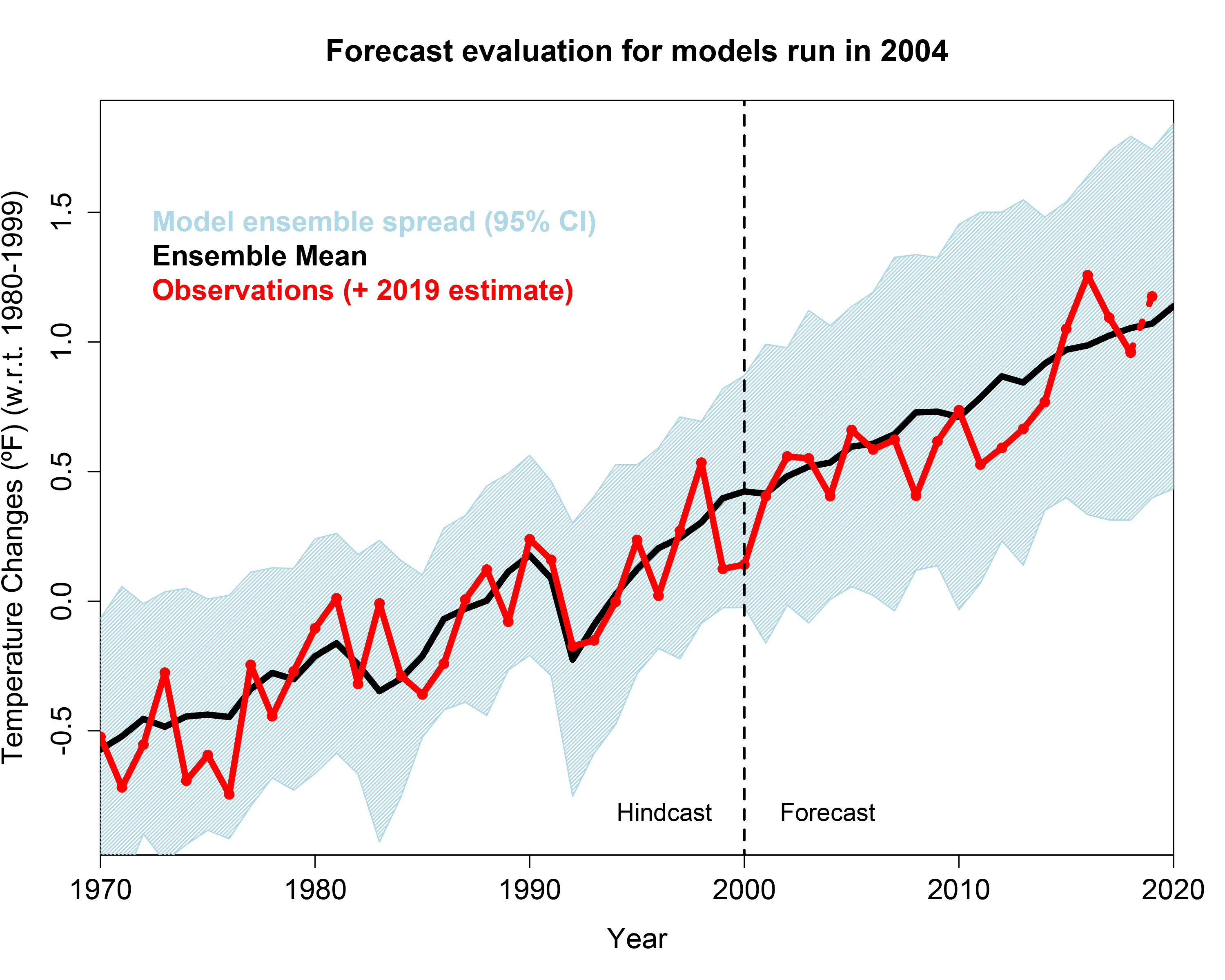
Start Up No.1206: Amazon’s Ring cameras mapped, hidden in hashtags, China dumping US PCs, Bo de-selection?, and more


William Gibson’s back, and the future’s not that bright. CC-licensed photo by gilly youner on Flickr.

You can sign up to receive each day’s Start Up post by email. You’ll need to click a confirmation link, so no spam.

A selection of 11 links for you. It’s a consensual hallucination. I’m @charlesarthur on Twitter. Observations and links welcome.

Ring’s Neighbors data let us map Amazon’s home surveillance network • Gizmodo

Dell Cameron and Dhruv Mehrotra:

»

Gizmodo has acquired data over the past month connected to nearly 65,800 individual posts shared by users of the Neighbors app. The posts, which reach back 500 days from the point of collection, offer extraordinary insight into the proliferation of Ring video surveillance across American neighborhoods and raise important questions about the privacy trade-offs of a consumer-driven network of surveillance cameras controlled by one of the world’s most powerful corporations.

And not just for those whose faces have been recorded.

Examining the network traffic of the Neighbors app produced unexpected data, including hidden geographic coordinates that are connected to each post—latitude and longitude with up to six decimal points of precision, accurate enough to pinpoint roughly a square inch of ground.

Neighbors, which has millions of users, is advertised as a way to receive “real-time crime and safety alerts” from local law enforcement and other Neighbors users nearby. A Ring camera isn’t required to use the app. In cities where police have partnered with Ring, police officers have access to a special law enforcement portal, through which the officers can request access to Ring footage. They can choose a date, a time, and a location on a map, and Neighbors users with cameras in the vicinity are alerted.

«

They found about 20,000 cameras, and then stopped because they felt they’d proved their point – but there are many, many more out there. A researcher at MIT Media Lab has located 440,000 cameras in 1,800 US counties.

In Europe, Amazon would be looking down the wrong end of a giant GDPR lawsuit.
unique link to this extract


How William Gibson keeps his science fiction real • The New Yorker

Joshua Rothman:

»

Gibson is now seventy-one. Bald and skinny, six feet five but for a slight stoop, he dresses almost exclusively in a mixture of futuristic techwear and mid-twentieth-century American clothing painstakingly reproduced by companies in Japan. It was late on a gray afternoon; we sat at the bar of a cozy bistro—warm wood, zinc bar, brass fixtures—while Gibson, in his slow, quiet, wowed-out, distantly Southern drawl, described the work of keeping up with the present.

“With each set of three books, I’ve commenced with a sort of deep reading of the fuckedness quotient of the day,” he explained. “I then have to adjust my fiction in relation to how fucked and how far out the present actually is.” He squinted through his glasses at the ceiling. “It isn’t an intellectual process, and it’s not prescient—it’s about what I can bring myself to believe.”

“Agency” is a sequel to Gibson’s previous novel, “The Peripheral,” from 2014, which is currently being adapted into a television show for Amazon, executive-produced by the creators of “Westworld.” In writing “The Peripheral,” he’d been able to bring himself to believe in the reality of an ongoing slow-motion apocalypse called “the jackpot.” A character describes the jackpot as “multicausal”—“more a climate than an event.” The world eases into it gradually, as all the bad things we worry about—rising oceans, crop failures, drug-resistant diseases, resource wars, and so on—happen, here and there, to varying degrees, over the better part of the twenty-first century, adding up to “androgenic, systemic, multiplex, seriously bad shit” that eventually kills eighty% of the human race. It’s a Gibsonian apocalypse: the end of the world is already here; it’s just not very evenly distributed. One character reacts to the jackpot equivocally: “Either depressing and scared the fuck out of me or sort of how I’d always figured things are?”

«

Essential reading.
unique link to this extract


Hashtag steganography • Terence Eden’s Blog

null:

»

I recently saw someone tweeting the hashtag #ManchesُterDerby

Do you see an odd character in the middle? It’s an Arabic Damma (U+064F) – a vowel character. Although it comes after the “s” in Manchester, it appears after the “t” because it is a Right-To-Left (RTL) character.

Yet, if you click on the hashtag with the extra character, you get through to the same page as if you had visited the regular #ManchesterDerby page.

If you visit the page of a hashtag with ignored character, something interesting happens. Hitting the “Tweet” button pre-fills your message with the hashtag. Not the normalised tag, but the one with hidden characters.

Try it now! Visit #Ŕöméø, you’ll see all sorts of different #Romeo Tweets, but hit the Tweet button and see what happens.

A marketing campaign could give out identical looking hashtags to influencers – for example:
Alice #Campaig%CD%8Fn
Bob #Camp%CD%8Faign
Eve #C%CD%8Fa%CD%8Fm%CD%8Fp%CD%8Fa%CD%8Fi%CD%8Fgn

By seeing which of those subtly-different-but-semanticly-identical hashtags is used the most, it might be possible to see which influencer has the biggest reach.

«

Or other uses you might be able to think of…
unique link to this extract


This impeachment is different—and more dangerous • POLITICO

Lawrence Lessig:

»

In a nation dedicated to freedom of the press, it’s impossible—not to mention undesirable—to legislate limits on political speech. That cannot be the role of government if democracy is to remain free of state control.

But the nation could use some temporary, if voluntary, restraint. The business model of hate may well pay for both politicians and the media. But the cost to the republic of this profit will be profound. This is a moment to knit common understandings, not a time to craft even more perfectly separated realities.

That knitting could begin with both networks and digital platforms asking not what is best for them, individually, but what would be best for us all, together. Which network or platform strategies will enable a more common understanding among all of us? And which strategies will simply drive even more committed tribe-based ignorance? The norms should be different in the context of impeachment, even if that means networks and platforms would be less profitable. Not because this president, in particular, must be respected, but because any president charged with impeachment deserves a nation that at least understands the charge. If we as a people are to be persistently polled and our views so persistently legible to our representatives, then at least we should know enough in common to make judgments in common.

…Social media platforms have responsibilities here as well. We don’t yet know the consequences of those platforms forgoing political ads in the context of an entire election season—even as some experiment with doing so. But impeachment could be an important moment to experiment even more fully. This is precisely the kind of question for which we do not need interested ad-driven spin. It is precisely the moment when Facebook and Twitter together could take the lead in turning away ads aimed at rallying a base or trashing the opposition.

«

(Thanks Seth for the link.)
unique link to this extract


Greeks set to face heavy fines if they don’t spend 30% of their income electronically • Sydney Morning Herald

Tom Rees:

»

Greeks will be hit with a hefty fine if they do not spend almost a third of their income electronically in an unprecedented bid by the new government to stamp out rampant tax evasion.

The government expects to raise more than €500m ($808m) every year from the initiative that will force Greeks to spend 30% of their income electronically, Alex Patelis, the prime minister’s chief economic adviser, revealed.

Individuals that fail to meet the target will be hit with a 22% fine on the shortfall. Therefore, if an individual spends just 20% of their income through electronic means, they would face a 22% tax on the remaining 10%, bar some exclusions.

The scheme is a radical attempt to cast some light on Greece’s huge shadow economy, the world’s largest, and is part of new prime minister Kyriakos Mitsotakis’s sweeping overhaul to revive growth.

«

But… won’t this encourage exactly the cash economy that they’re trying to discourage? Unless they can persuade all the retailers to only sell electronically.
unique link to this extract


The case for growth centers: how to spread tech innovation across America • Brookings Institute

Robert D. Atkinson, Mark Muro, and Jacob Whiton:

»

Regional divergence has reached extreme levels in the U.S. innovation sector. The innovation sector—composed of 13 of the nation’s highest-tech, highest R&D “advanced industries—contributes inordinately to regional and U.S. prosperity, and its diffusion into new places would greatly benefit the nation’s well-being.

However, the sector has instead been concentrating in a short list of superstar metropolitan areas. Most notably, just five top innovation metro areas—Boston, San Francisco, San Jose, Seattle, and San Diego—accounted for more than 90% of the nation’s innovation-sector growth during the years 2005 to 2017. As such, they have increased their share of the nation’s total innovation employment from 17.6% to 22.8%. In contrast, the bottom 90% of metro areas (343 of them) lost one-third of the nation’s innovation jobs now reside in just 16 counties, and more than half are concentrated in 41 counties.

Such high levels of territorial polarization are a grave national problem. At the economic end of the equation, the costs of excessive tech concentration are creating serious negative externalities. These range from spiraling home prices and traffic gridlock in the superstar hubs to a problematic “sorting” of workers, with college-educated workers clustering in the star cities, leaving other metro areas to make do with thinner talent reservoirs. As a result, whole portions of the nation may now be falling into “traps” of underdevelopment—and that is creating baleful social impacts.

«

unique link to this extract


Inside the hate factory: how Facebook fuels far-right profit • The Guardian

Christopher Knaus, Michael McGowan and Nick Evershed:

»

Ron Devito was tapping away on his laptop to the 20,000 followers of his pro-Trump Facebook page, Making America 1st, when he received a similar message, this time from someone using the name Tehila.

“She pitched to me that she was a good editor, she could provide some good content to increase likes and views on the page,” Devito told the Guardian. “Could I just give her a chance and let her post her stuff, right? So I figured, ‘What the heck, give it a shot’.”

Villereal and Devito weren’t the only ones. Over the past two years, a group of mysterious Israel-based accounts has delivered similar messages to the heads of at least 19 other far-right Facebook pages across the US, Australia, the UK, Canada, Austria, Israel and Nigeria.

A Guardian investigation can reveal those messages were part of a covert plot to control some of Facebook’s largest far-right pages, including one linked to a rightwing terror group, and create a commercial enterprise that harvests Islamophobic hate for profit.

This group is now using its 21-page network to churn out more than 1,000 coordinated faked news posts per week to more than 1 million followers, funnelling audiences to a cluster of 10 ad-heavy websites and milking the traffic for profit.

The posts stoke deep hatred of Islam across the western world and influence politics in Australia, Canada, the UK and the US by amplifying far-right parties such as Australia’s One Nation and vilifying Muslim politicians such as the London mayor, Sadiq Khan, and the US congresswoman Ilhan Omar.

The network has also targeted leftwing politicians at critical points in national election campaigns. It posted false stories claiming the UK Labour leader, Jeremy Corbyn, said Jews were “the source of global terrorism” and accused the Canadian prime minister, Justin Trudeau, of allowing “Isis to invade Canada”.

The revelations show Facebook has failed to stop clandestine actors from using its platform to run coordinated disinformation and hate campaigns.

«

Gee, ya think? But this is terrific work. And of course Facebook, once told about the pages, takes them down and makes pompous noises about violations of its policies.
unique link to this extract


Beijing orders state offices to replace foreign PCs and software • Financial Times

Yuan Yang and Nian Liu:

»

Beijing has ordered all government offices and public institutions to remove foreign computer equipment and software within three years, in a potential blow to the likes of HP, Dell and Microsoft.

The directive is the first publicly known instruction with specific targets given to Chinese buyers to switch to domestic technology vendors, and echoes efforts by the Trump administration to curb the use of Chinese technology in the US and its allies.

The move is part of a broader campaign to increase China’s reliance on home-made technologies, and is likely to fuel concerns of “decoupling”, with supply chains between the US and China being severed.

…Analysts at China Securities, a broker, estimate that 20m to 30m pieces of hardware will need to be swapped out as a result of the Chinese directive, with large-scale replacement beginning next year. They added that the substitutions would take place at a pace of 30% in 2020, 50% in 2021 and 20% the year after, earning the policy the nickname “3-5-2”.

«

I think Lenovo is going to be very, very happy about this.
unique link to this extract


Thieves of experience: On the rise of surveillance capitalism • ROUGH TYPE

Nick Carr, reviewing Shoshana Zuboff’s book “The Age of Surveillance Capitalism”:

»

Zuboff opens her book with a look back at a prescient project from the year 2000 on the future of home automation by a group of Georgia Tech computer scientists. Anticipating the arrival of “smart homes,” the scholars described how a mesh of environmental and wearable sensors, linked wirelessly to computers, would allow all sorts of domestic routines, from the dimming of bedroom lights to the dispensing of medications to the entertaining of children, to be programmed to suit a house’s occupants.

Essential to the effort would be the processing of intimate data on people’s habits, predilections, and health. Taking it for granted that such information should remain private, the researchers envisaged a leak-proof “closed loop” system that would keep the data within the home, under the purview and control of the homeowner. The project, Zuboff explains, reveals the assumptions about “datafication” that prevailed at the time: “(1) that it must be the individual alone who decides what experience is rendered as data, (2) that the purpose of the data is to enrich the individual’s life, and (3) that the individual is the sole arbiter of how the data are put to use.”

What’s most remarkable about the birth of surveillance capitalism is the speed and audacity with which Google overturned social conventions and norms about data and privacy. Without permission, without compensation, and with little in the way of resistance, the company seized and declared ownership over everyone’s information. It turned the details of the lives of millions and then billions of people into its own property. The companies that followed Google presumed that they too had an unfettered right to collect, parse, and sell personal data in pretty much any way they pleased. In the smart homes being built today, it’s understood that any and all data will be beamed up to corporate clouds.

«

As pointed out, it’s a neat three-card monte where you don’t even realise it’s happening.
unique link to this extract


Apple’s ad-targeting crackdown shakes up ad market • The Information

Tom Dotan:

»

Since Apple introduced what it calls its Intelligent Tracking Prevention feature in September 2017, and with subsequent updates last year, advertisers have largely lost the ability to target people on Safari based on their browsing habits with cookies, the most commonly used technology for tracking. One result: The cost of reaching Safari users has fallen over 60% in the past two years, according to data from ad tech firm Rubicon Project. Meanwhile ad prices on Google’s Chrome browser have risen slightly. 

That reflects the fact that advertisers pay more money for ads that can be targeted at people with specific demographics and interests. “The allure of a Safari user in an auction has plummeted,” said Rubicon Project CEO Michael Barrett. “There’s no easy ability to ID a user.”

This shift is significant because iPhone owners tend to be more affluent and therefore more attractive to advertisers. Moreover, Safari makes up 53% of the mobile browser market in the U.S., according to web analytics service Statscounter. Only about 9% of Safari users on an iPhone allow outside companies to track where they go on the web, according to Nativo, which sells software for online ad selling. It’s a similar story on desktop, although Safari has only about 13% of the desktop browser market. In comparison, 79% of people who use Google’s Chrome browser allow advertisers to track their browsing habits on mobile devices through cookies.

…ad tech firms that specialize in targeted ad sales, have been affected. Criteo, a publicly traded ad tech company, said Apple’s introduction of ITP cost it $25m in revenue in the fourth quarter of 2017, or 9% of the total, excluding the cost of acquiring traffic. A Criteo spokeswoman said that by making the ad-blocking feature automatic in Safari, Apple “does not truly promote choice for the users of its browser.”

The spokeswoman said ITP had continued to affect Criteo’s business since 2017, which she said was the case with the rest of the ad industry.

«

Hilarious quote from Criteo. Of course everyone wants to make more money for Criteo. How dare they not?
unique link to this extract


RBS accused of writing fake reviews of its new banking app Bó • Daily Telegraph

James Cook:

»

The Royal Bank of Scotland has been accused of writing fake reviews for its new banking app Bó before it was officially available to download.

A series of five-star reviews of the app published months ahead of Bó’s launch on Nov 27 praised features such as its notifications and design.

Another positive review, published on the day of the app’s release, was written by an account which has the same name as an RBS employee.

NatWest owner RBS began development of Bó after abandoning an attempt to acquire fast-growing banking start-up Monzo several years ago.

Three recent reviews of the app on Apple’s store accuse RBS of planting fakes. One reviewer wrote: “Was keen to test this out but concerned by the mass of five-star reviews parroting the marketing materials.”

A spokesman for RBS said more than 2,800 people signed up to Bó as part of a pilot phase, which included staff from across the bank.

He added: “Feedback from these customers shows Bó has helped testers take control of their spending – which is why we built it.”

«

Uh huh, sure, Jan. (Also what Shingy madness is it to call your app “Bo”? I’m not going to bother with the accent.) The average review score is quickly moving down – quite a few one-stars there, and plenty complaining that it doesn’t have biometric authentication, even though that’s built into every iPhone since 2013.
unique link to this extract


Errata, corrigenda and ai no corrida: none notified

Start Up No.1205: ave atque vale Larry and Sergey, Russia leaking NHS papers?, Nato stress-tests social platforms, Thailand’s e-waste problem, and more


Hard to believe, but sales of Magic Leap’s $2,300 headset have been slow – estimated at 6,000 in its first six months. CC-licensed photo by Collision Conf on Flickr.

You can sign up to receive each day’s Start Up post by email. You’ll need to click a confirmation link, so no spam.

A selection of 10 links for you. Reset, restart. I’m @charlesarthur on Twitter. Observations and links welcome.

Magic Leap Two headset reportedly ‘years away from launch’ • The Verge

Adi Robertson:

»

Magic Leap’s sales numbers reportedly haven’t matched CEO Rony Abovitz’s high expectations — and a second-generation headset could be years away from release. The Information has published a sobering update on the much-hyped augmented reality company, which released its first product last year. According to former employees and people close to the company, Magic Leap had sold around 6,000 Magic Leap One headsets six months after release, compared to a goal of 100,000.

The company is apparently prototyping a Magic Leap Two headset with 5G connectivity, a wider field of view, and smaller and lighter hardware with multiple color options. But the project is reportedly hampered by “fundamental technology constraints,” and Magic Leap is more likely to release a near-term update with only slight changes.

…But Magic Leap has also reportedly laid off dozens of employees in the past weeks. Last month, Business Insider reported that two executives, CFO Scott Henry and SVP of creative strategy John Gaeta, had left the company. Documents revealed that the company signed over nearly 2,000 patents as collateral to JPMorgan Chase earlier this year. This isn’t an inherently bad sign, and Magic Leap has said it’s in the middle of raising a significant new funding round. But the deal could cause problems if Magic Leap hits financial trouble down the road.

«

The original goal was reportedly a million. To me, 6,000 sounds reasonable, given that there’s pretty much no point in owning them – they’re only of interest to pre-early adopters trying to figure out what is needed to make better stuff.

Magic Leap is going to flame out if it can’t pivot to business uses pretty quickly. Even then its burn rate might be too large. Back in August 2018 Palmer Luckey estimated they’d sold about 2,000 units (priced $2,300) in the first 48 hours, about 3,000 after a week. If that’s right, it’s essentially dead. Yet we’ve been hearing stories of how fabulous it is since February 2015. Good grief.
unique link to this extract


Larry and Sergey: a valediction • ROUGH TYPE

Nick Carr:

»

Larry and Sergey may well have been the last truly happy human beings on the planet. They were doing what they loved, and they were convinced that what they loved would redeem the world. That kind of happiness requires a combination of idealism and confidence that isn’t possible anymore. When, in 1965, an interviewer from Cahiers du Cinema pointed out to Jean-Luc Godard that “there is a good deal of blood” in his movie Pierrot le Fou, Godard replied, “Not blood, red.” What the cinema did to blood, the internet has done to happiness. It turned it into an image that is repeated endlessly on screens but no longer refers to anything real.

They were prophets, Larry and Sergey. When, in their famous 1998 grad-school paper “The Anatomy of a Large-Scale Hypertextual Web Search Engine,” they introduced Google to the world, they warned that if the search engine were ever to leave the “academic realm” and become a business, it would inevitably be corrupted. It would become “a black art” and “be advertising oriented.” That’s exactly what happened — not just to Google but to the internet as a whole. The white-robed wizards of Silicon Valley now ply the black arts of algorithmic witchcraft for power and money. They wanted most of all to be Gandalf, but they became Saruman.

«

I love how Carr is able to see things from an angle that nobody else can. Not blood; red. Not happiness; its simulacrum.
unique link to this extract


Russia involved in leak of papers saying NHS is for sale, says Reddit • The Guardian

Kevin Rawlinson and Aamna Mohdin:

»

An anonymous online poster who disseminated documents later brandished by Jeremy Corbyn as evidence the Conservatives would put the NHS “on the table” in US trade talks was part of a campaign directed by Moscow, the site hosting the papers has said.

On Friday evening, Reddit confirmed it has banned 61 accounts, including that of a user called Gregoriator, who it believes was part of a Russian information operation known as Secondary Infektion.

The anonymous user posted copies of the leaked official documents on the site in late October. Corbyn presented the same documents at a news conference last week, saying they “leave Boris Johnson’s denials [that the NHS would be for sale] in absolute tatters” and touting them as “evidence that, under Boris Johnson, the NHS is on the table and will be up for sale”.

Reddit insisted the post garnered minimal interest at the time and Labour has declined to reveal where it obtained the documents. The government has said it believes they are genuine.

However, questions will now be asked about whether Russia had a hand in introducing the papers into the UK’s public discourse and, if so, what its motivations were for doing so.

Nicky Morgan, the culture secretary, said it was “extremely serious” that the leaked documents could be linked to a Russian disinformation campaign. Speaking to BBC Radio 4’s Today programme on Saturday, Morgan said: “I understand from what was being put on that website, those who seem to know about these things say that it seems to have all the hallmarks of some form of interference.”

«

None of which takes away from the key point: that the documents are genuine. Why might the Russians want to leak them? Because they like causing trouble. The next question is where they found them. Another version of the documents was published on Reddit in the summer, I thought – and the Daily Telegraph, a right-wing paper, wrote about them.
unique link to this extract


Facebook, Twitter and Google failing to tackle manipulation on their platforms, NATO StratCom finds • Buzzfeed News

Alberto Nardelli:

»

A year ahead of the US presidential election, the world’s biggest social media companies are still failing to tackle manipulation on their platforms, an exercise by NATO StratCom has found.

To test the ability of Facebook, Twitter, YouTube, and Instagram to detect potentially malicious activity, researchers at the NATO Strategic Communication Centre of Excellence ran a four-month experiment starting in May.

They purchased social media engagement on 105 different posts across the four social media platforms from manipulation service providers (MSPs), a type of company that allow clients to buy clicks and inflate their social media presence.

At a cost of just €300 (about $333), NATO StratCom bought 3,530 comments, 25,750 likes, 20,000 views and 5,100 followers across the four platforms.

Researchers were able to identify the accounts — 18,739 in total — that were being used to deliver the purchased interactions. This in turn allowed them to assess what other pages these inauthentic accounts were interacting with on behalf of other clients.

The results of the experiment are startling: Four weeks after the purchase, 4 in 5 of the purchased engagements were still online, and three weeks after a sample of fake accounts was reported to the companies, 95% of the accounts were still active.

The findings, which are contained in a report released today shared with a small number of media outlets including BuzzFeed News, suggest that malicious and inauthentic activity enabled by MSPs will often go unnoticed, considerably increasing the risk that attempts by ill-intentioned state and nongovernmental actors that seek to interfere in democratic processes will not be effectively detected and tackled.

«

unique link to this extract


Apple’s Activation Lock will make it very difficult to refurbish Macs • iFixit

Craig Lloyd:

»

Every month, thousands of perfectly good iPhones are shredded instead of being put into the hands of people who could really use them. Why? Two words: Activation Lock. And Macs are its next victim.

“We receive four to six thousand locked iPhones per month,” laments Peter Schindler, founder and owner of The Wireless Alliance, a Colorado-based electronics recycler and refurbisher. Those iPhones, which could easily be refurbished and put back into circulation, “have to get parted out or scrapped,” all because of this anti-theft feature.

With the release of macOS Catalina earlier this fall, any Mac that’s equipped with Apple’s new T2 security chip now comes with Activation Lock—meaning we’re about to see a lot of otherwise usable Macs heading to shredders, too.

Activation Lock was designed to prevent anyone else from using your device if it’s ever lost or stolen, and it’s built into the “Find My” service on iPhones, iPads, and other Apple devices. When you’re getting rid of an old phone, you want to use Apple’s Reset feature to wipe the phone clean, which also removes it from Find My iPhone and gets rid of the Activation Lock. But if you forget, and sell your old iPhone to a friend before you properly wipe it, the phone will just keep asking them for your Apple ID before they can set it up as a new phone. In other words, they won’t be able to do much with it besides scrap it for parts.

That seems like a nice way to thwart tech thieves, but it also causes unnecessary chaos for recyclers and refurbishers who are wading through piles of locked devices they can’t reuse.

«

So what’s needed is for Apple to have an equivalent to its “Migration Assistant” (where you move your files and settings from an old Mac to a new one) that makes sure you’re completely signed out of your old one. It could even be an option at the end of Migration Assistant.

And for iPhones, you just need to be told about Factory Reset (which makes you turn off Find My iPhone).
unique link to this extract


The price of recycling old laptops: toxic fumes in Thailand’s lungs • The New York Times

Hannah Beech and Ryn Jirenuwat:

»

As they toiled, smoke spewed over nearby villages and farms. Residents have no idea what is in the smoke: plastic, metal, who knows? All they know is that it stinks and they feel sick.

The factory, New Sky Metal, is part of a thriving e-waste industry across Southeast Asia, born of China’s decision to stop accepting the world’s electronic refuse, which was poisoning its land and people. Thailand in particular has become a center of the industry even as activists push back and its government wrestles to balance competing interests of public safety with the profits to be made from the lucrative trade.

Last year, Thailand banned the import of foreign e-waste. Yet new factories are opening across the country, and tons of e-waste are being processed, environmental monitors and industry experts say.

“E-waste has to go somewhere,” said Jim Puckett, the executive director of the Basel Action Network, which campaigns against trash dumping in poor countries, “and the Chinese are simply moving their entire operations to Southeast Asia.”

…If some types of electronic waste aren’t incinerated at a high enough temperature, dioxins, which can cause cancer and developmental problems, infiltrate the food supply. Without proper safeguarding, toxic heavy metals seep into the soil and groundwater.
Locals who fought against the deluge of trash have been attacked.

“Why don’t you in the West recycle your own waste?” said Phayao Jaroonwong, a farmer east of Bangkok, who said her crops had withered after an electronic waste factory moved in next door.

“Thailand can’t take it anymore,” she said. “We shouldn’t be the world’s dumping ground.”

«

What do we do with our old laptops, then?

unique link to this extract


China survey shows high concern over facial recognition abuse • Financial Times

Yuan Yang and Nian Liu:

»

while 60-70% of people believe the technology makes life safer and more convenient in those settings, users are concerned about their personal information being leaked and want more control over their data, according to results released on Thursday by the Nandu Personal Information Protection Research Centre in Beijing. 

The survey highlights how the proliferation of facial recognition in China has created widespread concern and even resistance. The survey found that 74% of respondents want the option to choose traditional ID methods over facial recognition.

In October, China’s courts received their first challenge to the commercial use of face scans, and last week China’s education ministry was forced to respond to an outcry over the use of cameras in classrooms to track behaviour. 

According to the Nandu survey, the top concern was the possibility that operators of facial-recognition systems might be lax at data security and thus leak personal information, with 80% of respondents identifying this among a list of concerns.

In addition, 57% of respondents were concerned about their movements being tracked, while 84% of respondents wanted to have the opportunity to review the facial-recognition data collected from them, or request that they be deleted.

«

Faint surprise that the survey results could be published. Though I guess it makes no difference; they won’t be listened to.
unique link to this extract


TWTR: enough already • No Mercy / No Malice

Scott Galloway owns a lot of Twitter stock (as well as being a professor of marketing) and he says it’s time to get rid of Jack Dorsey:

»

Fake accounts, GRU-sponsored trolls, algorithms that promote conspiracies and junk science, and inconsistent application of your terms of service have resulted in a firm that not only underperforms, but is dangerous. 

The poor citizenship of Twitter is bad. What’s worse is Twitter’s malfeasance coupled with scant benefit to stakeholders. The platform is all the calories of big tech (poor citizenship, divisiveness, hate) without the great taste (stakeholder returns). At least tobacco stocks performed well.

This decline in value, however, presents an opportunity. As Twitter has shrunk to a fraction of the value of its once-peers, there is an opportunity to fill an unserved niche — a platform healthy for users and the commonwealth. A platform that brings out the best, and not the worst, in its users. The firm desperately needs to turn the page.

It’s not Mr. Dorsey’s plans to move to Africa [in 2020] that constrain stakeholder value, but his plans to move back. Mr. Dorsey demonstrates a lack of self-awareness, indifference, and yogababble that have hamstrung stakeholder value.

This is not Mr. Dorsey’s fault. After serving on seven consumer, media, and technology public company boards, my experience is that if you tell a thirty- or forty-something person, who regularly wears black turtlenecks, that they are Steve Jobs, they are inclined to believe you. The real culprit is directors who enable this reckless behavior and render themselves flaccid fiduciaries for shareholders. 

«

His list of “things that Dorsey should take note of” is very long, too. But: surely they’ve tried replacing Dorsey? They did that in 2008, and Ev Williams replaced him, and then Dick Costolo. Who would do it this time round?
unique link to this extract


Adding a new teller • John D Cook Consulting

John Cook:

»

Suppose a small bank has only one teller. Customers take an average of 10 minutes to serve and they arrive at the rate of 5.8 per hour. What will the expected waiting time be? What happens if you add another teller?

We assume customer arrivals and customer service times are random (details later). With only one teller, customers will have to wait nearly five hours on average before they are served. But if you add a second teller, the average waiting time is not just cut in half; it goes down to about 3 minutes. The waiting time is reduced by a factor of 93x.

«

But why so much? Why was it so long? You’ll need to read the the rest of the post. Lots of fun posts if you’re into maths and similar. (And the finding about tellers has lots of applications beyond banks.)
unique link to this extract


Nancy Pelosi pushes to remove legal protections for online content in trade pact • WSJ

John McKinnon and Brody Mullins:

»

House Speaker Nancy Pelosi is pushing to strip out sweeping legal protections for online content in the new trade pact with Mexico and Canada, in what would be a blow for big technology companies.

Internet firms lobbied hard to include the immunity language in the trade agreement, seeing it as a way to extend to Mexico and Canada the broad umbrella of legal protection they enjoy in the U.S.

But the trade-pact language also could make it harder for Congress to withdraw the current federal online protections for internet firms in the future, some lawmakers fear. That is causing second thoughts about including the legal shield—regarded by tech firms as a pillar of the internet—in a trade pact.

“There are concerns in the House about enshrining the increasingly controversial…liability shield in our trade agreements, particularly at a time when Congress is considering whether changes need to be made in US law,” a spokesman for Mrs. Pelosi (D., Calif.) said.

The internet content dispute is one of several issues clouding passage of the U.S. Mexico Canada Agreement, or USMCA, that would replace the North American Free Trade Agreement.

«

The protection they’re referring to is Section 230 of the Communications Decency Act – essentially the one that says it doesn’t matter what your platform publishes, as long as you take it down infringing content when notified.

Readers of that piece are also invited to “SHARE YOUR THOUGHTS: Should online content immunity protections of American companies be limited to the U.S. or extended to Mexico and Canada? Why? Join the conversation below.”

I have to say I’d be OK with online content immunity protections of American companies being limited to the US. Isn’t there an implicit imperialism in just forcing your views on the world?
unique link to this extract


Errata, corrigenda and ai no corrida: none notified

Start Up No.1204: fix the climate (here are the tools), life inside InfoWars, Reddit outdoes Twitter, Google with unions?, and more


A new study shows how people get – and share – their news about the general election. CC-licensed photo by Diego Sideburns on Flickr.

You can sign up to receive each day’s Start Up post by email. You’ll need to click a confirmation link, so no spam.

A selection of 12 links for you. Another one down. I’m @charlesarthur on Twitter. Observations and links welcome.

Uncovered: reality of how smartphones turned election news into chaos • The Guardian

Jim Waterson:

»

in a first-of-its-kind election monitoring project conducted by the Guardian and research agency Revealing Reality, a group of voters have allowed their phone use to be recorded for three days – and the results from each individual’s phone show how the traditional media ecosystem is changing and disintegrating.

Charlie in Sunderland consumed much of his election news through memes on lad humour Facebook pages, spending more time looking at posts of Boris Johnson using the word “boobies” than reading traditional news stories. Fiona in Bolton checked out claims about Jeremy Corbyn’s wealth by going to a website called Jihadi Watch before sharing the far-right material in a deliberate bid to anger her leftwing friends. And Shazi in Sheffield followed the BBC leaders’ interviews purely by watching videos of party supporters chanting the Labour leader’s name outside the venue.

The six volunteers who took part in the project should be seen as a snapshot rather than a statistically representative sample of the population. But the behaviour chimes with previous research to illustrate a pattern of behaviour across the political spectrum – a result with huge implications for the role of responsible journalism and reliable sources.

“News is becoming intermingled with entertainment,” said Damon De Ionno of agency Revealing Reality, who ran the project after pioneering the screen-recording approach to market research in the UK. “You’re no longer asking: what’s going on in the world today? It’s very different – you want to be entertained.”

The analysts who studied the volunteers – recruited under pseudonyms to reflect a spread of demographics, politics, and geography – saw broad patterns in the way they used their phones. Some were expected, with people increasingly consuming news passively by scrolling through headlines rather than actively seeking out information; one woman in London read 29 headlines but clicked on just six and only read three articles to the end.

«

Reading headlines and not reading all or even most of the article isn’t new; that’s been the case with papers for years. What’s really different here is being able to share stuff you haven’t read at all, and seeking out a source for something you want to be confirmed.
unique link to this extract


How political parties are using GIFs to boost their campaigns • Sky News

Rowland Manthorpe:

»

Here’s a question. What’s performed really well online for the SNP this year?

It’s not an incendiary tweet or an aggressive video, or any of the sort of things normally associated with political success online.

No – it’s a GIF of Nicola Sturgeon raising her eyebrows.

via GIPHY

Since this second-long moving image was created by the party in February, it’s had more than 1.4 million views – more than 30,000 times the SNP’s most popular video on YouTube.

This isn’t a fluke, but a triumph of digital strategy.

Since 2016, the SNP has been creating content for use inside mobile apps.

The Nicola Sturgeon GIF is just one of 408 items it has uploaded to its channel on GIF database Giphy.

«

*aged voice* I remember when they used to do it with posters. Posters that they stuck to billboards.
unique link to this extract


I worked for Alex Jones. I regret it • The New York Times

Josh Owens was given a job at InfoWars as a video editor at the age of 23, right out of college:

»

Suddenly, I was no longer a bored kid attending an overpriced art school. I was Fox Mulder combing through the X-Files, Rod Serling opening a door to the Twilight Zone, even Rosemary Woodhouse convinced that the neighbors were members of a ritualistic cult. I believed that the world was strategically run by a shadowy, organized cabal, and that Jones was a hero for exposing it.

I had my limits. I can’t say I ever believed his avowed theory that Sandy Hook was a staged event to push for gun control; to Jones, everything was a “false flag.” I didn’t believe that Hillary Clinton and Barack Obama smelled like sulfur because of their proximity to hell or that Planned Parenthood was run by “Nazi baby killers.” But it was easy to brush off these fever dreams as eccentricities and excesses — not the heart of the Alex Jones operation but mere diversions.

Once I started working there, however, it became obvious that one was impossible to separate one from the other. Soon after I was hired, Jones’s Infowars-branded store — which sells emergency-survival foods, water filters, body armor and much more — introduced an iodine supplement, initially marketed as a “shield” against nuclear fallout. Still learning the ropes, I was tasked with creating video advertisements for the supplement, which he ran on his online TV show. One of these ads started with a shot of the Fukushima Daiichi nuclear power plant as it exploded. I doubled the sound of the explosion, adding a glitch filter and sirens in the background for dramatic effect. Jones stood over my shoulder as I edited. “This is great,” he said. “See if you can find flyover footage of Chernobyl as well.”

«

Life inside a cult: remarkably cult-like.
unique link to this extract


We need to halve emissions by 2030. They rose again in 2019 • MIT Technology Review

James Temple:

»

The world likely needs to halve greenhouse-gas emissions within the next decade to prevent dangerous levels of global warming. Instead, year after year, we’re still pumping out more climate pollution.

Global carbon dioxide emissions from fossil fuels will rise for the third straight year in 2019, ticking up an estimated 0.6% to a record 37 billion metric tons, according to the closely watched annual report from the Global Carbon Project. Slight declines in the US and European Union were offset by projected increases in China, India, and other parts of the world, where economic growth is fueling rising energy demands.

In fact, carbon pollution is likely to climb again in 2020, given expected increases in use of oil and natural gas in emerging economies.

“Even with all the attention of the youth movements and growing climate focus around the world, we still haven’t turned the corner to stabilize and bring emissions down,” says Rob Jackson, professor of earth system science at Stanford and chair of the Global Carbon Project, an international research collaboration established in 2001 to track global climate pollution.

«

Got that? Next up is your chance to fix it. Yes, really.
unique link to this extract


En-ROADS Climate scenario modelling • MIT Management Sustainability Initiative

»

Welcome to the beta version of En-ROADS from Climate Interactive and MIT Sloan’s Sustainability Initiative.

The simulator is most powerful when used in a role-play game or policy workshop.

«

This is really detailed. With the default assumptions, it’s forecasting that we’ll be 4.1C above baseline by 2100. You have lots of levers to pull: economic growth, population growth, coal/oil/nuclear/renewable/gas/bioenergy use, carbon pricing, energy efficiency, transport electrification, industry electrification, deforestation, reforestation, methane emissions from land and industry, carbon sequestration.

You pull them all really hard and suddenly the only way to keep the world from cooking is to be Thanos.
unique link to this extract


France not ruling out response to cyber attack on hospital • Bloomberg

Helene Fouquet:

»

French authorities said they may hit back at cyber assailants who’ve struck a public hospital, forcing it to suspend all but the most vital systems.

“The attacker is still active, and looking for targets in France,” said Guillaume Poupard, the head of the national cyber security agency ANSSI. He spoke on the sideline of a conference in Paris. “The French law allows us to be active against the attacker, to neutralize it. We’re not ruling it out,” he said.

Authorities said the Nov. 15 attack’s characteristics are similar to those of a criminal group from Russia called TA505 and have deployed 50 agents at the Rouen hospital to repair networks and restore operations. Poupard said a series of attacks in the past weeks hit public and private operators with an emphasis on the health sector. He declined to say if publicly listed companies had been targets.

While French police may be limited in their response, national agencies are increasingly launching their own cyberattacks across borders. French President Emmanuel Macron said in an interview with the Economist that he wants to collaborate on cyber security with Russia, an area where “we’re waging total war against one another.”

«

What are they going to do, bomb them? One rather loose quote gets turned into an overcooked story.
unique link to this extract


Reddit’s monthly active user base grew 30% to reach 430M in 2019 • TechCrunch

Sarah Perez:

»

In a year-end retrospective released this morning, Reddit says its user base grew 30% this year to reach 430 million monthly active users, as of the end of October. Its users also contributed 199 million posts, 1.7 billion comments and 32 billion upvotes, the company says.

Last year, Reddit reported 330 million monthly active users — bigger than Twitter.

Monthly comments and monthly views were also up on an annual basis in 2019, with increases of 37% and 54%, respectively.

…Meanwhile, the most upvoted AMA (Ask Me Anything) post on the site was with Bill Gates, which received 110,000 upvotes.

Reddit also noted a number of trends across its more than 100,000 active communities, including sizable increases in its top 50 beauty and style communities, which grew 63+% and 52%+ year-over-year, respectively. To some extent, these increases were driven by the blogger beauty feuds — for example, the r/beautyguruchatter community jumped up by 87% year-over-year. The r/skincareaddiction community was the most popular beauty community, reaching over 1 million subscribers, Reddit says.

«

Bigger than Twitter. But as influential as Twitter? Isn’t influence the next metric of the attention economy?
unique link to this extract


Kuo: Four new OLED iPhones in 2020, iPhone without Lightning port in 2021 • 9to5Mac

:

»

Apple analyst Ming-Chi Kuo is out today with a new investor note focused on Apple’s iPhone lineup for 2020 and 2021. Kuo says there will be four new OLED iPhone models in 2020, followed by a new iPhone without a Lightning port in 2021.

Kuo predicts that Apple will introduce 5.4in, two 6.1in, and a 6.7in OLED iPhone models in 2020. He says that all four of these iPhones will also feature 5G connectivity. The difference between all of these models, other than screen sizes, will be camera technology.

According to Kuo, the 5.4-inch OLED iPhone will feature a dual-camera setup on the back. The lower-end 6.1-inch iPhone will feature a similar dual-camera system. The higher-end 6.1-inch model and the 6.7-inch model will include triple-lens camera setups as well as time-of-flight 3D sensing technology.

In terms of design for the 2020 OLED iPhone, Kuo says the form factor will be “similar to the iPhone 4.”

«

What the hell does he mean, “similar to the iPhone 4”? Are they really going to get that much thicker?

As for not having a Lightning port.. possible, but that’s really assuming a lot of wireless chargers will be sold and installed over the next 24 months.
unique link to this extract


2020 iPhone rumored to have under-display ultrasonic fingerprint scanner supplied by Qualcomm • MacRumors

Joe Rossignol:

»

The reports claim that Apple plans to use Qualcomm’s ultrasonic fingerprint sensor technology in at least one iPhone model set to be released in 2020, although the timeframe could be pushed back to 2021. GIS would cooperate with Qualcomm to supply necessary components.

This lines up with recent reports from analyst Ming-Chi Kuo, Barclays analysts, Bloomberg, and others who expect Apple to release an iPhone with both Face ID and under-display fingerprint authentication in 2020 or 2021.

There are currently two types of under-display fingerprint sensors, including optical and ultrasonic. Optical variants rely on light from a smartphone’s display to create a 2D image of a fingerprint, while ultrasonic variants make use of high-frequency sound to generate a 3D image of a fingerprint.

Qualcomm already supplies ultrasonic fingerprint sensors for Samsung’s Galaxy S10 and Galaxy Note10 smartphones, but iPhones could use an even more advanced version of the technology by time 2020 or 2021 rolls around.

…Qualcomm today at its Snapdragon Tech Summit in Hawaii unveiled a 30x20mm in-display fingerprint sensor for smartphones, said to be 17x larger than the one in the Galaxy S10.

«

Sounds like a lock for the under-display fingerprint then; especially as 3D Touch is gone, so things are less complicated under the display. As well as Face ID.
unique link to this extract


Google fired us for organizing. We’re fighting back • Medium

Google Walkout For Real Change:

»

Other topics, like Google’s work with Customs and Border Protection, the decision to place an anti-LGBTQ and anti-immigrant think tank leader on the company’s AI Ethics council, developing drone technology for the U.S. Department of Defense, the unequal and unethical treatment of harassment and discrimination on YouTube, a secret project to work with the Chinese government to launch a censored search engine in China, and the hiring of one of the architects of the Trump administration’s family separation policy, extend far beyond, impacting not just our workplace, but also Google’s users and customers, and indeed the entire world.

So we spoke up, and how did they respond? Google didn’t respond by honoring its values, or abiding by the law. It responded like a large corporation more interested in revenue growth than in ensuring worker rights and ethical conduct. Last week, Google fired us for engaging in protected labor organizing.

We’ve all been subjected to interrogations, some of us for hours, and all of us had our reputations smeared in the press as Google spread rumors that we were rule-breaking troublemakers who “leaked” sensitive information. This is flatly untrue, and in the privacy of our meetings with HR and Google’s internal investigations team, the company acknowledged this. A careful reading of their statements will only confirm this.

«

The group of four (two men, two women) are urging people in technology companies – especially the big ones – to create unions in their workplaces. That’s going to create some dramatic corporate culture clashes. But it also finally, definitely marks the passing of the time when people joined Google to get rich.
unique link to this extract


The Alphabet of Google A and Google B • Asymco

Horace Dediu, back in August 2015, when Google became (part of) Alphabet:

»

For the last few years, I’ve been proposing that the way to conceptualize Google is as two separate entities: Google A and Google B.

Roughly speaking Google A was the R&D organization and Google B was SG&A [sales, general and administrative expenses]. You can find the operating expenses of running each of these organizations in the company’s income statement.  In the last quarter R&D was about $2.8 billion and SG&A was about $3.5bn. The two entities are further distinguished as follows:

• Google A was led by Eric Schmidt and Larry Page and Google B was led by persons unknown, but mostly represented by the [then] “Chief Business Officer” Omid Kordestani.
• Google A spends money. Google B collects money.
• Google B sends a check to Google A while Google A sends data to Google B (which then sells it on to advertisers and collects money).
• Google A communicates frequently with optimism and enthusiasm about the future. Google B remains quiet.
• Google A solves problems of humanity, Google B solves problems for advertisers.
• Google A has users, Google B has customers (to whom it sells users.)

In summary, Google A is altruistic, Google B is pragmatic. Google A engages in research, Google B engages in commerce. Google A operates in a structure similar to a Bell Labs for the good of humanity,  Google B operates in a structure similar to AT&T and collects monopoly rents but without any government oversight.

This was an effective construct for analysis which explained to me much of how Google operated and how it made decisions. So what do we make of Google’s new Alphabet?

«

Pretty much everyone who has an opinion is of the opinion that Alphabet, as a structure, isn’t long for this world. “Long” probably meaning four to five years tops.
unique link to this extract


5G captured 5% of the global premium market in Q3 2019 • Counterpoint Research

Varun Mishra:

»

According to Counterpoint Research Market Pulse service, the global premium market sell-through declined 7% YoY. The contribution of 5G within the price segment was 5% during the quarter. Samsung led the 5G segment with 74% of the market share followed by LG (11%) and Vivo (5%). This was driven by the early adoption of 5G in South Korea, followed by North America and China. The Samsung Galaxy S10 5G was the top-selling model, capturing over one-third of the total sales of all 5G devices.

All major OEMs in the premium segment now have 5G-capable devices, except Apple. Still, Apple alone captured over half of the premium market in Q3 2019. Apple grew 1% YoY increasing its market share from 48% a year back to 52% during the quarter. This was driven by both the initial, strong demand for the iPhone 11, as well as the continued success of the iPhone XR. iPhone XR was the top-selling model globally in the premium segment.

«

5G is a terrific way to keep pushing up prices – though the top segment (over $1,000) shrank in the quarter compared to 2018. By my calculations, even though the number sold fell by 7%, the value of the whole premium segment fell by just 2% because there was a 50% rise in the value of the ~$900 segment. LG in particular must be relieved: 5G might be its mobile division’s temporary saviour.
unique link to this extract


Errata, corrigenda and ai no corrida: none notified

Start Up No.1203: why ‘cancel culture’ is a hit, fake news keeps on thriving, Egypt tries to kill the tuk-tuk, another Google messaging app!, and more


Instagram says it’s going to try to enforce its minimum age limit of 13 – for new users. Let’s see how that goes. CC-licensed photo by Stock Catalog on Flickr.

You can sign up to receive each day’s Start Up post by email. You’ll need to click a confirmation link, so no spam.

A selection of 10 links for you. Not to be mocked. I’m @charlesarthur on Twitter. Observations and links welcome.

Instagram to collect ages in leap for youth safety, alcohol ads • Reuters

Paresh Dave:

»

Facebook Inc’s Instagram said it will require birthdates from all new users starting on Wednesday, expanding the audience for ads for alcohol and other age-restricted products while offering new safety measures for younger users.

Until now, Instagram except for limited circumstances has required its 1 billion users only to say they are at least 13 years old.

Instagram said advertisers were not the driving force for the new requirement. Gambling and birth control are among other types of ads restricted to older audiences by Instagram policies and laws. 

The policy change could help stave off passage of costly child safety and data privacy regulations as lawmakers and family safety groups in the United States, Britain and elsewhere criticize the app for exposing children to inappropriate material.

The birthdate requirement is the latest step Instagram has taken to move away from longstanding principles such as anonymity that had distinguished it from Facebook’s namesake app.

“Understanding how old people are is quite important to the work we’re doing, not only to create age-appropriate experiences but to live up to our longstanding rule to not allow access to young people,

«

Maybe it’s something to do with all those lawsuits heading its way, and the furore over children under 13 using it? The admission that the “experiences” haven’t been “age-appropriate” is subtle, but there it is. And of course the age-appropriateness is a forced export from the US: what if we judge that it should be 14 or 16 in the UK, rather as our drinking age is lower? Do we get a say?
unique link to this extract


Five reasons why people love cancel culture • Psychology Today

Rob Henderson:

»

“Cancel culture” describes how large groups of people, often on social media, target those who have committed some kind of moral violation. They are often cast out of their social and professional circles. Both the term “cancel culture” and the activity itself are becoming more popular. Especially among young people. 

Here are 5 reasons why cancel culture is so effective. 

«

They’ll feel quite self-evident in retrospect – raises (your) social status, reduces enemies’ social status, strengthens social bonds, makes enemies show themselves, has fast payback. But seeing it written down brings it into focus.
unique link to this extract


Egyptian government seeks to do away with popular tuk-tuks • Associated Press

Isabel Debre and Mohamad Salah:

»

Motorized rickshaws known as tuk-tuks have ruled the streets of Cairo’s slums for the past two decades, squeezing through dusty alleys, dodging trash bins and fruit stands, blaring rhythmic electro-pop and navigating the city’s chaos to haul millions of Egyptians home every day.

Now the government is taking its most ambitious stand yet again against the polluting three-wheeled vehicles: in a push to modernize the country’s neglected transport system, it plans to replace tuk-tuks with clean-running minivans.

“This is for the health and safety of all Egyptians,” said Khaled el-Qassim, the spokesman for Egypt’s Ministry of Local Development, which is spearheading the initiative. “We’re creating a more beautiful image of our country.”

The state had long turned a blind eye as tuk-tuks became part of the fabric of life in Cairo’s vast informal settlements.

The new plan requires that drivers sell their tuk-tuks for scrap and take loans to buy new minivans — or risk fines and even prosecution. It has raised fears that the poorest Egyptians, already squeezed by economic austerity measures, will shoulder the bulk of the burden.

“I’d rather work as a thief than pay for this minivan,” said Ehab Sobhy, a 47-year-old who earns 130 pounds, about $8, a day plying the densely-packed district of Shobra in his weathered black-and-yellow tuk-tuk, sporting a decorative Islamic sticker in place of a license.

“If they take this away … how is my family going to eat,” asked Sobhy. Even with a government loan, he said he wouldn’t be able to afford the 90,000 pounds he estimates he’d need for the new minivan.

«

The minivans are gas-powered, so it’s hardly a triumph for the environment either. Even if it succeeds, the Egyptian government is probably going to lose here.
unique link to this extract


Google Photos launches private messaging for quickly sharing photos • The Verge

Nick Statt:

»

Google is finally acknowledging that photos nowadays are as much about communication as they are form of memory collection. For years, the only way to share photos through the company’s otherwise fantastic Google Photos service has been to create a cumbersome shared album. But starting Tuesday, Google has launched a revamped share option that’s effectively a private messaging feature built into the Google Photos iOS and Android mobile and website.

Now, when you want to share a photo, you no longer have to create an entire album. You can send a one-off message to a friend, so long as they also have Google Photos installed, that contains a photo, just as you would on Instagram, Snapchat, SMS, or any other chat app.

«

This is great, because nobody has any means of sending a photo to someone else they know by any method, and Google doesn’t already have a gazillion chat apps. (Pls run this past the fact-checkers.)
unique link to this extract


How fake news is still fooling Facebook’s fact-checking systems • OneZero

Will Oremus:

»

the good news is that Facebook’s systems are having at least some effect, the bad news is that they’re far from foolproof. And unless Facebook continually improves them, propagandists will likely only get better at finding ways around them.

The Pelosi story [claiming, falsely, she has diverted $2.4bn from US social security to Trump’s impeachment] offers one instructive example. It has been widely debunked, including by at least two of Facebook’s official fact-checking partners, Politifact and FactCheck.org. Yet, when you go to post the article link to Facebook, the platform offers no warning, no hint that it might be bogus. Likewise, when it appears in your News Feed, nothing indicates that it’s false.

Facebook couldn’t say definitively why one of the most viral political articles on its platform remained untouched by its fact-checking warnings months after it was published, and even for weeks after Avaaz’s study called attention to it. But there are at least two possible culprits.

First, it appears that Politifact’s fact check was applied in Facebook’s system to a different version of the false Pelosi claim, one that appeared in the form of a photo with overlaid text, rather than an article link. Second, the article version may have skirted a fact check in part because the outlet that published it — PotatriotsUnite.com — identifies as a “satire” site, a label that experts say has become a popular fig leaf for misinformation merchants. That’s a label you’ll see if you click the link in your News Feed, and stop to pay attention to the site’s tagline, URL, or “About” page, rather than simply reacting to the headline and story itself, as so many people do. (There is also a watermark on the image accompanying the story that includes the word “satire,” though it’s so tiny as to be barely legible.)

Satire presents a quandary for Facebook’s fact-checkers: Slap earnest warning labels on every Onion story and suppress users’ ability to share it, and you essentially eradicate political humor from the platform, while insulting the intelligence of millions of Onion fans who are in on the joke. But what about self-described “satire” sites whose headlines seem calculated to mislead and inflame rather than amuse?

«

Though you have to wonder about anyone who could believe it would cost $2.4bn to impeach Trump.
unique link to this extract


Inside Larry Page’s turbulent Kitty Hawk: returned deposits, battery fires and a Boeing shakeup • Forbes

Jeremy Bogaisky:

»

In 2017, success seemed to be just around the corner for Kitty Hawk, the secretive flying-car company that’s bankrolled by Google cofounder Larry Page and run by Sebastian Thrun, the Stanford AI and robotics whiz who had launched Google’s self-driving car unit. Kitty Hawk had just shown off a prototype of the Flyer, a single-seat, battery-powered aircraft intended to be a low-altitude fun machine for use over water, like a jet ski on rotors, with handling that would make flying as easy as driving. “I’m excited that one day very soon I’ll be able to climb onto my Kitty Hawk Flyer for a quick and easy personal flight,” Page said at the time. The startup promised to put the Flyer in eager buyers’ hands by the end of the year.

Late that year the Mountain View, California-based company also began flight-testing a more ambitious project in New Zealand: a two-seat electric self-flying taxi called Cora that Kitty Hawk says will enable city dwellers to soar over gridlocked streets. “Just imagine traveling at 80 miles an hour in a straight line at any time of day without ever having to stop,” Thrun told the Guardian a few months after Cora was unveiled. “It would be transformational to almost every person I know.”

Two years later, however, Kitty Hawk’s promise to bring personal flying to the masses has failed to take wing yet amid technical problems and safety issues with Flyer and unresolved questions about its practical use, according to four former Kitty Hawk employees who were among six who spoke to Forbes on the condition of anonymity due to nondisclosure agreements. At the same time, the company may have given up control of Cora, sources suggest. [This was subsequently confirmed.]

«

Maybe Larry doesn’t have the Midas touch after all. Still, he’ll have more time to devote to this now.
unique link to this extract


Internet Society CEO: Most people don’t care about the .org sell-off – and nothing short of a court order will stop it • The Register

Kieren McCarthy:

»

El Reg has quizzed Andrew Sullivan, the president and CEO of the Internet Society (ISOC), about his organistion’s decision to sell the non-profit .org registry to private equity outfit Ethos Capital.

We have previously covered the controversy over the proposed sale, the continued failure of ISOC and DNS overseer ICANN to answer detailed questions, and efforts by both to push the deal forward even while opposition to it grows.

Your correspondant asked Sullivan whether he expected the amount of criticism from the internet community that has erupted in recent days.

“I did expect some people to be unhappy with the decision, I expected some pushback,” he told The Register, adding: “But the level of pushback has been very strong.”

He was aware, he says, that people would not like two key aspects of the decision: the move from a non-profit model to a for-profit one; and the lack of consultation. He had explanations ready for both: “The registry business is still a business, and this represented a really big opportunity, and one that is good for PIR [Public Interest Registry].”

As for the lack of consultation: “We didn’t go looking for this. If we had done that [consulted publicly about the sale .org], the opportunity would have been lost. If we had done it in public, it would have created a lot of uncertainty without any benefit.”

«

Not answered: why did they think it was important to sell off .org? As McCarthy – who has followed the internet domain market for years (he tracked down and wrote about the shenanigans behind the ownership of sex.com) – points out, there’s no way longstanding .org sites are going to move if the price goes up. Yet they’re the ones least likely to be able to pay. It’s a shockingly bad decision.
unique link to this extract


The missing link between spreadsheets and data visualization • RAWGraphs

»

First, insert your data into RAWGraphs

As simple as a copy-paste.

RAWGraphs works with delimiter-separated values (i.e. csv and tsv files) as well as with copied-and-pasted texts from other applications (e.g. Microsoft Excel, Google Spreadsheets, TextEdit, …). It also works with CORS-enabled endpoints (APIs).

No worries, your data is safe.

Even though RAWGraphs is a web app, the data you insert will be processed only by the web browser. No server-side operations or storages are performed, no one will see, touch or copy your data!

Second, choose from a wide range of visual models.

Conventional and unconventional layouts.

We designed and developed RAWGraphs with designers and vis geeks in mind. That’s why we focused on providing charts that are not easy to produce with other tools. But don’t worry, you can also find bar charts and pies! Something missing? See how easy is to build your own model.

«

I feel like I’ve been seeing “finally! Visualise your spreadsheet data!” for the past 10 years at least. They’re always nice, but not as convenient as your spreadsheet software. But this is open source, so maybe we’ll find a way to make it last. Generates vectors or PNGs, so that’s promising.
unique link to this extract


The one-traffic-light town with some of the fastest internet in the US • The New Yorker

Sue Halpern:

»

McKee, an Appalachian town of about twelve hundred tucked into the Pigeon Roost Creek valley, is the seat of Jackson County, one of the poorest counties in the country. There’s a sit-down restaurant, Opal’s, that serves the weekday breakfast-and-lunch crowd, one traffic light, a library, a few health clinics, eight churches, a Dairy Queen, a pair of dollar stores, and some of the fastest Internet in the United States. Subscribers to Peoples Rural Telephone Cooperative (PRTC), which covers all of Jackson County and the adjacent Owsley County, can get speeds of up to one gigabit per second, and the coöperative is planning to upgrade the system to ten gigabits. (By contrast, where I live, in the mountains above Lake Champlain, we are lucky to get three megabytes.) For nearly fifteen million Americans living in sparsely populated communities, there is no broadband Internet service at all. “The cost of infrastructure simply doesn’t change,” Shirley Bloomfield, the CEO of the Rural Broadband Association, told me. “It’s no different in a rural area than in Washington, D.C. But we’ve got thousands of people in a square mile to spread the cost among. You just don’t in rural areas.”

Keith Gabbard, the CEO of PRTC, had the audacious idea of wiring every home and business in Jackson and Owsley Counties with high-speed fibre-optic cable. Gabbard, who is in his sixties, is deceptively easygoing, with a honeyed drawl and a geographically misplaced affection for the Pittsburgh Pirates. He grew up in McKee and attended Eastern Kentucky University, thirty-five miles down Route 421; he lives with his wife, a retired social worker, in a house next door to the one in which he grew up. “I’ve spent my whole life here,” he said. “I’m used to people leaving for college and never coming back. The ones who didn’t go to college stayed. But the best and the brightest have often left because they felt like they didn’t have a choice.”

«

Lovely piece. But the reality of how a fast connection changes the possibilities is enormously underappreciated: it has value that goes beyond simple money. (I speak as someone who lives in a rural area where we used to be lucky to get 3Mbps; then fibre arrived some months back, and everything is possible.)
unique link to this extract


Worldwide loudspeaker market under pressure, but with pockets of growth • Futuresource Consulting

»

The consumer loudspeaker market is facing challenges from shifting listening habits, as consumers look beyond traditional audio products, fixing their sights on smart speakers and headphones. However, the category is showing some resilience, and recent changes in loudspeaker preferences means trade value is faring better than volume, according to a new worldwide loudspeaker report from Futuresource Consulting.

Comprising bookshelf speakers, floor standing speakers, in-wall and in-ceiling speakers, home theatre speakers and computer speakers, the consumer loudspeaker market achieved 45 million shipments worldwide in 2018, with a trade value of $2.8bn. That equates to a 12% year-on-year decrease in units and a 5% drop in value.

“The growth in streaming services is transforming the relationship that people have with music,” says Guy Hammett, Market Analyst at Futuresource Consulting. “It’s altering audio consumption habits and we’re seeing a rapid change in the mix of devices people wish to buy and own. Combine this with trends towards convenience, simplicity, fewer and smaller speakers and less cabling, and there are clear challenges ahead for the traditional loudspeaker market. Just three years ago, the value of the wireless speaker market was less than double that of loudspeakers. Now it’s nearly three times the value.”

«

That’s a hell of a flip to wireless. The triumph of Bluetooth.
unique link to this extract


Errata, corrigenda and ai no corrida: none notified