Start Up: is the smart home an abuser’s dream?, a simple malaria test, Micron v China, Proxima Centauri ahoy!, and more


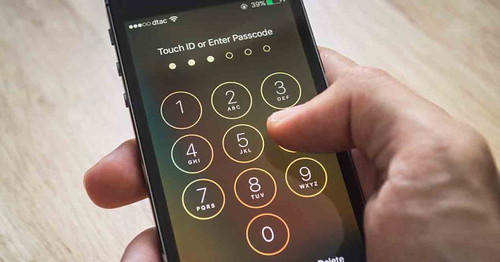
Reports of a simple iPhone passcode hack turned out to be wrong. Photo by portal gda on Flickr.

You can sign up to receive each day’s Start Up post by email. You’ll need to click a confirmation link, so no spam.

A selection of 11 links for you. It’s not my fault. I’m @charlesarthur on Twitter. Observations and links welcome.

Thermostats, locks and lights: digital tools of domestic abuse • The New York Times

Nellie Bowles:

»

One woman had turned on her air-conditioner, but said it then switched off without her touching it. Another said the code numbers of the digital lock at her front door changed every day and she could not figure out why. Still another told an abuse help line that she kept hearing the doorbell ring, but no one was there.

Their stories are part of a new pattern of behavior in domestic abuse cases tied to the rise of smart home technology. Internet-connected locks, speakers, thermostats, lights and cameras that have been marketed as the newest conveniences are now also being used as a means for harassment, monitoring, revenge and control.

In more than 30 interviews with The New York Times, domestic abuse victims, their lawyers, shelter workers and emergency responders described how the technology was becoming an alarming new tool. Abusers — using apps on their smartphones, which are connected to the internet-enabled devices — would remotely control everyday objects in the home, sometimes to watch and listen, other times to scare or show power. Even after a partner had left the home, the devices often stayed and continued to be used to intimidate and confuse…

…Muneerah Budhwani, who takes calls at the National Domestic Violence Hotline, said she started hearing stories about smart homes in abuse situations last winter. “Callers have said the abusers were monitoring and controlling them remotely through the smart home appliances and the smart home system,” she said.

Graciela Rodriguez, who runs a 30-bed emergency shelter at the Center for Domestic Peace in San Rafael, Calif., said some people had recently come in with tales of “the crazy-making things” like thermostats suddenly kicking up to 100 degrees or smart speakers turning on blasting music.

«

Like something from a screenplay. No doubt this stuff will get incorporated into a screenplay very soon.
link to this extract


Non-invasive malaria test wins Africa engineering prize • Associated Press

Rodney Muhumuza:

»

Malaria is the biggest killer in Africa, and the sub-Saharan region accounts for about 80% of the world’s malaria cases and deaths. Cases rose to 216 million in 2016, up from 211 million cases in 2015, according to the latest World Malaria Report, released late last year. Malaria deaths fell by 1,000, to 445,000.

The mosquito-borne disease is a challenge to prevent, with increasing resistance reported to both drugs and insecticides.

The new malaria test kit works by shining a red beam of light onto a finger to detect changes in the shape, color and concentration of red blood cells, all of which are affected by malaria. The results are sent within a minute to a computer or mobile phone linked to the device.

A Portugal-based firm has been contracted to produce the components for Matibabu, the Swahili word for “treatment.”

“It’s a perfect example of how engineering can unlock development – in this case by improving health care,” Rebecca Enonchong, Africa Prize for Engineering Innovation judge, said in a statement. “Matibabu is simply a game changer.”

«

Won by a 25-year-old Ugandan computer scientist, Brian Gitta. Initial accuracy 80%; they’re working for 90%. The mobile phone makes it so much cheaper and flexible, too.
link to this extract


Inside a heist of American chip designs, as China bids for tech power • The New York Times

Paul Mozur:

»

Micron’s accusations focus on efforts by Fujian Jinhua Integrated Circuit, a state-backed chip maker, to build a $5.7bn factory in China’s Fujian Province. Two years ago, Jinhua tapped UMC, a Taiwanese company, to help it develop technology for the factory. Instead of going through the lengthy steps required to design the technology, Micron said in its suit, UMC and Jinhua decided to steal it.

A UMC spokesman denied the allegations and declined to comment further. Jinhua did not respond to requests for comment.

First, UMC lured away engineers from Micron’s Taiwan operations with promises of raises and bonuses, according to the Taiwanese authorities. Then, it asked them to take some of Micron’s secrets with them, according to Micron’s court filings and the authorities. The engineers illegally took with them more than 900 files that contained key specifications and details about Micron’s advanced memory chips, the authorities said.

Micron grew suspicious, according to its court documents, after discovering that one of its departing engineers had turned to Google for instructions on how to wipe a company laptop. Later, at a recruiting event in the United States aimed at Micron employees, Jinhua and UMC showed PowerPoint slides that used Micron’s internal code names when discussing future chips it would make, according to the court documents.

Alerted by Micron, the Taiwanese police tapped the phone of one Micron engineer, Kenny Wang, who was being recruited by UMC. According to an indictment in Taiwan against Mr. Wang and others, UMC reached out to Mr. Wang in early 2016 using Line, the smartphone messaging app, while he was still working for Micron. UMC explained it was having problems developing its memory chip technology. Mr. Wang then grabbed the information it needed from Micron’s servers, and later used it to help UMC’s design. The police said Mr. Wang received a promotion at UMC.

«

link to this extract


Google’s endless app overlap: what’s going on? • Android Authority

Anthony Hayt starts off displeased with Google Tasks, but finds he’s frustrated overall with Google’s lack of discipline:

»

Tasks may be great at one small thing for some folks, but it doesn’t really need to exist. It only complicates and fragments Google’s world that much more. In this regard, Tasks reminds me a lot of Google’s current crop of messaging apps, including Hangouts, Hangouts Chat, Messages, and Allo. All of these apps have different functions for different people — none provide a single, cohesive solution for everyone.

Tasks seems like yet another app Google has debuted essentially as a placeholder for some future development. Or, looked at another way, it is yet another beta product from Google’s throw-everything-at-the-wall-and-see-what-sticks approach to product development.

Tasks seems designed solely to test out the integration of  Gmail, Calendar, and a “Future Unnamed Keep-Tasks Hybrid” app (or something). No real thought seems to have gone into how productivity or enterprise users would actually want to effectively employ it. Indeed, for Google to really compete with apps like Asana or Trello, it will need to merge Hangouts Meet, Tasks, Keep, and Calendar in a way that integrates them all in one window. That is a lot to ask, but Tasks doesn’t really get us any closer to that goal.

«

This will sound weird, but I think Google’s big problem with apps is that it never had a desktop OS to keep it focussed. A mobile OS is a big undertaking, sure, but you can add apps to it endlessly. You can’t do that on a desktop OS: the opportunity cost is too high.

But what about ChromeOS? That’s more of a browser on top of Linux. Not the same thing.
link to this extract


Apple pushes back on hacker’s iPhone passcode bypass report • ZDNet

Zack Whittaker:

»

We reported Friday on [Matthew] Hickey’s findings, which claimed to be able to send all combinations of a user’s possible passcode in one go, by enumerating each code from 0000 to 9999, and concatenating the results in one string with no spaces. He explained that because this doesn’t give the software any breaks, the keyboard input routine takes priority over the device’s data-erasing feature.

But Hickey tweeted later, saying that not all tested passcodes are sent to a the device’s secure enclave, which protects the device from brute-force attacks.

“The [passcodes] don’t always go to the [secure enclave processor] in some instances – due to pocket dialing [or] overly fast inputs – so although it ‘looks’ like pins are being tested they aren’t always sent and so they don’t count, the devices register less counts than visible,” he tweeted.

Hickey credited Stefan Esser for his help.

“I went back to double check all code and testing,” said Hickey in a message Saturday. “When I sent codes to the phone, it appears that 20 or more are entered but in reality its only ever sending four or five pins to be checked.”

Apple is rolling out a new feature, called USB Restricted Mode, in its upcoming iOS 12 update, which is said to make it far more difficult for police or hackers to get access to a person’s device – and their data.

«

This would have been an amazing hack, if true. But it’s not. ZDNet left the URL for this updated story untouched rather than write a new one and redirect from the old; the old URL is “a-hacker-figured-out-how-to-brute-force-an-iphone-passcode”.

I don’t think Whittaker rushed to (virtual) print on this; the fault was the researcher’s, who didn’t test it thoroughly before going public. A little embarrassing.
link to this extract


Bitmain controls almost 51% of bitcoin mining hashrate • Bitcoin Newswire

The Bitmain group overtly controls 42% of mining power, and could marshal another 3% from power presently used mining other coins:

»

The BTC mining hash rate has tripled since December 2017, while the price of Bitcoin has dropped to approximately a third of its value within the same period.

With the drop in prices and the increasing hashrate, it is currently more difficult to mine Bitcoin than it was in December 2017. For smaller mining operations, the price drop is a significant problem that could render them unable to continue the business. If they close up shop and new miners don’t enter the market, there is the possibility of Bitmain grabbing control of a much larger share of the hashrate. Since Bitmain manufactures its hardware, it can most likely survive for much longer even in the face of increasing mining difficulty and reducing prices.

Bitcoin is currently down to its lowest level since the start of 2018. BTC prices fell below $6,000 for the first time in 2018 as the top-ranked crypto continues to struggle.

«

So bitcoin, the great decentralised project, is becoming centralised as hell – more so than fiat finance.
link to this extract


This is how many people we’d have to send to Proxima Centauri to make sure someone actually arrives • MIT Technology Review

»

The Parker Solar Probe, to be launched this year, will travel at more than 700,000km/h, about 0.067% the speed of light.

So Marin and Beluffi use this as the speed achievable with state-of-the-art space technology today. “At this speed, an interstellar journey would still take about 6,300 years to reach Proxima Centauri b,” they say.

Selecting a crew for such a multigenerational space journey would be no easy feat. Important parameters include the initial number of men and women in the crew, their age and life expectancy, infertility rates, the maximum capacity of the ship, and so on. It also requires rules about the age at which procreation is permitted, how closely related parents can be, how many children they can have, and so on.

Once these parameters are determined, they can be plugged into an algorithm called Heritage, which simulates a multigenerational mission. First, the algorithm creates a crew with the selected qualities. It then runs through the mission, allowing for natural and accidental deaths each year and checking to see which crew members are within the allowed procreational window.

Next, it randomly associates two crew members of different sexes and evaluates whether they can have a child based on infertility rates, pregnancy chances, and inbreeding limitations. If the pregnancy is deemed viable, the algorithm creates a new crew member and then repeats this loop until the crew either dies out or reaches Proxima Centauri after 6,300 years.

«

This is the setup of so many sci-fi films, where of course it all goes wrong. The surprising (to me) conclusion is you’d only need 25 “breeding pairs” for it all to go swimmingly. Though you’d have a civilisation, in effect, which would arrive somewhere after 6,300 years spent just travelling.

As a reminder, 6,300 years ago we were just seeing the discovery of copper, and the plough in Europe. Would a space civilisation keep evolving?
link to this extract


Young Trumpies hit D.C.…and D.C. hits them right back • POLITICO Magazine

Daniel Lippman on how young members of the Trump administration struggle to find their way in Washington:

»

One beleaguered 31-year-old female administration official described at length her “very, very frequent” scraps with her matches on dating apps. “You do the small talk thing, and you have a very good conversation, and then they might say, ‘You didn’t vote for Trump, right?’” she says. “As soon as I say, ‘Of course I did,’ it just devolves into all-caps ‘HOW COULD YOU BE SUCH A RACIST AND A BIGOT?’ And ‘You’re going to take away your own birth control.’” In one recent star-crossed exchange, the official told a match she worked for the federal government. When he pushed, she revealed she was in the administration. He asked her, “Do you rip babies from their mothers and then send them to Mexico?”

Evasive answers will get you only so far, though, since many dating apps provide enough information for inquisitive users to sleuth out their matches’ identities. “I literally got the other day, ‘Thanks but no thanks. Just Googled you and it said you were a mouthpiece for the Trump administration. Go fuck yourself,’” says the official. It’s all enough to drive her and some of her colleagues away from at least some of the apps. “I’m no longer on Bumble,” she says.

Young staffers have had to develop a keen sense of just when to have “The Talk” with romantic partners. “I’ve still been able to hook up with women,” says a male former White House staffer. “But I know that I need to be careful about broaching the Trump stuff.

«

link to this extract


Nike hit back at Quest in court case • The ITAM Review

“Rich” on a row between Quest Software, which says Nike owes $15.6m for use of its software since 2001, and Nike, which says it owes $0.34m. It’s only a 98% difference:

»

Nike state they have: “…not agreed, under the SLSA or otherwise, to pay for licenses for Quest Software for persons or systems who could theoretically access the Quest Software, but who do not actually use the software”

And go on to point out that “People legitimately need to access these servers, but have no need to run Quest software – for example “NIKE’s cyber security and forensics professionals.” A situation that will be common to many organisations worldwide.

Looking at section 12 of the SLSA, the audit clause between Nike & Quest states: “In the event that an audit conducted as set forth herein discloses that Licensee has caused or permitted access to or use of the System by persons or entities that are not authorized under the terms of this Agreement to such use or access, Licensee shall pay Quest the underpayment, in the amount of the negotiated fee applicable to the particular Software Product or Product to which unauthorized access was permitted, for all such unauthorized users”

It seems Quest are relying on the language that states: “permitted access to…the System by person…not authorized…to such use or access” to make their claim that Nike are liable for all potential users based on system access.

Nike, however, are arguing that the clause simply states they must pay for: “All unauthorized users”

«

On that (and some more) turns $15m, one way or another.
link to this extract


An invisible rating system at your favorite chain restaurant is costing your server • Buzzfeed

Caroline O’Donovan (where “server” means “waiter/waitress”):

»

Ziosk tablets sit atop dining tables at more than 4,500 restaurants across the United States — including most Chili’s and Olive Gardens, and many TGI Friday’s and Red Robins. Competitor E La Carte’s PrestoPrime tablets are in more than 1,800 restaurants, including most Applebee’s. Tens of thousands of servers are being evaluated based on a tech-driven, data-oriented customer feedback system many say is both inaccurate and unfair. And few of the customers holding the reins are even aware their responses have any impact on how much servers earn.

Ziosk and Presto sit at the nexus of two major consumer trends: the idea that every product, service, piece of content, and interaction, whether encountered online or in real life, should be rated on a scale of one to five, and that these ratings in aggregate become an invaluable dataset, helping managers achieve growth and make money.

“It makes very literal the idea that the customer is always right, to the complete disregard of the worker,” Ifeoma Ajunwa, an assistant professor at Cornell’s Industrial and Labor Relations School, told BuzzFeed News.

Technologies like Ziosk are attractive to the restaurant industry, which faces a rising minimum wage, because the tablets promise to make workers more efficient, and in turn, lower labor costs. But in interviews with BuzzFeed News, more than two dozen current and former servers described Ziosk as a source of financial and emotional anxiety, a vector of discrimination and harassment in the workplace, and an added layer to the economic and psychological precariousness that already defines restaurant work.

“When they introduced them, it seemed like a good deal for the customer. But as a server, it’s just the worst thing ever,” said Sam Ellis, who worked as a server at a Chili’s in Texas. “That’s all your job depends on, is those survey scores.”

«

link to this extract


CryptoKitties sales plummet in popularity months after raising $12m • Business Insider

Zoë Bernard:

»

Like Beanie Babies, CryptoKitties are considered collectibles. Their novelty lies in the fact that owners can prove that they possess sole ownership of the Crypto Kitty they’ve purchased. In December, it was reported that one particular Crypto Kitty sold for around $155,000.

People had already spent millions buying and trading CryptoKitties by the time top-tier investors including Andreessen Horowitz and Union Square Ventures decided to give the company $12 million. Before the deal went through, one investor in the company told Business Insider that the product embodied one of the most important and applicable use-cases of the blockchain: The ability to safely store digital collectibles online.

But it looks like CryptoKitties itself could be in danger of becoming a short-lived novelty.

According to data from blockchain analytics sites Bloxy and Diar, the number of CryptoKitties transactions has fallen drastically in the last 3 months.

The number of CryptoKitties transactions decreased in June by 98.4% compared to its peak of 80,500 transactions back in December 2017, according to data from Bloxy. The game is still among the most popular options for ethereum-related gaming, but public interest in buying and selling them seems to have waned significantly in recent months.

CryptoKitties cofounder Bryce Bladon told Business Insider in an email that the decrease in CryptoKitties transactions was to be expected, and there were a few factors, one of which was the skyrocketing costs of processing a transaction based on ethereum. 

«

Ah yes, transaction costs. That almost-always-overlooked factor in blockchain “currency” things.
link to this extract


Errata, corrigenda and ai no corrida: none notified

Start Up: your call is important to our AI, US Supremes approve internet tax, where’s Apple’s AirPower?, and more


A member of Congress is suggesting DNA matching could reunite children and parents separated at the US border. Photo by Shaury Nash on Flickr.

You can sign up to receive each day’s Start Up post by email. You’ll need to click a confirmation link, so no spam.

A selection of 8 links for you. I really like these. Do you? I’m @charlesarthur on Twitter. Observations and links welcome.

How computers could make your customer-service calls more human • WSJ

Daniela Hernandez and Jennifer Strong:

»

Cogito is one of several companies developing analytics tools that give agents feedback about how conversations with customers are going. Its software measures in real time the tone of an agent’s voice, their speech rate, and how much each person is talking, according to Dr. Place. “We measure the conversational dance,” he says.

That dance is sometimes out of sync, such as when an agent speaks too quickly or too much, cuts a customer off, has extended periods of silence or sounds tired.

When the software detects these mistakes, a notification pops up on a window on an agent’s screen to coax them to change their strategy. The alerts are useful not just for the agents, but also for their supervisors, Cogito says.

When insurer MetLife Inc. started testing the software about nine months ago, Emily Baker, a 39-year-old supervisor at a call center in Warwick, R.I., thought: “Why do I need this artificial intelligence to allow me to be more human? How much more human can I be?”

But the program has come in handy when coaching new agents, she says, especially those with little experience. One of her 14 agents said the software noticed he wasn’t speaking with enough energy, so it prompted him with a message to pep up plus a coffee-cup icon, she says.

Tiredness can come off as lack of confidence, Ms. Baker says, and it’s important for clients to “feel confident about the service we’re providing” because callers are often going through potentially life-changing events. The call center where Ms. Baker works is focused on disability insurance.

«

Machines to watch over us, and correct us when we aren’t good enough with each other.
link to this extract


A Congresswoman is asking 23andMe to help reunite kids and parents at the border • Buzzfeed

Lissandra Villa:

»

California Rep. Jackie Speier is asking 23andMe, a popular DNA-testing company, to help reunite children separated from their parents under President Donald Trump’s “zero tolerance” policy.

Speier, a Democrat, said she spoke with executives at 23andMe on Thursday to see if the company could play a role in bringing families back together. The congresswoman’s suggestion comes in the midst of a scramble to figure out what the next steps are for some of these families, given that there’s a lack of a plan on how to bring them back together.

“I was just trying to think, how are we going to connect these two? How can we guarantee that the parents are going to get their own child back?” Speier told BuzzFeed News. “I’m thinking, how else are we going to do that? So I was encouraging them to look at whether or not they could provide some kind of assistance here.”

Asked what she was told by the company, Speier said: “They were going to think about it.”

«

That’s inspired thinking. Could even work, and wouldn’t be that difficult. Objections have been raised that this creates a DNA database of would-be illegal immigrants and/or legitimate asylum seekers. Given that the US requires my fingerprints for perfectly legitimate visits, I’m not sure why that’s a big worry compared to the large good that could be achieved.
link to this extract


Atari accuses El Reg of professional trolling and making stuff up. Welp, here’s the interview tape for you to decide… • The Register

Kieren McCarthy interviewed an Atari exec earlier this year, and wrote about it. Atari was unhappy:

»

a potential buyer of a Atari VCS posted a link to the article on the company’s Facebook page, and asked the biz to explain it. Atari responded:

»

We honestly can’t explain that article either. Our executives sat with that reporter for half an hour and he wrote what he wanted instead of what was discussed with him. Sadly there are even irresponsible trolls in ‘professional’ positions i guess.

«

We clearly said that we were bringing engineering design models to GDC and lots of people clearly don’t understand what that means. Hunks of plastic? Well, yeah, that’s how you finalize the designs and confirm that you can get the look and feel you want for the finished products. Sad.

While we at The Register often take a light-hearted and critical perspective on the news of the day, we take our professional obligations as reporters very seriously.

In that capacity, we would like to formally apologize to both Atari and Michael Arzt for digging out a recording of the interview – and for the following article in which we highlight that Atari is so full of crap that it should be designated a hazardous waste zone.

You can find the entire 30-minute interview at the bottom, but here are a few short clips covering the most salient parts.

«

Going to need a salve for that burn, Atari. I’ve been an editor of Kieren’s work, and he is really thorough and painstaking and accurate.
link to this extract


60,000 Android devices hit by battery-saving app attack • Tripwire

Graham Cluley on a scam that “warns” you that your (Android) device – which it names, by some HTML-grabbing functionality – has a problem and recommends the app (and the only way to stop it is to kill the web page):

»

So what happens if you do go to the Google Play store and install the battery-saving app being touted by the fake warning?

The first thing that should ring alarm bells in you is that the app demands access to a disturbing array of permissions including:

• Read sensitive log data
• Receive text messages (SMS)
• Receive data from Internet
• Pair with Bluetooth devices
• Full network access
• Modify system settings
I can’t think of any legitimate reason why a genuine battery-saving app would ever need such invasive abilities, which in combination with the app’s other functionality allows it to steal a user’s phone number, location, and details about their device including its IMEI number.

And so it comes as something of a surprise to discover that the Advanced Battery Saver app actually does live up to its advertising – monitoring a device’s battery status, killing unwanted background processes that consume significant resources, and making other attempts to keep batteries running for longer.

And it’s this strange dichotomy – the good and the bad behavior – which leads the researchers to speculate that the battery-saving app was perhaps originally designed to perform its intended advertised function (and to fulfill only that purpose) before being extended by its creators into underhand methods of income generation.

«

There’s no money in standard apps at that level now, if there ever was.

Chief among those is the app’s request for access to a user’s SMS text messages. One installed, the battery-saving app recruits devices into an ad-clicking scam, with the app “clicking” on advertising links it is sent via SMS to earn more income for the fraudsters behind the scheme.
link to this extract


Former CIA employee charged with leaking hacking tools to WikiLeaks • Buzzfeed

Kevin Collier:

»

Joshua Schulte, 29, believed to be behind the WIkiLeaks “Vault 7” disclosures of 2017, in which the site spent months slowly leaking CIA hacking tools, had previously been charged with possession of child pornography.

WikiLeaks published the Vault 7 disclosures in 25 increments from March through November 2017. The disclosures themselves didn’t reveal shocking spy powers, but they were a major embarrassment for the agency. In one release, WikiLeaks claimed that the CIA had developed a means to “bypass” the encrypted chat app Signal. The agency hadn’t actually compromised Signal itself but had noted in internal documents that hacking such an app wasn’t necessary if the agency could hack a phone itself — a technique commonly deployed among the world’s elite hackers.

If convicted of all charges, Schulte could face a maximum of 135 years in prison.

Among the charges are 10 counts of willfully distributing copyrighted materials — the same charge generally leveled against someone who posts movies, TV shows, or music files.

WikiLeaks, which has a formal policy of not naming its sources, responded to the news by retweeting last year’s biggest Vault 7 leaks.

Schulte online claimed to be a libertarian, took a photo of himself with a glass with the text “fuck Obama” on it, and repeatedly used racist slurs in chats.

He was a member of the CIA’s Engineering Development Group, which built hacking tools deployed overseas. A former CIA coworker of Schulte’s, who requested be unnamed because he wasn’t authorized to speak about agency matters, told BuzzFeed News that Schulte had had problems getting along with his coworkers.

«

link to this extract


Supreme Court clears way for sales taxes on internet merchants • The New York Times

Adam Liptak:

»

Internet retailers can be required to collect sales taxes in states where they have no physical presence, the Supreme Court ruled on Thursday.

Brick-and-mortar businesses have long complained that they are disadvantaged by having to charge sales taxes while many of their online competitors do not. States have said that they are missing out on tens of billions of dollars in annual revenue under a 1992 Supreme Court ruling that helped spur the rise of internet shopping.

On Thursday, the court overruled that ruling, Quill Corporation v. North Dakota, which had said that the Constitution bars states from requiring businesses to collect sales taxes unless they have a substantial connection to the state.

Shares in Amazon were down just 1% in morning trading after the ruling, at $1,731.59. But other e-commerce companies suffered far tougher blows: Shares in Etsy, the marketplace for artisanal crafts, fell 4.5%, to $42.21, while those in Wayfair, a popular home goods seller, were down 3.2%, at $112.42.

Writing for the majority in the 5-to-4 ruling, Justice Anthony M. Kennedy said the Quill decision had distorted the nation’s economy and had caused states to lose annual tax revenues between $8bn and $33bn.

“Quill puts both local businesses and many interstate businesses with physical presence at a competitive disadvantage relative to remote sellers,” he wrote. “Remote sellers can avoid the regulatory burdens of tax collection and can offer de facto lower prices caused by the widespread failure of consumers to pay the tax on their own.”

«

This has long looked anomalous: if you buy things on the internet, why not pay sales tax? European countries levy VAT on online sales, including software, wherever the “purchase” is made. The tax benefit for some states could be substantial – though South Dakota has an annual budget of about $4bn, and reckons this will bring in $50m. A side point: South Dakota doesn’t have income tax; instead it applies sales and “use” taxes. A touch regressive there, people.
link to this extract


Are ‘sensory videos’ vulgar and pornographic? China says so • CNET

Bonnie Burton:

»

The autonomous sensory meridian response, or ASMR, can happen after hearing certain sounds. Entire YouTube channels are dedicated to ASMR videos of whispering, fingers tapping on surfaces or even the crushing of eggshells.

While ASMR videos are so popular they regularly trend on YouTube, China’s anti-pornography office released a statement this month saying that it would crack down on inappropriate ASMR videos appearing on the country’s popular streaming sites such as Youku and Bilibili. 

The China office says many ASMR videos stimulate sexual sensations, but ASMR fans say they use them more as sleeping aids.

In a 2015 study, UK researchers looked at ASMR media people were accessing in the US and Western Europe. Eighty-two% of study participants said they used ASMR videos as a sleep aid and 70% used them to de-stress. 

Only 5% of people who enjoy ASMR media use it for sexual stimulation, according to the study. 

«

If I say this has passed me by, I sound old, right?
link to this extract


Why Apple’s AirPower wireless charger is taking so long to make • Bloomberg

Mark Gurman:

»

Unlike wireless chargers on the market today, the AirPower is designed to charge three devices simultaneously: an iPhone, Apple Watch, and AirPods with a still-to-be-released wireless charging case.

Apple also wants users to be able to place any of their devices anywhere on the charging mat to begin a charge. That ambitious goal requires the company to pack the AirPower with multiple charging sensors, a process that has proven difficult, the people said. The charger is based on custom charging technology, which it intends to integrate with the Qi charging standard, the company said last year.

An executive at an Apple partner that manufactures third-party wireless chargers for iPhones, who asked not to be identified, said that the multi-device charging mechanism is challenging to build because it likely requires different sized charging components for the three types of devices, which would all overlap across the mat.

The AirPower charger is also more advanced than the current competition because it includes a custom Apple chip running a stripped down version of the iOS mobile operating system to conduct on-device power management and pairing with devices. Apple engineers have also been working to squash bugs related to the on-board firmware, according to the people familiar.

«

A stripped-down version of iOS? So now Apple is going to have five OSs to update – MacOS, iOS, WatchOS, tvOS and AirPowerOS (maybe AirOS).

And when is it coming? From Gurman’s piece: “engineers hoped to launch the charger by June. The aim now is to put it on sale before or in September, according to one of the people.” At least that gives us a sort-of deadline. Though “before or in” is basically “by”. The subediting on American journalism is dire.
link to this extract


Errata, corrigenda and ai no corrida: “who” was used instead of “whom” in a sentence in yesterday’s post. Doctors are optimistic that the person affected will make a full recovery.

Start Up: the border row fallout, Fortnite’s first $100m, tau neutrino mystery, a blockchain for video?, and more


What if you came to work and found the computer had fired you? It happened. Photo by Joe Loong on Flickr.

You can sign up to receive each day’s Start Up post by email. You’ll need to click a confirmation link, so no spam.

A selection of 11 links for you. Midsummer’s day! (in the north). I’m @charlesarthur on Twitter. Observations and links welcome.

Tesla lawsuit highlights risks of inside threat • CNBC

Kate Fazzini:

»

The incidents described in CEO Elon Musk’s email to employees and the company’s lawsuit against the former employee are jarring because they show how much access insiders have to critical systems of these vehicles, and how difficult it might be to determine whether they are altering code on machines that test the cars.

Cybersecurity professionals have demonstrated how to hack into the infotainment systems of several vehicle brands over the years. These demonstrations have shown that, while it’s fairly easy to break into the computer systems that control dashboard computers, getting deeper into the systems that actually run a vehicle – and control its steering, acceleration and braking — is much harder. It is often difficult to get to these computers physically, and they typically aren’t connected to the internet or remotely available, making it necessary for an attacker to have physical access to the device.

It’s even less likely outside attackers could get access to computers used in vehicle testing.

But insiders have far greater access. Employees may not only have physical access to the critical systems that run manufacturing or program car components, but they may know important information that allows them to write code that can cause meaningful damage to the vehicle.

«

link to this extract


How everyone started talking about family separations • The Atlantic

Alexis Madrigal with a clever timeline of how an overlooked story became The Story Everyone Was Talking About:

»

despite the reporting that children were being separated from their parents and kept in detention centers, no one had seen any photographs of what was happening. The world was desperate for some images to make sense of the story: What did this look really look like? NowThis Politics rolled out the old Kamala Harris footage and it took off.

In fact, the controversy became even more prominent because of that desire for visual evidence. A variety of well-known liberals including Congressman Joaquin Castro, the actress Mia Farrow, the former Los Angeles mayor Antonio Villaraigosa, and the former Obama speechwriter Jon Favreau tweeted photographs of a now-defunct detection center from 2014.

Then something really important happened. President Trump stepped in to fire back at the Democrats. “Democrats mistakenly tweet 2014 pictures from Obama’s term showing children from the Border in steel cages,” Trump tweeted. “They thought it was recent pictures in order to make us look bad, but backfires. Dems must agree to Wall and new Border Protection for good of country … Bipartisan Bill!” It got nearly 30,000 retweets and 100,000 likes, planting the topic at the very top of the week’s news cycle.

Strangely, but also very 2010-ishly, it was the bad information—these old photographs tweeted as new—that touched the crisis to the Trump third rail. News organizations began to throw everything they had at the story.

The reporting about what was happening at the border, which had been sparse, flowed in.

«

Note how it’s all about reporting and social media. Trump has sort-of relented and signed an Executive Order that sort-of rescinds part of the policy, but only in order to create a new legal fight. So this isn’t done yet. What it really shows is the power of Trump to put himself into a corner through a foolish tweet.
link to this extract


Tech CEOs criticize separating families at the US border • Mashable

Rachel Kraus:

»

The tech industry isn’t staying silent. In addition to Apple’s Tim Cook, CEOs Mark Zuckerberg (Facebook), Jack Dorsey (Twitter), Dara Khosrowshahi (Uber), Susan Wojcicki (YouTube), and others have taken to social media to speak out. Many have also pledged donations, with Zuckerberg leading a fundraising effort that has so far raised over $25,000.

In a Tuesday memo to Uber employees, Uber execs said the company’s legal team is looking into connecting families with lawyers and already donated $100,000 to a nonprofit helping separated children, according to Business Insider.

Other tech industry leaders that have called for change include representatives from Airbnb, Box, eBay, Cisco, and others. 

Microsoft also issued a statement saying that it is “dismayed by the forcible separation of children from their families at the border.” That comes after reports of employee anger over Microsoft’s cloud computing deal with Immigration and Custom Enforcement (ICE). Microsoft managed to overcome its dismay long enough to reassure the public that “Microsoft is not working with U.S. Immigration and Customs Enforcement or U.S. Customs and Border Protection on any projects related to separating children from their families at the border.”

Tesla’s Elon Musk also expressed his support with a puzzling series of tweets.

«

In the morning when I linked to this, I wrote: “I’m surprised this policy survived the weekend, but increasingly it feels as though it cannot survive the indignation – and funding – being aimed at it. The stain on the US administration’s character is spreading.” By the evening in the UK, it had been sort-of revoked – at least the separation part.
link to this extract


Twitter is locking accounts for tweeting Stephen Miller’s phone number • Buzzfeed

Charlie Warzel:

»

Another day, another test of the limits of Twitter’s harassment rules.

This time, Twitter’s challenge came from Gizmodo Media Group and its news and politics site Splinter, which, on Wednesday afternoon, tweeted out what it reported is White House adviser Stephen Miller’s phone number alongside a piece titled, “Here’s Stephen Miller’s Cell Phone Number, If You Need It.” Miller is the reported architect of the Trump administration’s zero tolerance immigration policy, which has resulted in the forceful separation of children from their families at the border.

Countless others followed Splinter’s lead, starting with Gizmodo Media Group reporters and editors followed by other users who posted screenshots of their texts to Miller. As of this writing, a Twitter search of Miller’s number yielded hundreds of tweets containing the number, as well as users who’ve changed their Twitter display name to his number.

Twitter rules forbid users to publish any private information for public and private figures alike, which includes phone numbers. Typically, this is something you might see from individuals or groups of users as a form of targeted harassment. It’s less common, however, for such information to be published by a major media outlet.

A spokesperson for Twitter told BuzzFeed News that publishing Miller’s number was a violation of the company’s rules. “We are aware of this and are taking appropriate action on content that violates our Terms of Service,” the spokesperson said.

«

Wellll.. as someone who has had their phone number tweeted (thanks Jake), I can say that Twitter acted pretty fast then to remove it. And putting Miller’s number online isn’t journalism – it doesn’t belong on a mainstream news site. Sure, Miller is a jerk. But this is harassment, not journalism. So I’m with Twitter on this one, for both reasons.
link to this extract


These parents hoped to raise $1,500 for separated migrant families. They’ve brought in $9m • Washington Post

Darlena Cunha:

»

Bonds for detained migrants typically range from hundreds to many thousands of dollars — amounts that might as well be in the billions for families that arrive here with next to nothing, and have whatever they brought with them confiscated by Border Patrol.

So the Willners created a Facebook fundraiser over the weekend to raise $1,500 — enough to free a single migrant parent with a relatively low bond.

“It was the closest thing we could do to hugging that [2-year-old] kid,” Dave Willner told the Mercury News.

Five days later, the Willners have raised more than $8m and climbing — overflowing all previous optimism.

“We can confirm this is one of the largest fundraisers we’ve ever seen on Facebook,” Roya Winner, a spokeswoman for the social media giant, told The Washington Post, back when the amount was less than $4m.

Facebook’s founder, Mark Zuckerberg, is among the nearly 200,000 people who had contributed by Wednesday morning.

Private donors have matched more than $250,000 of the total, but the Willners said the average donation is just $40.

The money has come from Americans disaffected with their government, immigrants who remember their own journeys, and sympathizers from Canada to Switzerland and beyond.

“That clear moral commonality is what will sustain us,” Charlotte Willner wrote on Facebook on the first night of the campaign. “It transcends almost everything. It is an enduring sense of what America ought to be about.”

«

This is one of those occasions when any gloom about the effects of the internet is lifted, like the sun breaking through clouds. Hundreds of thousands of people contributing to make a difference, rather than tweeting about it. And even after the Executive Order about this, the benefits of the gift continue – it funds lawyers and help for people for at least a year.
link to this extract


The blockchain solution to our DeepFake problems • Wired

Antonio García Martínez on the problem (and solution?) for all those “DeepFake” videos:

»

What then would be the ideal architecture of a video “truth” infrastructure, one that could send someone to prison for years, or exonerate someone from the same fate? Well, it would be decentralized (no single arbiter of truth) and public (we can all check it), which is precisely what Bitcoin’s blockchain provides for payments.

Can the greedy bubble of Bitcoin be repurposed toward a less monetary goal?

A three-year-old Austin, Texas-based company named Factom thinks so. Building on top of the existing Bitcoin infrastructure almost as if it were the network layer of a new truth web, Factom provides a streamlined way to assert the existence of a piece of data or document at a certain time. Since the blockchain isn’t designed to store reams of streaming data (e.g. a 24/7 security camera), Factom’s hashes and organizes incoming data to establish proof that some specific information exists. In practice, this would mean that, say, 10-minute blocks of video from a given camera would live inside the Factom data structure, and “truth” could be assured for that window of time, with one such assertion for a long chain of such windows stretching for however long the camera’s been recording. Factom assures what’s known as “data integrity” in both senses of the word integrity: whole and trustingly honorable. By combining that with a hardware solution that digitally signs and hashes the data instantly, right as the pixels are pulled off the camera, one can confidently claim that a video is “real” and was really taken by the camera that digitally signed the data.

The Department of Homeland Security, which maintains an array of cameras and sensors along our country’s southern border, is now testing Factom’s newfangled truth recorder. The fear is that those border cameras will be hacked by sophisticated smugglers (of the drug or human variety) who buy their own cameras, wire them to show whatever false scene, and then plug them back into the DHS network. The smugglers carry on while the border’s overseers stare at a contrived scene of false tranquility. Border videos can also be used as evidence in immigration trials—another legal showcase where the juridical definition of truth is key.

«

I think he – and they – may have hit on the first sensible use for blockchain that we need. Though you can bet this won’t stop people denying things they see is real. (Could you fake the blockchain?)
link to this extract


Fortnite earns $100m in its first 90 days on mobile • Sensor Tower

Randy Nelson:

»

Having brought in more than $25m during its first month on mobile, Fortnite increased its revenue generating momentum to surpass $50m by its 45 day mark. Now, three months since its March 15 launch, Sensor Tower Store Intelligence data reveals that the game—which debuted on Nintendo’s Switch console last week—has reached $100m in worldwide player spending on Apple’s mobile platform.

In reaching this milestone, Epic Games has managed to surpass some of most successful multiplayer mobile titles of the past two years, despite the fact that Fortnite initially launched in invite-only form for two of the 12 weeks it has been available. As the chart below shows, it earned more than 3x as much as Tencent’s massively successful Honor of Kings—known as Arena of Valor in Western markets—did in China during its first 90 days on iOS, despite not being available there itself. (It will be launching in China at an undetermined future date courtesy of none other than Tencent.)

The mobile version of Fortnite has also earned about 4.3x more than its closest revenue rival among the new breed of battle royale titles on mobile, Knives Out from NetEase. What’s more, it managed to earn approximately 65% as much as Supercell’s Clash Royale did in its first 90 days, a title that had the most successful launch in mobile gaming history next to Niantic’s Pokémon GO in terms of revenue.

«

link to this extract


The machine fired me • Idiallo

Ibrahim Diallo found himself fired – but nobody could explain why or by who:

»

Once the order for employee termination is put in, the system takes over. All the necessary orders are sent automatically and each order completion triggers another order. For example, when the order for disabling my key card is sent, there is no way of it to be re-enabled. Once it is disabled, an email is sent to security about recently dismissed employees. Scanning the key card is a red flag. The order to disable my Windows account is also sent. There is also one for my JIRA account. And on and on. There is no way to stop the multi-day long process. I had to be rehired as a new employee. Meaning I had to fill up paperwork, set up direct deposit, wait for Fedex to ship a new key card.

But at the end of the day the question is still, why was I terminated in the first place?

I was on a three-year contract and had only worked for eight months. Just before I was hired, this company was acquired by a much larger company and I joined during the transition. My manager at the time was from the previous administration. One morning I came to work to see that his desk had been wiped clean, as if he was disappeared. As a full time employee, he had been laid off. He was to work from home as a contractor for the duration of a transition. I imagine due to the shock and frustration, he decided not to do much work after that. Some of that work included renewing my contract in the new system.

I was very comfortable at the job. I had learned the in-and-out of all the systems I worked on. I had made friends at work. I had created a routine around the job. I became the go-to guy. I was comfortable.

When my contract expired, the machine took over and fired me.

A simple automation mistake(feature) caused everything to collapse. I was escorted out of the building like a thief, I had to explain to people why I am not at work, my coworkers became distant (except my manager who was exceptionally supportive). Despite the great opportunity it was for me to work at such a big company, I decided to take the next opportunity that presented itself.

What I called job security was only an illusion. I couldn’t help but imagine what would have happened if I had actually made a mistake in this company. Automation can be an asset to a company, but there needs to be a way for humans to take over if the machine makes a mistake. I missed three weeks of pay because no one could stop the machine.

«

link to this extract


Unilever takes stand against digital media’s fake followers • Reuters

Martinne Geller:

»

The practice of buying followers risks eroding trust and therefore damaging one of the fastest-growing areas of advertising – the billion-dollar-a-year market now known as “influencer marketing” – and Unilever says it wants it to stop.

Its chief marketing officer, Keith Weed, will pledge on Monday that the maker of Dove soap and Hellmann’s mayonnaise will never buy followers or work with influencers who buy followers. It will also prioritize social media platforms that take action to stamp out fraud and increase transparency.

“Trust comes on foot and leaves on horseback, and we could very quickly see the whole influencer space be undermined,” Weed told Reuters. “There are lots of great influencers out there, but there are a few bad apples spoiling the barrel and the trouble is, everyone goes down once the trust is undermined.”

The announcement comes four months after Weed made waves by threatening to pull investment from digital platforms such as Facebook and Google if they did not take steps to improve consumer trust and eradicate “toxic” online content.

It also comes as Unilever and rival Procter & Gamble audit their advertising spending and agency relationships in efforts to operate more efficiently as sales growth of consumer packaged goods slows. They are working with fewer agencies, creating fewer ads and bringing some marketing work in-house.

«

The amounts that brands are willing to pay is amazing: £75,000 for a celebrity’s Facebook post; as much as £1,500 for a “micro-influencer” with fewer than 10,000 followers. One hopes those are the right followers. It’s probably cheaper than making an ad which will be ignored by all sorts; instead you make an ad that’s ignored by bots. (I’ve been offered money to do “influencer” posts and turned them down before getting to the question of money. Trust indeed leaves on horseback, if not faster.)
link to this extract


Mysterious IceCube event may be caused by a tau neutrino • Eureakalert

Ranjan Laha is a postdoc at the Mainz-based team working at the PRISMA Cluster of Excellence:

»

It was just eight years ago that the IceCube detector, a research center located at the South Pole to detect neutrinos emanating from the cosmos, was commissioned. Three years later, it began to register the first momentous results. The detection of high-energy neutrinos by IceCube made viable completely new options for explaining how our universe works. “These neutrinos with their considerable energy are cosmic messengers we have never encountered before and it is extremely important that we understand exactly what they are telling us,” explained Dr. Ranjan Laha of Johannes Gutenberg University Mainz (JGU). Working in collaboration with a colleague at Stanford University in the USA, the Mainz-based physicist has put forward a new hypothesis on what this interstellar message carrier might be. The two physicists have calculated that what has been detected could be the track of a high-energy tau particle that transited the IceCube detector.

«

A tau neutrino – if that’s what it has found – would have far higher energy than any neutrino previously observed, and means something important about the universe, though it doesn’t quite enable dilithium crystals and photon torpedoes just yet. Noted in passing, rather like a neutrino in the night. (Also, “Cluster of Excellence” would be a good name for a band.)
link to this extract


In China trade war, Apple worries it will be collateral damage • The New York Times

Jack Nicas and Paul Mozur:

»

[Tim] Cook still sees an opening to engage on the trade issue because of disagreement inside the White House, and he doubts that a trade war — or Chinese retaliation against Apple — ultimately will happen, this person said.

“He’s willing to put a brave face on and work with the Trump administration because they probably have more at stake than any other tech company when it comes to China and the tariffs,” said Gene Munster, a longtime Apple analyst and partner at the investment firm Loup Ventures.

The specter of Chinese retaliation against Apple has increased since the administration targeted the Chinese tech company ZTE for breaking American sanctions against Iran and North Korea…

…The company has reason to fear retaliation. In 2014, the Obama administration indicted five Chinese military hackers, stoking tensions already high from leaks about American surveillance from the former government contractor Edward J. Snowden.

Months later, Chinese regulators delayed approvals of the iPhone 6 for additional security reviews. Apple executives perceived the moves as retaliation, said people familiar with the matter, which has not been previously reported.

Apple’s primary leverage with the Chinese government is Chinese consumers’ love for Apple products, said Dean Garfield, head of the Information Technology Industry Council, a trade group that represents Apple and other tech companies.

However, Mr. Garfield added, Chinese consumers would also love Facebook and Google, two products blocked in China. “There are limits,” he said. “Xi and the national party will do what’s in their interest.”

«

This appeared on Monday; the next day, Trump said he would put tariffs on more Chinese products, and China said it would retaliate. Apple is such an obvious target for China that it would almost be surprising if the government there didn’t create problems for the iPhone as a means of creating problems for Trump.
link to this extract


Errata, corrigenda and ai no corrida: none notified

#cyberwars: Harry Potter and the army of hackers (or why hackers are wizards, of a sort)


Cyber Wars book cover This is the second of a series of posts about my book Cyber Wars, published May 2018 in the UK and in the US, which investigates hacking incidents such as the Sony Pictures hack, the TalkTalk hack, ransomware, the Mirai IoT botnet. It looks at how the people in those organisations responded to the hacks – and takes a look at what future hacks might look like. (The first was on phishing.)

Hermione alohomora

When I’m giving presentations about Cyber Wars, I often include this picture in a slide. It shows the character Hermione Granger in one of the Harry Potter films opening a door by saying the spell “Alohomora”. Hacking, I explain, is the search for the spell that will open the door. Not a physical door, generally, but the “door” into the target computer so that you can make it do what you want.

I think that the resemblances go deeper, though. The wizards in the Harry Potter novels are all hackers, in one way or another: they’re using their skills to make something that doesn’t ordinarily happen (levitating feathers, say) occur.

Like hackers, they range in ability, from the most basic “script kiddies” following instructions handed down by their seniors – basically, the classrooms where the first-years learn to incant “wingardium leviosa!” – to the people working at the limits of what’s known, good or bad: think Voldemort and his groundbreaking approach to not dying, or Dumbledore and his research (pre-Hogwarts, I think?) into various types of magic.

Mother and father of invention (and wizards)

This might seem like an overcooked metaphor to you, but there’s an important question in the Harry Potter universe which isn’t directly answered in the books.

It’s this: where do spells come from? And the related question: can you invent new ones? This relates to hackers, because if wizards can invent new spells, then they’re exactly like hackers, who are always searching for new ways to break into stuff – think Heartbleed, Meltdown, Spectre, Shellshock – even as they rely on older tried and trusted methods, such as SQLi and buffer overflows, the “Alohomora” and “Accio!” of the hacking world.

JK Rowling never deals with the question of where spells come from in the books. But this doesn’t mean that she hasn’t left clues or that we can’t tease out the truth about it. Rowling famously plotted everything in great detail, but just as she doesn’t deal with where spells come from, she doesn’t deal with what makes a wizard, well, wizardy.

When it comes to wizardry, it’s evident from the way the capability passes through families, and sometimes drops out of families (as in the case of the Hogwarts caretaker Filch, a non-wizard born to wizarding parents who describes himself as a “squib”), or pops up in non-wizarding families (as with Hermione, born to non-wizarding parents) that it is genetic. Inevitably, there’s been a paper written about this, suggesting it’s autosomal dominant; squibs are from double recessives, and wizards born to Muggles from spontaneous mutations. (Autosomal dominant characteristics are usually described for their bad characteristics – Huntington’s disease, for example. Wizards might differ.)

Cast a spell

So let’s move on to spells. We know that there are lots and lots of spells; the children are taught them, at tedious length. It’s clear too that some adults have access to levels of skill in applying spells that the children can’t perceive; think of the fight (best shown in the film) between Voldemort and Dumbledore in the Ministry of Magic, which for my money is the best sequence of all the films.

But crucially, in Harry Potter and the Half-Blood Prince, we learn that spells can be improved upon. Harry comes across an old textbook for his Potions class which has handwritten notes about how to make various potions; they improve on what’s in the book, demonstrating that you can do better than what past wizards do. Harry then discovers a spell in it that he’s never seen before: a fighting curse, “sectumsempra” (which, if it were Latin, would mean “always cut”), which he later employs to almost lethal effect. When he subsequently tries to use it on a fleeing adult, his attempt is deflected – and the adult sneers at him: “you dare use my own spells against me?”

There’s your proof: in the Harry Potter universe, wizards can indeed invent their own spells. The potential is literally unlimited, bounded only by what they can imagine and find to do. That is, spells are not the same as, say, laws of physics or chemical elements. Spells are human – well, wizard – creations rather than natural phenomena.

In this way, Harry Potter wizarding is exactly like hacking. There, people try to find new ways to get computers to do stuff that nobody had expected. You mean that when you demand more data from the input buffer of a TLS server, it gets read and sent back? Sure – that’s Heartbleed, which seems to have been discovered at least three and possibly four times, if you include the two final times that led to its public disclosure. (One of those pre-discoverers is thought to be the US National Security Agency.) Who would have thought to ask that? Who would have thought to try “sectumsempra” as a fighting curse? (In the book, it says that different versions of the word have been written and crossed out before the final one is left. Which leaves you wondering how the previous versions were tested.) Trial and error plays a huge part in hacking too: trying combinations, trying different things, guessing, intuiting. And if you’re lucky or talented or both, you’ll get results.


(image from Wikipedia)

Butterbeer and layer cake

We can also see that the Potter world is striated rather like the hacking world. At the base level, you have the script kiddies (OK, spell kiddies): carrying out commands without really knowing quite how they work, but pleased with the effect.

Then there are the professionals: people who are using these techniques to get things done, and will occasionally invent their own methods to get around limitations that block them. For the most part, though, it’s the careful refinement of existing processes – think of all those people in the Ministry of Magic doing magic gruntwork. Think too of the commercial hackers rewriting a piece of ransomware to take account of the new defences put up against them.

At a higher level still you have those who are using more sophisticated versions of these skills for personal and political ends. Of course we’re back with Dumbledore and Voldemort. What doesn’t vary, though, is the general requirement to explore the capabilities of the systems involved, and in that you’re talking about the same sort of approach. Creating a Horcrux to defeat your enemies? Developing a virus that will wipe every computer on your target’s network once you’ve exfiltrated all their email, spreadsheets and a number of unreleased films? Pretty much the same process: a certain amount of education, knowledge, research, non-live testing, and then implementation.

One point about this metaphor is that we’re used to thinking of Harry Potter and his ilk as the good guys, the white hats, the nice ones. This is true enough if you think that most wannabe hackers go on to be “white hat” players, defending systems from attack from the Hogwarts first-years. (It’s also disconcerting if you take this approach, because a significant number of systems are hacked by people whose hacking skills are comparable with Neville Longbottom rather than Hermione’s.) When you think of Potter creating “Dumbledore’s Army” in “Order of the Phoenix”, just recast it as a password-protected online hacker forum where a bunch of script kiddies are trading methods to break into commercial systems.

When thinking about real-world hackers, it’s useful to consider that some people are very highly skilled – wizards, almost – and that their ability to use the hacker equivalent of the Imperius spell to subvert systems you thought you could rely on means you might not even realise that they’re inside. Certainly that was the experience recently of Dixons Carphone, which in June said that it had discovered that hackers had been inside its systems since the previous July. Eleven months? That’s pretty dramatic, and embarrassing for those who were meant to be guarding the perimeter, and the inside.

One could go on extending this metaphor: Azkaban prison is like any old prison. The Dementors are the plain old law enforcement, taking away your soul – well, computer – and leaving you as good as dead. House-elves are perhaps Internet of Things devices (which would explain why they occasionally cease obeying us altogether when a hacker comes along and gives them different instructions). Other suggestions of metaphor extensions – for dragons, goblins, and other members of that universe – are welcome.

And meanwhile, although there isn’t any discussion of Harry Potter and hacking in my book, there is plenty about hacking topics. See the links at the top.

Start Up: poisoning neural networks, the quiet smart home, will Article 13 pass?, Cook v Trump, and more


Superglue! Sticks human tissue! Why not in surgery too? Photo by Bill Keaggy on Flickr.

A selection of 10 links for you. Why the caged bird sings. I’m @charlesarthur on Twitter. Observations and links welcome.

How to stealthily poison neural network chips in the supply chain • The Register

Thomas Claburn:

»

“Hardware Trojans can be inserted into a device during manufacturing by an untrusted semiconductor foundry or through the integration of an untrusted third-party IP,” [Clemson University researchers Joseph Clements and Yingjie Lao] explain in their paper. “Furthermore, a foundry or even a designer may possibly be pressured by the government to maliciously manipulate the design for overseas products, which can then be weaponized.”

The purpose of such deception, the researchers explain, would be to introduce hidden functionality – a Trojan – in chip circuitry. The malicious code would direct a neural network to classify a selected input trigger in a specific way while remaining undetectable in test data.

“For example, an adversary in a position to profit from excessive or improper sale of specific pharmaceutics could inject hardware Trojans on a device for diagnosing patients using neural network models,” they suggest. “The attacker could cause the device to misdiagnose selected patients to gain additional profit.”

They claim they were able to prototype their scheme by altering only 0.03% of the neurons in one layer of a seven-layer convolutional neural network.

Clements and Lao say they believe adversarial training combined with hardware Trojan detection represent a promising approach to defending against their threat scenario. The adversarial training would increase the number of network network neurons that would have to be altered to inject malicious behavior, thereby making the Trojan large enough potentially to detect.

«

link to this extract


Only 6% of smart speaker owners using them to control smart home devices • 9to5Mac

Ben Lovejoy:

»

A new survey of smart speaker owners found that only 6% of them are currently using the device to control smart home devices like lighting and heating.

Interestingly, even for HomePod – which is a very music-focused device – playing music was only the third most common use …

The IHS Markit study found that answering a question and checking the news or weather led the way, with discovering and controlling music in third place. Controlling other smart home devices is currently the least common use of a smart speaker.

However, the company told us this is expected to change rapidly.

“Controlling smart home devices by voice currently represents only a small fraction of total smart-speaker interactions,” said Blake Kozak, principal analyst, smart home, IHS Markit. “However, this category will continue to trend upward as more video-streaming devices come to rely on voice control, as security alarm systems adopt voice control to arm and disarm, and as more builders embed smart devices throughout new homes.”

«

Survey of 937 owners, so that’s 56 people doing this, across US, UK, Japan, Germany and Brazil. But yes, you’d expect this number to pitch up as the systems they’re linked to get smarter.
link to this extract


Russian trolls weigh in on Roseanne Barr and Donald Trump Jr • WSJ

Georgia Wells, Rob Barry and Shelby Holliday:

»

Newly identified Russian trolls posted politically divisive messages on Twitter as recently as last month, hitting on a wide array of hot-button issues, according to a Journal analysis of recently revealed investigative documents and Twitter data.

The new tranche of about 1,100 account names, released Monday by Democrats on the House Intelligence Committee, brings the total number of publicly known Russian troll farm-operated accounts to more than 3,800. Last month, the Journal reported that the identities of many of the Russian accounts had not been publicly revealed.

The newly identified users posted more than 2.9 million tweets and retweets, bringing the total amount of Russian troll farm content on the platform to more than 8 million tweets and retweets, the Journal’s analysis found.

«

EIGHT MILLION. Is that a lot? I mean, there are lots of tweets every day. Twitter says it has 330 million monthly active users. And a lot of these accounts are pretty small beer – though they have had a couple of viral tweets. There’s influence, and then there’s “influence”. I wonder if the writers looked at each other when they got the 8m number and went “eh, sounds big enough for the newsdesk if we look outraged – say EIGHT MILLION in a loud voice.”
link to this extract


On June 20, an EU committee will vote to crown Google and Facebook permanent lords of internet censorship • Boing Boing

Cory Doctorow:

»

On June 20, the EU’s legislative committee will vote on the new Copyright directive, and decide whether it will include the controversial “Article 13” (automated censorship of anything an algorithm identifies as a copyright violation) and “Article 11” (no linking to news stories without paid permission from the site).

These proposals will make starting new internet companies effectively impossible — Google, Facebook, Twitter, Apple, and the other US giants will be able to negotiate favourable rates and build out the infrastructure to comply with these proposals, but no one else will. The EU’s regional tech success stories — say Seznam.cz, a successful Czech search competitor to Google — don’t have $60-100,000,000 lying around to build out their filters, and lack the leverage to extract favorable linking licenses from news sites.

If Articles 11 and 13 pass, American companies will be in charge of Europe’s conversations, deciding which photos and tweets and videos can be seen by the public, and who may speak.

The MEP Julia Reda has written up the state of play on the vote, and it’s very bad. Both left- and right-wing parties have backed this proposal, including (incredibly) the French Front National, whose Youtube channel was just deleted by a copyright filter of the sort they’re about to vote to universalise.

«

Wired says that “the EU’s bizarre war on memes is totally unwinnable“, and that sums it up. Copyright allows for “fair dealing” (aka “fair use”) in the UK, and other elements of this will fail because the EU supports “freedom of expression” as part of its human rights law.
link to this extract


Superglue built planes, nukes and saved soldiers’ lives • War Is Boring

James Simpson:

»

Throughout the late 1930s and ’40s, aircraft switched from heavy glass canopies to acrylic. By virtue of being readily formed and having increased strength, acyrlic gave pilots better visibility than glass, which had to be mounted into opaque frames.

New jet airplanes also needed new canopies. Flying at higher speeds than propeller-driven planes, the jets’ cockpits needed to be stronger, tougher and more heat-resistant.

Still at Eastman Kodack and now based in Tennessee, Coover was once more on the case. The chemist headed a team that experimented with acylate polymers in the hope of finding an optically-clear plastic that could survive the stresses of jet flight.

Fred Joyner, one of Coover’s teammates, prepared a sample from the long list of compounds, and the team planned to measure its refractive index — the degree to which the material bends light. Joyner put ethyl cyanoacrylate between two $700 prisms called refractometers, noted down the result and then found that he couldn’t pull them apart.

The cyanoacrylate had bonded the two expensive glass prisms together and neither Joyner nor his superiors could figure out how to separate them. Coover then realized the importance of his discovery nine years prior. “I didn’t recognize, at first, that this was not a casting material we were working with but a unique new adhesive,” he told the Chicago Tribune in 1986.

His eyes now open, Coover took a sample of Joyner’s monomers and tried sticking together everything he could find in the lab. The glue was instant and strong — stronger than anything available at the time.

«

A reprint of a 2015 story, and it’s a great one. (Question: what are reprints in the web age?) Plus the struggle to get it used medically must have been exhausting.
link to this extract


ZTE, US suppliers shares tank after Senate puts Trump reprieve in doubt • Reuters

Sijia Jiang:

»

The 85-10 bipartisan vote marked one of the few times the Republican-led Senate has veered from White House policy and came on the same day that US President Donald Trump threatened to impose a 10% tariff on $200bn of Chinese goods, escalating tensions between the world’s two biggest economies.

Trump is expected to lobby hard against the amendment to the National Defense Authorization Act (NDAA), and before it can become law the bill must be reconciled with one passed by the US House of Representatives that does not include the amendment.

Any compromise measure must then be passed by both chambers and signed into law by Trump, a series of hurdles that has Asia-based analysts predicting ZTE will get eventually get its reprieve.

“The NDAA is not really a reversal of the ZTE deal, but will in all probability prolong the ban-lifting process for ZTE,” said Nikhil Batra, a senior research manager with industry consultancy IDC.

ZTE’s Hong Kong-listed shares tumbled as much as 27% to HK$9.56, their lowest level in nearly two years, before ending the day down 25%.

«

Trump is going to be made to sweat for his promise to lift ZTE out of the grave. Plenty of road left in this tale.
link to this extract


Apple chief Tim Cook condemns ‘inhumane’ US detention of children • Irish Times

Ciara O’Brien:

»

Speaking in Dublin on Tuesday, Mr Cook described the situation as “inhumane” and said Apple would be working with people in the US government to try to be a “constructive voice” on the issue.

“It’s heartbreaking to see the images and hear the sounds of the kids. Kids are the most vulnerable people in any society. I think that what’s happening is inhumane, it needs to stop,” Mr Cook told The Irish Times.

We’ve always felt everyone should be treated with dignity and respect. In this case, that’s not happening.”

The Apple chief executive said he had previously spoken with Mr Trump on a number of issues.

“I have spoken with him several times on several issues, and I have found him to listen,” he said. “I haven’t found that he will agree on all things.”

Among the issues Mr Cook has disagreed with the president on are the US decision to pull out of the Paris climate accord, and the ongoing issue of the status of so-called Dreamers, who are undocumented people living in the US.

He said Apple would would take a constructive approach to try to deal with the current situation.

“I’m personally a big believer in the way to be a good citizen is to participate, is to try to advocate your point of view, not to just sit on the sideline and yell or complain,” he said.

«

He may have spoken to Trump several times, but if he thinks Trump is listening beyond the point where he walks out of the room, I think he’s wrong. Trump’s moves in tariffs against China demonstrate that.
link to this extract


Augmented reality and virtual reality are on the VRge of growth • IDC

»

Worldwide shipments of augmented reality (AR) and virtual reality (VR) headsets were down 30.5% year over year, totaling 1.2m units in the first quarter of 2018 (1Q18), according to the International Data Corporation (IDC) Worldwide Quarterly Augmented and Virtual Reality Headset Tracker. Much of the decline occurred due to the unbundling of screenless VR headsets during the quarter. For much of 2017, vendors bundled these headsets free with the purchase of a high-end smartphone, but that practice largely came to an end by the start of 2018. Despite a poor start to 2018, IDC anticipates the overall market will return to growth over the remainder of the year as more vendors target the commercial AR and VR markets and low-cost standalone VR headsets such as the Oculus Go make their way into stores. IDC forecasts the overall AR and VR headset market to grow to 8.9 million units in 2018, up 6% from the prior year. That growth will continue throughout the forecast period, reaching 65.9 million units by 2022.

“On the VR front, devices such as the Oculus Go seem promising not because Facebook has solved all the issues surrounding VR, but rather because they are helping to set customer expectations for VR headsets in the future,” said Jitesh Ubrani senior research analyst for IDC Mobile Device Trackers. “Looking ahead, consumers can expect easier-to-use devices at lower price points. Combine that with a growing lineup of content from game makers, Hollywood studios, and even vocational training institutions, and we see a brighter future for the adoption of virtual reality.”

When it comes to augmented reality headsets, many consumers have already had a taste of the technology through screenless viewers such as the Star Wars: Jedi Challenges product from Lenovo. IDC anticipates these types of headsets will lead the market in shipment volumes in the near term.

«

So they’re saying the fall is really down to a different way of counting. I’m not so sure. VR either needs more computing power than people are willing to put into it, or better applications.
link to this extract


China’s social media app WeChat demands more info from users • Radio Free Asia

Qiao Long:

»

China’s massively popular social media platform WeChat appears to have further tightened requirements for user registration, demanding access to all files and media content, and potentially giving the authorities access to everything on a user’s smartphone, RFA has learned.

A newly registered WeChat account resulted in a pop-up request on Thursday, calling for permission to access the device’s “photos, media library, and file content.”

Pressing “Deny” resulted in a further pop-up asking to turn on “storage space permissions.” Denying such permission resulted in the registration being aborted.

An internet service user in Guangzhou who has technical knowledge of WeChat’s functions told RFA that the app has evolved from a simple chat client to a form of spyware that monitors users’ behavior.

“If you use WeChat, there will be nothing private left on your phone,” Hu said. “Anything on your phone can be read by the app, which can even take control of the phone’s camera and microphone.”

“If the government wants to see what you are doing, or wants to hear what you are talking about, it can monitor you through WeChat, so it’s a very powerful tool,” he said.

Hu said users would be better off keeping at least one phone that didn’t have the app installed.

«

link to this extract


Tech giants are starting to line up for a David-versus-Goliath privacy fight in California • AdWeek

Marty Swant:

»

The initiative is being headed up by a core group of three people, none of whom come from the engineering or venture-capital circles of Silicon Valley, the epicenter of the very area that would be most affected by the passage of the proposal.

Rick Arney, a financial executive and one of the organizers, said the idea started two years ago after he and fellow organizers Alastair Mactaggart and Mary Ross couldn’t get traction in the state’s legislature. (Mactaggart comes from the real estate industry, while Ross spent her career in the CIA.)  

“It is not hard to find someone on a subway train that has been a victim of identity theft,” Arney said. “And when you tell people this will help stop that, they say, ‘Where do I sign up?’”  

The act targets larger businesses, those with annual gross revenue of $50m selling personal information of more than 100,000 consumers or devices, or having at least half of its annual revenue from selling personal information.

“We’ve tried to craft something that’s really common sense. This bill is something that moves the ball forward,” Arney said. “But I’m a businessperson. We’re not here to tear down companies.”

Some of the largest tech companies in the US—and the advertising trade groups that represent them—say the proposal goes much further than existing laws in the US or Europe. 

For example, while the EU allows people to opt out of exchanging data for offers, the California proposal would ban companies from giving preferential economic treatment—discounts or other promotions—to people who willingly provide their data. Some experts say the sweeping measure would also prevent companies like Facebook from having a paid model for those who don’t want their data collected if there’s still a free version for those who don’t mind targeted ads.

«

As you can imagine, there’s a ton of lobbying against this from the big companies.
link to this extract


You can sign up to receive each day’s Start Up post by email. You’ll need to click a confirmation link, so no spam.

Errata, corrigenda and ai no corrida: ref yesterday’s post, it is New Zealand, not France, that is the fifth member of the “Five Eyes” intelligence sharing group. Thanks to Jonathan Beeston for the correction.

Start Up: DeepMind’s 3D mapper, Cohen’s BlackBerry cracked, smartwatches ticking up, and more


A flaw in Chromecast and Google Home could let companies zero in on your location via web pages. Photo by Marco Verch on Flickr.

A selection of 11 links for you. Not to be sold separately. I’m @charlesarthur on Twitter. Observations and links welcome.

DeepMind AI learns to reconstruct scenes from images • Axios

Alison Snyder:

»

The system uses a pair of images of a virtual 3D scene taken from different angles to create a representation of the space. A separate “generation” network then predicts what the scene will look like from a different viewpoint it hasn’t seen before.

• After training the generative query network (GQN) on millions of images, it could use one image to determine the identity, position and color of objects as well as shadows and other aspects of perspective, the authors wrote.

• That ability to understand the scene’s structure is the “most fascinating” part of the study, wrote the University of Maryland’s Matthias Zwicker, who wasn’t involved in the research.

• The DeepMind researchers also tested the AI in a maze and reported the network can accurately predict a scene with only partial information.

• A virtual robotic arm could also be controlled by the GQN to reach a colored object in a scene.

«

Full paper at Science.
link to this extract


Samsung’s cancelled Project Valley foldable phone revealed in pictures • SamMobile

“Abhijeet”:

»

As you can see in the images, Samsung’s early foldable phone was simply a regular smartphone with a second display panel attached to it with a folding hinge. It’s a rather unattractive design that would have seemed out of place at a time when the Korean giant launched the beautiful Galaxy S6 and Galaxy S6 edge. It would certainly have garnered a lot of attention as no other manufacturer would have had something similar to offer at the time, but Samsung clearly wasn’t interested in releasing a foldable phone just to be the first on the market.

That’s not to say this early Project Valley prototype isn’t important, as it’s proof that Samsung has been serious about foldable devices for a long time. The company went as far as filing a patent for the user interface for the device, and it has recently been pretty upfront about its plans to release a foldable smartphone at some point in the near future.

«

I’d have called this a “folding” phone rather than a “foldable” phone. Somehow “foldable” to me suggests a single screen that somehow can be made smaller. But whatever – this looked horrible.
link to this extract


Listen to children who’ve just been separated from their parents at the border • ProPublica

Ginger Thompson:

»

The baritone voice of a Border Patrol agent booms above the crying. “Well, we have an orchestra here,” he jokes. “What’s missing is a conductor.”

Then a distraught but determined six-year-old Salvadoran girl pleads repeatedly for someone to call her aunt. Just one call, she begs anyone who will listen. She says she’s memorized the phone number, and at one point, rattles it off to a consular representative. “My mommy says that I’ll go with my aunt,” she whimpers, “and that she’ll come to pick me up there as quickly as possible.”

An audio recording obtained by ProPublica adds real-life sounds of suffering to a contentious policy debate that has so far been short on input from those with the most at stake: immigrant children. More than 2,300 of them have been separated from their parents since April, when the Trump administration launched its “zero tolerance” immigration policy, which calls for prosecuting all people who attempt to illegally enter the country and taking away the children they brought with them. More than 100 of those children are under the age of four. The children are initially held in warehouses, tents or big box stores that have been converted into Border Patrol detention facilities.

«

I recognise that this isn’t a political collection (generally), but this action by the present US administration – actions which predecessors including GW Bush and Obama considered and rejected – is indicative of a descent in public behaviour. A week ago I linked to an article which said “American collapse isn’t just economic and political – it’s moral and ethical, too“. This policy is indicative of that collapse.

I realise one wants to detain people who might be illegal immigrants at the border. But that doesn’t necessitate separating them from their children. That is inhuman.
link to this extract


Google to fix location data leak in Google Home, Chromecast • Krebs on Security

Brian Krebs:

»

Craig Young, a researcher with security firm Tripwire, said he discovered an authentication weakness that leaks incredibly accurate location information about users of both the smart speaker and home assistant Google Home, and Chromecast, a small electronic device that makes it simple to stream TV shows, movies and games to a digital television or monitor.

Young said the attack works by asking the Google device for a list of nearby wireless networks and then sending that list to Google’s geolocation lookup services.

“An attacker can be completely remote as long as they can get the victim to open a link while connected to the same Wi-Fi or wired network as a Google Chromecast or Home device,” Young told KrebsOnSecurity. “The only real limitation is that the link needs to remain open for about a minute before the attacker has a location. The attack content could be contained within malicious advertisements or even a tweet.”

…When Young first reached out to Google in May about his findings, the company replied by closing his bug report with a “Status: Won’t Fix (Intended Behavior)” message. But after being contacted by KrebsOnSecurity, Google changed its tune, saying it planned to ship an update to address the privacy leak in both devices. Currently, that update is slated to be released in mid-July 2018.

«

The accuracy by this method is to within 10 metres – rather than the 2-3 miles that a typical IP address alone offers. If they get your location, plus an IP, plus some cookies, they’ve got your identity forever. “They” being advertisers who will want to pursue you on and off the net. Though how does Google Home “go” to a page, exactly?

Krebs suggests putting your IoT devices on a separate intranet from everything else. Quite a struggle.
link to this extract


FBI recovers WhatsApp, Signal data stored on Michael Cohen’s BlackBerry • Ars Technica

Sean Gallagher:

»

In a letter to the presiding judge in the case against Michael Cohen, President Donald Trump’s long-time personal attorney, the US Attorney’s Office for the Southern District of New York revealed today that it had obtained additional evidence for review—including a trove of messages and call logs from WhatsApp and Signal on one of two BlackBerry phones belonging to Cohen. The messages and call logs together constitute 731 pages of potential evidence. The FBI also recovered 16 pages of documents that had been shredded, but it has not yet been able to complete the extraction of data from the second phone.

The letter to Judge Kimba Wood stated that “the Government was advised that the FBI’s original electronic extraction of data from telephones did not capture content related to encrypted messaging applications, such as WhatsApp and Signal… The FBI has now obtained this material.”

This change is likely because of the way the messages are stored by the applications, not because the FBI had to break any sort of encryption on them. WhatsApp and Signal store their messages in encrypted databases on the device, so an initial dump of the phone would have only provided a cryptographic blob. The key is required to decrypt the contents of such a database, and there are tools readily available to access the WhatsApp database on a PC.

In a post to Twitter, attorney Michael Avenatti, who represents Stormy Daniels in her suit against Cohen over a nondisclosure agreement regarding her alleged sexual encounters with Donald Trump, crowed about the new evidence.

«

Manafort, Cohen – their opsec is revealed as pretty woeful. Part of what the FBI offered is “reconstructed shredded documents”. Oh dear.
link to this extract


New wearables forecast: smartwatches to continue ascendance while wristbands face flat growth • IDC

»

“The shift in consumer preferences towards smartwatches has been in full swing these past few quarters and we expect that to continue in the coming years,” said Jitesh Ubrani senior research analyst for IDC Mobile Device Trackers. “While Apple will undoubtedly lead in this category, what bears watching is how Google and its partners move forward. WearOS (formerly Android Wear) has been somewhat of a laggard recently and despite expected changes to the OS and the release of new silicon, we anticipate Android-based watches to be WearOS’ closest competitor due to the high amount of customization available to vendors and the lack of Google services in China.”

“Additionally, keep an eye on the other smartwatch platforms, including Fitbit’s Fitbit OS, Garmin’s Connected IQ, and Samsung’s Tizen,” said Ramon T. Llamas, research director for IDC’s Wearables team. “Fitbit’s Versa has had a warm reception in the market, and Garmin’s devices have had a steady presence for many quarters. Expect both companies to dive deeper into health and fitness while exploring new areas as well. Samsung, meanwhile, continues to make strides in the commercial space, including health care and wearable workflows.”

Smartwatches will evolve to encompass far more features and functionalities than they have today. “The smartwatches of 2022, even 2020, will make today’s smartwatches seem quaint,” added Llamas. “Health and fitness is a strong start, but when you include cellular connectivity, integration with other Internet of Things (IoT) devices and systems, and how smartwatches can enable greater efficiencies, the smartwatch market is heading for steady growth in the years to come.”

«

Forecasts the total market will grow 8.2% this year, to 124.9m units; smartwatches to be 44% of that (55m), of which Apple will be 20.2m.
link to this extract


Self-described ‘classical liberal’ YouTubers join far-right European political party • Right Wing Watch

Jared Holt:

»

YouTuber pundit Carl Benjamin, known online as “Sargon of Akkad,” Infowars editor-at-large Paul Joseph Watson and Scottish “Nazi pug” comedian Mark Meechan have announced that they are joining the right-wing populist and anti-immigrant UK Independence Party (UKIP), demolishing their claims that they are merely “classical liberals.”

Benjamin, Watson, and most recently Meechan, have become popular voices online for right-wing media audiences on YouTube in North America and Europe. For years, Benjamin and Watson have used their supposed “classical liberal” political orientation to present right-wing ideologies favorably and to incessantly bash caricatures of “social justice warrior” figures. Now these figures are joining an explicitly right-wing political party that has been rapidly crumbling since its political high point in 2015.

The first of the trio to join UKIP was Meechan, who is a Scottish comedian who was adopted by right-wing audiences when he stood trial for distributing a video in which a pug does a Nazi salute after Meechan prompts it with phrases like “Sieg Heil.” Meechan was supported in court by anti-Muslim activist Stephen “Tommy Robinson” Yaxley, but was ultimately fined £800 for the video.

«

I’m not sure if I would call UKIP “far right wing” – its members tend to be, though its policies are just very right wing. But these people joining it is hilarious: a case of the rats joining the sinking ship. UKIP is finished as a political force in the UK; it’s the dog that caught the car, since its only raison d’etre was to get the UK to leave the EU. Its vote collapsed in the council elections and general election last year.
link to this extract


Shortcuts: a new vision for Siri and iOS automation • MacStories

Federico Viticci:

»

In their apps, third-party developers can embed messages and buttons (which they can design) to bring up the Siri UI to record a shortcut phrase. This means we’ll start seeing apps populate important screens or actions with suggestions and buttons to record a shortcut phrase. Moreover, in the Siri recording UI, developers can include a phrase suggestion, but it’s up to the user to decide what they want to record.

More importantly, users always have to create personalized shortcut phrases through direct interaction: apps cannot automatically fill the ‘My Shortcuts’ page in Settings with shortcuts and custom phrases. The user has to associate a custom phrase to a shortcut first.

The more I think about it, the more I see custom shortcut phrases as the next big step in making Siri a more personal assistant that is unique to each user. As would happen with an actual assistant, shortcut phrases allow users to form their own language over time, creating a personalized set of instructions that only their assistant can interpret and act upon. It’s the equivalent of jargon in a group of friends, but applied to Siri and app actions. The potential accessibility perks are tremendous too: Apple now enables everyone to create custom Siri phrases that can be however long or short they want; this removes the need to find actions nested in apps, multiple levels deep into their navigation stack.

Here’s why I believe Apple and the Workflow (now Shortcuts) team have been incredibly smart in reframing the concept of user automation around Siri and voice: when you think about it, custom phrases aren’t too dissimilar from keyboard shortcuts. However, spoken phrases are easier to remember – they don’t feel like dark magic to regular users who have never bothered with “automation” before, and, most of all, they are natively supported across the entire spectrum of Apple products, from iPhones and AirPods to HomePods and Watches.3

I strongly believe that personalized phrases are the first step towards changing the fundamental Siri experience, which is going to evolve into a personal command log – from one Siri to a million Siris, each uniquely tailored to the user who customized it.

«

There’s then a lot more about the Shortcuts app – what used to be the (third-party) Workflow app. You can turn any Workflow workflow into a Shortcut shortcut, if you follow me. It has taken quite a while, but Apple is getting iOS towards Android’s scriptability.
link to this extract


Google to invest $550m in Chinese ecommerce giant JD.com • Venturebeat

Reuters:

»

Google will invest $550m in Chinese ecommerce powerhouse JD.com, part of the US internet giant’s efforts to expand its presence in fast-growing Asian markets and battle rivals including Amazon.com.

The two companies described the investment as one piece of a broader partnership that will include the promotion of JD.com products on Google’s shopping service. This could help JD.com expand beyond its base in China and Southeast Asia and establish a meaningful presence in US and European markets.

Company officials said the agreement initially would not involve any major new Google initiatives in China, where the company’s main services are blocked over its refusal to censor search results in line with local laws.

JD.com’s investors include Chinese social media powerhouse Tencent Holdings Ltd, the arch-rival of Chinese e-commerce leader Alibaba Group Holding Ltd, and Walmart Inc.

Google is stepping up its investments across Asia, where a rapidly growing middle class and a lack of infrastructure in retail, finance and other areas have made it a battleground for US and Chinese internet giants. Google recently took a stake in Indonesian ride-hailing firm Go-Jek, and sources have told Reuters that it may also invest in Indian e-commerce upstart Flipkart.

Google declined to comment on the rumored Flipkart deal. The JD.com investment is being made by the operating unit of Google rather than one of parent company Alphabet’s investment vehicles.

Google will get 27.1m newly issued JD.com Class A ordinary shares as part of the deal. This will give them less than a 1% stake in JD, a spokesman for JD said.

«

Google seems like it still wants to work out some way to get a toehold in China. Will this give it access to shopping data? Seems unlikely.
link to this extract


Adtech won’t fix ad fraud because it’s too lucrative, say specialists • Which-50

Joseph Brookes:

»

Adtech companies themselves are rarely accused of fraud. Instead, most of the fraud that Which-50 has investigated is committed by bad agents exploiting technical and process weaknesses found in the legitimate adtech ecosystem.

The rewards are significant. One former fraudster last year described to Which-50 how a small operation he worked in, with only three staff running a fairly unsophisticated grift, was raking in $US25,000 a week.

Our recent report about the MegaCast app serving tens of thousands of video ads in the background — irrespective of whether the app was engaged — operated at different scale altogether.

Another example: last year Forbes reported that a “… South Korean company, Kiniwini, hid an illegitimate ad clicking function inside 41 apps, most of which were games.” 

That scam was uncovered not by Google, which manages the Android app store, but by security company Checkpoint. As Forbes noted, the scam bypassed Google’s Bouncer technology which is designed to mitigate against fraud. This was because the offending capability was downloaded after installation.

Google also missed the MegaCast racket. It was actually discovered by Pixalate which revealed the details in a company blog.

Accusations of direct fraud by adtech companies are more rare, although not unheard of. Occasionally these come to light where companies are accused directly of fraud by their competitors — such as when Steelhouse and Criteo went at each other in the US courts in 2016.

The parties settled their arguments shortly before their respective lawyers were due to commence the legal discovery process, telling the market through a statement that once they had a better understanding of how each other’s business worked, they realised it was all just an unfortunate misunderstanding.

Which-50 is not accusing either company of fraud. Rather we merely point out that each accused the other of exactly that before they settled.

«

link to this extract


China’s Huawei rebuts Australian security concerns amid Sino-Canberra tensions • Reuters

Colin Packham:

»

Australia is likely to ban Huawei from participating in a 5G mobile telecommunications roll-out in the nation as it fears the company is de facto controlled by China and sensitive infrastructure will fall into the hands of Beijing, according to Australian media reports.

Huawei denies the allegations, and, in a move that threatens to draw Australian politicians into a public spat that will further stain relations with China, dismissed Canberra’s security concerns.

“Recent public commentary around China has referenced Huawei and its role in Australia and prompted some observations around security concerns,” Huawei Australia Chairman John Lord and board directors John Brumby and Lance Hockridge wrote in the unprecedented letter.

“Many of these comments are ill-informed and not based on facts.”

Huawei, the world’s largest maker of telecommunications network equipment and the No. 3 smartphone supplier, has already been virtually shut out from the giant US market because of national security concerns.

Australia has longstanding concerns about Huawei. In 2012 it banned the company from supplying its massive National Broadband Network, and in May Canberra committed millions of dollars to ensure Huawei did not build an internet cable between Australia and the Solomon Islands.

«

Notable how US and Australia, two of the “five eyes” countries (along with Canada, UK and France) which cooperate on spying, aren’t happy about letting Huawei in. Though the UK, with care, is.
link to this extract


You can sign up to receive each day’s Start Up post by email. You’ll need to click a confirmation link, so no spam.

Errata, corrigenda and ai no corrida: none notified

Start Up: Theranos founder charged, USB-C headphones?, Instagrammers v hotels, Manafort’s terrorist technique, and more


The Rolls-Royce Trent 1000 engine is having teething problems – as are other jet engines. That’s expensive. Photo by Joe A. Kunzler on Flickr.

You can sign up to receive each day’s Start Up post by email. You’ll need to click a confirmation link, so no spam.

A selection of 11 links for you. Very timely. I’m @charlesarthur on Twitter. Observations and links welcome.

Troublesome advanced engines for Boeing, Airbus jets have disrupted airlines and shaken travelers • The Seattle Times

Dominic Gates:

»

Rolls-Royce is returning the repaired engines to airlines with only a temporary fix. A permanent modification won’t be available until the end of the year at the earliest.

“Those engines will have to come back to us when the final fix is available,” said [Rolls-Royce Trent 1000 project director Gary] Moore.

Meanwhile, repeated technical problems with another engine — Pratt & Whitney’s Geared Turbofan (GTF), the innovative new design that will power close to half of the Airbus A320neo fleet — have caused Pratt to fall way behind in deliveries, leaving engineless planes to stack up on the ground at Airbus factories.

At a gathering of the world’s top airline executives in Sydney this month, Guillaume Faury, the new president of Airbus Commercial Aircraft, said that by the end of June the European jetmaker will have about 100 otherwise completed A320neos sitting grounded without engines outside its final-assembly plants in Toulouse, France, and Hamburg, Germany.

“We have an industrial crisis to manage,” Faury told trade publication Aviation Week…

…The more recent, and now more pressing, problem showed up when cracks were found in the roots of the blades of the Intermediate-Pressure Compressor (IPC), behind the fan at the front of the engine.

Moore pointed to a design flaw: The vibrating frequency of the compressor blades resonated with the frequency of the engine at high thrust, magnifying the vibration to a level that over time caused the cracks to develop.

The immediate need was to inspect the susceptible engines — initially the “Package C” version of the Trent 1000, a total of 383 engines — and remove any with cracks for repair.

The problem intensified when fractured blades and excessive vibration led to several inflight engine shutdowns and aborted takeoffs.

«

You’ve probably not heard much about this, but it’s evidently big news in the aircraft industry. 100 completed aircraft sitting without engines is a lot of money going nowhere. And over a resonance flaw? You’d think that would have been discovered early on.
link to this extract


Why USB-C headphones aren’t, and likely never will be, mainstream • The Verge

Vlad Savov:

»

The most obvious factor working against USB-C headphones is that the two biggest smartphone makers don’t need them. Apple’s iPhones might lack a headphone jack but they also don’t have a USB-C port, while Samsung retains the 3.5mm port, so neither the iPhone X nor the latest Galaxy S9 family are in need of USB-C earphones. Things could change if Samsung were to drop the analog connection, too, but for now at least, the market for USB-C headphones is dramatically constrained by the absence of demand from the two most popular phone brands. In any case, for tech companies that want to produce headphones that work with both Apple and Samsung gear, the obvious universal standard today is to go wireless via Bluetooth.

Talking with Jabra at CES in January about the wireless Elite 65t that the company had just announced, I asked why the new buds charged via the old (and busted) Micro USB. The answer was cost. Jabra could have used a USB-C charger — and, in the process, streamlined life for people like me with a USB-C-charging laptop and phone, allowing us to carry only one charger and cable around with us — but that would have pushed the Elite 65t up into a higher price bracket. I’ve heard the same sentiment expressed over and over again, even from the typically less cost-conscious Bang & Olufsen, which defended its use of Micro USB charging for the Beoplay E8 wireless buds on the basis of cost.

During Computex earlier this month, Synaptics was showing off a PQI My Lockey USB-A dongle that provides ultra secure fingerprint authentication for Windows 10 machines, targeting business customers especially. When I asked why not a USB-C version as well, Synaptics VP Godfrey Cheng told me that a USB-C version could be as much as 25% more expensive, taking a $100 product up to $125. That might be a price worth paying if the entire world is using USB-C devices, but as of today, it’s a prohibitive additional cost.

«

Vlad hates micro-USB; likes USB-C. Reality seems to disagree, in multiple ways.
link to this extract


Instagram influencers are driving luxury hotels crazy • The Atlantic

Taylor Lorenz:

»

Kate Jones, marketing and communications manager at the Dusit Thani, a five-star resort in the Maldives, said that her hotel receives at least six requests from self-described influencers per day, typically through Instagram direct message.

“Everyone with a Facebook these days is an influencer,” she said. “People say, I want to come to the Maldives for 10 days and will do two posts on Instagram to like 2,000 followers. It’s people with 600 Facebook friends saying, ‘Hi, I’m an influencer, I want to stay in your hotel for 7 days,’” she said. Others send vague one-line emails, like “I want to collaborate with you,”with no further explanation. “These people are expecting five to seven nights on average, all inclusive. Maldives is not a cheap destination.” She said that only about 10% of the requests she receives are worth investigating.

Jack Bedwani, who runs The Projects, a brand consulting agency that works with several top hospitality brands, said that he’s close with the PR manager for a new hotel and day club in Bali. “They get five to 20 direct inquiries a day from self-titled influencers,” he said. “The net is so wide, and the term ‘influencer’ is so loose.”

“You can sort the amateurs from the pros very quickly,” Bedwani said.“The vast majority of cold-call approaches are really badly written. It sounds like when you’re texting a friend inviting yourself over for dinner—it’s that colloquial. They don’t give reasons why anyone should invest in having them as a guest.”

Some hotels report being so overwhelmed by influencer requests that they’ve simply opted out.

«

There’s a certain irony in content makers, who are so often asked to do stuff for free in return for “exposure”, turning the tables. But I’m amazed if any hotel takes these people seriously.
link to this extract


Briefing: Theranos founder indicted on fraud charges • The Information

Nick Wingfield:

»

Theranos founder Elizabeth Holmes and the blood-testing firm’s former president, Ramesh “Sunny” Balwani, were indicted by federal grand jury alleging that the two engaged in schemes to defraud investors, doctors and patients. Ms. Holmes stepped down as Theranos’ CEO and was replaced by general counsel David Taylor, though she remains the chair of the company’s board.

With the company already facing a dire cash situation, the indictments add to the suffocating pressure on Theranos. The indictments come three months after Ms. Holmes settled SEC fraud charges.

«

InJohn Carreyrou’s book Bad Blood, about Theranos, Balwani comes across as an utter self-obsessed dolt.
link to this extract


I worked at Theranos, and this is a glimpse of my story. : tech • Reddit

A person who says they were at Theranos in 2013 makes a number of points, but key among them was is this:

»

They treated the company like a software company. They launched way too early. Sept 2013 they launched their Edison device which was nowhere near ready. Why did they launch too early? In meetings #2 [on the hierarchy, ie Balwani] would create timelines and deadlines like they do in software development. He would ask for very hard and fixed deadlines for things in R&D. Anyone who has done science knows that timelines constantly change, are usually always extended due to the development process. #2 thought he could ignore the setbacks. He would openly tell engineers in meetings, “Engineers are the most valued in this company.” It showed because they spoiled the engineers by giving them a lot of perks other people did not observe. At the end of the day they never realized that the science was just as important as the engineering.

«

Again and again it’s clear that the company’s aims ran miles ahead of the science – but because Holmes didn’t really understand the science at a deep level, she couldn’t see this fundamental flaw.
link to this extract


The lifespan of a lie • Medium

Ben Blum:

»

Whether you learned about Philip Zimbardo’s famous “Stanford Prison Experiment” in an introductory psych class or just absorbed it from the cultural ether, you’ve probably heard the basic story.

Zimbardo, a young Stanford psychology professor, built a mock jail in the basement of Jordan Hall and stocked it with nine “prisoners,” and nine “guards,” all male, college-age respondents to a newspaper ad who were assigned their roles at random and paid a generous daily wage to participate. The senior prison “staff” consisted of Zimbardo himself and a handful of his students.

The study was supposed to last for two weeks, but after Zimbardo’s girlfriend stopped by six days in and witnessed the conditions in the “Stanford County Jail,” she convinced him to shut it down. Since then, the tale of guards run amok and terrified prisoners breaking down one by one has become world-famous, a cultural touchstone that’s been the subject of books, documentaries, and feature films — even an episode of Veronica Mars.

The SPE is often used to teach the lesson that our behavior is profoundly affected by the social roles and situations in which we find ourselves. But its deeper, more disturbing implication is that we all have a wellspring of potential sadism lurking within us, waiting to be tapped by circumstance. It has been invoked to explain the massacre at My Lai during the Vietnam War, the Armenian genocide, and the horrors of the Holocaust. And the ultimate symbol of the agony that man helplessly inflicts on his brother is Korpi’s famous breakdown, set off after only 36 hours by the cruelty of his peers.

There’s just one problem: Korpi’s breakdown was a sham.

“Anybody who is a clinician would know that I was faking,” he told me last summer, in the first extensive interview he has granted in years. “If you listen to the tape, it’s not subtle. I’m not that good at acting. I mean, I think I do a fairly good job, but I’m more hysterical than psychotic.”

Now a forensic psychologist himself, Korpi told me his dramatic performance in the SPE was indeed inspired by fear, but not of abusive guards. Instead, he was worried about failing to get into grad school.

«

Failure to peer-review or duplicate is a big problem for sociology.
link to this extract


Editorial board: break up Google • The Boston Globe

»

the problem at hand is not merely economic. “A handful of people working at a handful of tech companies steer the thoughts of billions of people every day,” notes former Google design ethicist Tristan Harris. A recent study of 10,000 people from 39 countries suggests Google “has likely been determining the outcomes of upwards of 25% of the national elections in the world for several years now, with increasing impact each year as Internet penetration has grown.”

Why is a breakup of Google so unthinkable? Google’s products are undeniably convenient. And, at least on the surface, they’re free; average users are paying not with money, but with their personal data. The company has a near-spotless public image. The famous maxim from the company’s early years — “don’t be evil” — helped cement Google’s public image as one of the good guys.

It is ironic that the company perhaps most responsible for unleashing a tidal wave of human creativity, learning, and, yes, competition is also stifling it. It is frustrating competition, discouraging innovation, punishing American business, and distorting the free marketplace of commerce and ideas. Europe has led the wider fight over the right to privacy and the regulation of data, but the time is right for the United States to lead on dismantling tech monopolies — starting with the most powerful player. So, how to start?

«

Its suggestion: break it into search, YouTube, Android, cloud services and “the rest”. This begins to feel like the noise around Microsoft before the DoJ case.
link to this extract


Why we don’t read, revisited • The New Yorker

Caleb Crain:

»

It’s possible that a compositional effect explains the decline of reading in America. Maybe, for example, as more women have entered the workforce, their full-time employment has left them with less leisure to read. It’s easy to check such a hypothesis by parsing the data from the American Time Use Survey according to gender. Women read more than men, it turns out, but time spent reading has declined steadily for both genders. If you break down the data according to employment status, meanwhile, you see that the unemployed do read more, but they, part-timers, and full-timers all read steadily less as the decade went forward. The same applies when you break down the data by race and ethnicity or by age; you see differences in the amount of reading, but a decline is taking place in almost every subgroup.

A less explored cause might be the recession. America’s middle class is shrinking, and the proportion of Americans in the labor force is lower than it has been since the nineteen-seventies. Maybe people read less when they have less money? From a breakdown of reading by income quartile, it turns out that the rich read more—but they read less and less every year. Americans in the lowest income quartile did manage to read more in 2016 than they did in 2003—a rare trend—but that’s probably a dead-cat bounce; the 2003 number was so low that it was as likely to improve as not. All these factors are probably making some contribution to a compositional effect. But nothing, to my eye, looks substantial enough to explain away the over-all trend: Americans are reading less.

«

I wonder if the ONS or similar collects data as granular as the US does about reading time; it has to be done on an hour-by-hour basis to be even vaguely reliable.
link to this extract


UK report warns DeepMind Health could gain ‘excessive monopoly power’ • TechCrunch

Natasha Lomas:

»

The DeepMind Health Independent Reviewers’ 2018 report flags a series of risks and concerns, as they see it, including the potential for DeepMind Health to be able to “exert excessive monopoly power” as a result of the data access and streaming infrastructure that’s bundled with provision of the Streams app — and which, contractually, positions DeepMind as the access-controlling intermediary between the structured health data and any other third parties that might, in the future, want to offer their own digital assistance solutions to the Trust.

While the underlying FHIR (aka, fast healthcare interoperability resource) deployed by DeepMind for Streams uses an open API, the contract between the company and the Royal Free Trust funnels connections via DeepMind’s own servers, and prohibits connections to other FHIR servers. A commercial structure that seemingly works against the openness and interoperability DeepMind’s co-founder Mustafa Suleyman has claimed to support.

“There are many examples in the IT arena where companies lock their customers into systems that are difficult to change or replace. Such arrangements are not in the interests of the public. And we do not want to see DeepMind Health putting itself in a position where clients, such as hospitals, find themselves forced to stay with DeepMind Health even if it is no longer financially or clinically sensible to do so; we want DeepMind Health to compete on quality and price, not by entrenching legacy position,” the reviewers write.

«

Once you begin to rely on an AI black box, you’re at risk of being tied even more closely to a provider. It’s rather like the lock that IBM used to have in a long-gone past of mainframe computing.
link to this extract


How Peppa Pig became a video nightmare for children • The Guardian

James Bridle returns to the scene of the crime – those weird algorithmically-generated YouTube videos, which he was the first to write about in utter puzzled concern last year:

»

In the months since first writing about YouTube’s weird video problem, I’ve met a few people from the company, as well as from other platforms that have been caught up in similar vortices.

While most are well-meaning, few seem to have much of a grasp of the wider structural issues in society which their systems both profit from and exacerbate. Like most people who work at big tech companies, they think that these problems can be solved by the application of more technology: by better algorithms, more moderation, heavier engineering.

Many outside the tech bubble – particularly in the west and in higher income brackets – are simply appalled that anyone would let their kids use YouTube in the first place. But we won’t fix these issues by blaming the companies, or urging them do better, just as we won’t solve the obesity crisis by demonising fast food but by lifting people out of poverty. If YouTube is bridging a gap in childcare, the answer is more funding for childcare and education in general, not fixing YouTube.

What’s happening to kids on YouTube, to defendants in algorithmically enhanced court trials, and to poor debtors in Australia, is coming for all of us. All of our jobs, life support systems, and social contracts are vulnerable to automation – which doesn’t have to mean actually being replaced by robots, but merely being at their mercy.

YouTube provides another salutary lesson here: only last week it was reported that YouTube’s most successful young stars – the “YouTubers” followed and admired by millions of their peers – are burning out and breaking down en masse.

«

link to this extract


Mueller’s team accused Manafort of ‘foldering,’ a technique used by drug cartels and terrorist groups to secretly communicate • Business Insider

Pat Ralph:

»

A prosecutor on Mueller’s team brought up the allegation during Manafort’s hearing on Friday, according to Politico. The practice of foldering is when two or more people communicate through email drafts, using an email account that all participants have the password to, rather than corresponding through sending email messages.

The technique was originally used by the terrorist group Al Qaeda and was also by David Petraeus when he tried to hide his extramarital affair during his tenure as CIA director, as journalist Yashar Ali noted.

Foldering is a communication technique that has also been used by drug cartels, according to Renato Marrioti. Marrioti said Manafort knew he was doing something wrong and did not want to be caught exchanging messages with witnesses.

Manafort was sent to jail on Friday to await trial after a federal judge revoked his bail. Prosecutors accused him of attempting to tamper with witnesses in Mueller’s investigation into Russian election meddling and the Trump campaign’s possible role in it.

«

Sneaky. Doubt that Manafort will be able to do that now he’s in jail.
link to this extract


Errata, corrigenda and ai no corrida: none notified
Start Up: ARM MacBooks?, catching the hoax copier, Google Plus is milkshake ducked, Echo beats Fire, and more


Is she listening to music? To nothing? How would you know? Photo by Doug Kaye on Flickr.

You can sign up to receive each day’s Start Up post by email. You’ll need to click a confirmation link, so no spam.

A selection of 10 links for you. Something for the weekend. I’m @charlesarthur on Twitter. Observations and links welcome.

Apple’s next laptops could be more iPhone than Mac • WSJ

Christopher Mims:

»

mobile processors are gaining capabilities that are less common in larger computers. Today, the depth sensor on the iPhone X enables face recognition, but it could someday play a key role in Apple’s augmented-reality software. (Qualcomm has its own Snapdragon XR1 platform for augmented reality.)

Apple is also pushing capabilities such as on-device artificial intelligence, which could enable better voice recognition and other capabilities, and the company aims to support only its own graphics software in the future. Because Apple’s in-house chip designers only have one customer—Apple—they’re able to tune its silicon to run all these things as fast as possible.

“You see Intel delaying new technologies anywhere from six to eight months, and that hurts Apple’s roadmap,” says Ben Bajarin, an analyst at market-research firm Creative Strategies. “Apple in particular doesn’t want to have to be hamstrung.” By using its own silicon, Apple could potentially offer machines that do things other notebook manufacturers might not match for some time, he says.

The result would be an ARM-powered variation on the MacBook or MacBook Air, or something new that meets similar needs and runs MacOS.

There is a limit to what ARM chips can pull off. Apple’s MacBook Pro laptops are powered by Intel’s Core i5 and i7 processors and—like Apple’s desktop computers—will probably continue to be for a long time.

Workhorse computers need processors that are good at general computing tasks, more than the specialized, task-specific silicon that powers mobile devices.

«

Everyone is expecting this to happen sooner rather than later. Apple, meanwhile, seems to be moving really quite slowly when it comes to updating its laptops. Not to mention desktops. Not to mention iPads, actually.
link to this extract


Apple’s Airpods are an omen • The Atlantic

Ian Bogost:

»

The AirPods do look a little ridiculous. White sprouts hang down an inch below the ears where the cords would attach. Those with longer hair, like me, can obscure them partially, at least, for the time being. But eventually it won’t matter, as people will get used to everyone having wireless buds stuck in their heads. Not like they’re used to wired earbuds, in the train or on the sidewalk or at the dog park. No, more like they’re used to people staring at phones all the time, anywhere. The earbuds won’t disappear, just like the smartphones haven’t. But they will become invisible as they become ubiquitous. Human focus, already ambiguously cleft between world and screen, will become split again, even when maintaining eye contact.

There are some consequences to this scenario, if it plays out. For one, earbuds will cease to perform any social signaling whatsoever. Today, having one’s earbuds in while talking suggests that you are on a phone call, for example. Having them in while silent is a sign of inner focus—a request for privacy. That’s why bothering someone with earbuds in is such a social faux-pas: They act as a do-not-disturb sign for the body. But if AirPods or similar devices become widespread, those cues will vanish. Everyone will exist in an ambiguous state between public engagement with a room or space and private retreat into devices or media.

The smartphone’s own excesses might accelerate the matter. In Georgia, where I live, a new law intended to reduce distracted driving goes into effect on July 1. The law prohibits holding a phone while driving. There are exceptions, including operating a mapping app, but ambiguities of actual use (and fears that police might use it as an excuse for citing other infractions) might push more drivers to newer, better hands-free options. AirPods are expensive, but they’re a lot cheaper than traffic infractions or insurance hikes.

«

I used the headline from the web page itself, rather than the header text – “Are Apple’s AirPods any good?”, which is an absurd bit of clickbaity nonsense. Bogost is posing a bigger question: what happens when you can’t tell if someone is paying attention to you or not? It used to be that someone walking alone down the street talking aloud was unhinged. Now, it’s more likely they’re on the phone. Social judgement shifts. Technology shapes society.
link to this extract


A fact-checker hatched an elaborate scheme to catch a site that was stealing his stories • Buzzfeed

Craig Silverman:

»

Until yesterday, Shawn Rice was one of the internet’s most prolific debunkers of online hoaxes.

Since at least November 2016, Rice has written thousands of articles about hoaxes for business2community.com, a business and marketing blog. His quick, formulaic debunks appeared high on the first page of Google search results and in Google News. He was the site’s most frequent contributor and recently scored its biggest hit on Facebook of the past two years with a debunk of a fake story about Netflix picking up the recently canceled TV series Roseanne, according to data from social tracking tool BuzzSumo. Rice’s story generated over 80,000 shares, reactions, and comments on Facebook.

But last night close to 6,000 of Rice’s more than 7,200 articles were suddenly deleted — including all of his debunks…

…[Maarten] Schenk [whose stories were being ripped off] hatched a plan to catch Rice in the act. First, he identified the IP addresses he believed Rice’s computer was using when accessing the Lead Stories site. Rice’s LinkedIn profile lists his day job as an editor for LexisNexis, the legal information publisher. Schenk found that IP addresses linked to LexisNexis would access his site before Rice published a new story.

Schenk created an alternate homepage that would be shown only to visitors coming to the site from those IPs, and that would show a selection of content rather than all of his latest work.

Schenk soon saw that Rice would debunk only the stories on that homepage. At one point he put an old story on the special homepage and watched as Rice soon published a post about the same hoax. Rice did not credit Lead Stories in any of these articles.

Then Schenk went a step further and created a blog called the Honey Pot Times and uploaded a George Lucas death hoax. “I know [Rice] likes to steal stories about death hoaxes, so I created one for him,” he said.

«

Very neat.
link to this extract


Xiaomi wants to come to America, but it feels more stuck in China than ever • Android Police

David Ruddock:

»

There is no doubt in my mind that Xiaomi understands its home market and customers in a way that I, as an American, never will. But also as an American, I fail to understand just how Xiaomi intends to ever be a success here.

And this isn’t me sniping critique from a half-mile away: Xiaomi invited US journalists to demo showcases for its products earlier this week specifically to try to make the pitch that the company is taking the US market seriously. Xiaomi wants Americans to understand its ecosystem approach and all the benefits that it comes with. Xiaomi’s business model is predicated upon the idea that, as its smartphone customer base grows, so too will the customer base for its Mi ecosystem devices and, more importantly, subscription software and media services. Xiaomi has even promised that it won’t make more than 5% profit on any hardware it sells, as though to assure customers that they are getting the very best deal possible. The company’s profitability is supposed to be predominantly derived from those subscription services I mentioned.

As to how that could ever work in America? Frankly, the responses I got to this question – one Xiaomi has likely faced countless times from American journalists now – were basically nonsense. A product manager essentially told me a half-dozen times that he worked for Spotify, and he’s an American, so he gets it.

That’s… not an answer. Xiaomi was willing to acknowledge that the American market for things like email, cloud storage, streaming video, music, and smart home gadgets is intensely crowded. But there was no real pitch for how Xiaomi could leverage its hardware business to sell its own software and services to notoriously fickle Americans who already have tons of options for things like storage and streaming movies. The argument, in the end, boiled down to “if people buy some of our products, they will buy the rest of them.”

It’s just another take on the same very bad argument LeEco tried to use. And we all know how that ended.

«

LeEco, if you’d forgotten, imploded after claiming it would have a fabulous electric car. And yes, this is the problem for Xiaomi outside China: there’s a lot of competition from companies, notably Google (which gets in first on the device), offering cloud services.
link to this extract


White nationalists, Nazis find new space for racism on Google Plus • The Hill

Abi Breland:

»

Many groups espousing racist rhetoric and hate speech were kicked off Facebook and Twitter after violence erupted at the “Unite the Right” rally last summer in Charlottesville, Va., where a woman was killed by a car that was driven into a crowd of protesters.

While such voices have been kicked off Facebook and Twitter, they have not been purged from Google Plus.

Groups openly posting explicitly racist and anti-Semitic content have established dozens of Google Plus communities, the equivalent of Facebook groups. The communities have follower counts that range from the hundreds to the thousands.

Some of the communities reviewed by The Hill are still active. Others appear to be abandoned but still serve as repositories of hate content with links directing users to hate speech and white nationalist communities on other platforms and websites.

Google Plus’s user policy stipulates that much of the content posted by such groups is not welcome on its platform. But many posts with racist or anti-Semitic content have remained on the social media platform for months and even years.

The groups are often easily accessible through searches of known neo-Nazi and white nationalist groups, and their posts cover the gamut of hateful speech and imagery, including swastikas.

One meme shows a black woman holding up a sign at a rally that says “They can’t kill us all #BlackLivesMatter,” accompanied by an image of a Klansman holding a shotgun underneath with text superimposed on it that reads “Challenge accepted.”

«

“OK, Sundar, well, let’s go first with the good news. People are still using Google Plus…”
link to this extract


State of the Site: Metafilter financial update and future directions • MetaFilter MetaTalk

Josh Millard, of the MetaFilter staff:

»

– We are, specifically, running about $8,000 a month short of an operating budget of about $38,000 a month.
– This is a new problem as of this year and specifically the last few months.
– At the start of 2018, we were breaking even, but there’s been a significant decline in Adsense revenue the last few months.
– We’ve also been affected by Amazon’s reduction in affiliate program payouts starting around the middle of last year.
– At our current rate of loss, we have enough in savings to bear us through the next four months or so with no change to spending.
– After that we’ll hit a critical point where cutting the budget by $8K/mo will be necessary to keep a minimum safe amount in savings month to month.
– Almost all of our budget goes to payroll, and cuts would have to come out of that, which means pay cuts and/or laying moderators off.
– Our two obvious paths to reducing or eliminating that budget shortfall are (1) new ad revenue and (2) new recurring contributions from members and supporters of the site.

I am working on the ad revenue aspect, and will talk more about that more in the future. We’re also looking as a team at what we can manage for immediate small-scale, hopefully temporary, reductions in pay to slow the approach of that critical major-cuts point.

But the community funding part we can address right now…

«

MetaFilter is a discussion site – nearly 19 years old. Millard says there’s been a significant fall in engagement since a peak in 2008-2010; and AdSense (generating most of the revenue) and Amazon (about a quarter) have fallen too. MeFi (as it’s called) saw a falloff in traffic from a Google tweak a while back; that hasn’t improved.
link to this extract


Just 7% of people in UK pay for news, Reuters Digital News Report reveals • Press Gazette

Charlotte Tobitt:

»

The Reuters Institute Digital News Report 2018, launched today, revealed that 7% of people in the UK have paid for online news in the past year – joint with Croatia and above only Greece on 6%.

This compares to 16% in the US and a 22% average in the Nordic countries.

The survey, which is the biggest of its kind, was conducted by Yougov and involved 74,000 people – including 2,117 from the UK – from 37 countries.

It said: “While digital advertising remains a critical source of revenue, most publishers recognise that this wil not be enough, on its own, to support high quality journalism.

“Across the industry we are seeing a renewed push to persuade consumers to pay directly for online news through subscription, membership, donations or per-article payments.

“Our data suggests that these efforts are paying off in some countries, but not yet in others.”

«

link to this extract


Sony starts pretending it cares about Switch-PS4 ‘Fortnite’ cross-play • BGR

Chris Smith:

»

Nintendo announced a few days ago that Switch owners will finally be able to play the hottest game out there right now, the free-to-play Fortnite. And that’s when PS4 owners discovered that you could count on Sony to ruin your gaming experience. Sony does not support cross-play support between the PS4 and the Switch, and that also means that you can’t play Fortnite on the Switch with the account you’ve created on the PlayStation because that account is tied to your PSN account. And Sony is a huge douche about it.

The backlash was instant and so powerful that Sony felt compelled to not really say anything about it in an official statement.

Sony says that it’s open to hearing what you think about “enhancing” your gaming experience. But the company never mentioned the Switch in a comment provided to the BBC and others. Here’s what it says:

»

We’re always open to hearing what the PlayStation community is interested in to enhance their gaming experience. Fortnite is already a huge hit with PS4 fans, offering a true free-to-play experience so gamers can jump in and play online. With 79 million PS4s sold around the world and more than 80 million monthly active users on PlayStation Network, we’ve built a huge community of gamers who can play together on Fortnite and all online titles. We also offer Fortnite cross-play support with PC, Mac, iOS, and Android devices, expanding the opportunity for Fortnite fans on PS4 to play with even more gamers on other platforms.

«

«

You have to be tuned in to how gigantic Fortnite is, and how foolish this is – Sony not acknowledging that people play it in more contexts than the PS4 – but once you see that, you realise Sony is completely shooting itself in the foot. When the game is bigger than the platforms, you ignore it at your peril.
link to this extract


Echo sales overtake Fire tablets – but international uptake remains dwarfed by the US • Futuresource Consulting Analysts

Jack Wetherill is a consumer electronics analyst at FutureSource:

»

The rise of Amazon’s Echo speaker has been well documented in recent years, culminating Echo selling more units worldwide in 2017 than Amazon Fire tablets – just.  With almost 20m units sold worldwide during 2017, Echo’s installed base stood at 28m by the end of the year, marginally ahead of Fire tablets at 27m, with Fire TV also close behind, at 26m.

The closeness of these installed bases highlights that, despite the hype surrounding Echo, Amazon isn’t focusing all its device efforts on its smart speakers. The Alexa voice assistant is now also standard on its Fire TVs and tablets and last week’s announcement of the Fire TV Cube is the latest development in the Seattle-based firm’s multi-device strategy to position itself as the key “Go-to” facilitator in the smart home. Futuresource’s Smart Speaker tracker also highlights that, whilst Amazon is the category leader globally, Echo sales are still heavily skewed towards the USA – with only 13% of its 2017 sales derived from elsewhere. As a result, Fire tablets outsold Echo speakers internationally in 2017 by a ratio of over 4 to 1. Despite its strong position therefore in the USA (with UK a distant second), Amazon has much work to do in order to become the same driving force internationally…

…According to the 2018 edition of Futuresource Consulting’s “Smart Home Devices & Appliances” consumer survey, 38% of non-adopters of smart speakers “can’t see a use for smart home devices”, with a third citing privacy concerns. While Amazon has stolen a march on the competition it needs to continue to build use cases and – perhaps more importantly – address consumers’ fear of having a device in their homes which eavesdrop upon their conversations.

«

I wonder how tight the overlap is between owners of Echos, Fire tablets and Fire TV sticks. I’d bet it’s pretty strong.
link to this extract


Stephen Bannon buys into bitcoin • The New York Times

Jeremy Peters and Nathaniel Popper:

»

Mr. Bannon won’t reveal very much about his cryptocurrency plans — he worries that the controversy that comes with his name could have a bad impact on projects just getting off the ground.

But he has had private meetings with cryptocurrency investors and hedge funds where he has discussed working on so-called initial coin offerings through his investment business, Bannon & Company. And in his first interview on the topic, he said he had a “good stake” in Bitcoin.

In a small gathering of academics at Harvard University this spring, he even floated the possibility of creating a new virtual currency, the “deplorables coin.” The name is a nod to Hillary Clinton’s description of Mr. Trump’s supporters as “a basket of deplorables.”

The work that Mr. Bannon is doing in the virtual currency realm is still in its early stages. But he has expressed an interest in helping entrepreneurs and even countries looking to create their own cryptocurrencies — generally outside the United States.

The offbeat world of cryptocurrencies has drawn interest from all sorts over the last few years, from drug dealers and scam artists to the biggest companies in Silicon Valley and the most staid institutions of Wall Street.

It is not a shocking place for Mr. Bannon, 64, to plot his re-emergence. Cryptocurrencies have many of the characteristics that drew him into Tea Party politics: They break old rules, they exist on the periphery, and they pose a challenge to the powerful figures and institutions that have long called the shots.

«

Bannon’s minted; he can afford to lose money on this. I wonder how the people in Kentucky are doing.
link to this extract


Errata, corrigenda and ai no corrida: none notified

Start Up: Fortnite takes control, solar shines in US, Antarctica melts, hacking smart locks, and more


Ben Nevis in 2.5D. Photo – Creative Commons licensed! – by Ordnance Survey on Flickr.

A selection of 9 links for you. Nothing to do with the price of fish. I’m @charlesarthur on Twitter. Observations and links welcome.

Fortnite live streams have taken over the market • Recode

Rani Molla:

»

People aren’t just playing Fortnite in droves, they’re watching other people play it en masse as well.

Epic Games’ Fortnite accounted for more than a third of streaming video game views globally in May, up from just 2% in February, according to viewership on Mobcrush, a platform that lets gamers stream video across social media sites, including Twitch, YouTube and Facebook.

The free “battle royale” game, which became available on PC and gaming consoles last September, didn’t even launch on iOS — where it is more popular than on PCs or consoles, according to Mobcrush — till this March. Yet it took just one month on mobile to supplant Vainglory, which has been around since 2014, as the most popular video game to watch.

Fortnite isn’t even available on Android yet, so viewership will likely jump much higher when it is…

…The eSports market — which includes revenue from sponsorships, advertising and media rights — is currently worth around $900 million worldwide and is expected to reach $1.65 billion in three years, according to the report.

Fortnite generated $300m in revenue in April through nonessential in-app purchases like clothing, and currently has 125 million players. It’s the fourth-most-downloaded iOS app in the US and the No. 1 action game, according to App Annie. It’s bringing in more in-app revenue than Pokémon Go or HBO Now.

«

Fortnite is an absolute phenomenon. The continual refinement of the gameplay – and the experimentation of how the rewards work within that – is heading towards some sort of perfection. I wonder if Epic Games will put machine learning systems onto it to try to evolve the game.

And Fortnite’s arrival on the Nintendo Switch was inevitable – but what’s interesting is that Nintendo allows voice chat within the app (for Squad mode), which it has never done on its own games.
link to this extract


Solar has overtaken gas and wind as biggest source of new US power • Bloomberg

Chris Martin:

»

Despite tariffs that President Trump imposed on imported panels, the US installed more solar energy than any other source of electricity in the first quarter.

Developers installed 2.5 gigawatts of solar in the first quarter, up 13% from a year earlier, according to a report Tuesday from the Solar Energy Industries Association and GTM Research. That accounted for 55% of all new generation, with solar panels beating new wind and natural gas turbines for a second straight quarter.

The growth came even as tariffs on imported panels threatened to increase costs for developers. Giant fields of solar panels led the growth as community solar projects owned by homeowners and businesses took off. Total installations this year are expected to be 10.8 gigawatts, or about the same as last year, according to GTM. By 2023, annual installations should reach more than 14 gigawatts.

«

Solar is unstoppable; the price of making panels keeps falling, and it’s additive – you don’t have to tear down old installations to put new ones in. And penetration of panels is at a tiny percentage of the potential.

Mining coal is a mug’s game: expensive, dangerous, polluting. Speaking of which…
link to this extract


Antarctica is screwed and so are we • The Outline

Caroline Haskins:

»

Antarctica has enough water stored in its ice to raise sea levels by 58 meters, or 216 feet, if it disappeared entirely. That would completely obliterate states like Florida and displace hundreds of millions of people in Brazil, Argentina, Guinea-Bissau, Denmark, China, Indonesia, and Australia.

Researchers from Northern Illinois University who studied Antarctica’s rebound 10,000 years ago found that, at its worst, Antarctica’s melted to a dangerous place where it was even smaller than it is today. However, they urged against undue optimism: what happened 10,000 years ago was natural. What’s happening today is human-caused, and it’s happening far more quickly.
“What happened roughly 10,000 years ago might not dictate where we’re going in our carbon dioxide-enhanced world, where the oceans are rapidly warming in the polar regions,” lead researcher Reed Scherer said in a press release. “If the ice sheet were to dramatically retreat now, triggered by anthropogenic warming, the uplift process won’t help regrow the ice sheet until long after coastal cities have felt the effects of the sea level rise.”

To be clear, no one is anticipating that Antarctica will disappear entirely by the end of the century. However, by 2070, University of Massachusetts Amherst (UMA) researchers found that unchecked emissions and pollution by humans could melt a humongous portion of the continent. We still don’t know how exactly how much will melt. But according to new research from the University of Leeds, Antarctica melting is already happening much more quickly than anticipated.

“The continent is causing sea levels to rise faster today than at any time in the past 25 years,” lead researcher Andrew Shepherd said in a press release. “This has to be a concern for the governments we trust to protect our coastal cities and communities.”

«

link to this extract


Totally pwning the Tapplock smart lock • Pen Test Partners

Andrew Tierney:

»

We move onto the Bluetooth Low Energy and this is where things get really, really bad.

Normally I love reading about IoT hacks that take time, effort and ingenuity, but I can’t do that here. In under 45 minutes, we had the ability to walk up to any Tapplock and unlock it.

First things first, the app communicates over HTTP. There is no transport encryption. This is unforgiveable in 2018.

I could see that a string of “random” looking data was sent to the lock over BLE each time I connected to it. Without this data, the lock would not respond to commands.

But it was also noted that this data did not change, no matter how many times I connected. A couple of lines of commands in gatttool and it was apparent that the lock was vulnerable to trivial replay attacks.

The app allows you to “share” the lock with someone else, revoking permissions at a later date. I shared the lock with another user, and sniffed the BLE data. It was identical to the normal unlocking data. Even if you revoke permissions, you have already given the other user all the information they need to authenticate with the lock, in perpetuity.

This issue is remarkably similar to the problem with the Ring Smart Doorbell – it was impossible to revoke another high privilege users permissions.

«

I’m doing a webinar today (Thursday) titled “The Internet of Insufficiently Safe Things“. This is obviously going to be a late addition.
link to this extract


Bitcoin’s price was artificially inflated last year, researchers say • The New York Times

Nathaniel Popper:

»

A concentrated campaign of price manipulation may have accounted for at least half of the increase in the price of Bitcoin and other big cryptocurrencies last year, according to a paper released on Wednesday by an academic with a history of spotting fraud in financial markets.

The paper by John Griffin, a finance professor at the University of Texas, and Amin Shams, a graduate student, is likely to stoke a debate about how much of Bitcoin’s skyrocketing gain last year was caused by the covert actions of a few big players, rather than real demand from investors.

Many industry players expressed concern at the time that the prices were being pushed up at least partly by activity at Bitfinex, one of the largest and least regulated exchanges in the industry. The exchange, which is registered in the Caribbean with offices in Asia, was subpoenaed by American regulators shortly after articles about the concerns appeared in The New York Times and other publications.

Mr. Griffin looked at the flow of digital tokens going in and out of Bitfinex and identified several distinct patterns that suggest that someone or some people at the exchange successfully worked to push up prices when they sagged at other exchanges.

«

This implies that lots of people bought bitcoin on faked information; that $20,000 peak now looks dangerously like many people being the greater fools.
link to this extract


Researchers studied 160 million memes and found most of them come from two websites • Motherboard

Samantha Cole:

»

Researchers at University College London developed a new way to measure how memes are made and spread. What they found won’t surprise anyone who’s peered into the darker parts of the internet in the last few years: The most toxic, yet most effectively spread, memes are first shared on two places, the subreddit r/the_donald and 4chan’s “politically incorrect” forum, called /pol/.

The researchers said they studied multiplatform meme ecosystems, with a focus on “fringe and potentially dangerous communities.”

“Considering the increasing relevance of digital information on world events, our study provides a building block for future cultural anthropology work, as well as for building systems to protect against the dissemination of harmful ideologies,” they added.

They’re not the first to think deeply and academically about the meme ecosystem, but the patterns they found also bolster what we already knew about memes: that based on sheer size and spread of these communities, you’re probably sharing images that were made to be distributed in toxic communities…

…/pol/ had the highest volume of memes, while the_donald was the best at getting memes spread outside of its own community. Reddit and Twitter users shared more “fun” memes, they concluded, while /pol/ and Gab saw more racist or politically-motivated images.

«

Has anyone tried comparing their spread to actual viral spread?
link to this extract


Unlocking of government’s mapping and location data to boost economy by £130m a year • GOV.UK

»

Chancellor of the Duchy of Lancaster and Minister for the Cabinet Office, David Lidington, said

“Opening up OS MasterMap underlines this Government’s commitment to ensuring the UK continues to lead the way in digital innovation. Releasing this valuable government data for free will help stimulate innovation in the economy, generate jobs and improve public services.

“Location-aware technologies – using geospatial data – are revolutionising our economy. From navigating public transport to tracking supply chains and planning efficient delivery routes, these digital services are built on location data that has become part of everyday life and business.

“The newly available data should be particularly useful to small firms and entrepreneurs to realise their ideas and compete with larger organisations, encouraging greater competition and innovation.

“OS MasterMap data already supports emerging technologies such as driverless vehicles, 5G and connected cities – important drivers of economic growth.

Today’s announcement follows the launch of the first GovTech challenge in May this year – a competition designed to incentivise Britain’s tech firms to come up with innovative solutions to improve public services. These competitions will be delivered using the £20m GovTech fund launched by the Prime Minister in November 2017.”

«

Ordnance Survey’s MasterMap is the most detailed map that Ordnance Survey has: multiple layers at centimetre-precision mapping of the whole of the UK. From the “narrative“:

»

The datasets that will be made available for free up to a threshold of transactions through the APIs are:
● OS MasterMap Topography Layer, including building heights and functional sites;
● OS MasterMap Greenspace Layer;
● OS MasterMap Highways Network;
● OS MasterMap Water Network Layer; and
● OS Detailed Path Network.

«

When Michael Cross and I launched the Free Our Data campaign back in 2006 at The Guardian, many inside and outside OS refused to believe the idea that making map data available for free could generate revenue and wealth for the country. The counterpoint: GPS. Funded by the US government, creates huge value for all sorts of companies, saves huge amounts of time and money.

So: it’s taken some time, and a few governments, but open data wins.
link to this extract


Scooter startup Bird is reportedly about to hit a $2bn valuation • TechCrunch

Matthew Lynley:

»

More financing is coming in for Bird, this time potentially valuing the company at $2bn, according to a new report by Axios.

There’s not a ton to add here compared to the last round (which happened just weeks ago), as the same dynamics are probably in play here. While Uber was a bet on car rides and generally getting around, Bird is that but at a dramatically more granular level — thinking short hops of a few miles in congested areas. Startups that are exceedingly hot can sometimes pull off these rolling rounds where investors are coming in at various points, especially as the model further proves out over time.

If you live in a major metropolitan area, you’ve probably seen Bird (and Lime) scooters hanging out on the sidewalks — potentially knocked over in a spot where someone might trip over them while checking his or her phone. That’s been a point of tension in areas like San Francisco, where Bird has had to temporarily come off the sidewalks as a permit system rolls out. Bird isn’t the first mobility-focused service that has faced regulatory challenges before, but it is one that’s become very popular very quickly.

«

Scooters (they’re literally just those stupid two-wheeled things that you see patient parents carrying for their exhausted children in the park, though in these cases with added electric motors) are poised to succeed where the Segway failed hard more than a decade ago.

“Micro-mobility” is a good description. Short range, but very competitive.
link to this extract


Apple’s design language has killed fun in consumer electronics • Quartz

Mike Murphy:

»

By refining its products to near-impenetrable pieces of glass and metal, and bringing the aesthetic of the entire consumer electronics market along with them, Apple has stamped out much of the fun within its own company, and the greater industry. There are no smartphones that take real design risks these days (barring, perhaps, the Motorola Moto Z3 Play, which holds out hope that we’ll want to modify our phones), because looking like an iPhone seems to work well enough. Even beyond phones, high-end laptops emulate the MacBook, tablets are samey, and everything else is still pretty much just a black box. (One outlier that still produces truly innovative and fun consumer tech is Nintendo.)

There are signs that fun is slowly creeping back into Apple. Its recent ad for the HomePod, directed by Oscar-winner Spike Jonze and starring artist FKA Twigs, was enjoyable and well-received, and the music videos Apple made using its Animoji are cute too.

It’s been a long time since Apple introduced a truly revolutionary product that has universally surprised and delighted audiences. Perhaps there will be something soon again—the company is hinting at something truly game-changing in augmented reality—but its aesthetic of refined elegance may never give way.

«

Murphy’s complaint is that Apple used to make coloured things (iMacs, iPods) and now the things aren’t coloured. But the flaw in his argument is in the second clause of the first sentence quoted above. Nobody forced the “greater industry” or “the entire consumer electronics market” to mimic Apple; the industry’s designers and marketers chose to do that because people seemed to like it. The iMac led to an explosion of other devices and accessories also using translucent coloured plastic rather than opaque beige. The Titanium Powerbook led to lots of aluminium-sleek laptops. And the iPhone – well, you’ve seen.

Murphy’s failure here is that he doesn’t ask why these other companies have chosen to ape Apple. Five minutes on the phone with a few designers could have created an informative piece. Instead, we get something casting around for a thread. This is where people – well, writers – need editors to tell them that story ideas aren’t good enough, and to go back and try again.
link to this extract


Errata, corrigenda and ai no corrida: none notified
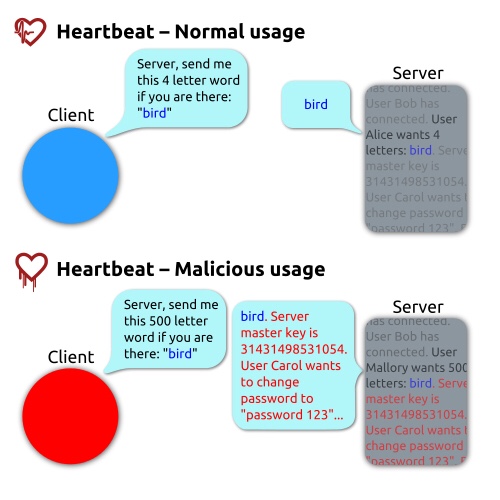
You can sign up to receive each day’s Start Up post by email. You’ll need to click a confirmation link, so no spam.

Start Up: ZTE still in trouble, a router subscription?, Tesla’s naggier autopilot, and more


Among things Facebook tracks: your phone’s battery level. Photo by Kārlis Dambrāns on Flickr.

A selection of 10 links for you. No nuclear weapons were harmed in the making of this historic set of links. I’m @charlesarthur on Twitter. Observations and links welcome.

Senators move to sink Trump’s ZTE deal • WSJ

Siobhan Hughes:

»

In a rare rebuke of President Donald Trump, Republican Senate leaders set up a vote for this week that would undo the White House deal to revive Chinese telecommunications company ZTE Corp.

Commerce Secretary Wilbur Ross was on Capitol Hill late Monday to lobby against the move. But Democratic and Republican lawmakers said that an agreement had been reached to wrap into the National Defense Authorization Act an amendment that would ban ZTE from buying components from U.S. suppliers. The Commerce Department in mid-April had banned exports to the company as punishment for breaking a settlement to resolve sanctions-busting sales to North Korea and Iran.

In private meetings with Republicans last week, the president argued in favor of the agreement, which saved ZTE by allowing the Chinese company to resume buying components from U.S. suppliers.

The Trump administration agreed to lift the ban as part of a larger deal in which ZTE would pay a $1 billion fine and allow U.S. enforcement officers inside the company to monitor its actions. Cutting off access to U.S. components was essentially a death knell for the company.

«

The twists! The turns! Also: this “rebuke” of Trump is so rare it must have come in riding a unicorn with a dodo on its head.
link to this extract


Here Are 18 things you might not have realized Facebook tracks about you • Buzzfeed

Nicole Nguyen:

»

1. information from “computers, phones, connected TVs, and other web-connected devices,” as well as your “internet service provider or mobile operator”
2. “mouse movements” on your computer
3. “app and file names” (and the types of files) on your devices
4. whether the browser window with Facebook open is “foregrounded or backgrounded,” and time, frequency, and duration of activities
5. information about “nearby Wi-Fi access points, beacons, and cell towers” and “signal strength” to triangulate your location (“Connection information like your IP address or Wi-Fi connection and specific location information like your device’s GPS signal help us understand where you are,” said a Facebook spokesperson.)
6. information “about other devices that are nearby or on their network”
7. “battery level”
8. “available storage space”
9. installed “plugins”
10. “connection speed”
11. “purchases [users] make” on off-Facebook websites
12. contact information “such as an address book” and, for Android users, “call log or SMS log history” if synced, for finding “people they may know” (Here’s how to turn off contact uploading or delete contacts you’ve uploaded.)
13. information “about how users use features like our camera” (The Facebook spokesperson explained, “In order to provide features like camera effects, we receive what you see through camera, send to our server, and generate a mask/filter.”)
14. “location of a photo or the date a file was created” through the file’s metadata
15. information through your device’s settings, such as “GPS location, camera, or photos”
16. information about your “online and offline actions” and purchases from third-party data providers
17. “device IDs, and other identifiers, such as from games, apps or accounts users use”
18. “when others share or comment on a photo of them, send a message to them, or upload, sync or import their contact information”

«

And that’s apart from all the demographic and other intensely personal data they hold. This list was released to the US congress on Tuesday.
link to this extract


How a powerful spy camera invented at Duke ended up in China’s hands • WSJ

Wenxin Fan:

»

Five years ago, a group of Duke University scientists developed a pioneering gigapixel camera to provide long-range surveillance for the U.S. Navy through a sponsorship from the Pentagon.

The technology, never picked up by the U.S. government, is now being used by Chinese police to identify people from nearly a football field away, after lead Duke researcher David Brady moved to China in 2016 to kick-start his business.

China’s easier access to startup funding, manufacturing supply chain and burgeoning demand for high-tech cameras attracted Mr. Brady, whose original venture in the U.S. failed to win over financial backers and customers. Within two years of the move to China, his company obtained enough funding to build its first commercial camera…

Mr. Wang helped land early investment from a former Shanghai government official who now runs a venture-capital fund. The investor, who said he had been searching for technologies he could bring back to China, invested almost $5 million in Aqueti. Mr. Wang said Aqueti has attracted about $28m in two rounds of fundraising—a far cry from the U.S., where Aqueti’s effort to raise $25,000 on crowdfunding site Kickstarter in 2013 yielded just $1,007.

To secure the investment, Mr. Brady, a professor in photonics at Duke’s campus in Kunshan, took a less conventional route. Rather than set up a joint venture, he packaged his original U.S. business into Aqueti China and obtained a license to use the camera technology, to which Duke owns the patent.

“Where else can we build these?” Mr. Brady said. “This is naturally a Chinese project.” In addition to the funding, the supply chain to make such cameras is in China, he added. “Even if you raised the money in the U.S., you uniformly spend the money in China.”

«

link to this extract


Plume is turning home Wi-Fi into a subscription service • The Verge

Jacob Kastrenakes:

»

First, Plume is launching a more capable, tri-band router called the SuperPod. (Its normal router is called the Plume Pod.) It’s a bit bigger and a lot more expensive, and there isn’t much special about it on its own; most mesh systems offer both dual- and tri-band options at this point.

The bigger change is Plume’s business model, which is completely changing today. Previously, you would buy a Plume router (or several of them, since this is a mesh system) and go on your way, just as you would with every other router in existence. But that’s not the case anymore.

Now, you’ll have to subscribe to Plume’s Adaptive WiFi service before you can even buy a router. And once you own Plume routers, you’ll want to stay subscribed, or else the routers won’t work — period. (Existing Plume Pod owners will be grandfathered in.)

Plume’s subscription service will cost $60 per year, or $200 for a lifetime membership. One of the most tangible things you get for paying is reduced pricing on Plume’s routers, as well as a warranty for each year that you pay (lifetime members get a flat five years). Plume’s current routers come in a three-pack for $179. With the subscription, you can get a three-pack (that includes two dual-band and one tri-band router) for $39, which is a major discount. It still gets pricey if you want to buy more routers (especially tri-band units), but it’s still cheaper than buying this kind of router somewhere else.

«

My (and probably your) first reaction is: get stuffed, Plume. But think a little. Yes, this is expensive for a router. However, Plume by virtue of demanding the subscription is now responsible for keeping their software up to date – and in a world where routers are increasingly under attack, that is big shift.

My concern would be that your router, effectively under their care (it’s what the sub is for, right?) might get hacked, and that you’d be unable to get satisfactory redress. That would be amazingly annoying. On balance, might want to just stuck with the ordinary routers.
link to this extract


Federal judge clears AT&T’s bid for Time Warner • CNBC

Sara Salinas:

»

A federal judge said Tuesday that AT&T’s $85.4bn purchase of Time Warner is legal, clearing the path for a deal that gives the pay-TV provider ownership of cable channels such as HBO and CNN as well as film studio Warner Bros.

The judge did not impose conditions on the merger’s approval.

The Justice Department sued last year to block the merger, citing concerns that AT&T, owner of satellite television provider DirecTV, could charge rival distributors more for Time Warner content, resulting in higher prices for consumers. But AT&T has countered that the logic doesn’t hold up since the point of owning content is to get widespread distribution, which brings in affiliate fees and advertising revenue.

US District Court Judge Richard Leon was expected to issue the decision following a six-week trial.

AT&T, also the No. 2 wireless carrier in the US, said it was buying Time Warner in October 2016 to diversify its revenues and also become a media powerhouse that could attract consumers by bundling entertainment with mobile service. CEO Randall Stephenson has said the deal would help AT&T compete against tech giants like Amazon and Netflix, which are investing more in content.

The outcome of the trial could have implications for future deals in the telecom and media industries, as well as vertical mergers, where a company buys its supplier.

«

AT&T’s point about content needing distribution is a strong one, but companies always want to turn into monopolies if they possibly can. It’s in their nature. Side note: once again Time Warner is the bride in a giant merger aimed at content and distribution; who can forget the doomed $165bn AOL-Time Warner merger of 2000? Maybe this will go the same way.
link to this extract


Xiaomi unveils big loss as it prepares to hawk IPO to investors • Bloomberg

Yuan Gao and Crystal Tse:

»

Xiaomi Corp. revealed it lost more than $1bn in the first three months of 2018, as the Chinese smartphone maker prepares to persuade investors to buy into the largest initial public offering since 2014.

The eight-year-old company has begun gauging demand for a first-time share sale intended to fuel its expansion beyond China and bankroll the development of devices and media services. It also published its first prospectus for the sale of China Depositary Receipts in Shanghai on Monday, saying it plans to use about 40% of the proceeds to enlarge its global footprint. Xiaomi reported a 7bn yuan ($1.1bn) net loss on revenue of 34.4bn ($5.3bn) yuan in the first quarter…

…The Beijing-based company saw sales from more lucrative smart-home devices and internet services grow as a proportion of overall revenue in the first quarter. Roughly 31.8% of Xiaomi’s revenue in 2018’s first three months came from products such as air purifiers and scooters and online services such as mobile apps, according to the filing. Those two segments contributed 29% of sales in 2017.

Its biggest business, smartphones that barely make a profit, declined in importance to just 67.5% of sales from more than 70% in 2017. Xiaomi said it made a profit excluding one-time items of 1.038bn ($162m) yuan in the first quarter.

«

Estimates are that it could be valued at around $90bn. Personally, I don’t see what its moat is – what is there to stop its users drifting away to other brands, or alternatively to stop other brands moving into its space? It’s already losing out on its best-known space, smartphones. Though with a $3.3bn revenue, it’s a significant player, ahead of LG, Sony, Motorola/Lenovo, and other names.

The phones are pretty cheap, though. On that revenue, and Counterpoint’s figure of 27m shipped, the ASP is $122 – which doesn’t leave any room for error.
link to this extract


Tesla updates Autopilot to force users to keep their hands on the wheel • BGR

Chris Mills:

»

Tesla is pushing a new update to its Autopilot cruise control system that “nags” drivers every 15 to 20 seconds if their hands are off the wheel, according to Tesla owners. The update also adds some performance improvements and bug fixes to the Autopilot system, but the addition of frequent nags is the big that’s already causing Tesla owners to complain.

Under the old system, drivers would still get an Autopilot “nag,” but the reminders were much less frequent. Drivers would be prompted to hold the steering wheel after five minutes if driving on a slow road, or after one to three minutes when going faster than 45mph.

Those “nags” kept Autopilot as a hands-free system in effect, just a more attentive one. More than anything, the nags served as a check that the drivers were paying attention, but it didn’t force drivers to have their hands constantly on the wheel. Under the new update, drivers will get a nag after just 15 seconds (the precise nag interval is reported as being anywhere from 15 to 30 seconds), which in practice means people will just keep their hands on the steering wheel. The steering system also appears to have got an update, so there’s a small amount of “play” in the wheel which drivers can wiggle to prove that they’re there, without overriding the Autopilot system and turning it off.

Users are already complaining about the nags…

«

Of course they are. But as Musk pointed out in reply to some of the complaints, if people get too complacent, then safety suffers. And Tesla needs to focus on safety after some high-profile crashes.
link to this extract


Apple 2019 iPhone likely to support USB-C • Digitimes

Cage Chao and Jessie Shen:

»

Apple is redesigning chargers and related interface for its next-generation iPhone and iPad devices, and will likely have its 2019 series of iPhones come with USB Type-C support, according to sources at analog IC vendors.

The adoption of USB Type-C in Apple’s MacBook series has already encouraged other notebook vendors to follow suit. However, sales of their new models that come with a Type-C port have been affected negatively by a general slowdown in the global PC market.

Apple’s adoption of Type-C in its iPhones will accelerate other smartphone companies’ adoption of the interface in their products, the sources indicated. The popularity of Type-C interface among handsets will still depend on the adoption in Apple’s iPhones, nevertheless, the sources said.

«

Noooooooooooooooo. Also, With hundreds of millions of Lightning ports and cables out there, would Apple really do this? Apple laptops and desktops are one thing; they sell in comparatively small numbers – tens of millions per year. Would it really do it on phones, though? I’d have thought going for wireless charging on iPhones and iPads is far more likely, while retaining Lightning.
link to this extract


Giant Martian dust storm threatens Opportunity Rover • ExtremeTech

Ryan Whitwam:

»

The Mars Reconnaissance Orbiter first spotted the beginnings of this super-storm on June 1st. The MRO team notified Opportunity’s controllers as soon as they saw how close it was to the rover. It didn’t take long for the dust storm to grow in size to cover more than 7 million square miles (11.2 million square kilometers), which is larger than North America. Stuck smack in the middle of it is Opportunity. The small blue dot in the below image of the storm (click to enlarge) indicates Opportunity’s location in Perseverance Valley.

This is a problem for the rover because unlike its younger cousin Curiosity, Opportunity is solar-powered. According to NASA, the opacity level or “tau” of the new storm is 10.8. That means very little light is reaching the surface. Opportunity reported a significant drop in battery charge last Wednesday, so NASA suspended science operations and placed the rover in low power mode.

The good news is Opportunity made contact with NASA over the weekend to confirm that it’s still operational. At the time, the rover reported an internal temperature of -20 degrees Fahrenheit (-29C). In low power mode, the rover conserves power to make sure its heaters remain active. Without the heaters, the rover’s batteries would likely fail and doom the mission.

«

Anyway, to get back to the subject of our talk today… who wants to get on Elon Musk’s missions to Mars?
link to this extract


Survey: most Facebook users don’t expect much privacy • Fast Company

Ben Bajarin, of Creative Strategies, surveyed consumers’ attitudes to privacy and Facebook, and found that attitudes depend on context:

»

Consumers are becoming more sensitive to companies’ aggressive tracking of their online behavior. That tracking is beginning to affect consumers’ expectation of privacy.

Our research shows that consumers don’t seem to mind seeing ads on Facebook. They even indicated some level of gratitude when they found a new product or service on Facebook that fit their interests. But consumers feel that Facebook crosses the “creepy” line when it targets its ads using personal information it gleaned outside of Facebook. To this point, 58% of consumers in our study said they’re less than comfortable with how good Facebook has become at tracking their general online activity.

It’s here I believe the technology industry needs to start a broader conversation on privacy. The industry may need provide some protections for consumers who do not want their non-public online behavior to be tracked by companies like Facebook and Google. Any regulation of Facebook and companies like it should focus on this. Perhaps some consumer data should be off-limits to companies like Facebook and Google even if that activity happens on their own platforms.

Consumers are becoming more aware of the sophisticated tracking and ad-targeting technology used by Facebook, Google, and others have become. That awareness is raising privacy concerns.

No, people will not leave Facebook in droves. But people may start using Facebook less, as 45% of our study respondents said they were. Or more consumers may change their privacy settings and on-Facebook practices to limit how much information they share. Our survey found that 39% of consumers had already changed their Facebook privacy settings because of privacy concerns.

«

link to this extract


Errata, corrigenda and ai no corrida: none notified

You can sign up to receive each day’s Start Up post by email. You’ll need to click a confirmation link, so no spam.