
Start Up No.2081: TikTok’s facial recognition privacy killer, the obituary pirates, work like Musk!, Nissan electrifies, and more


The really important update on the iPhone 15 Pro is just above its volume buttons. CC-licensed photo by Ged Carroll on Flickr.

You can sign up to receive each day’s Start Up post by email. You’ll need to click a confirmation link, so no spam.

A selection of 9 links for you. Lights, camera, sorted. I’m @charlesarthur on Twitter. On Mastodon: https://newsie.social/@charlesarthur. Observations and links welcome.


The end of privacy is a Taylor Swift fan TikTok account armed with facial recognition tech • 404 Media

Joseph Cox:

»

A viral TikTok account is doxing ordinary and otherwise anonymous people on the internet using off-the-shelf facial recognition technology, creating content and growing a following by taking advantage of a fundamental new truth: privacy is now essentially dead in public spaces.

The 90,000 follower-strong account typically picks targets who appeared in other viral videos, or people suggested to the account in the comments. Many of the account’s videos show the process: screenshotting the video of the target, cropping images of the face, running those photos through facial recognition software, and then revealing the person’s full name, social media profile, and sometimes employer to millions of people who have liked the videos. There’s an entire branch of content on TikTok in which creators show off their OSINT doxing skills—OSINT being open source intelligence, or information that is openly available online. But the vast majority of them do it with the explicit consent of the target. This account is doing the same, without the consent of the people they choose to dox. As a bizarre aside, the account appears to be run by a Taylor Swift fan, with many of the doxing videos including Swift’s music, and including videos of people at the Eras Tour.

404 Media is not naming the account because TikTok has decided to not remove it from the platform. TikTok told me the account does not violate its policies; one social media policy expert I spoke to said TikTok should reevaluate that position.

«

Related: I reviewed Kashmir Hill’s new book about Clearview AI, which also solved this challenge a few years ago and began selling it to US police departments – really cheaply.

It seems the cat is very much out of the bag on facial recognition for the masses.
unique link to this extract


The Action Button is the most significant new iPhone feature in years • The Verge

Dan Seifert:

»

Apple showcased the Action Button in its announcement of the iPhone 15 Pro, and it was highlighted in many reviews that followed (including our own). But it wasn’t until users got their hands on the iPhone 15 Pro late last week that the Action Button’s potential was fully realised.

By default, the button acts as a direct replacement for the old mute switch: you use it to change the ringer settings on your phone. In the iPhone’s Settings app, you can change it to do a handful of other things, like turning on the flashlight, launching the camera, or toggling Do Not Disturb. But the real power of the Action Button is unlocked when you pair it with Apple’s programmable Shortcuts app. From there, you can do just about anything you might imagine on your phone in a quicker, more convenient way.

The Settings app will suggest some simple shortcuts to bind to the Action Button, but things get a lot more interesting when you tap into custom shortcuts. You can program the Action Button to display a menu of other shortcuts that you can then run from a tap on the screen. You can make it do different things depending on your location, time of day, or even device orientation. The limit is really your imagination — and your tolerance for programming in the Shortcuts app, which can be frustrating and tedious. (Fortunately, I have some tips for this below.)

«

Initially seems, as he says, like a very minimal thing: oh, a button that you can program. But it opens up a huge range of possibilities, and shows how we really are carrying around little computers. Yes, Samsung has had a programmable side button for a while, but it doesn’t have the power of Shortcuts to expand what it can do: it opens the camera, or an app, or its Bixby assistant.
unique link to this extract


The bizarre cottage industry of YouTube obituary pirates • WIRED

Kate Knibbs:

»

People who lose somebody, whether it’s a dearly cherished family member or a long-lost acquaintance, must now navigate a slimy cottage industry of profiteers trying to hijack their attention. Instead of finding important funeral details or where to write a remembrance or send flowers, they are confronted by a flood of low-budget videos crudely summarizing the death notices of the person they’ve lost.

Obituary pirating, where people scrape and republish obituaries from funeral homes and websites like Legacy.com, has been an ethically dubious business for years. Piracy websites are often skilled enough at search engine optimization to rise to the top of search results, and they use the resulting traffic to charge a premium for digital ads that appear next to text lifted wholesale from funeral homes, local newspapers, and other authorized obituary publishers. Occasionally, these pirate sites go a step further, manipulating bereaved people into buying sympathy gifts like candles or flowers and pocketing the money.

The flood of YouTube obituary videos is a janky update on this practice. Some of these channels upload dozens of death notice summaries every hour, abandoning any pretense of looking like an official source of information in an effort to churn out as many videos as they can.

Although text-based obituary pirating has been a scourge on the industry for years, these videos are a more recent phenomenon. “This is a new one for me,” says Jessica Koth, director of public relations for the National Funeral Directors Association. “These videos are not sanctioned or authorized by the funeral home or family of the person who died. I would imagine they would be quite upsetting to the families involved.”

«

There’s essentially nothing that isn’t seen as somehow monetisable through ads on YouTube.
unique link to this extract


The Musk algorithm • Hey.com

David Heinemeier Hansson:

»

The part of the business book [as he views the Musk biography] I’ve enjoyed the most is the countless illustrations of how Musk applies his “algorithm”. A methodology for shipping everything from electric cars to Mars rockets to flamethrowers to humanoid robots. Quoted in full:

1. Question every requirement. Each should come with the name of the person who made it. You should never accept that a requirement came from a department, such as from “the legal department” or “the safety department.” You need to know the name of the real person who made that requirement. Then you should question it, no matter how smart that person is. Requirements from smart people are the most dangerous, because people are less likely to question them. Always do so, even if the requirement came from me. Then make the requirements less dumb.
2. Delete any part or process you can. You may have to add them back later. In fact, if you do not end up adding back at least 10% of them, then you didn’t delete enough.
3. Simplify and optimize. This should come after step two. common mistake is to simplify and optimize a part or a process that should not exist.
4. Accelerate cycle time. Every process can be speeded up. But only do this after you have followed the first three steps. In the Tesla factory, I mistakenly spent a lot of time accelerating processes that I later realized should have been deleted.
5. Automate. That comes last. The big mistake in Nevada and at Fremont was that I began by trying to automate every step. We should have waited until all the requirements had been questioned, parts and processes deleted, and the bugs were shaken out.

…You can absolutely learn from people you wouldn’t want to be. Extracting wisdom from Musk’s success does not oblige you to become his disciple or his mirror.

«

Reasonable point, but there’s a lot of competition to apply that algorithm, and so it’s the ones who take it to the absolute beyond-reasonable-total-jerk who take the prize. Though plenty do the same and don’t take the prize.
unique link to this extract


Nissan to go all-electric by 2030 despite petrol ban delay • BBC News

Simon Jack:

»

Nissan will accelerate plans towards electrification by committing that all vehicles sold in Europe will be electric by 2030.

The announcement comes despite the UK postponing its 2030 ban on the sale of new petrol and diesel cars to 2035. Nissan’s boss said the firm’s move was “the right thing to do”.

Car trade body the SMMT has voiced concerns that the postponement of the ban would see consumers delay the switch to electric vehicles.

Nissan will also introduce new battery technology by the end of the decade that it said will reduce both the charging time and cost of electric vehicles (EVs).

“Nissan will make the switch to full electric by 2030 in Europe. We believe it is the right thing to do for our business, our customers and for the planet,” said Nissan’s chief executive Makoto Uchida. In an interview with the BBC, Mr Uchida said the company was aiming to bring down the cost of electric vehicles for customers, so that they were no more expensive than petrol and diesel cars.

“It may take a bit of time, but we are looking at the next few years,” he said.

«

Nissan is aiming for price parity with ICEs by 2030. What’s significant about this story is that Nissan chose the BBC’s Business Editor to tell it to: essentially, a rebuff to Rishi Sunak putting back the deadline last week, and encouraging the EU to move it forward.

Nissan is also probably a bit peeved with the UK government: it has an EV battery manufacturing plant in the UK, and is putting £1bn (plus £100m from, um, the UK government) into expanding its carmaking facility.
unique link to this extract


Guidance on AI detection, and why we’re disabling Turnitin’s AI detector • Vanderbilt University

»

In April of this year, Turnitin released an update to their product that reviewed submitted papers and presented their determination of how much of a paper was written by AI. As we outlined at that time, many people had important concerns and questions about this new tool, namely how the product exactly works and how reliable the results would be. After several months of using and testing this tool, meeting with Turnitin and other AI leaders, and talking to other universities who also have access, Vanderbilt has decided to disable Turnitin’s AI detection tool for the foreseeable future. This decision was not made lightly and was made in pursuit of the best interests of our students and faculty. 

When Turnitin launched its AI-detection tool, there were many concerns that we had. This feature was enabled for Turnitin customers with less than 24-hour advance notice, no option at the time to disable the feature, and, most importantly, no insight into how it works. At the time of launch, Turnitin claimed that its detection tool had a 1% false positive rate (Chechitelli, 2023). To put that into context, Vanderbilt submitted 75,000 papers to Turnitin in 2022. If this AI detection tool was available then, around 750 student papers could have been incorrectly labeled as having some of it written by AI.

«

That’s a pretty bad false positive rate in terms of sheer numbers. Nice of them to let students know. (Turnitin is still used to test against alleged plagiarism on other work by students.)
unique link to this extract


Covid helped China secure the DNA of millions, spurring arms race fears • Washington Post

Joby Warrick and Cate Brown:

»

The Fire-Eye [portable lab developed by China] excelled not only at cracking the genetic code for viruses, but also for humans, with machines that can decipher genetic instructions contained within the cells of every person on Earth, according to its Chinese inventors. [I think that means “sequence human genomes” – Overspill Ed.] In late 2021, with the pandemic still raging, Serbian officials announced they were working with a Chinese company to convert the lab into a permanent facility with plans to harvest and curate the entire genomes, or genetics blueprints, of Serbian citizens.

Serbia’s scientists were thrilled, and the country’s prime minister, Ana Brnabic, praised China for giving the Balkan country the “most advanced institute for precision medicine and genetics in the region.” Yet now, China’s Fire-Eye labs — scores of which were donated or sold to foreign countries during the pandemic — are attracting the attention of Western intelligence agencies amid growing unease about China’s intentions. Some analysts perceive China’s largesse as part of a global attempt to tap into new sources of highly valuable human DNA data in countries around the world.

That collection effort, underway for more than a decade, has included the acquisition of U.S. genetics companies as well as sophisticated hacking operations, U.S. and Western intelligence officials say. But more recently, it received an unexpected boost from the coronavirus pandemic, which created opportunities for Chinese companies and institutes to distribute gene-sequencing machines and build partnerships for genetic research in places where Beijing previously had little or no access, the officials said.

«

Hard to tell how much this is paranoia and how much is justified. It’s a deeply researched story, though again: how much is joining dots that are just dots?
unique link to this extract


AlphaFold touted as next big thing for drug discovery — but is it? • Nature

Carrie Arnold:

»

Last month, the biotechnology firm Recursion, based in Salt Lake City, Utah, announced that it had calculated how 36 billion potential drug compounds could bind to more than 15,000 human proteins whose structures were predicted by AlphaFold. To pull off the massive computation, Recursion used its own AI tool, MatchMaker, that ‘matched’ binding pockets on the predicted structures with suitably shaped small molecules, or ligands, from a database called Enamine Real Space.

“Lots of people have predicted how molecules would bind with proteins,” says Chris Gibson, Recursion’s co-founder and chief executive, “but this many predictions is pretty unprecedented”.

But not everyone is as bullish about AlphaFold revolutionizing drug discovery — at least, not yet. In a paper published in eLife the day before Recursion’s announcement, a team of scientists at Stanford University in California showed that AlphaFold’s prowess at predicting protein structures doesn’t yet translate into solid leads for ligand binding.

“Models like AlphaFold are really good with [protein] structures, but we need to put some thought into how we’re going to use them for drug discovery,” says Masha Karelina, a biophysicist at Stanford and co-author of the paper.

Others who spoke to Nature agree that this type of effort offers impressive amounts of data, but they aren’t yet sure about its quality. Biotech announcements such as the one from Recursion aren’t typically accompanied by validation data — confirmation from laboratory experiments that a model has accurately predicted binding.

«

(Ligand: “an ion or molecule with a functional group that binds to a central metal atom to form a coordination complex”.)
unique link to this extract


3 iOS 0-days, a cellular network compromise, and HTTP used to infect an iPhone • Ars Technica

Dan Goodin:

»

Apple has patched a potent chain of iOS zero-days that were used to infect the iPhone of an Egyptian presidential candidate with sophisticated spyware developed by a commercial exploit seller, Google and researchers from Citizen Lab said Friday.

The previously unknown vulnerabilities, which Apple patched on Thursday, were exploited in clickless attacks, meaning they didn’t require a target to take any steps other than to visit a website that used the HTTP protocol rather than the safer HTTPS alternative. A packet inspection device sitting on a cellular network in Egypt kept an eye out for connections from the phone of the targeted candidate and, when spotted, redirected it to a site that delivered the exploit chain, according to Citizen Lab, a research group at the University of Toronto’s Munk School.

Citizen Lab said the attack was made possible by participation from the Egyptian government, spyware known as Predator sold by a company known as Cytrox, and hardware sold by Egypt-based Sandvine. The campaign targeted Ahmed Eltantawy, a former member of the Egyptian Parliament who announced he was running for president in March. Citizen Lab said the recent attacks were at least the third time Eltantawy’s iPhone has been attacked. One of them, in 2021, was successful and also installed Predator.

“The use of mercenary spyware to target a senior member of a country’s democratic opposition after they had announced their intention to run for president is a clear interference in free and fair elections and violates the rights to freedom of expression, assembly, and privacy,” Citizen Lab researchers Bill Marczak, John Scott-Railton, Daniel Roethlisberger, Bahr Abdul Razzak, Siena Anstis, and Ron Deibert wrote in a 4,200-word report. “It also directly contradicts how mercenary spyware firms publicly justify their sales.”

«

Amazing how this thing we’re assured by the vendors doesn’t happen keeps happening.
unique link to this extract


• Why do social networks drive us a little mad?
• Why does angry content seem to dominate what we see?
• How much of a role do algorithms play in affecting what we see and do online?
• What can we do about it?
• Did Facebook have any inkling of what was coming in Myanmar in 2016?

Read Social Warming, my latest book, and find answers – and more.


Errata, corrigenda and ai no corrida: none notified
Start Up No.2080: Sunak kills home insulation group, putting AI to work, the trouble with mobile text, Pixel camera, and more


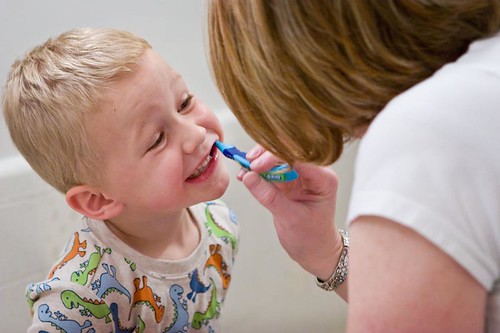
Could genetically engineered bacteria make tooth decay (and brushing?) a thing of the past? CC-licensed photo by makelessnoise on Flickr.

You can sign up to receive each day’s Start Up post by email. You’ll need to click a confirmation link, so no spam.

A selection of 9 links for you. Smile! I’m @charlesarthur on Twitter. On Mastodon: https://newsie.social/@charlesarthur. Observations and links welcome.


About — Lantern Bioworks

»

Lantern Bioworks is a biotech startup dedicated to developing effective oral probiotics as a means of preventing dental caries. By harnessing the power of beneficial bacteria, we believe that it is possible to fully eradicate cavities worldwide.

«

This is pretty mindblowing, as prospects go: it says a strain of Streptococcus mutans (S.mutans) – which lives around the teeth and converts sugar into acid which then eats into tooth enamel and causes cavities – has been created by genetic engineering which instead produces ethanol.

And this was back in 1985. Clinical trials in the 2000s led to no ill effects – the company claims. The idea isn’t new: it’s been written about multiple times (here in 2016, here in 2002 – with the latter describing trying it out himself and a medical colleague, but that “wives and children” were not then infected by it 14 years later.

The problem is, this doesn’t have a valid patent: it ran out. Plus there’s the question of whether the bacteria might colonise other parts of the body. Plus we’d be ever so slightly intoxicated all the time.

Well, maybe it’s not all bad. (Thanks Adewale for the link.)
unique link to this extract


The workers at the frontlines of the AI revolution • Rest of World

Andrew Deck:

»

Since the blockbuster launch of ChatGPT at the end of 2022, future-of-work pontificators, AI ethicists, and Silicon Valley developers have been fiercely debating how generative AI will impact the way we work. Some six months later, one global labor force is at the frontline of the generative AI revolution: offshore outsourced workers.

These include workers hired per commission or on a contractual basis, such as freelance copywriters, artists, and software developers, as well as more formal offshore workforces like customer service agents. As generative AI tools present a new model for cost cutting, pressure is quickly mounting for these outsourced workers to adapt or risk losing work.

Rest of World spoke to outsourced workers across different industries and regions, including call center operators in Manila, programmers in Lahore, and designers in Cairo. Many said they are already seeing generative AI change the demand for their work and the stability of their income. But while some brace for layoffs or diminishing commissions, others have embraced generative AI tools in an effort to keep ahead of the curve. If generative AI represents a tectonic shift in the way we work, offshore outsourced workers are at the fault lines.

«

Typically clever choice of topic, and amazing in revealing how far ChatGPT use has spread: Lagos, Guadalajara, the Philippines, Shenzhen.
unique link to this extract


The invisible problem • Scott Jenson

Jenson works at Google:

»

Whenever I explain my research at Google into mobile text editing, I’m usually met with blank stares or a slightly hostile “Everyone can edit text on their phones, right? What’s the problem?”

Text editing on mobile isn’t ok. It’s actually much worse than you think, an invisible problem no one appreciates. I wrote this post so you can understand why it’s so important. But as it’s a rather nuanced issue, I may lose you. To help, I’ve sprinkled lots of headers throughout so if you get bored, just skip ahead.

TL;DR: Android and iOS share a common problem: they copied desktop text editing conventions, but without a menu bar or mouse. This forced them to overload the tap gesture with a wide range of actions: placing the cursor, moving it, selecting text, and invoking a pop-up menu. This results in an overly complicated and ambiguous mess-o-taps, leading to a variety of user errors.

It’s less of a problem if you only do short bursts of text in social media or messaging apps. But doing anything more complicated like an email gets tedious. However, in my user study on text editing, I was surprised to find that everyone had significant problems and rather severe workarounds for editing text.

«

The appalling thing about reading this is that it makes you realise how bad things are. Even worse, Jenson has the (or a) solution – but doesn’t think anyone would take it up.
unique link to this extract


Pixel 8 camera features “leak” with manual controls and face-changing AI • 9to5 Google

Ben Schoon:

»

The focus of Google’s Pixel phones has always been on the camera, and it seems there’s a lot of new stuff coming with the Pixel 8 series, as a new leaked ad reveals manual camera controls, new features, and a whole bunch of AI in the pipeline.

A leaked video posted to 91Mobiles by the reliable leaker Kamila Wojciechowska offers a pretty detailed breakdown of all of the new camera features coming to Google Pixel 8 and Pixel 8 Pro, including some returning favorites like Night Sight, Astrophotography, and Super Res Zoom.

What’s new this year, though, is actually quite a bit.

That starts with “Video Boost,” which Google says will use AI to create a “smoother view” as well as bringing Night Sight’s effects to video, as we had previously reported was coming. The video also gives us a first look at “Audio Eraser” – another feature that popped up previously – with a quick example of removing city noise from the background of a video of a cello player.

Perhaps the most wild use of AI in the video, though, is a Google Photos feature on Pixel 8 where the app will literally be able to change people’s faces in a shot to create the shot you want – the Michael Scott treatment, if you will. There’s no explanation on how this works, but it seems like it uses multiple, similar shots to create one final product. Again, it looks absolutely wild.

«

Google certainly doesn’t like surprising people; it’s been giving out the details of the upcoming Pixels for weeks. Now there’s video showing the face-replacement AI (turning that frown upside down!), and we can now definitely say that you’ll no longer even be able to trust photos taken straight off a camera.
unique link to this extract


Rishi Sunak scraps home energy efficiency taskforce • BBC News

Ione Wells:

»

A taskforce to speed up home insulation and boiler upgrades has been disbanded, the BBC can reveal.

The group – which included the chair of the National Infrastructure Commission Sir John Armitt and other leading experts – was only launched in March. But it appears to be a casualty of Rishi Sunak’s decision to scrap energy efficiency regulations for landlords in an overhaul of green policies.

Members were informed in a letter, seen by the BBC, that it was being wound up. Energy efficiency minister Lord Callanan told the group its work would be “streamlined” into ongoing government activity.

A spokesperson for the Energy Security and Net Zero department said: “We would like to thank the Energy Efficiency Taskforce for its work in supporting our ambition to reduce total UK energy demand by 15% from 2021 levels by 2030.

“We have invested £6.6bn in energy efficiency upgrades this Parliament and will continue to support families in making their homes more efficient, helping them to cut bills while also achieving net zero in a pragmatic, proportionate and realistic way.”

But former Conservative MP Laura Sandys, who sat on the taskforce, said she was “disappointed” by the decision to disband it and “confused” about the government’s intentions on the cost of living. In a post on X, formerly Twitter, she said energy efficiency must be the “first priority to reduce citizens’ costs” and “improve energy security”.

«

Just incredible. Data in 2020 found 12m homes in the UK with a “D” or worse rating, out of nearly 24m “occupied residential dwellings”. The £37bn spent on subsidising energy bills last year could have been better targeted at improving the worst homes.
unique link to this extract


Spotify code suggests HiFi tier is coming with lossless audio for $20 / month • The Verge

Emma Roth:

»

Spotify’s long-awaited HiFi tier could finally be getting closer to launch. Code within the Spotify app reveals new details about the “Supremium” tier, which could feature 24-bit lossless audio, the ability to create playlists with AI, and more, as spotted by u/Hypixely on Reddit.

Spotify first announced the more expensive HiFi tier in February 2021, but the feature has been stuck in limbo since then. The last we heard about the tier was in June of this year when a Bloomberg report found Spotify had rebranded the HiFi tier as “Supremium.” The Redditor’s findings corroborate this claim, as they say Spotify now refers to the audio as lossless with “no lag and delays.”

Additionally, the Redditor found that the Supremium tier could feature 30 hours of audiobook listening each month, along with the ability to sort your library by mood, activity, and genre.

The app’s code also mentions advanced mixing tools, allowing you to customize the order of playlists by beats per minute, enable smooth transitions between songs, and filter songs in a playlist by mood or genre. There’s even a “soundcheck” feature that lets you “learn more about your

«

The audiobooks might be attractive to some people, but the price hike – compared to the $11/month it presently costs (expect $ to translate directly to £ and €) – is pretty substantial for lossless audio, which makes a difference basically nobody can hear without the world’s most expensive studio speakers.
unique link to this extract


OpenAI and ChatGPT Lawsuit List • Originality.AI

Jonathan Gilham:

»

We looked at all lawsuits occurring against OpenAI and listed them below. In addition to the relevant detail we had a lawyer provide some commentary. This list will remain updated as an easy-to-reference location for any lawsuits against OpenAI ordered by date (oldest to newest).

«

Currently standing at five. I wonder if OpenAI has a sign in its HQ with “– DAYS SINCE A LAWSUIT WAS FILED AGAINST US”.
unique link to this extract


Warning: update your iPhone 15 to iOS 17.0.2 before transferring data from another iPhone • MacRumors

Joe Rossignol:

»

If you are unboxing an iPhone 15, iPhone 15 Plus, iPhone 15 Pro, or iPhone 15 Pro Max today, make sure to update the device to iOS 17.0.2 before transferring data to the device from another iPhone, or else you might encounter issues.

iOS 17.0.2 is only available for the iPhone 15 lineup. Apple says the update fixes an issue that may prevent transferring data directly from another iPhone during the device setup process, so installing it is very important. The update should appear during the setup process, or it can be installed via the Settings app under General → Software Update if you proceeded to set up the device as new and transfer data later.

If you already attempted to transfer data from another iPhone before updating to iOS 17.0.2, and your iPhone 15 is now stuck showing an Apple logo, Apple has shared a new support document with steps on how to restore the iPhone:

1. Connect your new iPhone to a computer with a cable
2. Press and quickly release the volume up button. Press and quickly release the volume down button. Then, press and hold the side button
3. Continue to hold while the Apple logo appears and don’t let go until an image of a computer and cable appears
4. On your computer, locate your new iPhone in the Finder or in iTunes
5. Choose Restore when you see the option to Restore or Update.

«

Happily I missed the delivery of my new iPhone last week so didn’t get caught by this. Somewhat embarrassing for Apple, though.
unique link to this extract


Craptacular is more like it • Daring Fireball

John Gruber did a detailed takedown of the WSJ article that I linked to last week:

»

We can’t know that Qualcomm is behind this, but we do know that Qualcomm threw shade at Apple’s modem efforts with a press release about a renewed deal between the companies the day before the iPhone announcement event. How better to follow that up than a new story painting a picture of technical ineptitude and managerial chaos inside Apple’s modem team, set to appear the day before the iPhones 15 hit customers’ hands? This narrative especially suits Qualcomm if they’re concerned about their own engineering talent defecting.

«

I’m slightly annoyed at myself for not having picked up the inconsistencies in the WSJ story that Gruber points out. There are plenty, mostly around timing and lead times and sources. Evidently, Apple hasn’t managed to make its own modem – yet. But is everything a shambles? Anyhow, this story will not make the already frosty relationship between Apple and Qualcomm any warmer. It may even spur Apple’s team on.
unique link to this extract


• Why do social networks drive us a little mad?
• Why does angry content seem to dominate what we see?
• How much of a role do algorithms play in affecting what we see and do online?
• What can we do about it?
• Did Facebook have any inkling of what was coming in Myanmar in 2016?

Read Social Warming, my latest book, and find answers – and more.


Errata, corrigenda and ai no corrida: none notified

Start Up No.2079: how Apple didn’t build a modem, the smartphone extinction, TikTok’s Africa bans, the grift switch, and more


Would you be astonished to hear that NFTs are worthless now? Did you think they were worthful before? CC-licensed photo by Marco Verch on Flickr.

You can sign up to receive each day’s Start Up post by email. You’ll need to click a confirmation link, so no spam.


There’s another post coming this week at the Social Warming Substack at about 0845 UK time. Free signup.


A selection of 9 links for you. Exciting? I’m @charlesarthur on Twitter. On Mastodon: https://newsie.social/@charlesarthur. Observations and links welcome.


Inside Apple’s spectacular failure to build a key part for its new iPhones • WSJ

Aaron Tilley and Yang Jie:

»

Apple had planned to have its modem chip ready to use in the new iPhone models. But tests late last year found the chip was too slow and prone to overheating. Its circuit board was so big it would take up half an iPhone, making it unusable.

…[Apple chip chief Johny] Srouji flew to Munich to greet Apple’s newly acquired Intel wireless employees in December 2019. He told a gathering that the modem-chip project would be a game changer for Apple, the next step in the company’s evolution, said people who watched the meeting. He said the chip would distinguish Apple devices, as Apple’s processors had done.

As Apple filled the project’s ranks with Intel engineers and others hired from Qualcomm, company executives set a goal to have the modem chip ready for fall 2023. It soon became apparent to many of the wireless experts on the project that meeting the goal was impossible.

Apple found that employing the brute force of thousands of engineers, a strategy successful for designing the computer brain of its smartphones and laptops, wasn’t enough to quickly produce a superior modem chip.

Modem chips are trickier to make than processing chips because they must work seamlessly with 5G wireless networks, as well as the 2G, 3G and 4G networks used in countries around the world, each with its own technological quirks. Apple microprocessors run software programs designed solely for its iPhones and laptops. 

Apple executives who didn’t have experience with wireless chips set tight timelines that weren’t realistic, former project engineers said. Teams had to build prototype versions of the chips and certify they would work with the many wireless carriers worldwide, a time-consuming job.

Executives better understood the challenge after Apple tested its prototypes late last year. The results weren’t good, according to people familiar with the tests. The chips were essentially three years behind Qualcomm’s best modem chip. Using them threatened to make iPhone wireless speeds slower than its competitors.

«

(The link should be free to read.)
unique link to this extract


Nearly 500 brands exited smartphone market during 2017-2023 • Counterpoint Research

»

At its peak in 2017, the global smartphone market saw more than 700 brands fiercely competing and contributing to the total annual sales of over 1.5 billion units. Fast forward to 2023 and the number of active brands (that have recorded sell-through volumes) is down by a third to almost 250, according to Counterpoint’s Global Handset Model Sales Tracker, which has been tracking sales of these brands across more than 70 key countries.

A maturing user base, improving device quality, longer replacement cycles and a growing refurbished secondary market, along with economic headwinds, supply-chain bottlenecks, major technological transitions such as 4G to 5G, and the growing scale and concentration of power in a handful of brands, have gradually whittled down the number of active brands and their volumes over the years.

It has become difficult to remain profitable and feasible in this maturing marketplace. For example, major local smartphone brands, known as “local kings”, like Micromax, Intex and Karbonn in India; InnJoo and Xtouch in the Middle East and Africa; Meizu, Meitu, Gionee and Coolpad in China; Kyocera and NEC in Japan; and LG in South Korea, have exited over the last five years.

Strikingly, the decline in the number of active brands is almost entirely coming from local brands. The number of global brands has remained consistent at over 30. Most local brands operate in regions that have fragmented markets across wide geographies, like Asia-Pacific, Latin America and Middle East and Africa. Such brands focus on customers looking for affordable devices.

«

Combination of the pandemic, followed by component shortages, followed by the “macroeconomic climate”. Surely overdue, but still dramatic – and shows that the smartphone is well into its maturity.
unique link to this extract


Why TikTok is banned in some African countries • Rest of World

Damilare Dosunmu:

»

TikTok is getting caught in political and moral disputes across several African nations.

In August, Senegal and Somalia banned the app, with calls to do the same in Kenya and Uganda. While local governments and petitioners have cited security risks and morality as reasons to take action against TikTok, lawyers and activists told Rest of World via text and social media messages that the Chinese app is falling prey to politically motivated decisions.

“It seems it’s a political decision shrouded in a morality cloak,” said Mohamed Mubarak, a Somali policy analyst. “The government is unhappy about the political parody of the president and [prime minister] and is using ‘human rights’ as a justification.” In its official announcement of the ban on August 20, the Somali government said its decision was based on the damage the app had caused to the country’s social morals and cultural values.

In an emailed statement to Rest of World, TikTok said it’s engaging with local governments and key stakeholders to arrive at a resolution that ensures it continues operations in Africa. “At TikTok, we have over 40,000 talented safety professionals dedicated to keeping TikTok safe,” the email read. “TikTok is for users aged 13 and above. One of our most important commitments is supporting the safety and well-being of teens, and we recognise this work is never finished.”

«

unique link to this extract


DuckDuckGo CEO says it takes ‘too many steps’ to switch from Google • Bloomberg via Yahoo

Todd Shields:

»

Founded in 2008, DuckDuckGo currently has about a 2.5% share of the market for search in the US, said CEO Gabriel Weinberg, and conducts about 100 million searches a day globally. In comparison, Google conducts several billion searches daily.

Weinberg said about 30% to 40% of DuckDuckGo’s users have a “strong preference” for privacy and that most of the company’s users switch over from Google.” The company considers Google to be “far and away” its biggest competitor.

“Switching is way harder than it needs to be,” Chief Executive Officer Gabriel Weinberg said in federal court on Thursday. “There’s just too many steps.”

Weinberg testified Thursday in the government’s antitrust trial against Google’s parent, Alphabet Inc. The Department of Justice claims Google pays more than $10 billion a year to tech rivals, smartphone makers and wireless providers to be the preselected option, or default, on PCs and mobile phones.

By illegally maintaining this monopoly, the government alleges, Google has kept rival search engines such as Microsoft Corp.’s Bing and DuckDuckGo from gaining the scale needed to compete. Google says it has won its market share, which the government has pegged at almost 90%, because it has the best search engine.

«

I’ve met Weinberg a couple of times – he’s a nice guy, making a useful search engine (I’ve used DDG for more than a decade). He says it takes 15 or more clicks to change the default search on Android; it should be one. Google said it’s four on iOS.
unique link to this extract


Searching for a breakup • Medium

Scott Galloway:

»

what was the last innovative Google product? Restructuring the brand’s architecture under Alphabet? Earnings growth has, mostly, been a function of finding new ways to extract profits from its monopoly: Google search results have become a billboard for Google-sponsored results interspersed with content harvested from other sites and links to Google’s own services.

In 2020, The Markup found that Google-associated results (ads for or links to the company’s other services) constituted over 60% of the first screen of an average Google search result. And in 1 of 5 searches, the entire first screen is Google results. This is the meat of its business: search ads generate 57% of the company’s revenue.

Despite turning search results into a carousel of ads and Google services, Google has racked up 90% market share in search queries — 95% on mobile. How? As Microsoft once did, it leverages its control over the most popular mobile operating system (Android) and spends unprecedented sums on deals assuring it is the default search engine on computers and phones — more than $10bn per year. Google says it’s the leader because it has the best product, but if that’s so … why pay $10bn a year to be the default?

«

It’s slightly post-hoc to say “it leverages its control over the most popular mobile operating system” – Android’s success wasn’t a foregone conclusion in 2010, for example, when Nokia and Windows Phone were still alive. (Though, strategically, Eric Schmidt – on Apple’s board – had tied up the search deal on the first iPhone.)

But the final question – if you’re so great, why do you have to pay people so much to tell you that you’re great? – is the important one, and is coming under the spotlight in the US antitrust trial.
unique link to this extract


March 2023: a gadget recession • Inside Orchard

Neil Cybart, on his site for observations about the wider tech market, writing back in March (before the Vision Pro was unveiled, but was suspected):

»

While economic and competitive pressures are genuine, there is another factor unfolding in the gadget space that can’t be ignored. Beginning at the tail end of the pandemic, various tech YouTubers began to speak up about a marked slowdown in views and engagement. Things felt off in the tech vertical, and the pandemic didn’t seem to fully explain the situation.

In retrospect, the changes may be the byproduct of something akin to a settling out process in the gadget space. We aren’t quite ready to jump into the face wearables era. Apple is expected to unveil their move into the space in a few months with a launch later in the year. Meanwhile, the smartphone and tablet space has been unfolding along ecosystem grounds. The iPhone business has been a replacement business for years with the majority of sales going to existing iPhone users upgrading their device.

Taking a step back to look at broader industry trends, a gadget recession likely won’t be met with a wave of M&A. Instead, it is far more likely management teams will reassess their commitment to hardware in the first place. News of Microsoft and Google getting out of hardware altogether would not surprise me. There comes a point when years of investment dollars and managerial/talent resources just become too hard to justify when there is little to nothing to show for such efforts. The rationale that these companies gave for being in hardware in the first place has never been strong either.

«

Since then Microsoft’s hardware chief has jumped ship (to Amazon, whose hardware chief departed). There’s a definite feeling that the hardware space has been wrung absolutely dry.
unique link to this extract


Microsoft’s Surface Go 4 gets a much-needed performance boost • The Verge

Jess Weatherbed:

»

Microsoft has announced the Surface Go 4 — the latest version of its affordable 2-in-1 laptop series — at its Surface device launch event today. The new Go 4 features some minor performance upgrades over its predecessor, but it won’t be sold to consumers — the company says it’s specifically targeted at businesses and frontline workers.

…But the overall design being near-identical to its predecessor doesn’t particularly bode well for the Surface Go 4. In our review of the Surface Go 3, The Verge lambasted the convertible device for its flimsy build quality, poor battery life, and being too expensive for what you’re actually getting.

A quick hands-on test of the Surface Go 4 confirmed our suspicions. Performance was slow when running through some everyday tasks like web browsing and took embarrassingly long to switch between display orientations. Still, Microsoft is claiming that performance on the Windows 11 Pro version of the Surface Go 4 should be 80% faster than its predecessor.

«

Businesses only? One could imagine that this is a sign of Microsoft retreating from the wider market, perhaps.
unique link to this extract


The social media panic-mongers have pivoted to AI • The Daily Beast

Louis Anslow:

»

Over a hundred influential leaders in media, government, philanthropy, and business gathered in New York City to hear [Tristan] Harris and his Center for Humane Technology co-founder, Aza Raskan, make a presentation which opened with a comparison of AI to nuclear weapons. This analogy was designed to evoke fear, leaving no room for nuanced discussions of risk and benefit (nuclear technology is also a critical tool for carbon free energy, for example.) This notion was seemingly borrowed from Yuval Noah Harari, whose quote, “What nukes are to the physical world… AI is to everything else,” was also featured later in the presentation.

It was the kind of rhetoric worthy of people the neuroscientist Darshana Narayanan has labeled “science populists”—a group she defined as “gifted storytellers who weave sensationalist yarns around scientific ‘facts’ in simple, emotionally persuasive language.” Narayana’s piece focused on Harari, but could have just as easily been about Harris.

Harris and Raskan’s presentation fit this description throughout and, thankfully, at least two veteran journalists in the audience saw through it. Steven Levy, editor in chief of Wired magazine, wrote a scathing article in March 2023 titled, “How to Start an AI Panic,” laying into their populist, sensationalist rhetoric—and comparing it to the Reefer Madness tone of [Netflix film] The Social Dilemma.

In a post-presentation interview with Harris, veteran tech reporter Kara Swisher asked about the claim that “50% of AI researchers predict a 10% chance of extinction,” noting that the statistics were drawn from “a non-peer reviewed survey, a single question one, with around 150 responses.”

Harris retorted: “Don’t trust one survey.”

«

Anslow makes a valid point: for some people, mongering fear about The New Hotness become a way of life, and when The New Hotness cools down, their options are to cool down with it, or find a New New Hotness to get bothered about. He isn’t sparing over who he points to either.
unique link to this extract


NFT crash: 95% of the market is now worthless, study finds • Business Insider

Phil Rosen:

»

Are NFTs dead? 

A recent study looking at the price of thousands of collections seems to suggest the answer is “yes.” 

A report by dappGambl based on data provided by NFT Scan and CoinMarketCap indicated that 95% of non-fungible tokens were effectively worthless. Out of 73,257 NFT collections, 69,795 of them had a market cap of zero ether.

By their estimates, almost 23 million people hold these worthless assets.

“This daunting reality should serve as a sobering check on the euphoria that has often surrounded the NFT space,” the researchers said. “Amid stories of digital art pieces selling for millions and overnight success stories, it is easy to overlook the fact that the market is fraught with pitfalls and potential losses.”

NFTs are digital representations of art or collectibles tied to a blockchain, typically ethereum, and each one has a unique signature that cannot be duplicated. In 2021 and 2022, the NFT market saw a huge bull run, at one point leading to $2.8bn in monthly trading volume. [That’s $2.8bn of Monopoly money, not real money – Overspill Ed.]

During that time, popular collections such as Bored Apes and CryptoPunks were selling for millions of dollars, and celebrities such as Stephen Curry and Snoop Dogg participated in the hype. The boom coincided with cryptocurrency’s peak when bitcoin was trading close to $70,000. On Wednesday, the price of the crypto hovered just above $27,000.

But as dappGambl’s study suggests, that’s all come crashing down. 79% of all NFT collections currently remain unsold, and the surplus of supply over demand has created a buyer’s market that isn’t doing anything to revive enthusiasm.

«

Hard to choose between “shocked, I tell you, shocked” and “Oh no! Anyway…” But: 23 million people were that credulous? Well done internet for finding the world’s dimmest people.
unique link to this extract


• Why do social networks drive us a little mad?
• Why does angry content seem to dominate what we see?
• How much of a role do algorithms play in affecting what we see and do online?
• What can we do about it?
• Did Facebook have any inkling of what was coming in Myanmar in 2016?

Read Social Warming, my latest book, and find answers – and more.


Errata, corrigenda and ai no corrida: none notified

Start Up No.2078: Wordle’s army of cheats, new Neuralink claiims, Amazon offers home chatbot, Sunak negative on net zero, and more


A lawsuit has been filed by the author of Game Of Thrones – and others – against OpenAI, claiming copyright infringement. CC-licensed photo by vagueonthehow on Flickr.

You can sign up to receive each day’s Start Up post by email. You’ll need to click a confirmation link, so no spam.


There’s another post coming this week at the Social Warming Substack on Friday at about 0845 UK time. Free signup.


A selection of 9 links for you. Didn’t humans write the final season? I’m @charlesarthur on Twitter. On Mastodon: https://newsie.social/@charlesarthur. Observations and links welcome.


Data analysis reveals surprisingly high number of Wordle cheaters • Discover Magazine

»

The Times has since introduced some interesting analytics to help users understand the game, explore tactics and to see how they fare compared to other players and against the newspaper’s in-house Wordle computer, called Wordlebot.

Now James Dilger, from Stony Brook University in New York, says that this analytics page reveals far more data than is actually displayed. His analysis of this data over several months reveals a range of insights into the game, including the inescapable conclusion that up to 10,000 players cheat outrageously. “It happens consistently every day!” says Dilger, in his light-hearted paper.

His conclusions come via a fortuitous discovery. Every day, Wordlebot displays the dozen or so most popular words that players use for their first guess, plus some selected other words, such as the ranking of an individual’s first guess.

Dilger imagined that analyzing this data over time might reveal some interesting insights, so he copied and pasted it into an Excel spreadsheet. To his surprise, he ended up with the data for the top fifty most popular word guesses, most of which are never displayed on the webpage.

He collected this data between 3 May and 31 August 2023 and then analysed the trends that emerged. The results clearly show that many players cheat. The game has an internal vocabulary of 2315 words (five years’ worth) from which the correct answer is chosen. The chances that one of these is a first guess are 1/2315 or 0.043% at best. The actual probability is smaller because most users will not know the precise contents of this list.

And yet Dilger’s data shows that the percentage of players who guess correctly on their first try never drops below 0.2%, equivalent to 4000 players. “Some days it’s as high as 0.5% (10,000 players),” he complains. Dilger is strident in his conclusion. “What shall we call these people?” he asks. “Hmmm, “cheaters” comes to mind, so that’s what I call ‘em!”

«

I don’t doubt that he’s right, though like him I don’t see what first-word cheaters get out of it. Is it the ones who play in family groups and want bragging rights?
unique link to this extract


John Grisham, George R.R. Martin and more authors sue OpenAI for copyright infringement • AP News

Hillel Italie:

»

John Grisham, Jodi Picoult and George R.R. Martin are among 17 authors suing OpenAI for “systematic theft on a mass scale,” the latest in a wave of legal action by writers concerned that artificial intelligence programs are using their copyrighted works without permission.

In papers filed Tuesday in federal court in New York, the authors alleged “flagrant and harmful infringements of plaintiffs’ registered copyrights” and called the ChatGPT program a “massive commercial enterprise” that is reliant upon “systematic theft on a mass scale.”

The suit was organized by the Authors Guild and also includes David Baldacci, Sylvia Day, Jonathan Franzen and Elin Hilderbrand among others.

“It is imperative that we stop this theft in its tracks or we will destroy our incredible literary culture, which feeds many other creative industries in the U.S.,” Authors Guild CEO Mary Rasenberger said in a statement. “Great books are generally written by those who spend their careers and, indeed, their lives, learning and perfecting their crafts. To preserve our literature, authors must have the ability to control if and how their works are used by generative AI.”

«

Hasn’t GRRM got a few books to finish? Also, where does he think OpenAI has been reading his content? Or is the complaint that it read the scripts of the first few series of Game Of Thrones and that’s his stuff?

Anyway, read on…
unique link to this extract


Why George R.R. Martins’s lawsuit against generative AI will cost authors even if they win • Arkavian

Arkavian is a company that developed open source software for making deepfake pictures:

»

what happens if Martin does win the lawsuit? Well, it’s not going to turn out the way he hoped. Sure, he will get awarded some money for damages. And probably, LLMs won’t be able to legally train on datasets with his book — in the US, anyway. But other countries — Japan, for instance — don’t see training data as a violation of copyright. So LLMs can legally train on datasets in Japan or another country, even if they contain Martin’s book – completely negating the effect of the lawsuit since they could just train in other countries with more relaxed laws. 

If this lawsuit makes US copyright law stricter against AI, all it would do is make companies hesitant to develop and innovate in their products. Limits on datasets could put a halt to innovations in the technology and put the US on the back foot for AI development and use. Restrictions on AI could translate into restrictions on how websites like Amazon use AI to recommend books to its customers — and authors don’t want that.

The best-case scenario for all authors would be for this lawsuit to get thrown out. There’s just no good way to restrict AI development via copyright that won’t harm authors, publishers, and their ability to sell through new channels in the US. And any restrictions on AI will harm not only AI companies, but authors everywhere. 

«

unique link to this extract


The gruesome story of how Neuralink’s monkeys actually died • WIRED

Dhruv Mehrotra and Dell Cameron:

»

Fresh allegations of potential securities fraud have been leveled at Elon Musk over statements he recently made regarding the deaths of primates used for research at Neuralink, his biotech startup. Letters sent this afternoon to top officials at the US Securities and Exchange Commission (SEC) by a medical ethics group call on the agency to investigate Musk’s claims that monkeys who died during trials at the company were terminally ill and did not die as a result of Neuralink implants. They claim, based on veterinary records, that complications with the implant procedures led to their deaths.

Musk first acknowledged the deaths of the macaques on September 10 in a reply to a user on his social networking app X (formerly Twitter). He denied that any of the deaths were “a result of a Neuralink implant,” and said Neuralink’s researchers had taken care to select subjects who were already “close to death.” Relatedly, in a presentation last fall, Musk claimed that Neuralink’s animal testing was never “exploratory,” but conducted instead to confirm fully formed scientific hypotheses. “We are extremely careful,” he said.

Public records reviewed by WIRED, and interviews conducted with a former Neuralink employee and a current researcher at the University of California, Davis primate center, paint a wholly different picture of Neuralink’s animal research.

«

This is indeed gruesome reading. And of course Musk doesn’t care about the collateral damage on the path to his perhaps-impossible dream.
unique link to this extract


Amazon’s all-new Alexa voice assistant is coming soon, powered by a new Alexa LLM • The Verge

Jennifer Pattison Tuohy,:

»

Amazon’s Alexa is about to come out of its shell, and what emerges could be very interesting. At its fall hardware event Wednesday, the company revealed an all-new Alexa voice assistant powered by its new Alexa large language model. According to Dave Limp, Amazon’s current SVP of devices and services, this new Alexa can understand conversational phrases and respond appropriately, interpret context more effectively, and complete multiple requests from one command. 

Voice assistants need a shake-up. A general lack of innovation and barely imperceptible improvements around comprehension have turned them into basic tools instead of the exciting technological advancements we hoped for when they broke onto the scene over a decade ago.

Generative AI has looked like their best shot at survival for a while. But while these digital assistants have always had an element of AI, they’ve lacked the complex processing abilities and more human-like interactions generative AI is capable of. This is a big moment for the smart home, as it could take home automation to the next level, moving it from a remote control experience to a home that’s, well, actually smart. 

«

Chatty rooms! What an idea. Though this was inevitable; the only question was whether it would be Google or Amazon (or maybe Microsoft, but its announcement is Thursday) that would do this first.
unique link to this extract


UK net zero policies: what has Sunak scrapped and what do changes mean? • The Guardian

Helena Horton:

»

Rishi Sunak has announced a watering-down of the UK’s net zero policies, though claims he still wishes to meet the legally binding 2050 target. The prime minister said this was to save money for families, declaring: “If we continue down this path, we risk losing the consent of the British people and the resulting backlash will not just be against specific policies, but against the wider mission itself.”

But what has he scrapped? Will it actually save the people of the UK any money? And what will it mean for the climate crisis? The Guardian has looked into each policy and what the change means.

«

Nothing good. What’s astonishing is that there’s so much obvious evidence of why these moves are bad. And yet the Tories have the audacity to trumpet that they’re “ending the ban on onshore wind” – a ban which they put in place in 2015.
unique link to this extract


Gaia Vince says: we need to prepare for mass climate migration • Prospect

Philippa Nuttall:

»

“Playground politics,” sighs Gaia Vince. The science journalist and author of Nomad Century is outraged—but unsurprised—by the UK government’s “stop the boats” campaign. When we speak, the Bibby Stockholm barge is being filled with asylum seekers, despite questions about its suitability, and Number 10 is apparently considering flying those it doesn’t want in the country to Ascension Island, if its Rwanda policy fails. Meanwhile, Lee Anderson, deputy chair of the Conservative party, has suggested asylum seekers refusing to be housed on the barge “fuck off back to France”. Vince, whose book advocates a pragmatic, organised and compassionate response to climate migration, is not short of adjectives to describe these methods. They are “unbelievable”, “depressing” and “unsustainable”, she says in only the first minute of our conversation.   

Published last summer and about to appear in paperback, Nomad Century argues that climate change will make large swathes of the planet uninhabitable, and that the only proper response is “a planned and deliberate migration of a kind humanity has never before undertaken.” The alternative, Vince writes, is “calamitous chaos” with “enormous loss of life, or terrible wars and misery, as the wealthy erect barriers against the poorest.”

…In any case, she says, migration is happening “whether we like it or not. We can either deal with it in a sensible way or close our eyes and do nothing.” Ignorance, she suggests, is the UK government’s current choice—instead of proper policies, it is “responding in a way that drives division and maybe gets applause from a small pool of worshippers.” Since ideas such as flying people to Ascension Island are “ridiculous”, Vince wonders whether the government’s long-term plan might be similarly unthinkable. “Is that all 17-year-olds are conscripted into armies to fight these people on the borders?”

«

Ironically – or perhaps not – the latter scenario is the setup for The Wall, a book by John Lanchester.
unique link to this extract


Google DeepMind AI tool assesses DNA mutations for harm potential • The Guardian

Ian Sample:

»

Scientists at Google DeepMind have built an artificial intelligence program that can predict whether millions of genetic mutations are either harmless or likely to cause disease, in an effort to speed up research and the diagnosis of rare disorders.

The program makes predictions about so-called missense mutations, where a single letter is misspelt in the DNA code. Such mutations are often harmless but they can disrupt how proteins work and cause diseases from cystic fibrosis and sickle-cell anaemia to cancer and problems with brain development.

The researchers used AlphaMissense to assess all 71m single-letter mutations that could affect human proteins. When they set the program’s precision to 90%, it predicted that 57% of missense mutations were probably harmless and 32% were probably harmful. It was uncertain about the impact of the rest.

Based on the findings, the scientists have released a free online catalogue of the predictions to help geneticists and clinicians who are either studying how mutations drive diseases or diagnosing patients who have rare disorders.

A typical person has about 9,000 missense mutations throughout their genome. Of more than 4m seen in humans, only 2% have been classified as either benign or pathogenic. Doctors already have computer programs to predict which mutations may drive disease but because the predictions are inaccurate, they can only provide supporting evidence for making a diagnosis.

«

There’s a DeepMind blogpost. I find this very encouraging: a really sensible use of AI to evaporate the difficult part of the problem and leave the relevant bits behind.
unique link to this extract


How to navigate Apple’s shift from Lightning to USB-C • The New York Times

Brian X Chen:

»

The problem with USB-C cables is that while they usually look the same, the cheaper, low-quality cords offer no such protection for your device. They may have the correct oval connector, but inside, they lack chips to protect your phone.

So if you need a USB-C cable, don’t grab any cheap wire, like the $5 ones you’ll see at a gas station kiosk. Invest in a durable cable from a reputable company. Brands like Anker, Belkin and Amazon Basics are well known for their high-quality power cables that cost roughly $9 to $30, according to John Bumstead, the owner of RDKL Inc., a repair shop that refurbishes MacBooks. Buy the cables from trusted retailers or directly from the brands themselves — and avoid purchasing used wires on sites like eBay.

Be careful what you plug into.

Many USB-C cables lack chips to restrict the current powering your phone. So if you plug it into a source that charges at a higher voltage than your phone accepts, you could electrocute your phone, Ms. Jones said.

The lesson here is to be careful about what you plug your cord into. Those USB ports embedded into airplane back seats, hotel room walls or car consoles are a big no-no because it’s unclear what their charging rates are. It’s safest to plug your USB-C cable only into a high-quality charging brick that protects your phone. Wirecutter, our sister publication, recommends USB-C power bricks from Anker, RAVPower and Spigen that do a good job replenishing your phone quickly without damaging it.
There’s always wireless.

For iPhone owners who aren’t planning on upgrading right away but need new chargers, the most cost-effective alternative to buying another Lightning cable is to go wireless. The E.U. mandate applies only to wires that plug directly into devices — not wireless charging devices that replenish your phone via magnetic induction, such as Apple’s puck-shaped MagSafe

«

But those USB ports embedded into airplane back seats are all USB-A, surely? Those aren’t going to fry your phone. For the rest, though, yup: USB-C needs colour coding, doesn’t it.
unique link to this extract


• Why do social networks drive us a little mad?
• Why does angry content seem to dominate what we see?
• How much of a role do algorithms play in affecting what we see and do online?
• What can we do about it?
• Did Facebook have any inkling of what was coming in Myanmar in 2016?

Read Social Warming, my latest book, and find answers – and more.


Errata, corrigenda and ai no corrida: none notified

Start Up No.2077: Amazon tries to tackle AI publishing, Twitter still throttling rivals (and mulls paywall), don’t Ring?, and more


The French ski resort of La Sambuy is now just a resort, after warming winters killed its pistes. CC-licensed photo by dmytrok on Flickr.

You can sign up to receive each day’s Start Up post by email. You’ll need to click a confirmation link, so no spam.

A selection of 9 links for you. Piste off. I’m @charlesarthur on Twitter. On Mastodon: https://newsie.social/@charlesarthur. Observations and links welcome.


Self-publishers must declare if content sold on Amazon’s site is AI-generated • The Guardian

Ella Creamer:

»

Amazon has introduced new rules and guidance for Kindle books generated by artificial intelligence tools, including the requirement that authors inform it when content is AI-generated.

The company announced the new rules on its Kindle Direct Publishing (KDP) forum on Wednesday. It said in a statement: “Beginning today, when you publish a new title or make edits to and republish an existing title through KDP, you will be asked whether your content is AI-generated.” KDP allows authors to self-publish their books and put them up for sale on Amazon’s site.

Amazon also added a new section to its content guidelines focused on AI, which now includes definitions of “AI-generated” and “AI-assisted” content and states that sellers are not required to disclose when content is AI-assisted.

AI-generated content is defined by the company as “text, images or translations created by an AI-based tool”, even if substantial edits are made afterwards. AI-assisted content is classified as that created by authors and sellers themselves but where AI tools are used to “edit, refine, error-check, or otherwise improve”.

The guidelines also state that AI-based tools can be used to “brainstorm and generate ideas” without disclosure, as long as the text or images were ultimately created by the human author.

The new rules come weeks after the site removed suspected AI-generated books that imitated the work of real authors. In August, the author Jane Friedman complained that several books, which she believed were created by AI tools, were falsely listed as being written by her. The books were subsequently removed by Amazon.

«

This is a great solution, because everybody always tells the truth when they’ve used AI to write a book, and Amazon has an AI detection system that is absolutely perfect in distinguishing AI-written content from human-generated stuff.
unique link to this extract


French ski resort closes permanently because there’s not enough snow • CNN

Maya Szaniecki:

»

La Sambuy, a town which runs a family skiing destination near Mont Blanc in the French Alps, has decided to dismantle its ski lifts because global warming has shrunk its ski season to just a few weeks, meaning it’s no longer profitable to keep them open.

“Before, we used to have snow practically from the first of December up until the 30th of March,” La Sambuy’s mayor, Jacques Dalex, told CNN. Last winter, however, there was only “four weeks of snow, and even then, not much snow,” he added. That meant “very quickly, stones and rocks appeared on the piste.”

Able to open for fewer than five weeks during January and February, Dalex said the resort was looking at an annual operating loss of roughly €500,000 ($530,000). Keeping the lifts going alone costs €80,000 per year.

La Sambuy isn’t a huge resort, with just three lifts and a handful of pistes reaching up to a top height of 1,850 meters (about 6,070 feet).

…La Sambuy is not the only French ski resort facing a meltdown. Last year, Saint-Firmin, another small Alpine ski destination, opted to remove its ski lift after seeing its winter season dwindle from months to weeks, a situation also blamed on climate change.

Mountain Wilderness, a French environmental group, says it has dismantled 22 ski lifts in France since 2001, and estimates that there are still 106 abandoned ski lifts across 59 sites in the country.

«

unique link to this extract


Twitter is still throttling competitors’ links; check for yourself • The Markup

Jon Keegan, Dan Phiffer and Joel Eastwood:

»

Twitter continues to slow traffic to competing sites nearly a month after it partially pulled back from such throttling, a Markup analysis has found.

Users of the social platform, now officially known as X, are made to wait on average about two and a half seconds after clicking on links to Bluesky, Facebook, Instagram, and Substack, the analysis found. That’s more than 60 times longer than the average wait for links to other sites.

While not included in our full tests, the delay appears to also include links to the new Threads platform, which like Facebook and Instagram is owned by Meta.

…Slowing traffic to websites can harm the companies that run the sites and the people who use them. Even a 2.5-second delay after clicking a link can feel extremely slow to users, potentially discouraging them from waiting around for content to load. A 2017 Google study found that the probability of a user “bouncing,” or abandoning a site, increased 32% when page load times increased to three seconds from one second.

Substack co-founders Chris Best, Hamish McKenzie, and Jairaj Seth wrote that they hope X reverses its decision to impose a delay on Substack links. “Writers cannot build sustainable businesses if their connection to their audience depends on unreliable platforms that have proven they are willing to make changes that are hostile to the people who use them,” they said in an email.  Meta and Bluesky did not respond to a request for comment. 

«

unique link to this extract


Elon Musk suggests he will charge all X/Twitter users a fee • Variety

Todd Spangler:

»

Elon Musk may flip the switch to make X — the social network formerly known as Twitter — an entirely subscription-based platform.

Musk brought up the idea of charging all users of X/Twitter during a wide-ranging conversation focused on AI that featured Israeli Prime Minister Benjamin Netanyahu on Monday. “We’re moving to having a small monthly payment for use of the X system,” Musk told Netanyahu, claiming that “it’s the only way I can think of to combat vast armies of bots.” His comments were initially reported by Bloomberg’s Dave Lee.

Musk didn’t mention timing of his plan to charge X/Twitter users, nor did he say exactly how much it would cost other than to say a monthly fee of “a few dollars or something” would deter the creation of bot accounts. According to Musk, X has 550 million monthly active users, who share 100 million-200 million posts daily on the social network.

Musk has previously mulled the idea of putting Twitter entirely behind a paywall in internal conversations, according to industry news site Platformer. Musk, who also is CEO of Tesla and SpaceX, has said X/Twitter ad sales have plunged 50% since he bought the company. “We’re still negative cash flow, due to ~50% drop in advertising revenue plus heavy debt load,” Musk posted on July 15.

«

OK, so I did use another part of this (evidently wide-ranging, and bizarre) conversation yesterday, but of course this is the bit that really focuses one’s attention. In passing: the photograph of Musk makes him look as though he’s made of wax and he’s under an infrared lamp. Meanwhile, Bluesky saw record signups after Musk’s announcement.

I’ll write at length about the potential efficacy of this idea on the Social Warming Substack on Friday.
unique link to this extract


U.S. COVID levels approach pandemic’s 2020 peak • Fortune Well

Erin Prater:

»

US COVID infections are hovering near levels of the pandemic’s first peak in 2020, and approaching the Delta peak of late 2021, according to wastewater surveillance and modeling by forecasters.

It’s yet another sign that while the official pandemic state may be over, the days of COVID are far from it.

Viral wastewater levels are not far behind all of the pandemic’s 2020 peaks except for one—the initial peak of March 2020, which they’ve already surpassed. And they lag just slightly levels seen during the deadly Delta peak of late 2021, according to Biobot Analytics, which monitors such data for the federal government.

A forecast issued this week by Jay Weiland, a leading COVID modeler, came to the same conclusions. On Thursday, Weiland estimated that 650,000 Americans are becoming infected daily, with 1 in 51 Americans currently infected with COVID. 

«

I wonder about the forecasting here. Testing wasn’t as widespread in early 2020, so levels could have been higher then. And also: the difference is that huge tracts of the population is vaccinated now. The story says that hospitalisations and deaths are rising, but carefully avoids giving any numbers to compare that data with 2020.
unique link to this extract


Why we procrastinate when we have long deadlines • Harvard Business Review

Meng Zhu:

»

“Can you get that to me by the end of the day?” isn’t a request many employees like to hear. But for many people, having shorter deadlines instead of longer ones — “Do you think you can do that by the end of the week?” — might actually help them complete a task and see their work as being less difficult.

In a recent study published in the Journal of Consumer Research, my colleagues Rajesh Bagchi and Stefan Hock and I demonstrate that longer deadlines can lead workers to think an assignment is harder than it actually is, which causes them to commit more resources to the work. This, in turn, increases how much they procrastinate and their likelihood of quitting. This is true even when the deadline length is incidental, such as when a venue or guest isn’t available for an extended period of time.

In our research we asked volunteers at a local community center to answer a short survey about retirement planning. We set two incidental deadlines. In one group, the online survey could be accessed throughout the next seven days, but the other group had 14 days. Results showed that participants who faced the longer deadline wrote longer responses to the survey and spent more time on it. But there was a catch: Those same participants were more likely to procrastinate and were less likely to complete the assignment than their time-constrained counterparts.

«

They could have just asked some journalists, who would have told them that given a day to write 1,000 words, they will do very little until they have around two hours left, and then break into a sprint.
unique link to this extract


How a Ring camera can attract burglars (I learnt the hard way) • The Times

Louise Eccles:

»

Professor Claire Nee, founder of the University of Portsmouth’s International Centre for Research in Forensic Psychology, has interviewed hundreds of convicted burglars. She would not install a Ring doorbell or an alarm.

“The majority of burglars just put a balaclava on because they’re aware of video footage,” she said. “Alarms often actually attract burglars to houses. They are a wealth cue — it means there is going to be something worth stealing.

“Neighbours tend not to respond to alarms unless they go for ages and, even with monitored alarms [which call to police], you’re lucky if anyone arrives within 15 minutes. Most burglaries are over in eight to ten minutes.”

The best deterrents are secure window locks, indoor lights on a timer, external lights on a timer or sensor and double door locks or deadlocks, according to research published in 2019 by criminology professors at UCL and Nottingham Trent and Loughborough universities. They found that alarms increased the burglary risk because they suggested there were valuables and gave “a false sense of protection that makes such households ‘careless’.”

Nee suggests looking for places where people could get in by jumping gates or breaking weak window locks. “A burglar will much prefer to go to the rear of the house if they can,” she said. “That doesn’t mean they won’t go through the front door, because we are absolutely terrible at leaving our bags and car keys really near the front door.”

«

unique link to this extract


iOS 17 release: everything you need to know about Apple’s big updates • The Guardian

Samuel Gibbs:

»

Announced at the company’s developer conference in June, iOS 17, iPadOS 17 and watchOS 10 add a much-improved keyboard with autocorrect that will let you swear, new standby modes, contact posters, greater customisation and the biggest reworking of the Apple Watch’s interface since launch.

Here’s what you need to know about the updates.

«

More and more there’s less and less to take much notice of; though Stage Manager seems to be tacking iPadOS more towards the full desktop metaphor, and the Apple Watch has changed what the buttons do: less swiping, more pressing.
unique link to this extract


Why is Apple’s second-generation UWB chip exciting? • Estimote Blog

»

Another potential future application of the lower power UWB [ultra-wideband] chip [in the new iPhone and Apple Watch] might involve a technique named Downlink TDoA. This stands for “time difference of arrival,” a new standard championed by the FiRa organization. It lets UWB-enabled phones passively receive signals from UWB beacons or anchors.

Imagine your car in a tunnel where GPS is unavailable. UWB beacons in the tunnel transmit radio signals to your phone. Your phone captures these signals, and using the time difference of their arrival, it can calculate the exact position of the car inside the tunnel. With Downlink TDoA, beacons don’t collect any data from to the phone. The precise location is determined solely by the UWB chip on the phone. This approach is seen as safer and more privacy-centric than traditional real-time location systems (RTLS). As a result, it’s often referred to as Untracked Indoor Positioning.

This innovative, privacy-centric way of determining indoor positioning could also be applied in airports, malls, museums, and more. It could effectively deliver what the iBeacon promised years ago, but with inch-perfect accuracy and superior security.

To make such experiences possible, a low-power UWB processor like the second-gen chip is essential. The phone would need to constantly detect UWB signals from nearby beacons, and it’s crucial that this happens efficiently.

There’s also speculation that the UWB chip may eventually interact with Apple’s new smart glasses. This makes a lot of sense. Currently, Vision Pro determines its spatial orientation in a room using computer vision and image processing. Using the UWB chip and radio signals for this purpose would use order of magnitude less power. Preserving power could allow Apple to design more compact and lighter smart glasses in the future.

«

I always think that sentences beginning “Imagine your car…” or “There’s also speculation…” aren’t the most reliable guides to what’s going to happen, but the Vision Pro point might come through.
unique link to this extract


• Why do social networks drive us a little mad?
• Why does angry content seem to dominate what we see?
• How much of a role do algorithms play in affecting what we see and do online?
• What can we do about it?
• Did Facebook have any inkling of what was coming in Myanmar in 2016?

Read Social Warming, my latest book, and find answers – and more.


Errata, corrigenda and ai no corrida: none notified

Start Up No.2076: is your AI conscious (yet)?, Antarctic sea-ice hits scary lows, Musk and the bots, the fake carbon offsets, and more


Light pollution is now so pervasive that astronomers have coined a word for wanting the darkness back: “noctalgia”. CC-licensed photo by Nikk on Flickr.

You can sign up to receive each day’s Start Up post by email. You’ll need to click a confirmation link, so no spam.

A selection of 9 links for you. Gotta wear shades. I’m @charlesarthur on Twitter. On Mastodon: https://newsie.social/@charlesarthur. Observations and links welcome.


How to tell if your AI is conscious • The New York Times

Oliver Whang:

»

The fuzziness of consciousness, its imprecision, has made its study anathema in the natural sciences. At least until recently, the project was largely left to philosophers, who often were only marginally better than others at clarifying their object of study. Hod Lipson, a roboticist at Columbia University, said that some people in his field referred to consciousness as “the C-word.” Grace Lindsay, a neuroscientist at New York University, said, “There was this idea that you can’t study consciousness until you have tenure.”

Nonetheless, a few weeks ago, a group of philosophers, neuroscientists and computer scientists, Dr. Lindsay among them, proposed a rubric with which to determine whether an AI system like ChatGPT could be considered conscious. The report, which surveys what Dr. Lindsay calls the “brand-new” science of consciousness, pulls together elements from a half-dozen nascent empirical theories and proposes a list of measurable qualities that might suggest the presence of some presence in a machine.

For instance, recurrent processing theory focuses on the differences between conscious perception (for example, actively studying an apple in front of you) and unconscious perception (such as your sense of an apple flying toward your face). Neuroscientists have argued that we unconsciously perceive things when electrical signals are passed from the nerves in our eyes to the primary visual cortex and then to deeper parts of the brain, like a baton being handed off from one cluster of nerves to another. These perceptions seem to become conscious when the baton is passed back, from the deeper parts of the brain to the primary visual cortex, creating a loop of activity.

«

It’s a subtle discussion, though there seems to be a nod towards recursion as the definition (or causation, or essence) of consciousness, as previously discussed here.
unique link to this extract


Antarctic sea-ice at ‘mind-blowing’ low alarms experts • BBC News

Georgina Rannard, Becky Dale and Erwan Rivault:

»

The sea-ice surrounding Antarctica is well below any previous recorded winter level, satellite data shows, a worrying new benchmark for a region that once seemed resistant to global warming.

“It’s so far outside anything we’ve seen, it’s almost mind-blowing,” says Walter Meier, who monitors sea-ice with the National Snow and Ice Data Center.

An unstable Antarctica could have far-reaching consequences, polar experts warn. Antarctica’s huge ice expanse regulates the planet’s temperature, as the white surface reflects the Sun’s energy back into the atmosphere and also cools the water beneath and near it. Without its ice cooling the planet, Antarctica could transform from Earth’s refrigerator to a radiator, experts say.

The ice that floats on the Antarctic Ocean’s surface now measures less than 17 million sq km – that is 1.5 million sq km of sea-ice less than the September average, and well below previous winter record lows. That’s an area of missing ice about five times the size of the British Isles.

Dr Meier is not optimistic that the sea-ice will recover to a significant degree. Scientists are still trying to identify all the factors that led to this year’s low sea-ice – but studying trends in Antarctica has historically been challenging.

In a year when several global heat and ocean temperature records have broken, some scientists insist the low sea-ice is the measure to pay attention to.

«

Still haven’t come across any good news about the climate itself.
unique link to this extract


Call of Duty Warzone: does UK esports scene need more live events? • BBC News

Shaun Dacosta:

»

The World Series of Warzone (WSOW) held its global final in London over the weekend, and it came at an interesting time for the UK esports scene.

Earlier this month, the Call of Duty League team London Royal Ravens announced it was moving to the United States – leaving Britain without a dedicated team. But if you watched the WSOW final, based on the battle royale offshoot of the first-person shooter, you would think the UK esports scene was doing pretty well.

It drew a crowd of about 3,000 people, competitors from across the world and huge numbers tuned in to watch the event online.

BBC Newsbeat spoke to Call of Duty esports bosses Daniel Tsay and Rob Belk about their decision to hold the event in London. Product manager Rob said previous experience told them the crowd’s “hype and energy” would be “off the charts”.

“People are going to be cheering, people are going to be standing up.”

And general manager Daniel said one of the top requests from the Call of Duty community has been for a UK event. “So when the team were thinking ‘where can we go?’ London came fairly organically to the top of the list,” he said.

«

$100,000 prize, livestream had 100,000 people logged on. That’s a little ahead of the number watching the UK winning a place in the Davis Cup tennis quarterfinals, a global competition, which hit about 85,000 at its peak.
unique link to this extract


Musk and Netanyahu blame “armies of bots” for spreading antisemitism on X • Ars Technica

Ashley Belanger:

»

The livestreamed event started with a one-on-one between Musk and Netanyahu that attracted more than 735,000 views. While much of the one-on-one focused on AI—which Musk claimed was “potentially the biggest civilizational threat” and Netanyahu called “a blessing and a curse”—the men also discussed their views on antisemitism and how Musk deals with hate speech on X.

“I know your commitment to free speech,” Netanyahu said about 20 minutes into the talk. “But I also know your opposition to antisemitism. You’ve spoken about it. You’ve tweeted about it. And all I could say is, I hope you find within the confines of the First Amendment the ability to stop not only antisemitism, or roll it back as best you can, but any collective hatred of people.”

Musk said that he was “sort of against attacking any group” but that defending free speech “does at times mean that there’s someone you don’t like who’s saying something you don’t like.” However, “that doesn’t mean, some sort of negativity should be pushed upon people,” Musk said, noting that X couldn’t afford to let the platform become “unpleasant,” because it would lose users. He said that’s why his platform works to de-amplify hate speech when it’s detected—”because we think probably that’s not what people want to hear.”

“Obviously, I’m against antisemitism,” Musk said. “I’m against anti-really anything that promotes hate and conflict.”

«

*me: stares into camera, blinks very slowly*
unique link to this extract


The loss of dark skies is so painful, astronomers coined a new term for it • Space

Paul Sutter:

»

What good are night-adapted senses in nocturnal species if the night sky isn’t much darker than the daytime sky? Researchers have identified several species whose circadian rhythms are getting thrown off, making them vulnerable to predation (or, the reverse: the inability to effectively locate prey).

Given the harmful effects of light pollution, a pair of astronomers has coined a new term to help focus efforts to combat it. Their term, as reported in a brief paper in the preprint database arXiv and a letter to the journal Science, is “noctalgia.” In general, it means “sky grief,” and it captures the collective pain we are experiencing as we continue to lose access to the night sky.

Thankfully, there is a way to tackle noctalgia, just as there are ways to combat climate change. On the ground, efforts have sprung up across the globe to create dark-sky reserves, where surrounding communities pledge not to encroach with further expansions of light pollution. Still, those are usually in extremely remote and inaccessible regions of the globe, so other efforts have focused on working with community and business leaders to install night-friendly lighting, such as devices that turn off automatically or point only at the ground (or are simply not used at all).

Tackling satellite-based pollution is another matter, as that will require international cooperation and pressure on companies like SpaceX to be better stewards of the skies they are filling with equipment.

«

Neat word.
unique link to this extract


US argues Google wants too much information kept secret in antitrust trial • Reuters

Diane Bartz:

»

The US Justice Department on Monday objected to removing the public from the court during some discussions of how Google prices online advertising, one of the issues at the heart of the antitrust trial under way in Washington.

The government is seeking to show that Alphabet’s Google broke antitrust law to maintain its dominance in online search. The search dominance led to fast-increasing advertising revenues that made Google a $1 trillion company.

David Dahlquist, speaking for the government, pointed to a document that was redacted that had a short back and forth about Google’s pricing for search advertising.

Dahlquist then argued to Judge Amit Mehta, who will decide the case, that information like the tidbit in the document should not be redacted. “This satisfies public interest because it’s at the core of the DOJ case against Google,” he said.

Speaking for Google, John Schmidtlein urged that all discussions of pricing be in a closed session, which means the public and reporters must leave the courtroom.

It is not unusual in merger trials for information like market share and business and pricing strategies to be redacted.

And sometimes the redactions are broader since, essentially, the companies want the information hidden and the government lawyers fighting the merger are working flat out to win rather than worrying about over-sealing, said Katherine Van Dyck, an experienced litigator and senior legal counsel at the American Economic Liberties Project.

“Litigation is a pretty grueling process,” she said.

«

unique link to this extract


Offset market hit by fresh allegations of false CO2 claims • Bloomberg via Yahoo

Natasha White:

»

A popular category of carbon offsets held by a number of major publicly traded companies is significantly more prone to greenwashing than previously feared, according to a new investigation of the financial instruments.

The conclusion is based on work done by a team of 14 researchers in association with the University of California, Berkeley’s Goldman School of Public Policy. The study looked at so-called REDD+ credits, which represent roughly a quarter of carbon offsets issued globally.

“Many of the researchers have been studying carbon-offset quality for many years, and even we were surprised,” Barbara Haya, director at the Berkeley Carbon Trading Project and the lead researcher behind the report, said in an interview. “We found problems under every stone we turned.”

The findings may have serious implications for companies that have based their climate statements on the offsets probed in the study. That list includes Shell Plc, Eni SpA and Delta Air Lines Inc., according to an analysis of public data by Carbon Market Watch, a nonprofit that commissioned the Berkeley research.

The study also has ramifications for the traders of offsets, according to Gilles Dufrasne, global carbon markets lead at Carbon Market Watch.

Traders and companies that end up buying offsets need to “do some work to figure out which ones are worth something and which ones are worth nothing,” Dufrasne said. “Most credits probably don’t represent any climate benefit.”

«

Which is why I mentioned last week that Apple ought to look closely at its carbon offset programs. They’re a classic form of greenwashing.
unique link to this extract


What’s lost when the New York Times sports section goes away • The Washington Post

Barry Svrluga:

»

Forget print vs. online for a minute, because that war has been over for a long time. The stories and the analysis, the commentary and the accountability journalism — broadly holding the powers that be responsible for how they treated people, narrowly holding teams responsible for the moves they made — were all housed in one place.

Which is not to say the Times won’t still make an impact in sports journalism. The Athletic, the subscription-based website the Times bought for $550m that it will use to replace its sports content, has many capable and talented reporters and editors, and it has produced good work. It’s just hard to imagine, going forward, that it will have 400 of them. And if the reporters go away, so does their ability to dissect the moves of specific franchises for the fans who care so deeply about them. Pro teams have been in the business of generating their own content for more than a decade now, and some of it — behind-the-scenes videos in particular — can be moving. But it’s not critical — ever. That’s a loss.

…There are still great sports writing and sportswriters out there. Where it and they are found is changing. ESPN no longer has a magazine. Sports Illustrated is no longer owned by a journalism company. The New York Times is closing its sports section. The craft is undergoing an overhaul, produced by nontraditional outlets seeking different audiences.

Maybe that’s just fine, a natural and necessary evolution. But I can’t help but think that something is being lost — something has been lost — in all of this. The idea that sports are a valuable and vital part of culture, worthy of being packaged with international and national news, alongside coverage of the theater and art and style. The idea that deep reporting and elegant writing can elevate the understanding of sports, that the stories a publication’s best writers produce can enhance the experience of watching a competition, not just reproduce what everyone saw.

«

There were four hundred people on the NYT’s sports section? Jeepers. I much preferred the writing in Sports Illustrated, back in the day: well-researched articles written with a languid style well removed from the raw Weetabix of the NYT’s style.
unique link to this extract


Windows and Surface chief Panos Panay is leaving Microsoft • The Verge

Emma Roth:

»

Panay’s departure from Microsoft is somewhat abrupt. Just last month, Panay mentioned he was excited to appear at Microsoft’s special event that’s set to take place on Thursday, September 21st, where the company is poised to reveal the latest additions to its Surface lineup and “AI innovation.” However, Microsoft spokesperson Frank Shaw tells The Verge Panay will not appear at this week’s event.

Panay first joined Microsoft in 2004 as a group program manager. After overseeing the company’s Surface line and other key products, Panay became the company’s chief product officer in 2018, where he led the development of Windows 11. In 2021, Panay was promoted to executive vice president as part of the top leadership team that directly advises Microsoft CEO Satya Nadella.

«

Apparently Panay is heading directly to Amazon to head its hardware division. The Surface line never quite made the impact that Microsoft wanted for it; the idea that it would transform the Windows laptop and tablet market by being a north star for product manufacture to all the PC and tablet OEMs didn’t materialise. Expect the Surface line to be quietly deprecated after this.
unique link to this extract


• Why do social networks drive us a little mad?
• Why does angry content seem to dominate what we see?
• How much of a role do algorithms play in affecting what we see and do online?
• What can we do about it?
• Did Facebook have any inkling of what was coming in Myanmar in 2016?

Read Social Warming, my latest book, and find answers – and more.


Errata, corrigenda and ai no corrida: none notified
Start Up No.2075: Google settles (another) location tracking case, empty view counts, Apple pushes on glucose watch, and more


Tying a chatbot to a self-driving car’s system means it can explain what it’s doing to operators. CC-licensed photo by zombieite on Flickr.

You can sign up to receive each day’s Start Up post by email. You’ll need to click a confirmation link, so no spam.


Last Friday there was another post at the Social Warming Substack. It was about the one social network nobody’s been able to build.


A selection of 11 links for you. I checked. I’m @charlesarthur on Twitter. On Mastodon: https://newsie.social/@charlesarthur. Observations and links welcome.


Google to pay California $93m over location-tracking claims • The Verge

Emma Roth:

»

Google has agreed to pay $93m to the state of California to settle claims it tracked the location of users without their knowledge. Under the terms of the proposed agreement, Google must also provide more information about the location data it collects on users.

The settlement follows a “multi-year” investigation by California’s Department of Justice, which found that Google deceived users into thinking they weren’t getting tracked when they actually were. According to the complaint, Google continued to collect and store location data on users even when they disabled the “Location History” setting within its apps and services, allowing the company to use this information for targeted advertising.

Google has since addressed the issues outlined in the complaint, with company spokesperson José Castañeda telling The Verge the allegations are “based on outdated product policies we changed years ago.” California now requires Google to disclose that the location data they collect on users might be used for ad personalization, provide more transparency about location tracking, as well as offer detailed information about the data it collects on its website.

“Our investigation revealed that Google was telling its users one thing — that it would no longer track their location once they opted out — but doing the opposite and continuing to track its users’ movements for its own commercial gain,” California Attorney General Rob Bonta says in a statement.

«

So far Google has paid out $570m to settle similar cases in 42 states. This case covers 2014 to 2018, a period when it was making operating income of around $20bn per quarter.
unique link to this extract


Slack is basically Facebook now • The Atlantic

Ian Bogost:

»

Slack embraces both the light and dark sides of social-media life. A work-chat self now feels distinct from a work self, let alone a whole self. As on social media, the urge to weigh in, react, inveigh—in short, to post—has taken over, whether or not actual work is being facilitated in the process. As on social media, extreme positions proliferate on Slack, with workplace posts reading more like takes than like office talk. Even my Atlantic colleagues’ reactions to Slack’s rebrand seem profoundly overstated, shared because the software and the moment conspired to make them share-worthy.

Slack’s new redesign, with its fresh prods to engage, makes the software feel even more like social media. The interface has always seemed hell-bent on getting you back into the program, even if you’d prefer to do the actual work that your job demands. An icon flags unread posts in brightly colored circles. Channel names are bold until you scroll up and down to clear them. Why pick up the phone when you can do an audio “huddle” inside of a DM? Almost all software wants you to look at it, but Slack, a supposed productivity tool meant to help knowledge workers recover from their email, demands more fixation than email ever did.

So there is a refreshing honesty in the Slack update that my colleagues are lamenting. It admits that work is secondary. Making deals, managing employees, designing products, executing marketing—all of those activities are surely worthwhile pursuits for knowledge workers. But as with all of the great enterprise software that preceded it, one now gets those things done in spite of Slack rather than by means of it. Most important, for the workers using Slack, is using Slack.

«

I used Slack briefly at The Guardian. Stopped using Slack quite quickly because of its amazing potential for being the time equivalent of a black hole.
unique link to this extract


What do view counts mean on X, Tiktok, and Netflix? • NY Mag’s Intelligencer

John Herrman:

»

The internet promised, among other things, absolute audience surveillance, full measurability, and perfect knowledge of who was watching what, when, and for how long. What it delivered, instead, was metric tons of metric bullshit. Endowed with new powers of self-measurement, media companies, advertising firms, and online platforms have turned metrics into something approaching misinformation.

They’re suspicious, context-free numbers, produced in private, selectively shared to tell just the right stories: 264 million peripheral “views” for an X video, on a platform whose owner is simultaneously talking about “unregretted user-minutes;” three billion “family daily active people” making some sort of contact with four distinct but overlapping social-media platforms owned by Meta; 83 million people “watching” a streaming movie by allowing it to play for at least two minutes, or yet another Netflix show “surpassing the billion-hour mark in viewing time.”

In the abstract, metrics are powerful not just for what they convey — power, authority, popularity — but because they imply measurement by some sort of agreed-upon standard. In reality, online, they tend to supply math problems: vexing equations with missing variables and euphemistic names. There are numbers everywhere, and they mean nothing.

«

unique link to this extract


Apple puts top Apple Silicon exec in charge of Apple Watch blood glucose monitoring project • 9to5Mac

Chance Miller:

»

Apple’s efforts to bring glucose-monitoring features to the Apple Watch are housed under the company’s Exploratory Design Group team. The project was led by engineering executive Bill Athas until 2022, when he unexpectedly passed away.

Today’s report [by Bloomberg] explains that the team was “overseen on an ad-hoc basis” by former Athas deputies in the months following his passing. Those people reported directly to Johny Srouji, Apple’s senior vice president of hardware technologies.

Now, Apple has enlisted Tim Millet to oversee the team working on Apple’s noninvasive blood sugar monitoring technology. Millet has been at Apple for 19 years and has been “one of Srouji’s top two lieutenants for a decade.”

…Apple’s work on noninvasive blood sugar monitoring dates back to 2011 and is viewed as a “moonshot-style project,” with the idea originating during the Steve Jobs era. In February, it was reported that Apple had hit multiple “major milestones” in its work on this technology.

The company’s end goal is to bring this functionality to the Apple Watch, though it’s still years away from that becoming a reality.

«

Both Microsoft and then Google put a fair bit of effort into creating glucose-measuring contact lenses; Google abandoned it in November 2018. Apple just still keeps going, despite never having said it is doing it.
unique link to this extract


Battle of the ages: how America’s gerontocracy is a challenge for democracy • Financial Times

Eva Xiao:

»

[90-year-old California senator Dianne] Feinstein, the oldest member of the chamber, took an extended leave of absence this year following a bout of shingles. As a result, it made it difficult for Democrats, who have a razor-thin majority in the Senate, to push through appointees and legislation. Though Feinstein will step down in 2024, she has resisted calls to retire earlier amid long-running concerns over her memory.

Worries over his health have also plagued Joe Biden, the oldest president in US history, who at 80 years old is running for re-election in a likely rematch against Republican frontrunner Donald Trump, 77. Both men have been urged by former presidential candidate Mitt Romney, 76, to “stand aside” and make way for the next generation.

In August, a poll by the Associated Press and NORC Center for Public Affairs Research indicated that three-quarters of the public think Biden is too old to serve as president for another term, including more than two-thirds of Democrats.

Yet unease over America’s gerontocracy is two-fold: while there are concerns over physical fitness and mental competency, a political class dominated by older people has other consequences.

Similar to other minority groups, the severe underrepresentation of young people likely means their interests are not being adequately addressed by policymakers, argue social scientists, which could contribute to political apathy among youth.

Legislatures should “somewhat resemble the population to make decisions that resemble what the overall population wants”, says Stockemer.

«

Then again, you look at some of the younger members – Marjorie Taylor Greene, Lauren Bobert, Matt Gaetz – and you might ask: do we want it to look exactly like the population? (Yes, AOC is the counterpoint.)
unique link to this extract


Battery cell prices plunge in August, close to tipping point for the end of ICE vehicles • RenewEconomy

Giles Parkinson:

»

The price of battery cells has plunged in the last month, taking it below a key benchmark for the first time in two years, and close to the “tipping point” where the price of battery-powered EVs (electric vehicles) can match that of internal combustion engine (ICE) cars.

According to leading analysts Benchmark Lithium, the global weighted average price of lithium ion battery cells fell 8.7% in August, taking it below the $US100/kWh mark for the first time since August, 2021.

It is now priced at $98.2/kWh, a 33% drop from the recent high in March last year of $US146.4/kWh, and is the result of a drop in key commodity prices, including lithium, nickel and cobalt.

Importantly, it is now not far from the $US80/kWh cell price that is crucial to delivering a $US100/kWh battery pack – the level that is considered a tipping point because it will allow EV makers to build electric cars that cost the same as petrol and diesel alternatives.

“The energy and transport revolution continues!” said Gerard Reid, a leading energy analyst and head of Alexa Capital. Reid said the price of lithium battery cells have fallen 80% in a decade, and will continue to fall as they deliver better performance.

«

unique link to this extract


Lithium discovery in US volcano could be biggest deposit ever found • Chemistry World

Anthony King:

»

A world-beating deposit of lithium along the Nevada–Oregon border could meet surging demand for this metal, according to a new analysis.

An estimated 20 to 40 million tonnes of lithium metal lie within a volcanic crater formed around 16 million years ago. This is notably larger than the lithium deposits found beneath a Bolivian salt flat, previously considered the largest deposit in the world. Mining at the site is, however, contested by Native Americans for whom the area is sacred, and is believed to be where a massacre took place in 1865.

‘If you believe their back-of-the-envelope estimation, this is a very, very significant deposit of lithium,’ says Anouk Borst, a geologist at KU Leuven University and the Royal Museum for Central Africa in Tervuren, Belgium. ‘It could change the dynamics of lithium globally, in terms of price, security of supply and geopolitics.’

New in situ analysis reveals that an unusual claystone, composed of the mineral illite, contains 1.3% to 2.4% of lithium in the volcanic crater. This is almost double the lithium present in the main lithium-bearing clay mineral, magnesium smectite, which is more common than illite.

«

One suspects there’s going to be a lot of prospecting in volcanic craters all of a sudden.
unique link to this extract


LINGO-1: exploring natural language for autonomous driving • Wayve

Rudi Rankin:

»

The lack of explainability in machine learning models is a common concern, as the decision-making process often seems like a black box. However, by leveraging language, we can shed light on how AI systems make decisions.

Creating natural language interfaces could allow users to engage in meaningful conversations with AI models, enabling them to question choices and gain insight into scene understanding and decision-making.

…LINGO-1 can generate a continuous commentary that explains the reasoning behind [autonomous vehicle] driving actions. This can help us understand in natural language what the model is paying attention to and what it is doing. Below are a few examples:

In this first video, LINGO-1 describes the actions it takes when it overtakes a parked car.

LINGO-1: I’m edging in due to the slow-moving traffic
LINGO-1: I’m overtaking a vehicle that’s parked on the side
LINGO-1: I’m accelerating now since the road ahead is clear.

Here is LINGO-1’s explanation as the car approaches a zebra crossing.

LINGO-1: I’m maintaining my speed; the road continues to be clear
LINGO-1: I’m now decelerating, braking, and coming to a stop
LINGO-1: Remaining stopped at the zebra crossing
LINGO-1: I’m now accelerating from a stopped position
LINGO-1: I’m accelerating as the road is clear.

«

unique link to this extract


‘A Pandora’s box’: map of protein-structure families delights scientists • Nature

Ewen Callaway:

»

Last year, Google DeepMind used AlphaFold to predict the structure of nearly every known protein from organisms with genome data, amassing some 214 million structures in the AlphaFold database, which is hosted by the European Molecular Biology Laboratory’s European Bioinformatics Institute (EMBL-EBI) in Hinxton, UK.

Scientists found the resource instantly handy, but many of them looked only at a single structure, or family of related structures, says Martin Steinegger, a computational biologist at Seoul National University, who was interested in mapping the relationships of the entire database. “I thought it would be interesting to see how big our structural universe really is.”

To do this, a team co-led by Steinegger and computational biologist Pedro Beltrao, at ETH Zurich in Switzerland, developed a tool that quickly could compare every structure in the database, based on similarities in their shape. This identified more than 2 million ‘clusters’ of similarly shaped proteins in the AlphaFold database.

…Next to nothing is known about more than one-third of the protein clusters. “I really hope that biologists put some light on this darkness,” Steinegger says.

«

Although it is a direct quote from one of the scientists in Switzerland, I don’t think “Pandora’s box” is quite the right phrase for this. But notice how machine learning is providing the scaffolding for new scientific understanding.
unique link to this extract


VPNs, Verizon, and Reels: how students are getting around TikTok bans • The Verge

Monica Chin:

»

When he first read the email announcing that public universities in Texas had been asked to ban the use of TikTok on their campuses, UT Dallas student Eric Aaberg feared the worst. As a full-time content creator with over 10,000 followers on the platform, the app was central to his life. Would he be forced to delete it? Would he be punished if he were caught using it?

“I was like, ‘Oh my gosh, are you serious?’” Aaberg recalls. “That’s so BS. There’s no way.”

Then he learned the reality. UTD was making TikTok inaccessible on its campus-provided networks. For him, that was the extent of the ban.

Aaberg immediately relaxed. “I was like, ‘Oh, that’s nothing,’” he says.

…among college students — by far the demographic who use the app the most — the reaction has been much more subdued. It’s best summed up, students say, as a collective eye roll and a quick jump into the Settings app.

“They really just did not care”
Thomas Pablo, a sophomore at the University of Oklahoma, describes the day his school announced a TikTok ban as an utter non-event. “It was just another Monday,” he recalls.

It happened suddenly — one day, TikToks loaded in the app and in mobile browsers, and the next day, they didn’t. But Pablo and all of his friends knew instinctively what to do: turn off the Wi-Fi and use data. For the past several months since the ban, he’s been switching his phone’s internet on and off around four times per day. Others he knows do it much more often.

Pablo never discussed or brainstormed methods with other students, nor did he hear any outcry about the new restriction. The student body, quietly, in unison, added Wi-Fi toggling to their daily routine. “Everyone was so nonchalant about it,” Pablo says. “They really just did not care.”

«

Very reminiscent of the early Napster, and its successors such as Limewire: colleges tried to ban it but the students were smarter.
unique link to this extract


Oh no, not more tech stuff! • Financial Times

Emma Jacobs:

»

One minute you’re admiring the sky, the next you are an “old man yell[ing] at cloud”, to quote The Simpsons. And so it came to pass for me when Apple announced at its product launch that the new iPhone 15 would use a USB-C charger instead of its proprietary lightning cable.

Of course, Apple being Apple, it positioned the switch as a gift the tech group had bestowed on its fan base, instead of what it actually was: complying with an EU directive the company had fiercely resisted.

Last year, the European parliament announced that by autumn 2024, the USB-C would “become the common charging port for all mobile phones, tablets and cameras”. Next time you’re at an Apple store, instead of paying for your iPad, why not reframe the transaction as your decision to bequeath the company some money, and see how that grabs the “geniuses”.

My reaction to hearing the charger news was exasperation at Apple’s sleight of hand but also at the prospect of yet more stuff. Like many, I already have a box full of expired tech bits and bobs: cables, chargers and some random paraphernalia that might just come in handy one day. In the FT’s recent office reorganisation, I unearthed yet more expired tech.

…The short-term pain of Apple ditching its lightning charger will be worthwhile in the end, I know. Ultimately, it will reduce electronic waste. As Material Focus, a non-profit working to recycle electrical goods, says, e-waste is the UK’s “fastest growing waste stream, with 155,000 tonnes of electricals thrown away every year and 527mn items hoarded in homes”.

«

It’s a bit tedious to point it out, but Apple’s first use of USB-C was in 2015, on the one-port Macbook. It could have kept Lightning on the iPhone for another year. Lightning is 11 years old, and USB-C is all over the place. Would you really rather have micro-USB or mini-USB?
unique link to this extract


• Why do social networks drive us a little mad?
• Why does angry content seem to dominate what we see?
• How much of a role do algorithms play in affecting what we see and do online?
• What can we do about it?
• Did Facebook have any inkling of what was coming in Myanmar in 2016?

Read Social Warming, my latest book, and find answers – and more.


Errata, corrigenda and ai no corrida: none notified

Start Up No.2074: Microsoft’s AI article-writer screws up, the homeless baby boomers, why voice failed to carry, and more


The Bellagio in Las Vegas is among the MGM casinos hit by ransomware – hacked perhaps via a phone call.CC-licensed photo by Guillermo Moreno on Flickr.

You can sign up to receive each day’s Start Up post by email. You’ll need to click a confirmation link, so no spam.

A selection of 10 links for you. Good luck with that. I’m @charlesarthur on Twitter. On Mastodon: https://newsie.social/@charlesarthur. Observations and links welcome.


Microsoft publishes garbled AI article calling tragically deceased NBA player “useless” • Futurism

Victor Tangermann:

»

Former NBA player Brandon Hunter passed away unexpectedly at the young age of 42 this week, a tragedy that rattled fans of his 2000s career with the Boston Celtics and Orlando Magic.

But in an unhinged twist on what was otherwise a somber news story, Microsoft’s MSN news portal published a garbled, seemingly AI-generated article that derided Hunter as “useless” in its headline.

“Brandon Hunter useless at 42,” read the article, which was quickly called out on social media. The rest of the brief report is even more incomprehensible, informing readers that Hunter “handed away” after achieving “vital success as a ahead [sic] for the Bobcats” and “performed in 67 video games.”
Condemnation for the disrespectful article was swift and forceful.

“AI should not be writing obituaries,” posted one reader. “Pay your damn writers MSN.”

“The most dystopian part of this is that AI which replaces us will be as obtuse and stupid as this translation,” wrote a redditor, “but for the money men, it’s enough.”

It’s not the first time Microsoft — a major backer of ChatGPT maker OpenAI — has embarrassed itself with AI-generated content on MSN. It made headlines last month, for instance, after publishing a similarly incoherent AI-generated travel guide for Ottawa, Canada that bizarrely recommended that tourists visit a local food bank. It deleted the bizarre article after criticism.

“The article was not published by an unsupervised AI,” Jeff Jones, a senior director at Microsoft, claimed to The Verge at the time. “In this case, the content was generated through a combination of algorithmic techniques with human review, not a large language model or AI system.”

The full story is that back in 2020, MSN fired the team of human journalists responsible for vetting content published on its platform.

«

So hard to figure out what the moral is here. So very hard.

unique link to this extract


Why more Baby Boomers are sliding into homelessness • WSJ

Shannon Najmabadi:

»

Judy Schroeder was living a stable retirement in the affluent Florida enclave of Naples. Then her apartment building was sold to a new owner during the pandemic and she lost her part-time job working at a family-owned liquor store.

What followed was a swift descent into homelessness.

Faced with a rent increase of more than $500 a month, Schroeder, who had little savings and was living month-to-month on Social Security, moved out and started couch surfing with friends and acquaintances. She called hundreds of other landlords in Naples and southwest Florida but failed to find anything more affordable. She applied for a low-income housing voucher. She began eyeing her 2004 Pontiac Grand Am as a last resort shelter.

“I never thought, at 71 years old, that I would be in this position,” she said.

Baby boomers, who transformed society in so many ways, are now having a dramatic effect on homelessness. Higher numbers of elderly living on the street or in shelters add complications and expenses for hospitals and other crisis services. The humanitarian problem is becoming a public-policy crisis, paid for by taxpayers.

Aged people across the US are homeless in growing numbers in part because the supersize baby boomer generation, which since the 1980s has contributed large numbers to the homeless population, is now old. But other factors have made elderly people increasingly vulnerable to homelessness, and the vast numbers of boomers are feeding the surge. 

«

The combination of increasing lifespans and fixed incomes.
unique link to this extract


Why voice failed as a platform • Talking To Computers

Dustin Coates in 2019 finished writing a book about how to build “skills” and “actions” for Amazon’s Alexa and Google; by 2021 he felt it wasn’t going to take off:

»

First, Not the reasons why voice failed: not due to a lack of adoption. In 2021, US adults with a smart speaker totalled 87.7 million, out of 255 million total. Germany saw 17.9 million out of 69 million, and the UK was at 19.7 million out of 52 million. Leaving the home, the same year there were 127.1 million smart assistant users in cars. 2022 numbers showed 35% of Americans “reached” by smart speakers. While overall growth might now be slowing, these are very healthy adoption metrics, and these studies are also showing that people didn’t buy and then drop, but were instead using their devices regularly.

Privacy concerns: the adoption numbers show it, but it’s worth speaking to this directly, as the critics from this angle tend to over-extrapolate their POV to the population at large. Privacy concerns did not lead to a failure of voice devices.

The truth is this: most people make a calculation between privacy and received value. No, I don’t have data to back this up, but it seems pretty obvious. People are willing to carry microphones around all day via their smartphones because they feel that they are getting enough value in return for the risk. Same thing for security cameras connected to the cloud. Same thing, it would seem, for smart speakers.

Big tech investment: finally, this wasn’t an area that just never took off due to underinvestment. Amazon’s hardware group lost $3bn in a single quarter in 2022—and it wasn’t Kindle losing all of that money. In 2019, Amazon had 10,000 employees on Alexa. Google likewise had put significant money towards Assistant, even if never to the level of Amazon. Microsoft, Samsung, and Apple have also all invested heavily in voice assistants.

Lack of first party investment didn’t lead to voice’s failure as a platform. It was for reasons more inherent to voice.

«

He then goes on to specify why it did fail. You might guess a few, but they’re worth looking at.
unique link to this extract


Solar exports from China increase by a third • Ember

»

The data reveals that Europe accounted for 52.5% of the value of China’s solar exports in the first half of 2023. 

Solar modules, which are fully assembled solar panels, accounted for 90% ($23.8 bn) of China’s total solar exports by value in the first half of 2023. Over the last 12 months, China exported 111 GW of solar modules to Europe, the same amount as the total installed PV capacity of the United States. With a total over the last 12 months of 19 GW, Brazil is the largest single destination for China’s solar module exports outside of Europe.

Solar cells, which are unassembled parts that make up solar panels, made up the remaining 10% of China’s solar exports by value ($2.5 bn). The main export destinations for solar cells were Türkiye (33%), India (17%), Cambodia (15%), Thailand (10%) and South Korea (4%). 

«

As the report notes, “China currently produces around eight out of every ten solar panels, and the growth in Chinese exports has global implications for the scale-up of clean power.” Not half.
unique link to this extract


SoftBank’s Arm soars nearly 25% in market debut to $65bn valuation • Reuters

Manya Saini, Niket Nishant and Echo Wang:

»

Shares in SoftBank’s Arm Holdings soared almost 25% above their Nasdaq debut price on Thursday, rekindling investor hopes for a turnaround in the moribund market for initial public offerings (IPO).

The stock, which had opened at $56.10, notched a 24.68% gain to close at $63.59, giving the British chip designer a valuation of $65bn in its return to public markets following a seven-year absence. The IPO had priced at $51.

Arm’s strong performance suggests that investor demand for initial public offerings, which had been hit hard over the last two years by geopolitical tensions and higher interest rates, may be on the rebound, market participants said.

“It is a successful IPO,” said Salman Malik, partner at Anson Funds in Toronto. “It will have a positive impact on the IPO pipeline and shows the AI theme is alive and kicking.”

«

Softbank bought Arm for $32bn back in September 2016. So it hasn’t particularly made its money back, once you account for the stock jump.

Bit hard to see how Arm can make that valuation, though. Is its total profit over its lifetime going to be that big?
unique link to this extract


A phone call to helpdesk was likely all it took to hack MGM • FT via Ars Technica

Mehul Srivastava and Hannah Murphy:

»

A cyber criminal gang proficient in impersonation and malware has been identified as the likely culprit for an attack that paralysed networks at US casino operator MGM Resorts International.

The group, which security researchers call “Scattered Spider,” uses fraudulent phone calls to employees and help desks to “phish” for login credentials. It has targeted MGM and dozens of other Western companies with the aim of extracting ransom payments, according to two people familiar with the situation.

The operator of hotel casinos on the Las Vegas Strip, including the Bellagio, Aria, Cosmopolitan, and Excalibur, preemptively shut down large parts of its internal networks after discovering the breach on Sunday, one of the people said.

The effort to contain the hackers caused chaos. Slot machines stopped working, electronic transfers of winnings slowed down, and key cards for thousands of hotel rooms no longer functioned. MGM did not respond to a request for comment.

The FBI said it was investigating, and the Nevada Gaming Control Board was informed of the breach’s impact, with the state’s governor, Joe Lombardo, coordinating with local and national law enforcement, the board said in a statement.

…The gang learns about individuals from social media profiles in order to impersonate them and make phone calls in English to glean passwords or digital codes needed to access networks.

The group’s members are likely based in the UK or Europe, Carmakal said. “They’re successful because they are very good at research and have good skills,” he added.

At a sprawling company such as MGM, with thousands of employees and several overlapping networks, shutting down some internal functions to contain the breach would be a standard approach, said Steve Stone, head of Rubrik Zero Labs, another cyber security company.

«

unique link to this extract


‘Get back into the kitchen’: what happened when Jill Scott and Gary Neville swapped social media accounts • The Guardian

Luke McLaughlin:

»

Neville and Scott have teamed up to take part in The Social Swap, a Heineken campaign to highlight the issue of gender bias on X, formerly known as Twitter.

In April, they swapped accounts for five days, continuing to share opinions on football as they normally would. Unbeknown to Twitter users, for that short time, a message directed at Neville was in fact to Scott, and vice versa. The results were as illuminating as they were worrying and Neville, like Scott, was in disbelief at the level of ignorance on show.

“I’ve seen some of the replies that have come into Jill, which were my tweets,” Neville says. “‘Get back in the kitchen’, ‘Stick to the game you know, love’, that type of condescending, ignorant tweet … there’s no doubt that in football, women who have an opinion on men’s football basically get told to go back in their box.”

The issue of equality for women’s sport has been close to Neville’s heart since childhood. “When I go back to my life with my family – my mum got banned from playing football for the boys’ team in the 70s,” Neville says. “It made the local newspaper because the FA banned her from playing football.”

With two daughters, aged 13 and 14 and who are keen football fans, Neville is all the more focused on striving for equality. Not just when it comes to playing football, but simply women talking about the game that some, judging by the frequently warped environment of social media, regard as an exclusively male pursuit. Heineken, as part of its campaign, has partnered with Arwen, an AI-powered online moderation tool that allows users to filter negativity from their social media feeds.

“They watch Salford and Manchester United every single week with me,” Neville says of his daughters. “My youngest probably knows more about the Salford/United players than I do. The idea they can’t have an opinion on football without having their gender referred to is ridiculous.”

«

unique link to this extract


AI spokesperson video creator • HeyGen

»

Translate your videos seamlessly with one click, using a natural voice clone and authentic speaking style!

«

There are a few videos using this floating around the net: they’re amazingly impressive. The system needs about 30 seconds of training of video and voice, and can then translate what’s said in the video into multiple languages in the speaker’s voice including the lip movements. It’s an incredible demonstration.
unique link to this extract


Lead poisoning causes trillions of dollars in economic damage each year • Vox

Dylan Matthews:

»

Pure Earth, the largest nonprofit working on lead contamination internationally, recently conducted a massive survey of products in 25 low and middle-income countries, from Peru to Nigeria to India to the Philippines, to test for lead levels in household goods. In their sample they found high levels of lead in 52% of metal and 45% of ceramic foodware (a category including dishes, utensils, pots and pans), as well as 41% of house paints and 13% of toys.

This has major consequences. A new paper in Lancet Planetary Health, authored by economist Bjorn Larsen and Ernesto Sánchez-Triana, World Bank’s global lead for pollution management, tries to quantify the scale of the lead problem globally.

The authors estimate that some 5.5 million people die prematurely due to lead exposure every year, and that the problem as a whole imposes a social cost of $6 trillion a year. That equals 6.9% of total world GDP.

These are massive numbers, and it’s worth putting them into context: 5.5 million deaths from lead in 2019 exceeds the number of people who died that year from car accidents (1.2 million), tuberculosis (1.18 million), HIV/AIDS (863,837), suicide (759,028), and malaria (643,381) combined. If accurate, the figure means that a little under one in 10 deaths globally can be traced to lead. Meanwhile, a social cost of 6.9% of global GDP exceeds a recent World Bank estimate of the social cost of air pollution, which added up to 6.1% of GDP.

«

unique link to this extract


More countries are concerned about the iPhone 12’s EMF radiation profile • Ars Technica

Kevin Purdy:

»

For many people, the iPhone 12 effectively disappeared from the market on Tuesday, when Apple introduced iPhone 15 models and stopped selling the 12, first released in October 2020. In Europe, however, the iPhone 12 remains a notable device, as a number of countries are following France’s lead in looking into the device’s electromagnetic profile.

What kicked off the unexpected concern about a nearly three-year-old phone was France’s National Frequency Agency (ANFR). On the same day as Apple’s fall product announcements, the ANFR informed Apple that the iPhone 12 exceeds European Union regulations for Specific Absorption Rate (SAR), the rate at which a human body would absorb radiation from a device. A translated version of the ANFR report has the agency calling on Apple to withdraw the iPhone 12, “quickly remedy this malfunction,” and if not, “recall copies already sold.”

There are two measures of SAR for a device operating in the same frequency range as an iPhone, per EU standards. The “head and trunk” value, taken to protect against “acute exposure effects on central nervous tissues” when a phone is against the head or in a pants pocket, must not exceed 2 Watts of power per kilogram of body tissue, averaged over six minutes. When the phone is held in the hand or in clothing or accessories, for a “limbs” value, it’s 4 W/kg.

«

This is a bizarre story. First: SAR is nonsense. There’s no evidence at all that (electromagnetic, not nuclear) radiation from phones causes cancers; if it did, we’d be seeing growing incidence, rising in line with the adoption of mobile phones in countries. But we aren’t. Second: the phones of the 1990s had far higher SARs than modern ones. Still no incidence. Still, it keeps testers happy.
unique link to this extract


• Why do social networks drive us a little mad?
• Why does angry content seem to dominate what we see?
• How much of a role do algorithms play in affecting what we see and do online?
• What can we do about it?
• Did Facebook have any inkling of what was coming in Myanmar in 2016?

Read Social Warming, my latest book, and find answers – and more.


Errata, corrigenda and ai no corrida: none notified

Start Up No.2073: we’re living beyond Earth’s means, how 9/11 killed digital optimism, where do used tennis balls go?, and more


Fans in Discord are buying what they think are real Harry Styles songs – but they’re more likely AI-generated. CC-licensed photo by Raph_PH on Flickr.

You can sign up to receive each day’s Start Up post by email. You’ll need to click a confirmation link, so no spam.

A selection of 9 links for you. Don’t worry, darling. I’m @charlesarthur on Twitter. On Mastodon: https://newsie.social/@charlesarthur. Observations and links welcome.


Earth “well outside safe operating space for humanity”, scientists find • The Guardian

Damian Carrington:

»

Earth’s life support systems have been so damaged that the planet is “well outside the safe operating space for humanity”, scientists have warned.

Their assessment found that six out of nine “planetary boundaries” had been broken because of human-caused pollution and destruction of the natural world. The planetary boundaries are the limits of key global systems – such as climate, water and wildlife diversity – beyond which their ability to maintain a healthy planet is in danger of failing.

The broken boundaries mean the systems have been driven far from the safe and stable state that existed from the end of the last ice age, 10,000 years ago, to the start of the industrial revolution. The whole of modern civilisation arose in this time period, called the Holocene.

The assessment was the first of all nine planetary boundaries and represented the “first scientific health check for the entire planet”, the researchers said. Six boundaries have been passed and two are judged to be close to being broken: air pollution and ocean acidification. The one boundary that is not threatened is atmospheric ozone, after action to phase out destructive chemicals in recent decades led to the ozone hole shrinking.

The scientists said the “most worrying” finding was that all four of the biological boundaries, which cover the living world, were at, or close to, the highest risk level. The living world is particularly vital to the Earth as it provides resilience by compensating for some physical changes, for example, trees absorbing carbon dioxide pollution.

«

The ozone boundary is notably one that was breached, and then recovered. It is feasible. But we need governments to pay attention.
unique link to this extract


The spectre of AI-generated ‘leaked songs’ is tearing the Harry Styles fandom apart • 404 Media

Jason Koebler:

»

Over the last few weeks, a flurry of Harry Styles and One Direction snippets—which are short samples of a track designed to prove legitimacy so people will pay of the full thing—have begun popping up on YouTube, TikTok, and, most importantly, Discord, where they are being sold. The problem is no one can tell which, if any, of the songs are real, including AI-analysis companies who listened to the tracks for 404 Media.

“400$ FOR TWO OUTTAKES,” Wxytiv posted in a Discord beneath two snippets called Part_of_Me_snip.mp3 and I_Just_Wanna_Love_You_snip.mp3. In another Discord, they posted multiple “Announcements” per day teasing the release of leaked tracks and repeatedly threatening to leave the Discord forever if people don’t show sufficient deference to them: “Would y’all like to proceed to a group-buy for Don’t Let It Break You Heart multitracks + 2 other version ? 125/$250.” In a separate but connected Discord called THEFINAL, users are directed to PayPal money to a few different accounts to buy the full songs: “I’m sending $1 but I’m sending more when I get paid sorry,” one user posted.

Meanwhile, Styles fans are readily sending money via PayPal to a series of middlemen who claim to have the full tracks. They are also dissecting copyright databases looking for any evidence of the songs’ existence, checking to see if the snippets are deleted from social media via copyright takedown from the rights holders as “proof” they are real, and reaching out to anyone associated with One Direction in an attempt to try to learn more information about the songs.

… To complicate matters even more, the same people who are selling leaks they insist are genuine are also posting tracks they disclose are AI-generated in an attempt to prove their leaks are real. Their argument is that the AI tracks sound bad in contrast to the “real” leaks, therefore proving they’re authentic.

«

Clever. Sneaky. AI for sure.

unique link to this extract


How 9/11 affected the digital future • The Future, Now and Then

Dave Karpf:

»

what’s striking today is how cavalier and dismissive Silicon Valley thinkers were. All of those early legislative and regulatory debates were happening at a time when the prospect of a sustained terrorist attack was simply unthinkable. It isn’t just that, post 9/11, we end up with the Patriot Act (which is 200x more intrusive than the Clipper Chip). It’s also that the idea that you could dismiss terrorist threats as just big-government paranoia went from totally reasonable to holy-shit-so-tone-deaf.

That all changes on 9/11, and that never really changes back. You can see it in a December 2001 essay by Adam Penenberg. Penenberg is writing as a critic of mass government surveillance. But even as a critic, he asserts: “Worrying is a waste of time. Surveillance is here. It was inevitable. But the surveillance state is not.”

The monthly Cyber-Rights Now column is gone by 2001. WIRED doesn’t try to galvanize opposition to the Patriot Act the way it tried to oppose the Clipper Chip, and the Communications Decency Act [in the mid-90s]. The ground has shifted at that point. There were, in the public imagination, real threats and real villains again.

The result was an era of bifurcated administrative capacity. There was, in the years that followed, a voluminous surveillance state. The NSA, FBI, and CIA had limitless funding, their own court system, bipartisan political consensus, and willing defenders in elite opinion circles. All other government agencies — the FCC, FTC, FEC, DOJ etc — were still red tape in need of cutting/meddlesome regulators/a beast that needed to be starved so that innovators could innovate.

«

unique link to this extract


Tennis ball wasteland? Game grapples with a fuzzy yellow recycling problem • AP News

James Martinez:

»

Tennis has a fuzzy yellow problem most players don’t think about when they open can after can of fresh balls, or when umpires at U.S. Open matches make their frequent requests for “new balls please.”

Because tennis balls are extremely hard to recycle and the industry has yet to develop a ball to make that easier, nearly all of the 330 million balls made worldwide each year eventually get chucked in the garbage, with most ending up in landfills, where they can take more than 400 years to decompose. It’s a situation highlighted by Grand Slam events like Flushing Meadows, which will go through nearly 100,000 balls over the course of the tournament.

That harsh reality in an age of heightened environmental awareness has sent ball makers, recyclers and the game’s worldwide governing body scrambling for solutions, and spurred sustainability activists to sound the alarm in online posts that pose the question: Are tennis balls a disaster for the planet?

“Tennis balls, like a lot of objects, are made to be indestructible, which means they’re very resistant to mechanical processing,” said Nickolas J. Themelis, director of Columbia University’s Earth Engineering Center. “But do you take a useful object that lasts forever and say people shouldn’t use it because it lasts forever? That’s nonsense.”

…The biggest barrier to recycling the rubber in the ball is the difficulty of removing the felt from the rubber core because of the tight glue designed to hold that cover on when it’s thwacked by a racket. And the felt is also a problem: a blended combination of wool and nylon that cannot be recycled.

What’s more, the core of most top-level tennis balls — such as the Wilson U.S. Open extra-duty model in play at Flushing Meadows — is only made from newly created, virgin rubber, which activists say leads to deforestation of rubber trees in the Amazon.

«

Not enough dogs in the world, apparently.
unique link to this extract


Coke’s latest mystery flavor is AI-generated • CNN Business

Danielle Wiener-Bronner:

»

For about a year and a half, Coca-Cola has experimented with limited-edition beverages that have mystery tastes — most of them with vague, futuristic concepts and undisclosed flavors.

The latest one, Coca-Cola Y3000, fits the bill. The one distinction: It’s supposed to taste like the future. Fittingly, the soft-drink giant used artificial intelligence to help determine the flavor and packaging.

It’s important for Coca-Cola to keep customers — particularly younger ones — excited about Coke, its more-than-a-century-old signature product. In recent years, health-conscious consumers have shied away from sugary beverages, making it trickier for soda sellers to market their legacy brands. Coca-Cola has used its Creations platform, responsible for limited-edition flavors like Y3000, to try to make the brand resonate with younger consumers.

Like all Creations drinks, Coca-Cola Y3000 is designed to taste mostly like Coke, with a bit of something else. To come up with that extra note of flavor, and the packaging design, Coca-Cola turned to AI.

The company relied on regular old human insights by finding out what flavors people associate with the future. Then it used AI to help figure out flavor pairings and profiles, a spokesperson said. For the product’s packaging — which appears to allude to a Y2K aesthetic with funky bubbles, pink and blue coloring and a pixelated logo — Coca-Cola used AI-generated images to create a mood board for inspiration. The aluminum can even gives credit where it’s due, prominently noting it’s “Co-Created with AI.”

«

That sweet, sweet taste of marketing. AI! It’s toasted!
unique link to this extract


People keep swallowing AirPods • Android Authority

Ryan McNeal:

»

Tanna Barker, a resident of Utah, is going viral after admitting she gulped down one of her AirPods. In the video, she explains that she ran into a friend while on a walk. During the conversation, she took one of the earbuds out of her ear to hear more clearly. Barker then decided to take her vitamins and popped the AirPod in her mouth, only to realize that the vitamins were still sitting in her hand.

“Halfway through my walk, I decided to take my vitamins, so I put my vitamins in, took a drink, and I was like, man, those are stuck,” Barker says. “So I guzzled my water, kept on going, said bye to Kathleen, and went to go get my AirPod. And my pills were in my hand. I swallowed my AirPod.”

Thankfully, it appears that she is okay and is taking the whole situation in stride, even taking moments to laugh at herself. Baker says she immediately called doctors and friends for advice. They reportedly all told her the same thing — to let it pass naturally.

Among other things, you may be wondering if that AirPod still works. Well, as it turns out, the answer is probably yes. Back in 2021, a woman from Massachusetts also swallowed an AirPod, thinking it was a vitamin. She was surprised to learn it still worked when she tried to record a voice note, and it captured the sound of her stomach.

«

“No, I’m not worried about stereo any more, just one is fine thanks.” (This also harks back to the chewing gum-sized iPod shuffle, which in 2005 carried the warning “do not eat iPod shuffle”.)
unique link to this extract


Arrested development: “Elon Musk” by Walter Isaacson • The Guardian

Gary Shteyngart:

»

There’s a lot to work with here, but it doesn’t make reading this book any easier. Isaacson comes from the “his eyes lit up” school of cliched writing, the rest of his prose workmanlike bordering on AI. I drove my espresso machine hard into the night to survive both craft and subject matter. It feels as though, for instance, there are hundreds of pages from start to finish relaying the same scene: Musk trying to reduce the cost of various mundane objects so that he can make more money and fulfil his dream of moving himself (and possibly the lot of us) to Mars, where one or two examples would have been enough. To his credit, Isaacson is a master at chapter breaks, pausing the narrative when one of Musk’s rockets explodes or he gets someone pregnant, and then rewarding the reader with a series of photographs that assuages the boredom until the next descent into his protagonist’s wild but oddly predictable life. Again, it’s not all the author’s fault. To go from Einstein to Musk in only five volumes is surely an indication that humanity isn’t sending Isaacson its best.

«

The idea of Isaacson as a sort of Dan Brown of biographers is both funny and alarming. Shteyngart’s review is so good it could have been written by Marina Hyde. Read it, particularly for his insight about the meaning of “X”. (Thanks wendyg for the link.)
unique link to this extract


Facebook Messenger phishing wave targets 100K business accounts per week • Bleeping Computer

Bill Toulas:

»

The hackers start by sending [Facebook] Messenger phishing messages to Facebook business accounts pretending to be copyright violation complaints or requests for product information.

…The malware collects all the cookies and login data stored on the victim’s web browser into a ZIP archive named ‘Document.zip’. It then sends the stolen information to the attackers via Telegram or Discord bot API.

Finally, the stealer wipes all cookies from the victim’s device to log them out of their accounts, giving the scammers enough time to hijack the newly compromised account by changing the passwords.

As it can take a while for social media companies to respond to emails about hijacked accounts, it gives the threat actors time to conduct fraudulent activities with the hacked accounts.

Although the attack chain isn’t novel, the scale of the campaign observed by Guardio Labs is alarming. The researchers report roughly 100,000 phishing messages per week, sent mainly to Facebook users in North America, Europe, Australia, Japan, and Southeast Asia.

Guardio Labs reports that the scale of the campaign is such that approximately 7% of all of Facebook’s business accounts have been targeted, with 0.4% having downloaded the malicious archive.

To be infected by the malware, the users still have to execute the batch file, so the number of hijacked accounts is unknown, but it could be significant.

«

Doing the maths, that’s 400 downloading the malware each week; unknown number actually running it. A threat, sure, but not quite the end of the world.
unique link to this extract


Execs flee The Messenger mess and its ‘mad dog’ boss • Daily Beast

Lachlan Cartwright:

»

The honeymoon is well and truly over at [media site] The Messenger, where just four months since launching two key business executives have quit and others are looking to leave, Confider has learned.

Mia Libby, who joined The Messenger as chief revenue officer in November last year, resigned earlier this month, and Stephanie Parker, who was head of marketing since December, has also exited the troubled startup. Three people familiar with the situation say both women resigned following clashes with Richard Beckman, The Messenger’s president, who earned the nickname “Mad Dog” for his hard-charging ways at Condé Nast, where he once broke an employee’s nose.

“Beckman is at the center of the problems—the two women left because of him. More are looking to leave,” one well-placed Messenger mole told Confider. Beckman wildly claimed in an interview before the launch that The Messenger planned to turn a profit and generate an eye-watering $100m in revenue in 2024, but thus far the only prominent advertiser the site has consistently drawn has been Interactive Brokers LLC, a firm that buys and sells stocks, bonds, and some crypto.

«

I’ve never seen a link from The Messenger being shared on any platform, nor visited its website. All I hear is about how badly it’s going. Place your bets on how long before it hits the iceberg.
unique link to this extract


• Why do social networks drive us a little mad?
• Why does angry content seem to dominate what we see?
• How much of a role do algorithms play in affecting what we see and do online?
• What can we do about it?
• Did Facebook have any inkling of what was coming in Myanmar in 2016?

Read Social Warming, my latest book, and find answers – and more.


Errata, corrigenda and ai no corrida: none notified
Start Up No.2072: Apple says it’s green, iPhone 15 offers Vision Pro filming, dynamic pricing in pubs, options madness, and more


Staff at Twitter faced Elon Musk’s manic insistence on moving a server farm in a mad hurry last Christmas. It went badly. CC-licensed photo by Torkild Retvedt on Flickr.

You can sign up to receive each day’s Start Up post by email. You’ll need to click a confirmation link, so no spam.

A selection of 9 links for you. Make backups. I’m @charlesarthur on Twitter. On Mastodon: https://newsie.social/@charlesarthur. Observations and links welcome.


Apple’s first ‘carbon neutral’ products are a red herring • The Verge

Justine Calma:

»

According to Apple, “select case and band combinations of Apple Watch Series 9, Apple Watch Ultra 2, and Apple Watch SE” will be carbon neutral. To know if a product is carbon neutral, look for a new logo saying so on the package. Apple says it was able to reduce emissions from materials, electricity, and transportation in production of the watches, in part by getting more of its suppliers to switch to clean energy. Any remaining pollution was offset through nature-based projects like restoring forests so that they can capture more CO2. Apple also says it will match customers’ expected electricity use for charging carbon-neutral Apple Watch models with investments in renewable energy projects.

The company is also replacing leather with “a luxurious and durable microtwill” it calls FineWoven. The material is made with nearly 70% postconsumer recycled content, and Apple says it has “significantly lower” carbon emissions than leather. Cattle are a big source of greenhouse gas emissions because cows burp out methane, which is even more potent than CO2 when it comes to its ability to trap heat on the planet.

…The good news is that Apple’s gross carbon emissions are falling, according to its latest environmental progress report. It produced the equivalent of 20.6 million metric tons of carbon dioxide in 2022. That just has to drop to net zero by the end of the decade if the company wants to meet its climate goals. Like Octavia Spencer says in her role as Mother Nature in a skit Apple played during today’s event, “Don’t disappoint your mother.”

«

I thought that the environmental element of Apple’s presentation was pretty good; the skit wasn’t terrible. The contrast with, well, every other tech company, for which environmental questions don’t even seem to get asked, is quite stark. Though it might be worth asking about that work on “restoring forests”: carbon offsets are often a terrible scam.
unique link to this extract


The iPhone 15 Pro and Pro Max will let you film spatial video you can watch on the Vision Pro • The Verge

Jay Peters:

»

The newly announced iPhone 15 Pro and iPhone 15 Pro Max will soon let you capture “spatial video” that you can watch on the forthcoming Apple Vision Pro headset.

The new phones will be able to use the main and ultrawide cameras to “create a three-dimensional video,” Apple SVP Greg Joswiak said during Tuesday’s Wonderlust event. You’ll then be able to watch the video captured from those cameras on the Apple Vision Pro, which the company is still planning to release in early 2024.

“This is really important, as your iPhone is with you all the time, so you won’t ever miss capturing a special moment using spatial video, like your family’s beach vacation,” Joswiak said.

The ability to record spatial video on the iPhone 15 Pro and Pro Max is set to arrive “later this year,” according to an Apple press release. However, we don’t know if you’ll be able to watch those spatial videos in 3D on any other devices — the press release only specifies the Vision Pro — but we’ve asked Apple if it can clarify.

«

This was entirely predictable: of course you want to be able to create 3D content for this new platform, and have an easy way for the users of your other platforms to do it. (I felt I had predicted it, but the closest was in June, just after the unveiling, when I wrote “I wonder if the 3D cameras are going to be sold separately [of the Vision Pro] at some stage”. Does this count?)

People are going to use this for sports videos shot from the courtside, and it’s going to be amazing. Smart move by Apple: limited to the top-end iPhones for now, probably all of them next year.
unique link to this extract


Slug & Lettuce pub group to charge more at peak hours • BBC News

Oliver Smith:

»

The pub group that owns Slug & Lettuce and Yates bars has said it will charge about 20p more per pint during peak hours due to cost increases.

Stonegate Group, the UK’s biggest pub chain, says 800 of its 4,000 pubs will introduce “dynamic pricing” during evenings and weekends. It said the price rise reflected the higher costs the company was facing, including extra security.

Peak-time pricing is used by other sectors like travel when demand spikes.

Stonegate said customers would be alerted to the price increases through notices in their pubs.
The move prompted an angry response from some customers on social media. “It’s already happening at my local pub – something like £3.40 a pint before 7pm, £4.20 after. It’s backfired I think, it’s often empty after 7pm,” said one.

“If they push on with this there will be no such thing as a busy Stonegate pub,” said another.

The company has introduced temporary price increases before. The chain charged up to 50p a pint more when England football matches were shown in their pubs during the last two world cups. Prices returned to normal after the matches.

Ride-sharing companies like Uber also use peak-time pricing, and it is commonly used by the hotel and airline industries.

«

This is a slightly concerning development. What next? Pricier food at specific times in restaurants? Or at specific tables? It’s the opposite of Happy Hour.
unique link to this extract


Elon Musk moving servers himself shows his ‘maniacal sense of urgency’ at Twitter • CNBC

Walter Isaacson, in another extract from his Musk biography:

»

“Does this timeframe seem like something that I would find remotely acceptable?” Musk asked. “Obviously not. If a timeline is long, it’s wrong.”

It was late at night on December 22, and the meeting in Musk’s 10th floor conference room at Twitter* had become tense. He was talking to two X infrastructure managers who had not dealt with him much before, and certainly not when he was in a foul mood.

One of them tried to explain the problem. The data-services company that housed one of Twitter’s server farms, located in Sacramento, had agreed to allow them some short-term extensions on their lease so they could begin to move out during 2023 in an orderly fashion. “But this morning,” the nervous manager told Musk, “they came back to us and said that plan was no longer on the table because, and these are their words, they don’t think that we will be financially viable.”

The facility was costing Twitter more than $100m a year. Musk wanted to save that money by moving the servers to one of Twitter’s other facilities, in Portland, Oregon. Another manager at the meeting said that couldn’t be done right away. “We can’t get out safely before six to nine months,” she said in a matter-of-fact tone. “Sacramento still needs to be around to serve traffic.”

…”All you need to do is just move the f—ing servers to Portland,” [Musk] said. “If it takes longer than 30 days, that would blow my mind.” He paused and recalculated. “Just get a moving company, and it will take a week to move the computers and another week to plug them in. Two weeks. That’s what should happen.”

Everyone was silent. But Musk was still warming up. “If you got a godd— U-Haul, you could probably do it by yourself.” The two managers looked to see if he was serious. Two of Musk’s top loyalists, Steve Davis and Omead Afshar were also at the table. They had seen him like this many times before, and they knew that he might be.

«

(* The original article says “X, formerly Twitter”, and uses “X” rather than “Twitter”. But at the time these events occurred, it was still Twitter. So I’ve edited it.) The collision between Twitter’s inertia and Musk’s impatience makes for a fun tale, though the outcome wasn’t positive.
unique link to this extract


Amateurs pile into 24-hour options: ‘it’s just gambling’ • WSJ

Gunjan Banerji:

»

Not long ago, options trading was seen as best left to professionals with access to sophisticated trading tools and data. Now, a new generation of rookie speculators have been trying to strike it big betting on short-term options.

Shorter-dated options, expiring in five or fewer days, accounted for about half of all options-market activity as of August, according data provider SpotGamma, up from around one-third three years ago. Individual investors made up 27% of all activity in options as of June, up from 23% at the start of 2020, according to Bloomberg Intelligence. For popular one-day options tied to the broad S&P 500 index, individual investors made up around one-third of all trades, according to exchange-operator Cboe Global Markets. 

A study by finance experts at the London Business School estimated that most individual options traders lose money. Between November 2019 and June 2021, such investors notched losses of some $2.1bn, with the hits concentrated in shorter-dated trades, the study concluded.

“We should stop pretending that’s what’s going on is investing,” said Benjamin Edwards, a professor at the University of Nevada in Las Vegas who has studied securities law. “It’s just gambling.”

Investment professionals have been closely tracking the activity of the rookie traders. Some pros say that wild options activity at the start of the pandemic contributed to mammoth one-day stock moves.

«

People don’t learn, do they. Dunning and Kruger should demand royalties or something.

unique link to this extract


Google monopolized internet search for a decade, landmark antitrust trial hears • The Guardian

Nick Robins-Early:

»

The trial is set to last 10 weeks, as the government makes its case that Google leveraged its market power and wealth to strangle competition. Google spent billions on deals with companies such as Apple and Samsung to make itself the default search browser on their devices, which the government alleges shut out competition and allowed Google to attain a monopoly on searching the internet.

Google denies the Justice Department’s allegations. The company’s longtime chief legal officer, Kent Walker, has argued that consumers can still freely use any rival search engines and that Google’s services represent only a fraction of the ways that people browse the internet.

Google also claims its industry dominance – the government alleges it has about a 90% share of the US search market – is the result of providing a better product than its competitors.

In the government’s opening statements, a Justice Department lawyer, Kenneth Dintzer, laid out the case against Google. Dintzer argued the trial will show that Google maintained a monopoly over search for the past decade through exclusionary deals with device makers that cut out competitors. He also alluded to Google’s attempts to block access to documents and auto-delete internal messaging to stymie antitrust enforcement.

The Justice Department filed its suit in 2020, but later joined in an additional suit against Google brought by attorneys general from more than three dozen states and territories. The states’ case will also be heard during the trial, with antitrust lawyer William Cavanaugh acting as lead attorney for that lawsuit. Cavanaugh also delivered an opening statement on Tuesday, presenting an argument on how Google withheld parts of its services in order to disadvantage competitors.

«

Certainly going to be interesting to see how the Justice Department gets on. Google has rehearsed these arguments for decades, in many different legislatures.
unique link to this extract


Hackers are salivating over electric cars • The Atlantic

Patrick George:

»

Car hacking may call to mind action-movie-like scenes of millions of Teslas being remotely seized by terrorist groups and commanded to drive into hospitals. That’s thankfully far-fetched. The bigger risk is to personal and financial information related to various digital add-ons and connected features, which are essentially unavoidable with modern EVs—as is the requirement that you pay for them over time. Mercedes-Benz will unlock more horsepower for up to $90 a month, BMW lets its cars’ safety cameras record 40-second snapshots of video for $39 a year, and Ford’s BlueCruise hands-off driver-assist feature is now $75 a month.

Many major automakers have big plans for this approach, if they don’t already offer them: Ford just made a big executive hire from Apple to grow future subscription revenue, while General Motors plans to offer more than 50 such features by 2026. And rather than conveniently listing these costs online, some automakers have you find out via the car’s infotainment system itself.

Understandably, these moves have not gone over well with the car-buying public. A BMW plan to charge $18 a month for heated seats (it’s always heated seats, somehow) in countries including the United Kingdom and Korea proved so unpopular that BMW just announced it will be dropping the idea entirely. The company still plans to offer subscriptions for software such as automated parking help, and Jay Hanson, a BMW spokesperson, told me that such subscriptions offer drivers a level of flexibility they’ve never had before. “A customer may choose to add a feature that was not specified when the vehicle was originally ordered,” he said, “or experiment with a feature by purchasing a short-term trial before committing to a purchase.”

«

But more than that, they want money, because they’re going to lose what they now get from making tons of replacement parts and selling them to networks of dealers. The hackers, meanwhile, don’t like the idea of being nickel-and-dimed.
unique link to this extract


Microsoft to kill off third-party printer drivers in Windows • The Register

Richard Speed:

»

Microsoft has made it clear: it will ax third-party printer drivers in Windows.

The death rattle will be lengthy, as the timeline for the end of servicing stretches into 2027 – although Microsoft noted that the dates will be subject to change. There is, after all, always that important customer with a strange old printer lacking Mopria support.

Mopria is part of the Windows’ teams justification for removing support. Founded in 2013 by Canon, HP, Samsung and Xerox, the Mopria Alliance’s mission is to provide universal standards for printing and scanning. Epson, Lexmark, Adobe and Microsoft have also joined the gang since then.

Since Windows 10 21H2, Microsoft has baked Mopria support into the flagship operating system, with support for devices connected via the network or USB, thanks to the Microsoft IPP Class driver. Microsoft said: “This removes the need for print device manufacturers to provide their own installers, drivers, utilities, and so on.”

«

That ever-delightful rigmarole of running a wizard to install a printer driver after half an afternoon’s search across the internet and then finding that the printer didn’t like the driver – those days will be gone, all gone.
unique link to this extract


Autonomous truck platoons are a bust, but they work if you put them on rails • Ars Technica

Jonathan Gitlin:

»

Platoons of driverless cargo trucks cruising across highways is one of those tempting technocrat ideas that doesn’t look like it will pan out. As autonomous driving technology matured in the middle of the last decade, we saw trials of the concept, but human truck drivers do more than just throttle, steer, and brake, and they aren’t likely to be replaced soon.

A better idea would be to shift some of that cargo to our underutilized railways where the idea of platooning is an old one, better known as a “train.” Parallel Systems hopes to do just that with its second-generation autonomous battery-electric freight railcar.

“Our goal is to transfer more of the trucking traffic onto the railroad. In order to do that, the railroad needs to be far more flexible,” explained John Howard, co-founder and vice president of operations at Parallel Systems.

Instead of a conventional train with one or more locomotive cars pulling a long chain of unpowered cargo cars, each rail car is a self-powered electric vehicle. “It’s essentially like a skateboard where you can put individual metal containers on top, you can stack them two high,” Howard told me. “They can stack together to make platoons—they push on each other. But the value proposition is that each individual car can break off and go to where it needs to go,” he explained.

“When you’re looking at a terminal, a traditional freight train is about three miles long, which means you need a place to park three miles of a rolling stock. You need a buffer of about 300 containers. You have trucks going back and forth. It’s a big operation with a lot of real estate and a lot of cost. Our vehicles can interface like a semi truck to go directly where they need to go, load and unload you to get out of the way,” Howard told me.

«

There’s something quietly hilarious in the self-driving car business reinventing the train – on rails.
unique link to this extract


• Why do social networks drive us a little mad?
• Why does angry content seem to dominate what we see?
• How much of a role do algorithms play in affecting what we see and do online?
• What can we do about it?
• Did Facebook have any inkling of what was coming in Myanmar in 2016?

Read Social Warming, my latest book, and find answers – and more.


Errata, corrigenda and ai no corrida: none notified