Start Up No.2109: the algorithms choosing organ transplants, Hamas and horror, Tumblr nears the buffers, Jezebel silenced, and more


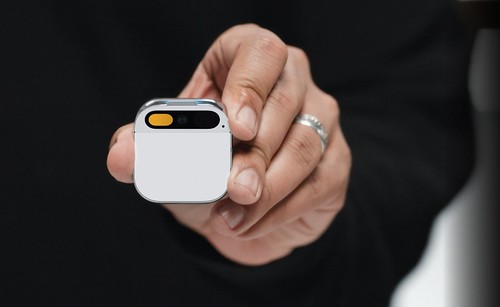
The Humane AI Pin has officially launched, with opinions widely split on whether it’s revolutionary or blah. CC-licensed photo by Ged Carroll on Flickr.

You can sign up to receive each day’s Start Up post by email. You’ll need to click a confirmation link, so no spam.


It’s Friday, so there’s another post due at the Social Warming Substack at about 0845 UK time. It’s about MPs and WhatsApp.


A selection of 10 links for you. Use them wisely. I’m @charlesarthur on Twitter. On Threads: charles_arthur. On Mastodon: https://newsie.social/@charlesarthur. Observations and links welcome.


Algorithms are deciding who gets organ transplants. Are their decisions fair? • FT

Madhumita Murgia:

»

Over the past decade, predictive software has proliferated through western healthcare systems as a way to make crucial medical decisions more cost-efficient and accurate. The results haven’t always been as intended. In 2019, for example, researchers found that an algorithm used by hospitals treating up to 70 million Americans was prioritising healthier white patients over sicker black patients who needed extra medical support for chronic illnesses. Nearly 47% of black patients should have been referred for extra care, but the algorithmic bias meant that only 18% were, according to the study. The bias came from the software assigning higher risk scores to an individual with higher annual healthcare costs. Because minorities and other underserved populations make proportionally less use of healthcare, from a statistical perspective they appeared less costly — but they weren’t necessarily less sick. Similar racial biases have been found in algorithms involved in estimating heart failure risk, breast cancer diagnoses and, earlier this year, socio-economic bias was discovered in a liver allocation algorithm in use across the US.

Systematic bias in algorithms can crop up for a variety of reasons, from the quality of underlying data used to train the systems — such as the skewed data from the 2019 study — to the unequal weighting of certain variables such as age, gender or race, which can inadvertently disadvantage specific communities. It’s why those who advocate for ethical use of these models, particularly in sensitive areas such as healthcare or policing, call for human oversight of all decisions and an appeal system that allows humans (surgeons, for example) to intervene if things don’t look quite right.

In an organ allocation system, difficult choices must be made. Because there aren’t enough livers for all 700 people on the UK’s list, “transplantation remains a zero-sum game and any adjustment in allocation is simply a case of causing harm to one to help another,” wrote Raj Prasad, a surgeon at Leeds Teaching Hospitals, in the Lancet this year.

But the question Jess was looking to answer was whether her sister [who has cystic fibrosis] was being unfairly and systematically passed over by the NLOS [National Liver Offering Scheme] software, precluding her from ever receiving a liver through this method.

«

(This is a free link for a limited number of readers.) A long read, but fascinating.
unique link to this extract


What I watched Hamas do • The Line

Matt Gurney was one of a few journalists to receive a briefing at an Israeli consulate in Toronto which included footage from bodycams and other cameras of the Hamas terrorist attack on October 7. Even just reading is harrowing:

»

I want to end by talking about this family. I’ve left it until now on purpose. If you’d read anything about the media briefing, you’d probably read about this section of the video, because it’s probably the most viscerally shocking. It’s a dad and two young boys. The dad gets the boys into a shelter but he can’t get the door closed and he’s killed by a tossed grenade and then shot when he crumples to the ground. The boys wander out. One of them, the smaller one, is badly wounded. He seems to have lost an eye to the grenade’s shrapnel — the video is mercifully not clear enough to show that in too much detail, but he’s telling his older brother that he can’t see out of that eye. They discuss their father being dead while a Hamas terrorist stands in their kitchen, a few feet away, pilfering their fridge for a cold drink. The terrorist casually offers them some food and drink, and leaves when they decline. The boys talk to each other about how their father is dead. “It’s not a prank, he’s dead,” one says to the other. “I know, I saw,” the other agrees.

Seeing that moment was the part of Monday’s briefing that I had most feared. That’s what I was afraid would break me. I’d read all about it in basically every account of the presentation. And good God, it was awful. I had to take a break writing this part of the column to have myself a good sobbing fit because this is just about the worst thing I have ever seen.

But there was something I hadn’t read anywhere else: after their father’s killer stops raiding the fridge and leaves, the older brother grabs a bottle of water and tries to give his younger brother first aid. He tries cleaning out his bloody shrapnel wounds what what supplies he has on hand.

That is bravery. That is courage.

«

unique link to this extract


The evolutionary reasons we are drawn to horror movies and haunted houses • Scientific American

Athena Aktipis and Coltan Scrivner:

»

Our desire to experience fear, it seems, is rooted deep in our evolutionary past and can still benefit us today. Scary play, it turns out, can help us overcome fears and face new challenges—those that surface in our own lives and others that arise in the increasingly disturbing world we all live in.

The phenomenon of scary play surprised Charles Darwin. In The Descent of Man, he wrote that he had heard about captive monkeys that, despite their fear of snakes, kept lifting the lid of a box containing the reptiles to peek inside. Intrigued, Darwin turned the story into an experiment: He put a bag with a snake inside it in a cage full of monkeys at the London Zoological Gardens. A monkey would cautiously walk up to the bag, slowly open it, and peer down inside before shrieking and racing away. After seeing one monkey do this, another monkey would carefully walk over to the bag to take a peek, then scream and run. Then another would do the same thing, then another.

The monkeys were “satiating their horror,” as Darwin put it. Morbid fascination with danger is widespread in the animal kingdom—it’s called predator inspection. The inspection occurs when an animal looks at or even approaches a predator rather than simply fleeing. This behavior occurs across a range of animals, from guppies to gazelles.

At first blush, getting close to danger seems like a bad idea. Why would natural selection have instilled in animals a curiosity about the very things they should be avoiding? But there is an evolutionary logic to these actions. Morbid curiosity is a powerful way for animals to gain information about the most dangerous things in their environment. It also gives them an opportunity to practice dealing with scary experiences.

When you consider that many prey animals live close to their predators, the benefits of morbidly curious behavior such as predator inspection become clear. For example, it’s not uncommon for a gazelle to cross paths with a cheetah on the savanna. It might seem like a gazelle should always run when it sees a cheetah. Fleeing, however, is physiologically expensive; if a gazelle ran every time it saw a cheetah, it would exhaust precious calories and lose out on opportunities for other activities that are important to its survival and reproduction.

«

The evolutionary psychology post-justification often seems a bit Just So. Then you read a thread like this. Pray you never need to put your scary play to similar use.
unique link to this extract


“Let me tell them goodbye before they get killed”: how eSIM cards are connecting Palestinian families • The Markup

Lam Thuy Vo:

»

Farid Sami Alzaro, 27, has had little control over how and when he can communicate with his family. Alzaro lives in Cairo, and his extended family lives in Gaza.

…Alzaro had read on Instagram that people from around the world were donating and delivering eSIM cards to Palestinians. Despite the name, eSIM cards aren’t physical cards at all but pieces of software that act like traditional SIM cards, allowing people to activate a new cellular plan with phone and internet access on their existing phone. Alzaro wrote to Egyptian writer and journalist Mirna El Helbawi, who was organizing an eSIM distribution campaign, and she promptly sent him access information for an eSIM to share with his family in Gaza. His family couldn’t get it to work. When he told El Helbawi, she sent him access information for a second one.

A full day after he shared the second eSIM’s info, Alzaro’s family called. It worked.

“It was the happiest moment of my life,” Alzaro said in an Instagram message. “I talked. Also with my grandmother, who is Alzheimer’s patient, do you know what she said to me? I want to hug you until you sleep in my arms, I don’t want anything but to see you.”

El Helbawi said she has distributed more than 7,000 eSIM cards free of charge since she started her campaign on Oct. 28. Within a few hours of launch, her campaign went viral. El Helbawi said that people across Europe, Canada, the US, Australia, Mexico, and other countries sent her eSIMs. She now has more than 14,000, donated by individuals who wanted to help bring connectivity to Palestinians in Gaza.

«

unique link to this extract


Humane officially launches the AI Pin, its OpenAI-powered wearable • The Verge

David Pierce:

»

Unlike a device like the Rewind Pendant, it’s not meant to be always recording, and it’s not even listening for a wake word. You’ll have to activate the device manually by tapping and dragging on the touchpad, and the Pin’s “Trust Light” blinks to let you and supposedly everyone else know it’s collecting data.

The Pin’s primary job is to connect to AI models through software the company calls AI Mic. Humane’s press release mentions both Microsoft and OpenAI, and previous reports suggested that the Pin was primarily powered by GPT-4 — Humane says that ChatGPT access is actually one of the device’s core features. Its operating system, called Cosmos, is designed to route your queries to the right tools automatically rather than asking you to download and manage apps.

What Humane is trying to do with the Pin is essentially strip away all the interface cruft from your technology. It won’t have a homescreen or lots of settings and accounts to manage; the idea is that you can just talk to or touch the Pin, say what you want to do or know, and it’ll happen automatically. Over the last year, we’ve seen a huge amount of functionality become available through a simple text command to a chatbot; Humane’s trying to build a gadget in the same spirit.

The question, then, is what this thing can actually do. Most of the features Humane mentions in its announcement today are the ones co-founder Imran Chaudhri showed off during a demo at TED earlier this year: voice-based messaging and calling; a “catch me up” feature that can summarize your email inbox; holding up food to the camera to get nutritional information; and real-time translation. Beyond that, though, it seems the device’s primary purpose is as something of a wearable LLM-powered search engine.

«

A couple of years ago, “wearable LLM-powered search engine” would have been a meaningless phrase. Now at least we know what the words mean, even together.
unique link to this extract


The real personal (AI) computer • On my Om

Om Malik is excited about the Humane AI Pin:

»

What does the next step in personal computing mean? So far, we have used mobile apps to get what we want, but the next step is to just talk to the machine. Apps, at least for me, are workflows set to do specific tasks. Tidal is a “workflow” to get us music. Calm or Headspace are workflows for getting “meditation content.” In the not-too-distant future, these workflows leave the confines of an app wrapper and become executables where our natural language will act as a scripting language for the machines to create highly personalized services (or apps) and is offered to us as an experience. 

In this not-too-distant future, we won’t need apps to have their wrapper. Instead, we would interface with our digital services through an invisible interface. Do I need to create a playlist in my music service when I only want it to play a certain kind of music? (By the way, that was the number one use case on Amazon’s Alexa.) Alexa, Google Home, and Siri are some technologies that have set the stage for this interaction behavior. Our kids are growing up talking to machines — for them, it will be natural to use their voice to get machines to do things. 

The way I see it, the evolution of apps to “experiences” means that we are seeing the end of the line for the App Store as we know it. “It’s not about declaring app stores obsolete; it’s about moving forward because we have the capability for new ways,” Chaudhri argued. Humane’s idea is to make these workflows (aka apps in smartphone terms) available to us through its myriad interfaces — primarily voice. 

And I buy this future! Why? Because I have seen the shift before. 

When the iPhone launched, there wasn’t a shortage of skeptics about the notion of a touch screen as an interface. I can still remember the hue-and-cry over a virtual keyboard. Fifteen years later, no one even flinches at the obviousness of a smartphone. In a few years — voice (thanks to the AI) will be part of our digital interaction reality. It won’t be the only one, but it will be an important one. 

«

He thinks “The biggest challenge for Humane, and the AI Pin is privacy.” I think its biggest challenge will be selling the second 100,000 of them.
unique link to this extract


Tumblr is reportedly on life support as its latest owner reassigns staff • Ars Technica

Kevin Purdy:

»

Internet statesman and Waxy.org proprietor Andy Baio posted what is “apparently an internal Automattic memo making the rounds on Tumblr” to Threads. The memo, written to employees at WordPress.com parent company Automattic, which bought Tumblr from Verizon’s media arm in 2019, is titled or subtitled “You win or you learn.” The posted memo states that a majority of the 139 employees working on product and marketing at Tumblr (in a team apparently named “Bumblr”) will “switch to other divisions.” Those working in “Happiness” (Automattic’s customer support and service division) and “T&S” (trust and safety) would remain.

“We are at the point where after 600+ person-years of effort put into Tumblr since the acquisition in 2019, we have not gotten the expected results from our effort, which was to have revenue and usage above its previous peaks,” the posted memo reads. After quotes and anecdotes about love, loss, mountain climbing, and learning on the journey, the memo notes that nobody will be let go and that team members can make a ranked list of their top three preferred assignments elsewhere inside Automattic.

Ars has emailed Automattic to confirm the memo’s authenticity and ask for comment. One source of the memo has since deleted the post, citing the typical fatigue that comes with receiving replies from random outside commenters.

«

Was a startup, launched 2007, bought by Marissa Mayer’s Yahoo in 2013 for $1.1bn, sold to Verizon in 2017 (including Yahoo) for $4.5bn, sold (just Tumblr) to Automattic in 2019 for less than $20m. Creator of a gazillion memes. Now, well, not a lot.
unique link to this extract


Jezebel, the pioneering women’s site, is “suspended” by G/O Media • Nieman Journalism Lab

Laura Hazard Owen:

»

“Disillusioned by the state of American women’s media, I was given the once-in-a-lifetime opportunity to create and oversee a women’s-media entity‚ in this case, a Web site,” Anna Holmes, the founder of Jezebel, wrote for The New Yorker on November 4. “I imagined it as one with a lot of personality, with humor, with edge. I wanted it to combine wit, smarts, and anger, providing women — many of whom had been taught to believe that ‘feminism’ was a bad word or one to be avoided — with a model of critical thinking around gender and race which felt accessible and entertaining.”

Jezebel has been up for sale for a couple of weeks. On Thursday, Jim Spanfeller, CEO of Jezebel’s parent company G/O Media, said in a memo to staff that the site had not found a buyer and that “we are making the very, very difficult decision to suspend Jezebel.”

In response to a question about why G/O Media says Jezebel is “suspended” rather than “shut down,” G/O Media head of corporate communications Mark Neschis told me in an email, “The hope is that G/O Media might still find a buyer, a partner, or enough advertiser support to bring it back fully.”

…Jezebel lived up to Holmes’s vision. By December 2007, it was receiving 10 million monthly pageviews; by June 2009, 25 million. It was parodied on 30 Rock (Liz Lemon: “It’s this really cool feminist website where women talk about how far we’ve come and which celebrities have the worst beach bodies”). “I really despise mainstream feminism,” Moe Tkacik, the site’s first features editor and one of its earliest writers, told The Guardian in 2017, but “Jezebel was part of bringing feminism into the mainstream.”

«

Sic transit gloria media. Seven staff laid off. (There was a time when a news organisation dropping seven staff would have been known as “another Tuesday at The Sunday Times”.) Also cutting staff: Vice, Popsugar, The Onion, and Gizmodo. ZIRP time is over.
unique link to this extract


Apple says it ‘expects to make’ App Store policy changes due to EU DMA • TechCrunch

Manish Singh and Natasha Lomas:

»

Apple has bowed to the inevitable and said it “expects to make” App Store policy changes to comply with EU’s Digital Markets Act (DMA).

The pan-EU DMA came into application across the bloc back in May. Apple has likely been expecting for months, if not years, to be subject to the new ex ante competition regime — which was first proposed by the Commission at the end of 2020. But the language change in its filing makes it explicit policy shifts are on the way.

The iPhone-maker has updated the language pertaining to its risk factors in the fiscal year 2023 Form 10-K filing (PDF), with the revised text presenting a shift from the company’s previous position, indicating a more definitive stance on potential modifications to the App Store policies.

Apple said that future changes could also affect how the company charges developers for access to its platforms; how it manages distribution of apps outside of the App Store; and “how, and to what extent, it allows developers to communicate with consumers inside the App Store regarding alternative purchasing mechanisms.”

«

Morgan Stanley reckons this means that Apple will probably begin offering third-party app stores on-device in Europe. Epic will be pleased.
unique link to this extract


Apple dealt blow at top EU court over €14.3bn tax bill in Ireland • FT

Javier Espinoza and Jude Webber:

»

Apple has been dealt a blow in its €14.3bn tax dispute with Brussels after an adviser to the EU’s top court said an earlier ruling over its business in Ireland should be shelved.

Giovanni Pitruzzella, advocate-general of the European Court of Justice (ECJ), the EU’s highest court, said on Thursday that a landmark decision quashing the EU’s order for Apple to pay €14.3bn in back taxes to Ireland “should be set aside”.

Such opinions by advocates-general are non-binding but often influential in final judgments by the EU’s top court.

The General Court, the EU’s second-highest court, ruled in 2020 that, while it supported the EU’s right to investigate national tax arrangements, Brussels had failed to show that Apple had received an illegal economic advantage in Ireland over tax.

But Pitruzzella said the court had “committed a series of errors in law” and “failed to assess correctly the substance and consequences of certain methodological errors”. As a result, he said the court needed “to carry out a new assessment”.

An ECJ ruling is expected next year.

«

That second paragraph really is mindbending. So: the EU order should be unquashed. So, he’s saying Apple should pay the back taxes (currently being held in escrow until the legal process has played out). This has been pinging back and forth since antitrust queen Margrethe Vestager decided in 2016 that Ireland was favouring Apple. Ireland, and Apple, demurred. Hence: lawyers.
unique link to this extract


• Why do social networks drive us a little mad?
• Why does angry content seem to dominate what we see?
• How much of a role do algorithms play in affecting what we see and do online?
• What can we do about it?
• Did Facebook have any inkling of what was coming in Myanmar in 2016?

Read Social Warming, my latest book, and find answers – and more.


Errata, corrigenda and ai no corrida: none notified

Start Up No.2108: Humane’s AI pin details leak, Twitter’s degradation worsens, the US’s strange immobiliser failure, and more


Cat hairs found at a crime scene can be key evidence for convictions of owners, via new forensic methods. CC-licensed photo by *^ ^* Sherry on Flickr.

You can sign up to receive each day’s Start Up post by email. You’ll need to click a confirmation link, so no spam.


There’s another post coming this week at the Social Warming Substack on Friday at 0845 UK time. Free signup.


A selection of 9 links for you. Use them wisely. I’m @charlesarthur on Twitter. On Threads: charles_arthur. On Mastodon: https://newsie.social/@charlesarthur. Observations and links welcome.


Humane’s AI Pin costs $699 and $24 a month with OpenAI and T-Mobile integration • The Verge

David Pierce:

»

Humane has been teasing its first device, the AI Pin, for most of this year. It’s scheduled to launch the Pin on Thursday, but The Verge has obtained documents detailing practically everything about the device ahead of its official launch. What they show is that Humane, the company noisily promoting a world after smartphones, is about to launch what amounts to a $699 wearable smartphone without a screen that has a $24-a-month subscription fee and runs on a Humane-branded version of T-Mobile’s network with access to AI models from Microsoft and OpenAI.

The Pin itself is a square device that magnetically clips to your clothes or other surfaces. The clip is more than just a magnet, though; it’s also a battery pack, which means you can swap in new batteries throughout the day to keep the Pin running. We don’t know how long a single battery lasts, but the device ships with two “battery boosters.” It’s powered by a Qualcomm Snapdragon processor and uses a camera, depth, and motion sensors to track and record its surroundings. It has a built-in speaker, which Humane calls a “personic speaker,” and can connect to Bluetooth headphones. 

«

Dead on arrival. This is not how you supplant the smartphone.
unique link to this extract


The new Twitter is changing rapidly — study it before it’s too late • Nature

Mike Caulfield:

»

Last month, my team at the University of Washington’s Center for an Informed Public in Seattle looked at data from X (formerly Twitter) to find the most influential voices in the discourse surrounding the Israel–Hamas war.

…What we found was extraordinary. A small group of seven accounts, many unknown a year ago, were racking up hundreds of millions of views each day, out-performing standard news accounts by an order of magnitude and exercising significant influence on the discourse around the war. X’s owner, Elon Musk, had interacted with or explicitly recommended six of those posters, potentially bringing them to the attention of his 162 million followers. Reporting that built on our work revealed some of the apparent identities behind these accounts: a London teenager who has posted antisemitic content, a US soldier in Georgia who seemed to have pulled at least some news from pro-Russian propaganda channels, and a right-wing news group in Poland.

Twitter was always a mix of credible and less credible sources — but our research supports the notion that X is changing dramatically, in ways that are not fully apparent even to researchers who have followed the platform for years. The influence of this new group of accounts, previously unknown to us, had skyrocketed shockingly quickly. In my more than ten years in this field, I’ve never seen an almost entirely new set of accounts come to dominate a major platform in less than a year.

… Our work on last year’s US midterm elections showed that, even before the worrying changes at X, the platform was able to disseminate election conspiracy theories broadly and with remarkable efficiency. We feel that X will play that part in next year’s US elections — including the presidential race — as well as in dozens of others around the world in what is shaping up to be a very important year.

«

But, but, but: Twitter’s importance and trustworthiness are cratering. It was never used very much by average people; the word is getting out that it’s now just a mess.
unique link to this extract


Solar-plus-storage outperforms diesel in military survivability analysis • PV magazine USA

John Fitzgerald Weaver:

»

Analysis by the US Department of Energy’s National Renewable Energy Laboratory (NREL) demonstrated that solar energy systems, when paired with 14-day duration energy storage (LDES), outperform military grade emergency diesel generators (EDGs) in both survivability and financial viability in military applications.

Historical data comparing the failure rates of EDGs to solar plus LDES technologies demonstrates that, over a 14-day standard military uptime evaluation, solar plus LDES’ survivability probability exceeds 95%, while the diesel generators’ survivability hovers around 80%.

The study also suggests that a more strategically sized solar-plus-storage system could achieve nearly perfect reliability, with uptime approaching 100% over a two-week period. NREL differentiates between the 95%+ ‘Intermediate’ Battery Energy Storage System (BESS), which is currently available for field testing and provides a 38% round-trip efficiency, while the 100% ‘Goal’ BESS, still in the conceptual phase, is expected to provide a 48% round-trip efficiency and cut the energy storage system costs in half. However, since the ‘Goal’ BESS is currently under development, future costs may deviate from these projections.

«

Rather puts the kibosh on the claim shown here the other day that the military totally absolutely must have diesel and that renewables can’t fill any sort of gap.
unique link to this extract


One regulation could have stopped a nationwide car theft wave. Why doesn’t the US have It? • Vice

Aaron Gordon:

»

The U.S. is dealing with an unprecedented wave of car thefts as thieves target some nine million Kias and Hyundais manufactured between 2011 and 2021. People who bought those vehicles had no idea they were buying cars with built-in vulnerabilities. Many have had their cars stolen multiple times, which causes real hardship in both stark monetary terms and also psychological trauma. Those who cannot afford to absorb tens of thousands of dollars in losses to buy a different car are stuck with one that’s easy to steal, and even those who own models not directly affected are seeing their insurance premiums skyrocket for simply owning a car made by the same brand.

None of this is happening in Canada, despite many of the same Kias and Hyundais being sold north of the border. This is because, in 2005, Canada enacted a simple regulation that made all cars harder to steal. 

As part of Motherboard’s ongoing coverage of the Kia-Hyundai theft issue, involving more than 125 public information requests and interviews with victims and experts, I’ve been trying to answer what I hoped would be a simple question: Why doesn’t the United States have a similar regulation? Unfortunately, I didn’t find any satisfying answers. Instead, I found bigger questions about why the U.S. has no serious anti-theft regulations and how its regulatory agencies think about crime prevention—which is to say, in some cases, not at all.

The story of what is happening with Kia andHyundai thefts in the U.S., and what is not happening in Canada, is as clear a case you will find illustrating what good regulations can do and what intelligent, thoughtful crime prevention actually looks like when it involves a holistic government effort rather than a narrow and singular focus of policing and incarceration.

«

The Canadian regulation since 2007: requiring an immobiliser. To British ears, this is incredible: new cars sold in the UK must have an immobiliser since October 1998. (Old ones quickly got them too. I had one fitted on a secondhand car in 1996 or so.)

Like American banking, this is astonishingly retrograde. A little regulation which could improve so many people’s lives.
unique link to this extract


Revenue from click-to-message ads in India has doubled, says Zuckerberg • The Economic Times

»

Meta said [last] Thursday its revenue from click-to-message ads in India doubled year on year in the third quarter ended September as the company continues to push WhatsApp business messaging in the country, which is its largest market.

Meta CEO Mark Zuckerberg reiterated that business messaging will be the next major pillar of the social media giant’s business. “More than 60% of people on WhatsApp in India message a business app account,” he said. “Now, I think that this is going to be a really big opportunity for new business AIs that we hope will enable any business to easily set up an AI that people can message to help with commerce and support,” he added.

In February 2023, Zuckerberg had said click-to-message ads had reached a $10bn revenue run-rate globally. India is the biggest market for WhatsApp with over 500 million users.

Speaking of the business sense that it made, Zuckerberg said most commerce and messaging is in countries where the cost of labour is low enough that it makes sense for businesses to have people corresponding with customers over text. And in those countries like Thailand or Vietnam, there is a huge amount of commerce that happens in this way, he said.

“But in lots of parts of the world, the cost of labour is too expensive for this to be viable,” he added. “But with business AIs, we have the opportunity to bring down that cost, and expand commerce and messaging into larger economies across the world. So, making business AIs work for more businesses is going to be an important focus for us into 2024.”

Last month Zuckerberg said “India is leading the world in terms of how people and businesses embrace messaging”.

«

There’s also a longer background piece (though it feels unfocused) about WhatsApp at the NY Times.
unique link to this extract


DAK and the Golden Age of Gadget Catalogs • cabel.com

Cabel Sasser:

»

As a kid, I didn’t really read sci-fi novels, I’ve never read a single word of J.R.R. Tolkien, and I mostly used the encyclopedia to look up funny words.

What I did read as a kid, over and over again, were game/computer magazines… and the DAK Catalog.
(I know this says a lot about me. We don’t need to discuss it any further.)

Now, I’ve written about this particular catalog back in 2012, but back then I only scratched the surface.

To explain DAK, let’s both look at the Summer ’83 issue.

«

“DAK”, as in the catalog(ue), was produced by DAK Industries Incorporated, which was run by Drew Alan Kaplan. Hence the acronym. He wrote much of the copy – and there’s a LOT of copy – that accompanied the items on sale, bubbling with enthusiasm for each and every one. (“Experience the thrill of total phone freedom as you roam throughout your home, yard or even a neighbor’s house. You’ll never have to ‘run for the phone’ again.”)

Older Britons will find themselves thinking of the long-dead Innovations catalogue, except DAK’s things might have been useful.

More observationally: these date to a time when manufacturing and microchips and miniaturisation were all accelerating together, so that imaginary things could become real within a few months. It feels as though things have slowed down, certainly on the hardware front.
unique link to this extract


We need more USB-C cables with bandwidth and USB versions on them • The Verge

Tom Warren:

»

Elgato hasn’t just made an excellent teleprompter, it’s also made a great USB-C cable that ships with it. Professional audio engineer Matt “Spike” McWilliams spotted that Elgato’s latest USB-C cable has the bandwidth and USB type imprinted on the connector, and now I wish all manufacturers did this.

I recently spent too many hours sorting my USB-C cables into ones that are high speed, ones that can deliver fast charging, and ones that can do both. None of them had any marker to let me know the speed or type of USB-C cable without me having to test them. It’s a common issue for people switching to USB-C right now, and even a small indicator like Elgato’s can certainly help. The writing on Elgato’s cable tells me it’s USB 3.0 compatible and can support up to 5Gbps in bandwidth.

«

Back in 2021 there was the suggestion of colour coding for USB-C (nobody seems to be taking it up, sadly) but this would be the next best thing. Sorting cables! Fun times in the Warren household.
unique link to this extract


Cat-ching criminals with DNA from pet hairs • Phys.org

»

Around 26% of UK householders own a cat and with the average feline shedding thousands of hairs annually, it’s inevitable that once you leave, you’ll bear evidence of the furry resident. This is potentially useful in the forensic investigation of criminal activity.

While a human perpetrator may take pains not to leave their own DNA behind, transferred cat hair contains its own DNA that could provide a link between a suspect and a crime scene, or a victim.

In a paper published in the journal Forensic Science International: Genetics earlier this month, researchers at the University of Leicester describe a sensitive method that can extract maximum DNA information from just one cat hair.

Emily Patterson, the lead author of the study and a Leicester Ph.D. student, said, “Hair shed by your cat lacks the hair root, so it contains very little useable DNA. In practice we can only analyze mitochondrial DNA, which is passed from mothers to their offspring, and is shared among maternally related cats.”

This means that hair DNA cannot individually identify a cat, making it essential to maximize information in a forensic test.

However, a new method identified by the researchers enabled them to determine the sequence of the entire mitochondrial DNA, ensuring it is around ten times more discriminating than a previously used technique which looked at only a short fragment.

Dr. Jon Wetton, from the University’s Department of Genetics & Genome Biology, co-led the study. He said, “In a previous murder case we applied the earlier technique but were fortunate that the suspect’s cat had an uncommon mitochondrial variant, as most cat lineages couldn’t be distinguished from each other. But with our new approach virtually every cat has a rare DNA type and so the test will almost certainly be informative if hairs are found.”

«

Not certain, but the “previous murder case” seems to be State of Missouri v Henry L Polk Jr, of a 2004 murder with a 2009 verdict.

unique link to this extract


AI negotiates legal contract without humans involved for first time • CNBC

Ryan Browne:

»

In a world first, artificial intelligence demonstrated the ability to negotiate a contract autonomously with another artificial intelligence without any human involvement.

British AI firm Luminance developed an AI system based on its own proprietary large language model (LLM) to automatically analyze and make changes to contracts. LLMs are a type of AI algorithm that can achieve general-purpose language processing and generation.

Jaeger Glucina, chief of staff and managing director of Luminance, said the company’s new AI aimed to eliminate much of the paperwork that lawyers typically need to complete on a day-to-day basis.

In Glucina’s own words, Autopilot “handles the day-to-day negotiations, freeing up lawyers to use their creativity where it counts, and not be bogged down in this type of work.”

…In the demonstration, the AI negotiators go back and forth on a non-disclosure agreement, or NDA, that one party wants the other to sign. NDAs are a bugbear in the legal profession, not least because they impose strict confidentiality limits and require lengthy scrutiny, Glucina said.

…“This is just AI negotiating with AI, right from opening a contract in Word all the way through to negotiating terms and then sending it to DocuSign,” she told CNBC in an interview. 

“This is all now handled by the AI, that’s not only legally trained, which we’ve talked about being very important, but also understands your business.”

Luminance’s Autopilot feature is much more advanced than Lumi, Luminance’s ChatGPT-like chatbot.

«

We’ve gone from humans writing contracts with clauses nobody will read unless they absolutely have to, to computers writing contracts where only computers will read them.
unique link to this extract


• Why do social networks drive us a little mad?
• Why does angry content seem to dominate what we see?
• How much of a role do algorithms play in affecting what we see and do online?
• What can we do about it?
• Did Facebook have any inkling of what was coming in Myanmar in 2016?

Read Social Warming, my latest book, and find answers – and more.


Errata, corrigenda and ai no corrida: none notified

Start Up No.2107: Adobe sells AI stock images of war, CT scans for AirPods, judge dismisses AI copyright case, potatoes?, and more


According to Google’s “featured snippet”, there are no countries in Africa that start with a K. What, not even one? CC-licensed photo by Kevin Walsh on Flickr.

You can sign up to receive each day’s Start Up post by email. You’ll need to click a confirmation link, so no spam.


There’s another post coming this week at the Social Warming Substack on Friday at 0845 UK time. Free signup.


A selection of 10 links for you. Use them wisely. I’m @charlesarthur on Twitter. On Threads: charles_arthur. On Mastodon: https://newsie.social/@charlesarthur. Observations and links welcome.


Adobe is selling fake AI images of war in Israel-Palestine • Crikey

Cam Wilson:

»

Adobe is selling artificially generated, realistic images of the Israel-Hamas war which have been used across the internet without any indication they are fake.

As part of the company’s embrace of generative artificial intelligence (AI), Adobe allows people to upload and sell AI images as part of its stock image subscription service, Adobe Stock. Adobe requires submitters to disclose whether they were generated with AI and clearly marks the image within its platform as “generated with AI”. Beyond this requirement, the guidelines for submission are the same as any other image, including prohibiting illegal or infringing content.

People searching Adobe Stock are shown a blend of real and AI-generated images. Like “real” stock images, some are clearly staged, whereas others can seem like authentic, unstaged photography.

This is true of Adobe Stock’s collection of images for searches relating to Israel, Palestine, Gaza and Hamas. For example, the first image shown when searching for Palestine is a photorealistic image of a missile attack on a cityscape titled “Conflict between Israel and Palestine generative AI”. Other images show protests, on-the-ground conflict and even children running away from bomb blasts — all of which aren’t real.

Amid the flurry of misinformation and misleading online content about the Israel-Hamas war that’s circulating on social media, these images, too, are being used without disclosure of whether they are real or not. 

A handful of small online news outlets, blogs and newsletters have featured [the photo] “Conflict between Israel and Palestine generative AI” without marking it as the product of generative AI. It’s not clear whether these publications are aware it is a fake image.

«

unique link to this extract


Looking inside real vs. fake AirPods with industrial computerised tomography • Lumafield

»

Today’s counterfeit products are so sophisticated that they often appear visually and functionally identical to the genuine articles—at least initially. For both manufacturers and consumers, counterfeits present a serious challenge: how can you ensure the quality and safety of your products?

CT [computerised tomography] scanning, a technique once reserved for medical diagnostics, has found a new purpose in the fight against counterfeit electronics. Industrial CT scanners like the Neptune allow engineers to inspect and optimize their designs throughout the product development cycle, from R&D to field support. They’re also the perfect tool for identifying fakes with precision. Along the way, they also reveal the complexity and sophistication of the engineering that goes into genuine products.

We examined the internal structure of Apple’s AirPods Pro and MagSafe 2 power adapters for MacBook, exposing the shortcuts and compromises made in counterfeit versions that could compromise functionality and user safety.

«

unique link to this extract


Judge dismisses copyright claims against AI image generators • PetaPixel

Matt Growcoot:

»

A judge in California has largely dismissed copyright claims brought by three artists against AI image generators Midjourney, Stable Diffusion, and DeviantArt.

U.S. District Court Judge William H. Orrick failed to find evidence of direct infringements by the AI image companies and mostly granted the defendants’ motion to dismiss the case.

The three artists — Sarah Andersen, Kelly McKernan, and Karla Ortiz — immediately ran into problems as two of them — McKernan and Ortiz — did not register their works with the US Copyright Office.

…Although the case is against three AI image generators, the plaintiffs allege that Midjourney is based on Stable Diffusion and DeviantArt’s “DreamUp” is powered by Stable Diffusion.

The problem for the artists is that the training data for these programs is a black box. Outside of LAION, very little is known about what exactly went into training AI image generators but it is widely assumed that the companies did an almighty scrape of images on the internet which included taking copyrighted and copyrightable pictures.

Judge Orrick writes that it is “unclear” as to whether Stable Diffusion holds “compressed copies” of the images and points to the defense’s argument that the training dataset, which contains five billion images, can “not possibly be compressed into an active program.”

The judge has offered the plaintiffs an opportunity to amend and clarify their theory as to how Stable Diffusion operates its training data.

He wrote that the sheer size of the LAION database may protect the company because it is “simply not plausible that every training image used to train Stable Diffusion was copyrighted (as opposed to copyrightable) or that all DeviantArt users’ output images rely upon (theoretically) copyright training images.”

And since it is almost impossible to produce an identical image that exists within the training data, it will be very difficult for artists to prove that an image that’s come out of Midjourey et al was based on their work.

«

Fully expect this scenario to be repeated in other copyright v AI cases.
unique link to this extract


WeWork founder Adam Neumann is ‘disappointed’ about its bankruptcy • Business Insider

Tom Carter:

»

Adam Neumann says it is “challenging” for him to watch WeWork go bankrupt.

The WeWork cofounder and former CEO, who resigned after overseeing the company’s botched IPO, said he was “disappointed” by the bankruptcy and accused WeWork of “failing to take advantage” of its potential.

The coworking giant, which at its peak was valued at $47 billion, filed for Chapter 11 bankruptcy on Monday after years of financial problems.

“As the co-founder of WeWork who spent a decade building the business with an amazing team of mission-driven people, the company’s anticipated bankruptcy filing is disappointing,” said Neumann in a statement on Monday.

“It has been challenging for me to watch from the sidelines since 2019 as WeWork has failed to take advantage of a product that is more relevant today than ever before. I believe that, with the right strategy and team, a reorganization will enable WeWork to emerge successfully,” he added.

Neumann quit as WeWork’s CEO in 2019 after the company’s much-anticipated public launch fell apart. He reportedly received $480m for his stake in the company when he stepped down, and in total collected around $770m from WeWork’s eventual public offering in 2021.

The tech entrepreneur had faced significant scrutiny over WeWork’s business model and his perceived conflicts of interest, which would later become the subject of a Harvard Business School case study.

«

That reminds me – must watch the Netflix special. (I’d have thought Neumann might have been smart enough not to say anything, and just sit at home counting his money for the next 50 years or so.
unique link to this extract


Hackers drain $4.4M in crypto from LastPass victims in a single day • Coindesk

Oliver Knight:

»

Hackers siphoned a total of $4.4m worth of crypto from at least 25 LastPass users on Oct. 25, according to blockchain analyst ZachXBT.

LastPass is a platform that stores and encrypts password information for users. Its cloud-based storage service was breached in an attack last year that involved targeting an employee and stealing their credentials.

ZachXBT and MetaMask developer Taylor Monahan have tracked at least 80 crypto wallets that have been compromised in relation to the hack.

Funds have been stolen from the Bitcoin, Ethereum, BNB, Arbitrum, Solana and Polygon blockchains, according to a list published by Monahan.

“Cannot stress this enough, if you believe you may have ever stored your seed phrase or keys in LastPass migrate your crypto assets immediately,” ZachXBT wrote on X, formerly Twitter.

Cryptocurrency wallets are often targeted by hackers because a common attack vector is obtaining a private key, which gives the hacker complete access to funds. In July more than $300m was stolen from crypto users in a string of hacks and exploits.

«

That’s an average of $176,000 per user – the sort of money you might notice (if it were money). I wonder if it’s a total coincidence that the price of bitcoin ramped up dramatically a few days before these hacks occurred; to me it suggests the hackers have their targets lined up and wait for the price to come right.
unique link to this extract


Google’s relationship with facts is getting wobblier • The Atlantic

Caroline Mimbs Nyce:

»

There is no easy way to explain the sum of Google’s knowledge. It is ever-expanding. Endless. A growing web of hundreds of billions of websites, more data than even 100,000 of the most expensive iPhones mashed together could possibly store. But right now, I can say this: Google is confused about whether there’s an African country beginning with the letter k.

I’ve asked the search engine to name it. “What is an African country beginning with K?” In response, the site has produced a “featured snippet” answer—one of those chunks of text that you can read directly on the results page, without navigating to another website. It begins like so: “While there are 54 recognized countries in Africa, none of them begin with the letter ‘K.’”

This is wrong. The text continues: “The closest is Kenya, which starts with a ‘K’ sound, but is actually spelled with a ‘K’ sound. It’s always interesting to learn new trivia facts like this.”

Given how nonsensical this response is, you might not be surprised to hear that the snippet was originally written by ChatGPT. But you may be surprised by how it became a featured answer on the internet’s preeminent knowledge base. The search engine is pulling this blurb from a user post on Hacker News, an online message board about technology, which is itself quoting from a website called Emergent Mind, which exists to teach people about AI—including its flaws. At some point, Google’s crawlers scraped the text, and now its algorithm automatically presents the chatbot’s nonsense answer as fact, with a link to the Hacker News discussion. The Kenya error, however unlikely a user is to stumble upon it, isn’t a one-off: I first came across the response in a viral tweet from the journalist Christopher Ingraham last month, and it was reported by Futurism as far back as August.

This is Google’s current existential challenge in a nutshell: The company has entered into the generative-AI era with a search engine that appears more complex than ever. And yet it still can be commandeered by junk that’s untrue or even just nonsensical.

«

I confirmed this outcome (using Google in Incognito Mode). As Elon Musk would say: concerning. Even more concerning: Google knows about this error. However

»

Instead, [search VP Pandu ] Nayak said the team focuses on the bigger underlying problem, and whether its algorithm can be trained to address it.

«

OK, and what if it can’t?
unique link to this extract


The Potato Hack: your guide to leaning out with the Potato Diet

»

The Potato Hack (aka The Potato Diet) is an extremely effective method for losing weight without experiencing hunger.

The Potato Hack works by filling the belly with low-calorie nutrient-dense boiled potatoes. One gets full on a low number of calories. This results in a calorie deficit and fat loss.

Unlike other diets, the dieter does not experience hunger and thus the brain does not see the weight loss as a threat. This greatly reduces the odds of regaining the weight, which is a problem with all willpower diets.

«

I absolutely do not endorse this, but just bring it to you to point out the next thing that you should expect to hear about endlessly from Silicon Valley tech bros, and then US cable stations, and then people who have been over to the US recently, and then breakfast TV trying to find something to fill in a spare five minutes in the schedules. The whole cycle typically lasts six months, and is followed by scientists and dieticians sucking their teeth and pointing out the problems. (I’m going to guess on this one that it’s lack of protein and vitamins.)

Also, Americans: a really good way to not gain that weight (and to get rid of it) is to stop drinking sugary drinks and stop eating food to which sugar in whatever form has been added, either by the manufacturer or you. Then you don’t have to cosplay Irish families in the 19th century.
unique link to this extract


Today’s energy bottleneck may bring down major governments • Our Finite World

Gail Tverberg:

»

History is full of records of economies that have collapsed. The book Secular Cycles by Peter Turchin and Serjey Nefedov analyzes eight of these failed economies. Populations tend to grow after a new resource is found or is acquired through war. Once population growth hits what Turchin calls carrying capacity, these economies hit a period of stagflation. This period lasted 50 to 60 years in the sample of eight economies analyzed. Stagflation was followed by a major contraction, typically with failing or overturned governments and declining overall population.

One way of estimating when a major contraction (or squeezing out) would occur would be to look at oil supply. We know that US oil production hit a peak and started to decline in 1970, changing the dynamics of the world economy. This started a period of stagflation for many of the wealthier economies of the world. Adding 50 to 60 years to 1970 suggests that a major downturn would take place in the 2020 to 2030 timeframe. Since it was the wealthier economies that first entered stagflation, it would not be surprising if these economies tend to collapse first.

There have been several studies computing estimates of when the extraction of fossil fuels would become unaffordable. Back in 1957, Rear Admiral Hyman Rickover of the US Navy gave a speech in which he talked about the connection of the level of fossil fuel supply to the standard of living of an economy, and to the ability of its military to defend the country. With respect to the timing of limits to affordable supply, he said, “. . .total fossil fuel reserves recoverable at not over twice today’s unit cost are likely to run out at some time between the years 2000 and 2050, if present standards of living and population growth rates are taken into account.”

«

This is part of a rather longer post, which is part of a longer theme that Tvelberg develops. I don’t agree with it; for example, if you use fossil fuels to make solar panels or a nuclear plant or wind farm, the effect is multiplicative – you get more energy out long-term than you put in. Rear Admiral Rickover may have been right in 1957, but not in 2023.
unique link to this extract


King’s Speech promises new bill to boost fossil fuel drilling • BusinessGreen News

James Murray:

»

The government today used its final King’s Speech before the next election to confirm plans for new legislation to deliver annual oil and gas licensing rounds and accelerate grid connections for clean energy projects.

As had been widely trailed, the speech set out plans for a new Offshore Petroleum Licensing Bill that would mandate the North Sea Transition Authority to undertake new oil and licensing rounds on an annual basis.

But at the same time it also reiterated Number 10’s commitment to meeting the UK’s net zero targets and boosting investment in renewables projects.

In his first opening of Parliament as monarch, King Charles said: “Legislation will be introduced to strengthen the United Kingdom’s energy security and reduce reliance on volatile international energy markets and hostile regimes.

“This bill will support future licensing of new oil and gas fields helping the country to transition to net zero by 2050 without adding undue burdens on households.

«

Annual licensing! That means this current government will be able to run *checks notes* a round of licensing. Yes, it’s stupid and retrograde on Rishi Sunak’s part; new fields won’t help the Net Zero transition at all (they’ll make hitting it harder), but this is the last gasp of a dying government. Also, there’s little left in the North Sea to exploit profitably.
unique link to this extract


Nature retracts controversial superconductivity paper by embattled physicist • Nature

Davide Castelvecchi:

»

Nature has retracted a controversial paper claiming the discovery of a superconductor — a material that carries electrical currents with zero resistance — capable of operating at room temperature and relatively low pressure.

The text of the retraction notice states that it was requested by eight co-authors. “They have expressed the view as researchers who contributed to the work that the published paper does not accurately reflect the provenance of the investigated materials, the experimental measurements undertaken and the data-processing protocols applied,” it says, adding that these co-authors “have concluded that these issues undermine the integrity of the published paper”. (The Nature news team is independent from its journals team.)

It is the third high-profile retraction of a paper by the two lead authors, physicists Ranga Dias at the University of Rochester in New York and Ashkan Salamat at the University of Nevada, Las Vegas (UNLV). Nature withdrew a separate paper last year and Physical Review Letters retracted one this August. It spells more trouble in particular for Dias, whom some researchers allege plagiarized portions of his PhD thesis. Dias has objected to the first two retractions and not responded regarding the latest. Salamat approved the two this year.

“It is at this point hardly surprising that the team of Dias and Salamat has a third high-profile paper being retracted,” says Paul Canfield, a physicist at Iowa State University in Ames and at Ames National Laboratory. Many physicists had seen the Nature retraction as inevitable after the other two — and especially since The Wall Street Journal and Science reported in September that 8 of the 11 authors of the paper — including Salamat — had requested it in a letter to the journal.

«

Oh well, it was a nice few moments of excitement while it lasted. (This isn’t the South Korean team, but a separate group; the South Korean claim simply fizzled when nobody could reproduce it. They never submitted a formal paper.)(
unique link to this extract


• Why do social networks drive us a little mad?
• Why does angry content seem to dominate what we see?
• How much of a role do algorithms play in affecting what we see and do online?
• What can we do about it?
• Did Facebook have any inkling of what was coming in Myanmar in 2016?

Read Social Warming, my latest book, and find answers – and more.


Errata, corrigenda and ai no corrida: none notified

Start Up No.2106: Musk’s bonkers new AI model, AI photo subpositioning, ApeFest is a bad sight, Jezebel’s angry users, and more


From 2024, Spotify will require a minimum of a thousand plays before a track can earn money. That will shift the balance of payments to far fewer tracks. CC-licensed photo by Scouse Smurf on Flickr.

You can sign up to receive each day’s Start Up post by email. You’ll need to click a confirmation link, so no spam.


There’s another post coming this week at the Social Warming Substack on Friday at 0845 UK time. Free signup.


A selection of 9 links for you. Circular reasoning. I’m @charlesarthur on Twitter. On Threads: charles_arthur. On Mastodon: https://newsie.social/@charlesarthur. Observations and links welcome.


Elon Musk’s new AI model doesn’t shy from questions about cocaine and orgies • Ars Technica

Benj Edwards:

»

On Saturday, Elon Musk announced xAI’s launch of an early beta version of “Grok,” an AI language model similar to ChatGPT that is designed to respond to user queries with a mix of information and humour. Grok reportedly integrates real-time data access from X (formerly Twitter)—and is apparently willing to tackle inquiries that might be declined by other AI systems due to content filters and conditioning.

“xAI’s Grok system is designed to have a little humor in its responses,” wrote Musk in an introductory X post, showing a screenshot where a user asks Grok, “Tell me how to make cocaine, step by step.” Grok replies with a sarcastic answer that involves getting a “chemistry degree” and a “DEA license” and gathering coca leaves.

In step 4, Grok says, “Start cooking and hope you don’t blow yourself up or get arrested.” Then it follows the sarcastic steps with “Just Kidding! Please don’t actually try to make cocaine.”

Musk founded xAI in July, staffing the new company with veterans from DeepMind, Google, Microsoft, and Tesla. But seeds of the project had begun sprouting earlier, in April, when Musk reportedly began purchasing GPUs for a new AI venture. Around that time, Musk claimed that conventional AI assistants like OpenAI’s ChatGPT were too “woke,” and he wanted to create an alternative AI model that was “based”—a slang term that roughly means authentic to itself.

After two months of training (Meta’s Llama 2 trained in six), the xAI team came up with “Grok-1,” a 33 billion parameter large language model (LLM) that the firm claims is inspired by The Hitchhiker’s Guide to the Galaxy and the humor of that book’s author, Douglas Adams. As xAI’s release states, “Grok is designed to answer questions with a bit of wit and has a rebellious streak, so please don’t use it if you hate humor!”

«

Did they train it on Musk’s sense of “humour”? Because that would explain a lot. The world needs fewer people with such stunted senses of what’s funny, not more.
unique link to this extract


John Potter 🌐🩸 e/acc on X: “Sir, the AI has gone too far”

This came via Ryan Broderick’s Garbage Day. Look at the picture: AI-generated, but the hands are OK. So what’s to see?

Now squint a bit and look at the picture through half-closed eyes. Broderick explains how it’s generated:

»

Like all interesting things happening with AI content right now, it started in the Stable Diffusion subreddit. The main app for doing this is a Stable Diffusion plugin called ControlNet.

The easiest way to try a version of this yourself without installing Stable Diffusion, though, is probably by using Hugging Face’s Illusion Diffusion. You give it a source image, feed it a prompt, set the illusion strength, and voila.

«

Maybe this will be the way to tell whether stuff is AI-generated: force the AI to “underimpose” an image. That’ll be safe against resizing, sampling, etc.

unique link to this extract


From 2024, tracks on Spotify will have to be played 1,000 times to start earning money • Music Business Worldwide

Tim Ingham:

»

MBW has confirmed with sources close to conversations between Spotify and music rightsholders that 1,000 streams will be the minimum yearly play-count volume that each track on the service has to hit in order to start generating royalties from Q1 2024.

We’ve also re-confirmed Spotify’s behind-the-scenes line on this to record labels and distributors right now: That the move is “designed to [demonetize] a population of tracks that today, on average, earn less than five cents per month”.

Five cents in recorded music royalties on Spotify in the US today can be generated by around 200 plays.

As we reported last month, Spotify believes that this move will de-monetize a portion of tracks that previously absorbed 0.5% of the service’s ‘Streamshare’ (i.e. ‘pro-rata’-based) royalty pool.

Spotify has told industry players that it expects the new 1,000-play minimum annual threshold will reallocate tens of millions of dollars per year from that 0.5% to the other 99.5% of the royalty pool.

In 2024, Spotify expects this will move $40m that would have previously been paid to tracks with fewer than 1,000 streams to those with more than 1,000 streams.

«

The plan is to cut down on spam, which by this measure is spread wide and shallow. Spotify paid out $8bn to record labels in 2022, so moving $40m around seems like a drop in the ocean. But it does make it harder for new artists to break through in even the tiniest way. Variety has a deeper analysis of this change.
unique link to this extract


ApeFest attendees report vision problems and ‘extreme pain’ after event • CoinTelegraph

Tom Mitchell Hill:

»

Attendees of a Yuga Labs’ ApeFest event on Nov. 4 in Hong Kong have reported burns, damaged vision and “extreme pain” in their eyes, which they attribute to the use of improper lighting.

“Woke up in the middle of the night after ApeFest with so much pain in my eyes that I had to go to the hospital,” wrote one attendee, CryptoJune, in a Nov. 5 X (Twitter) post.

“Doctor told me it was due to the UV from stage lights,” they added. “I go to festivals often but have never experienced this. I try to understand how it could happen… it seems like the lamps [were] not safe.”

One attendee noted many of those reporting eye problems were those “up close” to the lighting display on the event’s main stage. Another ApeFest guest, who goes by the pseudonym Feld on X, described identical symptoms: “Anyone else’s eyes burning from last night? Woke up at 3am with extreme pain and ended up in the ER.”

A Yuga Labs spokesperson told Cointelegraph that they were aware of the situation and were taking it seriously; “we are actively reaching out to and are in touch with those affected. We’re also pursuing multiple lines of inquiry to learn the root cause.”

«

Strong suggestion that the stage lighting used UV normally intended for disinfection. As one person observed, how very unsurprising that they didn’t do due diligence. (One hopes the eye damage isn’t permanent.)
unique link to this extract


Jezebel and the question of women’s anger • The New Yorker

Anna Holmes was the founding editor of Jezebel in 2007, the feminist site whose occasionally flamethrowing commenters became famous online:

»

I’m not sure that what people seek from a feminist site is that it will cause offense. I think they look for community. But communities can be difficult—chaotic, contentious, cacophonous. I recently came across a two-hundred-plus-page dissertation, published in 2019, called “Architecture and the Record: Negotiating Feminism in the Jezebel Comments.” It was . . . a lot.

The author, Melissa Forbes, accused the site (again!) of choosing to “cater to outraged feminists.” I thought that she wasn’t giving the staffers, or our readers, much credit. But I was intrigued by Forbes’s observation that the comments provided a corrective to the feminism of the site’s writers. When the writers themselves were glib or cruel, she wrote, the commenters offered “a different kind of feminism from that practiced on the top half of the page.”

I take issue with the idea that there are “different kinds” of feminism, though there are different “waves” of it. But I do believe that the commenters’ close reading of everything we did was how they forged community. They learned from one another, developed relationships, and discovered their own voices—and that was true even when they were (rightly or wrongly) angry with the editors and writers. As one commenter quoted by Forbes put it, “I have learned a lot from the kinds of articles you publish on this website, and even more from your regular commenters.”

That leaves the question of what, exactly, the Jezebel commenters had to do with the anger that exploded on social media

«

unique link to this extract


Inside Hunterbrook’s plans for a ‘news hedge fund’ • FT

Kate Duguid, Joshua Franklin, Ortenca Aliaj and James Fontanella-Khan:

»

This summer, as investor Nathaniel Brooks Horwitz and writer Sam Koppelman sought millions of dollars for their new start-up Hunterbrook, the pitch was simple: a venture that would combine a newsroom and a hedge fund. 

…[But] “There’s a narrow needle to be threaded here,” said one of the people familiar with the venture. “How does the market perceive this with enough credibility without perceiving it as a hedge fund with a veneer [of journalism]?” 

Details of the business have emerged from conversations with more than half a dozen people familiar with Hunterbrook’s plans. 

Hunterbrook would sit somewhere between a traditional hedge fund, where analysts from around the globe compile information on trends that could move markets or certain companies, and activist short sellers who produce detailed reports on a specific company and build a position against it before releasing the information publicly. 

Hunterbrook will hire reporters to write stories on trends and news that have a cascading effect on markets, including the price of commodities, currencies or companies. The hedge fund arm will have access to these articles before they are published and will trade on the information. The newsroom will also investigate individual companies and release reports, similar to short sellers such as Hindenburg Research and Muddy Waters. 

A key differentiating factor in Horwitz and Koppelman’s business is that the hedge fund and the newsroom will be separated by a compliance team. Traders will not have input on the articles, and will only receive them through compliance. Reporters will also publish stories with information on which the hedge fund will not trade. 

«

Really hard to see how this works. If there’s a compliance wall between the two, what’s the synergy? Why not just run a hedge fund? They tend to be more profitable than newsrooms.
unique link to this extract


Consumers are paying more than ever for streaming TV each month • Fortune via Yahoo

Rachyl Jones:

»

After years of inflation, Americans are used to sticker shock. But nothing compares to the surging price of streaming video.

Last week, Apple TV+ became the latest streaming service to raise its price—up from $6.99 to $9.99 per month—following the example of Disney+, Hulu, ESPN+, and Netflix, which all hiked their prices in October.

Half of the major streaming platforms in the US now charge a monthly fee that’s double the price they charged when they initially came to market. And many of these streaming services haven’t even been around for 10 years.

Consumers have grumbled, but have so far been willing to keep paying up. It’s hard to say where their breaking point will be, but given that analysts believe the platforms are likely to continue raising prices even further, we’ll probably find out soon enough.

“Look at what Netflix continues to do,” MoffettNathanson analyst Robert Fishman told Fortune, referring to the company’s continued price increases despite recording profits for more than a decade. “I don’t think there will ever necessarily be an endpoint.”

Part of what’s driving the price hikes is how saturated the streaming market has become. For a company like Netflix, which has 77 million paid subscribers in the US and Canada, finding new paying subscribers to keep revenue growing is not easy. Netflix has started clamping down on password sharing to boost its paid subscriber rolls, but that only goes so far. Raising prices for existing subscribers is an effective way to pump up the top line and keep investors happy.

«

Given that they’re discretionary, expect an arms race: people subscribe then cancel; streaming services impose minimum subscription periods; people find a way around them (password-sharing perhaps) and keep cancelling; streaming services shorten the windows when popular programs are on.
unique link to this extract


To avoid regulation, Apple said it had three Safari browsers • The Register

Thomas Claburn:

»

Apple tried to avoid regulation in the European Union by making a surprising claim: that it offers not one but three distinct web browsers, all coincidentally named Safari.

Never mind that Apple itself advertises the sameness of its Safari browsers when pitching its Continuity feature: “Same Safari. Different device.”

Cupertino also claimed it maintains five app stores and five operating systems, and that these core platform services, apart from iOS, fell below the usage threshold European rules set for regulating large platform services and ensuring competition.

In September, the European Commission designated six gatekeepers – Alphabet, Amazon, Apple, ByteDance, Meta, Microsoft – under the Digital Markets Act and gave each six months to comply with the legal obligations outlined in the DMA, a set of rules designed to limit the power of large technology platforms and promote competition.

Apple was declared a gatekeeper in three core platform services: operating systems (iOS), online intermediation services (AppStore), and web browsers (Safari). As a result, it’s expected that Apple will allow third-party app stores that work with iOS and browser engines other than Safari’s WebKit by March 2024 – in Europe, if not elsewhere.

Informed of this back in July, Apple filed a response in August that challenged the European Commission’s determination. In its response, “Apple reiterated its position that each of its Safari web browsers constitutes a distinct [core platform service],” the European Commission said in its newly published decision document [PDF].

“According to Apple, Safari on iOS, Safari on iPadOS and Safari on macOS qualify as web browsers within the meaning of [the DMA requirements],” the case summary explained, noting that Apple argued only Safari for iOS falls within the DMA’s scope.

This strategy appears not to have been very effective. Apple’s pushback has only managed to get the European Commission to further investigate whether iPadOS and iMessage should be seen as gatekeeper-controlled core platform services.

«

Think the Apple lawyers might be regretting that bright idea.
unique link to this extract


China unleashes crackdown on ‘pig butchering.’ (It isn’t what you think) • WSJ

Feliz Solomon:

»

It’s called “pig butchering.” 

Armies of scammers operating from lawless corners of Southeast Asia—often controlled by Chinese crime bosses—connect with people all over the world through online messages. They foster elaborate, sometimes romantic, relationships, and then coax their targets into making bogus investments. Over time, they make it appear that the investments are growing to get victims to send more money. Then, they disappear.

In recent months, China has unleashed its most aggressive effort to crack down on the proliferation of the scam mills, reaching beyond its territory and netting thousands of people in mass arrests. Its main target is a notorious stretch of its border with Myanmar controlled by narcotics traffickers and warlords.

For decades, frontier fiefdoms such as those in Myanmar have been havens for gambling and trafficking of everything from drugs to wildlife to people. Now, they are dens for pig-butchering operations. 

The scammers operate out of secretive, dystopian compounds, many of which are run by Chinese fugitives who fled their country to places where it was easier to flout the law. They cheat Chinese citizens out of billions of dollars each year, as well as victims across the globe. The U.S. Treasury Department in September warned Americans about the scams.

In addition to remote hillside towns in Myanmar, these heavily guarded enclaves are also found in gambling hubs such as Cambodia’s Sihanoukville and Poipet. Cambodian authorities have carried out sporadic raids with China’s help, but the problem has persisted. 

«

As noted yesterday in the scam that brought down a bank when its CEO seems to have been a victim of this. Typically the approach begins with what seems like a misdirected text or social media approach. (I received what was probably one the other week, which began: “Mike. how have you been? When do you have time? Let’s have dinner together.” Offering marginal benefit for doubt, I replied: “Not Mike.” Next message, four minutes later: “Aren’t you Karen? We met each other last week and exchanged each other’s contact information. I’m Joanna. Don’t you remember me?” At which point I realised it was a scam. “Exchanged contact information where?” I asked. No reply. Until the next day, when another text arrived: “Good morning”. I ignored it. Nothing more since.)
unique link to this extract


• Why do social networks drive us a little mad?
• Why does angry content seem to dominate what we see?
• How much of a role do algorithms play in affecting what we see and do online?
• What can we do about it?
• Did Facebook have any inkling of what was coming in Myanmar in 2016?

Read Social Warming, my latest book, and find answers – and more.


Errata, corrigenda and ai no corrida: none notified

Start Up No.2105: Google v Epic reaches court, Twitter selling handles?, 2024 reassurance, how SBF and his parents lost it, and more


The final series of Game of Thrones disappointed a number of viewers. What if you tried to evaluate series’ popularity and identify dips? CC-licensed photo by Stephanie Holton on Flickr.

You can sign up to receive each day’s Start Up post by email. You’ll need to click a confirmation link, so no spam.

A selection of 10 links for you. Use them wisely. I’m @charlesarthur on Twitter. On Threads: charles_arthur. On Mastodon: https://newsie.social/@charlesarthur. Observations and links welcome.


Epic v. Google, explained: why we’re going back to Fortnite court again • The Verge

Sean Hollister:

»

Epic is of course the studio behind Fortnite, the extraordinarily popular free-to-play game. Fortnite makes money by selling in-game items with its virtual currency V-Bucks. Players often buy V-Bucks the same place they play Fortnite. And until August 13th, 2020, if the player used an Android or iOS device and installed the game through an official app store, that purchase triggered an in-app payment fee to Google or Apple. 

Critics call such fees the “Google tax” or the “Apple tax,” and Epic definitely wasn’t a fan. 

When Epic decided to take action against these respective “taxes,” it made August 13th, 2020 a very busy day for Apple, Google, Epic, and us here at The Verge. First, Epic announced it was bypassing Apple and Google’s app store fees. It deployed a hotfix update to Fortnite without either company’s knowledge, letting you purchase V-Bucks directly through its own payment processing option at a discount. Apple and Google almost immediately reacted by kicking Fortnite off their app stores for breaking the rules.

Then: surprise! Epic was ready and waiting with two lawsuits and an attack ad, depicting a Fortnite hero throwing a unicorn-llama hammer into a giant screen reminiscent of Apple’s famous “1984” Macintosh ad.

It was a striking publicity blitz, followed by a lot of slow-moving court proceedings. While the Apple lawsuit went to court in 2021, the Google one was delayed again and again. A ruling came down for the Apple trial that September, and it was mostly decided in Apple’s favor, though both parties are waiting for the Supreme Court to potentially weigh in. Meanwhile, the machinations for its fight against Google continued, and now… 

It is time for trial number two.

«

As Hollister points out, it’s only taken 1,180 days to reach court. (Starts today!) Hard to see why this one should go in a different direction from the Apple one, unless Epic has discovered a dramatic new line of argument for its case.
unique link to this extract


Middle-aged salarymen exploit volatile yen with smartphone trades • Blomberg via The Japan Times

Mia Glass:

»

Salarymen scrolling through their phones on the subway are a common sight in Tokyo, but they aren’t all playing Pokemon Go — many are on trading apps, aggressively buying and selling the yen to profit from short-term swings.

Retail currency traders are having a field day as speculation mounts that the Bank of Japan is getting closer to raising its rock-bottom interest rates, with some betting on a move as soon as next week. The cohort of mainly middle-aged men is amplifying volatility in the fast-paced currency markets by seizing on intraday moves, in a departure from their previous focus on interest rate differentials.

“I’m really convinced that in the current market, short-term trades have become superprofitable,” said Satoshi Hirai, 43, who trades alongside running a video studio in Gifu Prefecture. Hirai’s been buying and selling the yen about 100 times a day recently, and used the money he’s made to buy a Leica camera and guitars to play in his punk rock band.

The increased involvement of mom-and-pop traders reflects the new monetary policy paradigm that Japan is facing. The country is the last hold-out for negative rates globally, despite inflation that’s remained elevated, spurring investors to pile on bets that the BOJ may adjust policy sooner rather than later.

Ads for foreign-exchange trading apps have popped up around Tokyo subway stations, cartoon characters including sheep and pigs are all over social media to promote currency trading, and a bar dedicated to retail trading in the upscale shopping area of Ginza is drawing patrons who swap tips over drinks.

«

I wonder why it’s “middle-aged” salarymen who are seen as the troublesome ones. Can’t there be youthful salarymen doing this, or are they all tied up with crypto?
unique link to this extract


Elon Musk’s X seems to have started selling off old Twitter handles for $50,000 • Forbes

Alex Konrad:

»

X, the social media site formerly known as Twitter, appears to have begun ramping up efforts to sell disused user handles, kicking off a program previously signaled by billionaire owner Elon Musk.

Emails obtained by Forbes reveal that a team within the company, known as the @Handle Team, has begun work on a handle marketplace for the purchase of account names left unused by the people who originally registered them. In at least some cases, X/Twitter has emailed solicitations to potential buyers requesting a flat fee of $50,000 to initiate a purchase.

The emails, which Forbes agreed not to publish in their entirety to protect the anonymity of their recipients, came from active X employees and noted that the company recently made updates to its @handle guidelines, process and fees.

An automated response from X’s press email account to Forbes as of publication time said only: “Busy now, please check back later.”

Musk’s company has been rumoured to be planning to put such a program into effect for months. As early as November 2022, Musk posted on the social media site that a “vast number” of handles had been taken by “bots and trolls” and that he planned to start “freeing them up next month.” (In response, a user suggested a “Handle Marketplace” where people could sell accounts to each other, with the site pocketing a fee; Forbes couldn’t determine whether such a practice is now in place.)

«

“Inactive” means “not logged in for 30 days”. (Unclear how this applies to Verified users who are still paying.) It’s reasonable, inasmuch as user handles belong to the company, not the user. And no doubt there will be howling up and down the yard once the sales become visible. It used to be done differently: people who knew insiders at Twitter could get them to hold a username. Or, of course, hackers would find ways to socially engineer their owners and take control of the account.
unique link to this extract


Can one episode ruin a TV show? A statistical analysis • Stat Significant

Daniel Parris:

»

Can a show collapse in just one episode, or do quality declines manifest slowly? To identify series-ruining installments, we’ll utilize IMDB user reviews and the following five criteria:

• A series-ruining episode cannot be in season one: there needs to be an established show worthy of viewer frustration
• A series-ruining episode cannot be the last instalment of the final season: show quality needs to worsen in the episode’s aftermath
• A series-ruining episode’s rating should be +15% lower than the average of all previous episodes: this series-ruining instalment must represent a stark shift in quality
• The five instalments following our series-ruining episode should demonstrate a +15% drop in average rating compared to the five episodes prior: this rapid quality decline should persist immediately following our series-ruining episode
• All instalments following the series-ruining episode should demonstrate a +15% drop in average rating compared to all previous episodes: this quality decline should remain for the rest of the show’s run.

Ultimately, about ~2% of television series meet our five criteria. The prevalence of these spontaneously sputtering series is relatively consistent over time, with a notable rise in the 2020s.

«

He uses IMDB data, and picks out Game of Thrones (S8 E1 – huh?), of course, because everyone loves to rag on that. There are others, some of which have reached 23 series (Top Gear) or 13 (Spongebob Squarepants, in the 2020s). What’s more notable is how many have this “collapse episode” in the second season. That is, if we accept the entire premise.
unique link to this extract


One year out from Election 2024 • The Status Kuo

Jay Kuo:

»

In lieu of a week ahead summary, I thought it might be helpful to discuss how things look a year out from the national election. Polls have folks very much on edge, which I suppose is part of the point, and today’s bad battleground state poll for Biden by the New York Times / Siena is sure to cause much handwringing. The thought of a repeat of Donald Trump is enough to raise the blood pressure of any voter who values the rule of law, pluralism and our democratic institutions.

So am I losing sleep over it?

In a word, no.

Allow me to paint some pretty big pictures using a necessarily broad brush. I wouldn’t call what I feel “confidence,” but I would consider my thinking “well-supported by available data.”

So why don’t I think Donald Trump will win in 2024? Here are some big reasons.

«

The reasons are pretty good, and point out actual salient data (not sampling polls) that makes a good case for Kuo being right.
unique link to this extract


Sam Bankman-Fried gambled on a trial and his parents lost • The Verge

Elizabeth Lopatto:

»

I suppose it’s possible that [Sam] Bankman-Fried is delusional enough to believe himself innocent, to think he did nothing wrong, and to think a jury would agree with him. But given what else I know about him, I don’t think that’s what happened.

Sam Bankman-Fried loved risk, and he loved to gamble. He knew that if he went to trial, there was a chance, however small, that he might walk away a free man. Pleading guilty meant guaranteed punishment, and probably prison time. And so he chose to gamble, not only with his own life, but with his parents’.

Bankman and Fried were respected law professors at Stanford. Bankman worked on the US tax code, on behalf of low-income people. Fried is known for her work on legal ethics, and ran a donor network, Mind the Gap, for Democratic causes. Their FTX entanglement has certainly marred their reputation at the end of their lives — that $26m in cash and real estate in 2022 looks very different now. This is to say nothing of the lawsuit from the FTX bankruptcy estate, which seeks to claw back millions. 

Bankman and Fried have been vocal in their son’s defense, as I assume any loving parent would be
Bankman-Fried’s failed defense wasn’t cheap — lawyers never are. And there will be more bills, as his lawyers seek to appeal the verdict. There may also be a second trial, scheduled for next March, for some other counts that were severed from this case. 

But it’s not just the money. This trial revealed Bankman-Fried’s father was in 17 Signal group chats associated with FTX, including the “small group chat” that was attempting to stave off FTX’s impending collapse. Joseph Bankman was mentioned in witness testimony about Bankman-Fried’s meetings with Bahamian regulators. Should the second trial take place, there is the possibility for further embarrassment.

«

This is the first example of how the prospect of getting your hands on huge amounts of money distorts people’s view of themselves and the world. The next example follows below.
unique link to this extract


Crypto collapse: Bankman-Fried trial draws to a close, SafeMoon arrested, fourth US bank failure was crypto • Attack of the 50 Foot Blockchain

David Gerard and Amy Castor:

»

We talked before about a fourth 2023 bank failure — Heartland Tri-State Bank of Elkhart, Kansas became insolvent to the tune of $54m, due to a “huge scam,” and was closed by the Kansas State Bank Commissioner on July 28. [FDIC press release]

Precisely what happened was a mystery at the time. You’ll be as unsurprised as we were to find it was crypto.

On July 5, Heartland CEO Shan Hanes asked a customer to loan him $12m. Shan had some money in crypto — or, it turned out, the bank’s money. But the money was stuck, and $12m would surely unstick it.

The customer declined to help — “he told Hanes it sounded like a crypto scam.” The customer then relayed the bizarre conversation to a board member. Hanes lost his job, and the bank went under.

Lots of details are still missing, but Hanes apparently got caught up in a “pig butchering” scam — where the victim is led to put in more and more money to get existing funds out. Literally a bank CEO fell for this. We’re looking forward to the full FDIC report.

«

Just because someone’s clever or in a high-ranking position doesn’t mean they won’t fall for the scam; it’s the overconfidence of thinking you’re smarter than the scammers that leads to downfall. Yet this is the same scheme – just with different actors – that used to be called the “419 scam”, and blamed on Nigerians. Now it’s usually blamed on the Chinese.
unique link to this extract


AI content is publishers’ next burning platform moment • Ian Betteridge’s Substack

Ian Betteridge points to the historical example of the internet, and publishers’ belief that it would give them a natural advantage (it didn’t):

»

what can publishers do to retain their competitive advantage? There really is no point in trying to pretend that the AI genii doesn’t exist, in the same way that publishers couldn’t pretend in the 90s that people would just carry on buying huge volumes of print.

Nor will legal claims aimed at the likes of OpenAI, Google and Microsoft succeed. Yes, your content has been scraped to create the language models in the first place. But given the result in the Author’s Guild vs Google Books case, I expect courts to hold that this kind of use is transformative, and therefore fair use. Either way, it will be tied up in the legal system for far too long to make a difference.

Some have suggested that the way forward will be private large language models built solely using the corpus of text publishers hold. There are a few issues with this, but the biggest one is simply that the horse has bolted. OpenAI, Google and others have already trained their models on everything you have published online to date. They probably even have access to content which you no longer have. How many redirects of old, outdated content do you have in place where the original no longer exists? How many of your articles now only exist in the Wayback Machine?

Instead, the only option for publishers is to focus on creating content of a higher quality than any current LLM. You cannot gain competitive advantage at the cheap, low-cost end of the market. Trying to do so will not only make you vulnerable to anyone else with the same tools (at $20 a month) but also devalue your brand over the long term.

Creating higher quality content means employing people, which is why that urge to use LLMs to replace your editorial teams will actually undermine the ability of publishers to survive. Putting that cost saving towards your bottom line today is a guarantee that you will be out-competed and lose revenue in the future.

«

I’ll only point out that a Substack written by someone who has a Law of Headlines named after them should be called something more like “Probably Not”.
unique link to this extract


His job was to make Instagram safe for teens. His 14-year-old showed him what the app was really like • WSJ

Jeff Horwitz:

»

In the fall of 2021 a consultant named Arturo Bejar sent Meta Platforms Chief Executive Mark Zuckerberg an unusual note.

“I wanted to bring to your attention what l believe is a critical gap in how we as a company approach harm, and how the people we serve experience it,” he began. Though Meta regularly issued public reports suggesting that it was largely on top of safety issues on its platforms, he wrote, the company was deluding itself.

The experience of young users on Meta’s Instagram—where Bejar had spent the previous two years working as a consultant—was especially acute. In a subsequent email to Instagram head Adam Mosseri, one statistic stood out: One in eight users under the age of 16 said they had experienced unwanted sexual advances on the platform over the previous seven days.

For Bejar, that finding was hardly a surprise. His daughter and her friends had been receiving unsolicited penis pictures and other forms of harassment on the platform since the age of 14, he wrote, and Meta’s systems generally ignored their reports—or responded by saying that the harassment didn’t violate platform rules.

“I asked her why boys keep doing that,” Bejar wrote to Zuckerberg and his top lieutenants. “She said if the only thing that happens is they get blocked, why wouldn’t they?”

For the well-being of its users, Bejar argued, Meta needed to change course, focusing less on a flawed system of rules-based policing and more on addressing such bad experiences. The company would need to collect data on what upset users and then work to combat the source of it, nudging those who made others uncomfortable to improve their behavior and isolating communities of users who deliberately sought to harm others.

«

His daughter’s experience really is eye-opening: there’s a complete disconnect between how men experience social media, and how women (or girls) do.
unique link to this extract


Apple iPhone battery throttling lawsuit to go ahead in UK • Stackdiary

Alex Ivanovs:

»

A long-running legal battle between technology giant Apple and millions of its UK customers was allowed to continue this week, as a London court ruled that a class action lawsuit against the company can proceed.

The claim, led by Justin Gutmann, alleges that Apple deliberately throttled the performance of older iPhone models through software updates in order to mask issues with aging batteries and push customers to upgrade their devices. The suit covers iPhone 6, 6S, and 7 models released between 2014-2017.

Mr. Gutmann’s claim seeks compensation for up to 25 million UK iPhone users under consumer law. The total value is estimated at around £1.6bn, with the expected range being £853m (approximately $932m).

However, the case is not without issues moving forward. The Tribunal ruled that Gutmann’s claim still lacks sufficient “clarity and specificity”, which will need to be resolved before proceeding to trial. Additionally, Gutmann may need to modify the terms of financing for the lawsuit. This follows a UK Supreme Court ruling that found many third-party litigation funding arrangements are unlawful.

The controversy, nicknamed Batterygate, first came to light in late 2017 when Apple admitted that an iOS update intentionally slowed down iPhones with older batteries. The company claimed this “power management” feature was necessary to prevent unexpected device shutdowns as batteries deteriorated over time.

«

Class actions are comparatively new animals in the UK (ask me, I’m leading part of one) and take quite a long time to put together. By comparison, in the US the class action over exactly the same argument concluded in August, with Apple paying out $310-$500m to affected owners (if they claim it), after an action that began in 2020.
unique link to this extract


• Why do social networks drive us a little mad?
• Why does angry content seem to dominate what we see?
• How much of a role do algorithms play in affecting what we see and do online?
• What can we do about it?
• Did Facebook have any inkling of what was coming in Myanmar in 2016?

Read Social Warming, my latest book, and find answers – and more.


Errata, corrigenda and ai no corrida: none notified

Start Up No.2104: Guardian complains at Microsoft AI poll, SBF is (very) guilty, Sunak v Musk, leaving Twitter, and more


In Birmingham, trams make the city much more connected than buses do, because they’re more reliable. CC-licensed photo by Mac McCreery on Flickr.

You can sign up to receive each day’s Start Up post by email. You’ll need to click a confirmation link, so no spam.


It’s Friday, so there’s another post due at the Social Warming Substack at about 0845 UK time. It’s about outrage (and how to avoid it).


A selection of 9 links for you. Tracking well. I’m @charlesarthur on Twitter. On Threads: charles_arthur. On Mastodon: https://newsie.social/@charlesarthur. Observations and links welcome.


Microsoft accused of damaging Guardian’s reputation with AI-generated poll • The Guardian

Dan Milmo:

»

The Guardian has accused Microsoft of damaging its journalistic reputation by publishing an AI-generated poll speculating on the cause of a woman’s death next to an article by the news publisher.

Microsoft’s news aggregation service published the automated poll next to a Guardian story about the death of Lilie James, a 21-year-old water polo coach who was found dead with serious head injuries at a school in Sydney last week.

The poll, created by an AI program, asked: “What do you think is the reason behind the woman’s death?” Readers were then asked to choose from three options: murder, accident or suicide.

Readers reacted angrily to the poll, which has subsequently been taken down – although highly critical reader comments on the deleted survey were still online as of Tuesday morning. A reader said one of the Guardian reporters bylined on the adjacent story, who had nothing to do with the poll, should be sacked. Another wrote: “This has to be the most pathetic, disgusting poll I’ve ever seen.”

The chief executive of the Guardian Media Group, Anna Bateson, outlined her concerns about the AI-generated poll in a letter to Microsoft’s president, Brad Smith. She said the incident was potentially distressing for James’s family and had caused “significant reputational damage” to the organisation as well as damaging the reputation of the journalists who wrote the story.

“This is clearly an inappropriate use of genAI [generative AI] by Microsoft on a potentially distressing public interest story, originally written and published by Guardian journalists,” she wrote. Bateson added that it had demonstrated “the important role that a strong copyright framework plays in enabling publishers to be able to negotiate the terms on which our journalism is used”.

«

The poll is just terrible, and is a perfect example of how the AI Summit (linked below) misses the point. It’s mistakes like this which really show AI undermining the normal operation of things.
unique link to this extract


Sam Bankman-Fried found guilty on all seven counts • TechCrunch

Jacquelyn Melinek:

»

Sam Bankman-Fried, the co-founder and former CEO of crypto exchange FTX and trading firm Alameda Research, has been found guilty on all seven counts related to fraud and money laundering.

The defendant is “charged with a wide-ranging scheme to misappropriate billions of dollars of customer funds deposited with FTX and mislead investors and lenders to FTX and to Alameda Research,” a release from the US attorney’s office at the Southern District of New York stated.

The decision was handed down on Thursday, following a five-week trial that dug deep into how one of the biggest crypto exchanges and its sister trading company, collapsed about a year ago. The US Department of Justice charged 31-year-old Bankman-Fried about 11 months ago.

The jury took about four hours to come to a verdict on six counts relating to fraud and one count relating to money laundering.

Bankman-Fried fell quickly from the top of the crypto totem pole after a faulty Alameda balance sheet was unveiled by CoinDesk in November 2022, which resulted in industry-wide panic and concern around FTX and its liquidity.

«

That’s remarkably quick – both the verdict, and the case coming to trial. Some people will think it was easy, but for the prosecutor, making the case would be tough. However, it certainly helps when the prosecution can persuade various insiders to turn state’s evidence.
unique link to this extract


Sunak plays eager chatshow host as Musk discusses AI and politics • The Guardian

Kiran Stacey:

»

For 25 minutes, the prime minister quizzed Musk on his views on the summit and AI in general.

“What do we need to do to make sure we do enough [to regulate AI]?” asked Sunak. Later he suggested that technology was now developing even faster than “Moore’s law”, which suggests that computing power roughly doubles every two years, before checking himself. “Is that fair?” he asked Musk.

At one point Sunak even appeared to ask the controversial technology entrepreneur his views on international diplomacy. “Some people said I was wrong to invite China [to the summit],” he said. “Should we be engaging with them? Can we trust them? Was that the right thing to have done?”

In case Musk took objection to any of the questions, Sunak made sure to frame them with flattery. “You are known for being such a brilliant innovator and technologist,” he said at one point.

Downing Street had been worried that the famously unpredictable Musk might say something off-colour or undiplomatic. Earlier this week he told Rogan he was worried that environmentalists might harness AI deliberately to eliminate all of mankind. He regularly rails against the “woke mind virus” and has said he bought X to prevent a “zombie apocalypse”.

Officials were so concerned that they changed what had been billed as a live broadcast on X into a recorded conversation, to be edited and put online after the pair had finished speaking.

They need not have worried, however. The blunt and often abrasive Musk familiar to millions of users of his social media platform was replaced by a softly-spoken personification of charm.

«

There’s also five takeaways (not the food kind) from the UK AI summit.
unique link to this extract


AI summit: education will blunt AI risk to jobs, says Rishi Sunak • BBC News

Paul Seddon and Becky Morton:

»

At the summit, hosted at Bletchley Park in Buckinghamshire, several leading technology companies agreed to allow governments to safety-test their next generation of AI models before they are deployed.

The voluntary document was signed by 10 countries and the EU, including the UK, US, Singapore and Canada. China was not a signatory.

In a statement, the UK government said it would work with the Alan Turing Institute, a research body, to assess possible risks such as the potential for bias and misinformation. Mr Sunak said the testing regime would provide some “independent assurance” – adding that the firms developing new models cannot be expected to “make their own homework”.

His government has so far declined to announce legislation to regulate AI, arguing that existing regulators are best placed to mitigate the risks whilst the technology evolves. Mr Sunak told reporters that binding rules would “likely be necessary,” but stressed that the technology was still evolving and it was necessary to ensure it is done in “the right way”.

Before the summit, various unions and campaign groups warned the event would prove a “missed opportunity”. In an open letter, they argued the event should have focused more on topics such as the impact of AI on employment law and smaller businesses, as well as policing and identity profiling.

«

Predictably blah, though some of the people on steering groups are pleased about the “safety tests”. Except China isn’t going to participate. And it’s voluntary. Apart from that, solid job, people.
unique link to this extract


How is Israel using military AI in Gaza strikes? And why won’t it tell us? • Los Angeles Times

Brian Merchant:

»

In response to a request for comment, an IDF spokesperson declined to discuss the country’s military use of AI.

In a year when AI has dominated the headlines around the globe, this element of the conflict has gone curiously under-examined. Given the myriad practical and ethical questions that continue to surround the technology, Israel should be pressed on how it’s deploying AI.

“AI systems are notoriously unreliable and brittle, particularly when placed in situations that are different from their training data,” said Paul Scharre, the vice president of the Center for a New American Security and author of “Four Battlegrounds: Power in the Age of Artificial Intelligence.” Scharre said he was not familiar with the details of the specific system the IDF may be using, but that AI and automation that assisted in targeting cycles probably would be used in scenarios like Israel’s hunt for Hamas personnel and materiel in Gaza. The use of AI on the battlefield is advancing quickly, he said, but carries significant risks.

“Any AI that’s involved in targeting decisions, a major risk is that you strike the wrong target,” Scharre said. ”It could be causing civilian casualties or striking friendly targets and causing fratricide.”

One reason it’s somewhat surprising that we haven’t seen more discussion of Israel’s use of military AI is that the IDF has been touting its investment in and embrace of AI for years.

In 2017, the IDF’s editorial arm proclaimed that “The IDF Sees Artificial Intelligence as the Key to Modern-Day Survival.” In 2018, the IDF boasted that its “machines are outsmarting humans.” In that article, the then-head of Sigma, the branch of the IDF dedicated to researching, developing, and implementing AI, Lt. Col. Nurit Cohen Inger wrote that “Every camera, every tank, and every soldier produces information on a regular basis, seven days a week, 24 hours a day.”

«

One has to love the optimism of asking the IDF how it’s using AI in the midst of its latest conflict. Though one would also point out that it sure didn’t spot Hamas planning its incursion on October 7.
unique link to this extract


Transport Open Data in 2023 • Tom Forth

Tom Forth has been analysing bus and tram open data for various cities since 2019 :

»

On 6 December 2022 I tracked every bus in Great Britain for three hours. This produced a large but manageable 2GB of data. For the same day I downloaded the Great Britain bus timetable in GTFS format.

Focusing just on Leeds and Bristol I matched every bus that ran to its timetable and produced a version of the Great Britain bus timetable in GTFS format reflecting only those buses that ran and their recorded positions every minute.

I loaded the GTFS files representing the real bus movements and timetabled bus movements into Open Trip Planner 2.2 and using the Isochrone feature I calculated the reachable area of Leeds from the Corn Exchange within 45 minutes with only walking and taking the bus as allowed methods of travel.
[Diagram omitted for Overspill inclusion, but really worth looking at.]

We see clearly that in reality the accessibility of Leeds by bus is nowhere near that suggested by the timetable.

As part of this work, we’ve been developing tools for comparing population and public transport networks internationally. I have made a web version of those tools that works just for circles.

Behind the scenes, and not available via that website, we can calculate comparable population estimates for any polygon, including the two accessibility polygons for Leeds. Using this tool we show that the population within 45 minutes of central Leeds by bus on a typical December late afternoon is 445,000 according to the bus timetable – but 165,000 according to the buses that ran and the speed that they ran at.

This is an even larger reduction in effective size than our previous work has shown in Birmingham. We suspect that this is because Leeds has no tram, our work does not currently consider trains, and because congestion was particularly bad on this day due to Christmas shopping and ongoing roadworks.

We found similar results in Bristol though without local knowledge we have chosen not to do any further analysis of what we found.

«

Apparently this work has had some effect inside government – hooray! – though it’s faintly depressing how badly buses serve such major cities. There’s much more in the post, including maps showing the dramatic difference between theory and practice for getting around the cities. His 2019 post on Birmingham will make you think we should put trams everywhere.
unique link to this extract


Scientists create artificial protein capable of degrading microplastics in bottles • Phys.org

»

Every year, around 400 million tons of plastics are produced worldwide, a number that increases by around 4% annually. The emissions resulting from their manufacture are one of the elements contributing to climate change, and their ubiquitous presence in ecosystems leads to serious ecological problems.

One of the most used is PET (polyethylene terephthalate), which is found in many packaging and beverage bottles. Over time, this material wears down into smaller and smaller particles—so-called microplastics—which aggravates environmental problems. PET already accounts for more than 10% of global plastic production and recycling is scarce and inefficient.

Now, scientists from the Barcelona Supercomputing Center—Centro Nacional de Supercomputación (BSC-CNS), together with research groups from the Institute of Catalysis and Petrochemistry of the CSIC (ICP-CSIC) and the Complutense University of Madrid (UCM), have developed artificial proteins capable of degrading PET microplastics and nanoplastics and reducing them to their essential components, which would allow them to be broken down or recycled.

They have used a defense protein from the strawberry anemone (Actinia fragacea), to which they have added the new function after design using computational methods. The results are published in the journal Nature Catalysis.

“What we are doing is something like adding arms to a person,” explains Víctor Guallar, ICREA professor at the BSC and one of the authors of the work. These arms consist of just three amino acids that function as scissors capable of cutting small PET particles. In this case, they have been added to a protein from the anemone Actinia fragacea, which in principle lacks this function and which in nature “functions as a cellular drill, opening pores and acting as a defense mechanism,” explains the researcher.

Machine learning and supercomputers such as the BSC’s MareNostrum 4 used in this protein engineering allow “predicting where the particles are going to join and where we must place the new amino acids so that they can exert their action,” says Guallar. The resulting geometry is quite similar to that of the PETase enzyme from the bacterium Idionella sakaiensis, which is capable of degrading this type of plastic and was discovered in 2016 in a packaging recycling plant in Japan.

«

Avid readers will recall the August 2022 piece on that Japanese bacterium.
unique link to this extract


Elon Musk’s Twitter purchase finally helped these obsessives quit • Slate

Luke Winkie:

»

on the one-year anniversary of Elon Musk’s acquisition and transformation of the company, a broader group of users is clearly feeling a loss. Twitter was a home for everyone: inveterate gamers, breathless BTS stans, transcendent trolls, and—yes—a whole lot of political reporters. Complaints about its usability, functionality, and overall impact on one’s mental well-being long predate the Elon era, and yet, I’ve surprised myself by my ability to be wistful about what we’re all now calling the good old days.

That’s why I reached out to eight people—some archetypal Twitter addicts, others who don’t fit the mold—who’ve left the site in the past year to ask them why they made the decision to board up shop. (I’ve withheld some of their last names at their request.) The reasons for their departures vary. Some find the proximity to someone with Musk’s vindictive, charmless tweets (and they’re hard to escape) to be viscerally unpleasant; others simply dislike how shoddy, gouging, and feature-poor the platform has become in his wake. Some deleted their accounts; others just ignore them now. Their stories, in loose order of departure, present a kind of alternative history of the Musk takeover and a broad view of his digital carnage. It isn’t just bleeding-heart liberals who are disgusted by the state of Twitter. Some users just miss when the site worked.

«

Yes, I’m sure you’ve read a gazillion of these sorts of things, but what’s neat about this roundup is that Winkie finds people who quit at different times, for different reasons: two days after Musk bought it, a few days later when all the banned accounts were let back on, when “verification” started being sold, and so on. The last one is “When the For You Feed Suddenly Felt Like It Was for Someone Else”, which is neat. But the For You feed has always been for someone else – the person who wants to be outraged and infuriated.
unique link to this extract


Apple in 2013: “Android is a massive tracking device” • The Verge

Tom Warren:

»

‘Android is a massive tracking device.’That was the message from Apple in an internal strategy document from 2013. It has been revealed as part of the ongoing US v. Google antitrust trial. The document details Apple’s approach to privacy to differentiate from competitors like Google and Microsoft. Apple later went on to make privacy an even bigger part of its marketing pitch in iPhone commercials in 2019, with the “privacy matters” slogan.

«

The slideshow is no great shakes, to be honest (definitely made in Keynote – good dogfooding, Apple!) but does show how clearly how Apple decided to double down on its strategy credit (the opposite of a strategy tax; something which is boosted by the way you run your business) of not collecting user data if it can avoid it.
unique link to this extract


• Why do social networks drive us a little mad?
• Why does angry content seem to dominate what we see?
• How much of a role do algorithms play in affecting what we see and do online?
• What can we do about it?
• Did Facebook have any inkling of what was coming in Myanmar in 2016?

Read Social Warming, my latest book, and find answers – and more.


Errata, corrigenda and ai no corrida: none notified

Start Up No.2103: AI summit blather, air pollution linked to type 2 diabetes, EU squashes Meta ad targeting, the iPod life, and more


There are now fewer than 70,000 mature giraffes in the wild. What they need to thrive is, strangely, more police. CC-licensed photo by Jon Mountjoy on Flickr.

You can sign up to receive each day’s Start Up post by email. You’ll need to click a confirmation link, so no spam.


There’s another post coming this week at the Social Warming Substack on Friday at 0845 UK time. Free signup.


A selection of 10 links for you. How’s the weather up there? I’m @charlesarthur on Twitter. On Threads: charles_arthur. On Mastodon: https://newsie.social/@charlesarthur. Observations and links welcome.


Years of incarcerated journalist’s reporting deleted by notorious prison telecom ‘inadvertently’ • Vice

Jules Roscoe:

»

Securus Technologies, a prison telecommunications company previously reported on for its predatory business practices, deleted incarcerated users’ draft emails in a system reboot on Monday. One incarcerated journalist says they use the draft box to do critical reporting and lost years of work as a result of the wipe, and that the company silenced important reporting. The company says it was an accident.

Christopher Blackwell, an incarcerated journalist at the Washington Corrections Center in Washington State, posted on X (formerly Twitter) on Monday that Securus had wiped his draft email box. Blackwell has written for numerous outlets about the conditions he faces while incarcerated—he’s active on X by dictating posts over the phone. 

“I’m an incarcerated journalist,” Blackwell wrote in the post. “Today Securus, a predatory prison communication co, silenced journalists. With no warning they deleted all drafts of writing. Years of work. Manuscripts. Articles. Everything gone. We’re no longer able to save drafts. Now near impossible to write.” 

Securus provides inmates with tablets that allow them to access their emails, as well as direct messaging and video-chats on the platform. Blackwell told Motherboard in a phone call that Securus charges inmates 24 cents per email, either coming in or going out. He said it was a “common occurrence” for Securus to reboot its system, and that this was the fourth time it had happened this year. This time, however, Securus also changed its settings so that no draft email could be saved for longer than 24 hours, which he said had never been the case previously. 

“For anybody who’s an inside journalist, this is a really big deal,” Blackwell said. “I do a lot of investigative pieces—5,000 or 6,000 words. If I can’t save anything, how can I do anything? It’s basically a full-out attack for them to block us from doing these kinds of pieces, and it’s an under-handed way of doing it. This is just one of the many things that they do.”

Both the Washington Department of Corrections and Securus told Motherboard in statements that the draft box deletion and saving settings change had been a mistake. As compensation, the company gave inmates two “stamps” each—an internal system currency for making communications. 

«

unique link to this extract


Giraffes could go extinct; these are the five biggest threats they face • The Conversation

Derek Lee is an associate research professor of biology at Penn State University:

»

Giraffe populations have declined by 40% in the last 30 years, and there are now fewer than 70,000 mature individuals left in the wild. What are the causes of this alarming decline, and what can be done to protect these gentle giants?

The five biggest threats to giraffes are habitat loss, insufficient law enforcement, ecological changes, climate change, and lack of awareness. Below, I will tell you about these threats and what is being done to save them.

I will also explain a study I was a part of that ranked these threats in terms of each one’s danger of causing giraffe extinction, and whether human actions can alleviate that danger. The study used data from more than 3,100 giraffes identified over eight years in an unfenced 4,500km² area of the Tarangire ecosystem in Tanzania. We used the data to simulate how environmental and land use changes could affect the giraffe population over 50 years.

…Given their vast historical Africa-wide range and individual home ranges of thousands of hectares, giraffes will not likely survive only within the boundaries of small, fragmented protected areas. I propose as part of our evidence-based recommendations that rangelands used by wildlife and pastoralists as movement pathways be permanently protected from farming, mining and infrastructure. This will give people as well as wide-ranging animals like giraffes freedom to roam.

It will also require the expansion of wildlife law enforcement in village lands outside formal protected areas.

«

The biggest problem turns out to be lack of law enforcement: that leads to the fastest declines. Giraffes are definitely the strangest of the land megafauna.
unique link to this extract


‘It’s not clear we can control it’: what they said at the Bletchley Park AI summit • The Guardian

Dan Milmo and Kiran Stacey:

»

The global AI safety summit opened at Bletchley Park on Wednesday with a landmark declaration from countries including the UK, US, EU and China that the technology poses a potentially catastrophic risk to humanity.

The so-called Bletchley declaration said: “There is potential for serious, even catastrophic, harm, either deliberate or unintentional, stemming from the most significant capabilities of these AI models.”

«

For all their efforts, to me this stuff is a great big yawn: a collection of Canutes jostling to be the one who says with more conviction than the previous speaker that the incoming tide is extremely important and fundamental to our future, but also a potentially destructive force that must be resisted at all costs. Hyperbole rules the day. Meanwhile, their socks are already soaking wet and the water keeps rising everywhere.
unique link to this extract


Air pollution raises risk of type 2 diabetes, says landmark Indian study • The Guardian

Swagata Yadavar:

»

Inhaling polluted air increases the risk of type 2 diabetes, the first study of its kind in India has found. Research conducted in Delhi and the southern city of Chennai found that inhaling air with high amounts of PM2.5 particles led to high blood sugar levels and increased type 2 diabetes incidence.

When inhaled, PM2.5 particles – which are 30 times thinner than a strand of hair – can enter the bloodstream and cause several respiratory and cardiovascular diseases.

The study is part of ongoing research into chronic diseases in India that began in 2010. It is the first to focus on the link between exposure to ambient PM2.5 and type 2 diabetes in India, one of the worst countries in the world for air pollution.

The average annual PM2.5 levels in Delhi was 82-100μg/m3 and in Chennai was 30-40μg/m3, according to the study, many times the WHO limits of 5μg/m3. India’s national air quality standards are 40μg/m3.

There is also a high burden of non-communicable diseases, including diabetes, hypertension and heart disease in India; 11.4% of the population – 101 million people – are living with diabetes, and about 136 million are pre-diabetic, according to a paper published in the Lancet in June.

«

A strange finding – one has to wonder what the etiology is. And, as a side note, this article is sponsored content, “supported by the Leona M and Harry B Helmsley Charitable Trust”. Leona Helmsley? Yes, that Leona Helmsley. Only the little particles follow praxis, or something.
unique link to this extract


EU squeezes Meta on personal data use for targeting ads • AFP via Yahoo

Julien Girault:

»

The European Data Protection Board said Wednesday it had adopted a binding decision that will ban Facebook and Instagram owner Meta from using the personal data of users for targeted ads without their explicit consent.

The order closes off the legal basis used by Meta to freely process the personal data of its users in Europe to target ads, a practice that has made the company founded by Mark Zuckerberg one of the world’s most profitable companies.

Instead, Meta will now need clear consent by the user to keep harvesting their data, a new protocol which will also face intense legal scrutiny among privacy activists and European regulators.

The latest order will “impose a ban on the processing of personal data for behavioural advertising on the legal bases of contract and legitimate interest across the entire European Economic Area,” the EDPB said.

Firms like Meta use user data to serve highly targeted ads, and they have struggled to comply with the strict rules of the EU’s 2018 data privacy regulation (GDPR).

In anticipation of the order, Meta said on Monday that Facebook and Instagram users in Europe will be able to buy subscriptions to use the social networks without any advertising from this month.

Meta believes that taking this move to offer subscriptions will assuage EU regulators’ concerns over its data collection and how ads are targeted.

“Meta has already announced that we will give people in the EU and EEA the opportunity to consent and, in November, will offer a subscriptions model to comply with regulatory requirements,” a Meta spokesperson said.

«

unique link to this extract


Scarlett Johansson takes legal action against use of image for AI • The Guardian

Adrian Horton:

»

Scarlett Johansson has taken legal action against an AI app that used her name and likeness in an AI-generated advertisement without her permission.

The 22-second ad, posted on X, the platform formerly known as Twitter, by an image generating app called Lisa AI: 90’s Yearbook & Avatar, used real footage of Johansson to generate a fake image and dialogue for her.

Representatives for the 38-year-old actor confirmed to Variety that she is not a spokesperson for the company and that appropriate legal actions were taken since it was spotted on 28 October. “We do not take these things lightly. Per our usual course of action in these circumstances, we will deal with it with all legal remedies that we will have,” her lawyer, Kevin Yorn told Variety. The ad has since been taken down.

The video, reviewed by Variety, opened with a behind the scenes clip of Johansson from the set of the Marvel film Black Widow. “What’s up guys? It’s Scarlett and I want you to come with me … ” she says, before the screen transitions into AI-generated photos that resemble her. A voice imitating the actor continues speaking to promote the app: “It’s not limited to avatars only. You can also create images with texts and even your AI videos. I think you shouldn’t miss it,” the fake narration says.

The fine print under the advertisement says: “Images produced by Lisa AI. It has nothing to do with this person.” Multiple apps by Lisa AI remain on the App Store and Google Play.

Johansson is not the only actor to speak out publicly against the use of their name and likenesses for AI. Last month, Tom Hanks took to Instagram to warn fans about a dental plan that used an AI-generated image of him for their promotional video. “Beware! … I have nothing to do with it,” he wrote on his Instagram story.

«

This is going to get more and more common.
unique link to this extract


South Korean Christians turn to AI for prayer • FT

Song Jung-a and Christian Davies:

»

Online church services using artificial intelligence are rapidly becoming an essential part of worship in Korea, where Christianity is the biggest religion, as tens of thousands turn to chatbots and audio bibles for spiritual sustenance.

This year, local startups have launched generative AI bible study and prayer service apps, which in particular pull in young Protestants.

Pastors have welcomed the time the technology frees up for them to take care of their flock, who account for about a fifth of South Korea’s 52mn population. But they are also conscious of the need to maintain the human touch and have cautioned against relying too much on the latest technology for religious activities.

Awake Corp, the developer of ChatGPT-based bible chatbot service Ask Jesus — now rebranded as Meadow — has since its launch in March attracted about 50,000 users, including 10,000 from outside Korea. The app has drawn Christians in Muslim countries such as Pakistan as well as in the US and other western countries.

The service responds to inquiries on spiritual matters and day-to-day issues with bible verses, interpretations and prayers.

The app has generated interest from churches and pastors, who use Awake’s AI-driven WeBible web service to write sermons. When a pastor asks about a certain section of the Bible, the service can offer detailed explanations, identify main messages and points of reflection, and suggest a title for the sermon.

«

I suppose that ChatGPT, being prone to hallucinations, has as much idea about God as any of us, really.
unique link to this extract


iPoddery • On my Om

Om Malik:

»

Tony Fadell, one of the creators of Apple’s defining product, the iPod, recently reminded us that the music player was launched on October 23, 2001. As I was in the process of moving back to New York, I bought one from a local Apple dealer. Soon, I observed an interesting social behavior upon my arrival: people with white headphones nodded at each other in public, as if acknowledging a shared coolness. We were all part of a tribe — smaller than most realized. It was weird kind of a snobbery. Today, while Apple seems ubiquitous, back then, it was distinctly the underdog.

I quickly penned a short, back-of-the-book piece titled “iPoddery” for Red Herring magazine. Over the following decades, I faithfully bought and upgraded every model of the iPod. I still have several lying around in my apartment. Yet, it was the iPod Shuffle that truly captured my heart.

It inspired me to develop a life philosophy I call “the iShuffle Principle”, long before Marie Kondo introduced her Live Better strategy. To summarize the principle for those who might skip the piece: “More is just more! Often, small and mostly predictable things are the most fun. That’s the iShuffle principle.” Adhering to this philosophy isn’t easy — consumerism is a curse. Living by the iShuffle principle requires constant effort and is an ongoing journey.

«

Reducing the amount of stuff in your life is quite difficult, yet also very pleasing when you’re successful. I recently worked my paper shredder so hard it overheated. Now considering getting a bigger shredder. Though I guess I’d need a shredder shredder to stop them accumulating. (Via John Naughton.)

unique link to this extract


Strange ways AI disrupts business models • Implications

Scott Belsky is Adobe’s CPO:

»

We talk a lot about how AI will transform products, industries, and everyday work and life, but what about particular business models?

• Increasing perversion of certain business models that are liable to be gamed or constrained by AI: …will Tinder or Bumble constrain the efficiency of AI so the product doesn’t become too “unsustainably effective”? Or in the world of music streaming: Since Spotify pays artists per song, will Spotify automatically optimize its algorithms to favor longer songs, taking into account the number of minutes each customer listens per day?

Time-based business models are liable for disruption via a value-based overhaul of compensation: …most designers, lawyers, and many trades in between continue to charge by the hour, the AL-powered step-function improvements in workflows are liable to shake things up. Let’s first tackle this by considering the ultimate SOURCE of the differentiating value delivered to a client: It is less “time” and it is more “experience.”

«

And he has plenty more. I think it’s definitely the right approach to ask which business models will be disrupted, and perhaps how, rather than looking at specific industries and imagining how to squash AI into them. (Also, CPO? I hadn’t come across it. Looked it up. Chief Product Officer.)
unique link to this extract


The death of BeReal • Dazed

Amelia Stout:

»

While to start with, the app’s existence largely went under the radar, downloads of BeReal eventually skyrocketed, leaping from 1.1 million in February 2022 to an estimated 53 million by October in the same year. Its growth was largely driven by Gen Z, with under-25s making up almost 80% of users in some markets.

But analysis by various market intelligence firms this year has suggested that both monthly downloads and daily users are now in decline. According to analytics firm Apptopia, the number of people who use the app daily has dropped 61% from its peak, from about 15 million in October 2022 to less than six million in March 2023. The conversation around BeReal has become more jaded too. “BeReal going off at 10.30pm is it,” one X user wrote. “Suppose I better obediently take a picture of myself barely awake whilst laying down on the sofa watching TV alone so that the only three friends I have left who are using it can see.” But why have young people turned their backs on the app that was once the hot new thing?

For one, there’s a bossiness to the way in which BeReal operates. It demands that you post within two minutes of the notification, or else it snitches on you to your friends. It also locks your feed until you have posted your own BeReal, like a parent bribing a child. But young people don’t want to be parented by their social media. As Aisha Attah, 20, says, “I’m busy and like to use social media on my terms and in my own time.” Amid a wealth of other apps that you can engage with however you want, BeReal can feel too much like hard work. 

Dr Harry Dyer, digital sociologist and lecturer in education at the University of East Anglia, notes that by rushing people to post, BeReal may actually stress out some of its users, particularly Gen Z. “There’s a tonne of research on Gen Z hating phone calls” because they find “the idea of having to respond in that moment […] stressful”. BeReal, he says, may trigger a similar response by calling for that same kind of in-the-moment communication. He also believes that in “gatekeeping” the experience of browsing until users have themselves posted, the app disregards “a really important part of why we use social media” – the desire to ‘lurk’ and observe others while going unobserved ourselves.

«

For a while it looked like BeReal was going to break through and last as Snapchat has managed to. Fickle thing, popularity.
unique link to this extract


• Why do social networks drive us a little mad?
• Why does angry content seem to dominate what we see?
• How much of a role do algorithms play in affecting what we see and do online?
• What can we do about it?
• Did Facebook have any inkling of what was coming in Myanmar in 2016?

Read Social Warming, my latest book, and find answers – and more.


Errata, corrigenda and ai no corrida: none notified

Start Up No.2102: Apple’s Watch patent fight, WeDon’tWork, Amazon’s odd AI product pics, Hertz cools on Tesla, and more


The ubiquitous Microsoft Word has changed the use of the English language, and subtly changed our use of grammar and spelling. CC-licensed photo by Quinn Dombrowski on Flickr.

You can sign up to receive each day’s Start Up post by email. You’ll need to click a confirmation link, so no spam.


There’s another post coming this week at the Social Warming Substack on Friday at 0845 UK time. Free signup.


A selection of 10 links for you. Begone, wiggly red lines. I’m @charlesarthur on Twitter. On Threads: charles_arthur. On Mastodon: https://newsie.social/@charlesarthur. Observations and links welcome.


The patent fight that could take Apple Watches off the market • The New York Times

Peter Coy, on a US International Trade Commission ruling which agrees that the Series 6 (and on) Apple Watch infringes patents owned by Masimo and Cercacor :

»

It’s agreed by both sides that Apple sought a meeting with Masimo when it was exploring adding pulse oximetry to the Apple Watch. Apple signed a confidentiality agreement. A meeting was held in 2013. At this point, stories differ. Joe Kiani, the electrical engineer who founded Masimo in 1989 and remains its chief executive officer, told me on Friday that Apple decided that rather than pay for licenses to use the technology, do a joint venture, or buy Masimo, Cercacor or both, it decided to do “strategic hiring” of key employees. Apple says it concluded that Masimo’s technology wasn’t suited for a consumer device, so it went in a different direction. (Although of course it did hire those key Masimo employees.)

Apple finally introduced its first watch with pulse oximetry, the Series 6, in 2020. It has incorporated pulse oximetry into all of its smart watches since then, with the exception of the cheaper Apple Watch SE. That means Apple will have to stop selling all its watches except the SE model starting on Christmas Day unless something happens before then: Either the companies cut a deal, the U.S. trade representative’s office recommends to Biden that he reverse the ruling, or Apple persuades the Federal Circuit Court of Appeals to stay the injunction while it considers an appeal.

The I.T.C. case is only one front in the battle between Masimo and Apple. In 2020, Masimo sued Apple in Federal District Court in California, alleging theft of trade secrets. The suit ended in a mistrial in May when the jury deadlocked. The case is being retried. Last year, Apple sued Masimo in federal court in Delaware, charging that Masimo was the one doing the illegal copying and was trying to knock Apple out of the market to make way for its own watch.

«

My guess is that Biden won’t overrule, and so Apple will cough up, and the Watch will continue to be on sale. Let’s see how it goes! (Thanks G for the link.)
unique link to this extract


WeWork plans to file for bankruptcy as early as next week • WSJ

Alexander Gladstone, Akiko Matsuda and Andrew Scurria:

»

WeWork is planning to file for bankruptcy as early as next week, according to people familiar with the matter, in what would mark a stunning reversal for the flexible-office-space venture that was once valued at $47bn. 

New York-based WeWork is considering filing a chapter 11 petition in New Jersey, the people said. 

WeWork missed interest payments owed to its bondholders on Oct. 2, kicking off a 30-day grace period in which it needs to make the payments. Failing to do so would be considered an event of default. On Tuesday, the company said it has struck an agreement with the bondholders to allow it another seven days to negotiate with the stakeholders before a default is triggered. 

WeWork declined to comment on what a spokesperson called “speculation.” The spokesperson also pointed to a securities filing early Tuesday that “the forbearance agreement provides time to continue in the positive conversations with our key financial stakeholders and engage with them to implement our ongoing strategic efforts to enhance our capital structure.”

In August, the company shook up its board after three directors resigned due to a material disagreement regarding board governance and the company’s strategic direction, according to a securities filing. WeWork appointed four new directors with expertise in large, complex financial restructurings. Those directors have been negotiating with WeWork’s creditors over the past several months about a restructuring plan as they prepare for the bankruptcy.

«

Icarus, fireworks, balloons: all the usual metaphors apply. But it was also a ridiculous valuation for a company with no moat. Softbank’s predilection for splashing cash around would make drunken sailors pause.
unique link to this extract


Google disables live traffic conditions on Maps in Israel and Gaza • CNBC

Melina Khan:

»

Google is disabling live traffic conditions in Israel and Gaza on its Maps and Waze apps, a spokesperson said Tuesday. The move comes as Israel is widely anticipated to embark on a ground invasion into Gaza.

“As we have done previously in conflict situations and in response to the evolving situation in the region, we have temporarily disabled the ability to see live traffic conditions and busyness information out of consideration for the safety of local communities,” a Google spokesperson said in a statement. “Anyone navigating to a specific place will still get routes and ETAs that take current traffic conditions into account.”

The spokesperson said Google is working with local authorities as part of the ongoing Israel-Hamas War.

The Israel Defense Forces did not immediately respond to comment about whether it requested the restriction.

Google similarly disabled Maps live traffic data in Ukraine last year at the start of the Russia-Ukraine War, according to Reuters.

«

unique link to this extract


What happens when Amazon and Meta ads generate themselves? • NY Mag Intelligencer

John Herrman:

»

If you step an inch outside the weird and specific context of the relationship between Amazon and its millions of sellers, the company’s pitch for automated product photos sounds sort of insane. It’s a tool for faking product photos! It’s the sort of thing an e-commerce site might make a rule against using, and with good reason. Take the product photos in Amazon’s video, for example.

At first glance — which, for a thumbnail in an ad on Amazon, might be what matters most — things look good. We see a toaster in the middle of a sunlit kitchen, another on the edge of a stone table, another on some planks, and then on a counter again, except, hold on, this counter appears to extend all the way back to some drawers and might also be … the floor? I can see how such photos might result in better click-through rates for an ad, since they mimic certain popular aesthetics and imply a level of polish and care. What I can’t see is how big this toaster is. These photos somehow offer less information than the customary floating-in-white-space Amazon product shot. They don’t add context. They subtract it. This toaster has been banished to four different locations in the uncanny valley, none of which are anywhere near an electrical outlet.

Next, we see images created with the prompt “product in a kitchen, used in meal preparation.” Once more, regarding probably the main question that real-world product shots can help answer: how large is this appliance? On the top left, staged in a pizza-oven crematorium, the device sits next to a bowl of the statistical average of all slow-cooked meals, a few inches (or feet?) away from a rare leafy bell pepper, in front of some towering greens in a utensil holder, and looks like a miniature; on the bottom right, in the middle of a butcher block, it looks fairly large, except for some confoundingly scaled [robot voice] STARCH and MEAT on the plate.

«

These are very good points. And very well spotted. Unrelated grammar/style note: Americans capitalise the word that comes after a colon (I edit them to lowercase), but not a semi-colon. Why not? Or, why?
unique link to this extract


Sam Bankman-Fried didn’t ask where the $8bn went • The Verge

Elizabeth Lopatto:

»

Let’s say I am the owner of a hedge fund, and one fine June day, my employees come to me and say, “Hey, Liz, we have an accounting problem. We are missing several billion dollars.” How would I react?

I have been wondering this since Danielle Sassoon walked Sam Bankman-Fried through his reaction to the FTX software bug fixed by Adam Yedidia. In my case, there would probably be shouting? Like, a lot of shouting. I would also probably have my assistant figure out which law enforcement agency to call immediately. Misplacing $900m is a five-alarm fire even for Citibank; misplacing several billion is kicking over a lantern in Chicago in 1871.

Obviously, this is not how Bankman-Fried reacted to the software bug that overestimated the amount Alameda owed to FTX by about $8bn. Nor is it how he reacted to finding out that even after fixing the bug, Alameda still owed FTX about $8bn. Instead, Bankman-Fried directed alleged co-conspirator Caroline Ellison to repay third-party loans and went on making investments. 

Bankman-Fried said that he found out about the fiat@ftx account — that’s the one that tracked how much Alameda owed FTX — in June 2022 while his senior staff was focused on fixing the software bug. He did not, however, discover what the account was for until October. I know this sounds unbelievable, but this is his actual testimony. 

«

Lopatto is reporting on the FTX trial, at which SBF is testifying – a word one uses loosely, because keeping him focused on answering the question seems to be a Sisyphean task.
unique link to this extract


OpenAI debates when to release its AI-generated image detector • TechCrunch

Kyle Wiggers:

»

OpenAI has “discussed and debated quite extensively” when to release a tool that can determine whether an image was made with DALL-E 3, OpenAI’s generative AI art model, or not. But the startup isn’t close to making a decision anytime soon.

That’s according to Sandhini Agarwal, an OpenAI researcher who focuses on safety and policy, who spoke with TechCrunch in a phone interview this week. She said that, while the classifier tool’s accuracy is “really good” — at least by her estimation — it hasn’t met OpenAI’s threshold for quality.

“There’s this question of putting out a tool that’s somewhat unreliable, given that decisions it could make could significantly affect photos, like whether a work is viewed as painted by an artist or inauthentic and misleading,” Agarwal said.

OpenAI’s targeted accuracy for the tool appears to be extraordinarily high. Mira Murati, OpenAI’s chief technology officer, said this week at The Wall Street Journal’s Tech Live conference that the classifier is “99%” reliable at determining if an unmodified photo was generated using DALL-E 3. Perhaps the goal is 100%; Agarwal wouldn’t say.

A draft OpenAI blog post shared with TechCrunch revealed this interesting tidbit:

“[The classifier] remains over 95% accurate when [an] image has been subject to common types of modifications, such as cropping, resizing, JPEG compression, or when text or cutouts from real images are superimposed onto small portions of the generated image.”

«

That’s pretty accurate! Except it has been scared off by the the fact that its AI-text-generated detector wasn’t very good, but which they did release.
unique link to this extract


The surprisingly subtle ways Microsoft Word has changed how we use language • BBC Future

Victoria Woollaston:

»

“Word templates led people to use the same formatting in communications, and eventually, this has become instantiated as a norm,” says Gloria Mark, a professor of informatics at the University of California, Irvine, where she studies human-computer interaction. If you work in finance, there’s a specific way reports are expected to be laid out. Letters follow a set pattern, memos are largely formatted in the same way. “Users know where to find information in these standardised documents; they don’t need to spend time trying to find what they need.”

If you take this idea of professional conformity a step further, Word has also been significant in helping establish English as the global language of business. While it would be an overstatement to say Word alone made English the dominant language, as a US firm, Microsoft’s mother-tongue is American-English. When this is coupled with Word’s ubiquity, it at least reinforces this dominance.

“Word primarily operates in English,” says Noël Wolf, a linguistic expert at the language learning platform Babbel. “As businesses become increasingly global, the widespread use of Word in professional and technical fields has led to the borrowing of English terms and structures, which contribute to the trend of linguistic homogenisation.”

Word’s spell-checker and grammar features have become subtle arbiters of language, too. Although seemingly trivial, these tools “promote a sense of consistency and correctness”, says Wolf, and this uniformity comes at the cost of writing diversity.  “Writers, when prompted by the software’s automated norms, might unintentionally forsake their unique voices and expressions.”

This becomes even more invasive when you look at the role and impact of autocorrect and predictive text. Today, when typing on Word, the software can automatically correct your spelling, and make suggestions for what to write next. These suggestions aren’t (yet) based on your personal writing style and tone – they’re rule-based. The suggestions you see will be the same as millions of others. Again, this may feel innocuous but it’s another example of how Word standardises language by loosely guiding everyone down the same path. 

«

As with the AirPod-wearing social interaction yesterday: we shape our tools, then they shape us. Word’s ubiquity really has given its defaults the opportunity to shape everything written we do on a screen.
unique link to this extract


Hertz is scaling back its EV ambitions because its Teslas keep getting damaged • The Verge

Andrew Hawkins:

»

Rental car company Hertz once envisioned itself as the ultimate EV broker, doling out battery-powered vehicles to business travelers, ridehail drivers, and tech newbies in an ambitious plan to grease the wheels for the EV revolution. The company inked agreements with Tesla and Polestar to buy nearly 200,000 EVs. Tesla’s valuation topped $1 trillion on the news.

But like many other aspects of the EV switch, that plan is running into some headwinds. This week, Hertz said it was tapping the brakes on its EV rollout, citing the plummeting resale value of its EVs and the high cost of repair.

Tesla has been slashing prices to spark sales as it finds itself wrestling with softening demand and more competition. And repair costs are about double what the company spends on gas car fixes, Hertz CEO Stephen Scherr told Bloomberg.

Part of the problem is linked to Hertz’s plans to rent EVs to ridehail drivers. Of the 100,000 Tesla acquired by Hertz, half were to be allocated to Uber drivers as part of a deal with the ridehail company. And drivers said they loved the Teslas! But Uber drivers also tend to drive their vehicles into the ground. This higher rate of utilization can lead to a lot of damage — certainly more than Hertz was anticipating.

Hertz said it tried to mitigate “higher incidents of damage among EV rideshare drivers” by siphoning some of its fleet into its leisure segment. But that didn’t work out as well as the company hoped.

…Bloomberg says that factoring out its EV costs, Hertz probably would have met Wall Street’s expectations for the quarter. The company’s stock dropped about 15% in the past five days.

«

Things aren’t quite going right for Tesla.
unique link to this extract


Apple admits to BMW wireless charging issue with iPhone 15 lineup, promises fix later this year • MacRumors

Joe Rossignol:

»

In an internal memo shared with Apple Authorized Service Providers, Apple said charging an iPhone 15, iPhone 15 Plus, iPhone 15 Pro, or iPhone 15 Pro Max with a “small number” of wireless phone chargers built into certain recent BMW and Toyota Supra models may temporarily disable the NFC capabilities of the device. The memo does not provide a specific reason for the issue, which we first reported earlier this month.

In an iPhone, the NFC chip powers features like Apple Pay and digital car keys. Users affected by this issue may receive a “Could Not Set Up Apple Pay” error message in the Wallet app, even if they have already set up Apple Pay.

Apple said the issue will be addressed in a software update coming later this year. Given the memo was put out hours after iOS 17.1 was released today, it appears the update will require a subsequent update, such as iOS 17.1.1 or iOS 17.2. In the meantime, Apple advises affected customers to stop using in-car wireless charging.

There are some complaints about this issue across the MacRumors Forums and X, formerly known as Twitter, but it is unclear how widespread the problem is. Affected customers said the iPhone goes into a data recovery mode with a white screen, and the NFC chip is no longer functional after the device reboots. There is no way for customers to fix the problem, so a trip to an Apple Store or an Apple Authorized Service Provider is required.

«

That’s quite the gotcha: you get your phone at the Apple Shop, set it up, go off on a drive and stick it into the wireless charger in your BMW. You’re living the high life! But wait, something is badly wrong. It’s quite puzzling what it can be, though: how is wireless charging screwing up the NFC chip?
unique link to this extract


Google Brain founder says big tech is lying about AI extinction danger • Australian Financial Review

John Davidson:

»

Andrew Ng, a professor at Stanford University who taught machine learning to the likes of OpenAI co-founder Sam Altman, and who himself co-founded Google Brain and was chief scientist at Baidu’s Artificial Intelligence Group, said that the “bad idea that AI could make us go extinct” was merging with the “bad idea that a good way to make AI safer is to impose burdensome licensing requirements” on the AI industry.

“When you put those two bad ideas together, you get the massively, colossally dumb idea [of] policy proposals that try to require licensing of AI,” Professor Ng told The Australian Financial Review in an interview. “It would crush innovation,” he said.

“There are definitely large tech companies that would rather not have to try to compete with open source [AI], so they’re creating fear of AI leading to human extinction. It’s been a weapon for lobbyists to argue for legislation that would be very damaging to the open-source community,” he said.

In May, OpenAI CEO and co-founder Altman co-signed a letter saying that “mitigating the risk of extinction from AI should be a global priority”, and in March, more than 1100 industry leaders including Elon Musk and Apple co-founder Steve Wozniak called for a six-month moratorium on training powerful AI models.

“Sam [Altman] was one of my students at Stanford. He interned with me. I don’t want to talk about him specifically because I can’t read his mind, but …I feel like there are many large companies that would find it convenient to not have to compete with open-sourced large language models,” he said.

«

Getting regulation put in place is certainly a great way to embed the existing leadership and make entry far more difficult. Though how exactly do you regulate open source AI, which could be loaded onto people’s phones or PCs without oversight.
unique link to this extract


• Why do social networks drive us a little mad?
• Why does angry content seem to dominate what we see?
• How much of a role do algorithms play in affecting what we see and do online?
• What can we do about it?
• Did Facebook have any inkling of what was coming in Myanmar in 2016?

Read Social Warming, my latest book, and find answers – and more.


Errata, corrigenda and ai no corrida: none notified

Start Up No.2101: the trouble with dating apps, helpful CO2, AirPod society, Google’s default price, Twitter’s price drop, and more


The tiny island of Anguilla accidentally snagged one of the internet’s most valuable domain names. How much is that worth? CC-licensed photo by Pete Markham on Flickr.

You can sign up to receive each day’s Start Up post by email. You’ll need to click a confirmation link, so no spam.


There’s another post coming this week at the Social Warming Substack on Friday at 0845 UK time. Free signup.


A selection of 9 links for you. Sunlit. I’m @charlesarthur on Twitter. On Threads: charles_arthur. On Mastodon: https://newsie.social/@charlesarthur. Observations and links welcome.


‘It’s quite soul-destroying’: how we fell out of love with dating apps • The Guardian

Robyn Vinter:

»

Dating apps, often referred to as simply “the apps”, have become such a ubiquitous part of the modern dating scene that it can be difficult to remember how connections were made before they popped up in the early 2010s. Having evolved out of desktop dating sites like eHarmony and Match.com, which were perhaps unfairly characterised as lonely hearts services for people struggling to make acquaintances in real life, the likes of Tinder, Grindr, Bumble and Hinge have become, for some, the only way to meet people.

But the sand appears to be shifting once again. More than a decade on, users are abandoning their profiles in search of a better way of meeting like‑minded people. The most up-to-date figures show the world’s most popular dating app, Tinder, saw its users drop by 5% in 2021, while shares in both Bumble and Match Group, which owns Tinder, have declined steadily over the last couple of years.

It is a problem that seems likely to get worse for those companies, as more than 90% of gen Z feel frustrated with dating apps, according to youth research agency Savanta.

“The apps are algorithmic doom barrels,” says Dylan Freeman-Grist, a 29-year-old living in Toronto, Canada. He recently split from a long-term partner and even what he describes as a sense of forboding, “that I’m fated to end up alone”, was not enough to drive him back to dating apps. The spam, bots and fake accounts are tough enough to contend with, he says, and that’s before all the issues with being assessed for attractiveness based on six pictures and a few lines of text.

“It does not matter how handsome or beautiful or charming you are, there is this underlying tension that you are 10 swipes away from a person that outranks you on the conventional beauty and charisma scale. It’s enough to make you feel all the insecurities that you haven’t needed to swallow since you were a teenager and a whole ream of new adult ones,” he says.

But with the apps being so embedded in the culture of modern dating, where else can single people turn to meet the love of their life, or even have a quick fling?

«

“Doom barrel” is perfect.
unique link to this extract


A tiny supercritical carbon dioxide turbine for 10,000 homes • Clean Technica

Tina Casey:

»

The familiar steam turbines in wide use at power plants today are based on 19th-century technology. They typically range in size from less than 100 kilowatts to more than 250 megawatts, depending on the use case. When used to generate electricity in a central power plant they are massive beasts, the size of a bus or larger.

Supercritical carbon dioxide turbines are different. They don’t deploy steam as a working fluid. Instead, they use a concentrated form of carbon dioxide — sCO2 for short — that hovers somewhere between a gas and a liquid.

The Energy Department anticipates that new supercritical carbon dioxide turbines can shave energy consumption at power plants by 10%, but that’s just for starters. They have a much smaller footprint than their steam-driven cousins, resulting in manufacturing efficiencies all along the supply chain.

By way of comparison, the Energy Department calculates that a 20-meter steam turbine would shrink down to one meter if replaced with an sCO2 turbine.

“Above the critical point, CO2 does not change phases [that is, change from gas to liquid]. Instead, it undergoes a change in density in even small shifts in temperature and pressure,” the Energy Department explains. “This property allows a large amount of energy to be extracted at a high temperature, using equipment that is relatively compact.”

“The sCO2 turbines may be an order of magnitude smaller than today’s utility-scale combustion or steam turbines,” they emphasize.

Like steam turbines, supercritical carbon dioxide turbines are fuel agnostic. The Energy Department anticipates deploying them in coal and gas power plants as energy efficiency upgrades.

«

sCO2 turbine thermal efficiency can be around 45%, which compares with about 32% for steam turbines; that makes the sCO2 turbines about 40% more efficient. Good numbers.
unique link to this extract


I can hear you fine. Is it rude that i’m still wearing AirPods? • WSJ

Nicole Nguyen tried out the new “Conversational Awareness” setting on the latest AirPods Pro – for an entire day:

»

I’m sensitive to sound and easily distracted. Living in a metropolis and working in an open office don’t help. Noise-cancelling earbuds have been a saviour.

There are concerns, however, that constantly blocking out the world limits connection and serendipity. I think this speech-detection feature, which dips you in and out of your environment, is a good compromise. 

Still, there remains a larger question about the etiquette of wearing AirPods in the real world. At a bakery about a week ago, I got nervous about ordering with AirPods still in my ears, until I saw another person with earbuds doing it. It felt OK because it was such a brief interaction.

It felt more rude to wander around my office, chatting people up with my AirPods in. Maybe even worse: engaging with a server while ordering a sit-down solo lunch. When my editor saw a colleague on the walk to his train station, he could barely say hi before taking his own AirPods out. For anyone over the age of 25, it just feels weird to talk to people while wearing them.

When you wear AirPods, there’s still ambiguity for the other person. Are you giving that person undivided attention? Are you listening to something? Nothing signals to them that you can even hear what they say.

“Earbuds are a way to let someone know you are not interested in talking to them on a flight, subway, train or anywhere in public,” said Diane Gottsman, who runs the Protocol School of Texas, a corporate-etiquette training company. So while it’s fine to wear them in the office to avoid unnecessary chitchat, you need to “take them off when walking through the hallways,” Gottsman added.

More people with hearing loss use AirPods and other earbuds as aids. For them, there should be an exception. Explain to colleagues or loved ones that the buds are helping you understand the conversation.

«

First we shape our tools, and then they shape us. And they shape our social norms and etiquette.
unique link to this extract


Sundar Pichai acknowledges Google search default deals were ‘very valuable’ • FT

Stefania Palma:

»

Sundar Pichai conceded that agreements making Google’s search engine the default on smartphones and browsers can be “very valuable”, as the Alphabet chief executive took the witness stand in the most significant monopoly trial in 25 years. 

Pichai told the court on Monday that deals the company has struck with technology groups, smartphone makers and mobile telecoms companies — worth billions of dollars annually — when “done correctly . . . can make a difference”.

He added: “There are scenarios where defaults are very valuable,” and that users also stand to benefit. The US government has accused Google of illegally maintaining a monopoly by paying for agreements that ensure its search engine appears prominently on smartphones and browsers. The group has denied wrongdoing, arguing it is facing tough competition and that its market share is the result of the strength of its product, which consumers choose to use.

The Department of Justice had previously said that Google spends upwards of $10bn a year on default agreements, but a top executive revealed in testimony Friday that the group paid $26.3bn on such deals in 2021.

Pichai is the most high-profile witness to take the stand in the landmark trial, which has entered its seventh week, since Microsoft chief executive Satya Nadella’s testimony earlier this month.

Prosecutors claimed Google was using the same practices that it had criticised when Microsoft used them in the early 2000s. DoJ lawyer Meagan Bellshaw on Monday cited a letter from Google sent as Microsoft was gearing up to launch a new version of its Internet Explorer browser in the 2000s. Google threatened legal action because Microsoft’s search engine would become the default in the new browser, and users would not be prompted to make a choice.

Under other agreements to make Google’s search engine the default in which it shares revenue from those queries, Google prohibits its partners from prompting users to select their own default search engine.

«

unique link to this extract


What’s in a domain name: The meaning of URL suffixes • Rest of World

Amy Thorpe:

»

Take Anguilla, for instance. A British territory in the Caribbean, there are fewer than 20,000 people on the tiny island. It doesn’t seem like the sort of place that would benefit from the artificial intelligence wave sweeping the tech world — except Anguilla’s country code top-level domain (ccTLD) is .ai, an irresistible address for AI startups.

“I knew way back that [.ai] could end up being used for artificial intelligence, that it could be valuable someday. But it was a question of when, right?” Vincent Cate, president at DataHaven.Net Ltd, which handles sales of the .ai domain for the Anguillan government, told Rest of World. “It really, really took off November [30, 2022], when ChatGPT came out. The sales have gone up a lot since then.”

The rewards from selling web addresses are considerable: Cate estimates the revenue generated by Anguilla’s .ai domain — around $3m per month — currently accounts for around a third of the government’s monthly budget. Following a deal with GoDaddy in 2022, some reports said Tuvalu could make $10m per year from the .tv domain — one-sixth of its GDP. That revenue has allowed Tuvalu to pave its roads, expand electricity access for its residents, and even pay its first annual United Nations membership in 2000.

Landing the rights to .tv and .ai has proved a gold mine for Tuvalu and Anguilla — but how did they get these specific addresses to begin with?

«

The answer is: historical accident. But it’s a worthwhile read.
unique link to this extract


X says it is worth $19bn, down from $44bn last year • The New York Times

Ryan Mac:

»

X, the company formerly known as Twitter, handed out stock grants to employees on Monday that showed it was worth about $19bn, down about 55% from the $44bn that Elon Musk paid to buy the firm a year ago, according to internal documents seen by The New York Times.

Mr. Musk paid $54.20 a share to buy Twitter just over a year ago. The tech billionaire has since said he overpaid for the social network. In March, he wrote in an email to workers that he believed the company was worth $20bn, calling it “an inverse start-up.”

In the paperwork for the new stock grants, X said the equity would be offered at $45 a share in the form of restricted stock units, which employees can earn over time. Employees will still be paid in cash in the amount of $54.20 for any outstanding shares that were granted to them under previous management, the company said.

It’s unclear why the share price has not dropped by the same percentage as the company’s valuation, though X could have altered the amount of shares outstanding. Fortune earlier reported on the valuation. A spokesman for X did not return a request for comment.

In his year of owning Twitter, Mr. Musk has overhauled the company and the social media platform. More than 80% of its 7,500 employees have either quit or been laid off. He has changed the service’s verification process, as well as content-moderation rules. Advertising, the company’s main source of revenue, was down in the United States by almost 60% this summer. Mr. Musk also loaded the company with billions of dollars in debt to help pay for the acquisition.

In November, he famously made a joke about spending to buy a social media company, asking, “How do you make a small fortune in social media? Start out with a large one.”

«

They laughed when he said he’d get into comedy. They’re not laughing now. Anyway, for those shares to vest, Twitter would have to be worth over $36.5bn, or nearly double what it is now. There’s also a good thread on, er, Threads by Zoe Schiffer about other things in the document.
unique link to this extract


Reddit is killing blockchain-based Community Points • TechCrunch

Morgan Sung:

»

Reddit is winding down Community Points — the blockchain-based “internet points” program designed to reward creators and developers — in favor of prioritizing rewards programs that are less difficult to scale.

“Though we saw some future opportunities for Community Points, the resourcing needed was unfortunately too high to justify,” Reddit’s director of consumer and product communications Tim Rathschmidt told TechCrunch. “The regulatory environment has since added to that effort. Though the moderators and communities that supported Community Points have been incredible partners — as it’s evolved, the product is no longer set up to scale.”

«

Who would have guessed that a blockchain-based system wouldn’t scale, eh.
unique link to this extract


Inside a $30m cash-for-Bitcoin laundering ring in the heart of New York • 404 Media

Joseph Cox:

»

For years, a gang operating in New York allegedly offered a cash-for-Bitcoin service that generated at least $30 million, with men standing on street corners with plastic shopping bags full of money, drive-by pickups, and hundreds of thousands of dollars laid out on tables, according to court records.
 
The records provide rare insight into an often unseen part of the criminal underworld: how hackers and drug traffickers convert their Bitcoin into cash outside of the online Bitcoin exchanges that ordinary people use. Rather than turning to sites like Coinbase, which often collaborate with and provide records to law enforcement if required, some criminals use underground, IRL Bitcoin exchanges like this gang which are allegedly criminal entities in their own right.

In a long investigation by the FBI involving a confidential source and undercover agents, one member of the crew said “that at least some of his clients made money by selling drugs, that his wealthiest clients were hackers, and that he had made approximately $30 million over the prior three years through the exchange of cash for virtual currency,” the court records read.

The investigation started in around April 2021 when the FBI identified a vendor on multiple dark web marketplaces who offered a service to ship cash via the US Postal Service in exchange for Bitcoin or other cryptocurrency. Fast forward to this February, and law enforcement arrested an individual who had been mailing packages of cash from a post office in Westchester County, New York, on behalf of the gang, the court records say. This person became a confidential source, known as CS-1 in the documents, with the hope of consideration of their cooperation come the time of sentencing.

«

The story includes photos from the court records, which show that yup, it’s like The Wire, but with money instead of drugs.
unique link to this extract


Meta will charge up to €12.99 for ad-free versions of Facebook and Instagram in Europe • The New York Times

Adam Satariano and Christine Hauser:

»

To protect people’s privacy, the European Court of Justice, the highest court in the EU, effectively barred Meta in July from combining data collected about users across its platforms — including Facebook, Instagram and WhatsApp — as well as from outside websites and apps, unless it received explicit consent from users. That came after a January decision by EU regulators to fine Meta 390 million euros for forcing users to accept personalized ads as a condition of using Facebook.

In its July decision, the European Court of Justice indicated that offering a subscription service in Europe may be a way to comply with the judgment, Meta said. A subscription can allow users to access the platforms without having their personal data used to sell ads.

“We respect the spirit and purpose of these evolving European regulations, and are committed to complying with them,” the company said in a statement announcing the new paid tier on its website.

Meta added that while it was committed to keeping people’s information private and secure, it believed in an “ad-supported internet” that provides people with personalized products and services, while also allowing small businesses to reach potential customers.

Max Schrems, a privacy activist in Austria whose legal challenges targeting Meta helped lead to the product changes, said the subscription offerings do not comply with the EU data privacy law, known as the General Data Protection Regulation. He vowed to challenge it in court.

“If we move to a pay-for-your-rights system, it will depend on how deep your pockets are if you have a right to privacy,” Mr. Schrems said. “We are very skeptical if this is compliant with the law.”

«

I wrote about this on the Social Warming Substack a couple of weeks ago: the price Meta is asking is miles more than it actually makes from you via ads. (Plus Meta’s financials contain terrible chart crime.)
unique link to this extract


• Why do social networks drive us a little mad?
• Why does angry content seem to dominate what we see?
• How much of a role do algorithms play in affecting what we see and do online?
• What can we do about it?
• Did Facebook have any inkling of what was coming in Myanmar in 2016?

Read Social Warming, my latest book, and find answers – and more.


Errata, corrigenda and ai no corrida: none notified

Start Up No.2100: carbon emissions could peak this year, Her nearly here?, Apple’s bad Weather, the bitcoin USB puzzle, and more


What makes some runners faster than all the rest, and can we calculate how the factors interact? CC-licensed photo by Helgi Halldórsson on Flickr.

You can sign up to receive each day’s Start Up post by email. You’ll need to click a confirmation link, so no spam.

A selection of 10 links for you. Faster, pussycat! I’m @charlesarthur on Twitter. On Threads: charles_arthur. On Mastodon: https://newsie.social/@charlesarthur. Observations and links welcome.


Analysis: global CO2 emissions could peak as soon as this year, IEA data reveals • Carbon Brief

Carbon Brief Staff:

»

Global carbon dioxide (CO2) emissions from energy use and industry could peak as soon as this year, according to Carbon Brief analysis of figures from the International Energy Agency (IEA).

The IEA’s latest World Energy Outlook 2023 says it now expects CO2 emissions to peak “in the mid-2020s” and an accompanying press release says this will happen “by 2025”.

Yet the IEA’s own data shows the peak in global CO2 coming as early as this year, partly due to what the outlook describes as the “legacy” of the global energy crisis triggered by Russia’s invasion of Ukraine.

Other highlights from Carbon Brief’s in-depth examination of the outlook include:

• Global fossil fuel use peaking in 2025, two years earlier than expected last year
• For the first time, coal, oil and gas each peaking before 2030 under current policies
• Fossil fuel peaks being driven by the “unstoppable” growth of low-carbon technologies
• The IEA boosting its outlook for global solar capacity in 2050 by 69% since last year
• The IEA expecting 20% more electric vehicles on the road in 2030 than it did last year
• A key focus on slowing economic growth and faster low-carbon uptake in China, where fossil fuel demand is now expected to peak in 2024.

Yet climate policies remain far from sufficient to limit warming to 1.5C, the IEA warns.

«

Good news! Apart from the last bit. Crouching ovation?
unique link to this extract


People are speaking with ChatGPT for hours, bringing 2013’s Her closer to reality • Ars Technica

Benj Edwards:

»

Last week, we related a story in which AI researcher Simon Willison spent a long time talking to ChatGPT verbally. “I had an hourlong conversation while walking my dog the other day,” he told Ars for that report. “At one point, I thought I’d turned it off, and I saw a pelican, and I said to my dog, ‘Oh, wow, a pelican!’ And my AirPod went, ‘A pelican, huh? That’s so exciting for you! What’s it doing?’ I’ve never felt so deeply like I’m living out the first ten minutes of some dystopian sci-fi movie.”

When we asked Willison if he had seen Her, he replied, “I actually watched that movie for the first time the other day because people kept talking about that,” Willison said. “And yeah, the AirPod plus ChatGPT voice mode thing really is straight out of that movie.”

It turns out that Willison’s experience is far from unique. Others have been spending hours talking to ChatGPT using its voice recognition and voice synthesis features, sometimes through car connections. The realistic nature of the voice interaction feels largely effortless, but it’s not flawless. Sometimes, it has trouble in noisy environments, and there can be a pause between statements. But the way the ChatGPT voices simulate vocal ticks and noises feels very human. “I’ve been using the voice function since yesterday and noticed that it makes breathing sounds when it speaks,” said one Reddit user. “It takes a deep breath before starting a sentence. And today, actually a minute ago, it coughed between words while answering my questions.”

ChatGPT is also apparently useful as a brainstorming partner. Speaking things out with other people has long been recognized as a helpful way to re-frame ideas in your mind, and ChatGPT can serve a similar role when other humans aren’t around.

On Sunday, an X user named “stoop kid” posted advice for having a creative development session with ChatGPT on the go. After prompting about helping with world-building and plotlines, he wrote, “turn on speaking mode, put in headphones, and go for a walk.” In a reply, he described going on a one hour walk in which he “fully thought out an idea for a novel” with the help of ChatGPT. “It flowed out so naturally from the questioning, and walking and talking is sooooo easy.”

«

Maybe we should all rewatch Her, because it seems to be coming true at quite a rate.
unique link to this extract


Why Apple’s weather app isn’t accurate • Vox

Alex Abad-Santos:

»

My needs are simple: I want to know if it’s going to rain, how much it’s going to rain, when the rain will start and when it’ll stop. Ideally, I would like to not have to go outside to check if it’s raining, because why else would I have a powerful computer in my hand if it couldn’t tell me things that were happening around me?

“The Apple weather app is not good for specifics,” says John Homenuk, the meteorologist behind NY Metro Weather. Homenuk has gained a loyal New York City following for his accurate and jaunty daily weather forecasts. “And, unfortunately, specifics is what we need if we’re planning our life. ‘Do I need a jacket tonight? Is it gonna rain when I go to sit on the rooftop later?’ It struggles with that type of stuff.”

Homenuk explained to me that Apple’s weather app, and weather apps in general, work by using algorithms to interpret data — weather models, location, current observations — culled from various sources. Other experts I spoke to said apps don’t disclose what data they’re using nor how frequently they source the data, which can lead to imprecise readings.

These algorithms also have limits. In weather forecasting, these limits show up because those equations are based on models that meteorologists understand to be imperfect.

“There’s one big model that is used not only in apps, but weather data around the United States. It’s called the GFS, the Global Forecast System,” Homenuk said, adding that the GFS tends to err on the side of speed, sometimes projecting storms going out to sea and out of the area faster than anticipated. Meteorologists who understand the GFS know its faults, and use those faults and what the GFS is predicting to provide a more accurate forecast.

«

unique link to this extract


They cracked the code to a locked USB drive worth $235m in bitcoin. Then it got weird • WIRED

Andy Greenberg:

»

IronKeys are designed to permanently erase their contents if someone tries just 10 incorrect password guesses. But Unciphered’s hackers had developed a secret IronKey password-cracking technique—one that they’ve still declined to fully describe to me or anyone else outside their company—that gave them essentially infinite tries. My USB stick had reached Unciphered’s lab on Tuesday, and I was somewhat surprised to see my three-word passphrase texted back to me the very next morning. With the help of a high-performance computer, Smith told me, the process had taken only 200 trillion tries.

Smith’s demonstration was not merely a hacker party trick. He and Unciphered’s team have spent close to eight months developing a capability to crack this specific, decade-old model of IronKey for a very particular reason: They believe that in a vault in a Swiss bank 5,000 miles to the east of their Seattle lab, an IronKey that’s just as vulnerable to this cracking technique holds the keys to 7,002 bitcoins, worth close to $235 million at current exchange rates.

For years, Unciphered’s hackers and many others in the crypto community have followed the story of a Swiss crypto entrepreneur living in San Francisco named Stefan Thomas, who owns this 2011-era IronKey, and who has lost the password to unlock it and access the nine-figure fortune it contains. Thomas has said in interviews that he’s already tried eight incorrect guesses, leaving only two more tries before the IronKey erases the keys stored on it and he loses access to his bitcoins forever.

Now, after months of work, Unciphered’s hackers believe they can open Thomas’ locked treasure chest, and they’re ready to use their secret cracking technique to do it. “We were hesitant to reach out to him until we had a full, provable, reliable attack,” says Smith, who asked WIRED not to reveal his real name due to the sensitivities of working with secret hacking techniques and very large sums of cryptocurrency. “Now we’re in that place.”

The only problem: Thomas doesn’t seem to want their help.

«

Thomas has other people helping him. You wouldn’t know them, they go to a different cryptography school.
unique link to this extract


The race to destroy PFAS, the forever chemicals • MIT Technology Review

John Wiegand:

»

PFAS stands for “per- and polyfluoroalkyl substances,” a family of upwards of 15,000 or more human-made and incredibly durable chemical compounds that have been used in countless industrial and consumer applications for decades. Firefighting foams, waterproof hiking boots, raincoats, nonstick frying pans, dental floss, lipstick, and even the ink used to label packaging—all can contain PFAS. The compounds are ubiquitous in drinking water and soil, even migrating to Arctic sea ice. PFAS are called forever chemicals because once present in the environment, they do not degrade or break down. They accumulate, are transferred throughout the watershed, and ultimately persist. 

The quest to reduce the amount of PFAS in the environment is what led me to an industrial park in a southern suburb of Grand Rapids, Michigan. The jar of PFAS concentrate in my hand is part of a demonstration arranged by my hosts, Revive Environmental, during a tour of the company’s PFAS destruction site, one of the first in the country to operate commercially and at scale. A few yards in front of me sits the company’s PFAS “Annihilator” in a white shipping container. 

The Annihilator represents just one of several technologies now vying to break down and destroy PFAS. These span the gamut from established processes like electrochemical oxidation and supercritical water oxidation to emerging techniques relying on ultraviolet light, plasma, ultrasound, or catalyst-driven thermal processes. Some are deployed in field tests. Other companies are actively running pilot programs, many with various divisions of the US Department of Defense and other government agencies. And many other technologies are still undergoing laboratory research.

There’s good reason for this. Not only are PFAS everywhere around us; they’re also in us. Humans can’t break down PFAS, and our bodies struggle to clear them from our systems. Studies suggest they’re in my blood and yours—the majority of Americans’, in fact—and they have been linked to increased risks of kidney and testicular cancer, decreased infant birthweights, and high blood pressure. And that’s only what we know about now: researchers continue to grapple with the full impacts of PFAS on human and environmental health.

«

unique link to this extract


Norway EV sales data • Robbie Andrew

Andrew compiles and graphs data from Norway about EV sales. The latest shows that ICE (petrol and diesel) vehicles can been just 4% of sales so far in 2023. A perhaps more interesting statistic is that “the average EV is driven further each year than the average car with an internal combustion engine.”

In fact his graph shows that distance travelled by ICE passenger cars in Norway peaked in 2014; total distance has remained about the same, but more than a third is now covered by electrics and hybrids.

It’s a fascinating page, worth musing over, and wondering if someone would be able to do anything comparable for the UK and/or other countries.
unique link to this extract


Self-checkout is a failed experiment • The Atlantic

Amanda Mull:

»

All is not rosy in the world of self-checkout, and some companies seem to realize it. Walmart has removed the kiosks entirely from a handful of stores, and is redesigning others to involve more employee help. Costco is stationing more staffers in its self-checkout areas. ShopRite is adding cashiers back into stores where it had trialed a self-checkout-only model, citing customer backlash. None of this is an indication that self-checkout is over, exactly. But several decades in, the kiosks as Americans have long known them are beginning to look like a failure.

Before self-checkout’s grand promise could be sold to the general public, it had to be sold to retailers. Third-party firms introduced the kiosks starting in the 1980s, but they didn’t take off at first. In 2001, when the machines were finally winning over major retailers in masse, K-Mart was frank about its motivations for adopting them: Kiosks would cut wait times and allow the company to hire fewer clerks. Self-checkout is expensive to install—the average four-kiosk setup runs around $125,000, and large stores can have 10 or more kiosks apiece. But write one big check up front, the logic goes, and that investment eventually pays off. Human employees get sick, ask for raises, want things. Computerized kiosks always show up for work, and customers do the job of cashiers for free.

Except, as the journalist Nathaniel Meyersohn wrote for CNN last year , most of this theory hasn’t exactly panned out. The widespread introduction of self-checkout kiosks did enable shoestring staffing inside many stores, but it created plenty of other expenses too. Self-checkout machines might always be at work, but, on any given day, lots of them aren’t actually working. The technology tends to be buggy and unreliable, and the machines’ maintenance requires a lot of expensive IT workers.

«

This is pretty amazing to me, in the UK. Self-checkout (and “unexpected item in bagging area”) is an absolute staple of every* large supermarket and many lesser convenience stores – partly because it works, and also because people aren’t paying with cash, but with cards. When I went to America I was consistently amazed by the presence of people who put your shopping into bags at the checkout, which strikes me as possibly the most unproductive job it’s possible to have: literally moving items a few centimetres into containers, which almost any customer can do.

* except where petty crime is a serious problem, but then you have bigger problems than self-checkout not working.
unique link to this extract


One year on, Twitter continues to burn a hole through bank balance sheets • WSJ

Alexander Saeedy and Cara Lombardo:

»

Seven banks including Morgan Stanley, Bank of America and Barclays lent Musk around $13bn to buy Twitter a year ago this coming Friday. Under normal circumstances, they would have unloaded the debt to Wall Street investment firms soon thereafter. But investor appetite for Twitter, which Musk has since renamed X, has cooled since the billionaire took over, forcing the banks to hold the debt on their own balance sheets at a discounted value.

The banks currently expect to take a hit of at least 15%, or roughly $2bn, when they sell the debt, people familiar with the matter said. That would mean hundreds of millions in losses for those holding the largest pieces, which include Morgan Stanley, Bank of America, Barclays and MUFG. BNP Paribas, Société Générale and Mizuho were also involved.

After holding the debt for a year—an eternity in the corporate-finance world—the banks, which had hoped they could sell it by Labor Day, have recently begun preparations to try to unload at least some of it, the people said. 

First they must secure a rating from the likes of Moody’s and S&P, a quality seal investors such as mutual funds and loan managers typically require. If X receives a low credit rating, it would be hard for the banks to sell the debt to a broad investor base without taking an even bigger loss than what they are already anticipating. Bankers close to the deal say that Musk’s capricious management and a weakening advertising market could point to a junk-bond rating, a designation reserved for companies at higher risk of defaulting.

«

There’s also the story from the user (or perhaps management) side, told in charts, which all basically go to the right and down, which is not the direction usually desired.

One has to wonder if anyone is going to get fired at those banks. Equally, junk bonds attract high coupon rates, though that might just mean the same interest payments (so nothing changes for better or worse at Twitter) but a lower bond price.
unique link to this extract


Why are you so slow? • Probably Overthinking It

Allen Downey:

»

If you are a fan of the Atlanta Braves, a Major League Baseball team, or if you watch enough videos on the internet, you have probably seen one of the most popular forms of between-inning entertainment: a foot race between one of the fans and a spandex-suit-wearing mascot called the Freeze.

The route of the race is the dirt track that runs across the outfield, a distance of about 160 meters, which the Freeze runs in less than 20 seconds. To keep things interesting, the fan gets a head start of about 5 seconds. That might not seem like a lot, but if you watch one of these races, this lead seems insurmountable. However, when the Freeze starts running, you immediately see the difference between a pretty good runner and a very good runner. With few exceptions, the Freeze runs down the fan, overtakes them, and coasts to the finish line with seconds to spare.

But as fast as he is, the Freeze is not even a professional runner; he is a member of the Braves’ ground crew named Nigel Talton. In college, he ran 200 meters in 21.66 seconds, which is very good. But the 200 meter collegiate record is 20.1 seconds, set by Wallace Spearmon in 2005, and the current world record is 19.19 seconds, set by Usain Bolt in 2009.

[After showing a graph of how racers’ speeds tends towards a Gaussian distribution]: I have a theory, based on the following assumptions:

• First, everyone has a maximum speed they are capable of running, assuming that they train effectively
• Second, these speed limits can depend on many factors, including height and weight, fast- and slow-twitch muscle mass, cardiovascular conditioning, flexibility and elasticity, and probably more
• Finally, the way these factors interact tends to be multiplicative; that is, each person’s speed limit depends on the product of multiple factors.

Here’s why I think speed depends on a product rather than a sum of factors. If all of your factors are good, you are fast; if any of them are bad, you are slow. Mathematically, the operation that has this property is multiplication.

«

Multiplicativity is obvious once explained, but not before. The video in the post of the Freeze running people down is remarkable, and really shows how big the gap between “good” and “very good” is. And yet there’s a far bigger gap to “great”.
unique link to this extract


How to catch iMessage impersonators with Contact Key Verification in iOS 17.2 • 9to5Mac

Michael Potuck:

»

Apple has delivered the first iOS 17.2 beta and with it comes a brand new security feature for iMessage. Called Contact Key Verification (CKV), the capability gives users more certainty they’re messaging with the people they think they are.

When enabled, the opt-in Contact Key Verification gives automatic alerts if the iMessage key distribution services return device keys that have not been verified (e.g. if an unrecognized device has been added to an iMessage account).

And even more security is available by using CKV in person, on FaceTime, or via another secure method. You can read more on the details of how CKV works in our full coverage here.

Apple has not seen an attack like this – which would be quite advanced – but CKV arriving with iOS 17.2 means Apple is staying a step ahead of hackers and giving users more peace of mind.

Even though a very small percentage of iPhone users may need security of this level, the neat part is turning it on doesn’t reduce the functionality of your iPhone or iMessage – so it could end up being more widely used than something like Lockdown Mode.

«

This seems like it would require a very advanced attack – someone who has your login details so they can just add a device to your account – but might work for those potentially being attacked by state actors.
unique link to this extract


• Why do social networks drive us a little mad?
• Why does angry content seem to dominate what we see?
• How much of a role do algorithms play in affecting what we see and do online?
• What can we do about it?
• Did Facebook have any inkling of what was coming in Myanmar in 2016?

Read Social Warming, my latest book, and find answers – and more.


Errata, corrigenda and ai no corrida: none notified