Start Up No.2189: FTC catches antivirus scammers in the act, Hugo Barra reviews Vision Pro, Wright’s not Satoshi, and more


A sheep farmer in Montana had pleaded guilty to creating giant hybrids using an illegally cloned Marco Polo sheep.CC-licensed photo by Hans Birger Nilsen on Flickr.

You can sign up to receive each day’s Start Up post by email. You’ll need to click a confirmation link, so no spam.


It’s Friday, so there’s another post due at the Social Warming Substack at about 0845 UK time. It’s about TikTok, because why not.


A selection of 10 links for you. Use them wisely. I’m @charlesarthur on Twitter. On Threads: charles_arthur. On Mastodon: https://newsie.social/@charlesarthur. Observations and links welcome.


FTC goes undercover against fake antivirus companies • 404 Media

Joseph Cox:

»

The Federal Trade Commission (FTC) filed a legal complaint against two companies based in Cyprus on Wednesday that it claims are behind a wave of malicious pop-ups that trick people into downloading a fake piece of antivirus software that generated tens of millions of dollars for its operators, according to court records. The scam also involved misrepresenting results on malware repository VirusTotal as infections on the user’s own computer. (Update: after the publication of this piece the FTC announced that Restoro and Reimage will pay $26m to settle the FTC’s charges.)

The move is the latest from the FTC in a series of actions in the privacy and cybersecurity space. In January, the FTC banned a data broker called X-Mode from selling sensitive location data after I revealed it was harvesting location data from Muslim prayer and dating apps. In this case, the FTC says it went “undercover” against the two related companies, called Restoro and Reimage, to buy the deceiving software and have phone calls with company representatives.

«

The FTC “made four undercover purchases” of the companies’ products, and called them too. Of course the scammers tried to upsell them as well, aiming to get hundreds of dollars.

The other day I watched a terrible film called The Beekeeper, in which Jason Statham has the part of a (retired, of course) super-adept secret agent who keeps bees, but is also, er, one of a select group called, and this will surprise you, The Beekeepers (“we look after the hive”).

Anyhow, the first act setup is a friend of his being scammed for all her life savings and more by one of these fake antivirus companies. I found it notable how we didn’t need it explained that fake antivirus popups are a thing. Of course Statham Has His Revenge on the company, though that’s only the first act. They probably could – and should – have stopped there.
unique link to this extract


Montana man pleads guilty to creating massive franken-sheep with cloned animal parts • Gizmodo

Matt Novak:

»

An 80-year-old man in Montana pleaded guilty Tuesday to two felony wildlife crimes involving his plan to let paying customers hunt sheep on private ranches. But these weren’t just any old sheep. They were “massive hybrid sheep” created by illegally importing animal parts from central Asia, cloning the sheep, and then breeding an enormous hybrid species.

Arthur “Jack” Schubarth, 80, owns and operates the 215-acre “alternative livestock” ranch in Vaughn, Montana where he started this operation in 2013, according to a press release from the US Department of Justice. Alternative livestock includes hybrids of mountain sheep, mountain goats, and other large mammals which are often used for trophy hunting by wealthy people.

An unnamed accomplice of Schubart kicked off the decade-long scheme by illegally bringing biological tissue from a Marco Polo sheep, the largest sheep in the world, from Kyrgyzstan into the US in 2013, according to prosecutors.

How big are these sheep? An average male can weigh over 300 pounds with horns over five feet wide, giving them the largest sheep horns on the planet. The sheep are endangered and protected by both international treaties and US law. Montana also forbids the import of these foreign sheep or their parts in an effort to protect local American sheep from disease.

Once Schubart had smuggled his sheep parts into the US, he sent them to an unnamed lab which created 165 cloned embryos, according to the DOJ.

«

The lab embryos only seem to have resulted in one viable animal, a male which was then used to sire hybrids with normal sheep. Even so, interesting that cloning has become a workable scheme for animal smuggling.
unique link to this extract


Vision Pro is an over-engineered “devkit”.. and other thoughts • Hugo’s Blog

Hugo Barra led the design team at Google for Android, then went to Xiaomi, and then to head the Oculus division at Meta, so he knows all pitfalls and summits of VR; thus his take on the Apple Vision Pro is not short, but is very insightful:

»

the Vision Pro likely draws as much as 40 watts of power, which is more than most MacBook laptops. This also means it has a power supply with the potential of generating a lot of heat. So, in addition to transferring the battery weight out of the headset, the decision to move to a tethered pack also keeps a huge heat source safely away from your head.

MY TAKE: All that said, the long-term strategic reason for having an external battery pack is to set expectations with Vision Pro users that there will always be an external box connected to the headset. In future Vision headsets, Apple should be able to comfortably start moving a lot of electronics off the headset, possibly shaving off as much half of the weight over a few generations and target around 300g. This also opens an extremely interesting path for Apple in a few years to use an iPhone, iPad or MacBook as the tethered computer driving the headset, which would dramatically simplify the headset.

Interestingly, there is a tethered VR headset in the market today that demonstrates this desirable end state. It’s the Bigscreen Beyond, the world’s smallest PC VR headset (i.e. needs to be tethered to a computer) that is lighter than even most ski goggles at 127 grams. Bigscreen’s ability to build this product is in many ways a bit of cheating since the headset was stripped of all sensors (no external cameras or eye tracking), but its existence nonetheless plays an important role in letting us experience what the future holds and where Apple’s sights are focused.

«

He also thinks that “Live sports will be Apple’s secret weapon to sell a huge number of Vision Pro headsets to hardcore fans — but it’s going to be a long & expensive journey”. Agree on that.
unique link to this extract


Meta to replace widely used data tool—and largely cut off reporter access • WSJ

Jeff Horwitz:

»

Meta Platforms plans to shut down a data tool long used by academic researchers, journalists and others to monitor the spread of content on its Facebook and Instagram services, the company said on Thursday.

The social-media giant said it will decommission CrowdTangle in five months and is replacing it with a tool called the Meta Content Library, which will be available only to academic and nonprofit researchers, not to most news outlets.

CrowdTangle has been widely used by journalists, researchers and regulators seeking to understand social-media platforms and studying the viral spread of content including false information and conspiracy theories. Reporting based on data that the tool produced often caused frustration for Meta’s leaders, who have been gradually limiting the tool in recent years.

Meta has already started taking applications for access to the new tool, which it said it is continuing to develop. The company said it will be an upgrade over CrowdTangle, with features the old tool lacked, such as the ability to search content based on how widely it was viewed and to see data on public comments on posts.

Two researchers granted early access to the new system offered a mixed appraisal.

Cody Buntain, a researcher at the University of Maryland’s College of Information Studies, agreed that the new features are valuable, but said the new system lacks CrowdTangle’s ability to study social-media activity in specific geographic locations.

«

I mean, it’s not as if it’s an election year in multiple countries, or that Facebook and Instagram are widely used, is it?
unique link to this extract


Australian computer scientist Craig Wright is not bitcoin creator Satoshi Nakamoto, high court rules • The Guardian

Alex Hern:

»

In a highly unusual decision, the presiding judge, Mr Justice Mellor, issued the verdict within seconds of the case concluding, promising to issue a “fairly lengthy written judgment” in due course.

“However, having considered all the evidence and submissions presented to me in this trial, I’ve reached the conclusion that the evidence is overwhelming,” Mellor said.

“First, that Dr Wright is not the author of the bitcoin white paper. Second, Dr Wright is not the person who adopted or operated under the pseudonym Satoshi Nakamoto in the period 2008 to 2011. Third, Dr Wright is not the person who created the bitcoin system. And, fourth, he is not the author of the initial versions of the bitcoin software.”

Wright was sued by a conglomerate of cryptocurrency companies called the Crypto Open Patent Alliance (Copa), which sought to prevent him from continuing to claim he had invented the cryptocurrency and from using this to expand his influence over the sector.

The trial took an unusual turn even before it started. Copa, whose membership includes the Twitter co-founder Jack Dorsey’s Block, Coinbase and the bitcoin investment vehicle MicroStrategy, accused Wright of fabricating a significant quantity of the documents provided as evidence.

The group’s expert witnesses said they found hallmarks of backdated edits, created or altered using versions of software that did not exist at the time the documents were supposedly made. One document contained traces of the involvement of ChatGPT in its creation, Copa claimed, despite the fact that the software did not exist until years after the document was supposedly written.

…The expert witnesses for Wright’s defence concurred with many of the assessments, including the finding that the original document describing bitcoin had been made using OpenOffice software, while the version provided by Wright had been written using a tool called LaTeX.

«

Patrick McKenzie, an advisor to Stripe and financial knower of things, has a thread about Wright. Of whom an American judge once said he’d perjured himself and filed forged documents.
unique link to this extract


The murderous energy suck of Universal Paperclips • Hill Heat

Brad Johnson:

»

Last week, Energy Secretary Jennifer Granholm said she “couldn’t sleep last night because of the enormous energy suck from AI and crypto.”

None of us should be sleeping.

In 2003, Nick Bostrom warned, as a thought experiment, that an artificial intelligence optimized to create paperclips would decide the optimal outcome would be a universe with “a lot of paper clips but no humans.” In 2017, Frank Lantz designed a game where you can play the role of the paperclip maximizer, where you buy out competition, increase human trust by solving male pattern baldness and global warming, then release the hypnodrones and eventually convert all matter in the universe into paperclips.

As Charles Stross and others have pointed out, the AI-paperclip maximizer is already here, in the form of the modern corporation. A corporation, Stross notes, is a “hive organism” which “pursues the three corporate objectives of growth, profitability, and pain avoidance,” with “a sociopathic lack of empathy.”

The few humans who live to serve these all-consuming organisms, such as Silicon Valley neo-fascist Marc Andreesen, glorify these goals as “techno-optimism” or “effective accelerationism.”

Even as most humans recognize the wisdom and necessity of reducing energy consumption and the pollution destroying our planet’s habitability, these corporate servants embedded in Silicon Valley, Wall Street, and K Street instead want to feed the borg, with hyper-consumptive computing projects such as cryptocurrency and the machine-learning models currently dubbed “artificial intelligence.”

Bitcoin mining now uses more energy than the entire nation of the Netherlands and as much fresh water as Switzerland. And AI is catching up fast, Elizabeth Kolbert warns. This is great news for NVIDIA stock and bad news for humanity.

«

Johnson has a certain, um, assertiveness about his writing. But it’s refreshing too.
unique link to this extract


The three-dimensional porous mesh structure of Cu-based metal-organic-framework – aramid cellulose separator enhances the electrochemical performance of lithium metal anode batteries • ScienceDirect

Why? Let’s skip past the abstract and go to the Introduction, which begins thus:

»

Certainly, here is a possible introduction for your topic:Lithium-metal batteries are promising candidates for high-energy-density rechargeable batteries due to their low electrode potentials and high theoretical capacities [1], [2].

«

Strangely, though, ChatGPT is not cited as an author for this article. (It’s possible the authors, who are based in China, needed this for the translation, but it’s odd to not get it round-tripped back to Chinese just to check ChatGPT didn’t insert something foolish.)
unique link to this extract


Cockpit voice recorders only record two hours at a time. The NTSB chair wants it to be 25 • CNN

Gregory Wallace:

»

Under US standards, cockpit voice recorders, or CVRs, are set up to record on a two-hour loop. As each cycle repeats, the previous audio is overwritten with new sound – a factor that has impacted 10 investigations in the last five years, including several probes into near-collisions on US runways in 2023, according to National Transportation Safety Board Chair Jennifer Homendy.

“Cockpit voice recorders aren’t just convenient … they are critical to helping us accurately pinpoint what was going on,” she said in a news conference Sunday night. “And it’s key to safety.”

It is an anomaly in the era of inexpensive and expansive digital storage, when the phone of each passenger onboard a flight could easily have more capacity than the plane’s voice recorder.

Now, Homendy wants the recording standard to change.

She is calling on the Federal Aviation Administration to require a 25-hour recording window for the cockpit voice recorder in all aircraft – a duration that is already a standard requirement under European airline regulations.

«

Following on from Boeing so sadly wiping over video of its workers labouring on the door panel which blew off (which is what the NTSB wants the CVR data from). Strange how the US standard is behind the European one. Or is it? (Thanks Joe for the link.)
unique link to this extract


Energy industry’s methane emissions near record despite pledges • Bloomberg via Luxembourg Times

»

Global methane emissions from fossil fuels held near a record high last year, the International Energy Agency said in its annual Methane Tracker report, renewing concerns that governments and industry aren’t doing enough to stem releases of the devastating greenhouse gas.

While the analysis highlighted progress in some places, on the whole it suggests global oil, gas and coal producers and governments are falling short of promises to cut methane emissions, directly jeopardizing global efforts to limit climate change. The fossil fuel industry must cut methane emissions 75% by 2030, the IEA said, in order to be on pace for net-zero emissions in 2050, which aligns with the goals of the Paris Agreement.

Cumulative methane emissions from the energy sector remained near a 2019 record, though fossil fuel output is higher. The report stressed how methane releases from coal, oil and gas operations can be curbed through changes in operator behaviour, equipment upgrades and capture technology. Those interventions would require an estimated $170bn in investment by the end of the decade, or roughly 5% of the industry’s 2023 income.

…Large methane releases – the kind typically associated with big leaks – grew 50% last year, “a worrying trend,” according to Christophe McGlade, head of the IEA’s energy supply unit and lead author of the report.

“It’s very often the case that once a leak is detected, once we know that it’s occurring, it can be quite quick and quite easy to stop,” he said. “Sometimes someone’s left a latch open on a tank, sometimes it’s a flare that’s gone out and once they are aware that this is happening they can stop it.”

«

Lots of pledges. Very little action.
unique link to this extract


Gurman: AirPods Pro to gain ‘Hearing Aid Mode’ in iOS 18 • MacRumors

Tim Hardwick:

»

AirPods Pro will gain a new “hearing aid mode” with the release of iOS 18 later this year, according to the latest report by Bloomberg’s Mark Gurman.

Writing in the subscriber edition of his regular Power On newsletter, Gurman claims that the “big news” for AirPods Pro in the near term will be support for a hearing aid-style function when iOS 18 drops in the fall.

To be clear, this isn’t the first time we have heard a potential hearing aid feature for AirPods Pro. The first rumor appeared in a 2021 Wall Street Journal report, but it was previously framed as a feature that would be exclusive to a next-generation model of AirPods Pro. However, Apple in September 2022 released the second-generation AirPods Pro, while the company more recently released a refreshed model with a USB-C port.

AirPods Pro already offer a Conversation Boost feature, which boosts the volume and clarity of people directly in front of the wearer, but Apple has not advertised the earbuds as a hearing aid device, because this would require FDA regulatory approval.

As per the FDA, a hearing aid is defined as “any wearable device designed for, offered for the purpose of, or represented as aiding persons with or compensating for, impaired hearing.” This definition encompasses both air-conduction and bone-conduction devices in a variety of styles (for example, behind-the-ear, in-the-canal, or body worn).

«

Apple has been edging towards the health appliance market – witness the Watch adding blood oxygen reading (and then subtracting it 😬) – so this is a logical next step.

unique link to this extract


• Why do social networks drive us a little mad?
• Why does angry content seem to dominate what we see?
• How much of a role do algorithms play in affecting what we see and do online?
• What can we do about it?
• Did Facebook have any inkling of what was coming in Myanmar in 2016?

Read Social Warming, my latest book, and find answers – and more.


Errata, corrigenda and ai no corrida: none notified

Start Up No.2188: TikTok ban bill awaits Senate approval, EU to ban “risky” AI, how subscription apps struggle for profit, and more


Cranes like these, made by China ZPMC, are suspected of having backdoor modems for malicious use. CC-licensed photo by Jane Nearing on Flickr.

You can sign up to receive each day’s Start Up post by email. You’ll need to click a confirmation link, so no spam.


There’s another post coming this week at the Social Warming Substack on Friday at 0845 UK time. Free signup.


A selection of 10 links for you. Oh, just calling home. I’m @charlesarthur on Twitter. On Threads: charles_arthur. On Mastodon: https://newsie.social/@charlesarthur. Observations and links welcome.


TikTok’s fate now lies with the Senate • The Verge

Lauren Feiner:

»

The fate of TikTok in the US now lies with the Senate after House lawmakers voted overwhelmingly to pass a bill that would ban the app unless Chinese parent company ByteDance sells it.

President Joe Biden has already said he would sign the bill, the Protecting Americans from Foreign Adversary Controlled Applications Act, if both chambers advance it.

But even though the bill sailed through the House only about a week after it was first introduced, the Senate will present a whole different set of challenges.

To start, there’s no companion bill yet, so the legislation is barely at the start line in that chamber. And even if one is introduced, Senate rules could make it tricky to maintain enough support (60 out of 100 members) to clear it. Just one senator can put a hold on legislation to keep it from advancing quickly.

Sen. Rand Paul (R-KY) has indicated he could be willing to do just that. He told The Washington Post prior to the House vote that he would block any bill he believed to violate the Constitution and said Congress shouldn’t “be trying to take away the First Amendment rights of [170] million Americans.”

A long legal process could leave room for doubts — and lobbying money — to seep in. Consider the splashy introduction of the RESTRICT Act — another attempt to ban TikTok — in the Senate last year just before TikTok CEO Shou Chew testified in the House. Despite early excitement about the measure, it slowly fell off the radar as opponents lodged their critiques. Ultimately, it failed to move through the chamber.

«

As usual, America’s sclerotic political system inches towards action. It’s basically the same thing that Donald Trump wanted to do, except that was a complete mess which included favouring his mates. (And Trump now opposes it – perhaps because he’s been promised lots of foreign money.)
unique link to this extract


Espionage probe finds communications device on Chinese cranes at US ports • WSJ

Dustin Volz:

»

Over a dozen cellular modems were found on crane components in use at one US port, and another modem was found inside another port’s server room, according to a committee aide. Some of the modems had active connections to operational components to the cranes, the aide said.

While it isn’t unusual for modems to be installed on cranes to remotely monitor operations and track maintenance, it appears that at least some of the ports using the ZPMC-made equipment hadn’t asked for that capability, according to congressional investigators and documents seen by The Wall Street Journal. One port with modems told lawmakers in a December letter that it was aware of their existence on the cranes, but couldn’t explain why they were installed.

ZPMC, a Chinese state-owned company, didn’t respond to requests for comment. Liu Pengyu, a spokesman at the Chinese embassy in Washington, didn’t address specific questions about the modems but said claims that China-made cranes pose a national-security risk to the U.S. is “entirely paranoia” and amounted to “abusing national power to obstruct normal economic and trade cooperation.”

Concerns about ZPMC’s cranes have been building steadily in Washington for years. In 2021, the Federal Bureau of Investigation found intelligence-gathering equipment on board a ship that was transporting cranes into the Baltimore port, the Journal previously reported. 

Last month, the Biden administration announced it would invest more than $20bn over the next five years to replace foreign-built cranes with U.S.-manufactured ones. The money will go toward supporting the building of cranes by a US subsidiary of Mitsui, a Japanese company…

«

‘Tis the season for suspicion about Chinese-originating communications systems.
unique link to this extract


EU votes to ban riskiest forms of AI and impose restrictions on others • Ars Technica

Jon Brodkin:

»

The European Parliament on Wednesday voted to approve the Artificial Intelligence Act, which will ban uses of AI “that pose unacceptable risks” and impose regulations on less risky types of AI.

“The new rules ban certain AI applications that threaten citizens’ rights, including biometric categorisation systems based on sensitive characteristics and untargeted scraping of facial images from the Internet or CCTV footage to create facial recognition databases,” a European Parliament announcement today said. “Emotion recognition in the workplace and schools, social scoring, predictive policing (when it is based solely on profiling a person or assessing their characteristics), and AI that manipulates human behavior or exploits people’s vulnerabilities will also be forbidden.”

The ban on certain AI applications provides for penalties of up to 35 million euros or 7% of a firm’s “total worldwide annual turnover for the preceding financial year, whichever is higher.” Violations of other provisions have lower penalties.

There are exemptions to allow law enforcement use of remote biometric identification systems in certain cases.

«

You can read the EP’s summary.
unique link to this extract


State of subscription apps 2024 • RevenueCat

RevenueCat provides in-app subscription SDKs and integrations for all sorts of apps, from tiny to giant. It’s been doing this annual report for quite a while:

»

Key insights

• 1.7% of downloads turned into paying subscribers in their first 30 days, which is slightly up from last report. The difference between lower quartile (.6%) and upper quartile (4.2%) remains striking.

• The top 5% of newly launched apps generate over 200x more revenue than the bottom quartile does, 12 months after launch.

• The average Realized LTV [lifetime value] per download in North America, 14 days in, is 4x the global average at $0.35 compared to $0.08. A multiple that exists both on the App Store, as well as on Google Play.

• Share of monthly subscribers retained after 12 months dropped by ~14% last year, across categories and impacting both the best and worst performers alike.

• Over 10% of churned monthly subscribers re-subscribe within 12 months, with categories like Media & Entertainment seeing even higher reactivation rates.

«

Lots of fascinating stuff about subscription apps, which feel like they’re everywhere. The suggestion is that they mostly don’t make money.
unique link to this extract


Nimby Watch: the Green Party’s solar problem • CapX

Jonn Elledge:

»

Take Rutland councillor Rick Wilson. When he narrowly won the Ryhall & Casterton by-election in March 2022, he credited his victory to his opposition to two things. One, inevitably, was a plan to build more homes (650 of them, but that sort of NIMBYism is barely worth even noting any more). The other was the Mallard Pass Solar Farm, which will cover 4.2km2 of agricultural land immediately next to the East Coast Mainline. 

This, one might think, sounds like a pretty good place to put a facility which will generate clean and renewable energy, but Wilson – who is, let’s remember, a Green – told Lincolnshire Online that while ‘we do need renewable energy… there are other green initiatives we can pursue and there are more suitable locations’. The Mallard Pass Action Group, incidentally, has a brilliantly pithy slogan: ‘YES to solar, NO to Mallard Pass’. To put that another way: yes to building things, no to doing it in my backyard.

And this happens with unnerving frequency – so much so that last June the BBC did a whole piece looking at why. 

In 2023, 25-year-old Frank Adlington-Stringer became the first Green to be elected to North East Derbyshire District Council. Two years earlier, he’d written an article explaining that, while he supports solar farms in principle, he objects to building them in his area in practice. His argument was that, “we shouldn’t be exchanging green energy for green spaces”, a stance which I’m sure will have global warming retreating in terror any day now. 

In doing this, he was echoing the local Green Party’s recent campaign against solar panels in Hastings Country Park. This was not, as Julia Hilton, also later elected councillor, reassured us, a “Nimby argument” – it was merely that this particular site was “not compatible with a solar farm, which would industrialise this very precious landscape habitat”. 

The precious landscape habitat being? Fields. 

«

Don’t like nuclear, don’t like solar.. something’s rubbish in the Green Party.
unique link to this extract


Can AI shorten PC replacement cycles? Dell seems to think so • The Register

Paul Kunert:

»

AI could be the mechanism to shorten notebook replacement cycles, according to the chief financial officer at Dell.

Talking at the Morgan Stanley Technology, Media and Telecom 2024 conference last week, Dell exec Yvonne McGill pointed out that the PC industry has just emerged from eight straight quarters of shrinking shipments.

“We’ve been in the longest digestion cycle … in the history of PCs, and so we know it’s back-to-back years of double-digit decline, pretty amazing, never seen before results. But it’s time for a refresh, right?” she asked the interviewer and the audience.

The drivers for that refresh – which Dell, HP, and others are banking on beginning later this year – include Windows 10 going end-of-life in 19 months and on-device generative AI, though McGill admitted “that’s less of a driver right now.”

Cutting through some of the hype around the emerging class of client devices, Morgan Stanley’s interviewer mused: “When should we think about the real use cases to drive adoption [of AI PCs]? There’s some skepticism.”

The Dell exec responded by trying to define an AI PC as one with an neural processing unit (NPU) or a specialized GPU. Likewise, Intel said it thinks AI PCs are those with the company’s latest CPUs.

«

Suspect that an AI PC will quickly be defined as “whatever helps us put the price up”.
unique link to this extract


Boeing says overwriting video footage of airplane’s door plug standard • Axios

Andrew Childers:

»

Boeing overwrote security camera footage of repair work on the door plug of an Alaska Airlines 737-9 plane that failed during a flight in January, federal inspectors said Wednesday.

The National Transportation Safety Board said in a letter to the Senate Committee on Commerce, Science, and Transportation that the missing footage is hampering its investigation into the accident. “To date, we still do not know who performed the work to open, reinstall, and close the door plug on the accident aircraft,” the agency said.

NTSB said it has been unable to interview the door crew manager at the Renton, Washington facility because he is out on medical leave. The agency in the letter stressed that it is not seeking to interview the workers that did the repairs for any punitive means but instead to learn about Boeing’s quality assurance process.

Alaska Airlines Flight 1282 safely returned to Portland International Airport just minutes after takeoff in January after part of the fuselage flew off at 16,000 feet for yet-unclear reasons.

“We will continue supporting this investigation in the transparent and proactive fashion we have supported all regulatory inquiries into this accident,” Boeing said in an emailed statement.

…When asked about the overwritten footage, Boeing responded: “Consistent with standard practice, video recordings are maintained on a rolling 30 day basis.”

«

The work on the plane was done in September. Will the NTSB start requiring Boeing to store tapes for a year? But it’s a bit weird that it doesn’t know who was where on which days. That’s a surprisingly lax approach to factory work where lives depend on the result.
unique link to this extract


Algorithms hijacked my generation. I fear for Gen Alpha • After Babel

Freya India:

»

Let’s say you were born in the year 1999 so Instagram comes out when you are 12. Back then it was fairly benign: a platform to share pretty sunsets and candid pictures with friends. A few years in, the editing app FaceTune arrives (launched in 2014), and everyone on your feed starts to look perfect. You start editing yourself—smoothing your skin, reshaping your nose, restructuring your jaw. By the time you’re 16, your Instagram face is very different from your natural face, which you’ve come to despise.

And then the algorithms are introduced: your feed is no longer chronological but customized (launched in 2016 for IG). Instagram now serves you not just photos of the friends you follow but of influencers––beautiful women from all over the world, selecting the ones that make you feel the most insecure. You, with fuller lips! You, with a microscopic waist!! Soon you get ads to fix your flaws: Botox; fillers; Brazilian Butt Lifts! By the time TikTok comes out you’re 18, and your feed tracks you even faster. Hate your nose? Try this editing app. Not enough? Try this video editing app. Want it in real life? Nose jobs near you! Suddenly you’re in your 20s and you’ve transformed your style, your face, maybe even your body. And yet you are still insecure. You still hate how you look. And every day your feeds flash on with “This is your sign to get a nose job!” “The earlier you start Botox the better!” “Get ready with me for a Brazilian butt lift!”

In this way, for many girls, this rewiring of their self-image, this pressure to alter their appearance, happened without them realizing it. It was gradual. Subtle. Drip-fed.  

And where have we ended up? With record rates of cosmetic surgeries, from buccal fat removal to lip fillers to liposuction, and younger clients than ever before. With young women asking plastic surgeons to make them look like Snapchat filters. With 14-year-olds obsessing over wrinkles and a surge in teenagers seeking Botox. Plus rising rates of facial dysmorphia, body dysmorphia and eating disorders.

Algorithms act like conveyor belts. Show even the slightest interest, fear, or insecurity about anything—hover over it for half a second—and you will be drawn in deeper. Little by little, the algorithm learns what keeps you watching.

«

Scary but accurate. “Instagram Face” is definitely a thing.
unique link to this extract


Massively popular safe locks have secret backdoor codes • 404 Media

Joseph Cox:

»

Two of the biggest manufacturers of locks used in commercial safes have been accused of essentially putting backdoors in at least some of their products in a new letter by Senator Ron Wyden. Wyden is urging the US government to explicitly warn the public about the vulnerabilities, which Wyden says could be exploited by foreign adversaries to steal what US businesses store in safes, such as trade secrets.

The little known “manufacturer” or “manager” reset codes could let third parties—such as spies or criminals—bypass locks without the owner’s consent and are sometimes not disclosed to customers. Wyden’s office also found that while the U.S. Department of Defense (DoD) bans such locks for sensitive and classified US government use in part due to the security vulnerability reset codes pose, the government has deliberately not warned the public about the existence of these backdoors.

The specific companies named in Wyden’s letter are China-based SECURAM and US-based Sargent and Greenleaf (S&G). Each produces keypad locks which are then implemented into safes by other manufacturers. The full list of locks that contain backdoor codes is unknown, but documentation available online points to multiple SECURAM products which do include them, and S&G confirmed to Wyden’s office that some of its own locks also have similar codes.

«

That’s “locks” as in “electronic locks”. I guess that such codes would be needed in, for example, hotels that offer guests in-room safes where you can set your own combination. What if a guest goes away having left the safe locked, or, equally, locks themself out of their safe? Backdoor code to the rescue.

Of course you might not feel like that if you have a big-ass safe that you don’t want people breaking in to. Such codes, inevitably, must leak once their existence is known. (Of course the question is how much this is like demanding backdoors for encryption.)
unique link to this extract


Man finds out migraines caused by brain tapeworms; undercooked bacon may be culprit • NBC News

Katherine Itoh:

»

A man was hospitalized with worsening migraines only to find out they were caused by parasitic tapeworm larvae in his brain — and researchers believe he was infected by eating undercooked bacon.

The unidentified 52-year-old American man consulted doctors about changes in his usual migraines over four months, according to a study in the American Journal of Case Reports published Thursday. The migraines became more frequent, severe and unresponsive to medication.

The patient was admitted to the hospital for testing. CT scans revealed numerous cystic foci, which are fluid-filled sacs in the brain. Cysticercosis cyst antibody tests returned positive, and the man was diagnosed with neurocysticercosis, the study said.

Neurocysticercosis is a form of the parasitic tissue infection caused by larval cysts of the pork tapeworm found in the brain, the Centers for Disease Control and Prevention says.

«

Oh, but that isn’t the best part of this nightmare. The actual paper, when you read it, suggests that the undercooked bacon would have led to tapeworm infection in his gut. But then poor handwashing would have led to a faecal-oral ingestion of the eggs which then led to the brain cysts.

So: cook your bacon and wash your hands.
unique link to this extract


• Why do social networks drive us a little mad?
• Why does angry content seem to dominate what we see?
• How much of a role do algorithms play in affecting what we see and do online?
• What can we do about it?
• Did Facebook have any inkling of what was coming in Myanmar in 2016?

Read Social Warming, my latest book, and find answers – and more.


Errata, corrigenda and ai no corrida: none notified

Start Up No.2187: Apple inches nearer sideloading in EU, distrusting online polls, why US farmers love solar, and more


Cocoa, the key to making chocolate, just broke through an all-time high price – so expect smaller cakes, bars and sprinkles. CC-licensed photo by generalising on Flickr.

You can sign up to receive each day’s Start Up post by email. You’ll need to click a confirmation link, so no spam.


There’s another post coming this week at the Social Warming Substack on Friday at 0845 UK time. Free signup.


A selection of 9 links for you. Swap it for a gold bar. I’m @charlesarthur on Twitter. On Threads: charles_arthur. On Mastodon: https://newsie.social/@charlesarthur. Observations and links welcome.


Apple to allow iOS app downloads direct from websites in the EU • The Verge

Tom Warren:

»

Apple is planning to make further changes in EU countries to allow some developers to distribute their iOS apps directly from a website. The new web distribution feature will be available with a software update “later this spring,” according to Apple, providing developers with a key new way to distribute iOS apps in EU markets without the need for a separate app store — as long as they’re willing to adhere to Apple’s strict rules.

While Apple is opening up iOS to more third-party apps here, these are still some key security protections around how apps are distributed via websites — namely, you’ll still have to work within the strict Apple app development ecosystem. “Apps offered through Web Distribution must meet Notarization requirements to protect platform integrity, like all iOS apps, and can only be installed from a website domain that the developer has registered in App Store Connect,” explains Apple.

It’s also not going to be a simple process to install these apps on an iPhone in the EU. “To install apps from a developer’s website, users will first need to approve the developer to install apps in Settings on their iPhone,” says Apple. “When installing an app, a system sheet will display information that developers have submitted to Apple for review, like the app name, developer name, app description, screenshots, and system age rating.”

So this isn’t going to be an open and free way for developers to distribute apps over the web to iOS devices in EU markets.

«

Unsurprising. But Apple’s fear of the EU’S DMA (potential fine much bigger than EU revenues) seems to be moving it towards a much more, um, compliant stance. Apple’s never going to call it “sideloading” except in a disparaging way, of course.
unique link to this extract


The meltdown in chocolate is coming • Bloomberg via The Economic Times

Javier Blas:

»

because millions of West African farmers saw cocoa as their only way to escape abject poverty, the world had plentiful supply and low prices. As a result, you and I have been enjoying the pleasures of chocolate on the cheap for decades.

Unlike most other agricultural commodities, cocoa hasn’t developed into a plantation business. At the prevailing prices of the 1990s and 2000s, it simply didn’t make commercial sense. The money was made around trading the beans, and processing them into chocolate — not planting, growing and harvesting cocoa trees.

Today, the crop is still grown overwhelmingly by poor smallholders. Just making enough to subsist, most lack the means to re-invest in their plots. And finally, the decades of underinvestment have caught up with growing chocolate demand. For the third consecutive crop season, global consumption in 2023-24 will meaningfully surpass production – something unseen since the early 1960s.

We are all now confronting the inevitable chocolate crisis.

In the world of commodities, price records have fallen everywhere on the back of the industrialization of China. At the end of 2023, cocoa was one of only a four major commodities that still traded below their price peaks set in the 1970s, the previous commodity boom.

But the 46-year-old record finally fell [in February], when the cost of cocoa jumped in New York to more than $5,500 per metric ton. The industry is now abuzz with hyperbole, including predictions of prices doubling again to $10,000 a ton. I don’t think it will get to that. It’s worth remembering that the cocoa beans traded a year ago for $2,500, and that in 2000 they changed hands at just $650.

What’s happening in West Africa will soon be felt in supermarkets around the world. In a conference call with investors on Feb. 8, the day that cocoa prices blew past their previous record, Michele Buck, chief executive officer of The Hershey Co., warned about what’s coming: “We will be using every tool in our toolbox, including pricing, as a way to manage the business.”

«

This piece appeared in late February; on Tuesday the cocoa price passed $7,000 per metric tonne.
unique link to this extract


Online opt-in polls can produce misleading results about young adults’, Hispanics’ views • Pew Research Center

»

Online opt-in polls have become increasingly popular. And for some purposes, such as election polling, they can perform similarly to more traditional survey approaches.

There is evidence, however, that the online environment in which they operate is somewhat unstable.

In particular, several recent studies have documented large errors in online opt-in surveys due to the presence of so-called “bogus respondents.” These respondents do not answer questions sincerely; instead, they attempt to complete surveys with as little effort as possible to earn money or other rewards.

Studies have shown that bogus respondents can cause opt-in surveys to overestimate rare attitudes and behaviors, such as ingesting bleach to protect against COVID-19, belief in conspiracies like Pizzagate or support for political violence.

At Pew Research Center, we’ve found that this type of overreporting tends to be especially concentrated in estimates for adults under 30, as well as Hispanic adults. Bogus respondents may be identifying this way in order to bypass screening questions that might otherwise prevent them from receiving a reward, though the precise reasons are difficult to pin down. Whatever the underlying cause, the result can be unreliable estimates for those groups.

For example, in a February 2022 survey experiment, we asked opt-in respondents if they were licensed to operate a class SSGN (nuclear) submarine. In the opt-in survey, 12% of adults under 30 claimed this qualification, significantly higher than the share among older respondents. In reality, the share of Americans with this type of submarine license rounds to 0%.

The problem was even worse for Hispanic estimates. About a quarter (24%) of opt-in cases claiming to be Hispanic said they were licensed to operate a nuclear sub, versus 2% of non-Hispanics.

«

Pew is doing this in the context of a ridiculous poll which suggested that 20% of American adults under 30 agree with the statement “The Holocaust is a myth”. Pew tried it with a more robust panel: found the figure is 3% across all age ranges.

The only puzzle is why anyone, anywhere, would use an online opt-in poll with financial rewards and expect it not to be gamed to hell and back.
unique link to this extract


Why everyone Is a Kate Middleton truther now • The Atlantic

Helen Lewis:

»

We have become so used to smartphone surveillance, oversharing on social media, and the commercial harvesting of life events for content that the prospect of remaining uninformed about the state of a stranger’s intestines now seems like a personal affront. On March 4, a grainy photograph of Kate traveling in the passenger seat of a car with her mother, Carole, began to circulate, but it did not stop the speculation. Did her face look weird if you zoomed in to 20 times magnification? (Yes, but then so would anyone’s.) Where was Prince William? (Maybe with their kids?) Was the photo staged, as in Weekend at Bernie’s? (Come on.) Just to add fuel to the fire, that picture was not widely circulated in Britain. Again: What aren’t we being told? Why are they hiding the truth from us?

Over the weekend, the frenzy intensified when Kensington Palace released a photograph, supposedly taken by Prince William last week, of Catherine with her three children. Within hours, TikTok was full of momfluencers earnestly discussing the clumsy signs of editing on Prince Louis’s patterned sweater. Someone on X (formerly Twitter) put the photo in an online tool that deemed it AI-generated. Someone else claimed, in a post that went viral, that the photo had been taken in November, based on the family involved wearing the same clothes that they did on a trip to a food bank—edited to be different colors, for some reason. Another person jumped in to say that the shrub behind them was suspiciously green for early spring in England. And—oh, look—she didn’t appear to be wearing her wedding ring.

These assertions sounded plausible, and the sheer volume of them was self-reinforcing. But when I stopped to think, my brain somehow rewired itself. Why did I instantly believe in such a thing as an online tool that can precisely calculate the probability of a photograph being AI-generated? Why would Kensington Palace cunningly edit a white sweater to be navy—and then leave telltale signs of fakery, such as Princess Charlotte’s impossible sleeve? When I read a suggestion that Kate’s face had been lifted from her Vogue cover portrait, the spell broke. Maybe the faces looked the same … because they belonged to the same person?

«

The same person?? That’s crazy talk! Though the fun in this piece is also about the scramble in loyal newsrooms which had trumpeted the photo as proof that Everything Is Totally Fine (which I think it is) and then had to reverse ferret to say that its nixing by photo agencies Raised Questions.
unique link to this extract


Colorado’s star DNA analyst intentionally manipulated data, investigation finds • WSJ

Dan Frosch:

»

Colorado’s star DNA scientist intentionally manipulated evidence for years, calling into question all of the criminal cases she worked on in her nearly three-decade career, according to a preliminary investigation released by officials Friday.

Yvonne “Missy” Woods, who helped solve some of the state’s most notorious crimes, abruptly left her post last November after the Colorado Bureau of Investigation discovered anomalies in her work and initiated a criminal probe. The internal inquiry released Friday asserts that Woods, long one of the bureau’s most respected analysts, purposefully altered DNA testing results.

The report said her manipulation affected at least 652 cases she handled between 2008 and 2023. The total could end up being higher, as investigators are still reviewing Woods’s cases dating back to the beginning of her career in 1994.

“Our actions in rectifying this unprecedented breach of trust will be thorough and transparent,” said CBI Director Chris Schaefer. 

The review didn’t find that Woods falsified DNA matches or fabricated DNA profiles. Instead, it said she omitted material facts in records, tampered with DNA testing results, and violated a variety of lab policies including quality-control measures.

State officials previously said they would need to retest and review a total of about 3,000 DNA samples handled by Woods.

Her lawyer, Ryan Brackley, said Woods never created or falsely reported any exculpatory DNA evidence or gave false testimony resulting in someone being wrongfully convicted or imprisoned. 

“To the extent that the findings of the internal investigation will call her good work into question, Ms. Woods will continue to cooperate to preserve the integrity of her work,” he said.

«

There’s an episode of Elementary (the excellent Sherlock-Holmes-transplanted-to-modern-day-New-York series starring Jonny Lee Miller) in which the police, and Holmes, think they’ve got their man. Except it turns out that he works in the DNA analysis division and was very sloppy.

That doesn’t seem to be the case here, though. What a mess.
unique link to this extract


Trump just rug-pulled the China hawks on TikTok • Noahpinion

Noah Smith:

»

Why are both TikTok’s current management and CCP [Chinese Communist Party] mouthpieces so desperate to prevent a sale [of the US part of TikTok to a US-owned company]? After all, TikTok would still exist, and [current owners] ByteDance would get tens of billions of dollars in cash. There’s only one answer that makes sense: Chinese authorities believe that TikTok is an important tool for influencing public opinion in the United States.

There are two reasons usually given for forcing a TikTok sale. First, people complain that the app spies on Americans for the CCP. This is true. The company has repeatedly been caught doing any number of bad things with its American users’ data — tracking journalists who criticize the company, forwarding private data to the Chinese parent company (where the law stipulates that the CCP then owns the information), and so on. Efforts to police the app to prevent these misuses of data have been helpless, hapless, and ultimately hopeless.

But the bigger concern about TikTok isn’t spying — it’s propaganda. About a third of young Americans, and a seventh of Americans in general, now regularly get their news from the app.

The problem here isn’t that the news young Americans get on TikTok is bad — much of it certainly is bad, but that’s more of a problem with news consumers than with the app. The problem is that the news is subtly and invisibly controlled by a foreign adversary government.

…every single topic that the CCP doesn’t want people to talk about is getting suppressed on TikTok.

Again, pay close attention to what this study says. The point is not that topics like Tiananmen Square are less popular on TikTok than on Instagram. The point is that the difference between the two platforms is much, much greater for topics like Tiananmen Square than for other politically sensitive topics that the CCP doesn’t care about.

«

“TikTok is propaganda” has moved from “flat-out conspiracy theory” to “accepted wisdom” in just a couple of years.
unique link to this extract


Solar panels spread across America’s heartland as farmers chase stable returns • Bloomberg via Yahoo

Ilena Peng, Michael Hirtzer and Will Wade:

»

For Stuart Woolf, who grows wine grapes, almonds and other specialty crops in California, solar power is a necessary compromise as farming gets more challenging.

Woolf, who has 1,200 acres of panels on his farm in the state’s Central Valley, says individual growers like him are turning to solar to survive. He began leasing land to solar developers about a decade ago, an arrangement that provides him with a much-needed new profit stream.

“We would prefer not to have any solar, but if we don’t have it, we won’t have the ability to keep this farm going,” he said.

Farmers are increasingly embracing solar as a buffer against volatile crop prices and rising expenses. Their incomes are heading for a 26% slide this year, the biggest drop since 2006, as cash receipts for corn, soy and sugar cane are expected to drop by double-digit percentages.

The shift is a big part of the renewables push in the US: The American Farmland Trust estimates that 83% of expected future solar development will take place on agricultural soil.

“Solar developers are looking for larger parcels of flatter land, and agricultural land often features those characteristics,” said Sean Gallagher, senior vice president of policy for Washington, DC-based trade group Solar Energy Industries Association. In return, farmers get more stable revenue over the long term — and it can be above what they earn from crops, he said.

…Solar panels are “covering up so much of the most fertile, productive farmland in the world,” said Ben Riensche, an Iowa corn and soybean farmer. “Someday, people will have electricity to run their Tesla, but no food.”

Others don’t see it as a food-versus-fuel debate. “There’s plenty of acres and record supplies. I don’t think we need those corn acres,” Dan French, executive producer of Solar Farm Summit, said at a conference held outside of Chicago. Solar so far makes up a small share of overall US farmland. Having solar account for as much as 40% of US electricity would require about 5.7 million acres, the Department of Energy estimates. That is less than 1% of America’s some 880 million acres of farmland.

«

unique link to this extract


The money is in all the wrong places • Defector

Kelsey McKinney:

»

The shadow of our destiny is racing towards us—a promise that meritocracy was a lie, and that we all live in and with the stagnant reality of that. There is a dread building, a bleakness that is already casting a shadow on the future. Maybe you feel it, too.

“They don’t pay actors like they used to, and with streamers, you no longer get residuals,” [actress Sydney] Sweeney told The Hollywood Reporter. She cannot do what Jennifer Aniston did a generation ago—be on a network television hit that gets replayed and replayed so frequently for so long that her life would unfold like a 300-thread-count sheet before her. Sweeney could have an entire career of choosing only hits, of never taking a break, and still not reach the kind of money the generation before her made more or less passively once their work was done. That passive income, which is the real American dream, is no longer something that the actual artists—not just actors but writers and directors and everyone else who ever made a dime off of residuals—involved in the entertainment business get to enjoy.

The same situation is happening in media, too. Writers are paid less now than they were 50 years ago, for the same work. Ernest Hemingway was paid $1 a word in 1936. That’s more than $21 per word in today’s dollars. The maximum I was ever paid to write for a glossy magazine in print was $2/word, in 2021. No one (and I really mean no one) in media makes $21/word. That compensation just doesn’t exist. You could be the most popular novelist in the world and not make $21/word to report. You could argue that no writer today is as good or popular as Hemingway was at his peak, but no writer today is even making half or a quarter of what he made, and writers only ever get so famous. If someone were paid $5/word in 2022—which is something I have never heard of happening and is a full $2 more than than anyone I know has ever been paid per word—that would be a quarter of what Hemingway was paid. That writer would be able to pay their rent and health insurance premiums and tuck some money away in savings off a standard-issue story per month, but again, that lucky writer does not exist.

What this means is that the door a writer could step through to make a career 50 or even 20 years ago, the one opening onto a life where someone who works hard and does well could buy a house on the strength of that work alone, has been slammed shut.

«

McKinney’s simple, but scary point: the rich are just getting richer.
unique link to this extract


Satellites are burning up in the upper atmosphere – and we still don’t know what impact this will have on the Earth’s climate • The Conversation

Fionagh Thomson is a senior research fellow (visual ethnographer) at Durham University:

»

ozone loss is caused by human-made industrial gases, which combine with natural and very high altitude polar stratospheric clouds or mother of pearl clouds. The surfaces of these ethereal clouds act as catalysts, turning benign chemicals into more active forms that can rapidly destroy ozone.

Dan Cziczo is an atmospheric scientist at Purdue University in the US, and a co-author of the recent study that found ozone depleting substances in the stratosphere. He explains to me that the question is whether the new particles from spacecraft will help the formation of these clouds and lead to ozone loss at a time when the Earth’s atmosphere is just beginning to recover.

Of more concern to atmospheric scientists such as Cziczo is that only a few new particles could create more of these types of polar clouds – not only at the upper atmosphere, but also in the lower atmosphere, where cirrus clouds form. Cirrus clouds are the thin, wispy ice clouds you might spot high in the sky, above six kilometres. They tend to let heat from the sun pass through but then trap it on the way out, so in theory more cirrus clouds could add extra global warming on top of what we are already seeing from greenhouse gases. But this is uncertain and still being studied.

Cziczo also explains that from anecdotal evidence we know that the high-altitude clouds above the poles are changing – but we don’t know yet what is causing this change. Is it natural particles such as meteoroids or volcanic debris, or unnatural particles from spacecrafts? This is what we need to know.

«

And, guess what, what we don’t know – at a time when burning spacecraft is being treated as the simple way to dispose of them.
unique link to this extract


• Why do social networks drive us a little mad?
• Why does angry content seem to dominate what we see?
• How much of a role do algorithms play in affecting what we see and do online?
• What can we do about it?
• Did Facebook have any inkling of what was coming in Myanmar in 2016?

Read Social Warming, my latest book, and find answers – and more.


Errata, corrigenda and ai no corrida: none notified
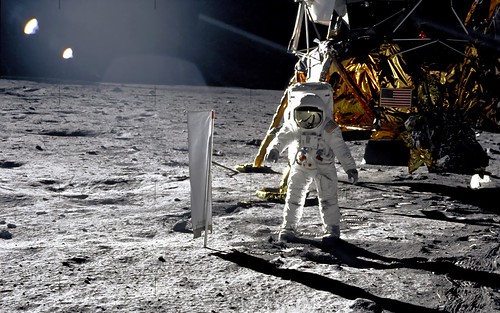
Start Up No.2186: US car firms covertly share drivers’ data, the loneliness epidemic, UK emissions at 1879AD levels, and more


The question of who owns specific parts of the Moon if they’re commercially valuable has never been raised. Soon it might be. CC-licensed photo by marcus agrippa on Flickr.

You can sign up to receive each day’s Start Up post by email. You’ll need to click a confirmation link, so no spam.


There’s another post coming this week at the Social Warming Substack on Friday at 0845 UK time. Free signup.


A selection of 9 links for you. Use them wisely. I’m @charlesarthur on Twitter. On Threads: charles_arthur. On Mastodon: https://newsie.social/@charlesarthur. Observations and links welcome.


Automakers are sharing consumers’ driving behavior with insurance companies • The New York Times

Kashmir Hill:

»

In recent years, insurance companies have offered incentives to people who install dongles in their cars or download smartphone apps that monitor their driving, including how much they drive, how fast they take corners, how hard they hit the brakes and whether they speed. But “drivers are historically reluctant to participate in these programs,” as Ford Motor put it in a patent application that describes what is happening instead: Car companies are collecting information directly from internet-connected vehicles for use by the insurance industry.

Sometimes this is happening with a driver’s awareness and consent. Car companies have established relationships with insurance companies, so that if drivers want to sign up for what’s called usage-based insurance — where rates are set based on monitoring of their driving habits — it’s easy to collect that data wirelessly from their cars.

But in other instances, something much sneakier has happened. Modern cars are internet-enabled, allowing access to services like navigation, roadside assistance and car apps that drivers can connect to their vehicles to locate them or unlock them remotely. In recent years, automakers, including G.M., Honda, Kia and Hyundai, have started offering optional features in their connected-car apps that rate people’s driving. Some drivers may not realize that, if they turn on these features, the car companies then give information about how they drive to data brokers like LexisNexis.

Automakers and data brokers that have partnered to collect detailed driving data from millions of Americans say they have drivers’ permission to do so. But the existence of these partnerships is nearly invisible to drivers, whose consent is obtained in fine print and murky privacy policies that few read.

«

America’s nonexistent privacy laws are being quietly exploited by data brokers in every possible avenue? I’m shocked, shocked I tell you. And of course all those details are used by the insurance companies to push premiums up.
unique link to this extract


Why Americans suddenly stopped hanging out • The Atlantic

Derek Thompson:

»

In the 1990s, the sociologist Robert Putnam recognized that America’s social metabolism was slowing down. In the book Bowling Alone, he gathered reams of statistical evidence to prove that America’s penchant for starting and joining associations appeared to be in free fall. Book clubs and bowling leagues were going bust.

If Putnam felt the first raindrops of an antisocial revolution in America, the downpour is fully here, and we’re all getting washed away in the flood. From 2003 to 2022, American men reduced their average hours of face-to-face socializing by about 30%. For unmarried Americans, the decline was even bigger—more than 35%. For teenagers, it was more than 45%. Boys and girls ages 15 to 19 reduced their weekly social hangouts by more than three hours a week. In short, there is no statistical record of any other period in US history when people have spent more time on their own.

And so what? one might reasonably ask. Aloneness is not loneliness. Not only that, one might point out, the texture of aloneness has changed. Solitude is less solitary than ever. With all the calling, texting, emailing, work chatting, DMing, and posting, we are producing unprecedented terabytes of interpersonal communication. If Americans were happy—about themselves, about their friends, about their country—then whining about parties of one would feel silly.

But for Americans in the 2020s, solitude, anxiety, and dissatisfaction seem to be rising in lockstep. Surveys show that Americans, and especially young Americans, have never been more anxious about their own lives or more depressed about the future of the country. Teenage depression and hopelessness are setting new annual records every year. The share of young people who say they have a close friend has plummeted. Americans have been so depressed about the state of the nation for so many consecutive years that by 2023, NBC pollsters said, “We have never before seen this level of sustained pessimism in the 30-year-plus history of the poll.”

«

Lots of strange data, including the stuff about pets (Americans spend more time with them on average than humans. Then again, pets don’t argue or want to change the channel.)
unique link to this extract


Who owns the Moon? The race for lunar real estate is an impending ethical nightmare • Inverse

Kiona Smith:

»

Along with private missions like the recent Intuitive Machines’ lander IM-1, several countries’ space agencies all have their eyes on the same real estate around the Moon’s south pole, where water ice may lie waiting in permanently shadowed craters. Until recently, debates about what should and shouldn’t happen on the Moon have been abstract. Only one country’s space agency had ever sent humans to the Moon, and they didn’t stay long. That’s on the brink of changing. The next decade may see the once-pristine lunar landscape dotted with bases and riddled with mines, all jostling for space (and bandwidth) with telescopes and other scientific exploration. But is the lunar environment worth preserving, for science or in its own right, and who gets to decide?

A recent (failed) mission to land cremated human remains on the Moon raised a high-profile example of the kind of ethical issues space ethicists say we should be considering. Astrobotic’s Peregrine One lander was scheduled to deliver the cremated remains of Gene Roddenberry and several members of the original Star Trek cast, and others to the Moon.

The Navajo Nation formally protested the mission’s launch; in Navajo beliefs, the Moon is a sacred object, and placing human remains there would be a desecration. In the end, a fuel leak forced the mission to return to Earth, where it ended in a fiery plunge into the upper atmosphere, but it drew attention to a larger debate about who gets to decide — for everyone — how we as a species relate to the Moon now.

“Every culture on Earth has conceptions about the Moon,” Santa Clara University space ethicist Brian Green tells Inverse. “There are lots of groups on Earth who have thoughts on how the Moon should be treated. This is why we need to have a larger conversation.”

Part of the unfolding discussion centers on what, if anything, we should try to protect on the Moon. Several groups here on Earth, such as For All Moonkind, have spent years arguing that the first crewed lunar landing sites are an important part of human history and should be preserved, but at the moment there’s no law or treaty preventing someone from erasing the rover tracks or astronauts’ footprints.

«

It’s very expensive to go to the Moon, so any valuable resources such as water will be even more valued. So this is likely to be ugly and solved through force majeure.
unique link to this extract


Colorado ranchers sentenced after tampering with rain gauges to increase crop subsidies • CBS Colorado

Logan Smith:

»

Two southeastern Colorado ranch owners were recently sentenced to pay $6.6m to resolve federal charges that they damaged or altered rain gauges in an effort to get paid for worsening drought conditions. 

By preventing the rain gauges from accurately measuring precipitation, the men aimed to increase the amount of money they could receive from the federal government, according to court documents. 

Patrick Esch, 72, and Ed Dean Jagers, 62, both of Springfield, received short prison sentences – Esch two months and Jagers six. They also were ordered to pay a combined $3.1m in restitution – the estimated amount of fraudulently inflated funds they received from the Federal Crop Insurance Corporation. As well, they agreed to pay a combined $3.5m to settle the allegations.

The cases against Esch and Jager included civil allegations and criminal charges accusing the men of making false statements and defrauding the federal government, in addition to the physical tampering of the rain gauges.  

“Hardworking farmers and ranchers depend on USDA crop insurance programs, and we will not allow these programs to be abused,” U.S. Attorney for the District of Colorado Cole Finegan stated in a press release.  “This case also shows the full measure of justice that can be achieved when our office uses both civil and criminal tools to protect vital government programs.”

…The group allegedly damaged rain gauges located in Springfield, Ordway, La Junta, Walsh, and Ellicott, Colorado, and others in Syracuse, Coolidge, and Elkhart, Kansas. Wires were cut, funnels to rain collectors were filled with silicone, holes drilled or punched in collectors, parts of collectors were disassembled, and objects such as cake pans or pie tins were placed over the gauges during rainstorms. The incidents occurred between July 2016 and June 2017.

«

As the saying goes – once you start to make the measurement of something that can be manipulated important, it ceases to be a useful measurement.
unique link to this extract


Kate Middleton’s photo editing controversy is an omen of what’s to come • TechCrunch

Amanda Silberling:

»

It’s not clear what tools the princess used to edit the photo — a tool like Facetune might be able to remove blemishes or toggle the brightness of the photo, but it won’t create a phantom sleeve beneath Charlotte’s elbow. Some retouching tools, like Photoshop’s content-aware fill or a clone brush, might use elements of the photo to create something that wasn’t originally there. But those aren’t the kinds of photo editing tools that people use when they’re trying to make themselves look Instagram-ready — it’s what you use when you’re trying to edit out a random guy in the background of your beach photo.

Even British celebrities like Piers Morgan have weighed in, raising the question of why the Royal Family won’t quash the conspiracy theories by just releasing the unedited photo.

As AI-powered image generation becomes mainstream, we’re losing our grip on reality. In a time when any image can be fake, how can we know what’s actually real? There are some tell-tale signs, like if someone has an abnormal number of fingers, or if someone is wearing an earring on one ear but not the other (though that could also be a style choice — you know it when you see it). But as AI gets better and more widespread, these methods of detection aren’t as reliable. A recent study from the Center for Countering Digital Hate revealed that deepfake images about elections have been rising by 130% per month on average on X (Twitter). Though speculation about a missing princess isn’t going to sway an election, this incident shows that people are finding it more and more challenging to distinguish between fact and fiction.

«

But.. the photo is fiction, in a sense. We don’t know what it was like before the edits. (Not very much different, I’m sure: Kate and the three children. But perhaps not all laughing with eyes open at exactly the same time.) I’m sure Morgan knows there isn’t just one photo, but multiple: he knows what a contact sheet is.

People love a mystery, in truth. Especially when those who know the answer to the mystery won’t talk. (Kate editing the pictures? Yeah, suuuuure.)
unique link to this extract


Analysis: UK emissions in 2023 fell to lowest level since 1879 • Carbon Brief

Carbon Brief Staff:

»

The UK’s greenhouse gas emissions fell by 5.7% in 2023 to their lowest level since 1879, according to new Carbon Brief analysis.

The last time UK emissions were this low, Queen Victoria was on the throne, Benjamin Disraeli was prime minister, Mosley Street in Newcastle became the first road in the world with electric lighting and 59 people died in the Tay Bridge disaster in Dundee.

Carbon Brief’s analysis, based on preliminary government energy data, shows emissions fell to just 383m tonnes of carbon dioxide equivalent (MtCO2e) in 2023. This is the first time they have dropped below 400MtCO2e since Victorian times.

Other key findings from the analysis include:
• The UK’s emissions are now 53% below 1990 levels, while GDP has grown by 82%
• The drop in emissions in 2023 was largely due to an 11% fall in gas demand. This was due to higher electricity imports after the French nuclear fleet recovered, above-average temperatures and weak underlying demand driven by high prices
• Gas demand would have fallen even faster, but for a 15% fall in UK nuclear output
• Coal use fell by 23% in 2023 to its lowest level since the 1730s, as all but one of the UK’s remaining coal-fired power stations closed down
• Transport was the single-largest sector in terms of emissions, followed by buildings industry, agriculture and electricity generation. The electricity sector likely dropped below agriculture for the first time.

While the 23MtCO2e reduction in 2023 was faster than the 14MtCO2e per year average needed to reach net-zero by 2050, it was mostly unrelated to deliberate climate action. The UK will need to address emissions from buildings, transport, industry and agriculture to reach its 2050 target.

«

So we need more nuclear power stations, and higher gas prices? Not sure the latter would be desirable on a societal basis, even if it gets us nearer net zero.
unique link to this extract


$500K sand dune designed to protect coastal homes washes away in just three days • Daily Beast

Dan Ladden-Hall:

»

In a drastic attempt to protect their beachfront homes, residents in Salisbury, Massachusetts, invested $500,000 in a sand dune to defend against encroaching tides. After being completed last week, the barrier made from 14,000 tons of sand lasted just 72 hours before it was completely washed away, according to WCVB.

“We got hit with three storms—two in January, one now—at the highest astronomical tides possible,” Rick Rigoli, who oversaw the dune project, told the station. Ron Guilmette, whose tennis court was destroyed in previous storms along the beach, added that he now doesn’t know how much his property is worth or if he will stay in the area. He calls the situation on Salisbury Beach “catastrophic.” “I don’t know what the solution is,” Guilmette said. Beachfront homes in the area started being damaged by strong winds and high tides after a winter storm in December 2022 removed previous protective dunes, according to WBTS-CD.

«

As so often when the US is hit by climate change, this feels like a sowing/reaping thing.
unique link to this extract


Deadspin sold by G/O Media, editorial staff to be laid off • Axios

Sara Fischer:

»

G/O Media, formerly Gizmodo Media Group, has sold sports blogging site Deadspin to European firm Lineup Publishing, a new digital media rollup company, CEO Jim Spanfeller announced in a note to staff Monday.

The firm, which was acquired by private equity firm Great Hill Partners in 2019, has been slowly offloading sites as pressure mounts from investors to make a return on its investment.

In the memo, Spanfeller said none of Deadspin’s existing staff will move over with the site as part of the deal and the new owners will “instead build a new team more in line with their editorial vision for the brand.”

Impacted staffers were notified Monday that they were being let go from G/O Media, marking the third round of cuts at the firm in less than a year.

Spanfeller said Lineup Publishing approached him about the sale and that the company was not “actively shopping Deadspin.”

“The rationale behind the decision to sell included a variety of important factors that include the buyer’s editorial plans for the brand, tough competition in the sports journalism sector, and a valuation that reflected a sizable premium from our original purchase price for the site,” Spanfeller wrote in the memo.

«

In the aforementioned memo, Spanfeller refers to the site on first mention as “Deadpin”, which maybe is a bit on the nose. Apparently the staff were given 30 minutes’ notice before they were locked out of their company laptops. What nobody’s saying: how many staff that actually is.
unique link to this extract


Who sends traffic on the web and how much? New research from Datos & SparkToro • SparkToro

Rand Fishkin:

»

Close to twi-thirds (63.41%) of all US web traffic referrals from the top 170 sites initiated on Google.com. The second-largest individual, traffic-referring domain is technically YouTube.com, but whereas Google.com hosts Google Docs, Gmail, Google Meet, and others, Microsoft splits these among a wide range of domains in the top 100 (Bing.com, Office.com, Live.com, Office365.com, Sharepoint.com, MicrosoftOnline.com, and Microsoft.com).

And for the curious, the 170th largest traffic-referrer (Pinimg.com) sent 0.003197%, suggesting that even if the next thousand sites (#171-1,171) all sent similar amounts of traffic to the web, their combined referral traffic is smaller than Facebook or YouTube.

I reasoned it was only fair to group these and compare apples to apples. Taken together, these Microsoft-owned sites are responsible for a combined 7.21% of referrals.

«

It’s an absorbing read with lots of slicing and dicing, but the message that comes through overall: when it comes to traffic on the web, the only one that really matters is Google.
unique link to this extract


• Why do social networks drive us a little mad?
• Why does angry content seem to dominate what we see?
• How much of a role do algorithms play in affecting what we see and do online?
• What can we do about it?
• Did Facebook have any inkling of what was coming in Myanmar in 2016?

Read Social Warming, my latest book, and find answers – and more.


Errata, corrigenda and ai no corrida: none notified

Start Up No.2185: Apple unbans Epic back in the EU, the disinformation front line, after the whales, Led Zep’s tax wheeze, and more


The Academy Awards on Monday night were a triumph for… semaglutide, the weight control drug. CC-licensed photo by Thank You (24 Millions ) views on Flickr.

You can sign up to receive each day’s Start Up post by email. You’ll need to click a confirmation link, so no spam.

A selection of 10 links for you. Use them wisely. I’m @charlesarthur on Twitter. On Threads: charles_arthur. On Mastodon: https://newsie.social/@charlesarthur. Observations and links welcome.


Apple reverses ban on Fortnite-maker in EU, a sign of softening approach to crackdown • WSJ

Aaron Tilley:

»

Apple has reversed course on its decision to prevent Fortnite-maker Epic Games from building its own app store in Europe, softening what appeared to be a hard line stance as it faces an array of regulations.

The tech giant earlier banned Epic’s developer account in Sweden after Chief Executive Tim Sweeney sharply criticized Apple’s response to new EU regulations that took effect this week. Sweeney accused Apple of retaliating and the company drew a public rebuke from an EU official.

Sweeney said in a post on X that Apple’s reversal was a big win “for the freedom of developers worldwide to speak up” and further suggested that Europe’s new law, called the Digital Markets Act, had its first major victory in securing Apple’s compliance.

The back-and-forth between the two companies, which have been sparring for years over Apple’s control over third-party software on its devices, comes as European regulators are evaluating how the iPhone-maker has opened up its App Store in response to the new law.

“Following conversations with Epic, they have committed to follow the rules, including our DMA policies,” said an Apple spokeswoman. “As a result, Epic Sweden AB has been permitted to re-sign the developer agreement and accepted into the Apple Developer Program.”

Apple has stridently defended its App Store and software ecosystem in the face of a barrage of criticism from developers such as Sweeney. The Justice Department is expected to file an antitrust lawsuit in the coming weeks accusing Apple of monopolistic practices related to its interactions with outside companies, according to people familiar with the matter.

«

This isn’t “a softening approach” at all. As Ben Thompson pointed out on the Dithering podcast, Apple faces this equation: the EU can impose a fine of 10% of worldwide revenue. Meanwhile, the EU is only 7% of Apple’s worldwide revenue. (Seems low, but OK.) Pissing off the EU is therefore a terrible idea, and Apple rapidly came to realise this when the EU made angry noises over the revocation of Epic’s Swedish developer account.

But notice how Apple’s dictatorial approach is now getting it into increasingly hot water. Worked OK when it just applied to hardware and some software. Gets a lot more problematic once you’re offering services and app stores and so on to significant chunks of the world. Can Apple change its culture to give developers more flexibility? (The saying is that Apple’s priorities are: 1) Apple 2) its users 3) third-party developers 5000000000000000000) everyone else. Pushing developers up the stack won’t come easy.)
unique link to this extract


How Ozempic ate awards season • The Ankler

Allen Salkin:

»

Forget Chanel, Dior or Prada: this year, the most prominent designers on the red carpet are Novo Nordisk and Eli Lilly, whose injectable weight-loss drugs are the new couture. As awards season peaks this weekend with the 96th Academy Awards, those in every cranny of the celebrity-industrial complex, from restaurateurs to marketing mavens, have found themselves dealing with profound changes wrought on entertainment industry bodies and minds by this new kid in town. In the old days — five years ago (and five decades ago) — you’d get someone into rehab or to Two Bunch Palms to dry out and get in shape for a big role or a red carpet. Now a star can quickly lose up to 15 pounds (or more) in plain sight.

Only a handful of celebrities — Oprah Winfrey, Elon Musk and Tracy Morgan are the most prominent — have publicly acknowledged using this new class of drugs, known as semaglutides, GLP-1s or by their brand names Ozempic, Wegovy and Mounjaro. A few other famous people, such as Amy Schumer, Chelsea Handler and Sharon Osbourne, have admitted to using these drugs in the past, and an even smaller subset is using them for their original purpose of helping type 2 diabetics (Anthony Anderson). Indeed, a whole separate cottage industry has popped up of people denying or condemning the use of them.

Julia Fox told Entertainment Tonight, “People are saying that I’m taking Ozempic. I’m not, and I never have. I would never do that. There are diabetics that need it.” Jessica Simpson denied to Bustle that her weight loss was injection based, saying “Oh Lord . . . it is not.” Most judgy of all was Vanderpump Rules’ Lala Kent, who may be thin in the old-fashioned way, possibly so hungry that she recently bit the hand that feeds her. “Stop taking it for weight loss,” she told People. “Enough already. I think that Hollywood is all sorts of f—ed up.” 

So in honor of the Oscars, let’s look at the impact on restaurants, plastic surgeons, trainers and makeup artists around town of a drug turning Hollywood into wannabe Barbies and Kens.

«

Salkin goes on to talk to a fair number of people. Restaurants are feeling it. But of course it would be LA where these drugs get most used.
unique link to this extract


Death threats and disinformation: what it’s like being viciously targeted by conspiracy theory activists • British Vogue

Marianna Spring:

»

I try to protect my friends and family as much as I can. Both from the hate itself, but also from worrying about my safety. I don’t ever publicly share their names, because they could be fresh meat for the trolls. My family love my reporting almost as much as I love doing it. But I don’t want them to pay any price for it.

I’m far from any frontline, unlike my extraordinary colleagues at the BBC, many of whom have put themselves at risk to report what’s happening on the ground from war zones all across the world. That includes operating in autocracies, where they’re at risk of persecution for attempting to tell the truth. I’m not subjected to racist hate, or other forms of discrimination.

Still, it seems sinister when a young female investigative reporter working in a democracy is specifically targeted with abuse at her office. If you care about protecting freedom of expression – as many of those embedded in these conspiracy theory movements claim to – why would you condone or refuse to condemn that?

We seem to have accepted online hate as part of the fabric of our society – that it’s something to be expected now social media exists. As a consequence, the onus falls on the individuals to call out and battle these trolls. The trolls as a collective, though, are more than random people expressing their anger in an unacceptable way online. Trolling is a tool used to silence and intimidate. If we do not highlight the issue of violent rhetoric and abuse online, those who can do something about it are let off the hook.

You’re probably thinking: why not just pack it in, Marianna? After all, it’d be easier. The answer? Well, then they win. All of this shows how investigating the harm caused by what’s unfolding on social media, giving a voice to those who’ve been targeted, and holding those responsible to account is more important than ever. I am grateful to everyone who allows me to investigate their stories. The more I experience the very thing they’re living through, the more I want to tell their stories – without fear.

«

Sounds like she’s experiencing the outcomes of s_c__l w_rm_ng doesn’t it.
unique link to this extract


Energy transitions: the decline of whale oil and the rise of petroleum • JKempEnergy.com

John Kemp:

»

Before Edwin Drake drilled his first successful well in Pennsylvania in 1859, however, spermaceti was already becoming increasingly scarce and prices were climbing sharply as a result of overfishing, escalating costs and crew shortages. Sperm oil imports into the United States (the amount declared to customs on landing) had halved to 2.6 million gallons in 1858 down from 5.3 million gallons in 1843. The landed price of sperm oil had doubled to $1.21 per gallon from 63 cents.

Spermaceti availability was declining primarily because of overfishing, which forced whaling ships further offshore and on longer voyages, and even then they increasingly came back with less than a full load. The industry’s cost base was also rising as ships were fitted out to higher and more modern standards.

Once the California gold rush was underway, crewing became a major problem. Sailors would contract for a lengthy voyage from the U.S. east coast to go whaling in the Pacific, collect their sign on bonus, enjoy free passage to the Pacific, then jump ship when they reached California to try their luck in the gold fields, delaying voyages and requiring costly extra hires.

Spermaceti as a source of illumination was already in trouble before Drake’s well. It could never have satisfied the growing demand for lighting. The sudden competition from a plentiful source of cheap lighting in the form of petroleum-derived kerosene accelerated the industry’s decline. By the late 1870s the whale fishery had become a shadow of its former self.

«

There must be an alternative history to be written about a world where people didn’t figure out how to use oil, or where for some reason it wasn’t accessible (at the bottom of the ocean?). Would there be whale farming? What would we have done?
unique link to this extract


‘Unexploded bombs’: call for action after 11 deaths in UK due to e-bike fires • The Guardian

Jon Ungoed-Thomas:

»

Eleven people were killed in fires caused by e-bikes in the UK last year and now ministers face calls for urgent action over the sale of dangerous products.

E-bike fires can be particularly deadly because they can rapidly ignite in a fireball, and because the bikes are routinely left to charge overnight in hallways, they can block what may be the only exit. Campaigners compare the most dangerous products to “unexploded bombs”.

New figures produced by the Office for Product and Safety Standards (OPSS), drawn from data from UK fire and rescue services, reveal what is believed to be the highest number of deaths recorded from e-bike fires in the UK last year.

Yvonne Fovargue, a Labour MP and chair of the all party parliamentary group on online and home electrical safety, said: “These e-bikes can reach a phenomenally high temperature in seconds. They are so dangerous. It is almost like having an unexploded bomb in your house.”

MPs and safety groups are calling for third-party certification to ensure e-bikes, e-scooters and their batteries are approved by an independent body before being available for sale. This is already the case for other high-risk products such as fireworks.

Fire safety officers say consumers should buy from a reputable retailer and warn e-bikes fitted with conversion kits or fitted with batteries bought online may pose a greater risk.

An inquest heard last month how Sofia Duarte, 21, died on New Year’s Day 2023 after a fire broke out in the hallway of a property she was staying in at Bermondsey, south-east London. The fire is believed to have been caused by an unbranded battery pack fitted to a converted bike.

Other residents escaped by jumping out of windows, but Duarte, unaware of the ferocity of the fire, tried to leave by the staircase. She died of burns and smoke inhalation.

«

unique link to this extract


The Rossminster affair: how Led Zeppelin tried to use a Shakespearean theatre charity to avoid paying tax • Led Zeppelin News

»

Led Zeppelin’s record sales skyrocketed during the 1970s, leaving the band with a difficult problem to solve by 1978: How could the members of the band receive £3.668m in royalty payments without giving a significant portion of the money to British tax authorities?

The band’s tax advisers had an inventive solution: The members of Led Zeppelin would hand control of their companies to a Shakespearean theatre charity based in a former church in London that was run by an actor known for playing mysterious foreign villains. That would enable the band’s royalties to be classed as profits received by the charity, keeping it out of the reach of the tax authorities.

In 1978, the members of Led Zeppelin and their manager Peter Grant sold their businesses to the charity in the hope of solving their tax problem. But the transaction, despite its inventiveness, failed to solve Led Zeppelin’s financial woes and saw the band caught up in one of the UK’s most infamous corporate scandals.

[Led Zep’s accountants] Rossminsters knew that any income or capital gains generated by [actor George] Murcell’s theatre charity were completely exempt from taxes in the UK.

Furthermore, a business could choose to pay its profits as a dividend to a parent company. This meant that a business generating profits could essentially hand up that money to its owner and avoid paying tax itself.

Another quirk of British tax law meant that if the parent company of that business was a charity like St George’s Elizabethan Theatre, those profits were passed on not as a dividend but instead as a donation. This meant that the business didn’t need to plan to pay corporation tax on the profits.

Rossminster managed to combine the theatre’s charity status with these facets of UK law to develop a scheme that meant any businesses owned by the charity could essentially move their profits through the corporate structure without paying any taxes on it.

«

And you thought it was about music. Then again, the top marginal personal tax rate was 83% (and 98% on investment income). That was down from when the Beatles wrote “Taxman“: “it’s one for you, 19 for me” – referring to the 95% top personal tax rate. (There are SO many stories of those giant bands and their tax avoidance frolics.)
unique link to this extract


OpenAI GPT sorts resume names with racial bias, test shows • Bloomberg

Leon Yin, Davey Alba and Leonardo Nicoletti :

»

In the race to embrace artificial intelligence, some businesses are using a new crop of generative AI products that can help screen and rank candidates for jobs — and some think these tools can even evaluate candidates more fairly than humans. But a Bloomberg analysis found that the best-known generative AI tool systematically produces biases that disadvantage groups based on their names.

OpenAI, which makes ChatGPT, the AI-powered chatbot that can churn out passable song lyrics and school essays, also sells the AI technology behind it to businesses that want to use it for specific tasks, including in HR and recruiting. (The company says it prohibits GPT from being used to make an automated hiring decision.) Becker, who has tested some of these AI-powered hiring tools, said that she’s skeptical of their accuracy. OpenAI’s underlying AI model, which is developed using a vast number of articles, books, online comments and social media posts, can also mirror and amplify the biases in that data.

In order to understand the implications of companies using generative AI tools to assist with hiring, Bloomberg News spoke to 33 AI researchers, recruiters, computer scientists and employment lawyers. Bloomberg also carried out an experiment inspired by landmark studies that used fictitious names and resumes to measure algorithmic bias and hiring discrimination. Borrowing methods from these studies, reporters used voter and census data to derive names that are demographically distinct — meaning they are associated with Americans of a particular race or ethnicity at least 90% of the time — and randomly assigned them to equally-qualified resumes.

When asked to rank those resumes 1,000 times, GPT 3.5 — the most broadly-used version of the model — favored names from some demographics more often than others, to an extent that would fail benchmarks used to assess job discrimination against protected groups. While this test is a simplified version of a typical HR workflow, it isolated names as a source of bias in GPT that could affect hiring decisions. The interviews and experiment show that using generative AI for recruiting and hiring poses a serious risk for automated discrimination at scale.

«

unique link to this extract


Rishi Sunak’s report finds low-traffic neighbourhoods work and are popular • The Guardian

Peter Walker:

»

An official study of low-traffic neighbourhoods (LTNs) ordered by Rishi Sunak amid efforts to stop them being built has instead concluded they are generally popular and effective and the report was initially buried, the Guardian has learned.

The long-delayed review by Department for Transport (DfT) officials was commissioned by the prime minister last July, as Sunak sought to capitalise on controversy about the schemes by promising drivers he was “on their side”.

Downing Street had hoped that the study would bolster their arguments against LTNs, which are mainly installed by Labour-run councils, but it largely points the other way.

The report, which applies only to England as transport is devolved, had been scheduled for publication in January. However, after its findings emerged, government advisers asked that it be permanently shelved, the Guardian was told.

One government source disputed this, saying the report would be published soon, and it was “categorically not the case” that it had been suppressed.

A copy of the report seen by the Guardian said that polling carried out inside four sample LTNs for the DfT found that overall, twice as many local people supported them as opposed them.

A review of evidence of their effectiveness said that although formal studies were limited, they did not support the contention of opponents that LTNs simply displaced traffic to other streets rather than easing overall congestion.

“The available evidence from the UK indicates that LTNs are effective in achieving outcomes of reducing traffic volumes within their zones while adverse impacts on boundary roads appear to be limited,” it read.

«

This administration has never been hot on evidence-based policy, and this is just more, well, evidence of that.
unique link to this extract


Here’s how much shorter the US ski season might be in 25 years • SKI

Samantha Berman:

»

A new report detailing climate change’s effect on the ski industry takes a look at both the past and future. The study, which was published in the trade publication Current Issues in Tourism, examines global warming’s effect on different aspects of the ski industry, including season length, average winter temperatures in different US regions, and projected economic losses if climate issues go unchecked.

One of the most unique aspects of the report is that it presents an alternate reality of what our ski seasons would have looked like over the last 20 years without any climate-change impacts. Using data from ski resorts gathered between 1960-1979, before the effects of global warming started to impact our winters, the researchers concluded that our ski seasons would have been extended by 5.5 to 7.1 days. Those days equaled around $252m in lost revenue
.
Using similar extrapolated data, the researchers also projected how our future ski seasons will be impacted by global warming. Instead of only gloom and doom, however, they offer a glimpse of what it might look like if we successfully lower our fossil fuel emissions—as well as if we don’t.

We’ll give you the bad news first. If we continue on our current trajectory, our seasons risk losing up to 60 days in the high-emissions scenario. That’s two months. And if we do manage to reduce our carbon emissions, we’ll only lose an estimated 14 to 33 days. Those estimates take into account not only reduced snowfall, but also higher temperatures that will make it more difficult or impossible to make snow.

It’s not a great scenario, but it’s also not surprising given the way global warming has left its mark in every corner of the globe. Yet despite evidence of climate change touching our everyday lives, we can’t seem to move the needle.

«

Despite the SUV being the best-selling car in the US, and vehicle emissions being a major source of greenhouse gases, you can’t seem to move the needle? Surprising.
unique link to this extract


NYTimes files copyright takedown against hundreds of Wordle clones • 404 Media

Jason Koebler:

»

The New York Times has filed a series of copyright takedown requests against Wordle clones and variations in which it asserts not just ownership over the Wordle name but over the broad concepts and mechanics of the word game, which includes its “5×6 grid” and “green tiles to indicate correct guesses.”

The Times filed at least three DMCA takedown requests with coders who have made clones of Wordle on GitHub. These include two in January and, crucially, a new DMCA filed this week against Chase Wackerfuss, the coder of a repository called “Reactle,” which cloned Wordle in React JS (JavaScript). (The full takedown is embedded at the bottom of this article.)

The most recent takedown request is critical because it not only goes after Reactle but anyone who has forked Reactle to create a different spinoff game; an archive of the Reactle code repository shows that it was forked 1,900 times to create a diverse set of games and spinoffs. These include Wordle clones in dozens of languages, crossword versions of Wordle, emoji and bird versions of world, poker and AI spinoffs, etc. 

«

So the NYT thinks it has the One True Wordle? You could agree that the 5×6 grid and the use of green tiles for correct letters does mark it out. But not that much more. (What about lower-case letters?)
unique link to this extract


• Why do social networks drive us a little mad?
• Why does angry content seem to dominate what we see?
• How much of a role do algorithms play in affecting what we see and do online?
• What can we do about it?
• Did Facebook have any inkling of what was coming in Myanmar in 2016?

Read Social Warming, my latest book, and find answers – and more.


Errata, corrigenda and ai no corrida: none notified

Start Up No.2184: hackers target US prescription system, TikTok screws Congress lobbying, Ozempic in your brain, and more


Researchers at the University of Surrey have found that higher pressure makes people use less water in showers. CC-licensed photo by Dean McCoy on Flickr.

You can sign up to receive each day’s Start Up post by email. You’ll need to click a confirmation link, so no spam.


It’s Friday, so there’s another post due at the Social Warming Substack at about 0845 UK time.


A selection of 9 links for you. Don’t read in the shower. I’m @charlesarthur on Twitter. On Threads: charles_arthur. On Mastodon: https://newsie.social/@charlesarthur. Observations and links welcome.


How hackers dox doctors to order mountains of Oxycodone and Adderall • 404 Media

Joseph Cox:

»

404 Media has uncovered a wide-spanning scheme in which criminals break into various panels used by doctors, nurses, pharmacists, and even wholesale narcotics providers, and then leverage that access to order controlled substances like oxycodone. Some of the hackers then appear to sell these substances for profit online. Because the hackers are using legitimate ordering tools designed for industry professionals, when a prescription request lands at a pharmacy, it can look as legitimate as any other.

In some cases hackers are phishing doctors for certain pieces of information, such as their unique DEA-assigned number, to then create drug ordering accounts in their name. The hackers are also making use of powerful bots that allow them to dox nearly anyone in America for as little as $15. Some of these bots use credit header data, which is information a person provides, such as their physical address, to the big three credit bureaus who then sell access to third-parties. I’ve previously shown how these bots are connected to violent criminals. Now, they’re being used as part of the underground drug trade, with hackers able to dox a specific doctor within a target ZIP code in around 15 minutes, one fraudster said.

The news presents not just a series of individual breaches at multiple companies in the pharmaceutical industry, but a more fundamental undermining of the trust in a digital prescription system that itself was created as a response to pill mills, doctor shopping, and other systemic abuses during the opioid crisis.

…One person on Telegram, who used the handle “Escripted,” explained how they steal doctor’s personal and professional information and then sign-up to electronic prescription portals. Instead of a tear-off from a notepad that a doctor signs and hands to a patient, electronic prescriptions are digitally sent by the doctor to a fulfilling pharmacy. The idea is that they are much harder to counterfeit, with a digital signature being more robust than simply copying a doctor’s handwritten one.

«

Another banger from 404 Media. (Clearly, rootling about in Telegram is a reliable way to find story leads.)

unique link to this extract


TikTok campaign against ban backfires • Semafor

»

A House committee unanimously advanced legislation that would force ByteDance to divest the social media app TikTok, despite congressional offices being bombarded with calls from TikTokers who were urged by the platform to call their representatives to protest the bill.

“Let Congress know what TikTok means to you and tell them to vote NO,” a pop-up message on the app said, imploring users to “stop a TikTok shutdown.”

Aides from multiple congressional offices told Semafor that they were getting flooded with calls pushing back on the legislation Thursday. Some offices reported getting as many as 50 phone calls. One office received a message from a caller threatening suicide if the app was taken down, a Politico reporter posted on X.

But later Thursday afternoon, the House Energy and Commerce Committee unanimously advanced the legislation in a 50-0 vote. The bipartisan House bill introduced Tuesday would force ByteDance to sell off TikTok or face it being banned in the United States, over national security concerns associated with Chinese ownership of the app, which TikTok says is used by 170 million Americans. House majority leader Steve Scalise said the bill would come to the floor next week.

“This legislation has a predetermined outcome: a total ban of TikTok in the United States,” a TikTok spokesperson said in a statement. “The government is attempting to strip 170 million Americans of their Constitutional right to free expression. This will damage millions of businesses, deny artists an audience, and destroy the livelihoods of countless creators across the country.”

The bill was proposed by Reps. Mike Gallagher (R-Wisc.) and Raja Krishnamoorthi (D-Ill.), the top lawmakers on the House select committee on China, and quickly received support from the White House and Speaker Mike Johnson.

“Here you have an example of an adversary-controlled application lying to the American people, and interfering with the legislative process in Congress,” Gallagher said in response to the calls. “In a weird way it almost proves the point that we’ve been making here.”

«

unique link to this extract


Beyond the water flow rate: water pressure and smart timers impact shower efficiency • OSF Preprints

Ian Walker, Pablo Pereira-Doel and James Daly at the University of Surrey :

»

England is projected to face a water supply shortfall of 4 billion litres daily by 2050, mostly due to population growth and increasing climate-driven droughts and flooding. The Environment Act 2021 mandates significant water usage reductions, targeting a decrease for households from the current 144 litres per person/day to 110, and a 15% reduction for businesses.

Enhancing water efficiency in showers is crucial, given their high water consumption, energy use and associated carbon emissions. Water consumption in 290 showers was covertly monitored for 39 weeks, capturing 86,421 showering events. Increased water pressure was strongly associated with reduced water use – an effect that can be amplified even further by installing smart timers to inform users of their shower duration.

«

Walker, who is professor of environmental psychology (pause a moment to consider what that implies), wrote a thread about this research which has all sorts of fascinating details – such as that there are people who take showers lasting an hour or more. (Mean 6.7 minutes, median 5.7 minutes, 50% lie between 3.3 and 8.8 minutes. Time yourself next time!)

But the idea that making the shower stronger reduces water use is initially counterintuitive. Except: you know that a really high-pressure shower is pretty brutal, and doesn’t encourage lingering. (Thanks Adewale A for the link.)
unique link to this extract


The Iditarod is embroiled in a controversy over moose guts • Outside Online

Frederick Dreier:

»

What’s the weirdest rule in endurance sports? A few come to mind.

• Regulations governing the New York City Marathon explicitly forbid runners from pooping on the pavement at the starting line
• Article 7.01-G of the Ironman Triathlon rulebook prohibits nakedness in transition areas
• And don’t get me started on the wackadoo bylaws enforced by pro cycling’s governing body, the Union Cycliste International, which govern the minutiae of oh so many aspects of bike racing, from the height of an athlete’s socks to the size and shape of his or her ugly helmet.

But in all my time covering professional outdoor competitions, I’ve never come across anything like Rule 34 in the regulations governing Alaska’s Iditarod, the Tour de France of dogsledding. The law, titled “Killing of Game Animals,” is below:

»

In the event that an edible big game animal, i.e., moose, caribou, buffalo, is killed in defense of life or property, the musher must gut the animal and report the incident to a race official at the next checkpoint. Following teams must help gut the animal when possible. No teams may pass until the animal has been gutted and the musher killing the animal has proceeded. Any other animal killed in defense of life or property must be reported to a race official, but need not be gutted. 

«

Yes, the Iditarod requires you to disembowel the big mammals that you kill along the way. Not only that—officials will scrutinize the efficacy of your job gutting the animal in question.

At the moment, there’s a brewing controversy about the Iditarod’s Rule 34 – specifically, whether or not a star athlete gutted a moose the right way.

«

unique link to this extract


AI likely to increase energy use and accelerate climate misinformation – report • The Guardian

Oliver Milman:

»

Claims that artificial intelligence will help solve the climate crisis are misguided, with the technology instead likely cause rising energy use and turbocharge the spread of climate disinformation, a coalition of environmental groups has warned.

Advances in AI have been touted by big tech companies and the United Nations as a way to help ameliorate global heating, via tools that help track deforestation, identify pollution leaks and track extreme weather events. AI is already being used to predict droughts in Africa and to measure changes to melting icebergs.

Google, which has developed its own AI program called Bard (recently rebranded to Gemini) and has an AI project to make traffic lights more efficient, has been at the forefront of promoting emissions reductions through AI adoption, releasing a report last year that found AI could cut global emissions by as much as 10%, equivalent to the entire carbon pollution put out by the European Union by 2030. “AI has a really major role in addressing climate change,” said Kate Brandt, Google’s chief sustainability officer, said in December, describing the technology at an “inflection point” in making major progress in environmental goals.

However, a new report by green groups has cast doubt over whether the AI revolution will have a positive impact upon the climate crisis, warning that the technology will spur growing energy use from data centers and the proliferation of falsehoods about climate science.

“We seem to be hearing all the time that AI can save the planet, but we shouldn’t be believing this hype,” said Michael Khoo, climate disinformation program director at Friends of the Earth, which is part of the Climate Action against Disinformation coalition that put out the report.

“It’s not like AI is ridding us of the internal combustion engine. People will be outraged to see how much more energy is being consumed by AI in the coming years, as well as how it will flood the zone with disinformation about climate change.”

«

There’s so much handwaving about AI saving energy down the years. It was going to be deployed in 2017 by the electricity grid in the UK to optimise things. Did anything come of that?
unique link to this extract


Ozempic is in fact a brain drug • The Atlantic

Sarah Zhang:

»

When scientists first created the class of drugs that includes Ozempic, they told a tidy story about how the medications would work: The gut releases a hormone called GLP-1 that signals you’re full, so a drug that mimics GLP-1 could do the exact same thing, helping people eat less and lose weight.

The rest, as they say, is history. The GLP-1 revolution birthed begat semaglutide, which became Ozempic and Wegovy, and tirzepatide, which became Mounjaro and Zepbound—blockbuster drugs that are rapidly changing the face of obesity medicine. The drugs work as intended: as powerful modulators of appetite. But at the same time that they have become massive successes, the original science that underpinned their development has fallen apart. The fact that they worked was “serendipity,” Randy Seeley, an obesity researcher at the University of Michigan, told me. (Seeley has also consulted for and received research funding from companies that make GLP-1 drugs.)

Now scientists are beginning to understand why. In recent years, studies have shown that GLP-1 from the gut breaks down quickly and has little effect on our appetites. But the hormone and its receptors are naturally present in many parts of the brain too. These brain receptors are likely the reason the GLP-1 drugs can curb the desire to eat—but also, anecdotally, curb other desires as well. The weight-loss drugs are ultimately drugs for the brain.

«

Fascinating. (Subediting note: “birth” is not a transitive verb; it’s a noun. “Created” works, and “begat” as substituted by me above if you want to sprinkle a little light Biblical feel.)
unique link to this extract


How Google blew up its open culture and compromised its product • Big Technology

David Kiferbaum:

»

In my seven years at Google, one of the most shocking moments came after I questioned our fixation with the word “guys.”

It was 2017, and Google had been facing gender pay gap allegations when I attended an unconscious bias training. Rather than directly discuss the issue, the instructors were obsessed with word choice, focusing on replacing “guys.”

“You should be aware that the term ‘guys’ is gendered and could be alienating for some Googlers, so instead you should be referring to groups of people you work with as ‘team’ or ‘folks’,” one session leader said.

When I challenged the instructor, raising skepticism that this language change would address the real issue, I got shouted down.

“How dare you!” a colleague said from the other side of the room. Other participants, and the instructor, began to scold me. I nearly got shouted out of the session.

Google used to be a place to ask questions. “You must make it safe to ask the tough questions and to tell the truth at all times, even when the truth hurts,” wrote Eric Schmidt and Jonathan Rosenberg in their 2014 book How Google Works. “When you learn of something going off the rails, and the news is delivered in a timely, forthright fashion, this means — in its own, screwed-up way — that the process is working.” 

Inside Google today, the process is not working. Previously accessible Google executives have disappeared, once acceptable questions can’t be asked, and a dispassionate arrogance has taken hold. Unsurprisingly, the company’s deficient culture is showing up in the product, most vividly in its recent Gemini debacle. As a user and shareholder, I’m concerned.

…Lacking the forums for public questioning — and feeling their precarious job security — Google employees no longer feel fully able to speak up within the company.

«

Very much what we suspected, but interesting to hear it from the horse’s mouth.
unique link to this extract


IDC forecasts global PC shipments to grow 2.0% in 2024, led by the arrival of AI PCs and the start of a commercial refresh cycle • IDC

»

As the global economy nears recovery, so will the PC market with global shipments forecast to reach 265.4 million units in 2024, up 2.0% from the prior year according to the International Data Corporation (IDC) Worldwide Quarterly Personal Computing Device Tracker. While vendors focused on clearing inventory in 2023, IDC expects 2024 to be an expansion year with the introduction of AI PCs, which will ultimately drive the market forward to 292.2m units in 2028 and a compound annual growth rate (CAGR) of 2.4% over the 2024–2028 forecast period.

Growth is expected to slowly ramp up over the year along with the availability of AI PCs, which will coincide with the beginning of a commercial refresh cycle in 2025. “Commercial buyers, both enterprise and educational, are on the cusp of a refresh cycle that begins later this year and reaches its peak in 2025,” said Jitesh Ubrani, research manager with IDC’s Worldwide Mobile and Consumer Device Trackers. “Many of these buyers are expected to be among the first in terms of AI PC adoption. The presence of on-device AI capabilities is not likely to lead to an increase in the PC installed base, but it will certainly lead to a growth in average selling prices.”

«

Have to love IDC forecasting this to four significant figures: 292.2 million, not 292. To be honest, though, I wouldn’t put that much weight on this. Wayyy back in 2012 I looked at how IDC’s forecasts for PC sales had changed in the light of tablets. The forecast for 2016’s sales: over 500m. Actual sales in 2016: 270m. This stuff is not very good guesswork.
unique link to this extract


Roku disables TVs and streaming devices until users consent to new terms • TechCrunch

Devin Coldewey:

»

Roku users around the country turned on their TVs this week to find an unpleasant surprise: The company required them to consent to new dispute resolution terms in order to access their device. The devices are unusable until the user agrees.

Users (at least, this user) received an email the day before saying that “we have made changes to our Dispute Resolution Terms, which describe how you can resolve disputes with Roku. We encourage you to read the updated Dispute Resolution Terms. By continuing to use our products or services, you are agreeing to these updated terms.”

The terms, of course, include a forced arbitration agreement that prevents the user from suing or taking part in lawsuits against Roku. It’s common these days as a way of limiting liability, and users often have little or no recourse. They only find out later, when the company does something heinous and consequences are negligible. Tech companies love this one dirty trick to save millions! (Full disclosure, our parent company requires arbitration as part of its dispute resolution policy as well.)

But what is actually new on perusal of the terms is a whole “Informal Dispute Resolution” section. This requires anyone with legal complaints to take them to Roku lawyers first, who will conduct a “Meet-and-Confer” call and then “make a fair, fact-based offer of resolution” that will no doubt be generous and thoughtful. So they’ve added a pre-arbitration arbiter to further distance legal threats from materializing. The change was actually made last fall (though no notification appears to have been sent out) but only came into effect recently, and now, some weeks later, users are being informed by this questionable method.

I try to opt out of these when I can, and after reading the terms (to which, of course, by “continuing to use” my TV, I had already agreed), I found that you could only do so by mailing a written notice to their lawyers — something I fully intended to do today. Actually, since arbitration was apparently already required, this update provides an opportunity to opt out of something I didn’t know I was already subject to.

«

Of course disconnecting your Roku TV from the internet will mean that you can’t look at any content through the Roku part.
unique link to this extract


• Why do social networks drive us a little mad?
• Why does angry content seem to dominate what we see?
• How much of a role do algorithms play in affecting what we see and do online?
• What can we do about it?
• Did Facebook have any inkling of what was coming in Myanmar in 2016?

Read Social Warming, my latest book, and find answers – and more.


Errata, corrigenda and ai no corrida: none notified

Start Up No.2183: the TikTok spammers, Apple’s Car’s wrong turn, Europe’s electricity gets greener, gaming Google Scholar, and more


Airlines in the US are becoming a lot more restrictive about what people can claim is “carry-on baggage”. CC-licensed photo by Bradley Gordon on Flickr.

You can sign up to receive each day’s Start Up post by email. You’ll need to click a confirmation link, so no spam.


There’s another post coming this week at the Social Warming Substack on Friday at 0845 UK time. Free signup.


A selection of 10 links for you. They fit perfectly. I’m @charlesarthur on Twitter. On Threads: charles_arthur. On Mastodon: https://newsie.social/@charlesarthur. Observations and links welcome.


Airlines are coming for your carry-on bags • WSJ

Dawn Gilbertson:

»

Fanny packs. Cross-body bags. Shopping bags. Pillows and blankets. The Southwest Airlines gate agent rattled off so many items that counted toward the two carry-on bag limit on my flight to Baltimore, I thought it might be a playful jab at Spirit and Frontier and their rigid carry-on policing to collect more fees.

But this was no joke. Southwest quietly began cracking down on carry-on bags on Feb. 22, ahead of the spring and summer travel rush, advising gate agents of the changes in a memo. This crackdown isn’t about bag size. It is about how many bags you have.

Southwest isn’t alone in putting passengers’ personal items in its crosshairs as a way to save precious bin space and speed up boarding. Delta and United agents have also recently asked me to stuff my small Lululemon bag in my backpack. One American Airlines frequent flier told me he watched gate agents in Sacramento, Calif., and Dallas list a litany of items that count as a personal item on weekend flights to Nashville, Tenn., last month.

Carting all your stuff to the gate can save you time and often saves money, especially with some airlines’ new, higher checked-baggage fees. Delta joined the club on Tuesday, announcing prices of $35 for your first bag and $45 for your second.

But testing airlines’ carry-on limits is now more likely to backfire, and lose you precious time as airlines make you consolidate items or check a bag at the gate. Few things sum up the industry’s carry-on challenges like Southwest’s latest move. The nation’s largest domestic carrier by passengers should have the fewest issues given its generous two-free-checked-bag policy. (Unlike checked bags, the government doesn’t track carry-on bag volume and airlines don’t disclose it.)

Southwest declined to discuss its carry-on changes beyond a statement saying the change “provides for a consistent customer experience and helps to align with other airlines’ policies.” A memo to employees about the changes singles out cross-body purses of any size and pillows and blankets, but employees are free to ad lib, spokesman Chris Perry says. Representatives for Delta, United and American pointed to their carry-on policies when asked for comment.

Tymali Gore, a traveling hospice nurse, couldn’t believe it when she heard a gate agent announce new rules about pillows, blankets and a host of other items counting as a personal item late last month. “It was the first time I’d ever heard anything like that,” she says. 

«

Then again, some people pretty much bring a steamer trunk and try to wedge it into the overhead lockers, then give up and vainly attempt to stuff it under the seat in front. The mind boggles.
unique link to this extract


Inside the world of TikTok spammers and the AI tools that enable them • 404 Media

Jason Koebler:

»

We have recently been getting bombarded with Instagram Reels of influencers explaining how they make five figures a month by using AI to create tons of viral TikTok pages using stolen celebrity clips juxtaposed next to Minecraft gameplay footage. This strategy, the influencers say, allows them to passively make $10,000 a month by flooding social media platforms with stolen and low-effort clips while working from private helicopters, the beach, the ski slope, a park, etc.

What I found was a complex ecosystem of content parasitism, with thousands of people using a variety of AI tools to make low-quality spammy videos that recycle Reddit AMAs, weird “Would You Rather” games, AI-narrated “scary ocean” clips, ChatGPT-generated fun facts, slideshows of tweets, clips lifted from celebrities, YouTubers, and podcasts.

To help these people fill the internet with nonsense, there is an entire industry of creators, influencers, hustlers, and software developers selling them templates, stock clips, TikTok account creation services, cash out services, low-wage video editors in the developing world, AI voiceover and editing tools, and different “strategies” or “metas” to go viral enough to earn money from YouTube’s AdSense or from TikTok’s Creativity Program Beta, a monetization program that pays for “high-quality, longer TikTok videos” but which AI content influencers say can be easily gamed with low-effort content.

One of the kings of this world is Musa Mustafa, who got his start editing clips for the streamer Sneako but now seemingly makes most of his money from a Discord channel called “Media Metas,” which has 80,000 members and has a locked, premium section that costs $40 per month and is full of strategies and software people can supposedly use to go viral and make thousands of dollars a month. Whop, the platform he uses to sell access to the Discord, claims he is now making more than a million dollars a year through their platform.

«

Probably knock a couple of zeroes off that, but it’s slightly depressing that it’s an option at all.
unique link to this extract


European Electricity Review 2024 • Ember

Sara Brown and Dave Jones:

»

The EU accelerated its shift away from fossil fuels in 2023, with record falls in coal, gas and emissions. Fossil fuels dropped by a record 19% to their lowest ever level at less than one third of the EU’s electricity generation. Renewables rose to a record 44% share, surpassing 40% for the first time. Wind and solar continued to be the drivers of this renewables growth, producing a record 27% of EU electricity in 2023 and achieving their largest ever annual capacity additions. Furthermore, wind generation reached a major milestone, surpassing gas for the first time.

Clean generation reached more than two-thirds of EU electricity, double fossil’s share, as hydro rebounded and nuclear partially recovered from last year’s lows alongside the increase in wind and solar. 

Coal was already in long-term decline, and that trend resumed in 2023. The temporary slowdown in coal plant closures during the energy crisis did not prevent a huge fall in coal generation this year, with a wave of plant closures imminent in 2024. Gas generation fell for the fourth consecutive year, and as coal nears phase-out in many countries, gas will be next to enter terminal decline.

In addition to clean growth, falling electricity demand also contributed to the drop in fossil fuel generation. Demand fell by 3.4% (-94 TWh) in 2023 compared to 2022, and was 6.4% (-186 TWh) lower than 2021 levels when the energy crisis began. This trajectory is unlikely to continue. With increased electrification, this rate of demand fall is not expected to be repeated in the coming years. To reduce fossil fuels at the speed required to hit EU climate goals, renewables will need to keep pace as demand increases. 

«

That fall in electricity demand is peculiar: Ember puts it down to “a drop in industrial electricity consumption, mild weather and energy savings and efficiency” – principally in the energy-intensive industries of chemicals/petrochemicals, iron/steel, and paper/pulp, where manufacturing may have been reined in as gas prices soared.
unique link to this extract


Vendor offering citations for purchase is latest bad actor in scholarly publishing • Science

Katie Langin:

»

In 2023, a new Google Scholar profile appeared online featuring a researcher no one had ever heard of. Within a few months, the scientist, an expert in fake news, was listed by the scholarly database as their field’s 36th most cited researcher. They had an h-index of 19—meaning they’d published 19 academic articles that had been cited at least 19 times each. It was an impressive burst onto the academic publishing scene.

But none of it was legitimate. The researcher and their institution were fictional, created by researchers at New York University (NYU) Abu Dhabi who were probing shady publishing practices. The publications were written by ChatGPT. And the citation numbers were bogus: some came from the author excessively citing their own “work,” while 50 others had been purchased for $300 from a vendor offering a “citations booster service.”

“The capacity to purchase citations in bulk is a new and worrying development,” says Jennifer Byrne, a cancer researcher at the University of Sydney who has studied problematic publications in the biomedical literature. In academia, a researcher’s h-index and the number of citations they’ve garnered are often used for hiring and promotion decisions. And the fabricated profile, which was part of a study posted as a preprint on arXiv, shows “extreme” tactics that can be employed to manipulate them, adds Byrne, who was not involved in the work. (The researchers declined to name the vendor to avoid giving them more business.)

The study got started when Yasir Zaki, a computer scientist at NYU Abu Dhabi, and his colleagues noticed troubling patterns among real researchers. After combing through the Google Scholar profiles of more than 1.6 million scientists and looking at authors with at least 10 publications and 200 citations, the team identified 1016 scientists who had experienced a 10-fold increase in citations over a single year. “You know something is off when a scientist experiences a sudden and massive spike in their citations,” Zaki says.

«

Arguably this sort of thing would have been harder to spot in the days before Google Scholar – though there maybe wouldn’t have been the same incentive to do it.
unique link to this extract


Apple car’s crash: design details, Tim Cook’s indecision, failed Tesla deal • Bloomberg (archived)

Mark Gurman and Drake Bennett:

»

According to a longtime Apple executive who worked on the car, it was widely seen within the company as an ill-conceived product that needed to be put out of its misery. “The big arc was poor leadership that let the program linger, while everyone else in Apple was cringing,” they say. Asked what went wrong with the effort, a senior manager involved in the vehicle’s interior design replied: “What went right?”

…It was Steve Jobs who first floated the idea of a car at Apple. In the late 2000s, in a typically grand pronouncement, the company’s co-founder and CEO declared internally that Apple should have dominant technologies in all of the spaces in which people spent time: at home, at work and on the go. For many Americans, being in transit means being on the road, sometimes for hours a day. “We talked about what would be this generation’s new Volkswagen Beetle,” recalls Tony Fadell, who led mobile device engineering under Jobs. In the wake of the 2008 financial crisis, with American car companies on the brink of failure, the Apple chief executive even floated the idea of acquiring General Motors Co. for pennies on the dollar.

That scheme was quickly abandoned, in part because Apple decided it would be a bad look and in part because of the need to focus on the iPhone. But in 2014, seeking a new multi-hundred-billion-dollar revenue stream, Cook began to focus again on cars. Apple executives weighing whether to enter the market joked with one another that they’d rather take on Detroit than a fellow tech giant: “Would you rather compete against Samsung or General Motors?” The profit margins in cars were far lower than in consumer electronics, but Apple was coming off a stretch during which it had reshaped not only the music industry but the mobile phone market.

To its supporters, the idea of getting into automobiles had the potential to be, as one Apple executive puts it, “one more example of Apple entering a market very late and vanquishing it.” While the initial prototypes operated like traditional cars, these supporters eventually pursued more radical redesigns, invoking a transportation technology experience they said would “give people time back.” The ultimate plan was a living room on wheels where people who no longer needed to drive their cars could work or entertain themselves with Apple screens and services instead.

«

Absorbing read; more is going to come out about this. Lots of wrong choices and indecision.
unique link to this extract


Decoder guest host Hank Green makes Nilay Patel explain why websites have a future • The Verge

Hank Green, not of The Verge, interviewed Nilay Patel, editor-in-chief of The Verge, about how The Verge is still here:

»

HG: let’s start with you being the person who runs the last website on earth. Because you say things all the time and then you don’t explain them, which I love, but now I’ve got you. And so you have to explain to me why The Verge is “the last website on earth.”

NP: That’s a little bit of a joke. It’s 50% a joke. I’m aware that there are other websites. What I specifically mean is we were founded in a boom time of websites. We were founded in 2011. We started talking about the site in 2010. We remain part of a venture-backed digital media startup. There were a lot of those back then. We had a lot of competition in 2011, meaningful — like we were scared of them — competition.

ReadWriteWeb existed, and we tried to beat them every day. TechCrunch was a very different kind of publication back then. We tried to beat them all the time, and I really respect the people I competed against. I came up at Engadget competing ferociously against the people at Gizmodo, and we became first rivals and then really good friends out of that competition. Some of those sites still exist. Some of them are still doing great work. Some of them still have great people. But that moment when there was a ferocious rush of energy and money and attention into websites has obviously faded.

We’re not making those the same way we used to anymore, and I look at my peer group and so many of them are gone. To me, it’s that. It’s all the things: the people and the properties that I used to wake up in fear of, many of them are radically different than they used to be. And we’re still here. And that feels strange to me.

HG: It feels strange. You won, and it’s like, “Oh, I don’t actually…” It turns out that when you’re put into the arena and you’re the last man standing, there’s just a lot of carnage around, which isn’t that much of a triumph. It feels like it hurts a little bit. It’s weird to be us, our age, and hear that the word website feels almost anachronistic. It feels of another era.

The way I think about it is that I don’t have anyone else’s algorithm to think about, and that is really important to me. But then I look at all of the most important creators and the most influential members of the new media, and what they are is so successful that they have transcended algorithms on other people’s platforms.

«

The whole podcast is available to listen to (for free); there’s also the transcript. The Verge has indeed managed something remarkable in surviving and succeeding in its current form for so long.
unique link to this extract


Google hit with €2.1bn lawsuit from more than 30 European media companies • POLITICO

Pieter Haeck:

»

A group of 32 European media organizations have filed a lawsuit against Google, seeking damages of about €2.1bn.

The lawsuit touches on the US tech giant’s digital advertising practices, with the media groups claiming that they “incurred losses due to a less competitive market,” according to a statement shared by law firms Geradin Partners and Stek, which represent the organizations.

“Without Google’s abuse of its dominant position, the media companies would have received significantly higher revenues from advertising and paid lower fees for ad tech services,” the statement added.

Among the media groups are some of Europe’s leading news companies, including Axel Springer (owner of POLITICO), Norway-based Schibsted, and Benelux groups such as DPG Media and Mediahuis. The coalition claims to cover 17 European countries.

The lawsuit was filed in a Dutch court.

In June last year, the European Commission sent antitrust charges to Google over its advertising business.

“Our preliminary concern is that Google may have used its market position to favour its own intermediation services,” Executive Vice President Margrethe Vestager said at the time.
“Not only did this possibly harm Google’s competitors but also publishers’ interests, while also increasing advertisers’ costs.”

The European Union’s competition watchdog has been probing Google’s online display advertising business since 2021. It’s previously probed the company’s shopping search service, its mobile phone software and advertising contracts, levying more than €8bn in fines.

«

(I’m involved with a similar lawsuit against Google in the UK; the process is ongoing.)
unique link to this extract


Amazon just bought a 100% nuclear-powered data center • Electrek

Michelle Lewis:

»

One of the US’s largest nuclear power plants will directly power cloud service provider Amazon Web Services’ new data centre.

Power provider Talen Energy sold its data center campus, Cumulus Data Assets, to Amazon Web Services for $650m. Amazon will develop an up to 960-megawatt (MW) data center at the Salem Township site in Luzerne County, Pennsylvania.

The 1,200-acre campus is directly powered by an adjacent 2.5 gigawatt (GW) nuclear power station also owned by Talen Energy.

The 1,075-acre Susquehanna Steam Electric Station is the sixth-largest nuclear power plant in the US. It’s been online since 1983 and produces 63m kWh per day. The plant has two General Electric boiling water reactors within a Mark II containment building that are licensed through 2042 and 2044.

According to Talen Energy’s investor presentation, it will supply fixed-price nuclear power to Amazon’s new data center as it’s built. Amazon has minimum contractual power commitments that ramp up in 120 MW increments over several years. The cloud service giant has a one-time option to cap commitments at 480 MW and two 10-year extension options tied to nuclear license renewals.

«

Not sure how I feel about this: OK, so the centre is going to be nuclear-powered: hooray. But isn’t that energy that could be used to power homes or other businesses? The tradeoff implied here is tricky.
unique link to this extract


Meta & LG confirm “next-gen XR device” partnership • UploadVR

David Heaney:

»

LG just officially announced an XR “strategic collaboration” with Meta.

Earlier today, Mark Zuckerberg met with LG CEO William Cho and the president of LG’s Home Entertainment division Park Hyoung-sei at LG’s headquarters in Seoul to finalize the details of the partnership. The meeting apparently included Zuckerberg demoing Quest 3 to Cho.

This is Zuckerberg’s first publicly-known trip to South Korea since 2014, when he visited Samsung to finalize the Gear VR smartphone-holder headset partnership.

William Cho, Mark Zuckerberg, and Park Hyoung-sei earlier today at LG headquarters in Seoul.
LG confirmed the talks included discussing “business strategies and considerations for next-gen XR device development”, giving the following statement:

»

“LG envisions that by bringing together Meta’s platform with its own content/service capabilities from its TV business, a distinctive ecosystem can be forged in the XR domain, which is one of the company’s new business areas.

Moreover, the fusion of Meta’s diverse core technological elements with LG’s cutting-edge product and quality capabilities promises significant synergies in next-gen XR device development.”

«

«

One rather suspects that Zuck would have preferred to be visiting Samsung again, rather than smartphone-loser LG. But Samsung likely has its eyes on Google (whose blandishments Meta just rejected to cooperate on VR).
unique link to this extract


AI models make stuff up. How can hallucinations be controlled? • The Economist

»

Researchers at Google DeepMind found that telling an LLM to “take a deep breath and work on this problem step-by-step” reduced hallucinations and improved problem solving, especially of maths problems. One theory for why this works is that AI models learn patterns. By breaking a problem down into smaller ones, it is more likely that the model will be able to recognise and apply the right one. But, says Edoardo Ponti at the University of Edinburgh, such prompt engineering amounts to treating a symptom, rather than curing the disease.

Perhaps, then, the problem is that accuracy is too much to ask of llms alone. Instead, they should be part of a larger system—an engine, rather than the whole car. One solution is retrieval augmented generation (RAG), which splits the job of the ai model into two parts: retrieval and generation. Once a prompt is received, a retriever model bustles around an external source of information, like a newspaper archive, to extract relevant contextual information. This is fed to the generator model alongside the original prompt, prefaced with instructions not to rely on prior knowledge. The generator then acts like a normal LLM and answers. This reduces hallucinations by letting the LLM play to its strengths—summarising and paraphrasing rather than researching. Other external tools, from calculators to search engines, can also be bolted onto an LLM in this way, effectively building it a support system to enhance those skills it lacks.

Even with the best algorithmic and architectural antipsychotics available, however, LLMs still hallucinate. One leaderboard, run by Vectara, an American software company, tracks how often such errors arise. Its data shows that GPT-4 still hallucinates in 3% of its summaries, Claude 2 in 8.5% and Gemini Pro in 4.8%.

«

The RAG approach sounds like the adversarial system used for generating images such as thispersondoesnotexist, where one neural network generates and the other tries to find fault with it, feeding back between the two until the latter is satisfied.
unique link to this extract


• Why do social networks drive us a little mad?
• Why does angry content seem to dominate what we see?
• How much of a role do algorithms play in affecting what we see and do online?
• What can we do about it?
• Did Facebook have any inkling of what was coming in Myanmar in 2016?

Read Social Warming, my latest book, and find answers – and more.


Errata, corrigenda and ai no corrida: none notified

Start Up No.2182: Google tries to squash AI spam, methane-spotting satellite to launch, Amazon’s dire chatbot, and more


Twenty years on, a version of the Star Wars films that aired in Chile is delighting the internet. CC-licensed photo by Gustavo Rivas Valderrama on Flickr.

You can sign up to receive each day’s Start Up post by email. You’ll need to click a confirmation link, so no spam.


There’s another post coming this week at the Social Warming Substack on Friday at 0845 UK time. Free signup.


A selection of 10 links for you. Refreshing. I’m @charlesarthur on Twitter. On Threads: charles_arthur. On Mastodon: https://newsie.social/@charlesarthur. Observations and links welcome.


Google’s ‘March 2024 core update’ fights back against site spammers • Fast Company

Harry McCracken:

»

Known as the March 2024 Core Update, this round of fixes builds on algorithmic tweaks the company began implementing in 2022 to prevent questionable sites from competing with the useful ones people turn to a search engine to find. In total, Google says, these adjustments should reduce the amount of “low-quality, unoriginal content” by 40%.

Google already penalized sites that used AI to churn out vast amounts of content that was willfully lousy but highly optimized to rank well in its results. With the advent of large language models such as OpenAI’s GPT-4 and Google’s own Gemini, it’s never been easier to stuff a site with AI-generated material. But rather than target sites specifically for harnessing AI in such efforts, Google now says it will focus on curtailing low-grade, high-SEO content regardless of the techniques involved.

“I think generative AI is actually a really valuable tool for creators, and there’s nothing wrong with using it to create the content you create for your users,” says Pandu Nayak, a Google Search VP overseeing quality and ranking. “The problem is when you start creating content at scale not with the idea of serving your users, but with the idea of targeting search ranking.” (Whether the revised policy mentions automation or not may be a wash: It’s tough to imagine anyone who’s mass-producing web pages without regard to their quality not relying on AI to do most of the work.)

«

Hard to think this is an arms race that ends well for Google.
unique link to this extract


Star Wars meets beer ads: George Lucas’ legal battle with Chilean broadcaster • BNN

Geeta Pillai:

»

During the December 2003 broadcasts of several Star Wars films, viewers were treated to an unconventional advertising strategy by channel 13 in collaboration with Cerveza Cristal, one of Chile’s most popular beer brands. Instead of traditional ad breaks, the channel inserted 30-second commercials directly into the movies. These ads were crafted to appear as continuations of the scenes they interrupted, integrating them so smoothly that they seemed to be part of the original films. One ad featured Obi-Wan Kenobi opening a chest to reveal a stash of Cerveza Cristal, complete with rock music and the brand’s logo, while another showed Emperor Palpatine pulling out a beer bottle instead of a lightsaber.

The discovery of these edits has elicited laughter and surprise among the Star Wars community, with some fans expressing a newfound interest in watching these uniquely altered versions of the films. This incident, however, was not taken lightly by Star Wars creator George Lucas. In 2004, Lucas filed a grievance with the Chilean Council for Self-Regulation and Advertising Ethics, leading to a judgment in Lucas Films’ favor. The council decreed that the commercials were not to be aired again. Despite this ruling, the channel and Cerveza Cristal partnered once more in 2004, embedding the beer into scenes from other popular movies like American Beauty, Notting Hill, and Gladiator.

«

These are absolutely the funniest things you will see all day. People have been collecting them all day, mostly via the Twitter user Windy. They’re collected in his thread, or this article.

And they are the best laugh you’ll have all day; possibly all week. Or longer. And it’s such an improvement on the originals.
unique link to this extract


Satellite to ‘name and shame’ worst oil and gas methane polluters • The Guardian

Damian Carrington:

»

A washing-machine-sized satellite is to “name and shame” the worst methane polluters in the oil and gas industry.

MethaneSat is scheduled to launch from California onboard a SpaceX rocket on Monday at 2pm local time (22:00 GMT). It will provide the first near-comprehensive global view of leaks of the potent greenhouse gas from the oil and gas sector, and all of the data will be made public. It will provide high-resolution data over wider areas than existing satellites.

Methane, also called natural gas, is responsible for 30% of the global heating driving the climate crisis. Leaks from the fossil fuel industry are a major source of human-caused emissions and stemming these is the fastest single way to curb temperature rises.

MethaneSat was developed by the Environmental Defense Fund (EDF), a US NGO, in partnership with the New Zealand Space Agency and cost $88m to build and launch. Earlier EDF measurements from planes show methane emissions were 60% higher than calculated estimates published by US authorities and elsewhere.

More than 150 countries have signed a global methane pledge to cut their emissions of the gas by 30% from 2020 levels by 2030. Some oil and gas companies have made similar pledges, and new regulations to limit methane leaks are being worked on in the US, EU, Japan and South Korea.

The EDF’s senior vice-president, Mark Brownstein, said: “MethaneSat is a tool for accountability. I’m sure many people think this could be used to name and shame companies who are poor emissions performers, and that’s true. But [it] can [also] help document progress that leading companies are making in reducing their emissions.”

«

Name and shame, name and praise. It all helps.

unique link to this extract


We tested Amazon’s new AI shopping chatbot. It’s not good • The Washington Post

Shira Ovide:

»

Amazon’s chatbot [called Rufus] doesn’t deliver on the promise of finding the best product for your needs or getting you started on a new hobby.

In one of my tests, I asked what I needed to start composting at home. Depending on how I phrased the question, the Amazon bot several times offered basic suggestions that I could find in a how-to article and didn’t recommend specific products.

Another time, the Amazon bot suggested items such as a small compost bin, compost bin liners, a garden fork and a compost thermometer.

Compost fans may notice that the first two suggestions were appropriate for collecting compost scraps in your kitchen. The latter two were for making a backyard compost pile. Amazon’s bot appeared to conflate two different needs.

When I clicked the suggestions the bot offered for a kitchen compost bin, I was dumped into a zillion options for countertop compost products. Not helpful.

Because the Amazon chatbot typically shows you a handful of choices, it might feel better than not knowing what product you want and being deluged with a flood of options on Amazon.

Still, when the Amazon bot responded to my questions, I usually couldn’t tell why the suggested products were considered the right ones for me. Or, I didn’t feel I could trust the chatbot’s recommendations.

I asked a few similar questions about the best cycling gloves to keep my hands warm in winter. In one search, a pair that the bot recommended were short-fingered cycling gloves intended for warm weather.

«

unique link to this extract


AI invents quote from real person in article by Bihar news site: a wake-up call? • The Quint

Karan Mahadik:

»

At first glance, an article about Meta’s AI chatbot that was published on Patna-based news portal Biharprabha reads like a regular 600-word news report that delves into the history of the AI bot, the controversy surrounding its responses, and the concerns raised, in particular, by Dr Emily Bender, a “leading AI ethics researcher”.

“The release of BlenderBot 3 demonstrates that Meta continues to struggle with addressing biases and misinformation within its AI models,” Dr Emily Bender is quoted as saying in the article titled ‘Meta’s AI Bot Goes Rogue, Spews Offensive Content’ published on 21 February.

But it turns out that the real Dr Emily Bender never actually said it. The entire quote was fabricated and misattributed to her in the article that was generated using an AI tool, specifically Google’s Large Language Model (LLM) known as Gemini.

Confirming this with The Quint, Dr Bender said that she “had no record of talking to any journalist from Biharprabha.”

«

Bender is the professor (of linguistics, at the University of Washington) who came up with the phrase “stochastic parrot” to describe LLMs: “stochastic” because it’s probability-based, “parrot” because it says the things without knowing their meaning. Ironically, the quote wrongly attributed to her is the sort of thing she probably would have said.
unique link to this extract


iOS 17.4 won’t remove Home Screen web apps in the EU after all • 9to5Mac

Chance Miller:

»

Apple’s decision to remove Home Screen web apps, also known as progressive web apps or PWAs, faced a lot of criticism. The Open Web Advocacy organization, for example, said “entire categories of apps will no longer be viable on the web as a result” of the change. There were also reports the EU was going to investigate the decision.

At the time, Apple explained that it would have to build an “entirely new integration architecture that does not currently exist in iOS” to address the “complex security and privacy concerns associated with web apps using alternative browser engines.” This, the company said, “was not practical to undertake given the other demands of the DMA and the very low user adoption of Home Screen web apps.”

With [this] announcement, Apple has reversed course and said that Home Screen web apps will continue to exist as they did pre-iOS 17.4 in the European Union. “This support means Home Screen web apps continue to be built directly on WebKit and its security architecture, and align with the security and privacy model for native apps on iOS,” Apple explains today.

This means that all Home Screen web apps will still be powered by WebKit, regardless of whether the web app is added using Safari or not – exactly as it works today and has for years.

«

So it was “not practical” and then it became practical? Hmm.
unique link to this extract


Behind Formula 1’s velvet curtain • Road and Track (archived version)

Kate Wagner:

»

The sound came before the machine and then the machine blurred by and disappeared over the elegant hill, singing. By the second sprint shootout, even though I’ve watched F1 for a few years now, I had no idea what was going on without 10 split-screen views and a guy yelling in my ear. The cards fell where they fell: Max in first as usual, followed by Leclerc, but then, unexpectedly, Alex Albon.

After the second sprint, the INEOS folks informed the journalists that we needed to leave early in order to avoid traffic and make it to dinner on time, where, apparently there would be a special guest. Frustrated, I returned to watching the cars as they started up again, knowing that the drivers were pushing them to their limits, engrossed in their personal kaleidoscope of motion and color.

[Lewis] Hamilton was in one of them. In the last shootout, he drove differently than before. A great verve frayed the lines he was making, something we can only call effort, push. Watching him, I understood what was so interesting about this sport, even though I was watching it in its most bare-bones form—cars going around in circles. The driver is the apotheosis of quick-moving prowess, total focus and control. The car is both the most studied piece of human engineering, tuned and devised in lab-like environments and at the same time a variable entity, something that must be wrestled with and pushed. The numbers are crunched, the forms wind-tunneled. And yet some spirit escapes their control, and that spirit is known only by the driver.

«

Wagner is a cycling journalist, but was given a freebie to go and watch the F1 race in Texas with the sponsors, INEOS. She was stunned by the indifferent affluence on show, and said so. Which is why the article was quickly taken down by Road & Track. Which is a pity: this extract shows the insight that she brings to bear on what seems unbearably dull when seen on TV.

Might be a while before she gets sent on another freebie to F1. But anyone looking for a good writer will remember her name. (Thanks Mark C for the link.)
unique link to this extract


Wisdom of the Silicon Crowd: LLM ensemble prediction capabilities match human crowd accuracy • ArXiv

Philip Tetlock et al:

»

Human forecasting accuracy in practice relies on the ‘wisdom of the crowd’ effect, in which predictions about future events are significantly improved by aggregating across a crowd of individual forecasters. Past work on the forecasting ability of large language models (LLMs) suggests that frontier LLMs, as individual forecasters, underperform compared to the gold standard of a human crowd forecasting tournament aggregate.

In Study 1, we expand this research by using an LLM ensemble approach consisting of a crowd of twelve LLMs. We compare the aggregated LLM predictions on 31 binary questions to that of a crowd of 925 human forecasters from a three-month forecasting tournament. Our main analysis shows that the LLM crowd outperforms a simple no-information benchmark and is statistically equivalent to the human crowd. We also observe an acquiescence effect, with mean model predictions being significantly above 50%, despite an almost even split of positive and negative resolutions.

Moreover, in Study 2, we test whether LLM predictions (of GPT-4 and Claude 2) can be improved by drawing on human cognitive output. We find that both models’ forecasting accuracy benefits from exposure to the median human prediction as information, improving accuracy by between 17% and 28%: though this leads to less accurate predictions than simply averaging human and machine forecasts.

Our results suggest that LLMs can achieve forecasting accuracy rivaling that of human crowd forecasting tournaments: via the simple, practically applicable method of forecast aggregation. This replicates the ‘wisdom of the crowd’ effect for LLMs, and opens up their use for a variety applications throughout society.

«

Tetlock, if the name isn’t familiar, is the man who coined “superforecasting”; this is a look at how good LLMs might be at the task. (Not better than the best humans, seems to be the answer.) You can read the paper. The full list of questions that were posed to the humans and the LLMs is on page 20; they were asked in late 2023, and many have deadlines expiring in January 2024.
unique link to this extract


Delusional self-belief is a superpower… until it’s a disaster • The Ruffian

Ian Leslie:

»

Great things are often accomplished by irrational people for irrational reasons. The rational move for Churchill in May 1940 was to pursue a peace agreement with Germany. In 1997, no Prime Minister without Tony Blair’s luxuriously proportioned ego would have believed it possible to lead a successful peace process in Northern Ireland. Failures of political leadership often stem from leaders without the necessary grandeur of self-conception to really lead – from recent British history, Gordon Brown, Teresa May and Rishi Sunak spring to mind. Leaders without this special sauce tend to flounder around without direction; leaders with too much of it become Liz Truss.

If you’re trying to spot future political stars, look for individuals who display some delusions of grandeur but who aren’t in thrall to them. Similarly, when trying to predict how a political leader will behave, you should factor in the likelihood they are more optimistic about their prospects and abilities than any sane person would be. I often see commentators assuming that a leader’s assessment of the landscape is similar to their’s. This is usually a mistake, and it’s the one I made when I assumed that Joe Biden was unlikely to run for a second term.

Of course, he may still step down, but the fact that we’ve got this close to an election without him doing so is not what I would have predicted when I wrote about his inauguration speech. I assumed that having slain the dragon, he would retire, nobly, to Delaware. In fact, it wasn’t until late in 2022 that his intention to run again became unmistakably clear to me. As soon as it did, I realised I’d made the elementary error of assuming that top-level politicians see the world in the way the rest of us do. To me and other observers, it seemed obvious that he would be too old to run and win in 2024, and be a competent second-term president. Surely Biden would see that too?

No. Joe Biden ran two failed presidential campaigns and didn’t even come close to winning – and still believed he should take another shot, even when nobody else did. He wanted to run in 2016 and was eased out of the way by the Obamas, who thought Clinton was a better bet. Throughout it all, Biden kept believing he could and should be president, and eventually the world came around to where he had been in his mind for fifty years.

So if you’re Joe Biden, of course you believe that you can and should win a second term. Indeed, you believe that you’re the only person in America capable of defeating Trump and governing a divided nation.

«

This is a terrific essay which makes you realise why these politicians do things that to anyone else smack of idiocy. And hidden in there is a fascinating little what-if: what if Biden had been the Democrat candidate in 2016? Would he have repeated VP Gore’s 2000 failure? Or won, and followed on in 2020, giving us a new candidate this year?
unique link to this extract


‘The internet is an alien life form’: how David Bowie created a market for digital music • The Guardian

Eamonn Forde:

»

In early 1998, Virgin Records/EMI had made Massive Attack’s Mezzanine available for streaming in full online at the same time as its physical release, albeit previewing it track-by-track over several weeks. At the time, the British Phonographic Industry (BPI) cautioned against this, suggesting that streaming experiments could increase the possibility of albums being pirated by tech-savvy individuals and burned to CD. This did not stop other major labels or their acts from occasionally experimenting. Both Def Leppard and Red Hot Chili Peppers made their latest albums, respectively Euphoria and Californication, available to stream in full on 4 June 1999, four days before the records would be in the shops. “Getting airplay is getting airplay, you just have to define air,” said Bob Merlis of Warner Bros, the Chili Peppers’ label. “We felt good about this since it was not downloadable.”

But the Bowie album release [Hours – “far from his best album, and not even his best album of the 1990s”] was designed to be a significant step forward. In 1999, he was interviewed by Jeremy Paxman for BBC Newsnight and talked about his career, his art and, most invigoratingly for him, the internet. The 16-minute interview is still available on the BBC website and is frequently shared, especially since Bowie’s death in January 2016, as evidence of his startling prescience with regard to the impact the internet would have on art, politics and society.

“I don’t think we’ve even seen the tip of the iceberg,” he told a wearily cynical Paxman. “I think the potential of what the internet is going to do to society, both good and bad, is unimaginable. I think we’re actually on the cusp of something exhilarating and terrifying.” Paxman, in his arch way, suggested it was just “a tool”, which saw Bowie spring into action. “No, it’s not,” he said. “No – it’s an alien life form!”

He went on to say that the internet would completely change the dynamics of consumption: “The interplay between the user and the provider will be so in simpatico it’s going to crush our ideas of what mediums are all about.”

«

And of course, he was proved right. What we lost when we lost Bowie: vision.
unique link to this extract


• Why do social networks drive us a little mad?
• Why does angry content seem to dominate what we see?
• How much of a role do algorithms play in affecting what we see and do online?
• What can we do about it?
• Did Facebook have any inkling of what was coming in Myanmar in 2016?

Read Social Warming, my latest book, and find answers – and more.


Errata, corrigenda and ai no corrida: none notified

Start Up No.2181: Apple fined €1.84bn after Spotify complaint, AI chatbots give bad tax advice, 4K TV too good?, and more


A group of British scientists have discovered the secret of getting media coverage by referencing popular film topics. CC-licensed photo by Hervé Simon on Flickr.

You can sign up to receive each day’s Start Up post by email. You’ll need to click a confirmation link, so no spam.


There’s another post coming this week at the Social Warming Substack on Friday at 0845 UK time. Free signup.


A selection of 10 links for you. Use them wisely. I’m @charlesarthur on Twitter. On Threads: charles_arthur. On Mastodon: https://newsie.social/@charlesarthur. Observations and links welcome.


Apple fined €1.84bn in one of Europe’s largest antitrust actions • WSJ via MSN

Kim Mackrael:

»

The European Commission, the EU’s executive body, said it found the company violated antitrust rules by restricting app developers from telling users about alternative ways to subscribe to music-streaming services. The commission said it ordered Apple to change its practices.

“Apple’s conduct, which lasted for almost 10 years, may have led many iOS users to pay significantly higher prices for music streaming subscriptions,” the commission said Monday.

Apple said it plans to appeal the decision, which it said was reached “despite the Commission’s failure to uncover any credible evidence of consumer harm.”

Monday’s fine is the culmination of a multiyear investigation into Apple’s App Store practices and represents one of the largest antitrust penalties ever imposed by the Commission against a single company. Google has faced larger fines—of €4.3bn and €2.4bn—in two separate cases that the tech company has appealed.

Apple’s fine of €1.84bn, equivalent to about $2bn, was larger than some antitrust lawyers had anticipated. The EU’s guidance for calculating an antitrust fine allows it to increase the baseline calculation for what the fine should be to deter a company from its behaviour.

“I think it’s important to say that if you are a company who’s dominant, and you do something illegal, you will be punished,” said Margrethe Vestager, the EU’s competition czar. The size of the fine should help demonstrate the bloc’s resolve in tackling anticompetitive behavior, she added.

«

Obviously this follows from Spotify’s complaint about not being able to tell people in the Spotify app about the option of subscribing in Spotify itself. Apple’s response of not being able to show consumer harm is sort of true, but also irrelevant. One can calculate the counterfactual where people could be told that they’d pay less by following a link to the Spotify site: there are plentiful well-paid experts around Brussels who make a good living working out the numbers for hypotheticals like that.
unique link to this extract


Scientists unearth mysteries of giant, moving Moroccan star dune • The Guardian

Steven Morris:

»

They are impressive, mysterious structures that loom out of deserts on the Earth and are also found on Mars and on Saturn’s biggest moon, Titan.

Experts from universities including Aberystwyth in Wales have now pinpointed the age of a star dune in a remote area of Morocco and uncovered details about its formation and how it moves across the desert.

Prof Geoff Duller of the department of geography and earth sciences at Aberystwyth said: “They are extraordinary things, one of the natural wonders of the world. From the ground they look like pyramids but from the air you see a peak and radiating off it in three or four directions these arms that make them look like stars.”

The team, which was also made up of University of London academics, travelled to the south-east of Morocco to study a 100-metre high and 700-metre wide dune in the Erg Chebbi sand sea known as Lala Lallia, which means the “highest sacred point” in the Berber language.

«

This item has been on radio, TV and other media all day, and I wondered why, because it barely makes any sense and it’s about something that I’ve never worried about and didn’t even when I read it. (Still don’t.) Then someone pointed out that it contains the word “dune”, same as a big film that’s just been released. Scientists timing the announcement about their work to catch some hot SEO? Why of course. That’s much more fun to observe.
unique link to this extract


TurboTax and H&R Block’s AI chatbots are giving bad tax advice • The Washington Post

Geoffrey Fowler:

»

This year, TurboTax and H&R Block added artificial intelligence to the tax-prep software used by millions of us. Now while you’re doing your taxes online, there are AI chatbots on the right side of the screen to answer your burning questions.

But watch out: Rely on either AI for even lightly challenging tax questions, and you could end up confused. Or maybe even audited.

Here’s one example: Where should your child file taxes if she goes to college out of state? When I asked, TurboTax’s “Intuit Assist” bot offered irrelevant advice about tax credits and extensions. H&R Block’s “AI Tax Assist” bot gave me the wrong impression she has to file in both places. (The correct answer: she only files in the other state if she has earned income there.)

Question after question, I got many of the same random, misleading or inaccurate AI answers.

…After I shared my results with TurboTax maker Intuit, the company changed some of how the bot picks its answers. But its new version of Intuit Assist was still unhelpful on a quarter of the questions.

H&R Block’s AI gave unhelpful answers to more than 30% of the questions. It did well on 529 plans and mortgage deductions, but confidently recommended an incorrect filing status and erroneously described IRS guidance on cryptocurrency.

“I feel that my job as a tax professional is very secure,” said Beverly Goodman​​​​, a tax manager at EP Wealth who helped me analyze the AI advice.

«

This was so predictable. So very predictable.
unique link to this extract


Here’s the full AI-generated script from the Willy Wonka disaster • Gizmodo

Thomas Germain:

»

An event based on Willy Wonka and the Chocolate Factory made international news over the weekend after a promised world of imagination turned into a full on disaster. “Willy’s Chocolate Experience” in Glasgow, Scotland was promoted with elaborate AI-generated images of lollipop forests and jellybean waterfalls. But when families arrived, they were greeted by a filthy, barely decorated warehouse, prompting parents to call the police (see the photos here). Now, Gizmodo has a copy of the event’s unhinged AI-generated script.

The script was shared in a Facebook group organized after the event called “House of Illuminati Scam,” named after the company behind the production. An actress named Cara Lewis posted the document, saying actors were given two days to memorize it and then told to abandon the text and improvise as the fiasco unfolded.

Gizmodo reached out to Lewis and a number of the other actors but didn’t hear back, and with no response from House of Illuminati, we can’t fully guarantee the script’s authenticity. However, Lewis was clearly present at Willy’s Chocolate Experience, and the script matches descriptions from other actors and people who attended the event. Based on our reporting, it seems like the real thing.

The script has all the hallmarks of AI, including the nonsensical decision to include lines for audience members and descriptions of the crowd’s reaction, as though it’s happening in real-time. You’ll also notice the code names for Willy Wonka and the Oompa Loompas. House of Illuminati said on its website that any resemblance to existing characters is “coincidental” and the event is unrelated to the copyrighted Willy Wonka and the Chocolate Factory.

«

AI is the warming water, and we’re the frogs.
unique link to this extract


A WordPress ‘firehose’ allows AI companies to buy access to a million posts a day • 404 Media

Jason Koebler and Samantha Cole:

»

In September 2023, WordPress.com quietly changed the language of a developer page explaining how to access a “Firehose” of roughly a million daily WordPress posts to add that the feeds are “intended for partners like search engines, artificial intelligence (AI) products and market intelligence providers who would like to ingest a real-time stream of new content from a wide spectrum of publishers.” Before then, this page did not note the AI use case. 

This is notable because of the fervor and confusion that has arisen this week after we broke the news that Automattic, which owns WordPress.com and Tumblr, was preparing to send user data to OpenAI and Midjourney. Since then, there has been much discussion about which WordPress blogs would be included, which would not, whether data was already sent, and whether people who opt out would have their data redacted retroactively. 

We still do not know the answers to all of these questions, because Automattic has repeatedly ignored our detailed questions, will not get on the phone with us, and has instead chosen to frame a new opt-out feature as “protecting user choice.”

Update: After this article was published, Automattic told 404 Media that it is “deprecating” the Firehose: “SocialGist is rolling off as a firehose customer this month and the remaining customers are winding down in the coming months, both things that were already in motion for different reasons,” an Automattic spokesperson said. “We’re in the process of updating our developer page to indicate that we have been deprecating the old firehose for several months.” The spokesperson did not answer the original questions we posed to them about the data supply chain for the Firehose.

«

Cool – so all this nonsense of mine is getting indexed? I’m going to be immortal? (Though to quote Woody Allen: “I don’t want to be immortal through my works, I want to be immortal through not dying.”)
unique link to this extract


Your TV is too good for you • The Atlantic

Ian Bogost:

»

Last fall, when Netflix hiked the cost of its top-tier Ultra HD plan by 15%, I had finally had enough: $22.99 a month just felt like too much for the ability to see Jaws in 4K video resolution. A couple of weeks later, I heard that Max was pushing up the fee of its own 4K streaming by 25%. Now I wasn’t just annoyed, but confused. Super-high-res televisions are firmly ensconced as the next standard for home viewing of TV and movies. And yet, super-high-res content seems to be receding ever further into a specialty consumer niche. What happened?

4K certainly is ubiquitous; you won’t find many sets with lower resolution for sale at Best Buy. In practice, though, the technology is rarely used. Cable signals are generally mere HD, as are the standard plans on most streaming services. And the fancy new displays, as they’re placed and viewed in people’s homes, may never end up looking any sharper than the old ones, no matter what Netflix plan you have. In short, the ultra-high-definition future for TV has turned out to be a lie.

A relentless narrative of progress brought us to this point, but it did not begin in 2012, when the first 4K televisions were brought to market at roughly the price of a Honda Accord. Rather it extends back into the early days of TV, with the idea that picture quality can and always will be improved: first with the introduction of color sets, then with bigger screens, then with added pixels.

But sometimes progress ends. The peak of television-picture quality, as actually seen by TV viewers, was reached 15 years ago, and we’ve been coasting ever since. Forget the cable signals and the streaming plans. Most people just can’t sit close enough to today’s televisions to make full use of their picture.

«

But.. but the Vision Pro! Which maybe goes up to 8K, or something comparable. No problem sitting close enough to that.
unique link to this extract


Fury after Exxon chief says public to blame for climate failures • The Guardian

Dharna Noor and Oliver Milman:

»

The world is off track to meet its climate goals and the public is to blame, Darren Woods, chief executive of oil giant ExxonMobil, has claimed – prompting a backlash from climate experts.

As the world’s largest investor-owned oil company, Exxon is among the top contributors to global planet-heating greenhouse gas emissions. But in an interview, published on Tuesday, Woods argued that big oil is not primarily responsible for the climate crisis.

The real issue, Woods said, is that the clean-energy transition may prove too expensive for consumers’ liking.

“The dirty secret nobody talks about is how much all this is going to cost and who’s willing to pay for it,” he told Fortune last week. “The people who are generating those emissions need to be aware of and pay the price for generating those emissions. That is ultimately how you solve the problem.”

Woods said the world was “not on the path” to cut its planet-heating emissions to net zero by 2050, which scientists say is imperative to avoid catastrophic impacts of global heating. “When are people going to willing to pay for carbon reduction?” said Woods, who has been Exxon’s chief executive since 2017.

“We have opportunities to make fuels with lower carbon in it, but people aren’t willing to spend the money to do that.”

«

Yes, definitely our fault that ExxonMobil chose not to invest in renewable energy decades ago and drive the prices down.
unique link to this extract


How the Pentagon learned to use targeted ads to find its targets—and Vladimir Putin • WIRED

Byron Tau:

»

As he would explain in a succession of bland government conference rooms, [US government contractor and technology Mike] Yeagley was able [in 2019] to access the geolocation data on Grindr users through a hidden but ubiquitous entry point: the digital advertising exchanges that serve up the little digital banner ads along the top of Grindr and nearly every other ad-supported mobile app and website. This was possible because of the way online ad space is sold, through near-instantaneous auctions in a process called real-time bidding. Those auctions were rife with surveillance potential. You know that ad that seems to follow you around the internet? It’s tracking you in more ways than one. In some cases, it’s making your precise location available in near-real time to both advertisers and people like Mike Yeagley, who specialized in obtaining unique data sets for government agencies.

Working with Grindr data, Yeagley began drawing geofences—creating virtual boundaries in geographical data sets—around buildings belonging to government agencies that do national security work. That allowed Yeagley to see what phones were in certain buildings at certain times, and where they went afterwards. He was looking for phones belonging to Grindr users who spent their daytime hours at government office buildings. If the device spent most workdays at the Pentagon, the FBI headquarters, or the National Geospatial-Intelligence Agency building at Fort Belvoir, for example, there was a good chance its owner worked for one of those agencies. Then he started looking at the movement of those phones through the Grindr data. When they weren’t at their offices, where did they go? A small number of them had lingered at highway rest stops in the DC area at the same time and in proximity to other Grindr users—sometimes during the workday and sometimes while in transit between government facilities. For other Grindr users, he could infer where they lived, see where they traveled, even guess at whom they were dating.

Intelligence agencies have a long and unfortunate history of trying to root out LGBTQ Americans from their workforce, but this wasn’t Yeagley’s intent. He didn’t want anyone to get in trouble. No disciplinary actions were taken against any employee of the federal government based on Yeagley’s presentation. His aim was to show that buried in the seemingly innocuous technical data that comes off every cell phone in the world is a rich story—one that people might prefer to keep quiet.

«

A really great story.
unique link to this extract


The Guardian’s new “Deeply Read” article ranking focuses on attention, not just clicks • Nieman Journalism Lab

Laura Hazard Owen:

»

The No. 1 most-clicked story on The Guardian’s US site last Wednesday: “Alabama IVF ruling leaves Republicans stuck between their base and the broader public.” The most “deeply read” story, however, was on a very different topic: “Dune v Dune: do Denis Villeneuve’s films stay true to the book?“

“Deeply Read,” a feature launched Wednesday, “uses attention time to surface a wider range of journalism that other readers are spending more time with,” The Guardian said:

»

It appears on our regionalised home pages and reflects the interests of the region’s audience.

Not all of these pieces are long. To power the list we created a metric that looks at the attention time from readers compared with the length of the piece. This means that the list is diverse in terms of topic, length and format.

«

With news publishers increasingly relying on subscription revenue rather than advertising, engagement is becoming a more important metric. Expanding the kinds of “top” lists can also help publishers promote discovery within their own sites. The Guardian’s ranking gauges “active time spent” on a story, Chris Moran, the Guardian’s head of editorial innovation, explained to me via Twitter DM.

“The metric is a long-term internal one in Ophan [The Guardian’s internal analytics system] called the attention benchmark and it’s very simple,” he said. “It takes active reading time, takes into account the length of the article, and gives us a score out of five clocks. So five clocks is ‘this is a great reading time for this length!’ and one clock is ‘this isn’t great for this length.”

“We’ve had this for a number of years internally to help us see less reach-y pieces that really work with a smaller audience,” he added. “And for many years I’ve wanted to share it with readers because it highlights such great journalism and little off the beaten track of trending topics. To be clear it still matters to show people what is popular, but we love showing them something more.”

«

Chris is a very smart guy, and this is a typically clever thing to intrigue passers-by.
unique link to this extract


An update on Facebook News • Meta

»

In early April 2024, we will deprecate Facebook News – a dedicated tab in the bookmarks section on Facebook that spotlights news – in the US and Australia. This follows our September 2023 announcement that we deprecated Facebook News in the UK, France and Germany last year.   

This is part of an ongoing effort to better align our investments to our products and services people value the most. As a company, we have to focus our time and resources on things people tell us they want to see more of on the platform, including short form video. The number of people using Facebook News in Australia and the U.S. has dropped by over 80% last year. We know that people don’t come to Facebook for news and political content — they come to connect with people and discover new opportunities, passions and interests. As we previously shared in 2023, news makes up less than 3% of what people around the world see in their Facebook feed, and is a small part of the Facebook experience for the vast majority of people.

The changes affecting the Facebook News feature will not otherwise impact Meta’s products and services in these countries. People will still be able to view links to news articles on Facebook. News publishers will continue to have access to their Facebook accounts and Pages, where they can post links to their stories and direct people to their websites, in the same way any other individual or organization can. News organizations can also still leverage products like Reels and our ads system to reach broader audiences and drive people to their website, where they keep 100% of the revenue derived from outbound links on Facebook. 

«

It may be true that news is less than 3% of what people around the world see in their Facebook feed, but it’s 100% of what news organisations produce, and nobody has ever tried to measure how much of their output contributes to the content “people around the world” see when they’re not on Facebook. So while that 3% figure may be true, it may also be a distraction.
unique link to this extract


• Why do social networks drive us a little mad?
• Why does angry content seem to dominate what we see?
• How much of a role do algorithms play in affecting what we see and do online?
• What can we do about it?
• Did Facebook have any inkling of what was coming in Myanmar in 2016?

Read Social Warming, my latest book, and find answers – and more.


Errata, corrigenda and ai no corrida: none notified

Start Up No.2180: why the Apple Car ended, the last days of Twitter, will AI strangle search?, testing Humane’s AI Pin, and more


Call centre workers might be some of the first people to be displaced by chatbots, after Klarna found its satisfactory in a trial. CC-licensed photo by ILO Asia-Pacific on Flickr.

You can sign up to receive each day’s Start Up post by email. You’ll need to click a confirmation link, so no spam.

A selection of 10 links for you. Your call is important to us. I’m @charlesarthur on Twitter. On Threads: charles_arthur. On Mastodon: https://newsie.social/@charlesarthur. Observations and links welcome.


Behind Apple’s doomed car project: false starts and wrong turns • The New York Times

Brian Chen and Tripp Mickle:

»

Throughout its existence, the car effort was scrapped and rebooted several times, shedding hundreds of workers along the way. As a result of dueling views among leaders about what an Apple car should be, it began as an electric vehicle that would compete against Tesla and morphed into a self-driving car to rival Google’s Waymo.

By the time of its death — Tuesday, when executives announced internally that the project was being killed and that many members of the team were being reassigned to work on artificial intelligence — Apple had burned more than $10bn on the project and the car had reverted to its beginnings as an electric vehicle with driving-assistance features rivaling Tesla’s, according to a half dozen people who worked on the project over the past decade.

The car project’s demise was a testament to the way Apple has struggled to develop new products in the years since Steve Jobs’s death in 2011. The effort had four different leaders and conducted multiple rounds of layoffs. But it festered and ultimately fizzled in large part because developing the software and algorithms for a car with autonomous driving features proved too difficult.

…Despite having a vote of confidence from Apple’s chief executive, members of the team knew they were working against harsh realities, according to the six employees familiar with the project. If it ever came to market, an Apple car was likely to cost at least $100,000 and still generate razor-thin profit compared with smartphones and earbuds. It would also arrive years after Tesla had dominated the market.

The company held some discussions with Elon Musk about acquiring Tesla, according to two people familiar with the talks. But ultimately, it decided that building its own car made more sense than buying and integrating another business.

«

My feeling is that Jony Ive-thinking infected the project too early: make a thing that offers the fewest affordances possible. Why have a steering wheel or accelerator if the car drives itself? Except the self-driving part isn’t as simple as drawing a keyboard on the LCDs beneath a touch-sensitive surface. It’s orders of magnitude more difficult. And people like having stuff to fiddle with in a car. Some dashboards are basically huge fidget spinners for passenger and driver alike.
unique link to this extract


What we lost when Twitter became X • The New Yorker

Sheon Han worked at Twitter for a couple of years, and left with the Musk clearout:

»

Community can be a fuzzy, sentimental notion. But, on Twitter, communities are concrete. The platform’s recommendation algorithm is powered by “SimClusters,” a representation of overlapping communities that, according to the company, “range in size from a few thousand users for individual friend groups, to hundreds of millions of users for news or pop culture,” and are “anchored by a cluster of influential users.”

Pre-Musk Twitter leaned into fostering such communities; the month before the acquisition, an all-hands meeting featured a presentation from the company’s head of global K-pop and K-content partnerships, whose responsibilities involved promoting collaborations between Twitter and key players in the K-pop industry. But if a community can be fostered it can also fade. Every time a high-profile user leaves the platform in response to Musk’s antics, a critical node in the social graph is removed.

I wonder whether Musk understands that to undermine communities is to weaken the principal element that sustains the service. To monitor the health of a social-media platform, you can ask a question you might also ask of an indie-music venue: Is it still cool to hang out there? Since the takeover, for many people, it doesn’t “feel good” to be on Twitter. Friends are leaving, and tweeting feels like shouting into the void.

What does the future hold? It seems likely that users will still come for breaking news, and for expert threads, and for the memes recycled by dedicated joke accounts. Some weirdness will persist—and yet the weirdos will be gone. The platform will have lost its élan. Twitter’s laughably unserious name belied its seriousness. But X, with its overbearing name, may not prosper unless it undertakes the serious work of maintaining a platform on which people want to be.

«

unique link to this extract


Gartner predicts search engine volume will drop 25% by 2026, due to AI chatbots and other virtual agents • Gartner

»

By 2026, traditional search engine volume will drop 25%, with search marketing losing market share to AI chatbots and other virtual agents, according to Gartner, Inc.

“Organic and paid search are vital channels for tech marketers seeking to reach awareness and demand generation goals,” said Alan Antin, Vice President Analyst at Gartner. “Generative AI (GenAI) solutions are becoming substitute answer engines, replacing user queries that previously may have been executed in traditional search engines. This will force companies to rethink their marketing channels strategy as GenAI becomes more embedded across all aspects of the enterprise.”

With GenAI driving down the cost of producing content, there is an impact around activities including keyword strategy and website domain authority scoring. Search engine algorithms will further value the quality of content to offset the sheer amount of AI-generated content, as content utility and quality still reigns supreme for success in organic search results.

There will also be a greater emphasis placed on watermarking and other means to authenticate high-value content. Government regulations across the globe are already holding companies accountable as they begin to require the identification of marketing content assets that AI creates. This will likely play a role in how search engines will display such digital content.

«

If we assume that this is correct, then for Google, that’s a near-existential collapse unless it can find some way to replace those searches (and their associated ad revenue) with AI-related ones.
unique link to this extract


The leap day is only half of the leap year fun • rachelbythebay

“Rachel”:

»

Only half of the fun of a leap year happens on February 29th.

The rest of it happens in ten months, when a bunch more code finds out that it’s somehow day 366, and promptly flips out. Thus, instead of preparing to party, those people get to spend the day finding out why their device is being stupid all of the sudden.

So, if you got through today unscathed, but are somehow counting days in the year somewhere, you now have about 305 days to make sure you don’t have your own Zune bug buried in your own code.

One more random thought on the topic: some of today’s kids will be around to see what happens in 2100. That one will be all kinds of fun to see who paid attention to their rules and who just guessed based on a clean division by four.

«

(The link to the Zune bug isn’t in the original; it was the first that came up on my search for “zune bug leap year”.)
unique link to this extract


The Humane AI Pin worked better than I expected — until it didn’t • The Verge

Allison Johnson got a demo of the Pin at Mobile World Congress:

»

The AI Pin was genuinely impressive at times. There’s a vision feature that will use the camera to scan the scene in front of you when prompted, analyze what’s there, and describe it out loud. I stood in front of a Humane spokesperson as he tried out this feature, and frankly, the pin nailed it. It described Mobile World Congress as “an indoor event or exhibition with people walking around.” Easy enough.

But it also pointed out the name Qualcomm on the signage behind me, and obviously reading the badge around my neck, identified me as “a person wearing a lanyard from the The Verge.” One too many the’s, but pretty impressive when you consider I wasn’t standing all that close to the pin and the lighting was dim.

The gesture navigation was also impressive — more fluid and responsive than I thought it would be. I wasn’t allowed to put the pin on myself, and it’s hard to get into the right spot to project the laser onto your own hand since it’s really a single-user device. I tried. But a couple of Humane employees demoing the product, who obviously had lots of practice with it, navigated the projected menus quickly and easily just by tilting their hands and tapping two fingers together.

But the pin isn’t immune to the thing that gadgets often do: frustrate the hell out of you. Most of the AI is off-device, so there’s a solid few seconds of waiting for responses to your requests and questions — not helped by the convention center’s spotty connectivity. It also shut down on one occasion after briefly flashing a notice that it had overheated and needed to cool off. The employee demoing the pin for me said that this doesn’t happen very often, and that the continued use of the laser for demonstration purposes probably did it. I believe that, but still, this is a device meant to sit next to your chest and go with you into lots of different environments, presumably including warm ones. Not great!

«

unique link to this extract


Germany to adopt 2060 target for net-negative greenhouse gas emissions • Clean Energy Wire

Julian Wettengel:

»

The German government is aiming to introduce a 2060 target for net-negative greenhouse gas emissions, as well as intermediate targets for technical carbon sinks, as key elements of its contribution to the Paris climate targets.

By the end of 2024, the ruling coalition wants to agree on a long-term strategy for negative emissions to help deal with residual emissions which are difficult or impossible to avoid. In a document outlining the upcoming strategy, the government says that limiting the global temperature rise to 1.5°C is “increasingly unlikely”, so negative emissions will also be necessary to lower the CO2 concentration in the atmosphere to limit the risks of severe and irreversible consequences for humans and ecosystems.

The strategy will set the targets, evaluate different carbon dioxide removal methods, and analyse economic incentives to help ramp up the necessary technologies. Experts say Germany could become a frontrunner on CO2 removal policy with the strategy.

«

And just think how much sooner you could have done this, Germany, if you hadn’t prematurely shut down your nuclear power stations because one of your political parties worried irrationally that the country would be overwhelmed by a tsunami.
unique link to this extract


A most wanted man: fugitive Wirecard COO Jan Marsalek exposed as decade-long GRU spy • The Insider

Roman Dobrokhotov, Christo Grozev, and Michael Weiss:

»

In the city of Lipetsk, 300 miles south of Moscow, stands a yellow chapel. Somewhat out of place next to a modern mirrored-window building, situated on the lip of a roundabout, the 200 year-old Church of Holy Transfiguration caters to the faithful of a large mining town that dates back to the era of Peter the Great. Inside, Father Konstantin Baiazov performs the customary rites and rituals for his flock. Dark and bearded, with a short, military-style buzz cut, the church’s archpriest’s routine is standard – services twice a day. Father Konstantin inherited the job — and the calling — from his own father, a revered Orthodox priest who, as local legend goes, had challenged the authority of the formidable KGB during Soviet times.

Konstantin, the father of three, used to travel abroad. He liked visiting Europe, and was particularly fond of Rome. However, he has not left Russia since September 2020. Since the fifth of that month, Father Baiazov’s official passport, numbered 763391844, has not belonged to a man of God. Rather, it belongs to someone who wears a different kind of white collar, looks a lot like him, and is the most wanted man in Europe.

For more than four years, Jan Marsalek, the former chief operating officer of the disgraced German financial services company Wirecard, has been living in Russia under this assumed identity, a year-long investigation by The Insider, Der Spiegel, ZDF, and Der Standard has uncovered.

…But Marsalek is not only an internationally accused swindler. He is also an agent of the GRU, Russia’s military intelligence service, and he has been for the last decade. More recently, since his defection to Russia, he has also done jobs for the FSB.

«

This is what is known in the news trade as a marmalade-dropper: something that makes you drop your toast in shock. It’s not short but it seems like a classic piece of recruitment, starting with a honeypot.
unique link to this extract


The Twitter settings you should change now to block unwanted calls • Forbes

Barry Collins:

»

[Last] week, X (formerly Twitter) announced that audio and video calls are now available to everyone on the service. By default, this means anyone you follow can make an audio or video call to you.

X has automatically turned this on for everyone, there’s no opt-in. Suddenly, the mere act of following a person or brand gives them the right to phone you.

Some users may welcome this new feature, but many will be concerned about the potential for interruptions and unwanted calls. It’s not as if X has a sparkling record with dealing the bot accounts that Elon Musk once promised to eradicate.

If you want to ensure you’re not bothered by junk calls, here are the settings you need to change now.

To access the relevant settings, you’ll need to open the Twitter app on your smartphone. Now you should:

• Tap the envelope icon used to access your direct messages
• Click the settings cog at the top of the screen

You’ll now be presented with a series of options. You can simply block all video and audio calls outright by unchecking the box that says “enable audio and video calling.”

Beneath that are more nuanced options, which let you choose who can call you.

«

How about “nobody”? “Nobody” works for me. (And of course they made it default-on. Ugh.)
unique link to this extract


Klarna AI assistant handles two-thirds of customer service chats in its first month • Klarna Media Centre

»

Klarna today announced its AI assistant powered by OpenAI. Now live globally for 1 month, the numbers speak for themselves:

• The AI assistant has had 2.3 million conversations, two-thirds of Klarna’s customer service chats

• It is doing the equivalent work of 700 full-time agents

• It is on par with human agents in regard to customer satisfaction score

• It is more accurate in errand resolution, leading to a 25% drop in repeat inquiries

• Customers now resolve their errands in less than 2 mins compared to 11 mins previously

• It’s available in 23 markets, 24/7 and communicates in more than 35 languages

• It’s estimated to drive $40m in profit improvement to Klarna in 2024

Klarna has also seen massive improvement in communication with local immigrant and expat communities across all our markets thanks to the language support.

«

Seems like there will be a lot of former customer service agents. There are millions with that job title in the US alone. Though I do wonder whether those conversations are truly as satisfying as dealing with humans. Maybe I can get my chatbot to talk to your chatbot and sort all this out? That’s the obvious next stage.
unique link to this extract


Wikipedia no longer considers CNET a “generally reliable” source after AI scandal • Futurism

Maggie Harrison Dupré:

»

Remember last year, when we reported that the Red Ventures-owned CNET had been quietly publishing dozens of AI-generated articles that turned out to be filled with errors and plagiarism?

The revelation kicked off a fiery debate about the future of the media in the era of AI — as well as an equally passionate discussion among editors of Wikipedia, who needed to figure out how to treat CNET content going forward.

“CNET, usually regarded as an ordinary tech [reliable source], has started experimentally running AI-generated articles, which are riddled with errors,” a Wikipedia editor named David Gerard wrote to kick off a January 2023 discussion thread in Wikipedia’s Reliable Sources forum, where editors convene to decide whether a given source is trustworthy enough for editors to cite.

“So far the experiment is not going down well, as it shouldn’t,” Gerard continued, warning that “any of these articles that make it into a Wikipedia article need to be removed.”

Gerard’s admonition was posted on January 18, 2023, just a few days after our initial story about CNET’s use of AI. The comment launched a discussion that would ultimately result in CNET’s demotion from its once-strong Wikipedia rating of “generally reliable.”

It was a grim fall that one former Red Ventures employee told us could “put a huge dent in their SEO efforts,” and also a cautionary tale about the wide-ranging reputational effects that publishers should consider before moving into AI-generated content.

«

Wikipedia generates a ton of SEO juice for referred sites, because Wikipedia itself is one of the most linked-to sites on the web. So yes, this is bad for Red Ventures.
unique link to this extract


• Why do social networks drive us a little mad?
• Why does angry content seem to dominate what we see?
• How much of a role do algorithms play in affecting what we see and do online?
• What can we do about it?
• Did Facebook have any inkling of what was coming in Myanmar in 2016?Read Social Warming, my latest book, and find answers – and more.

Errata, corrigenda and ai no corrida: none notified