
Start Up No.1274: Facebook gets back to news, how the CDC screwed up, layoff by Zoom, drug dealing in the age of coronavirus, and more


An Intu-owned mall in the UK: unlikely to survive Covid-19. CC-licensed photo by JCDecaux Creative Solutions on Flickr.

You can sign up to receive each day’s Start Up post by email. You’ll need to click a confirmation link, so no spam.

A selection of 11 links for you. I’m socially distant, you’re distant. I’m @charlesarthur on Twitter. Observations and links welcome.

The coronavirus revives Facebook as a news powerhouse • The New York Times

Kevin Roose and Gabriel Dance:

»

As of Thursday, more than half the articles being consumed on Facebook in the United States were related to the coronavirus, according to an internal report obtained by The New York Times. Overall U.S. traffic from Facebook to other websites also increased by more than 50% last week from the week before, “almost entirely” owing to intense interest in the virus, the report said.

The report, which was posted to Facebook’s internal network by Ranjan Subramanian, a data scientist at the company, was a lengthy analysis of what it called an “unprecedented increase in the consumption of news articles on Facebook” over the past several weeks.

According to the report, more than 90% of the clicks to coronavirus content came from “Power News Consumers” and “Power News Discussers” — Facebook’s terms for users who read and comment on news stories much more frequently than the average user. The company is now considering several options for targeting those people with higher-quality information to make sure it is “being spread downstream.”

“These users are having an extraordinary impact on the coronavirus information diet of other Facebook users,” Mr. Subramanian wrote.

The report shows that Facebook is closely monitoring people’s news habits during a critical period and actively trying to steer them toward authoritative sources in what amounts to a global, real-time experiment in news distribution.

At times, Facebook itself seemed unsure which news sources users would turn to in a crisis, with Mr. Subramanian noting that “fortunately” many people were clicking on links from publishers that the company considers high-quality.

«

“Fortunately”.
unique link to this extract


One brand’s block on ads around ‘coronavirus’ is starving some news sites of revenue • Buzzfeed News

Craig Silverman:

»

Fears that its ads would appear next to news stories about the coronavirus pandemic led one major global brand to drastically reduce the number of digital ads it placed on the websites of the New York Times, CNN, USA Today, and the Washington Post in March, according to internal data obtained by BuzzFeed News. In total, more than 2 million ads were blocked from appearing on these sites in the first three weeks of the month.

The data paints the first specific picture of how a broad advertiser pullout has damaged the bottom lines at news sites at the same time as readership on those sites has spiked. The data showed high ad block rates for the brand in March on dozens of global news sites, including Der Spiegel, the Guardian, Canada’s Global News, and BuzzFeed News. So far this month, the brand’s ads were blocked more than 35 million times across more than 100 news sites in 14 countries.

A source, who declined to be named for fear of professional repercussions, provided BuzzFeed News with ad placement data for a major product division within a global Fortune 50 company. The company, which cannot be named due to the risk of exposing the source, typically spends roughly $3m a month advertising its products on news and technology sites.

«

Killing the sites that it will need to advertise on in the future. Can’t be Corona beer, surely.

unique link to this extract


A list of British and Irish institutions that might not survive coronavirus • Gizmodo UK

Holly Brockwell:

»

It’s not just human beings that might not see the other side of the covid-19 crisis. Sadly some British businesses, brands and institutions may not survive either. Here’s a list of the ones we think are potentially on thin ice.

(Note: clearly, small businesses are at much higher risk than the ones listed here, but we can’t realistically list all of those).

(Another note: if you’re going to buy from any of the websites of these businesses anytime soon, we would recommend using a credit card to get Section 75 protection (over £100), and not to spend any money you can’t potentially afford to lose if it goes belly-up.)

«

Amazingly, some of them are less than 60 years old. Can’t argue with any of them. Would love to see a similar list for the US.
unique link to this extract


Mount Sinai to begin the transfer of Covid-19 antibodies into critically ill patients • Inside Mount Sinai

»

The Mount Sinai Health System this week plans to initiate a procedure known as plasmapheresis, where the antibodies from patients who have recovered from COVID-19 will be transferred into critically ill patients with the disease, with the expectation that the antibodies will neutralize it.

The process of using antibody-rich plasma from COVID-19 patients to help others was used successfully in China, according to a state-owned organization, which reported that some patients improved within 24 hours, with reduced inflammation and viral loads, and better oxygen levels in the blood.

Mount Sinai is collaborating with the New York Blood Center and the New York State Department of Health’s Wadsworth Center laboratory in Albany, with guidance from the U.S. Food and Drug Administration, and expects to begin implementing the treatment later this week.

«

unique link to this extract


Internal emails show how chaos at the CDC slowed the early response to coronavirus • ProPublica

Caroline Chen, Marshall Allen and Lexi Churchill:

»

The CDC’s initial response to COVID-19, particularly its failure to initiate swift, widespread testing, has drawn intense criticism.

Nonetheless, the correspondence ProPublica obtained shows that the CDC director, Dr. Robert Redfield, exuded confidence in communications with others at the agency.

On Jan. 28, when the CDC had confirmed five cases of the coronavirus, all in travellers who arrived from outside the country, he emailed colleagues to acknowledge it posed “a very serious public health threat,” but he assured them “the virus is not spreading in the U.S. at this time.”

That actually may not have been the case. The CDC confirmed the first case of COVID-19 in Washington on Jan 20. Trevor Bedford, a computational epidemiologist at the Fred Hutchinson Cancer Research Center in Seattle, has said he believes that the virus could have begun circulating in the state immediately after the traveler arrived in mid-January, based on his analysis of genetic data from the initial Washington cases.

The CDC said in its statement that Redfield’s comments were based on the data available at the time. “At no time, did he underestimate the potential for COVID-19 becoming a global pandemic,” the agency’s statement said.

«

Before I saw this, I was looking up when I first linked to coronavirus stories here. The first was January 20th, with a Guardian article about what it was. The next was a day or two later, to a story about a man who had returned to the US and gone about for four days before showing symptoms and falling ill.

It’s coming to something when a science and tech journalist gets this stuff on the radar sooner than the head of the CDC.

But Redfield wasn’t even Trump’s first choice (she had to stand down because she bought tobacco stock). Clearly, he wasn’t and isn’t up to the job.
unique link to this extract


What it feels like to be laid off on Zoom during this crisis • Protocol

Biz Carson:

»

On Tuesday morning, around 100 TripActions customer support and customer success team members dialed into a Zoom call. Many joined the call happily smiling, expecting another team meeting or bonding activity amid the new work from home culture. Instead, according to people on the call Protocol spoke with, their boss launched into a spiel about the economy and coronavirus.

Then she announced that everyone on the call was being laid off.

“People were crying and people were panicking,” said one employee who was abruptly let go on the videoconference. “It was like 100 different videos of just chaos.”

The workers on that call represent around one-third of the people TripActions laid off on Tuesday. The company confirmed it let go of nearly 300 workers, around a quarter of the total staff, with layoffs hitting customer support, recruiting and sales the hardest, according to several current and former employees Protocol spoke with…

…Though it’s not clear there’s a better way to deliver such awful news, the format caused TripActions employees pain. “Why would you get everyone on a Zoom and deliver that announcement?” the same laid-off employee said. “I’d invested so much in that place, and I feel so fucked over. That’s why it’s so frustrating. We didn’t follow any of our company values today.”

«

unique link to this extract


Drug dealers say coronavirus is already affecting supply and demand • VICE

David Hillier:

»

with borders closing, a countrywide economic crisis, and social distancing keeping punters away from pubs and clubs, it must be a troubling time for our nation’s peddlers of party supplies. I spoke to a handful and got the skinny on drug-dealing in the age of coronavirus.

THE COKE DEALER
“At the moment everything seems great. More people are buying coke because they are in their houses, bored. They are drinking at home and they invite a friend over and one thing leads to another and it turns into a house party and they order some coke. People are stressed out, there’s nothing to do, there’s only so many movies you can watch. People want to chinwag. All it takes is one drink really and they call us up.

“I sell most of my coke in bars and clubs. One pub I sell in is still quite lively, but apparently they have to shut down soon. The football pub is deserted because there’s no football, no-one buys from there anymore.

“There hasn’t really been an impact on supplies because the drought hasn’t hit yet, but there will be one I think. Importing will be harder. I can see it happening soon. I’ll have to start watering it down or charging more. The people I buy off will do the same.” — Nev , 39, from London

«

This was published on March 20. Hillier seems to specialise in stories about drugs: he also has quote from a psychedelics dealer, an MDMA/ketamine/etc dealer, and a cannabis dealer. Probably a good bet that things have got a lot tougher since last week. Perhaps these dealers are all disguising themselves as construction workers?

Also, do dealers count as self-employed?
unique link to this extract


Vodafone, Deutsche Telekom, 6 other telcos to help EU track virus • Reuters

Foo Yun Chee:

»

Vodafone, Deutsche Telekom, Orange and five other telecoms providers have agreed to share mobile phone location data with the European Commission to track the spread of the coronavirus, lobbying group GSMA said on Wednesday.

The companies, including Telefonica, Telecom Italia , Telenor, Telia and A1 Telekom Austria met with EU industry chief Thierry Breton on Monday.

Worries about governments’ use of technology to monitor those in quarantine and track infections have intensified in recent weeks over possible privacy violations, with some raising the spectre of state surveillance.

The Commission will use anonymised data to protect privacy and aggregate mobile phone location data to coordinate measures tracking the spread of the virus, an EU official said.

To further assuage privacy concerns, the data will be deleted once the crisis is over, the official said, adding that the EU plan is not about centralising mobile data nor about policing people.

While anonymised data falls outside the scope of EU data protection laws, the European Data Protection Supervisor (EDPS) said the project does not breach privacy rules as long as there are safeguards.

«

This is quickly going to become a default; going out in public without a smartphone (or a phone; in Taiwan the tracking is done by mobile mast triangulation, and that’s probably the case here) will become an act of rebellion.
unique link to this extract


Redmi reveals how much power 5G consumes over 4G • Android Authority

Hadlee Simons:

»

Most 5G phones offer big batteries owing to the increased power consumption of early 5G modems and connectivity. But just how much more power does a 5G phone need over a 4G device?

Redmi general manager Lu Weibing has taken to Weibo to answer this question, claiming that 5G phones consume ~20% more power than a 4G phone. This suggests that a 20% increase in battery size is needed for a 5G phone to achieve the same endurance as a 4G variant (assuming everything else is equal).

«

Or that you’ll want an option to turn off 5G, which will give you a ton more battery life (or perhaps the same as you had before). Still unpersuaded that 5G will make any difference to our mobile lives for the next couple of years; the battery burnt on them will be wasted.
unique link to this extract


Snopes on COVID-19 fact-checking • Snopes

Team Snopes (which fact-checks stuff):

»

in addition to encouraging social distancing (we were already a 100% remote work company), Snopes has:

• Rolled out several new policies allowing all employees to take the time they need to care for themselves and their family — all paid, and without impacting their accumulated time-off.

• Distributed unconditional cash bonuses of $750.00 to help our employees defray some immediate costs they face amid this public crisis.

• Begun scaling back routine content production and special projects, focusing our efforts only where we think we can have significant impact given our strained resources (e.g., we are temporarily reducing our Daily Debunker newsletter delivery schedule from six to two days per week).

We recognize there has never been a greater need for the service our fact-checkers provide, so publishing less may seem counterintuitive. But exhausting our staff in this crisis is not the cure for what is ailing our industry.

We don’t have all the answers right now, but we do know we need everyone’s help. Here’s where you can begin:

• Please: Keep checking with CDC or WHO for the latest guidance on how to protect yourself during the COVID-19 pandemic. Tell your friends to do the same.

• Support Snopes directly as a Founding Member. The greater the resources we have, the more fact-checkers we can hire. Many fact-checkers have similar programs.

• Get the word out that we need help. Alert advertisers, lenders, investors, influencers, and anyone else you know that Snopes and other fact-checkers need support. If you can help support our mission, contact us immediately.

«

As you might expect, Snopes is overwhelmed with the load of utter rubbish that’s being passed around.
unique link to this extract


How will the coronavirus end? • The Atlantic

Ed Yong:

»

The world is experienced at making flu vaccines and does so every year. But there are no existing vaccines for coronaviruses—until now, these viruses seemed to cause diseases that were mild or rare—so researchers must start from scratch. The first steps have been impressively quick. Last Monday, a possible vaccine created by Moderna and the National Institutes of Health went into early clinical testing. That marks a 63-day gap between scientists sequencing the virus’s genes for the first time and doctors injecting a vaccine candidate into a person’s arm. “It’s overwhelmingly the world record,” Fauci said.

But it’s also the fastest step among many subsequent slow ones. The initial trial will simply tell researchers if the vaccine seems safe, and if it can actually mobilize the immune system. Researchers will then need to check that it actually prevents infection from SARS-CoV-2. They’ll need to do animal tests and large-scale trials to ensure that the vaccine doesn’t cause severe side effects. They’ll need to work out what dose is required, how many shots people need, if the vaccine works in elderly people, and if it requires other chemicals to boost its effectiveness.

“Even if it works, they don’t have an easy way to manufacture it at a massive scale,” said Seth Berkley of Gavi. That’s because Moderna is using a new approach to vaccination. Existing vaccines work by providing the body with inactivated or fragmented viruses, allowing the immune system to prep its defenses ahead of time. By contrast, Moderna’s vaccine comprises a sliver of SARS-CoV-2’s genetic material—its RNA. The idea is that the body can use this sliver to build its own viral fragments, which would then form the basis of the immune system’s preparations. This approach works in animals, but is unproven in humans. By contrast, French scientists are trying to modify the existing measles vaccine using fragments of the new coronavirus. “The advantage of that is that if we needed hundreds of doses tomorrow, a lot of plants in the world know how to do it,” Berkley said. No matter which strategy is faster, Berkley and others estimate that it will take 12 to 18 months to develop a proven vaccine, and then longer still to make it, ship it, and inject it into people’s arms.

It’s likely, then, that the new coronavirus will be a lingering part of American life for at least a year, if not much longer.

«

Thorough piece (which also points out why even hiding all the over-70s won’t work).
unique link to this extract


Errata, corrigenda and ai no corrida: none notified

Start Up No.1273: Zoom welcomes trolls (unfortunately), surveil this!, Covid-19 as time machine, the news media “extinction event”, and more


Courtesy of Pablo Escobar (yes, him), you can now find these in Colombia. CC-licensed photo by Michael Cramer on Flickr.

You can sign up to receive each day’s Start Up post by email. You’ll need to click a confirmation link, so no spam.

A selection of 12 links for you. No, you lock down. I’m @charlesarthur on Twitter. Observations and links welcome.

Eames Chairs, economy plus, and cupcakes: so premiocre • The Atlantic

Amanda Mull:

»

The presence of many nice-enough choices without any meaningful way to distinguish among them is a fundamental dysphoria of modern consumerism. Anybody can track in intimate detail how the wealthy and stylish spend their money via social media, and just when you’ve learned exactly what you can’t have, the internet swoops in to offer a look-for-less utopia of counterfeits, rip-offs, and discount cashmere sweaters, perfectly keyed to the performance of a lifestyle that young Americans desperately want but can’t afford.

It was 2017, and Venkatesh Rao, a writer and management consultant, was having lunch at a fast-casual vegan chain restaurant in Seattle when the phrase premium mediocre popped into his head. It described the sensation he was having as he tucked into his meal—one of a not-unpleasant artificial gloss (airline seating with extra legroom; “healthy” chickpea chips that taste like Doritos; $40 scented candles) on an otherwise thoroughly unspecial experience. I had a similar eureka moment in early 2018, when the portmanteau premiocre came to me while I was trying to parse the discriminating features among mid-priced bed linens from several start-up brands. I found Rao’s observation while checking to see whether, against all odds, I had come up with an original idea. Instead, I’d noticed something that many others also saw wherever they looked, once they had heard the idea articulated.

When Rao mentioned “premium mediocre” to his wife, who was eating with him that day, she immediately got it. So did his Facebook friends and Twitter followers. “People had started noticing a pervasive pattern in everything from groceries to clothing, and entire styles of architecture in gentrifying neighborhoods,” he told me.

«

Hadn’t heard it until now. And if you hadn’t, it’s my gift to you.
unique link to this extract


In video chats, familiar forms of online harassment make a comeback • NBC News

April Glaser, Ben Kesslen and Olivia Solon:

»

The Benjamins had been a victim of what’s become known as “Zoombombing,” a form of online harassment in which someone hijacks a group video call to show something inappropriate or unexpected. These offensive intrusions have been happening more frequently now that millions of people are forced to use video conferences to work, study, and communicate from home.

Cornelius Minor, an educator and an author, had a similar experience Thursday when he was invited to join a colleague’s open office hours on Zoom to talk with other educators about methods for teaching literacy. But not long after they began talking, a comment notification popped up at the bottom of the screen that cursed at Minor and called him the N-word.

…As classes, lectures and other educational activities move to videoconference tools during the coronavirus pandemic, Zoombombing has become another vector for organized harassment. Like other forms of online harassment, targets are disproportionately women, people of color, religious minorities and other marginalized groups.

In the Benjamins’ case, the racist hijacker had taken advantage of two things: the fact that they had publicized the link to their storytime to anyone interested, instead of limiting access to a select or registered few, and the fact that the default setting on Zoom allows any participant to share what’s on their screen with the group, replacing the host’s own camera feed.

Zoom has published a guide to locking down the app’s settings to mitigate the risk of uninvited guests joining. Users can also report these incidents to the company, a company spokeswoman said, so that Zoom can take “appropriate action” including deactivating a user’s account

“We have been deeply upset to hear about the incidents involving this type of attack,” the spokeswoman said.

«

Zoom wasn’t prepared to have its security model tested so thoroughly and quickly.
unique link to this extract


Pablo Escobar’s hippos are filling vacant roles in Colombia’s ecosystems • Gizmodo

Dharna Noor:

»

When the Colombian national police assassinated the cocaine kingpin in 1993, he left behind four fully-grown hippopotamuses. They are considered one of the world’s top invasive species. A January study showed that their shit was contributing to algae blooms and screwing with local lakes’ chemistry–the implication being that the animals are gross pests that could ruin local ecosystems.

But in a new study, published in Proceedings of the National Academy of Science on Monday, has a different view of the coke hippos. Specifically, the new research shows that the introduction of large non-native herbivores into ecosystems—like the hippos in Colombia—can actually restore ecologically beneficial traits to the area that may have been lost for thousands of years.

“While we found that some introduced herbivores are perfect ecological matches for extinct ones, in others cases the introduced species represents a mix of traits seen in extinct species,” study co-author John Rowan, a study co-author and biology researcher at the University of Massachusetts Amherst, said in a statement.

Pablo’s hippos, for instance, are similar in diet and size to the now-extinct giant llamas that once roamed the area. They’re also similar in size and semiaquatic behavior to another extinct species, notoungulates, which have been gone for thousands of years. That allows them to fill two long-vacated roles in the Colombian ecosystem they were introduced to after Escobar died and they began to roam the countryside.

«

Filed under “Life finds a way”.
unique link to this extract


We need a massive surveillance program • Idle Words

Maciej Cieglewski:

»

I am a privacy activist who has been riding a variety of high horses about the dangers of permanent, ubiquitous data collection since 2012.

But warning people about these dangers today is like being concerned about black mold growing in the basement when the house is on fire. Yes, in the long run the elevated humidity poses a structural risk that may make the house uninhabitable, or at least a place no one wants to live. But right now, the house is on fire. We need to pour water on it…

…Doctors and epidemiologists caution us that the only way to go back to some semblance of normality after the initial outbreak has been brought under control will be to move from population-wide measures (like closing schools and making everyone stay home) to an aggressive case-by-case approach that involves a combination of extensive testing, rapid response, and containing clusters of infection as soon as they are found, before they have a chance to spread.

That kind of case tracking has traditionally been very labor intensive. But we could automate large parts of it with the technical infrastructure of the surveillance economy. It would not take a great deal to turn the ubiquitous tracking tools that follow us around online into a sophisticated public health alert system…

…I continue to believe that living in a surveillance society is incompatible in the long term with liberty. But a prerequisite of liberty is physical safety. If temporarily conscripting surveillance capitalism as a public health measure offers us a way out of this crisis, then we should take it, and make full use of it. At the same time, we should reflect on why such a powerful surveillance tool was instantly at hand in this crisis, and what its continuing existence means for our long-term future as a free people.

«

Never expected to see him write those words. But if he can, then the time has probably come.
unique link to this extract


More or Less, Coronavirus special • BBC Radio 4

»

We’ve dedicated this special episode to the numbers surrounding the Coronavirus pandemic. Statistical national treasure Professor Sir David Spiegelhalter put the risks of Covid-19 into perspective. We ask whether young people are safe from serious illness, or if statistics from hospitalisations in the US show a high proportion of patients are under 50. We try to understand what the ever-tightening restrictions on businesses and movement mean for the UK’s economy, and we take a look at the mystery of coronavirus numbers in Iran.

«

The segment to listen to here is David Spiegelhalter, who has an utterly amazing – and clarifying – way to think about the risk of Covid-19: if you catch it, you compress your next year’s worth of the risk of dying into two weeks. It’s a sort of time machine of death.

Assuming, that is, that there are enough ventilators. Without them, he might have to recalculate.
unique link to this extract


How to talk to coronavirus skeptics • The New Yorker

Isaac Chotiner talks to Naomi Oreskes, a professor of the history of science at Harvard, who has focussed much of her career on examining distrust of science in the US:

»

Q: This idea that we reject science because it clashes with our beliefs or experience—how does that explain why people in Miami, whose homes are going to be flooded, reject global-warming science? Is it partisanship?

A: The phrase I used was implicatory denial. What we found in “Merchants of Doubt” was that the original merchants of doubt, the people who started the whole thing, way back in the late nineteen-eighties, didn’t want to accept the implication that capitalism, as we know it, had failed—that climate change was a huge market failure and that there was a need for some kind of significant government intervention in the marketplace to address it. So, rather than accept that implication, they questioned the science. Now these things get complicated. People are complicated. One of the things that’s happened with climate change over the last thirty years is that, because climate-change denial got picked up by the Republican Party as a political platform, it became polarized according to partisan politics, which is different than, say, vaccination rejection.

And so then it became a talking point for Republicans, and then it became tribal. So now you have this deeply polarized situation in the United States where your views on climate change align very, very strongly with your party affiliation. And now we see a cognitive dissonance. Let’s say you live in Florida, and you’re now seeing flooding on a rather regular basis. This is completely consistent with the scientific evidence, but you don’t accept it as proof of the science. You say, “Oh, well, we’ve always had flooding, or maybe it’s a natural variable.” You come up with excuses not to accept the thing that you don’t want to accept.

«

Chotiner is a terrific interviewer, but sometimes he can just let the interviewee run on. Oreskes is fascinating and makes you see the denialists in a whole new light.
unique link to this extract


Toronto Symphony plays Aaron Copland’s Appalachian Spring from their homes • Ludwig Van Toronto

Michael Vincent:

»

Leave it up to musicians to find a way to keep the music going.

The Toronto Symphony Orchestra Principal double bass, Jeff Beecher has corralled musicians from the orchestra to perform Aaron Copland’s Appalachian Spring from their homes.

Each played their part, with Beecher editing it all together with the help of a click-track.

See the wonder unfold here:

«

unique link to this extract


How far-right media is weaponizing coronavirus • The Cut

Rebecca Traister:

»

Jiore Craig is a political consultant at a research firm, GQR Insights and Action, who has spent the past four years tracking the spread of disinformation online, much of it originating with, or being propagated by, the far-right political media — sites like Breitbart and Infowars. The Cut spoke to her about the patterns she’s seen and how they’re playing out in the midst of this pandemic.

Q: What’s your prediction about how disinformation spread will change as the pandemic rages on?

A: I think we’re going to see a lot of conspiracy theories being applied. But the bad actors don’t really know who to attack at the moment; it can’t quite be about government control, because Trump is the government. So there’s going to be a question of how to make it about the Democrats: maybe invoking false claims around martial law. You have Alex Jones and Infowars profiting off of readiness products because people are scared. We may get to the conspiracy that Democrats want to take away their guns and take away their rights. And I think both sides will start asking: Were you focused on people’s health or were you focused on politics-or-profits? Both sides will try to make it seem like the other side isn’t focused on the issue at hand.

«

unique link to this extract


The coronavirus will hurt the news industry more than the 2008 financial collapse did • Buzzfeed News

Craig Silverman:

»

The toll of the coronavirus on the news media could be worse than the 2008 financial crisis, which saw newspapers experience a 19% decline in revenue, according to Ken Doctor, a news industry analyst with Newsonomics. “[Newspaper] advertising revenue is getting just wiped out,” Doctor told BuzzFeed News, saying it’s already “worse than in 2008 and 2009.”

For some publications, “this seems like for them truly it is the full extinction event. I don’t know how they come back,” he said.

Some outlets are better positioned to survive. Like the New York Times, the Washington Post, and the Wall Street Journal, the Seattle Times has a base of subscription revenue that can help it withstand the crisis. But other local newspapers and digital outlets in the US and Canada are unlikely to survive.

“I think there we will unfortunately see more closures of newspapers, more news deserts as a result of this,” Fisco said.

Doctor said many newspapers are already distressed businesses, and publicly traded chains like Gannett, which owns USA Today and more than 250 local papers, are saddled with debt.

“These companies, many of them were now just in survival mode” before the coronavirus hit, he said.

«

Speaking of which (although the next story is also in Silverman’s story)…
unique link to this extract


BuzzFeed slashing employee pay amid the coronavirus crisis • Daily Beast

Maxwell Tani:

»

BuzzFeed is cutting pay for its employees as the company attempts to weather the coronavirus pandemic.

In an internal memo on Wednesday, the company announced a graduated salary reduction for the majority of employees for the months of April and May, adding that company brass would meet with the news union to ratify the cuts.

Staffers in the lowest bracket—which includes anyone making under $65,000 annually—would experience a five-percent reduction, while those making between $65,000-$90,000 would experience a seven-percent cut. Other staff would take nearly a 10-percent pay cut, while executives would take between 14-to-25-percent in pay reduction. 

CEO Jonah Peretti confirmed in a note to staff that “I will not be taking a salary until we are on the other side of this crisis.”

Peretti added in the memo that the company was attempting to stave off layoffs by implementing the salary cut, limiting hiring and travel, and reducing real estate costs.

“I understand this will be a real hardship for everyone, but our goal is to make it possible for all of us to get through this,” Peretti said…

…“A lot of people are happy with this decision because there are no layoffs,” one BuzzFeed News staffer. “People are willing to make the sacrifice to keep their colleagues employed.”

«

Buzzfeed, which is venture-capital funded, is now offering a membership scheme rather like The Guardian’s: you like us, why not give us some money?
unique link to this extract


Spotify attracts podcast fans but not much revenue—yet • The Information

Jessica Toonkel:

»

After acquisitions of companies like Gimlet Media and Bill Simmons’ The Ringer, it now has over 700,000 podcasts on the service, up from just a few thousand in 2018. It’s a programming expansion that could serve Spotify well in coming weeks, as the coronavirus crisis forces tens of millions of people in the US and Europe to stay inside—making streaming entertainment services of all kinds more important than ever.

But there are still big questions about whether the bet will pay off. A widely expected dip in advertising spending this year could slow Spotify’s hopes of building an ad business out of its podcasting empire. Without meaningful ad revenue, it is doubtful whether the company’s investment in podcasting, which has surpassed $600m, will end up being worth the money. 

Another issue: Spotify can’t rely on podcasts bringing in more subscribers. Less than 1% of the podcasts on the service are exclusive. In fact, many of the 200 podcasts that Spotify owns—including The Ringer’s popular sports and pop culture shows—are also available from other sources, including Apple and YouTube. That means people don’t need to sign up for Spotify to listen to the vast majority of its podcasts…

…Spotify also has to share some of what it earns in podcast ad revenue with some of the record labels that supply its music, The Information has learned. That’s a result of its longstanding agreements with the labels, which give them a royalty share of Spotify’s total revenue.

«

Given what’s likely to happen to advertising, it’s hard to imagine Spotify will earn back that money – but who could have predicted that it was making a bad bet a year ago? Spotify’s aim has always been to move to content where it doesn’t have to pay out huge amounts per play. Which podcasts do. Except, dammit, for that kicker about the labels. Though even that’s likely to be less than for music.
unique link to this extract


‘I’m going to keep pushing.’ Anthony Fauci tries to make the White House listen to facts of the pandemic • Science

Jon Cohen:

»

Q: How are you managing to not get fired?

A: Well, that’s pretty interesting because to [Trump’s] credit, even though we disagree on some things, he listens. He goes his own way. He has his own style. But on substantive issues, he does listen to what I say.

Q: You’ve been in press conferences where things are happening that you disagree with, is that fair to say?

A: Well, I don’t disagree in the substance. It is expressed in a way that I would not express it, because it could lead to some misunderstanding about what the facts are about a given subject.

Q: You stood nearby while President Trump was in the Rose Garden shaking hands with people. You’re a doctor. You must have had a reaction like, “Sir, please don’t do that.”

A: Yes, I say that to the task force. I say that to the staff. We should not be doing that. Not only that—we should be physically separating a bit more on those press conferences. To his credit, the vice president [Mike Pence] is really pushing for physical separation of the task force [during meetings]. He keeps people out of the room—as soon as the room gets like more than 10 people or so, it’s, “Out, everybody else out, go to a different room.” So with regard to the task force, the vice president is really a bear in making sure that we don’t crowd 30 people into the Situation Room, which is always crowded. So, he’s definitely adhering to that. The situation on stage [for the press briefings] is a bit more problematic. I keep saying, “Is there any way we can get a virtual press conference?” Thus far, no. But when you’re dealing with the White House, sometimes you have to say things one, two, three, four times, and then it happens. So, I’m going to keep pushing.

«

Fauci gave that interview on Sunday. On Monday, he was missing from the public briefing on coronavirus. People worried that Trump had been stupid enough to fire him. We’ll see if he was only stupid enough to ignore him.
unique link to this extract


Errata, corrigenda and ai no corrida: none notified
Start Up No.1272: life with the (new) iPad Pro, let the cruise lines sink, Instagram founder on the coming US calamity, Peloton speeds up, and more


“They used them before the pandemic to put bits of metal and paper in…” CC-licensed photo by DM on Flickr.

You can sign up to receive each day’s Start Up post by email. You’ll need to click a confirmation link, so no spam.

A selection of 11 links for you. Keep your distance! I’m @charlesarthur on Twitter. Observations and links welcome.

UK cash usage halves within days as shops close due to coronavirus • The Guardian

Patrick Collinson:

»

Cash usage in Britain has halved in the past few days, according to Link, which operates the UK’s biggest network of ATMs.

The closure of shops, a shift to contactless payments, plus concerns that notes may harbour the virus has contributed to the dramatic decline.

Link said the ATM system was operating at its normal standard and that it was working closely with banks and regulators to ensure cash continued to be available.

“Consumers’ ATM and cash use has fallen significantly, by around 50%, over the past few days and this is likely to continue as people move to follow the prime minister’s instructions to stay at home,” it said.

Some shops are refusing to accept cash during the crisis, demanding that customers pay by card only. Gareth Shaw, head of money at Which?, said: “We are concerned this will leave many vulnerable people unable to pay for the basics they need.

“Both the government and retailers need to find a way to ensure that the millions of people who rely on cash, and may not have a bank card, can still pay for essentials during this difficult time.”

On 23 March, shops and banks agreed to raise the limit for contactless payments, currently £30, to £45, but said some locations might not be ready for the higher limit until 1 April.

«

Wonder how far down it will go: 75%, 90%? A country on lockdown for three weeks isn’t going to have much use for cash, except perhaps at petrol stations.
unique link to this extract


Scientists discovered how to destroy the dreaded ‘forever chemical’ PFAS • OneZero

Drew Costley:

»

Since the 1940s, PFAs [perfluorinated alkylated substances] have been used in a wide variety of products, like food packaging, nonstick pans, paints, cleaning supplies, and even smartphones. Because they don’t break down in the environment, they get into drinking water and other living organisms, many of which we eat. Since the body can’t digest them either, they accumulate inside of us, too.

“These pollutants are very persistent,” explains Bryan Wong, one of Yamijala’s co-authors on the paper, to OneZero. “They last for a long time.”

High levels of PFAs intake are linked to cancer as well as low birth weight and thyroid hormone disruption, according to the Environmental Protection Agency.

In his research, Yamijala used computer simulations to study the chemical structure of the PFAS that are the most ubiquitous in the environment: perfluorooctanoic acid and perfluorooctanesulfonic acid. The carbon-fluorine bond that acts as the backbone of these chemicals is one of the strongest bonds in organic chemistry, which is why they seem to last forever. But this is exactly what the team’s breakthrough addresses: When they exposed the compounds to excess electrons — a process called reduction — the bond with the fluorine atom broke.

What’s more, the broken molecules that resulted from the process had a domino effect on the remaining PFAs in the water. In the simulation, these smaller molecules accelerated the breaking down of the other PFA molecules.

«

Pricey, though: 8-10cents per litre cleaned.
unique link to this extract


Review: 100,000 miles and one week with an iPad Pro • TechCrunch

Matthew Panzarino, who has used an iPad Pro as his main machine whenever out of the office (which has been a lot):

»

With iPad Pro, no matter where I have been or what I have been doing, I was able to flip it open, swipe up and be issuing my first directive within seconds. As fast as my industry moves and as wild as our business gets, that kind of surety is literally priceless.

Never once, however, did I wish that it was easier to use.

Do you wish that a hammer is easier? No, you learn to hold it correctly and swing it accurately. The iPad could use a bit more of that.

Currently, iPadOS is still too closely tethered to the sacred cow of simplicity. In a strange bout of irony, the efforts on behalf of the iPad software team to keep things simple (same icons, same grid, same app switching paradigms) and true to their original intent have instead caused a sort of complexity to creep into the arrangement.

I feel that much of the issues surrounding the iPad Pro’s multi-tasking system could be corrected by giving professional users a way to immutably pin apps or workspaces in place — offering themselves the ability to “break” the multitasking methodology that has served the iPad for years in service of making their workspaces feel like their own. Ditch the dock entirely and make that a list of pinned spaces that can be picked from at a tap. Lose the protected status of app icons and have them reflect what is happening in those spaces live.

The above may all be terrible ideas, but the core of my argument is sound. Touch interfaces first appeared in the 70’s and have been massively popular for at least a dozen years by now.

The iPad Pro user of today is not new to a touch-based interface and is increasingly likely to have never known a computing life without touch interfaces.

«

unique link to this extract


ARM-ed Mac: a mere matter of software • Monday Note

Jean-Louis Gassée on the still-mythical ARM Mac:

»

Looked at rationally, moving x86 macOS apps to an ARM-ed Mac should would work almost as well in Reality as in the well-ordered country of Theory. There are always niggling details, such as flushing out “clever” programming tricks and shortcuts that will no longer work on ARM (think x86 machine-language code), or implicit number representation conventions that, by their very implicitness, don’t translate directly. (The latter is analogous to a human language idiom that can’t be literally translated: ‘Yeah, yeah…’ takes on the opposite meaning when translated as ‘Oui, oui…’.) None of this is lethal, the bugs get caught and the apps soon work correctly on the new ARM-based macOS.

That’s the theory, but for developers, and Apple, there’s a much bigger problem: iOS.

Last quarter, Mac represented a little less than 8% of Apple’s revenue, while iOS devices (iPhone and iPad) amounted to more than 67% of the company’s $92B for the Xmas period. That disparity translates to about 2M apps for iOS and less than 10% of that number for macOS. Understandably, app developers are much more interested in iOS than in macOS, something that could slow the ARM-ed Mac transition. Mythical man-month fallacies aside, where would a rational app developer invest months of engineering resources?

«

As he also points out, it’s not just a tickbox in compiling the app: a Mac app brings different expectations of what interactions it will offer, how its windows will work, what mouse interaction enables. And beyond that, does it mean that iOS somehow subsumes macOS – that we move backwards from a multi-user Unix sibling to a locked-down single-user one? I’m sure Apple would love to move to ARM Macs, if only to cut chip costs. But I suspect these software questions are the big, big obstacle.

Yet isn’t it nice to be thinking about something other than Voldemort?
unique link to this extract


Don’t bail out the cruise industry • The Verge

Sean O’Kane, making a blistering case:

»

They’re bad corporate actors. These companies use the protections offered by the countries they are incorporated in as a shield. They make passengers sign over a ton of rights before they even come aboard. Many employees often face long hours and brutal working conditions. Worst of all…

They pollute the air and oceans. Every fossil fuel-powered mode of transportation pollutes the air, but cruise ships are among the worst. They emit more sulfur dioxide than all of the passenger vehicles in Europe combined. Cruise ships also pollute the oceans by dumping waste. Not just illegally, for which these companies have been repeatedly fined, but also in some cases with impunity, again thanks to protections afforded by the laws of the countries where they’re incorporated. And where they’ve been caught, there have been coverups.

They aren’t necessary. You can make a compelling argument that the airlines should be bailed out because they are a type of transportation we’ve become reliant on. (Whether they should be, or what strings should be attached, is a whole other argument that has already been competently made by Aaron Gordon at Vice and Tim Wu at The New York Times.) Cruise ships are not essential, though. Nobody gets on a cruise ship because they need to go to Turks and Caicos.

«

As he also points out, they’re structured in such a way that they’re not even US companies, and they anyway pay zero US federal tax. Let the governments of Panama, Liberia and Bermuda (where the three biggest cruise companies are registered) bail them out. After all, that’s why they registered their businesses in those countries, isn’t it? Because they trusted their governments to act in their best interests?
unique link to this extract


The US just crossed a dangerous threshold • systrom

Kevin Systrom:

»

I suspect history will show that the early action in California saved countless lives. At the same time, I worry the hesitation–if only for a few days–in New York might be one of the largest public policy mistakes of our generation.

The last conclusion, and one that I will revisit again in upcoming posts, is that it’s a mistake to analyze a country as a whole. After all, California has 40 million residents – Italy has 60m. The line between states and countries starts to blur. You can aggregate regions any way you want, but you will always get a clearer picture by analyzing the component parts. In this case, we have states – each of which has a very different trajectory.

Once you look at this chart, you can’t unsee New York’s line. Not only is it just as mature as Washington State (the state with the first infection, which arguably garnered most of the media attention for the last couple of weeks), but it has an order of magnitude more cases in the same time. New York is currently hugging the ‘doubles every two days’ line – which for a state of of nearly 20 million people should give you pause.

But don’t let the largest states get all your attention. The chart above shows that Michigan (1,328), New Jersey (2,860) and Illinois (1,285) have grown far more quickly in a shorter number of days. At the age each of those reached 1,000, New York was sitting in the hundreds.

Of course, this might be because of increased testing and therefore cases. It’s possible New York missed cases and is now catching up. Regardless, you should watch these states over the next week. They are all bigger and growing faster than New York at the same age and that doesn’t bode well.

«

You might recall Systrom from apps such as, er, Instagram. He’s very used to log graphs (they used to call them snail charts) as a critical way to measure exploding growth.
unique link to this extract


Instagram to remove coronavirus related content from recommendations • Reuters

Amal S:

»

Facebook Inc’s Instagram said on Tuesday it would remove coronavirus-related content and accounts from recommendations and its “explore” option, unless posted by or belonging to credible health organizations.

“We will also start to downrank content in feed and Stories that has been rated false by third-party-fact checkers,” the photo-sharing platform added.

«

Love to know how they define this. Notice that they’re not saying “delete”, because Facebook/Instagram/WhatsApp doesn’t mind you being completely wrong, and even misleading. The worst it will do is to make it harder (not impossible) for your content to spread. Unless, of course, you include an unexposed nipple.
unique link to this extract


UK app aims to help researchers track spread of coronavirus • The Guardian

Nicola Davis:

»

[Professor of genetic epidemiology at King’s College London, Tim] Spector said the app would shed light both on symptoms and the geographical spread of the disease.

“The immediate thing is we will get known clusters of disease at different levels of severity all over the country and we will know what is going on,” he said.

While the app is available to the general public, the team has also asked 5,000 twins and their families across the UK – who are already part of a wider research project – to use the app. Should these participants show signs of Covid-19, they will be sent a kit so that they can be tested for the disease.

With the twins already having shared a large array of data with the team, from their genetic information to the makeup of their gut microbes, the researchers say they hope the work may help to shed light on why only some people become infected, and why some develop more severe symptoms than others.

“What we will be able to do is, very fast, work out whether genes play a role or not, because we just compare the identical and the non-identical twins – we can do that in a few days,” said Spector.

“The speed of what we are trying to do here is important – we put this whole project together in five days which would normally take about five months,” he added, noting there is no NHS equivalent. “If we got a million people reporting every day, that is an amazing tool for the epidemiologists.”

«

The idea is that you use it and report your health status even if (especially if) you are well. The app is at https://covid.joinzoe.com/. They put it together in five days.
unique link to this extract


Peloton pushes on with live classes despite New York City coronavirus shutdown • The Verge

Natt Garun:

»

Though Peloton offers thousands of on-demand videos in its library, many users prefer live classes as they feel their workouts are more effective when they can race against other riders on a live leaderboard. In recent weeks, the live classes have also become riders’ daily reprieve from the stresses of the current news cycle. Last week, more than 12,000 people streamed into Peloton VP of fitness programming Robin Arzon’s class, which was held without the usual live audience. The instructor shouted out words of encouragement while refraining from directly referencing the coronavirus, played music with family-friendly lyrics, and nodded to frontline workers like nurses and doctors.

“Robin, we all needed you today and you showed up. I smiled a lot, but got my good cry during Rise Up,” Stephanie K. shared in Peloton’s official Facebook group. “I felt the togetherness of the Peloton community this morning, so thank you.”

Before the coronavirus shutdown, Peloton’s in-studio classes were in high demand, with most classes fully booked and some sold out weeks in advance. Live riders are now hoping Peloton can continue to safely offer the classes to support their mental and physical health during the pandemic.

«

They suddenly look like the smartest company in the world. Since listing last September, the stock value is down 5% – but the Dow Jones is off by 27%. That advert from December doesn’t look so stupid either, eh.
unique link to this extract


Coronavirus: Britons saying final goodbyes to dying relatives by videolink • The Guardian

Sarah Marsh:

»

People are having to use videolinks to say their last goodbyes to dying relatives with Covid-19 because hospitals are curtailing visits to prevent spread of the virus.

In a sad scene that is increasingly being played out out across the country, in the early hours of Tuesday morning a patient with coronavirus was taken off a ventilator at a hospital in south-east London.

His wife and two children were unable to be with him but watched at home via videolink, after agreement from staff in the intensive treatment unit.

A matron familiar with the case, who did not wish to be named, said the wife had been offered the opportunity of being there in person but without the children and at her own risk so she requested the family be able to watch it from home instead.

The matron told the Guardian: “It is heartbreaking that he died without his family being able to hold his hands or giving him a goodbye kiss but at least they saw him in his final moments.

“If it’s something we [NHS staff] can do for people in this difficult crisis, it’s the least we can do. Not everybody can see or handle these things but giving that option to everybody is something we can do to perhaps make the pain go away. We know there are many more to come.”

«

unique link to this extract


The world after coronavirus • Financial Times

Yuval Noah Harari (un-paywalled) on how surveillance could become a feature of future life “for our own good”:

»

As a thought experiment, consider a hypothetical government that demands that every citizen wears a biometric bracelet that monitors body temperature and heart-rate 24 hours a day. The resulting data is hoarded and analysed by government algorithms. The algorithms will know that you are sick even before you know it, and they will also know where you have been, and who you have met. The chains of infection could be drastically shortened, and even cut altogether. Such a system could arguably stop the epidemic in its tracks within days. Sounds wonderful, right?

The downside is, of course, that this would give legitimacy to a terrifying new surveillance system. If you know, for example, that I clicked on a Fox News link rather than a CNN link, that can teach you something about my political views and perhaps even my personality. But if you can monitor what happens to my body temperature, blood pressure and heart-rate as I watch the video clip, you can learn what makes me laugh, what makes me cry, and what makes me really, really angry. 

It is crucial to remember that anger, joy, boredom and love are biological phenomena just like fever and a cough. The same technology that identifies coughs could also identify laughs. If corporations and governments start harvesting our biometric data en masse, they can get to know us far better than we know ourselves, and they can then not just predict our feelings but also manipulate our feelings and sell us anything they want — be it a product or a politician. Biometric monitoring would make Cambridge Analytica’s data hacking tactics look like something from the Stone Age. Imagine North Korea in 2030, when every citizen has to wear a biometric bracelet 24 hours a day. If you listen to a speech by the Great Leader and the bracelet picks up the tell-tale signs of anger, you are done for.

«

unique link to this extract


Errata, corrigenda and ai no corrida: none notified

Start Up No.1271: Taiwan’s ‘electronic quarantine fence’, have a (distant) Netflix party!, the inevitable scams, goodbye Starsky Robotics, and more


Think hard enough, and you can turn it into a bird – if you’re an AI. CC-licensed photo by Derek Keats on Flickr.

You can sign up to receive each day’s Start Up post by email. You’ll need to click a confirmation link, so no spam.

A selection of 12 links for you. I practise social distancing, you’re on lockdown. I’m @charlesarthur on Twitter. Observations and links welcome.

Taiwan’s new ‘electronic fence’ for quarantines leads wave of virus monitoring • Reuters

Yimou Lee, Farah Master, Khanh Vu, Patpicha Tanakasemipipat and Ardhana Arivandan:

»

Taiwan, which has won global praise for its effective action against the coronavirus, is rolling out a mobile phone-based “electronic fence” that uses location-tracking to ensure people who are quarantined stay in their homes.

Governments around the world are combining technology and human efforts to enforce quarantines that require people who have been exposed to the virus to stay in their homes, but Taiwan’s system is believed to be the first to use mobile phone tracking for that purpose.

“The goal is to stop people from running around and spreading the infection,” said Jyan Hong-wei, head of Taiwan’s Department of Cyber Security, who leads efforts to work with telecom carriers to combat the virus.

The system monitors phone signals to alert police and local officials if those in home quarantine move away from their address or turn off their phones. Jyan said authorities will contact or visit those who trigger an alert within 15 minutes.

«

Plus a quick tour of measures in other Asian countries. Again, the question becomes how far you’re prepared to let government intrude.
unique link to this extract


Trump signals growing weariness with coronavirus social distancing as he grows concerned about the economy • The Washington Post

Josh Dawsey, Yasmeen Abutaleb, Jeff Stein and John Wagner :

»

President Trump is weighing calls from some Republican lawmakers and White House advisers to scale back steps to contain the coronavirus despite the advice of federal health officials as a growing number of conservatives argue that the impact on the economy has become too severe, according to several people with knowledge of the internal deliberations.

Loosening restrictions on social distancing would override the internal warnings of senior U.S. health officials, including Anthony S. Fauci, who have said that the United States has not yet felt the worst of the pandemic.

“WE CANNOT LET THE CURE BE WORSE THAN THE PROBLEM ITSELF,” Trump said in a tweet late Sunday. “AT THE END OF THE 15 DAY PERIOD, WE WILL MAKE A DECISION AS TO WHICH WAY WE WANT TO GO!”

The 15-day period is set to end on March 30.

«

The Department of Bad Ideas is definitely in the ascendant. Ending quarantine will mean that hospitals are overwhelmed, key workers go sick, and people anyway avoid all the businesses they were told to stay away from. And a ton of Trump voters will die.

The UK just went into lockdown for at least three weeks.
unique link to this extract


Here’s why we’ll never treat the climate crisis with the same urgency as the coronavirus • HuffPost UK

Amy Westervelt:

»

At this point, the coronavirus is directly benefiting almost no one. Vaccine manufacturers may see some profit eventually. Digital service providers like Zoom are seeing their value rocket, and the growth in demand for products and deliveries from Amazon looks set to further widen the gap between Jeff Bezos and the next-richest person on earth.

But in general, mobilizing to flatten the curve of this pandemic benefits every citizen and business ― literally everyone. 

The billions that federal and state governments are committing to measures ranging from direct payments to citizens to grants and interest-free loans for small businesses to even the bailouts for major industries (whatever you think of them), should eventually help get money flowing through the economy again, and stabilize cratering financial markets. At least that’s the idea.

Mobilizing on climate change also benefits the general public and provides stability to the economy in the long run. But in the short term, it hurts the bottom lines of some big and very powerful industries. And therein lies the rub. How exactly do you get a coronavirus-style mobilization when it threatens the profits of a historically powerful minority? 

Comparing coronavirus to climate change is like comparing apples to the whole idea of fruit. Climate change is not one single issue or threat. It’s the hill we’re all dying on, made steeper by each wrong step, each failure to move. It persists because it is the result of a system that benefits the powerful, and those in power have mostly proven desperate not to give up that system.

«

Not sure about the curve-flattening benefiting every citizen and business. Plenty will tell you right now that it has absolutely not, even if the effects that we can’t see are positive, especially when compared to how it would have been otherwise.

But the point about the powerful protecting their position in the face of challenges rings trues.
unique link to this extract


New coronavirus test returns rapid results, but use may be limited • STAT News

Matthew Herper:

»

A new diagnostic test for the novel coronavirus will return results in just 45 minutes, four times faster than existing machines.

But the test, emergency use of which was cleared by the Food and Drug Administration Wednesday, will likely be used in only the most urgent situations: triaging patients who are already in the hospital or the emergency room, and testing health care workers who might be infected to see if they can return to work.

“We don’t believe this technology should be used, at least initially, in a doctor’s office,” said David Persing, chief medical officer of Cepheid, the company that developed the test. “This is not a test for the worried well.”

Cepheid, of Silicon Valley, is a unit of Danaher, the Washington, D.C.-based medical conglomerate. The test will begin shipping by the end of the week.

«

Incremental improvement. What is it that South Korea has that the US doesn’t?
unique link to this extract


Free app lets you watch Netflix with friends while you’re quarantined • BGR

Zach Epstein:

»

An awesome Chrome browser plugin called Netflix Party is definitely a must-have while we’re all hunkered down in our homes trying to slow the spread of the novel coronavirus. The browser extension is available for both Windows and macOS devices, and it’s completely free to download and use. In a nutshell, Netflix Party transforms any movie or show you might be streaming into a shared experience with any of your friends and family who join the party. Playback is synchronized so that you’re all watching the same thing at the same time, and there’s even a group chat box you can open on the side of the screen so everyone can discuss whatever movie or series you’re all streaming.

«

That’s a great idea. Back when Bill Gates was dating, he had a long-distance romance at one point, and he and his paramour would each rent a VHS tape of the same film, and settle down to watch it at the same time and discuss it over the phone. Technology has moved on a bit, but the principle is the same.
unique link to this extract


Coronavirus scams are on the rise as panic over the virus spreads • BGR

Yoni Heisler:

»

In a sad but perhaps unsurprising development, scammers are using the panic surrounding the coronavirus to prey upon unsuspecting victims. The problem began a few short weeks ago when fraudsters began initiating robocalls informing people that they can gain access to coronavirus testing kits if they’re willing to pay for it. Recall, home testing kits for the coronavirus simply don’t exist at this time.

Additionally, there have been reports of similar schemes wherein scammers promise individuals fake cures, non-functional respiratory masks, and lucrative work-from-home opportunities, all in an effort to swindle people out of money at the very point in time when they likely need it the most.

There have even been reports of brazen criminals donning white lab coats — while claiming to be from the Department of Health — and knocking on individual doors in Florida in an effort to sell fake testing kits to users. Once an individual opens their front door, they’re bum-rushed and subsequently robbed.

There has also been a discernible rise in the number of reported cyberattacks, an umbrella term that includes traditional hacking efforts and phishing attempts.

«

Where there’s fear, there are scammers exploiting the fear.
unique link to this extract


How to change a giraffe into a bird • AI Weirdness

Janelle Shane:

»

When people study the ways that AI generates and detects images, they have to use something as a test problem. Delightfully, a recent paper decided to train an AI to transform pictures of giraffes into pictures of birds.

Why? Apparently, just to see if they could do it. And it’s a worthy challenge – they’re different sizes, completely different shapes, and giraffes are almost never seen diving for fish off the coast of Antarctica.

What they did was give the AI a set of 2,546 giraffe pictures and another independent set of 9,414 bird pictures, each with the giraffe and bird outlined. The AI was divided into two dueling parts, one of which was supposed to transform giraffes into birds, and the other of which was supposed to decide whether the picture it was looking at was a real bird or a fake giraffe-bird.

It could check its work against some pictures that it knew in advance were giraffes or birds, and adjust itself so its answers were generally more correct.

At the end of three weeks of training, it could do this:

«

But read on for some of the more, well, challenging transformations.
unique link to this extract


That Mitchell and Webb look: The Quiz Broadcast (all episodes) • YouTube

»

«

This has been a big hit on YouTube: a series of sketches from 2009 or so about a post-apocalyptic quiz show whose prescient imperative, flashed on the screen, is REMAIN INDOORS. (Sound familiar?) There’s also now a podcast in which the four writers (who worked in teams of two) discuss how they came to write it: “we were approaching the woodchipper of the age of 40,” as one says of the sketches’ despondent mood. (If you don’t get it on iTunes, it’s the latest episode of “Rule Of Three”.)

unique link to this extract


The end of Starsky Robotics • Starsky Robotics 10–4 Labs on Medium

Stefan Seltz-Axmacher was its CEO and co-founder:

»

So what happened?

Timing, more than anything else, is what I think is to blame for our unfortunate fate. Our approach, I still believe, was the right one but the space was too overwhelmed with the unmet promise of AI to focus on a practical solution. As those breakthroughs failed to appear, the downpour of investor interest became a drizzle. It also didn’t help that last year’s tech IPOs took a lot of energy out of the tech industry, and that trucking has been in a recession for 18 or so months.

There are too many problems with the AV [autonomous vehicle] industry to detail here: the professorial pace at which most teams work, the lack of tangible deployment milestones, the open secret that there isn’t a robotaxi business model, etc. The biggest, however, is that supervised machine learning doesn’t live up to the hype. It isn’t actual artificial intelligence akin to C-3PO, it’s a sophisticated pattern-matching tool.

Back in 2015, everyone thought their kids wouldn’t need to learn how to drive. Supervised machine learning (under the auspices of being “AI”) was advancing so quickly — in just a few years it had gone from mostly recognizing cats to more-or-less driving. It seemed that AI was following a Moore’s Law Curve:


Source: TechTarget

Projecting that progress forward, all of humanity would certainly be economically uncompetitive in the near future. We would need basic income to cope, to connect with machines to stand a chance, etc.
Five years later and AV professionals are no longer promising Artificial General Intelligence after the next code commit. Instead, the consensus has become that we’re at least 10 years away from self-driving cars.

«

Had no idea that trucking had been in a recession. But this feels like it was coming a long time. And it can’t even be blamed on you-know-what.
unique link to this extract


Justice Department files its first enforcement action against Covid-19 fraud • Department of Justice

»

The Department of Justice announced today that it has taken its first action in federal court to combat fraud related to the coronavirus (COVID-19) pandemic.  The enforcement action filed today in Austin against operators of a fraudulent website follows Attorney General William Barr’s recent direction for the department to prioritize the detection, investigation, and prosecution of illegal conduct related to the pandemic.

As detailed in the civil complaint and accompanying court papers filed on Saturday, March 21, 2020, the operators of the website “coronavirusmedicalkit.com” are engaging in a wire fraud scheme seeking to profit from the confusion and widespread fear surrounding COVID-19.  Information published on the website claimed to offer consumers access to World Health Organization (WHO) vaccine kits in exchange for a shipping charge of $4.95, which consumers would pay by entering their credit card information on the website.  In fact, there are currently no legitimate COVID-19 vaccines and the WHO is not distributing any such vaccine.  In response to the department’s request, U.S. District Judge Robert Pitman issued a temporary restraining order requiring that the registrar of the fraudulent website immediately take action to block public access to it.

“The Department of Justice will not tolerate criminal exploitation of this national emergency for personal gain,” said Assistant Attorney General Jody Hunt of the Department of Justice’s Civil Division.  “We will use every resource at the government’s disposal to act quickly to shut down these most despicable of scammers, whether they are defrauding consumers, committing identity theft, or delivering malware.”

«

unique link to this extract


CAUCE spamfighters rally against corona health fraud affiliate programs • CyberCrime + Doing Time

Gary Warner:

»

My email box is full of Coronavirus / COVID-19 frauds and scams.  I have Corona malware disguised as product catalogs.  I have fake World Health Organization emails asking me to donate my Bitcoin to them.  I have more than 30 fake breathing mask selling websites that my friends at ScamSurvivors and AA419 are helping to track.  But you know what makes me REALLY MAD?

The monsters who are using the same fake news websites to drive their affiliate-marketing program scams to sell Immunity Oil to people who are desperate to protect their families and loved ones.  As a member of the CAUCE Board (the Coalition Against Unsolicited Commercial Email) I immediately reached out to Neil Schwartzman, my personal spam fighting hero and the founder of CAUCE.  Even though we both know these are the same snake oil charlatans who have been in the spam business for a decade, perhaps now that they are putting people’s lives in true danger someone will finally do something to shut these scammers and spammers down.  (Note, I’m not speaking for CAUCE here, I’m just mentioning that I’m proud to fight spammers with them.)

«

This goes into a lot of detail; it’s easy to forget that while snake oil has always been with us, there are now many more ways to sell it. Though if these efforts manage to shut down even a few of the scammers, that would be great.
unique link to this extract


COVID-19 forces Samsung to shut down smartphone factory in India • SamMobile

Asif S:

»

The company will shut down its smartphone manufacturing facility, which is located in Noida in the state of Uttar Pradesh. The factory, which was inaugurated in 2018, will be closed from March 23 to 25. It is the South Korean firm’s largest smartphone factory in the world and produces over 120 million smartphones every year. The company has also directed its employees in the marketing, R&D, and sales teams to work from home.

According to the latest reports, India has over 425 active cases of Coronavirus and eight deaths as of now. A Samsung spokesperson told ZDNet, “Following the Indian government’s policy, we will temporarily halt operations of our Noida factory until the 25th. We will work hard to make sure there is no setback in supplying our products.”

The company had closed its smartphone plant in Gumi earlier this month after it had discovered that some of the workers contracted COVID-19. Samsung then decided to shift smartphone production to Vietnam temporarily.

«

It’s going to be whack-a-mole trying to stay ahead. But quite why Samsung thinks it’s going to find the same demand, I don’t know.
unique link to this extract


Errata, corrigenda and ai no corrida: none notified
Start Up No.1270: time to kill targeted advertising?, the low-income workers at biggest risk, smartphone shipments crash, the cleaner air of lockdown, and more


Is this real or virtual? For Formula One, last weekend showed there’s little difference. CC-licensed photo by Marius Tatariu on Flickr.

You can sign up to receive each day’s Start Up post by email. You’ll need to click a confirmation link, so no spam.

A selection of 10 links for you. Hunker down. I’m @charlesarthur on Twitter. Observations and links welcome.

Why don’t we just ban targeted advertising? • WIRED

Gilad Edelman:

»

[In January] Republican member of Congress, Ken Buck, was questioning another young tech executive, Basecamp cofounder David Heinemeier Hansson. “I don’t really care if they tell fifteen tee-shirt companies that I’m out looking for a tee-shirt,” Buck said. “It’s another thing when you’re trying to use that information in ways that I explicitly don’t want that information used. And so, what’s the answer there?” This was nothing new: a lawmaker in Washington who took for granted that our online behavior will be shared with advertisers, only then to wonder how one might contain the damage that ensues. But this time, his tech-world witness would reject the premise.

The solution to our privacy problems, suggested Hansson, was actually quite simple. If companies couldn’t use our data to target ads, they would have no reason to gobble it up in the first place, and no opportunity to do mischief with it later. From that fact flowed a straightforward fix: “Ban the right of companies to use personal data for advertising targeting.”

If Hansson’s proffer—that targeted advertising is at the heart of everything wrong with the internet and should be outlawed—sounds radical, that’s because it is. It cuts to the core of how some of the most profitable companies in the world make their money. The journalist David Dayen argued a similar case in 2018, for the New Republic; and since then, the idea has quietly been gaining adherents. Now it’s taken hold in certain parts of academia, think-tank world, and Silicon Valley.

«

I’ve never seen an estimate for how much extra value these companies get from behavioural advertising. DuckDuckGo doesn’t use it, and it’s profitable. But Edelman suggests that Spotify, Netflix and Bumble (as examples) could still offer personalised content. I’m not sure about the distinction.
unique link to this extract


Who is most at risk in the coronavirus crisis: 24 million of the lowest-income workers • Politico

Beatrice Jin and Andrew McGill:

»

This week, unemployment claims soared as state and federal officials restricted public gatherings and shuttered stores to prevent the spread of the COVID-19. Using wage data from the U.S. Department of Labor and working conditions surveys from O*NET, we analyzed those who are most vulnerable.

First, we looked at the bottom quarter of earners — people in jobs that pay less than $35,000 a year. Next, we narrowed that list to people who work at an arm’s length or less from others during their regular shifts, according to workforce survey data.

This group, nearly 24 million people — or about 15% of the American workforce — is at the highest risk of suffering injury from the COVID-19 pandemic. Among them are bartenders, paramedics, home health aides, janitors, drivers and more.

The chart below plots more than 600 jobs, arranging them by how much they pay and how much they involve human contact. We’ve highlighted the most-at-risk zone, using the criteria above. We’ve also shown a moderately-at-risk zone, which includes professions that pay the up to median wage and require contact equivalent to working in a shared office.

American workers at risk from Covid-19

«

unique link to this extract


Formula 1 launches Virtual Grand Prix Series to replace postponed races • Formula 1

»

Formula 1 has today announced the launch of a new F1 Esports Virtual Grand Prix series, featuring a number of current F1 drivers. The series has been created to enable fans to continue watching Formula 1 races virtually, despite the ongoing COVID-19 situation that has affected this season’s opening race calendar.

The virtual races will run in place of every postponed Grand Prix, starting this weekend with the Virtual Bahrain Grand Prix on Sunday March 22. Every subsequent race weekend will see the postponed real-world Formula 1 race replaced with a Virtual Grand Prix*, with the initiative currently scheduled to run until May**.

WATCH LIVE: F1 Esports racing with the Bahrain Virtual Grand Prix

The first race of the series will see current F1 drivers line up on the grid alongside a host of stars to be announced in due course. In order to guarantee the participants safety at this time, each driver will join the race remotely, with a host broadcast live from the Gfinity Esports Arena (or remotely if required) from 8:00pm (GMT) on Sunday March 22.

«

Available on replay, I hope. I watched some of it, and found it utterly impossible to distinguish from the real thing. Though I didn’t watch the celebrations; less champagne splashing, at a guess.
unique link to this extract


Global smartphone shipments tumble 38% yoy in February 2020 • Strategy Analytics

»

According to the latest research from Strategy Analytics, global smartphone shipments tumbled 38% year-on-year in the month of February, 2020. It was the biggest fall ever in the history of the worldwide smartphone market.

Linda Sui, Director at Strategy Analytics, said, “Global smartphone shipments tumbled a huge 38% annually from 99.2m units in the month of February, 2019, to 61.8m in February, 2020. Smartphone demand collapsed in Asia last month, due to the Covid-19 outbreak, and this dragged down shipments across the world. Some Asian factories were unable to manufacture smartphones, while many consumers were unable or unwilling to visit retail stores and buy new devices.”

Neil Mawston, Executive Director at Strategy Analytics, added, “February 2020 saw the biggest fall ever in the history of the worldwide smartphone market. Supply and demand of smartphones plunged in China, slumped across Asia, and slowed in the rest of the world. It is a period the smartphone industry will want to forget.”

«

Oh, I think they’ll be able to forget it. The next couple of quarters will make that seem like the last hurrah.
unique link to this extract


YouTube is letting millions of people watch videos promoting misinformation about coronavirus • Buzzfeed News

Joey D’Urso and Alex Wickham:

»

YouTube has allowed videos promoting misinformation about the coronavirus pandemic to be viewed by millions of people, it can be revealed, leading campaigners to demand emergency legislation to remove “morally unacceptable” conspiracy theories from the platform.

Videos falsely claiming that coronavirus symptoms are actually caused by 5G phone signals or that it can be healed by prayer — as well as claims that the UK government is lying about the danger posed by the virus — have been viewed 7 million times, according to an analysis by the Center for Countering Digital Hate that has been shared with BuzzFeed News.

A YouTube account belonging to an American chiropractor called John Bergman has produced a series of videos on COVID-19 amassing more than a million views.

Bergman advocates using “essential oils” and vitamin C to treat the disease, against medical advice.

In another video, he falsely claims that hand sanitiser causes “hormone disorders, cancer, heart disease, and diabetes … weakens the immune system, plus it doesn’t work”.

This directly contradicts the principal medical advice from the UK’s National Health Service and the US Centers for Disease Control and Prevention, which urge people to wash their hands regularly and use hand sanitiser if soap and water is not available.

Bergman did not respond to a request for comment from BuzzFeed News.

«

This is where YouTube (and others) will really crash into the inherent conflicts in its business model: what if the information you’re letting people see is killing them?
unique link to this extract


Why is the coronavirus so much more deadly for men than for women? • Los Angeles Times

Melissa Healy:

»

The apparent gender gap in Italy echoes earlier statistics from other hard-hit countries. While preliminary, early accounts have suggested that boys and men are more likely to become seriously ill than are girls and women, and that men are more likely to die.

Italian health authorities last week reported that among 13,882 cases of COVID-19 and 803 deaths between Feb. 21 and Mar. 12, men accounted for 58% of all cases and 72% of deaths. Hospitalized men with COVID-19 were 75% more likely to die than were women hospitalized with the respiratory disease.

Those figures are in line with early accounts from China, where the novel coronavirus first appeared, and from South Korea, where detection and tracking of coronavirus infections have been very comprehensive.

An analysis of all COVID-19 patient profile studies filed in China from December 2019 to February 2020 suggests that men account for roughly 60% of those who are infected and become sick. And in a detailed accounting of 44,600 cases in mainland China as of Feb. 11, China’s Center for Disease Control reported that the fatality rate among men with confirmed coronavirus infections was roughly 65% higher than it was among women.

Even among children younger than 16, coronavirus may affect boys more than girls. In a recent report on 171 children and adolescents who were treated for COVID-19 at the Wuhan Children’s Hospital, 61% were male.

«

It’s not (just) smoking. Women seem to fare better than men; it seems to be an immune system difference.
unique link to this extract


In ‘Had I Known,’ Barbara Ehrenreich explains our current moment • The Washington Post

Helaine Olen:

»

The book that turned her into household name was 2001’s best-selling “Nickel and Dimed,” about her time working undercover as a waitress, hotel housekeeper and Walmart clerk. It revealed a working-class world of physical and financial agony, all but invisible to the rest of America.

“I look for pain,” Ehrenreich told me about her life’s work. “I try to see where it’s coming from and what’s causing it.”

Now, the coronavirus epidemic is bringing all her research into play. “For 20 or 30 years now, the right has been trying to shrink government,” she told me in our follow-up Wednesday. “And the part of government they’ve tried to shrink is the part that we would normally think of as helping people.”
“We have no system of response, no way of coping,” she said. “The social infrastructure, the medical infrastructure is revealed as practically nonexistent.”

“We are beginning to understand how much we need a government, and a government that actually does things to help people. We don’t have one.”

The impacts are, as always, hitting the poor first and hardest. “Suppose your job is to clean houses, and people don’t want you to come into their house,” she says. “People will have no income at all.”

But it’s not just the poorest; the pandemic will reveal the long-standing financial weakness of the middle class. “Anybody who thinks they are out of danger … they’re fooling themselves.”

…And what, I ask, does Ehrenreich think our response to the coronavirus says about our ability to handle the challenge of climate change? She laughs. “You know what it means.”

«

unique link to this extract


Traffic and pollution plummet as US cities shut down for coronavirus • The New York Times

Brad Plumer and Nadja Popovich:

»

In Los Angeles, as businesses and schools have closed this month and drivers have stayed off the roads, air pollution has declined and traffic jams have all but vanished.

Preliminary data from the European Space Agency’s Sentinel-5P satellite show that atmospheric levels of nitrogen dioxide, which are influenced in large part by car and truck emissions, were considerably lower over Los Angeles in the first two weeks of March compared to the same period last year. The car-dependent city normally features some of the highest smog levels in the country.

Los Angeles’s famous rush-hour congestion has virtually disappeared. On Wednesday at 8 a.m., traffic in the city was moving 53% faster than it usually does on a Wednesday morning, according to data from INRIX, a company that analyzes traffic data from vehicle and phone navigation systems. At 5 p.m., when the freeways are typically congested, traffic was moving 71% faster than usual.

“There’s basically no rush hour anymore, or at least not what we would recognize as a rush hour,” said Trevor Reed, a transportation analyst at INRIX. He said that traffic has decreased even more sharply in the evening because that’s when people are normally running errands in addition to commuting home, but many of those activities have now been put on hold.

«

It’s amazing. But unsustainable.
unique link to this extract


Will the next James Bond film make more or less than its predecessors? • Good Judgment® Open

»

What will be the U.S. domestic box office gross in the opening weekend for the next James Bond film No Time to Die?

No Time to Die, starring Daniel Craig for the fifth time as James Bond, is the 25th installment in the Bond movie franchise (Economist, IMDB). The film is scheduled to be released domestically on 25 November (formerly 8 April) 2020, and the outcome will be determined with “Domestic Weekend” data for the weekend of 27-29 November (formerly 10-12 April) 2020 as reported by Box Office Mojo (BoxOfficeMojo). The opening weekends for the last two Bond films totaled: 

Skyfall (2012): $88,364,714 (BoxOfficeMojo)

Spectre (2015): $70,403,148 (BoxOfficeMojo)

«

This is a question on the superforecasting site, Good Judgment. Some of the answers astonish me. People really think that not only we will be going to the cinema in large numbers by November, they reckon we’ll be going in even larger numbers than in the past.

I don’t think so. My estimate would be 99% chance it will be lower. (You’d have to sign up to see the answers.) The present crowd forecast is 40% think it will gross as much more than Skyfall, 35% more than Spectre but less than Skyfall. Only 25% think it’ll do less than Spectre. I think they’ll adjust that.
unique link to this extract


10 days that changed Britain: “heated” debate between scientists forced Boris Johnson to act on coronavirus • Buzzfeed News

Alex Wickham:

»

While the scientific debate was raging last week between experts, officials and ministers in face-to-face meetings and over emails and text messages, Johnson’s government was publicly insisting that the scientific advice showed the UK did not yet have to bring in more stringent measures to fight the virus.

Political aides tacitly criticised other countries who had taken more dramatic steps, claiming Britain was being “guided by the science” rather than politics.

Towards the end of last week, some ministers and political aides at the top of the government were still arguing that the original strategy of home isolation of suspect cases — but no real restrictions on wider society — was correct, despite almost every other European country taking a much tougher approach, and increasing alarm among SAGE experts.

The thought of months or even a year of social distancing was simply not feasible, some in Johnson’s team still thought at that point. They continued to privately defend the controversial “herd immunity” approach outlined to the media by Vallance, even as other aides scrambled to claim the UK had never considered it to be policy.

And there was fury behind the scenes among members of Johnson’s team at the likes of Rory Stewart and Jeremy Hunt, who had been publicly saying the government had got it wrong.

«

Terrific reporting. If the government had acted 10 days earlier, the epidemic would have been slower (not smaller) and the economy would have crashed. Because it acted when it did, the epidemic is faster, and the economy is going to crash.
unique link to this extract


Errata, corrigenda and ai no corrida: none notified

Start Up No.1269: the pandemic plan Trump’s team ignored, UK gov tracking Londoners, Netflix degrades to ease the load, nobody’s eating out, and more


Those fitness measurements are going to start feeling a lot more annoying as social isolation bites. CC-licensed photo by Forth With Life on Flickr.

You can sign up to receive each day’s Start Up post by email. You’ll need to click a confirmation link, so no spam.

A selection of 9 links for you. “We are in a race between education and catastrophe”, as HG Wells said. I’m @charlesarthur on Twitter. Observations and links welcome.

Coronavirus outbreak: a cascade of warnings, heard but unheeded • The New York Times

David Sanger, Eric Lipton, Eileen Sullivan and Michael Crowley:

»

The outbreak of the respiratory virus began in China and was quickly spread around the world by air travelers, who ran high fevers. In the United States, it was first detected in Chicago, and 47 days later, the World Health Organization declared a pandemic. By then it was too late: 110 million Americans were expected to become ill, leading to 7.7 million hospitalized and 586,000 dead.

That scenario, code-named “Crimson Contagion,” was simulated by the Trump administration’s Department of Health and Human Services in a series of exercises that ran from last January to August.

The simulation’s sobering results — contained in a draft report dated October 2019 that has not previously been reported — drove home just how underfunded, underprepared and uncoordinated the federal government would be for a life-or-death battle with a virus for which no treatment existed.
The draft report, marked “not to be disclosed,” laid out in stark detail repeated cases of “confusion” in the exercise. Federal agencies jockeyed over who was in charge. State officials and hospitals struggled to figure out what kind of equipment was stockpiled or available. Cities and states went their own ways on school closings.

«

The story makes clear that those at the lower levels had done the exercise multiple times, and knew what to do; but that message wasn’t allowed to permeate up. When you’re only allowed to pass good news up, the organisation becomes fragile.
unique link to this extract


UK government using mobile location data to tackle outbreak • Sky News

Alexander Martin:

»

The government is working with mobile network O2 to analyse anonymous smartphone location data to see whether people are following its social distancing guidelines, Sky News has learned.

The partnership began following a tech summit at Number 10, where officials discussed coronavirus outbreak planning with representatives from the UK’s largest phone networks.

A spokesperson for O2 confirmed that the company was providing aggregated data to the government so it could observe trends in public movements, particularly in London.

The project will not be able to track individuals and is not designed to do so…

…Network operators are able to determine the location of individual phones to varying levels of accuracy, and most have tools which would show mobile devices as single dots on a map.

This is not the level of access the government is seeking.

In order to comply with data protection law, which considers combining multiple datasets a “high risk” activity, the government has only asked O2 for its location data, rather than asking all the UK mobile networks.

«

Legal, but a slippery slope.
unique link to this extract


Hey fitness apps, stop shaming us while we social distance • Gizmodo

Victoria Song:

»

App notifications can be helpful reminders to keep moving and maintain your fitness routine—in normal times. These are not normal times.

The hourly alerts my smartwatch sends me to get up and walk around were annoying before social distancing was a thing. Now they’re driving me insane. Is it because these notifications are a clear reminder my gadgets and apps have no idea Covid-19 is taking the world by storm? Or is it the indignity that comes with an app shaming me for doing the responsible thing and staying indoors? Maybe I’m just upset that these notifications keep jolting me back to the reality of this godawful timeline.

For what it’s worth, experts have said you can still go outside to exercise, provided you stay six feet away from other humans and avoid touching your face. Walks and runs have kept me sane as I spent most of my day sequestered in a 550-square-foot studio apartment with my partner and our two pets. But you know what I don’t need? A notification from my Apple Watch telling me that usually my activity rings are much further along by now. Yeah, I know. But even as I rationalize I’m not a Bad Person for continuing to run outside four times a week, it sucks to be reminded that I’m limited to an hour or so a day of stretching my legs…

…A quick poll of my coworkers revealed that I am not alone in my fitness app-induced anxiety. Strava has apparently bugged one coworker to start an activity. No, YOU start an activity, Strava. We are currently chained to our keyboards producing content and social distancing. The Samsung Health app shamed another coworker, while several noted their Apple Watches have chided them over unclosed rings.

I know I can turn all these notifications off. I’ll probably get around to it at some point. But in the meantime, we could all probably use a cathartic, collective venting session.

«

unique link to this extract


Apple finally admits Microsoft was right about tablets • The Verge

Tom Warren:

»

Apple has spent the past 10 years trying to convince everyone that the iPad and its vision of touch-friendly computing is the future. The iPad rejected the idea of a keyboard, a trackpad, or even a stylus, and Apple mocked Microsoft for taking that exact approach with the Surface. “Our competition is different, they’re confused,” said Apple CEO Tim Cook as he stood onstage to introduce the new Macs and iPads six years ago. “They chased after netbooks, now they’re trying to make PCs into tablets and tablets into PCs. Who knows what they will do next?”

Every iPad has transformed into a Surface in recent years, and as of this week, the iPad Pro and Surface Pro look even more alike. Both have detachable keyboards, adjustable stands, trackpads, and styluses. With iPadOS getting cursor and mouse support this week, Apple has finally admitted that Microsoft was right about tablets. Let me explain why…

…Despite the hardware additions, Apple persisted with its touch-first vision for the iPad. Using a keyboard with the iPad was an ergonomic disaster. You’d have to lift your hands away from the keyboard to touch the screen and adjust text or simply navigate around the OS. It didn’t feel natural, and the large touch targets meant there was no precision for more desktop-like apps. Alongside Apple’s refusal to bring touchscreen support to the Mac, it was clear something had to change.

The first signs of a new direction for the iPad arrived with iPadOS and the hints at cursor support last year. Apple is now introducing trackpad and mouse support fully in iPadOS, and you can use an existing Bluetooth device. Unlike pointer support you’d find in Windows or macOS, Apple has taken a clever approach to bringing it to a touch-friendly OS like iPadOS. The pointer only appears when you need it, and it’s a circular dot that can change its shape based on what you’re pointing at. That means you can use it for precision tasks like spreadsheets or simply use multitouch gestures on a trackpad to navigate around iPadOS.

«

Apple gets there in the end with the best solutions. Sometimes it’s quick (iPhone), sometimes it’s reaallly slow, as here.
unique link to this extract


Netflix to slow Europe transmissions to avoid broadband overload • The Guardian

Mark Sweney:

»

Netflix has agreed to slow down the speed at which it delivers shows to subscribers to reduce its traffic across Europe by 25% – a measure that may affect picture quality for some viewers – in a deal with the EU to ensure that broadband networks perform adequately as millions of people confined to their homes go online.

Netflix chief executive Reed Hastings agreed to slow the bit rate at which it delivers programming, which determines the size and quality of video and audio files, across Europe and the UK for 30 days. Netflix has 51 million users across Europe, including 11 million in the UK.

The agreement comes after talks with Thierry Breton, the industry commissioner of the EU’s executive arm, the European commission.

“Following the discussions between commissioner Thierry Breton and Reed Hastings – and given the extraordinary challenges raised by the coronavirus – Netflix has decided to begin reducing bit rates across all our streams in Europe for 30 days,” said a Netflix spokesman.

“We estimate that this will reduce Netflix traffic on European networks by around 25% while also ensuring a good quality service for our members.”

«

You probably won’t notice the difference unless you’re paying for the top-end 4K package. Certainly, there is a notable rise in traffic across the London Linx (internet exchange) in the past couple of days.
unique link to this extract


The proximal origin of SARS-CoV-2 • Nature Medicine

Kristian Andersen of the Scripps Institute, and others, use genetic analysis to figure out quite where the novel coronavirus came from:

»

identifying the closest viral relatives of SARS-CoV-2 circulating in animals will greatly assist studies of viral function. Indeed, the availability of the RaTG13 bat sequence helped reveal key RBD mutations and the polybasic cleavage site.

The genomic features described here may explain in part the infectiousness and transmissibility of SARS-CoV-2 in humans. Although the evidence shows that SARS-CoV-2 is not a purposefully manipulated virus, it is currently impossible to prove or disprove the other theories of its origin described here. However, since we observed all notable SARS-CoV-2 features, including the optimized RBD and polybasic cleavage site, in related coronaviruses in nature, we do not believe that any type of laboratory-based scenario is plausible.

«

It’s come to something when scientists feel they have to answer the question “OMG WHAT IF IT WAS CREATED BY US IN A LABORATORY??”
unique link to this extract


Good Judgment Project 2.0

»

Curious about how you size up against world-class problem-solvers and forecasters – and about how much better your can get?

Our starter exercise will be a coronavirus forecasting tournament that will let your benchmark your performance against a range of benchmarks, from dart-tossing chimps to seasoned professionals and Superforecasters.

«

Yes, it’s superforecasting, this time focussing on coronavirus. There is an ongoing superforecasting set of questions on the normal Good Judgement site; the one linked here is a new project which is running for three months, and wants slightly more time and attention. You might find you have both.
unique link to this extract


The state of the restaurant industry • OpenTable

»

As the COVID-19 pandemic keeps people home and some cities, states, and countries limit restaurant operations, our community of nearly 60,000 restaurants faces unprecedented challenges. We’ve summarized the data we have from the restaurants on our platform and are updating it daily.

«

The numbers are horrific. Australia is the outlier, down “only” 43%. Canada is down 94% (at the time of writing). It’s practically impossible to imagine the knock-on effects that this is having on lives and economies. And yet the vast majority of us (and you in particular) should survive, just on the statistics of it. Yet we can’t ignore the risk that “business as usual” would do, not just in spreading it to vulnerable populations, but the opportunity cost it creates. If someone aged 60 is on a ventilator with Covid-19, that ventilator isn’t available to someone aged 20 who has been in a road accident. (Thanks Richard B for the link.)
unique link to this extract


COVID-19 and Italy: what next? • The Lancet

Professor Andrew Remuzzi and Prof Guiseppe Remuzzi:

»

Italy has had 12 462 confirmed cases according to the Istituto Superiore di Sanità as of March 11, and 827 deaths. Only China has recorded more deaths due to this COVID-19 outbreak. The mean age of those who died in Italy was 81 years and more than two-thirds of these patients had diabetes, cardiovascular diseases, or cancer, or were former smokers.

It is therefore true that these patients had underlying health conditions, but it is also worth noting that they had acute respiratory distress syndrome (ARDS) caused by severe acute respiratory syndrome coronavirus 2 (SARS-CoV-2) pneumonia, needed respiratory support, and would not have died otherwise. Of the patients who died, 42·2% were aged 80–89 years, 32·4% were aged 70–79 years, 8·4% were aged 60–69 years, and 2·8% were aged 50–59 years (those aged >90 years made up 14·1%). The male to female ratio is 80% to 20% with an older median age for women (83·4 years for women vs 79·9 years for men).

«

What I found worth noting is the huge disparity in male v female, which has also been seen in China and Sweden. (No data I know of from Iran.) Alasdair Allan on Twitter pointed out that this might be due to lung damage from smoking many years ago: if men were heavier smokers than women 40 years ago (and up to the present day), that might be an explanation. The Tobacco Atlas suggests that deaths from smoking-related diseases has a 72:28 male:female split in Italy, which seems confirmatory – except if you investigate the numbers for Sweden, they’re 1:1 from smoking deaths.

Even so, it’s a point to bear in mind if you’ve ever smoked for an extended period in your life.
unique link to this extract


Errata, corrigenda and ai no corrida: none notified
Start Up No.1268: Apple’s MacBook Air gets updated keyboard, Facebook zaps legitimate news, what is ESPN without sports?, and more


Small but potentially deadly: a quirk of bats’ immune systems make dangerous viruses even more deadly. CC-licensed photo by Jennifer Krauel on Flickr.

You can sign up to receive each day’s Start Up post by email. You’ll need to click a confirmation link, so no spam.

A selection of 11 links for you. Don’t touch your face! I’m @charlesarthur on Twitter. Observations and links welcome.

China’s farmers fear food shortages after coronavirus restrictions • Financial Times

Sun Yu:

»

Chinese farmers face a daunting planting season as they grapple with a shortage of labour, seed and fertiliser in the wake of a nationwide lockdown to control the spread of coronavirus.

A Qufu Normal University survey last month of village officials in 1,636 counties found that 60% of respondents were pessimistic or very pessimistic about the planting season. 

The dismal mood has raised fears of a food shortage in the world’s most populous nation after disease control measures, led by traffic restrictions, took a toll on farming activity.

“China’s agricultural industry has collapsed without the free flow of labour and raw materials,” said Ma Wenfeng, an analyst at CnAgri, a consultancy in Beijing.

Chinese farms rely heavily on migrant workers and are struggling to find enough labourers after public transport was suspended to help stem the outbreak. 

Less than a third of local adults from 104 villages in 12 inland provinces had travelled outside their hometown for work after the lunar new year, according to Wuhan university. Normally, between 80% and 90% of adults would be working elsewhere. 

«

We’re all looking at rents and mortgages. We should be looking at second-order effects – food shortages, and so higher food prices – and third-order effects such as unrest. Remember that the Arab Spring was triggered, in part, by rising wheat and thus bread prices.
unique link to this extract


Facebook bug causes legitimate coronavirus posts to be marked as spam: executive • Reuters

Katie Paul:

»

Facebook’s head of safety said on Tuesday a bug was responsible for posts on topics including coronavirus being erroneously marked as spam, prompting widespread complaints from users of both its flagship app and photo-sharing app Instagram.

“This is a bug in an anti-spam system, unrelated to any change in our content moderator workforce,” Guy Rosen, Facebook’s vice president for integrity, said on Twitter.

“We’ve restored all the posts that were incorrectly removed, which included posts on all topics – not just those related to COVID-19. This was an issue with an automated system that removes links to abusive websites, but incorrectly removed a lot of other posts too,” he said.

Facebook users shared screenshots with Reuters of notifications they had received saying articles from prominent news organizations including Axios and The Atlantic had violated the company’s community guidelines.

One user said she received a message saying “link is not allowed” after attempting to post a Vox article about the coronavirus in her Instagram profile.

«

You leave the AI alone in the office for ONE day and… but why (as someone said in a similar situation recently) is the mistake always on the wrong side?
unique link to this extract


Coronavirus and COVID-19 • Nature

»

The latest news and opinion from Nature on the novel coronavirus and COVID-19.

«

Nature is one of two principal science journals; the other is Science, which is also making its coronavirus content available for free. Authoritative content.
unique link to this extract


The tech execs who don’t agree with ‘soul-stealing’ coronavirus safety measures • The Guardian

Julia Carrie Wong:

»

Michael Saylor does not often send all-staff emails to the more than 2,000 employees at Microstrategy, a business intelligence firm headquartered in Tysons Corner, Virginia. So the chief executive’s 3,000-word missive on Monday afternoon with the subject line My Thoughts on Covid-19 got his employees’ attention.

“It is soul-stealing and debilliating [sic] to embrace the notion of social distancing & economic hibernation,” Saylor wrote in an impassioned argument against adopting the aggressive responses to the coronavirus pandemic that public health authorities are advising. “If we wish to maintain our productivity, we need to continue working in [our] offices.”

As companies around the world adjust to the reality of the coronavirus pandemic, including by allowing their employees to work from home in compliance with the national guidelines of many governments, some executives are attempting to continue doing business as usual. The trend is notable in the tech industry, where computer-based work can generally be performed from anywhere, but where the culture has often rewarded innovative and “disruptive” leaders who buck conventional wisdom.

Saylor argued that the “economic damage” of social distancing and quarantines was greater than “the theoretical benefit of slowing down a virus” and suggested that it would make more sense to “quarantine the 40 million elderly retired, immune compromised people who no longer need to work or get educated”.

«

Where’s he going to quarantine them, precisely? This is like the humour writer Robert Benchley, who pointed out that as bilharzia (river blindness) was spread by worms, all you need to do to prevent it was “hide all the worms”. I commend Benchley’s quotes in these variegated times.
unique link to this extract


What will ESPN do without sports during the coronavirus? • Vulture

Patrick Hruby:

»

From March Madness to Major League Baseball, auto racing to international soccer, leagues and events have been suspended, postponed, and outright canceled, all in an effort to slow the spread of the coronavirus. The result for the sports world is an abrupt and unplanned hiatus — an indefinite, all-encompassing athletic shutdown that has left ESPN, the self-proclaimed “worldwide leader in sports,” facing a vast programming void. In March and April alone, ESPN will have to replace 60 lost NBA regular season and playoff games, 28 MLS matches, the entire NCAA women’s basketball tournament, and a number of other games and events. Moreover, its extended universe of ancillary programming — radio shows, podcasts, online articles, talk shows like Pardon the Interruption, news shows such as SportsCenter, and gambling and fantasy sports content — depends heavily on games being played, points being scored, and trash being talked.

“What is going to be on the air in lieu of live sports and talking about live sports?” Bilas says. “I don’t know the answer to that. That’s above my pay grade. What I know is that everything is on hold. There’s a level of uncertainty to business being conducted that I have never seen before.”

«

Just waiting for the tennis at Wimbledon to be cancelled. Except when would they play it? The French Open, played on clay, has been postponed to September – when the weather should still be fine. (Quite what size of crowd they’ll allow is a separate question.) Grass, though, has a limited season. The end of August would probably be the limit.
unique link to this extract


Russia deploying coronavirus disinformation to sow panic in West, EU document says • Reuters

Robin Emmott:

»

Russian media have deployed a “significant disinformation campaign” against the West to worsen the impact of the coronavirus, generate panic and sow distrust, according to a European Union document seen by Reuters.

The Kremlin denied the allegations on Wednesday, saying they were unfounded and lacked common sense.

The EU document said the Russian campaign, pushing fake news online in English, Spanish, Italian, German and French, uses contradictory, confusing and malicious reports to make it harder for the EU to communicate its response to the pandemic.

“A significant disinformation campaign by Russian state media and pro-Kremlin outlets regarding COVID-19 is ongoing,” said the nine-page internal document, dated March 16, using the name of the disease that can be caused by the coronavirus.

“The overarching aim of Kremlin disinformation is to aggravate the public health crisis in Western countries…in line with the Kremlin’s broader strategy of attempting to subvert European societies,” the document produced by the EU’s foreign policy arm, the European External Action Service, said.

«

unique link to this extract


Outbreak • Melting Asphalt

Kevin Simler has a range of simulations of disease outbreaks, including transmissibility, infectivity and so on. Here’s one about travel:

»

Here’s another unrealistic assumption we’ve been making: we’ve been allowing people to interact only with their immediate neighbors.

What happens when we let people travel farther afield? (We’re still assuming 4 encounters per day, a parameter we’ll expose in the next section.)

As you pull the travel radius slider below, you’ll see a sample of the encounters that the center person will have on any given day. (We can’t draw everyone’s encounters because it would get too crowded. You’ll just have to use your imagination.) Note that in our model, unlike in real life, each day brings a new (random) set of encounters.

Note that if you restrict travel from the beginning (e.g., to a radius of 2 units), you can slow the infection down a great deal.

But what happens when you start with unrestricted travel, let the infection spread pretty much everywhere, and only restrict travel later?

In other words, how early in the infection curve do you have to curtail travel in order for it to meaningful slow the outbreak?

Go ahead, try it. Start with a travel radius of 25. Then play the simulation, pausing when you get to about 10% infected. Then reduce the travel radius to 2 and play it out. What happens?
Takeaway: travel restrictions are most useful when they’re applied early, at least for the purpose of flattening the curve. (So let’s get them in place!)

But travel restrictions can help even in the later stages of an outbreak, for at least two reasons:

«

unique link to this extract


Apple announces new MacBook Air with improved keyboard, faster performance, and more storage • The Verge

Chris Welch:

»

Apple’s 16-inch MacBook Pro is no longer the company’s only laptop with a reliable keyboard. This morning, Apple announced a revamped MacBook Air with an improved scissor-switch keyboard, branded as the “Magic Keyboard” like the Pro, that ditches the controversial butterfly mechanism of the previous-generation model. It has the same 1mm of keyboard travel and inverted-T arrow keys as the 16-inch Pro.

The new Air also offers double the performance, according to Apple, featuring 10th-gen Intel Ice Lake processors (Y-series) up to a 1.2GHz quad-core Core i7. And it delivers 80% improved graphics performance, as the Air now features Intel Iris Plus Graphics. It comes with twice the storage as the prior machine — now starting with 256GB. You can configure it all the way up to 2TB.

«

The Air is Apple’s best-selling laptop, and so best-selling PC. Indicative that Apple has moved to update the keyboard here, so soon after introducing the retina-screen version of the Air – which was July. The butterfly keyboard will surely be wiped out of its products by the end of the year.
unique link to this extract


Apple announces new iPad Pro with trackpad support and a wild keyboard cover • The Verge

Dieter Bohn:

»

the 11-inch and 12.9-inch sizes look identical to last year’s models, but there’s a new processor and new camera system inside them both. Apple’s headline feature is that it has a LIDAR scanner to go along with its camera for depth sensing and AR, but what most people are going to notice is that very new keyboard that you can get with it.

The keyboard unfolds and elevates the iPad to a more comfortable viewing position, as you can see above. It also has a trackpad on it. Apple says, “Rather than copying the experience from macOS®, trackpad support has been completely reimagined for iPad. As users move their finger across the trackpad, the pointer elegantly transforms to highlight user interface elements.” You can see very brief examples of it in use in the video below.

Apple is calling it a “Magic Keyboard,” matching the branding it recently used on the redesigned and improved MacBook keyboard. It is backlit, supports USB-C passthrough charging, and has a “smooth angle adjustment.” Unfortunately, it won’t be available until May, but it will be compatible with last year’s iPad Pros as well. And speaking of “unfortunately,” it will cost a whopping $299 for the 11-inch model and $349 for the 12.9-inch version.

«

The compatibility with last year’s models is helpful, even if the price isn’t. I really don’t get the need for a LIDAR scanner. Meanwhile, the mouse support brings it closer and closer to a Mac.
unique link to this extract


Lessons from Italy’s hospital meltdown. ‘every day you lose, the contagion gets worse’ • WSJ

Marcus Walker and Mark Maremont:

»

Dr. Carr said he and other U.S. physicians have had informal calls with Italian doctors in recent weeks. “It’s terrible to hear them talk, but it benefits us to learn from it,” he said. One lesson, he said, is to build capacity for the expected influx of Covid-19 patients before it’s needed. Mount Sinai is clearing out space and creating new ICU beds, he said.

Bergamo shows what happens when things go wrong. In normal times, the ambulance service at the Papa Giovanni hospital runs like a Swiss clock. Calls to 112, Europe’s equivalent of 911, are answered within 15 to 20 seconds. Ambulances from the hospital’s fleet of more than 200 are dispatched within 60 to 90 seconds. Two helicopters stand by at all times. Patients usually reach an operating room within 30 minutes, said Angelo Giupponi, who runs the emergency response operation: “We are fast, in peacetime.”

Now, people wait an hour on the phone to report heart attacks, Dr. Giupponi said, because all the lines are busy. Each day, his team fields 2,500 calls and brings 1,500 people to the hospital. “That’s not counting those the first responders visit but tell to stay home and call again if their condition worsens,” he said.

Ambulance staff weren’t trained for such a contagious virus. Many have become infected and their ambulances contaminated. A dispatcher died of the disease Saturday. Diego Bianco was in his mid-40s and had no prior illnesses.

“He never met patients. He only answered the phone. That shows you the contamination is everywhere,” a colleague said. Mr. Bianco’s co-workers sat Sunday at the operations center with masks on their faces and fear in their eyes.

«

The full article gives a glimpse of the apocalypse that is overwhelming hospitals. I’ll say it again: we’re terrible at comprehending exponential growth (which epidemics are in their early stages), and they quickly overtake our arithmetically-scaling facilities.
unique link to this extract


Coronavirus outbreak raises question: why are bat viruses so deadly to humans? • ScienceDaily

»

A new University of California, Berkeley, study finds that bats’ fierce immune response to viruses could drive viruses to replicate faster, so that when they jump to mammals with average immune systems, such as humans, the viruses wreak deadly havoc.

Some bats — including those known to be the original source of human infections — have been shown to host immune systems that are perpetually primed to mount defenses against viruses. Viral infection in these bats leads to a swift response that walls the virus out of cells. While this may protect the bats from getting infected with high viral loads, it encourages these viruses to reproduce more quickly within a host before a defense can be mounted.

This makes bats a unique reservoir of rapidly reproducing and highly transmissible viruses. While the bats can tolerate viruses like these, when these bat viruses then move into animals that lack a fast-response immune system, the viruses quickly overwhelm their new hosts, leading to high fatality rates.

“Some bats are able to mount this robust antiviral response, but also balance it with an anti-inflammation response,” said Cara Brook, a postdoctoral Miller Fellow at UC Berkeley and the first author of the study. “Our immune system would generate widespread inflammation if attempting this same antiviral strategy. But bats appear uniquely suited to avoiding the threat of immunopathology.”

«

It also makes bats surprisingly long-lived, weighed against their size and heart rate. And they shed more viruses if their habitat is disrupted – eg by people burning down forests, capturing them for food, etc.
unique link to this extract


Errata, corrigenda and ai no corrida: none notified
Start Up No.1267: US considers smartphone tracking, meet Mr ‘Invoice Barr’, Windows 10 passes 1 billion active, and more (coronavirus)


Will coronavirus make events like this – Times Square on New Year’s Eve – a forgotten idea? CC-licensed photo by Bill Larkin on Flickr.

You can sign up to receive each day’s Start Up post by email. You’ll need to click a confirmation link, so no spam.

A selection of 12 links for you. Wash your hands again. I’m @charlesarthur on Twitter. Observations and links welcome.

Location data gathered by Facebook, Google, other tech companies could be used to battle coronavirus spread • The Washington Post

Tony Romm, Elizabeth Dwoskin and Craig Timberg :

»

The U.S. government is in active talks with Facebook, Google and a wide array of tech companies and health experts about how they can use location data gleaned from Americans’ phones to combat novel coronavirus, including tracking whether people are keeping one another at safe distances to stem the outbreak.

Public-health experts are interested in the possibility that private-sector companies could compile the data in anonymous, aggregated form, which they could then use to map the spread of the infection, according to three people familiar with the effort, who requested anonymity because the project is in its early stages.

Analyzing trends in smartphone owners’ whereabouts could prove to be a powerful tool for health authorities looking to track coronavirus, which has infected more than 180,000 people globally. But it’s also an approach that could leave some Americans uncomfortable, depending on how it’s implemented, given the sensitivity when it comes to details of their daily whereabouts. Multiple sources stressed that -— if they proceed — they are not building a government database.

In recent interviews, Facebook executives said the U.S. government is particularly interested in understanding patterns of people’s movements, which can be derived through data the company collects from users who allow it. The tech giant in the past has provided this information to researchers in the form of statistics, which in the case of coronavirus, could help officials predict the next hotspot or decide where to allocate overstretched health resources.

«

First China, then Iran, then Israel. This stuff creeps in, always just to help, then won’t get rolled back.
unique link to this extract


‘Invoice Barr’ and the ‘second modification’: how article spinning works • Lead Stories

:

»

Have you ever encountered an article that just seemed a little off? The structure of the article moves along normally, with sentences and paragraphs. But every once in a while, you stumble on a strange word or an idiom that seems out of place? Readers might assume that these articles were written by people who learned English as a second language or that someone made a typo. Sometimes, the strange words come along with such frequency, the reader can barely make sense of anything. They might assume that the article originated in another language and was translated to English by a computer program rather than a person.

These hard-to-read articles are typically the result of a process called “article spinning.” They were not composed by a writer struggling with English, but began as perfectly legible prose, and the stories were then modified (or mangled) with an automated plagiarism helper tool. It used to be that click-baiters limited the spinning to the body of the article, but recently, there has been a trend to include the headlines as well.

Things get really confusing when the article spinner substitutes other words for people’s names. This spun article reposted by TECHLABS.CLUB was taken from NewsThud. The word “invoice” has been showing up in many recent headlines replacing the word or name, Bill. Here’s another. This one, as the photo’s watermark attests, was lifted from the ALLOD network. Smileings.com, one of the fly-by-night clickbait sites from Pakistan, first appeared with links on Facebook on February 18, 2020.

«

Hilarious, if it weren’t so desperate and unsettling. People click on this stuff.
unique link to this extract


A critical internet safeguard is running out of time • WIRED

Lily Hay Newman:

»

Shadowserver scans more than 4 billion IP addresses—almost the entire public internet—every day and puts together activity reports based on the findings for more than 4,600 network operators, as well as the national computer security incident response teams of 107 countries. Shadowserver also hosts a repository of 1.2 billion malware samples, similar to Google’s VirusTotal, that’s freely accessible. In all, the organization hosts more than 11.6 petabytes of threat intelligence and malware-related data. But all of that is just for starters.

The real ghost-escape potential comes from the fact that Shadowserver doesn’t just monitor incidents, it also actively works to contain them. The organization has a vast “honeypot” and “sinkholing” infrastructure. The former lures attackers and records details about them, while the latter diverts malicious traffic into a sort of digital black hole and away from its intended target.

Shadowserver says it sinkholes up to 5 million IP addresses per day, neutralizing malicious firehoses of data that would otherwise spew from botnets and disruptive malware. More than four years after researchers exposed the iOS and macOS malware known as XcodeGhost, for example, Shadowserver still has more than half a million devices connecting to its sinkhole in an attempt to talk to the malware’s command and control infrastructure. The organization also runs what it calls a “registrar of last resort,” which takes control of malicious domain names to disrupt criminal infrastructure, so malware can’t phone home to follow a hacker’s commands.

On top of all of this, Shadowserver collaborates very actively with law enforcement groups all over the world to use its own infrastructure and expertise in massive coordinated operations. In recent years, for example, Shadowserver participated in 2016’s Avalanche takedown and 2019’s Goznym takedown. The organization says its goal is always to help law enforcement make arrests and remediate damage to victims.

«

Funded by Cisco for 15 years; now the funding is being cut. Needs about $400k in the next few weeks; $1.7m after that to survive the year. Seems like some internet billionaire could find that.
unique link to this extract


Facebook plans $1,000 bonuses to help employees during coronavirus crisis • The Information

Jessica Toonkel and Alex Heath:

»

Facebook will pay a $1,000 bonus to every employee, one of the first big companies to offer workers cash to help them during the coronavirus outbreak. It follows a similar move by enterprise software firm Workday on Monday.

Facebook CEO Mark Zuckerberg made the announcement early Tuesday in an internal company notice, saying that the company wants to support employees working remotely because of the pandemic, said two people familiar with the matter.

The company, which employed nearly 45,000 full-time employees at the end of last year, also said it would give all employees an “exceeds” rating for their first six-month review of 2020. That means all full-time employees also could earn significant bonuses for the period, the people said. In 2019, the median compensation for Facebook employees was $228,651.

…Facebook on Tuesday also announced in a blog post that it is offering $100 million in cash grants and ad credits to small businesses to help them during the pandemic. Up to 30,000 small businesses around the world will be eligible for the grants and ad credits, the company said.

«

unique link to this extract


SoftBank-owned patent troll, using monkey selfie law firm, sues to block Covid-19 testing, using Theranos patents • Techdirt

Mike Masnick:

»

Irell & Manella has now filed one of the most utterly bullshit patent infringement lawsuits you’ll ever see. They are representing “Labrador Diagnostics LLC” a patent troll which does not seem to exist other than to file this lawsuit, and which claims to hold the rights to two patents (US Patents 8,283,155 and 10,533,994) which, you’ll note, were originally granted to Elizabeth Holmes and Theranos — the firm that shut down in scandal over medical testing equipment that appears to have been oversold and never actually worked. Holmes is still facing federal charges of wire fraud over the whole Theranos debacle.

However, back in 2018, the remains of Theranos sold its patents to Fortress Investment Group. Fortress Investment Group is a SoftBank-funded massive patent troll. You may remember the name from the time last fall when Apple and Intel sued the firm, laying out how Fortress is a sort of uber-patent troll, gathering up a bunch of patents and then shaking down basically everyone. Lovely, right?

So, this SoftBank-owned patent troll, Fortress, bought up Theranos patents, and then set up this shell company, “Labrador Diagnostics,” which decided that right in the midst of the Covid-19 pandemic it was going to sue one of the companies making Covid-19 tests, saying that its test violates those Theranos patents, and literally demanding that the court bar the firm from making those Covid-19 tests.

A bit more background here: the company they’re suing, BioFire, recently launched three Covid-19 tests built off of the company’s FilmArray technology. And that’s what “Labrador” (read: SoftBank) is now suing over.

«

It’s like a game of Consequences, written by a lunatic.
unique link to this extract


We’re not going back to normal • MIT Technology Review

Gideon Lichfield, on the implications of the Imperial College paper which has persuaded the US and UK governments to radically alter their plans about social distancing:

»

This isn’t a temporary disruption. It’s the start of a completely different way of life.

In the short term, this will be hugely damaging to businesses that rely on people coming together in large numbers: restaurants, cafes, bars, nightclubs, gyms, hotels, theaters, cinemas, art galleries, shopping malls, craft fairs, museums, musicians and other performers, sporting venues (and sports teams), conference venues (and conference producers), cruise lines, airlines, public transportation, private schools, day-care centers. That’s to say nothing of the stresses on parents thrust into home-schooling their kids, people trying to care for elderly relatives without exposing them to the virus, people trapped in abusive relationships, and anyone without a financial cushion to deal with swings in income.

There’ll be some adaptation, of course: gyms could start selling home equipment and online training sessions, for example. We’ll see an explosion of new services in what’s already been dubbed the “shut-in economy.” One can also wax hopeful about the way some habits might change—less carbon-burning travel, more local supply chains, more walking and biking.

But the disruption to many, many businesses and livelihoods will be impossible to manage. And the shut-in lifestyle just isn’t sustainable for such long periods.

So how can we live in this new world? Part of the answer—hopefully—will be better healthcare systems, with pandemic response units that can move quickly to identify and contain outbreaks before they start to spread, and the ability to quickly ramp up production of medical equipment, testing kits, and drugs. Those will be too late to stop Covid-19, but they’ll help with future pandemics.

«

We have barely begun to comprehend the extent of this. For years our healthcare systems have been run closer and closer to the margins, because we thought a pandemic, while possible, just wouldn’t have that big an effect; that it would look like the flu, not a totally novel virus.
unique link to this extract


Meeting virtually is the new reality • The Star

Arthur Cockfield:

»

In the shorter term, a remote society promotes greater use of more mundane videoconferencing technologies like Skype, Zoom, WebX and GoToMeeting. For teachers, these technologies form part of “learning management systems” that allow for live or taped lectures. They can also be used for online meetings.

A few years ago, I chaired a committee that reviewed a large-scale research project at the University of Montreal. The whole thing took place online via Skype with forty participants scattered about the world. Everything ran seamlessly. And there was a bonus: because only my head was visible on everyone’s computer screens, I was able to type tricky French sentences into Google Translate without anyone noticing.

Beyond scary viruses, international travellers also increasingly question the value of travelling due to carbon emissions from jet fuel. Governments, schools and workplaces may additionally embrace a remote society to promote cost-savings.

Once we learn to live in a remote society, there may be no going back.

«

unique link to this extract


Covid-19: ibuprofen should not be used for managing symptoms, say doctors and scientists • The BMJ

Michael Day:

»

Scientists and senior doctors have backed claims by France’s health minister that people showing symptoms of covid-19 should use paracetamol (acetaminophen) rather than ibuprofen, a drug they said might exacerbate the condition.

The minister, Oliver Veran, tweeted on Saturday 14 March that people with suspected covid-19 should avoid anti-inflammatory drugs. “Taking anti-inflammatory drugs (ibuprofen, cortisone . . .) could be an aggravating factor for the infection. If you have a fever, take paracetamol,” he said.

His comments seem to have stemmed in part from remarks attributed to an infectious diseases doctor in south west France. She was reported to have cited four cases of young patients with covid-19 and no underlying health problems who went on to develop serious symptoms after using non-steroidal anti-inflammatory drugs (NSAIDs) in the early stage of their symptoms. The hospital posted a comment saying that public discussion of individual cases was inappropriate.

«

Just so you know. If you’re actually able to find any paracetamol.
unique link to this extract


Sonos will release a new app and operating system for its speakers in June • The Verge

Chris Welch:

»

Switching to a new OS will result in expanded capabilities, according to Sonos. Sonos S2 will allow for higher-resolution audio, whereas right now the company’s speakers are limited to CD-quality lossless audio. The revamped software underpinnings could let Sonos go hi-fi in the same way as Amazon’s Echo Studio. It could also finally result in Sonos adopting Dolby Atmos for home theatre sound in the next Playbar, Playbase, or Beam.

Sonos S2 will also allow for usability enhancements (there will be improved room groups functionality in June) and “more connected and personal experiences,” according to the company. There aren’t many details on the latter just yet, but in past conversations with Sonos employees, they’ve hinted at a future in which your Sonos speakers might automatically start playing a certain playlist or podcast when you arrive home (or wake up in the morning) based on your listening patterns…

This forward-looking plan requires making a break from legacy Sonos products. The company has said that these devices will no longer receive new features as of May since they lack the necessary processing power, though they’ll still get bug fixes and security patches. “We will work with our partners to keep your music and voice services working for as long as we can,” Sonos reiterated today.

«

Legacy products: the original Sonos Play:5, Zone Players, and Connect / Connect:Amp devices manufactured between 2011 and 2015. A mixed network will only be able to be controlled on the “old” app, which will be renamed S1.

I’ve never felt the need for higher-resolution audio from Sonos, but can believe that being able to put Atmos on the box is an important marketing thing.
unique link to this extract


Windows 10 surpasses 1 billion monthly active devices worldwide • Windows Central

:

»

Microsoft has today announced that Windows 10 is now in use on over one billion devices across the globe, finally hitting a milestone that it has been striving to achieve ever since Windows 10 first launched back in 2015. Initially, the company wanted to reach a billion devices by 2017, but the death of Windows Phone and the fact that many Windows 7 users didn’t take the free upgrade to Windows 10 meant it was unable to reach that goal.

Windows 10 is the number one desktop platform in the world, and has been for some time. It’s in use on more devices than Windows 7, which is estimated to have around 300 million users still using it, even after support has ended. Users across 200 different countries are using Windows 10 today on PCs, IoT, HoloLens, Xbox, and Server…

There are over 80,000 different models and configurations of laptops and 2-in-1’s that run Windows 10, from over 1,000 different PC manufacturers ranging from Dell to Chuwi…

Even with a billion devices, Microsoft has had trouble getting developers to build apps using its modern app platform exclusive to Windows 10. Now that Windows 7 is out of support, and Windows 10 has hit a billion, perhaps that will change over the next decade.

«

I doubt it will change significantly unless some sort of AR- or VR-enabled desktop becomes hugely important. The odds of that happening have shortened dramatically, though.
unique link to this extract


Top five notebook vendors see shipments plunge in February • Digitimes Research

Jim Hsaio:

»

Global top-five notebook brands saw their combined shipments nosedive nearly 40% on month and 38% on year in February as the notebook supply chain, which has over 90% of production capacity in China, was seriously disrupted in the wake of the coronavirus outbreak, according to Digitimes Research.

Among the global top-5 brands, only Dell and Lenovo shipped over one million notebooks in February. Dell, which had its ODM partners keep some workers at plants to work during the Lunar New Year holidays, had an on-month shipment decline only larger than those of Lenovo and Asustek, and was the largest brand worldwide for the second consecutive month in February, Digitimes Research’s numbers show.

Lenovo’s in-house production lines in Hefei achieved a production resumption rate of nearly 60% in February, allowing its shipment to be above par.

«

Then again, might be an abrupt pull in demand in the west with everyone suddenly working from home.
unique link to this extract


How epidemiologists understand the novel coronavirus • The New Yorker

Isaac Chotiner (whose telephone interviews are the most probing you’ll ever read) talking to Justin Lessler of Johns Hopkins Bloomberg School of Public Health :

»

JL: I don’t think we have a great sense of exactly why children are not getting sick. We have some good ideas of why older adults may be dying at higher rates than younger adults and children. But why children may not be getting sick at all or getting seriously enough ill to ever show up in the data is a little less clear.

IC: Are there theories for why this is the case with older adults?

JL: In terms of the older adults, I think there are three main theories. The first is that one of the receptors involved in this virus is also associated with cardiovascular disease, and that it might be exacerbating cardiovascular disease, which tends to be very present in older adults. A second is that older adults are just more frail, and that the populations that have been impacted have a high concentration of frailty. We will have a sense of how true that is as the disease enters populations where frailty is more evenly distributed across the population. But I think people think it’s a little more than that. A third theory is that it could be some sort of immunological priming. The idea is that somehow people above a certain age have been exposed to a version of coronavirus early in their lives that somehow immunologically primed them to have a more severe reaction to the current virus. I think evidence is still unclear around those theories, but they may be starting to form around one or the other.

«

unique link to this extract


Errata, corrigenda and ai no corrida: none notified
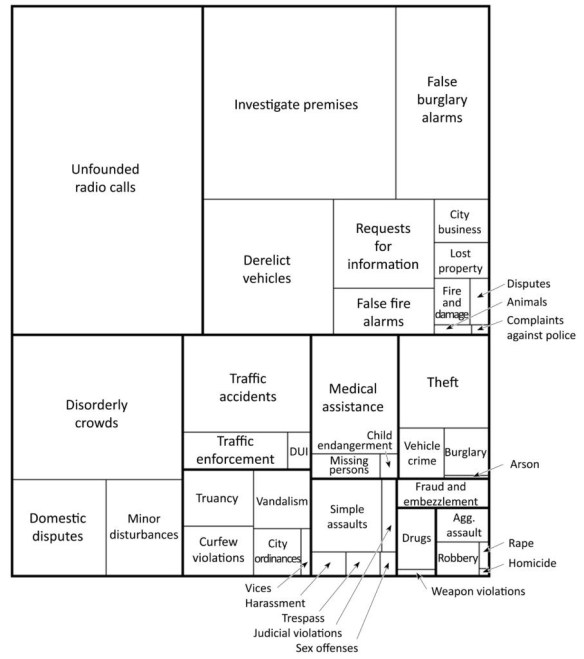
Start Up No.1266: TikTok shuns the ugly, Apple fined by French, bitcoin’s squeezed miners, penguins!, and lots more coronavirus news


Monterey Bay Aquarium isn’t letting humans in, and this fella wants a videoconference. CC-licensed photo by Karen on Flickr.

You can sign up to receive each day’s Start Up post by email. You’ll need to click a confirmation link, so no spam.

A selection of 12 links for you. Coronavirus at the end. I’m @charlesarthur on Twitter. Observations and links welcome.

TikTok told moderators: suppress posts by the “ugly” and poor • The Intercept

Sam Biddle, Paulo Victor Ribeiro and Tatiana Dias:

»

The makers of TikTok, the Chinese video-sharing app with hundreds of millions of users around the world, instructed moderators to suppress posts created by users deemed too ugly, poor, or disabled for the platform, according to internal documents obtained by The Intercept. These same documents show moderators were also told to censor political speech in TikTok livestreams, punishing those who harmed “national honor” or broadcast streams about “state organs such as police” with bans from the platform.

These previously unreported Chinese policy documents, along with conversations with multiple sources directly familiar with TikTok’s censorship activities, provide new details about the company’s efforts to enforce rigid constraints across its reported 800 million or so monthly users while it simultaneously attempts to bolster its image as a global paragon of self-expression and anything-goes creativity. They also show how TikTok controls content on its platform to achieve rapid growth in the mould of a Silicon Valley startup while simultaneously discouraging political dissent with the sort of heavy hand regularly seen in its home country of China.

«

unique link to this extract


Live cams • Monterey Bay Aquarium

Monterey Bay Aquarium is closed to the public. Or the physical public – but the virtual public is more than welcome: they have penguins and all sorts:

»

Tune in to a web cam.

Be delighted by the antics of our sea otters or mellow out to the hypnotic drifting of our jellies. With ten live cams to choose from, you can experience the wonder of the ocean no matter where you are.

«

See? The animals and fish aren’t concerned.
unique link to this extract


Apple fined record €1.1bn by French competition regulator • The Guardian

Angela Monaghan:

»

Apple has been fined a record €1.1bn (£990m) by antitrust regulators in France for engaging in anti-competitive agreements with two wholesalers. The penalty imposed on the US tech giant is the largest ever handed out to a company by the Autorité de la Concurrence.

Commenting on the move, Isabelle de Silva, head of the French competition watchdog, said: “Apple and its two wholesalers agreed to not compete against each other and prevent resellers from promoting competition between each other, thus sterilising the wholesale market for Apple products.”

The watchdog said Apple had conspired with the two wholesalers, Tech Data and Ingram Micro, and behaved in such a way that aligned prices and limited wholesale competition for Apple products such as Apple Mac computers and iPads, but not iPhones.

The other two French companies were also fined. Tech Data was handed a €76m penalty and Ingram Micro was ordered to pay €63m.

«

unique link to this extract


Industry body warns most airlines could go broke by May • Financial Times

Jamie Smyth and Andrew Edgecliffe-Johnson:

»

The airline industry is warning that it must shed jobs and obtain state support to survive the coronavirus crisis, as a respected aviation consultancy predicted that most of the world’s carriers could go broke by May. 

United Airlines in the US and Air New Zealand have told staff that they will begin redundancy processes, as travel restrictions force carriers to slash capacity and ground tens of thousands of aircraft. 

Air New Zealand said on Monday that it would slash international capacity by 85% and cut domestic capacity by almost a third in April and May. The carrier, which employs 8,000 people, said it would consult with trade unions about redundancies.

That followed news from United that it is planning to halve its capacity for April and May, and has warned its nearly 100,000 employees of “painful” cuts to its payroll.

The severe measures came as the Centre for Aviation, a consultancy, warned that by the end of May most airlines would be bankrupt due to the unprecedented travel restrictions that are being rolled out by governments around the world. 

«

unique link to this extract


Bitcoin price crash forces miners off network • Decrypt

Robert Stevens:

»

“Most hash rate lost was from China, I know this based on our own customers, plus seeing a lot of the Chinese pools (with more older gen machines) lose hash rate,” Thomas Heller, global business director at F2Pool, told Decrypt. “The more prepared Chinese miners with [Antminer] S9’s have been selling large scale amounts of S9’s over the past few months, primarily to countries with even cheaper power, such as Russia/CIS region, Middle East, etc.”

“With the prices where they are now ($4,600), more hash rate will go offline in the coming days/weeks, if the price doesn’t turn around,” he added.

The main issue is that the drop in prices has made mining less profitable. Bitcoin mining profitability has fallen to $0.09 per TH [terahash], down 80% from a recent high of $0.44 in July 2019.

“It’s an extremely tough time for miners,” Heller said. And it doesn’t look like that will end any time soon.

«

That’s the problem for bitcoin miners: the investment is upfront, and begins depreciating as soon as it’s installed. As long as bitcoin rises in value, everything’s fine. But it’s not rising.
unique link to this extract


Twitter takes down coronavirus tweets from John McAfee, David Clarke, and others • The Verge

Kim Lyons:

»

Twitter has removed several tweets by prominent accounts that made misleading claims about the novel coronavirus pandemic, as the company says it’s following a “zero-tolerance approach to platform manipulation and any other attempts to abuse our service at this critical juncture.”

A Twitter spokesperson says the platform removed three posts by David Clarke, who tweets under the handle @SheriffClarke, because the tweets violated its policy against encouraging self-harm. All three of the tweets in question referred to the pandemic in some way, as noted by Jared Holt at watchdog site Right Wing Watch.

In one, Clarke linked to an article about bars and restaurants being ordered to close because of the novel coronavirus and added “Time to RISE UP and push back. Bars and restaurants should defy the order. Let people decide if they want to go out.” In another, he encouraged people to “get back to reasonableness” and “stop buying toilet paper,” and a third removed tweet suggested people “take to the streets.”

«

Again, howcome it’s so feasible to do it now, but not at other times when there’s clear misinformation, for example around vaccines?
unique link to this extract


Verily’s coronavirus screening site is basically unusable • Input Mag

Matthew Welle:

»

Project Baseline is not a public health site with the power to fight the spread of the novel coronavirus. Rather, it’s a pilot program with a very limited scope that isn’t actually useful for anyone experiencing symptoms of COVID-19. In fact, the screening program prompts users with symptoms to seek help elsewhere.

How exactly is this meant to fight the coronavirus again?

For starters, Project Baseline is only available to those living in either Santa Clara or San Mateo counties in California. The project has nothing at all to offer for those who reside outside of these areas.

Say you do live in one of these two counties. You’re coughing, have a fever, and are generally very scared that you’ve contracted COVID-19. You log onto Project Baseline seeking assistance in finding a testing facility nearby. The site prompts you with an opening question about your symptoms: “Are you currently experiencing severe cough, shortness of breath, fever, or other concerning symptoms?”

You click yes. Project Baseline provides you with an answer: “We suggest that you seek medical attention.”

«

unique link to this extract


Amazon is selling dozens of e-books with dubious coronavirus advice • VICE

Abigail Beall:

»

Since the start of the year, a handful of e-books have been published on Amazon claiming to offer expert advice on how to survive coronavirus. Now, a search for “coronavirus” on the Kindle store brings up 860 results. At best, these books are profiting from repurposing information already widely available, and at worst they are spreading conspiracy theories.

The people behind the books are using pseudonyms, fake reviews and buzzwords to make their way to the top of Amazon’s bestseller lists. And they mostly seem to be getting away with it, too.

Some of the books are using names of official departments to appear legitimate. One entitled Coronavirus Disease: A Practical Guide for Preparation and Protection, which is available to buy on the Kindle store for £6.71, has listed one of its authors as ‘U.S. Dep. of Health & Human Services’. The real HHS confirmed to VICE this was not an official publication.

Others are using fake authors and fake reviews to sell copies.

«

Amazon has removed some, but by no means all, of the scam books.
unique link to this extract


Coronavirus and 3D printing • 3D Printing Media Network

Davide Sher:

»

the hospital in Brescia (near one of the hardest-hit regions for coronavirus infections) urgently needed valves (in the photo) for an intensive care device and that the supplier could not provide them in a short time. Running out of the valves would have been dramatic and some people might have lost their lives. So [Nunzia Vallini] asked if it would be possible to 3D print them.

After several phone calls to fablabs and companies in Milan and Brescia and then, fortunately, a company in the area, Isinnova, responded to this call for help through its founder-CEO Cristian Fracassi, who brought a 3D printer directly to the hospital and, in just a few hours, redesigned and then produced the missing piece.

On the evening of Saturday 14th (the next day) Massimo [Temporelli, founder of the FabLab in Milan] reported that “the system works”. At the time of writing, 10 patients are accompanied in breathing by a machine that uses a 3D printed valve. As the virus inevitably continues to spread worldwide and breaks supply chains, 3D printers – through people’s ingenuity and design abilities – can definitely lend a helping hand. Or valve, or protective gear, or masks, or anything you will need and can’t get from your usual supplier.

«

unique link to this extract


Microsoft Teams goes down just as Europe logs on to work remotely • The Verge

Tom Warren:

»

Microsoft’s chat and communications tool, Microsoft Teams, is down across Europe this morning. The outage started just as thousands of workers started to sign into the service and attempt to work remotely amid the ongoing coronavirus pandemic. Microsoft Teams users are currently experiencing issues signing into the service and sending messages. “We’re investigating messaging-related functionality problems within Microsoft Teams,” says a Microsoft support Twitter account.

The timing is less than ideal, just as many businesses are encouraging employees to work remotely and collaborate using services like Microsoft Teams. Even schools are also using tools like Microsoft Teams for remote education, with some schools in The Netherlands instructing students to log into the service today for digital questions.

«

A classic “you had one job” moment. But the strain of corporate VPNs and other remote-working systems is going to be immense this week. Slack is definitely going to find out whether it has earned its place in the world.
unique link to this extract


To track coronavirus, Israel moves to tap secret trove of cellphone data • The New York Times

David Halbfinger, Isabel Kershner and Ronen Bergman:

»

Prime Minister Benjamin Netanyahu of Israel has authorized the country’s internal security agency to tap into a vast and previously undisclosed trove of cellphone data to retrace the movements of people who have contracted the coronavirus and identify others who should be quarantined because their paths crossed.

The unprecedented move to use data secretly gathered to combat terrorism for public health efforts was authorized on Sunday by Mr. Netanyahu’s holdover cabinet. It must still be approved by Parliament’s Secret Services Subcommittee.

The subcommittee met Monday afternoon but ended its discussions after 4 p.m. — when a new Parliament was to be sworn in — without holding a vote, essentially stopping the approval process.

The existence of the data trove and the legislative framework under which it is amassed and used have not previously been reported. The plan to apply it to fighting the virus, alluded to only vaguely by Mr. Netanyahu, has not yet been debated by lawmakers or revealed to the public.

The idea is to sift through geolocation data routinely collected from Israeli cellphone providers about millions of their customers in Israel and the West Bank, find people who came into close contact with known virus carriers, and send them text messages directing them to isolate themselves immediately.

«

And the difference between this and China is..?
unique link to this extract


China’s first confirmed Covid-19 case traced back to November 17 • South China Morning Post

Josephine Ma:

»

The first case of someone in China suffering from Covid-19, the disease caused by the novel coronavirus, can be traced back to November 17, according to government data seen by the South China Morning Post.

Chinese authorities have so far identified at least 266 people who were infected last year, all of whom came under medical surveillance at some point.

Some of the cases were likely backdated after health authorities had tested specimens taken from suspected patients.

Interviews with whistle-blowers from the medical community suggest Chinese doctors only realised they were dealing with a new disease in late December.

Scientists have been trying to map the pattern of the early transmission of Covid-19 since an epidemic was reported in the central China city of Wuhan in January, two months before the outbreak became a global health crisis.

Understanding how the disease spread and determining how undetected and undocumented cases contributed to its transmission will greatly improve their understanding of the size of that threat.
According to the government data seen by the Post, a 55-year-old from Hubei province could have been the first person to have contracted Covid-19 on November 17.

«

Which is way earlier than was admitted.
unique link to this extract


Errata, corrigenda and ai no corrida: none notified

Start Up No.1265: Twitter’s stalled cleanup, get bouncing!, the other benefits of trees to cities, and much more on coronavirus


We’ve got a lot more to tell you, unfortunately. CC-licensed photo by duncan c on Flickr.

You can sign up to receive each day’s Start Up post by email. You’ll need to click a confirmation link, so no spam.

A selection of 11 links for you. Try them at home. I’m @charlesarthur on Twitter. Observations and links welcome.


A quick note: most of the links here (after the first few) are, you’ll find, about coronavirus. That’s because this is probably going to be an important week in the course of the infection: slowing it down now could save many lives in the longer term. Also, there’s not a lot of technology news going around.

Stay distant, stay well.


The history of the trampoline • Smithsonian Magazine

David Kindy:

»

When 16-year-old George Nissen of Cedar Rapids, Iowa, attended the circus in 1930, an idea started to form within the young gymnast’s mind. He watched the aerialists drop from their perches up high in the big top and land with a soft bounce on the safety net below.

Could he create a contraption that would allow a person to keep on bouncing?

It would take a number of years and a few failed prototypes, but Nissen finally found success. His invention, which he labeled a “tumbling device,” was granted a patent 75 years ago on March 6, 1945. He later received a registered trademark for “Trampoline,” which came from el trampolín, the Spanish word for “diving board.”…

…World War II is when the trampoline’s potential began to bounce into view. The military latched on to it as a training device for pilots, to allow them to learn how to reorient themselves to their surroundings after difficult air maneuvers. The pilots practiced pirouetting in midair on the trampolines to simulate combat conditions.

That relationship with the military would later extend to the space program, thanks in part to a fortuitous meeting. Near the end of World War II, Nissen was introduced to a young pilot who had gone through the trampoline training. Both were in the Navy and so shared that fraternal bond. They hit it off and became friends for life.

The pilot was Scott Carpenter, who would later become one of the original Mercury 7 astronauts. Together, they would help introduce the trampoline into space training at NASA and eventually create a game known as Spaceball. Two people would face off on a three-sided trampoline with a frame in the middle featuring a hole. While bouncing to and fro, one competitor would throw the ball through the hole and the other would have to stop it to save a point. (Watch it being played.)

«

Never saw that on Star Trek, did you.
unique link to this extract


Jack Dorsey’s push to clean up Twitter stalls, researchers say • WSJ

Deepa Seetharaman:

»

Twitter said there have been delays in getting research projects off the ground, caused in part by employee turnover and shifting priorities within the company [eg fighting off activist investors looking to oust Jack Dorsey – CA], but added it would continue to build tools to minimize abuse.

“I think you can absolutely combine serving healthy conversation with growth,” Nick Pickles, Twitter’s global director of public-policy strategy, said.

Two academic teams who initially set out to work with Twitter have abandoned their plans, while another group is struggling to get some of the data initially promised. Members of Twitter’s advisory council of researchers, activists and other experts say they feel boxed out by the company.

Since his tweets on the issue, Mr. Dorsey has grown less involved with academics and activists who have volunteered to help Twitter, according to researchers and activists involved in those initiatives.

Twitter declined to make Mr. Dorsey available for comment.

“We had expectations that we’d be able to influence the world with our expertise,” said Emiliana Simon-Thomas, science director of the University of California, Berkeley’s Greater Good Science Center. “It’s disappointing.”

Ms. Simon-Thomas is a member of Twitter’s more than 40-person Trust and Safety Council, set up in 2016 as a forum for experts to advise the company on how to prevent abuse on the platform.

«

As much as anything, seems to be caused by staff turnover at Twitter, and some indifference on Dorsey’s part – though he might reasonably think he can delegate it.
unique link to this extract


How London’s trees help boost the local economy • CityLab

Feargus O’Sullivan:

»

London’s leafy streets and gardens have long been prized for their beauty — and more recently their ability to counteract carbon emissions and improve air quality. But the value of urban trees can also be measured with money. A new report from Britain’s Office of National Statistics estimates tree cover saved the capital more than £5bn ($6.56bn) from 2014 to 2018 through air cooling alone. Additionally, by keeping summer temperatures bearable for workers, trees prevented productivity losses of almost £11bn.

The estimates underline just how vital the role trees play is in making cities comfortable and functional in a warming world — particularly in London. An unusually long, hot summer in 2018 pushed cost savings estimates to their highest level to date.  

Part of the study’s purpose is to promote planting trees and maintaining green spaces, according to Hazel Trenbirth, a member of the ONS’ Natural Capital team, which looks at cost savings of greenery across the U.K.

“Britain’s trees have a value that goes far beyond what you can get from chopping them down,” she said.

«

Yay trees! They also remove pollutants and of course sequester a growing amount of carbon.
unique link to this extract


Facebook is shutting down MSQRD, the AR selfie app it acquired in 2016 • The Verge

Taylor Lyles:

»

On April 13th, Facebook will remove the MSQRD app from both the Android and iOS app stores. Facebook purchased MSQRD in 2016, and the AR app played a key role in boosting Facebook’s internal portfolio of AR image and video tools. One of those tools, Spark AR, lets you create custom face filters for Facebook and Instagram.

As Business Insider pointed out, following the acquisition, Facebook promised that MSQRD would remain a standalone app and continue to provide updates, but the tech giant stopped supporting the app by the end of 2016.

Over the last several years, face filtering has become a popular feature on social media apps, with Instagram and Snapchat offering built-in face-swapping tools. Because of their popularity, an app like MSQRD may have seemed unnecessary for many.

«

The implication seems to be that AR is just becoming part of the software, rather than a necessarily separate thing.
unique link to this extract


How to talk to your kids about coronavirus • PBS KIDS for Parents

Deborah Farmer Kris:

»

Earlier this week, I overheard my kids engaged in a round of “I heard” and “Did you know?” while they were getting ready for bed.

“I heard that Margaret’s dad has it,” said my six-year-old.

“Did you know that it’s the worst sickness ever?” added my eight-year-old.

Neither statement is accurate, but they were revealing: I had thought my initial conversations with my kids about COVID-19 had been good enough. But with adults, kids at school and the news all hyper-focused on this coronavirus outbreak, my reassuring voice needed to be a little louder.

A favorite Mister Rogers’ quote ran through my mind: “Anything that’s human is mentionable, and anything that is mentionable can be more manageable. When we can talk about our feelings, they become less overwhelming, less upsetting and less scary.”

So before lights out, we talked. I asked what they had heard about the coronavirus. We got it all out — their questions, their “I heards” and their fears. The rest of the conversation had three themes.

«

Worth reading. Kids need to know that they’re safe – which, thankfully, seems to be true.
unique link to this extract


The man who saw the pandemic coming • Nautilus

Kevin Berger interviews Dennis Carroll, an expert in zoonotic diseases who set up a USAID project in 2009 to forecast what might come from animals:

»

Have there been disturbances in their environments that have brought bats closer to us?

DC: The disturbances in their environments are us. We’ve penetrated deeper into ecozones we’ve not occupied before.

KB: What’s a telling example of our incursion?

DC: In Africa, we see a lot of incursion driven by oil or mineral extraction in areas that typically had few human populations. The problem is not only moving workers and establishing camps in these domains, but building roads that allow for even more movement of populations. Roads also allow for the movement of wildlife animals, which may be part of a food trade, to make their way into urban settlements. All these dramatic changes increase the potential spread of infection.

KB: Are spillover events more common now than 50 years ago?

DC: Yes. EcoHealth Alliance, an NGO, and others, looked at all reported outbreaks since 1940. They came to a fairly solid conclusion that we’re looking at an elevation of spillover events two to three times more than what we saw 40 years earlier. That continues to increase, driven by the huge increase in the human population and our expansion into wildlife areas. The single biggest predictor of spillover events is land-use change—more land going to agriculture and more specifically to livestock production.

I’m stunned by the absolute absence of global dialogue for what is a global event.

KB: Is there something specific about a virus that makes it zoonotic?

DC: You can argue viruses aren’t living organisms. They’re sheets of proteins encapsulating some DNA or RNA. Beyond that, they have no machinery to be able to live on their own. They’re looking for an ecosystem that has all of the other cellular machinery essential for replication. They can’t live outside another animal population. They need that animal to replicate. And we’re just one more animal. We think of ourselves as something special. But viruses are infecting us with exactly the same purpose they infect a bat or a civet cat.

«

Carroll’s funding at USAID wasn’t renewed in 2019. He’s now at the Global Virome Project, which “aims to find the majority of unknown viruses before they find us”.

Its February 2018 press release is headlined “Ambitious Global Virome Project could mark end of pandemic era”. Ah well.
unique link to this extract


Coronavirus tracked: the latest figures as the pandemic spreads • Financial Times

Steve Bernard and Cale Tilford:

»

The virus’s proliferation has been declared a pandemic by the World Health Organization, meaning it is spreading rapidly in different parts of the world. More than 140 countries have confirmed cases so far. 

The coronavirus has now taken hold in Europe, with the largest number of confirmed cases in Italy. In most western countries case numbers have been increasing by about 33% a day, a sign that other countries may soon be facing the same challenge as Italy.

The Asian city-state of Singapore and the territory of Hong Kong are on a different trajectory in terms of the growth in case numbers. The rate of increase has so far been relatively contained through rapid and strict measures.

«

At 33% per day (ie, 1.33^y), after seven days you have a sevenfold increase; after 14 days, a 54-fold increase. That’s cases, mind you, not necessarily infections, which could easily be higher.

And that’s a hell of a thing. 33% per day. As I said last week, we’re really bad at comprehending exponential increase because it’s so rare in nature. A doctor pointed out to me that the spread of infection like this follows a logistic sigmoid curve (the classic S-shape). But in the early stage, you can’t see the difference between “exponential” and “logistic”; that’s not evident until you’re at the 50% mark and growth becomes “just” linear.
unique link to this extract


xkcd: 2010 and 2020


unique link to this extract


Contrary to Trump’s claim, Google is not building a nationwide coronavirus screening website • The Verge

Dieter Bohn:

»

Google is not working with the US government in building a nationwide website to help people determine whether and how to get a novel coronavirus test, despite what President Donald Trump said in the course of issuing an emergency declaration for the coronavirus pandemic. Instead, a much smaller trial website made by another division of Alphabet, Google’s parent company, is going up. It will only be able to direct people to testing facilities in the Bay Area.

More than an hour after Trump’s press conference, a Google communications Twitter account passed along the following statement from Verily, which is a different company inside the Alphabet corporate umbrella:

»

We are developing a tool to help triage individuals for Covid-19 testing. Verily is in the early stages of development, and planning to roll testing out in the Bay Area, with the hope of expanding more broadly over time. We appreciate the support of government officials and industry partners and thank the Google engineers who have volunteered to be part of this effort.

«

Carolyn Wang, communications lead for Verily, told The Verge that the “triage website” was initially only going to be made available to health care workers instead of the general public. Now that it has been announced the way it was, however, anybody will be able to visit it, she said. But the tool will only be able to direct people to “pilot sites” for testing in the Bay Area, though Wang says Verily hopes to expand it beyond California “over time.”

«

Trump also thought it would sound impressive to say that 1,700 people were working on the website. In fact, Sundar Pichai put out a call for people to help on the site earlier in the week and received 1,700 responses. Of course nobody in the White House puts any store on accuracy.

But to anyone with experience building websites, saying 1,700 people are working on a new one is a terrifying idea. It would take forever. If you had 17 people, you’d get it done 100 times faster.
unique link to this extract


Apple’s WWDC 2020 kicks off in June with an all-new online format • Apple

»

Apple today announced it will host its annual Worldwide Developers Conference in June. Now in its 31st year, WWDC 2020 will take on an entirely new online format packed with content for consumers, press and developers alike. The online event will be an opportunity for millions of creative and innovative developers to get early access to the future of iOS, iPadOS, macOS, watchOS and tvOS, and engage with Apple engineers as they work to build app experiences that enrich the lives of Apple customers around the globe.

“We are delivering WWDC 2020 this June in an innovative way to millions of developers around the world, bringing the entire developer community together with a new experience,” said Phil Schiller, Apple’s senior vice president of Worldwide Marketing. “The current health situation has required that we create a new WWDC 2020 format that delivers a full program with an online keynote and sessions, offering a great learning experience for our entire developer community, all around the world. We will be sharing all of the details in the weeks ahead.”

«

I will admit that I laughed aloud when I saw this. It’s such a wonderful “hey, the supermarket shelves are half-full, not half-empty!” response to the coronavirus epidemic, while not using the words “coronavirus” or “Covid-19”; it just refers, once, to “the current health situation”.

Apple is also giving $1m to “local San Jose organisations” to try to offset revenue loss. At the average of 6,000 attendees, and let’s say another 1,000 associated visitors, that’s $142 each for the whole week. I think most attendees spend at least $1,000 in the week. That $6m gap gives you some idea of the revenue hit that many businesses are taking.

And that’s before we get into hotels’ and airlines’ lost revenues.
unique link to this extract


Coronavirus forecast • Spatial Ecology and Evolution Lab

Ben Phillips, head of the lab:

»

I’ve made a shiny app that gives a ten-day forecast, by country, on likely numbers of coronavirus cases.

The app is designed to give people a sense of how fast this epidemic is progressing, as well as one of the key uncertainties; the true number of cases.

At the time of writing (13 March 2020), it is very impressive to see how things are progressing in China, Korea, and Japan, and quite alarming to see how things are progressing elsewhere.

The top graph gives the raw number of cases each day, with a ten-day projection. The projection is based on the bottom graph, which are the same data plotted on a log scale: exponential growth presents as a straight line on the log scale. So I fit a straight line to the last ten days of data, extrapolate it by ten days, and project that up onto the original scale in the top graph.

The method assumes that deaths do not go unnoticed, that the case fatality rate is about 2.5% and it takes about 17 days for people that are going to die to die. Under these assumptions we look at the number of deaths in a five day period, and estimate the number of infections required to generate these deaths (expected = deaths/0.025), we compare that to the number of new cases detected in the five day period 17 days earlier (observed), and use observed/expected to estimate a detection probability. Please take this number with a big dose of salt, but it does give you some indication of how good/bad it might be in each country.

«

I really do recommend that you take a look at the forecast app. The short version: we’ve got some real trouble ahead. On the basis of 10% of cases requiring hospital attention, all sorts of other healthcare elements (cancer diagnosis and treatment, road accidents, chronic treatments) are going to have to be heavily triaged.
unique link to this extract


Errata, corrigenda and ai no corrida: none notified