
Start Up No.1324: hackers target US presidential campaigns, questions deepen over Lancet HCQ paper, a new form of nitrogen, and more


Twitter’s latest dig at Trump revolves around who first gave this guy the sobriquet ‘Mad Dog’. CC-licensed photo by, er, the US Secretary of Defense on Flickr.

You can sign up to receive each day’s Start Up post by email. You’ll need to click a confirmation link, so no spam.

A selection of 10 links for you. Look, we got through another one. I’m @charlesarthur on Twitter. Observations and links welcome.

Presidential campaigns targeted by suspected Chinese, Iranian hackers • WSJ

Robert McMillan:

»

Campaign staffers working on the presidential campaigns of Donald Trump and Joe Biden have been targeted with online attacks coming from Iran and China respectively, Google said Thursday.

These so-called phishing attacks are often an attempt to gain access to online email accounts. They raise the specter of a repeat of the 2016 campaign, during which Russian hackers stole information from Democratic staffers and posted them online.

The attacks don’t appear to have been successful, Google, a unit of Alphabet Inc., said. The company has notified federal authorities and the targeted users of the attacks, said Shane Huntley, who runs Google’s in-house counterespionage group, known as the Threat Analysis Group.

The Biden campaign was targeted by a China-based group, known as APT 31, Mr. Huntley said. This group has been linked by security firms to the Chinese government. The Trump campaign was targeted by an Iranian group called APT 35, he said. APT stands for advanced persistent threat, a shorthand used by cybersecurity professionals for sophisticated adversaries that are backed by nation-states.

These were “recent attempts and we saw a couple of targets on each campaign,” a Google spokeswoman said, while declining to provide further details on the incidents.

«

*looks at watch* They’re about four months late compared to 2016. Though we won’t know until October whether they were successful, I guess.
unique link to this extract


A mysterious company’s coronavirus papers in top medical journals may be unraveling • Science

Kelly Servick and Martin Enserink follow up on the unravelling story of the company that provided hydroxychloroquine data:

»

Surgisphere’s sparse online presence—the website doesn’t list any of its partner hospitals by name or identify its scientific advisory board, for example—have prompted intense skepticism. Physician and entrepreneur James Todaro of the investment fund Blocktown Capital wondered in a blog post why Surgisphere’s enormous database doesn’t appear to have been used in peer-reviewed research studies until May. Another post, from data scientist Peter Ellis of the management consulting firm Nous Group, questioned how LinkedIn could list only five Surgisphere employees—all but Desai apparently lacking a scientific or medical background—if the company really provides software to hundreds of hospitals to coordinate the collection of sensitive data from electronic health records. (This morning, the number of employees on LinkedIn had dropped to three.) And Chaccour wonders how such a tiny company was able to reach data-sharing agreements with hundreds of hospitals around the world that use many different languages and data recording systems, while adhering to the rules of 46 different countries on research ethics and data protection.

Desai’s spokesperson responded to inquiries about the company by saying it has 11 employees and has been developing its database since 2008. Desai, through the spokesperson, also said of the company’s work with patient data: “We use a great deal of artificial intelligence and machine learning to automate this process as much as possible, which is the only way a task like this is even possible.”

«

This is transparent flim-flam. Collecting that sort of data from hospitals requires solid, grinding, talking to hospitals. It’s surely labour-intensive. Surgisphere looks like a con, and any papers that uses its data now looks likely to be withdrawn.

A reminder: this apparent con was found by ordinary journalists looking at anomalies in data, not by the peer reviewers at The Lancet or NEJM.
unique link to this extract


Google search a target of U.S. antitrust probes, rival says • Bloomberg

Gerrit De Vynck:

»

US federal and state authorities are asking detailed questions about how to limit Google’s power in the online search market as part of their antitrust investigations into the tech giant, according to rival DuckDuckGo Inc.

Gabriel Weinberg, chief executive officer of the privacy-focused search engine, said he has spoken with state regulators, and talked with the U.S. Justice Department as recently as a few weeks ago.

Justice Department officials and state attorneys general asked the CEO about requiring Google to give consumers alternatives to its search engine on Android devices and in Google’s Chrome web browser, Weinberg said in an interview.

“We’ve been talking to all of them about search and all of them have asked us detailed search questions,” he added.

Weinberg’s comments shine a light into how the inquiry is examining Google’s core business – online search. Bloomberg has reported that the Justice Department and Texas are already examining Google’s dominance of the digital advertising market. The Justice Department and a coalition of states led by Texas Attorney General Ken Paxton have been investigating the company for a year, and the DOJ has begun drafting a lawsuit, which could be filed in the coming months. It would kick off one of the most significant antitrust cases in the U.S. since the government sued Microsoft Corp. in 1998.

«

They’re going to have to recast a whole chunk of US antitrust law to make this stick. It’s not an antitrust breach to have a monopoly, for example in search, so “how to limit Google’s power in the online search market” is a non-starter unless they can also demonstrate that consumers are losing out because of it. They seem to be trying to construct the same case that the EU did, except the EU’s antitrust laws include a “competitive market” clause. The US antitrust ones don’t.
unique link to this extract


Twitter accuses President Trump of making ‘false claims’ • BBC News

Rory Cellan-Jones:

»

Twitter has accused the US president of making false claims, in one of the app’s own articles covering the news.

The move – which effectively accuses the leader of lying – refers to a tweet by Donald Trump about his first defence secretary.

Mr Trump had tweeted that he had given James Mattis the nickname “Mad Dog” and later fired him. But Twitter’s article says that the former general resigned, and his nickname preceded Trump’s presidency.

It follows last week’s explosive confrontation, which saw Twitter fact-check two of President Trump’s tweets and label another as glorifying violence. The latest confrontation was prompted by a strongly-worded statement issued by General Mattis last night, in which he criticised the president’s handling of the protests that followed the killing of George Floyd.

Gen Mattis described Donald Trump as “the first president in my lifetime who does not try to unite the American people – does not even pretend to try. Instead, he tries to divide us.”

The president fired back quickly in a tweet saying that the one thing he and predecessor Barack Obama had in common was “we both had the honour of firing Jim Mattis, the world’s most overrated general. I asked for his letter of resignation and felt good about it”.

“His nickname was ‘Chaos’, which I didn’t like, and changed it to ‘Mad Dog’,” he added.

Twitter later published what it calls a Moment, a summary of a news story that you can see when you press the platform’s search button. It has also been promoted within the What’s Happening box that appears on Twitter’s website.

«

This is getting to be quite the regular thing. (Though you can’t be absolutely certain Trump was lying; he might just be incredibly stupid or forgetful.)
unique link to this extract


Facebook removes ‘inauthentic’ George Floyd groups • BBC News

Marianna Spring:

»

Facebook has removed a number of Justice for George Floyd groups for exhibiting “inauthentic behaviour”.

BBC News had highlighted some suspicious groups had switched their focus to call for justice for the black man killed in police custody.

Some, run by accounts seemingly based in Vietnam or Bangladesh, had posted misleading images. And others had previously focused on coronavirus, 5G conspiracies and support for US President Donald Trump.

A Facebook spokesman said it had “removed the vast majority of them, for violating our policies”.

There has been a surge in membership for Facebook groups supporting the Black Lives Matter movement, following the protests sparked by Mr Floyd’s death, on 25 May.

But for some it is unclear what the motives of their administrators are.

In some cases, they could be exploiting the movement to gain followers and/or stoke tensions.

Some of the profiles based outside the US had frequently posted inflammatory images and videos before Facebook intervened.

One group, Justice for George Floyd, had almost 2,000 members. Set up in March, it originally focused on the coronavirus but later that month switched to “US breaking news”, featuring stories sympathetic to the US president, before turning to Black Lives Matter.

«

This is now like internet weather: event happens, fake Facebook groups form trying to exploit it. Marianna Spring, by the way, is the BBC’s “specialist disinformation reporter”, and pretty busy with it.
unique link to this extract


Facebook employees pushed to remove Trump’s posts as hate speech • WSJ

Deepa Seetharaman, writing back in October 2016:

»

In a statement provided Wednesday evening, a Facebook spokeswoman said its reviewers consider the context of a post when assessing whether to take it down. “That context can include the value of political discourse,” she said. “Many people are voicing opinions about this particular content and it has become an important part of the conversation around who the next U.S. president will be.”

On Friday, senior members of Facebook’s policy team posted more details on its policy. “In the weeks ahead, we’re going to begin allowing more items that people find newsworthy, significant, or important to the public interest—even if they might otherwise violate our standards,” they wrote.

The internal debates shed light on how Facebook has grappled with its position as one of the biggest sources of political information during a particularly contentious election cycle.

«

So, nearly four years ago. This has been going on for so long; but we overlooked it somehow because back then, we didn’t know how important Facebook would turn out to have been as a megaphone and an amplifier for Trump.

However: at least you can’t accuse Zuckerberg of changing his principles. His insistence to Alexandria Ocasio-Cortez in testimony to Congress last October that if a politician incited violence their post would be taken down probably seemed pretty easy. Then that came to pass, and guess what? He reverted to his longstanding position.
unique link to this extract


Solving online events • Benedict Evans

»

it’s often struck me that networking events are pretty inefficient and random. If you’re going to spend an hour or two in a room with 50 or 500 people, then you could take that as a purely social occasion and enjoy yourself. But if your purpose is to have professionally useful conversations, then what proportion of the people in the room can you talk to in an hour and how likely is it that they’ll be the right ones? Who’s there? I sometimes suggest it would be helpful if we all wore banners, as in the image at the top, so that you could look across the room and see who to talk to. (First Tuesday did something like this in 1999, with different coloured badges.)

This might just be that I’m an introvert asking for a machine to manage human connections for me (and I am), but there is also clearly an opportunity to scale the networking that happens around events in ways that don’t rely on random chance and alcohol tolerance. A long time ago Twitter took some of that role, and the explosion of online dating also shows how changing the way you think about pools and sample sets changes outcomes. In 2017, 40% of new relationships in the USA started online.

…every time we get a new tool, we start by forcing it to fit the old way of working, and then one day we realise that it lets us do the work differently, and indeed change what the work is. I do expect to get on planes to conferences again in the future, but I also hope to have completely different ways to communicate ideas, and completely different ways to make connections, that don’t rely on us all being in the same city at the time time – or pretending that we are.

«

unique link to this extract


How to hide Google Meet in Gmail • The Verge

Aliya Chaudhry:

»

Google recently rolled out Google Meet, a revamped version of its video chatting program Hangouts Meet, and made the app available to anyone with a Google account. You can start or join a Meet videoconference right from your Gmail inbox, using the buttons that Google has placed on the left-hand side of the page.

But what if you don’t intend to use Meet, or even if you just don’t want it to be there all the time? No worries — you can hide the buttons. (Note: if you’re on a corporate G Suite account, you may not be able to change this, depending on your administrator’s settings.)

Here’s how to hide Google Meet in Gmail:
• Open Gmail
• Click on the cog icon in the top-right corner
• Click on “Settings” in the drop-down menu
• Click on the “Chat and Meet” tab
• Next to the “Meet:” label, select “Hide the Meet section in the main menu.”
• Click “Save changes.”

«

So it takes six steps to stop Google bothering you with meetings you probably don’t want to do through the renamed version of one of its 596 different messaging apps. In this era, a lot of people have been annoyed by Google adding Meets meetings to other online meetings that people had planned using different apps.
unique link to this extract


Dropbox is working on its own password manager • Android Police

Ryne Hager:

»

Dropbox just unceremoniously dumped a brand new app on the Play Store with no fanfare or formal announcement. The new Dropbox Passwords app, according to its listing, is a password manager available exclusively in an invite-only private beta for some Dropbox customers.

Based on screenshots and description, the app seems pretty barebones — or “minimal,” depending on your tastes. Dropbox seems to intentionally avoid calling it a “password manager,” though its functionality otherwise appears about the same as other solutions. Like other password managers, Dropbox Password can generate passwords for new accounts as required and sync them remotely so you can access all your passwords on multiple devices. It also uses zero-knowledge encryption to store those passwords remotely.

«

I suspect this is Dropbox realising a while back that it was going to be under assault from all sorts of companies: that its file-sharing feature isn’t such a defensive moat. So it needs to add other things to make people pay money. Password managers are an obviously underpopulated space.
unique link to this extract


Never-before-seen “black nitrogen” plugs puzzle in periodic table • New Atlas

Michael Irving:

»

Researchers at the University of Bayreuth have created a form of nitrogen that’s never been seen before. Nicknamed “black nitrogen,” the new substance is crystalline, occurs in two-dimensional sheets, and could one day be useful in advanced electronics.

Strangely enough, the idea that black nitrogen didn’t exist has long been considered a mystery. The periodic table is arranged in recurring “periods” where each column is made up of elements with similar properties. Those at the top have the fewest protons and the lowest weight, and each successive element in the group gains protons and weight.

Under high pressure, elements on the top of a column usually take on structures similar to elements further down the group. These different forms are known as allotropes. Ozone is an allotrope of oxygen, for example, while graphite and diamond are both allotropes of carbon.

But nitrogen only has one allotrope – dinitrogen (N2) – and doesn’t have any that resemble heavier elements in its group. This was always considered a bit weird, but now a new study has found a previously-unknown allotrope that shows that nitrogen isn’t an exception to the rule, as has long been believed.

To create the new form, the team exposed nitrogen to extreme heat and pressure. It was pressed together between two diamonds to 1.4 million atmospheres of pressure, and over 4,000 °C (7,232 °F). Under those extreme conditions, the nitrogen took on a structure that had never been seen before – but which still looked familiar.

When imaged using X-rays, the nitrogen atoms formed crystalline two-dimensional layers, cross-linked in a zigzag pattern. It appears to have good conductivity, much like that of graphene, which could make it useful in future electronic devices.

«

Confidently expecting “black nitrogen” to turn up as the McGuffin in some future TV or film script. It vanishes once you release the pressure, but that’s unimportant to the script. I’m thinking Chris Pratt or Chris Evans as the hero, the megabomb is triggered by black nitrogen, a terrorist group (have to decide later which country they’re from) has stolen the trigger… see, chemistry can be exciting as long as you don’t look too closely.
unique link to this extract


Errata, corrigenda and ai no corrida: none notified

Start Up No.1323: Facebook’s unmet Oversight board, Zuck transcribed, Beeb makes its own Alex(a), Snapchat downgrades Trump, and more


Coronavirus! But hydroxychloroquine won’t help fight it, according to a new study. CC-licensed photo by on Flickr.

You can sign up to receive each day’s Start Up post by email. You’ll need to click a confirmation link, so no spam.

A selection of 10 links for you. Use them wisely. I’m @charlesarthur on Twitter. Observations and links welcome.

Facebook Oversight Board won’t review Trump’s ‘shooting starts’ posts • CNBC

Salvador Rodriguez:

»

Facebook’s Oversight Board, an independent body that can overturn the company’s own content moderation decisions, announced on Wednesday that it will not review a controversial post from President Donald Trump that the company has refused to take down or moderate. 

“How Facebook treats posts from public figures that may violate their community standards are within the scope of the Board, and are the type of highly challenging cases that the Board expects to consider when we begin operating in the coming months,” the board said in the blog post

Trump’s post, which was published last week, addressed riots in the aftermath of the death of George Floyd, saying that “when the looting starts, the shooting starts.”

…Explaining its decision not to review the post, the Facebook Oversight Board said that posts like Trump’s fit the scope of the type of content that it will review, but the board is not yet operational and cannot review any cases at this time, according to a blog post.

“As an institution that announced our first members less than a month ago, and which will not be operational until later this year, we are not in an immediate position to make decisions on issues like those we see unfolding today,” the blog post said.

«

This is incredible. Are they not able to use Zoom? Skype? Telephones? Anything? What the hell are they waiting for – printed stationery? Personalised hoodies? Those who thought this Board would be no use at all already get some ammunition.
unique link to this extract


Zuckerberg faces his critics • Revue

Casey Newton rounds up the key points from the internal Facebook call; these are near the end:

»

There is a red line Trump can’t cross, and Facebook already enforced it. Yesterday I wrote here that much employee frustration can be traced to concerns that there’s nothing Trump could do that would prompt Facebook to remove one of his posts. Zuckerberg noted for employees today that Facebook actually did remove Trump ads in March that misled users into thinking that a campaign survey was actually the US Census. That said, it’s generally much less controversial to remove an ad than a regular post — so far as I can tell, Trump never even commented about the ad situation.

Zuckerberg is worried that free speech will only ever ratchet down, and that we’ll regret it someday. “Over time, in general we tend to add more policies to restrict things more and more,” he said. “If every time there’s something that’s controversial your instinct is, okay let’s restrict a lot, then you do end up restricting a lot of things that I think will be eventually good for everyone.”

Employees I spoke with did not seem particularly moved by these answers. “Everyone’s grateful we have a chance to address these things directly with him,” one told me. “At the same time, no one thinks he gave a single real answer.” Another said Zuckerberg appeared “really scared” on the call. “I think he fears his employees turning on him,” the employee said. “At least that’s what I got from facial expressions and tone.”

At the same time, another employee told me that Zuckerberg’s decision was supported by the majority of the company, but that people who agreed with it were afraid to speak out for fear of appearing insensitive. (An employee who spoke on the call echoed this point.)

«

You can read the full transcript. I do wonder who, precisely, he consulted with, and who advised against action.
unique link to this extract


‘Hey Beeb’: new BBC digital assistant gets northern male accent • The Guardian

Jim Waterson:

»

The BBC has given its new digital assistant a male voice to avoid the “problematic associations” of female-voiced rivals such as Amazon’s Alexa, which have faced criticism for reinforcing gender stereotypes.

The voice-activated service, named “Beeb”, will have a limited public release this week and the corporation said it put extra thought into what accent would make it distinct from other US-developed services.

As a result people who wake up the voice assistant by saying “Hey Beeb” will be greeted with a “warm and friendly” accent from the north of England, guiding them towards BBC programmes and offering localised news and weather reports.

Andy Webb, who is leading the BBC’s development of its voice technology, said this “reflected the diversity of the audience in the UK” and as a result it did not have the “sterile feel” or “problematic associations” of other assistants.

A Unesco report last year claimed that the often submissive and flirty responses offered by female-voiced digital assistants to many queries – including abusive ones – reinforced ideas of women as subservient.

Grace Boswood, the chief operating officer of the BBC’s design and engineering department, said a key reason for undertaking the project was to defend against encroachment from US tech companies and to maintain a direct relationship with licence-fee payers.

“It gives us a strategic edge if Amazon decide not to play fair in terms of how people access the content,” she said, suggesting the BBC had an 18-month window of opportunity to establish a viable voice assistant before habits were locked down.

«

The BBC, thinking strategically.
unique link to this extract


Snap will stop promoting Trump’s account after concluding his tweets incited violence • The Verge

Casey Newton:

»

President Trump’s verified Snapchat account will no longer be promoted within the app after executives concluded that his tweets over the weekend promoted violence, the company said today. His account, RealDonaldTrump, will remain on the platform and continue to appear on search results. But he will no longer appear in the app’s Discover tab, which promotes news publishers, elected officials, celebrities, and influencers.

“We are not currently promoting the president’s content on Snapchat’s Discover platform,” the company said in a statement. “We will not amplify voices who incite racial violence and injustice by giving them free promotion on Discover. Racial violence and injustice have no place in our society and we stand together with all who seek peace, love, equality, and justice in America.”

«

Reasonable. The question is about amplification.
unique link to this extract


Study: Hydroxychloroquine doesn’t prevent Covid-19 infection if exposed • Statnews

null:

»

he malaria drug hydroxychloroquine did not help prevent people who had been exposed to others with Covid-19 from developing the disease, according to the results of an eagerly awaited study that will be published Wednesday in the New England Journal of Medicine.

Despite a lack of evidence, many people began taking the medicine to try to prevent infection early in the Covid-19 pandemic, following anecdotal reports it could be effective and claims by President Trump and conservative commentators. Trump, too, said he took hydroxychloroquine to prevent infection.

But the new study, the first double-blind randomized, placebo-controlled trial of hydroxychloroquine, found otherwise.

“I think in the setting of post-exposure prophylaxis, it doesn’t seem to work,” said Sarah Lofgren, an assistant professor at the University of Minnesota who is a co-author of the study.

Other studies of hydroxychloroquine are ongoing. Also Wednesday, the World Health Organization said it is resuming a clinical trial testing hydroxychloroquine as a treatment after pausing it over safety concerns.

«

Ah yes, let’s just go over to something about that clinical trial that was paused…
unique link to this extract


Governments and WHO changed Covid-19 policy based on suspect data from tiny US company • The Guardian

Melissa Davey and Sarah Boseley:

»

A Guardian investigation can reveal the US-based company Surgisphere, whose handful of employees appear to include a science fiction writer and an adult-content model, has provided data for multiple studies on Covid-19 co-authored by its chief executive, but has so far failed to adequately explain its data or methodology.

Data it claims to have legitimately obtained from more than a thousand hospitals worldwide formed the basis of scientific articles that have led to changes in Covid-19 treatment policies in Latin American countries. It was also behind a decision by the WHO and research institutes around the world to halt trials of the controversial drug hydroxychloroquine. On Wednesday, the WHO announced those trials would now resume.

Two of the world’s leading medical journals – the Lancet and the New England Journal of Medicine – published studies based on Surgisphere data. The studies were co-authored by the firm’s chief executive, Sapan Desai.

Late on Tuesday, after being approached by the Guardian, the Lancet released an “expression of concern” about its published study. The New England Journal of Medicine has also issued a similar notice.

An independent audit of the provenance and validity of the data has now been commissioned by the authors not affiliated with Surgisphere because of “concerns that have been raised about the reliability of the database”.

«

This story is wild, wild, wild. Guardian Australia smelt a rat when the Surgisphere data showed more deaths in Australia than had actually happened. Warren Buffett’s quip about who’s been swimming naked being revealed when the tide goes out applies in spades here: I’ve seen a suggestion that Surgisphere’s data is totally made up (await rebuttal). Every paper that ever relied on its data will now be suspect. It’s also hard to see how Richard Horton, the editor of The Lancet, comes through unscathed.
unique link to this extract


Trump’s executive order targeting social media draws a lawsuit • The Washington Post

Tony Romm:

»

In its lawsuit, the CDT said the White House had run afoul of the First Amendment, which “prohibits government officials from using government power to retaliate against an individual or entity for engaging in protected speech.” Even though Trump’s order has not taken full effect, the CDT said the mere existence of the policy could “chill” speech, undermining efforts by Facebook, Google and Twitter to ensure that their platforms are used responsibly during the presidential race.

“We see the executive order as very clear retaliation that’s designed to deter social media companies from fighting misinformation and voter suppression,” said Alexandra Givens, the leader of the CDT. The group filed its lawsuit in the U.S. District Court for the District of Columbia, asking it to invalidate the whole of the order.

Facebook and Google declined to comment. Twitter praised the lawsuit in an unsigned tweet, while blasting the president’s order as “reactionary and politicized.” All three companies have given money to the CDT in the past, the group’s public statements indicate.

«

The text of the CDT suit is pretty clear about what its objection is. Again, there isn’t a snowball in hell’s chance of this EO passing court muster.
unique link to this extract


One Twitter account is reposting everything Trump tweets. It was suspended within three days • Mashable

Amanda Yeo:

»

“This account will tweet what the President tweets,” Twitter account SuspendThePres posted on May 29. “Let’s see if it gets suspended for violating twitters [terms of service].”

Approximately 68 hours later, SuspendThePres was temporarily suspended for violating Twitter’s rules against glorifying violence. Twitter officially refers to this state as being “locked” or “temporarily unavailable.”

SuspendThePres began directly copying and reposting U.S. president Donald Trump’s tweets on May 29. Run by a user who also tweets as BizzareLazar, the experiment was prompted by Trump’s recent executive order calling for social media companies’ protections to be reconsidered. Trump issued the order after Twitter applied a fact-check label to two of his tweets.

“I wanted to see for myself if he was indeed violating [Twitter’s terms of service],” said SuspendThePres, speaking to Mashable via DM. They declined to give their real name, given current events and the nature of the experiment, but stated they are a U.S. citizen.

“Figured what better way to test out the hypothesis than to see if they suspended me for the exact same language.”

The tweet that triggered SuspendThePres’ suspension was an exact copy of Trump’s now infamous “when the looting starts, the shooting starts” tweet from May 28, which threatened violence against citizens protesting police brutality. It was the first tweet SuspendThePres copied.

«

The account’s back on air now, but that’s a very clever experiment.
unique link to this extract


Dear Facebook employees, from a former Facebook employee • Medium

Barry Schnitt:

»

In the four years I worked at Facebook [2008-2012], a lot of precedents were set that are still playing out today. Some of them made sense for the 2008 world but don’t make sense now. In 2008, the professional arbiters of truth–the press–were much stronger both in terms of resources and distribution. In 2008, Facebook’s reach was growing but it only touched a small percentage of the population. In 2008, people used Facebook more to keep up with friends than as a news or information source. Today, all of that has changed dramatically.

Newsrooms have been decimated and the press’ overall distribution has been similarly reduced. Meanwhile, Facebook has become a primary source of news and information for billions of people. In short, when we decided that Facebook would take a hand’s off approach to content, the world didn’t need Facebook to fact check or contextualize information. The world needs it now desperately.
I still believe that Facebook does more good than harm. There has been no better example than the emotional support for the current health crisis. The value of connection with family and friends during this time is incalculable. However, just doing more good than harm is not enough.

If you think of Facebook as the place where people get their information, it’s like the one grocery store in a town. Everyone shops there and its shelves are mostly filled with food that is nutritious, fun, entertaining, engaging, etc… However, sprinkled through the shelves are foods that look like regular stuff but are actually poison. I’m not talking about junk food with frivolous or empty calories. I’m talking about food that literally poisons one’s mind, turning him or her against science, facts, and other people. If that’s your mindset, what resources would you leave on the table to find the poison? Are there any risks you would not take? At the very least, you would not hesitate to put warning labels on the poison.

…The only way the stakes could be higher is if we were on the brink of a world war. Thankfully, we are not. However, I encourage you to ask yourself where a concerted and systematic undermining of science and truth and rampant divisiveness ends if it is left unchecked? A lasting peace? I doubt it.

«

Before Facebook, Schnitt worked in the PR department for Google, and after it he worked until 2018 at Pinterest, since which he’s been an independent. It’s a pretty damning piece.
unique link to this extract


Downing Street plans new 5G club of democracies • The Times

Lucy Fisher:

»

Britain is seeking to forge an alliance of ten democracies to create alternative suppliers of 5G equipment and other technologies to avoid relying on China.

New concerns about Huawei, the Chinese telecoms giant, have increased the urgency of the plan after security officials began a review into its involvement in the mobile network upgrade.

The government has approached Washington about a “D10” club of democratic partners, based on the G7 plus Australia, South Korea and India. One option would see the club channel investment to technology companies based within its member states. Nokia and Ericsson are the only European suppliers of 5G infrastructure and experts say that they cannot provide 5G kit as quickly or as cheaply as Huawei.

A Whitehall source said: “We need new entrants to the market. That was the reason we ended up having to go along with Huawei at the time.”

Britain has maintained that three suppliers are essential in 5G infrastructure, which meant Huawei, Nokia and Ericsson won approval. Britain has labelled a Huawei a “high-risk” vendor, however. When Boris Johnson approved its involvement in 5G early this year, he set a 35% market cap and banned its participation in the sensitive “core” of the network.

The review into Huawei, launched last week by the National Cyber Security Centre, followed the announcement of US sanctions to block the sale of American chips to the company. UK security officials fear that the ban will prompt China to use cheaper, less secure technologies, instead of verified US versions. Officials are examining proposals to curb the installation of Huawei kit in the 5G network from 2023. Ministers believe, however, that it would take longer to remove the company’s existing equipment.

«

So basically this is going to be super-state funding and guaranteed contracts for Nokia and Ericsson. They’re hardly going to turn that down.
unique link to this extract


Errata, corrigenda and ai no corrida: none notified

Start Up No.1322: Facebook v the humans, ban Trump or bear him?, Walmart’s hated AI, smart contact lenses (will they work?), and more


A supercut of police violence during protests has been viewed tens of millions of times. CC-licensed photo by Geoff Livingston on Flickr.

You can sign up to receive each day’s Start Up post by email. You’ll need to click a confirmation link, so no spam.

A selection of 12 links for you. Don’t shoot the messenger. I’m @charlesarthur on Twitter. Observations and links welcome. (I do look at them all!)

Facebook and humans • Margins

Ranjan Roy:

»

According to Axios:

»

Later [on Friday], Trump phoned Facebook CEO Mark Zuckerberg. During the call, Zuckerberg “expressed concerns about the tone and the rhetoric,” according to a source familiar with the call.

Zuckerberg “didn’t make any specific requests,” the source said. A second source familiar with the call said the Facebook boss told Trump that he personally disagreed with the president’s incendiary rhetoric and that by using language like this, Trump was putting Facebook in a difficult position.

«

This shocked me not because Zuckerberg single-handedly played out the ‘arbiter of truth’ role he normally argues against. It was just how human this moment is. Two guys talking on the phone about what to do with a Facebook post. If it wasn’t so consequential, it’d feel pedestrian.

For all the talk about AI tools and machine learning and natural language understanding, this is what it boiled down to. Two dudes on the phone.

I acknowledge this is a distinct challenge from moderating billions of posts per day, but the core challenges with Facebook and problematic content have always been human. It was always about the will, ethics, and incentive structures within the company.

…This was always about people. It’s Sandberg getting sidelined by Kaplan, and maybe Thiel as well. Cox being pushed out by Zuck. Systrom and Koum and Acton all giving up. I won’t pretend to understand the exact internal dynamics, but this was never a question about the magical application of undiscovered technologies to tough content problems. It was always about the leaders, managers, and rank and file, and the decisions that they made.

…Instead of genocides in Myanmar, we’re seeing the President threatening violence on his own people, and those threats coming true. And their leader making the human, editorial decision to use their platform to promote it.

It always needed to be the employees of Facebook to start pushing back, privately and publicly. This is the first week we’ve really seen it, and I can say, amidst all the shit out there right now, this does make me just a little bit optimistic.

«

See also: Zuckerberg marking his homework and saying he got an A in call to pissed-off Facebook employees.
unique link to this extract


People can’t stop watching videos of police and protesters. That’s the idea • The New York Times

Taylor Lorenz:

»

An officer shoving a protester to the ground. Two New York Police Department cars ramming demonstrators. Police using batons, bicycles and car doors as weapons.

These are becoming defining images of the protests against police brutality of black people that have swept the nation, sparked by the killing of George Floyd in Minneapolis.

Countless videos of these moments have been shared on social media. Among the most-seen of them: a compilation video created on Saturday.

Jordan Uhl, a political consultant and activist in Washington, D.C., wanted to make sure as many people saw these videos as possible. Encouraged by a friend, he edited together 14 clips, including one from a reporter at The New York Times of an officer accelerating and opening a car door that hit protesters. The result is a two-minute, 13-second supercut that he called “This Is a Police State.”

As of Monday night, the video had amassed more than 45 million views from Mr. Uhl’s tweet alone. After he posted a Dropbox link so that anyone could download and share the video, it garnered tens of millions more views. (For context, the video that the birder Christian Cooper recorded of Amy Cooper in Central Park has been viewed 44 million times on Twitter. The viral disinformation video “Plandemic,” which traveled across YouTube, Facebook, Twitter and Instagram last month, was viewed more than eight million times after just over a week online.)

…He views the video, focusing solely on what appear to be police misdeeds, as a corrective to what he believes to be an emphasis on covering looting and property damage by media. “I wanted to push back and show how the main story should be that, in response to a mass mobilization against police brutality, the police responded with more brutality,” Mr. Uhl said.

“People are deeply unwilling to acknowledge the abuse from police,” he continued, noting that “the passive language used for police versus the active language used for protesters demonstrate our society’s unwillingness to confront systemic injustice imposed by police.”

«

That active v passive point is so crucial. News reports talk about tear gas and rubber bullets as though they had minds of their own, appearing on the scene by some mystical intent. Protesters, though, get lots of verbs.
unique link to this extract


Trump and his allies are now openly threatening Americans with violence. Ban them all • The Verge

TC Sottek is The Verge’s executive editor:

»

Enough. It is time to remove the president from the private platforms he uses to undermine the public institutions he is sworn to protect, starting with Twitter and Facebook. And it is time to remove anyone else in power who facilitates the president’s vile and deadly agenda.

We are now far beyond the petty fight over “conservative bias.” Who cares? Right-wing complainants have already declared social media platforms irreparably biased, despite overwhelming evidence to the contrary. Fox News and other right-wing media organizations thrive on Facebook and Twitter and routinely see their messages flourish there. The charge of bias has always been a hoax perpetrated by demagogues who find profit in partisanship. Besides, the president and his allies have already accused the platforms of censoring them. They will not preserve any good faith by continuing to broadcast his hateful messages.

It is understandable why Facebook and Twitter have largely cast aside the responsibility of dealing with the president’s dangerous rhetoric. It’s true that, even despite his evident harm, banning Trump has always sounded like a cheap resistance fantasy or a lame election-year meme. And it has been hard to identify a single week under Trump’s rule that has been worse than all the others. His behavior has been consistently outrageous in a way that threatens to numb our instincts and tempts paralysis. Crossing the president and his allies is also guaranteed to reap abuse; after finally taking action against Trump, the president organized harassment against an individual Twitter employee, resulting in death threats.

«

As he notes, “fighting a political party that has proven it will react to any perceived sleight with extreme hostility could have existential consequences”. Generous of him to offer to take Twitter outside and hold its coat while it fights Trump. For the opposite view on this, read on to Ben Thompson.
unique link to this extract


Dust in the light • Stratechery

Ben Thompson:

»

[Former basketball star Kareem] Abdul-Jabbar explains:

»

African Americans have been living in a burning building for many years, choking on the smoke as the flames burn closer and closer. Racism in America is like dust in the air. It seems invisible — even if you’re choking on it — until you let the sun in. Then you see it’s everywhere. As long as we keep shining that light, we have a chance of cleaning it wherever it lands. But we have to stay vigilant, because it’s always still in the air.

«

What made the Floyd story different than all of the surely similar examples that went before it is the Internet, specifically the combination of cameras on smartphones and social networks. The former means any incident can be recorded on a whim; the latter means that said recording can be spread worldwide instantly. That is exactly what happened with the Floyd homicide: the initial video was captured on a smartphone and posted on Facebook, triggering a level of attention to the Floyd case that in all likelihood changed the nature of the autopsy and led to the pressing of charges against [arrested ex-police officer] Chauvin — a chance, in Abdul-Jabbar’s words, of cleaning at least one speck of that omnipresent dust.

…what is so striking about the demands that Facebook act on this particular post [in which Trump says “when the looting starts, the shooting starts] (beyond the extremely problematic prospect of an unaccountable figure like Zuckerberg unilaterally deciding what is and is not acceptable political speech): the preponderance of evidence suggests that these demands have nothing to do with misinformation, but rather reality. The United States really does have a president named Donald Trump who uses extremely problematic terms — in all caps! — for African Americans and quotes segregationist police chiefs, and social media, for better or worse, is ultimately a reflection of humanity. Facebook deleting Trump’s post won’t change that fact, but it will, at least for a moment, turn out the lights, hiding the dust.

«

Thompson’s argument is that Trump’s tweets and Facebook posts should all, always, be visible so that you can judge him. It’s a strong argument (and the enveloping post, about Madison, in Milwaukee – the city where I think he grew up – is even stronger); but it implies that once you get to a certain level of fame, or political heft, you are essentially uncensorable and no rules apply. That seems wrong. Where’s the line you cross from being subject to terms of service, to indomitable?
unique link to this extract


We’ve now entered the final phase of the Trump era • The Atlantic

Thomas Wright is a senior fellow at the Brookings Institution:

»

Trump responded [to Twitter posting a warning on his tweet last Friday] by trying to distract. He gave a press conference at 2 p.m. in which he declared that he would terminate relations with the WHO and unilaterally announced a response to China’s actions against Hong Kong. Within hours, Angela Merkel let it be known that she was withdrawing from the summit. Miffed, Trump said the next day that he was postponing the summit and inviting Russia, Australia, India, and South Korea to join.

The postponement destroys any hope that a multilateral organization would condemn China’s actions against Hong Kong. Moreover, Russia is a staunch supporter of China’s position that Hong Kong is a purely internal matter that should be of no concern to the rest of the world. Some observers thought the invitation to more countries was designed to isolate China, but its practical effect was to deliver Xi Jinping a big win.

The damage did not end there. China has more leadership roles in United Nations organizations than the other four permanent members of the U.N. Security Council combined. To their credit, some officials in the Trump administration were attempting to build an international coalition to push back on this influence. They scored a victory earlier this year when they helped deny China the chair of the World Intellectual Property Organization. Trump’s termination of relations with the WHO dealt a death blow to this effort…

…There is no way back from the Götterdämmerung in the remainder of the Trump era. The question facing responsible senior administration officials (there are several at the principal and deputy level), Republicans in Congress, and allied governments is not how to persuade Trump to do the right thing, but how to limit the damage so the government can be repaired after he is gone.

«

The election’s more than 200 days away. That seems very distant.
unique link to this extract


Walmart employees are out to show its anti-shoplifting AI doesn’t work • WIRED

Louise Matsakis:

»

the Concerned Home Office Associates [anonymous employees at Walmart] created a video, which purports to show Everseen’s technology failing to flag items not being scanned in three different Walmart stores. Set to cheery elevator music, it begins with a person using self-checkout to buy two jumbo packages of Reese’s White Peanut Butter Cups. Because they’re stacked on top of each other, only one is scanned, but both are successfully placed in the bagging area without issue.

The same person then grabs two gallons of milk by their handles, and moves them across the scanner with one hand. Only one is rung up, but both are put in the bagging area. They then put their own cell phone on top of the machine, and an alert pops up saying they need to wait for assistance—a false positive. “Everseen finally alerts! But does so mistakenly. Oops again,” a caption reads. The filmmaker repeats the same process at two more stores, where they fail to scan a heart-shaped Valentine’s Day chocolate box with a puppy on the front and a Philips Sonicare electric toothbrush. At the end, a caption explains that Everseen failed to stop more than $100 of would-be theft.

The video isn’t definitive proof that Everseen’s technology doesn’t work as well as advertised, but its existence speaks to the level of frustration felt by the group of anonymous Walmart employees, and the lengths they went to prove their objections had merit.

In interviews, the workers, whose jobs include knowledge of Walmart’s loss prevention programs, said their top concern with Everseen was false positives at self-checkout. The employees believe that the tech frequently misinterprets innocent behavior as potential shoplifting, which frustrates customers and store associates, and leads to longer lines. “It’s like a noisy tech, a fake AI that just pretends to safeguard,” said one worker.

…In the past, Walmart and other retailers relied on weight sensors to prevent shoplifting through self-checkout, but those were prone to error and frustrated customers. Some stores are now turning instead to firms like Everseen, which promise to reduce shrink and increase customer satisfaction by relying instead on surveillance cameras and machine vision. Everseen has said that it works with a number of major retailers. Amazon uses similar technology in its Amazon Go convenience stores, where a network of cameras automatically log the products customers take. (Amazon is now licensing its “Just Walk Out” tech to other companies.)

«

unique link to this extract


First look: Apple News+ Audio in iOS 13.5.5 beta [Video] • 9to5Mac

Jeff Benjamin:

»

As 9to5Mac showcased yesterday, there will be a new Audio tab in the default News app. Although this tab isn’t currently available to iOS 13.5.5 beta users, we were able to gain access to this tab early. The Audio tab features curated audio articles that are taken directly from existing Apple News+ magazines.

Apple is asking publishers for permission to produce audio versions of stories distributed via News+, and Apple is planning to use actors to read long-form pieces.

As I briefly explored the new Audio tab, I found an interface that’s similar to the default Podcasts app. Users will have the option to go back 30 seconds, play/pause, and skip to the next article. There are additional options hidden behind an ellipsis that lets users access queuing, link back to the original written article, share the story, etc.

«

They’re going to use actors? Good work for the actors, I guess, but pretty exhausting. And scales badly. Amazing, when Apple has technology that will automatically generate high-quality speech from tect, that it would go for humans. I guess it doesn’t want to have any mistakes; those could be embarrassing.
unique link to this extract


These smart contact lenses overlay info without obscuring your view • ExtremeTech

David Cardinal:

»

The lenses use a tiny projector to send information to your retinas. The one the company demonstrated last year had a stunning 14,000 pixel-per-inch resolution and measured a total of 0.5 mm across. Individual pixels were slightly larger (1.8 microns) than those in the image sensor in a smartphone for comparison. It has to be that small because it’s in front of your eye. The company says it only blocks a small fraction of the light entering your pupil, on the order of 10%, so that it doesn’t impact your normal vision more than a typical pair of glasses.

…As with many problems, the notion of sticking a small display in front of your eye is more involved than it first appears. For example, Mojo found that accurate, high-speed, eye tracking was essential. Otherwise projected objects would move all over our field of view as our eyes darted about. For anyone who has shelled out hundreds of dollars on a bulky eye-tracker for a research project, the idea of having it built into contact lenses is an impressive feat all by itself. Unlike a typical, complex, eye-tracking hardware device, because the lenses move with your eye, the only hardware required is the typical accelerometer/magnetometer/gyro setup.

«

I don’t quite believe that this is a workable technology. Apart from anything, what about saccades – the incredibly quick adjustments that our eyes make when they’re focussing on something, or following something? Our eyes don’t track smoothly.

Plus, would you be able to adjust the viewing angle when you put them in? Would they stay the right way up? Which way up would they be? What if you need to wear contact lenses? What if you need to wear glasses?

Anyhow, they’re five years and $150m into this. Presumably they’ve answered these questions?
unique link to this extract


HTC to cut jobs again • DIgitimes

Max Wang and Steve Shen:

»

HTC has announced plans to further scale down its workforce and make human resources adjustments as it moves to further optimize its operations, though it did not say how many jobs will be cut.

The company said the move is necessary to achieve its goal of making a turnaround of its smartphone business and continuing its innovative efforts to further push its VR/AR business.

Previous operational adjustment efforts for cost reductions, including massive layoffs, over the past few years have resulted in significant savings in production costs pushing its gross margin toward the positive territory, the company noted.

«

Are there seriously people inside HTC who think its smartphone business can be rescued from the ashes? And you have to love that idea that gross margin – which doesn’t even account for fixed overheads or costs like R&D – is still negative. If you can’t manage that, your business is so crocked it should be seeking venture capital.
unique link to this extract


Lawsuit over online book lending could bankrupt Internet Archive • Ars Technica

Timothy Lee:

»

In March, as the coronavirus pandemic was gaining steam, the Internet Archive announced it was dispensing with [its] waiting-list system. Under a program it called the National Emergency Library, IA began allowing an unlimited number of people to check out the same book at the same time—even if IA only owned one physical copy.

Before this change, publishers largely looked the other way as IA and a few other libraries experimented with the digital lending concept. Some publishers’ groups condemned the practice, but no one filed a lawsuit over it. Perhaps the publishers feared setting an adverse precedent if the courts ruled that CDL was legal.

But the IA’s emergency lending program was harder for publishers to ignore. So this week, as a number of states have been lifting quarantine restrictions, the publishers sued the Internet Archive.

In an email to Ars Technica, IA founder Brewster Kahle described the lawsuit as “disappointing.”

“As a library, the Internet Archive acquires books and lends them, as libraries have always done,” he wrote. “Publishers suing libraries for lending books, in this case, protected digitized versions, and while schools and libraries are closed, is not in anyone’s interest.”

The publishers’ legal argument is straightforward: the Internet Archive is making and distributing copies of books without permission from copyright holders. That’s generally illegal unless a defendant can show it is authorized by one of copyright law’s various exceptions.

Legal experts tell Ars that the Internet’s Archive’s best response is to argue that its program is fair use. That’s a flexible legal doctrine that has been used to justify a wide range of copying over the decades—from recording television broadcasts for personal use to quoting a few sentences of a book in a review. Most relevant for our purposes, the courts have held that it is a fair use to scan books for limited purposes such as building a book search engine.

«

Puzzling why the IA decided to jump the gun like that. You have a situation that works well, and then you push it over the edge. The IA’s defence isn’t strong here.
unique link to this extract


Report: Apple investing in Taiwanese factory where MicroLED display development will be ‘top priority’ • MacRumors

Tim Hardwick:

»

Apple is reportedly weighing up a $330m investment in a Taiwanese factory to manufacture both LED and MicroLED displays for future iPhones, iPads, MacBooks, and other devices. According to Taiwan Sourcing Service Provider (CENS), Apple is teaming up on the new factory with LED producer Epistar and LCD panel maker AU Optronics.

The report highlights the advantages of Mini-LED and MicroLED screens over LCD and OLED displays, including being thinner and more energy efficient. For example, the power consumption of MicroLED screens is only one-tenth that of LCD displays, and the color saturation is close to OLED:

»

“Like OLED, micro-LED is self-luminous. However, compared with OLED, micro-LED can support a higher brightness, higher dynamic range, and wider color gamut, all the while achieving a faster update rate, wider viewing angle, and lower power consumption, all qualities favored by Apple.”

«

According to the report, owing to the difficulties involved in developing MicroLED technology, early designs will rely on Mini-LEDs that are somewhere in between traditional LED and MicroLED technology. However, Apple still considers MicroLED technology to be the “top priority.”

Apple has six mini-LED products in the works that are set to debut in 2020 and 2021, according to Apple analyst Ming-Chi Kuo. Apple is said to be debuting the technology in a high-end 12.9in iPad Pro , which will launch in the fall, a 27in iMac Pro, a 14.1in MacBook Pro , a 16in MacBook Pro , a 10.2in iPad, and a 7.9in iPad mini.

«

So that basically sounds like a refresh of the existing high-end line, but with different screens. Quite a long way off.
unique link to this extract


White nationalist group posing as antifa called for violence on Twitter • NBC News

Ben Collins, Brandy Zadrozny and Emmanuelle Saliba:

»

A Twitter account claiming to belong to a national “antifa” organization and pushing violent rhetoric related to ongoing protests has been linked to the white nationalist group Identity Evropa, according to a Twitter spokesperson.

The spokesperson said the account violated the company’s platform manipulation and spam policy, specifically the creation of fake accounts. Twitter suspended the account after a tweet that incited violence.

As protests were taking place in multiple states across the U.S. Sunday night, the newly created account, @ANTIFA_US, tweeted, “Tonight’s the night, Comrades,” with a brown raised fist emoji and “Tonight we say ‘F— The City’ and we move into the residential areas… the white hoods…. and we take what’s ours …”

This isn’t the first time Twitter has taken action against fake accounts engaged in hateful conduct linked to Identity Evropa, according to the spokesperson.

The antifa movement — a network of loosely organized radical groups who use direct action to fight the far-right and fascism — has been targeted by President Donald Trump as the force behind some of the violence and property destruction seen at some protests, though little evidence has been provided for such claims.

Other misinformation and misleading claims spread across Twitter on Sunday night and into Monday related to the protests.

«

unique link to this extract


Errata, corrigenda and ai no corrida: none notified

Start Up No.1321: meet the Clubhouse audio app, image scrubbing for protesters, Huawei CFO faces extradition, Facebook staff walk out, and more


Google’s newer Pixel phones are getting an update to help in situations like this. CC-licensed photo by d26b73 on Flickr.

You can sign up to receive each day’s Start Up post by email. You’ll need to click a confirmation link, so no spam.

A selection of 11 links for you. Use them wisely. I’m @charlesarthur on Twitter. Observations and links welcome.

Dallas Police asked people to submit videos of protestors but instead they got K-Pop • Buzzfeed News

Caroline Haskins:

»

On Sunday, the Dallas Police Department asked people to send in “video of illegal activity” from the Black Lives Matter protests in the city through the iWatch Dallas app, where people can submit photo, video, or text tips about possible crimes. Instead, it received a flood of pictures and videos of K-pop artists.

In response to the tweeted request from Dallas Police, hundreds of K-pop fans replied with photos and videos of their favorite artists. Many people also claimed to have submitted videos of the police harming protesters, as well as fan edits of K-pop artists, to the iWatch Dallas app.

Within hours of the original tweet, the Dallas Police Department followed up with a tweet that the iWatch Dallas app was down temporarily “due to technical difficulties.” (K-pop fans confirmed they too were having difficulties submitting to the app.) Hundreds of people subsequently replied to this Dallas PD tweet with memes and videos of K-pop artists.

«

Hmm, possibly not quite reading the social media room there. People who were at the protests are unlikely to be the ones who’d send content to the DPD. Speaking of images at protests…
unique link to this extract


Image Scrubber • Github

»

This is a tool for anonymizing photographs taken at protests.

It will remove identifying metadata (Exif data) from photographs, and also allow you to selectively blur parts of the image to cover faces and other identifiable information.

Hit the open button to open a photograph. The program will display the data it is removing.

Click okay, and you can then save the scrubbed image by hitting save or right clicking on it and saving it. Maximum size is 2500×2500 pixels – larger images will be scaled down.

You can select between painting over the image or blurring it out. Dragging on the image will paint on or blur it. You can change your brush size via the slider. The blur function has built-in pixel shuffling/noise and is fairly secure but sensitive information should be covered with the paint tool.

This tool works offline: on a phone you can load the page then turn on airplane mode (or turn off wifi/data) before opening any pictures.

«

Works on computers too, essentially as a web server on your machine. Probably useful for other things too, but being able to deploy it on the spot could be helpful.
unique link to this extract


The over-under on the new voice-chat app Clubhouse • The Information

Sam Lessin:

»

Clubhouse is an extremely simple audio chat-room app. You log in as a user and see a handful of conversations (usually one or two right now) going on with lists of who is listening and who is speaking in each. You don’t see any other context about the topic.

You can choose to enter a conversation as a listener, at which point you hear—much like talk radio—the live conversation of whoever is speaking. You can be invited to speak, ask to speak (raise your hand) in an existing conversation, or start a new conversation that others can join.

Small, subtle details keep conversations flowing smoothly. For instance, the conversation keeps going even when you leave the app on your phone (it is actually quite challenging to turn off the audio once you enter a conversation, which encourages people to linger and listen to others talk). The app also does some smart things with push notifications to help people engage in conversations.

The best analogy for the app overall is that it feels like being in the lobby of a conference between scheduled sessions. You see clusters of people gathered. You likely recognize some of them, but not all. You can choose to walk over and join a circle and hear what people are talking about and perhaps participate, and if it turns out the topic is not of interest, you can move on.

The app offers something similar to those spontaneous miniconference conversations. You get to briefly see and hear from people whom you might like but don’t generally spend time with. Every once in a while you hear something interesting you wouldn’t have otherwise heard or thought of. And it can be fun and interesting to hear directly from luminaries—people you wouldn’t normally have access to—who happen to be hanging out in the app.

«

But, he says, there are three problems with it right now: “the vast majority of the content and conversations are not engaging” because they aren’t constrained (contrast: TikTok – 30 seconds and you’re out), the conversations are ephemeral rather than permanent (creates long-term problems over user trust), and someone else might just bolt it on to their app. Looking at you, Facebook. Anyway, their latest round valued them at $100m; they’ve raised $10m.
unique link to this extract


Pixel feature drop lands, improves Adaptive Battery • Android Authority

C Scott Brown:

»

Here are the new updates your phone will enjoy once you’ve downloaded the latest Pixel feature drop:

Adaptive Battery: This feature helps conserve precious battery life by reducing system activity as you get closer to zero. Now, though, Adaptive Battery is actually predicting when your phone will run out of battery and compensating appropriately. Of course, bigger batteries would help negate the need for this feature, but Google may have finally gotten that message.
• Prepare for Bedtime: This new Pixel feature drop brings some updates to Google’s suite of Digital Wellbeing tools. Bedtime — which was previously known as Wind Down — has a few new tricks to help you sleep better…
• Recorder and Assistant working together: Google’s incredibly powerful Recorder app makes it a snap to record lectures, interviews, and meetings. Now, you can use Google Assistant to control Recorder, which means simple voice commands can start/stop recordings. You can also use your voice to search your transcripts.
• Real-life protection: This third Pixel feature drop will not only make your phone more useful, but it will also help keep you safer. Safety check helps you check-in with friends and family while you’re traveling alone and you can issue emergency alerts to several contacts all at once.

«

The protection feature is a good idea.
unique link to this extract


Extradition of Meng Wanzhou, Huawei CFO, clears major hurdle • The New York Times

Tracy Sherlock and Dan Bilefsky:

»

The chief financial officer of the Chinese technology giant Huawei came one step closer to standing trial in the United States on sweeping fraud charges after a Canadian court ruled on Wednesday that prosecutors had satisfied a critical legal requirement for her extradition from Canada.

The executive, Meng Wanzhou, was arrested in Vancouver in December 2018, at the request of the United States, and indicted in January 2019. Her detention set off one of the biggest legal dramas in recent Canadian memory, its twists and turns parsed on national television.

Her arrest also thrust Canada into the middle of a diplomatic struggle between the United States and China — over trade, theft of technology secrets and whether Huawei’s efforts in helping countries build 5G next-generation mobile networks present a threat to national security.

And it severely strained Canada’s own relations with China. Shortly after Ms. Meng’s arrest, China detained — in retaliation, some say — two Canadians and accused them of espionage. They are still in secret jails in China.

That relationship has become more fraught since, with Canadians criticizing China’s handling of the coronavirus pandemic and its human rights policies. Wednesday’s decision is expected to aggravate those tensions.

«

I was wondering the other day what happened to this. And now we know. Gradually, gradually.
unique link to this extract


For cops who kill, special Supreme Court protection • Reuters

Andrew Chung, Lawrence Hurley, Jackie Botts, Andrea Januta and Guillermo Gomez, writing on May 8 about the two-step process which frequently gives American police “qualified immunity” against lawsuits when they kill people:

»

Reuters found among the cases it analyzed more than three dozen in which qualified immunity protected officers whose actions had been deemed unlawful. Outside of Dallas, Texas, five officers fired 17 shots at a bicyclist who was 100 yards away, killing him, in a case of mistaken identity. In Heber City, Utah, an officer threw to the ground an unarmed man he had pulled over for a cracked windshield, leaving the man with brain damage. In Prince George’s County, Maryland, an officer shot a man in a mental health crisis who was stabbing himself and trying to slit his own throat.

The increasing frequency of such cases has prompted a growing chorus of criticism from lawyers, legal scholars, civil rights groups, politicians and even judges that qualified immunity, as applied, is unjust. Spanning the political spectrum, this broad coalition says the doctrine has become a nearly failsafe tool to let police brutality go unpunished and deny victims their constitutional rights.

The high court has indicated it is aware of the mounting criticism of its treatment of qualified immunity. After letting multiple appeals backed by the doctrine’s critics pile up, the justices are scheduled to discuss privately as soon as May 15 which, if any, of 11 such cases they could hear later this year.

Justice Sonia Sotomayor, one of the court’s most liberal members, and Clarence Thomas, its most conservative, have in recent opinions sharply criticized qualified immunity and the court’s role in expanding it.

In a dissent to a 2018 ruling, Sotomayor, joined by fellow liberal Justice Ruth Bader Ginsburg, wrote that the majority’s decision favoring the cops tells police that “they can shoot first and think later, and it tells the public that palpably unreasonable conduct will go unpunished.”

«

This was timely, but it’s incredible that such a huge case law hurdle has built up at a time when American police carry increasingly dangerous weapons.
unique link to this extract


Trump’s plan to end Obama’s peaceful police reform succeeded • NY Mag

Jonathan Chait:

»

The world around us, in which the streets of every major American city are filled with protesters, is the result of Trump granting the wishes of the most retrograde police officers. They are getting what they asked for.

The last few years of the Obama administration were one of the most productive periods of criminal justice reform in American history. The Obama administration changed sentencing guidelines to reduce the disparity in the treatment of drug crimes that had disproportionately harmed black defendants. As part of an effort to inculcate a “guardian, not a warrior” mindset, it restricted the transfer of surplus military equipment to police departments. Most importantly, it formed consent decrees with more than a dozen police departments to force them to change their practices.

These reforms did not root out brutality and racism. They were mild both in form and intent, undertaken with the goal of conciliating police and their communities, believing that enhancing trust would ultimately create safer conditions for police as well as those who fear them. It was the epitome of evolutionary cultural change.

This was the context for Trump’s nightmarish claims in 2016 that cities were being overtaken by bloodshed and carnage. Whatever wisps of data he could cite to support his wild rhetoric, Trump was drawing a picture borrowed from the imaginations of resentful police who experienced Obama’s carefully drawn nudges as intolerable oppression.

«

We’re starting to get the picture now of how this all came about. Expect that this will get mentioned in an anti-Trump ad ahead of the election. (Thanks G for the link.)
unique link to this extract


Facebook employees hold virtual walkout over Mark Zuckerberg’s refusal to act against Trump • The Guardian

Alex Hern:

»

Disagreement came from employees at all levels of the company, including some senior staff. Particular criticism was levelled at Zuckerberg’s personal decision to leave up the Facebook version of a tweet sent by Trump in which the president appeared to encourage police to shoot rioters. By contrast, Twitter hid the message behind a warning.

Andrew Crow, the head of design for Facebook’s Portal videophone, tweeted: “Giving a platform to incite violence and spread disinformation is unacceptable, regardless who you are or if it’s newsworthy. I disagree with Mark’s position and will work to make change happen.”

Jason Stirman, a member of the company’s R&D team and the former chief executive of the “mental training” app Lucid, also posted on Twitter, saying: “I don’t know what to do, but I know doing nothing is not acceptable. I’m a FB employee that completely disagrees with Mark’s decision to do nothing about Trump’s recent posts, which clearly incite violence. I’m not alone inside of FB. There isn’t a neutral position on racism.”

On Friday Zuckerberg said he disagreed with Twitter’s interpretation of Trump’s statement, which included the phrase: “When the looting starts, the shooting starts.” Where Twitter had read the statement as incitement  – encouraging police to shoot at protesters – Zuckerberg said he read it as a warning to protesters that the police would be shooting at them. The distinction meant that the post fell on the right side of Facebook’s rules, Zuckerberg said, and would not be removed.

«

The number of people who have publicly expressed discontent is remarkable. Normally, it’s absolutely crickets. There’s an echo of what happened at Microsoft over antitrust, and Google over its tailored-for-China search engine: you stop becoming the place where people want to work, because the reputational hit hurts. However, these are unusual times in so many ways: jobs in the tech industry aren’t as easy to come by as before. Perhaps there will be passive resistance over this. But Zuckerberg likely isn’t for moving; read on.
unique link to this extract


Facebook employees stage virtual walkout to protest Trump posts • The New York Times

Sheera Frankel, Mike Isaac and Cecilia Kang:

»

In private online chats, employees have called for the resignation of Joel Kaplan, Facebook’s vice president of global policy. Mr. Kaplan is seen as being a strong conservative voice within the company. In 2018, he upset some employees when he sat in the front row of the confirmation hearings of Supreme Court Justice Brett Kavanaugh, who was a close friend.

Roger McNamee, a venture capitalist who was an early investor in Facebook but in recent years has turned into an aggressive critic of the company, said Facebook’s decision to leave Mr. Trump’s posts alone was typical of a longtime pattern of behavior among big social media companies.

“Internet platforms that are pervasive — as Facebook and Google are globally — must always align with power, including authoritarians. It is a matter of self-preservation,” Mr. McNamee said. “Facebook has been a key tool for authoritarians in Brazil, the Philippines, Cambodia and Myanmar. In the U.S., Facebook has consistently ignored or altered its terms of service to the benefit of Trump. Until last week, Twitter did the same thing.”

«

Kaplan is seen by a number inside Facebook as having blocked moves to stop polarisation, because the most polarising forces on the site are right-wing ones.
unique link to this extract


Trump’s executive order isn’t about Twitter • The Atlantic

Zeynep Tufekci says that Trump is posturing in order to warn Mark Zuckerberg, not Twitter:

»

Playing the refs by browbeating them has long been a key move in the right-wing playbook against traditional media. The method is simple: It involves badgering them with accusations of unfairness and bias so that they bend over backwards to accommodate a “both sides” narrative even when the sides were behaving very differently, or when one side was not grounded in fact. Climate-change deniers funded by fossil-fuel companies effectively used this strategy for decades, relying on journalists’ training and instinct to equate objectivity with representing both sides of a story. This way of operating persisted even when one of the sides was mostly bankrolled by the fossil-fuel industry while the other was a near-unanimous consensus of independent experts and academics.

Some right-wing groups quickly adapted that strategy to social media, specifically Facebook and Twitter, which have become outsize gatekeepers in the public sphere, with enormous decision-making power over what gets amplified and what gets buried. For Facebook, that gatekeeper is a single person, Mark Zuckerberg. Facebook’s young CEO is an emperor of information who decides rules of amplification and access to speech for billions of people, simply due to the way ownership of Facebook shares are structured: Zuckerberg personally controls 60% of the voting power. And just like the way people try to get on or advertise on the president’s seemingly favourite TV show, Fox & Friends, merely to reach him, Trump is clearly aiming to send a message to his one-person target.

As long as Facebook and other social-media platforms make money by increasing engagement without much regard to the content they algorithmically amplify, it doesn’t matter whether every last employee is an avowed liberal.

«

unique link to this extract


George Floyd’s brother said Trump “didn’t give me the opportunity to speak” • Buzzfeed News

Clarissa-Jan Lim:

»

After days of angry protests across the country over the death of George Floyd, President Donald Trump said he called the Floyd family on Friday. But in an interview Saturday, Philonise Floyd said Trump “didn’t give me the opportunity to even speak” about his brother.

“It was so fast. He didn’t give me the opportunity to even speak. It was hard,” Philonise told Rev. Al Sharpton on MSNBC. “I was trying to talk to him, but he just kept like pushing me off like, ‘I don’t want to hear what you’re talking about.'”

…”Yesterday I spoke to George’s family and expressed the sorrow of our entire nation for their loss,” Trump said. “I stand before you as a friend and ally to every American seeking justice and peace, and I stand before you in firm opposition to anyone exploiting this tragedy to loot, rob, attack, and menace.”

Philonise said he tried to tell Trump about his desire for justice. “I just told him, I want justice. I said that I couldn’t believe that they committed a modern-day lynching in broad daylight,” he said Saturday.

“I love my brother. I’m never going to see him again,” he said, breaking down.

«

Remember the row that blew up over Trump phoning the widow of a soldier killed on an operation in Niger? He still can’t express empathy for black people’s deaths.
unique link to this extract


Errata, corrigenda and ai no corrida: none notified
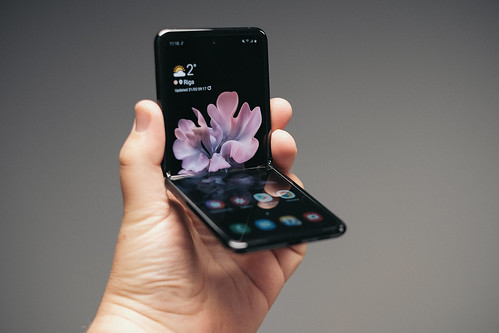
Start Up No.1320: Trump v Twitter (and how it happened), Microsoft’s AI takes over from journalists, Amazon kills its Look, and more


Pizza: an ideal product for a bit of arbitrage with Softbank’s money. CC-licensed photo by Matt on Flickr.

You can sign up to receive each day’s Start Up post by email. You’ll need to click a confirmation link, so no spam.

A selection of 12 links for you. Not available where curfewed. I’m @charlesarthur on Twitter. Observations and links welcome.

Trump, Twitter and Jack Dorsey • The New York Times

Maureen Dowd has some advice for Jack Dorsey:

»

You could answer the existential question of whether @realDonaldTrump even exists if he doesn’t exist on Twitter. I tweet, therefore I am. Dorsey meets Descartes.

All it would take is one sweet click to force the greatest troll in the history of the internet to meet his maker. Maybe he just disappears in an orange cloud of smoke, screaming, “I’m melllllllting.”

Do Trump — and the world — a favor and send him back into the void whence he came. And then go have some fun: Meditate and fast for days on end!

Our country is going through biological, economic and societal convulsions. We can’t trust the powerful forces in this nation to tell us the truth or do the right thing. In fact, not only can we not trust them. We have every reason to believe they’re gunning for us.

In Washington, the Trump administration’s deception about the virus was lethal. On Wall Street and in Silicon Valley, the fat cats who carved up the country, drained us dry and left us with no safety net profiteered off the virus. In Minneapolis, the barbaric death of George Floyd after a police officer knelt on him for almost nine minutes showed yet again that black Americans have everything to fear from some who are charged with protecting them.

As if that weren’t enough, from the slough of our despond, we have to watch Donald Trump duke it out with the lords of the cloud in a contest to see who can destroy our democracy faster.

I wish I could go along with those who say this dark period of American life will ultimately make us nicer and simpler and more contemplative. How can that happen when the whole culture has been re-engineered to put us at each other’s throats?

«

Also worth reading: Will Oremus at Medium gives a step-by-step on what happened, and some similar detail by the NYT.
unique link to this extract


President Trump versus the mods • The New York Times

Kevin Roose says that this situation is more like trollish behaviour on old forums:

»

looking at Mr. Trump as an aggrieved user of a fractious internet forum, rather than a politician making high-minded claims about freedom of speech, clarifies the dynamics at play here. Mod drama is never really about who’s allowed to say what, or which specific posts broke which specific rules. Often, it’s part of a power struggle between chaos and order, fought by people who thrive in a lawless environment.

In Twitter’s case, the company is enforcing rules it already had on its books — one prohibiting misinformation related to the voting process, and another prohibiting glorifying violence. They’re both clear, sensible rules, and Mr. Trump’s punishment for breaking them was relatively gentle. Twitter didn’t ban Mr. Trump or take down his tweets. It placed a small disclaimer on two of them — a pair of baseless tweets stating that mail-in ballots were ripe for voter fraud — and put a warning label on another.
But given Twitter’s history of permissiveness with Mr. Trump, any action to restrain him was bound to cause a stir. And Mr. Trump and his allies wasted no time going nuclear.

…Twitter, Facebook and YouTube are private enterprises, with no First Amendment obligations to users, and courts have consistently ruled that these companies can set their own rules, just as restaurants can require guests to wear shirts and shoes.

But Mr. Trump — whose entire online personality is built on pushing boundaries, and whose re-election campaign has already had some of its ads taken down for violating Facebook’s rules — has a strategic interest in getting the mods off his back, by intimidating social media executives into letting him post with impunity.

Facebook seems to have gotten Mr. Trump’s message.

«

Jack Dorsey isn’t backing down, and I think the whole of his company is with him. By contrast, there’s a lot of internal dissent over Zuckerberg’s stated position. Mutiny is a possibility.
unique link to this extract


Caught on camera, police explode in rage and violence across the US • The Verge

TC Sottek:

»

On Saturday, the names of several police officers allegedly seen perpetrating violence in different cities began trending on Twitter as people worked to cross-reference faces from videos with personal information on the web.

The violence appears so widespread and consistent that you could be mistaken for thinking it’s coordinated at a national level. To some extent, it is: President Trump has cheered on police violence like a fan at a sports event, and police departments across the country have styled themselves as military forces after receiving two decades of hand-me-downs from the War on Terror.

“US cities face toll of violent protests,” says a headline at the top of Fox News. “Fury in the streets as protests spread across the US,” says The New York Times. “Fire and fury spread across the US,” says The Washington Post. “Wave of rage and anguish sweeps dozens of US cities,” says CNN. But whose rage? Whose fury? Whose violence?

Here’s another: ABC local news in Utah runs a graphic saying “violent protests in Salt Lake City.” In the background of the video, police knock an elderly man with a cane to the ground. He was simply standing near a bus stop.

«

US police departments have become increasingly militarised, literally, with the transfer of surplus military equipment from the Iraq and Afghanistan wars, with particular spikes after 2010. Maybe the police should also be tested for steroids, like athletes; it’s known to increase aggressive behaviour.
unique link to this extract


Microsoft lays off journalists to replace them with AI • The Verge

Tom Warren:

»

Microsoft is laying off dozens of journalists and editorial workers at its Microsoft News and MSN organizations. The layoffs are part of a bigger push by Microsoft to rely on artificial intelligence to pick news and content that’s presented on MSN.com, inside Microsoft’s Edge browser, and in the company’s various Microsoft News apps. Many of the affected workers are part of Microsoft’s SANE (search, ads, News, Edge) division, and are contracted as human editors to help pick stories.

“Like all companies, we evaluate our business on a regular basis,” says a Microsoft spokesperson in a statement. “This can result in increased investment in some places and, from time to time, re-deployment in others. These decisions are not the result of the current pandemic.”

While Microsoft says the layoffs aren’t directly related to the ongoing coronavirus pandemic, media businesses across the world have been hit hard by advertising revenues plummeting across TV, newspapers, online, and more.

«

50 jobs in the US, about 27 in the UK. I took a look at MSN.com and couldn’t see any glaring errors. Let’s check back in a little while.
unique link to this extract


AI isn’t magical and won’t help you reopen your business • WSJ

Christopher Mims:

»

When SharpestMinds, a startup that sells mentoring services to data scientists, surveyed its alumni in April and again in May, it found that 6% of respondents had been affected by furloughs, pay cuts or layoffs. That’s a drop on the ocean compared to the enormous layoffs in, say, the restaurant business, but it’s notable because these jobs are generally thought to be business-critical roles requiring high-demand specialized skill sets.

Uber recently shut down its AI research lab, and Airbnb’s layoffs included at least 29 full-time data scientists, according to its directory of those let go.

The pain for data scientists will likely increase as companies rethink how they spend, predicts SharpestMinds founder Edouard Harris. Hiring for such roles has slowed significantly, down by 50% since before the pandemic, he adds. On the other hand, that means there’s still demand, though it’s diminished.

What’s happening is not so much a reckoning as a “rationalization” of the application of AI in businesses, says Rajeev Sharma, head of enterprise AI at Pactera Edge, a technology-consulting firm. “[Companies] feel this is a time they can get rid of extra hires or lower performers who are not a good cultural fit,” he adds.

By contrast, the deep-pocketed big tech companies clearly see AI as not merely important but core to their businesses, and plan to keep hiring like crazy. Google chief executive Sundar Pichai has said that in the sweep of human history, AI is more important than electricity or fire, and all the Big Five have said they’ll continue to add to their engineering ranks during this downturn, including data scientists and AI experts. Now is a great time to hire them, says Mr. Sharma. He says it’s like buying discounted shares after a stock-market crash.

«

AI is more important than electricity or fire? That’s quite the statement. Uber clearly doesn’t think so.
unique link to this extract


Is science being set up to take the blame? • Light Blue Touchpaper

Ross Anderson:

»

Having spent a dozen years on the [Cambridge] university’s governing body and various of its subcommittees, I can absolutely get how this happened. Once a committee gets going, it can become very reluctant to change its opinion on anything. Committees can become sociopathic, worrying about their status, ducking liability, and finding reasons why problems are either somebody else’s or not practically soluble.

So I spent a couple of hours yesterday reading the minutes, and indeed we see the group worried about its power: on February 13th it wants the messaging to emphasise that official advice is both efficaceous and sufficient, to “reduce the likelihood of the public adopting unnecessary or contradictory behaviours”. Turf is defended: Public Health England (PHE) ruled on February 18th that it can cope with 5 new cases a week (meaning tracing 800 contacts) and hoped this might be increased to 50; they’d already decided the previous week that it wasn’t possible to accelerate diagnostic capacity. So far, so much as one might expect.

The big question, though, is why nobody thought of protecting people in care homes. The answer seems to be that SAGE dismissed the problem early on as “too hard” or “not our problem”. On March 5th they note that social distancing for over-65s could save a lot of lives and would be most effective for those living independently: but it would be “a challenge to implement this measure in communal settings such as care homes”. They appear more concerned that “Many of the proposed measures will be easier to implement for those on higher incomes” and the focus is on getting PHE to draft guidance.

…My experience of university committees makes this all just too painfully familiar. What’s failed here is not the science, but the process of government.

«

unique link to this extract


Zero-day exploit in Sign in with Apple • Bhavukjain.com

Bhavuk Jain:

»

What if I say, your Email ID is all I need to takeover your account on your favorite website or an app. Sounds scary, right? This is what a bug in Sign in with Apple allowed me to do.

In the month of April, I found a zero-day in Sign in with Apple that affected third-party applications which were using it and didn’t implement their own additional security measures. This bug could have resulted in a full account takeover of user accounts on that third party application irrespective of a victim having a valid Apple ID or not.

For this vulnerability, I was paid $100,000 by Apple under their Apple Security Bounty program.

«

There are technical details, but they’re.. technical. I don’t think this is an iOS exploit, but a server-side on which Apple should have been able to fix on its own. His publication implies that he’s been told he can publish.
unique link to this extract


Amazon Echo Look no more – another Alexa device discontinued • Voicebot.ai

Bret Kinsella:

»

Amazon quietly introduced the Echo Look Alexa-enabled smart speaker for fashion advice in April 2017. Yesterday, the company quietly informed its few thousand users that Echo Look would be discontinued. In providing background on the latest shakeup of Amazon’s Alexa portfolio, an Amazon spokesperson shared the text of an email sent to Echo Look users yesterday saying:

“When we introduced Echo Look three years ago, our goal was to train Alexa to become a style assistant as a novel way to apply AI and machine learning to fashion. With the help of our customers we evolved the service, enabling Alexa to give outfit advice and offer style recommendations. We’ve since moved Style by Alexa features into the Amazon Shopping app and to Alexa-enabled devices making them even more convenient and available to more Amazon customers. For that reason, we have decided it’s time to wind down Echo Look. Beginning July 24, 2020, both Echo Look and its app will no longer function…”

«

Congratulations, folks, you’ve got another dead device to take to the dump, if it ever reopens.
unique link to this extract


Doordash and pizza arbitrage • Margins by Ranjan Roy and Can Duruk

Ranjan Roy had a friend who runs pizza restaurants in New York, and in March 2019 was getting complaints from people saying the pizzas delivered from their restaurants were cold. Except: the restaurants didn’t deliver:

»

He realized that a delivery option had mysteriously appeared on their company’s Google Listing. The delivery option was created by Doordash.

To confirm, he had never spoken with anyone from Doordash and after years of resisting the siren song of delivery revenue, certainly did not want to be listed. But the words “Order Delivery” were right there, prominently on the Google snippet.

He messaged me asking me if I knew anything about Doordash, and oh boy, did I get Softbank-triggered. I had just read about their $400m Series F and it was among the WeWorkian class of companies that, for me, represented everything wrong about startup evolution through the 2010s. Raise a ton of money, lose a ton of money, and just obliterate the basic economics of an industry.

Doordash was causing him real problems. The most common was, Doordash delivery drivers didn’t have the proper bags for pizza so it inevitably would arrive cold. It led to his employees wasting time responding to complaints and even some bad Yelp reviews.

But he brought up another problem – the prices were off. He was frustrated that customers were seeing incorrectly low prices. A pizza that he charged $24 for was listed as $16 by Doordash.

My first thought: I wondered if Doordash is artificially lowering prices for customer acquisition purposes.

My second thought: I knew Doordash scraped restaurant websites. After we discussed it more, it was clear that the way his menu was set up on his website, Doordash had mistakenly taken the price for a plain cheese pizza and applied it to a ‘specialty’ pizza with a bunch of toppings.

My third thought: Cue the Wall Street trader in me…..ARBITRAGE!!!!

If someone could pay Doordash $16 a pizza, and Doordash would pay his restaurant $24 a pizza, then he should clearly just order pizzas himself via Doordash, all day long. You’d net a clean $8 profit per pizza [insert nerdy economics joke about there is such a thing as a free lunch].

«

Do you think they’d act on this knowledge? Well, do you, punk? (This story has already had wide circulation, but it’s a great read if not. And Margins is a good newsletter – one or two editions per week. Recommended.)
unique link to this extract


Sars, Ebola and Mers were near misses that led us to believe Covid-19 would pass us by too • New Statesman

Ian Leslie:

»

Sars killed about 800 people worldwide (one in ten who were infected), mostly in China and its neighbours. To the extent that the rest of the world noticed, the disease was thought to have faded away. Those who fought the outbreak at close quarters, however, knew that Sars didn’t burn out of its own accord. It had to be stopped in its tracks.

In industries that have to be vigilant for risks of disaster, such as aviation or nuclear energy, “near misses” are treated as flashing red lights. When a plane almost misses its landing or a factory explosion is narrowly averted, investigations are made, processes revised: just because the disaster did not occur it does not mean it won’t next time.

But near misses can also breed complacency. We have a tendency, identified by those who study the psychology of risk, to treat near misses as grounds for optimism. Since the worst didn’t happen, people become strengthened in their conviction that it won’t ever happen. A recent Norwegian study of traffic behaviour found that drivers who had experienced near accidents were subsequently more willing to take risks. At the level of organisations, close calls are sometimes taken as reasons to stick with existing procedures. The organisational theorists Junko Shimazoe and Richard Burton call this the “justification shift”.

…To learn from a near miss, you first have to recognise it as one.

…When we make inquiries into the management of this crisis, I worry that we will learn only how we should have fought Covid-19, rather than how to deal with the next outbreak. Awful as this virus is, I wonder what we would be going through now if it was even more transmissible, or if it was killing children in their thousands. We should confront the possibility that what we are experiencing now is itself a near miss.

«

That last paragraph is one to mull over. We have been really, really lucky even as we are burying the dead.
unique link to this extract


Yesterday, the Beatles and why talent isn’t enough • UnHerd

Dorian Lynskey:

»

Around this time last year, I came out of a press screening of Yesterday thinking that writer Richard Curtis and director Danny Boyle had wasted a fantastic concept. What if you were the only person on Earth who remembered the Beatles? The film gave the dullest possible answer: you’d become a megastar by playing their songs but you’d feel a bit grubby about it. As I wrote at the time, “Not only does Curtis not answer the questions he has raised; he doesn’t even appear to notice he has asked them.” Now it turns out that a much more interesting take already existed: the original screenplay.

Last week, struggling screenwriter Jack Barth told Uproxx how, in 2012, he wrote a screenplay called Cover Version about an unsuccessful singer-songwriter who — you’ve guessed it — is the only person who remembers the Beatles and presents their songs as his own. But while Yesterday’s Jack Malik, the latest in a long line of sweet but emotionally inept Curtismen, hits the big time, Barth’s protagonist does not.

…The Barth theory, as far as I can tell without being able to read his screenplay, is that success is contingent on several factors — timing, momentum, charisma, connections, luck — of which inspiration is not necessarily the most important. “I was lying in bed one night thinking, if Star Wars hadn’t been made and I just came up with the idea for Star Wars, I bet I wouldn’t be able to sell it,” said Barth, who had 25 unproduced screenplays under his belt. “Carry that on to the Beatles, if I knew all the Beatles songs, I bet I couldn’t be successful with it.”

Anyone with a significant interest in the history of pop music knows this to be true.

«

The whole story is a great insight into how screenplays get mangled, strangled and passed around, but also into the question of whether fame is inevitable.
unique link to this extract


Pixel Buds 2 review, one month later: too many compromises • Android Police

Taylor Kerns:

»

It’s been a month and change since Google launched its first true wireless earbuds. When I first got my hands on the Pixel Buds, I was struck by their fit and finish, comfort, and sound quality, but nagging problems like audible interference at low volumes and short battery life left me feeling lukewarm on the whole. I’ve been using them regularly ever since, but unfortunately, my opinion hasn’t changed: there are too many compromises in the 2020 Pixel Buds to justify their [$179] price for most buyers.

…I suspect the disappointing [battery] longevity is down to inefficient software. The cells in the two buds drain at varying rates — I’ve seen a difference as high as 50 percentage points between left and right. Google says that’s normal, that “the two earbuds serve different functions at different times” and software “monitors the state on both earbuds and can switch either earbud to support more power hungry functions.” While it’s true I never had one bud die with significant juice left in the other, it’s still disconcerting to see such a discrepancy between the two. There’s just gotta be a better way to accomplish what Google is going for here. This might also be addressed in firmware patches, but there’s no way of knowing whether it will.

«

Poor battery life for the price, plus an annoying static hiss that Google tells him “most people won’t be able to pick up”. Amazing how these true wireless earbuds all seems to have ovoid cases with magnetically closing flip-top lids. As if there were no other way to do it.
unique link to this extract


Errata, corrigenda and ai no corrida: none notified
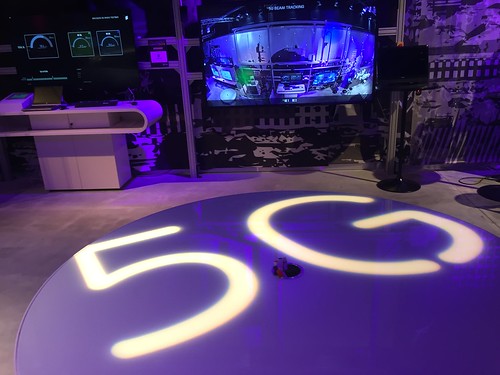
Start Up No.1319: Facebook’s strange fact-checking pose, UK trace-and-trace delayed, whatever happened to creationists?, and more


Yes, we might as well discuss the Trump nonsense CC-licensed photo by on Flickr.

You can sign up to receive each day’s Start Up post by email. You’ll need to click a confirmation link, so no spam.

A selection of 11 links for you. Now, Dougal, this tweet is far away… I’m @charlesarthur on Twitter. Observations and links welcome.

The two things to understand about Trump’s executive order on social media: (1) it’s a distraction (2) it’s legally meaningless • Techdirt

Mike Masnick:

»

We’ve officially reached pure silly season when it comes to internet regulations. For the past two years now, every so often, reports have come out that the White House was exploring issuing an executive order trying to attack Section 230 and punish companies for the administration’s belief in the myth that content moderation practices at large social media firms are “biased” against conservatives.

However, it apparently took Twitter literally doing nothing more than linking to people arguing that Trump’s tweets were misleading, to cause our President to throw a total shit fit and finally break out the executive order. This one is somewhat different than drafts that have been floated in the past, though it has the same origins (and, according to a few people I spoke to, this new executive order was “hastily drafted” to appease an angry President who can’t stand the idea that someone might correct his nonsense)…

To be clear: the executive order is nonsense. You can’t overrule the law by executive order, nor can you ignore the Constitution. This executive order attempts to do both. It’s also blatantly anti-free speech, anti-private property, pro-big government – which is only mildly amusing, given that Trump and his sycophantic followers like to insist they’re the opposite of all of those things. But also, because the executive order only has limited power, there’s a lot of huffing and puffing in there for very little actual things that the administration can do. It’s very much written in a way to make Trump’s fans think he’s done something to attack social media companies, but the deeper you dig, the more nothingness you find.

«

Read the final EO; it’s still a legal nonsense. Plenty of analysis to be had: hitting social media will harm Trump (because Twitter will have to censor more, not less heavily); section 230 author says the EO is ‘plainly illegal’; the Koch-funded Americans for Prosperity say it’s counterproductive; FCC commissioners say it won’t work. It will die in the courts.

Meanwhile, more than 100,000 people have died in the US amid utter disorganisation at the federal level over pandemic planning, replete with grifting, lies, and idiocy.
unique link to this extract


Opinion: Trump’s ‘horrifying lies’ about Lori Klausutis may cross a legal line • The New York Times

Peter Schuck is an emeritus professor of law at Yale:

»

Mr. Trump’s first tort is called intentional infliction of emotional distress, which the courts developed precisely to condemn wanton cruelty to another person who suffers emotionally as a result. This tort, which is sometimes called “outrage,” readily applies to Mr. Trump’s tweets about Ms. Klausutis. They were intentional and reckless, and were “extreme and outrageous” without a scintilla of evidence to support them. And they caused severe emotional distress — the protracted, daily-felt grief described in Mr. Klausutis’s letter to Mr. Dorsey.

Although the tweets targeted Mr. Scarborough, his own infliction of emotional distress claim may be weaker than Mr. Klausutis’s. By shrugging off the tweet as simply political gamesmanship on the president’s part, Mr. Scarborough may not have suffered the “severe emotional distress” required for an intentional infliction of emotional distress claim.

Even so, Mr. Scarborough might succeed in a defamation suit against Mr. Trump for reputational harm. After all, the president’s innuendo that Mr. Scarborough may have murdered Lori Klausutis — presumably credible to the many Trump Twitter followers who subscribe to conspiracy theories — may seriously harm Mr. Scarborough’s reputation with them and others.

Mr. Trump, moreover, often aims his tweets to lead multiple news cycles affecting well beyond his Twitter followers. The president will surely argue that he has not actually accused anyone of murder and was merely “raising questions.” But courts have held that such calculated innuendo can constitute defamation, depending on the facts. This would be for a jury to decide.

«

It would certainly be a fun turnabout. I don’t think Klausutis would struggle to get crowdsourcing if he wanted to start a legal battle.
unique link to this extract


Zuckerberg dismisses fact-checking after bragging about fact-checking • Ars Technica

Kate Cox:

»

[Mark] Zuckerberg has been reasonably consistent in making sure to leave large carve-outs in site policy for politicians, including the president. Last year, Facebook made clear that its community standards—including hate speech and abuse rules as well as fact-checking policies—do not apply to politicians or other newsworthy figures. The company has also said many times that political content and advertising does not need to be truthful, instead putting the onus on users to avoid lies or to recognize every time they are being lied to.

Even Facebook has a few standards, however, and those relate to election security and COVID-19. In March, the company removed a Trump campaign ad that spread misleading information about the 2020 US Census after reporters noticed and began to ask about the sponsored posts. Facebook also put a “partly false” label on a misleading video of Democratic presidential candidate Joe Biden shared by members of the Trump campaign.

Zuckerberg earlier this month bragged about the effectiveness of fact-checking as relating to the COVID-19 crisis. In a call, he told media that, in the month of April alone, Facebook’s fact-checkers put 50 million warning labels on COVID-19 content shared to the platform. Those labels were super effective, he crowed: 95% of the time, viewers didn’t click through to content that had been warned to be false.

Twitter CEO Jack Dorsey took to his own platform to rebut Zuckerberg’s statement.

«

Zuckerberg’s position on this strikes me as absurd. Facebook is doing all this stuff, as the article points out. It can’t be that he’s forgotten what he’s done; he must be hoping that those interviewing him aren’t smart enough to point out this contradiction. Fortunately, he was interviewed by Fox News, so no danger there.
unique link to this extract


Technical glitches overshadow UK’s track and trace launch • Financial Times

Sarah Neville, Helen Warrell and Laura Hughes:

»

A [UK] government programme to trace people at risk of infection from Covid-19 got under way in England on Thursday — overshadowed by technical glitches and an admission from its chair that it would not be fully operational at local level for another month.

In an acknowledgment of the problems in the build-up to the launch, Rupert Soames, chief executive of Serco which, together with its subcontractors, recruited 10,000 of the new 25,000 contact tracers, told staff in a video, that the idea that “all the strands of this would come together at precisely the right time belongs only to the fantasies of those people who have never organised anything more than a tea party”.

Directors of public health, who only found out on Wednesday afternoon that the programme was to be launched four days earlier than expected, warned that necessary links between the central “test and trace” operation and local councils were still not fully established.

Downing Street denied the programme had been brought forward from next week to distract from the row over alleged lockdown breaches by Dominic Cummings, the prime minister’s chief adviser, which several opinion polls suggest has dented the popularity ratings of the government and prime minister Boris Johnson.

«

The programme was indeed brought forward, which is why it’s not going to be ready. The UK government has done lousy work from the start here. (Side note: how great to have a triple byline on a general news story where all three writers are women.)
unique link to this extract


EMEA smartphone market expected to shrink to all-time lows in 2Q • IDC

»

According to the IDC Worldwide Quarterly Mobile Phone Tracker, the EMEA smartphone market is expected to contract by close to a quarter in value terms in the three months to the end of June, after a relatively strong first three months to the year.

Measured in retail prices before sales tax and VAT, the second-quarter smartphone total will dip below $19bn and 63 million units — the smallest quarterly total across EMEA in five years.

“This will be the biggest fall in a single quarter the market has seen since IDC started tracking the region 14 years ago,” said Simon Baker, program director at IDC EMEA. “The deepest drop up to now was the 13.0% year-on-year drop in value in the third quarter of 2009 during the financial crisis.”

The 2Q downturn will be most pronounced in Europe, said Marta Pinto, research manager at IDC EMEA. Southern Europe will be badly hit, especially Spain, with a drop in value near a third. But everywhere will be in negative territory compared with the same quarter the year before.

The biggest fall in Europe is expected to be in Russia, where the coronavirus lockdown has been compounded by a drop in the currency. There was some evidence of consumers snapping up phones in the weeks leading up to the lockdown before prices rose, and prior experience of such crises in Russia suggests that the market will contract markedly for some months thereafter.

«

Oh, yeah, smartphones. For when we used to walk around and stuff.
unique link to this extract


Why remote work is so hard—and how it can be fixed • The New Yorker

Cal Newport:

»

it took decades for factory owners to figure out how to make the most of electric power. Eventually, they discovered that the best approach was to put a small motor on each individual piece of machinery. Since a factory no longer needed to draw power from a central engine, its equipment could be spread out. This, in turn, changed the nature of industrial architecture. Buildings that no longer required reinforced ceilings to house shafts, belts, and pulleys could incorporate windows and skylights, of the sort we know today from urban loft buildings.

Inertia, David found, had been part of the problem. Factory owners who had spent a lot of money and time building physical plants organized around central-drive trains were reluctant to commit to complex, expensive overhauls. There were imaginative obstacles: powering each machine with its own individual motor may seem like an obvious idea now, but in fact it represented a sharp break from the centralized-power model that had dominated for the previous hundred and fifty years. Finally, technological barriers stood in the way—small issues, compared to the invention of electricity, but persistent and important ones nonetheless. Someone, for instance, had to figure out how to construct a building-wide power grid capable of handling the massively variable load created by many voltage-hungry mini-motors being turned off and on unpredictably. Until that happened, it was central power or bust.

In some respects, we may be in an electric-dynamo moment for remote work. In theory, we have the technology we need to make remote work workable. And yet most companies that have tried to graft it onto their existing setups have found only mixed success. In response, many have stuck with what they know. Now the coronavirus pandemic has changed the equation.

«

unique link to this extract


Former Apple designer to launch rival to HomePod and Sonos • Financial Times

Tim Bradshaaw:

»

Having spent more than 20 years working closely with Jony Ive in Apple’s design team, Christopher Stringer left Silicon Valley in 2017 to start his new venture, Syng, in Venice Beach, Los Angeles.

Mr Stringer, who was born in Australia but grew up and studied in England, is named on more than 1,400 US patents, including for designs related to the iPhone, Apple Watch and HomePod.

With his involvement, Syng is likely to be the highest-profile hardware start-up to be launched by former Apple staffers since Nest. The smart home pioneer, which makes internet-connected thermostats, cameras and smoke alarms, was founded by Tony Fadell and Matt Rogers in 2010 and was acquired by Google for $3.2bn in 2014. Mr Rogers, who was one of the first engineers on the original iPhone, now serves on Syng’s board, according to his LinkedIn profile.

However, while Nest helped to invent a new category of consumer electronics, Syng will be entering a much more crowded market. The home-audio sector has been saturated in recent years by low-cost “smart speakers” such as Amazon’s Echo, making life more difficult for higher-end products such as Sonos.

Syng, which bills itself as “the future of sound company”, is betting that superior design and sound quality, using a novel audio format, will allow it to stand out.

«

You know, I almost had some hope for it until we got to the “novel audio format” bit. This will crash and burn. A small startup will not persuade record labels to create a novel audio format. The speakers might sound and look nice, but what do they have over Sonos or everything else?
unique link to this extract


Creationism, unchallenged • Slate Star Codex

Scott Alexander:

»

In the early 2000s, creationism was Public Enemy Number…maybe not One, but somewhere in the top ten. If you’re old enough to remember the decade at all, you probably recall the key flashpoints. The Discovery Institute. Michael Behe. “Teach the controversy”. The Creation Museum. Of Pandas And People. That one anti-Richard-Dawkins rap song which somehow despite everything managed to be really good.

And you probably remember the efforts by “the reality based community” to spread awareness of the dangers of creationism – the xkcd comics, the petitions by 1400 scientists named Steve, the New York Times articles…

…yeah, the 2000s were a weird time. I’ve talked about this particular conflict already in my post New Atheism: The Godlessness That Failed. Today I want to focus on another aspect.

All those creationists are still there. A 2019 Gallup poll found that 40% of Americans believed “God created human beings pretty much in their present form at one time within the last 10,000 years or so”, little different from 44% who believed it when they first asked in 1983 or the 46% who believed it in 2006…

…I see people using rivers of ink to fight the modern equivalents of creationists. Pizzagaters, flat-earthers, moon-hoaxers, QAnon, deep-staters, people who say the coronavirus is a bioweapon, Alex Jones. Are they sure it’s not equally useless? Equally counterproductive?

«

As he points out, the number of articles about creationism has gone down almost to nothing. Yet its prevalence is about the same. Nobody’s mind has been changed (well, it’s lost a little popularity, perhaps just outside the margin of error).
unique link to this extract


COVID antibody testing and conditional probability • All this

Dr Drang:

»

“in a population where the prevalence is 5%, a test with 90% sensitivity and 95% specificity will yield a positive predictive value of 49%.”

Let’s go through the numbers and see how 90% turns into 49%.

First, there are a couple of terms of art we need to understand: sensitivity and specificity. Sensitivity is the accuracy of positive test results; it is the percentage of people who actually have the condition that will test positive for it. Specificity is the accuracy of negative test results; it is the percentage of people who actually don’t have the condition that will test negative for it.

With those definitions in mind, we’ll create a 2×2 contigency table for a population of 100,000 people in which the prevalence, sensitivity, and specificity are as given in the quote.

  Have
antibodies
Don’t
have
antibodies
Total
Test positive 4,500 4,750 9,250
Test negative 500 90,250 90,750
Total 5,000 95,000 100,000

5,000 people actually have the antibodies (5% of 100,000) and 95,000 do not. Of the 5,000 with antibodies, 4,500 (90% of 5,000) will test positive for them and the remaining 500 will test negative for them. Of the 95,000 without antibodies, 90,250 (95% of 95,000) will test negative for them and the remaining 4,750 will test positive for them.

So of the 9,250 people who test positive for the antibodies, only 4,500 actually have them. That’s where the 49% figure comes from in the quote.

This is a very common sort of problem to spring on students in a probability class who are learning about conditional probability and Bayes’s Theorem. The key thing is to realize that the probability that you have antibodies given that you had a positive test is definitely not the same as the probability that you had a positive test given that you have antibodies. When you hear about a test’s “accuracy,” it’s usually the latter that’s presented even though you as a patient are only interested in the former. After all, if you already knew you had the condition, you wouldn’t need to have the test.

«

Weird how the accuracy goes up as seroprevalence goes up. Anyway, we’ll need to be aware of this as testing (theoretically) expands over the next few months.
unique link to this extract


Why is artificial intelligence so useless for business? • Matthew Bassett

»

The excel spreadsheets, marketing brochures, legal contracts, and other documents that make up the business world are hidden in email inboxes and other silos within various companies. No group of researchers can train a “document-understanding” model simply because they don’t have access to the relevant documents or appropriate training labels for them.

What’s more, artificial research teams lack an awareness of the specific business processes and tasks that could be automated in the first place. Researchers would need to develop an intuition of the business processes involved. We haven’t seen this happen in too many areas. The big successes have happened where the problem is easily understood and has many publicly-available examples (machine translation), where there is a promise of a massive ROI (self-driving cars), or where a large company arbitrarily decides to throw enough resources at the problem until they can crack it (AlphaGo).

This means, however, that we can expect artificial intelligence to succeed in automating business processes when 1) researchers are able to focus on a specific problem, and 2) they are able to accumulate enough data to train a workable model. (Another criterion for success is that should aim to empower the people involved in the process, not replace them, but that is for a different discussion.) And where they succeed, people who work in those industries can expect to be spending more of their time doing interesting, creative work and less time doing dull, time-consuming tasks. A great example of this is Proda, a London-based startup that can automatically standardize commercial real estate data.

«

unique link to this extract


Trading Standards squad targets anti-5G USB stick • BBC News

Rory Cellan-Jones:

»

at first sight, it seems to be just that – a USB key, with just 128MB of storage.

“So what’s different between it and a virtually identical ‘crystal’ USB key available from various suppliers in Shenzhen, China, for around £5 per key?” asks Ken Munro, whose company, Pen Test Partners, specialises in taking apart consumer electronic products to spot security vulnerabilities.

And the answer appears to be a circular sticker.

“Now, we’re not 5G quantum experts but said sticker looks remarkably like one available in sheets from stationery suppliers for less than a penny each,” he says.

Mr Munro and his colleague Phil Eveleigh proceeded to dismantle the USB key to find out if there were any whizz-bang electronics inside. But all they found was an LED light on the circuit board, similar to those on any other USB key. Their conclusion was that trading standards bodies should carry out their own investigations.

A search in Companies House shows the two directors of BioShield Distribution are Anna Grochowalska and Valerio Laghezza. Both of them appear to have been involved previously in a business called Immortalis, which sells a dietary supplement called Klotho Formula.

Its website – rather similar in design to that of the BioShield – says Klotho Formula uses a “proprietary procedure that leads to relativistic time dilation and biological quantum entanglement at the DNA level”.

Ms Grochowalska told BBC News her company was the sole global distributor of the 5GBioShield – but it did not manufacture or own the product.

«

Now Trading Standards are seeking to block sales: “we consider it to be a scam”.
unique link to this extract


Errata, corrigenda and ai no corrida: none notified

Start Up No.1318: Facebook defends on polarisation, Australia’s irrelevant tracking app, judges back social media on speech ban, and more


The pandemic is making days melt together. Which isn’t good. CC-licensed photo by Mike Hyde on Flickr.

You can sign up to receive each day’s Start Up post by email. You’ll need to click a confirmation link, so no spam.

A selection of 10 links for you. Fact-checking. I’m @charlesarthur on Twitter. Observations and links welcome.

A Monday is a Tuesday is a Sunday as COVID-19 disrupts internal clocks • Scientific American

Jackie Rocheleau:

»

people seem to be experiencing time more slowly, according to data that are beginning to be compiled. In a not yet peer-reviewed preprint paper, Sylvie Droit-Volet, a time perception researcher at the University of Clermont Auvergne in France, and her colleagues show that people there report the clock moving more slowly during the lockdown. The researchers also document feelings of sadness and boredom and tie them to the overall feeling of deceleration.

“Their findings directly support the emotional connection with time perception,” says Philip Gable of the University of Alabama. He is also using survey data to examine how people across the U.S. experience time during the pandemic. “It’s a societal event that’s going to have a profound psychological influence on us,” Gable says, adding that the temporal shift is an integral part of our feelings about what is happening. He plans to collect data over the next nine months, but so far has found evidence that the everyday tempo now lags. Nearly 50% of people experienced time dragging during March, whereas about 24% perceived it to be speeding up.

For some individuals in quarantine, time stretches but also compresses. Jennifer Peirson, a school counselor in New Jersey who now works from home, perceives she is caught in a time warp. “The days feel much longer,” she says. “But when you get to a holiday, it doesn’t feel like that much time has passed.”

These perceptions may be attributed to a tug-of-war between two concepts: retrospective and prospective time. Dan Zakay, a professor at the Baruch Ivcher School of Psychology at the Interdisciplinary Center Herzliya in Israel, explains that retrospective time perception evokes the recollection of past events and how long they lasted. Prospective time involves judging the duration of an event at the present moment.

«

I definitely felt like this on March the 54th.
unique link to this extract


Jonathan Haidt on the pandemic and America’s polarization • The Atlantic

Peter Wehner:

»

Around 2008, Haidt [who is the professor of Ethical Leadership at New York University’s Stern School of Business] became increasingly concerned by how politically polarized America was becoming, and polarization has only worsened over the past dozen years. “I’ve gotten more and more alarmed every year since then,” he told me, “and there are several trends that are very disturbing,” including the rise of “affective polarization,” or the mutual dislike and hate each political side feels for the other. “When there’s so much hatred, a democracy can’t work right,” he said. “You can’t get compromise. You get exactly the situation that the Founders feared, that [James] Madison wrote about in ‘Federalist 10,’ which is faction, which is people care more about defeating the other side than they do about the common good.”

For some time now, Haidt has been saying that if current trends continue, the United States may somehow come apart—but he always adds that trends never continue forever. Things change, sometimes for the better, sometimes for the worse; you can’t just extrapolate from the present. “When the COVID-19 crisis hit, at first I was very optimistic that no matter how bad things get, there’s a real chance this could throw us off of the downward trajectory we were on,” he said. “There’s a real chance that this could be the reset button. So that’s the framework that I bring to all of my thinking about the implications of this crisis for the country, that we were headed in a very bad direction and a lot is going to change. And so I am more hopeful now than I was before—but that isn’t saying much.”

…But Haidt pointed out that several surveys, including one in April by More in Common, show that the pandemic is having the sort of unifying effect that major crises tend to have. Feelings toward Donald Trump are almost perfectly polarized, as one would expect. But on other important questions, there’s not that much polarization. For example, 90% of Americans believe that “we’re all in it together,” compared to just 63% in the fall of 2018. The share of Americans who describe the country as “unified” has grown from 4% in 2018 to 32% today, while the percentage of Americans who regard the country as “very divided” has dropped from 62% to just 22%.

«

unique link to this extract


Investments to fight polarization • About Facebook

Guy Rosen is VP of Integrity at Facebook:

»

Yesterday the Wall Street Journal published a story claiming that Facebook “shut down efforts to make the site less divisive” and “largely shelved” internal research on whether social media increases polarization. Unfortunately, this particular story wilfully ignored critical facts that undermined its narrative.

The piece uses a couple of isolated initiatives we decided against as evidence that we don’t care about the underlying issues — and it ignored the significant efforts we did make. The piece disregarded how our research, and research we continue to commission, informed dozens of other changes and new products. It also ignored other measures we’ve taken to fight polarization. As a result, readers were left with the impression we are ignoring an issue that in fact we have invested heavily in.

Here are just some of the initiatives we’ve made over the past three years to address factors that can contribute to polarization…

«

Specifically, “recalibrating the News Feed” (to prioritise stuff from friends and family), building a bigger “integrity team”, and restricting how it recommends people to join groups. There’s more too, but none of it quite feels like a rebuttal of the WSJ story: that Facebook realised its algorithms were encouraging division, that they realised that reducing that would penalise right-wing voices in particular (because they were overwhelmingly the divisive ones), and that they decided not to act.

Facebook is quoted in the original WSJ story. The quote is a short version of Rosen’s post. So my fact-check on “wilfully ignored critical facts” comes back as: not true. Maybe there should be a warning on the post.
unique link to this extract


How did [Australia’s] Covidsafe app go from being vital to almost irrelevant? • The Guardian

Josh Taylor:

»

It was sold as the key to unlocking restrictions – like sunscreen to protect Australians from Covid-19 – but as the country begins to open up, the role of the Covidsafe app in the recovery seems to have dropped to marginal at best.

“This is an important protection for a Covid-safe Australia,” the prime minister, Scott Morrison, said in late April. “I would liken it to the fact that if you want to go outside when the sun is shining, you have got to put sunscreen on.”

“This is the same thing … If you want to return to a more liberated economy and society, it is important that we get increased numbers of downloads when it comes to the Covidsafe app … This is the ticket to ensuring that we can have eased restrictions.”

The health minister, Greg Hunt, tweeted that it was the key to being allowed to go back to watching football.

Yet nearly a month since launch, the contact tracing app has barely been used – just one person has been reported to have been identified using data from it.

«

About six million Australians have the app, which is about 32% of the population – well short of the 40% that the government wanted to have. Downloads have just about stopped.
unique link to this extract


Why you shouldn’t make a habit of force-quitting iOS apps or restarting iOS devices • TidBITS

Adam Engst:

»

I once sat next to a guy on an airplane who would open an app like Messages, look at it briefly, and then force-quit it as soon as he was done reading the message. (Having to watch this nervous tic behavior for the first 20 minutes of the flight drove me batty, so I asked him if he would be interested in a tip that would improve his iPhone’s battery life and performance. Happily, he was.) I’ve even heard of people shutting down their iPads at the end of the day, much as they might have shut off a Macintosh SE/30 in 1990.

…once she learned in a TidBITS Talk discussion that force-quitting apps was a bad idea, reader Kimberly Andrew found that her iPad lasted 4 days on a single charge instead of requiring nightly recharging. Your experience may not be so dramatic, but if you let iOS manage your device’s resources, you’ll get the best possible battery life for your usage patterns.

«

Force-quit is OK if an app is really blocked, but in general leave them the hell alone. (I can’t find anything authoritative about whether this is also true on Android, which is a lot more generous than iOS about letting background apps keep running.)
unique link to this extract


YouTube fixes error that deleted comments critical of the Chinese Communist Party • The Verge

James Vincent:

»

YouTube says it’s begun fixing an error in its moderation system that caused comments containing certain Chinese-language phrases critical of China’s Communist Party (CCP) to be automatically deleted.

The issue meant that comments containing the phrases “共匪” (“communist bandit”) and “五毛” (“50-cent party”) were removed from the site in a matter of seconds. The former phrase is an insult dating back to China’s Nationalist government, while the latter is derogatory slang for internet users paid to defend the CCP from criticism online. It originates from the claim that these users are paid 50 Chinese cents per post.

YouTube told The Verge that the issue that caused comments containing these phrases to be deleted had been fixed for a number of these terms, but that it was still investigating the deeper causes of the error — suggesting other terms may still be affected. In The Verge’s tests, comments containing the two phrases above are no longer deleted from the platform.

«

At Stratechery, Ben Thompson suggests an organised bombardment from China “reporting” such comments as bad persuaded the comment-deleting machine learning those characters must be a Bad Word. That makes more sense than my “malicious insider” hypothesis; far simpler. Wonder if YouTube will now get its systems to report to the humans what things it newly thinks are Bad Words, to spot attacks like this?
unique link to this extract


Trump’s latest display isn’t just deranged. It’s also an abuse of power • The Washington Post

Greg Sargent:

»

Now let’s also note that Twitter’s fact-checking also shared information with voters that could actually inform them about vote-by-mail, thus potentially giving them additional options to vote amid a pandemic.

Trump and his campaign are quite literally claiming the right to lie to the American people about potentially lifesaving voting options during a pandemic — entirely free of accountability. They are explicitly declaring that any effort to correct those lies will be cast as an affront to the free speech of conservatives.

And Trump is now intimating other forms of state action [saying he “will not allow it to happen”].

It might be argued that Trump won’t actually be able to take such concrete retributive action. But as Jonathan Chait points out, Trump has already threatened the parent companies of media organizations and has already taken concrete actions against the owner of The Post.

The key point here is that, even if these threats do not end up coming to fruition, the threats themselves constitute a serious abuse of power.

The threat of conservative rage via fake claims of “bias” and the threat of state action as retribution are two sides of the same coin: The latter constitutes a deeply corrupt wielding of institutional power in and of itself, and it’s also critical to helping mobilize the former. Such a threat is not somehow rendered meaningless if Trump cannot find a way to follow through.

And this surely works, at least to some degree. This is obvious when you consider how mild and tentative Twitter’s corrective efforts have been. The tweets spreading Trump’s lies about voter fraud remain posted, and he has already posted more such lies that do not yet have any such corrective appended.

«

Trump’s tweets should have a label saying “not yet fact-checked” until they are. Twitter isn’t censoring; it’s enhancing. Quite how this is going to play out is hard to predict. Will Twitter be cowed? Trump is big on threats, small on followthrough. The two extreme endpoints are: Twitter shuts; alternate, Trump gets booted off Twitter (or leaves it). Where on that scale are we going to finish by November? (We’ll deal with the illegal “Executive Order” threat tomorrow when a little of the dust has died down.)
unique link to this extract


Judges toss lawsuit alleging anti-conservative bias on social media • Engadget

Marc DeAngelis:

»

In 2018, the nonprofit organization Freedom Watch and a conservative YouTuber named Laura Loomer tried to sue social media companies. They alleged that Twitter, Facebook and Google – which owns YouTube – broke antitrust laws and violated their First Amendment rights by conspiring to suppress conservative viewpoints. Their case was dropped last year, but they appealed the decision. According to Bloomberg, a federal appeals court today affirmed the decision to drop the suit, leaving the tech companies in the clear.

Bloomberg reports that the court agreed with the previous ruling and found that the First Amendment typically “prohibits only governmental abridgment of speech.” In other words, social media users shouldn’t expect to be able to say anything they want on Twitter, Facebook and YouTube – all of which are private businesses with their own rules and regulations. Furthermore, the conservative group and Loomer didn’t provide substantial evidence of an antitrust violation.

…two of the three judges overseeing this appeal were appointed by Republican presidents, and the judge who originally dismissed the case was appointed by Donald Trump himself.

«

Very good of the judges to come up with this verdict at precisely this juncture.
unique link to this extract


China rules out animal market and lab as coronavirus origin • WSJ

James Areddy:

»

The director of the Wuhan Institute of Virology, at the center of allegations around a potential laboratory accident, Wang Yanyi, over the weekend told China Central Television that the coronavirus was significantly different from any live pathogen that has been studied at the institute and that there therefore was no chance it could have leaked from there.

Separately, China’s top epidemiologist said Tuesday that testing of samples from a Wuhan food market, initially suspected as a path for the virus’s spread to humans, failed to show links between animals being sold there and the pathogen. Gao Fu, director of the Chinese Center for Disease Control and Prevention, said in comments carried in Chinese state media, “It now turns out that the market is one of the victims.”

…The comments from the Chinese scientists together target theories that originated in alternative media before being trumpeted by U.S. politicians that a problem at the lab could have leaked the virus into the city, and that its proximity to the market could have played a role in the spread.

“This is pure fabrication,” Dr. Wang said in the broadcast interview.

…While the lab has said all along that the virus causing Covid-19 wasn’t in its catalog of pathogens, Dr. Wang’s comments in this weekend’s interview are notable for stating that none of the three strains of live virus handled by the institute are genetically close to the coronavirus at the heart of the pandemic. Further, she said that Dr. Shi had no actual live sample of a coronavirus she discovered in 2013 in a bat, which her team this year found to be a 96% match to the pathogen behind today’s pandemic.

«

So it’s less clearcut than it seemed. (I’m still going for pangolin delivery drivers.)
unique link to this extract


Remaking the country • Scripting News

Dave Winer, the ur-blogger, on America’s predicament:

»

We’re the country that went to war without a draft, whose citizens got tax cuts while at war, whose citizens expect more of that, to us it’s never enough. We expect to be able to inflict chaos around the world and somehow never to be touched by it ourselves. That’s why people are out partying with abandon this weekend. They can’t imagine they can pay a price. There’s a reason Vietnam is responding to the virus so incredibly well and we’re responding so poorly. They remember fighting for their independence. To us, independence is a birth right. A distant memory that’s become perverted. We have to fight for it again. The virus is giving us that chance. We can’t get out of the pandemic until we grow up as individuals and collectively. Trump is the right president for who we are. We won’t get a better one until we deserve a better one.

«

One could point out that Trump lost the popular vote by 3 million or so, and that only a quirk of the electoral college (which, when it’s quirky, keeps quirking in favour of Republican presidential candidates) put him in office. But Winer has a point, which also finds some echoes in Ezra Klein’s article that I linked to a month ago, which is that America’s institutions “have become biased against action rather than toward it.” (Via John Naughton’s Memex 1.1)
unique link to this extract


Errata, corrigenda and ai no corrida: none notified

Start Up No.1317: Facebook knew it was polarising, ban Trump’s Twitter?, how Bill Gates became conspiracists’ villain, YouTube’s odd deletion, and more


In Turkey, an AI will tell your future based on this. Reliably? Well… CC-licensed photo by Jette chan on Flickr.

You can sign up to receive each day’s Start Up post by email. You’ll need to click a confirmation link, so no spam.

A selection of 10 links for you. Enough? I’m @charlesarthur on Twitter. Observations and links welcome.

Facebook executives shut down efforts to make the site less divisive • WSJ

Jeff Horwitz and Deepa Seetharaman:

»

Facebook launched its research on divisive content and behavior at a moment when it was grappling with whether its mission to “connect the world” was good for society.

Fixing the polarization problem would be difficult, requiring Facebook to rethink some of its core products. Most notably, the project forced Facebook to consider how it prioritized “user engagement”—a metric involving time spent, likes, shares and comments that for years had been the lodestar of its system…

Even before the teams’ 2017 creation, Facebook researchers had found signs of trouble. A 2016 presentation that names as author a Facebook researcher and sociologist, Monica Lee, found extremist content thriving in more than one-third of large German political groups on the platform. Swamped with racist, conspiracy-minded and pro-Russian content, the groups were disproportionately influenced by a subset of hyperactive users, the presentation notes. Most of them were private or secret.

The high number of extremist groups was concerning, the presentation says. Worse was Facebook’s realization that its algorithms were responsible for their growth. The 2016 presentation states that “64% of all extremist group joins are due to our recommendation tools” and that most of the activity came from the platform’s “Groups You Should Join” and “Discover” algorithms: “Our recommendation systems grow the problem.”

…Asked to combat fake news, spam, clickbait and inauthentic users, the employees looked for ways to diminish the reach of such ills. One early discovery: bad behavior came disproportionately from a small pool of hyperpartisan users.

…Under Facebook’s engagement-based metrics, a user who likes, shares or comments on 1,500 pieces of content has more influence on the platform and its algorithms than one who interacts with just 15 posts, allowing “super-sharers” to drown out less-active users. Accounts with hyperactive engagement were far more partisan on average than normal Facebook users, and they were more likely to behave suspiciously, sometimes appearing on the platform as much as 20 hours a day and engaging in spam-like behavior. The behaviour suggested some were either people working in shifts or bots.

«

This is, partly, the 1% rule. But then Facebook amplifies it. Joel Kaplan, a former deputy chief of staff for George W Bush, comes out looking like a particular villain. (The Verge has a non-paywalled rewrite.)
unique link to this extract


Twitter must cleanse the Trump stain • The New York Times

Kara Swisher:

»

The company tends to be hands-off when a Trump controversy erupts, relying on a tenet that he is a public figure and also that it cannot sort out what is truth and a lie and is therefore better off letting its community argue it out. While that might work when it comes to some issues, it has broken down here [after Trump tweeted a conspiracy theory about the death of a woman who worked with Joe Scarborough; her deeply upset husband wrote to Twitter CEO Jack Dorsey requesting Trump’s tweets be deleted].

How to fix it is the digital equivalent of a Gordian knot, except there is no cybersword of Alexander the Great to slice it in half. Banning Mr. Trump outright, the most extreme move, seems to be a nonstarter, given Mr. Dorsey’s belief that less is more when it comes to governing. While it worked when [Alex] Jones was tossed off, a move that Mr. Dorsey came to last among the social media giants, doing the same to Mr. Trump would be quite different.

While I had thought throwing Mr. Trump off Twitter was not the worst idea — after all, what would the president do without his raging addiction to Twitter? — I have come to believe that a Trump ban would be pointless and too drastic. The firestorm it would set off would alone be disastrous for Twitter to manage and probably come with deep financial repercussions. If you think that is not a good enough reason, I invite you to visit the reality of living as a public company in the digital age.
Another solution being discussed inside Twitter is to label the tweets as false and link to myriad high-quality information and reporting that refute the tweets’ sinister insinuations. Sources told me that after initial hesitance in dealing with Mr. Trump’s tweets about Ms. Klausutis, the company has accelerated work on a more robust rubric around labeling and dealing with such falsehoods.
Again, top company executives hope that this placement of truth against lies will serve to cleanse the stain. I think this is both naïve and will be ineffective…

«

Swisher reckons Trump’s tweets about the woman should be deleted, as a one-off action to show that there are boundaries to taste. But Trump’s tweets don’t mention the woman’s name (though his idiot son’s tweets do). When you start wading into this, the water gets very deep very fast. The labelling option looks far, far better to me; which Twitter is now doing.
unique link to this extract


Social media has turned Bill Gates into the coronavirus pandemic’s fake villain • Buzzfeed News

Ryan Broderick:

»

The paranoia around the former Microsoft CEO has been building for months, festering in Facebook Groups and YouTube comment sections. Here’s how the conspiracy theorists, panicked and ignorant people, and technology platforms that allowed the hoaxes to grow turned Bill Gates into the villain of the coronavirus pandemic.

The most popular version of the rumor stems from a tabloid in Ghana.

In 2010, a former staffer with a government health initiative in Ghana claimed that a community health initiative, partially funded by the Gates Foundation, had tested the contraceptive Depo-Provera on unsuspecting villagers in Navrongo, a remote town in the country, as part of an illicit “population experiment.”

The woman making the charge, Mame-Yaa Bosumtwi, was the Ghanian-born, US-educated communications officer for a separate Gates-funded initiative by the Ghanaian government and Columbia University. The program used cellphones to improve healthcare access for women and children in rural areas. Bosumtwi had clashed with another team member, James Phillips, a demographer at Columbia University’s Mailman School of Public Health; when her contract was not renewed, she took her professional gripes with Phillips to the Ghanaian press and filed a lawsuit against Columbia for millions of dollars in damages.

After the lawsuit was dismissed, Bosumtwi went back to the press with a much more shocking claim. Without evidence, she said that Phillips’s project in rural Ghana had experimented with Depo-Provera on women as a test run for a broader population control campaign. Patients had been abused. Some had died.

Wanted posters with Phillips’s face sprouted across the country. Protesters mobilized outside Columbia’s research center in Navrongo. Ghanaian health officials called her claims libel, and community leaders and women from the rural area condemned them as false. But death threats escalated so badly that two members of Phillips’s team had to be evacuated across the border to Burkina Faso.

«

And things, uh, kinda spiralled from there. Your long read for the day. It’s a doozy.
unique link to this extract


Sero-surveillance of COVID-19 • GOV.UK

»

A number of serological collections have been established by PHE [Public Health England] to provide an age-stratified geographically representative sample across England over time. These include samples from healthy adult blood donors, supplied by the NHS Blood and Transplant (NHS BT). Donor samples from different geographic regions (approximately 1000 samples per region) in England are tested each week. The results presented here are based on testing using the Euroimmun assay. Figure 1 shows the overall prevalence in each region over time which has been adjusted for the accuracy of the Euroimmun assay (sensitivity and specificity).

«

So this is showing the proportion of people with antibodies. That graphic is pretty dramatic. London has had the highest case numbers (over 27,000) and deaths (nearly 6,000). That shows it being at best one-third (20%) of the way to low herd immunity (60%), at worst under one-fifth (13%) of the way to full herd (80%). A long way from being there. Also, I didn’t think blood donation was still going on.
unique link to this extract


Can a former model predict your future? A million Turkish users say yes • Rest of World

Kaya Genç:

»

In Apple’s App Store, Faladdin describes itself as “far beyond a fortune telling app.” The description states that it can predict one’s destiny “by evaluating a person’s past.” It does this by bringing the Turkish tradition of coffee fortune-telling into the Internet age. For centuries, Turks have boiled coffee grinds and water in the same pot, which leaves a residue that practitioners can read like a Rorschach inkblot. Thanks to Faladdin — and at the expense of Turkey’s traditional tellers — in-person consultations are no longer necessary. Every day, more than one million Faladdin users upload photos of their coffee cup grinds, and Taşdelen’s team provides personalized “readings” of them within 15 minutes. Of these readings, 700,000 are in Turkish, 200,000 are in Arabic, and 100,000 are in English…

…Faladdin collects data from users and then draws language from a pool of preformulated interpretations. These readings are produced by a group of 30 contributors, including a dramatist, a psychologist, an ad director, and an author. “They are like the precogs in ‘Minority Report,’” Taşdelen said of his writers. “They possess the psychic ability to see the future, but of course we don’t house them in pools.”

Last year, Taşdelen began feeding these texts to OpenAI, the artificial intelligence platform cofounded by Elon Musk, in order to train Faladdin to autonomously produce fortunes. Taşdelen refused to elaborate when I asked about the technical details, but he did say that the AI was initially a massive failure.

«

Fortune-telling by AI! As it happens, Janelle Shane, author of the AI Weirdness blog, has already trained a machine learning system to do western astrology. Read them here, with forecasts such as “come to your joyful love journey and ride your uptight, stoned tiny horses”. (Thanks Jim for the link.)
unique link to this extract


YouTube is deleting comments with two phrases that insult China’s Communist Party • The Verge

James Vincent:

»

YouTube is automatically deleting comments that contain certain Chinese-language phrases related to criticism of the country’s ruling Communist Party (CCP). The company confirmed to The Verge this was happening in error and that it was looking into the issue.

“This appears to be an error in our enforcement systems and we are investigating,” said a YouTube spokesperson. The company did not elaborate on how or why this error came to be, but said it was not the result of any change in its moderation policy.

But if the deletions are the result of a simple mistake, then it’s one that’s gone unnoticed for six months. The Verge found evidence that comments were being deleted as early as October 2019, when the issue was raised on YouTube’s official help pages and multiple users confirmed that they had experienced the same problem.

Comments left under videos or in live streams that contain the words “共匪” (“communist bandit”) or “五毛” (“50-cent party”) are automatically deleted in around 15 seconds, though their English language translations and Romanized Pinyin equivalents are not.

The term “共匪” is an insult that dates back to China’s Nationalist government, while “五毛,” (or “wu mao”) is a derogatory slang term for internet users paid to direct online discussion away from criticism of the CCP. The name comes from claims that such commenters are paid 50 Chinese cents per post.

These phrases seem to have been accidentally added to YouTube’s comment filters, which automatically remove spam and offensive text. The comments are removed too quickly for human moderation and are deleted even if the banned phrases are used positively (e.g., “The 五毛 are doing a fantastic job”). YouTube says it’s been relying more on its automated filters in recent months due changes to its workforce brought about by the pandemic.

«

I don’t believe for a second that they were added to the comment filters by accident. The example of Saudi infiltration of Twitter makes me suspect a similar infiltration here. It’s such a particular thing.
unique link to this extract


Early tests of vaccine for COVID-19 pass peer review, look promising • Ars Technica

John Timmer:

»

The first indication of progress toward a vaccine that we’re aware of came in the form of a company press release. This new one comes in the form of a peer-reviewed article in the prestigious medical journal The Lancet. Most of its authors are academic researchers or public health authorities; only two have affiliations with a company.

The two reports also differ significantly in terms of their approach to generating an immune response. The earlier announcement, from a company called Moderna, involved injecting carefully packed RNAs that encode the spike protein that normally resides on the surface of the virus. The RNAs transit inside a person’s cells and induce them to produce the spike protein, thereby exposing the immune system to it.

The Chinese researchers used a very different approach to inducing immunity. In their case, they engineered the gene that encodes the spike protein into a harmless virus called Adenovirus 5. They then produced large quantities of the engineered virus and injected that into people. Even though adenoviruses are essentially unrelated to coronaviruses (they use DNA as their genetic material, rather than RNA), the cells that the engineered viruses infect will produce the coronavirus spike protein, again exposing the immune system to it.

«

Promising start. Many Manhattan projects running in parallel, but to stop a bomb going off.
unique link to this extract


Formula E driver disqualified for getting impostor to race for him • Reuters

Alan Baldwin:

»

Audi Formula E driver Daniel Abt was disqualified and ordered to pay €10,000 ($10,900) to charity on Sunday for getting a professional gamer to compete under his name in an official esports race.

The German, who apologised for “having called in outside help”, was also stripped of all points won to date in the all-electric series’ Race at Home Challenge which features drivers using simulators remotely.

“I did not take it as seriously as I should have,” said the 27-year-old, accepting the punishment for sporting misconduct.

“I am especially sorry about this because I know how much work has gone into this project on the part of the Formula E organisation. I am aware that my offence has a bitter aftertaste but it was never meant with any bad intention.”

Pro gamer Lorenz Hoerzing, Abt’s ‘ringer’, was disqualified from all future rounds of the separate Challenge Grid competition.

The 15-lap race around a virtual Berlin Tempelhof track was won by Britain’s Oliver Rowland for Nissan e.dams with Belgian Stoffel Vandoorne second for Mercedes.

«

Pretty soon – next race? – you’ll have race administrators who will be there beside the racers to make sure they are actually the ones controlling it.
unique link to this extract


Facebook Messenger adds safety alerts—even in encrypted chats • WIRED

Andy Greenberg:

»

For the past year, governments around the world have pressured Facebook to abandon its plans for end-to-end encryption across its apps, arguing that the feature provides cover for criminals and, above all, child predators. Today Facebook is rolling out new abuse-detection and alert tools in Messenger that may help address that criticism—without weakening its protections.

Facebook today announced new features for Messenger that will alert you when messages appear to come from financial scammers or potential child abusers, displaying warnings in the Messenger app that provide tips and suggest you block the offenders. The feature, which Facebook started rolling out on Android in March and is now bringing to iOS, uses machine learning analysis of communications across Facebook Messenger’s billion-plus users to identify shady behaviors. But crucially, Facebook says that the detection will occur only based on metadata—not analysis of the content of messages—so that it doesn’t undermine the end-to-end encryption that Messenger offers in its Secret Conversations feature. Facebook has said it will eventually roll out that end-to-end encryption to all Messenger chats by default.

«

A good thing in its way, while also telling us that Facebook is monitoring everyone’s metadata (which we know in the back of our minds anyway, after all.)
unique link to this extract


Sony Mobile smartphone shipments hit low in 1Q20 • Digitimes

Max Wang and Steve Shen:

»

Sony Mobile Communications saw its quarterly smartphone shipments hit a 10-year low of 400,000 units in the first quarter of 2020 despite robust sales of new models, including Xperia 1 II and Xperia 10 II, in Japan.

The vendor has been keen on promoting its smartphones in Europe and Latin America, but its shipment prospects for the second quarter remain flat as demand in these two regions has been crippled by the coronavirus pandemic, according to sources from Taiwan’s handset supply chain.

Although it was the second largest vendor with a 10% share in Japan in the first quarter, the fact that it lagged top vendor Apple by 50pp in terms of market share is making it hard to further push its sales in its home market, said the sources.

In addition to the impacts of the pandemic, Sony will continue to face keen competition from Samsung, Motorola (Lenovo), Huawei, Xiaomi and LG in Latin America, the sources added, noting that Sony Mobile’s share in the region has fallen to around 1% recently.

«

Revenues shrank by 25% year-on-year, though losses narrowed a lot. Sony’s mobile business is – I keep saying – dead on its feet; it sold 4m phones in the whole of 2019, and you can’t blame coronavirus for that. Along with LG, it seems to be a sort of vanity publishing.
unique link to this extract


Errata, corrigenda and ai no corrida: none notified

Start Up No.1316: the coronavirus conspiracists, how the NSA mapped Americans’ social networks, eBay’s odd port scanning, what makes Catalina slow, and more


Ever wondered why yellow skies in films so often denotes ‘somewhere Asian’? CC-licensed photo by Håkan Dahlström on Flickr.

You can sign up to receive each day’s Start Up post by email. You’ll need to click a confirmation link, so no spam.

A selection of 9 links for you. Use them wisely. I’m @charlesarthur on Twitter. Observations and links welcome.

New Yahoo News/YouGov poll shows coronavirus conspiracy theories spreading on the right may hamper vaccine efforts • Yahoo News

Andrew Romano:

»

According to a new Yahoo News/YouGov poll, 44% of Republicans believe that Bill Gates is plotting to use a mass COVID-19 vaccination campaign as a pretext to implant microchips in billions of people and monitor their movements — a widely debunked conspiracy theory with no basis in fact.

The survey, which was conducted May 20 and 21, found that only 26% of Republicans correctly identify the story as false. [44% think it is true; 31% are “not sure”.]

In contrast, just 19% of Democrats believe the same spurious narrative about the Microsoft founder and public-health philanthropist [52% say false, 29% “not sure]. A majority of Democrats recognize that it’s not true. [For independent voters, 24% think it’s true, 45% that it’s false, 31% “not sure” – so they align more closely on that with Democrats.]

As states relax their lockdown restrictions and responsibility for containing the coronavirus shifts, in part, to the American people, the vast gap between the right and the left over Gates reflects a growing problem: the dangerous, destabilizing tendency to ignore fundamental facts about the deadly pathogen in favor of misinformation peddled by partisans, including President Trump, and spread on social media. 

That tendency is more widespread on the right, although liberals also believe some false narratives (including that COVID-19 deaths have already surged in states that were quick to reopen).

«

As someone remarked, wait until those fretting about the “microchip” nonsense hear about smartphone location tracking.
unique link to this extract


Inside the NSA’s secret tool for mapping your social network • WIRED

Barton Gellman:

»

Stellarwind was designated as ECI, “exceptionally controlled information,” the most closely held classification of all. From his West Wing office, Cheney ordered that Stellarwind be concealed from the judges of the FISA Court and from members of the intelligence committees in Congress.

According to my sources and the documents I worked through in the fall of 2013, Mainway soon became the NSA’s most important tool for mapping social networks—an anchor of what the agency called Large Access Exploitation. “Large” is not an adjective in casual use at Fort Meade. Mainway was built for operations at stupendous scale. Other systems parsed the contents of intercepted communications: voice, video, email and chat text, attachments, pager messages, and so on. Mainway was queen of metadata, foreign and domestic, designed to find patterns that content did not reveal. Beyond that, Mainway was a prototype for still more ambitious plans.

Next-generation systems, their planners wrote, could amplify the power of surveillance by moving “from the more traditional analysis of what is collected to the analysis of what to collect.” Patterns gleaned from call records would identify targets in email or location databases, and vice versa. Metadata was the key to the NSA’s plan to “identify, track, store, manipulate and update relationships” across all forms of intercepted content. An integrated map, presented graphically, would eventually allow the NSA to display nearly anyone’s movements and communications on a global scale. In their first mission statement, planners gave the project the unironic name “the Big Awesome Graph.” Inevitably it acquired a breezy acronym, “the BAG.”

The crucial discovery on this subject turned up at the bottom right corner of a large network diagram prepared in 2012. A little box in that corner, reproduced below, finally answered my question about where the NSA stashed the telephone records that Blair and I talked about. The records lived in Mainway. The implications were startling.

«

Also, China is very bad for surveilling its citizens without their informed consent.
unique link to this extract


eBay port scans visitors’ computers for remote access programs • Bleeping Computer

Lawrence Abrams:

»

As the port scan is only looking for Windows remote access programs, it is most likely being done to check for compromised computers used to make fraudulent eBay purchases.

In 2016, reports were flooding in that people’s computers were being taken over through TeamViewer and used to make fraudulent purchases on eBay.

As many eBay users use cookies to automatically login to the site, the attackers were able to remote control the computer and access eBay to make purchases.

It got so bad that one person created a spreadsheet to keep track of all the reported attacks. As you can see, many of them reference eBay.

The script being used for fraud detection is further confirmed by Dan Nemec’s great write-up, where he traced it to a fraud detection product owned by LexisNexis called ThreatMetrix.

«

There’s also a writeup by Dan Nemec which suggests a more nefarious intent:

»

It’s not just eBay scanning your ports, there is allegedly a network of 30,000 websites out there all working for the common aim of harvesting open ports, collecting IP addresses, and User Agents in an attempt to track users all across the web. And this isn’t some rogue team within eBay setting out to skirt the law, you can bet that LexisNexis lawyers have thoroughly covered their bases when extending this service to their customers (at least in the U.S.).

«

unique link to this extract


Here’s how long coronavirus patients are contagious, according to multiple studies • BGR

Chris Smith:

»

A new study from Singapore’s National Centre for Infectious Diseases and the Academy of Medicine says that the virus could not be isolated or cultured after day 11 of illness. The researchers analyzed parameters from 73 COVID-19 patients in the region, concluding that “viral RNA detection may persist in some patients, such persistent RNA detection represent non-viable virus and such patients are non-infectious.”

The new respiratory disease is quite unusual when it comes to recovery. Some people need several weeks to get better and many people keep testing positive even after the symptoms go away, making a discharge impossible. These new studies might change the way hospitals manage COVID-19 patients.

The study references similar studies from other countries, including research from Hong Kong that showed an infected person could be contagious as early as 2.3 days before the onset of symptoms, peaking just before the onset of symptoms and declining within 7 days. A different study from Taiwan that looked at COVID-19 patients and contact concluded that the secondary cases they observed originated from contact with an infected patient within 5 days of that person’s onset of symptoms. None of the contacts were infected after that.

The Singaporean paper also references a study from Germany that supports its findings, research we highlighted back in early April. The German researchers found that patients were highly infectious in the first week of symptoms. “Infectious virus was cultured from throat and lung specimens in the first week of symptoms, but none after day 8 in spite of high viral loads detected by regular PCR,” the researchers note.

The Singapore study seems to contradict a study from China from late March, which suggested that COVID-19 patients might be contagious even after the symptoms disappear. That study said the average duration of symptoms was 8 days, but the patients tested positive for 8 days after the symptoms were gone. However, what the Singapore study says is that patients will not be infectious 11 days after the onset of symptoms, even if they still test positive. That’s actually in line with the study from China.

«

unique link to this extract


Netflix’s ‘Extraction’ is being called out for its Bangladesh yellow filter • Matador

Elisabeth Sherman:

»

On April 19, Netflix shared a new trailer for its recently released Chris Hemsworth film Extraction, which takes place in Bangladesh. The trailer depicts the high-octane methods used to film the movie (a cameraman attached to the front of a car moving at high speed, for instance). But the trailer had an unexpected consequence: Viewers quickly noticed that the footage of the movie being filmed looked normal while the final cut of the film has a distinct, and off-putting, yellowish tint.

There’s a phrase for this distinct color palette: It’s called yellow filter, and it’s almost always used in movies that take place in India, Mexico, or Southeast Asia. Oversaturated yellow tones are supposed to depict warm, tropical, dry climates. But it makes the landscape in question look jaundiced and unhealthy, adding an almost dirty or grimy sheen to the scene. Yellow filter seems to intentionally make places the West has deemed dangerous or even primitive uglier than is necessary or even appropriate, especially when all these countries are filled with natural wonders that don’t make it to our screens quite as often as depictions of violence and poverty.

“It’s upsetting. It goes hand in hand with how racist Westerners perceive these places and people, especially when you think about how vibrant and colorful these countries’ cultures actually are. Applying these filters plays into stereotypes about these places and the people who live there,” Sulymon, a business analyst from California, whose family is from India, Pakistan, and Afghanistan, tells me.

«

Now you’ve had it pointed out, you’ll start seeing it all over the place. Well, non-western places, mainly. (Offers of colour tropes for other countries/nationalities/races welcomed.)
unique link to this extract


macOS Catalina 10.15: slow by design • Sigpipe 13

Allan Odgaard:

»

Apple has introduced notarization, setting aside the inconvenience this brings to us developers, it also results in a degraded user experience, as the first time a user runs a new executable, Apple delays execution while waiting for a reply from their server. This check for me takes close to a second.

This is not just for files downloaded from the internet, nor is it only when you launch them via Finder, this is everything. So even if you write a one line shell script and run it in a terminal, you will get a delay!

You can test this by running the following two lines in a terminal:
echo $'#!/bin/sh\necho Hello' > /tmp/test.sh && chmod a+x /tmp/test.sh
time /tmp/test.sh && time /tmp/test.sh

Update 2020-05-23: Some users have a Developer Tools category in the Security & Privacy preferences pane (I don’t). If your terminal is added to this category, you will not be able to reproduce this delay. Though there have been enough confirmations to establish that the delay is real. One user in China reports a delay of 5.7 seconds when using their VPN.

Honestly, this is downright baffling. Are Apple sending the source of all my custom scripts to their server? With their stance on privacy, I wouldn’t think so, so they are likely just sending a checksum, but what are they doing with that checksum that the system couldn’t do locally?

As for the notarization check, the result is cached, so second invocation should be fast, but if you are a developer, you may update your scripts and binaries regularly, which trigger new checks (it appears caching is based on inode, so an update-in-place save may avoid triggering a new check), or you may have workflows that involve dynamically creating and executing scripts, which performance now hinges upon the responsiveness of Apple’s servers.

The worst delay I have seen for this particular issue is around 7 seconds, and I have had a few episodes where it seemed to not cache the result, so repeated launches would still have the delay.

This issue has been reported to Apple and assigned FB7674490. Apple has however responded that it is “by design” (hence the title of this post).

«

People have been complaining for ages that Catalina is slow. (I haven’t upgraded; all the reports make it sound like a nightmare.) Seems like it needs the Snow Leopard treatment: “no new features”.
unique link to this extract


Zoom product updates: restricted screen sharing by default, consent for unmuting and audio alert for the waiting room • Zoom Blog

Deepthi Jayarajan:

»

Temporarily removing GIPHY: To ensure strong privacy protection for users, we’ve temporarily removed the GIPHY integration in Zoom Chat. Once additional technical and security measures have been deployed, we will re-enable the feature. 

«

Slightly cautious about Facebook now, eh.
unique link to this extract


Moderna execs dumped nearly $30m of stock after coronavirus vaccine news • CNN

Matt Egan and Chris Isidore:

»

Moderna’s stock price skyrocketed as much as 30% on Monday after the biotech company announced promising early results for its coronavirus vaccine. As ordinary investors piled in, two insiders were quietly heading for the exits.

Moderna’s chief financial officer and chief medical officer executed options and sold nearly $30m of shares combined on Monday and Tuesday, SEC filings reviewed by CNN Business show.

The sales occurred after Moderna (MRNA) excited Wall Street before markets opened Monday by announcing encouraging vaccine trial results. Moderna’s market value swelled to $29bn – even though the company has no marketed products.

After spiking to as high as $87 on Monday, Moderna’s stock price has since retreated below $70 as medical experts have debated the importance of the early findings.

The securities transactions were done through automated insider trading plans, known as 10b5-1 plans, that lay out future stock trades at set prices or on set dates.

Lorence Kim, Moderna’s chief financial officer, exercised 241,000 options for $3m on Monday, filings show. He then immediately sold them for $19.8m, creating a profit of $16.8m. The next day, Tal Zaks, Moderna’s chief medical officer, spent $1.5m to exercise options. He immediately sold the shares for $9.77m, triggering a profit of $8.2m.

Moderna said the sales were executed under 10b5-1 trading plans that were established in advance.

«

Moderna didn’t have any peer-reviewed publication for the announcement. But it did have a press release that doesn’t need to stand up to scientific scrutiny, yet did goose the stock price.
unique link to this extract


How Sweden wasted a ‘rare opportunity’ to study coronavirus in schools • Science

Gretchen Vogel:

»

There’s nearly universal agreement that widespread, long-lasting school closures harm children. Not only do children fall behind in learning, but isolation harms their mental health and leaves some vulnerable to abuse and neglect. But during this pandemic, does that harm outweigh the risk—to children, school staff, families, and the community at large—of keeping schools open and giving the coronavirus more chances to spread?

The one country that could have definitively answered that question has apparently failed to collect any data. Bucking a global trend, Sweden has kept day care centers and schools through ninth grade open since COVID-19 emerged, without any major adjustments to class size, lunch policies, or recess rules. That made the country a perfect natural experiment about schools’ role in viral spread that many others could have learned from as they reopen schools or ponder when to do so. Yet Swedish officials have not tracked infections among school children—even when large outbreaks led to the closure of individual schools or staff members died of the disease.

“It’s really frustrating that we haven’t been able to answer some relatively basic questions on transmission and the role of different interventions,” says Carina King, an infectious disease epidemiologist at the Karolinska Institute (KI), Sweden’s flagship medical research center. King says she and several colleagues have developed a protocol to study school outbreaks, “but the lack of funding, time, and previous experience of conducting this sort of research in Sweden has hampered our progress.”

«

Sweden has gone from “yay! Sweden!” to “honestly, Sweden!” in the course of a few weeks. And that would have been data that could have been useful to the entire world.
unique link to this extract


Errata, corrigenda and ai no corrida: none notified

Start Up No.1315: how iOS 14 leaked, a fungus to stop malaria?, UK to phase out Huawei, how Ayn Rand ruined Sears, ‘fish cleaner’ death redux, and more


Sports betting has all but ceased – so gamblers have turned to the stock market, and like its money-back scheme CC-licensed photo by Sheep”R”Us on Flickr.

You can sign up to receive each day’s Start Up post by email. You’ll need to click a confirmation link, so no spam.

A selection of 11 links for you. What’s a holiday? I’m @charlesarthur on Twitter. Observations and links welcome.

How iPhone hackers got their hands on the new iOS months before its release • VICE

Lorenzo Franceschi-Bicchierai:

»

Motherboard has not been able to independently verify exactly how it leaked, but five sources in the jailbreaking community familiar with the leak told us they think that someone obtained a development iPhone 11 running a version of iOS 14 dated December 2019, which was made to be used only by Apple developers. According to those sources, someone purchased it from vendors in China for thousands of dollars, and then extracted the iOS 14 internal build and distributed it in the iPhone jailbreaking and hacking community.

For the last few months, information about iOS 14 has been trickling out on the Apple blog 9to5Mac, which obtained a copy of the leak. At the same time, people who trade stolen or leaked Apple code and hardware have been distributing this early version of iOS 14 to several security researchers, giving them an opportunity to take an early look into new code, and find new vectors to attack it, according to four sources in the security research community.

“It gives insight into a decrypted copy of the iOS file system months before release so it could be very useful. It’s pre-release, lots could change, but it’s a trove of information,” said Ryan Duff, Director of Cyber Products at SIXGEN, who reviewed the leaked code for Motherboard. “I can’t say this will give an easy jailbreak or anything like that, but it’s way more information about an upcoming iOS than we ever see normally.”

…Will Strafach, a former iPhone jailbreaker and now founder of iOS security app Guardian Firewall [said] “I feel a bit bad for whoever is messing around as Apple does not take kindly to this.”

Duff, who has studied iOS for years, said that it’s relatively normal to have some information about the upcoming iPhone and iOS, but this is “definitely a bad leak.”

«

And people wonder why Apple is paranoid about security around its factories? This seems to have happened before coronavirus blew everything up, so that can’t be blamed.
unique link to this extract


‘The house was on fire’: top Chinese virologist on how China and U.S. have met the pandemic • Science

Jon Cohen speaks to Shao Yiming, chief expert on AIDS at China’s CDC:

»

Q: China’s ahead of the rest of the world in terms of responding to COVID-19, so a big question outside of China is how do we best control this without lockdowns?

A: You have to do early finding of cases, which means measuring temperatures all the time, and you have to do an epidemiological investigation and contact tracing of each case within 24 hours. Prevention has to focus on old people and nursing homes, key personnel, larger factories, pregnant women, and university and school campuses. Scale up testing: Testing is going up in China, even though there are no more cases. In order to guarantee a safe opening, you need to test more people.

Q: How do you do such large-scale contact tracing?

A: To help at China’s epicenter, Wuhan, and in its province, Hubei, our CDC network formed 1300 epidemic investigation teams, in addition to the 40,000 doctors and nurses. We also use very clever tracing tools with big data support. Everybody has a smartphone, and you have to have this health card in your phone, it has to be with you. We don’t need to interview people and ask them to remember where they went. This is the new normal: If you travel or come in contact with a case, your health card will switch from green and become yellow or red. When you reach a new city, at the train station or the airport, you have to show your health card is green. That’s how we do very good contract tracing in China, and that’s how you control the virus.

Q: In the United States, we don’t like the type of intensive surveillance that China does. We think that takes away our individual rights and privacy.

A: But you have done that for almost 20 years because of 9/11. Whenever I go to the United States, I have to give your customs agent 10 fingerprints and two irises into the camera. I cannot understand why U.S. customs wants 10 fingerprints. Why not two? And including my two irises?

Q: But we don’t track people with GPS on their phones and give them a green-yellow-red system. We don’t have state surveillance the way China does—we reject that.

A: Any technology can be wisely used and could also be misused.I think China is careful in how it uses that technology.

«

There’s a lot to chew over in this interview. For instance, US state surveillance used to include collecting the metadata of peoples’ phone calls, including on mobile networks. There’s a fair amount of evasion too.
unique link to this extract


Malaria ‘completely stopped’ by microbe • BBC News

James Gallagher:

»

Scientists have discovered a microbe that completely protects mosquitoes from being infected with malaria.

The team in Kenya and the UK say the finding has “enormous potential” to control the disease.
Malaria is spread by the bite of infected mosquitoes, so protecting them could in turn protect people. The researchers are now investigating whether they can release infected mosquitoes into the wild, or use spores to suppress the disease.

The malaria-blocking bug, Microsporidia MB, was discovered by studying mosquitoes on the shores of Lake Victoria in Kenya. It lives in the gut and genitals of the insects.

The researchers could not find a single mosquito carrying the Microsporidia that was harbouring the malaria parasite. And lab experiments, published in Nature Communications, confirmed the microbe gave the mosquitoes protection.

Microsporidias are fungi, or at least closely related to them, and most are parasites. However, this new species may be beneficial to the mosquito and was naturally found in around 5% of the insects studied.

“The data we have so far suggest it is 100% blockage, it’s a very severe blockage of malaria,” Dr Jeremy Herren, from the International Centre of Insect Physiology and Ecology (icipe) in Kenya told the BBC.

«

You need a form of herd immunity (er..) – at least 40% of the mosquitoes in an area need to have it to become effective. What seems odd is: if this is a beneficial parasite, why isn’t it more common? There must be some competing benefit from the malaria parasite; or does it alter the physiology of the mosquito to kill the fungus?
unique link to this extract


UK draws up three-year plan to remove Huawei from 5G networks • Financial Times

Jim Pickard and Nic Fildes:

»

Downing Street has been under pressure from Tory MPs to ensure that the UK’s telecoms networks — including 5G mobile phone infrastructure — do not contain equipment from the Chinese company beyond 2023 because they believe this could compromise national security.

Boris Johnson, prime minister, in January granted the Chinese telecoms equipment maker a limited role in supplying kit for the UK’s 5G networks, while capping Huawei’s market share to 35%. The rules also banned the use of the company’s equipment in the critical core of mobile networks where data is stored and routed.

In March the government only narrowly defeated a Tory rebel amendment designed to ban Huawei from UK networks completely.

Now the prime minister has instructed officials to tighten restrictions on the involvement of the company in the new system to zero by 2023, according to a report in the Daily Telegraph, which officials have confirmed. The newspaper reported that Mr Johnson always had “serious concerns” about the 5G agreement, initially brokered by his predecessor Theresa May, and now wanted it to be “significantly scaled back”.

«

Suuuuuuuure Johnson had “concerns” about Huawei. More like he had concerns that if Huawei got a substantial chunk of the network contracts, the US under Trump would screw the UK in any trade deal. That will happen anyway, of course.
unique link to this extract


Trump considers forming panel to review complaints of online bias • WSJ

John McKinnon and Alex Leary:

»

President Trump is considering establishing a panel to review complaints of anticonservative bias on social media, according to people familiar with the matter, in a move that would likely draw pushback from technology companies and others.

The plans are still under discussion but could include the establishment of a White House-created commission that would examine allegations of online bias and censorship, these people said. The administration could also encourage similar reviews by federal regulatory agencies, such as the Federal Communications Commission and the Federal Election Commission, they said.

“Left-wing bias in the tech world is a concern that definitely needs to be addressed from our vantage point, and at least exposed [so] that Americans have clear eyes about what we’re dealing with,” a White House official said.

…Jon Berroya, interim president of the Internet Association, a trade group, disputed the contention that tech companies tilt left. “Online platforms do not have a political bias, and offer more people a chance to have their voice heard than at any point in history,” he said.

The American Civil Liberties Union’s senior legislative counsel Kate Ruane said any moves by the government carry significant risk of misfiring because of the companies’ free-speech rights and other concerns.

«

Amazing how conservatives are concerned about the market working as it chooses to. (There isn’t any such bias, but they’re private companies so even if there was, that’s their choice, and the US government cannot compel them to do things differently: that’s a First Amendment infringement.) Why don’t the companies being targeted with this bring that up?
unique link to this extract


Study: white supremacist groups are ‘thriving’ on Facebook, despite extremist ban • HuffPost UK

Christopher Mathias:

»

A new study reported that white supremacist groups are “thriving” on Facebook, despite repeated assurances from the company that it doesn’t allow extremists on its platform.

The watchdog group Tech Transparency Project released a study Thursday that found more than 100 white supremacist groups had a presence on Facebook.  

Project researchers identified 221 white supremacist groups — using information collected by Southern Poverty Law Center and the Anti-Defamation League, two of America’s most prominent anti-hate organizations — and searched for those groups on Facebook. 

About 50% of the groups were present on the platform, the study said. 

Of the 113 white supremacist groups the project found on Facebook, 36% had pages or groups created by active users. The remaining 64% had a page auto-generated by Facebook itself. 

…After HuffPost emailed a Facebook spokesperson about TTP’s report this week, project researchers noticed the company had removed pages for 55 white supremacist groups identified in its report.

“We are making progress keeping this activity off our platform and are reviewing content in this report,” a Facebook spokesperson said in a statement to HuffPost, adding that the company has “banned over 250 white supremacist organizations and removed 4.7 million pieces of content tied to organized hate globally in the first quarter of 2020, over 96% of which we found before someone reported it.”

«

Read the link about the “auto-generated by Facebook” stuff: Facebook auto-generated pages for Isis and white supremacists, including “a celebratory jihadist video”.
unique link to this extract


Failing to plan: how Ayn Rand destroyed Sears • Verso

Michal Rozworski and Leigh Phillips wrote a book called “People’s Republic of Walmart”, pointing at the counter-example to that giant corporation’s success with Sears, whose CEO Eddie Lampert, a firm believer in Ayn Rand tooth-and-claw capitalism, decided to prove that a corporation divided against itself would actually function better than some namby-pamby cooperative:

»

if the apparel division wanted to use the services of IT or human resources, they had to sign contracts with them, or alternately to use outside contractors if it would improve the financial performance of the unit—regardless of whether it would improve the performance of the company as a whole. [Bloomberg journalist Mina] Kimes tells the story of how Sears’s widely trusted appliance brand, Kenmore, was divided between the appliance division and the branding division. The former had to pay fees to the latter for any transaction. But selling non-Sears-branded appliances was more profitable to the appliances division, so they began to offer more prominent in-store placement to rivals of Kenmore products, undermining overall profitability. Its in-house tool brand, Craftsman—so ubiquitous an American trademark that it plays a pivotal role in a Neal Stephenson science fiction bestseller, Seveneves, 5,000 years in the future—refused to pay extra royalties to the in-house battery brand DieHard, so they went with an external provider, again indifferent to what this meant for the company’s bottom line as a whole.

Executives would attach screen protectors to their laptops at meetings to prevent their colleagues from finding out what they were up to. Units would scrap over floor and shelf space for their products. Screaming matches between the chief marketing officers of the different divisions were common at meetings intended to agree on the content of the crucial weekly circular advertising specials. They would fight over key positioning, aiming to optimize their own unit’s profits, even at another unit’s expense, sometimes with grimly hilarious result. Kimes describes screwdrivers being advertised next to lingerie, and how the sporting goods division succeeded in getting the Doodle Bug mini-bike for young boys placed on the cover of the Mothers’ Day edition of the circular. As for different divisions swallowing lower profits, or losses, on discounted goods in order to attract customers for other items, forget about it.

«

The extract is hilarious; pretty soon it’s like Lord of the Flies. Sears filed for bankruptcy in October 2018 and was sold in 2019. I’m always here for failed Ayn Rand experiments.
unique link to this extract


Frustrated sports punters turn to US stock market • Financial Times

Richard Henderson:

»

The lockdowns that have kept billions of people indoors have halted the world’s biggest sporting events — from US basketball and hockey to European football, Indian cricket and even the summer Olympic Games in Tokyo.

But brokerages that connect everyday investors to the stock market have seen a surge in account openings, as punters seek thrills in unfamiliar places. This has brought new investors to the market, helping to propel a one-third rise in US stocks from the depths of the pandemic sell-off in March.

“People are staying at home, there’s no sports on — so people are trading for fun with the backdrop of improving markets,” said Rich Repetto, senior research analyst at Sandler O’Neill in New York.

Daniel Goodwin, who oversees a team of paralegals for a law firm in Indiana, would typically bet $100 on a handful of sports games every night. A few weeks into the shutdowns, with matches on hold, he fired up a dormant ETrade account with several thousand dollars and began to buy stocks.

“I’m not here for the long run — I just want to throw a thousand bucks at something to see if I can make a few hundred,” said Mr Goodwin, 39, noting that so far he has done well on MGM Resorts and Caesars Entertainment, the casino groups.

“With sports, if I throw $1,000 at something, I lose the whole thing real quick, but here if things go south you can cut your losses.”

«

It would be the most fabulous irony if the gambling industry were to lose out to the stock market.
unique link to this extract


Our weird behavior during the pandemic is messing with AI models • MIT Technology Review

Will Douglas Heaven:

»

It took less than a week at the end of February for the top 10 Amazon search terms in multiple countries to fill up with products related to covid-19. You can track the spread of the pandemic by what we shopped for: the items peaked first in Italy, followed by Spain, France, Canada, and the US. The UK and Germany lag slightly behind. “It’s an incredible transition in the space of five days,” says Rael Cline, Nozzle’s CEO. The ripple effects have been seen across retail supply chains.

But they have also affected artificial intelligence, causing hiccups for the algorithms that run behind the scenes in inventory management, fraud detection, marketing, and more. Machine-learning models trained on normal human behavior are now finding that normal has changed, and some are no longer working as they should.

«

So far so expected. But notice this segment:

»

London-based Phrasee… uses natural-language processing and machine learning to generate email marketing copy or Facebook ads on behalf of its clients. Making sure that it gets the tone right is part of its job. Its AI works by generating lots of possible phrases and then running them through a neural network that picks the best ones. But because natural-language generation can go very wrong, Phrasee always has humans check what goes into and comes out of its AI.

When covid-19 hit, Phrasee realized that more sensitivity than usual might be required and started filtering out additional language. The company has banned specific phrases, such as “going viral,” and doesn’t allow language that refers to discouraged activities, such as “party wear.” It has even culled emojis that may be read as too happy or too alarming. And it has also dropped terms that may stoke anxiety, such as “OMG,” “be prepared,” “stock up,” and “brace yourself.” “People don’t want marketing to make them feel anxious and fearful—you know, like, this deal is about to run out, pressure pressure pressure,” says Parry Malm, the firm’s CEO.

«

AI is writing marketing copy and Facebook ads?
unique link to this extract


Police investigating death of Arizona man from chloroquine phosphate • Washington Free Beacon

As they say on news bulletins, we return to this developing story from Alana Goodman:

»

The Mesa City Police Department’s homicide division is investigating the death of Gary Lenius, the Arizona man whose wife served him soda mixed with fish tank cleaner in what she claimed was a bid to fend off the coronavirus. A detective handling the case confirmed the investigation to the Washington Free Beacon on Tuesday after requesting a recording of the Free Beacon’s interviews with Lenius’s wife, Wanda.

Gary Lenius, 68, died on March 22. Wanda, 61, told several news outlets last month that both she and her husband had ingested a substance used to clean aquariums after hearing President Donald Trump tout one of its ingredients, chloroquine phosphate, from the White House briefing room.

Detective Teresa Van Galder, the homicide detective handling the case for the Mesa City Police Department, confirmed that the investigation is ongoing but declined to provide additional details.

“As this is an active investigation, I cannot go into any details at this time regarding the case,” Van Galder said. The Free Beacon provided a recording of its interview last month with Wanda Lenius.

«

Goodman has been doing a ton of work on this story, and established back in March that the couple gave thousands of dollars to Democratic groups and candidates, including a “pro-science resistance PAC” in the past two years alone.

Increasingly this doesn’t look like a duh-how-stupid story, but more like a cruel act that ended a life prematurely.
unique link to this extract


Kayleigh McEnany displays one of Trump’s checks in a little too much detail • The New York Times

Annie Karni:

»

on Friday, Kayleigh McEnany, the White House press secretary, did not just reveal that the president was sending his salary to the Department of Health and Human Services to help “support the efforts being undertaken to confront, contain and combat the coronavirus.”
She also displayed the president’s private bank account and routing numbers.

The $100,000 check she held up like a prop appeared to be a real check from Capital One, complete with the relevant details. An administration official said mock checks were never used in the briefing.
A White House spokesman, Judd Deere, said in a statement, “Today his salary went to help advance new therapies to treat this virus, but leave it to the media to find a shameful reason not to simply report the facts, focusing instead on whether the check is real or not.”

«

With Trump, the first thing you do is examine the gift horse’s teeth. But this is hilarious. Continuing a proud record of hiring only the stupidest people, who then rage like toddlers when their stupidity is pointed out.
unique link to this extract


Errata, corrigenda and ai no corrida: none notified