Start Up No.1675: copying Warhols for fun and profit, CO2 emissions flat (but temperatures up), the real problem with AMP, and more


Chips! Or, rather, semiconductor packages! They’re in short supply (unlike Warhol copies), and the reason why is complicated. CC-licensed photo by Marco Verch Professional Photographer on Flickr.

You can sign up to receive each day’s Start Up post by email. You’ll need to click a confirmation link, so no spam.

A selection of 10 links for you. Very fungible. I’m @charlesarthur on Twitter. Observations and links welcome.


What’s harder to find than microchips? The equipment that makes them • WSJ

Christopher Mims:

»

The pandemic helped trigger current chip shortages, prompting both shutdowns of factories that are critical to the manufacturing and packaging of these chips and a surge in demand for work-from-home gear and other products that use them. But that is just part of the story.

A longer-term trend, of expanding and insatiable demand for microchips in every electronic device you can name, has for years been taking slack out of the supply chains for the equipment at the heart of the supply chain for microchips.

Mr. Howe, who started his company [buying and selling secondhand chipmaking equipment] in 1998, says that typically the semiconductor industry has gone through cycles of boom and bust that by turns fill and then empty his warehouses, which are located in Italy, Malaysia and Texas. But starting in 2016, demand for both new and used equipment for making chips has only grown, he says.

That swelling demand is due in part to the growth of the “Internet of Things” over the past five or so years, says Hassane El-Khoury, chief executive of Onsemi, a Phoenix, Ariz.-based semiconductor manufacturer that specializes in power and sensing technologies for automotive and industrial applications.

It’s not just that so much of what we buy these days has a chip in it—it’s also that some of those things have many more chips than ever before. For Onsemi, the dollar value of microchips in an electric vehicle with a driver assist system is 30 times as much as the cost of the chips in a fuel-powered vehicle without such a system, says Mr. El-Khoury. Chip demand also flows from the rise in popularity of mobile devices and the need for many more servers—aka cloud-computing infrastructure—to support it.

In the second quarter of 2021, the latest for which data are available, the semiconductor industry sold more chips than at any point in history, according to the Semiconductor Industry Association.

Chip manufacturers are responding to all this demand by pledging to make more chips than ever, but ramping up manufacturing of the kinds of chips that so many companies need right now is difficult or impossible, for a number of reasons.

«

So it’s not so much that the pandemic caused a slowdown which is bouncing back and forth through the supply chain, but that the demand is all going up (especially now the car makers are pushing the accelerator again).
unique link to this extract


Museum of Forgeries

»

“Possibly Real Copy Of ‘Fairies’ by Andy Warhol” is a series of 1000 identical artworks. They are all definitely by MSCHF, and also all possibly by Andy Warhol. Any record of which piece within the set is the original has been destroyed.

Ubiquity is the darkness in which novelty and the avant-garde die their truest deaths. More than slashed canvas or burned pages, democratization of access or ownership destroys any work premised on exclusivity.

The capital-A Art World is far more concerned with authenticity than aesthetics, as proven time and again by conceptual works sold primarily as paperwork and documentation. Artwork provenance tracks the life and times of a particular piece–a record of ownership, appearances, and sales. An entire sub-industry of forensic and investigative conservation exists for this purpose.

By forging Fairies en masse, we obliterate the trail of provenance for the artwork. Though physically undamaged, we destroy any future confidence in the veracity of the work. By burying a needle in a needlestack, we render the original as much a forgery as any of our replications.

All else being equal, an original is worth more than a copy; a unique work is worth more than an editioned work. It’s common practice for a gallery to increase the price of prints in their inventory as more are sold–local scarcity sets the price, even though the total extant quantity is unchanged.

Walter Benjamin might say that copies diminish the artistic value of the original because they exist outside the work’s original, unique context, thereby diluting the singularity of the original’s existence in culture that initially imbued it with aura.

Paradoxically, for artists, successfully merching down an object = consistent, increased revenue. Posters, prints, or easily replicable derivative works turn an artwork into a product line, and when you hit the big time, product lines tend to be net more profitable than a handful of masterworks. Copies reduce value but increase revenue.

«

Essentially, the opposite of NFTs: take one Warhol artwork (purchased for $20,000) and create 999 copies, very carefully duplicated to resemble the original as closely as possible. Then sell all one thousand for $250 each.

Profit: a lot. Statement about art and scarcity: intriguing.
unique link to this extract


Global CO2 emissions have been flat for a decade, new data reveals • Carbon Brief

Zeke Hausfather:

»

The GCP has always reported on emissions from both fossil CO2 and from land-use change (LUC). Fossil CO2 emissions represent upwards of 90% of current global emissions and understandably tend to get most of the attention. However, the GCP researchers have long pointed out that the largest uncertainties in understanding of CO2 emissions comes from LUC, despite its relatively small contribution to the total.

The figure below shows global CO2 emissions from both fossil and LUC. The dashed light blue line shows the prior GCP estimate of global CO2 emissions, while the solid dark blue shows the new estimate. The shaded area represents the combined uncertainty from land use and fossil CO2 emissions in the new GCP estimate.


Annual total global CO2 emissions – from fossil and land-use change – between 2000 and 2021 for both the 2020 and 2021 versions of the Global Carbon Project’s Global Carbon Budget. Shaded area shows the estimated one-sigma uncertainty for the 2021 budget. Data from the Global Carbon Project; chart by Carbon Brief using Highcharts.

Previously, the GCP data showed global CO2 emissions increasing by an average of 1.4 GtCO2 per year between 2011 and 2019 – prior to Covid-related emissions declines. The new revised dataset shows that global CO2 emissions were essentially flat – increasing by only 0.1GtCO2 per year from 2011 and 2019. When 2020 and 2021 are included, the new GCP data actually shows slightly declining global emissions over the past decade, though this should be treated with caution due to the temporary nature of Covid-related declines.

The new GCP dataset also puts historical (1750-2020) cumulative emissions around 19 GtCO2 lower than in the prior 2020 version, roughly equal to half a year of current global emissions. 

«

Good news? Well, sort of. But now consider that during those past ten years the global temperature has been climbing relentlessly. This is why it’s not enough to hit “net zero”; you need “net negative”.
unique link to this extract


Boris Johnson’s fickle climate leadership • The New Yorker

Sam Knight:

»

Nine months after the agreement came into force, there are still considerable problems in Northern Ireland and a dispute with France over fishing rights.

But those deficiencies—like many other political differences—can be fixed another day, or another year, or by other politicians. Our planetary catastrophe is not salvageable, or bluffable, in the same way. At the end of the second day in Glasgow, when the international leaders had mostly departed, Johnson sat for an interview with Christiane Amanpour, on CNN. He looked slumped and tired. “Are we starting to inch forward?” he asked. “Yes, I think that arguably we are.”

Johnson noted India’s plan to decarbonize much of its electricity supply by 2030; a $10bn contribution, from Japan, to help developing countries adapt to climate change and transition away from fossil fuels; and a new global agreement on deforestation. All of which are valid. All of which are not enough. Then Johnson started to talk about the Dogger Bank, a submerged plain in the North Sea, which makes an excellent base for offshore wind farms. Amanpour looked nonplussed. “We’re running out of time,” she said. “I don’t know what Dogger Bank is.” Johnson plowed on. He ran down the clock with a disquisition about Doggerland, and the people who lived there in Mesolithic times, and a series of undersea landslides that probably wiped them out. He cannot resist distraction, because it covers what is not there.

«

Knight also says of Johnson’s speech to COP26, invoking James Bond and bombs, that

»

He is, more than anything, a facile student in a perpetual essay crisis: staying up late, scribbling unwieldy, fancy-sounding analogies to get through another assignment. Something something Sophocles. It’s mostly wordplay and bullshit.

«

unique link to this extract


Let’s talk about AMP • SEO for Google News

Barry Adams:

»

With the current kerfuffle around AMP as part of the broader lawsuit against Google, this is as good a time as any to talk about the divisive web framework.

I have thoroughly documented my own opinions on AMP in 2018, so I won’t reiterate the arguments I made there. I want to discuss something else that’s been grating me for several months now.

There’s this particular graph that, whenever I think about it – and what it actually means – it makes me angry. The more I think about that graph, the angrier I get.

This is the graph in question:

It shows the percentage of articles in Google’s mobile Top Stories carousel in the US that are not AMP articles. The sudden spike in non-AMP articles coincides with Google officially removing the AMP requirement for mobile Top Stories in the middle of July 2021.

Before then, non-AMP articles accounted for single-digit percentage of results shown in Top Stories on mobile devices. Afterwards, when any article – regardless of the technology it is built on – can rank in Top Stories, the percentage of non-AMP shot up to 25% for Google US (where it still sits today).

Let’s take a moment to digest what that actually means.

«

Of course the post is all worth reading (as is the 2018 link, showing quite how hard Google pushed AMP), but the TL;DR is that AMP was built solely to benefit Google. Not publishers. And, arguably, not readers. Also relevant: Google was asked at a developer conference last week why anyone should trust it on FLoC (its privacy system), after AMP.
unique link to this extract


The ad “blocker” that actually injects ads • Imperva

Youhann Sillam and Ron Masas:

»

Deceptive ad injection is a growing concern on the internet today, affecting many people browsing the web. And while the concept isn’t new (Google stated it was the most common complaint amongst Chrome users back in 2015), just like with other online threats, bad actors are constantly refining their techniques.

Imperva’s research team is constantly monitoring and researching client-side attacks to better understand the attacker’s TTPs (Tactics, techniques and procedures).

In this post, we’ll break down a new ad injection campaign that Imperva Research Labs recently uncovered. The campaign was targeting users of some of the largest websites in the world through an extension available on both Chrome and Opera browsers called AllBlock.

Ad injection is the process of inserting unauthorized advertisements into a publisher’s web page with the intention of enticing the user to click on them. Ad injection can originate from various sources like malicious browser extensions, malware and even through stored cross-site scripting (XSS).

Ad injectors are often made by scammers who want to cash in on application downloads. They can generate revenue for their creators by serving ads and stealing advertising impressions from other websites. Other uses of ad injection, mostly common in retail e-commerce, include:

1. Brands can advertise on competitors’ sites, potentially stealing customers away.
2. Price comparison ads can be used to distract customers’ attention from making a purchase.
3. Affiliate codes or links can be injected as well, allowing scammers to cash in on purchases without ever helping a single customer.

«

Now gone (the post was in October, and they found it in August) but you can bet that others will try the same thing.
unique link to this extract


What does tech take from us? Meet the writer who has counted 100 big losses • The Guardian

John Harris:

»

[Pamela Paul’s book] 100 Things We’ve Lost To The Internet draws on themes that have run through a lot of her work. It applies an appealing humour and light touch, and tells a vivid story: how, in little more than 20 years, we have shed ingrained social and behavioural habits, as well as some of the most basic ways we once thought of ourselves and our relationships with others. If they are minded to read it, anyone under 40 will presumably understand the book as the evocation of a strange, slow, endlessly inconvenient reality that now feels almost exotic. For anyone older, it will deliver a sense of loss – and of being old enough to remember times that seem almost hilariously distant.

One of Paul’s talents is the ability to see big change in lots of small ones. She writes about the end of talking to strangers on aeroplanes; the increasingly lost human habit of staring out of windows; and why no one bothers to remember phone numbers any more.

In one particularly ingenious entry, she explains the demise of the full stop (or, in American English, the “period”). If you have ever wondered why putting such once-crucial punctation in emails, phone messages or tweets now feels so awkward, here is the answer: “The period can feel so emphatic as to sound sarcastic, the internet’s version of ‘puh-leeze’ and ‘no, thank you’ and ‘srsly’ rolled into one tiny dot.” It can easily come across as passive-aggressive. Exclamation marks, moreover, “now convey warmth and sincerity”; failing to use them runs the risk of making the person you are messaging feel uncertain and anxious.

Such small transformations, Paul explains, arrive without warning and magnify a sense of everything being in flux. For fear of becoming social outcasts, most people feel they have little option but to try frantically to keep up.

«

Admit it, you’ve felt this compulsion. (Via Andrew Curry’s Just Two Things.)
unique link to this extract


Windows on ARM on Apple Silicon: an open conversation • getwired.com

Wes Miller:

»

[The company] Parallels’ current approach to getting Windows on ARM installed on Apple silicon systems to date relies on users enrolling in/being in the Windows Insider Program, and installing and running preview releases of Windows, not released, fully-licensed copies of Windows 10 or 11. I’ve wound up in numerous pointless debates on Twitter where people insist they’ve properly licensed their Apple silicon Macs for Windows—it’s pretty clear that that’s not possible, and that people who insist on going this route will be on their own in the future.

Recent updates already appear to be hard-blocking updates of Windows 11 on M1 Macs. It’s likely that Windows 11 builds will eventually fail to work correctly on Apple silicon, particularly now that Microsoft has specifically called out that they will not be supporting Windows on the platform. Contrary to some of the tweets I’ve seen, if Windows on ARM breaks, this isn’t malice.

Let’s take a step back for a second. Why is Windows on ARM not thriving today?

«

Wes used to work at Microsoft, and now works at an independent company that advises on Microsoft licensing (which is a topic to make strong men weep). If you want to understand this topic, this is the piece to read.
unique link to this extract


The booming underground market for bots that steal your 2FA codes • Vice

Joseph Cox:

»

The call came from PayPal’s fraud prevention system. Someone had tried to use my PayPal account to spend $58.82, according to the automated voice on the line. PayPal needed to verify my identity to block the transfer.

“In order to secure your account, please enter the code we have sent your mobile device now,” the voice said. PayPal sometimes texts users a code in order to protect their account. After entering a string of six digits, the voice said, “Thank you, your account has been secured and this request has been blocked.”

“Don’t worry if any payment has been charged to your account: we will refund it within 24 to 48 hours. Your reference ID is 1549926. You may now hang up,” the voice said.

But this call was actually from a hacker.

«

Have you figured it out? If they’ve got the email address you use for an account, they can often find a password from a data breach. If that works but you have 2FA turned on, or the system blocks them because the login location is suspicious, it sends a code to you. Bingo!

Relatively cheap, and very clever.
unique link to this extract


Calculations suggest it’ll be impossible to control a super-intelligent AI • Science Alert

David Nield:

»

Rules such as ’cause no harm to humans’ can’t be set if we don’t understand the kind of scenarios that an AI is going to come up with, suggest the authors of the 2021 paper. Once a computer system is working on a level above the scope of our programmers, we can no longer set limits.

“A super-intelligence poses a fundamentally different problem than those typically studied under the banner of ‘robot ethics’,” wrote the researchers.

“This is because a superintelligence is multi-faceted, and therefore potentially capable of mobilizing a diversity of resources in order to achieve objectives that are potentially incomprehensible to humans, let alone controllable.”

Part of the team’s reasoning comes from the halting problem put forward by Alan Turing in 1936. The problem centers on knowing whether or not a computer program will reach a conclusion and answer (so it halts), or simply loop forever trying to find one.

As Turing proved through some smart math, while we can know that for some specific programs, it’s logically impossible to find a way that will allow us to know that for every potential program that could ever be written. That brings us back to AI, which in a super-intelligent state could feasibly hold every possible computer program in its memory at once.

Any program written to stop AI harming humans and destroying the world, for example, may reach a conclusion (and halt) or not – it’s mathematically impossible for us to be absolutely sure either way, which means it’s not containable.

“In effect, this makes the containment algorithm unusable,” said computer scientist Iyad Rahwan, from the Max-Planck Institute for Human Development in Germany back in January.

«

Here’s my question: would a superintelligent AI help divert an asteroid that was heading towards us?
unique link to this extract


Nothing about the blue site! Or any social network! Even so, you should read Social Warming, my book about the effects that social media is (are?) having on society, democracy and journalism.


Errata, corrigenda and ai no corrida: none notified

Start Up No.1674: Facebook’s climate denial problem, DeepMind tries drugs, LA’s oil fields, Surface Duo 2 reviewed, and more


The software chief from Apple, Craig Federighi, came to Lisbon to perform his new offering ‘Don’t Make Me Sideload On The iPhone, Ma’. CC-licensed photo by Web Summit on Flickr.

You can sign up to receive each day’s Start Up post by email. You’ll need to click a confirmation link, so no spam.

A selection of 11 links for you. Just seven to go. I’m @charlesarthur on Twitter. Observations and links welcome.


Surprise! Facebook’s climate denial problem got worse this year – The Verge

Justine Calma:

»

As world leaders scramble to forge global agreements in Glasgow this month in a last-ditch effort to avert the worst of the climate crisis, there’s a threat to meaningful climate action lurking on social media. Climate denial on Facebook has gotten even worse this year, according to a new study led by climate advocacy group Stop Funding Heat and the Real Facebook Oversight Board, a watchdog group made up of academics, journalists, and activists. It’s evidence that Facebook’s efforts to stomp out lies about climate change are failing, the study’s authors say.

Reactions, comments, and shares per post from Facebook pages and groups dedicated to spreading climate misinformation jumped a whopping 77% since January, the report found. Each day, it found, climate misinformation on the platform gets between 818,000 and 1.36 million views. Less than 4% of the posts it analyzed had been fact-checked.

“Facebook is the Big Tobacco of our generation, greenwashing to avoid responsibility and sewing [sic] confusion and doubt about climate change in the global conversation,” Real Facebook Oversight Board wrote in a statement.

The authors analyzed a dataset of 195 pages and groups and 48,700 posts written in English between January and August. That included 41 accounts focused entirely on climate misinformation, like a page called ‘Friends of Science’ that today posted a photo of a cake with icing that says “COP26 Much Ado About Nothing”— a reference to COP26 the high-profile United Nations climate summit taking place in Glasgow. Other pages and groups also have a history of posting false information about climate change. Fox News, Breitbart, and Sean Hannity were the three most prolific spreaders of climate misinformation identified in the report.

«

Notice how traditional old media provides the seed, but Facebook provides the tractor with the seed spreader.
unique link to this extract


Facebook and misinformation? Plenty more about its responses on Covid and other topics in Social Warming, my latest book, which examines why social media drives everyone (even non-users!) a little bit mad.


A new Alphabet company using DeepMind AI to find new drug candidates • Isomorphic Labs

Demis Hassabis, co-founder of DeepMind:

»

The pandemic has brought to the fore the vital work that brilliant scientists and clinicians do every day to understand and combat disease. We believe that the foundational use of cutting edge computational and AI methods can help scientists take their work to the next level, and massively accelerate the drug discovery process. AI methods will increasingly be used not just for analysing data, but to also build powerful predictive and generative models of complex biological phenomena. AlphaFold2 is an important first proof point of this, but there is so much more to come. 

At its most fundamental level, I think biology can be thought of as an information processing system, albeit an extraordinarily complex and dynamic one. Taking this perspective implies there may be a common underlying structure between biology and information science – an isomorphic mapping between the two – hence the name of the company. Biology is likely far too complex and messy to ever be encapsulated as a simple set of neat mathematical equations. But just as mathematics turned out to be the right description language for physics, biology may turn out to be the perfect type of regime for the application of AI.‍

This is just the beginning of what we hope will become a radical new approach to drug discovery, and I’m incredibly excited to get this ambitious new commercial venture off the ground and to partner with pharmaceutical and biomedical companies. I will serve as CEO for Isomorphic’s initial phase, while remaining as DeepMind CEO, partially to help facilitate collaboration between the two companies where relevant, and to set out the strategy, vision and culture of the new company.

«

unique link to this extract


China climate goals hinge on $440bn nuclear power plan to rival US • Bloomberg

Dan Murtaugh and Krystal Chia:

»

China has over the course of the year revealed the extensive scope of its plans for nuclear, an ambition with new resonance given the global energy crisis and the calls for action coming out of the COP26 Climate Summit in Glasgow. The world’s biggest emitter, China’s planning at least 150 new reactors in the next 15 years, more than the rest of the world has built in the past 35. The effort could cost as much as $440bn; as early as the middle of this decade, the country will surpass the US as the world’s largest generator of nuclear power.

The government’s never been shy about its interest in nuclear, along with renewable sources of energy, as part of President Xi Jinping’s goal to make China’s economy carbon-neutral by mid-century. But earlier this year, the government singled out atomic power as the only energy form with specific interim targets in its official five-year plan. Shortly after, the chairman of the state-backed China General Nuclear Power Corp. articulated the longer-term goal: 200 gigawatts by 2035, enough to power more than a dozen cities the size of Beijing.

It would be the kind of wholesale energy transformation that Western democracies — with budget constraints, political will and public opinion to consider — can only dream of. It could also support China’s goal to export its technology to the developing world and beyond, buoyed by an energy crunch that’s highlighted the fragility of other kinds of power sources. Slower winds and low rainfall have led to lower-than-expected supply from Europe’s dams and wind farms, worsening the crisis, and expensive coal and natural gas have led to power curbs at factories in China and India. Yet nuclear power plants have remained stalwart.

“Nuclear is the one energy source that came out of this looking like a champion,” said David Fishman, an energy consultant with The Lantau Group. “It generated the whole time, it was clean, the price didn’t change. If the case for nuclear power wasn’t already strong, it’s a lot stronger now.”

«

Unfortunately, the contrast between what can get done by authoritarian governments and what can get done by sclerotically democratic governments (how’s that big infrastructure bill going?) is only going to get more stark as global warming kicks in.
unique link to this extract


Half world’s fossil fuel assets could become worthless by 2036 in net zero transition • The Guardian

Jonathan Watts, Ashley Kirk, Niamh McIntyre, Pablo Gutiérrez and Niko Kommenda:

»

About half of the world’s fossil fuel assets will be worthless by 2036 under a net zero transition, according to research.

Countries that are slow to decarbonise will suffer but early movers will profit; the study finds that renewables and freed-up investment will more than make up for the losses to the global economy.

It highlights the risk of producing far more oil and gas than required for future demand, which is estimated to leave $11tn-$14tn (£8.1tn-£10.3tn) in so-called stranded assets – infrastructure, property and investments where the value has fallen so steeply they must be written off.

The lead author, Jean-Francois Mercure of the University of Exeter, said the shift to clean energy would benefit the world economy overall, but it would need to be handled carefully to prevent regional pockets of misery and possible global instability.

“In a worst-case scenario, people will keep investing in fossil fuels until suddenly the demand they expected does not materialise and they realise that what they own is worthless. Then we could see a financial crisis on the scale of 2008,” he said, warning oil capitals such as Houston could suffer the same fate as Detroit after the decline of the US car industry unless the transition is carefully managed.

The challenge is evident at the ongoing Cop26 climate conference, where some of the nations most at risk of being left with stranded assets – such as the oil and gas exporters Russia and Brazil – are likely to try to slow down the transition as they have done at previous climate meetings, while those most likely to gain – such as the fuel-importing EU – are pushing for faster action.

«

unique link to this extract


Tear down those paywalls, International Energy Agency • Our World in Data

Max Roser:

»

Transitioning to a low-carbon energy system is one of humanity’s most pressing challenges. Since 87% of annual carbon dioxide emissions come from the energy and industrial sectors, this transition is essential to address climate change.1 At the same time the provision of clean energy is also a priority for global health and human development: 10% do not have access to electricity; 41% do not have access to clean fuels for cooking, and estimates of the health burden of anthropogenic outdoor air pollution range from 4 to over 10 million premature deaths per year.

To understand the problems the world faces and see how we can make progress we need accessible, high-quality data. It needs to be global in scope – leaving no country absent from the conversation – and it needs to cover the range of metrics needed to understand the energy system: this includes primary energy, final energy, useful energy, the breakdown of the electricity mix, end-sector breakdowns of energy consumption, and the CO2 emissions that each sector produces.

This data exists. It is produced by the International Energy Agency (IEA). But the IEA only makes a fraction of their data publicly available, and keeps the rest behind very costly paywalls. This is despite the fact that the IEA is largely funded through public money from its member countries. The reason that the IEA puts much of its data behind paywalls is that the funders made it a requirement that it raises a small share of its budget through licensed data sales. As a consequence of this requirement the data is copyrighted under a strict data license; to access more than the very basic metrics, researchers and everyone else who wants to inform themselves about the global energy system needs to purchase a user license that often costs thousands of dollars.

In 2018, the annual budget of the IEA was €27.8m. According to the IEA’s budget figures, revenues from its data and publication sales finance “more than one-fifth of its annual budget”. That equates to €5.6m per year. To put this figure in perspective, it is equal to 0.03% of the total public energy R+D budget for IEA countries in 2018, which was €20.7bn. Or on a per capita basis split equally across IEA member countries: 0.44 cents per person per year.

We believe that the relatively small revenues that the paywalls generate do not justify the very large downsides that these restrictions cause.

«

Open data. It’s the same old rallying cry. And given how wrong the IEA has been in its forecasts about non-fossil forms of energy, the paywalls are protecting bad data.
unique link to this extract


The urban oil fields of Los Angeles • The Atlantic

Alan Taylor:

»

In the 1890s, the small town of Los Angeles (population 50,000) began a transformation driven by the discovery and drilling of some of the most productive oil fields in history. By 1930, California was producing nearly one quarter of the world’s oil output, and its population had grown to 1.2 million. In the decades that followed, many wells closed, but even more opened, surrounded by urban and suburban growth. Machinery was camouflaged, loud noises were abated, methane pockets were vented, as residents learned to live side-by-side with oil production facilities. To this day, oil fields in the Los Angeles Basin remain very productive, and modern techniques have centralized operations into smaller areas or moved offshore. Gathered here are images of some of the sites and machinery still in use among the homes, golf courses, and shopping malls of Los Angeles.

«

This article is from 2014, so some of these might be gone. Still fascinating; the most shocking, to modern eyes, is the oil derricks on Venice Beach in 1952, within living memory. (Thanks Ravi for the link.)
unique link to this extract


New dictionary words, October 2021 • Merriam-Webster

»

Just as the language never stops evolving, the dictionary never stops expanding. New terms and new uses for existing terms are the constant in a living language, and our latest list brings together both new and likely familiar words that have shown extensive and established use.

«

Words like “FTW” and “digital nomad” and “bit rot”? They seem pretty non-2021 to me. Google Trends shows “bit rot” popping up in 2004, and that’s probably not it.
unique link to this extract


Microsoft Surface Duo 2 review: a bad case for two screens • WIRED

Lauren Goode:

»

The Microsoft Surface Duo 2 is great for reading Dune. At least, that’s what I spent the majority of my time doing while I used it.

I also browsed TikTok more than a person my age probably should. The addictive app spanned the Duo 2’s dual screens in a way that almost—almost—made the weirdness of those dual screens worth it. One night at dinner, I scanned a menu QR code with half of the Duo 2 while using the second display to look up a bottle of wine. (Our server, intrigued, paused to ask what this thing was. I told him it was a new Microsoft foldable phone. Then I mentioned that it cost $1,500, and he lost interest.)

The Duo 2 is no doubt a conversation starter. It’s a glimpse into the folding-phone future. But doing all the usual phone stuff on the Duo 2—browsing the web, taking photos, texting, Slacking, Zooming—was awkward on this two-screens-with-a-hinge phone. The only time using the Duo felt truly natural to use was when I was kicking back and reading, holding it like a small book, which it so much resembles. So yes, it makes a really nice, really expensive, Kindle replacement. It’s just not great for much else.

…Some apps span both screens, sure, but for the most part you’re being urged to live in two states at once. Your calendar on one side, your Slack on the other. Your email inbox over here, your email compose window over there. Twitter sitting opposite the news article you should probably read before you tweet it. Google Docs, where you’ve jotted down your test notes about this befuddling phone, and Microsoft Teams, which you’ll use to ask Microsoft execs seven different versions of “Why?” Work and play. Work and life.

«

The dual screen idea seems like it ought to work. Maybe there’s just too much of it.

unique link to this extract


Don’t read the comments? For news sites, it might be worth the effort • Poynter

Elizabeth Djinis:

»

Is the death of online newspaper comments greatly exaggerated? It largely depends on their function. If the goal is for online comments to serve as the primary form of discourse around an article, rather than social media or even external discussion, it’s probably unrealistic. But if the aim is mission-based, that of a newspaper providing a service to their readers, a way for readers to engage with content that at least gives them the appearance of being heard, then online newspaper comments may still have a long future yet.

That’s a compelling argument to Talia Stroud, a University of Texas at Austin professor and director of the Moody College of Communication’s Center for Media Engagement. She’s seen various newspapers get rid of their comments, but it doesn’t leave her with a lasting impression of a general trend.

“Over the years, I’ve heard a number of the ‘comment sections are all going to go away’ arguments, and it has never come to pass,” she said. “I feel like one or two papers or a high-profile organization do it, but there are so many publications out there who are doubling down.”

«

Stroud is so wonderfully wrong. Maybe if she was given responsibility for looking after a newspaper’s comments section for a few months, and figuring out what to do about the terrible toxicity and irrelevance that the journalists in the article point to, she’d realise precisely how wrong. Practitioners v theorists. (I wrote about why newspaper comments degenerate back in 2014, and it remains true.)
unique link to this extract


Craig Federighi vehemently speaks out against iPhone sideloading in Web Summit keynote • 9to5Mac

Chance Miller:

»

Federighi repeatedly referred back to a house analogy during the event. He likened buying an iPhone to buying a “great home with a really great security system,” but then a new law gets passed that forces you to weaken the security of your home.

“The safe house that you chose now has a fatal flaw in its security system, and burglars are really good at exploiting it,” Federighi said.

The Apple executive also warned that the legislation comes as there have “never been more cybercriminals” determined to access the private information on your iPhone. “Sideloading is a cybercriminal’s best friend,” Federighi said. “And requiring that on iPhone would be a gold rush for the malware industry.”

»

“As an engineer who wants iPhone to stay as secure as possible for our users, there is one part I worry about and that’s the provision that would require iPhone to allow sideloading. In the name of giving users more choice, that one provision would take away consumers’ choice of a more secure platform. All of this comes at a time where people are keeping more personal and sensitive information than ever on their iPhones. And I can tell you there have never been cybercriminals more determined to get your hands on it.” 

«

Federighi went on to say that this legislation would open a “Pandora’s box of unreviewed, malware-ridden software and deny everyone the option of iPhone’s secure approach.”

He also spoke out against the counterargument of simply letting people “choose” to sideload, warning that people could be coerced or tricked.

»

“Clearly, I’m no fan of sideloading, but I want to address an argument I hear a lot: ‘Let people choose whether or not to sideload. Let them judge the risks, and they can decide themselves.’ And it’s easy to see the attraction of this argument, but history shows us that it doesn’t play out the way we’d hope because even if you have no intention of sideloading, people are routinely coerced or tricked into doing it. And that’s true across the board, even on platforms like Android that sideloading somewhat difficult to do.”

«

«

There’s a video of the whole speech in the post. This part certainly sounds Canute-ish.
unique link to this extract


Sonos Voice Assistant leaks ahead of launch • Protocol

Janko Roettgers:

»

Sonos may be getting close to the launch of its own voice assistant: code traces found in the company’s mobile app suggest that the company has been preparing the launch of “Sonos Voice Control,” an assistant focused on playback and device control.

A Sonos spokesperson didn’t immediately respond to a request for comment.

The code snippets were posted this week by a Reddit user, who was also able to unearth the assistant’s icon: a speech bubble not too dissimilar from the one used by Amazon’s Alexa assistant.

Those images also suggest that the assistant can be activated in addition to Alexa, making it possible for Sonos owners to invoke either assistant by using specific wake words. The same doesn’t seem to be true for Google Assistant, with the images suggesting that the two assistants won’t be able to be activated on the same device.

Google has long insisted that technical issues prevent it from running Google Assistant in addition to another voice assistant. Sonos executives have rejected that claim, and alleged that Google’s voice assistant policies are anti-competitive. The issue took center stage at a recent antitrust hearing, during which a Google representative signaled that the company may be willing to change its tune over time.

In addition to the interoperability issues, the leak also shines a light on some of the features Sonos Voice Control will be supporting: Users will be able to launch and control music playback and volume, change which speakers music is playing on and check the battery level of portable Sonos devices.

«

Been a while coming.
unique link to this extract


Errata, corrigenda and ai no corrida: none notified

Start Up No.1673: NSO blocked by US, what the Apple Cloth tells us about ourselves, jellyfish v nuclear power, 3ºC hotter, and more


The appearance of Facebook (Meta’s) Chris Cox via weblink at the Web Summit in Lisbon wasn’t very persuasive about the state of the metaverse. CC-licensed photo by Web Summit on Flickr.

You can sign up to receive each day’s Start Up post by email. You’ll need to click a confirmation link, so no spam.

A selection of 10 links for you. Not an entity on a list. I’m @charlesarthur on Twitter. Observations and links welcome.


Israeli spyware company NSO Group placed on US blacklist • The Guardian

Stephanie Kirchgaessner:

»

The commerce department said it included NSO – as well as three other companies – on the so-called “entity list” because it had “reasonable cause to believe, based on specific and articulated facts, that the entity has been involved, or is involved, or poses a significant risk of being or becoming involved in activities that are contrary to the national security or foreign policy interests of the United States”.

In effect, it means that NSO will be barred from buying parts and components from US companies without a special licence. It also puts a cloud over the sale of the company’s software globally, including in the US.

The commerce department said that “investigative information” had shown NSO and another Israeli surveillance company called Candiru had developed and supplied spyware to foreign governments that used this tool to “maliciously target government officials, journalists, businesspeople, activists, academics, and embassy workers”.

NSO has said that its spyware is used by foreign government clients to target serious criminals. It has denied that any of its clients ever targeted Macron or any French government officials.

But in the weeks that followed the publication of the Pegasus project, Israeli officials met with counterparts in the US and France to discuss allegations of abuse of the technology.

Israel has long claimed it maintains robust oversight over any weapon sales to foreign governments. But following the publication of the Pegasus Project this summer and its diplomatic fallout, Israeli officials – both in public and private – have appeared to distance the government from private weapons companies.

Yair Lapid, the country’s foreign minister, said in September that the government had only limited control on how defence exports are used. He added: “We are going to look at this again.”

«

Not sure what “parts and components” NSO needs – it’s not like Huawei (still underwater from being on the blacklist). But as it says, being on the entity list might be a problem. Or companies and people who want to hack dissidents and political opponents and troublesome journalists will just carry on as before.
unique link to this extract


The internet is leaking • Garbage Day

Ryan Broderick is at Web Summit in Lisbon (that’s Portugal, for American readers):

»

About an hour before this newsletter hit your inbox today, Facebo— sorry, I mean, Meta’s chief product officer, Chris Cox, presented on a panel called “Welcome To The Metaverse”. After [Facebook/Meta chief flack Nick] Clegg’s tribute to the days of trying to watch a video mid-Kazaa download earlier in the week, I wondered if Cox would show in person and, if he did stream in, would the lag be as bad as it was with Clegg.

Cox’s buffering was so bad and lag time was so awkward that interviewer Nicholas Carlson, the global editor-in-chief of Insider, actually had to address it, quipping that even if his picture froze, as long as the audio still worked, he’d try to keep going. It’s also important to point out this seemed to be a Facebook problem. Other remote presentations at the Web Summit have been fine. I mean, any Twitch streamer or South Korean Starcraft player could have told them about the issues with trying to stream 4k video internationally. But while Cox was freezing up while trying to talk about integrity or whatever, something else happened.

The upper rows of the auditorium during Cox’s panel were full of students. After Cox’s second completely canned response — he was trying to explain that standup comedy is a perfect fit for Facebook’s Horizons (lol sorry but can you imagine anything more grim than performing standup for a Facebook executive in VR?) — the students clearly ran out of patience. They all took out their phone lights and started flashing them at Cox on the screen while talking loudly enough that I saw reporters in the press section struggle to hear what was going on on stage.

Cox would have been able to notice this and, maybe at the very least, stopped painfully describing how fun his weird Club Penguin conference call app is, but he didn’t know it was happening. Because he was remote, he couldn’t actually see the crowd.

«

Broderick has been absolutely killing it with his metaverse posts. This one, which is unusual in that’s a single written-through piece, is utterly stellar. I recommend you subscribe – there’s a free or paid tier.
unique link to this extract


The Metaverse: what it is, where to find it, who will build it, and Fortnite • MatthewBall.vc

Matthew Ball, writing back in January 2020:

»

Just as it was hard to envision in 1982 what the Internet of 2020 would be — and harder still to communicate it to those who had never even “logged” onto it at that time — we don’t really know how to describe the Metaverse. However, we can identify core attributes.

The Metaverse, we think, will…

• Be persistent – which is to say, it never “resets” or “pauses” or “ends”, it just continues indefinitely
• Be synchronous and live – even though pre-scheduled and self-contained events will happen, just as they do in “real life”, the Metaverse will be a living experience that exists consistently for everyone and in real-time
• Be without any cap to concurrent users, while also providing each user with an individual sense of “presence” – everyone can be a part of the Metaverse and participate in a specific event/place/activity together, at the same time and with individual agency
• Be a fully functioning economy – individuals and businesses will be able to create, own, invest, sell, and be rewarded for an incredibly wide range of “work” that produces “value” that is recognized by others
• Be an experience that spans both the digital and physical worlds, private and public networks/experiences, and open and closed platforms
• Offer unprecedented interoperability of data, digital items/assets, content, and so on across each of these experiences – your Counter-Strike gun skin, for example, could also be used to decorate a gun in Fortnite, or be gifted to a friend on/through Facebook. Similarly, a car designed for Rocket League (or even for Porsche’s website) could be brought over to work in Roblox. Today, the digital world basically acts as though it were a mall where every store used its own currency, required proprietary ID cards, had proprietary units of measurement for things like shoes or calories, and different dress codes, etc.
• Be populated by “content” and “experiences” created and operated by an incredibly wide range of contributors, some of whom are independent individuals, while others might be informally organized groups or commercially-focused enterprises

«

Still some distance off, when compared with Ryan Broderick’s observations above.
unique link to this extract


The Apple Polishing Cloth is everything wrong with society • Gizmodo

Victoria Song:

»

Don’t get me wrong. The Apple polishing cloth thing is stupid. The $19 glorified microfiber square is now back-ordered into oblivion. But after saying my piece about the cloth, I figured it’d slither away into the black hole where so many forgotten blogs have died before it. The news cycle is always churning, and we as a species need to constantly be entertained, outraged, or focused on making/sending memes. A stupid $19 cloth inspires all three, but the internet also has the attention span of a gadfly. It’s only a matter of time before Apple surfaces the “next” polishing cloth.

I asked my editor Caitlin McGarry, who came into possession of an Apple Polishing Cloth when she reviewed the nano-textured 27-inch iMac last year, how she would describe the product: “It feels like luxury, that’s all I can say,” she said. It’s better than a microfiber cloth, but not something she’d actually spend her own money on. This is probably the natural conclusion we should’ve all reached.

But alas, here we are. iFixit has done a teardown of the cloth. (Surprise, it’s actually two clothes glued together.) The New York Times has published a semi-ridiculous, overly serious investigation into the cloth. There is a Twitter parody account. Some asshat is selling it on eBay for $48, and another asshat out there will probably buy it. Apple is likely watching all this with befuddled bemusement, patting us chuds on the head for giving it free marketing for something that doesn’t deserve this much attention, counting its billions. As of this writing, the cloth is back-ordered through early January. You jackals. This was not how the polishing cloth jokes were supposed to turn out, and really, it was over the second Elon Musk tweeted about it [on Oct 22].

«

unique link to this extract


Jellyfish attack nuclear power plants, again and again • Bulletin of the Atomic Scientists

Susan D’Agostino:

»

The clash between gelatinous jellyfish and hulking nuclear power plants has a long history. These spineless, brainless, bloodless creatures shut down the Torness nuclear power plant in 2011 at a cost of approximately $1.5m per day, according to one estimate. Swarms of these invertebrates have also been responsible for nuclear power plant shutdowns in Israel, Japan, the United States, the Philippines, South Korea, and Sweden.

Humans have unwittingly nurtured the adversarial relationship between jellyfish and nuclear power plants. That is, human-induced climate change has raised ocean water temperatures, setting conditions for larger-than-usual jellyfish populations. Further, the relatively warm water near nuclear power plant discharge outlets may attract jellyfish swarms, according to one study. Also, pollution has lowered oxygen levels in sea water, which jellyfish tolerate more than other marine animals, leading to their proliferation.

Some look at jellyfish and see elegant ballerinas of the sea, while others view them as pests. Either way, they are nothing if not resilient. Jellyfish are 95% water, drift in topical waters and the Arctic Ocean, and thrive in the ocean’s bottom as well as on its surface. Nuclear power plant operators might take note: Older-than-dinosaur jellyfish are likely here to stay.

«

If I was listening correctly to last week’s In Our Time (about corals), jellyfish are somehow tied up with the life cycle of one of the animals that is essential to coral reefs, which are bleaching (losing the motile animal). So it’s all goes well for the jellyfish, but not so much for the coral. Or, of course, the nuclear power stations. (Via Andrew Curry’s Just Two Things.)
unique link to this extract


Apple trims iPad production to feed chips to iPhone 13 • Communications Today

»

Apple has cut back sharply on iPad production to allocate more components to the iPhone 13, multiple sources told Nikkei Asia, a sign the global chip supply crunch is hitting the company even harder than it previously indicated.

Production of the iPad was down 50% from Apple’s original plans for the past two months, sources briefed on the matter said, adding that parts intended for older iPhones were also being moved to the iPhone 13.

The iPad and iPhone models have a number of components in common, including both core and peripheral chips. This allows Apple to shift supplies between different devices in certain cases.

The company is prioritizing iPhone 13 output in part because it forecasts stronger demand for the smartphone than for the iPad as Western markets begin to emerge from the coronavirus pandemic, sources said. Europe and the Americas account for 66% of Apple’s revenue.

The peak of new iPhone sales also comes within months of release, so ensuring smooth production for the iPhone 13, which was released on Sept. 24, is a top priority for Apple right now.

Demand for the iPad, however, has also been robust thanks to the rise of remote working and learning amid the pandemic. Global shipments of iPads climbed 6.7% on the year to 53.2 million devices last year, securing a 32.5% global market share, far ahead of the No. 2 Samsung’s 19.1% share, according to IDC data. Total iPad shipments were 40.3 million for the first nine months of this year, up 17.83 % from the same time a year ago.

…This is not the first time Apple has prioritized iPhones over iPads. In 2020, it reallocated some iPad parts to the iPhone 12, its first full-range of 5G handsets, to shield its most iconic product from supply chain constraints during the COVID-19 pandemic.

«

(The story is reprinted from the Nikkei.) There’s so reliably always an iPhone supply story within a month or two of whichever is the latest one to be released. The regularity would shame clockwork. First time I’ve seen “production steady, but something else missing out” that I recall, though.
unique link to this extract


Instagram brings back Twitter Card preview support for posts • TechCrunch

Aisha Malik:

»

Instagram is bringing back support for Twitter Card previews starting today. Now when users share an Instagram link on Twitter, a preview of the post will be shown in the tweet. Prior to this change, when users posted an Instagram link on Twitter, the tweet would only display the URL of the Instagram link.

The social media platform made the controversial decision to remove Twitter Card support back in 2012. At the time, Instagram founder Kevin Systrom said the reason was that Instagram wanted to take control of its content and that the company wanted images to be viewed on Instagram, as opposed to Twitter.

The change was met with backlash, as it made cross-posting more difficult for users. In some cases, users found workarounds through third-party platforms in order to feature Instagram posts in tweets.

Twitter has also acknowledged the change in a tweet, noting that “if you want to share your latest Instagram post on the Twitter timeline too, you’re in luck. Now when you share a link to an IG post in a Tweet, it’ll show up as a card with a preview of the photo.”

«

The subtle thing about this rapprochement is that it shows how the two networks don’t view each other as competitors any more. The time when this interchange was blocked, all the social networks were at war with each other, fighting for users. (See my post from the time about Twitter blocking Tumblr from using its social graph.) Now, they’ve reached a steady state. It might even benefit them both: Twitter users get to see Instagram posts, but might also visit them.

So, iPad app next, Instagram? Only been 11 years.
unique link to this extract


Since we’re mentioning the early days of social networks, they’re a topic that’s covered in Social Warming, my latest book – along with the more dramatic effects that followed once they grew large.


This is what 3°C of global warming looks like • The Economist

:

»

rise of 3°C in global temperatures above pre-industrial levels by 2100 would be disastrous. Its effects would be felt differently around the world, but nowhere would be immune. Prolonged heatwaves, droughts and extreme weather events could all become increasingly common and severe. Worryingly, slow progress from governments in cutting emissions make this an uncomfortably plausible scenario. This film shows what that world would look like.

«

It’s 16 minutes (though I have to admit it felt longer – there’s a certain ponderous style to lots of climate effect films).


unique link to this extract


Fossil fuel subsidies: If we want to reduce greenhouse gas emissions we should not pay people to burn fossil-fuels • Our World in Data

Max Roser:

»

Billions of the poorest people in the world do not have access to modern sources of energy. Four out of ten people in the world – that’s 3 billion – do not have access to clean, modern energy for cooking. They have to cook and heat with wood, crop waste, charcoal, coal or dried dung. Millions die every year from indoor air pollution as a result, as I wrote in this essay on energy poverty.

Fossil fuel subsidies are expensive and environmentally disastrous. But because energy access is so crucial the solution is not as simple as just repealing these subsidies. If they cannot access fossil fuel energy, they need substitutes. To end the subsidies that sustain the consumption of fossil fuels we need to make energy from clean sources affordable.

Whether industry and private individuals choose energy from fossil fuels or from clean alternatives is largely decided by their price. To transition away from fossil fuels to clean sources, the clean alternatives need to be cheaper. The fact that fossil fuels are subsidised makes this transition much harder. Clean alternatives don’t just have to be cheaper than fossil fuels, they need to be cheaper than fossil fuels with subsidies.

As so often with progress, the world rarely solves a problem through a single event. Repealing subsidies is a process. The good news is that there are several countries that are making progress and that others can learn from. Indonesia – home to 270 million people and a country with a major oil industry – is one of them. Researchers Beaton, Lontoh, and Wai-Poi (2017) show how the country overcame the political obstacles to gasoline and diesel subsidy reforms and focus on the reforms after the 2014 price hike. …The data in the charts [in the post] shows that Italy, Ukraine, and Thailand are also examples of countries that have recently reduced subsidies.

«

One of those things where it just continues because even though it’s bad the idea of not doing it is even worse.
unique link to this extract


How ExxonMobil captured COP26 • Byline Times

Nafeez Ahmed:

»

The Government, which is hosting the COP26 UN climate summit in Glasgow, is being formally advised by Texas fossil fuel giant ExxonMobil – one of the world’s biggest funders of climate science denial – according to Government documents examined exclusively by Byline Times.

The documents, unnoticed until now, reveal that Government officials have met with ExxonMobil representatives a total of at least nine times since 2020 to discuss UK climate strategy, net zero, decarbonisation and even Brexit – shaping both Britain’s own net zero plan, and how it has framed discussions at COP26.

Top Government ministers and officials have met repeatedly not just with ExxonMobil representatives but also with other oil industry officials over the past five years to explore key issues around Britain’s net zero climate strategy, associated energy policies, and in particular the role of carbon capture, utilisation and storage, the documents reveal.

The meetings, particularly those involving ExxonMobil, increased in the run-up to COP26.

The meetings reveal how one of the world’s biggest funders of climate science denial, as well as other major carbon polluters, are now formally advising this year’s host of COP26 on how to achieve net zero. Perhaps most importantly, they have done so not by breaking the law, but by simply exploiting the extraordinary largesse provided to them by Boris Johnson’s Government.

«

The accusation (made in a rather woolly piece of writing; Byline Times could do with tougher editing) is that the UK government has been allowing fossil fuel companies to dictate climate moderation policy – including reliance on technologies that don’t exist at the scale we need, and which might never do.
unique link to this extract


Errata, corrigenda and ai no corrida: none notified

Start Up No.1672: Microsoft, Minecraft, metaverse?, Github’s China question, Nintendo Switch chip drought, and more


The iconic London black cab is making a comeback as Uber prices rise, forced up by a driver shortage. CC-licensed photo by JOHN LLOYD on Flickr.

You can sign up to receive each day’s Start Up post by email. You’ll need to click a confirmation link, so no spam.

A selection of 9 links for you. The blue site’s back. I’m @charlesarthur on Twitter. Observations and links welcome.


You could always try a book: Social Warming, my latest book, which looks at how social networks affect us. (Here’s a recent video review, just a couple of minutes.)


Facebook’s ban on facial recognition isn’t what it seems • Gizmodo

Shoshana Wodinsky:

»

Facebook first began using facial recognition tech back in 2010 as a way to make tagging photos a bit easier for the folks uploading photos for the platform. Facebook’s software would suggest friends that were potentially in your photos, and even tag them for you, cutting down on the time that people would spend manually tagging everyone they knew in their pics. Facebook automatically opted its users into this system until 2019, when it finally announced it would let us decide whether to turn it on—and let the company continue scanning every uploaded photo for a sign of your face—or off.

And now, the platform’s doing away with the feature entirely. As part of the change, the company notes that those that are still opted into Facebook’s Facial Recognition setting will “no longer be automatically recognized in photos and videos.”

On top of that, the facial template being used to recognize each of these users will be deleted from Facebook’s systems. “The platform will still encourage people to tag posts manually,” in order to help users find friends that might be in a photo or video, the blog post notes.

As for why Facebook’s making this move after slightly more than a decade of collecting countless faces, it looks like the company’s finally realized what watchdog groups and tech critics have been saying for years: facial recognition, by and large, does way more harm than good. (At minimum it’s realized the tech does reputational harm.) And for the most part, the real-world harms are disproportionally felt by people of color that are often misidentified by these systems.

“Every new technology brings with it potential for both benefit and concern, and we want to find the right balance,” wrote Jerome Pesenti, one of the heads for artificial intelligence at Meta, in the Tuesday blog post. “In the case of facial recognition, its long-term role in society needs to be debated in the open, and among those who will be most impacted by it.”

«

Not clear though whether Instagram or Spark AR (Facebook’s augmented reality platform) will give up facial recognition.
unique link to this extract


GitHub is China’s ‘last land of free speech’ – but for how long? • Rest of World

Meaghan Tobin:

»

In 2020, nearly 10% of GitHub’s 56 million contributors came from China. GitHub has been a triumph there for parent company Microsoft, which bought the platform for $7.5 billion in 2018. With the departure of foreign social networks like Facebook and the rollback of Microsoft-owned LinkedIn’s services there, GitHub is now the last major foreign-owned platform accessible in China that hosts user-generated content — an unpredictable set of information that would normally be at risk of censorship, screening, and even summary blockage. Some users have referred to it as “the last land of free speech.” 

Though GitHub continues to provide an unparalleled bridge to the global open source community, China’s developers have begun to wear their reliance on the platform more uneasily. Adding to the mounting pressure is a tech policy environment that is increasingly challenging, even for China’s own top tech companies – including, from November 1, the new Personal Information Protection Law. Intended to protect citizens’ data and store it inside the country, the law applies to any company that transmits Chinese user data.

As an open source platform, GitHub is more in alignment with Chinese tech policy goals in general than LinkedIn was, said Kendra Schaefer, head of tech policy at Trivium China, a Beijing-based consultancy. But, she said, “Open source policy goals do not supersede online content and algorithm regulations. The rules that make it more difficult for platforms with social elements to do business will still apply, and Microsoft may still decide they don’t want to deal with them.”

«

Yahoo just pulled (the last of its remaining sites) out. Hard to see how Github is going to be able to carry on under the new PIP law.
unique link to this extract


Nintendo to make 20% fewer Switch consoles due to chip crunch • Nikkei Asia

»

Nintendo will only be able to produce about 24 million units of its popular Switch game console in the fiscal year through March, 20% below an original plan, Nikkei has learned.

Its production has been held up by shortages of semiconductors and other electronic parts amid strong demand for Switch, including for its latest version released on Oct. 8.

Nintendo’s trouble is a reminder of the far-reaching impact of the global supply crunch that has affected a wide range of industries from autos to electronics to machinery.

The Kyoto-based company originally planned on producing a record 30 million Switch units on the back of rising demand for computer games triggered by the COVID pandemic, which has forced people to spend more time at home.

However, production bottlenecks quickly emerged around springtime for key components including microcomputers. The company concluded it would have to revise down production targets as it was not able to secure enough supplies. Nintendo’s suppliers have already been notified about the production cuts.

A Nintendo spokesperson acknowledged that the production is being affected by component shortages. “We are assessing their impact on our production,” the spokesperson said.

«

All this unfulfilled demand. Wonder where that goes: do people just hold on to their money, waiting for a time when they can get that Switch they briefly wanted? Or do they buy something else that’s available? (Of course it won’t all be one of the other, but the balance of what happens is the question.)
unique link to this extract


Black cabs roar back into favour as app firms put up their prices •The Guardian

James Tapper:

»

While drivers with a cab talk of people running towards cabs when they stop to let out a passenger, arguing about whose taxi it is, or queues of 100 people outside Victoria train station or Liverpool city centre, there are plenty of licensed drivers without a vehicle.

“People are coming to us every single day looking for a cab,” said Lee DaCosta, a founder of Cabvision which runs payment systems for taxis and also rents a fleet for drivers who don’t own a vehicle. “We’re having drivers turning up literally walking the streets from garage to garage going ‘got any cabs?’”

Transport for London (TfL) figures show there were 13,858 licensed taxis in London on 24 October, compared with historic levels of about 21,000.

…some of the decline pre-dated the pandemic, and DaCosta says TfL’s policy of forcing older, diesel taxis off the road has not been accompanied by enough support for electric cabs.

…“Getting older polluting vehicles off the road is obviously a good thing,” he said. “But the average age of a person in the industry is 54, and so you’re looking at about £50,000 of finance. For someone in their 50s, that’s not worth it.”

About 1,200 drivers a year are leaving the trade, DaCosta said, but only about 300 a year are joining. There are only about 900 people doing the Knowledge – the requirement, since 1865, for drivers to learn each street in a six-mile radius of Charing Cross, which takes more than three years of training and practice before a licence is granted.

«

Remarkable that the Knowledge is still a prerequisite. I’d like to see a competition between an Uber driver using a satnav, and a taxi driver with the Knowledge. (Besides the taxi getting the preferential use of a lane.)
unique link to this extract


The metaverse is already here. It’s Minecraft • Medium

Clive Thompson:

»

“[Zuckerg’s vision of the metaverse] looks like junk,” wrote Ethan Zuckerman, who built a metaverse 27 years ago. “His superhero secret lair looks out over a paradise island that’s almost entirely static. There’s the nominal motion of waves, but none of the foliage moves. It’s tropical wallpaper pasted to virtual windows.”) Despite Facebook’s attempts to make things look jolly, and despite the bazillions of dollars they probably spent on this demo, it was almost experimentally lifeless.

Big tech firms are desperate to launch a metaverse. They keep on promising it’ll be here — some day soon! It’ll transform daily life, letting you hang out with friends — any day now! You’ll see art, go to live events, be creative, play games, run businesses — like, soon, we mean it!

Of course, these tech giants all want to be the earliest entrant, praying they’ll lock in first-mover advantage and build Hotel-Californian network effects. They want to create the metaverse, a walled-garden from which they can harvest all the profits.

This is why they’re doomed to build such dreary, mall-like wares.

The truth is, a thriving metaverse already exists. It’s incredibly high-functioning, with millions of people immersed in it for hours a day. In this metaverse, people have built uncountable custom worlds, and generated god knows how many profitable businesses and six-figure careers. Yet this terrain looks absolutely nothing the like one Zuckerberg showed off.

It’s Minecraft, of course.

«

Minecraft definitely fits the bill, and has all the quirky elements that Ryan Broderick suggested last week would be part of a successful metaverse.
unique link to this extract


John Carmack, one of the key players in building Facebook’s metaverse, is pretty bearish about the idea • Fortune

David Meyer:

»

Carmack is a legend in the gaming and virtual reality (VR) worlds, being cofounder of id Software, the firm that published the seminal Doom game. Eight years ago he became chief technology officer (CTO) at Oculus VR, the VR-headset outfit that Facebook—which was rebranded as Meta on Thursday to reflect its new focus—acquired soon after he joined. A couple years ago he stepped back into a consulting-CTO role. He’s highly respected to say the least, and he doesn’t think much of Zuckerberg’s plan.

“I want it to exist, but I have pretty good reasons to believe that setting out to build the metaverse is not actually the best way to wind up with the metaverse,” Carmack, who has been talking up the metaverse concept since the 1990s, said. The problem, he explained, is that the concept is a “honeypot trap for architecture astronauts…a class of programmers or designers that want to only look at things from the very highest levels.” Such people don’t want to talk about “any of the nuts and bolts or details,” he complained.

“But here we are, Mark Zuckerberg has decided that now is the time to build the metaverse, so enormous wheels are turning, resources are flowing, and the effort’s definitely going to be made,” the tech guru said. “So the big challenge now is to try to take all of this energy and make sure it goes to something positive, and we’re able to build something that has real near-term user value, because my worry is that we could spend years, and thousands of people, possibly, and wind up with things that didn’t contribute all that much to the ways that people are actually using the devices and hardware today.”

…Carmack also warned against “the metaverse” being under the control of one company. “The problem is that if you make a bad decision at the central level, nobody can fix it,” he said. “You can cut off entire swaths of possibility—things that might be super important. I just don’t believe one company ends up making all the right decisions for this.”

«

Well, since he mentioned it…

unique link to this extract


Microsoft takes on Facebook by launching metaverse on Teams • Financial Times

Richard Waters:

»

Microsoft has taken its first step towards bringing the metaverse to office life, in the latest sign that some of the biggest tech companies see the blending of the digital and physical worlds as one of the most important new trends in computing.

The US software giant said that in the first half of next year, users of its Teams collaboration software would be able to appear as avatars — or animated cartoons — in video meetings. Remote workers will also be able to use their avatars to visit virtual work spaces, which would eventually include replicas of their employers’ offices.

Microsoft’s first moves to blend the virtual and physical worlds are modest compared to the expansive vision that Facebook laid out last week when it changed its corporate name to Meta to reflect its new focus on the metaverse.

However, Microsoft’s plan is based on underlying technology, known as Mesh, that it unveiled earlier this year to handle far more complex virtual interactions on different types of hardware, from PCs to virtual reality headsets. Also, Microsoft executives said they saw the adoption of personal avatars as the first step in a progression that would see workers become increasingly comfortable with new forms of virtual interaction that might seem alien to them now.

“With 250m people around the world using Teams, the introduction of avatars will be the first real metaverse element to seem real,” said Jared Spataro, the head of Teams.

«

Not sure if anyone’s keeping count, but we’re definitely up to three, maybe four metaverses now.
unique link to this extract


Tesla recalls 11,706 vehicles over Full Self-Driving beta software bug • Ars Technica

Jonathan Gitlin:

»

According to the safety recall report, the problem affects Models S, X, and 3 vehicles built between 2017 and 2021 and Model Y vehicles built between 2020 and 2021 that are running firmware release 2021.36.5.2. The updated firmware was rolled out to drivers in its beta testing program on October 23 and, once installed, caused a pair of chips to stop talking to each other when the vehicle wakes up from “sentry mode” or “summon standby mode.”

That error prevents the neural networks that operate on one of the chips from running consistently, causing it to throw false-positive collision warnings and—more seriously—false-positive AEB [automatic emergency braking] activations.

Tesla acted quickly after unleashing the faulty software. After receiving multiple reports of problems, the company halted the rollout and disabled the two affected safety features on the affected cars by the next day. On October 25, a new firmware version was released, correcting the problem and restoring collision warning and AEB to the affected cars.

Perhaps the most unusual aspect of this story is that Tesla initiated the recall process through the National Highway Traffic Safety Administration for a software issue. Almost all the affected cars have already been patched, and Tesla doesn’t often feel the need for such formality.

«

On seeing the headline, you’d think that Tesla has had to drag a load of cars back to its repair bays. Not at all: it just hit a button at headquarters and beamed out a software update/downgrade. In all, a total of 11,706 vehicles were affected. And then unaffected. A new way for cars to get broken, and fixed.
unique link to this extract


Elon Musk says Tesla hasn’t signed deal with Hertz despite earlier announcement • WSJ

Omar Abdel-Baqui:

»

Tesla chief executive Elon Musk said the electric-vehicle maker hasn’t signed a deal with Hertz Global Holdings yet, which appeared to contradict a Hertz announcement late last month that the company was ordering 100,000 Teslas.

“I’d like to emphasize that no contract has been signed yet,” Mr. Musk said in a tweet late Monday. “Tesla has far more demand than production, therefore we will only sell cars to Hertz for the same margin as to consumers. Hertz deal has zero effect on our economics,” he said.

Representatives for Hertz and Tesla weren’t immediately available for comment.

In late October, Hertz said it ordered 100,000 Teslas to be delivered to the rental-car company by the end of next year, a bulk purchase that promised to expose more mainstream drivers to Tesla’s technology.

Hertz said last month it was “announcing a significant investment to offer the largest EV rental fleet in North America and one of the largest in the world. This includes an initial order of 100,000 Teslas by the end of 2022 and new EV charging infrastructure across the company’s global operations.”

«

Well this is embarrassing, though probably more for Hertz than for Tesla, which is apparently never going to be short of people who want its cars. (Hertz doubled down, insisting it’ll start offering the cars by the end of next year.)
unique link to this extract


Errata, corrigenda and ai no corrida: the mystery [from Monday] of why the guy wanted the Apple computer (we assume Mac, not iPad) that came in the smallest box isn’t resolved. We’re going to try asking him. Stay tuned.

Start Up No.1671: the climate change doomsters, Apple plans autodial after crashes, jail threat for trolling?, how Street View sees us, and more


Asteroid Bennu is essentially a junk pile of rocks – which means that trying to divert it from an Earth-crossing orbit might be particularly difficult. CC-licensed photo by Kevin Gill on Flickr.

You can sign up to receive each day’s Start Up post by email. You’ll need to click a confirmation link, so no spam.

A selection of 10 links for you. Warming to it. I’m @charlesarthur on Twitter. Observations and links welcome.


Stop telling kids they’ll die from climate change • WIRED UK

Hannah Ritchie:

»

One of the most recent and alarming examples of this doomsday mindset came from a group of young activists before the German elections. The group, who call themselves the Last Generation, went on hunger strike for almost a month. Several ended up in hospital. One told his parents and friends that they might never see him again. Another told a journalist that the hunger was “nothing compared to what we can expect when the climate crisis unleashes a famine here in Europe in 20 years.”

I couldn’t work out where this claim was coming from. Not from scientists. No credible ones have made this claim. Climate change will affect agriculture. In some regions—particularly across some of the world’s poorest countries—this is a major cause for concern. It’s why I spend so much of my time working on it. But famine across temperate Europe? Within 20 years?

There are a couple of ways I think this doomsday scenario has become commonplace. First, you don’t need to look far to find people with large platforms promoting these messages. Take Roger Hallam, the founder of Extinction Rebellion. In one of his most recent videos—titled “Advice to Young People as They Face Annihilation”—he claims we must get emissions to zero within months, otherwise humanity will be wiped out. He claims that this annihilation is now locked in.

The worst thing about this message is that, rather than inspiring action, it resigns us to the falsehood that we are already too late. There is now nothing we can do. It’s easy to dismiss Hallam as an extreme outlier, but he is also the founder of one of the world’s largest environmental movements. A movement whose name is hinged on this premise that we’re heading for a total wipeout. This is out of line with the science, and scientists should call this out more prominently.

Second is a miscommunication of targets and thresholds. The 1.5º Celsius target was written into the Paris Agreement in acknowledgement that 2ºC of warming would risk the livelihoods of some communities—particularly low-lying island states. It was a call for greater ambition. But the likelihood that we would meet this 1.5ºC target was as slim then as it is now. Feasible in the models, but in reality it’s gone. The problem is that many now view 1.5ºC as a tipping point threshold. Once we hit it, the game is up. It’s therefore not surprising—given that we will most likely pass 1.5ºC in the next few decades—that many people believe we’re too late.

«

Boris Johnson’s teeth-grindingly terrible speech – suggesting that COP26 is the world’s James-Bond-disarming-the-bomb moment, where it must be done or that’s it, sayonara – was a classic of the “misrepresenting reality” fare that we’ve had for decades. There was plenty of time. Until there absolutely wasn’t. But that moment passed at least a decade ago.
unique link to this extract


Managing climate change • Financial Times

»

COP26 is a moment of truth to see if world leaders can ‘keep 1.5 alive’. In this report: Biden’s fight to save the US green agenda; why net zero is difficult; investor pressure; action on the ground; the power of small changes. Plus: water and oceans

«

No paywall on all the articles.
unique link to this extract


Apple wants iPhones to detect car crashes, auto-dial 911 • WSJ

Rolfe Winkler:

»

Beginning next year, iPhone users who are in a car accident could have their phone dial 911 automatically.

Apple plans next year to roll out a product feature called “crash detection” for iPhones and Apple Watches, according to documents reviewed by The Wall Street Journal and people familiar with the feature.

Crash detection uses data from sensors built into Apple devices including the accelerometer to detect car accidents as they occur, for instance by measuring a sudden spike in gravity, or “g,” forces on impact.

The feature would mark the latest move by Apple and its competitors to use motion-sensor technology to build safety functions into their devices. Apple introduced a fall-detection feature in its smartwatch several years ago that senses when wearers have taken a hard fall and dials 911 if they don’t respond to a notification asking if they are OK. The company this year added a feature to the newest version of its iPhone operating system that assesses the walking steadiness of users.

…Apple has been testing the crash-detection feature in the past year by collecting data shared anonymously from iPhone and Apple Watch users, the documents show. Apple products have already detected more than 10 million suspected vehicle impacts, of which more than 50,000 included a call to 911.

Apple has been using the 911 call data to improve the accuracy of its crash-detection algorithm, since an emergency call associated with a suspected impact gives Apple more confidence that it is indeed a car crash, according to the documents.

«

Not the first (Google Pixel has it, some apps offer it) but building it in means yet more passive utility.
unique link to this extract


Trolls will be jailed for ‘psychological harm’ • The Times

Matt Dathan:

»

A new offence of “threatening communications” will target messages and social media posts that contain threats of serious harm. It would be an offence where somebody intends a victim to fear the threat will be carried out.

A “knowingly false communication” offence will be created that will criminalise those who send or post a message they know to be false with the intention to cause “emotional, psychological, or physical harm to the likely audience”. Government sources gave the example of antivaxers spreading false information that they know to be untrue.

The new offences will include sol-called “pile-ons” where a number of individuals join others in sending harassing messages to a victim on social media.

The Times was told that the plans had been sent to cabinet for approval. Nadine Dorries, the culture secretary, is intending to add them to the bill when it is introduced to parliament next month, government sources said.

The move is likely to be met with resistance from freedom of speech campaigners and civil libertarians.

David Davis, a former cabinet minister, said assessing based on the impact it has on the receiver was too subjective and urged the government to rethink the proposals, especially given it has hailed the legislation as “world-leading”. Jim Killock, executive director of the Open Rights Group, said the new harm-based offences were too broad.

«

This just sounds wild and unhinged. Of course Dorries, who has instituted various pile-ons, would be doing this now. No shame, no vision, no sense.
unique link to this extract


Asteroid Bennu’s surface lacks dust due to rock porosity • SYFY WIRE

Phil Plait:

»

scientists predict that solid stony asteroids will tend to have more regolith than crumbly ones like Bennu (and Ryugu, another small asteroid recently visited by the Japanese spacecraft Hayabusa2), which are high in carbon and therefore called carbonaceous asteroids.

…Besides the cool science of all this there’s also a streak of self-interest here. If an asteroid is on an impact trajectory with Earth, the best thing we can do is push it out of the way by, for example, slamming a spaceprobe into it. That small change in velocity can move the asteroid onto a path that misses Earth.

But if the asteroid is porous that method doesn’t work as well. A lot of the momentum of the spacecraft is used up in compacting the rocks instead of moving the asteroid as a whole, and the efficiency of the hit is lowered. Instead, we might have detonate a nuke very close to the surface, using the huge flash of heat to vaporize rocks there; the suddenly expanding gas will push on the asteroid like a rocket and move it onto a new path. But we need to know if an asteroid is porous or solid before we launch such a mission to save the world. This new study may help inform such an endeavor.

OSIRIS-REx stands for “Origins, Spectral Interpretation, Resource Identification, Security-Regolith Explorer”. The “regolith explorer” part has turned out to be pretty important to the “security” part. Bennu itself is a Potentially Hazardous Asteroid, one that’s bigger than 140 meters wide and gets within 7.5 million kilometers of Earth; in fact it gets close enough to Earth that there’s a 1-in-2,700 chance of an impact in September of 2182.

«

Just spitballing here, but couldn’t we drive the rocket with the nuke directly at the asteroid to explode on the surface? Two birds one stone (so to speak) and doesn’t require two missions, which would be really hard to organise when everyone was running around like headless chickens. (Also, it’s very Armageddon, isn’t it?)
unique link to this extract


Nigeria’s eNaira digital currency had an embarrassing first week • Quartz

Alexander Onukwue:

»

The eNaira is supposed to live within a mobile wallet (pdf), have the same value and be interchangeable with the physical naira for everyday transactions. Nigerians believe the eNaira, which is governed by a centralized blockchain, is part of the central bank’s drive to discourage cryptocurrencies’ popularity among Nigeria’s youth, just like China’s effort with the digital yuan.

And so this week, Nigeria’s central bank made two types of eNaira wallets available on Google and Apple stores: one for individuals, and another for merchants. But some users say parts of the wallet for individuals have not worked properly.

Fisayo Fosudo, a Nigerian YouTuber who reviews gadgets and apps, said he and three friends initially got error messages that the eNaira app could not match their emails to their bank verification numbers. He would later register successfully but found broken links that did not lead to helpful support pages on the central bank’s website. “Was really looking forward to reviewing the eNaira app but it’s been hard to get it to work seamlessly. We wait,” Fosudo said.

After many users left poor reviews for the Android version of the eNaira app for individuals, it was taken down. It had been downloaded 100,000 times before that. The Apple Store version remained available at press time.

«

Still waiting for more news on how things are going in El Salvador with its bitcoin experiment. Mostly it seems like the government is buying them when prices drop – essentially putting its foreign reserves into crypto. Of course it had to block a feature that allowed arbitrage in transactions.
unique link to this extract


Ex-Googler Gill Whitehead appointed to lead UK’s Digital Regulation Cooperation Forum • VideoWeek

Tim Cross:

»

The UK’s Digital Regulation Cooperation Forum (DRCF) has today announced Gill Whitehead has been appointed as its new chief executive. The DRCF was formally announced last summer as a way of coordinating the regulatory work of Ofcom, the Competitions and Markets Authority, the Information Commissioner’s Office, and the Financial Conduct Authority.

Whitehead’s appointment marks a major milestone for the forum, and she will be tasked with creating a plan of action for the DRCF’s work in streamlining regulation and providing practical assistance for the government’s work.

Gill Whitehead herself is an interesting choice given her previous work in the industry. She most recently worked for Google’s UK Management Group, where she led specialist teams in analytics, measurement, data science, and user experience. She’s also worked for UK broadcasters Channel 4 and the BBC – giving her experience both within one of the tech giants, and within the broadcasters who likely want to see those tech giants more tightly regulated.

«

“Interesting” is a, well, interesting choice of word there. Is Whitehead the perfect person to know what sort of things go on inside Google, and thus make the DCRF a force to be reckoned with? Or will she be compromised by her past? You know any decision she makes or weighs in on will be a Rorschach test for those analysing it.
unique link to this extract


Memory lanes: Google’s map of our lives • The Guardian

Sirin Kale:

»

I am leaning against a wall outside my secondary school in my home town of Canterbury, waiting for my mother to pick me up. She is late, as usual. I rest my head on the stone wall, which is obsidian smooth with the occasional sharp edge. I can feel a flinty knuckle of rock pressing into the base of my skull. I shift uncomfortably in my non-regulation high heels and watch the other parents come and go. I am irritated and worried I won’t have enough time to finish my GCSE coursework that evening. And then she arrives, and I slam the car door shut with more force than is needed.

Only I am no longer a sullen teenager and I am not in Canterbury. I am on my sofa in south London, walking the streets of my former home town on Google Street View. I drag and drop Pegman, the Street View icon, outside my old school. He flails for a moment before freefalling feet-first, and then I am a teenager, walking the passageways of my youth. I can feel the cold stones under my hand as I trace my palm along the wall. I spent so many afternoons waiting for my mother in this spot that it feels as if there is an imprint of me forever leaning there, a ghostlike presence for today’s students to bustle past.

I am not the only person to connect with Google Street View on an emotional level. In June, the poet Sherri Turner went viral after posting a Twitter thread about her experience revisiting her mother’s old house on Street View. “There is a light on in her bedroom,” Turner wrote. “It is her house, she is still alive, I am still visiting every few months on the train to Bodmin Parkway.”

«

This is a strangely lovely piece, about how people have discovered slices of their lives in Google’s indifferent capture – including the theft of a caravan, happening on camera.

I recall the first day it went live: at The Guardian (and everywhere else, I think) everybody’s first reaction was to look up their home address and see if it was there. Of course it was. Their next reaction was to go and look up either their workplace or their favourite childhood home. You could probably know all you need to know about someone by their first 10 GSV lookups.
unique link to this extract


EU investigating leak of private key used to forge Covid passes • Bleeping Computer

Ax Sharma:

»

The private key used to sign EU Digital Covid certificates has been reportedly leaked and is being circulated on messaging apps and online data breach marketplaces.

The key has also been misused to generate forged certificates, such as those for Adolf Hitler, Mickey Mouse, Sponge Bob—all of which are being recognized as valid by the official government apps.

The Digital Covid certificate, or the “Green Pass” helps European Union residents travel across borders seamlessly by proving that they have either been vaccinated against COVID-19, received a negative test result, or successfully recovered from COVID-19.

This week, users reported seeing the private key for EU Digital Covid certificates circulating on messaging apps, like Telegram.

The private key is used to sign “Green Pass,” European Union’s equivalent of a vaccine passport, and/or proof of negative COVID-19 status that can help travelers cross borders seamlessly.

“On various groups (Telegram mainly) are circulating several forged Green Pass with valid signature… There is the possibility that a database of private keys is compromised and this may [end] up in a break of the chain of trust in the Green Pass architecture,” stated GitHub user Emanuele Laface.

«

The hackers have generated a certificate for “Hitler, Adolf” which is valid in Italy, and which gives his birth date – wrongly – as January 1 1900. Since we’re talking about medical matters, you might enjoy this Roald Dahl story, which is “based on true events” – only the dialogue is invented.
unique link to this extract


Covid death toll overtakes that of HIV/AIDS in the US • Boing Boing

Rob Beschizza:

»

The data are imprecise, but October likely saw the death toll from Covid-19 surpass that of HIV/AIDS in the United States. According to Johns Hopkins University, 746,000 people in America have died in the U.S. with Covid-19. The Kaiser Foundation reports that “More than 700,000 people in the U.S. have died from HIV-related illness,” but does not specifically cite the source for that total.

Though Covid took only two years to kill as many people in America as AIDS has in 40, both are ongoing pandemics.

«

Amazing to contemplate the difference between the two diseases. One has a vaccine, one doesn’t; one is a retrovirus (that really *does* change your DNA, at least of infected cells), the other very much isn’t. Though of course HIV is much more of a slow burning fuse compared to the, relative, firecracker of Covid.
unique link to this extract


No Facebook links today! But even so, you should buy my book Social Warming, to find out more about how social networks are affecting us.


Errata, corrigenda and ai no corrida: none notified

Start Up No.1670: Facebook v the journalists, pricing Apple’s privacy changes, zombie energy stats, kids + screens = OK?, and more


This will sound like a brain teaser, and it is. Why would someone walk into an Apple Store and demand the Mac that comes in the smallest box – no other spec matters? CC-licensed photo by Jamie McCall on Flickr.

You can sign up to receive each day’s Start Up post by email. You’ll need to click a confirmation link, so no spam.

A selection of 11 links for you. Does a metaverse imply the existence of a metamiddle eight? I’m @charlesarthur on Twitter. Observations and links welcome.


Learning to live with Mark Zuckerberg • The New York Times

Ben Smith talks to Jessica Lessin (whose outlet was one of just four, none including “big legacy” outlets, to get a Mark Zuckerberg why-the-metaverse interview:

»

Ms. Lessin dates the hostility between journalists and Silicon Valley to the rise in the mid-2010s of Uber, whose leaders treated the worst features of tech culture — arrogance and misogyny, among them — as features, not bugs, and faced a new kind of adversarial coverage for it.

But Donald J. Trump’s election in 2016 was also central to the shift. Mainstream publications woke up to the centrality of Facebook in a new and sometimes violent and anti-democratic strain of global right-wing populism, a connection that Mr. Zuckerberg at first glibly dismissed. (Reporters also resented being forced to police Facebook’s informational byways like underappreciated mall cops, when Facebook should have been doing that itself.)

In their frenzy to provide a simple explanation for Mr. Trump’s victory, journalists sometimes botched the details and oversimplified the story. This was particularly true in the overhyped case of the political consultant Cambridge Analytica, which embodied fears of a new kind of algorithmic propaganda but which, a British government report later found, never actually did most of the sinister things it bragged about. Accurate reporting and erroneous articles alike bred a deep sense of embattlement in Palo Alto.

Ms. Lessin said she sees a few patterns, and a lot of symmetry. One is that journalists and tech figures are bad at reading one another’s motives.

“Tech companies say journalists are doing this hard-hitting reporting for profit motives” and because they’re angry about losing advertising, she said. “That’s obviously absurd.”

“But journalists who are accusing Facebook of making bad content moderation decisions because they’re only concerned about profits are also missing the point. Most of the time the challenges are around free speech.”

“They’re actually making the same mistake in reverse directions about each other,” she said. “I’m kind of baffled by it.”

Ms. Lessin’s second observation is that many tech chief executives see themselves in a battle with news outlets for the hearts and minds of their own employees. When they blast media coverage, they are also speaking to the people whose salaries they pay.

“The woke revolution in Silicon Valley is fueling this, too,” she said. “Tech executives are completely associating their employees’ activism with media outlets.”

«

unique link to this extract


• Want to understand Facebook and social networks, and especially our reaction to them, better? Read Social Warming, my latest book, and find answers – and more.

Snap, Facebook, Twitter and YouTube lose nearly $10bn after iPhone privacy changes • Financial Times

Patrick McGee:

»

Apple’s decision to change the privacy settings of iPhones caused an estimated $9.85bn of revenues to evaporate in the second half of this year at Snap, Facebook, Twitter and YouTube, as their advertising businesses were shaken by the new rules.

Apple introduced its App Tracking Transparency policy in April, which forced apps to ask for permission before they tracked the behaviour of users to serve them personalised ads.

Most users have opted out, leaving advertisers in the dark about how to target them. Advertisers have responded by cutting back their spending at Snap, Facebook, Twitter and YouTube and diverted their budgets elsewhere: in particular to Android phone users and to Apple’s own growing ad business.

Sheryl Sandberg, Facebook’s chief operating officer, has said the iPhone changes meant “the accuracy of our ads targeting decreased, which increased the cost of driving outcomes for our advertisers. And . . . measuring those outcomes became more difficult.”

Lotame, an advertising technology company whose clients include The Weather Company and McClatchy, estimated that the four tech platforms lost 12% of revenue in the third and fourth quarters, or $9.85bn. Snap fared the worst as a percentage of its business because of its focus on smartphones, while Facebook lost the most in absolute terms because of its size.

«

Is it “iPhone privacy changes” or is it “customer privacy changes”? Apple doesn’t force anyone to opt out; it just asks them if they want to let an app track them. Seems that a very large proportion don’t want that, where they didn’t have the chance before.

Which raises the interesting question of how much money, and how big, those companies would be if such a block had been in place to begin with; and also whether it will be, or is, or would have been, something that would lead to Android customers changing to iOS.
unique link to this extract


Google revelations help explain local-news crisis • The Seattle Times

Brier Dudley is editor of the Seattle Times Free Press:

»

New details of the ad-market distortions were revealed Friday when, under a judge’s order, the shroud was lifted from much of a multistate antitrust case against Google. Key details about how extensively the search giant dominates the marketplace for buying, selling and pricing online display advertising, and manipulates things to benefit itself, had been redacted since the case was announced in December.

Among the revelations: Google gets up to a 42% cut of ad sales handled through its system. The extraordinary take shows how much the company dominates the marketplace, the state case led by Texas argues.

Google’s ad exchange handles more than 60% of display ad inventory sold in the US. The company’s own ad buying tools also win more than 80% of auctions hosted on its dominant exchange, unredacted passages state.

In one example cited, a $6 bid for an advertising spot came through Google’s advertising exchange and an $8 bid from a different exchange. But because Google designed the system to prioritize itself, the $6 bid won, shorting the publisher $2.

“Internally, Google employees grappled with the fact that Google was falsely telling publishers that Google’s header bidding alternative enabled competition and improved yield, since in reality, Google created a program that advantaged itself at the expense of publishers,” the case states.

The case also revealed what it called “an illegal agreement” between Google and Facebook made in 2018, when Google’s dominance was threatened by a new bidding system for online ads that Facebook supported. In return for backing off, Facebook received preferential treatment in Google’s system.

«

Worth pointing out how Google is putting its finger on the scale all the time here. But, again, the realisation comes much too late, when ripping these things out will be much more difficult.
unique link to this extract


No, you can’t save £30 per year by switching off your “standby” devices • Terence Eden’s Blog

The aforesaid Eden with a post that annoys me, for reasons I’ll explain:

»

Every few years, a dodgy stat does the rounds claiming you can save £££ if you switch off all your gadgets at the wall. The standby mode of your TV is bleeding you dry!!!

[The BBC quoted the Energy Saving Trust in a story about fuel bills, saying that you’d save £30 per year by switching off devices that were on standby.]

This is known as “Vampire Energy” and, amusingly, is a bit of a zombie statistic. Being the party-pooper that I am, I emailed the Energy Saving Trust to ask how they calculated the stat. They replied quickly with:

»

The calculation for £35 savings from turning off stand-by devices per year per household comes from average 201KWh for stand-by power times GB average standard electricity price 16.471 £p/KWh, then rounded to nearest £5.

201KWh comes from “Further Analysis of the Household Electricity Survey Early Findings: Demand side management”. Please note that the term “stand-by” used in this situation also include device on idle mode. Please refer to the report in more detail about the assumptions used in the analysis. Here is the link for this report.

«

«

Eden then takes those claims apart. It’s nothing like £30 per year these days, and even in the old days it was probably questionable. My annoyance? Because I emailed the EST’s press office, and it took them 10 working days and four emails to come up with a response that wasn’t even as good as Eden got just trying to “Contact” page.
unique link to this extract


Nilay Patel on Facebook’s reckoning with reality—and the Metaverse-size problems yet to come • Vanity Fair

Delia Cai speaks to Patel, who has been running The Verge for a decade now:

»

DC: One more Facebook question. What’s the deal with the rebrand?

NP: They want it to be about the metaverse, right? They’re really focused on Oculus and A.R. But A.R. is a really hard problem. If you step back to the beginning, you’ve gotta build the display that goes on your face that doesn’t make you look ridiculous. You have to find a way to power it; you have to put a battery on your body somewhere; you’ve gotta find a computer that’s fast enough to look at the world around you and put stuff on top that’s also small enough to run off the battery. Very challenging. But that’s just the tech problem.

Once you build it, who is going to augment reality? Who is in charge of that project? If I’m standing at the United States Capitol and you’re standing there, and we’re both looking at the Capitol, what are we seeing—what is the label on that building? Is it the “home of democracy,” or is it “where Donald Trump got screwed”? We’ll actually live in different realities.

Facebook is trying to pivot away from its Facebook problems, which is a content-moderation-at-scale problem. It might well be unsolvable. Meanwhile, they are still racing toward the hardest content moderation at scale that will ever exist: that you and I will live in different realities because we’re wearing headsets on our faces that present to us different realities in the same moment, in the same physical space.

DC: God, that’s spooky.

NP: I think about it all the time.

«

But then he suggests something even worse. (An idea that multiple companies seem to be running towards, and which one is already building for certain.) His comments on data-driven journalism are on point too.
unique link to this extract


Kids and their computers: several hours a day of screen time is OK, study suggests • The Conversation

Katie Paulich is a PhD student at the University of Colorado, Boulder:

»

Even when kids spend five hours a day on screen – whether computers, television or text – it doesn’t appear to be harmful. That’s what my colleagues and I at the University of Colorado Boulder discovered after analyzing data taken from nearly 12,000 participants in the Adolescent Brain Cognitive Development Study – the largest long-term study of its kind ever in the U.S.

The participants included children between the ages of 9 to 10, from diverse backgrounds, income levels and ethnicities. We investigated how screen time was linked to some of the most critical aspects of their lives: sleep, mental health, behavior and friendships.

Our results, recently published in the journal PLOS One, found no association between screens and a child’s depression or anxiety. Greater amounts of screen time were associated with stronger peer relationships for both boys and girls – both have more male and female friends. Social screen use may drive that association; video gaming, for instance, is a social activity that seems to foster more friendships. So does social media and texting.

…Our study also found negative correlations: More screen time predicted higher levels of attention problems, worse sleep, poorer academic performance and an increase in aggression and misbehavior.

Taken at face value, these contrasting positive and negative correlations are confusing. Is screen time good or bad?

Perhaps neither one: when looking at the strength of the correlations, we see only very modest associations. That is, any association between screen time and the various outcomes, whether good or bad, is so small it’s unlikely to be important at a clinical level.

«

unique link to this extract


Willingness to look stupid • Dan Luu

Luu on the benefits of asking (what seem to be) stupid questions:

»

when I look at people who have a very deep understanding of topics, many of them frequently ask naive sounding questions and continue to apply one of the techniques that got them a deep understanding in the first place.

…In general, I’ve found willingness to look stupid to be very effective. Here are some more examples:

• Going into an Apple store and asking for (and buying) the computer that comes in the smallest box, which I had a good reason to want at the time.

The person who helped me, despite being very polite, also clearly thought I was a bozo and kept explaining things like “the size of the box and the size of the computer aren’t the same”. Of course I knew that, but I didn’t want to say something like “I design CPUs. I understand the difference between the size of the box the computer comes and in the size of the computer and I know it’s very unusual to care about the size of the box, but I really want the one that comes in the smallest box”. Just saying the last bit without establishing any kind of authority didn’t convince the person.

I eventually asked them to humor me and just bring out the boxes for the various laptop models so I could see the boxes, which they did, despite clearly thinking that my decision making process made no sense (I also tried explaining why I wanted the smallest box but that didn’t work).

«

There are more, but this one is the most intriguing, because he doesn’t answer it. See if you can think of the potential answers. (Via Ian Leslie’s excellent Substack.)
unique link to this extract


Science confirms it: websites are all starting look the same

Sam Goree:

»

We found that across all three metrics—color, layout, and AI-generated attributes—the average differences between websites peaked between 2008 and 2010 and then decreased between 2010 and 2016. Layout differences decreased the most, declining over 30% in that time frame.


The graph shows website similarity of companies in the Russell 1000. Lower values mean that the sites studied were more similar, on average. [Image: courtesy of the author]

These findings confirm the suspicions of web design bloggers that websites are becoming more similar. After showing this trend, we wanted to study our data to see what kinds of specific changes were causing it.

You might think that these sites are simply copying each other’s code, but code similarity has actually significantly decreased over time. However, the use of software libraries has increased a lot.


The graph on the left shows a decline in code similarity among Russell 1000 websites, while the graph on the right indicates an increase in library overlap. [Image: courtesy of the author]

Libraries feature collections of generic code for common tasks, such as resizing a page for mobile devices or making a hamburger menu slide in and out. We looked at which sites had lots of libraries in common and how similar they looked. Sites built with certain libraries—Bootstrap, FontAwesome, and JQuery UI—tended to look much more similar to each other.

«

unique link to this extract


A new world of cronut lines • Garbage Day

Ryan Broderick:

»

During Facebook Connect, Zuckerberg showed of a slew of VR and AR products, including the Project Cambria headset, the Oculus Quest 2 (soon to be Meta Quest), and a social virtual lobby-like platform for Oculus users called Horizon Home. And Bloomberg got ahold of leaked photos of a Facebook Smart Watch, which is believed to have front and back facing cameras and connect to the internet via a cellular connection that wouldn’t require a smartphone.

What we can tell, from all of this, is that for Zuckerberg, the metaverse is an ill-defined hodgepodge of virtual productivity tools and lame wearables. It’s in line with this broader feeling in Silicon Valley right now that if you jam together a conference call and a FitBit, somewhere in the middle there, you’ll end up with the metaverse.

Look, here’s the thing. The metaverse will probably happen at this point, but it won’t look like anything in Zuckerberg’s stupid Connect video. It will be weird and janky and people will use it to have sex with cartoon characters and hide video game achievements in parks and interact with their favorite influencers, who may or may not be real…

…Big platforms will inevitably create products that will facilitate this, but they won’t be Facebook. They’ll be stranger and more specific. They’ll emphasize small localized networks and faster and more visual communication: A Discord-like messaging app that has a Snap Map functionality and seamless live video filters. Digital assets, whether they’re NFTs or just memes you save on your phone, will be displayed in jewelry or small picture frames. You’ll turn a corner on the street and see a group of people standing together, staring at their phones or watches, and you’ll have no idea that they’re seeing together. Maybe one of them airdrops you the piece of content they’re all looking at. Maybe this has already happened to you.

But just think about the internet right now and think about how far beyond Facebook is already. It is laughable to think Zuckerberg is capable of creating a brand new VR-based internet. He couldn’t even beat TikTok!

«

unique link to this extract


Meta acquires VR fitness subscription service Supernatural • CNET

Scott Stein:

»

Supernatural was one of the first subscription-based services on the Oculus Quest (soon to be called the Meta Quest). The app, which uses video avatars of instructors in combination with motion-tracked workout routines (boxing was just added), sometimes feels like a ramped-up fitness version of the VR game Beat Saber.

“Our partnership with Meta means we will have more resources to expand and bring you even more music, more creative ways to work out, more features and more social experiences for VR,” Within CEO Chris Milk said in a statement Friday. 

It looks like a move that could let Meta evolve more fitness and health aspirations on future headsets or products. “Together we will also explore ways we can enhance future hardware to support VR fitness apps, encouraging other developers to bring new fitness experiences to VR. We believe fitness will be a massive success in VR where multiple third-party fitness apps can succeed,” Meta VP of Play Jason Rubin said in a statement.

Ssupport for connected smartwatches for live heart rate readings during workouts may be the app’s most intriguing feature as it applies to Meta. Meta has its own movement-tracking fitness app on the Oculus Quest called Oculus Move, but no deeper support for connected smartwatches yet. Mark Zuckerberg spoke to CNET earlier this year, expressing an interest in both fitness and fitness sensors. Meta is expected to be making its own smartwatch, and is working on wrist-based neural input accessories for future smart glasses.

«

Well, it’s nice to have dreams.
unique link to this extract


Zuckerberg announces fantasy world where Facebook is not a horrible company • Vice

Jason Koebler:

»

Moments before announcing Facebook is changing its name to “Meta” and detailing the company’s “metaverse” plans during a Facebook Connect presentation on Thursday, Mark Zuckerberg said “some people will say this isn’t a time to focus on the future,” referring to the massive, ongoing scandal plaguing his company relating to the myriad ways Facebook has made the world worse. “I believe technology can make our lives better. The future will be built by those willing to stand up and say this is the future we want.”

The future Zuckerberg went on to pitch was a delusional fever dream cribbed most obviously from dystopian science fiction and misleading or outright fabricated virtual reality product pitches from the last decade. In the “metaverse—an “embodied” internet where we are, basically, inside the computer via a headset or other reality-modifying technology of some sort—rather than hang out with people in real life you could meet up with them as Casper-the-friendly-ghost-style holograms to do historically fun and stimulating activities such as attend concerts or play basketball. 

These presentations had the familiar vibe of an overly-ambitious video game reveal. In the concert example, one friend is present in reality while the other is not; the friend joins the concert inexplicably as a blue Force ghost and the pair grab “tickets” to a “metaverse afterparty” in which NFTs are for sale. This theme continued throughout as people wandered seamlessly into virtual fantasy worlds over and over, and the presentation lacked any sense of what this so-called metaverse would look like in practice. It was flagrantly abstract, even metaphorical, showing more the dream of the metaverse than anything resembling reality.

«

Lovely use of “flagrantly”. People have been lining up to dump on Facebook for this, but I think Koebler did it best.
unique link to this extract


Errata, corrigenda and ai no corrida: none notified

Start Up No.1669: Facebook goes full Meta, Apple sales crimped by supply chain, YouTube v Roku gets nasty, and more


Wildfires in Siberia are being prompted by global heating, but is Russia really committed to phasing out its carbon emissions? CC-licensed photo by Tatiana Bulyonkova on Flickr.

You can sign up to receive each day’s Start Up post by email. You’ll need to click a confirmation link, so no spam.

A selection of 10 links for you. Part of the metachorus. I’m @charlesarthur on Twitter. Observations and links welcome.


• How important are algorithms in what we see on social networks?
• Why does angry content seem to dominate what we see?
• Do social networks affect what politicians choose to say?
• What can we do about it?
• Does it matter in countries where social media use is low?

Read Social Warming, my latest book, and find answers – and more.


Facebook changes corporate name to Meta • The New York Times

Mike Isaac:

»

The change was accompanied by a new corporate logo designed like an infinity-shaped symbol that was slightly askew. Facebook and its other apps, such as Instagram and WhatsApp, will remain but under the Meta umbrella.

The move punctuates how Mark Zuckerberg, the chief executive, plans to refocus his Silicon Valley company on what he sees as the next digital frontier, which is the unification of disparate digital worlds into something called the metaverse. At the same time, renaming Facebook may help distance the company from the social networking controversies it is facing, including how it is used to spread hate speech and misinformation.

“I’ve been thinking a lot about our identity” with this new chapter, Mr. Zuckerberg said, speaking at a virtual event on Thursday to showcase Facebook’s technological bets on the future. “Over time, I hope we’re seen as a metaverse company.”

With the change, Mr. Zuckerberg telegraphed that his company was going beyond today’s social networking, which Facebook has been built on since it was founded 17 years ago. Having Facebook as the corporate name when the company now owned many apps and was fundamentally about connecting people was no longer tenable, he said.

That was especially the case, Mr. Zuckerberg said, as Facebook has committed to building a composite universe melding online, virtual and augmented worlds that people can seamlessly traverse. He has said that this concept, known as the metaverse, can be the next major social platform and that several tech companies will build it over the next 10-plus years.

«

Ten years? In 2011, Instagram was just getting going (Facebook bought it the next year), WhatsApp was a couple of years old but already a top 20 (iOS) app, Facebook had 430 million mobile users, the newest iPhone was the 4S, with the newfangled “Siri” assistant. Things can change, though I’m always dubious about people’s willingness for the disintermediation implied by full-scale metaversing. (Meanwhile, Wikipedia is on the case.)
unique link to this extract


The Facebook Papers’ missing piece • Platformer

Casey Newton:

»

The coverage so far — my own included — reflects a naïveté about the role of Workplace posts in Facebook’s internal culture, this former [Facebook] employee told me. Some posts are simply much more credible than others, they said, based on a variety of factors. But because the names (and therefore job titles) of employees are redacted in the documents, it can be very difficult to sort out how much credibility to assign to any particular file.

Of course, Facebook executives have been saying this publicly since the Wall Street Journal began publishing the Facebook Files. But the former employee walked me through what they called “the posting culture” of Facebook in a way I found illuminating. Their point wasn’t that the documents aren’t newsworthy — just that reporters should add more context when reporting on them. In particular, Workplace — a clone of Facebook that the company uses to manage its internal collaboration, and sells as a service to other companies — shapes the organization in ways that are rarely commented upon.

Casey Newton: So what’s your beef with the coverage?

Former Facebook integrity employee: Something missing from the Facebook Papers discourse is placing Workplace posts in the proper organizational context.

These are being described as Facebook Papers and Facebook Files and Leaked Documents, but really the right way to understand them (for the most part) is they are posts and comment threads. And I think that the hyper-collaborative culture driven by Workplace is probably alien to a lot of people, who don’t understand the Poster’s culture that thrives at Facebook.

CN: I would love to hear more about this.

FFIE: Basically: anyone can post anything about anything at any time, and their posts might be good or bad or not terribly well thought out, and they might not have very much context about the thing they’re posting about.

So a lot of what is getting described as “internal debate” is really just posters posting because they are procrastinating from doing their real job. It doesn’t mean it’s not important or not worth looking at, but a lot of the Facebook Papers are given a lot more gravitas than they probably deserve. These are off-the-cuff conversations between people who for the most part are not involved with deliberations or decision-making, but just wanted to weigh in because an announcement post happened to come across their (algorithmically sorted and optimized for engagement) Workplace feed.

«

Facebook uses Facebook to organise its internal debate. I think there’s a clue to the problem.
unique link to this extract


Apple announces record fourth quarter • Six Colors

Jason Snell:

»

The company generated $83.4bn in revenue. (The previous two fiscal fourth quarters showed very low growth over the previous year, so this year’s 29% increase in revenue year-over-year is especially impressive.)

iPhone sales were $38.9bn, up 47% versus the year-ago quarter. It was a very good year for the iPhone business. Services were $18.3bn, continuing their relentless growth pace at 26% above the year-ago quarter.

Wearables sales were $8.8bn, up 12% versus the year-ago quarter. That’s a good number out of context, but actually the slowest year-over-year growth rate for the category in almost five years. It’s a very seasonal business, though, so to truly judge the state of Apple’s wearables business, we should wait until the holiday quarter.

iPad sales were $8.3bn, up 21% versus the year-ago quarter. The iPad business has averaged almost $8bn in sales per quarter over the last year. We’ve seen six straight quarters of year-over-year growth for the iPad, 10 of 12, and 14 of 18.

Mac sales were $9.2bn, up 2% versus the year-ago quarter. Despite the Mac’s smaller year-over-year growth number, it’s important to keep in mind that last year’s fourth quarter was the best Mac quarter ever at the time, and now this is a new all-time record quarter in terms of Mac revenue.

«

These quarterly iPhone numbers may be slightly distorted (upwards) because rollout came later last year, as I recall. That would mean there were four really good quarters.

In three months’ time, we’ll see what the effect of the new MacBook Pros has been. Substantial, I’d guess, but nothing like the release of an iPhone. Tim Cook also said the company could have sold even more but for supply chain woes (not his exact words).
unique link to this extract


Missing the point: when AI manipulates free speech, censorship is not the solution • OneZero

Lessig:

»

If you’re going to understand the problem that Frances Haugen is describing, you have to begin with technology. And there is no better technology story to begin with than the one Pro Publica broke four years ago.

In that story, Pro Publica described how Facebook had begun offering a new category of users to Facebook advertisers: “Jew-haters.” Anyone eager to reach “Jew-haters” now had a simple way to do so: Facebook would give you access to the people they had identified as “Jew-haters,” at least if you paid them the right price. Your “Jew-hating” content could then be safely delivered to them, and only to them. Perfect market efficiency, and yes, this actually happened.

When the story broke, Facebook acted astonished and then acted quickly to turn off this (to the racists, at least, very valuable) feature of the Facebook advertising platform. But Facebook didn’t fire the author of that category. It didn’t even dock his pay. Because that category was authored by the one employee (other than Zuckerberg) that Facebook will never fire: its AI. It was Facebook’s genius AI that had decided that advertising to “Jew-haters” was a good idea. It was Facebook’s genius AI that had crafted that category and then had begun to offer it to Facebook’s advertising users.

Now you could, of course, describe the decision by Facebook to terminate the category “Jew-haters” as “censorship.” A category of speech is speech; deciding to ban it is the decision to ban speech. You could say that all this was just more evidence of the Vast Leftwing Conspiracy that is so effectively destroying free speech in America today.

Or you could simply say that this was an example of Facebook censoring no one’s speech — because literally, no one had spoken. A machine, trained on a simple objective — maximize ad revenue — had discovered a technique that helped it do just that. Of course, it had used speech to achieve that objective — “Jew-haters.” But to describe what that machine had done as “to speak” or “speech” is just to confuse that vital and democratically critical ideal with the output of a profit-maximizing device. Machines don’t speak; people do.

«

A smart piece; irresistible too for its swipe at the reliably idiotic and incoherent Glenn Greenwald.
unique link to this extract


Dropbox clarifies that a native Apple Silicon app is coming in 2022 after forum outrage • The Verge

Chaim Gartenberg:

»

Dropbox will finally be updating its Mac app to natively support Apple Silicon sometime in the first half of 2022, the company confirmed today. A previous forum thread saw Dropbox staffers claim that a native app would require “a bit more support before we share your suggestion with our team.”

The months-old thread was resurfaced in a post by developer Mitchell Hashimoto on Twitter (spotted by MacRumors), sparking complaints from Dropbox users who were disappointed by the impression that the company would only develop the app if enough customers asked for it. While Dropbox technically does work with Apple Silicon hardware thanks to Apple’s Rosetta 2 software translation layer, it’s not as power- or memory-efficient as it could be if it ran natively.

In response to the confusion, Dropbox’s CEO Drew Houston clarified that the service is “certainly supporting Apple Silicon” and that it’s been “working for a while on a native M1 build which we aim to release in H1 2022.” Houston also apologized for the support thread responses, which he called “not ideal.”

«

Dropbox has gradually grown in unpopularity on the Mac it demands all sorts of access (effectively, root) that people are wary about. Though it doesn’t quite say why, it seems to be because it needs to see every file and file location that has been changed, to determine whether any of those is in the Dropbox folder.

If you don’t like all those demands, you can try Maestral, an open source app that uses the Dropbox API. It seems less intrusive. Just don’t try to make it sync to the folder that is already your Dropbox folder; create a different one. (Of course, you can just use the Dropbox website. Or use something other than Dropbox, but it’s popular.)
unique link to this extract


What can we expect from Russia at COP26? • openDemocracy

Natalie Sauer:

»

Russia could aim to slash its greenhouse gas emissions by 79% from current levels by 2050, according to Kommersant, which has seen the draft of the new net-zero strategy.

Under the strategy’s “intense scenario” of Russian climate change policy, the country’s emissions are set to peak by 2030, rising only by 0.6%. By comparison, Russia’s previous plan would have seen emissions increase through 2050 and not drop to net zero for another 80 years, until 2100. 

But expert opinion is cautious about how far Russia’s green turn really goes.

Bobo Lo, an associate research fellow at the French Institute of International Relations (IFRI), says that “Fossil fuels are Russia’s great comparative advantage, and it is unthinkable to me that it would voluntarily give this up.” “Saying is one thing, doing is quite another!” he adds.

Lo pointed out that Russia’s 2035 Energy Strategy currently forecasts a 50% increase in gas production to 2035, and the 2035 Coal Production Strategy also envisages a surge in coal production.

“How is any of this compatible with a net-zero commitment? It isn’t, but then again 2060 is a long way away,” Lo says. “By that time, these commitments will have been overtaken by events.”

Russian energy minister Nikolay Shulginov told the Russian Energy Week forum two weeks ago that the 2060 net-zero target meant that the country would have to diversify its energy mix and revise the 2035 Energy Strategy.

But rather than a genuine ecological transition, Lo reads Russia’s new commitment as an attempt to “be seen as an upstanding member of the international community”, noting that it’s important for the Russian leadership not to be “an outlier at a time when there is broad consensus on the threat global warming poses”,

«

Siberia is warming fast, and wildfires are getting out of control there. The ideal would be to find a way to reward Russia (and other oil/gas companies) for not extracting their fossil fuels. Though that would also need us to not want to burn them.
unique link to this extract


Why you should delete your Facebook app • Forbes

Zak Doffman:

»

A week ago, I warned iPhone users that Facebook still captures location data using the metadata from your photos and your IP address, even if you update your settings “never” to track your location. Facebook admits to this harvesting, refusing to be drawn on why that’s so wrong when users specifically disable location tracking.

Now security researchers have suddenly warned that Facebook goes even further, using the accelerometer on your iPhone to track a constant stream of your movements, which can easily be used to monitor your activities or behaviors at times of day, in particular places, or when interacting with its apps and services. Alarmingly, this data can even match you with people near you—whether you know them or not.

Just like the photo location data, the most serious issue here is that there is absolutely no transparency. You are not warned that this data is being tracked, there is no setting to enable or disable the tracking; in fact, there doesn’t seem to be any way to turn off the feature and stop Facebook (literally) in its tracks.

Researchers Talal Haj Bakry and Tommy Mysk warn that “Facebook reads accelerometer data all the time. If you don’t allow Facebook access to your location, the app can still infer your exact location only by grouping you with users matching the same vibration pattern that your phone accelerometer records.”

The researchers say the issue impacts Facebook, Instagram and WhatsApp, albeit with WhatsApp, it’s possible to disable the feature and the platform assured me that no data ever leaves a user’s device. “In Facebook and Instagram,” Mysk told me, “it is not clear why the app is reading the accelerometer—I couldn’t find a way to disable it.” That means you need to delete the app and access Facebook via your browser instead.

«

*snarky voice* Isn’t called Facebook any more
unique link to this extract


Global regulators back tougher rules to prevent criminals from using crypto • WSJ

Alexander Osipovich:

»

Cryptocurrency firms could be forced to take greater steps to combat money laundering under new guidelines released on Thursday by the Financial Action Task Force, an international body that coordinates government policy on illicit finance.

The task force called on governments to broaden regulatory oversight of crypto firms and force more of them to take measures such as checking the identities of their customers and reporting suspicious transactions to regulators.

The FATF’s guidelines don’t have the force of law, and would need to be implemented by national regulators in each country. Still, the Paris-based group is influential in setting standards for government policies against money laundering and financing of terrorism, and its guidelines could shape new crypto regulations around the world. More than three dozen countries are FATF members, including the U.S., China and much of Europe.

Representatives of the crypto industry criticized the guidelines, saying they would undermine privacy, stifle innovation or simply not work in the context of blockchain and digital-asset technology.

«

Lot of “could be” and “don’t have the force of law” in there. It’s also all the countries which aren’t the members of FATF that make the difference if you’re trying to stop criminals.
unique link to this extract


YouTube is about to pull its apps from Roku, and the fight is going all the way to Congress • CNBC

Steve Kovach:

»

YouTube is leaving Roku. And now the fight between the two companies has caught the attention of members of Congress attempting to push their Big Tech antitrust legislation.

After a months-long fight between Roku and YouTube’s parent company Google, Google announced Thursday that it would no longer allow Roku customers to download the YouTube or YouTube TV apps to their devices starting Dec. 9. (Roku customers who already have YouTube or YouTube TV installed will still be able to use those apps normally.) That means anyone who buys a new Roku device after Dec. 9 will not be able to install YouTube apps.

It’s the latest battle between a Big Tech giant and a smaller technology firm trying to compete with each other. And, like many other smaller tech companies, Roku claimed Google is using its dominant market power to force unfavorable terms on a competitor.

In the meantime, an email sent from a Google executive to Roku as the two sides were negotiating their agreement counters Google’s public statement that it didn’t ask Roku for special treatment before allowing YouTube apps on Roku devices.

«

The reason why Google is antsy about this is that Roku has managed, quietly, to become a serious player in the streaming business – which has put Google’s nose badly out of joint. So Google is using the heft it has in that space, known as YouTube, to get what it wants. Screenrant has a similar writeup.
unique link to this extract


Teenage Engineering’s jaw-dropping ‘computer-1’ PC case sells out in minutes • Input Mag

Alejandro Medellin:

»

If you’ve built a PC case in the last few years, you know that choices are limited. Though plenty of brands, such as Razer, make PC cases, they all look the same: black, rectangular, and with a glass side panel. It’s boring! The computer-1, Teenage Engineering’s first PC chassis, is anything but.

For starters, the case’s flat-pack design means you have to build it yourself. And it stands out — the case is painted in a vibrant orange RAL 2004 powder-coated finish. The other thing: the PC case is small, built for mini ITX motherboards.

TINY PC — The computer-1 is only available in the mini-ITX form factor. If you’re eyeing this case for your PC build, you’ll need a mini-ITX motherboard. To achieve such a small size, the motherboard typically sacrifices extra RAM slots, PCIe connectors, though that depends on the motherboard. The other thing about mini-ITX builds is that they’re incredibly cramped to build in, making it harder for first-time PC builders. If you already have a PC with a larger ATX or micro-ATX motherboard, your only option is to buy a mini-ITX motherboard to fit this case. That being said, the smaller footprint and unique design has beyond excited. Just look at it!

«

Seems the utilitarian look is back in.
unique link to this extract


Errata, corrigenda and ai no corrida: none notified
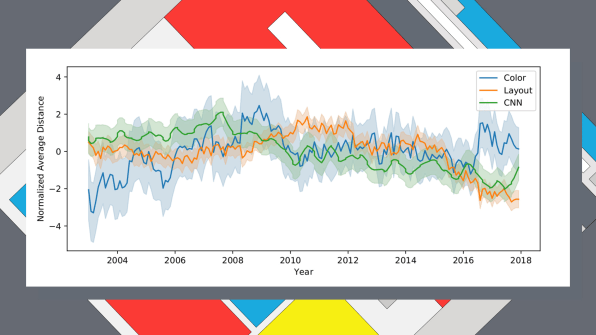
Start Up No.1668: Facebook knew of political ad risk, adtech’s new watchers, phones leaked GPS after opt-out, SpaceX’s leaky toilet, and more


Now for the bad news: some carbon offset projects don’t offset carbon at all, because they go into projects that would be built anyway. CC-licensed photo by Land Rover Our Planet on Flickr.

A selection of 10 links for you. Recharged. I’m @charlesarthur on Twitter. Observations and links welcome.


Facebook knew ads, microtargeting could be exploited by politicians. It accepted the risk • The Washington Post

Cristiano Lima:

»

Facebook has long resisted calls to scrap political advertising on the platform and limit targeted messaging amid fears the tools might be used to sow discord. The company defends those policies as a way to safeguard free expression and online organizing efforts.

But internally, staffers acknowledged the cost of the services is that politicians will likely exploit them to spread misinformation and target vulnerable users, according to documents reviewed by The Technology 202 as part of the Facebook Papers investigation. 

“We will definitely see misinfo from political parties and candidates that we will not fact-check, which will hurt public trust,” read a slide deck from early 2020 assessing product risks, including misinformation in ads. “We also expect custom audiences for political and social issue ads to be used to narrowcast misinfo to vulnerable communities.” 

The documents, disclosed to the U.S. Securities and Exchange Commission by Facebook whistleblower Frances Haugen and provided to Congress in redacted form by Haugen’s legal counsel, were reviewed by a consortium of news organizations, including The Washington Post. Together they provide an unparalleled look into how the tech giant weighs trade-offs between safety and profit.

…Internal documents show Facebook staffers determined its hands-off approach to political ads and to targeting ads and other political content to users posed significant risks. 

A Feb. 25, 2020, slide deck titled “US 2020 Product Risk Assessment — Update” rated the “residual risk” posed by misinformation in Facebook ads as “high,” even if the company managed to “execute perfectly” the interventions it was weighing to mitigate the threat, such as increasing fact-checking by its third-party partners.

«

Notable that Zuckerberg looked most uncomfortable in front of Congress in October 2019 when Alexandria Ocasio-Cortez grilled him about lying in political ads.

This is where the danger of Facebook’s approach is biggest. This is how it undermines democracy.
unique link to this extract


Facebook’s next billion-dollar idea? Clothing in the metaverse • Protocol

Hirsh Chitkara:

»

Facebook has gone through the wringer in recent weeks. Luckily Mark Zuckerberg sees a billion-dollar opportunity at the end of the tunnel: digital clothes in the metaverse.

Zuckerberg said in the Q3 2021 earnings call Monday: “If you’re in the metaverse every day, then you’ll need digital clothes, digital tools, and different experiences. Our goal is to help the metaverse reach a billion people and hundreds of billions of dollars of digital commerce this decade.”

He also referred to the metaverse as the “holy grail of online social experiences” and said it’s something he’s “wanted to build since even before I started Facebook.”

The idea of making billions of dollars from virtual outfits isn’t without precedent. Epic Games, for instance, has generated more than $9bn in annual revenue from Fortnite, a free-to-play game that makes money in part by selling character “skins” to players for virtual tokens. Roblox employs a similar business model and generated $454m in revenue for Q2 2021, up 127% year-over-year.

But both Fortnite and Roblox target younger audiences who have already become accustomed to the idea of paying money (often from their parents) for virtual outfits. Facebook wants to target a much larger segment of the population. Zuckerberg referred to the metaverse in the earnings call as “the next computing platform.” He said it could help Facebook reduce its “dependence on delivering our services through competitors,” which suggests it would be more akin to a mobile operating system than a video game.

«

Second Life, for the second time. Though with tech, it’s always about timing.
unique link to this extract


For more:

• Why do social networks drive us a little mad?
• Why does angry content seem to dominate what we see?
• How much of a role do algorithms play in affecting what we see and do online?
• What can we do about it?
• Did Facebook have any inkling of what was coming in Myanmar in 2016?

Buy Social Warming, my latest book, and find answers – and more.


Do carbon offsets offset carbon? • Cesifo Network

Raphael Calel, Jonathan Colmer, Antoince Dechezleprêtre and Matthieu Glachant:

»

We develop and implement a new method for identifying wasted subsidies, and use it to provide systematic evidence on the misallocation of carbon offsets in the Clean Development Mechanism—the world’s largest carbon offset program.

Using newly constructed data on the locations and characteristics of 1,350 wind farms in India—a context where it was believed, ex ante, that the Clean Development Mechanism could significantly increase development above baseline projections—we estimate that at least 52% of approved carbon offsets were allocated to projects that would very likely have been built anyway.

In addition to wasting scarce resources, we estimate that the sale of these offsets to regulated polluters has substantially increased global carbon dioxide emissions.

«

*buries head in hands* The paper does introduce the neat idea of BLIMPs – Blatantly Infra-marginal Projects. They’re projects which are no more profitable than others, but get subsidies they don’t actually need. The problem comes when “offsets” are applied to BLIMPs, ie projects that were going to get built anyway.

Without effective offsets, though, a lot of “net zero” plans crumble to nothing. Because offsets are the “net” in “net zero”.
unique link to this extract


We’re ready to rip out the beating heart of the disinformation economy • Check My Ads Institute

Nandini Jammi and Claire Atkin:

»

It’s almost Halloween, so here’s a spooky riddle: What’s scarier than Facebook fueling a global disinformation crisis? Answer: The hundreds of obscure adtech companies hanging out behind the scenes piping billions of dollars to everyone with a computer and a conspiracy theory.

All eyes are on Facebook this week, but let’s put a pin in that as we discuss the other half of the horror story. While Facebook pushes users towards the most inflammatory content on the web, there’s an entire ecosystem of advertising platforms you’ve likely never heard of that converts all that traffic into a virtually unlimited supply of ad dollars.

We call it the disinformation economy, and it looks roughly like this:


A Lumascape of the disinformation economy

Q: But Claire and Nandini, this is a boring and unintelligible map of the adtech landscape. Did you maybe download the wrong image?

Nope. We’re saying that this right here — the advertising supply chain — is the ATM of the disinformation economy. And it’s a world that is just as sinister as Facebook, if not more.

…This industry directly finances the spiraling production of misleading and inflammatory online content across the open web, funnelling anywhere between $250m to $2.6bn to disinformation efforts every year.

In other words, they print money for the bad guys.

«

Notice how hard it is to be precise about how much money goes to the bad guys: adtech is fiendishly hard to follow. But this matters.
unique link to this extract


Location data firm got GPS data from apps even when people opted out • Motherboard

Joseph Cox:

»

Huq, an established data vendor that obtains granular location information from ordinary apps installed on people’s phones and then sells that data, has been receiving GPS coordinates even when people explicitly opted-out of such collection inside individual Android apps, researchers and Motherboard have found.

The news highlights a stark problem for smartphone users: that they can’t actually be sure if some apps are respecting their explicit preferences around data sharing. The data transfer also presents an issue for the location data companies themselves. Many claim to be collecting data with consent, and by extension, in line with privacy regulations. But Huq was seemingly not aware of the issue when contacted by Motherboard for comment, showing that location data firms harvesting and selling his data may not even know whether they are actually getting this data with consent or not.

…In recent years, both Apple and Google have given users more control over which permissions they give to specific apps. In the case of Huq, the Android-level permissions to allow or block Huq-affiliated apps access to GPS data are working as expected, but settings within the apps include options for opting-out of that location data then being shared with others. These app-level data sharing opt-outs are being ignored, according to the AppCensus’ and Motherboard’s tests.

Huq is based in the UK and claims to collect and process over one billion mobility events every day, and says it sources that data from 161 different countries, according to the company’s website. Like many other firms in the location industry, Huq sells access to or products based upon that harvested location data to a range of different sectors, including local governments, financial investors, retail, and real-estate, its website adds. An article from the Financial Times published earlier this month about UK drivers flocking to petrol stations used data from Huq.

Huq obtains this data by paying app developers to include its software development kit (SDK) in apps, a bundle of code that transfers location data to Huq. Huq sources data from both iOS and Android devices.

«

Frameworks and SDKs are a terrible source of infiltration. It’s where the web is at its least trustworthy.
unique link to this extract


Police arrest 150 suspects after closure of dark web’s largest illegal marketplace • The Verge

James Vincent:

»

A 10-month investigation following the closure of the dark web’s largest illegal marketplace, DarkMarket, has resulted in the arrest of 150 suspected drug vendors and buyers.

DarkMarket was taken offline earlier this year as part of an international operation. The site boasted some 500,000 users and facilitated around 320,000 transactions, reports the EU’s law enforcement agency, Europol, with clientele buying and selling everything from malware and stolen credit card information, to weapons and drugs. When German authorities arrested the site’s alleged operator in January this year, they also seized valuable evidence of transactions which led to this week’s arrest of key players.

According to the US Department of Justice and Europol, Operation Dark HunTor saw law enforcement make numerous arrests in the United States (65), Germany (47), the United Kingdom (24), Italy (4), the Netherlands (4), France, (3), Switzerland (2), and Bulgaria (1). More than $31.6m in cash and cryptocurrencies were seized during the arrests, as well 45 firearms and roughly 234kg of drugs including cocaine, opioids, amphetamine, MDMA, and fentanyl. According to the DoJ: “A number of investigations are still ongoing.”

As part of the operation, Italian authorities also shut down two other dark web marketplaces — DeepSea and Berlusconi — arresting four alleged administrators and seizing €3.6m ($4.17m) in cryptocurrency.

«

unique link to this extract


Photoshop’s journey to the web • web.dev

Thomas Nattestad and Nabeel Al-Shamma:

»

Adobe previously brought Spark and Lightroom to the web and had been interested in bringing Photoshop to the web for many years. However, they were blocked by the performance limitations of JavaScript, the absence of a good compile target for their code, and the lack of web capabilities. Read on to learn what Chrome built in the browser to solve these problems.

WebAssembly and its C++ toolchain Emscripten have been the key to unlocking Photoshop’s ability to come to the web, as it meant that Adobe would not have to start from scratch, but could leverage their existing Photoshop codebase. WebAssembly is a portable binary instruction set shipping in all browsers that was designed as a compilation target for programming languages. This means that applications such as Photoshop that are written in C++ can be ported directly to the web without requiring a rewrite in JavaScript. To get started porting yourself, check out the full Emscripten documentation, or follow this guided example of how to port a library.

Emscripten is a fully-featured toolchain that not only helps you compile your C++ to Wasm, but provides a translation layer that turns POSIX API calls into web API calls and even converts OpenGL into WebGL. For example, you can port applications that reference the local filesystem and Emscripten will provide an emulated file system to maintain functionality.

«

It quickly gets complicated, as you see, but the TL;DR is that Google, through Chrome, has worked very hard to make it possible to run Photoshop on Chrome. Only Chrome (and clones) so far, and probably for a while; would Apple have much interest in not having Photoshop as an installable app on the Mac? Google, meanwhile, would love Photoshop to run on Chromebooks.
unique link to this extract


SpaceX’s latest engineering challenge: a leaky toilet • The New York Times

Joey Roulette:

»

[SpaceX’s] Crew Dragon has more interior space than a minivan, but less than a studio apartment, and there is no proper bathroom. Instead, it has a device on its ceiling that astronauts use to relieve themselves — remember, there’s no up or down in microgravity. The device creates suction using an internal fan, crucial to ensuring human waste goes in the right direction in the weightlessness of space. Some officials vaguely said the toilet problem involved the fan, prompting even more questions.

A closely held secret no more.

A tube that funnels urine into a tank broke loose during the Inspiration4 mission and leaked into the fan, which sprayed the urine in an enclosed area beneath Crew Dragon’s floor, Bill Gerstenmaier, a SpaceX official who once oversaw human spaceflight for NASA, told reporters on Monday night. He said the four passengers didn’t notice anything was wrong during the mission.

“We didn’t really even notice it, the crew didn’t even notice it, until we got back,” Mr. Gerstenmaier said. “When we got the vehicle back, we looked under the floor and saw the fact that there was contamination underneath the floor of Inspiration4.”

SpaceX completed a fix for the toilet aboard the capsule being used for Sunday’s launch. The redesign means there are no tubes that could come “unglued” as they did during the Inspiration4 flight, Mr. Gerstenmaier said. NASA is expected to sign off on the new design on Friday.
But the toilet predicaments haven’t stopped there. Another Crew Dragon capsule that docked to the space station in April with four astronauts aboard has the same plumbing system as the Inspiration4 capsule. SpaceX engineers feared the same “contamination” might have occurred on that spacecraft.

The engineers’ suspicions were correct.

NASA astronauts living on the station snaked a borescope device — a cable with a tiny camera at the end — underneath the capsule’s floor and discovered traces of urine in places it shouldn’t be, Mr. Gerstenmaier said.

«

Grim. But also the sort of thing that will kill you on a longer journey – say, to Mars. Or even the Moon. The followup to hubris can be pretty horrible.
unique link to this extract


Possible leak of private keys · Issue #103 · ehn-dcc-development/hcert-spec • GitHub

Emanuel Elaface:

»

On various groups (Telegram mainly) are circulating several forged Green Pass with valid signature, I attach two here.

— image redacted – available from the security team —

— image redacted – available from the security team —

I verified with my application and found that these two certificates are signed with the keys corresponding to these two public keys…

…There is the possibility that a database of private keys is compromised and this may ends up in a break of the chain of trust in the Green Pass architecture. I am not sure to who this should be reported, so I write this here.

«

These would be the private keys required to create Covid passports valid Europe-wide. Looks like that’s stuffed then.
unique link to this extract


Why it could be a good idea to ditch your running watch • CNN

Lauren Kent:

»

recent studies show that obsessively tracking fitness metrics can lead to negative mindsets and outcomes.

“There is certainly evidence out there that people are becoming obsessed by it – people who used to have an interest in their sport and got enjoyment out of the sport, but now that’s switching to the data,” said Eoin Whelan, a senior lecturer in business information systems at the National University of Ireland. His research explores the psychology behind engagement with social media and fitness tracking apps.

“People are getting more enjoyment out of gathering the data and analyzing that and sharing it with other people,” Whelan told CNN, adding that there is a big element of social comparison for those who use fitness tracking apps. “People will compare themselves to people who are better than them, who are running faster or running longer. And ultimately we know that makes them feel bad.”

Whelan also noted that people who are very reliant on smartwatches, fitness trackers or fitness apps are more likely to skip their workout if the batteries on their tracking device are dead.

“It’s like we can’t interpret our own body signals. We are becoming very dependent on the technology to actually do that for us,” Whelan said. “Some of the athletes that I coach, you can ask them a simple question like ‘how did you sleep last night?’ and they can’t answer unless they look at the data.”

It’s not all negative, though. Whelan’s research also shows there are many upsides to using fitness trackers. In fact, some runners gain motivation by comparing themselves to others, or they build online communities that help them reach their goals. So ditching the data might not be best for everyone.

«

We’re compelled to rank ourselves in things that matter to us; this is just another example. And, numbers!
unique link to this extract


Errata, corrigenda and ai no corrida: none notified
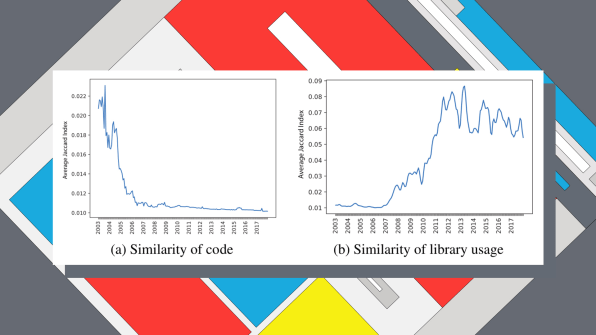
You can sign up to receive each day’s Start Up post by email. You’ll need to click a confirmation link, so no spam.

Start Up No.1667: much more from the Facebook Papers, Iran suffers fuel cyberattack, a real giant iPod, Cobol’s problem, and more


Expect to see a lot of Tesla Model 3s on offer if you’re hiring a car from Hertz in the future – it just ordered 100,000 of them, more than a tenth of its existing fleet. CC-licensed photo by Raymond Wambsgans on Flickr.

You can sign up to receive each day’s Start Up post by email. You’ll need to click a confirmation link, so no spam.

A selection of 12 links for you. Never cleaner. I’m @charlesarthur on Twitter. Observations and links welcome.


How Facebook failed the world • The Atlantic

Ellen Cushing:

»

Reading these documents [the Facebook Papers/Files] is a little like going to the eye doctor and seeing the world suddenly sharpen into focus. In the United States, Facebook has facilitated the spread of misinformation, hate speech, and political polarization. It has algorithmically surfaced false information about conspiracy theories and vaccines, and was instrumental in the ability of an extremist mob to attempt a violent coup at the Capitol. That much is now painfully familiar.

But these documents show that the Facebook we have in the United States is actually the platform at its best. It’s the version made by people who speak our language and understand our customs, who take our civic problems seriously because those problems are theirs too. It’s the version that exists on a free internet, under a relatively stable government, in a wealthy democracy. It’s also the version to which Facebook dedicates the most moderation resources. Elsewhere, the documents show, things are different. In the most vulnerable parts of the world—places with limited internet access, where smaller user numbers mean bad actors have undue influence—the trade-offs and mistakes that Facebook makes can have deadly consequences.

According to the documents, Facebook is aware that its products are being used to facilitate hate speech in the Middle East, violent cartels in Mexico, ethnic cleansing in Ethiopia, extremist anti-Muslim rhetoric in India, and sex trafficking in Dubai. It is also aware that its efforts to combat these things are insufficient. A March 2021 report notes, “We frequently observe highly coordinated, intentional activity … by problematic actors” that is “particularly prevalent—and problematic—in At-Risk Countries and Contexts”; the report later acknowledges, “Current mitigation strategies are not enough.”

In some cases, employees have successfully taken steps to address these problems, but in many others, the company response has been slow and incomplete. As recently as late 2020, an internal Facebook report found that only 6% of Arabic-language hate content on Instagram was detected by Facebook’s systems. Another report that circulated last winter found that, of material posted in Afghanistan that was classified as hate speech within a 30-day range, only 0.23% was taken down automatically by Facebook’s tools. In both instances, employees blamed company leadership for insufficient investment.

«

Insufficient investment by a company that posted $9bn in profits in its latest quarter. And Cushing’s point, that the version Americans get is the very best version – the most attuned to their customs, their mores, their ethos – is all the more terrifying when you mull it over.

Other versions of this story: Politico; NY Times on India; WSJ on India.

By the way, the Guardian is now included in the Facebook Papers sharing group. Apparently American publications didn’t like the idea of it being involved at the start; the exclusion wasn’t Haugen’s idea.
unique link to this extract


Facebook prioritized ‘angry’ emoji reaction posts in news feeds • The Washington Post

Jeremy Merrill and Will Oremus:

»

Five years ago, Facebook gave its users five new ways to react to a post in their news feed beyond the iconic “like” thumbs-up: “love,” “haha,” “wow,” “sad” and “angry.”

Behind the scenes, Facebook programmed the algorithm that decides what people see in their news feeds to use the reaction emoji as signals to push more emotional and provocative content — including content likely to make them angry. Starting in 2017, Facebook’s ranking algorithm treated emoji reactions as five times more valuable than “likes,” internal documents reveal. The theory was simple: Posts that prompted lots of reaction emoji tended to keep users more engaged, and keeping users engaged was the key to Facebook’s business.

Facebook’s own researchers were quick to suspect a critical flaw. Favoring “controversial” posts — including those that make users angry — could open “the door to more spam/abuse/clickbait inadvertently,” a staffer, whose name was redacted, wrote in one of the internal documents. A colleague responded, “It’s possible.”

The warning proved prescient. The company’s data scientists confirmed in 2019 that posts that sparked angry reaction emoji were disproportionately likely to include misinformation, toxicity and low-quality news.

«

Not widely known: Facebook introduced the change because of users in Myanmar, who only had the option to “Like”, which they dutifully did (they thought it meant the same as “I’ve read this”) on everything – especially hate speech. (As I document in Social Warming.)

Facebook also couldn’t read what they were writing in posts because the Zawgyi font they used isn’t Unicode and doesn’t translate. So it needed icons – emoji – to see what they were saying. And then things got worse.
unique link to this extract


Will the SEC add to Facebook’s woes? • The New York Times

Cecilia Kang:

»

Whistle-blowers have filed at least nine complaints to the agency, which has oversight of public companies like Facebook, using a selection of the internal documents to argue that Facebook misled investors with a rosier picture of the company than they knew to be true. The Securities and Exchange Commission (SEC) can impose big fines for misleading investors and impose restrictions on corporate leaders.

A case from securities regulators is probably far from a slam dunk, several legal experts said. The accusations in the complaints don’t appear to be quite as clear-cut as many other accounting and fraud cases taken up by the agency, they said.

The S.E.C. declined to say whether it had opened an investigation. Even such a move could be problematic for Facebook, leading to depositions of top executives and forcing the company to share private communications and other business documents.

But to win a lawsuit accusing the company of misleading investors, regulators would have to prove that executives had intended to hide or lie about problems. Regulators would also have to prove that the information revealed by Ms. Haugen, or turned up in an investigation, could have changed trading or voting decisions by shareholders if it had been shared.

It would be even more difficult to hold top executives personally responsible. Regulators would have to demonstrate that Mr. Zuckerberg or other executives had explicit knowledge that Facebook was hiding or lying about information that could sway investors.

“The argument that Facebook prioritized profits isn’t convincing, because that’s what companies do,” said Howard Fischer, a former trial lawyer for the S.E.C. “There will very likely be an investigation because it’s so high profile, but it’s hard to see a clear case.”

«

It’s unlikely unless they get someone on tape saying they’re planning to con investors, basically. The SEC would be cautious of overreach.
unique link to this extract


Facebook removed the News Feed algorithm in an experiment. Then it gave up • Big Technology

Alex Kantrowitz:

»

Everyone seems to hate Facebook’s News Feed algorithm. Critics want to do away with it, and Congress may strip Facebook’s legal protections for the content it amplifies. Yet only now, after years of speculation, do we have an idea of what Facebook would look like without it. 

In February 2018, a Facebook researcher all but shut off the News Feed ranking algorithm for .05% of Facebook users. “What happens if we delete ranked News Feed?” they asked in an internal report summing up the experiment. Their findings: without a News Feed algorithm, engagement on Facebook drops significantly, people hide 50% more posts, content from Facebook Groups rises to the top, and — surprisingly — Facebook makes even more money from users scrolling through the News Feed.

…Turning off the News Feed ranking algorithm, the researcher found, led to a worse experience almost across the board. People spent more time scrolling through the News Feed searching for interesting stuff, and saw more advertisements as they went (hence the revenue spike). They hid 50% more posts, indicating they weren’t thrilled with what they were seeing. They saw more Groups content, because Groups is one of the few places on Facebook that remains vibrant. And they saw double the amount of posts from public pages they don’t follow, often because friends commented on those pages. “We reduce the distribution of these posts massively as they seem to be a constant quality compliant,” the researcher said of the public pages.

The experiment was still in progress at the time of the report, but the researcher indicated that things were going poorly. “Things are trending down,” they said in an internal forum, adding a chart showing declining user sessions. Even though the researcher kept the “integrity pass” in place, or the first layer of the algorithm that sorts for integrity ahead of engagement, they said that “integrity bad metrics still shot through the roof.”

«

Counterintuitive. But worth knowing.
unique link to this extract


Given everything that’s going on with the Facebook papers, maybe now is the time to buy Social Warming, my latest book, about the toxic effects of social networks.


A prototype original iPod • Panic Blog

Cabel Sasser:

»

there was lots of portable MP3 playing competition (like the titular Nomad in “less space than a Nomad“), but the iPod was one of the first times Apple showed up and did what we now think of as their standard move — they made The Apple Version®. It was personal, well-designed, innovative, meaningful, the sum of which was more than specs and checklists. We (I? The industry?) needed that. I have fond memories of Dave (who now works on Playdate) reverse-engineering the iPod database storage format so that you could use Audion to load songs onto it. I remember how plain fun it was to use — that click wheel, the original fidget toy! It was cool that I could use it as a tiny portable hard drive. The iPod was really good.

To celebrate, I want to show you something you’ve never seen before.

Now, there are a lot of mysteries in the Panic Archives (it’s a closet) but by far one of the most mysterious is what you’re seeing for the first time today: an original early iPod prototype.

We don’t know much about where it came from. But we’ve been waiting 20 years to share it with you.

…Clearly, this revision of the prototype was very close to the internals of the finished iPod. In fact, the date there — September 3rd, 2001 — tells us this one was made barely two months before it was introduced.

«

It’s absolutely HUGE – about nine times the size of the actual first iPod, and at least twice the depth – and a real horrible banana yellow. Verified as real by Tony Fadell, who came to Apple with the iPod idea.
unique link to this extract


Why you should read “Read Max” by Max Read • Substack

The aforementioned Max Read:

»

A few weeks ago, Adam Mosseri, the head of Instagram, told Recode’s Peter Kafka “We know that more people die than would otherwise because of car accidents, but by and large, cars create way more value in the world than they destroyed. And I think social media is similar.” Instagram and its parent company, Facebook, had been the subjects of a series of scathing Wall Street Journal articles, the most striking of which demonstrated that — as the Journal’s headline put it — “Facebook Knows Instagram Is Toxic for Teen Girls,” and Mosseri was attempting to explain that while, yes, Instagram might “destroy value” (“value” understood here to be, I guess, the emotional well-being of young women?) ultimately, its cosmic balance-sheet is in the black, presumably because those young women will buy things from advertisers to make themselves feel better.

This was a classically Facebook self-defense, by which I mean it was (1) glib, (2) disingenuous, and (3) utterly unconvincing. For starters, you need a fucking license to drive a car, and Mosseri’s comparison leads pretty easily to the conclusion that, for Facebook’s value proposition to make any sense, anyone who wants to have a Facebook account should be required to take a timed written test, and then a quick spin around a mocked-up licensing version of the site with a government proctor watching over their shoulder, to ensure that they weren’t a danger to themselves or others. 

On the podcast, Kafka pointed out that the auto industry is heavily regulated, and Mosseri said that Facebook would welcome regulation, which, as a well-resourced incumbent, it no doubt would, at least on the provider side. (Poster licenses didn’t come up, as far as I could tell.) But even within their relatively onerous regulatory framework, cars have a staggering death toll: they kill more than a million people a year directly, and countless more through their contributions to carbon emissions and good old-fashioned particulate pollution. This is still not really kind of technology that I think I would seek to compare my product to, though I recognize that for Facebook “cars” represents an upgrade from “cigarettes” or “heroin.”

«

Now people are starting to get properly angry about this.
unique link to this extract


The climate denial is coming from inside Facebook’s house • Gizmodo

Brian Kahn:

»

In the midst of the hottest October in human history, a question popped up on an internal Facebook message board. “Policy for Misinformation – Climate Change Denial?”

The question sparked a discussion, including with an employee arguing that Facebook allowing climate denial posts to run unchecked on the platform made sense because the science around a specific type of ulcer once shifted.

The post, available here, is part of a tranche of documents released by whistleblower Francis Haugen’s legal team that Gizmodo and other outlets have received access to. (You can see what we’ve turned up so far.) The names of “low-level” Facebook employees are redacted, so it’s unclear who specifically engaged in the debate over climate change denial content. But the chats are illuminating in just how hands-off Facebook has been with climate denial, and how even within a company committed to net zero emissions by 2030, a laissez-faire attitude about perpetuating denial still reigns in some corners.

The internal logs are from 2019, a year before Facebook opened its climate science information center page for business.

«

As Gizmodo points out, climate change has real effects. But there are still people in Facebook – who posted in response to the question – prepared to say “welllll, scientific consensus has changed in the past, you know.” And then, of course, allow it even though it’s misinformation.
unique link to this extract


Iran says cyberattack causes widespread disruption at gas stations • Reuters

»

A cyberattack disrupted the sale of heavily subsidised gasoline in Iran on Tuesday, state media reported, causing long queues at gas stations across the country weeks before the anniversary of 2019 street protests that followed fuel price hikes.

Iran says it is on high alert for online assaults, which it has blamed in the past on its arch-foes United States and Israel. The United States and other Western powers meanwhile have accused Iran of trying to disrupt and break into their networks.

“The disruption at the refuelling system of gas stations … in the past few hours, was caused by a cyberattack,” state broadcaster IRIB said. “Technical experts are fixing the problem and soon the refuelling process…will return to normal.”

The oil ministry said only sales with smart cards used for cheaper rationed gasoline were disrupted and clients could still buy fuel at higher rates, the ministry’s news agency SHANA reported.

“This attack was probably carried out by a foreign country. It is too early to announce by which country and in which way it was done,” Abolhassan Firouzabadi, secretary of Iran’s Supreme Council of Cyberspace, told state TV.

«

Very unclear though whether this really is foreign hackers, or dissidents inside Iran. It would be a strange thing for a foreign state to do.
unique link to this extract


New York Times journalist Ben Hubbard hacked with NSO’s Pegasus after reporting on previous hacking attempts • The Citizen Lab

Bill Marczak, John Scott-Railton, Siena Anstis, Bahr Abdul Razzak, and Ron Deibert:

»

New York Times journalist Ben Hubbard was repeatedly targeted with NSO Group’s Pegasus spyware over a three-year period from June 2018 to June 2021. The targeting took place while he was reporting on Saudi Arabia, and writing a book about Saudi Crown Prince Mohammed bin Salman.

The targeting resulted in Pegasus infections in July 2020 and June 2021. Notably, these infections occurred after Hubbard complained to NSO Group that he was targeted by the Saudi-linked KINGDOM Pegasus operator in June 2018.

While we attribute the 2020 and 2021 infections to NSO Group’s Pegasus spyware with high confidence, we are not conclusively attributing this activity to a specific NSO Group customer at this time. However, we believe that the operator responsible for the 2021 hack is also responsible for the hacking of a Saudi activist in 2021.

Some forensic artifacts that we connect to NSO Group are present on Hubbard’s device as early as April 2018, although we are unable to confirm whether this represents a genuine infection attempt or a feasibility test.

A phone number belonging to Hubbard also reportedly appeared on the Pegasus Project list in July 2019. Unfortunately, forensic evidence is not available for this timeframe.

«

Unlike the Iran hack, it’s staringly obvious who was behind this one, and why. It’s remarkable how despite having no official diplomatic relations, there’s technology exchange (mostly one-way: from Israel to Saudi Arabia) against a common enemy, Iran.

And, of course, New York Times journalists.
unique link to this extract


Hertz orders 100,000 Tesla Model 3 Cars for rental fleet; Tesla stock surges • Bloomberg

Erik Schatzker:

»

Hertz Global Holdings Inc., barely four months out of bankruptcy, placed an order for 100,000 Teslas in the first step of an ambitious plan to electrify its rental-car fleet. Tesla’s shares soared, pushing the automaker’s value past $1 trillion for the first time.

The cars will be delivered over the next 14 months, and Tesla’s Model 3 sedans will be available to rent at Hertz locations in major U.S. markets and parts of Europe starting in early November, the rental company said in a statement. Customers will have access to Tesla’s network of superchargers, and Hertz is also building its own charging infrastructure.

It’s the single-largest purchase ever for electric vehicles, or EVs, and represents about $4.2bn of revenue for Tesla, according to people familiar with the matter who declined to be identified because the information is private. While car-rental companies typically demand big discounts from automakers, the size of the order implies that Hertz is paying close to list prices. 

“How do we democratize access to electric vehicles? That’s a very important part of our strategy,” Mark Fields, who joined Hertz as interim chief executive officer earlier this month, said in an interview. “Tesla is the only manufacturer that can produce EVs at scale.”

«

18 months ago it was considering selling big chunks of its rental fleet of 730,000 vehicles. Which also shows you how significant this purchase is: that’s a big slice of the whole fleet. That comment about Tesla being the only EV maker at scale is significant too. Everyone else is miles (or kilometres) behind.
unique link to this extract


COBOLing together UI benefits: how delays in fiscal stabilizers impact aggregate consumption • SSRN

Michael Navarrete is from the department of Economics at the University of Maryland:

»

The United States experienced an unprecedented increase in unemployment insurance (UI) claims starting in March 2020, mainly due to layoffs caused by COVID-19. State unemployment insurance systems were inadequately prepared to process these claims. Those states using an antiquated programming language, COBOL, to process UI claims experienced longer delays in benefit disbursement.

Using daily card consumption data from Affinity Solutions, I employ a two-way fixed effects estimator to measure the causal impact of COBOL-induced delays in UI benefits on aggregate consumption.

In this paper, I show that while aggregate consumption (as measured by credit and debit card purchases of consumption goods) fell precipitously in all states at the start of the pandemic and remained below pre-pandemic levels for months, this drop in consumption was significantly larger in states that run their UI benefit systems using COBOL.

I estimate that average consumption in COBOL-states fell 4.4 percentage points more than non-COBOL states between mid-March and mid-September of 2020. Using this estimate, I calculate that the failure to invest in updating UI benefit systems in COBOL states caused U.S. real GDP to fall by an extra $181bn (in 2012 dollars) during this time period.

«

If that’s the cost to the states of using Cobol, imagine what it’s costing banks.
unique link to this extract


Tesco opens first “just walk out” store to take on Amazon • Retail Gazette

Sahar Nazir:

»

Tesco has opened its first “just walk out” store, giving customers the chance to buy groceries without having to scan items or visit a till.

The supermarket’s GetGo store has opened in Holborn, central London, and follows a small trial of a similar store at Tesco head office in Welwyn Garden City.

Weight sensors in the shelves work with an AI system that can track an individual’s movement around the store and monitor the items they pick up via cameras, which follow each shopper.

The AI system works by building a unique skeleton outline of each person rather than using facial recognition.

Shoppers must download the Tesco.com app to use the store, where they check in by scanning a QR code generated on their phone.

Once inside, shoppers can pick up the items they want without scanning them. The bill is automatically charged to a shopper’s Tesco account when they leave. Cigarettes and alcohol are sold in a separate zone where a member of staff, about a dozen of whom are on duty on any day, is present to check that shoppers meet age restrictions.

«

So Tesco gets just as much information as Amazon – who, what, when, where (well, only one “where” presently). The idea of the “skeleton outline” isn’t one I’d heard before.
unique link to this extract


Errata, corrigenda and ai no corrida: An error in yesterday’s edition: Frances Haugen was impressed by Jeff – not Ben – Horwitz of the WSJ.

Start Up No.1666: Facebook in the spotlight again, making wood sharper than steel, Google ad antitrust case, GHGs hit record, and more


A new process can make wooden knives that are harder and sharper than steel – and even go in the dishwasher. CC-licensed photo by Michael Randall on Flickr.

You can sign up to receive each day’s Start Up post by email. You’ll need to click a confirmation link, so no spam.

A selection of 10 links for you. The number of the kilobeast. I’m @charlesarthur on Twitter. Observations and links welcome.


The mailbox and the megaphone • ROUGH TYPE

Nick Carr:

»

Now that it’s broadly understood that Facebook is a social disease, what’s to be done? In “How to Fix Social Media”, an essay in the new issue of The New Atlantis, I suggest a way forward. It begins by seeing social media companies for what they are.

Companies like Facebook, Google, and Twitter are engaged in two very different communication businesses. They transmit personal messages between individuals, and they broadcast information to the masses. They’re mailbox, and they’re megaphone. The mailbox business is a common carriage business; the megaphone business is business with a public calling. Disentangling the two businesses opens the way for a two-pronged regulatory approach built on well-established historical precedents.

«

The essay is pretty long (though not paywalled); yet the two paragraphs above give a very clear picture of the problem and the possible solution(s), in Carr’s eyes.
unique link to this extract


We were the unpaid janitors of a bloated tech monopoly • Garbage Day

Ex-Buzzfeed writer Ryan Broderick:

»

In the beginning of my time abroad [from 2015-2019], there was always the feeling that the internet was doing something to the way democracies functioned, but it was unclear how. Mainstream American news outlets were convinced that 4chan had suddenly invented racism, but 4chan’s estimated daily traffic in 2018 was around 20 million pageviews — big, but not huge. And, plus, it’s almost exclusively in English.

So I started documenting 4chan-like sites in other countries, like South Korea’s incel hub Ilbe Storehouse, Spain’s radicalized car forum Forocoches, France’s Gamergate-esque jeuxvidéo.com (videgames.com), or Brazil’s school shooter fan site Dogolachan. But, again, these sites were small and there was very little proof that they were accomplishing the “meme magic” that they claimed they were.

So, then, for a while, there was the hunch that maybe these sites were working in conjunction with other platforms. I spent months hiding out in far-right Discord servers, watching users in French and German network with English-speaking extremists. My Discord handle was in so many extremist servers that during a platform-wide purge around 2019, my account was banned and I had to email Discord and explain that I wasn’t a neo-Nazi, just a reporter who was hiding out in all those rooms. They brought my account back online, which was nice.

I investigated troll farms, astroturfing campaigns, WhatsApp misinformation, Telegram groups, bad YouTubers, toxic fandoms, and conspiracy theories like PizzaGate and QAnon and antivaxxers. Every single time, regardless of the country, regardless of the conflict, when faced with hard numbers on traffic and user engagement, there was pretty much only one thing large enough online to actually mobilize people: Facebook.

Around 2016, it became increasingly hard to deny that the platform was acting as a vacuum for the darkest, most wildly out of control content on the internet, which it was then spitting back out to billions of users.

«

Five years later…
unique link to this extract


How Frances Haugen became a power player in the Facebook Leaks • The New York Times

Ben Smith:

»

there was an uncomfortable moment on October 7, when a communications firm working with Ms. Haugen invited [Ben] Horwitz [the WSJ journalist to whom she originally leaked content] and two of his editors to a Zoom call with a group that would grow to include journalists from 17 other US media outlets.

On the call, Ms. Haugen offered to share redacted versions of the trove of Facebook documents under an embargo to be set by the group. The firm, which was founded by the former Barack Obama aide Bill Burton, would help manage the process. After she made her pitch, Mr. Horwitz and his colleagues found themselves in a strange position: The source who had provided them with the stuff of so many exclusive scoops now seemed to be going rogue.

“This is a little awkward,” Jason Dean, an editor at The Journal, said on the call, according to three participants.

The Journal team left before the call was over. Since then, journalists at The Atlantic, The Associated Press, CNN, NBC News, Fox Business and other outlets including The New York Times have been poring over the first tranche of Ms. Haugen’s documents, along with a parallel group in Europe, with a plan to publish their findings on Monday (though stories began trickling out Friday night).

We live in a time of mega-leaks, enabled by the same digital technology that allows us to surveil one another and document our lives as never before. These leaks have given the leakers and their brokers a new kind of power over the news media, raising tricky questions about how their revelations should enter the public sphere. There are questions, in particular, on the balance of power between the sources of vital information and the reporters who benefit from them.

«

Not only me who found it odd that The Guardian was excluded while tech middleground site The Verge was included. Haugen hasn’t explained how participants were chosen, as far as I can see.
unique link to this extract


Here are all the Facebook Papers stories • Protocol

David Pierce and Anna Kramer:

»

Monday morning’s news drop was a doozy. There was story after story about the goings-on inside Facebook, thanks to thousands of leaked documents from Frances Haugen, the whistleblower who wants the information within those files to spread far and wide. Haugen was also set to speak in front of the British Parliament on Monday, continuing the story that is becoming known as The Facebook Papers.

«

They linked to them all (as of Monday) so I don’t have to; I could have filled today’s edition three or four times over with Facebook stories. There are a lot.
unique link to this extract


Could there be a book any more topical just now than
Social Warming, my book published this year about the (often unintended) effects of social networks on society?


Scientists have found a way to harden wood to make a knife that rivals steel • CBC Radio

Mark Crawley:

»

[Materials scientist Teng] Li added that the knife can be sharpened when it becomes dull, and even survive the dishwasher.

The process of making hardened wood is really quite simple, said Li. Wood gets much of its strength from cellulose, the substance that makes up the fibres of the wood.

Cellulose itself is a remarkably strong material, whose strength relative to its density is “higher than almost all the metals and alloys in the world,” said Li.

But cellulose comprises only 40% to 50% of wood. So the first step in developing a higher-density wood-based material was to reduce the components that weren’t cellulose. In particular they targeted lignin, which acts like a kind of glue in normal wood, binding fibres together.

“We use chemicals to partially remove lignin. And after the first step the wood becomes soft, flexible and somewhat squishy,” said Li.

“So the second step is that we apply pressure. We also increase the temperature. The purpose of that is to really densify the natural wood and also remove the water, reducing its thickness to around 20% of the original natural wood.”

«

Can also be used to create wooden nails, which won’t rust. Written up as a scientific paper. What’s not specified is how much extra pressure is needed.
unique link to this extract


Scandalous Google antitrust suit accuses company of market manipulation, collusion, and worse • Android Police

Will Sattelberg:

»

Thanks to some newly-unredacted filings first unsealed on Friday, we’re finally getting a good idea as to how Google runs its advertising business, including claims of collusion, manipulation, shady deals, and more.

There’s a lot to break down in these documents, ranging from claims of market manipulation to the sheer size and scope of just how large Google’s ad exchange truly is (via Patrick McGee). However, the biggest — and likely most impactful — story here is a possible case of collusion.

According to this [court] report, Google and Facebook allegedly joined together in secret on an initiative known as “Jedi Blue.” Starting in 2017, as Facebook looked to shift away from Google’s “waterfall” ad buys to an alternative method known as “header bidding,” Google requested the social network stick to its auction style, where each publisher would get a chance to buy impressions at increasingly reduced prices. In exchange, Facebook was offered specific quotas on how often it would win in those bidding auctions, complete with manipulated minimum spending.

If this all sounds pretty bad so far, you aren’t wrong — and Google knows it. As reported in these filings, the company was terrified of how header bidding would affect its own ad exchange, even as it publicly announced it wasn’t concerned. Employees also knew that, should this information ever get out to the press, it would result in overwhelmingly negative coverage. One employee reportedly proposed a “nuclear option” that would cut its exchange rates to nothing.

«

Also written up at Ad Exchanger. Mindbendingly complex for the uninitiated 🙋‍♂️.
unique link to this extract


Greenhouse gas concentrations hit new record in 2020 • Los Angeles Times

Jamey Keaten:

»

Greenhouse gas concentrations hit a new record high last year and increased at a faster rate than the annual average for the last decade despite a temporary reduction during pandemic-related lockdowns, the World Meteorological Organization reported Monday.

In its annual report on heat-trapping gases in the atmosphere, the United Nations weather agency also pointed to signs of a worrisome new development: Parts of the Amazon rainforest have gone from being a carbon “sink” that sucks carbon dioxide from the air to a source of CO2 because of deforestation and reduced humidity in the region, it said.

According to the report, concentrations of carbon dioxide, methane and nitrous oxide were all above levels in the pre-industrial era before 1750, when human activities “started disrupting Earth’s natural equilibrium.”

…”The Greenhouse Gas Bulletin contains a stark, scientific message for climate change negotiators at COP26,” World Meteorological Organization Secretary-General Petteri Taalas said of his agency’s report. “At the current rate of increase in greenhouse gas concentrations, we will see a temperature increase by the end of this century far in excess of the Paris agreement targets of 1.5 to 2 degrees Celsius [2.7 to 3.6 degrees Fahrenheit] above pre-industrial levels.

“We are way off track,” he said.

«

No surprise that GHG concentrations hit a record: there’s nothing taking them out of the atmosphere, and they last hundreds of years. This is the problem with trying to slow down warming: all we’re doing is adding to it.
unique link to this extract


From homes to cars, it’s now time to electrify everything • Yale E360

Saul Griffith:

»

The supply-side climate challenge is a question of a relatively small number of giant machines, including coal mines, LNG terminals, pipelines, refineries, and natural gas- and coal-fired power plants, all of which are owned by corporations. The demand-side climate challenge involves a very large number of relatively small machines. In the United States, it’s our 280 million cars and trucks, our 70 million fossil-fueled furnaces, 60 million fossil-fueled water heaters, 20 million gas dryers, and 50 million gas stoves, ovens, and cooktops.

…To address global warming in time to keep the Earth livable, we need to get to zero emissions as soon as possible. It should be obvious that we can’t “efficiency” our way to zero and that we need to transform our way to no emissions. Starting on the demand side, this leads to a clear conclusion: we must electrify everything. And quickly. And we must supply all those new electric machines on the demand side with cleanly generated electricity on the supply side.

…We still have a slim chance of keeping global warming under 2ºC (3.6ºF), without changing entirely the fabric of everyday living. It may not be everyone’s version of climate success, but it is possible to help avoid extreme warming with a substitution of the machines in our lives. To do so, we need to achieve a close to 100% adoption rate of the right technologies as we replace the fossil-fueled machines we use today.

Fortunately, technologies now exist for the majority of these things. Electric cars currently have sufficient range, and are close enough to cost-parity at the dealership, that we can imagine that transition. The cost per mile drops significantly, too. Air-source heat pumps have such high performance now that they beat traditional furnaces and boilers in many climates. The modern induction cooking experience is better than cooking with gas. It is not yet true in the US that rooftop solar is the cheapest energy source, but it is true in Australia, and the difference has to do with regulations.

«

The more I hear phrases like “we still have a slim chance” the more I think we don’t have a chance absent an amazing deus ex machina which we would probably like even less than the warming.
unique link to this extract


Danger: UXC – these seven perils, including exploding capacitors, can kill your power supplies • EEJournal

Steven Leibson:

»

John Dyson [is] the Business Development Manager for Advance Product Services (APS), a British company specializing in the repair, refurbishment, and replacement of old power supplies. Dyson regularly posts photos of old power supplies. Dead ones. Now you might think there’s nothing notable about old, dead power supplies, but the photos Dyson posts show badly wrecked power supplies that have died catastrophically because of component failure, neglect, and downright abuse.

The failed power supplies depicted in Dyson’s photos reminded me of the “Danger: UXB” TV series because many of the photos showed exploded and badly burned components, and there was one big, recurring theme in the photos: the failure began with an exploding capacitor. So my fevered brain immediately realized that every power supply in operation today contains multiple UXCs – unexploded capacitors. Many capacitors have little timers inside just counting down the seconds until they explode.

What particularly fascinated me about Dyson’s series of posts is that they depict failed power supplies that have given up the ghost after providing decades of reliable service. They died from old age.

Some of the power supplies in Dyson’s posts died from component failures; others died from spikes and surges that sneak through the power main’s protection circuits; some died from aged and embrittled solder joints; and others failed after dust and dirt buildup overwhelmed cooling systems or as water and pollution have eaten away circuit board traces or created conductive paths between them. There are myriad ways for old power supplies to die, it appears, and APS has spent two decades fixing these old supplies and, better for us, chronicling and photographing the failures.

«

When your device blows up or melts down (and there are some gory internal – to the machine – pictures), tick it off against these failure modes. Rather as in House it’s always (never) lupus, in power supply failure it’s always (near enough) capacitors.
unique link to this extract


Malware found in npm package with millions of weekly downloads – The Record by Recorded Future

Catalin Cimpanu:

»

A massively popular JavaScript library (npm package) was hacked and modified with malicious code that downloaded and installed a password stealer and cryptocurrency miner on systems where the compromised versions were used.

The incident was detected on Friday, October 22. It affected UAParser.js, a JavaScript library for reading information stored inside user-agent strings. According to its official site, the library is used by companies such as Facebook, Apple, Amazon, Microsoft, Slack, IBM, HPE, Dell, Oracle, Mozilla, Shopify, Reddit, and many of Silicon Valley’s elites. The library also regularly sees between 6 million and 7 million weekly downloads, according to its npm page.

“I believe someone was hijacking my npm account and published some compromised packages (0.7.29, 0.8.0, 1.0.0) which will probably install malware,” said Faisal Salman, author of the UAParser.js library.

Hours after discovering the hack, Salman pulled the compromised library versions—to prevent users from accidentally infecting themselves—and released clean ones.

Analysis of the malicious code revealed extra scripts that would download and execute binaries from a remote server. Binaries were provided for both Linux and Windows platforms.

“From the command-line arguments, one of them looks like a cryptominer, but that might be just for camouflage,” a GitHub user said on Friday.

But on Windows systems, the scripts would also download and execute an infostealer trojan (possibly a version of the Danabot malware) that contained functionality to export browser cookies, browser passwords, and OS credentials, according to another GitHub user’s findings.

«

Once again, the way that the modern internet (or at least the Javascript-powered part of it) is lots of Jenga blocks, where any block might be taken out and replaced with a malicious one, goes mostly unnoticed. Good thing that there were people watching this, but even so there are inherent risks.
unique link to this extract


Errata, corrigenda and ai no corrida: none notified