
Start Up No.2034: Twitter threatens to sue over Meta Threads, SSD smuggling, pig heart lessons, Amazon’s unsure Prime, and more


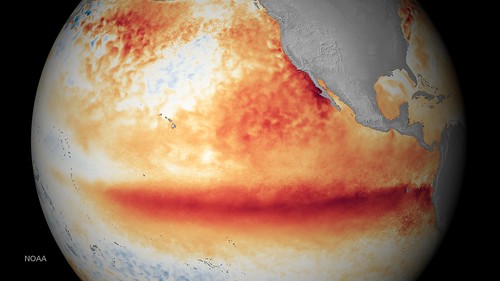
A confluence of events, including the El Niño ocean current, are warming Earth dramatically. CC-licensed photo by NOAA ESRL on Flickr.

You can sign up to receive each day’s Start Up post by email. You’ll need to click a confirmation link, so no spam.

A selection of 10 links for you. Currently. I’m @charlesarthur on Twitter. On Mastodon: https://newsie.social/@charlesarthur. Observations and links welcome.


Twitter is threatening to sue Meta over Threads • Semafor

Max Tani:

»

a lawyer for Twitter, Alex Spiro, sent a letter to Meta CEO Mark Zuckerberg accusing the company of engaging in “systematic, willful, and unlawful misappropriation of Twitter’s trade secrets and other intellectual property.”

“Twitter intends to strictly enforce its intellectual property rights, and demands that Meta take immediate steps to stop using any Twitter trade secrets or other highly confidential information,” Spiro wrote in a letter obtained exclusively by Semafor. “Twitter reserves all rights, including, but not limited to, the right to seek both civil remedies and injunctive relief without further notice to prevent any further retention, disclosure, or use of its intellectual property by Meta.”

Spiro accused Meta of hiring dozens of former Twitter employees who “had and continue to have access to Twitter’s trade secrets and other highly confidential information.”

He also alleged that Meta assigned those employees to develop “Meta’s copycat ‘Threads’ app with the specific intent that they use Twitter’s trade secrets and other intellectual property in order to accelerate the development of Meta’s competing app, in violation of both state and federal law as well as those employees’ ongoing obligations to Twitter.”

«

Absolutely hilarious. Twitter fired a ton of employees and acts surprised that the competent ones got hired somewhere? Is Musk trying to make it impossible for them to get work? Meta has been running social networks for a little while now, and if Twitter really wants to start something it might find Meta holding a lot of nasty patents that cover exactly what it does.

Meanwhile, Meta says it had more than 30 million signups within less than 24 hours, though it’s not yet available in Europe due to GDPR considerations.
unique link to this extract


Twitter refuses to pay for arbitration it forced on 891 ex-employees, suit says • Ars Technica

Ashley Belanger:

»

Twitter started this year with a legal victory that forced thousands of laid-off employees into arbitration. These employees had been suing over grievances like unpaid severance and discrimination, and the win spared Twitter from facing a class-action lawsuit. Now, hundreds of ex-employees have sued again, this time alleging in a class-action claim that “Twitter has refused to engage in arbitration—despite having compelled employees to arbitrate their claims.”

According to the complaint, filed Monday in a San Francisco federal court, Twitter won’t come to the table simply because the company doesn’t want to pay for arbitration. Its arbitration agreements require ex-employees to pay a nominal filing fee to launch claims with the Judicial Arbitration and Mediation Services (JAMS), but after that, Twitter has to pay “all other arbitration fees.”

Faced with paying perhaps millions in fees for approximately 2,000 laid-off employees, Twitter allegedly sent a letter to JAMS in early June, requesting that the fees instead be split between parties.

However, granting that request would be a breach of JAMS’s rules. Thus, JAMS responded by telling Twitter that it would not proceed with any arbitration that did not meet JAMS’s standards, the complaint said. After that, Twitter allegedly told JAMS that it “would refuse to proceed with arbitrations in most states outside California,” attaching “a list of 891 arbitrations in which it was refusing to proceed.”

«

It’s just astonishingly miserly. When you treat the people you used to employ like this, how would you expect the people you want to employ, and the people you do employ, to react? What message does it send to them?
unique link to this extract


Instagram Threads: why Meta is competing with Twitter • The Verge

Alex Heath:

»

Threads is strikingly similar to Twitter in key ways. The app’s main feed shows posts (or, as Mosseri calls them, “threads”) from accounts you follow, along with accounts recommended by Instagram’s algorithm. You can repost something with your own commentary, and replies are featured prominently in the main feed. There is no feed of only people you follow, though that could be added later.

Posts on Threads can be up to 500 characters long and include photos or videos that are up to five minutes long. There are no ads, at least for now — adding those will be a “champagne problem” if Threads achieves enough scale, per Mosseri.

There also isn’t a paid verification scheme that unlocks additional functionality, though Instagram’s blue checks will port over to Threads accounts. With some exceptions for extreme cases like the sharing of child exploitation imagery, moderation actions Meta takes against a Threads account will not impact its associated Instagram account, according to internal documents I’ve seen.

Thanks to the deep ties between Threads and Instagram, you can quickly share posts from Threads to your Instagram story or feed. There’s also the ability to share links to Threads posts in other apps, which Mosseri predicts will be helpful as “we try to bootstrap it out from nothing.”

Meta has been busy this week onboarding a bunch of celebrities from the worlds of Hollywood, music, professional sports, business, and the like to Threads ahead of its public release. Celebs already spotted on the app include Karlie Kloss, Tony Robbins, Dana White, Gordon Ramsay, Ellie Goulding, Jack Black, Russell Wilson, and the Brazilian pop star Anitta.

«

Very clever, and hustled along by Musk screwing up Twitter over the weekend.
unique link to this extract


Smuggler caught with 420 M.2 SSDs strapped to his stomach • Tom’s Hardware

Zhiye Liu:

»

In the latest instalment of hardware smuggling busts by Chinese customs, the authorities have arrested a hardware trafficker who tried to sneak 420 M.2 SSDs into China. Customs estimated the seized SSDs are worth around HK$258,000 or $32,984.94. Perhaps some of those drives are among the best SSDs.

Chinese news outlet HKEPC first spotted the story and reported that the smuggler tried to slip the illicit goods from Macau to Zhuhai through the Gongbei Port. Given the proximity between Macau and Zhuhai, the passage is one of the most popular trafficking routes for mules. It wasn’t long ago that a woman hid more than 200 Alder Lake chips inside her fake silicone belly, or another man tried to stroll into China with 160 Intel processors taped to his body.

Normally, traffickers try to smuggle high-value goods, such as processors or graphics cards. A recent attempt to conceal 70 graphics cards among 617 pounds of live lobster comes to mind. On the contrary,  this SSD smuggler opted to sneak in lower-value hardware instead. It isn’t the first time we’ve seen M.2 SSDs transported into China. A recent bust from this year detained a man that hid 84 SSDs inside his scooter. M.2 SSDs still contain metallic parts, so it’s close to impossible to get past metal detectors without raising the alarm with the metal detectors.

Instead of hiding the SSDs inside a package, the perpetrator opted to tape the drives around his body for a bigger haul.

«

They do it to avoid the customs duty, and one has to suppose that the penalties are less dramatic than smuggling drugs. Although why would you strap them around your stomach, given that they’re metal and would set off metal detectors?
unique link to this extract


Heat records fall around the globe as Earth warms, fast • The New York Times

Brad Plumer and Elena Shao:

»

The past three days were quite likely the hottest in Earth’s modern history, scientists said on Thursday, as an astonishing surge of heat across the globe continued to shatter temperature records from North America to Antarctica.

The spike comes as forecasters warn that the Earth could be entering a multiyear period of exceptional warmth driven by two main factors: continued emissions of heat-trapping gases, mainly caused by humans burning oil, gas and coal; and the return of El Niño, a cyclical weather pattern.

Already, the surge has been striking. The planet just experienced its warmest June ever recorded, researchers said, with deadly heat waves scorching Texas, Mexico and India. Off the coasts of Antarctica, sea ice levels this year have plummeted to record lows.

And in the North Atlantic, the ocean has been off-the-charts hot. Surface temperatures in May were 2.9 degrees Fahrenheit, or 1.6 degrees Celsius, warmer than typical for this time of year, breaking previous records by an unusually large margin.

The sharp jump in temperatures has unsettled even those scientists who have been tracking climate change.

“It’s so far out of line of what’s been observed that it’s hard to wrap your head around,” said Brian McNoldy, a senior research scientist at the University of Miami. “It doesn’t seem real.”

«

unique link to this extract


Lessons learned from first genetically-modified pig heart into human patient • ScienceDaily

»

the research team performed extensive testing on the limited available tissues in the patient. They carefully mapped out the sequence of events that led to the heart failure demonstrating that the heart functioned well on imaging tests like echocardiography until day 47 after surgery.

The new study [published in The Lancet] confirms that no signs of acute rejection occurred during the first several weeks after the transplant. Likely, several overlapping factors led to heart failure in Mr. Bennett, including his poor state of health prior to the transplant that led him to become severely immunocompromised. This limited the use of an effective anti-rejection regimen used in preclinical studies for xenotransplantation. As a result, the researchers found, the patient was likely more vulnerable to rejection of the organ from antibodies made by the immune system. The researchers found indirect evidence of antibody-mediated rejection based on histology, immunohistochemical staining and single cell RNA analysis.

The use of an intravenous immunoglobulin, IVIG, a drug that contains antibodies, may also have contributed to damage to the heart muscle cells. It was given to the patient twice during the second month after the transplant to help prevent infection, likely also triggering an anti-pig immune response. The research team found evidence of immunoglobulin antibodies targeting the pig vascular endothelium layer of the heart.

Lastly, the new study investigated the presence of a latent virus, called porcine cytomegalovirus (PCMV), in the pig heart, which may have contributed to the dysfunction of the transplant. Activation of the virus may have occurred after the patient’s anti-viral treatment regimen was reduced to address other health issues. This may have initiated an inflammatory response causing cell damage. However, there is no evidence that the virus infected the patient or spread to organs beyond the heart.

«

Just in case you’d forgotten: this dates back to January 2022, when David Bennett received a pig heart transplant. He died within two months. There hasn’t been another as far as I can tell.
unique link to this extract


The Broke Ape Yacht Crash: lessons for Justin Bieber and other NFT collectors • Coindesk

David Morris:

»

Bitter finger-pointing and recrimination are swirling among and around investors in Bored Ape Yacht Club, the “profile pic” (PFP) NFT collection that skyrocketed to immense values in early 2022. The market for Apes has been brutally hammered by a lull in NFT interest, with floor prices – the lowest price for which an Ape can be purchased – declining to 27.4 ETH, from a high of 153.7 ETH in April of 2022.

Floor price is a proxy for the overall value of an NFT collection, so that 82% floor decline can translate into even bigger drops in the value of individual Bored Apes and related assets. In one notable example, Justin Bieber owns an Ape that was supposedly worth $1.3m at one point, and now the highest bid for it is just over $58,000 – a 95% decline.

It should be noted that early Ape holders are still in decent shape, and Bored Apes are still very highly valued and traded relative to other NFT collections. They were also far from the only crypto-asset to experience a wild runup and crash over the last few years. And they are slumping roughly in line with the broader NFT market, which by some measures is at its lowest point in two years.

«

A “lull” in NFT interest? More like a complete becalming, though a 95% decline is still, to my mind, about 5% less than it should be. The uselessness of NFTs has been made crystal clear; and even those who believe in them keep finding themselves being hacked. It’s dead, Jim.
unique link to this extract


Amazon’s iRobot deal in EU antitrust crosshairs • Reuters

Foo Yun Chee:

»

Amazon’s $1.7bn acquisition of robot vacuum cleaner maker iRobot may reduce competition and strengthen Amazon’s position as online marketplace provider, EU antitrust regulators warned on Thursday.

The European Commission opened a full-scale investigation and will decide by November 15 whether to clear or block the deal.

“We continue to work through the process with the European Commission and are focused on addressing its questions and any identified concerns at this stage,” an Amazon spokesperson told Reuters.

Antitrust enforcers around the world have stepped up scrutiny of Big Tech acquiring smaller rivals, concerned about the accumulation of troves of data by a few companies, and big players leveraging their dominance into new markets.

The acquisition announced in August last year would add iRobot’s Roomba robot vacuum to Amazon’s portfolio of smart devices, which include the Alexa voice assistant, smart thermostats, security devices and wall-mounted smart displays.

«

Noticeable how much more closely big tech acquisitions are being examined now. It’s taken the EU a hell of a long time to decide to investigate, though.
unique link to this extract


As businesses clamour for workplace AI, tech companies rush to provide it • The New York Times

Yiwen Lu:

»

For the most part, tech companies are now rolling out four kinds of generative A.I. products for businesses: features and services that generate code for software engineers, create new content such as sales emails and product descriptions for marketing teams, search company data to answer employee questions, and summarize meeting notes and lengthy documents.

“It is going to be a tool that is used by people to accomplish what they are already doing,” said Bern Elliot, a vice president and analyst at the I.T. research and consulting firm Gartner.

But using generative A.I. in workplaces has risks. Chatbots can produce inaccuracies and misinformation, provide inappropriate responses and leak data. A.I. remains largely unregulated.
In response to these issues, tech companies have taken some steps. To prevent data leakage and to enhance security, some have engineered generative A.I. products so they do not keep a customer’s data.

When Salesforce last month introduced AI Cloud, a service with nine generative A.I.-powered products for businesses, the company included a “trust layer” to help mask sensitive corporate information to stop leaks and promised that what users typed into these products would not be used to retrain the underlying A.I. model.

Similarly, Oracle said that customer data would be kept in a secure environment while training its A.I. model and added that it would not be able to see the information.

Salesforce offers AI Cloud starting at $360,000 annually, with the cost rising depending on the amount of usage. Microsoft charges for Azure OpenAI Service based on the version of OpenAI technology that a customer chooses, as well as the amount of usage.

«

$360k as the starting price? Yikes. It really is a goldrush out there.
unique link to this extract


Amazon Studios: big swings hampered by confusion and frustration • The Hollywood Reporter

Kim Masters:

»

When it comes to movies, where Amazon’s footprint is expanding following the $8.5nb acquisition of MGM a year ago, a veteran producer says that, in recent years, “there has been no sense of what the philosophy is.”

On the series side, numerous sources say they cannot discern what kind of material Salke and head of television Vernon Sanders want to make. A showrunner with ample experience at the studio says, “There’s no vision for what an Amazon Prime show is. You can’t say, ‘They stand for this kind of storytelling.’ It’s completely random what they make and how they make it.” Another showrunner with multiple series at Amazon finds it baffling that the streamer hasn’t had more success: Amazon has “more money than God,” this person says. “If they wanted to produce unbelievable television, they certainly have the resources to do it.”

But Salke believes the studio’s approach fits Amazon’s broad remit. “I have never been one to say [to the creative community] ‘We need five action franchise shows and three workplace situation comedies.’ That’s the kiss of death,” she says. “You don’t reverse-engineer true creative vision. We are programming for over 250 million households across the entire globe. We would say we have a big, broad audience, and we are looking for content that entertains the four quadrants.” (That is, male and female, under 35 and over 35).

The question that makes many in Hollywood nervous is whether the Amazon Studios overlords in Seattle believe they are getting enough bang for their megabucks. The last thing the industry wants at a time of belt-tightening is a cutback in spending from a deep-pocketed buyer. According to Salke, that concern is misguided. “The proof exists that the giant tentpole shows are driving people to subscribe to Prime,” she says. “Do we pressure ourselves to be more disciplined, more strategic? Of course. We consistently examine if we’re producing the right amount of content at the right value to drive the most engagement across our service.”

«

It is a puzzle: now Amazon has MGM, what’s its plan for it? Personally, I watch Prime Video principally for the sport. Citadel, the incredibly expensive thriller, just couldn’t sustain interest – for me and apparently lots of people.
unique link to this extract


• Why do social networks drive us a little mad?
• Why does angry content seem to dominate what we see?
• How much of a role do algorithms play in affecting what we see and do online?
• What can we do about it?
• Did Facebook have any inkling of what was coming in Myanmar in 2016?Read Social Warming, my latest book, and find answers – and more.

Errata, corrigenda and ai no corrida: none notified

Start Up No.2033: more linkrot (and hello Meta’s Threads), India’s politics gets AI fakes, renewables keep Texas cool, and more


Recursion is the key to human consciousness – but what would the first experience of it have been like? CC-licensed photo by John Fowler on Flickr.

You can sign up to receive each day’s Start Up post by email. You’ll need to click a confirmation link, so no spam.


On Friday, there’s another post due at the Social Warming Substack at about 0845 UK time.


A selection of 10 links for you. Don’t get the needle. I’m @charlesarthur on Twitter. On Mastodon: https://newsie.social/@charlesarthur. Observations and links welcome.


The link rot spreads: GIF-hosting site Gfycat shutting down Sept. 1 • Ars Technica

Kevin Purdy:

»

The Internet continues to get a bit more fragmented and less accessible every week. Within the past seven days, Reddit finished its purge of third-party clients, Twitter required accounts to view tweets (temporarily or not), and Google News started pulling news articles from its Canadian results [false: Google says it will do that when the law comes into effect, at the end of the year – Overspill Ed].

Now there’s one more to add: Gfycat, a place where users uploaded, created, and distributed GIFs of all sorts, is shutting down as of September 1, according to a message on its homepage.

Users of the Snap-owned service are asked to “Please save or delete your Gfycat content.” “After September 1, 2023, all Gfycat content and data will be deleted from gfycat.com.”

Gfycat rose as a service during a period where, like Imgur, it was easier to use than any native tools provided by content sites like Facebook or Reddit. As CEO and co-founder Richard Rabbat told TechCrunch in 2016, after raising $10m from investors, GIFs were “hard to make, slow to upload, and when you shared them, the quality wasn’t very good.” Gfycat created looped, linked Webm videos that, while compressed, retained an HD quality to them. They were easier to share than actual GIF-format files and offered an API for other sites to tap in.

“I see Gfycat as the ultimate platform for all short-form content, the way that YouTube is the platform for longer videos and Twitter is the platform for text-based news and media discussions,” VC funder Ernestine Fu told TechCrunch in 2016, long before TikTok, YouTube shorts, and Elon Musk’s Twitter ownership came to pass.

Signs of trouble at Gfycat popped up in May when an expired certificate led to cascading downtimes and inaccessibility for up to five days.

«

The blocking of Facebook/Meta’s acquisition of Giphy looks more and more like it will just hasten the death of these add-on services. How can they cover their server (and staff) costs, let alone make a profit? Everything’s splintering. And that’s before the launch of Threads, which went live while this post was fermenting. (Yes, I’m there.)
unique link to this extract


Paying to use a site that you can’t use anymore • Garbage Day

Ryan Broderick:

»

I’ve seen a bunch of debates about Who Will Win The Twitter Wars. The argument against Threads becoming the new Twitter is what tech analyst Faine Greenwood calls “Terrible Uncle Problem”. Greenwood recently skeeted, “Meta ensuring Threads integrates with Facebook and Instagram means your weird older relatives will easily be able to find you there. A lot of people do NOT want that.” It’s certainly possible, but if it’s really going to come down to Threads or Bluesky, my money is on Threads. Though I doubt either will really capture what Twitter was useful for.

I think hardcore Twitter users have rose-colored glasses about the site’s coolness. The reason for its success, if you can argue that it was ever really successful, wasn’t that it was cooler than Facebook. It was because of its proximity to power. The reason it was so popular with activists, extremists, journalists, and shitposters was because what you posted there could actually affect culture. The thing that ties together pretty much everything that’s happened on Twitter since it launched in 2006 was the possibility that those who were not in power (or wanted more) could influence those who were. And I don’t think it’s an accident that a deranged billionaire broke that, nor do I think it’s accident that we’re suddenly being offered smaller, insular platforms or an offshoot of a Meta app as replacements. The folks in charge clearly don’t want that to happen again.

«

Maybe a teensy bit into the paranoia, but the first part of the second paragraph there is surely right.
unique link to this extract


Deja-you, the recursive construction of self • Vectors of Mind

“Andrew”, writing about how consciousness would have evolved – as a recursive process in the primitive brain:

»

To be self-aware, the self must be aware of itself. Its own internal processes take itself as input. This is recursion.

I think of it like this. Imagine a primordial self, unable to perceive itself. Written as a function: self(perceptions). This would have been your own model of your own mind or interests. As input, it would receive all that you perceive. Introspection would necessarily produce recursion; the self would receive itself as input: self(self, perceptions).

From the example of RNNs [recursive neural networks], imagine how this recursion could change our perception and experience of time. It would be a new way to represent this dimension for free, a radical transformation to living in a particular moment.

It is also fruitful to imagine the rocky beginning of this function. Recursive programs are prone to blow up, and this one is running in your head. Take, for example, the most simple f(x) = x+1. If you recursively feed the output as input each time step, that function will grow to infinity. It’s doubtful that the chain of consciousness was initially unbroken or pleasant. It would have begun in fits and bursts, the self rearing up for a moment only to be smothered by its own exponential increase. Neurons can only handle so much excitement. The function would need some sort of control system to stabilize recursion and refrain from hitting biological limits. There must have been more split personalities and inner voices with whom we did not identify. Apart from hallucinations, it also seems likely that exploding recursion could produce other side effects like excruciating headaches. Evolving recursion would have broken a few eggs.

There are reasons to believe that the self is recursive even when we are not peering inward. That is the position of the paper Consciousness as recursive, spatiotemporal self-location and Douglas Hofstadter’s I Am a Strange Loop. However, there is much debate on this point.

«

I found this post mindblowing (almost literally): the self reflecting on the creation of the self in a self which wasn’t aware of itself. He also wrote a post positing that women gained consciousness before men – a possible source for the Garden of Eden story.
unique link to this extract


An Indian politician blamed AI for alleged leaked audio. So we tested it • Rest of World

Nilesh Christopher:

»

A political controversy rocked the southern Indian state of Tamil Nadu in April when K. Annamalai, state head of the Bharatiya Janata Party (BJP) — India’s ruling party — released a controversial audio recording of Palanivel Thiagarajan, a lawmaker from the Dravida Munnetra Kazhagam (DMK) that is currently in power in the state.

In the 26-second low-quality audio tape, Thiagarajan, who was the finance minister of Tamil Nadu at the time, could allegedly be heard accusing his own party members of illegally amassing $3.6 billion. Thiagarajan vehemently denied the veracity of the recording, calling it “fabricated” and “machine-generated.”

“NEVER trust an Audio clip without an attributable source,” Thiagarajan tweeted on April 22. He argued that it’s now easy to fabricate voices, citing a news clip on the infamous AI-generated songs of Drake and The Weeknd.

On April 25, Annamalai released a second clip — 56 seconds long, and with much clearer audio — where Thiagarajan allegedly spoke disparagingly of his own party and praised the BJP. This time, Thiagarajan called it a desperate attempt by a “blackmail gang” to create a political rift within his own party, and said no one had claimed ownership of the source of the clips.

…While experts have rattled off multiple alarming scenarios on how AI can play out in politics, in India, this could be the first high-profile case of the “liar’s dividend” — the ability of the powerful to claim plausible deniability of unflattering footage. Deepfake experts told Rest of World the rise of AI is being used as a ruse to sow information uncertainty in a new political era.

«

First clip: maybe fake. Second: real. But it will get harder to tell, of course.
unique link to this extract


Generative AI in games will create a copyright crisis • WIRED

Will Bedingfield:

»

AI Dungeon, a text-based fantasy simulation that runs on OpenAI’s GPT-3, has been churning out weird tales since May 2019. Reminiscent of early text adventure games like Colossal Cave Adventure, you get to choose from a roster of formulaic settings—fantasy, mystery, apocalyptic, cyberpunk, zombies—before picking a character class and name, and generating a story.

Here was mine: “You are Mr. Magoo, a survivor trying to survive in a post-apocalyptic world by scavenging among the ruins of what is left. You have a backpack and a canteen. You haven’t eaten in two days, so you’re desperately searching for food.” So began Magoo’s 300-ish-word tale of woe in which, “driven half-mad” by starvation, he happens upon “a man dressed in white.” (Jesus? Gordon Ramsay?) Offering him a greeting kiss, Magoo is stabbed in the neck.

As lame as this story is, it hints at a knotty copyright issue the games industry is only just beginning to unravel. I’ve created a story using my imagination—but to do that I’ve used an AI helper. So who wrote the tale? And who gets paid for the work?

AI Dungeon was created by Nick Walton, a former researcher at a deep learning lab at Brigham Young University in Utah who is now the CEO of Latitude, a company that bills itself as “the future of AI-generated games.” AI Dungeon is certainly not a mainstream title, though it has still attracted millions of players. As Magoo’s tale shows, the player propels the story with action, dialog, and descriptions; AI Dungeon reacts with text, like a dungeon master—or a kind of fantasy improv.

…Laws in both the US and the UK stipulate that, when it comes to copyright, only humans can claim authorship. So for a game like AI Dungeon, where the platform allows a player to, essentially, “write” a narrative with the help of a chatbot, claims of ownership can get murky: who owns the output? The company that developed the AI, or the user?

«

How about: the one who can reliably reproduce it? Which is usually going to be the company.

unique link to this extract


Renewable energy is saving Texas from brutal heat • The Washington Post

Catherine Rampell:

»

this summer, like last summer, renewables have been the heroes of the story — yet they remain curiously vilified by politicians in the Lone Star State.

In recent years, renewable energy has been ramping up across Texas. The state has rapidly increased solar capacity, for instance, enabling as much as 16,800 megawatts of solar power to be produced on the grid as of the end of May. That’s roughly six times the capacity that existed in 2019 (about 2,600 megawatts), according to data from the Electric Reliability Council of Texas, the state’s grid operator.

This increase — coupled with greater wind and storage development — is what has allowed Texans to beat the heat and keep their electricity bills down.

After all, several thermal-energy plants in the state went offline in recent weeks, as coal, natural gas and nuclear facilities appeared to buckle under extreme temperatures and shrinking maintenance windows. Additional solar and wind generation more than made up the difference. Renewables overall have lately represented roughly 35% to 40% of power generation at peak, compared with about 30% last year.

The result is not only that renewables have enabled Texas residents to keep the lights and air conditioning on during this hellish heat. They probably also saved Texans “billions of dollars” last week alone by keeping prices from spiking, says Doug Lewin, an Austin-based energy consultant and author of the Texas Energy and Power Newsletter.

«

And yet, as she points out, the legislators there are trying to introduce bills that’ll stop renewables investment. Insane.
unique link to this extract


How human translators are coping with competition from powerful AI • Slow Boring

Timothy B Lee:

»

Marc Eybert-Guillon started his career as a translator in 2017. In 2020, he founded From the Void, a firm that helps video game makers localize their games for foreign markets.

“It’s that meme of the guy with the noose around his neck,” Eybert-Guillon told me. The condemned man looks over at the guy standing next to him on the gallows and asks “first time?”

“We’ve been ‘in danger’ of being taken over by AI for 10 years now and it still hasn’t happened,” Eybert-Guillon said. “But we keep getting told that it’s going to happen.”

There are two big reasons AI hasn’t put many human translators out of work. First, human translators still do a better job in specialized fields like law and medicine. Translation errors in these fields can be very expensive, so clients are willing to pay extra for a human-quality translation.

Second, there has been rapid growth in hybrid translation services where a computer produces a first draft and a human translator checks it for errors. These hybrid services tend to be about 40% cheaper than a conventional human translation, and customers have taken advantage of that discount to translate more documents. Translators get paid less per word, but they’re able to translate more words per hour.

But while AI software has not put human translators out of work the way pessimists might have predicted, this isn’t an entirely positive story for translators either.

“I think rates for translators have stayed largely the same for 10 or 12 years,” said Mark Hemming, a translator in the United Kingdom. “I think it is harder to get work now. I think it’s harder to get well-paid work as well.”

«

OK, translators might survive, just about, but I don’t see transcription services surviving for long.
unique link to this extract


Toyota says solid-state battery breakthrough can halve cost and size • Financial Times

Kana Inagaki:

»

Toyota initially said it wanted to start selling hybrid but not electric cars with solid-state batteries before 2025.

But on Tuesday, [president of Toyota’s research and development centre for carbon neutrality, Keiji] Kaita said the company discovered ways to address the durability problems from about three years ago and now had enough confidence to mass-produce solid-state batteries in EVs by 2027 or 2028.

Toyota claimed it had made a “technological breakthrough” to resolve durability issues and “a solution for materials” that would allow an EV powered by a solid-state battery to have a range of 1,200km and charging time of 10 minutes or less.

“All of our members are highly motivated and are working with the intention to definitely launch” the technology by the promised timeline, said Kaita.

By reducing the number of processes required to make battery materials, the cost of solid-state batteries could be lowered to similar or cheaper levels than liquid-based lithium-ion batteries, he added.

For Toyota, which has been slower than rivals to roll out electric vehicles, analysts said solid-state batteries could be a “game-changer” to narrow the gap with Tesla.

«

1,200km (750 miles) and charge in 10 minutes? That’s a hell of a proposition.
unique link to this extract


California must call Google’s and Facebook’s bluff on news • Los Angeles Times

Brian Merchant is the LA Times’s technology columnist:

»

In June, Canada passed a law that will require major tech platforms such as Google and Facebook to pay a small fee when they host news on their platforms, to compensate the journalistic outlets that produced it. A similar bill recently cleared crucial hurdles in California and now has a serious chance at becoming law too.

In response, Google and Facebook say they will have no choice but to ban news altogether from their services in those markets when and if these laws go into effect.

California and Canada must absolutely not give in to the tech giants’ tantrum. This is a bluff, and not a particularly convincing one. For the sake of the beleaguered news industries in both places (yes, including this media outlet), the Canadian and Californian governments must absolutely call it.

For assurance, we should look to Australia, where a like-minded bill went into law in 2021, even after Google and Facebook made the same exact threats. Facebook did initially restrict access to news, but the ploy lasted barely a week before it backfired wildly, and Facebook agreed to comply, albeit after extracting some concessions.

That bill has already restored tens of millions of dollars in revenue to Australia’s troubled newsrooms, and, while far from perfect, has transformed the media environment dramatically.

…Over the years, the value that news has brought to Google and Facebook (not to mention to Twitter, Reddit and other major social platforms) is staggering. Journalism has bolstered the value proposition of these platforms considerably. Picture, for a minute, a Facebook without legitimate news — where the only posts you encounter aside from baby pics are your uncle’s political screeds and bad memes. It would be a cesspool. And try conjuring a portrait of Google with no media to index. Guess it would still be good for finding recipes and Wikipedia pages.

«

I want online news to work as much as anyone. But the argument that Google and Facebook specifically must pay for specific kinds of links on their site, and that they’re not allowed not to carry those links, doesn’t make sense. Just be honest and tax them.

unique link to this extract


ITN boss and Labour minister throw weight behind big tech news payments bill • Press Gazette

Bron Maher:

»

The chief executive of TV production giant ITN has thrown her weight behind a bill that could force Google and Meta to pay for news in the UK.

Rachel Corp said on Monday that she hoped the Digital Markets, Competition and Consumers (DMCC) Bill would create a more “competitive commercial environment” for media companies and impel technology firms to share data and algorithm information.

Executives from the News Media Association and charity the Public Interest News Foundation (PINF) also expressed their support for the bill at a Westminster event convened by the Media All-Party Parliamentary Group and chaired by Press Gazette associate editor William Turvill. Although most panellists spoke warmly about the legislation, there were some reservations – largely focusing on the extent to which the bill centres the interests of the consumer.

Alex Davies-Jones, the shadow minister for tech, gambling, and the digital economy, said in closing remarks that the bill had Labour’s support: “It’s very, very rare to have a piece of legislation which I find hard to criticise.”

She added: “The government here absolutely must not bow down to the pressure from big tech – which we know it’s under, quite frankly. We know that our Prime Minister sees himself as a tech bro, he wants to feed that outward-looking focus, but [the government] cannot bow down to this pressure.”

«

Again, great to see media getting more funding, but the logical inconsistencies of a link tax (that’s honestly what it is) only get bigger and bigger.
unique link to this extract


• Why do social networks drive us a little mad?
• Why does angry content seem to dominate what we see?
• How much of a role do algorithms play in affecting what we see and do online?
• What can we do about it?
• Did Facebook have any inkling of what was coming in Myanmar in 2016?

Read Social Warming, my latest book, and find answers – and more.


Errata, corrigenda and ai no corrida: none notified

Start Up No.2032: US to restrict China cloud access, Twitter’s shonky paid API, CJEU prangs Facebook’s business model, and more


If things have gone as normal, sightings of UFOs will have peaked in the US on Independence Day. Guess why. CC-licensed photo by maxime raynal on Flickr.

You can sign up to receive each day’s Start Up post by email. You’ll need to click a confirmation link, so no spam.


On Friday, there’s another post due at the Social Warming Substack at about 0845 UK time.


A selection of 9 links for you. Mysterious. I’m @charlesarthur on Twitter. On Mastodon: https://newsie.social/@charlesarthur. Observations and links welcome.


US looks to restrict China’s access to cloud computing to protect advanced technology • WSJ

Yuka Hayashi and John D. McKinnon:

»

The Biden administration is preparing to restrict Chinese companies’ access to US cloud computing services, according to people familiar with the situation, in a move that could further strain relations between the world’s economic superpowers.

The new rule, if adopted, would likely require US cloud service providers such as Amazon.com and Microsoft to seek US government permission before they provide cloud computing services that use advanced artificial intelligence chips to Chinese customers, the people said.

The Biden administration’s move on cloud services comes as China said Monday it would impose export restrictions on metals used in advanced chip manufacturing.

This high-stakes conflict over supply chain access to the world’s most advanced technology is escalating in the days ahead of Treasury Secretary Janet Yellen’s visit to China, a trip the Biden administration hopes will ease tensions. Yellen’s talks in Beijing are expected to touch on macroeconomic conditions in each country, as well as climate change and debt in the developing world.

The US’s proposed cloud restrictions are seen as a means to close a significant loophole. National security analysts have warned that Chinese AI companies might have bypassed the current export controls rules by using cloud services.

These services allow customers to gain powerful computing capabilities without purchasing advanced equipment—including chips—on the control list, such as the A100 chips by American technology company Nvidia.

“If any Chinese company wanted access to Nvidia A100, they could do that from any cloud service provider. That’s totally legal,” said Emily Weinstein, a research fellow at Georgetown Center for Security and Emerging Technology.

«

Oh, that is quite the loophole, isn’t it. Wonder how they’ll enforce it, though. Proxy hopping from one server to another, using shell companies.. it’s going to be quite the whack-a-mole game. Another little brick in the trade war wall.
unique link to this extract


Twitter’s API keeps breaking, even for developers paying $42,000 • Mashable

Matt Binder:

»

Twitter’s new API may now cost tens of thousands of dollars per month, but the service being provided to its customers appears to be worse than ever.

That’s the general sentiment among developers who are still part of the once-robust third-party Twitter app ecosystem. According to developers paying Twitter, since the switch over to Elon Musk’s paid API subscription plans, Twitter’s API has experienced frequent issues that make it extremely difficult to run their apps.

Twitter’s API issues have frustrated developers in each of Twitter’s new API access tiers. Those with Basic or Pro plans — paying $100 and $5000 a month for API access, respectively — have experienced unannounced changes to their plans, numerous bugs, and often receive zero customer support. And developers shelling out for Twitter’s Enterprise API Plan, which starts at $42,000 per month, are experiencing sudden outages and disappointing service considering the money they’re paying.

“Everything used to work fine before we started paying half a million per year,” shared one developer in a private Twitter developer group chat shared with Mashable.

«

As John Gruber points out, why – now you know this – would you ever pay for Twitter Blue (or, now, for Tweetdeck)? Amazing how Musk has transformed it from a reliable, low-earning must-use service into an unreliable, lossmaking service that people are keen to abandon.
unique link to this extract


CJEU ruling on Meta referral could close the chapter on surveillance capitalism • TechCrunch

Natasha Lomas:

»

A long-anticipated judgement handed down today by the Court of Justice of the European Union (CJEU) looks to have comprehensively crushed the social media giant’s ability to keep flouting EU privacy law by denying users a free choice over its tracking and profiling.

The ruling tracks back to a pioneering order by Germany’s antitrust watchdog, the Federal Cartel Office (FCO), which spent years investigating Facebook’s business — making the case that privacy harm should be treated as an exploitative competition abuse too.

In its February 2019 order, the FCO told Facebook (as Meta still was back then) to stop combining data on users across its own suite of social platforms without their consent. Meta sought to block the order in the German courts — eventually sparking the referral on Meta’s so-called “superprofiling” to the CJEU in March 2021.

Now we have the top court’s take and, well, it’s not going to spark any celebrations at Meta HQ, that’s for sure.

The CJEU has not only agreed competition authorities can factor data protection into their antitrust assessments (which sounds wonky but really is vital because joint-working rather than regulatory silos is the path to effective oversight of platform power) — but has signalled that consent is the only appropriate legal basis for the tracking-and-profiling-driven ‘personalized’ content and behavioral advertising that Meta monetizes.

«

It’s deeply complicated. Here’s the CJEU press release. Apple’s ATT (App Tracking Transparency) seems to have essentially done the same thing, without the legal delay, and around the world.
unique link to this extract


Financial models on climate risk ‘implausible’, say actuaries • Financial Times

Camilla Hodgson:

»

Financial institutions often did not understand the models they were using to predict the economic cost of climate change and were underestimating the risks of temperature rises, research led by a professional body of actuaries shows.

Many of the results emerging from the models were “implausible,” with a serious “disconnect” between climate scientists, economists, the people building the models and the financial institutions using them, a report by the Institute and Faculty of Actuaries and the University of Exeter finds.

Companies are increasingly required to report on the climate-related risks they face, using mathematical models to estimate how resilient their assets and businesses might be at different levels of warming.

The International Sustainability Standards Board last week launched long-awaited guidance for companies to inform investors about sustainability-related risks, including the climate scenarios chosen in their calculations.

Countries including the UK and Japan have said they plan to integrate these standards into their reporting rules.

Companies will also have to report the full scope of their emissions, including those from their supply chains, from the second year they begin to report under the guidelines due to come into effect in 2024.

…Some models were likely to have “limited use as they do not adequately communicate the level of risk we are likely to face if we fail to decarbonise quickly enough,” the paper released on Tuesday said.

«

unique link to this extract


Revealed: UK plans to drop flagship £11.6bn climate pledge • The Guardian

Helena Horton and Patrick Greenfield:

»

The government is drawing up plans to drop the UK’s flagship £11.6bn climate and nature funding pledge, the Guardian can reveal, with the prime minster accused of betraying populations most vulnerable to global heating.

The disclosure provoked fury from former ministers and representatives of vulnerable countries, who accused Rishi Sunak of making false promises.

A leaked briefing note to ministers, given to the Foreign Office and seen by the Guardian, lays out reasons for dropping the UK’s contribution to meeting the global $100bn (£78.6bn) a year commitment to developing countries.

It says: “Our commitment to double our international climate finance to £11.6bn was made in 2019, when we were still at 0.7 [% of GDP spent on international aid] and pre-Covid.” It adds that to meet it by the deadline would be a “huge challenge” because of new pressures, including help for Ukraine being included in the aid budget.

To meet the £11.6bn target by 2026, government officials have calculated that it would have to spend 83% of the Foreign Office’s official development assistance budget on the international climate fund. Civil servants said in the leaked document that this “would squeeze out room for other commitments such as humanitarian and women and girls”.

…The projects funded include building renewable energy, helping create low-pollution transport and protecting forests in sensitive areas around the globe.

Former Foreign Office minister Zac Goldsmith, who resigned last week citing what he termed Sunak’s “apathy” towards the environment, said this would “shred” the UK’s international reputation.

«

Alok Sharma, the Conservative MP who negotiated at the COP summit(s), also expressed disquiet. Astonishing lack of sway they have. Meanwhile the grousers who complain it’s all too expensive get airtime.
unique link to this extract


Are extraterrestrials extra patriotic? • The Economist

»

According to the National UFO Reporting Centre (NUFORC), an American non-profit organisation that has collected reports of unidentified flying objects since 1974, UFO sightings [in the US] tend to spike on July 4th. Between 1995 and 2018, around 2% of all sightings recorded by NUFORC fell on this date; seven times more than would be expected by chance. What explains this strange phenomenon?

Hollywood may be partly to blame. In the two years before the release of the Will Smith flick, NUFORC recorded an average of seven UFO sightings on July 4th (eight in 1995 and six in 1996). In 1997, a year after aliens burst onto the big screen, there were 74—more than ten times as many. Traditions of the July 4th holiday may also help explain the spike. Independence Day is typically spent outdoors. Heavy alcohol use is not uncommon. Intoxication may cause some to confuse celebratory fireworks with alien aircraft.

«

Makes sense to me.
unique link to this extract


No, the good economic data isn’t being faked • The New York Times

Paul Krugman:

»

During the Obama years there was a large faction of “inflation truthers,” who insisted that deficit spending and monetary expansion must surely be causing runaway inflation, and that if official numbers failed to match that prediction it was only because the government was cooking the books.

With inflation falling rapidly over the past year, we’ve seen some resurgence of inflation trutherism. But the more notable development has been the emergence of what we might call recession truthers — a significant faction that seems frustrated by the Biden economy’s refusal, at least so far, to enter the recession they have repeatedly predicted or insisted is already underway.

Now, there are some sociological differences between the old inflation truthers and the new recession truthers. The former group tended to be old-school reactionaries still pining for a return to the gold standard. The new group is dominated by tech bros, billionaires who imagine themselves focused on the future rather than the golden past, more likely to be crypto cultists than gold bugs. [Essentially the same thing – Overspill Ed]

…You might have expected technology billionaires to be well-informed about the world — someone like Musk could, if he chose, easily maintain a large research department for his personal edification. (The annual budget for the whole Bureau of Labor Statistics is less than $700m.) Yet they are often, in practice, easy marks for grifters and con men.

…So why do we see tech bros indulging in conspiracy theories, often citing random Twitter accounts to justify their views?

The answer, I believe, is that technology billionaires are especially susceptible to the belief that they’re uniquely brilliant, able to instantly master any subject, from Covid to the war in Ukraine. They could afford to hire experts to brief them on world affairs, but that would only work if they were willing to listen when the experts told them things they didn’t want to hear. So what happens instead, all too often, is that they go down the rabbit hole: Their belief in their own genius makes them highly gullible, easy marks for grifters claiming that the experts are all wrong.

«

David Sacks in particular completely demonstrates how correct Krugman is.
unique link to this extract


Fake journalist profiles used to launch Bournemouth Observer • Hold The Front Page

David Sharman:

»

Fake journalist profiles have been used to launch a new website purporting to cover local news in a UK town, an HTFP investigation has found.

Photos taken from a stock picture archive were used by the Bournemouth Observer, which claims to be a new independent title serving Bournemouth, Poole and Christchurch, to illustrate a series of profiles of its journalists.

The Observer, which also offers a range of advertising opportunities, had initially contacted HTFP about a potential directory listing on our site, but we decided to investigate after Paul Giles, a representative of the title, refused to provide basic details about the backgrounds of the journalists listed or even confirm they were real people.

Some of the Observer’s content has also raised questions about whether AI is being used to produce its copy after police failed to find any record of two incidents reported by the site.

A ‘Meet the Team’ page on the website, which has now been deleted following our enquiries, listed 11 members of staff with photos and biographies, but we cross-referenced the headshots with an online reverse image search tool and discovered that all 11 pictures were stock images.

At least seven of the images originated from the same stock photo archive – istockphoto.com

The biography for David Roberts, described as the Observer’s “esteemed editor” with “a career in journalism that spans decades”, also contained inconsistencies.

It claimed he has been “lending his expertise and leadership to the newspaper for several years”, despite the Observer only being launched last month as an online-only title.

«

The site was only registered on 30 May, and “registrant contact details [are] waiting to be checked” by Nominet. Feels like someone who is trying to use ChatGPT to write stories and just made up a ton of journalist name and profiles.
unique link to this extract


UK universities draw up guiding principles on generative AI • The Guardian

Sally Weale:

»

While once there was talk of banning software like ChatGPT within education to prevent cheating, the guidance says students should be taught to use AI appropriately in their studies, while also making them aware of the risks of plagiarism, bias and inaccuracy in generative AI.

Staff will also have to be trained so they are equipped to help students, many of whom are already using ChatGPT in their assignments. New ways of assessing students are likely to emerge to reduce the risk of cheating.

…The five guiding principles state that
• universities will support both students and staff to become AI literate;
• staff should be equipped to help students to use generative AI tools appropriately;
• the sector will adapt teaching and assessment to incorporate the “ethical” use of AI and ensure equal access to it
• universities will ensure academic integrity is upheld; and
• [universities will] share best practice as the technology evolves.

«

Good that they’re taking this seriously. And that’s not a bad set of principles.
unique link to this extract


• Why do social networks drive us a little mad?
• Why does angry content seem to dominate what we see?
• How much of a role do algorithms play in affecting what we see and do online?
• What can we do about it?
• Did Facebook have any inkling of what was coming in Myanmar in 2016?

Read Social Warming, my latest book, and find answers – and more.


Errata, corrigenda and ai no corrida: none notified

Start Up No.2031: Meta’s Threads gets ready to roll, China restricts chip metal exports, the metaverse goes phut, and more


Lab-grown meat could feed hundreds of thousands of people, and reduce the need for herds of cows. CC-licensed photo by bnilsenbnilsen on Flickr.

You can sign up to receive each day’s Start Up post by email. You’ll need to click a confirmation link, so no spam.


There’s another post coming this week at the Social Warming Substack on Friday at about 0845 UK time. Free signup.


A selection of 10 links for you. Chewy, no gristle. I’m @charlesarthur on Twitter. On Mastodon: https://newsie.social/@charlesarthur. Observations and links welcome.


Mark Zuckerberg looks to deliver hit to Elon Musk with upcoming Twitter clone • WSJ

Salvador Rodriguez:

»

Meta Platforms plans to release a microblogging app called Threads, a new product that will hit the market soon after Twitter owner Elon Musk announced new strictures that will limit how many posts users see on that platform.

Social-media veterans and analysts see the planned app as a formidable competitor for Twitter, which has faced falling revenue and other challenges since Musk took over the company in October.

Meta, like other tech giants, has a record of copying features of competitors’ platforms and implementing them into its own services. The company is expected to build the microblogging app off its Instagram user data, a strategic maneuver that may help the app quickly gain users, people familiar with the matter said.

The competition between the two companies comes as Meta CEO Mark Zuckerberg and Musk publicly discussed the possibility of physically fighting each other.

Twitter didn’t comment.

Since Musk’s takeover of Twitter in October, many Twitter users have voiced that they want an alternative. Over the past nine months, the company has experienced numerous technical issues, removed thousands of employees, lost users and advertisers, and was criticized for how the service moderates content. Musk last week took steps to limit how many posts users can see on the platform, saying he wanted to combat “extreme levels of data scraping.”

Startups such as Mastodon, Truth Social and Bluesky have gained users but have yet to emerge as a true rival to Twitter.

“I do think a new microblogging leader will emerge to supplant Twitter, but it is far from a foregone conclusion that the winner will be Meta,” said Steve Teixeira, Mozilla chief product officer and a former Twitter and Meta executive. Mozilla has criticized how large tech companies manage social media and has said the industry is “broken.” A lack of user trust might hinder adoption for Meta’s new app, he said.

«

I did see something suggesting this was on the Google Play Store but got pulled. You’d think Zuck would be getting this pushed out the door as fast as possible. Especially because it looks like it gets over the biggest problem with a new social network – how to find your followers from your previous social networks. With Instagram and Facebook as feeders, it has a big advantage.
unique link to this extract


China to restrict exports of metals critical to chip production • Bloomberg

Archie Hunter and Alfred Cang:

»

China imposed restrictions on exporting two metals that are crucial to parts of the semiconductor, telecommunications and electric-vehicle industries in an escalation of the country’s tit-for-tat trade war on technology with the US and Europe.

Gallium and germanium, along with their chemical compounds, will be subject to export controls meant to protect Chinese national security starting Aug. 1, China’s Ministry of Commerce said in a statement Monday. Exporters for the two metals will need to apply for licenses from the commerce ministry if they want to start or continue to ship them out of the country, and will be required to report details of the overseas buyers and their applications, it said.

China is battling for technological dominance in everything from quantum computing to artificial intelligence and chip manufacturing. The US has taken increasingly aggressive measures to keep China from gaining the upper-hand and has called upon allies in Europe and Asia to do the same, with some success. The export limits are also coming at a time when nations around the world are working to rid their supply chains of dependencies on overseas equipment.

Impact on the tech industry “depends on the stockpile of equipment on hand,” said Roger Entner, an analyst with Recon Analytics LLC. “It’s more of a muscle flexing for the next year or so. If it drags on, prices will go up.”

China is the dominant global producer of both metals that have applications for electric vehicle makers, the defense industry and displays. Gallium and germanium play a role in producing a number of compound semiconductors, which combine multiple elements to improve transmission speed and efficiency. China accounts for about 94% of the world’s gallium production, according to the UK Critical Minerals Intelligence Centre.

Still, the metals aren’t particularly rare or difficult to find, though China’s kept them cheap and they can be relatively high-cost to extract.

«

Just the first glimmerings of a serious trade war. The quid pro quo for loosening this will almost surely be access to ASML machines, used for chip lithography, and presently banned from export to China.
unique link to this extract


US Army Criminal Investigation Division: security alert on unsolicited smartwatches sent in post • LinkedIn

US Army Criminal Investigation Division (which really is a thing):

»

Attention❗There have been incidents of military personnel receiving D18 Smart watches in the mail. Concerns are the watch can be used as a tool to gain personal information from individuals & cause a significant Info/Operations security threat to the United States Department of Defense and its members.

Action❗If you receive an unsolicited D18 smart watch please contact your unit Security Manager or Counterintelligence.

Do not connect it to your personal Wi-Fi or bring it to work. It is recommended that you do not use the item for any purpose whatsoever.

«

The D18 is dirt cheap (£30 or so) and compatible with Android and iOS. This is a legit warning, but what isn’t clear is who was sending the unsolicited watches, or how many, or to who.. pretty much everything. A fascinating little mystery.
unique link to this extract


Lab-grown meat just reached a major milestone. Here’s what comes next • MIT Technology Review

Casey Crownhart:

»

One major thing I’ll be watching is how these companies start producing their products at larger scales. Upside’s pilot facility can currently produce around 50,000 lb (22,600 kg) of finished products each year. At full capacity, it will eventually be able to grow to about 400,000 lb (180,000 kg) per year.

That sounds like a lot, but in the grand scheme of food production, it’s pretty tiny. Large commercial meat facilities produce millions of pounds of meat each year—and that’s the sort of scale Upside is targeting for its first commercial facility, said Eric Schulze, VP of global scientific and regulatory affairs at Upside foods, in an email.

Eat Just’s cultured meat subsidiary Good Meat runs two demonstration facilities, one in the US and one in Singapore. Those facilities use large reactors with capacities of 3,500 and 6,000 litres, respectively, said Andrew Noyes, VP of communications at Eat Just. Again, those sound like huge reactors, but the company’s plans for its first commercial operation include 10 250,000-litre reactors, and in total, capacity will be about 30m lb (13.6m kg) each year.

While scaling up processes that have already been demonstrated in labs and pilot facilities will be a major development in the industry moving forward, I’m also fascinated to see what new sorts of products come to market in the next few years. There are over 150 companies in the cultivated meat industry, making everything from beef to tuna to products unlike anything on the market today.

A few potential bottlenecks face companies trying to bring new products to market, including developing cell lines, designing and building bioreactors, and making the meat’s structure, said Jess Krieger, founder and CEO of the cultivated meat company Ohayo Valley, in a panel discussion.

«

Per capita meat consumption in the US: about 99kg (call it 100kg) annually. It’s about the same in the UK, about 66kg in the EU28.

So the Good Meat reactor making 13.6m kg per year would supply 136,000 Americans or Britons; or ~200,0000 people in the EU28. The meat from a cow is about 40% of its live weight; typical cow weight is ~500kg, so 200kg of meat, or two people’s consumption; so this would save at most ~400,000 cows. (It’s more complicated because we eat a mix of meats, but this is a start.)
unique link to this extract


Lessons from the catastrophic failure of the metaverse • The Nation

Kate Wagner:

»

Last year, some staggering names such as Zaha Hadid Architects, Grimshaw, Farshid Moussavi, and, of course, the Bjarke Ingels Group pledged to create “virtual cities,” virtual “offices,” and equally vague sounding “social spaces” to be funded with cryptocurrency and supplied with art (NFTs). The eagerness to latch onto whatever the newest trend the increasingly desperate and failure-prone tech industry dished out was so palpable that even real-life developers like hotel chain CitizenM and brands like Jose Cuervo got involved and threw what one presumes is a whole lot of actual money at the enterprise. The rush to move into virtual real estate was a full-on frenzy.

In some respects, who could blame these companies and firms? Since the virtual reality service’s launch in 2021, the so-called “successor to the mobile internet” became the recipient of a kind of soaring hype few things are ever blessed with. According to Insider, McKinsey claimed that the Metaverse would bring businesses $5 trillion in value. Citi valued it at no less than $13 trillion.

There was only one problem: The whole thing was bullshit. Far from being worth trillions of dollars, the Metaverse turned out to be worth absolutely bupkus. It’s not even that the platform lagged behind expectations or was slow to become popular. There wasn’t anyone visiting the Metaverse at all.

The sheer scale of the hype inflation came to light in May. In the same article, Insider revealed that Decentraland, arguably the largest and most relevant Metaverse platform, had only 38 active daily users. The Guardian reported that the monetized content ecosystem in Meta’s flagship product Horizon Worlds produced no more than $470 in revenue globally. Thirty-eight active users. Four hundred and seventy dollars. You’re not reading those numbers wrong. To say that the Metaverse is dead is an understatement. It was never alive.

«

What sort of bet would you give that a significant proportion of those 38 users are from Decentraland, the company. (Also, following the original trail in the article was fun. From The Nation to Insider to Coindesk, which originally reported it.

Anyway. Let us speak no more of the metaverse.
unique link to this extract


Foundation of all known life: Webb Telescope makes first detection of crucial carbon molecule • SciTech Daily

»

A team of international scientists has used NASA’s James Webb Space Telescope to detect a new carbon compound in space for the first time. Known as methyl cation (pronounced cat-eye-on) (CH3+), the molecule is important because it aids the formation of more complex carbon-based molecules. Methyl cation was detected in a young star system, with a protoplanetary disk, known as d203-506, which is located about 1,350 light-years away in the Orion Nebula.

Carbon compounds form the foundations of all known life, and as such are particularly interesting to scientists working to understand both how life developed on Earth, and how it could potentially develop elsewhere in our universe. The study of interstellar organic (carbon-containing) chemistry, which Webb is opening in new ways, is an area of keen fascination to many astronomers.

CH3+ is theorized to be particularly important because it reacts readily with a wide range of other molecules. As a result, it acts like a “train station” where a molecule can remain for a time before going in one of many different directions to react with other molecules. Due to this property, scientists suspect that CH3+ forms a cornerstone of interstellar organic chemistry.

The unique capabilities of Webb made it the ideal observatory to search for this crucial molecule. Webb’s exquisite spatial and spectral resolution, as well as its sensitivity, all contributed to the team’s success. In particular, Webb’s detection of a series of key emission lines from CH3+ cemented the discovery.

“This detection not only validates the incredible sensitivity of Webb but also confirms the postulated central importance of CH3+ in interstellar chemistry,” said Marie-Aline Martin-Drumel of the University of Paris-Saclay in France, a member of the science team.

«

This could mean that there are other life forms out there, and crucially they might be able to lend us some money.
unique link to this extract


Climate crisis linked to rising domestic violence in south Asia, study finds • The Guardian

Tess McClure and Amrit Dhillon:

»

As deadly heatwaves sweep through cities in India, China, the US and Europe amid the climate crisis, new research has found that rising temperatures are associated with a substantial rise in domestic violence against women.

A study published in JAMA Psychiatry on Wednesday found a 1ºC increase in average annual temperature was connected to a rise of more than 6.3% in incidents of physical and sexual domestic violence across three south Asian countries.

The study tracked 194,871 girls and women aged 15-49 from India, Pakistan and Nepal between 2010 and 2018, and their reported experiences of emotional, physical and sexual violence. It compared that data with temperature fluctuations across the same period. India, which already had the highest reported rates of intimate partner violence of the three, also had the biggest increase in abuse: with a 1C rise in heat came an 8% rise in physical violence, and 7.3% rise in sexual violence.

Countries around the world are already in the grip of extreme temperatures and heatwaves. This month, India was reporting temperatures up to 45C (113F) and dozens of heat-related deaths, Mediterranean Europe emerged from a record-breaking April heatwave, Texas entered its third week of deadly heat with temperatures up to 46C, and China urged people in northern cities to stay indoors as temperatures of over 40C broke records.

Michelle Bell, a professor of environmental health at Yale University and a co-author of the study, said that there were “many potential pathways, both physiological and sociological, through which higher temperature could affect risk of violence”. Extreme heat can lead to crop failures, buckle infrastructure, eat into economies, trap people indoors and render them unable to work – all factors that can place families under extreme stress and push up violence rates.

«

It’s the ice cream/murder thing: murders rise when ice cream sales rise. Not because ice cream makes people kill other people, but because heat drives people a bit mad.
unique link to this extract


Why human societies still use arms, feet, and other body parts to measure things • AAAS

Michael Price:

»

Although standardized units are often upheld as superior to informal corporeal measures, people in many societies have continued to use their bodies this way well after standardization has taken root, notes Roope Kaaronen, a cognitive scientist who studies cultural evolution at the University of Helsinki.

To explore how widespread such practices have been in human history, Kaaronen and colleagues pored over ethnographic data from 186 past and present cultures across the world, looking for descriptions of body-based units of measurement in a database called the Human Relations Area Files. This database is the product of an international nonprofit organization that has been collecting and administering ethnographies and anthropological literature since the 1950s.

The team found these systems used in every culture they looked at, particularly in the construction of clothes and technologies. For example, in the early 1900s, the Karelian people, a group indigenous to Northern Europe, traditionally designed skis to be a fathom plus six hand spans long. In the late 1800s the Yup’ik people from the Alaskan coast recorded building kayaks that were 2.5 fathoms long plus a cockpit, which was the length of an arm with a closed fist.

Next, the team looked at a subsample of 99 cultures that, according to a widely used benchmark in anthropology, developed relatively independently of one another. Fathoms, hand spans, and cubits were the most common body-based measurements, each popping up in about 40% of these cultures. Different societies likely developed and incorporated such units because they were especially convenient for tackling important everyday tasks, the authors argue, such as measuring clothes, designing tools and weapons, and building boats and structures. “Think of how you’d measure a rope or a fishing net or a long piece of cloth,” Kaaronen says. “If you measured it with a yardstick, it would be quite cumbersome. But measuring slack items with the fathom is very convenient: Just repeatedly extend your arms and let the rope pass through your hands. So it’s no coincidence that we find the fathom being used for measuring ropes, fishing nets, and cloth around the world.”

«

unique link to this extract


Elon Musk really broke Twitter this time • The Atlantic

Charlie Warzel:

»

this weekend’s disasters are different. The decision to limit people’s ability to consume content on the platform is the rapid unscheduled disassembly of the never-ending, real-time feed of information that makes Twitter Twitter.

His supporters are confused and, perhaps, starting to feel the cracks of cognitive dissonance. “Surely someone who can figure out how to build spaceships can figure out how to distinguish scrapers from legit users,” Graham—the same one who supported Musk in November—tweeted on Saturday. What reasonable answer could there be for an advertising company to drastically limit the time that potentially hundreds of millions of users can spend on its website? (Maybe this one: On Saturday, outside developers appeared to discover an unfixed bug in Twitter’s web app that was flooding the network’s own servers with self-requests, to the point that the platform couldn’t function—a problem likely compounded by Twitter’s skeleton crew of engineers. When I reached out for clarification, the company auto-responded with an email containing a poop emoji.)

All the money and trolling can’t hide what’s obvious to anyone who’s been paying attention to his Twitter tenure: Elon Musk is bad at this. His incompetence should unravel his image as a visionary, one whose ambitions extend as far as colonizing Mars. This reputation as a genius, more than his billions, is Musk’s real fortune; it masks the impetuousness he demonstrates so frequently on Twitter. But Musk has spent this currency recklessly. Who in their right mind would explore space with a man who can’t keep a website running?

«

The rate limit also broke Tweetdeck, which loads tweets from multiple lists, and which is used by professional social media operators. Good job, Elon.
unique link to this extract


The Password Game

I’m pretty sure my last corporate password system used these rules. (Don’t use your own password on this, but then again, if your password is anything like this..)
unique link to this extract


• Why do social networks drive us a little mad?
• Why does angry content seem to dominate what we see?
• How much of a role do algorithms play in affecting what we see and do online?
• What can we do about it?
• Did Facebook have any inkling of what was coming in Myanmar in 2016?

Read Social Warming, my latest book, and find answers – and more.


Errata, corrigenda and ai no corrida: none notified

Start Up No.2030: Twitter hits the bottleneck, ByteDance intros music app, the ‘new abnormal’, crypto miners’ AI pivot, and more


Future versions of Apple’s AirPods might be able to measure your body temperature via your ear canal. CC-licensed photo by Ivan Radic on Flickr.

You can sign up to receive each day’s Start Up post by email. You’ll need to click a confirmation link, so no spam.

A selection of 10 links for you. Use them wisely. I’m @charlesarthur on Twitter. On Mastodon: https://newsie.social/@charlesarthur. Observations and links welcome.


Musk says Twitter is limiting number of posts users can read • The New York Times

Eduardo Medina and Ryan Mac:

»

Elon Musk said on Saturday that Twitter will temporarily limit the number of posts users can read per day to address concerns over data scraping, just hours after thousands of users reported widespread problems using the site.

Many of those users reported that they were getting an error message that they had “exceeded” their “rate limit,” suggesting that they had violated Twitter’s rules and downloaded and viewed too many tweets.

Mr. Musk, who said on Friday that “several hundred organizations” were taking Twitter’s data in a process called scraping and that “it was affecting the real user experience,” did not say how long the limits would last or what could prompt him to lift the restriction.

He originally said that verified accounts would be limited to reading 6,000 posts per day, unverified accounts to 600 posts and new unverified accounts to 300 posts. About two hours later, he bumped those limits to 8,000 for verified, 800 for unverified and 400 for new unverified — before raising them again early Saturday evening to 10,000, 1,000 and 500. “Rate limited due to reading all the posts about rate limits,” Mr. Musk said on Twitter.

…On Saturday, engineers in the company raced to diagnose the problem in private Slack channels, according to two employees. Those people said that Twitter salespeople asked what they should tell their advertising clients as they realized that some ads were not being displayed on the social network.

Twitter’s US advertising revenue for the five weeks from April 1 to the first week of May was $88m, down 59% from a year earlier, according to an internal presentation obtained by The New York Times. The company has regularly fallen short of its US weekly sales projections, sometimes by as much as 30%, the document said.

«

It’s become chaotic. The suggestion is that Twitter switched between AWS and Google Cloud, and also that by blocking unlogged-in tweets he created a DDOS as the hundreds of thousands of embedded tweets on sites all over the web tried to access the site and were rebuked, and tried again, and were rebuked, and tried again… Where Musk and Twitter are concerned, bad ideas never come singly.
unique link to this extract


TikTok-owner ByteDance debuts Ripple music creation app • Engadget

Mariella Moon:

»

ByteDance, TikTok’s Chinese parent company, has debuted a new app designed to make it easier for creators to compose and edit music they could use for their content. The app called Ripple is only available in the US for now, and the company is testing it in a closed beta environment. ByteDance says it can assist creators in the way portable smart digital audio workstations (DAWs) can and is perhaps most useful for beginners and anybody who’d rather not deal with more complex systems. It was also designed to make it easier for creators to add custom soundtracks to their short-form videos for TikTok and other platforms.

Ripple can create songs in various genres based on a melody the user hums. The app prompts them into humming into the phone mic and then generates instrumentals they can use, such as drums, bass and piano. The length of the song output will match the length of the input, though — the app can’t generate a full soundtrack from just a few seconds of humming. Also, Ripple can only generate instrumental music, leaving the vocal work to creators.

ByteDance told us that Ripple’s model was trained on music it owns and music that was licensed to the company. The company also said that it’s committed to respecting the rights of its artists and its rightsholder partners. To note, there have been concerns about the source of data used to train artificial intelligence systems and algorithms.

«

Neat. Music-writing apps are getting closer and closer to the everyday.
unique link to this extract


Climate change making wildfires and smoke worse, scientists call it the ‘new abnormal’ • AP News

Seth Borenstein and Melina Walling:

»

As Earth’s climate continues to change from heat-trapping gases spewed into the air, ever fewer people are out of reach from the billowing and deadly fingers of wildfire smoke, scientists say. Already wildfires are consuming three times more of the United States and Canada each year than in the 1980s and studies predict fire and smoke to worsen.

While many people exposed to bad air may be asking themselves if this is a “new normal,” several scientists told The Associated Press they specifically reject any such idea because the phrase makes it sound like the world has changed to a new and steady pattern of extreme events.

“Is this a new normal? No, it’s a new abnormal,” University of Pennsylvania climate scientist Michael Mann said. “It continues to get worse. If we continue to warm the planet, we don’t settle into some new state. It’s an ever-moving baseline of worse and worse.”

It’s so bad that perhaps the term “wildfire” also needs to be rethought, suggested Woodwell Climate Research Center senior scientist Jennifer Francis.

“We can’t really call them wildfires anymore,” Francis said. “To some extent they’re just not, they’re not wild. They’re not natural anymore. We are just making them more likely. We’re making them more intense.”

Several scientists told the AP that the problem of smoke and wildfires will progressively worsen until the world significantly reduces greenhouse gas emissions, which has not happened despite years of international negotiations and lofty goals.

Fires in North America are generally getting worse, burning more land. Even before July, traditionally the busiest fire month for the country, Canada has set a record for most area burned with 31,432 square miles (81,409 square kilometers), which is nearly 15% higher than the old record.

«

unique link to this extract


Apple’s next AirPods Pro may check your hearing health and take your temperature • The Verge

Wes Davis:

»

Some AirPods will be gaining a new hearing health feature, supported by iOS 17, that can check yourself for potential hearing issues and may be able to determine your body temperature via your ear canal, according to Bloomberg’s Mark Gurman in today’s Power On newsletter. He also says all of Apple’s new headphones will include USB-C, and that the company is planning new AirPods Pro and AirPods Max models — but he doesn’t think new hardware is coming soon.

AirPods already support audiograms — audio profiles that tell the AirPods where your hearing may be weakest so that they can tune themselves to your hearing abilities. Right now, you can generate an audiogram using the app Mimi, which Apple would be Sherlocking — an infamous Apple tendency to fold third-party features and apps into its operating system — with a built-in hearing test feature.

Other wireless earbuds have similar capability built in as well. The Jabra Elite 75t added a feature in 2020 called MySound that creates custom sound profiles after playing a series of tones in each ear and prompting wearers to tap their screen when they hear a noise, and the Nothing Ear 2 launched with its own hearing test and audio profile feature this year.

…Gurman added that future AirPods could take your temperature with your ear canal. Rumors that Apple would do this go as far back as late 2021, and the Apple Watch Series 8 introduced something similar last year, albeit as a relative temperature that’s only really used for menstrual cycle tracking.

Expanding temperature tracking to the AirPods could be more accurate, he says, and would potentially let Apple more accurately tell a wearer if they’re starting to get sick. Gurman didn’t say whether this would be exclusive to the AirPods Pro, but it seems likely.

«

Gurman is always incredibly vague about when Apple is going to do all these things, except in very rare cases (eg headsets). The vagueness seems to reduce as the launch approaches, so take the imprecision here as indicating it’s many, many months off.
unique link to this extract


Crypto miners seek a new life in AI boom after an implosion in [crypto] mining • WSJ

Tom Dotan and Berber Jin:

»

The boom in demand for high-end chips powering the rise of artificial intelligence has given new life to some of the survivors of the last tech-hype cycle: cryptocurrency miners.

During the crypto upsurge, Satoshi Spain sold and leased out hundreds of souped-up computers—known as mining rigs—equipped with powerful graphics chips. Then, as many of them sat idle starting last year because of the decline of mining currencies, the Spanish company began helping its customers retool the machines for AI.

Today, Satoshi Spain’s machines are handling AI workloads for startups, universities and individual developers in Europe. “You can still make money from your mining rig,” Satoshi Spain founder Alejandro Ibáñez de Pedro said. “It’s mining 2.0.”

Satoshi Spain is one of many reformed—and opportunistic—companies connected to the cryptocurrency business that have turned their attention to the AI boom, for which one of the most crucial assets is access to the graphics chips, known as graphics processing units, or GPUs.

Originally popularized by gamers who needed powerful graphics-processing on computers, the chips are well-suited for the intensive calculations needed to create new units of cryptocurrency. They are also good for the computational workloads needed to train and run AI systems that generate sophisticated text and images.

…The mechanics of mining cryptocurrencies are different from training or running AI models. Mining uses GPUs to solve an increasingly complicated arithmetic problem. Training AI involves easier calculations—but the high volume of data required to generate language or images requires many identical chips working in concert and a lot of memory.

While it isn’t always easy or cheap to convert them, the refurbished mining rigs can be more affordable and accessible than the AI infrastructure offered by the top cloud companies. They are often used by startups and universities that are having trouble getting AI computing power elsewhere. AI companies typically rely on cloud giants such as Microsoft and Amazon to provide computing infrastructure, but the cloud titans are sometimes near full capacity or less interested in smaller orders.

«

unique link to this extract


Why we shouldn’t hold referendums • Tim Harford

»

Citizens of democracies can be ill-informed and inconsistent, and this often feels like a tragedy or even a crisis. Occasionally, however, one reads something so absurd that it would take a heart of stone not to laugh. Consider a recent survey conducted by the Associated Press-NORC Center for Public Affairs Research (AP-NORC), which finds that 60% of Americans think the government is spending too much.

But, the survey also asks, what exactly is the government spending too much on? Not social security: 62% think the government spends too little on that, versus 7% who think it spends too much. Not Medicare (58% want more spending, 10% want less). Not healthcare (63% want more spending). Not education (65% want more). Not assistance to the poor (59% want more). Military spending is more controversial, but more Americans favour an expansion than a contraction. Add in debt interest, and these areas together cover 91% of US federal government spending last year.

In short, a solid majority of Americans wish their government would spend less money overall, while also spending more on almost everything in its budget.

“That survey is a real classic of the genre,” says Ben Zaranko, an economist at the UK’s Institute for Fiscal Studies. Then he adds, “but it is how governments in the UK behave at spending reviews”.

Spending reviews in the UK usually happen every three years, although we had them in 2019, 2020 and 2021. At these reviews, the government first decides how much it wants to spend overall, then allocates that sum between competing public services, before realising that the overall spending cap implies unpalatable cuts to specific areas. Eventually, the government backtracks and finds extra cash. This has happened in each of the past four spending reviews — most recently, to the tune of £30bn of extra funding, or nearly £500 per person.

«

unique link to this extract


How much of American democracy did the Supreme Court just destroy? • Eudaimonia and Co

umair haque:

»

The first thought that crossed my mind was this. So de facto segregation is now OK in America again. The Supreme Court had just decided, after all, that on the basis of religious beliefs, it’s OK to discriminate against people. This is the kind of thought that gets me in trouble with Americans. They accuse messengers like me of being alarmists. And yet their democracy is in profound, off the charts trouble now.

These decision aren’t just bad. They are smoking, colossal wrecking balls to centuries of progress. Do Americans understand that? De facto segregation. The first thought that crossed my mind. Alarmism? In fact, it was the central conclusion of Justice Sotomayor’s dissent. Listen to what she has to say, carefully, and really take it in.

»

Although the consequences of today’s decision might be most pressing for the LGBT community, the decision’s logic cannot be limited to discrimination on the basis of sexual orientation or gender identity. The decision threatens to balkanize the market and to allow the exclusion of other groups from many services. A website designer could equally refuse to create a wedding website for an interracial couple, for example.

How quickly we forget that opposition to interracial marriage was often because “‘Almighty God . . . did not intend for the races to mix.’ ” Loving v. Virginia, 388 U. S. 1, 3 (1967). Yet the reason for discrimination need not even be religious, as this case arises under the Free Speech Clause. A stationer could refuse to sell a birth announcement for a disabled couple because she opposes their having a child. A large retail store could reserve its family portrait services for “traditional” families. And so on.

«

Losing LBGTQ rights is bad. But that is not even only what has been lost here. Civil rights have. Period. Full stop. All of them, more or less, as applied to the private sphere. In one fell swoop.

«

Hard not to see how Sotomayor’s argument is correct. Haque isn’t the only one worried in this way. Gorsuch, in particular, with his self-satisfied smug grin, is taking the US back to the 1920s.
unique link to this extract


AI and the automation of work • Benedict Evans

He’s, well, bemused at how overexcited people are – but also holds out the possibility of a lot of change (while not forgetting that we’ve gone through a lot of change regularly):

»

Whatever you think will happen, it will take years, not weeks.

First, the tools that people use for work, and the tasks that might now get a new layer of automation, are complicated and very specialised, and embody a lot of work and institutional knowledge. A lot of people are experimenting with ChatGPT, and seeing what it will do. If you’re reading this, you probably have too. That doesn’t mean that ChatGPT has replaced their existing workflows yet, and replacing or automating any of those tools and tasks is not trivial.

There’s a huge difference between an amazing demo of a transformative technology and something that a big complicated company holding other people’s business can use. You can rarely go to a law firm and sell them an API key to GCP’s translation or sentiment analysis: you need to wrap it in control, security, versioning, management, client privilege and a whole bunch of other things that only legal software companies know about (there’s a graveyard of machine learning companies that learnt this in the last decade). Companies generally can’t buy ‘technology’. Everlaw doesn’t sell translation and People.ai doesn’t sell sentiment analysis – they sell tools and products, and often the AI is only one part of that. I don’t think a text prompt, a ‘go’ button and a black-box, general purpose text generation engine make up a product, and product takes time.

Second, buying tools that manage big complicated things takes time even once the tool is built and has product-market fit. One of the most basic challenges in building an enterprise software startup is that startups run on an 18 month funding cycle and a lot of enterprises run on an 18 month decision cycle.

«

unique link to this extract


‘It was an accident’: the scientists who have turned humid air into renewable power • The Guardian

Ned Carter Miles:

»

…trying to prove the worth of an early proof-of-concept at conferences had them literally red in the face. He says: “The signal was not stable and it was low. We were able to generate 300 milliwatts, but you had to put all your effort into your lungs in order to breathe enough humidity into the samples.”

They’ve come a long way since then, with Catcher and related projects receiving nearly €5.5m (£4.7m) in funding from the European Innovation Council. The result is a thin grey disc measuring 4cm (1.5in) across. According to the Lyubchyks, one of these devices can generate a relatively modest 1.5 volts and 10 milliamps. However, 20,000 of them stacked into a washing machine-sized cube, they say, could generate 10 kilowatt hours of power a day – roughly the consumption of an average UK household. Even more impressive: they plan to have a prototype ready for demonstration in 2024.

A device that can generate usable electricity from thin (or somewhat muggy) air may sound too good to be true, but Peter Dobson, emeritus professor of engineering science at Oxford University, has been following both the UMass Amherst and Catcher teams’ research, and he’s optimistic.

“When I first heard about it, I thought: ‘Oh yes, another one of those.’ But no, it’s got legs, this one has,” says Dobson. “If you can engineer and scale it, and avoid the thing getting contaminated by atmospheric microbes, it should work.”

He goes on to suggest that preventing microbial contamination is more an “exciting engineering challenge” than a terminal flaw, but there are far greater problems to overcome before this technology is powering our homes.

«

Such as: who builds them and who needs them. But: fascinating proof of concept.
unique link to this extract


How Google Reader died — and why the web misses it more than ever • The Verge

David Pierce:

»

Google’s bad reputation for killing and abandoning products started with Reader [killed 10 years ago] and has only gotten worse over time. But the real tragedy of Reader was that it had all the signs of being something big, and Google just couldn’t see it. Desperate to play catch-up to Facebook and Twitter, the company shut down one of its most prescient projects; you can see in Reader shades of everything from Twitter to the newsletter boom to the rising social web. To executives, Google Reader may have seemed like a humble feed aggregator built on boring technology. But for users, it was a way of organizing the internet, for making sense of the web, for collecting all the things you care about no matter its location or type, and helping you make the most of it.

A decade later, the people who worked on Reader still look back fondly on the project. It was a small group that built the app not because it was a flashy product or a savvy career move — it was decidedly neither — but because they loved trying to find better ways to curate and share the web. They fought through corporate politics and endless red tape just to make the thing they wanted to use. They found a way to make the web better, and all they wanted to do was keep it alive.

“This is going to be the driest story ever,” says Chris Wetherell, when I ask him to describe the beginning of Google Reader. Wetherell wasn’t the first person at Google to ever dream of a better way to read the internet, but he’s the one everyone credits with starting what became Reader. “Okay, here goes: a raging battle between feed formats,” he says when I push. “Does that sound interesting?”

Here’s the short version: one of the most important ways that information moves around the internet is via feeds, which automatically grab a webpage’s most important content and make it available. Feeds are what make podcasts work across apps, and how content shows up in everything from Flipboard to Facebook.

«

This is indeed a fascinating story of what might have been – though how well would we have all worn Google controlling all the feeds pinging around the web, being Twitter and Substack?

And if Wetherell’s name seems familiar: he then went to Twitter where he led the team that built the Retweet feature. Arguably one of the most influential people in the modern social web.
unique link to this extract


• Why do social networks drive us a little mad?
• Why does angry content seem to dominate what we see?
• How much of a role do algorithms play in affecting what we see and do online?
• What can we do about it?
• Did Facebook have any inkling of what was coming in Myanmar in 2016?

Read Social Warming, my latest book, and find answers – and more.


Errata, corrigenda and ai no corrida: none notified

Start Up No.2029: Journalism by AI still no good, Vision Pro sales forecasts, Google will ignore Canadian news sites, and more


The growth in wind and solar installations in China could mean it hits 2030 targets five years early. CC-licensed photo by Land Rover Our PlanetLand Rover Our Planet on Flickr.

You can sign up to receive each day’s Start Up post by email. You’ll need to click a confirmation link, so no spam.


It’s Friday, so there’s another post due at the Social Warming Substack at about 0845 UK time.


A selection of 9 links for you. Use them wisely. I’m @charlesarthur on Twitter. On Mastodon: https://newsie.social/@charlesarthur. Observations and links welcome.


Bankrate posts AI-generated article, deletes it when we point out it’s full of errors • Futurism

Jon Christian:

»

With no fanfare, last week Bankrate quietly started posting new AI-generated articles once again — which it described in a disclaimer as “maintained by an in-house natural language generation platform using industry-standard databases” — suggesting that CNET could soon restart the program as well.

The new articles’ topics are mundane and clearly designed to capture readers searching Google for information, with titles like “Documents needed for mortgage preapproval” and “Best places to live in Colorado in 2023.”

With so many eyes on the company’s use of AI, you would expect that these first few new AI articles — at the very least — would be thoroughly scrutinized internally before publication. Instead, a basic examination reveals that the company’s AI is still making rudimentary mistakes, and that its human staff, nevermind the executives pushing the use of AI, are still not catching them before they end up in front of unsuspecting readers.

For example, consider that article about the best places to live in Colorado. It’s extremely easy to fact-check the AI’s claims, because the piece prominently features a link to a “methodology” page — evidently intended to bolster the site’s position in search engine results by signaling to entities like Google’s web crawler that its information is accurate — that documents precisely where the site is supposedly sourcing the data in its “Best places to live” articles.

Comparing the AI’s claims to that publicly-available data, here are some of the mistakes it made:

«

The list is then much too long to include here, and it’s pretty basic stuff that you’d expect a human – or a machine – to spot.
unique link to this extract


Apple’s Vision (Pro) of growth • Canalys

Jason Low and Nicole Peng:

»

Canalys forecasts that the Vision Pro and the related device lineup will reach a 20 million user base by the fifth year after the product launch in 2024.

…Despite the differentiated positioning, it is ultimately an XR [augmented/virtual reality] headset, which still comes with the same drawbacks and challenges that all the other vendors, such as Meta, HTC, Microsoft and Pico, have faced. Such compromises include:

• Friction to use brought on by the trouble of putting on a headset, on top of fit and comfort issues
• Social isolation as it is mainly a personal experience
• Social stigma of wearing an XR headset when people are around
• A lack of sticky, killer use cases that can drive mass adoption
• Not highly accessible to the masses due to high price points.

Even so, Canalys believes Apple will surpass all other players in the XR field. Canalys forecasts that the Vision Pro and the related device lineup will reach a 20 million user base by the fifth year after the product launch in 2024. With the Vision Pro, Apple will once again show that a late market entry is no barrier to success, and Apple will own yet another new category.

By focusing on making the goggles a better MacBook, rather than trying to invent a new universe, Apple has shown that it understands the wants and needs of its next generation of customers. For comparison, 20 million users by the end of year five represents 15% of the MacBook installed base (Canalys estimates a MacBook installed base of 127 million at the end of 2022), and just 2% of the iPhone’s installed base.

«

20 million? At a few thousand per, that’s going to make the revenue from AirPods seem like small bananas.
unique link to this extract


Apple Vision Pro: a watershed moment for personal computing • MacStories

Federico Viticci:

»

I then watched a montage of clips recorded with Apple Immersive Video, which consists of 180-degree footage recorded in 8K. The best way I can describe these is that they were like a video version of the panoramas I mentioned above. Imagine a panoramic video that expands in front and around you, with fantastic display quality and spatial audio. The videos were so large and expansive, I felt like I was “in” them at several times, or at least very close to the action.

One moment I was flying over the ocean, the next I was watching a group of scientific researchers (I think?) in a jungle care for a rhino. As one of the women in the group started scratching the rhino’s nose, I could hear the sound of the rhino’s thick skin in my left ear since my head was turned in the opposite direction. Later in the video, another baby rhino came closer to me, and I instinctively went “aww” and reached out with my hand because I wanted to scratch its nose this time. The montage ended with a very intense, front-facing shot of a woman standing on a tightrope between mountains looking straight into my “eyes”. In that moment I looked down, afraid of the void, then back up again at her gaze, and the video cut to black.

Based on the two different video clips I saw, I have no doubt about the potential for entertainment and educational content on the Vision Pro.

…Lastly, I believe the Vision Pro’s immersive capabilities have a real shot at rejuvenating the market of mindfulness and meditation apps. In a 1-minute experience I had during my Vision Pro demo, I tested a version of Apple’s Mindfulness app for visionOS. As soon as I opened it, a sphere made of colored, translucent leaves appeared in front of me. As the sphere started pulsating and a guided voice told me to focus on my breath, the leaves started spreading around until the whole room grew dark and I was completely surrounded by colors.

I have to be honest: it felt nice. For just a few seconds, it was just me, soothing music, and a relaxing 3D visualization that gently engulfed me until I returned to the real world, ready to continue working my way through the demo.

«

OK, this is from a couple of weeks ago when the demos were new, but this seemed worth noting. Do click through to see how the tightrope sequence was captured. It’s breathtaking.
unique link to this extract


Ad-fraud claims could force Google to pay billions. But don’t hold your breath • Gizmodo

Thomas Germain:

»

A Google spokesperson pointed to a blog post addressing the allegations [about video ads not being shown to humans]. In short, Google said the report “used unreliable sampling and proxy methodologies and made extremely inaccurate claims about the Google Video Partner (GVP) network.”

Google said advertisers can choose whether or not the ads will appear exclusively on YouTube, or whether they can also run on the GVP network. The company said it uses third-party organizations to verify publishers follow Google’s standards. “In addition to the high bar we set on YouTube, we have strict policies that all third-party publishers, including Google Video Partners, must follow,” Google’s blog post said. “To give you a sense of how serious we are about this, in 2022 we stopped serving ads on more than 143,000 sites for violating our policies.”

Krzysztof Franaszek, founder of Adalytics, stands by the conclusions in the report. “Google’s rebuttal sidesteps most of the core issues we found,” Franaszek said.

For example, Google’s blog post argues that 90% of the ads it shows are “viewable,” meaning users see them, and advertisers don’t have to pay for ads that aren’t viewable. However, that’s an issue that isn’t even mentioned in the report, and it says nothing about ads playing in the outstream or with the sound off.

Google’s claim that the publishers it partners with are vetted and made to abide by strict policy guidelines stands in stark contrast to the report’s conclusions. To name just a few examples, the research documented ads running on Russian disinformation sites, as well as Android apps that are delisted or not allowed in Google’s own app store. Adalytics found Google serving ads with publishers based in countries that are sanctioned by the US Treasury Department, such as Iran. In other words, advertisers may be inadvertently funding entities sanctioned by the Government. The fact that Google had to pull ads from 143,000 sites for policy violations, by its own admission, is a sign that Google’s system isn’t catching problems before they happen.

«

There’s plenty more: it looks even worse than the Facebook video mis-measurement stuff.
unique link to this extract


February 2018: ‘NatWest closed my account with no explanation’ • The Guardian

Rupert Jones, in February 2018:

»

In March 2015, Money reported how economics professor Iraj Hashi had had his NatWest current account, savings accounts and credit card shut down with no explanation. The only reason he could think of was that he was born in Iran.

Last April the Guardian related how a UK law firm was handling more than 60 complaints by Iranian nationals who had had their UK accounts closed. Meanwhile the Guardian’s sister paper the Observer last year reported on the case of Mohammad Rahman, who had his bank accounts frozen and then closed by Barclays.

You can perhaps see a theme here: many of those affected are of Asian or African origin. So what’s going on? Welcome to the secretive world of bank “de-risking”.

In 2016, City regulator the Financial Conduct Authority (FCA) revealed that in recent years it had become aware that banks were withdrawing banking facilities from customers – or failing to offer them in the first place – in greater numbers than before. It said there was a perception that this was driven by banks’ concerns about the money laundering and terrorist financing risks posed by certain types of customer.

A 2016 report commissioned by the FCA revealed that, between them, two large (unnamed) UK banks were closing about 1,000 personal and 600 business/corporate accounts per month for “risk appetite-type reasons”.

It also revealed that the Financial Ombudsman Service (FOS) was dealing with 20 to 30 complaints a week about bank account closures. However, when Money spoke to the FOS this week, it estimated that the figure was now nearer 80-90 a week.

It follows that because countries deemed risky in terms of money laundering and financing terrorism tend to be Asian and African, people from these areas may be particularly vulnerable.

«

This is current again because Nigel Farage (afraid so) is complaining that his bank has closed his account. As (former Culture minister) Ed Vaizey pointed out, this is because he’s a Politically Exposed Person, which means banks get itchy about transactions. Perhaps he received some crypto, which is ringing all sorts of alarm bells at present. Even Vaizey, who’s about as upstanding as they come, has been affected.
unique link to this extract


China on course to hit wind and solar power target five years ahead of time • The Guardian

Amy Hawkins and Rachel Cheung:

»

China is set to double its capacity and produce 1,200 gigawatts of energy through wind and solar power by 2025, reaching its 2030 goal five years ahead of time, according to the report by Global Energy Monitor, a San Francisco-based NGO that tracks operating utility-scale wind and solar farms as well as future projects in the country.

It says that as of the first quarter of the year, China’s utility-scale solar capacity has reached 228GW, more than that of the rest of the world combined. The installations are concentrated in the country’s north and north-west provinces, such as Shanxi, Xinjiang and Hebei.

In addition, the group identified solar farms under construction that could add another 379GW in prospective capacity, triple that of the US and nearly double that of Europe.

China has also made huge strides in wind capacity: its combined onshore and offshore capacity now surpasses 310GW, double its 2017 level and roughly equivalent to the next top seven countries combined. With new projects in Inner Mongolia, Xinjiang, Gansu and along coastal areas, China is on course to add another 371GW before 2025, increasing the global wind fleet by nearly half.

…China’s green energy drive is part of its effort to meet dual carbon goals set out in 2020. As the world’s second largest economy, it is the biggest emitter of greenhouse gases and accounts for half of the world’s coal consumption. The Chinese president, Xi Jinping, pledged in 2020 to achieve peak CO2 emissions before 2030 and carbon neutrality by 2060.

«

Meanwhile the UK hasn’t authorised a single onshore wind farm for years.
unique link to this extract


Google to block access to Canadian news for anyone living in Canada • The Star

Raisa Patel:

»

Google has followed fellow tech giant Meta in announcing it will block Canadian news content from its search engine in Canada after days of negotiations with the Liberal government hit an impasse over its recently passed online news bill.

“We have been saying for over a year that this is the wrong approach to supporting journalism in Canada and may result in significant changes to our products,” a blog post from Kent Walker, the company’s president of global affairs, read Thursday.

“We have now informed the government that when the law takes effect, we unfortunately will have to remove links to Canadian news from our Search, News and Discover products in Canada, and that C-18 will also make it untenable for us to continue offering our Google News Showcase product in Canada.”

The Online News Act passed last Thursday and would force platforms like Google and Meta, Facebook and Instagram’s parent company, to strike deals with Canadian media publishers for sharing, previewing and directing users to online news content. The Liberals say the law is meant to end tech titans’ dominance of the digital advertising market, stating that in 2020, both platforms took in more than 80% of Canadian online advertising revenues as the country’s journalism industry faced hundreds of closures. Under the new framework, platforms would face financial penalties for failing to comply with the legislation.

A number of news publishers (including Torstar, which publishes the Toronto Star) have lobbied Ottawa in favour of the legislation, and already have deals in place with both companies for the sharing and repurposing of their content.

…On Tuesday, NordStar Capital — which owns the Toronto Star and Metroland Media — and Postmedia — which owns the National Post and daily newspapers across the country — shared news of a potential merger between the two companies. Two weeks earlier, CTV’s parent company announced it was slashing 1,300 positions and closing or selling nine radio stations.

It is believed that Google and Meta’s combined responses could result in millions of dollars in lost revenue for Canadian news publishers, possibly resulting in the shuttering of some smaller and independent outlets.

«

Comes into effect at the end of the year. News orgs backing these laws are turkeys voting for Christmas. As Benedict Evans says, just be honest and levy a tax on the digital giants.
unique link to this extract


Apple joins opposition to encrypted message app scanning • BBC

Chris Vallance:

»

Apple has criticised powers in the Online Safety Bill that could be used to force encrypted messaging tools like iMessage, WhatsApp and Signal to scan messages for child abuse material.

Its intervention comes as 80 organisations and tech experts have written to Technology Minister Chloe Smith urging a rethink on the powers.

Apple told the BBC the bill should be amended to protect encryption.

The government says companies must prevent child abuse on their platforms.

End-to-end encryption (E2EE) stops anyone but the sender and recipient reading the message. Police, the government and some high-profile child protection charities maintain the tech – used in apps such as WhatsApp and Apple’s iMessage – prevents law enforcement and the firms themselves from identifying the sharing of child sexual abuse material.

But in a statement Apple said: “End-to-end encryption is a critical capability that protects the privacy of journalists, human rights activists, and diplomats. It also helps everyday citizens defend themselves from surveillance, identity theft, fraud, and data breaches. The Online Safety Bill poses a serious threat to this protection, and could put UK citizens at greater risk.

“Apple urges the government to amend the bill to protect strong end-to-end encryption for the benefit of all.”

But the government told the BBC that “companies should only implement end-to-end encryption if they can simultaneously prevent abhorrent child sexual abuse on their platforms.”

«

Essentially, the government there demanding that tech companies take on the status and powers of gods, which is quite the ask. The real demand is to remove encryption from messaging. That toothpaste just isn’t going back in the tube.
unique link to this extract


Twitter’s new chief eases into the hot seat • NY Times

Ryan Mac, Tiffany Hsu and Benjamin Mullin:

»

Ms. Yaccarino, 60, has spoken with some of Twitter’s advertisers about unsavory content on the site, four people with knowledge of the conversations said. But she has not engaged in public hobnobbing and hands-on negotiating with advertisers to increase Twitter’s revenue.

That’s because a contractual agreement with NBCUniversal prevented Ms. Yaccarino — at least initially — from working on advertising deals that would conflict with the interests of her former employer, three people familiar with the arrangement said.
It is all part of an adjustment as Ms. Yaccarino settles into her new role and reports to a new boss. After working for traditional media organizations in New York for decades, she is now helping to lead a San Francisco-based social media company that has undergone rapid changes under Mr. Musk, who bought Twitter last year.

Restricted from hammering out advertising deals, Ms. Yaccarino has instead repaired at least one relationship, between Twitter and Google; talked with regulators; and focused on employee morale. She has held happy hours and tried rallying workers with mission statements and more internal communication.

“Twitter is on a mission to become the world’s most accurate real-time information source and a global town square for communication,” she wrote this month in her first companywide email, which The New York Times obtained. “We’re on the precipice of making history.”

…Ms. Yaccarino has made progress in some areas, including helping to mend Twitter’s relationship with Google. That relationship frayed under Mr. Musk when Twitter partly stopped paying Google for cloud computing services. Twitter owed Google more than $42m in unpaid invoices and was trying to stop its use of Google’s products by the end of June, according to an internal memo obtained by The Times.

Ms. Yaccarino spoke this month to Thomas Kurian, the head of Google Cloud, to resolve the issue and ordered the bill paid, a person familiar with the conversation said.

«

Not sure about being on the precipice of world history. Precipices usually have abrupt downward drops.
unique link to this extract


• Why do social networks drive us a little mad?
• Why does angry content seem to dominate what we see?
• How much of a role do algorithms play in affecting what we see and do online?
• What can we do about it?
• Did Facebook have any inkling of what was coming in Myanmar in 2016?

Read Social Warming, my latest book, and find answers – and more.


Errata, corrigenda and ai no corrida: none notified

Start Up No.2028: AI junk books hit Kindle Store, why Goodreads is bad, the doctors using AI, the demon Elon Musk, and more


Privatised utility Thames Water is circling the drain as its debt piles up. CC-licensed photo by Liz Henry on Flickr.

You can sign up to receive each day’s Start Up post by email. You’ll need to click a confirmation link, so no spam.


It’s Friday, so there’s another post due at the Social Warming Substack at about 0845 UK time.


A selection of 9 links for you. Aren’t they?. I’m @charlesarthur on Twitter. On Mastodon: https://newsie.social/@charlesarthur. Observations and links welcome.


AI-generated books of nonsense are all over Amazon’s bestseller lists • Vice

Jules Roscoe:

»

Amazon’s Kindle Unlimited young adult romance bestseller list was filled with dozens of AI-generated books of nonsense on Monday and Tuesday. As of Wednesday morning, Amazon appeared to have taken action against the books, but the episode shows that people are spamming AI-generated nonsense to the platform and are finding a way to monetize it.

“The AI bots have broken Amazon,” wrote Caitlyn Lynch, an indie author, in a tweet on Monday. “Take a look at the Best Sellers in Teen & Young Adult Contemporary Romance eBooks top 100 chart. I can see 19 actual legit books. The rest are AI nonsense clearly there to click farm.” Motherboard viewed dozens of clearly AI-generated books Tuesday afternoon; by Wednesday, the vast majority of them had fallen off of the bestseller list but were still available to buy on the platform.

Select titles include: When the three attacks, Apricot bar code architecture, The journey to becoming enlightened is arduous, Department of Vinh Du Stands in Front of His Parents’ Tombstone, The God Tu mutters, Ma La Er snorted scornfully, Jessica’s Attention, etc.

Lynch included a screenshot of one book that, as of Wednesday morning, is in 90th place in the Top 100 Bestseller list for the Teen Contemporary Romance category. The book is called wait you love me and its cover is a black-and-white photo of a seagull with a neon yellow bar stretching across it containing the title text. The book has two one-star reviews, both of which call it a “fake AI book.”

«

No sign of this in the UK Kindle store, but that may be because Amazon has taken action. Indicative of the problem that AI content generation leads to though: if you let anyone put content in your store, and people have tools that can generate endless content, you have a problem. Contrast this with the next book-related problem..
unique link to this extract


How Goodreads reviews can tank a book before it’s published • The New York Times

Alexandra Alter and Elizabeth Harris:

»

Cecilia Rabess figured her debut novel, “Everything’s Fine,” would spark criticism: the story centers on a young Black woman working at Goldman Sachs who falls in love with a conservative white co-worker with bigoted views.

But she didn’t expect a backlash to strike six months before the book was published.

In January, after a Goodreads user who had received an advanced copy posted a plot summary that went viral on Twitter, the review site was flooded with negative comments and one-star reviews, with many calling the book anti-Black and racist. Some of the comments were left by users who said they had never read the book, but objected to its premise.

“It may look like a bunch of one-star reviews on Goodreads, but these are broader campaigns of harassment,” Rabess said. “People were very keen not just to attack the work, but to attack me as well.”
In an era when reaching readers online has become a near-existential problem for publishers, Goodreads has become an essential avenue for building an audience. As a cross between a social media platform and a review site like Yelp, the site has been a boon for publishers hoping to generate excitement for books.

But the same features that get users talking about books and authors can also backfire. Reviews can be weaponized, in some cases derailing a book’s publication long before its release.

“It can be incredibly hurtful, and it’s frustrating that people are allowed to review books this way if they haven’t read them,” said Roxane Gay, an author and editor who also posts reviews on Goodreads.

«

Goodreads said it “takes the responsibility of maintaining the authenticity and integrity of ratings and protecting our community of readers and authors very seriously.” Yeah, sure. Simple solution: reviews posted before publication are deleted and the reviewer blocked, unless they’ve got special dispensation. We’re 25 years into online reviews and they haven’t worked this out? (Thanks Gregory for the link.)
unique link to this extract


AI may someday work medical miracles. For now, it helps do paperwork • The New York Times

Steve Lohr:

»

Dr. Michelle Thompson, a family physician in Hermitage, Pennsylvania., who specializes in lifestyle and integrative care, said the software had freed up nearly two hours in her day. Now, she has time to do a yoga class, or to linger over a sit-down family dinner.

Another benefit has been to improve the experience of the patient visit, Dr. Thompson said. There is no longer typing, note-taking or other distractions. She simply asks patients for permission to record their conversation on her phone.

“AI has allowed me, as a physician, to be 100% present for my patients,” she said.

The AI tool, Dr. Thompson added, has also helped patients become more engaged in their own care. Immediately after a visit, the patient receives a summary, accessible through the University of Pittsburgh medical system’s online portal.

The software translates any medical terminology into plain English at about a fourth-grade reading level. It also provides a recording of the visit with “medical moments” color-coded for medications, procedures and diagnoses. The patient can click on a colored tag and listen to a portion of the conversation.

Studies show that patients forget up to 80% of what physicians and nurses say during visits. The recorded and AI-generated summary of the visit, Dr. Thompson said, is a resource her patients can return to for reminders to take medications, exercise or schedule follow-up visits.

After the appointment, physicians receive a clinical note summary to review. There are links back to the transcript of the doctor-patient conversation, so the AI’s work can be checked and verified. “That has really helped me build trust in the AI,” Dr. Thompson said.

«

unique link to this extract


How easy is it to fool AI detection tools? • The New York Times

Stuart Thompson and Tiffany Hsu:

»

The pope did not wear Balenciaga. And filmmakers did not fake the moon landing. In recent months, however, startlingly lifelike images of these scenes created by artificial intelligence have spread virally online, threatening society’s ability to separate fact from fiction.

To sort through the confusion, a fast-burgeoning crop of companies now offer services to detect what is real and what isn’t.

Their tools analyze content using sophisticated algorithms, picking up on subtle signals to distinguish the images made with computers from the ones produced by human photographers and artists. But some tech leaders and misinformation experts have expressed concern that advances in AI will always stay a step ahead of the tools.

To assess the effectiveness of current AI detection technology, The New York Times tested five new services using more than 100 synthetic images and real photos. The results show that the services are advancing rapidly, but at times fall short.

«

The arms race – the illustrations getting better, the AI detectors too – is probably going to be won by the generators, not the detectors. They have the headstart.
unique link to this extract


Elon Musk’s biographer: I saw him fly into ‘demon mode’ • Business Insider

Grace Kay:

»

[Walter] Isaacson plans to release his biography on Musk in September. He has written biographies on several innovators, including Steve Jobs and Leonardo da Vinci. He said many brilliant and successful people, including Musk and Steve Jobs, had a “dark streak.”

Isaacson said they were not saddled with as much empathy and, as a result, were more able to focus on accomplishing a larger mission.

In Musk’s case, the biographer said the billionaire had a “maniacal sense of urgency” that could frighten some of his workers. He said the CEO’s demeanor would change when people didn’t match his sense of urgency.

“He’d go dark and I’d know that he was just going to rip that person apart,” Isaacson said, adding that it was a common occurrence when the billionaire first took over Twitter and gutted over half of the social-media site’s staff.

The biographer, who observed Musk’s day-to-day life for about two years, said the moments of rage were “uncomfortable” for him to watch.

“He is just brutal,” Isaacson said. “The thing that I noticed is that once he finishes doing it — and it was never physical and it was almost done in a flat monotone — but he would just really attack people and then a few days later, if they absorbed the lesson, he’d forget about it. It would be as if he went from becoming Dr. Jekyll to Mr. Hyde and then didn’t even think that much or remember that much of how tough he had been on people.”

Musk’s criticism seemed effective about 80% of the time and was “problematic” 20% of the time, which he said could even make people “afraid to give him bad news,” Isaacson said. He said that at times he’d later find out that the man Musk had chewed out had made a mistake because of personal issues, like losing a child two weeks prior.

«

Sounds, in its way, a lot like Steve Jobs: if people didn’t see what he saw as urgent, then they’d find out pretty soon. It’s unsurprising that someone successful would do this. But you also see it from people who are unsuccessful. In the latter case, we just call them jerks.
unique link to this extract


How a shady Chinese firm’s encryption chips got inside the US Navy, NATO, and NASA • WIRED

Andy Greenberg:

»

In July of 2021, the Commerce Department’s Bureau of Industry and Security added the Hangzhou, China-based encryption chip manufacturer Hualan Microelectronics, also known as Sage Microelectronics, to its so-called “Entity List,” a vaguely named trade restrictions list that highlights companies “acting contrary to the foreign policy interests of the United States.” Specifically, the bureau noted that Hualan had been added to the list for “acquiring and … attempting to acquire US-origin items in support of military modernization for [China’s] People’s Liberation Army.”

Yet nearly two years later, Hualan—and in particular its subsidiary known as Initio, a company originally headquartered in Taiwan that it acquired in 2016—still supplies encryption microcontroller chips to Western manufacturers of encrypted hard drives, including several that list as customers on their websites Western governments’ aerospace, military, and intelligence agencies: NASA, NATO, and the US and UK militaries. Federal procurement records show that US government agencies from the Federal Aviation Administration to the Drug Enforcement Administration to the US Navy have bought encrypted hard drives that use the chips, too.

The disconnect between the Commerce Department’s warnings and Western government customers means that chips sold by Hualan’s subsidiary have ended up deep inside sensitive Western information networks, perhaps due to the ambiguity of their Initio branding and its Taiwanese origin prior to 2016. The chip vendor’s Chinese ownership has raised fears among security researchers and China-focused national security analysts that they could have a hidden backdoor that would allow China’s government to stealthily decrypt Western agencies’ secrets. And while no such backdoor has been found, security researchers warn that if one did exist, it would be virtually impossible to detect.

«

(Thanks G for the link.)
unique link to this extract


UK government looks at nationalising Thames Water as crisis deepens • Financial Times

Gill Plimmer, Jim Pickard and Michael O’Dwyer:

»

Ministers have discussed a temporary nationalisation of Thames Water as investors and the government braced for the potential collapse of the debt-laden utility.

Wednesday’s contingency planning came a day after the abrupt exit of Thames Water chief executive Sarah Bentley, who was battling to turn round a company with a legacy of under-investment and £14bn of debt just as UK interest rates hit their highest level since 2008.

Shareholders 12 months ago promised to invest £500m in the company — the first equity injection since privatisation — and pledged a further £1bn subject to conditions. But the £500m was only paid this March and the additional £1bn has never been paid.

Cathryn Ross, co-interim chief executive, earlier this month said the company had made a “very large loss and that is not ideal in terms of raising capital”.

“We may need to go back to them [our shareholders] for more equity,” said Ross, a former chief executive at regulator Ofwat, in previously unreported comments.

…More than half the group’s debt is linked to inflation, which the company has justified by noting that customer bills are also linked to it. However, the debt is linked to the RPI [retail prices index] measure, which is at a historically wide premium to CPI [consumer prices index] inflation, which is used in pricing bills.

…After being sold with almost no debt at privatisation three decades ago, UK water companies have taken on borrowings of £60.6bn, diverting income from customer bills to pay interest payments.

«

That debt premium, usually around 1%, is now over 4%. Water companies are very indebted, and very screwed. Renationalisation beckons.
unique link to this extract


National Geographic lays off its last remaining staff writers • The Washington Post

Paul Farhi:

»

Like one of the endangered species whose impending extinction it has chronicled, National Geographic magazine has been on a relentlessly downward path, struggling for vibrancy in an increasingly unforgiving ecosystem.

On Wednesday, the Washington-based magazine that has surveyed science and the natural world for 135 years reached another difficult passage when it laid off all of its last remaining staff writers.

The cutback — the latest in a series under owner Walt Disney Co. — involves some 19 editorial staffers in all, who were notified in April that these terminations were coming. Article assignments will henceforth be contracted out to freelancers or pieced together by editors. The cuts also eliminated the magazine’s small audio department.

The layoffs were the second over the past nine months, and the fourth since a series of ownership changes began in 2015. In September, Disney removed six top editors in an extraordinary reorganization of the magazine’s editorial operations.

Departing staffers said Wednesday the magazine has curtailed photo contracts that enabled photographers to spend months in the field producing the publication’s iconic images.

In a further cost-cutting move, copies of the famous bright-yellow-bordered print publication will no longer be sold on newsstands in the United States starting next year, the company said in an internal announcement last month.

«

Not really National, not very Geographical. Truly a last gasp for a storied title. Perhaps ChatGPT can help write?
unique link to this extract


Decades-long bet on consciousness ends — and it’s philosopher 1, neuroscientist 0 • Nature

Mariana Lenharo:

»

A 25-year science wager has come to an end. In 1998, neuroscientist Christof Koch bet philosopher David Chalmers that the mechanism by which the brain’s neurons produce consciousness would be discovered by 2023. Both scientists agreed publicly on 23 June, at the annual meeting of the Association for the Scientific Study of Consciousness (ASSC) in New York City, that it is an ongoing quest — and declared Chalmers the winner.

What ultimately helped to settle the bet was a study testing two leading hypotheses about the neural basis of consciousness, whose findings were unveiled at the conference.

“It was always a relatively good bet for me and a bold bet for Christof,” says Chalmers, who is now co-director of the Center for Mind, Brain and Consciousness at New York University. But he also says this isn’t the end of the story, and that an answer will come eventually: “There’s been a lot of progress in the field.”

Consciousness is everything that a person experiences — what they taste, hear, feel and more. It is what gives meaning and value to our lives, Chalmers says.

Despite a vast effort, researchers still don’t understand how our brains produce it, however. “It started off as a very big philosophical mystery,” Chalmers adds. “But over the years, it’s gradually been transmuting into, if not a ‘scientific’ mystery, at least one that we can get a partial grip on scientifically.”

…The goal was to set up a series of ‘adversarial’ experiments to test various hypotheses of consciousness by getting rival researchers to collaborate on the studies’ design. “If their predictions didn’t come true, this would be a serious challenge for their theories,” Chalmers says.

The findings from one of the experiments — which involved several researchers, including Koch and Chalmers — were revealed on Friday at the ASSC meeting. It tested two of the leading hypotheses: integrated information theory (IIT) and global network workspace theory (GNWT). IIT proposes that consciousness is a ‘structure’ in the brain formed by a specific type of neuronal connectivity that is active for as long as a certain experience, such as looking at an image, is occurring. This structure is thought to be found in the posterior cortex, at the back of the brain. GNWT, by contrast, suggests that consciousness arises when information is broadcast to areas of the brain through an interconnected network. The transmission, according to the theory, happens at the beginning and end of an experience and involves the prefrontal cortex, at the front of the brain.

«

unique link to this extract


• Why do social networks drive us a little mad?
• Why does angry content seem to dominate what we see?
• How much of a role do algorithms play in affecting what we see and do online?
• What can we do about it?
• Did Facebook have any inkling of what was coming in Myanmar in 2016?

Read Social Warming, my latest book, and find answers – and more.


Errata, corrigenda and ai no corrida: thanks to Artiste212 for pointing out that whales and dolphins, which are intelligent and which I don’t eat, are mammals, not fish. The search goes on for an intelligent fish, I guess.

Start Up No.2027: Silicon Valley’s soft drug users, Google faces video ad questions, lawyers fined for ChatGPT cites, and more


The sport of pickleball is rising fast in the US, and so are injuries related to it – mainly of the wrist. CC-licensed photo by Seattle Parks and Recreation on Flickr.

You can sign up to receive each day’s Start Up post by email. You’ll need to click a confirmation link, so no spam.


There’s another post coming this week at the Social Warming Substack on Friday at about 0845 UK time. Free signup.


A selection of 10 links for you. Use them wisely. I’m @charlesarthur on Twitter. On Mastodon: https://newsie.social/@charlesarthur. Observations and links welcome.


Magic mushrooms, LSD, ketamine: the drugs that power Silicon Valley • WSJ

Kirsten Grind and Katherine Bindley:

»

Elon Musk takes ketamine. Sergey Brin sometimes enjoys magic mushrooms. Executives at venture-capital firm Founders Fund, known for its investments in SpaceX and Facebook, have thrown parties that include psychedelics.

Routine drug use has moved from an after-hours activity squarely into corporate culture, leaving boards and business leaders to wrestle with their responsibilities for a workforce that frequently uses. At the vanguard are tech executives and employees who see psychedelics and similar substances, among them psilocybin, ketamine and LSD, as gateways to business breakthroughs.

“There are millions of people microdosing psychedelics right now,” said Karl Goldfield, a former sales and marketing consultant in San Francisco who informally counsels friends and colleagues across the tech world on calibrating the right small dose for maximum mindfulness. It is “the fastest path to opening your mind up and clearly seeing for yourself what’s going on,” said Goldfield.

Goldfield doesn’t have a medical degree and said he learned to dose through experience. He said the number of questions he gets about how to microdose has grown dramatically in recent months.

The account of Musk’s drug use comes from people who witnessed him use ketamine and others with direct knowledge of his use. Details about Brin’s drug use and the Founders Fund parties come from people familiar with them.

«

Fairly sure they left one drug out, but anyway: I remember about 30 years ago all the talk was of “smart drugs” that would, well, you understand. Seems like that hasn’t happened. Instead it’s quite different things that wouldn’t have looked out of place in the 1960s.
unique link to this extract


Google violated its standards in ad deals, research finds • WSJ

Patience Haggin:

»

Google violated its promised standards when placing video ads on other websites, according to new research that raises questions about the transparency of the tech giant’s online-ad business.

Google’s YouTube runs ads on its own site and app. But the company also brokers the placement of video ads on other sites across the web through a program called Google Video Partners. Google charges a premium, promising that the ads it places will run on high-quality sites, before the page’s main video content, with the audio on, and that brands will only pay for ads that aren’t skipped.

Google violates those standards about 80% of the time, according to research from Adalytics, a company that helps brands analyze where their ads appear online. The firm accused the company of placing ads in small, muted, automatically-played videos off to the side of a page’s main content, on sites that don’t meet Google’s standards for monetization, among other violations.

Adalytics compiled its data by observing campaigns from more than 1,100 brands that got billions of ad impressions between 2020 and 2023. The company shared its findings with The Wall Street Journal.

In a statement, Google said the report “makes many claims that are inaccurate and doesn’t reflect how we keep advertisers safe.” The company said it has strict policies for the program that serves video ads on third-party sites.

“As part of our brand safety efforts, we regularly remove ads from partner sites that violate our policies and we’ll take any appropriate actions once the full report is shared with us,” the company said.

…Among the major brands whose Google video-ad placements weren’t in line with the promised standards were Johnson & Johnson, American Express, Samsung, Sephora, Macy’s, Disney+ and The Wall Street Journal, according to Adalytics. It also affected ads for government agencies, including Medicare, the U.S. Army, the Social Security Administration, and the New York City municipal government.

“CMS is concerned with reports of invalid ad placements by YouTube,” said a spokeswoman for the Centers for Medicare and Medicaid Services.

YouTube accounts for 8.3% of U.S. digital-video ad spending, according to research company Insider Intelligence. Marketers feel obligated to advertise on YouTube because of its size, several ad buyers said.

«

unique link to this extract


Two US lawyers fined for submitting fake court citations from ChatGPT • The Guardian

Dan Milmo and agency:

»

A US judge has fined two lawyers and a law firm $5,000 (£3,935) after fake citations generated by ChatGPT were submitted in a court filing.

A district judge in Manhattan ordered Steven Schwartz, Peter LoDuca and their law firm Levidow, Levidow & Oberman to pay the fine after fictitious legal research was used in an aviation injury claim.

Schwartz had admitted that ChatGPT, a chatbot that churns out plausible text responses to human prompts, invented six cases he referred to in a legal brief in a case against the Colombian airline Avianca.

The judge P Kevin Castel said in a written opinion there was nothing “inherently improper” about using artificial intelligence for assisting in legal work, but lawyers had to ensure their filings were accurate.

“Technological advances are commonplace and there is nothing inherently improper about using a reliable artificial intelligence tool for assistance,” Castel wrote. “But existing rules impose a gatekeeping role on attorneys to ensure the accuracy of their filings.”

The judge said the lawyers and their firm “abandoned their responsibilities when they submitted nonexistent judicial opinions with fake quotes and citations created by the artificial intelligence tool ChatGPT, then continued to stand by the fake opinions after judicial orders called their existence into question.”

Levidow, Levidow & Oberman said in a statement on Thursday that its lawyers “respectfully” disagreed with the court that they had acted in bad faith. “We made a good-faith mistake in failing to believe that a piece of technology could be making up cases out of whole cloth,” it said.

«

unique link to this extract


Google killed its augmented-reality Iris smart glasses • Business Insider

Hugh Langley:

»

Google killed off a project to build a pair of augmented-reality glasses it had been working on for several years.

The glasses, known internally by the codename Iris, were shelved earlier this year following layoffs, reshuffles, and the departure of Clay Bavor, Google’s chief of augmented and virtual reality, according to three people familiar with the matter. A Google spokesperson declined to comment.

The Verge first reported on the existence of Project Iris in January 2022, describing the device as resembling a pair of ski goggles. However, Google employees said the “ski goggles” were actually the foundations of a separate AR project that’s since been announced as a partner product with Samsung, while Iris was a series of devices more closely resembling eyeglasses.

Google planned to build and launch Iris as its own product, and it shored up talent through acquisitions. In 2020, the company announced it had purchased North, a Canadian startup that made AR glasses. An early version of Iris closely resembled North’s first device, the Focals, while a later version that Google publicly demoed had translation features.

Since shelving the Iris glasses, Google has focused on creating software platforms for AR that it hopes to license to other manufacturers building headsets. It’s building an Android XR platform for Samsung’s headset and has been working on a “micro XR” platform for glasses, a person familiar with the plan said.

Employees working on the “micro XR” software are using a prototyping platform known internally as Betty. One employee described Google’s new ambition as being the “Android for AR,” focusing on software rather than hardware.

Insiders say Google leaders kept changing the strategy for the Iris glasses when they were in development, which led to the team continually pivoting, frustrating many employees.

«

Google Glass and now this. Google really is struggling to come up with hits in the hardware space.
unique link to this extract


Pickleball injuries are skyrocketing across the country • Axios

Nathan Bomey:

»

Pickleball injuries are creating $250m to $500m in medical costs annually, UBS analyst Andrew Mok estimated after assessing data from the Sports and Fitness Industry Association and studies about the sport.

The pickleball-induced sprains, strains and fractures to wrists and legs are contributing to the spike in treatments that sent shares of health insurers plunging earlier this month.

80% of the costs are for outpatient treatment, while Medicare is picking up 85% of the tab, with more than 8 in 10 Pickleball patients over 60 years old, the UBS analyst estimates.

Roughly 22.3 million people are expected to play pickleball this year, up from 8.9 million in 2022 and 3.5 million in 2019, according to UBS.

«

If you haven’t seen it, pickleball is like beach tennis, played with a hard hollow aerated ball and solid bats, and scored like badminton on a court of similar size (but much lower net). Tolerable if you’ve got nothing better to do.
unique link to this extract


Data Falsificada (Part 1): “Clusterfake” • Data Colada

Uri Simonsohn, Leif Nelson and Joe Simmons:

»

This is the introduction to a four-part series of posts detailing evidence of fraud in four academic papers co-authored by Harvard Business School Professor Francesca Gino.

In 2021, we and a team of anonymous researchers examined a number of studies co-authored by Gino, because we had concerns that they contained fraudulent data. We discovered evidence of fraud in papers spanning over a decade, including papers published quite recently (in 2020). In the fall of 2021, we shared our concerns with Harvard Business School (HBS). Specifically, we wrote a report about four studies for which we had accumulated the strongest evidence of fraud. We believe that many more Gino-authored papers contain fake data. Perhaps dozens.

…Two summers ago, we published a post (Colada 98: .htm) about a study reported within a famous article on dishonesty (.htm). That study was a field experiment conducted at an auto insurance company (The Hartford). It was supervised by Dan Ariely, and it contains data that were fabricated. We don’t know for sure who fabricated those data, but we know for sure that none of Ariely’s co-authors – Shu, Gino, Mazar, or Bazerman – did it [1]. The paper has since been retracted (.htm).

That auto insurance field experiment was Study 3 in the paper.

It turns out that Study 1’s data were also tampered with…but by a different person.

That’s right: Two different people independently faked data for two different studies in a paper about dishonesty.

…A little known fact about Excel files is that they are literal zip files, bundles of smaller files that Excel combines to produce a single spreadsheet. For instance, one file in that bundle has all the numeric values that appear on a spreadsheet, another has all the character entries, another the formatting information (e.g., Calibri vs. Cambria font), etc.

Most relevant to us is a file called calcChain.xml. CalcChain tells Excel in which order to carry out the calculations in the spreadsheet. It tells Excel something like “First solve the formula in cell A1, then the one in A2, then B1, etc.” CalcChain is short for ‘calculation chain’.

…CalcChain is so useful here because it will tell you whether a cell (or row) containing a formula has been moved, and where it has been moved to. That means that we can use calcChain to go back and see what this spreadsheet may have looked like back in 2010, before it was tampered with!

«

Years ago, this sort of detective work wouldn’t have been possible. Now: it’s available to anyone determined enough and who knows what they’re looking for.
unique link to this extract


Apple finally breaks Android’s grip on Southeast Asia • Rest of World

Joan Aurelia Rumengan:

»

Yuni Pulungan, a 28-year-old project manager at a nonprofit in Jakarta, always thought of iPhones as luxury devices — too expensive to ever consider seriously. But when the Android phone she had used since 2019 ran out of storage and the camera started to degrade, she began to mull switching to a higher-quality phone, one she’d be able to enjoy and use for years to come.

In April, after nearly a year of meticulous research and teetering back and forth, Pulungan finally cracked and bought an iPhone 13. She hasn’t looked back. “The phone is durable and the camera doesn’t shake when recording videos,” she told Rest of World. “The audio is also good.” The sting of the high cost — $798, more than double the average monthly salary in urban Indonesia — was made much less painful with a cashback deal from the e-commerce site she bought it from.

Pulungan is not alone in her appreciation for the iPhone. According to research agency Counterpoint, Apple’s iPhone shipments to Southeast Asia increased by 18% in the first three months of 2023 compared to the same period last year. In Indonesia and Vietnam especially, iPhone demand was strong, even as smartphones reached saturation point elsewhere across Southeast Asia.

…Le Xuan Chiew, Singapore-based analyst at technology research firm Canalys, told Rest of World the region’s youthful population is also helping Apple in the region.

“The middle class, which Apple traditionally targets, are grown-up consumers. Now [Apple] targets more Gen Z, more young people. In terms of target group, channel, there’s a lot of opportunity,” said Chiew.

«

Interesting how once you have a saturated market, you create the opportunity for people to shift towards its premium end if you can keep the brand value and quality up.
unique link to this extract


Canada’s Online News Act targets Facebook and Google • The New York Times

Mike Ives:

»

The Canadian Parliament has passed a law that will require technology companies to pay domestic news outlets for linking to their articles, prompting the owner of Facebook and Instagram to say that it would pull news articles from both platforms in the country.

The law, passed on Thursday, is the latest salvo in a push by governments around the world to force big companies like Google and Facebook to pay for news that they share on their platforms — a campaign that the companies have resisted at virtually every turn.

With some caveats, the new Canadian law would force search engines and social media companies to engage in a bargaining process — and binding arbitration, if necessary — for licensing news content for their use.

The law, the Online News Act, was modeled after a similar one that passed in Australia two years ago. It was designed to “enhance fairness in the Canadian digital news marketplace and contribute to its sustainability,” according to an official summary. Exactly when the law would take effect was not immediately clear as of Friday morning.

…Mr. Trudeau, the Canadian prime minister, suggested that he was not open to striking a compromise with tech companies over the Online News Act.

“The fact that these internet giants would rather cut off Canadians’ access to local news than pay their fair share is a real problem, and now they’re resorting to bullying tactics to try and get their way,” he told reporters. “It’s not going to work.”

Michael Geist, a law professor at the University of Ottawa who specializes in regulations that govern the internet and e-commerce, has said the efforts could backfire. “It will disproportionately hurt smaller and independent media outlets and leave the field to poorer quality sources,” Professor Geist said. “Worst of all: It was totally predictable and avoidable.”

«

The act doesn’t actually specify any per-link payments; that has to be worked out by a form of arbitration. I’d love to know what the amount is.
unique link to this extract


RIP to my Pixel Fold, dead after four days • Ars Technica

Ron Amadeo:

»

The phone sat on my desk while I wrote about it, and I would occasionally stop to poke the screen, take a screenshot, or open and close it. It was never dropped or exposed to a significant amount of grit, nor had it gone through the years of normal wear and tear that phones are expected to survive. This was the lightest possible usage of a phone, and it still broke.

The flexible OLED screen died after four days. The bottom 10 pixels of the Pixel Fold went dead first, forming a white line of 100% brightness pixels that blazed across the bottom of the screen. The entire left half of the foldable display stopped responding to touch, too, and an hour later, a white gradient started growing upward across the display.

Samsung, BOE, and pretty much every other company making foldable screens build these flexible OLEDs the same way. The OLED panel is covered in an “ultra thin glass” that’s thin and flexible enough to survive the folding process, though it’s not very durable. Because the glass can’t stand up to the slightest bit of damage, the whole display is covered in a protective plastic layer. This essentially kills the firm, slippery glass surface we’re all used to, but the interior glass layer provides some much-needed structure to what would otherwise be very squishy plastic.

This plastic layer is critical to the OLED’s survival, but it doesn’t stretch to the edges. Every company that builds these screens leaves a margin around the perimeter of the display where there is no plastic layer, just a raw, exposed OLED panel peeking out into the world. We would normally expect a foldable to break along the crease, where the screen sees the most stress. But mine died due to this exposed OLED gap.

The tiniest bit of something got in there, and when I closed the display, the pressure of the other display side was enough to puncture the OLED panel.

«

As I said yesterday, foldables leave me cold. But they can leave their owners out of pocket. (OK, if that happened to someone in the normal course of events during the first year of ownership, it would get replaced for free. But it’s still an inconvenience that would also put you on edge for the future.)
unique link to this extract


The Snowden files: where are they and where should they end up? • Electrospaces

»

In order to protect the Snowden files, only brand new laptops with no connection to the internet are used to search, sort and read them. It’s not clear whether the files themselves are also stored on these laptop computers, or only on removable storage devices, like a thumb drive or an SD card.

According to Barton Gellman’s book Dark Mirror, the files he received from Snowden were stored on brand new laptops which had their USB ports sealed, Wi-Fi and Bluetooth hardware removed and the batteries disconnected. The data on these laptops were encrypted, with the keys stored on memory cards which were also encrypted and were never in the same room except when in use. The laptops were stored in a big and heavy safe bolted to the floor of a windowless room with a high-security lock and a video camera in the hall outside. The Snowden archive was thus protected by four different credentials: door key, safe combination, digital key card, and passphrases. These credentials were divided among the reporting team members and no one but Gellman had all of them.*

In a 2013 Brazilian television report, Glenn Greenwald was seen using some thumb drives and a standard SD card while working with the Snowden documents.

«

Sounds like the files are now more securely held than when they were originally collected. It’s pretty hard to say if they retain any value now, more than a decade after the first exposure. Snowden seems to think what remains is just bureaucratic.
unique link to this extract


• Why do social networks drive us a little mad?
• Why does angry content seem to dominate what we see?
• How much of a role do algorithms play in affecting what we see and do online?
• What can we do about it?
• Did Facebook have any inkling of what was coming in Myanmar in 2016?

Read Social Warming, my latest book, and find answers – and more.


Errata, corrigenda and ai no corrida: none notified

Start Up No.2026: AI junk sites start to infect the web, new weight loss drug excels, Pixel Fold – why?, Meta’s fraud tsunami, and more


Octopus can’t be bred in farm conditions – but a Canary Islands location wants to try. Why farm yet another animal? CC-licensed photo by damn_unique on Flickr.

You can sign up to receive each day’s Start Up post by email. You’ll need to click a confirmation link, so no spam.

A selection of 9 links for you. Use them wisely. I’m @charlesarthur on Twitter. On Mastodon: https://newsie.social/@charlesarthur. Observations and links welcome.


AI is killing the old web, and the new web struggles to be born • The Verge

James Vincent:

»

Earlier this year, I was researching AI agents — systems that use language models like ChatGPT that connect with web services and act on behalf of the user, ordering groceries or booking flights. In one of the many viral Twitter threads extolling the potential of this tech, the author imagines a scenario in which a waterproof shoe company wants to commission some market research and turns to AutoGPT (a system built on top of OpenAI’s language models) to generate a report on potential competitors. The resulting write-up is basic and predictable. (You can read it here.) It lists five companies, including Columbia, Salomon, and Merrell, along with bullet points that supposedly outline the pros and cons of their products. “Columbia is a well-known and reputable brand for outdoor gear and footwear,” we’re told. “Their waterproof shoes come in various styles” and “their prices are competitive in the market.” You might look at this and think it’s so trite as to be basically useless (and you’d be right), but the information is also subtly wrong.

To check the contents of the report, I ran it by someone I thought would be a reliable source on the topic: a moderator for the r/hiking subreddit named Chris. Chris told me that the report was essentially filler. “There are a bunch of words, but no real value in what’s written,” he said. It doesn’t mention important factors like the difference between men’s and women’s shoes or the types of fabric used. It gets facts wrong and ranks brands with a bigger web presence as more worthy. Overall, says Chris, there’s just no expertise in the information — only guesswork. “If I were asked this same question I would give a completely different answer,” he said. “Taking advice from AI will most likely result in hurt feet on the trail.”

This is the same complaint identified by Stack Overflow’s mods: that AI-generated misinformation is insidious because it’s often invisible. It’s fluent but not grounded in real-world experience, and so it takes time and expertise to unpick. If machine-generated content supplants human authorship, it would be hard — impossible, even — to fully map the damage. And yes, people are plentiful sources of misinformation, too, but if AI systems also choke out the platforms where human expertise currently thrives, then there will be less opportunity to remedy our collective errors.

«

Newsguard points out in a new report that there are about 25 new AI-generated content farms begin generated every week; one of them produced 1,200 articles a day. And it’s either unreliable or useless. Increasingly, any sort of search leads to an ocean of junk.
unique link to this extract


Experimental drug could offer more weight loss than any drug now on the market, study finds • NBC News

Berkeley Lovelace Jr:

»

An experimental drug from Eli Lilly has the potential to provide greater weight loss benefits than any drug currently on the market.

The experimental drug, retatrutide, helped people lose, on average, about 24% of their body weight, the equivalent of about 58 pounds, in a mid-stage clinical trial, the company said Monday from the American Diabetes Association’s annual meeting in San Diego. The findings were simultaneously published in The New England Journal of Medicine.

If the results are confirmed in a larger, phase 3 clinical trial — which is expected to run until late 2025 — retatrutide could leapfrog another Lilly weight loss drug, tirzepatide, which experts estimated earlier this year could become the best-selling drug of all time. Tirzepatide is currently approved for Type 2 diabetes under the name Mounjaro; FDA approval of the drug for weight loss is expected this year or early next year.

The new findings, according to Dr. Shauna Levy, a specialist in obesity medicine and the medical director of the Tulane Bariatric Center in New Orleans, are “mind-blowing.”

Levy, who was not involved with the research, said the drug seems to be delivering results that are approaching the effectiveness of bariatric surgery. “It’s certainly knocking on the door or getting close,” she said.

«

The reason why we’ve suddenly got weight loss drugs coming out of our ..ears is the development of GLP-1 agonists, which dates back to 2005. This has been a long time coming.
unique link to this extract


Google Pixel Fold review: closing the gap • The Verge

Allison Johnson:

»

To Google’s credit, the Pixel Fold is a much more approachable device than the [Samsung] Z Fold 4. Rather than overwhelm you with possibilities, the Pixel places guardrails around what you can and can’t do, like limiting multitasking on the inner screen to two apps. It’s a friendlier device to someone who’s fresh to foldables. But I have a hard time believing that anyone seriously considering the Pixel Fold (or any phone nearing $2,000) is afraid of a little complexity.

There are a couple of practical concerns that came up in my testing, too. Battery life was hit-and-miss, and the phone seems to drain more on standby than it should. I also have some concerns about long-term durability — first-generation Google hardware and all.

Still, I don’t want to dismiss what Google has achieved in the Pixel Fold. It’s a phone and a small tablet all in one device, and it’s a gadget I think most anybody could pick up and feel comfortable with right away. Walking to a coffee shop, unfolding the phone, and playing a game on the big screen, then folding it back up again for the walk home is just straight-up delightful. The form factor is lovely and familiar, and it allows you to do some of the things you’d normally have to put down your phone and pick up your laptop for. But it’s also fair to ask for more from this device, especially at $1,800, because right now, it doesn’t quite deliver.

«

Sure, you could go to the cafe and unfold your phone. Or you could buy a phone, and also get an iPad mini ($499), which would fit in many pockets or handbags, or any small cheap Android tablet, and go to the cafe, and have lots of money left over. Foldables leave me cold; the last real innovation in phone form factors was Samsung pushing screen sizes past 6in.
unique link to this extract


Victims speak out over ‘tsunami’ of fraud on Instagram, Facebook and WhatsApp • The Guardian

Jess Clark and Zoe Wood:

»

The social media giant Meta is facing growing pressure from MPs, consumer groups and the UK banking sector over its failure to prevent a “tsunami” of fraud on Facebook, Instagram and WhatsApp, where Britons are losing “life-changing” sums every day.

It comes as a Guardian investigation reveals the human stories behind scams that originate on Meta’s platforms, with a nationwide estimate released this week predicting the tech firm’s failure to stamp out fraud will cost UK households £250m during 2023.

With someone in the UK said to fall victim to a purchase scam starting on either Facebook or Instagram every seven minutes, the Guardian asked people who had been defrauded on these sites as well as its WhatsApp platform to get in touch.

One Facebook user told us she was defrauded of her life savings and got pulled into debt, losing a total of £70,000, after being duped by an investment scam. While some people lost large amounts of money, a stream of unsuspecting online shoppers reported being conned out of smaller amounts when they placed orders with bogus online shops advertised on Facebook and Instagram.

Among the most upsetting experiences shared were those of victims of the WhatsApp “Hi Mum” impersonation scam, where fraudsters impersonate family members to get them to send large sums of money.

Valerie, 73, one of the many victims, handed over £2,000 to someone pretending to be her son, a small business owner who had borrowed money in the past. Ill with long Covid, she said she would “never get over” the humiliation of being caught out this way.

«

The URL of the embedded link there, from Lloyds Banking Group, tells its own story: two-thirds of all (UK) online shopping scams now start on Facebook or Instagram. Though Twitter is certainly also now host to a ton of scammy-looking drop shipping ads from Alibaba companies of uncertain reputation, including products that are illegal to own in the UK.
unique link to this extract


Advertisers should beware being too creative with AI • Financial Times

John Gapper:

»

beware of the AI hangover. The last technology revolution in ads that promised magical efficiency and exact consumer targeting was automated ad buying across the web. In practice, the ad tech industry, dominated by companies such as Google, has been a distinctly mixed blessing.

About a quarter of the $88bn spent on automated ad buying by US advertisers is wasted, their trade group complained this week, with the average spot running on 44,000 websites, some of them dodgy. “We went down the niche audience road with programmatic advertising a decade ago and we got seduced by technology,” observed Peter Mears, who heads Havas’s media agencies.

Generative AI undoubtedly has uses on the creative side of advertising. One is that it can help smaller businesses to level up against the big marketing spenders at Mars, Diageo and the like. The creative brains at the agencies occupying the prime hospitality spots in Cannes this week tend to be expensive to hire: they have to pay for all those parties somehow.

I came across a couple of examples, one at SiriusXM, the US radio broadcaster. It plans to use AI to produce ads for smaller companies, offering them choices of AI-generated pitches, and then getting their pick read by an AI voice, rather than by expensive “voice talent”. The result is unlikely to be as persuasive as a human production but it will be cheaper and faster.

Similarly, the marketing group McCann Worldgroup used AI to make 42,000 individual signs and menus for 8,400 owners of Mexican hot dog and hamburger stands who are customers of its client Bimbo, the bakery group. While having an AI-designed fast food display cannot put you on a par with McDonald’s or KFC, it all helps.

…I wonder if it’s worth it. Nvidia’s chips may be capable of processing billions of individual ads, but there are not that many reasons to buy ice cream or ketchup. In fact, we mostly eat them for the same reason as everyone else, which is how advertising has always worked. It may sound exciting to fragment ads, but is it sensible?

«

unique link to this extract


Is the UK finally getting over the great Brexit schism? • Financial Times

Luke Tryl runs the More In Common polling thinktank:

»

Nearly four years on from Johnson’s “Get Brexit Done” campaign — and seven years after the referendum — our latest research finds those divides, which seemed a lasting schism, are softening. Not only has EU membership tumbled down the list of important issues from first to 11th (and almost never comes up unprompted in our focus groups), but the number who say Brexit is an important part of their identity has fallen from 50% to 39%. Political allegiance has become once again a more important marker.

And that Brexit depolarisation has not been symmetrical. After the 2019 election, Leavers and Remainers were equally likely to say their Brexit vote was important to their identity. But now, the number of Leavers saying it is important has fallen by 19 points, while among Remain voters it has fallen by just four points. So what persists about Brexit identity is largely being driven by Remainers.

Why is this? An obvious reason is that we did ultimately leave the EU; defending the status quo arouses less passion than a campaign. But our research suggests a more important driver of that asymmetry — the perception that Brexit has, so far, been a failure.

Nearly two-thirds of voters in our research, including almost half of Leave voters, say that Brexit has been unsuccessful. Were a new referendum to be held today, Britons would vote to rejoin by a margin of 58:42 — with one in seven Leavers switching their vote.

«

As Tryl also notes, politicians have noticed this. But the Tories are completely hamstrung by having backed Brexit, and being in thrall to the right wing of their party.
unique link to this extract


World’s first octopus farm proposals alarm scientists • BBC News

Claire Marshall:

»

A plan to build the world’s first octopus farm has raised deep concerns among scientists over the welfare of the famously intelligent creatures.

The farm in Spain’s Canary Islands would raise about a million octopuses annually for food, according to confidential documents seen by the BBC.

They have never been intensively farmed and some scientists call the proposed icy water slaughtering method “cruel.” The Spanish multinational behind the plans denies the octopuses will suffer.

The confidential planning proposal documents from the company, Nueva Pescanova, were given to the BBC by the campaign organisation Eurogroup for Animals. Nueva Pescanova sent the proposal to the Canary Islands’ General Directorate of Fishing, which has not responded to a BBC request for comment.

Octopuses caught in the wild using pots, lines and traps are eaten all over the world, including in the Mediterranean and in Asia and Latin America.

The race to discover the secret to breeding them in captivity has been going on for decades. It’s difficult as the larvae only eat live food and need a carefully controlled environment, but Nueva Pescanova announced in 2019 that it had made a scientific breakthrough.

The prospect of intensively farming octopus has already led to opposition: Lawmakers in the US state of Washington have proposed banning the practice before it even starts.

«

I eat meat, but that’s from animals that we’ve farmed. I eat fish, but not intelligent fish (ie whales or dolphins). I don’t think we should start farming a clearly intelligent animal, just as we wouldn’t start farming chimpanzees for food.
unique link to this extract


Publishers Clearing House settles ‘dark patterns’ suit for $18.5m • The New York Times

J. Edward Moreno:

»

Publishers Clearing House, the direct marketing company that uses sweepstakes to sell magazine subscriptions, agreed on Monday to pay $18.5m to settle a lawsuit brought by the Federal Trade Commission (FTC), which accused the company of using what’s known as dark patterns to trick customers into paying for products or giving up their data.

The company coerced customers through false suggestions that making a purchase was the only way to enter its popular sweepstakes or that doing so would increase their chances of winning, the complaint says. The company is also accused of charging customers hidden fees during purchases, sending deceptive marketing emails and misleading customers about how their data was being used.

Many of the customers who fell victim to these tactics are older and have lower incomes, according to the suit, which was filed in US District Court for the Eastern District of New York. On top of paying $18.5m, which the FTC said it would use to refund customers, the company agreed to adjust its interface to prevent more confusion.

«

Nasty. It’s not a new tactic, but the difference is that the internet makes it much easier to reach more people and scam them. Meanwhile the FTC last week filed a similar lawsuit against Amazon over the signup process for Amazon Prime. Order popcorn.
unique link to this extract


NASA analog astronauts ‘depart’ for year inside mock Mars base • collectSPACE

»

The next time that Kelly Haston, Ross Brockwell, Nathan Jones and Anca Selariu will see blue sky, a year will have gone by on Earth.

Not that the four “analog astronauts” are leaving the planet, but for the next 12 months they will live inside a mock Mars base located at NASA’s Johnson Space Center in Houston, Texas, where they will be remotely observed and studied by scientists. As the first of three planned Crew Health and Performance Exploration Analog, or CHAPEA, crews, Haston, Brockwell, Jones and Selariu will help inform the space agency how to better design and plan for future human missions on the real Martian surface.

Mission 1 gets underway tonight (June 25) as the four volunteers enter the 1,700-square-foot (158-square-meter) habitat, known as “Mars Dune Alpha,” at 7:30 p.m. EDT (2330 GMT). They will not leave the 3D-printed structure — other than to conduct the occasional Mars-walk within an adjoining 1,200-square-foot (111-square-meter), enclosed Mars “sandbox” — until Sunday, July 7, 2024.

“To me, this is really exciting because one of the things that’s different than some of our previous analogs at NASA is people will be in isolation as a crew for 378 days,” Suzanne Bell, lead for NASA’s Behavioral Health and Performance Laboratory at Johnson Space Center, said in an interview with collectSPACE. “We also do analogs in something called HERA, the Human Exploration Research Analog, and our missions there have been 45 days. And then we collect data at other analogs, too, with varying lengths, but this will be three, over one yearlong missions, which is a really great extended isolation.”

«

Is it really isolation, though, when you know that everything’s just in reach if you really shout loudly enough? Where you aren’t at risk of dust storms that cut you off from contact for days or months at a time. Or suddenly losing all your water supply. (Or are the experiment controllers going to play some games?)

Anyway, after Mr Deep Sea, we have a new isolation experiment to keep track of.
unique link to this extract


• Why do social networks drive us a little mad?
• Why does angry content seem to dominate what we see?
• How much of a role do algorithms play in affecting what we see and do online?
• What can we do about it?
• Did Facebook have any inkling of what was coming in Myanmar in 2016?

Read Social Warming, my latest book, and find answers – and more.


Errata, corrigenda and ai no corrida: none notified

Start Up No.2025: EU plan to allow spying on journalists, Dr Deep Sea!, how humans made AI smart, Spain goes green, and more


New research suggests that curly hair keeps your head cooler than other styles. CC-licensed photo by Ralf Steinberger on Flickr.

You can sign up to receive each day’s Start Up post by email. You’ll need to click a confirmation link, so no spam.

A selection of 10 links for you. Yes, hello to you, too. I’m @charlesarthur on Twitter. On Mastodon: https://newsie.social/@charlesarthur. Observations and links welcome.


Draft EU plans to allow spying on journalists are dangerous, warn critics • The Guardian

Lisa O’Carroll:

»

Draft legislation published by EU leaders that would allow national security agencies to spy on journalists has been condemned by media and civic society groups as dangerous and described by a leading MEP as “incomprehensible”.

On Wednesday, the European Council – which represents the governments of EU member states – published a draft of the European Media Freedom Act that would allow spyware to be placed on journalists’ phones if a national government thought it necessary.

Unusually, the council did not take the step of holding an in-person meeting of ministers responsible for media before the draft was published.

The Dutch MEP Sophie in’t Veld, who has overseen the European parliament’s investigation into the use of Pegasus spyware on journalists and public figures, said the claim that permission to spy on the press was needed in the interests of national security was “a lie”.

“I think what the council is doing is unacceptable. It’s also incomprehensible. Well, it’s incomprehensible if they are serious about democracy,” said In ‘t Veld.

The first draft of the act – originally tabled by the European Commission to strengthen protections for the independence of journalism in countries where it is under threat such as Poland and Hungary – had included strong safeguards against the use of spyware.

The draft must be agreed by the European parliament before it becomes law.

«

You can read the proposed legislation: search on “spyware” and it says it’s not to be used.. except on a case-by-case basis where it’s justified on national security. No chance at all that would ever be abused, no sirree.
unique link to this extract


Curly hair keeps the head coolest • Smithsonian Magazine

Victoria Sayo Turner:

»

Scientists have long wondered why humans’ scalps are covered in hair even though we are far less hairy elsewhere. A new study published this month in Proceedings of the National Academy of Sciences suggests these strands coming out of our heads may have evolved to stop our ancestors’ large brains from overheating, with curly hair cooling more.

Shielding the head from heat could have been crucial for early hominid ancestors living in Africa under the equatorial sun. “The brain is a large and very heat-sensitive organ that also generates a lot of heat,“ says Tina Lasisi to National Geographic’s Tom Metcalfe. “So we figured, evolutionarily, this could be important—especially in a period of time when we see the brain size of our species growing.”

To better understand how hair affected the temperature of the head, Lasisi and her colleagues placed three different wigs or no wig on a research manikin, called a “thermal manikin.” The manikin was heated to a body temperature of 95ºF, according to National Geographic, and placed under hot lights in a climate-controlled wind tunnel. The scientists measured the temperature on the manikin’s head when covered with no wig and human hair wigs that had straight strands, loose curls or tight coils—which were similar in thickness and color.

Under a simulated sun beaming down at 86ºF, the starkest difference in heat was between no hair and hair. The manikin head always became hotter, but adding the straight-haired wig cut that heat gain by more than half compared to a bare head. The moderately-curled wig made the scalp area less hot than the straight-haired wig, and the tightly-coiled wig led to the coolest head.

…Another experiment aimed to simulate sweat on the head by wetting the manikins. In this case, bald heads cooled the most through evaporation of water. But cooling with sweat might not be that helpful overall. Having hair lowered the amount of sweat required to balance the sun’s heat, according to New Scientist.

«

Possibly the curls trap cooler air; though nobody’s quite sure. But it would make sense. The next question would be why our hair lost its frizz when we left Africa.
unique link to this extract


Joseph Dituri: Florida scientist ‘Dr Deep Sea’ resurfaces after breaking record for living underwater • CNN

Ashley R. Williams, writing on June 11, following a story first noted here back in March:

»

An associate university professor in Florida has completed his research mission and set a new world record in the process: living 100 days beneath the ocean’s surface.

On Friday morning, Dr. Joseph Dituri felt the sun’s rays for the first time since retreating to a subaquatic compound 22 feet below the waters of Key Largo, Florida, on March 1.

Dituri, 55, a biomedical engineer who teaches at the University of South Florida and calls himself “Dr. Deep Sea,” spent just over three months at the bottom of the Emerald Lagoon in Jules’ Undersea Lodge, the only underwater hotel in the United States, according to the hotel’s website.

The research project, Project Neptune 100, was organized by the Key Largo-based Marine Resources Development Foundation and focused on ocean conservation research and studying how compression affects the human body, according to Dituri’s website.

The US Navy veteran said he’s already noticed one impact: The water pressure seems to have shrunken his stature by half an inch. Dituri stood at 6 feet 1 inch tall before starting his mission, the University of South Florida stated in a news release.

The scientist began the project with a hypothesis that increased pressure could help humans live longer and prevent aging-related diseases, the news release said. Dituri said he hopes his underwater research will benefit the treatment of a variety of illnesses, including traumatic brain injuries, according to the release.

Dituri also used the project as an educational experience for youth.

«

So that was June 11, while we were all away. You can only imagine how Dituri felt, having achieved his largely unremarked underwater record, at the events of the Titan submersible last week, which have definitely been an educational experience for a lot of youth, who will be freaked out at the idea of going Deep Diving.
unique link to this extract


Inside the AI Factory: the humans that make tech seem human • The Verge

Josh Dzieza:

»

Much of the public response to language models like OpenAI’s ChatGPT has focused on all the jobs they appear poised to automate. But behind even the most impressive AI system are people — huge numbers of people labeling data to train it and clarifying data when it gets confused. Only the companies that can afford to buy this data can compete, and those that get it are highly motivated to keep it secret. The result is that, with few exceptions, little is known about the information shaping these systems’ behavior, and even less is known about the people doing the shaping.

For Joe’s students, it was work stripped of all its normal trappings: a schedule, colleagues, knowledge of what they were working on or whom they were working for. In fact, they rarely called it work at all — just “tasking.” They were taskers.

The anthropologist David Graeber defines “bullshit jobs” as employment without meaning or purpose, work that should be automated but for reasons of bureaucracy or status or inertia is not. These AI jobs are their bizarro twin: work that people want to automate, and often think is already automated, yet still requires a human stand-in. The jobs have a purpose; it’s just that workers often have no idea what it is.

The current AI boom — the convincingly human-sounding chatbots, the artwork that can be generated from simple prompts, and the multibillion-dollar valuations of the companies behind these technologies — began with an unprecedented feat of tedious and repetitive labor.

«

It’s always the same story. As this piece points out, the same was true for image recognition systems: enormous amounts of low-paid work to create a colossal amount of residual value.
unique link to this extract


Spain will generate over 50% of power from renewables in 2023 • PV-Tech

Simon Yuen:

»

Spain will generate more than half of its power from renewable sources this year, according to Rystad Energy.

In a recent study, Rystad Energy said Spain is on track to become the first of the top five European countries, including France, Germany, Italy and the UK, by power demand to generate more than half of its power from renewable sources.

The cumulative installed capacity of solar PV is expected to reach 27.4GW in 2023, jumping from 20.5GW in 2022. Therefore, the installed capacity of solar and wind in Spain will be 58GW this year, increasing by 8.2GW year-on-year.

PV Tech reported that the EU will add 69GW renewables capacity in 2023 recently. Figures from the EU showed that Spain installed around 5.9GW of renewable capacity last year, bringing the total to 67.9GW in 2022. Of the renewable capacity installed that year, 4.5GW was solar, increasing from 3.6GW in 2021.

…However, Spain’s growth in renewable power generation may be disrupted by France’s demand for energy. According to Rystad Energy, France struggles with low nuclear power generation this year, forcing it to turn to Spain for power imports. Currently, average power prices in France are 34% higher than those in Spain due to the Iberian country’s renewable energy transition.

«

unique link to this extract


Netflix subscriptions jump as US password-sharing crackdown begins • WSJ

Isabella Simonetti:

»

Netflix’s long-awaited crackdown on password-sharing in the US delivered a windfall of new subscribers in its earliest days, according to new data, a sign that the move is bearing fruit despite being unpopular with many users.

According to streaming analytics company Antenna, the streaming giant amassed more new subscriptions in the US between May 25 and 28, shortly after Netflix notified users of the limits, than in any other four-day period since Antenna began compiling such data in 2019.

The change, which is upending years-long password-sharing arrangements between families and friends, is critical to Netflix’s growth: The streaming giant and its rivals are struggling to bring in new subscribers, particularly in the US market, where consumers can choose from a range of services that are easy to turn on and off.

Netflix has said more than 100 million people around the world watch its content using borrowed passwords.

The password-sharing crackdown, which started going into effect in the US and more than 100 countries and territories on May 23, forced users who share an account outside the same home to pay an additional $7.99 a month to watch. It also limited the number of extra members customers could add to their account, depending on the tier of service they pay for.

«

More empirical evidence that in fact, people will pay for a service if you oblige them to. Obviously some people won’t. But at the margin, there are people who want to watch Netflix content and will pay. This picks that low-hanging fruit.

The next question is how – next year? – Netflix is going to keep growing once it has got everyone paying. It’s already got an ad-supported version. What else is there but to raise prices?
unique link to this extract


AI-generated images of child sexual abuse are on the rise • The Washington Post

Drew Harwell:

»

Thousands of AI-generated child-sex images have been found on forums across the dark web, a layer of the internet visible only with special browsers, with some participants sharing detailed guides for how other paedophiles can make their own creations.

“Children’s images, including the content of known victims, are being repurposed for this really evil output,” said Rebecca Portnoff, the director of data science at Thorn, a nonprofit child-safety group that has seen month-over-month growth of the images’ prevalence since last fall.

“Victim identification is already a needle-in-a-haystack problem, where law enforcement is trying to find a child in harm’s way,” she said. “The ease of using these tools is a significant shift, as well as the realism. It just makes everything more of a challenge.”

The flood of images could confound the central tracking system built to block such material from the web because it is designed only to catch known images of abuse, not detect newly generated ones. It also threatens to overwhelm law enforcement officials who work to identify victimized children and will be forced to spend time determining whether the images are real or fake.

The images have also ignited debate on whether they even violate federal child-protection laws because they often depict children who don’t exist. Justice Department officials who combat child exploitation say such images still are illegal even if the child shown is AI-generated, but they could cite no case in which someone had been charged for creating one.

«

Pretty sure they’d be illegal in the UK. The real problem is that as image generation apps go open source and local, there’s nothing to stop the creation of this stuff. And if they share the prompts, not the image, is that legal?
unique link to this extract


Camera review site DPReview finds a buyer, avoids shutdown by Amazon • Ars Technica

Andrew Cunningham:

»

Back in March, the editor-in-chief of the 25-year-old, Amazon-owned camera review site DPReview.com announced that the site would be closing in April. The site was the casualty of a round of layoffs at Amazon that will affect a total of about 27,000 employees this year; DPReview was meant to stop publishing new pieces on April 10 and to be available in read-only mode for an undetermined period of time after that.

But then, something odd happened: the site simply kept publishing at a fairly regular clip throughout the entire month of April and continuing until now. A no-update update from EIC Scott Everett published in mid-May merely acknowledged that pieces were still going up and that there was “nothing to share,” which wasn’t much to go on but also didn’t make it sound as though the site were in imminent danger of disappearing.

On June 20, Everett finally had something to share: DPReview.com and its “current core editorial, tech, and business team[s]” were acquired by Gear Patrol, an independently owned consumer technology site founded by Eric Yang in 2007. The deal had already closed as of June 20.

«

A rare piece of good news in the whole “wiping content off the internet” sagas.
unique link to this extract


Why did the #TwitterMigration fail? • Café Lob-On

“Bloonface” says there’s been a big exodus from Mastodon:

»

As it exists at the moment, Mastodon functions essentially as Twitter did in about 2008. In some ways, that’s nice. The userbase is calmer, the Discourse™ does not get spun up as easily.

But the thing is, functionality-wise, Twitter in 2008 existed in 2008. We are now in 2023, where someone can use the Twitter of 2023. From a functionality standpoint, Twitter in 2023 is quite good, with some of the alternative Twitter-style frontends (e.g. Misskey and Calckey) being at about parity.
So what does Mastodon bring to the table in addition to Twitter, that might justify someone deciding to take the plunge and move to it? There are a few unique things about the platform, but they generally fall into the broad category of “things users don’t care about”. Chief among these is decentralisation. This brings me to the first thing that might piss off a lot of Mastodon users:

Decentralisation is not a selling point for 99% of people

Mastodon is at risk of falling into the trap that a lot of free/open source software does, where the idea of the software being “free as in speech” is expected to outweigh or explain away deficiencies in its usefulness. However, this ignores three salient facts:
• Most people don’t give a thruppenny fuck about their freedom to view and edit the source code of the software they use, which they would not know how to do even if they cared;
• Most people are not ideologically opposed to the notion of proprietary software, and cannot be convinced to be because it is simply not important to them and cannot be explained in terms that are important to them; and
• When given the choice between a tool which is immediately useful for achieving some sort of goal but conflicts with some kind of ideological standpoint, and a tool which is not as useful but they agree with ideologically, they will probably choose the former.

«

People are allegedly on BlueSky. I’ve tried it, and it’s OK, but it still isn’t Twitter. Unfortunately.

unique link to this extract


Why Congo’s most famous national park is betting big on crypto • MIT Technology Review

Adam Popescu:

»

This is a pivotal moment for Africa’s oldest protected park. After four years of disease outbreaks, pandemic lockdowns, and bloodshed, Virunga [National Park in eastern Congo] badly needs money, and the region badly needs opportunities. The Congolese government provides around just 1% of the park’s operating budget, leaving it to largely fend for itself. That’s why Virunga is betting big on cryptocurrency.

Bitcoin, though, isn’t usually associated with conservation or community development. It’s often known for the opposite. But here it’s part of a larger plan to turn Virunga’s coveted natural resources—from land to hydropower—into benefits for both the park and locals. While operations like this mine may be unconventional, they’re profitable and they’re green.

Proceeds from the sale of Bitcoin are already helping to pay for park salaries, as well as its infrastructure projects like roads and water pumping stations. Elsewhere, power from other park hydro plants supports modest business development.

This is how you build a sustainable economy tied to park resources, de Merode says, even though the mine itself is something of a happy accident.

“We built the power plant and figured we’d build the network gradually,” he explains. “Then we had to shut down tourism in 2018 because of kidnappings [by rebels]. Then in 2019, we had to shut down tourism because of Ebola. And 2020—the rest is history with covid. For four years, all of our tourism revenue—it used to be 40% of park revenue—it collapsed.”

«

Possibly the only bitcoin mine that really is 100% powered by green energy. Internet connectivity is a challenge, though. Also the armed militia.
unique link to this extract


• Why do social networks drive us a little mad?
• Why does angry content seem to dominate what we see?
• How much of a role do algorithms play in affecting what we see and do online?
• What can we do about it?
• Did Facebook have any inkling of what was coming in Myanmar in 2016?

Read Social Warming, my latest book, and find answers – and more.


Errata, corrigenda and ai no corrida: none notified