
Start Up No.2273: Harris v Trump online, the car park solar solution, Medium makes a profit, self-driving taxi night ballet, and more


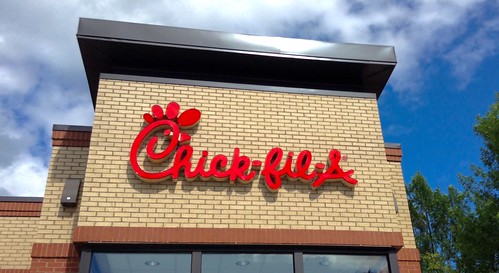
The US streaming services are about to get more crowded with the arrival of.. a fast-food chain? CC-licensed photo by Mike Mozart on Flickr.

You can sign up to receive each day’s Start Up post by email. You’ll need to click a confirmation link, so no spam.


There’s another post coming this week at the Social Warming Substack on Friday at 0845 UK time. Free signup.


A selection of 10 links for you. Spicy! I’m @charlesarthur on Twitter. On Threads: charles_arthur. On Mastodon: https://newsie.social/@charlesarthur. Observations and links welcome.


How the Harris campaign beat Trump at being online • The New Yorker

Kyle Chayka:

»

The Trump team has always drawn many of its ideas from the darker corners of the Internet (for one recent example, see J. D. Vance’s misogynistic obsession with “childless cat ladies”), but the emerging Harris campaign, all of a month old, has found a different kind of traction by embracing the Web’s native formats. Watching its use of popular TikTok sounds—such as Lady Gaga saying during an interview, “No sleep, bus, club, another club . . .” over a montage of Harris-Walz tour stops—feels a bit like hearing parents use their children’s high-school slang.

But it has proved remarkably effective at connecting with the app’s users. According to the Harris-Walz campaign, its TikTok team is made up of five staffers all under the age of twenty-five; the same team had been working for Joe Biden’s reëlection, but the tone since the transition has become strikingly loose.

The campaign has been responsive to what is trending day to day on the platform, creating a kind of call-and-response between itself and Harris fans. In addition to @KamalaHQ, which was renamed from @BidenHQ, the team recently made a personal account for Harris, something that Biden never maintained. Over the weekend, Walz also got his own TikTok account, launching with a very casual video alongside his rescue pooch Scout. Canine friends are a good bet on social media. (Trump, unfortunately, has been reported to suffer from “anti-dog prejudice.”)

«

It’s a really interesting look at how the two campaigns are trying to engage people online. (Also: trust nobody who does not trust dogs.)
unique link to this extract


Why car parks are the hottest space in solar power • BBC News

Chris Baraniuk:

»

There’s more than just cars and empty spaces in this car park. Huge arrays of angled solar panels sit atop jet black steel supports, soaking up the sun and shading the vehicles beneath.

Outside the offices of a major car manufacturer in the south of England, there are now more than 2,000 panels in total with a peak capacity of just under 1 megawatt (MW). That’s enough to power hundreds of homes.

“They are looking stunning,” declares Guy Chilvers, business development manager at SIG, the firm that supplied the solar canopies. These structures make car parks more visually appealing, he insists, while admitting, “I would say that”.

Solar car parks or car ports enable electricity production in open spaces that tend to be positioned conveniently near to energy-guzzling facilities such as hospitals, shopping centres or offices. The canopies have additional benefits in that they protect cars from rain and snow, or hot sun in the summer.

In a drive to boost clean energy production, the French Senate recently approved, external legislation that makes it mandatory for all existing and new car parks with 80 spaces or more to be covered by solar panels.

While there is no equivalent requirement in the UK, solar car parks have been around for years and there are signs that they are beginning to boom here. With electricity prices currently still elevated, many businesses are turning to on-site renewables to try to keep costs down in the long run.

There is a huge opportunity to turn more British car parks into solar farms, according to a new report published by the countryside charity CPRE and the UCL Energy Institute.

«

unique link to this extract


Chick-Fil-A to launch its own streaming service • Deadline

Peter White:

»

Chick-Fil-A is moving aggressively into the entertainment space with plans to launch a slate of originals for its own streaming platform.

Deadline understands that the fast-food firm has been working with a number of major production companies, including some of the studios, to create family-friendly shows, particularly in the unscripted space. It is also in talks to license and acquire content.

We hear that this includes a family-friendly gameshow from Glassman Media, the company behind NBC’s The Wall, and Michael Sugar’s Sugar23, which is behind series such as Netflix’s 13 Reasons Why. Deadline understands this show has been handed a ten-episode order.

Budgets on the unscripted side are believed to be in the range of $400,000 per half-hour. Sources told us the idea is to launch later this year and there’s also talk of scripted projects and animation.

«

*wearily* Why not. Why the hell not. And Netflix can start a fast food chain. Why not.
unique link to this extract


August was Medium’s first profitable month — ever • TechCrunch

Kyle Wiggers:

»

August was online publishing platform Medium’s first profitable month — ever.

That’s according to Medium CEO Tony Stubblebine, who on Wednesday published a recap of Medium’s recent digital Medium Day 2024 conference. Stubblebine says that Medium had over a million members as of April, and that more members “than ever before” are subscribing to the company’s paid plans. (He didn’t volunteer a figure for that second claim.)

Stubblebine had previously pledged Medium would reach profitability this year.

“There’s a side story about how good engineering has saved us money on our server bills,” Stubblebine writes. “But mostly it was as simple as making something members wanted to subscribe to … Even as we cut other costs to make Medium profitable, we paid the writers more.”

Founded in 2012, Medium hosts a hybrid of blogs, newsletters and other forms of the written word. It’s been accused in the past of being a dumping ground for get-rich-quick scams and listicles. But, as Stubblebine notes in his post, the company has undertaken a number of efforts to improve its overall content mix.

«

Twelve years is a looooong time for a startup to chug along not making money: lucky that Ev Williams (its founder) has an estimated net worth of a couple of billion.

Even so, hard to see it succeeding when Substack exists in the world.
unique link to this extract


San Francisco’s nocturnal taxi ballet • The Atlantic

Charlie Warzel:

»

For the past few nights, I’ve concerned myself with the private lives of autonomous vehicles.

It started when I read a news story about a San Francisco apartment complex whose residents were repeatedly awoken at 4 a.m. by honking self-driving taxis. The building overlooks an open-air parking lot that Waymo recently leased to store its vehicles. In the wee hours of the morning—between ferrying home overserved bar crawlers and picking up commuters during the morning rush hour—dozens of the autonomous white sedans fill the lot, power down, and wait to be summoned.

Sometimes, too many awaken at the same time and back up while trying to make their way to the exit, only to find the lanes clogged by their brethren. Angling for position, the taxis engage in a series of polite reversals and turns that quickly gives way to gridlock. Now hemmed in, the cars begin to negotiate their movements, each one offering a gentle horn honk to signal its presence; before long, they’re producing a symphony of toots, turn signals, and low-speed shuffling.

The spectacle was captured on video by Sophia Tung, an engineer whose home looks down on the lot. She first noticed the Waymos late last month, when they colonized the lot without warning, their ambient beeps and scoots so omnipresent that she heard them in her dreams.

Tung was mesmerized by the cars’ movements. “I found myself just staring at it for 10 minutes at a time, watching these machines figure each other out,” she told me. “It was like watching a fish tank.” Her amusement quickly turned into a side project: Tung set up a webcam and started livestreaming the view from her window, adding some chill music as a soundtrack.

…Waymo eventually caught wind of the stream and released an update to prevent the vehicles from honking.

But they still drive around in the lot.

«

unique link to this extract


I founded a pioneering tech magazine. Tech killed it off • The Guardian

Michael Antonoff:

»

Sound & Vision once commanded respect. Sony, Netflix, even 60 Minutes all visited the magazine’s 45th floor offices north of Times Square. Apple hand-delivered its first iPod to the magazine to get the opinion of technical editors before the company had even announced the game-changing product. I had the good fortune to jog around the Central Park Reservoir with a thousand tunes in my pocket when people were still carrying cassette players and radios.

Today’s version of the magazine is a far cry from those days. There is just one issue left. AVTech Media Ltd, a British publisher, confirmed to the Guardian on 20 August that it would shutter Sound & Vision’s print edition after the forthcoming October/November issue. The magazine’s website, which has a miniscule editorial budget compared to the print edition, will continue. The hard truth is that digital advertising has failed to live up to the revenue heights of print advertising.

…I majored in magazines at Syracuse’s journalism school. Every magazine I’ve worked for over the decades has joined the dustbin of history; I guess what I really majored in was obituary writing.

«

If you’ve read the book Gone Girl, this will sound really familiar.
unique link to this extract


Story raises $80m at $2.25bn valuation to build a blockchain for the business of content IP in the age of AI • TechCrunch

Ingrid Lunden:

»

AI giants like Anthropic, OpenAI and Stability AI have faced a lot of heat over how they’ve scraped data and rode rough-shod over others’ intellectual property when training and operating their foundational models. Now a startup called Story — which today is announcing $80m in funding — is bidding to rebalance the scales with a blockchain-based platform to help IP owners track usage more effectively.

In the words of CEO and co-founder, S.Y. Lee, the aim is to build a more “sustainable” IP ecosystem fit for the next generation of digital consumers and builders. The startup says its approach is to think of IP like Lego and use blockchain to make that possible. “Anyone can fork and remix your IP permissionlessly while you capture the upside,” Lee said in an interview with TechCrunch.

«

A blockchain-based platform for AI use of IP, eh. It’s like a holy confluence of buzzwords set up to attract venture capitalists. And guess who one of the lead funders is? Yes, crypto boosters a16z.

I don’t think they’re going to see much – if any – return on their $80m.
unique link to this extract


The discovery of “dark electrons” in solid matter • Breeze in Busan

Maru Kim:

»

In a landmark discovery, Professor Geun-Su Kim and his team at Yonsei University have identified the presence of ‘dark electrons’ in solid materials, a finding that has been published in Nature Physics on July 29, 2024. This discovery has significant implications for the field of quantum physics and could provide insights into several unresolved issues, including the mechanisms behind high-temperature superconductivity.

Dark states, where electrons neither absorb nor emit light, were previously thought to be limited to isolated atoms and molecules. The prevailing belief was that such states could not exist within the structured environment of solid materials. However, this new research demonstrates that electrons can indeed exist in dark states within solids, under specific conditions.

The discovery is rooted in the phenomenon of quantum interference.

…This discovery not only challenges existing beliefs about electron behaviour in solid materials but also opens new avenues for research into quantum materials and technologies. Professor Kim and his team believe their findings will provide significant insights into other complex phenomena in physics, such as the secrets of high-temperature superconductors. Understanding and manipulating dark states in solids could lead to advancements in quantum computing and other technologies that rely on precise control of quantum states.

Professor Kim highlighted the broader implications of their findings: “Recognizing the existence of dark electrons in solid materials offers a crucial key to understanding previously inexplicable quantum phenomena.” The research team plans to leverage this discovery to address other enduring mysteries in modern physics, potentially leading to practical applications that could transform various technological fields.

«

Dark matter, dark energy, dark electrons..
unique link to this extract


How accurate are wearable fitness trackers? Less than you might think • The Conversation

Cailbhe Doherty:

»

the quantified self movement still grapples with an important question: can wearable devices truly measure what they claim to?

Along with my colleagues Maximus Baldwin, Alison Keogh, Brian Caulfield and Rob Argent, I recently published an umbrella review (a systematic review of systematic reviews) examining the scientific literature on whether consumer wearable devices can accurately measure metrics like heart rate, aerobic capacity, energy expenditure, sleep and step count.

At a surface level, our results were quite positive. Accepting some error, wearable devices can measure heart rate with an error rate of plus or minus 3%, depending on factors like skin tone, exercise intensity and activity type. They can also accurately measure heart rate variability and show good sensitivity and specificity for detecting arrhythmia, a problem with the rate of a person’s heart beat.

Additionally, they can accurately estimate what’s known as cardiorespiratory fitness, which is how the circulatory and respiratory systems supply oxygen to the muscles during physical activity. This can be quantified by something called VO2Max, which is a measure of how much oxygen your body uses while exercising.

The ability of wearables to accurately measure this is better when those predictions are generated during exercise (rather than at rest). In the realm of physical activity, wearables generally underestimate step counts, by about 9%.

However, discrepancies were larger for energy expenditure (the number of calories you burn when exercising) with error margins ranging from −21.27% to 14.76%, depending on the device used and the activity undertaken.

Results weren’t much better for sleep.

«

The approximately quantified self.
unique link to this extract


Teen builds his own nuclear fusion reactor at college as part of his A* grade in his A-levels • Daily Mail Online

Elizabeth Haigh:

»

A brainy teen successfully built his own nuclear fusion reactor at college and received an A* grade.

Cesare Mencarini, 17, built the reactor to generate neutrons as part of his Extended Project Qualification (EPQ), for which he achieved an A* in his A-Level results today.

Before embarking on his ambitious project, Cesare had to convince his teachers it wasn’t dangerous – and then spent another 18 months making his vision a reality. It is believed to be only nuclear reactor built in a school environment and he showcased his work at the Cambridge Science Festival recently.

He also achieved top grades in maths, further maths, chemistry and physics while studying at Cardiff Sixth Form College in Wales. Cesare plans to work at the Interface and Analysis Centre at the University of Bristol in Gloucestershire for a year before applying for a degree in engineering. He hopes to ‘encourage other young people to develop ideas’ and think about how they ‘can improve our world.’

Current nuclear power stations use nuclear fission, which involves splitting atoms into smaller parts to create energy. But nuclear fusion has been hailed as a potentially planet-saving energy source, as it involves fusing atoms together, which creates a massive amount of energy.

The main problem preventing fusion from being used is the astronomical temperatures required before atoms begin joining together.

Cesare, who is from Italy, said: ‘The college was initially concerned that this project, which I have also used for my EPQ, was dangerous. However we did full risk assessments and the staff have been so supportive. I had to adapt the design to fit in with the budget and my aim is to encourage other young people to develop ideas and think about how we can improve our world and be innovative. The purpose of the reactor is to produce the necessary conditions for fusion to take place.

«

Isn’t it great when the journalist has absolutely no idea what they’re writing about? I think this is actually a neutron generator – first generated in the 1930s.
unique link to this extract


• Why do social networks drive us a little mad?
• Why does angry content seem to dominate what we see?
• How much of a role do algorithms play in affecting what we see and do online?
• What can we do about it?
• Did Facebook have any inkling of what was coming in Myanmar in 2016?

Read Social Warming, my latest book, and find answers – and more.


Errata, corrigenda and ai no corrida: none notified

Start Up No.2272: Musk’s Twitter buyout the worst ever, after Google’s antitrust, video scrolling means boredom, and more


New research shows that the universe’s accelerating expansion is slowing down, which means that… things are complicated. CC-licensed photo by European Southern Observatory on Flickr.

You can sign up to receive each day’s Start Up post by email. You’ll need to click a confirmation link, so no spam.


There’s another post coming this week at the Social Warming Substack on Friday at 0845 UK time. Free signup.


A selection of 8 links for you. Not expanding or contracting. I’m @charlesarthur on Twitter. On BlueSky: @charles.arthur. On Threads: charles_arthur. On Mastodon: https://newsie.social/@charlesarthur. Observations and links welcome.


Elon Musk’s Twitter takeover is now the worst buyout for banks since the financial crisis • WSJ

Alexander Saeedy and Dana Mattioli:

»

The $13bn that Elon Musk borrowed to buy Twitter has turned into the worst merger-finance deal for banks since the 2008-09 financial crisis.

The seven banks involved in the deal, including Morgan Stanley and Bank of America, lent the money to the billionaire’s holding company to take the social media platform, now named X, private in October 2022. Banks that provide loans for takeovers generally sell the debt quickly to other investors to get it off their balance sheets, making money on fees. 

The banks haven’t been able to offload the debt without incurring major losses—largely because of X’s weak financial performance—leaving the loans stuck on their balance sheets, or “hung” in industry jargon. The resulting writedowns have hobbled the banks’ loan books and, in one case, was a factor that crimped compensation for a bank’s merger department, according to people involved with the deal.

The value of the loans to Musk quickly soured after the $44bn acquisition was completed. But new analysis shows how their persistent underperformance has put the deal in historic territory.

According to data from PitchBook LCD, the Twitter loans have been hung longer than every similar unsold deal since the 2008-09 financial crisis for which the research firm has complete records. There were many more hung deals back then, but banks in that period typically were still able to sell or write off most of their hung debt within roughly a year after they issued the loans. One hung deal—a $20bn all-debt acquisition in 2007—was bigger than Twitter but wound up in bankruptcy about 12 months after banks wrote the check.

…The banks—which also include Barclays, Mitsubishi UFJ Financial Group, BNP Paribas, Mizuho and Société Générale—have been able to collect hefty interest payments from the X loans. They are generally for seven to eight years and carry rates several percentage points above the benchmark for investment-grade companies. And the banks could still ultimately be made whole if X is able to cover its interest obligations and repay the principal when the loans mature.

«

Hard to see anything making the company’s value rise, which means that the debt is going to be hard to sell.
unique link to this extract


National Public Data confirms breach exposing Social Security numbers • Bleeping Computer

Ionut Ilascu:

»

Background check service National Public Data confirms that hackers breached its systems after threat actors leaked a stolen database with millions of social security numbers and other sensitive personal information. 

The company states that the breached data may include names, email addresses, phone numbers, social security numbers (SSNs), and postal addresses.

In the statement disclosing the security incident, National Public Data says that “the information that was suspected of being breached contained name, email address, phone number, social security number, and mailing address(es).”

The company acknowledges the “leaks of certain data in April 2024 and summer 2024” and believes the breach is associated with a threat actor “that was trying to hack into data in late December 2023.”

NPD says they investigated the incident, cooperated with law enforcement, and reviewed the potentially affected records. If significant developments occur, the company “will try to notify” the impacted individuals.

It is worth noting that BleepingComputer’s testing revealed that access to NPD’s statement on the security incident has been blocked for IP addresses in numerous locations in the US as well as regions outside the country. More than a dozen captures of the page exist on the Internet Archive, though.

«

At this point might as well just publish all this stuff online rather than make hackers go to the work of hacking it. Takes away their ability to threaten exposure, doesn’t it. (And demonstrates again that there are only two classes of company, those which have been hacked and those which are going to get hacked.)
unique link to this extract


Waning dark energy may evade ‘swampland’ of impossible universes • Quanta Magazine

Steve Nadis:

»

Since 1998, we’ve known that the expansion of the universe is accelerating. Dark energy is the name given to the accelerant. In the standard theoretical model of the cosmos, dark energy has a simple form: It is spread uniformly in space, maintaining a constant density at all times. Dark energy of this type, known as the cosmological constant, would not get diluted as the universe expands. Rather, as space grows, the amount of dark energy grows with it. And so this accumulating energy expands the universe with ever-increasing gusto.

But the constancy of dark energy is merely a hypothesis, one that the DESI experiment set out to check. The collaboration reported that they had so far mapped and analyzed the locations of 6.4 million galaxies to determine how fast the universe has expanded as a function of time. (More distant galaxies reveal the younger universe.) If dark energy is a cosmological constant, then the acceleration should hold steady. DESI’s data set wasn’t big enough to test this by itself, though the team will be able to do so after mapping a total of 40 million galaxies during the five-year survey. But when the scientists pooled their data with other astronomical observations, the combined data sets favored an evolving dark energy.

The findings fall short of the level of statistical certainty needed to claim a discovery. Right now, DESI is calling it a “hint” that dark energy might be weakening in strength. But according to Nathalie Palanque-Delabrouille, a cosmologist at Lawrence Berkeley National Laboratory and one of the leaders of DESI, “that hint gets stronger as we start combining different data sets. And all these data sets seem to be pointing in the same direction.”

«

This is a good, clearly written article about quite where cosmology and physics have got to in the puzzle about the universe’s expansion.

unique link to this extract


Competing in search • Benedict Evans

After the decision in favour of the DOJ finding Google breached the antitrust law, Evans ponders the aftermath:

»

what comes next is not clear at all. It’s obvious that the court will order Google to stop its TAC payments and abandon the contracts (or at a minimum radically reduce their scope), which means it saves $30bn in cash each year and Apple loses $20bn. But then what?

The court might order ‘choice screens’ in user-downloaded Chrome (20% of queries), but it has no power to order a choice screen in Safari, since Apple isn’t a party, and it’s not clear whether it can do that on Android, given that Samsung and Motorola, and the telcos, aren’t parties either. Meanwhile, it’s also unclear whether choice screens actually work, especially where (as the judgment laid out) Google has a much better brand than Bing, let alone any of the other alternatives. A lot of people given a choice screen would just choose Google anyway, as indeed appears to have happened in the EU, which already mandated this on Android. Meanwhile, the DoJ’s head of competition, Jonathan Kanter, was clear in an interview last week that he wants any remedies to change the situation, not just remove the illegal conduct:

»

Q: If this ends up with Google just not having to pay Apple but still being the default, have you accomplished anything?

We want to make sure that remedies in any case, whether it’s this one or any other, are meaningful and meet the markets where they are today, not where they were 15 years ago

«

Then, there are press reports that the DoJ is considering asking for Android and Chrome to be spun out. Spinning out Android seems irrelevant except as a purely punitive step: if it was independent, that wouldn’t change how Samsung sets defaults. If Chrome was independent, it could choose a different default too. But would it?

This is really the first big puzzle: what will Apple, Samsung and Motorola, and a hypothetically independent Chrome Inc, choose as the default if Google can’t pay to be the default?

«

Apple’s Eddy Cue told the judge that Microsoft’s Bing would have to pay more than 100% of revenue share because he sees its quality as being so inferior to Google’s. But things can change, I suppose.
unique link to this extract


Scrolling through online videos increases feelings of boredom, study finds • The Guardian

Nicola Davis:

»

Browsing videos on TikTok or YouTube can be a hit-and-miss affair, with gems lurking amid mediocre efforts. But researchers have found that switching to another video, or skipping forwards and backwards in the same one, actually makes people more bored.

Dr Katy Tam at the University of Toronto Scarborough, the lead author of the research, said boredom was closely linked to attention.

“We feel bored when there’s a gap between how engaged we are and how engaged we want to be,” she said. “When people keep switching through videos, they become less engaged with the videos and they are looking for something more interesting. This can lead to increased feelings of boredom.”

The results appear to chime with other studies: as the team notes, previous research has suggested that while boredom relief is a driver for people to use social media or smartphones, the use of such technology appears to make the feeling worse.

Writing in the Journal of Experimental Psychology: General, Tam and colleagues report how they carried out seven experiments involving a total of more than 1,200 participants.

The first, involving 140 participants, revealed that people tended to switch between videos more when they rated the content more boring, while the second – an online survey involving 231 participants – suggested people thought having the option to skip through a video or switch to another would make viewing a video less boring.

However, the team’s subsequent experiments suggest this is not the case.

«

I’m sure TikTok will shut down forthwith.
unique link to this extract


Former CEO of failed bank sentenced to prison • United States Department of Justice

»

A Kansas man was sentenced to 293 months in prison for using his former position as chief executive officer (CEO) of a bank to embezzle tens of millions of dollars in a cryptocurrency scheme which led the bank to fail at a complete loss of equity for investors. 

According to court documents, Shan Hanes, 53, of Elkhart pleaded guilty to one count of embezzlement by a bank officer. 

While the CEO of Heartland Tri-State Bank (HTSB) in Elkhart, Kansas, Hanes initiated 11 outgoing wire transfers between May 2023 and July 2023 totalling $47.1m of Heartland’s funds to a cryptocurrency wallet in a cryptocurrency scheme referred to as “pig butchering.” The funds were transferred to multiple cryptocurrency accounts controlled by unidentified third parties during the time HTSB was insured by the Federal Deposit Insurance Corporation (FDIC). The FDIC absorbed the $47.1m loss. Hanes’ fraudulent actions caused HTSB to fail and the bank investors to lose $9m.

A federal judge ordered that restitution be finalized at a separate hearing within the next 90 days. 

“Hanes’ greed knew no bounds. He trespassed his professional obligations, his personal relationships, and federal law. Not only did Shan Hanes betray Heartland Bank and its investors, but his illegal schemes also jeopardized confidence in financial institutions,” said US Attorney Kate E. Brubacher. “Today’s sentence is a measure of justice for the victims, and a statement that the U.S. Department of Justice will hold those accountable who violate positions of trust for their own gain.” 

«

He has a Twitter profile: “father and banker who loves sports“. His last tweet was in September 2022, when he was in Washington meeting legislators “to discuss banking concerns”. Such as embezzlement? In classic manner, he was approached via WhatsApp. Don’t answer those random messages!
unique link to this extract


Google makes your Pixel screenshots searchable with Recall-like AI feature • The Verge

Emma Roth:

»

Google has announced Pixel Screenshots, a new AI-powered app for its Pixel 9 lineup that lets you save, organize, and surface information from screenshots. Pixel Screenshot uses Google’s private, on-device Gemini Nano AI model to analyze the content of an image and make it searchable.

During a demo at its Pixel launch event, Google showed how you can take a screenshot and then save it to a collection, like “gift ideas.” You can also search through all your other screenshots by typing in a keyword, like “bikes” or “shoes.” Pixel Screenshots will then pull up all relevant results.

Additionally, Pixel Screenshots can give you information about what’s inside an image. So, if you’re looking for the price of a shirt you screenshotted, you can type in “t-shirt price,” and Pixel Screenshots will extract the information from your screenshots to surface an answer. The app will only be available on Pixel 9 devices.

«

Will probably trickle down to other Pixel devices, and then to other Android devices, in time. Though I thought Apple Photos could do something vaguely similar in the searching for text within a picture or screenshot.
unique link to this extract


Colleges still don’t have a plan for AI cheating • The Atlantic

Ian Bogost:

»

No matter how small the assignments, many students will complete them using ChatGPT. “Students would submit ChatGPT responses even to prompts like ‘Introduce yourself to the class in 500 words or fewer,’” [one writing professor] said.

If the first year of AI college ended in a feeling of dismay, the situation has now devolved into absurdism. Teachers struggle to continue teaching even as they wonder whether they are grading students or computers; in the meantime, an endless AI-cheating-and-detection arms race plays out in the background. Technologists have been trying out new ways to curb the problem; the Wall Street Journal article describes one of several frameworks.

OpenAI is experimenting with a method to hide a digital watermark in its output, which could be spotted later on and used to show that a given text was created by AI. But watermarks can be tampered with, and any detector built to look for them can check only for those created by a specific AI system. That might explain why OpenAI hasn’t chosen to release its watermarking feature—doing so would just push its customers to watermark-free services.

Other approaches have been tried. Researchers at Georgia Tech devised a system that compares how students used to answer specific essay questions before ChatGPT was invented with how they do so now. A company called PowerNotes integrates OpenAI services into an AI-changes-tracked version of Google Docs, which can allow an instructor to see all of ChatGPT’s additions to a given document. But methods like these are either unproved in real-world settings or limited in their ability to prevent cheating. In its formal statement of principles on generative AI from last fall, the Association for Computing Machinery asserted that “reliably detecting the output of generative AI systems without an embedded watermark is beyond the current state of the art, which is unlikely to change in a projectable timeframe.”

«

The arms race between cheating and catching the cheats continues. But it also raises the question: what are you testing the students about? What’s the purpose of the out-of-classroom work? And eventually, won’t this be solved by having exams in internet-free rooms – perhaps using pen and paper?
unique link to this extract


• Why do social networks drive us a little mad?
• Why does angry content seem to dominate what we see?
• How much of a role do algorithms play in affecting what we see and do online?
• What can we do about it?
• Did Facebook have any inkling of what was coming in Myanmar in 2016?

Read Social Warming, my latest book, and find answers – and more.


Errata, corrigenda and ai no corrida: none notified

Start Up No.2271: how Google Search really works, Sonos mulls app reverse, Mike Lynch missing, Humane unpinned, and more


Smart TVs have turned their makers from hardware specialists into advertising conduits. CC-licensed photo by Keith Williamson on Flickr.

You can sign up to receive each day’s Start Up post by email. You’ll need to click a confirmation link, so no spam.


There’s another post coming this week at the Social Warming Substack on Friday at 0845 UK time. Free signup.


A selection of 10 links for you. Not an advert. I’m @charlesarthur on Twitter. On Threads: charles_arthur. On Mastodon: https://newsie.social/@charlesarthur. Observations and links welcome.


How Google Search ranking works • Search Engine Land

Mario Fischer:

»

The structure of organic search results is now so complex – not least due to the use of machine learning – that even the Google employees who work on the ranking algorithms say they can no longer explain why a hit is at one or two. We do not know the weighting of the many signals and the exact interplay.

Nevertheless, it is important to familiarize yourself with the structure of the search engine to understand why well-optimized pages do not rank or, conversely, why seemingly short and non-optimized results sometimes appear at the top of the rankings. The most important aspect is that you need to broaden your view of what is really important.

All the information available clearly shows that. Anyone who is even marginally involved with ranking should incorporate these findings into their own mindset. You will see your websites from a completely different point of view and incorporate additional metrics into your analyses, planning and decisions.

To be honest, it is extremely difficult to draw a truly valid picture of the systems’ structure. The information on the web is quite different in its interpretation and sometimes differs in terms, although the same thing is meant. 

An example: The system responsible for building a SERP (search results page) that optimizes space use is called Tangram. In some Google documents, however, it is also referred to as Tetris, which is probably a reference to the well-known game.

Over weeks of detailed work, I have viewed, analyzed, structured, discarded and restructured almost 100 documents many times. 

This article is not intended to be exhaustive or strictly accurate. It represents my best effort (i.e., “to the best of my knowledge and belief”) and a bit of Inspector Columbo’s investigative spirit. The result is what you see here.

«

This is not brief. But also, you’ll end up a bit stunned by how much goes into a search ranking.
unique link to this extract


Sonos considers relaunching its old app • The Verge

Chris Welch:

»

Sonos has explored the possibility of rereleasing its previous mobile app for Android and iOS — a clear sign of what an ordeal the company’s hurried redesign has become. The Verge can report that there have been discussions high up within Sonos about bringing back the prior version of the app, known as S2, as the company continues toiling away at improving the performance and addressing bugs with the overhauled design that rolled out in May to a flood of negative feedback. (The new Sonos app currently has a 1.3-star review average on Google Play.)

Letting customers fall back to the older software could ease their frustrations and reduce at least some of the pressure on Sonos to rectify every issue with the new app.

«

There is a lesson here. Sonos did a complete ground-up rewrite and changed the UI. So, interestingly, did Marco Arment of his very popular Overcast podcast app. “My business is on fire,” Arment declared a couple of weeks after the release: people hated the new UI and they hated the fact that elements they used all the time had been moved to somewhere illogical.

Arment wailed that moving those elements back was going to spoil his lovely UI redesign. But! He was prepared to do it, because the customer is right. Arment is a one-man band, and while he isn’t going back to the old app, it’s a lot easier for him to get approval to change things.

Sonos burnt its bridges and it’s hard to turn the supertanker around (so to speak). Meanwhile, it’s just let 100 people – about 6% of its workforce – go. Hardware is hard.
unique link to this extract


UK tech entrepreneur Mike Lynch among missing in Sicily yacht sinking • The Guardian

Jamie Grierson and Lorenzo Tondo:

»

The British tech entrepreneur Mike Lynch is missing after a superyacht sank off the coast of Sicily during a violent storm.

The British-flagged Bayesian, a 56-metre sailboat, was carrying 22 people and anchored just off shore near the port of Porticello when it was hit by a tornado in the early hours, the Italian coastguard said in a statement.

One man, understood to be the vessel’s chef, was confirmed dead and six others, including Lynch and his 18-year-old daughter, Hannah, remained unaccounted for on Monday evening. The coastguard said the missing had British, American and Canadian nationalities.

Fifteen people were rescued, including Lynch’s wife, Angela Bacares, who owned the boat, and a one-year-old girl who was saved by her mother.

A spokesperson for Lynch declined to comment. A spokesperson for the UK Foreign Office said: “We are providing consular support to a number of British nationals and their families following an incident in Sicily, and are in contact with the local authorities.”

Lynch co-founded Autonomy, a software firm that became one of the shining lights of the UK tech scene, in the mid-90s. Once described as Britain’s Bill Gates, Lynch spent much of the last decade in court defending his name against allegations of fraud related to the sale of Autonomy to the US tech company Hewlett-Packard for $11bn.

The 59-year-old was acquitted by a jury in San Francisco in June, after he had spent more than a year living in effect under house arrest. Upon his acquittal, he told reporters: “I am looking forward to returning to the UK and getting back to what I love most: my family and innovating in my field.”

«

This has all the beats of a Greek tragedy. But as real life.
unique link to this extract


OpenAI’s new voice mode let me talk with my phone, not to it • TechCrunch

Maxwell Zeff:

»

I’ve been playing around with OpenAI’s Advanced Voice Mode for the last week, and it’s the most convincing taste I’ve had of an AI-powered future yet. This week, my phone laughed at jokes, made them back to me, asked me how my day was, and told me it’s having “a great time.” I was talking with my iPhone, not using it with my hands.

OpenAI’s newest feature, currently in a limited alpha test, doesn’t make ChatGPT any smarter than it was before. Instead, Advanced Voice Mode (AVM) makes it friendlier and more natural to talk with. It creates a new interface for using AI and your devices that feels fresh and exciting, and that’s exactly what scares me about it. The product was kinda glitchy, and the whole idea totally creeps me out, but I was surprised by how much I genuinely enjoyed using it.

Taking a step back, I think AVM fits into OpenAI CEO Sam Altman’s broader vision, alongside agents, of changing the way humans interact with computers, with AI models front and center.

…On Wednesday, I tested the most tremendous upside for this advanced technology I could think of: I asked ChatGPT to order Taco Bell the way Obama would.

“Uh, let me be clear — I’d like a Crunchwrap Supreme, maybe a few tacos for good measure,” said ChatGPT’s Advanced Voice Mode. “How do you think he’d handle the drive-thru?” said ChatGPT, then laughing at its own joke.

«

This is my unimpressed face. I know everyone’s saying this is the next step for smartphones, but seriously, I’m fine with a device that can interpret commands. Maybe it’ll be like TARS in Interstellar, where you can fine-tune the humour level.
unique link to this extract


Your TV set has become a digital billboard. And it’s only getting worse • Ars Technica

Scharon Harding:

»

Over the past few years, TV makers have seen rising financial success from TV operating systems that can show viewers ads and analyze their responses. Rather than selling as many TVs as possible, brands like LG, Samsung, Roku, and Vizio are increasingly, if not primarily, seeking recurring revenue from already-sold TVs via ad sales and tracking.

How did we get here? And what implications does an ad- and data-obsessed industry have for the future of TVs and the people watching them?

Success in the TV industry used to mean selling as many TV sets as possible. But with smart TVs becoming mainstream and hardware margins falling, OEMs have sought new ways to make money. TV OS providers can access a more frequent revenue source at higher margins, which has led to a viewing experience loaded with ads. They can be served from the moment you pick up your remote, which may feature streaming service ads in the form of physical buttons.

Some TV brands already prioritize data collection and the ability to sell ads, and most are trying to boost their appeal to advertisers. Smart TV OSes have become the cash cow of the TV business, with providers generating revenue by licensing the software and through revenue sharing of in-app purchases and subscriptions.

A huge part of TV OS revenue comes from selling ads, including on the OS’s home screen and screensaver and through free, ad-supported streaming television channels. GroupM, the world’s largest media investment company, reported that smart TV ad revenue grew 20% from 2023 to 2024 and will grow another 20% to reach $46bn next year. In September 2023, Patrick Horner, practice leader of consumer electronics at analyst Omdia, reported that “each new connected TV platform user generates around $5 per quarter in data and advertising revenue.”

«

Hardware is hard; advertising seems to be eating the world, or at least all its available attention. This isn’t really what we wanted when we got smart TVs, but the connectedness means that the makers refuse to let go of their device. So we see smart TVs showing advertising and car manufacturers holding back capabilities such as heated seats unless you pay them a subscription.
unique link to this extract


Humane’s daily returns are outpacing sales • The Verge

Kylie Robison:

»

Shortly after Humane released its $699 AI Pin in April, the returns started flowing in.

Between May and August, more AI Pins were returned than purchased, according to internal sales data obtained by The Verge. By June, only around 8,000 units hadn’t been returned, a source with direct knowledge of sales and return data told me. As of today, the number of units still in customer hands had fallen closer to 7,000, a source with direct knowledge said.

At launch, the AI Pin was met with overwhelmingly negative reviews. Our own David Pierce said it “just doesn’t work,” and Marques Brownlee called it “the worst product” he’s ever reviewed. Now, Humane is attempting to stabilize its operations and maintain confidence among staff and potential acquirers. The New York Times reported in June that HP is considering purchasing the company, and The Information reported last week that Humane is negotiating with its current investors to raise debt, which could later be converted into equity.

Humane’s AI Pin and accessories have brought in just over $9m in lifetime sales, according to the internal data seen by The Verge. But around 1,000 purchases were cancelled before shipping, and more than $1m worth of product has been returned.

«

Remarkable that there are that many people still finding them worthwhile. Or maybe they dropped them down the back of the sofa and forgot about them?

Anyway: it’s dead, Jim. Hardware is so, so difficult.
unique link to this extract


Bots on Twitter/X run wild amid global elections • Rest of World

Russell Brandom:

»

As Rwanda prepared for its national election on July 15, something strange was happening on X. Hundreds of accounts appeared to be operating in unison, posting identical or oddly similar messages in support of incumbent president Paul Kagame. A team of researchers at Clemson University started tracking the seemingly automated network and discovered more than 460 accounts involved, sharing what appeared to be AI-generated messages.

“The campaign, which exhibits several markers of coordinated inauthentic behavior, seems to be trying to affect discourse about the performance of the Kagame regime,” the researchers wrote in a paper tracing the network.

It was the kind of revelation that would normally send moderators scrambling, particularly in the weeks before a national election. But when the group reported their findings to X, nothing happened. Flagged accounts remained up, and the network continued to post. 

It was a stunning result, given the sensitivity of the country’s election and how easy it would have been to stop the network in its tracks. “It’s obvious,” researcher Morgan Wack, who led the Clemson project, told Rest of World. “If you’re paying attention at all, it’s very clear you could take down several of these accounts. There’s just no effort to take down any of this.”

Wack’s experience is part of a larger shift in moderation on X, which has opened the door to influence operations around the world. In the two years since Elon Musk took ownership of the company, its trust and safety team has been decimated — and the result has been a steady drip of networks like the one uncovered in Rwanda. Simply finding the networks is harder than ever, as researchers must do without API access and face growing legal risks after their work is published.

«

Musk utterly doesn’t care. He’s got no interest in anything outside the US, and even there he only cares about his stupid little obsessions.

unique link to this extract


Sam Altman’s Worldcoin is battling with governments over your eyes • WSJ

Angus Berwick:

»

Sam Altman wants to save us from the AI-dominated world he is building. The trouble is, governments aren’t buying his plan, which involves an attempt to scan the eyeballs of every person on Earth and pay them with his own cryptocurrency.

Altman’s OpenAI is creating models that may end up outsmarting humans. His Worldcoin initiative says it is addressing a key risk that could follow: we won’t be able to tell people and robots apart.

But Worldcoin has come under assault by authorities over its mission. It has been raided in Hong Kong, blocked in Spain, fined in Argentina and criminally investigated in Kenya. A ruling looms on whether it can keep operating in the European Union.

More than a dozen jurisdictions have either suspended Worldcoin’s operations or looked into its data processing. Among their concerns: How does the Cayman Islands-registered Worldcoin Foundation handle user data, train its algorithms and avoid scanning children?

…Worldcoin verifies “humanness” by scanning irises using a basketball-sized chrome device called the Orb. Worldcoin says irises, which are complex and relatively unchanging in adults, can better distinguish humans than fingerprints or faces.

Users receive immutable codes held in an online “World ID” passport, to use on other platforms to prove they are human, plus payouts in Worldcoin’s WLD cryptocurrency.

Worldcoin launched last year and says it has verified more than six million people across almost 40 countries. Based on recent trading prices, the total pool of WLD is theoretically worth some $15bn.

The project says its technology is completely private: Orbs delete all images after verification, and iris codes contain no personal information—unless users permit Worldcoin to train its algorithms with their scans. Encrypted servers hold the anonymised codes and images. 

«

It’s not scanned a lot of people, to be honest. But also: if the worry is that superhuman AI will pose as humans, why wouldn’t the superhuman AI just hack into the servers? It makes no sense. (Thanks Karsten for the link.)
unique link to this extract


US wind and solar on track to overtake coal this year • Microgrid Media

Jonas Muthoni:

»

For the first time in history, wind and solar energy have generated more electricity than coal in the United States through July. This shift marks a significant milestone as these renewable resources continue their upward trajectory in the power generation sector.

According to federal data, the combined output of wind and solar was 393 terawatt-hours (TWh), slightly ahead of coal’s 388 TWh. This development is particularly notable as it does not include other renewable sources like hydropower, which have also seen substantial usage in past comparisons.

Factors influencing the shift:
• Increase in solar output: solar facilities saw a 36% increase in production over the previous year, reaching 118 TWh.
• Steady growth in wind energy: wind energy production also increased by 8%, totaling 275 TWh.
• Decline of coal: The decline in coal is attributed to the closure of numerous coal plants and an overall decrease in its economic viability.

«

And yet I do come across people who insist that wind and solar are no use and that we should be piling in to the North Sea for its oil and gas reserves rather than onshore wind or solar. Hard to argue with “logic” like that.
unique link to this extract


When will climate change turn life in the US upside down? • Yale Climate Connections

Jeff Masters is a former meteorologist:

»

In the US, the most likely major economic disruption from climate change over the next few years might well be a collapse of the housing market in flood-prone and wildfire-prone states. Billion-dollar weather disasters — which cause about 76% of all weather-related damages — have steadily increased in number and expense in recent years and would be even worse were it not for improved weather forecasts and better building codes. The recent increase in weather-disaster losses has brought on an insurance crisis — especially in Florida, Louisiana, California, and Texas — which threatens one of the bedrocks of the U.S. economy, the housing and real estate market.

In California, the insurer of last resort, the FAIR plan, had only about $250m in cash on hand as of March 2024.

“One major fire near Lake Arrowhead, where the Plan holds $8 billion in policies, would plunge the whole scheme into insolvency,” observed Harvard’s Susan Crawford, author of “Charleston: Race, Water, and the Coming Storm.”

It is widely acknowledged that higher weather disaster losses result primarily from an increase in exposure: more people with more stuff moving into vulnerable places, including those at risk of floods. Martin Bertogg, Swiss Re’s head of catastrophic peril, said in a 2022 AP interview that two-thirds, perhaps more, of the recent rise in weather-related disaster losses is the result of more people and things in harm’s way.

But this balance will likely shift in the coming decades. Increased exposure will continue to drive increased weather disaster losses, but the fractional contribution of climate change to disaster losses — at least for wildfire, hurricane, and flood disasters — is likely to increase rapidly, making the insurance crisis accelerate.

«

Long essay, but interesting. He thinks there’s another 15 years or so before things go haywire.
unique link to this extract


• Why do social networks drive us a little mad?
• Why does angry content seem to dominate what we see?
• How much of a role do algorithms play in affecting what we see and do online?
• What can we do about it?
• Did Facebook have any inkling of what was coming in Myanmar in 2016?

Read Social Warming, my latest book, and find answers – and more.


Errata, corrigenda and ai no corrida: none notified

Start Up No.2270: Google’s influence on Pixel reviews, no marshmallow!, exit Twitter, glacial melt in pictures, fusion?, and more


Good news (perhaps): VAR decisions in Premier League will this season be aided by an array of iPhones all around the ground. CC-licensed photo by Footy.com Images on Flickr.

You can sign up to receive each day’s Start Up post by email. You’ll need to click a confirmation link, so no spam.

A selection of 9 links for you. Welcome back, hope it was good for you. I’m @charlesarthur on Twitter. On Threads: charles_arthur. On Mastodon: https://newsie.social/@charlesarthur. Observations and links welcome.


Google threatened tech influencers unless they ‘preferred’ the Pixel • The Verge

Victoria Song:

»

The Verge has independently confirmed screenshots of the clause in this year’s Team Pixel agreement for the new Pixel phones, which various influencers began posting on X and Threads last night. The agreement tells participants they’re “expected to feature the Google Pixel device in place of any competitor mobile devices.” It also notes that “if it appears other brands are being preferred over the Pixel, we will need to cease the relationship between the brand and the creator.” The link to the form appears to have since been shut down.

The Verge obtained a link to the survey, but it appears to have since been shut down. Screenshot: The Verge
When asked, Google communications manager Kayla Geier told The Verge that “#TeamPixel is a distinct program, separate from our press and creator reviews programs. The goal of #TeamPixel is to get Pixel devices into the hands of content creators, not press and tech reviewers. We missed the mark with this new language that appeared in the #TeamPixel form yesterday, and it has been removed.”

Those terms certainly caused confusion online, with some assuming such terms apply to all product reviewers. However, that isn’t the case. Google’s official Pixel review program for publications like The Verge requires no such stipulations. (And, to be clear, The Verge would never accept such terms, in accordance with our ethics policy.)

So then, what is Team Pixel, exactly? Officially, it’s a program handled by PR agency 1000heads that seeds early units to influencers and superfans to drum up interest as brand ambassadors. While Google partners with 1000heads, it doesn’t directly run the program, and there are distinct differences from the traditional reviews program. For example, journalists and influencers in the official reviews program often get briefed and given products under embargo before or during an event. Team Pixel participants get the devices shortly after launch but before the public — all in exchange for some coverage on social media. For smaller creators, this can be a big leg up in terms of access.

“I joined the program over five years ago because it was a great way to get a phone and either relatively early or on time, which, in the review world, is big,” says creator Adam Matlock, who reviews tech on his TechOdyssey YouTube channel.

«

Which goes to show how much one should trust influencers, I suppose. (Never saw this reviewing Apple products, and as with The Verge, would have ignored it. That’s different from an embargo on when the review can be published, though.) I bet all the folk at Humane (struggling with mountains of returns) are realising they missed a trick.
unique link to this extract


Delay of gratification and adult outcomes: the “Marshmallow Test” does not reliably predict adult functioning • Wiley Online Library

Jessica Sperber, Deborah Lowe Vandell, Greg Duncan, Tyler Watts:

»

This study extends the analytic approach conducted by Watts et al. (2018) to examine the long-term predictive validity of delay of gratification. Participants (n = 702; 83% White, 46% male) completed the Marshmallow Test at 54 months (1995–1996) and survey measures at age 26 (2017–2018). Using a preregistered analysis, Marshmallow Test performance was not strongly predictive of adult achievement, health, or behavior.

Although modest bivariate associations were detected with educational attainment (r = .17) and body mass index (r = −.17), almost all regression-adjusted coefficients were nonsignificant. No clear pattern of moderation was detected between delay of gratification and either socioeconomic status or sex. Results indicate that Marshmallow Test performance does not reliably predict adult outcomes.

«

You have no idea how long I’ve waited for the Marshmallow Test to be shown to be hooey. (Yes, that’s a joke.) Unusual, of course, for a negative result to be published in this way, but it’s an important one.
unique link to this extract


I, for one, will mourn Twitter • New Statesman

Jonn Elledge:

»

The argument against Twitter is becoming overwhelming. The social media network, to which I still refuse to refer using Elon Musk’s embarrassing rebrand “X”, has always had its dark side. It has been described, by its most loyal users, as “the hellsite” for literally years. It’s been a transmission mechanism for nasty far-right politics to reach the political mainstream before, too, playing no small part in the unlikely transformation of a failed real-estate mogul and reality-TV star into the once and perhaps future president of the United States.

But since Elon Musk acquired it, possibly by accident, back in 2022, the voices of racist, misogynistic or homophobic trolls have become louder and more prominent. Moderation policies have been weakened; banned accounts belonging to the likes of Andrew Tate or Alex Jones reinstated. Misinformation abounds, and the loss of reputable advertisers has made noticeably less reputable ones more visible.

Even that era now looks like a lost golden age compared to these last few weeks. Musk has tweeted about “two-tier Keir” – a reference to a right-wing conspiracy theory that the reason violent anti-immigration rioters have been policed more harshly than protesters supporting left-wing causes is the politics, not the violence. He’s agreed with Nigel Farage that the Prime Minister is the “biggest threat to free speech we’ve seen in our history”. He’s even used his platform to predict civil war in the UK. If Twitter was a new social media network, the News Agents’ Lewis Goodall has argued, we’d treat it like Truth Social or Gab – an outpost of the alt right – not the world’s “public square”. If your politics aren’t on the nasty right, the case for leaving is increasingly unarguable.

«

On Twitter, I don’t follow Musk, and have zero interest in what he has to say; but it’s clear there’s a huge number of people who do, and do. It’s also clear that his decision to let people who pay to be there be amplified (and be paid for that) has a seriously bad effect on behaviours and outcomes.

Threads, however, is really boring. BlueSky I find more interesting.
unique link to this extract


Unbundling Profile: MIT Libraries • SPARC

»

MIT has long tried to avoid vendor lock-in through big deal contracts and, in 2019, maintained individual title-by-title subscriptions to approximately 675 Elsevier titles. In 2020, they took the significant step of canceling the full Elsevier journals contract – all 675 titles – leaving users with immediate access to only pre-2020 backfile content. Since the cancellation, MIT Libraries estimates annual savings at more than 80% of its original spend. This move saves MIT approximately $2m each year, and the Libraries provide alternative means of access that fulfils most article requests in minutes. 

After laying the groundwork with faculty and university administrators, the transition has been relatively seamless with minimal push back from researchers. Most faculty have been supportive of the Libraries in taking a principled stand in line with MIT values and are finding alternative means of  access to needed research without an Elsevier subscription. Four years out, the faculty who continue to be most challenged by lack of immediate access are in the life sciences.

The experience has highlighted the extraordinary difference between what MIT had been paying (with pricing based on historic spend) to subscribe to Elsevier journal content and what it actually costs the Libraries to provide users with read access to what they need. On the publishing side, MIT’s analysis demonstrates that there were no financial economies of scale offered by Elseiver’s read and publish proposal. While local institutional context varies, MIT librarians believe others could likely benefit from a similar move. They are interested in collaborating with others to make collective investments in open publishing using their savings.

«

We might be moving towards a new model of scientific publishing: preprints on Arxiv, discussion on blogs and Arxiv, revision and publication in a jointly-funded open publication journal.
unique link to this extract


‘It made me cry’: photos taken 15 years apart show melting Swiss glaciers • The Guardian

Ajit Niranjan:

»

A tourist has posted “staggering” photos of himself and his wife at the same spot in the Swiss Alps almost exactly 15 years apart, in a pair of photos that highlight the speed with which global heating is melting glaciers.

Duncan Porter, a software developer from Bristol, posted photos that were taken in the same spot at the Rhône glacier in August 2009 and August 2024. The white ice that filled the background has shrunk to reveal grey rock. A once-small pool at the bottom, out of sight in the original, has turned into a vast green lake.

“Not gonna lie, it made me cry,” Porter said in a viral post on social media platform X on Sunday night.

Porter and his wife had taken the original photo from a viewpoint by a “Wes Anderson-style” hotel that has since shut, and hung it up in their kitchen. Eager to return to the mountains and let their teenage daughters Maisie and Emily see the glacier, they took a camper van trip across Europe and set out to recreate the picture.

“But obviously the circumstance of this photo was drastically different,” said Porter. Helen Porter, a nurse, added: “I thought it was really unbelievable.”

The carbon pollution released by burning fossil fuels and destroying nature has heated the planet 1.3C since preindustrial times. In Europe, which has warmed twice as fast as the global average, hotter summers have forced people in mountainous regions to see slow-moving glaciers melt before their eyes.

Switzerland has lost one-third of its glacier volume since 2000, according to official statistics, and 10% has disappeared in the last two years alone.

«

The photographs really are striking.
unique link to this extract


The English Premier League will ditch its hated VAR offside tech for a fleet of iPhones • WIRED

Ben Dowsett:

»

When you watch this year’s English Premier League soccer games, there’s a high chance you may get mad at some of the offside calls. However, unlike past seasons, your anger won’t be because the call, or the lack thereof, was obviously lousy. That’s because the League’s new offside-detection system is apparently able to spot a player’s position on the field, and call them offside, with more accuracy than ever—and it’s all powered by iPhones.

The League’s rollout of this new semiautomated offside tech later in the 2024–25 season won’t just provide long-awaited placation for players and fans frustrated by years of problems with previous video-assistant referee (VAR) systems, from extensive delays and human process errors to concerns about the precision of in-game calls due to limitations of the existing technology.

Genius Sports and subsidiary Second Spectrum, known for years of optical tracking and data-based work in NBA basketball, will be debuting this smartphone-based system known internally as “Dragon.”

The system utilizes dozens of iPhones, using the cameras to capture high-frame-rate video from multiple angles. Dragon’s custom machine intelligence software supposedly allows the smartphones to effectively communicate and work together to process all the visual data collected by the multiple cameras.

What’s more, in addition to its use in soccer games, it could also serve as a driver of new motion-capture and artificial-intelligence models across many other sports. WIRED obtained exclusive access to Dragon’s development and imminent deployment in the EPL.

«

The proof of the pudding will be in the eating, but it can’t be worse than the previous VAR. Can it?
unique link to this extract


Online sports betting hurts consumers • Slow Boring

Ben Krauss and Milan Singh:

»

In 30 states, as well as DC and Puerto Rico, everyone over the age of 21 is effectively walking around with a mini sports casino in their pocket. 

We’ve both written pieces warning that the widespread and mostly unregulated push towards legal mobile sports gambling could have dangerous consequences. At the time, we knew that total sports wagers had grown to well over a hundred billion dollars annually and states with legalized mobile sports gambling had seen a corresponding rise in calls to addiction hotlines. We also knew that previous forms of legal gambling (state lotteries) had disproportionately hurt the financial well-being of poor Americans, and that the extra tax revenue from legalized gambling likely wasn’t worth the cost of addiction. But we lacked data that proved mobile sports gambling led to widespread financial hardship in the states that legalized it. 

Now, we have it. 

This past month, two research teams released papers showing how legalized mobile sports gambling negatively impacts bettors’ financial health. While most gamblers wager responsibly, a concerning minority do not. Large samples of individual financial data show that legalized sports gambling decreases credit scores, increases debt loads, and substitutes positive investment activities. These effects are particularly prevalent among low-income men.

Legislators in states with legalized sports betting — and those considering it — need to take these harms seriously, and reconsider if the mobile sports betting boom is truly worth the tax dollars it provides.

«

Harms credit scores, leads to more personal bankruptcies, more credit card delinquencies.. but I bet the tax dollars are thought worth it. Also there’s the difficulty of preventing people doing illicit betting given they have a casino in their pocket and neither Google nor Apple will block it.
unique link to this extract


Fusion power might be 30 years away but we will reap its benefits well before • The Guardian

Stuart Clark, in a roundup piece about various ways in which fusion power might – might – be able to provide useful technologies for other applications:

»

At present, the biggest spin-out project for Focused Energy is a contract with the German government to build the first laser-driven neutron source for examining nuclear waste containers.

Having shut down its last remaining nuclear power plants in 2023, Germany must now deal with the waste, which has been piling up for decades. Focused Energy’s imaging system will determine the contents of the barrels, and what condition the waste is in, so that they can be safely and finally stored.

Across the Atlantic, Shine is planning to take this one step further. Instead of using neutrons to image the waste, if the neutron beam can be made more intense, it can transform the waste into less harmful substances. For example, traditional nuclear reactors split uranium-235 or plutonium-239 to produce energy. The waste product is iodine-129, with a half-life of more than 15m years. However, if it could be bombarded with a high-intensity neutron beam, it would be transformed into iodine-128, which has a half-life of just 25 minutes.

“You can be rid of this 10 million-year problem in a day,” says Piefer.

«

At this point you, like me, are saying “Wow! This is a solution that we’re crying out for.” (Though I’m not confident that iodine is the only waste product.) Now read on:

»

It turns out that the kind of neutrons necessary to do this will be made in abundance in many fusion power plants. So the reactors of the future will not only solve the world’s energy problems, but can be harnessed to help clean up the dirty legacy of the first nuclear reactors.

«

Oh, so we first have to build the impossible machine, and then we can perform a bit of magic to solve our current challenges. (Thanks Steve for the link.)
unique link to this extract


Why I finally quit Spotify • The New Yorker

Kyle Chayka:

»

Through Spotify, I can browse many decades of published music more or less instantly; I can freely sample the work of new musicians. Yet it has become aggravatingly difficult to find what I want to listen to. The uppermost menu now offers three options, each given equal real estate—Music, Podcasts, and Audiobooks—and the Music tab is filled with rows of playlists, autoplay “radio” stations, and algorithmically generated mixes. The only option for browsing full albums is a small item in the lesser Library column, to the right of yet more buttons for Playlists and Podcasts. With the upgrade, it became clearer than ever what the app has been pushing me to do: listen to what it suggests, not choose music on my own. In 2012, Spotify launched its slogan, “Music for everyone.” Now it may as well be “Be grateful for whatever music we give you.”

I’m hardly alone in my souring on Spotify. When I posted about my annoyance with the interface on X, I heard from dozens of other unhappy users. “It’s harder just to enjoy music,” Kyle Austin, a marketing executive in Boston who responded to the post, told me. He’s noticed that the home-page interface emphasizes only what you’ve played recently; if you don’t want to continue listening to the same playlist or set of albums, you have to scroll past rows of recommendations or click out of the Home window. Diving deep into a particular artist’s discography—say, in Austin’s case, that of the prolific singer-songwriter Zach Bryan—requires scrolling through “Popular” tracks, “Artist Picks,” and “Popular Releases.” “It’s teaching you to not do that,” Austin said. Michael Toohey, an accountant in Chicago, told me that on Spotify “the entire concept of an album feels more like a hindrance than anything.”

«

Chayka’s argument is that Spotify is now not interested in helping you find the music you want; much more the content it wants to push at you. Of course, you’re wondering what alternatives there would be..
unique link to this extract


• Why do social networks drive us a little mad?
• Why does angry content seem to dominate what we see?
• How much of a role do algorithms play in affecting what we see and do online?
• What can we do about it?
• Did Facebook have any inkling of what was coming in Myanmar in 2016?

Read Social Warming, my latest book, and find answers – and more.


Errata, corrigenda and ai no corrida: none notified

Start Up No.2269: Mike Lynch on the cost of justice, living the EV life, Antarctica swelters, Microsoft Bing v Reddit, and more


The introduction since 2011 in the UK of a charge for plastic shopping bags has cut the number washed up on beaches by 80%. CC-licensed photo by Ged Carroll on Flickr.

You can sign up to receive each day’s Start Up post by email. You’ll need to click a confirmation link, so no spam.


It’s Friday, but there’s no post at the Social Warming Substack: I went to see Nadine Shah at a gig instead. But there are lots of articles there!


The Overspill is going on a two-week break. It’s August, and nothing happens (trust me!). Enjoy whatever the weather does. Back on Monday 19th, if spared.


Mike Lynch: I only got justice because I’m rich • BBC News

Tom Gerken & Tom Singleton:

»

The British businessman Mike Lynch, who this June was acquitted in the US of a multi-billion pound fraud, has said he believes he was only able to clear his name because of his huge wealth.

Mr Lynch, 59, was facing two decades in jail if had been convicted of the 17 charges he faced, relating to the sale of his tech company, Autonomy, to US firm Hewlett-Packard.

He told the the PM programme, on BBC Radio 4, that though convinced of his innocence throughout, he was only able to prove it in a US court because he was rich enough to pay the enormous legal fees involved.

“You shouldn’t need to have funds to protect yourself as a British citizen”, he said. “The reason I’m sitting here, let’s be honest, is not only because I was innocent… but because I had enough money not to be swept away by a process that’s set up to sweep you away.”

He said most people, even they sold all their assets, would run out of funds in a matter of months, a situation that he said “has to change.”

«

Lynch was charged in 2018 by the US, eventually extradited in 2022, and then acquitted this year. The imbalance in the extradition treaty between the US and UK has been a longrunning source of resentment – try getting a US citizen to face the music in the UK – and probably needs revision. But who’s going to tell the US?
unique link to this extract


Antarctic temperatures rise 10ºC above average in near record heatwave • The Guardian

Damien Gayle and Dharna Noor:

»

Ground temperatures across great swathes of the ice sheets of Antarctica have soared an average of 10ºC above normal over the past month, in what has been described as a near record heatwave.

While temperatures remain below zero on the polar land mass, which is shrouded in darkness at this time of year, the depths of southern hemisphere winter, temperatures have reportedly reached 28ºC above expectations on some days.

The globe has experienced 12 months of record warmth, with temperatures consistently exceeding the 1.5ºC rise above preindustrial levels that has been touted as the limit to avoiding the worst of climate breakdown.

Michael Dukes, the director of forecasting at MetDesk, said that while individual daily high temperatures were surprising, far more significant was the average rise over the month.

Climate scientists’ models have long predicted that the most significant effects of anthropogenic climate change would be on polar regions, “and this is a great example of that”, he said.

“Usually you can’t just look at one month for a climate trend but it is right in line with what models predict,” Dukes added. “In Antarctica generally that kind of warming in the winter and continuing in to summer months can lead to collapsing of the ice sheets.”

«

Perhaps the rising oceans will get us before the bird flu (later!).
unique link to this extract


Microsoft and Reddit are fighting about why Bing’s crawler is blocked on Reddit • 404 Media

Emanuel Maiberg:

»

Microsoft and Reddit are offering conflicting explanations for why Microsoft’s search engine, Bing, is currently blocked from crawling Reddit and offering links from the site in its search results. 

Reddit, which now demands payment from anyone crawling the site and using its data to train AI products, claims that Bing’s crawler is being used to power AI products. Microsoft claims it has made it easy for any site to block its crawler that’s used for AI products, while still allowing a crawler that is only used for search results, and that Reddit’s decision to block Bing is “impacting competition” in the search engine space. 

The conflicting reasonings behind the block are further proof that the massive, indiscriminate scraping of the internet to create AI training data in a way that violates long-respected norms about how to access information on the web are eroding trust, making the internet less open, and causing tech companies to beef about this issue in public.

The beef between Microsoft and Reddit came to light after I published a story revealing that Reddit is currently blocking every crawler from every search engine except Google, which earlier this year agreed to pay Reddit $60m a year to scrap the site for its generative AI products. Reddit told me last week that this $60m deal “is not at all related” to it blocking other search engines. At the same time, as Reddit explains on its site and as it explained to me, any search engine that wants to crawl Reddit for search results must guarantee that it will not use Reddit data to power any AI products. 

«

I’ve read through the story, and it really seems like Microsoft and Reddit have completely conflicting explanations of this. I thought the Google deal was about getting “fresh” results, but it seems not. So is Google getting to feed its AI systems? That’s the big question.
unique link to this extract


AI’s future in grave danger from Nvidia’s chokehold on chips, groups warn • Ars Technica

Ashley Belanger:

»

Sen. Elizabeth Warren (D-Mass.) has joined progressive groups—including Demand Progress, Open Markets Institute, and the Tech Oversight Project—pressuring the US Department of Justice to investigate Nvidia’s dominance in the AI chip market due to alleged antitrust concerns, Reuters reported.

In a letter to the DOJ’s chief antitrust enforcer, Jonathan Kanter, groups demanding more Big Tech oversight raised alarms that Nvidia’s top rivals apparently “are struggling to gain traction” because “Nvidia’s near-absolute dominance of the market is difficult to counter” and “funders are wary of backing its rivals.”

Nvidia is currently “the world’s most valuable public company,” their letter said, worth more than $3 trillion after taking near-total control of the high-performance AI chip market. Particularly “astonishing,” the letter said, was Nvidia’s dominance in the market for GPU accelerator chips, which are at the heart of today’s leading AI. Groups urged Kanter to probe Nvidia’s business practices to ensure that rivals aren’t permanently blocked from competing.

According to the advocacy groups that strongly oppose Big Tech monopolies, Nvidia “now holds an 80% overall global market share in GPU chips and a 98% share in the data center market.” This “puts it in a position to crowd out competitors and set global pricing and the terms of trade,” the letter warned.

Earlier this year, inside sources reported that the DOJ and the Federal Trade Commission reached a deal where the DOJ would probe Nvidia’s alleged anti-competitive behavior in the booming AI industry, and the FTC would probe OpenAI and Microsoft. But there has been no official Nvidia probe announced, prompting progressive groups to push harder for the DOJ to recognize what they view as a “dire danger to the open market” that “well deserves DOJ scrutiny.”

«

The argument is that Nvidia “sells chips, networking, and programming software as a package”, which ties companies to them, and blocks customers doing business with rivals. The latter is surely an antitrust error, and the former seems ripe for examination.
unique link to this extract


Intel to cut jobs, suspend dividend in cost-saving push • WSJ

Asa Fitch:

»

Intel plans to lay off thousands of employees this year and pause dividend payments in the fourth quarter as part of a broad cost-saving drive more than three years into Chief Executive Pat Gelsinger’s turnaround effort.

Gelsinger laid out the plan to reduce costs by more than $10bn next year as the chip maker reported second-quarter sales of $12.8bn, down 1% and below analysts’ forecasts in a FactSet survey. Reaching that cost-reduction goal will require cutting jobs and lowering capital expenditures, among other moves, the company said.

The company’s stock fell more than 14% in after-hours trading.

Intel has struggled to gain a foothold in the market for artificial-intelligence chips that have driven the sales and valuations of Nvidia and some other rival chip makers. The heavy spending on those AI-focused chips to build out big data centers also has cut into demand for the non-AI processors for data centers that have long been central to Intel’s business.

“Clearly market conditions, some were good and some not so good, and you have to adjust the financial envelope appropriately,” Gelsinger said in an interview. “The AI surge was much more acute than I expected, and you have to adjust to those things.”

Intel will lay off about 15,000 people, most of them by the end of this year, Gelsinger said in the interview. The company reported about 116,500 employees in its core business at the end of June.

Intel reported a loss of $1.6bn for the second quarter, compared with a $1.5bn profit a year earlier. It said it expected sales of roughly $13bn in the third quarter, below analyst forecasts.

«

Intel is in deep trouble. The “AI surge” is Nvidia, and GPUs, where Intel isn’t strong; but that’s where the data centre spending is going. The only way back is through ARM chips, surely, but that means competing with TSMC.
unique link to this extract


What’s genuinely weird about the online right • The Atlantic

Helen Lewis:

»

Last week, I struck up a conversation with the guy cutting my hair, who was a Frenchman living in London. When I told him that my job was writing about politics, he gave a passable impression of being interested.

“Oh, yes,” he said. “Did I hear something about Donald Trump getting shot?”

I stared back at him with the awestruck bafflement of a soon-to-be-dead missionary contemplating the Sentinelese: How wondrous to meet someone so untouched by modern life! But, of course, by poring over swing-state polls, consuming coconut memes, and developing strong opinions about Pennsylvania Governor Josh Shapiro, I have become the weird one. Most Americans follow political news sporadically and sketchily. About 73 million people watched at least some of the first debate between Trump and Joe Biden in 2020, but a month before the 2016 election, 40% of Americans could not name the vice-presidential candidate from either party. They simply allocated no space in their brain for the existence of Tim Kaine, Hillary Clinton’s running mate—and in retrospect, who could say that was the wrong decision?

One of the dangers of following politics too closely is that you assume too much knowledge, and interest, among regular voters. You overinterpret every event—this speech will definitely move the race!—and you assume that niche opinions are widely held. You end up talking with your peers rather than the public. You become, to use the word of the moment, weird.

…Also, when trying to rebut the charge that you and your allies are weird, you should not—as the right-wing influencer Dave Rubin recently did—circulate a supercut of people calling you weird and claim that the allegation is being spread by “NPCs.” If you know what NPCs are, you are very weird.

«

Typically enjoyable article. I confess to being weird, on this metric.
unique link to this extract


Delta CEO blames Microsoft and CrowdStrike for a $500m outage • The Verge

Richard Lawler:

»

Asked about a continuing relationship with Microsoft after the crash, [Delta Air Lines CEO Ed] Bastian said he regards it as “probably the most fragile platform” and asked the question, “When was the last time you heard of a big outage at Apple?” He placed some blame on the valuations of big tech companies, which lately have been lifted by generative AI hype, saying, “…they’re building the future, and they have to make sure they fortify the current.”

Apparently, the only thing offered to Delta so far from the two companies was free consulting advice, so it seems their IT department wasn’t on the list for one of CrowdStrike’s $10 UberEats cards. CNBC previously reported Delta has hired attorney David Boies to seek damages.

Delta isn’t alone — CrowdStrike shareholders filed a proposed class action lawsuit this week, reports Reuters. The suit cites CrowdStrike CEO George Kurtz’s comments on a March 5th call that its software was “validated, tested, and certified.” The shareholders now regard those claims as false and misleading since CrowdStrike wasn’t performing the same level of testing on Rapid Response Content updates as it does on other updates, and its Content Validator checks didn’t catch the bug that caused the global IT crash.

«

If Delta switches over to Apple.. I’ll be very, very surprised.
unique link to this extract


I’ve been driving an EV for a year. I have only one regret • WSJ

Joanna Stern:

»

My electric vehicle and I are about to celebrate our first anniversary. Please send a 150-kilowatt cake and your finest bottle of car wax.

Yes, last summer I tested five EVs under $60,000. I ended up leasing a Ford Mustang Mach-E, and have continued documenting my ad-EV-ntures.

While you hear a lot about electric vehicles these days—They aren’t selling! They’re dragging down profits! They’re destroying our country!—life has been pretty great for my EV and me. 

Like any couple in the honeymoon phase, we often stare longingly at each other, wondering what all the worry is about. Range anxiety? Not a thing—definitely not when it’s warm out. Missing the rumble of an internal combustion engine? Nope. Regrets about skipping the Tesla? Not since March, when I was able to start charging at Tesla stations.

“Have any of these people driven these vehicles before they say they love them or hate them?” Ford chief executive Jim Farley told me in a recent interview. “Here I am, this petrol person who just loves getting in his electric truck.”

Farley would say that. He’s got some EVs to sell. I don’t. I’m also not pushing personal politics or macroeconomic theories. I’m just a tech fan, here to tell you there’s a lot to love about these battery-powered, cutting-edge cars. 

There are also some things to not love.

«

• Public charging isn’t really a thing; people charge at home
• Not needing maintenance is great
• The software matters
• Winter is bad
• Leasing is good.

There you go.
unique link to this extract


Number of plastic bags found on UK beaches down 80% since charge introduced • The Guardian

Karen McVeigh:

»

The number of plastic bags washed up on UK beaches has fallen by 80% over a decade, since a mandatory fee was imposed on shoppers who opt to pick up single-use carrier bags at the checkout.

According to the Marine Conservation Society’s (MCS) annual litter survey, volunteers found an average of one plastic bag every 100 metres of coastline surveyed last year, compared to an average of five carrier bags every 100 metres in 2014.

The charity, which has monitored beach litter for the past three decades, said the drop was undoubtedly due to the introduction of mandatory charges, which can range from 5p to 25p, for single-use plastic bags.

Lizzie Price, Beachwatch programme manager at MCS, said: “It is brilliant to see policies on single-use plastics such as carrier bags working.”

Large retailers in Wales, Northern Ireland, Scotland and England have been required to charge for single-use plastic bags by laws introduced in 2011, 2013, 2014 and 2015, respectively. The charge was increased from 5p to 10p in 2021 for England and Scotland and is 25p in Northern Ireland. Wales, where the minimum charge remains 5p, has said it will ban the bags altogether by 2026.

Price urged the devolved UK governments to push forward with their policies to charge for, ban or reduce more single-use items, and take action such as speeding up the proposed deposit scheme for plastic bottles, cans and glass. All four UK nations have been working together to try to agree a joint approach to the scheme, which has now been delayed until 2027.

«

Putting a non-trivial price on something makes people hold on to it! Astonishing finding which will surely get economists buzzing.
unique link to this extract


Bird flu cases among farm workers may be going undetected, study suggests • NPR Health News

Amy Maxmen:

»

A new study lends weight to fears that more livestock workers have gotten the bird flu than has been reported.

“I am very confident there are more people being infected than we know about,” said Gregory Gray, the infectious disease researcher at the University of Texas Medical Branch who led the study, posted online Wednesday and under review to be published in a leading infectious disease journal. “Largely, that’s because our surveillance has been so poor.”

As bird flu cases go underreported, health officials risk being slow to notice if the virus were to become more contagious. A large surge of infections outside of farmworker communities would trigger the government’s flu surveillance system, but by then it might be too late to contain.

“We need to figure out what we can do to stop this thing,” Gray said. “It is not just going away.”

The Centers for Disease Control and Prevention bases decisions on its surveillance. For example, the agency has bird flu vaccines on hand but has decided against offering them to farmworkers, citing a low number of cases.

But testing for bird flu among farmworkers remains rare, which is why Gray’s research stands out as the first to look for signs of prior, undiagnosed infections in people who had been exposed to sick dairy cattle – and who had become ill and recovered.

«

Not happy with this “not going away”. Watching brief. Just a watching brief.
unique link to this extract


• Why do social networks drive us a little mad?
• Why does angry content seem to dominate what we see?
• How much of a role do algorithms play in affecting what we see and do online?
• What can we do about it?
• Did Facebook have any inkling of what was coming in Myanmar in 2016?

Read Social Warming, my latest book, and find answers – and more.


Errata, corrigenda and ai no corrida: none notified

Start Up No.2268: testing Apple Intelligence, wild climate, Xbox sales drop, robots v AI scrapers, Kenya’s web churches, and more


The EU regulation that requires the tops to be attached to plastic bottles affects the UK, because why wouldn’t it, logically? CC-licensed photo by an.difal on Flickr.

You can sign up to receive each day’s Start Up post by email. You’ll need to click a confirmation link, so no spam.


There won’t be a post coming this week at the Social Warming Substack – I’m going to a gig. Free signup.


A selection of 8 links for you. Undetachable. I’m @charlesarthur on Twitter. On Threads: charles_arthur. On Mastodon: https://newsie.social/@charlesarthur. Observations and links welcome.


A first look at Apple Intelligence and its (slightly) smarter Siri • The Verge

Allison Johnson:

»

A splash screen reintroduces you to the virtual assistant once you enable Apple Intelligence, an early version of which is now available on the iPhone 15 Pro and Pro Max in a developer beta. You’ll know Siri is listening when the edges of the screen glow, making it pretty obvious that something different is going on.

The big Siri AI update is still months away. This version comes with meaningful improvements to language understanding, but future updates will add features like awareness of what’s on your screen and the ability to take action on your behalf. Meanwhile, the rest of the Apple Intelligence feature set previewed in this update feels like a party waiting for the guest of honor.

That said, Siri’s improvements in this update are useful. Tapping the bottom of the screen twice will bring up a new way to interact with the assistant: through text. It’s also much better at parsing natural language, waiting more patiently through hesitations and “um”s as I stumble through questions. It also understands when I’m asking a follow-up question.

New Siri understands context in follow-up questions, like this one after I asked for the weather in Olympia.
Outside of Siri, it’s kind of an Easter egg hunt finding bits of Apple Intelligence sprinkled throughout the OS. They’re in the mail app, with a summarize button at the top of each email now. And anywhere you can type and highlight text, you’ll find a new option called “writing tools” with AI proofreading, writing suggestions, and summaries.

…In iOS 18, voice recordings finally come with automatic transcriptions, which is not an Apple Intelligence feature since it also works on my iPhone 13 Mini. But Apple Intelligence will let you turn a recording transcript into a summary or a checklist. This is helpful if you want to just free-associate while recording a memo and list a bunch of things you need to pack for an upcoming trip; Apple Intelligence turns it into a list that actually makes sense.

«

So the real interesting stuff is still some way off. And quite a lot of the things people think are impressive are there already.
unique link to this extract


The climate is changing so fast that we haven’t seen how bad extreme weather could get • The Conversation

Hayley Fowler, Simon Lee and Paul Davies:

»

Typically, meteorologists and climate scientists use a 30-year period to represent the climate, which is updated every ten years. The most recent climate period is 1991-2020. The difference between each successive 30-year climate period serves as a very literal record of climate change.

This way of thinking about the climate falls short when the climate itself is rapidly changing. Global average temperatures have increased at around 0.2°C per decade over the past 30 years, meaning that the global climate of 1991 was around 0.6°C cooler than that in 2020 (when accounting for other year-to-year fluctuations), and even more so than the present day.

If the climate is a range of possible weather events, then this rapid change has two implications. First, it means that part of the distribution of weather events comprising a 30-year climate period occurred in a very different background global climate: for example, northerly winds in the 1990s were much colder than those in the 2020s in north-west Europe, thanks to the Arctic warming nearly four times faster than the global average. Statistics from three decades ago no longer represent what is possible in the present day.

Second, the rapidly changing climate means we have not necessarily experienced the extremes that modern-day atmospheric and oceanic warmth can produce. In a stable climate, scientists would have multiple decades for the atmosphere to get into its various configurations and drive extreme events, such as heatwaves, floods or droughts. We could then use these observations to build up an understanding of what the climate is capable of. But in our rapidly changing climate, we effectively have only a few years – not enough to experience everything the climate has to offer.

«

(The authors are academics in climate change, meteorology and atmospheric science.)
unique link to this extract


Xbox console sales continue to crater with massive 42% revenue drop • Ars Technica

Kyle Orland:

»

Microsoft’s revenue from Xbox console sales was down a whopping 42% on a year-over-year basis for the quarter ending in June, the company announced in its latest earnings report.

The massive drop continues a long, pronounced slide for sales of Microsoft’s gaming hardware—the Xbox line has now shown year-over-year declines in hardware sales revenue in six of the last seven calendar quarters (and seven of the last nine). And Microsoft CFO Amy Hood told investors in a follow-up call (as reported by GamesIndustry.biz) to expect hardware sales to decline yet again in the coming fiscal quarter, which ends in September.

The 42% drop for quarterly hardware revenue—by far the largest such drop since the introduction of the Xbox Series X/S in 2020—follows an 11% year-over-year decline in the second calendar quarter of 2023.

Microsoft no longer shares raw console shipment numbers like its competitors, so we don’t know how many Xbox consoles are selling on an absolute basis. But industry analyst Daniel Ahmad estimates that Microsoft sold less than 900,000 Xbox units for the quarter ending in March, compared to 4.5 million PS5 units shipped in the same period.

Overall, the reported revenue numbers suggest that sales of the Xbox Series X/S line peaked sometime in 2022, during the console’s second full year on store shelves. That’s extremely rare for a market where sales for successful console hardware usually see a peak in the fourth or fifth year on the market before a slow decline in the run-up to a successor.

«

There’s an article putting this in context, but even so: consoles long ago peaked.
unique link to this extract


A hill to die on • Jonty’s Jottings

Jonty Bloom:

»

Who would have thought that plastic bottle tops were a perfect illustration of Brexit and also a hill to die on for the Brexiteers?

As you may have noticed plastic bottle tops now stay attached to the bottle, to prevent billions of the little beggars getting loose and polluting the world. This is apparently, and this is news to me, the result of an EU directive. A wise move to try to reduce pollution across the EU you might think, but it also applies in the UK, or to be precise, it doesn’t.

Because we have left the EU the directive does not affect us, (a classic case of regulatory divergence by inertia, which I have mentioned before). But any British manufacturer of plastic bottle who wants to sell in the EU has to follow the EU rules.

As British industry, Remain and anyone with an ounce of common sense has been pointing out for years now, no company is going to run two production lines – one that meets EU standards, and a British one that meets lower UK standards. They will run the one with higher standards and sell them in the UK and the rest of Europe.

Hey presto! The Brexit fools have discovered that these new bottle tops have been “imposed” on the UK by the EU, we are not free or sovereign, EU regulations still apply, we are still in the dead clutch of Brussels, chained to a corpse and so on, all in a constant whining voice. .

Well, welcome to the real world, fools!

These bottle tops are not imposed on us, we are not subject to EU directives, but we will now use them because it is common sense. There is little or no advantage in setting UK only standards, there is no economic boost from so doing, only considerable cost. The EU is a regulatory superpower, we are not. Real life economics trumps sad fantasies. You had better get to like it.

«

Not surprising, but obvious enough really.
unique link to this extract


Japan’s rice stocks drop to lowest level in decades amid tourist boom and poor crop yields • The Guardian

Timothy Hornyak and AFP:

»

Japan’s rice stockpile has fallen to the lowest level this century, with a tourism boom part of the cause, government officials say.

Private-sector inventories of rice fell to 1.56m tons in June, down 20% from a year earlier and the lowest since 1999, when comparable data was first gathered, according to the Ministry of Agriculture, Forestry and Fisheries. It attributed the decrease to the high temperatures that hit crops in 2023 as well as demand from inbound visitors. Last year Japan recorded its hottest September since records began 125 years ago.

“The chief reasons behind the record-low inventory is a decline in production last year due to high temperatures combined with water shortages, and the relative cheapness of rice prices compared to prices of other crops such as wheat,” farm ministry official Hiroshi Itakura told Agence France-Presse. “The increase in demand by foreign tourists has also contributed,” Itakura said, and added that “we are not in a situation of facing shortages of rice”.

The trading price for rice has hit a 30-year high, wholesalers are running low on stock and some supermarkets have decided to further raise prices and limit purchases, according to Japanese news reports. The situation is expected to continue until September, when rice from this year’s harvest will become available.

«

Water shortages and high temperatures? Not the.. climate then?
unique link to this extract


Websites are blocking the wrong AI scrapers (because AI companies keep making new ones) • 404 Media

Jason Koebler:

»

Hundreds of websites trying to block the AI company Anthropic from scraping their content are blocking the wrong bots, seemingly because they are copy/pasting outdated instructions to their robots.txt files, and because companies are constantly launching new AI crawler bots with different names that will only be blocked if website owners update their robots.txt. 

In particular, these sites are blocking two bots no longer used by the company, while unknowingly leaving Anthropic’s real (and new) scraper bot unblocked. 

This is an example of “how much of a mess the robots.txt landscape is right now,” the anonymous operator of Dark Visitors told 404 Media. Dark Visitors is a website that tracks the constantly-shifting landscape of web crawlers and scrapers—many of them operated by AI companies—and which helps website owners regularly update their robots.txt files to prevent specific types of scraping. The site has seen a huge increase in popularity as more people try to block AI from scraping their work.

“The ecosystem of agents is changing quickly, so it’s basically impossible for website owners to manually keep up. For example, Apple (Applebot-Extended) and Meta (Meta-ExternalAgent) just added new ones last month and last week, respectively,” they added.

Dark Visitors tracks hundreds of web crawlers and scrapers, attempts to explain what each scraper does, and lets website owners constantly update their site’s robots.txt file, which is a set of instructions that tells bots if they have permission to crawl a site. We have seen time and time again that AI companies will often find surreptitious ways of crawling sites that they aren’t supposed to, or, in some cases, they simply ignore robots.txt.

…After this story was originally published, an Anthropic spokesperson told 404 Media that CLAUDEBOT will respect block requests for its older two crawlers. “The ‘ANTHROPIC-AI’ and ‘CLAUDE-WEB’ user agents are no longer in use,” the spokesperson said. “We have configured ClaudeBot, our centralized user agent, to respect any existing robots.txt directives that were previously set for these deprecated user agents. This attempts to respect website owners’ preferences, even if they haven’t updated their robots.txt files.”

«

unique link to this extract


The preachers behind Kenya’s online-only churches • Rest of World

Vincent Owino:

»

Standing behind a podium in a first-floor apartment in Nairobi’s Embakasi estate, Kenyan preacher Jeffter Wekesa speaks into a wireless microphone. His gaze alternates between a Samsung phone recording from a tripod to his left and a webcam on another stand before him. It’s past midnight, and the city’s near-constant pandemonium has given way to a mortal stillness.

Wekesa, 31, stands five-foot-four with a clean-shaven head and is dressed in a sleek, cream-and-maroon Ankara suit. He has the air of a man at ease before a congregation of thousands. But he’s alone in his living room, facing a coffee table and empty couch. The webcam is broadcasting his nightly sermon live on Facebook, the Samsung live on TikTok, and another phone live on a messaging app called Imo. In total, close to 500 people are following along. “Some of us, if it were not for God, we would have been defeated [a] long time ago,” he tells them.

Behind him, a 75in flatscreen TV displays a photo of a lion, while two speakers play soft gospel instrumentals that blend into the stentorian sound of his voice. The room is illuminated by a pair of LED tube lights, creating a sense of a tranquil, sunlit afternoon. “There was a day, child of God, I was a nobody,” he intones. “It is important to remember that — if it were not for God — at some point you would have fallen. At some point, child of God, you would’ve ended up to be a nobody.” 

The comment sections of his livestreams buzz with activity as followers type “Amen!”

«

Well, why shouldn’t a church be online? The community is the thing.
unique link to this extract


Delta CEO says CrowdStrike tech outage cost it $500m • WSJ

Alison Sider:

»

Delta Air Lines chief executive Ed Bastian said the carrier took a $500m hit from the CrowdStrike technology outage that hurt its operations.

With more than 5,000 flight cancellations over several days, Delta faced deeper disruption and took days longer than rivals to get back on track after the outage knocked key systems offline. The US Department of Transportation is investigating how the airline handled the disruption and its customer response.

Delta has hired prominent litigator David Boies, chairman of the firm Boies Schiller Flexner, and notified CrowdStrike and Microsoft to prepare for litigation, according to letters reviewed by The Wall Street Journal.

Bastian said in a CNBC interview Wednesday from Paris that the airline has no choice but to seek to recover its losses.

“Between not just the loss of revenue, but the tens of millions of dollars per day in compensation and hotels. We did everything we could to take care of our customers over that time,” he said.

CrowdStrike said in a statement: “We are aware of the reporting, but have no knowledge of a lawsuit and have no further comment.” Microsoft didn’t comment.

«

Not sure that Microsoft deserves any of the blame here, but of course that won’t stop David Boies, who has a long history of suing Microsoft: he was a lead prosecutor for the DOJ antitrust trial in the 1990s.
unique link to this extract


• Why do social networks drive us a little mad?
• Why does angry content seem to dominate what we see?
• How much of a role do algorithms play in affecting what we see and do online?
• What can we do about it?
• Did Facebook have any inkling of what was coming in Myanmar in 2016?

Read Social Warming, my latest book, and find answers – and more.


Errata, corrigenda and ai no corrida: none notified

Start Up No.2267: AI search raises questions, the UPF mystery, our turbulent times, the blind Pokémon player, and more


Judging gymnastics has now become a job where AI can help. CC-licensed photo by Jeffrey Hyde on Flickr.

You can sign up to receive each day’s Start Up post by email. You’ll need to click a confirmation link, so no spam.


There’s another post coming this week at the Social Warming Substack on Friday at 0845 UK time. Free signup.


A selection of 9 links for you. Tumbling. I’m @charlesarthur on Twitter. On Threads: charles_arthur. On Mastodon: https://newsie.social/@charlesarthur. Observations and links welcome.


The AI search war has begun • The Atlantic

Matteo Wong:

»

existing AI products are absolutely filled with media that publishers have received no compensation for. ([Perplexity’s chief business officer Dmitry] Shevelenko told me that Perplexity will not stop citing publishers outside its revenue-sharing deal [announced on Tuesday with Time, Fortune and some other publishers], nor will it show any preference for its paid partners moving forward.) AI companies don’t seem to value human words, human photos, and human videos as works of craft or products of labour; instead they treat the content as strip mines of information.

“People don’t come to Perplexity to consume journalism; they come to Perplexity to consume facts,” Shevelenko told me in an interview before today’s announcement. “Journalists’ content is rich in facts, verified knowledge, and that is the utility function it plays to an AI answer engine.” To Shevelenko, that means Perplexity and journalists are not in direct competition—the former answers questions; the latter breaks news or provides compelling prose and ideas. But even he conceded that AI search will send less traffic to media websites than traditional search engines have, because users have less reason to click on any links—the bot is providing the answer.

The growing number of AI-media deals, then, are a shakedown. Sure, Shevelenko told me that Perplexity thinks revenue-sharing is the right thing to do. But AI is scraping publishers’ content whether they want it to or not: Media companies can be chumps or get paid. Still, the nature of these deals also suggests that publishers may have more power than it seems. Perplexity and OpenAI, for instance, are offering fairly different incentives to media partners—meaning the tech start-ups are themselves competing to win over publishers.

All of these products have made basic mistakes, such as incorrectly citing sources and fabricating information. Having a searchbot ground itself in human-made “verified knowledge” might help alleviate these issues, especially for recent events the AI model wasn’t trained on. Publishers also have at least some ability to limit AI search engines’ ability to read their websites. They can also refuse to sign or renegotiate deals, or even sue AI companies for copyright infringement, as The New York Times has done. AI firms seem to have their own ways around media companies’ barricades, but that is an ongoing arms race without a clear winner.

«

This all seems like bad ideas all over the place.
unique link to this extract


Why we might never know the truth about ultra-processed foods • BBC News

Philippa Roxby:

»

UPFs are defined by how many industrial processes they have been through and the number of ingredients – often unpronounceable – on their packaging. Most are high in fat, sugar or salt; many you’d call fast food.

…a recent meeting of the American Society for Nutrition in Chicago was presented with an observational study of more than 500,000 people in the US. It found that those who ate the most UPFs had a roughly 10% greater chance of dying early, even accounting for their body-mass index and overall quality of diet.

In recent years, lots of other observational studies have shown a similar link – but that’s not the same as proving that how food is processed causes health problems, or pinning down which aspect of those processes might be to blame.

So how could we get to the truth about ultra-processed food?

The kind of study needed to prove definitively that UPFs cause health problems would be extremely complex, suggests Dr Nerys Astbury, a senior researcher in diet and obesity at Oxford University.
It would need to compare a large number of people on two diets – one high in UPFs and one low in UPFs, but matched exactly for calorie and macronutrient content. This would be fiendishly difficult to actually do.

Participants would need to be kept under lock and key so their food intake could be tightly managed. The study would also need to enrol people with similar diets as a starting point. It would be extremely challenging logistically.

And to counter the possibility that people who eat fewer UPFs might just have healthier lifestyles such as through taking more exercise or getting more sleep, the participants of the groups would need to have very similar habits.

“It would be expensive research, but you could see changes from the diets relatively quickly,” Dr Astbury says.

Funding for this type of research could also be hard to come by. There might be accusations of conflicts of interest, since researchers motivated to run these kind of trials may have an idea of what they want the conclusions to be before they started.

«

unique link to this extract


An unexpected twist lights up the secrets of turbulence • Quanta Magazine

David Freedman:

»

It’s time to feed the blob. Seething and voracious, it absorbs eight dinner-plate-size helpings every few seconds.

The blob is a cloud of turbulence in a large water tank in the lab of the University of Chicago physicist William Irvine. Unlike every other instance of turbulence that has ever been observed on Earth, Irvine’s blob isn’t a messy patch in a flowing stream of liquid, gas or plasma, or up against a wall. Rather, the blob is self-contained, a roiling, lumpy sphere that leaves the water around it mostly still. To create it and sustain it, Irvine and his graduate student Takumi Matsuzawa must repeatedly shoot “vortex loops” — essentially the water version of smoke rings — at it, eight loops at a time. “We’re building turbulence ring by ring,” said Matsuzawa.

Irvine and Matsuzawa tightly control the loops that are the blob’s building blocks and study the resulting confined turbulence up close and at length. The blob could yield insights into turbulence that physicists have been chasing for two centuries — in a quest that led Richard Feynman to call turbulence the most important unsolved problem in classical physics. (Quantum turbulence has become an important problem too.) Untangling turbulence might also prove extraordinarily impactful, given that it plays a huge role in stars, aviation, nuclear fusion, weather, changes in the Earth’s core, wind turbines and even human health — arterial flow can become dangerously turbulent.

If the blob does yield big advances in turbulence, it will add to the growing string of surprising and influential breakthroughs that Irvine and his students have produced in the physics of what might loosely be called spinning stuff — systems composed of whirling objects, fluids and even fields.

«

Fascinating piece about a really important, yet very poorly understood field of physics: fusion reactors (yes I know) are very sensitive to fluctuations in the circulating plasma, and that’s all turbulence.
unique link to this extract


Playing Pokémon by ear • Game File

Stephen Totilo:

»

After Ross Minor was blinded in 2006, he still wanted to play Pokémon.

He was a kid. Eight years old. And he found a way. 

“I listened to all my friends playing the game, and I would hear the soundtrack and be like, ‘Oh, I remember that. That song plays when you’re in this town.’ So I learned that each town has a different song.

“Then I learned that each Pokémon has a different cry… All the attacks make different sounds. 

“The cherry on top was that, when you run into a wall, it plays this boom-boom sound. So, through that alone, I was able to memorize all the games and form this mental map—and beat the games completely by myself without sighted assistance.”

Minor played 2007’s Pokémon Diamond and Pearl that way, then 2011’s Black and White, and then more as each year’s new Pokémon game came out.

For over a decade, his strategy worked. But 2019’s Pokémon Sword and Shield added navigation in three dimensions, and Minor struggled to draft a mental map. He needed assistance from sighted players.

Then came 2022’s Pokémon Scarlet and Violet. Those, Minor told me, “are just completely inaccessible.”

This is what happens, Minor explained, when a video game’s accessibility for players with disabilities is accidental or unintentional.

Players like him can get left behind. 

«

Amazing triumph over the odds – and then Nintendo pulls the rug from under him.
unique link to this extract


The gymnastics world braces for an AI future • The Verge

Dvora Meyers:

»

When Simone Biles saluted the judges and stepped onto the mat to vault at the Sportpaleis in Antwerp, Belgium, it seemed like every camera in the packed arena was trained on her. People in the audience pulled their smartphones to record. The photographers zoomed in from their media perches. One TV camera tracked her run on a high-speed dolly, all the way down the runway, as she hurdled into a roundoff onto the springboard. The spider cam, swinging above, caught the upward trajectory of her body as she turned towards the table and blocked up and off, twisting one and a half times before landing on the blue mat and raising her arms above her head. The apex of human athleticism and kinesthetic beauty had been captured.

But there were other cameras that few other people watching in the arena were thinking about as they took in Biles’ prowess on the event: the four placed in each corner of the mat where the vault was situated. These cameras also caught the occasion but not with the purpose of transmitting it to the rest of the world. These were set up by the Japanese technology giant Fujitsu, which, since 2017, has been collaborating with the International Gymnastics Federation (FIG) to create an AI gymnastics judging system. 

In its early days, the system used lidar (light detection and ranging) technology to create 3D composites of gymnasts in action. These days, it uses an even more sophisticated system, drawing from four to eight strategically placed hi-def cameras to capture the movement of the athletes, make 3D models, and identify whether the elements they are performing fall into the parameters established by the judging bodies inside the federation. 

But the computer system doesn’t make judgments itself. Instead, it is deployed when there is an inquiry from the gymnast or coaches or a dispute within the judging panel itself. The Judging Support System (JSS) can be consulted to calculate the difficulty score of an athlete’s exercise — a second opinion, rather than an initial prognosis. Currently, it is mostly used for edge cases.

«

Neat article: the judges’ task has always seemed incredibly difficult in gymnastics. (Imagine being a fencing judge before the electronic hit systems; even with those you still get human evaluation of some rounds.)
unique link to this extract


The future of science publishing • C&EN

Dalmeet Singh Chawla:

»

In 2015, the Bill and Melinda Gates Foundation, one of the largest charitable research foundations in the world, introduced a new publication policy that promised to pay publication charges for papers its grantees write as long as the content of the final version of the study was freely available to read somewhere online.

The policy stated that the foundation “would pay reasonable fees required by a publisher to effect publication on these terms.” In 2021, the foundation narrowed that support, clarifying that going forward it would pay only for research published in fully open-access journals, which make all their papers freely available to read.

In March, the Gates Foundation surprised many by backtracking on these policies. It announced that starting Jan. 1, 2025, it would no longer cover publishing costs. The decision is causing anxiety among researchers and publishing experts, who wonder how the open-access model can be maintained if funders don’t foot the publishing bill.

The open-access movement started in the 1990s in a bid to make taxpayer- funded research freely available. Before then, subscription journals were the norm. Researchers typically had access to these journals through their institutional libraries, though cash-strapped universities in emerging-market countries often couldn’t afford the subscriptions. Some publishers introduced waivers for certain universities and libraries in such nations.

…the foundation notes that open access in its current form has resulted in “some unsavory publishing practices,” including unchecked pricing from journals and publishers, questionable peer review, and paper mills—people or organizations that produce fake or subpar papers and sell authorship slots on them.

…The Gates Foundation is now suggesting that authors post online preprints of their author-accepted manuscripts—near-final versions of studies accepted by journals for publication before they are typeset or copyedited—and then publish in whichever journals they like.

«

The latter seems the better model, but still assumes that someone will do the peer review (a necessary step). We still haven’t found the ideal model for science publishing.
unique link to this extract


New study confirms mammal-to-mammal avian flu • EurekAlert!

»

A new Cornell University study provides evidence that a spillover of avian influenza from birds to dairy cattle across several US states has now led to mammal-to-mammal transmission – between cows and from cows to cats and a raccoon.

“This is one of the first times that we are seeing evidence of efficient and sustained mammalian-to-mammalian transmission of highly pathogenic avian influenza H5N1,” said Diego Diel, associate professor of virology and director of the Virology Laboratory at the Animal Health Diagnostic Center in the College of Veterinary Medicine.

Diel is co-corresponding author of the study, “Spillover of Highly Pathogenic Avian Influenza H5N1 Virus to Dairy Cattle” published in Nature.

Whole genome sequencing of the virus did not reveal any mutations in the virus that would lead to enhanced transmissibility of H5N1 in humans, although the data clearly shows mammal-to-mammal transmission, which is concerning as the virus may adapt in mammals, Diel said.

So far, 11 human cases have been reported in the US, with the first dating back to April 2022, each with mild symptoms: four were linked to cattle farms and seven have been linked to poultry farms, including an outbreak of four cases reported in the last few weeks in Colorado. These recent patients fell ill with the same strain identified in the study as circulating in dairy cows, leading the researchers to suspect that the virus likely originated from dairy farms in the same county.

While the virus does have the ability to infect and replicate in people, the efficiency of those infections is low. “The concern is that potential mutations could arise that could lead adaptation to mammals, spillover into humans and potential efficient transmission in humans in the future,” Diel said.

«

*bites nails* Just a watching brief, nothing more.
unique link to this extract


Hacker shows how to get free laundry for life • 404 Media

Joseph Cox:

»

Michael Orlitzky was not having a good day with his laundry. First CSC Serviceworks, a laundry management company, replaced all of the machines in his building with new coin-op or app-powered ones. The card reading machines had been an issue for years because the cards would stop working and the recharge machine would steal dollar bills, Orlitzky said. Now he had another enemy with its own quirks to get used to. Plus, CSC had replaced the machines about a week ahead of schedule, meaning that any cash on his or others’ laundry cards was now worthless and unusable.

Then, one of the new machines ate his quarters. The first machine was stuck on the cold setting, and he had to pay another $2 and move all of his belongings to another machine. He called CSC customer service and was on hold for an hour. CSC eventually told him to get a refund through the company’s website, which in turn insisted he install CSC’s app to proceed.

“That was the day I decided laundry would be free,” Orlitzky told 404 Media in an email.

Orlitzky then discovered multiple bypasses to CSC machines that allow him to wash his clothes for free. Since then, he’s been pretty quiet about the whole thing. Orlitzky published a brief write-up of his escapades on his personal website last year, but hasn’t shared it on social media. Some people in his building know his secret, but that’s about it.

That is, until now, with Orlitzky due to speak at the DEF CON hacker conference in August about how he found infinite money cheats for CSC laundry machines. The talk is called “Laundering Money.”

«

Upside: free laundry. Downside: in the launderette.
unique link to this extract


CrowdStrike outage could cost cyber insurers $1.5bn • Data Breach Today

Mathew Schwartz:

»

The global IT outage triggered by a faulty CrowdStrike software update on July 19 could lead to cyber insurers paying out up to $1.5bn in compensation.

That’s the conclusion of cyber risk analytics platform CyberCube, which in a report said the insurer losses range from $400m to $1.5bn. Those figures represent 3% to 10% of the $15bn in global cyber premiums held today.

The final insurance payout total will need time to emerge. “Determining final losses for the industry is likely to be a lengthy process because cyber insurance policy language is not standardized,” Moody’s Reports said in a Monday report. “It will take time for insurers to determine which customers suffered losses from the outage, and whether those losses are covered.”

Most claims will center on losses due to “business interruption, which is a primary contributor to losses from cyber incidents,” it said. “Because these losses were not caused by a cyberattack, claims will be made under ‘systems failure’ coverage, which is becoming standard coverage within cyber insurance policies.” But, not all systems-failure coverage will apply to this incident, it said, since some policies exclude nonmalicious events or have to reach a certain threshold of losses before being triggered.

The outage resembled a supply chain attack, since it took out multiple users of the same technology all at once – including airlines, doctors’ practices, hospitals, banks, stock exchanges and more.

Cyber insurance experts said the timing of the outage will also help mitigate the quantity of claims insurers are likely to see. At the moment CrowdStrike sent its update gone wrong, “more Asia-Pacific systems were online than European and US systems, but Europe and the US have a greater share of cyber insurance coverage than does the Asia-Pacific region,” Moody’s Reports said.

«

I like the idea that there exists a site called “Data Breach Today”. Turns out that there’s more than enough content to fill it, daily.
unique link to this extract


• Why do social networks drive us a little mad?
• Why does angry content seem to dominate what we see?
• How much of a role do algorithms play in affecting what we see and do online?
• What can we do about it?
• Did Facebook have any inkling of what was coming in Myanmar in 2016?

Read Social Warming, my latest book, and find answers – and more.


Errata, corrigenda and ai no corrida: none notified

Start Up No.2266: hot days move Earth towards tipping points, Apple TV+ with ads?, French fibre cut in attack, oh Sonos, and more


A new type of influencer has come to prominence: women undergoing IVF. CC-licensed photo by ZEISS Microscopy on Flickr.

You can sign up to receive each day’s Start Up post by email. You’ll need to click a confirmation link, so no spam.


There probably won’t be a post this week at the Social Warming Substack: I’m going to some gigs.


A selection of 10 links for you. Multiplying. I’m @charlesarthur on Twitter. On Threads: charles_arthur. On Mastodon: https://newsie.social/@charlesarthur. Observations and links welcome.


The rise of the IVF influencers • Forbes

Alexandra S. Levine:

»

In November, as [Caitlyn O’Neil] posted daily videos giving herself at-home hormone shots to stimulate egg growth, her TikTok following nearly doubled. It surged again as she broadcast her egg retrieval—donning a hospital gown and hairnet, with an IV in her arm and a fistful of crackers post-anesthesia. When they harvested 13 eggs, four of which were successfully fertilized and became embryos, she posted a video of the final step of the process, panning an ultrasound screen that showed just where in her uterus the doctor would implant them.

“I’m officially one day past transfer, and I am considered PUPO… Pregnant Until Proven Otherwise!” she said in a November 28 post liked more than 20,000 times.

When a December blood test confirmed that, she again shared the news on TikTok.

But by the end of the month, she’d lost another pregnancy.

“There is no heartbeat and no more growth,” she told her TikTok audience, which by then numbered 150,000. “Today we are broken. Today we are crushed. Today we are grieving. This is miscarriage. This is infertility. But we will try again. We are not giving up.”

In the new year, after chronicling another attempt with their two remaining embryos, O’Neil and her husband failed to get pregnant. Without the funds to give IVF another go, she told followers they were figuring out how to raise the money needed to continue. The post went viral, and small donations, mostly $1 to $5, began pouring into the Venmo, PayPal and GoFundMe listed in O’Neil’s TikTok bio. Within a day, strangers on TikTok had covered all $20,000 for another cycle, O’Neil told Forbes. “It was the most surreal experience,” she said. “Because of social media and sharing our story, we were able to go on to do a second round.”

She gained even more traction on TikTok as she shared their subsequent journey—more than doubling the size of her following again, she said. Then, later that fall, she began landing lucrative brand deals for products ranging “from a vacuum to prenatals.” When their second round of IVF was unsuccessful, those paid partnerships—a $40,000 collab with a water bottle brand, for example—enabled them to pay for a third and fourth.

«

You might think: how awful, to exploit oneself in this way. To which the very powerful riposte is: would it be OK if she wrote a book about it which was a bestseller? If not, why not – after all, people have been writing books about their life experiences for years. This is just a different format.
unique link to this extract


The world just saw the four hottest days in recorded history – The Washington Post

Sarah Kaplan:

»

As global temperatures spiked to their highest levels in recorded history on Monday, ambulances were screaming through the streets of Tokyo, carrying scores of people who had collapsed amid an unrelenting heat wave. A monster typhoon was emerging from the scorching waters of the Pacific Ocean, which were several degrees warmer than normal. Thousands of vacationers fled the idyllic mountain town of Jasper, Canada ahead of a fast-moving wall of wildfire flames.

By the end of the week — which saw the four hottest days ever observed by scientists — dozens had been killed in the raging floodwaters and massive mudslides triggered by Typhoon Gaemi. Half of Jasper was reduced to ash. And about 3.6 billion people around the planet had endured temperatures that would have been exceedingly rare in a world without burning fossil fuels and other human activities, according to an analysis by scientists at the group Climate Central.

These extraordinary global temperatures marked the culmination of an unprecedented global hot streak that has stunned even researchers who spent their whole careers studying climate change.

Since last July, Earth’s average temperature has consistently exceeded 1.5ºC (2.7ºF) above preindustrial levels — a short-term breach of a threshold that scientists say cannot be crossed if the world hopes to avoid the worst consequences of planetary warming.

This “taste” of a 1.5º world showed how the natural systems that humans depend on could buckle amid soaring temperatures, said Johan Rockström, director of the Potsdam Institute for Climate Impact Research in Germany. Forests showed less ability to pull carbon out of the atmosphere. Sea ice around Antarctica dwindled to near record lows. Coral bleaching became so extreme scientists had to change their scale for measuring it.

Even as scientists forecast an end to the current record-breaking stretch, they warn it may prove difficult for parts of the planet to recover from the heat of the past year.

«

The Republicans and huge parts of the right wing, think this is nothing to think about, that it’s all fake, it isn’t happening. How one can deny reality like this is puzzling, to say the least; how one can not worry about the consequences of being wrong is really shocking.
unique link to this extract


Apple in talks to bring ads to Apple TV+ • MacRumors

Hartley Charlton:

»

Apple has apparently been in discussions with the UK’s Broadcaster’s Audience Research Board (BARB) to explore the necessary data collection techniques for monitoring advertising results. Currently, BARB provides viewing statistics for major UK networks including the BBC, ITV, Channel 4, and Sky, as well as Apple TV + programming. These new discussions suggest that Apple is preparing to implement an ad-supported tier on its streaming service, similar to moves made by competitors such as Netflix, Disney+, and Amazon Prime Video.

While BARB already monitors viewing time for Apple TV + content, additional techniques are required to track advertising metrics accurately. This data is vital for advertisers to assess the reach and impact of their campaigns on the platform. In addition to the UK, Apple has also reportedly held similar discussions with ratings organizations in the United States.

Apple has already included limited advertising in its live sports events, such as last year’s Major League Soccer coverage, where ads were incorporated even for Season Pass holders. It is also notable that in March Apple hired Joseph Cady, a former advertising executive from NBCUniversal, to bolster its video advertising team.

Competitors like Netflix and Disney+ have successfully launched lower-cost, ad-supported tiers, which have helped them attract additional subscribers and increase revenue.

«

So is Apple really trying to attract additional subscribers who aren’t willing to pay the £9/month? Or just to have a lower-price tier? It’s already the cheapest subscription after Discovery+. Also, the streaming wars are turning every streaming company into the same thing that people thought they were getting away from: an excess of ads. (It will have to change the legend at the top of the Apple TV+ page saying “New Apple Originals every month – always ad-free”.)
unique link to this extract


The AI non-economy: a rant • The Coded Message

Jimmy Hartzell:

»

who doesn’t want a confident confabulator incapable of critical thinking? A bullshit artist designed to do what many of us learned to do in high school and college, and write pages of content that sounded “educated” without actually paying attention to the actual ideas, or even understanding them at all?

I mean, I don’t want one. But clearly society does, otherwise why did we educate so many people in exactly that? If we have so many bullshit jobs it makes sense that someone would create a bullshit factory to automate them. Although, as the book Bullshit Jobs also points out, the point of the bullshit jobs is rarely what the job description nominally claims. Sometimes, the point is just to show off having employees, which AI can’t really do.

Not that it’s completely without valid use cases. I’ve even used AI, as a language practice buddy. I wouldn’t trust it with anything real, and it sometimes makes up grammar mistakes when I ask it to correct my grammar, but I don’t find it useless.

But I also don’t find it worth paying anything for personally, let alone an amount consistent with the billions of dollars spent building these models, and that soon will be spent building future models. And that’s the cost that doesn’t take into account the environmental damage, the stealing from writers and artists, and the damage from the hallucinations.

Here’s hoping this recent Atlantic article is the beginning of a trend where people realizes that when you spend more than the Manhattan project or the Apollo project, you need to have results comparable to nuclear weapons and energy, or landing people on the moon. And even then, it probably still doesn’t pay off as a private investment.

At some point, like the Bitcoin bubble, the real estate bubble, and the Dot Com bubble of the 90s, the AI bubble will break.

«

unique link to this extract


Wind and solar to surpass 40% of China’s power capacity by year-end • South China Morning Post

Yujie Xue:

»

Wind and solar are expected to account for more than 40% of China’s total installed power generation capacity by the end of the year, after exceeding coal-fired capacity for the first time in the first half, according to the country’s power trade association.

China is expected to add about 300 gigawatts (GW) of solar and wind power capacity to the grid this year, a touch higher than the 293GW a year earlier, the China Electricity Council (CEC) said in a report.

This could boost the cumulative grid-connected wind and solar power generation capacity in China to 1,350GW by the year-end, accounting for more than 40% of the 3,300GW total installed capacity from all energy sources, according to CEC.

The continuing momentum in solar and wind power installation could also drive the overall installed capacity of non-fossil fuel energy sources, which include nuclear and hydropower, to 1,900GW by the end of 2024, or 57.5% of the overall energy mix, versus 53.9% in 2023, the report said.

China, the world’s largest greenhouse gas emitter and power consumer, is working towards having 80% of its total energy mix from non-fossil fuel sources by 2060, when it aims to become carbon neutral.

«

Huge ambition – which of course China will reach because its rulers have decided that it must.
unique link to this extract


French fiber optic cables cut in latest Olympics sabotage • Axios

Ivana Saric:

»

Fiber optic cables in several regions of France were cut overnight in what appears to be a coordinated act of sabotage, French service providers said Monday.

This is the second attack on French infrastructure in a matter of days, underscoring the security threats around the Paris Olympic Games. “A new major sabotage of long distance cables took place last night in France around 2:15 a.m.,” Nicolas Guillaume, CEO of internet service provider Netalis, wrote on X Monday.

A number of major French telecommunications providers — including SFR, Bouygues and Free — were impacted by the attack.

Six French regions — Bouches-du-Rhône, Aude, Oise, Hérault, Meuse and Drôme — were affected by the outages, Le Monde reported. Orange, the telecom provider for the Paris Games, was not affected in the attack, per Le Monde.

“I condemn in the strongest terms these cowardly and irresponsible acts,” Secretary of State for Digital Affairs Marina Ferrari wrote on X Monday. Ferrari confirmed the attack damaged fiber optic lines, as well as telephone and mobile phone lines, in several departments.

«

Quite the series of attacks. What’s next – electricity? Water? Sewerage? I guess the French security services will be thinking of all of those. And only have the entire country to cover.
unique link to this extract


People are overdosing on off-brand weight-loss drugs, FDA warns • Ars Technica

Beth Mole:

»

In an alert Friday, the FDA warned that people are overdosing on off-brand injections of semaglutide, which are dispensed from compounding pharmacies in a variety of concentrations, labeled with various units of measurement, administered with improperly sized syringes, and prescribed with bad dosage math. The errors are leading some patients to take up to 20 times the amount of intended semaglutide, the FDA reports.

Though the agency doesn’t offer a tally of overdose cases that have been reported, it suggests it has received multiple reports of people sickened by dosing errors, with some requiring hospitalizations. Semaglutide overdoses cause nausea, vomiting, abdominal pain, fainting, headache, migraine, dehydration, acute pancreatitis, and gallstones, the agency reports.

In typical situations, compounding pharmacies provide personalized formulations of FDA-approved drugs, for instance, if a patient is allergic to a specific ingredient, requires a special dosage, or needs a liquid version of a drug instead of a pill form. But, when commercially available drugs are in short supply—as semaglutide drugs currently are—then compound pharmacies can legally step in to make their own versions if certain conditions are met. However, these imitations are not FDA-approved and, as such, don’t come with the same safety, quality, and effectiveness assurances as approved drugs.

In the warning Friday, the FDA said that some patients received confusing instructions from compounding pharmacies, which indicated they inject themselves with a certain number of “units” of semaglutide—the volume of which may vary depending on the concentration—rather than milligrams or milliliters. In other instances, patients received U-100 (1-milliliter) syringes to administer 0.05-milliliter doses of the drug, or five units. The relatively large syringe size compared with the dose led some patients to administer 50 units instead of five.

«

unique link to this extract


Update on the Sonos app from Patrick [Spence, CEO] • Sonos Blog

Patrick Spence is the CEO:

»

We know that too many of you have experienced significant problems with our new app which rolled out on May 7, and I want to begin by personally apologizing for disappointing you. There isn’t an employee at Sonos who isn’t pained by having let you down, and I assure you that fixing the app for all of our customers and partners has been and continues to be our number one priority.

We developed the new app to create a better experience, with the ability to drive more innovation in the future, and with the knowledge that it would get better over time. However, since launch we have found a number of issues. Fixing these issues has delayed our prior plan to quickly incorporate missing features and functionality.

Since May 7, we have released new software updates approximately every two weeks, each making significant and meaningful improvements, adding features and fixing bugs. Please see the release notes for Sonos software updates for detailed information on what has been released to date.

While these software updates have enabled the majority of our customers to have a robust experience using the Sonos app, there is more work to be done.

</blockquote

This is going to make a really interesting business study one day. It’s obvious to anyone who uses the new app in comparison with the old one that the new version is slower (because of changes made to the back end) and more puzzling (the UI has changed) without some necessary features (alarms weren’t in the original update). So why did nobody speak up? Where was the beta testing? The feedback? Spence should be worried that nobody brought the bad news up to him: it speaks to a flawed internal culture. What other bad news isn’t reaching him?
unique link to this extract


Samsung’s foldables aren’t quite flying off the shelves this year • Android Police

Sanuj Bhatia:

»

While the Samsung Galaxy Ring may have already sold out in the US, Samsung seems to be facing struggles with its new Galaxy Z Fold 6 and Galaxy Z Flip 6, particularly in its home market of South Korea. According to a new report, Samsung is experiencing a drop in pre-orders for both foldable devices compared to last year’s models.

The Galaxy Z Fold 6 and Z Flip 6 were available for pre-order in multiple markets, including South Korea, but it seems Samsung has received fewer pre-orders for the new foldables compared to the Z Fold 5 and Z Flip 5. According to a report from The Korea Herald (via GSMArena), Samsung received only 910,000 pre-orders for the new foldables in South Korea. This is nearly a 10% decline from last year when Samsung received a record 1.02 million pre-orders.

Despite the low sales numbers, not all is bad for Samsung. The report notes that Samsung has made strides with younger consumers. It states that buyers in their 20s and 30s, which is Samsung’s “target audience,” accounted for nearly 50% of the pre-orders. This is an increase from 43% last year.

«

Hmm.. (nearly) 50% of 0.91m is 455,000. By contrast 43% of 1.02m is 440,000. So they’ve got 15,000 extra preorders from people under 40.

Foldables still aren’t a thing.
unique link to this extract


Removing the music makes the ‘Firestarter’ video even creepier • The Verge

Rich McCormick:

»

The Prodigy’s video for seminal ’90s dance hit Firestarter was always unsettling. But remove the music, replace the siren-like samples, and strip away the cycling bass loop, and you’re left with something even weirder. By turns hilarious and somehow creepier than the original video, Mario Wienerroither’s “Musicless Musicvideo” scores Keith Flint’s restless underground jittering with the sound of shuffling, sneezing, and unexpected subway trains.

Wienerroither has also produced musicless videos for Nirvana’s Smells Like Teen Spirit, and Queen’s I Want To Break Free, but the most popular take on the concept so far has been YouTube user Moto2h’s 2012 version of Gangnam Style.

«

This is just over ten years old, but I’d never seen it before. And yet it’s indeed peculiar, and faintly unsettling. (The sound effects are added, but clever for all that.)
unique link to this extract


• Why do social networks drive us a little mad?
• Why does angry content seem to dominate what we see?
• How much of a role do algorithms play in affecting what we see and do online?
• What can we do about it?
• Did Facebook have any inkling of what was coming in Myanmar in 2016?

Read Social Warming, my latest book, and find answers – and more.


Errata, corrigenda and ai no corrida: none notified

Start Up No.2265: SearchGPT is no panacea, searching for privacy, a penny for your driver data, the drone cheat, and more


While Sonos’s hardware remains popular, the rewrite of its app is universally unpopular. What was changed, and why? CC-licensed photo by The Unwinder on Flickr.

You can sign up to receive each day’s Start Up post by email. You’ll need to click a confirmation link, so no spam.

A selection of 9 links for you. Use them wisely. I’m @charlesarthur on Twitter. On Threads: charles_arthur. On Mastodon: https://newsie.social/@charlesarthur. Observations and links welcome.


OpenAI just released SearchGPT. It’s already error prone • The Atlantic

Matteo Wong:

»

On Thursday afternoon, OpenAI, the maker of ChatGPT, announced a prototype AI tool that can search the web and answer questions, fittingly called SearchGPT. The launch is designed to hint at how AI will transform the ways in which people navigate the internet—except that, before users have had a chance to test the new program, it already appears error prone.

In a prerecorded demonstration video accompanying the announcement, a mock user types music festivals in boone north carolina in august into the SearchGPT interface. The tool then pulls up a list of festivals that it states are taking place in Boone this August, the first being An Appalachian Summer Festival, which according to the tool is hosting a series of arts events from July 29 to August 16 of this year. Someone in Boone hoping to buy tickets to one of those concerts, however, would run into trouble. In fact, the festival started on June 29 and will have its final concert on July 27. Instead, July 29–August 16 are the dates for which the festival’s box office will be officially closed. (I confirmed these dates with the festival’s box office.)

Other results to the festival query that appear in the demo—a short video of about 30 seconds—seem to be correct. (The chatbot does list one festival that takes place in Asheville, which is a two-hour drive away from Boone.) Kayla Wood, a spokesperson for OpenAI, told me, “This is an initial prototype, and we’ll keep improving it.”

…The demo is reminiscent of any other number of AI self-owns that have happened in recent years. Within days of OpenAI’s launch of ChatGPT, which kicked off the generative-AI boom in November 2022, the chatbot spewed sexist and racist bile. In February of 2023, Google Bard, the search giant’s answer to ChatGPT, made an error in its debut that caused the company’s shares to plummet by as much as 9% that day. More than a year later, when Google rolled out AI-generated answers to the search bar, the model told people that eating rocks is healthy and that Barack Obama is Muslim.

Herein lies one of the biggest problems with tech companies’ prophecies about an AI change: Chatbots are supposed to revolutionize first the internet and then the physical world. For now they can’t properly copy-paste from a music festival’s website.

«

unique link to this extract


This machine exposes privacy violations • WIRED

Brian Merchant:

»

When you search for where to get an abortion, is sensitive data being tracked and collected? Unfortunately, very possibly so. Is an addiction treatment page or trans porn site exposing your IP address? Quite likely. Countless websites (truly countless—the scope, as we shall see, is nearly incomprehensible) are shipping private data about your web activity directly to the tech giants’ doorsteps. Thanks in part to the efforts of privacy researchers like Libert, we know this already, have known we’re being tracked for years—yet we lack knowledge of the specifics, and we lack agency, so this sea of privacy violations becomes another Bad Thing that happens on an internet teeming with them.

A lot of this leaking data is not just potentially embarrassing, or perhaps harmful to career prospects if it were to be made public, but outright illegal. Over the past half-decade, the European Union, a number of US states, and other governments around the world have enacted laws that restrict what kind of data websites can collect, or require a company to receive consent from a user before it does so. Every day, tech companies may violate those laws when, say, search engines and medical websites trample HIPAA by allowing search logs of users’ ailments to be tracked, documented, and sometimes monetized by companies like Google, or running roughshod over consent rules by turning a blind eye to advertising cookies embedded in publishers’ websites.

This, [Tim] Libert says, is why he developed webXray, a crude prototype of which he’s demoing for me right now. It’s a search engine for rooting out specific privacy violations anywhere on the web. By searching for a specific term or website, you can use webXray to see which sites are tracking you, and where all that data goes. Its mission, he says, is simple; “I want to give privacy enforcers equal technology as privacy violators.” To level the playing field.

«

The webXray page is interesting – example searches include “pages on the CDC [Centers for Disease Control] website that expose visitor IP addresses to Google”. Very focused on Google. Now do it for Facebook/Meta.
unique link to this extract


Hiker lost on US mountain ignored calls from rescuers because he didn’t recognise the number • The Guardian

Samantha Lock, in 2021:

»

The hiker was reported missing around 8pm on 18 October after failing to return to where he was staying, Lake county search and rescue said.

Repeated attempts to contact the man through calls, texts and voicemail messages went ignored, according to a statement released by the agency.

Five rescue team members were deployed at around 10pm to search “high probability areas” on from Mount Elbert but returned around 3am the following morning after failing to locate the missing hiker on the 4401 metre-high (14,440ft) peak.

A second team set out at 7am the next day to search areas where hikers “typically lose the trail” only to discover the man had returned to his place of lodging about 9:30am.

The hiker told authorities he had lost his way around nightfall and “bounced around on to different trails trying to locate the proper trailhead” before finally reaching his car the next morning, about 24 hours after setting out on the hike.

Lake county search and rescue said the man reported having “no idea” anyone was out looking for him.

“One notable take-away is that the subject ignored repeated phone calls from us because they didn’t recognise the number,” the agency added.

«

One would imagine things have only got worse in the three years since.
unique link to this extract


Automakers sold driver data for pennies, senators say • The New York Times

Kashmir Hill:

»

If you drive a car made by General Motors (GM) and it has an internet connection, your car’s movements and exact location are being collected and shared anonymously with a data broker.

This practice, disclosed in a letter sent by Senators Ron Wyden of Oregon and Edward J. Markey of Massachusetts to the Federal Trade Commission on Friday, is yet another way in which automakers are tracking drivers, often without their knowledge.

Previous reporting in The New York Times, which the letter cited, revealed how automakers including GM, Honda and Hyundai collected information about drivers’ behaviour, such as how often they slammed on the brakes, accelerated rapidly and exceeded the speed limit. It was then sold to the insurance industry, which used it to help gauge individual drivers’ riskiness.

…One of the surprising findings of an investigation by Mr. Wyden’s office was just how little the automakers made from selling driving data. According to the letter, Verisk paid Honda $25,920 over four years for information about 97,000 cars, or 26 cents per car. Hyundai was paid just over $1m, or 61 cents per car, over six years.

GM would not reveal how much it had been paid, Mr. Wyden’s office said. People familiar with GM’s program previously told The Times that driving behavior data had been shared from more than eight million cars, with the company making an amount in the low millions of dollars from the sale. G.M. also previously shared data with LexisNexis Risk Solutions.

“Companies should not be selling Americans’ data without their consent, period,” the letter from Senators Wyden and Markey stated. “But it is particularly insulting for automakers that are selling cars for tens of thousands of dollars to then squeeze out a few additional pennies of profit with consumers’ private data.”

«

unique link to this extract


I tried Apple Vision Pro and it made me rethink everything • Macworld

David Price:

»

I was surprised by how complex the fitting process is, and how tricky it can be to get set up with the optimal Light Seal and headband; a facial scan is supposed to help with this, but my first seal had to be sent back and replaced. Then simply tightening the straps up just the right amount so the weight is distributed comfortably across your forehead and cheeks is more challenging than you might expect, and took some time and various checks before everything was arranged exactly right. This might seem like a complaint, but I was impressed by the commitment and patience shown to make sure the product was at its very best for the demo.

Because it really was worth the wait. Using Vision Pro is an odd experience but an utterly immersive one, thanks to the carefully calibrated fit and exceptionally high-quality hardware. There were several moments in the demo where I gasped, or laughed, or looked around excitedly like a tourist, simply because the headset does such a good job of making you feel like you’re inside its media. The spatial home movies of strangers could have felt artificial (anyone who’s seen the troubling 1995 thriller Strange Days will know roughly what I mean), but the effect is so compelling that it made me think about my own memories and what it would be like to relive them in this format. It was oddly poignant.

…Apple’s patient assistant had to metaphorically hold my hand, since I suspect the interface would have been baffling without assistance. Moving over the years from iPod to iPhone, from iPad to Apple Watch, has always felt like a natural and intuitive evolution, but the Vision Pro is completely new.

«

Like me, Price thinks that sports and similar passive content are going to be the real winners here. That, though, depends on Apple actually getting on and capturing some content.
unique link to this extract


Steve Jobs knew the moment the future had arrived. It’s calling again • WIRED

Steven Levy:

»

Steve Jobs is 28 years old, and seems a little nervous as he starts his speech to a group of designers gathered under a large tent in Aspen, Colorado. He fiddles with his bow tie and soon removes his suit jacket, dropping it to the floor when he finds no other place to set it down. It is 1983, and he’s about to ask designers for their help in improving the look of the coming wave of personal computers. But first he will tell them that those computers will shatter the lives they have led to date.

“How many of you are 36 years … older than 36?” he asks. That’s how old the computer is, he says. But even the younger people in the room, including himself, are sort of “precomputer,” members of the television generation. A distinct new generation, he says, is emerging: “In their lifetimes, the computer will be the predominant medium of communication.”

Quite a statement at the time, considering that very few of the audience, according to Jobs’ impromptu polling, owns a personal computer or has even seen one. Jobs tells the designers that they not only will soon use one, but it will be indispensable, and deeply woven into the fabric of their lives.

The video of this speech is the centerpiece of an online exhibit called The Objects of Our Life, presented by the Steve Jobs Archive, the ambitious history project devoted to telling the story of Apple’s fabled cofounder. When the exhibit went live earlier this month—after the discovery of a long-forgotten VHS tape in Jobs’ personal collection—I found it not only a compelling reminder of the late CEO, but pertinent to our own time, when another new technology is arriving with equal promise and peril.

«

That “another new technology” being, in Levy’s view, AI. And that’s probably true, in a sense. But it’s hard to say that Jobs can offer us much more guidance than Douglas Adams’s quote about technologies.
unique link to this extract


No, Southwest Airlines is not still using Windows 3.1 • OSnews

Thom Holwerda:

»

A story that’s been persistently making the rounds since the CrowdStrike event is that while several airline companies were affected in one way or another, Southwest Airlines escaped the mayhem because they were still using windows 3.1. It’s a great story that fits the current zeitgeist about technology and its role in society, underlining that what is claimed to be technological progress is nothing but trouble, and that it’s better to stick with the old. At the same time, anybody who dislikes Southwest Airlines can point and laugh at the bumbling idiots working there for still using Windows 3.1. It’s like a perfect storm of technology news click and ragebait.

Too bad the whole story is nonsense.

…Let’s start with the actual source of the claim that Southwest Airlines was unaffected by CrowdStrike because they’re still using Windows 3.11 for large parts of their primary systems. This claim is easily traced back to its origin – a tweet by someone called Artem Russakovskii, stating that “the reason Southwest is not affected is because they still run on Windows 3.1”. This tweet formed the basis for virtually all of the stories, but it contains no sources, no links, no background information, nothing. It was literally just this one line.

It turned out be a troll tweet.

«

But but but! While Holwerda is very happy to discredit everyone who believed this and didn’t check it (OK, guilty), he doesn’t go the extra step and answer the question: fine, so it’s not Windows 3.1. So which OS is it based around? We don’t know. Turns out the reason it wasn’t affected is.. Southwest Airlines doesn’t use Crowdstrike. (Thanks Seth F for the link.)
unique link to this extract


New Zealand “deeply shocked” after Canada drone-spied on its Olympic practices—twice • Ars Technica

Nate Anderson:

»

On July 22, the New Zealand women’s football (soccer) team was training in Saint-Étienne, France, for its upcoming Olympics matchup against Canada when team officials noticed a drone hovering near the practice pitch. Suspecting skullduggery, the New Zealand squad called the local police, and gendarmes located and then detained the nearby drone operator. He turned out to be one Joseph Lombardi, an “unaccredited analyst with Canada Soccer”—and he was apparently spying on the New Zealand practice and relaying information to a Canadian assistant coach.

On July 23, the New Zealand Olympic Committee put out a statement saying it was “deeply shocked and disappointed by this incident, which occurred just three days before the sides are due to face each other in their opening game of Paris 2024.” It also complained to the official International Olympic Committee integrity unit.

Early today, July 24, the Canadian side issued its own statement saying that it “stands for fair-play and we are shocked and disappointed. We offer our heartfelt apologies to New Zealand Football, to all the players affected, and to the New Zealand Olympic Committee.”

Later in the day, a follow-up Canadian statement revealed that this was actually the second drone-spying incident; the New Zealand side had also been watched by drone at its July 19 practice.

«

As a result, Canada has been docked six points, which might mean it won’t make it out of the group stage to defend its gold medal. But would it have been worse if they’d been peeking through a gap in the fence? Does using a drone make the offence worse?
unique link to this extract


What happened to the Sonos app? A technical analysis • LinkedIn

Andy Pennell:

»

Sonos have been mostly in denial as to how bad things are, with the app release officially described as “courageous” – well, pissing off a sizable chunk of your existing user base could be called that, I guess. An immediate revert to the old version would have been my suggestion.

Also thanks to the device discovery problems, not only are existing users frustrated with the app not working, but new users who get their shiny Sonos device out of the box and then can’t get the app to work are just going to put it back in the box and return it.

The new app shipped with a lot of features missing from the old app (never a good idea), but over the last two months some of those features have returned in various updates. However Queue management is still AWOL, and that was a key Sonos feature. (It’s also a UX challenge, handling a list of over 30,000 items that can change at any time in a performant way).

While device discovery remains a crapshoot for many, the app store scores are likely to stay in the 1.0 range that they have fallen to in the last two months.

…As many have discovered, the Sonos speakers themselves are still working fine, despite the contrary impression the new mobile apps may give. You can verify this by using the official Desktop apps (which are feature-frozen), or third party software like SonoPhone (for iOS ) or my own Phonos Universal (for Windows/Xbox ). All of these apps use the UPnP APIs, which still work great, for the moment anyway. However, Sonos have stated that they want to deprecate their desktop apps at some unspecific point in the future. If they do, they can then remove UPnP support from the speakers, killing the entire third-party ecosystem built around their products. That would be “courageous” indeed.

«

A great writeup of why the Sonos app has suddenly got absolutely terrible: they threw away both the front end and the back end for the rewrite.
unique link to this extract


• Why do social networks drive us a little mad?
• Why does angry content seem to dominate what we see?
• How much of a role do algorithms play in affecting what we see and do online?
• What can we do about it?
• Did Facebook have any inkling of what was coming in Myanmar in 2016?

Read Social Warming, my latest book, and find answers – and more.


Errata, corrigenda and ai no corrida: none notified

Start Up No.2264: OpenAI’s ballooning costs, AOC deepfake bill underway, did Israel block Pegasus revelation?, and more


The modern version of the Apollo moon missions, called Artemis, is wildly expensive – and might kill the crew on reentry. Why is it going ahead? CC-licensed photo by Kevin Gill on Flickr.

You can sign up to receive each day’s Start Up post by email. You’ll need to click a confirmation link, so no spam.


It’s Friday, so there’s another post due at the Social Warming Substack at about 0845 UK time.


A selection of 10 links for you. The real moonshot. I’m @charlesarthur on Twitter. On Threads: charles_arthur. On Mastodon: https://newsie.social/@charlesarthur. Observations and links welcome.


OpenAI training and inference costs could reach $7bn for 2024, AI startup set to lose $5bn – report • DCD

Sebastian Moss:

»

OpenAI is set to spend billions of dollars on training and inference this year, and may be forced to raise more money to cover growing losses.

The Information reports that, as of March, the company was set to spend nearly $4bn this year on using Microsoft’s servers to run inference workloads for ChatGPT.

A person familiar with the matter told the publication that OpenAI has the equivalent of 350,000 servers containing Nvidia A100 chips for inference, with around 290,000 of those servers used for ChatGPT. The hardware is being run at near full capacity.

Training ChatGPT as well as new models could cost as much as $3bn this year, according to financial documents seen by the publication. The company has ramped up the training of new AI faster than it had originally planned.

For both inference and training, OpenAI gets heavily discounted rates from Microsoft Azure. Microsoft has charged OpenAI about $1.30 per A100 server per hour, way below normal rates.

The company now employs about 1,500 people, which could cost $1.5bn as it continues to grow, The Information estimates – OpenAI had originally projected workforce costs of $500m for 2023 while doubling headcount to around 800 by the end of that year.

The company is bringing in about $2bn annually from ChatGPT, and could be set to bring in nearly $1bn from charging access to LLMs.

«

The Information’s numbers might be off a little, but they’d have to be a long way off for this not to be in the ballpark. A billion here, a billion there, pretty soon you’re talking serious money.

Unanswered question: how does OpenAI ramp up its income and reduce its costs?
unique link to this extract


AOC’s deepfake AI porn bill unanimously passes the Senate • Rolling Stone

Lorena O’Neil:

»

The Senate unanimously passed a bipartisan bill to provide recourse to victims of porn deepfakes — or sexually-explicit, non-consensual images created with artificial intelligence. 

The legislation, called the Disrupt Explicit Forged Images and Non-Consensual Edits (DEFIANCE) Act — passed in Congress’ upper chamber on Tuesday.  The legislation has been led by Sens. Dick Durbin (D-Ill.) and Lindsey Graham (R-S.C.), as well as Rep. Alexandria Ocasio-Cortez (D-N.Y.) in the House.

The legislation would amend the Violence Against Women Act (VAWA) to allow people to sue those who produce, distribute, or receive the deepfake pornography, if they “knew or recklessly disregarded” the fact that the victim did not consent to those images.

“Current laws don’t apply to deepfakes, leaving women and girls who suffer from this image-based sexual abuse without a legal remedy,” Durbin posted on X after the bill’s passage. “It’s time to give victims their day in court and the tools they need to fight back. I urge my House colleagues to pass this bill expediently.”

Senate Majority Leader Chuck Schumer (D-N.Y.) praised the bill’s passage, commending Durbing for his work. “This isn’t just some fringe issue that happens to only a few people — it’s a widespread problem,” said Schumer.

«

This is interesting, and impressive – AOC getting absolutely everyone in the Senate to pass a bill? Sure, it has plenty of hurdles to jump in the lower House, but the mark of a good politician is being able to get legislation passed. On that measure, she’s extraordinary, succeeding where (as the story points out) others have failed.
unique link to this extract


Israel tried to frustrate US lawsuit over Pegasus spyware, leak suggests • The Guardian

Harry Davies and Stephanie Kirchgaessner:

»

The Israeli government took extraordinary measures to frustrate a high-stakes US lawsuit that threatened to reveal closely guarded secrets about one of the world’s most notorious hacking tools, leaked files suggest.

Israeli officials seized documents about Pegasus spyware from its manufacturer, NSO Group, in an effort to prevent the company from being able to comply with demands made by WhatsApp in a US court to hand over information about the invasive technology.

Documents suggest the seizures were part of an unusual legal manoeuvre created by Israel to block the disclosure of information about Pegasus, which the government believed would cause “serious diplomatic and security damage” to the country.

Pegasus allows NSO clients to infect smartphones with hidden software that can extract messages and photos, record calls and secretly activate microphones. NSO’s clients have included both authoritarian regimes and democratic countries and the technology has been linked to human rights abuses around the world.

Since late 2019, NSO has been battling a lawsuit in the US brought by WhatsApp, which has alleged the Israeli company used a vulnerability in the messaging service to target more than 1,400 of its users in 20 countries over a two-week period. NSO has denied the allegations.

The removal of files and computers from NSO’s offices in July 2020 – until now hidden from the public by a strict gag order issued by an Israeli court – casts new light on the close ties between Israel and NSO and the overlapping interests of the privately owned surveillance company and the country’s security establishment.

«

Hard not to think that the Israeli government finds the existence of NSO Group, and Pegasus in particular, very useful for its own purposes.
unique link to this extract


The lunacy of Artemis • Idle Words

Maciej Cieglewski:

»

If you believe NASA, late in 2026 Americans will walk on the moon again. That proposed mission is called Artemis 3, and its lunar segment looks a lot like Apollo 17 without the space car. Two astronauts will land on the moon, collect rocks, take selfies, and about a week after landing rejoin their orbiting colleagues to go back to Earth.

But where Apollo 17 launched on a single rocket and cost $3.3bn (in 2023 dollars), the first Artemis landing involves a dozen or two heavy rocket launches and costs so much that NASA refuses to give a figure (one veteran of NASA budgeting estimates it at $7-10bn). The single-use lander for the mission will be the heaviest spacecraft ever flown, and yet the mission’s scientific return—a small box of rocks—is less than what came home on Apollo 17. And the whole plan hinges on technologies that haven’t been invented yet becoming reliable and practical within the next eighteen months.

You don’t have to be a rocket scientist to wonder what’s going on here. If we can put a man on the moon, then why can’t we just go do it again? The moon hasn’t changed since the 1960’s, while every technology we used to get there has seen staggering advances. It took NASA eight years to go from nothing to a moon landing at the dawn of the Space Age. But today, 20 years and $93bn after the space agency announced our return to the moon, the goal seems as far out of reach as ever.

Articles about Artemis often give the program’s tangled backstory. But I want to talk about Artemis as a technical design, because there’s just so much to drink in. While NASA is no stranger to complex mission architectures, Artemis goes beyond complex to the just plain incoherent. None of the puzzle pieces seem to come from the same box. Half the program requires breakthrough technologies that make the other half unnecessary. The rocket and spacecraft NASA spent two decades building can’t even reach the moon. And for reasons no one understands, there’s a new space station in the mix.

«

That’s not the worst of it: the heat shield has a flawed thermal model and might simply kill the crew on reentry.
unique link to this extract


Wexton makes history as first member to use AI voice on House floor • CNN via MSN

Danya Gainor and Haley Talbot:

»

Democratic Rep. Jennifer Wexton of Virginia made history Thursday as the first lawmaker to use an artificial intelligence-generated model of her voice to speak for her on the House floor.

“My battle with progressive supranuclear palsy, or PSP, has robbed me of my ability to use my full voice and move around in the ways that I used to, rather than striding confidently onto the House floor to vote,” Wexton said on the floor through the AI model.

Wexton had announced in September that she will not seek reelection, citing her health challenges, which she said she anticipates will worsen.

“I rely on a walker to get around and in all likelihood before my term ends, I will appear on the House floor for votes in a wheelchair,” she said Thursday.

Wexton is the first member to use an augmentative and alternative communication device on the House floor.

When she first heard the AI rendition of her voice, Wexton called it “music to my ears.”

“It was the most beautiful thing I had ever heard, and I cried tears of joy,” she said.

«

A very scary disease; a good use for AI voice recreation.
unique link to this extract


How music lost its value • Fast Company

Joe Berkowitz:

»

A new documentary from Paramount+, How Music Got Free, tells the inside story of how albums shed their exoskeletons and became something more ethereal and less profitable. Produced by LeBron James and Eminem, who rode the tail end of the CD boom to stratospheric heights, the film explores the music industry’s spectacular implosion about two seconds later. But while it traces the overarching business story in forensic detail, How Music Got Free doesn’t quite capture what it felt like to be a music fan living through this extraordinary moment as it unfolded.

Well before Steve Jobs promised to put a thousand songs in our pockets — and well, well before a thousand songs seemed like a relative pittance next to the infinite expanse of a Spotify account — the peak of musical mobility was a book of CDs. It was the only way to bring along a curated sample of your entire library of albums wherever you went. In the early days of the pandemic, I found an old book of CDs I’d collected during the era that How Music Got Free spans: half of them bought, half burned. Revisiting it in 2020 revealed all we’ve lost since it was my main source for music—and may explain why some older music formats are making a comeback.

…Deep inside my old book of CDs lay the first burned one I ever acquired. A friend had copied for me the new (and ultimately final) studio album from Rage Against the Machine, 1999’s Battle of Los Angeles, in exchange for burning one of mine for himself. Listening in 2020, I felt all over again the palpable excitement of getting a brand-new album for free from a band I’d adored. It had felt like getting away with something on a deeper level than Columbia House — because it was.

That excitement had been short-lived, though. I never had the album art for Battle of Los Angeles. Not even the usual CD-face art adorning all its neighbors in the CD book. The band’s name and album title were instead scrawled in my squiggly teenage handwriting. In place of the vibe its cover was meant to conjure, I had information; instead of enjoyment, I had ingestion; in place of the connection forged by trading money for art, I had the fading flash of attainment.

«

unique link to this extract


Smear campaigns and false narratives: how the crypto lobby seeks to influence US politics • Amy Castor

Jake Donoghue:

»

Earlier this month, crypto skeptic Molly White launched a website – followthecrypto.org – providing real-time data of crypto election campaign financing. It shows that, to date, the cryptocurrency sector has raised more than $187m for the ironically named “Fairshake” super PAC and its affiliates. 

These committees have wasted no time putting these funds to use, with their notable outgoings including a successful $10m smear campaign against progressive Democrat Katie Porter to keep her out of the Senate. 

Coinbase, the largest US crypto exchange, is the biggest contributor to Fairshake’s war chest, with $46.5m in donations. They’re also leading the lobbying charge on another front: In 2023, the industry behemoth hired market research firm Morning Consult to find out how many Americans own cryptocurrencies. As soon as the results came in, [crypto market] Coinbase sprang into action, launching a major campaign to “mobilize 52 million crypto owners into an army of one million advocates for change.” 

This spurious and misleading figure – which equates to 20% of the nation’s entire adult population – is at stark variance with data from the US Federal Reserve. Specifically, the Fed’s Economic Well-Being of US Households survey. 

Published in May, the Fed’s report not only showed the percentage of US crypto holders to be far lower than that cited by Coinbase – 7% of the population, nearly two-thirds less than Morning Consult’s findings – but also that the number of holders is actually in decline, having fallen by 5% from 2021.

«

As much as anything, this goes to show that crypto advocates are desperate to make people think there are more of them than there are. But also that a few of them have a ridiculous amount of money.
unique link to this extract


From online drug lord to crypto entrepreneur, Blake Benthall is back in business • The New York Times

Ryan Mac and Kashmir Hill:

»

At a cryptocurrency convention in Austin in May, Blake Emerson Benthall hustled for investor money alongside scores of other entrepreneurs. But none of them, it is safe to say, could pitch their experience as the leader of a multimillion-dollar criminal drug enterprise.

In the convention’s “Deal Flow Zone,” Mr. Benthall, 5-foot-4, cleanshaven and wearing a gray tee with his start-up’s logo, turned his laptop around at a lunch table and began giving his spiel to a bespectacled potential investor.

“I’m a lifelong entrepreneur,” Mr. Benthall said as he clicked through a presentation that detailed how he had run Silk Road 2.0, the second iteration of the infamous online bazaar where 1.7 million anonymous customers signed up and used Bitcoin to buy methamphetamine, heroin and other illegal substances. He recounted his eventual arrest by the F.B.I. and the years he spent in the punitive employ of the federal government.

Now, with his sentence served and probation ended, Mr. Benthall, 36, is promoting a new business: a two-year-old start-up, Fathom(x), which aims to provide businesses and government agencies with software to track digital currency transactions and ensure legal compliance.

Mr. Benthall knows it’s rich for an ex-con to school companies about compliance. But in an industry crawling with hucksters and overnight experts, Mr. Benthall says his criminal experience can help unmask fraud before it leads to another scam like FTX, the now-defunct cryptocurrency exchange whose founder is in prison.

«

“Trust me, I’ve been dishonest” is quite the pitch.
unique link to this extract


Ulez expansion led to significant drop in air pollutants in London, report finds • The Guardian

Gwyn Topham:

»

Levels of harmful air pollutants have dropped significantly since the ultra-low emission zone (Ulez) was enlarged to cover Greater London last year, according to a report from city hall.

Analysis covering the first six months since the Ulez expansion found that total emissions of nitrogen oxides (NOx) from cars across London were 13% lower than projected had the scheme remained confined to inner London, while NOx from vans was 7% lower.

Levels of particulate pollution in the form of PM2.5 exhaust emissions from cars in outer London are an estimated 22% lower than without the expansion. The total change was equivalent to removing 200,000 cars from the road for one year, the report said.

London’s air quality was continuing to improve at a faster rate than the rest of England, with the capital’s pollution rapidly approaching levels seen across the country, it found.

Sadiq Khan, the mayor of London, extended Ulez from the inner London boroughs across the whole of London in August 2023. The move was bitterly opposed by many in outer London with a number of Conservative-led councils taking legal action.

The most polluting cars must normally pay a £12.50 charge each day they are driven in the capital. Only a minority of cars on the road are affected, with most petrol cars under 19 years old and diesel cars under nine years old exempt.

The proportion of non-compliant vehicles entering the expanded Ulez halved to less than 4% in February, compared with more than 8% detected on London’s roads last June. About 90,000 fewer non-compliant vehicles were detected daily on average each day in the zone.

«

The full report (with spreadsheet) is on the London government page. Vehicle pollution has halved over the past 10 years.
unique link to this extract


“Brat” explained by a veteran journalist who has to accept whatever assignment we give him • I Might Be Wrong

Jacob Fuzetti, who “wrote an award-winning biography of Lech Walesa and whose dispatches from Afghanistan are considered the definitive account of that war, and who now works for a man who thinks that it’s hilarious to photoshop fake breasts onto ET”, under the instruction, so to speak, of Jeff Maurer:

»

This week, Benjamin Netanyahu toured the U.S., a software failure threw the global economy into chaos, and a singer called Kamala Harris “brat”. I begged my editor to assign me to one of the first two stories, but he assigned me to the “brat” story. So, I will attempt to elucidate the meaning of “brat”, place that meaning into context, and to do all that without collapsing into utter despair over the state of journalism and also my life.

“Brat” — pronounced like the word meaning “unruly child”, and not like the German sausage — is a word repurposed by a British “popular music” star known as Charli [sic] XCX. Despite the masculine first name, Ms. XCX is female, and her honorific is pronounced “ex, see, ex” — the letters do not connote Roman numerals. Last month, Ms. XCX released a record album entitled “Brat”, and The Guardian reports that “brat” also refers to “a lifestyle inspired by noughties excess.” The meaning of that phrase could not be determined as of press time.

I feel compelled to report that I consider the information in the preceding paragraph undersourced. My primary source is my grand-nephew Stewie, who was kind enough to talk to me on the phone even though he was “tripping balls on edibles”.

«

I mean, this is how a lot of the coverage read.
unique link to this extract


• Why do social networks drive us a little mad?
• Why does angry content seem to dominate what we see?
• How much of a role do algorithms play in affecting what we see and do online?
• What can we do about it?
• Did Facebook have any inkling of what was coming in Myanmar in 2016?

Read Social Warming, my latest book, and find answers – and more.


Errata, corrigenda and ai no corrida: none notified